World Food Books' programme is largely produced on Kulin Nation land. We acknowledge the Wurundjeri people of the Kulin Nation as the first and continuing custodians of this land, and pay respect to their Elders past, present, and emerging.
World Food Books is an arts and special interests bookshop in Naarm / Melbourne. Founded in 2010, World Food Books is devoted to the presentation of a rotating, hand-selection of international art, design, literary and counterculture publications with an emphasis on the anti-traditional, the experimental, the avant-garde, the heretic, the marginal.
Presenting new titles alongside rare and out-of-print books, catalogues and journals spanning the fields of modern and contemporary art, design, photography, illustration, film, literature, poetry, cultural theory, philosophy, sexuality, popular and underground culture in its many radical forms, World Food Books wishes to encourage adventurous, thoughtful and open-minded reading, looking, writing, and exchange of publishing and ideas, both current and historical.
As well as our bookshop, located in Melbourne's historical Nicholas Building, all of our inventory is available internationally via our online mail-order service.
World Food Books semi-regularly co-ordinates "Occasions", a programme of exhibits and events at the bookshop and in partnership with other hosts (such as museums and art galleries) that develop out of the activities, relationships and content of the bookshop itself.
World Food Books
The Nicholas Building
37 Swanston Street
Room 5, Level 6
Melbourne 3000
Australia
SHOP HOURS:
Thu–Fri 12–6, Sat 12–5
WEB-SHOP OPEN 24/7
World Food Books
Postal Address:
PO Box 435
Flinders Lane
Victoria 8009
Australia
Art
Theory / Essay
Architecture / Interior
Graphic Design / Typography
Photography
Fashion
Eros
LGBTQ+
Fiction / Poetry
Weird / Speculative / Science Fiction / Horror
Transgressive / Visceral / Abject
Symbolism / Decadence / Fin de siècle
Film / Video
Painting
Sculpture / Installation
Performance / Dance / Theater
Drawing
Sound / Music
Curatorial
Group Shows / Collections
Periodicals
Out-of-print / Rare
Posters / Ephemera / Discs
Signed Books
World Food Books Gift Voucher
World Food Book Bag
Australian Art
Australian Fiction
Australian Science Fiction / Speculative Fiction
Australian Poetry
Australian Photography
Japanese Photography
Conceptual Art
Minimal Art
Dada
'Pataphysics / Oulipo
Fluxus
Concrete Poetry
Pop Art
Surrealism
Arte Povera
Arte Informale / Haute Pâte / Tachism
Nouveau Réalisme / Zero / Kinetic
Situationism / Lettrism
Collage / Mail Art / Xerox Art
Art Brut / Folk / Visionary / Fantastic
Illustration / Graphic Art / Bandes Dessinées
Furniture
Italian Radical Design / Postmodernism
Textiles
Ceramics / Glass
Counterculture
Protest / Revolt
Philosophy
Psychoanalysis
Anthropology
Anarchism
Socialism / Anarchism / Communism / Capitalism
Literary Theory / Semiotics / Language
Feminism / Women's Studies
Gender Studies / Sexuality
Anthropology
Fetishism / BDSM
Drugs / Psychedelia
Crime / Violence
Animal Rights / Veganism
Occult / Esoterica
Ecology / Earth / Alternative Living
Whole Earth / Crafts
All prices in AUD (Australian dollars)
Pick-Ups
Pick-up orders can be collected in our bookshop during opening hours after order date. Please collect any Pick-up orders within 2 weeks of ordering as we have limited storage space. Orders will be released back into stock if not collected within this time. No refunds can be made for pick-ups left un-collected. If you cannot make it in to the bookshop in this time-frame, please choose postage option.
Return Policy
All sales are final. We do accept returns (for refund or exchange) for items received in error. All our orders are packed with special care using heavy-duty padding and cardboard book-mailers or bubble mailers (for smaller books), using reinforcement where required. We cannot take responsibility for any lost, stolen or damaged parcels.
Insurance
Should you wish to insure your package, please email us directly after placing your order and we can organise this at a small extra expense. Although all standard/express tracked packages are very safe and dependable, we cannot take responsibility for any lost, stolen or damaged parcels. We recommend insurance on valuable orders.
Interested in selling your old books, catalogues, journals, magazines, comics, fanzines, ephemera? We are always looking for interesting, unusual and out-of-print books to buy. We only buy books in our fields of interest and specialty, and that we feel we can resell.
We base these prices on desirability, market value, in-print prices, condition and our current stock levels. We offer cash, store credit, and can take stock on consignment. All
about 25% of the price we expect to get when we sell them, or 30% in store credit. We base these prices on desirability, market value, in-print prices, condition and our current stock levels.
Sell your books any day of the week. You can drop them off and return later. If you have a lot of books, we can visit your Sydney home.
We buy books that we feel we can resell. We offer about 25 % of the price we expect to get when we sell them, or 30% in store credit. We base these prices on desirability, market value, in-print prices, condition and our current stock levels.
Philadelphia Wireman
03 August - 01 September, 2018
World Food Books is proud to announce our next Occasion, the first presentation of sculptures by Philadelphia Wireman in Australia.
The Philadelphia Wireman sculptures were found abandoned in an alley off Philadelphia’s South Street on trash night in 1982. Their discovery in a rapidly-changing neighbourhood undergoing extensive renovation, compounded with the failure of all attempts to locate the artist, suggests that the works may have been discarded after the maker’s death. Dubbed the "Philadelphia Wireman" during the first exhibition of this work, in 1985, the maker’s name, age, ethnicity, and even gender remain uncertain. The entire collection totals approximately 1200 pieces, all intricately bound together with tightly-wound heavy-gauge wire (along with a few small, abstract marker drawings, reminiscent both of Mark Tobey and J.B. Murry). The dense construction of the work, despite a modest range of scale and materials, is singularly obsessive and disciplined in design: a wire armature or exoskeleton firmly binds a bricolage of found objects including plastic, glass, food packaging, umbrella parts, tape, rubber, batteries, pens, leather, reflectors, nuts and bolts, nails, foil, coins, toys, watches, eyeglasses, tools, and jewellery.
Heavy with associations—anthropomorphic, zoomorphic, and socio-cultural responses to wrapped detritus—the totemic sculptures by Philadelphia Wireman have been discussed in the context of work created to fulfil the shamanistic needs of alternative religions in American culture. Curators, collectors, and critics have variously compared certain pieces to sculpture from Classical antiquity, Native American medicine bundles, African-American memory jugs, and African fetish objects. Reflecting the artist’s prolific and incredibly focused scavenging impulse, and despite—or perhaps enhanced by—their anonymity, these enigmatic objects function as urban artefacts and arbiters of power, though their origin and purpose is unknown. Philadelphia Wireman, whatever their identity, possessed an astonishing ability to isolate and communicate the concepts of power and energy through the selection and transformation of ordinary materials. Over the course of the past two decades, this collection has come to be regarded as an important discovery in the field of self-taught art and vernacular art.
Presented in collaboration with Fleisher-Ollman Gallery, Philadelphia, and Robert Heald, Wellington.
Susan Te Kahurangi King
02 February - 10 March, 2018
Susan Te Kahurangi King (24 February 1951 - ) has been a confident and prolific artist since she was a young child, drawing with readily available materials - pencils, ballpoint pens and felt-tip markers, on whatever paper is at hand. Between the ages of four and six Susan slowly ceased verbal communication. Her grandparents William and Myrtle Murphy had developed a special bond with Susan so they took on caring responsibilities for extended periods. Myrtle began informally archiving her work, carefully collecting and storing the drawings and compiling scrapbooks. No drawing was insignificant; every scrap of paper was kept. The King family are now the custodians of a vast collection containing over 7000 individual works, from tiny scraps of paper through to 5 meter long rolls.
The scrapbooks and diaries reveal Myrtle to be a woman of great patience and compassion, seeking to understand a child who was not always behaving as expected. She encouraged Susan to be observant, to explore her environment and absorb all the sights and sounds. Myrtle would show Susan’s drawings to friends and people in her community that she had dealings with, such as shopkeepers and postal workers, but this was not simply a case of a grandmother’s bias. She recognised that Susan had developed a sophisticated and unique visual language and sincerely believed that her art deserved serious attention.
This was an unorthodox attitude for the time. To provide some context, Jean Dubuffet coined the term Art Brut in 1945 to describe work created by self-taught artists – specifically residents of psychiatric institutions and those he considered to be visionaries or eccentrics. In 1972 Roger Cardinal extended this concept by adopting the term Outsider Art to describe work made by non-academically trained artists operating outside of mainstream art networks through choice or circumstance. Susan was born in Te Aroha, New Zealand in 1951, far from the artistic hubs of Paris and London that Dubuffet and Cardinal operated in. That Myrtle fêted Susan as a self-taught artist who deserved to be taken seriously shows how progressive her attitudes were.
Susan’s parents Doug and Dawn were also progressive. Over the years they had consulted numerous health practitioners about Susan’s condition, as the medical establishment could not provide an explanation as to why she had lapsed into silence. Dawn educated herself in the field of homeopathy and went on to treat all twelve of her children using these principles – basing prescriptions on her observations of their physical, mental and emotional state.
Doug was a linguist with an interest in philosophy who devoted what little spare time he had to studying Maori language and culture. To some extent their willingness to explore the fringes of the mainstream made them outsiders too but it was their commitment to living with integrity and their respect for individuality that ensured Susan’s creativity was always encouraged.
Even though Susan’s family supported her artistic pursuits, some staff in schools and hospitals saw it as an impediment to her assimilation into the community and discouraged it in a variety of ways. Her family was not always aware of this and therefore did not fully understand why Susan stopped drawing in the early 1990s. However, rather than dwell on the challenges that Susan faced in pursuit of her artistic practice, they prefer to highlight her achievements. In 2008 Susan began drawing again in earnest, after an almost 20 year interruption, and her work is now shown in galleries around the world.
Susan grew up without television and has been heavily influenced by the comics she read as a child. She is absolutely fearless in the appropriation of recognizable characters, such as Donald Duck and Mickey Mouse, in her work. She twists their limbs, contorts their faces, compresses them together, blends them into complex patterned backgrounds - always imbuing them with an incredible energy. Although Susan often used pop culture characters in her work they are not naive or childlike. These are drawings by a brilliant self-taught artist who has been creating exceptional work for decades without an audience in mind.
Mladen Stilinović
"Various Works 1986 - 1999"
02 February 16 - September 10, 2016
Various works 1986 - 1999, from two houses, from the collections of John Nixon, Sue Cramer, Kerrie Poliness, Peter Haffenden and Phoebe Haffenden.
Including: Geometry of Cakes (various shelves), 1993; Poor People’s Law (black and white plate), 1993; White Absence (glasses, ruler, set square, silver spoon, silver ladel with skin photograph and wooden cubes), 1990-1996; Exploitation of the Dead (grey and red star painting, wooden painting, black spoon with red table, red plate), 1984-1990; Money and Zeros (zero tie, paintings made for friends in Australia (Sue, John, Kerrie), numbers painting), 1991-1992; Words - Slogans (various t-shirts) - “they talk about the death of art...help! someone is trying to kill me”, “my sweet little lamb”, “work is a disease - Karl Marx”; Various artist books, catalogues, monographs, videos; Poster from exhibition Insulting Anarchy; "Circular" Croatian - Australian edition; Artist book by Vlado Martek (Dostoyevsky); more.
Thanks to Mladen Stilinović and Branka Stipančić.
Jonathan Walker
Always Will Need To Wear Winter Shirt Blue + Ochre Small Check Pattern
21 August - 21 September, 2015
Untitled
I am not a great reader of poetry but I always return to the work of Melbourne poet, Vincent Buckley (1925- 1988). Perhaps I find his most tantalising piece to be not a finished poem but a fragment left on a scrap of paper discovered on his desk after the poet’s death.
The poetry gathers like oil
In the word-core, and spreads
It has its music meet,
Its music is in movement.
This fragment is more the shell left behind from a volatile thought than a finished poem. I find the last two lines honest but awkward whereas the first two lines work like an arrow. Most likely he could not find a resolution so it was left. Still, in its present form, it remains an eloquent testimony to the ultimate failure of a medium to express mobile thought and sensation, in Buckley’s case, through verbal language. It’s an important matter because this is something all artists have to deal with regardless of the medium.
I have never written a poem, however, I am forever copying fragments from books on paper scraps in a vain effort to fix certain notions in my head. At first, they function as bookmarks that are sometimes returned to when I open the book. But before long, as they accumulate, they fall out littering the table interspersed with A4 photocopies, bills, books and medications.
To return to Buckley’s fragment, the first two lines very much evoke how I paint nowadays. As you age, detail diminishes and patches of light become more luminous and float. I feel the most honest way of dealing with this is by smearing the oil paint on the canvas with the fingers and working close-up, blind. Only if the patches coalesce into an approaching image can the work gain a life.
-
Jonathan Walker was born in Melbourne, Australia and brought up on a dairy farm in Gippsland. In the 1970’s he studied painting at RMIT and won the Harold Wright Scholarship to the British Museum, London. During the 1980’s he exhibited at Pinacotheca Gallery, Richmond and had work shown at the NGV and Heidi City Art Gallery. Over the same period he designed the cover for the “Epigenesi” LP by Giancarlo Toniutti, Italy and conducted a mail exchange work with Achim Wollscheid, Germany. The work with artists through the post resulted in an article published in the bicentenary issue of Art and Australia 1988. He showed in artist run spaces such as WestSpace in the 90’s and 2000’s, and until 2012, taught painting at Victoria University, which is where we (Colleen Ahern and Lisa Radford) as organisers of the exhibition, among many others, had the privilege of being his student.
Walker’s knowledge was imparted to students through the careful selection of music, literature, and artists found in books that he himself had ordered for the library. Walker’s strategy was the generosity of sharing his vast knowledge with references specific to each student and their context.
Walker’s paintings share a similar focus and intimacy.
This exhibition presents a small selection of recent paintings alongside a publication that includes Walker’s writing. Observational and analytical, Walker’s work is a type of material notation — the time of day, colour and how it is blended, the both specific and fleeting location of a reflection on lino or the question of whether a chair leg should be included in a painting.
Please join us on Friday August 21 between 6-8pm to celebrate the opening of the exhibition.
Curated by Colleen Ahern and Lisa Radford.
B. Wurtz
Curated by Nic Tammens
March 26 - April 4, 2015
B.Wurtz works from a basement studio in his home on Manhattan’s Lower East Side.
This local fact is attested to by the plastic shopping bags and newsprint circulars that appear in his work. As formal objects, they don’t make loud claims about their origins but nonetheless transmit street addresses and places of business from the bottom of this long thin island. Like plenty of artists, Wurtz is affected by what is local and what is consumed. His work is underpinned by this ethic. It often speaks from a neighborhood or reads like the contents of a hamper:
“BLACK PLUMS $1.29 lb.”
“Food Bazaar”
“USDA Whole Pork Shoulder Picnic 99c lb.”
“RITE AID Pharmacy, with us it’s personal.”
“H. Brickman & Sons.”
“Sweet Yams 59c lb."
Most of the work in this exhibition was made while the artist was in residence at Dieu Donne, a workshop dedicated to paper craft in Midtown. Here Wurtz fabricated assemblages with paper and objects that are relatively lightweight, with the intention that they would be easily transportable to Australia. This consideration isn’t absolute in Wurtz’s work, but was prescriptive for making the current exhibition light and cheap. Packed in two boxes, these works were sent from a USPS post office on the Lower East Side and delivered to North Melbourne by Australia Post.
Wurtz appears courtesy of Metro Pictures, New York.
Thanks to Rob Halverson, Joshua Petherick, Sari de Mallory, Matt Hinkley, Helen Johnson, Fayen d'Evie, Ask Kilmartin, Lisa Radon, Ellena Savage, Yale Union, and "Elizabeth".
John Nixon
"Archive"
December 15 - January 20, 2014
The presentation of John Nixon's archive offered a rare showcase of this extensive collection of the artist's own publications, catalogues, posters, ephemera, editions and more, from the mid 1980s onwards, alongside a selection of his artworks.
Organized by John Nixon, Joshua Petherick and Matt Hinkley.
<a href=http://wfb.public-office.info/artist/john-nixon>All titles by John Nixon
"Habitat"
at Minerva, Sydney (organised by Joshua Petherick and Matt Hinkley)
November 15 - December 20, 2014
Lupo Borgonovo, Janet Burchill & Jennifer McCamley,
Lewis Fidock, HR Giger, Piero Gilardi, Veit Laurent Kurz,
Cinzia Ruggeri, Michael E. Smith, Lucie Stahl, Daniel Weil, Wols
Press Release:
“...It contained seven objects. The slender fluted bone, surely formed for flight, surely from the wing of some large bird. Three archaic circuitboards, faced with mazes of gold. A smooth white sphere of baked clay. An age-blackened fragment of lace. A fingerlength segment of what she assumed was bone from a human wrist, grayish white, inset smoothly with the silicon shaft of a small instrument that must once have ridden flush with the surface of the skin - but the thing’s face was seared and blackened.”
William Gibson, “Count Zero”, 1986
"Autumn Projects Archive"
Curated by Liza Vasiliou
March 6 - March 15, 2014
World Food Books, in conjunction with the Virgin Australia Melbourne Fashion Festival 2014, presented the Autumn Projects archive, consisting of a selection of early examples in Australian fashion with a particular interest in collecting designers and labels from the period beginning in the 1980’s, who significantly influenced the discourse of Australian Fashion.
Curated by Liza Vasiliou, the exhibition provided a unique opportunity to view pieces by designers Anthea Crawford, Barbara Vandenberg, Geoff Liddell and labels CR Australia, Covers, Jag along with early experimental collage pieces by Prue Acton and Sally Browne’s ‘Fragments’ collection, suspended throughout the functioning World Food Books shop in Melbourne.
H.B. Peace
presented by CENTRE FOR STYLE
November 14, 2013
"Hey Blinky, you say chic, I say same"
Anon 2013
H.B. Peace is a clothing collaboration between great friends Blake Barns and Hugh Egan Westland. Their pieces explore the divergences between 'character’ and ‘personality’ in garments....etc
Special Thanks to Joshua Petherick and Matt Hinkley of WFB and Gillian Mears
and a Very Special Thank you to Audrey Thomas Hayes for her shoe collaboration.
Janet Burchill & Jennifer McCamley
"Aesthetic Suicide"
May 10 - June 8, 2013
The first of our occasional exhibitions in the World Food Books office/shop space in Melbourne, "Aesthetic Suicide" presented a body of new and older works together by artists Janet Burchill & Jennifer McCamley, including videos, prints, a wall work, and publications.
During shop open hours videos played every hour, on the hour.
Softcover (staple-bound), 20 pages, 15 x 21 cm
1st Edition, Out of print title / Used*,
Published by
Jura Books / NSW
$15.00 - Out of stock
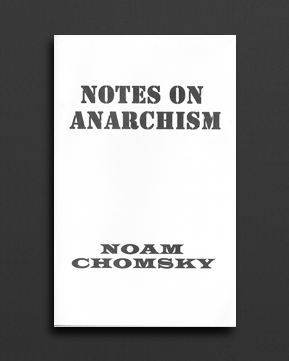
An undated Australian reprint of this seminal essay by American linguist, philosopher, cognitive scientist, historian, social critic, and political activist, Noam Chomsky, first published in the 1973 collection For Reasons Of State. Published by Sydney's Jura Books.
2013, English
Softcover, 304 pages, 24 × 17 cm
Published by
Hyphen Press / London
$55.00 $30.00 - Out of stock
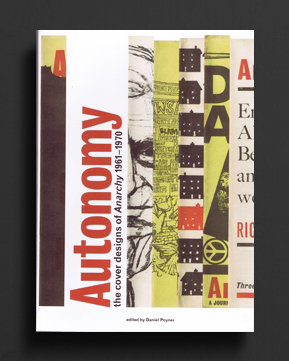
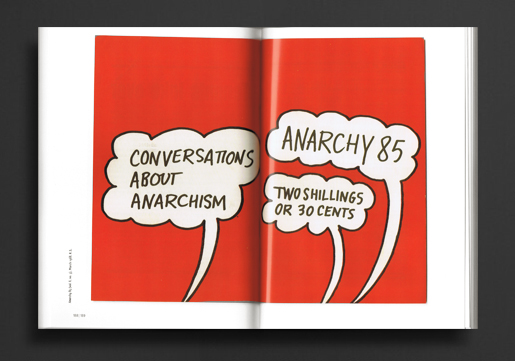
Anarchy was a journal of ideas published in London in the 1960s. Although its contributors were many and diverse, Anarchy was essentially the creation of one person, Colin Ward (1924–2010). With this journal, and throughout his work as a writer, editor, and activist, Ward proposed the idea that anarchist principles of mutual aid and autonomous organization outside a centralized state can be achieved here and now. This book gives attention for the first time to the covers of Anarchy, designed mostly by Rufus Segar. These little-known works provided the enticing entry to the plain text pages of the journal. The book reproduces all of the covers in a sequence that suggests, incidentally, something of the history of graphic design in Britain in those years. And it goes beyond the images, with an array of supporting texts that give a full picture of Anarchy and its context.
Contents
Daniel Poyner, Introduction
The covers of Anarchy
Raphael Samuel, ‘Utopian sociology’
Daniel Poyner, A conversation with Rufus Segar
Richard Hollis, ‘Anarchy and the 1960s’
Robin Kinross, An index to Anarchy
‘Autonomy’ doesn’t try to present Segar as some great innovator of graphic design. He wasn’t one and makes no claim to be. What the book sets out to do, and it succeeds magnificently without visual or verbal hyperbole, is to enrich and add nuance to our understanding of a 1960s graphic landscape we might think we know inside out by acquainting us with unfamiliar work that provided an important forward-thinking publication with its public face. Segar believed in the journal’s cause and 40 years later, he reports, he and his wife Sheila are still anarchists.
Rick Poynor, Creative Review, January 2013
2017, English / German
Softcover, 248 pages, 23 x 16.5 cm
Published by
Texte Zur Kunst / Berlin
$30.00 - Out of stock
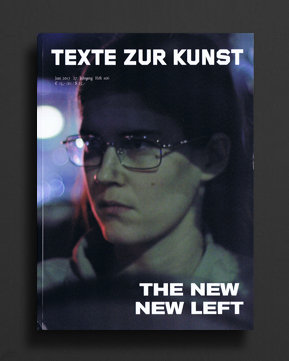
The theme of this issue - The New New Left - is not entirely “new new,” as indeed it relates to the old anti-capitalist Left in its insistence on a theoretical analysis of capitalism and the price paid by many in such a system. But as the discourses and strategies long associated with the Left (workerism, identity politics, or the mode of the avant-gardist troll) have been adopted by anti-progressive outlets, it has become increasingly complex to locate a Left stance from which to effectively speak and act. This issue explores the affective mechanisms and media strategies – from the rise of viral content (memes) to the harvesting and right-wing politicization of emotions – that are producing our post-millennial, post-financial crisis, post-Brexit/Trump present.
Issue No. 106 / June 2017 "The New New Left“
Table Of Contents
Preface
Cultural Resources / Sabine Hark And Sighard Neckel In Conversation On Feelings Of Resentment And Revenge
Verena Dengler
Fake Left, Punch Right
Jaleh Mansoor
Unveiling And/Or Re-Masking / Notes On The Political Dialectics Of The Opacity Of The Sign
Seth Price
Wrong Seeing, Odd Thinking, Strange Action
Matt Goerzen
Notes Toward The Memes Of Production
Diedrich Diederichsen
The Tough Stuff / “Populism," "Political Correctness," And The Like
Simon Denny
Face The Market On Your Own
Klaus Walter
Liberté, Egalité, Beyoncé?
Dan Bodan
Europe, 2016-17 / Selected Status Updates Of Recent Months
Bildstrecke
Kayode Ojo
Become What You Fear
New Development
Ana Teixeira Pinto
Artwashing / Nrx And The Alt-Right
Rotation
Obsessive, Compulsive, Disorder / Johanna Burton On Douglas Crimp’s “Before Pictures”
Probing Attitudes / Philipp Ekardt On “Putting Rehearsals To The Test” (Buchmann, Lafer, Ruhm, Eds.)
In Experimenten Seine Vernunft Aufs Spiel Setzen / Stefan Römer Über Hans-Jörg Rheinberger, „Der Kupferstecher Und Der Philosoph. Albert Flocon Trifft Gaston Bachelard“
Reviews
Nachrichten Aus Der Ideologischen Antike / Georg Imdahl Über Wade Guyton Im Museum Brandhorst
Schwere Verspannungen Lösen / Eva Scharrer Über Nairy Baghramian Im S.M.A.K. In Gent
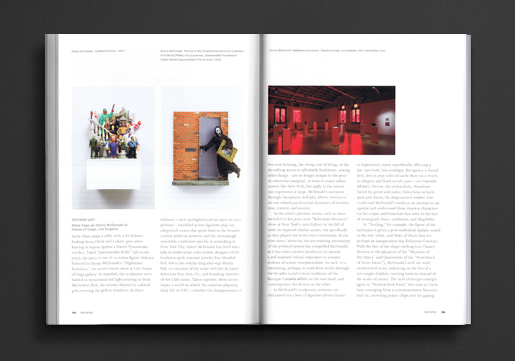
Deviant Art / Dena Yago On Danny Mcdonald At House Of Gaga, Los Angeles
Put Your Money Where Your Mouth Is / Tina Schulz Über Nora Schultz Bei Isabella Bortolozzi, Berlin
Reverse Cubism Als Betrachtungsirrtum / Gunter Reski Über Pieter Schoolwerth Bei Capitain Petzel, Berlin
Mad World / Steven Warwick On Liz Craft & Pentti Monkkonen At Liszt, Berlin
Public Viewing / Moritz Scheper Über Sadie Benning In Der Kunsthalle Basel
Eye In The Sky / Ilya Lipkin On Ned Vena At Societé, Berlin
Kritische Stoffe, Shoppinglust Und Andere Ambivalenzen / Ines Kleesattel Über Ines Doujak (Und John Barker) Im Württembergischen Kunstverein
In Einem Anderem Land / Christian Kravagna Über „The Color Line“ Im Musée Du Quai Branly, Paris
Mehr Epistemischer Ungehorsam! / Susanne Witzgall Über „Postwar: Kunst Zwischen Pazifik Und Atlantik 1945–1965“ Im Haus Der Kunst, München
With Or Without / Christian Philipp Müller On Yuji Agematsu At Miguel Abreu Gallery, Nyc
Kommunikation Ist Kein Objekt / Fiona Geuß Über Ian Wilson In Den Kw Institute For Contemporary Art, Berlin
Nachruf
Gustav Metzger (1926–2017): Ein Nachruf Von Sabine Breitwieser
Edition
Anne Imhof
Sean Landers
2016, English
Softcover, 302 pages, 13 x 19 cm
Published by
Dissect / Melbourne
$20.00 - Out of stock
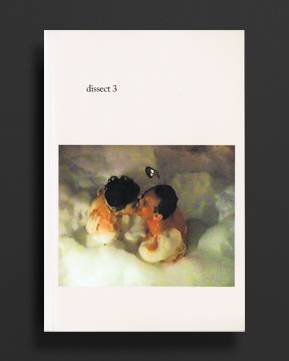
The cultural framework and biopolitics of capitalist globalisation has resulted in an increased concentration on the body as a site of production—in contemporary art as in life. Just as the historical avant-gardes sought to overcome art’s autonomous and isolated relationship to society by way of inviting in the ‘praxis of life’; so do contemporary artists whose focus is bodies and subjectivities. In an ever-emergent bio-economy, it is not just the body, but subjects and their lives that are crucial to value creation.
Contributors
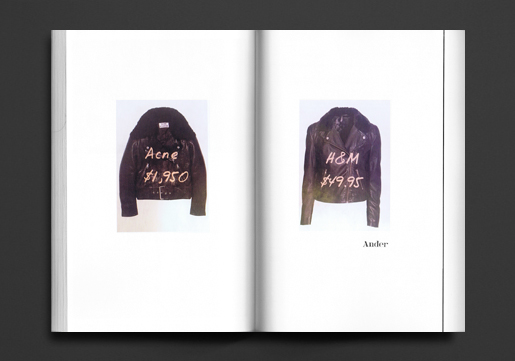
Philip Auslander, Dodie Bellamy, Eva Birch, Cristine Brache, Ramsay Burt, Travis Chamberlain, Amy Charlesworth, James Ferraro, Karen Finley, Andrea Fraser, Tim Gentles, Isabelle Graw, Amelia Groom, Aurelia Guo, K8 Hardy, Chris Kraus, Ruth O’Leary, Tanja Ostojic, Carol Que, Ander Rennick, Audrey Schmidt, Phebe Schmidt, Eleanor Ivory Weber, Katie West, Amelia Winata, Jarrod Zlatic
Designed by Clare Wohlnick
Edited by Audrey Schmidt, Chloe Sugden and Zoe Theodore
2007, English
Softcover, 21 x 28 cm, 320 pages
Published by
Primary Information / New York
$59.00 - In stock -
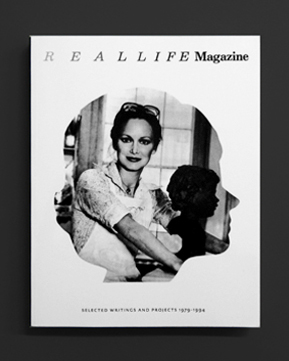
REAL LIFE Magazine: Selected Writings and Projects 1979-1994 highlights a selection of writings and artists' projects from REAL LIFE magazine, which was originally edited by artist, writer, and curator, Thomas Lawson and writer, Susan Morgan. Published in twenty-three issues from 1979-1994 as an intermittent black and white magazine, REAL LIFE featured artists and art historians writing on art, media and popular culture interspersed with pictorial contributions. The development of the magazine through its 15 year history, traces the influences, development and transitions of artists through the 80s.
The anthology features writings by and about Dara Birnbaum, Eric Bogosian, Rhys Chatham, Mark Dion, Jack Goldstein, Felix Gonzalez-Torres, Kim Gordon, Dan Graham, Thomas Lawson, Louise Lawler, Sherrie Levine, Allan McCollum, John Miller, Dave Muller, Matt Mullican, Adrian Piper, Richard Prince, David Robbins, Ed Ruscha, Cindy Sherman, Laurie Simmons, Michael Smith, John Stezaker, Bernard Tschumi, Jeff Wall, Lawrence Weiner, and James Welling among others.
Table of Contents:
Thomas Lawson and Susan Morgan: Various Histories of REAL LIFE Magazine
Matthew Higgs: REAL LIFE
Susan Morgan: an interview with Robert Moskowitz, 1979
Valentin Tatransky: Collage And The Problem Of Representation: Sherrie Levine's new work, 1979
Grahame Shane: Crime as Function, 1979
Susan Morgan: an interview with Steve Gianakos, 1979
Barbara Kruger: Game Show, 1979
James Welling: Untitled, 1979
Thomas Lawson: Every Picture Tells A Story Don't It? 1979
Thomas Lawson: Fashion Moda, 1980
Richard Prince: Primary Transfers, 1980
Dan Graham: The Destroyed Room of Jeff Wall, 1980
Kim Gordon: Trash Drugs And Male Bonding, 1980
Thomas Lawson: Going Places, 1980
Susan Morgan: Michael Hurson, 1980
Barbara Kruger: Devils With Red Dresses On, 1980
Thomas Lawson: Long Distance Information, 1980
Joseph Bishop: Desperate Character, 1980
Richard Prince: Menthol Pictures, 1980
Laurie Simmons: Sam and Dottie Dance, 1980
Jim Bradley: Radical Genitalia, 1980
Allan McCollum: Matt Mullican's World, 1980
Michael Smith: Mike In... What Should I Do About The Car? 1980
Sherrie Levine: Two Photographs After Walker Evans, 1980
Kim Gordon: Honeymoon Habit, 1980
Post-Modernism: a symposium, 1981
Dan Graham: BOWWOWWOW (the Age of Piracy), 1981
Howard Singerman: The Artist as Adolescent, 1981
Elsa Bulgari: Your Everyday Critic, 1981
Thomas Lawson: Too Good to be True, 1981
Jenny Bolande: Elk Grazed as if Nothing Had Happened, 1981
David Robbins: Notes toward film, 1981
Eric Bogosian: Fascination, 1981
Fulton Ryder: Pissing on Ice, 1981
Joan Wallace and Geralyn Donohue: Edit deAk, 1982
Rex Reason: Democratism, 1982
The Holy Ghost Writers: Condensation and Dish-Placement, 1982-3
Howard Singerman: Paragraphs toward an essay entitled 'Restoration Comedies', 1982-3
John Roberts: Ruins in the Realm of Thought, 1983
Paul McMahon: From The Permanent Collection, 1983
Jo Baer and Bruce Robbins: Beyond the Pale, 1983
Kathi Norklun: Courage, 1983
Tim Rollins: Particles, 1980-1983, 1983-4
Doug Ashford: Kiss of Death, 1983-4
Thomas Lawson: Komar & Melamid, 1983-4
Robin Winters: The Secret Agent: an interview with Jacki Ochs , 1983-4
Robert C. Morgan: a conversation with Lawrence Weiner , 1983-4
Judith Kirshner: A Blinding Light , 1983-4
Rex Reason: Brie Popcorn: an interview with the directors of Nature Morte Gallery, 1983-4
John Miller: Morality and the Poetic, 1984
Susan Morgan: Portraits of the Artists/Composite Drawings, 1984
B.P. Gutfreund: Four Photographs, 1984
Susan Morgan: Each and Every One of You, 1985
Mark Dion: Tales From The Dark Side, 1985
Jeff Wall: Dan Graham's Kammerspiel Parts I and II, 1985
Jana Sterbak: Premeditated: an interview with Ed Ruscha, 1985
Walter Robinson: The Quest For Failure, 1985-6
Derek Boshier: John Dugger, 1985-6
John A.Walker: Unholy Alliance: Chairman Mao, Andy Warhol, and the Saatchis, 1985-6
Kellie Jones: David Hammons, 1986
John Miller: Swiss Family Robbins, 1986
Adrian Piper: An Open Letter to Donald Kuspit, 1987-8
Susan Morgan: when X does not equal Y , 1987-8
Thomas Lawson: Critical Art Ensemble, 1988-9
Christine N. Lea: Beyond Belief, 1988-9
Felix Gonzalez-Torres: Untitled 1988: Detail of a Sculpture (Endless Copies), 1988-9
Thomas Lawson: No Bull, 1990
Allan McCollum: Photo from TV (with Paintings), 1990
Dara Birnbaum: The Wondering Of Context, 1990
James Welling: Corridors, 1989, 1990
Michael Smith and R. Sikoryak: Mike, 1990
Felix Gonzalez-Torres: Untitled, 1990
Judith Barry: Drive-In or Walk-In Museum, 1990
Group Material: AIDS Timeline, 1990
David Robbins: Three Cancelled TV Families, 1990
Louise Lawler: Untitled 1988, 1990
Susan Morgan: Carlos Gutierrez-Solana, 1994
Josef Strau and Stephan Dillemuth: Friesenwall 120, 1994
David A. Muller: Three Day Weekend, 1994
Spencer Finch: Amnesia And Saying Nothing, 1994
2017, English
Softcover, 240 pages, 12 x 19 cm
Published by
KW Institute for Contemporary Art / Berlin
Uh Books / Amsterdam
$20.00 - Out of stock
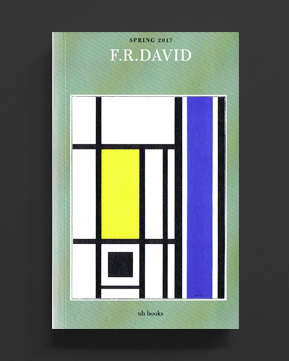
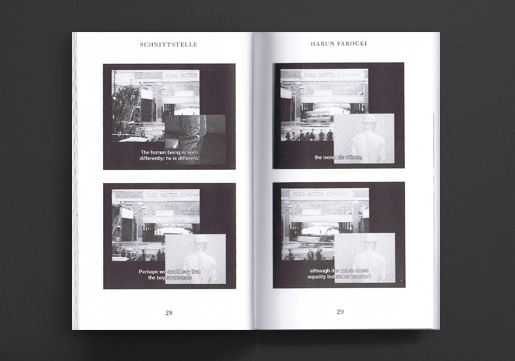
F.R.DAVID is a typographical journal, edited by Will Holder, dealing with the organisation of reading and writing in contemporary art practises. This 13th issue of F.R.DAVID is edited with Riet Wijnen, and has its origins in her Registry of Pseudonyms, an online database which accounts for who is who and why who is who. ‘Inverted Commas’ follows ‘pseudonym’ through names, naming, bodies, brains, self, author, other, reader, labour.
Includes: Michael Asher, Joan Didion, Harun Farocki, Sven Lütticken, Lucy Lippard, Barbara Guest, A.H. Nijhoff, Will Holder, Pauline Oliveros, and many more.
2017, English
Softcover (saddle-stitch w. acrylic book cover), 384 pages, 26 cm x 20 cm
Published by
MUMA / Victoria
$44.00 - Out of stock
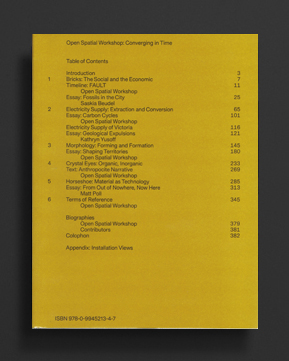
Open Spatial Workshop: Converging in Time was published on the occasion of the first major museum exhibition by Open Spatial Workshop (comprising artists Terri Bird, Bianca Hester and Scott Mitchell). The exhibition is part of MUMA's much anticipated annual survey exhibition series that presents the practices of Australia's most exciting and innovative mid-career artists. Converging in Time continues OSW's sculptural investigation into the forces of material formation. Drawing on earth sciences research and studies of the Anthropocene, this major book explores the relationship between the mineral make-up of a site and the societies they produce and sustain.
Designed by Paul Mylecharane and Ziga Testen
Artists: Open Spatial Workshop (comprising of Terri Bird, Bianca Hester and Scott Mitchell)
Text: Open Spatial Workshop, Saskia Beudel, Kathryn Yusoff, Matt Poll
2017, English
Softcover, 226 pages, 16.5 x 24 cm
Published by
Sternberg Press / Berlin
Thyssen-Bornemisza Art Contemporary / Vienna
$74.00 $15.00 - Out of stock
Edited by Daniela Zyman, Cory Scozzari
Contributions by Armen Avanessian, Daniel Garza-Usabiaga, Carl Michael von Hausswolff, Anke Hennig, Chus Martínez, Eva Wilson, Daniela Zyman
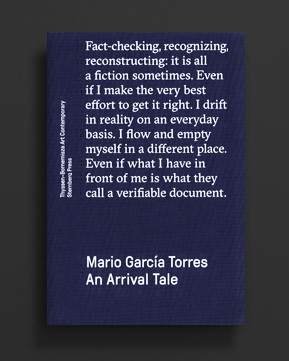
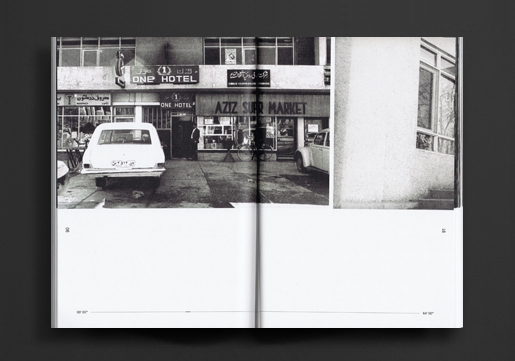
Appropriation, storytelling, reenactment, and reportage are some of the strategies that Mario García Torres deploys to highlight the limitations of factual evidence and the agency of historical records and objects. An Arrival Tale detaches the Mexican artist’s works in the TBA21 collection from their original contexts and offers them as a collection of narratives and artistic experiments open for reinscription in order to address the conditions and urgencies of our contemporary societies. It examines the space of arrival as a complicated and disjointed nexus between departure, displacement, and return.
This publication follows the eponymous exhibition at TBA21 – Augarten. While conceived in relation to the exhibition, this book is not a documentation, but rather the start of a journey that expands, explores, complicates, and undoes the thematic threads of spatial disjunction, recollection, asynchronicity, fictionality, and the politics of visibility.
Copublished with Thyssen-Bornemisza Art Contemporary, Vienna
Design by Studio Folder
2016, English / German
Softcover, 140 pages, 16.5 x 23.5 cm
Published by
Sternberg Press / Berlin
$49.00 $15.00 - Out of stock
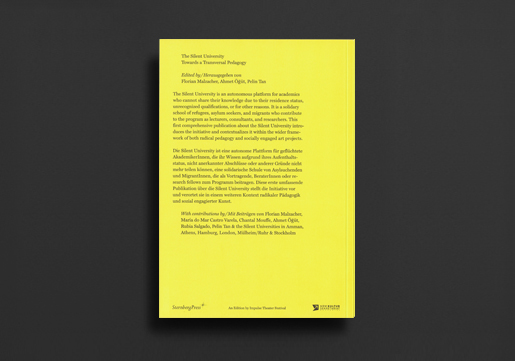
Edited by Florian Malzacher, Ahmet Öğüt, Pelin Tan
With contributions by Florian Malzacher, María do Mar Castro Varela, Chantal Mouffe, Ahmet Öğüt, Rubia Salgado, Pelin Tan, and the Silent Universities in Amman, Athens, Hamburg, London, Mülheim/Ruhr, and Stockholm
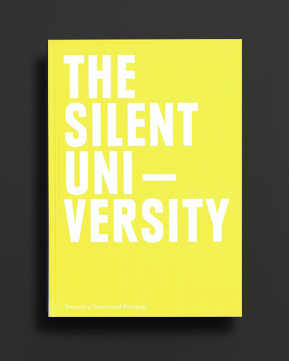
The Silent University, initiated by artist Ahmet Öğüt in 2012, is an autonomous platform for academics who cannot share their knowledge due to their status of residence, because their degrees are not recognized or regaining access to academia is blocked for other reasons. It is a solidary school by refugees, asylum seekers and migrants who contribute to the program as lecturers, consultants and researchers.
The Silent University proposes a new institution outside of the restrictions of existing universities, migration laws and the other bureaucratic or juridical obstacles many migrants face. At the same time it mimics the idea of exiting universities, using their representational logics by developing alternative structures of pedagogy beyond border politics, race/ethnicity and normative education.
This first comprehensive publication about the Silent University introduces the initiative and contextualizes it in the wider framework of both radical pedagogy and socially engaged art projects. In addition, all current branches of the Silent University—in Amman, Athens, Hamburg, London, Mülheim/Ruhr, and Stockholm—describe their very different achievements as well as their struggles and failures.
The book contextualizes this initiative within a broader picture of migration policies, critical pedagogy, artistic involvement and institutional engagement. It also hopes to be an introduction for all those who might want to get involved in the Silent University—as contributors, lecturers, students in the existing branches, or by initiating new SUs wherever they are needed: a need which is becoming urgent in more and more cities and countries all around the world.
This book is published as an edition of Impulse Theater Festival, which initiated the foundation of Silent University Ruhr in Mülheim in June 2015.
Design by Fons Hickmann m23
1996, English
Softcover, 290 pages, 15.4 x 23 cm
2nd ed.,
Published by
Free Association Books / London
$50.00 - Out of stock
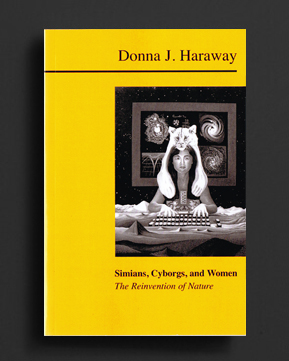
Simians, Cyborgs and Women is a powerful collection of ten essays written between 1978 and 1989. Although on the surface, simians, cyborgs and women may seem an odd threesome, Haraway describes their profound link as "creatures" which have had a great destabilizing place in Western evolutionary technology and biology.
Throughout this book, Haraway analyzes accounts, narratives, and stories of the creation of nature, living organisms, and cyborgs. At once a social reality and a science fiction, the cyborg--a hybrid of organism and machine--represents transgressed boundaries and intense fusions of the nature/culture split. By providing an escape from rigid dualisms, the cyborg exists in a post-gender world, and as such holds immense possibilities for modern feminists. Haraway's recent book, Primate Visions, has been called "outstanding," "original," and "brilliant," by leading scholars in the field.
First published in 1991.
2005, English
Softcover, 335 pages, 22.5 x 16 cm
2005 edition, Out of print title / used*,
Published by
D.A.P. / New York
$95.00 - Out of stock
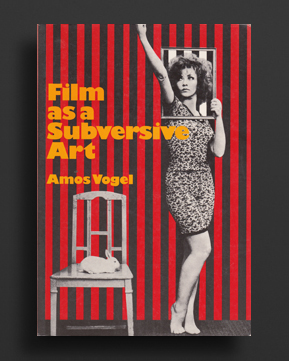
The now scarce 2005 reprint edition of one of the greatest books on film. A classic returns! The original edition of Amos Vogel's seminal book, Film as a Subversive Art was first published in 1974, and has been out of print since 1987. According to Vogel--founder of Cinema 16, North America's legendary film society--the book details the "accelerating worldwide trend toward a more liberated cinema, in which subjects and forms hitherto considered unthinkable or forbidden are boldly explored."
So ahead of his time was Vogel that the ideas that he penned some 30 years ago are still relevant today, and readily accessible in this classic volume. Accompanied by over 300 rare film stills, Film as a Subversive Art analyzes how aesthetic, sexual and ideological subversives use one of the most powerful art forms of our day to exchange or manipulate our conscious and unconscious, demystify visual taboos, destroy dated cinematic forms, and undermine existing value systems and institutions. This subversion of form, as well as of content, is placed within the context of the contemporary world view of science, philosophy, and modern art, and is illuminated by a detailed examination of over 500 films, including many banned, rarely seen, or never released works.
This 2005 edition, published by D.A.P./C.T. Editions, also quickly went out of print and it has not been available since.
Includes Luis Buñuel, Dusan Makavejev, Luis Buñuel, Stan Brakhage, Bruce Connor, Roman Polanski, Vera Chytilova, Alfred Hitchcock, Carolee Schneemann, Peter Watkins, Tony Conrad, Jonas Mekas, Andrei Tarkovsky, Marcel Duchamp, Robert Bresson, Luchino Visconti, Chris Marker, Federico Fellini, Rainer Werner Fassbinder, Kate Millett, John Cassavettes, Shuji Terayama, William Klein, Russ Meyers, Louis Malle, Woody Allen, Yoko Ono, Michelangelo Antonioni, Agnes Varda, Walerian Borowczyk, Andy Warhol, Ingmar Bergman, Jacques Rivette, Sergei M. Eisenstein, Ingmar Bergman, Lindsay Anderson, Roberto Rossellini, Marguerite Duras, Charlie Chaplin, Paul Morrissey, Joseph Losey, Otto Muehl, Hans Richter, Fritz Lang, Jean Genet, Kenneth Anger, Maya Deren, Jean-Luc Godard, Frans Zwartjes, Arrabal, Jack Smith, Stan Vanderbeek, Werner Herzog, Morgan Fisher, Jean Renior, Michael Snow, Robert Frank, Jan Svankmajer, Sam Peckinpah, Paul Sharits, Akira Kurosawa, Yoko Ono, Orson Welles, Frederick Wiseman, Ken Jacobs, Martin Scorcese, Jean Cocteau, Manuel Octavio Gomez, Stanley Kubrick, Norman McLaren, Albert Maysles and David Maysles, to name only a few of the hundreds of film-makers whose works are featured in this essential film book.
2017, English
Hardcover (w. dust jacket), 368 pages, 192 x 233 cm
Published by
Zone Books / New York
$76.00 - Out of stock
In recent years, the group Forensic Architecture began using novel research methods to undertake a series of investigations into human rights abuses. Today, the group provides crucial evidence for international courts and works with a wide range of activist groups, NGOs, Amnesty International, and the UN. Forensic Architecture has not only shed new light on human rights violations and state crimes across the globe, but has also created a new form of investigative practice that bears its name. The group uses architecture as an optical device to investigate armed conflicts and environmental destruction, as well as to cross-reference a variety of evidence sources, such as new media, remote sensing, material analysis, witness testimony, and crowd-sourcing.
In Forensic Architecture, Eyal Weizman, the group’s founder, provides, for the first time, an in-depth introduction to the history, practice, assumptions, potentials, and double binds of this practice. The book includes an extensive array of images, maps, and detailed documentation that records the intricate work the group has performed. Traversing multiple scales and durations, the case studies in this volume include the analysis of the shrapnel fragments in a room struck by drones in Pakistan, the reconstruction of a contested shooting in the West Bank, the architectural recreation of a secret Syrian detention center from the memory of its survivors, a blow-by-blow account of a day-long battle in Gaza, and an investigation of environmental violence and climate change in the Guatemalan highlands and elsewhere.
Weizman’s Forensic Architecture, stunning and shocking in its critical narrative, powerful images, and daring investigations, presents a new form of public truth, technologically, architecturally, and aesthetically produced. The practice calls for a transformative politics in which architecture as a field of knowledge and a mode of interpretation exposes and confronts ever-new forms of state violence and secrecy.
About the Author
Eyal Weizman is Professor of Spatial and Visual Cultures at Goldsmiths College, University of London and a Global Scholar at Princeton University. A founder of Forensic Architecture, he is also a founding member of the architectural collective DAAR in Beit Sahour/Palestine. His books include Mengele’s Skull, The Least of All Possible Evils, and Hollow Land.
Endorsements
“The investigative work of Eyal Weizman and his colleagues at Forensic Architecture is truly remarkable, breaking novel theoretical ground while actively supporting struggles for justice. Again and again, landscapes of power, violence, resistance and ecological stress are transformed in stunning new ways. Among the many revelations in these pages is a new mapping of the connections between climate-change, drought, drones and armed conflict. These are powerful analytic tools that will be indispensable to the construction of a new human rights framework.”
—Naomi Klein, author of This Changes Everything and The Shock Doctrine
“In many respects Forensic Architecture is the current reincarnation of Soviet Russia’s Factography, a collective enterprise that, in the 1920’s and 30’s, was geared towards the construction of facts, as opposed to merely documenting them. The difference between both endeavors, each similarly brazen in taking advantage of unprecedented advances of media technology, is that the facts that Forensic Architecture wishes to (re)construct are for the most part acts of state violence that the perpetrating state deliberately conceals. Those facts are registered in buildings (or traces thereof), which Weizman and his team equate both to photographs (sensors) and to tools for decoding other sensors (such as the clouds of smoke hovering over a bombed city). Analyzing the vast bank of images provided by social media in conflict zones through a computation of differential parallaxes, Forensic Architecture is fast becoming the most efficient visual machine against the suppression of evidence by the authors of crimes against humanity. Recent history tells us that its work will be evermore needed.”
—Yve-Alain Bois
“In a world where environmental crimes are increasingly linked to human rights violations, Forensic Architecture has become an essential practice. Weizman and his team have understood how the tools of science and architecture can influence and transform the juridical system.”
—Baltasar Garzón, former Spanish investigating judge and president of the human rights foundation FIBGAR
2017, English
Softcover, 248 pages, 15 x 22 cm
Published by
Sternberg Press / Berlin
$64.00 $15.00 - Out of stock
Edited by Natasha Ginwala
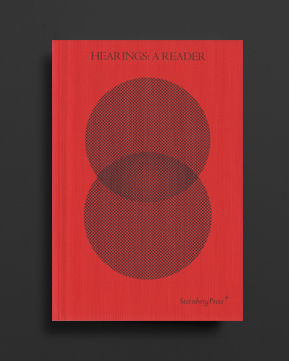
The Contour Biennale 8, “Polyphonic Worlds: Justice as Medium,” curated by Natasha Ginwala, brings together twenty-five international and local artists and art collectives working in lens-based media, sound, performance, drawing, and installation, to address questions related to the nation-state system and the realm of justice today. Taking place in Mechelen, Belgium, “Polyphonic Worlds” embraces the communal spirit of the biennale by including the many-sided voices that assemble in collective formations as well as discrete, individual creative positions.
This reader proposes a series of beginnings—it is a polyphonic approach that borrows from juridical and musical spheres. Launched as the online journal of the biennial, Hearings pairs texts or image-based contributions, allowing for a sense of tension and affinity to develop in the feedback loop of the two voices. Relationships around the artwork as site of evidence and testimony are thus reoriented. The multidimensional readings are not restricted to the active apparatus of law and discipline, but instead seek to unravel the synchronies of our times—the mesh of injustice in our midst.
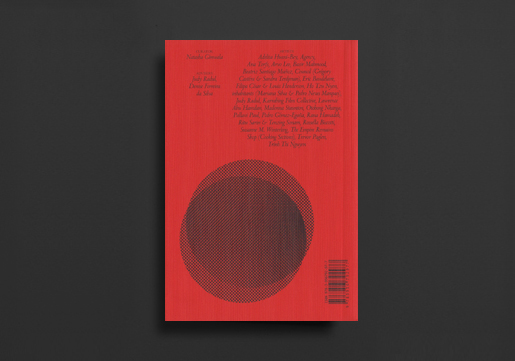
Featuring texts and illustrated contributions by Agency, Lawrence Abu Hamdan, Eric Baudelaire, Rossella Biscotti, Hunter Braithwaite and Trevor Paglen, Filipa César, Cooking Sections, Council, T. J. Demos, Denise Ferreira da Silva, Pedro Gómez-Egaña, Rana Hamadeh, Louis Henderson, Adelita Husni-Bey, Ho Tzu Nyen, inhabitants, Arvo Leo, Sven Lütticken, Basir Mahmood, Samuel Mareel, Dirk de Meyer, Otobong Nkanga, Pallavi Paul and Anish Ahluwalia, Elizabeth A. Povinelli, Judy Radul, Beatriz Santiago Muñoz, Ritu Sarin and Tenzing Sonam, Madonna Staunton, Ana Torfs, Trinh Thi Nguyen, Susanne M. Winterling and Gayatri Chakravorty Spivak, and Ghassan Zaqtan.
Copublished with Contour Biennale on the occasion of Contour Biennale 8: “Polyphonic Worlds: Justice as Medium” (March 11–May 21, 2017).
Design by Studio Remco van Bladel
2017, English
Softcover, 154 pages, 12 x 18.5 cm
Published by
Sternberg Press / Berlin
$35.00 - Out of stock
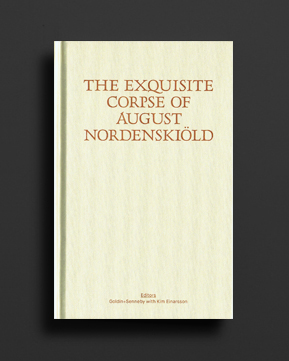
Edited by Goldin+Senneby with Kim Einarsson
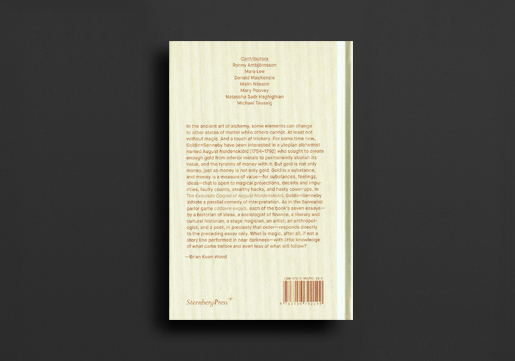
Contributions by Ronny Ambjörnsson, Mara Lee, Donald MacKenzie, Malin Nilsson, Mary Poovey, Natascha Sadr Haghighian, Michael Taussig
“Off now, little paper, around the world, and destroy the tyranny of money, so that gold, silver and precious stones may one day cease to be the idols and tyrants of the world!”
—August Nordenskiöld, 1787
In the ancient art of alchemy, some elements can change to other states of matter while others cannot. At least not without magic. And a touch of trickery. For some time now, Goldin+Senneby have been interested in a utopian alchemist named August Nordenskiöld (1754–1792) who sought to create enough gold from inferior metals to permanently abolish its value, and the tyranny of money with it. But gold is not only money, just as money is not only gold. Gold is a substance, and money is a measure of value—for substances, feelings, ideas—that is open to magical projections, deceits and impurities, faulty counts, stealthy hacks, and hasty cover-ups. In The Exquisite Corpse of August Nordenskiöld, Goldin+Senneby initiate a parallel comedy of interpretation. As in the surrealist parlor game cadavre exquis, each of the book’s seven essays—by a historian of ideas, a sociologist of finance, a literary and cultural historian, a stage magician, an artist, an anthropologist, and a poet, in precisely that order—responds directly to the preceding essay only. What is magic, after all, if not a story line performed in near darkness—with little knowledge of what came before and even less of what will follow?
—Brian Kuan Wood
Design by Johan Hjerpe
2017, English / German
Softcover, 272 pages + DVD, 23 x 17 cm
Published by
Walther König / Köln
$45.00 - Out of stock
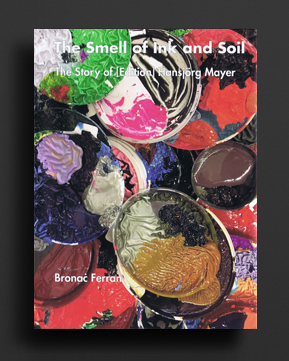
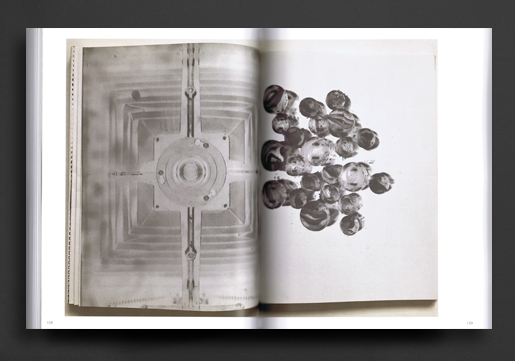
This is a long-awaited account of the work of the great publisher and designer Hansjörg Mayer in the fields of concrete poetry, typography, artist’s publications and ethnographic books over six decades. It includes the first bibliography of his works.
Identified as a print prodigy by Max Bense in the late 1950s, Mayers unique expertise and virtuosity with print technologies of the time allowed for the casting of works in various experimental formats which stretched, fragmented and expanded the concept of the poem.
He combined an interest in chance and randomness with a mathematically precise attention to use of graphic space, which makes his works now seem anticipatory of networked systems whilst holding a more modernist purity of form. His works made seminal explorations into the possibilities of concrete and computational convergence.
Mayer had a retrospective exhibition at Haags Gemeentemuseum in 1968 at the young age of 25. After this he concentrated on making experimental publications with artists.
Through his edition hansjörg mayer he issued publications of Dieter Roth, Richard Hamilton, Tom Phillips, André Thomkins and Emmett Williams.
From the late 1970s he also began to research, collect and publish an extraordinary series of books about vanishing cultures.
English and German text.
1987, English
Hardcover (w. dust jacket), 168 pages, 24 x 25 cm
1st edition, Out of print title / used*,
Published by
Trefoil / London
$35.00 - Out of stock
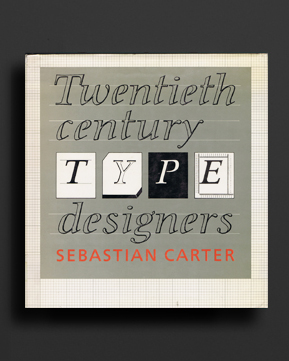
First edition of this reference compilation of biographies of the most famous type designers of the 20th century. A must for every type book collection.
Since its first publication in 1987, Twentieth Century Type Designers has become a standard reference work for typographers, designers and students alike.
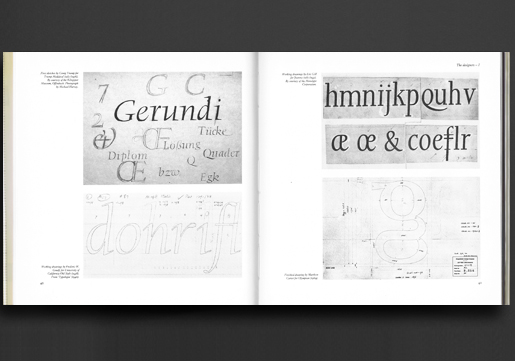
This book serves as an introduction to the concept of typefaces and to some of the personalities who have created them--Goudy, Rogers, Koch, Gill, Morison, Van Krimpen, Trump, Tschichold, Frutiger, Zapf and others--and places them in the context of the enormous changes that have occurred in typography.
The introduction in the 1880s of the Linotype and Monotype hot-metal composing machines, and in particular the Benton pantographic punchcutter, revolutionized the manufacture of type, and caused a flood of new typefaces. More recently, filmsetting and digital typesetting have brought new opportunities--as well as new disciplines. This book examines the conflicts arising from these technological advances, which have pitted craftsmanship against commercial interests, and forced designers to come to terms with the new creative opportunities.
Whatever motivates type designers--whether it is the practical need to create new faces for machines, the ideal of producing the perfect letter-form for our age, or whether type is designed as an offshoot of other artistic activities--their work has had a far-reaching impact on our culture.
Designers featured:
Frederic Goudy, Bruce Rogers, Rudolf Koch, William Addison Dwiggins, Eric Gill, Victor Hammer, Stanley Morison, Hans (Giovanni) Mardersteig, Jan van Krimpen, Georg Trump, Joseph Blumenthal, Robert Hunter Middleton, Jan Tschichold, Berthold Wolpe, Roger Excoffon, Herman Zapf, Adrian Frutiger.
2017, English
Softcover (4 x newspapers), 16 pages each, 29 x 40 cm
Published by
Mode and Mode / Melbourne
$10.00 - In stock -
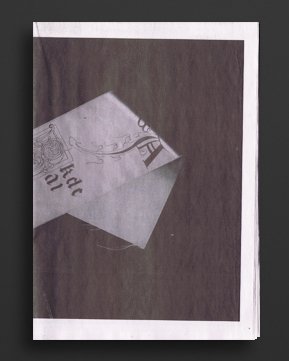
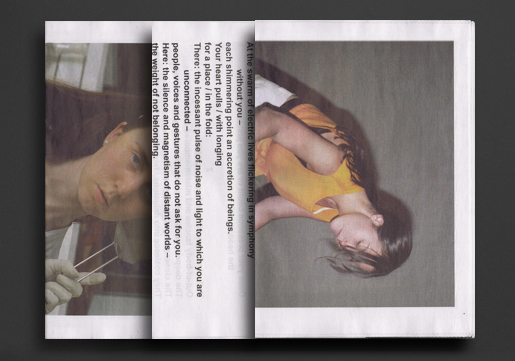
The HRD / CF Newsletter is a periodical publication produced within the exhibition ‘Hi$h Risk Dressing / Critical Fashion’ at RMIT Design Hub. The exhibition centres on the local fashion organisation active in Melbourne between the years 1983-1993, the Fashion Design Council. The FDC (as they are often shortened to), founded by Robert Buckingham, Kate Durham and Robert Pearce, were a self―organised group set up to foster independent designers and artists dealing with fashion. Influenced by the post―punk scene of Northern fashion capitals, the FDC put on shows in clubs and venues, as well as organising exhibitions, and eventually setting up a shop serving as a platform for alternative fashion in Melbourne. Throughout their active period, the FDC were prolific self―publishers. Print collateral was central to their success as an organisation. Postcards, invites, catalogues, business cards and other ephemera were shared with members and the broader public, promoting their officialdom. Particularly significant was the FDC newsletter, designed by co-founder Robert Pearce, disseminating a manifesto as well as news and events with its members. The newsletters were ad hoc; informal in language and design but expressed the energy and creative spirit of both the FDC community and available technology.
Using the model of the FDC newsletter, the HRD / CF Newsletter is a take―away publication released each week of the exhibition program. Each of the issues is framed around an emerging aspect of the FDC captured in the exhibition ― the archive, the bar, the shop and the office ― with texts, interviews and contributions from local and international practitioners. The ‘HRD / CF Newsletter also includes facsimiles of print ephemera from the FDC archive, which was donated to the RMIT Design Archives in 1998 by co-founder Robert Buckingham. This new newsletter functions as a platform for disseminating ideas about the FDC then, and critical fashion now, allowing for new dialogues to emerge from the legacy of FDC.
Edited by Laura Gardner
Designed by Ziga Testen
Edition of 500
Contributors include: Agniezska Chabros, Annie Wu, Blake Barns/HB Peace, Christopher LG Hill, Clare Wohlnick, Jessie Kiely/Monica's Gallery, Kate Meakin, Matthew Linde, Sasha Geyer, Winnie Ha Mitford, Bryan Collins, D&K (Ricarda Bigolin and Nella Themelios), James Deutsher, Lewis Fidock, Brighid Fitzgerald, Amanda Horowitz, Chantal Kirby, Jessie Kiely and Monica’s Gallery (Spencer Lai and Jake Swinson), Christopher LG Hill, Matthew Linde, Kate Meakin, Olivia O’Donnell, Yair Oelbaum, Virginia Overell, Sean Peoples, Joshua Petherick, Jen Shear, Flannery Silva, Adele Varcoe, Alex Vivian and more.
2016, English
Hardcover (w. dust jacket), 352 pages, 28.7 x 20 cm
Published by
Fundación Alumnos47Cosentino / Mexico City
$50.00 - Out of stock
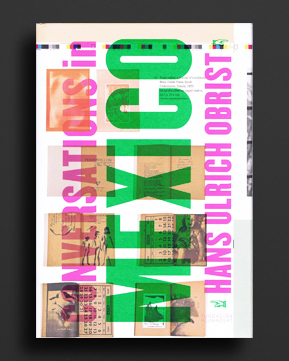
Edited by Karen Marta. Text by Patrick Charpenel, Hans Ulrich Obrist, Pedro Ramírez Vázquez, Teodoro González de León, Graciela Iturbide, Esquivel!, Santiago Genovés, Carlos Fuentes, Margo Glantz, Elena Poniatowska, Alejandro Jodorowsky, Leonora Carrington, Felipe Ehrenberg, Pedro Friedeberg, Juan Soriano and Eduardo Terrazas
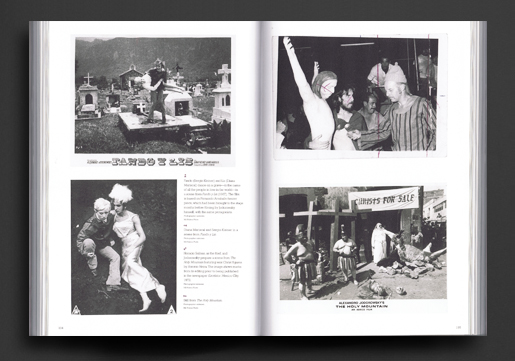
In 2002 Hans Ulrich Obrist began his conversation with a diverse and influential group of Mexican pioneers during an exhibition at Luis Barragán's house in Mexico City. Over a decade in the making, Conversations in Mexico beautifully captures how the Mexican cultural scene has pivoted several times--perhaps most importantly around the student protests at the 1968 Olympic Games--to cultivate a wholly radical and innovative aesthetic, one that is illuminated in the iconic buildings of Pedro Ramírez Vázquez and Teodoro González de León; the people and landscapes photographed by Graciela Iturbide; the music of Esquivel!; the incredible voyages of Santiago Genovés; the utopian politics and literature of Carlos Fuentes, Margo Glantz and Elena Poniatowska; the singular vision of Alejandro Jodorowsky; and the uncompromising art of Leonora Carrington, Felipe Ehrenberg, Pedro Friedeberg, Juan Soriano and Eduardo Terrazas.
Published by Fundación Alumnos47Cosentino, Mexico City
2014, English
Softcover, 372 pages, 21 x 15 cm
Published by
M HKA / Antwerp
Mousse Publishing / Milan
Walther König / Köln
$45.00 - Out of stock
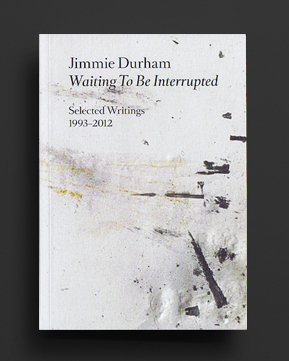
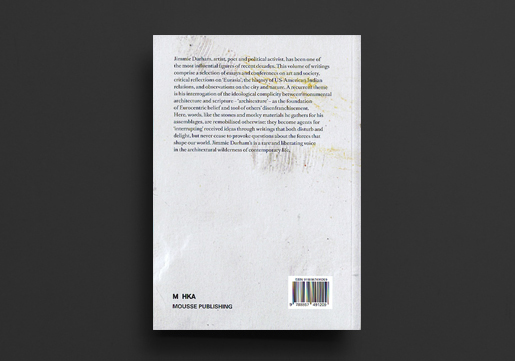
Jimmie Durham, artist, poet and political activist, has been one of the most influential figures of recent decades.
This volume of writings comprise a selection of essays and conferences on art and society, critical reflections on ‘Eurasia’, the history of US-American Indian relations, and observations on the city and nature.
A recurrent theme is his interrogation of the ideological complicity between monumental architecture and scripture – ‘architexture’ – as the foundation of Eurocentric belief and tool of others’ disenfranchisement.
Here, words, like the stones and motley materials he gathers for his assemblages, are remobilised otherwise; they become agents for ‘interrupting’ received ideas through writings that both disturb and delight, but never cease to provoke questions about the forces that shape our world.
Jimmie Durham is a rare and liberating voice in the architextural wilderness of contemporary life.
2015, English
Softcover, 120 pages, 15 x 21.6 cm
Published by
Afterall / London
The MIT Press / Massachusetts
$40.00 - Out of stock
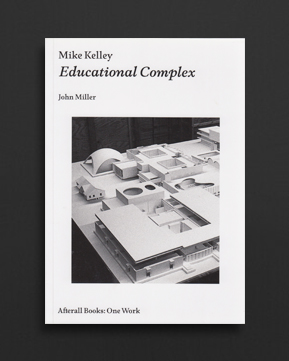
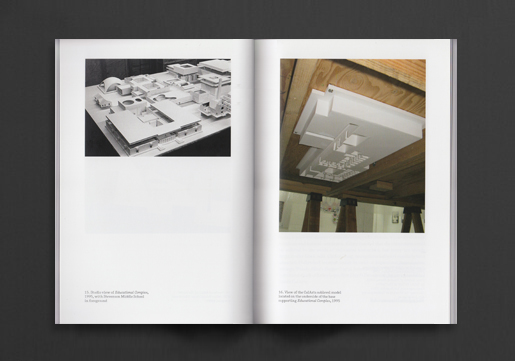
One of the most influential artists of our time, Mike Kelley (1954–2012) produced a body of innovative work mining American popular culture as well as modernist and postmodernist art—relentless examinations of subjectivity and of society that are both sinister and ecstatic. With a wide range of media, Kelley’s work explores themes as varied as post-punk politics, religious systems, social class, and repressed memory. Using architectural models to represent schools he attended, his 1995 work,Educational Complex, presents forgotten spaces as frames for private trauma, real or imagined. The work’s implications are at once miniature and massive. In this book, John Miller offers an illustrated examination of this milestone work that marked a significant change in Kelley’s practice.
A “complex” can mean an architectural configuration, a psychological syndrome, or a political apparatus, and Miller approaches Educational Complex through corresponding lines of inquiry, considering the making of the work, examining it in terms of education and trauma (sexual or otherwise), and investigating how it tests the ideological horizon of art as an institution. Miller shows that in Educational Complex, Kelley expands his political and aesthetic focus, including not only such artifacts as generic forms of architecture but (inspired by the infamous McMartin Preschool case) popular fantasies associated with ritual sex abuse and false memory syndrome. Through this archaeology of the contemporary, Miller argues, Kelley examines the mandate for education and the liberal democratic premises underpinning it.
Author John Miller, Professor of Professional Practice in the Department of Art History at Barnard College, is an artist and critic whose work has been exhibited internationally. He was Mike Kelley’s friend and colleague from 1978 until Kelley’s death in 2012.
2017, English
Softcover, 448 pages, 14.5 x 20 cm
Published by
INCA Press / Seattle
$40.00 - Out of stock
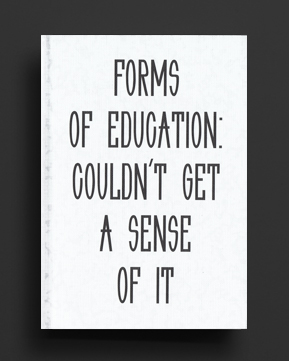
"Three years ago, during a talk at a university, a student asked me, “What is the relationship between your work and your teaching?” I realized then that there was none. I might teach experimental forms and aesthetic vernaculars, but the way I taught it looked like any other art class from Mumbai to New York, part of that dominant sameness that is global art education. Also, my work happens neither in the studio nor through “research”, but in ways that I could not quite name back then. I usually would describe it, and sometimes still do, as “looking like ethnography from the outside” with important differences in purpose and method, observational, and then, Boalian or rooted in experimental histories of theater and film. It struck me that I could not teach all of this, in practice and in a way that encompassed all the surprise, boredom, hesitation, fear, improvisation and pleasure that the process can produce. I resolved to change the form and spirit of what and how I taught."
-Beatriz Santiago Munoz excerpt from her text The Third Teacher.
With texts, essays, and art by:
Gregory Sholette, Eunsong Kim, Pablo Helguera, Duba Sambolec, MFA no MFA, Shelly Asquith, Roee Rosen, Aurora Harris, Ted Heibert, Mohamed Ali Fadlabi, Beatriz Santiago Muñoz, Marjetica Potrč, Escuela de Garaje, Vancouver Institute for Social Research, Judy Chicago, Bisan Hussam Abu-Eisheh, Diego Bruno, Clare Butcher, Chus Martinez, Sezgin Boynik, Audun Mortensen, Aeron Bergman & Alejandra Salinas, Irena Boric, Sondra Perry & Nicole Maloof, Robert Paul Wolff, Chris Kraus, Martha Rosler, Tadej Pogačar, and Walid Raad.
Editors: Aeron Bergman, Alejandra Salinas, Irena Borić
Advisor: Gregory Laynor
Copy-editing: Justen Waterhouse
Design by: Rafaela Dražić
2017, English
Softcover, 384 pages, 14.5 x 20 cm
Published by
Edition Fink / Zürich
$27.00 - Out of stock
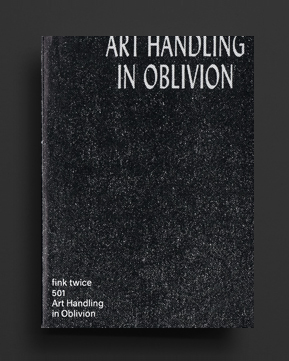
A Catalogue about Conspiracy, Theft, Possession and Heritage.
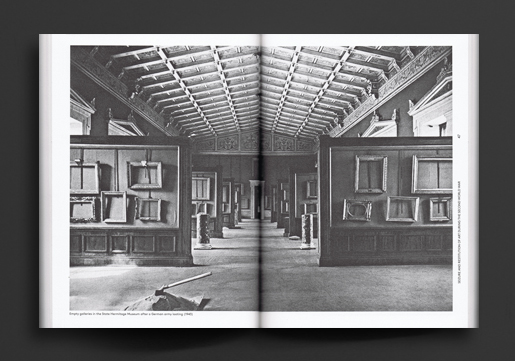
Art Handling in Oblivion assembles five art collections that have been stolen during key historical events, either by regimes or organised individuals. Seizure of art is one of most hidden and underestimated objectives of war. Behind conquering campaigns lurk hidden stories of deprived cultural heritage and devastation of the enemy's cultural identity. Bringing home the enemy's treasures is first of all a tangible proof of victory. The booty entails an enrichment of the very own culture and shifts the composition of cultural heritage on a global scale. Some of the discussed collections have been found and restituted, others are still in hostile possession or missing.
Art Handling in Oblivion is published as Volume 1 (# 501) of the paperback series "fink twice" by Edition Fink, originally presented by Rob van Leijsen as his master thesis for the Spaces & Communication course at HEAD – Genève in 2012.
2017, English / German
Softcover, 180 pages, 21.7 x 28 cm
Published by
Spike / Berlin
$20.00 - Out of stock
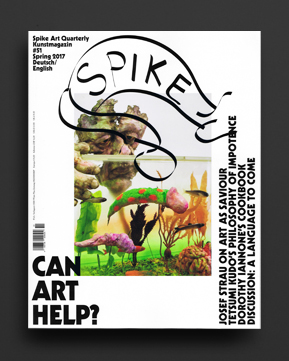
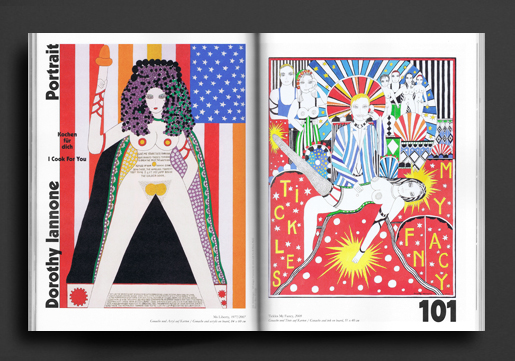
Spike #51 raises the question of the social role of art, and many more, with: Grzegorz Kowalski; Bob Flanagan's Visiting Hours; Angela Bulloch on Damien Hirst; Cyprien Gaillard's Desniansky Raion; a roundtable with Chus Martínez, Michaela Meise and Dieter Lesage; Dorothea Von Hantelmann; Kenny Schachter; Daniel Baumann; the portraits of Dorothy Iannone, Tetsumi Kudo, and Marie Angeletti; an interview with Josef Strau; an essay by Jan Verwoert; the TV series The Crown; Andrew Berardini on Jimmie Durham's retrospective in LA…
The power of art and its social role are the subjects of a roundtable discussion with curator Chus Martínez, artist Michaela Meise and philosopher Dieter Lesage at Spike Berlin. Josef Strau talks about how art saved him, while Kenny Schachter finds it both a remedy and a defence. Daniel Baumann delves into the promise of form, and for the critic Jan Verwoert a key function of art is that it teaches forms of conduct. Profiles on the painter Dorothy Iannone and her connections to Fluxus, and the Japanese artist Tetsumi Kudo and his “philosophy of impotence”, are joined by pieces taking on the decline of the supermodel, the Netflix series The Crown, Jimmie Durham's retrospective at the Hammer Museum, and much more.
Founded by the artist Rita Vitorelli in 2004, Spike Art Quarterly is a quarterly magazine on contemporary art published in English and German which aims at sustaining a vigorous, independent, and meaningful art criticism. At the heart of each issue are feature essays by leading critics and curators on artists making work that plays a significant role in current debates. Situated between art theory and practice and ranging far beyond its editorial base in Vienna and Berlin, Spike is both rigorously academic and stylishly essayistic. Spike's renowned pool of contributing writers, artists, collectors and gallerists observe and reflect on contemporary art and analyse international developments in contemporary culture, offering its readers both intimacy and immediacy through an unusually open editorial approach that is not afraid of controversy and provocation.
2017, English / Italian
Softcover, 296 pages, 24 x 35 cm
Published by
Mousse Publishing / Milan
$18.00 - Out of stock
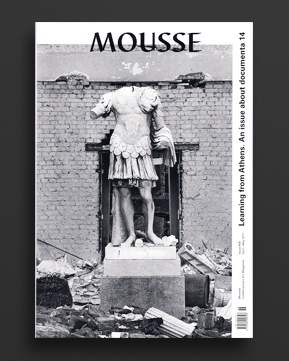
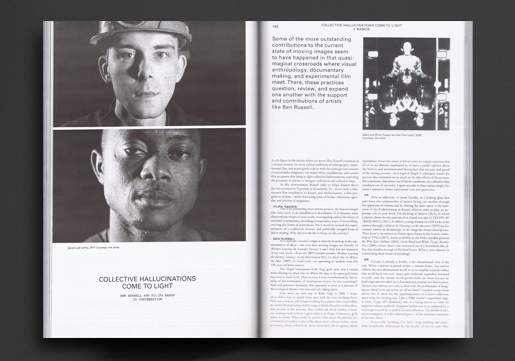
This issue dedicated to documenta 14 addresses themes, artists, and projects spanning between Athens and Kassel. Including: Moyra Davey by Quinn Latimer; Vivian Suter & Elisabeth Sussman; Roee Rosen; “Preliminary notes for a Black manifesto” by Rasheed Araeen; Khvay Samnang “; The Globalised Museum?” by Bonaventure Soh Bejeng Ndikung; articles by Kirsty Bell, Irena Haiduk, Pierre Bal-Blanc, Neni Panourgiá, Dieter Roelstraete, and more.
Mousse is a bimonthly magazine published in Italian and English. Established in 2006, Mousse contains interviews, conversations, and essays by some of the most important figures in international criticism, visual arts, and curating today, alternated with a series of distinctive articles in a unique tabloid format. Mousse keeps tabs on international trends in contemporary culture thanks to its city editors in major art capitals such as Berlin, New York, London, Paris, and Los Angeles.
Mousse (Mousse Publishing) is also publisher of catalogues, essays and curatorial projects, artist books and editions.