World Food Books' programme is largely produced on Kulin Nation land. We acknowledge the Wurundjeri people of the Kulin Nation as the first and continuing custodians of this land, and pay respect to their Elders past, present, and emerging.
World Food Books is an arts and special interests bookshop in Naarm / Melbourne. Founded in 2010, World Food Books is devoted to the presentation of a rotating, hand-selection of international art, design, literary and counterculture publications with an emphasis on the anti-traditional, the experimental, the avant-garde, the heretic, the marginal.
Presenting new titles alongside rare and out-of-print books, catalogues and journals spanning the fields of modern and contemporary art, design, photography, illustration, film, literature, poetry, cultural theory, philosophy, sexuality, popular and underground culture in its many radical forms, World Food Books wishes to encourage adventurous, thoughtful and open-minded reading, looking, writing, and exchange of publishing and ideas, both current and historical.
As well as our bookshop, located in Melbourne's historical Nicholas Building, all of our inventory is available internationally via our online mail-order service.
World Food Books semi-regularly co-ordinates "Occasions", a programme of exhibits and events at the bookshop and in partnership with other hosts (such as museums and art galleries) that develop out of the activities, relationships and content of the bookshop itself.
World Food Books
The Nicholas Building
37 Swanston Street
Room 5, Level 6
Melbourne 3000
Australia
SHOP HOURS:
Thu–Fri 12–6, Sat 12–5
WEB-SHOP OPEN 24/7
World Food Books
Postal Address:
PO Box 435
Flinders Lane
Victoria 8009
Australia
Art
Theory / Essay
Architecture / Interior
Graphic Design / Typography
Photography
Fashion
Eros
LGBTQ+
Fiction / Poetry
Weird / Speculative / Science Fiction / Horror
Transgressive / Visceral / Abject
Symbolism / Decadence / Fin de siècle
Film / Video
Painting
Sculpture / Installation
Performance / Dance / Theater
Drawing
Sound / Music
Curatorial
Group Shows / Collections
Periodicals
Out-of-print / Rare
Posters / Ephemera / Discs
Signed Books
World Food Books Gift Voucher
World Food Book Bag
Australian Art
Australian Fiction
Australian Science Fiction / Speculative Fiction
Australian Poetry
Australian Photography
Japanese Photography
Conceptual Art
Minimal Art
Dada
'Pataphysics / Oulipo
Fluxus
Concrete Poetry
Pop Art
Surrealism
Arte Povera
Arte Informale / Haute Pâte / Tachism
Nouveau Réalisme / Zero / Kinetic
Situationism / Lettrism
Collage / Mail Art / Xerox Art
Art Brut / Folk / Visionary / Fantastic
Illustration / Graphic Art / Bandes Dessinées
Furniture
Italian Radical Design / Postmodernism
Textiles
Ceramics / Glass
Counterculture
Protest / Revolt
Philosophy
Psychoanalysis
Anthropology
Anarchism
Socialism / Anarchism / Communism / Capitalism
Literary Theory / Semiotics / Language
Feminism / Women's Studies
Gender Studies / Sexuality
Anthropology
Fetishism / BDSM
Drugs / Psychedelia
Crime / Violence
Animal Rights / Veganism
Occult / Esoterica
Ecology / Earth / Alternative Living
Whole Earth / Crafts
All prices in AUD (Australian dollars)
Pick-Ups
Pick-up orders can be collected in our bookshop during opening hours after order date. Please collect any Pick-up orders within 2 weeks of ordering as we have limited storage space. Orders will be released back into stock if not collected within this time. No refunds can be made for pick-ups left un-collected. If you cannot make it in to the bookshop in this time-frame, please choose postage option.
Return Policy
All sales are final. We do accept returns (for refund or exchange) for items received in error. All our orders are packed with special care using heavy-duty padding and cardboard book-mailers or bubble mailers (for smaller books), using reinforcement where required. We cannot take responsibility for any lost, stolen or damaged parcels.
Insurance
Should you wish to insure your package, please email us directly after placing your order and we can organise this at a small extra expense. Although all standard/express tracked packages are very safe and dependable, we cannot take responsibility for any lost, stolen or damaged parcels. We recommend insurance on valuable orders.
Interested in selling your old books, catalogues, journals, magazines, comics, fanzines, ephemera? We are always looking for interesting, unusual and out-of-print books to buy. We only buy books in our fields of interest and specialty, and that we feel we can resell.
We base these prices on desirability, market value, in-print prices, condition and our current stock levels. We offer cash, store credit, and can take stock on consignment. All
about 25% of the price we expect to get when we sell them, or 30% in store credit. We base these prices on desirability, market value, in-print prices, condition and our current stock levels.
Sell your books any day of the week. You can drop them off and return later. If you have a lot of books, we can visit your Sydney home.
We buy books that we feel we can resell. We offer about 25 % of the price we expect to get when we sell them, or 30% in store credit. We base these prices on desirability, market value, in-print prices, condition and our current stock levels.
Philadelphia Wireman
03 August - 01 September, 2018
World Food Books is proud to announce our next Occasion, the first presentation of sculptures by Philadelphia Wireman in Australia.
The Philadelphia Wireman sculptures were found abandoned in an alley off Philadelphia’s South Street on trash night in 1982. Their discovery in a rapidly-changing neighbourhood undergoing extensive renovation, compounded with the failure of all attempts to locate the artist, suggests that the works may have been discarded after the maker’s death. Dubbed the "Philadelphia Wireman" during the first exhibition of this work, in 1985, the maker’s name, age, ethnicity, and even gender remain uncertain. The entire collection totals approximately 1200 pieces, all intricately bound together with tightly-wound heavy-gauge wire (along with a few small, abstract marker drawings, reminiscent both of Mark Tobey and J.B. Murry). The dense construction of the work, despite a modest range of scale and materials, is singularly obsessive and disciplined in design: a wire armature or exoskeleton firmly binds a bricolage of found objects including plastic, glass, food packaging, umbrella parts, tape, rubber, batteries, pens, leather, reflectors, nuts and bolts, nails, foil, coins, toys, watches, eyeglasses, tools, and jewellery.
Heavy with associations—anthropomorphic, zoomorphic, and socio-cultural responses to wrapped detritus—the totemic sculptures by Philadelphia Wireman have been discussed in the context of work created to fulfil the shamanistic needs of alternative religions in American culture. Curators, collectors, and critics have variously compared certain pieces to sculpture from Classical antiquity, Native American medicine bundles, African-American memory jugs, and African fetish objects. Reflecting the artist’s prolific and incredibly focused scavenging impulse, and despite—or perhaps enhanced by—their anonymity, these enigmatic objects function as urban artefacts and arbiters of power, though their origin and purpose is unknown. Philadelphia Wireman, whatever their identity, possessed an astonishing ability to isolate and communicate the concepts of power and energy through the selection and transformation of ordinary materials. Over the course of the past two decades, this collection has come to be regarded as an important discovery in the field of self-taught art and vernacular art.
Presented in collaboration with Fleisher-Ollman Gallery, Philadelphia, and Robert Heald, Wellington.
Susan Te Kahurangi King
02 February - 10 March, 2018
Susan Te Kahurangi King (24 February 1951 - ) has been a confident and prolific artist since she was a young child, drawing with readily available materials - pencils, ballpoint pens and felt-tip markers, on whatever paper is at hand. Between the ages of four and six Susan slowly ceased verbal communication. Her grandparents William and Myrtle Murphy had developed a special bond with Susan so they took on caring responsibilities for extended periods. Myrtle began informally archiving her work, carefully collecting and storing the drawings and compiling scrapbooks. No drawing was insignificant; every scrap of paper was kept. The King family are now the custodians of a vast collection containing over 7000 individual works, from tiny scraps of paper through to 5 meter long rolls.
The scrapbooks and diaries reveal Myrtle to be a woman of great patience and compassion, seeking to understand a child who was not always behaving as expected. She encouraged Susan to be observant, to explore her environment and absorb all the sights and sounds. Myrtle would show Susan’s drawings to friends and people in her community that she had dealings with, such as shopkeepers and postal workers, but this was not simply a case of a grandmother’s bias. She recognised that Susan had developed a sophisticated and unique visual language and sincerely believed that her art deserved serious attention.
This was an unorthodox attitude for the time. To provide some context, Jean Dubuffet coined the term Art Brut in 1945 to describe work created by self-taught artists – specifically residents of psychiatric institutions and those he considered to be visionaries or eccentrics. In 1972 Roger Cardinal extended this concept by adopting the term Outsider Art to describe work made by non-academically trained artists operating outside of mainstream art networks through choice or circumstance. Susan was born in Te Aroha, New Zealand in 1951, far from the artistic hubs of Paris and London that Dubuffet and Cardinal operated in. That Myrtle fêted Susan as a self-taught artist who deserved to be taken seriously shows how progressive her attitudes were.
Susan’s parents Doug and Dawn were also progressive. Over the years they had consulted numerous health practitioners about Susan’s condition, as the medical establishment could not provide an explanation as to why she had lapsed into silence. Dawn educated herself in the field of homeopathy and went on to treat all twelve of her children using these principles – basing prescriptions on her observations of their physical, mental and emotional state.
Doug was a linguist with an interest in philosophy who devoted what little spare time he had to studying Maori language and culture. To some extent their willingness to explore the fringes of the mainstream made them outsiders too but it was their commitment to living with integrity and their respect for individuality that ensured Susan’s creativity was always encouraged.
Even though Susan’s family supported her artistic pursuits, some staff in schools and hospitals saw it as an impediment to her assimilation into the community and discouraged it in a variety of ways. Her family was not always aware of this and therefore did not fully understand why Susan stopped drawing in the early 1990s. However, rather than dwell on the challenges that Susan faced in pursuit of her artistic practice, they prefer to highlight her achievements. In 2008 Susan began drawing again in earnest, after an almost 20 year interruption, and her work is now shown in galleries around the world.
Susan grew up without television and has been heavily influenced by the comics she read as a child. She is absolutely fearless in the appropriation of recognizable characters, such as Donald Duck and Mickey Mouse, in her work. She twists their limbs, contorts their faces, compresses them together, blends them into complex patterned backgrounds - always imbuing them with an incredible energy. Although Susan often used pop culture characters in her work they are not naive or childlike. These are drawings by a brilliant self-taught artist who has been creating exceptional work for decades without an audience in mind.
Mladen Stilinović
"Various Works 1986 - 1999"
02 February 16 - September 10, 2016
Various works 1986 - 1999, from two houses, from the collections of John Nixon, Sue Cramer, Kerrie Poliness, Peter Haffenden and Phoebe Haffenden.
Including: Geometry of Cakes (various shelves), 1993; Poor People’s Law (black and white plate), 1993; White Absence (glasses, ruler, set square, silver spoon, silver ladel with skin photograph and wooden cubes), 1990-1996; Exploitation of the Dead (grey and red star painting, wooden painting, black spoon with red table, red plate), 1984-1990; Money and Zeros (zero tie, paintings made for friends in Australia (Sue, John, Kerrie), numbers painting), 1991-1992; Words - Slogans (various t-shirts) - “they talk about the death of art...help! someone is trying to kill me”, “my sweet little lamb”, “work is a disease - Karl Marx”; Various artist books, catalogues, monographs, videos; Poster from exhibition Insulting Anarchy; "Circular" Croatian - Australian edition; Artist book by Vlado Martek (Dostoyevsky); more.
Thanks to Mladen Stilinović and Branka Stipančić.
Jonathan Walker
Always Will Need To Wear Winter Shirt Blue + Ochre Small Check Pattern
21 August - 21 September, 2015
Untitled
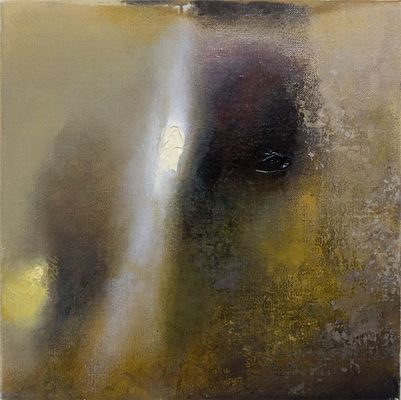
I am not a great reader of poetry but I always return to the work of Melbourne poet, Vincent Buckley (1925- 1988). Perhaps I find his most tantalising piece to be not a finished poem but a fragment left on a scrap of paper discovered on his desk after the poet’s death.
The poetry gathers like oil
In the word-core, and spreads
It has its music meet,
Its music is in movement.
This fragment is more the shell left behind from a volatile thought than a finished poem. I find the last two lines honest but awkward whereas the first two lines work like an arrow. Most likely he could not find a resolution so it was left. Still, in its present form, it remains an eloquent testimony to the ultimate failure of a medium to express mobile thought and sensation, in Buckley’s case, through verbal language. It’s an important matter because this is something all artists have to deal with regardless of the medium.
I have never written a poem, however, I am forever copying fragments from books on paper scraps in a vain effort to fix certain notions in my head. At first, they function as bookmarks that are sometimes returned to when I open the book. But before long, as they accumulate, they fall out littering the table interspersed with A4 photocopies, bills, books and medications.
To return to Buckley’s fragment, the first two lines very much evoke how I paint nowadays. As you age, detail diminishes and patches of light become more luminous and float. I feel the most honest way of dealing with this is by smearing the oil paint on the canvas with the fingers and working close-up, blind. Only if the patches coalesce into an approaching image can the work gain a life.
-
Jonathan Walker was born in Melbourne, Australia and brought up on a dairy farm in Gippsland. In the 1970’s he studied painting at RMIT and won the Harold Wright Scholarship to the British Museum, London. During the 1980’s he exhibited at Pinacotheca Gallery, Richmond and had work shown at the NGV and Heidi City Art Gallery. Over the same period he designed the cover for the “Epigenesi” LP by Giancarlo Toniutti, Italy and conducted a mail exchange work with Achim Wollscheid, Germany. The work with artists through the post resulted in an article published in the bicentenary issue of Art and Australia 1988. He showed in artist run spaces such as WestSpace in the 90’s and 2000’s, and until 2012, taught painting at Victoria University, which is where we (Colleen Ahern and Lisa Radford) as organisers of the exhibition, among many others, had the privilege of being his student.
Walker’s knowledge was imparted to students through the careful selection of music, literature, and artists found in books that he himself had ordered for the library. Walker’s strategy was the generosity of sharing his vast knowledge with references specific to each student and their context.
Walker’s paintings share a similar focus and intimacy.
This exhibition presents a small selection of recent paintings alongside a publication that includes Walker’s writing. Observational and analytical, Walker’s work is a type of material notation — the time of day, colour and how it is blended, the both specific and fleeting location of a reflection on lino or the question of whether a chair leg should be included in a painting.
Please join us on Friday August 21 between 6-8pm to celebrate the opening of the exhibition.
Curated by Colleen Ahern and Lisa Radford.
B. Wurtz
Curated by Nic Tammens
March 26 - April 4, 2015
B.Wurtz works from a basement studio in his home on Manhattan’s Lower East Side.
This local fact is attested to by the plastic shopping bags and newsprint circulars that appear in his work. As formal objects, they don’t make loud claims about their origins but nonetheless transmit street addresses and places of business from the bottom of this long thin island. Like plenty of artists, Wurtz is affected by what is local and what is consumed. His work is underpinned by this ethic. It often speaks from a neighborhood or reads like the contents of a hamper:
“BLACK PLUMS $1.29 lb.”
“Food Bazaar”
“USDA Whole Pork Shoulder Picnic 99c lb.”
“RITE AID Pharmacy, with us it’s personal.”
“H. Brickman & Sons.”
“Sweet Yams 59c lb."
Most of the work in this exhibition was made while the artist was in residence at Dieu Donne, a workshop dedicated to paper craft in Midtown. Here Wurtz fabricated assemblages with paper and objects that are relatively lightweight, with the intention that they would be easily transportable to Australia. This consideration isn’t absolute in Wurtz’s work, but was prescriptive for making the current exhibition light and cheap. Packed in two boxes, these works were sent from a USPS post office on the Lower East Side and delivered to North Melbourne by Australia Post.
Wurtz appears courtesy of Metro Pictures, New York.
Thanks to Rob Halverson, Joshua Petherick, Sari de Mallory, Matt Hinkley, Helen Johnson, Fayen d'Evie, Ask Kilmartin, Lisa Radon, Ellena Savage, Yale Union, and "Elizabeth".
John Nixon
"Archive"
December 15 - January 20, 2014
The presentation of John Nixon's archive offered a rare showcase of this extensive collection of the artist's own publications, catalogues, posters, ephemera, editions and more, from the mid 1980s onwards, alongside a selection of his artworks.
Organized by John Nixon, Joshua Petherick and Matt Hinkley.
<a href=http://wfb.public-office.info/artist/john-nixon>All titles by John Nixon
"Habitat"
at Minerva, Sydney (organised by Joshua Petherick and Matt Hinkley)
November 15 - December 20, 2014
Lupo Borgonovo, Janet Burchill & Jennifer McCamley,
Lewis Fidock, HR Giger, Piero Gilardi, Veit Laurent Kurz,
Cinzia Ruggeri, Michael E. Smith, Lucie Stahl, Daniel Weil, Wols
Press Release:
“...It contained seven objects. The slender fluted bone, surely formed for flight, surely from the wing of some large bird. Three archaic circuitboards, faced with mazes of gold. A smooth white sphere of baked clay. An age-blackened fragment of lace. A fingerlength segment of what she assumed was bone from a human wrist, grayish white, inset smoothly with the silicon shaft of a small instrument that must once have ridden flush with the surface of the skin - but the thing’s face was seared and blackened.”
William Gibson, “Count Zero”, 1986
"Autumn Projects Archive"
Curated by Liza Vasiliou
March 6 - March 15, 2014
World Food Books, in conjunction with the Virgin Australia Melbourne Fashion Festival 2014, presented the Autumn Projects archive, consisting of a selection of early examples in Australian fashion with a particular interest in collecting designers and labels from the period beginning in the 1980’s, who significantly influenced the discourse of Australian Fashion.
Curated by Liza Vasiliou, the exhibition provided a unique opportunity to view pieces by designers Anthea Crawford, Barbara Vandenberg, Geoff Liddell and labels CR Australia, Covers, Jag along with early experimental collage pieces by Prue Acton and Sally Browne’s ‘Fragments’ collection, suspended throughout the functioning World Food Books shop in Melbourne.
H.B. Peace
presented by CENTRE FOR STYLE
November 14, 2013
"Hey Blinky, you say chic, I say same"
Anon 2013
H.B. Peace is a clothing collaboration between great friends Blake Barns and Hugh Egan Westland. Their pieces explore the divergences between 'character’ and ‘personality’ in garments....etc
Special Thanks to Joshua Petherick and Matt Hinkley of WFB and Gillian Mears
and a Very Special Thank you to Audrey Thomas Hayes for her shoe collaboration.
Janet Burchill & Jennifer McCamley
"Aesthetic Suicide"
May 10 - June 8, 2013
The first of our occasional exhibitions in the World Food Books office/shop space in Melbourne, "Aesthetic Suicide" presented a body of new and older works together by artists Janet Burchill & Jennifer McCamley, including videos, prints, a wall work, and publications.
During shop open hours videos played every hour, on the hour.
2014, English
Softcover, 396 pages, (65 b/w ill.), 14 x 21 cm
Published by
Sternberg Press / Berlin
$28.00 - Out of stock
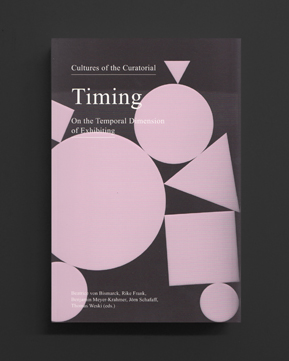
Contributions by Pierre Bal-Blanc, Bassam El Baroni, Claire Bishop, Beatrice von Bismarck, Sabine Breitwieser, Barbara Clausen, Maeve Connolly, Rike Frank, Adrian Heathfield, Inka Meißner, Benjamin Meyer-Krahmer, Maria Muhle, Philippe Parreno, Jörn Schafaff, Bennett Simpson, Kerstin Stakemeier, Thomas Weski, et al.
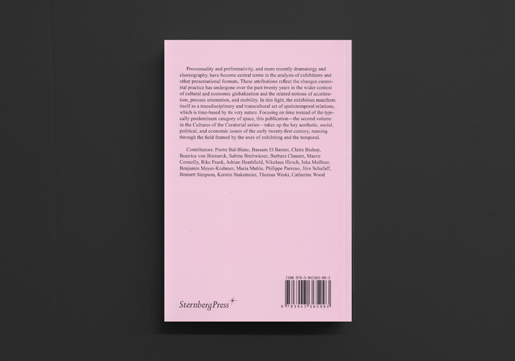
Processuality and performativity, and more recently dramaturgy and choreography, are terms often used in analyses of exhibitions and other curatorial formats. These attributions reflect the changes curatorial practice has undergone over the past twenty years in the wider context of cultural and economic globalization and the related notions of acceleration, action orientation, and mobility. In this light, the exhibition manifests itself as a transdisciplinary and transcultural set of spatiotemporal relations, which is time-based by its very nature. Focusing on time instead of the typically predominant category of space, this publication—the second volume in the Cultures of the Curatorial series—takes up the key aesthetic, social, political, and economic issues of the early twenty-first century running through the field and framed by the axes of exhibiting and the temporal.
Copublished with Kulturen des Kuratorischen, Hochschule für Grafik und Buchkunst Leipzig
Design by Surface
2014, English
Softcover, 294 pages (81 b/w and 52 color ill.), 13 x 19 cm
Published by
Sternberg Press / Berlin
$40.00 - Out of stock
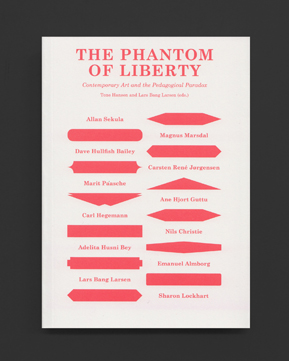
Tone Hansen, Lars Bang Larsen (Eds.)
Contributions by Emanuel Almborg, Nils Christie, Carl Hegemann, Ane Hjort Guttu, Dave Hullfish Bailey, Adelita Husni-Bey, Carsten Rene Jørgensen, Lars Bang Larsen, Sharon Lockhart, Magnus Marsdal, Marit Paasche, Allan Sekula
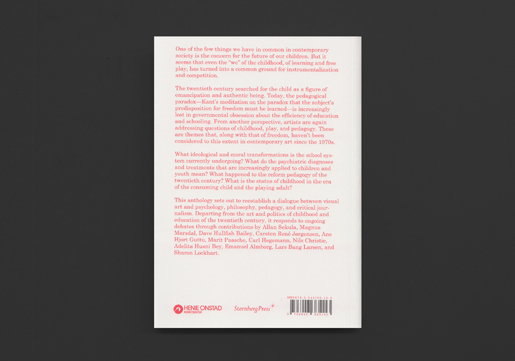
One of the few things we have in common in contemporary society is the future of our children. But it seems that even the “we” of childhood, of learning and free play, has turned into a common ground for instrumentalization and competition. Today, the pedagogical paradox—Kant’s meditation on the paradox that the subject’s predisposition for freedom must be learned—is increasingly lost in governmental obsession about the efficiency of education and schooling. From another perspective, artists are addressing questions of childhood, play, and pedagogy.
What ideological and moral transformations is the school system currently undergoing? What do the psychiatric diagnoses and treatments mean that are increasingly applied to children and youth? What happened to the reform pedagogy of the twentieth century? What is the status of childhood in the era of the consuming child and the playing adult? These are some of the questions addressed by The Phantom of Liberty, which sets out to reestablish a social and aesthetic dialogue between visual art and psychology, philosophy, pedagogy, and critical journalism.
The Phantom of Liberty: Contemporary Art and the Pedagogical Paradox is published following the exhibition “Learning for Life” curated by Tone Hansen and Ane Hjort Guttu, November 11, 2012–February 24, 2013, at Henie Onstad Kunstsenter (HOK).
Copublished with Henie Onstad Kunstsenter
Design by Eriksen/Brown
2014, English/Spanish
Softcover, 352 pages (122 b/w and 29 colour ills.), 22 x 26 cm
Published by
CA2M Centro de Arte Dos de Mayo / Madrid
Sternberg Press / Berlin
$30.00 - Out of stock
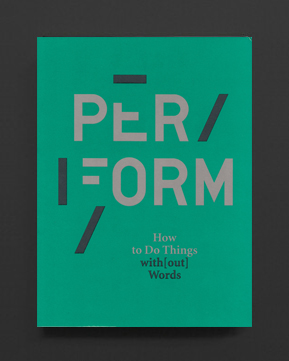
Chantal Pontbriand (Ed.) Per/Form
How to Do Things with[out] Words
Contributions by Jean-Pierre Cometti, Amelia Jones, Antonio Negri, Chantal Pontbriand, José Antonio Sanchez; visual essays by Mathieu Abonnenc, Jennifer Allora & Guillermo Calzadilla, Brad Butler & Karen Mirza, Geneviève Cadieux, Adrian Dan, Angela Detanico & Rafael Lain, Carole Douillard, Cevdet Erek, Köken Ergun, Esther Ferrer, Chiara Fumai, Simon Fujiwara, Ryan Gander, Dora García, Camille Henrot, Sandra Johnston, Latifa Laâbisi, La Ribot, Ines Lechleitner, Franck Leibovici, Cristina Lucas, Haroon Mirza, Roman Ondak, Falke Pisano, Chloé Quenum, Pedro Reyes, Julião Sarmento, Ulla von Brandenburg, Carey Young, Héctor Zamora
Performativity explores the in-between space when bodies or objects are left to perform. The fact that we are living more and more in an “immaterial” world, dominated by mediatization (which some call spectacle), the impact of globalization, the increasing tendency to think of politics as biopolitics—these different factors enhance performance over materiality, or object making. Per/Form investigates the process of this enhancement—how to work through form, and how to let form speak for itself.
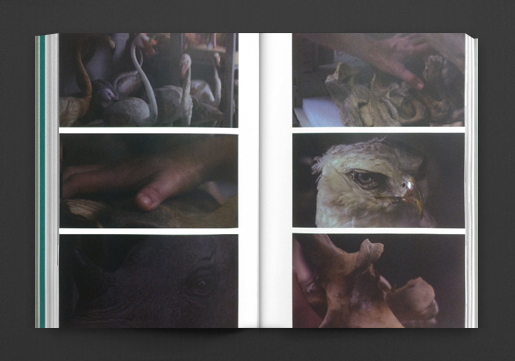
The meaning of performance and performativity today are examined here through different modes of “display”: a book, an exhibition, and its three “Intensity Days” of performative situations. This book compliments these events and the sixteen installations of the exhibition curated by Chantal Pontbriand, “PER/FORM_How to Do Things with[out] Words” (CA2M Centro de Arte Dos de Mayo in Madrid, March 22–September 21, 2014), with theoretical texts and visual essays by thirty participating artists, including musical scores, drawings, documents, and photographs, which all work together to generate various perspectives on the subject through different theoretical premises (politics, experience, immateriality, action, realization, manifestation) and also through the artists’ many diverging perspectives.
Copublished with CA2M Centro de Arte Dos de Mayo, Madrid
Design by Agnès Dahan Studio Paris
2008, English
Hardcover, 330 pages, 17.8 cm x 25.4 cm
Published by
Semiotext(e) / Los Angeles
The MIT Press / Massachusetts
$47.00 - Out of stock
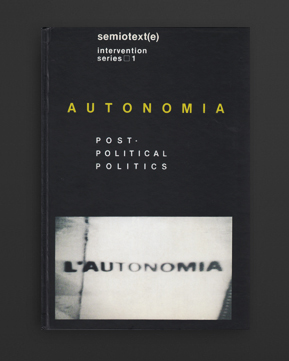
Post-Political Politics
Edited by Sylvère Lotringer and Christian Marazzi
with a new introduction by Sylvère Lotringer, "In the Shadow of the Red Brigades"
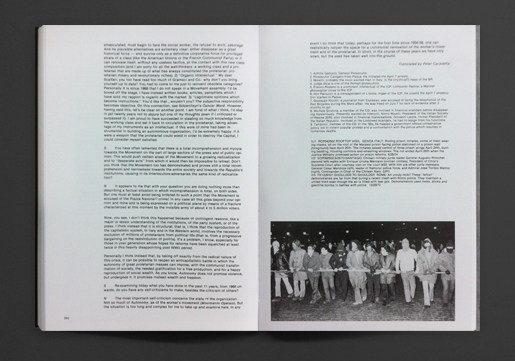
Most of the writers who contributed to the issue were locked up at the time in Italian jails.... I was trying to draw the attention of the American Left, which still believed in Eurocommunism, to the fate of Autonomia. The survival of the last politically creative movement in the West was at stake, but no one in the United States seemed to realize that, or be willing to listen. Put together as events in Italy were unfolding, the Autonomia issue—which has no equivalent in Italy, or anywhere for that matter—arrived too late, but it remains an energizing account of a movement that disappeared without bearing a trace, but with a big future still ahead of it.
—Sylvère Lotringer
Semiotext(e) is reissuing in book form its legendary magazine issue Autonomia: Post-Political Politics, originally published in New York in 1980. Edited by Sylvère Lotringer and Christian Marazzi with the direct participation of the main leaders and theorists of the Autonomist movement (including Antonio Negri, Mario Tronti, Franco Piperno, Oreste Scalzone, Paolo Virno, Sergio Bologna, and Franco Berardi), this volume is the only first-hand document and contemporaneous analysis that exists of the most innovative post-'68 radical movement in the West. The movement itself was broken when Autonomia members were falsely accused of (and prosecuted for) being the intellectual masterminds of the Red Brigades; but even after the end of Autonomia, this book remains a crucial testimony of the way this creative, futuristic, neo-anarchistic, postideological, and nonrepresentative political movement of young workers and intellectuals anticipated issues that are now confronting us in the wake of Empire. In the next two years, Semiotext(e) will publish eight books by such Italian "Post-Fordist" intellectuals as Antonio Negri, Christian Marazzi, Paolo Virno, and Bifo, as they update the theories of Autonomia for the new century.
Sylvère Lotringer, general editor of Semiotext(e), lives in New York and Baja, California. He is the author of Overexposed: Perverting Perversions (Semiotext(e), 2007).Christian Marazzi was born in Lugano, Switzerland, in 1951. He obtained a degree in Political Science at the University of Padova, a master’s degree at the London School of Economics and a doctoral degree in Economics at the City University of London. He has taught at the University of Padova, the State University of New York, and at the University of Lausanne. He is currently Director of Socio-Economic Research at the Scuola Universitaria della Svizzera Italiana.
"[The] recent reissue of Autonomia: Post-Political Politics, Semiotext(e)'s 1980 special issue on autonomia... provides a much needed historical framework for understanding the disciplined dispersion of this movement and the contemporary work of writers, such as Antonio Negri and Paolo Virno, who were formed by it."—Artforum
2008, English
Softcover, 168 pages, 15.2 x 22.9 cm
Published by
Semiotext(e) / Los Angeles
The MIT Press / Massachusetts
$32.00 - Out of stock
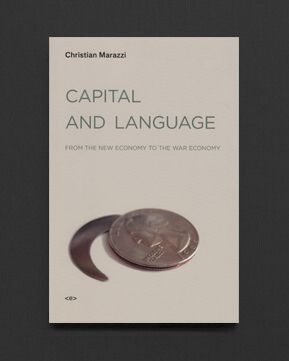
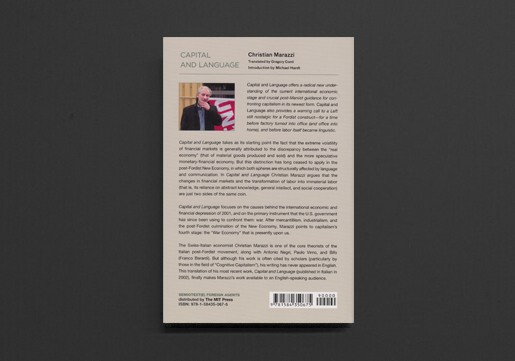
The Swiss-Italian economist Christian Marazzi is one of the core theorists of the Italian postfordist movement, along with Antonio Negri, Paolo Virno, and Bifo (Franco Berardi). But although his work is often cited by scholars (particularly by those in the field of "Cognitive Capitalism"), his writing has never appeared in English. This translation of his most recent work, Capital and Language (published in Italian in 2002), finally makes Marazzi's work available to an English-speaking audience.
Capital and Language takes as its starting point the fact that the extreme volatility of financial markets is generally attributed to the discrepancy between the "real economy" (that of material goods produced and sold) and the more speculative monetary-financial economy. But this distinction has long ceased to apply in the postfordist New Economy, in which both spheres are structurally affected by language and communication. In Capital and Language Marazzi argues that the changes in financial markets and the transformation of labor into immaterial labor (that is, its reliance on abstract knowledge, general intellect, and social cooperation) are just two sides of the same coin.
Capital and Language focuses on the causes behind the international economic and financial depression of 2001, and on the primary instrument that the U.S. government has since been using to face them: war. Marazzi points to capitalism’s fourth stage (after mercantilism, industrialism, and the postfordist culmination of the New Economy): the "War Economy" that is already upon us.
Marazzi offers a radical new understanding of the current international economic stage and crucial post-Marxist guidance for confronting capitalism in its newest form. Capital and Language also provides a warning call to a Left still nostalgic for a Fordist construct—a time before factory turned into office (and office into home), and before labor became linguistic.
Christian Marazzi was born in Lugano, Switzerland, in 1951. He obtained a degree in Political Science at the University of Padova, a master’s degree at the London School of Economics and a doctoral degree in Economics at the City University of London. He has taught at the University of Padova, the State University of New York, and at the University of Lausanne. He is currently Director of Socio-Economic Research at the Scuola Universitaria della Svizzera Italiana.
2014, English
Softcover with dust jacket, 744 pages (colour and b/w ill.), 17 x 24 cm
Published by
Sternberg Press / Berlin
$42.00 - Out of stock
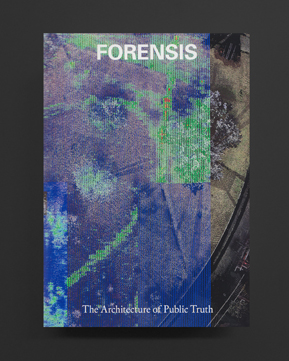
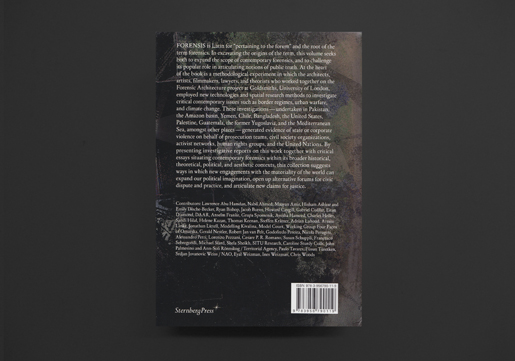
Edited by Forensic ArchitectureWith contributions by Lawrence Abu Hamdan, Nabil Ahmed, Maayan Amir, Hisham Ashkar & Emily Dische-Becker, Ryan Bishop, Jacob Burns, Howard Caygill, Gabriel Cuéllar, Eitan Diamond, DAAR (Decolonizing Architecture Art Residency), Anselm Franke, Grupa Spomenik, Ayesha Hameed, Charles Heller, Helene Kazan, Thomas Keenan, Steffen Krämer, Adrian Lahoud, Armin Linke, Jonathan Littell, Modelling Kivalina, Model Court, Working Group Four Faces of Omarska, Gerald Nestler, Godofredo Pereira, Nicola Perugini, Alessandro Petti, Lorenzo Pezzani, Cesare P. Romano, Susan Schuppli, Francesco Sebregondi, Michael Sfard, Shela Sheikh, SITU Research, Caroline Sturdy Colls, John Palmesino & Ann Sofi Ronnskog / Territorial Agency, Paulo Tavares, Füsun Türetken, Robert Jan van Pelt, Srdjan Jovanovic Weiss / NAO, Eyal Weizman, Ines Weizman, Chris WoodsForensics originated from the term "forensis" which is Latin for “pertaining to the forum.” The Roman forum was a multidimensional space of negotiation and truth-finding in which humans as well as objects participated in politics, law, and the economy. With the advent of modernity, forensics shifted to refer exclusively to the courts of law and to the use of medicine, and today as a science in service to the law. The present use of forensics, along with its popular representations have become increasingly central to the modes by which states police and govern their subjects.By returning to forensis this book seeks to unlock forensics’ original potential as a political practice and reorient it. Inverting the direction of the forensic gaze it designates a field of action in which individuals and organizations detect and confront state violations.The condition of forensis is one in which new technologies for mediating the “testimony” of material objects—bones, ruins, toxic substances, landscapes, and the contemporary medias in which they are captured and represented—are mobilized in order to engage with struggles for justice, systemic violence, and environmental transformations across the frontiers of contemporary conflict.This book presents the work of the architects, artists, filmmakers, lawyers, and theorists who participated directly in the “Forensic Architecture” project in the Centre for Research Architecture at Goldsmiths University of London, as well as the work of associates and guests. It includes forensic investigations undertaken by the project and its collaborators aimed at producing new kinds of evidence for use by international prosecutorial teams, political organizations, NGOs, and the UN. It also brings together research and essays that situate contemporary forensic practices within broader political, historical, and aesthetic discourse.Copublished with Forensic ArchitectureDesign by Zak Group
Due to the weight of this volume, your order will likely incur additional postage costs. We will contact you with the best shipping advice upon your order, or alternatively, please email us in advance. Thank you for understanding.
2014, English
Hardcover (cloth binding), 336 pages (colour & b/w ill.), 16 x 22 cm
Published by
Sternberg Press / Berlin
$32.00 - Out of stock
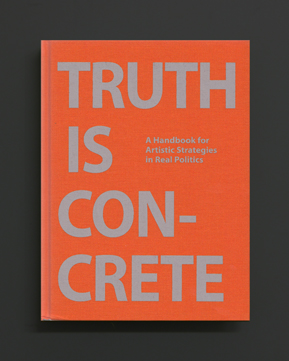
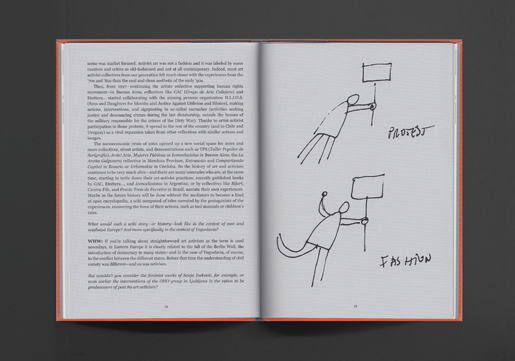
Coedited by Anne Faucheret, Veronica Kaup-Hasler, Kira Kirsch, Andreas R. Peternell, Johanna Rainer Essays by Stephen Duncombe and Steve Lambert, Alanna Lockward, Florian Malzacher, Chantal Mouffe, Gerald Raunig, Jonas Staal; a conversation with etcetera, Nato Thompson, WHW; and drawings by Dan PerjovschiHow does art play a role in social and political struggles all over the world? Can art be a tool with which to shape the world, rather than just reflect it? Truth is Concrete: A Handbook for Artistic Strategies in Real Politics takes the possibility of concrete truth as a working hypothesis and looks for direct action and concrete knowledge: for an art that not only represents and documents, but engages in specific political and social situations—and for an activism that not only acts for the sake of acting but searches for intelligent, creative means of self-empowerment. This book is the second manifestation under this title; the first materialized as a twenty-four-hour, seven-day marathon camp that took place in the frame of the steirischer herbst festival in Graz, Austria, in September 2012.This handbook is a stand-alone publication, emphasizing the “usefulness” of the different artistic approaches collected. It is a toolbox and a manual with contributions by key protagonists in this field. One hundred texts describe very different strategies and tactics, written by their inventors and/or practitioners from all over the world, mapping the broad field of engaged art and artistic activism today. Additional essays focus on the philosophy, structures, and modalities behind the many battles to make this world a better place.With further contributions by Jonathan Allen, Udi Aloni, Corina L. Apostol / Artleaks, Hector Aristizábal, Saki Bailey / Teatro Valle, Artúr van Balen / Tools for Action, Katherine Ball, Andy Bichlbaum / The Yes Men, Reverend Billy & The Church of Stop Shopping, Leah Borromeo, Andrew Boyd, Tania Bruguera, Santiago Cirugeda / Recetas Urbanas, Collective Authorship, Corrupt Tour, Gabriella Csoszó / FreeDoc, Minerva Cuevas, Neil Cummings, Diedrich Diederichsen, Charles Esche, Noah Fischer, Benjamin Foerster-Baldenius / raumlaborberlin, Sérgio Miguel Franco / Pixadores, Andrea Fraser, Isabelle Fremeaux, Christine Gaigg, Ganzeer, Federico Geller, Guillermo Gómez-Peña / La Pocha Nostra, Marina Gržinić, Núria Güell, Erdem Gündüz, Hans Haacke, The Haircut Before The Party, Stefano Harney, Carl Hegemann, Justin Hoffmann, Khaled Hourani, Iconoclasistas, The Institute for Human Activities, International Institute of Political Murder, Janez Janša, Khaled Jarrar, Jeudi Noir, Anna Jermolaeva, John Jordan, Janice Kerbel, Jisun Kim, Omer Krieger, the laboratory of insurrectionary imagination, Kalle Lasn / Adbusters, André Lepecki, Lexxus Légal, Lawrence Liang, Liberate Tate, Geert Lovink, Matteo Lucchetti, Lucifer / Church of Kopimism, Oliver Marchart, Leónidas Martín, Joana Mazza / Observatório de Favelas, Tomislav Medak, Thomas Meinecke, Jasmina Metwaly / Mosireen Collective, Antanas Mockus, Jean-Luc Moulène, Rabih Mroué, Michal Murin, Marina Naprushkina / Office for Anti-Propaganda, Neue Slowenische Kunst, Occuprint, Robyn Orlin, Ahmet Öğüt / The Silent University, Sibylle Peters, The Pinky Show, Srđa Popović / CANVAS, Public Movement, Raivo Puusemp, Richard Reynolds, Irit Rogoff, Ned Rossiter, Philipp Ruch / Center for Political Beauty, Yekaterina Samutsevich / Pussy Riot, Florian Schneider, Frank Apunkt Schneider / monochrom, Susan Schuppli / Forensic Architecture, Shared Inc., Inna Shevchenko / Femen, Gregory Sholette, Stevphen Shukaitis, Toma Sik, Kostis Stafylakis / Kavecs, Mladen Stilinović, Kuba Szreder, Claire Tancons, Mierle Laderman Ukeles, Ultra-red, the vacuum cleaner, Dmitry Vilensky / Chto Delat?, Marina Vishmidt, Joanna Warsza, WochenKlausur, Krzysztof Wodiczko, Jacob Wren, Stephen Wright, Kàddu Yaraax, Wu Yuren, Salam Yousry, and Slavoj ŽižekDesign by Atelier Neubacher
2014, English
Softcover, 480 pages (colour & b/w ill.), 15 x 20.5 cm
Published by
Sternberg Press / Berlin
$74.00 $25.00 - Out of stock
Edited and with contributions by Carola Dertnig, Diedrich Diederichsen, Tom Holert, Johannes Porsch, Johanna Schaffer, Stefanie Seibold, and Axel Stockburger
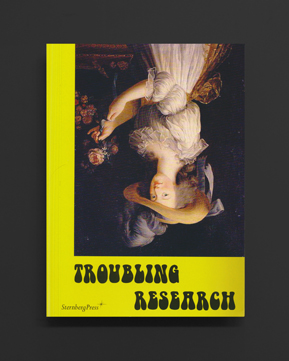
In 2010/11, a group of Vienna-based art practitioners (artists, art historians, and cultural theorists) embarked on a journey of experimental research, exploring the genealogical and political implications of the ways in which research rhetorics and policies are currently incorporated into the fields of contemporary art and art education.
Troubling Research: Performing Knowledge in the Arts, a collection of “books” of essays and conversations, is the quirky and exhilarating outcome of this collaborative endeavor to render a “problematization” by interrogating the very conditions of the current upsurge of the art/research articulation. Michel Foucault once introduced problematization as a “specific work of thought” that transforms “a group of obstacles and difficulties into problems to which diverse solutions will attempt to produce a response.” For this project, the obstacles and difficulties in question were the terms “art” and “research” and their peculiar conjunction as “artistic” or “arts-based research.” As a result of this process, the understanding of individual artistic/theoretical practices was tested. Working both independently and as a collaborative entity, the group found itself negotiating and contesting each participant’s claim to knowledge in the context of art. The eventual responses to the problem of research proved to be both performative and troubling.
Design by Johannes Porsch
2014, English
Softcover, 224 pages (b/w ill.), 16.5 x 22 cm
Published by
Sternberg Press / Berlin
$32.00 - Out of stock
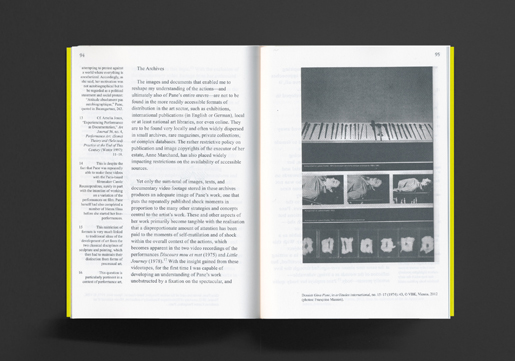
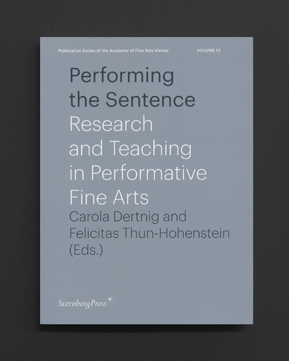
Contributions by Philip Auslander, Sabeth Buchmann, Margarit von Büren, Barbara Clausen, Carola Dertnig, Andrea Fraser, Sabine Gebhardt Fink, Simone Forti, Sabina Holzer, Amelia Jones, Carrie Lambert-Beatty, Marie-Luise Lange, Suzana Milevska, Lilo Nein, Susanne Neuburger, Yvonne Rainer, Constanze Ruhm, Dietmar Schwärzler, Stefanie Seibold, Felicitas Thun-Hohenstein, Mechtild Widrich, Martha Wilson Performing the Sentence brings into dialogue the ways that “performative thinking” has developed in different national and institutional contexts, within different disciplines in the arts, and the conditions under which it has developed in experimental art schools. This anthology is a collection of twenty-one essays and conversations that weave in and out of the two key areas of research and teaching within performative fine arts. They bring to light the conventions involved in the production, presentation, reception, and historicization of performance art, as well as the specific cultural and political implications. The various contributions also show how these conventions are produced through or within each artwork, independent from their specific contexts, offering ways of thinking beyond their usual frames of reference. At the same time they recognize the substantial work carried out by artists, critics, and theorists who have built on the meanings, references, and implications of performative thinking since the beginning of the “performative turn.” Publication Series of the Academy of Fine Arts Vienna, vol. 13 Design by Surface
2013, English
Softcover, 237 pages, 15.2 cm x 21.2 cm
Published by
The MIT Press / Massachusetts
Whitechapel / London
$50.00 - Out of stock
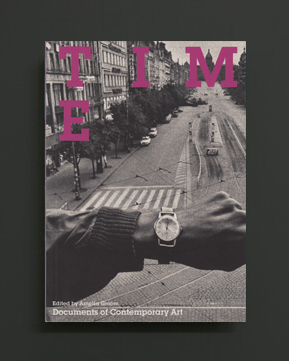
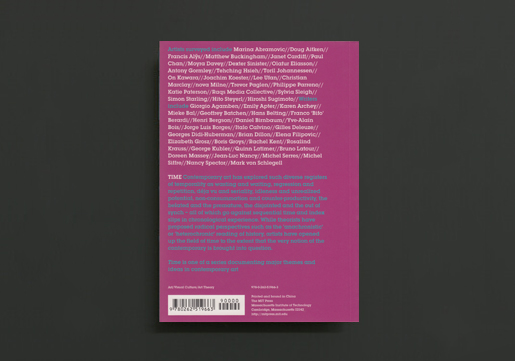
What does 'contemporary' actually mean? This is among the fundamental questions about the nature and politics of time that philosophers, artists and more recently curators have investigated over the past two decades. If clock time -- a linear measurement that can be unified, followed and owned -- is largely the invention of capitalist modernity and binds us to its strictures, how can we extricate ourselves and discover alternative possibilities of experiencing time? Recent art has explored such diverse registers of temporality as wasting and waiting, regression and repetition, deja vu and seriality, unrealized possibility and idleness, non-consummation and counter-productivity, the belated and the premature, the disjointed and the out-of-sync -- all of which go against sequentialist time and index slips in chronological experience. While such theorists as Giorgio Agamben and Georges Didi-Huberman have proposed "anachronistic" or "heterochronic" readings of history, artists have opened up the field of time to the extent that the very notion of the contemporary is brought into question.
This collection surveys contemporary art and theory that proposes a wealth of alternatives to outdated linear models of time.
Artists surveyed include Marina Abramovi, Francis Alys, Matthew Buckingham, Janet Cardiff, Paul Chan, Olafur Eliasson, Bea Fremderman, Toril Johannessen, On Kawara, Joachim Koester, Christian Marclay, nova Milne, Trevor Paglen, Katie Patterson, Raqs Media Collective, Dexter Sinister, Simon Starling, Hito Steyerl, Hiroshi Sugimoto, Tehching Hsieh, Time/Bank.
Writers include Giorgio Agamben, Mieke Bal, Geoffrey Batchen, Hans Belting, Walter Benjamin, Franco Berardi, Daniel Birnbaum, Georges Didi-Huberman, D gen Zenji, Peter Galison, Boris Groys, Brian Dillon, Elena Filipovic, Joshua Foer, Elizabeth Grosz, Adrian Heathfield, Rachel Kent, Bruno Latour, George Kubler, Doreen Massey, Alexander Nagel, Jean-Luc Nancy, Daniel Rosenberg, Michel Serres, Michel Siffre, Nancy Spector, Nato Thompson, Christopher Wood, George Woodcock, Mark von Schlegell.
Edited by Amelia Groom.
2004, English
Softcover, 224 pages, 15.2 x 22.9 cm
Published by
Semiotext(e) / Los Angeles
$33.00 - Out of stock
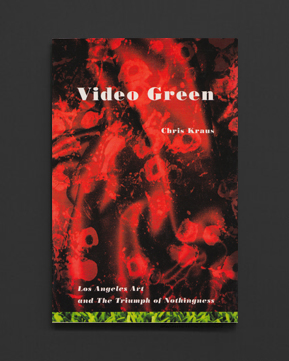
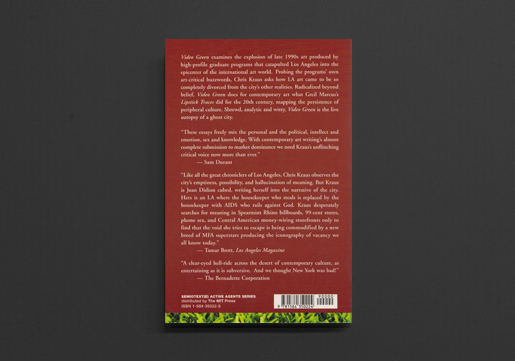
Video Green examines the explosion of late 1990s Los Angeles art driven by high-profile graduate programs. Probing the surface of art-critical buzzwords, Chris Kraus brilliantly chronicles how the City of Angels has suddenly become the epicenter of the international art world and a microcosm of the larger culture. Why is Los Angeles so completely divorced from other realities of the city? Shrewd, analytic and witty, Video Green is to the Los Angeles art world what Roland Barthes' Mythologies were to the society of the spectacle: the live autopsy of a ghost city.
The author of four novels, the most recent of which is Summer of Hate, and two books of criticism, Chris Kraus was recently described by the New York Observer as "the art world's favorite fiction writer." She teaches at European Graduate School and lives in Los Angeles.
"Idiosyncratic, scattered and compelling, Kraus's take on L.A. and its art is decidedly and wonderfully nonstandard." Publishers Weekly (online) "Kraus predictably... plunges into [Los Angeles's] 'not-thereness' headfirst and takes the reader with her down every rabbit hole." Masha Gutkin San Francisco Bay Guardian "Like all the great chroniclers of Los Angeles, Chris Kraus observes the city's emptiness, possibility and hallucination of meaning. But Kraus is Joan Didion cubed, writing herself into the narrative of the city." Tamar Brott Los Angeles Magazine
2014, English
Softcover, 280 pages, 15.2 x 22.9 cm
Published by
Semiotext(e) / Los Angeles
$40.00 - Out of stock
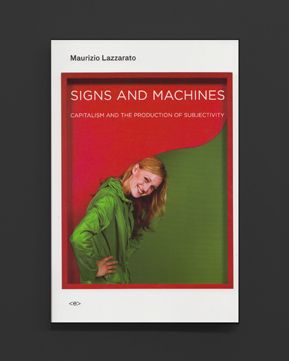
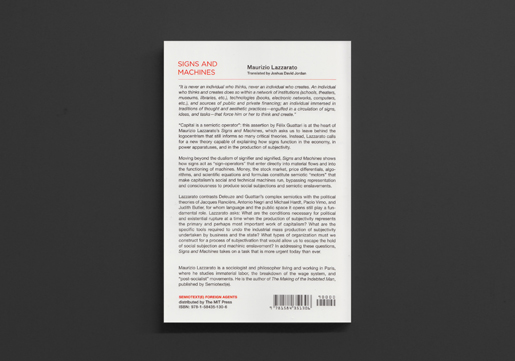
“Capital is a semiotic operator'': this assertion by Félix Guattari is at the heart of Maurizio Lazzarato’s Signs and Machines, which asks us to leave behind the logocentrism that still informs so many critical theories. Lazzarato calls instead for a new theory capable of explaining how signs function in the economy, in power apparatuses, and in the production of subjectivity.
Moving beyond the dualism of signifier and signified, Signs and Machines shows how signs act as “sign-operators" that enter directly into material flows and into the functioning of machines. Money, the stock market, price differentials, algorithms, and scientific equations and formulas constitute semiotic “motors" that make capitalism’s social and technical machines run, bypassing representation and consciousness to produce social subjections and semiotic enslavements.
Lazzarato contrasts Deleuze and Guattari’s complex semiotics with the political theories of Jacques Rancière, Antonio Negri and Michael Hardt, Paolo Virno, and Judith Butler, for whom language and the public space it opens still play a fundamental role. Lazzarato asks: What are the conditions necessary for political and existential rupture at a time when the production of subjectivity represents the primary and perhaps most important work of capitalism? What are the specific tools required to undo the industrial mass production of subjectivity undertaken by business and the state? What types of organization must we construct for a process of subjectivation that would allow us to escape the hold of social subjection and machinic enslavement? In addressing these questions, Signs and Machines takes on a task that is today more urgent than ever.
Maurizio Lazzarato is a sociologist and philosopher living and working in Paris, where he studies immaterial labor, the breakdown of the wage system, and “post-socialist” movements. He is the author of The Making of the Indebted Man, published by Semiotext(e).
2011, English
Softcover, 128 pages, 11.4 x 17.8 cm
Published by
Semiotext(e) / Los Angeles
$28.00 - Out of stock
"History that repeats itself turns to farce. But a farce that repeats itself ends up making a history."
— from The Agony of Power
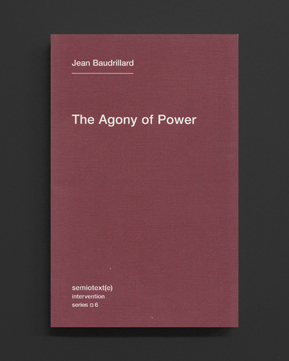
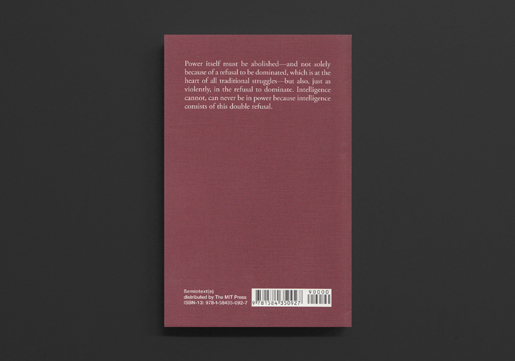
In these previously unpublished manuscripts written just before his death in 2007, Jean Baudrillard takes a last crack at the bewildering situation currently facing us as we exit the system of ''domination'' (based on alienation, revolt, revolution) and enter a world of generalized ''hegemony'' in which everyone becomes both hostage and accomplice of the global market. But in the free-form market of political and sexual liberation, as the possibility of revolution (and our understanding of it) dissipates, Baudrillard sees the hegemonic process as only beginning. Once expelled, negativity returns from within ourselves as an antagonistic force—most vividly in the phenomenon of terrorism, but also as irony, mockery, and the symbolic liquidation of all human values. This is the dimension of hegemony marked by an unbridled circulation—of capital, goods, information, or manufactured history—that is bringing the very concept of exchange to an end and pushing capital beyond its limits: to the point at which it destroys the conditions of its own existence. In the system of hegemony, the alienated, the oppressed, and the colonized find themselves on the side of the system that holds them hostage. In this paradoxical moment in which history has turned to farce, domination itself may appear to have been a lesser evil.
Translation byAmes Hodges, Introduction by Sylvere Lotringer
This book gathers together two essays—''The Agony of Power'' and ''From Domination to Hegemony''—and a related interview with Baudrillard from 2005, ''The Roots of Evil.'' Semiotext(e) launched Baudrillard into English back in the early 1980s; now, as our media and information infested ''ultra-reality'' finally catches up with his theory, Semiotext(e) offers The Agony of Power, Baudrillard's unsettling coda.
Jean Baudrillard (1929–2007) was a philosopher, sociologist, cultural critic, and theorist of postmodernity who challenged all existing theories of contemporary society with humor and precision. An outsider in the French intellectual establishment, he was internationally renowned as a twenty-first century visionary, reporter, and provocateur.
2014, English / French
Softcover, 232 pages (b&w ill.), 240 x 175 mm
Published by
May Revue / Paris
$25.00 - Out of stock
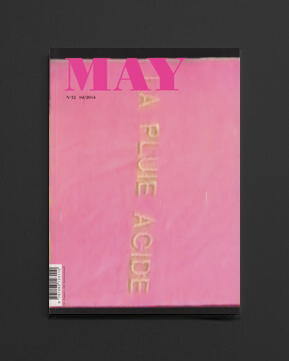
MAY #12 features:
The Spoiled Children of Art
— Georges Rey
Afterword
— Florence Bonnefous
Black Box
— Éric Troncy
“Project Unité” in Firminy.
Interview with Yves Aupetitallot
— May
Editorial (catalog of “L’Hiver de l’amour”)
— Elein Fleiss, Dominique Gonzalez-Foerster, Bernard Joisten, Jean-Luc Vilmouth, Olivier Zahm
Traffic: Space-times of the Exchange
— Nicolas Bourriaud
The Stranger and the Margin. Interview with Roy Genty
— May
Reviews
On Loretta Fahrenholz, “Ditch Plains” at Reena Spaulings Fine Art, New York
— Annie Godfrey Larmon
On “Interwoven Globe: The Worldwide Textile Trade 1500-1800” at Metropolitan Museum of Art, New York, and “Decorum: Carpets and Tapestries by Artists” at Musée d’Art moderne de la Ville de Paris/ARC, Paris
— Nick Mauss
Trois petits chats. On “Pierre Huyghe” at Centre Pompidou, Paris
— Neil Beloufa
Mobile Brand Development. On Carissa Rodriguez, “La Collectionneuse” at Front Desk Apparatus, New York
— Jacob King
To the Planetarium. On “The Whole Earth. California and the Disappearance of the Outside”, at Haus der Kulturen der Welt, Berlin
— Vincent Normand
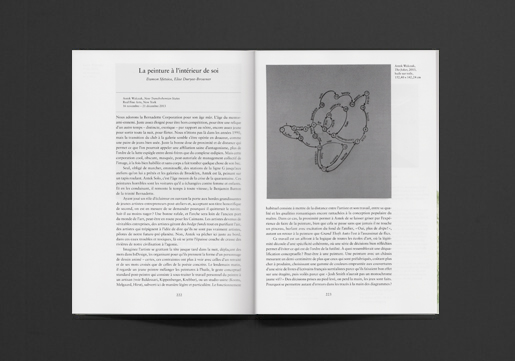
Painting Inside Yourself. On Antek Walczak, “New Transbohemian States” at Real Fine Arts, New York
— Damon Sfetsios, Elise Duryee-Browner
About MAY Revue:
Conceived as a collective space in which to develop thoughts and confront positions on artistic production, May magazine examines, quaterly, contemporary art practice and theory in direct engagement with the issues, contexts and strategies that construct these two fields. An approach that could be summed up as critique at work – or as critique actively performed in text and art forms alike.
Featuring essays, interviews, art works and reviews by artists, writers and diverse practitioners of the arts, the magazine also intends to address the economy of the production of knowledge – the starting point of this reflection being the space of indistinction between information and advertisement typical of our time. This implies a dialogue with forms of critique produced in other fields.
2014, English
Softcover (w. dust jacket), 112 pages (9 color and 6 b/w ills.), 10.5 x 15 cm
Published by
Sternberg Press / Berlin
$44.00 $15.00 - In stock -
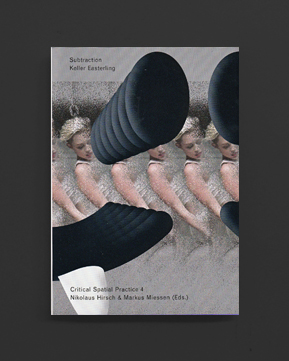
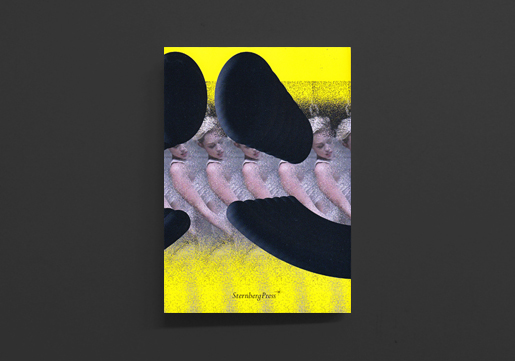
Edited by Nikolaus Hirsch, Markus Miessen
Featuring artwork by Metahaven
Unbuilding is the other half of building. Buildings, treated as currency, rapidly inflate and deflate in volatile financial markets. Cities expand and shrink; whether through the violence of planning utopias or war, they are also targets of urbicide. Repeatable spatial products quickly make new construction obsolete; the powerful bulldoze the disenfranchised; buildings can radiate negative real estate values and cause their surroundings to topple to the ground. Demolition has even become a spectacular entertainment.
Keller Easterling’s volume in the Critical Spatial Practice series analyzes the urgency of building subtraction. Often treated as failure or loss, subtraction—when accepted as part of an exchange—can be growth. All over the world, sprawl and overdevelopment have attracted distended or failed markets and exhausted special landscapes. However, in failure, buildings can create their own alternative markets of durable spatial variables that can be managed and traded by citizens and cities rather than the global financial industry.
These ebbs and flows—the appearance and disappearance of building—can be designed. Architects—trained to make the building machine lurch forward—may know something about how to put it into reverse.
Design by Zak Group
2014, English
Softcover, 378 pages, 21 x 14 cm
Published by
Walther König / Köln
$34.00 - Out of stock
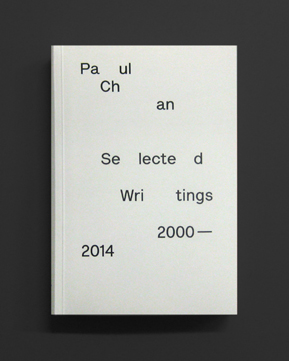
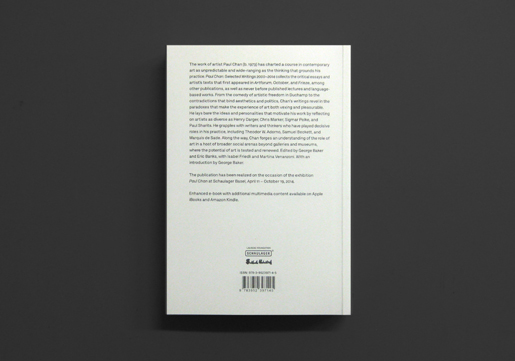
The work of Paul Chan has charted a course in contemporary art as unpredictable and wide-ranging as the thinking that grounds his praxis.
Paul Chan: Selected Writings 2000 - 2014 collects never before published lectures and language-based works as well as the critical essays and artist's texts that first appeared in Artforum, October and Frieze, among others.
Chan's writings revel in the paradoxes that make the experience of art both vexing and pleasurable, from the comedy of artistic freedom in Duchamp to the contradictions that bind aesthetics and politics.
By reflecting on artists as Henry Darger, Chris Marker or Sigmar Polke and grappling with writers and thinkers who have played a decisive role in his practice (Adorno, Becket, deSade) he lays bare the ideas and personalities that motivate his work.
2014, English/German
Softcover, 416 pages, 23.5 x 16.5 cm
Published by
Walther König / Köln
$45.00 - Out of stock
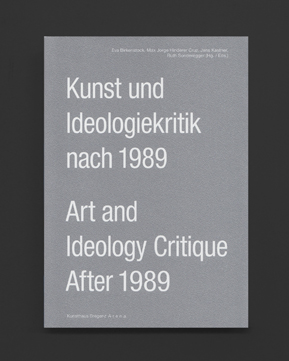
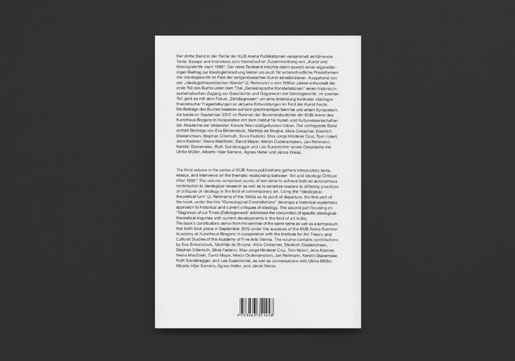
The third volume in the series of KUB Arena publications gathers introductory texts, essays, and interviews on the thematic relationship between "Art and the Critique of Ideology After 1989." The volume comprised purely of text aims to achieve both an autonomous contribution to ideological research as well as to sensitize readers to differing practices of critiques of ideology in the field of contemporary art. Using the "ideologicaltheoretical turn" of the 1960s as its point of departure, the first part of the book, under the title "Genealogical Constellations" develops a historicalsystematic approach to historical and current critiques of ideology. The second part focusing on "Temporal Diagnoses" addresses the conjunction of specific ideological-theoretical inquiries with current developments in the field of art today.
2014, English
Softcover, 160 pages (60 b/w ills.), 16.5 x 23.5 cm
Published by
Sternberg Press / Berlin
Dexter Sinister / New York
The Serving Library / New York
$24.00 - Out of stock
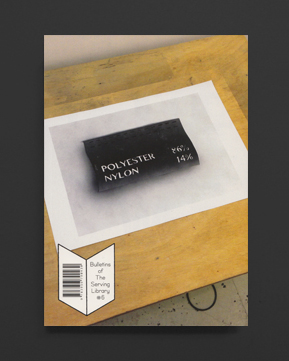
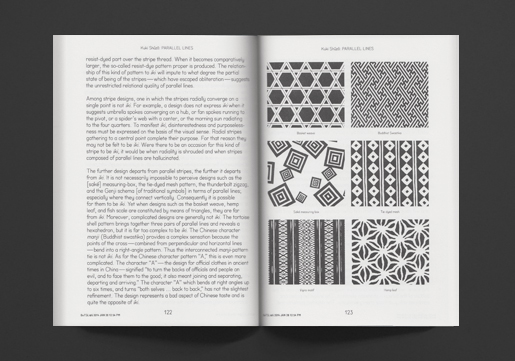
This issue poses as a retroactive non-catalog for the group exhibition “White Petals Surround Your Yellow Heart” at the Institute for Contemporary Art at the University of Pennsylvania curated by Anthony Elms. As such, its nominal theme is Fashion. Bulletins from the edges of that world are from Angie Keefer, Robin Kinross, Joke Robaard, Brian Eno, Nick Relph, Eli Diner, Chris Fite-Wassilak, Stuart Bailey, Sarah Demeuse, Adloph Loos, Kuki Shûzô, Sanya Kantarovsky, and Perri MacKenzie.
2013, English
Hardcover, 206 pages (150 ills.), 14 x 21 cm
Published by
Sternberg Press / Berlin
$41.00 - Out of stock
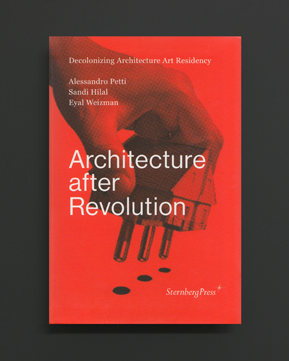
The work presented in this book is an invitation to undertake an urgent architectural and political thought experiment: to rethink today’s struggles for justice and equality not only from the historical perspective of revolution, but also from that of a continued struggle for decolonization; consequently, to rethink the problem of political subjectivity not from the point of view of a Western conception of a liberal citizen but rather from that of the displaced and extraterritorial refugee. You will not find here descriptions of popular uprising, armed resistance, or political negotiations, despite these of course forming an integral and necessary part of any radical political transformation. Instead, the authors present a series of provocative projects that try to imagine “the morning after revolution.”
Located on the edge of the desert in the town of Beit Sahour in Palestine, the architectural collective Decolonizing Architecture Art Residency (DAAR) has since 2007 combined discourse, spatial intervention, collective learning, public meetings, and legal challenges to open an arena for speculating about the seemingly impossible: the actual transformation of Israel’s physical structures of domination. Against an architectural history of decolonization that sought to reuse colonial architecture for the same purpose for which it was originally built, DAAR sees opportunities in a set of playful propositions for the subversion, reuse, profanation, and recycling of these structures of domination and the legal infrastructures that sustain them.
DAAR’s projects should be understood as a series of architectural fables set in different locations: an abandoned military base near Beit Sahour, the refugee camp of Dheisheh in Bethlehem, the remnants of three houses on the Jaffa beach, the uncompleted Palestinian Parliament building, the historical village of Battir, the village of Miska destroyed during the Nakba, and the red-roofed West Bank colony of Jabel Tawil (P’sagot) next to Ramallah-El Bireh.
Design by Surface
2013, English
Softcover, 262 pages, 16.5 x 22 cm
Published by
Sternberg Press / Berlin
$36.00 - Out of stock
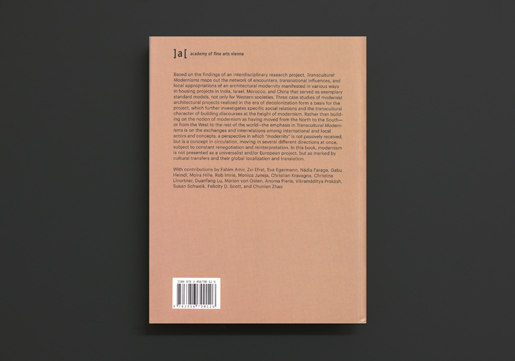
Contributions by Fahim Amir, Zvi Efrat, Eva Egermann, Nádia Farage, Gabu Heindl, Moira Hille, Rob Imrie, Monica Juneja, Christian Kravagna, Christina Linortner, Duanfang Lu, Anoma Pieris, Vikramāditya Prakāsh, Marion von Osten, Susan Schweik, Felicity D. Scott, Chunlan Zhao
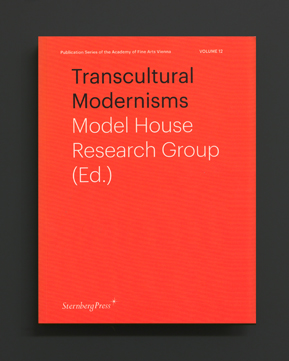
Based on the findings of an interdisciplinary research project, Transcultural Modernisms maps out the network of encounters, transnational influences, and local appropriations of an architectural modernity manifested in various ways in housing projects in India, Israel, Morocco, and China. Three case studies, realized in the era of decolonization, form a basis for the project, which further investigates specific social relations and the transcultural character of building discourses at the height of modernism. Rather than building on the notion of modernism as having moved from the North to the South—or from the West to the rest of the world—the emphasis in Transcultural Modernisms is on the exchanges and interrelations among international and local actors and concepts, a perspective in which “modernity” is not passively received, but is a concept in circulation, moving in several different directions at once, subject to constant renegotiation and reinterpretation. In this book, modernism is not presented as a universalist and/or European project, but as marked by cultural transfers and their global localization and translation.
Publication series of the Academy of Fine Arts Vienna, vol. 12
Design by Surface
2014, English
Softcover, 172 pages, 12.8 x 19.8 cm
Published by
Sternberg Press / Berlin
$20.00 - Out of stock
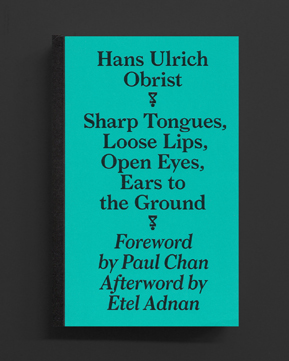
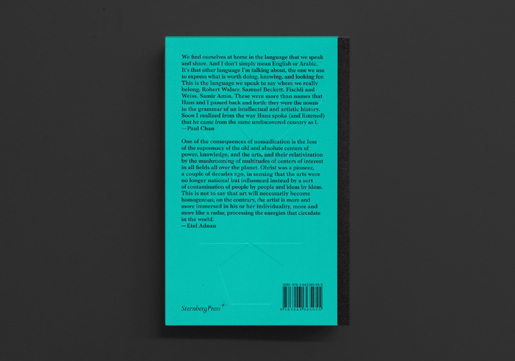
Edited by April Lamm
Introduction by Paul Chan, afterword by Etel Adnan, ode by Olafur Eliasson
Following Everything You Always Wanted to Know About Curating But Were Afraid to Ask, this second volume in the series on international curator Hans Ulrich Obrist presents a selection of his key writings from the past two decades, which elaborate on the manifold thinkers, curators, and events that influence his interdisciplinary practice of exhibition making.
The collected essays form the compartments of Obrist’s curatorial toolbox, along with elucidating his views on stewardship, patronage, and art itself. Influences and interlocutors cited and discussed here include, among others, Alexander Dorner, Édouard Glissant, Claude Lévi-Strauss, Jean-François Lyotard, Dominique de Menil, Josef Ortner, Cedric Price, Sir John Soane, and Harald Szeemann.
Design by Zak Group
2006, English
Softcover, 174 pages, 22.8 x 15.2 cm
Published by
Semiotext(e) / Los Angeles
$31.00 - Out of stock
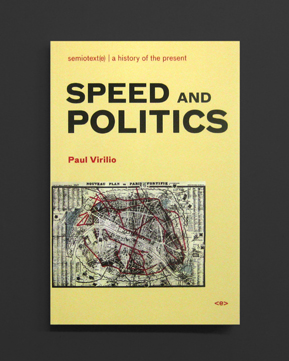
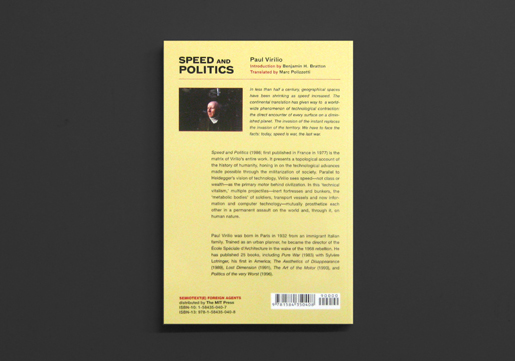
Speed and Politics (first published in France in 1977) is the matrix of Virilio's entire work. Building on the works of Morand, Marinetti, and McLuhan, Virilio presents a vision more radically political than that of any of his French contemporaries: speed as the engine of destruction. Speed and Politics presents a topological account of the entire history of humanity, honing in on the technological advances made possible through the militarization of society. Paralleling Heidegger's account of technology, Virilio's vision sees speed—not class or wealth—as the primary force shaping civilization. In this "technical vitalism," multiple projectiles—inert fortresses and bunkers, the "metabolic bodies" of soldiers, transport vessels, and now information and computer technology—are launched in a permanent assault on the world and on human nature. Written at a lightning-fast pace, Virilio's landmark book is a split-second, overwhelming look at how humanity's motivity has shaped the way we function today, and what might come of it.
2009, English
Softcover, 232 pages, 2.8 x 15.2 cm
Published by
Semiotext(e) / Los Angeles
$32.00 - Out of stock
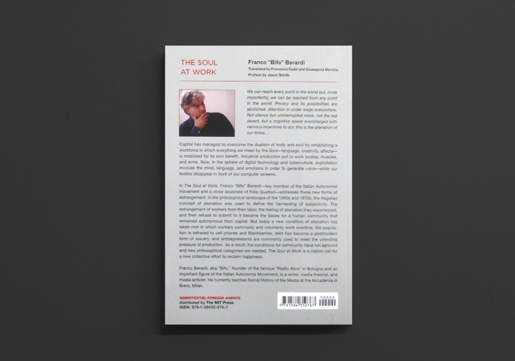
We can reach every point in the world but, more importantly, we can be reached from any point in the world. Privacy and its possibilities are abolished. Attention is under siege everywhere. Not silence but uninterrupted noise, not the red desert, but a cognitive space overcharged with nervous incentives to act: this is the alienation of our times....
—from The Soul at Work
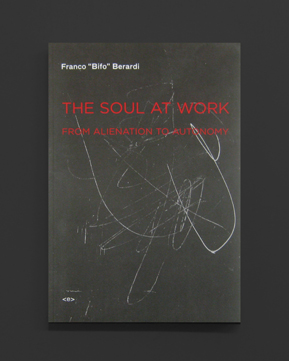
Capital has managed to overcome the dualism of body and soul by establishing a workforce in which everything we mean by the Soul—language, creativity, affects—is mobilized for its own benefit. Industrial production put to work bodies, muscles, and arms. Now, in the sphere of digital technology and cyberculture, exploitation involves the mind, language, and emotions in order to generate value—while our bodies disappear in front of our computer screens.
In this, his newest book, Franco "Bifo" Berardi—key member of the Italian Autonomist movement and a close associate of Félix Guattari—addresses these new forms of estrangement. In the philosophical landscape of the 1960s and 1970s, the Hegelian concept of alienation was used to define the harnessing of subjectivity. The estrangement of workers from their labor, the feeling of alienation they experienced, and their refusal to submit to it became the bases for a human community that remained autonomous from capital. But today a new condition of alienation has taken root in which workers commonly and voluntarily work overtime, the population is tethered to cell phones and Blackberries, debt has become a postmodern form of slavery, and antidepressants are commonly used to meet the unending pressure of production. As a result, the conditions for community have run aground and new philosophical categories are needed. The Soul at Work is a clarion call for a new collective effort to reclaim happiness.
The Soul at Work is Bifo's long overdue introduction to English-speaking readers. This Semiotext(e) edition is also the book's first appearance in any language.
2014, English
Softcover (w. dust jacket), 110 pages, 39 color and 70 b/w ills., 10.5 x 15 cm
Published by
Sternberg Press / Berlin
$25.00 - Out of stock
Edited by Nikolaus Hirsch, Markus Miessen
Featuring artwork by Dan Graham
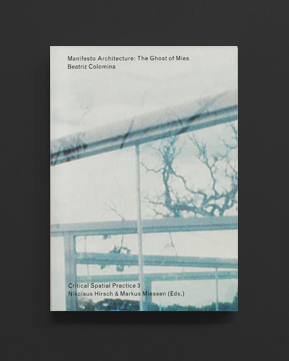
The history of the avant-garde (in art, architecture, literature) can’t be separated from the history of its engagement with mass media. It is not just that the avant-garde used media to publicize its work; the work did not exist before its publication.
In architecture, Adolf Loos, Le Corbusier, and Mies van der Rohe came to be known through their influential writings and manifestos published in newspapers, journals, and little magazines. Entire groups, from Dada and Surrealism to De Stijl, became an effect of their manifestos. The manifesto was the site of self invention, innovation, and debate. Even buildings themselves could be manifestos. The most extreme and radical designs in the history of modern architecture were realized as pavilions in temporary exhibition.
In the third book in the Critical Spatial Practice series, Beatriz Colomina traces the history of the modern architecture manifesto, with particular focus on Mies van der Rohe, and the play between the written and built work. This essay propels the manifesto form into the future, into an age where electronic media are the primary sites of debate, suggesting that new forms of manifesto are surely emerging along with new kinds of authorship, statement, exhibition, and debate.
Design by Zak Group