World Food Books' programme is largely produced on Kulin Nation land. We acknowledge the Wurundjeri people of the Kulin Nation as the first and continuing custodians of this land, and pay respect to their Elders past, present, and emerging.
World Food Books is an arts and special interests bookshop in Naarm / Melbourne. Founded in 2010, World Food Books is devoted to the presentation of a rotating, hand-selection of international art, design, literary and counterculture publications with an emphasis on the anti-traditional, the experimental, the avant-garde, the heretic, the marginal.
Presenting new titles alongside rare and out-of-print books, catalogues and journals spanning the fields of modern and contemporary art, design, photography, illustration, film, literature, poetry, cultural theory, philosophy, sexuality, popular and underground culture in its many radical forms, World Food Books wishes to encourage adventurous, thoughtful and open-minded reading, looking, writing, and exchange of publishing and ideas, both current and historical.
As well as our bookshop, located in Melbourne's historical Nicholas Building, all of our inventory is available internationally via our online mail-order service.
World Food Books semi-regularly co-ordinates "Occasions", a programme of exhibits and events at the bookshop and in partnership with other hosts (such as museums and art galleries) that develop out of the activities, relationships and content of the bookshop itself.
World Food Books
The Nicholas Building
37 Swanston Street
Room 5, Level 6
Melbourne 3000
Australia
SHOP HOURS:
Thu–Fri 12–6, Sat 12–5
WEB-SHOP OPEN 24/7
World Food Books
Postal Address:
PO Box 435
Flinders Lane
Victoria 8009
Australia
Art
Theory / Essay
Architecture / Interior
Graphic Design / Typography
Photography
Fashion
Eros
LGBTQ+
Fiction / Poetry
Weird / Speculative / Science Fiction / Horror
Transgressive / Visceral / Abject
Symbolism / Decadence / Fin de siècle
Film / Video
Painting
Sculpture / Installation
Performance / Dance / Theater
Drawing
Sound / Music
Curatorial
Group Shows / Collections
Periodicals
Out-of-print / Rare
Posters / Ephemera / Discs
Signed Books
World Food Books Gift Voucher
World Food Book Bag
Australian Art
Australian Fiction
Australian Science Fiction / Speculative Fiction
Australian Poetry
Australian Photography
Japanese Photography
Conceptual Art
Minimal Art
Dada
'Pataphysics / Oulipo
Fluxus
Concrete Poetry
Pop Art
Surrealism
Arte Povera
Arte Informale / Haute Pâte / Tachism
Nouveau Réalisme / Zero / Kinetic
Situationism / Lettrism
Collage / Mail Art / Xerox Art
Art Brut / Folk / Visionary / Fantastic
Illustration / Graphic Art / Bandes Dessinées
Furniture
Italian Radical Design / Postmodernism
Textiles
Ceramics / Glass
Counterculture
Protest / Revolt
Philosophy
Psychoanalysis
Anthropology
Anarchism
Socialism / Anarchism / Communism / Capitalism
Literary Theory / Semiotics / Language
Feminism / Women's Studies
Gender Studies / Sexuality
Anthropology
Fetishism / BDSM
Drugs / Psychedelia
Crime / Violence
Animal Rights / Veganism
Occult / Esoterica
Ecology / Earth / Alternative Living
Whole Earth / Crafts
All prices in AUD (Australian dollars)
Pick-Ups
Pick-up orders can be collected in our bookshop during opening hours after order date. Please collect any Pick-up orders within 2 weeks of ordering as we have limited storage space. Orders will be released back into stock if not collected within this time. No refunds can be made for pick-ups left un-collected. If you cannot make it in to the bookshop in this time-frame, please choose postage option.
Return Policy
All sales are final. We do accept returns (for refund or exchange) for items received in error. All our orders are packed with special care using heavy-duty padding and cardboard book-mailers or bubble mailers (for smaller books), using reinforcement where required. We cannot take responsibility for any lost, stolen or damaged parcels.
Insurance
Should you wish to insure your package, please email us directly after placing your order and we can organise this at a small extra expense. Although all standard/express tracked packages are very safe and dependable, we cannot take responsibility for any lost, stolen or damaged parcels. We recommend insurance on valuable orders.
Interested in selling your old books, catalogues, journals, magazines, comics, fanzines, ephemera? We are always looking for interesting, unusual and out-of-print books to buy. We only buy books in our fields of interest and specialty, and that we feel we can resell.
We base these prices on desirability, market value, in-print prices, condition and our current stock levels. We offer cash, store credit, and can take stock on consignment. All
about 25% of the price we expect to get when we sell them, or 30% in store credit. We base these prices on desirability, market value, in-print prices, condition and our current stock levels.
Sell your books any day of the week. You can drop them off and return later. If you have a lot of books, we can visit your Sydney home.
We buy books that we feel we can resell. We offer about 25 % of the price we expect to get when we sell them, or 30% in store credit. We base these prices on desirability, market value, in-print prices, condition and our current stock levels.
Philadelphia Wireman
03 August - 01 September, 2018
World Food Books is proud to announce our next Occasion, the first presentation of sculptures by Philadelphia Wireman in Australia.
The Philadelphia Wireman sculptures were found abandoned in an alley off Philadelphia’s South Street on trash night in 1982. Their discovery in a rapidly-changing neighbourhood undergoing extensive renovation, compounded with the failure of all attempts to locate the artist, suggests that the works may have been discarded after the maker’s death. Dubbed the "Philadelphia Wireman" during the first exhibition of this work, in 1985, the maker’s name, age, ethnicity, and even gender remain uncertain. The entire collection totals approximately 1200 pieces, all intricately bound together with tightly-wound heavy-gauge wire (along with a few small, abstract marker drawings, reminiscent both of Mark Tobey and J.B. Murry). The dense construction of the work, despite a modest range of scale and materials, is singularly obsessive and disciplined in design: a wire armature or exoskeleton firmly binds a bricolage of found objects including plastic, glass, food packaging, umbrella parts, tape, rubber, batteries, pens, leather, reflectors, nuts and bolts, nails, foil, coins, toys, watches, eyeglasses, tools, and jewellery.
Heavy with associations—anthropomorphic, zoomorphic, and socio-cultural responses to wrapped detritus—the totemic sculptures by Philadelphia Wireman have been discussed in the context of work created to fulfil the shamanistic needs of alternative religions in American culture. Curators, collectors, and critics have variously compared certain pieces to sculpture from Classical antiquity, Native American medicine bundles, African-American memory jugs, and African fetish objects. Reflecting the artist’s prolific and incredibly focused scavenging impulse, and despite—or perhaps enhanced by—their anonymity, these enigmatic objects function as urban artefacts and arbiters of power, though their origin and purpose is unknown. Philadelphia Wireman, whatever their identity, possessed an astonishing ability to isolate and communicate the concepts of power and energy through the selection and transformation of ordinary materials. Over the course of the past two decades, this collection has come to be regarded as an important discovery in the field of self-taught art and vernacular art.
Presented in collaboration with Fleisher-Ollman Gallery, Philadelphia, and Robert Heald, Wellington.
Susan Te Kahurangi King
02 February - 10 March, 2018
Susan Te Kahurangi King (24 February 1951 - ) has been a confident and prolific artist since she was a young child, drawing with readily available materials - pencils, ballpoint pens and felt-tip markers, on whatever paper is at hand. Between the ages of four and six Susan slowly ceased verbal communication. Her grandparents William and Myrtle Murphy had developed a special bond with Susan so they took on caring responsibilities for extended periods. Myrtle began informally archiving her work, carefully collecting and storing the drawings and compiling scrapbooks. No drawing was insignificant; every scrap of paper was kept. The King family are now the custodians of a vast collection containing over 7000 individual works, from tiny scraps of paper through to 5 meter long rolls.
The scrapbooks and diaries reveal Myrtle to be a woman of great patience and compassion, seeking to understand a child who was not always behaving as expected. She encouraged Susan to be observant, to explore her environment and absorb all the sights and sounds. Myrtle would show Susan’s drawings to friends and people in her community that she had dealings with, such as shopkeepers and postal workers, but this was not simply a case of a grandmother’s bias. She recognised that Susan had developed a sophisticated and unique visual language and sincerely believed that her art deserved serious attention.
This was an unorthodox attitude for the time. To provide some context, Jean Dubuffet coined the term Art Brut in 1945 to describe work created by self-taught artists – specifically residents of psychiatric institutions and those he considered to be visionaries or eccentrics. In 1972 Roger Cardinal extended this concept by adopting the term Outsider Art to describe work made by non-academically trained artists operating outside of mainstream art networks through choice or circumstance. Susan was born in Te Aroha, New Zealand in 1951, far from the artistic hubs of Paris and London that Dubuffet and Cardinal operated in. That Myrtle fêted Susan as a self-taught artist who deserved to be taken seriously shows how progressive her attitudes were.
Susan’s parents Doug and Dawn were also progressive. Over the years they had consulted numerous health practitioners about Susan’s condition, as the medical establishment could not provide an explanation as to why she had lapsed into silence. Dawn educated herself in the field of homeopathy and went on to treat all twelve of her children using these principles – basing prescriptions on her observations of their physical, mental and emotional state.
Doug was a linguist with an interest in philosophy who devoted what little spare time he had to studying Maori language and culture. To some extent their willingness to explore the fringes of the mainstream made them outsiders too but it was their commitment to living with integrity and their respect for individuality that ensured Susan’s creativity was always encouraged.
Even though Susan’s family supported her artistic pursuits, some staff in schools and hospitals saw it as an impediment to her assimilation into the community and discouraged it in a variety of ways. Her family was not always aware of this and therefore did not fully understand why Susan stopped drawing in the early 1990s. However, rather than dwell on the challenges that Susan faced in pursuit of her artistic practice, they prefer to highlight her achievements. In 2008 Susan began drawing again in earnest, after an almost 20 year interruption, and her work is now shown in galleries around the world.
Susan grew up without television and has been heavily influenced by the comics she read as a child. She is absolutely fearless in the appropriation of recognizable characters, such as Donald Duck and Mickey Mouse, in her work. She twists their limbs, contorts their faces, compresses them together, blends them into complex patterned backgrounds - always imbuing them with an incredible energy. Although Susan often used pop culture characters in her work they are not naive or childlike. These are drawings by a brilliant self-taught artist who has been creating exceptional work for decades without an audience in mind.
Mladen Stilinović
"Various Works 1986 - 1999"
02 February 16 - September 10, 2016
Various works 1986 - 1999, from two houses, from the collections of John Nixon, Sue Cramer, Kerrie Poliness, Peter Haffenden and Phoebe Haffenden.
Including: Geometry of Cakes (various shelves), 1993; Poor People’s Law (black and white plate), 1993; White Absence (glasses, ruler, set square, silver spoon, silver ladel with skin photograph and wooden cubes), 1990-1996; Exploitation of the Dead (grey and red star painting, wooden painting, black spoon with red table, red plate), 1984-1990; Money and Zeros (zero tie, paintings made for friends in Australia (Sue, John, Kerrie), numbers painting), 1991-1992; Words - Slogans (various t-shirts) - “they talk about the death of art...help! someone is trying to kill me”, “my sweet little lamb”, “work is a disease - Karl Marx”; Various artist books, catalogues, monographs, videos; Poster from exhibition Insulting Anarchy; "Circular" Croatian - Australian edition; Artist book by Vlado Martek (Dostoyevsky); more.
Thanks to Mladen Stilinović and Branka Stipančić.
Jonathan Walker
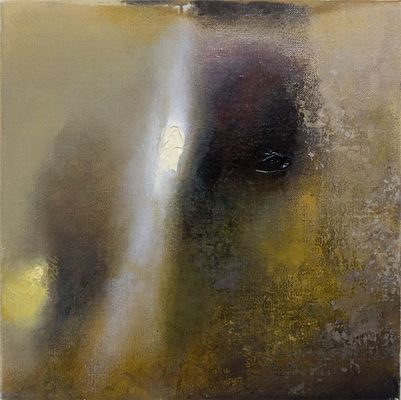
Always Will Need To Wear Winter Shirt Blue + Ochre Small Check Pattern
21 August - 21 September, 2015
Untitled
I am not a great reader of poetry but I always return to the work of Melbourne poet, Vincent Buckley (1925- 1988). Perhaps I find his most tantalising piece to be not a finished poem but a fragment left on a scrap of paper discovered on his desk after the poet’s death.
The poetry gathers like oil
In the word-core, and spreads
It has its music meet,
Its music is in movement.
This fragment is more the shell left behind from a volatile thought than a finished poem. I find the last two lines honest but awkward whereas the first two lines work like an arrow. Most likely he could not find a resolution so it was left. Still, in its present form, it remains an eloquent testimony to the ultimate failure of a medium to express mobile thought and sensation, in Buckley’s case, through verbal language. It’s an important matter because this is something all artists have to deal with regardless of the medium.
I have never written a poem, however, I am forever copying fragments from books on paper scraps in a vain effort to fix certain notions in my head. At first, they function as bookmarks that are sometimes returned to when I open the book. But before long, as they accumulate, they fall out littering the table interspersed with A4 photocopies, bills, books and medications.
To return to Buckley’s fragment, the first two lines very much evoke how I paint nowadays. As you age, detail diminishes and patches of light become more luminous and float. I feel the most honest way of dealing with this is by smearing the oil paint on the canvas with the fingers and working close-up, blind. Only if the patches coalesce into an approaching image can the work gain a life.
-
Jonathan Walker was born in Melbourne, Australia and brought up on a dairy farm in Gippsland. In the 1970’s he studied painting at RMIT and won the Harold Wright Scholarship to the British Museum, London. During the 1980’s he exhibited at Pinacotheca Gallery, Richmond and had work shown at the NGV and Heidi City Art Gallery. Over the same period he designed the cover for the “Epigenesi” LP by Giancarlo Toniutti, Italy and conducted a mail exchange work with Achim Wollscheid, Germany. The work with artists through the post resulted in an article published in the bicentenary issue of Art and Australia 1988. He showed in artist run spaces such as WestSpace in the 90’s and 2000’s, and until 2012, taught painting at Victoria University, which is where we (Colleen Ahern and Lisa Radford) as organisers of the exhibition, among many others, had the privilege of being his student.
Walker’s knowledge was imparted to students through the careful selection of music, literature, and artists found in books that he himself had ordered for the library. Walker’s strategy was the generosity of sharing his vast knowledge with references specific to each student and their context.
Walker’s paintings share a similar focus and intimacy.
This exhibition presents a small selection of recent paintings alongside a publication that includes Walker’s writing. Observational and analytical, Walker’s work is a type of material notation — the time of day, colour and how it is blended, the both specific and fleeting location of a reflection on lino or the question of whether a chair leg should be included in a painting.
Please join us on Friday August 21 between 6-8pm to celebrate the opening of the exhibition.
Curated by Colleen Ahern and Lisa Radford.
B. Wurtz
Curated by Nic Tammens
March 26 - April 4, 2015
B.Wurtz works from a basement studio in his home on Manhattan’s Lower East Side.
This local fact is attested to by the plastic shopping bags and newsprint circulars that appear in his work. As formal objects, they don’t make loud claims about their origins but nonetheless transmit street addresses and places of business from the bottom of this long thin island. Like plenty of artists, Wurtz is affected by what is local and what is consumed. His work is underpinned by this ethic. It often speaks from a neighborhood or reads like the contents of a hamper:
“BLACK PLUMS $1.29 lb.”
“Food Bazaar”
“USDA Whole Pork Shoulder Picnic 99c lb.”
“RITE AID Pharmacy, with us it’s personal.”
“H. Brickman & Sons.”
“Sweet Yams 59c lb."
Most of the work in this exhibition was made while the artist was in residence at Dieu Donne, a workshop dedicated to paper craft in Midtown. Here Wurtz fabricated assemblages with paper and objects that are relatively lightweight, with the intention that they would be easily transportable to Australia. This consideration isn’t absolute in Wurtz’s work, but was prescriptive for making the current exhibition light and cheap. Packed in two boxes, these works were sent from a USPS post office on the Lower East Side and delivered to North Melbourne by Australia Post.
Wurtz appears courtesy of Metro Pictures, New York.
Thanks to Rob Halverson, Joshua Petherick, Sari de Mallory, Matt Hinkley, Helen Johnson, Fayen d'Evie, Ask Kilmartin, Lisa Radon, Ellena Savage, Yale Union, and "Elizabeth".
John Nixon
"Archive"
December 15 - January 20, 2014
The presentation of John Nixon's archive offered a rare showcase of this extensive collection of the artist's own publications, catalogues, posters, ephemera, editions and more, from the mid 1980s onwards, alongside a selection of his artworks.
Organized by John Nixon, Joshua Petherick and Matt Hinkley.
<a href=http://wfb.public-office.info/artist/john-nixon>All titles by John Nixon
"Habitat"
at Minerva, Sydney (organised by Joshua Petherick and Matt Hinkley)
November 15 - December 20, 2014
Lupo Borgonovo, Janet Burchill & Jennifer McCamley,
Lewis Fidock, HR Giger, Piero Gilardi, Veit Laurent Kurz,
Cinzia Ruggeri, Michael E. Smith, Lucie Stahl, Daniel Weil, Wols
Press Release:
“...It contained seven objects. The slender fluted bone, surely formed for flight, surely from the wing of some large bird. Three archaic circuitboards, faced with mazes of gold. A smooth white sphere of baked clay. An age-blackened fragment of lace. A fingerlength segment of what she assumed was bone from a human wrist, grayish white, inset smoothly with the silicon shaft of a small instrument that must once have ridden flush with the surface of the skin - but the thing’s face was seared and blackened.”
William Gibson, “Count Zero”, 1986
"Autumn Projects Archive"
Curated by Liza Vasiliou
March 6 - March 15, 2014
World Food Books, in conjunction with the Virgin Australia Melbourne Fashion Festival 2014, presented the Autumn Projects archive, consisting of a selection of early examples in Australian fashion with a particular interest in collecting designers and labels from the period beginning in the 1980’s, who significantly influenced the discourse of Australian Fashion.
Curated by Liza Vasiliou, the exhibition provided a unique opportunity to view pieces by designers Anthea Crawford, Barbara Vandenberg, Geoff Liddell and labels CR Australia, Covers, Jag along with early experimental collage pieces by Prue Acton and Sally Browne’s ‘Fragments’ collection, suspended throughout the functioning World Food Books shop in Melbourne.
H.B. Peace
presented by CENTRE FOR STYLE
November 14, 2013
"Hey Blinky, you say chic, I say same"
Anon 2013
H.B. Peace is a clothing collaboration between great friends Blake Barns and Hugh Egan Westland. Their pieces explore the divergences between 'character’ and ‘personality’ in garments....etc
Special Thanks to Joshua Petherick and Matt Hinkley of WFB and Gillian Mears
and a Very Special Thank you to Audrey Thomas Hayes for her shoe collaboration.
Janet Burchill & Jennifer McCamley
"Aesthetic Suicide"
May 10 - June 8, 2013
The first of our occasional exhibitions in the World Food Books office/shop space in Melbourne, "Aesthetic Suicide" presented a body of new and older works together by artists Janet Burchill & Jennifer McCamley, including videos, prints, a wall work, and publications.
During shop open hours videos played every hour, on the hour.
2013, English
Softcover, 232 pages (32 b/w ills.),10.8 x 17.8 cm
Published by
Sternberg Press / Berlin
$20.00 - Out of stock
Edited by Julieta Aranda, Brian Kuan Wood, Anton Vidokle
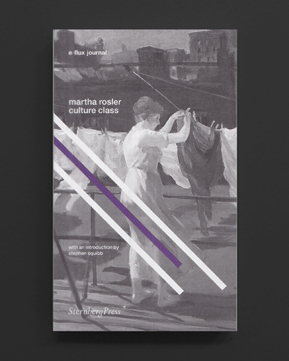
Introduction by Stephen Squibb
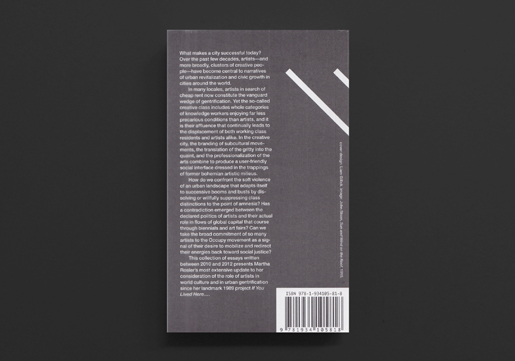
In this collection of essays Martha Rosler embarks on a broad inquiry into the economic and historical precedents for today’s soft ideology of creativity, with special focus on its elaborate retooling of class distinctions. In the creative city, the neutralization or incorporation of subcultural movements, the organic translation of the gritty into the quaint, and the professionalization of the artist combine with armies of eager freelancers and interns to constitute the friendly user interface of a new social sphere in which, for those who have been granted a place within it, an elaborate retooling of traditional markers of difference has allowed class distinctions to be either utterly dissolved or willfully suppressed. The result is a handful of cities selected for revitalization rather than desertion, where artists in search of cheap rent become the avant-garde pioneers of gentrification, and one no longer asks where all of this came from and how. And it may be for this reason that, for Rosler, it becomes all the more necessary to locate the functioning of power within this new urban paradigm, to find a position from which to make it accountable to something other than its own logic.
Design by Kloepfer Ramsey
2013, English
Softcover (w. dust jacket), 384 pages (69 b/w ills.), 15.3 x 22.9 cm
Published by
Sternberg Press / Berlin
$40.00 - Out of stock
Contributions by Philip Armstrong, Victor Burgin, François Cusset, Larisa Dryansky, Benjamin Greenman, Rachel Haidu, Sylvère Lotringer, Stephen Melville, Laura Mulvey, Kassandra Nakas, Peter Osborne, Jean-Michel Rabaté, John Rajchman, Katia Schneller, Alexander Streitberger, Hilde Van Gelder, Erik Verhagen
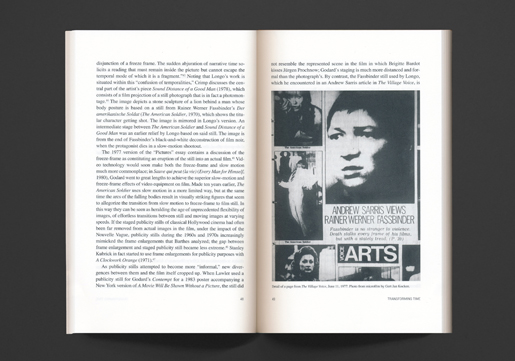
Many postwar American artists were influenced by French philosophy, literary studies, and social sciences. Accordingly, a number of French authors gathered under the label “French Theory”—a name referring roughly to structuralism and post structuralism—has received sustained attention in the United States. As early as the early 1960s, this reception helped to shape both American artistic practice and the fate of French thought in a crucial way. At the turn of the twenty-first century, the wealth of works from the human sciences and philosophy in American culture became the subject of numerous studies.
French Theory and American Art examines some of the main historical conditions of this reception. It considers significant texts, artists, authors, and events that were instrumental in the introduction of French thought into the artistic field of the United States. The relation between artistic creation and theoretical thought, between singular, inventive uses and creative misunderstandings of theory, constitutes the other major question of the present volume.
Design by Charles Mazé & Coline Sunier
2013, English
Softcover, 194 pages (14 b/w ills.), 12 x 20 cm
Published by
Sternberg Press / Berlin
$29.00 - Out of stock
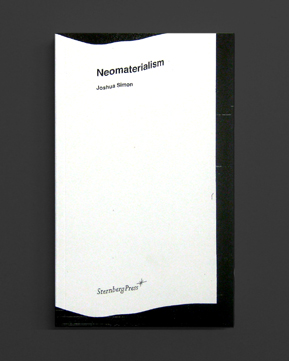
After a short period of “unbearable lightness of being,” the social gravitation begins to be felt again. In his book Joshua Simon describes and analyzes the growing weight of the technical, economic, material basis of our society. The author’s sensibility for today’s Zeitgeist is at the same time entertaining and precise.
—Boris Groys
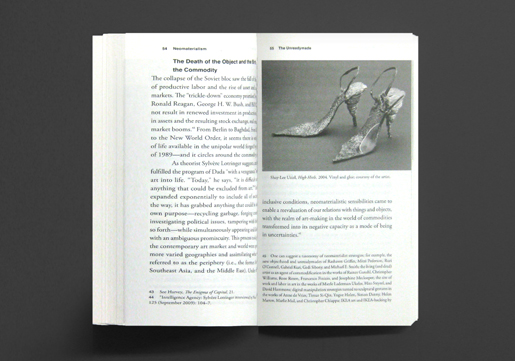
Since the so-called dematerialization of currencies and art practices in the late 1960s and early 1970, we have witnessed a move into what Joshua Simon calls an economy of neomaterialism. With this, several shifts have occurred: the focus of labor has moved from production to consumption, the commodity has become the historical subject, and symbols now behave like materials.
Neomaterialism explores the meaning of the world of commodities, and reintroduces various notions of dialectical materialism into the conversation on the subjectivity and vitalism of things. Here, Simon advocates for the unreadymade, sentimental value, and the promise of the dividual as a means for a vocabulary in this new economy of meaning.
Reflecting on general intellect as labor and the subjugation of an overqualified generation to the neofeudal order of debt finance—with a particular focus on dispossession and rent economy, post-appropriation display strategies and negation, the barricade and capital’s technocratic fascisms—Neomaterialism merges traditions of epic communism with the communism that is already here.
Design by Avi Bohbot
2013, English
Softcover, 92 pages, 13 x 19.5 cm
Published by
Sternberg Press / Berlin
$18.00 - Out of stock
With an introduction by Shumon Basar
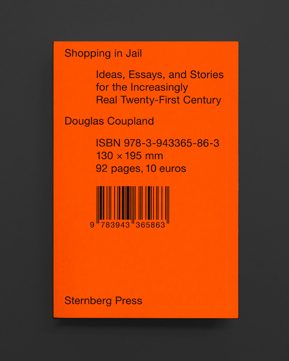
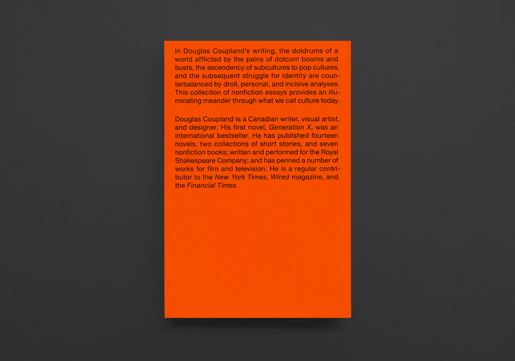
In Douglas Coupland's writing, the doldrums of a world afflicted by the pains of dotcom booms and busts, the ascendency of subcultures to pop cultures, and the subsequent struggle for identity are counterbalanced by droll, personal, and incisive analyses. This collection of nonfiction essays provides an illuminating meander through what we call culture today.
Douglas Coupland is a Canadian writer, visual artist, and designer. His first novel, Generation X, was an international bestseller. He has published fourteen novels, two collections of short stories, and seven nonfiction books; written and performed for the the Royal Shakespeare Company; and has penned a number of works for film and television. He is a regular contributor to the New York Times, Wired magazine, and the Financial Times.
Design by Bizzarri Rodriguez
2013, English
Softcover, 152 pages (44 b/w ill.), 16.5 x 23.5 cm
Published by
Sternberg Press / Berlin
Dexter Sinister / New York
The Serving Library / New York
$23.00 $10.00 - Out of stock
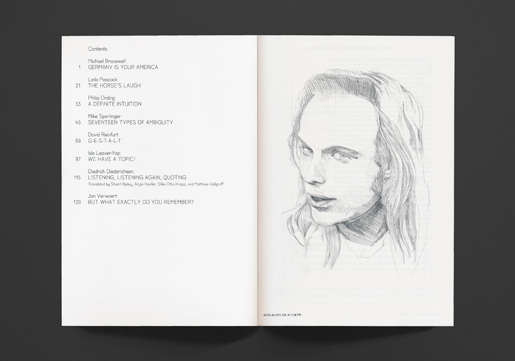
Contributions by Michael Bracewell, Diedrich Diederichsen, Isla Leaver-Yap, Philip Ording, Leila Peacock, David Reinfurt, Mike Sperlinger, Jan Verwoert
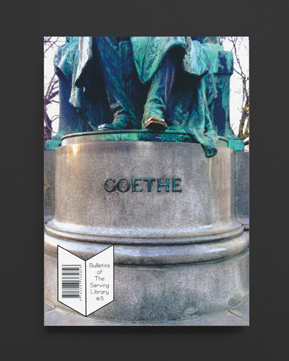
Conceived while in residency at the library of the Goethe-Institut New York, this issue of Bulletins of The Serving Library used the context of the hosting institution as a thematic starting point.
Contemplating this theme as both foreigners and German citizens, many of the contributors present theses that reach deep into the realm of the personal. Jan Verwoert, for example, discusses the communication within his family as a lexicon “somewhere between speech and speechlessness”; while Leila Peacock, as a native English speaker learning German, explores the liminal space between language and translation. Diedrich Diederichsen, together with a list of editors and translators, co-translates his essay “Hören, Wiederhören, Zitieren,” published in the 1997 January issue of Spex. Diederichsen’s discussion of the pop quotation in music highlights the genre’s proximity to language, as the pop quotation “refers to what is absent in the present, and therefore points towards the semiotic nature of any music.”
2013, English
Softcover, 312 pages (82 b/w ills.), 14 x 21.5 cm
Published by
Sternberg Press / Berlin
$28.00 - Out of stock
The moving image has irrevocably redefined our experience and construction of history. In the contemporary economy of time, history has become an image in motion, a series of events animated and performed through various media. Analyzing a variety of films, video pieces, and performances, Sven Lütticken evaluates the impact that our changing experience of time has had on the actualization of history in the present. In the process, he considers the role of shock and suspense, of play and games, the rise and ubiquity of television, transformed notions of leisure and labor time, and a new “natural history” marked by climate change.
The interplay between the time of daily life and historical time end between live event and mediatization is at the core of History in Motion. In this context, Lütticken questions the relation between the representations or restagings of the past and the events of a history that is currently in progress. This history in motion constitutes a fractured present in which possible futures are implicit.
2013, English
Softcover, 188 pages (18 b/w ill.), 11.2 x 17.8 cm
Published by
Sternberg Press / Berlin
$24.00 - Out of stock
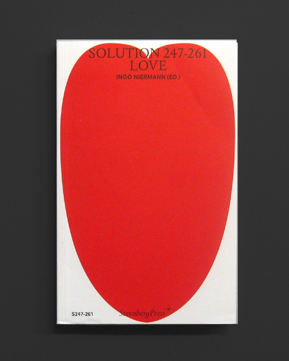
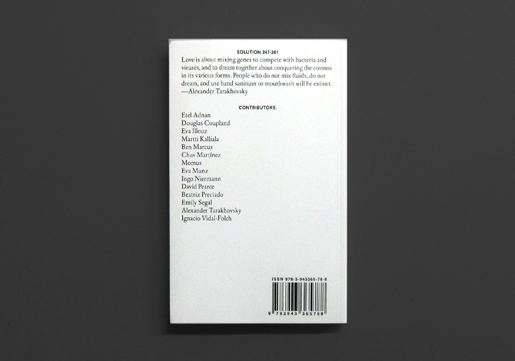
With contributions by Etel Adnan, Douglas Coupland, Eva Illouz, Martti Kalliala, Ben Marcus, Chus Martínez, Momus, Eva Munz, Ingo Niermann, David Pearce, Beatriz Preciado, Emily Segal, Alexander Tarakhovsky, Ignacio Vidal-Folch
Love is about mixing genes to compete with bacteria and viruses, and to dream together about conquering the cosmos in its various forms. People who do not mix fluids, do not dream, and use hand sanitizer or mouthwash will be extinct. —Alexander Tarakhovsky
In its ninth volume, the Solution series departs from its previous geopolitical focus on regions and countries. The issue becomes the infinite prospect of connection as well as transformation: this book explores the biopolitical and psychosexual topic of love. With contributions ranging from manifesto to (science) fiction, Solution 247-261: Love realizes that the past, present, and future of love is a demanding mix of charity, sex, trust, lust, economics, genetics, and cybernetics. This volume explores varying ideas of the body, the self, as a spirited micro-region with borders that cannot hold.
Design by Zak Group
2013, English
Softcover, 208 pages (350 color and b/w ills.), 26 x 35 cm
Published by
Sternberg Press / Berlin
$39.00 - Out of stock
With contributions by Sabeth Buchmann, Mercedes Bunz, Diedrich Diederichsen, Kodwo Eshun, Anselm Franke, Erich Hörl, Norman M. Klein, Maurizio Lazzarato, Flora Lysen, Eva Meyer, John Palmesino, Laurence Rickels, Bernd M. Scherer, Fred Turner
In the year 1966, a young man named Stewart Brand handed out buttons in San Francisco reading: “Why haven’t we seen a photograph of the whole Earth yet?” Two years later, the NASA photograph of the “blue planet” appeared on the cover of the Whole Earth Catalog. In creating the catalogue, frequently described as the analogue forerunner of Google, Brand had founded one of the most influential publications of recent decades. It mediated between cyberneticists and hippies, nature romantics and technology geeks, psychedelia and computer culture, and thus triggered defining impulses for the environmentalist movement and the rise of the digital network culture.
The photo of the blue planet developed a sphere of influence like almost no other image: it stands not only for ecological awareness and crisis but also for a new sense of unity and globalization. The universal picture of “One Earth” hence anticipated an image of the end of the Cold War, whose expansion into space it accompanied, and overwrote or neutralized political lines of conflict by transferring classical politics and criticism of it to other categories, such as cybernetic management or ecology.
The exhibition “The Whole Earth” is an essay composed of cultural-historical materials and artistic positions that critically address the rise of the image of “One Earth” and the ecological paradigm associated with it. The accompanying publication includes image-rich visual essays that explore key themes: “Universalism,” “Whole Systems,” “Boundless Interior,” and “Apocalypse, Babylon, Simulation,” among others. These are surrounded by critical essays that shed light onto 1960s California and the networked culture that emerged from it.
Artists: Nabil Ahmed, Ant Farm, Eleanor Antin, Martin Beck, Jordan Belson, Ashley Bickerton, Dara Birnbaum, Erik Bulatov, Angela Bulloch, Bruce Conner, Öyvind Fahlström, Robert Frank, Jack Goldstein, Nancy Holt and Robert Smithson, Lawrence Jordan, Silvia Kolbowski, Philipp Lachenmann, David Lamelas, Sharon Lockhart, Piero Manzoni, Raymond Pettibon, Adrian Piper, Robert Rauschenberg, Ira Schneider, Richard Serra, Alex Slade, Jack Smith, Josef Strau, The Center for Land Use Interpretation, The Otolith Group, Suzanne Treister, Andy Warhol, Bruce Yonemoto, et al.
Copublished with Haus der Kulturen der Welt
Design by Studio Matthias Görlich
2007, English
Hardcover, 228 pages, 15 x 21.5 cm
Published by
Verso / London
$15.00 - Out of stock
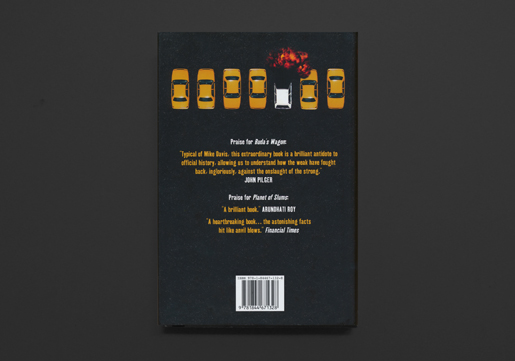
This history of the car bomb traces the political development of this influential weapon of terror and resistance.
On a September day in 1920, an angry Italian anarchist named Mario Buda exploded a horse-drawn wagon filled with dynamite and iron scrap near New York’s Wall Street, killing 40 people. Since Buda’s prototype the car bomb has evolved into a “poor man’s air force,” a generic weapon of mass destruction that now craters cities from Bombay to Oklahoma City.
In this brilliant and disturbing history, Mike Davis (City of Quartz) traces its worldwide use and development, in the process exposing the role of state intelligence agencies—particularly those of the United States, Israel, India, and Pakistan—in globalizing urban terrorist techniques. Davis argues that it is the incessant impact of car bombs, rather than the more apocalyptic threats of nuclear or bio-terrorism, that is changing cities and urban lifestyles, as privileged centers of power increasingly surround themselves with “rings of steel” against a weapon that nevertheless seems impossible to defeat.
2013, English / French
Softcover, 200 pages (b&w ill.), 240 x 175 mm
Published by
May Revue / Paris
$25.00 - In stock -
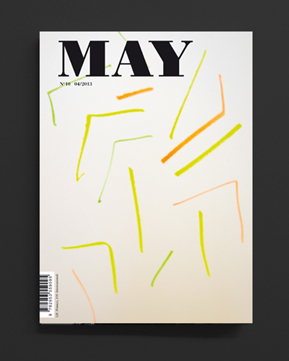
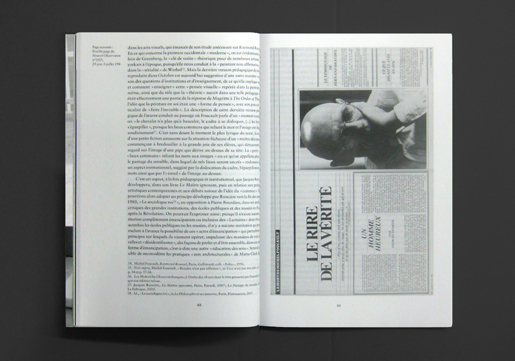
MAY #10
Features:
How to Do the History of French Theory in the Visual Arts: A New York Story— John Rajchman
From Time to Space: When Critical Theory Turns Global— François Cusset
Meeting Jean-François Chevrier — Paul Sztulman
54, boulevard Raspail — Stefan Germer
Reviews
“Biarritz by Georges Ancely : Photographs 1880–1895” — Nicolas Ceccaldi
“Ecstatic Alphabets/Heaps of Language” — Tom McDonough
“Because Thought is Dark!” — Clara Schulmann
Peripheral Passages. On John Knight’s Curb Appeal — André Rottmann
Matisse Rebooted — Clément Auriel
about MAY Revue:
Conceived as a collective space in which to develop thoughts and confront positions on artistic production, May magazine examines, quaterly, contemporary art practice and theory in direct engagement with the issues, contexts and strategies that construct these two fields. An approach that could be summed up as critique at work – or as critique actively performed in text and art forms alike.
Featuring essays, interviews, art works and reviews by artists, writers and diverse practitioners of the arts, the magazine also intends to address the economy of the production of knowledge – the starting point of this reflection being the space of indistinction between information and advertisment typical of our time. This implies a dialogue with forms of critique produced in other fields.
2013, English
Softcover(w. loose leaf inserts), 244 pages (colour & b/w ill.), 30 x 23 cm
Ed. of 1000,
Published by
Discipline / Melbourne
$30.00 - Out of stock
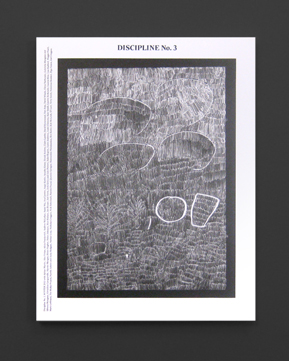
Discipline is a Melbourne-based journal of contemporary art. It has a focus on artist pages by, and longer, research-based essays on Australian artists.
No. 3 (Winter 2013)
Edited by Nicholas Croggon and Helen Hughes and guest edited section by Raimundas Malasauskas.
Features essays by Adrian Martin on film, art and the support-surface; Anusha Kenny on Anastasia Klose; David Homewood on Dale Hickey’s cups; David Wlazlo on Ian Burn; Helen Johnson on Hany Armanious’s new sculpture for the MCA; Huw Hallam on Nikos Papasteriadis’s book Culture and Cosmopolitanism (2012); Jan Bryant on TJ Clark and the contemporary; Justin Clemens on contemporary art-as-minimal domination; Lauren Bliss on A Constructed World and Speech and What Archive; Lisa Radford on Geoff Newton; Maggie Finch on Simryn Gill; interview with Mattin by Joel Stern and Andrew McLellan; Quentin Sprague on Nyapanyapa Yunupingu’s Light Painting; Rex Butler on John Nixon: A Communist Artist; Terry Smith in response to Nikos Papastergiadis’s review of his two books What is Contemporary Art? (2009) and Contemporary Art: World Currents (2011), published in Discipline 2 (2012); and the third and final instalment of ST Lore’s serialised novel.
It also includes artist pages by: Alex Vivian, Alicia Frankovich, Brook Andrew, Claire Lambe, Dan Arps, Gabriella Mangano and Silvana Mangano, Harriet Morgan, Justin Andrews, Kate Smith, Lauren Berkowitz, The Mulka Project, Narelle Jubelin and Jacky Redgate, Nathan Gray, Nick Selenitsch, Patrick Pound, Rob McLeish, and Zoe Croggon.
And a guest-edited supplement by Raimundas Malasauskas, curator of the Lithuanian Pavilion at the 2013 Venice Biennale.
Designed by Annie Wu and Ziga Testen.
2013, English
Hardcover (w. cloth binding), 320 pages (134 b/w and 32 color ills.), 18.5 x 26.5 cm
Published by
Sternberg Press / Berlin
Center for Curatorial Studies Bard College / New York
LUMA Foundation / Zürich
$105.00 $25.00 - Out of stock
With contributions by Ariella Azoulay, Bassam El Baroni, Roger M. Buergel, George Didi-Huberman, Michel Feher, Hal Foster, Anselm Franke, Dominique Gonzalez-Foerster, Sandi Hilal and Alessandro Petti, Maja Hoffmann, Denis Hollier, Thomas Keenan, Alex Klein, Suhail Malik, Marion von Osten, Katya Sander, Hito Steyerl, Eyal Weizman, Tirdad Zolghadr
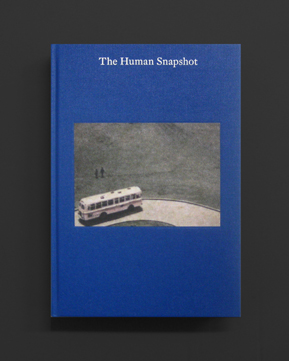
The Human Snapshot draws upon a conference of the same name organized by the LUMA Foundation and Center for Curatorial Studies at Bard College that took place in Arles, France, in 2011. The conference contributions and subsequent essays examine contemporary forms of humanism and universalism as they circulate and are produced in art and photography. The look toward these two terms stems from theorist Ariella Azoulay’s research on the seminal exhibition “The Family of Man,” first installed at the Museum of Modern Art in New York in 1955, which she frames as a lens through which to view universalism at play. These values have been under conceptual assault in recent years, yet they continue to proliferate—even through the visual arts, where humanism and universalism are customarily dismissed. The Human Snapshot takes these themes and wrestles with their application in the use of photography, the exhibition format, contemporary democracy, human rights discourse, and the power of the image at large.
Copublished by the LUMA Foundation and the Center for Curatorial Studies at Bard College (CCS Bard)
Design by Zak Group
2013, English
Softcover, 216 pages (51 color, 13 b/w ills.), 15 x 21.5 cm
Published by
Sternberg Press / Berlin
$23.00 - Out of stock
With contributions by Will Bradley, Julia Bryan-Wilson, Carl Cedarström and Peter Fleming, Annette Kamp, Michala Paludan, Olivia Plender and Hester Reeve, Ole Martin Rønning, Kathi Weeks
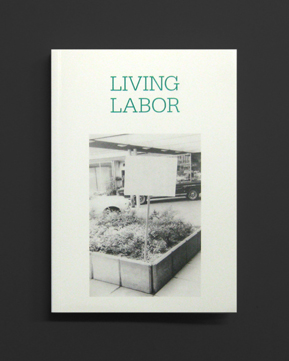
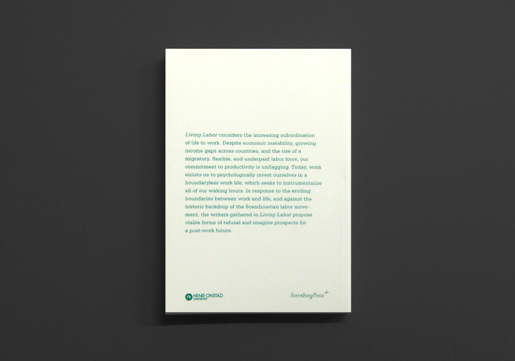
Living Labor considers the increasing subordination of life to work. Despite economic instability, growing income gaps across countries and the rise of a migratory, flexible and underpaid labor force, our commitment to productivity is unflagging. Today, work enlists us to psychologically invest ourselves in a boundaryless work life, which seeks to instrumentalize all of our waking hours. In response to the eroding boundaries between work and life, and against the historic backdrop of the Scandinavian labor movement, the writers gathered in Living Labor propose viable forms of refusal and imagine prospects for a post-work future.
Copublished with Henie Onstad Kunstsenter
Design by Jeanne Betak
2013, English
Softcover, 268 pages (7 b/w/ ills.), 17 x 23 cm
Published by
Sternberg Press / Berlin
Università Iuav di Venezia / Venice
$28.00 - Out of stock
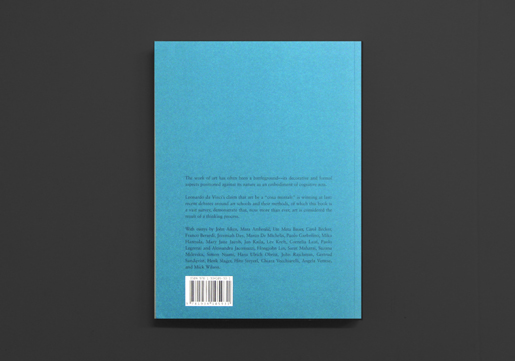
With texts by John Aiken, Mara Ambrožič, Ute Meta Bauer, Carol Becker, Franco Berardi, Jeremiah Day, Paolo Garbolino, Mika Hannula, Mary Jane Jacob, Jan Kaila, Lev Kreft, Cornelia Lauf, Paolo Legrenzi and Alessandra Jacomuzzi, Hongjohn Lin, Sarat Maharaj, Marco De Michelis, Suzana Milevska, Simon Njami, Hans Ulrich Obrist, John Rajchman, Gertrud Sandqvist, Henk Slager, Hito Steyerl, Chiara Vecchiarelli, Angela Vettese, Mick Wilson
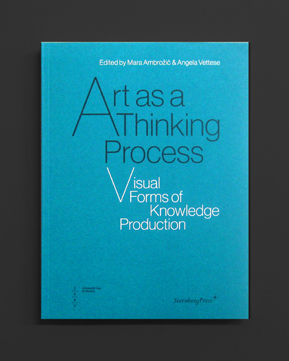
The work of art has often been a battleground—its decorative and formal aspects positioned against its nature as an embodiment of cognitive acts. Leonardo da Vinci’s claim that art be a “cosa mentale” is winning at last: recent debates around art schools and their methods, of which this book is a vast survey, demonstrate that, now more than ever, art is considered the result of a thinking process.
Copublished with Università Iuav di Venezia
Design by Surface
2013, English
Hardcover, 256 pages (30 b/w ills.), 16.9 x 23.9 cm
Published by
Sternberg Press / Berlin
$32.00 - Out of stock
With contributions by Agency, David Berry, Nils Bohlin, Sean Dockray, Rasmus Fleischer, Antonia Hirsch, David Horvitz, Mattin, Open Music Archive, Matteo Pasquinelli, Claire Pentecost, Florian Schneider, Matthew Stadler, Marilyn Strathern, Kuba Szreder, Marina Vishmidt; preface by Binna Choi, Maria Lind, Emily Pethick
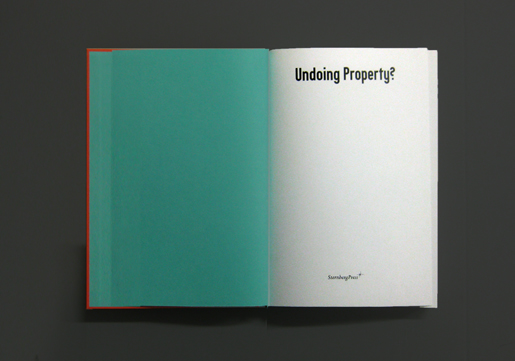
Undoing Property? examines complex relationships inside art, culture, political economy, immaterial production, and the public realm today. In its pages artists and theorists address aspects of computing, curating, economy, ecology, gentrification, music, publishing, piracy, and much more.
Property shapes all social relations. Its invisible lines force separations and create power relations felt through the unequal distribution of what is otherwise collectively produced value. Over the last few years the precise question of what should be privately owned and publicly shared in society has animated intense political struggles and social movements around the world. In this shadow the publication’s critical texts, interviews and artistic interventions offer models of practice and interrogate diverse sites, from the body, to the courtroom, to the server, to the museum. The book asks why propertization itself has changed so fundamentally over the last few decades and what might be done to challenge it. The "undoing" of Undoing Property? begins with the recognition that something else is possible.
Design by Konst & Teknik
2013, English
Softcover, 224 pages (42 color, 39 b/w ill.), 13.1 x 20.6 cm
Published by
Sternberg Press / Berlin
$36.00 - Out of stock
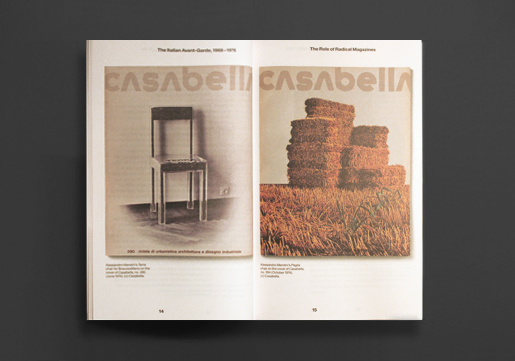
With contributions by Paola Antonelli, Pier Vittorio Aureli, Andrea Branzi, Carlo Caldini, Alison J. Clarke, Experimental Jetset, Verina Gfader, Martino Gamper, Joseph Grima, Alessandro Mendini, Antonio Negri, Paola Nicolin, Michelangelo Pistoletto, Catharine Rossi, Vera Sacchetti, Libby Sellers, Studio Formafantasma, and Ettore Vitale.
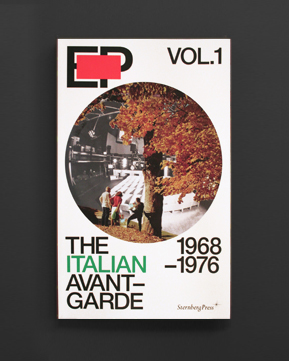
EP is the first critically underpinned series of publications that fluidly move between art, design, and architecture. The series creates a discursive platform between popular magazines (“single play”) and academic journals (“long play”) by introducing the notion of the “extended play” into publishing: with thematically edited pocket books as median.
The first volume is devoted to the activities of the Italian avant-garde between 1968 and 1976. While emphasizing the multiple correspondences between collectives and groups like Arte Povera, Archizoom, Superstudio, and figures such as Ettore Sottsass and Alessandro Mendini, The Italian Avant-Garde: 1968–1976 also highlights previously overlooked spaces, works, and performances generated by Zoo, Gruppo 9999, and Cavart. Newly commissioned interviews and essays by historians and curators shed light on the era, while contemporary practitioners discuss its complex legacy.
Design by Experimental Jetset
2006, French / English
Softcover, 192 pages, 18 x 25 cm
Published by
HYX / France
$65.00 - Out of stock
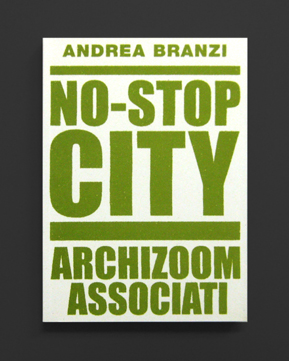
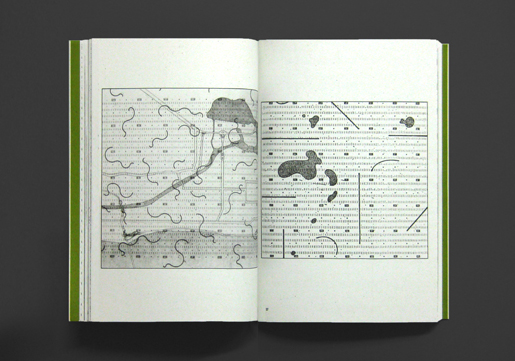
In 1969, the Archizoom group, while carrying out an experimental work in the field of design, also undertook a research project on environment, mass culture and the city, which led to the project No-Stop City'. For the very first time, the whole of this founding project of 1970s radical architecture is presented together in this publication. Designed by Andrea Branzi, this unique document provides a political reflection on ideas about urbanism and architecture that has influenced a whole generation of architects.
2013, English
Softcover, 176 pages (53 color ill.),14 x 21 cm
Published by
Sternberg Press / Berlin
$33.00 - Out of stock
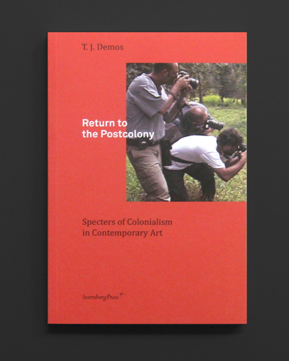
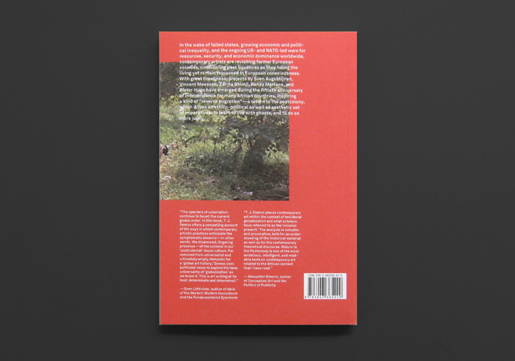
In the wake of failed states, growing economic and political inequality, and the ongoing US- and NATO-led wars for resources, security, and economic dominance worldwide, contemporary artists are revisiting former European colonies, considering past injustices as they haunt the living yet remain repressed in European consciousness. With great timeliness, projects by Sven Augustijnen, Vincent Meessen, Zarina Bhimji, Renzo Martens, and Pieter Hugo have emerged during the fiftieth anniversary of independence for many African countries, inspiring a kind of “reverse migration”—a return to the postcolony, which drives an ethico-political as well as aesthetic set of imperatives: to learn to live with ghosts, and to do so more justly.
T. J. Demos places contemporary art within the context of neoliberal globalization and what scholars have referred to as the “colonial present.” The analysis is complex and provocative, both for an understanding of the historical material as well as for the contemporary theoretical discourse. Return to the Postcolony is one of the most ambitious, intelligent, and readable texts on contemporary art related to the African context that I have read.
—Alexander Alberro, author of Conceptual Art and the Politics of Publicity
The specters of colonialism continue to haunt the current global order. Far removed from universalist and ultimately empty demands for a “global art history,” T. J. Demos uses particular cases to explore the false universality of “globalization” as we know it. This is art writing at its best: determinate and determined.
—Sven Lütticken, author of Idols of the Market: Modern Iconoclasm and the Fundamentalist Spectacle
Design by Kummer & Herrman
2012, English
Softcover, 200 pages, 16.5 x 23.5 cm
Published by
Dexter Sinister / New York
Sternberg Press / Berlin
The Serving Library / New York
$23.00 - Out of stock
Contributions by Albert Angelo, Mark Beasley, Rhea Dall and Charlotte Johannesson, Dexter Bang Sinister, Diedrich Diederichsen, The Digital Theatre, Hollis Frampton, Lars Bang Larsen, Francis McKee, Malcolm Mooney and Jan Verwoert, Rob Giampietro
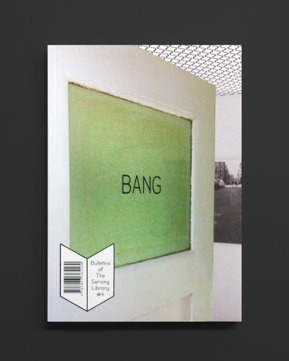
This bulletin annotates a projected wall text (shown on the cover) that introduced the research program “Dexter Bang Sinister” at Kunsthal Charlottenborg, Copenhagen. Devised by Stuart Bailey, Lars Bang Larsen, Angie Keefer, and David Reinfurt, the program, like this bulletin, was based on Larsen’s just-completed PhD dissertation at the University of Copenhagen, A History of Irritated Material: Psychedelic Concepts in Neo-Avantgarde Art. The idea was to contrive a popular version of his academic thesis by editing it psychedelically.
This might sound simple, or at least simple-minded, as a textual exercise in psychedelia’s familiar imperatives: Jimi Hendrix’s “Are you experienced?,” Ken Kesey’s “Did you pass the Acid Test?,” or Timothy Leary’s “Turn on, tune in, drop out.” But the irony of psychedelic essences and injunctions should be lost on no one. It’s the self-contradictory voice of the psychedelic police, and on this beat you’ll always find a policeman who enforces a multicolored patriarchal law: “LSD ID, please—we need to check how free you really are ...” This is hardly a new nor a very profound observation, just transgression’s age-old contradiction: the necessity of invoking the law in order to sin against it.
The real irony, though, is how the law returns to psychedelia in the form of categorical imperatives, platitudes, and pigeonholes. If we strip away the usual clichés of psychedelic representation—excess, overload, rainbows, tie-dye—what’s left? What’s worth keeping? What does a hollowed-out, desaturated, low-grade, root-level, emphatically black-and-white psychedelia look and feel like? The closer we looked, the more it became apparent that such austere gears had been the psychedelic movement’s means all along—and so black and white seemed an even more pertinent point of return from which to usefully depart once more. From this vantage, how might that look and feel be put to proper use—that’s to say, transformed—artistically and socially today? This brings us back to the immediate question: what could it mean to edit a thesis on psychedelia psychedelically, without recourse to drugs? How does the TRIP translate to METHOD?
2010, English
wire binding, 180 pages (79 color and 24 b/w ill.),17 x 24 cm
Published by
Sternberg Press / Berlin
$23.00 - Out of stock
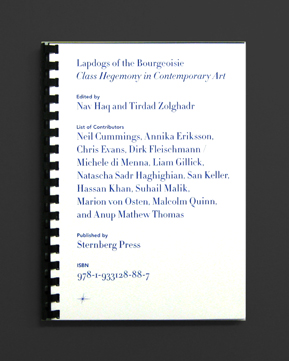
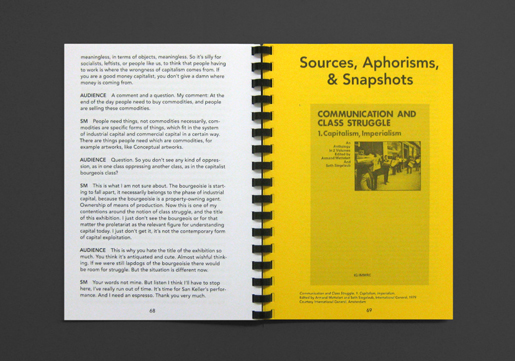
Edited by Nav Haq and Tirdad Zolghadr
Contributions by Charlotte Bydler, Neil Cummings, Annika Eriksson, Chris Evans, Liam Gillick, Nav Haq, San Keller, Hassan Khan, Erden Kosova, Dr. Suhail Malik, Marion von Osten, Natascha Sadr Haghighian, Dr. Malcolm Quinn, Tirdad Zolghadr
Lapdogs of the Bourgeoisie investigates the latent issue of class underlying the field of contemporary visual art. On the one hand, it raises the question of whether a given socioeconomic background still helps define your artistic career—and to which point the said career might reflect or consolidate the hierarchies in question. On the other hand, the project asks whether the traditional analytical tools at our disposal are helpful in such an examination of the art world today.
Class inevitably raises awkward questions regarding the very participants, their backgrounds, patrons, and ideological partialities. This is perhaps the reason why the role of class structure has been so easily overlooked in the production and presentation of contemporary art, especially so in an era where artists are coaxed into anthropological framings of their practice. What was it that made gender, sexuality, ethnicity, and nationality eclipse the class issue with such ease? Lapdogs of the Bourgeoisie presents a collaborative project with a number of practitioners that scrutinize their own positions, bias, and gaze within the hierarchy of cultural production. It seeks to identify the levels of affect class has in the field—from artists, through to curators, institutions, and even audiences—and also looks at the hidden anxieties involved, particularly in relation to the actual decision-makers in mainstream art.
Design by Zak Kyes
2006, English
Softcover, 192 pages (85 colour ill., 15 b&w ill.), 203 x 254 mm
Published by
The MIT Press / Massachusetts
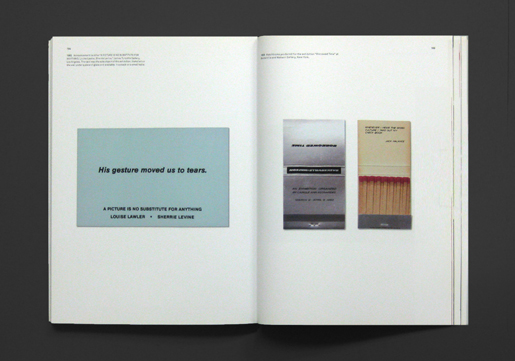
$49.00 - Out of stock
For the past two decades Louise Lawler has been taking photographs of art in situ, from small poignant black-and-white images of art in people's homes to large format glossy color pictures of art in museums and in auction houses. In addition she has produced a variety of objects--paperweights, etched drinking glasses, matchbooks, gallery announcements--all of which cleverly describe how art comes to accrue value as it moves through various systems of exchange.Lawler's oeuvre was essential in creating an expanded field for photography, it was crucial in postmodern debates over theories of representation, it remains indelible within the field of institutional critique, and it has always been trenchant and witty in its sustained commitment to a feminist vision of art, art history, and contemporary art practice. But Lawler is also an old-fashioned "artist's artist," long overdue for the kind of serious reconsideration and recognition that this volume affords. The very self-effacing nature of Lawler's practice, however, her continual suspicion about notions of authorship--and her sly disregard for museological conventions--have meant that she has resisted precisely the usual mid-career retrospective. Twice Untitled and Other Pictures, published in conjunction with Lawler's first major museum exhibition in the United States, organized by the Wexner Center for the Arts, eats away at the standard museum practices of chronology, linear development, and the presentation of masterpieces, opting instead to explore such dynamic themes and undercurrents in Lawler's practice as her relationship to sculpture, her long history of collaborative projects, her production of such ephemera as napkins, matchbooks, and announcement cards, and the steady political dimension of her work--which culminated most recently in works that are deeply critical of the American invasion of Iraq. With essays by art historian and political theorist Rosalyn Deutsche and curators Ann Goldstein and Helen Molesworth, Twice Untitled and Other Pictures promises to be an essential volume for anyone interested in late twentieth- and early twenty-first- century art.
2010, English
Softcover (w. dust jacket), 348 pages, 215 x 115 mm
Published by
De Appel / Amsterdam
Open Editions / London
$32.00 - Out of stock
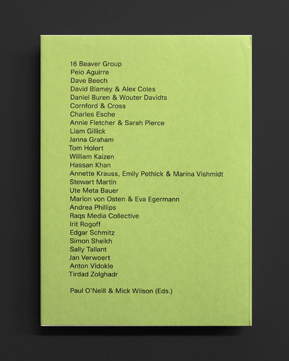
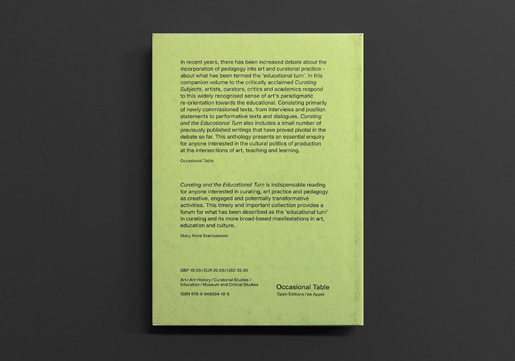
An anthology of new writing that argues for acknowledgment of an educational turn in recent art and curatorial production. Through reasoned and attentive debate, the course of curating and exhibition making into the realm of the ‘educational’ is analysed, using both empirical and theoretical tools.
In recent years there has been increased debate about the incorporation of pedagogy into art and curatorial practice – about what has been termed ‘the educational turn’. In this follow up volume to the critically acclaimed Curating Subjects, artists, curators, critics and academics respond to this widely recognised sense of art’s paradigmatic re-orientation towards the educational. Consisting primarily of newly commissioned texts, from interviews and position statements to performative texts and dialogues, Curating and the Educational Turn also includes a small number of previously published writings that have proved pivotal in the debate so far. This anthology presents an essential enquiry for anyone interested in the cultural politics of production at the intersection of art, curating, and education.
Design: Jonathan Hares
Published with de Appel Arts Centre
2007, English
Hardcover, 400 pages, 235 x 263 mm
Published by
The MIT Press / Massachusetts
The Museum of Contemporary Art / Los Angeles
$88.00 - Out of stock
There had never been art like the art produced by women artists in the 1970s ;and there has never been a book with the ambition and scope of this one about that groundbreaking era. WACK! documents and illustrates the impact of the feminist revolution on art made between 1965 and 1980, featuring pioneering and influential works by artists who came of age during that period ;Chantal Akerman, Lynda Benglis, Theresa Hak Kyung Cha, Valie Export, Mary Heilmann, Sanja Ivekovič, Ana Mendieta, Annette Messager, and others ;as well as important works made in those years by artists whose whose careers were already well established, including Louise Bourgeois, Judy Chicago, Sheila Levrant de Bretteville, Lucy Lippard, Alice Neel, and Yoko Ono.The art surveyed in WACK! includes work by more than 120 artists, in all media ;from painting and sculpture to photography, film, installation, and video ;arranged not by chronology but by theme: Abstraction, "Autophotography," Body as Medium, Family Stories, Gender Performance, Knowledge as Power, Making Art History, and others. WACK!, which accompanies the first international museum exhibition to showcase feminist art from this revolutionary era, contains more than 400 color images. Highlights include the figurative paintings of Joan Semmel; the performance and film collaborations of Sally Potter and Rose English; the untitled film stills of Cindy Sherman; and the large-scale, craft-based sculptures of Magdalena Abakanowicz. Written entries on each artist offer key biographical and descriptive information and accompanying essays by leading critics, art historians, and scholars offer new perspectives on feminist art practice. The topics ;including the relationship between American and European feminism, feminism and New York abstraction, and mapping a global feminism ;provide a broad social context for the artworks themselves. WACK! is both a definitive visual record and a long-awaited history of one of the most important artistic movements of the twentieth century.
Essays by: Cornelia Butler, Judith Russi Kirshner, Catherine Lord, Marsha Meskimmon, Richard Meyer, Helen Molesworth, Peggy Phelan, Nelly Richard, Valerie Smith, Abigail Solomon-Godeau, Jenni Sorkin.
Artists include: Marina Abramovič, Chantal Akerman, Lynda Benglis, Dara Birnbaum, Louise Bourgeois, Judy Chicago, Lygia Clark, Jay DeFeo, Mary Beth Edelson, Valie Export, Barbara Hammer, Susan Hiller, Joan Jonas, Mary Kelly, Maria Lassnig, Linda Montano, Alice Neel, Senga Nengudi, Lorraine O'Grady, Pauline Oliveros, Yoko Ono, Orlan, Howardena Pindell, Yvonne Rainer, Faith Ringgold, Ketty La Rocca, Ulrike Rosenbach, Martha Rosler, Betye Saar, Miriam Schapiro, Carolee Schneemann, Cindy Sherman, and Hannah Wilke.
Due to the weight of this volume, your order will likely incur additional postage costs. We will contact you with the best shipping advice upon your order, or alternatively, please email us in advance. Thank you for understanding.
2010, German / English
Softcover, 196 pages, 23 x 16 cm
Published by
Walther König / Köln
$29.00 - Out of stock
With a preface by Marius Babias and texts by T. J. Demos and Bert Rebhandl
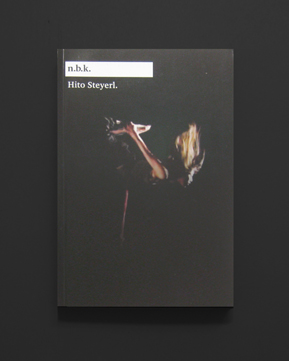
In recent years, the artist Hito Steyerl has gained great international recognition for her work at the intersection between film and fine art. Her films combine elements of experimental film, auteur cinema, documentary film, and video art. This is the first monograph to examine Steyerl’s oeuvre in several facets, with contributions from film, art, and cultural historians. Numerous illustrations show the stylistically honed visual language in Steyerl’s work, which is schooled in discourse analysis. Through montage, she uses elements from popular culture and politics, Hollywood and independent cinema, interviews and off-commentary to assemble provocative film analyses of the present.