World Food Books' programme is largely produced on Kulin Nation land. We acknowledge the Wurundjeri people of the Kulin Nation as the first and continuing custodians of this land, and pay respect to their Elders past, present, and emerging.
World Food Books is an arts and special interests bookshop in Naarm / Melbourne. Founded in 2010, World Food Books is devoted to the presentation of a rotating, hand-selection of international art, design, literary and counterculture publications with an emphasis on the anti-traditional, the experimental, the avant-garde, the heretic, the marginal.
Presenting new titles alongside rare and out-of-print books, catalogues and journals spanning the fields of modern and contemporary art, design, photography, illustration, film, literature, poetry, cultural theory, philosophy, sexuality, popular and underground culture in its many radical forms, World Food Books wishes to encourage adventurous, thoughtful and open-minded reading, looking, writing, and exchange of publishing and ideas, both current and historical.
As well as our bookshop, located in Melbourne's historical Nicholas Building, all of our inventory is available internationally via our online mail-order service.
World Food Books semi-regularly co-ordinates "Occasions", a programme of exhibits and events at the bookshop and in partnership with other hosts (such as museums and art galleries) that develop out of the activities, relationships and content of the bookshop itself.
World Food Books
The Nicholas Building
37 Swanston Street
Room 5, Level 6
Melbourne 3000
Australia
SHOP HOURS:
Thu–Fri 12–6, Sat 12–5
WEB-SHOP OPEN 24/7
World Food Books
Postal Address:
PO Box 435
Flinders Lane
Victoria 8009
Australia
Art
Theory / Essay
Architecture / Interior
Graphic Design / Typography
Photography
Fashion
Eros
LGBTQ+
Fiction / Poetry
Weird / Speculative / Science Fiction / Horror
Transgressive / Visceral / Abject
Symbolism / Decadence / Fin de siècle
Film / Video
Painting
Sculpture / Installation
Performance / Dance / Theater
Drawing
Sound / Music
Curatorial
Group Shows / Collections
Periodicals
Out-of-print / Rare
Posters / Ephemera / Discs
Signed Books
World Food Books Gift Voucher
World Food Book Bag
Australian Art
Australian Fiction
Australian Science Fiction / Speculative Fiction
Australian Poetry
Australian Photography
Japanese Photography
Conceptual Art
Minimal Art
Dada
'Pataphysics / Oulipo
Fluxus
Concrete Poetry
Pop Art
Surrealism
Arte Povera
Arte Informale / Haute Pâte / Tachism
Nouveau Réalisme / Zero / Kinetic
Situationism / Lettrism
Collage / Mail Art / Xerox Art
Art Brut / Folk / Visionary / Fantastic
Illustration / Graphic Art / Bandes Dessinées
Furniture
Italian Radical Design / Postmodernism
Textiles
Ceramics / Glass
Counterculture
Protest / Revolt
Philosophy
Psychoanalysis
Anthropology
Anarchism
Socialism / Anarchism / Communism / Capitalism
Literary Theory / Semiotics / Language
Feminism / Women's Studies
Gender Studies / Sexuality
Anthropology
Fetishism / BDSM
Drugs / Psychedelia
Crime / Violence
Animal Rights / Veganism
Occult / Esoterica
Ecology / Earth / Alternative Living
Whole Earth / Crafts
All prices in AUD (Australian dollars)
Pick-Ups
Pick-up orders can be collected in our bookshop during opening hours after order date. Please collect any Pick-up orders within 2 weeks of ordering as we have limited storage space. Orders will be released back into stock if not collected within this time. No refunds can be made for pick-ups left un-collected. If you cannot make it in to the bookshop in this time-frame, please choose postage option.
Return Policy
All sales are final. We do accept returns (for refund or exchange) for items received in error. All our orders are packed with special care using heavy-duty padding and cardboard book-mailers or bubble mailers (for smaller books), using reinforcement where required. We cannot take responsibility for any lost, stolen or damaged parcels.
Insurance
Should you wish to insure your package, please email us directly after placing your order and we can organise this at a small extra expense. Although all standard/express tracked packages are very safe and dependable, we cannot take responsibility for any lost, stolen or damaged parcels. We recommend insurance on valuable orders.
Interested in selling your old books, catalogues, journals, magazines, comics, fanzines, ephemera? We are always looking for interesting, unusual and out-of-print books to buy. We only buy books in our fields of interest and specialty, and that we feel we can resell.
We base these prices on desirability, market value, in-print prices, condition and our current stock levels. We offer cash, store credit, and can take stock on consignment. All
about 25% of the price we expect to get when we sell them, or 30% in store credit. We base these prices on desirability, market value, in-print prices, condition and our current stock levels.
Sell your books any day of the week. You can drop them off and return later. If you have a lot of books, we can visit your Sydney home.
We buy books that we feel we can resell. We offer about 25 % of the price we expect to get when we sell them, or 30% in store credit. We base these prices on desirability, market value, in-print prices, condition and our current stock levels.
Philadelphia Wireman
03 August - 01 September, 2018
World Food Books is proud to announce our next Occasion, the first presentation of sculptures by Philadelphia Wireman in Australia.
The Philadelphia Wireman sculptures were found abandoned in an alley off Philadelphia’s South Street on trash night in 1982. Their discovery in a rapidly-changing neighbourhood undergoing extensive renovation, compounded with the failure of all attempts to locate the artist, suggests that the works may have been discarded after the maker’s death. Dubbed the "Philadelphia Wireman" during the first exhibition of this work, in 1985, the maker’s name, age, ethnicity, and even gender remain uncertain. The entire collection totals approximately 1200 pieces, all intricately bound together with tightly-wound heavy-gauge wire (along with a few small, abstract marker drawings, reminiscent both of Mark Tobey and J.B. Murry). The dense construction of the work, despite a modest range of scale and materials, is singularly obsessive and disciplined in design: a wire armature or exoskeleton firmly binds a bricolage of found objects including plastic, glass, food packaging, umbrella parts, tape, rubber, batteries, pens, leather, reflectors, nuts and bolts, nails, foil, coins, toys, watches, eyeglasses, tools, and jewellery.
Heavy with associations—anthropomorphic, zoomorphic, and socio-cultural responses to wrapped detritus—the totemic sculptures by Philadelphia Wireman have been discussed in the context of work created to fulfil the shamanistic needs of alternative religions in American culture. Curators, collectors, and critics have variously compared certain pieces to sculpture from Classical antiquity, Native American medicine bundles, African-American memory jugs, and African fetish objects. Reflecting the artist’s prolific and incredibly focused scavenging impulse, and despite—or perhaps enhanced by—their anonymity, these enigmatic objects function as urban artefacts and arbiters of power, though their origin and purpose is unknown. Philadelphia Wireman, whatever their identity, possessed an astonishing ability to isolate and communicate the concepts of power and energy through the selection and transformation of ordinary materials. Over the course of the past two decades, this collection has come to be regarded as an important discovery in the field of self-taught art and vernacular art.
Presented in collaboration with Fleisher-Ollman Gallery, Philadelphia, and Robert Heald, Wellington.
Susan Te Kahurangi King
02 February - 10 March, 2018
Susan Te Kahurangi King (24 February 1951 - ) has been a confident and prolific artist since she was a young child, drawing with readily available materials - pencils, ballpoint pens and felt-tip markers, on whatever paper is at hand. Between the ages of four and six Susan slowly ceased verbal communication. Her grandparents William and Myrtle Murphy had developed a special bond with Susan so they took on caring responsibilities for extended periods. Myrtle began informally archiving her work, carefully collecting and storing the drawings and compiling scrapbooks. No drawing was insignificant; every scrap of paper was kept. The King family are now the custodians of a vast collection containing over 7000 individual works, from tiny scraps of paper through to 5 meter long rolls.
The scrapbooks and diaries reveal Myrtle to be a woman of great patience and compassion, seeking to understand a child who was not always behaving as expected. She encouraged Susan to be observant, to explore her environment and absorb all the sights and sounds. Myrtle would show Susan’s drawings to friends and people in her community that she had dealings with, such as shopkeepers and postal workers, but this was not simply a case of a grandmother’s bias. She recognised that Susan had developed a sophisticated and unique visual language and sincerely believed that her art deserved serious attention.
This was an unorthodox attitude for the time. To provide some context, Jean Dubuffet coined the term Art Brut in 1945 to describe work created by self-taught artists – specifically residents of psychiatric institutions and those he considered to be visionaries or eccentrics. In 1972 Roger Cardinal extended this concept by adopting the term Outsider Art to describe work made by non-academically trained artists operating outside of mainstream art networks through choice or circumstance. Susan was born in Te Aroha, New Zealand in 1951, far from the artistic hubs of Paris and London that Dubuffet and Cardinal operated in. That Myrtle fêted Susan as a self-taught artist who deserved to be taken seriously shows how progressive her attitudes were.
Susan’s parents Doug and Dawn were also progressive. Over the years they had consulted numerous health practitioners about Susan’s condition, as the medical establishment could not provide an explanation as to why she had lapsed into silence. Dawn educated herself in the field of homeopathy and went on to treat all twelve of her children using these principles – basing prescriptions on her observations of their physical, mental and emotional state.
Doug was a linguist with an interest in philosophy who devoted what little spare time he had to studying Maori language and culture. To some extent their willingness to explore the fringes of the mainstream made them outsiders too but it was their commitment to living with integrity and their respect for individuality that ensured Susan’s creativity was always encouraged.
Even though Susan’s family supported her artistic pursuits, some staff in schools and hospitals saw it as an impediment to her assimilation into the community and discouraged it in a variety of ways. Her family was not always aware of this and therefore did not fully understand why Susan stopped drawing in the early 1990s. However, rather than dwell on the challenges that Susan faced in pursuit of her artistic practice, they prefer to highlight her achievements. In 2008 Susan began drawing again in earnest, after an almost 20 year interruption, and her work is now shown in galleries around the world.
Susan grew up without television and has been heavily influenced by the comics she read as a child. She is absolutely fearless in the appropriation of recognizable characters, such as Donald Duck and Mickey Mouse, in her work. She twists their limbs, contorts their faces, compresses them together, blends them into complex patterned backgrounds - always imbuing them with an incredible energy. Although Susan often used pop culture characters in her work they are not naive or childlike. These are drawings by a brilliant self-taught artist who has been creating exceptional work for decades without an audience in mind.
Mladen Stilinović
"Various Works 1986 - 1999"
02 February 16 - September 10, 2016
Various works 1986 - 1999, from two houses, from the collections of John Nixon, Sue Cramer, Kerrie Poliness, Peter Haffenden and Phoebe Haffenden.
Including: Geometry of Cakes (various shelves), 1993; Poor People’s Law (black and white plate), 1993; White Absence (glasses, ruler, set square, silver spoon, silver ladel with skin photograph and wooden cubes), 1990-1996; Exploitation of the Dead (grey and red star painting, wooden painting, black spoon with red table, red plate), 1984-1990; Money and Zeros (zero tie, paintings made for friends in Australia (Sue, John, Kerrie), numbers painting), 1991-1992; Words - Slogans (various t-shirts) - “they talk about the death of art...help! someone is trying to kill me”, “my sweet little lamb”, “work is a disease - Karl Marx”; Various artist books, catalogues, monographs, videos; Poster from exhibition Insulting Anarchy; "Circular" Croatian - Australian edition; Artist book by Vlado Martek (Dostoyevsky); more.
Thanks to Mladen Stilinović and Branka Stipančić.
Jonathan Walker
Always Will Need To Wear Winter Shirt Blue + Ochre Small Check Pattern
21 August - 21 September, 2015
Untitled
I am not a great reader of poetry but I always return to the work of Melbourne poet, Vincent Buckley (1925- 1988). Perhaps I find his most tantalising piece to be not a finished poem but a fragment left on a scrap of paper discovered on his desk after the poet’s death.
The poetry gathers like oil
In the word-core, and spreads
It has its music meet,
Its music is in movement.
This fragment is more the shell left behind from a volatile thought than a finished poem. I find the last two lines honest but awkward whereas the first two lines work like an arrow. Most likely he could not find a resolution so it was left. Still, in its present form, it remains an eloquent testimony to the ultimate failure of a medium to express mobile thought and sensation, in Buckley’s case, through verbal language. It’s an important matter because this is something all artists have to deal with regardless of the medium.
I have never written a poem, however, I am forever copying fragments from books on paper scraps in a vain effort to fix certain notions in my head. At first, they function as bookmarks that are sometimes returned to when I open the book. But before long, as they accumulate, they fall out littering the table interspersed with A4 photocopies, bills, books and medications.
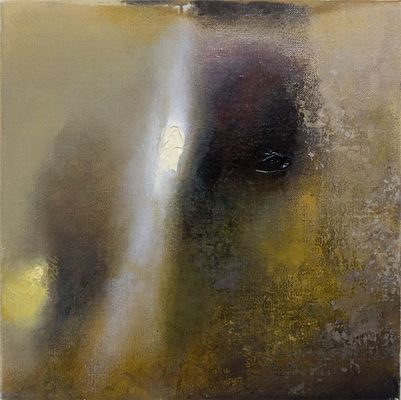
To return to Buckley’s fragment, the first two lines very much evoke how I paint nowadays. As you age, detail diminishes and patches of light become more luminous and float. I feel the most honest way of dealing with this is by smearing the oil paint on the canvas with the fingers and working close-up, blind. Only if the patches coalesce into an approaching image can the work gain a life.
-
Jonathan Walker was born in Melbourne, Australia and brought up on a dairy farm in Gippsland. In the 1970’s he studied painting at RMIT and won the Harold Wright Scholarship to the British Museum, London. During the 1980’s he exhibited at Pinacotheca Gallery, Richmond and had work shown at the NGV and Heidi City Art Gallery. Over the same period he designed the cover for the “Epigenesi” LP by Giancarlo Toniutti, Italy and conducted a mail exchange work with Achim Wollscheid, Germany. The work with artists through the post resulted in an article published in the bicentenary issue of Art and Australia 1988. He showed in artist run spaces such as WestSpace in the 90’s and 2000’s, and until 2012, taught painting at Victoria University, which is where we (Colleen Ahern and Lisa Radford) as organisers of the exhibition, among many others, had the privilege of being his student.
Walker’s knowledge was imparted to students through the careful selection of music, literature, and artists found in books that he himself had ordered for the library. Walker’s strategy was the generosity of sharing his vast knowledge with references specific to each student and their context.
Walker’s paintings share a similar focus and intimacy.
This exhibition presents a small selection of recent paintings alongside a publication that includes Walker’s writing. Observational and analytical, Walker’s work is a type of material notation — the time of day, colour and how it is blended, the both specific and fleeting location of a reflection on lino or the question of whether a chair leg should be included in a painting.
Please join us on Friday August 21 between 6-8pm to celebrate the opening of the exhibition.
Curated by Colleen Ahern and Lisa Radford.
B. Wurtz
Curated by Nic Tammens
March 26 - April 4, 2015
B.Wurtz works from a basement studio in his home on Manhattan’s Lower East Side.
This local fact is attested to by the plastic shopping bags and newsprint circulars that appear in his work. As formal objects, they don’t make loud claims about their origins but nonetheless transmit street addresses and places of business from the bottom of this long thin island. Like plenty of artists, Wurtz is affected by what is local and what is consumed. His work is underpinned by this ethic. It often speaks from a neighborhood or reads like the contents of a hamper:
“BLACK PLUMS $1.29 lb.”
“Food Bazaar”
“USDA Whole Pork Shoulder Picnic 99c lb.”
“RITE AID Pharmacy, with us it’s personal.”
“H. Brickman & Sons.”
“Sweet Yams 59c lb."
Most of the work in this exhibition was made while the artist was in residence at Dieu Donne, a workshop dedicated to paper craft in Midtown. Here Wurtz fabricated assemblages with paper and objects that are relatively lightweight, with the intention that they would be easily transportable to Australia. This consideration isn’t absolute in Wurtz’s work, but was prescriptive for making the current exhibition light and cheap. Packed in two boxes, these works were sent from a USPS post office on the Lower East Side and delivered to North Melbourne by Australia Post.
Wurtz appears courtesy of Metro Pictures, New York.
Thanks to Rob Halverson, Joshua Petherick, Sari de Mallory, Matt Hinkley, Helen Johnson, Fayen d'Evie, Ask Kilmartin, Lisa Radon, Ellena Savage, Yale Union, and "Elizabeth".
John Nixon
"Archive"
December 15 - January 20, 2014
The presentation of John Nixon's archive offered a rare showcase of this extensive collection of the artist's own publications, catalogues, posters, ephemera, editions and more, from the mid 1980s onwards, alongside a selection of his artworks.
Organized by John Nixon, Joshua Petherick and Matt Hinkley.
<a href=http://wfb.public-office.info/artist/john-nixon>All titles by John Nixon
"Habitat"
at Minerva, Sydney (organised by Joshua Petherick and Matt Hinkley)
November 15 - December 20, 2014
Lupo Borgonovo, Janet Burchill & Jennifer McCamley,
Lewis Fidock, HR Giger, Piero Gilardi, Veit Laurent Kurz,
Cinzia Ruggeri, Michael E. Smith, Lucie Stahl, Daniel Weil, Wols
Press Release:
“...It contained seven objects. The slender fluted bone, surely formed for flight, surely from the wing of some large bird. Three archaic circuitboards, faced with mazes of gold. A smooth white sphere of baked clay. An age-blackened fragment of lace. A fingerlength segment of what she assumed was bone from a human wrist, grayish white, inset smoothly with the silicon shaft of a small instrument that must once have ridden flush with the surface of the skin - but the thing’s face was seared and blackened.”
William Gibson, “Count Zero”, 1986
"Autumn Projects Archive"
Curated by Liza Vasiliou
March 6 - March 15, 2014
World Food Books, in conjunction with the Virgin Australia Melbourne Fashion Festival 2014, presented the Autumn Projects archive, consisting of a selection of early examples in Australian fashion with a particular interest in collecting designers and labels from the period beginning in the 1980’s, who significantly influenced the discourse of Australian Fashion.
Curated by Liza Vasiliou, the exhibition provided a unique opportunity to view pieces by designers Anthea Crawford, Barbara Vandenberg, Geoff Liddell and labels CR Australia, Covers, Jag along with early experimental collage pieces by Prue Acton and Sally Browne’s ‘Fragments’ collection, suspended throughout the functioning World Food Books shop in Melbourne.
H.B. Peace
presented by CENTRE FOR STYLE
November 14, 2013
"Hey Blinky, you say chic, I say same"
Anon 2013
H.B. Peace is a clothing collaboration between great friends Blake Barns and Hugh Egan Westland. Their pieces explore the divergences between 'character’ and ‘personality’ in garments....etc
Special Thanks to Joshua Petherick and Matt Hinkley of WFB and Gillian Mears
and a Very Special Thank you to Audrey Thomas Hayes for her shoe collaboration.
Janet Burchill & Jennifer McCamley
"Aesthetic Suicide"
May 10 - June 8, 2013
The first of our occasional exhibitions in the World Food Books office/shop space in Melbourne, "Aesthetic Suicide" presented a body of new and older works together by artists Janet Burchill & Jennifer McCamley, including videos, prints, a wall work, and publications.
During shop open hours videos played every hour, on the hour.
2012, English
Softcover, 128 pages (27 color ills.), 13 x 20 cm
Published by
Sternberg Press / Berlin
$24.00 - Out of stock
Edited by Milena Hoegsberg, Melanie O’Brian
Essays by T. J. Demos, Liz Kotz, David Rohde; further contributions by Jennifer Allen, Christoph Cox, Céline Condorelli, Simon Critchley, Am Johal, Tom McCarthy, Marit Paasche, Ed Steck, Karen Brown.
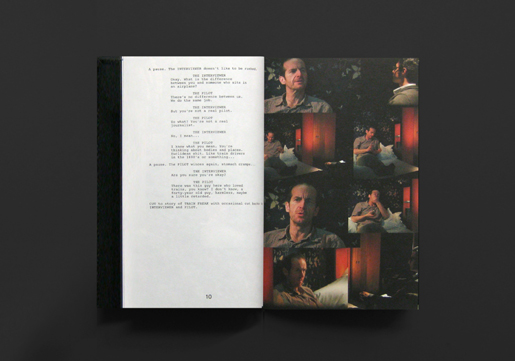
This publication focuses on a single work of art: 5,000 Feet is the Best (2011) by artist Omer Fast. With this cinematic video work, Fast has entered into a discussion about one of the most pressing issues today, namely drone surveillance and warfare—that is, the use of unmanned planes operated by “pilots” on the ground.
Produced to accompany exhibitions of Fast’s work at Henie Onstad Kunstsenter (HOK) in Oslo (February 9–May 6, 2012) and at the Power Plant Contemporary Art Gallery in Toronto (September 15–November 25, 2012), this publication aims to bridge the gap between a critical reader and an artist book. Although the respective exhibitions include additional works by Fast, the examination of this single work allows not only for a consideration of his broader practice, but also an extensive examination of the subject of the work.
Informed by Fast’s layering of narrative and documentary material, this book compiles critical analyses of his film by art historians Liz Kotz and T. J. Demos, an article on drones reprinted from the journal Foreign Policy, as well as the artist’s research and script materials set alongside film stills. Additionally, an e-mail thread of responses from practitioners active in different fields engages a range of issues pertaining to drone warfare, opening the conversation into a forum on politics, ethics, aesthetics, and human experience.
Design by NODE Berlin Oslo
2012, English
Softcover, 322 pages ( 138 b/w and 15 color ill.), 18.8 x 25.3 cm
Published by
Sternberg Press / Berlin
$42.00 - Out of stock
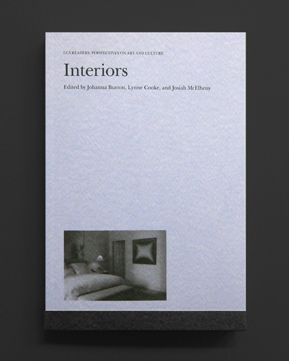
With contributions by Anni Albers, Doug Ashford, Gaston Bachelard, Angelo Bellfatto, Nova Benway, Gregg Bordowitz, Johanna Burton, Theresa Choi, Beatriz Colomina, Lynne Cooke, Moyra Davey, Tom Eccles, Diana Fuss, Jennifer Gross, Elizabeth Grosz, Roni Horn, Jenny Jaskey, Susanne Küper, Elisabeth Lebovici, Nathan Lee, Zoe Leonard, Dorit Margreiter, Josiah McElheny, Helen Molesworth, Georges Perec, Juliane Rebentisch, David Reed, Lisa Robertson, Joel Sanders, Virginia Woolf, Amy Zion
Encounters with art engage various conditions of interiority—whether through psychic spaces or specific physical environments, such as museums and private residences. The exhibition “If you lived here, you’d be home by now,” presented at the Hessel Museum of Art, CCS Bard, in 2011, was the catalyst for the current volume, providing a paradigmatic case study for probing issues of the personal and subjective within realms of the sociological and the cultural. Through diverse discursive modes—commissioned essays, conversations and talks, historical writings, and artistic projects—this anthology, the first CCS Readers volume, examines the poetics and politics of interior experience within the frame of contemporary art.
2012, English
Hardcover, 266 pages (5 b/w and 43 color ill.) 11 x 17.8 cm
Published by
Sternberg Press / Berlin
$31.00 - Out of stock
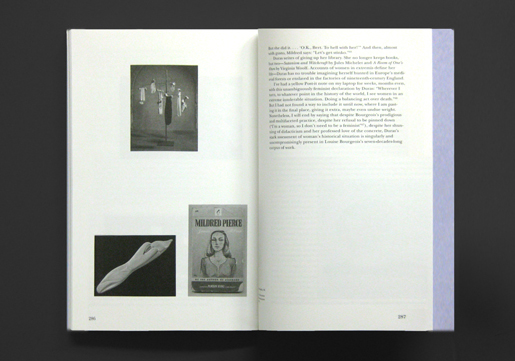
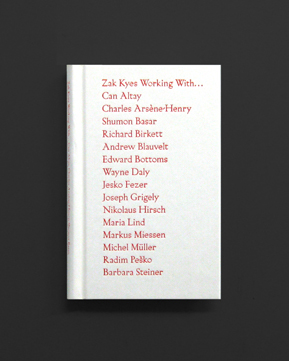
With contributions by Can Altay, Charles Arsène-Henry, Shumon Basar, Richard Birkett, Andrew Blauvelt, Edward Bottoms, Wayne Daly, Jesko Fezer, Joseph Grigely, Nikolaus Hirsch, Maria Lind, Markus Miessen, Michel Müller, Radim Peško, Barbara Steiner
To accompany his exhibition at the Museum of Contemporary Art Leipzig, this book presents the work of the Swiss-American graphic designer Zak Kyes. In collaboration with the curator, Barbara Steiner, the exhibition and publication bring together a range of works by Kyes, as well as works by a host of collaborators that includes architects, artists, writers, curators, editors, and graphic designers, presenting contemporary graphic design as a practice that mediates, and is mediated by, its allied disciplines.
Kyes, who lives and works in London, is known for his critical approach to graphic design, which encompasses publishing, editing, and site-specific projects for and in collaboration with cultural institutions. In 2005, Kyes founded the design studio Zak Group, and, in 2006, he became Art Director of the Architectural Association (AA), London. Under the auspices of the AA, he organized the seminal touring exhibition “Forms of Inquiry: The Architecture of Critical Graphic Design,” and later cofounded Bedford Press, an imprint that seeks to develop new models for contemporary publishing. By broadening the highly specialized role of the designer, Kyes challenges and further develops today’s graphic design practice.
While this work constitutes the exhibition’s point of departure, its focus is on the conceptual, visual, and economic intersections that link Kyes with his collaborators, revealing and further unfolding the designer’s multivalent practice. These intersections vary in form from idealistic to pragmatic, urgent and time-sensitive to abiding and long-lasting. Rather than presenting a chronological overview of Kyes’s work, the book highlights the designer’s relations with partners, clients, and institutions, and the creative potential of these collaborations to evolve traditional understandings of graphic design, art, and architecture.
Design by Wayne Daly
2012, English
Softcover with dust jacket, 70 pages (7 b/w ill.), 12 x 19 cm
1st edition, out of print,
Published by
Sternberg Press / Berlin
$22.00 - Out of stock
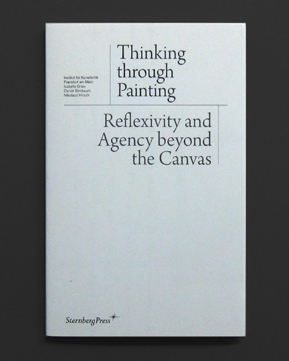
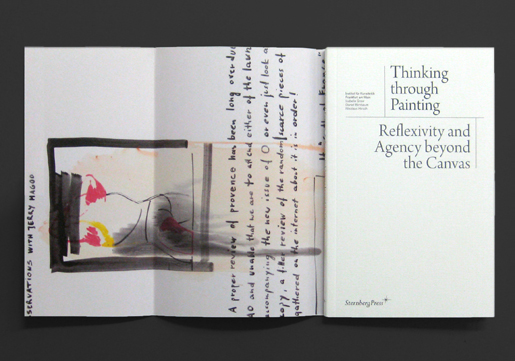
Painting has demonstrated remarkable perseverance in the expanding field of contemporary art and the surrounding ecology of media images. It appears, however, to have dispelled its own once-uncontested material basis: no longer confined to being synonymous with a flat picture plane hung on the wall, today, painting instead tends to emphasize the apparatus of its appearance and the conduits of its circulation. With contributions by Peter Geimer, Isabelle Graw, and André Rottmann, Thinking through Painting investigates painting’s traits and reception in cultural and socioeconomic discourse.
2010, English
Softcover, 176 pages (34 b/w ill.), 17 x 24.5 cm
Published by
Sternberg Press / Berlin
$44.00 $15.00 - Out of stock
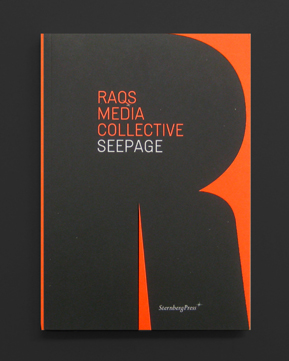
Raqs is a word in Persian, Arabic and Urdu and means the state that “whirling dervishes” enter into when they whirl. It is also a word used for dance. At the same time, Raqs could be an acronym, standing for “rarely asked questions”...!
This book gathers together a compilation of texts authored by Raqs Media Collective (Monica Narula, Jeebesh Bagchi, and Shuddhabrata Sengupta). Raqs has been variously described as artists, media practitioners, curators, researchers, editors, and catalysts of cultural processes. Their work, which has been exhibited widely in major international spaces and events, locates them at the intersections of contemporary art, historical enquiry, philosophical speculation, research, and theory—often taking the form of installations, online and offline media objects, performances, and encounters. They live and work in Delhi, based at Sarai, Centre for the Study of Developing Societies, an initiative they co-founded in 2000. They are members of the editorial collective of the Sarai Reader series. In 2008 they were co-curators of the Manifesta 7 biennale.
Recent solo exhibitions include “Lightbox,” Tate Britain, London (2009), and “Escapement,” Frith Street Gallery, London (2009); group exhibitions include “Experimental Geography,” travelling exhibition, Canada and USA (2008–11), and “Indian Highway,” Serpentine Gallery, London (2008) and Astrup Fearnley Museum, Oslo (2009).
2012, English
Hardcover (clothbound), 208 pages, 12.8 x 19 cm
Published by
Sternberg Press / Berlin
$69.00 $20.00 - Out of stock
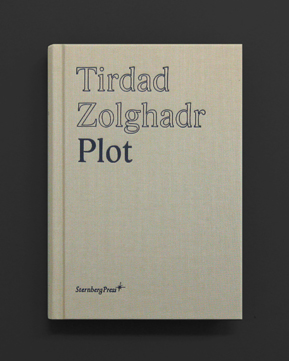
A speculative, existentialist fiction on the melancholia of revolutionary politics and good intentions, Tirdad Zolghadr’s novel is composed of the logorrhea of online communication and unpublished manuscripts. At the start of the New Zion Empire in 2016—a time of unprecedented dystopic stability with superpower coalitions, generous drone regiments, awesome capital investments, and more soft-power propaganda than ever employed in modern history—Sergeant Jim of the United States is taken hostage in Yazd, once the proud seat of the Persian Empire, and becomes a wildly popular mouthpiece for Third World rhetoric, postcolonial jingles, anti-imperial anecdotes, and anti-Zionist mottos. The abductors (a ghostwriter, an aspiring self-help guru, and an academic) invite trusted celebrity blogger Claude Mann to their suburban compound to generate more hype for their cause and to possibly replace Jim as their new abductee. A few years later, the ex-terrorists reconnect when one of them decides to author a memoir of their exploits and gain fame; all the while, Sergeant Jim haunts them with cryptic, tender, frenzied e-mails. Plot is a paranoiac-futuristic novel and exercise in satire and ontology.
2012, English
Softcover, 264 pages, 10.5 x 14.9 cm
Published by
Sternberg Press / Berlin
$25.00 - In stock -
Interviews: Matias Faldbakken by Nikki Columbus, Will Holder by Richard Birkett, Sophie Nys by Dieter Roelstraete, Clifford Irving by Francis McKee, Patricia Esquivias by Jonas Žakaitis, Norma Jeane and Tim Etchells by Anna Colin, Michael Portnoy by Sofía Hernández Chong Cuy, Hassan Khan by Brian Kuan Wood, Barbara Visser by Malašauskas; and contributions by Mai Abu ElDahab and Dexter Sinister
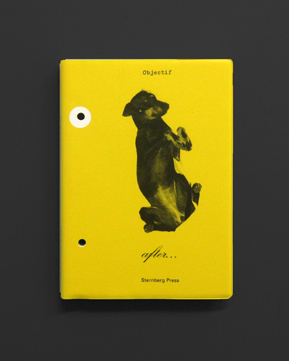
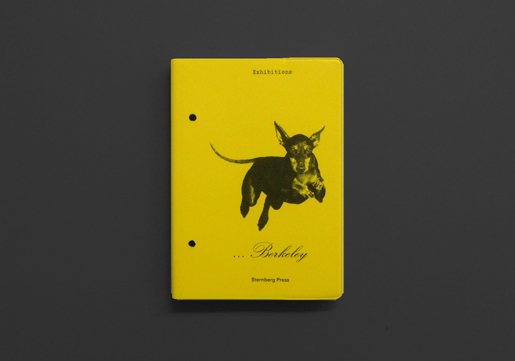
Following From Berkeley to Berkeley: Objectif Exhibitions, 2008–2010, this publication is the second in a two-part series of interviews with artists who exhibited at Objectif Exhibitions, Antwerp, between 2010 and 2011. The interviews are accompanied by a collection of secondary and parallel material produced in collaboration with each artist.
After Berkeleyopens with a letter from Mai Abu ElDahab addressed to the book’s designer, Will Holder, about parallels between their project and Roberto Bolaño’s book The Savage Detectives. It and proceeds through a series of conversations revealing the references, methods, and interests of the participants at Objectif Exhibitions ranging from reticence and possession in artistic production to a historical account of so-called carrot jokes.
2012, English
Softcover, 240 pages (8 color ill.),12 x 16.5 cm
Published by
Sternberg Press / Berlin
$23.00 - Out of stock
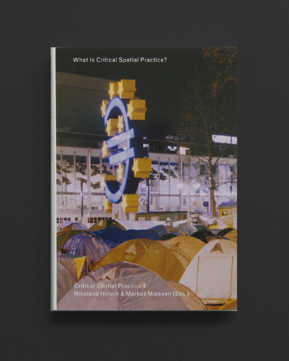
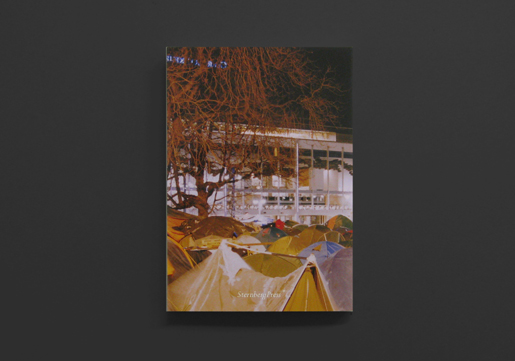
In September 2011, Nikolaus Hirsch and Markus Miessen invited protagonists from the fields of architecture, art, philosophy, and literature to reflect on the single question of what, today, can be understood as a critical modality of spatial practice. Most of the sixty-four contributions presented in this volume were composed concurrently with the evictions of many of the Occupy movements, sustained turmoil in countries of the Arab Spring, and continued spasms in the global financial system, which, interestingly, all pointed at the question and problematic of whether architecture and our physical environment can still be understood as a res publica. A response by the editors takes the form of a conversation.
This book is first in a series on critical spatial practice developed alongside the Städelschule program of the same name. Each edition includes work by invited artists—the first includes newly commissioned work by the photographer Armin Linke, who documented the Occupy camp around the European Central Bank in Frankfurt.
Design by Zak Group
2011, English
Softcover, 127 pages, 14 x 21.5 cm
Published by
Sternberg Press / Berlin
$29.00 - Out of stock
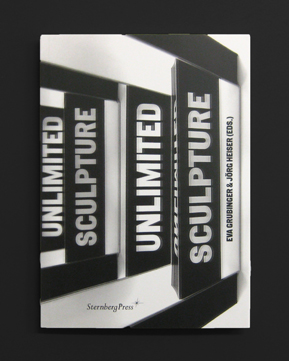
Eva Grubinger, Jörg Heiser (Eds.)
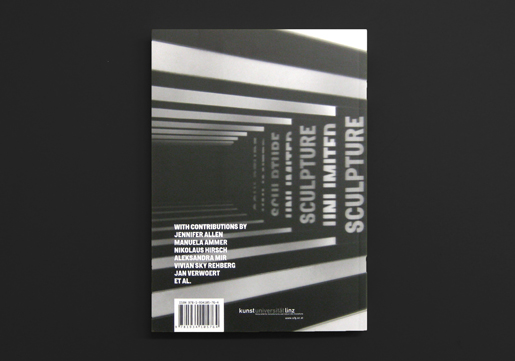
With texts by Jennifer Allen, Nikolaus Hirsch, Aleksandra Mir, Vivian Sky Rehberg, and Jan Verwoert
Based on a symposium at the Department of Sculpture – Transmedial Space, University of Art and Design, Linz, Austria, Sculpture Unlimited captures the breadth of the contemporary discussion around sculpture. Against the historical backdrop of expansions of the notion of sculpture—from Auguste Rodin to Rosalind Krauss and beyond—one could think that the discipline has become defined by its near arbitrary malleability, since practically anything can be construed as sculpture. Yet interest in the history of sculpture seems to be experiencing a revival, including traditional techniques and production methods, which often appear appealing, even radical, in the age of the Internet and social media. The book probes into recent developments in the field, and asks, what potentials does that history hold for responding to current environments? How can the contemporary field of sculpture be defined in a useful and stimulating manner?
This book was made possible through the generous support of BAWAG P.S.K., Kulturland Oberösterreich, and Kunstuniversität Linz.
2012, English
Softcover, 288 pages, 11 x 15 cm
Published by
Sternberg Press / Berlin
$25.00 - Out of stock
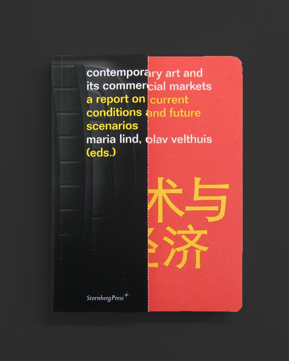
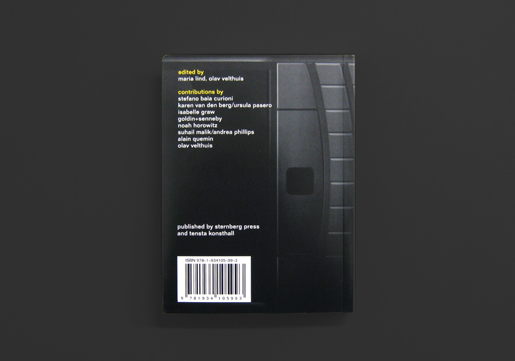
Contributions by Stefano Baia Curioni, Karen van den Berg/Ursula Pasero, Isabelle Graw, Goldin+Senneby, Noah Horowitz, Suhail Malik/Andrea Phillips, Alain Quemin, Olav Velthuis
Contemporary Art and Its Commercial Markets: A Report on Current Conditions and Future Scenarios maps and analyzes the complex and contested entanglements of contemporary art and its commercial markets. Contemporary art as an asset category and celebrity accessory, the rise of the art fair, and the increased competition of auction houses are among the phenomena which are discussed by academics, theoreticians, and artists. While some of the contributions show how the market’s globalization and commercialization both reflect and propel the way art is produced, presented, and perceived, others downplay the impact of these developments and argue that the market’s structure has essentially remained the same. All the essays trigger the question, what will art look like in 2022, and how will artists operate?
Contemporary Art and Its Commercial Markets is published as part of the curated project Abstract Possible: The Stockholm Synergies, taking place at Tensta konsthall, the Center for Fashion Studies at Stockholm University, and the auction house Bukowskis—all located in Stockholm—at the beginning of 2012.
This is the first publication in an ongoing series co-published by Sternberg Press and Tensta konsthall.
Design by Metahaven
2012, English
Softcover, 372 pages, 12.9 x 19.8 cm
Published by
Sternberg Press / Berlin
$36.00 - Out of stock
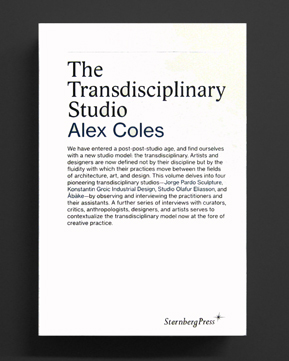
We have entered a post-post-studio age, and find ourselves with a new studio model: the transdisciplinary. Artists and designers are now defined not by their discipline but by the fluidity with which their practices move between the fields of architecture, art, and design. This volume delves into four pioneering transdisciplinary studios—Jorge Pardo Sculpture, Konstantin Grcic Industrial Design, Studio Olafur Eliasson, and Åbäke—by observing and interviewing the practitioners and their assistants. A further series of interviews with curators, critics, anthropologists, designers, and artists serves to contextualize the transdisciplinary model now at the fore of creative practice.
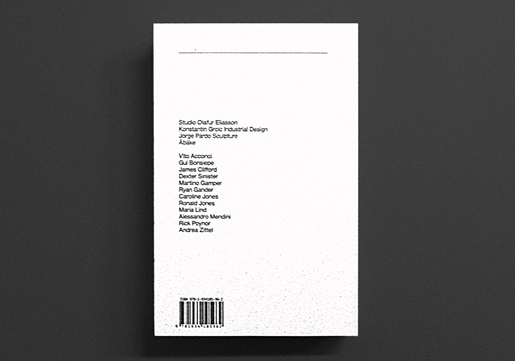
Including interviews with Jorge Pardo, Konstantin Grcic, Olafur Eliasson, and Åbäke; and Vito Acconci, Gui Bonsiepe, James Clifford, Dexter Sinister, Martino Gamper, Ryan Gander, Caroline Jones, Ronald Jones, Maria Lind, Alessandro Mendini, Rick Poynor, and Andrea Zittel.
The Transdisciplinary Studio is the first volume of a series of books by Alex Coles on the expanded studio model and contemporary praxis.
Design by Surface, Frankfurt am Main/Berlin
2012, English
Softcover, 224 pages, 16.5 x 23.5 cm
Published by
Dexter Sinister / New York
Sternberg Press / Berlin
The Serving Library / New York
$16.00 - Out of stock
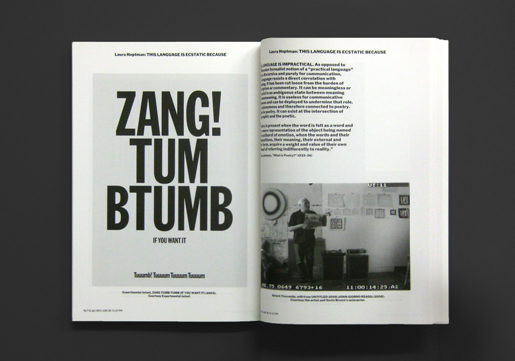
With contributions by Andrew Blum, Bruno Latour, Graham Meyer, Pierre-André Boutang, David Reinfurt, Chris Evans, Jessica Winter, Ian Svenonius, Angie Keefer, Francis McKee, Benjamin Tiven, Louis Lüthi, Dexter Sinister, and Laura Hoptman
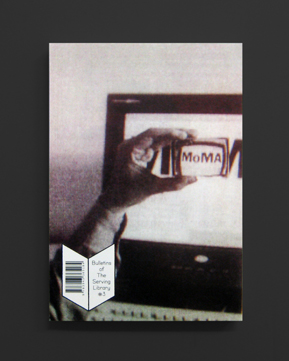
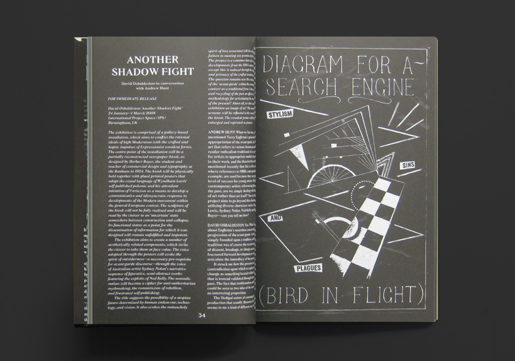
This issue of Bulletins of the Serving Library doubles as a catalog of sorts to "Ecstatic Alphabets/Heaps of Language," a group exhibition curated by Laura Hoptman at the Museum of Modern Art, New York, from May 6 to August 27, 2012. It is a pseudo-catalog in the sense that, other than a section of images at the back, it bears no direct relation to the works in the exhibition. Instead, the bulletins extend in different directions from the same title, and could be collectively summarized as preoccupied with the more social aspects of Typography.
Video trailer, assembled from thirteen texts in the catalog.
2010, English
Softcover, 104 pages, offset/newsprint, 165 x 235 mm
Published by
Dexter Sinister / New York
$27.5.00 - Out of stock
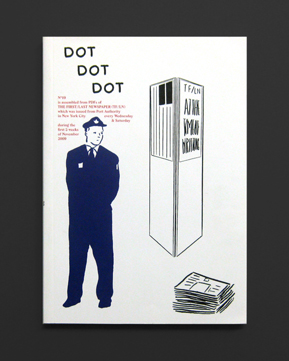
is assembled from PDFs of THE FIRST/LAST NEWSPAPER (TF/LN)
which was issued from Port Authority in New York CIty
every Wednesday & Saturday during the first 3 weeks
of November 2009
2009, English
Softcover, 104 pages, offset/newsprint, 165 x 235 mm
Published by
Dexter Sinister / New York
$27.5.00 - Out of stock
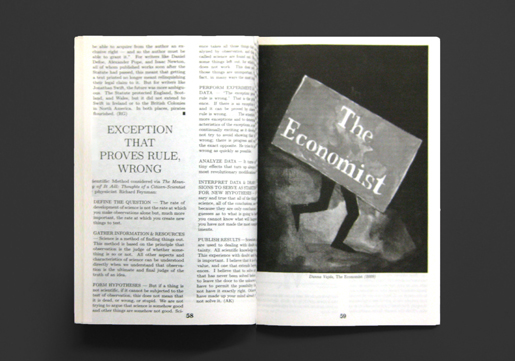
In this issue:
D/S present PARALLEL introductions
Richard Hollis on the EYE and the EAR
James Goggin itemizes ways of reading in London, 2008 with Maria Fusco, Will Holder, Richard Hollis, Maki Suzuki and Jörg Heiser
Will Holder speaks of the poetics of concrete poetry and documenting the work of Falke Pisano
Stefan Themerson & Language - a film by Erik van Zuylen introduced by Mike Sperlinger
Dan Fox plays an extended version of Refracted Light Through Armoury Show
Jennifer Higgie reads from Carnival Theory, a play-in-progress with Johnny Vivash
Agency presents Specimen 0880: Papa Hemingway
David Reinfurt explains NaÏve Set Theory with an overhead projector
Malcolm McLaren (in absentia) is interviewed by Mark & Stephen Beasley (in absentia)
Stuart Bailey - describes the Science, Fiction of E.C. Large with Will Holder and David Reinfurt
plus
Alex Klein - Portrait of Genesis Breyer P-Orridge, New York City, May 2008
Mitim (Eta) by Radim Peško
Walead Beshty - Beshty’s Possible Triangle, 2008
Dexter Sinister - Beshty’s Possible Triangle, 2008
Janice Kerbel - Remarkable, 2008
and
The Middle of Nowhere, Chapter 8 by Will Holder
2008, English
Softcover, 104 pages, offset/newsprint, 165 x 235 mm
Published by
Dexter Sinister / New York
$27.5.00 - Out of stock
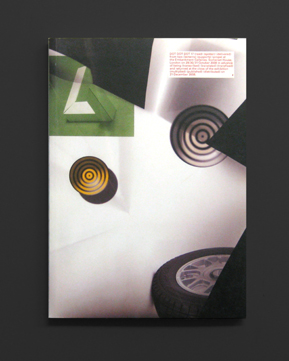
A W.A.S.T.E. of Ink (after Thomas Pynchon)
DDD16 was conceived parallel to—and is issued from under the wing of—the project 'True Mirror', directed from the Commander’s Room at the 7th Regiment Armory Building, New York between 4–23 March, 2008 and tracked at http://www.sinisterdexter.org. On reflection, we realised real news doesn’t need a press release.
The issue then draws liberally from three other interlocking projects, all founded by guest-co-editor Raimundas Malašauskas.
In this issue:
2012, English
Softcover, 240 pages, 19.1 x 12 cm
Edition of 1500,
Published by
De Appel / Amsterdam
$18.00 - Out of stock
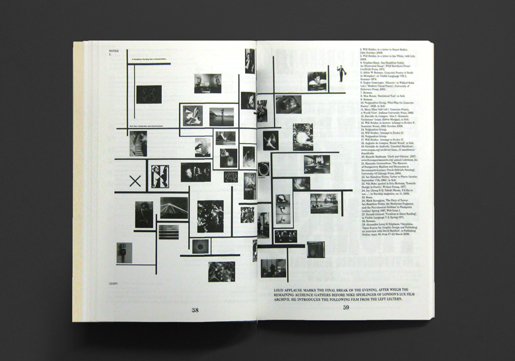
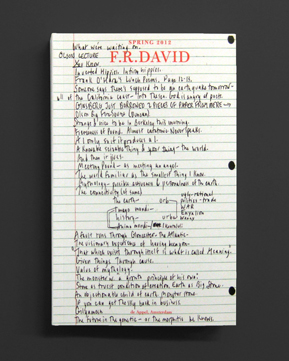
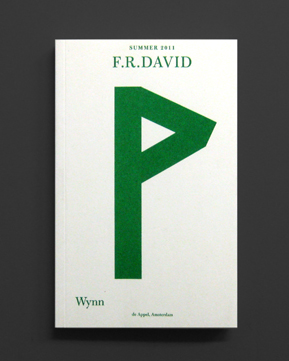
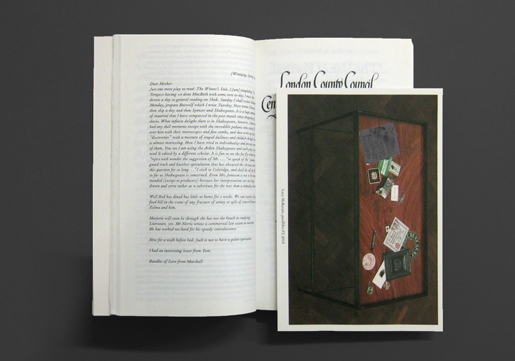
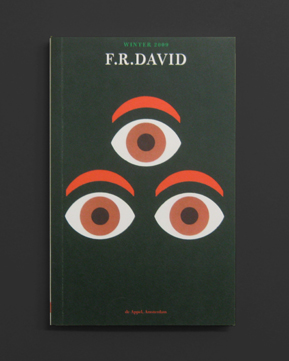
"This is not new, of course", the ninth issue of F.R.DAVID, finds 'poetry' – the word and the product – NOT sacred, IS mutable, and SHOULD be replaced with "politics", "art", "baking", "film" and "cabinet-making" as one possible means to record life.
Stan Brakhage, Adam Chodzko, Cid Corman, Maya Deren, Robert Duncan, Anja Kirschner / David Panos, Hilary Koob Sassen, Jackson Mac Low, Chris Mann, Charles Olson, Marjorie Perloff, C.H. Sisson, H.G. Widdowson and more
2011, English
Softcover, 19.1 x 12 cm
Edition of 1500,
Published by
De Appel / Amsterdam
$18.00 - Out of stock
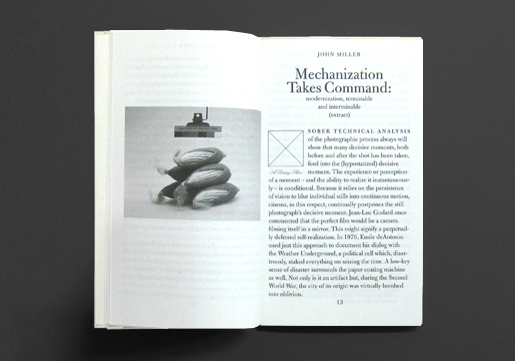
The eighth issue of F.R.DAVID, "Spin-cycle", is preoccupied with commentary: quite simply assuming that any form of production is commentary – the addition / subtraction of value – in one form or other.
Contributions from Cory Arcangel, G.K.Chesterton, Serge Daney, Susan Howe, Edward Johnston, Janice Kerbel, John Miller, Alice Notley, Francis Ponge, Ezra Pound, J.H.Prynne, Cally Spooner, Keston Sutherland, Ian White, Mas’ud Zavarzadeh and more. Including a 16-page colour contribution in by Franz Erhard Walter.
Edited by Will Holder & Mike Sperlinger.
2010, English
Softcover w. postcard insert and bookmarks, 175 pages, offset, 119 x 192 mm
Edition of 1500,
Published by
De Appel / Amsterdam
$18.00 - Out of stock
Chris Evans, de appel, Dexter Sinister, Edward Johnson, Esperanza Rosales, FR David, J.D. Salinger, Lucy McKenzie, Marshall McLuhan, Stefan Themerson, Umberto Eco, writing
A World Food Books favourite, published by de Appel, Amsterdam since about 2007.
Edited by Will Holder, w. Ann Demeester and Dieter Roelstraete.
"D"
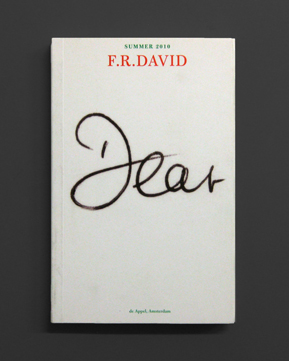
The seventh issue considers the compression of letter-writing as cybernetic translation - vs. redundant delivery of intention - from one form to another, 'With Love,'
Features: Alison Knowles, Tine Melzer, Esperanza Rosales, Kasper Andreasen, Umberto Eco, Edward Johnson, Lucy McKenzie, Heather Child and Justin Howes, Marshall McLuhan, Lydia Davis, Robert Creeley, Donald Barthelme, Avigail Moss, Chris Evans, Marianne Moore, Stefan Themerson, Guy Ben-ner, Kodwo Eshun and Dexter Sinister, Charles Lamb, The Hut Project, J.D. Salinger, more ...
Words, Don't Come Easy
2009, English
Softcover, 80 pages, 19.1 x 12 cm
Edition of 1500,
Published by
De Appel / Amsterdam
$18.00 - Out of stock
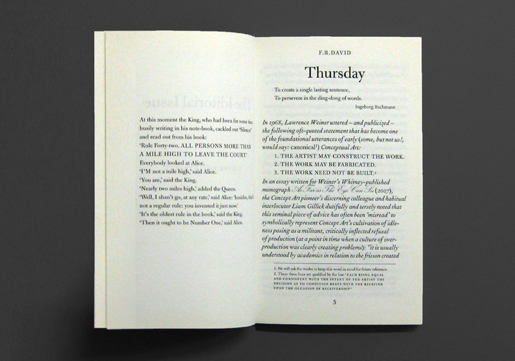
“The bizarre order in which the seven days of the week appear in the sixth issue of F.R.DAVID is modelled after the sequence of KarlHeinz Stockhausen’s opera cycle 'Licht', starting with “Donnerstag am Licht” (work on which began in 1977) and ending with “Sonntag am Licht”, the part with which the composer finally concluded the series in 2003. In Stockhausen’s cycle, the subject matter of each opera mirrors (however opaquely at times) the traditional mythological attributes ascribed to the various days of the week—not a concern that exerted any influence on F.R.DAVID’s appropriation of this structure, which is no more than a homage in passing. Each editorial was conceived and written, however, within the space of a day, with various elements recurring, echo-like, throughout the week that was. So far, 'Licht' has never been staged in its entirety, and it is not known whether Stockhausen ever meant it to be.”
2012, English
Softcover, 272 pages, 210 × 125 mm
Published by
Hyphen Press / London
$53.00 - Out of stock
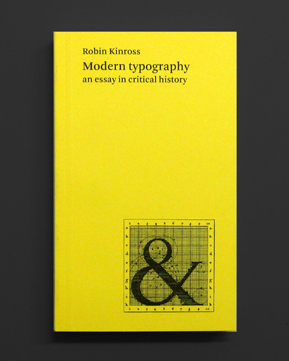
A brisk tour through the history of Western typography, from the time (c.1700 in France and England) when it can be said to have become ‘modern’. A spotlight is directed at different cultures in different times, to trace the developments and shifts in modern typography. Attention is given to ideas, to social context, and to technics, thus stepping over the limited and tired tropes of stylistic analysis. This is a reprint of the second edition, which has some variations in the pictures as well as corrections and updatings in the text.
This history of typography starts with the early years of the Enlightenment in Europe, around 1700. It was then that typography began to be distinct from printing. Instructional manuals were published, a record of the history of printing began to be constructed, and the direction of the printing processes was taken up by a new figure: the typographer. This starting point gives the discussion a special focus, missing from existing printing and design history. Modern typography is seen as more than just a modernism of style. Rather it is the attempt to work in the spirit of rationality, for clear and open communication. This idea is argued out in the introductory chapter.
The chapters that follow trace the history of typography up to the present moment. Different cultures and countries become the focus for the discussion, as they become significant. In the nineteenth century, Britain provides the main context for modern typography. In the twentieth century, the USA and certain continental European countries are prominent. Kinross provides concise accounts of modernist typography in Central Europe between the wars and in Switzerland in the 1950s and 1960s. Traditionalist typography in the USA, Britain, Germany and the Low Countries is also discussed sympathetically. A concluding chapter considers ‘modern typography’ in the light of the social, political and technical changes of the recent period.
A separate chapter of illustrations resumes the argument. Representative examples are shown, and analysed in captions.
The book concludes with a critical discussion of the literature of typographic history, and a full bibliography.
For this second edition, the reference content of the first edition (1992) has been thoroughly revised, the concluding chapter rewritten, and the illustrated examples are presented in freshly made colour pictures.
2011, English
Softcover, 392 pages, 210 × 125 mm
Published by
Hyphen Press / London
$53.00 - Out of stock
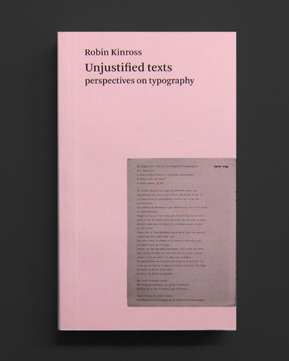
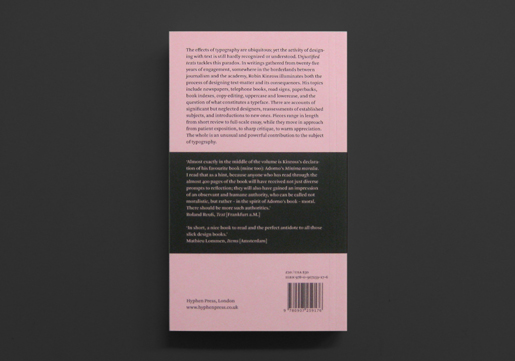
A book of writings from twenty-five years of engagement on the peripheries of both journalism and academic life, and drawn largely from small-circulation and now hard-to-access publications. Persistent themes include: editorial typography, the emergence of graphic design in Britain, emigré designers, Dutch typography, the work of critical modernist designers.
Over twenty-five years Robin Kinross has written for publication in magazines and journals, making a case for typography as a matter of fine detail and subtle judgement, whose products concern all of us, everyday. This selection of his shorter writings – including some previously unpublished – brings his major themes into focus: the unsung virtues of editorial design and of information design, the fate of Modernism in the twentieth century, the work of dissident and critical Modernist designers, the contributions of emigré designers from Europe in the English-speaking world, the virtues of a socially-oriented design approach. He argues for a design that is of use in the world, and against the cult of design and the delusions of theory. The out-of-print pamphlet Fellow readers (1994) is reprinted in full. A separate section of illustrations with extended critical captions presents these themes in a direct and accessible way. Kinross introduces the book with a fresh essay that recalls just how these pieces came into existence. The book presents an unexpected body of writing, which stakes out fresh territory between the purely academic and the merely journalistic.
2008, English
Softcover with dust jacket, 96 pages, 12 x 19 cm
Published by
Sternberg Press / Berlin
$22.00 - Out of stock
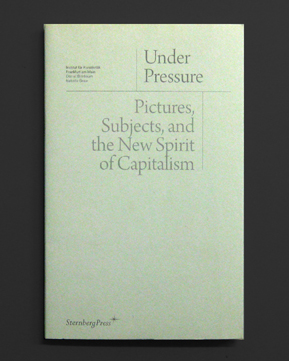
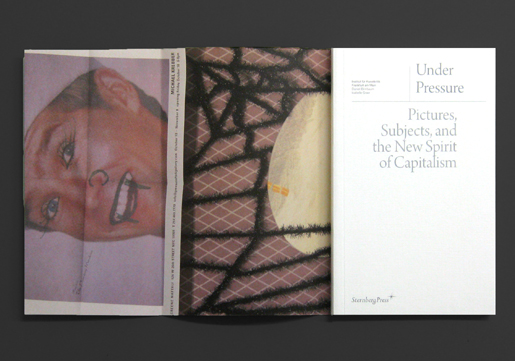
Contributions by Luc Boltanski, Sabeth Buchmann, Tim Griffin, W. J. T. Mitchell, Sighard Neckel, Martin Saar, Paolo Virno
Under Pressure gathers together the contributions to the same-titled conference held at the Institut für Kunstkritik from 2006-07.
Starting from the premise that cultural producers are currently more exposed to external pressures, the conferences proposed that today these external constraints have to be considered as an integral part of artistic production. The aim was to discuss the value system resulting from the “New Spirit of Capitalism” and to confront theoretical models with ad-hoc conditions of production.
Can “exit” and “disobedience”, as envisioned by Virno, be considered as options from an artistic point of view? And what would an insistence on “status” or long-term projects as invoked by Boltanski/Chiapello look like if artists were to take on this strategy? How much can one count on pictures alone, as Mitchell seems to do—and, can pictures really change the “ways of worldmaking”?
Design by Surface, Frankfurt am Main/Berlin
2012, English/French
Softcover, 186 pages (b&w ill.), 240 x 175 mm
Published by
May Revue / Paris
$18.00 - In stock -
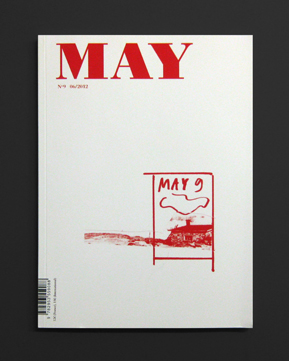
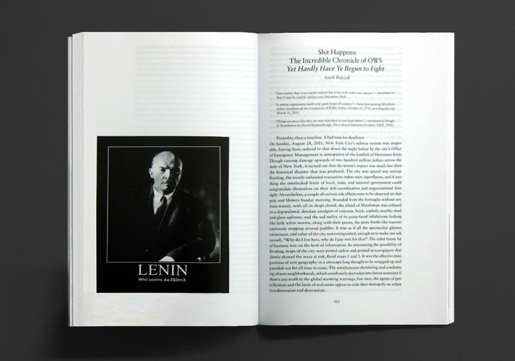
May issue 9 features: Arab Uprisings and Impersonal Images by Dork Zabunyan; From Montage to Détournement in the Situationist International by Tom McDonough; Shit Happens: The Incredible Chronicle of OWS by Antek Walczak; Alex Bag and Patterson Beckwith by Robert McKenzie; Pacific Standard Time, Art, Art in Los Angeles, 1950-1980 by Karl Holmqvist; Judith Hopf by Melanie Ohnemus; Isa Genzken by Karl Holmqvist; David Douard by Benjamin Thorel; Kenneth Goldsmith by Marwan Makki; This Way To The Cupcake Party by Carloine Busta and Amy Yao; much more...
about MAY Revue:
Conceived as a collective space in which to develop thoughts and confront positions on artistic production, May magazine examines, quaterly, contemporary art practice and theory in direct engagement with the issues, contexts and strategies that construct these two fields. An approach that could be summed up as critique at work – or as critique actively performed in text and art forms alike.
Featuring essays, interviews, art works and reviews by artists, writers and diverse practitioners of the arts, the magazine also intends to address the economy of the production of knowledge – the starting point of this reflection being the space of indistinction between information and advertisment typical of our time. This implies a dialogue with forms of critique produced in other fields.
2010, English
Softcover, 96 pp., offset 2/1, 140 x 230 mm
Published by
Occasional Papers / London
$25.00 - Out of stock
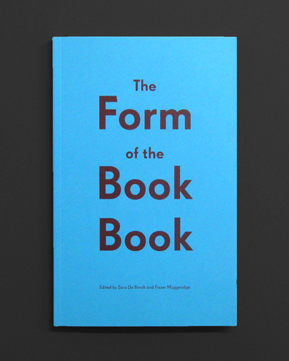
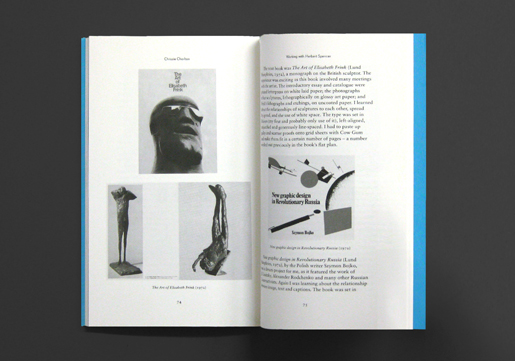
Now it in its second printing, The Form of the Book Book brings together essential essays on the book – its history, present, and possible futures – by preeminent graphic designers and graphic design theorists/historians including Chrissie Charlton, Catherine de Smet, James Goggin, Jennie Eneqvist, Roland Früh & Corina Neuenschwander, Sarah Gottlieb, Richard Hollis and Armand Mevis. In a nod to Jan Tschichold’s famous collection of essays The Form of the Book, first published in 1975, this book offers in-depth analyses of key moments in the history of book design in order to better imagine the many forms the book will take, and is already taking, in our digital age.
This second printing is now also out of print.