World Food Books' programme is largely produced on Kulin Nation land. We acknowledge the Wurundjeri people of the Kulin Nation as the first and continuing custodians of this land, and pay respect to their Elders past, present, and emerging.
World Food Books is an arts and special interests bookshop in Naarm / Melbourne. Founded in 2010, World Food Books is devoted to the presentation of a rotating, hand-selection of international art, design, literary and counterculture publications with an emphasis on the anti-traditional, the experimental, the avant-garde, the heretic, the marginal.
Presenting new titles alongside rare and out-of-print books, catalogues and journals spanning the fields of modern and contemporary art, design, photography, illustration, film, literature, poetry, cultural theory, philosophy, sexuality, popular and underground culture in its many radical forms, World Food Books wishes to encourage adventurous, thoughtful and open-minded reading, looking, writing, and exchange of publishing and ideas, both current and historical.
As well as our bookshop, located in Melbourne's historical Nicholas Building, all of our inventory is available internationally via our online mail-order service.
World Food Books semi-regularly co-ordinates "Occasions", a programme of exhibits and events at the bookshop and in partnership with other hosts (such as museums and art galleries) that develop out of the activities, relationships and content of the bookshop itself.
World Food Books
The Nicholas Building
37 Swanston Street
Room 5, Level 6
Melbourne 3000
Australia
SHOP HOURS:
Thu–Fri 12–6, Sat 12–5
WEB-SHOP OPEN 24/7
World Food Books
Postal Address:
PO Box 435
Flinders Lane
Victoria 8009
Australia
Art
Theory / Essay
Architecture / Interior
Graphic Design / Typography
Photography
Fashion
Eros
LGBTQ+
Fiction / Poetry
Weird / Speculative / Science Fiction / Horror
Transgressive / Visceral / Abject
Symbolism / Decadence / Fin de siècle
Film / Video
Painting
Sculpture / Installation
Performance / Dance / Theater
Drawing
Sound / Music
Curatorial
Group Shows / Collections
Periodicals
Out-of-print / Rare
Posters / Ephemera / Discs
Signed Books
World Food Books Gift Voucher
World Food Book Bag
Australian Art
Australian Fiction
Australian Science Fiction / Speculative Fiction
Australian Poetry
Australian Photography
Japanese Photography
Conceptual Art
Minimal Art
Dada
'Pataphysics / Oulipo
Fluxus
Concrete Poetry
Pop Art
Surrealism
Arte Povera
Arte Informale / Haute Pâte / Tachism
Nouveau Réalisme / Zero / Kinetic
Situationism / Lettrism
Collage / Mail Art / Xerox Art
Art Brut / Folk / Visionary / Fantastic
Illustration / Graphic Art / Bandes Dessinées
Furniture
Italian Radical Design / Postmodernism
Textiles
Ceramics / Glass
Counterculture
Protest / Revolt
Philosophy
Psychoanalysis
Anthropology
Anarchism
Socialism / Anarchism / Communism / Capitalism
Literary Theory / Semiotics / Language
Feminism / Women's Studies
Gender Studies / Sexuality
Anthropology
Fetishism / BDSM
Drugs / Psychedelia
Crime / Violence
Animal Rights / Veganism
Occult / Esoterica
Ecology / Earth / Alternative Living
Whole Earth / Crafts
All prices in AUD (Australian dollars)
Pick-Ups
Pick-up orders can be collected in our bookshop during opening hours after order date. Please collect any Pick-up orders within 2 weeks of ordering as we have limited storage space. Orders will be released back into stock if not collected within this time. No refunds can be made for pick-ups left un-collected. If you cannot make it in to the bookshop in this time-frame, please choose postage option.
Return Policy
All sales are final. We do accept returns (for refund or exchange) for items received in error. All our orders are packed with special care using heavy-duty padding and cardboard book-mailers or bubble mailers (for smaller books), using reinforcement where required. We cannot take responsibility for any lost, stolen or damaged parcels.
Insurance
Should you wish to insure your package, please email us directly after placing your order and we can organise this at a small extra expense. Although all standard/express tracked packages are very safe and dependable, we cannot take responsibility for any lost, stolen or damaged parcels. We recommend insurance on valuable orders.
Interested in selling your old books, catalogues, journals, magazines, comics, fanzines, ephemera? We are always looking for interesting, unusual and out-of-print books to buy. We only buy books in our fields of interest and specialty, and that we feel we can resell.
We base these prices on desirability, market value, in-print prices, condition and our current stock levels. We offer cash, store credit, and can take stock on consignment. All
about 25% of the price we expect to get when we sell them, or 30% in store credit. We base these prices on desirability, market value, in-print prices, condition and our current stock levels.
Sell your books any day of the week. You can drop them off and return later. If you have a lot of books, we can visit your Sydney home.
We buy books that we feel we can resell. We offer about 25 % of the price we expect to get when we sell them, or 30% in store credit. We base these prices on desirability, market value, in-print prices, condition and our current stock levels.
Philadelphia Wireman
03 August - 01 September, 2018
World Food Books is proud to announce our next Occasion, the first presentation of sculptures by Philadelphia Wireman in Australia.
The Philadelphia Wireman sculptures were found abandoned in an alley off Philadelphia’s South Street on trash night in 1982. Their discovery in a rapidly-changing neighbourhood undergoing extensive renovation, compounded with the failure of all attempts to locate the artist, suggests that the works may have been discarded after the maker’s death. Dubbed the "Philadelphia Wireman" during the first exhibition of this work, in 1985, the maker’s name, age, ethnicity, and even gender remain uncertain. The entire collection totals approximately 1200 pieces, all intricately bound together with tightly-wound heavy-gauge wire (along with a few small, abstract marker drawings, reminiscent both of Mark Tobey and J.B. Murry). The dense construction of the work, despite a modest range of scale and materials, is singularly obsessive and disciplined in design: a wire armature or exoskeleton firmly binds a bricolage of found objects including plastic, glass, food packaging, umbrella parts, tape, rubber, batteries, pens, leather, reflectors, nuts and bolts, nails, foil, coins, toys, watches, eyeglasses, tools, and jewellery.
Heavy with associations—anthropomorphic, zoomorphic, and socio-cultural responses to wrapped detritus—the totemic sculptures by Philadelphia Wireman have been discussed in the context of work created to fulfil the shamanistic needs of alternative religions in American culture. Curators, collectors, and critics have variously compared certain pieces to sculpture from Classical antiquity, Native American medicine bundles, African-American memory jugs, and African fetish objects. Reflecting the artist’s prolific and incredibly focused scavenging impulse, and despite—or perhaps enhanced by—their anonymity, these enigmatic objects function as urban artefacts and arbiters of power, though their origin and purpose is unknown. Philadelphia Wireman, whatever their identity, possessed an astonishing ability to isolate and communicate the concepts of power and energy through the selection and transformation of ordinary materials. Over the course of the past two decades, this collection has come to be regarded as an important discovery in the field of self-taught art and vernacular art.
Presented in collaboration with Fleisher-Ollman Gallery, Philadelphia, and Robert Heald, Wellington.
Susan Te Kahurangi King
02 February - 10 March, 2018
Susan Te Kahurangi King (24 February 1951 - ) has been a confident and prolific artist since she was a young child, drawing with readily available materials - pencils, ballpoint pens and felt-tip markers, on whatever paper is at hand. Between the ages of four and six Susan slowly ceased verbal communication. Her grandparents William and Myrtle Murphy had developed a special bond with Susan so they took on caring responsibilities for extended periods. Myrtle began informally archiving her work, carefully collecting and storing the drawings and compiling scrapbooks. No drawing was insignificant; every scrap of paper was kept. The King family are now the custodians of a vast collection containing over 7000 individual works, from tiny scraps of paper through to 5 meter long rolls.
The scrapbooks and diaries reveal Myrtle to be a woman of great patience and compassion, seeking to understand a child who was not always behaving as expected. She encouraged Susan to be observant, to explore her environment and absorb all the sights and sounds. Myrtle would show Susan’s drawings to friends and people in her community that she had dealings with, such as shopkeepers and postal workers, but this was not simply a case of a grandmother’s bias. She recognised that Susan had developed a sophisticated and unique visual language and sincerely believed that her art deserved serious attention.
This was an unorthodox attitude for the time. To provide some context, Jean Dubuffet coined the term Art Brut in 1945 to describe work created by self-taught artists – specifically residents of psychiatric institutions and those he considered to be visionaries or eccentrics. In 1972 Roger Cardinal extended this concept by adopting the term Outsider Art to describe work made by non-academically trained artists operating outside of mainstream art networks through choice or circumstance. Susan was born in Te Aroha, New Zealand in 1951, far from the artistic hubs of Paris and London that Dubuffet and Cardinal operated in. That Myrtle fêted Susan as a self-taught artist who deserved to be taken seriously shows how progressive her attitudes were.
Susan’s parents Doug and Dawn were also progressive. Over the years they had consulted numerous health practitioners about Susan’s condition, as the medical establishment could not provide an explanation as to why she had lapsed into silence. Dawn educated herself in the field of homeopathy and went on to treat all twelve of her children using these principles – basing prescriptions on her observations of their physical, mental and emotional state.
Doug was a linguist with an interest in philosophy who devoted what little spare time he had to studying Maori language and culture. To some extent their willingness to explore the fringes of the mainstream made them outsiders too but it was their commitment to living with integrity and their respect for individuality that ensured Susan’s creativity was always encouraged.
Even though Susan’s family supported her artistic pursuits, some staff in schools and hospitals saw it as an impediment to her assimilation into the community and discouraged it in a variety of ways. Her family was not always aware of this and therefore did not fully understand why Susan stopped drawing in the early 1990s. However, rather than dwell on the challenges that Susan faced in pursuit of her artistic practice, they prefer to highlight her achievements. In 2008 Susan began drawing again in earnest, after an almost 20 year interruption, and her work is now shown in galleries around the world.
Susan grew up without television and has been heavily influenced by the comics she read as a child. She is absolutely fearless in the appropriation of recognizable characters, such as Donald Duck and Mickey Mouse, in her work. She twists their limbs, contorts their faces, compresses them together, blends them into complex patterned backgrounds - always imbuing them with an incredible energy. Although Susan often used pop culture characters in her work they are not naive or childlike. These are drawings by a brilliant self-taught artist who has been creating exceptional work for decades without an audience in mind.
Mladen Stilinović
"Various Works 1986 - 1999"
02 February 16 - September 10, 2016
Various works 1986 - 1999, from two houses, from the collections of John Nixon, Sue Cramer, Kerrie Poliness, Peter Haffenden and Phoebe Haffenden.
Including: Geometry of Cakes (various shelves), 1993; Poor People’s Law (black and white plate), 1993; White Absence (glasses, ruler, set square, silver spoon, silver ladel with skin photograph and wooden cubes), 1990-1996; Exploitation of the Dead (grey and red star painting, wooden painting, black spoon with red table, red plate), 1984-1990; Money and Zeros (zero tie, paintings made for friends in Australia (Sue, John, Kerrie), numbers painting), 1991-1992; Words - Slogans (various t-shirts) - “they talk about the death of art...help! someone is trying to kill me”, “my sweet little lamb”, “work is a disease - Karl Marx”; Various artist books, catalogues, monographs, videos; Poster from exhibition Insulting Anarchy; "Circular" Croatian - Australian edition; Artist book by Vlado Martek (Dostoyevsky); more.
Thanks to Mladen Stilinović and Branka Stipančić.
Jonathan Walker
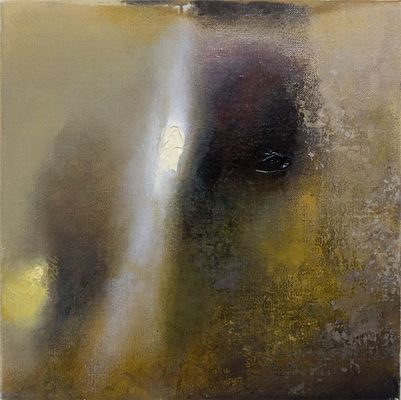
Always Will Need To Wear Winter Shirt Blue + Ochre Small Check Pattern
21 August - 21 September, 2015
Untitled
I am not a great reader of poetry but I always return to the work of Melbourne poet, Vincent Buckley (1925- 1988). Perhaps I find his most tantalising piece to be not a finished poem but a fragment left on a scrap of paper discovered on his desk after the poet’s death.
The poetry gathers like oil
In the word-core, and spreads
It has its music meet,
Its music is in movement.
This fragment is more the shell left behind from a volatile thought than a finished poem. I find the last two lines honest but awkward whereas the first two lines work like an arrow. Most likely he could not find a resolution so it was left. Still, in its present form, it remains an eloquent testimony to the ultimate failure of a medium to express mobile thought and sensation, in Buckley’s case, through verbal language. It’s an important matter because this is something all artists have to deal with regardless of the medium.
I have never written a poem, however, I am forever copying fragments from books on paper scraps in a vain effort to fix certain notions in my head. At first, they function as bookmarks that are sometimes returned to when I open the book. But before long, as they accumulate, they fall out littering the table interspersed with A4 photocopies, bills, books and medications.
To return to Buckley’s fragment, the first two lines very much evoke how I paint nowadays. As you age, detail diminishes and patches of light become more luminous and float. I feel the most honest way of dealing with this is by smearing the oil paint on the canvas with the fingers and working close-up, blind. Only if the patches coalesce into an approaching image can the work gain a life.
-
Jonathan Walker was born in Melbourne, Australia and brought up on a dairy farm in Gippsland. In the 1970’s he studied painting at RMIT and won the Harold Wright Scholarship to the British Museum, London. During the 1980’s he exhibited at Pinacotheca Gallery, Richmond and had work shown at the NGV and Heidi City Art Gallery. Over the same period he designed the cover for the “Epigenesi” LP by Giancarlo Toniutti, Italy and conducted a mail exchange work with Achim Wollscheid, Germany. The work with artists through the post resulted in an article published in the bicentenary issue of Art and Australia 1988. He showed in artist run spaces such as WestSpace in the 90’s and 2000’s, and until 2012, taught painting at Victoria University, which is where we (Colleen Ahern and Lisa Radford) as organisers of the exhibition, among many others, had the privilege of being his student.
Walker’s knowledge was imparted to students through the careful selection of music, literature, and artists found in books that he himself had ordered for the library. Walker’s strategy was the generosity of sharing his vast knowledge with references specific to each student and their context.
Walker’s paintings share a similar focus and intimacy.
This exhibition presents a small selection of recent paintings alongside a publication that includes Walker’s writing. Observational and analytical, Walker’s work is a type of material notation — the time of day, colour and how it is blended, the both specific and fleeting location of a reflection on lino or the question of whether a chair leg should be included in a painting.
Please join us on Friday August 21 between 6-8pm to celebrate the opening of the exhibition.
Curated by Colleen Ahern and Lisa Radford.
B. Wurtz
Curated by Nic Tammens
March 26 - April 4, 2015
B.Wurtz works from a basement studio in his home on Manhattan’s Lower East Side.
This local fact is attested to by the plastic shopping bags and newsprint circulars that appear in his work. As formal objects, they don’t make loud claims about their origins but nonetheless transmit street addresses and places of business from the bottom of this long thin island. Like plenty of artists, Wurtz is affected by what is local and what is consumed. His work is underpinned by this ethic. It often speaks from a neighborhood or reads like the contents of a hamper:
“BLACK PLUMS $1.29 lb.”
“Food Bazaar”
“USDA Whole Pork Shoulder Picnic 99c lb.”
“RITE AID Pharmacy, with us it’s personal.”
“H. Brickman & Sons.”
“Sweet Yams 59c lb."
Most of the work in this exhibition was made while the artist was in residence at Dieu Donne, a workshop dedicated to paper craft in Midtown. Here Wurtz fabricated assemblages with paper and objects that are relatively lightweight, with the intention that they would be easily transportable to Australia. This consideration isn’t absolute in Wurtz’s work, but was prescriptive for making the current exhibition light and cheap. Packed in two boxes, these works were sent from a USPS post office on the Lower East Side and delivered to North Melbourne by Australia Post.
Wurtz appears courtesy of Metro Pictures, New York.
Thanks to Rob Halverson, Joshua Petherick, Sari de Mallory, Matt Hinkley, Helen Johnson, Fayen d'Evie, Ask Kilmartin, Lisa Radon, Ellena Savage, Yale Union, and "Elizabeth".
John Nixon
"Archive"
December 15 - January 20, 2014
The presentation of John Nixon's archive offered a rare showcase of this extensive collection of the artist's own publications, catalogues, posters, ephemera, editions and more, from the mid 1980s onwards, alongside a selection of his artworks.
Organized by John Nixon, Joshua Petherick and Matt Hinkley.
<a href=http://wfb.public-office.info/artist/john-nixon>All titles by John Nixon
"Habitat"
at Minerva, Sydney (organised by Joshua Petherick and Matt Hinkley)
November 15 - December 20, 2014
Lupo Borgonovo, Janet Burchill & Jennifer McCamley,
Lewis Fidock, HR Giger, Piero Gilardi, Veit Laurent Kurz,
Cinzia Ruggeri, Michael E. Smith, Lucie Stahl, Daniel Weil, Wols
Press Release:
“...It contained seven objects. The slender fluted bone, surely formed for flight, surely from the wing of some large bird. Three archaic circuitboards, faced with mazes of gold. A smooth white sphere of baked clay. An age-blackened fragment of lace. A fingerlength segment of what she assumed was bone from a human wrist, grayish white, inset smoothly with the silicon shaft of a small instrument that must once have ridden flush with the surface of the skin - but the thing’s face was seared and blackened.”
William Gibson, “Count Zero”, 1986
"Autumn Projects Archive"
Curated by Liza Vasiliou
March 6 - March 15, 2014
World Food Books, in conjunction with the Virgin Australia Melbourne Fashion Festival 2014, presented the Autumn Projects archive, consisting of a selection of early examples in Australian fashion with a particular interest in collecting designers and labels from the period beginning in the 1980’s, who significantly influenced the discourse of Australian Fashion.
Curated by Liza Vasiliou, the exhibition provided a unique opportunity to view pieces by designers Anthea Crawford, Barbara Vandenberg, Geoff Liddell and labels CR Australia, Covers, Jag along with early experimental collage pieces by Prue Acton and Sally Browne’s ‘Fragments’ collection, suspended throughout the functioning World Food Books shop in Melbourne.
H.B. Peace
presented by CENTRE FOR STYLE
November 14, 2013
"Hey Blinky, you say chic, I say same"
Anon 2013
H.B. Peace is a clothing collaboration between great friends Blake Barns and Hugh Egan Westland. Their pieces explore the divergences between 'character’ and ‘personality’ in garments....etc
Special Thanks to Joshua Petherick and Matt Hinkley of WFB and Gillian Mears
and a Very Special Thank you to Audrey Thomas Hayes for her shoe collaboration.
Janet Burchill & Jennifer McCamley
"Aesthetic Suicide"
May 10 - June 8, 2013
The first of our occasional exhibitions in the World Food Books office/shop space in Melbourne, "Aesthetic Suicide" presented a body of new and older works together by artists Janet Burchill & Jennifer McCamley, including videos, prints, a wall work, and publications.
During shop open hours videos played every hour, on the hour.
2016, English
Softcover, 128 pages, 12.7 x 20.2 cm
Published by
The New York Review of Books / New York
$30.00 - Out of stock
The French film director Robert Bresson was one of the great artists of the twentieth century and among the most radical, original, and radiant stylists of any time. He worked with nonprofessional actors--models, as he called them--and deployed a starkly limited but hypnotic array of sounds and images to produce such classic works as A Man Escaped, Pickpocket, Diary of a Country Priest, and Lancelot of the Lake. From the beginning to the end of his career, Bresson dedicated himself to making movies in which nothing is superfluous and everything is always at stake.
Notes on the Cinematograph distills the essence of Bresson's theory and practice as a filmmaker and artist. He discusses the fundamental differences between theater and film; parses the deep grammar of silence, music, and noise; and affirms the mysterious power of the image to unlock the human soul. This book, indispensable for admirers of this great director and for students of the cinema, will also prove an inspiration, much like Rilke's Letters to a Young Poet, for anyone who responds to the claims of the imagination at its most searching and rigorous.
2002, English
Softcover, 38 pages, 11.6 x 16 cm
Published by
Post Apollo Press / US
$28.00 - Out of stock
In/somnia explores fissures within words as places where thought enters. Sleepless sleepers, we dream among ever more complex and hallucinatory realitites: `in/tense/in/season'—Rosmarie Waldrop.
2020, English
Softcover, 88 pages, 14 x 20.3 cm
Published by
Nightboat Books / New York
$34.00 - Out of stock
Shifting the Silence breaks the taboo around writing and speaking about our own deaths. In short, unrelenting paragraphs, Adnan grapples with the breadth of her life at ninety-five, the process of aging, and the knowledge of her own approaching death. The personal is continuously projected outwards and mirrored back through ruminations on climate catastrophe, the ongoing war in Syria, Mars missions, and Adnan’s view of the sea out of her window in Brittany in a poignant, often painful interplay between the interior and the cosmic.
“When you have no way to go anywhere, what do you do? Of course, nothing.” Adnan’s prose-poetic rumination on death would strike a chord at any time, but it feels especially apt in this moment of protracted grief. Peppered with questions—“There are so many islands I dreamed of visiting, where have they gone?”—Adnan’s lamentations are recursive and soothing. To live is to die, and the poets can ease the passage. - Nick Ripatrazone, The Millions
1977, English
Softcover, 296 pages, 19.5 x 12.5 cm
1st Edition, Out of print title / used / good
Published by
Quartet Books / London
$90.00 - Out of stock
Scarce first 1977 edition of this essential masterpiece of jazz history by renowned photographer and music historian, Val Wilmer.
In this classic account of the new black music of the 1960s and 70s, celebrated photographer and jazz historian Val Wilmer tells the story of how a generation of revolutionary musicians established black music as the true vanguard of American culture.
Placing the achievements of African-American artists such as Albert Ayler, Ornette Coleman, John Coltrane and Sun Ra in their broader political and social context, Wilmer evokes an era of extraordinary innovation and experimentation that continues to inspire musicians today.
As vital now as when it was first published in 1977, As Serious As Your Life is the essential story of one of the most dynamic musical movements of the twentieth century.
About the author
Val Wilmer is an internationally acclaimed photographer, journalist, author and black music historian who has been documenting African-American music since 1959. In that time she has interviewed and photographed almost every significant figure in post-war jazz, blues and R&B, from Louis Armstrong and Thelonious Monk to Sun Ra and Albert Ayler via Muddy Waters and Aretha Franklin. As a photographer, her work features in the permanent collections of the British Library, the V&A Museum and the National Portrait Gallery; as a writer and historian, she has contributed to the Oxford Dictionary Of National Biography and the New Grove Dictionary Of Jazz. She lives in London.
Good copy, solid binding.
2010, English
Softcover, 256 pages, 21.6 x 15.2 cm
Published by
University of Minnesota Press / Minnesota
$38.00 - Out of stock
Derek Jarman’s stunning account of his life and art
From his sexual awakening in postwar England to life in the sixties and beyond, Derek Jarman tells his life story with the in-your-face immediacy that became his trademark style in his films and writing. Accompanied by photographs of Jarman, his friends, lovers, and inspirations, the candid accounts in Dancing Ledge provide intimate and vivid glimpses into his life and times.
The clarity with which Derek Jarman offered up his life and the living of it, particularly since the epiphany—I can call it nothing less—of his illness was a genius stroke, not only of provocation, but of grace.—Tilda Swinton
2009, English
Softcover, 320 pages, 14 x 21.6 cm
Published by
University of Minnesota Press / Minnesota
$39.00 - Out of stock
This text is the iconoclastic and controversial filmmaker Derek Jarman's candid journals from 1989 to 1990. In 1986 Derek Jarman discovered he was HIV positive and decided to make a garden at his cottage on the barren coast of Dungeness. Facing an uncertain future, he nevertheless found solace in nature, growing all manner of plants. While some perished beneath wind and sea-spray others flourished, creating brilliant, unexpected beauty in the wilderness.
Modern Nature is both a diary of the garden and a meditation by Jarman on his own life: his childhood, his time as a young gay man in the 1960s, his renowned career as an artist, writer and film-maker. It is at once a lament for a lost generation, an unabashed celebration of gay sexuality, and a devotion to all that is living.
'An essential - urgent - book for the 21st Century' — Hans Ulrich Obrist
2015, English
Softcover, 96 pages. 21.6 x 14 cm
Published by
Fordham University Press / New York
$38.00 - Out of stock
"Like Roland Barthes's Mourning Diary, Hervé Guibert's hospitalization diary speaks with moonlit clarity about the threshold between life and death; with this heartbreaking and exemplary book Guibert has earned literary immortality."—Wayne Koestenbaum, Author and Distinguished Professor of English, CUNY
By the time of his death, Herve Guibert had become a singular literary voice on the impact of AIDS in France. He was prolific. His oeuvre contained some twenty novels, including To the Friend Who Did Not Save My Life and The Compassion Protocol. He was thirty-six years old. In Cytomegalovirus, Guibert offers an autobiographical narrative of the everyday moments of his hospitalization because of complications of AIDS. Cytomegalovirus is spare, biting, and anguished. Guibert writes through the minutiae of living and of death-as a quality of invention, of melancholy, of small victories in the face of greater threats-at the moment when his sight (and life) is eclipsed.
This new edition includes an Introduction and Afterword contextualizing Guibert's work within the history of the AIDS pandemic, its relevance in the contemporary moment, and the importance of understanding the quotidian aspects of terminal illness.
Translated by Clara Orban
Afterword by Todd Meyers
Introduction by David Caron
Hervé Guibert (1955-91) was a French journalist and photographer before becoming a prominent literary figure in the early 1980s. He published nearly two dozen works in his lifetime, several of which deal with HIV/AIDS.
David Caron is Professor of French and Women's Studies at the University of Michigan. He is the author of The Nearness of Others: Searching for Tact and Contact in the Age of HIV.
Todd Meyers is Associate Professor of Medical Anthropology at Wayne State University. He is the author of The Clinic and Elsewhere: Addiction, Adolescents, and the Afterlife of Therapy.
Clara Orban is Professor and Chair of French and Italian at DePaul University.
2014, English
Softcover, 160 pages, 52 x 80 cm
Published by
University of Chicago Press / Chicago
$44.00 - Out of stock
Ghost Image is made up of sixty-three short essays - meditations, memories, fantasies, and stories bordering on prose poems - and not a single image. Herve Guibert's brief, literary rumination on photography was written in response to Roland Barthes' Camera Lucida, but its deeply personal contents go far beyond that canonical text. Some essays talk of Guibert's parents and friends, some describe old family photographs and films, and spinning through them all are reflections on remembrance, narcissism, seduction, deception, death, and the phantom images that have been missed. Both a memoir and an exploration of the artistic process, Ghost Image not only reveals Guibert's particular experience as a gay artist captivated by the transience and physicality of his media and his life, but also his thoughts on the more technical aspects of his vocation. In one essay, Guibert searches through a cardboard box of family portraits for clues-answers, or even questions-about the lives of his parents and more distant relatives.
Rifling through vacation snapshots and the autographed images of long-forgotten film stars, Guibert muses, "I don't even recognize the faces, except occasionally that of an aunt or great-aunt, or the thin, fair face of my mother as a young girl." In other essays, he explains how he composes his photographs, and how - in writing - he seeks to escape and correct the inherent limits of his technique, to preserve those images lost to his technical failings as a photographer. With strains of Jean Genet and recurring themes that speak to the work of contemporary artists across a range of media, Guibert's Ghost Image is a beautifully written, melancholic ode to existence and art forms both fleeting and powerful - a unique memoir at the nexus of family, memory, desire, and photography.
HERVÉ GUIBERT (1955-1991) was a French writer and photographer. A critic for Le Monde, he was the author of some thirty books, most notably To the Friend Who Did Not Save My Life, which presents an intimate portrait of Michel Foucault and played a significant role in changing public attitudes in France towards AIDS.
1976, English
Softcover, 432 pages,
1st Edition, Out of print title / used / good
Published by
Vision / London
$55.00 - In stock -
First softcover edition of The Secret Life of Salvador Dalí, published by Vision in London in 1976. Painter, designer, and filmmaker Salvador Dalí (1904-1989) was one of the most colourful and controversial figures in twentieth-century art. A pioneer of Surrealism, he was both praised and reviled for the subconscious imagery he projected into his paintings, which he sometimes referred to as hand-painted dream photographs.
This early autobiography, first published in 1942, which takes him through his late thirties, is as startling and unpredictable as his art. On its first publication, the reviewer of Books observed: It is impossible not to admire this painter as writer. As a whole, he ... communicates the snobbishness, self-adoration, comedy, seriousness, fanaticism, in short the concept of life and the total picture of himself he sets out to portray. Dalí's flamboyant self-portrait begins with his earliest recollections and ends at the pinnacle of his earliest successes. His tantalizing chapter titles and headnotes—among them Intra-Uterine Memories, Apprenticeship to Glory, Permanent Expulsion from the School of Fine Arts, Dandyism and Prison, I am Disowned by my Family, My Participation and my Position in the Surrealist Revolution, and Discovery of the Apparatus for Photographing Thought—only hint at the compelling revelations to come.
Here are fascinating glimpses of the brilliant, ambitious, and relentlessly self-promoting artist who designed theater sets, shop interiors, and jewellery as readily as he made surrealistic paintings and films. Here is the mind that could envision and create with great technical virtuosity images of serene Raphaelesque beauty one moment and nightmarish landscapes of soft watches, burning giraffes, and fly-covered carcasses the next. For anyone interested in twentieth-century art and one of its most gifted and charismatic figures, The Secret Life of Salvador Dalí is essential reading.
Illustrated with photographs of Dalí and his works, and scores of Dalí drawings and sketches. Translated by Haakon M. Chevalier; introduction by Robert Melville.
Good copy, creasing to covers, light general wear.
1976, English
Softcover, 234 pages, 28 x 21 cm
1st Edition, Out of print title / used / good
Published by
Da Capo Press / New York
$15.00 - Out of stock
First softcover edition of this heavy volume from 1976, Pattern: A Study of Ornament in Western Europe 1180-1900 ( Volume I: The Middle Ages), first published by Clarendon Press in Oxford in the 1930s. Profusely illustrated throughout, this extensive study traces the development of European ornamental art from the beginning of the Gothic period in France to the end of the Middle Ages, explaining and illustrating in fascinating detail the Pastoral vision of nature used in art of every sort, as well as the rise of Decorative Heraldry. Includes bibliographical references.
Good copy with light wear to covers.
1997, English
Hardcover (w. dust jacket), 830 pages
1st Edition, Out of print title / used / very good
Published by
documenta / Kassel
$80.00 - Out of stock
First English edition of this monumental 830 page book for documenta X, the last documenta of the twentieth century and the first directed by a woman, the French curator Catherine David, brings together the work of more than 100 of the world's foremost thinkers, writers, and artists in an extraordinary anthology of seminal texts and images of, on, and about the development of Western cultural and critical theory since 1945.
The book "seeks to indicate a political context for the interpretation of artistic activities at the close of the twentieth century, through a montage of images and documents from the immediate post-war period to the present. The range of material treated here is not encyclopaedic; it represents a polemical attempt to isolate specific strands of artistic production and political endeavour which can be taken as references in the contemporary debate over the evolution of our societies. Drawing from distinct yet interrelated territorial and linguistic domains, the book singles out complex cultural responses to the unifying processes of global modernity."—from the book jacket.
A comprehensive work in itself, rich with enmeshed texts and illustrations of artworks, film stills, historical documents throughout in colour and in black and white.
Writers include: Theodor W. Adorno, Maurice Blanchot, Pier Paolo Pasolini, Paul Celan, Amílcar Cabral, Masao Miyoshi, Hannah Arendt, Michel Foucault, Gilles Deleuze, Félix Guattari, Jacques Rancière, Tadao Sato, Youssef Ishaghpour, Josef Beuys, Samuel Beckett, Albert Camus, Rainer Werner Fassbinder, Rem Koolhaas, Sandra Álvarez de Toledo, Witold Gombrowicz, Herve Joubert-Laurencin, Jean-François Chevrier, Marguerite Duras, Edward Said, Henri Alleg, Pierre Vidal-Naquet, Uwe Johnson, Jerzy Grotowski, James Clifford, Primo Levi, Pierre Clastres, Andrea Branzi, Fabrizio Gallanti, Gérard Chaliand, Stig Björkman, Daniel Defert, Saskia Sassen, Catherine David, Benjamin Buchloh, Paul Virilio, Serge Daney, Étienne Balibar, Nadia Tazi, and many others.....
Artists include : Archigram, Martin Kippenberger, Archizoom Associati, Art & Language, Hans Haacke, Oyvind Fahlström, Samuel Beckett, Franz West, Andrea Zittel, Heimo Zobernig, Nancy Spero, Jean-Luc Godard, Marcel Broodthaers, Lygia Clark, Jörg Herold, Fischli & Weiss, Dan Graham, Robert Adams, Peter Friedl, Paweł Althamer, Liam Gillick, Mike Kelley & Tony Oursler & Diedrich Diederichsen, Stan Douglas, Harun Farocki, Ed van der Elsken, Walker Evans, Aldo van Eyck, Heiner Goebbels, William Kentridge, Ulrike Grossarth, Richard Hamilton, Vito Acconci, Raymond Hains, Pier Paolo Pasolini, Siobhán Hapaska, Ecke Bonk, Carsten Höller & Rosemarie Trockel, Carl Michael von Hausswolff, Lois Weinberger, Hélio Oiticica, Gabriel Orozco, Olaf Nicolai, Michelangelo Pistoletto, Gerhard Richter, Thomas Schütte, Marc Pataut, Gordon Matta-Clark, Christian Philipp Müller, Matt Mullican, Antoni Muntadas, Jean-Luc Moulène, Reinhard Mucha, Álvaro Siza, Toyo Ito, John C. Portman Jr., Paulo Mendes da Rocha, Mariella Mosler, Josef Beuys, Steve McQueen, Chris Marker, Lothar Baumgarten, Jean Dubuffet, Kerry James Marshall, Maria Lassnig, Rem Koolhaas, Joachim Koester, Suzanne Lafont, Sigalit Landau, Helen Levitt, Garry Winogrand, Brassaï, Le Corbusier, Antonin Artaud, and so many more...
Very Good coy, light wear. Good dust jacket with some creasing and edge wear.
1994, English
Softcover, 144 pages, 28 x 21 cm
1st Edition, Out of print title / used / very good
Published by
A.D. (Architectural Design) / London
$25.00 - Out of stock
Published in 1994 and long out-of-print, this volume presents a view of recent developments in Russian art and architecture in the context of the critical debates of postmodernism and national cultures. The return to popular national sources in the 1960s through the 1980s was a means for Soviet artists in a multi-ethnic state to avoid submersion in the official ideology of "Socialist-Realism". The transition from totalitarianism to pluralism is evident in the diversity of work featured by both artists and architects from different regions of the former USSR. The essays presented here are by leading Russian and Western art and literary critics, including Charles Jencks, Alexander Rappaport, Alexei Tolstoy, and Nadezhda Yurasovskaya. They provide a critical, historical and personal context for a survey of the work produced in Russia since the fall of Communism.
Very Good copy, only light wear, small split to spine edge.
2021, English
Softcover, 64 pages, 20.3 x 14 cm
Published by
Rab-Rab Press / Helsinki
$38.00 - Out of stock
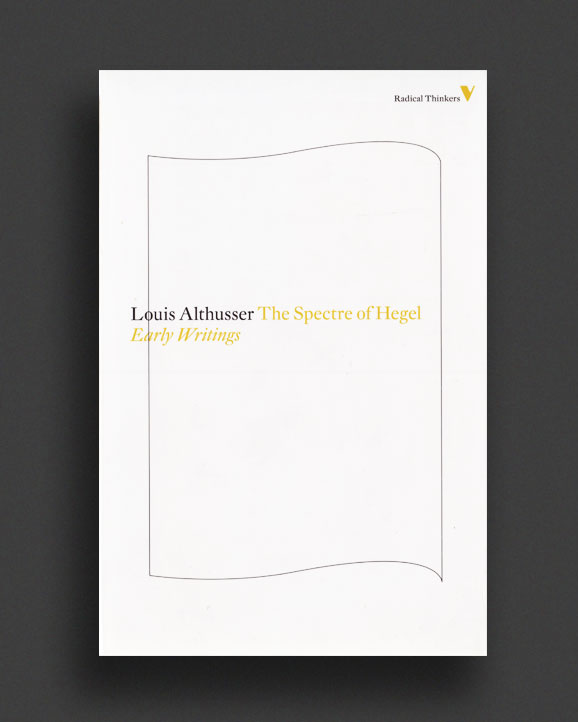
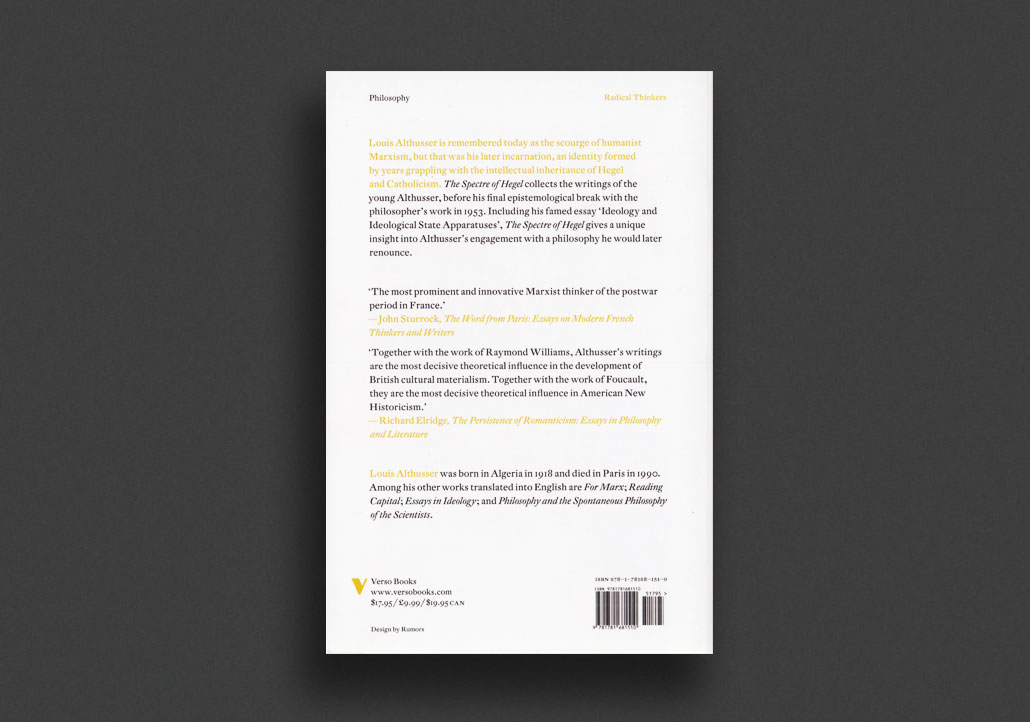
The book Marx in the Woods presents the first English translation of Jacques Rancière’s early philosophical text “The Dialectic of Reason and Private Interest”, originally published in 1963. Written under the influence of Louis Althusser, the text is discussing the forms of law in Karl Marx’s writings on the “debates on the law on thefts of wood”. As a break from the idealist philosophy, Marx’s writings on thefts of wood is considered to be a turning point in the history of communist theory.
In his text, Rancière does not only discuss the complex structure of Marx’s early concepts, but he does this by such ‘wild formalism’ that opens the communist horizon towards unfamiliar realms.
Defending this approach still today, Rancière in the new introduction written to the book gives also some clues about his difficult relationship with Althusser.
The book is translated by Jussi Pamussari, who also wrote an afterword where he discusses the way Rancière subjects time and history to a certain formalisation through spatiality.
Designed by Ott Kagovere.
Edition of 600.
2012, English
Softcover, 208 pages, 19.8 x 13 cm
Published by
Penguin Books / London
$23.00 - Out of stock
'Bataille is one of the most important writers of the twentieth century'—Michel Foucault
'Literature is not innocent,' stated Georges Bataille in this extraordinary 1957 collection of essays, arguing that only by acknowledging its complicity with the knowledge of evil can literature communicate fully and intensely. These literary profiles of eight authors and their work, including Emily Brontë's Wuthering Heights, Baudelaire's Les Fleurs du Mal and the writings of Sade, Kafka and Sartre, explore subjects such as violence, eroticism, childhood, myth and transgression, in a work of rich allusion and powerful argument.
Translated by Alastair Hamilton.
'Bataille intellectualizes the erotic, as he eroticizes the intellect . . . reading him can be a disturbing kind of game'—The New York Times
2022, English
Softcover, 72 pages, 19 x 12.1 cm
Published by
Diaphanes / Zürich
$29.00 - In stock -
Translated by Clayton Eshleman. Afterword by Stephen Barber.
"Here Lies" preceded by "The Indian Culture" collects two of Antonin Artaud's foremost poetic works from the last period of his life. He wrote both works soon after his release from the psychiatric hospital of Rodez and his return to Paris, and they were published during the flurry of intensive activity and protests against his work's censorship. The Indian Culture is the first and most ambitious work of Artaud's last period. It deals with his travels in Mexico in 1936 where Artaud sets aside his usual preoccupations with peyote and the Tarahumara people's sorcerers to directly anatomize his obsessions with gods, corporeality, and sexuality. Here Lies is Artaud's final declaration of autonomy for his own body from its birth to its imminent death, won at the cost of multiple battles against the infiltrating powers amassed to steal that birth and death away from him. Both works demonstrate Artaud's final poetry as a unique amalgam of delicate linguistic invention and ferociously obscene invective.
"Here Lies" preceded by "The Indian Culture" was translated by the award-winning translator Clayton Eshleman, widely seen as the preeminent translator into English of Artaud's work, with its profound intensity and multiply nuanced language. For the first time since its first publication, this bilingual edition presents the two works in one volume, as Artaud originally intended. This edition also features a contextual afterword by Stephen Barber as well as new material, previously untranslated into English.
2018, English
Softcover, 360 pages, 11.4 x 17.8 cm
Published by
The MIT Press / Massachusetts
Semiotext(e) / Los Angeles
$29.00 - In stock -
Essays on the contemporary continuum of incarceration: the biopolitics of juvenile delinquency, predatory policing, the political economy of fees and fines, and algorithmic policing.
What we see happening in Ferguson and other cities around the country is not the creation of livable spaces, but the creation of living hells. When people are trapped in a cycle of debt it also can affect their subjectivity and how they temporally inhabit the world by making it difficult for them to imagine and plan for the future. What psychic toll does this have on residents? How does it feel to be routinely dehumanized and exploited by the police?—from Carceral Capitalism
In this collection of essays in Semiotext(e)'s Intervention series, Jackie Wang examines the contemporary incarceration techniques that have emerged since the 1990s. The essays illustrate various aspects of the carceral continuum, including the biopolitics of juvenile delinquency, predatory policing, the political economy of fees and fines, cybernetic governance, and algorithmic policing. Included in this volume is Wang's influential critique of liberal anti-racist politics, “Against Innocence,” as well as essays on RoboCop, techno-policing, and the aesthetic problem of making invisible forms of power legible.
Wang shows that the new racial capitalism begins with parasitic governance and predatory lending that extends credit only to dispossess later. Predatory lending has a decidedly spatial character and exists in many forms, including subprime mortgage loans, student loans for sham for-profit colleges, car loans, rent-to-own scams, payday loans, and bail bond loans. Parasitic governance, Wang argues, operates through five primary techniques: financial states of exception, automation, extraction and looting, confinement, and gratuitous violence. While these techniques of governance often involve physical confinement and the state-sanctioned execution of black Americans, new carceral modes have blurred the distinction between the inside and outside of prison. As technologies of control are perfected, carcerality tends to bleed into society.
2009, English
Softcover, 176 pages, 11 x 18 cm
Published by
Penguin Books / London
$23.00 - Out of stock
Based on the BBC television series, John Berger's Ways of Seeing is a unique look at the way we view art, published as part of the Penguin on Design series in Penguin Modern Classics.
'Seeing comes before words. The child looks and recognizes before it can speak.'
'But there is also another sense in which seeing comes before words. It is seeing which establishes our place in the surrounding world; we explain that world with words, but word can never undo the fact that we are surrounded by it. The relation between what we see and what we know is never settled.'
John Berger's Ways of Seeing is one of the most stimulating and influential books on art in any language. First published in 1972, it was based on the BBC television series about which the Sunday Times critic commented: 'This is an eye-opener in more ways than one: by concentrating on how we look at paintings . . . he will almost certainly change the way you look at pictures.' By now he has.
John Berger (b. 1926) is well known for his novels & stories as well as for his works of nonfiction, including several volumes of art criticism. His first novel, 'A Painter of Our Time', was published in 1958, & since then his books have included the novel 'G.', which won the Booker Prize in 1972. In 1962 he left Britain permanently, & he now lives in a small village in the French Alps.
'Berger has the ability to cut right through the mystification of professional art critics ... he is a liberator of images: and once we have allowed the paintings to work on us directly, we are in a much better position to make a meaningful evaluation'
Peter Fuller, Arts Review
'The influence of the series and the book ... was enormous ... It opened up for general attention areas of cultural study that are now commonplace'—Geoff Dyer in Ways of Telling
'One of the most influential intellectuals of our time'—Observer
2014, English
Softcover, 512 pages, 14 x 21.6 cm
Published by
Nightboat Books / New York
$49.00 - Out of stock
The long-awaited English-language translation of Hervé Guibert’s arresting journals.
The Mausoleum of Lovers comprises Guibert's journals, kept from 1976-1991. Functioning as an atelier, it forecasts the writing of a novel, which does not materialize as such; the journal itself - a mausoleum of lovers - comes to take its place. The sensual exigencies and untempered forms of address in this epistolary work, often compared to Barthes' A Lover's Discourse, use the letter and the photograph in a work that hovers between forms, in anticipation of its own disintegration.
Translated by Keshii Pelao Nathanaël.
Hervé Guibert (1955–1991) was a French writer and photographer. A critic for Le Monde, he was the author of some thirty books, most notably To the Friend Who Did Not Save My Life, which presents an intimate portrait of Michel Foucault and played a significant role in changing public attitudes in France towards AIDS.
1969, English
Softcover (staple-bound), 32 pages, 21.5 x 14 cm
1st Edition, Out of print title / used / very good
Published by
Oxford University Press / New York
$30.00 - Out of stock
First edition of "Australian Abstract Art", an essay by Australian art historian and academic Patrick McCaughey (born 1942 in Dublin, Ireland), published in 1969 by Oxford University Press under their "National Gallery Booklets" series. Includes illustrated examples of Roy de Maistre, Grace Crowley, Ralph Balson, John Olsen, Elwyn Lynn, Norma Redpath, Lawrence Daws, Clement Meadmore, Robert Jacks, Sydney Ball, Dale Hickey, Richard Havyatt.
Fine copy with light tanning.
2022, English
Softcover, 256 pages, 17.5 x 11.5 cm
Published by
Urbanomic / Cornwall
$35.00 - In stock -
An argument that by amplifying alienation in performance, we can shift the emphasis from the sonic to the social.
We are not what we think we are. Our self-image as natural individuated subjects is determined behind our backs—historically by political forces, cognitively by the language we use, and neurologically by sub-personal mechanisms, as revealed by scientific and philosophical analyses.
Under contemporary capitalism, as the gap between self-image and reality becomes an ever greater source of social and mental distress, these theoretical insights are potential dynamite. Shifting his explorations from the sonic to the social, amplifying alienation and playing with psychic noise, artist and performer Mattin finally lights the fuse.
In what is a handbook for practical transformation as much as a theoretical treatise, Mattin sets out the thinking behind his score Social Dissonance, in which the audience is the instrument.
The noise is here to stay. Alienation is a constitutive part of subjectivity and an enabling condition for exploring social dissonance—the territory upon which we already find ourselves, the condition we inhabit today.
2022, English
Softcover, 192 pages, 19.8 x 12.9 cm
Published by
Urbanomic / Cornwall
$35.00 - Out of stock
Insights into the intelligence throughout the natural and technical environment, in the fabric of our devices and dwellings, in our clothes, and under our skin.
Is there a way to understand the materials that surround us not as passive objects, but as other intelligences interacting with our own?
In Parallel Minds, expert in materials science and nanotechnology Laura Tripaldi delivers not only detailed insights into the properties and emergent behaviours of matter as revealed by state-of-the-art chemistry, synthetic biology, and nanotech, but also a rich philosophical reflection that crosses the frontier between nature and culture, and where the most cutting-edge scientific syntheses resonate with ancient myth.
The result is a technomaterial bestiary full of unexpected encounters with ‘strange minds’—from cobwebs to kevlar and carbon fibre, from centaurs to amoebas to arachnids, from polycephalic slime to resonating plasmons, from viruses to golems. In leading us through this labyrinth of intelligent materials, Tripaldi picks up the thread of new materialisms and—in the historical weave between ‘women’s work’ and the ‘unnatural sciences’—contemporary feminisms.
Parallel Minds reveals the intelligence at large throughout the natural and technical environment, in the fabric of our devices and dwellings, in our clothes, and even under our skin. Full of lateral ideas and unexpected images, Tripaldi’s book imbues the study and synthesis of materials with a new urgency. For not only do the materials that surround us participate actively in the construction of the world in which we live, but harnessing their ability to interact intelligently with their environment could be the key to the future of our species.
"Parallel Minds is a welcome guide to contemporary debates about material intelligence: calm and measured, it is also bold in its ambitions and unafraid to face the challenges posed by an increasingly—and often disconcertingly—smart and lively world in which culture is inseparable from technology." —Sadie Plant, author of Zeros and Ones
"Tripaldi’s book is the most important philosophical surprise of recent years. It outlines a research programme in which philosophy and chemistry, the science of living beings and morality will have to work together in order to overcome all the dualisms that have marked modernity. Radical and erudite, very readable, and revolutionary, Tripaldi’s book is sure to become a great contemporary classic." —Emmanuele Coccia, author of Metamorphoses
2022, English
Hardcover (w. dust jacket), 216 pages, 21 x 14 cm
Published by
Yale University Press / New Haven
$46.00 - Out of stock
Foreword by Rachel Kushner
Preface by Alexandra Truitt
"Impressive . . . Truitt lyrically looks back on 80 years of life. . . . [T]hese daily entries . . . offer a version of Truitt free of artifice as she meditates on the sacred and mundane. . . . This sparks with intelligence."—Publishers Weekly
In the spring of 1974, the artist Anne Truitt (1921-2004) committed herself to keeping a journal for a year. She would continue the practice, sometimes intermittently, over the next six years, writing in spiral-bound notebooks and setting no guidelines other than to "let the artist speak." These writings were published as Daybook: The Journal of an Artist (1982). Two other journal volumes followed: Turn (1986) and Prospect (1996). This book, the final volume, comprises journals the artist kept from the winter of 2001 to the spring of 2002, two years before her death.
In Yield, Truitt's unflinching honesty is on display as she contemplates her place in the world and comes to terms with the intellectual, practical, emotional, and spiritual issues that an artist faces when reconciling her art with her life, even as that life approaches its end. Truitt illuminates a life and career in which the demands, responsibilities, and rewards of family, friends, motherhood, and grandmotherhood are ultimately accepted, together with those of a working artist.
2022, English
Softcover, 256 pages, 21.3 x 14 cm
Published by
Simon and Schuster / New York
$33.00 - Out of stock
Renowned American artist Anne Truitt kept this illuminating and inspiring journal over a period of seven years, determined to come to terms with the forces that shaped her art and life. Her range of sensitivity—moral, intellectual, sensual, emotional, and spiritual— is remarkably broad. She recalls her childhood on the eastern shore of Maryland, her career change from psychology to art, and her path to a sculptural practice that would “set color free in three dimensions.” She reflects on the generous advice of other artists, watches her own daughters’ journey into motherhood, meditates on criticism and solitude, and struggles to find the way to express her vision. Resonant and true, encouraging and revelatory, Anne Truitt guides herself—and her readers—through a life in which domestic activities and the needs of children and friends are constantly juxtaposed against the world of color and abstract geometry to which she is drawn in her art.
Beautifully written and a rare window on the workings of a creative mind, Daybook showcases an extraordinary artist whose insights generously and succinctly illuminate the artistic process.
Introduction by Audrey Niffenegger
"A remarkable record of a woman's reconciliation of art, motherhood, memoires of childhood, and present-day demands." — Anne Morrow Lindbergh
"Daybook is a rare gift, illuminating and nourishing, a journal to read and re-read." — May Sarton
"A natural and graceful writer... Truitt's self-examination is unflinching and, at every moment, possessed of the inevitable dignity that attends a genuine commitment to telling the truth about oneself." — Art in America
2017, English
Hardcover (w. dust jacket, 276 pages, 23.5 x 16.5 cm
Published by
Dancing Fox Press
Daniel Buchholz Galerie / Köln
$62.00 - In stock -
Edited by Julie Ault and Nicolas Linnert
Introduction by Lucy R. Lippard
Spanning more than three decades, this book brings together a full spectrum of the artist, writer, and activist’s published texts through carefully selected extracts in a singular volume. Reprinted in sequence alongside a selection of full-length texts, this series of excerpts contours a chronology that relates Ault’s continuous artistic growth, longstanding political concerns, and dynamic interpersonal affinities. Beginning in the 1980s with texts written with her collaborators in Group Material, In Part highlights Ault’s shift from exhibition making in the mid-1990s to include publishing and writing. Ault’s dialogic practice, extends to the present day through her sustained engagements and relationships with such artists as Corita Kent, Félix González-Torres, Nancy Spero, and Martin Wong. - Dancing Foxes Press
The book is published in collaboration of Dancing Foxes Press and Galerie Buchholz.