World Food Books' programme is largely produced on Kulin Nation land. We acknowledge the Wurundjeri people of the Kulin Nation as the first and continuing custodians of this land, and pay respect to their Elders past, present, and emerging.
World Food Books is an arts and special interests bookshop in Naarm / Melbourne. Founded in 2010, World Food Books is devoted to the presentation of a rotating, hand-selection of international art, design, literary and counterculture publications with an emphasis on the anti-traditional, the experimental, the avant-garde, the heretic, the marginal.
Presenting new titles alongside rare and out-of-print books, catalogues and journals spanning the fields of modern and contemporary art, design, photography, illustration, film, literature, poetry, cultural theory, philosophy, sexuality, popular and underground culture in its many radical forms, World Food Books wishes to encourage adventurous, thoughtful and open-minded reading, looking, writing, and exchange of publishing and ideas, both current and historical.
As well as our bookshop, located in Melbourne's historical Nicholas Building, all of our inventory is available internationally via our online mail-order service.
World Food Books semi-regularly co-ordinates "Occasions", a programme of exhibits and events at the bookshop and in partnership with other hosts (such as museums and art galleries) that develop out of the activities, relationships and content of the bookshop itself.
World Food Books
The Nicholas Building
37 Swanston Street
Room 5, Level 6
Melbourne 3000
Australia
SHOP HOURS:
Thu–Fri 12–6, Sat 12–5
WEB-SHOP OPEN 24/7
World Food Books
Postal Address:
PO Box 435
Flinders Lane
Victoria 8009
Australia
Art
Theory / Essay
Architecture / Interior
Graphic Design / Typography
Photography
Fashion
Eros
LGBTQ+
Fiction / Poetry
Weird / Speculative / Science Fiction / Horror
Transgressive / Visceral / Abject
Symbolism / Decadence / Fin de siècle
Film / Video
Painting
Sculpture / Installation
Performance / Dance / Theater
Drawing
Sound / Music
Curatorial
Group Shows / Collections
Periodicals
Out-of-print / Rare
Posters / Ephemera / Discs
Signed Books
World Food Books Gift Voucher
World Food Book Bag
Australian Art
Australian Fiction
Australian Science Fiction / Speculative Fiction
Australian Poetry
Australian Photography
Japanese Photography
Conceptual Art
Minimal Art
Dada
'Pataphysics / Oulipo
Fluxus
Concrete Poetry
Pop Art
Surrealism
Arte Povera
Arte Informale / Haute Pâte / Tachism
Nouveau Réalisme / Zero / Kinetic
Situationism / Lettrism
Collage / Mail Art / Xerox Art
Art Brut / Folk / Visionary / Fantastic
Illustration / Graphic Art / Bandes Dessinées
Furniture
Italian Radical Design / Postmodernism
Textiles
Ceramics / Glass
Counterculture
Protest / Revolt
Philosophy
Psychoanalysis
Anthropology
Anarchism
Socialism / Anarchism / Communism / Capitalism
Literary Theory / Semiotics / Language
Feminism / Women's Studies
Gender Studies / Sexuality
Anthropology
Fetishism / BDSM
Drugs / Psychedelia
Crime / Violence
Animal Rights / Veganism
Occult / Esoterica
Ecology / Earth / Alternative Living
Whole Earth / Crafts
All prices in AUD (Australian dollars)
Pick-Ups
Pick-up orders can be collected in our bookshop during opening hours after order date. Please collect any Pick-up orders within 2 weeks of ordering as we have limited storage space. Orders will be released back into stock if not collected within this time. No refunds can be made for pick-ups left un-collected. If you cannot make it in to the bookshop in this time-frame, please choose postage option.
Return Policy
All sales are final. We do accept returns (for refund or exchange) for items received in error. All our orders are packed with special care using heavy-duty padding and cardboard book-mailers or bubble mailers (for smaller books), using reinforcement where required. We cannot take responsibility for any lost, stolen or damaged parcels.
Insurance
Should you wish to insure your package, please email us directly after placing your order and we can organise this at a small extra expense. Although all standard/express tracked packages are very safe and dependable, we cannot take responsibility for any lost, stolen or damaged parcels. We recommend insurance on valuable orders.
Interested in selling your old books, catalogues, journals, magazines, comics, fanzines, ephemera? We are always looking for interesting, unusual and out-of-print books to buy. We only buy books in our fields of interest and specialty, and that we feel we can resell.
We base these prices on desirability, market value, in-print prices, condition and our current stock levels. We offer cash, store credit, and can take stock on consignment. All
about 25% of the price we expect to get when we sell them, or 30% in store credit. We base these prices on desirability, market value, in-print prices, condition and our current stock levels.
Sell your books any day of the week. You can drop them off and return later. If you have a lot of books, we can visit your Sydney home.
We buy books that we feel we can resell. We offer about 25 % of the price we expect to get when we sell them, or 30% in store credit. We base these prices on desirability, market value, in-print prices, condition and our current stock levels.
Philadelphia Wireman
03 August - 01 September, 2018
World Food Books is proud to announce our next Occasion, the first presentation of sculptures by Philadelphia Wireman in Australia.
The Philadelphia Wireman sculptures were found abandoned in an alley off Philadelphia’s South Street on trash night in 1982. Their discovery in a rapidly-changing neighbourhood undergoing extensive renovation, compounded with the failure of all attempts to locate the artist, suggests that the works may have been discarded after the maker’s death. Dubbed the "Philadelphia Wireman" during the first exhibition of this work, in 1985, the maker’s name, age, ethnicity, and even gender remain uncertain. The entire collection totals approximately 1200 pieces, all intricately bound together with tightly-wound heavy-gauge wire (along with a few small, abstract marker drawings, reminiscent both of Mark Tobey and J.B. Murry). The dense construction of the work, despite a modest range of scale and materials, is singularly obsessive and disciplined in design: a wire armature or exoskeleton firmly binds a bricolage of found objects including plastic, glass, food packaging, umbrella parts, tape, rubber, batteries, pens, leather, reflectors, nuts and bolts, nails, foil, coins, toys, watches, eyeglasses, tools, and jewellery.
Heavy with associations—anthropomorphic, zoomorphic, and socio-cultural responses to wrapped detritus—the totemic sculptures by Philadelphia Wireman have been discussed in the context of work created to fulfil the shamanistic needs of alternative religions in American culture. Curators, collectors, and critics have variously compared certain pieces to sculpture from Classical antiquity, Native American medicine bundles, African-American memory jugs, and African fetish objects. Reflecting the artist’s prolific and incredibly focused scavenging impulse, and despite—or perhaps enhanced by—their anonymity, these enigmatic objects function as urban artefacts and arbiters of power, though their origin and purpose is unknown. Philadelphia Wireman, whatever their identity, possessed an astonishing ability to isolate and communicate the concepts of power and energy through the selection and transformation of ordinary materials. Over the course of the past two decades, this collection has come to be regarded as an important discovery in the field of self-taught art and vernacular art.
Presented in collaboration with Fleisher-Ollman Gallery, Philadelphia, and Robert Heald, Wellington.
Susan Te Kahurangi King
02 February - 10 March, 2018
Susan Te Kahurangi King (24 February 1951 - ) has been a confident and prolific artist since she was a young child, drawing with readily available materials - pencils, ballpoint pens and felt-tip markers, on whatever paper is at hand. Between the ages of four and six Susan slowly ceased verbal communication. Her grandparents William and Myrtle Murphy had developed a special bond with Susan so they took on caring responsibilities for extended periods. Myrtle began informally archiving her work, carefully collecting and storing the drawings and compiling scrapbooks. No drawing was insignificant; every scrap of paper was kept. The King family are now the custodians of a vast collection containing over 7000 individual works, from tiny scraps of paper through to 5 meter long rolls.
The scrapbooks and diaries reveal Myrtle to be a woman of great patience and compassion, seeking to understand a child who was not always behaving as expected. She encouraged Susan to be observant, to explore her environment and absorb all the sights and sounds. Myrtle would show Susan’s drawings to friends and people in her community that she had dealings with, such as shopkeepers and postal workers, but this was not simply a case of a grandmother’s bias. She recognised that Susan had developed a sophisticated and unique visual language and sincerely believed that her art deserved serious attention.
This was an unorthodox attitude for the time. To provide some context, Jean Dubuffet coined the term Art Brut in 1945 to describe work created by self-taught artists – specifically residents of psychiatric institutions and those he considered to be visionaries or eccentrics. In 1972 Roger Cardinal extended this concept by adopting the term Outsider Art to describe work made by non-academically trained artists operating outside of mainstream art networks through choice or circumstance. Susan was born in Te Aroha, New Zealand in 1951, far from the artistic hubs of Paris and London that Dubuffet and Cardinal operated in. That Myrtle fêted Susan as a self-taught artist who deserved to be taken seriously shows how progressive her attitudes were.
Susan’s parents Doug and Dawn were also progressive. Over the years they had consulted numerous health practitioners about Susan’s condition, as the medical establishment could not provide an explanation as to why she had lapsed into silence. Dawn educated herself in the field of homeopathy and went on to treat all twelve of her children using these principles – basing prescriptions on her observations of their physical, mental and emotional state.
Doug was a linguist with an interest in philosophy who devoted what little spare time he had to studying Maori language and culture. To some extent their willingness to explore the fringes of the mainstream made them outsiders too but it was their commitment to living with integrity and their respect for individuality that ensured Susan’s creativity was always encouraged.
Even though Susan’s family supported her artistic pursuits, some staff in schools and hospitals saw it as an impediment to her assimilation into the community and discouraged it in a variety of ways. Her family was not always aware of this and therefore did not fully understand why Susan stopped drawing in the early 1990s. However, rather than dwell on the challenges that Susan faced in pursuit of her artistic practice, they prefer to highlight her achievements. In 2008 Susan began drawing again in earnest, after an almost 20 year interruption, and her work is now shown in galleries around the world.
Susan grew up without television and has been heavily influenced by the comics she read as a child. She is absolutely fearless in the appropriation of recognizable characters, such as Donald Duck and Mickey Mouse, in her work. She twists their limbs, contorts their faces, compresses them together, blends them into complex patterned backgrounds - always imbuing them with an incredible energy. Although Susan often used pop culture characters in her work they are not naive or childlike. These are drawings by a brilliant self-taught artist who has been creating exceptional work for decades without an audience in mind.
Mladen Stilinović
"Various Works 1986 - 1999"
02 February 16 - September 10, 2016
Various works 1986 - 1999, from two houses, from the collections of John Nixon, Sue Cramer, Kerrie Poliness, Peter Haffenden and Phoebe Haffenden.
Including: Geometry of Cakes (various shelves), 1993; Poor People’s Law (black and white plate), 1993; White Absence (glasses, ruler, set square, silver spoon, silver ladel with skin photograph and wooden cubes), 1990-1996; Exploitation of the Dead (grey and red star painting, wooden painting, black spoon with red table, red plate), 1984-1990; Money and Zeros (zero tie, paintings made for friends in Australia (Sue, John, Kerrie), numbers painting), 1991-1992; Words - Slogans (various t-shirts) - “they talk about the death of art...help! someone is trying to kill me”, “my sweet little lamb”, “work is a disease - Karl Marx”; Various artist books, catalogues, monographs, videos; Poster from exhibition Insulting Anarchy; "Circular" Croatian - Australian edition; Artist book by Vlado Martek (Dostoyevsky); more.
Thanks to Mladen Stilinović and Branka Stipančić.
Jonathan Walker
Always Will Need To Wear Winter Shirt Blue + Ochre Small Check Pattern
21 August - 21 September, 2015
Untitled
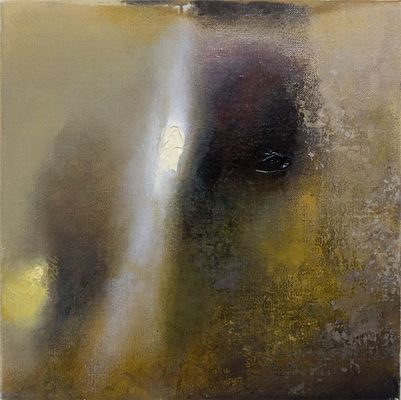
I am not a great reader of poetry but I always return to the work of Melbourne poet, Vincent Buckley (1925- 1988). Perhaps I find his most tantalising piece to be not a finished poem but a fragment left on a scrap of paper discovered on his desk after the poet’s death.
The poetry gathers like oil
In the word-core, and spreads
It has its music meet,
Its music is in movement.
This fragment is more the shell left behind from a volatile thought than a finished poem. I find the last two lines honest but awkward whereas the first two lines work like an arrow. Most likely he could not find a resolution so it was left. Still, in its present form, it remains an eloquent testimony to the ultimate failure of a medium to express mobile thought and sensation, in Buckley’s case, through verbal language. It’s an important matter because this is something all artists have to deal with regardless of the medium.
I have never written a poem, however, I am forever copying fragments from books on paper scraps in a vain effort to fix certain notions in my head. At first, they function as bookmarks that are sometimes returned to when I open the book. But before long, as they accumulate, they fall out littering the table interspersed with A4 photocopies, bills, books and medications.
To return to Buckley’s fragment, the first two lines very much evoke how I paint nowadays. As you age, detail diminishes and patches of light become more luminous and float. I feel the most honest way of dealing with this is by smearing the oil paint on the canvas with the fingers and working close-up, blind. Only if the patches coalesce into an approaching image can the work gain a life.
-
Jonathan Walker was born in Melbourne, Australia and brought up on a dairy farm in Gippsland. In the 1970’s he studied painting at RMIT and won the Harold Wright Scholarship to the British Museum, London. During the 1980’s he exhibited at Pinacotheca Gallery, Richmond and had work shown at the NGV and Heidi City Art Gallery. Over the same period he designed the cover for the “Epigenesi” LP by Giancarlo Toniutti, Italy and conducted a mail exchange work with Achim Wollscheid, Germany. The work with artists through the post resulted in an article published in the bicentenary issue of Art and Australia 1988. He showed in artist run spaces such as WestSpace in the 90’s and 2000’s, and until 2012, taught painting at Victoria University, which is where we (Colleen Ahern and Lisa Radford) as organisers of the exhibition, among many others, had the privilege of being his student.
Walker’s knowledge was imparted to students through the careful selection of music, literature, and artists found in books that he himself had ordered for the library. Walker’s strategy was the generosity of sharing his vast knowledge with references specific to each student and their context.
Walker’s paintings share a similar focus and intimacy.
This exhibition presents a small selection of recent paintings alongside a publication that includes Walker’s writing. Observational and analytical, Walker’s work is a type of material notation — the time of day, colour and how it is blended, the both specific and fleeting location of a reflection on lino or the question of whether a chair leg should be included in a painting.
Please join us on Friday August 21 between 6-8pm to celebrate the opening of the exhibition.
Curated by Colleen Ahern and Lisa Radford.
B. Wurtz
Curated by Nic Tammens
March 26 - April 4, 2015
B.Wurtz works from a basement studio in his home on Manhattan’s Lower East Side.
This local fact is attested to by the plastic shopping bags and newsprint circulars that appear in his work. As formal objects, they don’t make loud claims about their origins but nonetheless transmit street addresses and places of business from the bottom of this long thin island. Like plenty of artists, Wurtz is affected by what is local and what is consumed. His work is underpinned by this ethic. It often speaks from a neighborhood or reads like the contents of a hamper:
“BLACK PLUMS $1.29 lb.”
“Food Bazaar”
“USDA Whole Pork Shoulder Picnic 99c lb.”
“RITE AID Pharmacy, with us it’s personal.”
“H. Brickman & Sons.”
“Sweet Yams 59c lb."
Most of the work in this exhibition was made while the artist was in residence at Dieu Donne, a workshop dedicated to paper craft in Midtown. Here Wurtz fabricated assemblages with paper and objects that are relatively lightweight, with the intention that they would be easily transportable to Australia. This consideration isn’t absolute in Wurtz’s work, but was prescriptive for making the current exhibition light and cheap. Packed in two boxes, these works were sent from a USPS post office on the Lower East Side and delivered to North Melbourne by Australia Post.
Wurtz appears courtesy of Metro Pictures, New York.
Thanks to Rob Halverson, Joshua Petherick, Sari de Mallory, Matt Hinkley, Helen Johnson, Fayen d'Evie, Ask Kilmartin, Lisa Radon, Ellena Savage, Yale Union, and "Elizabeth".
John Nixon
"Archive"
December 15 - January 20, 2014
The presentation of John Nixon's archive offered a rare showcase of this extensive collection of the artist's own publications, catalogues, posters, ephemera, editions and more, from the mid 1980s onwards, alongside a selection of his artworks.
Organized by John Nixon, Joshua Petherick and Matt Hinkley.
<a href=http://wfb.public-office.info/artist/john-nixon>All titles by John Nixon
"Habitat"
at Minerva, Sydney (organised by Joshua Petherick and Matt Hinkley)
November 15 - December 20, 2014
Lupo Borgonovo, Janet Burchill & Jennifer McCamley,
Lewis Fidock, HR Giger, Piero Gilardi, Veit Laurent Kurz,
Cinzia Ruggeri, Michael E. Smith, Lucie Stahl, Daniel Weil, Wols
Press Release:
“...It contained seven objects. The slender fluted bone, surely formed for flight, surely from the wing of some large bird. Three archaic circuitboards, faced with mazes of gold. A smooth white sphere of baked clay. An age-blackened fragment of lace. A fingerlength segment of what she assumed was bone from a human wrist, grayish white, inset smoothly with the silicon shaft of a small instrument that must once have ridden flush with the surface of the skin - but the thing’s face was seared and blackened.”
William Gibson, “Count Zero”, 1986
"Autumn Projects Archive"
Curated by Liza Vasiliou
March 6 - March 15, 2014
World Food Books, in conjunction with the Virgin Australia Melbourne Fashion Festival 2014, presented the Autumn Projects archive, consisting of a selection of early examples in Australian fashion with a particular interest in collecting designers and labels from the period beginning in the 1980’s, who significantly influenced the discourse of Australian Fashion.
Curated by Liza Vasiliou, the exhibition provided a unique opportunity to view pieces by designers Anthea Crawford, Barbara Vandenberg, Geoff Liddell and labels CR Australia, Covers, Jag along with early experimental collage pieces by Prue Acton and Sally Browne’s ‘Fragments’ collection, suspended throughout the functioning World Food Books shop in Melbourne.
H.B. Peace
presented by CENTRE FOR STYLE
November 14, 2013
"Hey Blinky, you say chic, I say same"
Anon 2013
H.B. Peace is a clothing collaboration between great friends Blake Barns and Hugh Egan Westland. Their pieces explore the divergences between 'character’ and ‘personality’ in garments....etc
Special Thanks to Joshua Petherick and Matt Hinkley of WFB and Gillian Mears
and a Very Special Thank you to Audrey Thomas Hayes for her shoe collaboration.
Janet Burchill & Jennifer McCamley
"Aesthetic Suicide"
May 10 - June 8, 2013
The first of our occasional exhibitions in the World Food Books office/shop space in Melbourne, "Aesthetic Suicide" presented a body of new and older works together by artists Janet Burchill & Jennifer McCamley, including videos, prints, a wall work, and publications.
During shop open hours videos played every hour, on the hour.
2003, English
Softcover, 56 pages, 19 x 14 cm
1st Edition, Out of print title / used / fine
Published by
Abaton Book Company / New York
JRP Editions / Zürich
$300.00 - Out of stock
Very rare and collectible artists' book / punk anthology of texts by New York painter Steven Parrino, edited by Lionel Bovier and issued in a single edition in 2003 by JRP Editions and Abaton Book Company in New York. Includes artworks.
Parrino “came to painting at the time of its death, not to breathe its last breath, but to caress its lifelessness.”
Steven Parrino (1958–2005) was an American artist and musician associated with energetic punk nihilism. Parrino began producing art at the end of the 1970s, driven, as he said himself, by his ‘necrophiliac interest’ in painting, which at that time had been pronounced dead. As early as 1981 he began creating large monochrome paintings that he violently slashed, tore or twisted off their stretchers, thus achieving a literal deconstruction of painting. Parrino also played electric guitar in several downtown bands, including Electrophilia, a two-person group he formed with the painter and keyboardist Jutta Koether. Parrino died in a motorcycle accident in Greenpoint, Brooklyn at the age of 46.
Fine copy.
2020, English
Softcover, 80 pages, 11.4 x 17.8 cm
Published by
Urbanomic / Cornwall
$34.00 - Out of stock
Translated by Amy Ireland
A disturbing portrait of a society deliriously dreaming itself as eternal, instantaneous, and infinite.
At least for the time being, we humans are still finite and mortal-but death isn't what it used to be. As the body is technologically extended in space and time, we are split between our finitude and our doubled presence in a limitless web of signs, an "immortal" world of information.
After Death offers a penetrating philosophical diagnosis of our contemporary condition, describing not only an anesthesia, but an amnesia in which the compulsions of a hyper-present colonize both past and future, prevailing over any sense of duration, becoming, or appreciation of the "thickness of the real."
Are we living in a kind of counterfeit eternity in which we are effectively already dead? Against the anxiety of the constant present, how can we hope to return to the experience of being in time and facing death?
After Death is a disturbing portrait of a society deliriously dreaming itself as eternal, instantaneous, and infinite.
2022, English
Hardcover (w. dust jacket), 176 pages, 20 x 13 cm
Published by
Verso / London
$34.00 - Out of stock
The unwritten contract of the internet, that a user is what is used, extends from the well-examined issue of data privacy and consent to the very selves women are encouraged to create in order to appear. Invited to self-construct as 'girls online', vloggers, bloggers and influencers sign a devil's bargain: a platform on the condition they commodify themselves, eternally youthful, cute and responsibility-free, hiding offline domestic, professional and emotional labour while paying for their online presence with 'accounts' of personal 'experience'. Can a Girl Online use these platforms not only to escape meatspace oppressions, but as spaces for survival, creativity and resistance?
Told via the arresting personal narrative of one woman negotiating the (cyber)space between her identities as girl, mother, writer, and commodified online persona, Girl Online is written in a plethora of the online styles, from programming language to the blog/diary, from tweets to lyric prose, taking in selfies, social media, celebrity and Cyberfeminism.
“This is theory as user manual for every girl who has misplaced her body, for all who have ever attempted the looking glass life of writing a self onto screen. Walsh does not betray these early desires of screen life even as she elucidates the stark disappointments of its actualization.” – Anne Boyer, author of The Undying
“A brilliant, timely act of feminist resistance. Joanna Walsh wields language as deliberately as a surgeon her knife. She doesn’t miss a trick, or an opportunity for (s)wordplay. Here as ever she is ‘good to think’ with, a formidable and original theorist for and beyond our online era.” – Lauren Elkin, author of Flaneuse
“The internet is all about girls—and is an impossible place to be one. Girl Online writes its way through that dilemma with critical insight and creative moxie. It’s a really good book for anyone who has ever tried to have a gender—especially on the internet.” – McKenzie Wark, author of Capital is Dead
1995, English
Softcover, 240 pages, 26.7 x 20.5 cm
1st Edition, Out of print title / used / very good
Published by
Goad to Hell Enterprises / Portland
$400.00 - Out of stock
Extremely rare and collectible first edition of Peter Sotos' Total Abuse, a coveted collection of Peter's early and extremely aggressive zines and nearly all of his written output between 1984 and the year of publication in 1995 by Jim and Debbie Goad's infamous Goad to Hell publishing imprint.
WARNING: TOTAL ABUSE is not for the squeamish!!! This book contains extremely unpleasant material described with unremittingly graphic precision. It would be a darkly humorous understatement to say that this collection is not intended for the squeamish.
Peter Sotos is the world's foremost practitioner of verbal brutality. His words achieve a nearly inconceivable level of intensity while offering the most cohesive, insightful commentary on pornography currently available. And he serves it up without detached, hypocritical hand-wringing or the sticky postmodern safety net of camp humor. Devotees of blandly moralistic “true crime” writing and pockmarked collectors of “horror” fiction won't find much to suit their tastes here.
Total Abuse: Collected Writings 1984—1995 contains the publications Pure #1, #2, #3; Tool; Parasite 1—20.
PURE. The world's first self-published true-crime fanzine, PURE was so convincingly written that it led to police surveillance of the author and his subsequent arrest. The first two issues of PURE have been endlessly photocopied on the bootleg circuit; their complete text is reprinted herein. The text to both volumes of PURE III, written in 1985, is being published here for the first time anywhere. Included are the author's essays on child pornography; anal rape; Nazi fetishes; Prostitutes' crushed skulls; homosexual slaughter; and a close-up lens on the bawling faces of victims' family members.
TOOL. A brief collection of fictionalized psycho sexual narratives, the first chapter of which caused seismic levels of uneasiness when printed in ANSWER Me! #4. Sotos regales the reader with thoughts on his arrest; child abuse; gay-bashing; race-baiting; project-dwelling crack whores; peep-show dancers; murdered male hookers; and the inexorable pain of surviving friends 'n' family.
PARASITE. Pornography examined, prodded, deconstructed, and understood as never before. Originally published as twenty issues of a monthly newsletter, PARASITE is literary criticism seamlessly woven with personal psychodrama. Sotos scrutinizes gay glory-hole porn; true-crime untruths; gang-bang videos; and his favorite philosophical ghetto, radical feminism. He delivers surprisingly witty one-liners regarding the current glut of empowerment-theory, sexual-healing, self-help gibberish. He ruminates about the “money shot” and its degrading potential. More abused kids. More crying mothers. More bad feelings on all sides.
Total Abuse contains a brief introduction by Jim Goad and an extensive interview with Peter Sotos.
Peter Sotos (born April 17, 1960) is a Chicago-born writer who has contributed an unprecedented examination of the peculiar motivations of sadistic sexual criminals. His works are often cited as conveying an uncanny understanding of myriad aspects of pornography. Most of his writings have focused on sexually violent pornography, particularly of that involving children. His writings are also considered by many to be social criticism often commenting on the hypocritical way media handles these issues.
In 1984, while attending The Art Institute of Chicago, Sotos began producing a self-published newsletter or "fanzine" named Pure, notable as the first zine dedicated to serial killer lore. Much of the text and pictures in Pure were photocopied images from major newspapers and other print media. Sotos also used a photocopy from a magazine of child pornography as the cover of issue#2 of Pure. In 1986 this cover led to his arrest and charges of obscenity and possession of child pornography. The charges of obscenity were dropped, but Sotos eventually pled guilty to the possession charge and received a suspended sentence. Sotos was the first person in the United States ever to be charged for owning child pornography.
Sotos' writings explore sadistic and pedophilic sexual impulses in their many, often hidden, guises. Often using first person narratives, his prose takes on the point of view of the sexual predator. Despite his early legal troubles, and the seemingly fatal stigma of falsely being labeled a pedophile, Sotos continues to garner support for his ideas and literary output.
He was until 2003 a seminal member of the industrial noise band Whitehouse.
Good—VG copy with some edge wear and light cover/spine creasing.
1985 / 1991, English
Softcover, 142 pages, 18 x 12 cm
1st Edition, Out of print title / used / very good
Published by
Autonomedia / New York
Semiotext(e) / Los Angeles
$35.00 - Out of stock
"A Blake Angel on Bad Acid" — Robert Anton Wilson
"Fascinating..." — William Burroughs
"Who is Hakim Bey? I love him!" — Timothy Leary
First trade paperback edition of T.A.Z.: The Temporary Autonomous Zone, the underground cult bestseller and first book by anarchist writer and poet Hakim Bey (Peter Lamborn Wilson) published in 1991 by Autonomedia. Originally published in 1985 and circulated in the underground via small private and pirate editions, these texts were an inspiration for a generation of troublemakers and idealists. Both celebrated in the punk underground (where the original book has become a seminal text) and denounced in some anarchist circles, the book has proved itself as both influential and relevant to multiple generations of dreamers, agitators, and activists.
Essays that redefine the psychogeographical nooks of autonomy. Recipes for poetic terror, anarcho-black magic, post-situ psychotropic surgery, denunciations of spiritual addictions to vapid infotainment cults — this is the bastard classic, the watermark impressed upon our minds. Where conscience informs praxis, and action infects consciousness, T.A.Z. is beginning to worm its way into above-ground culture. This book offers inspired blasts of writing, from slogans to historical essays, on the need to insert revolutionary happiness into everyday life through poetic action, and celebrating the radical optimism present in outlaw cultures. It should appeal to alternative thinkers and punks everywhere, as it celebrates liberation, love and poetic living.
This book contains the full text of "Chaos: The Broadsheets of Ontological Anarchism", the complete "Communiques of the Association for Ontological Anarchy", and the new long essay "The Temporary Autonomous Zone".
Very Good copy with some light wear.
2021, English
Softcover, 236 pages, 21.6 x 14 cm
Published by
Hyperidean Press / US
$30.00 - Out of stock
"Lehrer makes me yearn for a time when being a critic was an artform in itself, and that makes me even more grateful to have him." — Thomas Moore
"…a gripping hybrid text about the paradoxes of drug addiction as a means of both freedom and enslavement, insight and stultification...Amidst the dull critical monoculture of the current moment, Lehrer's is a bold and unique voice." — Geoff Shullenberger
Channeling hallucinated versions of dead artists and junkies, these fragments access the uncanny allure of shared experience. Elements of speculative fiction, criticism and encrypted auto-biography merge to form a disconcerting portrait of the artist as addict. Neither denunciation nor valorization, Communions is an attempt to probe the haunting singularity of opiate addiction and its ineradicable influence on art and culture.
2021, English / Italian
Softcover, 272 pages, 17 x 24 cm
Published by
Nero / Rome
$59.00 - Out of stock
The book offers an analysis of four museums by architectural historian Orietta Lanzarini, built between the 1940s and 1960s, and conceived by four of the most groundbreaking Italian architects of the 20th century. With different approaches and strategies, Franco Albini, BBPR, Lina Bo Bardi and Carlo Scarpa rethought and redesigned the Second World War's museums and their purposes. Despite their intrinsic differences, the four case studies show how all these architects' projects sought to achieve two common purposes: to make art education accessible to everyone and to highlight the value of history in building the present.
2011, English
Softcover, 232 pages, 15.2 x 23 cm
Published by
The MIT Press / Massachusetts
$55.00 - Out of stock
A collection of essays on a key figure in postminimalist art, with texts spanning thirty years.
Since the 1960s, Dan Graham's heterogeneous practice has touched on such disparate subjects as tract housing, the Shakers, punk music, and architectural theory; he has made videos, architectural models, closed-circuit installations, and glass pavilions. Graham, who came of age during the emergence of earth art, minimalism, and conceptualism, has situated his work on the borders between these different strains of contemporary practice. Although varying widely in subject and medium, Graham's artwork and writings display a consistent interest in spectatorship, public-private relationships, and the constructed environment. Graham's extensive writings on his own work (collected in Rock My Religion and Two-Way Mirror Power, both published by the MIT Press) have made him, by default, the primary interpreter of his own art. This October Files volume provides a counterweight, gathering key texts by critics and theorists that offer alternative accounts of Graham's art. The essays span thirty years and include hard-to-find texts from exhibition catalogs and journals. The authors include such distinguished theorists, critics, and artists as Benjamin H. D. Buchloh, Beatriz Colomina, Thierry de Duve, and Jeff Wall.
1985, English
Softcover (w. dust jacket), 278 pages, 22 x 24 cm
1st Edition, Out of print title / used / good
Published by
Electa / Milan
$180.00 - Out of stock
First 1985 edition of Arte Povera : Storie e protagonisti by Germano Celant, published by Electa. This first edition was never distributed and, since it was only circulated among those involved in the Arte Povera movement, became a much-sought-after and inaccessible cult item. This invaluable, comprehensive title collated, for the first time everything written by Germano Celant about the group of artists associated with the movement, for which he himself, in 1967, coined the term Arte Povera (Poor Art). "This book is the product of decades of work done jointly with others, and of the accompanying exchange of ideas and opinions. It deals with an adventure - Arte Povera - that has won a lasting place in "our" history." - Germano Celant.
The book is a collection of profusely illustrated theoretical texts, all in parallel English and Italian, focusing on the art of the individual artists involved (Giovanni Anselmo, Alighiero Boetti, Pier Paolo Calzolari, Luciano Fabro, Jannis Kounellis, Mario Merz, Marisa Merz, Giulio Paolini, Pino Pascali, Giuseppe Penone, Michelangelo Pistoletto, Emilio Prini and Gilberto Zorio), whilst concentrating as much on the movement’s contingent side as on its fragmentary, contradictory, pluralistic way of creating art. It also provides a comprehensive illustrated chronology and extensive bibliography, making it one of the most essential reference volumes ever published on the movement.
Arte Povera was a radical Italian art movement from the late 1960s to 1970s whose artists explored a range of unconventional processes and non traditional ‘everyday’ materials. Coined by Celant, Arte Povera means literally ‘poor art’ but the word poor here refers to the movement’s signature exploration of a wide range of materials beyond the traditional ones of oil paint on canvas, bronze, or carved marble. Materials used by the artists included soil, rags, twigs, papier-mâché, wood, iron, plastic, and industrial waste, with which they made installations that were not always understood or immediately accepted. This field of art has always been based on a de-constructive attitude, which takes into account the many different kinds of artistic expression in relation to the context in which it is created. In using such throwaway materials they also aimed to challenge and disrupt the values of the commercialised contemporary gallery system.
Good ex-libris copy with moderate associated markings, general edge wear, and some tape markings to the dust jacket, now preserved under mylar wrap.
2021, English
Softcover, 128 pages, 20 x 13 cm
Published by
Critical Editions / US
$19.00 - Out of stock
"The Debordian analysis of modern life resonates more deeply and darkly than perhaps even its creator thought possible..."—The New Yorker
"Never before has Debord's work seemed quite as relevant as it does now"—The Guardian
"Guy Debord is a time bomb, and a difficult one to defuse."—Michael Loewy
First published in 1967, Guy Debord's stinging revolutionary critique of contemporary society, The Society of the Spectacle has since acquired a cult status. The Das Kapital of the 20th century. An essential text, and the main theoretical work of the Situationists. Few works of political and cultural theory have been as enduringly provocative. From its publication amid the social upheavals of the 1960's up to the present, the volatile theses of this book have decisively transformed debates on the shape of modernity, capitalism, and everyday life.
"In Society of the Spectacle, Debord sets out his best-known statement of how the categories of capitalism colonise everyday life to such an extent that we can barely imagine an existence beyond them."—Sydney Review of Books
"The Society of the Spectacle [is] about not just the clamor of images but also the silence of power, a silence which, since the seventies, has become deafening."—McKenzie Wark
"Never before has Debord's work seemed quite as relevant as it does now, in the permanent present that he so accurately foretold? Open his book, read it, be amazed, pour yourself a glass of supermarket wine - as he would wish - and then forget all about it, which is what the Spectacle wants."—Will Self
"In The Society of the Spectacle, Debord made plain that a 'unified critique of culture' implied a critique of the social totality. This was his practico-theoretical method throughout his career as a revolutionary: he saw no distinction between cultural work and political work."—Bruce Russell
Guy Debord (1931-1994) was a Marxist theorist, writer, poet, filmmaker, hypergraphist, cultural revolutionary and a founding member of the Lettrist International and Situationist International - groups that fused avant-garde art and politics as an anti-capitalist weapon. Few works of political and cultural theory have been as enduringly provocative as Debord's Society of the Spectacle, which decisively transformed debates on the shape of modernity, capitalism and contemporary life.
2021, English
Softcover, 254 pages, 23.5 x 15.6 cm
Published by
Critical Editions / US
$28.00 - Out of stock
The fascinating work of a Russian prince-turned-anarchist, Peter Kropotkin (1842-1921). Kropotkin one of the world's first international celebrities. In England, Kropotkin was known as a brilliant scientist, famous for his work on animal and human cooperation, but Kropotkin's fame in continental Europe centered more on his role as a founder and vocal proponent of anarchism. In the United States, he pursued both passions. Tens of thousands of people followed ex-Prince Peter during two speaking tours in America.
Kropotkin's path to fame was unexpected and labyrinthine, with asides in prison, breathtaking 50,000-mile journeys through the wastelands of Siberia, and banishment, for one reason or another, from most respectable Western countries of the day. In his homeland of Russia, Peter went from being Czar Alexander II's favored teenage page, to a young man enamored with the theory of evolution, to a convicted felon, jail-breaker and general agitator, eventually being chased halfway around the world by the Russian Secret police for his radical - some might (and did) say enlightened - political views.
Both while in jail, and while on the run when he was entertaining and enlightening huge crowds, Kropotkin found the energy and concentration to write books on a dazzling array of topics: evolution and behavior, ethics, the geography of Asia, anarchism, socialism and communism, penal systems, the coming industrial revolution in the East, the French Revolution, and the state of Russian literature. Though seemingly disparate topics, a common thread - the scientific law of mutual aid, which guided the evolution of all life on earth - tied these works together. This law boils down to Kropotkin's deep-seated conviction that what we today would call altruism and cooperation - but what the Prince called mutual aid - was the driving evolutionary force behind all social life, be it in microbes, animals or humans. Today, anthropologists, political scientists, economists and psychologists publish hundreds of studies each year on human cooperation, and researchers in these fields are just beginning to realize that so many of the topics they are investigating were first suggested and promulgated by Peter Kropotkin.
2005, English
Softcover, 176 pages, 13.2 x 22.6 cm
Published by
University of Michigan Press / Michigan
$46.00 - Out of stock
The first full-length translation in English of an essential work of postmodernism. The publication of Simulacra et Simulation in 1981 marked Jean Baudrillard's first important step toward theorizing the postmodern. Moving away from the Marxist/Freudian approaches that had concerned him earlier, Baudrillard developed in this book a theory of contemporary culture that relies on displacing economic notions of cultural production with notions of cultural expenditure. Baudrillard uses the concepts of the simulacra - the copy without an original - and simulation. These terms are crucial to an understanding of the postmodern, to the extent that they address the concept of mass reproduction and reproduceability that characterizes our electronic media culture. Baudrillard's book represents a unique and original effort to rethink cultural theory from the perspective of a new concept of cultural materialism, one that radically redefines postmodern formulations of the body.
Translated by Sheila Faria Glase
2018, English
Softcover, 400 pages, 13 x 19.7 cm
Published by
Repeater Books / London
$39.00 - Out of stock
Comprised of aphorisms, fragments, and observations both philosophical and personal, Thacker's new book traces the contours of pessimism, caught as it often is between a philosophical position and a bad attitude.
Reflecting on the universe's "looming abyss of indifference," Thacker explores the pessimism of a range of philosophers, from the well-known (Nietzsche, Schopenhauer, Camus), to the lesser-known (E.M. Cioran, Lev Shestov, Miguel de Unamuno). Readers will find food for thought in Thacker's handling of a range of themes in Christianity and Buddhism, as well as his engagement with literary figures (from Dostoevsky to Thomas Bernhard, Osamu Dazai, and Fernando Pessoa), whose pessimism about the world both inspires and depresses Thacker.
By turns melancholic, misanthropic, and darkly funny, ("Birth is a metaphysical injury - healing takes time - the span of one's life"), many will find Infinite Resignation a welcome antidote to the exuberant imbecility of our times.
“Scholarly advice for dark times.”
—The New Yorker
“Provides a metric ton of misery and a lot of company.”
–The New York Times
2021, English
Softcover, 232 pages, 16 x 23 cm
Published by
Camden Art Centre / UK
$98.00 - Out of stock
Humanity’s place in the natural order is under scrutiny as never before, held in a precarious balance between visible and invisible forces: from the microscopic threat of a virus to the monumental power of climate change.
Drawing on indigenous traditions from the Amazon rainforest; alternative perspectives on Western scientific rationalism; and new thinking around plant intelligence, philosophy and cultural theory, The Botanical Mind investigates the significance of the plant kingdom to human life, consciousness and spirituality across cultures and through time. The Botanical Mind: Art, Mysticism and The Cosmic Tree was conceived as a trans-generational group exhibition by Gina Buenfeld and Matt Williams for the Camden Art Centre, bringing together surrealist, modernist, visionary, outsider, indigenous Amazonian, and contemporary works alongside historical and ethnographic artefacts, textiles and manuscripts spanning more than 500 years. Through the symbolism of diverse cultural artefacts and the works of mystics, artists and thinkers around the world, 'The Botanical Mind' reveals how the vegetal kingdom has metaphysical importance to the development of consciousness and spirituality.
This richly illustrated 224-page companion publication includes essays by the curators and contributions from scholars on the key themes of the exhibition – alchemy, art history, plant ontology, Gaian ecology, anthropology and ethnobotany – unifying philosophical, scientific, spiritual and artistic approaches to meditate on the cosmic significance of plants in different worldviews.
Edited by Gina Buenfeld and Martin Clark
Designed by Sara De Bondt studio.
Artists and Writers
Eileen Agar / Anni Albers / Josef Albers / Sarah Angliss / Consuelo "Chelo" González Amézcua / Gemma Anderson with Wakefield Lab and John Dupré / Anna Atkins / Kirk Barley / Jordan Belson / Annie Besant and Charles Leadbeater / Karl Blossfeldt / Carol Bove / Jagadish Chandra Bose / Kerstin Brätsch / Bernd Brabec De Mori / Hildegarde von Bingen / Andrea Büttner / Adam Chodzko / Ithell Colquhoun / Bruce Conner / Brenda Danilowitz / Das Institut / Mirtha Dermisache / Minnie Evans / Cerith Wyn Evans / Charles Filiger / Robert Fludd / Monica Gagliano / Giorgio Griffa / Brion Gysin / Friedrich Wilhelm Heine / Ernst Haeckel / Dr Stephan Harding / Anna Haskel / Tamara Henderson / Channa Horwitz / Textiles from the Huni Kuin (Kaxinawa) people / C.G. Jung / Joachim Koester / Rachid Koraïchi / Hilma af Klint / Emma Kunz / Yves Laloy / Ghislaine Leung / Linder / Simon Ling / Michael Marder / Agnes Martin / André Masson / John McCracken / Terence McKenna / Henri Michaux / Matt Mullican / Wolfgang Paalen / Paul Păun / Stefan A. Pedersen / Santiago Ramón y Cajal / Steve Reinke and James Richards / Edith Rimmington / Adele Röder / Daniel Rios Rodriguez / Rupert Sheldrake / Textiles and ceramics from the Shipibo-Conibo people / Penny Slinger / F. Percy Smith / Janet Sobel / Philip Taaffe / Priscilla Telmon and Vincent Moon / Fred Tomaselli / Delfina Muñoz de Toro / Alexander Tovborg / David Tudor / Lee Ufan / Scottie Wilson / Terry Winters / Adolf Wölfli / Bryan Wynter / Henriette Zéphir / Anna Zemánková / Unica Zürn / artists from the Yawanawá community
1996, English / German
Softcover, 256 pages, 16 x 24 cm
1st Edition, Out of print title / used / very good
Published by
Kehrer Verlag / Heidelberg
$100.00 - Out of stock
Rare first edition of Small Music (Grau), the first major documentation on the work of sound artist Rolf Julius (1939 — 2011) who operated in the border area between music and visual arts. Published in 1996 to accompany the exhibitions in Heidelberg, Saarbrücken, and Heilbronn, 1995—1996, and since long out-of-print. Heavily illustrated throughout with many texts by Julius and accompanying essays. Rolf Julius has frequently been compared to John Cage for his attempts of integrating the world of common noises into the realm of sounds. "The surface of a sound interests me. Is it round or angled, grinding and raw, or smooth, etc." Julius thus creates extraordinary sound installations which can be described as "music for the eyes" and have secured him an unmistakeable place in the spectrum of contemporary art. An important book for anyone interested in Julius or Cage's concept of "Small Music" or ambient/field recording in general.
Very Good copy.
1970, English
Softcover, 96 pages, 19.5 x 16.5 cm
1st Edition, Out of print title / used / good
Published by
Studio Vista / London
Studio Vista
$45.00 - Out of stock
Revised 1970 Studio Vista edition of design legend Paul Rand's (1914-1996) absolute classic "Thoughts on Design", originally published in 1947. After a decade of establishing himself as the "wunderkind" of the emerging field of Graphic Design, Paul Rand sat down to codify his beliefs and working methodology into a single volume. "Thoughts on Design" was the result. With reproductions of his iconic designs and some of the best words yet written on graphic design, the publication of the book cemented Rand's international reputation in the field of modern design.
Printed in the Netherlands.
Good copy, light tanning, light wear, former owner inscription.
1963, English
Softcover, 96 pages, 19.5 x 16.5 cm
1st Edition, Out of print title / used / very good
Published by
Studio Books / London
$80.00 - Out of stock
Rare first 1963 edition of graphic design classic, GRAPHIC DESIGN : VISUAL COMPARISONS, designed by Fletcher/Forbes/Gill for Studio Books, with cover design by Milton Glaser. Asked to make an educational book on graphic design, the designers decided to present a book of illustrations instead of theory, illustrations that don't insult your intelligence, featuring over 50 leading European and American designers and illustrators of the 1960s. Alongside the work of Fletcher/Forbes/Gill is the work of Paul Rand, Saul Bass, Tomi Ungerer, George Lois, R.O. Blechman, Norman Ives, Herb Lubalin, Henry Wolf, Chermayeff and Geismar, William Klein, George Tscherney, Dieter Rot, Wiliam Golden, Josef Muller-Brockman, and many others. A classic compendium of some of the finest examples of modern international design.
The graphic work of Fletcher, Forbes and Gill was at the forefront of 1960s England. In the early Sixties, Alan Fletcher and Colin Forbes formalized their working relationship with American graphic designer Bob Gill, and Fletcher/Forbes/Gill was born. They pooled their clients, rented a studio in a mews house off Baker Street and became the most fashionable designers in town —their avant-garde fusion of type and image was unprecedented in the rather stuffy confines of British graphic design. Praised within London’s fledgling design community, Fletcher, Forbes and Gill were among the first graphic designers to make their mark outside it — notably being featured in Vogue magazine — and admiring clients clamoured for their services.
Printed in the Netherlands.
Very Good with a tiny former owner inscription to the first page. Light wear, tanning otherwise a nicely kept copy.
2013, English
Hardcover, 576 pages, 30 x 24 cm
Published by
Museum of Modern Art / Warsaw
ERSTE Foundation / Vienna
The KwieKulik Archive / Warsaw
JRP Ringier / Zürich
$130.00 - In stock -
Since the 1970s Zofia Kulik and Przemyslaw Kwiek (KwieKulik) have pioneered the transformation of artistic practice into social experimentation. KwieKulik sought to reconcile artistic praxis with everyday life, essentially based on the premise that form is a fact of society. The couple’s pioneering approach to film, photography, and multi-screen slide projection epitomises their unique variation of expanded cinema.
This comprehensive monograph documents their collective works from 1971 to 1987, illuminating the radically unique position of the artists in the history of neo-avant-garde in Central Europe. The book covers and documents more than 200 events, and includes a ‘KwieKulik Glossary’, the collection of concepts introduced and applied by the artists.
Published with the Museum of Modern Art, Warsaw, BWA Wroclaw-Galleries of Contemporary Art, ERSTE Foundation and The KwieKulik Archive, Warsaw-Lomianki.
Edited by Lukasz Ronduda and Georg Schöllhammer.
Texts by Jacek Dobrowolski, Maciej Gdula, Klara Kemp-Welch, Zofia Kulik, Przemyslaw Kwie, Ewa Majewska, Pawel Moscicki, Luiza Nader, Maryla Sitkowska, Tomasz Zaluski.
1970, Japanese
Softcover, 180 pages, 26 x 18 cm
1st Edition, Out of print title / used / good
Published by
Film Art
Inc. / Tokyo
$100.00 - Out of stock
Scarce copy of issue no. 6 of Film Quarterly, an important but short-lived film theory periodical published out of Tokyo in the late 1960s—early 1970s. With incredible psychedelic covers by graphic designer Kiyoshi Awazu, this issue is dedicated largely to three leading European film directors of the avant-garde — Jean-Luc Godard, Federico Fellini, and Michelangelo Antonioni, but also features articles on Takahiko Iimura and Alain Resnais, amongst much more. Includes interviews and many essays in Japanese, with illustrations, film stills and collages scattered throughout. Contributioning editorial committee of Japanese critics, film-makers and composers includes Takahiko Iimura, Toru Takemitsu, Hiroshi Teshigahara, Yusuke Nakahara, Toshio Matsumoto, Koichi Yamada. Say no more!
Good copy with repaired, closed tear to back-cover, otherwise Very Good rest with only light wear.
2022, English
Hardcover (w. dust jacket), 264 pages, 24 x 28 cm
Published by
Skira / Milan
$60.00 - Out of stock
A leading light of the Art Informel generation that also included Tàpies and Dubuffet, Alberto Burri (1915-95) continues to exert a huge influence on artists today, as the popularity of his 2015 Guggenheim show and the perpetual scarcity of Burri monographs attests. This volume—the most comprehensive book on the artist in print—explores the beauty and complexity of the creative process, "material poetry," that undergirded all of his work.
Burri worked with the most varied materials with an inexhaustible creative energy: tar, paper, fabric, jute sacks, combustions of plastic, wood and iron all found their way into his picture plane, transfiguring the vocabulary of painting for the postwar sensibility. The titles of Burri's various series convey this "material poetry": Gobbi (hunchbacks), Muffe (molds), Bianchi (whites), Legni (woods), Ferri (irons), Combustioni plastiche (plastic combustions), Cretti and Cellotex. This affordable volume introduces Burri's poetical vocabulary of materials for a new audience.
1968, English
Softcover (staple-bound), 42 pages, 27 x 21 cm
1st Edition, Out of print title / used / very good
Published by
Melbourne University Film Society / Melbourne
$25.00 - Out of stock
Melbourne Film Bulletin, much like Annotations on Film, was a journal published by the Melbourne University Film Society to accompany their film programming, film groups and film festivals. Starting in 1948, the Melbourne University Film Society (MUFS) changed its name to Cinémathèque in 1984 and continues to this day in Melbourne. A written accompaniment to their programme can be seen in the form of the current-day online journal Senses of Cinema.
This scarce early bulletin (no. 4, July 1968) from the University Film Group at Melbourne University Film Society edited by former MIFF director (1980-1982), film distributor and writer, Geoffrey Gardner, features an extensive 15-page interview with Indian film-maker Satyajit Ray, the Bulletins selections of the best films at the Melbourne Film Festival 1968 (including films by István Szabó, Robert Bresson, Jiří Menzel, Pavel Juráček, Jerzy Skolimowski, Satyajit Ray...), a review on Arthur Penn's Bonnie and Clyde, plus testaments, letters to the editor, group notes, and more. Published in Melbourne in 1968.
Good copy with light general wear and tanning.
1957, English
Softcover (staple-bound), 26 pages, 26 x 20.5 cm
1st Edition, Out of print title / used / good
Published by
Melbourne University Film Society / Melbourne
$15.00 - Out of stock
Annotations on Film was a journal published by the Melbourne University Film Society to accompany their film programme, aimed at presenting films in Melbourne in the medium they were created and providing a critical reading of them for an independent, membership-based film society. Starting in 1948, the Melbourne University Film Society (MUFS) changed its name to Cinémathèque in 1984 and continues to this day in Melbourne. A written accompaniment to their programme can be seen in the form of the current-day online journal Senses of Cinema.
This scarce early journal from the Melbourne University Film Society features writings on Carol Reed's The Third Man, Alf Sjöberg's Frenzy (aka Torment), Colin Low's The Great Outdoors, Earl Robinson's Muscle Beach, Lindsay Anderson's Thursday's Children, Marie Seton's Time In The Sun, Charlie Chaplin's The Last Laugh and The Pawnshop, and many more, and was published in Melbourne in 1957.
Good copy, nicely preserved with only light wear, tanning and rust to staple.
1970, English
Softcover, 96 pages, 28 x 21 cm
1st Edition, Out of print title / used / good
Published by
Evergreen Review Inc. / New York
Ever
$20.00 - Out of stock
Vol. 14 No. 76 March 1970 issue of Evergreen Review. This issue features Kay Boyle (Long Walk from San Francisco), Bill Amidon (short Story), Michael Rumaker (For Charles Olson, a poem), Nat Hentoff (The Joke), Antonin Liehm (Interview with Jaromil Jires), Al Young (Poem), Ed Sanders (short story), Raymond Bertrand (Erotic Drawings), Roy L. Walford (Original Irreplaceable Vision), Richard Brautigan (short Story, The Betrayed Kingdom), Strong & Sterling (Frank Fleet and His Electronic Sex Machine), John Lahr (Putting Shakespeare in a New Environment), plus regular features, illustrations and much more.
The Evergreen Review was a U.S. based literary magazine founded by Barney Rosset, publisher of Grove Press, and editor Don Allen and Fred Jordan in 1957. It existed in print form until 1973. Evergreen Review debuted pivotal works by Samuel Beckett, Jorge Luis Borges, Charles Bukowski, William S. Burroughs, Marguerite Duras, Jean Genet, Allen Ginsberg, Günter Grass, Jack Kerouac, Norman Mailer, Henry Miller, Pablo Neruda, Vladimir Nabokov, Frank O’Hara, Kenzaburō Ōe, Octavio Paz, Harold Pinter, Susan Sontag, Tom Stoppard, Derek Walcott and Malcolm X. United States Supreme Court Justice William O. Douglas wrote a controversial piece for the magazine in 1969. Kerouac and Ginsberg regularly had their writing published in the magazine. "Evergreen published writing that was literally counter to the culture, and if it was sexy, so much the better. In the context of the time, sex was politics, and the powers-that-be made the suppression of sexuality a political issue. The court battles that Grove Press fought for the legal publication of Lady Chatterly's Lover, Tropic of Cancer, and Naked Lunch, and for the legal distribution of the film I Am Curious: Yellow, spilled onto the pages of Evergreen Review, and in 1964, an issue of Evergreen itself was confiscated in New York State by the Nassau County District Attorney on obscenity charges...
1969, English
Softcover, 96 pages, 28 x 21 cm
1st Edition, Out of print title / used / good
Published by
Evergreen Review Inc. / New York
$20.00 - Out of stock
Vol. 13 No. 64 March 1969 issue of Evergreen Review. With a cover photography by Kishin Shinoyama, this issue features "Leo in Jerusalem: diary by Leo Skir"; short stories by Aki Tanino, Joseph Skvorecky and Herbert Gold, poems by David Myers and Charles Plymell, The Dimensions of Community Control by Nat Hentoff, an interview with film director John Cassavetes, plus regular features, illustrations and much more.
The Evergreen Review was a U.S. based literary magazine founded by Barney Rosset, publisher of Grove Press, and editor Don Allen and Fred Jordan in 1957. It existed in print form until 1973. Evergreen Review debuted pivotal works by Samuel Beckett, Jorge Luis Borges, Charles Bukowski, William S. Burroughs, Marguerite Duras, Jean Genet, Allen Ginsberg, Günter Grass, Jack Kerouac, Norman Mailer, Henry Miller, Pablo Neruda, Vladimir Nabokov, Frank O’Hara, Kenzaburō Ōe, Octavio Paz, Harold Pinter, Susan Sontag, Tom Stoppard, Derek Walcott and Malcolm X. United States Supreme Court Justice William O. Douglas wrote a controversial piece for the magazine in 1969. Kerouac and Ginsberg regularly had their writing published in the magazine. "Evergreen published writing that was literally counter to the culture, and if it was sexy, so much the better. In the context of the time, sex was politics, and the powers-that-be made the suppression of sexuality a political issue. The court battles that Grove Press fought for the legal publication of Lady Chatterly's Lover, Tropic of Cancer, and Naked Lunch, and for the legal distribution of the film I Am Curious: Yellow, spilled onto the pages of Evergreen Review, and in 1964, an issue of Evergreen itself was confiscated in New York State by the Nassau County District Attorney on obscenity charges...