World Food Books' programme is largely produced on Kulin Nation land. We acknowledge the Wurundjeri people of the Kulin Nation as the first and continuing custodians of this land, and pay respect to their Elders past, present, and emerging.
World Food Books is an arts and special interests bookshop in Naarm / Melbourne. Founded in 2010, World Food Books is devoted to the presentation of a rotating, hand-selection of international art, design, literary and counterculture publications with an emphasis on the anti-traditional, the experimental, the avant-garde, the heretic, the marginal.
Presenting new titles alongside rare and out-of-print books, catalogues and journals spanning the fields of modern and contemporary art, design, photography, illustration, film, literature, poetry, cultural theory, philosophy, sexuality, popular and underground culture in its many radical forms, World Food Books wishes to encourage adventurous, thoughtful and open-minded reading, looking, writing, and exchange of publishing and ideas, both current and historical.
As well as our bookshop, located in Melbourne's historical Nicholas Building, all of our inventory is available internationally via our online mail-order service.
World Food Books semi-regularly co-ordinates "Occasions", a programme of exhibits and events at the bookshop and in partnership with other hosts (such as museums and art galleries) that develop out of the activities, relationships and content of the bookshop itself.
World Food Books
The Nicholas Building
37 Swanston Street
Room 5, Level 6
Melbourne 3000
Australia
SHOP HOURS:
Thu–Fri 12–6, Sat 12–5
WEB-SHOP OPEN 24/7
World Food Books
Postal Address:
PO Box 435
Flinders Lane
Victoria 8009
Australia
Art
Theory / Essay
Architecture / Interior
Graphic Design / Typography
Photography
Fashion
Eros
LGBTQ+
Fiction / Poetry
Weird / Speculative / Science Fiction / Horror
Transgressive / Visceral / Abject
Symbolism / Decadence / Fin de siècle
Film / Video
Painting
Sculpture / Installation
Performance / Dance / Theater
Drawing
Sound / Music
Curatorial
Group Shows / Collections
Periodicals
Out-of-print / Rare
Posters / Ephemera / Discs
Signed Books
World Food Books Gift Voucher
World Food Book Bag
Australian Art
Australian Fiction
Australian Science Fiction / Speculative Fiction
Australian Poetry
Australian Photography
Japanese Photography
Conceptual Art
Minimal Art
Dada
'Pataphysics / Oulipo
Fluxus
Concrete Poetry
Pop Art
Surrealism
Arte Povera
Arte Informale / Haute Pâte / Tachism
Nouveau Réalisme / Zero / Kinetic
Situationism / Lettrism
Collage / Mail Art / Xerox Art
Art Brut / Folk / Visionary / Fantastic
Illustration / Graphic Art / Bandes Dessinées
Furniture
Italian Radical Design / Postmodernism
Textiles
Ceramics / Glass
Counterculture
Protest / Revolt
Philosophy
Psychoanalysis
Anthropology
Anarchism
Socialism / Anarchism / Communism / Capitalism
Literary Theory / Semiotics / Language
Feminism / Women's Studies
Gender Studies / Sexuality
Anthropology
Fetishism / BDSM
Drugs / Psychedelia
Crime / Violence
Animal Rights / Veganism
Occult / Esoterica
Ecology / Earth / Alternative Living
Whole Earth / Crafts
All prices in AUD (Australian dollars)
Pick-Ups
Pick-up orders can be collected in our bookshop during opening hours after order date. Please collect any Pick-up orders within 2 weeks of ordering as we have limited storage space. Orders will be released back into stock if not collected within this time. No refunds can be made for pick-ups left un-collected. If you cannot make it in to the bookshop in this time-frame, please choose postage option.
Return Policy
All sales are final. We do accept returns (for refund or exchange) for items received in error. All our orders are packed with special care using heavy-duty padding and cardboard book-mailers or bubble mailers (for smaller books), using reinforcement where required. We cannot take responsibility for any lost, stolen or damaged parcels.
Insurance
Should you wish to insure your package, please email us directly after placing your order and we can organise this at a small extra expense. Although all standard/express tracked packages are very safe and dependable, we cannot take responsibility for any lost, stolen or damaged parcels. We recommend insurance on valuable orders.
Interested in selling your old books, catalogues, journals, magazines, comics, fanzines, ephemera? We are always looking for interesting, unusual and out-of-print books to buy. We only buy books in our fields of interest and specialty, and that we feel we can resell.
We base these prices on desirability, market value, in-print prices, condition and our current stock levels. We offer cash, store credit, and can take stock on consignment. All
about 25% of the price we expect to get when we sell them, or 30% in store credit. We base these prices on desirability, market value, in-print prices, condition and our current stock levels.
Sell your books any day of the week. You can drop them off and return later. If you have a lot of books, we can visit your Sydney home.
We buy books that we feel we can resell. We offer about 25 % of the price we expect to get when we sell them, or 30% in store credit. We base these prices on desirability, market value, in-print prices, condition and our current stock levels.
Philadelphia Wireman
03 August - 01 September, 2018
World Food Books is proud to announce our next Occasion, the first presentation of sculptures by Philadelphia Wireman in Australia.
The Philadelphia Wireman sculptures were found abandoned in an alley off Philadelphia’s South Street on trash night in 1982. Their discovery in a rapidly-changing neighbourhood undergoing extensive renovation, compounded with the failure of all attempts to locate the artist, suggests that the works may have been discarded after the maker’s death. Dubbed the "Philadelphia Wireman" during the first exhibition of this work, in 1985, the maker’s name, age, ethnicity, and even gender remain uncertain. The entire collection totals approximately 1200 pieces, all intricately bound together with tightly-wound heavy-gauge wire (along with a few small, abstract marker drawings, reminiscent both of Mark Tobey and J.B. Murry). The dense construction of the work, despite a modest range of scale and materials, is singularly obsessive and disciplined in design: a wire armature or exoskeleton firmly binds a bricolage of found objects including plastic, glass, food packaging, umbrella parts, tape, rubber, batteries, pens, leather, reflectors, nuts and bolts, nails, foil, coins, toys, watches, eyeglasses, tools, and jewellery.
Heavy with associations—anthropomorphic, zoomorphic, and socio-cultural responses to wrapped detritus—the totemic sculptures by Philadelphia Wireman have been discussed in the context of work created to fulfil the shamanistic needs of alternative religions in American culture. Curators, collectors, and critics have variously compared certain pieces to sculpture from Classical antiquity, Native American medicine bundles, African-American memory jugs, and African fetish objects. Reflecting the artist’s prolific and incredibly focused scavenging impulse, and despite—or perhaps enhanced by—their anonymity, these enigmatic objects function as urban artefacts and arbiters of power, though their origin and purpose is unknown. Philadelphia Wireman, whatever their identity, possessed an astonishing ability to isolate and communicate the concepts of power and energy through the selection and transformation of ordinary materials. Over the course of the past two decades, this collection has come to be regarded as an important discovery in the field of self-taught art and vernacular art.
Presented in collaboration with Fleisher-Ollman Gallery, Philadelphia, and Robert Heald, Wellington.
Susan Te Kahurangi King
02 February - 10 March, 2018
Susan Te Kahurangi King (24 February 1951 - ) has been a confident and prolific artist since she was a young child, drawing with readily available materials - pencils, ballpoint pens and felt-tip markers, on whatever paper is at hand. Between the ages of four and six Susan slowly ceased verbal communication. Her grandparents William and Myrtle Murphy had developed a special bond with Susan so they took on caring responsibilities for extended periods. Myrtle began informally archiving her work, carefully collecting and storing the drawings and compiling scrapbooks. No drawing was insignificant; every scrap of paper was kept. The King family are now the custodians of a vast collection containing over 7000 individual works, from tiny scraps of paper through to 5 meter long rolls.
The scrapbooks and diaries reveal Myrtle to be a woman of great patience and compassion, seeking to understand a child who was not always behaving as expected. She encouraged Susan to be observant, to explore her environment and absorb all the sights and sounds. Myrtle would show Susan’s drawings to friends and people in her community that she had dealings with, such as shopkeepers and postal workers, but this was not simply a case of a grandmother’s bias. She recognised that Susan had developed a sophisticated and unique visual language and sincerely believed that her art deserved serious attention.
This was an unorthodox attitude for the time. To provide some context, Jean Dubuffet coined the term Art Brut in 1945 to describe work created by self-taught artists – specifically residents of psychiatric institutions and those he considered to be visionaries or eccentrics. In 1972 Roger Cardinal extended this concept by adopting the term Outsider Art to describe work made by non-academically trained artists operating outside of mainstream art networks through choice or circumstance. Susan was born in Te Aroha, New Zealand in 1951, far from the artistic hubs of Paris and London that Dubuffet and Cardinal operated in. That Myrtle fêted Susan as a self-taught artist who deserved to be taken seriously shows how progressive her attitudes were.
Susan’s parents Doug and Dawn were also progressive. Over the years they had consulted numerous health practitioners about Susan’s condition, as the medical establishment could not provide an explanation as to why she had lapsed into silence. Dawn educated herself in the field of homeopathy and went on to treat all twelve of her children using these principles – basing prescriptions on her observations of their physical, mental and emotional state.
Doug was a linguist with an interest in philosophy who devoted what little spare time he had to studying Maori language and culture. To some extent their willingness to explore the fringes of the mainstream made them outsiders too but it was their commitment to living with integrity and their respect for individuality that ensured Susan’s creativity was always encouraged.
Even though Susan’s family supported her artistic pursuits, some staff in schools and hospitals saw it as an impediment to her assimilation into the community and discouraged it in a variety of ways. Her family was not always aware of this and therefore did not fully understand why Susan stopped drawing in the early 1990s. However, rather than dwell on the challenges that Susan faced in pursuit of her artistic practice, they prefer to highlight her achievements. In 2008 Susan began drawing again in earnest, after an almost 20 year interruption, and her work is now shown in galleries around the world.
Susan grew up without television and has been heavily influenced by the comics she read as a child. She is absolutely fearless in the appropriation of recognizable characters, such as Donald Duck and Mickey Mouse, in her work. She twists their limbs, contorts their faces, compresses them together, blends them into complex patterned backgrounds - always imbuing them with an incredible energy. Although Susan often used pop culture characters in her work they are not naive or childlike. These are drawings by a brilliant self-taught artist who has been creating exceptional work for decades without an audience in mind.
Mladen Stilinović
"Various Works 1986 - 1999"
02 February 16 - September 10, 2016
Various works 1986 - 1999, from two houses, from the collections of John Nixon, Sue Cramer, Kerrie Poliness, Peter Haffenden and Phoebe Haffenden.
Including: Geometry of Cakes (various shelves), 1993; Poor People’s Law (black and white plate), 1993; White Absence (glasses, ruler, set square, silver spoon, silver ladel with skin photograph and wooden cubes), 1990-1996; Exploitation of the Dead (grey and red star painting, wooden painting, black spoon with red table, red plate), 1984-1990; Money and Zeros (zero tie, paintings made for friends in Australia (Sue, John, Kerrie), numbers painting), 1991-1992; Words - Slogans (various t-shirts) - “they talk about the death of art...help! someone is trying to kill me”, “my sweet little lamb”, “work is a disease - Karl Marx”; Various artist books, catalogues, monographs, videos; Poster from exhibition Insulting Anarchy; "Circular" Croatian - Australian edition; Artist book by Vlado Martek (Dostoyevsky); more.
Thanks to Mladen Stilinović and Branka Stipančić.
Jonathan Walker
Always Will Need To Wear Winter Shirt Blue + Ochre Small Check Pattern
21 August - 21 September, 2015
Untitled
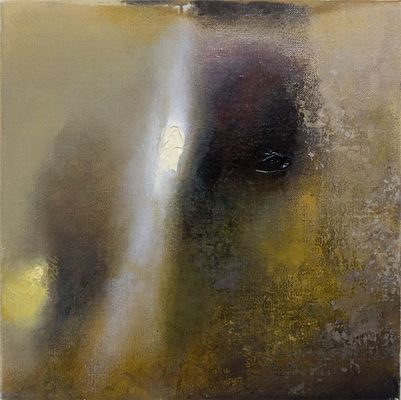
I am not a great reader of poetry but I always return to the work of Melbourne poet, Vincent Buckley (1925- 1988). Perhaps I find his most tantalising piece to be not a finished poem but a fragment left on a scrap of paper discovered on his desk after the poet’s death.
The poetry gathers like oil
In the word-core, and spreads
It has its music meet,
Its music is in movement.
This fragment is more the shell left behind from a volatile thought than a finished poem. I find the last two lines honest but awkward whereas the first two lines work like an arrow. Most likely he could not find a resolution so it was left. Still, in its present form, it remains an eloquent testimony to the ultimate failure of a medium to express mobile thought and sensation, in Buckley’s case, through verbal language. It’s an important matter because this is something all artists have to deal with regardless of the medium.
I have never written a poem, however, I am forever copying fragments from books on paper scraps in a vain effort to fix certain notions in my head. At first, they function as bookmarks that are sometimes returned to when I open the book. But before long, as they accumulate, they fall out littering the table interspersed with A4 photocopies, bills, books and medications.
To return to Buckley’s fragment, the first two lines very much evoke how I paint nowadays. As you age, detail diminishes and patches of light become more luminous and float. I feel the most honest way of dealing with this is by smearing the oil paint on the canvas with the fingers and working close-up, blind. Only if the patches coalesce into an approaching image can the work gain a life.
-
Jonathan Walker was born in Melbourne, Australia and brought up on a dairy farm in Gippsland. In the 1970’s he studied painting at RMIT and won the Harold Wright Scholarship to the British Museum, London. During the 1980’s he exhibited at Pinacotheca Gallery, Richmond and had work shown at the NGV and Heidi City Art Gallery. Over the same period he designed the cover for the “Epigenesi” LP by Giancarlo Toniutti, Italy and conducted a mail exchange work with Achim Wollscheid, Germany. The work with artists through the post resulted in an article published in the bicentenary issue of Art and Australia 1988. He showed in artist run spaces such as WestSpace in the 90’s and 2000’s, and until 2012, taught painting at Victoria University, which is where we (Colleen Ahern and Lisa Radford) as organisers of the exhibition, among many others, had the privilege of being his student.
Walker’s knowledge was imparted to students through the careful selection of music, literature, and artists found in books that he himself had ordered for the library. Walker’s strategy was the generosity of sharing his vast knowledge with references specific to each student and their context.
Walker’s paintings share a similar focus and intimacy.
This exhibition presents a small selection of recent paintings alongside a publication that includes Walker’s writing. Observational and analytical, Walker’s work is a type of material notation — the time of day, colour and how it is blended, the both specific and fleeting location of a reflection on lino or the question of whether a chair leg should be included in a painting.
Please join us on Friday August 21 between 6-8pm to celebrate the opening of the exhibition.
Curated by Colleen Ahern and Lisa Radford.
B. Wurtz
Curated by Nic Tammens
March 26 - April 4, 2015
B.Wurtz works from a basement studio in his home on Manhattan’s Lower East Side.
This local fact is attested to by the plastic shopping bags and newsprint circulars that appear in his work. As formal objects, they don’t make loud claims about their origins but nonetheless transmit street addresses and places of business from the bottom of this long thin island. Like plenty of artists, Wurtz is affected by what is local and what is consumed. His work is underpinned by this ethic. It often speaks from a neighborhood or reads like the contents of a hamper:
“BLACK PLUMS $1.29 lb.”
“Food Bazaar”
“USDA Whole Pork Shoulder Picnic 99c lb.”
“RITE AID Pharmacy, with us it’s personal.”
“H. Brickman & Sons.”
“Sweet Yams 59c lb."
Most of the work in this exhibition was made while the artist was in residence at Dieu Donne, a workshop dedicated to paper craft in Midtown. Here Wurtz fabricated assemblages with paper and objects that are relatively lightweight, with the intention that they would be easily transportable to Australia. This consideration isn’t absolute in Wurtz’s work, but was prescriptive for making the current exhibition light and cheap. Packed in two boxes, these works were sent from a USPS post office on the Lower East Side and delivered to North Melbourne by Australia Post.
Wurtz appears courtesy of Metro Pictures, New York.
Thanks to Rob Halverson, Joshua Petherick, Sari de Mallory, Matt Hinkley, Helen Johnson, Fayen d'Evie, Ask Kilmartin, Lisa Radon, Ellena Savage, Yale Union, and "Elizabeth".
John Nixon
"Archive"
December 15 - January 20, 2014
The presentation of John Nixon's archive offered a rare showcase of this extensive collection of the artist's own publications, catalogues, posters, ephemera, editions and more, from the mid 1980s onwards, alongside a selection of his artworks.
Organized by John Nixon, Joshua Petherick and Matt Hinkley.
<a href=http://wfb.public-office.info/artist/john-nixon>All titles by John Nixon
"Habitat"
at Minerva, Sydney (organised by Joshua Petherick and Matt Hinkley)
November 15 - December 20, 2014
Lupo Borgonovo, Janet Burchill & Jennifer McCamley,
Lewis Fidock, HR Giger, Piero Gilardi, Veit Laurent Kurz,
Cinzia Ruggeri, Michael E. Smith, Lucie Stahl, Daniel Weil, Wols
Press Release:
“...It contained seven objects. The slender fluted bone, surely formed for flight, surely from the wing of some large bird. Three archaic circuitboards, faced with mazes of gold. A smooth white sphere of baked clay. An age-blackened fragment of lace. A fingerlength segment of what she assumed was bone from a human wrist, grayish white, inset smoothly with the silicon shaft of a small instrument that must once have ridden flush with the surface of the skin - but the thing’s face was seared and blackened.”
William Gibson, “Count Zero”, 1986
"Autumn Projects Archive"
Curated by Liza Vasiliou
March 6 - March 15, 2014
World Food Books, in conjunction with the Virgin Australia Melbourne Fashion Festival 2014, presented the Autumn Projects archive, consisting of a selection of early examples in Australian fashion with a particular interest in collecting designers and labels from the period beginning in the 1980’s, who significantly influenced the discourse of Australian Fashion.
Curated by Liza Vasiliou, the exhibition provided a unique opportunity to view pieces by designers Anthea Crawford, Barbara Vandenberg, Geoff Liddell and labels CR Australia, Covers, Jag along with early experimental collage pieces by Prue Acton and Sally Browne’s ‘Fragments’ collection, suspended throughout the functioning World Food Books shop in Melbourne.
H.B. Peace
presented by CENTRE FOR STYLE
November 14, 2013
"Hey Blinky, you say chic, I say same"
Anon 2013
H.B. Peace is a clothing collaboration between great friends Blake Barns and Hugh Egan Westland. Their pieces explore the divergences between 'character’ and ‘personality’ in garments....etc
Special Thanks to Joshua Petherick and Matt Hinkley of WFB and Gillian Mears
and a Very Special Thank you to Audrey Thomas Hayes for her shoe collaboration.
Janet Burchill & Jennifer McCamley
"Aesthetic Suicide"
May 10 - June 8, 2013
The first of our occasional exhibitions in the World Food Books office/shop space in Melbourne, "Aesthetic Suicide" presented a body of new and older works together by artists Janet Burchill & Jennifer McCamley, including videos, prints, a wall work, and publications.
During shop open hours videos played every hour, on the hour.
1968, English
Softcover, 96 pages, 28 x 21 cm
1st Edition, Out of print title / used / good
Published by
Evergreen Review Inc. / New York
$20.00 - Out of stock
Vol. 12 No. 56 July 1968 issue of Evergreen Review. This issue features "I Was Curious" diary by Vilgot Sjoman, Timothy Leary, John Lahr and Vilgot Sjoman interview on Sex and Politics, Tom Stoppard, Nat Hentoff, story by Aki Tanino, three poems by Tam Fiofori, story by Goffredo Parise, "Psychedelic Burlesque!" pictorial by Mary Ellen Mark, A conversation with "Abu Amar" by Abdullah Schleifer, Jean-Luc Godard's "La Chinoise", plus regular features, illustrations and much more.
The Evergreen Review was a U.S. based literary magazine founded by Barney Rosset, publisher of Grove Press, and editor Don Allen and Fred Jordan in 1957. It existed in print form until 1973. Evergreen Review debuted pivotal works by Samuel Beckett, Jorge Luis Borges, Charles Bukowski, William S. Burroughs, Marguerite Duras, Jean Genet, Allen Ginsberg, Günter Grass, Jack Kerouac, Norman Mailer, Henry Miller, Pablo Neruda, Vladimir Nabokov, Frank O’Hara, Kenzaburō Ōe, Octavio Paz, Harold Pinter, Susan Sontag, Tom Stoppard, Derek Walcott and Malcolm X. United States Supreme Court Justice William O. Douglas wrote a controversial piece for the magazine in 1969. Kerouac and Ginsberg regularly had their writing published in the magazine. "Evergreen published writing that was literally counter to the culture, and if it was sexy, so much the better. In the context of the time, sex was politics, and the powers-that-be made the suppression of sexuality a political issue. The court battles that Grove Press fought for the legal publication of Lady Chatterly's Lover, Tropic of Cancer, and Naked Lunch, and for the legal distribution of the film I Am Curious: Yellow, spilled onto the pages of Evergreen Review, and in 1964, an issue of Evergreen itself was confiscated in New York State by the Nassau County District Attorney on obscenity charges...
2022, English
Softcover, 300 pages, 25 x 17.5 cm
Published by
Monash Art Projects / Victoria
$25.00 - In stock -
What is it like to make art the way the world is today? What is it to write about art? Every review you read in 2022 will attempt to answer these questions, whether it knows it or not. You can see it if you look hard enough. And in thinking about this we perhaps hold a candle to the darkness, or perhaps these questions are the light that allows us to see the darkness around us. Thank you for reading Memo lit by the world’s candlelight.
These are the reviews from 2021, the fourth year of Melbourne's Memo Review. Memo Review is Melbourne's only weekly art criticism, publishing reviews of "a broad variety of art exhibitions at public art museums, commercial galleries and smaller artist-run spaces in Melbourne, offering new critical perspectives from an up-and-coming younger generation of Australian art scholars, writers and artists."
Featuring contributions by A. D. S. Donaldson, Adelle Mills, Amelia Winata, Amy May Stuart, Anna Parlane, Audrey Schmidt, Babs Rapeport, Cameron Hurst, Chelsea Hopper, David Wlazlo, Diego Ramírez, Francis Plagne, Giles Fielke, Hilary Thurlow, Jarrod Zlatic, Léuli Eshrāghi, Luke Smythe, Matt Marasco, Michelle Guo, Miriam La Rosa, Paris Lettau, Philip Brophy, Rex Butler Sofia Skobeleva, Tara Heffernan, Tara Mcdowell, Timmah Ball, Ursula Cornelia De Leeuw, Victoria Perin, and Vincent Le.
2021, English
Softcover, 196 pages, 17.8 x 11.2 cm
Published by
Index Journal / Melbourne
$25.00 - Out of stock
More than twenty years after Ernst Jünger’s death in 1998, the controversial German writer’s work continues to compel the attention of readers, critics, and scholars. In early 2019, Jünger’s diaries, the Strahlungen, written while he was an officer in occupied Paris during World War II, were published in English to wide acclaim.
These intimate accounts, of high literary and philosophical quality, reveal Jünger negotiating compliance with acts of subversion and resistance against the Nazi regime. His life is evidence that history can be both real and unrealistic at once, crystallising something essential about a twentieth century that witnessed the rise of total mobilisation, global war, and unprecedented technologies of mass extermination.
This volume presents four new essays by established and emerging scholars on Jünger’s work and legacy. Together, they provide biographical, philosophical, psychological, and aesthetic access-points to a major twentieth century German intellectual who, like few others, invites us to investigate the ambiguities, constraints, and imperatives of our own times.
Editors: Justin Clemens and Nicolas Hausdorf
Contributors: Justin Clemens, Nicolas Hausdorf, Birgit Lang, Marilyn Stendera, Giles Fielke
2006, English
Softcover, 376 pages, 15.5 x 23 cm
1st Edition, Out of print title / used / very good
Published by
Columbia University Press / New York
$35.00 - Out of stock
First edition.
The Lyotard Reader and Guide is a one-stop companion to Lyotard's thought. It covers the full range of his works, from his three main books (Discours, figure; Libidinal Economy; and The Differend) and up to his influential essays in The Inhuman and Postmodern Fables.
The readings are organized into sections on philosophy, politics, art, and literature. Several have never before been translated into English. Detailed introductions to each section by two leading Lyotard scholars explain the philosopher's key ideas and provide crucial social, political, aesthetic, and philosophical context. As a sourcebook and guide, this is the most up-to-date and comprehensive volume on Lyotard. It is indispensable to students and scholars in philosophy, literature, the arts, and politics.
Keith Crome is lecturer in philosophy at Manchester Metropolitan University. He is the author of Lyotard and Greek Thought: Sophistry.
James Williams is a leading Lyotard scholar. He is senior lecturer and head of philosophy at the University of Dundee and is the author of Understanding Poststructuralism and The Transversal Thought of Gilles Deleuze: Encounters and Influence.
Very Good copy.
2022, English
Hardcover (w. printed acetate jacket), 252 pages, 22.9 x 27.3 cm
Published by
Princeton University Press / New York
Pulitzer Arts Foundation / St. Louis
$95.00 - Out of stock
A richly illustrated exploration of Hannah Wilke’s provocative art and trailblazing feminism.
One of the most groundbreaking artists to emerge in American art in the 1960s, Hannah Wilke consistently challenged the prevailing narratives of women’s bodies and their representation throughout her career, until her untimely death in 1993. Wilke established a uniquely feminist iconography in virtually all of the mediums she engaged with—painting, sculpture, photography, video, and performance art—and offered a life-affirming expression of vitality and bodily pleasure in her work.
Hannah Wilke: Art for Life’s Sake highlights the artist’s full range of expression, bringing together photographs, works on paper, video, and examples of Wilke’s sculptures in clay and other, nonconventional materials such as latex, kneaded erasers, and chewing gum. New object photography brings clarity to Wilke’s boundary-crossing art practice, making many of her rarely shown works accessible to readers for the first time. The book features a previously unpublished 1975 interview with Wilke by art critic and historian Cindy Nemser as well as a narrative chronology of Wilke’s art and life with many previously unpublished archival photographs. It includes essays by Glenn Adamson, Connie Butler, and Tamara Schenkenberg, and responses to Wilke’s work by contemporary artists Hayv Kahraman, Nadia Myre, Jeanine Oleson, and Catherine Opie.
Offering fresh perspectives on this influential artist, Hannah Wilke: Art for Life’s Sake sheds new light on Wilke’s technical and formal virtuosity, her important role in shaping postwar American art, and the nuance and poignancy of her feminist subject matter.
Edited by Tamara Schenkenberg and Donna Wingate
Contributions by Glenn Adamson, Connie Butler, Tamara Schenkenberg
Tamara H. Schenkenberg is curator at the Pulitzer Arts Foundation.
Donna Wingate is a New York-based editor.
Glenn Adamson is an independent curator and writer and a senior scholar at the Yale Center for British Art.
Connie Butler is chief curator at the Hammer Museum.
1985, English
Softcover, 196 pages, 15.2 x 22.9 cm
Published by
University of Minnesota Press / Minnesota
$52.00 - Out of stock
English translation of Jacques Attali's classic text, first published in French in 1977.
"Noise is a model of cultural historiography. In its general theoretical argument on the relations of culture to economy, but also in its specialized concentration, Noise has much that is of importance to critical theory today." — SubStance
"For Attali, music is not simply a reflection of culture, but a harbinger of change, an anticipatory abstraction of the shape of things to come. The book's title refers specifically to the reception of musics that sonically rival normative social orders. Noise is Attali's metaphor for a broad, historical vanguardism, for the radical soundscapes of the western continuum that express structurally the course of social development."
Translated by Brian Massumi
Foreword by Fredric Jameson
Afterword by Susan McClary
Jacques Attali is the author of numerous books, including Millennium: Winners and Losers in the Coming World Order and Labyrinth in Culture and Society.
Brian Massumi has translated works by Gilles Deleuze, Michel de Certeau, and Jean-François Lyotard.
Fredric Jameson is professor of literature at Duke University.
Susan McClary is professor of musicology at the University of California, Los Angeles.
2015, English
Hardcover, 192 pages, 17.5 x 19.5 cm
Published by
Atlas Press / London
$52.00 - Out of stock
This book collects the writings of a radical group of writers close to Paris Surrealism—principally René Daumal and Roger Gilbert-Lecomte—as published in their now legendary magazine, Le Grand Jeu (The Great Game). Le Grand Jeu ran to three issues between 1928 and 1930, before collapsing due to its editors' infighting, drug use and vehemently unreasonable aspirations for both art and life. The Grand Jeu is often associated with Surrealism (they were invited to join the group), but their ideas were far more extreme. The magazine was the public face of a group of artists and writers who systematically attacked their perceptions of reality through narcotics, anaesthesia and near-death experiences.
Le Grand Jeu describes a politico-mystical outlook which combined a critique of the apathy and repression of contemporary Western society with a quest to take leave of the individual ego and to reconnect with a collective Universal Mind. The group's esoteric program united narcotic and parapsychological practices with asceticism, revolutionary politics (the Russian Revolution was barely a decade old) and a prophetic mode of poetry which they identified in antecedents such as Rimbaud and Mallarmé. In this definitive collection, the theories of the Grand Jeu are presented in the group's own words for the first time, through the essays and articles which formed the bulk of their magazine.
1995, English
Softcover (w. 7" single), 60 pages, 30 x 20.5 cm
1st Edition, Out of print title / used / very good
Published by
London Musician's Collective / London
$65.00 - Out of stock
Rare "Special Japanese Issue" (Volume 4 No.2) of Resonance magazine, published by the London Musician's Collective in 1996 with exclusive 7" single of seven untitled pieces by Otomo Yoshihide and Yamatsuka Eye, recorded live in London, Spring 1995. Magazine includes articles by Otomo Yoshihide on the 1970s Japanese improvised scene (Kaoru Abe, Masayuki Takayanagi, Keiji Hano, et al.), Thurston Moore on Japan, Chris Cutler (Henry Cow, Recommended Records, et al.) on Haniwa Chan, Richard Scott on Hôgaku (Traditional Japanese Music), Steve Beresford (Derek Bailey's Company, et al.) on The Honeymoons, David Toop, Boredoms interview by Stefan Jaworzyn (including a Boredoms discography and family tree), Eckhart Derschmidt on Japanese jazz, Stefan Jaworzyn interviews Derek Bailey about working in Japan, live and record reviews and much more.
Very Good copy with Near mint, As New 7" single.
2022, English
Softcover, 320 pages, 23 x 15.2 cm
Published by
Thames and Hudson / London
$49.00 - In stock -
This pioneering book stands as the most comprehensive treatment of the lives, ideas and art works of the remarkable group of women who were an essential part of the Surrealist movement. Leonora Carrington, Léonor Fini, Frida Kahlo, Meret Oppenheim, Dora Maar, and Dorothea Tanning, among many others, became an embodiment of their age as they struggled towards artistic maturity and their own 'liberation of the spirit' in the context of the Surrealist revolution. Their stories and their achievements are presented here against the background of the turbulent decades of the 1920s, 30s and 40s, and the war that forced Surrealism into exile in New York and Mexico.
Foreword by Dawn Ades.
2022, English
Hardcover, 268 pages, 19.8 x 25.4 cm
Published by
Siglio Press / Los Angeles
$80.00 - In stock -
A biography by Nicole Rudick told in Saint Phalle's own words, assembled from rare and unseen materials.
Known best for her exuberant, often large-scale sculptural works that celebrate the abundance and complexity of female desire, imagination and creativity, Niki de Saint Phalle viewed making art as a ritual, a performance--a process connecting life to art. This unconventional, illuminated biography, told in the first person in Saint Phalle's voice and her own hand, dilates large and small moments in Saint Phalle's life which she sometimes reveals with great candor, at other times carefully unwinding her secrets. Nicole Rudick, in a kind of collaboration with the artist, has assembled a gorgeous and detailed mosaic of Saint Phalle's visual and textual works from a trove of paintings, drawings, sketches and writings, many previously unpublished or long unavailable, that trace her mistakes and successes, her passions and her radical sense of joy. Saint Phalle's invocation--her bringing to life--writes Rudick, is an apt summation of the overlap of Saint Phalle's life and art: both a bringing into existence and a bringing to bear. These are visions from the frontiers of consciousness.
Born in France, Niki de Saint Phalle (1930-2002) was raised in New York and began making art at age 23, pursuing a revelatory vision informed both by the monumental works of Antonin Gaudí and the Facteur Cheval, and by aspects of her own life. In addition to her Tirs ("shooting paintings") and Nanas and her celebrated large-scale projects--including the Stravinsky Fountain at the Centre Pompidou, Golem in Jerusalem and the Tarot Garden in Tuscany--Saint Phalle produced writing and works on paper that delve into her own biography: childhood and her break with her family, marriage to Harry Mathews, motherhood, a long collaborative relationship with Jean Tinguely, numerous health crises and her late, productive years in Southern California. Saint Phalle has most recently been the subject of retrospectives at the Guggenheim Museum Bilbao, in 2015, and at MoMA P.S.1, in 2021.
Nicole Rudick is a critic and an editor. Her writing on art, literature and comics has been published in the New York Review of Books, the New York Times, the New Yorker, Artforum and elsewhere. She was managing editor of the Paris Review for nearly a decade. She is the editor, most recently, of a new edition of Gary Panter's legendary comic Jimbo: Adventures in Paradise (New York Review Comics, 2021).
2019, English
Softcover, 328 pages, 14 x 22.5 cm
Published by
Sternberg Press / Berlin
$79.00 $20.00 - Out of stock
Art and (Bare) Life: A Biopolitical Inquiry analyzes modern and contemporary art’s drive to blur with life, and how this is connected to the democratic state’s biologized control of life. Art’s ambition to transform life intersects in striking ways with modern biopower’s aim to normalize, purify, judge, and transform life—rendering it bare. In these intersecting yet different orientations toward life, this book finds the answer to the question: How did autonomous art become such an effective tool of the capitalist state?
From today’s “creative cities” to the birth of modern democracy and art in the French Revolution, Art and (Bare) Life explores how the Enlightenment’s discovery of life itself is mirrored in politics and art. The galvanizing revelation that we are, in Michel Foucault’s words, “a living species in a living world,” free to alter our environment to produce specific effects, is compared here to the discovery that art is an autonomous system that can be piloted toward its own self-determined ends—art for art’s sake. But when both art and the capitalist state seek to change life rather than reflect it, they find themselves set on a collision course.
“Josephine Berry’s Art and (Bare) Life is an exemplary work. Here, for the first time, key concepts of contemporary political philosophy, such as biopower and biopolitics, are embedded within modern art history and theory. Erudite and sensitive to art’s complex field of intentions and outcomes, this in-depth study of aesthetics and politics is a must-read for anyone interested in understanding a foundational and regularly renewed dichotomy: ‘art’ and ‘life.’”
—Angela Dimitrakaki, Senior Lecturer in Contemporary Art History and Theory, University of Edinburgh
“The millennial body of the human is a territory marked by sacred codes, disciplines, and abstractions. To the technologies of biopower Josephine Berry waves the Medusa head of the art of rebellion.”
—Matteo Pasquinelli, Professor in Media Theory, Karlsruhe University of Arts and Design
Design by A Practice for Everyday Life
2020, English
Softcover, 320 pages, 12 x 19 cm
Published by
Uh Books / Amsterdam
KW Institute for Contemporary Art / Berlin
$24.00 $15.00 - Out of stock
Edited by Will Holder, the constellation of material in this issue collectively philosophises on topics that deal with difference and the transformative processes between things. It essentially puts forth the notion of the intellectual as a transitional identity. Contributions from various contemporary, historical, and even ancient authors and sources include George Orwell, Simone Weil, Apuleius, Ian Hamilton Finlay, Alan Stanbridge, John Cage, Bernadette Mayer, Anne Carson, Barbara Guest, Jenn Ashworth, Lewis Hyde, and many others. The volume begins with an introduction by Charles Bernstein and concludes with an afterword by Robert Duncan.
2022, English
Softcover, 184 pages, 12 x 19 cm
Published by
Uh Books / Amsterdam
$24.00 $15.00 - Out of stock
This 21st issue of ‘F.R. David’ is edited by Will Holder with Andrea di Serego Alighieri. Seemingly more fragmented than usual, it includes contributions, quotes, found materials, and excerpts from Maggie Nelson, Charles Mingus, Octavia Butler, John Keats, Alice Notley, Paul Abbott, Bernadette Mayer, Fred Dewey, John Cage, Marion Keiner, Anne Carson, and others. An afterword by Nicolas Schoffer entitled “Microtime” concludes this wandering, inscrutable journey.
2018, English
Hardcover, 368 pages, 12.5 x 19 cm
Published by
Sternberg Press / Berlin
$69.00 $20.00 - In stock -
“Fichte did away with the opposition between objective and poetic writing—his heightened objectivity becomes poetic, his poetry journalistic. He wrote to fight against bigotry and provincialism, and developed approaches in the 1970s that are discussed today in queer studies and postcolonialism.”
—Diedrich Diederichsen
The Black City is a portrait of New York City written by Hubert Fichte between 1978 and 1980. One of Germany’s most important postwar authors, Fichte researched the city as the center of the African diaspora, conducting interviews and composing essays about syncretism in culture and the arts, material living conditions in the city, and political and individual struggles based on race, class, and sexuality. His interview partners include Michael Chisolm, arts educator and coordinator of the Black Emergency Cultural Coalition; German émigré and artist Lil Picard; photographer Richard Avedon; Léopold Joseph, publisher of the exile newspaper Haiti Observateur; and Teiji Ito, composer and Vodou initiate. The book opens with notes on an exhibition of Haitian art at the Brooklyn Museum, and closes with a self-reflective literary analysis of Herodotus, the first white European to write extensively of his travels and (desirous) encounters in Africa.
Often compared to the work of Jean Genet and Kathy Acker, Fichte’s novels and nonfiction are exuberant and erudite, contesting the stylistic and ethnographic norms of the time to locate a “utopic potential” for poetic and political revolution in the cultural heritage and contemporary life of the African diaspora. Fichte’s writing in The Black City provocatively exposes the complexities of its author’s subjectivity in a manner that underscores the singularity of his writing, while prompting questions about how notions of exploitation, authority, and authenticity manifest themselves in pseudo-ethnographic practices. Translated into English for the first time, The Black City is part of Fichte's multivolume experimental literary cycle, The History of Sensitivity, which was left unfinished due to his untimely death in 1986.
Foreword by Diedrich Diederichsen and Anselm Franke
With photographs by Leonore Mau
Design by Ronnie Fueglister
Translated by Adam Siegel with Max Bach
Published in conjunction with the project “Hubert Fichte: Love and Ethnology,” a collaboration between the Goethe-Institut and Haus der Kulturen der Welt (HKW), Berlin, supported by S. Fischer Stiftung and S. Fischer Verlag.
1987, English
Softcover (staple-bound), 40 pages, 21 x 15 cm
Ed. of 250 copies,
1st Edition, Out of print title / used / very good
Published by
IMA / Brisbane
$40.00 - Out of stock
Scarce 1987 booklet edited by Australian artist Peter Cripps and published in an edition of only 250 copies by the Institute of Modern Art, Brisbane, where Cripps was director at the time. Handsomely designed by Cripps and typeset by Ian Hodgkiss, this fantastic publication was published in dedication to artist Robert MacPherson, as sales from his survey catalogue had helped to fund its publication. Comprising entirely of nine short interviews by Peter Cripps with eight artists (Robert MacPherson, Peter Tyndall, Vivienne Shark LeWitt, Tim Johnson, Geoff Lowe, Bronwyn Clark-Coolee, Scott Redford, Mark Webb) who had all exhibited at the IMA, and one with curator Robyn McKenzie, whose exhibition "The Gothic: Perversity and Its Pleasure" was held at the institute in 1986. Includes source references.
Very Good copy, only light cover wear.
2021, English / French
Softcover, 256 pages, 17.5 x 24 cm
Published by
May Revue / Paris
$32.00 - Out of stock
I will not interpret Jack Smith. I will not interpret Jack Smith. I will not interpret Jack… — Felix Bernstein
Finally, a new issue of long standing favourite May revue, with a cover feature on American filmmaker, actor, performance artist and pioneer of underground cinema, Jack Smith (1932 –1989)!
Jack Smith (Michael Krebber, Felix Bernstein, Enzo Shalom, Branden W. Joseph), Gary Indiana, Bruce Hainley and Sohrab Mohebbi, Jean-Luc Godard by Ferdinand Gouzon, Leilah Weinraub by Juliana Huxtable, Nina Könnemann by Megan Francis Sullivan, Louise Lawler by Nick Irvin, Claire Fontaine by Anita Chari, Robert Malaval by Valentin Gleyze, Afuma (Stefan Tcherepnin & Taketo Shimada) by Keith Connolly, Park McArthur by Noah Barker, Ken Okiishi by Felix Bernstein...
Conceived as a collective space in which to develop thoughts and confront positions on artistic production, May magazine examines, twice a year, contemporary art practice and theory in direct engagement with the issues, contexts and strategies that construct these two fields. An approach that could be summed up as critique at work – or as critique actively performed in text and art forms alike.
Featuring essays, interviews, art works and reviews by artists, writers and diverse practitioners of the arts, the magazine also intends to address the economy of the production of knowledge – the starting point of this reflection being the space of indistinction between information and advertisment typical of our time. This implies a dialogue with forms of critique produced in other fields.
2021, English
Hardcover (cloth bound loose cover w/ elastic band), 2 softcover books (ring + perfect bound), 136 + 146 pages, 24 x 32 cm
Published by
Sternberg Press / Berlin
KW Institute for Contemporary Art / Berlin
$80.00 - Out of stock
From his refuge in upstate New York—the studio/ living complex where he enacted a late pivot back to figuration—the American painter Philip Guston once offered the following outburst to the question of how such a turn could happen.
“What kind of man am I, sitting at home, reading magazines, going into frustrated fury about everything and then going into my studio to adjust a red to a blue?”
Over time, this sparse utterance takes on an architectural form in the imagination, a model that proposes a tantalizing proposition when fleshed out. The painter’s words situate us in two distinct yet adjacent rooms. The first: a lounge with a TV, its live feed constantly aflicker. The second, a space that’s more sequestered, which we can simply understand as a place of production: “the studio.” Between these spaces, the painter, often working through the night, is also the viewer or reader, shuffling back and forth as he navigates these two rooms. At a certain point, night becomes day, and we shuffle back and forth together, the presence of one room arriving in the other.
2021, English
Hardcover (w. dust jacket), 240 pages, 13.9 x 20.3 cm
Published by
Goldsmiths Press / London
$49.00 - Out of stock
A proposal for countering the futility of neoliberal existence to build an egalitarian, sustainable, and hopeful future.
If maximizing utility leads to the greatest happiness of the greatest number of people, as utilitarianism has always proposed, then why is it that as many of us currently maximize our utility--by working endlessly, undertaking further education and training, relentlessly marketing and selling ourselves--we are met with the steady worsening of collective social and economic conditions? In Futilitarianism, social and political theorist Neil Vallelly eloquently tells the story of how neoliberalism transformed the relationship between utility maximization and the common good.
Drawing on a vast array of contemporary examples, from self-help literature and marketing jargon to political speeches and governmental responses to the COVID-19 pandemic, Vallelly coins several terms--including the futilitarian condition, homo futilitus, and semio-futility--to demonstrate that in the neoliberal decades, the practice of utility maximization traps us in useless and repetitive behaviors that foreclose the possibility of collective happiness.
This urgent and provocative book chimes with the mood of the time by at once mapping the historical relationship between utilitarianism and capitalism, developing an original framework for understanding neoliberalism, and recounting the lived experience of uselessness in the early twenty-first century. At a time of epoch-defining disasters, from climate emergencies to deadly pandemics, countering the futility of neoliberal existence is essential to building an egalitarian, sustainable, and hopeful future.
2019, English
Softcover, 384 pages, 14.5 x 21 cm
Published by
Urbanomic / Cornwall
$49.00 - Out of stock
Startling pulp theory-fictions, forays into cyberculture, occultural studies and popular numerics, paranoid cosmic conspiracy, and schizoid tactics for escaping the reality system recovered from the prehistoric lore of Lemurian Time Sorcery.
From before the beginning (which was also, according to them, already the end), the adepts of the Architectonic Order of the Eschaton have worked tirelessly to secure the past, present, and future against the incursions of Neolemurian time-sorcery, eliminating all polytemporal activity, stitching up the future, sealing every breach and covering every track. According to the AOE, the CCRU "does not, has not, and will never exist." And yet...
The texts collected here document the CCRU's perilous efforts to catalogue the traces of Lemurian occulture, bringing together the scattered accounts of those who had stumbled upon lagooned relics of nonhuman intelligence-a project that led ultimately to the recovery of the Numogram and the reconstruction of the principles of Lemurian time-sorcery-before disintegrating into collective schizophrenia and two decades of absolute obscurity.
Meshing together fiction, number theory, voodoo, philosophy, anthropology, palate tectonics, information science, semiotics, geotraumatics, occultism, and other nameless knowledges, in these pages the incomplete evidence gathered by explorers including Burroughs, Blavatsky, Lovecraft, Jung, Barker, J.G. Ballard, William Gibson, and Octavia Butler, but also the testimony of more obscure luminaries such as Echidna Stillwell, Oskar Sarkon, and Madame Centauri, are clarified and subjected to systematic investigation, comparison, and assessment so as to gauge the real stakes of the Time-War still raging behind the collapsing facade of reality.
One of the most compelling and unnerving collective research enterprises to have surfaced in the twentieth century, the real pertinence of the CCRU's work is only now beginning to reveal itself to an unbelieving world. To plunge into the tangled mesh of these conspiracies, weird tales, numerical plagues, and suggestive coincidences is to test your sense of reality beyond the limits of reasonable tolerance-to enter the sphere of unbelief, where demonic currents prowl, where fictions make themselves real. Hyperstition.
2022, English
Hardcover (w. dust jacket), 164 pages, 21.7 x 14.8 cm
Published by
Verso / London
$45.00 - Out of stock
A wide-ranging exploration of the present, and the future, of the Unconcious.
The Unconscious knows no time, it has no before-and-after, it does not have a history of its own. Yet, it does not always remain the same. Different political and economic conditions transform the way in which the Unconscious emerges within the "psychosphere" of society. In the early 20th century, Freud characterized the Unconscious as the dark side of the well-order framework of Progress and Reason. At the end of the past century, Deleuze and Guattari described it as a laboratory: the magmatic force ceaselessly bringing to the fore new possibilities of imagination. Today, at a time of viral pandemics and in the midst of the catastrophic collapse of capitalism, the Unconscious has begun to emerge in yet another form. In this book, Franco 'Bifo' Berardi vividly portraits the form in which the Unconscious will make itself manifest for decades to come, and the challenges that it will pose to our possibilities of political action, poetic imagination, and therapy.
Franco 'Bifo' Berardi is a theorist and cultural agitator. He was the founder of the pirate radio station Radio Alice in 1976. One of the most prominent members of Autonomia, Berardi, worked closely with the French psychoanalyst Felix Guattari throughout the 1980s. His latest books in English are Futurability: The Age of Impotence and the Horizon of Possibility; And: Phenomenology of the End; Breathing: Chaos and Poetry.
2022, English
Softcover, 352 pages, 25 x 16 cm
Published by
MoMA / New York
$89.00 - In stock -
"Wolfgang Tillmans is not only a great artist, he's a joyous intellectual whose generosity, wit and good-natured skepticism is political, authentic and playfully profound." — John Waters
"For over 30 years, Wolfgang Tillmans has been surveying culture and politics, as attentive to the production of news as he is to the radical intimacies of the nightclub or protest. Through his lens the world recovers its complexity. In an era of dangerous simplifications, we need his work more than ever." — Olivia Laing
This volume offers a panoramic collection of interviews and writings from an artist for whom language has always been a significant means of creative expression. Arranged chronologically, the assembled texts reflect Tillmans' thinking on photography, music, politics, nightlife, astronomy, spirituality and activism. The sources are as varied as their content, with statements and conversations that originally appeared in exhibition catalogues rubbing up against social-media posts and song lyrics.
Whether discussing his own work as a photographer or drawing out the thoughts of others, Tillmans is a generous interlocutor with a refreshing clarity of thought. This visually rich and timely publication tracks Tillmans' contributions to art and cultural criticism in tandem with the social and cultural shifts of the past 30 years.
Wolfgang Tillmans (born 1968) is among the most influential contemporary artists, and the impact of his work registers across the arts, intersecting with fashion, music, architecture, the performing arts, and activism. Known for his genre-defying practice and ongoing investigation into the photographic medium, Tillmans is the recipient of the Turner Prize (2000) and the Hasselblad Foundation International Award in Photography (2015). His foundation, Between Bridges, supports the advancement of democracy, international understanding, the arts and LGBTQ rights.
2021, English
Softcover, 240 pages, 25 x 32 cm
Published by
Valiz / Amsterdam
$70.00 - Out of stock
Not your everyday gardening book! Through the metaphor of gardening, this book offers insights on the convergence of nature and culture, ecology, climate, and care for the environment, with themes such as Arcadia, Control, Ecofascism, Guerilla Gardening, Queer Ecology.
For centuries, the garden has been regarded as a mirror of society, a microcosm, in which the broader relationships between nature and culture are played out on small scale. From this long cultural tradition also raises a call for a new awareness of our relationship with the Earth.
On the Necessity of Gardening tells the story of the garden as a rich source of inspiration. Over the centuries, artists, writers, poets and thinkers have each described, depicted and designed the garden in different ways. In medieval art, the garden was a reflection of paradise, a place of harmony and fertility, shielded from worldly problems.
However, the garden is not just a neutral place and intended solely for personal pastime, it is a place where the world manifests itself and where the relationship between culture and nature is expressed. In the eighteenth century this image shifted: the garden became a symbol of worldly power and politics. The Anthropocene, the era in which man completely dominates nature with disastrous consequences, is forcing us to radically rethink the role we have given nature in recent decades.
There is a renewed interest in the theme of the garden among contemporary makers. It is not a romantic desire that drives them, but rather a call for a new awareness of our relationship with the earth, by connecting different fields of activity in landscape, art and culture. Through many different essays and an extensive abecedarium, On the Necessity of Gardening reflects on the garden as a metaphor for society, through concepts such as botanomania and capitalocene, from guerrilla gardening to queer ecology and zen garden.
1957, Italian
Hardcover (w. dust jacket), 184 pages, 25 x 20 cm
Out of print title / used / good
Published by
Conchiglia / Milan
$390.00 - Out of stock
Very rare comprehensive study on Spatialism ("Origins and Developments of an Artistic Trend"), the art movement founded by Lucio Fontana in Milan in 1947. Published by Conchiglia, Milan, Italy, in 1957, and edited by Giani Giampiero, this lavish volume republishes all the original manifesto documents of the movement, beginning in Buenos Aires with the Manifiesto Blanco of 1946 through Fontana's subsequent Spazialismo declarations, alongside theoretical texts and drawings by Fontana and associates; extensive photographic documentation of social gatherings and landmark exhibitions of the movement; beautiful and generous surveys of the work by all representative exponents of the movement, with multiple works reproduced through vivid colour plates, texts and photographic portraits; plus more. An indispensable historical reference on one of the most important post-war modern art movements of 20th century Italy. Features the work of Lucio Fontana, Ettore Sottsass, Emilio Scanavino, Cesare Peverelli, Gino Morandis, Enrico Donati, Bruno De Toffoli, Mario Deluigi, Roberto Crippa, Giuseppe Capogrossi, Aldo Bergolli, Edmondo Bacci. This is the expanded second edition in blue jacket and produced with various paper stocks throughout (first, in yellow jacket, published 1956).
Spatialism (Italian: Spazialismo) is an art movement founded by Italian artist Lucio Fontana in Milan in 1947 in which he grandiosely intended to synthesize colour, sound, space, movement, and time into a new type of art. The main ideas of the movement were anticipated in his Manifiesto blanco (White Manifesto) published in Buenos Aires in 1946. In it he spoke of a new "spatial" art in keeping with the spirit of the post-war age. It repudiated the illusory or "virtual" space of traditional easel painting and sought to unite art and science to project colour and form into real space by the use of up-to-date techniques such as neon lighting and television. Five more manifestos followed; they were more specific in their negative than their positive aspects, and carried the concept of Spatialism little further than the statement that its essence consisted in "plastic emotions and emotions of colour projected upon space". In 1947 Fontana created a "Black Spatial Environment", a room painted black, which was considered to have foreshadowed Environment art. His stabbed and slashed canvases (beginning in 1949 and 1959 respectively) are also considered to embody Spatialism. Although Fontana's ideas were vague, his outlook was influential, for he was one of the first, certainly the first European artist to truly promote the idea of art as gesture or performance, rather than as the creation of an enduring physical work.
Good copy. Some damage to dust jacket with some chipping. As common with this fragile volume a page has disconnected from binding, but all present and in clean order. Overall a very nicely kept copy with standard age wear. A rare and precious work.
2021, English
Softcover, 240 pages, 21.5 x 30.5 cm
Published by
Primary Information / New York
$84.00 - In stock -
Writings 1973–1983 on Works 1969–1979 is an essential document of a decade of formative work by Michael Asher. Originally published in 1983, the book presents 33 works through the artist’s writings, photographic documentation, architectural floor plans, exhibition announcements, and other ephemera.
Asher did not create traditional art objects; instead, he chose to alter the existing institutional apparatus through which art is presented, creating work dependent on the architectural, social, or economic systems that undergird how art is produced and experienced. For example, in 1974, he removed the partition wall dividing the office and gallery space of the Claire Copley Gallery in Los Angeles. In another work from 1978, Asher had a bronze replica of a nineteenth-century sculpture of George Washington moved from the exterior of the Art Institute of Chicago to a room in the museum that housed eighteenth-century art, changing its location, but also its function from a public monument to an indoor sculpture, as it was originally intended.
Due to its site specificity and immateriality, Asher’s work ceased to exist after an exhibition, which makes this highly sought-after book the definitive mode through which one can gain insight into the work he made during this period. As the artist states in the introduction: “This book as a finished product will have a material permanence that contradicts the actual impermanence of the art-work, yet paradoxically functions as a testimony to that impermanence of my production.”
Initiated by Kasper König, Writings 1973-1983 on Works 1969-1979 was originally co-published by the Press of the Nova Scotia College of Art and Design and the Museum of Contemporary Art, Los Angeles, and was largely shaped by Asher’s close collaboration with art historian Benjamin H.D. Buchloh, who succeeded König as editor of the press.
Managing Editor: James Hoff
Managing Designer: Rick Myers