World Food Books' programme is largely produced on Kulin Nation land. We acknowledge the Wurundjeri people of the Kulin Nation as the first and continuing custodians of this land, and pay respect to their Elders past, present, and emerging.
World Food Books is an arts and special interests bookshop in Naarm / Melbourne. Founded in 2010, World Food Books is devoted to the presentation of a rotating, hand-selection of international art, design, literary and counterculture publications with an emphasis on the anti-traditional, the experimental, the avant-garde, the heretic, the marginal.
Presenting new titles alongside rare and out-of-print books, catalogues and journals spanning the fields of modern and contemporary art, design, photography, illustration, film, literature, poetry, cultural theory, philosophy, sexuality, popular and underground culture in its many radical forms, World Food Books wishes to encourage adventurous, thoughtful and open-minded reading, looking, writing, and exchange of publishing and ideas, both current and historical.
As well as our bookshop, located in Melbourne's historical Nicholas Building, all of our inventory is available internationally via our online mail-order service.
World Food Books semi-regularly co-ordinates "Occasions", a programme of exhibits and events at the bookshop and in partnership with other hosts (such as museums and art galleries) that develop out of the activities, relationships and content of the bookshop itself.
World Food Books
The Nicholas Building
37 Swanston Street
Room 5, Level 6
Melbourne 3000
Australia
SHOP HOURS:
Thu–Fri 12–6, Sat 12–5
WEB-SHOP OPEN 24/7
World Food Books
Postal Address:
PO Box 435
Flinders Lane
Victoria 8009
Australia
Art
Theory / Essay
Architecture / Interior
Graphic Design / Typography
Photography
Fashion
Eros
LGBTQ+
Fiction / Poetry
Weird / Speculative / Science Fiction / Horror
Transgressive / Visceral / Abject
Symbolism / Decadence / Fin de siècle
Film / Video
Painting
Sculpture / Installation
Performance / Dance / Theater
Drawing
Sound / Music
Curatorial
Group Shows / Collections
Periodicals
Out-of-print / Rare
Posters / Ephemera / Discs
Signed Books
World Food Books Gift Voucher
World Food Book Bag
Australian Art
Australian Fiction
Australian Science Fiction / Speculative Fiction
Australian Poetry
Australian Photography
Japanese Photography
Conceptual Art
Minimal Art
Dada
'Pataphysics / Oulipo
Fluxus
Concrete Poetry
Pop Art
Surrealism
Arte Povera
Arte Informale / Haute Pâte / Tachism
Nouveau Réalisme / Zero / Kinetic
Situationism / Lettrism
Collage / Mail Art / Xerox Art
Art Brut / Folk / Visionary / Fantastic
Illustration / Graphic Art / Bandes Dessinées
Furniture
Italian Radical Design / Postmodernism
Textiles
Ceramics / Glass
Counterculture
Protest / Revolt
Philosophy
Psychoanalysis
Anthropology
Anarchism
Socialism / Anarchism / Communism / Capitalism
Literary Theory / Semiotics / Language
Feminism / Women's Studies
Gender Studies / Sexuality
Anthropology
Fetishism / BDSM
Drugs / Psychedelia
Crime / Violence
Animal Rights / Veganism
Occult / Esoterica
Ecology / Earth / Alternative Living
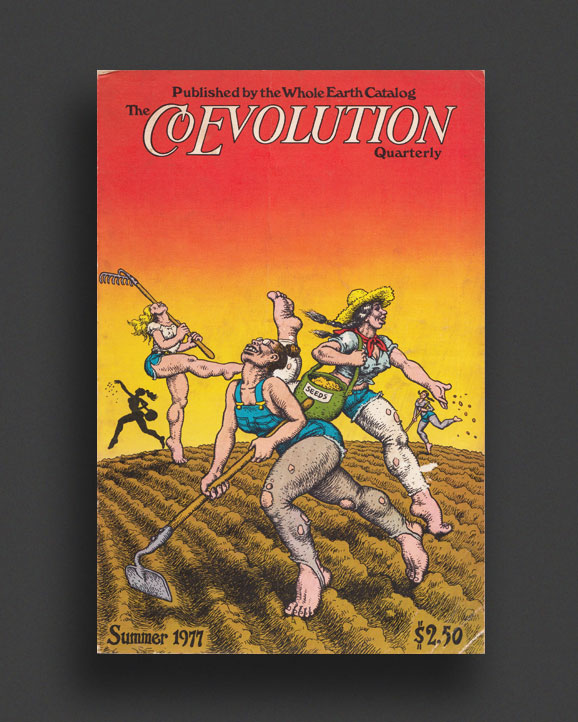
Whole Earth / Crafts
All prices in AUD (Australian dollars)
Pick-Ups
Pick-up orders can be collected in our bookshop during opening hours after order date. Please collect any Pick-up orders within 2 weeks of ordering as we have limited storage space. Orders will be released back into stock if not collected within this time. No refunds can be made for pick-ups left un-collected. If you cannot make it in to the bookshop in this time-frame, please choose postage option.
Return Policy
All sales are final. We do accept returns (for refund or exchange) for items received in error. All our orders are packed with special care using heavy-duty padding and cardboard book-mailers or bubble mailers (for smaller books), using reinforcement where required. We cannot take responsibility for any lost, stolen or damaged parcels.
Insurance
Should you wish to insure your package, please email us directly after placing your order and we can organise this at a small extra expense. Although all standard/express tracked packages are very safe and dependable, we cannot take responsibility for any lost, stolen or damaged parcels. We recommend insurance on valuable orders.
Interested in selling your old books, catalogues, journals, magazines, comics, fanzines, ephemera? We are always looking for interesting, unusual and out-of-print books to buy. We only buy books in our fields of interest and specialty, and that we feel we can resell.
We base these prices on desirability, market value, in-print prices, condition and our current stock levels. We offer cash, store credit, and can take stock on consignment. All
about 25% of the price we expect to get when we sell them, or 30% in store credit. We base these prices on desirability, market value, in-print prices, condition and our current stock levels.
Sell your books any day of the week. You can drop them off and return later. If you have a lot of books, we can visit your Sydney home.
We buy books that we feel we can resell. We offer about 25 % of the price we expect to get when we sell them, or 30% in store credit. We base these prices on desirability, market value, in-print prices, condition and our current stock levels.
Philadelphia Wireman
03 August - 01 September, 2018
World Food Books is proud to announce our next Occasion, the first presentation of sculptures by Philadelphia Wireman in Australia.
The Philadelphia Wireman sculptures were found abandoned in an alley off Philadelphia’s South Street on trash night in 1982. Their discovery in a rapidly-changing neighbourhood undergoing extensive renovation, compounded with the failure of all attempts to locate the artist, suggests that the works may have been discarded after the maker’s death. Dubbed the "Philadelphia Wireman" during the first exhibition of this work, in 1985, the maker’s name, age, ethnicity, and even gender remain uncertain. The entire collection totals approximately 1200 pieces, all intricately bound together with tightly-wound heavy-gauge wire (along with a few small, abstract marker drawings, reminiscent both of Mark Tobey and J.B. Murry). The dense construction of the work, despite a modest range of scale and materials, is singularly obsessive and disciplined in design: a wire armature or exoskeleton firmly binds a bricolage of found objects including plastic, glass, food packaging, umbrella parts, tape, rubber, batteries, pens, leather, reflectors, nuts and bolts, nails, foil, coins, toys, watches, eyeglasses, tools, and jewellery.
Heavy with associations—anthropomorphic, zoomorphic, and socio-cultural responses to wrapped detritus—the totemic sculptures by Philadelphia Wireman have been discussed in the context of work created to fulfil the shamanistic needs of alternative religions in American culture. Curators, collectors, and critics have variously compared certain pieces to sculpture from Classical antiquity, Native American medicine bundles, African-American memory jugs, and African fetish objects. Reflecting the artist’s prolific and incredibly focused scavenging impulse, and despite—or perhaps enhanced by—their anonymity, these enigmatic objects function as urban artefacts and arbiters of power, though their origin and purpose is unknown. Philadelphia Wireman, whatever their identity, possessed an astonishing ability to isolate and communicate the concepts of power and energy through the selection and transformation of ordinary materials. Over the course of the past two decades, this collection has come to be regarded as an important discovery in the field of self-taught art and vernacular art.
Presented in collaboration with Fleisher-Ollman Gallery, Philadelphia, and Robert Heald, Wellington.
Susan Te Kahurangi King
02 February - 10 March, 2018
Susan Te Kahurangi King (24 February 1951 - ) has been a confident and prolific artist since she was a young child, drawing with readily available materials - pencils, ballpoint pens and felt-tip markers, on whatever paper is at hand. Between the ages of four and six Susan slowly ceased verbal communication. Her grandparents William and Myrtle Murphy had developed a special bond with Susan so they took on caring responsibilities for extended periods. Myrtle began informally archiving her work, carefully collecting and storing the drawings and compiling scrapbooks. No drawing was insignificant; every scrap of paper was kept. The King family are now the custodians of a vast collection containing over 7000 individual works, from tiny scraps of paper through to 5 meter long rolls.
The scrapbooks and diaries reveal Myrtle to be a woman of great patience and compassion, seeking to understand a child who was not always behaving as expected. She encouraged Susan to be observant, to explore her environment and absorb all the sights and sounds. Myrtle would show Susan’s drawings to friends and people in her community that she had dealings with, such as shopkeepers and postal workers, but this was not simply a case of a grandmother’s bias. She recognised that Susan had developed a sophisticated and unique visual language and sincerely believed that her art deserved serious attention.
This was an unorthodox attitude for the time. To provide some context, Jean Dubuffet coined the term Art Brut in 1945 to describe work created by self-taught artists – specifically residents of psychiatric institutions and those he considered to be visionaries or eccentrics. In 1972 Roger Cardinal extended this concept by adopting the term Outsider Art to describe work made by non-academically trained artists operating outside of mainstream art networks through choice or circumstance. Susan was born in Te Aroha, New Zealand in 1951, far from the artistic hubs of Paris and London that Dubuffet and Cardinal operated in. That Myrtle fêted Susan as a self-taught artist who deserved to be taken seriously shows how progressive her attitudes were.
Susan’s parents Doug and Dawn were also progressive. Over the years they had consulted numerous health practitioners about Susan’s condition, as the medical establishment could not provide an explanation as to why she had lapsed into silence. Dawn educated herself in the field of homeopathy and went on to treat all twelve of her children using these principles – basing prescriptions on her observations of their physical, mental and emotional state.
Doug was a linguist with an interest in philosophy who devoted what little spare time he had to studying Maori language and culture. To some extent their willingness to explore the fringes of the mainstream made them outsiders too but it was their commitment to living with integrity and their respect for individuality that ensured Susan’s creativity was always encouraged.
Even though Susan’s family supported her artistic pursuits, some staff in schools and hospitals saw it as an impediment to her assimilation into the community and discouraged it in a variety of ways. Her family was not always aware of this and therefore did not fully understand why Susan stopped drawing in the early 1990s. However, rather than dwell on the challenges that Susan faced in pursuit of her artistic practice, they prefer to highlight her achievements. In 2008 Susan began drawing again in earnest, after an almost 20 year interruption, and her work is now shown in galleries around the world.
Susan grew up without television and has been heavily influenced by the comics she read as a child. She is absolutely fearless in the appropriation of recognizable characters, such as Donald Duck and Mickey Mouse, in her work. She twists their limbs, contorts their faces, compresses them together, blends them into complex patterned backgrounds - always imbuing them with an incredible energy. Although Susan often used pop culture characters in her work they are not naive or childlike. These are drawings by a brilliant self-taught artist who has been creating exceptional work for decades without an audience in mind.
Mladen Stilinović
"Various Works 1986 - 1999"
02 February 16 - September 10, 2016
Various works 1986 - 1999, from two houses, from the collections of John Nixon, Sue Cramer, Kerrie Poliness, Peter Haffenden and Phoebe Haffenden.
Including: Geometry of Cakes (various shelves), 1993; Poor People’s Law (black and white plate), 1993; White Absence (glasses, ruler, set square, silver spoon, silver ladel with skin photograph and wooden cubes), 1990-1996; Exploitation of the Dead (grey and red star painting, wooden painting, black spoon with red table, red plate), 1984-1990; Money and Zeros (zero tie, paintings made for friends in Australia (Sue, John, Kerrie), numbers painting), 1991-1992; Words - Slogans (various t-shirts) - “they talk about the death of art...help! someone is trying to kill me”, “my sweet little lamb”, “work is a disease - Karl Marx”; Various artist books, catalogues, monographs, videos; Poster from exhibition Insulting Anarchy; "Circular" Croatian - Australian edition; Artist book by Vlado Martek (Dostoyevsky); more.
Thanks to Mladen Stilinović and Branka Stipančić.
Jonathan Walker
Always Will Need To Wear Winter Shirt Blue + Ochre Small Check Pattern
21 August - 21 September, 2015
Untitled
I am not a great reader of poetry but I always return to the work of Melbourne poet, Vincent Buckley (1925- 1988). Perhaps I find his most tantalising piece to be not a finished poem but a fragment left on a scrap of paper discovered on his desk after the poet’s death.
The poetry gathers like oil
In the word-core, and spreads
It has its music meet,
Its music is in movement.
This fragment is more the shell left behind from a volatile thought than a finished poem. I find the last two lines honest but awkward whereas the first two lines work like an arrow. Most likely he could not find a resolution so it was left. Still, in its present form, it remains an eloquent testimony to the ultimate failure of a medium to express mobile thought and sensation, in Buckley’s case, through verbal language. It’s an important matter because this is something all artists have to deal with regardless of the medium.
I have never written a poem, however, I am forever copying fragments from books on paper scraps in a vain effort to fix certain notions in my head. At first, they function as bookmarks that are sometimes returned to when I open the book. But before long, as they accumulate, they fall out littering the table interspersed with A4 photocopies, bills, books and medications.
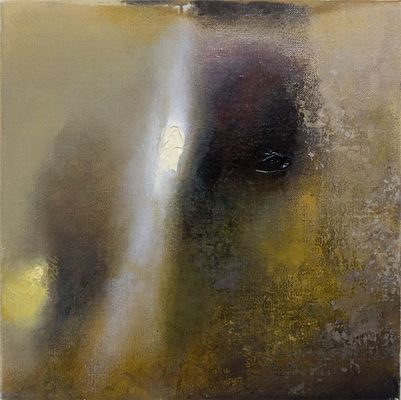
To return to Buckley’s fragment, the first two lines very much evoke how I paint nowadays. As you age, detail diminishes and patches of light become more luminous and float. I feel the most honest way of dealing with this is by smearing the oil paint on the canvas with the fingers and working close-up, blind. Only if the patches coalesce into an approaching image can the work gain a life.
-
Jonathan Walker was born in Melbourne, Australia and brought up on a dairy farm in Gippsland. In the 1970’s he studied painting at RMIT and won the Harold Wright Scholarship to the British Museum, London. During the 1980’s he exhibited at Pinacotheca Gallery, Richmond and had work shown at the NGV and Heidi City Art Gallery. Over the same period he designed the cover for the “Epigenesi” LP by Giancarlo Toniutti, Italy and conducted a mail exchange work with Achim Wollscheid, Germany. The work with artists through the post resulted in an article published in the bicentenary issue of Art and Australia 1988. He showed in artist run spaces such as WestSpace in the 90’s and 2000’s, and until 2012, taught painting at Victoria University, which is where we (Colleen Ahern and Lisa Radford) as organisers of the exhibition, among many others, had the privilege of being his student.
Walker’s knowledge was imparted to students through the careful selection of music, literature, and artists found in books that he himself had ordered for the library. Walker’s strategy was the generosity of sharing his vast knowledge with references specific to each student and their context.
Walker’s paintings share a similar focus and intimacy.
This exhibition presents a small selection of recent paintings alongside a publication that includes Walker’s writing. Observational and analytical, Walker’s work is a type of material notation — the time of day, colour and how it is blended, the both specific and fleeting location of a reflection on lino or the question of whether a chair leg should be included in a painting.
Please join us on Friday August 21 between 6-8pm to celebrate the opening of the exhibition.
Curated by Colleen Ahern and Lisa Radford.
B. Wurtz
Curated by Nic Tammens
March 26 - April 4, 2015
B.Wurtz works from a basement studio in his home on Manhattan’s Lower East Side.
This local fact is attested to by the plastic shopping bags and newsprint circulars that appear in his work. As formal objects, they don’t make loud claims about their origins but nonetheless transmit street addresses and places of business from the bottom of this long thin island. Like plenty of artists, Wurtz is affected by what is local and what is consumed. His work is underpinned by this ethic. It often speaks from a neighborhood or reads like the contents of a hamper:
“BLACK PLUMS $1.29 lb.”
“Food Bazaar”
“USDA Whole Pork Shoulder Picnic 99c lb.”
“RITE AID Pharmacy, with us it’s personal.”
“H. Brickman & Sons.”
“Sweet Yams 59c lb."
Most of the work in this exhibition was made while the artist was in residence at Dieu Donne, a workshop dedicated to paper craft in Midtown. Here Wurtz fabricated assemblages with paper and objects that are relatively lightweight, with the intention that they would be easily transportable to Australia. This consideration isn’t absolute in Wurtz’s work, but was prescriptive for making the current exhibition light and cheap. Packed in two boxes, these works were sent from a USPS post office on the Lower East Side and delivered to North Melbourne by Australia Post.
Wurtz appears courtesy of Metro Pictures, New York.
Thanks to Rob Halverson, Joshua Petherick, Sari de Mallory, Matt Hinkley, Helen Johnson, Fayen d'Evie, Ask Kilmartin, Lisa Radon, Ellena Savage, Yale Union, and "Elizabeth".
John Nixon
"Archive"
December 15 - January 20, 2014
The presentation of John Nixon's archive offered a rare showcase of this extensive collection of the artist's own publications, catalogues, posters, ephemera, editions and more, from the mid 1980s onwards, alongside a selection of his artworks.
Organized by John Nixon, Joshua Petherick and Matt Hinkley.
<a href=http://wfb.public-office.info/artist/john-nixon>All titles by John Nixon
"Habitat"
at Minerva, Sydney (organised by Joshua Petherick and Matt Hinkley)
November 15 - December 20, 2014
Lupo Borgonovo, Janet Burchill & Jennifer McCamley,
Lewis Fidock, HR Giger, Piero Gilardi, Veit Laurent Kurz,
Cinzia Ruggeri, Michael E. Smith, Lucie Stahl, Daniel Weil, Wols
Press Release:
“...It contained seven objects. The slender fluted bone, surely formed for flight, surely from the wing of some large bird. Three archaic circuitboards, faced with mazes of gold. A smooth white sphere of baked clay. An age-blackened fragment of lace. A fingerlength segment of what she assumed was bone from a human wrist, grayish white, inset smoothly with the silicon shaft of a small instrument that must once have ridden flush with the surface of the skin - but the thing’s face was seared and blackened.”
William Gibson, “Count Zero”, 1986
"Autumn Projects Archive"
Curated by Liza Vasiliou
March 6 - March 15, 2014
World Food Books, in conjunction with the Virgin Australia Melbourne Fashion Festival 2014, presented the Autumn Projects archive, consisting of a selection of early examples in Australian fashion with a particular interest in collecting designers and labels from the period beginning in the 1980’s, who significantly influenced the discourse of Australian Fashion.
Curated by Liza Vasiliou, the exhibition provided a unique opportunity to view pieces by designers Anthea Crawford, Barbara Vandenberg, Geoff Liddell and labels CR Australia, Covers, Jag along with early experimental collage pieces by Prue Acton and Sally Browne’s ‘Fragments’ collection, suspended throughout the functioning World Food Books shop in Melbourne.
H.B. Peace
presented by CENTRE FOR STYLE
November 14, 2013
"Hey Blinky, you say chic, I say same"
Anon 2013
H.B. Peace is a clothing collaboration between great friends Blake Barns and Hugh Egan Westland. Their pieces explore the divergences between 'character’ and ‘personality’ in garments....etc
Special Thanks to Joshua Petherick and Matt Hinkley of WFB and Gillian Mears
and a Very Special Thank you to Audrey Thomas Hayes for her shoe collaboration.
Janet Burchill & Jennifer McCamley
"Aesthetic Suicide"
May 10 - June 8, 2013
The first of our occasional exhibitions in the World Food Books office/shop space in Melbourne, "Aesthetic Suicide" presented a body of new and older works together by artists Janet Burchill & Jennifer McCamley, including videos, prints, a wall work, and publications.
During shop open hours videos played every hour, on the hour.
2021, English
Softcover, 160 pages,12.7 x 17.8 cm
Published by
AK Press / Edinburgh
$29.00 - Out of stock
"The Abolition of Prison encapsulates Jacques Lesage de La Haye’s four-decade long activism against the prison system in France and his anarchist perspectives on penal abolitionism. Jacques Lesage de La Haye brings together theoretical analysis and his inspiring personal journey as a criminalized youth turned into a psychologist with an extensive experience of alternative approaches to institutionalization." —Gwenola Ricordeau, author of For Them All: Women Against the Prison System (forthcoming from Verso)
The Abolition of Prison provides a reflection from a longtime prison abolitionist on the ideas, actions, and writings of anti-prison activism over the last fifty years. This book powerfully makes the case for the end of prisons, punishment, and guilt and, instead, suggests we work towards social change, care, collectivity, and ending regimes of repression and violence.
The book weaves together Lesage de La Haye’s own experience in prison, as a psychologist, and as an abolitionist, with arguments and proposals from abolitionist writings, and countless examples of prisoner actions, prison alternatives, and attempts to create a more just world. Lesage de La Haye argues simply that, if we take the justifications for prison and punishment at their word, we must evaluate the system as a complete failure and stop supporting and funneling money into it. There is a long history of alternative ways to address problems in society, both inside the Western systems of law and from Indigenous communities. Lesage de la Haye starkly portrays the effects of punishment, concluding that prison is simply a slow death. The move toward abolition is achievable today and necessary for a society free from systematized oppression.
Jacques Lesage de La Haye is a formerly incarcerated psychoanalyst, and the author of La Guillotine du sexe (Gender’s Execution), among other books. He broadcasts the radio show, Ras les murs (Tear down the walls) on Radio Libertaire and has been fighting prisons for more than fifty years.
2021, English / German
Softcover, 286 pages, 23 x 16.5 cm
Published by
Texte Zur Kunst / Berlin
$38.00 - Out of stock
This June issue of Texte zur Kunst undertakes a wide-ranging inquiry into the figurative in art. The human body, and the figure more generally, is undoubtedly among the most widely depicted subjects in the history of art. Browsing the exhibition programs of museums and galleries today, one cannot fail to notice that figurative art and rhetoric are experiencing a renaissance. In cooperation with TzK’s publisher Isabelle Graw and artist Jutta Koether, the editors have conceived an issue that takes up figuration both literally – as the subject of figurative representation in painting, literature, performance, theater, and social media – and in the broader sense, as the materialization and apprehension of social phenomena. Traditional figure-ground relationships in painting are examined, as well as the mass-mediated production of the celebrity through identity politics and questions of representation in Black figuration.
Includes a conversation between editor Isabelle Graw and artist Kerry James Marshall, essays by art theoreticians Amelia Jones and Robert Slifkin, as well as writings by artists: “Figuring,” by Jutta Koether; an essay by Annette Weisser about Alina Szapocznikow; a text by Amy Sillman on Elizabeth Murray, curator Mahret Ifeoma Kupka in conversation with Bani Abidi, Silke Otto-Knapp, and Anta Helena Recke, plus reviews of Hal Foster's "Brutal Aesthetics : Dubuffet, Bataille, Jorn, Paolozzi, Oldenburg", "Seth Siegelaub. : Better Read Than Dead. Writings and Interviews 1964–2013", exhibitions by Amelie von Wulffen, Lorraine O'Grady, Alice Neel, Loretta Fahrenholz, Michaela Eichwald, Rindon Johnson, Julie Mehretu, "Cybernetics of the Poor", and much more.
2021, English
Softcover (w. dust jacket), 64 pages, 12 x 19 cm
Published by
Sternberg Press / Berlin
$29.00 - Out of stock
This book contains three case studies on very different artists, analyzing their work through their respective historical contexts: the writer Francis Ponge (1899-1988) and his seminal text on Jean Fautrier's "Hostage Paintings" from 1943; visual artist Jack Whitten's (1939-2018) Memorial Paintings and Banksy's notorious auction stunt Love is in the Bin from 2018.
In response to recent discussions about the value assigned to artworks, art critic and theorist Isabelle Graw introduces the term “value reflection.” Rather than an objective quality, value reflection is the potential for the specific artistic labor expended for artworks to be found in them. She argues that an artwork can actually reflect on its value despite being defined by it. This book focuses on the artistic production of three individuals—writer Francis Ponge and artists Jack Whitten and Banksy—and engages with the different types of value reflection detected in their work. Graw distinguishes between an explicit (Ponge), immanent (Whitten), and seemingly destructive (Banksy) approach to value.
Three Cases of Value Reflection extends the themes found in Graw’s seminal book High Price, in which she questioned the dichotomy between art and the market as well as the notion that market value is equal to artistic value. By carefully combining a contextual, sociohistorical approach with close readings of the work of each case study, Graw demonstrates how art-historical and theoretical ambitions can, and must, go hand in hand.
Isabelle Graw is the publisher of the journal Texte zur Kunst, which she cofounded with Stefan Germer (1958–1998) in 1990, and professor of art history and art theory at the Hochschule für Bildende Künste – Städelschule, Frankfurt am Main. Her previous books include In Another World: Notes, 2014–2017 (2020), The Love of Painting: Genealogy of a Success Medium (2018), High Price: Art Between the Market and Celebrity Culture (2010), and Die bessere Hälfte: Künstlerinnen des 20. und 21. Jahrhunderts (2003). Graw lives in Berlin.
2006, English / Japanese
Hardcove (in padded, silver foiled cover), 156 pages, 19 x 19 cm
1st Edition, Out of print title / used / fine
Published by
NGV (National Gallery of Victoria) / Victoria
$67.00 - Out of stock
First out of print edition of Tezuka - The Marvel of Manga, catalogue published on the occasion of a major exhibition curated by Australian artist Philip Brophy for the National Gallery of Victoria, Melbourne in 2006. The exhibition profiled the Postwar manga of Japan's leading and most historically important manga artist, Osamu Tezuka. It toured to the Art Gallery of New South Wales, Sydney, and the Asian Art Museum of San Francisco. Edited by Philip Brophy with translations by Tetsuro Shimauchi, the book is profusely illustrated throughout, accompanied by a set of 6 critical essays written by English and Japanese writers, dealing with various aspects of Osamu Tezuka’s manga (with some reference to his anime). Also includes a complete checklist of all 234 works exhibited in the exhibition, biography and more.
Fine copy.
2020, English
Softcover, 180 pages, 22.8 x 14.5 cm
Published by
Galerie Isabella Bortolozzi / Berlin
$52.00 - Out of stock
"I was about to send this to press when Covid-19 abruptly pulled us into a new age. Art made before the rupture suddenly looks different, flickering with new meanings and demeanings. My book seemed to shift colors in my hands.
Back in 2002, in the aftershocks of 9/11, I wrote Dispersion. That essay considered then-nascent networks as spaces for corporate exploitation and warfare, and imagined an art that might flourish in the cracks of the new system. The final sentence was, "It may be that we are standing at the beginning of something." We certainly were at the beginning of something, but whatever it was, that thing is now over. We find ourselves at a new threshold."
Conceived as a cryptograph to Seth Price’s 2020 exhibition of the same name at Galerie Isabella Bortolozzi in late 2020, Dedicated to Life is a new publication of collected writings by PricE. Spanning prose poetry, memoir, drawing, performance transcription, diaristic indexing, and writings on art, the book’s sequence of reproduced and newly published writings, including fragments from the ruins of an abandoned Young Adult novel he wrote a few years ago, forms a fractured composite where verse and criticism both bolster and cast doubt upon one another, perched on the frontier of contemporary life with a lighthearted, yet trenchant erudition that borders on cultural anthropology.
"My heap of debris evoked a boom time that had been brutal, confused, and decorated with silly baubles. It felt like a personal, affectual prehistory of the Trump era, all jumbled up: my own art writings of the aughts, the authenticity-obsessed lifestyle consumerism of the 2010s, shamanism and spells, the continuous deferral of an effective left response to the crisis of neoliberalism, food and fashion and boutique hotels. I rummaged for excerpts, broke them into pieces, let them ferment and transform each other. Here they are, bits of texture from the time between September 11 and Covid-19."
Highly recommended.
Seth Price (born 1973 in East Jerusalem) is a New York-based multi-disciplinary post-conceptual artist. He lives and works in New York City.
2021, English
Softcover, 264 pages, 20 x 13 cm
Published by
Sternberg Press / Berlin
$40.00 - Out of stock
An examination of the relationship between art and cybernetics and their intersections, with works that uses the powerlessness of art.
Cybernetics of the Poor examines the relationship between art and cybernetics and their intersections in the past and present. From the late 1940s on, the term cybernetics began to be used to describe self-regulating systems that measure, anticipate, and react in order to intervene in changing conditions. Initially relevant mostly in the fields of administration, planning, criminology, and early ecology, under digital capitalism cybernetics has since become an economic factor (particularly in the realm of big data). In such a cybernetic totality, art must respond to a new situation: a cybernetics of the poor.
Cybernetics of the Poor presents work that uses the powerlessness of art—its poverty—vis-à-vis the cybernetic machine to propose countermodels: work that is both recent and historical by artists who believed in cybernetics as a participatory, playful practice or were pioneers in delineating a counter-cybernetics. How much of what Thomas Pynchon termed “counterforce” exists within art when it is conceived as a cybernetics of the poor?
Texts by Sabeth Buchmann, Mercedes Bunz, Diedrich Diederichsen, Oier Etxeberria, Harun Farocki
With artistic contributions by Agency, Ana De Almeida, Alicja Rogalska & Vanja Smiljanić, Eleanor Antin, Cory Arcangel, Elena Asins, Paolo Cirio, Coleman Collins, Hanne Darboven, Jon Mikel Euba, Michael Hakimi, Douglas Huebler, Gema Intxausti, Kameelah Janan Rasheed, Mike Kelley, Ferdinand Kriwet, Agnieszka Kurant, Mario Navarro, Adrian Piper, Lili Reynaud-Dewar, Heinrich Riebesehl, Pedro G. Romero, Constanze Ruhm, Jörg Schlick, Camila Sposati, Kathrin Stumreich, Isidoro Valcárcel Medina, Tanja Widmann, Robert Adrian X
Diedrich Diederichsen
Diedrich Diederichsen is a German author, music journalist, and cultural critic. He is one of Germany's most renowned intellectual writers at the crossroads of the arts, politics, and pop culture.
Oier Etxeberria
Oier Etxeberria is a Basque visual artist and musician. He is head of the Visual Arts at CICC Tabakalera.
1990, English
Softcover (french-folds and obi), 34 x 25 cm
1st Edition, Out of print title / used / good
Published by
Terrazzo / Milan
$150.00 - Out of stock
TERRAZZO was a very special biannual publication on architecture and design, edited and published between 1988–1995 by Barbara Radice, a prominent Italian author, design critic and member of the Memphis Milano design group. In conjunction with Ettore Sottsass, Christoph Radl, Anna Wagner and Santi Caleca, Radice created a unique and thoughtful periodical that focused on contemporary works of design and architecture, within Italy and abroad, touching on a vast array of disciplines in each issue, including literature, poetry, history, science, philosophy, art and anthropology. Like no other magazine.
TERRAZZO 5 Fall 1990 features : DOLCE STIL NUOVO by Andrea Branzi, TOYO ITO
Let it breathe by Toyo Ito, JOSH SCHWEITZER interview by Viola Marquez, ITALIAN RADICAL ARCHITECTURE AND DESIGN 1966 - 1973 by Emilio Ambasz (ARCHIZOOM - 9999 - GIANNI PETTENA - ETTORE SOTTSASS ― SUPERSTUDIO - UFO - ZZIGGURAT)
Good copy with light moisture waving to the top right corner towards back of publication with marking visible on the final pages. Light tanning, light wear, common partial glue separation from cover, otherwise really nice copy with original obi.
2021, English
Softcover, 336 pages, 23 x 16 cm
Published by
Polity / US
$65.00 - Out of stock
"An examination of phobia and fetishism by the greatest psychoanalyst since Freud, first published in French as Le sâeminaire de Jacques Lacan, Livre IV. La relation d'objet, Editions du Seuil, 1994"
'The unfulfilled and unsatisfied mother around whom the child ascends the upward slope of his narcissism is someone real. She is right there, and like all other unfulfilled creatures, she is in search of what she can devour, quaerens quem devoret. What the child once found as a means of quashing the symbolic unfulfilment is what he may possibly find across from him again as a wide-open maw [...] To be devoured is a grave danger that our fantasies reveal to us. We find it at the origin, and we find it again at this turn in the path where it yields us the essential form in which phobia presents. We find it again when we look at the fears of Little Hans [...] With the support of what I have shown you today, you will better see the relationships between phobia and perversion [...] I shall go so far as to say that you will interpret the case better than did Freud himself [...]'
Extract from Chapter XI
'[...] it's no accident that what has been perceived but dimly, yet perceived nevertheless, is that castration bears just as much relation to the mother as to the father. We can see in the description of the primordial situation how maternal castration implies for the child the possibility of devoration and biting. In relation to this anteriority of maternal castration, paternal castration is a substitute [...]'
Extract from Chapter XXI
'[In the case of little Hans] The initial transformation, which will prove decisive, is [...] the transformation of the biting into the unscrewing of the bathtub, which is something utterly different, in particular for the relationship between the protagonists. Voraciously to bite the mother, as an act or an apprehension of her altogether natural signification, indeed to dread in return the notorious biting that is incarnated by the horse, is something quite different from unscrewing, from ousting, the mother, and mobilising her in this business, bringing her into the system as a whole, for this first time as a mobile element and, by like token, an element that is equivalent to all the rest.'
Extract from Chapter XXIII
Jacques Lacan (1901-81) was one of the twentieth century's most influential thinkers. His works include Écrits, The Four Fundamental Concepts of Psychoanalysis and the many other volumes of The Seminar.
2007, English
Softcover, 896 pages, 15.5 x 23.6 cm
Published by
W W Norton & Co / New York
$58.00 - In stock -
Brilliant and innovative, Jacques Lacan's work lies at the epicenter of modern thought about otherness, subjectivity, sexual difference, the drives, the law, and enjoyment. This new translation of his complete works offers welcome, readable access to Lacan's seminal thinking on diverse subjects touched upon over the course of his inimitable intellectual career.
Translated by Bruce Fink
The psychoanalyst Jacques Lacan (1901-1981) was one of the twentieth century's most influential thinkers. His many published works include Ecrits and The Seminars.
2021, English
Hardcover, 424 pages w. 16 page insert, 15.4 x 23 cm
Published by
Perimeter Editions / Melbourne
$59.00 - Out of stock
Installation View offers a significant new account of photography in Australia, told through its most important exhibitions and modes of collection and display. From colonial records to contemporary art, the book presents a chronology of rarely seen installation views from both well-known and forgotten exhibitions, along with a series of essays that tell the story of the individuals and institutions that have proved intrinsic to the public circulation of photographs. At once specific and widely contextual in its scope, this longterm research project from two of Australia’s leading academics and educators in the field enriches our understanding of the diversity of Australian photography by looking at what lies beyond the frame. Installation View speaks not only to pictures, but to the people and the places that nurture them.
2021, English
Softcover, 144 pages, 11 x 15 cm
Published by
Onomatopee / Eindhoven
$35.00 - Out of stock
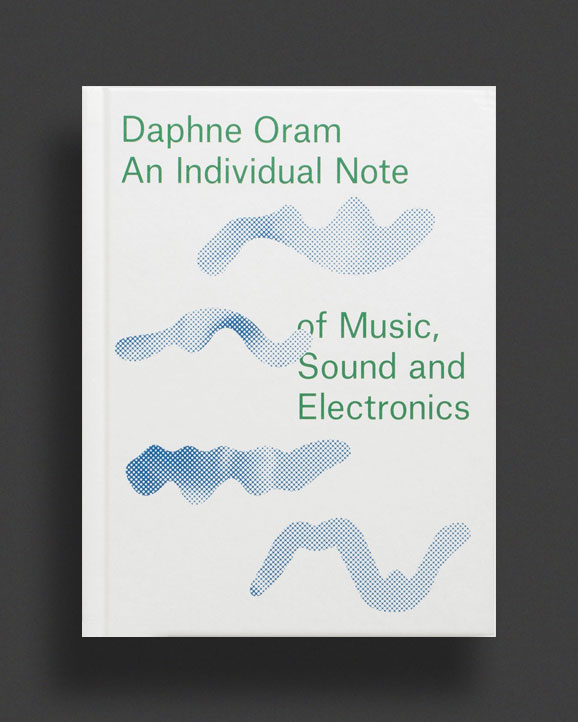
Sound is ephemeral. It does not belong to anyone. It cannot be captured in words. Writing on sound art usually focuses on the same familiar figures, but this treatment will broaden the field to explore artistic practitioners like the godfather of movie sound, Walter Murch, the king of the jungle Chris Watson, naturalist and explorer Alexander von Humboldt, pioneer wildlife recordist Ludwig Karl Koch, American pioneer composer and master teacher James Fulkerson, uncompromising composer Eliane Radigue, visionary sound sculptor Edgard Varèse, offbeat composer Luc Ferrari, true maverick Maryanne Amacher, and sonic terrorist MSBR aka Koji Tano and others.
Sounding Things Out explains what it is like to work as a composer with sound and installation art. Drawing on anecdotal and personal insight as well, Esther Venrooij explores the spaces between sounds, and follows the subject through the cracks where it isn’t supposed to go, thereby making her sound art theory accessible to anyone with an interest in music and sound.
2019, English
Softcover, 352 pages, 11.4 x 17.8 cm
Published by
Urbanomic / Cornwall
$49.00 - Out of stock
Preface by Iain Hamilton Grant
Drawing on cryptic intimations in the work of J.G. Ballard, Georges Bataille, William Burroughs, André Leroi-Gourhan, Elaine Morgan, and Friedrich Nietzsche, in the late twentieth century Dr. Daniel Barker formulated the axioms of Spinal Catastrophism: If human morphology, upright posture, and the possibility of language are the ramified accidents of natural history, then psychic ailments are ultimately afflictions of the spine, which itself is a scale model of biogenetic trauma, a portable map of the catastrophic events that shaped that atrocity exhibition of evolutionary traumata, the sick orthograde talking mammal.
Tracing its provenance through the biological notions of phylogeny and ‘organic memory’ that fuelled early psychoanalysis, back into idealism, naturephilosophy, and romanticism, and across multiform encounters between philosophy, psychology, biology, and geology, Thomas Moynihan reveals the historical continuity of Spinal Catastrophism, and analyzes its principal sources: the geological discovery of depth as memory, and the notion of recapitulation born of the collision of absolute idealism with natural history.
From psychoanalysis and myth to geology and neuroanatomy, from bioanalysis to chronopathy, from spinal colonies of proto-minds to the retroparasitism of the CNS, from ‘railway spine’ to Elizabeth Taylor’s lost gill-slits, this extravagantly comprehensive philosophical adventure uses the spinal cord as a guiding thread to rediscover forgotten pathways in modern thought.
Moynihan demonstrates that, far from being an fanciful notion rendered obsolete by advances in biology, Spinal Catastrophism dramatises fundamental philosophical problematics of time, identity, continuity, and the transcendental that remain central to any attempt to reconcile human experience with natural history.
1971, English
Softcover, 52 pages, 18 x 12 cm
1st UK Edition, Out of print title / used / very good
Published by
Olympia Press / Paris
$120.00 - Out of stock
Rare 1st Olympia Press UK edition of S.C.U.M by Valerie Solanas.
SCUM Manifesto is a legendary radical feminist manifesto by Valerie Solanas, first published in 1967 as a mimeographed edition of 2,000 copies. It argues that men have ruined the world, and that it is up to women to fix it. To achieve this goal, it suggests the formation of SCUM, an organization dedicated to overthrowing society and eliminating the male sex. The Manifesto was little-known until Solanas attempted to murder Andy Warhol by shooting him at The Factory in 1968. This event brought significant public attention to the Manifesto and Solanas herself.
This edition was published when legendary French publisher Maurice Girodias’ Olympia Press briefly relocated to Britain and came out the year Solanas’ left prison for attempted murder.
With a foreword by publisher Maurice Girodias and an introduction by radical feminist critic and essayist, Vivian Gornick.
VG, with only a piece of clear tape on back cover, otherwise wonderful copy.
1967, English
Softcover, 56 pages, 12 x 18 cm
1st Edition, Out of print title / used / good
Published by
Australian Broadcasting Commission / Sydney
$55.00 - Out of stock
In 1967 Australian architect Robin Boyd presented the Boyer Lectures, which were broadcast nationally on ABC Radio. He delivered five lectures on a variety of topics and issues relating to Australia, architecture and design and prevailing cultural values of the time, under the series title Artificial Australia. The lectures were: Lecture 1 - Creative Man in a Frontier Society; Lecture 2 - The Architecture of Ideas; Lecture 3 - Integrity in the Artificial Object; Lecture 4 - The Environmental Arts in Australia; Lecture 5 - The Australian Myth in the Modern World.
All of the lectures are here transcribed in this now very scarce pocketbook volume published in 1967 by the Australian Broadcasting Commission.
Beginning in 1959, the Boyer Lectures is a series of talks by prominent Australians chosen by the ABC board to present ideas on major social, scientific or cultural issues. Broadcast on ABC Radio for 40 years, the Lecture series stimulated thought, discussion and debate in Australia on an astonishing range of subjects—great minds examining issues and values.
Robin Boyd (1919–71) is arguably Australia’s most influential architect. He was an idealist, a visionary, who believed that good design would improve the quality of people’s lives. A tireless public educator and outspoken social commentator, he designed more than two hundred buildings and wrote such classics as The Puzzle of Architecture and Australia’s Home.
Good-Very Good copy with some wear to covers.
2021, English
Softcover (cloth), 300 pages, 16.5 x 10.4 cm
Published by
Office / Melbourne
$27.00 - Out of stock
Many of the texts in this volume are interviews with the speakers from the lecture series. We felt it was necessary to provide each speaker with the opportunity to reflect on how their research has been altered by the events of the past year. While past volumes asked many questions, this collection of interviews and talks puts forward strategies for addressing some of the perceived inequities in the public domain. Nigel Bertram and Kim Dovey’s texts explore forms of protest, preservation and civil disobedience within urban spaces. Protest continues to be intrinsic to public discourse and by consequence, how the city is preserved and developed. In contrast, these modes of resistance have their counterpart in discussions about policy-making and planning. For Lynda Roberts this is through revealing the political motivations behind the procurement of cultural artifacts and their deployment throughout the arts precinct. Crystal Legacy outlines ideas of agonism and consensus planning in large scale infrastructure projects. Marcus Westbury reflects on new forms of tenure in creating and running a public cultural institute and Elizabeth Taylor unpacks the political, social and commercial motivations behind car parking.
What is clear is that each of these texts draws the attention of the series back to questions of how we experience cities. As we have found in past volumes, the city privileges certain demographics and bodies over others. Simona Castricum reflects on the diverse experiences of gender non-conforming, trans and gender diverse people in public space. And the final text, an interview with Sophia Pearce and Jock Gilbert, puts forward their understanding of Country, and strategies for Indigenous and non-indigenous people to work in collaboration. Unpacking concepts of Story and deep listening and how they shape their projects.
2012, English
Hardcover, 304 pages, 216 x 254 mm
Published by
The MIT Press / Massachusetts
$79.00 - Out of stock
Lucy R. Lippard's famous book, itself resembling an exhibition, is now brought full circle in an exhibition (and catalog) resembling her book.
“Conceptual art, for me, means work in which the idea is paramount and the material form is secondary, lightweight, ephemeral, cheap, unpretentious and/or ‘dematerialized.’” — Lucy R. Lippard, Six Years
In 1973 the critic and curator Lucy R. Lippard published Six Years, a book with possibly the longest subtitle in the bibliography of art: The dematerialization of the art object from 1966 to 1972: a cross-reference book of information on some esthetic boundaries: consisting of a bibliography into which are inserted a fragmented text, art works, documents, interviews, and symposia, arranged chronologically and focused on so-called conceptual or information or idea art with mentions of such vaguely designated areas as minimal, anti-form, systems, earth, or process art, occurring now in the Americas, Europe, England, Australia, and Asia (with occasional political overtones) edited and annotated by Lucy R. Lippard. Six Years, sometimes referred to as a conceptual art object itself, not only described and embodied the new type of art-making that Lippard was intent on identifying and cataloging, it also exemplified a new way of criticizing and curating art. Nearly forty years later, the Brooklyn Museum takes Lippard’s celebrated experiment in curated concatenation as a template, turning a book that resembled an exhibition into an exhibition materializing the ideas in her book.
The artworks and essays featured in this publication recall the thrill that was tangible in Lippard's original documentation, reminding us that during the late sixties and early seventies all possible social and material parameters of art (making) were played with, worked over, inverted, reduced, expanded, and rejected. By tracing Lippard’s own activities in those years, the book also documents the early blurring of boundaries among critical, curatorial, and artistic practices.
With more than 200 images of work by dozens of artists (printed in color throughout), this book brings Lippard’s curatorial experiment full circle.
Edited by Catherine Morris and Vincent Bonin
Published on the occasion of the exhibition The Six Years' Project: Lucy R. Lippard and the Emergence of Conceptual Art, September 14, 2012-February 3, 2013, organized by Catherine Morris, Curator of the Elizabeth A. Sackler Center at the Brooklyn Museum, and the independent scholar Vincent Bonin.
2014, English
Softcover, 240 pages, 17.5 x 22.8 cm
Published by
The MIT Press / Massachusetts
$39.00 - Out of stock
Michael Asher doesn't make typical installations. Instead, he extracts his art from the institutions in which it is shown, culling it from collections, histories, or museums' own walls. Since the late 1960s, Asher has been creating situations that have not only taught us about the conditions and contexts of contemporary art, but have worked to define it. In Situation Aesthetics, Kirsi Peltomaki examines Asher's practice by analyzing the social situations that the artist constructs in his work for viewers, participants, and institutional representatives (including gallery directors, curators, and other museum staff members). Drawing on art criticism, the reports of viewers and participants in Asher's projects, and the artist's own archives, Peltomaki offers a comprehensive account of Asher's work over the past four decades. Because of the intensely site-specific nature of this work, as well as the artist's refusal to reconstruct past works or mount retrospectives, many of the projects Peltomaki discusses are described here for the first time. By emphasizing the social and psychological sites of art rather than the production of autonomous art objects, Peltomaki argues, Asher constructs experientially complex situations that profoundly affect those who encounter them, bringing about both personal and institutional transformation.
2019, English
Hardcover (w. dust jacket), 264 pages, 17.8 x 22.9 cm
Published by
The MIT Press / Massachusetts
$50.00 - Out of stock
Writings by the conceptual artist Michael Asher—including notes, proposals, exhibition statements, and letters to curators and critics—most published here for the first time.
The California conceptual artist Michael Asher (1943–2012) was known for rigorous site specificity and pioneering institutional critique. His decades of teaching at CalArts influenced generations of artists. Much of Asher's artistic practice was devoted to creating works that had no lasting material presence and often responded to the material, social, or ideological context of a situation. Because most of Asher's artworks have ceased to exist, his writings about them have special significance. Public Knowledge collects writings by Asher about his work—including preliminary notes and ideas, project proposals, exhibition statements, and letters to curators and critics—most of which have never been previously published.
Asher gave few interviews, didn't write art criticism, and rarely published extensive accounts of his own work. Yet writing was central to his artistic practice, serving as a tool for working out ideas, negotiating institutional parameters, and describing thought processes. In these texts, he considers writing and documentation, discusses artistic practice, offers notes for gallery and museum talks, presents artist statements for exhibition-goers, describes individual works and their situational context, and reflects on teaching and art education. Among other things, Asher provides his definition of site specificity, addresses the function of art in public space, and analyzes the intersection of teaching art and institutional models of education. Readers will see an artist at work, formulating ethical and political strategies for making art in a situational world.
2013, English
Softcover, 82 pages, 12.7 x 19.4 cm
Published by
Univocal Publishing / Minneapolis
$36.00 - Out of stock
Exploring the concept of time in the work of one of Europe’s greatest filmmakers
From Almanac of Fall (1984) to The Turin Horse (2011), renowned Hungarian filmmaker Béla Tarr has followed the collapse of the communist promise. The “time after” is the time when we are less interested in histories and their successes or failures than we are in the delicate fabric of time from which they are carved.
Translated by Erik Beranek.
2017, English
Softcover, 72 pages, 9.5 x 14.8 cm
Published by
Sternberg Press / Berlin
Moderna Museet / Stockholm
$27.00 $15.00 - Out of stock
How did art escape the deadlock of the Situationists’ anti-art refusal? Did the relational artists, with their repetitions of Situationist slogans and techniques, outline a sustainable, micro-political alternative to Guy Debord’s dream of surpassing art and realizing philosophy? Looking back at some of the Situationists’ confrontations with the museum, this book traces a path beyond the tragedy of negativity and the litany of recuperation. At the center is the concept of play; originally adopted as the principle of reconciled life, it returns as the lever of instrumentalization. But in the extraterrestial wasteland of the present, spaces of ludic coexistence and experimentation may remain possible, provided that pessimism can be adequately organized.
All the King’s Horses Series, edited by Daniel Birnbaum and Kim West
Copublished with Moderna Museet, Stockholm
Design by Studio Christopher West
Now out of print.
2006, English / French
Softcover, 192 pages, 24.5 x 17.5 cm
1st Edition, Out of print title / as new
Published by
HYX / France
$480.00 - Out of stock
Almost non-existent first edition of this immediately out-of-print and only English-language monograph on Archizoom Associati, written and compiled by founding member Andrea Branzi.
Considered the leading antagonists of Italian Radical Design, Archizoom Associati was founded in 1966 in Florence, Italy by architecture students Andrea Branzi, Gilberto Corretti, Paolo Deganello and Massimo Morozzi. Archizoom organized their first exhibition, "Superarchitettura", in December 1966 along with the group Superstudio.
In 1969, the Archizoom group, while carrying out an experimental work in the field of design, also undertook a research on environment, mass culture and the city, which led to the project No-Stop City.
Gathering all the texts and drawings/models/documents, this book reveals to us the "Endless City" intertwining architecture with objects and the triumphant consumer society, giving an interpretation where the repetition of a single central element, a building or a group of objects makes up, through a play of mirrors, a catatonic environment, a boundless supermarket, a now reached future to be composed.
No-Stop City is a quality-less city in which the individual can achieve his own housing conditions as a creative, freed and personal activity. The theoretical project was first published in the review Casabella in 1970, under the title: "City, assembly line of social issues, ideology and theory of the metropolis". As Andrea Branzi puts it, this project implements "the idea of the fading away of architecture within metropolis".
No-Stop City is a critical Utopia, a model of global urbanization where design is the essential conceptual instrument used in the mutation of living patterns and territories.
As essential work in the history of radical architecture, this unbuilt project is here presented in its entirety through the original models, designs, collages, drawings and photographs, accompanied by the original texts by Archizoom Associati translated to English and French for the first time, and presented with introduction by editor Gloria Bianchino and a major illustrated essay by Andrea Branzi, all in English/French.
As New copy.
2020, English
Hardcover (w. dust jacket), 224 pages, 14 x 21 cm
Published by
Verso / London
$39.00 - Out of stock
If farce follows tragedy, what follows farce? Where does the double predicament of a post-truth and post-shame politics leave artists and critics on the left? How to demystify a hegemonic order that dismisses its own contradictions? How to belittle a political elite that cannot be embarrassed, or to mock party leaders who thrive on the absurd? How to out-dada President Ubu? And, in any event, why add outrage to a media economy that thrives on the same? What Comes After Farce? comments on shifts in art, criticism, and fiction in the face of the current regime of war, surveillance, extreme inequality, and media disruption. A first section focuses on the cultural politics of emergency since 9/11, including the use and abuse of trauma, paranoia, and kitsch.
A second reviews the neoliberal makeover of art institutions during the same period. Finally, a third section surveys transformations in media as reflected in recent art, film, and fiction. Among the phenomena explored here are “machine vision” (images produced by machines for other machines without a human interface),“operational images” (images that do not represent the world so much as intervene in it), and the algorithmic scripting of information so pervasive in our everyday lives.
Hal Foster is the author of numerous books, including The Art-Architecture Complex (Verso, 2011), The First Pop Age: Painting and Subjectivity in the Art of Hamilton, Lichtenstein, Warhol, Richter, and Ruscha (Princeton, 2012), Bad New Days: Art, Criticism, Emergency (Verso, 2015), and, with Richard Serra, Conversations about Sculpture (Yale, 2018). A member of the American Academy of Arts and Sciences, he delivered the 2018 Mellon Lectures at the National Gallery in Washington. He teaches at Princeton University, co-edits the journal October, and contributes regularly to the London Review of Books.
2017, English
Softcover, 208 pages, 14.2 x 21.3 cm
Published by
Verso / London
$35.00 - In stock -
One of the world’s leading art theorists dissects a quarter century of artistic practice.
Bad New Days examines the evolution of art and criticism in Western Europe and North America over the last twenty-five years, exploring their dynamic relation to the general condition of emergency instilled by neoliberalism and the war on terror.
Considering the work of artists such as Thomas Hirschhorn, Tacita Dean, and Isa Genzken, and the writing of thinkers like Jacques Rancière, Bruno Latour, and Giorgio Agamben, Hal Foster shows the ways in which art has anticipated this condition, at times resisting the collapse of the social contract or gesturing toward its repair; at other times burlesquing it.
Against the claim that art making has become so heterogeneous as to defy historical analysis, Foster argues that the critic must still articulate a clear account of the contemporary in all its complexity. To that end, he offers several paradigms for the art of recent years, which he terms “abject,” “archival,” “mimetic,” and “precarious.”
2020, English
Hardcover (w. dust jacket), 296 pages, 19.1 x 26 cm
Published by
Princeton University Press / New York
National Gallery of Art / Washington
$69.00 - Out of stock
How artists created an aesthetic of "positive barbarism" in a world devastated by World War II, the Holocaust, and the atomic bomb.
In Brutal Aesthetics, leading art historian Hal Foster explores how postwar artists and writers searched for a new foundation of culture after the massive devastation of World War II, the Holocaust, and the atomic bomb. Inspired by the notion that modernist art can teach us how to survive a civilization become barbaric, Foster examines the various ways that key figures from the early 1940s to the early 1960s sought to develop a "brutal aesthetics" adequate to the destruction around them.
With a focus on the philosopher Georges Bataille, the painters Jean Dubuffet and Asger Jorn, and the sculptors Eduardo Paolozzi and Claes Oldenburg, Foster investigates a manifold move to strip art down, or to reveal it as already bare, in order to begin again. What does Bataille seek in the prehistoric cave paintings of Lascaux? How does Dubuffet imagine an art brut, an art unscathed by culture? Why does Jorn populate his paintings with "human animals"? What does Paolozzi see in his monstrous figures assembled from industrial debris? And why does Oldenburg remake everyday products from urban scrap?
A study of artistic practices made desperate by a world in crisis, Brutal Aesthetics is an intriguing account of a difficult era in twentieth-century culture, one that has important implications for our own.
Published in association with the National Gallery of Art, Washington, DC.