World Food Books' programme is largely produced on Kulin Nation land. We acknowledge the Wurundjeri people of the Kulin Nation as the first and continuing custodians of this land, and pay respect to their Elders past, present, and emerging.
World Food Books is an arts and special interests bookshop in Naarm / Melbourne. Founded in 2010, World Food Books is devoted to the presentation of a rotating, hand-selection of international art, design, literary and counterculture publications with an emphasis on the anti-traditional, the experimental, the avant-garde, the heretic, the marginal.
Presenting new titles alongside rare and out-of-print books, catalogues and journals spanning the fields of modern and contemporary art, design, photography, illustration, film, literature, poetry, cultural theory, philosophy, sexuality, popular and underground culture in its many radical forms, World Food Books wishes to encourage adventurous, thoughtful and open-minded reading, looking, writing, and exchange of publishing and ideas, both current and historical.
As well as our bookshop, located in Melbourne's historical Nicholas Building, all of our inventory is available internationally via our online mail-order service.
World Food Books semi-regularly co-ordinates "Occasions", a programme of exhibits and events at the bookshop and in partnership with other hosts (such as museums and art galleries) that develop out of the activities, relationships and content of the bookshop itself.
World Food Books
The Nicholas Building
37 Swanston Street
Room 5, Level 6
Melbourne 3000
Australia
SHOP HOURS:
Thu–Fri 12–6, Sat 12–5
WEB-SHOP OPEN 24/7
World Food Books
Postal Address:
PO Box 435
Flinders Lane
Victoria 8009
Australia
Art
Theory / Essay
Architecture / Interior
Graphic Design / Typography
Photography
Fashion
Eros
LGBTQ+
Fiction / Poetry
Weird / Speculative / Science Fiction / Horror
Transgressive / Visceral / Abject
Symbolism / Decadence / Fin de siècle
Film / Video
Painting
Sculpture / Installation
Performance / Dance / Theater
Drawing
Sound / Music
Curatorial
Group Shows / Collections
Periodicals
Out-of-print / Rare
Posters / Ephemera / Discs
Signed Books
World Food Books Gift Voucher
World Food Book Bag
Australian Art
Australian Fiction
Australian Science Fiction / Speculative Fiction
Australian Poetry
Australian Photography
Japanese Photography
Conceptual Art
Minimal Art
Dada
'Pataphysics / Oulipo
Fluxus
Concrete Poetry
Pop Art
Surrealism
Arte Povera
Arte Informale / Haute Pâte / Tachism
Nouveau Réalisme / Zero / Kinetic
Situationism / Lettrism
Collage / Mail Art / Xerox Art
Art Brut / Folk / Visionary / Fantastic
Illustration / Graphic Art / Bandes Dessinées
Furniture
Italian Radical Design / Postmodernism
Textiles
Ceramics / Glass
Counterculture
Protest / Revolt
Philosophy
Psychoanalysis
Anthropology
Anarchism
Socialism / Anarchism / Communism / Capitalism
Literary Theory / Semiotics / Language
Feminism / Women's Studies
Gender Studies / Sexuality
Anthropology
Fetishism / BDSM
Drugs / Psychedelia
Crime / Violence
Animal Rights / Veganism
Occult / Esoterica
Ecology / Earth / Alternative Living
Whole Earth / Crafts
All prices in AUD (Australian dollars)
Pick-Ups
Pick-up orders can be collected in our bookshop during opening hours after order date. Please collect any Pick-up orders within 2 weeks of ordering as we have limited storage space. Orders will be released back into stock if not collected within this time. No refunds can be made for pick-ups left un-collected. If you cannot make it in to the bookshop in this time-frame, please choose postage option.
Return Policy
All sales are final. We do accept returns (for refund or exchange) for items received in error. All our orders are packed with special care using heavy-duty padding and cardboard book-mailers or bubble mailers (for smaller books), using reinforcement where required. We cannot take responsibility for any lost, stolen or damaged parcels.
Insurance
Should you wish to insure your package, please email us directly after placing your order and we can organise this at a small extra expense. Although all standard/express tracked packages are very safe and dependable, we cannot take responsibility for any lost, stolen or damaged parcels. We recommend insurance on valuable orders.
Interested in selling your old books, catalogues, journals, magazines, comics, fanzines, ephemera? We are always looking for interesting, unusual and out-of-print books to buy. We only buy books in our fields of interest and specialty, and that we feel we can resell.
We base these prices on desirability, market value, in-print prices, condition and our current stock levels. We offer cash, store credit, and can take stock on consignment. All
about 25% of the price we expect to get when we sell them, or 30% in store credit. We base these prices on desirability, market value, in-print prices, condition and our current stock levels.
Sell your books any day of the week. You can drop them off and return later. If you have a lot of books, we can visit your Sydney home.
We buy books that we feel we can resell. We offer about 25 % of the price we expect to get when we sell them, or 30% in store credit. We base these prices on desirability, market value, in-print prices, condition and our current stock levels.
Philadelphia Wireman
03 August - 01 September, 2018
World Food Books is proud to announce our next Occasion, the first presentation of sculptures by Philadelphia Wireman in Australia.
The Philadelphia Wireman sculptures were found abandoned in an alley off Philadelphia’s South Street on trash night in 1982. Their discovery in a rapidly-changing neighbourhood undergoing extensive renovation, compounded with the failure of all attempts to locate the artist, suggests that the works may have been discarded after the maker’s death. Dubbed the "Philadelphia Wireman" during the first exhibition of this work, in 1985, the maker’s name, age, ethnicity, and even gender remain uncertain. The entire collection totals approximately 1200 pieces, all intricately bound together with tightly-wound heavy-gauge wire (along with a few small, abstract marker drawings, reminiscent both of Mark Tobey and J.B. Murry). The dense construction of the work, despite a modest range of scale and materials, is singularly obsessive and disciplined in design: a wire armature or exoskeleton firmly binds a bricolage of found objects including plastic, glass, food packaging, umbrella parts, tape, rubber, batteries, pens, leather, reflectors, nuts and bolts, nails, foil, coins, toys, watches, eyeglasses, tools, and jewellery.
Heavy with associations—anthropomorphic, zoomorphic, and socio-cultural responses to wrapped detritus—the totemic sculptures by Philadelphia Wireman have been discussed in the context of work created to fulfil the shamanistic needs of alternative religions in American culture. Curators, collectors, and critics have variously compared certain pieces to sculpture from Classical antiquity, Native American medicine bundles, African-American memory jugs, and African fetish objects. Reflecting the artist’s prolific and incredibly focused scavenging impulse, and despite—or perhaps enhanced by—their anonymity, these enigmatic objects function as urban artefacts and arbiters of power, though their origin and purpose is unknown. Philadelphia Wireman, whatever their identity, possessed an astonishing ability to isolate and communicate the concepts of power and energy through the selection and transformation of ordinary materials. Over the course of the past two decades, this collection has come to be regarded as an important discovery in the field of self-taught art and vernacular art.
Presented in collaboration with Fleisher-Ollman Gallery, Philadelphia, and Robert Heald, Wellington.
Susan Te Kahurangi King
02 February - 10 March, 2018
Susan Te Kahurangi King (24 February 1951 - ) has been a confident and prolific artist since she was a young child, drawing with readily available materials - pencils, ballpoint pens and felt-tip markers, on whatever paper is at hand. Between the ages of four and six Susan slowly ceased verbal communication. Her grandparents William and Myrtle Murphy had developed a special bond with Susan so they took on caring responsibilities for extended periods. Myrtle began informally archiving her work, carefully collecting and storing the drawings and compiling scrapbooks. No drawing was insignificant; every scrap of paper was kept. The King family are now the custodians of a vast collection containing over 7000 individual works, from tiny scraps of paper through to 5 meter long rolls.
The scrapbooks and diaries reveal Myrtle to be a woman of great patience and compassion, seeking to understand a child who was not always behaving as expected. She encouraged Susan to be observant, to explore her environment and absorb all the sights and sounds. Myrtle would show Susan’s drawings to friends and people in her community that she had dealings with, such as shopkeepers and postal workers, but this was not simply a case of a grandmother’s bias. She recognised that Susan had developed a sophisticated and unique visual language and sincerely believed that her art deserved serious attention.
This was an unorthodox attitude for the time. To provide some context, Jean Dubuffet coined the term Art Brut in 1945 to describe work created by self-taught artists – specifically residents of psychiatric institutions and those he considered to be visionaries or eccentrics. In 1972 Roger Cardinal extended this concept by adopting the term Outsider Art to describe work made by non-academically trained artists operating outside of mainstream art networks through choice or circumstance. Susan was born in Te Aroha, New Zealand in 1951, far from the artistic hubs of Paris and London that Dubuffet and Cardinal operated in. That Myrtle fêted Susan as a self-taught artist who deserved to be taken seriously shows how progressive her attitudes were.
Susan’s parents Doug and Dawn were also progressive. Over the years they had consulted numerous health practitioners about Susan’s condition, as the medical establishment could not provide an explanation as to why she had lapsed into silence. Dawn educated herself in the field of homeopathy and went on to treat all twelve of her children using these principles – basing prescriptions on her observations of their physical, mental and emotional state.
Doug was a linguist with an interest in philosophy who devoted what little spare time he had to studying Maori language and culture. To some extent their willingness to explore the fringes of the mainstream made them outsiders too but it was their commitment to living with integrity and their respect for individuality that ensured Susan’s creativity was always encouraged.
Even though Susan’s family supported her artistic pursuits, some staff in schools and hospitals saw it as an impediment to her assimilation into the community and discouraged it in a variety of ways. Her family was not always aware of this and therefore did not fully understand why Susan stopped drawing in the early 1990s. However, rather than dwell on the challenges that Susan faced in pursuit of her artistic practice, they prefer to highlight her achievements. In 2008 Susan began drawing again in earnest, after an almost 20 year interruption, and her work is now shown in galleries around the world.
Susan grew up without television and has been heavily influenced by the comics she read as a child. She is absolutely fearless in the appropriation of recognizable characters, such as Donald Duck and Mickey Mouse, in her work. She twists their limbs, contorts their faces, compresses them together, blends them into complex patterned backgrounds - always imbuing them with an incredible energy. Although Susan often used pop culture characters in her work they are not naive or childlike. These are drawings by a brilliant self-taught artist who has been creating exceptional work for decades without an audience in mind.
Mladen Stilinović
"Various Works 1986 - 1999"
02 February 16 - September 10, 2016
Various works 1986 - 1999, from two houses, from the collections of John Nixon, Sue Cramer, Kerrie Poliness, Peter Haffenden and Phoebe Haffenden.
Including: Geometry of Cakes (various shelves), 1993; Poor People’s Law (black and white plate), 1993; White Absence (glasses, ruler, set square, silver spoon, silver ladel with skin photograph and wooden cubes), 1990-1996; Exploitation of the Dead (grey and red star painting, wooden painting, black spoon with red table, red plate), 1984-1990; Money and Zeros (zero tie, paintings made for friends in Australia (Sue, John, Kerrie), numbers painting), 1991-1992; Words - Slogans (various t-shirts) - “they talk about the death of art...help! someone is trying to kill me”, “my sweet little lamb”, “work is a disease - Karl Marx”; Various artist books, catalogues, monographs, videos; Poster from exhibition Insulting Anarchy; "Circular" Croatian - Australian edition; Artist book by Vlado Martek (Dostoyevsky); more.
Thanks to Mladen Stilinović and Branka Stipančić.
Jonathan Walker
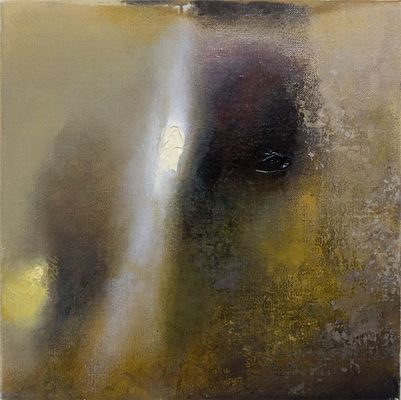
Always Will Need To Wear Winter Shirt Blue + Ochre Small Check Pattern
21 August - 21 September, 2015
Untitled
I am not a great reader of poetry but I always return to the work of Melbourne poet, Vincent Buckley (1925- 1988). Perhaps I find his most tantalising piece to be not a finished poem but a fragment left on a scrap of paper discovered on his desk after the poet’s death.
The poetry gathers like oil
In the word-core, and spreads
It has its music meet,
Its music is in movement.
This fragment is more the shell left behind from a volatile thought than a finished poem. I find the last two lines honest but awkward whereas the first two lines work like an arrow. Most likely he could not find a resolution so it was left. Still, in its present form, it remains an eloquent testimony to the ultimate failure of a medium to express mobile thought and sensation, in Buckley’s case, through verbal language. It’s an important matter because this is something all artists have to deal with regardless of the medium.
I have never written a poem, however, I am forever copying fragments from books on paper scraps in a vain effort to fix certain notions in my head. At first, they function as bookmarks that are sometimes returned to when I open the book. But before long, as they accumulate, they fall out littering the table interspersed with A4 photocopies, bills, books and medications.
To return to Buckley’s fragment, the first two lines very much evoke how I paint nowadays. As you age, detail diminishes and patches of light become more luminous and float. I feel the most honest way of dealing with this is by smearing the oil paint on the canvas with the fingers and working close-up, blind. Only if the patches coalesce into an approaching image can the work gain a life.
-
Jonathan Walker was born in Melbourne, Australia and brought up on a dairy farm in Gippsland. In the 1970’s he studied painting at RMIT and won the Harold Wright Scholarship to the British Museum, London. During the 1980’s he exhibited at Pinacotheca Gallery, Richmond and had work shown at the NGV and Heidi City Art Gallery. Over the same period he designed the cover for the “Epigenesi” LP by Giancarlo Toniutti, Italy and conducted a mail exchange work with Achim Wollscheid, Germany. The work with artists through the post resulted in an article published in the bicentenary issue of Art and Australia 1988. He showed in artist run spaces such as WestSpace in the 90’s and 2000’s, and until 2012, taught painting at Victoria University, which is where we (Colleen Ahern and Lisa Radford) as organisers of the exhibition, among many others, had the privilege of being his student.
Walker’s knowledge was imparted to students through the careful selection of music, literature, and artists found in books that he himself had ordered for the library. Walker’s strategy was the generosity of sharing his vast knowledge with references specific to each student and their context.
Walker’s paintings share a similar focus and intimacy.
This exhibition presents a small selection of recent paintings alongside a publication that includes Walker’s writing. Observational and analytical, Walker’s work is a type of material notation — the time of day, colour and how it is blended, the both specific and fleeting location of a reflection on lino or the question of whether a chair leg should be included in a painting.
Please join us on Friday August 21 between 6-8pm to celebrate the opening of the exhibition.
Curated by Colleen Ahern and Lisa Radford.
B. Wurtz
Curated by Nic Tammens
March 26 - April 4, 2015
B.Wurtz works from a basement studio in his home on Manhattan’s Lower East Side.
This local fact is attested to by the plastic shopping bags and newsprint circulars that appear in his work. As formal objects, they don’t make loud claims about their origins but nonetheless transmit street addresses and places of business from the bottom of this long thin island. Like plenty of artists, Wurtz is affected by what is local and what is consumed. His work is underpinned by this ethic. It often speaks from a neighborhood or reads like the contents of a hamper:
“BLACK PLUMS $1.29 lb.”
“Food Bazaar”
“USDA Whole Pork Shoulder Picnic 99c lb.”
“RITE AID Pharmacy, with us it’s personal.”
“H. Brickman & Sons.”
“Sweet Yams 59c lb."
Most of the work in this exhibition was made while the artist was in residence at Dieu Donne, a workshop dedicated to paper craft in Midtown. Here Wurtz fabricated assemblages with paper and objects that are relatively lightweight, with the intention that they would be easily transportable to Australia. This consideration isn’t absolute in Wurtz’s work, but was prescriptive for making the current exhibition light and cheap. Packed in two boxes, these works were sent from a USPS post office on the Lower East Side and delivered to North Melbourne by Australia Post.
Wurtz appears courtesy of Metro Pictures, New York.
Thanks to Rob Halverson, Joshua Petherick, Sari de Mallory, Matt Hinkley, Helen Johnson, Fayen d'Evie, Ask Kilmartin, Lisa Radon, Ellena Savage, Yale Union, and "Elizabeth".
John Nixon
"Archive"
December 15 - January 20, 2014
The presentation of John Nixon's archive offered a rare showcase of this extensive collection of the artist's own publications, catalogues, posters, ephemera, editions and more, from the mid 1980s onwards, alongside a selection of his artworks.
Organized by John Nixon, Joshua Petherick and Matt Hinkley.
<a href=http://wfb.public-office.info/artist/john-nixon>All titles by John Nixon
"Habitat"
at Minerva, Sydney (organised by Joshua Petherick and Matt Hinkley)
November 15 - December 20, 2014
Lupo Borgonovo, Janet Burchill & Jennifer McCamley,
Lewis Fidock, HR Giger, Piero Gilardi, Veit Laurent Kurz,
Cinzia Ruggeri, Michael E. Smith, Lucie Stahl, Daniel Weil, Wols
Press Release:
“...It contained seven objects. The slender fluted bone, surely formed for flight, surely from the wing of some large bird. Three archaic circuitboards, faced with mazes of gold. A smooth white sphere of baked clay. An age-blackened fragment of lace. A fingerlength segment of what she assumed was bone from a human wrist, grayish white, inset smoothly with the silicon shaft of a small instrument that must once have ridden flush with the surface of the skin - but the thing’s face was seared and blackened.”
William Gibson, “Count Zero”, 1986
"Autumn Projects Archive"
Curated by Liza Vasiliou
March 6 - March 15, 2014
World Food Books, in conjunction with the Virgin Australia Melbourne Fashion Festival 2014, presented the Autumn Projects archive, consisting of a selection of early examples in Australian fashion with a particular interest in collecting designers and labels from the period beginning in the 1980’s, who significantly influenced the discourse of Australian Fashion.
Curated by Liza Vasiliou, the exhibition provided a unique opportunity to view pieces by designers Anthea Crawford, Barbara Vandenberg, Geoff Liddell and labels CR Australia, Covers, Jag along with early experimental collage pieces by Prue Acton and Sally Browne’s ‘Fragments’ collection, suspended throughout the functioning World Food Books shop in Melbourne.
H.B. Peace
presented by CENTRE FOR STYLE
November 14, 2013
"Hey Blinky, you say chic, I say same"
Anon 2013
H.B. Peace is a clothing collaboration between great friends Blake Barns and Hugh Egan Westland. Their pieces explore the divergences between 'character’ and ‘personality’ in garments....etc
Special Thanks to Joshua Petherick and Matt Hinkley of WFB and Gillian Mears
and a Very Special Thank you to Audrey Thomas Hayes for her shoe collaboration.
Janet Burchill & Jennifer McCamley
"Aesthetic Suicide"
May 10 - June 8, 2013
The first of our occasional exhibitions in the World Food Books office/shop space in Melbourne, "Aesthetic Suicide" presented a body of new and older works together by artists Janet Burchill & Jennifer McCamley, including videos, prints, a wall work, and publications.
During shop open hours videos played every hour, on the hour.
2021, English
Softcover, 152 pages, 17.8 x 22.2 cm
Published by
Wesleyan University Press / US
$40.00 - Out of stock
2021 re-print of Simone Forti's classic, Handbook in Motion : An Account of an Ongoing Personal Discourse and Its Manifestations in Dance, originally published in 1974.
Tracing a period in her life from the 1969 Woodstock Festival through the following years living on the land, this singular dance artist's direct and poetic writings bring a turbulent transitional era to life.
Arriving in New York in the early 60's from California, she brought with her a series of pieces that proved to be a serious influence on the development of "postmodern" dance in years to come. Her "dance-constructions" were based on a concern with bodies in action, the movement not being stylized or presented for its visual line but rather as a physical fact. Combining drawings, "dance reports" (short descriptions of events whose movement made a deep impression on the author's memory), and documentary materials such as scores, descriptions, letters to colleagues, and photographic records of performances, Forti's eye toward creating idioms for exploring natural forms and behaviors is evident throughout.
Simone Forti shifted from painting in 1955 to study dance with Anna Halprin and went on to study composition with Robert Dunn at the Merce Cunningham Studio leading to her association with Judson Dance Theater in the '60s. Her work spans from early minimalist dance-constructions, through animal movement studies, news animations, land portraits, and currently, Logomotion, an improvisational form based on the resonance between movement and the spoken word. She performs and teaches worldwide.
1974, English
Softcover, 152 pages, 17.8 x 22.2 cm
1st Edition, Out of print title / used / average
Published by
The Press of the Nova Scotia College of Art and Design / Halifax
$140.00 - Out of stock
Rare first 1974 edition of Simone Forti's first wonderful monograph/artist's book, Handbook in Motion : An Account of an Ongoing Personal Discourse and Its Manifestations in Dance.
Tracing a period in her life from the 1969 Woodstock Festival through the following years living on the land, this singular dance artist's direct and poetic writings bring a turbulent transitional era to life.
Arriving in New York in the early 60's from California, she brought with her a series of pieces that proved to be a serious influence on the development of "postmodern" dance in years to come. Her "dance-constructions" were based on a concern with bodies in action, the movement not being stylized or presented for its visual line but rather as a physical fact. Combining drawings, "dance reports" (short descriptions of events whose movement made a deep impression on the author's memory), and documentary materials such as scores, descriptions, letters to colleagues, and photographic records of performances, Forti's eye toward creating idioms for exploring natural forms and behaviors is evident throughout.
Simone Forti shifted from painting in 1955 to study dance with Anna Halprin and went on to study composition with Robert Dunn at the Merce Cunningham Studio leading to her association with Judson Dance Theater in the '60s. Her work spans from early minimalist dance-constructions, through animal movement studies, news animations, land portraits, and currently, Logomotion, an improvisational form based on the resonance between movement and the spoken word. She performs and teaches worldwide.
Good ex-libris copy but with few associated markings, including sticker to front cover and library return slip-pocket inside. Otherwise very clean throughout, no notes, light tanning to edges.
2011, English
Hardcover (w. dust jacket), 296 pages, 21 x 26 cm
Published by
Siglio Press / Los Angeles
$88.00 - Out of stock
It Is Almost That collects is a phenomenal collection of twenty-six visionary image+text works by women artists and writers. Supremely imaginative in their use of word and image, these hybrid works are steeped in narrative play and subversion, inviting readers to engage in multiple modes of reading. It Is Almost That features substantial excerpts or the works in their entirety—many previously unpublished, difficult to find, or long out-of-print—by renown, little known, forgotten, and emerging artists.
The works include a painted autobiographical novel by a young artist who died in the Holocaust (Charlotte Salomon); the transformation of the front pages of newspapers into alchemical drawings (Suzanne Treister); a computer-generated chance operation that “imagines” houses and their inhabitants (Alison Knowles); the pseudo-scientific examination of mother-daughter conversations (Eleanor Antin); and drawings called “body maps,” inscribed with stories of HIV-positive South African women (Bambanani Women’s Group), among almost two dozen others.
Arranged as a constellation with various kinds of connective tissue, It Is Almost That eschews traditional categories in order to reorient the reader to see the works outside or beyond their recognizable affiliations. Both literary and art audiences will discover new works, new artists and writers, as well as new ways of reading.
"Because the frame is image+text, we’re reminded that all of us generally do more. Female artists don’t just stay in their disciplines; we experience, we forage, we play. Intuitively and practically speaking, It Is Almost That is, in effect, a handbook. It, by presenting female art history, shows us how to be an artist."—EILEEN MYLES, The Poetry Foundation
CONTRIBUTORS: Eleanor Antin, Bambanani Women’s Group, Fiona Banner, Louise Bourgeois, Theresa Hak Kyung Cha, Cozette de Charmoy, Ann Hamilton, Jane Hammond, Susan Hiller, Dorothy Iannone, Bhanu Kapil & Rohini Kapil, Helen Kim, Alison Knowles, Ketty La Rocca, Bernadette Mayer, Adrian Piper, Charlotte Salomon, Geneviéve Seillè, Molly Springfield, Cole Swensen & Shari DeGraw, Suzanne Treister, Erica Van Horn & Laurie Clark, Carrie Mae Weems, Hannah Weiner, Sue Williams, and Unica Zürn.
2014, English
Softcover, 54 pages, 14 x 20.1 cm
Published by
Tuumba Press / Berkeley
$32.00 - Out of stock
Third revised edition of Devotional Cinema by Nathaniel Dorsky, an exploration into the language of film, reprised from a lecture on religion and cinema delivered at Princeton University. Dorsky (b. New York City, 1943) is an American experimental filmmaker and film editor who has been making and exhibiting films within the avant-garde tradition since 1964. In his book Devotional Cinema (first published in 2003), Dorsky writes of the long-standing link between art and health as well as the transformative potential of watching film.
For film to have a devotional quality both absolute and relative time must be active and present — not only present but functioning simultaneously and invigorating one another. Transformative film rests in the present and respects the delicate details of its own unfolding.
Preface to the third edition: Since the publication of the second edition of Devotional Cinema in 2005, I had the opportunity to teach a semester-long seminar at Princeton University entitled The Character of Space / Space as Character. In examining closely Carl Theodor Dreyer’s The Passion of Joan of Arc in this seminar, aspects of it became visible to me for the first time. I also used this opportunity to clarify a number of small points in other sections of the book. The publisher and I agreed that these additions and changes warranted a revised edition.
2020, English
Hardcover box (2 vols), 224 pages, 27.9 x 20.3 cm
1st Edition, Out of print title / as new
Published by
Atelier Editions / Los Angeles
$200.00 - Out of stock
Sealed copy of this incredible, now out-of-print book, foraging for mushrooms with John Cage: writing, art, photography and ephemera from an idiosyncratic chapter in the composer's life.
Imagined as an extended mushroom-foraging expedition, John Cage: A Mycological Foray gathers together Cage’s mushroom-themed compositions, photographs, illustrations and ephemera. Indeterminacy Stories and other writings by Cage are interwoven throughout the first volume within a central essay examining Cage’s enduring relationship with mycology. Also included is a transcript of Cage’s 1983 performance, MUSHROOMS et Variationes. The second volume is the inaugural reproduction of Cage’s 1972 portfolio, Mushroom Book, authored in collaboration with illustrator Lois Long and botanist Alexander H. Smith. Readers are thus drawn through the landscape of Cage’s mycologically centred oeuvre and interests, discovering assorted works, images, compositions, philosophies and ephemera, as one might encounter assorted fungi and flora while foraging.
2011, English
Hardcover (w. dust jacket), 312 pages, 18.7 x 22 cm
Published by
Wesleyan University Press / US
$48.00 - Out of stock
Silence, A Year from Monday, M, Empty Words and X (in this order) form the five parts of a series of books in which Cage tries, as he says, "to find a way of writing which comes from ideas, is not about them, but which produces them." Often these writings include mesostics and essays created by subjecting the work of other writers to chance procedures using the I Ching (what Cage called "writing through").
"There is no such thing as an empty space or an empty time. There is always something to see, something to hear. In fact, try as we may to make a silence, we cannot. Sounds occur whether intended or not; the psychological turning in direction of those not intended seems at first to be a giving up of everything that belongs to humanity. But one must see that humanity and nature, not separate, are in this world together, that nothing was lost when everything was given away."
John Cage is the outstanding composer of avant-garde music today. The Saturday Review said of him: "Cage possesses one of the rarest qualities of the true creator- that of an original mind- and whether that originality pleases, irritates, amuses or outrages is irrelevant." "He refuses to sermonize or pontificate. What John Cage offers is more refreshing, more spirited, much more fun-a kind of carefree skinny-dipping in the infinite. It's what's happening now." -The American Record Guide
2017, English
Softcover, 392 pages, 21 x 28 cm
Published by
Onomatopee / Eindhoven
$60.00 - Out of stock
Dictionary Dressings is an ongoing research project by Femke de Vries that uses the nature of the dictionary definition as a "zero condition" for a piece of clothing to decode clothes and explore an alternative fashion vocabulary. Dictionary definitions are constructed to be factual and rational and as a consequence the entries for items of clothing show no reference to the ephemeral or immaterial character of fashion. They describe the characteristics of the items, their use and their relation to the body but never mention fashion or style. Take the Dutch definition of a glove for example: “Handschoen: bekleding van de hand” (literally translated into English as "Glove: covering of the hand"). Since a hand can be covered by putting it in a pocket, by bandaging it or by sitting on it, the definition allows a pair of trousers or a bandage to be interpreted as a glove – they cover the hand and so adhere to the definition. It is exactly this particular nature of the definitions of clothing that forms the foundation and very structure of Dictionary Dressings as a research project and an emerging design approach.
Designed by Hans Gremmen (of Fw:Books) and featuring Barbara Brownie, BLESS, Conny Groenewegen, Elisa van Joolen, Joke Robaard, Ruby Hoette and Students from the HKU (University of the Arts Utrecht) 2015–16.
2021, English
Softcover, 200 pages, 11.4 x 17.8 cm
Published by
Semiotext(e) / Los Angeles
$32.00 - In stock -
Why we must reject the illusory consolations of technology and choose revolutiom over fascism.
We are living in apocalyptic times. In Capital Hates Everyone, famed sociologist Maurice Lazzarato points to a stark choice emerging from the magma of today's world events: fascism or revolution. Fascism now drives the course of democracies as they grow less and less liberal and increasingly subject to the law of capital. Since the 1970s, Lazzarato writes, capital has entered a logic of war. It has become, by the power conferred on it by financialization, a political force intent on destruction. Lazzarato urges us to reject the illusory consolations of a technology-abetted “new” kind of capitalism and choose revolution over fascism.
This offensive was made possible by the cycle of revolutions coming to an end. But while it was unfolding, critical thinking announced the suppression of social relations and the advent of a new capitalism, a milder one, more attentive to the comfort of workers. Today, the prophets of technology even boast of a solution to the climate crisis or an exit from capitalism by the very means of capital. In the face of these illusory consolations and the growing threat of fascism, Lazzarato argues it is urgent that we rediscover the meaning of strategic confrontations and the means of rebuilding a revolutionary war machine. Since capital hates everyone, everyone must hate capital.
Translated by Robert Hurley
Maurizio Lazzarato is a sociologist and philosopher in Paris. He is the author of Governing by Debt and Signs and Machines: Capitalism and the Production of Subjectivity, both published by Semiotext(e).
2021, English
Softcover, 96 pages, 15.2 x 20.5 cm
Published by
Afterall / London
The MIT Press / Massachusetts
$36.00 - Out of stock
Beverly Buchanan's Marsh Ruins (1981) are large, solid mounds of cement and shell-based tabby concrete, yet their presence has always been elusive. Hiding in the tall grasses and brackish waters of the Marshes of Glynn, on the southeast coast of Georgia, the Marsh Ruins merge with their surroundings as they enact a curious and delicate tension between destruction and endurance. This volume offers an illustrated examination of Buchanan's environmental sculpture, which exists in an ongoing state of ruination.
Amelia Groom illuminates Buchanan's vision of sculptural ruination, and probes her remarkable work in terms of ideas of witnessing, documentation, landscape, and cultural memory. Existing in dialogue with land art and postminimalist sculpture, the Marsh Ruins are nevertheless unique refusals of art world classifications and systems of value. Making abstract use of concrete forms, Buchanan's works embody their own stakes, from colonialism's legacies of fracture and dislocation, to the workings of weather and time. In the words of her own mother, Buchanan had always "seen things" in rocks that others didn't see.
Amelia Groom
Amelia Groom is an art historian and a postdoctoral Fellow at ICI Berlin Institute for Cultural Inquiry. Her writing on art has been published e-flux journal, Frieze, Art Agenda, and other publications. She edited Time, a volume in the Documents of Contemporary Art series (Whitechapel Gallery/MIT Press).
2015, English / Spanish
Softcover, 267 pages, 13.2 x 20.1 cm
Published by
Sand Paper Press / Florida
$48.00 - Out of stock
As the Argentine economy went into freefall at the end of the last millennium, two young women—Fernanda Laguna and Cecilia Pavón—met and became friends. Fernanda, a painter and poet who also publishes fiction under the nom de plume Dalia Rosetti, and Cecilia, a poet and translator, soon forged the radically creative partnership now known as Belleza y Felicidad. As Belleza emerged into a movement and inspired a community, Fernanda and Cecilia broadcast its ethos—"a complete program of resistance," as César Aira once described it—through a prodigious output of poetry and fiction. Now a generous selection of this work is available in English for the first time. With an introduction by translator Stuart Krimko, this authoritative volume transmits the urgency and passionate feeling at the heart of one of the most exciting artistic and literary movements to emerge from South America in recent decades.
Translated from the Spanish by Stuart Krimko.
"BELLEZA Y FELICIDAD, both the place and the idea, live on in the irresistible pleasures of Cecilia's and Fernanda's poems and stories. Upon revisiting them now I find that they are in fact high-precision lenses for seeing the daily utopias of reality."—César Aira
"Fernanda Laguna and Cecilia Pavón are legendary writers, domesticating the world in order to make it the subject of their 'domestic' poetry. They are voracious and understand everything. Stuart Krimko's translations capture the totalizing effect of their writings beautifully."—Chris Kraus
"This book is a paradise of love. Eminent, charismatic, & frolicsome, it's also the magic transcription of a friendship, i.e. a romance (several!), the kind I spent my misspent youth envying in Montaigne & La Boetie. Ecstatics of childlike candor & polymorphous grace, Fernanda Laguna & Cecilia Pavón are absolute women, guileless dreamers, saints in sneakers, on sidewalks, in jail, in Zara, on buses, in nightclubs, in bed, about to turn 29, & 37, & 7. I can't wait for everyone in america to read this book & never be the same again."—Ariana Reines
2021, English
Softcover, 224 pages, 14 x 20.5 cm
Published by
Semiotext(e) / Los Angeles
$34.00 - Out of stock
Poet, writer, and translator Cecilia Pavón emerged in the late 1990s as one of the most prolific and central figures of the young Argentine literary scene—the so-called “Generation of the 90s”: artists and writers whose aesthetics and politics were an earnest response to the disastrous impact of American-exported neoliberal policies and the resulting economic crisis of 2001. Their publications were fragile—xeroxed, painted on cardboard—but their cultural impact, indelible.
A cofounder of Buenos Aires's independent art space and publishing press Belleza y Felicidad—where a whole generation of soon-to-be-famous Argentine artists showed their work for the first time—Pavón pioneered the use of "unpoetic" and intimate content—her verses often lifted from text messages or chat rooms, her tone often impish, yet brutally sincere. Fellow Argentine poet Marina Yuszczuk once wrote, "Pavón's writing is filled with minor illuminations and conjectures; her syntax is the syntax of commas, 'buts,' and disjunctives, thoughts and impressions organized into a current that flows, branches off, and stands still."
In 2015, Pavón's first volume of collected poems, A Hotel with My Name, was published in English. Contemporary writers in the United States, Australasia, and Europe discovered a deep affinity with her work. Pavón's protagonists, Ariana Reines noted, "are absolute women, guileless dreamers, saints in sneakers, on sidewalks, in jail, in Zara, on buses, in nightclubs, in bed."
Translated by Pavón's own poetic protégé Jacob Steinberg, Little Joy collects the best of Pavón's short stories written between 1999-2020, originally published in three volumes in Spanish.
"Cecilia Pavón's writings are pure happiness, although they aren't always about happiness, or about happy things. Sometimes emotion erupts but she keeps her eyes moving, scanning the room and the sidewalks, the faces of friends." — Artforum, Best of 2015
"These stories are high-precision lenses for seeing the daily utopias of reality." —César Aira
2021, English / French
Hardcover, 496 pages, 16 x 24 cm
Published by
ENSAD / Nancy
Poem / Frankfurt am Main
$110.00 - Out of stock
The book brings together researchers from the fields of typography, palaeography and incunabula studies, with a particular focus on type and letterforms. The relatively understudied period – after Gutenberg and before the consolidation of Jenson’s model – extends from the earliest traces of ‘humanistic’ tendencies to ‘pure’ roman type, including many cases of uncertain or experimental design, voluntary hybridisation and proto- or archaic roman. In 1459 in Mainz, Johann Fust and Peter Schöffer printed the Rationale Divinorum Officiorum by Guillaume Durand, using a typeface (now known as ‘Durandus’) that looked like no other before. From that point, we can follow a wide variety of developments, partly related to the travels of early printers from the Rhine area to Italy and France. By extension, the private press movement initiated by William Morris and Emery Walker at the end of the nineteenth century in England, revived some of those typefaces before they were once more largely forgotten.
Essays by Olivier Deloignon, Riccardo Olocco, Martina Meier, Nikolaus Weichselbaumer & Mathias Seuret, Dan Reynolds, Christopher Burke, Ferdinand Ulrich, Rafael Ribas & Alexis Faudot, Jérôme Knebusch. Foreword by Christelle Kirchstetter and Thomas Huot-Marchand. Exhibition part by Jérôme Knebusch.
2020, English
Softcover, 384 pages, 19 x 27.5 cm
Published by
Walther König / Köln
Stichting Egress Foundation / Amsterdam
$79.00 - In stock -
An essential sourcebook on conceptual art’s famed champion, reproducing his texts as scans to immerse the reader in this deep archival dive.
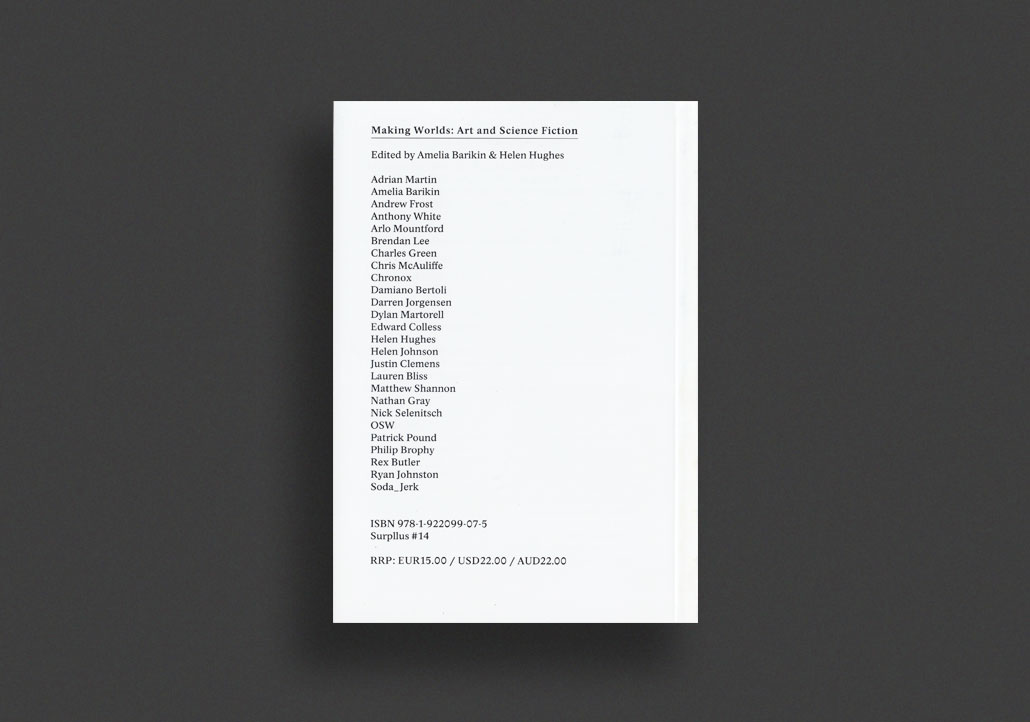
“Better Read Than Dead” was the title that the great American art dealer, curator, author and researcher Seth Siegelaub (1941-2013) had chosen for an anthology of his own writings—one of the projects for which he never found the time, busy as he was running his global one-man operation. Here, happily, that project is now fulfilled.
The selected writings, interviews, extended bibliography and chronology gathered in this Siegelaub sourcebook fill the historical gaps in the sprawling network of exhibitions, publications, projects, and collections that constitute Siegelaub’s life’s work.
Here, Siegelaub’s writings are reproduced as scans in order to convey the variety of the documents and to give a sense of archival immersion. Interspersed with these “writings” are interviews and talks, several newly transcribed. The majority of interviews from 1969-1972 are reprinted here.
1991, Japanese
Softcover, 160 pages, 28.5 x 21 cm
1st Edition, Out of print title / used / very good
Published by
SPY / Tokyo
$20.00 - Out of stock
SPY was a monthly cultural magazine in Japan with monthly special features. This issue, from September 1991, presents the "Truth of Sex", a perfect example of how progressive Japanese mainstream publishing was by comparison to much of the world. Alongside the usual reports on art, global issues, technology, theatre, video, film, music, food, etc. this issue is largely dedicated to ilustrated features on Sadomasochism, "New Age Sex and Modern Primitive", Transgenderism (with photography by Takeshi Ishikawa), "Sex Drug Roppongi", Auto-Eroticism (by Merzbow's Masami Akita), "Attachment for Girls", the Japanese Gay scene, Scatology (by Masaaki Aoyama), the Duchamp-esque readymade "Ultimate Sex Catalogue" compiled by Japanese photographer Ryosuke Handa, plus artwork by Richard Cerf, Joel Peter-Witkin, Arnulf Rainer, Sam Haskins, Lucas Samaras, Romain Slocombe, Gottfried Helnwein, ENEG, Gilles Berquet... and more.
2020, English
Softcover, 128 pages, 13.8 x 20 cm
Published by
Koenig Books / London
$38.00 - Out of stock
From shaming and shamefulness to shame-avoidance and shamelessness, the experience of shame influences our social behaviours, decision making abilities, and desires. Shame determines what we show and what we hide. And yet, as an emotion that begs for its own concealment, what is the structure and appearance of shame? How does shame interact with the realm of the visible, and where does it surface in visual culture? In this extensive historical and contemporary analysis of shame and its power, artist Andrea Büttner probes the definitions and representations of shame. The book includes close readings of Sigmund Freud’s writings on play and fantasy, challenges theoretical approaches to Andy Warhol’s queer performativity on film, and frames Dieter Roth’s representations of shame in his writing and moving image work.
Designed by HIT Studio.
Andrea Büttner (born 1972) is a German artist. She works in a variety of media including woodcuts, reverse glass paintings, sculpture, video, and performance. She creates connections between art history and social or ethical issues, with a particular interest in notions of poverty, shame, vulnerability and dignity, and the belief systems that underpin them.
2021, English
Softcover, 367 pages, 14 x 21.1 cm
Published by
W W Norton & Co / New York
$32.00 - Out of stock
Audre Lorde is an unforgettable voice in twentieth-century literature, and one of the first to center the experiences of black, queer women. This essential reader showcases her indelible contributions to intersectional feminism, queer theory, and critical race studies in twelve landmark essays and more than sixty poems―selected and introduced by one of our most powerful contemporary voices on race and gender - Roxane Gay
2021, English
Softcover, 304 pages, 20.5 x 13.5 cm
Published by
Kenning Editions / Berkeley
$44.00 - Out of stock
Audre Lorde: Dream of Europe elucidates Lorde's methodology as a poet, mentor, and activist during the last decade of her life. This volume compiles a series of seminars, interviews, and conversations held by the author and collaborators across Berlin, Western Europe, and The Caribbean between 1984-1992. While Lorde stood at the intersection of various historical and literary movements in The United States--the uprising of black social life after the Harlem Renaissance, poetry of the AIDS epidemic, and the unfolding of the Civil Rights Movement--this selection of texts reveals Lorde as a catalyst for the first movement of Black Germans in West Berlin. The legacy of this "Black, lesbian, mother, warrior, poet" has been well preserved by her colleagues in Germany. These selected writings lay bare struggles, bonds, and hopes shared among Black women in a transnational political context, as well as offering sometimes surprising reflections on the US American counter culture with which Lorde is associated. Many of the poems that were important to Lorde's development are excerpted in full within these pages, serving as a sort of critical anthology.
Edited by Mayra A. Rodríguez Castro. Preface by Dagmar Schultz.
2021, English
Softcover, 184 pages, 11 x 16.5 cm
Published by
Sternberg Press / Berlin
$52.00 $30.00 - Out of stock
In this book, Isabelle Graw lays hold of all the experiences and thoughts that don’t flow in her art-historical texts, merging memoir and social criticism in an original fashion. In elegantly written miniatures, Graw captures radical political, social, and cultural changes that occurred between 2014 and 2017, analyzing how these macro-shifts reach into her own life. She addresses topics ranging from the general turn to the political right, as seen in Brexit and Trump, to #MeToo, men with beards, and Balenciaga. While registering the symptoms of a world that clearly feels different, Graw also meditates on irretrievable personal losses. She describes how we find ourselves literally in another world after the death of our parents. With the theme of mourning as a leitmotif, In Another World is an attempt at exposing and analyzing painful emotions. Never before has Graw spoken to the reader as directly and openly as she does in these 159 notes.
“Since Walter Benjamin, we have come to view the fragment as an eminently modern form of writing. Isabelle Graw’s In Another World shows us why. In crisp and striking vignettes, this book shows how self-scrutiny and minute observation of the world intermesh and form the dense web of her analysis. This is a unique and original book, literary, psychological, and sociological all at once.” — Eva Illouz, author of The End of Love: A Sociology of Negative Relations
“Writing in the aftermath of her parents’ deaths, Isabelle Graw examines aspects of her
daily life with the same deft intelligence that she’s brought to her studies of visual art
and critical theory. These ‘notes’ find Graw in midlife, an urban professional with a partner, an ex-husband, and a child, attempting to navigate a course between social obligations, inner voice, and creative necessity. Blindingly frank, she addresses the questions that envelop her days: work life, the arrival of refugees in Germany, art exhibitions and grief, electoral and family politics. In Another World is both a literary work and a philosophical experiment. Subtly, Graw reveals how impressions and beliefs arise out of circumstance.” — Chris Kraus, author of Summer of Hate and Social Practices
“In her book In Another World, Isabelle Graw effortlessly manages the balancing act between reflection, recapitulation, and autofiction. Despite, or rather because of, her intellectual brilliance and pointed style, Graw’s collected aperçus are quite moving emotionally. They are also at times extremely funny.” — Dirk von Lowtzow, member of Tocotronic, musician, and writer
Isabelle Graw is the publisher of the journal Texte zur Kunst, which she cofounded with Stefan Germer (1958-1998) in 1990, and professor of art history and art theory at the Hochschule für Bildende Künste–Städelschule, Frankfurt am Main. Her previous books include In Another World: Notes, 2014–2017 (2020), The Love of Painting: Genealogy of a Success Medium (2018), and High Price: Art Between the Market and Celebrity Culture (2010).
2006, English
Softcover, 304 pages, 15.6 x 23.5 cm
Published by
Duke University Press / North Carolina
$66.00 - Out of stock
Steve Lacy: Conversations is a collection of thirty-four interviews with the innovative saxophonist and jazz composer. Lacy (1934–2004), a pioneer in making the soprano saxophone a contemporary jazz instrument, was a prolific performer and composer, with hundreds of recordings to his name.
This volume brings together interviews that appeared in a variety of magazines between 1959 and 2004. Conducted by writers, critics, musicians, visual artists, a philosopher, and an architect, the interviews indicate the evolution of Lacy’s extraordinary career and thought. Lacy began playing the soprano saxophone at sixteen, and was soon performing with Dixieland musicians much older than he. By nineteen he was playing with the pianist Cecil Taylor, who ignited his interest in the avant-garde. He eventually became the foremost proponent of Thelonious Monk’s music. Lacy played with a broad range of musicians, including Monk and Gil Evans, and led his own bands. A voracious reader and the recipient of a MacArthur “genius” grant, Lacy was particularly known for setting to music literary texts—such as the Tao Te Ching, and the work of poets including Samuel Beckett, Robert Creeley, and Taslima Nasrin—as well as for collaborating with painters and dancers in multimedia projects.
Lacy lived in Paris from 1970 until 2002, and his music and ideas reflect a decades-long cross-pollination of cultures. Half of the interviews in this collection originally appeared in French sources and were translated specifically for this book. Jason Weiss provides a general introduction, as well as short introductions to each of the interviews and to the selection of Lacy’s own brief writings that appears at the end of the book. The volume also includes three song scores, a selected discography of Lacy’s recordings, and many photos from the personal collection of his wife and longtime collaborator, Irene Aebi.
Interviews by: Derek Bailey, Franck Bergerot, Yves Bouliane, Etienne Brunet, Philippe Carles, Brian Case, Garth W. Caylor Jr., John Corbett, Christoph Cox, Alex Dutilh, Lee Friedlander, Maria Friedlander, Isabelle Galloni d'Istria, Christian Gauffre, Raymond Gervais, Paul Gros-Claude, Alain-René Hardy, Ed Hazell, Alain Kirili, Mel Martin, Franck Médioni, Xavier Prévost, Philippe Quinsac, Ben Ratliff, Gérard Rouy, Kirk Silsbee, Roberto Terlizzi, Jason Weiss
2021, English
Paperback, 256 pages, 12 x 18 cm
Published by
After 8 books / Paris
$49.00 - Out of stock
Since the 1970s, Amy Sillman―a beloved and key figure of the New York art scene―has developed a singular body of work that includes large-scale gestural paintings blending abstraction with representation, as well as zines and iPad animations.
Over the past decade, Sillman has also produced stimulating essays on the practice of art or the work of other artists: for example, reevaluating the work of the abstract expressionists with a queer eye; elaborating on the role of awkwardness and the body in the artistic process; and discussing in depth the role and meanings of color and shape. Featuring a foreword by Lynne Tillman, Faux Pas is the first book to gather a significant selection of Sillman’s essays, reviews and lectures, accompanied by drawings, most of them made specially for the book.
Faux Pas aims at revealing the coherence and originality of Sillman’s reflection, as she addresses the possibilities of art today, favoring excess over good taste, wrestling over dandyism, forms over symbols, with as much critical sense as humor. As Jason Farago notes in the New York Times, "Sillman is in a thin crowd (with, let’s say, Andrea Fraser, Hito Steyerl, Matias Faldbakken, David Salle) of artists who can really write. The evidence is in Faux Pas ... her writings display the same good humor and intelligence of her best paintings."
Based in New York City, Amy Sillman (born 1955) is an artist whose work consistently combines the visceral with the intellectual. She began to study painting in the 1970s at the School of Visual Arts and she received her MFA from Bard College in 1995. Her work has been exhibited internationally, including at the Whitney Biennial in 2014; her writing has appeared in Bookforum and Artforum, among other publications. She is currently represented by Gladstone Gallery, New York.
1994, Japanese / English
Softcover, 128 pages, 21 x 13.5 cm
1st Edition, Out of print title / used / fine
Published by
Wako Works of Art / Tokyo
$45.00 $20.00 - Out of stock
First, only edition of this long out of print and very scarce illustrated essay by Japanese art critic Kentaro Ichihara on the work of German painter, Sigmar Polke, published in 1994 by Wako Works of Art, Tokyo. Includes the complete essay "Disguised Sublimity" in Japanese, alongside an English summary and illustrated throughout with Polke's works and historical references. Published to accompany an exhibition of oil paintings, watercolours, prints, and photographic works using printed fabrics, exhibited at Wako, Tokyo, the same year.
Table of contents : 1. The End of Art, Art as the End 2. Unimaginable? Blots and Sublimity 3. Dot! Dot! Dot! 4. In the Beginning of the World
Fine, As New.
2021, English
Softcover, 224 pages, 22.9 x 15.2 cm
Published by
October Books / New York
The MIT Press / Massachusetts
$39.00 - Out of stock
Donald Judd (1928–1994) was one of the most influential American artists of the postwar era. Beginning in the 1960s, he developed new ideas about art—in both his works and writings—that challenged many of modernism's core tenets by resisting the categories of painting and sculpture. Judd described this work as “specific objects.” Critics labeled it minimalism. Perhaps because Judd's own writings provide a discursive framework for his project, some of the monographic essays on his art are not widely known. This volume collects critical and scholarly writings on Judd, examining his work as both artist and critic.
Spanning all periods of Judd's career, the essays gathered in this volume explore questions of abstraction, phenomenology, political engagement, labor, urban planning, and conservation. Written by a range of artists, architects, art historians, critics, and curators, these texts make clear Judd's relevance for a wide array of fields and disciplines, and situate him as a pivotal figure in contemporary art. They include an early consideration of Judd's work by Robert Smithson, a text on Judd's later works by curator Lynne Cooke, two essays by the art historian Rosalind Krauss, and an appraisal of Judd's writings by the artist Mel Bochner.
Contributors
Elizabeth C. Baker, Karl Beveridge, Mel Bochner, Yve-Alain Bois, Ian Burn, Lynne Cooke, Rosalind E. Krauss, Michael Meredith, Joshua Shannon, Robert Slifkin, Robert Smithson, Ann Temkin, Brian Wallis
Annie Ochmanek is a PhD candidate at Columbia University. Alex Kitnick is Assistant Professor of Art History and Visual Culture at Bard College and the editor of a previous October Files volume, Dan Graham (MIT Press).
2021, English
Softcover, 104 pages, 16.5 x 26.7 cm
Published by
Urbanomic / Cornwall
$45.00 - In stock -
A unique fusion of comics culture and philosophical cogitation takes readers on a ride through time, space, and thought.
Approaching the comic medium as a supercollider for achieving maximum abstraction, in Chronosis artist Keith Tilford and philosopher Reza Negarestani create a graphically stunning and conceptually explosive universe in which the worlds of pop culture, modern art, philosophy, science fiction, and theoretical physics crash into one another.
Taking place after the catastrophic advent of the birth of time, Chronosis narrates the story of a sprawling multiverse at the center of which monazzeins, the monks of an esoteric time-cult, attempt to build bridges between the many fragmented tribes and histories of multiple possible worlds. Across a series of dizzying overlapping stories we glimpse worlds where time flows backward, where the universe can be recreated every five minutes, or where rigid facts are washed away by the tides of an infinite ocean of possibility.
A unique fusion of comics culture and philosophical cogitation, this conceptually and visually mind-expanding tale takes the reader on a dizzying rollercoaster ride through time, space, and thought.
This volume contains the entire Chronosis series in full color, along with additional background materials including early sketches, script notes, and alternative covers.
2020, English
Softcover, 480 pages, 19. 7 x 13 cm
Published by
Urbanomic / Cornwall
$40.00 - Out of stock
To think about really big issues, one must overcome not only the mountain of obstacles facing any multidisciplinary scholarship, but also the temporal parochialism of one’s own epoch and its—often baseless and irrational—intellectual fashions and mores. Thomas Moynihan succeeds in doing exactly that in this outstanding book—a true celebration of synthetic thinking about what is, almost by definition, the most important topic of the epoch. — Milan M. Cirkovic, author of The Great Silence.
Thinking about the end of everything has rarely been so enjoyable and enlightening. — Anders Sandberg, Future of Humanity Institute.
From global pandemics to prophecies of evil AI superintelligences to the impending perils of genome editing, our species is increasingly concerned with the prospects of its own extinction. With humanity’s future on this planet seeming more insecure by the day, the twenty-first century has seen ‘existential risk’ become the object of a growing field of serious scientific inquiry.
But this preoccupation is not exclusive to the post-atomic age of global warming and synthetic biology. Our growing concern with human extinction itself has a history—one that is important for our understanding of what it means to be human in the first place.
Retracing this untold story, X-Risk revisits the pioneers who first contemplated the possibility of human extinction, and stages the historical drama of this momentous discovery.
Thomas Moynihan shows how, far from being a secular reprise of religious prophecies of apocalypse, existential risk is a thoroughly modern idea, made possible by the burgeoning sciences and philosophical tumult of the Enlightenment era.
In recollecting how we first came to care for our extinction, X-Risk reveals how today’s attempts to measure and mitigate existential threats are the continuation of a project initiated over two centuries ago, and which concerns the very vocation of the human as a rational, responsible, and future-oriented being.