World Food Books' programme is largely produced on Kulin Nation land. We acknowledge the Wurundjeri people of the Kulin Nation as the first and continuing custodians of this land, and pay respect to their Elders past, present, and emerging.
World Food Books is an arts and special interests bookshop in Naarm / Melbourne. Founded in 2010, World Food Books is devoted to the presentation of a rotating, hand-selection of international art, design, literary and counterculture publications with an emphasis on the anti-traditional, the experimental, the avant-garde, the heretic, the marginal.
Presenting new titles alongside rare and out-of-print books, catalogues and journals spanning the fields of modern and contemporary art, design, photography, illustration, film, literature, poetry, cultural theory, philosophy, sexuality, popular and underground culture in its many radical forms, World Food Books wishes to encourage adventurous, thoughtful and open-minded reading, looking, writing, and exchange of publishing and ideas, both current and historical.
As well as our bookshop, located in Melbourne's historical Nicholas Building, all of our inventory is available internationally via our online mail-order service.
World Food Books semi-regularly co-ordinates "Occasions", a programme of exhibits and events at the bookshop and in partnership with other hosts (such as museums and art galleries) that develop out of the activities, relationships and content of the bookshop itself.
World Food Books
The Nicholas Building
37 Swanston Street
Room 5, Level 6
Melbourne 3000
Australia
SHOP HOURS:
Thu–Fri 12–6, Sat 12–5
WEB-SHOP OPEN 24/7
World Food Books
Postal Address:
PO Box 435
Flinders Lane
Victoria 8009
Australia
Art
Theory / Essay
Architecture / Interior
Graphic Design / Typography
Photography
Fashion
Eros
LGBTQ+
Fiction / Poetry
Weird / Speculative / Science Fiction / Horror
Transgressive / Visceral / Abject
Symbolism / Decadence / Fin de siècle
Film / Video
Painting
Sculpture / Installation
Performance / Dance / Theater
Drawing
Sound / Music
Curatorial
Group Shows / Collections
Periodicals
Out-of-print / Rare
Posters / Ephemera / Discs
Signed Books
World Food Books Gift Voucher
World Food Book Bag
Australian Art
Australian Fiction
Australian Science Fiction / Speculative Fiction
Australian Poetry
Australian Photography
Japanese Photography
Conceptual Art
Minimal Art
Dada
'Pataphysics / Oulipo
Fluxus
Concrete Poetry
Pop Art
Surrealism
Arte Povera
Arte Informale / Haute Pâte / Tachism
Nouveau Réalisme / Zero / Kinetic
Situationism / Lettrism
Collage / Mail Art / Xerox Art
Art Brut / Folk / Visionary / Fantastic
Illustration / Graphic Art / Bandes Dessinées
Furniture
Italian Radical Design / Postmodernism
Textiles
Ceramics / Glass
Counterculture
Protest / Revolt
Philosophy
Psychoanalysis
Anthropology
Anarchism
Socialism / Anarchism / Communism / Capitalism
Literary Theory / Semiotics / Language
Feminism / Women's Studies
Gender Studies / Sexuality
Anthropology
Fetishism / BDSM
Drugs / Psychedelia
Crime / Violence
Animal Rights / Veganism
Occult / Esoterica
Ecology / Earth / Alternative Living
Whole Earth / Crafts
All prices in AUD (Australian dollars)
Pick-Ups
Pick-up orders can be collected in our bookshop during opening hours after order date. Please collect any Pick-up orders within 2 weeks of ordering as we have limited storage space. Orders will be released back into stock if not collected within this time. No refunds can be made for pick-ups left un-collected. If you cannot make it in to the bookshop in this time-frame, please choose postage option.
Return Policy
All sales are final. We do accept returns (for refund or exchange) for items received in error. All our orders are packed with special care using heavy-duty padding and cardboard book-mailers or bubble mailers (for smaller books), using reinforcement where required. We cannot take responsibility for any lost, stolen or damaged parcels.
Insurance
Should you wish to insure your package, please email us directly after placing your order and we can organise this at a small extra expense. Although all standard/express tracked packages are very safe and dependable, we cannot take responsibility for any lost, stolen or damaged parcels. We recommend insurance on valuable orders.
Interested in selling your old books, catalogues, journals, magazines, comics, fanzines, ephemera? We are always looking for interesting, unusual and out-of-print books to buy. We only buy books in our fields of interest and specialty, and that we feel we can resell.
We base these prices on desirability, market value, in-print prices, condition and our current stock levels. We offer cash, store credit, and can take stock on consignment. All
about 25% of the price we expect to get when we sell them, or 30% in store credit. We base these prices on desirability, market value, in-print prices, condition and our current stock levels.
Sell your books any day of the week. You can drop them off and return later. If you have a lot of books, we can visit your Sydney home.
We buy books that we feel we can resell. We offer about 25 % of the price we expect to get when we sell them, or 30% in store credit. We base these prices on desirability, market value, in-print prices, condition and our current stock levels.
Philadelphia Wireman
03 August - 01 September, 2018
World Food Books is proud to announce our next Occasion, the first presentation of sculptures by Philadelphia Wireman in Australia.
The Philadelphia Wireman sculptures were found abandoned in an alley off Philadelphia’s South Street on trash night in 1982. Their discovery in a rapidly-changing neighbourhood undergoing extensive renovation, compounded with the failure of all attempts to locate the artist, suggests that the works may have been discarded after the maker’s death. Dubbed the "Philadelphia Wireman" during the first exhibition of this work, in 1985, the maker’s name, age, ethnicity, and even gender remain uncertain. The entire collection totals approximately 1200 pieces, all intricately bound together with tightly-wound heavy-gauge wire (along with a few small, abstract marker drawings, reminiscent both of Mark Tobey and J.B. Murry). The dense construction of the work, despite a modest range of scale and materials, is singularly obsessive and disciplined in design: a wire armature or exoskeleton firmly binds a bricolage of found objects including plastic, glass, food packaging, umbrella parts, tape, rubber, batteries, pens, leather, reflectors, nuts and bolts, nails, foil, coins, toys, watches, eyeglasses, tools, and jewellery.
Heavy with associations—anthropomorphic, zoomorphic, and socio-cultural responses to wrapped detritus—the totemic sculptures by Philadelphia Wireman have been discussed in the context of work created to fulfil the shamanistic needs of alternative religions in American culture. Curators, collectors, and critics have variously compared certain pieces to sculpture from Classical antiquity, Native American medicine bundles, African-American memory jugs, and African fetish objects. Reflecting the artist’s prolific and incredibly focused scavenging impulse, and despite—or perhaps enhanced by—their anonymity, these enigmatic objects function as urban artefacts and arbiters of power, though their origin and purpose is unknown. Philadelphia Wireman, whatever their identity, possessed an astonishing ability to isolate and communicate the concepts of power and energy through the selection and transformation of ordinary materials. Over the course of the past two decades, this collection has come to be regarded as an important discovery in the field of self-taught art and vernacular art.
Presented in collaboration with Fleisher-Ollman Gallery, Philadelphia, and Robert Heald, Wellington.
Susan Te Kahurangi King
02 February - 10 March, 2018
Susan Te Kahurangi King (24 February 1951 - ) has been a confident and prolific artist since she was a young child, drawing with readily available materials - pencils, ballpoint pens and felt-tip markers, on whatever paper is at hand. Between the ages of four and six Susan slowly ceased verbal communication. Her grandparents William and Myrtle Murphy had developed a special bond with Susan so they took on caring responsibilities for extended periods. Myrtle began informally archiving her work, carefully collecting and storing the drawings and compiling scrapbooks. No drawing was insignificant; every scrap of paper was kept. The King family are now the custodians of a vast collection containing over 7000 individual works, from tiny scraps of paper through to 5 meter long rolls.
The scrapbooks and diaries reveal Myrtle to be a woman of great patience and compassion, seeking to understand a child who was not always behaving as expected. She encouraged Susan to be observant, to explore her environment and absorb all the sights and sounds. Myrtle would show Susan’s drawings to friends and people in her community that she had dealings with, such as shopkeepers and postal workers, but this was not simply a case of a grandmother’s bias. She recognised that Susan had developed a sophisticated and unique visual language and sincerely believed that her art deserved serious attention.
This was an unorthodox attitude for the time. To provide some context, Jean Dubuffet coined the term Art Brut in 1945 to describe work created by self-taught artists – specifically residents of psychiatric institutions and those he considered to be visionaries or eccentrics. In 1972 Roger Cardinal extended this concept by adopting the term Outsider Art to describe work made by non-academically trained artists operating outside of mainstream art networks through choice or circumstance. Susan was born in Te Aroha, New Zealand in 1951, far from the artistic hubs of Paris and London that Dubuffet and Cardinal operated in. That Myrtle fêted Susan as a self-taught artist who deserved to be taken seriously shows how progressive her attitudes were.
Susan’s parents Doug and Dawn were also progressive. Over the years they had consulted numerous health practitioners about Susan’s condition, as the medical establishment could not provide an explanation as to why she had lapsed into silence. Dawn educated herself in the field of homeopathy and went on to treat all twelve of her children using these principles – basing prescriptions on her observations of their physical, mental and emotional state.
Doug was a linguist with an interest in philosophy who devoted what little spare time he had to studying Maori language and culture. To some extent their willingness to explore the fringes of the mainstream made them outsiders too but it was their commitment to living with integrity and their respect for individuality that ensured Susan’s creativity was always encouraged.
Even though Susan’s family supported her artistic pursuits, some staff in schools and hospitals saw it as an impediment to her assimilation into the community and discouraged it in a variety of ways. Her family was not always aware of this and therefore did not fully understand why Susan stopped drawing in the early 1990s. However, rather than dwell on the challenges that Susan faced in pursuit of her artistic practice, they prefer to highlight her achievements. In 2008 Susan began drawing again in earnest, after an almost 20 year interruption, and her work is now shown in galleries around the world.
Susan grew up without television and has been heavily influenced by the comics she read as a child. She is absolutely fearless in the appropriation of recognizable characters, such as Donald Duck and Mickey Mouse, in her work. She twists their limbs, contorts their faces, compresses them together, blends them into complex patterned backgrounds - always imbuing them with an incredible energy. Although Susan often used pop culture characters in her work they are not naive or childlike. These are drawings by a brilliant self-taught artist who has been creating exceptional work for decades without an audience in mind.
Mladen Stilinović
"Various Works 1986 - 1999"
02 February 16 - September 10, 2016
Various works 1986 - 1999, from two houses, from the collections of John Nixon, Sue Cramer, Kerrie Poliness, Peter Haffenden and Phoebe Haffenden.
Including: Geometry of Cakes (various shelves), 1993; Poor People’s Law (black and white plate), 1993; White Absence (glasses, ruler, set square, silver spoon, silver ladel with skin photograph and wooden cubes), 1990-1996; Exploitation of the Dead (grey and red star painting, wooden painting, black spoon with red table, red plate), 1984-1990; Money and Zeros (zero tie, paintings made for friends in Australia (Sue, John, Kerrie), numbers painting), 1991-1992; Words - Slogans (various t-shirts) - “they talk about the death of art...help! someone is trying to kill me”, “my sweet little lamb”, “work is a disease - Karl Marx”; Various artist books, catalogues, monographs, videos; Poster from exhibition Insulting Anarchy; "Circular" Croatian - Australian edition; Artist book by Vlado Martek (Dostoyevsky); more.
Thanks to Mladen Stilinović and Branka Stipančić.
Jonathan Walker
Always Will Need To Wear Winter Shirt Blue + Ochre Small Check Pattern
21 August - 21 September, 2015
Untitled
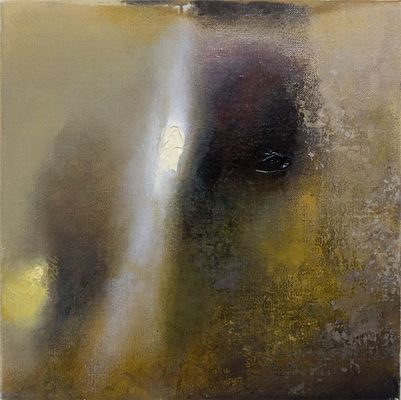
I am not a great reader of poetry but I always return to the work of Melbourne poet, Vincent Buckley (1925- 1988). Perhaps I find his most tantalising piece to be not a finished poem but a fragment left on a scrap of paper discovered on his desk after the poet’s death.
The poetry gathers like oil
In the word-core, and spreads
It has its music meet,
Its music is in movement.
This fragment is more the shell left behind from a volatile thought than a finished poem. I find the last two lines honest but awkward whereas the first two lines work like an arrow. Most likely he could not find a resolution so it was left. Still, in its present form, it remains an eloquent testimony to the ultimate failure of a medium to express mobile thought and sensation, in Buckley’s case, through verbal language. It’s an important matter because this is something all artists have to deal with regardless of the medium.
I have never written a poem, however, I am forever copying fragments from books on paper scraps in a vain effort to fix certain notions in my head. At first, they function as bookmarks that are sometimes returned to when I open the book. But before long, as they accumulate, they fall out littering the table interspersed with A4 photocopies, bills, books and medications.
To return to Buckley’s fragment, the first two lines very much evoke how I paint nowadays. As you age, detail diminishes and patches of light become more luminous and float. I feel the most honest way of dealing with this is by smearing the oil paint on the canvas with the fingers and working close-up, blind. Only if the patches coalesce into an approaching image can the work gain a life.
-
Jonathan Walker was born in Melbourne, Australia and brought up on a dairy farm in Gippsland. In the 1970’s he studied painting at RMIT and won the Harold Wright Scholarship to the British Museum, London. During the 1980’s he exhibited at Pinacotheca Gallery, Richmond and had work shown at the NGV and Heidi City Art Gallery. Over the same period he designed the cover for the “Epigenesi” LP by Giancarlo Toniutti, Italy and conducted a mail exchange work with Achim Wollscheid, Germany. The work with artists through the post resulted in an article published in the bicentenary issue of Art and Australia 1988. He showed in artist run spaces such as WestSpace in the 90’s and 2000’s, and until 2012, taught painting at Victoria University, which is where we (Colleen Ahern and Lisa Radford) as organisers of the exhibition, among many others, had the privilege of being his student.
Walker’s knowledge was imparted to students through the careful selection of music, literature, and artists found in books that he himself had ordered for the library. Walker’s strategy was the generosity of sharing his vast knowledge with references specific to each student and their context.
Walker’s paintings share a similar focus and intimacy.
This exhibition presents a small selection of recent paintings alongside a publication that includes Walker’s writing. Observational and analytical, Walker’s work is a type of material notation — the time of day, colour and how it is blended, the both specific and fleeting location of a reflection on lino or the question of whether a chair leg should be included in a painting.
Please join us on Friday August 21 between 6-8pm to celebrate the opening of the exhibition.
Curated by Colleen Ahern and Lisa Radford.
B. Wurtz
Curated by Nic Tammens
March 26 - April 4, 2015
B.Wurtz works from a basement studio in his home on Manhattan’s Lower East Side.
This local fact is attested to by the plastic shopping bags and newsprint circulars that appear in his work. As formal objects, they don’t make loud claims about their origins but nonetheless transmit street addresses and places of business from the bottom of this long thin island. Like plenty of artists, Wurtz is affected by what is local and what is consumed. His work is underpinned by this ethic. It often speaks from a neighborhood or reads like the contents of a hamper:
“BLACK PLUMS $1.29 lb.”
“Food Bazaar”
“USDA Whole Pork Shoulder Picnic 99c lb.”
“RITE AID Pharmacy, with us it’s personal.”
“H. Brickman & Sons.”
“Sweet Yams 59c lb."
Most of the work in this exhibition was made while the artist was in residence at Dieu Donne, a workshop dedicated to paper craft in Midtown. Here Wurtz fabricated assemblages with paper and objects that are relatively lightweight, with the intention that they would be easily transportable to Australia. This consideration isn’t absolute in Wurtz’s work, but was prescriptive for making the current exhibition light and cheap. Packed in two boxes, these works were sent from a USPS post office on the Lower East Side and delivered to North Melbourne by Australia Post.
Wurtz appears courtesy of Metro Pictures, New York.
Thanks to Rob Halverson, Joshua Petherick, Sari de Mallory, Matt Hinkley, Helen Johnson, Fayen d'Evie, Ask Kilmartin, Lisa Radon, Ellena Savage, Yale Union, and "Elizabeth".
John Nixon
"Archive"
December 15 - January 20, 2014
The presentation of John Nixon's archive offered a rare showcase of this extensive collection of the artist's own publications, catalogues, posters, ephemera, editions and more, from the mid 1980s onwards, alongside a selection of his artworks.
Organized by John Nixon, Joshua Petherick and Matt Hinkley.
<a href=http://wfb.public-office.info/artist/john-nixon>All titles by John Nixon
"Habitat"
at Minerva, Sydney (organised by Joshua Petherick and Matt Hinkley)
November 15 - December 20, 2014
Lupo Borgonovo, Janet Burchill & Jennifer McCamley,
Lewis Fidock, HR Giger, Piero Gilardi, Veit Laurent Kurz,
Cinzia Ruggeri, Michael E. Smith, Lucie Stahl, Daniel Weil, Wols
Press Release:
“...It contained seven objects. The slender fluted bone, surely formed for flight, surely from the wing of some large bird. Three archaic circuitboards, faced with mazes of gold. A smooth white sphere of baked clay. An age-blackened fragment of lace. A fingerlength segment of what she assumed was bone from a human wrist, grayish white, inset smoothly with the silicon shaft of a small instrument that must once have ridden flush with the surface of the skin - but the thing’s face was seared and blackened.”
William Gibson, “Count Zero”, 1986
"Autumn Projects Archive"
Curated by Liza Vasiliou
March 6 - March 15, 2014
World Food Books, in conjunction with the Virgin Australia Melbourne Fashion Festival 2014, presented the Autumn Projects archive, consisting of a selection of early examples in Australian fashion with a particular interest in collecting designers and labels from the period beginning in the 1980’s, who significantly influenced the discourse of Australian Fashion.
Curated by Liza Vasiliou, the exhibition provided a unique opportunity to view pieces by designers Anthea Crawford, Barbara Vandenberg, Geoff Liddell and labels CR Australia, Covers, Jag along with early experimental collage pieces by Prue Acton and Sally Browne’s ‘Fragments’ collection, suspended throughout the functioning World Food Books shop in Melbourne.
H.B. Peace
presented by CENTRE FOR STYLE
November 14, 2013
"Hey Blinky, you say chic, I say same"
Anon 2013
H.B. Peace is a clothing collaboration between great friends Blake Barns and Hugh Egan Westland. Their pieces explore the divergences between 'character’ and ‘personality’ in garments....etc
Special Thanks to Joshua Petherick and Matt Hinkley of WFB and Gillian Mears
and a Very Special Thank you to Audrey Thomas Hayes for her shoe collaboration.
Janet Burchill & Jennifer McCamley
"Aesthetic Suicide"
May 10 - June 8, 2013
The first of our occasional exhibitions in the World Food Books office/shop space in Melbourne, "Aesthetic Suicide" presented a body of new and older works together by artists Janet Burchill & Jennifer McCamley, including videos, prints, a wall work, and publications.
During shop open hours videos played every hour, on the hour.
2005, English
Softcover, 308 pages, 25 x 21 cm
Published by
IMA / Brisbane
$45.00 - In stock -
Radical Revisionism is a sequel to What Is Appropriation?, also selected and edited by Rex Butler. Radical Revisionism gathers important recent writings on Australian art. These writings are ‘revisionist’ insofar as they seek to bring a series of present-day perspectives to the study of art of the past: feminism, post-colonialism, the overturning of the legal doctrine of terra nullius. Radical Revisionism asks: What is the proper role for art history? Is it merely to chronicle the truth of the past, or is it to actively intervene in the events it records? These questions obviously bear a relationship to the ‘history wars’ that raged throughout the 1990s in Australia. The anthology concludes by asking whether there can in fact be a history of ‘Australian’ art in which white and indigenous artists come together. It proposes that the twenty-first century will be characterised by a certain ‘unAustralian’ history of Australian art.
Radical Revisionism features a substantial introduction by Rex Butler and essays by Leonard Bell, Peter Beilharz, Tim Bonyhady, Kate Briggs, Keith Broadfoot, Ian Burn, Paul Carter, Brenda L. Croft, Mary Eagle,
Ross Gibson, Anne Gray, Richard Haese, Jeanette Hoorn, Joan Kerr, John Lechte, Nigel Lendon, Chris McAuliffe, Ian McLean, Charles Merewether, Catriona Moore, Djon Mundine, Ian North, Juliette Peers, Toni Ross, Bernard Smith, Virginia Spate, Ann Stephen, and Nicholas Thomas.
2017, English
Softcover, 614 pages, 14 x 21.5 cm
Published by
Un / Melbourne
$40.00 - In stock -
A new book celebrating ten years of un Magazine.
A compendium of articles, essays, reviews and artist pages selected from a decade of publishing, un Anthology offers a unique take on Australia's independent contemporary art scene. Featuring hundreds of artists and writers from un Magazine's archive plus new commissions from Lily Hibberd and Kelly Fliedner, Anthony Gardner, Justin Clemens, Bianca Hester, and Lisa Radford, the book is co-edited by Ulanda Blair, Rosemary Forde and Phip Murray.
2016, English
Softcover, 128 pages, 15.5 x 24 cm
Published by
Sternberg Press / Berlin
$59.00 - In stock -
Edited by Susan Hiller, Suzanne Treister
Texts by Jorn Ebner, Eric Levi Jacobson, Alexandra M. Kokoli, Esther Leslie, Yve Lomax, Denise Robinson, Monica Ross; photographic documentation by Bernard G. Mills
British artist Monica Ross (1950–2013) left behind forty years of socially engaged, feminist, and performative artwork, which has had a deep effect on contemporary art and society. This fully illustrated publication documents Ross’s works from 1970 to 2013, including early feminist collaborative works, drawings made at the Greenham Common Women’s Peace Camp in the 1980s, poster designs for the antinuclear movement, works relating to the writings of Walter Benjamin, and documentation from the sixty performances of Anniversary—an act of memory (2008–13), solo, collective, and multilingual recitations from memory of the Universal Declaration of Human Rights, which concluded with a final collaborative performance at the UN in Geneva on the day of Ross’s death. With essays by Esther Leslie, Eric Levi Jacobson, Alexandra M. Kokoli, Denise Robinson, and Yve Lomax, this book is a valuable art-historical document.
Design by Julia
2016, English
Softcover, 112 pages, 15.2 x 22cm
Published by
IMA / Brisbane
$28.00 $5.00 - Out of stock
Is an art institution only an imagined entity—a temporary constellation of agreements, negotiations, and arrangements—or is it something more fixed? This publication both documents and reinvigorates the fortieth anniversary activities of the Institute of Modern Art (IMA): the exhibition Imaginary Accord; the nine-part lecture series and two-day symposium, What Can Art Institutions Do?; and the online archive, 40years.ima.org.au, that charts the IMA and its immediate historical context. This series of creative and critical projects explored the historical mission of one of Australia’s oldest public galleries, while imagining what the founding principles of a contemporary art institution could mean today and for the future.
Contributions by Agency, Vernon Ah Kee, Anne Barlow, Sean Dockray, Charles Esche, Helen Hughes, Marysia Lewandowska, Maria Lind, Ian McLean, Courtney Pedersen, Terry Smith, and Ann Stephen. Artists featured are Agency, Vernon Ah Kee, Gerry Bibby (with Janet Burchill and Jennifer McCamley), Zach Blas, Ruth Buchanan, Peter Cripps, Céline Condorelli, Sean Dockray, Goldin+Senneby, Marysia Lewandowska, Ross Manning, Raqs Media Collective, and Hito Steyerl.
Reflections on the role and value of the contemporary art institution are advanced in some revelatory contributions by artists, curators, art historians, and gallery directors, each of whom share ideas, models, and visions for alternate approaches. Bringing together the findings of a year of inquiry, new contributions sit aside talks originally presented at the gallery, reformulated for print.
2012, English
Softcover, 162 pages, 18 x 21.5 cm
1st Edition, Out of print title / as new
Published by
Sternberg Press / Berlin
$160.00 $60.00 - Out of stock
First and only edition of this quickly out-of-print volume edited by Maria Lind.
Features contributions by Doug Ashford, Beatrice von Bismarck, Boris Buden, Clémentine Deliss, Helmut Draxler, Eungie Joo, and Marion von Osten, with a preface by Johan Öberg. Introduction by Maria Lind.
Within contemporary art, the curator’s mediating function has developed into “the curatorial” itself. The curatorial is akin to methodologies used by artists that focus on post-production approaches—that is, principles of montage, with disparate images, objects, as well as other material and immaterial phenomena that are brought together within a particular time and space-related framework. Because the curatorial has clear performative sides, ones that seek to challenge the status quo, it also includes elements of choreography, orchestration, and administrative logistics—like all practices working with defining, preserving, and mediating cultural heritage in a wider sense. Is curating therefore essentially an act of translation? If so, with what purpose, and can it be performed elsewhere? Performing the Curatorial brings together a diverse group of curators, artists, art historians, educators, and thinkers, all of whom reflect on the curatorial motives, tendencies and tactics, pitfalls, and exegeses in translating, and thus performing, cultural heritage.
Design by Luca Frei
2016, English
Softcover, 228 pages, 19 x 26 cm
Published by
Walther König / Köln
$70.00 $40.00 - Out of stock
Texts by Anthony Huberman, Elena Filipovic, Melanie Gilligan, Marc von Schlegell
Sam Lewitt's new work consists of oversized custom flexible heating circuits, used for environmental regulation in the sealed environments of equipment as diverse as medical equipment and food trays, in satalites and chemical vats. The heating circuits in 'More Heat Than Light' are several times their conventional size, scaled-up and designed to draw their power and maximize the energy resources of the electrical circuits allotted for lighting within the sites they are inserted into. Energy allotted for stable artificial light is converted in this work into diffuse uneven warmth.
This book is conceived as a stand-alone object utilizing these images as well as research material relating to the work. On one hand, it picks-up the structure of a log of core temperatures of the sort compiled for analysis by the logistics and distribution industry. On the other hand, its format and layout utilize a two-color gradient printing process that interrupts the logical, spatial organization of the gridded screen-shots.
Sam Lewitt (born 1981) is an American artist living and working in New York City. His work was included in the 2012 edition of the Whitney Biennial. He is represented by the Miguel Abreu gallery in New York City and Galerie Buchholz in Cologne and Berlin.
2018, English
Hardcover, 456 pages, 17.5 x 24.5 cm
Published by
IMA / Brisbane
Sternberg Press / Berlin
ACCA / Melbourne
$40.00 $30.00 - Out of stock
This publication Lines towards Another accompanied the exhibition Drawings and correspondence, held at the IMA 24 March–2 June 2018. The exhibition surveys the central role drawing plays in Tom Nicholson’s engagement with contemporary political realities in Australia and beyond.
This is the first monograph of Nicholson’s work, edited by Amelia Barikin and Helen Hughes, and co-published by the IMA, the Australian Centre for Contemporary Art, and Sternberg Press. Tony Birch, Bridget Crone, Jacqueline Doughty, Anthony Gardner, Anneke Jaspers, Ryan Johnston, John Mateer, Shelley McSpedden, Mihnea Mircan, Grace Samboh, Ann Stephen, and the editors themselves give compelling insight into Nicholson’s diverse material approach, political practice, and historical context.
2016, English
Softcover, 730 pages, 15 x 22 cm
Published by
Karlsruhe University of Art and Design and the Geneva School of Art and Design / Genève
Sternberg Press / Berlin
$60.00 - Out of stock
Markus Miessen, Yann Chateigné (Eds.)
Contributions by Stuart Bailey, Bassam El Baroni, Thomas Bayrle, Jeremy Beaudry, Beatrice von Bismarck, Beatriz Colomina, Céline Condorelli, Mathieu Copeland, Dexter Sinister, Joseph Grima, Nav Haq, Sandi Hilal, Nikolaus Hirsch, Thomas Jefferson, Christoph Keller, Alexander Kluge, Joachim Koester, Armin Linke, Julia Moritz, Rabih Mroué, Hans Ulrich Obrist, Seth Price, Walid Raad, Alice Rawsthorn, Patricia Reed, David Reinfurt, Claire de Ribaupierre, Eyal Weizman, et al.
What are the processes that enable archives to become productive? Conventional archives tend to be defined through the content-specific accumulation of material, which conforms to an existing order or narrative. They rarely transform their structure. In contrast to this model of archival practice and preservation, the conflictual archive has an open framework in which it actively transforms itself, allowing for the creation of new and surprising relationships. Illustrating how spaces of knowledge can be devised, developed, and designed, this archive reveals itself as a space in which documents and testimonies open up a stage for productive dispute and struggle.
Exploring nontraditional archives, such as those of Harald Szeemann, Hans Ulrich Obrist, Sitterwerk, and the publishing house Merve, The Archive as a Productive Space of Conflict offers new perspectives on archival practice, interrogating whether archives need spatial permanence, and, if so, which design framework should be applied for the archive to take on more than a singular form of existence. The research project is a collaboration between the Karlsruhe University of Art and Design and the Geneva School of Art and Design (HEAD – Genève).
Copublished with Karlsruhe University of Art and Design and the Geneva School of Art and Design (HEAD – Genève)
Design by Jonas Fechner and Lisa Naujack
1988, English
Softcover (staple-bound), 10 pages, 15 x 21 cm
Out of print title / Used*,
Published by
E.G. Smith Press / Ohio
$10.00 - Out of stock
Written at the end of the 1980's, and since published by Ohio's E.G. Smith Press, this pamphlet presents the personal account of French-Canadian Yves Bourque's account of prison "From Outisde" and "From the Inside".
2018, English
Softcover, 496 pages, 22 x 28 cm
Published by
Valiz / Amsterdam
$89.00 - Out of stock
'Archive Species' is an inquiry into the representation of clothed bodies in print media since the 1970s. Artist Joke Robaard and writer Camiel van Winkel have been re-assembling and re-reading the vast archive of fashion and newspaper images that Robaard has collected since 1979. Together, they selected images from the archive and arranged them into dynamic series or cycles, generating new narratives and unexpected pathways of signification. Using an artistic strategy of appropriation and alienation, the authors identify crucial connections between body, object, and behaviour, in an elaborate attempt to expose the hidden cultural and political layers of fashion photography.
The essays in this book—on topics such as the assembled self, the construction and deconstruction of garments, and the metaphorical potential of textile and fabric—should be read in close connection to the prolific visual material. Fashion photography adopts behavioural patterns from everyday life, and prints or stamps them, in the form of graphic patterns and textile arrangements, onto the bodies of men and women and the clothes that they wear. This is what Archive Species wants to demonstrate. It is an inquiry into shifting forms of human behaviour and self-presentation, the entropy of materials, and the habits of dress. Fashion photographs are read as fossils of graphic production: although embedded in the past, they point forward to conditions of contemporaneity.
Authors: Joke Robaard & Camiel van Winkel
Design: Elisabeth Klement
2013, English
Softcover, 100 pages, 203 x 130mm
Published by
Walther König / Köln
$32.00 - Out of stock
In 1964, Calvin Tomkins spent a number of afternoons interviewing Marcel Duchamp in his apartment on West 10th Street in New York City. Casual yet insightful, Duchamp mused on everything from paying taxes to his feelings about art dealers to his influence on younger generations of artists like Robert Rauschenberg and John Cage.
Those interviews became the source material for Tomkins’ profile of the iconic artist in The New Yorker, and later in his definitive 1996 biography, Duchamp. But they have never been edited and made public, until now.
In striking contrast to the mythic image established by decades of Duchampian scholarship, The Afternoon Interviews reveals him to be a man and an artist whose playful principles toward living freed him to make art that was as unpredictable, complex, and surprising as life itself.
This book includes never before published portraits of Duchamp recently discovered in the Philadelphia Museum of Art archive and an introductory interview with Tomkins reflecting on Duchamp as an artist, guide and friend.
2019, English
Softcover, 302 pages, 15 x 20 cm
Published by
Blank Forms / New York
$48.00 - Out of stock
The fourth issue of Blank Forms' journal: a kaleidoscopic view of the last fifty years of experimental art and music in the United States and beyond, mining the conceptual, technical, historical, or otherwise marginal details undergirding artists' lives, ideas, and approaches that may otherwise remain buried.
Edited by Lawrence Kumpf. Contributors and featured artists include Onyx Ashanti, Amy Cimini, Marcia Douglas, Kazuo Imai, Werner Durand, Peter Gente, Heidi Paris, Robert Ashley, “Blue” Gene Tyranny, Spencer Gerhardt, Adrian Rew, Paul Cummings, and Walter De Maria.
1970, English
Softcover, 188 pages, 24 x 23 cm
1st Edition, Out of print title / used / good
Published by
Ure Smith / Sydney
$20.00 - Out of stock
September 1970 issue of Art and Australia, featuring Ian Burn's "Conceptual Art as Art" article, alongside article on Stanislaus Rapotec, Colin Lanceley, Roger Kemp, the Venice Biennale (Michael Snow, Heinz Mack, Edward Ruscha, Gunter Uecker, Manuel Gómez Raba, etc.)
2020, English
Softcover, 186 pages, 15.2 x 20.3 cm
Published by
Semiotext(e) / Los Angeles
$44.00 - Out of stock
Examining the genre-bending writing of Dodie Bellamy, whose work has focused on sexuality, politics, feminism, narrative experimentation, and all things queer.
Dodie Bellamy (b. 1951, in North Hammond, Indiana) has lived and worked in San Francisco since 1978. A vital contributor to the Bay Area's avant-garde literary scene, Bellamy is a novelist and poet whose work has focused on sexuality, politics, feminism, narrative experimentation, and all things queer. In her words, she champions “the vulnerable, the fractured, the disenfranchised, the fucked-up.”
Dodie Bellamy Is on Our Mind is the first major publication to address Bellamy's prolific career as a genre-bending writer. Megan Milks made several trips to San Francisco in order to spend time with Bellamy and craft a provocative and fascinating profile of the writer. Originally delivered as a lecture at the Wattis Institute, Andrew Durbin's text takes the form of a personal essay, expertly weaving anecdotes of his own encounters with Bellamy's writing with insights into broader themes in her work. Academic Kaye Mitchell takes a close look at the role of shame and its relationship to femininity in particular texts by Bellamy. And Bellamy and her late husband Kevin Killian offer deeply personal, emotionally wrenching ruminations on topics from the mundane (drawing) to the profound (mortality). These texts, alongside archival photos and a complete bibliography make, this book an important compendium on Bellamy.
Jeanne Gerrity is the Deputy Director and Head of Publications at the Wattis and has written for such publications as Artforum, Art Agenda, and Frieze.
Anthony Huberman is the Director and Chief Curator of the Wattis Institute for Contemporary Arts in San Francisco and Founding Director of the Artist's Institute in New York.
2020, English
Softcover, 320 pages, 11 x 18 cm
Published by
CCA Wattis Institute for Contemporary Arts / San Francisco
Sternberg Press / Berlin
$32.00 - Out of stock
Texts by Sara Ahmed, Nicole Archer, Georges Bataille, Dodie Bellamy, Michele Carlson, Thomas Clerc, Combahee River Collective, Bob Flanagan, Ursula K. Le Guin, Johanna Hedva, Glen Helfand, Juliana Huxtable, Alex Kitnick, Julia Kristeva, Audre Lorde, Lisa Robertson. Contributions by Marcela Pardo Ariza, Justin G. Binek, Kaucyila Brooke, Tammy Rae Carland, Mary Beth Edelson, Mike Kuchar, Anne Mcguire, Patrick Staff, Frances Stark, Rosemarie Trockel
Driven by the central question “What are we learning from artists today?” the first volume of the new series edited by Anthony Huberman and Jeanne Gerrity at the CCA Wattis, A Series of Open Questions, is informed by themes found in the work of Dodie Bellamy, such as contemporary forms of feminism and sexuality, the rebirth of the author, and ways in which vulnerability, perversion, vulgarity, and self-exposure can be forms of empowerment. Where are the tiny revolts? comprises a broad array of contributions, including memoir, theoretical essay, art-historical analysis, poetry, and fiction, as well as diverse visual elements, ranging from photographs by Anne McGuire and Mike Kuchar, among others, collages by Mary Beth Edelson, and drawings by Rosemarie Trockel.
Design by Scott Ponik
Jeanne Gerrity is the Deputy Director and Head of Publications at the Wattis and has written for such publications as Artforum, Art Agenda, and Frieze.
Anthony Huberman is the Director and Chief Curator of the Wattis Institute for Contemporary Arts in San Francisco and Founding Director of the Artist's Institute in New York.
2020, English
Softcover, 276 pages, 21 x 14.8 cm
Published by
Urbanomic / Cornwall
Calarts / Los Angeles
$46.00 - In stock -
Given the highly coercive and heavily surveilled dynamics of the present moment, when the tremendous pressures exerted by capital on contemporary life produce an aggressively normative ‘official reality’, the question of the construction of other possible worlds is crucial and perhaps more urgent than ever.
This collection brings together different perspectives from the fields of philosophy, aesthetics, and art to discuss the mechanisms through which possible worlds are thought, constructed, and instantiated, forcefully seeking to overcome the contemporary moment’s deficit of conceptualizing alternate realities, its apparent fear of imagining possible new and compelling futures, and beginning the arduous task of producing the political dynamics necessary for actual construction.
Implicit in this dynamic between the conceptual and the possible is the question of how thinking intertwines with both rationality and the inherited contingencies and structures of the world that loom before us. With no ascertainable ground on which to build, with no confidence in any ‘given’ that could guarantee our labours, how do we even envisage the construction site(s) of possible worlds, and with what kind of diagrams, tools, and languages can we bring them into being?
Elie Ayache, Adam Berg, Amanda Beech, Mat Dryhurst, Jeremy Lecomte, Anna Longo, Matthew Poole, Patricia Reed, Daniel Sacilotto, Christine Wertheim, Inigo Wilkins, Anil Bawa-Cavia
2019, English
Softcover, 256 pages, 15.2 x 23 cm
Published by
D.A.P. / New York
Inventory Press / New York
$52.00 - Out of stock
A New Program for Graphic Design is the first communication-design textbook expressly of and for the 21st century. Three courses--Typography, Gestalt and Interface--provide the foundation of this book. Through a series of in-depth historical case studies (from Benjamin Franklin to the Macintosh computer) and assignments that progressively build in complexity, A New Program for Graphic Design serves as a practical guide both for designers and for undergraduate students coming from a range of other disciplines. Synthesizing the pragmatic with the experimental, and drawing on the work of Max Bill, Beatrice Warde, Muriel Cooper and Stewart Brand (among many others), it builds upon mid- to late-20th-century pedagogical models to convey contemporary design principles in an understandable form for students of all levels--treating graphic design as a liberal art that informs the dissemination of knowledge across all disciplines. For those seeking to understand and shape our increasingly networked world of information, this guide to visual literacy is an indispensable tool.
“At a moment of tremendous technological and cultural change, David Reinfurt makes the case that graphic design is not merely a craft, but a fundamental way to understand and engage with the world. Discursive, expansive, and inspiring, this book redefines its subject and provides an indispensable guide to how it might be practiced.” —Michael Bierut (Partner, Pentagram New York)
“David Reinfurt's new book provides … in depth access to a historical analysis, exquisite close-focus portraits of multi-talented creative makers past and present, alongside his own research and examples of his class assignments. This intelligent book contains new insights regarding graphic design history, thought, and practice. This book is a reminder of Walt Whitman’s call for "a force infusion of intellect" to confront the future.” —Sheila Levrant de Bretteville (Director, Yale University Graduate Program in Graphic Design)
David Reinfurt (born 1971), a graphic designer, writer and educator, reestablished the Typography Studio at Princeton University and introduced the study of graphic design. Previously, he held positions at Columbia University Graduate School of Architecture, Planning and Preservation, Rhode Island School of Design and Yale University School of Art. As a cofounder of O-R-G inc. (2000), Dexter Sinister (2006) and the Serving Library (2012), Reinfurt has been involved in several studios that have reimagined graphic design, publishing and archiving in the 21st century. He was the lead designer for the New York City MTA Metrocard vending machine interface, still in use today. His work is included in the collections of the Walker Art Center, Whitney Museum of American Art, Cooper Hewitt National Design Museum and the Museum of Modern Art. He is the co-author of Muriel Cooper (MIT Press, 2017), a book about the pioneering designer.
Foreword by Adam Michaels
Introduction by Ellen Lupton
Design by IN-FO.CO
1990, Japanese
Softcover, 112 pages, 30 x 22.5 cm
1st Edition, Out of print title / used / good
Published by
Studio Voice / Tokyo
$30.00 - Out of stock
1990 ACID AGE issue of Japan's esteemed "multi-media mix" magazine STUDIO VOICE, a cultural magazine dedicated to the cutting-edge of music, fashion, technology, the arts, film, video games, and literature. Cover feature is a primer on ACID through the ages, 1960-1990, the music, philosophy, literature, art, drugs, fashion... from William S. Burroughs, Philip K. Dick, KLF, Syd Barrett, DAF, Timothy Leary, Manuel Göttsching, Antwerp 6, Throbbing Gristle, Kraftwerk, Detroit Techno, etc., also the work of fashion designer Mitsuhiro Matsuda, musician Susumu Hirasawa, photographer Javier Vallhonrat, Amy Arbus, Studio V, and more.
Good copy.
2018, English
Hardcover, 150 pages, 14 x 18 cm
Published by
Tin House Books / US
$30.00 - Out of stock
When the New York Times referred to Ursula K. Le Guin as America's greatest writer of science fiction, they just might have undersold her legacy. It's hard to look at her vast body of work - novels and stories across multiple genres, poems, translations, essays, speeches, and criticism - and see anything but one of our greatest writers, period.
In a series of interviews with David Naimon (Between the Covers), Le Guin discusses craft, aesthetics, and philosophy in her fiction, poetry, and nonfiction respectively. The discussions provide ample advice and guidance for writers of every level, but also give Le Guin a chance to to sound off on some of her favorite subjects: the genre wars, the patriarchy, the natural world, and what, in her opinion, makes for great writing. With excerpts from her own books and those that she looked to for inspiration, this volume is a treat for Le Guin's longtime readers, a perfect introduction for those first approaching her writing, and a tribute to her incredible life and work.
2020, English
Softcover, 80 pages, 14.2 x 20.6 cm
Published by
New Directions / New York
$32.00 - Out of stock
Originally a cloth co-edition with the Christine Burgin Gallery, this rapturous hymn to discoveries and archives is now a paperback.
Great American writers — William Carlos Williams, Jonathan Edwards, Emily Dickinson, Noah Webster, Hart Crane, Wallace Stevens, Henry James —in the physicality of their archival manuscripts (reproduced here in the beautiful facsimiles)—are the presiding spirits of Spontaneous Particulars: Telepathy of Archives. Also woven into Susan Howe’s long essay are beautiful photographs of embroideries and textiles from anonymous craftspeople. The archived materials create links, discoveries, chance encounters, the visual and the acoustic shocks of rooting around amid physical archives. These are the telepathies the bibliomaniacal poet relishes. Rummaging in the archives she finds “a deposit of a future yet to come, gathered and guarded…a literal and mythical sense of life hereafter—you permit yourself liberties —in the first place—happiness.” Digital scholarship may offer much for scholars, but Susan Howe loves the materiality of research in the real archives, and Spontaneous Particulars “is a collaged swan song to the old ways.”
1981, English
Softcover, 176 pages, 21 x 29 cm
1st Edition, Out of print title / used / good
Published by
Sydney College of Arts / Sydney
$55.00 - Out of stock
Fantastic publication from the Sydney College of Arts, 1981. Densely packed with essays and photo-essays focussing on photography, politics, theory, criticism, sexuality and racism. "This is the first publication in what we hope to be a continuing commitment to critical thought and practice in photography. Contributors from all over Australia were invited to participate on a collective basis for selection, layout and production." (from Foreward).
Features contributions from Fiona Hall, Terry Smith, Experimental Art Foundation, Sue Ford, John Williams, Ted Colless, Mimmo Cozzolino, Jacki Redgate, Violet Hamilton, Kris Hemensley, Charles Merewether, Martyn Jolly, Robyn Stacey, Esther Faerber, Anne Zahalka, Catherine De Lorenzo, Anne-Marie Willis, and many more.
2019, English
Hardcover (w. dust jacket), 208 pages, 14 x 21 cm
Published by
Verso / London
$40.00 - Out of stock
It’s not capitalism, it’s not neoliberalism—what if it’s something worse?
In this radical and visionary new book, McKenzie Wark argues that information has empowered a new kind of ruling class. Through the ownership and control of information, this emergent class dominates not only labour but capital as traditionally understood as well. And it’s not just tech companies like Amazon and Google. Even Walmart and Nike can now dominate the entire production chain through the ownership of not much more than brands, patents, copyrights, and logistical systems.
While techno-utopian apologists still celebrate these innovations as an improvement on capitalism, for workers—and the planet—it’s worse. The new ruling class uses the powers of information to route around any obstacle labor and social movements put up. So how do we find a way out? Capital Is Dead offers not only the theoretical tools to analyze this new world, but ways to change it. Drawing on the writings of a surprising range of classic and contemporary theorists, Wark offers an illuminating overview of the contemporary condition and the emerging class forces that control—and contest—it.
Reviews
“A provocative and compelling exploration of our digital world as it crashes towards ecological disaster. Counterintuitive, insightful, and imaginative, Capital is Dead is a timely reminder that there are things worse than capitalism—and we may just be living through them.” – Nick Srnicek, author of Platform Capitalism
“A feral form of commodification walks among us. Whether it is feasting on the remains of capital or hunting on its behalf is a question McKenzie Wark is perfectly equipped to investigate. Consider this your exploratory field guide to a new mode of production.” – Kate Crawford, Distinguished Research Professor and cofounder of the AI Now Institute, New York University
2017, English
Softcover, 152 pages, 14 x 19.8 cm
Published by
Semiotext(e) / Los Angeles
The MIT Press / Massachusetts
$32.00 - Out of stock
Introduction by Matias Viegener
Afterword by John Kinsella
“Why am I telling you all this? Partly ‘cause the whole queerness/identity thing for me stretches through everything, absolutely everything. Slipping between straight/gay is child’s play compared to slipping between writer/teacher/influence-peddler whatever. I forget who I am. You reminded me of who I prefer to be.” [M.W.]
“It’s two in the morning. . . I know what you mean about slipping roles: I love it, going high low, power helpless even captive, male female, all over the place, space totally together and brain-sharp, if it wasn’t for play I’d be bored stiff and I think boredom is the emotion I find most unbearable. . . ” [KA]
— from I’m Very into You
After Kathy Acker met McKenzie Wark on a trip to Australia in 1995, they had a brief fling and immediately began a heated two-week email correspondence. Their emails shimmer with insight, gossip, sex, and cultural commentary. They write in a frenzy, several times a day; their emails cross somewhere over the International Date Line, and themselves become a site of analysis. What results is an index of how two brilliant and idiosyncratic writers might go about a courtship across 7,500 miles of airspace—by pulling in Alfred Hitchcock, stuffed animals, Georges Bataille, Elvis Presley, phenomenology, Marxism, The X-files, psychoanalysis, and the I Ching.
Their corresepondence is a Plato’s Symposium for the twenty-first century, but written for queers, transsexuals, nerds, and book geeks. I’m Very Into You is a text of incipience, a text of beginnings, and a set of notes on the short, shared passage of two iconic individuals of our time.
About the Authors
Kathy Acker was a novelist, essayist and performance artist whose books include Blood and Guts in High School, The Childlike Life of the Black Tarantula, Empire of the Senseless, In Memoriam to Identity, Don Quixote, My Mother: Demonology, and her last novel, Pussy King of the Pirates. Born and raised on New York’s Upper East Side, she died of breast cancer in Tijuana, Mexico, in 1997.
McKenzie Wark is an Australian-born writer whose books include Virtual Geography, A Hacker Manifesto, Gamer Theory, The Beach Beneath the Street,Telesthesia and The Spectacle of Disintegration. He teaches at The New School in New York City.
Reviews
“...this collected correspondence offers a fascinating glimpse of two artists at a time when they were as passionate about each another as their work.”—Publishers Weekly
“Described as ‘a Plato’s Symposium for the twenty-first century, but written for queers, transsexuals, nerds, and book geeks’, this voyeuristic, epistolary saga gives us a unique insight into the lives of two artists at a time when they were as passionate about each other as they were their work. I’m Very Into You presents us with the guilty pleasure of gossip at its very smartest.”—Dazed Digital
2009, English
Softcover, 368 pages, 15.3 x 23 cm
Published by
Semiotext(e) / Los Angeles
$49.00 - Out of stock
Poet and post-punk hero Eileen Myles has always operated in the art, writing, and queer performance scenes as a kind of observant flaneur. Myles travels the city—wandering on garbage-strewn New York streets in the heat of summer, drifting though the antiseptic malls of La Jolla, and riding in the van with Sister Spit—seeing it with a poet’s eye for detail and with the consciousness that writing about art and culture has always been a social gesture. Culled by the poet from twenty years of art writing, the essays in The Importance of Being Iceland make a lush document of her—and our—lives in these contemporary crowds.
Eileen Myles, named by BUST magazine "the rock star of modern poetry," is the author of more than twenty books of poetry and prose, including Chelsea Girls, Cool for You, Sorry, Tree, and Not Me (Semiotext(e), 1991), and is the coeditor of The New Fuck You (Semiotext(e), 1995). Myles was head of the writing program at University of California, San Diego, from 2002 to 2007, and she has written extensively on art and writing and the cultural scene. Most recently, she received a fellowship from the Andy Warhol/Creative Capital Foundation.