World Food Books' programme is largely produced on Kulin Nation land. We acknowledge the Wurundjeri people of the Kulin Nation as the first and continuing custodians of this land, and pay respect to their Elders past, present, and emerging.
World Food Books is an arts and special interests bookshop in Naarm / Melbourne. Founded in 2010, World Food Books is devoted to the presentation of a rotating, hand-selection of international art, design, literary and counterculture publications with an emphasis on the anti-traditional, the experimental, the avant-garde, the heretic, the marginal.
Presenting new titles alongside rare and out-of-print books, catalogues and journals spanning the fields of modern and contemporary art, design, photography, illustration, film, literature, poetry, cultural theory, philosophy, sexuality, popular and underground culture in its many radical forms, World Food Books wishes to encourage adventurous, thoughtful and open-minded reading, looking, writing, and exchange of publishing and ideas, both current and historical.
As well as our bookshop, located in Melbourne's historical Nicholas Building, all of our inventory is available internationally via our online mail-order service.
World Food Books semi-regularly co-ordinates "Occasions", a programme of exhibits and events at the bookshop and in partnership with other hosts (such as museums and art galleries) that develop out of the activities, relationships and content of the bookshop itself.
World Food Books
The Nicholas Building
37 Swanston Street
Room 5, Level 6
Melbourne 3000
Australia
SHOP HOURS:
Thu–Fri 12–6, Sat 12–5
WEB-SHOP OPEN 24/7
World Food Books
Postal Address:
PO Box 435
Flinders Lane
Victoria 8009
Australia
Art
Theory / Essay
Architecture / Interior
Graphic Design / Typography
Photography
Fashion
Eros
LGBTQ+
Fiction / Poetry
Weird / Speculative / Science Fiction / Horror
Transgressive / Visceral / Abject
Symbolism / Decadence / Fin de siècle
Film / Video
Painting
Sculpture / Installation
Performance / Dance / Theater
Drawing
Sound / Music
Curatorial
Group Shows / Collections
Periodicals
Out-of-print / Rare
Posters / Ephemera / Discs
Signed Books
World Food Books Gift Voucher
World Food Book Bag
Australian Art
Australian Fiction
Australian Science Fiction / Speculative Fiction
Australian Poetry
Australian Photography
Japanese Photography
Conceptual Art
Minimal Art
Dada
'Pataphysics / Oulipo
Fluxus
Concrete Poetry
Pop Art
Surrealism
Arte Povera
Arte Informale / Haute Pâte / Tachism
Nouveau Réalisme / Zero / Kinetic
Situationism / Lettrism
Collage / Mail Art / Xerox Art
Art Brut / Folk / Visionary / Fantastic
Illustration / Graphic Art / Bandes Dessinées
Furniture
Italian Radical Design / Postmodernism
Textiles
Ceramics / Glass
Counterculture
Protest / Revolt
Philosophy
Psychoanalysis
Anthropology
Anarchism
Socialism / Anarchism / Communism / Capitalism
Literary Theory / Semiotics / Language
Feminism / Women's Studies
Gender Studies / Sexuality
Anthropology
Fetishism / BDSM
Drugs / Psychedelia
Crime / Violence
Animal Rights / Veganism
Occult / Esoterica
Ecology / Earth / Alternative Living
Whole Earth / Crafts
All prices in AUD (Australian dollars)
Pick-Ups
Pick-up orders can be collected in our bookshop during opening hours after order date. Please collect any Pick-up orders within 2 weeks of ordering as we have limited storage space. Orders will be released back into stock if not collected within this time. No refunds can be made for pick-ups left un-collected. If you cannot make it in to the bookshop in this time-frame, please choose postage option.
Return Policy
All sales are final. We do accept returns (for refund or exchange) for items received in error. All our orders are packed with special care using heavy-duty padding and cardboard book-mailers or bubble mailers (for smaller books), using reinforcement where required. We cannot take responsibility for any lost, stolen or damaged parcels.
Insurance
Should you wish to insure your package, please email us directly after placing your order and we can organise this at a small extra expense. Although all standard/express tracked packages are very safe and dependable, we cannot take responsibility for any lost, stolen or damaged parcels. We recommend insurance on valuable orders.
Interested in selling your old books, catalogues, journals, magazines, comics, fanzines, ephemera? We are always looking for interesting, unusual and out-of-print books to buy. We only buy books in our fields of interest and specialty, and that we feel we can resell.
We base these prices on desirability, market value, in-print prices, condition and our current stock levels. We offer cash, store credit, and can take stock on consignment. All
about 25% of the price we expect to get when we sell them, or 30% in store credit. We base these prices on desirability, market value, in-print prices, condition and our current stock levels.
Sell your books any day of the week. You can drop them off and return later. If you have a lot of books, we can visit your Sydney home.
We buy books that we feel we can resell. We offer about 25 % of the price we expect to get when we sell them, or 30% in store credit. We base these prices on desirability, market value, in-print prices, condition and our current stock levels.
Philadelphia Wireman
03 August - 01 September, 2018
World Food Books is proud to announce our next Occasion, the first presentation of sculptures by Philadelphia Wireman in Australia.
The Philadelphia Wireman sculptures were found abandoned in an alley off Philadelphia’s South Street on trash night in 1982. Their discovery in a rapidly-changing neighbourhood undergoing extensive renovation, compounded with the failure of all attempts to locate the artist, suggests that the works may have been discarded after the maker’s death. Dubbed the "Philadelphia Wireman" during the first exhibition of this work, in 1985, the maker’s name, age, ethnicity, and even gender remain uncertain. The entire collection totals approximately 1200 pieces, all intricately bound together with tightly-wound heavy-gauge wire (along with a few small, abstract marker drawings, reminiscent both of Mark Tobey and J.B. Murry). The dense construction of the work, despite a modest range of scale and materials, is singularly obsessive and disciplined in design: a wire armature or exoskeleton firmly binds a bricolage of found objects including plastic, glass, food packaging, umbrella parts, tape, rubber, batteries, pens, leather, reflectors, nuts and bolts, nails, foil, coins, toys, watches, eyeglasses, tools, and jewellery.
Heavy with associations—anthropomorphic, zoomorphic, and socio-cultural responses to wrapped detritus—the totemic sculptures by Philadelphia Wireman have been discussed in the context of work created to fulfil the shamanistic needs of alternative religions in American culture. Curators, collectors, and critics have variously compared certain pieces to sculpture from Classical antiquity, Native American medicine bundles, African-American memory jugs, and African fetish objects. Reflecting the artist’s prolific and incredibly focused scavenging impulse, and despite—or perhaps enhanced by—their anonymity, these enigmatic objects function as urban artefacts and arbiters of power, though their origin and purpose is unknown. Philadelphia Wireman, whatever their identity, possessed an astonishing ability to isolate and communicate the concepts of power and energy through the selection and transformation of ordinary materials. Over the course of the past two decades, this collection has come to be regarded as an important discovery in the field of self-taught art and vernacular art.
Presented in collaboration with Fleisher-Ollman Gallery, Philadelphia, and Robert Heald, Wellington.
Susan Te Kahurangi King
02 February - 10 March, 2018
Susan Te Kahurangi King (24 February 1951 - ) has been a confident and prolific artist since she was a young child, drawing with readily available materials - pencils, ballpoint pens and felt-tip markers, on whatever paper is at hand. Between the ages of four and six Susan slowly ceased verbal communication. Her grandparents William and Myrtle Murphy had developed a special bond with Susan so they took on caring responsibilities for extended periods. Myrtle began informally archiving her work, carefully collecting and storing the drawings and compiling scrapbooks. No drawing was insignificant; every scrap of paper was kept. The King family are now the custodians of a vast collection containing over 7000 individual works, from tiny scraps of paper through to 5 meter long rolls.
The scrapbooks and diaries reveal Myrtle to be a woman of great patience and compassion, seeking to understand a child who was not always behaving as expected. She encouraged Susan to be observant, to explore her environment and absorb all the sights and sounds. Myrtle would show Susan’s drawings to friends and people in her community that she had dealings with, such as shopkeepers and postal workers, but this was not simply a case of a grandmother’s bias. She recognised that Susan had developed a sophisticated and unique visual language and sincerely believed that her art deserved serious attention.
This was an unorthodox attitude for the time. To provide some context, Jean Dubuffet coined the term Art Brut in 1945 to describe work created by self-taught artists – specifically residents of psychiatric institutions and those he considered to be visionaries or eccentrics. In 1972 Roger Cardinal extended this concept by adopting the term Outsider Art to describe work made by non-academically trained artists operating outside of mainstream art networks through choice or circumstance. Susan was born in Te Aroha, New Zealand in 1951, far from the artistic hubs of Paris and London that Dubuffet and Cardinal operated in. That Myrtle fêted Susan as a self-taught artist who deserved to be taken seriously shows how progressive her attitudes were.
Susan’s parents Doug and Dawn were also progressive. Over the years they had consulted numerous health practitioners about Susan’s condition, as the medical establishment could not provide an explanation as to why she had lapsed into silence. Dawn educated herself in the field of homeopathy and went on to treat all twelve of her children using these principles – basing prescriptions on her observations of their physical, mental and emotional state.
Doug was a linguist with an interest in philosophy who devoted what little spare time he had to studying Maori language and culture. To some extent their willingness to explore the fringes of the mainstream made them outsiders too but it was their commitment to living with integrity and their respect for individuality that ensured Susan’s creativity was always encouraged.
Even though Susan’s family supported her artistic pursuits, some staff in schools and hospitals saw it as an impediment to her assimilation into the community and discouraged it in a variety of ways. Her family was not always aware of this and therefore did not fully understand why Susan stopped drawing in the early 1990s. However, rather than dwell on the challenges that Susan faced in pursuit of her artistic practice, they prefer to highlight her achievements. In 2008 Susan began drawing again in earnest, after an almost 20 year interruption, and her work is now shown in galleries around the world.
Susan grew up without television and has been heavily influenced by the comics she read as a child. She is absolutely fearless in the appropriation of recognizable characters, such as Donald Duck and Mickey Mouse, in her work. She twists their limbs, contorts their faces, compresses them together, blends them into complex patterned backgrounds - always imbuing them with an incredible energy. Although Susan often used pop culture characters in her work they are not naive or childlike. These are drawings by a brilliant self-taught artist who has been creating exceptional work for decades without an audience in mind.
Mladen Stilinović
"Various Works 1986 - 1999"
02 February 16 - September 10, 2016
Various works 1986 - 1999, from two houses, from the collections of John Nixon, Sue Cramer, Kerrie Poliness, Peter Haffenden and Phoebe Haffenden.
Including: Geometry of Cakes (various shelves), 1993; Poor People’s Law (black and white plate), 1993; White Absence (glasses, ruler, set square, silver spoon, silver ladel with skin photograph and wooden cubes), 1990-1996; Exploitation of the Dead (grey and red star painting, wooden painting, black spoon with red table, red plate), 1984-1990; Money and Zeros (zero tie, paintings made for friends in Australia (Sue, John, Kerrie), numbers painting), 1991-1992; Words - Slogans (various t-shirts) - “they talk about the death of art...help! someone is trying to kill me”, “my sweet little lamb”, “work is a disease - Karl Marx”; Various artist books, catalogues, monographs, videos; Poster from exhibition Insulting Anarchy; "Circular" Croatian - Australian edition; Artist book by Vlado Martek (Dostoyevsky); more.
Thanks to Mladen Stilinović and Branka Stipančić.
Jonathan Walker
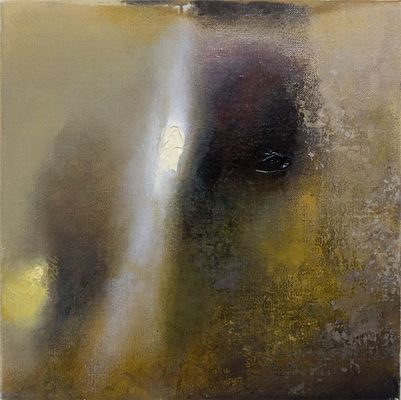
Always Will Need To Wear Winter Shirt Blue + Ochre Small Check Pattern
21 August - 21 September, 2015
Untitled
I am not a great reader of poetry but I always return to the work of Melbourne poet, Vincent Buckley (1925- 1988). Perhaps I find his most tantalising piece to be not a finished poem but a fragment left on a scrap of paper discovered on his desk after the poet’s death.
The poetry gathers like oil
In the word-core, and spreads
It has its music meet,
Its music is in movement.
This fragment is more the shell left behind from a volatile thought than a finished poem. I find the last two lines honest but awkward whereas the first two lines work like an arrow. Most likely he could not find a resolution so it was left. Still, in its present form, it remains an eloquent testimony to the ultimate failure of a medium to express mobile thought and sensation, in Buckley’s case, through verbal language. It’s an important matter because this is something all artists have to deal with regardless of the medium.
I have never written a poem, however, I am forever copying fragments from books on paper scraps in a vain effort to fix certain notions in my head. At first, they function as bookmarks that are sometimes returned to when I open the book. But before long, as they accumulate, they fall out littering the table interspersed with A4 photocopies, bills, books and medications.
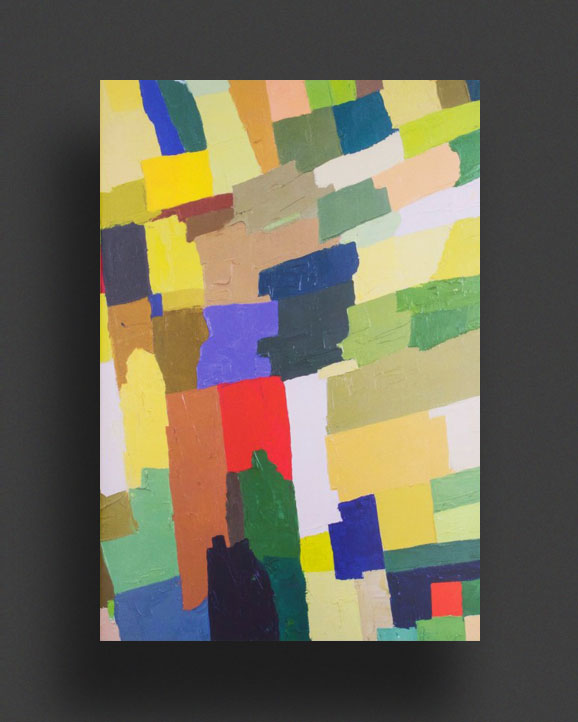
To return to Buckley’s fragment, the first two lines very much evoke how I paint nowadays. As you age, detail diminishes and patches of light become more luminous and float. I feel the most honest way of dealing with this is by smearing the oil paint on the canvas with the fingers and working close-up, blind. Only if the patches coalesce into an approaching image can the work gain a life.
-
Jonathan Walker was born in Melbourne, Australia and brought up on a dairy farm in Gippsland. In the 1970’s he studied painting at RMIT and won the Harold Wright Scholarship to the British Museum, London. During the 1980’s he exhibited at Pinacotheca Gallery, Richmond and had work shown at the NGV and Heidi City Art Gallery. Over the same period he designed the cover for the “Epigenesi” LP by Giancarlo Toniutti, Italy and conducted a mail exchange work with Achim Wollscheid, Germany. The work with artists through the post resulted in an article published in the bicentenary issue of Art and Australia 1988. He showed in artist run spaces such as WestSpace in the 90’s and 2000’s, and until 2012, taught painting at Victoria University, which is where we (Colleen Ahern and Lisa Radford) as organisers of the exhibition, among many others, had the privilege of being his student.
Walker’s knowledge was imparted to students through the careful selection of music, literature, and artists found in books that he himself had ordered for the library. Walker’s strategy was the generosity of sharing his vast knowledge with references specific to each student and their context.
Walker’s paintings share a similar focus and intimacy.
This exhibition presents a small selection of recent paintings alongside a publication that includes Walker’s writing. Observational and analytical, Walker’s work is a type of material notation — the time of day, colour and how it is blended, the both specific and fleeting location of a reflection on lino or the question of whether a chair leg should be included in a painting.
Please join us on Friday August 21 between 6-8pm to celebrate the opening of the exhibition.
Curated by Colleen Ahern and Lisa Radford.
B. Wurtz
Curated by Nic Tammens
March 26 - April 4, 2015
B.Wurtz works from a basement studio in his home on Manhattan’s Lower East Side.
This local fact is attested to by the plastic shopping bags and newsprint circulars that appear in his work. As formal objects, they don’t make loud claims about their origins but nonetheless transmit street addresses and places of business from the bottom of this long thin island. Like plenty of artists, Wurtz is affected by what is local and what is consumed. His work is underpinned by this ethic. It often speaks from a neighborhood or reads like the contents of a hamper:
“BLACK PLUMS $1.29 lb.”
“Food Bazaar”
“USDA Whole Pork Shoulder Picnic 99c lb.”
“RITE AID Pharmacy, with us it’s personal.”
“H. Brickman & Sons.”
“Sweet Yams 59c lb."
Most of the work in this exhibition was made while the artist was in residence at Dieu Donne, a workshop dedicated to paper craft in Midtown. Here Wurtz fabricated assemblages with paper and objects that are relatively lightweight, with the intention that they would be easily transportable to Australia. This consideration isn’t absolute in Wurtz’s work, but was prescriptive for making the current exhibition light and cheap. Packed in two boxes, these works were sent from a USPS post office on the Lower East Side and delivered to North Melbourne by Australia Post.
Wurtz appears courtesy of Metro Pictures, New York.
Thanks to Rob Halverson, Joshua Petherick, Sari de Mallory, Matt Hinkley, Helen Johnson, Fayen d'Evie, Ask Kilmartin, Lisa Radon, Ellena Savage, Yale Union, and "Elizabeth".
John Nixon
"Archive"
December 15 - January 20, 2014
The presentation of John Nixon's archive offered a rare showcase of this extensive collection of the artist's own publications, catalogues, posters, ephemera, editions and more, from the mid 1980s onwards, alongside a selection of his artworks.
Organized by John Nixon, Joshua Petherick and Matt Hinkley.
<a href=http://wfb.public-office.info/artist/john-nixon>All titles by John Nixon
"Habitat"
at Minerva, Sydney (organised by Joshua Petherick and Matt Hinkley)
November 15 - December 20, 2014
Lupo Borgonovo, Janet Burchill & Jennifer McCamley,
Lewis Fidock, HR Giger, Piero Gilardi, Veit Laurent Kurz,
Cinzia Ruggeri, Michael E. Smith, Lucie Stahl, Daniel Weil, Wols
Press Release:
“...It contained seven objects. The slender fluted bone, surely formed for flight, surely from the wing of some large bird. Three archaic circuitboards, faced with mazes of gold. A smooth white sphere of baked clay. An age-blackened fragment of lace. A fingerlength segment of what she assumed was bone from a human wrist, grayish white, inset smoothly with the silicon shaft of a small instrument that must once have ridden flush with the surface of the skin - but the thing’s face was seared and blackened.”
William Gibson, “Count Zero”, 1986
"Autumn Projects Archive"
Curated by Liza Vasiliou
March 6 - March 15, 2014
World Food Books, in conjunction with the Virgin Australia Melbourne Fashion Festival 2014, presented the Autumn Projects archive, consisting of a selection of early examples in Australian fashion with a particular interest in collecting designers and labels from the period beginning in the 1980’s, who significantly influenced the discourse of Australian Fashion.
Curated by Liza Vasiliou, the exhibition provided a unique opportunity to view pieces by designers Anthea Crawford, Barbara Vandenberg, Geoff Liddell and labels CR Australia, Covers, Jag along with early experimental collage pieces by Prue Acton and Sally Browne’s ‘Fragments’ collection, suspended throughout the functioning World Food Books shop in Melbourne.
H.B. Peace
presented by CENTRE FOR STYLE
November 14, 2013
"Hey Blinky, you say chic, I say same"
Anon 2013
H.B. Peace is a clothing collaboration between great friends Blake Barns and Hugh Egan Westland. Their pieces explore the divergences between 'character’ and ‘personality’ in garments....etc
Special Thanks to Joshua Petherick and Matt Hinkley of WFB and Gillian Mears
and a Very Special Thank you to Audrey Thomas Hayes for her shoe collaboration.
Janet Burchill & Jennifer McCamley
"Aesthetic Suicide"
May 10 - June 8, 2013
The first of our occasional exhibitions in the World Food Books office/shop space in Melbourne, "Aesthetic Suicide" presented a body of new and older works together by artists Janet Burchill & Jennifer McCamley, including videos, prints, a wall work, and publications.
During shop open hours videos played every hour, on the hour.
1988, English
Softcover (single fold-out card), 210 x 297
1st Edition, Out of print title / used / fine
Published by
200 Gertrude Street / Melbourne
$10.00 - Out of stock
Scarce catalogue published on the occasion of the exhibition Vasari Revisited: A Kunstkammer In Melbourne, organised by Michael Graf, at 200 Gertrude Street in 1988-89. Graf's Australian recreation of Studiolo of Francesco I in the Gertrude gallery! Illustrated text by Michael Graf throughout alongside a catalogue of exhibited works by Suzannah Barta, Stephen Bram, Angela Brennan, Gavin Brown, Tony Clark, Rebecca Driffield, Rozalind Drummond, Louise Forthun, Helena Gleeson, Michael Graf, Louise Harper, Matlu Hassan, Andrew Lehman, John Mackinnon, Anne-Marie May, Rob Mcleish, Dora Mcphee, Paul Morgan, Louise Murray, Elizabeth Newman, Amanda Ritson, Joanne Ritson, Sarah Ritson, Ian Russell, Anne Weir
Fine copy.
1990, French
Softcover (staple-bound), 20 pages, 28 x 22 cm
1st Edition, Out of print title / used / very good
Published by
CAPC / Bordeaux
$15.00 - Out of stock
Scarce staple-bound catalogue published in 1990 on the occasion of a major solo exhibition of Israeli-American artist Haim Steinbach (born Rehovot, Palestine, 1944) at capc Musée d'art contemporain, Bordeaux. Stiff card covers with essay (in Frnech) throughout (one illustrated) by American art critic, art historian, curator, poet, and artist, Robert C. Morgan.
Very Good condition. Light shelf wear.
2020, English
Softcover, 168 pages, 11.4 x 17.8 cm
Published by
Errant Bodies / Berlin
$25.00 - Out of stock
In this brilliant intergenerational dialogue, curator Camila Marambio (born 1979) and Cecilia Vicuña (born 1948), one of the leading Indoamerican artists of our times, converse about mestizaje/miscenegation, ecological disaster, eroticism and decolonisation in their multilingual, subversive and irreverent humorous slang. The result is a unique book that presents a conversation that is both poetic and critical.The dialogue crosses over from Spanish to English, from poetry to academic argumentation, and from art to science. Defining "true performance" as "that of our species on Earth: the way we cause suffering to others, the way we warm the atmosphere or cause others species to disappear, Slow Down Fast, A Toda Raja proposes a necessary method for decolonial liberation, which reveals the transformative power of art in search of "an ecology of the soul, the resplendence of our connectivity to each other and the cosmos.
2016, English
Softcover, 76 pages,
Edition of 500,
Published by
Dominica / Los Angeles
$33.00 $10.00 - Out of stock
Sara Knox Hunter, There Is Nothing To Divide Us If We Do Not Exist, A book of sci-fi poems in two parts: one part consists of reviews, some of them fictional reviews of other fiction, the other part, told as a biographical story, uses sci-fi to think about otherness, adoption, and how we trace the idea of who exactly a person is,
Sara Knox Hunter is a writer and artist living in New York. She is the founder of Summer Forum for Inquiry + Exchange, an experiment in discourse and human connection, and the editor of Dilettante Vols. I & II.
2016, English
Softcover (w. dust jacket), 144 pages, 10.5 x 15 cm
Published by
Sternberg Press / Berlin
$49.00 $25.00 - Out of stock
Felicity D. Scott
Disorientation: Bernard Rudofsky in the Empire of Signs
Critical Spatial Practice 7
Edited by Nikolaus Hirsch, Markus Miessen
Featuring artwork by Martin Beck
Viennese émigré architect Bernard Rudofsky (1905–1988) is most frequently recalled for curating “Architecture without Architects,” the famous 1964 photography exhibition of vernacular, preindustrial structures at the Museum of Modern Art in New York. Far from simply a romantic or nostalgic invocation of cultures lost to industrial modernity, Rudofsky’s exhibition drew on decades of speculations about modern architecture and urbanism, particularly their semantic, technological, institutional, commercial, and geopolitical influences.
Focusing on Rudofsky’s encounters with Japan in the 1950s—he described postwar Japan as a “rear-view mirror” of the American way of life—architectural historian Felicity D. Scott revisits the architect’s readings of the vernacular both in the United States and Japan, which resonate with his attempts to imagine architecture and cities that refused to communicate in a normative sense. In a contemporary world saturated with visual information, Rudofsky’s unconventional musings take on a heightened resonance.
Design by Zak Group
2012, English
Softcover, 128 pages, 21.5 x 10.5 cm
Published by
Paper Monument / New York
$35.00 $15.00 - Out of stock
Draw It with Your Eyes Closed: the Art of the Art Assignment is a unique and wide-ranging anthology featuring essays, drawings, and assignments from over one hundred contributors including John Baldessari, William Pope.L, Mira Schor, Rochelle Feinstein, Bob Nickas, Chris Kraus, Liam Gillick, Amy Sillman, James Benning, and Michelle Grabner. Bringing together assignments, anti-assignments, and artworks from both teachers and students from a broad range of institutions, we hope it simultaneously serves as an archive and an instigation, a teaching tool and a question mark, a critique and a tribute.
2019, English
Softcover, 272 pages, 12 x 17 cm
Published by
Kunstverein / Amsterdam
$44.00 $15.00 - Out of stock
'Grace Crowley' is a publication based on letters sent to the Australian artist and pioneer of modernist painting Grace Crowley (1890–1979) by friends, family, and colleagues. Parts of those letters, which are now housed in the Art Gallery of New South Wales and the State Library of New South Wales archives in Sydney, were transcribed and categorized by Riet Wijnen in subsections such as ‘Marital Status’, ‘Teaching’, ‘Hosting’, ‘Eurasia’, ‘X’, ‘Being A Woman’, ‘War’, ‘$’, and ‘Making Work’. The result is an alternative biography constructed solely through a living set of relations.
2020, English
Softcover, 350 pages, 15 x 23 cm
Published by
Sternberg Press / Berlin
$50.00 - In stock -
Exploring the relationship between art and pop music over the last fifty years.
Why did Andy Warhol decide to enter the music business by producing the Velvet Underground, and what did the band expect to gain in return? What made Yoko Ono use the skills she developed in the artistic avant-garde in pop music, and what drew John Lennon, in turn, to visual art? Why, in 1982, did Joseph Beuys record the pop single “Sonne statt Reagan,” and why, around the same time did, West German artists such as Michaela Melián move into pop music?
In Double Lives in Art and Pop Music, Jörg Heiser argues that context shifting between art and pop music is an attempt to find solutions for contradictions faced in one field of cultural production. Heiser looks closely at the careers of artists and pop musicians who work in both fields professionally. The seeming acceptance and effortlessness today of current border crossings can be deceptive, since they might be serving vested economic or ideological interests. Exploring a pop and art history of more than fifty years, Heiser shows that those leading double lives in art and pop music may often be best able to detect these vested interests while he points toward radical alternatives.
2020, English
Softcover (cloth), 190 pages, 16.5 x 10.4 cm
Published by
Office / Melbourne
$25.00 - Out of stock
The Politics of Public Space is a quarterly publication of transcripts that speak directly to the city and the way we read it. The first issue contains excerpts from Mark Jacques, Tania Davidge, Tom Andrews & Peter Chambers, Libby Porter and Claire Martin. Each to an individual extent touch on recent events which have shaped how Melbourne’s public spaces are discussed and understood. Tom Andrews & Peter Chambers provide a summary of their research into the development of general protective measures instigated by Governments here in Melbourne. Following the community response to the proposed redevelopment of Federation Square’s Yarra Building site, Tania Davidge spoke on the proposal and the relationship between physical and digital public space. Libby Porter outlines the processes of dispossession in the city and the Swanston Square apartment building. With Lincoln Square as the backdrop, Mark Jacques proposes devices of inclusion in the design of public space. Claire Martin speaks about the privatisation of public space, and how this impacts the way the city is formed and occupied.
2012, English
Softcover, 72 pages, 15 x 25 cm
Published by
Getty Trust Publications / Los Angeles
$56.00 - In stock -
Annette Leddy and Donna Conwell
Introduction by Dawn Ades
“Farewell to Surrealism” is the title of a 1943 essay by Austrian artist-critic Wolfgang Paalen published in the inaugural issue of the journal Dyn. The journal was founded by Paalen and an international group of writers and artists taking refuge in Mexico City during World War II, including Wolfgang Paalen, Alice Rahon, and Eva Sulzer. Several of them had been part of André Breton’s Parisian surrealist circle in the 1930s. When they arrived in Mexico, they were still proponents of surrealism. Two years later, however, this group had broken with Breton and set out to define a new direction for art. Their vision coalesced in the pages of Dyn.
While recent scholarship has treated individual artists in the circle, this study is the first to examine the new aesthetic found in Dyn itself. Transformed by the mysterious pre-Columbian artifacts, distressed by the failure of political ideology, and inspired by scientific discoveries of the day, these artists played a critical but under-recognized role in the transition from surrealism to abstract expressionism. This catalogue accompanied an exhibition of the same name on view at the Getty Research Institute October 2, 2012 to February 17, 2013.
Annette Leddy is a senior cataloguer and a consulting curator at the Getty Research Institute. Donna Conwell is an associate curator at Montalvo Arts Center in Saratoga, California. Dawn Ades is a semi-retired professor at the University of Essex.
2016, English
Softcover (w. dust jacket, poster and postcard), 246 pages, 17 x 24 cm
Published by
IMA / Brisbane
KW Institute for Contemporary Art / Berlin
MUMA / Victoria
Sternberg Press / Berlin
$46.00 - Out of stock
Edited by Aileen Burns, Charlotte Day, Krist Gruijthuijsen, Johan Lundh
Texts by Max Andrews and Mariana Cánepa Luna (Latitudes), Helen Hughes, Ana Teixeira Pinto
This publication accompanies Australian multidisciplinary artist Nicholas Mangan’s survey exhibition “Limits to Growth.” The exhibition and book bring together four of Mangan’s most significant works of the past seven years, alongside a new commission. The works in the show tackle narratives from his own geographical region—Asia Pacific, in which his home country of Australia plays a colonial role—and weaves them into a bigger picture to take into account the global economy, resource extraction, and the ultimate power of the sun. Featuring an in-depth series of conversations between the artist and the Barcelona-based curatorial collective Latitudes, and essays by Ana Teixeira Pinto and Helen Hughes, this publication is richly illustrated with documentation of Mangan’s artworks and historical source material.
Copublished with the Institute of Modern Art, Brisbane; KW Institute for Contemporary Art, Berlin; and Monash University Museum of Art, Melbourne
Design by Žiga Testen
2017, English
Softcover, 196 pages, 14.5 x 20 cm
Published by
Sternberg Press / Berlin
$65.00 $30.00 - Out of stock
Over the past quarter century, artists have made powerful interventions in debates around globalisation, addressing various dimensions of cross-border exchange, from mass migration to the dynamics of translation, and devising new ways of conceptualising them. Marcus Verhagen’s Flows and Counterflows: Globalisation in Contemporary Art tells the story of those interventions, dwelling in particular on projects that draw out both the dangers and the tangible or imaginable benefits of global exchange.
"Marcus Verhagen is one of the finest art critics writing today, and in these essays he maps the shifting terrain of the global art world with subtle, sceptical intelligence."
—Malcolm Bull, Professor of Art and the History of Ideas, Ruskin School of Art, University of Oxford
"Flows and Counterflows offers an incisive and highly original account of contemporary art’s mutating relationship to the processes of globalisation. In its historical timeliness and critical urgency, it will no doubt become a seminal volume in this field."
—Anthony Downey, Professor of Visual Culture in North Africa and the Middle East, Birmingham City University
"Verhagen’s complete survey of globalisation—covering how art addresses global markers such as tourism and border control; how the art system itself has been reshaped; and how artists resist by building informal networks—is so packed with well-explained contemporary artworks that the result, in practice, is an indispensable history of art for our times."
—Gilda Williams, Goldsmiths MFA Curating, University of London
Design by A Practice for Everyday Life
2017, English
Hardcover (clothbound), 138 pages, 16.7 x 23 cm
Published by
Nanaimo Art Gallery / Canada
Sternberg Press / Berlin
$65.00 $10.00 - Out of stock
Edited by Jesse Birch with Will Holder
Texts by Jesse Birch, Lynne Bowen, Peter Culley, Antonio Graydon, Sarah Ogan Gunning, Franz Kafka, George Orwell, Michael Taussig; together with artworks by Stephanie Aitken, Raymond Boisjoly, Edward Burtynsky, Peter Culley, Jeremy Deller and Mike Figgis, Gray Metal, Devon Knowles, Yuanchen Liu, William Notman & Son, Jerry Pethick, Mimi Pickering, Kerri Reid, Scott Rogers
This publication expands a 2014 multisite contemporary art exhibition that took place in Nanaimo, British Columbia, a small city on the eastern edge of Vancouver Island. The title refers to coal mining, an industry that has formed and fragmented communities through economic development, racial segregation, and labor inequity, while fueling the modern world. In this book, forgotten or under-acknowledged histories are investigated and discussed along with cultural forms that surround the practices of international coal mining. Contemporary artworks, poetry, essays, literature, folk songs, and archival images come together to extract meaning from this fossilized black carbon that continues to power our cities.
Black Diamond Dust is the first of three projects to engage the resource industries of Vancouver Island (coal mining, forestry, and fisheries) through contemporary art.
Copublished with Nanaimo Art Gallery, Canada
Design by Will Holder
2016, English
Hardcover, 192 pages, 17 x 24 cm
Published by
Sternberg Press / Berlin
Carpenter Center for the Visual Arts / Cambridge
$79.00 $25.00 - Out of stock
Contributions by Martin Beck, Nina Beier, Silvia Benedito, Ulla von Brandenburg, Katarina Burin, Simon Dybbroe Møller, Jonas Ekeberg, Alex Farquharson, Fernanda Fragateiro, Simon Fujiwara, James Goggin, Tone Hansen, Owen Hatherley, Henriette Huldisch, Damon Krukowski, Le Corbusier, Maria Lind, Markus Miessen, Eline Mugaas, Elise Storsveen, Gloria Sutton, James Voorhies, Naomi Yang, Amy Yoes
New Institutionalism, a mode of curating that originated in Europe in the 1990s, evolved from the legacy of international curator Harald Szeemann, the relational art advanced by French critic and theorist Nicolas Bourriaud, and other influential factors of the time. New Institutionalism’s dispersed and varied approaches to curating sought to reconfigure the art institution from within, reshaping it into an active, democratic, open, and egalitarian public sphere. These approaches posed other possibilities and futures for institutions and exhibitions, challenging the consensual conception, production, and distribution of art. Practitioners engaged the art institution with renewed confidence by imbuing it with the potential for new aesthetic experiences and different relationships among artists, institutions, and spectators beyond engrained modernist ideologies. Working in these new modes, the art institution could become a site of fluidity, unpredictability, and risk.
What Ever Happened to New Institutionalism? reflects upon the aspirations of these curatorial strategies and assesses their critical efficacy today within the landscape of contemporary art and globalized culture. The first in a series of readers examining changing characteristics of art institutions, this publication thinks through New Institutionalism by bringing together facsimiles of seminal texts, new critical essays, a history of trends and practices, and commissioned artist projects and contributions. These are complemented by documentation from the inaugural year of programming at the Carpenter Center for the Visual Arts at Harvard University focused on reimagining CCVA as a twenty-first-century institution.
Copublished with Carpenter Center for the Visual Arts
Design by James Goggin, Practise
2014, English
softcover, 306 pages, 10.5 x 15 cm
Published by
Sternberg Press / Berlin
$45.00 $10.00 - In stock -
Contributions by Can Altay, Ayreen Anastas and Rene Gabri, Ricardo Basbaum, Céline Condorelli, Cooperativa Crater Invertido, Mark Fisher and Nina Möntmann, Daniel Foucard, Rebecca Gordon-Nesbitt, Elaine W. Ho, Annette Krauss, Mattin, Andrea Phillips, Marion von Osten, Dimitrina Sevova, Simon Sheikh, Steven Ten Thije
Cluster is a network of eight contemporary visual arts organizations that are each located in residential areas situated on the peripheries of European cities, extending to the Middle East with one member in Holon, Israel. Each organization is focused on commissioning, producing, and presenting contemporary art, and the nature of the work is often experimental, process-driven, involves research, is based on working with international and local artists, and often engages with diverse publics on a local level.
Compiled after a series of meetings in each organization over a period of two years, Cluster: Dialectionary aims to find new ways to position this work and the work of contemporary visual arts organizations more broadly, particularly in relation to wider social, political, and cultural concerns.
The book includes essays by Andrea Phillips, Mark Fisher and Nina Möntmann, Marion von Osten, and Cluster members. These are accompanied by a series of keywords that are drawn from the practices and experiences of the people who work at, visit, and live with the organizations. They have both been produced within the contexts of the projects that gave rise to them, as well as written especially for the publication. The contributors include Can Altay, Ayreen Anastas and Rene Gabri, Pierre Bal Blanc, Alexandre Baudelot, Ferran Barenblit, Ricardo Basbaum, Binna Choi, Céline Condorelli, Cooperativa Crater Invertido, Eyal Danon, Julien Duc-Maugé, Udi Edelman, Mark Fisher and Nina Möntmann, Daniel Foucard, Dora Garcia, Rebecca Gordon-Nesbitt, Elaine W. HO, Annette Krauss, Bojana Kunst, Maria Lind, Pablo Martinez, Mattin, Sanne Oorthuizen, Marion von Osten, Emily Pethick, Natasa Petresin-Bachelez, Andrea Phillips, Tadej Pogacar, Dimitrina Sevova, Simon Sheikh, Louise Shelley, Steven Ten Thije, Mathilde Villeneuve, and Jason Waite.
The members of Cluster are: CAC Brétigny, Brétigny-sur-Orge; Casco – Office for Art, Design and Theory, Utrecht; CA2M Centro de Arte Dos de Mayo, Móstoles, Madrid; The Israeli Center for Digital Art, Holon; Les Laboratoires d’Aubervilliers, Paris; P74 Center and Gallery, Ljubljana; The Showroom, London; and Tensta konsthall, Stockholm.
Design by Åbäke
2017, English
Softcover, 152 pages, 15.2 x 22.9 cm
Published by
The MIT Press / Massachusetts
$44.00 $10.00 - Out of stock
In Liquidation World, Alexi Kukuljevic examines a distinctive form of subjectivity animating the avant-garde: that of the darkly humorous and utterly disoriented subject of modernity, a dissolute figure that makes an art of its own vacancy, an object of its absence. Shorn of the truly rotten illusion that the world is a fulfilling and meaningful place, these subjects identify themselves by a paradoxical disidentification—through the objects that take their places. They have mastered the art of living absently, of making something with nothing. Traversing their own morbid obsessions, they substitute the nonsensical for sense, the ridiculous for the meaningful.
Kukuljevic analyzes a series of artistic practices that illuminate this subjectivity, ranging from Marcel Duchamp’s Three Standard Stoppages to Charles Baudelaire’s melancholia. He considers the paradox of Duchamp’s apparatus in the Stoppages and the strange comedy of Marcel Broodthaers’s relation to the readymade; the comic subject in Jacques Vaché and the ridiculous subject in Alfred Jarry; the nihilist in Paul Valéry’s Monsieur Teste; Oswald Wiener’s interpretation of the dandy; and Charles Baudelaire as a happy melancholic. Along the way, he also touches on the work of Thomas Bernhard, Andy Kaufman, Buster Keaton, and others. Finally, he offers an extended analysis of Danny’s escape from his demented father in Stanley Kubrick’s The Shining.
Each of these subjects is, in Freud’s terms, sick—sick in the specific sense that they assume the absence of meaning and the liquidation of value in the world. They concern themselves with art, without assuming its value or meaning. Utterly debased, fundamentally disoriented, they take the void as their medium.
Alexi Kukuljevic is an artist and Lecturer in Art Theory at the University of Applied Arts in Vienna.
“With exuberantly mordant humor, Alexi Kukuljevic leads us to that place—Liquidation World—where we already are. This world turns out to be an atopia in which dissolute impersonators, caught between the first and third person, never find themselves a second, and where the epitome of happiness is to make oneself an object of absence from melancholic despair. It’s not so much that everything must go—just that everything does go. And, when it does, so do we. But we don’t go well. Thankfully, Kukuljevic is here to show us the pistols and the ropes.”
—Justin Clemens, Associate Professor, The University of Melbourne; author of Psychoanalysis is an Antiphilosophy
“Liquidation World is a shockingly clever but very kind book, treating its readers as well as its clumsy, incomplete, damaged, but well-meaning subjects as partners in a series of arty, thoughtful adventures in humor and absence. Embracing innumerable paradoxes, Kukuljevic nevertheless steers a steely course through ridiculousnesses of all kinds. It is the rigor of the madhouse, and what absurd fun.”
—Nina Power, Senior Lecturer in Philosophy, University of Roehampton; author of One Dimensional Woman
2016, English
Softcover, 226 pages, 19 x 27 cm
Published by
Mousse / Milan
$53.00 $30.00 - Out of stock
Edited by Bettina Steinbrügge.
Texts by by Lucy Chinen, Nora N. Khan, Venus Lau, Katja Novitskova, Tobias Peper, Bettina Steinbrügge, Agatha Wara
For her works, Katja Novitskova adapts images from online sources, referring to realities that lie beyond the capacities of the human eye but have long entered our lives as visual artifacts. Today, almost all aspects of human (and increasingly nonhuman) lives are registered or modeled by software on an environmental scale. Data collection and processing have transcended the limits of our planet and become the primary tools for navigating Earth and beyond. The artist book Dawn Mission explores this radically new articulation of the role of the image and how constant mediation gains an ecological dimension.
Published in conjunction with the exhibition Katja Novitskova - Dawn Mission at Kunstverein in Hamburg. April 23–July 3, 2016.
2017, English
Softcover, 144 pages, 17 x 24 cm
Published by
Sternberg Press / Berlin
Center for Contemporary Arts / Estonia
$39.00 $10.00 - Out of stock
Edited by Kati Ilves, Katja Novitskova
Texts by Kati Ilves, Nora Khan, Jaak Tomberg, Toke Lykkeberg, Venus Lau
Today almost all aspects of human—and increasingly nonhuman—lives are being modeled by software. Transcending the limits of our planet, data collection has become a fundamental tool with which to map the earth and beyond. Katja Novitskova’s catalogue If Only You Could See What I’ve Seen with Your Eyes, published for the Estonian Pavilion at the 57th Venice Biennale, addresses emerging potentialities between visual culture, big-data-driven processes, and ecology. Rather than commenting on the observable moment, Novitskova transforms these visual manifestations of data into immersive environments that serve as glimpses of a world yet to come.
Copublished with the Center for Contemporary Arts, Estonia
Design by Ott Metusala
2014, English
Softcover, 188 pages, 16.5 x 22 cm
Published by
Sternberg Press / Berlin
$64.00 $15.00 - Out of stock
With contributions by Nana Adusei-Poku, Jamika Ajalon, Ingrid Cogne, Mathias Danbolt, Yasmine Eid-Sabbagh, Elizabeth Freeman, Mara Lee Gerdén, Sharon Hayes, Ana Hoffner, Yva Jung, Renate Lorenz, Suzana Milevska, Andrea Ray
Not Now! Now! engages with the politics of time in art: historical narratives and memory, the unforeseen rhythms of time, and the challenge of visualizing time. The book connects the postcolonial and queer debate around chronopolitics with artistic strategies that introduce breaks, stutter time, use citations and anachronisms, and introduce deferrals and collapses between time and meaning.
They thus challenge orderly and rigid temporal concepts and their effects on bodies and the social. Contributions by art theorists, artists, and artistic researchers highlight how temporal norms organize our biographies and intimate relations, as well as the handling of capital or the continuation of colonial relations. The book instead suggests to focus on a particular non/moment in time: the not-now/now. It indicates a possible break in the temporal order, a meaningful gap between “not now!” and “now!” Or: the past and the future (“not now!”) uncannily but promisingly showing up “now!”
Publication Series of the Academy of Fine Arts Vienna, vol. 15
Design by Surface
2015, English / German
Softcover, 288 pages, 17 x 24 cm
Published by
Sternberg Press / Berlin
$85.00 $20.00 - Out of stock
Texts by Alain Badiou, Karen Barad, Gregory Bateson, Bruce Chatwin, Gilles Deleuze, John Dewey, John Dupré, Sergei Eisenstein, Félix Guattari, Donna Haraway, Alexandre Kojève, Osip Mandelstam, Cord Riechelmann
The question of life has always been one of modernity’s main preoccupations, but it was the advent of the camera—with its ability to record moving creatures—that initiated a new phase in the human investigation of animal behavior. In the world of contemporary art, animals now occupy center stage. Artworks such as Joseph Beuys’s I Like America and America Likes Me (1974), a weeklong performance in New York during which the artist lived with a coyote, and Rosemarie Trockel and Carsten Höller’s Haus für Schweine und Menschen at documenta X (1997), demonstrate the idea that culture, self-consciousness, and language do not exclusively belong to man. Drawing on key texts by Sergei Eisenstein, Gilles Deleuze, Félix Guattari, and Donna Haraway, and analyzing works by Pierre Huyghe, Christoph Keller, and Helen Marten, this volume brings together theory and art, showing how both turned to animals to find new ways of problematizing “life.”
The Jahresring series is edited by Brigitte Oetker and published on behalf of Kulturkreis der deutschen Wirtschaft im BDI e.V.
Design by Surface
2018, English
Softcover, 192 pages, 12.5 x 19 cm
Published by
Sternberg Press / Berlin
$30.00 - Out of stock
Perhaps It Is High Time for a Xeno-architecture to Match
Contributions by Armen Avanessian, Benjamin H. Bratton, Kathleen Ditzig, Daniel Falb, Anke Henning, Victoria Ivanova, Markus Miessen, Luciana Parisi, Patricia Reed
“Xeno” speaks to the turn away from “what is” toward “what could be”: the (as yet) unknown, the alien—having been employed in recent years through such speculative-political approaches as xenofeminism and xenopoetics. Perhaps It Is Time for a Xeno-architecture to Match documents a conversation series from January to March 2017 that explored what an intervention of the xeno might bring to bear on contemporary and future (infra)structure.
This book aims to unpack the prefix, probing what it entails—not merely rhetorically but also as a means of practice, in an attempt to bring the ideas it contains more concretely into the domain of architecture. It proposes to link the more philosophical discussions on the notion of xeno with questions of instrumentalization and governance that are necessarily involved in the praxis of architecture. And it relates the significance of legal architecture and technologically driven transformation in the metaphysics of law back to the agenda of xeno-architecture. By researching how architects, artists, thinkers, and activists operating in the spatial field might endorse a process of “alienation” to confront global issues, this project attempts to re-radicalize spatial practice.
Design by Metahaven
2018, English
Softcover, 304 pages, 14 x 21 cm
Published by
Valiz / Amsterdam
$43.00 $20.00 - Out of stock
In 'The Future of the New' artists, theorists, and professionals working the art field reflect on the role of the arts in a world that is speeding up and changing through joint forces of globalization, digitization, commodification, and financialization. Can artistic innovation still function as a source of critique? How do artists, theorists, and art organizations deal with the changing role of and discourse on innovation? Should we look for alternative ways to innovate, or should we change our discourse and look for other (new!) ways to talk about the new?
Editor: Thijs Lijster
Contributors: Lietje Bauwens, Franco 'Bifo' Berardi, Robin Celikates, Wouter de Raeve, Elena Esposito, Boris Groys, Alice Haddad, Akiem Helmling, Bojana Kunst, Thijs Lijster, Suhail Malik, Benjamin Noys, Hartmut Rosa, Nick Srnicek Carolyn F. Strauss, Rolando Vázquez, Alex Williams
Design: Metahaven
1981, English
Softcover, 208 pages, 27.5 x 21.5 cm
1st Edition, Out of print title / used / average
Published by
SFMOMA / San Francisco
$50.00 $20.00 - Out of stock
Scarce and important exhibition catalogue published in conjunction with the survey exhibition held at the San Francisco Museum of Modern Art, December 21, 1979 - February 10, 1980. Edited by Suzanne Foley, this important publication traces a decade of conceptual art activity in the Bay Area, encompassing the artists, activities, spaces, performances, and periodicals, accompanied by texts and a chronology by Constance Lewallen. Includes the work of 21 artists including Lynn Hershman, Terry Fox, Paul Kos, Jim Melchert, Bonnie Sherk, Ant Farm, Tom Marioni, Howard Fried, Linda Montano, Peter D'Agostino and many other individuals and organizations. Documents the spaces Richmond Art Center, University of California at Davis, University Art Museum at Berkeley, Reese Palley Gallery, Museum of Conceptual Art, 80 Langton Street, The Floating Museum, Site, La Mamelle, and many more.
Good withdrawn ex-library copy with some associated markings and plastic covering. Some tanning and wear.
2018, English
Softcover, 179 pages, 22 x 28 cm
Published by
A+A / Melbourne
$35.00 $20.00 - Out of stock
WRITING & CONCEPTS follows a public lecture series reflecting on the relationship between the process of writing and the development of social, political and philosophical questions within contemporary arts and cultural practice. This publication will contribute to the discourse around how we read and write art history in Australia.
WRITING & CONCEPTS offers contributors the opportunity to reflect on, and develop, the nature of their practice by promoting writing as a tool of reflection and inquiry and is designed to explore the potential of writing as both a process and an outcome. The group of contributors is made up of practitioners for whom the written form is their primary professional output and practitioners whose work manifests as creative works, exhibitions or events within the domain of contemporary art.
Contributers : Leon van Schaik, Hannah Bertram, Robert Nelson, Nikos Pantazopoulos, Kelly Fliedner, Jessie Bullivant, Esther Anatolitis, Susan Jacobs, Phip Murray, Lisa Radford, Maura Edmond, Helen Johnson, Pia Ednie-Brown, Tom Nicholson, Callum Morton, Agatha Gothe-Snape & Brian Fuata, Helen Grogan, Justin Clemens, Emile Zile, Lou Hubbard, Nella Themelios & Ricarda Bigolin, Nikos Papastergiadis
Editor: Edward Colless
Authors: Jan van Schaik, Grace McQuilten, Caitlin Patane
A+A Publishing, Art + Australia’s small book imprint, has been established to provide a new platform for critical writing around contemporary art and culture and to consider new ways of writing and reading art history. Publications out of A+A Publishing are specifically conceived to to provoke debate about significant moments in the development of art in this country and to bring aspects of Australian visual culture to light, for both local and international audiences.