World Food Books' programme is largely produced on Kulin Nation land. We acknowledge the Wurundjeri people of the Kulin Nation as the first and continuing custodians of this land, and pay respect to their Elders past, present, and emerging.
World Food Books is an arts and special interests bookshop in Naarm / Melbourne. Founded in 2010, World Food Books is devoted to the presentation of a rotating, hand-selection of international art, design, literary and counterculture publications with an emphasis on the anti-traditional, the experimental, the avant-garde, the heretic, the marginal.
Presenting new titles alongside rare and out-of-print books, catalogues and journals spanning the fields of modern and contemporary art, design, photography, illustration, film, literature, poetry, cultural theory, philosophy, sexuality, popular and underground culture in its many radical forms, World Food Books wishes to encourage adventurous, thoughtful and open-minded reading, looking, writing, and exchange of publishing and ideas, both current and historical.
As well as our bookshop, located in Melbourne's historical Nicholas Building, all of our inventory is available internationally via our online mail-order service.
World Food Books semi-regularly co-ordinates "Occasions", a programme of exhibits and events at the bookshop and in partnership with other hosts (such as museums and art galleries) that develop out of the activities, relationships and content of the bookshop itself.
World Food Books
The Nicholas Building
37 Swanston Street
Room 5, Level 6
Melbourne 3000
Australia
SHOP HOURS:
Thu–Fri 12–6, Sat 12–5
WEB-SHOP OPEN 24/7
World Food Books
Postal Address:
PO Box 435
Flinders Lane
Victoria 8009
Australia
Art
Theory / Essay
Architecture / Interior
Graphic Design / Typography
Photography
Fashion
Eros
LGBTQ+
Fiction / Poetry
Weird / Speculative / Science Fiction / Horror
Transgressive / Visceral / Abject
Symbolism / Decadence / Fin de siècle
Film / Video
Painting
Sculpture / Installation
Performance / Dance / Theater
Drawing
Sound / Music
Curatorial
Group Shows / Collections
Periodicals
Out-of-print / Rare
Posters / Ephemera / Discs
Signed Books
World Food Books Gift Voucher
World Food Book Bag
Australian Art
Australian Fiction
Australian Science Fiction / Speculative Fiction
Australian Poetry
Australian Photography
Japanese Photography
Conceptual Art
Minimal Art
Dada
'Pataphysics / Oulipo
Fluxus
Concrete Poetry
Pop Art
Surrealism
Arte Povera
Arte Informale / Haute Pâte / Tachism
Nouveau Réalisme / Zero / Kinetic
Situationism / Lettrism
Collage / Mail Art / Xerox Art
Art Brut / Folk / Visionary / Fantastic
Illustration / Graphic Art / Bandes Dessinées
Furniture
Italian Radical Design / Postmodernism
Textiles
Ceramics / Glass
Counterculture
Protest / Revolt
Philosophy
Psychoanalysis
Anthropology
Anarchism
Socialism / Anarchism / Communism / Capitalism
Literary Theory / Semiotics / Language
Feminism / Women's Studies
Gender Studies / Sexuality
Anthropology
Fetishism / BDSM
Drugs / Psychedelia
Crime / Violence
Animal Rights / Veganism
Occult / Esoterica
Ecology / Earth / Alternative Living
Whole Earth / Crafts
All prices in AUD (Australian dollars)
Pick-Ups
Pick-up orders can be collected in our bookshop during opening hours after order date. Please collect any Pick-up orders within 2 weeks of ordering as we have limited storage space. Orders will be released back into stock if not collected within this time. No refunds can be made for pick-ups left un-collected. If you cannot make it in to the bookshop in this time-frame, please choose postage option.
Return Policy
All sales are final. We do accept returns (for refund or exchange) for items received in error. All our orders are packed with special care using heavy-duty padding and cardboard book-mailers or bubble mailers (for smaller books), using reinforcement where required. We cannot take responsibility for any lost, stolen or damaged parcels.
Insurance
Should you wish to insure your package, please email us directly after placing your order and we can organise this at a small extra expense. Although all standard/express tracked packages are very safe and dependable, we cannot take responsibility for any lost, stolen or damaged parcels. We recommend insurance on valuable orders.
Interested in selling your old books, catalogues, journals, magazines, comics, fanzines, ephemera? We are always looking for interesting, unusual and out-of-print books to buy. We only buy books in our fields of interest and specialty, and that we feel we can resell.
We base these prices on desirability, market value, in-print prices, condition and our current stock levels. We offer cash, store credit, and can take stock on consignment. All
about 25% of the price we expect to get when we sell them, or 30% in store credit. We base these prices on desirability, market value, in-print prices, condition and our current stock levels.
Sell your books any day of the week. You can drop them off and return later. If you have a lot of books, we can visit your Sydney home.
We buy books that we feel we can resell. We offer about 25 % of the price we expect to get when we sell them, or 30% in store credit. We base these prices on desirability, market value, in-print prices, condition and our current stock levels.
Philadelphia Wireman
03 August - 01 September, 2018
World Food Books is proud to announce our next Occasion, the first presentation of sculptures by Philadelphia Wireman in Australia.
The Philadelphia Wireman sculptures were found abandoned in an alley off Philadelphia’s South Street on trash night in 1982. Their discovery in a rapidly-changing neighbourhood undergoing extensive renovation, compounded with the failure of all attempts to locate the artist, suggests that the works may have been discarded after the maker’s death. Dubbed the "Philadelphia Wireman" during the first exhibition of this work, in 1985, the maker’s name, age, ethnicity, and even gender remain uncertain. The entire collection totals approximately 1200 pieces, all intricately bound together with tightly-wound heavy-gauge wire (along with a few small, abstract marker drawings, reminiscent both of Mark Tobey and J.B. Murry). The dense construction of the work, despite a modest range of scale and materials, is singularly obsessive and disciplined in design: a wire armature or exoskeleton firmly binds a bricolage of found objects including plastic, glass, food packaging, umbrella parts, tape, rubber, batteries, pens, leather, reflectors, nuts and bolts, nails, foil, coins, toys, watches, eyeglasses, tools, and jewellery.
Heavy with associations—anthropomorphic, zoomorphic, and socio-cultural responses to wrapped detritus—the totemic sculptures by Philadelphia Wireman have been discussed in the context of work created to fulfil the shamanistic needs of alternative religions in American culture. Curators, collectors, and critics have variously compared certain pieces to sculpture from Classical antiquity, Native American medicine bundles, African-American memory jugs, and African fetish objects. Reflecting the artist’s prolific and incredibly focused scavenging impulse, and despite—or perhaps enhanced by—their anonymity, these enigmatic objects function as urban artefacts and arbiters of power, though their origin and purpose is unknown. Philadelphia Wireman, whatever their identity, possessed an astonishing ability to isolate and communicate the concepts of power and energy through the selection and transformation of ordinary materials. Over the course of the past two decades, this collection has come to be regarded as an important discovery in the field of self-taught art and vernacular art.
Presented in collaboration with Fleisher-Ollman Gallery, Philadelphia, and Robert Heald, Wellington.
Susan Te Kahurangi King
02 February - 10 March, 2018
Susan Te Kahurangi King (24 February 1951 - ) has been a confident and prolific artist since she was a young child, drawing with readily available materials - pencils, ballpoint pens and felt-tip markers, on whatever paper is at hand. Between the ages of four and six Susan slowly ceased verbal communication. Her grandparents William and Myrtle Murphy had developed a special bond with Susan so they took on caring responsibilities for extended periods. Myrtle began informally archiving her work, carefully collecting and storing the drawings and compiling scrapbooks. No drawing was insignificant; every scrap of paper was kept. The King family are now the custodians of a vast collection containing over 7000 individual works, from tiny scraps of paper through to 5 meter long rolls.
The scrapbooks and diaries reveal Myrtle to be a woman of great patience and compassion, seeking to understand a child who was not always behaving as expected. She encouraged Susan to be observant, to explore her environment and absorb all the sights and sounds. Myrtle would show Susan’s drawings to friends and people in her community that she had dealings with, such as shopkeepers and postal workers, but this was not simply a case of a grandmother’s bias. She recognised that Susan had developed a sophisticated and unique visual language and sincerely believed that her art deserved serious attention.
This was an unorthodox attitude for the time. To provide some context, Jean Dubuffet coined the term Art Brut in 1945 to describe work created by self-taught artists – specifically residents of psychiatric institutions and those he considered to be visionaries or eccentrics. In 1972 Roger Cardinal extended this concept by adopting the term Outsider Art to describe work made by non-academically trained artists operating outside of mainstream art networks through choice or circumstance. Susan was born in Te Aroha, New Zealand in 1951, far from the artistic hubs of Paris and London that Dubuffet and Cardinal operated in. That Myrtle fêted Susan as a self-taught artist who deserved to be taken seriously shows how progressive her attitudes were.
Susan’s parents Doug and Dawn were also progressive. Over the years they had consulted numerous health practitioners about Susan’s condition, as the medical establishment could not provide an explanation as to why she had lapsed into silence. Dawn educated herself in the field of homeopathy and went on to treat all twelve of her children using these principles – basing prescriptions on her observations of their physical, mental and emotional state.
Doug was a linguist with an interest in philosophy who devoted what little spare time he had to studying Maori language and culture. To some extent their willingness to explore the fringes of the mainstream made them outsiders too but it was their commitment to living with integrity and their respect for individuality that ensured Susan’s creativity was always encouraged.
Even though Susan’s family supported her artistic pursuits, some staff in schools and hospitals saw it as an impediment to her assimilation into the community and discouraged it in a variety of ways. Her family was not always aware of this and therefore did not fully understand why Susan stopped drawing in the early 1990s. However, rather than dwell on the challenges that Susan faced in pursuit of her artistic practice, they prefer to highlight her achievements. In 2008 Susan began drawing again in earnest, after an almost 20 year interruption, and her work is now shown in galleries around the world.
Susan grew up without television and has been heavily influenced by the comics she read as a child. She is absolutely fearless in the appropriation of recognizable characters, such as Donald Duck and Mickey Mouse, in her work. She twists their limbs, contorts their faces, compresses them together, blends them into complex patterned backgrounds - always imbuing them with an incredible energy. Although Susan often used pop culture characters in her work they are not naive or childlike. These are drawings by a brilliant self-taught artist who has been creating exceptional work for decades without an audience in mind.
Mladen Stilinović
"Various Works 1986 - 1999"
02 February 16 - September 10, 2016
Various works 1986 - 1999, from two houses, from the collections of John Nixon, Sue Cramer, Kerrie Poliness, Peter Haffenden and Phoebe Haffenden.
Including: Geometry of Cakes (various shelves), 1993; Poor People’s Law (black and white plate), 1993; White Absence (glasses, ruler, set square, silver spoon, silver ladel with skin photograph and wooden cubes), 1990-1996; Exploitation of the Dead (grey and red star painting, wooden painting, black spoon with red table, red plate), 1984-1990; Money and Zeros (zero tie, paintings made for friends in Australia (Sue, John, Kerrie), numbers painting), 1991-1992; Words - Slogans (various t-shirts) - “they talk about the death of art...help! someone is trying to kill me”, “my sweet little lamb”, “work is a disease - Karl Marx”; Various artist books, catalogues, monographs, videos; Poster from exhibition Insulting Anarchy; "Circular" Croatian - Australian edition; Artist book by Vlado Martek (Dostoyevsky); more.
Thanks to Mladen Stilinović and Branka Stipančić.
Jonathan Walker
Always Will Need To Wear Winter Shirt Blue + Ochre Small Check Pattern
21 August - 21 September, 2015
Untitled
I am not a great reader of poetry but I always return to the work of Melbourne poet, Vincent Buckley (1925- 1988). Perhaps I find his most tantalising piece to be not a finished poem but a fragment left on a scrap of paper discovered on his desk after the poet’s death.
The poetry gathers like oil
In the word-core, and spreads
It has its music meet,
Its music is in movement.
This fragment is more the shell left behind from a volatile thought than a finished poem. I find the last two lines honest but awkward whereas the first two lines work like an arrow. Most likely he could not find a resolution so it was left. Still, in its present form, it remains an eloquent testimony to the ultimate failure of a medium to express mobile thought and sensation, in Buckley’s case, through verbal language. It’s an important matter because this is something all artists have to deal with regardless of the medium.
I have never written a poem, however, I am forever copying fragments from books on paper scraps in a vain effort to fix certain notions in my head. At first, they function as bookmarks that are sometimes returned to when I open the book. But before long, as they accumulate, they fall out littering the table interspersed with A4 photocopies, bills, books and medications.
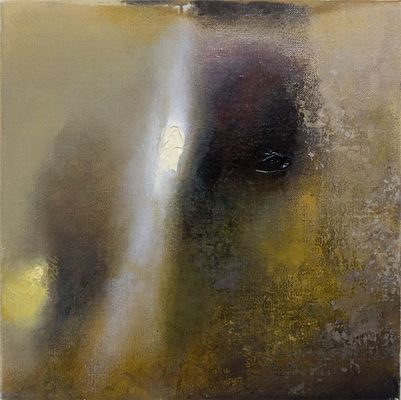
To return to Buckley’s fragment, the first two lines very much evoke how I paint nowadays. As you age, detail diminishes and patches of light become more luminous and float. I feel the most honest way of dealing with this is by smearing the oil paint on the canvas with the fingers and working close-up, blind. Only if the patches coalesce into an approaching image can the work gain a life.
-
Jonathan Walker was born in Melbourne, Australia and brought up on a dairy farm in Gippsland. In the 1970’s he studied painting at RMIT and won the Harold Wright Scholarship to the British Museum, London. During the 1980’s he exhibited at Pinacotheca Gallery, Richmond and had work shown at the NGV and Heidi City Art Gallery. Over the same period he designed the cover for the “Epigenesi” LP by Giancarlo Toniutti, Italy and conducted a mail exchange work with Achim Wollscheid, Germany. The work with artists through the post resulted in an article published in the bicentenary issue of Art and Australia 1988. He showed in artist run spaces such as WestSpace in the 90’s and 2000’s, and until 2012, taught painting at Victoria University, which is where we (Colleen Ahern and Lisa Radford) as organisers of the exhibition, among many others, had the privilege of being his student.
Walker’s knowledge was imparted to students through the careful selection of music, literature, and artists found in books that he himself had ordered for the library. Walker’s strategy was the generosity of sharing his vast knowledge with references specific to each student and their context.
Walker’s paintings share a similar focus and intimacy.
This exhibition presents a small selection of recent paintings alongside a publication that includes Walker’s writing. Observational and analytical, Walker’s work is a type of material notation — the time of day, colour and how it is blended, the both specific and fleeting location of a reflection on lino or the question of whether a chair leg should be included in a painting.
Please join us on Friday August 21 between 6-8pm to celebrate the opening of the exhibition.
Curated by Colleen Ahern and Lisa Radford.
B. Wurtz
Curated by Nic Tammens
March 26 - April 4, 2015
B.Wurtz works from a basement studio in his home on Manhattan’s Lower East Side.
This local fact is attested to by the plastic shopping bags and newsprint circulars that appear in his work. As formal objects, they don’t make loud claims about their origins but nonetheless transmit street addresses and places of business from the bottom of this long thin island. Like plenty of artists, Wurtz is affected by what is local and what is consumed. His work is underpinned by this ethic. It often speaks from a neighborhood or reads like the contents of a hamper:
“BLACK PLUMS $1.29 lb.”
“Food Bazaar”
“USDA Whole Pork Shoulder Picnic 99c lb.”
“RITE AID Pharmacy, with us it’s personal.”
“H. Brickman & Sons.”
“Sweet Yams 59c lb."
Most of the work in this exhibition was made while the artist was in residence at Dieu Donne, a workshop dedicated to paper craft in Midtown. Here Wurtz fabricated assemblages with paper and objects that are relatively lightweight, with the intention that they would be easily transportable to Australia. This consideration isn’t absolute in Wurtz’s work, but was prescriptive for making the current exhibition light and cheap. Packed in two boxes, these works were sent from a USPS post office on the Lower East Side and delivered to North Melbourne by Australia Post.
Wurtz appears courtesy of Metro Pictures, New York.
Thanks to Rob Halverson, Joshua Petherick, Sari de Mallory, Matt Hinkley, Helen Johnson, Fayen d'Evie, Ask Kilmartin, Lisa Radon, Ellena Savage, Yale Union, and "Elizabeth".
John Nixon
"Archive"
December 15 - January 20, 2014
The presentation of John Nixon's archive offered a rare showcase of this extensive collection of the artist's own publications, catalogues, posters, ephemera, editions and more, from the mid 1980s onwards, alongside a selection of his artworks.
Organized by John Nixon, Joshua Petherick and Matt Hinkley.
<a href=http://wfb.public-office.info/artist/john-nixon>All titles by John Nixon
"Habitat"
at Minerva, Sydney (organised by Joshua Petherick and Matt Hinkley)
November 15 - December 20, 2014
Lupo Borgonovo, Janet Burchill & Jennifer McCamley,
Lewis Fidock, HR Giger, Piero Gilardi, Veit Laurent Kurz,
Cinzia Ruggeri, Michael E. Smith, Lucie Stahl, Daniel Weil, Wols
Press Release:
“...It contained seven objects. The slender fluted bone, surely formed for flight, surely from the wing of some large bird. Three archaic circuitboards, faced with mazes of gold. A smooth white sphere of baked clay. An age-blackened fragment of lace. A fingerlength segment of what she assumed was bone from a human wrist, grayish white, inset smoothly with the silicon shaft of a small instrument that must once have ridden flush with the surface of the skin - but the thing’s face was seared and blackened.”
William Gibson, “Count Zero”, 1986
"Autumn Projects Archive"
Curated by Liza Vasiliou
March 6 - March 15, 2014
World Food Books, in conjunction with the Virgin Australia Melbourne Fashion Festival 2014, presented the Autumn Projects archive, consisting of a selection of early examples in Australian fashion with a particular interest in collecting designers and labels from the period beginning in the 1980’s, who significantly influenced the discourse of Australian Fashion.
Curated by Liza Vasiliou, the exhibition provided a unique opportunity to view pieces by designers Anthea Crawford, Barbara Vandenberg, Geoff Liddell and labels CR Australia, Covers, Jag along with early experimental collage pieces by Prue Acton and Sally Browne’s ‘Fragments’ collection, suspended throughout the functioning World Food Books shop in Melbourne.
H.B. Peace
presented by CENTRE FOR STYLE
November 14, 2013
"Hey Blinky, you say chic, I say same"
Anon 2013
H.B. Peace is a clothing collaboration between great friends Blake Barns and Hugh Egan Westland. Their pieces explore the divergences between 'character’ and ‘personality’ in garments....etc
Special Thanks to Joshua Petherick and Matt Hinkley of WFB and Gillian Mears
and a Very Special Thank you to Audrey Thomas Hayes for her shoe collaboration.
Janet Burchill & Jennifer McCamley
"Aesthetic Suicide"
May 10 - June 8, 2013
The first of our occasional exhibitions in the World Food Books office/shop space in Melbourne, "Aesthetic Suicide" presented a body of new and older works together by artists Janet Burchill & Jennifer McCamley, including videos, prints, a wall work, and publications.
During shop open hours videos played every hour, on the hour.
2018, English / German
Softcover, 192 pages, 24 x 30.5 cm
1st Edition, Out of print title / as new
Published by
Walther König / Köln
$300.00 - In stock -
Stunning and immediately out-of-print comprehensive new monograph on the work of Sam Gilliam, published on the occasion of the exhibition from the Kunstmuseum Basel June 9-September 30, 2018.
Between 1967 and 1973, American abstract painter Sam Gilliam (born 1933) undertook some of the most radical work of his six-decade-plus career, a period culminating in Gilliam's representing the US at the Venice Biennale in 1972. The work, including his Martin Luther King series and Jail Jungle series, reflected the fractured political climate of this period. It was also during this period that Gilliam began his beveled-edge paintings. In these iconic works, Gilliam poured acrylic paint directly onto the unprimed canvas, which he folded and crumpled while the paint was still wet, then stretched the canvas over a chamfered frame. The work in Sam Gilliam: The Music of Color conveys the influence of the DC Color Field school on Gilliam's art, and his blending of the lines between sculpture and painting.
Profusely illustrated throughout with stunning colour documentation of all of the exhibited works, installation views and details, with texts by Lynette Yiadiom Boakye, Larne Abse Gogarty, Rashid Johnson, Rafael Squirru.
Edited by Jonathan P. Binstock and Josef Helfenstein.
Sam Gilliam (b. 1933, Tupelo, Mississippi) is one the great innovators in postwar American painting. He emerged from the Washington, D.C. scene in the mid 1960s with works that elaborated upon and disrupted the ethos of Color School painting. A series of formal breakthroughs would soon result in his canonical Drape paintings, which expanded upon the tenets of Abstract Expressionism in entirely new ways. Suspending stretcherless lengths of painted canvas from the walls or ceilings of exhibition spaces, Gilliam transformed his medium and the contexts in which it was viewed. For an African-American artist in the nation’s capital at the height of the Civil Rights Movement, this was not merely an aesthetic proposition; it was a way of defining art’s role in a society undergoing dramatic change. Gilliam has subsequently pursued a pioneering course in which experimentation has been the only constant. Inspired by the improvisatory ethos of jazz, his lyrical abstractions continue to take on an increasing variety of forms, moods, and materials.
As New copy, still sealed.
2021, English
Hardcover (w. dust jacket), 256 pages, 25.5 x 18 cm
Published by
University of Chicago Press / Chicago
$75.00 $65.00 - Out of stock
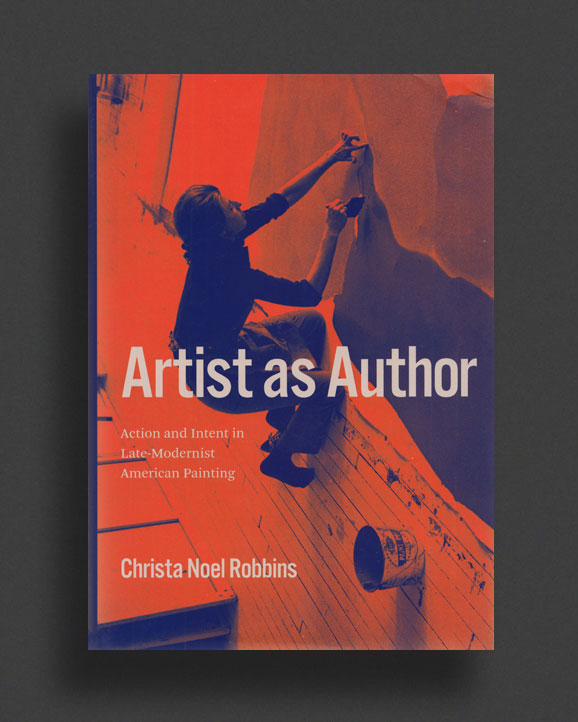
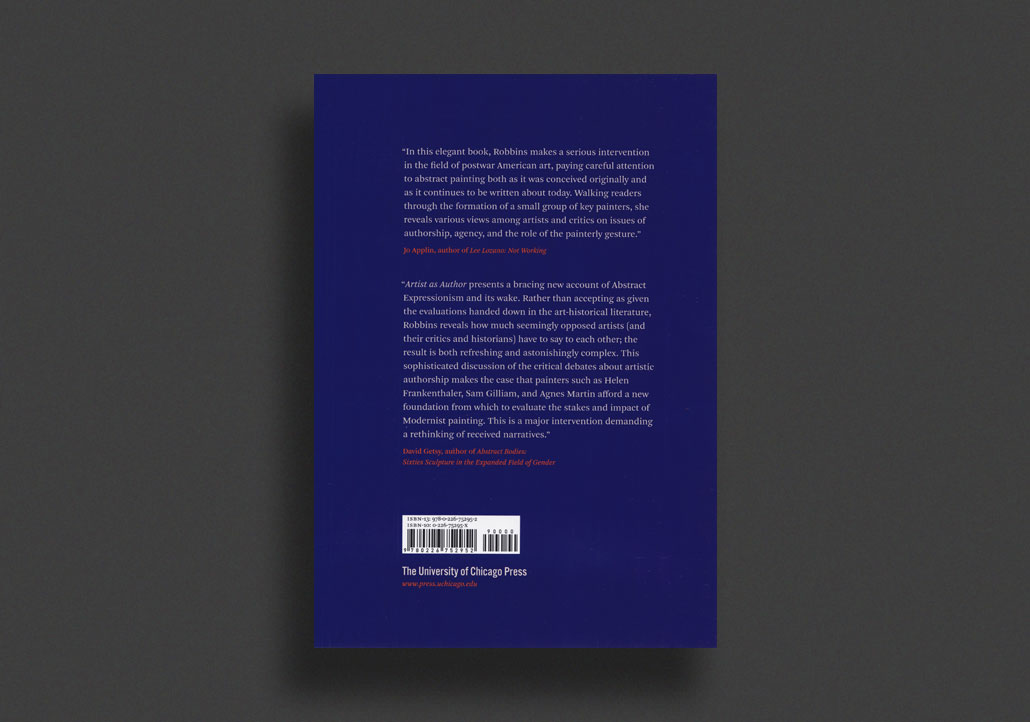
With Artist as Author, Christa Noel Robbins provides the first extended study of authorship in mid-20th century abstract painting in the US. Taking a close look at this influential period of art history, Robbins describes how artists and critics used the medium of painting to advance their own claims about the role that they believed authorship should play in dictating the value, significance, and social impact of the art object. Robbins tracks the subject across two definitive periods: the "New York School" as it was consolidated in the 1950s and "Post Painterly Abstraction" in the 1960s. Through many deep dives into key artist archives, Robbins brings to the page the minds and voices of painters Arshile Gorky, Jack Tworkov, Helen Frankenthaler, Kenneth Noland, Sam Gilliam, and Agnes Martin along with those of critics such as Harold Rosenberg and Rosalind Krauss. While these are all important characters in the polemical histories of American modernism, this is the first time they are placed together in a single study and treated with equal measure, as peers participating in the shared late modernist moment.
2021, English
Softcover, 176 pages, 17.7 x 22.8 cm
Published by
Nightboat Books / New York
$33.00 - Out of stock
Set among blue Ozark creeks, hoods of trucks, and changing constellations, Cody-Rose Clevidence's poems call up embodied sensations as they arise, with love and anguish, in a specific place. Navigating between senses and the sensed world, in lyric, lushness and density, Clevidence constructs an intricate and playful poetics both experimental and emotive to investigate the interplay between the vivid sensations of the body and the viscerally surrounding world.
Cody-Rose Clevidence is the author of BEAST FEAST (2014) and Flung/Throne (2018), both from Ahsahta Press, Listen My Friend, This Is the Dream I Dreamed Last Night (2021) and Aux Arc / Trypt Ich (2021) as well as several handsome chapbooks (flowers and cream, NION, garden door press, Auric). They live in the Arkansas Ozarks with their medium sized but lion-hearted dog, Birdie.
2021, English
Softcover, 240 pages, 14.5 x 21 cm
Published by
Whitechapel / London
The MIT Press / Massachusetts
$40.00 - Out of stock
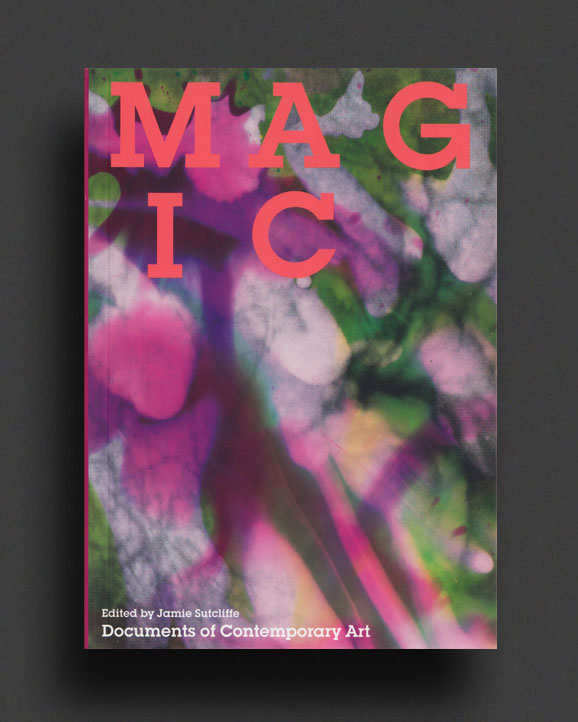
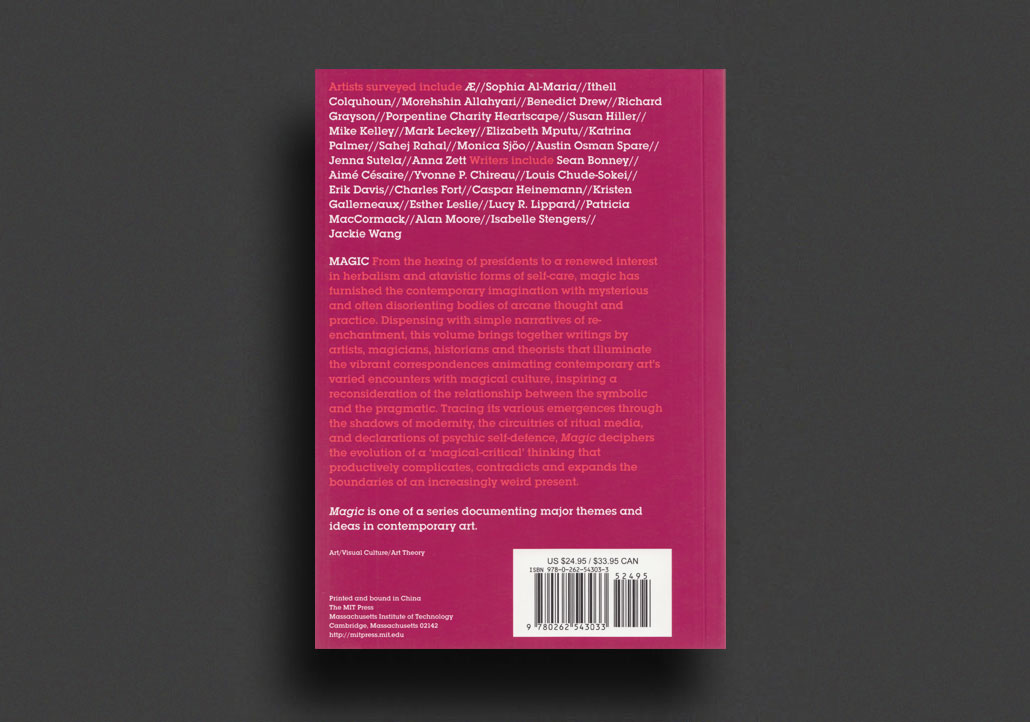
From the hexing of presidents to a renewed interest in herbalism and atavistic forms of self-care, magic has furnished the contemporary imagination with mysterious and complex bodies of arcane thought and practice. This volume brings together writings by artists, magicians, historians, and theorists that illuminate the vibrant correspondences animating contemporary art's varied encounters with magical culture, inspiring a reconsideration of the relationship between the symbolic and the pragmatic.
Dispensing with simple narratives of re-enchantment, Magic illustrates the intricate ways in which we have to some extent always been captivated by the allure of the numinous. It demonstrates how magical culture's tendencies toward secrecy, occlusion, and encryption might provide contemporary artists with strategies of remedial communality, a renewed faith in the invocational power of personal testimony, and a poetics of practice that could boldly question our political circumstances, from the crisis of climate collapse to the strictures of socially sanctioned techniques of medical and psychiatric care.
Tracing its various emergences through the shadows of modernity, the circuitries of ritual media, and declarations of psychic self-defence, Magic deciphers the evolution of a 'magical-critical' thinking that productively complicates, contradicts and expands the boundaries of our increasingly weird present.
Artists surveyed:
Holly Pester, Katrina Palmer, Ithell Colquhoun, Anna Zett, Monica Sjoeo, Sofia Al-Maria, Jack Burnham, Jeremy Millar, Susan Hiller, Mike Kelley, Morehshin Allahyari, Center for Tactical Magic, David Steans, Porpentine, Travis Jeppesen, Linda Stupart, Caspar Heinemann, Elizabeth Mputu, Faith Wilding, David Hammons, Ana Mendieta, Henri Michaux, Kenneth Anger, Benedict Drew, Mark Leckey, Robert Morris, Jenna Sutela, Haroon Mirza, Zadie Xa, Saya Woolfalk, Ian Cheng, Tabita Rezaire, Thee Temple ov Psychick Youth, Elijah Burgher, Pier Paolo Pasolini, Sahej Rahal
Writers:
Charles Fort, Victoria Nelson, Gary Lachman, Yvonne P. Chireau, Randall Styers, Isabelle Stengers, Alan Moore, Simon O' Sullivan, Lucy Lippard, Louis Chude Sokei, Patricia MacCormack, Mark Pilkington, AE, Annie Besant & C.W. Leadbeater, Michel Leiris, Aime Cesaire, Austin Osman Spare, Erik Davis, Mark Dery, Elaine Graham, Jeffrey Sconce, Giulia Smith, Esther Leslie, Alice Bucknell, Gary Zhexi Zhang, Hannah Gregory, Kristen Gallerneaux, Mahan Moalemi, Jamie Sutcliffe, Gregory Sholette, Aaron Gach, Eugene Thacker, Diane Di Prima, Allan Doyle, Aria Dean, Emily LaBarge, Lou Cornum, Joy KMT, Scott Wark, McKenzie Wark, Phil Hine, Jackie Wang, Sean Bonney
2021, English
Softcover, 120 pages, 21.5 x 15.2 cm
Published by
Nightboat Books / New York
$30.00 - Out of stock
Poetry by the author of Carceral Capitalism (Semiotext(e), 2018)!
The poems in The Sunflower Cast A Spell To Save Us From The Void read like dispatches from the dream world, with Jackie Wang acting as our trusted comrade reporting across time and space. By sharing her personal index of dreams with its scenes of solidarity and resilience, interpersonal conflict and outlaw jouissance, Wang embodies historical trauma and communal memory. Here, the all-too-familiar interplay between crisis and resistance becomes first distorted, then clarified and refreshed. With a light touch and invigorating sense of humor, Wang illustrates the social dimension of dreams and their ability to inform and reshape the dreamer’s waking world with renewed energy and insight.
Jackie Wang is a poet, library rat, trauma monster, harpist, and Assistant Professor of Culture and Media Studies at The New School. She is the author of The Sunflower Cast A Spell To Save Us From The Void, Carceral Capitalism, as well as the chapbooks Tiny Spelunker of the Oneiro-Womb and The Twitter Hive Mind Is Dreaming. When not writing poetry she researches race, surveillance technology, and the political economy of prisons and police.
1996, English
Softcover, 424 pages, 17.8 x 25.4 cm
Published by
University of California Press / Berkley
$86.00 - Out of stock
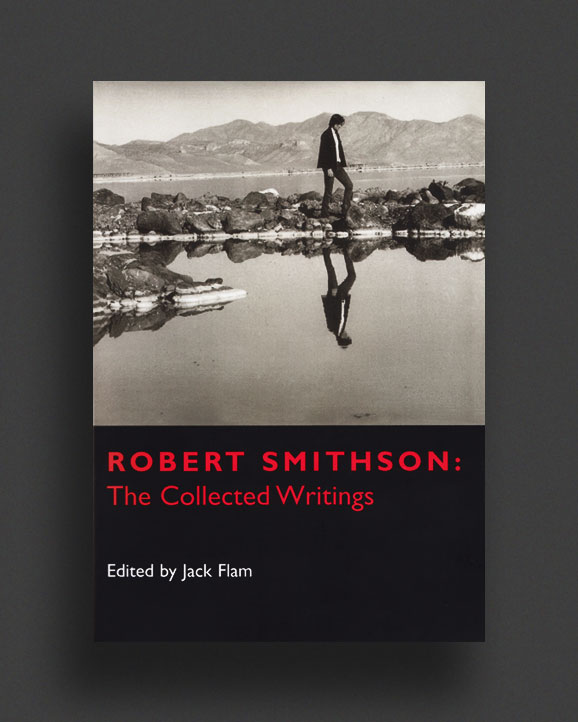
Since the 1979 publication of The Writings of Robert Smithson, Robert Smithson's significance as a spokesman for a generation of artists has been widely acknowledged and the importance of his thinking to contemporary artists and art critics continues to grow. In addition to a new introduction by Jack Flam, The Collected Writings includes previously unpublished essays by Smithson and gathers hard-to-find articles, interviews, and photographs. Together these provide a full picture of his wide-ranging views on art and culture.
Robert Smithson (1938-1973), one of the most important artists of his generation, produced sculpture, earthworks, drawings, and paintings in addition to the writings collected here.
Jack Flam is Distinguished Professor of Art History at Brooklyn College and the Graduate Center of the City University of New York. His Matisse on Art: Revised Edition (1995) is also available from California.
2021, English
Hardcover (w. dust jacket), 352 pages, 24 x 16 cm
Published by
Harry N. Abrams / New York
$40.00 - In stock -
A revealing and beautifully open memoir from pioneering industrial music artist, visual artist, and transgender icon Genesis P-Orridge.
In this groundbreaking book spanning decades of artistic risk-taking, the inventor of “industrial music,” founder of Throbbing Gristle and Psychic TV, and world-renowned fine artist with COUM Transmissions Genesis P-Orridge (1950–2020) takes us on a journey searching for identity and their true self. It is the story of a life of creation and destruction, where Genesis P-Orridge reveals their unwillingness to be stuck—stuck in one place, in one genre, or in one gender. Nonbinary is Genesis’s final work and is shared with hopes of being an inspiration to the newest generation of trailblazers and nonconformists.
Nonbinary is the intimate story of Genesis’s life, weaving the narrative of their history in COUM Transmissions, Throbbing Gristle, and Psychic TV. It also covers growing up in World War II’s fallout in Britain, contributing to the explosion of new music and radical art in the 1960s, and destroying visual and artistic norms throughout their entire life.
In addition to being a captivating memoir of a singular artist and musician, Nonbinary is also an inside look at one of our most remarkable cultural lives that will be an inspiration to fans of industrial music, performance art, the occult, and a life in the arts.
“Genesis had a profound impact on me as an artist and then a dear friend. Reading this illuminating and radically open memoir is an honor. The echoes of such a strong creative voice unveiling the experiences of the proverbial climb to becoming a true artist and later cultural icon is mesmerizing.” — actor, director, and author, Asia Argento
“Genesis was continually breaking new ground and developing new projects with the aim of short circuiting received ideas, chipping a hole in the carapace, questioning everything: religion, education, nationality, sexual identity to find the reality behind the society of the spectacle. Gen was always going forwards. It is fascinating to read the back story, finally told.” — bestselling author, Barry Miles
2020, English
Softcover, 384 pages, 14.8 x 21 cm
Published by
Trapart / Stockholm
$63.00 - In stock -
Sacred Intent gathers conversations between artist Genesis Breyer P-Orridge and longtime friend and collaborator, the Swedish author Carl Abrahamsson. From the first 1986 fanzine interview about current projects, over philosophical insights, magical workings, international travels, art theory and gender revolutions, to 2019’s thoughts on life and death in the the shadow of battling leukaemia, Sacred Intent is a unique journey in which the art of conversation blooms.
With (in)famous projects like C.O.U.M. Transmissions, Throbbing Gristle, Psychic TV, Thee Temple Ov Psychick Youth (TOPY) and Pandrogeny, Breyer P-Orridge has consistently thwarted preconceived ideas and transformed disciplines such as performance art, music, collage, poetry and social criticism; always cutting up the building blocks to dismantle control structures and authority. But underneath the socially conscious and pathologically rebellious spirit, there has always been a devout respect for a holistic, spiritual, magical worldview – one of “sacred intent.”
Sacred Intent is a must read for anyone interested in contemporary art, deconstructed identity, gender evolution, and magical philosophy. The book not only celebrates an intimate friendship, but also the work and ideas of an artist who has never ceased to amaze and provoke. Also included are photographic portraits of Breyer P-Orridge taken by Carl Abrahamsson, transcripts of key lectures, and an interview with Jacqueline “Lady Jaye” Breyer P-Orridge from 2004.
2014, English / German
Hardcover, 492 pages, 30 x 29 cm
Published by
Sternberg Press / Berlin
$100.00 - Out of stock
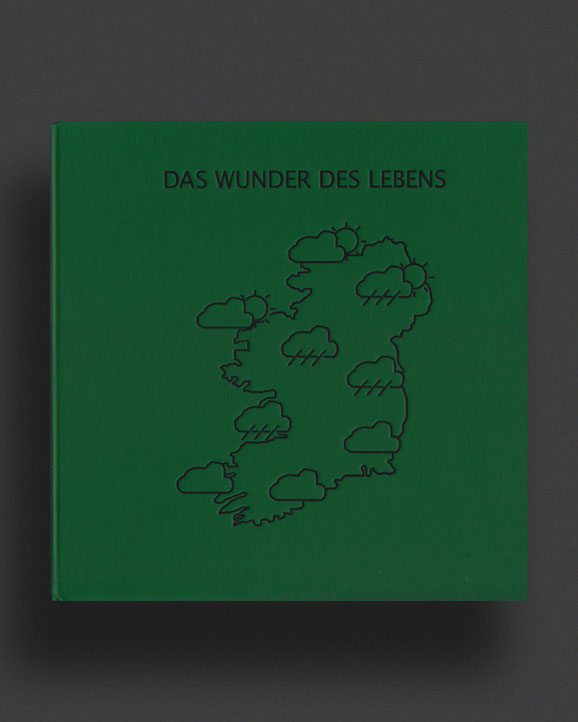
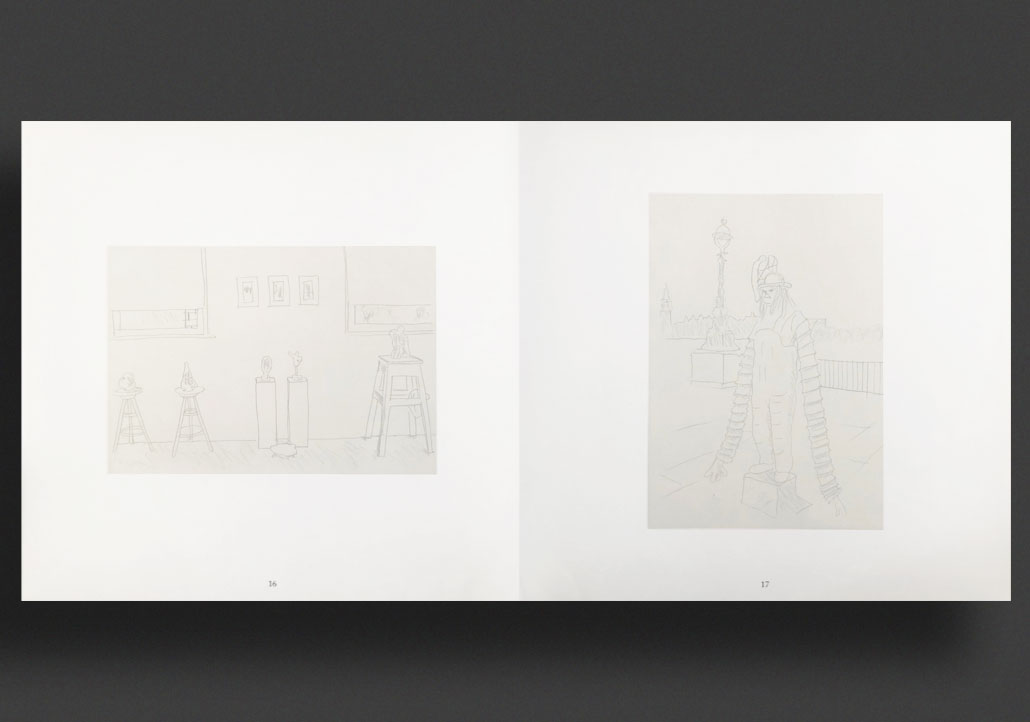
Like a pictorial encyclopedia, Das Wunder des Lebens contains over four hundred drawings that show all that the modern world has to offer, from maps and city views to cars and airplanes. However, unlike conventional pictorial dictionaries, there is no symbolic system. We see laundry bags and paint buckets as well as a nun and a man with a hat in front of a double window, a shy animal with a thick fur, and breakfast on a Victorian table. Juxtapositions are normalized, and normality becomes a farce. Everything is exposed to everyone; everything becomes equal.
Jos de Gruyter & Harald Thys have been working together as an artist duo since the end of the 1980s. Their photographs, drawings, objects, and videos—steeped in black humor, critical (self)-reflection and overlapping reality, fiction and suppressed history—play with notions of the superficial and banal.
Copublished with Kunsthalle Wien and Kunsthalle Basel on the occasion of the eponymous exhibition at the former, February 7–May 4, 2014, and “Projekt 13” at the latter, January 16–March 14, 2010
As New with possible light corner bumping during storage.
2021, English
Softcover (walnut cloth-bound), 50 pages, 31 x 20.5 cm
Ed. of 400,
Published by
Robert Heald Gallery / Wellington
$30.00 - In stock -
The first gallery catalogue dedicated entirely to the work of American artist Hawkins Bolden (1914—2005), published by Robert Heald Gallery on the occasion of the exhibition Hawkins Bolden — Tongues, 25 June 2020 - 25 July, 2020. Hawkins Bolden was a self-taught artist who lived his entire life in Memphis, Tennessee. At the age of seven, Bolden was left completely blind following a baseball accident. Later in his life, utilizing only his sense of touch, Bolden began scavenging the alleyways and fields around his home in search of discarded materials, litter and other debris with which to work, creating a vast number of his astonishing "scarecrows", tall totems and mask-like objects made from pots, pans, leather belts, rubber hoses and other found materials.
Published in a limited edition of 400 copies, this large format, walnut cloth-bound publication is profusely illustrated throughout with Bolden's works, alongside installation views and text by William Arnett (Souls Grown Deep Foundation, Atlanta).
2000, English
Hardcover (w. dust jacket), 568 pages, 33 x 28.6 cm
Published by
The New York Public Library / New York
Tinwood Books / Burlington
Schomburg Center for Research in Black Culture / New York
$275.00 - In stock -
The African American culture of the South has produced many of the twentieth century’s most innovative art forms. Widely appreciated for its music—from the blues and jazz, to gospel, soul, rock ‘n’ roll—the region has also played host to a less visible but equally important visual art tradition. Working without significant formal training, often employing the most unpretentious and unlikely materials, these grassroots artists have created powerful statements that, like the music, are strongly influenced by the legacies of African belief systems, rooted in community, and committed to cultural continuity. At the same time, however, this quintessentially American art testifies to the originality and transformative force of individual imaginations.
Since the 1980s, popular and critical interest in this genre has grown dramatically and has given it many names: “self-taught,” “folk,” “outsider,” “visionary.” Souls Grown Deep: African AmericanVernacular Art is the opening work in a multi-volume study that offers the first comprehensive exploration of this art form’s development during the late twentieth century, an era shaped by the civil rights movement. Souls Grown Deep illuminates a remarkable spectrum of creativity: the media of painting, sculpture, and works on paper; the region’s outdoor art environments and art installations; historical examples from earlier eras; and relevant decorative arts and crafts.
With unprecedented thoroughness and scope, Souls Grown Deep takes readers inside these creators’ worlds. The book includes lavishly illustrated, full-color chapters on forty vernacular artists. Writing from diverse perspectives, thirty-seven contributing writers—including civil rights leaders, art historians, museum curators, and folklorists—present thematic, and historical overviews crucial to and understanding of the art’s origins.
2021, English
Softcover, 288 pages, 12.5 x 21 cm
Published by
Sternberg Press / Berlin
$50.00 - Out of stock
Contributions By Taylor Renee Aldridge & Jessica Lynne, Kalia Brooks Nelson, Maddee Clark, Justin Clemens, Ben Eltham, Fayen D’evie & Lizzie Boon, Dan Fox, Maria Fusco, Sarah Gory, Boris Groys, Paul James & Brad Haylock, Flavin Judd, Sara Kaaman, Jessica Gysel & Katja Mater, Bella Li & Justin Clemens, Freek Lomme, Rachel Marsden, Nikos Papastergiadis & Hou Hanru, Megan Patty, Barry Schwabsky, Anna-Sophie Springer & Caleb Waldorf, and Astrid Vorstermans
Fires burn around the world. Systemic discrimination persists, precarity is increasing, and the modern democratic project faces challenges from all sides. Art writing helps us to understand art which in turn helps us to understand such crises. But art writing itself is in crisis. Newspapers and magazines offer fewer channels than ever for independent art criticism, persistent institutional biases exclude the positions of many, and a proliferation of platforms presents opportunities and challenges in equal measure.
This volume presents contributions from a broad range of authors who address the social and political dimensions of art and art writing in the contemporary context, and the ways in which new writing and publishing practices promote critical engagement among readerships as never before.
English / Japanese
Softcover, 124 pages, 26 x 36 cm
Published by
A.D.A Edita / Tokyo
$80.00 - Out of stock
One of the finest architecture series ever published, the world renowned GA (Global Architecture) series, presented by the highly esteemed publishing house that also published the GA Document, GA Houses, and GI (Global Interior) architectural publications.
Each over-sized photographic folio issue of the special GA Residential Masterpieces series highlights a renowned international architect and takes a detailed look into their creations for residence.
Absolutely stunning and vivid large-format architectural photography of the selected building’s interiors, exteriors and architectural details, along with texts (in English and Japanese) and floor-plans/elevation drawings make up the profiles on each featured architectural project. The visual generosity of these handsomely designed and beautifully printed over-sized publications make them a treasure for any architecture or interior design enthusiast or collector.
Since before the second world war, Le Corbusier has been in search of a place for putting his own architectural theory into practice outside the closed stagnation of Europe. And it was India that has been chosen, after WWII, to become his new horizon. In 1950 he was commissioned to design the city of Chandigarh, the new capital for the State of Punjab. This huge project led him to work on a number of smaller ones in India. The Sarabhai House in Ahmedabad is an example of these projects done between 1951 and 1955.
Printed in Japan
2008, English / Japanese
Softcover, 124 pages, 26 x 36 cm
Published by
A.D.A Edita / Tokyo
$90.00 - Out of stock
One of the finest architecture series ever published, the world renowned GA (Global Architecture) series, presented by the highly esteemed publishing house that also published the GA Document, GA Houses, and GI (Global Interior) architectural publications.
Each over-sized photographic folio issue of the special GA Residential Masterpieces series highlights a renowned international architect and takes a detailed look into their creations for residence.
Absolutely stunning and vivid large-format architectural photography of the selected building’s interiors, exteriors and architectural details, along with texts (in English and Japanese) and floor-plans/elevation drawings make up the profiles on each featured architectural project. The visual generosity of these handsomely designed and beautifully printed over-sized publications make them a treasure for any architecture or interior design enthusiast or collector.
An outstanding example of the golden age of Modernism and a high watermark in Aalto's oeuvre, the Villa Mairea was the result of a creative interchange between the architect and the owner. Here, through large format, full-page colour, and black and white photographs, the viewer is given the opportunity to wander through both the interior and exterior of this masterpiece while enjoying the surroundings. Including plans and elevations, the survey is introduced by a short essay from the son of the original owner.
Printed in Japan.
1989, English
Softcover, 208 pages, 23 x 15.5 cm
Published by
Da Capo Press / New York
$40.00 - Out of stock
In the twenties, Surrealists proclaimed that words had stopped playing around and had begun to make love. Nowhere is this more apparent than in the writings of Marcel Duchamp, who fashioned some of the more joyous and ingenious couplings and uncouplings in modern art. This collection beings together two essential interviews and two statements about his art that underscore the serious side of Duchamp. But most of the book is made up of his experimental writings, which he called "Texticles," the long and extraordinary notes he wrote for The Bride Stripped Bare By Her Bachelors, Eben (also known as The Large Glass ), and the outrageous puns and alter-ego he constructed for his female self, Rrose Selavy ("Eros, c'est la vie" or arouser la vie", drink it up" celebrate life"). Wacky, perverse, deliberately frustrating, these entertaining notes are basic for understanding one of the twentieth century's most provocative artists, a figure whose influence on the contemporary scene has never been stronger.
2018, English
Softcover, 304 pages, 23 x 17 cm
Published by
Center for Curatorial Studies Bard College / New York
Dancing Fox Press
$78.00 - Out of stock
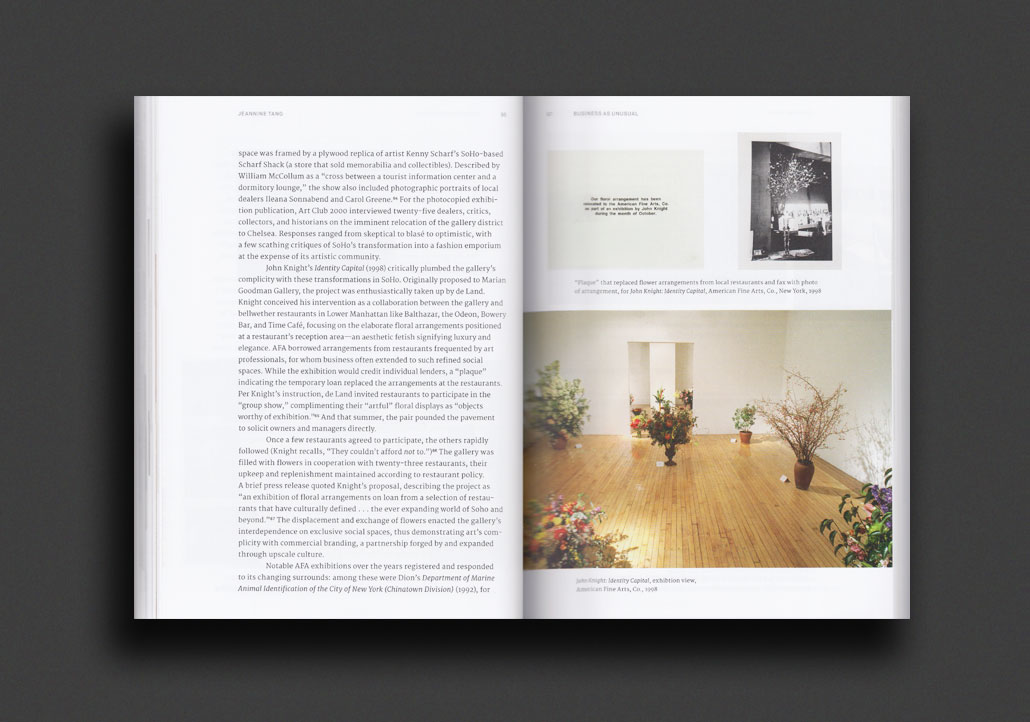
The Conditions of Being Art is the first book to examine the activities of groundbreaking contemporary art galleries Pat Hearn Gallery and American Fine Arts, Co. (1983–2004), and the transnational milieu of artists, dealers and critics that surrounded them.
Drawing on the archives of dealers Pat Hearn and Colin de Land—both, independently, legendary players on the New York art scene of the 1980s and '90s, and one of the great love stories of the art world—this publication illustrates their distinctive artistic practices, significant exhibitions and events, and daily business. Hearn and de Land championed art that challenged the business of running an art gallery; artists like Renée Green and Susan Hiller, Andrea Fraser and Cady Noland, who employed conceptualism and installation, social and institutional critique.
Contributing to the history of exhibitions, institutions and curating, The Conditions of Being Art addresses a significant gap in this literature around experimental commercial spaces in recent art history. This publication is the first book-length critical account of the alternative commercial gallery practices of the 1990s, a moment and a scene that is extremely influential to many of today's art dealers, curators and artists.
Hearn and de Land's gallery practices explored new experimental and ethical possibilities within the selling of art, testing the relationship of contemporary art to its markets. In this volume, full-colour images, in-depth scholarly investigations and detailed gallery histories vibrantly document how Hearn and de Land tested new notions of what an art gallery could be.
Edited with text by Jeannine Tang, Lia Gangitano, Ann Butler. Text by Johanna Burton, Jill Casid, Lauren Cornell, Diedrich Diederichsen, Jennifer King, Mason Leaver-Yap, Kobena Mercer.
Features the work of: Mark Morrisroe, Jimmy de Sana, Art Club 2000, Moyra Davey, Alex Bag, Lutz Bacher, John Knight, J. St. Bernard, John Miller, Renée Green, Jutta Koether, Phillip Taaffe, Christian Philipp Müller, Gregg Bordowitz, Tom Burr, Susan Hiller, Andrea Fraser, Cady Noland, Mark Dion, Julia Scher, Kirsten Mosher, Dan Flavin, Jack Pierson, Stephen Dillemuth, Mary Heilmann, Joan Jonas, Cindy Sherman, Robert Smithson, Jessica Diamond, Rapid Response (Christina Cobb, Peter Fend, Julia Fischer, William Meyer), Lincoln Tobier, Ted Byfield, and many others.
1985, English
Softcover (w. dust-jacket), 200 pages, 21 x 25 cm
1st Edition, Out of print title / used / very good
Published by
Thames and Hudson / London
$190.00 - Out of stock
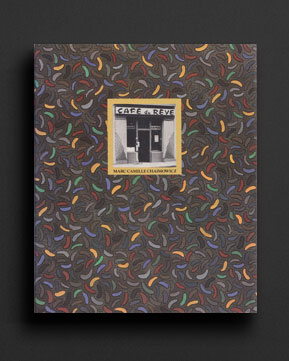
The exquisite "Café du Reve" book by the British-based artist Marc Camille Chaimowicz (b. post-war Paris). This is a copy of the first English printing from 1985.
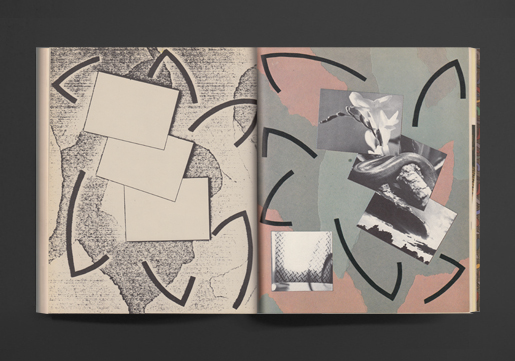
Scarce these days, this beautiful artists book's content is entirely composed, designed and collated from cover to cover by Chaimowicz in the style of a somewhat autobiographical scrap-book. Each page is designed by hand and illustrated with Chaimowicz's decorative motifs and patterns that carry upon them his hotel letterhead correspondence, writings and poetry, paired with photographs of objects, places and people - snapshots taken by Chaimowicz or appropriated from magazines.
"Café du Reve" remains a perfect early example of Chaimowicz's encompassing artistic practice that is immersed in the spatial and emotional experience of environments and décor, literature, the domestic sphere, interior design, ceramics, applied art, wallpaper and textiles.
Born in 1947, Paris, Marc Camille Chaimowicz is a London-based artist whose cross-disciplinary work in painting, drawing, collage, sculpture, installation, furniture, lighting, ceramics, textiles, and wallpaper challenges the categorical divisions between fine and applied arts, masculine and feminine, public and private, past and present. His works are in the Museum of Modern Art, Tate Modern, and Victoria and Albert Museum collections.
Highly recommended.
Very Good in VG dust jacket.
2009, English / French
Softcover (w. dust jacket), 160 pages, 24 x 29 cm
Published by
JRP Ringier / Zürich
Musée cantonal des Beaux-Arts / Lausanne
$88.00 - In stock -
The first overview of the variety and scope of the research carried out by Renée Green over the past twenty years.
This reference monograph provides the first overview of the variety and scope of the research carried out by Renée Green over the past twenty years through mediums as varied as film, video, installation, sound-related works, photographs, prints, banners, texts, websites, and ephemera.
The essays by Nora Alter, Diedrich Diedrichsen, Kobena Mercer, Catherine Quéloz, Gloria Sutton, Elvan Zabunyan, and the interview between Julian Renbentisch and Renée Green not only give an historical overview of the artist's work, but engage with issues central to her practice such as questions of genealogy and memory, archives and their reworkings, movements and displacements, site-specificity and location, positionalities and perceptions. They offer new insight into the artist's specific use of images, sound and text, and her inscription in art history.
Born 1958 in Cleveland, Ohio, artist, writer, and filmmaker Renée Green lives and works in New York and San Francisco. Her work is located both within the legacy of the most ambitious achievements of Conceptual and post-Minimal art, and within a post-colonial critique of culture. It often takes the form of complex, multi-layered archive-like installations that employ a vast array of sources, and point to a variety of issues, always involving the spectator as active participant through multiple points of access.
Edited by Nicole Schweizer.
Texts by Nora Alter, Diedrich Diedrichsen, Renée Green, Kobena Mercer, Catherine Quéloz, Juliane Rebentisch, Gloria Sutton, Elvan Zabunyan.
Published in collaboration with the Musée cantonal des Beaux-Arts, Lausanne.
2019, English
Softcover, 175 pages, 11.4 x 17.7 cm
Published by
PAJ Publications / US
$44.00 - Out of stock
The fourth volume in PAJ's Performance Ideas series, The Sun on the Tongue unfolds in an expanding universe of philosophical reflections on love, art, war, nature, and human existence. Etel Adnan, the internationally renowned Arab American writer and visual artist, crosses genres and continents and centuries in her literary texts, plays, poems, and art. Her plays At A Certain Hour of the Night, Crime of Honor and Tolerance are featured here, along with essays on Pina Bausch and Paul Klee, and an interview on her life and work. Her texts have been performed or adapted for theatre, opera, and radio in the U.S. and Europe. Robert Wilson invited her to write the French section of his multi-country opera, the CIVIL warS: a tree is best measured when it is down, in 1984.
Edited by Bonnie Marranca and Klaudia Rucshkowski
1990, English
Softcover, 102 pages, 23 x 14.7 cm
Published by
Post Apollo Press / US
$44.00 - Out of stock
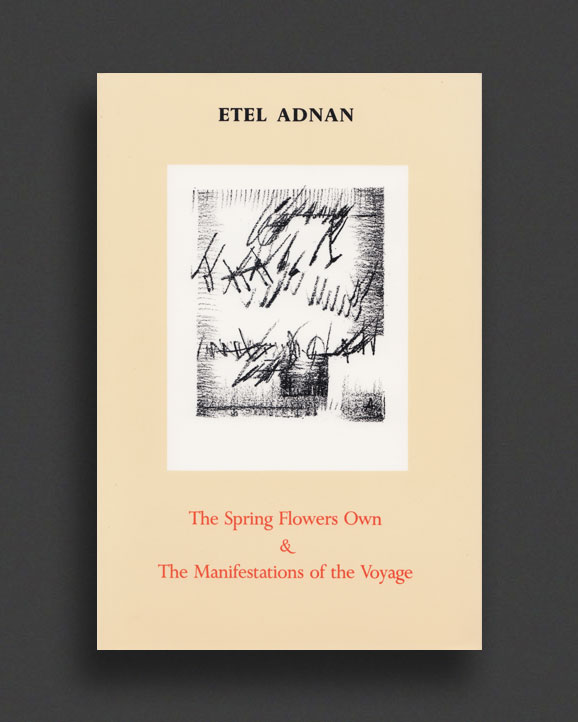
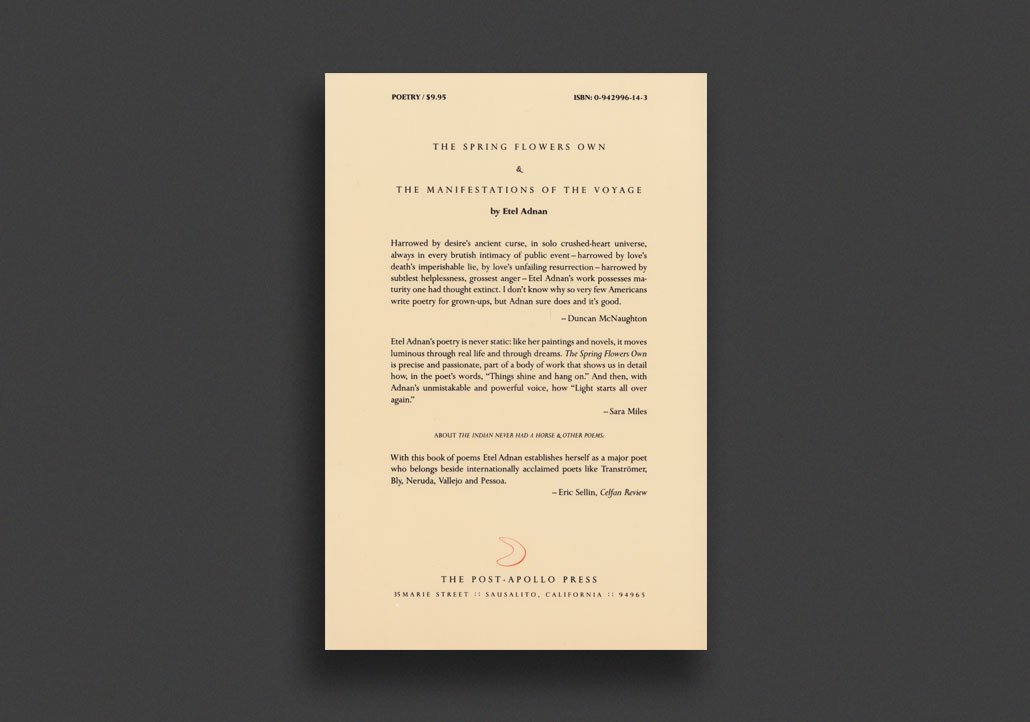
“The Spring Flowers Own” and “The Manifestations of the Voyage” continue and complete the Cycle of the Linden Tree, which started with two poems previously published in The Indian Never Had a Horse & Other Poems: “One Linden Tree, Then Another Linden Tree,” and “An Alley of Linden Trees, and Lightning.” With drawings by Etel Adnan.
"With this book of poems Etel Adnan establishes herself as a major poet who belongs beside internationally acclaimed poets like Tranströmer, Bly, Neruda, Vallejo, and Pessoa." — Eric Sellin
Etel Adnan (1925—2021) was born in Beirut, Lebanon. She is a celebrated writer, essayist, and playwright, and is the author of more than twenty books in all these disciplines. Her work as a whole is a faithful record of the times and places she has lived in Beirut, Paris, and in the San Francisco Bay Area. At least eighteen works by Adnan have been published in English. They include Sitt Marie Rose (Post-Apollo Press, 1982); The Arab Apocalypse (Post-Apollo Press, 1989); Sea and Fog (Nightboat Books, 2012), winner of the Lambda Literary Award for Lesbian Poetry and the California Book Award for Poetry; Premonition (Kelsey Street Press, 2014); Surge (Nightboat Books, 2018); Time (Nightboat Books, 2019), winner of the Griffin Poetry Prize and the Best Translated Book Award; and most recently Shifting the Silence (Nightboat Books, 2020). Her paintings, described by New York Times art critic Roberta Smith as “stubbornly radiant abstractions,” have been widely exhibited. Spanning media and genres, Adnan’s writings have led to numerous collaborations with artists and musicians, including the French part of CIVIL warS, a multi-language opera by American stage director Robert Wilson, performed in Lyon and Bobigny in 1985. In 2014 she was named Chevalier des Arts et des Lettres, France’s highest cultural honor, by the French Government.
2020, English
Softcover, 680 pages, 19 x 13.2 cm
Published by
JRP Ringier / Zürich
$65.00 - Out of stock
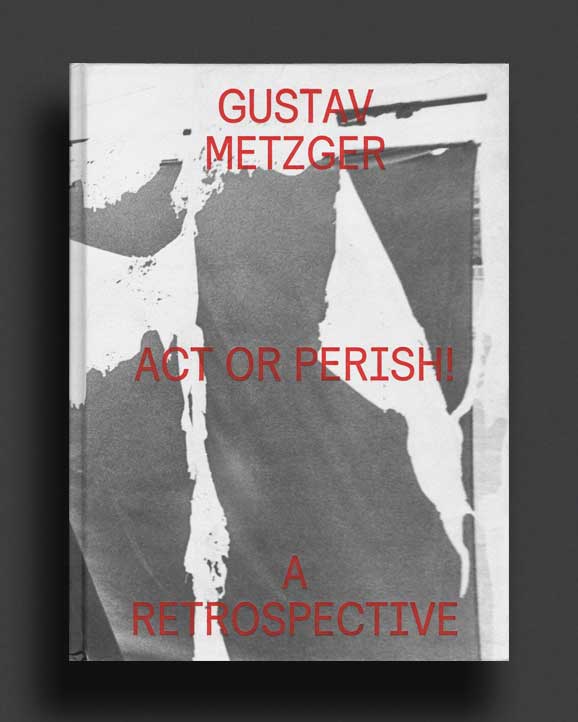
Bringing together more than 350 texts written between 1953 and 2016, this comprehensive volume establishes artist and activist Gustav Metzger (1926–2017) as a towering figure of the 20th century, a long-overdue recognition of the artist’s influential vision.
Renowned for his use of unstable materials and chemical reactions to create artworks that embody processes of change, destruction, and renewal, Metzger was also a prolific writer, theoretician, and satirist.
His interest in technology and science lead him to create such concepts as auto-destructive and auto-creative art—terms he coined with his manifestos on ‘Auto-destructive Art’ in 1959 and ‘Auto-creative Art’ in 1961. He put these ideas into action with artworks made to decay, disintegrate, or change following natural processes.
Edited by Gustav’s long-time friend and curator Mathieu Copeland, this anthology of writings makes Metzger’s key thinking from the 1950s onward available to a wide audience.
It includes seminal writings such as his manifestos of auto-destructive and auto-creative art (both 1961), ‘On Random Activity in Material/Transforming Works of Art’ (1964), ‘The Possibility of Auto-Destructive Architecture’ (1966), his inspiring interview with R. Buckminster Fuller from 1970, ‘The Artist in the Face of Social Collapse’ (1998), and his legacy manifesto entitled ‘Remember Nature’ from 2013, as well as art criticism, political satires, and lecture transcriptions.
His writing allows a challenging reading of the contemporary (art) period as analysed by one of its most discerning figures—a pioneering artist and thinker involved in environmental and societal issues very early on.
2016, English
Hardcover, 224 pages, 22 x 30 cm
Published by
Nero / Rome
$88.00 - In stock -
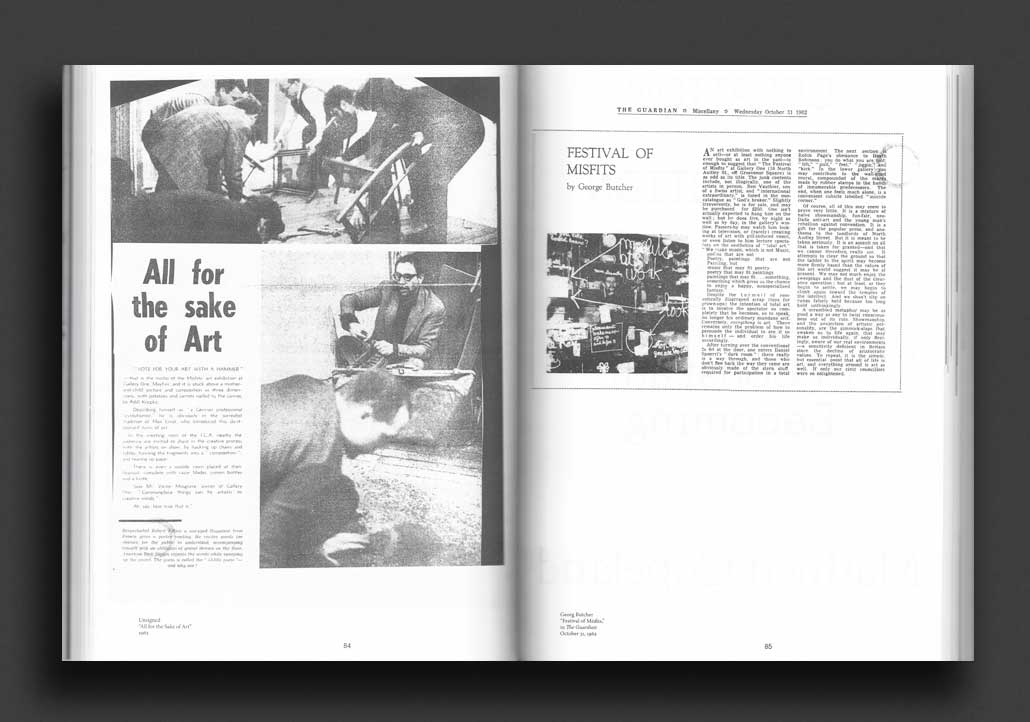
The catalogue of Metzger's first extensive overview: divided into sections—each of which is accompanied by a critical text—corresponding to those presented in the exhibition, the publication provides systematic insight into an artistic oeuvre considered as one of the most important in the 20th century (with texts by Mathieu Copeland, Hans Ulrich Obrist, Yoko Ono, Hermann Nitsch…).
If the retrospective, which started at the Centre for Contemporary Art in Torun before travelling to Oslo, was presented in distinctively different formats—the former providing audiences with a wide overview of Metzger's career and works, including attention to his early years of political activism and engagement and concomitant radicalization, and the latter focusing upon deeper researched aspects of the artist's production,—the exhibition catalogue provides readers with a rich array of theoretical contributions, including a conversation between Dobrila Denegri and Yoko Ono, Ivor Davies, Hermann Nitsch and Jon Hendricks, as well as Metzger's own writings.
The contributors Pontus Kyander, Andrew Wilson, Mathieu Copeland, Dobrila Denegri, Leanne Dmyterko, Hans Ulrich Obrist, Manuel Olveira take up different aspects of Metzger's work, from the artist's early political activism, to his experimentation with painting to his drafting of the manifestoes for Auto-Destructive Art, providing us with an invaluable and much awaited document for consultation in contemporary art.
Published following the eponymous exhibition at Centre of Contemporary Art in Torun, Poland, from November 8, 2015, to January 17, 2016, and the joint exhibition “Gustav Metzger in Oslo – Extremes Touch and Liquid Crystal Environment” at Kunsthall Oslo and Stiftelsen Kunstnernes Hus, Oslo, from November 14, 2015 to January 31st, 2016.
The artistic oeuvre of Gustav Metzger (1926-2017), in which the concept of Auto-Destructive Art and the Art Strike hold a central role, is considered as one of the most important in the 20th century.
2019, English
Hardcover, 160 pages, 23.5 x 27.9 cm
Published by
Yale University Press / New Haven
$74.00 - Out of stock
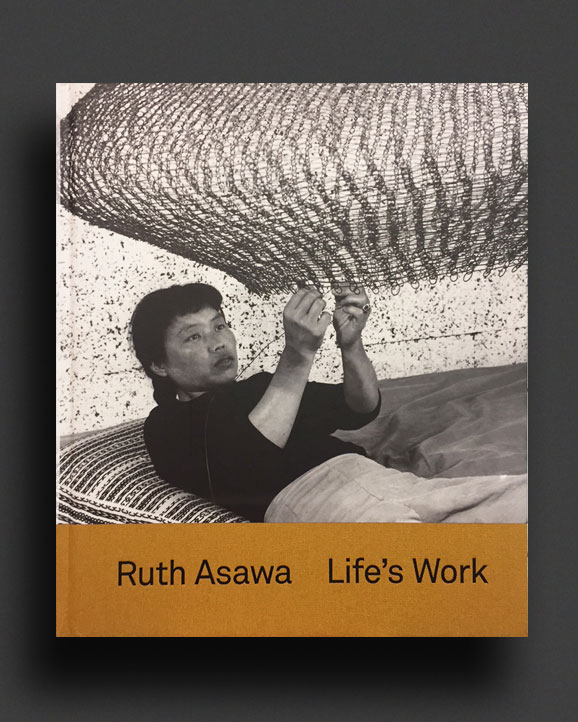
“Doing is living. That is all that matters.”—Ruth Asawa
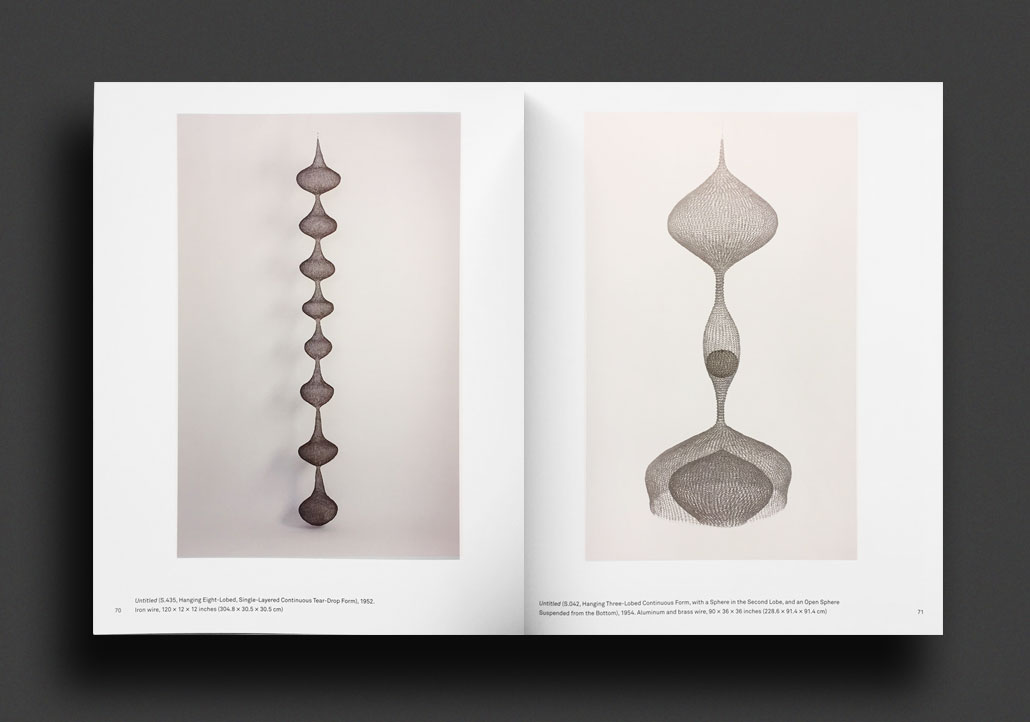
Throughout her long and prolific career American artist Ruth Asawa (1926–2013) developed innovative sculptures in wire, a medium she explored through increasingly complex forms using craft-based techniques she learned while traveling in Mexico in 1947. In 1949, after studying at Black Mountain College, Asawa moved to San Francisco and created dozens of wire works, among them an iconic bronze fountain—the first of many public commissions—for the city’s Ghirardelli Square.
Bringing together examples from across Asawa’s full and extraordinary career, this expansive volume serves as an unprecedented reorientation of her sculptures within the historical context of 20th-century art. In particular, it includes careful consideration of Asawa’s advocacy for arts education in public schools, while simultaneously focusing on her vital—and long under-recognized—contributions to the field of sculpture. Insightful essays explore the intersection of formal experimentation and identity to offer a fresh assessment of this celebrated artist. Richly illustrated with exquisite new installation views, Ruth Asawa: Life’s Work introduces original scholarship that traces the dynamic evolution of form in the artist’s work.
Edited by Tamara H. Schenkenberg; With essays by Aruna D’Souza, Helen Molesworth, and Tamara H. Schenkenberg
Tamara H. Schenkenberg is curator at the Pulitzer Arts Foundation in St. Louis.
2003, Japanese
Softcover, unpaginated, 13 x 8.5 cm
1st Edition, Out of print title / used / good
Published by
Keibunsha / Kyoto
$20.00 - Out of stock
"Flip so gently!"
Lovely limited edition flip-book by Japanese illustrator Aquirax Uno, published in 2003 on the occasion of his exhibition "Chic Pop — Aquirax Uno's World Exhibition" at Keibunsha Store Gallery in Kyoto. Long out-of-print, this pocket-sized treasure features monochrome b/w fantastical illustrations of Uno's throughout from the 1950s—1980s and small whimsical texts (in Japanese), each page overlay printed with pink flip-book sequential pencil drawings that metamorphose a cat → girl → fish when flipped.
Aquirax Uno, also known as Akira Uno (b. 1934) is a Japanese graphic artist, illustrator and painter who was very influential in the 1960s and 1970s. His incredibly unique work is characterized by fantastic visuals, capricious and sensuous line flow, flamboyant (and occasionally grotesque) eroticism, and frequent use of collage and psychedelic bright colours. Uno was prominently involved with the Japanese underground art of the 1960s–1970s, and is particularly notable for his frequent collaborations with Shuji Terayama and his experimental theater Tenjo Sajiki.
Good copy with some cover wear. Very Good internally.