World Food Books' programme is largely produced on Kulin Nation land. We acknowledge the Wurundjeri people of the Kulin Nation as the first and continuing custodians of this land, and pay respect to their Elders past, present, and emerging.
World Food Books is an arts and special interests bookshop in Naarm / Melbourne. Founded in 2010, World Food Books is devoted to the presentation of a rotating, hand-selection of international art, design, literary and counterculture publications with an emphasis on the anti-traditional, the experimental, the avant-garde, the heretic, the marginal.
Presenting new titles alongside rare and out-of-print books, catalogues and journals spanning the fields of modern and contemporary art, design, photography, illustration, film, literature, poetry, cultural theory, philosophy, sexuality, popular and underground culture in its many radical forms, World Food Books wishes to encourage adventurous, thoughtful and open-minded reading, looking, writing, and exchange of publishing and ideas, both current and historical.
As well as our bookshop, located in Melbourne's historical Nicholas Building, all of our inventory is available internationally via our online mail-order service.
World Food Books semi-regularly co-ordinates "Occasions", a programme of exhibits and events at the bookshop and in partnership with other hosts (such as museums and art galleries) that develop out of the activities, relationships and content of the bookshop itself.
World Food Books
The Nicholas Building
37 Swanston Street
Room 5, Level 6
Melbourne 3000
Australia
SHOP HOURS:
Thu–Fri 12–6, Sat 12–5
WEB-SHOP OPEN 24/7
World Food Books
Postal Address:
PO Box 435
Flinders Lane
Victoria 8009
Australia
Art
Theory / Essay
Architecture / Interior
Graphic Design / Typography
Photography
Fashion
Eros
LGBTQ+
Fiction / Poetry
Weird / Speculative / Science Fiction / Horror
Transgressive / Visceral / Abject
Symbolism / Decadence / Fin de siècle
Film / Video
Painting
Sculpture / Installation
Performance / Dance / Theater
Drawing
Sound / Music
Curatorial
Group Shows / Collections
Periodicals
Out-of-print / Rare
Posters / Ephemera / Discs
Signed Books
World Food Books Gift Voucher
World Food Book Bag
Australian Art
Australian Fiction
Australian Science Fiction / Speculative Fiction
Australian Poetry
Australian Photography
Japanese Photography
Conceptual Art
Minimal Art
Dada
'Pataphysics / Oulipo
Fluxus
Concrete Poetry
Pop Art
Surrealism
Arte Povera
Arte Informale / Haute Pâte / Tachism
Nouveau Réalisme / Zero / Kinetic
Situationism / Lettrism
Collage / Mail Art / Xerox Art
Art Brut / Folk / Visionary / Fantastic
Illustration / Graphic Art / Bandes Dessinées
Furniture
Italian Radical Design / Postmodernism
Textiles
Ceramics / Glass
Counterculture
Protest / Revolt
Philosophy
Psychoanalysis
Anthropology
Anarchism
Socialism / Anarchism / Communism / Capitalism
Literary Theory / Semiotics / Language
Feminism / Women's Studies
Gender Studies / Sexuality
Anthropology
Fetishism / BDSM
Drugs / Psychedelia
Crime / Violence
Animal Rights / Veganism
Occult / Esoterica
Ecology / Earth / Alternative Living
Whole Earth / Crafts
All prices in AUD (Australian dollars)
Pick-Ups
Pick-up orders can be collected in our bookshop during opening hours after order date. Please collect any Pick-up orders within 2 weeks of ordering as we have limited storage space. Orders will be released back into stock if not collected within this time. No refunds can be made for pick-ups left un-collected. If you cannot make it in to the bookshop in this time-frame, please choose postage option.
Return Policy
All sales are final. We do accept returns (for refund or exchange) for items received in error. All our orders are packed with special care using heavy-duty padding and cardboard book-mailers or bubble mailers (for smaller books), using reinforcement where required. We cannot take responsibility for any lost, stolen or damaged parcels.
Insurance
Should you wish to insure your package, please email us directly after placing your order and we can organise this at a small extra expense. Although all standard/express tracked packages are very safe and dependable, we cannot take responsibility for any lost, stolen or damaged parcels. We recommend insurance on valuable orders.
Interested in selling your old books, catalogues, journals, magazines, comics, fanzines, ephemera? We are always looking for interesting, unusual and out-of-print books to buy. We only buy books in our fields of interest and specialty, and that we feel we can resell.
We base these prices on desirability, market value, in-print prices, condition and our current stock levels. We offer cash, store credit, and can take stock on consignment. All
about 25% of the price we expect to get when we sell them, or 30% in store credit. We base these prices on desirability, market value, in-print prices, condition and our current stock levels.
Sell your books any day of the week. You can drop them off and return later. If you have a lot of books, we can visit your Sydney home.
We buy books that we feel we can resell. We offer about 25 % of the price we expect to get when we sell them, or 30% in store credit. We base these prices on desirability, market value, in-print prices, condition and our current stock levels.
Philadelphia Wireman
03 August - 01 September, 2018
World Food Books is proud to announce our next Occasion, the first presentation of sculptures by Philadelphia Wireman in Australia.
The Philadelphia Wireman sculptures were found abandoned in an alley off Philadelphia’s South Street on trash night in 1982. Their discovery in a rapidly-changing neighbourhood undergoing extensive renovation, compounded with the failure of all attempts to locate the artist, suggests that the works may have been discarded after the maker’s death. Dubbed the "Philadelphia Wireman" during the first exhibition of this work, in 1985, the maker’s name, age, ethnicity, and even gender remain uncertain. The entire collection totals approximately 1200 pieces, all intricately bound together with tightly-wound heavy-gauge wire (along with a few small, abstract marker drawings, reminiscent both of Mark Tobey and J.B. Murry). The dense construction of the work, despite a modest range of scale and materials, is singularly obsessive and disciplined in design: a wire armature or exoskeleton firmly binds a bricolage of found objects including plastic, glass, food packaging, umbrella parts, tape, rubber, batteries, pens, leather, reflectors, nuts and bolts, nails, foil, coins, toys, watches, eyeglasses, tools, and jewellery.
Heavy with associations—anthropomorphic, zoomorphic, and socio-cultural responses to wrapped detritus—the totemic sculptures by Philadelphia Wireman have been discussed in the context of work created to fulfil the shamanistic needs of alternative religions in American culture. Curators, collectors, and critics have variously compared certain pieces to sculpture from Classical antiquity, Native American medicine bundles, African-American memory jugs, and African fetish objects. Reflecting the artist’s prolific and incredibly focused scavenging impulse, and despite—or perhaps enhanced by—their anonymity, these enigmatic objects function as urban artefacts and arbiters of power, though their origin and purpose is unknown. Philadelphia Wireman, whatever their identity, possessed an astonishing ability to isolate and communicate the concepts of power and energy through the selection and transformation of ordinary materials. Over the course of the past two decades, this collection has come to be regarded as an important discovery in the field of self-taught art and vernacular art.
Presented in collaboration with Fleisher-Ollman Gallery, Philadelphia, and Robert Heald, Wellington.
Susan Te Kahurangi King
02 February - 10 March, 2018
Susan Te Kahurangi King (24 February 1951 - ) has been a confident and prolific artist since she was a young child, drawing with readily available materials - pencils, ballpoint pens and felt-tip markers, on whatever paper is at hand. Between the ages of four and six Susan slowly ceased verbal communication. Her grandparents William and Myrtle Murphy had developed a special bond with Susan so they took on caring responsibilities for extended periods. Myrtle began informally archiving her work, carefully collecting and storing the drawings and compiling scrapbooks. No drawing was insignificant; every scrap of paper was kept. The King family are now the custodians of a vast collection containing over 7000 individual works, from tiny scraps of paper through to 5 meter long rolls.
The scrapbooks and diaries reveal Myrtle to be a woman of great patience and compassion, seeking to understand a child who was not always behaving as expected. She encouraged Susan to be observant, to explore her environment and absorb all the sights and sounds. Myrtle would show Susan’s drawings to friends and people in her community that she had dealings with, such as shopkeepers and postal workers, but this was not simply a case of a grandmother’s bias. She recognised that Susan had developed a sophisticated and unique visual language and sincerely believed that her art deserved serious attention.
This was an unorthodox attitude for the time. To provide some context, Jean Dubuffet coined the term Art Brut in 1945 to describe work created by self-taught artists – specifically residents of psychiatric institutions and those he considered to be visionaries or eccentrics. In 1972 Roger Cardinal extended this concept by adopting the term Outsider Art to describe work made by non-academically trained artists operating outside of mainstream art networks through choice or circumstance. Susan was born in Te Aroha, New Zealand in 1951, far from the artistic hubs of Paris and London that Dubuffet and Cardinal operated in. That Myrtle fêted Susan as a self-taught artist who deserved to be taken seriously shows how progressive her attitudes were.
Susan’s parents Doug and Dawn were also progressive. Over the years they had consulted numerous health practitioners about Susan’s condition, as the medical establishment could not provide an explanation as to why she had lapsed into silence. Dawn educated herself in the field of homeopathy and went on to treat all twelve of her children using these principles – basing prescriptions on her observations of their physical, mental and emotional state.
Doug was a linguist with an interest in philosophy who devoted what little spare time he had to studying Maori language and culture. To some extent their willingness to explore the fringes of the mainstream made them outsiders too but it was their commitment to living with integrity and their respect for individuality that ensured Susan’s creativity was always encouraged.
Even though Susan’s family supported her artistic pursuits, some staff in schools and hospitals saw it as an impediment to her assimilation into the community and discouraged it in a variety of ways. Her family was not always aware of this and therefore did not fully understand why Susan stopped drawing in the early 1990s. However, rather than dwell on the challenges that Susan faced in pursuit of her artistic practice, they prefer to highlight her achievements. In 2008 Susan began drawing again in earnest, after an almost 20 year interruption, and her work is now shown in galleries around the world.
Susan grew up without television and has been heavily influenced by the comics she read as a child. She is absolutely fearless in the appropriation of recognizable characters, such as Donald Duck and Mickey Mouse, in her work. She twists their limbs, contorts their faces, compresses them together, blends them into complex patterned backgrounds - always imbuing them with an incredible energy. Although Susan often used pop culture characters in her work they are not naive or childlike. These are drawings by a brilliant self-taught artist who has been creating exceptional work for decades without an audience in mind.
Mladen Stilinović
"Various Works 1986 - 1999"
02 February 16 - September 10, 2016
Various works 1986 - 1999, from two houses, from the collections of John Nixon, Sue Cramer, Kerrie Poliness, Peter Haffenden and Phoebe Haffenden.
Including: Geometry of Cakes (various shelves), 1993; Poor People’s Law (black and white plate), 1993; White Absence (glasses, ruler, set square, silver spoon, silver ladel with skin photograph and wooden cubes), 1990-1996; Exploitation of the Dead (grey and red star painting, wooden painting, black spoon with red table, red plate), 1984-1990; Money and Zeros (zero tie, paintings made for friends in Australia (Sue, John, Kerrie), numbers painting), 1991-1992; Words - Slogans (various t-shirts) - “they talk about the death of art...help! someone is trying to kill me”, “my sweet little lamb”, “work is a disease - Karl Marx”; Various artist books, catalogues, monographs, videos; Poster from exhibition Insulting Anarchy; "Circular" Croatian - Australian edition; Artist book by Vlado Martek (Dostoyevsky); more.
Thanks to Mladen Stilinović and Branka Stipančić.
Jonathan Walker
Always Will Need To Wear Winter Shirt Blue + Ochre Small Check Pattern
21 August - 21 September, 2015
Untitled
I am not a great reader of poetry but I always return to the work of Melbourne poet, Vincent Buckley (1925- 1988). Perhaps I find his most tantalising piece to be not a finished poem but a fragment left on a scrap of paper discovered on his desk after the poet’s death.
The poetry gathers like oil
In the word-core, and spreads
It has its music meet,
Its music is in movement.
This fragment is more the shell left behind from a volatile thought than a finished poem. I find the last two lines honest but awkward whereas the first two lines work like an arrow. Most likely he could not find a resolution so it was left. Still, in its present form, it remains an eloquent testimony to the ultimate failure of a medium to express mobile thought and sensation, in Buckley’s case, through verbal language. It’s an important matter because this is something all artists have to deal with regardless of the medium.
I have never written a poem, however, I am forever copying fragments from books on paper scraps in a vain effort to fix certain notions in my head. At first, they function as bookmarks that are sometimes returned to when I open the book. But before long, as they accumulate, they fall out littering the table interspersed with A4 photocopies, bills, books and medications.
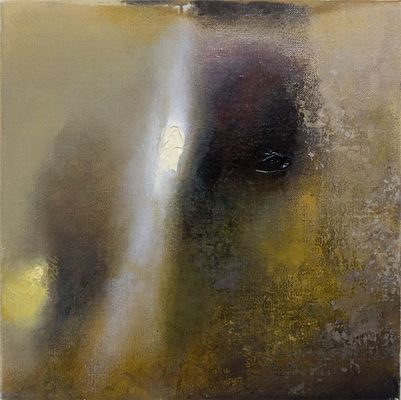
To return to Buckley’s fragment, the first two lines very much evoke how I paint nowadays. As you age, detail diminishes and patches of light become more luminous and float. I feel the most honest way of dealing with this is by smearing the oil paint on the canvas with the fingers and working close-up, blind. Only if the patches coalesce into an approaching image can the work gain a life.
-
Jonathan Walker was born in Melbourne, Australia and brought up on a dairy farm in Gippsland. In the 1970’s he studied painting at RMIT and won the Harold Wright Scholarship to the British Museum, London. During the 1980’s he exhibited at Pinacotheca Gallery, Richmond and had work shown at the NGV and Heidi City Art Gallery. Over the same period he designed the cover for the “Epigenesi” LP by Giancarlo Toniutti, Italy and conducted a mail exchange work with Achim Wollscheid, Germany. The work with artists through the post resulted in an article published in the bicentenary issue of Art and Australia 1988. He showed in artist run spaces such as WestSpace in the 90’s and 2000’s, and until 2012, taught painting at Victoria University, which is where we (Colleen Ahern and Lisa Radford) as organisers of the exhibition, among many others, had the privilege of being his student.
Walker’s knowledge was imparted to students through the careful selection of music, literature, and artists found in books that he himself had ordered for the library. Walker’s strategy was the generosity of sharing his vast knowledge with references specific to each student and their context.
Walker’s paintings share a similar focus and intimacy.
This exhibition presents a small selection of recent paintings alongside a publication that includes Walker’s writing. Observational and analytical, Walker’s work is a type of material notation — the time of day, colour and how it is blended, the both specific and fleeting location of a reflection on lino or the question of whether a chair leg should be included in a painting.
Please join us on Friday August 21 between 6-8pm to celebrate the opening of the exhibition.
Curated by Colleen Ahern and Lisa Radford.
B. Wurtz
Curated by Nic Tammens
March 26 - April 4, 2015
B.Wurtz works from a basement studio in his home on Manhattan’s Lower East Side.
This local fact is attested to by the plastic shopping bags and newsprint circulars that appear in his work. As formal objects, they don’t make loud claims about their origins but nonetheless transmit street addresses and places of business from the bottom of this long thin island. Like plenty of artists, Wurtz is affected by what is local and what is consumed. His work is underpinned by this ethic. It often speaks from a neighborhood or reads like the contents of a hamper:
“BLACK PLUMS $1.29 lb.”
“Food Bazaar”
“USDA Whole Pork Shoulder Picnic 99c lb.”
“RITE AID Pharmacy, with us it’s personal.”
“H. Brickman & Sons.”
“Sweet Yams 59c lb."
Most of the work in this exhibition was made while the artist was in residence at Dieu Donne, a workshop dedicated to paper craft in Midtown. Here Wurtz fabricated assemblages with paper and objects that are relatively lightweight, with the intention that they would be easily transportable to Australia. This consideration isn’t absolute in Wurtz’s work, but was prescriptive for making the current exhibition light and cheap. Packed in two boxes, these works were sent from a USPS post office on the Lower East Side and delivered to North Melbourne by Australia Post.
Wurtz appears courtesy of Metro Pictures, New York.
Thanks to Rob Halverson, Joshua Petherick, Sari de Mallory, Matt Hinkley, Helen Johnson, Fayen d'Evie, Ask Kilmartin, Lisa Radon, Ellena Savage, Yale Union, and "Elizabeth".
John Nixon
"Archive"
December 15 - January 20, 2014
The presentation of John Nixon's archive offered a rare showcase of this extensive collection of the artist's own publications, catalogues, posters, ephemera, editions and more, from the mid 1980s onwards, alongside a selection of his artworks.
Organized by John Nixon, Joshua Petherick and Matt Hinkley.
<a href=http://wfb.public-office.info/artist/john-nixon>All titles by John Nixon
"Habitat"
at Minerva, Sydney (organised by Joshua Petherick and Matt Hinkley)
November 15 - December 20, 2014
Lupo Borgonovo, Janet Burchill & Jennifer McCamley,
Lewis Fidock, HR Giger, Piero Gilardi, Veit Laurent Kurz,
Cinzia Ruggeri, Michael E. Smith, Lucie Stahl, Daniel Weil, Wols
Press Release:
“...It contained seven objects. The slender fluted bone, surely formed for flight, surely from the wing of some large bird. Three archaic circuitboards, faced with mazes of gold. A smooth white sphere of baked clay. An age-blackened fragment of lace. A fingerlength segment of what she assumed was bone from a human wrist, grayish white, inset smoothly with the silicon shaft of a small instrument that must once have ridden flush with the surface of the skin - but the thing’s face was seared and blackened.”
William Gibson, “Count Zero”, 1986
"Autumn Projects Archive"
Curated by Liza Vasiliou
March 6 - March 15, 2014
World Food Books, in conjunction with the Virgin Australia Melbourne Fashion Festival 2014, presented the Autumn Projects archive, consisting of a selection of early examples in Australian fashion with a particular interest in collecting designers and labels from the period beginning in the 1980’s, who significantly influenced the discourse of Australian Fashion.
Curated by Liza Vasiliou, the exhibition provided a unique opportunity to view pieces by designers Anthea Crawford, Barbara Vandenberg, Geoff Liddell and labels CR Australia, Covers, Jag along with early experimental collage pieces by Prue Acton and Sally Browne’s ‘Fragments’ collection, suspended throughout the functioning World Food Books shop in Melbourne.
H.B. Peace
presented by CENTRE FOR STYLE
November 14, 2013
"Hey Blinky, you say chic, I say same"
Anon 2013
H.B. Peace is a clothing collaboration between great friends Blake Barns and Hugh Egan Westland. Their pieces explore the divergences between 'character’ and ‘personality’ in garments....etc
Special Thanks to Joshua Petherick and Matt Hinkley of WFB and Gillian Mears
and a Very Special Thank you to Audrey Thomas Hayes for her shoe collaboration.
Janet Burchill & Jennifer McCamley
"Aesthetic Suicide"
May 10 - June 8, 2013
The first of our occasional exhibitions in the World Food Books office/shop space in Melbourne, "Aesthetic Suicide" presented a body of new and older works together by artists Janet Burchill & Jennifer McCamley, including videos, prints, a wall work, and publications.
During shop open hours videos played every hour, on the hour.
1998, Japanese
Softcover (w. dust jacket and obi), 704 pages, 21.5 x 15.5 cm
1st Edition, Out of print title / used / very good
Published by
ASCII Co. / Tokyo
$140.00 - Out of stock
Very rare first edition of this bible on Electronic Music in Japan (1955-1981) by author and analogue synth collector Yuji Tanaka, published in 1998, who later also published the great follow-up "Electronic Music in the Lost World". At over 700 pages, this is the heaviest study we've ever seen on the development of electronic music in Japan, from the composers around the NHK experimental music studio (Toshiro Mayuzumi, Makoto Moroi, Minao Shibata...), the 1970 Osaka Expo, Tomita, Yellow Magic Orchestra (YMO) and Haruomi Hosono, Toru Takemitsu, Flied Egg, Ryuichi Sakamoto, Yuji Takahashi, Phew, and all between. As much about the art as the technology, this extensive chronology and discography is richly illustrated with 100s of images of LPs, but also the analogue synths and the studios themselves, making for a valuable resource on both the artists and engineers that pushed the boundaries of electric composition in Japan across avant-garde, library, ambient, fusion, soundtrack, prog, pop, disco... Includes loads of international content for context within the timeline (Xenakis, Stockhausen, Weather Report, White Noise, Ron Geesin, Tangerine Dream...) A huge labor of electronic love laid out on Wasp yellow paper stock throughout, including the original Synthesizer graphic dust jacket and obi. Warning : all text are in Japanese!
Very Good copy with original DJ and Obi-strip.
1971, English
Softcover, 198 pages, 20.5 x 20 cm
1st Edition, Out of print title / used / average
Published by
Natural History Press / New York
$40.00 - Out of stock
"... may well be one of the most important books of the century, a turning point in man's view and treatment of his environment." — Wolf Von Eckardt
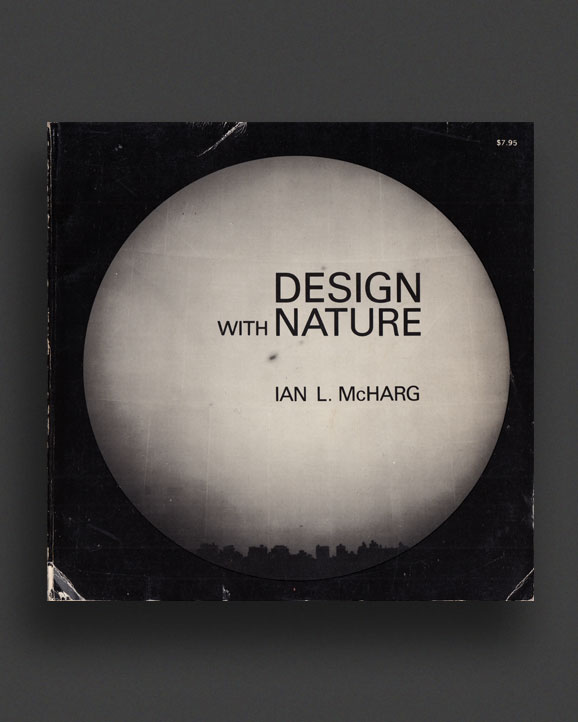
1971 popular paperback edition of the prescient and pioneering Design with Nature by Ian L. McHarg, a publication that signalled the high-water mark of the ecological movement in the United States.
"McHarg, an outspoken critic of the traditional notion that urban development must be imposed upon the landscape, regardless of the ecological consequences, in Design with Nature, proves that necessary man-made structures can be accommodated within the existing natural order. Here are the foundations for a civilization that will replace the polluted, bulldozed, machine-dominated, dehumanized, explosion-threatened world that is even now disintegrating and disappearing before our eyes. In presenting us with a vision of organic exuberance and human delight, which ecology and ecological design promise to open up for us, McHarg revives the hope for a better world."
No one, before or since McHarg, has done more to shape the culture of landscape architecture and nothing better exemplifies the scale and scope of his revolutionary impact than his 1969 book Design with Nature. This landmark study was published in 1969 amid a ferment of activism and environmental consciousness erupting throughout the US. Organizers and activists were building a movement to confront the ecological crises of the time—corporate pollution, rampant suburbanization, industrial agriculture—and McHarg’s book quickly pushed him to the center of the zeitgeist. Like Rachel Carson’s Silent Spring (1962), Design with Nature helped instigate what’s become known as the environmental decade—a series of political victories that produced landmark legislation including the National Environmental Policy Act (1970), the Clean Water Act (1972), the Endangered Species Act (1973), and the Comprehensive Environmental Response, Compensation, and Liability Act (better known as the Superfund program, 1980), as well as the creation of the Environmental Protection Agency (1970).
With successive periods of devolutionary politics and the rise of neoliberalism that would undo many of the hard-won environmental victories of the 1970s through mass privatization and monetization of resources, these reversals in national policy and design ideology ultimately sank the world Design with Nature’s philosophy endeavored to build. Today the teachings of Design with Nature scream out with an urgency more relevant than ever before. Warnings have become alarm bells for drastic action.
Ian L. McHarg (1920 – 2001) was a Scottish landscape architect and writer on regional planning using natural systems. McHarg was one of the most influential persons in the environmental movement who brought environmental concerns into broad public awareness and ecological planning methods into the mainstream of landscape architecture, city planning and public policy. He was the founder of the department of landscape architecture at the University of Pennsylvania in the United States. His 1969 book Design with Nature pioneered the concept of ecological planning. It continues to be one of the most widely celebrated books on landscape architecture and land-use planning. In this book, he set forth the basic concepts that were to develop later in geographic information systems.
Average to good copy. General cover wear and chipping/bump to bottom of spine.
1991, German
Hardcover (w. dust jacket), 92 pages, 29 x 27 cm
1st Edition, Out of print title / used / fine
Published by
Feest Comics Verlag / Stuttgart
$140.00 - Out of stock
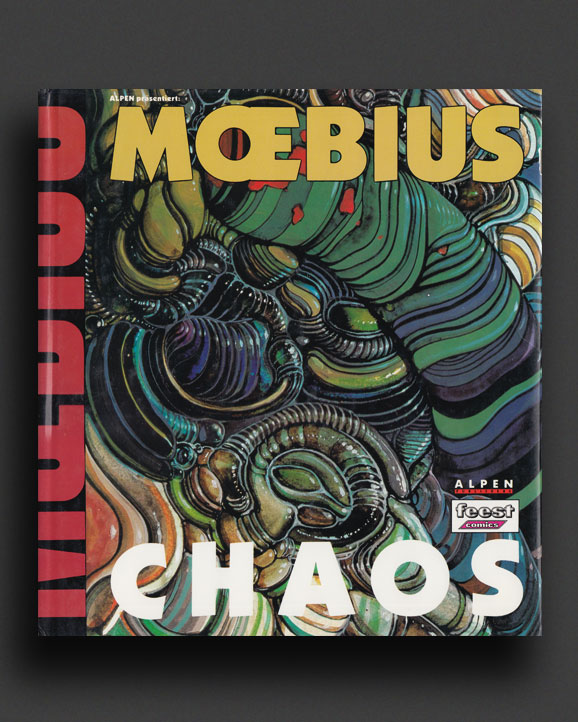
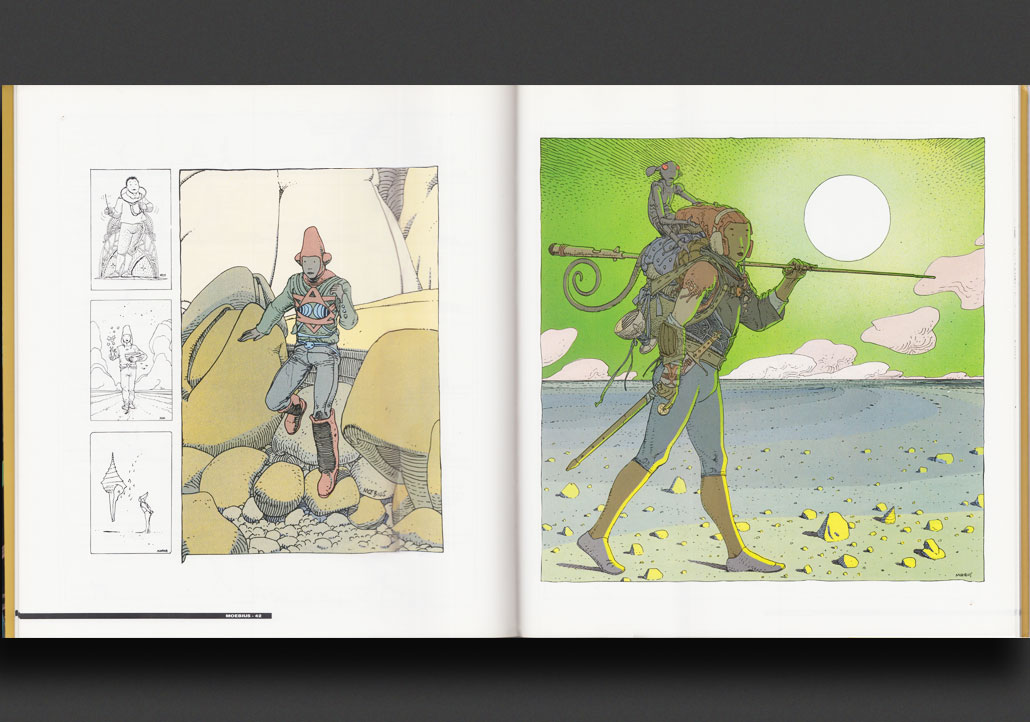
Wonderful oversized hardcover first German edition of this coffee table collection of artwork by Jean "Moebius" Giraud. Published in 1991 by Feest Comics Verlag in Stuttgart, simultaneously by Les Humanoïdes associés and Marvel, this lavishly illustrated, collectable book presents a wonderful selection of Moebius' work for books and magazines, personal work, sketches and more, with introduction by Moebius (in German) and work list. A lovely collection under the guidance of Moebius himself, with beautiful reproductions.
Jean Henri Gaston Giraud (1938 – 2012) was a master French artist, cartoonist, and writer who worked in the Franco-Belgian bandes dessinées (BD) tradition. Giraud garnered worldwide acclaim under the pseudonym Mœbius, as well as Gir outside the English-speaking world, used for the Blueberry series, one of the first antiheroes in Western comics and his most successful creation in the non-English speaking parts of the world. Esteemed by Federico Fellini, Stan Lee, and Hayao Miyazaki, among others, he has been described as the most influential bande dessinée artist after Hergé. As Mœbius, he created a wide range of science-fiction and fantasy comics in a highly imaginative, surreal, almost abstract style, including the legendary Arzach. In December 1974 he co-founded, Métal Hurlant, a magazine that revolutionized the Franco-Belgian comic world in the process. He collaborated with avant garde filmmaker Alejandro Jodorowsky on many books and projects, including an unproduced adaptation of Dune and the widely-acclaimed comic book series The Incal. Mœbius also contributed storyboards and concept designs to numerous science-fiction and fantasy films, such as Alien, Tron, The Fifth Element, and The Abyss.
Fine clean copy preserved in Very Good dust jacket, preserved under mylar wrap.
2021, English
Softcover (french folds), 288 pages, 22 x 25.5 cm
Published by
Whitechapel / London
$60.00 - Out of stock
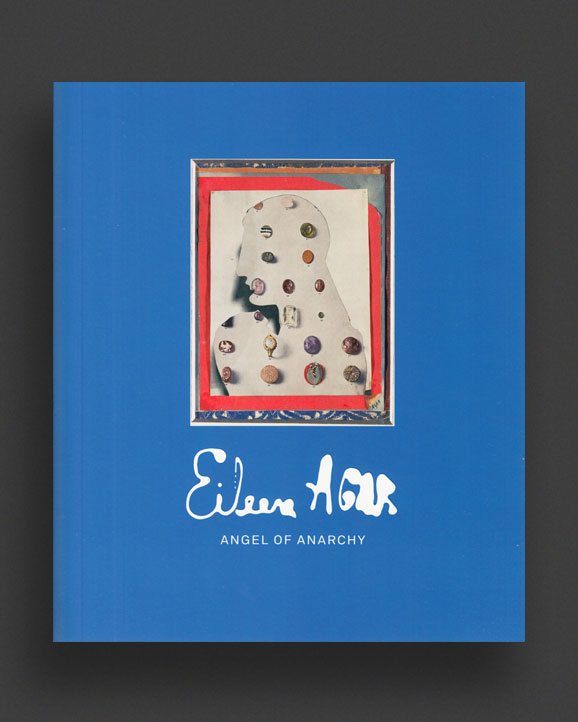
A major survey of the pioneering cult British painter, collagist and photographer and her unique passage from biomorphic Surrealism to Tachist abstraction.
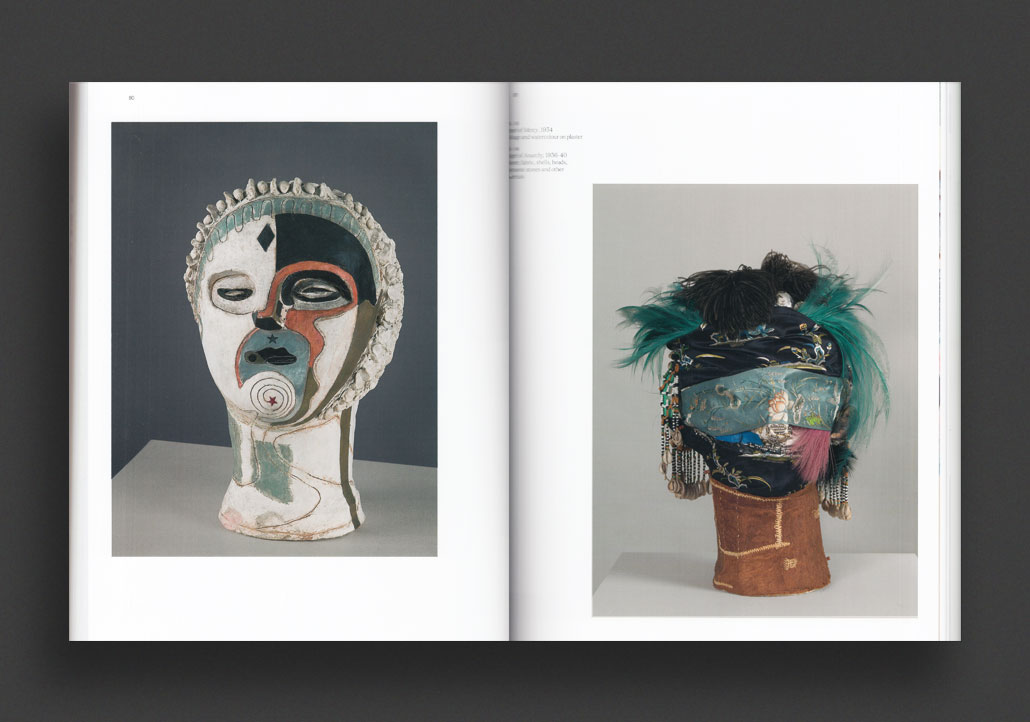
Painter and photographer Eileen Agar (1899–1991) was born in Buenos Aires and spent the majority of her life in Great Britain. In spite of her own pioneering contributions to painting, collage, photography and sculpture, Agar’s career has largely been appraised in relation to her connections with major male figures of European modernism such as Paul Nash, Ezra Pound, Roland Penrose and Paul Éluard. This monograph seeks to overturn that narrative and delve into Agar as a fully autonomous artist whose unique style was a crucial element in the development of European culture in the 20th century.Dense with pattern and color, Agar’s work across various media draws from Cubist and Surrealist tendencies of material juxtapositions and fractured imagery, evoking emotion through distortion. Alongside reproductions of rarely seen artworks, writer Marina Warner, poet Daisy Lafarge and Agar’s biographer Andrew Lambirth reflect on the artist’s progressive attitudes toward art, sexuality and art history. The book is published with four different colored covers.
Edited with text by Laura Smith, Grace Storey. Text by Marina Warner, Daisy Lafarge, Andrew Lambirth.
2021, English
Softcover, 264 pages, 13 x 20 cm
Published by
Archive Books / Berlin
$52.00 - Out of stock
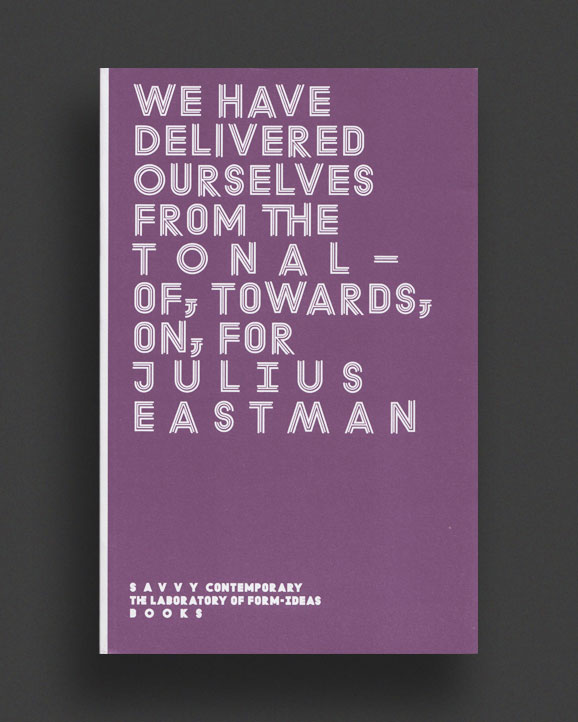
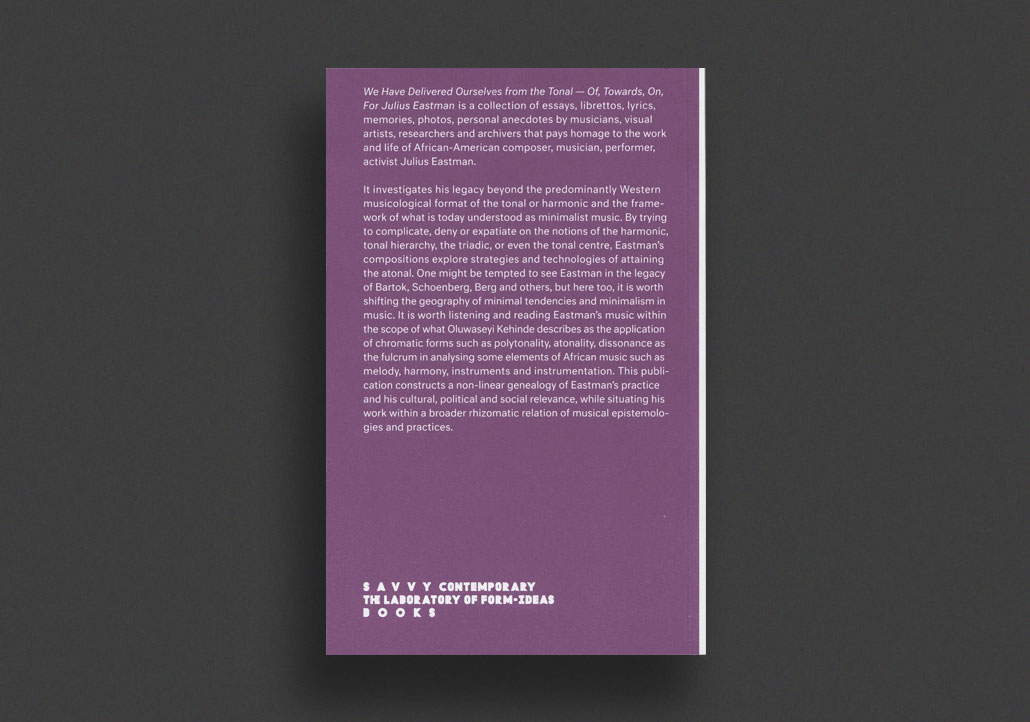
This publication presents a collection of essays, librettos, lyrics, memories, photos, personal anecdotes by musicians, visual artists, researchers and archivers that pays homage to the work and life of African-American composer, musician, performer, activist Julius Eastman, who was among the first composers to combine minimalist processes with elements of pop music. The book investigates his legacy beyond the predominantly Western musicological format of the tonal or harmonic and the framework of what is today understood as minimalist music. By trying to complicate, deny or expatiate on the notions of the harmonic, tonal hierarchy, the triadic, or even the tonal centre, Eastman's compositions explore strategies and technologies of attaining the atonal. One might be tempted to see Eastman in the legacy of Bartok, Schoenberg, Berg and others, but here too, it is worth shifting the geography of minimal tendencies and minimalism in music. It is worth listening and reading Eastman's music within the scope of what Oluwaseyi Kehinde describes as the application of chromatic forms such as polytonality, atonality, dissonance as the fulcrum in analysing some elements of African music such as melody, harmony, instruments and instrumentation. This publication constructs a non-linear genealogy of Eastman's practice and his cultural, political and social relevance, while situating his work within a broader rhizomatic relation of musical epistemologies and practices.
Julius Eastman (1940-1990) was an American composer, pianist, vocalist, and dancer whose work fell under minimalism. He was among the first composers to combine minimalist processes with elements of pop music. John Cage, Christian Wolff, and finally Morton Feldman, came from this school in New York. Only Julius Eastman remained outside, the last figure, the most solitary and enigmatic—undoubtedly also one of the most powerful. In the 1970s and 1980s, Eastman was one of the very few African-Americans to gain recognition in the New York avant-garde music scene. He was politically committed, a figure of queer culture and a solar and solitary poet whose melancholy influenced his genius as well as his tragic destiny: suffering from various addictions, declared missing, actually homeless. During Winter of 1981-82, he got deported from his apartment by the police, who destroyed most of what he owned—including scores and recordings. He was found dead in 1990, on the streets of Buffalo, after years of vagrancy.
Edited by Federica Bueti, Antonia Alampi, Bonaventure Soh Bejeng Ndikung.
Contributions by Antonia Alampi, Rocco Di Pietro, Kodwo Eshun, Federica Bueti, Sean Griffin, Sumanth Gopinath, Jean-Christophe Marti, Josh Kun, Elaine Mitchener, Malak Helmy, Bonaventure Soh Bejeng Ndikung, Marie Jane Leach, George E. Lewis, Berno Odo Polzer, Pungwe, Christine Rusiniak.
2021, English
Softcover, 384 pages, 17 x 24 cm
Published by
Valiz / Amsterdam
$60.00 - In stock -
Effigy hanging and burning, a specific theatrical form of political protest, has become increasingly visible in the news media, particularly in protests against United States military operations in Afghanistan and Iraq, in US domestic politics, and in the Arab Spring. Taking these events as points of departure, Florian Göttke investigates the conditions of this visual genre of protest, its roots and genealogies in a number of countries, its aesthetics, and politics. The book delves deeply into the different practices, iconologies, rituals, protest and media strategies, as well as into politics.
2021, English
Softcover, 160 pages, 12 x 19 cm
Published by
Archive Books / Berlin
$44.00 - Out of stock
Flowing, seeping, leaking, cascading, shaping. Electric Brine is a volume of poetry and critical essays by women voices from diverse fields such as literature, geography, media studies, history of life sciences, sociology, and poetics of science and fiction, each of them central to the independent curatorial research entity The World in Which We Occur (TWWWO, 2014-ongoing) and its associated online study group Matter in Flux. Conceived as an anthology and a register, it serves as a testimony to the initiative’s long-standing work of creative adaptation and ecological inquiry through a quest to situate a vision of material politics through the lens of six punctuated pieces on flow and fluids. The literary and scientific fabulations found in these pages speak of the conjunction of lived embodiment, the materialized quality of language, and the ability to trigger political imagination through reading, writing and witnessing. Each of these strands polyperform under TWWWO, for they can be traced, retroactively, to the themes present in the live event series, to Matter in Flux’s private study sessions, to the initiative’s collective writing work presented in public venues and publications. Also included in this volume is an appendix documenting the years of invitation and study, intricately linked to the ideological praxis of these overlaps.
Edited by Jennifer Teets
Co-edited by Elise Hunchuck and Margarida Mendes
With texts and contributions by Dionne Brand, Barbara Orland, Sophie Lewis, Esther Leslie, Hannah Landecker and Lisa Robertson
Introduced by Jennifer Teets and Margarida Mendes
Design by Sophie Keij and Atelier Brenda
Co-founded in 2014 by Jennifer Teets and Margarida Mendes,* The World in Which We Occur (TWWWO) is an independent curatorial research-based entity that collaborates with artists, scientists, science historians, philosophers, anthropologists, activists and more as it explores themes concerned with artistic inquiry, philosophy of science, and ecology. TWWWO began as a live talk-event series over the telephone and has thus expanded to other formats involving experiments with educational actions, discursive talks, and events via diverse methodologies. Read an interview with Post Brothers on TANK magazine here.
1992, Japanese
Softcover, 310 pages, 21 x 15 cm
1st Edition, Out of print title / used / very good
Published by
Million Publishing / Tokyo
$80.00 - Out of stock
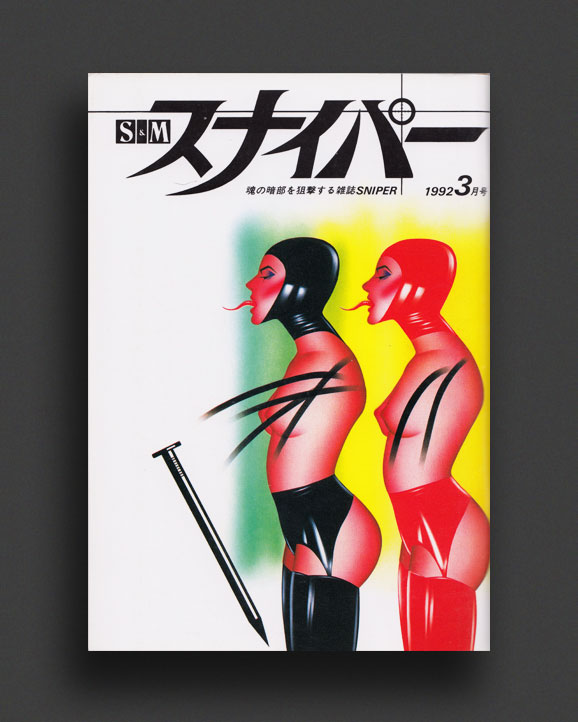
March 1992 issue of S&M Sniper, the cult glossy fetish magazine published in Japan between 1979 - 2009 that, unlike previous SM magazines, didn't centre so much around professional kinbakushi, favouring instead the exploration of new innovations of fetish and underground sex culture and emphasising the work of the models, stylists, make-up artists, and fashions designers, as much as the writers or photographers. The "new wave" of SM culture, embedded in 1980s underground music, fashion and visual art culture in Japan. Explicitly and profusely illustrated, issues are packed from cover-to-cover with all manner of SM and fetish photoshoots, illustrations, comics, essays, diaries, reports, exhibitions, reviews, interviews, and included regular contributors such as Masami Akita (Merzbow), Kazuo Kamimura, Domu Kitahara, Makoto Orui, Kinichi Tanaka, Nobuhiko Ansai, Masaaki Toyoura... Each issue is also brimming with amazing Japanese advertisements and classifieds for the latest bondage clubs, boutiques, fashion, toys, video and publication catalogues, hook-ups, phone sex, and much more. This issue includes Nobuyoshi Araki, Tadao Chigusa, Kenichi Yamakawa, Sachiko Nakamura, Guido Crepax "Story of O" comic instalment, How to Tattoo, all the usual and more... Not for the faint of heart.
Very Good copy.
2003, Japanese
Softcover, 29.4 x 21 cm
1st Edition, Out of print title / used / very good
Published by
relax / Tokyo
$35.00 $15.00 - Out of stock
June 2003 issue of 'Relax' magazine's "Relax For Girls" from Tokyo, the fourth issue, featuring cover feature on Eley Kishimoto fashion label, Takashi Homma, Jane Birkin, Cosmic Wonder, Milton Nascimento discography, music for all weather, Kate Gibb, cartoonist Saho Tono, surf fashion, a huge article on Melbourne lead by PAM (Misha Hollenbach and Shauna Toohey), photographs by Gen Kay, Female graffiti artists (Lady Pink, Claw, Miss 17, Fafi, ESA, SASU, etc.), Disney x Relax, and much more.
Before the term Hype Beast existed there was Relax magazine, a trailblazing Japanese style magazine that primarily ran throughout the late 1990s and early 2000s. It embodied and informed everything "Shibuya", in more interesting times. Times of X-Large, Alife, Beams, United Arrows, Girl Skateboards, and MoWax. But alongside the latest from Bape, Lego or Sofia Coppola one might also find in-depth articles on anything from concrete poetry, steel drumming, teashops, zen music or dogparks. Globetrotting, unearthing, scene-reporting and profiling on an exhaustive monthly basis, Relax quickly became an important reference source for trends in graphic design, urban fashion, music, and lifestyle, both in and out of Japan.
Very Good copy, light cover wear.
2001, Japanese
Softcover, 29.4 x 21 cm
1st Edition, Out of print title / used / very good
Published by
relax / Tokyo
$35.00 $15.00 - Out of stock
November 2001 issue of 'Relax' magazine from Tokyo, featuring cover feature on Misha Hollenbach (Perks, PAM), Capelito, Takashi Homma, 1oth Anniversary of X-Large label feature, "Lovers Rock" feature and disc guide, Phillipe Starck x Fossil, "Lovers Fashion", Nigo, Patti Smith, DJs, travelogues, photography, fashion, new design, music, artwork by Mark Gonzales, and much more. Includes Yann Tomita Presents Doopees CD.
Before the term Hype Beast existed there was Relax magazine, a trailblazing Japanese style magazine that primarily ran throughout the late 1990s and early 2000s. It embodied and informed everything "Shibuya", in more interesting times. Times of X-Large, Alife, Beams, United Arrows, Girl Skateboards, and MoWax. But alongside the latest from Bape, Lego or Sofia Coppola one might also find in-depth articles on anything from concrete poetry, steel drumming, teashops, zen music or dogparks. Globetrotting, unearthing, scene-reporting and profiling on an exhaustive monthly basis, Relax quickly became an important reference source for trends in graphic design, urban fashion, music, and lifestyle, both in and out of Japan.
2004, Japanese
Softcover, 29.4 x 21 cm
1st Edition, Out of print title / used / very good
Published by
relax / Tokyo
$25.00 $10.00 - Out of stock
January 2004 issue of 'Relax' magazine from Tokyo, featuring Yoko Kawamoto, Susan Cianciolo, Spike Jonze, Chris Cunningham, Michel Gondry, huge feature on new design products, Vincent Gallo, Parco, Rockstar games, DJs, travelogues, photography, fashion, new design, music, artwork by James Jarvis, and much more.
Before the term Hype Beast existed there was Relax magazine, a trailblazing Japanese style magazine that primarily ran throughout the late 1990s and early 2000s. It embodied and informed everything "Shibuya", in more interesting times. Times of X-Large, Alife, Beams, United Arrows, Girl Skateboards, and MoWax. But alongside the latest from Bape, Lego or Sofia Coppola one might also find in-depth articles on anything from concrete poetry, steel drumming, teashops, zen music or dogparks. Globetrotting, unearthing, scene-reporting and profiling on an exhaustive monthly basis, Relax quickly became an important reference source for trends in graphic design, urban fashion, music, and lifestyle, both in and out of Japan.
Good copy, light cover wear.
2004, Japanese
Softcover, 29.4 x 21 cm
1st Edition, Out of print title / used / very good
Published by
relax / Tokyo
$25.00 $10.00 - Out of stock
April 2004 issue of 'Relax' magazine from Tokyo, featuring Ryan McGinley, huge feature on denim, huge feature on Medicom Toys, "Jah Guidance", DJs, travelogues, photography, fashion, new design, music, artwork by James Jarvis, and much more.
Before the term Hype Beast existed there was Relax magazine, a trailblazing Japanese style magazine that primarily ran throughout the late 1990s and early 2000s. It embodied and informed everything "Shibuya", in more interesting times. Times of X-Large, Alife, Beams, United Arrows, Girl Skateboards, and MoWax. But alongside the latest from Bape, Lego or Sofia Coppola one might also find in-depth articles on anything from concrete poetry, steel drumming, teashops, zen music or dogparks. Globetrotting, unearthing, scene-reporting and profiling on an exhaustive monthly basis, Relax quickly became an important reference source for trends in graphic design, urban fashion, music, and lifestyle, both in and out of Japan.
Good copy, light cover wear.
2003, Japanese
Softcover, 29.4 x 21 cm
1st Edition, Out of print title / used / very good
Published by
relax / Tokyo
$25.00 $10.00 - Out of stock
September 2003 issue of 'Relax' magazine from Tokyo, featuring Banksy, Russian Space travel, Osaka, Japanese baseball, Brazilian singer João Gilberto feature and discography, "Exotic World", Las Vegas, Coca-Cola collectibles, girl DJs, travelogues, photography, fashion, new design, music, artwork by James Jarvis, and much more.
Before the term Hype Beast existed there was Relax magazine, a trailblazing Japanese style magazine that primarily ran throughout the late 1990s and early 2000s. It embodied and informed everything "Shibuya", in more interesting times. Times of X-Large, Alife, Beams, United Arrows, Girl Skateboards, and MoWax. But alongside the latest from Bape, Lego or Sofia Coppola one might also find in-depth articles on anything from concrete poetry, steel drumming, teashops, zen music or dogparks. Globetrotting, unearthing, scene-reporting and profiling on an exhaustive monthly basis, Relax quickly became an important reference source for trends in graphic design, urban fashion, music, and lifestyle, both in and out of Japan.
Good copy, light cover wear.
2004, Japanese
Softcover, 29.4 x 21 cm
1st Edition, Out of print title / used / very good
Published by
relax / Tokyo
$25.00 $10.00 - Out of stock
May 2004 issue of 'Relax' magazine from Tokyo, featuring Experimental Jetset, Nokia, Kurt Schwitters, huge feature on stationary, Beautiful Losers exhibition, Yujin, Air Jordan, skateboarding, Mt. Fuji, travelogues, photography, fashion, new design, music, artwork by James Jarvis, and much more.
Before the term Hype Beast existed there was Relax magazine, a trailblazing Japanese style magazine that primarily ran throughout the late 1990s and early 2000s. It embodied and informed everything "Shibuya", in more interesting times. Times of X-Large, Alife, Beams, United Arrows, Girl Skateboards, and MoWax. But alongside the latest from Bape, Lego or Sofia Coppola one might also find in-depth articles on anything from concrete poetry, steel drumming, teashops, zen music or dogparks. Globetrotting, unearthing, scene-reporting and profiling on an exhaustive monthly basis, Relax quickly became an important reference source for trends in graphic design, urban fashion, music, and lifestyle, both in and out of Japan.
2003, Japanese
Softcover, 29.4 x 21 cm
1st Edition, Out of print title / used / very good
Published by
relax / Tokyo
$35.00 $15.00 - Out of stock
December 2003 issue of 'Relax' magazine from Tokyo, featuring Raymond Pettibon, Nike Dunk (including Nike Dunk sticker sheet with guest artists), Levis/Parco, Akira Uno, Tohru Kotetsu, Stones Throw Records, new designer camo, travelogues, photography, fashion, new design, music, artwork by James Jarvis, and much more.
Before the term Hype Beast existed there was Relax magazine, a trailblazing Japanese style magazine that primarily ran throughout the late 1990s and early 2000s. It embodied and informed everything "Shibuya", in more interesting times. Times of X-Large, Alife, Beams, United Arrows, Girl Skateboards, and MoWax. But alongside the latest from Bape, Lego or Sofia Coppola one might also find in-depth articles on anything from concrete poetry, steel drumming, teashops, zen music or dogparks. Globetrotting, unearthing, scene-reporting and profiling on an exhaustive monthly basis, Relax quickly became an important reference source for trends in graphic design, urban fashion, music, and lifestyle, both in and out of Japan.
Good copy, light cover wear.
2003, Japanese
Softcover, 29.4 x 21 cm
1st Edition, Out of print title / used / very good
Published by
relax / Tokyo
$25.00 $10.00 - Out of stock
January 2003 issue of 'Relax' magazine from Tokyo, featuring Raymond Savignac, Final Home, SANAA, Freshness Burger, Delta, Zedz, iMovie, Video and DVD feature, travelogues, photography, fashion, new design, music, artwork by Mark Gonzales, and much more.
Before the term Hype Beast existed there was Relax magazine, a trailblazing Japanese style magazine that primarily ran throughout the late 1990s and early 2000s. It embodied and informed everything "Shibuya", in more interesting times. Times of X-Large, Alife, Beams, United Arrows, Girl Skateboards, and MoWax. But alongside the latest from Bape, Lego or Sofia Coppola one might also find in-depth articles on anything from concrete poetry, steel drumming, teashops, zen music or dogparks. Globetrotting, unearthing, scene-reporting and profiling on an exhaustive monthly basis, Relax quickly became an important reference source for trends in graphic design, urban fashion, music, and lifestyle, both in and out of Japan.
2004, Japanese
Softcover, 29.4 x 21 cm
1st Edition, Out of print title / used / very good
Published by
relax / Tokyo
$25.00 $10.00 - Out of stock
August 2004 issue of 'Relax' magazine from Tokyo, featuring photo features on Hedi Slimane, Surf photography, huge feature on Beer, STEREO Skateboards with founders Jason Lee and Chris Pastras, travelogues, photography, fashion, new design, music, artwork by James Jarvis, and much more.
Before the term Hype Beast existed there was Relax magazine, a trailblazing Japanese style magazine that primarily ran throughout the late 1990s and early 2000s. It embodied and informed everything "Shibuya", in more interesting times. Times of X-Large, Alife, Beams, United Arrows, Girl Skateboards, and MoWax. But alongside the latest from Bape, Lego or Sofia Coppola one might also find in-depth articles on anything from concrete poetry, steel drumming, teashops, zen music or dogparks. Globetrotting, unearthing, scene-reporting and profiling on an exhaustive monthly basis, Relax quickly became an important reference source for trends in graphic design, urban fashion, music, and lifestyle, both in and out of Japan.
Good copy, light cover wear.
2004, Japanese
Softcover, 29.4 x 21 cm
1st Edition, Out of print title / used / very good
Published by
relax / Tokyo
$25.00 $10.00 - Out of stock
June 2004 issue of 'Relax' magazine from Tokyo, featuring photos by Takashi Homma, huge feature on Lover's Rock with interview/feature/discogs of Dennis Bovell and Mad Professor, etc., record shops, Mike Mills, history of beach sandals, music festivals, travelogues, photography, music, artwork by James Jarvis, and much more.
Before the term Hype Beast existed there was Relax magazine, a trailblazing Japanese style magazine that primarily ran throughout the late 1990s and early 2000s. It embodied and informed everything "Shibuya", in more interesting times. Times of X-Large, Alife, Beams, United Arrows, Girl Skateboards, and MoWax. But alongside the latest from Bape, Lego or Sofia Coppola one might also find in-depth articles on anything from concrete poetry, steel drumming, teashops, zen music or dogparks. Globetrotting, unearthing, scene-reporting and profiling on an exhaustive monthly basis, Relax quickly became an important reference source for trends in graphic design, urban fashion, music, and lifestyle, both in and out of Japan.
Good copy, light cover wear.
1988, English
Hardcover (w. dust jacket), 388 pages, 25 x 2.5 x 25 cm
1st Edition, Out of print title / used / very good
Published by
The MIT Press / Massachusetts
$160.00 - Out of stock
Rare first edition of the best, largest volume on visionary architect Bruce Goff, published by MIT in 1988! Distilled from years of research and friendship, this is the first comprehensive study to capture the essential Goff — the idiosyncratic and profoundly original designs, the erratic yet exuberant career that produced some of the most challenging and inventive architecture of this century. Bruce Goff spent most of his life (1904-1982) in the American heartland. In the seven decades of his practice he designed nearly 500 projects, of which some 140 were built. Although he loved to flaunt the novel use of found materials (steel pipe, coal, rope, plexiglas aircraft domes, cake pans) and flashy decorative surfaces including white goose feathers and egg crates Goff's central and abiding concern was with the mastery of space.
As David De Long shows in this engaging book, Goff's spatial creativity was unbounded, his diversity seemingly unlimited. De Long discusses the architect's development and early work in Tulsa, the formative influences that shaped his career, his first independent work in Chicago, the periods of working on speculation in Bartlesville and Kansas City, his withdrawal from active practice following charges of homosexuality, and Goffs triumphant resurgence with his design for the Japanese Wing of the Los Angeles County Museum. De Long devotes an entire chapter to Goff's major projects - the Ledbetter, Ford, Bavinger, and Wilson houses, the Hopewell Baptist Church, and Crystal Cathedral, whose complex geometries, spatial richness, and modified prefabricated elements set them radically apart from the conformity of small town America. The story is a fascinating one, incorporating significant design details with local reactions and sometimes devastating professional criticism.
Bruce Goff: Toward Absolute Architecture, contains a complete catalogue raisonné of buildings and projects; it is included in The Architectural History Foundation's American Monograph Series.
2002, Japanese
Softcover, 29.4 x 21 cm
Published by
relax / Tokyo
$25.00 $10.00 - Out of stock
November 2002 issue of 'Relax' magazine from Tokyo, featuring Patti Smith, artwork by Shunji Sonoyama, artwork by Mark Gonzalez, a huge article on "Good Design" including designers selecting their favourite objects and everyday items, Dinosaurs, Kid America, travelogues, portraits, photography, music, toys, and much more.
Before the term Hype Beast existed there was Relax magazine, a trailblazing Japanese style magazine that primarily ran throughout the late 1990s and early 2000s. It embodied and informed everything "Shibuya", in more interesting times. Times of X-Large, Alife, Beams, United Arrows, Girl Skateboards, and MoWax. But alongside the latest from Bape, Lego or Sofia Coppola one might also find in-depth articles on anything from concrete poetry, steel drumming, teashops, zen music or dogparks. Globetrotting, unearthing, scene-reporting and profiling on an exhaustive monthly basis, Relax quickly became an important reference source for trends in graphic design, urban fashion, music, and lifestyle, both in and out of Japan.
Good copy, light cover wear.
1971, English
Softcover, 196 pages, 27.7 x 21.6 cm
1st Edition, Out of print title / used / good
Published by
Vintage Books / New York
$65.00 - Out of stock
"Celebrations, storm warnings, formulas, recipes, rumors, and country dances harvested by Alicia Bay Laurel."
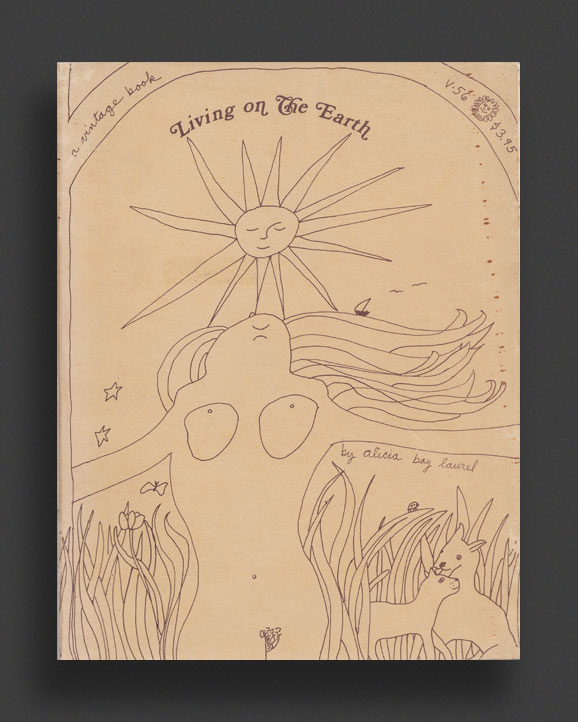
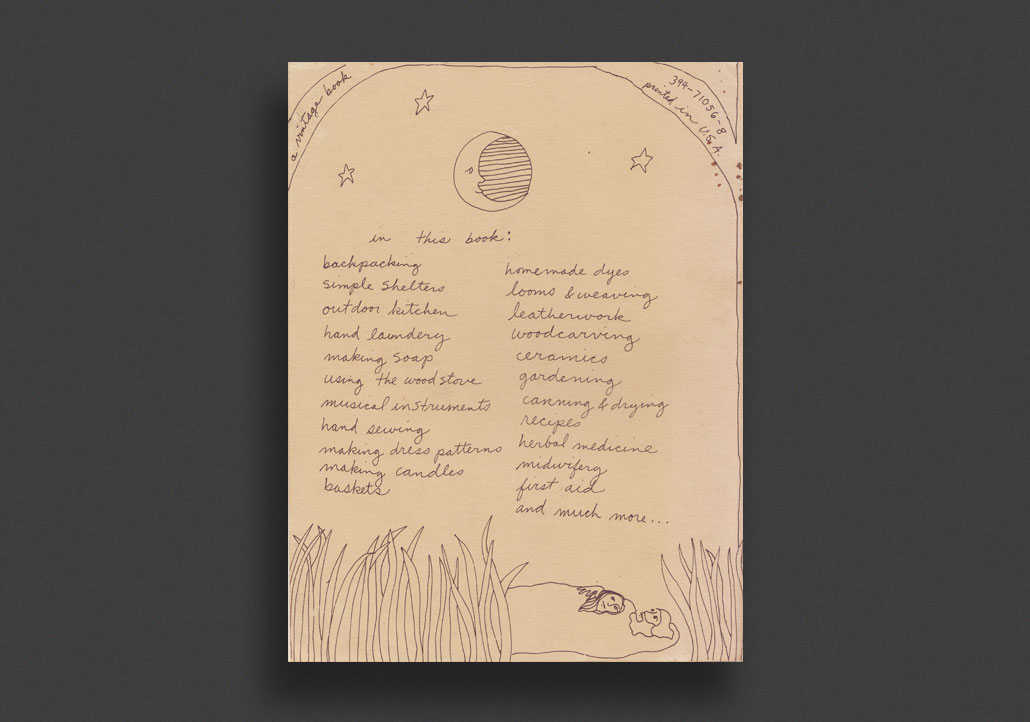
Originally published in Berkeley, California in 1970, more than fifty years ago, the seminal "Living on the Earth" is for people who would rather chop wood for fire than work behind a desk to pay the electric company. It's for people who want the best recipe for lavender soap or huckleberry jam. It's for people who want to make their own clothing, play guitar, learn woodcarving, gardening, canning and drying food, and natural first aid methods. The book has no chapters; no rigid structures or rules. It grew naturally out of the lessons the author has learned, and which she shares. Living on the Earth is a beautiful book to see and read, as well as a spiritually uplifting work whose simplicity radiates warmth and promotes serenity and goodwill to all those who encounter it. The large format paperback is entirely written in Alicia's cursive script and beautifully illustrated on every page with her line drawings. Alicia's innovative illustration and book design styles have been enthusiastically emulated in dozens of books and greeting cards since it's original publishing, and in 2012 "Living on the Earth" was chosen as one of the 101 most influential American cookbooks of the 20th century. Alicia was just 20 years old when the book was first published, and it would go on to become a New York Times "best-seller" and one of the most influential manuals for natural, conscious living ever created.
Good copy with some standard ageing, marks and wear not effecting content. Very rarely is the first popular edition found in such nice condition.
1970, English
Softcover, 88 pages, 21.5 x 14 cm
Signed by author,
1st Edition, Out of print title / used / very good
Published by
The Bookworks / Berkeley
$65.00 - Out of stock
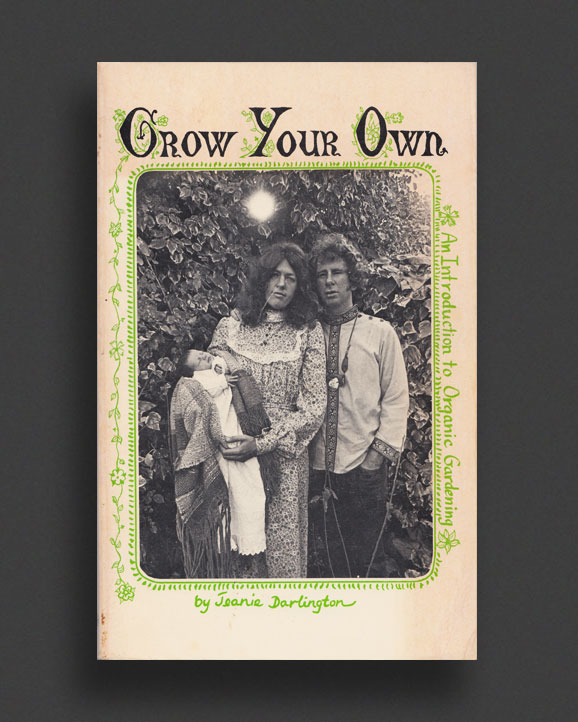
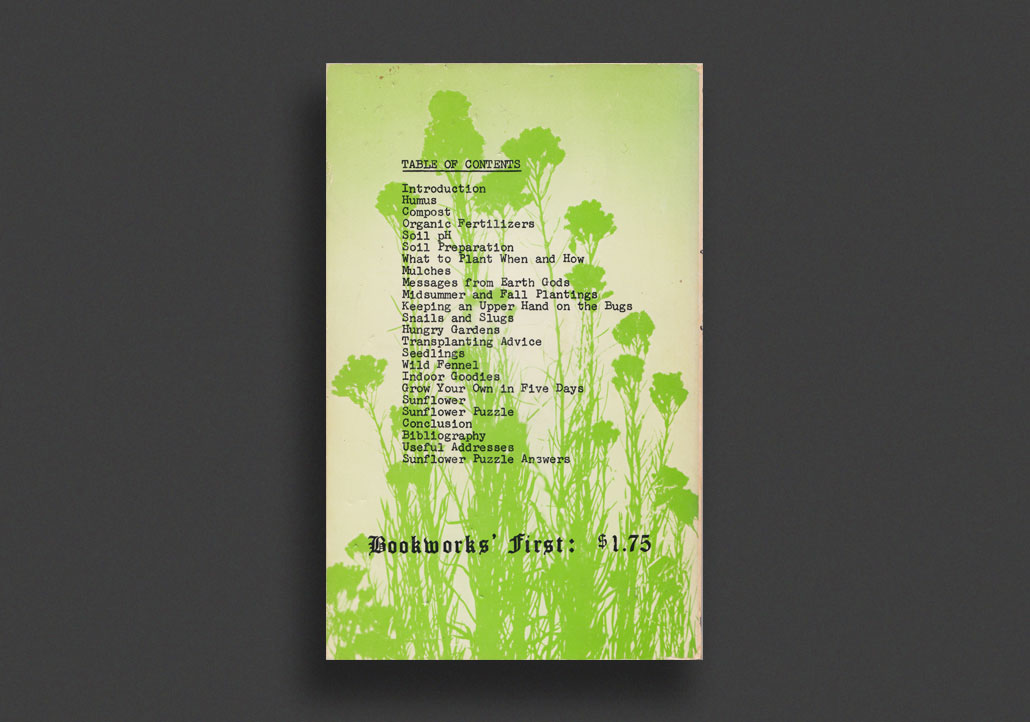
Lovely copy of the first edition of Jeanie Darlington's classic organic gardening book, Grow Your Own : An Introduction to Organic Gardening, published independently in 1970 by Bookworks, Berkeley, California. This copy with neat dedication from author Jeanie Darlington to Dr. Kaa thanking them for for their advice. Darlington, a folk musician who performed with/as Sandy & Jeanie, The Harmony Sisters, and The Delta Sisters, wrote this lovely book (with illustrations also by Jeanie) about her experience with organic gardening in a small backyard garden that she begun in the Spring of '68. From compost to Sunflowers, Grow Your Own "is meant to tell you the basics of what you need to know to garden organically on a small scale family basis". ""Life is to live, Gardens are to grow, Friends are to love, Food is to eat, Grow your own, Share with your friends, Eat and enjoy".
Very Good, signed copy of the first edition.
1986 / 2001, English
Softcover, 375 pages, 25 x 17.5 cm
Published by
Prospect Books / UK
$55.00 - Out of stock
Within a few months of its first appearance in 1986 Honey from a Weed was hailed as a modern classic. A cult cooking classic by 'the high priestess of cooking' Patience Gray, filled with unusual recipes, brilliant stories, and hyper-local ingredients and methodologies. Important reading to prepare for a future living well off the land, or just living well in general.
Patience Gray was first known for the 1950s classic, Plats du Jour, but her greatest work was this passionate autobiographical cookery book Honey from a Weed. It is Mediterranean through and through, and as compelling as a first-class novel. First published in 1986, the book is now published in the original format, but with soft covers. She shared the life of a sculptor, Norman Mommens, whose appetite for marble and sedimentary rocks took them to Tuscany, Catalonia, the Cyclades (Naxos) and Apulia. These are the places which in turn inspired this rhapsodic text. Everywhere, she learned from the country people whose way of life she shared, adopting their methods of growing, cooking and conserving the staple foods of the Mediterranean. She described the rustic foods and dishes with feeling and fidelity, writing from the inside and with a deep sense of the history and continuity of Mediterranean ways. Her life in the Salento contrasted with an earlier, and indeed glittering, career in Fleet Street, but she sacrificed the deadlines of the past to the rhythm of wine-making, seasonal sowing and gathering. Corinna Sargood’s drawings, in another dimension, evoke the underlying spirit of the book, which has to do with the landscape, people, art, imagination, as much as with fasting and feasting.
The work has attracted a cult following in the United States, where passages have been read out at great length on the radio; and it has been anthologized by Paul Levy in The Penguin Book of Food and Drink. It was given a special award by the André Simon Book Prize committee in 1987.
Here reprinted with the beautiful original cover and drawings by Corinna Sargood and the same text in the same generous format of the original edition.
1978, English
Hardcover (w. dust jacket), 90 pages, 21.5 x 14 cm
1st Edition, Out of print title / used / fine
Published by
Farrar Straus & Giroux / New York
$48.00 - Out of stock
Gorgeous first 1978 hardcover edition of Susan Sontag's Illness as Metaphor, a classic work described by Newsweek as "one of the most liberating books of its time." This is Sontag's penetrating analysis of the social attitudes toward various major illnesses — chiefly TB and cancer, and its symbolic use as a romantic tool in writing. A cancer patient herself when she was writing the book, Sontag shows how the metaphors and myths surrounding certain illnesses, especially cancer, add greatly to the suffering of patients and often inhibit them from seeking proper treatment. By demystifying the fantasies surrounding cancer, Sontag shows cancer for what it is — just a disease. Cancer, she argues, is not a curse, not a punishment, certainly not an embarrassment and, it is highly curable, if good treatment is followed. Illness as Metaphor has been translated into many languages and continues to have an enormous influence on the thinking of medical professionals and, above all, on the lives of many thousands of patients and caregivers.
Fine copy in Very Good dust jacket.