World Food Books' programme is largely produced on Kulin Nation land. We acknowledge the Wurundjeri people of the Kulin Nation as the first and continuing custodians of this land, and pay respect to their Elders past, present, and emerging.
World Food Books is an arts and special interests bookshop in Naarm / Melbourne. Founded in 2010, World Food Books is devoted to the presentation of a rotating, hand-selection of international art, design, literary and counterculture publications with an emphasis on the anti-traditional, the experimental, the avant-garde, the heretic, the marginal.
Presenting new titles alongside rare and out-of-print books, catalogues and journals spanning the fields of modern and contemporary art, design, photography, illustration, film, literature, poetry, cultural theory, philosophy, sexuality, popular and underground culture in its many radical forms, World Food Books wishes to encourage adventurous, thoughtful and open-minded reading, looking, writing, and exchange of publishing and ideas, both current and historical.
As well as our bookshop, located in Melbourne's historical Nicholas Building, all of our inventory is available internationally via our online mail-order service.
World Food Books semi-regularly co-ordinates "Occasions", a programme of exhibits and events at the bookshop and in partnership with other hosts (such as museums and art galleries) that develop out of the activities, relationships and content of the bookshop itself.
World Food Books
The Nicholas Building
37 Swanston Street
Room 5, Level 6
Melbourne 3000
Australia
SHOP HOURS:
Thu–Fri 12–6, Sat 12–5
WEB-SHOP OPEN 24/7
World Food Books
Postal Address:
PO Box 435
Flinders Lane
Victoria 8009
Australia
Art
Theory / Essay
Architecture / Interior
Graphic Design / Typography
Photography
Fashion
Eros
LGBTQ+
Fiction / Poetry
Weird / Speculative / Science Fiction / Horror
Transgressive / Visceral / Abject
Symbolism / Decadence / Fin de siècle
Film / Video
Painting
Sculpture / Installation
Performance / Dance / Theater
Drawing
Sound / Music
Curatorial
Group Shows / Collections
Periodicals
Out-of-print / Rare
Posters / Ephemera / Discs
Signed Books
World Food Books Gift Voucher
World Food Book Bag
Australian Art
Australian Fiction
Australian Science Fiction / Speculative Fiction
Australian Poetry
Australian Photography
Japanese Photography
Conceptual Art
Minimal Art
Dada
'Pataphysics / Oulipo
Fluxus
Concrete Poetry
Pop Art
Surrealism
Arte Povera
Arte Informale / Haute Pâte / Tachism
Nouveau Réalisme / Zero / Kinetic
Situationism / Lettrism
Collage / Mail Art / Xerox Art
Art Brut / Folk / Visionary / Fantastic
Illustration / Graphic Art / Bandes Dessinées
Furniture
Italian Radical Design / Postmodernism
Textiles
Ceramics / Glass
Counterculture
Protest / Revolt
Philosophy
Psychoanalysis
Anthropology
Anarchism
Socialism / Anarchism / Communism / Capitalism
Literary Theory / Semiotics / Language
Feminism / Women's Studies
Gender Studies / Sexuality
Anthropology
Fetishism / BDSM
Drugs / Psychedelia
Crime / Violence
Animal Rights / Veganism
Occult / Esoterica
Ecology / Earth / Alternative Living
Whole Earth / Crafts
All prices in AUD (Australian dollars)
Pick-Ups
Pick-up orders can be collected in our bookshop during opening hours after order date. Please collect any Pick-up orders within 2 weeks of ordering as we have limited storage space. Orders will be released back into stock if not collected within this time. No refunds can be made for pick-ups left un-collected. If you cannot make it in to the bookshop in this time-frame, please choose postage option.
Return Policy
All sales are final. We do accept returns (for refund or exchange) for items received in error. All our orders are packed with special care using heavy-duty padding and cardboard book-mailers or bubble mailers (for smaller books), using reinforcement where required. We cannot take responsibility for any lost, stolen or damaged parcels.
Insurance
Should you wish to insure your package, please email us directly after placing your order and we can organise this at a small extra expense. Although all standard/express tracked packages are very safe and dependable, we cannot take responsibility for any lost, stolen or damaged parcels. We recommend insurance on valuable orders.
Interested in selling your old books, catalogues, journals, magazines, comics, fanzines, ephemera? We are always looking for interesting, unusual and out-of-print books to buy. We only buy books in our fields of interest and specialty, and that we feel we can resell.
We base these prices on desirability, market value, in-print prices, condition and our current stock levels. We offer cash, store credit, and can take stock on consignment. All
about 25% of the price we expect to get when we sell them, or 30% in store credit. We base these prices on desirability, market value, in-print prices, condition and our current stock levels.
Sell your books any day of the week. You can drop them off and return later. If you have a lot of books, we can visit your Sydney home.
We buy books that we feel we can resell. We offer about 25 % of the price we expect to get when we sell them, or 30% in store credit. We base these prices on desirability, market value, in-print prices, condition and our current stock levels.
Philadelphia Wireman
03 August - 01 September, 2018
World Food Books is proud to announce our next Occasion, the first presentation of sculptures by Philadelphia Wireman in Australia.
The Philadelphia Wireman sculptures were found abandoned in an alley off Philadelphia’s South Street on trash night in 1982. Their discovery in a rapidly-changing neighbourhood undergoing extensive renovation, compounded with the failure of all attempts to locate the artist, suggests that the works may have been discarded after the maker’s death. Dubbed the "Philadelphia Wireman" during the first exhibition of this work, in 1985, the maker’s name, age, ethnicity, and even gender remain uncertain. The entire collection totals approximately 1200 pieces, all intricately bound together with tightly-wound heavy-gauge wire (along with a few small, abstract marker drawings, reminiscent both of Mark Tobey and J.B. Murry). The dense construction of the work, despite a modest range of scale and materials, is singularly obsessive and disciplined in design: a wire armature or exoskeleton firmly binds a bricolage of found objects including plastic, glass, food packaging, umbrella parts, tape, rubber, batteries, pens, leather, reflectors, nuts and bolts, nails, foil, coins, toys, watches, eyeglasses, tools, and jewellery.
Heavy with associations—anthropomorphic, zoomorphic, and socio-cultural responses to wrapped detritus—the totemic sculptures by Philadelphia Wireman have been discussed in the context of work created to fulfil the shamanistic needs of alternative religions in American culture. Curators, collectors, and critics have variously compared certain pieces to sculpture from Classical antiquity, Native American medicine bundles, African-American memory jugs, and African fetish objects. Reflecting the artist’s prolific and incredibly focused scavenging impulse, and despite—or perhaps enhanced by—their anonymity, these enigmatic objects function as urban artefacts and arbiters of power, though their origin and purpose is unknown. Philadelphia Wireman, whatever their identity, possessed an astonishing ability to isolate and communicate the concepts of power and energy through the selection and transformation of ordinary materials. Over the course of the past two decades, this collection has come to be regarded as an important discovery in the field of self-taught art and vernacular art.
Presented in collaboration with Fleisher-Ollman Gallery, Philadelphia, and Robert Heald, Wellington.
Susan Te Kahurangi King
02 February - 10 March, 2018
Susan Te Kahurangi King (24 February 1951 - ) has been a confident and prolific artist since she was a young child, drawing with readily available materials - pencils, ballpoint pens and felt-tip markers, on whatever paper is at hand. Between the ages of four and six Susan slowly ceased verbal communication. Her grandparents William and Myrtle Murphy had developed a special bond with Susan so they took on caring responsibilities for extended periods. Myrtle began informally archiving her work, carefully collecting and storing the drawings and compiling scrapbooks. No drawing was insignificant; every scrap of paper was kept. The King family are now the custodians of a vast collection containing over 7000 individual works, from tiny scraps of paper through to 5 meter long rolls.
The scrapbooks and diaries reveal Myrtle to be a woman of great patience and compassion, seeking to understand a child who was not always behaving as expected. She encouraged Susan to be observant, to explore her environment and absorb all the sights and sounds. Myrtle would show Susan’s drawings to friends and people in her community that she had dealings with, such as shopkeepers and postal workers, but this was not simply a case of a grandmother’s bias. She recognised that Susan had developed a sophisticated and unique visual language and sincerely believed that her art deserved serious attention.
This was an unorthodox attitude for the time. To provide some context, Jean Dubuffet coined the term Art Brut in 1945 to describe work created by self-taught artists – specifically residents of psychiatric institutions and those he considered to be visionaries or eccentrics. In 1972 Roger Cardinal extended this concept by adopting the term Outsider Art to describe work made by non-academically trained artists operating outside of mainstream art networks through choice or circumstance. Susan was born in Te Aroha, New Zealand in 1951, far from the artistic hubs of Paris and London that Dubuffet and Cardinal operated in. That Myrtle fêted Susan as a self-taught artist who deserved to be taken seriously shows how progressive her attitudes were.
Susan’s parents Doug and Dawn were also progressive. Over the years they had consulted numerous health practitioners about Susan’s condition, as the medical establishment could not provide an explanation as to why she had lapsed into silence. Dawn educated herself in the field of homeopathy and went on to treat all twelve of her children using these principles – basing prescriptions on her observations of their physical, mental and emotional state.
Doug was a linguist with an interest in philosophy who devoted what little spare time he had to studying Maori language and culture. To some extent their willingness to explore the fringes of the mainstream made them outsiders too but it was their commitment to living with integrity and their respect for individuality that ensured Susan’s creativity was always encouraged.
Even though Susan’s family supported her artistic pursuits, some staff in schools and hospitals saw it as an impediment to her assimilation into the community and discouraged it in a variety of ways. Her family was not always aware of this and therefore did not fully understand why Susan stopped drawing in the early 1990s. However, rather than dwell on the challenges that Susan faced in pursuit of her artistic practice, they prefer to highlight her achievements. In 2008 Susan began drawing again in earnest, after an almost 20 year interruption, and her work is now shown in galleries around the world.
Susan grew up without television and has been heavily influenced by the comics she read as a child. She is absolutely fearless in the appropriation of recognizable characters, such as Donald Duck and Mickey Mouse, in her work. She twists their limbs, contorts their faces, compresses them together, blends them into complex patterned backgrounds - always imbuing them with an incredible energy. Although Susan often used pop culture characters in her work they are not naive or childlike. These are drawings by a brilliant self-taught artist who has been creating exceptional work for decades without an audience in mind.
Mladen Stilinović
"Various Works 1986 - 1999"
02 February 16 - September 10, 2016
Various works 1986 - 1999, from two houses, from the collections of John Nixon, Sue Cramer, Kerrie Poliness, Peter Haffenden and Phoebe Haffenden.
Including: Geometry of Cakes (various shelves), 1993; Poor People’s Law (black and white plate), 1993; White Absence (glasses, ruler, set square, silver spoon, silver ladel with skin photograph and wooden cubes), 1990-1996; Exploitation of the Dead (grey and red star painting, wooden painting, black spoon with red table, red plate), 1984-1990; Money and Zeros (zero tie, paintings made for friends in Australia (Sue, John, Kerrie), numbers painting), 1991-1992; Words - Slogans (various t-shirts) - “they talk about the death of art...help! someone is trying to kill me”, “my sweet little lamb”, “work is a disease - Karl Marx”; Various artist books, catalogues, monographs, videos; Poster from exhibition Insulting Anarchy; "Circular" Croatian - Australian edition; Artist book by Vlado Martek (Dostoyevsky); more.
Thanks to Mladen Stilinović and Branka Stipančić.
Jonathan Walker
Always Will Need To Wear Winter Shirt Blue + Ochre Small Check Pattern
21 August - 21 September, 2015
Untitled
I am not a great reader of poetry but I always return to the work of Melbourne poet, Vincent Buckley (1925- 1988). Perhaps I find his most tantalising piece to be not a finished poem but a fragment left on a scrap of paper discovered on his desk after the poet’s death.
The poetry gathers like oil
In the word-core, and spreads
It has its music meet,
Its music is in movement.
This fragment is more the shell left behind from a volatile thought than a finished poem. I find the last two lines honest but awkward whereas the first two lines work like an arrow. Most likely he could not find a resolution so it was left. Still, in its present form, it remains an eloquent testimony to the ultimate failure of a medium to express mobile thought and sensation, in Buckley’s case, through verbal language. It’s an important matter because this is something all artists have to deal with regardless of the medium.
I have never written a poem, however, I am forever copying fragments from books on paper scraps in a vain effort to fix certain notions in my head. At first, they function as bookmarks that are sometimes returned to when I open the book. But before long, as they accumulate, they fall out littering the table interspersed with A4 photocopies, bills, books and medications.
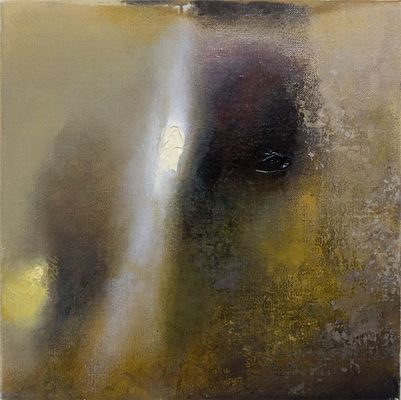
To return to Buckley’s fragment, the first two lines very much evoke how I paint nowadays. As you age, detail diminishes and patches of light become more luminous and float. I feel the most honest way of dealing with this is by smearing the oil paint on the canvas with the fingers and working close-up, blind. Only if the patches coalesce into an approaching image can the work gain a life.
-
Jonathan Walker was born in Melbourne, Australia and brought up on a dairy farm in Gippsland. In the 1970’s he studied painting at RMIT and won the Harold Wright Scholarship to the British Museum, London. During the 1980’s he exhibited at Pinacotheca Gallery, Richmond and had work shown at the NGV and Heidi City Art Gallery. Over the same period he designed the cover for the “Epigenesi” LP by Giancarlo Toniutti, Italy and conducted a mail exchange work with Achim Wollscheid, Germany. The work with artists through the post resulted in an article published in the bicentenary issue of Art and Australia 1988. He showed in artist run spaces such as WestSpace in the 90’s and 2000’s, and until 2012, taught painting at Victoria University, which is where we (Colleen Ahern and Lisa Radford) as organisers of the exhibition, among many others, had the privilege of being his student.
Walker’s knowledge was imparted to students through the careful selection of music, literature, and artists found in books that he himself had ordered for the library. Walker’s strategy was the generosity of sharing his vast knowledge with references specific to each student and their context.
Walker’s paintings share a similar focus and intimacy.
This exhibition presents a small selection of recent paintings alongside a publication that includes Walker’s writing. Observational and analytical, Walker’s work is a type of material notation — the time of day, colour and how it is blended, the both specific and fleeting location of a reflection on lino or the question of whether a chair leg should be included in a painting.
Please join us on Friday August 21 between 6-8pm to celebrate the opening of the exhibition.
Curated by Colleen Ahern and Lisa Radford.
B. Wurtz
Curated by Nic Tammens
March 26 - April 4, 2015
B.Wurtz works from a basement studio in his home on Manhattan’s Lower East Side.
This local fact is attested to by the plastic shopping bags and newsprint circulars that appear in his work. As formal objects, they don’t make loud claims about their origins but nonetheless transmit street addresses and places of business from the bottom of this long thin island. Like plenty of artists, Wurtz is affected by what is local and what is consumed. His work is underpinned by this ethic. It often speaks from a neighborhood or reads like the contents of a hamper:
“BLACK PLUMS $1.29 lb.”
“Food Bazaar”
“USDA Whole Pork Shoulder Picnic 99c lb.”
“RITE AID Pharmacy, with us it’s personal.”
“H. Brickman & Sons.”
“Sweet Yams 59c lb."
Most of the work in this exhibition was made while the artist was in residence at Dieu Donne, a workshop dedicated to paper craft in Midtown. Here Wurtz fabricated assemblages with paper and objects that are relatively lightweight, with the intention that they would be easily transportable to Australia. This consideration isn’t absolute in Wurtz’s work, but was prescriptive for making the current exhibition light and cheap. Packed in two boxes, these works were sent from a USPS post office on the Lower East Side and delivered to North Melbourne by Australia Post.
Wurtz appears courtesy of Metro Pictures, New York.
Thanks to Rob Halverson, Joshua Petherick, Sari de Mallory, Matt Hinkley, Helen Johnson, Fayen d'Evie, Ask Kilmartin, Lisa Radon, Ellena Savage, Yale Union, and "Elizabeth".
John Nixon
"Archive"
December 15 - January 20, 2014
The presentation of John Nixon's archive offered a rare showcase of this extensive collection of the artist's own publications, catalogues, posters, ephemera, editions and more, from the mid 1980s onwards, alongside a selection of his artworks.
Organized by John Nixon, Joshua Petherick and Matt Hinkley.
<a href=http://wfb.public-office.info/artist/john-nixon>All titles by John Nixon
"Habitat"
at Minerva, Sydney (organised by Joshua Petherick and Matt Hinkley)
November 15 - December 20, 2014
Lupo Borgonovo, Janet Burchill & Jennifer McCamley,
Lewis Fidock, HR Giger, Piero Gilardi, Veit Laurent Kurz,
Cinzia Ruggeri, Michael E. Smith, Lucie Stahl, Daniel Weil, Wols
Press Release:
“...It contained seven objects. The slender fluted bone, surely formed for flight, surely from the wing of some large bird. Three archaic circuitboards, faced with mazes of gold. A smooth white sphere of baked clay. An age-blackened fragment of lace. A fingerlength segment of what she assumed was bone from a human wrist, grayish white, inset smoothly with the silicon shaft of a small instrument that must once have ridden flush with the surface of the skin - but the thing’s face was seared and blackened.”
William Gibson, “Count Zero”, 1986
"Autumn Projects Archive"
Curated by Liza Vasiliou
March 6 - March 15, 2014
World Food Books, in conjunction with the Virgin Australia Melbourne Fashion Festival 2014, presented the Autumn Projects archive, consisting of a selection of early examples in Australian fashion with a particular interest in collecting designers and labels from the period beginning in the 1980’s, who significantly influenced the discourse of Australian Fashion.
Curated by Liza Vasiliou, the exhibition provided a unique opportunity to view pieces by designers Anthea Crawford, Barbara Vandenberg, Geoff Liddell and labels CR Australia, Covers, Jag along with early experimental collage pieces by Prue Acton and Sally Browne’s ‘Fragments’ collection, suspended throughout the functioning World Food Books shop in Melbourne.
H.B. Peace
presented by CENTRE FOR STYLE
November 14, 2013
"Hey Blinky, you say chic, I say same"
Anon 2013
H.B. Peace is a clothing collaboration between great friends Blake Barns and Hugh Egan Westland. Their pieces explore the divergences between 'character’ and ‘personality’ in garments....etc
Special Thanks to Joshua Petherick and Matt Hinkley of WFB and Gillian Mears
and a Very Special Thank you to Audrey Thomas Hayes for her shoe collaboration.
Janet Burchill & Jennifer McCamley
"Aesthetic Suicide"
May 10 - June 8, 2013
The first of our occasional exhibitions in the World Food Books office/shop space in Melbourne, "Aesthetic Suicide" presented a body of new and older works together by artists Janet Burchill & Jennifer McCamley, including videos, prints, a wall work, and publications.
During shop open hours videos played every hour, on the hour.
1982, Japanese
Hardcover (w. dust jacket), 160 pages, 30 x 21.5 cm
Out of print title / used / very good
Published by
Byakuya Shobo / Tokyo
$650.00 - Out of stock
First edition of this scarce cult photobook by Japanese photographer Keizo Kitajima, published by Byakuya Shobo in 1982. Drawn to the land which had dramatically changed the Japanese way of life since the war, Keizo Kitajima spent a period of six months wandering the streets of New York City. Here he met with the people whom embodied the very decadence which symbolised 80s New York. From the night clubs, parks, beaches and alleyways, Kitajima's New York brilliantly captures a portrait of a city defined through the experiences of the many individuals and events, encountered throughout his journey, full of energy, decadence and moments of quiet desperation. 140 photographs. Text by Kazuo Nishii in Japanese, interview with Kitajima by Akira Suei in English. Design by Kazu Yamazaki.
For this photo book Kitajima received the important Kimura Ihei Award in 1983.
Kitajima Keizo (b .1954, Suzaka, Nagano) is a leading figure in the rise of Japanese photography in the 1970s and 1980s, first coming to be known for his grainy black-and-white shots of people on the streets of Tokyo, at an American military base in Okinawa after the end of the Vietnam War, and in New York. Daido Moriyama, with whom Kitajima first studied photography, praised his talent as a gifted snapshooter by calling him ‘a street killer in broad daylight.’ Kitajima’s image Shop CAMP, set up in the bustling Shinjuku area in 1976 in collaboration with Moriyama, was a pioneering experimental space for photographers before the gallery system was established. In his legendary experimental series Photo Express (1979), Kitajima photographed people at bars and on the streets in Shinjuku at night right outside the CAMP, converted the gallery into a darkroom to make wallsized prints as a public performance event, and even published the images as an instant booklet. Through these processes of delivering images immediately, the artist explored the ways that time affects photography in terms of documentation, record and memory. Kitajima spent six months in New York roaming its gritty streets and hanging out in its clubs, resulting in the book New York (1982) . He presents a vision of the 1980s New York, full of energy, decadence and moments of quiet desperation. Like the city the publication is full of stark juxtapositions, flamboyant displays of outrageous behaviour are shown next to pictures of desolation and dejection. For this photo book Kitajima received the important Kimura Ihei Award in 1983. Kitajima’s work has been shown in many Japanese and international exhibitions and his publications are popular among collectors of photo books and the importance of his work has been recognised by numerous Japanese photographic awards.
Very Good copy with dust jacket.
1990, Japanese
Softcover (staple-bound), 72 pages, 32 × 23 cm
1st Edition, Out of print title / used / very good
Published by
Comme des Garçons / Tokyo
$650.00 - Out of stock
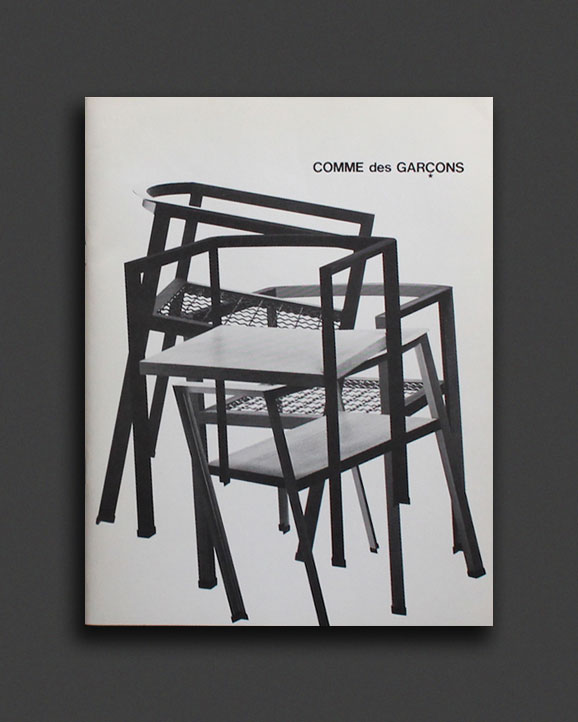
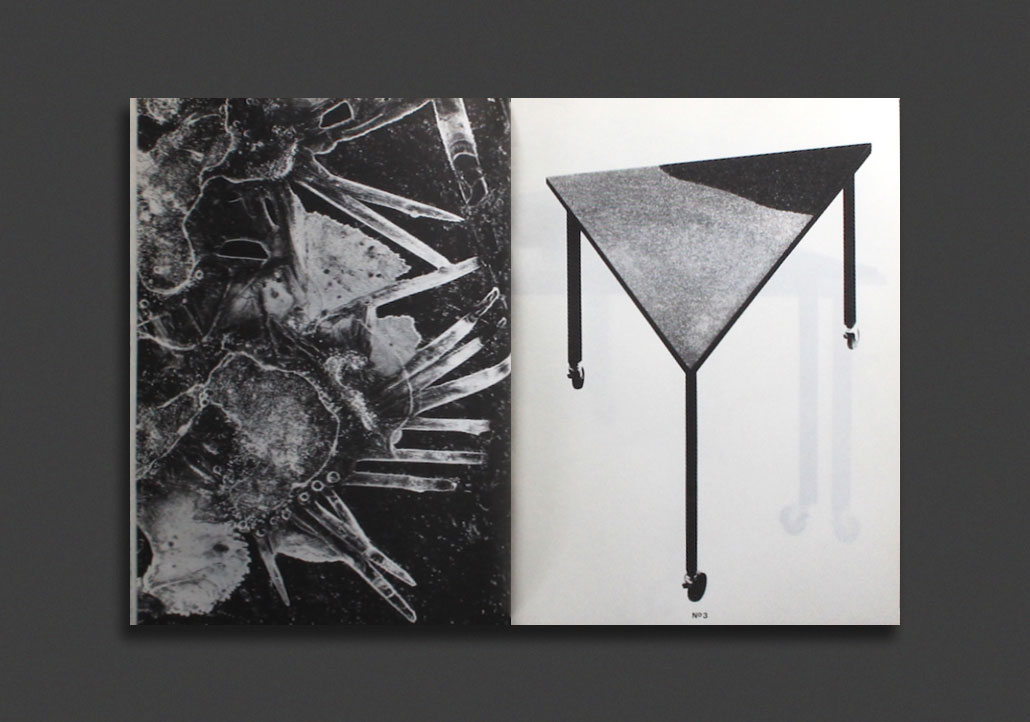
One of the most elusive of Comme des Garçons publications - the furniture retrospective catalogue! Published in 1990 by Comme des Garçons in what must have been a tiny edition, this beautiful, minimal catalogue presents all of the 28 pieces of furniture designed by Rei Kawakubo, produced between 1983 and 1990. No.1 - No.28 are all photographed in colour and b/w with accompanying specs, capturing the entirety of Kawakubo's foray into furniture in the 1980s in one slim volume. As Kawakubo describes her chairs, they are "an essence of simplicity and weren't made for your derriere, but for your admiration.' Beautifully designed by art director Tsuguya Inoue. Text in English and Japanese.
Very Good with some light wear and edge tanning.
2019, English
Hardcover, 248 pages, 26 x 30 cm
Published by
Hirmer / Münich
Phoenix Art Museum / Phoenix
$85.00 - Out of stock
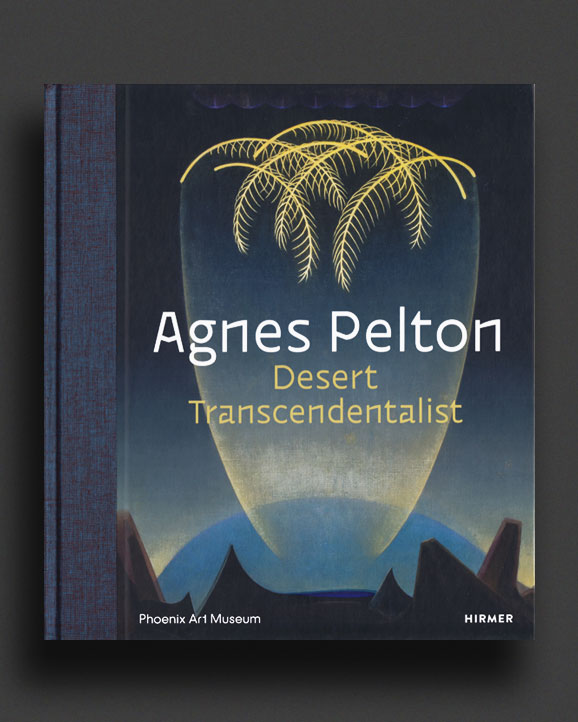
Agnes Pelton: Desert Transcendentalist is the first survey of this under recognized American painter in over 22 years. Her distinctive paintings could be described as metaphysical landscapes rooted in the California desert near Cathedral City. Pelton chiefly drew on her own inspirations, superstitions and beliefs to exemplify emotional states.
This lavishly illustrated hardcover publication seeks to clarify the artist's significance and role within the cannon of American Modernism but also against the legacy of European abstraction. It contextualizes her work against her contemporaries, Marsden Hartley and Georgia O'Keeffe, and their distinct versions of American spiritual modernism. Pelton's highly symbolic paintings were inspired by religious sources ranging from Theosophy and Agni Yoga to the spiritual teachings of Dane Rudhyar and Will Levington Comfort. Over three decades she devoted herself to painting spiritual abstractions, which conveyed her "light message to the world."
2021, English
Hardback, 252 pages, 22.9 x 30.5 cm
Published by
Yale University Press / New Haven
$80.00 - Out of stock
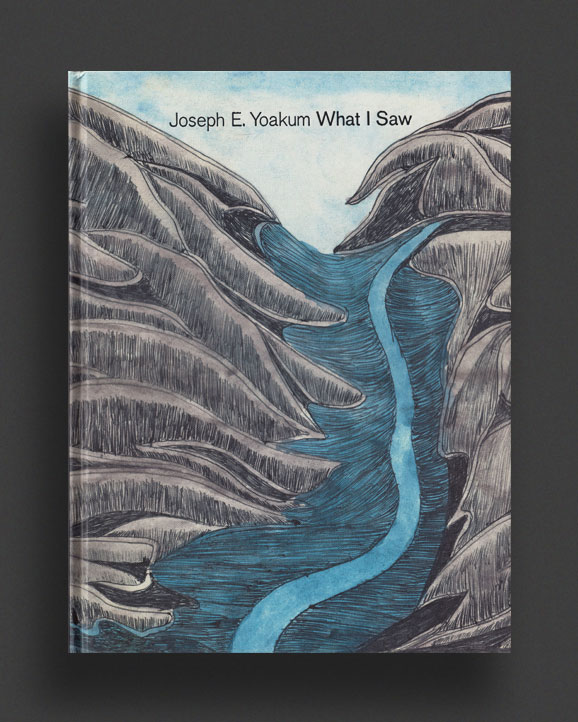
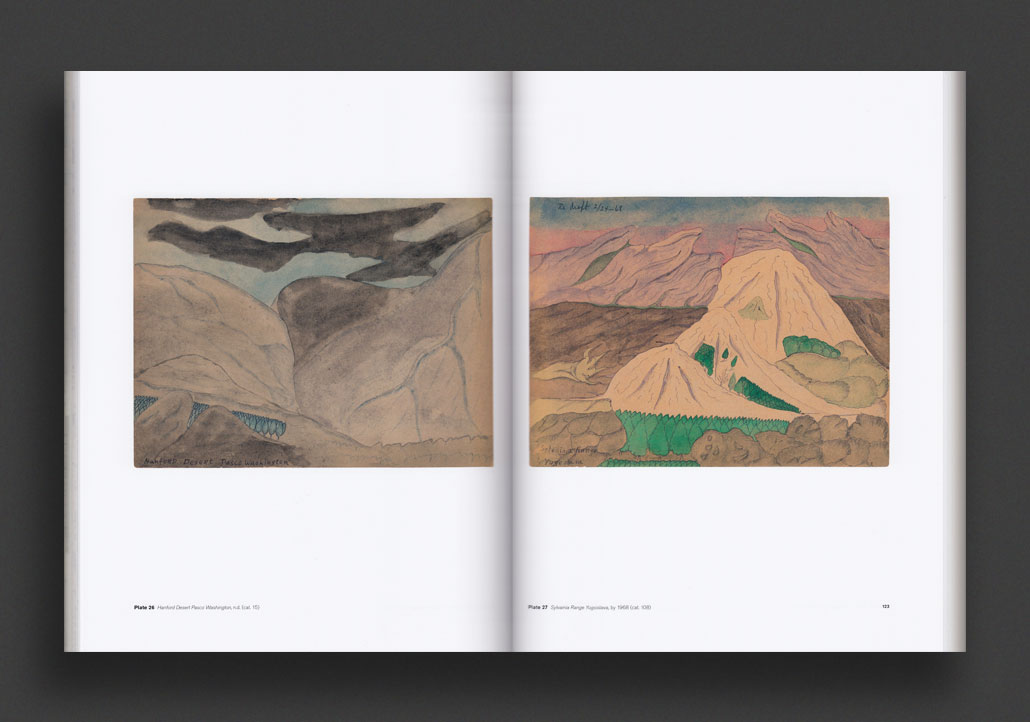
The extraordinary life of a captivating American artist, beautifully illustrated with his dreamlike drawings.
Much of Joseph Elmer Yoakum's story comes from the artist himself-and is almost too fantastic to believe. At a young age, Yoakum (1891-1972) traveled the globe with numerous circuses; he later served in a segregated noncombat regiment during World War I before settling in Chicago. There, inspired by a dream, he began his artistic career at age seventy-one, producing some two thousand drawings over a decade. How did Yoakum gain representation in major museum collections in Chicago and New York? What fueled his process, which he described as a "spiritual unfoldment"? This volume delves into the friendships Yoakum forged with the Chicago Imagists that secured his place in art history, explores the religious outlook that may have helped him cope with a racially fractured city, and examines his complicated relationship to African American and Native American identities.
With hundreds of beautiful colour reproductions of his dreamlike drawings, it offers the most comprehensive study of the artist's work, illuminating his vivid and imaginative creativity and giving definition and dimension to his remarkable biography.
2001, English
Softcover, 166 pages, 25 x 21 cm
1st Edition, Out of print title / used / very good
Published by
Museum of American Folk Art / New York
$45.00 - Out of stock
The first monographic study on Joseph E. Yoakum (1890-1972), an African American-Native American self-taught master. Profusely illustrated, Traveling the Rainbow is a fitting tribute to this fascinating, yet little-known creator of visionary landscapes. What emerges herein fits an adventure novel. Yoakum traveled the oceans on steamliners working in their boiler rooms. He rode America's railways as an inspector. With an elite team of African American troops in World War I, he toured Europe. On the road with the Ringling Brothers Circus he posted circus flyers. He spent a year in a psychiatric hospital. He was 76 when he started to record his memories in the form of imaginary landscapes, and he produced over 2,000 watercolour and pencil drawings during the last decade of his life, infused with the motion and energy of travel. Much of what he told about his life -- especially about his travels -- was thought to be invented, but here Derrel DePasse makes startling discoveries about the artist's landscapes and finds that much of his story of himself was grounded in fact. Part African American, part Native American, Yoakum drew on his dual background and conjured powerful forms of expression -- the blues and Native American symbolism -- to create dynamic cultural fusions.
This monograph remains the most comprehensive study on this great American artist, including a chronology, bibliography, list of collections, exhibition history, and index.
Very Good copy.
1995 & 1999, English / Japanese
Softcover, 100 pages, 21 x 30 cm / Softcover, 112 pages, 21 x 30 cm
1st Edition, Out of print title / used / very good
Published by
Street Editorial Office / Tokyo
$250.00 - Out of stock
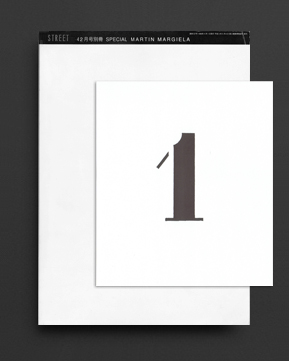
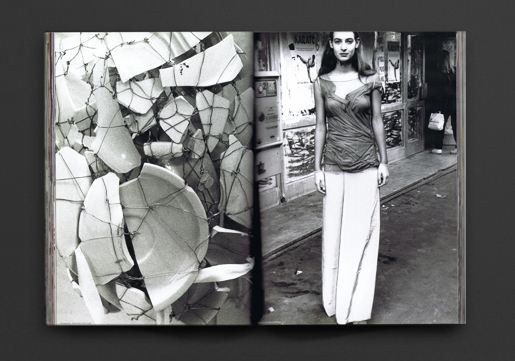
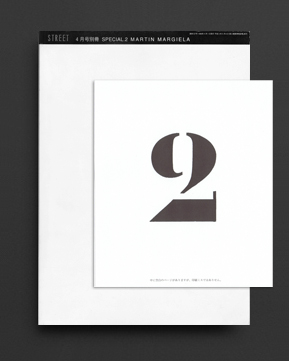
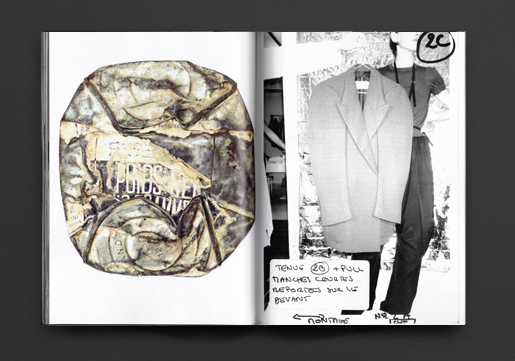
The scarce first editions of both volumes of the Special Editions of STREET - here is the first printing of both Vol. 1 & Vol. 2 of this great visual archive, designed, edited and published by Street magazine with Maison Martin Margiela!
In 1995, Tokyo-based Street magazine approached the Paris fashion house of Martin Margiela with an invitation to publish a special edition dedicated to its work. Maison Martin Margiela guest-edited the magazine, and was solely responsible for the selection of images and presentation, which includes many previously unpublished photographs from its archives. The success of the first volume led to the publication of a second instalment in 1999, and together the two special issues cover every Martin Margiela collection from Spring/Summer 1989 through to Spring/Summer 1999, including heavy visual documentation of the presentations, events, studio, ephemera, behind the scenes, garment details, and much more.
In 1999, Maison Martin Margiela himself collected together both long sold out volumes into one now collectable book. After quickly selling out itself, it was made available once more in 2013 by Street Editorial Office, that is now also out of print.
Please note that these are the very first editions of both issues, distributed exclusively in Japan by Street Editorial Office Tokyo, before being re-printed as a single book. Vol. 1 was published in 1995 and Vol. 2 in 1999. Handsomely kept copies, both complete with their "1" and "2" flyleaf inserts, which were printed to possibly adorn the cover when on display.
1996, Japanese
Softcover, 48 pages, 26.5 x 20 cm
1st Edition, Out of print title / used / fine
Published by
Comstock / Japan
$70.00 - Out of stock
Scarce Japanese movie program book for Jean-Luc Godard's 1968 film "One Plus One" (Sympathy for the Devil), published exclusively in Japan by Comstock in the mid-1990s. Reproduces many amazing full-bleed stills from the film in colour and black and white, behind the scenes photos, texts by famed Japanese music critic Mike M. Koshitani, spreads of "Mike's Stones' Collection" (Mr. Koshitani's collection of Rolling Stones related newspapers and magazines from the period), cast biographies, Godard filmography, Stones discography, and more.
After May 1968, French film director Jean-Luc Godard moved to London to film the Rolling Stones recording “Sympathy for the Devil.” In Sympathy for the Devil, Godard juxtaposed the Rolling Stones rehearsing with seemingly unrelated scenes with a soundtrack featuring, among others, the Black Panthers. The film showed the Stones at work, deconstructing the myth of the genius creator.
Fine, almost As New copy.
2001, Japanese
Softcover, 66 pages, 29.7 × 21 cm
1st Edition, Out of print title / used / very good
Published by
? / Japan
$60.00 - Out of stock
Very rare Japanese movie program of Jean-Luc Godard's "Bande à part" (Band of Outsiders, 1964), published in 2001 and exclusively distributed in Japan. For a movie program this title feels more like a book, rich with black and white photographs from the film and texts in Japanese.
"Four years after Breathless, Jean-Luc Godard reimagined the gangster film even more radically with Band of Outsiders (Bande à part). In it, two restless young men (Sami Frey and Claude Brasseur) enlist the object of both of their fancies (Anna Karina) to help them commit a robbery—in her own home. This audacious and wildly entertaining French New Wave gem is at once sentimental and insouciant, effervescently romantic and melancholy, and it features some of Godard’s most memorable set pieces, including the headlong race through the Louvre and the unshakably cool Madison dance sequence."
Very Good copy.
2021, English
Softcover, 264 pages, 20 x 13 cm
Published by
Sternberg Press / Berlin
$40.00 - Out of stock
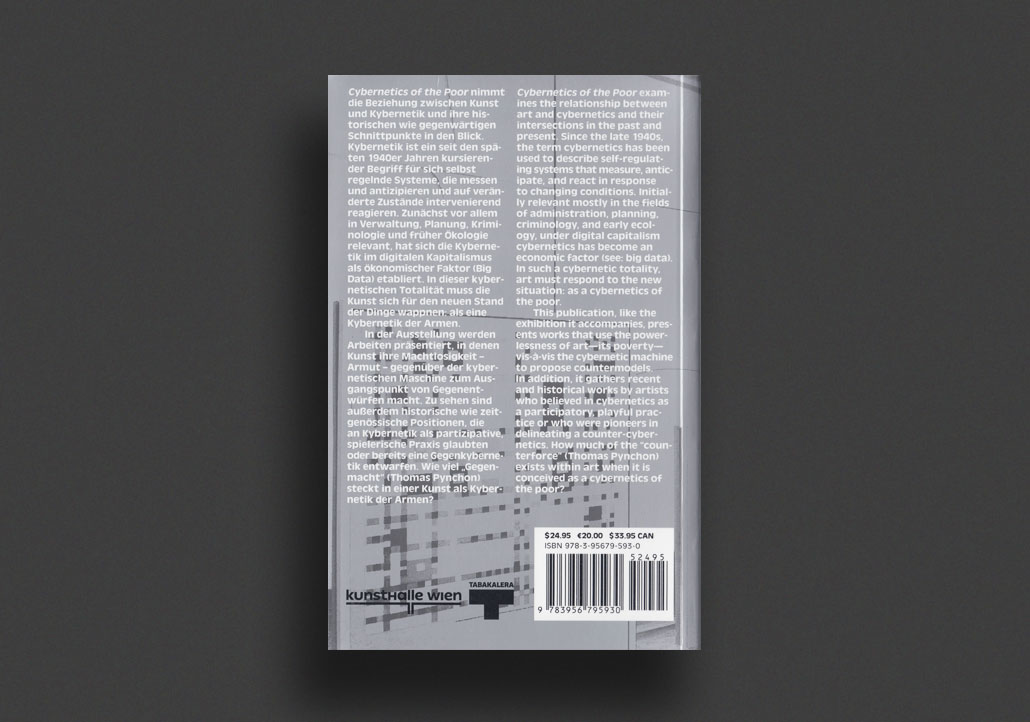
An examination of the relationship between art and cybernetics and their intersections, with works that uses the powerlessness of art.
Cybernetics of the Poor examines the relationship between art and cybernetics and their intersections in the past and present. From the late 1940s on, the term cybernetics began to be used to describe self-regulating systems that measure, anticipate, and react in order to intervene in changing conditions. Initially relevant mostly in the fields of administration, planning, criminology, and early ecology, under digital capitalism cybernetics has since become an economic factor (particularly in the realm of big data). In such a cybernetic totality, art must respond to a new situation: a cybernetics of the poor.
Cybernetics of the Poor presents work that uses the powerlessness of art—its poverty—vis-à-vis the cybernetic machine to propose countermodels: work that is both recent and historical by artists who believed in cybernetics as a participatory, playful practice or were pioneers in delineating a counter-cybernetics. How much of what Thomas Pynchon termed “counterforce” exists within art when it is conceived as a cybernetics of the poor?
Texts by Sabeth Buchmann, Mercedes Bunz, Diedrich Diederichsen, Oier Etxeberria, Harun Farocki
With artistic contributions by Agency, Ana De Almeida, Alicja Rogalska & Vanja Smiljanić, Eleanor Antin, Cory Arcangel, Elena Asins, Paolo Cirio, Coleman Collins, Hanne Darboven, Jon Mikel Euba, Michael Hakimi, Douglas Huebler, Gema Intxausti, Kameelah Janan Rasheed, Mike Kelley, Ferdinand Kriwet, Agnieszka Kurant, Mario Navarro, Adrian Piper, Lili Reynaud-Dewar, Heinrich Riebesehl, Pedro G. Romero, Constanze Ruhm, Jörg Schlick, Camila Sposati, Kathrin Stumreich, Isidoro Valcárcel Medina, Tanja Widmann, Robert Adrian X
Diedrich Diederichsen
Diedrich Diederichsen is a German author, music journalist, and cultural critic. He is one of Germany's most renowned intellectual writers at the crossroads of the arts, politics, and pop culture.
Oier Etxeberria
Oier Etxeberria is a Basque visual artist and musician. He is head of the Visual Arts at CICC Tabakalera.
1976, French
Hardcover, 216 pages, 31.5 x 24.5 cm
1st UK Edition, Out of print title / used / very good
Published by
Idea E / Florence
$120.00 - Out of stock
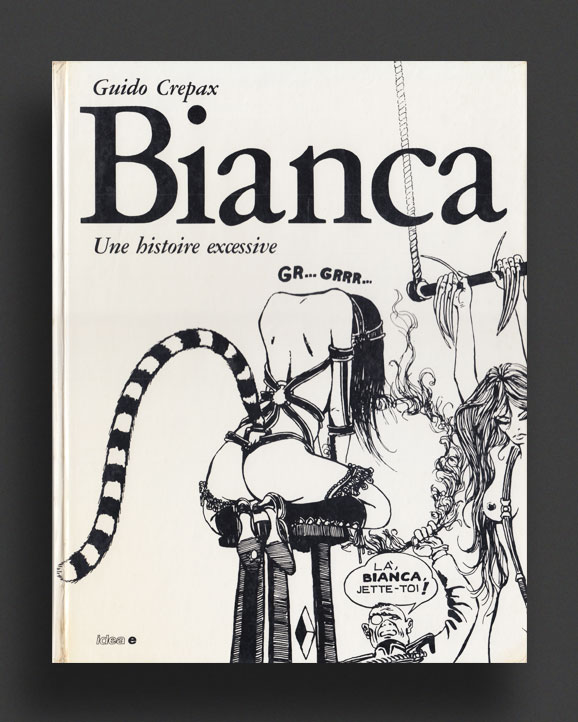
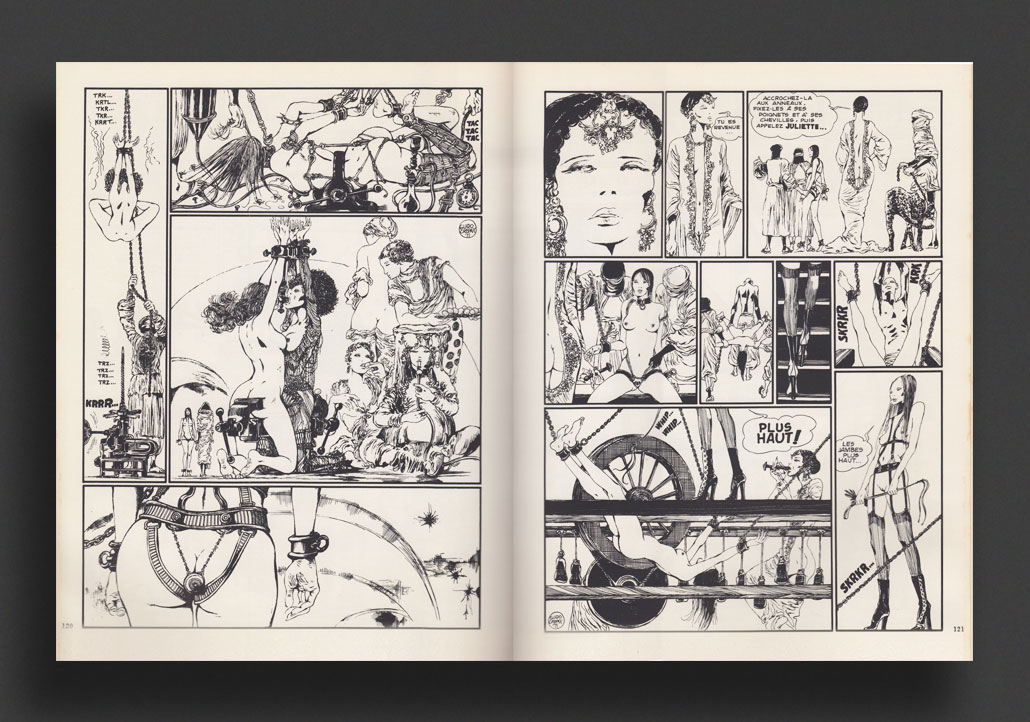
Wonderful scarce first hardcover French edition of 'Bianca, Une Histoire Excessive' by Italian comics artist Guido Crepax, published by Idea E in Firenze/Roma, 1976. Created between 1968 and 1973, Bianca is probably the most whimsical and psychedelic work created by Crepax, one of the great underrated masters of the comic book form, and undoubtedly one of his all-time classics. Like much of Crepax's work, the dizzying, explosive pages of Bianca centre around the perspective of a central female character who's trapped in a series of sexual fantasies and adventures, heavy in sm/bondage imagery, traversing every dreamlike scenario imaginable through some of the most wild and uninhibited line, texture and panel work Crepax has ever published. This lovely first French edition comes with the original, usually missing, inserted Bianca paper doll.
Guido Crepas (1933—2003, Milan), better known by his nom de plume Guido Crepax, was an Italian comics artist. He studied at the School of Architecture at the University of Milan. After graduating, he made his debut in comic books in 1959 when he contributed his work to Tempo Medico. He joined the new magazine Linus in 1965 with a fantasy comic, 'Neutron', a superhero comic about an art critic with the mysterious power to stop humans or objects via his gaze. It featured a minor character called Valentina, a fashionable, communist Milanese photographer born in 1942, who quickly became Crepax's protagonist and his most famous creation. Valentina became an underground icon of 1960s culture. Crepax's work became noted for his very sophisticated expressionistic yet graphic drawing style, his truely innovative panel work and his unusual compositions that seemed to have more in common with modern art and film than comic strips. His psychedelic, dreamlike storylines were immersive, generally involving a strong dose of erotism and a predilection towards sadomasochism and the surreal. After 'Valentina', other titles followed, such as 'L'Astronave Pirata' (1968), 'La Casa Matta' (1969), 'La Calata di Mac Similiano' (1969), 'Belinda', 'Anita' and 'Bianca'. Crepax's illustrated adaptations of classic erotic stories like De Sade's 'Justine', Pauline Réage's 'Histoire d'O' and Sacher-Masoch's 'Venus in Furs' brought him further acclaim, especially to English audiences who had mostly only read translated Crepax through the pages of Heavy Metal magazine.
Very Good copy with general light wear and tanning.
1977, English
Hardcover (w. dust jacket), 340 pages, 28.5 X 34 cm
1st UK Edition, Out of print title / used / good
$160.00 - Out of stock
First English edition of the one and only, monumental Fellini photo book.
Published in Paris in 1977, this beautifully produced, heavy 340-page hardcover volume visually captures the exquisite vision of Italian film director and screenwriter, Federico Fellini, through four hundred memorable photographic stills (colour and black and white) from his fifteen and a half films, including La Dolce Vita (1960), 8½ (1963), Juliet of the Spirits (1965), Fellini's Satyricon (1969), Amarcord (1973), Fellini's Casanova (1976), and many more. Every major Fellini film is documented in these pages of lush images, accompanied by full cast listings, production details, and summaries and forwards written by Georges Simenon.
A must for any Fellini fan.
Good copy. Would be VG as it has been preserved like new, but some old storage moisture had fused a few pages together that have left small tears when separated, only very bad on one spread. Majority of book is perfect. Photos on request.
1990, English
Softcover (french-folds and obi), 34 x 25 cm
1st Edition, Out of print title / used / good
Published by
Terrazzo / Milan
$150.00 - Out of stock
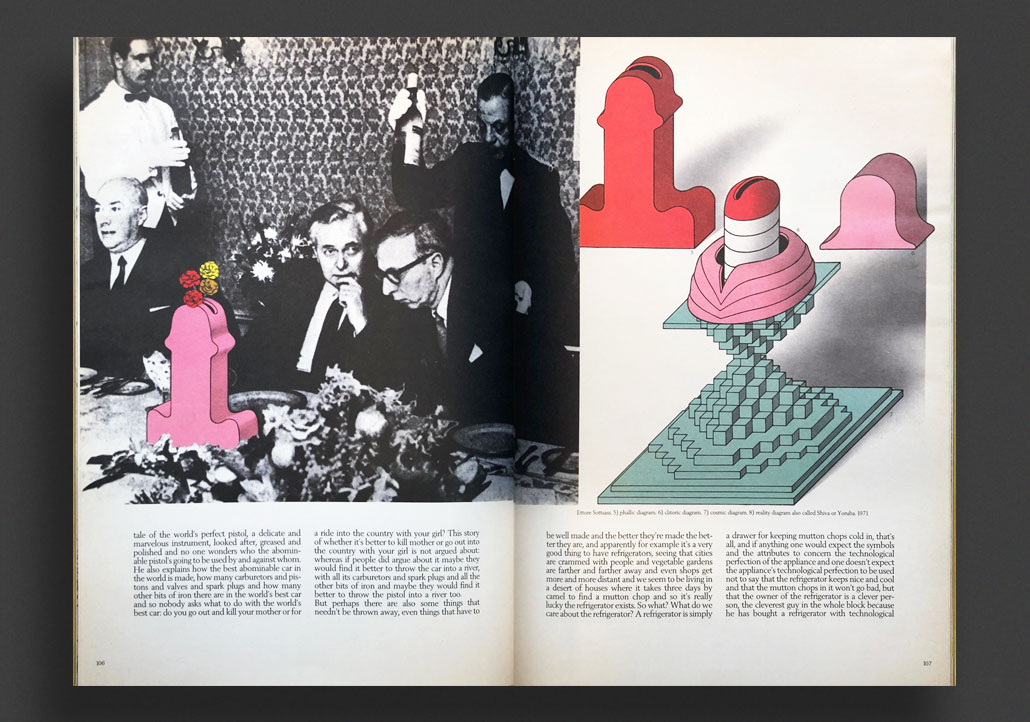
TERRAZZO was a very special biannual publication on architecture and design, edited and published between 1988–1995 by Barbara Radice, a prominent Italian author, design critic and member of the Memphis Milano design group. In conjunction with Ettore Sottsass, Christoph Radl, Anna Wagner and Santi Caleca, Radice created a unique and thoughtful periodical that focused on contemporary works of design and architecture, within Italy and abroad, touching on a vast array of disciplines in each issue, including literature, poetry, history, science, philosophy, art and anthropology. Like no other magazine.
TERRAZZO 5 Fall 1990 features : DOLCE STIL NUOVO by Andrea Branzi, TOYO ITO
Let it breathe by Toyo Ito, JOSH SCHWEITZER interview by Viola Marquez, ITALIAN RADICAL ARCHITECTURE AND DESIGN 1966 - 1973 by Emilio Ambasz (ARCHIZOOM - 9999 - GIANNI PETTENA - ETTORE SOTTSASS ― SUPERSTUDIO - UFO - ZZIGGURAT)
Good copy with light moisture waving to the top right corner towards back of publication with marking visible on the final pages. Light tanning, light wear, common partial glue separation from cover, otherwise really nice copy with original obi.
1977, English
Softcover (staple-bound), 96 pages, 28 x 20 cm
1st Edition, Out of print title / used / average
Published by
HM Communications / New York
$25.00 - Out of stock
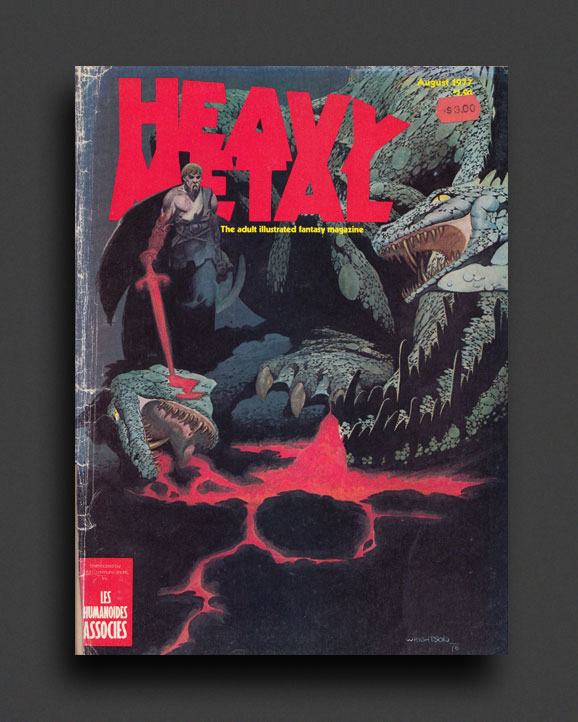
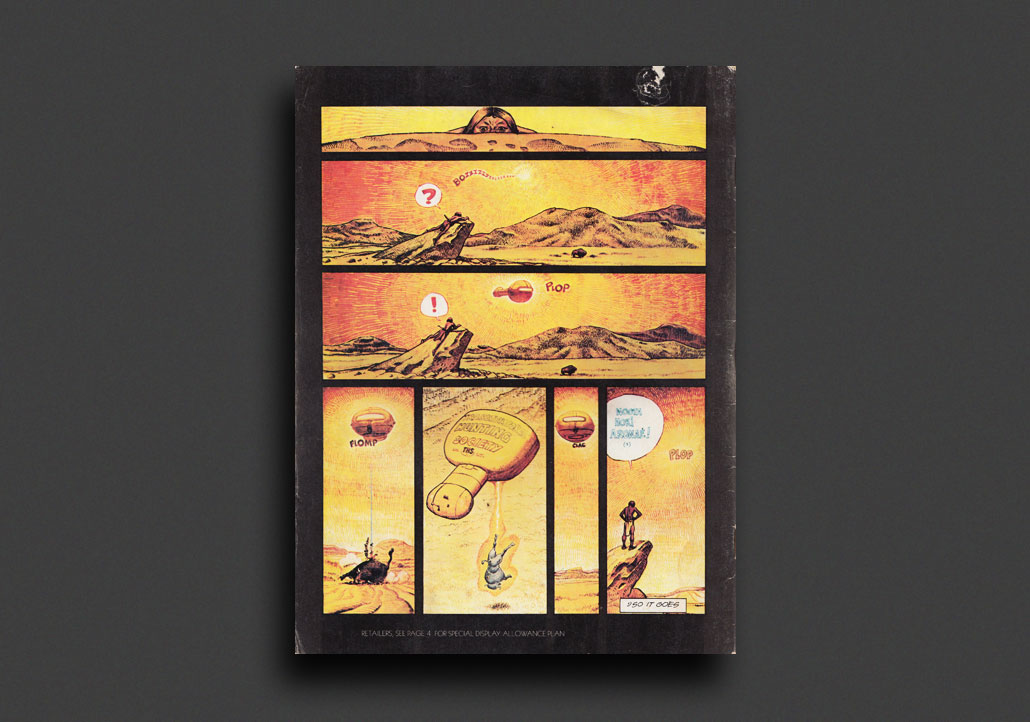
Heavy Metal August 1977 issue, featuring comic stories/art by Moebius, Philippe Druillet, Nicole Claveloux, Dan O'Bannon, Gotlib (Marcel Gottlieb), Chris Foss, Richard Corben, George Barr, and many more, plus the usual fare of sci-fi, movies, music... Cover art by Bernie Wrightson. Back cover by Moebius.
Heavy Metal is an American science fiction and fantasy comics magazine that exploded onto the publishing scene in 1977 and shaped a generation with its blend of dark fantasy/science fiction and erotica. Unlike the traditional American comic books of that time bound by the restrictive Comics Code Authority, Heavy Metal featured explicit content. The magazine started out as a licensed translation of the French science-fantasy magazine Métal Hurlant, including work by Enki Bilal, Philippe Caza, Guido Crepax, Philippe Druillet, Jean-Claude Forest, Jean Giraud (a.k.a. Moebius), Chantal Montellier, and Milo Manara. The magazine later ran Stefano Tamburini and Tanino Liberatore's ultra-violent RanXerox. Heavy Metal gradually evolved into a publication featuring North American contributors like Richard Corben, Matt Howarth, Stephen R. Bissette, Alex Ebel, John Holmstrom, Paul Kirchner, Terrance Lindall, Gray Morrow, Walt Simonson, Dan Steffan, Jim Steranko, John Shirley, Arthur Suydam, Bernie Wrightson, and Olivia De Berardinis.
Good copy with heavy wear to cover spine, general wear/tanning to page edges.
1983, English
Softcover (staple-bound), 96 pages, 28 x 20 cm
1st Edition, Out of print title / used / very good
Published by
HM Communications / New York
$35.00 - Out of stock
Heavy Metal February 1983 issue, featuring comic stories/art by Guido Crepax, Milo Manara, Richard Corben, Jeff Jones, Fernando Fernández, Michael Kaluta, Angus McKie, Caza, and many more, plus the usual fare of sci-fi, movies, music... Cover art by Sanjulián.
Heavy Metal is an American science fiction and fantasy comics magazine that exploded onto the publishing scene in 1977 and shaped a generation with its blend of dark fantasy/science fiction and erotica. Unlike the traditional American comic books of that time bound by the restrictive Comics Code Authority, Heavy Metal featured explicit content. The magazine started out as a licensed translation of the French science-fantasy magazine Métal Hurlant, including work by Enki Bilal, Philippe Caza, Guido Crepax, Philippe Druillet, Jean-Claude Forest, Jean Giraud (a.k.a. Moebius), Chantal Montellier, and Milo Manara. The magazine later ran Stefano Tamburini and Tanino Liberatore's ultra-violent RanXerox. Heavy Metal gradually evolved into a publication featuring North American contributors like Richard Corben, Matt Howarth, Stephen R. Bissette, Alex Ebel, John Holmstrom, Paul Kirchner, Terrance Lindall, Gray Morrow, Walt Simonson, Dan Steffan, Jim Steranko, John Shirley, Arthur Suydam, Bernie Wrightson, and Olivia De Berardinis.
Very Good copy.
1983, English
Softcover (staple-bound), 96 pages, 28 x 20 cm
1st Edition, Out of print title / used / good
Published by
HM Communications / New York
$30.00 - Out of stock
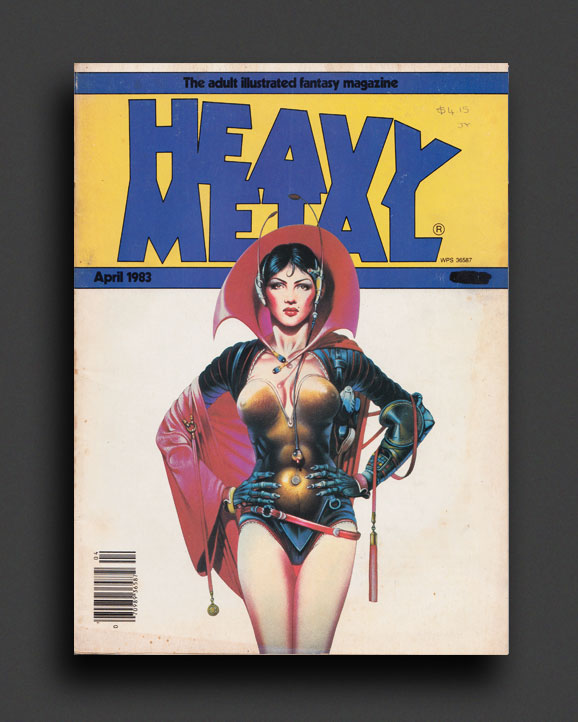
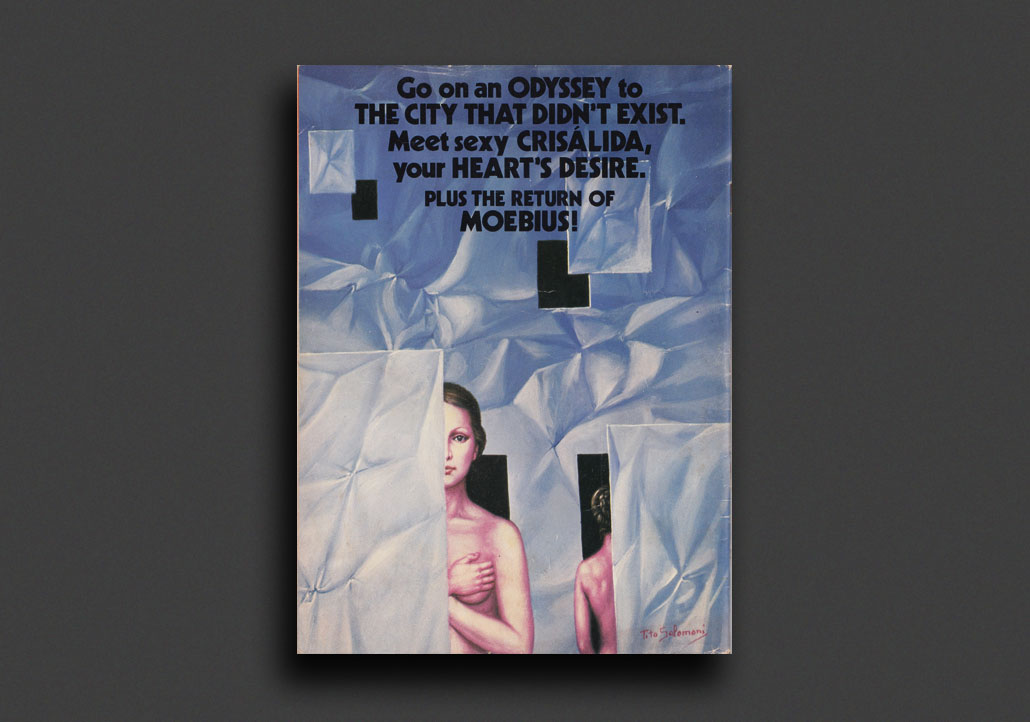
Heavy Metal February 1983 issue, featuring comic stories/art by Milo Manara, Moebius, Guido Crepax, Jeff Jones, Fernando Fernández, Michael Kaluta, Caza, Enki Bilal, José Maria Martín Sauri, Angus McKie, and many more, plus the usual fare of sci-fi, movies, music... Cover art by Chris Achilleos. Back cover by Tito Salomoni.
Heavy Metal is an American science fiction and fantasy comics magazine that exploded onto the publishing scene in 1977 and shaped a generation with its blend of dark fantasy/science fiction and erotica. Unlike the traditional American comic books of that time bound by the restrictive Comics Code Authority, Heavy Metal featured explicit content. The magazine started out as a licensed translation of the French science-fantasy magazine Métal Hurlant, including work by Enki Bilal, Philippe Caza, Guido Crepax, Philippe Druillet, Jean-Claude Forest, Jean Giraud (a.k.a. Moebius), Chantal Montellier, and Milo Manara. The magazine later ran Stefano Tamburini and Tanino Liberatore's ultra-violent RanXerox. Heavy Metal gradually evolved into a publication featuring North American contributors like Richard Corben, Matt Howarth, Stephen R. Bissette, Alex Ebel, John Holmstrom, Paul Kirchner, Terrance Lindall, Gray Morrow, Walt Simonson, Dan Steffan, Jim Steranko, John Shirley, Arthur Suydam, Bernie Wrightson, and Olivia De Berardinis.
Good copy with general wear/tanning/darkening.
1975, French
Softcover (staple-bound), 82 pages, 27 x 21.5 cm
1st Edition, Out of print title / used / very good
Published by
Les Humanoïdes Associés / Paris
$65.00 - Out of stock
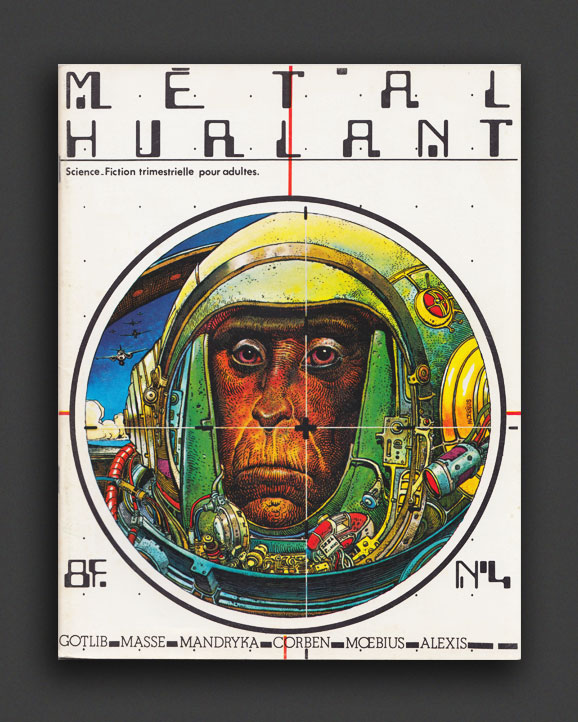
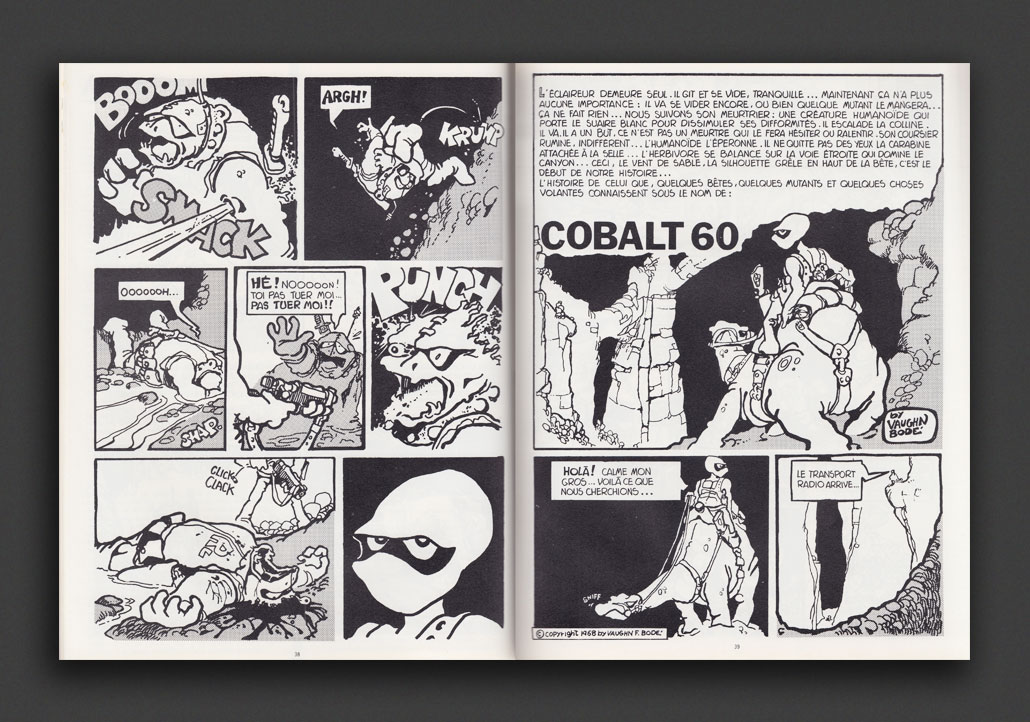
Metal Hurlant No. 4 1975 issue featuring comic stories/art by Moebius, Philippe Druillet, Vaughn Bodé, Richard Corben, Gotlib, Jean-Pierre Dionnet, Alain Voss, and many more, plus the usual fare of sci-fi, movies, music... Cover art by Moebius. Original French editions, very scarce outside Europe.
Métal Hurlant (literal translation: "Howling Metal") was a French comics anthology of science fiction and horror comics stories, created in December 1974 by comics artists Jean Giraud (better known as Mœbius) and Philippe Druillet together with journalist-writer Jean-Pierre Dionnet and financial director Bernard Farkas. The four were collectively known as "Les Humanoïdes Associés" (United Humanoids), which became the name of the publishing house releasing Métal Hurlant. English, German and Italian editions were also licensed, including Heavy Metal, published in the US by National Lampoon. Métal hurlant was originally released quarterly with contributors including Moebius and Druillet, depicting such iconic characters as Arzach and Lone Sloane for the first time, as well as work by Richard Corben, Guido Crepax, Alejandro Jodorowsky, Enki Bilal, Caza, Serge Clerc, Alain Voss, Berni Wrightson, Nicole Claveloux, Milo Manara, Frank Margerin, Masse, Chantal Montellier, and many others.
Good copy.
1992, English / German
Hardcover, 104 pages, 21.5 x 28 mm
1st Edition, Out of print title / used / very good
Published by
Kunsthalle Basel / Basel
Edition Cantz / Stuttgart
$190.00 - Out of stock
First 1992 hardcover edition of this wonderful monographic catalogue published to accompany American artist Mike Kelley's major travelling exhibition staged at Kunsthalle Basel; ICA, London, and Portikus, Frankfurt. Profusely illustrated throughout with beautiful documentation of Kelley's diverse works and installations, alongside texts in German and English, including many writings by Kelley himself, with additional texts by Colin Gardner, Christopher Knight, and conversations between Kelley and Paul Taylor, and Kelley and Ralph Rugoff. Edited by Thomas Kellein.
Mike Kelley (1954 – 2012) was one of the leading Californian artists of the 1990s; a proponent of abject or pathetic art, an anti-aesthetic, anti-heroic movement, which criticized social and artistic issues through banality and humour. His work involved found objects, textile banners, drawings, assemblage, collage, performance and video. He often worked collaboratively with artists such as Paul McCarthy, Tony Oursler, and John Miller, and was a member of the noise band Destroy All Monsters.
Very Good copy.
1997, Japanese
Softcover, 270 pages, 21 x 14.5 cm
1st Edition, Out of print title / used / very good
Published by
Art Notebook / Tokyo
$140.00 - Out of stock
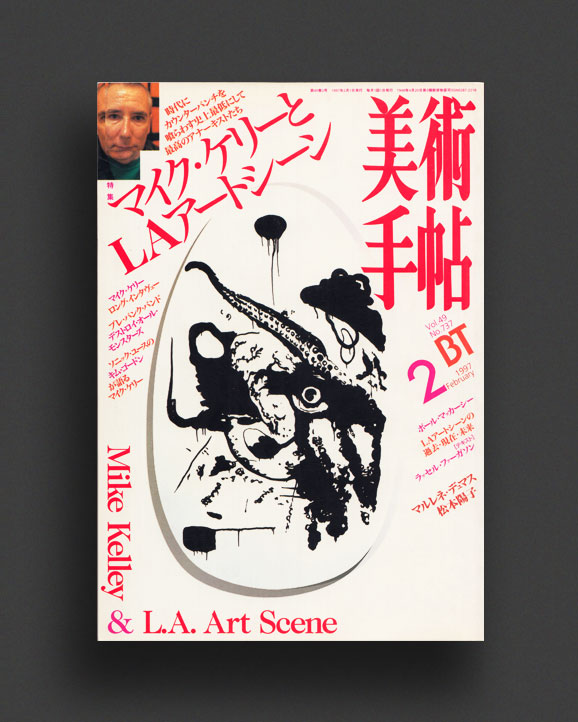
Incredibly rare special issue of Japanese contemporary art journal Art Notebook dedicated to "Mike Kelley and L.A. Art Scene", published in February 1997. To coincide with Kelley's major solo exhibition at Wako Works of Art, Tokyo in 1996, Art Notebook compiled this in-depth feature with Kelley as their tour guide to Los Angeles. Heavy illustrated with Kelley's works in colour and monochrome, the issue includes an interview with Kelley by Japanese art critic Kentaro Ichihara (author of the Kelley essay for Wako Works of Art), the L.A. Art scene presented by Kelley featuring art, music and sub-culture from L.A. (illustrated profiles on Jim Shaw, Raymond Pettibon, Paul McCarthy, Sharon Lockhart, Catherin Opie, Joe Mama-Nitzberg, Margaret Honda, Destroy All Monsters...), an interview with artist Paul McCarthy by artist Takashi Murakami, photo feature, live review and special interview with Destroy all Monsters who reformed to perform in Harajuku with Puzzle Punks (EYE), interview with Kim Gordon (Sonic Youth), Paul McCarthy and Mike Kelley's performances, an article on 1990s art in Los Angeles by curator Russell Ferguson (MoCA, Hammer, University of California)..... To top it off there is a fold-pout artwork by Yamantaka Eye (Puzzle Punks, Boredoms,...)! Heavily illustrated, text mostly Japanese (small introductory amount in English).
Very Good copy!
1996, Japanese / English
Softcover, 156 pages, 21 x 13.5 cm
1st Edition, Out of print title / used / fine
Published by
Wako Works of Art / Tokyo
$90.00 - Out of stock
First, only edition of this long out of print and very rare illustrated essay by Japanese art critic Kentaro Ichihara on the work of American artist, Mike Kelley, published in 1996 to accompany his solo exhibition at Wako Works of Art, Tokyo. Includes the complete essay "Anti-Aesthetics of Excess and Supremacy of Alienation" in Japanese, alongside an English summary and illustrated throughout with Kelley's works and historical references. Also includes colour illustrated section of Kelley's exhibited work alongside the artist's own essay "Land-O-Lakes / Land-O-Snakes", published here in English.
Fine, As New.
1982, English
Softcover, 320 pages, 11 x 18 cm
Out of print title / used / good
Published by
Panther / London
$30.00 - Out of stock
1982 Panther edition of Ursula K. Le Guin's "The Dispossessed".
Le Guin called her 1974 novel an “anarchist utopia”, a reaction to the Vietnam war. Originally “a very bad short story” according to Le Guin, “there was a book in it, and I knew it, but the book had to wait for me to learn what I was writing about and how to write about it. I needed to understand my own passionate opposition to the war that we were, endlessly it seemed, waging in Vietnam, and endlessly protesting at home,” she writes in an introduction.
The Dispossessed is set in the fictional universe of the seven novels of the Hainish Cycle, e.g. The Left Hand of Darkness, about anarchist and other societal structures. The book won the Nebula Award for Best Novel in 1974, won both the Hugo and Locus Awards in 1975, and received a nomination for the John W. Campbell Memorial Award in 1975. It achieved a degree of literary recognition unusual for science fiction due to its exploration of themes such as anarchism (on a planet called Anarres) and revolutionary societies, capitalism, and individualism and collectivism.
Ursula K. Le Guin (1929–2018) was an American author of speculative fiction, realistic fiction, non-fiction, screenplays, librettos, essays, poetry, speeches, translations, literary critiques, chapbooks, and children's fiction. She was primarily known for her works of speculative fiction. These include works set in the fictional world of Earthsea, stories in the Hainish Cycle, and standalone novels and short stories. Though frequently referred to as an author of science fiction, critics have described her work as being difficult to classify.
Good copy. General wear and tanning.
1971, English
Hardcover (w. dust jacket), 192 pages, 20 x 13 cm
1st UK Hardcover,
1st Edition, Out of print title / used / good
Published by
Gollancz / London
$100.00 - Out of stock
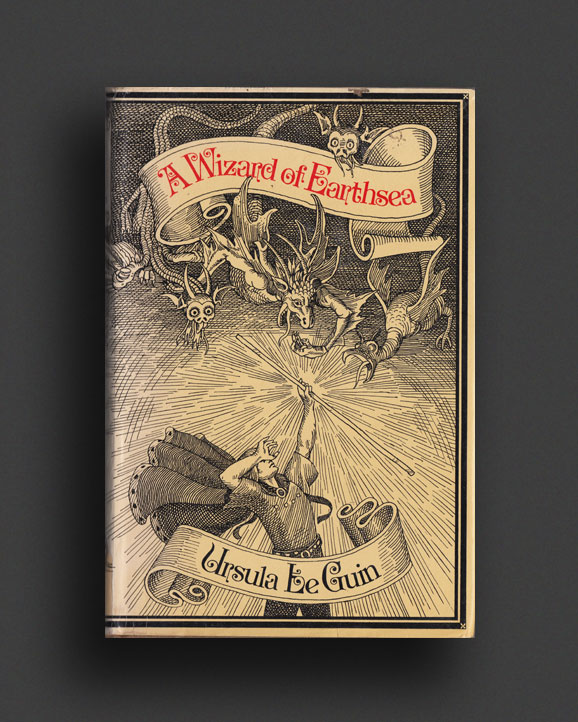
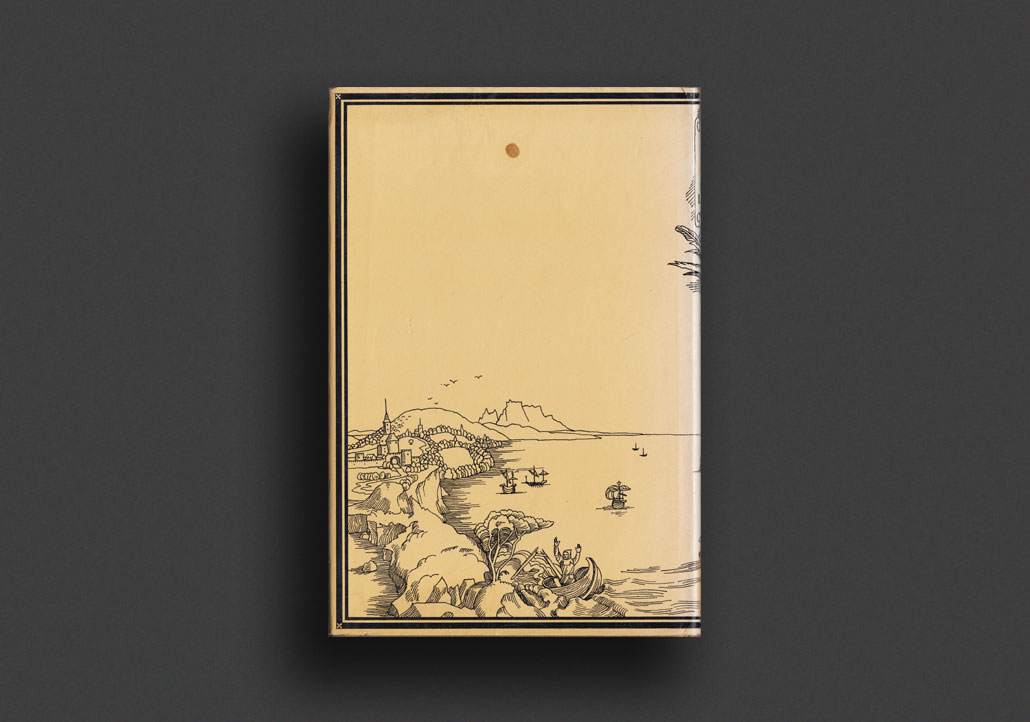
Rare first UK Hardcover edition of A Wizard of Earthsea, published by Gollancz, London in 1971. With illustrated dust jacket by David Smee and first appearance of the Earthsea map by John Bush.
A Wizard of Earthsea is a fantasy novel written by American author Ursula K. Le Guin and first published by the small press Parnassus in 1968. It is regarded as a classic of children's literature, and of fantasy, within which it was widely influential. The story is set in the fictional archipelago of Earthsea and centres around a young mage named Ged, born in a village on the island of Gont. He displays great power while still a boy and joins the school of wizardry, where his prickly nature drives him into conflict with one of his fellows. During a magical duel, Ged's spell goes awry and releases a shadow creature that attacks him. The novel follows his journey as he seeks to be free of the creature.
The book has often been described as a Bildungsroman, or coming-of-age story, as it explores Ged's process of learning to cope with power and come to terms with death. The novel also carries Taoist themes about a fundamental balance in the universe of Earthsea, which wizards are supposed to maintain, closely tied to the idea that language and names have power to affect the material world and alter this balance. The structure of the story is similar to that of a traditional epic, although critics have also described it as subverting this genre in many ways, such as by making the protagonist dark-skinned in contrast to more typical white-skinned heroes.
A Wizard of Earthsea received highly positive reviews, initially as a work for children and later among a general audience, as well. It won the Boston Globe–Horn Book Award in 1969 and was one of the final recipients of the Lewis Carroll Shelf Award in 1979. Margaret Atwood called it one of the "wellsprings" of fantasy literature. Le Guin wrote five subsequent books that are collectively referred to as the Earthsea Cycle, together with A Wizard of Earthsea: The Tombs of Atuan (1971), The Farthest Shore (1972), Tehanu (1990), The Other Wind (2001), and Tales from Earthsea (2001). George Slusser described the series as a "work of high style and imagination", while Amanda Craig said that A Wizard of Earthsea was "the most thrilling, wise, and beautiful children's novel ever".
Good ex-libris copy, with stamp to title page and small card pocket to front endpaper. Spotting to block edges, but interior very nice, so too a well preserved dust jacket (light wear, marking and some sunning to spine).
2001, German
Softcover, 32 pages, 21 x 15 cm
1st Edition, Out of print title / as new
Published by
Lindig in Paludetto / Nürnberg
$8.00 $5.00 - Out of stock
Catalogue surveying the work of German artist Andreas Exner, including the exhibition at Lindig in Paludetto, Nürnberg. Illustrated in colour throughout with text by Ulrich Loock.
Andreas Exner (b. 1962) is a German artist working in multiple media, including painting, installation and photography. His works are characterised by a strong interest in form and substance, and how these might contribute to – or undermine – the function of an object.
2002, English
Folding card, 21 x 15 cm
1st Edition, Out of print title / used / fine
Published by
Gertrude Contemporary / Melbourne
David Pestorius / Brisbane
$5.00 - In stock -
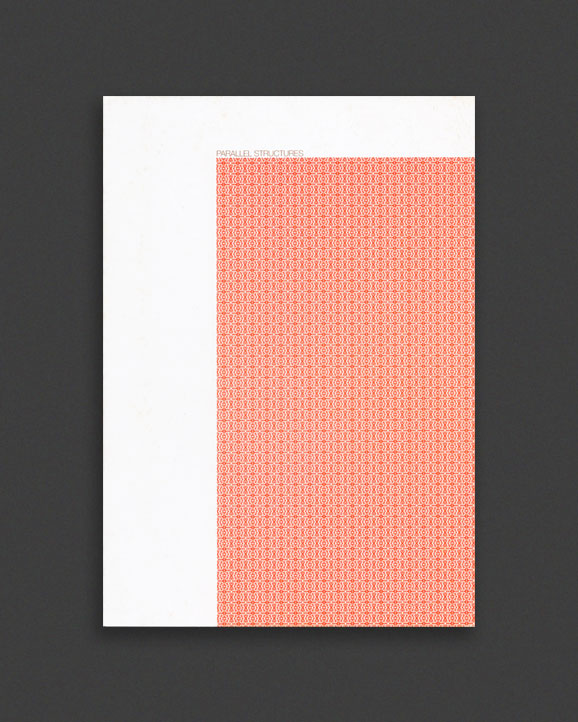
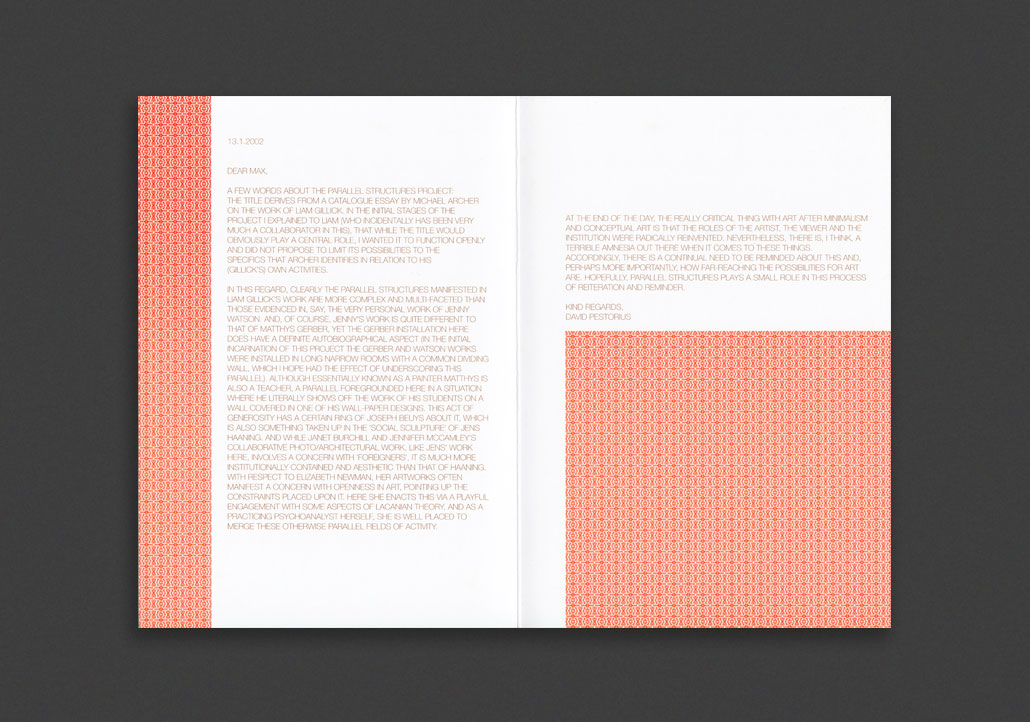
Exhibition card produced to accompany "Parallel Structures", organised by David Prestorius at Gertrude Contemporary, Melbourne, 5 April — 4 May, 2002. Folding card featuring text on the exhibition from gallerist/curator David Pestorius to Gertrude Contemporary director Max Delaney. Exhibition featured the work of Janet Burchill and Jennifer McCamley, Matthys Gerber, Liam Gillick, Elizabeth Newman, Jens Haaning, Jenny Watson. Designed by Liam Gillick.
1976, French
Softcover (staple-bound), 66 pages, 28.5 x 20.5 cm
1st Edition, Out of print title / used / good
Published by
L'Echo des Savanes / Paris
$30.00 - Out of stock
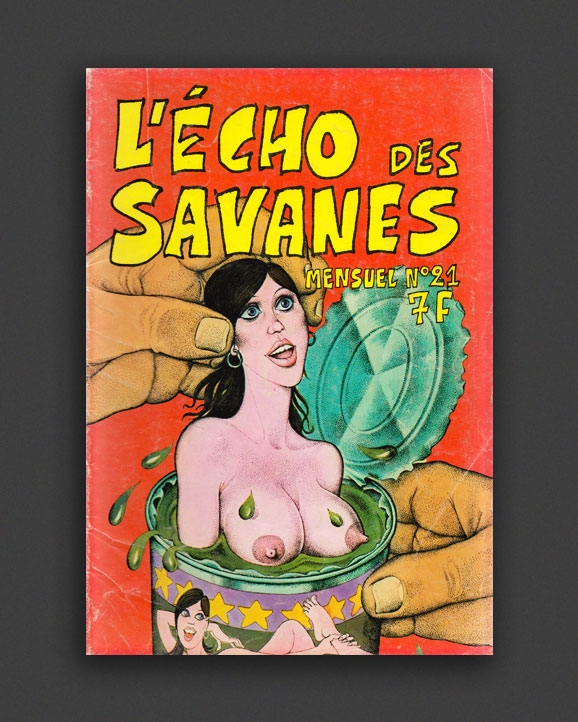
Issue 21 of L'Echo des Savanes Mensuel, published in 1976. Cover art by Georges Pichard. Features comics, artwork by Pichard, Jean Solé, Wallace Wood, Georges Wolinski, Gilbert Shelton, Dave Sheridan, Harvey Kurtzman, Nikita Mandryka, Jay Kinney, René Pétillon, Berbe, Philippe Marcelé, René Pétillon, alphabet by French novelist Georges Perec, more stories, cartoons, and much more...
L'Echo des Savanes Mensuel was a leading Franco-Belgian comics magazine founded in 1972 by Claire Bretécher, Marcel Gotlib and Nikita Mandryka. It featured many of the best of underground comic artists from around the world, particularly France and the US, every issue packed with parody of all sorts, often cartoons playfully taking the mickie out of other "popular" cartoons, and of course endless T & A and buffoonery. They were also book publishers of some excellence.
Good copy with general wear.