World Food Books' programme is largely produced on Kulin Nation land. We acknowledge the Wurundjeri people of the Kulin Nation as the first and continuing custodians of this land, and pay respect to their Elders past, present, and emerging.
World Food Books is an arts and special interests bookshop in Naarm / Melbourne. Founded in 2010, World Food Books is devoted to the presentation of a rotating, hand-selection of international art, design, literary and counterculture publications with an emphasis on the anti-traditional, the experimental, the avant-garde, the heretic, the marginal.
Presenting new titles alongside rare and out-of-print books, catalogues and journals spanning the fields of modern and contemporary art, design, photography, illustration, film, literature, poetry, cultural theory, philosophy, sexuality, popular and underground culture in its many radical forms, World Food Books wishes to encourage adventurous, thoughtful and open-minded reading, looking, writing, and exchange of publishing and ideas, both current and historical.
As well as our bookshop, located in Melbourne's historical Nicholas Building, all of our inventory is available internationally via our online mail-order service.
World Food Books semi-regularly co-ordinates "Occasions", a programme of exhibits and events at the bookshop and in partnership with other hosts (such as museums and art galleries) that develop out of the activities, relationships and content of the bookshop itself.
World Food Books
The Nicholas Building
37 Swanston Street
Room 5, Level 6
Melbourne 3000
Australia
SHOP HOURS:
Thu–Fri 12–6, Sat 12–5
WEB-SHOP OPEN 24/7
World Food Books
Postal Address:
PO Box 435
Flinders Lane
Victoria 8009
Australia
Art
Theory / Essay
Architecture / Interior
Graphic Design / Typography
Photography
Fashion
Eros
LGBTQ+
Fiction / Poetry
Weird / Speculative / Science Fiction / Horror
Transgressive / Visceral / Abject
Symbolism / Decadence / Fin de siècle
Film / Video
Painting
Sculpture / Installation
Performance / Dance / Theater
Drawing
Sound / Music
Curatorial
Group Shows / Collections
Periodicals
Out-of-print / Rare
Posters / Ephemera / Discs
Signed Books
World Food Books Gift Voucher
World Food Book Bag
Australian Art
Australian Fiction
Australian Science Fiction / Speculative Fiction
Australian Poetry
Australian Photography
Japanese Photography
Conceptual Art
Minimal Art
Dada
'Pataphysics / Oulipo
Fluxus
Concrete Poetry
Pop Art
Surrealism
Arte Povera
Arte Informale / Haute Pâte / Tachism
Nouveau Réalisme / Zero / Kinetic
Situationism / Lettrism
Collage / Mail Art / Xerox Art
Art Brut / Folk / Visionary / Fantastic
Illustration / Graphic Art / Bandes Dessinées
Furniture
Italian Radical Design / Postmodernism
Textiles
Ceramics / Glass
Counterculture
Protest / Revolt
Philosophy
Psychoanalysis
Anthropology
Anarchism
Socialism / Anarchism / Communism / Capitalism
Literary Theory / Semiotics / Language
Feminism / Women's Studies
Gender Studies / Sexuality
Anthropology
Fetishism / BDSM
Drugs / Psychedelia
Crime / Violence
Animal Rights / Veganism
Occult / Esoterica
Ecology / Earth / Alternative Living
Whole Earth / Crafts
All prices in AUD (Australian dollars)
Pick-Ups
Pick-up orders can be collected in our bookshop during opening hours after order date. Please collect any Pick-up orders within 2 weeks of ordering as we have limited storage space. Orders will be released back into stock if not collected within this time. No refunds can be made for pick-ups left un-collected. If you cannot make it in to the bookshop in this time-frame, please choose postage option.
Return Policy
All sales are final. We do accept returns (for refund or exchange) for items received in error. All our orders are packed with special care using heavy-duty padding and cardboard book-mailers or bubble mailers (for smaller books), using reinforcement where required. We cannot take responsibility for any lost, stolen or damaged parcels.
Insurance
Should you wish to insure your package, please email us directly after placing your order and we can organise this at a small extra expense. Although all standard/express tracked packages are very safe and dependable, we cannot take responsibility for any lost, stolen or damaged parcels. We recommend insurance on valuable orders.
Interested in selling your old books, catalogues, journals, magazines, comics, fanzines, ephemera? We are always looking for interesting, unusual and out-of-print books to buy. We only buy books in our fields of interest and specialty, and that we feel we can resell.
We base these prices on desirability, market value, in-print prices, condition and our current stock levels. We offer cash, store credit, and can take stock on consignment. All
about 25% of the price we expect to get when we sell them, or 30% in store credit. We base these prices on desirability, market value, in-print prices, condition and our current stock levels.
Sell your books any day of the week. You can drop them off and return later. If you have a lot of books, we can visit your Sydney home.
We buy books that we feel we can resell. We offer about 25 % of the price we expect to get when we sell them, or 30% in store credit. We base these prices on desirability, market value, in-print prices, condition and our current stock levels.
Philadelphia Wireman
03 August - 01 September, 2018
World Food Books is proud to announce our next Occasion, the first presentation of sculptures by Philadelphia Wireman in Australia.
The Philadelphia Wireman sculptures were found abandoned in an alley off Philadelphia’s South Street on trash night in 1982. Their discovery in a rapidly-changing neighbourhood undergoing extensive renovation, compounded with the failure of all attempts to locate the artist, suggests that the works may have been discarded after the maker’s death. Dubbed the "Philadelphia Wireman" during the first exhibition of this work, in 1985, the maker’s name, age, ethnicity, and even gender remain uncertain. The entire collection totals approximately 1200 pieces, all intricately bound together with tightly-wound heavy-gauge wire (along with a few small, abstract marker drawings, reminiscent both of Mark Tobey and J.B. Murry). The dense construction of the work, despite a modest range of scale and materials, is singularly obsessive and disciplined in design: a wire armature or exoskeleton firmly binds a bricolage of found objects including plastic, glass, food packaging, umbrella parts, tape, rubber, batteries, pens, leather, reflectors, nuts and bolts, nails, foil, coins, toys, watches, eyeglasses, tools, and jewellery.
Heavy with associations—anthropomorphic, zoomorphic, and socio-cultural responses to wrapped detritus—the totemic sculptures by Philadelphia Wireman have been discussed in the context of work created to fulfil the shamanistic needs of alternative religions in American culture. Curators, collectors, and critics have variously compared certain pieces to sculpture from Classical antiquity, Native American medicine bundles, African-American memory jugs, and African fetish objects. Reflecting the artist’s prolific and incredibly focused scavenging impulse, and despite—or perhaps enhanced by—their anonymity, these enigmatic objects function as urban artefacts and arbiters of power, though their origin and purpose is unknown. Philadelphia Wireman, whatever their identity, possessed an astonishing ability to isolate and communicate the concepts of power and energy through the selection and transformation of ordinary materials. Over the course of the past two decades, this collection has come to be regarded as an important discovery in the field of self-taught art and vernacular art.
Presented in collaboration with Fleisher-Ollman Gallery, Philadelphia, and Robert Heald, Wellington.
Susan Te Kahurangi King
02 February - 10 March, 2018
Susan Te Kahurangi King (24 February 1951 - ) has been a confident and prolific artist since she was a young child, drawing with readily available materials - pencils, ballpoint pens and felt-tip markers, on whatever paper is at hand. Between the ages of four and six Susan slowly ceased verbal communication. Her grandparents William and Myrtle Murphy had developed a special bond with Susan so they took on caring responsibilities for extended periods. Myrtle began informally archiving her work, carefully collecting and storing the drawings and compiling scrapbooks. No drawing was insignificant; every scrap of paper was kept. The King family are now the custodians of a vast collection containing over 7000 individual works, from tiny scraps of paper through to 5 meter long rolls.
The scrapbooks and diaries reveal Myrtle to be a woman of great patience and compassion, seeking to understand a child who was not always behaving as expected. She encouraged Susan to be observant, to explore her environment and absorb all the sights and sounds. Myrtle would show Susan’s drawings to friends and people in her community that she had dealings with, such as shopkeepers and postal workers, but this was not simply a case of a grandmother’s bias. She recognised that Susan had developed a sophisticated and unique visual language and sincerely believed that her art deserved serious attention.
This was an unorthodox attitude for the time. To provide some context, Jean Dubuffet coined the term Art Brut in 1945 to describe work created by self-taught artists – specifically residents of psychiatric institutions and those he considered to be visionaries or eccentrics. In 1972 Roger Cardinal extended this concept by adopting the term Outsider Art to describe work made by non-academically trained artists operating outside of mainstream art networks through choice or circumstance. Susan was born in Te Aroha, New Zealand in 1951, far from the artistic hubs of Paris and London that Dubuffet and Cardinal operated in. That Myrtle fêted Susan as a self-taught artist who deserved to be taken seriously shows how progressive her attitudes were.
Susan’s parents Doug and Dawn were also progressive. Over the years they had consulted numerous health practitioners about Susan’s condition, as the medical establishment could not provide an explanation as to why she had lapsed into silence. Dawn educated herself in the field of homeopathy and went on to treat all twelve of her children using these principles – basing prescriptions on her observations of their physical, mental and emotional state.
Doug was a linguist with an interest in philosophy who devoted what little spare time he had to studying Maori language and culture. To some extent their willingness to explore the fringes of the mainstream made them outsiders too but it was their commitment to living with integrity and their respect for individuality that ensured Susan’s creativity was always encouraged.
Even though Susan’s family supported her artistic pursuits, some staff in schools and hospitals saw it as an impediment to her assimilation into the community and discouraged it in a variety of ways. Her family was not always aware of this and therefore did not fully understand why Susan stopped drawing in the early 1990s. However, rather than dwell on the challenges that Susan faced in pursuit of her artistic practice, they prefer to highlight her achievements. In 2008 Susan began drawing again in earnest, after an almost 20 year interruption, and her work is now shown in galleries around the world.
Susan grew up without television and has been heavily influenced by the comics she read as a child. She is absolutely fearless in the appropriation of recognizable characters, such as Donald Duck and Mickey Mouse, in her work. She twists their limbs, contorts their faces, compresses them together, blends them into complex patterned backgrounds - always imbuing them with an incredible energy. Although Susan often used pop culture characters in her work they are not naive or childlike. These are drawings by a brilliant self-taught artist who has been creating exceptional work for decades without an audience in mind.
Mladen Stilinović
"Various Works 1986 - 1999"
02 February 16 - September 10, 2016
Various works 1986 - 1999, from two houses, from the collections of John Nixon, Sue Cramer, Kerrie Poliness, Peter Haffenden and Phoebe Haffenden.
Including: Geometry of Cakes (various shelves), 1993; Poor People’s Law (black and white plate), 1993; White Absence (glasses, ruler, set square, silver spoon, silver ladel with skin photograph and wooden cubes), 1990-1996; Exploitation of the Dead (grey and red star painting, wooden painting, black spoon with red table, red plate), 1984-1990; Money and Zeros (zero tie, paintings made for friends in Australia (Sue, John, Kerrie), numbers painting), 1991-1992; Words - Slogans (various t-shirts) - “they talk about the death of art...help! someone is trying to kill me”, “my sweet little lamb”, “work is a disease - Karl Marx”; Various artist books, catalogues, monographs, videos; Poster from exhibition Insulting Anarchy; "Circular" Croatian - Australian edition; Artist book by Vlado Martek (Dostoyevsky); more.
Thanks to Mladen Stilinović and Branka Stipančić.
Jonathan Walker
Always Will Need To Wear Winter Shirt Blue + Ochre Small Check Pattern
21 August - 21 September, 2015
Untitled
I am not a great reader of poetry but I always return to the work of Melbourne poet, Vincent Buckley (1925- 1988). Perhaps I find his most tantalising piece to be not a finished poem but a fragment left on a scrap of paper discovered on his desk after the poet’s death.
The poetry gathers like oil
In the word-core, and spreads
It has its music meet,
Its music is in movement.
This fragment is more the shell left behind from a volatile thought than a finished poem. I find the last two lines honest but awkward whereas the first two lines work like an arrow. Most likely he could not find a resolution so it was left. Still, in its present form, it remains an eloquent testimony to the ultimate failure of a medium to express mobile thought and sensation, in Buckley’s case, through verbal language. It’s an important matter because this is something all artists have to deal with regardless of the medium.
I have never written a poem, however, I am forever copying fragments from books on paper scraps in a vain effort to fix certain notions in my head. At first, they function as bookmarks that are sometimes returned to when I open the book. But before long, as they accumulate, they fall out littering the table interspersed with A4 photocopies, bills, books and medications.
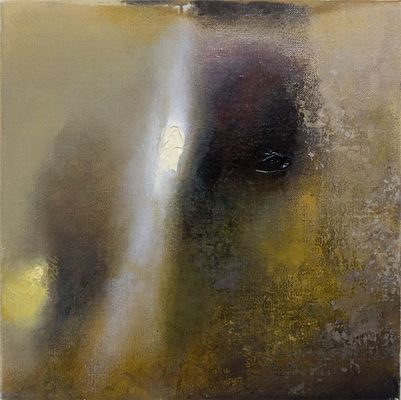
To return to Buckley’s fragment, the first two lines very much evoke how I paint nowadays. As you age, detail diminishes and patches of light become more luminous and float. I feel the most honest way of dealing with this is by smearing the oil paint on the canvas with the fingers and working close-up, blind. Only if the patches coalesce into an approaching image can the work gain a life.
-
Jonathan Walker was born in Melbourne, Australia and brought up on a dairy farm in Gippsland. In the 1970’s he studied painting at RMIT and won the Harold Wright Scholarship to the British Museum, London. During the 1980’s he exhibited at Pinacotheca Gallery, Richmond and had work shown at the NGV and Heidi City Art Gallery. Over the same period he designed the cover for the “Epigenesi” LP by Giancarlo Toniutti, Italy and conducted a mail exchange work with Achim Wollscheid, Germany. The work with artists through the post resulted in an article published in the bicentenary issue of Art and Australia 1988. He showed in artist run spaces such as WestSpace in the 90’s and 2000’s, and until 2012, taught painting at Victoria University, which is where we (Colleen Ahern and Lisa Radford) as organisers of the exhibition, among many others, had the privilege of being his student.
Walker’s knowledge was imparted to students through the careful selection of music, literature, and artists found in books that he himself had ordered for the library. Walker’s strategy was the generosity of sharing his vast knowledge with references specific to each student and their context.
Walker’s paintings share a similar focus and intimacy.
This exhibition presents a small selection of recent paintings alongside a publication that includes Walker’s writing. Observational and analytical, Walker’s work is a type of material notation — the time of day, colour and how it is blended, the both specific and fleeting location of a reflection on lino or the question of whether a chair leg should be included in a painting.
Please join us on Friday August 21 between 6-8pm to celebrate the opening of the exhibition.
Curated by Colleen Ahern and Lisa Radford.
B. Wurtz
Curated by Nic Tammens
March 26 - April 4, 2015
B.Wurtz works from a basement studio in his home on Manhattan’s Lower East Side.
This local fact is attested to by the plastic shopping bags and newsprint circulars that appear in his work. As formal objects, they don’t make loud claims about their origins but nonetheless transmit street addresses and places of business from the bottom of this long thin island. Like plenty of artists, Wurtz is affected by what is local and what is consumed. His work is underpinned by this ethic. It often speaks from a neighborhood or reads like the contents of a hamper:
“BLACK PLUMS $1.29 lb.”
“Food Bazaar”
“USDA Whole Pork Shoulder Picnic 99c lb.”
“RITE AID Pharmacy, with us it’s personal.”
“H. Brickman & Sons.”
“Sweet Yams 59c lb."
Most of the work in this exhibition was made while the artist was in residence at Dieu Donne, a workshop dedicated to paper craft in Midtown. Here Wurtz fabricated assemblages with paper and objects that are relatively lightweight, with the intention that they would be easily transportable to Australia. This consideration isn’t absolute in Wurtz’s work, but was prescriptive for making the current exhibition light and cheap. Packed in two boxes, these works were sent from a USPS post office on the Lower East Side and delivered to North Melbourne by Australia Post.
Wurtz appears courtesy of Metro Pictures, New York.
Thanks to Rob Halverson, Joshua Petherick, Sari de Mallory, Matt Hinkley, Helen Johnson, Fayen d'Evie, Ask Kilmartin, Lisa Radon, Ellena Savage, Yale Union, and "Elizabeth".
John Nixon
"Archive"
December 15 - January 20, 2014
The presentation of John Nixon's archive offered a rare showcase of this extensive collection of the artist's own publications, catalogues, posters, ephemera, editions and more, from the mid 1980s onwards, alongside a selection of his artworks.
Organized by John Nixon, Joshua Petherick and Matt Hinkley.
<a href=http://wfb.public-office.info/artist/john-nixon>All titles by John Nixon
"Habitat"
at Minerva, Sydney (organised by Joshua Petherick and Matt Hinkley)
November 15 - December 20, 2014
Lupo Borgonovo, Janet Burchill & Jennifer McCamley,
Lewis Fidock, HR Giger, Piero Gilardi, Veit Laurent Kurz,
Cinzia Ruggeri, Michael E. Smith, Lucie Stahl, Daniel Weil, Wols
Press Release:
“...It contained seven objects. The slender fluted bone, surely formed for flight, surely from the wing of some large bird. Three archaic circuitboards, faced with mazes of gold. A smooth white sphere of baked clay. An age-blackened fragment of lace. A fingerlength segment of what she assumed was bone from a human wrist, grayish white, inset smoothly with the silicon shaft of a small instrument that must once have ridden flush with the surface of the skin - but the thing’s face was seared and blackened.”
William Gibson, “Count Zero”, 1986
"Autumn Projects Archive"
Curated by Liza Vasiliou
March 6 - March 15, 2014
World Food Books, in conjunction with the Virgin Australia Melbourne Fashion Festival 2014, presented the Autumn Projects archive, consisting of a selection of early examples in Australian fashion with a particular interest in collecting designers and labels from the period beginning in the 1980’s, who significantly influenced the discourse of Australian Fashion.
Curated by Liza Vasiliou, the exhibition provided a unique opportunity to view pieces by designers Anthea Crawford, Barbara Vandenberg, Geoff Liddell and labels CR Australia, Covers, Jag along with early experimental collage pieces by Prue Acton and Sally Browne’s ‘Fragments’ collection, suspended throughout the functioning World Food Books shop in Melbourne.
H.B. Peace
presented by CENTRE FOR STYLE
November 14, 2013
"Hey Blinky, you say chic, I say same"
Anon 2013
H.B. Peace is a clothing collaboration between great friends Blake Barns and Hugh Egan Westland. Their pieces explore the divergences between 'character’ and ‘personality’ in garments....etc
Special Thanks to Joshua Petherick and Matt Hinkley of WFB and Gillian Mears
and a Very Special Thank you to Audrey Thomas Hayes for her shoe collaboration.
Janet Burchill & Jennifer McCamley
"Aesthetic Suicide"
May 10 - June 8, 2013
The first of our occasional exhibitions in the World Food Books office/shop space in Melbourne, "Aesthetic Suicide" presented a body of new and older works together by artists Janet Burchill & Jennifer McCamley, including videos, prints, a wall work, and publications.
During shop open hours videos played every hour, on the hour.
2021, English
Softcover, 224 pages, 14 x 20.5 cm
Published by
Semiotext(e) / Los Angeles
$34.00 - Out of stock
Poet, writer, and translator Cecilia Pavón emerged in the late 1990s as one of the most prolific and central figures of the young Argentine literary scene—the so-called “Generation of the 90s”: artists and writers whose aesthetics and politics were an earnest response to the disastrous impact of American-exported neoliberal policies and the resulting economic crisis of 2001. Their publications were fragile—xeroxed, painted on cardboard—but their cultural impact, indelible.
A cofounder of Buenos Aires's independent art space and publishing press Belleza y Felicidad—where a whole generation of soon-to-be-famous Argentine artists showed their work for the first time—Pavón pioneered the use of "unpoetic" and intimate content—her verses often lifted from text messages or chat rooms, her tone often impish, yet brutally sincere. Fellow Argentine poet Marina Yuszczuk once wrote, "Pavón's writing is filled with minor illuminations and conjectures; her syntax is the syntax of commas, 'buts,' and disjunctives, thoughts and impressions organized into a current that flows, branches off, and stands still."
In 2015, Pavón's first volume of collected poems, A Hotel with My Name, was published in English. Contemporary writers in the United States, Australasia, and Europe discovered a deep affinity with her work. Pavón's protagonists, Ariana Reines noted, "are absolute women, guileless dreamers, saints in sneakers, on sidewalks, in jail, in Zara, on buses, in nightclubs, in bed."
Translated by Pavón's own poetic protégé Jacob Steinberg, Little Joy collects the best of Pavón's short stories written between 1999-2020, originally published in three volumes in Spanish.
"Cecilia Pavón's writings are pure happiness, although they aren't always about happiness, or about happy things. Sometimes emotion erupts but she keeps her eyes moving, scanning the room and the sidewalks, the faces of friends." — Artforum, Best of 2015
"These stories are high-precision lenses for seeing the daily utopias of reality." —César Aira
2020, English
Softcover, 84 pages, 23.4 x 17 cm
Published by
Schwartz City / Melbourne
$20.00 - Out of stock
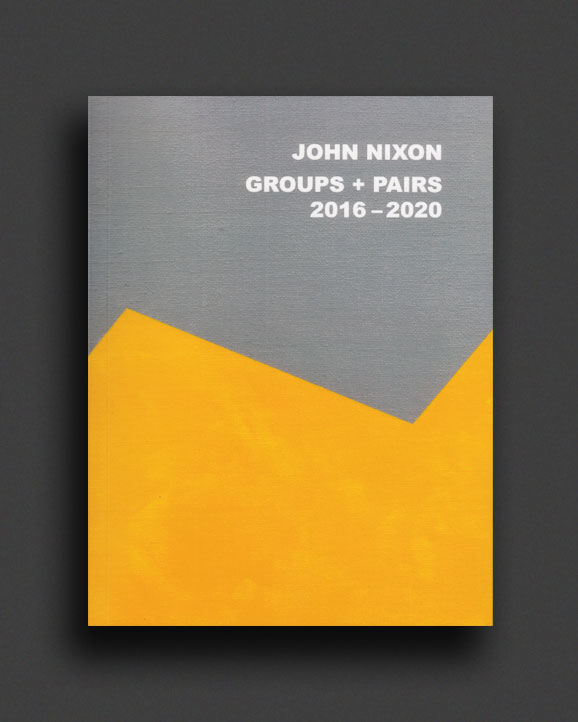
Published on the occasion of the exhibition John Nixon Groups + Pairs 2016–2020 at Anna Schwartz Gallery, and following the unexpected passing of the artist in August 2020, this publication honours the immense artistic contributions of the influential Melbourne abstract artist and leader of radical modernism John Nixon.
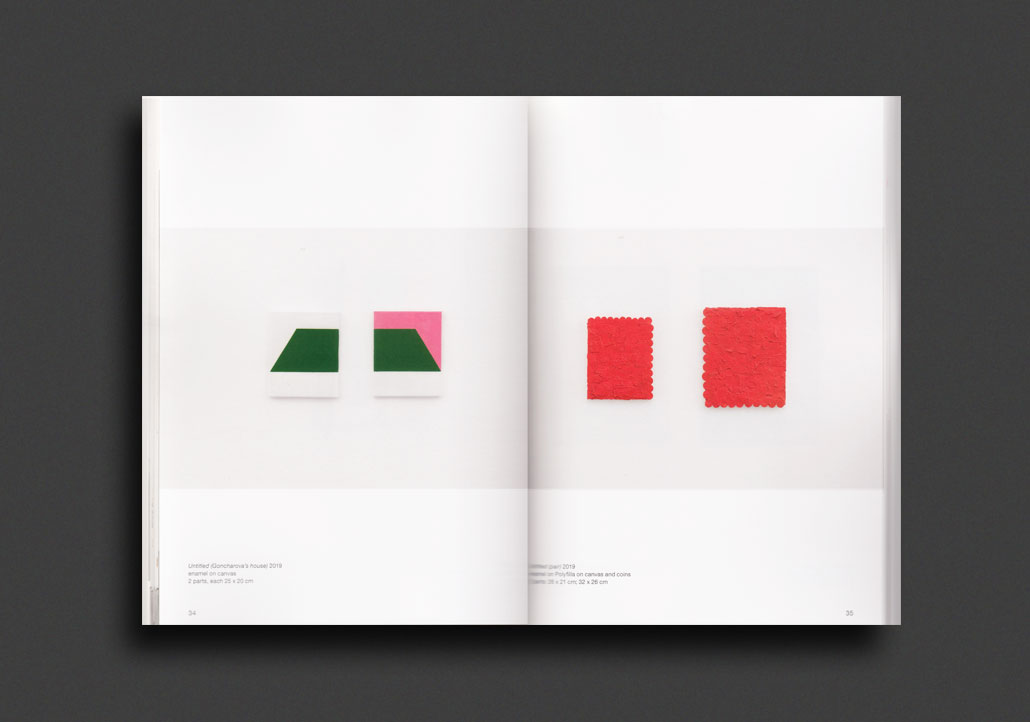
The exhibition John Nixon Groups + Pairs 2016–2020 documents the fundamental threads of Nixon’s practice as they had unfolded since 1968. Featuring a series of his paired paintings – evidence of his ongoing dedication to geometric abstraction –the exhibition also presents video installations capturing performance by Grace Uchinda dressed in Alpha60 alongside two of Nixon’s paintings, further collaborative works made by Nixon and Jacqueline Stojanovic, and a series of posters that were distributed around the inner suburbs of Melbourne in a timely suburban intervention.
John Nixon Groups + Pairs 2016–2020 features an essay by historian Carolyn Barnes and design by Yanni Florence.
John Nixon (1949-2020) was a seminal figure in contemporary Australian abstraction. Since 1968 his work has been dedicated to the ongoing experimentation, analysis and development of radical modernism, minimalism, the monochrome, constructivism, non-objective art and the readymade – key reference points in his work. Experimental Painting Workshop (EPW), which began in 1978, forms the basis of Nixon’s rigorous and long-standing intellectual investigation into the making of art, over time expanding to encompass not only painting, but collage, photography, video, dance and experimental music performance.
Nixon exhibited regularly and widely throughout his career. He held more than 70 solo exhibitions since 2001, including the Museum Gegenstandsfreier Kunst Otterndorf, Otterndorf, and the Auckland Art Gallery, Auckland. He represented Australia at Documenta 7, Kassel, Germany in 1982.
Nixon’s works are held in every major state museum collection in Australia, and selected international public collections include: Solomon R. Guggenheim Museum, New York; Museum Sztuki, Lodz; Foire National d’Art Contemporain, Paris; Stiftung fur Konkrete Kunst, Reutlingen; The Artists Museum, Lodz; Herning Kunstmuseumm, Denmark; Daimler Chrysler Collection, Berlin; Kunstmuseum Esberg, Denmark; Espace d’Art Contemporain, Demigny; National Gallery of Contemporary Art, Seoul.
2013, English
Softcover (staple-bound), 72 pages, 21 x 24 cm
1st Edition, Out of print title / as new
Published by
Pace London / London
$140.00 - Out of stock
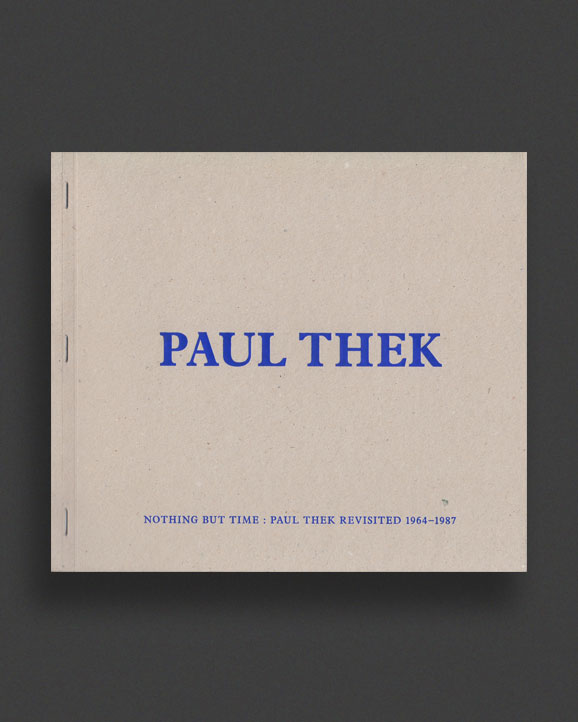
Very scarce copy of this rare and unprecedented overview of Paul Thek works from the early to mid 1960's, across all the media he worked, and never seen before to this extent in the UK. The exhibition, curated by Kenny Schachter, includes works from the noted newspaper series to the legendary and singular 'Technological Reliquary' series.
An American sculptor, painter, and installation artist, Paul Thek (1933-1988) is primarily known for hyper-realistic works of human body parts executed in fleshlike beeswax and for his strongly symbolic, room-size installations constructed from transitory materials. A major figure on the 1960s New York art scene, Thek also spent time in Europe, where he paved the way for artists adopting collaborative strategies. Although he gained a large following and was featured in more than one hundred solo and group exhibitions, the anti-establishment "artist's artist" was practically forgotten at the time of his death from AIDS related illness in New York City in 1988, aged 54.
As New copy.
1981, English
Softcover, 84 pages, 22 x 18 cm
1st Edition, Out of print title / used / average
Published by
CEPA Gallery / Buffalo
$100.00 - Out of stock
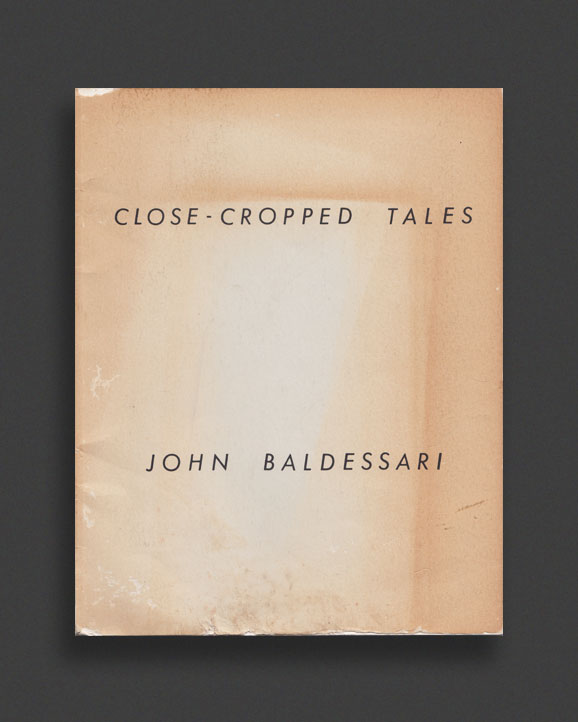
Rare first edition of Close-Cropped Tales, an artist's book by American conceptual artist John Baldessari (1931 – 2020), published in a first edition of 3000 copies in 1981. Published on the occasion of exhibitions at CEPA Gallery and the Albright-Knox Art Gallery, Buffalo, New York, April-May 1981, Close-Cropped Tales compiles re-cropped action-centered film stills in non-rectangular format. Polygonally cropped photographs are grouped into "chapters" according to number of sides. These resulting images are evocative of illustrations, and suggest how just a little photographic information can stand for greater meaning—or not. A superb early example of Baldessari's conceptual practice using found photography and appropriated images, and considered an absolute "must-have" title for John Baldessari collectors.
Internally very good, but with heavy ageing/tanning and some buckling and wear to covers.
1955, Japanese
Hardcover (w. dust jacket), 92 pages, 19 x 13.4 cm
1st Edition, Out of print title / used / good
Published by
Bungeishunju Shinsha / Japan
$120.00 - Out of stock
Rare first 1955 edition of the first monographic art book on the work of Japanese lyrical painter and illustrator Rokurō Taniuchi (1921–1981). A monumental, beautifully printed book that won the 1st Bungeishunju Manga Award, collecting the work of Taniuchi, an illustrator like no other. Lauded by Japanese artists, Taniuchi is little known outside of Japan, although visitors of Tokyo may have experienced the charm of his mosaic murals, "Most Star Hole of Umbrella" (1975) at the busy intersection of Omotesando and Aoyama-dori or “Sand Mountain” (1954) at Akabane-Iwabuchi, Kita. Taniuchi's unique, dream-like visions capture the nostalgic banality of everyday life in Shōwa period Japan, caught between folk tradition and modernisation. Chasing the Japanese seasons, Taniuchi's enchanted landscapes of factories on the outskirts of town, village streets and hillsides at dusk are littered with apparitions of dancing devils, leaf-people, ramune bottles, paper dolls and Lucky Strike cigarettes appearing before the child inhabitants, creating a sense of fantastic wonder and haunting melancholy. One of the great surrealists of the illustrated world.
Good copy in original dust jacket. Some wear to Good dust jacket.
1975 / 1979, Japanese
Hardcover (cloth) in hard illustrated slipcase, 124 pages, 27 x 19 cm
1st Edition, Out of print title / used / good
Published by
Shinchosha / Japan
$80.00 - Out of stock
1979 edition of this monumental collection of works by Japanese lyrical painter and illustrator Rokurō Taniuchi (1921–1981), first issued in 1975. Illustrated throughout with Taniuchi's works of the seasons, alongside their original texts, as well as many earlier works and photographs. Lauded by Japanese artists, Taniuchi is little known outside of Japan, although visitors of Tokyo may have experienced the charm of his mosaic murals, "Most Star Hole of Umbrella" (1975) at the busy intersection of Omotesando and Aoyama-dori or “Sand Mountain” (1954) at Akabane-Iwabuchi, Kita. Taniuchi's unique, dream-like visions capture the nostalgic banality of everyday life in Shōwa period Japan, caught between folk tradition and modernisation. Chasing the Japanese seasons, Taniuchi's enchanted landscapes of factories on the outskirts of town, village streets and hillsides at dusk are littered with apparitions of dancing devils, ramune bottles, paper dolls and Lucky Strike cigarettes appearing before the child inhabitants, creating a sense of fantastic wonder and haunting melancholy. One of the great surrealists of the illustrated world.
Good copy in original illustrated slipcase. Some age spotting and wear to hard slipcase and cloth covers, VG book.
1988, Japanese
Softcover (w. dust jacket), 166 pages, 21 x 14.8 cm
1st Edition, Out of print title / as new
Published by
Tatsumi Comics / Tokyo
$25.00 - Out of stock
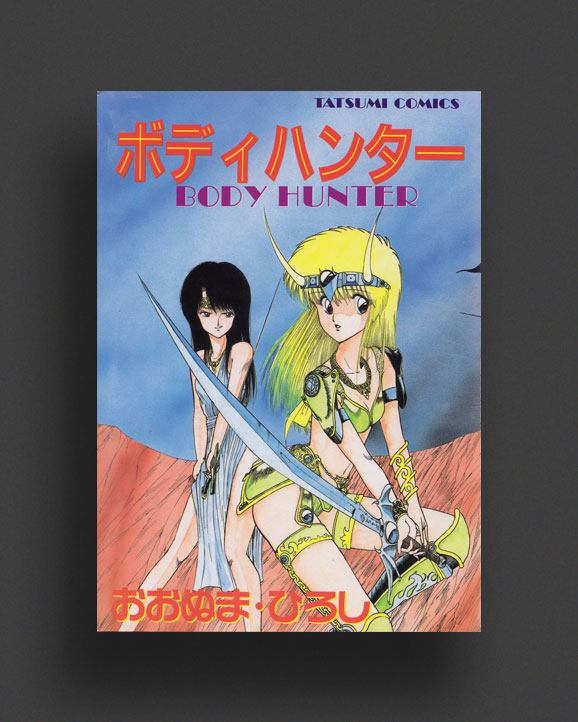
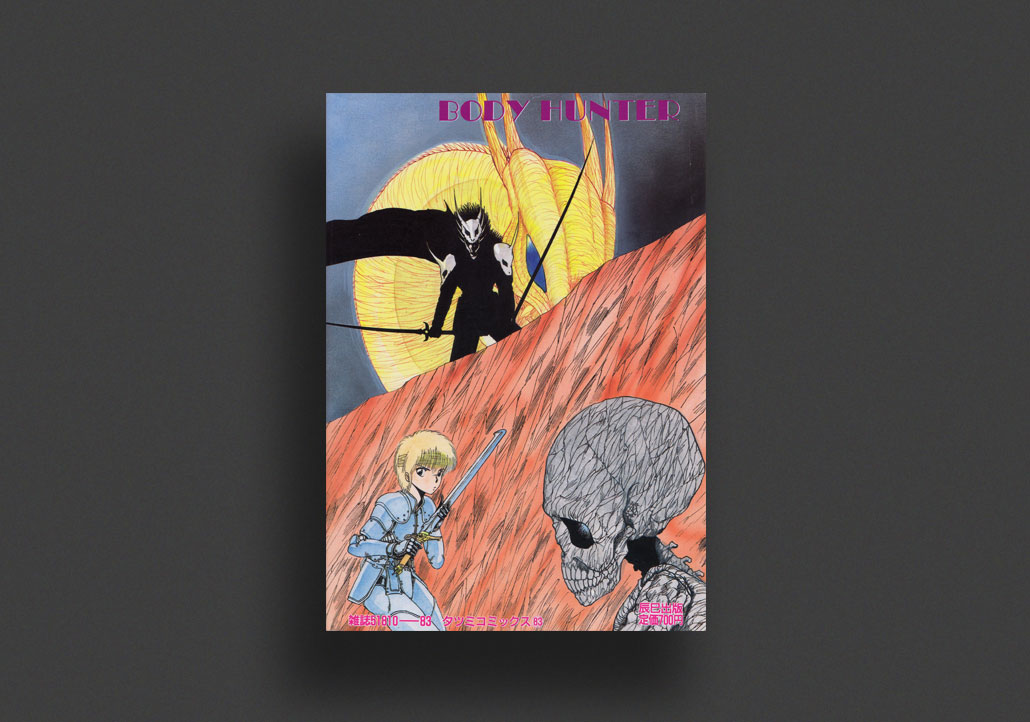
First edition from 1988, Body Hunter is a vintage manga / hentai comic book from Japanese fantasy illustrator Hiroshi Onuma, published by Tatsumi Comics. Illustrated fantasy erotica and sorcery in b/w and duotone, wrapped in original illustrated dust jacket.
As New.
1981, Japanese
Softcover, unpaginated, 26 x 21 cm
1st Edition, Out of print title / as new
Published by
Shueisha / Japan
$45.00 - Out of stock
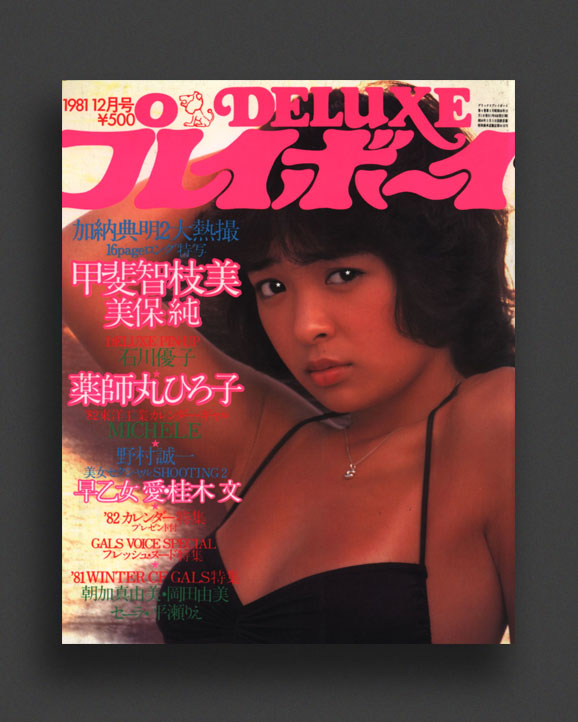
1981 Winter edition of Japan's DELUXE Playboy, lavishly illustrated throughout with female nudes and semi-nudes in colour and b/w. Includes '82 calendar GALS Special Feature, plus fold-outs.
Very Good copy, like new.
1968, Japanese / English
Softcover, 100 pages, 25.5 x 36.5 cm
1st Edition, Out of print title / used / good
Published by
Camera Mainichi and The Mainichi Graphic / Japan
$180.00 - In stock -
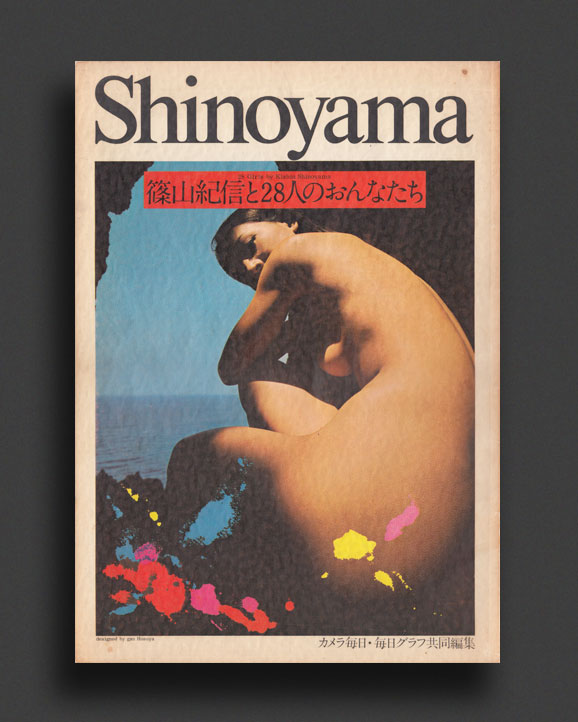
First edition of the ambitious, and much acclaimed, first nude photography book by Kishin Shinoyama (b. 1940, Tokyo), well known in the west for photographing the covers for John Lennon and Yoko Ono's albums, Double Fantasy and Milk and Honey. A marvel of 1960s radical nude photography, published in 1968 by Camera Mainichi, "28 Girls" is widely considered to be one of the most important Japanese photobooks of the 20th Century. Breaking sharply from the traditional treatment of the nude as an ideal of beauty in favour of the wild expressionism of nature, Shinoyama applied experimental and psychedelic techniques such as solarization and favoured a variety of regular girls, artists, performers, pop idols, and friends as models over the traditional glamour physique with exceptional, and very unconventional, results. Decadent, grotesque, absurd and sensuous all at once. Only ever published in this first spectacular format — the iconic, pop colour-saturated oversized softcover with fold-out spreads. Art Directed by Gan Hosoya with an illustration by Makoto Wada. Texts in Japanese and English by Yukio Mishima and Makato Wada. A stunning, complex and surprising piece of photo publishing, unlike any other, cited in Ryuichi Kaneko & Ivan Vartanian's Japanese Photobooks of the 1960s and 70s.
Good copy (general light wear/tanning to edges/spine from age, foxing, general handling wear from large size)
1973, English
Softcover (w. posters), 36.9 x 25.9 cm
1st Edition, Out of print title / used / very good
Published by
Shueisha / Japan
$65.00 - In stock -
Rare first issue of Japan's Playgirl Pin-Up, published in 1973 in Tokyo. Oversized magazine full of full-colour nude photography by leading Japanese photographer Kishin Shinoyama, including appendix fold-out poster and the commonly missing large double-sided folded calendar poster of Maria Anzai and Reika Yamakawa photographed by Shinoyama, loosely inserted.
Very Good copy, complete with original posters.
2021, English / French
Hardcover, 496 pages, 16 x 24 cm
Published by
ENSAD / Nancy
Poem / Frankfurt am Main
$110.00 - Out of stock
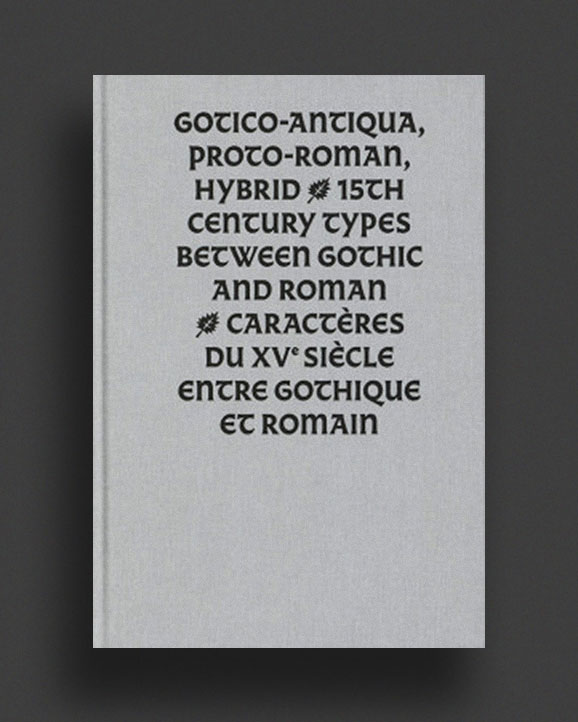
The book brings together researchers from the fields of typography, palaeography and incunabula studies, with a particular focus on type and letterforms. The relatively understudied period – after Gutenberg and before the consolidation of Jenson’s model – extends from the earliest traces of ‘humanistic’ tendencies to ‘pure’ roman type, including many cases of uncertain or experimental design, voluntary hybridisation and proto- or archaic roman. In 1459 in Mainz, Johann Fust and Peter Schöffer printed the Rationale Divinorum Officiorum by Guillaume Durand, using a typeface (now known as ‘Durandus’) that looked like no other before. From that point, we can follow a wide variety of developments, partly related to the travels of early printers from the Rhine area to Italy and France. By extension, the private press movement initiated by William Morris and Emery Walker at the end of the nineteenth century in England, revived some of those typefaces before they were once more largely forgotten.
Essays by Olivier Deloignon, Riccardo Olocco, Martina Meier, Nikolaus Weichselbaumer & Mathias Seuret, Dan Reynolds, Christopher Burke, Ferdinand Ulrich, Rafael Ribas & Alexis Faudot, Jérôme Knebusch. Foreword by Christelle Kirchstetter and Thomas Huot-Marchand. Exhibition part by Jérôme Knebusch.
2020, English
Softcover, 384 pages, 19 x 27.5 cm
Published by
Walther König / Köln
Stichting Egress Foundation / Amsterdam
$79.00 - In stock -
An essential sourcebook on conceptual art’s famed champion, reproducing his texts as scans to immerse the reader in this deep archival dive.
“Better Read Than Dead” was the title that the great American art dealer, curator, author and researcher Seth Siegelaub (1941-2013) had chosen for an anthology of his own writings—one of the projects for which he never found the time, busy as he was running his global one-man operation. Here, happily, that project is now fulfilled.
The selected writings, interviews, extended bibliography and chronology gathered in this Siegelaub sourcebook fill the historical gaps in the sprawling network of exhibitions, publications, projects, and collections that constitute Siegelaub’s life’s work.
Here, Siegelaub’s writings are reproduced as scans in order to convey the variety of the documents and to give a sense of archival immersion. Interspersed with these “writings” are interviews and talks, several newly transcribed. The majority of interviews from 1969-1972 are reprinted here.
2021, English / German
hardcover (leporello), 104 pages, 21 x 29 cm
Published by
Museum Abteiberg / Mönchengladbach
Walther König / Köln
$55.00 - Out of stock
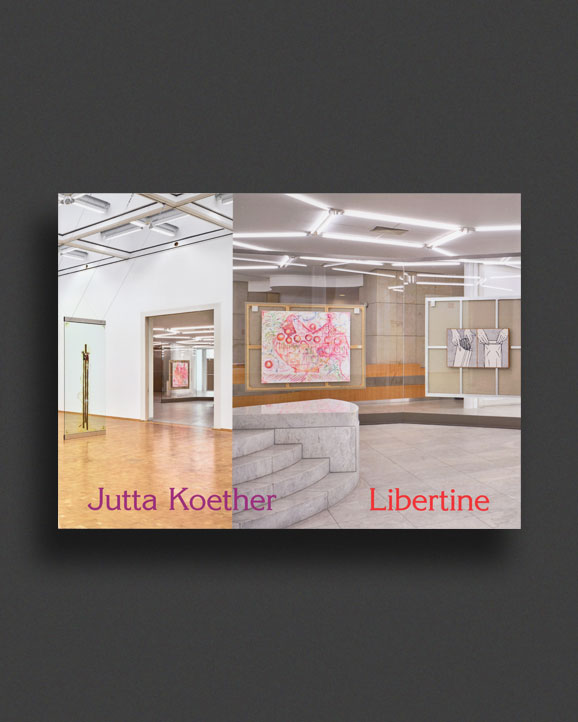
Jutta Koether’s new artist book, Libertine, documents and interprets her eponymous exhibition at Museum Abteiberg, a major installation that delved into the museum’s history.
The artist designed the book and its fold-out (leporello) cover, presenting her latest series of paintings from 2018 to 2020 and their intersection with central works in the Mönchengladbach-based collection. The second part of the book contains a dossier of materials from her studio.
Three new essays by Ewa Lajer-Burcharth, Jenny Nachtigall and Nathan Stobaugh together with a postface by Susanne Titz offer a comprehensive art historical exploration of the artist, considered one of today’s leading contemporary painters.
Published after the exhibition, Jutta Koether: Libertine at Museum Abteiberg, Mönchengladbach, Germany (13 October 2019 – 16 February 2020).
English and German text.
2021, English
Softcover, 258 pages, 14.2 x 19.3 cm
Published by
The Song Cave / New York
$42.00 - Out of stock
The Song Cave presents an expanded edition of the long out of print City Lights Books classic ON THE MESA: AN ANTHOLOGY OF BOLINAS WRITING in celebration of its 50th anniversary. This is a gathering of poets, writers and artists living on or around the mesa in Bolinas, California. Not so much a school of thought as a meeting of those who happened to be at this geographical location at this wobbly point in time, several divergent movements in American poetry (Black Mountain, San Francisco Renaissance, Beat, and New York School poets) came together with new Western and mystic elements at the unpaved crossroads of Bolinas.
Featuring work by: Gordin Bladwin, Bill Berkson, Ted Berrigan, Michael Bond, Ebbe Borregaard, Joe Brainard, Richard Brautigan, Jim Brodey, Bill Brown, Jim Carroll, Tom Clark, Robert Creeley, Max Crosley, Diane Di Prima, John Doss, Bobbie Louise Hawkins, Lawrence Kearney, Joanne Kyger, Keith Lampe, Lewis Macadams, Phoebe Macadams, Duncan MC Naughton, David Meltzer, Alice Notley, Arthur Okamura, Stephen Ratcliffe, Aram Saroyan, Gailyn Saroyan, John Thorpe, Charlie Vermont, Anne Waldman, Lewis Warsh, Joel Weishaus, and Philip Whalen.
2020, English / Spanish
Softcover, 98 pages, 14 x 19 cm
Published by
The Song Cave / New York
$38.00 - Out of stock
It's hard to believe that the books of Blanca Varela (1926-2009), considered one of Peru’s greatest poets, as well as the first woman to win the Federico García Lorca International Poetry Prize, have not been translated into English until now.
Originally published in Spanish in 1978, this new publication of Rough Song, translated by Carlos Lara, heralds the long overdue introduction of a major Latin American poet to English-language readers. Born into a family known for advancing art in Latin America, Varela lived briefly in Paris in the late '40s and '50s where she quickly became friends with Andre Breton, Jean-Paul Sartre, Henri Michaux, Simone de Beauvoir, Alberto Giacometti, and in particular, Octavio Paz, who called Varela "the most secret, timid and natural of them all."
Returning to Lima in the '60s, she established herself as one of Peru's key literary intelligentsia. The poems in Rough Song, these "flowers for the ear," range wildly in form, from two lines to seven pages long, and each presents a world of intense precision in language, fully conscious of reality and its metaphysical limits—“yes / the dark matter / animated by your hand / it’s me." Varela’s deceptively simple poems hold a mysteriously delicate weight far beyond their length. A formidable voice in Latin American literature, Blanca Varela is destined to inspire awe and summon new readers for years to come.
"These haunting songs unfold with the mysterious precision of fractals, bending their interiors into pliant, living forms. As I get to know Blanca Varela's work, in Carlos Lara's beautiful translation from the Spanish, my ear becomes attuned to the smallest moving gradations, the spider that "doesn't dare descend one / more millimeter toward the ground," a surrealism I associate with Alejandra Pizarnik, Henri Michaux, and I'm so grateful to have come to it." - Alexis Almeida
2018, English
Softcover, 80 pages, 13.7 x 18.8 cm
Published by
The Song Cave / New York
$36.00 - Out of stock
On the 50th anniversary of its publication, The Song Cave has published the first English translation of Francis Ponge's Nioque of the Early-Spring. Ostensibly a book written to honor the season itself and the cycle of time, upon its release in France in May 1968, these notes took on a greater metaphorical meaning within this context, addressing the need for new beginnings and revolution.
Translated by Jonathan Larson.
Francis Ponge (1899-1988) was a French essayist and poet. Influenced by surrealism, he developed a form of prose poem, minutely examining everyday objects. During the Second World War, Ponge joined the French Resistance. He also worked for the National Committee of Journalists, and was literary and artistic director of the communist weekly newspaper L'Action. He left the Communist Party in 1947. From 1952 to 1967 he held a professorship at the Alliance Française in Paris, and was a visiting professor at Barnard College and Columbia University in the United States. Awards made to Ponge include the Neustadt International Prize for Literature, the Académie française's French National Poetry Prize, and the Grand prix of the Société des gens de lettres, and was a Commandeur of the Légion d'honneur. For the last 20 years of his life Ponge was reclusive, living at his country house in Le Bar-sur-Loup, where he died at the age of 89.
Jonathan Larson, poet and translator, was born in 1984. Nioque of the Early-Spring is his first full-length translation.
2020, English / Polish
Hardcover, 288 pages, 25.3 x 16 cm
Published by
Walther König / Köln
Serralves Museum of Contemporary Art / Porto
Muzeum Szluki / Lodz
$90.00 - Out of stock
R.H. Quaytman (b.1961, Boston) is one of the most outstanding contemporary American artists attempting to revitalise and update the intellectual and emotional potential contained in the painting medium. The artist is best known for her paintings on wood panels, using abstract and photographic elements in site-specific ‘Chapters’.
The exhibition, prepared especially for the Muzeum Sztuki in Lodz, was a kind of conceptual retrospective, where the artist has re-read earlier ‘Chapters’ of the constantly developed project, and returned to its origins closely related to Lodz and the works by Katarzyna Kobro and Władysław Strzemiński. Apart from precisely selected works from her earlier ‘Chapters’ works, the exhibition has presented new paintings in which Quaytman continues her dialogue with the work of Polish artists and explores other aspects of her personal relationship with the Lodz museum.
This catalogue contains essays written by the artist, a curator of the show, Jarosław Suchan, and Marta Dziewańska who is an art critic and curator in Kunstmuseum Bern.
Published on the occasion of the exhibition, R.H. Quaytman: The Sun Does Not Move. Chapter 35 at Muzeum Sztuki, Lodz (8 November 2019 – 23 February 2020), and at Fundação Serralves, Porto (16 October 2020 – 21 February 2021).
English and Polish text.
2021, English
Softcover, 128 pages, 29.7 x 21 cm
Published by
Perimeter Editions / Melbourne
$49.00 - In stock -
Over a career spanning more than three decades, Shelley Lasica’s practice has placed the creative and processional machinations of dance and choreography centre stage. Skirting histories of visual, spatial and performance art as closely as she has embraced dance and choreography, the Melbourne artist’s propositions test the limits of the mediums in which they operate, forever expanding contexts and posing questions of just what dance is and what it can be as art.
Lasica’s debut book The Design Plot – which features texts by project producer Zoe Theodore, curator Pip Wallis and writer Megan Payne – acts as both documentation of Lasica’s ever-evolving practice and a wider vehicle for exploring the relationship between the body and architectural space, imagination and memory. Tracing ten iterations of the collaborative dance work from which the book takes its name, The Design Plot is at once organised and amorphous in its bearings – image sequences fracturing and folding in on themselves amidst a measured, cumulative flow of gestures, people, movements and architectures.
Like the performances themselves – which were conceived with dancers Ellen Davies, Timothy Harvey, Louella Hogan, Daniel Newell, Lilian Steiner and Jo White – the book is just another iteration of The Design Plot’s ongoing process and self-interpretation. ‘Each time The Design Plot is performed,’ writes Zoe Theodore in her essay for the book, ‘it is durational or cumulative, as it hosts a collective conversation that continually questions: What is the work? Where is the work? What happens to the work after occupying this architecture of time and space?’
2021, English
Hardcover (cloth w. with puffy image plate), 120 pages, 28 x 22.5 cm
Published by
Literal Matter / New York
$85.00 - Out of stock
“To think about Pesce’s work is to reevaluate the structures of ordinary objects.”
At 81, the Italian designer and architect Gaetano Pesce is one of the world’s greatest living artistic innovators. Best known for his radical embrace of seemingly ordinary, unexpected materials, he has constructed pink buildings from foam, sofas that resemble jester hats, large-scale portraits from hand-poured resin and vases that bend and wobble.
This new book on Pesce comprises both his most iconic and many never-before-seen works (some made in the last year), all captured by nearly two dozen photographers around the world. It includes an essay and interview with Pesce by the critic Sophie Haigney, new portraits by Duane Michals, and four commissioned photographic series that take his work into the world.
CONTRIBUTING PHOTOGRAPHERS
(in order of appearance)
Duane Michals, Chris Rhodes, Jeroen Bocken, Thomas Brown, Benjamin Prabowo Sexton, Parker Woods, Stephen Lewis, Anna Pogossova, Sarah Pannell, Charlie Engman, Esther Theaker, Jerome Ming, Douglas Lance Gibson, Corey Olsen, Heather Sten, Lorna Bauer, Sergiy Barchuk, Pat Martin, Benjamin Pexton, Tina Tyrell, Steve Harries, Leonardo Scotti.
1991, Japanese
Softcover, 160 pages, 28.5 x 21 cm
1st Edition, Out of print title / used / very good
Published by
SPY / Tokyo
$20.00 - Out of stock
SPY was a monthly cultural magazine in Japan with monthly special features. This issue, from September 1991, presents the "Truth of Sex", a perfect example of how progressive Japanese mainstream publishing was by comparison to much of the world. Alongside the usual reports on art, global issues, technology, theatre, video, film, music, food, etc. this issue is largely dedicated to ilustrated features on Sadomasochism, "New Age Sex and Modern Primitive", Transgenderism (with photography by Takeshi Ishikawa), "Sex Drug Roppongi", Auto-Eroticism (by Merzbow's Masami Akita), "Attachment for Girls", the Japanese Gay scene, Scatology (by Masaaki Aoyama), the Duchamp-esque readymade "Ultimate Sex Catalogue" compiled by Japanese photographer Ryosuke Handa, plus artwork by Richard Cerf, Joel Peter-Witkin, Arnulf Rainer, Sam Haskins, Lucas Samaras, Romain Slocombe, Gottfried Helnwein, ENEG, Gilles Berquet... and more.
2021, English
Softcover, 376 pages, 22.9 x 30.5 cm
Published by
Yale University Press / New Haven
Art Institute of Chicago / Chicago
$99.00 - Out of stock
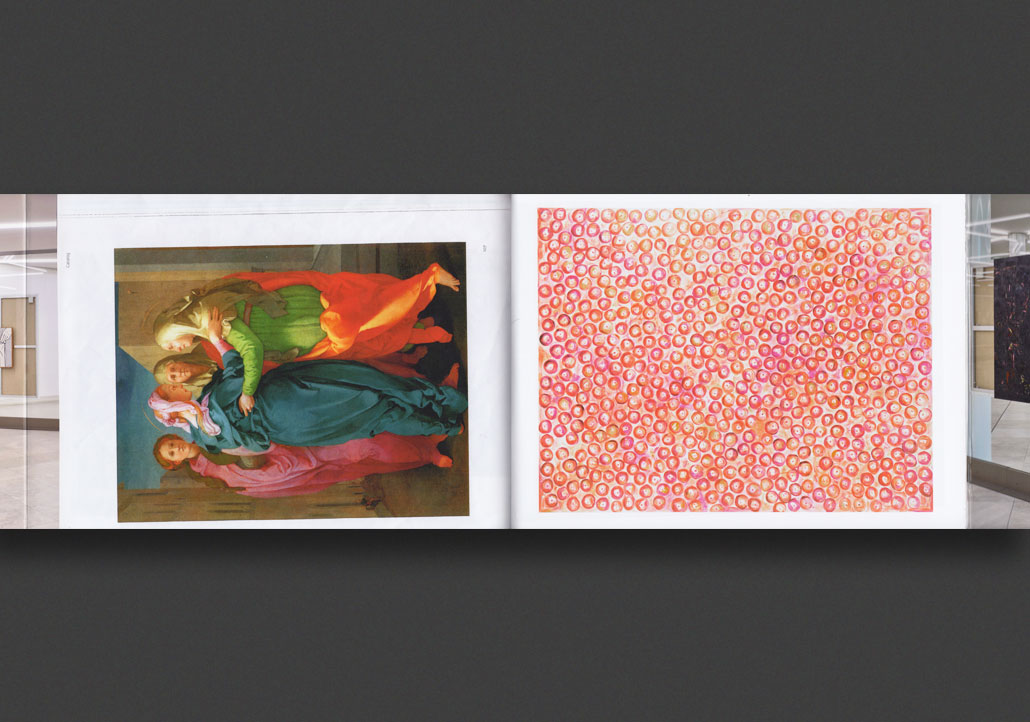
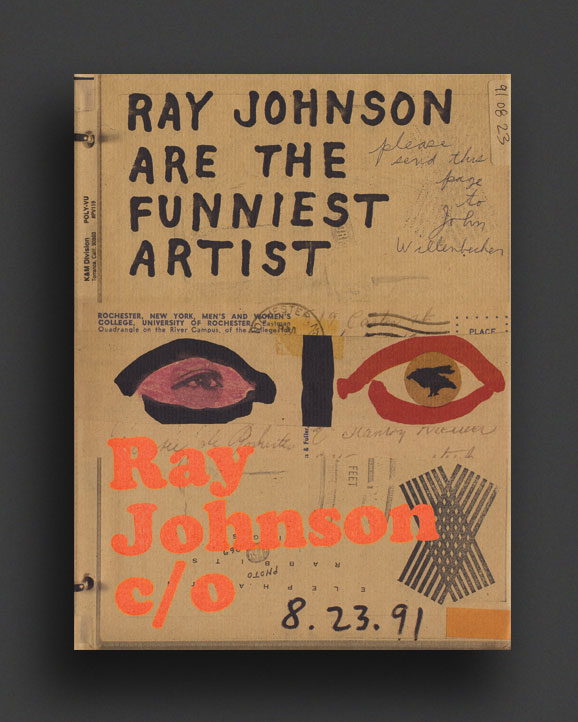
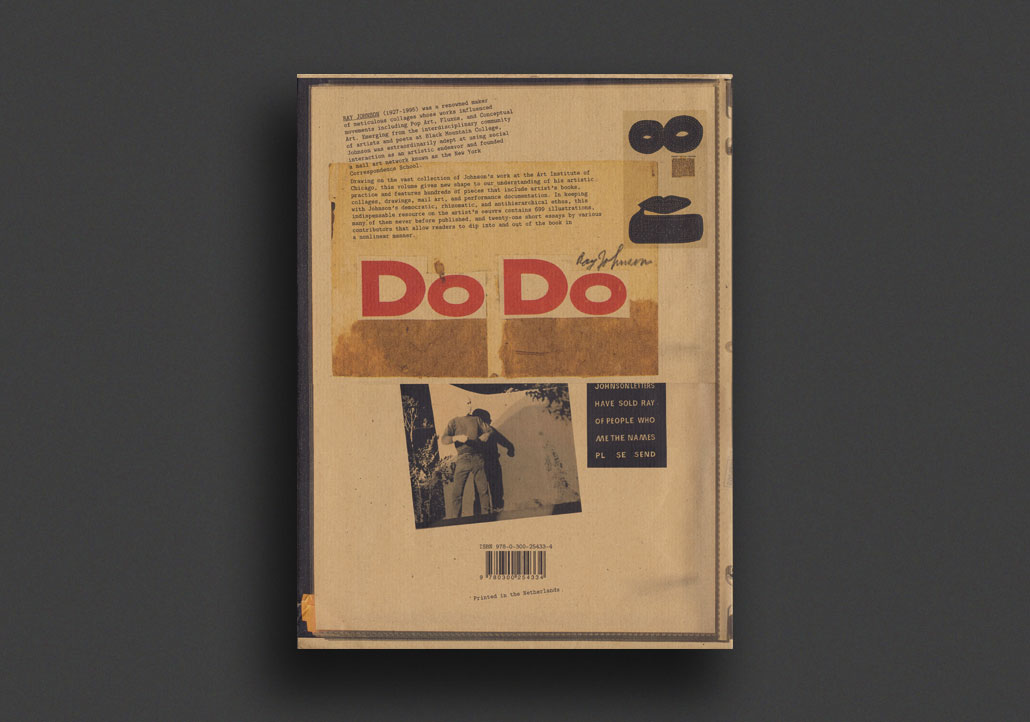
Ray Johnson (1927–1995) was a renowned maker of meticulous collages whose works influenced movements including Pop Art, Fluxus, and Conceptual Art. Emerging from the interdisciplinary community of artists and poets at Black Mountain College, Johnson was extraordinarily adept at using social interaction as an artistic endeavor and founded a mail art network known as the New York Correspondence School.
Drawing on the vast collection of Johnson’s work at the Art Institute of Chicago, this oversized, beautifully designed volume gives new shape to our understanding of his artistic practice and features hundreds of pieces that include artist’s books, collages, drawings, mail art, and performance documentation. In keeping with Johnson’s democratic, rhizomatic, and antihierarchical ethos, this indispensable resource on the artist’s oeuvre contains 700 illustrations, many of them never before published, and twenty-one short essays by various contributors that allow readers to dip into and out of the book in a nonlinear manner.
Text by Jordan Carter, Colby Chamberlain, Jennifer R. Cohen, Johanna Gosse, Caitlin Haskell, Miriam Kienle, Brian T. Leahy, Ellen Levy, Solveig Nelson, Thea Liberty Nichols, Michael von Uchtrup
Caitlin Haskell is Gary C. and Frances Comer Curator of International Modern Art, and Jordan Carter is associate curator of modern and contemporary art, both at the Art Institute of Chicago.
2021, English
Softcover, 24 pages, 24.5 x 24.5 cm
Published by
Nieves / Zurich
$39.00 - Out of stock
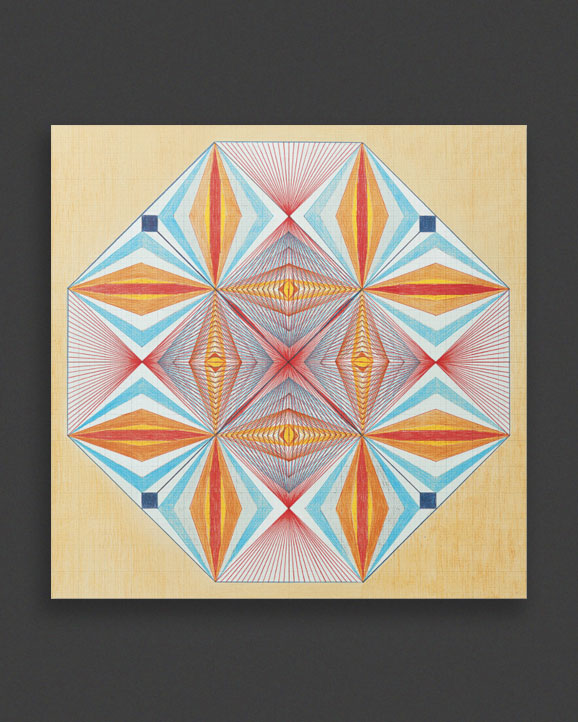
The fascination with Emma Kunz (1892 – 1963) has never been greater than it is today. Much that the researcher, healer and artist anticipated with her holistic way of thinking is now taken for granted in contemporary art. ‘My images are intended for the 21st century,’ Emma Kunz is once said to have predicted. The augury of the researcher, naturopath and artist from Brittnau in the Canton of Aargau seems to be coming true: Emma Kunz’s drawings, presented to the public for the first time in the Aargauer Kunsthaus in 1973, have been shown in such places as Venice, Munich, London, Tel Aviv and Hong Kong over the past few years, and are celebrated by an international audience.
Living a secluded life far removed from the art scene, eighty years ago she exemplified an expanded concept of art, rejected the idea of art versus non-art and instead opened it up to a wide range of aspects – research, medicine, nature study and the supernatural, the magical, the visionary.
Emma Kunz (1892 in Brittnau/CH – 1963 in Waldstatt/CH) was born into humble conditions in Brittnau in the Canton of Aargau. She never had any artistic training or higher education of any kind. Emma Kunz is said to have become aware of her special clairvoyant and radiaesthetic [radiation- reading] abilities at an early age. She began to heal her first patients and to work with the divining pendulum that she would use in her drawings from 1938 onwards. Until a few years before her death she produced some 500 characteristic drawings on graph paper, which she used as a tool for her healing activity. She also worked with numerology, researched in the field of herbalism and achieved a legendary series of healing successes. At this time she began to ask her acquaintances to call her ‘Penta’. In 1942 Emma Kunz is said to have discovered Aion A, the healing rock that is still available from Swiss pharmacies, in a quarry in Würenlos that had been used since Roman times – and is known today as the Emma Kunz Grotto.
2020, English
Softcover, 128 pages, 13.8 x 20 cm
Published by
Koenig Books / London
$38.00 - Out of stock
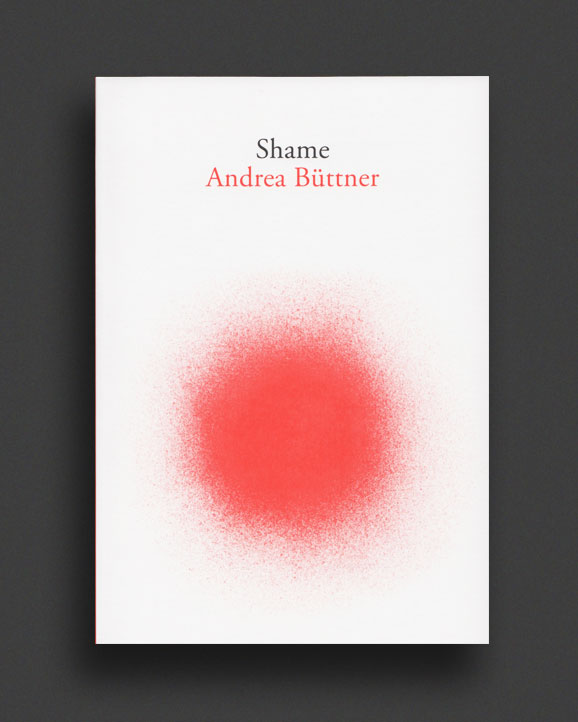
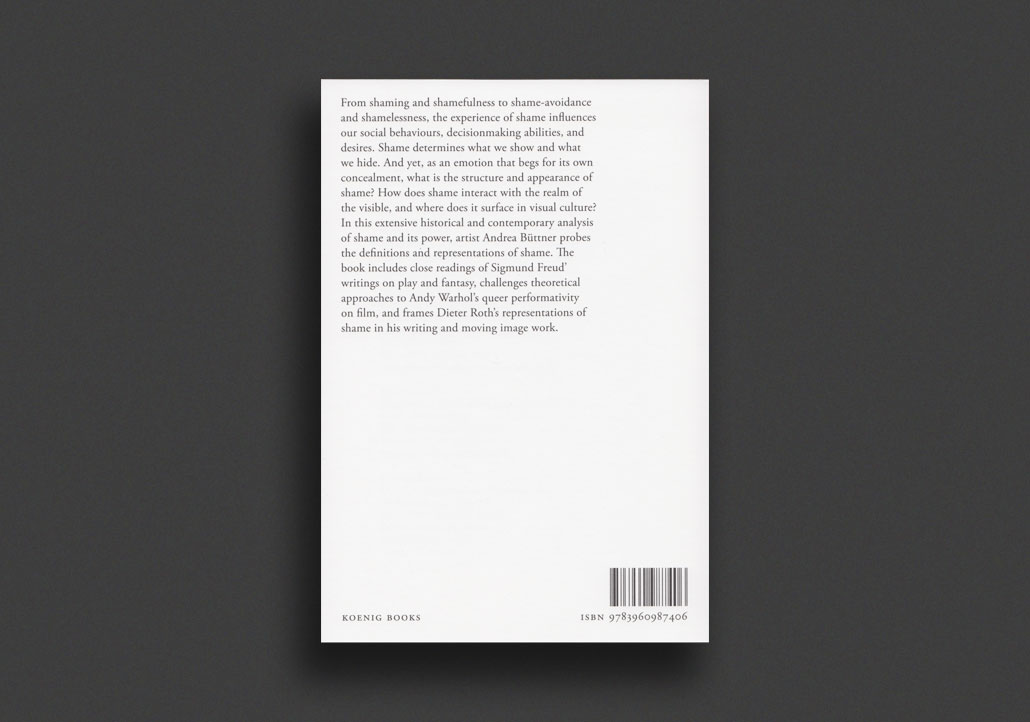
From shaming and shamefulness to shame-avoidance and shamelessness, the experience of shame influences our social behaviours, decision making abilities, and desires. Shame determines what we show and what we hide. And yet, as an emotion that begs for its own concealment, what is the structure and appearance of shame? How does shame interact with the realm of the visible, and where does it surface in visual culture? In this extensive historical and contemporary analysis of shame and its power, artist Andrea Büttner probes the definitions and representations of shame. The book includes close readings of Sigmund Freud’s writings on play and fantasy, challenges theoretical approaches to Andy Warhol’s queer performativity on film, and frames Dieter Roth’s representations of shame in his writing and moving image work.
Designed by HIT Studio.
Andrea Büttner (born 1972) is a German artist. She works in a variety of media including woodcuts, reverse glass paintings, sculpture, video, and performance. She creates connections between art history and social or ethical issues, with a particular interest in notions of poverty, shame, vulnerability and dignity, and the belief systems that underpin them.
1985, English
Softcover, 32 pages, 29 x 25 cm
1st Edition, Out of print title / used / good
Published by
Andre Emmerich Gallery / New York
$10.00 - Out of stock
Exhibition catalogue published on the occasion of Morris Louis : Major Works at Andre Emmerich Gallery, New York, in 1985. Profusely illustrated throughout (inc. fold-out spread of Beta Iota (1960)), portrait and texts. This exhibition marked the publication of Morris Louis: The Complete Paintings: A Catalogue Raisonne by Diane Upright.
Morris Louis Bernstein (1912 – 1962), known professionally as Morris Louis, was an American painter. During the 1950s he became one of the earliest exponents of Color Field painting. While living in Washington, D.C., Louis, along with Kenneth Noland and other Washington painters, formed an art movement that is known today as the Washington Color School.
Good-VG copy.