World Food Books' programme is largely produced on Kulin Nation land. We acknowledge the Wurundjeri people of the Kulin Nation as the first and continuing custodians of this land, and pay respect to their Elders past, present, and emerging.
World Food Books is an arts and special interests bookshop in Naarm / Melbourne. Founded in 2010, World Food Books is devoted to the presentation of a rotating, hand-selection of international art, design, literary and counterculture publications with an emphasis on the anti-traditional, the experimental, the avant-garde, the heretic, the marginal.
Presenting new titles alongside rare and out-of-print books, catalogues and journals spanning the fields of modern and contemporary art, design, photography, illustration, film, literature, poetry, cultural theory, philosophy, sexuality, popular and underground culture in its many radical forms, World Food Books wishes to encourage adventurous, thoughtful and open-minded reading, looking, writing, and exchange of publishing and ideas, both current and historical.
As well as our bookshop, located in Melbourne's historical Nicholas Building, all of our inventory is available internationally via our online mail-order service.
World Food Books semi-regularly co-ordinates "Occasions", a programme of exhibits and events at the bookshop and in partnership with other hosts (such as museums and art galleries) that develop out of the activities, relationships and content of the bookshop itself.
World Food Books
The Nicholas Building
37 Swanston Street
Room 5, Level 6
Melbourne 3000
Australia
SHOP HOURS:
Thu–Fri 12–6, Sat 12–5
WEB-SHOP OPEN 24/7
World Food Books
Postal Address:
PO Box 435
Flinders Lane
Victoria 8009
Australia
Art
Theory / Essay
Architecture / Interior
Graphic Design / Typography
Photography
Fashion
Eros
LGBTQ+
Fiction / Poetry
Weird / Speculative / Science Fiction / Horror
Transgressive / Visceral / Abject
Symbolism / Decadence / Fin de siècle
Film / Video
Painting
Sculpture / Installation
Performance / Dance / Theater
Drawing
Sound / Music
Curatorial
Group Shows / Collections
Periodicals
Out-of-print / Rare
Posters / Ephemera / Discs
Signed Books
World Food Books Gift Voucher
World Food Book Bag
Australian Art
Australian Fiction
Australian Science Fiction / Speculative Fiction
Australian Poetry
Australian Photography
Japanese Photography
Conceptual Art
Minimal Art
Dada
'Pataphysics / Oulipo
Fluxus
Concrete Poetry
Pop Art
Surrealism
Arte Povera
Arte Informale / Haute Pâte / Tachism
Nouveau Réalisme / Zero / Kinetic
Situationism / Lettrism
Collage / Mail Art / Xerox Art
Art Brut / Folk / Visionary / Fantastic
Illustration / Graphic Art / Bandes Dessinées
Furniture
Italian Radical Design / Postmodernism
Textiles
Ceramics / Glass
Counterculture
Protest / Revolt
Philosophy
Psychoanalysis
Anthropology
Anarchism
Socialism / Anarchism / Communism / Capitalism
Literary Theory / Semiotics / Language
Feminism / Women's Studies
Gender Studies / Sexuality
Anthropology
Fetishism / BDSM
Drugs / Psychedelia
Crime / Violence
Animal Rights / Veganism
Occult / Esoterica
Ecology / Earth / Alternative Living
Whole Earth / Crafts
All prices in AUD (Australian dollars)
Pick-Ups
Pick-up orders can be collected in our bookshop during opening hours after order date. Please collect any Pick-up orders within 2 weeks of ordering as we have limited storage space. Orders will be released back into stock if not collected within this time. No refunds can be made for pick-ups left un-collected. If you cannot make it in to the bookshop in this time-frame, please choose postage option.
Return Policy
All sales are final. We do accept returns (for refund or exchange) for items received in error. All our orders are packed with special care using heavy-duty padding and cardboard book-mailers or bubble mailers (for smaller books), using reinforcement where required. We cannot take responsibility for any lost, stolen or damaged parcels.
Insurance
Should you wish to insure your package, please email us directly after placing your order and we can organise this at a small extra expense. Although all standard/express tracked packages are very safe and dependable, we cannot take responsibility for any lost, stolen or damaged parcels. We recommend insurance on valuable orders.
Interested in selling your old books, catalogues, journals, magazines, comics, fanzines, ephemera? We are always looking for interesting, unusual and out-of-print books to buy. We only buy books in our fields of interest and specialty, and that we feel we can resell.
We base these prices on desirability, market value, in-print prices, condition and our current stock levels. We offer cash, store credit, and can take stock on consignment. All
about 25% of the price we expect to get when we sell them, or 30% in store credit. We base these prices on desirability, market value, in-print prices, condition and our current stock levels.
Sell your books any day of the week. You can drop them off and return later. If you have a lot of books, we can visit your Sydney home.
We buy books that we feel we can resell. We offer about 25 % of the price we expect to get when we sell them, or 30% in store credit. We base these prices on desirability, market value, in-print prices, condition and our current stock levels.
Philadelphia Wireman
03 August - 01 September, 2018
World Food Books is proud to announce our next Occasion, the first presentation of sculptures by Philadelphia Wireman in Australia.
The Philadelphia Wireman sculptures were found abandoned in an alley off Philadelphia’s South Street on trash night in 1982. Their discovery in a rapidly-changing neighbourhood undergoing extensive renovation, compounded with the failure of all attempts to locate the artist, suggests that the works may have been discarded after the maker’s death. Dubbed the "Philadelphia Wireman" during the first exhibition of this work, in 1985, the maker’s name, age, ethnicity, and even gender remain uncertain. The entire collection totals approximately 1200 pieces, all intricately bound together with tightly-wound heavy-gauge wire (along with a few small, abstract marker drawings, reminiscent both of Mark Tobey and J.B. Murry). The dense construction of the work, despite a modest range of scale and materials, is singularly obsessive and disciplined in design: a wire armature or exoskeleton firmly binds a bricolage of found objects including plastic, glass, food packaging, umbrella parts, tape, rubber, batteries, pens, leather, reflectors, nuts and bolts, nails, foil, coins, toys, watches, eyeglasses, tools, and jewellery.
Heavy with associations—anthropomorphic, zoomorphic, and socio-cultural responses to wrapped detritus—the totemic sculptures by Philadelphia Wireman have been discussed in the context of work created to fulfil the shamanistic needs of alternative religions in American culture. Curators, collectors, and critics have variously compared certain pieces to sculpture from Classical antiquity, Native American medicine bundles, African-American memory jugs, and African fetish objects. Reflecting the artist’s prolific and incredibly focused scavenging impulse, and despite—or perhaps enhanced by—their anonymity, these enigmatic objects function as urban artefacts and arbiters of power, though their origin and purpose is unknown. Philadelphia Wireman, whatever their identity, possessed an astonishing ability to isolate and communicate the concepts of power and energy through the selection and transformation of ordinary materials. Over the course of the past two decades, this collection has come to be regarded as an important discovery in the field of self-taught art and vernacular art.
Presented in collaboration with Fleisher-Ollman Gallery, Philadelphia, and Robert Heald, Wellington.
Susan Te Kahurangi King
02 February - 10 March, 2018
Susan Te Kahurangi King (24 February 1951 - ) has been a confident and prolific artist since she was a young child, drawing with readily available materials - pencils, ballpoint pens and felt-tip markers, on whatever paper is at hand. Between the ages of four and six Susan slowly ceased verbal communication. Her grandparents William and Myrtle Murphy had developed a special bond with Susan so they took on caring responsibilities for extended periods. Myrtle began informally archiving her work, carefully collecting and storing the drawings and compiling scrapbooks. No drawing was insignificant; every scrap of paper was kept. The King family are now the custodians of a vast collection containing over 7000 individual works, from tiny scraps of paper through to 5 meter long rolls.
The scrapbooks and diaries reveal Myrtle to be a woman of great patience and compassion, seeking to understand a child who was not always behaving as expected. She encouraged Susan to be observant, to explore her environment and absorb all the sights and sounds. Myrtle would show Susan’s drawings to friends and people in her community that she had dealings with, such as shopkeepers and postal workers, but this was not simply a case of a grandmother’s bias. She recognised that Susan had developed a sophisticated and unique visual language and sincerely believed that her art deserved serious attention.
This was an unorthodox attitude for the time. To provide some context, Jean Dubuffet coined the term Art Brut in 1945 to describe work created by self-taught artists – specifically residents of psychiatric institutions and those he considered to be visionaries or eccentrics. In 1972 Roger Cardinal extended this concept by adopting the term Outsider Art to describe work made by non-academically trained artists operating outside of mainstream art networks through choice or circumstance. Susan was born in Te Aroha, New Zealand in 1951, far from the artistic hubs of Paris and London that Dubuffet and Cardinal operated in. That Myrtle fêted Susan as a self-taught artist who deserved to be taken seriously shows how progressive her attitudes were.
Susan’s parents Doug and Dawn were also progressive. Over the years they had consulted numerous health practitioners about Susan’s condition, as the medical establishment could not provide an explanation as to why she had lapsed into silence. Dawn educated herself in the field of homeopathy and went on to treat all twelve of her children using these principles – basing prescriptions on her observations of their physical, mental and emotional state.
Doug was a linguist with an interest in philosophy who devoted what little spare time he had to studying Maori language and culture. To some extent their willingness to explore the fringes of the mainstream made them outsiders too but it was their commitment to living with integrity and their respect for individuality that ensured Susan’s creativity was always encouraged.
Even though Susan’s family supported her artistic pursuits, some staff in schools and hospitals saw it as an impediment to her assimilation into the community and discouraged it in a variety of ways. Her family was not always aware of this and therefore did not fully understand why Susan stopped drawing in the early 1990s. However, rather than dwell on the challenges that Susan faced in pursuit of her artistic practice, they prefer to highlight her achievements. In 2008 Susan began drawing again in earnest, after an almost 20 year interruption, and her work is now shown in galleries around the world.
Susan grew up without television and has been heavily influenced by the comics she read as a child. She is absolutely fearless in the appropriation of recognizable characters, such as Donald Duck and Mickey Mouse, in her work. She twists their limbs, contorts their faces, compresses them together, blends them into complex patterned backgrounds - always imbuing them with an incredible energy. Although Susan often used pop culture characters in her work they are not naive or childlike. These are drawings by a brilliant self-taught artist who has been creating exceptional work for decades without an audience in mind.
Mladen Stilinović
"Various Works 1986 - 1999"
02 February 16 - September 10, 2016
Various works 1986 - 1999, from two houses, from the collections of John Nixon, Sue Cramer, Kerrie Poliness, Peter Haffenden and Phoebe Haffenden.
Including: Geometry of Cakes (various shelves), 1993; Poor People’s Law (black and white plate), 1993; White Absence (glasses, ruler, set square, silver spoon, silver ladel with skin photograph and wooden cubes), 1990-1996; Exploitation of the Dead (grey and red star painting, wooden painting, black spoon with red table, red plate), 1984-1990; Money and Zeros (zero tie, paintings made for friends in Australia (Sue, John, Kerrie), numbers painting), 1991-1992; Words - Slogans (various t-shirts) - “they talk about the death of art...help! someone is trying to kill me”, “my sweet little lamb”, “work is a disease - Karl Marx”; Various artist books, catalogues, monographs, videos; Poster from exhibition Insulting Anarchy; "Circular" Croatian - Australian edition; Artist book by Vlado Martek (Dostoyevsky); more.
Thanks to Mladen Stilinović and Branka Stipančić.
Jonathan Walker
Always Will Need To Wear Winter Shirt Blue + Ochre Small Check Pattern
21 August - 21 September, 2015
Untitled
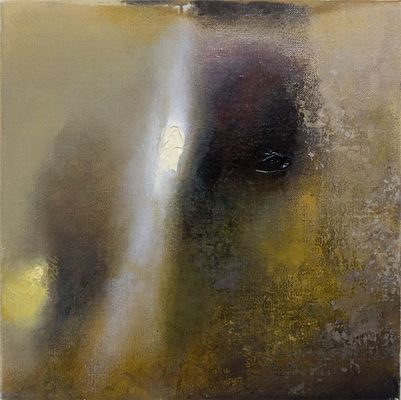
I am not a great reader of poetry but I always return to the work of Melbourne poet, Vincent Buckley (1925- 1988). Perhaps I find his most tantalising piece to be not a finished poem but a fragment left on a scrap of paper discovered on his desk after the poet’s death.
The poetry gathers like oil
In the word-core, and spreads
It has its music meet,
Its music is in movement.
This fragment is more the shell left behind from a volatile thought than a finished poem. I find the last two lines honest but awkward whereas the first two lines work like an arrow. Most likely he could not find a resolution so it was left. Still, in its present form, it remains an eloquent testimony to the ultimate failure of a medium to express mobile thought and sensation, in Buckley’s case, through verbal language. It’s an important matter because this is something all artists have to deal with regardless of the medium.
I have never written a poem, however, I am forever copying fragments from books on paper scraps in a vain effort to fix certain notions in my head. At first, they function as bookmarks that are sometimes returned to when I open the book. But before long, as they accumulate, they fall out littering the table interspersed with A4 photocopies, bills, books and medications.
To return to Buckley’s fragment, the first two lines very much evoke how I paint nowadays. As you age, detail diminishes and patches of light become more luminous and float. I feel the most honest way of dealing with this is by smearing the oil paint on the canvas with the fingers and working close-up, blind. Only if the patches coalesce into an approaching image can the work gain a life.
-
Jonathan Walker was born in Melbourne, Australia and brought up on a dairy farm in Gippsland. In the 1970’s he studied painting at RMIT and won the Harold Wright Scholarship to the British Museum, London. During the 1980’s he exhibited at Pinacotheca Gallery, Richmond and had work shown at the NGV and Heidi City Art Gallery. Over the same period he designed the cover for the “Epigenesi” LP by Giancarlo Toniutti, Italy and conducted a mail exchange work with Achim Wollscheid, Germany. The work with artists through the post resulted in an article published in the bicentenary issue of Art and Australia 1988. He showed in artist run spaces such as WestSpace in the 90’s and 2000’s, and until 2012, taught painting at Victoria University, which is where we (Colleen Ahern and Lisa Radford) as organisers of the exhibition, among many others, had the privilege of being his student.
Walker’s knowledge was imparted to students through the careful selection of music, literature, and artists found in books that he himself had ordered for the library. Walker’s strategy was the generosity of sharing his vast knowledge with references specific to each student and their context.
Walker’s paintings share a similar focus and intimacy.
This exhibition presents a small selection of recent paintings alongside a publication that includes Walker’s writing. Observational and analytical, Walker’s work is a type of material notation — the time of day, colour and how it is blended, the both specific and fleeting location of a reflection on lino or the question of whether a chair leg should be included in a painting.
Please join us on Friday August 21 between 6-8pm to celebrate the opening of the exhibition.
Curated by Colleen Ahern and Lisa Radford.
B. Wurtz
Curated by Nic Tammens
March 26 - April 4, 2015
B.Wurtz works from a basement studio in his home on Manhattan’s Lower East Side.
This local fact is attested to by the plastic shopping bags and newsprint circulars that appear in his work. As formal objects, they don’t make loud claims about their origins but nonetheless transmit street addresses and places of business from the bottom of this long thin island. Like plenty of artists, Wurtz is affected by what is local and what is consumed. His work is underpinned by this ethic. It often speaks from a neighborhood or reads like the contents of a hamper:
“BLACK PLUMS $1.29 lb.”
“Food Bazaar”
“USDA Whole Pork Shoulder Picnic 99c lb.”
“RITE AID Pharmacy, with us it’s personal.”
“H. Brickman & Sons.”
“Sweet Yams 59c lb."
Most of the work in this exhibition was made while the artist was in residence at Dieu Donne, a workshop dedicated to paper craft in Midtown. Here Wurtz fabricated assemblages with paper and objects that are relatively lightweight, with the intention that they would be easily transportable to Australia. This consideration isn’t absolute in Wurtz’s work, but was prescriptive for making the current exhibition light and cheap. Packed in two boxes, these works were sent from a USPS post office on the Lower East Side and delivered to North Melbourne by Australia Post.
Wurtz appears courtesy of Metro Pictures, New York.
Thanks to Rob Halverson, Joshua Petherick, Sari de Mallory, Matt Hinkley, Helen Johnson, Fayen d'Evie, Ask Kilmartin, Lisa Radon, Ellena Savage, Yale Union, and "Elizabeth".
John Nixon
"Archive"
December 15 - January 20, 2014
The presentation of John Nixon's archive offered a rare showcase of this extensive collection of the artist's own publications, catalogues, posters, ephemera, editions and more, from the mid 1980s onwards, alongside a selection of his artworks.
Organized by John Nixon, Joshua Petherick and Matt Hinkley.
<a href=http://wfb.public-office.info/artist/john-nixon>All titles by John Nixon
"Habitat"
at Minerva, Sydney (organised by Joshua Petherick and Matt Hinkley)
November 15 - December 20, 2014
Lupo Borgonovo, Janet Burchill & Jennifer McCamley,
Lewis Fidock, HR Giger, Piero Gilardi, Veit Laurent Kurz,
Cinzia Ruggeri, Michael E. Smith, Lucie Stahl, Daniel Weil, Wols
Press Release:
“...It contained seven objects. The slender fluted bone, surely formed for flight, surely from the wing of some large bird. Three archaic circuitboards, faced with mazes of gold. A smooth white sphere of baked clay. An age-blackened fragment of lace. A fingerlength segment of what she assumed was bone from a human wrist, grayish white, inset smoothly with the silicon shaft of a small instrument that must once have ridden flush with the surface of the skin - but the thing’s face was seared and blackened.”
William Gibson, “Count Zero”, 1986
"Autumn Projects Archive"
Curated by Liza Vasiliou
March 6 - March 15, 2014
World Food Books, in conjunction with the Virgin Australia Melbourne Fashion Festival 2014, presented the Autumn Projects archive, consisting of a selection of early examples in Australian fashion with a particular interest in collecting designers and labels from the period beginning in the 1980’s, who significantly influenced the discourse of Australian Fashion.
Curated by Liza Vasiliou, the exhibition provided a unique opportunity to view pieces by designers Anthea Crawford, Barbara Vandenberg, Geoff Liddell and labels CR Australia, Covers, Jag along with early experimental collage pieces by Prue Acton and Sally Browne’s ‘Fragments’ collection, suspended throughout the functioning World Food Books shop in Melbourne.
H.B. Peace
presented by CENTRE FOR STYLE
November 14, 2013
"Hey Blinky, you say chic, I say same"
Anon 2013
H.B. Peace is a clothing collaboration between great friends Blake Barns and Hugh Egan Westland. Their pieces explore the divergences between 'character’ and ‘personality’ in garments....etc
Special Thanks to Joshua Petherick and Matt Hinkley of WFB and Gillian Mears
and a Very Special Thank you to Audrey Thomas Hayes for her shoe collaboration.
Janet Burchill & Jennifer McCamley
"Aesthetic Suicide"
May 10 - June 8, 2013
The first of our occasional exhibitions in the World Food Books office/shop space in Melbourne, "Aesthetic Suicide" presented a body of new and older works together by artists Janet Burchill & Jennifer McCamley, including videos, prints, a wall work, and publications.
During shop open hours videos played every hour, on the hour.
2020, English
Softcover, 480 pages, 19. 7 x 13 cm
Published by
Urbanomic / Cornwall
$40.00 - Out of stock
To think about really big issues, one must overcome not only the mountain of obstacles facing any multidisciplinary scholarship, but also the temporal parochialism of one’s own epoch and its—often baseless and irrational—intellectual fashions and mores. Thomas Moynihan succeeds in doing exactly that in this outstanding book—a true celebration of synthetic thinking about what is, almost by definition, the most important topic of the epoch. — Milan M. Cirkovic, author of The Great Silence.
Thinking about the end of everything has rarely been so enjoyable and enlightening. — Anders Sandberg, Future of Humanity Institute.
From global pandemics to prophecies of evil AI superintelligences to the impending perils of genome editing, our species is increasingly concerned with the prospects of its own extinction. With humanity’s future on this planet seeming more insecure by the day, the twenty-first century has seen ‘existential risk’ become the object of a growing field of serious scientific inquiry.
But this preoccupation is not exclusive to the post-atomic age of global warming and synthetic biology. Our growing concern with human extinction itself has a history—one that is important for our understanding of what it means to be human in the first place.
Retracing this untold story, X-Risk revisits the pioneers who first contemplated the possibility of human extinction, and stages the historical drama of this momentous discovery.
Thomas Moynihan shows how, far from being a secular reprise of religious prophecies of apocalypse, existential risk is a thoroughly modern idea, made possible by the burgeoning sciences and philosophical tumult of the Enlightenment era.
In recollecting how we first came to care for our extinction, X-Risk reveals how today’s attempts to measure and mitigate existential threats are the continuation of a project initiated over two centuries ago, and which concerns the very vocation of the human as a rational, responsible, and future-oriented being.
2021, English
Hardcover (clothbound), 220 pages, 31 x 24 cm
Published by
Stolpe Publishing / Stockholm
$80.00 - In stock -
Foreword by Daniel Birnbaum, Kurt Almqvist.
The drawings in this first volume of a new catalogue raisonné represent an intense ten-year period of Hilma af Klint’s (1862-1944) life that would lay the foundation for her later achievements. In 1896, af Klint and four other women formed The Five, a group steeped in the spiritualist beliefs permeating Europe at that time, including theosophy, Rosicrucianism and other strains of liberal religious thought. From 1896 to 1907, The Five engaged in a daily systematic method of spiritual experimentation. During séances, Hilma af Klint drew automatic spiritual sketches based on the messages that the medium (not always the same member) communicated from the spirits the group summoned. The elaborate system of symbols, geometry and biological imagery that characterize her work all find their origin during this period.
2021, English
Hardcover (clothbound), 184 pages, 31 x 24 cm
Published by
Stolpe Publishing / Stockholm
$80.00 - Out of stock
The second instalment in an epic and authoritative seven-volume Hilma af Klint catalogue raisonné: the pioneering abstractionist’s beloved The Paintings for the Temple series.
Between 1906 and 1915, Hilma af Klint (1862-1944) created 193 paintings that she would title The Paintings for the Temple. Colourful, mostly abstract, with biomorphic imagery, these works expressed af Klint’s mediumistic vision of spiritual reality, which she hoped would ultimately be installed in a round temple for true spiritual comprehension and enlightenment. Since the internationally acclaimed Guggenheim exhibition of 2018-19, these works have come to number among her most popular, defining and beloved.
This handsomely produced clothbound volume collects these paintings in the second of a projected and collectible seven-volume catalogue raisonné that will present the entirety of af Klint’s work in its dazzling totality for the first time. Produced in cooperation with the Axel and Margaret Ax:son Johnson Foundation, it features introductions by Daniel Birnbaum, former head of Moderna Museet in Stockholm, Sweden, and architect of the grand af Klint exhibitions between 2013 and 2019, and Kurt Almqvist, President of the Axel and Margaret Ax:son Johnson Foundation for Public Benefit.
About the Authors
Kurt Almqvist is the President of Axel and Margaret Ax:son Johnson Foundation for Public Benefit. Daniel Birnbaum is a Swedish art critic, the artistic director of Acute Art in London and former director of the Moderna Museet, Stockholm
2021, English
Hardcover (clothbound), 144 pages, 31 x 24 cm
Published by
Stolpe Publishing / Stockholm
$80.00 - In stock -
This third volume of the artist’s catalogue raisonné collects sketches made in preparation for af Klint’s masterwork The Paintings for the Temple
Hilma af Klint rarely exhibited her work during her lifetime, and her magnum opus, The Paintings for the Temple, was shown to the public in the series of exhibitions that started in 2013 at Moderna Museet in Stockholm and ended with the grand exhibition at the Guggenheim Museum in New York in 2018-19. This series of 193 paintings began with af Klint receiving communication from an otherworldly figure during a séance. Specific themes, such as evolution and duality, are conveyed through vivid pastel colour schemes and intricate geometric patterns arranged carefully on canvases that reach over ten feet in height.
This volume, the third in the artist’s first seven-part catalogue raisonné, contains the sketches and preparatory work af Klint made in anticipation of The Paintings for the Temple. af Klint traveled with these sketchbooks so as to be able to show her friends her work in a more accessible format.
About the Authors
Kurt Almqvist is the President of Axel and Margaret Ax:son Johnson Foundation for Public Benefit. Daniel Birnbaum is a Swedish art critic, the artistic director of Acute Art in London and former director of the Moderna Museet, Stockholm
1970, English
Hardcover (w. dust jacket), 130 pages, 25 x 31 cm
1st Edition, Out of print title / used / good
Published by
Bodley Head / London
$35.00 - Out of stock
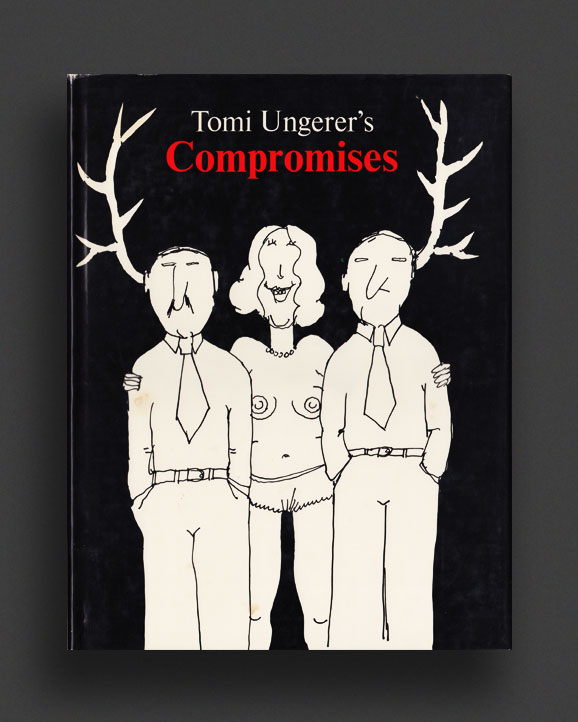
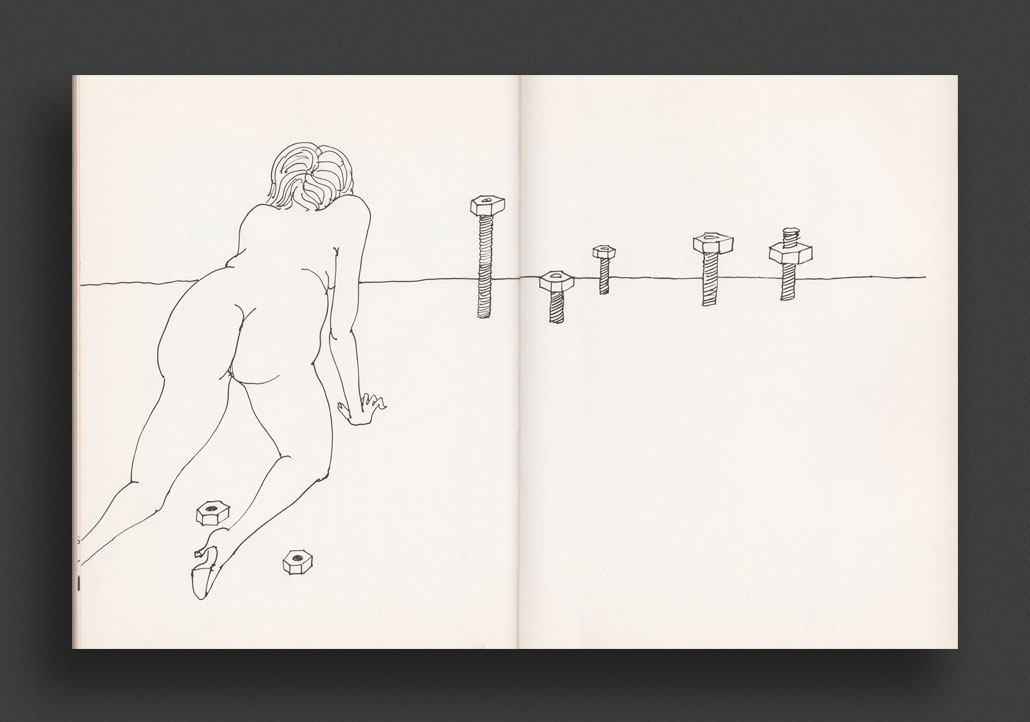
First English edition of Tomi Ungerer's "Comprimises", published in 1970 by Bodley Head in London and Farrar, Straus And Giroux in New York. "Comprimises" is a now classic collection of Ungerer's inimitable drawings spanning five years of the 1960's. An inexhaustibly prolific draughtsman, Tomi Ungerer's "Comprimises" captures the absurdist, often subversive, black humour that Ungerer produced so well through masterful line-work, at once a satire on the mechanised violence of human kind and a cutting parody of our body image and innermost desires.
Tomi Ungerer (1931—2019) is an award winning French illustrator and a writer in three languages. He has published over 140 books ranging from much loved children's books to controversial adult work and from the fantastic to the autobiographical. He is known for sharp social satire and witty aphorisms. He is renowned for his iconic Advertising campaigns and political posters against the Vietnam War and Racial Injustice which were representative of the burgeoning political consciousness in New York in the 1960’s. His political engagement has continued to this day in campaigns against Racism and Fascism, for Nuclear disarmament, Ecology and numerous Humanitarian causes.
Good copy.
2020, English
Hardcover, 152 pages, 23 x 29 cm
Published by
Stolpe Publishing / Stockholm
$50.00 - Out of stock
A handsomely redesigned edition of essays examining af Klint's final abstractions, edited Kurt Almqvist and Louise Belfrage.
The result of a series of lectures delivered during the 2016 Serpentine Galleries exhibition Hilma af Klint: Painting the Unseen, this volume gathers essays examining the last abstract series made by Hilma af Klint (1862-1944). The paintings were all created in the first half of the year 1920 and are the last paintings af Klint made before turning to watercolor. Reproductions of these images are complemented by essays from Briony Fer, David Lomas, Branden W. Joseph, Hans Ulrich Obrist and Daniel Birnbaum, which shed new light on af Klint and her importance for artists today, also addressing the need for a broader conception of art history that her work proposes. Beautifully redesigned by Sweden's most famous designer, this book is a key contribution to the burgeoning scholarship on this immensely popular painter.
1972, English
Softcover, 320 pages, 11 x 18 cm
Out of print title / used / good
Published by
Tandem / London
$30.00 - Out of stock
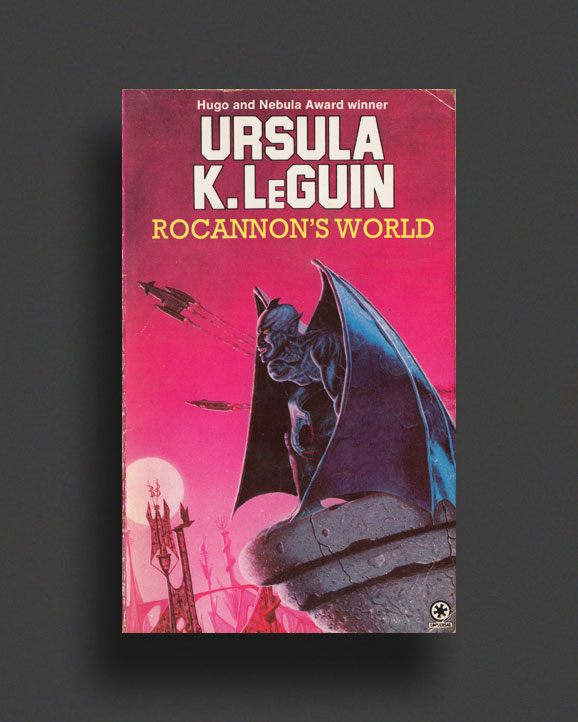
First published in 1966, this debut novel from preeminent science-fiction writer Ursula K. Le Guin introduces her brilliant Hainish series, set in a galaxy seeded by the planet Hain with a variety of humanoid species, including that of Earth. Over the centuries, the Hainish colonies have evolved into physically and culturally unique peoples, joined by a League of All Worlds.
Earth-scientist Rocannon has been leading an ethnological survey on a remote world populated by three native races: the cavern-dwelling Gdemiar, the elvish Fiia, and the warrior clan, Liuar. But when the technologically primitive planet is suddenly invaded by a fleet of ships from the stars, rebels against the League of All Worlds, Rocannon is the only survey member left alive. Marooned among alien peoples, he leads the battle to free this newly discovered world and finds that legends grow around him as he fights.
Rocannon's World along with its two sequels combine emerging British New Wave science fiction sentiments with established American genre imagery and Le Guin's signature anthropological interests into a tale of loss, companionship, isolation, redemption and love.
Ursula K. Le Guin (1929–2018) was an American author of speculative fiction, realistic fiction, non-fiction, screenplays, librettos, essays, poetry, speeches, translations, literary critiques, chapbooks, and children's fiction. She was primarily known for her works of speculative fiction. These include works set in the fictional world of Earthsea, stories in the Hainish Cycle, and standalone novels and short stories. Though frequently referred to as an author of science fiction, critics have described her work as being difficult to classify.
Good copy. General cover wear, tanning, creasing.
1986, English
Softcover, 288 pages, 14 x 20.4 cm
Published by
City Lights Books / San Francisco
$42.00 - Out of stock
Taboo and sacrifice, transgression and language, death and sensuality. Georges Bataille pursues these themes with an original, often startling perspective. He challenges any single discourse on the erotic. The scope of his inquiry ranges from Emily Bronte to Sade, from St. Therese to Claude Levi-Strauss and Dr. Kinsey; and the subjects he covers include prostitution, mythical ecstasy, cruelty, and organized war. Investigating desire prior to and extending beyond the realm of sexuality, he argues that eroticism is "a psychological quest not alien to death."
"... one of the most original and unsettling of those thinkers who, in the wake of Sade and Nietzsche, have confronted the possibility of thought in a world that has lost its myth of transcendence." - Peter Brooks, New York Times Book Review
"Bataille is one of the most important writers of the century." - Michel Foucault
Georges Bataille (1897-1962) was a French intellectual and literary icon who wrote essays, novels, and poems exploring philosophical and sociological subjects such as eroticism and surrealism. City Lights published more of Bataille's works including The Impossible, The Tears of Eros, and Story of the Eye.
2009, English
Softcover, 20 pages (colour & b/w ill.), offset, 160 x 290 mm
Edition of 1000,
Published by
The Narrows / Melbourne
$10.00 $5.00 - In stock -
Concertina style fold-out publication of the work of Melbourne artist Matt Hinkley. Features selections and details of Hinkley's works together with fragments of reference material and print inspiration.
Compilation and design Matt Hinkley and Warren Taylor.
2017, English
Softcover (die-cut), 244 pages, 19 x 26 cm
Published by
Walker Art Centre / Minneapolis
$88.00 $50.00 - Out of stock
Edited with text by Fionn Meade. Foreword by Olga Viso. Texts by Jordan Carter, Adrienne Edwards, Isla Leaver-Yap, Robert Wiesenberger.
Question the Wall Itself examines ways that interior spaces and décor can be fundamental to the understanding of cultural identity. It showcases 23 international artists who explore the political and social dimensions of interior architecture as well as its complicated relationship to history and their own backgrounds. The featured artists are Jonathas de Andrade, Uri Aran, Nina Beier, Marcel Broodthaers, Tom Burr, Alejandro Cesarco, Marc Camille Chaimowicz, Theaster Gates, Ull Hohn, Janette Laverrière, Louise Lawler, Nick Mauss, Park McArthur, Lucy McKenzie, Shahryar Nashat, Walid Raad, Seth Siegelaub, Paul Sietsema, Florine Stettheimer, Rosemarie Trockel, Cerith Wyn Evans, Danh Vo and Akram Zaatari.
The book and the exhibition it accompanies take as its guiding principle what Marcel Broodthaers termed “esprit décor”: a critique of ideas of nationality, globalization and the space of the institution through constructed interior scenes. Recasting our conception of interior space and design, the featured works exist between art, prop, and set or stage. Espousing this mise-en-scène approach, Question the Wall Itself plugs readers into material that expands the show in the form of book-as-exhibition. It includes an extensive photographic walk-through of the installations, and essays by Jordan Carter, Adrienne Edwards, Isla Leaver-Yap, Fionn Meade, and Robert Wiesenberger, as well as contributions from participating artists.
1992, Japanese
Softcover (w. obi-strip), 130 pages, 29.5 x 21 cm
1st Edition, Out of print title / used / very good
Published by
Design News / Japan
$25.00 - Out of stock
Good Design 1991-1992, published by Design News and the Japan Industrial Design Promotion Organisation (Tokyo) annually to award the "G-Mark" to the best of innovative industrial design from Japan (and abroad). This publication collects the award winners from across many categories, industries, and nationalities, though the vast majority being state of the art product design from Japan. Profusely illustrated in colour and b/w throughout, all objects are profiled with specifications, detailed captions and information on their designers, alongside texts in Japanese and English, a history of the Good Design awards and industry advertisements. Rarely seen in the wild, these annuals are an incredible document of long lost tech from post modern Japan, from vehicles to action figures, stereos to sunglasses.
Very Good copy with original obi (not pictured).
1993, Japanese / English
Softcover (w. obi-strip), 130 pages, 23.5 x 20.5 cm
1st Edition, Out of print title / used / very good
Published by
Design News / Japan
$35.00 - Out of stock
Good Design 1992-1993, published by Design News and the Japan Industrial Design Promotion Organisation (Tokyo) annually to award the "G-Mark" to the best of innovative industrial design from Japan (and abroad). From 3,126 examined pieces, this book collects the award winners from across many categories, industries, and nationalities, though the vast majority being state of the art product design from Japan. Profusely illustrated in colour and b/w throughout, all objects are profiled with specifications, detailed captions and information on their designers, alongside texts in Japanese and English, a history of the Good Design awards and industry advertisements. Rarely seen in the wild, these annuals are an incredible document of long lost tech from post modern Japan, from vehicles to action figures, stereos to sunglasses.
Very Good copy with original obi (not pictured). Light wear/spine tanning.
2004, English
Softcover, 34 pages, 25 x 23.5 cm
1st Edition, Out of print title / used / very good
Published by
ANU Drill Hall Gallery / Canberra
$20.00 $10.00 - Out of stock
Catalogue published on the occasion of Australian sculptor Geoffrey Bartlett's solo exhibition at ANU Drill Hall Gallery, Canberra, 2004. Illustrated in colour throughout with texts by Nancy Sever, Elena Taylor, interview with the artist, biography and list of works.
Geoffrey Bartlett (b. Melbourne 1952) studied at the Royal Melbourne Institute of Technology from 1971-73 and undertook a post-graduate diploma in 1976. In 1983 Bartlett was awarded a Harkness fellowship and completed a two-year Master of Fine Arts (Hons) at Columbia University, New York. Bartlett has lectured in sculpture at Deakin University, RMIT, Chisholm Institute and the Victorian College of the Arts. From 1990 to 1994 he was Senior Lecturer in Sculpture at Monash University. He is represented in the National Gallery of Australia, the National Gallery of Victoria, the Art Gallery of New South Wales, Parliament House Art Collection, Heide Museum of Modern Art and in many regional, university, corporate and private collections. Bartlett was awarded the Ian Potter Foundation Sculpture Award in 1982 and the Australia Council studio in Tuscany in 1984. Geoffrey Bartlett lives and works in Melbourne.
Very Good copy.
1985, English
Softcover, 100 pages, 28 x 21 cm
1st Edition, Out of print title / used / good
Published by
Heresies / New York
$35.00 - Out of stock
Issue 20 of HERESIES, "On Art and Politics", was published in 1985, featuring contributions by Lucy Lippard, Martha Rosler, Jenny Holzer, Nancy Spero, Guerrilla Girls, and many more.
HERESIES was a feminist magazine that published from 1977 to 1993, organized by a collective known as the Heresies Collective based in New York City. Each of the twenty seven issues was collectively edited by a group of volunteers interested in a single topic under the guidance of the "mother collective"; each issue had its own style and perspective. Subjects included feminist theory, art, politics, patterns of communication, lesbian art and artists, women's traditional arts and politics of aesthetics, violence against women, working women, women from peripheral nations, women and music, sex, film, activism, racism, postmodernism, and coming of age. The journal was seen as not only a major contribution to the feminist art scene, but a major forum for feminist thinking that experimented with an editorial format that asked contributors to grapple with hierarchical and societal issues of difference. And it created a public discourse in feminist thought and expression. Initial members of the Heresies Collective included Joan Braderman, Mary Beth Edelson, Elizabeth Hess, Ellen Lanyon, Arlene Ladden, Lucy R. Lippard, Marty Pottenger, Miriam Schapiro and May Stevens.
Good copy but with spine chipping and cover wear.
2017, English
Hardcover (cloth-binding w. 7" vinyl), 272 pages, 20.3 x 27.3 cm
Published by
Anthology Editions / Brooklyn
$110.00 $40.00 - Out of stock
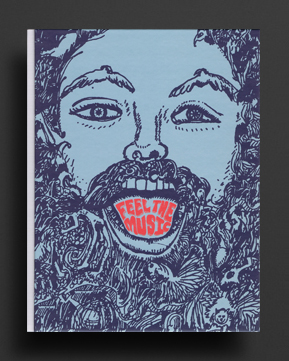
Paul Major has lived resolutely at the edge of outsider music culture for nearly a half-century. As an early private press and 'real people' record collector turned eminent, underground rock 'n' roller, his influence is felt if not heard all around us, until now.
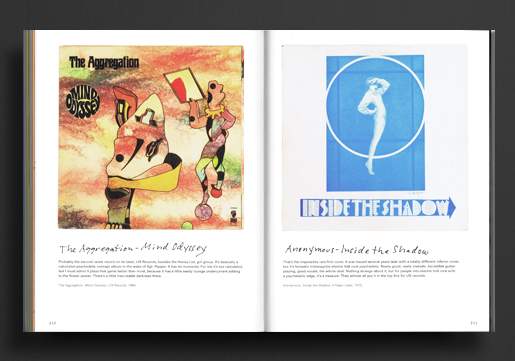
Feel the Music traces Paul's trajectory from his formative days in the Midwest, his years in the late 70s New York punk scene, and into his curious career as a connoisseur and campaigner of the weirdest records of all time. Brought to life with unseen photographs, rare record covers, and cut n' paste ephemera from Paul's long running mail order catalog, while animated by Paul's storytelling, Feel the Music is a fanatical mystery tour through the further, outer reaches of music history. Alongside Paul's writing and an introduction by Christ and savior Johan Kugelberg, Feel the Music features essays by Jack Streitman, Michael P. Daley, Rich Haupt, Stefan Kery, Patrick Lundborg, Geoffrey Weiss, Jesper Eklow, and Glenn Terry.
Includes an inserted Sorcerers/Endless Boogie 7″ record.
2016, English
Softcover, 128 pages, 17 x 24 cm
Published by
Center for Book Arts / New York
Sternberg Press / Berlin
$36.00 - Out of stock
Contributions by Regine Ehleiter, Michalis Pichler, Seth Siegelaub
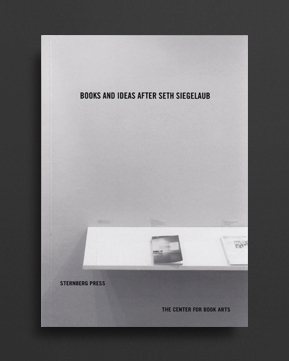
Books and Ideas after Seth Siegelaub spans an arc of tension between the works of Seth Siegelaub and contemporary cultural production. It features an interview with Seth Siegelaub, two essays by Regine Ehleiter and Michalis Pichler, and an extensively illustrated catalogue with bibliographic details.
In preparation for the project, Siegelaub and Pichler met twice in Amsterdam, where they had a long recorded conversation about books, living with books, being intimately connected with books, and producing books, and about the recent emergence of contemporary publications that show clear reference to books Siegelaub had produced, both piracies and homages, and not always to his delight.
Books by Siegelaub that are often paraphrased include the Xerox Book (1968), which was printed in offset and has since been xeroxed by various artists and publishers in many different ways, the catalogue exhibitions from 1969, as well as Lawrence Weiner’s Statements (1968). These publications are often taken as starting points for new projects, which are derivative and yet substantial artworks in their own right. Also, Siegelaub’s engagement with the Art Workers’ Coalition and subsequent draft of The Artist’s Reserved Rights Transfer and Sale Agreement has had wide reception and reaction in contemporary art and activism.
“The works presented in Michalis Pichler’s catalogue Books and Ideas after Seth Siegelaub reinvent Siegelaub’s renowned distinction between primary and secondary information.”
—Annette Gilbert, editor of Reprint: Appropriation (&) Literature and Publishing as Artistic Practice
“This anthology provides a welcome overview of the highly innovative exhibition and distribution practices developed by Seth Siegelaub in the late 1960s and the 1970s.”
—Alexander Alberro, author of Conceptual Art and the Politics of Publicity
“Seth Siegelaub was largely responsible for publicizing and promoting Conceptual art in the 1960s, but as Books and Ideas documents, he has continued to be a provocation and inspiration almost half a century after his abrupt exit from the art world he helped to create. Moreover, this book provides a context for Pichler’s own brand of conceptual practices. If part of Siegelaub’s genius was to reconceive exhibition as publication, Pichler gives us a catalogue of catalogues exhibiting the proliferation of mirrors which line the hall of Conceptual art’s legacy. In the pages of Books and Ideas, secondary information, accordingly, becomes primary.”
—Craig Dworkin, author of No Medium and Reading the Illegible
Copublished with the Center for Book Arts, New York
Design by Burak Yilmaz Kececiler
2016, Spanish
Softcover, 180 pages, 19.5 mm x 27.5 cm
Published by
Bom Dia Boa Tarde Boa Noite / Berlin
$30.00 $10.00 - Out of stock
Con contribuciones de Moosje M. Goosen, Anne Huffschmid, Pablo Katchadjian, Federico Navarrete Linares, Sandra Rozental, Carlos Sandoval, Adam T. Sellen, Anna M. Szaflarski y Laura Valencia Lozada.
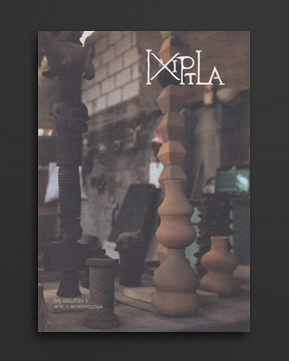
Ixiptla III explora el legado arqueológico y de qué manera este se expresa, se contamina o se disuelve en el presente. Moosje M. Goosen cuenta la historia de un arqueólogo alemán en Acámbaro y su colección de dinosaurios de barro falsos; Anne Huffschmid otorga un panorama de la historia de la antropología forense y su importancia en el presente en México en relación al estudio de las numerosas fosas comunes y el caso de los 43 estudiantes desaparecidos de Ayotzinapa; Pablo Katchadjian nos pregunta ¿Qué hacer?; Paula López Caballero cuenta la historia de Luz Jiménez y su rol como traductora, modelo e interprete, para entender distintas nociones de indigeneidad; Federico Navarrete Linares comienza un diálogo entre el concepto de Bajtin del cronotropo histórico y la relación entre el tiempo y el espacio en el cronotropo mesoamericano; Sandra Rozental compara las diferencias de uso, categorización y exhibición de Spolia en forma de tepalcates en Coatlinchan y el Museo Etnográfico en Berlín; Carlos Sandoval crea un Anti Lego con una colección de fragmentos de piezas arqueológicas; Adam T. Sellen hace la anatomía de una falsificación; Anna M. Szaflarski dibuja nudos con distintos significados componiendo un cuerpo imposible; y Laura Valencia Lozada presenta el inicio de un diálogo epistolar con los familiares de los desaparecidos en México.
Volumen III de Ixiptla se publica en el marco de la exposición ¿Quién medirá el espacio, quién me dirá el momento? Museo de Arte Contemporáneo de Oaxaca, México.
¿Quién medirá el espacio, quién me dirá el momento? se sitúa en la delgada línea que divide nuestra relación con los objetos, con las historias que elaboramos en torno a ellos. El punto de partida fue un repertorio de objetos, algunos de ellos arqueológicos, otros mecánicos, lúdicos o sintéticos; que fueron seleccionados en el presente, junto con Innovando la tradición y el taller de cerámica Coatlicue en Atzompa, Oaxaca. La selección fue el sustento para imaginar una serie de historias, que ahora se alzan cual columnas en el espacio expositivo.
El concepto nahua de ixiptla se ha traducido como imagen, delegado, sustituto o representante. Ixiptla podía ser una estatua, una visión o la víctima que se convierte en el dios destinado al sacrificio. Los varios ixiptlas del mismo dios podían ocurrir de manera simultánea. Ixiptla deriva de la partícula xip: piel, cobertura, cáscara; es el contenedor, la presencia reconocible, la actualización de una fuerza imbuida en un objeto: un ser ahí, removiendo la distinción entre esencia y materia, original y copia.
Ixiptla is biannual journal on trajectories of Anthropology
Vol. I (English) was published on the occasion of Expedite Expression, 8th Berlin Biennale for Contemporary Art, Berlin, 2014.
Vol. II (English and German) was published on the occasion of Parergon, Hamburger Bahnhof Museum für Gegenwart, Berlin.
Vol. III (Spanish) was published on the occasion of Who will measure the space, who will tell me the time?, Museo de Arte Contemporáneo de Oaxaca.
2019, English
Softcover, 28 pages, 16.5 x 23.6 cm
Published by
Innen Books / Zürich
$28.00 $5.00 - Out of stock
Hungarian artist Révész László László's "Where is the Mirror?", published by Innen Books, Zürich, in 2019. First Edition.
László László Révész is a Hungarian painter and performance artist. He received a Master of Fine Arts degree in painting from the Hungarian University of Fine Arts in 1981 and an MA in animation from Moholy-Nagy University of Art and Design Budapest in 1986. The director of Musée d’Art Moderne de Saint-Etienne, France Lóránd Hegyi says about the drawings of Révész: "The subversive, destabilizing and irritating mixture of hidden irrationality, silent improbability and a – seemingly – innocent banality creates the basic narrative embodied in the drawings of Laszlo Laszlo Revesz..."
2015, English
Softcover (wiro bound), 84 pages, 23 x 18 cm
1st ed. of 500 copies,
Published by
The Narrows / Melbourne
$30.00 $5.00 - In stock -
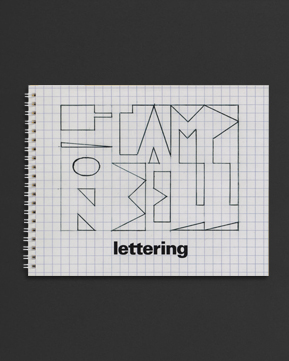
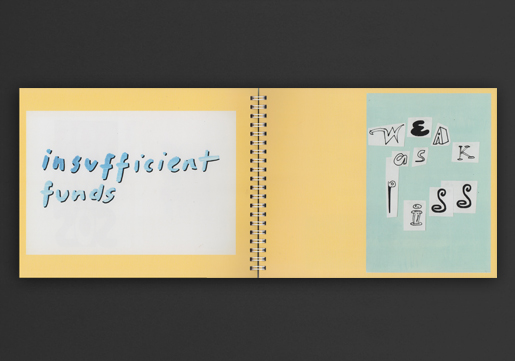
Jon Campbells new artist’s book, Lettering brings together a collection of works on paper made over the past 10 years. Ranging from intimate doodles to highly rendered texts this is the first time these works have been published as a group. The book also contains a series of photographic stills as well as pages containing images of paintings that relate directly to the drawings.
1st edition of 500 copies.
2017, English
Softcover, 312 pages, 22 x 32cm
Ed. of 2000,
Published by
Unit Editions / London
$100.00 $70.00 - Out of stock
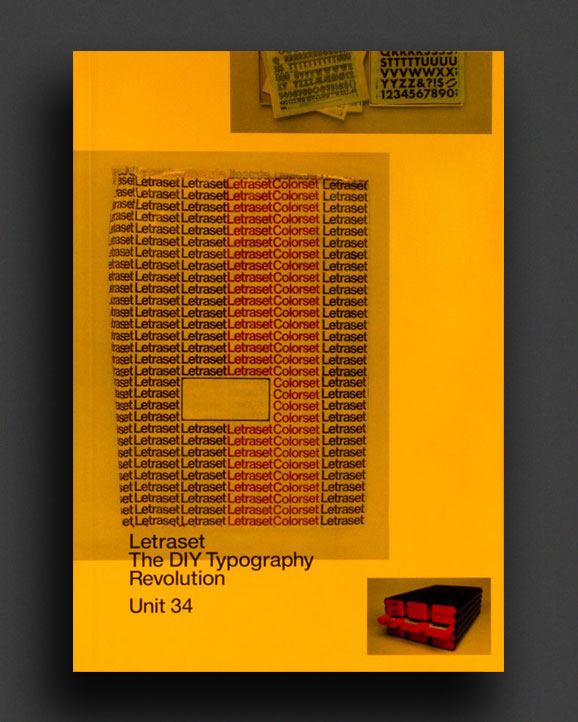
Four years in the making. Letraset: The DIY Typography Revolution is the first comprehensive history of Letraset, the rubdown lettering system that revolutionised typographic expression.
The book tells the Letraset story from its early days as a difficult-to-use wet system, to its glory years as the first truly democratic alternative to professional typesetting.
The book also looks at Letraset’s present-day revival amongst a new set of admirers who recognise the typographic excellence of the system’s typefaces.
The book comes with a gatefold Letraset timeline. It has an introduction by Malcolm Garrett, and features in-depth interviews with Mr Bingo, Erik Brandt, Aaron Marcus, David Quay, Dan Rhatigan, Freda Sack, Andy Stevens and Jon Wozencroft.
Essays by Colin Brignall, Dave Farey and Mike Daines – all key members of the Letraset team – provide expert insight into the rise of Letraset as a typographic and commercial powerhouse. A central essay by Adrian Shaughnessy examines the typographic and cultural impact of the system.
The book’s design is by the Spin team of Tony Brook and Claudia Klat. It uses many rare specimens from Letraset’s past – catalogues, press ads, mailers, storage units, and of course, sheets of classic Letraset typefaces.
Print: Four colour litho
Cover: Four colour litho plus Pantone
Edition of 2000.
2005, English
Softcover, 44 pages, offset, 145 x 200 mm
Published by
Slave / Melbourne
$10.00 $5.00 - In stock -
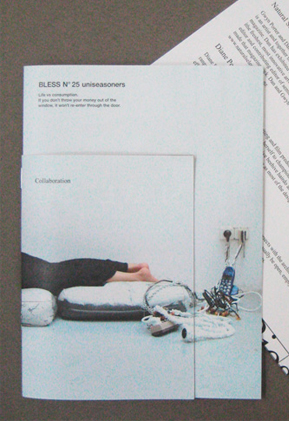
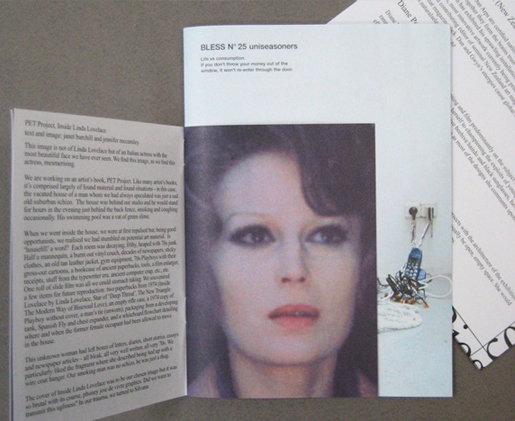
To coincide with BLESS visiting Melbourne in 2005, Slave and Bless published BLESS No 25 The Dater 05 with the design assistance of Manuel Raeder. This organizer of months and Bless productions comes together with new contributions to Slave from Bianca Hester, Lyndal Walker, Angelo Flaccavento, Michelle Ussher and Jeremy The, Janet Burchill and Jennifer McCamley, Scott Mitchell, Chris Kraus, Scott Redford, A Constructed World, Diane Pernet, and Natural Selection.
Edited by Manuel Raeder.
2016, English
Softcover, 116 pages, 24 x 16.5 cm
Published by
Surpllus / Melbourne
$20.00 - In stock -
When a still painting shows us that we are moving' presents Melbourne painter and installation artist David Thomas' latest body of work, Impermanences. Featuring contributions from Kit Wise, Professor of Fine Art and Director of the Tasmanian College of the Arts, University of Tasmania; Dr Michael Graeve, a visual and sound artist; and David Thomas.
David Thomas lives and works in Melbourne, Australia. He was born in Belfast, Northern Ireland in 1951 and arrived in Australia in 1958. Thomas has exhibited internationally for the past four decades, including in the United States, Australia, New Zealand, South Korea, Taiwan, China, Singapore, and throughout Europe.
Thomas’ work is represented in public collections including the National Gallery of Victoria, Australian National Gallery, Art Bank, Trinity College, University of Melbourne, RMIT University, Museum of Modern Art at Heide, Cripp’s Collection (Australia and UK); Chartwell Collection, Auckland Art Gallery, Canterbury University (New Zealand); Lim Lip Museum (South Korea); and Kunstmuseum Bonn, Theodor F. Leifeld Stiftung, and Kunstmuseum Ahlen (all Germany). He has received awards from the Australia Council, Art Gallery of New South Wales, and Arts Victoria, and has participated in residencies at the Cité International des Arts (Paris), Two Rooms Gallery (Auckland), Centre for Drawing Research, Wimbledon College of Art, University of the Arts (London), and Porthmeor Studios (St. Ives, UK).
Thomas has curated numerous exhibitions and written extensively on the subject of monochrome painting. He is a Professor of Fine Art at RMIT University in Melbourne where he has taught since 1992. Thomas holds an MA in Fine Art (Painting) and a PhD from RMIT University.
2018, English / Italian
Softcover, 120 pages, 23 x 30 cm
Published by
Mousse / Milan
$59.00 - Out of stock
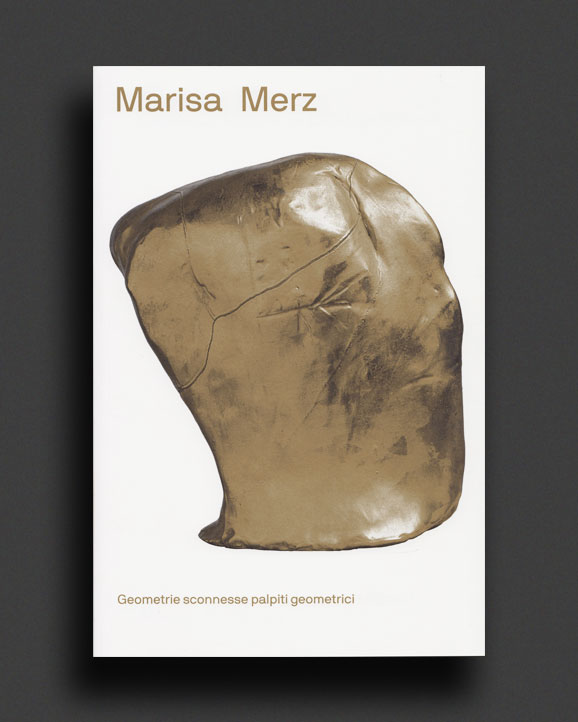
“With a simple gestures, Marisa draws a space, marks a place, alludes to its transparency, discovers the direction, and etches her passage into the very short breath of a vacuum that she fills with incommensurable meaning. A shoe, a net whose mesh captures the time and the moment, the material present in the fragment of impulses of the living, in the pattern of a notion of lightness and strenght.”—Ester Coen
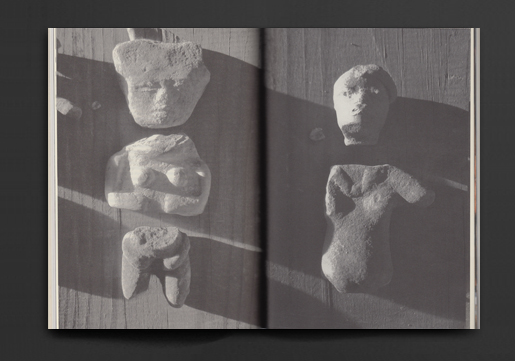
Published on the occasion of Marisa Merz’s exhibition at MASI (Lugano, Switzerland), Marisa Merz: Geometrie sconnesse palpiti geometrici takes its name from a phrase by the artist written on a wall in her studio, and is the result of the precious collaboration between Collezione Giancarlo and Danna Olgiati (Lugano) and Fondazione Merz (Turin). Embracing all the expressive modalities explored by the artist—from drawings to unfired clay sculptures, from copper and nylon weavings to objects transmuted into wax— and with texts by Ester Coen, Douglas Fogle, and Beatrice Merz, the book follows and highlights the pivotal theme that recurs in the artist’s work: her exploration of the face and the figure in general. Traces of a complex, philosophical thought, they’re the products of an almost obsessively cadenced superimposition of visual marks and materials.
2017, English
Softcover, 448 pages, 17 x 23.5 cm
Published by
Edition Skylight / Switzerland
$95.00 - Out of stock
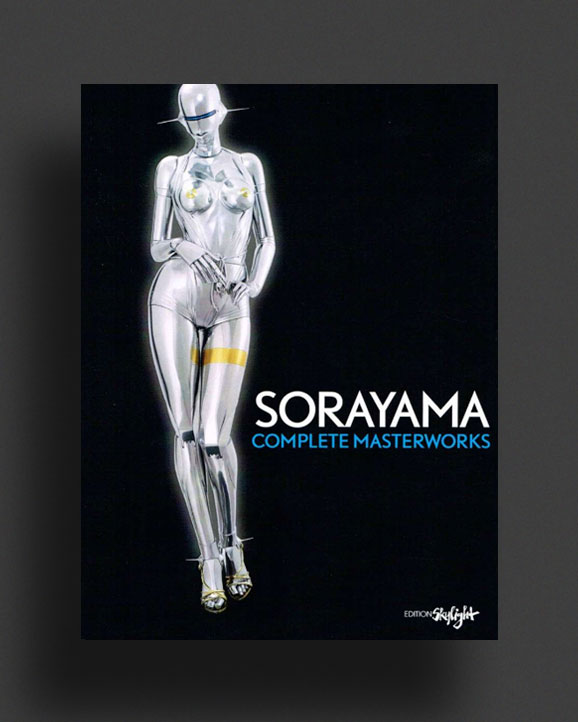
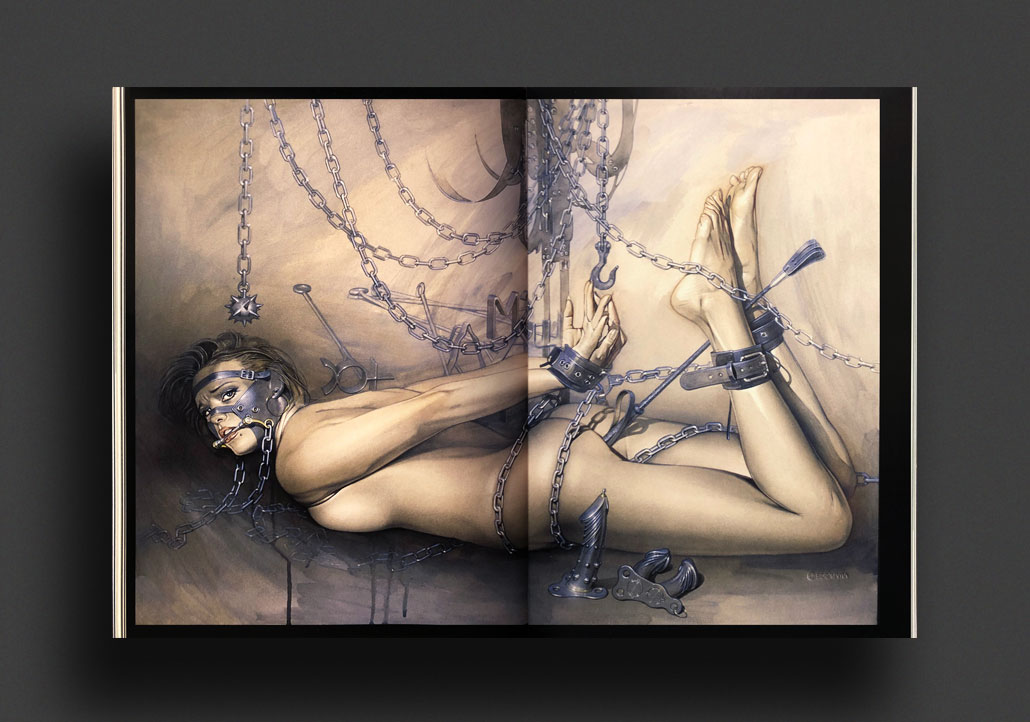
An absolute master of the airbrush, Japanese artist Hajime Sorayama's erotic, futuristic, hyper-realistic illustrations create a visual landscape that would be impossible to achieve in photography alone. Only Sorayama, equipped with boundless imagination, is able to achieve this, using pencil and brush, acrylic paint, and his airbrush. This thick tome of over 1000 illustrations is a comprehensive reference catalogue to Sorayama's rich and iconic work, including new, unpublished works. His Complete Masterworks speak of extraordinary talent, wondrous imagination, and impeccable skill.
Hajime Sorayama (b. 1947) is a Japanese illustrator known for his precisely detailed, erotic portrayals of feminine robots, along with his design work on the original Sony AIBO. He describes his highly detailed style as "superrealism", which he says "deals with the technical issue of how close one can get to one's object."