World Food Books' programme is largely produced on Kulin Nation land. We acknowledge the Wurundjeri people of the Kulin Nation as the first and continuing custodians of this land, and pay respect to their Elders past, present, and emerging.
World Food Books is an arts and special interests bookshop in Naarm / Melbourne. Founded in 2010, World Food Books is devoted to the presentation of a rotating, hand-selection of international art, design, literary and counterculture publications with an emphasis on the anti-traditional, the experimental, the avant-garde, the heretic, the marginal.
Presenting new titles alongside rare and out-of-print books, catalogues and journals spanning the fields of modern and contemporary art, design, photography, illustration, film, literature, poetry, cultural theory, philosophy, sexuality, popular and underground culture in its many radical forms, World Food Books wishes to encourage adventurous, thoughtful and open-minded reading, looking, writing, and exchange of publishing and ideas, both current and historical.
As well as our bookshop, located in Melbourne's historical Nicholas Building, all of our inventory is available internationally via our online mail-order service.
World Food Books semi-regularly co-ordinates "Occasions", a programme of exhibits and events at the bookshop and in partnership with other hosts (such as museums and art galleries) that develop out of the activities, relationships and content of the bookshop itself.
World Food Books
The Nicholas Building
37 Swanston Street
Room 5, Level 6
Melbourne 3000
Australia
SHOP HOURS:
Thu–Fri 12–6, Sat 12–5
WEB-SHOP OPEN 24/7
World Food Books
Postal Address:
PO Box 435
Flinders Lane
Victoria 8009
Australia
Art
Theory / Essay
Architecture / Interior
Graphic Design / Typography
Photography
Fashion
Eros
LGBTQ+
Fiction / Poetry
Weird / Speculative / Science Fiction / Horror
Transgressive / Visceral / Abject
Symbolism / Decadence / Fin de siècle
Film / Video
Painting
Sculpture / Installation
Performance / Dance / Theater
Drawing
Sound / Music
Curatorial
Group Shows / Collections
Periodicals
Out-of-print / Rare
Posters / Ephemera / Discs
Signed Books
World Food Books Gift Voucher
World Food Book Bag
Australian Art
Australian Fiction
Australian Science Fiction / Speculative Fiction
Australian Poetry
Australian Photography
Japanese Photography
Conceptual Art
Minimal Art
Dada
'Pataphysics / Oulipo
Fluxus
Concrete Poetry
Pop Art
Surrealism
Arte Povera
Arte Informale / Haute Pâte / Tachism
Nouveau Réalisme / Zero / Kinetic
Situationism / Lettrism
Collage / Mail Art / Xerox Art
Art Brut / Folk / Visionary / Fantastic
Illustration / Graphic Art / Bandes Dessinées
Furniture
Italian Radical Design / Postmodernism
Textiles
Ceramics / Glass
Counterculture
Protest / Revolt
Philosophy
Psychoanalysis
Anthropology
Anarchism
Socialism / Anarchism / Communism / Capitalism
Literary Theory / Semiotics / Language
Feminism / Women's Studies
Gender Studies / Sexuality
Anthropology
Fetishism / BDSM
Drugs / Psychedelia
Crime / Violence
Animal Rights / Veganism
Occult / Esoterica
Ecology / Earth / Alternative Living
Whole Earth / Crafts
All prices in AUD (Australian dollars)
Pick-Ups
Pick-up orders can be collected in our bookshop during opening hours after order date. Please collect any Pick-up orders within 2 weeks of ordering as we have limited storage space. Orders will be released back into stock if not collected within this time. No refunds can be made for pick-ups left un-collected. If you cannot make it in to the bookshop in this time-frame, please choose postage option.
Return Policy
All sales are final. We do accept returns (for refund or exchange) for items received in error. All our orders are packed with special care using heavy-duty padding and cardboard book-mailers or bubble mailers (for smaller books), using reinforcement where required. We cannot take responsibility for any lost, stolen or damaged parcels.
Insurance
Should you wish to insure your package, please email us directly after placing your order and we can organise this at a small extra expense. Although all standard/express tracked packages are very safe and dependable, we cannot take responsibility for any lost, stolen or damaged parcels. We recommend insurance on valuable orders.
Interested in selling your old books, catalogues, journals, magazines, comics, fanzines, ephemera? We are always looking for interesting, unusual and out-of-print books to buy. We only buy books in our fields of interest and specialty, and that we feel we can resell.
We base these prices on desirability, market value, in-print prices, condition and our current stock levels. We offer cash, store credit, and can take stock on consignment. All
about 25% of the price we expect to get when we sell them, or 30% in store credit. We base these prices on desirability, market value, in-print prices, condition and our current stock levels.
Sell your books any day of the week. You can drop them off and return later. If you have a lot of books, we can visit your Sydney home.
We buy books that we feel we can resell. We offer about 25 % of the price we expect to get when we sell them, or 30% in store credit. We base these prices on desirability, market value, in-print prices, condition and our current stock levels.
Philadelphia Wireman
03 August - 01 September, 2018
World Food Books is proud to announce our next Occasion, the first presentation of sculptures by Philadelphia Wireman in Australia.
The Philadelphia Wireman sculptures were found abandoned in an alley off Philadelphia’s South Street on trash night in 1982. Their discovery in a rapidly-changing neighbourhood undergoing extensive renovation, compounded with the failure of all attempts to locate the artist, suggests that the works may have been discarded after the maker’s death. Dubbed the "Philadelphia Wireman" during the first exhibition of this work, in 1985, the maker’s name, age, ethnicity, and even gender remain uncertain. The entire collection totals approximately 1200 pieces, all intricately bound together with tightly-wound heavy-gauge wire (along with a few small, abstract marker drawings, reminiscent both of Mark Tobey and J.B. Murry). The dense construction of the work, despite a modest range of scale and materials, is singularly obsessive and disciplined in design: a wire armature or exoskeleton firmly binds a bricolage of found objects including plastic, glass, food packaging, umbrella parts, tape, rubber, batteries, pens, leather, reflectors, nuts and bolts, nails, foil, coins, toys, watches, eyeglasses, tools, and jewellery.
Heavy with associations—anthropomorphic, zoomorphic, and socio-cultural responses to wrapped detritus—the totemic sculptures by Philadelphia Wireman have been discussed in the context of work created to fulfil the shamanistic needs of alternative religions in American culture. Curators, collectors, and critics have variously compared certain pieces to sculpture from Classical antiquity, Native American medicine bundles, African-American memory jugs, and African fetish objects. Reflecting the artist’s prolific and incredibly focused scavenging impulse, and despite—or perhaps enhanced by—their anonymity, these enigmatic objects function as urban artefacts and arbiters of power, though their origin and purpose is unknown. Philadelphia Wireman, whatever their identity, possessed an astonishing ability to isolate and communicate the concepts of power and energy through the selection and transformation of ordinary materials. Over the course of the past two decades, this collection has come to be regarded as an important discovery in the field of self-taught art and vernacular art.
Presented in collaboration with Fleisher-Ollman Gallery, Philadelphia, and Robert Heald, Wellington.
Susan Te Kahurangi King
02 February - 10 March, 2018
Susan Te Kahurangi King (24 February 1951 - ) has been a confident and prolific artist since she was a young child, drawing with readily available materials - pencils, ballpoint pens and felt-tip markers, on whatever paper is at hand. Between the ages of four and six Susan slowly ceased verbal communication. Her grandparents William and Myrtle Murphy had developed a special bond with Susan so they took on caring responsibilities for extended periods. Myrtle began informally archiving her work, carefully collecting and storing the drawings and compiling scrapbooks. No drawing was insignificant; every scrap of paper was kept. The King family are now the custodians of a vast collection containing over 7000 individual works, from tiny scraps of paper through to 5 meter long rolls.
The scrapbooks and diaries reveal Myrtle to be a woman of great patience and compassion, seeking to understand a child who was not always behaving as expected. She encouraged Susan to be observant, to explore her environment and absorb all the sights and sounds. Myrtle would show Susan’s drawings to friends and people in her community that she had dealings with, such as shopkeepers and postal workers, but this was not simply a case of a grandmother’s bias. She recognised that Susan had developed a sophisticated and unique visual language and sincerely believed that her art deserved serious attention.
This was an unorthodox attitude for the time. To provide some context, Jean Dubuffet coined the term Art Brut in 1945 to describe work created by self-taught artists – specifically residents of psychiatric institutions and those he considered to be visionaries or eccentrics. In 1972 Roger Cardinal extended this concept by adopting the term Outsider Art to describe work made by non-academically trained artists operating outside of mainstream art networks through choice or circumstance. Susan was born in Te Aroha, New Zealand in 1951, far from the artistic hubs of Paris and London that Dubuffet and Cardinal operated in. That Myrtle fêted Susan as a self-taught artist who deserved to be taken seriously shows how progressive her attitudes were.
Susan’s parents Doug and Dawn were also progressive. Over the years they had consulted numerous health practitioners about Susan’s condition, as the medical establishment could not provide an explanation as to why she had lapsed into silence. Dawn educated herself in the field of homeopathy and went on to treat all twelve of her children using these principles – basing prescriptions on her observations of their physical, mental and emotional state.
Doug was a linguist with an interest in philosophy who devoted what little spare time he had to studying Maori language and culture. To some extent their willingness to explore the fringes of the mainstream made them outsiders too but it was their commitment to living with integrity and their respect for individuality that ensured Susan’s creativity was always encouraged.
Even though Susan’s family supported her artistic pursuits, some staff in schools and hospitals saw it as an impediment to her assimilation into the community and discouraged it in a variety of ways. Her family was not always aware of this and therefore did not fully understand why Susan stopped drawing in the early 1990s. However, rather than dwell on the challenges that Susan faced in pursuit of her artistic practice, they prefer to highlight her achievements. In 2008 Susan began drawing again in earnest, after an almost 20 year interruption, and her work is now shown in galleries around the world.
Susan grew up without television and has been heavily influenced by the comics she read as a child. She is absolutely fearless in the appropriation of recognizable characters, such as Donald Duck and Mickey Mouse, in her work. She twists their limbs, contorts their faces, compresses them together, blends them into complex patterned backgrounds - always imbuing them with an incredible energy. Although Susan often used pop culture characters in her work they are not naive or childlike. These are drawings by a brilliant self-taught artist who has been creating exceptional work for decades without an audience in mind.
Mladen Stilinović
"Various Works 1986 - 1999"
02 February 16 - September 10, 2016
Various works 1986 - 1999, from two houses, from the collections of John Nixon, Sue Cramer, Kerrie Poliness, Peter Haffenden and Phoebe Haffenden.
Including: Geometry of Cakes (various shelves), 1993; Poor People’s Law (black and white plate), 1993; White Absence (glasses, ruler, set square, silver spoon, silver ladel with skin photograph and wooden cubes), 1990-1996; Exploitation of the Dead (grey and red star painting, wooden painting, black spoon with red table, red plate), 1984-1990; Money and Zeros (zero tie, paintings made for friends in Australia (Sue, John, Kerrie), numbers painting), 1991-1992; Words - Slogans (various t-shirts) - “they talk about the death of art...help! someone is trying to kill me”, “my sweet little lamb”, “work is a disease - Karl Marx”; Various artist books, catalogues, monographs, videos; Poster from exhibition Insulting Anarchy; "Circular" Croatian - Australian edition; Artist book by Vlado Martek (Dostoyevsky); more.
Thanks to Mladen Stilinović and Branka Stipančić.
Jonathan Walker
Always Will Need To Wear Winter Shirt Blue + Ochre Small Check Pattern
21 August - 21 September, 2015
Untitled
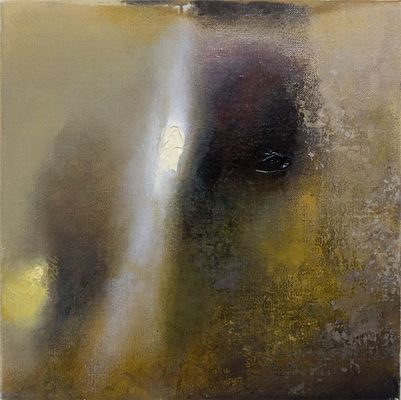
I am not a great reader of poetry but I always return to the work of Melbourne poet, Vincent Buckley (1925- 1988). Perhaps I find his most tantalising piece to be not a finished poem but a fragment left on a scrap of paper discovered on his desk after the poet’s death.
The poetry gathers like oil
In the word-core, and spreads
It has its music meet,
Its music is in movement.
This fragment is more the shell left behind from a volatile thought than a finished poem. I find the last two lines honest but awkward whereas the first two lines work like an arrow. Most likely he could not find a resolution so it was left. Still, in its present form, it remains an eloquent testimony to the ultimate failure of a medium to express mobile thought and sensation, in Buckley’s case, through verbal language. It’s an important matter because this is something all artists have to deal with regardless of the medium.
I have never written a poem, however, I am forever copying fragments from books on paper scraps in a vain effort to fix certain notions in my head. At first, they function as bookmarks that are sometimes returned to when I open the book. But before long, as they accumulate, they fall out littering the table interspersed with A4 photocopies, bills, books and medications.
To return to Buckley’s fragment, the first two lines very much evoke how I paint nowadays. As you age, detail diminishes and patches of light become more luminous and float. I feel the most honest way of dealing with this is by smearing the oil paint on the canvas with the fingers and working close-up, blind. Only if the patches coalesce into an approaching image can the work gain a life.
-
Jonathan Walker was born in Melbourne, Australia and brought up on a dairy farm in Gippsland. In the 1970’s he studied painting at RMIT and won the Harold Wright Scholarship to the British Museum, London. During the 1980’s he exhibited at Pinacotheca Gallery, Richmond and had work shown at the NGV and Heidi City Art Gallery. Over the same period he designed the cover for the “Epigenesi” LP by Giancarlo Toniutti, Italy and conducted a mail exchange work with Achim Wollscheid, Germany. The work with artists through the post resulted in an article published in the bicentenary issue of Art and Australia 1988. He showed in artist run spaces such as WestSpace in the 90’s and 2000’s, and until 2012, taught painting at Victoria University, which is where we (Colleen Ahern and Lisa Radford) as organisers of the exhibition, among many others, had the privilege of being his student.
Walker’s knowledge was imparted to students through the careful selection of music, literature, and artists found in books that he himself had ordered for the library. Walker’s strategy was the generosity of sharing his vast knowledge with references specific to each student and their context.
Walker’s paintings share a similar focus and intimacy.
This exhibition presents a small selection of recent paintings alongside a publication that includes Walker’s writing. Observational and analytical, Walker’s work is a type of material notation — the time of day, colour and how it is blended, the both specific and fleeting location of a reflection on lino or the question of whether a chair leg should be included in a painting.
Please join us on Friday August 21 between 6-8pm to celebrate the opening of the exhibition.
Curated by Colleen Ahern and Lisa Radford.
B. Wurtz
Curated by Nic Tammens
March 26 - April 4, 2015
B.Wurtz works from a basement studio in his home on Manhattan’s Lower East Side.
This local fact is attested to by the plastic shopping bags and newsprint circulars that appear in his work. As formal objects, they don’t make loud claims about their origins but nonetheless transmit street addresses and places of business from the bottom of this long thin island. Like plenty of artists, Wurtz is affected by what is local and what is consumed. His work is underpinned by this ethic. It often speaks from a neighborhood or reads like the contents of a hamper:
“BLACK PLUMS $1.29 lb.”
“Food Bazaar”
“USDA Whole Pork Shoulder Picnic 99c lb.”
“RITE AID Pharmacy, with us it’s personal.”
“H. Brickman & Sons.”
“Sweet Yams 59c lb."
Most of the work in this exhibition was made while the artist was in residence at Dieu Donne, a workshop dedicated to paper craft in Midtown. Here Wurtz fabricated assemblages with paper and objects that are relatively lightweight, with the intention that they would be easily transportable to Australia. This consideration isn’t absolute in Wurtz’s work, but was prescriptive for making the current exhibition light and cheap. Packed in two boxes, these works were sent from a USPS post office on the Lower East Side and delivered to North Melbourne by Australia Post.
Wurtz appears courtesy of Metro Pictures, New York.
Thanks to Rob Halverson, Joshua Petherick, Sari de Mallory, Matt Hinkley, Helen Johnson, Fayen d'Evie, Ask Kilmartin, Lisa Radon, Ellena Savage, Yale Union, and "Elizabeth".
John Nixon
"Archive"
December 15 - January 20, 2014
The presentation of John Nixon's archive offered a rare showcase of this extensive collection of the artist's own publications, catalogues, posters, ephemera, editions and more, from the mid 1980s onwards, alongside a selection of his artworks.
Organized by John Nixon, Joshua Petherick and Matt Hinkley.
<a href=http://wfb.public-office.info/artist/john-nixon>All titles by John Nixon
"Habitat"
at Minerva, Sydney (organised by Joshua Petherick and Matt Hinkley)
November 15 - December 20, 2014
Lupo Borgonovo, Janet Burchill & Jennifer McCamley,
Lewis Fidock, HR Giger, Piero Gilardi, Veit Laurent Kurz,
Cinzia Ruggeri, Michael E. Smith, Lucie Stahl, Daniel Weil, Wols
Press Release:
“...It contained seven objects. The slender fluted bone, surely formed for flight, surely from the wing of some large bird. Three archaic circuitboards, faced with mazes of gold. A smooth white sphere of baked clay. An age-blackened fragment of lace. A fingerlength segment of what she assumed was bone from a human wrist, grayish white, inset smoothly with the silicon shaft of a small instrument that must once have ridden flush with the surface of the skin - but the thing’s face was seared and blackened.”
William Gibson, “Count Zero”, 1986
"Autumn Projects Archive"
Curated by Liza Vasiliou
March 6 - March 15, 2014
World Food Books, in conjunction with the Virgin Australia Melbourne Fashion Festival 2014, presented the Autumn Projects archive, consisting of a selection of early examples in Australian fashion with a particular interest in collecting designers and labels from the period beginning in the 1980’s, who significantly influenced the discourse of Australian Fashion.
Curated by Liza Vasiliou, the exhibition provided a unique opportunity to view pieces by designers Anthea Crawford, Barbara Vandenberg, Geoff Liddell and labels CR Australia, Covers, Jag along with early experimental collage pieces by Prue Acton and Sally Browne’s ‘Fragments’ collection, suspended throughout the functioning World Food Books shop in Melbourne.
H.B. Peace
presented by CENTRE FOR STYLE
November 14, 2013
"Hey Blinky, you say chic, I say same"
Anon 2013
H.B. Peace is a clothing collaboration between great friends Blake Barns and Hugh Egan Westland. Their pieces explore the divergences between 'character’ and ‘personality’ in garments....etc
Special Thanks to Joshua Petherick and Matt Hinkley of WFB and Gillian Mears
and a Very Special Thank you to Audrey Thomas Hayes for her shoe collaboration.
Janet Burchill & Jennifer McCamley
"Aesthetic Suicide"
May 10 - June 8, 2013
The first of our occasional exhibitions in the World Food Books office/shop space in Melbourne, "Aesthetic Suicide" presented a body of new and older works together by artists Janet Burchill & Jennifer McCamley, including videos, prints, a wall work, and publications.
During shop open hours videos played every hour, on the hour.
1976, English
Softcover, 46 pages, 28 x 22 cm
1st Edition, Out of print title / used / very good
Published by
Tao Productions / Hollywood
$45.00 - Out of stock
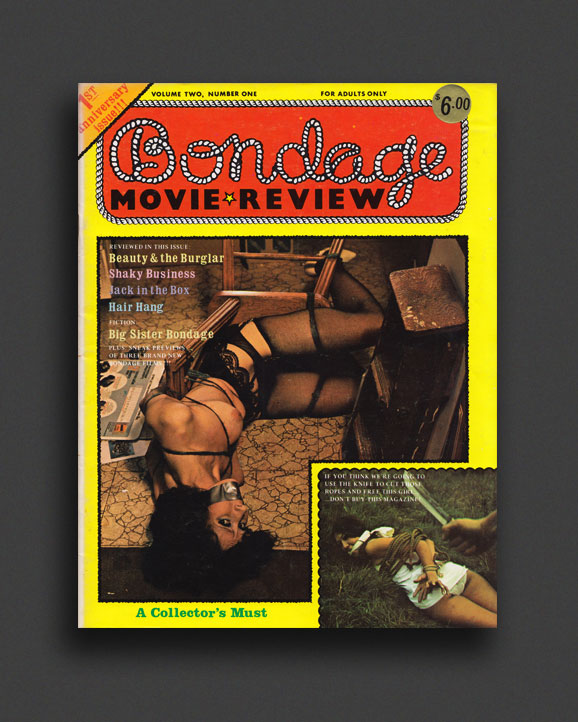
Bondage Movie Review Volume 2 No. 1, the collector's 1st Anniversary issue published by Tao Productions of Hollywood in 1976. Heavily illustrated throughout with b/w and colour bondage photographs, featuring many stills and photographs from Tao Productions films including "Hair Hung", "Jack in The Box", "Return of The Doctor", "Beauty and The Burglar", "The Visitor", "Shaky Business", "The Teat and The Pendulum", plus letters, fiction ("Big Sister Bondage"), illustrated catalogues of Bondage photographs and 8mm films, Bondage marketplace and Tao publications, and more. Includes colour centre spread from "Beauty and The Burglar".
Very Good copy with tanning to spine.
2002, English
Softcover, 430 pages, 15.2 x 23 cm
Published by
Semiotext(e) / Los Angeles
$45.00 - In stock -
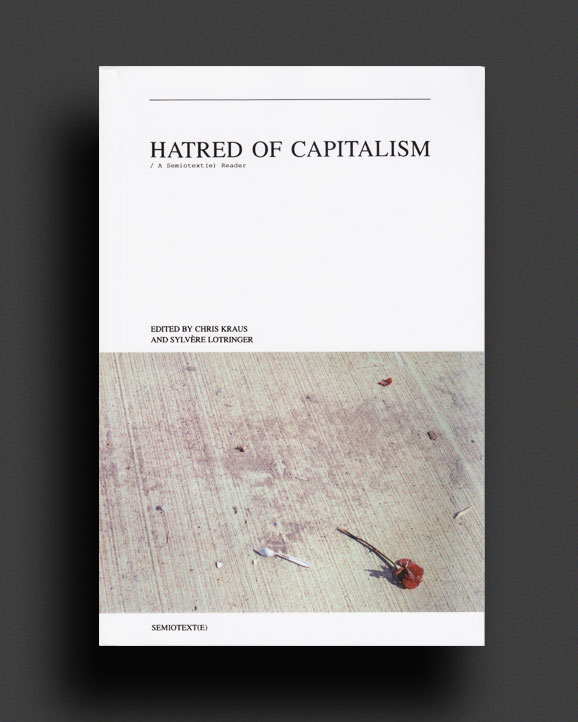
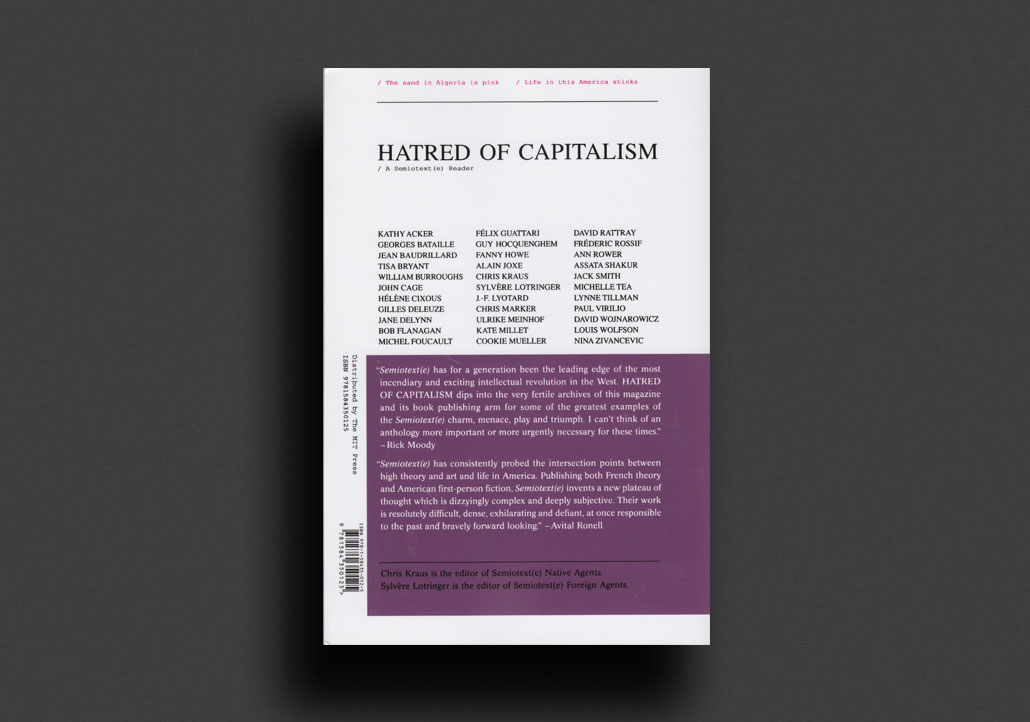
Compiled in 2001 to commemorate the passing of an era, Hatred of Capitalism brings together highlights of Semiotext(e)’s most beloved and prescient works. Semiotext(e)’s three-decade history mirrors the history of American thought. Founded by French theorist and critic Sylvere Lotringer as a scholarly journal in 1974, Semiotext(e) quickly took on the mission of melding French theory with the American art world and punk underground. Its Foreign Agents, Native Agents, Active Agents and Double Agents imprints have brought together thinkers and writers as diverse as Gilles Deleuze, Assata Shakur, Bob Flanagan, Paul Virillio, Kate Millet, Jean Baudrillard, Michelle Tea, William S. Burroughs, Eileen Myles, Ulrike Meinhof, and Fanny Howe. In Hatred of Capitalism, editors Kraus and Lotringer bring these people together in the same volume for the first time.
Chris Kraus is a filmmaker and the author of I Love Dick and Aliens & Anorexia, and coeditor of Hatred of Capitalism: A Semiotext(e) Reader. Index called her “one of the most subversive voices in American fiction.” Her work has been praised for its damning intelligence, vulnerability and dazzling speed.
Sylvère Lotringer, general editor of Semiotext(e), lives in New York and Baja, California. He is the author of Overexposed: Perverting Perversions (Semiotext(e), 2007).
2016, English
Softcover, 96 pages, 20.3 x 25.4 cm
Published by
University Press of New England / New Hampshire
$36.00 - Out of stock
The Little Edges is a collection of poems that extends poet Fred Moten's experiments in what he calls "shaped prose" - a way of arranging prose in rhythmic blocks, or sometimes shards, in the interest of audio-visual patterning. Shaped prose is a form that works the "little edges" of lyric and discourse, and radiates out into the space between them. As occasional pieces, many of the poems in the book are the result of a request or commission to comment upon a work of art, or to memorialize a particular moment or person. In Moten's poems, the matter and energy of a singular event or person are transformed by their entrance into the social space that they, in turn, transform.
Fred Moten (born 1962) is an American cultural theorist, poet and scholar whose work explores critical theory, black studies, and performance studies. Moten lives in Los Angeles, where he teaches at the University of California, Riverside. He is author of Arkansas (Pressed Wafer); In the Break: The Aesthetics of the Black Radical Tradition (University of Minnesota Press); I ran from it but was still in it. (Cusp Books); Hughson’s Tavern (Leon Works); B Jenkins (Duke University Press); and The Feel Trio (Letter Machine Editions), which is a finalist for the National Book Award.
2013, English
Softcover, 184 pages, 19.6 x 17.5 cm
Published by
Atlas Press / London
$46.00 - Out of stock
In a novel of extremes, whose disgust with “things as they are” includes the whole idea of “novels”, Michel Leiris pursues his heroine, Aurora, through a visionary landscape shot through with catastrophes — and his lucid yet baroque language, with its incredible descriptions and ever more extravagant metaphors, is only just able to keep pace. Leiris himself, looking back on this novel from his youth, exactly described its tone:
… despite the “black” or “frenetic” style of its blustering prose, what I like about this work is the appetite it expresses for an unattainable purity, the faith it places in the untamed imagination, the horror it manifests with regard to any kind of fixity — in fact, the way almost every page of it refuses to accept that human condition against which some will never cease to rebel, however reasonably society may be ordered.
Aurora is one of the high-points of literary Surrealism, and Leiris was an early member of the group. Close to Georges Bataille, Picasso and Jean-Paul Sartre, he was a pivotal figure in post-war Paris. A director of the Musée de l’Homme, Leiris wrote important studies in the fields of ethnology and anthropology, as well as a sequence of autobiographical works regarded as classics of modern French literature.
Aurora translated and introduced by Anna Warby, Cardinal Point translated by Terry Hale.
2019, English
Hardcover (w. dust jacket), 288 pages, 15.2 x 22.9 cm
Published by
Semiotext(e) / Los Angeles
$48.00 - In stock -
That the nude painted by Manet (in a painting so conceptually new that it created a scandal in its day) achieves so much truth through such a minor detail, that ribbon that modernizes Olympia and, even more than a beauty mark or a patch of freckles would, renders her more precise and more immediately visible, making her a woman with ties to a particular milieu and era: that is what lends itself to reflection, if not divagation! - from The Ribbon at Olympia's Throat
In The Ribbon at Olympia's Throat, Michel Leiris investigates what Lydia Davis has called the "expressive power of fetishism": how a seemingly irrelevant aesthetic detail may cause the eruption of sublimity within the mundane.
Written in 1981, toward the end of Leiris's life, The Ribbon at Olympia's Throat serves as a coda to his autobiographical masterwork, The Rules of the Game, taking the form of both shorter fragments (poems, memory scraps, notes) that are as formally disarming as the fetishistic experiences they describe, and longer essays, more exhaustive critical meditations on writing, apprehension, and the nature of the modern. Rooted in remembrance, devoted to the kaleidoscopic intricacies of wordplay, Leiris draws from his own aesthetic experiences as writer and spectator to explore the fetish that "exposes and disarms the sinister passage of time, "conferring" an undeniable realness upon the whole by essentially causing it to crystallize in a reality it would never have possessed if that sturdy fragment hadn't acted as bait."
Foreword by Marc Augé
Translated by Christine Pichini
"A necessary and enlightening sequel to Leiris's earlier extended explorations of his mind and heart, of writing, life, and art, The Ribbon at Olympia's Throat allows us to continue in his stimulating company as he poses questions in all frankness and humility that are as fresh and personal, even politically timely, today as when he wrote them. This long overdue, fine translation by Christine Pichini recreates with grace and ease Leiris's often labyrinthine sentences--no less complex than the thoughts they express. A pleasure to read." - Lydia Davis, Author of Can't and Won't and translator of Michel Leiris's Rules of the Game, Volumes 1-3
Michel Leiris (1901–1990) was a French surrealist writer and ethnographer. Part of the Surrealist group in Paris, Leiris became a key member of the College of Sociology with Georges Bataille and head of research in ethnography at the CNRS.
1973, Japanese
Hardcover (w. dust jacket in slipcase w. obi strip), 80 pages, 32 x 25 cm
1st Edition, Out of print title / used / very good
Published by
Kawade Shobo Shinsha / Tokyo
$120.00 - Out of stock
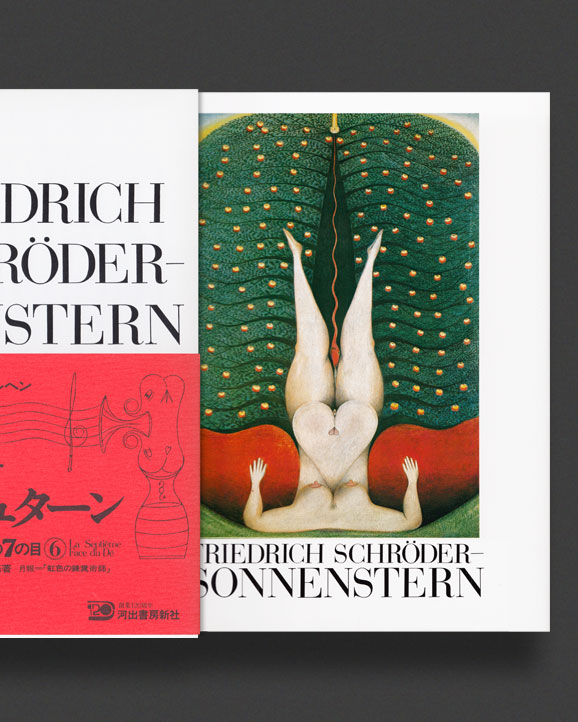
First edition of this wonderful 1976 slip-cased hardcover monograph on German artist Friedrich Schröder-Sonnenstern, considered one of the most important representatives of Art Brut or Outsider Art. Bound in green cloth and wrapped in illustrated original dust-jacket, this heavily illustrated book surveys Schröder-Sonnenstern's incredible paintings and drawings through beautiful colour and monochrome gravure reproductions, with alongside various texts, biography, bibliography and portrait of the artist. Published as volume 7 of the deluxe La Septième Face du Dé series by Kawade Shobo Shinsha in Japan in the 1970s, all later re-printed in the 2000s. All editions now out-of-print.
Friedrich Schröder-Sonnenstern was a draftsman, painter and poet-philosopher. Born in 1892 in East Prussia, one of thirteen children, all of whom apart from one other died shortly after birth. He was sent to a number of reform schools due to accusations of theft and violent behaviour and then, at the age of twenty-six, he was diagnosed with schizophrenia and committed to a sanatorium. His experiences as a child contributed to his lifelong hatred of authority. One year later he showed up in Berlin, where he occupied himself with occultism, divination and healing magnetism. He founded a sect and distributed its income in the form of bread rolls to poor children, earning him the title "Schrippenfürst of Schöneberg". He created the name Sonnenstern (English: Sun Star) for himself while working as a con-artist, posing as a Quack doctor in "natural health", calling himself Professor Dr. Eliot Gnass von Sonnenstern. This career path was cut off by the Nazis' interdiction of occult practices, and after being confined in psychiatric institutes and in a penal camp, Schröder-Sonnenstern reemerged in 1944, scavenging firewood in the bombed-out German capital. Only in his late fifties, in 1949, did he begin to draw, using coloured pencils to create allegorical grotesques stocked with a personal iconography. Although his art was rarely shown, he was championed in Surrealist and art brut circles; Jean Dubuffet and Hans Bellmer were among his admirers, and a few drawings were included in Marcel Duchamp and André Breton's 1959 "Exposition inteRnatiOnale du Surréalisme" in Paris. The demand for his pictures by collectors and gallerists rose rapidly and he resorted to employing assistants to produce his work for him. His success was short-lived when he began to paint less and less and became the victim of counterfeiting cliques by his assistants, destroying his position in the art market. He became increasingly dependent on alcohol following the death, in 1964, of his long-time companion, Martha Möller whom he called Aunt Martha. He died almost forgotten and impoverished in 1982 in Berlin.
Good-Very Good copy. General wear to protective slip-case and publisher's obi-strip. Book with light spotting to the back cover otherwise Very Good dust jacket and internally perfectly preserved, crisp and clean throughout.
1991, English
Softcover (string-bound w. dust jacket), 60 pages, 20 x 13 cm
1st Edition, Out of print title / used / very good
Published by
Shepparton Art Gallery / Victoria
$55.00 - Out of stock
Limited edition and now very scarce catalogue published to accompany the exhibition "Brown : 1970's Ceramics from the Shepparton Art Gallery Collection" curated by Joseph Pascoe and Katrina Fraser for the Shepparton Art Gallery, Victoria, in 1991. Published in an edition of 500 copies, bound with string and printed on multiple raw paper stocks in earthy brown monochrome. Features the work of Doug Alexander, Les Blakebrough, David Bradshaw, Joan Campbell, Aleks Danko, Phyl Dunn, Margaret Dodd, Ivan Englund, Noel Flood, Marea Gazzard, John Gilbert, Victor Greenaway, Joan Grounds, Sylvia Halpern, Harold Hughan, Lorraine Jenyns, John Johnson, Col Levy, Judy Lorraine, Janet Mansfield, Harry Memmott, Anne Mercer, Milton Moon, Tim Moorhead, Gwyn Hanssen Pigott, Reg Preston, Peter Rushforth, Bernard Sahm, Shigeo Shiga, Mitsuo Shoji, Derek Smith, Ian Sprague, Hiroe Swen, Stefan Szonyi, Peter Travis, Alan Watt. Each illustrated artist page includes the exhibited work(s), along with details and biography on the artist-craftsperson. Texts by Joseph Pascoe, Janet Mansfield and Katrina Fraser, full catalogue of works and footnotes. A unique, handsome and valuable resource from one of the most important collections of modern Australian ceramics.
Very Good copy.
1989, English / Japanese
Softcover, 30 pages, 28 x 22 cm
1st Edition, Out of print title / used / very good
Published by
Contemporary Sculpture Centre / Tokyo
$70.00 - Out of stock
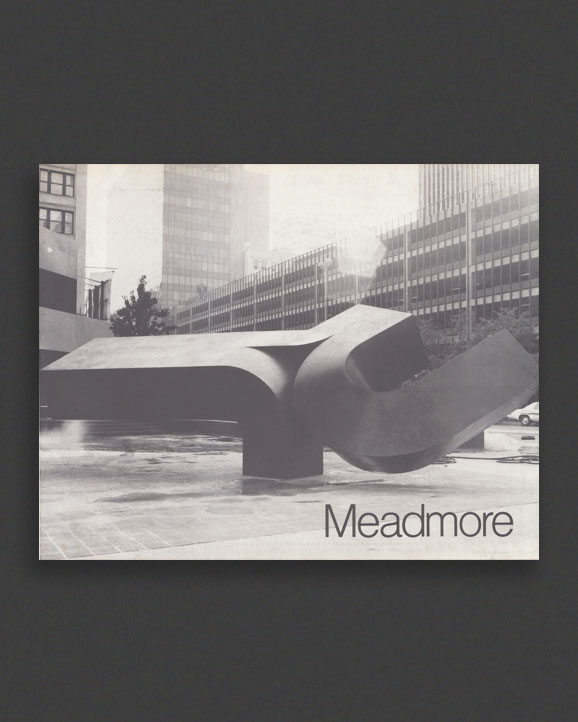
Very scarce Japanese catalogue on Australian-American sculptor Clement Meadmore, published on the occasion of the first exhibition of Meadmore's work in Japan held at the Contemporary Sculpture Centre, Tokyo, 1989. Illustrated throughout with Meadmore's own photography of his exhibited sculptures, including maquettes for larger works, alongside documentation of his major outdoor sculptures. Includes texts by Meadmore, American curator Harry Rand, and Kiichi Iino of the Contemporary Sculpture Centre, as well as a portrait, list of works and list of exhibitions. All texts in Japanese and English.
Clement Meadmore (1929 – 2005) was an Australian-American sculptor, designer and jazz enthusiast known for massive outdoor metal sculptures which combine elements of abstract expressionism and minimalism. Born Clement Lyon Meadmore in Melbourne, Australia, in 1929, Clement Meadmore studied aeronautical engineering and then industrial design at the Royal Melbourne Institute of Technology. After graduating in 1949, Meadmore designed furniture, graphics and interiors for several years and, in the 1950s, created his first welded sculptures. He had several one-man exhibits of his sculptures in Melbourne and Sydney between 1954 and 1962, where he also directed Max Hutchinson’s important Gallery A and was an active member of the jazz scene, as both an avid amateur drummer and record sleeve designer. In 1963 Meadmore moved to New York City. In the US he realised many of his largest public sculptures and later became an American citizen.
Very Good.
1970, English
Softcover, 50 pages, 27.5 x 21 cm
1st Edition, Out of print title / used / very good
Published by
Rudy Komon Gallery / Sydney
$100.00 - Out of stock
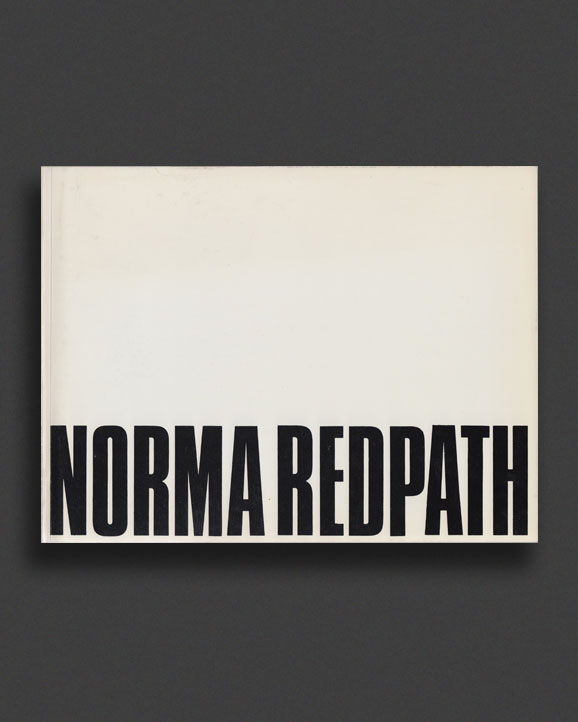
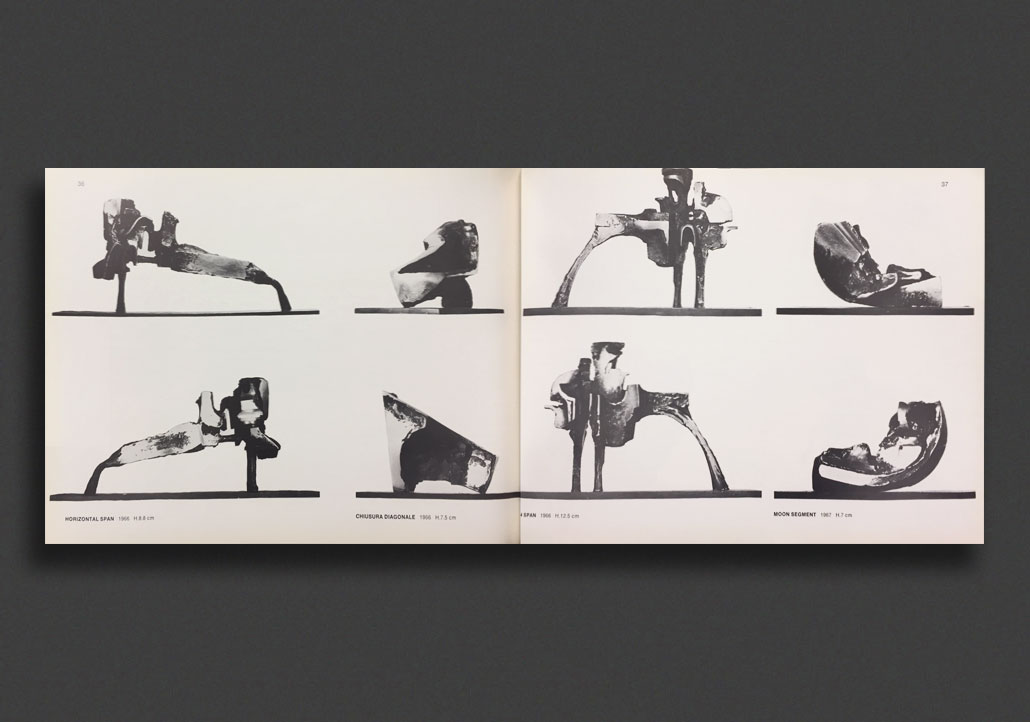
Incredible and very scarce catalogue of Australian sculptor Norma Redpath published on the occasion of an exhibition at Rudy Komon Gallery, Sydney, in 1970. "An overall study of the work of Norma Redpath and in particular the years 1960 and 1970." Profusely illustrated throughout in black and white with Redpath's sculptures and public commissions, with commentary by NGV director (1973–74) Gordon Thomson and Redpath's hand-written notes about the works throughout. Also includes a biography, exhibition and commission list.
Norma Redpath (1928 – 2013) was a prominent Australian artist. Born in Melbourne, she became a member of the Victorian Sculptors' Society (VSS) whilst still a student at RMIT. In 1953 she, along with Inge King, Julius Kane and Clifford Last, founded the 'Group of Four' and in 1961 she joined the artists grouping 'Centre Five' (among others Inge King, Julius Kane, Clifford Last, Lenton Parr, Vincas Jomantas and Teisutis Zikaras), who broke with the VSS and organised private exhibitions. During the fifties, she traveled to Europe and studied in Italy from 1956 to 1958 at the Universita per Stranieri in Perugia and she lived in Rome. Her love for Italy and Italian art would not release her. In 1958 she returned to Australia, but in 1962 she won a scholarship from the Accademia di Belle Arti di Brera in Milan, where she would later settle. In 1963, Redpath was given her first solo exhibition in Australia at Max Hutchinson’s Gallery A in Melbourne. Known as the Little Bauhaus, the gallery, under the management of artist/designer Clement Meadmore, championed non-figurative art and industrial design. The show was composed of 12 bronzetti (small scale bronzes) which she had made during her time in Milan. After the critical and financial success of the Gallery A show she was awarded several major commissions in Australia during the 1960s and 1970s, including the Treasury Fountain in Canberra. In 1970 Norma Redpath was appointed an Officer of the Order of the British Empire for services to contemporary sculpture. Redpath shared her time between Melbourne and Italy, returning permanently to Melbourne in 1985.
Very Good copy.
1980, Japanese
Hardcover (w. dust jacket in slipcase), 447 pages, 32 x 22.5 cm
1st Edition, Out of print title / used / good
Published by
Fantasia Co Ltd / Japan
$160.00 - Out of stock
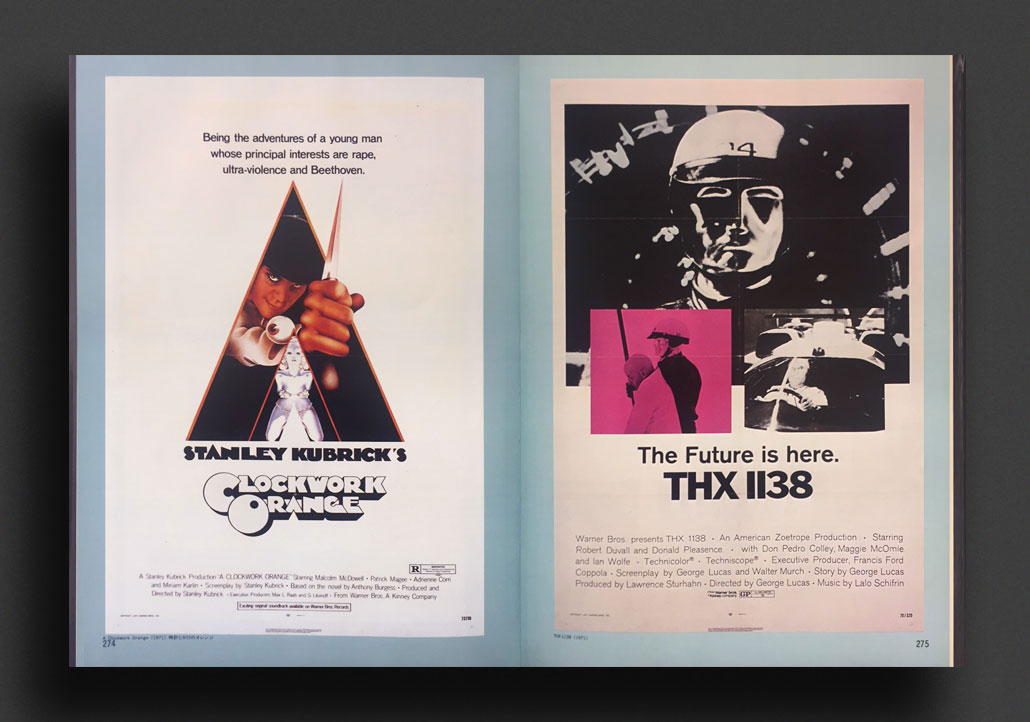
First deluxe edition of the illustrated Japanese encyclopaedic tome that explores the history of Science Fiction film, from early silent film to the modern era. Published in 1980 by special effects expert and editor of SFX Cinematic Illusion Shinji Nakako, A Pictorial History of SF Films compiles an exhaustive directory of chronological film listings from all over the world (including many unreleased Japanese sci-fi films, fantasy, horror, thriller, animation, and much beyond the usual SF category) through the decades. With comprehensive film details, credits and blurbs (in Japanese) for each film selection, illustrated with stills and each period including rich colour reproductions of the original film posters! Includes a neat, full index of the films included (in English and in Japanese), accompanied by thumbnails of Yoda, all housed in the original Hajime Sorayama illustrated dust jacket in original publishers heavy cardboard slipcase. A treasure for the SF fan.
Very Good copy, with small closed tears to jacket, preserved under mylar wrap and in VG original slipcase. Beautifully preserved copy.
1974, French
Hardcover (w. dust jacket), 168 pages, 29.6 x 19.9 cm
1st Edition, Out of print title / used / very good
Published by
Editions du Chene / Paris
$400.00 - Out of stock
Scarce first 1974 hardcover edition of Repérages, the wonderful photographic study by acclaimed French film director, Alain Renais. Repérages is a volume of Renais' photographs, taken between 1948 and 1971, of locations in London, Scotland, Paris, Nevers, Lyon, New York and Hiroshima. Some of the photographs relate to a long-cherished but unfulfilled idea for a film based on the Harry Dickson stories by Jean Ray. A very special, seldom seen photo collection for anyone interested in the work of Resnais. Introductory text by Jorge Semprun.
Very Good copy in VG dj.
1971, Japanese / English
Softcover, 96 pages, 32.5 × 25.5 cm
1st Edition, Out of print title / used / good
Published by
Interior Publishing Co. Ltd. / Tokyo
$90.00 - Out of stock
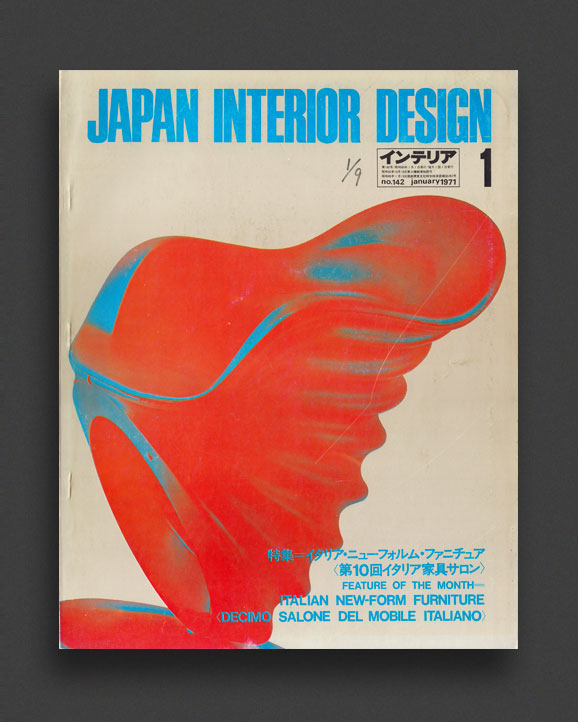
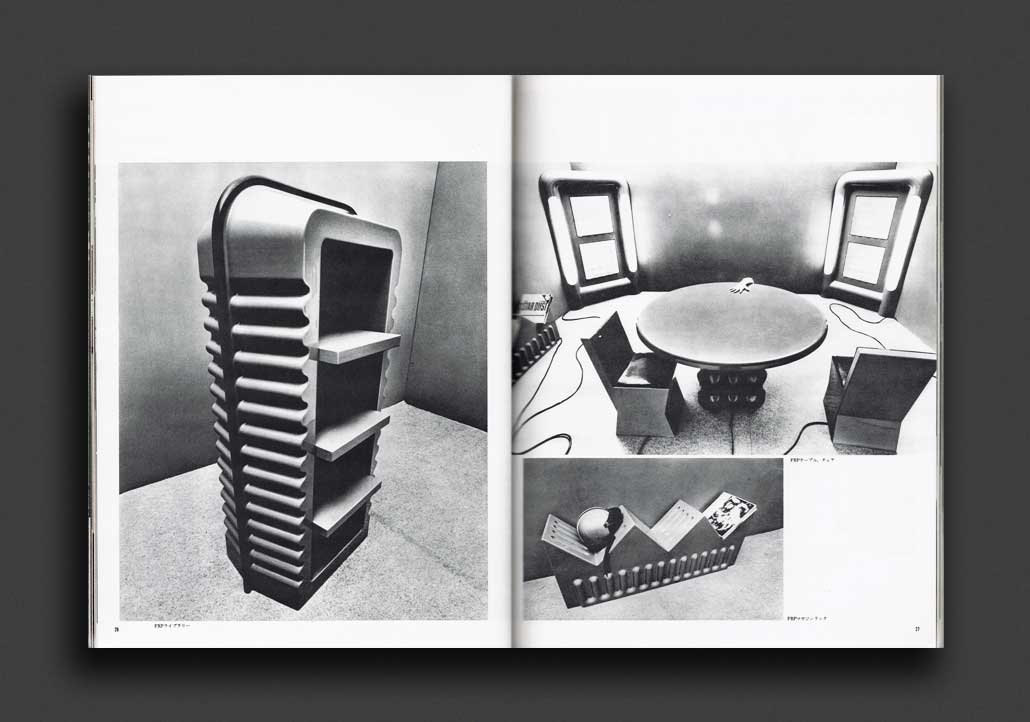
Japan's finest magazine for interior design, architecture and home furnishings, edited by Moriyama Kazuhiko. JAPAN INTERIOR DESIGN presented "a monthly comprehensive view of traditional, contemporary, and contemplated environmental designs and pure art forms both Japanese and foreign, through pictures and critical reviews. English captions and summaries of major articles are provided each issue." The in-depth analysis in which JAPAN INTERIOR DESIGN committed to covering new international furniture, textile, product, environmental, and interior design developments and major events from the period (1950s-1980s), places it soundly alongside its Italian comrade Domus. Lavishly illustrated throughout with beautiful photography in colour and b/w, with comprehensive plans, drawings and elevations bringing many innovative and long lost architectural and industrial designs into sharp focus. A wealth of archival reference material in each issue for any enthusiast of modern and space age design.
No.142, January 1971
CONTENTS :
FEATURE OF THE MONTH : ITALIAN NEW-FORM FURNITURE
Mario Bellini cover.
1969, Japanese / English
Softcover, 96 pages, 32.5 × 25.5 cm
1st Edition, Out of print title / used / good
Published by
Interior Publishing Co. Ltd. / Tokyo
$70.00 - Out of stock
Japan's finest magazine for interior design, architecture and home furnishings, edited by Moriyama Kazuhiko. JAPAN INTERIOR DESIGN presented "a monthly comprehensive view of traditional, contemporary, and contemplated environmental designs and pure art forms both Japanese and foreign, through pictures and critical reviews. English captions and summaries of major articles are provided each issue." The in-depth analysis in which JAPAN INTERIOR DESIGN committed to covering new international furniture, textile, product, environmental, and interior design developments and major events from the period (1950s-1980s), places it soundly alongside its Italian comrade Domus. Lavishly illustrated throughout with beautiful photography in colour and b/w, with comprehensive plans, drawings and elevations bringing many innovative and long lost architectural and industrial designs into sharp focus. A wealth of archival reference material in each issue for any enthusiast of modern and space age design.
no. 120 March 1969
CONTENTS :
FEATURE OF THE MONTH : New Designs in Flexible Furniture
2017, English / Portuguese
Softcover, 220 pages, 18 x 25 cm
Published by
Serralves Museum of Contemporary Art / Porto
$62.00 - Out of stock
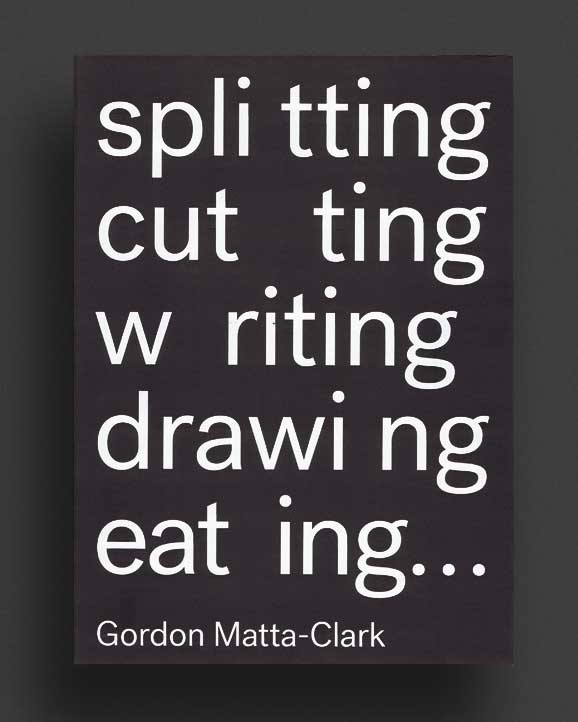
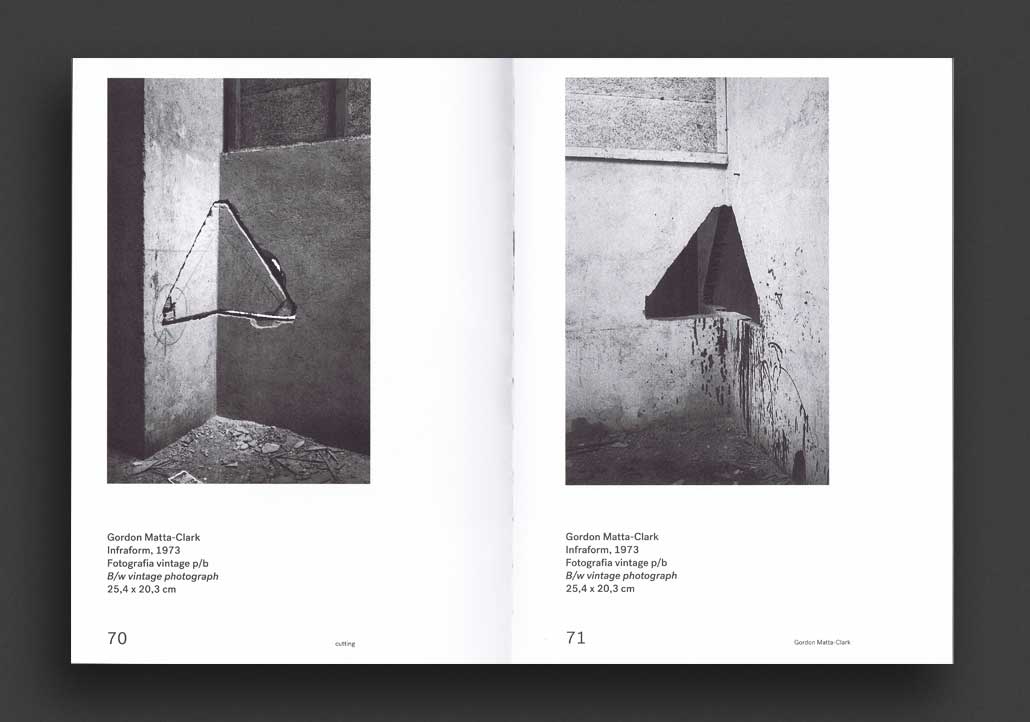
American artist Gordon Matta-Clark is perhaps best known for the site-specific artworks he made in the 1970s. His body of work includes performance and recycling pieces, space and texture works, and his “building cuts”. Matta-Clark used a number of media to document his work, such as film, video, and photography, much of which appears in this catalogue, itself published on the occasion of an eponymous exhibition at the Serralves Museum of Contemporary Art, Porto, and Culturgest, Lisbon. The attractively designed book includes numerous of the artist’s own sketches and plans for various works, plus letters and other material that together form an in-depth portrait.
2020, English / Italian
Softcover (foiled), 112 pages, 17 x 24 cm
Published by
Quodlibet / Italy
Zanotta / Milan
$44.00 - Out of stock
Hailing from Turin, the multitalented Italian architect and designer Carlo Mollino (1905–1973) became renowned in his lifetime for his many interests and complex personality. In the early 1930s he began his versatile career by designing and realising buildings and interiors primarily in the Piedmont capital and the Western Alps. This publication presents a new reading of Mollino’s life and his very personal idea of contemporary architecture in light of unpublished archival documents. The works produced by the furniture company Zanotta featured here cover a time frame of 21 years, from the designs for the Miller house (1938) up until the Fenis alpine chair (1959).
2018, English / Portuguese
Hardcover, 400 pages, 32 x 25 cm
Published by
Serralves Museum of Contemporary Art / Porto
$130.00 - Out of stock
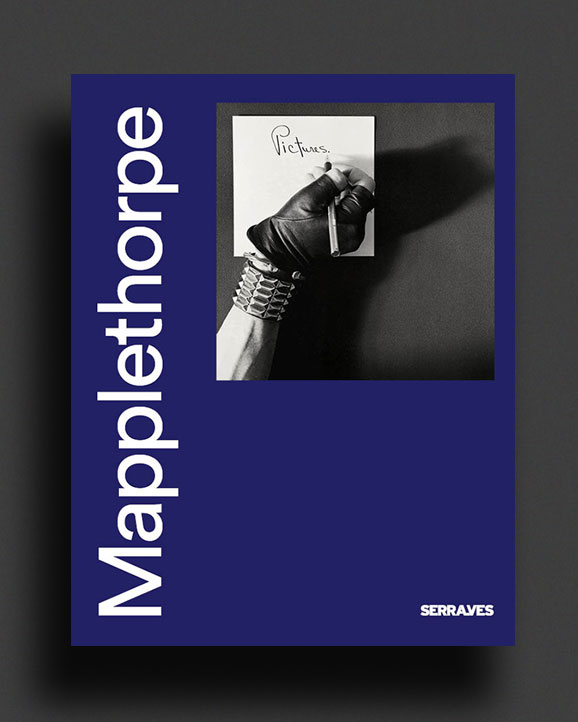
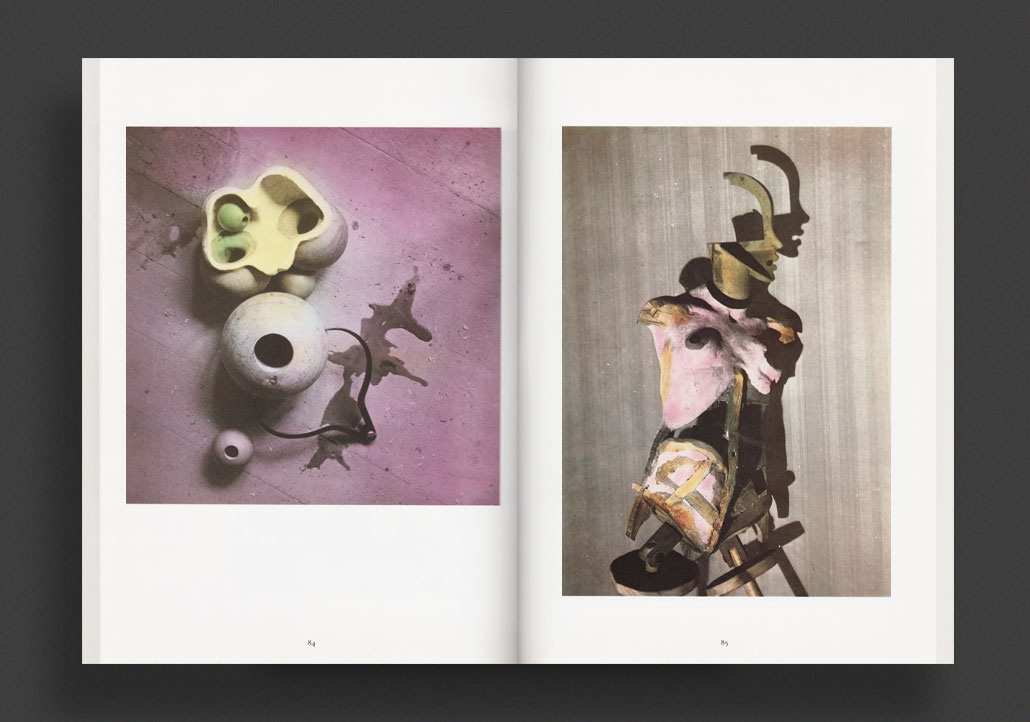
This luxurious comprehensive catalogue, lavishly illustrated, brings together works from throughout the artist’s career, from early collages and Polaroids, to the images of flowers, nudes, sexuality and portraits that made him one of the most notable photographers of the last century.
Robert Mapplethorpe (1946-1989) took his first photographs using a Polaroid camera. His first Polaroids were self-portraits and the first of a series of portraits of his close friend, the singer-artist-poet Patti Smith. These early photographic works were generally shown in groups or elaborately presented in shaped and painted frames that were as significant to the finished piece as the photograph itself. Then he acquired a large format press camera and began taking photographs of a wide circle of friends and acquaintances. These included artists, composers, socialites, pornographic film stars and members of the S & M underground. Some of these photographs were shocking for their content but exquisite in their technical mastery. During the early 1980s, Mapplethorpe’s photographs began a shift toward a phase of refinement of subject and an emphasis on classical formal beauty. During this period he concentrated on statuesque male and female nudes, delicate flower still lifes, and formal portraits of artists and celebrities.
Published on the occasion of the eponymous exhibition at the Serralves Museum of Contemporary Art, Porto, from September 20, 2018, to January 6, 2019.
Robert Mapplethorpe (1946-1989) took his first photographs using a Polaroid camera. His first Polaroids were self-portraits and the first of a series of portraits of his close friend, the singer-artist-poet Patti Smith. These early photographic works were generally shown in groups or elaborately presented in shaped and painted frames that were as significant to the finished piece as the photograph itself. Then he acquired a large format press camera and began taking photographs of a wide circle of friends and acquaintances. These included artists, composers, socialites, pornographic film stars and members of the S & M underground. Some of these photographs were shocking for their content but exquisite in their technical mastery. During the early 1980s, Mapplethorpe's photographs began a shift toward a phase of refinement of subject and an emphasis on classical formal beauty. During this period he concentrated on statuesque male and female nudes, delicate flower still lifes, and formal portraits of artists and celebrities.
1988, Japanese
Softcover (staple-bound), 16 pages, 22 x 22 cm
1st Edition, Out of print title / used / very good
Published by
Seibu Museum of Art / Tokyo
$160.00 - Out of stock
Extremely rare Japanese Richter catalogue published on the occasion of the solo exhibition at The Contemporary Art Gallery, Tokyo, Japan, in 1988. This handsome, slim publication catalogues and reproduces a selection of new works exhibited for the first time in Tokyo — a selection of his famed abstractions and concluding with a landscape, all dated 1987 and reproduced in vivid colour. Also includes a biography, portrait and exhibition history. Very seldom seen Richter catalogue!
Very Good copy.
One of the most important painters of the late twentieth century, Gerhard Richter, having left East Germany in 1961, where he had already established a reputation as a Realist painter, went on to attend the Dusseldorf Academy, striking out on a radical new path and changing the history of painting as he looked to photography for a way to release painting from the political and symbolic burdens of Socialist Realism and Abstract Expressionism.
1983, Japanese
Hardcover (clothbound w. dustjacket), 152 pages, 20.5 x 30 cm
1st Edition, Out of print title / used / very good
Published by
Orion Press / Tokyo
$160.00 - Out of stock
Rare, exquisitely designed and produced book dedicated entirely to the photography of the German artist Hans Bellmer (13 March 1902 – 23 February 1975), best known for the life-sized pubescent female dolls he produced in the mid-1930s. "Bellmer was born in the city of Kattowitz, then part of the German Empire (now Katowice, Poland). Up until 1926, he'd been working as a draftsman for his own advertising company. He initiated his doll project to oppose the fascism of the Nazi Party by declaring that he would make no work that would support the new German state. Represented by mutated forms and unconventional poses, his dolls were directed specifically at the cult of the perfect body then prominent in Germany. Bellmer was influenced in his choice of art form by reading the published letters of Oskar Kokoschka (Der Fetisch, 1925)."
Produced in French by Editions Filipacchi, Centre Georges Pompidou, and Musee National D'art Moderne in Paris in 1983, this very scarce Japanese printing (produced and printed in Japan that same year) features a different cover, with translations to the Japanese language of the introductory essay and texts. Densely illustrated with amazing and beautifully printed colour and black and white photography of Bellmer's dolls, many studies of the female nude, and photography of objects and sculptural assemblages, this book is a wonderful volume capturing an important Surrealist visionary of our time through his stunning photography.
Very good copy in dust-jacket, age tanning to edges/cover,
wear/small chipping to jacket corners.
2020, English
Softcover, 192 pages, 13.7 x 20.3 cm
Published by
Wakefield Press / Cambridge
$29.00 - Out of stock
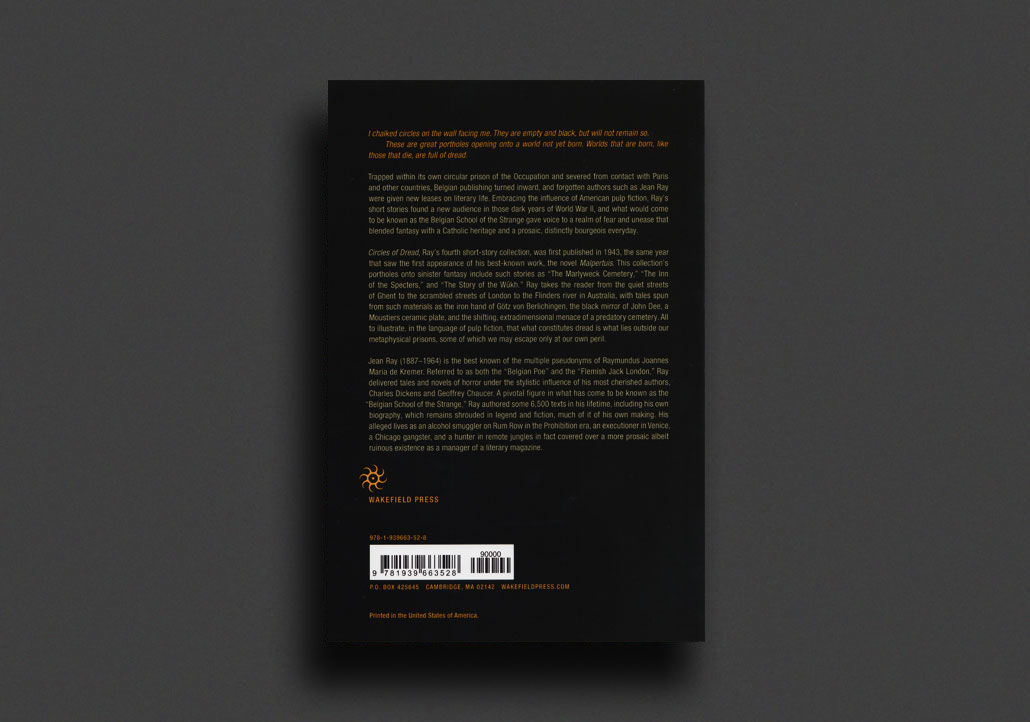
"I chalked circles on the wall facing me. They are empty and black, but will not remain so.
They are great portholes opening onto a world not yet born. Worlds that are born, like those that die, are full of dread."
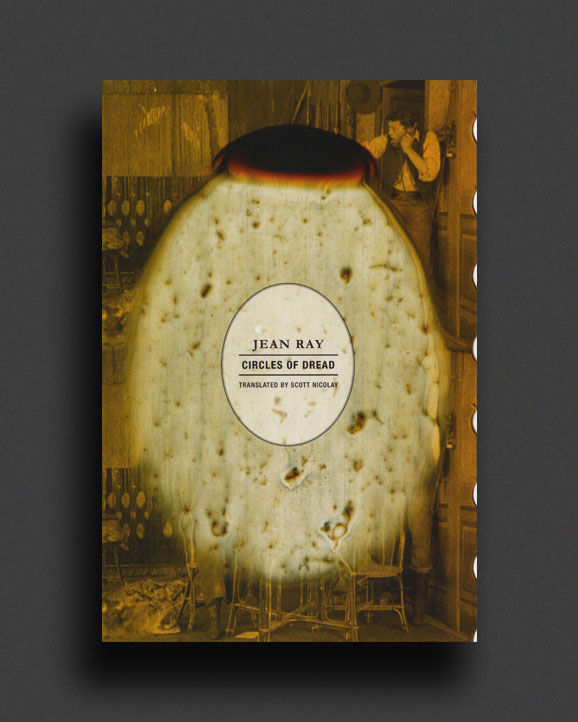
Trapped within its own circular prison of the Occupation and severed from contact with Paris and other countries, Belgian publishing turned inward, and forgotten authors such as Jean Ray were given new leases on literary life. Embracing the influence of American pulp fiction, Ray’s short stories found a new audience in those dark years of World War II, and what would come to be known as the Belgian School of the Strange gave voice to a realm of fear and unease that blended fantasy with a Catholic heritage and a prosaic, distinctly bourgeois everyday.
Circles of Dread, Ray’s fourth short-story collection, was first published in 1943, the same year that saw the first appearance of his best-known work, the novel Malpertuis. This collection’s portholes onto sinister fantasy include such stories as “The Marlyweck Cemetery,” “The Inn of the Specters,” and “The Story of the Wûkh.” Ray takes the reader from the quiet streets of Ghent to the scrambled streets of London to the Flinders river in Australia, with tales spun from such materials as the iron hand of Götz von Berlichingen, the black mirror of John Dee, a Moustiers ceramic plate, and the shifting, extradimensional menace of a predatory cemetery. All to illustrate, in the language of pulp fiction, that what constitutes dread is what lies outside our metaphysical prisons, some of which we may escape only at our own peril.
Jean Ray (1887–1964) is the best known of the multiple pseudonyms of Raymundus Joannes Maria de Kremer. Alternately referred to as the “Belgian Poe” and the “Flemish Jack London,” Ray delivered tales and novels of horror under the stylistic influence of his most cherished authors, Charles Dickens and Geoffrey Chaucer. A pivotal figure in the “Belgian School of the Strange,” Ray authored some 6,500 texts in his lifetime, not including his own biography, which remains shrouded in legend and fiction, much of it his own making. His alleged lives as an alcohol smuggler on Rum Row in the prohibition era, an executioner in Venice, a Chicago gangster, and hunter in remote jungles in fact covered over a more prosaic, albeit ruinous, existence as a manager of a literary magazine that led to a prison sentence, during which he wrote some of his most memorable tales of fantastical fear.
Translated, with an afterword, by Scott Nicolay
2020, English
Softcover, 144 pages, 13.6 x 20.2 cm
Published by
Wakefield Press / Cambridge
$32.00 - Out of stock
After the commercial failure of his 1931 collection Cruise of Shadows, Jean Ray spent the next decade writing and publishing under other names in the stifling atmosphere of Ghent. Only in the midst of the darkest years of the Nazi Occupation of Belgium would he suddenly publish a spate of books under his earlier nom de plume, all appearing in rapid sequence and which would become his best-known and admired works. The first of these volumes, in essence picking up from where he had left off a decade ago and signaling the beginning of his reputation as the Belgian master of the weird tale, was the 1942 publication of The Great Nocturnal.
The collection, as its subtitle indicates, consists of tales of fear and dread—a dread evoked not by the standard tropes of horror (though rats, centipedes, and darkness lie waiting in these pages), but in what had now evolved into Ray’s personal brand of fear, drawn from a specifically Belgian notion of the fantastic that lies alongside the banality of everyday life. An aging haberdasher’s monotonous existence opens up to a spiritual fourth dimension (and serial murder); an inebriated young man in a tavern draws cryptic symbols and mutters statements that elicit an inexplicable terror among some sailors and, as he sobers up, himself; three students drink Finnish Kümmel and keep watch over a deceased woman’s apartment, awaiting a horrific transformation. Yet these tales are laced with a mordant humor that bears as much allegiance to Ambrose Bierce as Edgar Allan Poe, and toys as much with the reader’s expectations as they do with their characters.
Translated, with an afterword, by Scott Nicolay
Jean Ray (1887–1964) is the best known of the multiple pseudonyms of Raymundus Joannes Maria de Kremer. Alternately referred to as the “Belgian Poe” and the “Flemish Jack London,” Ray delivered tales and novels of horror under the stylistic influence of his most cherished authors, Charles Dickens and Geoffrey Chaucer. A pivotal figure in the Belgian School of the Strange, Ray authored some 6,500 texts in his lifetime, not including his own biography, which remains shrouded in legend and fiction, much of it his own making. His alleged lives as an alcohol smuggler on Rum Row in the Prohibition era, an executioner in Venice, a Chicago gangster, and a hunter in remote jungles in fact covered over a more prosaic albeit ruinous existence as a manager of a literary magazine.
2012, English / Spanish
Hardcover, 160 pages, 24 x 28 cm
Published by
RM / Barcelona
$80.00 - Out of stock
Remedios Varo: The Mexican Years offers a definitive survey of the life and work of a singularly appealing and mysterious Surrealist painter. Born and raised in Spain, Remedios Varo received her earliest training in Madrid before fleeing the Spanish Civil War in 1937 to join Surrealist circles in Paris. The outbreak of World War II forced her to take refuge in Mexico, where she remained until her untimely death in 1963, and where she created her most enduring work. Known as one of the three “brujas” (witches) active in the Mexico City art milieu, Varo shared an interest in esotericism with fellow painter Leonora Carrington and a range of interests in science, philosophy and the literature of German Romanticism with the photographer Kati Horna. For some ten years, from the mid–1950s until her death in 1963, Varo devoted herself to creating an extraordinary dreamlike oeuvre, on the threshold between mysticism and modernity. Her beautifully crafted images of medieval interiors, occult workshops and androgynous figures engaged in alchemical pursuits evoke the eerie allegories of Hieronymus Bosch, esoteric engravings and the charm and lure of fairytales. This catalogue includes a complete illustrated chronology with never before published images and describes Varo’s role in the Mexican Surrealist movement and her relations with Luis Buñuel, Octavio Paz, Benjamin Péret, Alice Rahon, Wolfgang Paalen and many others.
Texts by introductory writer Masayo Nonaka, curator of the exhibition "Women Surrealists in Mexico" and author of numerous books on Mexican surrealism.
Remedios Varo (1908–1963) fled the Spanish Civil War and then World War II to settle in Mexico where she helped establish a Mexican Surrealist movement and painted visions that combined modernism with mysticism. She was married to the leading French Surrealist Benjamin Péret.
2014, English
Hardcover, 160 pages, 29 x 24 cm
Published by
Ridinghouse / London
$66.00 - Out of stock
This is the first comprehensive monograph on the late American artist, Bill Lynch (1960–2013).
Painting primarily onto salvaged plywood sheets, leaving areas raw and exposed, Lynch depicted landscapes and wildlife, cultural artefacts and mythical symbols with instinctive and direct brushstrokes and a psychological connection to his subject matter.
The artist’s vested interest in Chinese painting is apparent in his confident gestures, combining a dry lambent brush and thick pasty paint.
Making use of irregularities such as the knots and grain in the wooden support, Lynch merged the material of the surfaces with images creating an ambiguity between the physicality of the ground and his luscious pictorial visions.
Bill Lynch was born in Albuquerque, New Mexico. He studied art at Cooper Union, New York where he lived and worked before moving to Mill Valley, California and then Raleigh, North Carolina.
In 2014 a retrospective of Lynch’s work, curated by Verne Dawson, took place at White Columns, New York. Reviewing that exhibition in the New York Times, Roberta Smith wrote, ‘Genius lands where genius will, and I’m pretty sure some alighted on Bill Lynch.’
This book includes an essay by Irish critic, curator and professor Caoimhín Mac Giolla Léith, a conversation between Lynch’s friend and artist Verne Dawson with curator and White Columns Director, Matthew Higgs along with personal writings by the Bill Lynch himself.
2020, English
Softcover, 188 pages, 28.5 x 23 cm
Published by
Walther König / Köln
Hauser & Wirth / Zurich
$99.00 - Out of stock
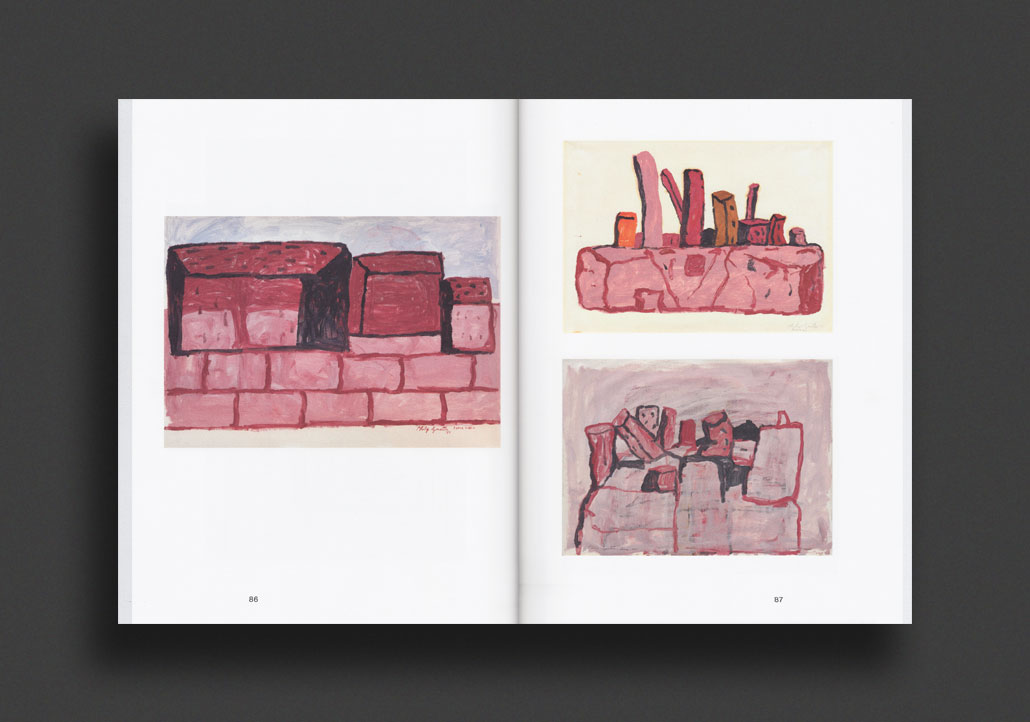
“I see now how it feels to do something new and original,” Philip Guston wrote to his friend the poet Bill Berkson in October 1970. His large paintings of hooded figures were on view for the first time, and the art world was shocked. Why would an artist celebrated for his elegant abstractions risk his career?
The overwhelmingly negative reviews took their toll, following Guston to Rome, where he and his wife had taken refuge. In ‘Resilience: Philip Guston in 1971′, published in conjunction with an exhibition at Hauser & Wirth Los Angeles, the artist’s daughter, Musa Mayer, offers an intimate view of her father’s state of mind.
His letters to Berkson, biographer Dore Ashton, and others, as well as studio talks with students, his wife’s diaries, archival images, and never-before-published film stills of Guston and the poet Clark Coolidge—all reveal the artist’s inner process, as do the extensive plate sections of the extraordinary paintings and drawings created during that crucial year.
2017, English
Hardcover, 122 pages, 23 x 29 cm
Published by
Hauser & Wirth / Zurich
$85.00 - Out of stock
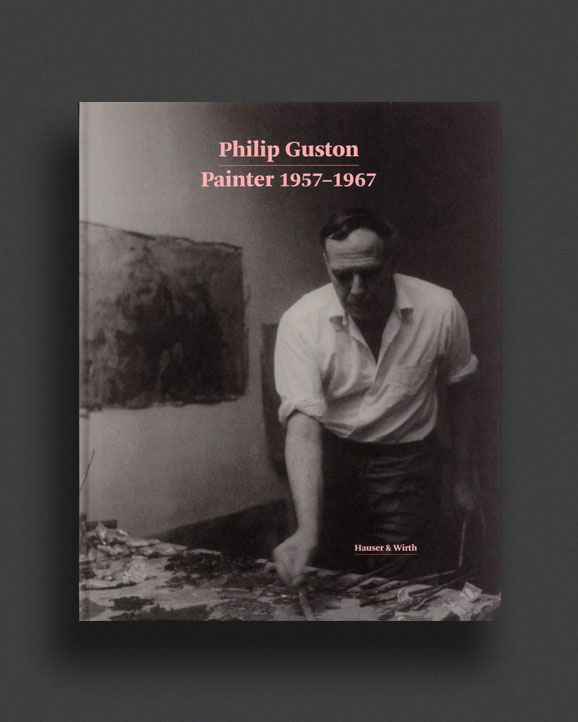
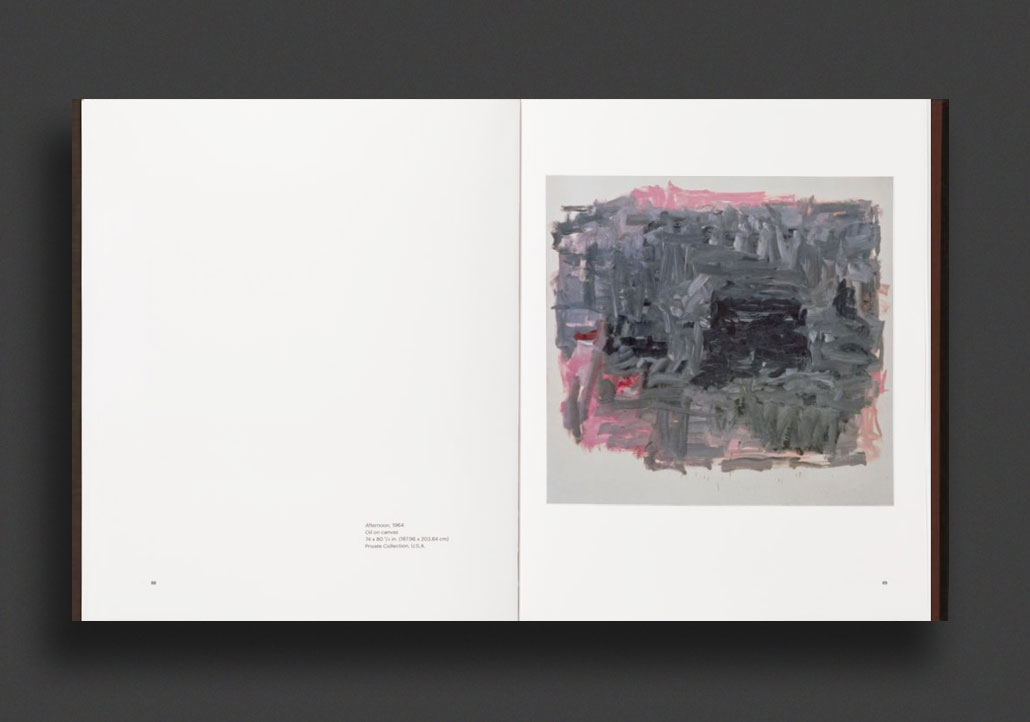
Although much attention has been paid in recent years to Philip Guston’s figurative painting of the late 1960s and ’70s, this new book focuses on the decade preceding that period, published to accompany Hauser & Wirth’s first presentation of the work of Philip Guston. Part of the New York School, which included many abstract expressionists, Guston’s influence on his contemporaries and the following generation of painters is considered quite significant. This book focuses specifically on the period beginning in the late 1950s and spanning nearly a decade until the artist’s return to figuration in the late 1960s, featuring nearly 90 paintings and drawings from the artist’s abstract expressionist period, many of which have not been shown in public for decades, presenting a major survey of a seminal phase in the artist’s oeuvre.
This publication features an expanded chronology on the artist, which includes archival material, historic installation views, conversations with Guston and other selected texts (by the artist himself) from the exhibition’s time period. The book concludes with a section of 50 of Guston’s ‘pure’ drawings completed in the late 1960s.
Organised and edited by Paul Schimmel.