World Food Books' programme is largely produced on Kulin Nation land. We acknowledge the Wurundjeri people of the Kulin Nation as the first and continuing custodians of this land, and pay respect to their Elders past, present, and emerging.
World Food Books is an arts and special interests bookshop in Naarm / Melbourne. Founded in 2010, World Food Books is devoted to the presentation of a rotating, hand-selection of international art, design, literary and counterculture publications with an emphasis on the anti-traditional, the experimental, the avant-garde, the heretic, the marginal.
Presenting new titles alongside rare and out-of-print books, catalogues and journals spanning the fields of modern and contemporary art, design, photography, illustration, film, literature, poetry, cultural theory, philosophy, sexuality, popular and underground culture in its many radical forms, World Food Books wishes to encourage adventurous, thoughtful and open-minded reading, looking, writing, and exchange of publishing and ideas, both current and historical.
As well as our bookshop, located in Melbourne's historical Nicholas Building, all of our inventory is available internationally via our online mail-order service.
World Food Books semi-regularly co-ordinates "Occasions", a programme of exhibits and events at the bookshop and in partnership with other hosts (such as museums and art galleries) that develop out of the activities, relationships and content of the bookshop itself.
World Food Books
The Nicholas Building
37 Swanston Street
Room 5, Level 6
Melbourne 3000
Australia
SHOP HOURS:
Thu–Fri 12–6, Sat 12–5
WEB-SHOP OPEN 24/7
World Food Books
Postal Address:
PO Box 435
Flinders Lane
Victoria 8009
Australia
Art
Theory / Essay
Architecture / Interior
Graphic Design / Typography
Photography
Fashion
Eros
LGBTQ+
Fiction / Poetry
Weird / Speculative / Science Fiction / Horror
Transgressive / Visceral / Abject
Symbolism / Decadence / Fin de siècle
Film / Video
Painting
Sculpture / Installation
Performance / Dance / Theater
Drawing
Sound / Music
Curatorial
Group Shows / Collections
Periodicals
Out-of-print / Rare
Posters / Ephemera / Discs
Signed Books
World Food Books Gift Voucher
World Food Book Bag
Australian Art
Australian Fiction
Australian Science Fiction / Speculative Fiction
Australian Poetry
Australian Photography
Japanese Photography
Conceptual Art
Minimal Art
Dada
'Pataphysics / Oulipo
Fluxus
Concrete Poetry
Pop Art
Surrealism
Arte Povera
Arte Informale / Haute Pâte / Tachism
Nouveau Réalisme / Zero / Kinetic
Situationism / Lettrism
Collage / Mail Art / Xerox Art
Art Brut / Folk / Visionary / Fantastic
Illustration / Graphic Art / Bandes Dessinées
Furniture
Italian Radical Design / Postmodernism
Textiles
Ceramics / Glass
Counterculture
Protest / Revolt
Philosophy
Psychoanalysis
Anthropology
Anarchism
Socialism / Anarchism / Communism / Capitalism
Literary Theory / Semiotics / Language
Feminism / Women's Studies
Gender Studies / Sexuality
Anthropology
Fetishism / BDSM
Drugs / Psychedelia
Crime / Violence
Animal Rights / Veganism
Occult / Esoterica
Ecology / Earth / Alternative Living
Whole Earth / Crafts
All prices in AUD (Australian dollars)
Pick-Ups
Pick-up orders can be collected in our bookshop during opening hours after order date. Please collect any Pick-up orders within 2 weeks of ordering as we have limited storage space. Orders will be released back into stock if not collected within this time. No refunds can be made for pick-ups left un-collected. If you cannot make it in to the bookshop in this time-frame, please choose postage option.
Return Policy
All sales are final. We do accept returns (for refund or exchange) for items received in error. All our orders are packed with special care using heavy-duty padding and cardboard book-mailers or bubble mailers (for smaller books), using reinforcement where required. We cannot take responsibility for any lost, stolen or damaged parcels.
Insurance
Should you wish to insure your package, please email us directly after placing your order and we can organise this at a small extra expense. Although all standard/express tracked packages are very safe and dependable, we cannot take responsibility for any lost, stolen or damaged parcels. We recommend insurance on valuable orders.
Interested in selling your old books, catalogues, journals, magazines, comics, fanzines, ephemera? We are always looking for interesting, unusual and out-of-print books to buy. We only buy books in our fields of interest and specialty, and that we feel we can resell.
We base these prices on desirability, market value, in-print prices, condition and our current stock levels. We offer cash, store credit, and can take stock on consignment. All
about 25% of the price we expect to get when we sell them, or 30% in store credit. We base these prices on desirability, market value, in-print prices, condition and our current stock levels.
Sell your books any day of the week. You can drop them off and return later. If you have a lot of books, we can visit your Sydney home.
We buy books that we feel we can resell. We offer about 25 % of the price we expect to get when we sell them, or 30% in store credit. We base these prices on desirability, market value, in-print prices, condition and our current stock levels.
Philadelphia Wireman
03 August - 01 September, 2018
World Food Books is proud to announce our next Occasion, the first presentation of sculptures by Philadelphia Wireman in Australia.
The Philadelphia Wireman sculptures were found abandoned in an alley off Philadelphia’s South Street on trash night in 1982. Their discovery in a rapidly-changing neighbourhood undergoing extensive renovation, compounded with the failure of all attempts to locate the artist, suggests that the works may have been discarded after the maker’s death. Dubbed the "Philadelphia Wireman" during the first exhibition of this work, in 1985, the maker’s name, age, ethnicity, and even gender remain uncertain. The entire collection totals approximately 1200 pieces, all intricately bound together with tightly-wound heavy-gauge wire (along with a few small, abstract marker drawings, reminiscent both of Mark Tobey and J.B. Murry). The dense construction of the work, despite a modest range of scale and materials, is singularly obsessive and disciplined in design: a wire armature or exoskeleton firmly binds a bricolage of found objects including plastic, glass, food packaging, umbrella parts, tape, rubber, batteries, pens, leather, reflectors, nuts and bolts, nails, foil, coins, toys, watches, eyeglasses, tools, and jewellery.
Heavy with associations—anthropomorphic, zoomorphic, and socio-cultural responses to wrapped detritus—the totemic sculptures by Philadelphia Wireman have been discussed in the context of work created to fulfil the shamanistic needs of alternative religions in American culture. Curators, collectors, and critics have variously compared certain pieces to sculpture from Classical antiquity, Native American medicine bundles, African-American memory jugs, and African fetish objects. Reflecting the artist’s prolific and incredibly focused scavenging impulse, and despite—or perhaps enhanced by—their anonymity, these enigmatic objects function as urban artefacts and arbiters of power, though their origin and purpose is unknown. Philadelphia Wireman, whatever their identity, possessed an astonishing ability to isolate and communicate the concepts of power and energy through the selection and transformation of ordinary materials. Over the course of the past two decades, this collection has come to be regarded as an important discovery in the field of self-taught art and vernacular art.
Presented in collaboration with Fleisher-Ollman Gallery, Philadelphia, and Robert Heald, Wellington.
Susan Te Kahurangi King
02 February - 10 March, 2018
Susan Te Kahurangi King (24 February 1951 - ) has been a confident and prolific artist since she was a young child, drawing with readily available materials - pencils, ballpoint pens and felt-tip markers, on whatever paper is at hand. Between the ages of four and six Susan slowly ceased verbal communication. Her grandparents William and Myrtle Murphy had developed a special bond with Susan so they took on caring responsibilities for extended periods. Myrtle began informally archiving her work, carefully collecting and storing the drawings and compiling scrapbooks. No drawing was insignificant; every scrap of paper was kept. The King family are now the custodians of a vast collection containing over 7000 individual works, from tiny scraps of paper through to 5 meter long rolls.
The scrapbooks and diaries reveal Myrtle to be a woman of great patience and compassion, seeking to understand a child who was not always behaving as expected. She encouraged Susan to be observant, to explore her environment and absorb all the sights and sounds. Myrtle would show Susan’s drawings to friends and people in her community that she had dealings with, such as shopkeepers and postal workers, but this was not simply a case of a grandmother’s bias. She recognised that Susan had developed a sophisticated and unique visual language and sincerely believed that her art deserved serious attention.
This was an unorthodox attitude for the time. To provide some context, Jean Dubuffet coined the term Art Brut in 1945 to describe work created by self-taught artists – specifically residents of psychiatric institutions and those he considered to be visionaries or eccentrics. In 1972 Roger Cardinal extended this concept by adopting the term Outsider Art to describe work made by non-academically trained artists operating outside of mainstream art networks through choice or circumstance. Susan was born in Te Aroha, New Zealand in 1951, far from the artistic hubs of Paris and London that Dubuffet and Cardinal operated in. That Myrtle fêted Susan as a self-taught artist who deserved to be taken seriously shows how progressive her attitudes were.
Susan’s parents Doug and Dawn were also progressive. Over the years they had consulted numerous health practitioners about Susan’s condition, as the medical establishment could not provide an explanation as to why she had lapsed into silence. Dawn educated herself in the field of homeopathy and went on to treat all twelve of her children using these principles – basing prescriptions on her observations of their physical, mental and emotional state.
Doug was a linguist with an interest in philosophy who devoted what little spare time he had to studying Maori language and culture. To some extent their willingness to explore the fringes of the mainstream made them outsiders too but it was their commitment to living with integrity and their respect for individuality that ensured Susan’s creativity was always encouraged.
Even though Susan’s family supported her artistic pursuits, some staff in schools and hospitals saw it as an impediment to her assimilation into the community and discouraged it in a variety of ways. Her family was not always aware of this and therefore did not fully understand why Susan stopped drawing in the early 1990s. However, rather than dwell on the challenges that Susan faced in pursuit of her artistic practice, they prefer to highlight her achievements. In 2008 Susan began drawing again in earnest, after an almost 20 year interruption, and her work is now shown in galleries around the world.
Susan grew up without television and has been heavily influenced by the comics she read as a child. She is absolutely fearless in the appropriation of recognizable characters, such as Donald Duck and Mickey Mouse, in her work. She twists their limbs, contorts their faces, compresses them together, blends them into complex patterned backgrounds - always imbuing them with an incredible energy. Although Susan often used pop culture characters in her work they are not naive or childlike. These are drawings by a brilliant self-taught artist who has been creating exceptional work for decades without an audience in mind.
Mladen Stilinović
"Various Works 1986 - 1999"
02 February 16 - September 10, 2016
Various works 1986 - 1999, from two houses, from the collections of John Nixon, Sue Cramer, Kerrie Poliness, Peter Haffenden and Phoebe Haffenden.
Including: Geometry of Cakes (various shelves), 1993; Poor People’s Law (black and white plate), 1993; White Absence (glasses, ruler, set square, silver spoon, silver ladel with skin photograph and wooden cubes), 1990-1996; Exploitation of the Dead (grey and red star painting, wooden painting, black spoon with red table, red plate), 1984-1990; Money and Zeros (zero tie, paintings made for friends in Australia (Sue, John, Kerrie), numbers painting), 1991-1992; Words - Slogans (various t-shirts) - “they talk about the death of art...help! someone is trying to kill me”, “my sweet little lamb”, “work is a disease - Karl Marx”; Various artist books, catalogues, monographs, videos; Poster from exhibition Insulting Anarchy; "Circular" Croatian - Australian edition; Artist book by Vlado Martek (Dostoyevsky); more.
Thanks to Mladen Stilinović and Branka Stipančić.
Jonathan Walker
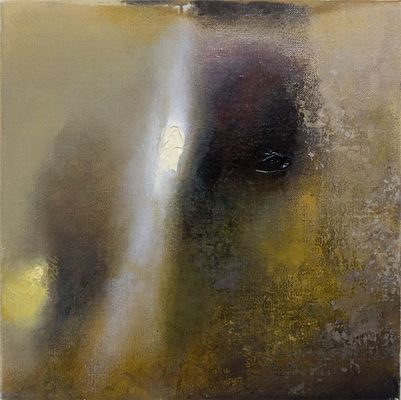
Always Will Need To Wear Winter Shirt Blue + Ochre Small Check Pattern
21 August - 21 September, 2015
Untitled
I am not a great reader of poetry but I always return to the work of Melbourne poet, Vincent Buckley (1925- 1988). Perhaps I find his most tantalising piece to be not a finished poem but a fragment left on a scrap of paper discovered on his desk after the poet’s death.
The poetry gathers like oil
In the word-core, and spreads
It has its music meet,
Its music is in movement.
This fragment is more the shell left behind from a volatile thought than a finished poem. I find the last two lines honest but awkward whereas the first two lines work like an arrow. Most likely he could not find a resolution so it was left. Still, in its present form, it remains an eloquent testimony to the ultimate failure of a medium to express mobile thought and sensation, in Buckley’s case, through verbal language. It’s an important matter because this is something all artists have to deal with regardless of the medium.
I have never written a poem, however, I am forever copying fragments from books on paper scraps in a vain effort to fix certain notions in my head. At first, they function as bookmarks that are sometimes returned to when I open the book. But before long, as they accumulate, they fall out littering the table interspersed with A4 photocopies, bills, books and medications.
To return to Buckley’s fragment, the first two lines very much evoke how I paint nowadays. As you age, detail diminishes and patches of light become more luminous and float. I feel the most honest way of dealing with this is by smearing the oil paint on the canvas with the fingers and working close-up, blind. Only if the patches coalesce into an approaching image can the work gain a life.
-
Jonathan Walker was born in Melbourne, Australia and brought up on a dairy farm in Gippsland. In the 1970’s he studied painting at RMIT and won the Harold Wright Scholarship to the British Museum, London. During the 1980’s he exhibited at Pinacotheca Gallery, Richmond and had work shown at the NGV and Heidi City Art Gallery. Over the same period he designed the cover for the “Epigenesi” LP by Giancarlo Toniutti, Italy and conducted a mail exchange work with Achim Wollscheid, Germany. The work with artists through the post resulted in an article published in the bicentenary issue of Art and Australia 1988. He showed in artist run spaces such as WestSpace in the 90’s and 2000’s, and until 2012, taught painting at Victoria University, which is where we (Colleen Ahern and Lisa Radford) as organisers of the exhibition, among many others, had the privilege of being his student.
Walker’s knowledge was imparted to students through the careful selection of music, literature, and artists found in books that he himself had ordered for the library. Walker’s strategy was the generosity of sharing his vast knowledge with references specific to each student and their context.
Walker’s paintings share a similar focus and intimacy.
This exhibition presents a small selection of recent paintings alongside a publication that includes Walker’s writing. Observational and analytical, Walker’s work is a type of material notation — the time of day, colour and how it is blended, the both specific and fleeting location of a reflection on lino or the question of whether a chair leg should be included in a painting.
Please join us on Friday August 21 between 6-8pm to celebrate the opening of the exhibition.
Curated by Colleen Ahern and Lisa Radford.
B. Wurtz
Curated by Nic Tammens
March 26 - April 4, 2015
B.Wurtz works from a basement studio in his home on Manhattan’s Lower East Side.
This local fact is attested to by the plastic shopping bags and newsprint circulars that appear in his work. As formal objects, they don’t make loud claims about their origins but nonetheless transmit street addresses and places of business from the bottom of this long thin island. Like plenty of artists, Wurtz is affected by what is local and what is consumed. His work is underpinned by this ethic. It often speaks from a neighborhood or reads like the contents of a hamper:
“BLACK PLUMS $1.29 lb.”
“Food Bazaar”
“USDA Whole Pork Shoulder Picnic 99c lb.”
“RITE AID Pharmacy, with us it’s personal.”
“H. Brickman & Sons.”
“Sweet Yams 59c lb."
Most of the work in this exhibition was made while the artist was in residence at Dieu Donne, a workshop dedicated to paper craft in Midtown. Here Wurtz fabricated assemblages with paper and objects that are relatively lightweight, with the intention that they would be easily transportable to Australia. This consideration isn’t absolute in Wurtz’s work, but was prescriptive for making the current exhibition light and cheap. Packed in two boxes, these works were sent from a USPS post office on the Lower East Side and delivered to North Melbourne by Australia Post.
Wurtz appears courtesy of Metro Pictures, New York.
Thanks to Rob Halverson, Joshua Petherick, Sari de Mallory, Matt Hinkley, Helen Johnson, Fayen d'Evie, Ask Kilmartin, Lisa Radon, Ellena Savage, Yale Union, and "Elizabeth".
John Nixon
"Archive"
December 15 - January 20, 2014
The presentation of John Nixon's archive offered a rare showcase of this extensive collection of the artist's own publications, catalogues, posters, ephemera, editions and more, from the mid 1980s onwards, alongside a selection of his artworks.
Organized by John Nixon, Joshua Petherick and Matt Hinkley.
<a href=http://wfb.public-office.info/artist/john-nixon>All titles by John Nixon
"Habitat"
at Minerva, Sydney (organised by Joshua Petherick and Matt Hinkley)
November 15 - December 20, 2014
Lupo Borgonovo, Janet Burchill & Jennifer McCamley,
Lewis Fidock, HR Giger, Piero Gilardi, Veit Laurent Kurz,
Cinzia Ruggeri, Michael E. Smith, Lucie Stahl, Daniel Weil, Wols
Press Release:
“...It contained seven objects. The slender fluted bone, surely formed for flight, surely from the wing of some large bird. Three archaic circuitboards, faced with mazes of gold. A smooth white sphere of baked clay. An age-blackened fragment of lace. A fingerlength segment of what she assumed was bone from a human wrist, grayish white, inset smoothly with the silicon shaft of a small instrument that must once have ridden flush with the surface of the skin - but the thing’s face was seared and blackened.”
William Gibson, “Count Zero”, 1986
"Autumn Projects Archive"
Curated by Liza Vasiliou
March 6 - March 15, 2014
World Food Books, in conjunction with the Virgin Australia Melbourne Fashion Festival 2014, presented the Autumn Projects archive, consisting of a selection of early examples in Australian fashion with a particular interest in collecting designers and labels from the period beginning in the 1980’s, who significantly influenced the discourse of Australian Fashion.
Curated by Liza Vasiliou, the exhibition provided a unique opportunity to view pieces by designers Anthea Crawford, Barbara Vandenberg, Geoff Liddell and labels CR Australia, Covers, Jag along with early experimental collage pieces by Prue Acton and Sally Browne’s ‘Fragments’ collection, suspended throughout the functioning World Food Books shop in Melbourne.
H.B. Peace
presented by CENTRE FOR STYLE
November 14, 2013
"Hey Blinky, you say chic, I say same"
Anon 2013
H.B. Peace is a clothing collaboration between great friends Blake Barns and Hugh Egan Westland. Their pieces explore the divergences between 'character’ and ‘personality’ in garments....etc
Special Thanks to Joshua Petherick and Matt Hinkley of WFB and Gillian Mears
and a Very Special Thank you to Audrey Thomas Hayes for her shoe collaboration.
Janet Burchill & Jennifer McCamley
"Aesthetic Suicide"
May 10 - June 8, 2013
The first of our occasional exhibitions in the World Food Books office/shop space in Melbourne, "Aesthetic Suicide" presented a body of new and older works together by artists Janet Burchill & Jennifer McCamley, including videos, prints, a wall work, and publications.
During shop open hours videos played every hour, on the hour.
2015, English
Hardcover, 200 pages, 13 x 20 cm
Published by
Primary Information / New York
$52.00 - Out of stock
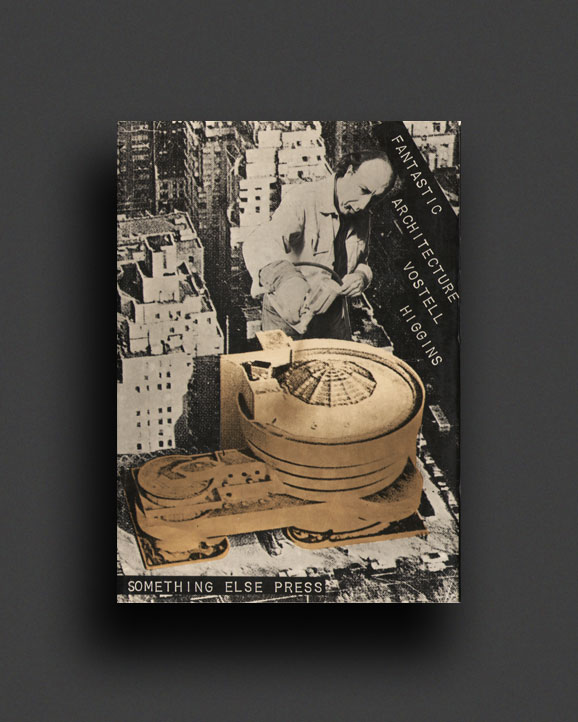
Primary Information reprint of the seminal book, Fantastic Architecture, first published in 1969 by Droste Verlag in German (with the title Pop Architektur) and later in 1970 by Something Else Press as Fantastic Architecture. Edited by Dick Higgins and Wolf Vostell, this artist’s book/anthology explores the boundaries between pop art and architecture through writings and projects by key artists and thinkers of the 1960s and earlier—from John Cage and Buckminster Fuller to Kurt Schwitters and Joseph Beuys. It will retain the book’s unique design, specifically its Mylar inserts, which add unique depth and elaborate the publication’s content.
Contributors to this publication are Ay-O, Joseph Beuys, Erich Buchholz, Pol Bury, John Cage, Philip Corner, Jan Dibbets, Robert Filliou, Buckminster Fuller, Geoffrey Hendricks, Richard Hamilton, Raoul Hausmann, Michael Heizer, Jan Jacob Herman, Bici Hendricks, Dick Higgins, K.H. Hoedicke, Hans Hollein, Douglas Huebler, Milan Knizak, Alison Knowles, Addi Koepcke, Franz Mon, Claes Oldenburg, Dennis Oppenheim, GerhardRühm, Diter Rot, Carolee Schneemann, Kurt Schwitters, Daniel Spoerri, Frances Starr, Jean Tinguely, Ben Vautier, Wolf Vostell, Lawrence Weiner, Stefan Wewerka.
1983, English / Japanese
Softcover (w. in original obi-strip and inserted 1983 exhibition ticket stub, flyer and newspaper clipping), 147 pages, 30.3 x 24 cm
1st Japanese Edition, Out of print title / Used*,
Published by
Shogakukan / Tokyo
$120.00 - Out of stock
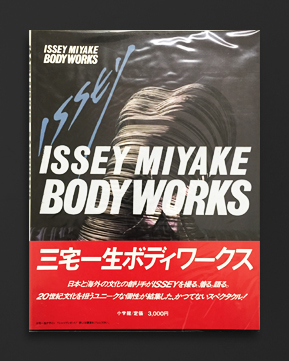
First Japanese printing from 1983 of Issey Miyake's great "Body Works" book.
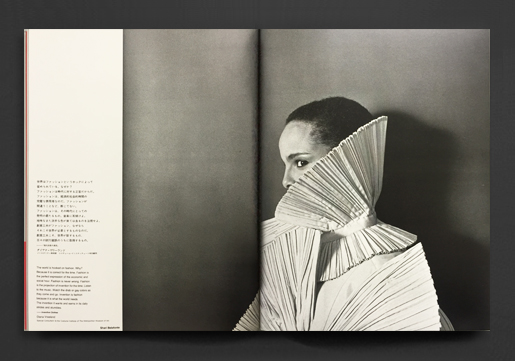
In the 1980s, acclaimed Japanese fashion designer Issey Miyake furthered his exploration of the body’s motions and form, enthusiastically taking on the challenge of designing garments using materials other than cloth: plastic, paper, and wire. He called his creations from this period “Body Works.” The American art magazine Artforum featured a Rattan- vine Body created by Miyake on its February 1982 cover—the first time clothing had been featured on the cover of an art magazine.
This is the book that fully encapsulates this incredible period of Miyake's work. With beautiful photography throughout by the likes of Marcus Leatherdale, Daniel Jouanneau, and Helmut Newton, illustrated contributions by Milton Glaser, iconic appearances by Grace Jones, Andy Warhol and many others, alongside behind the scenes photography, garment photography, texts (in English and Japanese) and much more, this museum book is as much an artist's book as it is a catalogue or monograph.
Very fine plastic-wrapped original printing copy with obi-strip comes with ticket-stub to the Japanese "Bodyworks" exhibition in 1983, as well as the exhibition flyer and a Japanese newspaper cutting from the time! A small Miyake archive!
2000, Italian / French / English / Spanish
Hardcover, 60 pages, 32 x 24 cm
1st Edition, Out of print title / used / very good
Published by
BFB Editions / Paris
$65.00 $30.00 - Out of stock
First hardcover edition of Milo Manara "Galerie of Covers", published in Italy in 2000. Lavishly illustrated throughout, "Galerie of Covers" exclusively showcases the full-colour painted original artwork of Manara's many comic book covers.
Maurilio Manaro (b. 1945), known professionally as Milo Manara, is an Italian comic book writer and artist. His first work appeared in the 'Genius' pocket books in 1969, and in magazines like Terror, Telerompo, and the French magazines Alter-Linus and Charlie Mensuel. He also worked for various children's magazines, collaborating with Milo Milani. Manara illustrated five issues of the collection 'L'Histoire de France en Bandes Dessinées' for the French publisher Larousse between 1976 and 1978, and continued to work illustrating similar educational publications, such as 'La Découverte du Monde en Bandes Dessinées' (Larousse, 1979), 'L'Histoire de la Chine' (1980) and 'La Storia d'Italia a Fumetti' (Mondadori, 1978). Also in 1978, he cooperated with Alfredo Castelli on 'L'Uomo delle Nevi' for Cepim and he started with the series 'Giuseppe Bergman', the anti-hero graphic novels which are an ironic deconstruction of adventure stories and comic books as a medium. Manara briefly ventured into westerns with 'Quatre Doigts, L'Homme de Papier' in Pilote (1982), before establishing himself as one of the greatest creators of erotic comics. Manara's book 'Déclic' ('Il Cioco' or 'Click' in English, 1983), initially published in Playmen in Italy and L'Écho des Savanes in France, remains one of the most iconic, notorious and widely published erotic stories of our time. Throughout the 1980s and 1990s, Manara created a vast collection of erotic comic books, however he also kept on working in other genres. With the great Italian comic book artist Hugo Pratt, Manara worked on 'L'Été Indien' (in Corto Maltese) and 'El Gaucho' (in Il Grifo). Manara also worked with the film director Federico Fellini on 'Voyage à Tulum' (Corriere della Serra, 1986) and 'Le Voyage de G. Mastorna dit Fernet' (Il Grifo, 1992). In the 1990s-2000s Manara made books for Les Humanoïdes Associés, DC/Vertigo, Marvel Comics and teamed up with writer, film director Alejandro Jodorowsky.
1984, English
Softcover (staple-bound), 96 pages, 28 x 20 cm
1st Edition, Out of print title / used / good
Published by
HM Communications / New York
$30.00 - Out of stock
Heavy Metal August 1984 issue, featuring comic stories/art by Herikberto, Caza, Enki Bilal, Jean Torton, Frank Thorne, Philippe Druillet, Claude Renard, John Findley, and many more, plus the usual fare of sci-fi, movies, music... Cover art by Steven Sabella. Back cover by Peter Sato.
Heavy Metal is an American science fiction and fantasy comics magazine that exploded onto the publishing scene in 1977 and shaped a generation with its blend of dark fantasy/science fiction and erotica. Unlike the traditional American comic books of that time bound by the restrictive Comics Code Authority, Heavy Metal featured explicit content. The magazine started out as a licensed translation of the French science-fantasy magazine Métal Hurlant, including work by Enki Bilal, Philippe Caza, Guido Crepax, Philippe Druillet, Jean-Claude Forest, Jean Giraud (a.k.a. Moebius), Chantal Montellier, and Milo Manara. The magazine later ran Stefano Tamburini and Tanino Liberatore's ultra-violent RanXerox. Heavy Metal gradually evolved into a publication featuring North American contributors like Richard Corben, Matt Howarth, Stephen R. Bissette, Alex Ebel, John Holmstrom, Paul Kirchner, Terrance Lindall, Gray Morrow, Walt Simonson, Dan Steffan, Jim Steranko, John Shirley, Arthur Suydam, Bernie Wrightson, and Olivia De Berardinis.
Good copy with cover fold, light wear.
1983, English
Softcover (staple-bound), 96 pages, 28 x 20 cm
1st Edition, Out of print title / used / good
Published by
HM Communications / New York
$30.00 - Out of stock
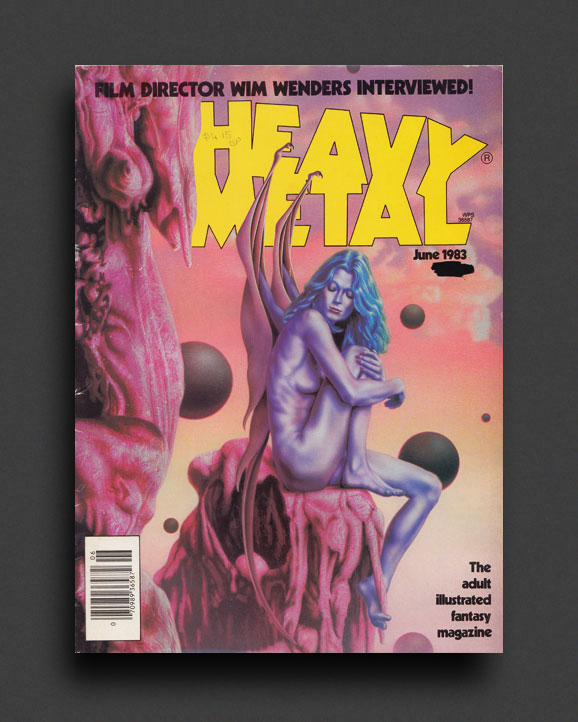
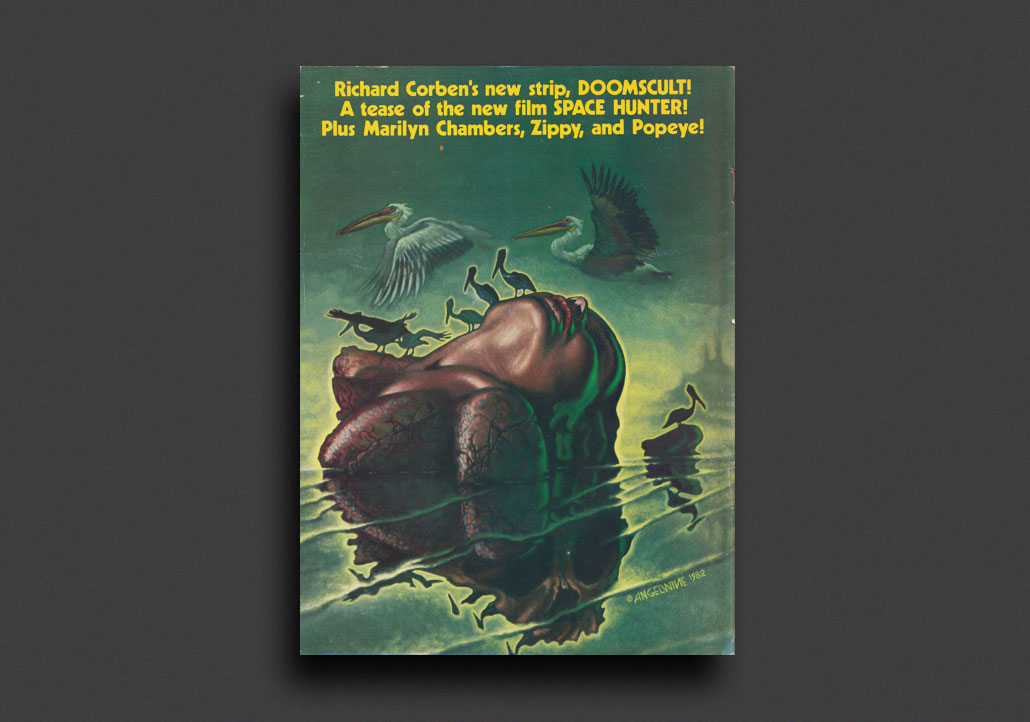
Heavy Metal June 1983 issue, featuring interview with director Wim Wenders, plus comic stories/art by Richard Corben, Guido Crepax, Enki Bilal, Jeff Jones, Caza, Michael Kaluta, Stephen R. Bissette, José Maria Martín Sauri, and many more, plus the usual fare of sci-fi, movies, music... Cover art by Barclay Shaw.
Heavy Metal is an American science fiction and fantasy comics magazine that exploded onto the publishing scene in 1977 and shaped a generation with its blend of dark fantasy/science fiction and erotica. Unlike the traditional American comic books of that time bound by the restrictive Comics Code Authority, Heavy Metal featured explicit content. The magazine started out as a licensed translation of the French science-fantasy magazine Métal Hurlant, including work by Enki Bilal, Philippe Caza, Guido Crepax, Philippe Druillet, Jean-Claude Forest, Jean Giraud (a.k.a. Moebius), Chantal Montellier, and Milo Manara. The magazine later ran Stefano Tamburini and Tanino Liberatore's ultra-violent RanXerox. Heavy Metal gradually evolved into a publication featuring North American contributors like Richard Corben, Matt Howarth, Stephen R. Bissette, Alex Ebel, John Holmstrom, Paul Kirchner, Terrance Lindall, Gray Morrow, Walt Simonson, Dan Steffan, Jim Steranko, John Shirley, Arthur Suydam, Bernie Wrightson, and Olivia De Berardinis.
Good copy, light general wear.
1982, English
Softcover (staple-bound), 96 pages, 28 x 20 cm
1st Edition, Out of print title / used / average
Published by
HM Communications / New York
$25.00 - Out of stock
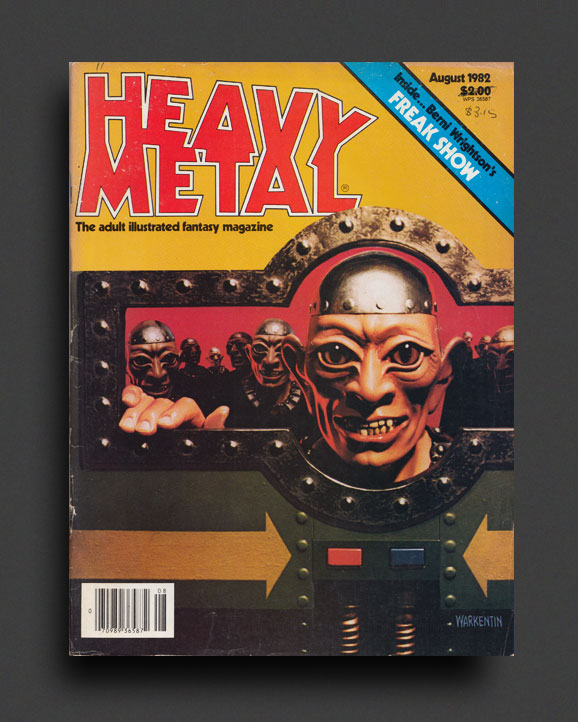
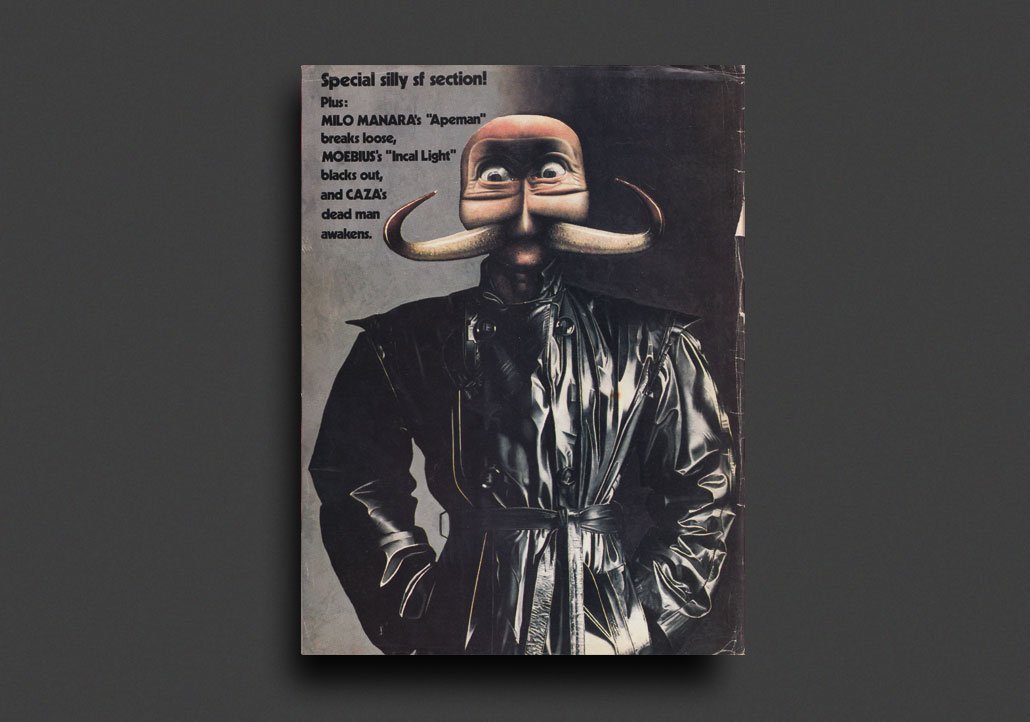
Heavy Metal August 1982 issue, featuring comic stories/art by Moebius, Milo Manara, Caza, Enki Bilal, Philippe Druillet, Nicole Claveloux, Dan O'Bannon, Gotlib (Marcel Gottlieb), Chris Foss, Richard Corben, Jeff Jones, Fernando Fernández, Bernie Wrightson, Jean-Claude Floch (Floc'h) and many more, plus the usual fare of sci-fi, movies, music... Cover art by Thomas Warkentin. Back cover by Christopher Mark Brennan.
Heavy Metal is an American science fiction and fantasy comics magazine that exploded onto the publishing scene in 1977 and shaped a generation with its blend of dark fantasy/science fiction and erotica. Unlike the traditional American comic books of that time bound by the restrictive Comics Code Authority, Heavy Metal featured explicit content. The magazine started out as a licensed translation of the French science-fantasy magazine Métal Hurlant, including work by Enki Bilal, Philippe Caza, Guido Crepax, Philippe Druillet, Jean-Claude Forest, Jean Giraud (a.k.a. Moebius), Chantal Montellier, and Milo Manara. The magazine later ran Stefano Tamburini and Tanino Liberatore's ultra-violent RanXerox. Heavy Metal gradually evolved into a publication featuring North American contributors like Richard Corben, Matt Howarth, Stephen R. Bissette, Alex Ebel, John Holmstrom, Paul Kirchner, Terrance Lindall, Gray Morrow, Walt Simonson, Dan Steffan, Jim Steranko, John Shirley, Arthur Suydam, Bernie Wrightson, and Olivia De Berardinis.
Good copy with re-attached(taped) cover, general light wear/tanning to page edges.
2020, English
Softcover, 336 pages, 22 x 30 cm
Published by
Prestel / Munich
$120.00 - Out of stock
A radical look at a radical designer, this book locates Sottsass’s work within the larger landscape of postwar political thinking and economic change.
Including newly commissioned essays by curators and scholars, this book explores how Sottsass's art and philosophy presaged the dawn of PCs, the service industry, and the gig economy. Ettore Sottsass was an architect, industrial designer, painter, writer, photographer, and founder of the Memphis group, whose designs are undergoing an impressive renaissance. But Sottsass was more than just an important designer. His approach to object design – marked by bold colours, tactility, and vitality – was a direct response to the world of mass production and the assembly-line economy.
This revelatory collection of essays by leading thinkers in the fields of political theory, economics, the media, design history, and cultural theory contextualises Sottsass's work in unprecedented arguments that draw a line from his work at Olivetti to the iconoclastic designs he produced at the dawn of the 21st century. Divided into five chronological sections – from the late 1950s to Sottsass's death in 2007 – these essays are illustrated with vibrant images of his work and archival photographs. Deeply researched, the book makes crucial connections between postwar Europe and America, and the way we work and live today.
Foreword by Alex Gartenfeld. Edited by Gean Moreno. Contributions by Bruce Sterling, Balena Arista, Evan Calder Williams, Wava Carpenter, Maria Cristina Didero, Silvia Franceschini, Jacopo Galimberti, Sven Lutticken
Designed by Mark Owens
2018, English
Slipcase with three staple-bound booklets and poster, 60 pages, 12 x 15 cm
Published by
Ugly Duckling Presse / New York
$48.00 - In stock -
The Belgian surrealist movement, like its contemporary French cousin, included both visual artists--René Magritte most famously--and writers, who were also its theorists. They shared with the Parisians a fierce commitment to personal, political and aesthetic liberty, and to humour, surprise and transgression as artistic strategies, but they parted company when it came to the unconscious and the occult. Ideas Have No Smell gathers exemplary works by three literary lights of Belgian surrealism: Transfigured Publicity, a visual text of early concrete poetry by poet and photographer Paul Nougé (1895-1967), the apostle of appropriation; the whimsical, hand-drawn artist's book Abstractive Treatise on Obeuse by Paul Colinet (1898-1957); and For Balthazar, a collection of aphorisms and observations by the ever skeptical author, lawyer and anarchist Louis Scutenaire (1905-87). In addition to the booklets presented in a facsimile-style translation by M. Kasper, this letterpressed slipcase includes an introduction by scholar Mary Ann Caws and a poster of an anonymously handwritten panneau of Nougé's visual poems, possibly coauthored with Magritte and previously reproduced only in Marcel Mariën's documentary history, L'Activité surréaliste en Belgique.
"The Belgian Surrealists were more radical, rational and imbued with the wit, folly and brevity of everyday life. This is a delightful sampler of three offbeat virtuosos." --McKenzie Wark
2020, English
Softcover, 58 pages, 11.4 x 17.8 cm
Published by
Wakefield Press / Cambridge
$32.00 - Out of stock
This classic surrealist photobook pioneered the imagery of the domestic uncanny
First edited and published by Marcel Marien in 1968 in a limited edition of 230 copies, half a year after Paul Nougé's death, The Subversion of Images is a miniature classic in both the photobook and surrealist canons. It collects Nougé's notes and photographs from 1929-30 to form a guidebook to the surrealist image. Nougé here outlines his conception of the object and the surrealist approach to it, while also offering an accompaniment to the visual work of his colleague, René Magritte, whose paintings he sometimes titled. How might a tangle of string elicit terror? How might the suppression of an object move one to sentimentality? What is the effect of a pair of gloves on a loaf of sliced bread? Nougé's accompanying photographs explore these notions, and feature a number of his Belgian surrealist colleagues.
This translation is presented as a facsimile of the original edition, with an afterword by Xavier Canonne, director of the Musée de la Photographie.
A biochemist by trade, Paul Nougé (1895-1967) was a leading light of Belgian surrealism and its primary theorist, as well as a decisive influence on such Lettrists and Situationists as Guy Debord and Gil J. Wolman, who would take inspiration from his conception of plagiarism for what would come to be termed "détournement." Nougé steered the Brussels surrealist group toward a more rational approach to visual and verbal language that discarded the Parisian surrealists' proclivity for irrationality and occultism.
1996, English
Softcover, 122 pages, 15.2 x 22.9 cm
Published by
New Directions / New York
$33.00 - Out of stock
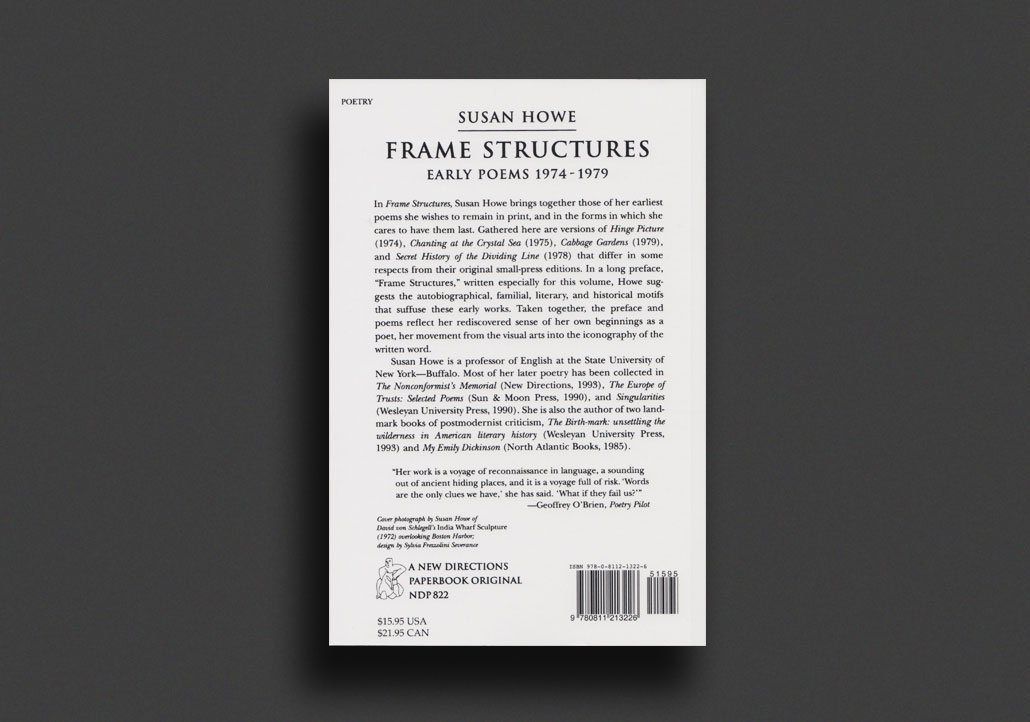
Gathered here are versions of Hinge Picture (1974), Chanting at the Crystal Sea (1975), Cabbage Gardens (1979), and Secret History of the Dividing Line (1978) that differ in some respects from their original small-press editions. In a long preface, "Frame Structures," written especially for this volume, Howe suggests the autobiographical, familial, literary, and historical motifs that suffuse these early works. Taken together, the preface and poems reflect her rediscovered sense of her own beginnings as a poet, her movement from the visual arts into the iconography of the written word.
Susan Howe is a professor of English at the State University of New York--Buffalo. Most of her later poetry has been collected in The Nonconformist's Memorial (New Directions, 1993), The Europe of Trusts: Selected Poems (Sun & Moon Press, 1990), and Singularities (Wesleyan University Press, 1990). She is also the author of two landmark books of postmodernist criticism, The Birth-mark: unsettling the wilderness in American literary history (Wesleyan University Press, 1993) and My Emily Dickinson (North Atlantic Books, 1985).
2012, English
Softcover, 304 pages, 14 x 21.1 cm
Published by
W W Norton & Co / New York
$32.00 - Out of stock
Writing in the tradition of Susan Sontag and Elaine Scarry, Maggie Nelson has emerged as one of our foremost cultural critics with this landmark work about representations of cruelty and violence in art. From Sylvia Plath’s poetry to Francis Bacon’s paintings, from the Saw franchise to Yoko Ono’s performance art, Nelson’s nuanced exploration across the artistic landscape ultimately offers a model of how one might balance strong ethical convictions with an equally strong appreciation for work that tests the limits of taste, taboo, and permissibility.
2018, English
Softcover, 96 pages, 14 x 21 cm
Published by
Soft Skull Press / New York
$32.00 - Out of stock
Before Maggie Nelson’s name became synonymous with such genre-defying, binary-slaying writing as The Argonauts and The Art of Cruelty, this collection of poetry introduced readers to a singular voice in the making: exhilarating, fiercely vulnerable, intellectually curious, and one of a kind.
These days/the world seems to split up/into those who need to dredge/and those who shrug their shoulders/and say, It’s just something/that happened.
While Maggie Nelson refers here to a polluted urban waterway, the Gowanus Canal, these words could just as easily describe Nelson’s incisive approach to desire, heartbreak, and emotional excavation in Something Bright, Then Holes. Whether writing from the debris-strewn shores of a contaminated canal or from the hospital room of a friend, Nelson charts each emotional landscape she encounters with unparalleled precision and empathy. Since its publication in 2007, the collection has proven itself to be both a record of a singular vision in the making as well as a timeless meditation on love, loss, and―perhaps most frightening of all―freedom.
MAGGIE NELSON is the author of nine books of poetry and prose, including the National Book Critics Circle Award winner The Argonauts, The Art of Cruelty: A Reckoning, Bluets, The Red Parts, and Jane: A Murder. She has been the recipient of a Guggenheim Fellowship in Nonfiction, an NEA Fellowship in Poetry, an Innovative Literature Fellowship from Creative Capital, and an Arts Writers Fellowship from the Andy Warhol Foundation. In 2016, she was awarded a MacArthur “Genius” Fellowship. She lives in Los Angeles.
1982, English
Softcover, 128 pages, 12.7 x 20.3 cm
Published by
W W Norton & Co / New York
$32.00 - Out of stock
“Here are the words of some of the women I have been, am being still, will come to be,” writes Audre Lorde of this volume, in which she brings together many of the most important poems she has written over the past thirty years.
Chosen Poems is also, Lorde says, “a linguistic and emotional tour through the conflicts, fears, and hopes of the worlds I have inhabited.” Among those worlds are such earlier books as The First Cities, Cables to Rage, From a Land Where Other People Live, New York Head Shop and Museum, and Coal. “Only the worlds of Africa scrutinized in The Black Unicorn, too complex for excerpt, have been excluded.” The volume also includes seven new poems. As Adrienne Rich has written, Lorde, “for the complexity of her vision, for her moral courage and the catalytic passion of her language, has already become, for many, an indispensable poet.” Chosen Poems will provide for Lorde’s readers, both old and new, another proof of this continuing truth.
Professor Audre Lorde (born Audrey Geraldine Lorde; February 18, 1934 – November 17, 1992) was an American writer, feminist, womanist, librarian, and civil rights activist. She was a self-described “black, lesbian, mother, warrior, poet,” who dedicated both her life and her creative talent to confronting and addressing injustices of racism, sexism, classism, heterosexism, and homophobia. As a poet, she is best known for technical mastery and emotional expression, as well as her poems that express anger and outrage at civil and social injustices she observed throughout her life. Her poems and prose largely deal with issues related to civil rights, feminism, lesbianism, illness and disability, and the exploration of black female identity.
2018, English
Hardcover, 244 pages, 21.5 x 28.5 cm
Published by
Guggenheim Museum / New York
$100.00 - Out of stock
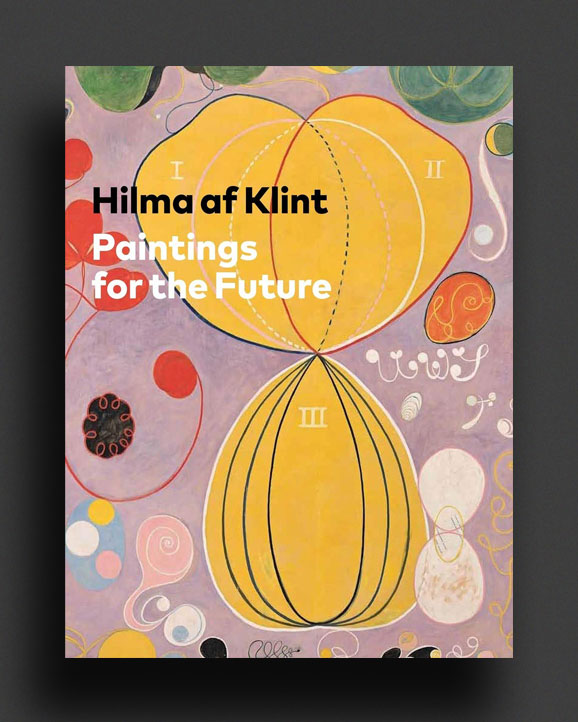
When Swedish artist Hilma af Klint died in 1944 at the age of 81, she left behind more than 1,000 paintings and works on paper that she had kept largely private during her lifetime. Believing the world was not yet ready for her art, she stipulated that it should remain unseen for another 20 years. But only in recent decades has the public had a chance to reckon with af Klint's radically abstract painting practice--one which predates the work of Vasily Kandinsky and other artists widely considered trailblazers of modernist abstraction. Her boldly colorful works, many of them large-scale, reflect an ambitious, spiritually informed attempt to chart an invisible, totalizing world order through a synthesis of natural and geometric forms, textual elements and esoteric symbolism.
Accompanying the first major survey exhibition of the artist's work in the United States, Hilma af Klint: Paintings for the Future represents her groundbreaking painting series while expanding recent scholarship to present the fullest picture yet of her life and art. Essays explore the social, intellectual and artistic context of af Klint's 1906 break with figuration and her subsequent development, placing her in the context of Swedish modernism and folk art traditions, contemporary scientific discoveries, and spiritualist and occult movements. A roundtable discussion among contemporary artists, scholars and curators considers af Klint's sources and relevance to art in the 21st century. The volume also delves into her unrealized plans for a spiral-shaped temple in which to display her art--a wish that finds a fortuitous answer in the Guggenheim Museum's rotunda, the site of the exhibition.
Hilma af Klint (1862-1944) is now regarded as a pioneer of abstract art. Though her paintings were not seen publicly until 1987, her work from the early 20th century predates the first purely abstract paintings by Kandinsky, Mondrian and Malevich.
2018, English
Hardcover, 288 pages, 21.6 x 27.9 cm
Published by
University of Chicago Press / Chicago
$100.00 - Out of stock
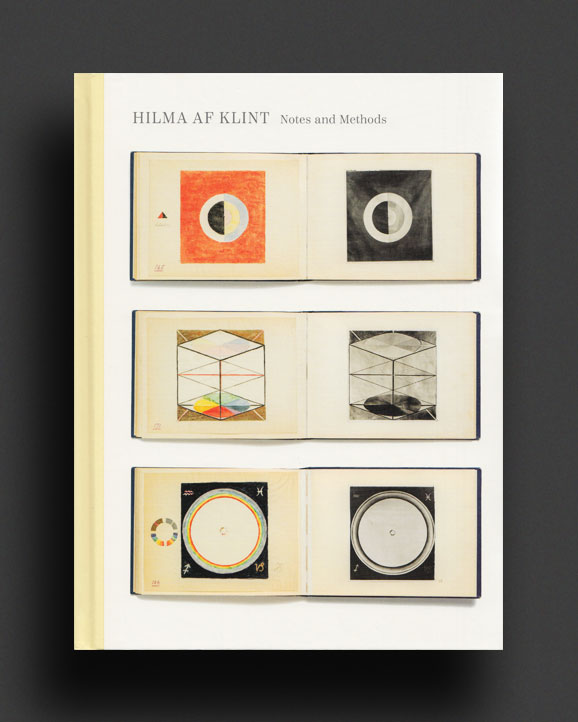
At the turn of the twentieth century, Swedish artist Hilma af Klint (1862-1944) created a body of work that left visible reality behind, exploring the radical possibilities of abstraction years before Vasily Kandinsky, Kazimir Malevich, or Piet Mondrian. Many consider her the first trained artist to create abstract paintings. With Hilma af Klint: Notes and Methods, we get to experience the arc of Klint's artistic investigation in her own words.
Hilma af Klint studied at the Royal Swedish Academy in Stockholm where she was part of the first generation of female students. Up until the beginning of the century, she painted mainly landscapes and detailed botanical studies. Her work from this period was that of a young artist of her time who meticulously observed the world around her. But, like many of her contemporaries, af Klint was also interested in the invisible relationships that shape our world, believing strongly in a spiritual dimension. She joined the Theosophical Society, and, with four fellow female members who together called themselves "The Five," began to study mediumship. Between 1906 and 1915, purportedly guided by a higher power, af Klint created 193 individual works that, in both scale and scope of imagery, are like no other art created at that time. Botanically inspired images and mystical symbols, diagrams, words and geometric series, all form part af Klint's abstract language. These abstract techniques would not be seen again until years later.
Notes and Methods presents facsimile reproductions of a wide array of af Klint's early notebooks accompanied by the first English translation of af Klint's extensive writings. It contains the rarely seen "Blue Notebooks," hand-painted and annotated catalogues af Klint created of her most famous series "Paintings for the Temple," and a dictionary compiled by af Klint of the words and letters found in her work. An introduction by Iris Muller-Westermann illuminates this unique and important contribution to the legacy of Hilma af Klint.
1979, English
Softcover, 56 pages, 24.0 x 20.5 cm
1st Edition, Out of print title / used / very good
Published by
Australian Gallery Directors Council Ltd. / Sydney
$50.00 - Out of stock
Scarce catalogue on the work of Ettore Sottsass, published in Australia in 1979 by the Australian Gallery Directors Council Ltd Sydney, on the occasion of the touring exhibition at the National Gallery of Victoria, Melbourne : 20 February - 11 March, 1979; Ballarat Fine Art Gallery, Ballarat : 18 March - 8 April, 1979; S H Ervin Museum and Art Gallery, Sydney : 19 April - 13 May, 1979.
Illustrated throughout with texts : Francois Burkhardt "Conception of design and life exemplified by Ettore Sottsass", Alessandro Mendini "Work techniques of Ettore Sottsass", Ettore Sottsass "What does it mean to be a designer?", Matthias Eberle "Ettore Sottsass: office systems", lzzika Gaon "A talk with Ettore Sottsass jr", Francois Burkhardt "Continuity between the life and work of Ettore Sottsass: his work from 1955 to 1977", Ettore Sottsass "Autobiographical remarks", Selected bibliography, Exhibition contents, Including notes on 'The planet as a festival' by Ettore Sottsass
Very Good, well preserved copy.
1995, Japanese
Softcover (w. dust jacket), 150 pages, 27 x 21 cm
Out of print title / used / very good
Published by
Shogakukan / Tokyo
$90.00 $60.00 - Out of stock
Beautiful Japanese photobook by famed Japanese photographer Kishin Shinoyama, published in 1995. This entire photographic collection is dedicated to Shinoyama's photographs of his friend, Japanese actress and model Aki Mizusawa (1954-) spanning 1975‐1995. “It is extremely rare for a photographer to be able to shoot a single subject; one woman continuously for twenty years. Now, seeing all those images - as fleeting and instantaneous then as the magazines that carried them - revived and bound together gives that particular history a closure that weighs like marble. This book captures the twenty year photogenic evolution of a wonderful friend and subject, Aki Mizusawa. — Kishin Shinoyama
Kishin Shinoyama was born in 1940, in Tokyo, Japan. He embarked on his career while studying in the Department of Photography at Nippon University, and was awarded the Advertising Photographer’s Association prize, among others. After being employed at the Light Publicity advertising company, he started to work as a freelance photographer in 1968. His work is acclaimed for the portraits of the most famous celebrities of our day and age, such as John Lennon and Yoko Ono, Rie Miyazawa, and other major personalities. In his “Gekisha” and “Shinorama” series, he carries on capturing the times using new forms of expression and new technologies. He is also an exponent of solarization and has used it to challenge preconceived ideas of beauty and the nude.
Very Good copy in original dust jacket with publisher's obi strip.
1973, English
Softcover, 20 pages, 28.5 x 22 cm
1st Edition, Out of print title / used / very good
Published by
Women's Liberation Centre / Carlton
$45.00 - Out of stock
Scarce copy of Melbourne feminist collective journal "Vashti's Voice", No. 3 (March 1973), a special International Women's Day Issue. Includes a history of International Women's Day, "Women of The World" key international figures and actions in the history of the women's liberation movement, poetry, politics, articles on gender "word-bondage", "Is Women's Lib Dying of Apathy", and articles on the living and working conditions of women on Palm Island, North Vietnam, Holland, Java ("La Dolce Vita on Palm Island", "North Vietnam, a Visit", "Women in Holland and Java...", "Careers for Women", information on the Women's Abortion Action Coalition meetings and workshops at the Women's Liberation Centre, "Voices" (letters section), "Medea, m'dear" notes, illustrations, photographs, and more.
Very Good with light wear/creasing.
1973, English
Softcover (staple-bound), 20 pages, 28.5 x 22 cm
1st Edition, Out of print title / used / very good
Published by
Women's Liberation Centre / Carlton
$55.00 - Out of stock
".... And Every Woman Her Own Creature"
Scarce copy of Melbourne feminist collective journal "Vashti's Voice", No. 4 (July 1973). Includes articles: "An Abortive Issue?" by the Women's Abortion Action Coalition in Victoria, "Lobotomy (or Psycho Civilised Woman)", "Experiences of Migrant Women", reflections on International Women's Day 1973, "Vashti's Diary", "Irish Women on the Move", "The Real Revolution", "WEL's Night Out" (on the Women's Electoral Lobby)", "Girl Friday", "Sister Solidarity" Interview with award-winning poet Barbara Giles, "Radical Lesbians: A Break Away" "Women In The Professions", information on the Women's Abortion Action Coalition meetings and workshops at the Women's Liberation Centre, poetry, "Voices" (letters section), "Medea, m'dear" notes, illustrations, photographs, and more.
Very Good with light wear/creasing.
1978, English
Softcover, 194 pages (plus insert), 21 x 29 cm
1st Edition, Out of print title / used / good
Published by
LIP / Melbourne
$50.00 - Out of stock
The incredible book-sized 1978-79 edition of Melbourne's great LIP journal. Published out of Carlton between 1976-1984, LIP encapsulated Australian feminist artistic practice of the period, publishing articles and interviews by women on women in film, sound, theatre, painting, photography, poetry, criticism, activism, journalism, publishing, sculpture, design, education, and much more.
In this issue: Art Sense and Sensibility: Women's Art and Feminist Criticism - Janine Burke; Aboriginal Women: Ritual and Culture - Diane Bell interviewed by Lesley Dumbrell; Map of Transition: Performance - Jillian Orr; Jane Sutherland - Frances Lindsay; Sybil Craig - Mary Eagle; Make Your Own Teaset - Mary Newsome; Women's Images of Women - Barbara Hall; In Search of Old Mistresses - Patricia Symons; Women Ceramacists; Olive Bishop interviewed by Julie Ewington; Margaret Dodd Talking with Julie Ewington; Lorrain Jenyns; Wendy Stavrianos interviewed by Pauline Petrus; The Development of a Political View: A Conversation Between Two Women Artists - Jennifer Barwell and Vivienne Binns; Micky Allan interviewed by Suzanne Davies; Photographs - Jacqueline Mitelman; From the Ground Up - Photographs - Virginia Coventry; Survey of Women's Art Theory Courses and Feminine Sensibility - Janine Burke; The Women's Art Register Extension Project - Bonita Ely; Sisterhood ― For Whom? Jude Adams and Jenny Barber; Posters by Women in the Earthworks Poster Collective; Film - Margaret Fink and Her Brilliant Career - Frida Freiberg; Following My Star - Elsa Chauvel; Monique Schwarz interviewed by Christine Johnston; A Dialogue between Toni Robertson, a Feminist Poster Maker, and Jeni Thornley, a Feminist Film-maker; Nina Claditz interviewed by Annette Blonski; Introducing Helmer Sanders - Frida Freiberg; Reviews: Shopping in Hearbreak Arcade - Meredith Nolte; Me and Daphne - Linda Rubinstein; Feminine Focus at the Festival - Frida Freiberg; Supplement: Australian Women in Music - Australian Women in Music - Terry Radic; Margaret Sutherland - Helen Coles; May Brahe: Composer - Mimi Colligan; Dr. Ruby Davy - Silvia O’Toole; Four Women Composers: Helen Gifford, Ann Boyd, Ann Carr-Boyd and Peggy Glanville-Hicks - Marcia Ruff; Esther Rofe interviewed by Pauline Petrus; Talking with Linda Phillips by Kerry Murphy; Mary Nemet interviewed by Jeanette Fenelon; The Women's Electric Band interviewed by Jeannette Fenelon; Robyn Archer interviewed by Jeannette Fenelon; The Shameless Hussie A.C.R.; Jane Clifton and Celeste Howden interviewed by Jeannette Fenelon; Janie Conway and Marnie Sheehan - Virginia Fraser; Theatre - The Women's Theatre Group: A Selection of Scripts, Interviews and Comments Kerry Dwyer, Jenny Walsh and Suzanne Spunner; Roma: A One Woman Play - Jan Macdonald and the Roma cast; Tongue to Lip - Valerie Kirwan; And Women Must Wait: Savage Sepia - Suzanne Spunner; Dance and Movement - Marilyn Jones interviewed by Roseanne Hull-Brown; Betty Pounder interviewed by Roseanne Hull-Brown; Yum Wing Chun: Never Underestimate the Power of a Woman - Karen Armstrong; Media - An Open Letter - Shere Hite; Feminism and Publishing: Interviews with Women Publishers - Cathy Peake; Two Early Melbourne Journalists - Lurline Stewart; Sydney Women Writers’ Workshop - Anna Couani and Pamela Brown; The Australian Women's Weekly ― The Case of the Bald Cockatoo - Cathy Peake, Maree Conway and Sue Parvaris.
LIP Collective members: Annette Blonski, Janine Burke, Isabel Davies, Suzanne Davies, Lesley Dumbrell, Jeannette Fenelon, Freda Freiberg, Christine Johnston, Elizabeth Owen, Cathy Peake, Meredith Rogers, Suzanne Spunner, Lynne Wilkinson.
This copy includes the original 1978 etching "Make Your Own Teaset" insert by Mary Newsome.
Good-Very Good copy. Bump to one corner, light wear/tanning.
2019, English
Softcover, 224 pages, 27 x 36 cm
Ed. of 4000,
Published by
Primary Information / New York
$62.00 - Out of stock
Published in 1973, The New Woman’s Survival Catalog is a seminal survey of Second Wave feminist efforts, which, as the editors noted in their introduction, represented an “active attempt to reshape culture through changing values and consciousness.”
Assembled by Kirsten Grimstad and Susan Rennie in only five months, The New Woman’s Survival Catalog makes a nod to Stewart Brand’s influential Whole Earth Catalog to map a vast network of feminist alternative cultural activity in the 1970s. Grimstad and Rennie set out on a two month road trip in the summer of 1973, meeting and interviewing all the featured organizations and individuals, and gathering information and further references along the way to complete the publication.
From arts organizations to bookstores and independent presses, health, parenting, and rape crisis centers, and educational, legal and financial resources, this book provides crucial insight into feminist initiatives and activism nationwide during the Women’s Movement. Styled as a sales catalog, The New Woman’s Survival Catalog comprises listings and organizational descriptions, articles, and extensive illustrations, as well as a “Making the Book” section, detailing the publication’s production.
Kirsten Grimstad and Susan Rennie are the co-editors of The New Woman’s Survival Catalog (Berkeley Publishing Company, 1973) and The New Woman’s Survival Sourcebook (Knopf, 1975). They went on to co-found Chrysalis: A Magazine of Women’s Culture, published out of the Woman’s Building in downtown Los Angeles from 1977-1981.
Kirsten Grimstad was born in Wauwatosa, Wisconsin, and earned a Ph.D. in Comparative Literature from the Union Institute & University (Cincinnati) after receiving a BA at Barnard College and an MA at Columbia University. She is currently Co-Chair of Undergraduate Studies at Antioch University, Los Angeles, and past Chair of the Getty Villa Council. Her research centers on German literature and public memory about the Holocaust, and she is the author of The Modern Revival of Gnosticism and Thomas Mann’s Doktor Faustus (Camden House, 2002).
Susan Rennie earned a BA from Barnard College and received a Ph.D. in Political Philosophy from Columbia University. She taught Social Sciences at Union Institute & University, worked as a women’s health activist, and lives in Venice, California.
Edition of 4000
2019, English
Softcover, 192 pages, 11.1 x 17.8 cm
Published by
Sternberg Press / Berlin
$48.00 - Out of stock
A new wave of artistic activism has emerged in recent years in response to the ever-increasing dominance of authoritarian neoliberalism. Activist practices in the art field, however, have been around much longer. As Oliver Marchart claims, there has always been an activist undercurrent in art. In this book he traces trajectories of artistic activism in theater, dance, performance, and public art, and investigates the political potential of urbanism, curating, and “biennials of resistance.” What emerges is a conflictual aesthetics that does not conform with traditional approaches to the field and that activates the political potential of artistic practice.
Oliver Marchart is a political theorist and philosopher. He is currently professor of political theory at the University of Vienna. His books include Post-foundational Political Thought: Political Difference in Nancy, Lefort, Badiou and Laclau (2007), Thinking Antagonism: Political Ontology after Laclau (2018), and the forthcoming Post-foundational Theories of Democracy: Reclaiming Freedom, Equality, Solidarity.
2020, English
Softcover, 264 pages, 27 x 22 cm
Published by
Koenig Books / London
Museum of Art / Łódź
$85.00 $65.00 - In stock -
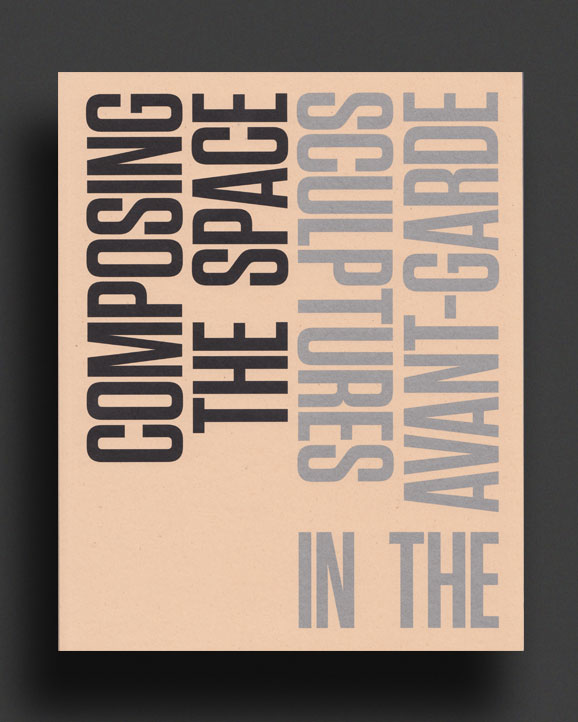
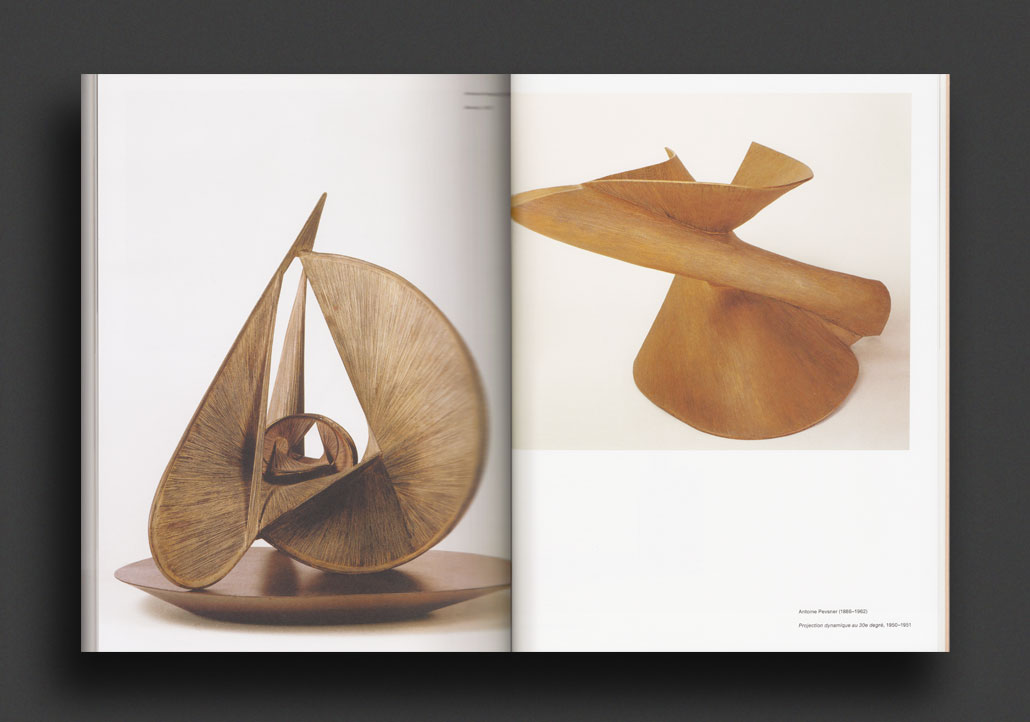
This publication follows the experiments in avant-garde sculpture in its dialogue with the space, movement and human body, guided by the theory and practice of Polish artist, Katarzyna Kobro (1898–1951).
For the first time Kobro’s artistic experiments is presented in the context of corresponding sculptural endeavours such artists as Vladimir Tatlin, Naum Gabo, Friedrich Kiesler, and El Lissitzky. In Kobro’s view, the dynamism of our motor skills should be counterbalanced with a carefully measured and organised sequence of plastic (sculptural, architectural) rhythms unfolding in both time and space. According to Kobro, sculpture was becoming a model of the new order to be potentially introduced in our immediate environment based on a psychophysical coordination of human beings leading to a rationalised and purposeful construction of the space of every-day life as well shaping social behaviours.
This book confronts her ideas with the work of her Modernist contemporaries such as Naum Gabo, Alexander Calder, Barbara Hepworth, Gustaw Klucis, El Lissitzky, Antoine Pevsner, Jean Arp, Alexander Archipenko, Friedrich Kiesler, Vladimir Tatlin, and Oskar Schlemmer in order to show the full scope of the avant-garde experiment in sculpture. Featuring writings by renowned American art critic Rosalind E. Krauss, and French-American art historian Yve-Alain Bois.
Published on the occasion of the exhibition, Composing the Space: Sculptures in the Avant-Garde at Museum of Art in Łódź (4 October 2019 – 2 February 2020).
2020, English
Hardcover, 352 pages, 22 x 30 cm
Published by
Gingko Press / Berkeley
$139.00 - In stock -
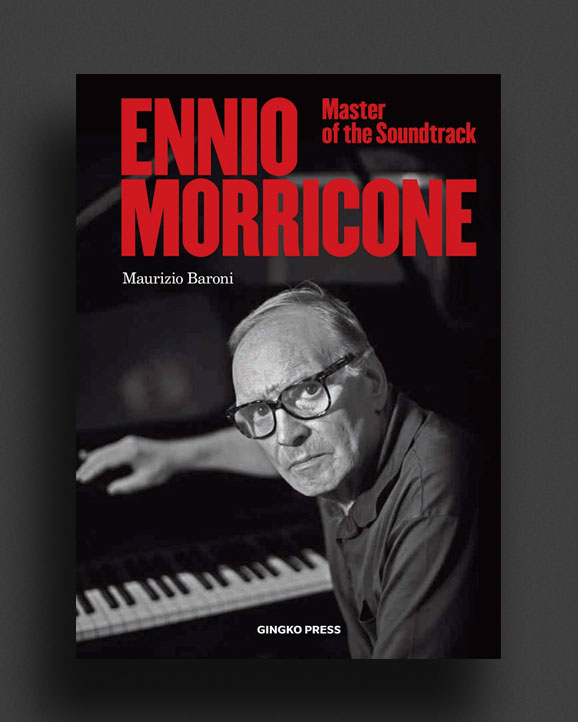
Unique in its genre, Ennio Morricone: Master of the Soundtrack originates from the idea of the collector, author, and cinema expert Maurizio Baroni. Baroni draws on his own archive to give life to a rich selection highlighting over fifty years of a prestigious career, largely unseen before, which includes handwritten scores by the maestro himself, the original album and single cover sleeves from his soundtracks, and much more.
This book is a definitive homage to this great Italian composer of film soundtracks, probably the most famous in the world.
Accompanying the most comprehensive and lavishly illustrated chronology/discography of Morricone's work in print, this large hardcover volume contains texts by Dario Argento, Bernardo Bertolucci, Liliana Cavani, Lisa Gastoni, Franco Nero, Quentin Tarantino, and many more.
A wonder for any Morricone fan.