World Food Books' programme is largely produced on Kulin Nation land. We acknowledge the Wurundjeri people of the Kulin Nation as the first and continuing custodians of this land, and pay respect to their Elders past, present, and emerging.
World Food Books is an arts and special interests bookshop in Naarm / Melbourne. Founded in 2010, World Food Books is devoted to the presentation of a rotating, hand-selection of international art, design, literary and counterculture publications with an emphasis on the anti-traditional, the experimental, the avant-garde, the heretic, the marginal.
Presenting new titles alongside rare and out-of-print books, catalogues and journals spanning the fields of modern and contemporary art, design, photography, illustration, film, literature, poetry, cultural theory, philosophy, sexuality, popular and underground culture in its many radical forms, World Food Books wishes to encourage adventurous, thoughtful and open-minded reading, looking, writing, and exchange of publishing and ideas, both current and historical.
As well as our bookshop, located in Melbourne's historical Nicholas Building, all of our inventory is available internationally via our online mail-order service.
World Food Books semi-regularly co-ordinates "Occasions", a programme of exhibits and events at the bookshop and in partnership with other hosts (such as museums and art galleries) that develop out of the activities, relationships and content of the bookshop itself.
World Food Books
The Nicholas Building
37 Swanston Street
Room 5, Level 6
Melbourne 3000
Australia
SHOP HOURS:
Thu–Fri 12–6, Sat 12–5
WEB-SHOP OPEN 24/7
World Food Books
Postal Address:
PO Box 435
Flinders Lane
Victoria 8009
Australia
Art
Theory / Essay
Architecture / Interior
Graphic Design / Typography
Photography
Fashion
Eros
LGBTQ+
Fiction / Poetry
Weird / Speculative / Science Fiction / Horror
Transgressive / Visceral / Abject
Symbolism / Decadence / Fin de siècle
Film / Video
Painting
Sculpture / Installation
Performance / Dance / Theater
Drawing
Sound / Music
Curatorial
Group Shows / Collections
Periodicals
Out-of-print / Rare
Posters / Ephemera / Discs
Signed Books
World Food Books Gift Voucher
World Food Book Bag
Australian Art
Australian Fiction
Australian Science Fiction / Speculative Fiction
Australian Poetry
Australian Photography
Japanese Photography
Conceptual Art
Minimal Art
Dada
'Pataphysics / Oulipo
Fluxus
Concrete Poetry
Pop Art
Surrealism
Arte Povera
Arte Informale / Haute Pâte / Tachism
Nouveau Réalisme / Zero / Kinetic
Situationism / Lettrism
Collage / Mail Art / Xerox Art
Art Brut / Folk / Visionary / Fantastic
Illustration / Graphic Art / Bandes Dessinées
Furniture
Italian Radical Design / Postmodernism
Textiles
Ceramics / Glass
Counterculture
Protest / Revolt
Philosophy
Psychoanalysis
Anthropology
Anarchism
Socialism / Anarchism / Communism / Capitalism
Literary Theory / Semiotics / Language
Feminism / Women's Studies
Gender Studies / Sexuality
Anthropology
Fetishism / BDSM
Drugs / Psychedelia
Crime / Violence
Animal Rights / Veganism
Occult / Esoterica
Ecology / Earth / Alternative Living
Whole Earth / Crafts
All prices in AUD (Australian dollars)
Pick-Ups
Pick-up orders can be collected in our bookshop during opening hours after order date. Please collect any Pick-up orders within 2 weeks of ordering as we have limited storage space. Orders will be released back into stock if not collected within this time. No refunds can be made for pick-ups left un-collected. If you cannot make it in to the bookshop in this time-frame, please choose postage option.
Return Policy
All sales are final. We do accept returns (for refund or exchange) for items received in error. All our orders are packed with special care using heavy-duty padding and cardboard book-mailers or bubble mailers (for smaller books), using reinforcement where required. We cannot take responsibility for any lost, stolen or damaged parcels.
Insurance
Should you wish to insure your package, please email us directly after placing your order and we can organise this at a small extra expense. Although all standard/express tracked packages are very safe and dependable, we cannot take responsibility for any lost, stolen or damaged parcels. We recommend insurance on valuable orders.
Interested in selling your old books, catalogues, journals, magazines, comics, fanzines, ephemera? We are always looking for interesting, unusual and out-of-print books to buy. We only buy books in our fields of interest and specialty, and that we feel we can resell.
We base these prices on desirability, market value, in-print prices, condition and our current stock levels. We offer cash, store credit, and can take stock on consignment. All
about 25% of the price we expect to get when we sell them, or 30% in store credit. We base these prices on desirability, market value, in-print prices, condition and our current stock levels.
Sell your books any day of the week. You can drop them off and return later. If you have a lot of books, we can visit your Sydney home.
We buy books that we feel we can resell. We offer about 25 % of the price we expect to get when we sell them, or 30% in store credit. We base these prices on desirability, market value, in-print prices, condition and our current stock levels.
Philadelphia Wireman
03 August - 01 September, 2018
World Food Books is proud to announce our next Occasion, the first presentation of sculptures by Philadelphia Wireman in Australia.
The Philadelphia Wireman sculptures were found abandoned in an alley off Philadelphia’s South Street on trash night in 1982. Their discovery in a rapidly-changing neighbourhood undergoing extensive renovation, compounded with the failure of all attempts to locate the artist, suggests that the works may have been discarded after the maker’s death. Dubbed the "Philadelphia Wireman" during the first exhibition of this work, in 1985, the maker’s name, age, ethnicity, and even gender remain uncertain. The entire collection totals approximately 1200 pieces, all intricately bound together with tightly-wound heavy-gauge wire (along with a few small, abstract marker drawings, reminiscent both of Mark Tobey and J.B. Murry). The dense construction of the work, despite a modest range of scale and materials, is singularly obsessive and disciplined in design: a wire armature or exoskeleton firmly binds a bricolage of found objects including plastic, glass, food packaging, umbrella parts, tape, rubber, batteries, pens, leather, reflectors, nuts and bolts, nails, foil, coins, toys, watches, eyeglasses, tools, and jewellery.
Heavy with associations—anthropomorphic, zoomorphic, and socio-cultural responses to wrapped detritus—the totemic sculptures by Philadelphia Wireman have been discussed in the context of work created to fulfil the shamanistic needs of alternative religions in American culture. Curators, collectors, and critics have variously compared certain pieces to sculpture from Classical antiquity, Native American medicine bundles, African-American memory jugs, and African fetish objects. Reflecting the artist’s prolific and incredibly focused scavenging impulse, and despite—or perhaps enhanced by—their anonymity, these enigmatic objects function as urban artefacts and arbiters of power, though their origin and purpose is unknown. Philadelphia Wireman, whatever their identity, possessed an astonishing ability to isolate and communicate the concepts of power and energy through the selection and transformation of ordinary materials. Over the course of the past two decades, this collection has come to be regarded as an important discovery in the field of self-taught art and vernacular art.
Presented in collaboration with Fleisher-Ollman Gallery, Philadelphia, and Robert Heald, Wellington.
Susan Te Kahurangi King
02 February - 10 March, 2018
Susan Te Kahurangi King (24 February 1951 - ) has been a confident and prolific artist since she was a young child, drawing with readily available materials - pencils, ballpoint pens and felt-tip markers, on whatever paper is at hand. Between the ages of four and six Susan slowly ceased verbal communication. Her grandparents William and Myrtle Murphy had developed a special bond with Susan so they took on caring responsibilities for extended periods. Myrtle began informally archiving her work, carefully collecting and storing the drawings and compiling scrapbooks. No drawing was insignificant; every scrap of paper was kept. The King family are now the custodians of a vast collection containing over 7000 individual works, from tiny scraps of paper through to 5 meter long rolls.
The scrapbooks and diaries reveal Myrtle to be a woman of great patience and compassion, seeking to understand a child who was not always behaving as expected. She encouraged Susan to be observant, to explore her environment and absorb all the sights and sounds. Myrtle would show Susan’s drawings to friends and people in her community that she had dealings with, such as shopkeepers and postal workers, but this was not simply a case of a grandmother’s bias. She recognised that Susan had developed a sophisticated and unique visual language and sincerely believed that her art deserved serious attention.
This was an unorthodox attitude for the time. To provide some context, Jean Dubuffet coined the term Art Brut in 1945 to describe work created by self-taught artists – specifically residents of psychiatric institutions and those he considered to be visionaries or eccentrics. In 1972 Roger Cardinal extended this concept by adopting the term Outsider Art to describe work made by non-academically trained artists operating outside of mainstream art networks through choice or circumstance. Susan was born in Te Aroha, New Zealand in 1951, far from the artistic hubs of Paris and London that Dubuffet and Cardinal operated in. That Myrtle fêted Susan as a self-taught artist who deserved to be taken seriously shows how progressive her attitudes were.
Susan’s parents Doug and Dawn were also progressive. Over the years they had consulted numerous health practitioners about Susan’s condition, as the medical establishment could not provide an explanation as to why she had lapsed into silence. Dawn educated herself in the field of homeopathy and went on to treat all twelve of her children using these principles – basing prescriptions on her observations of their physical, mental and emotional state.
Doug was a linguist with an interest in philosophy who devoted what little spare time he had to studying Maori language and culture. To some extent their willingness to explore the fringes of the mainstream made them outsiders too but it was their commitment to living with integrity and their respect for individuality that ensured Susan’s creativity was always encouraged.
Even though Susan’s family supported her artistic pursuits, some staff in schools and hospitals saw it as an impediment to her assimilation into the community and discouraged it in a variety of ways. Her family was not always aware of this and therefore did not fully understand why Susan stopped drawing in the early 1990s. However, rather than dwell on the challenges that Susan faced in pursuit of her artistic practice, they prefer to highlight her achievements. In 2008 Susan began drawing again in earnest, after an almost 20 year interruption, and her work is now shown in galleries around the world.
Susan grew up without television and has been heavily influenced by the comics she read as a child. She is absolutely fearless in the appropriation of recognizable characters, such as Donald Duck and Mickey Mouse, in her work. She twists their limbs, contorts their faces, compresses them together, blends them into complex patterned backgrounds - always imbuing them with an incredible energy. Although Susan often used pop culture characters in her work they are not naive or childlike. These are drawings by a brilliant self-taught artist who has been creating exceptional work for decades without an audience in mind.
Mladen Stilinović
"Various Works 1986 - 1999"
02 February 16 - September 10, 2016
Various works 1986 - 1999, from two houses, from the collections of John Nixon, Sue Cramer, Kerrie Poliness, Peter Haffenden and Phoebe Haffenden.
Including: Geometry of Cakes (various shelves), 1993; Poor People’s Law (black and white plate), 1993; White Absence (glasses, ruler, set square, silver spoon, silver ladel with skin photograph and wooden cubes), 1990-1996; Exploitation of the Dead (grey and red star painting, wooden painting, black spoon with red table, red plate), 1984-1990; Money and Zeros (zero tie, paintings made for friends in Australia (Sue, John, Kerrie), numbers painting), 1991-1992; Words - Slogans (various t-shirts) - “they talk about the death of art...help! someone is trying to kill me”, “my sweet little lamb”, “work is a disease - Karl Marx”; Various artist books, catalogues, monographs, videos; Poster from exhibition Insulting Anarchy; "Circular" Croatian - Australian edition; Artist book by Vlado Martek (Dostoyevsky); more.
Thanks to Mladen Stilinović and Branka Stipančić.
Jonathan Walker
Always Will Need To Wear Winter Shirt Blue + Ochre Small Check Pattern
21 August - 21 September, 2015
Untitled
I am not a great reader of poetry but I always return to the work of Melbourne poet, Vincent Buckley (1925- 1988). Perhaps I find his most tantalising piece to be not a finished poem but a fragment left on a scrap of paper discovered on his desk after the poet’s death.
The poetry gathers like oil
In the word-core, and spreads
It has its music meet,
Its music is in movement.
This fragment is more the shell left behind from a volatile thought than a finished poem. I find the last two lines honest but awkward whereas the first two lines work like an arrow. Most likely he could not find a resolution so it was left. Still, in its present form, it remains an eloquent testimony to the ultimate failure of a medium to express mobile thought and sensation, in Buckley’s case, through verbal language. It’s an important matter because this is something all artists have to deal with regardless of the medium.
I have never written a poem, however, I am forever copying fragments from books on paper scraps in a vain effort to fix certain notions in my head. At first, they function as bookmarks that are sometimes returned to when I open the book. But before long, as they accumulate, they fall out littering the table interspersed with A4 photocopies, bills, books and medications.
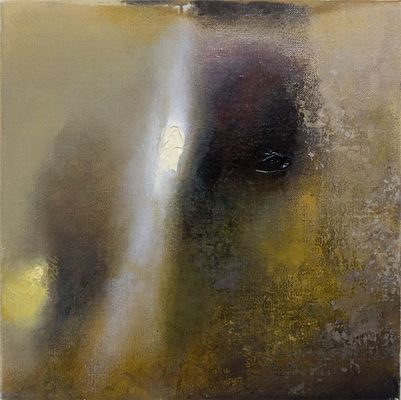
To return to Buckley’s fragment, the first two lines very much evoke how I paint nowadays. As you age, detail diminishes and patches of light become more luminous and float. I feel the most honest way of dealing with this is by smearing the oil paint on the canvas with the fingers and working close-up, blind. Only if the patches coalesce into an approaching image can the work gain a life.
-
Jonathan Walker was born in Melbourne, Australia and brought up on a dairy farm in Gippsland. In the 1970’s he studied painting at RMIT and won the Harold Wright Scholarship to the British Museum, London. During the 1980’s he exhibited at Pinacotheca Gallery, Richmond and had work shown at the NGV and Heidi City Art Gallery. Over the same period he designed the cover for the “Epigenesi” LP by Giancarlo Toniutti, Italy and conducted a mail exchange work with Achim Wollscheid, Germany. The work with artists through the post resulted in an article published in the bicentenary issue of Art and Australia 1988. He showed in artist run spaces such as WestSpace in the 90’s and 2000’s, and until 2012, taught painting at Victoria University, which is where we (Colleen Ahern and Lisa Radford) as organisers of the exhibition, among many others, had the privilege of being his student.
Walker’s knowledge was imparted to students through the careful selection of music, literature, and artists found in books that he himself had ordered for the library. Walker’s strategy was the generosity of sharing his vast knowledge with references specific to each student and their context.
Walker’s paintings share a similar focus and intimacy.
This exhibition presents a small selection of recent paintings alongside a publication that includes Walker’s writing. Observational and analytical, Walker’s work is a type of material notation — the time of day, colour and how it is blended, the both specific and fleeting location of a reflection on lino or the question of whether a chair leg should be included in a painting.
Please join us on Friday August 21 between 6-8pm to celebrate the opening of the exhibition.
Curated by Colleen Ahern and Lisa Radford.
B. Wurtz
Curated by Nic Tammens
March 26 - April 4, 2015
B.Wurtz works from a basement studio in his home on Manhattan’s Lower East Side.
This local fact is attested to by the plastic shopping bags and newsprint circulars that appear in his work. As formal objects, they don’t make loud claims about their origins but nonetheless transmit street addresses and places of business from the bottom of this long thin island. Like plenty of artists, Wurtz is affected by what is local and what is consumed. His work is underpinned by this ethic. It often speaks from a neighborhood or reads like the contents of a hamper:
“BLACK PLUMS $1.29 lb.”
“Food Bazaar”
“USDA Whole Pork Shoulder Picnic 99c lb.”
“RITE AID Pharmacy, with us it’s personal.”
“H. Brickman & Sons.”
“Sweet Yams 59c lb."
Most of the work in this exhibition was made while the artist was in residence at Dieu Donne, a workshop dedicated to paper craft in Midtown. Here Wurtz fabricated assemblages with paper and objects that are relatively lightweight, with the intention that they would be easily transportable to Australia. This consideration isn’t absolute in Wurtz’s work, but was prescriptive for making the current exhibition light and cheap. Packed in two boxes, these works were sent from a USPS post office on the Lower East Side and delivered to North Melbourne by Australia Post.
Wurtz appears courtesy of Metro Pictures, New York.
Thanks to Rob Halverson, Joshua Petherick, Sari de Mallory, Matt Hinkley, Helen Johnson, Fayen d'Evie, Ask Kilmartin, Lisa Radon, Ellena Savage, Yale Union, and "Elizabeth".
John Nixon
"Archive"
December 15 - January 20, 2014
The presentation of John Nixon's archive offered a rare showcase of this extensive collection of the artist's own publications, catalogues, posters, ephemera, editions and more, from the mid 1980s onwards, alongside a selection of his artworks.
Organized by John Nixon, Joshua Petherick and Matt Hinkley.
<a href=http://wfb.public-office.info/artist/john-nixon>All titles by John Nixon
"Habitat"
at Minerva, Sydney (organised by Joshua Petherick and Matt Hinkley)
November 15 - December 20, 2014
Lupo Borgonovo, Janet Burchill & Jennifer McCamley,
Lewis Fidock, HR Giger, Piero Gilardi, Veit Laurent Kurz,
Cinzia Ruggeri, Michael E. Smith, Lucie Stahl, Daniel Weil, Wols
Press Release:
“...It contained seven objects. The slender fluted bone, surely formed for flight, surely from the wing of some large bird. Three archaic circuitboards, faced with mazes of gold. A smooth white sphere of baked clay. An age-blackened fragment of lace. A fingerlength segment of what she assumed was bone from a human wrist, grayish white, inset smoothly with the silicon shaft of a small instrument that must once have ridden flush with the surface of the skin - but the thing’s face was seared and blackened.”
William Gibson, “Count Zero”, 1986
"Autumn Projects Archive"
Curated by Liza Vasiliou
March 6 - March 15, 2014
World Food Books, in conjunction with the Virgin Australia Melbourne Fashion Festival 2014, presented the Autumn Projects archive, consisting of a selection of early examples in Australian fashion with a particular interest in collecting designers and labels from the period beginning in the 1980’s, who significantly influenced the discourse of Australian Fashion.
Curated by Liza Vasiliou, the exhibition provided a unique opportunity to view pieces by designers Anthea Crawford, Barbara Vandenberg, Geoff Liddell and labels CR Australia, Covers, Jag along with early experimental collage pieces by Prue Acton and Sally Browne’s ‘Fragments’ collection, suspended throughout the functioning World Food Books shop in Melbourne.
H.B. Peace
presented by CENTRE FOR STYLE
November 14, 2013
"Hey Blinky, you say chic, I say same"
Anon 2013
H.B. Peace is a clothing collaboration between great friends Blake Barns and Hugh Egan Westland. Their pieces explore the divergences between 'character’ and ‘personality’ in garments....etc
Special Thanks to Joshua Petherick and Matt Hinkley of WFB and Gillian Mears
and a Very Special Thank you to Audrey Thomas Hayes for her shoe collaboration.
Janet Burchill & Jennifer McCamley
"Aesthetic Suicide"
May 10 - June 8, 2013
The first of our occasional exhibitions in the World Food Books office/shop space in Melbourne, "Aesthetic Suicide" presented a body of new and older works together by artists Janet Burchill & Jennifer McCamley, including videos, prints, a wall work, and publications.
During shop open hours videos played every hour, on the hour.
2010, English
Softcover, 248 pages, 14 x 20.5 cm
Published by
Twisted Spoon Press / Czech Republic
$30.00 - Out of stock
Set in the mythical Polish village of Primeval, a microcosm of the world populated with eccentric, archetypal characters and guarded by four archangels, this novel from Nobel Prize winner Olga Tokarczuk chronicles the lives of the inhabitants over the course of the feral 20th century in prose that is forceful, direct, and the stylistic cousin of the magic realism in Gabriel García Márquez's One Hundred Years of Solitude. Told in short bursts of "Time," the narrative takes the form of a stylized fable, an epic allegory about the inexorable grind of time and the clash between modernity (the masculine) and nature (the feminine) in which Poland's tortured political history from 1914 to the contemporary era and the episodic brutality visited on ordinary village life is played out. A novel of universal dimension that does not dwell on the parochial, Primeval and Other Times was hailed as a contemporary European classic and heralded Tokarczuk as one of the leading voices in Polish as well as world literature.
Translated by Antonia Lloyd-Jones
1981, English
Softcover, 44 pages, 21 x 15.5 cm
1st UK Edition, Out of print title / used / very good
Published by
Bratach Dubh Editions / London
$35.00 - Out of stock
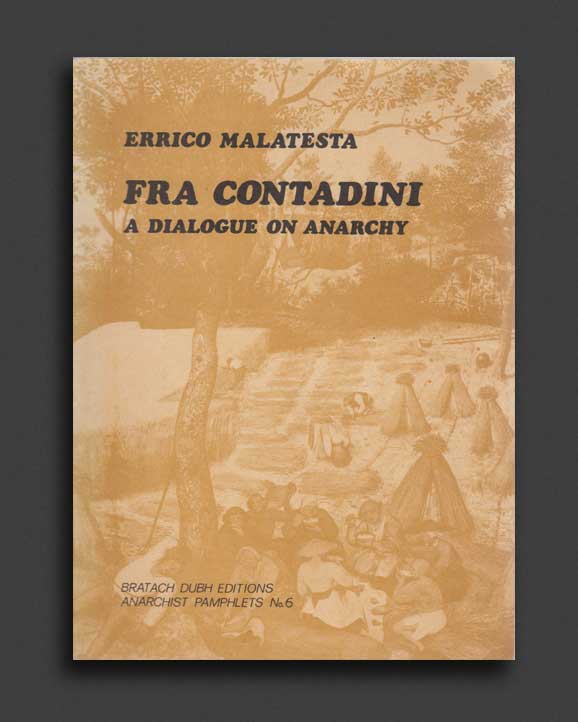
First edition of this 1981 English edition of Errico Malatesta's most popular and wide-spread pamphlet, "Fra Contadini", first published by Malatesta in 1884 in La Questione Sociale (The Social Question), the weekly anarchist paper he founded in in Florence, 1872. Translated here to English by Jean Weir.
"The numerous editions and translations of "Fra Contadini" all over the world demonstrate its importance and relevance have been universally recognized. Fra Contadini shares the modest tone of Malatesta’s other writings, more obvious here through the use of dialogue. It is in fact a chat which two peasants, one more politicised than the other, could very well have had in the north of Italy at the end of the last century. It manages to avoid the affectation which often harms literary works which–like this one–do not conceal their intent to educate, because in reality this is a didactic piece of work. Malatesta’s intention is to supply the anarchist movement (then the international socialist anarchist revolutionary party) with an agile instrument of propaganda for the peasants and small artisans, groups that were in the phase of proletarianisation. In other words for the starving masses who swelled the major Italian cities at the end of the last century drawn by the mirage of work in developing industry".
Errico Malatesta (1853 – 1932) was an Italian anarchist. He spent much of his life exiled from Italy and in total spent more than ten years in prison. Malatesta founded, wrote and edited a number of radical publications including La Questione Sociale (1872), L'Associazione (1889), L'Agitazione (1897), Cause ed Effetti (1900), L'Internazionale (1900), and published a number of important and influential pamphlets including Fra Contadini (1884), L'Anarchia (1891), and Anarchism Or Democracy? (with Francesco Merlino) (1974).
A very good copy of this first edition from this Bratach Dubh Editions series from London.
2020, English
Hardcover, 270 pages, 24.7 x 26.6 cm
Published by
Yale University Press / New Haven
The Metropolitan Museum of Art / New York
$105.00 - Out of stock
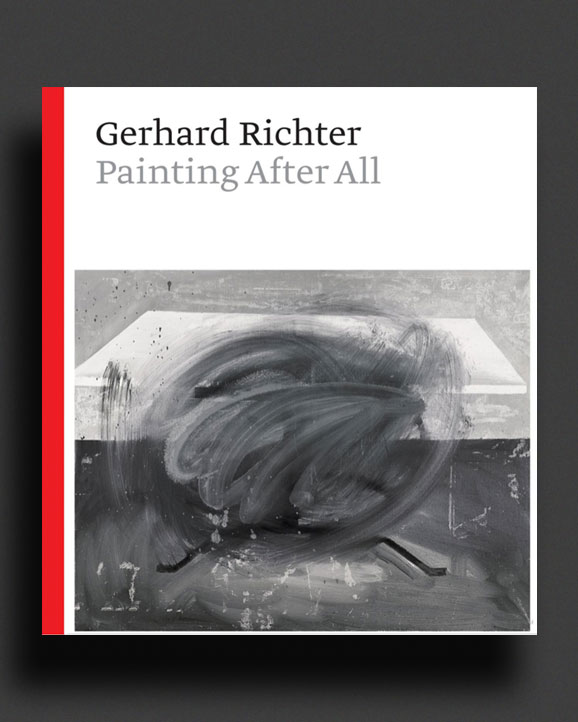
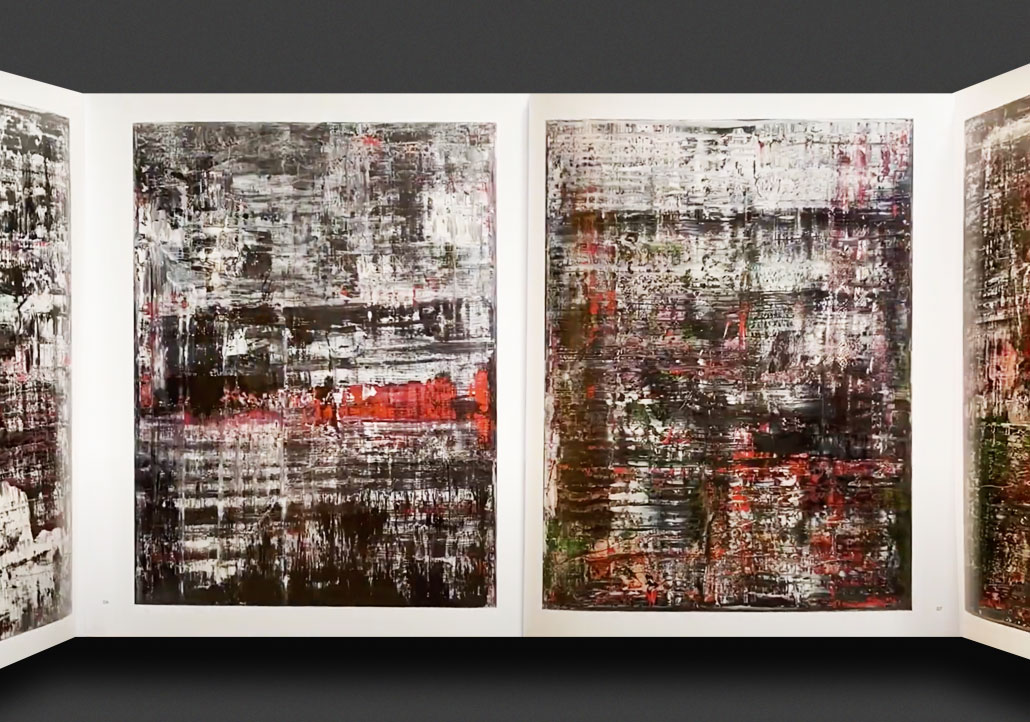
A lavishly illustrated monograph that spans the entire career of one of the most celebrated contemporary artists. Over the course of his acclaimed 60-year career, Gerhard Richter (b. 1932) has employed both representation and abstraction as a means of reckoning with the legacy, collective memory, and national sensibility of post-Second World War Germany, in both broad and very personal terms. This handsomely designed book features approximately 100 of his key canvases, from photo paintings created in the early 1960s to portraits and later large-scale abstract series, as well as select works in glass. New essays by eminent scholars address a variety of themes: Sheena Wagstaff evaluates the conceptual import of the artist's technique; Benjamin H. D. Buchloh discusses the poignant Birkenau paintings (2014); Peter Geimer explores the artist's enduring interest in photographic imagery; Briony Fer looks at Richter's family pictures against traditional painting genres and conventions; Brinda Kumar investigates the artist's engagement with landscape as a site of memory; Andre Rottmann considers the impact of randomization and chance on Richter's abstract works; and Hal Foster examines the glass and mirror works. As this book demonstrates, Richter's rich and varied oeuvre is a testament to the continued relevance of painting in contemporary art.
2017, English
Softcover, 168 pages, 25.4 x 25.4 cm
1st Edition, Out of print title / as new
Published by
Karma / New York
$140.00 - Out of stock
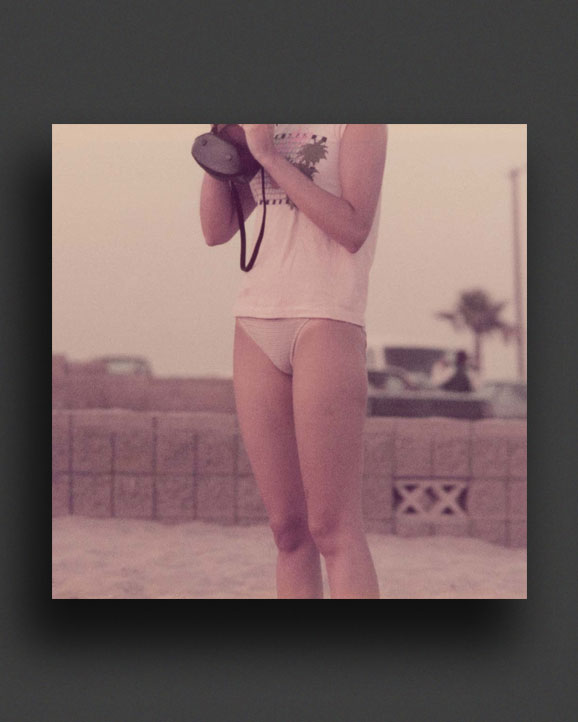
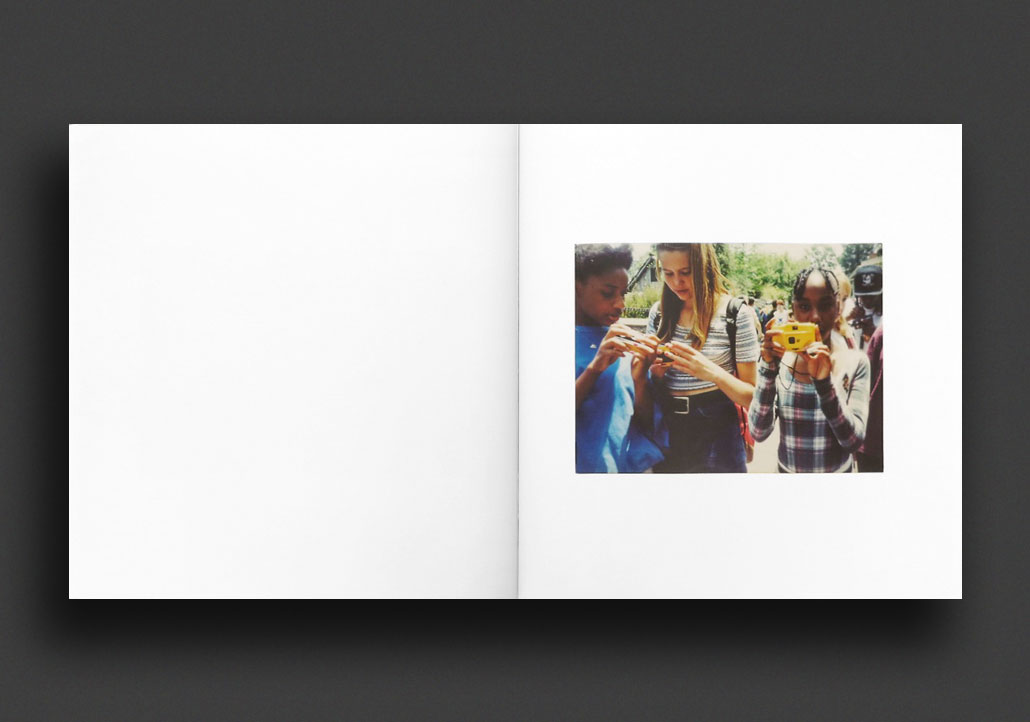
First collectible edition of Women with Cameras (Anonymous), a new artist's book by Anne Collier (born 1970), with a text by Hilton Als (winner of the 2017 Pulitzer Prize for Criticism), that consists of a sequence of 80 images of found amateur photographs that each depict a female subject in the act of holding a camera or taking a photograph.
Dating from the 1970s to the early 2000s, these artifacts of the pre-digital age were collected by Collier over a number of years from flea markets, thrift stores and online market places. Each of these photographs has, at some point in the recent past, been discarded by its original owner. The concept of "abandonment," of photographic images and the personal histories that they represent, is central to Women with Cameras (Anonymous), which amplifies photography's relationship with memory, melancholia and loss. The sequence of the images in Collier's book follows the format of her 35mm slide projection work Women with Cameras (Anonymous) (2016), that was recently shown to great acclaim in Tokyo, Japan, and Basel, Switzerland.
Printed in two editions by Karma (both 1,500 copies), both are out-of-print. This is the first edition. As New copy.
2020, English / German
Hardcover, 576 pages, 16.5 x 13.2 cm
Published by
Walther König / Köln
Kunsthaus Bregenz / Austria
$58.00 - Out of stock
Renowned British artist, Ed Atkins makes videos, writes and draws, developing a complex and deeply figured discourse around definition, wherein the impossibilities for sufficient representations of the physical, specifically corporeal, world — from computer generated imagery to bathetic poetry — are hysterically rehearsed.
Atkins’ works often centres on an unidentified figure, a kind of surrogate for the artist, who is animated by the artist’s own performance. The figure is to be found in situations of everyday despair, anxiety, frustration and pitch comedy. Atkins transports us to a pseudo-historic world of peasantry, bucolic landscapes and eternal ruin. Characters weep continuously, their lives devoid of dramatic redemption; crowds of people plummet while credits roll; and inedible, impossible sandwiches assemble and collapse in lurid advertisements. Produced exclusively using CGI (computer generated imagery), everything in Atkins’ exhibition is understood as fake — nostalgia, history, progress, authentic life, identity.
Published after the exhibition, Ed Atkins at Kunsthaus Bregenz (19 January — 31 March 2019).
English and German text.
2015, English
Softcover, 100 pages, 16.5 x 22.5 cm
Published by
Galerie Micheline Szwajcer / Brussels
$40.00 - Out of stock
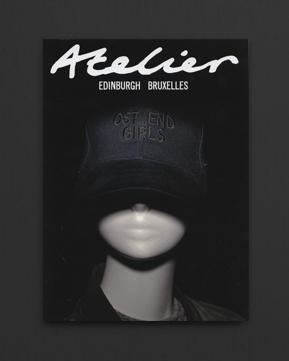
Atelier E.B is the company name under which the designer Beca Lipscombe and the artist Lucy McKenzie sign their collaborative projects. The group was formed in 2007 by Lipscombe and the illustrator Bernie Reid, who are based in Edinburgh, and McKenzie, who is originally from Glasgow and lives in Brussels. Since 2011 the pair have operated as a fashion label, and this June at Galerie Micheline Szwajcer they present their third collection, The Inventors of Tradition II, for sale direct to the public from a custom-built boutique installation.
Art’s fascination with fashion rarely penetrates beneath its glamorous surface, seemingly content to perpetuate its contradictions without critical analysis. Atelier E.B, by placing both practices on an equal footing, combine art and fashion to explore many complex themes, including alternative forms of commercial production and distribution. Their designs are produced, sold and promoted ethically, yet are too idiosyncratic to be easily marketed as an ‘eco brand’. Ateler E.B recognise that clothes are sophisticated tools for empowerment and pleasure.
Sportswear has been acting as a modernizing influence on fashion since the nineteenth century, and continues to be at the forefront of how people express their cultural allegiances. In 2014, with the referendum to leave the United Kingdom, Scotland was asked to reflect on its identity, and Atelier E.B is the only label explicitly to address this through fashion. For IOT II they combine exquisitely woven or knitted cashmeres and silk lingerie with neo-classical nylon ‘cosplay’ tracksuits. Hand intarsia Scottish football tops in cashmere have nationalist logos appropriated then pixilated. Silk and lace football shorts, oversized polo shirts, a football hooligan paisley shawl, fake Charles Rennie Mackintosh jewellery, counterfeit Bennetton, a trompe-l'œil zip brooch, and fictitious sponsorship from the Clydesdale Bank. Other highlights include a wool mix school-skirt, an Ivan Lendl picnic blanket, the perfect artschool-girl coat, cashmere leisure suits in Black, Derby grey, Blackcurrant and Rum and Eastern European gym shoes.
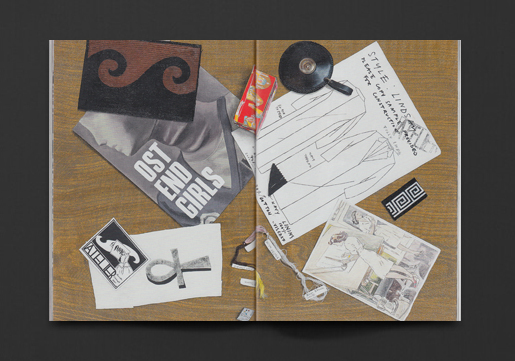
This publication was produced by Atelier E.B. around their "Ost End Girls" collection, featuring garments, texts by Lucy McKenzie, photoshoots and graphic details/textiles/showroom interiors/shop-fronts/ads from the work of Atelier E.B. (and also Marc Camille Chaimowicz), Designed by H I T studio, London.
2014, English / German
Softcover, 384 pages (1,052 colour illustrations), 24.4 cm x 16.8 cm
Published by
Walther König / Köln
$98.00 - Out of stock
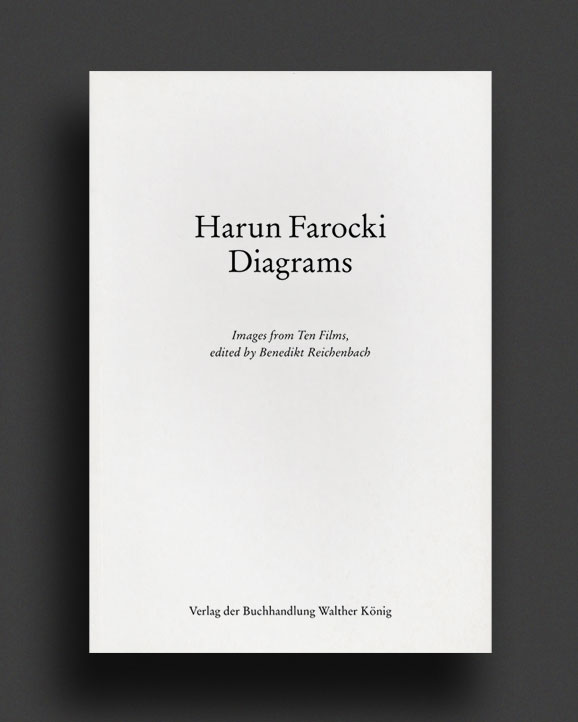
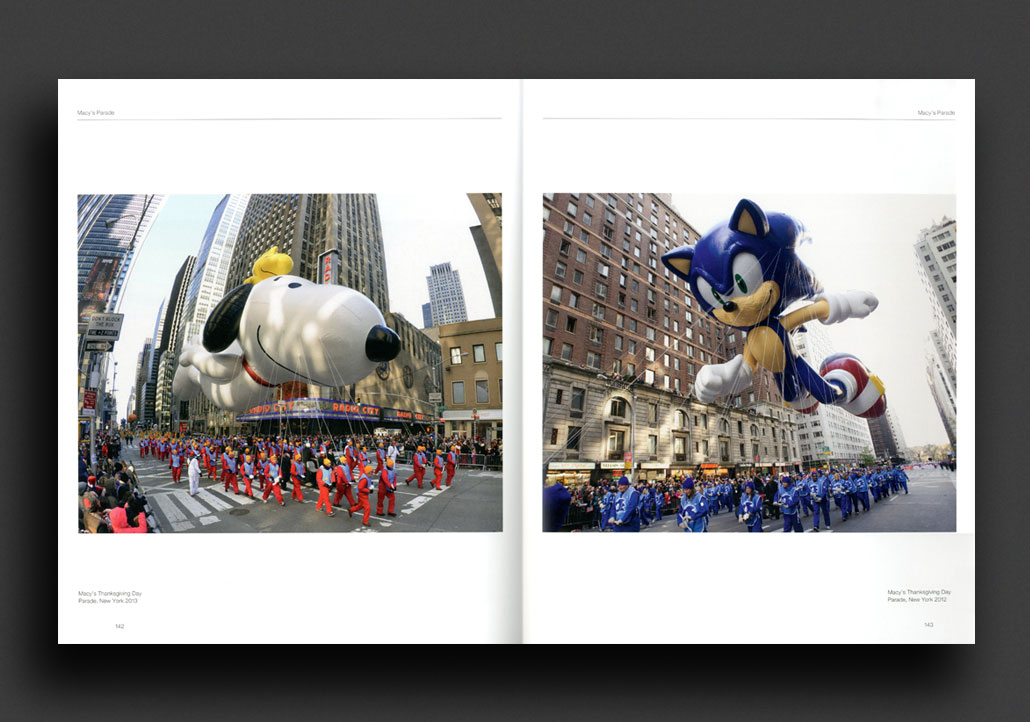
This publication attempts to map a visual approach to one of the world's foremost documentary and essay filmmakers, Harun Farocki. Unlike the many other, more theoretical publications about his work, this book operates with still images beyond an illustrative or documentary purpose. By means of repetition, interruption and displacement, the configurations pursue specific movements within each film, taking into account mechanisms of order and open-endedness that are characteristic for Farocki's work in general.
Diagrams traces the dynamics in ten of Farocki's films and presents them along with each film's complete commentaries, dialogues and intertitles, celebrating their major critical gesture: the exposition of mediality.
Edited by Benedikt Reichenbach, with texts by Thomas Elsaesser, Maren Grimm, Jan Verwoert, Christa Blümlinger, Dietrich Leder, Ute Holl, Benedikt Reichenbach, Matthias Rajmann, Hila Peleg, Anselm Franke.
2020, English / German
Hardcover, 192 pages, 27.5 x 23.5 cm
Published by
Daniel Buchholz Galerie / Köln
Walther König / Köln
$135.00 - Out of stock
German artist, Isa Genzken (b.1948) is one of the most important, multifaceted, always surprising artists working anywhere worldwide. This is evidenced not only by her large-scale exhibitions of recent years, but also by her repeated participation in the documenta in Kassel, the Biennale in Venice, or Skulptur Projekte in Munich. She is known for her enormous creative energy and the ability, implicit in her work, to repeatedly re-position herself with artistic curiosity. Her realized and unrealized outdoor sculptures and projects for the public space show the artist’s interest in space and the (in this case architectural) environment. Operating in the field of tension between architecture and art, she questions principles of proportions and the relationship between object and viewer and examines the ways in which perceptions of public space inform and condition our consciousness.
Published after the exhibition ‘Isa Genzken: Projects for Outside’ at Galerie Buchholz, Berlin (27 November 2018 – 26 January 2019)
English and German text.
2013, English
Softcover, 96 pages, 11 x 18 cm
Published by
Errant Bodies / Berlin
$22.00 - In stock -
Chilean journalist and independent curator Valentina Montero (born 1973) left her native country five years ago, relocating to Europe just in time for the continent’s financial crisis. In this book, Montero outlines some of the milestone events and moments that led to Chile’s advanced neoliberalism, and its effects upon education and culture, detecting signs of hope in the lively student movement that emerged in 2011.
2009, English
Softcover, 136 pages, 110 x 180 mm
Published by
Paraguay Press / Paris
CGAC / Spain
$25.00 - Out of stock
A tribute to Abbie Hoffmann’s pamphlet of the same name, Steal this Book documents eleven recent performative projects by Spanish artist Dora García.
Edited by François Piron, the book presents the private correspondence of the artist with the various interpreters of the situations she sets up in the public space. It proposes a documentation of a body of work without an overview, nor an official line, since it takes neither the artist point of view nor the critic’s. Instead, it discloses questions, misunderstandings and arguments, making this book part suspense story, part user’s manual, part script for a stand-up comedy. Steal this Book is presented in exhibitions as a Dora Garcia sculpture meant to be stolen, but can also be found in selected bookstores worldwide.
Dora García (born 1965) is a contemporary Spanish artist. García draws on interactivity and performance in her work, using the exhibition space as a platform to investigate the relationship between artwork, audience, and place.
2016, English
Softcover, 144 pages, 11.5 x 17.7 cm
Published by
Badlands Unlimited / New York
$26.00 - Out of stock
"Bettina Davis' first foray into erotic fiction will leave readers as breathless as its protagonist. Prepare to turn red hot from the nonstop kinky hijinks in this bonafide hardcore page-turner set in bustling New York City. Readers will blush as they go indepth into the mind of a wannabe submissive."
—Naeisha Rose, RT Book Reviews
“An antidote to the comparative ocean of mass-produced and self-published smut”
—ELLE Magazine
Greta lives a life of leisure in New York City with her hot but boring workaholic husband, Landon. One night, the mysterious Sir Dannlo invites her to a mansion upstate, where Greta finds herself indulging in pleasures her marriage can’t fulfill.
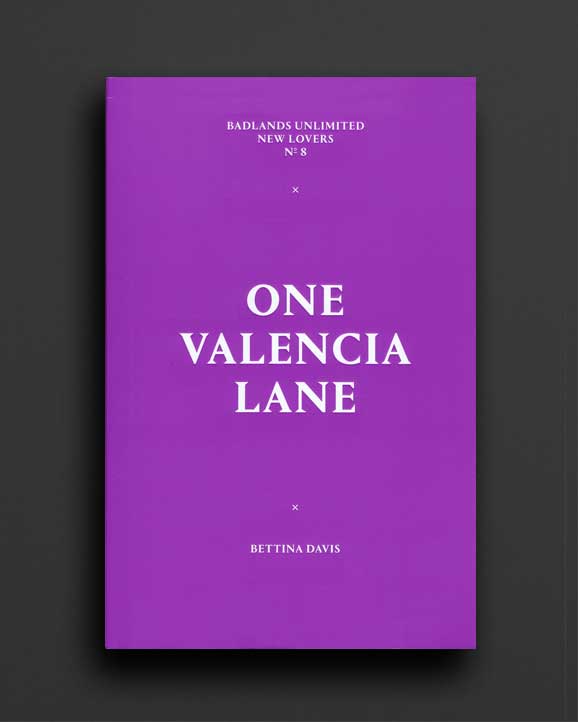
One Valencia Lane by Bettina Davis is one of the New Lovers, a series of short erotic fiction published by Badlands Unlimited. Inspired by Maurice Girodias’ legendary Olympia Press, New Lovers features the raw and uncut writings of authors new to the erotic romance genre. Each story has its own unique take on relationships, intimacy, and sex, as well as the complexities that bedevil contemporary life and culture today.
Each novella in the New Lovers series is an independent story of about 12,000 – 18,000 words in length. One Valencia Lane is an Eyes Wide Shut-esque tale where appearances are deceiving & a sexual awakening comes from the least expected place.
The design of New Lovers pays homage to the classic covers of the books published by Olympia Press. The “soft-touch” lamination and embossed lettering on the front covers of the paperback editions make these novellas a precious edition to any library that feature special color endpaper artworks by Paul Chan.
2020, English
Hardcover, 256 pages, 21 x 29.8 cm
Published by
SFMOMA / San Francisco
D.A.P. / New York
$100.00 - Out of stock
Part artist's book, part exhibition catalog, this book chronicles Tauba Auerbach’s multimedia syntheses of abstraction, science, graphic design and typography.
Tauba Auerbach studies the boundaries of perception through an art and design practice grounded in math, science and craft. Published in conjunction with the first major survey of the artist’s work, this volume, designed by Auerbach in collaboration with David Reinfurt, spans 16 years of her career, highlighting her interest in concepts such as duality and its alternatives, interconnectedness, rhythm and four-dimensional geometry.
Encapsulating Auerbach’s longstanding consideration of symmetry, texture and logic, the title S v Z offers a framework for this volume’s typeface, design and structure. Images of more than 130 paintings, drawings, sculptures and artist’s books created between 2004 and 2020 are mirrored by a comprehensive selection of related reference images, illuminating her multifaceted practice as never before. Essays by Joseph Becker, Jenny Gheith and Linda Dalrymple Henderson provide further context for the work.
The book contains original marble patterns created specially for the book by the artist on both the endpapers and the edges of the book block. The cover is lettered in Auerbach’s calligraphy, applied in black foil on a silver paper. The typeface was designed by David Reinfurt with Auerbach expressly for this publication, and is based on her handwriting.
New York–based artist Tauba Auerbach (born 1981) grew up in San Francisco and graduated from Stanford University in 2003. She apprenticed and worked as a sign painter at New Bohemia Signs in San Francisco. In 2013 she founded Diagonal Press. She is represented by Paula Cooper Gallery, New York, and Standard Oslo.
2020, English
Softcover, 132 pages, 22.9 x 15.9 cm
Published by
Mamco / Genève
$63.00 $30.00 - Out of stock
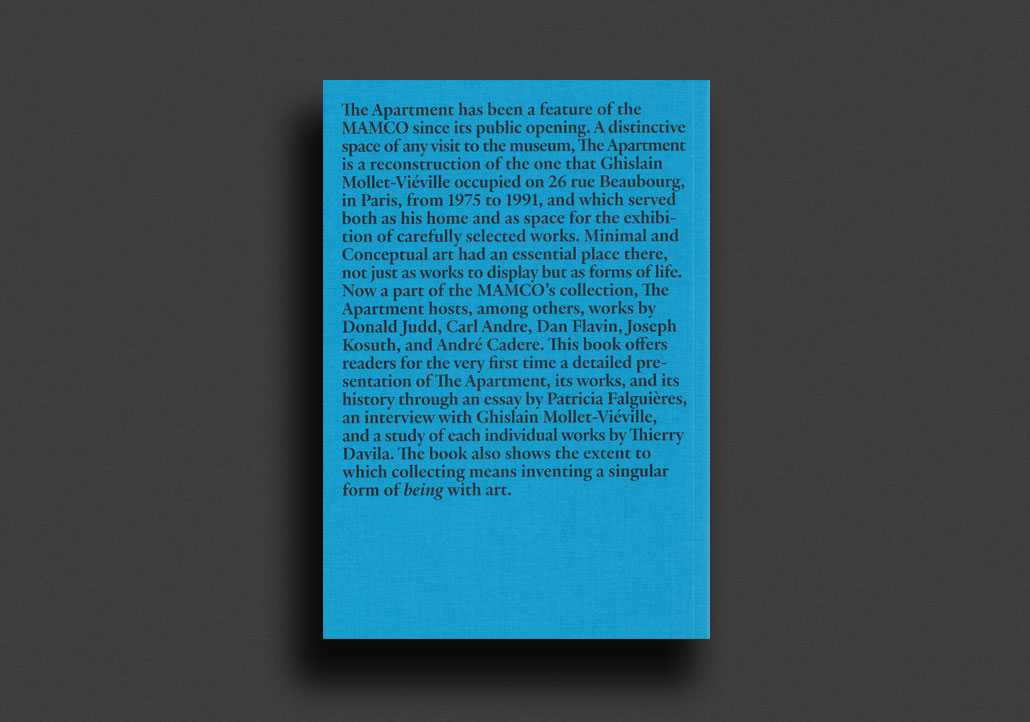
This book documents the scrupulous recreation, inside MAMCO Geneva, of a flat owned between 1975 and 1992 by Parisian collector and self-described agent d’art Ghislain Mollet-Viéville. Mollet-Viéville’s apartment on the rue Beauborg showcased his incredible collection of minimalist and conceptual art; the flat served flexibly as home, gallery and crossroads of international contemporary art. Featuring works by Victor Burgin, Dan Flavin, Donald Judd, Carl Andre, Claude Rutault, Art & Language, John McCracken and Lawrence Weiner, Mollet-Viéville’s collection, and its display in his apartment, defined a radical approach to collecting and played an important role in publicizing the work of these artists in France.
MAMCO acquired Mollet-Viéville’s groundbreaking collection in 2017; The Apartment is the first publication to celebrate and study Mollet-Viéville’s collection and its faithful reinstallation at MAMCO Geneva as a “period room” of contemporary art history. The Apartment features an analysis of each work included in the installation, an interview with Mollet-Viéville conducted by Lionel Bovier and Thierry Davila, and an essay by Patricia Falguières.
2007, English
Softcover, 360 pages, 14.9 x 22.9 cm
Published by
University of Minnesota Press / Minnesota
$44.00 - Out of stock
In 2006, about 69 million U.S. households had pets, giving homes to around 73.9 million dogs, 90.5 million cats, and 16.6 million birds, and spending more than 38 billion dollars on companion animals. As never before in history, our pets are truly members of the family. But the notion of “companion species”—knotted from human beings, animals and other organisms, landscapes, and technologies—includes much more than “companion animals.”
In When Species Meet, Donna J. Haraway digs into this larger phenomenon to contemplate the interactions of humans with many kinds of critters, especially with those called domestic. At the heart of the book are her experiences in agility training with her dogs Cayenne and Roland, but Haraway’s vision here also encompasses wolves, chickens, cats, baboons, sheep, microorganisms, and whales wearing video cameras. From designer pets to lab animals to trained therapy dogs, she deftly explores philosophical, cultural, and biological aspects of animal–human encounters.
In this deeply personal yet intellectually groundbreaking work, Haraway develops the idea of companion species, those who meet and break bread together but not without some indigestion. “A great deal is at stake in such meetings,” she writes, “and outcomes are not guaranteed. There is no assured happy or unhappy ending-socially, ecologically, or scientifically. There is only the chance for getting on together with some grace.”
Ultimately, she finds that respect, curiosity, and knowledge spring from animal–human associations and work powerfully against ideas about human exceptionalism.
2019, English
Softcover, 241 pages, 14 x 21.6 cm
Published by
Zero Books / UK
$33.00 $15.00 - Out of stock
"Hearing the Cloud guides us through the soundscapes of contemporary neoliberal capitalism, from chillstep to nightcore, and recaptures the possibilities of collective listening embedded within these musical forms. Emile Frankel traces a pattern recognition of our moment, poised between dystopian nihilism and the receding possibilities of utopia. Against irony, fragmentation, and chaos, Hearing the Cloud helps us hear the material presence of sound in our lives and the whispers of a better future." -- Benjamin Noys, author of Malign Velocities: Accelerationism and Capitalism
Can music be a curse? This book offers an alternate history of online politics and new technology from the perspective of listening, typing, composing, and shared hearing. In spite of narrowing images of tech-dystopias and flooded, desertified worlds, experimental sound and club culture attempts to open up spaces for alternate and vital imaginings. Charting the work of artists such as Holly Herndon, Chino Amobi, Amnesia Scanner, OPN and PC Music, as well as a broader discussion of streaming economics, virtual soundtracks and internet birthed genre, Hearing the Cloud reflects upon an epoch of music which is critical of the neoliberal future we speed towards. The causal nature of making music about such a future becomes a platform to consider the act of composing, one note over another, as an act of resistance and an act of prophecy.
Emile Frankel presents a rigorous account of a world felt to be in crisis. The aesthetic and tonal ramifications for such feelings are twisted within the oppressive online structures mediating new music. The legacies of Silicon Valley digitalism, 4chan, Less Wrong, and Chaos Magic are compared to the magical thinking which underlies stochastic composition, and the aesthetics of deconstructed club music. Despite a pessimistic account of Accelerationism and reactionary philosophy, Frankel's spirited writing is still full of hope. Hearing the Cloud considers the communal online conversations we engage in daily as profound acts of defiance. Sweet, lithe, oily, and honest music is shown to be an important source of togetherness.
Emile Frankel is a writer and composer researching the changing conditions of online listening.
2017, English
Softcover, 440 pages, 16.6 x 21.6 cm
Published by
Wave / Washington
$55.00 - Out of stock
Some cover damage, otherwise perfect.
The Poetry Project at St. Mark’s Church was founded in 1966 for the overlapping circles of poets in the Lower East Side of New York. These interviews from The Poetry Project Newsletter form a kind of conversation over time between some of the late 20th century's most influential poets and artists, who have come together in this legendary venue over the past 50 years. Includes interviews with Charles North, Anne Waldman, Bernadette Mayer, David Rattray, Allen Ginsberg, Kenneth Koch, Harryette Mullen, Barbara Henning, David Henderson, Lisa Jarnot, Alice Notley, Ed Sanders, Samuel Delany, Harry Matthews, Victor Hernandez Cruz, Renee Gladman, Lorenzo Thomas, Fred Moten, Stan Brakhage, Alex Katz, Lewis Warsh, Ron Padgett, Maggie Nelson, Fred Moten, Wayne Koestenbaum, Eileen Myles, and more.
"I find it one of the liveliest points of communication in the American poetry world. There is an incredible excitement to come to the church and read one's poems to the many other poets who congregate there, drawn to the church by its own energy and thrust."—Donald Hall
From the introduction, by Anselm Berrigan: For the poets closely involved with the Poetry Project since, and subsequent to, its inception, the interviews were an opportunity to speak directly to a community one could perceive as known, imaginary, expanding, unwieldy, intermittent, formative, desperately necessary, and sometimes peculiarly unsatisfying all at once. Community being the kind of term that often implies everything and nothing simultaneously, with the bottom falling out of the word depending on who happens to be wielding it. Poets can be particularly adept at using and exposing such terms.
1971, English
Softcover, 60 pages, 21 cm x 27 cm
1st Edition, Out of print title / used / good
Published by
Peter Stuyvesant Trust / Sydney
$30.00 - Out of stock
Scarce 1971 Australian catalogue published to accompany Scultura Italiana : brought to Australia by the Peter Stuyvesant Trust for the Development of the Arts, a major touring exhibition on modern Italian sculpture that travelled the world throughout the 1960s into the 1970s, including ten stagings in Australia alone. Features the work of Giacomo Benevelli, Floriano Bodini, Corrado Cagli, Aldo Calo, Angelo Canevari, Cosimo Carlucci, Pietro Cascella, Pietro Consagra, Roberto Crippa, Pericle Fazzini, Nino Franchina, Franco Garelli, Quinto Ghermandi, Emilio Greco, Berto Lardera, Edgardo Mannucci, Giacomo Manzu, Marino Marini, Arturo Martini, Marcello Mascherini, Umberto Mastroianni, Francesco Messina, Umberto Milani, Luciano Minguzzi, Basaldella Mirko, Mario Negri, Augusto Perez, Arnaldo Pomodoro, Gio Pomodoro, Medardo Rosso, Giuditta Scalini, Loreno Sguanci, Francesco Somaini, Alberto Viani. Illustrated throughout with biographies on each artists and exhibition checklist, texts, etc.
Cover with fold and general wear. Internal tight and clean VG throughout.
1991, English / German
Softcover, 52 pages (plus leporello exhibition guide), 25.5 x 21.0 cm
1st Edition, Out of print title / used / very good
Published by
Trust Company of Australia / Canberra
$40.00 - Out of stock
Scarce catalogue published on the occasion of Contemporary Australian Hollow Ware: An Exhibition Of Sixteen Silversmiths by Trust Company of Australia, Canberra 1991. Following a group of introductory texts each artist is profiled with a biography, portrait and colour photographs of their works. Curated by Daniel McOwen for the Hamilton Art Gallery, the exhibition included the work of Robert Baines, Frank Bauer, Susan Cohn, Mark Edgoose, Ian Ferguson, Robert Foster, Wayne Guest, Ragnar Hansen, Marian Hosking, Jeannie Keefer Bell, Johannes Kuhnen, Helge Larsen & Darani Lewers, Andrew Last, Chris Mullins, Georgina Paton, Beatrice Schiabowsky.
Texts in English and German. This copy includes additional inserted leporello exhibition guide with colour photographs, texts on the exhibited works and checklist.
Very Good-Fine copy.
1992, English / German
Softcover, 48 pages, 27.5 x 20.5 cm
1st Edition, Out of print title / used / good
Published by
The Museum für Angewandte Kunst / Köln
$30.00 - Out of stock
Scarce catalogue from 1992 surveying the work of German designer and sculptor Werner Bünck (b. 1943, Einswarden), published on the occasion of an exhibition at The Museum für Angewandte Kunst, Köln. Profusely illustrated with Bünck's exquisite gold and silversmith work (teapots and jugs, mostly) spanning 1968-1991, with an illustrated introduction by Gerhard Dietrich, portrait, work catalogue, biography, and exhibition history.
"Form follows function": American architect Louis Henry Sullivan's (1892) famous statement, made in ornament loving period of historicism, was an expression of a yearning for a clear interpretation of purpose from form; it has a deep meaning for the silversmith and designer Werner Bunck. Amidst our epoch of Post Modernism and New Design, Werner Bunck's study of contemporary silversmithing is a search for the principles of pure function and for the conditions of autonomous artistic form. He performs his creative work between these poles, and in doing so, creates a work that has yet to be equaled in its formative consistency and artistic quality. (from introduction)
Good copy. Some corner bumping, otherwise a Very Good clean copy throughout.
1983, English /Japanese / Flemish
1st Edition, Out of print title / used / very good
Published by
Nippon Television Network Corporation / Japan
$85.00 - Out of stock
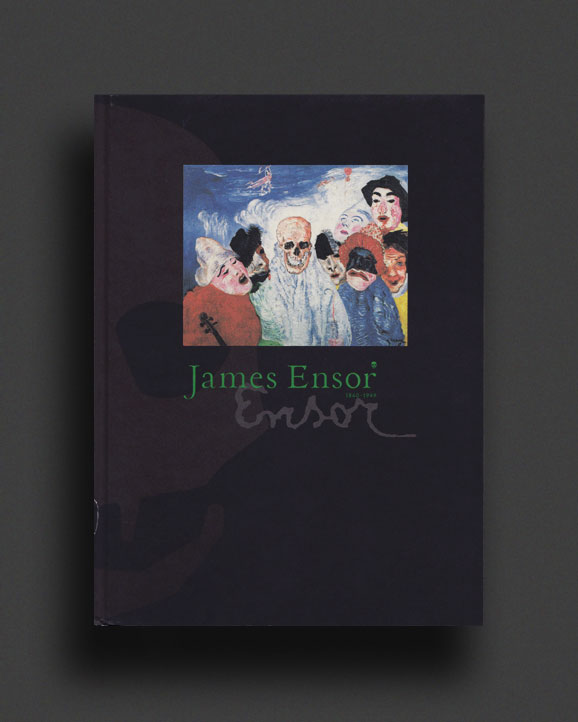
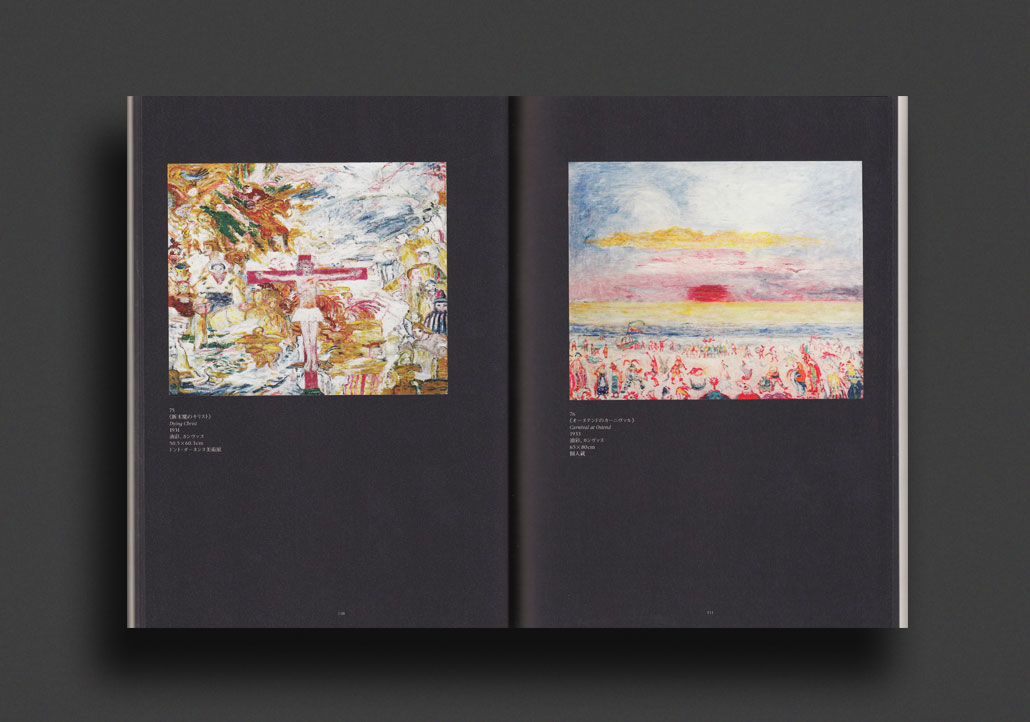
First edition hardcover Japanese catalogue published by the Nippon Television Network Corporation (!) in 1983 on the occasion of a major travelling retrospective of James Ensor's work in Japan. Through Ensor's (1860-1949) various depictions of masks, monsters, and skeletons, the somewhat shocking expression he employed to explore the human spirit had a significant influence on the Expressionist and Surrealist artists to come. Here over 140 works dating from early on in his career to his late years and consisting of oil paintings, drawings, and prints are presented in largely three sections. Beginning with his period of Realism and ending with his prolific graphic and painterly works of the grotesque, where Ensor's critical mentality toward religious or social themes was incisive and remorseless, yet witty. The special middle section focuses on the influence of the Orient on Ensor. The series of pictures known as the Hokusai mangwa, illustrated by Japanese artist Katsushika Hokusai, is considered to have influenced Ensor's art. "There are a series of drawings in which Ensor copied these sketches and pictures depicting Chinese ceramics or Japanese fans. Ensor's family ran a souvenir shop, where there were all sorts of unusual things imported from the Orient and carnival masks. In recent years, the influence of such objects brought from the Orient has been focused on as part of the background to this artist's production of grotesque characters." Includes photographs from his life in Ostend, essays, descriptions of works, bibliography, biography, and much more. Texts in English, Flemish and Japanese.
James Sidney Edouard, Baron Ensor (13 April 1860 – 19 November 1949) was a Belgian painter and printmaker, an important influence on expressionism and surrealism who lived in Ostend for almost his entire life. He was associated with the artistic group Les XX. While Ensor's early works, such as Russian Music (1881) and The Drunkards (1883), depict realistic scenes in a somber style, his palette subsequently brightened and he favored increasingly bizarre subject matter. Such paintings as The Scandalized Masks (1883) and Skeletons Fighting over a Hanged Man (1891) feature figures in grotesque masks inspired by the ones sold in his mother's gift shop for Ostend's annual Carnival. Subjects such as carnivals, masks, puppetry, skeletons, and fantastic allegories are dominant in Ensor's mature work. Ensor dressed skeletons up in his studio and arranged them in colorful, enigmatic tableaux on the canvas, and used masks as a theatrical aspect in his still lifes. Attracted by masks' plastic forms, bright colors, and potential for psychological impact, he created a format in which he could paint with complete freedom. James Ensor is considered to be an innovator in 19th-century art. Although he stood apart from other artists of his time, he significantly influenced such 20th-century artists as Paul Klee, George Grosz, Wols, and many expressionist and surrealist painters of the 20th century.
Very Good copy.
2018, English
Softcover, 192 pages, 17 x 24 cm
Published by
Quodlibet / Italy
$56.00 - Out of stock
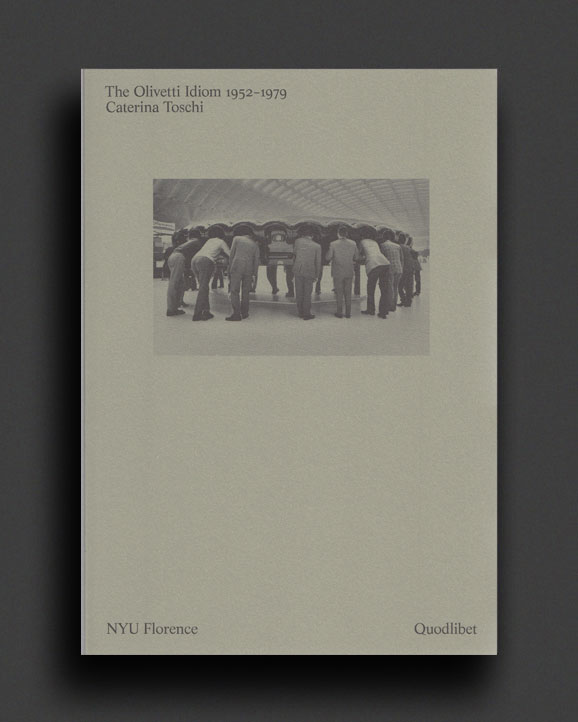
This book by Caterina Toschi reconstructs the development of the Olivetti corporate identity from the early 1950s through the 1970s, as conveyed through spaces for the exposition and description of its products. The display methods and the written, oral, and visual forms of storytelling that brought the highly recognisable Olivetti idiom international success are brought together for the first time in archival documents and photographs, along with images of Olivetti showrooms and stores in cities like Buenos Aires, San Francisco, Chicago, New York, Düsseldorf, Paris, and Vienna. The book celebrates the legacy of excellence that contributed to building the identity of Italian industry.
1991, English
Softcover, 144 pages, 25.5 x 20.5 cm
1st Edition, Out of print title / used / very good
Published by
Rizzoli / New York
$45.00 - Out of stock
"The ceramic teapots made by Peter Shire straddle the line distinguishing functional objects and pure sculpture... Shire's teapots were an important element in the development of the Milan design movement MEMPHIS in the early 1980's, and continue to be shown in galleries and museums in the United States and throughout the world."
This book was the first comprehensive monograph on the work of Los Angeles ceramicist Peter Shire. Published by Rizzoli in New York, this publication features writings by Ettore Sottsass, Hunter Drohojowska-Philp, and Norman M. Klein. Profusely illustrated with Shire's ceramics and drawings throughout.
Very Good copy.
2019, English
Softcover, 250 pages, 21 x 15 cm
Published by
JRP Ringier / Zürich
$48.00 - Out of stock
More Than You Wanted to Know About John Baldessari is the first complete collection of the writings of artist John Baldessari. Edited and with essays by Meg Cranston and Hans Ulrich Obrist, the texts in this two-volume set trace the development of Baldessari’s understanding of art from the early 1960s through to the present, and includes an extended interview with the artist on the subject of his writing.
The collection also includes numerous never-before-published texts as well as facsimiles of the original documents that illustrate Baldessari’s composition of words, which achieve both literary and graphic impact.
Baldessari’s writing addresses a broad range of topics from the problem of colour in sculpture, to the problem of art students who need ideas, to the problem of money in the art world, while returning throughout to the very focused set of issues that are key to his own work.
Principle among them is Baldessari’s love of words and his long-standing investigation into the similarity and possible interchangeability of word and image.
2004, English
Softcover, 160 pages, 14.3 x 21.6 cm
Published by
Dover / New York
$24.00 - In stock -
“Essential reading.” — New Society.
A classic of eighteenth-century thought, Friedrich Schiller’s treatise on the role of art in society ranks among German philosophy’s most profound works. In addition to its importance to the history of ideas, this 1795 essay remains relevant to our own time.
Beginning with a political analysis of contemporary society — in particular, the French Revolution and its failure to implement universal freedom — Schiller observes that people cannot transcend their circumstances without education. He conceives of art as the vehicle of education, one that can liberate individuals from the constraints and excesses of either pure nature or pure mind. Through aesthetic experience, he asserts, people can reconcile the inner antagonism between sense and intellect, nature and reason.
Schiller’s proposal of art as fundamental to the development of society and the individual is an enduringly influential concept, and this volume offers his philosophy’s clearest, most vital expression.
Reprint of the Yale University Press, New Haven, 1954 edition.