World Food Books' programme is largely produced on Kulin Nation land. We acknowledge the Wurundjeri people of the Kulin Nation as the first and continuing custodians of this land, and pay respect to their Elders past, present, and emerging.
World Food Books is an arts and special interests bookshop in Naarm / Melbourne. Founded in 2010, World Food Books is devoted to the presentation of a rotating, hand-selection of international art, design, literary and counterculture publications with an emphasis on the anti-traditional, the experimental, the avant-garde, the heretic, the marginal.
Presenting new titles alongside rare and out-of-print books, catalogues and journals spanning the fields of modern and contemporary art, design, photography, illustration, film, literature, poetry, cultural theory, philosophy, sexuality, popular and underground culture in its many radical forms, World Food Books wishes to encourage adventurous, thoughtful and open-minded reading, looking, writing, and exchange of publishing and ideas, both current and historical.
As well as our bookshop, located in Melbourne's historical Nicholas Building, all of our inventory is available internationally via our online mail-order service.
World Food Books semi-regularly co-ordinates "Occasions", a programme of exhibits and events at the bookshop and in partnership with other hosts (such as museums and art galleries) that develop out of the activities, relationships and content of the bookshop itself.
World Food Books
The Nicholas Building
37 Swanston Street
Room 5, Level 6
Melbourne 3000
Australia
SHOP HOURS:
Thu–Fri 12–6, Sat 12–5
WEB-SHOP OPEN 24/7
World Food Books
Postal Address:
PO Box 435
Flinders Lane
Victoria 8009
Australia
Art
Theory / Essay
Architecture / Interior
Graphic Design / Typography
Photography
Fashion
Eros
LGBTQ+
Fiction / Poetry
Weird / Speculative / Science Fiction / Horror
Transgressive / Visceral / Abject
Symbolism / Decadence / Fin de siècle
Film / Video
Painting
Sculpture / Installation
Performance / Dance / Theater
Drawing
Sound / Music
Curatorial
Group Shows / Collections
Periodicals
Out-of-print / Rare
Posters / Ephemera / Discs
Signed Books
World Food Books Gift Voucher
World Food Book Bag
Australian Art
Australian Fiction
Australian Science Fiction / Speculative Fiction
Australian Poetry
Australian Photography
Japanese Photography
Conceptual Art
Minimal Art
Dada
'Pataphysics / Oulipo
Fluxus
Concrete Poetry
Pop Art
Surrealism
Arte Povera
Arte Informale / Haute Pâte / Tachism
Nouveau Réalisme / Zero / Kinetic
Situationism / Lettrism
Collage / Mail Art / Xerox Art
Art Brut / Folk / Visionary / Fantastic
Illustration / Graphic Art / Bandes Dessinées
Furniture
Italian Radical Design / Postmodernism
Textiles
Ceramics / Glass
Counterculture
Protest / Revolt
Philosophy
Psychoanalysis
Anthropology
Anarchism
Socialism / Anarchism / Communism / Capitalism
Literary Theory / Semiotics / Language
Feminism / Women's Studies
Gender Studies / Sexuality
Anthropology
Fetishism / BDSM
Drugs / Psychedelia
Crime / Violence
Animal Rights / Veganism
Occult / Esoterica
Ecology / Earth / Alternative Living
Whole Earth / Crafts
All prices in AUD (Australian dollars)
Pick-Ups
Pick-up orders can be collected in our bookshop during opening hours after order date. Please collect any Pick-up orders within 2 weeks of ordering as we have limited storage space. Orders will be released back into stock if not collected within this time. No refunds can be made for pick-ups left un-collected. If you cannot make it in to the bookshop in this time-frame, please choose postage option.
Return Policy
All sales are final. We do accept returns (for refund or exchange) for items received in error. All our orders are packed with special care using heavy-duty padding and cardboard book-mailers or bubble mailers (for smaller books), using reinforcement where required. We cannot take responsibility for any lost, stolen or damaged parcels.
Insurance
Should you wish to insure your package, please email us directly after placing your order and we can organise this at a small extra expense. Although all standard/express tracked packages are very safe and dependable, we cannot take responsibility for any lost, stolen or damaged parcels. We recommend insurance on valuable orders.
Interested in selling your old books, catalogues, journals, magazines, comics, fanzines, ephemera? We are always looking for interesting, unusual and out-of-print books to buy. We only buy books in our fields of interest and specialty, and that we feel we can resell.
We base these prices on desirability, market value, in-print prices, condition and our current stock levels. We offer cash, store credit, and can take stock on consignment. All
about 25% of the price we expect to get when we sell them, or 30% in store credit. We base these prices on desirability, market value, in-print prices, condition and our current stock levels.
Sell your books any day of the week. You can drop them off and return later. If you have a lot of books, we can visit your Sydney home.
We buy books that we feel we can resell. We offer about 25 % of the price we expect to get when we sell them, or 30% in store credit. We base these prices on desirability, market value, in-print prices, condition and our current stock levels.
Philadelphia Wireman
03 August - 01 September, 2018
World Food Books is proud to announce our next Occasion, the first presentation of sculptures by Philadelphia Wireman in Australia.
The Philadelphia Wireman sculptures were found abandoned in an alley off Philadelphia’s South Street on trash night in 1982. Their discovery in a rapidly-changing neighbourhood undergoing extensive renovation, compounded with the failure of all attempts to locate the artist, suggests that the works may have been discarded after the maker’s death. Dubbed the "Philadelphia Wireman" during the first exhibition of this work, in 1985, the maker’s name, age, ethnicity, and even gender remain uncertain. The entire collection totals approximately 1200 pieces, all intricately bound together with tightly-wound heavy-gauge wire (along with a few small, abstract marker drawings, reminiscent both of Mark Tobey and J.B. Murry). The dense construction of the work, despite a modest range of scale and materials, is singularly obsessive and disciplined in design: a wire armature or exoskeleton firmly binds a bricolage of found objects including plastic, glass, food packaging, umbrella parts, tape, rubber, batteries, pens, leather, reflectors, nuts and bolts, nails, foil, coins, toys, watches, eyeglasses, tools, and jewellery.
Heavy with associations—anthropomorphic, zoomorphic, and socio-cultural responses to wrapped detritus—the totemic sculptures by Philadelphia Wireman have been discussed in the context of work created to fulfil the shamanistic needs of alternative religions in American culture. Curators, collectors, and critics have variously compared certain pieces to sculpture from Classical antiquity, Native American medicine bundles, African-American memory jugs, and African fetish objects. Reflecting the artist’s prolific and incredibly focused scavenging impulse, and despite—or perhaps enhanced by—their anonymity, these enigmatic objects function as urban artefacts and arbiters of power, though their origin and purpose is unknown. Philadelphia Wireman, whatever their identity, possessed an astonishing ability to isolate and communicate the concepts of power and energy through the selection and transformation of ordinary materials. Over the course of the past two decades, this collection has come to be regarded as an important discovery in the field of self-taught art and vernacular art.
Presented in collaboration with Fleisher-Ollman Gallery, Philadelphia, and Robert Heald, Wellington.
Susan Te Kahurangi King
02 February - 10 March, 2018
Susan Te Kahurangi King (24 February 1951 - ) has been a confident and prolific artist since she was a young child, drawing with readily available materials - pencils, ballpoint pens and felt-tip markers, on whatever paper is at hand. Between the ages of four and six Susan slowly ceased verbal communication. Her grandparents William and Myrtle Murphy had developed a special bond with Susan so they took on caring responsibilities for extended periods. Myrtle began informally archiving her work, carefully collecting and storing the drawings and compiling scrapbooks. No drawing was insignificant; every scrap of paper was kept. The King family are now the custodians of a vast collection containing over 7000 individual works, from tiny scraps of paper through to 5 meter long rolls.
The scrapbooks and diaries reveal Myrtle to be a woman of great patience and compassion, seeking to understand a child who was not always behaving as expected. She encouraged Susan to be observant, to explore her environment and absorb all the sights and sounds. Myrtle would show Susan’s drawings to friends and people in her community that she had dealings with, such as shopkeepers and postal workers, but this was not simply a case of a grandmother’s bias. She recognised that Susan had developed a sophisticated and unique visual language and sincerely believed that her art deserved serious attention.
This was an unorthodox attitude for the time. To provide some context, Jean Dubuffet coined the term Art Brut in 1945 to describe work created by self-taught artists – specifically residents of psychiatric institutions and those he considered to be visionaries or eccentrics. In 1972 Roger Cardinal extended this concept by adopting the term Outsider Art to describe work made by non-academically trained artists operating outside of mainstream art networks through choice or circumstance. Susan was born in Te Aroha, New Zealand in 1951, far from the artistic hubs of Paris and London that Dubuffet and Cardinal operated in. That Myrtle fêted Susan as a self-taught artist who deserved to be taken seriously shows how progressive her attitudes were.
Susan’s parents Doug and Dawn were also progressive. Over the years they had consulted numerous health practitioners about Susan’s condition, as the medical establishment could not provide an explanation as to why she had lapsed into silence. Dawn educated herself in the field of homeopathy and went on to treat all twelve of her children using these principles – basing prescriptions on her observations of their physical, mental and emotional state.
Doug was a linguist with an interest in philosophy who devoted what little spare time he had to studying Maori language and culture. To some extent their willingness to explore the fringes of the mainstream made them outsiders too but it was their commitment to living with integrity and their respect for individuality that ensured Susan’s creativity was always encouraged.
Even though Susan’s family supported her artistic pursuits, some staff in schools and hospitals saw it as an impediment to her assimilation into the community and discouraged it in a variety of ways. Her family was not always aware of this and therefore did not fully understand why Susan stopped drawing in the early 1990s. However, rather than dwell on the challenges that Susan faced in pursuit of her artistic practice, they prefer to highlight her achievements. In 2008 Susan began drawing again in earnest, after an almost 20 year interruption, and her work is now shown in galleries around the world.
Susan grew up without television and has been heavily influenced by the comics she read as a child. She is absolutely fearless in the appropriation of recognizable characters, such as Donald Duck and Mickey Mouse, in her work. She twists their limbs, contorts their faces, compresses them together, blends them into complex patterned backgrounds - always imbuing them with an incredible energy. Although Susan often used pop culture characters in her work they are not naive or childlike. These are drawings by a brilliant self-taught artist who has been creating exceptional work for decades without an audience in mind.
Mladen Stilinović
"Various Works 1986 - 1999"
02 February 16 - September 10, 2016
Various works 1986 - 1999, from two houses, from the collections of John Nixon, Sue Cramer, Kerrie Poliness, Peter Haffenden and Phoebe Haffenden.
Including: Geometry of Cakes (various shelves), 1993; Poor People’s Law (black and white plate), 1993; White Absence (glasses, ruler, set square, silver spoon, silver ladel with skin photograph and wooden cubes), 1990-1996; Exploitation of the Dead (grey and red star painting, wooden painting, black spoon with red table, red plate), 1984-1990; Money and Zeros (zero tie, paintings made for friends in Australia (Sue, John, Kerrie), numbers painting), 1991-1992; Words - Slogans (various t-shirts) - “they talk about the death of art...help! someone is trying to kill me”, “my sweet little lamb”, “work is a disease - Karl Marx”; Various artist books, catalogues, monographs, videos; Poster from exhibition Insulting Anarchy; "Circular" Croatian - Australian edition; Artist book by Vlado Martek (Dostoyevsky); more.
Thanks to Mladen Stilinović and Branka Stipančić.
Jonathan Walker
Always Will Need To Wear Winter Shirt Blue + Ochre Small Check Pattern
21 August - 21 September, 2015
Untitled
I am not a great reader of poetry but I always return to the work of Melbourne poet, Vincent Buckley (1925- 1988). Perhaps I find his most tantalising piece to be not a finished poem but a fragment left on a scrap of paper discovered on his desk after the poet’s death.
The poetry gathers like oil
In the word-core, and spreads
It has its music meet,
Its music is in movement.
This fragment is more the shell left behind from a volatile thought than a finished poem. I find the last two lines honest but awkward whereas the first two lines work like an arrow. Most likely he could not find a resolution so it was left. Still, in its present form, it remains an eloquent testimony to the ultimate failure of a medium to express mobile thought and sensation, in Buckley’s case, through verbal language. It’s an important matter because this is something all artists have to deal with regardless of the medium.
I have never written a poem, however, I am forever copying fragments from books on paper scraps in a vain effort to fix certain notions in my head. At first, they function as bookmarks that are sometimes returned to when I open the book. But before long, as they accumulate, they fall out littering the table interspersed with A4 photocopies, bills, books and medications.
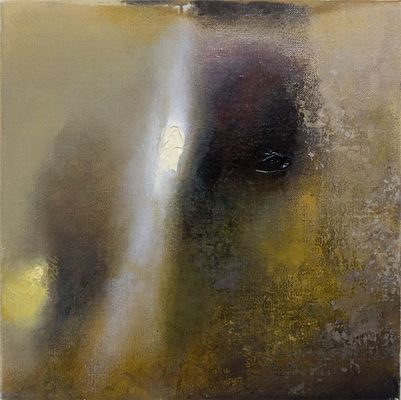
To return to Buckley’s fragment, the first two lines very much evoke how I paint nowadays. As you age, detail diminishes and patches of light become more luminous and float. I feel the most honest way of dealing with this is by smearing the oil paint on the canvas with the fingers and working close-up, blind. Only if the patches coalesce into an approaching image can the work gain a life.
-
Jonathan Walker was born in Melbourne, Australia and brought up on a dairy farm in Gippsland. In the 1970’s he studied painting at RMIT and won the Harold Wright Scholarship to the British Museum, London. During the 1980’s he exhibited at Pinacotheca Gallery, Richmond and had work shown at the NGV and Heidi City Art Gallery. Over the same period he designed the cover for the “Epigenesi” LP by Giancarlo Toniutti, Italy and conducted a mail exchange work with Achim Wollscheid, Germany. The work with artists through the post resulted in an article published in the bicentenary issue of Art and Australia 1988. He showed in artist run spaces such as WestSpace in the 90’s and 2000’s, and until 2012, taught painting at Victoria University, which is where we (Colleen Ahern and Lisa Radford) as organisers of the exhibition, among many others, had the privilege of being his student.
Walker’s knowledge was imparted to students through the careful selection of music, literature, and artists found in books that he himself had ordered for the library. Walker’s strategy was the generosity of sharing his vast knowledge with references specific to each student and their context.
Walker’s paintings share a similar focus and intimacy.
This exhibition presents a small selection of recent paintings alongside a publication that includes Walker’s writing. Observational and analytical, Walker’s work is a type of material notation — the time of day, colour and how it is blended, the both specific and fleeting location of a reflection on lino or the question of whether a chair leg should be included in a painting.
Please join us on Friday August 21 between 6-8pm to celebrate the opening of the exhibition.
Curated by Colleen Ahern and Lisa Radford.
B. Wurtz
Curated by Nic Tammens
March 26 - April 4, 2015
B.Wurtz works from a basement studio in his home on Manhattan’s Lower East Side.
This local fact is attested to by the plastic shopping bags and newsprint circulars that appear in his work. As formal objects, they don’t make loud claims about their origins but nonetheless transmit street addresses and places of business from the bottom of this long thin island. Like plenty of artists, Wurtz is affected by what is local and what is consumed. His work is underpinned by this ethic. It often speaks from a neighborhood or reads like the contents of a hamper:
“BLACK PLUMS $1.29 lb.”
“Food Bazaar”
“USDA Whole Pork Shoulder Picnic 99c lb.”
“RITE AID Pharmacy, with us it’s personal.”
“H. Brickman & Sons.”
“Sweet Yams 59c lb."
Most of the work in this exhibition was made while the artist was in residence at Dieu Donne, a workshop dedicated to paper craft in Midtown. Here Wurtz fabricated assemblages with paper and objects that are relatively lightweight, with the intention that they would be easily transportable to Australia. This consideration isn’t absolute in Wurtz’s work, but was prescriptive for making the current exhibition light and cheap. Packed in two boxes, these works were sent from a USPS post office on the Lower East Side and delivered to North Melbourne by Australia Post.
Wurtz appears courtesy of Metro Pictures, New York.
Thanks to Rob Halverson, Joshua Petherick, Sari de Mallory, Matt Hinkley, Helen Johnson, Fayen d'Evie, Ask Kilmartin, Lisa Radon, Ellena Savage, Yale Union, and "Elizabeth".
John Nixon
"Archive"
December 15 - January 20, 2014
The presentation of John Nixon's archive offered a rare showcase of this extensive collection of the artist's own publications, catalogues, posters, ephemera, editions and more, from the mid 1980s onwards, alongside a selection of his artworks.
Organized by John Nixon, Joshua Petherick and Matt Hinkley.
<a href=http://wfb.public-office.info/artist/john-nixon>All titles by John Nixon
"Habitat"
at Minerva, Sydney (organised by Joshua Petherick and Matt Hinkley)
November 15 - December 20, 2014
Lupo Borgonovo, Janet Burchill & Jennifer McCamley,
Lewis Fidock, HR Giger, Piero Gilardi, Veit Laurent Kurz,
Cinzia Ruggeri, Michael E. Smith, Lucie Stahl, Daniel Weil, Wols
Press Release:
“...It contained seven objects. The slender fluted bone, surely formed for flight, surely from the wing of some large bird. Three archaic circuitboards, faced with mazes of gold. A smooth white sphere of baked clay. An age-blackened fragment of lace. A fingerlength segment of what she assumed was bone from a human wrist, grayish white, inset smoothly with the silicon shaft of a small instrument that must once have ridden flush with the surface of the skin - but the thing’s face was seared and blackened.”
William Gibson, “Count Zero”, 1986
"Autumn Projects Archive"
Curated by Liza Vasiliou
March 6 - March 15, 2014
World Food Books, in conjunction with the Virgin Australia Melbourne Fashion Festival 2014, presented the Autumn Projects archive, consisting of a selection of early examples in Australian fashion with a particular interest in collecting designers and labels from the period beginning in the 1980’s, who significantly influenced the discourse of Australian Fashion.
Curated by Liza Vasiliou, the exhibition provided a unique opportunity to view pieces by designers Anthea Crawford, Barbara Vandenberg, Geoff Liddell and labels CR Australia, Covers, Jag along with early experimental collage pieces by Prue Acton and Sally Browne’s ‘Fragments’ collection, suspended throughout the functioning World Food Books shop in Melbourne.
H.B. Peace
presented by CENTRE FOR STYLE
November 14, 2013
"Hey Blinky, you say chic, I say same"
Anon 2013
H.B. Peace is a clothing collaboration between great friends Blake Barns and Hugh Egan Westland. Their pieces explore the divergences between 'character’ and ‘personality’ in garments....etc
Special Thanks to Joshua Petherick and Matt Hinkley of WFB and Gillian Mears
and a Very Special Thank you to Audrey Thomas Hayes for her shoe collaboration.
Janet Burchill & Jennifer McCamley
"Aesthetic Suicide"
May 10 - June 8, 2013
The first of our occasional exhibitions in the World Food Books office/shop space in Melbourne, "Aesthetic Suicide" presented a body of new and older works together by artists Janet Burchill & Jennifer McCamley, including videos, prints, a wall work, and publications.
During shop open hours videos played every hour, on the hour.
1977, English
Softcover (staple-bound), 32 pages, 21 x 13.5 cm
1st Edition, Out of print title / used / very good
Published by
Athletic Model Guild (AMG) / Los Angeles
$40.00 - Out of stock
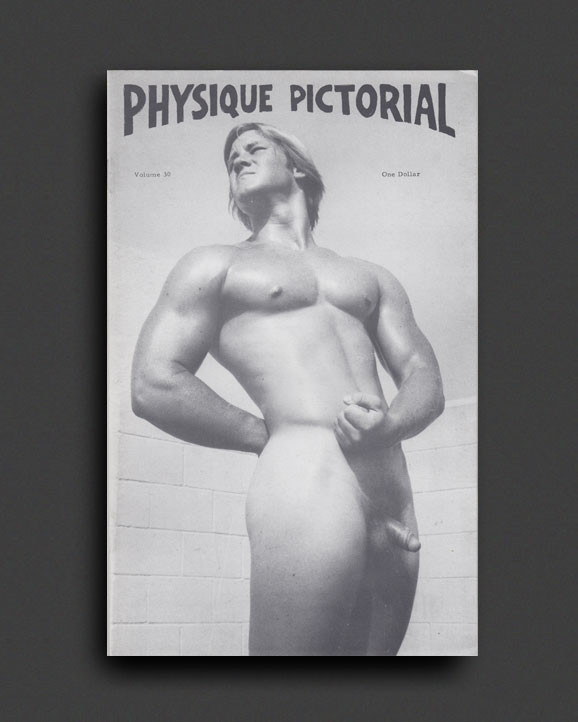
Physique Pictorial vol. 30 August 1977 issue of the iconic Physique Pictorial magazine from Los Angeles. Original issue packed with nude photographs and illustrations from various artists. Includes artwork by Spartacus.
In 1945, gay pornography pioneer Bob Mizer founded Athletic Model Guild, or AMG. Mizer's AMG produced the trailblazing, iconic Physique Pictorial, the first all-nude and all-male magazine. Bob, himself, worked on every aspect of PP's production from the graphic design and tedious cut-and-paste production of the layout to the composition of the texts and the all-important selection of photographs and illustrations. Physique Pictorial was and still is the most highly coveted publication of its genre, introducing the world to such fantastic photographers such as Bruce of Los Angeles, Lon of London and Champion Studios, models such as John Apache, Jim Paris, and Tico Patterson, and artists such as Tom of Finland, Etienne and George Quaintance. In the 1960s, the pretense of being a digest about about exercise and fitness was dropped as controls on pornography were reduced. By the end of the decade gay pornography became legal, and the market for physique "beefcake" magazines collapsed. These magazines are a gorgeous time capsule.
Very Good copy.
1978, English
Softcover (staple-bound), 32 pages, 21 x 13.5 cm
1st Edition, Out of print title / used / very good
Published by
Athletic Model Guild (AMG) / Los Angeles
$40.00 - Out of stock
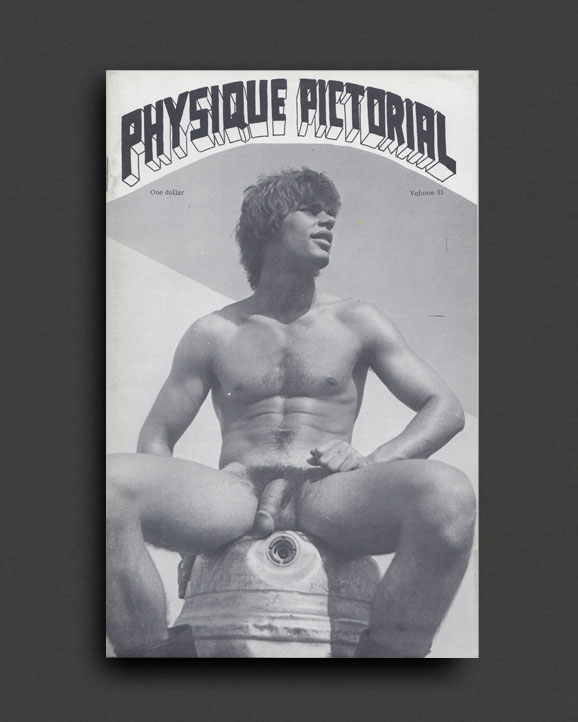
Physique Pictorial Vol. 31 August, 1978 issue of the iconic Physique Pictorial magazine from Los Angeles. Original issue packed with nude photographs and illustrations from various artists.
In 1945, gay pornography pioneer Bob Mizer founded Athletic Model Guild, or AMG. Mizer's AMG produced the trailblazing, iconic Physique Pictorial, the first all-nude and all-male magazine. Bob, himself, worked on every aspect of PP's production from the graphic design and tedious cut-and-paste production of the layout to the composition of the texts and the all-important selection of photographs and illustrations. Physique Pictorial was and still is the most highly coveted publication of its genre, introducing the world to such fantastic photographers such as Bruce of Los Angeles, Lon of London and Champion Studios, models such as John Apache, Jim Paris, and Tico Patterson, and artists such as Tom of Finland, Etienne and George Quaintance. In the 1960s, the pretense of being a digest about about exercise and fitness was dropped as controls on pornography were reduced. By the end of the decade gay pornography became legal, and the market for physique "beefcake" magazines collapsed. These magazines are a gorgeous time capsule.
Very Good copy.
1981, English
Softcover (staple-bound), 32 pages, 21 x 13.5 cm
Published by
Athletic Model Guild (AMG) / Los Angeles
$40.00 - Out of stock
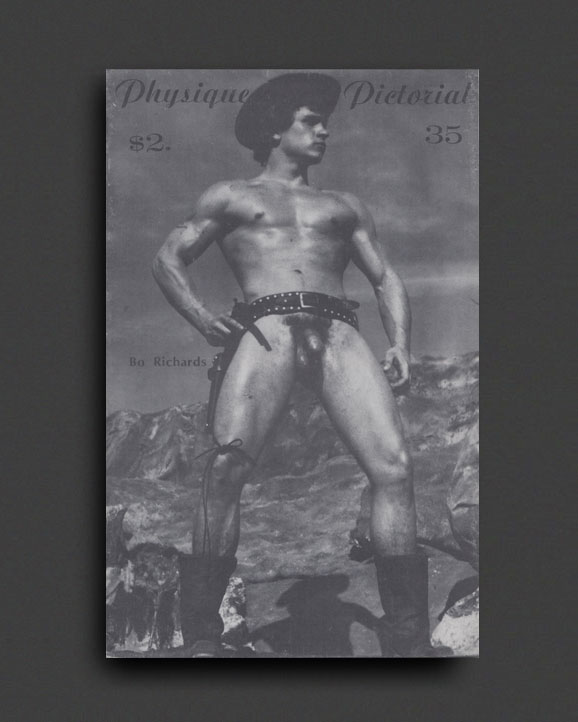
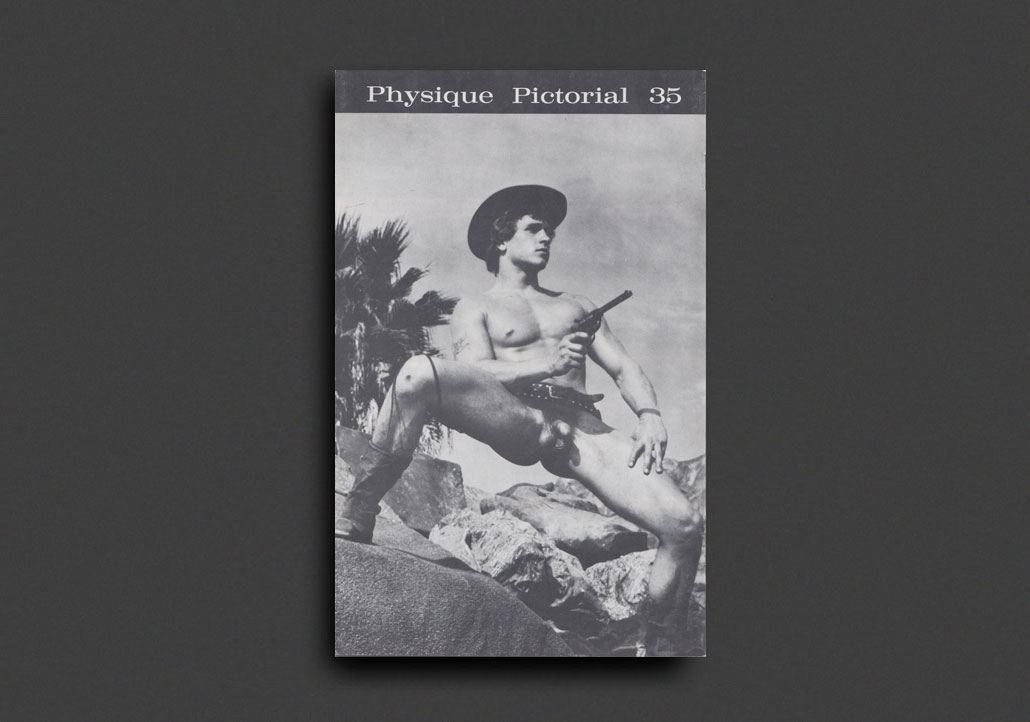
Physique Pictorial Vol. 35, August, 1981 issue of the iconic Physique Pictorial magazine from Los Angeles. Original issue packed with nude photographs and illustrations from various artists.
In 1945, gay pornography pioneer Bob Mizer founded Athletic Model Guild, or AMG. Mizer's AMG produced the trailblazing, iconic Physique Pictorial, the first all-nude and all-male magazine. Bob, himself, worked on every aspect of PP's production from the graphic design and tedious cut-and-paste production of the layout to the composition of the texts and the all-important selection of photographs and illustrations. Physique Pictorial was and still is the most highly coveted publication of its genre, introducing the world to such fantastic photographers such as Bruce of Los Angeles, Lon of London and Champion Studios, models such as John Apache, Jim Paris, and Tico Patterson, and artists such as Tom of Finland, Etienne and George Quaintance. In the 1960s, the pretense of being a digest about about exercise and fitness was dropped as controls on pornography were reduced. By the end of the decade gay pornography became legal, and the market for physique "beefcake" magazines collapsed. These magazines are a gorgeous time capsule.
Very Good copy.
1983, English
Softcover (staple-bound), 32 pages, 21 x 13.5 cm
1st Edition, Out of print title / used / very good
Published by
Athletic Model Guild (AMG) / Los Angeles
$40.00 - Out of stock
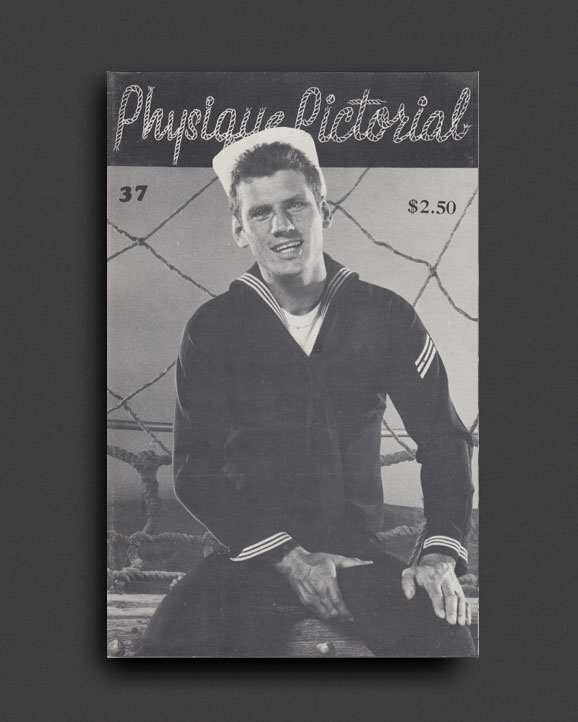
Physique Pictorial vol. 37, November, 1983 issue of the iconic Physique Pictorial magazine from Los Angeles. Original issue packed with nude photographs and illustrations from various artists.
In 1945, gay pornography pioneer Bob Mizer founded Athletic Model Guild, or AMG. Mizer's AMG produced the trailblazing, iconic Physique Pictorial, the first all-nude and all-male magazine. Bob, himself, worked on every aspect of PP's production from the graphic design and tedious cut-and-paste production of the layout to the composition of the texts and the all-important selection of photographs and illustrations. Physique Pictorial was and still is the most highly coveted publication of its genre, introducing the world to such fantastic photographers such as Bruce of Los Angeles, Lon of London and Champion Studios, models such as John Apache, Jim Paris, and Tico Patterson, and artists such as Tom of Finland, Etienne and George Quaintance. In the 1960s, the pretense of being a digest about about exercise and fitness was dropped as controls on pornography were reduced. By the end of the decade gay pornography became legal, and the market for physique "beefcake" magazines collapsed. These magazines are a gorgeous time capsule.
Very Good copy.
1987, English
Softcover (staple-bound), 32 pages, 21 x 13.5 cm
1st Edition, Out of print title / used / very good
Published by
Athletic Model Guild (AMG) / Los Angeles
$40.00 - Out of stock
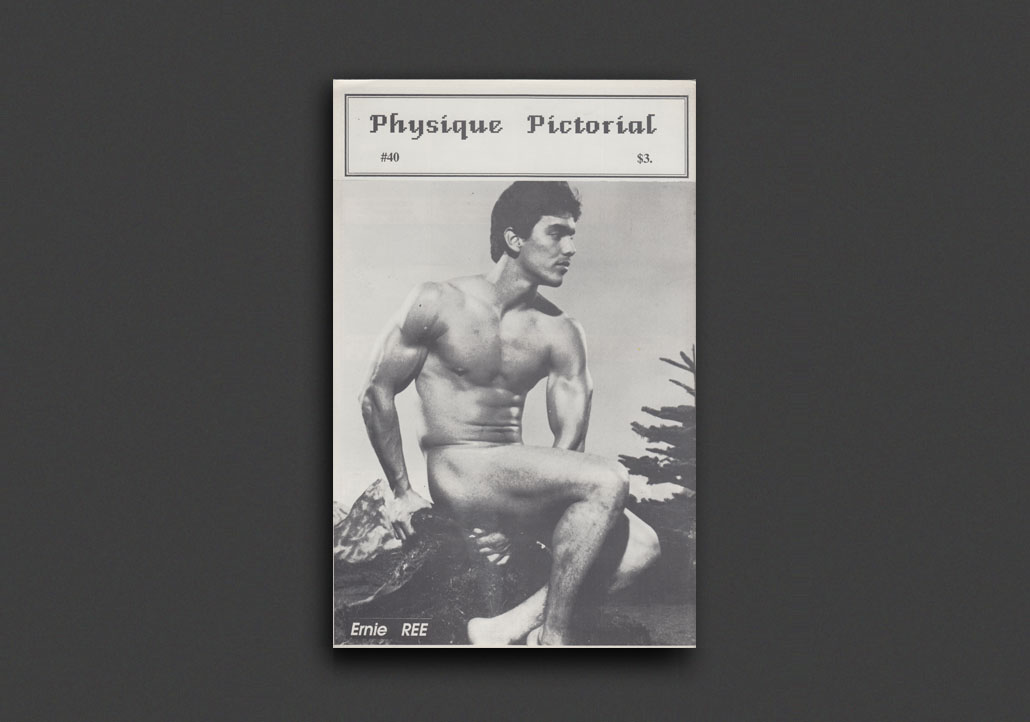
Physique Pictorial Vol. 49, #40, June 1987 issue of the iconic Physique Pictorial magazine from Los Angeles. Original issue packed with nude photographs and illustrations from various artists.
In 1945, gay pornography pioneer Bob Mizer founded Athletic Model Guild, or AMG. Mizer's AMG produced the trailblazing, iconic Physique Pictorial, the first all-nude and all-male magazine. Bob, himself, worked on every aspect of PP's production from the graphic design and tedious cut-and-paste production of the layout to the composition of the texts and the all-important selection of photographs and illustrations. Physique Pictorial was and still is the most highly coveted publication of its genre, introducing the world to such fantastic photographers such as Bruce of Los Angeles, Lon of London and Champion Studios, models such as John Apache, Jim Paris, and Tico Patterson, and artists such as Tom of Finland, Etienne and George Quaintance. In the 1960s, the pretense of being a digest about about exercise and fitness was dropped as controls on pornography were reduced. By the end of the decade gay pornography became legal, and the market for physique "beefcake" magazines collapsed. These magazines are a gorgeous time capsule.
Very Good copy.
2019, English
Softcover, 80 pages, 17 x 24 cm
Published by
Art Against Art / Berlin
$18.00 - In stock -
EDITORIAL
Most new developments in art by the turn of the millennium were still situated to a large extent in a modernist framework, namely their main impetus was still boundary pushing, inventive, overcoming tradition, extending the definition of art etc. It wasn’t until the 2010s that culture had shifted to a truly postmodern condition.
Institutional organizational tools such as ‘laws’ or ‘curating’ which are based on Enlightenment humanist frameworks become less important than ones that help organize and interpret mass information more effectively. In the past, we as humans saw evidence, and then tried to manipulate it for ourselves. Now, we try to align ourselves into data flows because we believe in the greater importance of overwhelming numbers-based trends. Art used to be a way of organizing human expression, but if subjectivity is irrelevant, it becomes a vehicle of effective social interests..... - The Editors
CONTENTS
Editorial
Günter Erbe – Notes on the Dandy
Taslima Ahmed – Art in the Age of Putin
Masato Fukushima – Multiple Personae in Contemporary Art
Uweinat Experience by Michael Farin
A. S. Hamrah – Banality is Bourgeois Style – Selected Film Reviews from “The Earth Dies Streaming”
Andrés Gómez Emilsson – Harmonic Society: 8 Models of Art for a Scientific Paradigm of Aesthetic Qualia
Artist edition by Dena Yago
1988, Italian / French
Hardcover (w. dust jacket), 324 pages, 31 x 22 cm
1st Edition, Out of print title / used / very good
$200.00 - Out of stock
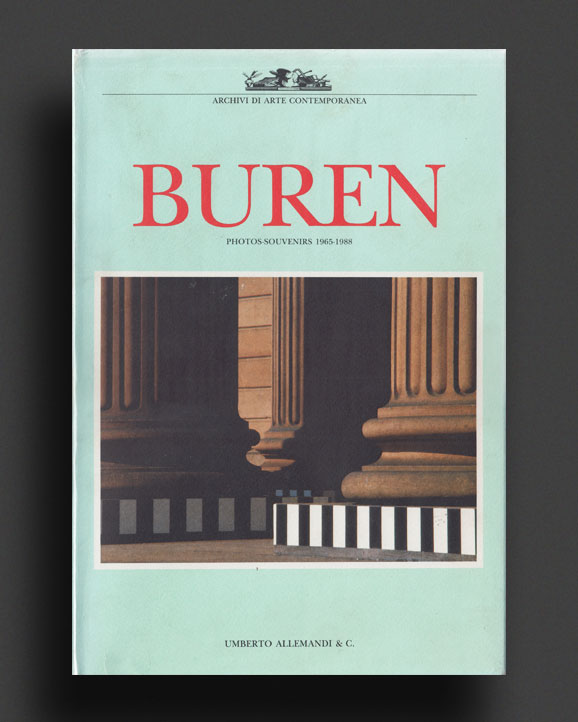
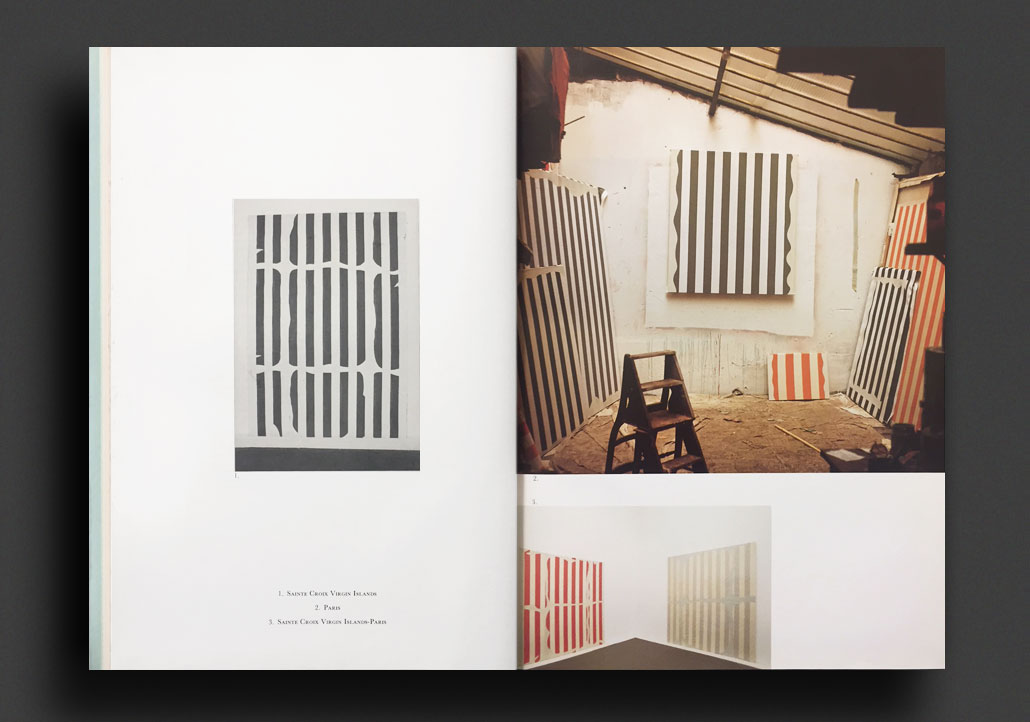
Very scarce first Italian edition of the ultimate Buren photographic album, 1988's Photos-Souvenirs (1965-1988). Compiled by Buren, this over-sized, comprehensive hardcover book chronologically traces his entire career up (until the year of publication) through 400 colour and b/w photographs of his gallery exhibitions, architectural interventions, outdoor installations, performances, studios, and everything else, from the awnings to his Toile/Voile sailboat works. Although the book is almost entirely made up of photographs, it opens with a text by Buren (translated into Italian from French) and closes with an in-depth index of the collected works, with details and captions by Buren in their original French. A must for any Buren fan.
Often classified as a Minimalist, French artist Daniel Buren (born 25 March 1938) is known best for using regular, contrasting colored stripes in an effort to integrate visual surface and architectural space, notably on historical, landmark architecture. Among his chief concerns is the "scene of production" as a way of presenting art and highlighting facture (the process of 'making' rather than for example, mimesis or representation of anything but the work itself). The work is site-specific installation, having a relation to its setting in contrast to prevailing ideas of an autonomous work of art.
Very Good copy in original dust jacket (preserved under mylar wrap), with small chip/shelf bumping to bottom of hardcover not affecting the jacket or the pages at all.
1984, Swedish / French
Softcover, 96 pages, 16 x 15 cm
1st Edition, Out of print title / used*,
Published by
Moderna Museet / Stockholm
$60.00 - Out of stock
Scarce Swedish catalogue published by Moderna Museet, Stockholm, in 1984, containing wonderful spreads of Buren's Column works including macquette arrangements of the works and installations views in colour and black and work. Also includes various texts in Swedish and French and examples of Buren's other works, including his awning canvas works, performances and installations.
1999, Japanese / English / Italian / German
Hardcover, 120 pages, 20.6 × 28.5 cm
1st Edition, Out of print title / used / very good
Published by
Toyota Municipal Museum of Art / Aichi
$90.00 - Out of stock
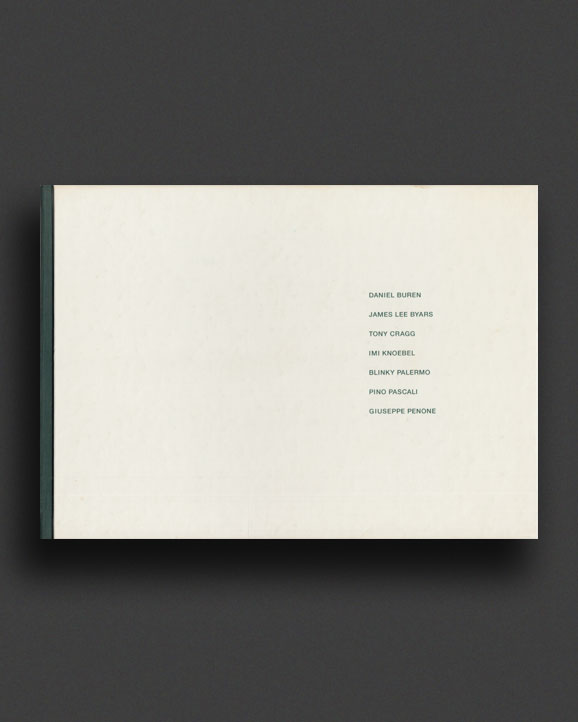
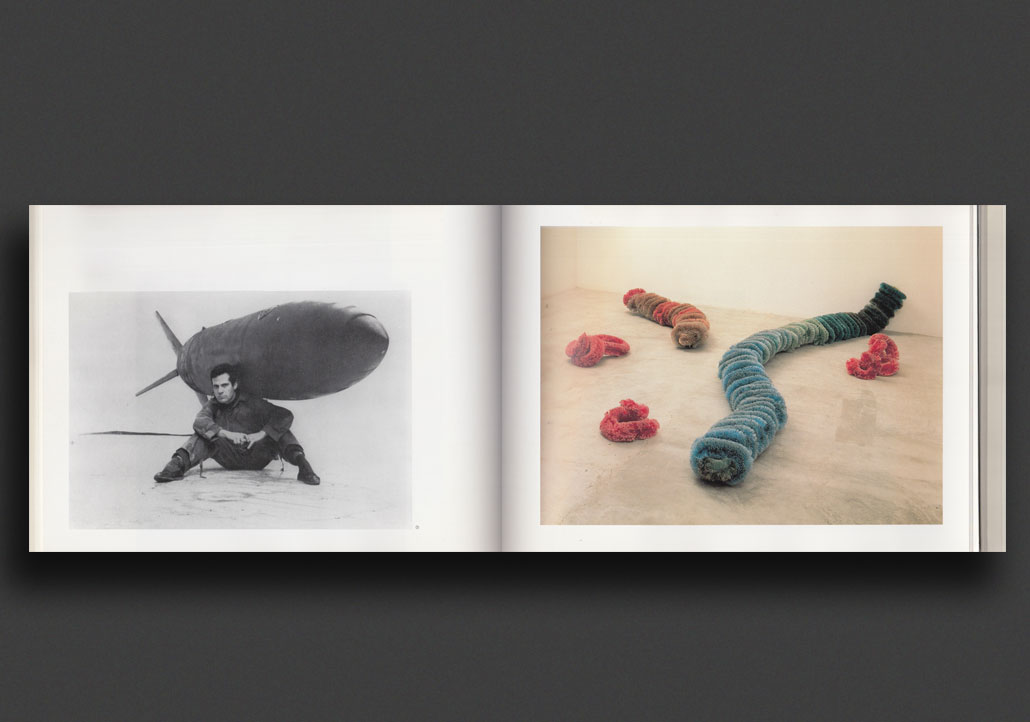
Very scarce and beautifully compiled hardcover catalogue published in Japan in 1999 to accompany the unique exhibition, Silent Friendship : 1960-90's: 7 Artists, featuring the work of Daniel Buren, James Lee Byars, Tony Cragg, Imi Knoebel, Blinky Palermo, Pino Pascali, and Giuseppe Penone. Generous colour spreads of each artist are accompanied by biographies, exhibition histories and text contributions by and about the artists in their native language(s), including Buren's reflections "In those days Europe", Tony Cragg on "that era" and James Lee Byars, Giuseppe Penone remembering the "cubes, giraffes and weapons of Pino Pascali", Masahiro Aoki on Imi Knoebel, Masao Chatan on Giuseppe Penone, Tomoaki Kitagawa on Tony Cragg the "Material Seeker", Laszlo Glozer and Joseph Beuy's in conversation about Blinky Palermo, and more. Through twenty-six paintings, sculptures and installations the exhibition presented a meaningful overview of the broad scope of the artistic expressions of 7 artists from the 1960s that embodied the theme of the collection, "the art of our time". "Each of them in his own individual way strongly provokes in us new ideas and emotions, suggesting new possibilities for the arts of the next generation." - from the Introduction
Very Good copy.
1970, Japanese
Hardcover, 136 pages, 23.2 x 29.5 cm
1st Edition, Out of print title / used / very good
Published by
Nobel Shobo / Tokyo
$140.00 - Out of stock
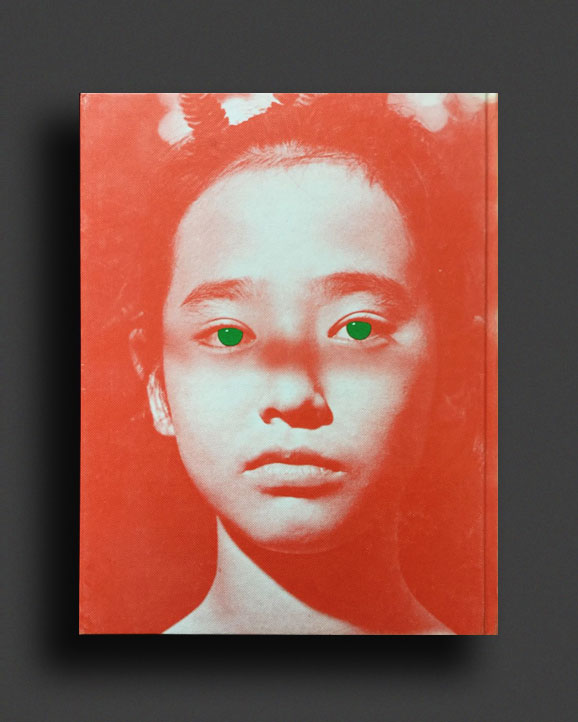
Very scarce first edition of this lesser known artist's photobook by Japanese photographer Kazuo Kenmochi, known well for his highly regarded and sought after "Narcotic Photographic Document" from 1963. This stunning hardcover volume, published in 1970, captures touching portraits of a young Japanese actress playing the nymph in nature. Kenmochi's stark, hypnotic, and provocative photographic approach plays out beautifully here melding dramatic natural landscapes with the young nude body.
Very Good copy with light edge wear and tanning.
1985, Japanese
Softcover (staple-bound), 32 pages, 29.5 x 22.5 cm
1st Edition, Out of print title / used / very good
Published by
Mitsuru Suzuki / Japan
$55.00 - Out of stock
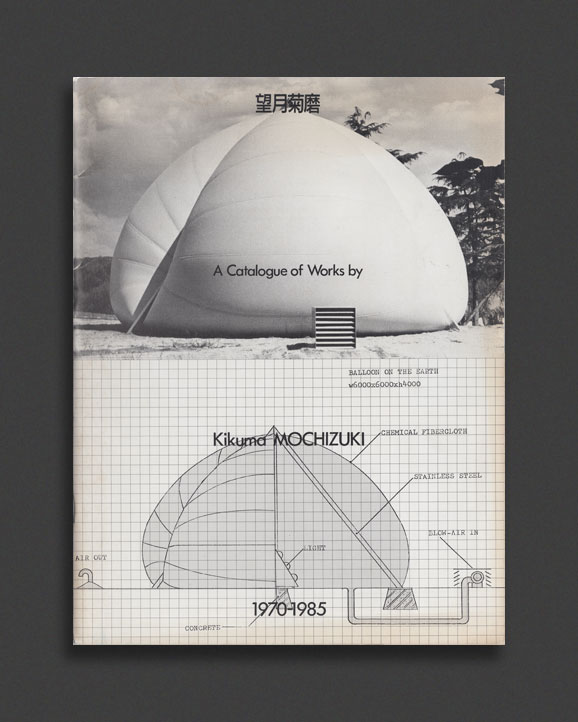
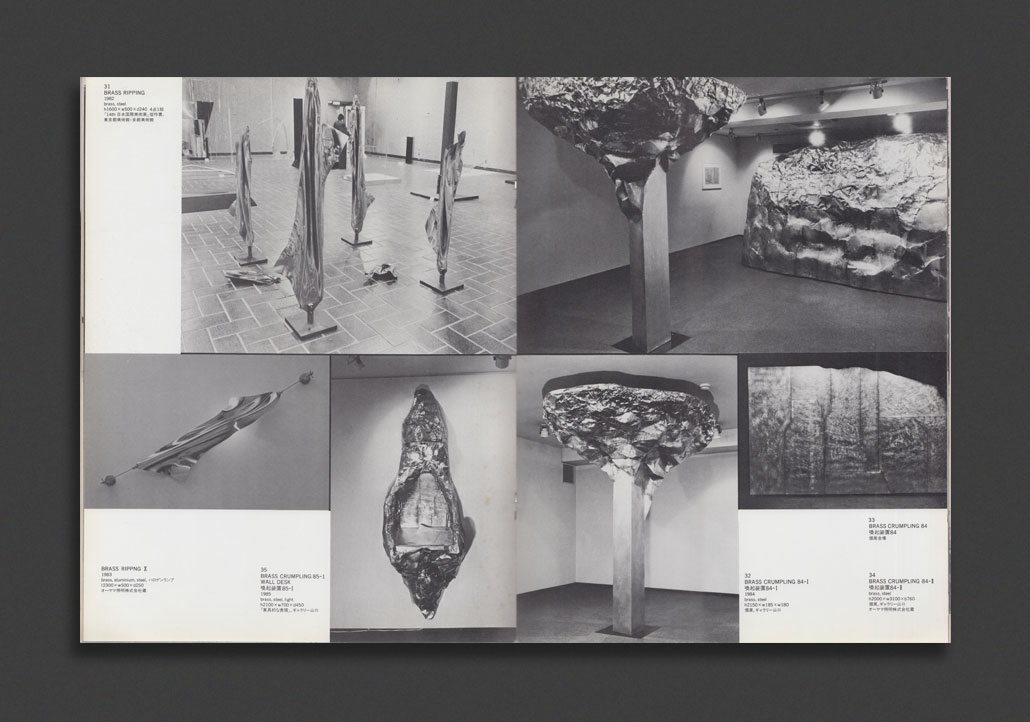
Lovely, very scarce 1985 catalogue of works by Japanese sculptor Kikuma Mochizuchi, signed and dated by the artist in '85 with a hand-written letter from Mochizuchi inserted. Mochizuchi (b.1945, Fukuoka Prefecture), was a prolific artist working with the sculptural and architectural animation of new industrial materials in Japan in the 1970s and 1980s, primarily metal. He realised many public installations and outdoor sculptures, including his inflatable cloud works for Expo 85, as well his "Metal Drawings", and many sculptural reliefs and floor works of stretched, ripping, breaking, corroding steel and brass, his open air inflatable sculptures, and more, all illustrated through this publication alongside a biography, list of works, exhibition list, and portrait.
Very Good. Published and printed in Japan.
2019, English
Softcover, 448 pages, 14.6 x 21 cm
Published by
Sternberg Press / Berlin
The MIT Press / Massachusetts
$69.00 - Out of stock
Essays chart the shift of the concept of universality from essence to modality, from the abstract and static to the performative and productive.
In today's increasingly digitalized and neoliberal societies, debates on universals and specifics have gained new momentum. This volume discusses the entanglements of the universal in the fields of art, architecture, and urbanism from the nineteenth century to the present. Highlighting the interrelation of the specific and the universal in each historical situation, these essays venture an epistemic shift of the concept of universality: from essence to modality, from the abstract and static to the performative and productive.
Contributors: Ursula Biemann, Gaia Caramellino, Filippo De Pieri, Johan F. Hartle, Samia Henni, Christa Kamleithner, Anne Kockelkorn, Katarzyna Ruchel-Stockmans, Emily E. Scott, Laila Seewang, Manuel Shvartzberg Carrió, Ariane Varela Braga, Khadija von Zinnenburg Carroll, Alla Vronskaya, Andrew Stefan Weiner, Nina Zschocke
2018, English
Softcover, 240 pages, 16.7 x 23 cm
Published by
Sternberg Press / Berlin
$60.00 - Out of stock
edited by Khadija von Zinnenburg Carroll
Contributions by David Edward Allen & Maria Buzhor, Rebecca Anderson, Bergit Arends & Sunoj D, Connie Butler & Hazel Dowling, Caroline Cornish & Mark Nesbitt, Alfred Döblin, Natasha Eaton, Germaine Greer, Kim Berit Heppelmann, Emma Waltraud Howes, Melanie Jackson, Alana Jelinek, Philip Kerrigan, Kay Evelina Lewis-Jones, Claire Loussouarn, Wietske Maas, Natasha Myers, Matteo Pasquinelli, Raqs Media Collective, herman de vries, Khadija von Zinnenburg Carroll
Botanical Drift explores the hermeneutics, historicization, semiotics, and symbiosis of plant diversification, species cultivation, and destruction—past and present, extant and extinct—around the globe. Plant histories are explored as commodities and colonial as well as decolonial devices by significant and diverse feminist, art-historical, and anthropological voices—from Germaine Greer to herman de vries—bringing new perspectives through photo-essays, fiction, performance, and interventions in ecological, film, and translation archives. Reflecting on experimental ecology—the undiscovered, underestimated, and undesired non-European flora and fauna—it challenges perception and inspires potentialities to bring new understandings of the undergrowth of the Kew Gardens botany collection.
Design by A Practice for Everyday Life
2016, French / English
Softcover (Spiral-bound), 144 pages, 24 x 30 cm
Ed. of 100,
Published by
Kunstverein / Amsterdam
$65.00 - Out of stock
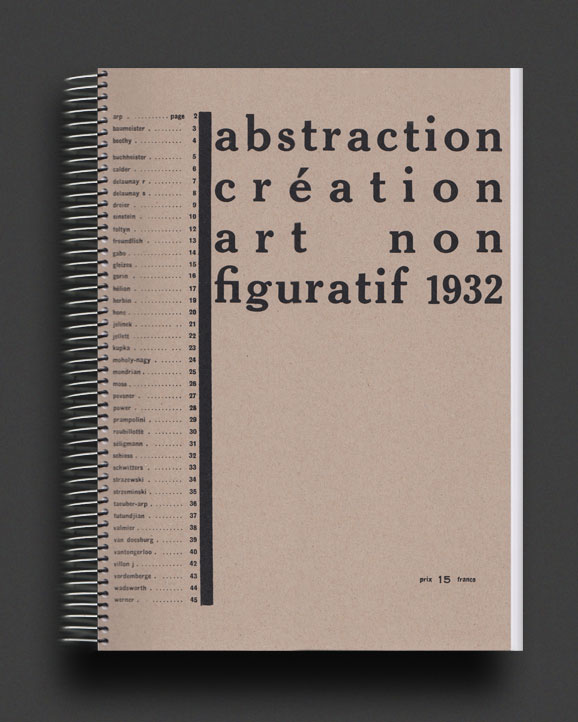
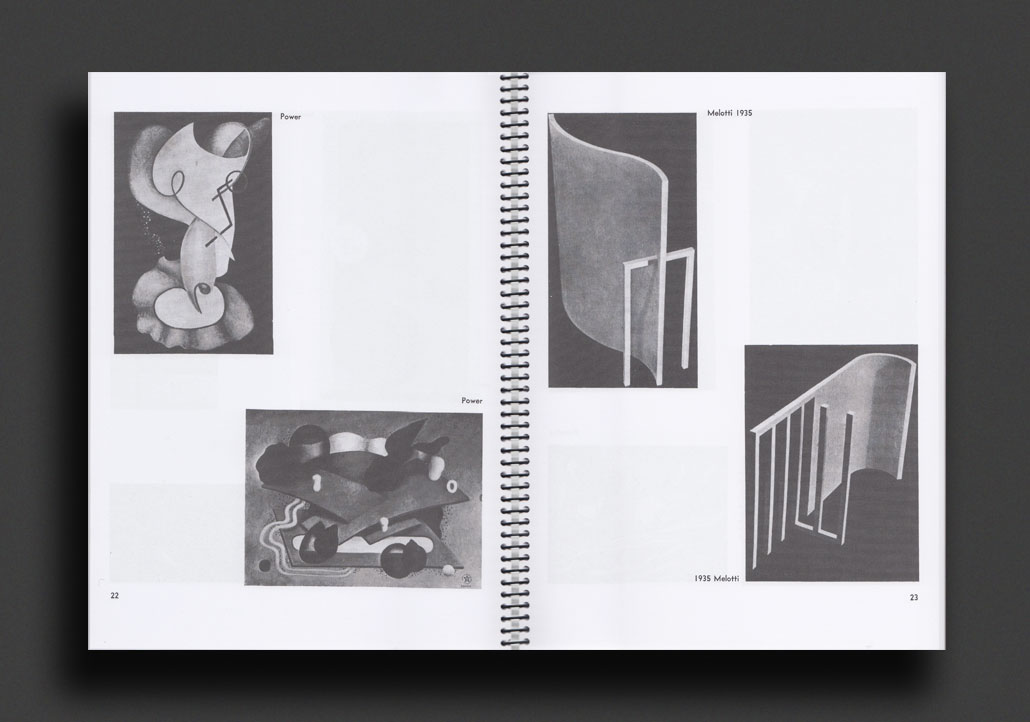
Between 1932 and 1936 five edition of the cahier Abstraction Création: Art non-figuratif was published in Paris by the eponymous association, uniting all movements who worked abstractly. The magazine not only formalised a new tendency for language in visual art, but also became a form of explicit self-promotion and opposition against the growing force of figurative Surrealism, led by André Breton. Two minimal yet clear criteria needed to be fulfilled to become a member of the association: you had to be an artist and work non-figuratively. This resulted in a list of members of long-forgotten artists mingled with names such as Kandinsky, Mondrian, Calder, Delaunay, Van Doesburg, and Brancusi.
Second edition of 100 copies.
1982, Japanese
Softcover, 100 pages, 24 x 24.5 cm
1st Edition, Out of print title / used / very good
Published by
Shoto Museum of Art / Tokyo
$90.00 - Out of stock
Very scarce Onchi Kōshirō catalogue, published in 1982 for a special exhibition of Kōshirō's work at the Shoto Museum of Art, Tokyo. Profusely illustrated throughout in colour and black and white, with exhibition history, biography, list of works, and accompanying texts (all in Japanese). All title captions in English, also. Includes exhibition announcement and other printed ephemera relating to the exhibition inserted.
Onchi Kōshirō (1891-1955) was a Tokyo-born, Japanese print-maker. The father of the sōsaku-hanga movement, Onchi is considered a leading figure in Japanese abstraction, credited with producing Japan's first purely abstract painting in 1915. Unlike traditional commercial woodblock printmakers, the sōsaku-hanga (creative print) movement artists were inspired by painting and carried out every stage of production themselves: designing, cutting, and printing, then circulating the finished works to a relatively small élite circle. Throughout his career he produced masterful single-sheet prints and designed over 1000 books, as well as being a poet, art theorist and photographer. Abandoning traditional school teachings, in 1911, under the influence of Takehisa Yumeji (1884-1934), Onchi began to design books and quickly became involved in producing print and poetry magazines. He designed the first edition of Hagiwara Sakutarō's (1886-1942) innovative collection of poems Tsuki ni hoeru (Howling at the Moon, 1917). In 1939, he founded the First Thursday Society (一木会, Ichimokukai), which was crucial to the postwar revival of the sōsaku-hanga movement, providing aspiring young artists with resources and comradeship during the war years when resources were scarce and censorship severe. Onchi believed that artistic creation originates from the self and was more interested in expressing subjective emotions through abstract prints than in replicating images and forms in the objective world. He called his poetic and evocative print style 'lyrique'. Onchi's innovative prints incorporated the use of everyday objects such as fabrics, string, paper blocks, fish fins, and leaves. From around 1932, Onchi worked on the design of a number of books about photography and began using photography in the spirit of shinkō shashin, creating photograms and working with plants, animals and still-life objets. Onchi was sent to China in 1939 and later the same year returned to Tokyo and had an exhibition of his Chinese works. In 1951 he exhibited his photographic works but otherwise dropped out of photography. He died in Tokyo on 3 June 1955.
Very Good copy. Light tanning and some light spotting to covers, otherwise clean throughout. A wonderful copy.
2016, English / Japanese
Hardcover, 364 pages, 24.6 x 20.5 cm
1st Edition, Out of print title / as new
Published by
The National Museum of Modern Art / Wakayama
The National Museum of Modern Art / Tokyo
$180.00 - Out of stock
First hardcover edition of the most exhaustive (now out of print) volume on the work and life of Japanese artist and father of the sōsaku-hanga movement, Onchi Kōshirō, published on the occasion of a major retrospective at The National Museum of Modern Art, Tokyo, and The Museum of Modern Art, Wakayama, 2016.
The most comprehensive monograph ever produced on Onchi Kōshirō, this book beautifully captures the entire oeuvre of one of the most innovative figures in twentieth century Japan. Largely considered the creator of the first abstract painting in Japan (c. 1915), this profusely illustrated volume presents colour reproductions of his prolific modern print and photographic work, as well as his oils, watercolours, drawings, and countless historical book designs spanning over 350 pages. An exhaustive chronology, biography and catalogue are accompanied by major essays in both English and Japanese, as well as many seldom seen photographs of Onchi throughout his life.
Onchi Kōshirō (1891-1955) was a Tokyo-born, Japanese print-maker. The father of the sōsaku-hanga movement, Onchi is considered a leading figure in Japanese abstraction, credited with producing Japan's first purely abstract painting in 1915. Unlike traditional commercial woodblock printmakers, the sōsaku-hanga (creative print) movement artists were inspired by painting and carried out every stage of production themselves: designing, cutting, and printing, then circulating the finished works to a relatively small élite circle. Throughout his career he produced masterful single-sheet prints and designed over 1000 books, as well as being a poet, art theorist and photographer. Abandoning traditional school teachings, in 1911, under the influence of Takehisa Yumeji (1884-1934), Onchi began to design books and quickly became involved in producing print and poetry magazines. He designed the first edition of Hagiwara Sakutarō's (1886-1942) innovative collection of poems Tsuki ni hoeru (Howling at the Moon, 1917). In 1939, he founded the First Thursday Society (一木会, Ichimokukai), which was crucial to the postwar revival of the sōsaku-hanga movement, providing aspiring young artists with resources and comradeship during the war years when resources were scarce and censorship severe. Onchi believed that artistic creation originates from the self and was more interested in expressing subjective emotions through abstract prints than in replicating images and forms in the objective world. He called his poetic and evocative print style 'lyrique'. Onchi's innovative prints incorporated the use of everyday objects such as fabrics, string, paper blocks, fish fins, and leaves. From around 1932, Onchi worked on the design of a number of books about photography and began using photography in the spirit of shinkō shashin, creating photograms and working with plants, animals and still-life objets. Onchi was sent to China in 1939 and later the same year returned to Tokyo and had an exhibition of his Chinese works. In 1951 he exhibited his photographic works but otherwise dropped out of photography. He died in Tokyo on 3 June 1955.
Fine, As New copy.
2019, English
Softcover, 80 pages, 12.5 x 17.6 cm
Published by
NWEB / Melbourne
$10.00 - In stock -
NWEB was previously a small project that ran out of the VCA painting studios. This book was published on the occasion of “Let me sit in the corner, I’ve just turned Zero”. It logically recalls the 18 exhibitions organised by NWEB as well as providing three newly commissioned texts to accompany the exhibition and publication.
NWEB was effectively a spare studio, it strived to be a heterotopia offering some sort of regeneration. Although the project was unwilling to align itself with a curatorial ideology the process of organising the shows tended to locate itself around an interest in collaborative play and intuitive pairings.
1978, French / English
Softcover, 104 pages, 27 x 21 cm
1st Edition, Out of print title / used / good
Published by
Contrejour / Paris
$1800.00 - Out of stock
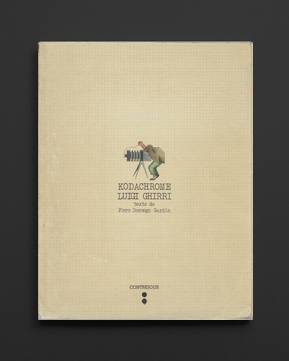
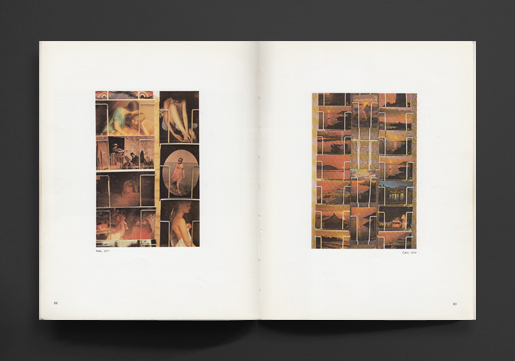
In 1978 Luigi Ghirri self-published his first book, "Kodachrome", an avant-garde manifesto for the medium of photography and a landmark in his own remarkable oeuvre.
This is a very rare copy of the first edition of "Kodachrome", published by Contrejour, Paris in 1978. Although the book notes '2em edition pour la France', in reality this is the first French edition, published alongside the first Italian edition (by Punto e Virgolaone) in 1978, and is not a reprint of it. In 2012 Mack Books in London re-printed the book for the first time since these original, highly collectable editions were available.
‘Ghirri fights to maintain our ability to see. His works are powerful devices for the re-education of the gaze. They alter the perception we have of the world without proposing a single path to follow, rather they provide us with the tools we need to find the one we’re looking for.’ - Francesco Zanot
'His photographs are like passport photos of the real' - Roland Barthes.
Part amateur photo-album, Ghirri presents his surroundings in tightly cropped images, making photographs of photographs and recording the Italian landscape through it’s adverts, postcards, potted plants, walls, windows, and people. His work is deadpan, reflecting a dry wit, and is a continuous engagement with the subject of reality and of landscape as a snapshot of our interaction with the world.
‘The daily encounter with reality, the fictions, the surrogates, the ambiguous, poetic or alienating aspects, all seem to preclude any way out of the labyrinth, the walls of which are ever more illusory… to the point at which we might merge with them… The meaning that I am trying to render through my work is a verification of how it is still possible to desire and face a path of knowledge, to be able finally to distinguish the precise identity of man, things, life, from the image of man, things, and life.’ - Luigi Ghirri
Born in Scandiano in 1942, Luigi Ghirri spent his working life in the Emilia Romagna region, where he produced one of the most open and layered bodies of work in the history of photography. He was published and exhibited extensively both in Italy and internationally and was at the height of his career at the time of his death in 1992.
A masterpiece of colour photography!
Introduction by Piero Berengo Gardin.
Foreword and photos by Luigi Ghirri.
All texts in French and English.
1990, English
Hardcover (w. dust jacket), 129 pages, 22.5 x 29 cm
1st Edition, Out of print title / used / very good
Published by
Harry N. Abrams / New York
$50.00 - Out of stock
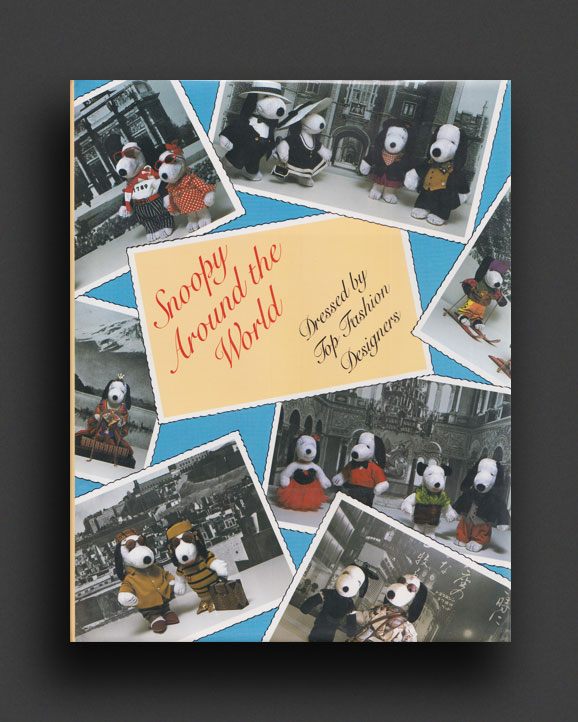
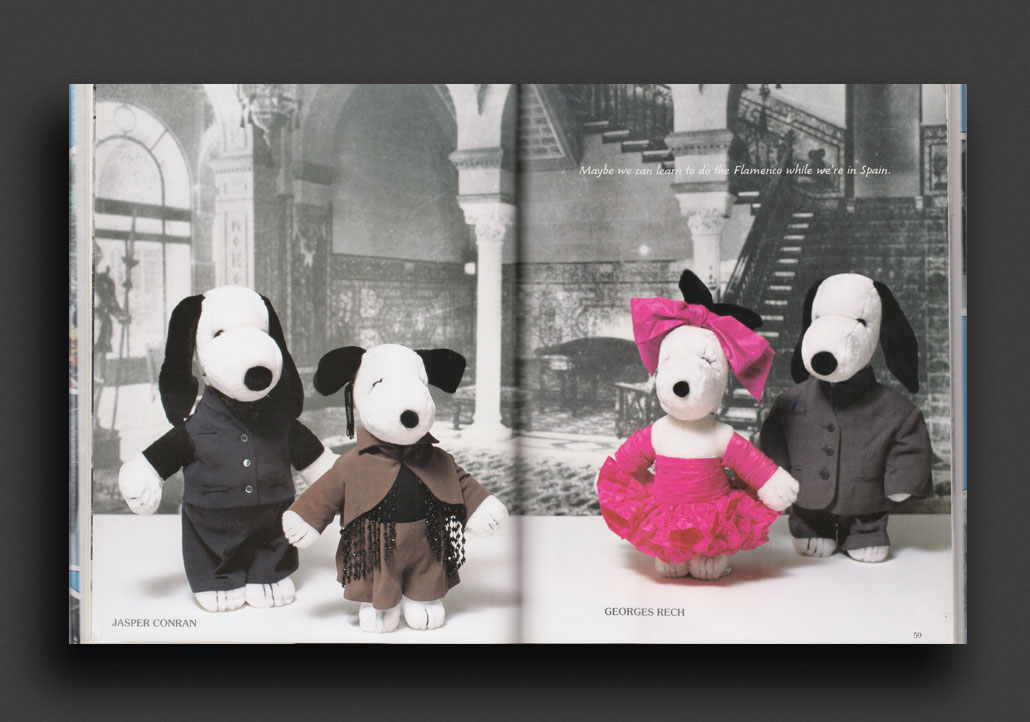
First hardcover edition of "Snoopy Around The World...", published in New York in 1990. The always incredible fashion photo album of Snoopy and his beagle sister Belle travelling world in original one-of-a-kind designer outfits created by the world's most progressive and famous fashion designers of the time, asking each of them to create an for Snoopy and his beagle sister Belle. There is even a cameo by Woodstock in Krizia! Designers include Givenchy, Chloé, Issey Miyake, Karl Lagerfeld, Sonia Rykiel, Martine Sitbon, Balenciaga, Missoni, Krizia, L.L. Bean, Marimekko, Jag, Popy Moreni, Pierre Balmain, Guy Laroche, Dolce & Gabbana, Fendi, Hermes, Dirk Bikkembergs, Cacharel, Bill Blass, Kenzo, Giorgio Armani, Vivienne Westwood, Diane von Fürstenberg, and so many more. Lavishly photographed throughout with endless fold out full-colour spreads!
From the blurb:
"Snoopy Around the World, which features commentaries by Peanuts's creator Charles Schulz, photographs by renowned fashion photographer Alberto Rizzo, and biographies of the designers, is sure to delight the millions of people who avidly follow the daily adventures of the world's most popular beagle. The book accompanies a major exhibition that began its own world tour by opening at the Musée des Arts Décoratifs in Paris to international acclaim. For no matter where their journey takes them, Snoopy and Belle always travel in high style - they really know how to put on the dog!"
Very Good copy.
2019, English / German
Softcover, 272 pages, 23 x 16.5 cm
Published by
Texte Zur Kunst / Berlin
$32.00 - Out of stock
In the current issue of Texts on Art, "Literature," we explore the emergence of the genre of "autofiction": a field in literature that has been taken up between the formally distinct categories of fiction and autobiography. Annie Ernaux, Rachel Cusk, Deborah Levy, among others, whose works are exemplary in developing the form of writing in which the fictitious ego merges with the voices of others, where these voices are potentially in the social more generally.
ISSUE NO. 115 / SEPTEMBER 2019 "LITERATUR"
TABLE OF CONTENTS
PREFACE
BETWEEN YOU AND ME / A Correspondence on Autofiction in Contemporary Literature between Isabelle Graw and Brigitte Weingart
WOMAN AS SUBJECT OR EXEMPLARY OF HER KIND / A Conversation between Maija Timonen and Rachel Cusk
CLAUDE HAAS
ON - THE DEMISE OF AUTOBIOGRAPHY IN THE WHIRL OF AUTOFICTION. OR: REALITY TODAY
SURRENDER AS FREEDOM / Interview with Enis Maci by Aram Lintzel
PETER REHBERG
- QUEER AUTOFICTION AS BODY PROTOCOL
DIRK VON LOWTZOW
SOME QUESTIONS FOR LEÏLA SLIMANI
LEANDER SCHOLZ - LITERATURE OF WORKING-CLASS CHILDREN
JUTTA KOETHER -
WHEN YOU PAINT APPLES, DO YOU ALSO FEEL YOUR BREASTS AND KNEES BECOMING APPLES?
NEW DEVELOPMENT
EMPIRE OF ETHER / Colin Lang on the Advent of Drone Exhibitions
ROTATION
LIFE PRESERVER / Sven Lütticken on Alice Creischer’s “In the Stomach of the Predators: Writings and Collaborations”
KLANG KÖRPER
PROTO-WHATEVER-THIS-NEXT-PHASE-IS / Annika Haas über Holly Herndon in der Volksbühne Berlin und im Haus der elektronischen Künste Basel
REVIEWS
BLUE CUBES: VOLLGELAUFENE VOLUMEN / Diedrich Diederichsen über die 58. Biennale in Venedig
THE POWER OF NO / Eva Díaz on the Whitney Biennial 2019
GLOBAL SALE / Simon Baier über El Anatsui im Haus der Kunst, München
TO GIVE AND GIVE SUN / Övül Ö. Durmuşoğlu on Cecilia Vicuña at Witte de With, Rotterdam
FREE WILLY / Mikael Brkic on Jana Euler at Galerie Neu, Berlin
UNDERSTANDING THAT EVERYONE IS NOT UNDERSTANDING EVERYTHING / Gunter Reski über Heike-Karin Föll in den KW Institute for Contemporary Art, Berlin
CONSIDER NOT THE BIRD’S, BUT THE WORM’S VIEW / Adam Kleinman on Cian Dayrit at Nome Gallery, Berlin
KÜNSTLERIN SEIN / Georg Imdahl über Anna Oppermann in der Kunsthalle Bielefeld
SETTING THE RECORD STRAY / Ana Teixeira Pinto on “Straying from the Line” at Schinkel Pavillon, Berlin
CHICAGO, NOW! / Hans-Jürgen Hafner über Gustave Caillebotte in der Alten Nationalgalerie, Berlin
HIDE AND SEEK / Magnus Schaefer on Lydia Ourahmane at Bodega, New York
WE NEVER KNOW HOW HIGH WE ARE / Thomas Groetz über Mayo Thompson in der Galerie Buchholz, Berlin
INVOLUNTARY TRACES / Daniel Ricardo Quiles on Jonathas de Andrade at the Museum of Contemporary Art, Chicago
POETISCHE SEZIERUNGEN / Isabel Mehl über Cana Bilir-Meier im Hamburger Kunstverein
CAVEMAN BLUES / Saim Demircan on Edith Karlson and Dan Mitchell at Temnikova & Kasela, Tallinn
DIE MEISTERIN / Stefan Neuner über Lotte Laserstein in der Berlinischen Galerie
STAGING FEMINISM / Luisa Lorenza Corna on “The Unexpected Subject: 1978 Art and Feminism in Italy” at FM Centro per l’Arte Contemporanea, Milan, and “Doing Deculturalization” at Museion, Bolzano
WAHRNEHMUNG IST VERSCHIEBBAR / Christina Irrgang über Bea Schlingelhoff in der Galerie Max Mayer, Düsseldorf
GRIT AND VITALITY / Daniel Sturgis on Joan Snyder at Blain Southern, London
NACHRUFE
LINDA BILDA (1963−2019)
by Silvia Eiblmayr
AGNÈS VARDA (1928–2019)
by Jennifer Stob
MICHEL SERRES (1930−2019)
by Lorenz Engell
KLAUS BUSSMANN (1941–2019
by Ulrike Groos and Hans Haacke
EDITION
BIRGIT MEGERLE
STERLING RUBY
2014, English
Softcover, 192 pages, 21 x 28 cm
Published by
Edition Patrick Frey / Zürich
$88.00 - Out of stock
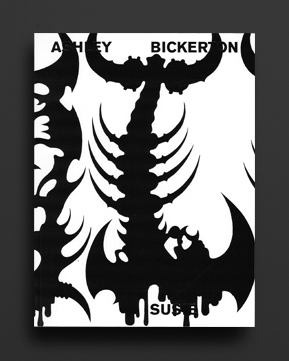
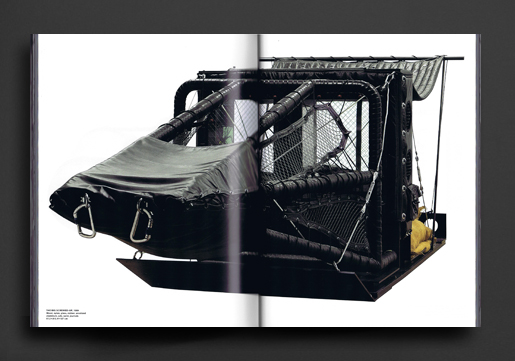
The girls name "Susie" served as a trademark for Ashley Bickerton's work, he showed during the 1980s in New York until moving to Bali. His intriguing painterly and sculptural pieces derive from commodity aesthetics, marketing language and corporate culture. At the time they were shown in the context of the seminal group of artists – often referred to as "Neo-Geo" – consisting of Bickerton, Halley, Koons and Vaisman at Sonnabend gallery.
Ashley Bickerton – Susie is the first monographic close reading of Bickerton's influential early work. Contributions by Lauren O'Neill-Butler, Fredi Fischli, Abigail Solomon-Godeau, Bob Nickas, Niels Olsen, Thomas Lawson and John C. Welchmann offer a wide range of critical views on his practice.
Awarded: “Most Beautiful Swiss Books 2014”.
Ashley Bickerton (born 1959 in Barbados, West Indies, lives and works in Bali, Indonesia) graduated from the California Institute of the Arts in 1982 and continued his education in the Independent Studies Program at the Whitney Museum of American Art, New York. A seminal figure in the East Village scene, Bickerton was one of the original members of a group of artists known as “Neo-Geo,” and to this day, he remains an influential figure with a younger generation of artists. Over the last twenty-five years, Bickerton's work has been exhibited extensively in nearly every major museum around the world. His work can be found in numerous museum collections worldwide.
1988, Italian
Softcover, 128 pages, 27.6 x 23
1st Edition, Out of print title / used / very good
Published by
Idea Books Edizioni / Milano
$160.00 - Out of stock
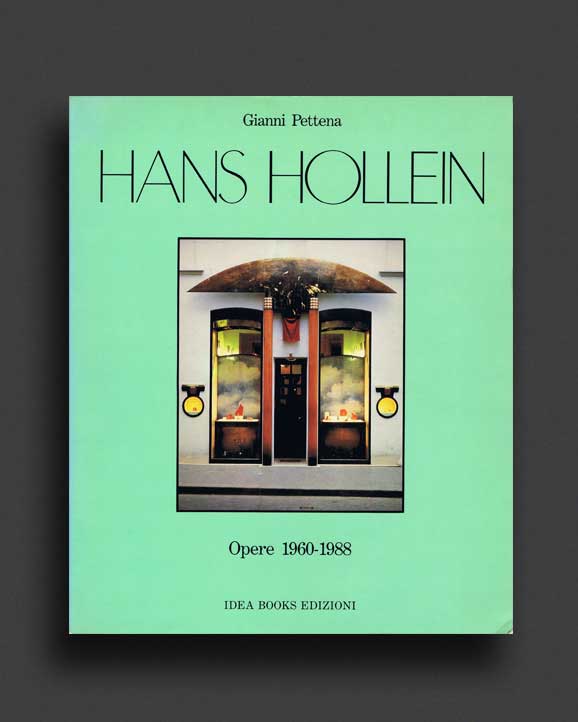
First edition of the very collectible monographic catalogue "Hans Hollein - Opere 1960-1988" by Italian critic, architect, and visual artist Gianni Pettena, published in 1988 by Idea Books Edizioni Milan, on the occasion of the major survey exhibition of Hollein's work at Accademia delle Arti del Disegnom Firenze, 1988.
Produced in close collaboration with Studio Hollein and designed by Studio Branzi (Andrea Branzi), this extensive and heavily illustrated monograph begins with a long interview with Hollein himself, then launches into an in-depth overview of Hollein's entire history of work across architecture, interiors, furniture design, shop designs, exhibitions and installations, objects, jewellery, and much more. Includes the incredible Retti Candle Shop, Austrian Travel Agencies, Schullin Jewelry Shops, Perchtoldsdorf Town Hall, Munincipal Museum Abteiberg Monchengladbach, his furniture and object designs for Herman Miller, Memphis, Poltronova, Alessi, Wittmann, and exhibition designs for the Milan Triennale, Venice Biennale and many more. Includes his drawings and many models, texts in Italian, complete catalogue, bibliography and biography.
Hans Hollein (1934- 2014) An architect of great renown, winner of the Pritzker prize for Architecture in 1985, he studied in the USA and in Vienna where, starting in the 50s, through drawings and photomontages he questioned the assumptions of functionalism in architecture, opening the way to the search for new interpretations in the field. In the drawings and models exhibited in Hollein Pichler Architektur (Vienna 1963), he proposed a visionary conception of mega-structural building-cities that already showed signs of the complexity and technoid perfection of many future works, while the collages and photomontages in Transformations (1963-64), among which Valley City and Airircraft Carrier in the Landscape, through a figurative language, irony, monumental and sacral aspects, the contrast between the ‘transformed’ object and its environment, were examples of the multiple interpretations that could be attributed to architecture. The works of this period, like the essay Alles ist Architektur (1968) in which Hollein symbolically expressed the idea that architecture is everywhere, can be expressed through pure thought or solely through technology, and how it invests and can also express sentiments and values, will be a constant reference for the future research in architecture. Of the many architectural, design and urban decoration works created throughout his long career, the Museum of Mőnchengladbach (1972-82) was the first great example of functional synthesis and contraposition of languages, the complete representation of a deliberate cross-contamination of fields, architecture, art, design, technological media, environmental interventions. Between 1964 and 1970 he directed the magazine ‘Bau’ that hosted contributions from the most vivacious experiments even on an International level. In parallel to his professional activity, Hollein was also a professor and a critic, developing theories through his essays, stagings, installations, performances and participation in exhibitions.
Very Good copy with ex-libris markings to title page.
1997, English
Softcover, 196 pages, 22.6 x 30.5 cm
Published by
The MIT Press / Massachusetts
$55.00 - Out of stock
The American artist Arthur Dove (1880-1946), purportedly the first artist to have produced an abstract painting, has always occupied a central place in writings on early American modernism. This book accompanies the first major exhibition on Dove since 1974. The exhibition, organized by the Addison Gallery of American Art and the Phillips Collection, covers the period from 1908, the year after Dove took up painting, through 1946, the year of his death. It is comprised of approximately eighty paintings, collages, pastels, and charcoal drawings.
Along with Georgia O'Keeffe and John Marin, Dove was touted for more than three decades by photographer and dealer Alfred Stieglitz as an American original, one whose work was prescient in its opposition to the materialism of a newly industrialized America.
Essays by Debra Bricker Balken, William C. Agee, and Elizabeth Hutton Turner discuss Dove's interactions with Stieglitz and others in his circle, including O'Keeffe, Marin, Marsden Hartley, and Paul Strand, and re-examine Dove in the context of early twentieth-century intellectual and cultural history. The book contains color plates of all the works in the exhibition: the essays are profusely illustrated with black-and-white images not included in the exhibition. Apart from an out-of-print catalogue raisonné, this book is the largest and most comprehensive publication to date on Dove's work.
Copublished with the Addison Gallery of American Art in association with the Phillips Collection
2019, English
Softcover, 219 pages, 21.3 x 28.2 cm
Published by
Walther König / Köln
Staatliche Kunsthalle / Baden Baden
$62.00 - Out of stock
Swedish artist Nina Canell (*1979 in Växjö, Sweden) explores in her artistic work the mostly hidden processes that define our life today. Her practice does not revolve around the finished artwork but rather the transitional, surprising and inexhaustible processes of the matter it contains.
Nina Canell has employed a whole range of different materials – from the synthetic to the organic – in order to produce a distinctive sculptural language. Objects and energy correlate in a syntax of relations which breaks down visual hierarchies and densifies our world with process and agency. For Canell, there is no mediation that is lossless – an output is never the pure transmission of a source – but always as much the distance it has travelled and the things it has come in contact with.
"Muscle Memory", among other works created especially for Baden-Baden, shows the new work "Otic Pit": a cochlea cast from basalt, whose vibrational mechanical properties contribute to the dissolution of different pitches as part of the inner ear of mammals.
Catalogue published on the occasion of Nina Canell "Muscle Memory", curated by Hendrik Bündge.