World Food Books' programme is largely produced on Kulin Nation land. We acknowledge the Wurundjeri people of the Kulin Nation as the first and continuing custodians of this land, and pay respect to their Elders past, present, and emerging.
World Food Books is an arts and special interests bookshop in Naarm / Melbourne. Founded in 2010, World Food Books is devoted to the presentation of a rotating, hand-selection of international art, design, literary and counterculture publications with an emphasis on the anti-traditional, the experimental, the avant-garde, the heretic, the marginal.
Presenting new titles alongside rare and out-of-print books, catalogues and journals spanning the fields of modern and contemporary art, design, photography, illustration, film, literature, poetry, cultural theory, philosophy, sexuality, popular and underground culture in its many radical forms, World Food Books wishes to encourage adventurous, thoughtful and open-minded reading, looking, writing, and exchange of publishing and ideas, both current and historical.
As well as our bookshop, located in Melbourne's historical Nicholas Building, all of our inventory is available internationally via our online mail-order service.
World Food Books semi-regularly co-ordinates "Occasions", a programme of exhibits and events at the bookshop and in partnership with other hosts (such as museums and art galleries) that develop out of the activities, relationships and content of the bookshop itself.
World Food Books
The Nicholas Building
37 Swanston Street
Room 5, Level 6
Melbourne 3000
Australia
SHOP HOURS:
Thu–Fri 12–6, Sat 12–5
WEB-SHOP OPEN 24/7
World Food Books
Postal Address:
PO Box 435
Flinders Lane
Victoria 8009
Australia
Art
Theory / Essay
Architecture / Interior
Graphic Design / Typography
Photography
Fashion
Eros
LGBTQ+
Fiction / Poetry
Weird / Speculative / Science Fiction / Horror
Transgressive / Visceral / Abject
Symbolism / Decadence / Fin de siècle
Film / Video
Painting
Sculpture / Installation
Performance / Dance / Theater
Drawing
Sound / Music
Curatorial
Group Shows / Collections
Periodicals
Out-of-print / Rare
Posters / Ephemera / Discs
Signed Books
World Food Books Gift Voucher
World Food Book Bag
Australian Art
Australian Fiction
Australian Science Fiction / Speculative Fiction
Australian Poetry
Australian Photography
Japanese Photography
Conceptual Art
Minimal Art
Dada
'Pataphysics / Oulipo
Fluxus
Concrete Poetry
Pop Art
Surrealism
Arte Povera
Arte Informale / Haute Pâte / Tachism
Nouveau Réalisme / Zero / Kinetic
Situationism / Lettrism
Collage / Mail Art / Xerox Art
Art Brut / Folk / Visionary / Fantastic
Illustration / Graphic Art / Bandes Dessinées
Furniture
Italian Radical Design / Postmodernism
Textiles
Ceramics / Glass
Counterculture
Protest / Revolt
Philosophy
Psychoanalysis
Anthropology
Anarchism
Socialism / Anarchism / Communism / Capitalism
Literary Theory / Semiotics / Language
Feminism / Women's Studies
Gender Studies / Sexuality
Anthropology
Fetishism / BDSM
Drugs / Psychedelia
Crime / Violence
Animal Rights / Veganism
Occult / Esoterica
Ecology / Earth / Alternative Living
Whole Earth / Crafts
All prices in AUD (Australian dollars)
Pick-Ups
Pick-up orders can be collected in our bookshop during opening hours after order date. Please collect any Pick-up orders within 2 weeks of ordering as we have limited storage space. Orders will be released back into stock if not collected within this time. No refunds can be made for pick-ups left un-collected. If you cannot make it in to the bookshop in this time-frame, please choose postage option.
Return Policy
All sales are final. We do accept returns (for refund or exchange) for items received in error. All our orders are packed with special care using heavy-duty padding and cardboard book-mailers or bubble mailers (for smaller books), using reinforcement where required. We cannot take responsibility for any lost, stolen or damaged parcels.
Insurance
Should you wish to insure your package, please email us directly after placing your order and we can organise this at a small extra expense. Although all standard/express tracked packages are very safe and dependable, we cannot take responsibility for any lost, stolen or damaged parcels. We recommend insurance on valuable orders.
Interested in selling your old books, catalogues, journals, magazines, comics, fanzines, ephemera? We are always looking for interesting, unusual and out-of-print books to buy. We only buy books in our fields of interest and specialty, and that we feel we can resell.
We base these prices on desirability, market value, in-print prices, condition and our current stock levels. We offer cash, store credit, and can take stock on consignment. All
about 25% of the price we expect to get when we sell them, or 30% in store credit. We base these prices on desirability, market value, in-print prices, condition and our current stock levels.
Sell your books any day of the week. You can drop them off and return later. If you have a lot of books, we can visit your Sydney home.
We buy books that we feel we can resell. We offer about 25 % of the price we expect to get when we sell them, or 30% in store credit. We base these prices on desirability, market value, in-print prices, condition and our current stock levels.
Philadelphia Wireman
03 August - 01 September, 2018
World Food Books is proud to announce our next Occasion, the first presentation of sculptures by Philadelphia Wireman in Australia.
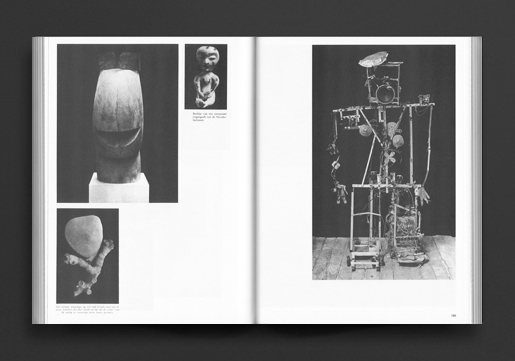
The Philadelphia Wireman sculptures were found abandoned in an alley off Philadelphia’s South Street on trash night in 1982. Their discovery in a rapidly-changing neighbourhood undergoing extensive renovation, compounded with the failure of all attempts to locate the artist, suggests that the works may have been discarded after the maker’s death. Dubbed the "Philadelphia Wireman" during the first exhibition of this work, in 1985, the maker’s name, age, ethnicity, and even gender remain uncertain. The entire collection totals approximately 1200 pieces, all intricately bound together with tightly-wound heavy-gauge wire (along with a few small, abstract marker drawings, reminiscent both of Mark Tobey and J.B. Murry). The dense construction of the work, despite a modest range of scale and materials, is singularly obsessive and disciplined in design: a wire armature or exoskeleton firmly binds a bricolage of found objects including plastic, glass, food packaging, umbrella parts, tape, rubber, batteries, pens, leather, reflectors, nuts and bolts, nails, foil, coins, toys, watches, eyeglasses, tools, and jewellery.
Heavy with associations—anthropomorphic, zoomorphic, and socio-cultural responses to wrapped detritus—the totemic sculptures by Philadelphia Wireman have been discussed in the context of work created to fulfil the shamanistic needs of alternative religions in American culture. Curators, collectors, and critics have variously compared certain pieces to sculpture from Classical antiquity, Native American medicine bundles, African-American memory jugs, and African fetish objects. Reflecting the artist’s prolific and incredibly focused scavenging impulse, and despite—or perhaps enhanced by—their anonymity, these enigmatic objects function as urban artefacts and arbiters of power, though their origin and purpose is unknown. Philadelphia Wireman, whatever their identity, possessed an astonishing ability to isolate and communicate the concepts of power and energy through the selection and transformation of ordinary materials. Over the course of the past two decades, this collection has come to be regarded as an important discovery in the field of self-taught art and vernacular art.
Presented in collaboration with Fleisher-Ollman Gallery, Philadelphia, and Robert Heald, Wellington.
Susan Te Kahurangi King
02 February - 10 March, 2018
Susan Te Kahurangi King (24 February 1951 - ) has been a confident and prolific artist since she was a young child, drawing with readily available materials - pencils, ballpoint pens and felt-tip markers, on whatever paper is at hand. Between the ages of four and six Susan slowly ceased verbal communication. Her grandparents William and Myrtle Murphy had developed a special bond with Susan so they took on caring responsibilities for extended periods. Myrtle began informally archiving her work, carefully collecting and storing the drawings and compiling scrapbooks. No drawing was insignificant; every scrap of paper was kept. The King family are now the custodians of a vast collection containing over 7000 individual works, from tiny scraps of paper through to 5 meter long rolls.
The scrapbooks and diaries reveal Myrtle to be a woman of great patience and compassion, seeking to understand a child who was not always behaving as expected. She encouraged Susan to be observant, to explore her environment and absorb all the sights and sounds. Myrtle would show Susan’s drawings to friends and people in her community that she had dealings with, such as shopkeepers and postal workers, but this was not simply a case of a grandmother’s bias. She recognised that Susan had developed a sophisticated and unique visual language and sincerely believed that her art deserved serious attention.
This was an unorthodox attitude for the time. To provide some context, Jean Dubuffet coined the term Art Brut in 1945 to describe work created by self-taught artists – specifically residents of psychiatric institutions and those he considered to be visionaries or eccentrics. In 1972 Roger Cardinal extended this concept by adopting the term Outsider Art to describe work made by non-academically trained artists operating outside of mainstream art networks through choice or circumstance. Susan was born in Te Aroha, New Zealand in 1951, far from the artistic hubs of Paris and London that Dubuffet and Cardinal operated in. That Myrtle fêted Susan as a self-taught artist who deserved to be taken seriously shows how progressive her attitudes were.
Susan’s parents Doug and Dawn were also progressive. Over the years they had consulted numerous health practitioners about Susan’s condition, as the medical establishment could not provide an explanation as to why she had lapsed into silence. Dawn educated herself in the field of homeopathy and went on to treat all twelve of her children using these principles – basing prescriptions on her observations of their physical, mental and emotional state.
Doug was a linguist with an interest in philosophy who devoted what little spare time he had to studying Maori language and culture. To some extent their willingness to explore the fringes of the mainstream made them outsiders too but it was their commitment to living with integrity and their respect for individuality that ensured Susan’s creativity was always encouraged.
Even though Susan’s family supported her artistic pursuits, some staff in schools and hospitals saw it as an impediment to her assimilation into the community and discouraged it in a variety of ways. Her family was not always aware of this and therefore did not fully understand why Susan stopped drawing in the early 1990s. However, rather than dwell on the challenges that Susan faced in pursuit of her artistic practice, they prefer to highlight her achievements. In 2008 Susan began drawing again in earnest, after an almost 20 year interruption, and her work is now shown in galleries around the world.
Susan grew up without television and has been heavily influenced by the comics she read as a child. She is absolutely fearless in the appropriation of recognizable characters, such as Donald Duck and Mickey Mouse, in her work. She twists their limbs, contorts their faces, compresses them together, blends them into complex patterned backgrounds - always imbuing them with an incredible energy. Although Susan often used pop culture characters in her work they are not naive or childlike. These are drawings by a brilliant self-taught artist who has been creating exceptional work for decades without an audience in mind.
Mladen Stilinović
"Various Works 1986 - 1999"
02 February 16 - September 10, 2016
Various works 1986 - 1999, from two houses, from the collections of John Nixon, Sue Cramer, Kerrie Poliness, Peter Haffenden and Phoebe Haffenden.
Including: Geometry of Cakes (various shelves), 1993; Poor People’s Law (black and white plate), 1993; White Absence (glasses, ruler, set square, silver spoon, silver ladel with skin photograph and wooden cubes), 1990-1996; Exploitation of the Dead (grey and red star painting, wooden painting, black spoon with red table, red plate), 1984-1990; Money and Zeros (zero tie, paintings made for friends in Australia (Sue, John, Kerrie), numbers painting), 1991-1992; Words - Slogans (various t-shirts) - “they talk about the death of art...help! someone is trying to kill me”, “my sweet little lamb”, “work is a disease - Karl Marx”; Various artist books, catalogues, monographs, videos; Poster from exhibition Insulting Anarchy; "Circular" Croatian - Australian edition; Artist book by Vlado Martek (Dostoyevsky); more.
Thanks to Mladen Stilinović and Branka Stipančić.
Jonathan Walker
Always Will Need To Wear Winter Shirt Blue + Ochre Small Check Pattern
21 August - 21 September, 2015
Untitled
I am not a great reader of poetry but I always return to the work of Melbourne poet, Vincent Buckley (1925- 1988). Perhaps I find his most tantalising piece to be not a finished poem but a fragment left on a scrap of paper discovered on his desk after the poet’s death.
The poetry gathers like oil
In the word-core, and spreads
It has its music meet,
Its music is in movement.
This fragment is more the shell left behind from a volatile thought than a finished poem. I find the last two lines honest but awkward whereas the first two lines work like an arrow. Most likely he could not find a resolution so it was left. Still, in its present form, it remains an eloquent testimony to the ultimate failure of a medium to express mobile thought and sensation, in Buckley’s case, through verbal language. It’s an important matter because this is something all artists have to deal with regardless of the medium.
I have never written a poem, however, I am forever copying fragments from books on paper scraps in a vain effort to fix certain notions in my head. At first, they function as bookmarks that are sometimes returned to when I open the book. But before long, as they accumulate, they fall out littering the table interspersed with A4 photocopies, bills, books and medications.
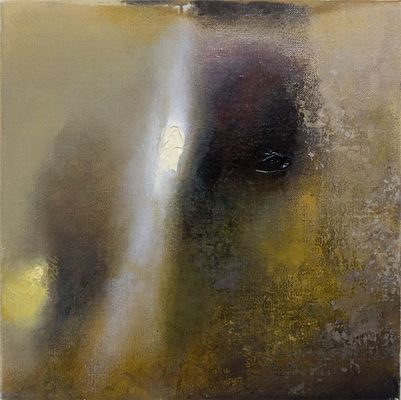
To return to Buckley’s fragment, the first two lines very much evoke how I paint nowadays. As you age, detail diminishes and patches of light become more luminous and float. I feel the most honest way of dealing with this is by smearing the oil paint on the canvas with the fingers and working close-up, blind. Only if the patches coalesce into an approaching image can the work gain a life.
-
Jonathan Walker was born in Melbourne, Australia and brought up on a dairy farm in Gippsland. In the 1970’s he studied painting at RMIT and won the Harold Wright Scholarship to the British Museum, London. During the 1980’s he exhibited at Pinacotheca Gallery, Richmond and had work shown at the NGV and Heidi City Art Gallery. Over the same period he designed the cover for the “Epigenesi” LP by Giancarlo Toniutti, Italy and conducted a mail exchange work with Achim Wollscheid, Germany. The work with artists through the post resulted in an article published in the bicentenary issue of Art and Australia 1988. He showed in artist run spaces such as WestSpace in the 90’s and 2000’s, and until 2012, taught painting at Victoria University, which is where we (Colleen Ahern and Lisa Radford) as organisers of the exhibition, among many others, had the privilege of being his student.
Walker’s knowledge was imparted to students through the careful selection of music, literature, and artists found in books that he himself had ordered for the library. Walker’s strategy was the generosity of sharing his vast knowledge with references specific to each student and their context.
Walker’s paintings share a similar focus and intimacy.
This exhibition presents a small selection of recent paintings alongside a publication that includes Walker’s writing. Observational and analytical, Walker’s work is a type of material notation — the time of day, colour and how it is blended, the both specific and fleeting location of a reflection on lino or the question of whether a chair leg should be included in a painting.
Please join us on Friday August 21 between 6-8pm to celebrate the opening of the exhibition.
Curated by Colleen Ahern and Lisa Radford.
B. Wurtz
Curated by Nic Tammens
March 26 - April 4, 2015
B.Wurtz works from a basement studio in his home on Manhattan’s Lower East Side.
This local fact is attested to by the plastic shopping bags and newsprint circulars that appear in his work. As formal objects, they don’t make loud claims about their origins but nonetheless transmit street addresses and places of business from the bottom of this long thin island. Like plenty of artists, Wurtz is affected by what is local and what is consumed. His work is underpinned by this ethic. It often speaks from a neighborhood or reads like the contents of a hamper:
“BLACK PLUMS $1.29 lb.”
“Food Bazaar”
“USDA Whole Pork Shoulder Picnic 99c lb.”
“RITE AID Pharmacy, with us it’s personal.”
“H. Brickman & Sons.”
“Sweet Yams 59c lb."
Most of the work in this exhibition was made while the artist was in residence at Dieu Donne, a workshop dedicated to paper craft in Midtown. Here Wurtz fabricated assemblages with paper and objects that are relatively lightweight, with the intention that they would be easily transportable to Australia. This consideration isn’t absolute in Wurtz’s work, but was prescriptive for making the current exhibition light and cheap. Packed in two boxes, these works were sent from a USPS post office on the Lower East Side and delivered to North Melbourne by Australia Post.
Wurtz appears courtesy of Metro Pictures, New York.
Thanks to Rob Halverson, Joshua Petherick, Sari de Mallory, Matt Hinkley, Helen Johnson, Fayen d'Evie, Ask Kilmartin, Lisa Radon, Ellena Savage, Yale Union, and "Elizabeth".
John Nixon
"Archive"
December 15 - January 20, 2014
The presentation of John Nixon's archive offered a rare showcase of this extensive collection of the artist's own publications, catalogues, posters, ephemera, editions and more, from the mid 1980s onwards, alongside a selection of his artworks.
Organized by John Nixon, Joshua Petherick and Matt Hinkley.
<a href=http://wfb.public-office.info/artist/john-nixon>All titles by John Nixon
"Habitat"
at Minerva, Sydney (organised by Joshua Petherick and Matt Hinkley)
November 15 - December 20, 2014
Lupo Borgonovo, Janet Burchill & Jennifer McCamley,
Lewis Fidock, HR Giger, Piero Gilardi, Veit Laurent Kurz,
Cinzia Ruggeri, Michael E. Smith, Lucie Stahl, Daniel Weil, Wols
Press Release:
“...It contained seven objects. The slender fluted bone, surely formed for flight, surely from the wing of some large bird. Three archaic circuitboards, faced with mazes of gold. A smooth white sphere of baked clay. An age-blackened fragment of lace. A fingerlength segment of what she assumed was bone from a human wrist, grayish white, inset smoothly with the silicon shaft of a small instrument that must once have ridden flush with the surface of the skin - but the thing’s face was seared and blackened.”
William Gibson, “Count Zero”, 1986
"Autumn Projects Archive"
Curated by Liza Vasiliou
March 6 - March 15, 2014
World Food Books, in conjunction with the Virgin Australia Melbourne Fashion Festival 2014, presented the Autumn Projects archive, consisting of a selection of early examples in Australian fashion with a particular interest in collecting designers and labels from the period beginning in the 1980’s, who significantly influenced the discourse of Australian Fashion.
Curated by Liza Vasiliou, the exhibition provided a unique opportunity to view pieces by designers Anthea Crawford, Barbara Vandenberg, Geoff Liddell and labels CR Australia, Covers, Jag along with early experimental collage pieces by Prue Acton and Sally Browne’s ‘Fragments’ collection, suspended throughout the functioning World Food Books shop in Melbourne.
H.B. Peace
presented by CENTRE FOR STYLE
November 14, 2013
"Hey Blinky, you say chic, I say same"
Anon 2013
H.B. Peace is a clothing collaboration between great friends Blake Barns and Hugh Egan Westland. Their pieces explore the divergences between 'character’ and ‘personality’ in garments....etc
Special Thanks to Joshua Petherick and Matt Hinkley of WFB and Gillian Mears
and a Very Special Thank you to Audrey Thomas Hayes for her shoe collaboration.
Janet Burchill & Jennifer McCamley
"Aesthetic Suicide"
May 10 - June 8, 2013
The first of our occasional exhibitions in the World Food Books office/shop space in Melbourne, "Aesthetic Suicide" presented a body of new and older works together by artists Janet Burchill & Jennifer McCamley, including videos, prints, a wall work, and publications.
During shop open hours videos played every hour, on the hour.
2019, English
Softcover, 378 pages, 22 x 28 cm
Published by
Portikus / Frankfurt
Koenig Books / London
Kunsthalle Basel / Basel
Witte de With / Rotterdam
KIOSK / Ghent
$74.00 - Out of stock
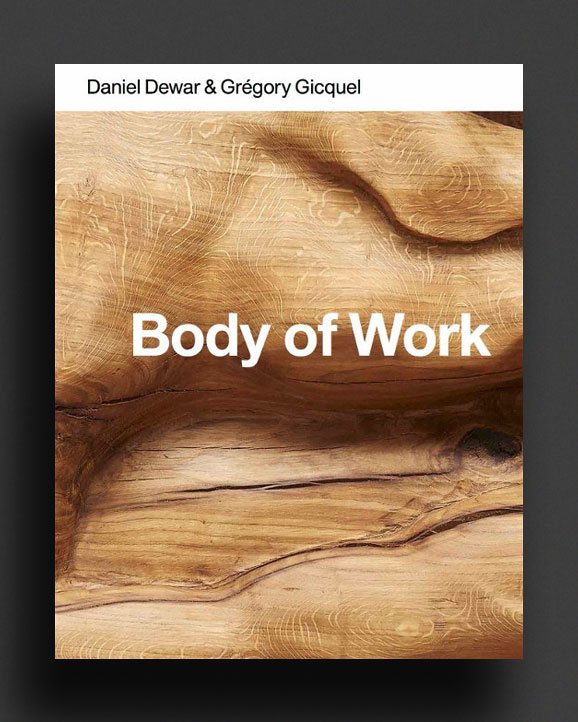
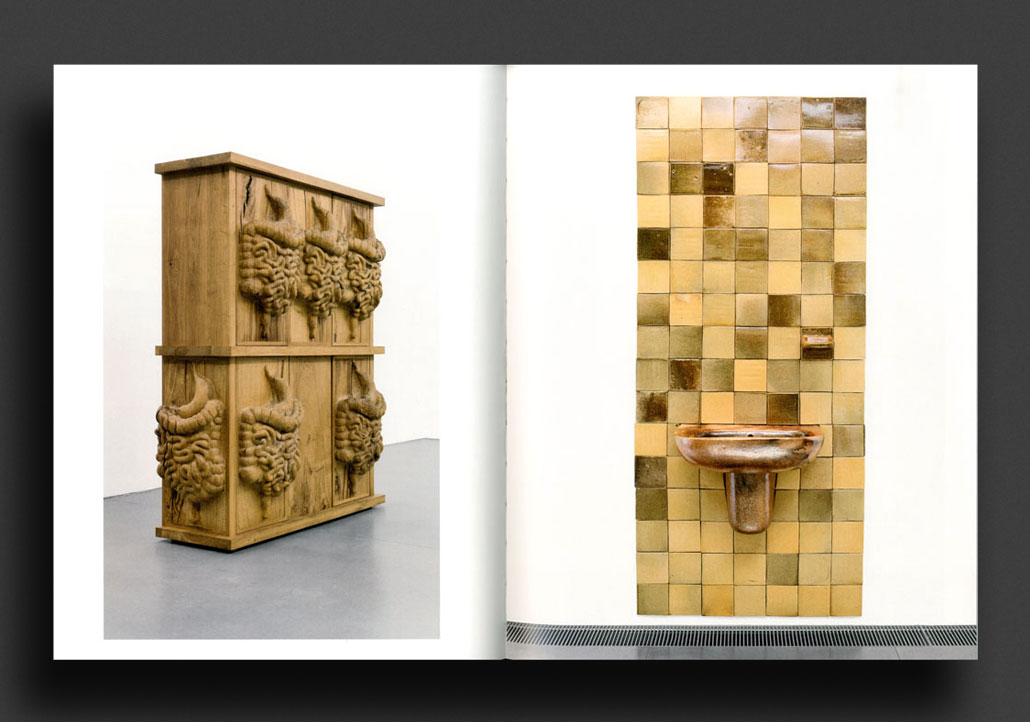
Multi-layered, interwoven, constructed, worn down, humorous, sometimes irritating and unsettling, sleek, and often massive. These are only a few of the possible ways of capturing the work of Daniel Dewar and Grégory Gicquel in words, after their twenty years together as an artistic duo.
This comprehensive and lavishly illustrated monograph looks back, and at the same time takes stock of what is situated in the present. It is a chronological inventory of the oeuvre and thus reveals its development, showing how the work has changed over two decades.
The idea for this book first arose in a conversation with the artists when preparing an exhibition at Portikus in 2017. It was made possible through a collaboration with several additional art institutions, where the artists had solo exhibitions in 2016, 2017, and 2019 respectively.
“Working with ceramics, wood and wool, the artists employ traditional decorative arts and crafts techniques to devise a series of sculptures that, despite their manual means of production, are entirely innovative.” — Julian Elias Bronner, Frieze magazine
Includes texts by Michael Van den Abeele, Liene Aerts, Michael Capio, Dorothée Dupuis, Elena Filipovic, Zoë Gray, Anne Langlois, Charlotte Laubard, Alice Motard, Lili Reynaud-Dewar, Samuel Saelemakers, Fabian Schöneich, Véronique Wiesinger
2019, English
Softcover, 188 pages, 15 cm x 24 cm
Published by
The Song Cave / New York
Merce Cunningham Trust / New York
$35.00 - Out of stock
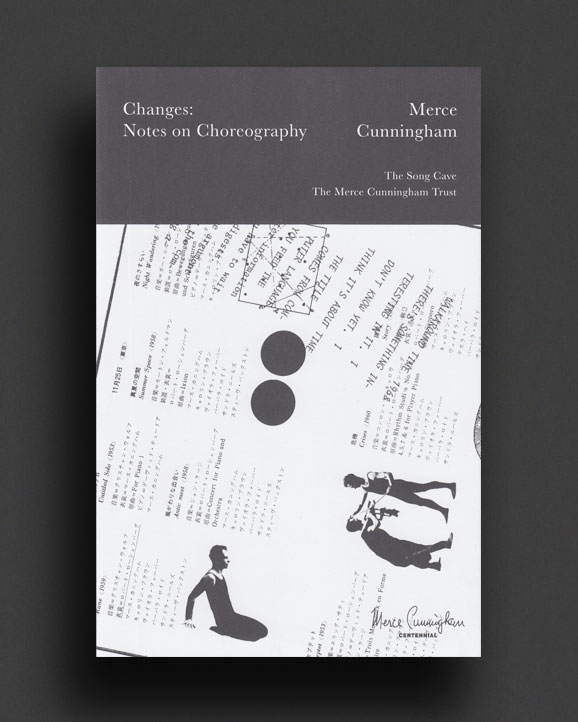
On the occasion of Merce Cunningham’s centennial comes this new edition of his classic and long-out-of-print artist’s book Changes: Notes on Choreography, first published in 1968 by Dick Higgins’s Something Else Press.
The book presents a revealing exposition of Cunningham’s compositional process by way of his working notebooks, containing in-progress notations of individual dances with extensive speculations about the choreographic and artistic problems he was facing. Illustrated with over 170 photographs and printed in colour and black and white, the book was described by its original publisher as “the most comprehensive book on choreography to emerge from the new dance … [which] will come to stand with Eisenstein’s and Stanislavsky’s classics on the artistic process".
By the time these notebooks were published, Cunningham had already led the Merce Cunningham Dance Company for 15 years, and had collaborated with Cage and others on milestones such as Variations V (1966) and RainForest (1968), the latter with Andy Warhol, David Tudor and Jasper Johns.
Along with his essay collection Dancing in Space and Time (1978), Changes is one of the most significant publications on Cunningham’s enduring contributions to dance, which developed through collaboration with John Cage to incorporate formal innovation with regard to chance, silence and stillness.
Book design by Dick Higgins.
2019, English / German
Hardcover, 144 pages, 16.5 cm x 22 cm
Published by
Koenig Books / London
Fridericianum / Kassel
$48.00 - Out of stock
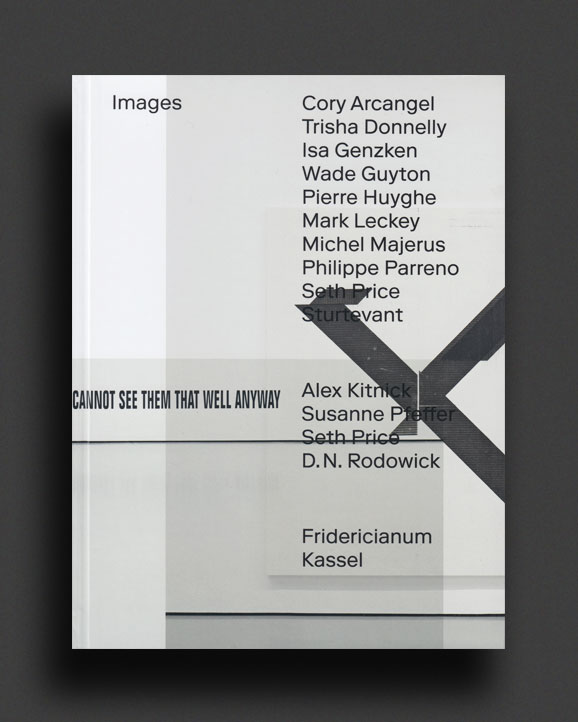
The realm of the imaginary, which has always been regarded as the primal domain of art, has expanded progressively under the influence of new technologies in the early years of the twenty-first century. Through a process of mutual interaction, the imaginary permeates and shapes reality— and vice versa. The imaginary potential of the visual image has become increasingly significant. This ongoing process is designated by the concept of the image. The works presented in this exhibition explore the image at the moment of its fundamental reconfiguration. Changes affecting the origin, distribution, function, and mission of the image have made it both the point of departure and the principal object of artistic analysis.
Artworks by Pierre Huyghe, Wade Guyton, Seth Price, Mark Leckey, Philippe Parreno, Michel Majerus, Trisha Donnelly, Cory Arcangel, Sturtevant, Isa Genzken
Texts by Alex Kitnick, Susanne Pfeffer, Seth Price, D.N. Rodowick
Published to accompany the exhibition ‘Images’, 31 Jan – 1 May 2016, Fridericianum, Kassel.
Co-published by Koenig Books and Fridericianum.
English and German text.
2019, English
Hardcover, 236 pages, 21 x 27 cm
Published by
Walther König / Köln
$94.00 $60.00 - Out of stock
This publication focuses on two of Maria Eichhorn’s open-ended projects, which both have the representation and regulation of sexual imagery as their theme. Prohibited Imports (2003/08 and 2015) now includes books censored by Japanese customs – books made by artists Robert Mapplethorpe, Wolfgang Tillmans, and Jeff Koons, among others. Film Lexicon of Sexual Practices (1999/2005/2008/2014/2015) currently consists of twenty 16mm silent films (each approx. 3 minutes).
The essays by Nina Power, Nora M. Alter, Pamela M Lee, and Scott Watson engage the critical dimension of these compelling works.
Published after the exhibition at Morris and Helen Belkin Art Gallery, Vancouver (11 September – 13 December 2015).
Maria Eichhorn is a German artist based in Berlin. She is best known for site-specific works and installations that investigate political and economic systems, often revealing their intrinsic absurdity or the extent to which we normalize their complex codes and networks
2017, English / German
Hardcover (cloth-bound), 560 pages, 23 x 18 cm
Published by
Kunsthaus Bregenz / Austria
Walther König / Köln
$85.00 - In stock -
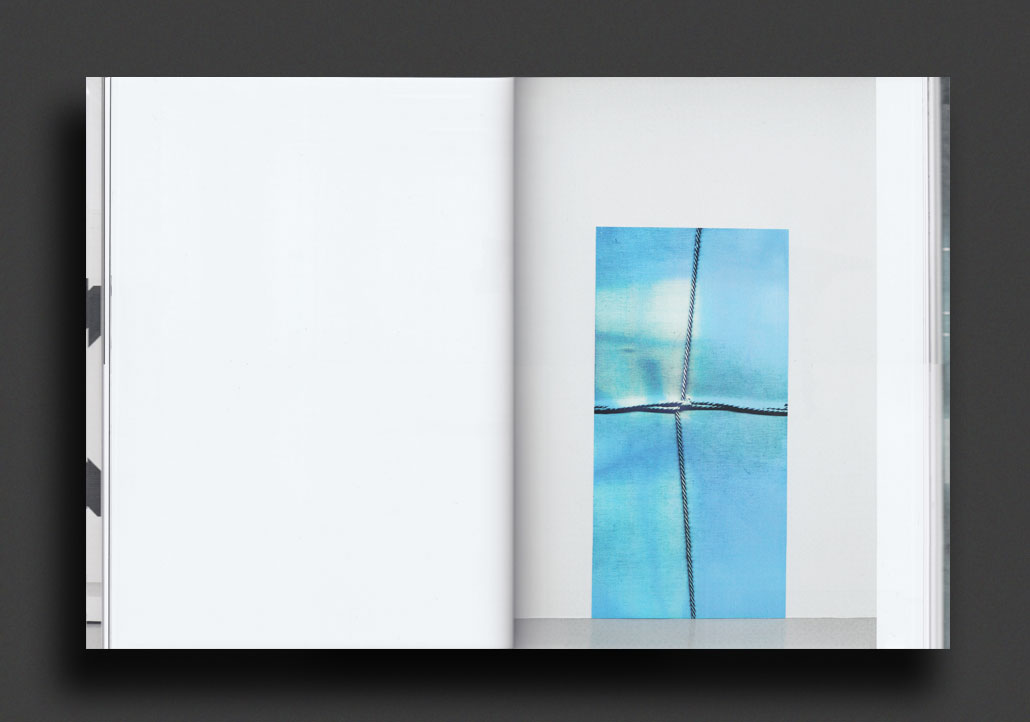
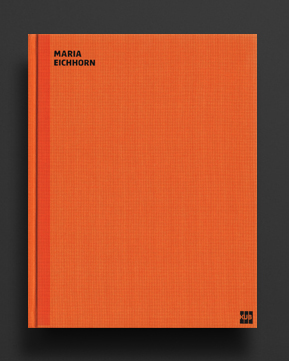
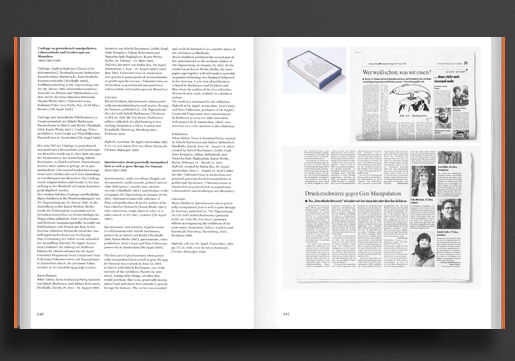
This comprehensive and chronologically structured catalogue raisonné orders the radical work of the artist Maria Eichhorn according to art history and is supplemented by extensive image and archive material on her works, projects and exhibitions since 1986.
With the addition of large-format illustrations of the exhibition in Bregenz, this is one of the most comprehensive publications on the work of the artist to date.
Published retrospectively after the exhibition at Kunsthaus Bregenz, 10 May – 6 July 2014.
English and German text.
Maria Eichhorn is a German artist based in Berlin. She is best known for site-specific works and installations that investigate political and economic systems, often revealing their intrinsic absurdity or the extent to which we normalize their complex codes and networks
2017, English
Softcover, 112 pages, 16 x 23 cm
Published by
Mousse / Milan
$48.00 $25.00 - Out of stock
Józef Robakowski, a key figure of the 1960s and 1970s neo-avant-garde rebellion, is a master of structural cinema and a pioneer of Polish video art. In his practice he has tested viewers’ perceptual habits, developed ideas about mechanical recordings beyond any aesthetic convention, and criticized methods of visual persuasion in films, highlighting in particular the pompousness of political spectacles. A radical experimentalist and media analyst, Robakowski is known for his unique approach, “his own cinema,” in which autobiography replaces dubious history, and in which the artist proposes his own scenario for perceiving the reality of life under communism. The book, published in collaboration with the Luigi Pecci Centre for Contemporary Art and the Profile Foundation on the occasion of the exhibition “Józef Robakowski: Nearer – Further,” full of illustrations and descriptions of the work, contains an interview by Hans Ulrich Obrist with the artist and an interview between Fabio Cavallucci, the Artistic Director of Centro per l’Arte Contemporanea Luigi Pecci, and Marina Abramović, a colleague and friend of Robakowski in the years they both lived and worked in communist bloc countries.
2018, English
Softcover, 268 pages, 23 x 31 cm
Published by
écal / Renens
$82.00 - Out of stock
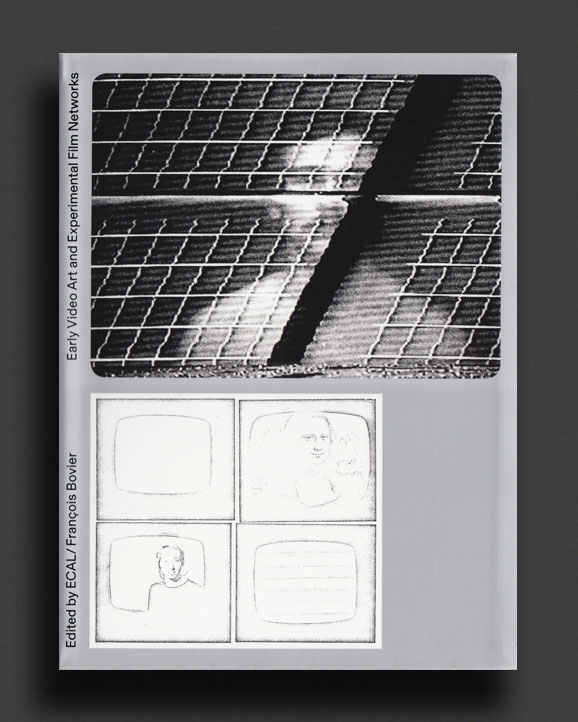
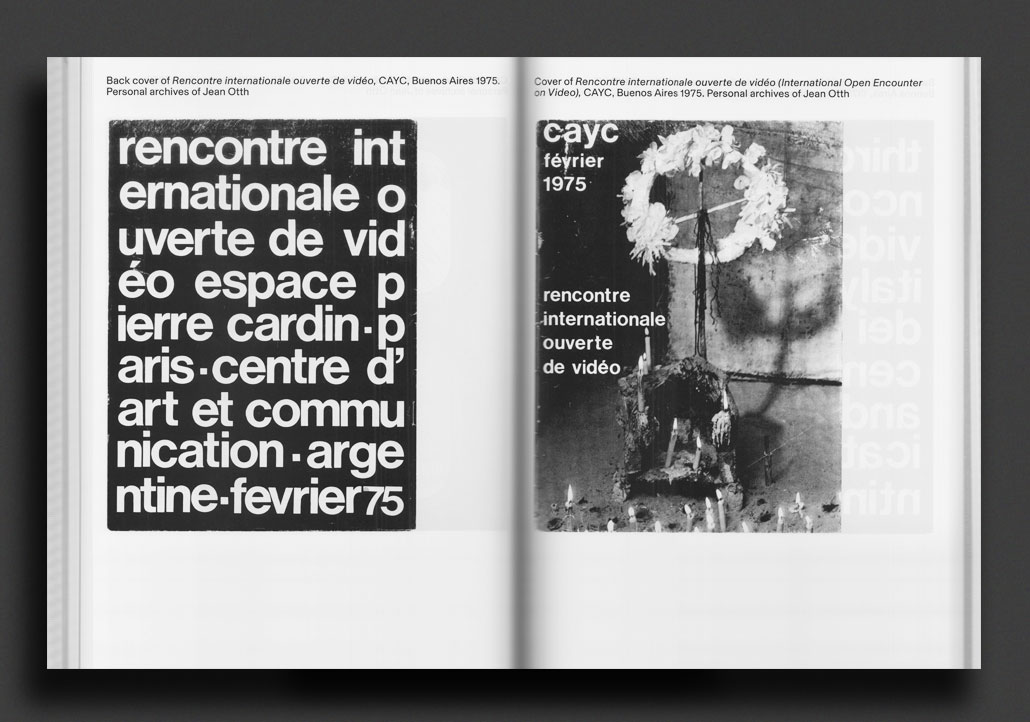
Early Video Art and Experimental Films Networks traces the diffuse international networks through which video art and experimental films circulated during the late sixties and early seventies. It explores forgotten exhibitions both in Switzerland and France, the activities of public television channels and alternative art spaces in the US, a production art center dedicated to video in Italy and an Argentinian collective of conceptual artists, aiming to shed new light on the production and diffusion of moving images.
This volume is divided into two parts: the first part, which is longer and more extensively documented, explores the emergence and consolidation of video art networks at international level; the second focuses more specifically on two exhibitions of artists' films (New Forms in Film and Une histoire du cinéma) and one of the main instances of the museification of experimental cinema, Anthology Film Archives. Indeed, this particular story has wider currency insofar as several important works in recent years have focused on artists' films 23 and expanded cinema 24. We have adopted the principle, wherever possible, of providing rare and previously unpublished images and documents alongside the essays specifically commissioned for this volume, the choice of which has been left to the discretion of the author of each particular chapter.
Edited by François Bovier.
Texts by Kristen Alfaro, François Bovier, Enrico Camporesi, Katarzyna Cytlak, Larisa Dryansky, Tristan Lavoyer, Adeena Mey, Kris Paulsen, Cosetta G. Saba, Andrew V. Uroskie.
2019, English
Softcover, 560 pages, 17.3 x 27.5 cm
Published by
A.R.T. Press / New York
Koenig Books / London
$60.00 - Out of stock
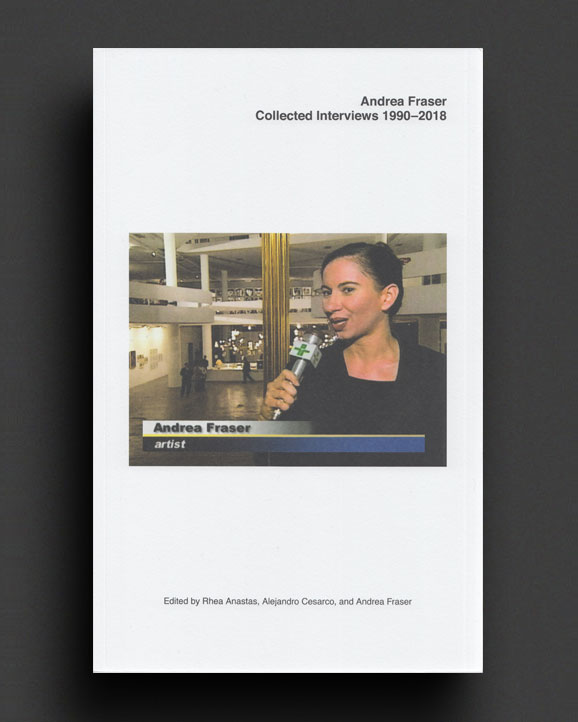
Since the 1980s Andrea Fraser has achieved renown for performances that interrogate social structures with humor and pathos, aligning herself with feminism and institutional critique. While Fraser’s video and performance works are often associated with investigations of art institutions, her performances since the early 2000s evidence a turn toward analyzing the intersection between sociopolitical and psychological structures as they produce individual and group identity.
The extensive collection of conversations with fellow artists and curators provides access to Andrea Fraser's work and reception. The interview format gives a very personal insight into her artistic practice. Central ideas and topics of her work are explained from different perspectives. The chronological composition of the minimal editorial intervention covers three decades.
This volume was published on the occasion of Andrea Fraser's exhibition at the Hammer Museum, Los Angelis in May- September 2019.
Contributors include: Judith Batalion, Helmut Draxler, Vincenzo de Bellis, Gregg Bordowitz, Sabine Breitwieser, Stuart Comer, Joshua Decter, Yilmaz Dziewior, Andrea Fraser, Jorg Heiser, Miwon Kwon, Bennett Simpson et al.
2018, English
Softcover, 128 pages, 23.8 x 12.75 cm
Published by
Book Works / London
$40.00 $30.00 - Out of stock
Recalling the short-lived 'Bureau de Recherches Surréalistes of 1924−1925' − part information centre and ‘public relations’ office, and part surrealist archive − Mark Dion trawled through the Manchester Museum’s own collections and found the raw material for this book and a new installation for the museum. Renowned for his work exploring taxonomy, archaeology, and ecology, Mark Dion documents his opportunistic encounters with the Museum of Manchester’s neglected drawers and overlooked recesses that are home to redundant labels, orphaned mounts, defunct teaching models, botanical freaks, Egyptian fakes, and the minutiae that have fallen through the cracks of museum practice and lain abandoned.
2019, English
Softcover, 210 pages, 12 x 19 cm
Published by
Uh Books / Amsterdam
KW Institute for Contemporary Art / Berlin
$23.00 - Out of stock
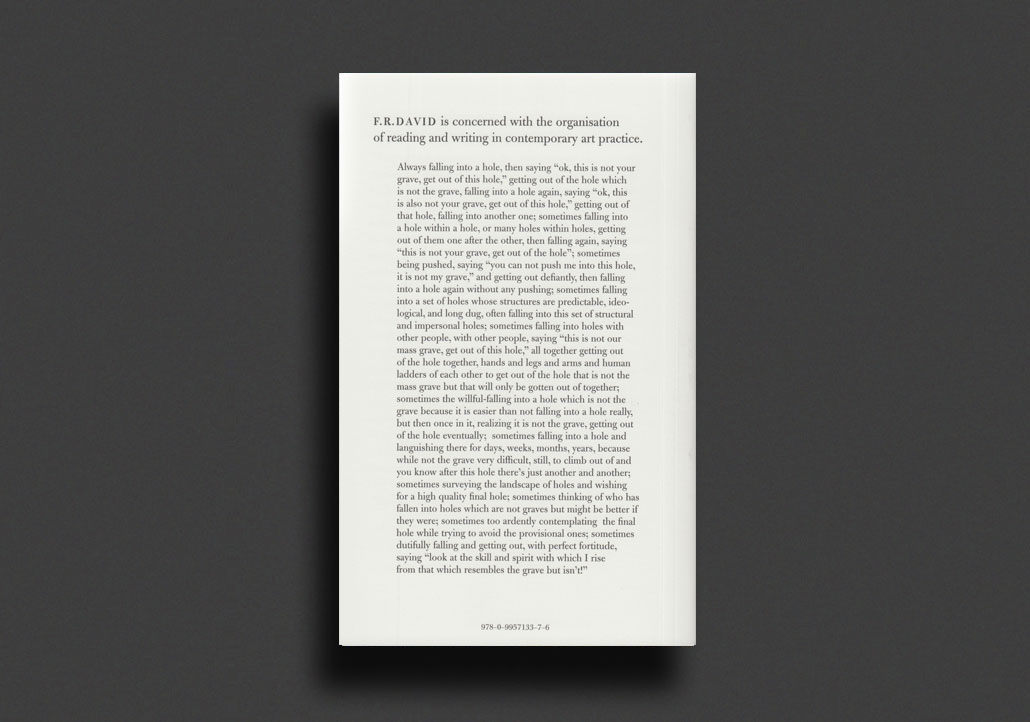
The eighteenth issue of ‘F.R. DAVID’ is edited by Will Holder and had its beginnings in prosody, the measure of language, geometry, and a notion of imagist transcription. A two-dimensional exercise, it turns out, on paper. Words were tuned out in favour of the volume of values our bodies exchanged. This issue’s diverse contents centre around the non-verbal, the insinuated, the reverse-side of the image, the backside, and perhaps even the next page. With contributions by Simone Weil, Marcel Proust, Will Holder, Anna Daučíková, Yvonne Rainer, Jesse Birch, Paola Grassi, David Lang, Péter Dobai, John Yau, Clare Noonan, and others.
2019, English
Softcover, 264 pages, 12 x 19 cm
Published by
Uh Books / Amsterdam
KW Institute for Contemporary Art / Berlin
$23.00 - Out of stock
‘Black Sun’ is edited in conversation with Krist Gruijthuijsen, currently the director of KW Institute for Contemporary Art in Berlin, to accompany the exhibitions ‘David Wojnarowicz Photography & Film 1978–1992’, ‘Reza Abdoh’, and ‘TIES, TALES AND TRACES: Dedicated to Frank Wagner, Independent Curator (1958–2016)’. The issue departs from Wojnarowicz’s grief at the loss of loved ones during the 1980s AIDS crisis and anger at the US government for its wilful neglect. It assembles a selection of various gendered and sexual positions, all seeking support, love, and intimacy in linguistic, architectural, and bodily structures while under threat of collapse.
Includes Cynthia Carr, Julia Kristeva, Ira & George Gershwin, James Agee, Michael Cisco, Noor Al Samarrai, Alvin Baltrop, Sarah Schulman, David Wojnarowicz, Renee Gladman, Lylah Clare, Shary Boyle & John Kurok, Herbert Read, Lee Lozano, Dennis Cooper, Talking Heads, Claire Fontaine, Marnie Slater, Audre Lorde, Falke Pisano, Alex Turgeon, Gregg Bordowitz, Wayne Kostenbaum, 3 Teens Kill 4, Pointer Sisters, Joseph Kusendila, RP Boo, Experimental Jetset, Rob Halpern, Mark Turner, Reza Abdoh, and more.
2019, English
Softcover, 238 pages, 11 x 17 cm
Published by
Book Works / London
$33.00 - Out of stock
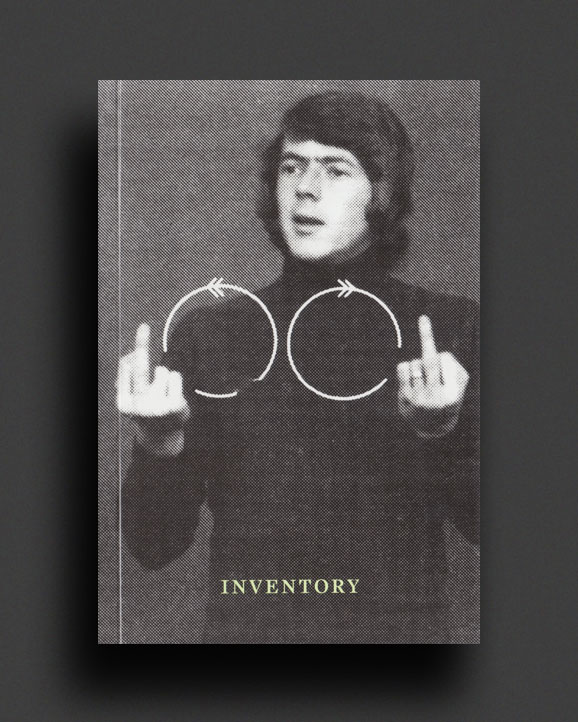
Formed in 1995, Inventory was a loosely associated group of writers, artists and theorists, currently guided by the efforts of two artists/heretics, Adam Scrivener and Paul Claydon, who advance a practical and theoretical notion of what they call ‘fierce sociology’. Capitalism continues to disempower us, with its corrosive mantra that it provides the best of all possible worlds and that we must stay silent and accept its violent side-effects as unfortunate necessity: we are told to tolerate its hereditary and dynastic aspects. We are told that technological change alone will bring the deleterious effects of profit and loss to heel. And so it appears, that unless we are driven to the brink of extinction, there will be no collective counter-attack of lasting value. This is the counsel of spent, asking how far we must be pushed as a species, as a planet, and how much more must be tolerated in the interests of ‘survival’ before we awake and understand that there is no natural evolution under capitalism?
2019, English
Softcover, 192 pages, 20 x 13 cm
Published by
Book Works / London
$40.00 - Out of stock
'Sad Sack' is a book of collected writing by Sophia Al-Maria, taking feminist inspiration from Ursula K. Le Guin’s 1986 essay ‘The Carrier Bag Theory of Fiction’; opposing ‘the linear, progressive, Time’s-(killing)-arrow mode of the Techno-Heroic. Encompassing more than a decade of work, 'Sad Sack' tracks Al-Maria’s speculative journey as a writer, from the first seed of her "premature" memoir, through the coining and subsequent critique of ‘Gulf Futurism’, towards experiments in gathering, containing, welling up, and sucking dry.
Sophia Al-Maria is an artist and writer living in London.
1976, English
Softcover, 80 pages, 8.5 x 22 cm
1st Edition, Out of print title / Used*,
Published by
The Aboriginal Arts Board / Australia
$38.00 - Out of stock
Warning: Viewers should be aware that this post may contain the names and images of Aboriginal and Torres Strait Islander people now deceased.
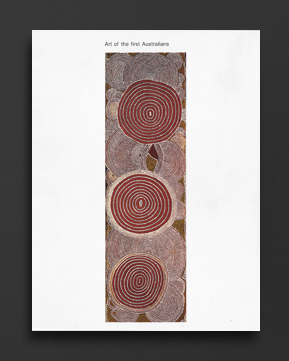
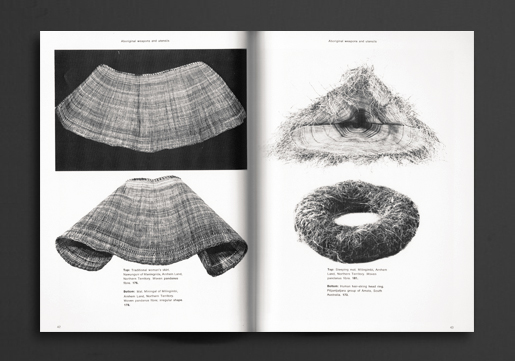
First printing of the 1976 catalogue "Art of the First Australians", published on the occasion of an exhibition of Aboriginal Painting, Sculpture and Artefacts of the past two hundred Years. Preface by Wandjuk Marika, chairman of the Aboriginal Arts Board. Foreword by Malcolm Fraser, Prime Minister of Australia. Heavily illustrated throughout with black and white images of weapons, utensils, bark paintings, and wooden sculptures. With essays, plus details on the various exhibited items throughout, and bibliography.
features the work of: Kaapa Mbijana Djambidjimba, Narritjin Maymuru~Manggalili, Mithinari Gurruwiwi, John Kurparu Djagamara, Walter Djambidjimba, Tim Laura Djabajari, Mitinari Gurruwiwi, Narritjin Maymuru, Bob Bopani, Mick Gubargu, Paddy Teeampi, Sugarbag Katipi Wonammeri, Declan Apuatimi, Gabriel Tungutalum, Leo Parbuungu, Patrick Freddy Puruntatameri, Stanislaus Puruntatameri, Billy Stockman Tjapaltjarri, Shorty Lungkata Tjungurrayi, and many other examples of the work of the craftspeople of The Pitjantjatjara, Lardil, Tiwi, and many others.
1982, Japanese
Softcover, 202 pages, 21 x 15 cm
1st Edition, Out of print title / Used*,
Published by
Shimpyosha / Japan
$70.00 - Out of stock
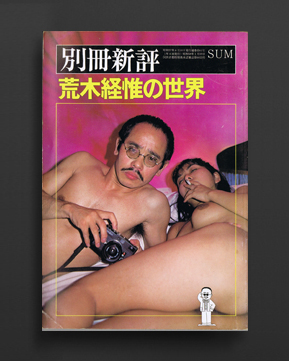
Rare, early 1982 special edition book-journal dedicated to the work of Japanese photographer Nobuyoshi Araki, who became an icon of photographic publishing and one of Japan's most celebrated and prolific photographers. “Bessatsu Shinpyo, summer edition: Araki Nobuyoshi no sekai” - "The World of Nobuyoshi Araki.", a 202 page documentary record complementing “The Truth About Nobuyoshi Araki,” concluding with a chronology of Araki’s career compiled by Akira Suei.”--Kotaro Iizawa, Araki: Self, Life, Death. Texts in Japanese.
Nobuyoshi Araki is a prolific Japanese photographer who has produced thousands of photographs over the course of his career. He became famous for “Un Voyage Sentimental” (1971), a series of photos depicting both banal and deeply intimate scenes of his wife and lifelong muse, essayist Aoki Yoko (whom the artist credits for making him a photographer), during their honeymoon. To date the 75 year old has produced 450 photo books and counting. With a repertoire that knows no boundaries, Araki's diaristic style of photography has captured the world around him (his cat Chiro, the people and landscapes of Japan and his travels, flowers, family), though it is Araki’s intensely sexual imagery that has elicited particular controversy and fascination throughout his career. Similarly to Helmut Newton, Araki has often addressed subversive themes — such as bondage in the Japanese style Kinbaku — in his provocative depictions of female nudes. He typically works in black-and-white photography, and his hallmark style is deliberately casual. “Rather than shooting something that looks like a professional photograph, I want my work to feel intimate, like someone in the subject’s inner circle shot them,” he says. Pushing against the world of commercialised photography, he is celebrated for his history of self-publishing and distributing his work, beginning with his Xerox Photo Albums of 1970. Amongst many others, Araki has collaborated with American photographer Nan Goldin and Icelandic musician Björk.
2015, English
Softcover (staple-bound), 64 pages, 14.8 x 21 cm
Published by
Walther König / Köln
$18.00 - Out of stock
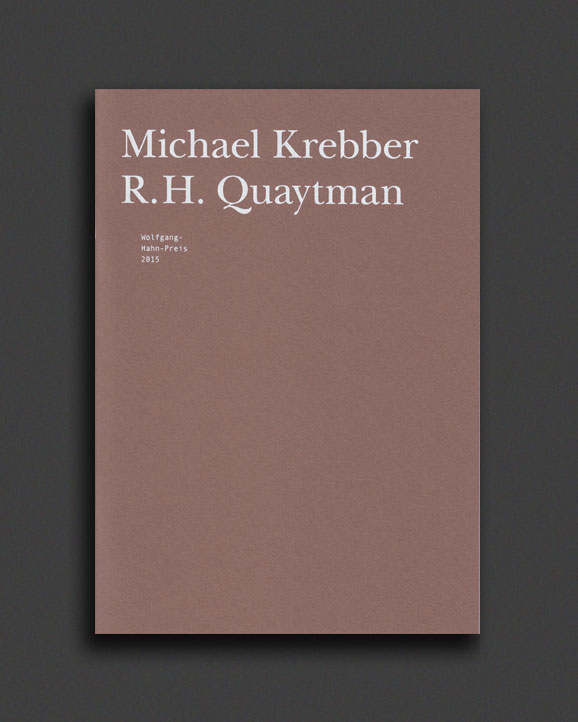
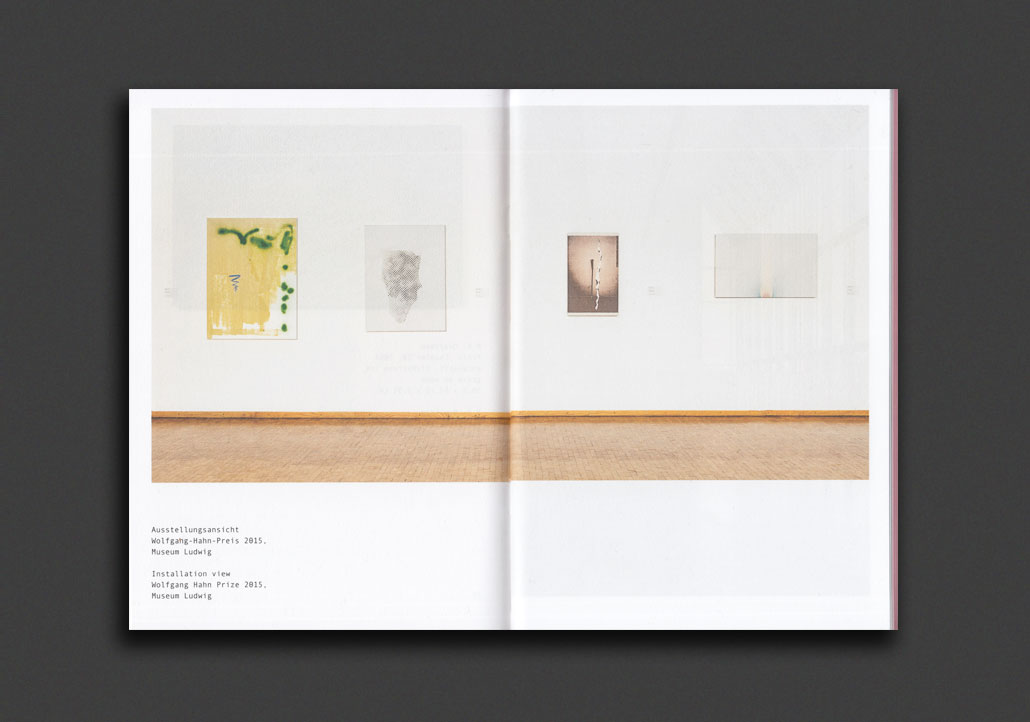
Founded in 1994 in honor of the Cologne-based collector Wolfgang Hahn, the Wolfgang Hahn Prize has since been awarded every year to an exceptional, internationally known, but even less well known, artist personality in Germany. With RH Quaytman and Michael Krebber the prize was awarded for the first time in 2015 to two artists. This publication pays tribute to the laureate and the laureate, both of whom are decidedly concerned with the medium of painting from a more conceptual standpoint. With a foreword by Mayen Beckmann, an introduction by Yilmaz Dziewior, a laudation by Daniel Birnbaum and an afterword by Hanspeter Sauter.
2019, English
Softcover, 190 pages, 17cm x 28 cm
Ed. of 700,
Published by
Centre Centre / London
$59.00 - Out of stock
Out of print.
'Brick Index' is a collection of named bricks and the unseen makers' marks stamped by brickworks from across the UK. It celebrates the humble brick, relishing the textures, colours and graphics debossed into their 'frogs'. This collection serves to rethink a ubiquitous material and honour the graphic stamps hidden all around us. The book features 155 beautifully photographed bricks, printed at actual size, accompanied by an index that states the time, place, and maker of each brick.
Featuring an introduction from David Kitching, a brick historian and an essay from Professor Rick Poynor. Photography by Inge Clemente.
Limited to 700 copies
2019, English / French
Hardcover (w. dust jacket), 72 pages, 23 x 30 cm
1st Edition, Out of print title / as new
Published by
CAPC / Bordeaux
$95.00 $60.00 - Out of stock
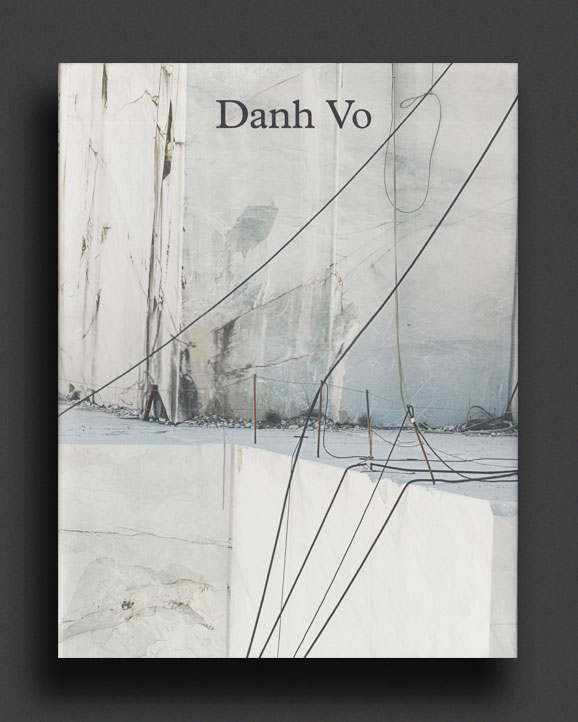
Designed under the direction of the artist, this now out of print monograph is devoted to Danh Vo's in situ installation at the CAPC museum, through which the conceptual artist explores the relationship between individual and collective history, and the notions of power and masculinity. Beautifully documented throughout, with an accompanying interview with Vo by María Inés Rodríguez. Published on the occasion of Danh Vo's exhibition at CAPC musée d'art contemporain de Bordeaux, from May 29 to October 28, 2018.
Performance art inspired conceptual artist Danh Vo (born 1975 in Bà Ria, Vietnam) studied at the Städelschule of Frankfurt, Germany and at the Royal Academy of Fine Arts of Copenhagen, Denmark.
His work has been presented in the context of numerous exhibitions in the most prestigious international institutions including: Solomon R. Guggenheim, New York (2018), National Gallery Singapore (2017); Walker Art Center, Minneapolis (2016); Museo Nacional Centro de Arte Reina Sofía, Madrid (2015); Nottingham Contemporary (2014); Museo Jumex, Mexico City (2014); Musée d'art moderne de la Ville de Paris, Paris (2013); Solomon R. Guggenheim, New York (2013); Art Institute of Chicago (2012-2013); Kunsthaus Bregenz, Austria (2012); National Gallery of Denmark, Copenhagen (2012, 2010); Kunsthalle Basel, Switzerland (2009); MoMA, New York (2009); Stedelijk Museum, Amsterdam, Nerherlands (2008); Bergen Kunsthall, Norway (2006). He also participated in the Shanghai Biennial in 2012 and the Biennale di Venezia in 2013 and 2015. He was awarded the Hugo Boss Prize 2012 and nominated for the Nationalgalerie Prize for Young Art of Berlin in 2009. He also received the BlauOrange Kunstpreis der Deutschen Volksbanken und Raiffeisenbanken of Berlin in 2007.
2019, English
Softcover, 488 pages, 18 x 11 cm
Published by
Koenig Books / London
Städelschule / Frankfurt
$42.00 - Out of stock
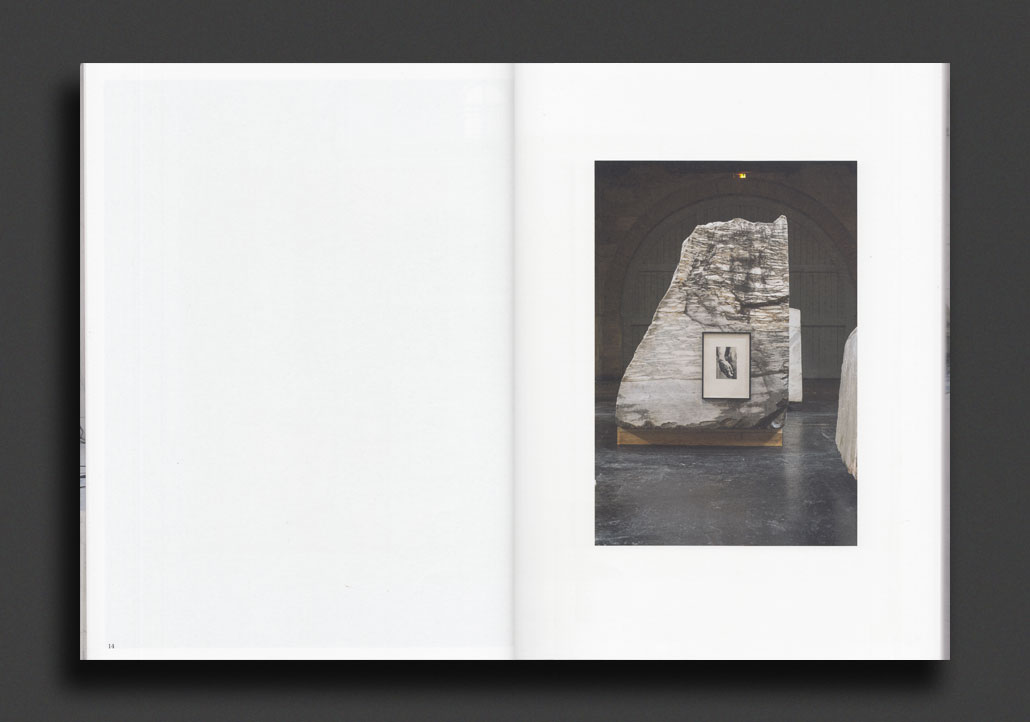
‘Since the year 1999, around 800 lectures have taken place at the Städelschule in Frankfurt. The texts are transcripts of thirteen lectures, selected to represent the most recent history, cataloguing ideas that might otherwise be buried and forgotten. This volume is the first of a series and focuses on the diversity of artistic perspectives. It provides an insight into the Städelschule’s educational program and documents a variety of artistic and theoretical approaches that the school seeks to support in art and society at large. The ongoing series will continuously reflect the school’s anatomy and core protagonists—the professors, the curatorial program at Portikus, and the students.’ — Philippe Pirotte (Städelschule Rector)
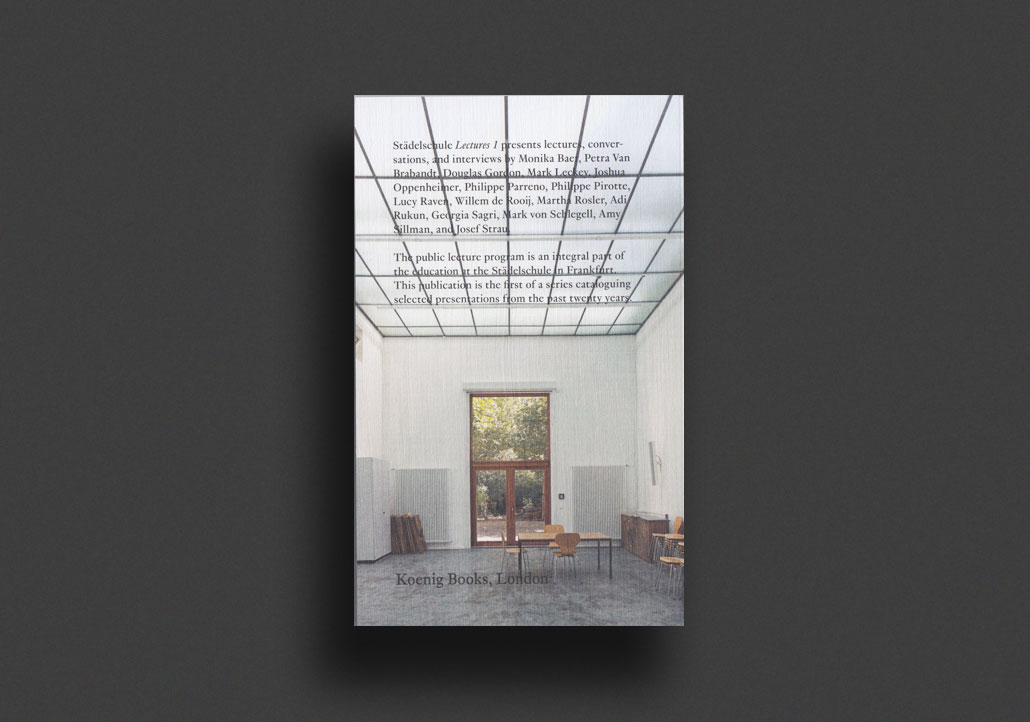
Städelschule Lectures 1 presents lectures, conversations, and interviews by: Monika Baer, Petra Van Brabandt, Douglas Gordon, Mark Leckey, Joshua Oppenheimer, Philippe Parreno, Philippe Pirotte, Lucy Raven, Willem de Rooij, Martha Rosler, Adi Rukun, Georgia Sagri, Mark von Schlegell, Amy Sillman and Josef Strau. The public lecture program is an integral part of the education at the Städelschule in Frankfurt. This publication is the first of a series cataloguing selected presentations from the past 20 years. Co-published with Städelschule.
1985, German
Softcover, 255 pages, 32 x 24.5 cm
1st Edition, Out of print title / used / good
Published by
Diogenes / Zürich
$70.00 - Out of stock
One of the most splendid visual overviews published on Roland Topor's illustrated career, this over-sized book was produced on the occasion of the major survey exhibition of the great French illustrator, author, humorist, satirist, play-write, actor, poet, painter, performer, sculptor, in 1985. Opening with Topor's illustration for Fellini's Casanova (1975) and closing with a portrait of Topor urinating by artist Pol Bury, this wonderful book encompasses everything between via the penmanship of one of Europe's greatest illustrators. Densely illustrated with examples of his personal and commercial work, for film, theatre, magazine, poster, and much more. Texts in German by Topor and others, including cartoonist/satirist Ronald Searle and fellow "Mouvement Panique" founder Fernando Arrabal.
Cover with crease and light wear, otherwise Very Good internally throughout.
Roland Topor was one of the most unique and versatile French artists of the second half of the 20th century, working prolifically as a provocative and spirited illustrator, author, humorist, satirist, play-write, actor, poet, painter, performer, sculptor, and much more. Son of a Parisian painter and sculptor of Polish-Jewish descent, in 1941, Topor's father was arrested and sent to camp Pithiviers. Two years later, the family moved to Savoy, where they baptised their son to hide his real identity. After the war, he studied art at the Institute of Beaux-Arts in Paris. He discovered surrealism, Hieronymus Bosch and the scatological plays of Alfred Jarry, which would influence his work and his attitude to life in general.
In 1958, he published his first work in magazines such as Bizarre and later Elle. Three years later, he joined the anarchic group of artists who created the controversial magazine Hara-Kiri, publishing his surreal juxtapositions of people, animals, plants and objects. Topor seldom used words in his illustrations, leaving all power to the visual. In February 1962, Topor, Alejandro Jodorowsky, Olivier O. Olivier, Jacques Sternberg, Christian Zeimert, Abel Ogier and Fernando Arrabal founded the "Mouvement Panique" ("Panic Movement"). This collective focused on creating absurd and bewildering performances to reject the commercialization of surrealism. The founders created many provocative and surreal works in the next decade before Jodorowsky dissolved the movement in 1973. However, Topor continued making scandalous plays afterwards, including 'Le Bébé de Monsieur Laurent' (1975) and 'Vinci avait raison' (1976).
In print, Topor's history is legendary. In 1964 Topor published his debut novel 'Le Locataire Chimérique' ('The Tenant', 1964), a psychological horror story about a man moving in an apartment where he is gradually pestered into madness by the other inhabitants. The work was adapted to film in 1976 by Roman Polanski and both the book as well as the picture are cult classics to this day. His 1980s pamphlet '100 Bonnes Raisons Pour Me Suicider' ('100 Good Reasons To Commit Suicide') is another example of his taste for black comedy. The most unique and unusual book in Topor's oeuvre must be 'Souvenir' (1972), a kind-of Fluxus obscurity featuring a text with all the sentences scratched out to the point of being unreadable. When the artist was interviewed on Dutch television by Adriaan van Dis to read some extracts from it Topor accepted the request by holding his hand in front of his mouth and mumble through it. In 1966 Topor illustrated 'Topographie Anécdotée du Hasard' (Anecdoted Topography of Chance) by Swiss assemblage artist Daniel Spoerri. Following a rambling conversation with his friend Robert Filliou in 1961, Daniel Spoerri one day mapped the objects lying at random on the table in his room, adding a rigorously scientific description of each. These objects subsequently evoked associations, memories and anecdotes from both the original author and his friends Filliou, Emmett Williams, Dieter Roth and Roland Topor. Considered a "quasi-autobiographical tour de force", incredible book was published in 1966 by the Something Else Press in New York City. Topor added sketches of each object. Acknowledged as one of the most important and entertaining artists’ books of the postwar period, An Anecdoted Topography of Chance is a unique collaborative work by four artists associated with the Fluxus and Nouveau Réalisme movements.
Topor also had an interest in film. He designed the posters of movies such as 'L'Ibis Rouge' (1975), 'Ai no borei' ('The Empire of Passion', 1978) and 'Die Blechtrommel' ('The Tin Drum', 1979). His drawings can also be seen during the opening titles of Fernando Arrabal's experimental film 'Viva La Muerte' (1971) and during the magic lantern sequence in Federico Fellini's 'Il Casanova di Fellini' (1976). He also worked as an actor, appearing in Dusan Makavejev's 'Sweet Movie' (1974) and as Dracula's assistant Renfield in Werner Herzog's horror remake of 'Nosferatu' (1979). The latter film has also immortalized his notorious hysterical and chilling laugh.
Together with René Laloux, he created the animated shorts 'Les Temps Morts' (1964) and 'Les Escargots' ('The Snails', 1965) and the full length animated feature 'La Planète Sauvage' ('Fantastic Planet', 1973). The latter work was based on Stefan Wul's science fiction novel 'Oms en Série' and takes place on a surreal planet where gigantic blue aliens treat humans as pets. 'La Planète Sauvage' won the special jury prize at the Festival of Cannes and has achieved cult status over the years.
Topor was a frequent guest in the philosophical radio show 'Des Papous dans la tête' (1984) at France Culture. Together with his good friend and playwright Jean-Michel Ribes, he wrote scripts for the satirical TV sketch series 'Merci Bernard' (1982-1984) on France 3 and 'Palace' (1988-1989) on Canal +. They wrote the theatrical play 'Batailles' (1983) about people of different social classes stranded on a raft, which was a satirical allegory of capitalism. Another collaborative project was the comedy film 'La Galette du Roi' (1985). In 1975 he recorded an album with his Belgian friend Freddy De Vree called 'Panic (The Golden Years)'. It features Topor being interviewed by De Vree on the Flemish public radio channel BRT 3. Apart from talking he also recites some nonsensical songs, including the Dutch nursery rhyme 'Iene miene mutte' and the tongue twister 'De kat krabt de krullen van de trap.' Topor also wrote two songs, 'Je m'aime' and 'Monte dans mon ambulance', which were set to music by François d'Aime and recorded by Japanese singer Megumi Satsu in 1980.
In the 1980s, Topor published in Le Petit Psikopat Illustré, an alternative review, and also teamed up with Belgian film director Henri Xhonneux to create the cult children's series 'Téléchat', a news show featuring anthropomorphic animals and objects and marionets presenting news. The program received various awards, including the 1984 award for best French broadcast for children and adolescents at the Festival of Cannes. It was also nominated for an Emmy in 1985.
Topor and Xhonneux joined forces again in 1989 to create the film 'Marquis', which was loosely based on the life and work of the notorious Marquis de Sade. The actors performed in animal masks and De Sade's penis was made into a separate puppet with a human face and the ability to talk. Due to the unusualness of its execution it became a cult favorite.
1994, German
Hardcover (w. dustjacket), 144 pages, 21 x 27 cm
1st Edition, Out of print title / used / fine
Published by
Gina Kehayoff / Münich
$55.00 - In stock -
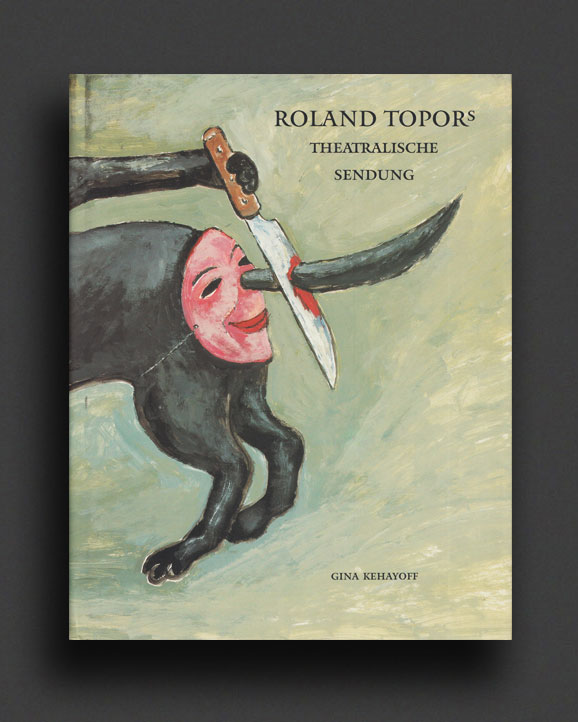
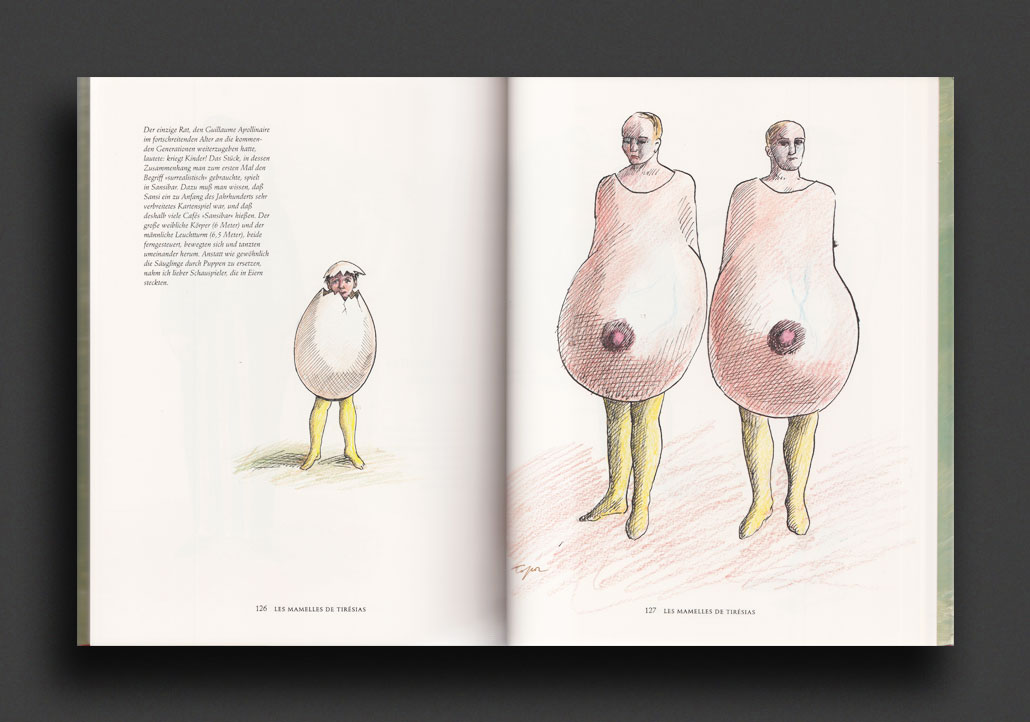
The lovely German hardcover publication compiling Roland Topor's illustration and design work for theatre. In February 1962, Topor, Alejandro Jodorowsky, Olivier O. Olivier, Jacques Sternberg, Christian Zeimert, Abel Ogier and Fernando Arrabal founded the "Mouvement Panique" ("Panic Movement"). Since these early days Topor has been heavily associated with the theatre. The book opens with the script for his play "Winter Under the Table" and follows with his fantastic drawings for theatre productions, such as "Ubu Rex", "Ubu Roi", "Don Chisciotte in Sierra Morena", "Antonius and Cleopatra", "The Magic Flute", "Le grand macabre", "Les Mamelles de Tiresias". Profusely illustrated throughout with over 100 of Topor's costume and set drawings in colour. Texts in German. Published in 1994 in Münich by Gina Kehayoff.
"It seems to me that Topor is the last representative of those real great illustrators who, like Blake and Daumier, Doré, and Carlo Chiostri, are capable of creating a complete universe that is designed down to the smallest detail. A "counterworld," a devilish world created out of contempt for ours, and one in which the numerous forms of literature that enter here inevitably change. Just like Don Quixote by Daumier, Dante von Blanke and Doré's Little Red Riding Hood." - Federico Fellini.
Fine copy.
Roland Topor was one of the most unique and versatile French artists of the second half of the 20th century, working prolifically as a provocative and spirited illustrator, author, humorist, satirist, play-write, actor, poet, painter, performer, sculptor, and much more. Son of a Parisian painter and sculptor of Polish-Jewish descent, in 1941, Topor's father was arrested and sent to camp Pithiviers. Two years later, the family moved to Savoy, where they baptised their son to hide his real identity. After the war, he studied art at the Institute of Beaux-Arts in Paris. He discovered surrealism, Hieronymus Bosch and the scatological plays of Alfred Jarry, which would influence his work and his attitude to life in general.
In 1958, he published his first work in magazines such as Bizarre and later Elle. Three years later, he joined the anarchic group of artists who created the controversial magazine Hara-Kiri, publishing his surreal juxtapositions of people, animals, plants and objects. Topor seldom used words in his illustrations, leaving all power to the visual. In February 1962, Topor, Alejandro Jodorowsky, Olivier O. Olivier, Jacques Sternberg, Christian Zeimert, Abel Ogier and Fernando Arrabal founded the "Mouvement Panique" ("Panic Movement"). This collective focused on creating absurd and bewildering performances to reject the commercialization of surrealism. The founders created many provocative and surreal works in the next decade before Jodorowsky dissolved the movement in 1973. However, Topor continued making scandalous plays afterwards, including 'Le Bébé de Monsieur Laurent' (1975) and 'Vinci avait raison' (1976).
In print, Topor's history is legendary. In 1964 Topor published his debut novel 'Le Locataire Chimérique' ('The Tenant', 1964), a psychological horror story about a man moving in an apartment where he is gradually pestered into madness by the other inhabitants. The work was adapted to film in 1976 by Roman Polanski and both the book as well as the picture are cult classics to this day. His 1980s pamphlet '100 Bonnes Raisons Pour Me Suicider' ('100 Good Reasons To Commit Suicide') is another example of his taste for black comedy. The most unique and unusual book in Topor's oeuvre must be 'Souvenir' (1972), a kind-of Fluxus obscurity featuring a text with all the sentences scratched out to the point of being unreadable. When the artist was interviewed on Dutch television by Adriaan van Dis to read some extracts from it Topor accepted the request by holding his hand in front of his mouth and mumble through it. In 1966 Topor illustrated 'Topographie Anécdotée du Hasard' (Anecdoted Topography of Chance) by Swiss assemblage artist Daniel Spoerri. Following a rambling conversation with his friend Robert Filliou in 1961, Daniel Spoerri one day mapped the objects lying at random on the table in his room, adding a rigorously scientific description of each. These objects subsequently evoked associations, memories and anecdotes from both the original author and his friends Filliou, Emmett Williams, Dieter Roth and Roland Topor. Considered a "quasi-autobiographical tour de force", incredible book was published in 1966 by the Something Else Press in New York City. Topor added sketches of each object. Acknowledged as one of the most important and entertaining artists’ books of the postwar period, An Anecdoted Topography of Chance is a unique collaborative work by four artists associated with the Fluxus and Nouveau Réalisme movements.
Topor also had an interest in film. He designed the posters of movies such as 'L'Ibis Rouge' (1975), 'Ai no borei' ('The Empire of Passion', 1978) and 'Die Blechtrommel' ('The Tin Drum', 1979). His drawings can also be seen during the opening titles of Fernando Arrabal's experimental film 'Viva La Muerte' (1971) and during the magic lantern sequence in Federico Fellini's 'Il Casanova di Fellini' (1976). He also worked as an actor, appearing in Dusan Makavejev's 'Sweet Movie' (1974) and as Dracula's assistant Renfield in Werner Herzog's horror remake of 'Nosferatu' (1979). The latter film has also immortalized his notorious hysterical and chilling laugh.
Together with René Laloux, he created the animated shorts 'Les Temps Morts' (1964) and 'Les Escargots' ('The Snails', 1965) and the full length animated feature 'La Planète Sauvage' ('Fantastic Planet', 1973). The latter work was based on Stefan Wul's science fiction novel 'Oms en Série' and takes place on a surreal planet where gigantic blue aliens treat humans as pets. 'La Planète Sauvage' won the special jury prize at the Festival of Cannes and has achieved cult status over the years.
Topor was a frequent guest in the philosophical radio show 'Des Papous dans la tête' (1984) at France Culture. Together with his good friend and playwright Jean-Michel Ribes, he wrote scripts for the satirical TV sketch series 'Merci Bernard' (1982-1984) on France 3 and 'Palace' (1988-1989) on Canal +. They wrote the theatrical play 'Batailles' (1983) about people of different social classes stranded on a raft, which was a satirical allegory of capitalism. Another collaborative project was the comedy film 'La Galette du Roi' (1985). In 1975 he recorded an album with his Belgian friend Freddy De Vree called 'Panic (The Golden Years)'. It features Topor being interviewed by De Vree on the Flemish public radio channel BRT 3. Apart from talking he also recites some nonsensical songs, including the Dutch nursery rhyme 'Iene miene mutte' and the tongue twister 'De kat krabt de krullen van de trap.' Topor also wrote two songs, 'Je m'aime' and 'Monte dans mon ambulance', which were set to music by François d'Aime and recorded by Japanese singer Megumi Satsu in 1980.
In the 1980s, Topor published in Le Petit Psikopat Illustré, an alternative review, and also teamed up with Belgian film director Henri Xhonneux to create the cult children's series 'Téléchat', a news show featuring anthropomorphic animals and objects and marionets presenting news. The program received various awards, including the 1984 award for best French broadcast for children and adolescents at the Festival of Cannes. It was also nominated for an Emmy in 1985.
Topor and Xhonneux joined forces again in 1989 to create the film 'Marquis', which was loosely based on the life and work of the notorious Marquis de Sade. The actors performed in animal masks and De Sade's penis was made into a separate puppet with a human face and the ability to talk. Due to the unusualness of its execution it became a cult favorite.
2019, English
Softcover, 94 pages, 16 x 23 cm
$42.00 - Out of stock
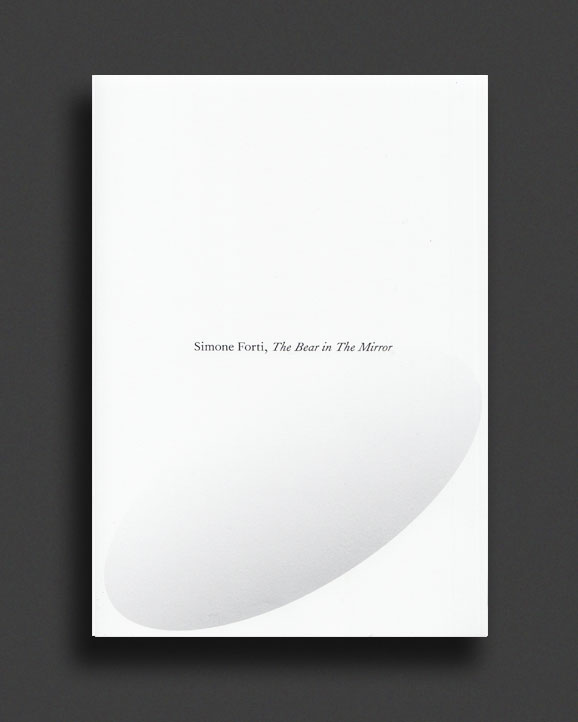
The Bear in the Mirror is a collection of stories, prose poems, drawings, photos, letters, notes and memories by Simone Forti (born 1935)--a founding figure of postwar American dance for those following in the wake of Merce Cunningham, who has transmitted her own legacy in part through several previous collections of writings (such as Handbook in Motion, 1974; Angel, 1978; and Oh Tongue, 2003).
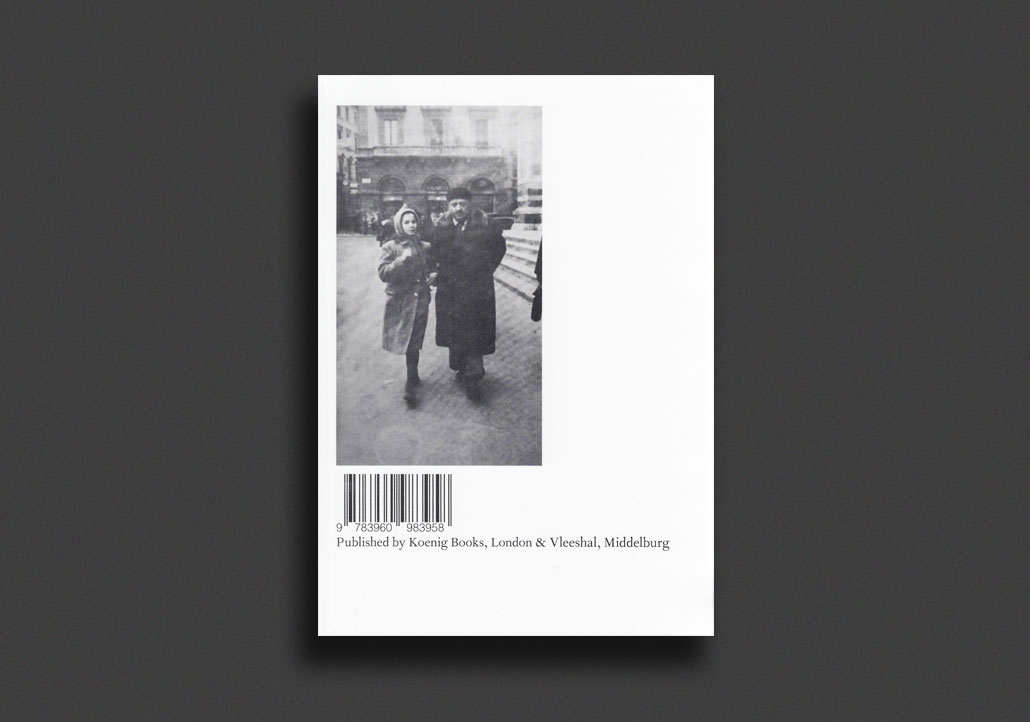
The Bear in the Mirror delves into the stories of Forti's family, who fled their native Florence in 1938 to escape Mussolini's persecution of Jews and resettled in Los Angeles. Forti discusses the wool mills they once owned and the life they left behind, and takes us on a mesmerizing journey from 1938 to the present, from Italy through Occupied France to Holland, where the family boarded a boat to Los Angeles and Forti eventually commenced the career that has made her such a colossally influential figure.
Edited by Roos Gortzak and Quinn Latimer
2018, English / French
Softcover, 296 pages, 23 x 30 cm
Published by
Roma / Amsterdam
$82.00 - Out of stock
The imagery in Batia Suter’s ‘Radial Grammar’ revolves around radial shapes and concepts. The book uses of two separate layers of black ink, allowing Suter to create double images and merge patterns and screens. Departing from pages scanned from her collection of second-hand books on natural science, precision machinery, and art history, she freely manipulates and reorders them within the space of this volume, which can be seen as a condensed exhibition on paper. It is a journey along visual phenomena that reconnects us with the endless curiosity and patience of our younger selves leafing through an encyclopaedia, sensitive to its visual correspondences.
2007, English
Hardcover, 595 pages, 28.5 x 21.5 cm
1st Edition, Out of print title / used / fine
Published by
Roma / Amsterdam
$800.00 - Out of stock
The fast out-of-print, highly collectible Parallel Encyclopedia. The result of a long term investigation, this first voluminous encyclopaedia contains solely images collected from other books, and reads as an exhilarating and extremely rich filmic sequence. Artist Batia Suter's interest lies not only in the iconographic value of images and the way that the human brain processes visual information, but also the causes by which images become charged with associative values.
This first volume of the Parallel Encyclopedia is now very rare. A second Parallel Encyclopedia was published in 2016, also by Roma Publications in Amsterdam and available at World Food Books.
Fine copy.