World Food Books' programme is largely produced on Kulin Nation land. We acknowledge the Wurundjeri people of the Kulin Nation as the first and continuing custodians of this land, and pay respect to their Elders past, present, and emerging.
World Food Books is an arts and special interests bookshop in Naarm / Melbourne. Founded in 2010, World Food Books is devoted to the presentation of a rotating, hand-selection of international art, design, literary and counterculture publications with an emphasis on the anti-traditional, the experimental, the avant-garde, the heretic, the marginal.
Presenting new titles alongside rare and out-of-print books, catalogues and journals spanning the fields of modern and contemporary art, design, photography, illustration, film, literature, poetry, cultural theory, philosophy, sexuality, popular and underground culture in its many radical forms, World Food Books wishes to encourage adventurous, thoughtful and open-minded reading, looking, writing, and exchange of publishing and ideas, both current and historical.
As well as our bookshop, located in Melbourne's historical Nicholas Building, all of our inventory is available internationally via our online mail-order service.
World Food Books semi-regularly co-ordinates "Occasions", a programme of exhibits and events at the bookshop and in partnership with other hosts (such as museums and art galleries) that develop out of the activities, relationships and content of the bookshop itself.
World Food Books
The Nicholas Building
37 Swanston Street
Room 5, Level 6
Melbourne 3000
Australia
SHOP HOURS:
Thu–Fri 12–6, Sat 12–5
WEB-SHOP OPEN 24/7
World Food Books
Postal Address:
PO Box 435
Flinders Lane
Victoria 8009
Australia
Art
Theory / Essay
Architecture / Interior
Graphic Design / Typography
Photography
Fashion
Eros
LGBTQ+
Fiction / Poetry
Weird / Speculative / Science Fiction / Horror
Transgressive / Visceral / Abject
Symbolism / Decadence / Fin de siècle
Film / Video
Painting
Sculpture / Installation
Performance / Dance / Theater
Drawing
Sound / Music
Curatorial
Group Shows / Collections
Periodicals
Out-of-print / Rare
Posters / Ephemera / Discs
Signed Books
World Food Books Gift Voucher
World Food Book Bag
Australian Art
Australian Fiction
Australian Science Fiction / Speculative Fiction
Australian Poetry
Australian Photography
Japanese Photography
Conceptual Art
Minimal Art
Dada
'Pataphysics / Oulipo
Fluxus
Concrete Poetry
Pop Art
Surrealism
Arte Povera
Arte Informale / Haute Pâte / Tachism
Nouveau Réalisme / Zero / Kinetic
Situationism / Lettrism
Collage / Mail Art / Xerox Art
Art Brut / Folk / Visionary / Fantastic
Illustration / Graphic Art / Bandes Dessinées
Furniture
Italian Radical Design / Postmodernism
Textiles
Ceramics / Glass
Counterculture
Protest / Revolt
Philosophy
Psychoanalysis
Anthropology
Anarchism
Socialism / Anarchism / Communism / Capitalism
Literary Theory / Semiotics / Language
Feminism / Women's Studies
Gender Studies / Sexuality
Anthropology
Fetishism / BDSM
Drugs / Psychedelia
Crime / Violence
Animal Rights / Veganism
Occult / Esoterica
Ecology / Earth / Alternative Living
Whole Earth / Crafts
All prices in AUD (Australian dollars)
Pick-Ups
Pick-up orders can be collected in our bookshop during opening hours after order date. Please collect any Pick-up orders within 2 weeks of ordering as we have limited storage space. Orders will be released back into stock if not collected within this time. No refunds can be made for pick-ups left un-collected. If you cannot make it in to the bookshop in this time-frame, please choose postage option.
Return Policy
All sales are final. We do accept returns (for refund or exchange) for items received in error. All our orders are packed with special care using heavy-duty padding and cardboard book-mailers or bubble mailers (for smaller books), using reinforcement where required. We cannot take responsibility for any lost, stolen or damaged parcels.
Insurance
Should you wish to insure your package, please email us directly after placing your order and we can organise this at a small extra expense. Although all standard/express tracked packages are very safe and dependable, we cannot take responsibility for any lost, stolen or damaged parcels. We recommend insurance on valuable orders.
Interested in selling your old books, catalogues, journals, magazines, comics, fanzines, ephemera? We are always looking for interesting, unusual and out-of-print books to buy. We only buy books in our fields of interest and specialty, and that we feel we can resell.
We base these prices on desirability, market value, in-print prices, condition and our current stock levels. We offer cash, store credit, and can take stock on consignment. All
about 25% of the price we expect to get when we sell them, or 30% in store credit. We base these prices on desirability, market value, in-print prices, condition and our current stock levels.
Sell your books any day of the week. You can drop them off and return later. If you have a lot of books, we can visit your Sydney home.
We buy books that we feel we can resell. We offer about 25 % of the price we expect to get when we sell them, or 30% in store credit. We base these prices on desirability, market value, in-print prices, condition and our current stock levels.
Philadelphia Wireman
03 August - 01 September, 2018
World Food Books is proud to announce our next Occasion, the first presentation of sculptures by Philadelphia Wireman in Australia.
The Philadelphia Wireman sculptures were found abandoned in an alley off Philadelphia’s South Street on trash night in 1982. Their discovery in a rapidly-changing neighbourhood undergoing extensive renovation, compounded with the failure of all attempts to locate the artist, suggests that the works may have been discarded after the maker’s death. Dubbed the "Philadelphia Wireman" during the first exhibition of this work, in 1985, the maker’s name, age, ethnicity, and even gender remain uncertain. The entire collection totals approximately 1200 pieces, all intricately bound together with tightly-wound heavy-gauge wire (along with a few small, abstract marker drawings, reminiscent both of Mark Tobey and J.B. Murry). The dense construction of the work, despite a modest range of scale and materials, is singularly obsessive and disciplined in design: a wire armature or exoskeleton firmly binds a bricolage of found objects including plastic, glass, food packaging, umbrella parts, tape, rubber, batteries, pens, leather, reflectors, nuts and bolts, nails, foil, coins, toys, watches, eyeglasses, tools, and jewellery.
Heavy with associations—anthropomorphic, zoomorphic, and socio-cultural responses to wrapped detritus—the totemic sculptures by Philadelphia Wireman have been discussed in the context of work created to fulfil the shamanistic needs of alternative religions in American culture. Curators, collectors, and critics have variously compared certain pieces to sculpture from Classical antiquity, Native American medicine bundles, African-American memory jugs, and African fetish objects. Reflecting the artist’s prolific and incredibly focused scavenging impulse, and despite—or perhaps enhanced by—their anonymity, these enigmatic objects function as urban artefacts and arbiters of power, though their origin and purpose is unknown. Philadelphia Wireman, whatever their identity, possessed an astonishing ability to isolate and communicate the concepts of power and energy through the selection and transformation of ordinary materials. Over the course of the past two decades, this collection has come to be regarded as an important discovery in the field of self-taught art and vernacular art.
Presented in collaboration with Fleisher-Ollman Gallery, Philadelphia, and Robert Heald, Wellington.
Susan Te Kahurangi King
02 February - 10 March, 2018
Susan Te Kahurangi King (24 February 1951 - ) has been a confident and prolific artist since she was a young child, drawing with readily available materials - pencils, ballpoint pens and felt-tip markers, on whatever paper is at hand. Between the ages of four and six Susan slowly ceased verbal communication. Her grandparents William and Myrtle Murphy had developed a special bond with Susan so they took on caring responsibilities for extended periods. Myrtle began informally archiving her work, carefully collecting and storing the drawings and compiling scrapbooks. No drawing was insignificant; every scrap of paper was kept. The King family are now the custodians of a vast collection containing over 7000 individual works, from tiny scraps of paper through to 5 meter long rolls.
The scrapbooks and diaries reveal Myrtle to be a woman of great patience and compassion, seeking to understand a child who was not always behaving as expected. She encouraged Susan to be observant, to explore her environment and absorb all the sights and sounds. Myrtle would show Susan’s drawings to friends and people in her community that she had dealings with, such as shopkeepers and postal workers, but this was not simply a case of a grandmother’s bias. She recognised that Susan had developed a sophisticated and unique visual language and sincerely believed that her art deserved serious attention.
This was an unorthodox attitude for the time. To provide some context, Jean Dubuffet coined the term Art Brut in 1945 to describe work created by self-taught artists – specifically residents of psychiatric institutions and those he considered to be visionaries or eccentrics. In 1972 Roger Cardinal extended this concept by adopting the term Outsider Art to describe work made by non-academically trained artists operating outside of mainstream art networks through choice or circumstance. Susan was born in Te Aroha, New Zealand in 1951, far from the artistic hubs of Paris and London that Dubuffet and Cardinal operated in. That Myrtle fêted Susan as a self-taught artist who deserved to be taken seriously shows how progressive her attitudes were.
Susan’s parents Doug and Dawn were also progressive. Over the years they had consulted numerous health practitioners about Susan’s condition, as the medical establishment could not provide an explanation as to why she had lapsed into silence. Dawn educated herself in the field of homeopathy and went on to treat all twelve of her children using these principles – basing prescriptions on her observations of their physical, mental and emotional state.
Doug was a linguist with an interest in philosophy who devoted what little spare time he had to studying Maori language and culture. To some extent their willingness to explore the fringes of the mainstream made them outsiders too but it was their commitment to living with integrity and their respect for individuality that ensured Susan’s creativity was always encouraged.
Even though Susan’s family supported her artistic pursuits, some staff in schools and hospitals saw it as an impediment to her assimilation into the community and discouraged it in a variety of ways. Her family was not always aware of this and therefore did not fully understand why Susan stopped drawing in the early 1990s. However, rather than dwell on the challenges that Susan faced in pursuit of her artistic practice, they prefer to highlight her achievements. In 2008 Susan began drawing again in earnest, after an almost 20 year interruption, and her work is now shown in galleries around the world.
Susan grew up without television and has been heavily influenced by the comics she read as a child. She is absolutely fearless in the appropriation of recognizable characters, such as Donald Duck and Mickey Mouse, in her work. She twists their limbs, contorts their faces, compresses them together, blends them into complex patterned backgrounds - always imbuing them with an incredible energy. Although Susan often used pop culture characters in her work they are not naive or childlike. These are drawings by a brilliant self-taught artist who has been creating exceptional work for decades without an audience in mind.
Mladen Stilinović
"Various Works 1986 - 1999"
02 February 16 - September 10, 2016
Various works 1986 - 1999, from two houses, from the collections of John Nixon, Sue Cramer, Kerrie Poliness, Peter Haffenden and Phoebe Haffenden.
Including: Geometry of Cakes (various shelves), 1993; Poor People’s Law (black and white plate), 1993; White Absence (glasses, ruler, set square, silver spoon, silver ladel with skin photograph and wooden cubes), 1990-1996; Exploitation of the Dead (grey and red star painting, wooden painting, black spoon with red table, red plate), 1984-1990; Money and Zeros (zero tie, paintings made for friends in Australia (Sue, John, Kerrie), numbers painting), 1991-1992; Words - Slogans (various t-shirts) - “they talk about the death of art...help! someone is trying to kill me”, “my sweet little lamb”, “work is a disease - Karl Marx”; Various artist books, catalogues, monographs, videos; Poster from exhibition Insulting Anarchy; "Circular" Croatian - Australian edition; Artist book by Vlado Martek (Dostoyevsky); more.
Thanks to Mladen Stilinović and Branka Stipančić.
Jonathan Walker
Always Will Need To Wear Winter Shirt Blue + Ochre Small Check Pattern
21 August - 21 September, 2015
Untitled
I am not a great reader of poetry but I always return to the work of Melbourne poet, Vincent Buckley (1925- 1988). Perhaps I find his most tantalising piece to be not a finished poem but a fragment left on a scrap of paper discovered on his desk after the poet’s death.
The poetry gathers like oil
In the word-core, and spreads
It has its music meet,
Its music is in movement.
This fragment is more the shell left behind from a volatile thought than a finished poem. I find the last two lines honest but awkward whereas the first two lines work like an arrow. Most likely he could not find a resolution so it was left. Still, in its present form, it remains an eloquent testimony to the ultimate failure of a medium to express mobile thought and sensation, in Buckley’s case, through verbal language. It’s an important matter because this is something all artists have to deal with regardless of the medium.
I have never written a poem, however, I am forever copying fragments from books on paper scraps in a vain effort to fix certain notions in my head. At first, they function as bookmarks that are sometimes returned to when I open the book. But before long, as they accumulate, they fall out littering the table interspersed with A4 photocopies, bills, books and medications.
To return to Buckley’s fragment, the first two lines very much evoke how I paint nowadays. As you age, detail diminishes and patches of light become more luminous and float. I feel the most honest way of dealing with this is by smearing the oil paint on the canvas with the fingers and working close-up, blind. Only if the patches coalesce into an approaching image can the work gain a life.
-
Jonathan Walker was born in Melbourne, Australia and brought up on a dairy farm in Gippsland. In the 1970’s he studied painting at RMIT and won the Harold Wright Scholarship to the British Museum, London. During the 1980’s he exhibited at Pinacotheca Gallery, Richmond and had work shown at the NGV and Heidi City Art Gallery. Over the same period he designed the cover for the “Epigenesi” LP by Giancarlo Toniutti, Italy and conducted a mail exchange work with Achim Wollscheid, Germany. The work with artists through the post resulted in an article published in the bicentenary issue of Art and Australia 1988. He showed in artist run spaces such as WestSpace in the 90’s and 2000’s, and until 2012, taught painting at Victoria University, which is where we (Colleen Ahern and Lisa Radford) as organisers of the exhibition, among many others, had the privilege of being his student.
Walker’s knowledge was imparted to students through the careful selection of music, literature, and artists found in books that he himself had ordered for the library. Walker’s strategy was the generosity of sharing his vast knowledge with references specific to each student and their context.
Walker’s paintings share a similar focus and intimacy.
This exhibition presents a small selection of recent paintings alongside a publication that includes Walker’s writing. Observational and analytical, Walker’s work is a type of material notation — the time of day, colour and how it is blended, the both specific and fleeting location of a reflection on lino or the question of whether a chair leg should be included in a painting.
Please join us on Friday August 21 between 6-8pm to celebrate the opening of the exhibition.
Curated by Colleen Ahern and Lisa Radford.
B. Wurtz
Curated by Nic Tammens
March 26 - April 4, 2015
B.Wurtz works from a basement studio in his home on Manhattan’s Lower East Side.
This local fact is attested to by the plastic shopping bags and newsprint circulars that appear in his work. As formal objects, they don’t make loud claims about their origins but nonetheless transmit street addresses and places of business from the bottom of this long thin island. Like plenty of artists, Wurtz is affected by what is local and what is consumed. His work is underpinned by this ethic. It often speaks from a neighborhood or reads like the contents of a hamper:
“BLACK PLUMS $1.29 lb.”
“Food Bazaar”
“USDA Whole Pork Shoulder Picnic 99c lb.”
“RITE AID Pharmacy, with us it’s personal.”
“H. Brickman & Sons.”
“Sweet Yams 59c lb."
Most of the work in this exhibition was made while the artist was in residence at Dieu Donne, a workshop dedicated to paper craft in Midtown. Here Wurtz fabricated assemblages with paper and objects that are relatively lightweight, with the intention that they would be easily transportable to Australia. This consideration isn’t absolute in Wurtz’s work, but was prescriptive for making the current exhibition light and cheap. Packed in two boxes, these works were sent from a USPS post office on the Lower East Side and delivered to North Melbourne by Australia Post.
Wurtz appears courtesy of Metro Pictures, New York.
Thanks to Rob Halverson, Joshua Petherick, Sari de Mallory, Matt Hinkley, Helen Johnson, Fayen d'Evie, Ask Kilmartin, Lisa Radon, Ellena Savage, Yale Union, and "Elizabeth".
John Nixon
"Archive"
December 15 - January 20, 2014
The presentation of John Nixon's archive offered a rare showcase of this extensive collection of the artist's own publications, catalogues, posters, ephemera, editions and more, from the mid 1980s onwards, alongside a selection of his artworks.
Organized by John Nixon, Joshua Petherick and Matt Hinkley.
<a href=http://wfb.public-office.info/artist/john-nixon>All titles by John Nixon
"Habitat"
at Minerva, Sydney (organised by Joshua Petherick and Matt Hinkley)
November 15 - December 20, 2014
Lupo Borgonovo, Janet Burchill & Jennifer McCamley,
Lewis Fidock, HR Giger, Piero Gilardi, Veit Laurent Kurz,
Cinzia Ruggeri, Michael E. Smith, Lucie Stahl, Daniel Weil, Wols
Press Release:
“...It contained seven objects. The slender fluted bone, surely formed for flight, surely from the wing of some large bird. Three archaic circuitboards, faced with mazes of gold. A smooth white sphere of baked clay. An age-blackened fragment of lace. A fingerlength segment of what she assumed was bone from a human wrist, grayish white, inset smoothly with the silicon shaft of a small instrument that must once have ridden flush with the surface of the skin - but the thing’s face was seared and blackened.”
William Gibson, “Count Zero”, 1986
"Autumn Projects Archive"
Curated by Liza Vasiliou
March 6 - March 15, 2014
World Food Books, in conjunction with the Virgin Australia Melbourne Fashion Festival 2014, presented the Autumn Projects archive, consisting of a selection of early examples in Australian fashion with a particular interest in collecting designers and labels from the period beginning in the 1980’s, who significantly influenced the discourse of Australian Fashion.
Curated by Liza Vasiliou, the exhibition provided a unique opportunity to view pieces by designers Anthea Crawford, Barbara Vandenberg, Geoff Liddell and labels CR Australia, Covers, Jag along with early experimental collage pieces by Prue Acton and Sally Browne’s ‘Fragments’ collection, suspended throughout the functioning World Food Books shop in Melbourne.
H.B. Peace
presented by CENTRE FOR STYLE
November 14, 2013
"Hey Blinky, you say chic, I say same"
Anon 2013
H.B. Peace is a clothing collaboration between great friends Blake Barns and Hugh Egan Westland. Their pieces explore the divergences between 'character’ and ‘personality’ in garments....etc
Special Thanks to Joshua Petherick and Matt Hinkley of WFB and Gillian Mears
and a Very Special Thank you to Audrey Thomas Hayes for her shoe collaboration.
Janet Burchill & Jennifer McCamley
"Aesthetic Suicide"
May 10 - June 8, 2013
The first of our occasional exhibitions in the World Food Books office/shop space in Melbourne, "Aesthetic Suicide" presented a body of new and older works together by artists Janet Burchill & Jennifer McCamley, including videos, prints, a wall work, and publications.
During shop open hours videos played every hour, on the hour.
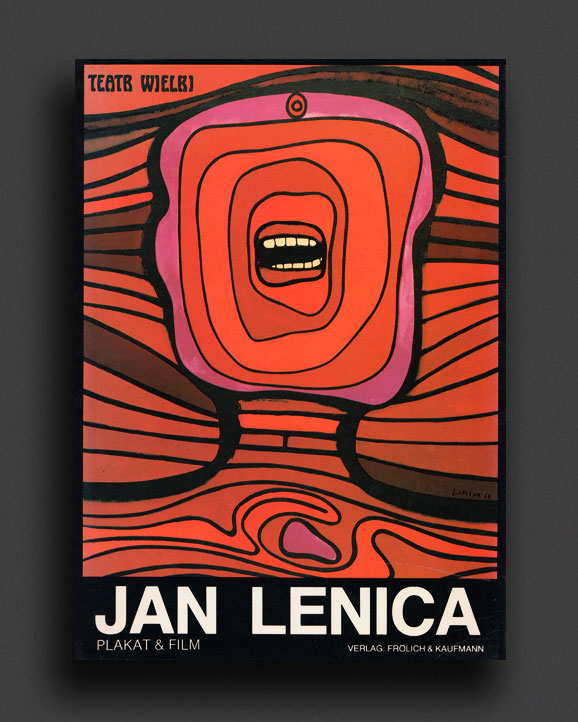
1981, German
Softcover, 190 pages, 29 x 21 cm
1st Edition, Out of print title / used / good
Published by
Frölich & Kaufmann / Berlin
$60.00 - Out of stock
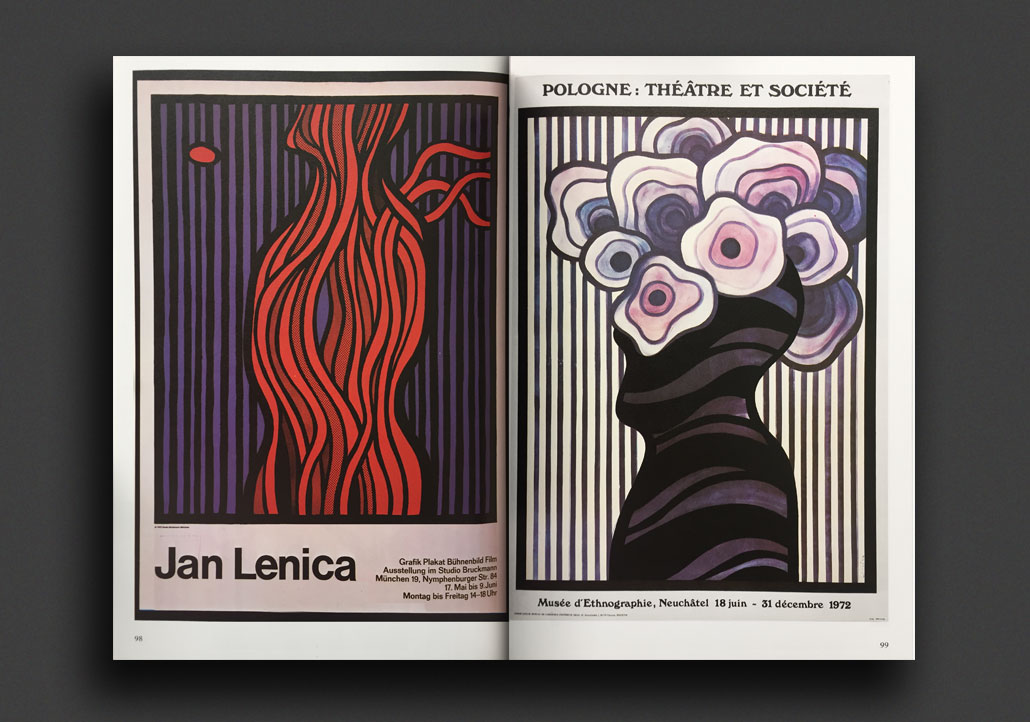
The first (and best) comprehensive monograph dedicated to the work of Polish graphic designer and cartoonist, Jan Lenica. Published in 1981 to accompany a major German travelling exhibition, this profusely illustrated book showcases (in colour) his prolific career as a poster artist for theatre and film, as well as his iconic animated works and other graphic and personal works.
Jan Lenica (4 January 1928, Poznań, Poland - 5 October 2001, Berlin) was a Polish graphic designer and cartoonist. A graduate of the Architecture Department of Warsaw Polytechnic, Lenica became a poster illustrator and a collaborator on the early animation films of Walerian Borowczyk. From 1963 - 1986 he lived and worked in France, while from 1987 he lived and worked in Berlin. He was a professor of graphic, poster, animated cartoon for many years at German high schools and the first professor of the animation class at the University of Kassel, Germany, in 1979. He used cut-out stop motion animation in his numerous films, which included two features: Adam 2 (1968) and Ubu et la grande gidouille (1976, but released in France only in 1979).
2016, English
Softcover, 328 pages, 23cm × 17cm
Ed. of 2000,
Published by
Unit Editions / London
$69.00 - Out of stock
United Edition's 'The Archive Series' is a bibliographic celebration of hidden and neglected visual archives. The Archive Series views graphic design as one of the ways to understand the semiotics of culture. United Editions is committed to the collection and preservation of printed specimens and graphic design artefacts to open up possibilities of decoding the past.
The first title in the series is devoted to the design of postage stamps. Sourced from the collections of stamp design experts Iain Follett and Blair Thomson, this book celebrates the often-neglected aesthetic and technical brilliance of postage stamps from around the world.
Postage stamps are the forgotten gems of graphic design. This is odd when you contemplate the high levels of aesthetic and technical qualities required to produce graphics for a tiny scrap of paper with perforated edges.
"…the result is a beauty. Graphic designers and philatelists alike will fawn over the boldness of the red-and-white right angles in 1960s Swiss stamps or the brash reds, whites and blues of their US-designed counterparts. The enduring qualities of these most disposable of mediums is striking. The title is the first in the publisher’s forthcoming Archive Series – a collection worth saving room for in any design library." - Monocle
"This brand new publication offers an in-depth look into the lovingly assembled collections of two passionate stamp collectors and graphics designers: Iain Follett and Blair Thomson. Not only does the book serve as a showcase of the best in stamp design, Follett and Thomson also offer a brief historical overview of postage stamps…" - People of Print
Edited by Tony Brook & Adrian Shaughnessy
Essay by Mark Sinclair
Design by Spin
Edition of 2000
2016, English
Softcover, 320 pages, 23cm × 17cm
Ed. of 2000,
Published by
Unit Editions / London
$69.00 - Out of stock
The punk era transformed the world of music. If you could play three chords, you could make records. You didn’t even need a record label. You could start your own.
The same thing happened in graphic design. All you needed were a few a sheets of Letraset and access to a photocopier, and you could make your own record covers. And lots of people did just that.
The work in this book is culled from the record collections of designer (and Unit Editions co-founder) Tony Brook, and leading punk scholar Russ Bestley. As one of the world’s leading authorities on punk and post-punk music, Russ has contributed an insightful essay to the book.
The book also features interviews with designer Malcolm Garrett, Mute founder Daniel Miller and Sniffin’ Glue editor and musician Mark Perry.
United Edition's 'The Archive Series' is a bibliographic celebration of hidden and neglected visual archives. The Archive Series views graphic design as one of the ways to understand the semiotics of culture. United Editions is committed to the collection and preservation of printed specimens and graphic design artefacts to open up possibilities of decoding the past.
Edited by Tony Brook & Adrian Shaughnessy
Consultant Editor - Russ Bestley
Design by Spin
Edition of 2000
2016, English / French
Softcover, 164 pages, 23 x 31 cm
Published by
éditions Empire / France
$47.00 - Out of stock
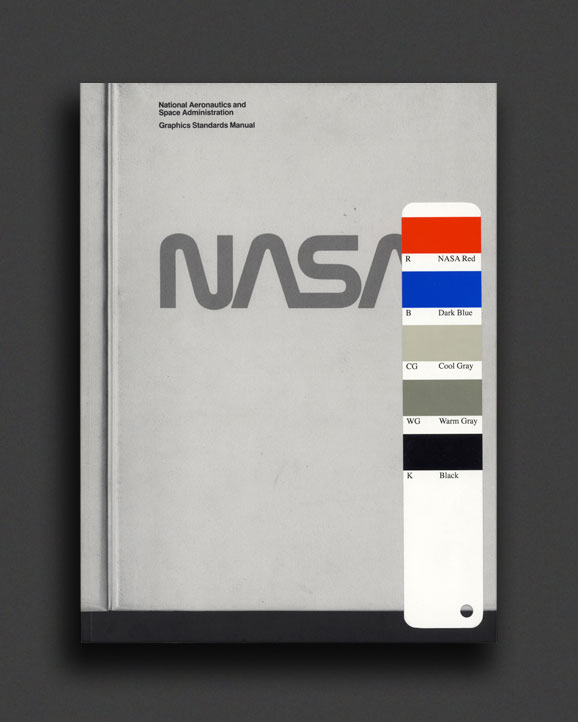
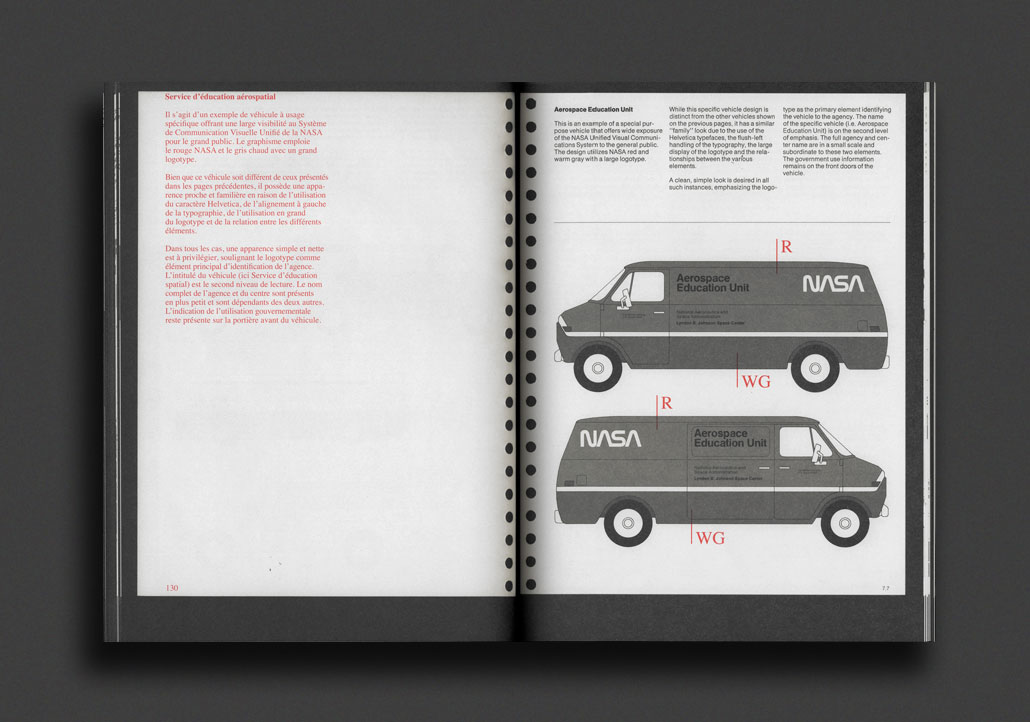
The binder containing NASA's visual identity guidelines is a strange object. This original visual communications system designed and augmented by Richard Danne and Bruce Blackburn from 1975 on, was rescinded in 1992. It has resurfaced on the internet these last years in blogs, and was made available to the public by NASA as a PDF document before being reprinted in an expanded deluxe edition by Jesse Reed and Hamish Smyth in 2015. It is an exhaustive presentation of visual identity – from letterheads to the markings on the space shuttle Discovery—and thus allows the reader to apprehend the different formal, political and technical scales of the use of signs.
Design: Syndicat
2018, English / French
Softcover, 292 pages, 24 x 32 cm
Published by
éditions Empire / France
$120.00 - Out of stock
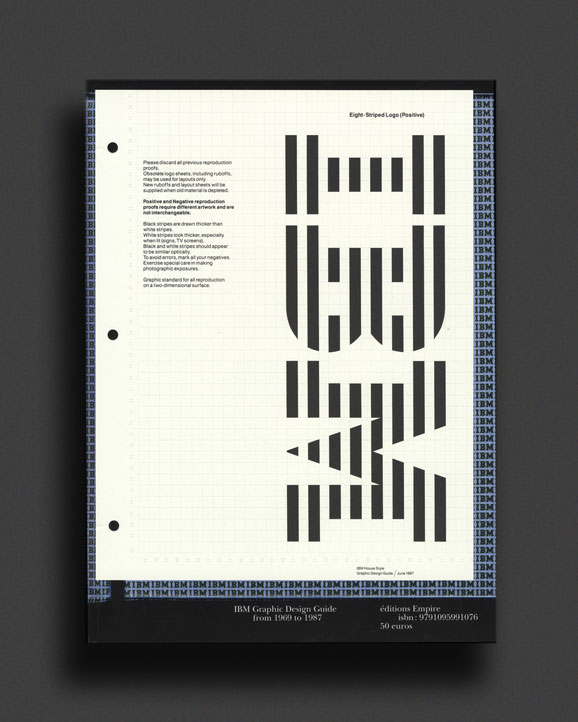
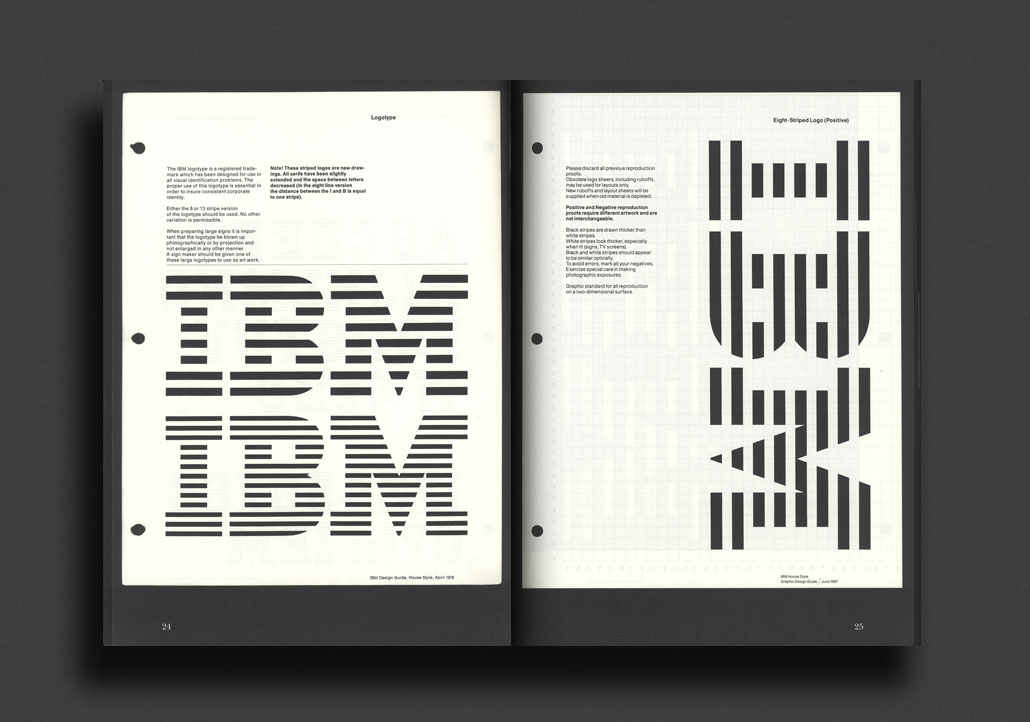
Before defining the IBM company’s graphic look in 1956, Paul Rand had never designed an entire corporate identity. The American graphic designer had created many trademarks for advertising clients, but IBM was his first foray into the conservative realm of big business communications, as well as a turning point for him. This manual offers an in-depth look at the further evolution of IBM’s house style in the 1970s and ’80s, from logotypes, fonts, numerals, and type specimens, to highly detailed information on imprinting binders, signage, packaging, and related material. It shows how the graphic designer selects and fits together material to produce visual relationships.
Rand's guidlines for the “IBM Graphic Design Program” were documented and updated in a physical folder organized into various sections. This folder—known as an iconic, rare, and little documented object—is the core of this facsimile project. Undertaken in collaboration with the archive team at IBM New York, and with the Kandinsky Library of the Georges Pompidou Centre in Paris, the high-resolution scans reproduced in this volume are a celebration of Rand's legacy and of IBM's iconic visual identity.
With a preface by Steven Heller.
Designed by Syndicat (Sacha Léopold and François Havegeer with the assistance of Francisco Gaspar and Kévin Lartaud)
Published by éditions Empire
2016, English
Hardcover (linen with high gloss wrap), 432 pages, 26 x 31 cm
Ed. of 1000,
1st Edition, Out of print title / as new
Published by
Unit Editions / London
$350.00 - Out of stock
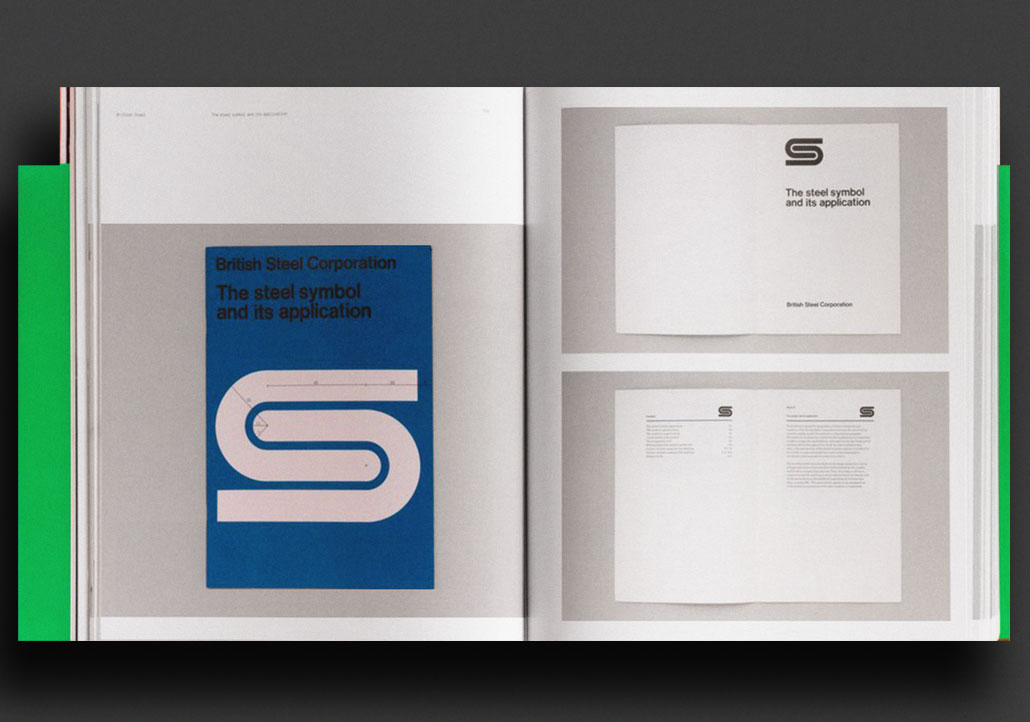
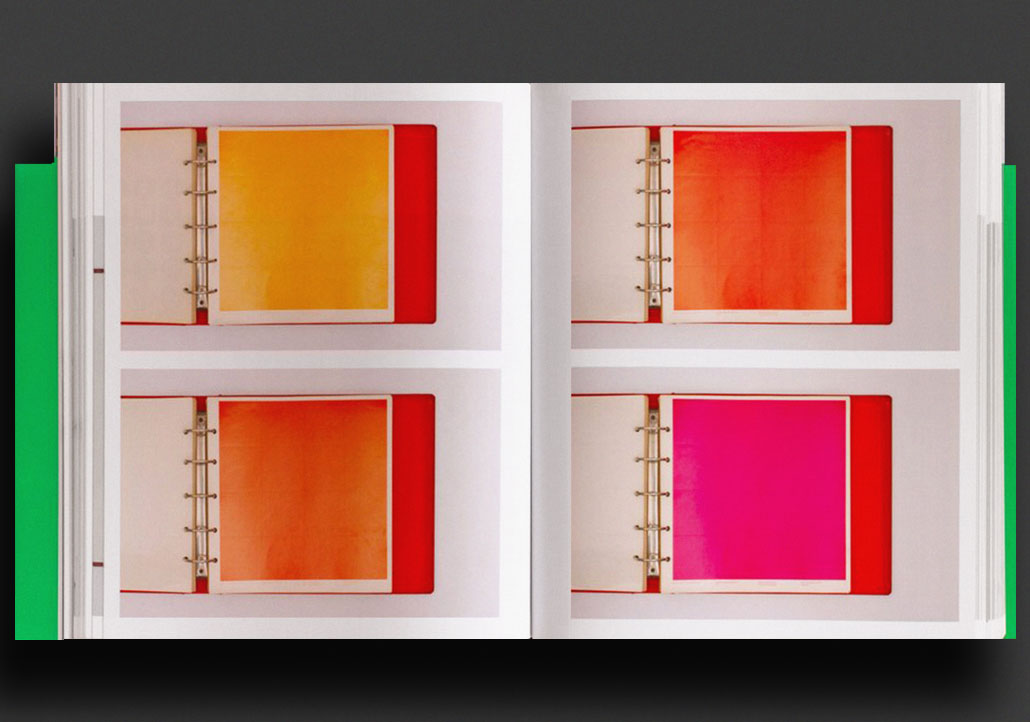
Manuals 1: Design & Identity Guidelines is the first comprehensive study of corporate identity design manuals, and features 20 examples from the 1960s to early 1980s – the golden era of identity design. The book includes manuals created for institutions and corporations such as NASA, Lufthansa and British Steel.
All 20 manuals have been lovingly photographed, and presented in a spacious and functional layout, allowing the observer to fully appreciate these wonderful examples of information design at its best. Manuals 1 is printed in Italy, conforming to the highest production standards.
Edited by Tony Brook, Adrian Shaughnessy and Sarah Schrauwen
Design by Spin
Foreword by Massimo Vignelli
Texts by Adrian Shaughnessy, Richard Danne, Greg D’Onofrio, Patricia Belen (Display), Armin Vit, Sean Perkins and John Lloyd.
Edition of 1000
Out-of-print
2015, English
Hardback with slipcase, 520 pages, 240 × 190cm
Ed. of 2000,
Published by
Unit Editions / London
$130.00 - Out of stock
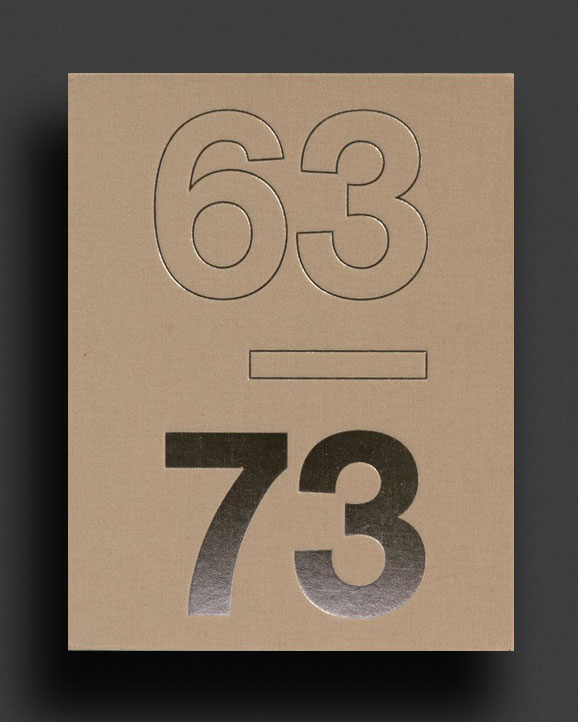
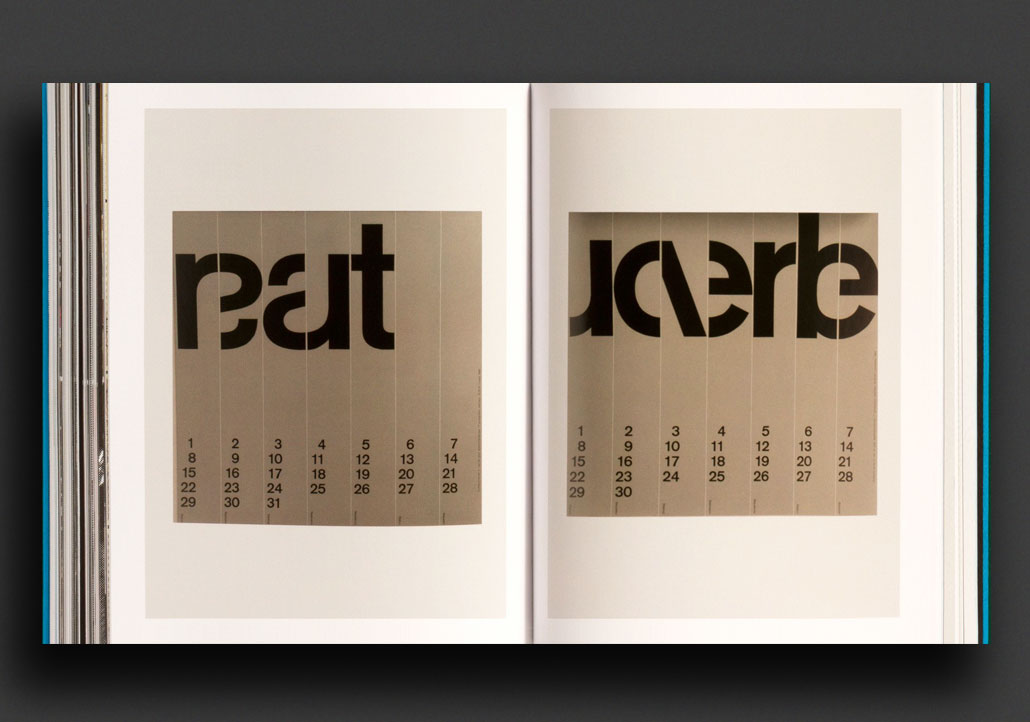
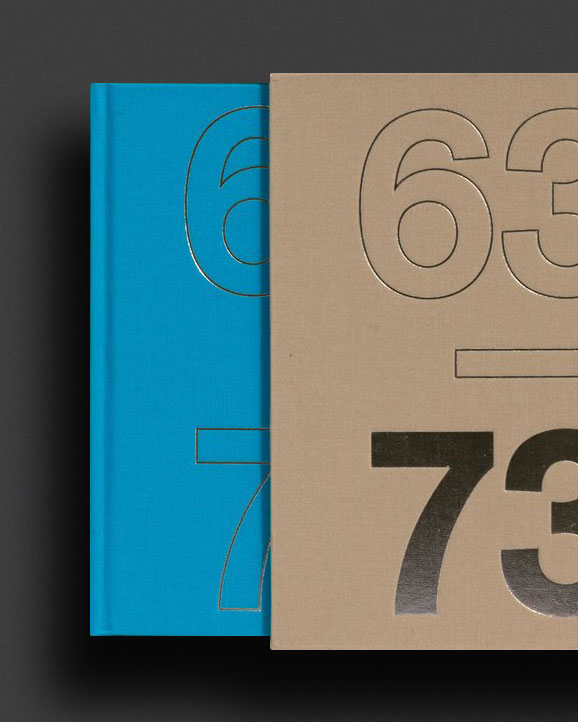
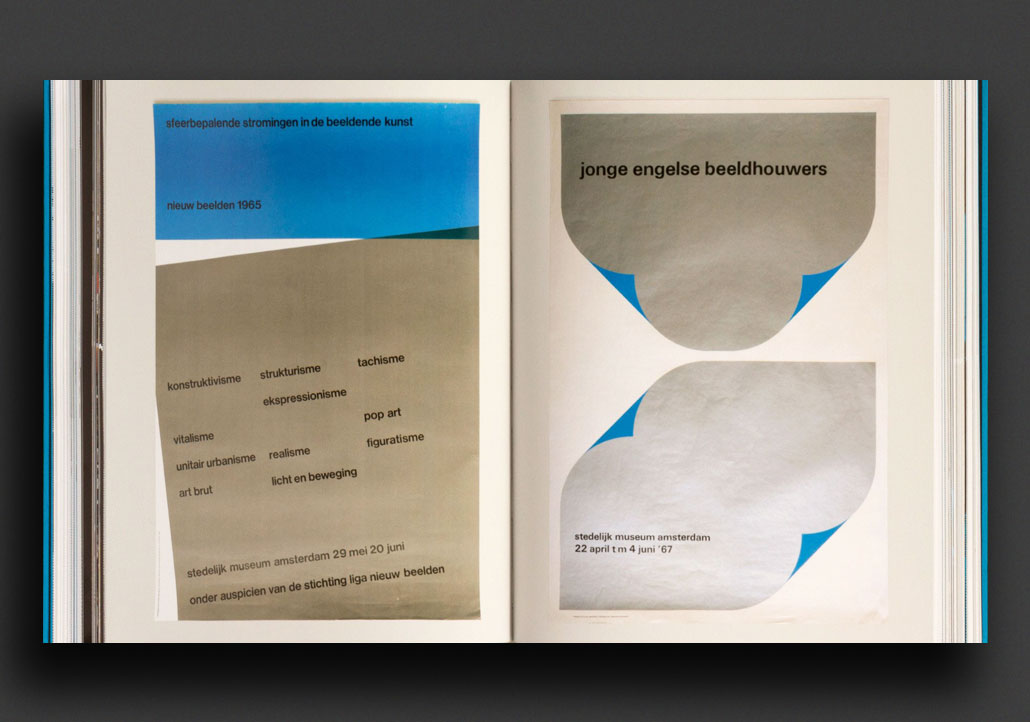
TD 63–73: Total Design and its pioneering role in graphic design [Unit 03] was first published in 2011, selling out almost immediately. Unit Editions are happy to offer a new and expanded edition.
Written by Ben Bos, a key member of the TD studio, the book describes how a band of idealistic Dutch designers came together to form one of the first multidisciplinary design groups – one that helped shape the future of design in Europe and beyond.
Total Design began in Amsterdam in 1963. Ben Bos joined the founders (Wim Crouwel, Benno Wissing, Friso Kramer and the Schwarz Brothers) from the outset. Together and individually, they set new benchmarks for typography, identity design, cultural design, exhibition design and product design.
The expanded edition of TD 63–73 is a unique insider’s account of Total Design’s golden period. It contains hundreds of images from the TD archive, and in Ben Bos’s text the reader is given a personal history of a design group that remains as important today as it did when it launched in 1963.
2016, English
Softcover, 384 pages, 24.8 × 18.5mm
Ed. of 3000,
Published by
Unit Editions / London
$75.00 - Out of stock
In this book you will find the covers of varied design magazines, journals and periodicals, spanning: graphic design, typography, architecture, interiors, print, theory and history, these covers are brilliant specimens of innovative visual design.
Impact 2.0 includes covers designed and art directed by an array of international designers, including: 8vo, APFEL, Neville Brody, Seymour Chwast, The Designers Republic, Simon Esterson, Experimental Jetset, Armin Hofmann, Max Kisman, Zuzana Licko, Domenic Lippa, Herb Lubalin, Karel Martens, Na Kim, Non-Format, Rudy VanderLans, Wolfgang Weingart, Matt Willey and many, many others.
Featuring interviews with leading designers, art directors, editors and publishers of design magazines: James Biber (Biber Architects), Patrick Burgoyne (Creative Review), Kirsty Carter and Emma Thomas (APFEL), Iker Gil (Mas Context), Mark Holt (Octavo), Will Hudson (It’s Nice That), Kiyonori Muroga (Idea), Hans-Dieter Reichardt (Baseline), Caroline Roberts (Grafik), Deyan Sudjic (Design Museum) and Rudy VanderLans (Emigre).
Edition of 3000.
1968, German
Hardcover (w. dust jacket), 370 pages, 22 x 22 cm
Out of print title / used / good
Published by
Württembergischer Kunstverein / Stuttgart
$120.00 - Out of stock
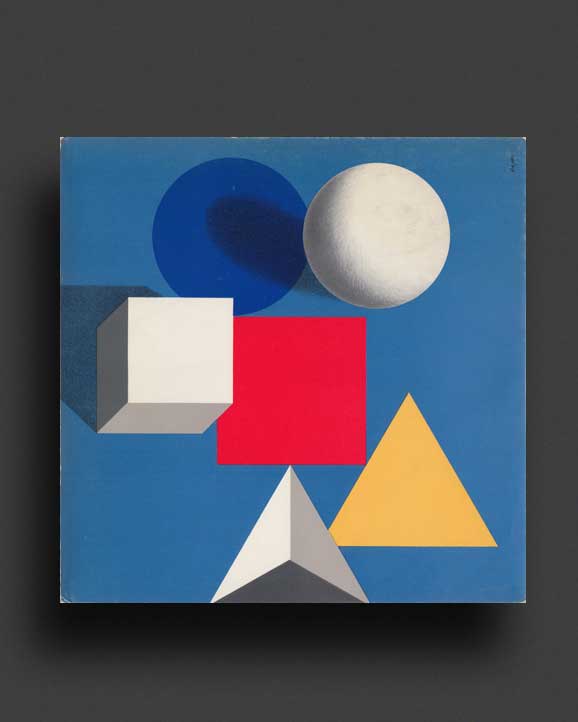
The amazing Bauhaus book, published in 1968 and designed and typeset to abolish all Upper Case letters by Herbert Bayer (one of the most influential members of the Bauhaus) for the first major Bauhaus survey exhibition after the Second World War, curated by Prof. Ludwig Grote, dr. Dieter Honisch, Herbert Bayer and Hans Maria Wingler, at Württembergischer Kunstverein Stuttgart.
This is the hard cover edition of what is without a doubt one of the most comprehensive and characteristic Bauhaus reference books ever published.
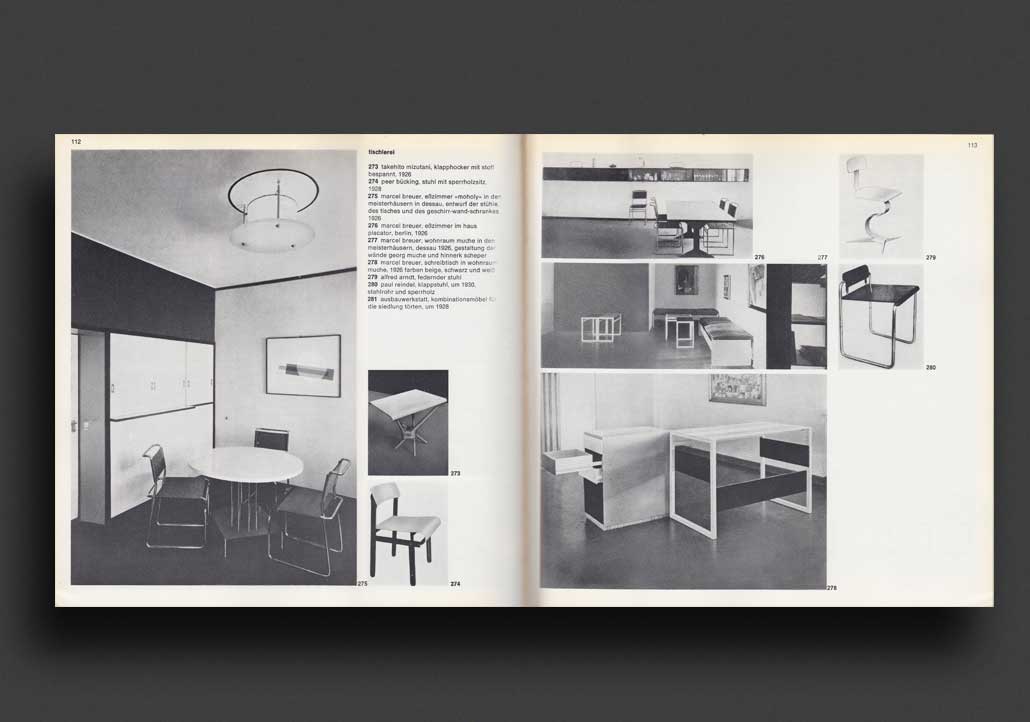
370 pages (with multiple paper stocks) contain no less than 650 colour and black and white illustrations selected from the Bauhaus Archiv, documenting the output of the Bauhaus from Weimar to Dessau to Berlin. This heavy, exhaustive volume is split into the following sections : preliminary course and teaching (includes Iteen, Moholy-Nagy, Albers, Schlemmer, Hirschfield-Mack, Klee and Schmidt); workshops (includes Teaching on Architecture, Sculpture, Stage, Stained Glass, Photography, Metal, Carpentry, Pottery, Typography, Mural Painting and Weaving); architecture and design (includes Gropius, Hannes Meyer, Mies van der Rohe, Hilberseimer, Brenner, Heiberg, A. Mayer, Stam Wittwer, Arndt, Bayer and Breuer); painting, sculpture, graphics (includes Josef Albers, Arndt, Bayer, Feininger, Itten, Kandinsky, Klee, Marcks, Moholy-Nagy, Muche, Schlemmer, Wols, etc.); life at the bauhaus; continuation of the teaching; biographies; bibliographies; index.
Includes introductory essays by Ludwig Grote, Walter Gropius, Heinz Winfried Sabais, Otto Stelzer, Hans Eckstein, Nikolaus Pevsner, Jurgen Joedicke, Will Grohmann and Hans M. Wingler.
Artists included: Walter Gropius, Marcel Breuer, Ludwig Mies Van Der Rohe, Gunta Stolzl, Joost Schmidt, Oskar Schlemmer, Walter Peterhans, Georg Muche, Lilly Reich, Laszlo Moholy-Nagy, Hannes Meyer, Gerhard Marcks, Johannes Itten, Ludwig Hilberseimer, Max Bill, Wassily Kandinsky, Lyonel Feininger, Alfred Arndt, Josef Albers, Marianne Brandt, Herbert Bayer, Paul Klee, Josef Hartwig, Wilhelm Wagenfeld, Christian Dell, Otto Lindig, Theodor Bogler, Wols, and so many others.
Includes references to all aspects of the Bauhaus, including: Itten's Preliminary Course, Klee's Course, Kandinsky's Course, Color Experiments, Carpentry Workshop, Stained Glass Workshop, Pottery Workshop, Metal Workshop, Weaving Workshop, Stage Workshop, Wall Painting Workshop, Display Design, Architecture, Typography and Layout; the Bauhaus Press, the Weimar Exhibition, 1923, Moholy-Nagy's Preliminary Course, Albers' Preliminary Course, Bauhaus Building, The Masters' Houses, Other Buildings in Dessau, Architecture Department, Weaving Workshop, Typography Workshop: Printing, layout, posters, Photography, Exhibition Technique, Wall Painting Workshop: Wall paper, Sculpture Workshop, Stage Workshop, Extracurricular Activities, Spread of the Bauhaus Idea, Bauhaus Teaching in the United States and much more.
All texts in German.
Of all the artists to pass through the Bauhaus, none lived the Bauhaus ideal of total integration of the arts into life like Herbert Bayer (1900 - 1985). He was a graphic designer, typographer, photographer, painter, environmental designer, sculptor and exhibition designer. Between 1925 and 1928, Bayer was head of the printing workshop at the Bauhaus and produced many designs that became standards of a Bauhaus "style." Bayer was instrumental in moving the Bauhaus to purely sans serif usage in all its work, and is especially known is his lowercase, which continues in this 1968 catalogue.
Hardcover 2nd edition w. illustrated dust jacket (protected under plastic wrap) - good copy throughout, with the common bind-splitting at some intervals due to old glue and paper weight (seems to have been previously repaired). All pages still bound and present. Heavy spotting to outer top block edge, tanning to pages edges, otherwise bright and very clean throughout. Good jacket, only light wear.
1969, English
Softcover (w. dust jacket), 160 pages, 30 x 21.5 cm
1st Edition, Out of print title / used / very good
Published by
Lund Humphries / London
$190.00 - Out of stock
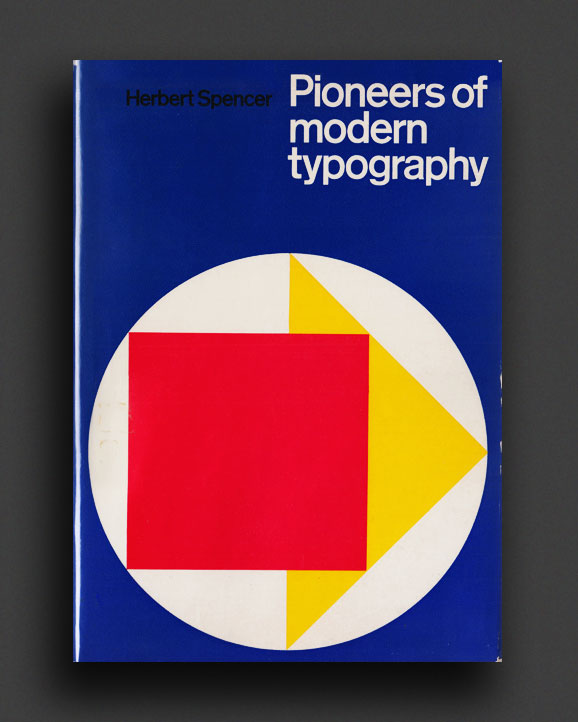
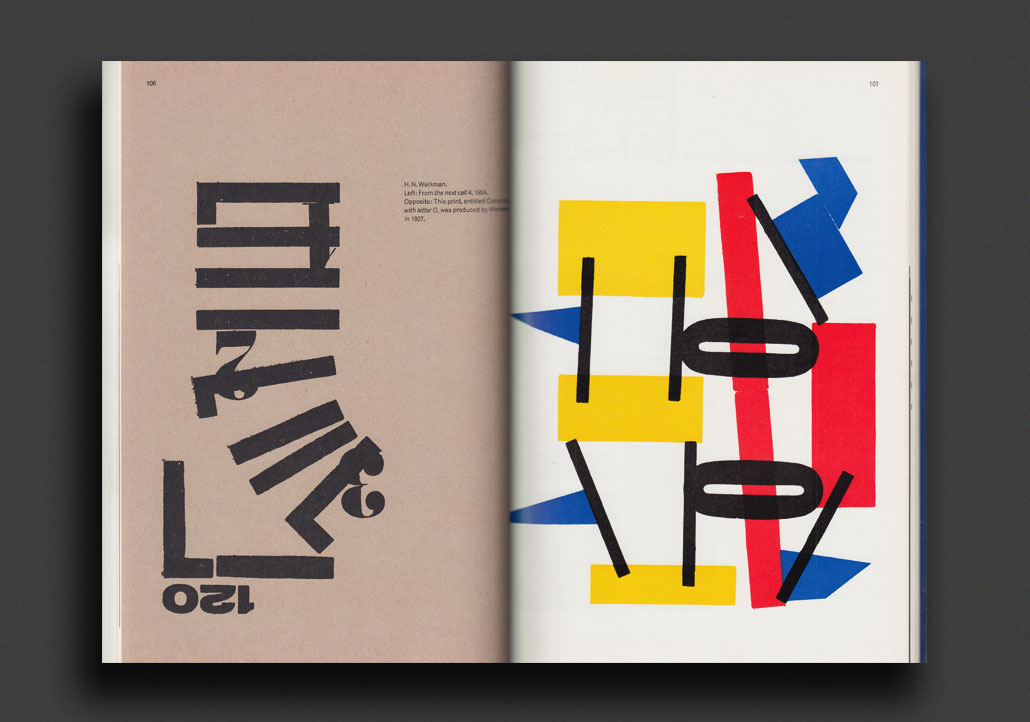
First edition of the iconic, very collectible, "Pioneers of Modern Typography" - the bible/standard guide to the avant-garde origins of modern graphic design and typography since it's original publication in 1969. In this essential reference, Herbert Spencer shows how new concepts in graphic design in the early decades of the twentieth century had their roots in the artistic movements of the time in painting, poetry, and architecture. Spencer examines the "heroic" period of modern design and typography, the beginning of which he traces to the publication in Le Figaro of the Italian artist Marinetti's Futurist manifesto. He discusses the work of such "pioneers" as El Lissitzky, Alexander Rodchenko, and Laszlo Moholy-Nagy. He examines the artistic background of the new concepts in graphic design, and traces the influences of futurism, Dadaism, de Stijl, suprematism, constructivism, and the Bauhaus. His text is profusely illustrated with examples of the new typography, shown in genres that range from posters and magazine covers to Apollinaire's "figurative poetry." Spencer chose a wide variety of paper stocks for individual signatures, giving each spotlighted designer a unique look. The engravings and spot colour work match the super sharp design if the book, with many of the works printed in 4 colours. The printing of this first Lund Humphries edition far surpasses any of the MIT reprints that followed.
Features the work of : El Lissitzky, Theo van Doesburg, Kurt Schwitters, H. N. Werkman, Piet Zwart, Paul Schuitema, Alexander Rodchenko, Laszlo Moholy-Nagy, Herbert Bayer, Jan Tschichold, Guillame Apollinaire, Max Bill, Alvin Langdon Coburn, Henryk Berlewi, Lewis Carroll, Walter Dexel, Lionel Feininger, Raoul Hausmann, John Heartfield, Hannah Hoch, Vilmos Huszar, Iliazd, Johannes Itten, Oscar Jespers, Lajos Kassak, Senkin Klutisis, Fernand Leger, Wyndham Lewis, Filippo Tommaso Marinetti, Christian Morgenstern, Paul van Ostaijen, Jozef Peeters, Enrico Pramolini, Man Ray, Peter Rohl, Pietro Saga, Christian Schad, Joost Schmidt, Ardengo Soffici, Kate Steinitz, Wladyslaw Strzeminski, Ladislav Sutnar, Mieczyslaw Szczuka, Karel Tiege, Lucio Venna, Teresa Zarnower.
Very Good-Fine copy in Very Good original dust jacket, preserved under plastic sleeve.
2018, English
Softcover, 368 pages, 17 cm x 23 cm
Published by
Fw: Books / Amsterdam
$76.00 - Out of stock
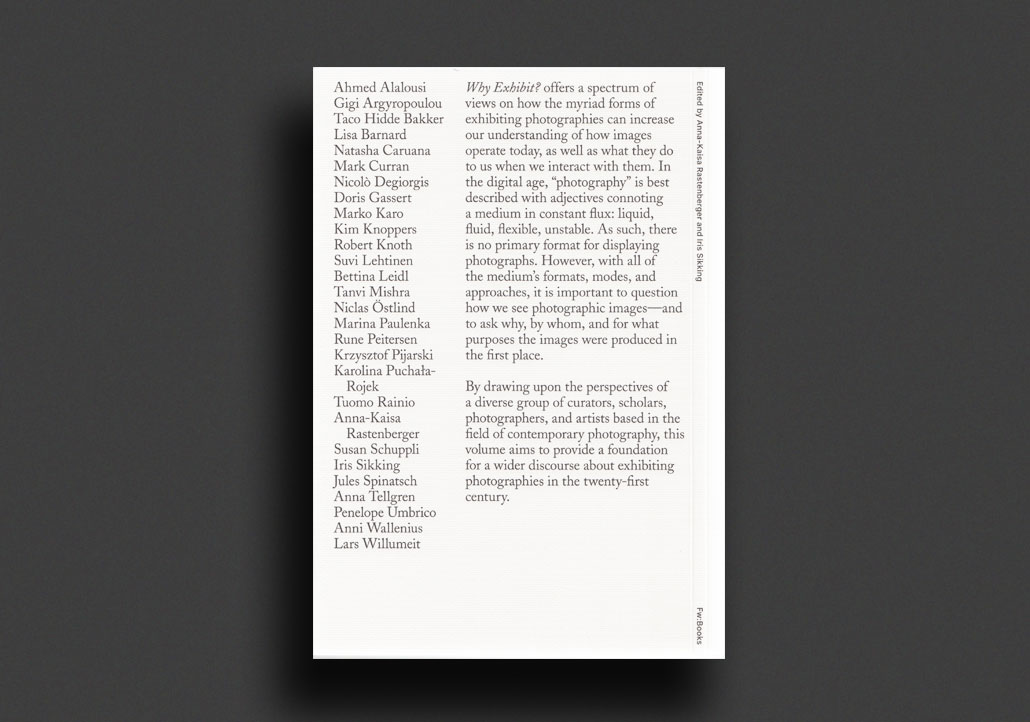
This publication offers a spectrum of views on how the myriad forms of exhibiting photographies can increase our understanding of how images operate today, as well as what they do to us when we interact with them. In the Digital Age, “photography” is best described with adjectives connoting a medium in constant flux: liquid, fluid, flexible, unstable. As such, there is no primary format for displaying photographs. By drawing upon the diverse perspectives of a group of curators, scholars, photographers, and artists based in the field of contemporary photography, this volume aims to provide a foundation for a wider discourse about exhibiting photographies in the twenty-first century.
2018, English
Softcover, 328 pages, 12.5 x 20 cm
Published by
IMA / Brisbane
Sternberg Press / Berlin
Curatorial Practice at MADA / Victoria
$30.00 - Out of stock
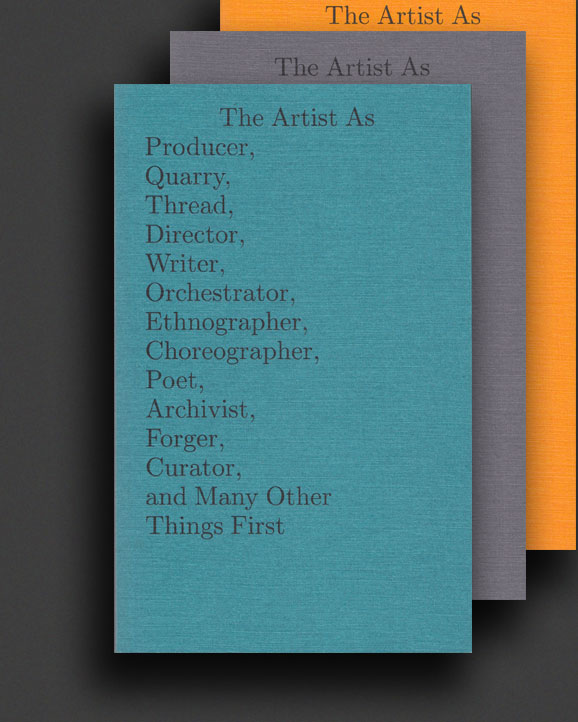
How do artists work today? What kinds of roles do they occupy; have these roles changed over the years; and how does this impact the ecology of art? Has the pluralism of art given way to a pluralism of roles that artists may occupy?
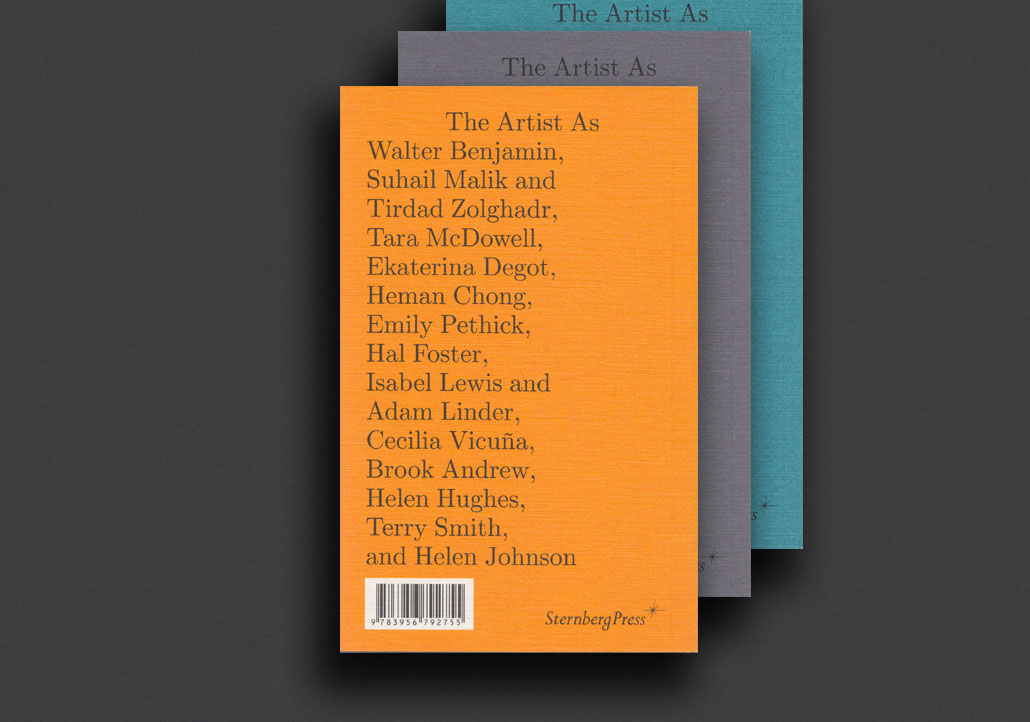
These are some of the questions that led to this volume, The Artist As. It began as a lecture series, co-produced by the Institute of Modern Art, Brisbane, and Curatorial Practice at Monash University, Melbourne, and the essays by Brook Andrew, Tara McDowell, Emily Pethick, and Cecilia Vicuña, and conversations between Tirdad Zolghadr and Suhail Malik and Isabel Lewis and Adam Linder, began as lectures within that series. New commissions by Heman Chong, Helen Hughes, and Helen Johnson, and previously published by Walter Benjamin, Ekaterina Degot, Hal Foster, and Terry Smith complete the reader.
1969, English
Hardcover (w. dust jacket), 150 pages, 31 x 24 cm
Published by
Macmillan / New York
$180.00 - Out of stock
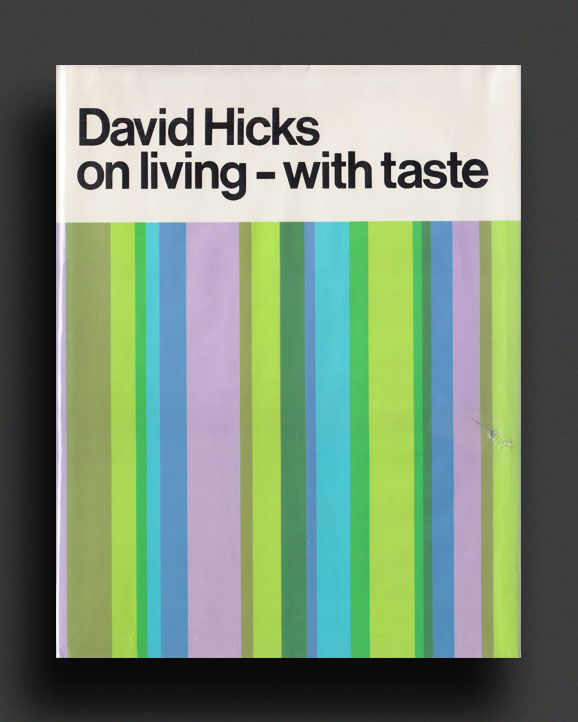
First hardcover edition of one of David Hicks' scarcest books, published in 1969 by Macmillan, New York. The second volume in David Hicks' classic series of design volumes, with the iconic stripy dust jacket.
Blurb from the dust jacket:
'Following upon the phenomenal international success of David Hicks on Decoration, this new volume by one of the world's top designers is a most exciting sequel. He demonstrates here, visually, and in words, how people of all incomes can achieve the warmth and interest provided by taste and functional detail. This lavish and elegant volume pin-points all aspects of Living with Taste and covers flower arrangements, tablescapes, wall arrangements, massing, style, lighting and general decoration. It shows how people can live with taste, regardless of their incomes, and selects and expounds on all types of accessories from door handles to lavatories....
"It is amazing how few people bother to cultivate their taste and how very many people there are with no taste - either good or bad, or any feelings about it and all that it affects. Good taste is not expensive; often the more expensive of two alternatives is less acceptable to those who are visually aware—people with taste." - David Hicks
David Hicks is considered to be among the foremost interior designers of the 20th century. From the decoration of his own house in London in 1956—in powerful colours that heralded an end to the drab, postwar English look—he set the pace for interior design both in Europe and America, personifying the many dramatic shifts in home decor throughout the 1960s-1980s, and achieving dynamic balance between the traditional and the contemporary. His design primer book series has become an iconic staple in any interior design library.
Very Good copy with Good Jacket (tiny, repaired tear to front), preserved under plastic wrap.
1968, German
Hardcover (w. dust jacket), 220 pages, 24.5 x 26 cm
1st Edition, Out of print title / used / very good
Published by
Schuler Verlagsgesellschaft / Stuttgart
$55.00 - Out of stock
First hardcover edition from 1968 of this wonderful German interior design volume, beautifully designed and dedicated to inspired design of intimate domestic living/working spaces, such as studio apartments and attics! Presented in lush full-colour photography across 220 pages, with floor-plan drawings and many fold-out photographic spreads, Olga Stier presents an abundance of decorating examples that perfectly capture the imagination and dynamic of mixing the traditional and the modern toward the end of the 1960s. A bountiful, lesser known volume, full of prominent European furniture design, decorative art, textiles, libraries, and antiques.
Very Good copy in Very Good dust jacket, preserved under plastic wrap.
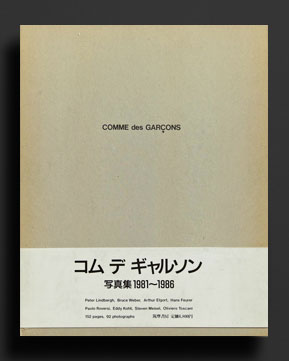
1986, Japanese / English
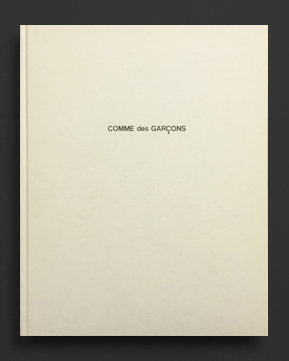
Hardcover (cloth-bound in glassine and printed cardboard slip-case, obi-strip), 152 pages
1st Edition, Out of print title / used / very good
Published by
Chikuma Shobo / Tokyo
Comme des Garçons / Tokyo
$950.00 - Out of stock
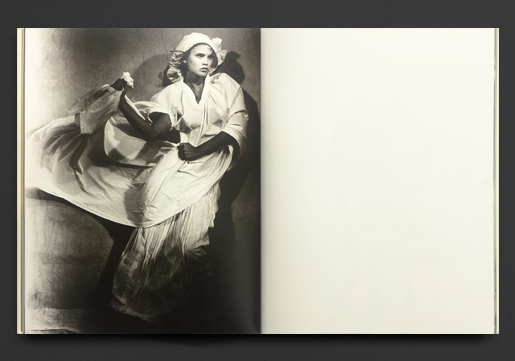
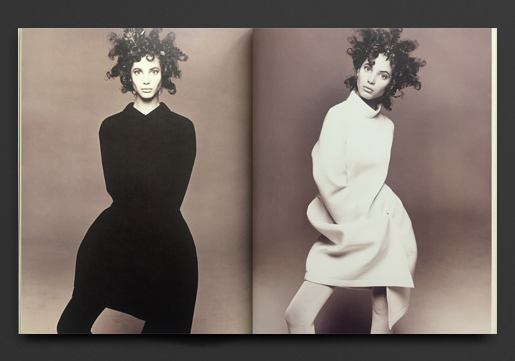
"Comme des Garçons 1981-1986" is one of the most beautiful and sought after fashion photo-books ever published.
Since the inception of Japanese fashion label Comme des Garçons in 1969, founder Rei Kawakubo applied a particular aesthetic to every aspect of Comme des Garçons, extending her vision to the company's packaging, furniture, interior design, graphic design, and publishing, including a selection of some of the fashion world's most visually compelling and challenging books and printed materials.
This wonderful and very iconic collection of photographs presents Rei Kawakubo's groundbreaking, innovative designs from an exciting period of Comme des Garçons history, between 1981 and 1986, as photographed by some of the most important fashion photographers of our time, including Arthur Elgort, Hans Feurer, Eddy Kohli, Peter Lindbergh, Steven Meisel, Paolo Roversi, Oliviero Toscani, and Bruce Weber, among others.
This gorgeous and incredibly rare clothbound volume, wrapped in original publisher's glassine overlay and housed in original printed cardboard slip-case, perfectly captures a very important and exciting moment in the history of fashion, and is considered one of the most-collectable and prized fashion photo-books to come out of the 1980s.
Very Good copy with original obi-strip.
2018, English
Softcover (stitched), 28 pages, 30 x 21 cm
Ed. of 50,
Published by
Self-Published / Melbourne
$12.00 - In stock -
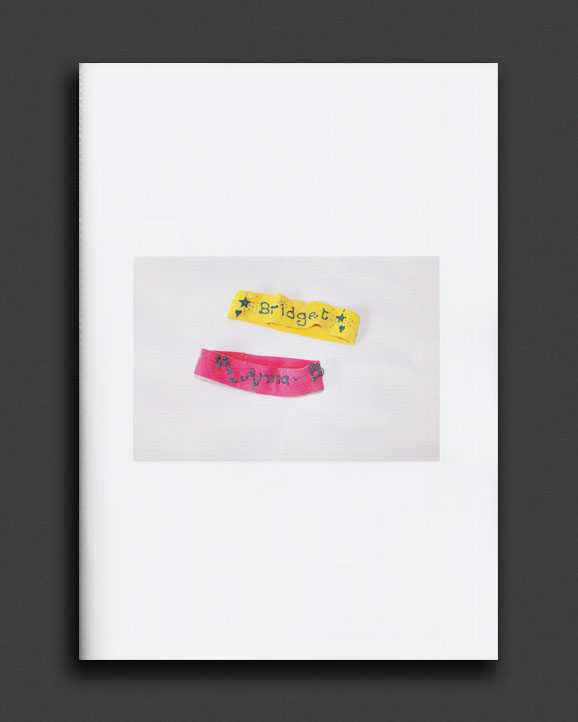
A collaboration production showcasing the Honours collection of Anna and Bridget Petry. Photographed by Agnieszka Chabros and modelled by twin sisters Mia and Sierra.
Published in an edition of 50 copies.
1988, English
Softcover (w. dust jacket), 234 pages, 28 x 21.5 cm
1st Edition, Out of print title / used / very good
Published by
Rizzoli / New York
$35.00 - Out of stock
First Edition of "A Bottle of Notes and Some Voyages", published in 1988 in conjunction with a large exhibition of Claes Oldenburg's singular work, with focus on his incredible collaborative projects with his late wife, sculptor, art historian, and critic, Coosje van Bruggen. Since 1976, Oldenburg and van Bruggen produced three decades of monumental sculpture that van Bruggen would call Large-Scale Projects. This book documents these works and much more. Includes essay and introduction by Germano Celant, texts and personal notes by the artists, along with hundreds of colour and black and white drawings, sketches and photographs. A beautiful book.
Since the early 1980s van Bruggen worked as an independent critic and curator. She contributed articles to Artforum magazine from 1983 to 1988, and served as senior critic in the sculpture department at Yale University School of Art in 1996-97.
Claes Oldenburg is an American Pop artist, best known for his soft sculptures and public art installations, typically featuring large replicas of everyday objects.
Very Good copy.
2011, English
Softcover with dustjacket, 98 pages, 12 x 19 cm
Published by
Sternberg Press / Berlin
$28.00 - Out of stock
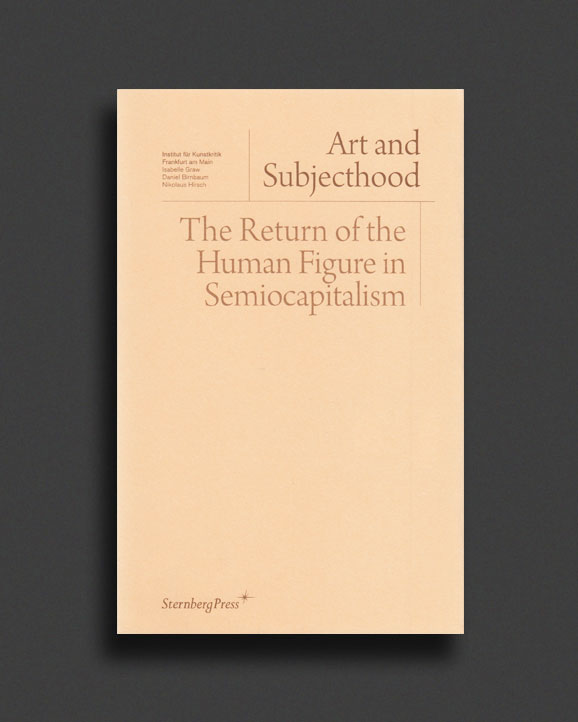
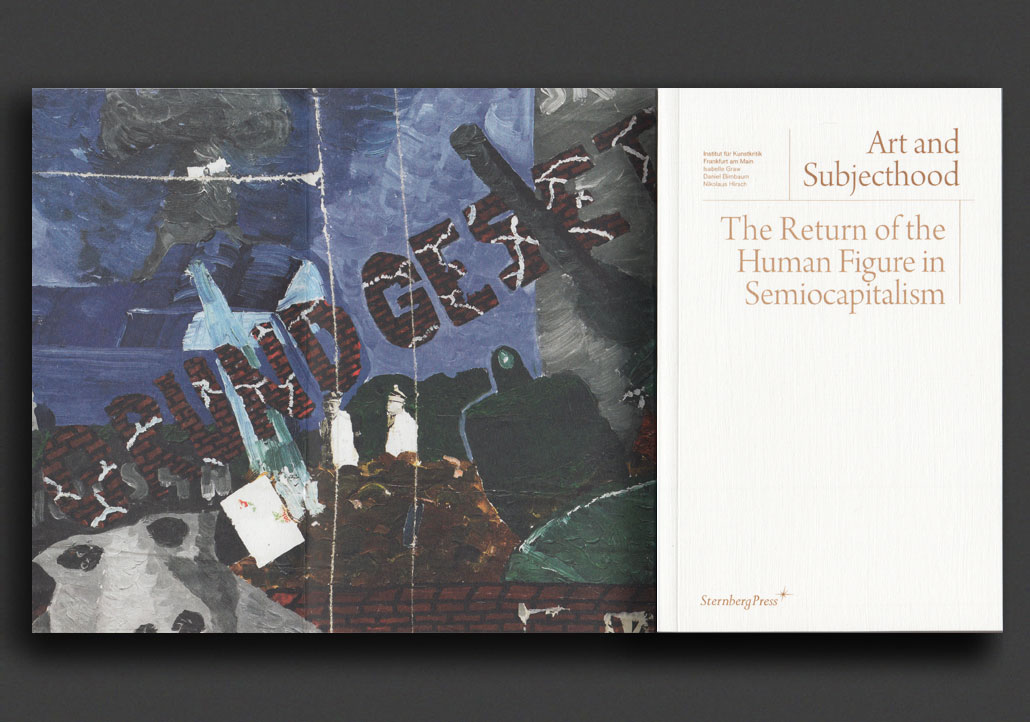
Isabelle Graw, Daniel Birnbaum, Nikolaus Hirsch (Eds.)
Texts by Ina Blom, Oliver Brokel, Caroline Busta, Stefan Deines, Hal Foster, Stefanie Heraeus, Jutta Koether, Magdalena Nieslony, Michael Sanchez
Many contemporary artworks evoke the human figure: consider the omnipresence of the mannequin in current installations of artists like John Miller, Thomas Hirschhorn, Heimo Zobernig, or David Lieske. Or consider the revival of a minimalist vocabulary, which embraces anthropomorphism as in the works of Isa Genzken and Rachel Harrison. This book brings together contributions from the eponymous conference, all of which seek to speculate on the reasons as to why, since the turn of the millennium, we have encountered so many artworks that tend to reconcile Minimalism with suggestions of the human figure. It proposes that this new artistic convention becomes rather questionable when discussed in the light of Franco Berardi’s theory of semiocapitalism—a power technology that aims squarely at our human resources. The participants of this conference were asked to offer possible explanations for this wide acceptance of anthropomorphism—could it be that this is a manifestation of the increasingly desperate desire for art to have agency?
1953, English
Hardcover (w. dust jacket), 112 pages, 11.8 x 15 cm
1st Edition, Out of print title / used / good
Published by
Gaberbocchus Press / London
$45.00 - Out of stock
First 1953 hardcover edition of The Good Citizen’s Alphabet.
"E: Erroneous: Capable of being proved true"; "J: Jolly: The downfall of our enemies"; "M: Mystery: What I understand and you don't" . . . Enter the delightful, satirical world of the Good Citizen. In this pocket-size book, renowned philosopher and writer Bertrand Russell’s witty, subversive A–Z encompasses pedants and nincompoops, knowledge and virtue, providing a diverting and entertaining guide to the English alphabet. Beautifully printed and illustrated with the lively drawings of Franciszka Themerson, whose apt and amusing images add an anarchic spirit to this delightful gift book.
Bertrand Russell (1872–1970) was one of the foremost philosophers and logicians of the 20th century.
Franciszka Themerson (1907–1988) was a central figure of the Polish avant-garde.
2018, English
Softcover, 200 pages, 20.2 x 25.5 cm
Published by
MoMA / New York
$58.00 - Out of stock
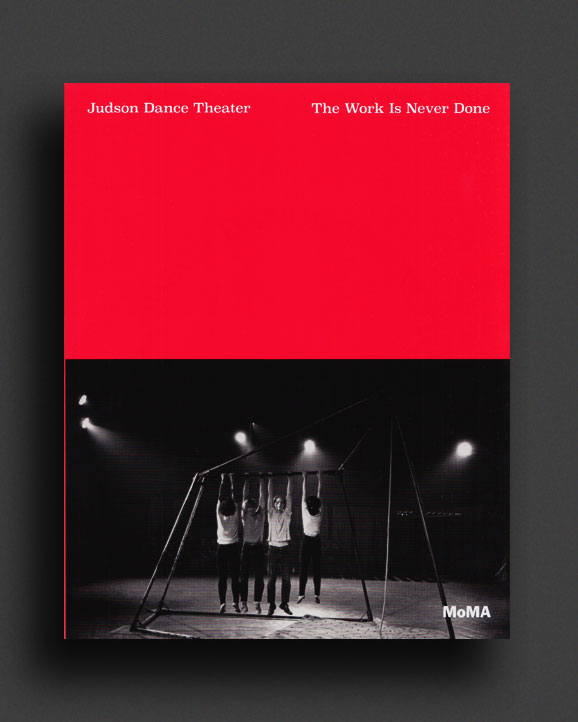
Using "ordinary" movements, the Judson Dance Theater stripped dance of its theatrical conventions
Taking its name from the Judson Memorial Church, a socially engaged Protestant congregation in New York's Greenwich Village, Judson Dance Theater was organized as a series of open workshops from which its participants developed performances. Redefining the kinds of movement that could count as dance, the Judson participants--Trisha Brown, Lucinda Childs, Philip Corner, Bill Dixon, Judith Dunn, David Gordon, Alex Hay, Deborah Hay, Fred Herko, Robert Morris, Steve Paxton, Rudy Perez, Yvonne Rainer, Robert Rauschenberg, Carolee Schneemann and Elaine Summers, among others--would go on to profoundly shape all fields of art in the second half of the 20th century. They employed new compositional methods to strip dance of its theatrical conventions, incorporating "ordinary" movements--gestures typical of the street or home, for example, rather than a stage--into their work, along with games, simple tasks, and social dances to infuse their pieces with a sense of spontaneity.
Published in conjunction with an exhibition at the Museum of Modern Art, Judson Dance Theater: The Work Is Never Done highlights the workshop's ongoing significance. The catalog charts the development of Judson, beginning with the workshops and classes led by Anna Halprin, Robert Ellis Dunn and James Waring, and exploring the influence of other figures working downtown such as Simone Forti and Andy Warhol, as well as venues for collective action like Judson Gallery and the Living Theatre. Lushly illustrated with film stills, photographic documentation, reproductions of sculptural objects, scores, music, poetry, architectural drawings and archival material, the publication celebrates the group's multidisciplinary and collaborative ethos as well as the range of its participants.
1953, Italian / English
Softcover, 84 pages, 32.5 x 24 cm
1st Edition, Out of print title / used / good
$40.00 $20.00 - Out of stock
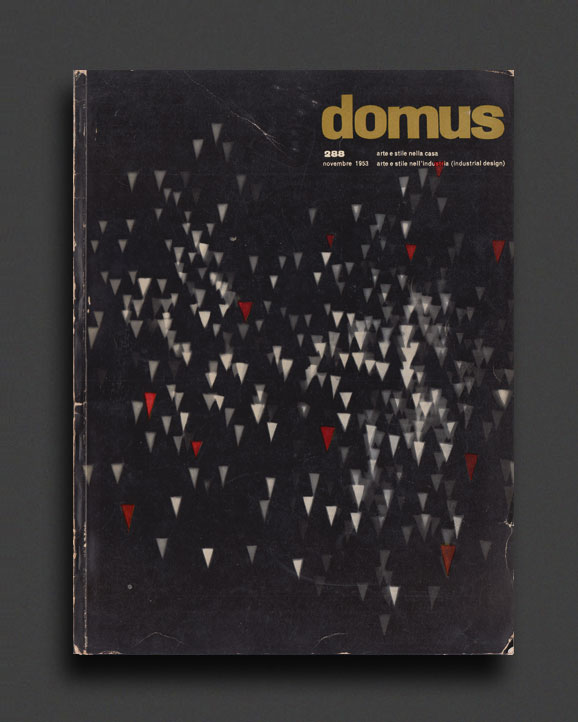
Founded in 1928 as a “living diary” by the great Milanese architect and designer Gio Ponti, domus has been hailed as the world’s most influential architecture and design journal, distributed in 89 countries. With exuberant style and rigor, it offered energetic up-to-date coverage and analysis of major themes, developments and stylistic movements in product, structure, interior, and industrial design. Called the "Mediterranean Megaphone," domus has always been considered the most concrete published expression of Italian style, documenting generations of radical, practical, and beautiful production, both local and across the world. Amongst a seemingly endless archive of contributions and features, domus frequently covered the works of the protagonists of the Anti and Radical Design movements, modern architecture, new experiments in environmental/spatial/commercial design, international product design, the activities of the Arte Povera, Pop art, Minimal Art and Nouveau Réalisme movements, and much more.
domus No. 288 Novembre 1953
Editor : Gio Ponti
features :
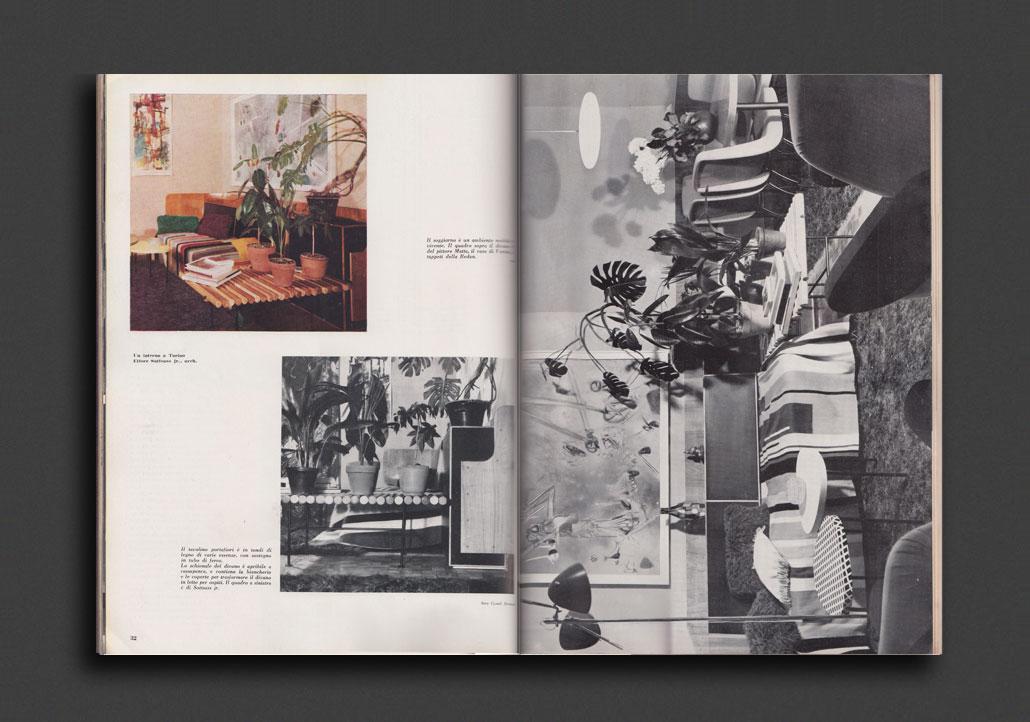
Architecture by Le Corbusier, Ernst Plishke, Egon Eiermann, Gio Ponti, Jean Prouvé, Harry Seidler, Giorgio Host Ivessich, Ettore Sottsass jr., Ico and Luisa Parisi, Mario Burzio, Gianemilio Monti, Piero and Anna Monti; Ceramics by Luigi Gheno, Italian Ceramics; interiors/furniture/object/industrial design by Luisa Parisi, Eero Saarinen, Giacomo Castiglioni, Paul Boissevain, Alberto Rosselli, Kaj Franck; Textiles by Arne Jacobsen; Graphic design of Gordon Andrews; and much more.
Beautifully printed in Italy and heavily illustrated throughout with vivid colour and black and white photography across multiple paper stocks.
Good copy with tanning and edge wear from age, spine flaking. Occasional light moisture wear to some pages and cover.
1954, Italian / English
Softcover, 84 pages, 32.5 x 24 cm
1st Edition, Out of print title / used / good
Published by
Editoriale Domus / Milan
$40.00 $20.00 - Out of stock
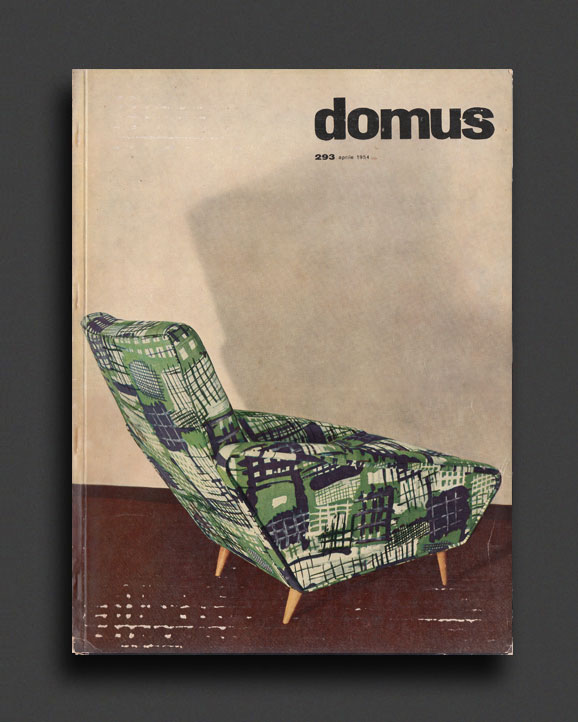
Founded in 1928 as a “living diary” by the great Milanese architect and designer Gio Ponti, domus has been hailed as the world’s most influential architecture and design journal, distributed in 89 countries. With exuberant style and rigor, it offered energetic up-to-date coverage and analysis of major themes, developments and stylistic movements in product, structure, interior, and industrial design. Called the "Mediterranean Megaphone," domus has always been considered the most concrete published expression of Italian style, documenting generations of radical, practical, and beautiful production, both local and across the world. Amongst a seemingly endless archive of contributions and features, domus frequently covered the works of the protagonists of the Anti and Radical Design movements, modern architecture, new experiments in environmental/spatial/commercial design, international product design, the activities of the Arte Povera, Pop art, Minimal Art and Nouveau Réalisme movements, and much more.
domus No. 293 aprile 1954
Editor : Gio Ponti
features :
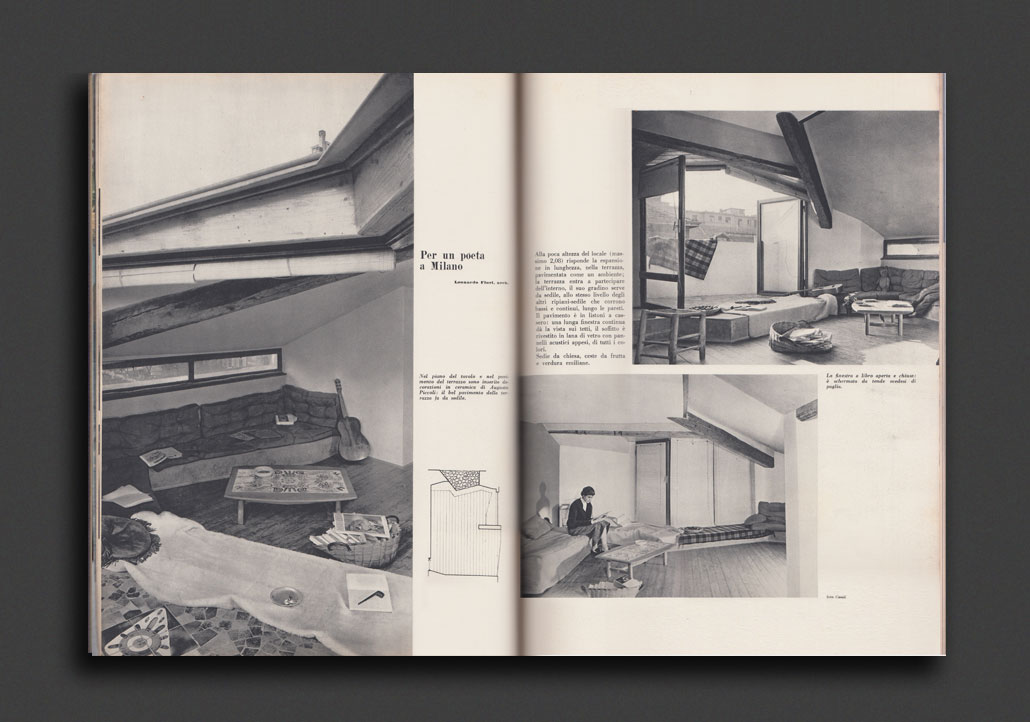
Architecture by Richard Neutra, Ettore Sottsass jr., Georg Maria Lunenborg; Vittorio Gregotti, Lodovico Meneghetti, G.W. van Essen, Vico Magistretti; interiors/furniture/object design by Charlotte Perriand, Jean Prouvé, Luigi Caccia Dominioni, Carl Auböck, Vittoriano Viano, Greta Magnusson Grossman, Ignazio Gardella, Luigi Caccia Dominioni, Marco Zanuso, Carlo Pagani, Gio Ponti; the theatre design of Pietro Zuffi; Finnish decorative ceramics; tableware by James Prestini; modular Italian furniture; glassware by Timo Sarpaneva; ceramics/flatware by Gio Ponti, Raymond Elston, Conran di Londra; and much more.
Beautifully printed in Italy and heavily illustrated throughout with vivid colour and black and white photography across multiple paper stocks.
1954, Italian / English
Softcover, 84 pages, 32.5 x 24 cm
1st Edition, Out of print title / used / good
Published by
Editoriale Domus / Milan
$40.00 $20.00 - Out of stock
Founded in 1928 as a “living diary” by the great Milanese architect and designer Gio Ponti, domus has been hailed as the world’s most influential architecture and design journal, distributed in 89 countries. With exuberant style and rigor, it offered energetic up-to-date coverage and analysis of major themes, developments and stylistic movements in product, structure, interior, and industrial design. Called the "Mediterranean Megaphone," domus has always been considered the most concrete published expression of Italian style, documenting generations of radical, practical, and beautiful production, both local and across the world. Amongst a seemingly endless archive of contributions and features, domus frequently covered the works of the protagonists of the Anti and Radical Design movements, modern architecture, new experiments in environmental/spatial/commercial design, international product design, the activities of the Arte Povera, Pop art, Minimal Art and Nouveau Réalisme movements, and much more.
domus No. 294 maggio 1954
Editor : Gio Ponti
features :
Architecture by Giuseppe Mario Oliveri, Gino Levi-Montalcini, Craig Ellwood, Richard Neutra, Buckminster Fuller; Olivetti; French kitchens; interiors/furniture/object/industrial design by George Nelsen, Luigi Caccia Dominioni, Leonardo Fiori, Enrico Taglietti, Gianfranco Frattini, Gion Ponti, Carlo Mangani, Ettore Sottsass jnr., Giorgio Madini, Carlo Mollino, Marco Zanuso, Ignazio Gardeila, Giulio Minoletti, Franco Berlanda, Sergio J. Hutter, Carlo de Carli, Charlotte Perriand, Paul Kjaerholm; the work of Olivier Strebelle, Graziano Gasparini, Gio Ponti, Milton Avery, Adolph Gottlieb, Robert Motherwell, William Baziotes, and much more.
Beautifully printed in Italy and heavily illustrated throughout with vivid colour and black and white photography across multiple paper stocks.
Good copy with usual tanning and edge wear, spine flaking. Occasional light moisture wear to some pages, not many.
1954, Italian / English
Softcover, 84 pages, 32.5 x 24 cm
1st Edition, Out of print title / used / good
Published by
Editoriale Domus / Milan
$40.00 - Out of stock
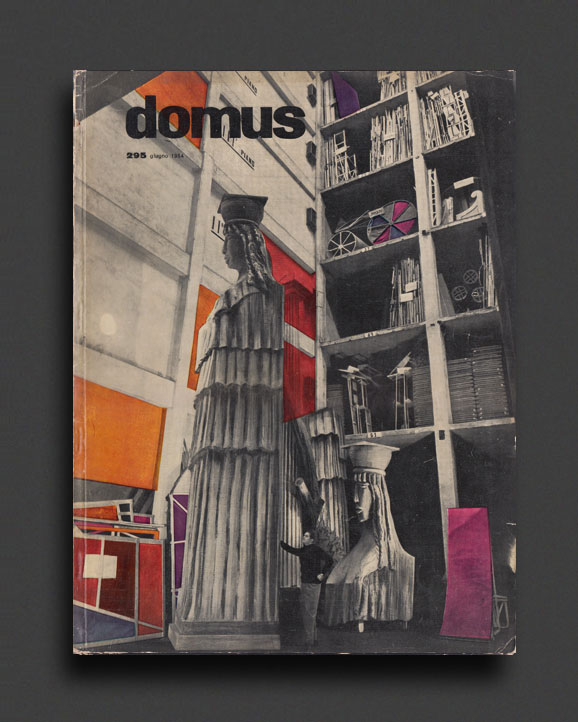
Founded in 1928 as a “living diary” by the great Milanese architect and designer Gio Ponti, domus has been hailed as the world’s most influential architecture and design journal, distributed in 89 countries. With exuberant style and rigor, it offered energetic up-to-date coverage and analysis of major themes, developments and stylistic movements in product, structure, interior, and industrial design. Called the "Mediterranean Megaphone," domus has always been considered the most concrete published expression of Italian style, documenting generations of radical, practical, and beautiful production, both local and across the world. Amongst a seemingly endless archive of contributions and features, domus frequently covered the works of the protagonists of the Anti and Radical Design movements, modern architecture, new experiments in environmental/spatial/commercial design, international product design, the activities of the Arte Povera, Pop art, Minimal Art and Nouveau Réalisme movements, and much more.
domus No. 295 glugno 1954
Editor : Gio Ponti
features :
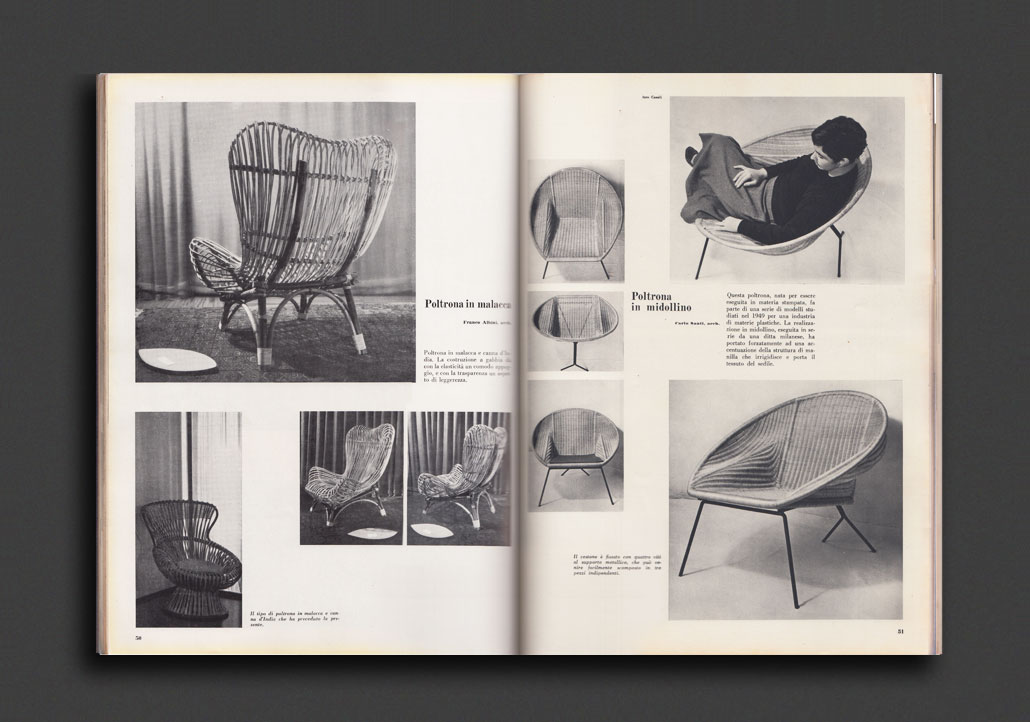
Gio Ponti architectural report on Vanezuela and the capital of Caracas, including the work of Carlos Raúl Villanueva, Luis Barragán, Oscar Niemeyer, Rino Levi, Alexander Calder, Fernand Léger, etc.; exhibition of Georges Rouault designed by Ignazio Gardella; the work of Salvatore Fiume, Gino Meloni, Leonardo Cremonini, Pietro; the house of Charles Forberg and Ati Gropius Forberg; the kites of Franz de Geetre; interiors and space design by Leonardo Fiori, Luisa Castiglioni, Angelo Mangiarotti; a rug by Gio Ponti; furniture/design by Yngve Ekström, Franco Albini, Carlo Santi, Gio Ponti, Paolo De Poli, Piero and Anna Monti, Vico Magistretti, Giancarlo Pozzi, Gianfranco Frattini, Ado Franchini; and much more.
Beautifully printed in Italy and heavily illustrated throughout with vivid colour and black and white photography across multiple paper stocks.
Good copy with tanning and edge wear from age, spine flaking. Occasional light moisture wear to some pages.