World Food Books' programme is largely produced on Kulin Nation land. We acknowledge the Wurundjeri people of the Kulin Nation as the first and continuing custodians of this land, and pay respect to their Elders past, present, and emerging.
World Food Books is an arts and special interests bookshop in Naarm / Melbourne. Founded in 2010, World Food Books is devoted to the presentation of a rotating, hand-selection of international art, design, literary and counterculture publications with an emphasis on the anti-traditional, the experimental, the avant-garde, the heretic, the marginal.
Presenting new titles alongside rare and out-of-print books, catalogues and journals spanning the fields of modern and contemporary art, design, photography, illustration, film, literature, poetry, cultural theory, philosophy, sexuality, popular and underground culture in its many radical forms, World Food Books wishes to encourage adventurous, thoughtful and open-minded reading, looking, writing, and exchange of publishing and ideas, both current and historical.
As well as our bookshop, located in Melbourne's historical Nicholas Building, all of our inventory is available internationally via our online mail-order service.
World Food Books semi-regularly co-ordinates "Occasions", a programme of exhibits and events at the bookshop and in partnership with other hosts (such as museums and art galleries) that develop out of the activities, relationships and content of the bookshop itself.
World Food Books
The Nicholas Building
37 Swanston Street
Room 5, Level 6
Melbourne 3000
Australia
SHOP HOURS:
Thu–Fri 12–6, Sat 12–5
WEB-SHOP OPEN 24/7
World Food Books
Postal Address:
PO Box 435
Flinders Lane
Victoria 8009
Australia
Art
Theory / Essay
Architecture / Interior
Graphic Design / Typography
Photography
Fashion
Eros
LGBTQ+
Fiction / Poetry
Weird / Speculative / Science Fiction / Horror
Transgressive / Visceral / Abject
Symbolism / Decadence / Fin de siècle
Film / Video
Painting
Sculpture / Installation
Performance / Dance / Theater
Drawing
Sound / Music
Curatorial
Group Shows / Collections
Periodicals
Out-of-print / Rare
Posters / Ephemera / Discs
Signed Books
World Food Books Gift Voucher
World Food Book Bag
Australian Art
Australian Fiction
Australian Science Fiction / Speculative Fiction
Australian Poetry
Australian Photography
Japanese Photography
Conceptual Art
Minimal Art
Dada
'Pataphysics / Oulipo
Fluxus
Concrete Poetry
Pop Art
Surrealism
Arte Povera
Arte Informale / Haute Pâte / Tachism
Nouveau Réalisme / Zero / Kinetic
Situationism / Lettrism
Collage / Mail Art / Xerox Art
Art Brut / Folk / Visionary / Fantastic
Illustration / Graphic Art / Bandes Dessinées
Furniture
Italian Radical Design / Postmodernism
Textiles
Ceramics / Glass
Counterculture
Protest / Revolt
Philosophy
Psychoanalysis
Anthropology
Anarchism
Socialism / Anarchism / Communism / Capitalism
Literary Theory / Semiotics / Language
Feminism / Women's Studies
Gender Studies / Sexuality
Anthropology
Fetishism / BDSM
Drugs / Psychedelia
Crime / Violence
Animal Rights / Veganism
Occult / Esoterica
Ecology / Earth / Alternative Living
Whole Earth / Crafts
All prices in AUD (Australian dollars)
Pick-Ups
Pick-up orders can be collected in our bookshop during opening hours after order date. Please collect any Pick-up orders within 2 weeks of ordering as we have limited storage space. Orders will be released back into stock if not collected within this time. No refunds can be made for pick-ups left un-collected. If you cannot make it in to the bookshop in this time-frame, please choose postage option.
Return Policy
All sales are final. We do accept returns (for refund or exchange) for items received in error. All our orders are packed with special care using heavy-duty padding and cardboard book-mailers or bubble mailers (for smaller books), using reinforcement where required. We cannot take responsibility for any lost, stolen or damaged parcels.
Insurance
Should you wish to insure your package, please email us directly after placing your order and we can organise this at a small extra expense. Although all standard/express tracked packages are very safe and dependable, we cannot take responsibility for any lost, stolen or damaged parcels. We recommend insurance on valuable orders.
Interested in selling your old books, catalogues, journals, magazines, comics, fanzines, ephemera? We are always looking for interesting, unusual and out-of-print books to buy. We only buy books in our fields of interest and specialty, and that we feel we can resell.
We base these prices on desirability, market value, in-print prices, condition and our current stock levels. We offer cash, store credit, and can take stock on consignment. All
about 25% of the price we expect to get when we sell them, or 30% in store credit. We base these prices on desirability, market value, in-print prices, condition and our current stock levels.
Sell your books any day of the week. You can drop them off and return later. If you have a lot of books, we can visit your Sydney home.
We buy books that we feel we can resell. We offer about 25 % of the price we expect to get when we sell them, or 30% in store credit. We base these prices on desirability, market value, in-print prices, condition and our current stock levels.
Philadelphia Wireman
03 August - 01 September, 2018
World Food Books is proud to announce our next Occasion, the first presentation of sculptures by Philadelphia Wireman in Australia.
The Philadelphia Wireman sculptures were found abandoned in an alley off Philadelphia’s South Street on trash night in 1982. Their discovery in a rapidly-changing neighbourhood undergoing extensive renovation, compounded with the failure of all attempts to locate the artist, suggests that the works may have been discarded after the maker’s death. Dubbed the "Philadelphia Wireman" during the first exhibition of this work, in 1985, the maker’s name, age, ethnicity, and even gender remain uncertain. The entire collection totals approximately 1200 pieces, all intricately bound together with tightly-wound heavy-gauge wire (along with a few small, abstract marker drawings, reminiscent both of Mark Tobey and J.B. Murry). The dense construction of the work, despite a modest range of scale and materials, is singularly obsessive and disciplined in design: a wire armature or exoskeleton firmly binds a bricolage of found objects including plastic, glass, food packaging, umbrella parts, tape, rubber, batteries, pens, leather, reflectors, nuts and bolts, nails, foil, coins, toys, watches, eyeglasses, tools, and jewellery.
Heavy with associations—anthropomorphic, zoomorphic, and socio-cultural responses to wrapped detritus—the totemic sculptures by Philadelphia Wireman have been discussed in the context of work created to fulfil the shamanistic needs of alternative religions in American culture. Curators, collectors, and critics have variously compared certain pieces to sculpture from Classical antiquity, Native American medicine bundles, African-American memory jugs, and African fetish objects. Reflecting the artist’s prolific and incredibly focused scavenging impulse, and despite—or perhaps enhanced by—their anonymity, these enigmatic objects function as urban artefacts and arbiters of power, though their origin and purpose is unknown. Philadelphia Wireman, whatever their identity, possessed an astonishing ability to isolate and communicate the concepts of power and energy through the selection and transformation of ordinary materials. Over the course of the past two decades, this collection has come to be regarded as an important discovery in the field of self-taught art and vernacular art.
Presented in collaboration with Fleisher-Ollman Gallery, Philadelphia, and Robert Heald, Wellington.
Susan Te Kahurangi King
02 February - 10 March, 2018
Susan Te Kahurangi King (24 February 1951 - ) has been a confident and prolific artist since she was a young child, drawing with readily available materials - pencils, ballpoint pens and felt-tip markers, on whatever paper is at hand. Between the ages of four and six Susan slowly ceased verbal communication. Her grandparents William and Myrtle Murphy had developed a special bond with Susan so they took on caring responsibilities for extended periods. Myrtle began informally archiving her work, carefully collecting and storing the drawings and compiling scrapbooks. No drawing was insignificant; every scrap of paper was kept. The King family are now the custodians of a vast collection containing over 7000 individual works, from tiny scraps of paper through to 5 meter long rolls.
The scrapbooks and diaries reveal Myrtle to be a woman of great patience and compassion, seeking to understand a child who was not always behaving as expected. She encouraged Susan to be observant, to explore her environment and absorb all the sights and sounds. Myrtle would show Susan’s drawings to friends and people in her community that she had dealings with, such as shopkeepers and postal workers, but this was not simply a case of a grandmother’s bias. She recognised that Susan had developed a sophisticated and unique visual language and sincerely believed that her art deserved serious attention.
This was an unorthodox attitude for the time. To provide some context, Jean Dubuffet coined the term Art Brut in 1945 to describe work created by self-taught artists – specifically residents of psychiatric institutions and those he considered to be visionaries or eccentrics. In 1972 Roger Cardinal extended this concept by adopting the term Outsider Art to describe work made by non-academically trained artists operating outside of mainstream art networks through choice or circumstance. Susan was born in Te Aroha, New Zealand in 1951, far from the artistic hubs of Paris and London that Dubuffet and Cardinal operated in. That Myrtle fêted Susan as a self-taught artist who deserved to be taken seriously shows how progressive her attitudes were.
Susan’s parents Doug and Dawn were also progressive. Over the years they had consulted numerous health practitioners about Susan’s condition, as the medical establishment could not provide an explanation as to why she had lapsed into silence. Dawn educated herself in the field of homeopathy and went on to treat all twelve of her children using these principles – basing prescriptions on her observations of their physical, mental and emotional state.
Doug was a linguist with an interest in philosophy who devoted what little spare time he had to studying Maori language and culture. To some extent their willingness to explore the fringes of the mainstream made them outsiders too but it was their commitment to living with integrity and their respect for individuality that ensured Susan’s creativity was always encouraged.
Even though Susan’s family supported her artistic pursuits, some staff in schools and hospitals saw it as an impediment to her assimilation into the community and discouraged it in a variety of ways. Her family was not always aware of this and therefore did not fully understand why Susan stopped drawing in the early 1990s. However, rather than dwell on the challenges that Susan faced in pursuit of her artistic practice, they prefer to highlight her achievements. In 2008 Susan began drawing again in earnest, after an almost 20 year interruption, and her work is now shown in galleries around the world.
Susan grew up without television and has been heavily influenced by the comics she read as a child. She is absolutely fearless in the appropriation of recognizable characters, such as Donald Duck and Mickey Mouse, in her work. She twists their limbs, contorts their faces, compresses them together, blends them into complex patterned backgrounds - always imbuing them with an incredible energy. Although Susan often used pop culture characters in her work they are not naive or childlike. These are drawings by a brilliant self-taught artist who has been creating exceptional work for decades without an audience in mind.
Mladen Stilinović
"Various Works 1986 - 1999"
02 February 16 - September 10, 2016
Various works 1986 - 1999, from two houses, from the collections of John Nixon, Sue Cramer, Kerrie Poliness, Peter Haffenden and Phoebe Haffenden.
Including: Geometry of Cakes (various shelves), 1993; Poor People’s Law (black and white plate), 1993; White Absence (glasses, ruler, set square, silver spoon, silver ladel with skin photograph and wooden cubes), 1990-1996; Exploitation of the Dead (grey and red star painting, wooden painting, black spoon with red table, red plate), 1984-1990; Money and Zeros (zero tie, paintings made for friends in Australia (Sue, John, Kerrie), numbers painting), 1991-1992; Words - Slogans (various t-shirts) - “they talk about the death of art...help! someone is trying to kill me”, “my sweet little lamb”, “work is a disease - Karl Marx”; Various artist books, catalogues, monographs, videos; Poster from exhibition Insulting Anarchy; "Circular" Croatian - Australian edition; Artist book by Vlado Martek (Dostoyevsky); more.
Thanks to Mladen Stilinović and Branka Stipančić.
Jonathan Walker
Always Will Need To Wear Winter Shirt Blue + Ochre Small Check Pattern
21 August - 21 September, 2015
Untitled
I am not a great reader of poetry but I always return to the work of Melbourne poet, Vincent Buckley (1925- 1988). Perhaps I find his most tantalising piece to be not a finished poem but a fragment left on a scrap of paper discovered on his desk after the poet’s death.
The poetry gathers like oil
In the word-core, and spreads
It has its music meet,
Its music is in movement.
This fragment is more the shell left behind from a volatile thought than a finished poem. I find the last two lines honest but awkward whereas the first two lines work like an arrow. Most likely he could not find a resolution so it was left. Still, in its present form, it remains an eloquent testimony to the ultimate failure of a medium to express mobile thought and sensation, in Buckley’s case, through verbal language. It’s an important matter because this is something all artists have to deal with regardless of the medium.
I have never written a poem, however, I am forever copying fragments from books on paper scraps in a vain effort to fix certain notions in my head. At first, they function as bookmarks that are sometimes returned to when I open the book. But before long, as they accumulate, they fall out littering the table interspersed with A4 photocopies, bills, books and medications.
To return to Buckley’s fragment, the first two lines very much evoke how I paint nowadays. As you age, detail diminishes and patches of light become more luminous and float. I feel the most honest way of dealing with this is by smearing the oil paint on the canvas with the fingers and working close-up, blind. Only if the patches coalesce into an approaching image can the work gain a life.
-
Jonathan Walker was born in Melbourne, Australia and brought up on a dairy farm in Gippsland. In the 1970’s he studied painting at RMIT and won the Harold Wright Scholarship to the British Museum, London. During the 1980’s he exhibited at Pinacotheca Gallery, Richmond and had work shown at the NGV and Heidi City Art Gallery. Over the same period he designed the cover for the “Epigenesi” LP by Giancarlo Toniutti, Italy and conducted a mail exchange work with Achim Wollscheid, Germany. The work with artists through the post resulted in an article published in the bicentenary issue of Art and Australia 1988. He showed in artist run spaces such as WestSpace in the 90’s and 2000’s, and until 2012, taught painting at Victoria University, which is where we (Colleen Ahern and Lisa Radford) as organisers of the exhibition, among many others, had the privilege of being his student.
Walker’s knowledge was imparted to students through the careful selection of music, literature, and artists found in books that he himself had ordered for the library. Walker’s strategy was the generosity of sharing his vast knowledge with references specific to each student and their context.
Walker’s paintings share a similar focus and intimacy.
This exhibition presents a small selection of recent paintings alongside a publication that includes Walker’s writing. Observational and analytical, Walker’s work is a type of material notation — the time of day, colour and how it is blended, the both specific and fleeting location of a reflection on lino or the question of whether a chair leg should be included in a painting.
Please join us on Friday August 21 between 6-8pm to celebrate the opening of the exhibition.
Curated by Colleen Ahern and Lisa Radford.
B. Wurtz
Curated by Nic Tammens
March 26 - April 4, 2015
B.Wurtz works from a basement studio in his home on Manhattan’s Lower East Side.
This local fact is attested to by the plastic shopping bags and newsprint circulars that appear in his work. As formal objects, they don’t make loud claims about their origins but nonetheless transmit street addresses and places of business from the bottom of this long thin island. Like plenty of artists, Wurtz is affected by what is local and what is consumed. His work is underpinned by this ethic. It often speaks from a neighborhood or reads like the contents of a hamper:
“BLACK PLUMS $1.29 lb.”
“Food Bazaar”
“USDA Whole Pork Shoulder Picnic 99c lb.”
“RITE AID Pharmacy, with us it’s personal.”
“H. Brickman & Sons.”
“Sweet Yams 59c lb."
Most of the work in this exhibition was made while the artist was in residence at Dieu Donne, a workshop dedicated to paper craft in Midtown. Here Wurtz fabricated assemblages with paper and objects that are relatively lightweight, with the intention that they would be easily transportable to Australia. This consideration isn’t absolute in Wurtz’s work, but was prescriptive for making the current exhibition light and cheap. Packed in two boxes, these works were sent from a USPS post office on the Lower East Side and delivered to North Melbourne by Australia Post.
Wurtz appears courtesy of Metro Pictures, New York.
Thanks to Rob Halverson, Joshua Petherick, Sari de Mallory, Matt Hinkley, Helen Johnson, Fayen d'Evie, Ask Kilmartin, Lisa Radon, Ellena Savage, Yale Union, and "Elizabeth".
John Nixon
"Archive"
December 15 - January 20, 2014
The presentation of John Nixon's archive offered a rare showcase of this extensive collection of the artist's own publications, catalogues, posters, ephemera, editions and more, from the mid 1980s onwards, alongside a selection of his artworks.
Organized by John Nixon, Joshua Petherick and Matt Hinkley.
<a href=http://wfb.public-office.info/artist/john-nixon>All titles by John Nixon
"Habitat"
at Minerva, Sydney (organised by Joshua Petherick and Matt Hinkley)
November 15 - December 20, 2014
Lupo Borgonovo, Janet Burchill & Jennifer McCamley,
Lewis Fidock, HR Giger, Piero Gilardi, Veit Laurent Kurz,
Cinzia Ruggeri, Michael E. Smith, Lucie Stahl, Daniel Weil, Wols
Press Release:
“...It contained seven objects. The slender fluted bone, surely formed for flight, surely from the wing of some large bird. Three archaic circuitboards, faced with mazes of gold. A smooth white sphere of baked clay. An age-blackened fragment of lace. A fingerlength segment of what she assumed was bone from a human wrist, grayish white, inset smoothly with the silicon shaft of a small instrument that must once have ridden flush with the surface of the skin - but the thing’s face was seared and blackened.”
William Gibson, “Count Zero”, 1986
"Autumn Projects Archive"
Curated by Liza Vasiliou
March 6 - March 15, 2014
World Food Books, in conjunction with the Virgin Australia Melbourne Fashion Festival 2014, presented the Autumn Projects archive, consisting of a selection of early examples in Australian fashion with a particular interest in collecting designers and labels from the period beginning in the 1980’s, who significantly influenced the discourse of Australian Fashion.
Curated by Liza Vasiliou, the exhibition provided a unique opportunity to view pieces by designers Anthea Crawford, Barbara Vandenberg, Geoff Liddell and labels CR Australia, Covers, Jag along with early experimental collage pieces by Prue Acton and Sally Browne’s ‘Fragments’ collection, suspended throughout the functioning World Food Books shop in Melbourne.
H.B. Peace
presented by CENTRE FOR STYLE
November 14, 2013
"Hey Blinky, you say chic, I say same"
Anon 2013
H.B. Peace is a clothing collaboration between great friends Blake Barns and Hugh Egan Westland. Their pieces explore the divergences between 'character’ and ‘personality’ in garments....etc
Special Thanks to Joshua Petherick and Matt Hinkley of WFB and Gillian Mears
and a Very Special Thank you to Audrey Thomas Hayes for her shoe collaboration.
Janet Burchill & Jennifer McCamley
"Aesthetic Suicide"
May 10 - June 8, 2013
The first of our occasional exhibitions in the World Food Books office/shop space in Melbourne, "Aesthetic Suicide" presented a body of new and older works together by artists Janet Burchill & Jennifer McCamley, including videos, prints, a wall work, and publications.
During shop open hours videos played every hour, on the hour.
2018, English
Softcover, 179 pages, 22 x 28 cm
Published by
A+A / Melbourne
$35.00 - Out of stock
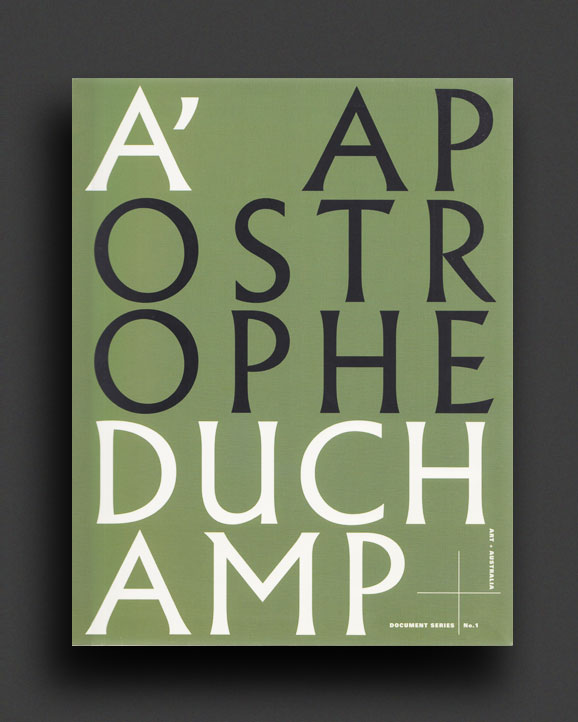
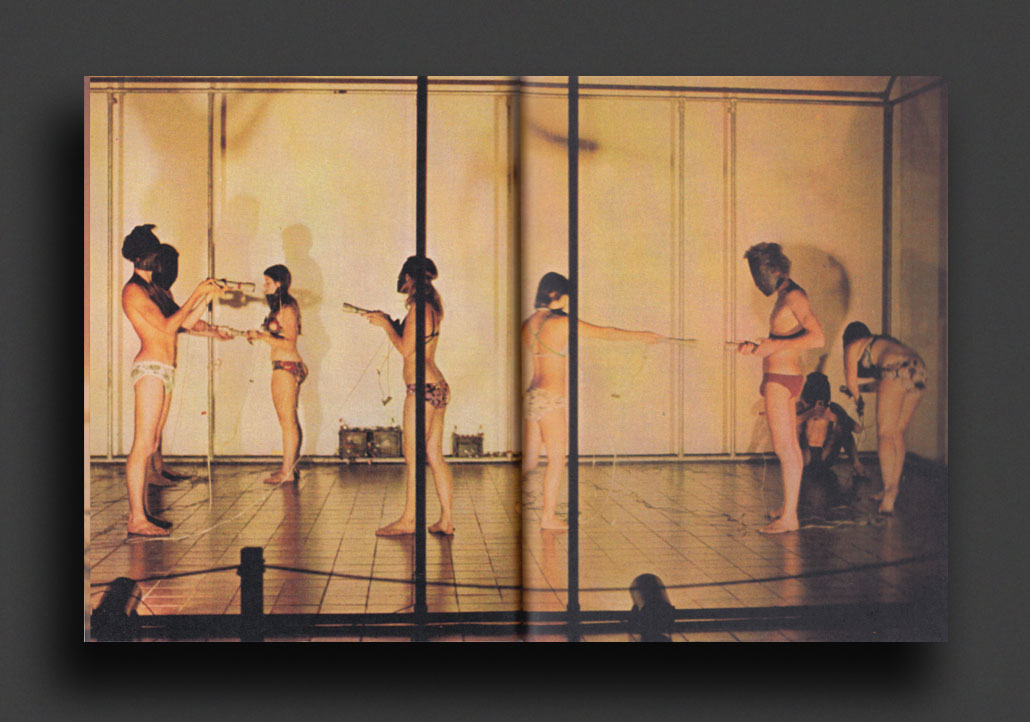
Apostrophe Duchamp is the first book in A+a Document Series. The book explores the effect of the touring exhibition of Marcel Duchamp’s work through-out Australia and New Zealand had on local artistic practice and debate.
Editor: Edward Colless
Authors: Donald Brook, Rex Butler, Edward Colless, A.D.S Donaldson, Monique Fong, Marcus Moore, Tom Picton-Warlow, Terry Smith, Daniel Thomas
In 1967 and 1968 an exhibition of Marcel Duchamp’s ground-breaking avant-garde art, from the Mary
Sisler Collection, toured New Zealand and Australia. The exhibition included some of the most famous of Duchamp’s readymades, such as the Bicycle Wheel and the inverted urinal, Fountain. The exhibition’s arrival in Sydney and Melbourne in 1968 coincided with the visit of the eminent and controversial US art critic Clement Greenberg, who delivered the first Power Lecture at the University of Sydney. In his lecture, Avantgarde Attitudes, Greenberg swiped at Duchamp’s ready-mades for being ‘easy’ art. The same year the National Gallery of Victoria re-opened on St Kilda Road with The Field, an exhibition of so-called colour field painting.
The following year Donald Brook delivered a riposte to Greenberg, and to the critical theory sustaining post-painterly abstraction, in his Power Lecture, Flight from the Object. A battleground had formed. This book, the first in the series of Documents from Art+Australia, charts the dramatic juncture of these competing and combative artistic orientations, and the stakes in what increasingly became, with the emergence of conceptual art and expanded artistic media, a challenge to modernist orthodoxy.
Contributors:
Donald Brook was active in establishing the Tin Sheds workshop, as Professor of Visual Arts at Flinders University, Adelaide, he established the Experimental Art Foundation.
Rex Butler is Professor of Art History and teaches in the Faculty of Art Design and Architecture at Monash University, Melbourne. He has recently completed a history of UnAustralian art with A.D.S. Donaldson.
Edward Colless is a senior lecturer in Critical and Theoretical Studies at the Victorian College of the Arts, University of Melbourne.
Monique Fong moved from Paris to the United States in 1951, where she met Marcel Duchamp. She wrote her first text on Duchamp in 1966, and then translated Octavio Paz’s first essay on Duchamp, ‘The Castle of Purity’, and later his second essay on the artist, ‘Appearance Stripped Bare’.
Marcus Moore earned his PhD in art history on the topic of Marcel Duchamp and New Zealand art, subsequently curating the important historical exhibition Peripheral Relations: Marcel Duchamp and New Zealand Art 1965–2011 (Adam Art Gallery, Wellington, 2012).
Tom Picton-Warlow is a consultant in business analytics and strategy, program and project management and innovation in the areas of oil and gas, mining, e-commerce, merchant and retail banking, health, nutrition and exercise.
Terry Smith, FAHA, CIHA, is Andrew W. Mellon Professor of Contemporary Art History and Theory in the Department of the History of Art and Architecture at the University of Pittsburgh, and professor in the Division of Philosophy, Art and Critical Thought at the European Graduate School.
Daniel Thomas AM became a curator (eventually chief curator) at the Art Gallery of New South Wales, Sydney, in 1958. In 1978, he became founding head of Australian art at the National Gallery of Australia, Canberra, and from 1984 to 1990 was director of the Art Gallery of South Australia, Adelaide. He is now based in Tasmania and writes occasionally on Australian art.
A+A Publishing, Art + Australia’s small book imprint, has been established to provide a new platform for critical writing around contemporary art and culture and to consider new ways of writing and reading art history. Publications out of A+A Publishing are speci cally conceived to to provoke debate about signi cant moments in the development of art in this country and to bring aspects of Australian visual culture to light, for both local and international audiences.
2006, English
Softcover (gold foil with white slipcase), 48 pages, 15.3 x 23 cm
1st Edition, Out of print title / used / very good
Published by
Cone Denim / New York
$70.00 - Out of stock
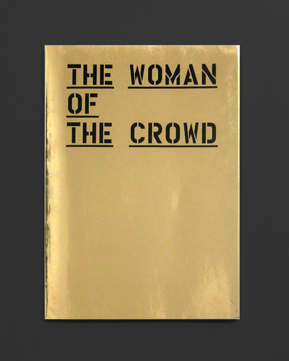
Now out-of-print publication produced on the occasion of New York artist/fashion designer Susan Cianciolo's show "Woman of the Crowd" at New York's Sears-Peyton Gallery and LACE in Los Angeles, 2006.
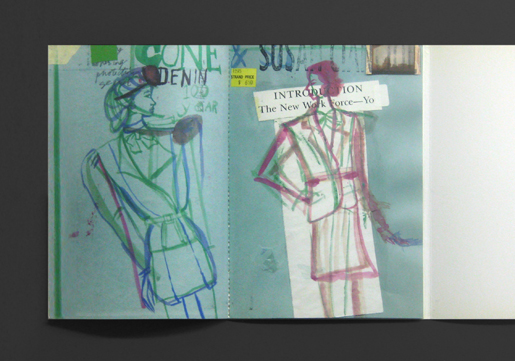
"Artist/fashion designer Susan Cianciolo's show "Woman of the Crowd" centered around a collaboration with Cone Denim (the oldest denim company in the U.S.). Past collections have involved Susan's handmade books, music, photography, movies, and clothing. Her unconventional approach to fashion is a mix of delicate detail, hand sewing, embroidery and projects with various photographers, musicians and film makers. For this show artist/photographer Mark Borthwick, and writer/researcher/curator Patricia Mears, and art directors Takaya Goto and Lesley Chi of Goto Design are some of the people working with Susan. Additionally, she will be showing a line of clothing made out of denim."
This gorgeous, now out-of-print book documents these exhibition projects, collaborations and garments through photography and texts.
Please note: these are the last copies available, and include the white slipcase. These copies are new, but have general wear and tear to the covers. The book pages are clean and tight within.
2018, English
Softcover, 328 pages, 15.2 x 22 cm
Published by
Onomatopee / Eindhoven
$49.00 - Out of stock
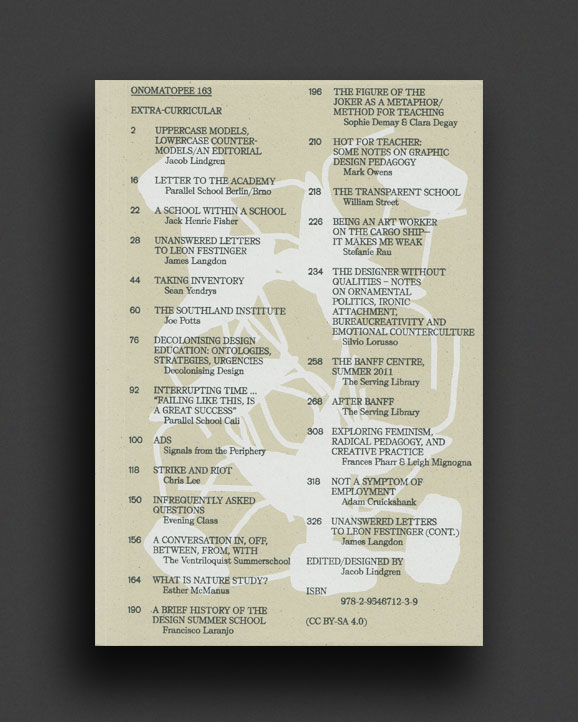
Extra-curricular is a reader of texts on and around the topic of self-organised learning, curriculum, experiments, and alternatives in graphic design education. Occurring both within and separate from existing institutions, these other forms of learning and organisation question how such learning takes place, for whom, and the ideologies inherent in existing models, among many other things. An (admittedly) incomplete inventory inspired by the widespread activity and educational turn (or shift) in the field, this book aims to serve as a point of departure for further discussion and experimentation.
With contributions from: Adam Cruickshank, Chris Lee, Decolonising Design, Diego Bustamante, Katharina Hetzeneder, & Ariadna Serrahima, Elisabeth Klement & Laura Pappa, Esther McManus, Evening Class, Francisco Laranjo, Jack Henrie Fisher, James Langdon, Joe Potts, Kristina Ketola Bore & João Doria, Leigh Mignogna & Frances Pharr, Mark Owens, Robert Preusse, Till Wittwer, & Stefanie Rau, Sean Yendrys, Silvio Lorusso, Sopie Demay & Clara Degay, Stuart Bertolotti-Bailey and David Reinfurt, and Will Street.
2015, English / German / Dutch
Softcover, 560 pages, 25cm x 25cm
Published by
Walther König / Köln
$85.00 - Out of stock
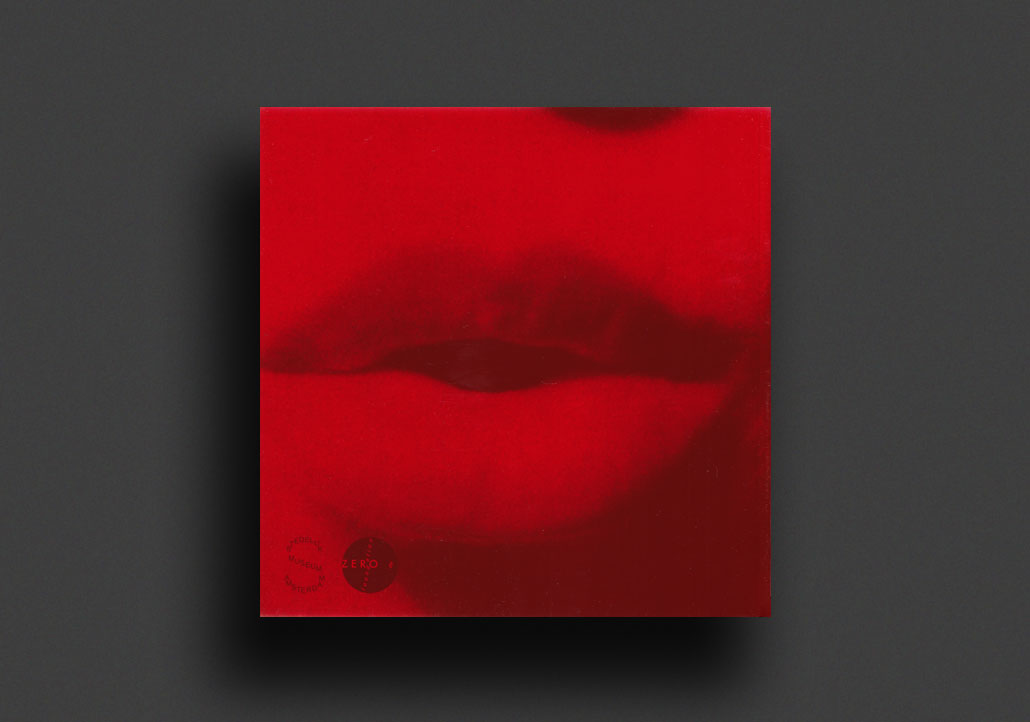
Fire, light, movement, space, demonstrations, and performances: this major publication forms a historic survey of the innovative, international avant-garde artists’ group, ZERO.
In 1957, Heinz Mack and Otto Piene devised the name ZERO for a new art movement and magazine. The brevity of the term ZERO and the fact that it retained its meaning in many languages helped the group to become an international “brand” in the ‘60s. After the Second World War and the grim years of post-war reconstruction, the term ZERO marked the coming of a new, optimistic, experimental, and pioneering kind of art. Piene described it as “a zone of silence and of pure possibilities for a new beginning.” While the ZERO movement was under formation, Dutch artists Armando, Jan Henderikse, Henk Peeters, Jan Schoonhoven, and herman de vries established the Nul group in the Netherlands. Like-minded artists in France, Italy, and Belgium – such as Jean Tinguely, Yves Klein, Daniel Spoerri, Jesús Rafael Soto, Lucio Fontana, Pierre Manzoni, Dadamaino, and Christian Megert – were also formulating similar artistic strategies - many affiliated with other movements such as Nouveau réalisme, Arte Povera, Minimalism, Op Art, Land Art and Kinetic art. They joined up with the trio of artists from Dusseldorf: Mack, Piene, and Günther Uecker. Together, the artists began to organize exhibitions in galleries, museums, and in their own studios. They also co-created artworks, experimenting with the most innovative materials and media, as well as gave performances and happenings, produced multiples, and published magazines and other publications. In 1962, the Stedelijk Museum staged the first museum presentation of ZERO. A few years later, a more comprehensive survey, Nul 1965, followed, a presentation widely considered as one of the movement’s highlights. Precisely fifty years later, in 2015, the Stedelijk presented an historical survey that sheds light on how the network’s artists redefined the meaning and form of art forever.
This extensive, deeply researched and richly illustrated (over 900 plates) publication, edited by curator Margriet Schavemaker, and Dirk Poerschmann, academic staff member of the ZERO Foundation, includes essays by Antoon Melissen, Johan Pas, Francesca Pola & Thekla Zell, and the transcript of a conversation between Mattijs Visser and Daniel Birnbaum. Organized by the ZERO foundation and including some 200 objects, ZERO is one of the most comprehensive resources available on this self-consciously avant-gardist international movement.
Includes the work of Arman, Armando, Bernard Aubertin, Pol Bury, Enrico Castellani, Gianni Colombo, Dadamaino, Lucio Fontana, Hermann Goepfert, Gerhard von Graevenitz, Gotthard Graubner, Hans Haacke, Jan Henderikse, Paul van Hoeydock, Oskar Holweck, Yves Klein, Yayoi Kusama, Walter Leblanc, Adolf Luther, Heinz Mack, Piero Manzoni, Almir Mavignier, Christian Megert, François Morellet, Saboro Murakami, Henk Peeters, Otto Piene, Uli Pohl, George Rickey, Dieter Roth, Hans Salentin, Jan Schoonhoven, Jesús Raphael Soto, Daniel Spoerri, Jean Tinguely, Gunther Uecker, Jef Verheyen, Nanda Vigo, herman de vries.
1988, English / Dutch
Softcover (w. dust jacket), 112 pages,
1st Edition, Out of print title / used / average
Published by
Stedelijk Museum / Amsterdam
Whitechapel / London
$40.00 - Out of stock
Scarce Lucio Fontana catalogue published on the occasion of the major 1988 exhibition at Amsterdam's Stedelijk Museum and London's Whitechapel.
Heavily illustrated throughout with over 200 pictures, this book surveys the work of Italian artist Lucio Fontana across canvas, ceramic, drawing, and relief, including his famous Concetto Spaziale works. Includes essays, biography, and much more.
Lucio Fontana (19 February 1899 – 7 September 1968) was an Italian painter, sculptor and theorist of Argentine birth. He is mostly known as the founder of Spatialism. He was also affiliated with the ZERO movement.
Text in English and Dutch.
First edition, ex-libris copy with loan card and associated markings to title page and endpapers. General library wear, with some internal markings.
1991, English
Softcover, 242 pages, 22.5 x 27.5 cm
1st Edition, Out of print title / used / very good
Published by
Arnoldo Mondadori Arte / Milan
Musee D'Art Moderne De La Ville De Paris / Paris
$200.00 - Out of stock
Large comprehensive English-language catalogue that was published in the occasion of a major 1991 retrospective survey of the late, hugely influencial, Italian Conceptual artist Piero Manzoni held at the Musee D'Art Moderne De La Ville De Paris, curated by the Italian art critic, author and curator Germano Celant.
This rare monographic volume spans 242 pages profusely illustrated in colour and black and white images of Manzoni's painting, releifs, sculpture and editioned works, performances, printed ephemera, and more, as well as additional texts by Germano Celant, Jean Pierre Criqui, Jens Hendrik Sandberg, Francisco Calvo Seraller, Nancy Spector, and Suzanne Page. Also includes an exhibition checklist, chronology, bibliography and exhibition history, with all texts in English.
Piero Manzoni (July 13, 1933 – February 6, 1963) was an Italian artist best known for his ironic approach to avant-garde art. Often compared to the work of Yves Klein, his own work anticipated, and directly influenced, the work of a generation of younger Italian artists brought together by the critic Germano Celant in the first Arte Povera exhibition held in Genoa, 1967. Manzoni is most famous for a series of artworks that call into question the nature of the art object, directly prefiguring Conceptual Art. His work eschews normal artist's materials, instead using everything from rabbit fur to human excrement in order to "tap mythological sources and to realize authentic and universal values". His work is widely seen as a critique of the mass production and consumerism that was changing Italian society (the Italian economic miracle) after World War II. Italian artists such as Manzoni had to negotiate the new economic and material order of post-war Europe through inventive artistic practices which crossed geographic, artistic, and cultural borders.
A fine example of this very scarce book on the great Piero Manzoni.
1969, English / German / French
Hardcover (cloth-bound w. dust jacket), 160 pages, 22 x 28.5 cm
1st Edition, Out of print title / used / fine
Published by
Studio Vista / London
$90.00 - Out of stock
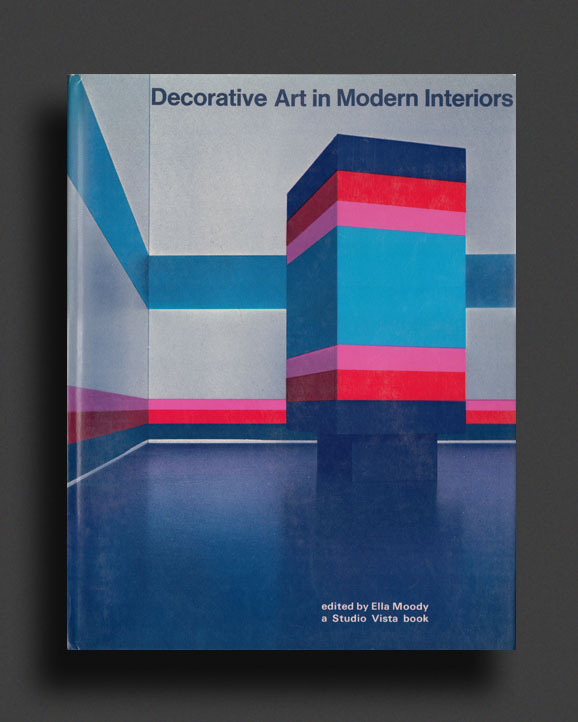
1968/69 edition of Decorative Art and Modern Interiors, one of the finest book series from Studio Vista (UK), with Ettore Sottsass cover.
Each handsomely designed volume showcases a selection of the finest examples of new architecture, interior design, environmental design, textiles, furniture and product design, including profiles on highlighted architectural projects that are documented through beautiful colour and b&w photography, descriptive texts, and axonometric, plan and section drawings, plus "Trends in Furnishings and in the Decorative Arts", which gives fine examples of new design in furniture, lighting, ceramics, glassware, silverware, textiles, etc.
This 1968/69 includes work by architects, designers, manufacturers : Verner Panton, Gae Aulenti, Robin Day, Ettore Sottsass, Hans J. Wegner, Tage Poulsen, Anna-Maria Osipow, Pravoslav Rada, Enzo Mari, Afra and Tobia Scarpa, Eero Aarnio, Maija Isola, Marco Zanuso, Pierre Paulin, Oiva Toikka, Poltronova, Dieter Rams, Arflex, Kartell, Eva Englund, Alexander Girard, Herman Miller, Claudio Salocchi, Richard Neutra, Vladimir Kagan, Henning Koppel, Heinrich Löffelhardt, Tapio Wirkkala, Timo Sarpaneva, Bruno Mathsson, Angelo Mangiarotti, Nanny Still, Danese, Sergio Asti, Carlo Bartoli, Cini Boeri, Bengt Edenfalk, Tsutomu Imazaki, Svend Siune, Karl Gustav Hansen, Inger Persson, Georg Jensen, Marimekko, Uno and Östen Kristiansson, Kaija Aarikka, Vera Isler-Leiner, Jacques Guillon, Horst Bruning, Yusuke Aida, Ico & Luisa Parisi, Ian Sprague, Mark Hampton, Esko Pajamies, Takeshi Hirobe, Don Gazzard, Peter Karpf, Vitsœ, and so many more, plus an introduction by editor Ella Moody. Translated from English to additional German and French.
An invaluable series of books on architecture, interior and product design from the 1960s-1980s.
Fine copy throughout. Well-preserved dust jacket under plastic wrap.
2018, English
Hardcover, 260 pages, 30.5 x 21.2 cm
Published by
Spector Books / Leipzig
$85.00 - Out of stock
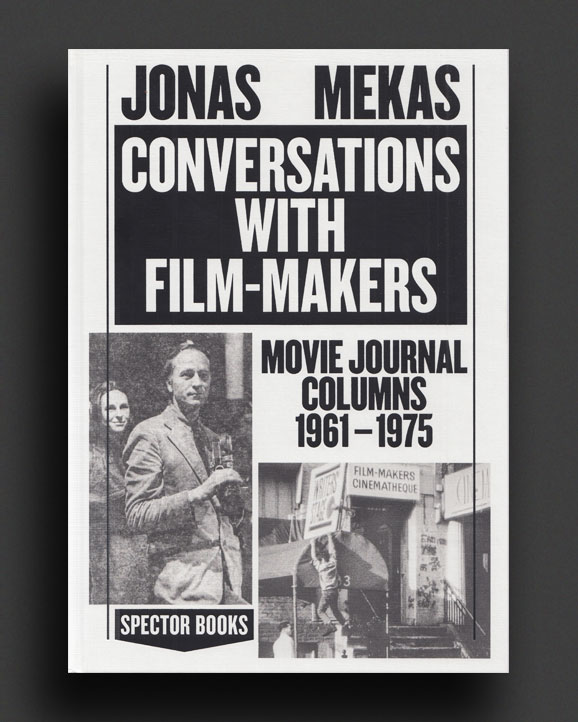
Lithuanian-born Jonas Mekas migrated to Brooklyn via Germany in 1949 and began shooting his first films there. Mekas developed a form of film diary in which he recorded his daily observations. He became the barometer of the New York art scene and a pioneer of American avant-garde cinema. Every week, from 1958 until 1977, he published his “Movie Journal” column in the Village Voice, conducting numerous interviews with filmmakers from all over the world. Conversations is the first time that these interviews with his filmmaker friends and associates have been put together in a book. Mekas recorded the conversations with his camera. From the films he shot with his interlocutors, Mekas selected one photo or still to introduce each interview. The collection of texts is supplemented by letters and extracts from related scenarios/scripts and rounded out with an index of the people involved.
Features conversations with Storm de Hirsch and Louis Brigante, Andy Warhol, Nico Papatakis, Albert and David Maysles, Peter Kubelka, Agnes Varda, Harry Smith, John Cassavetes, Stan Brakhage, Kenneth Anger, and many more.
1982, English
Softcover, 112 pages, 28 x 26 cm
1st Edition, Out of print title / used / very good
Published by
MoMA / New York
Pantheon / New York
$60.00 $25.00 - Out of stock
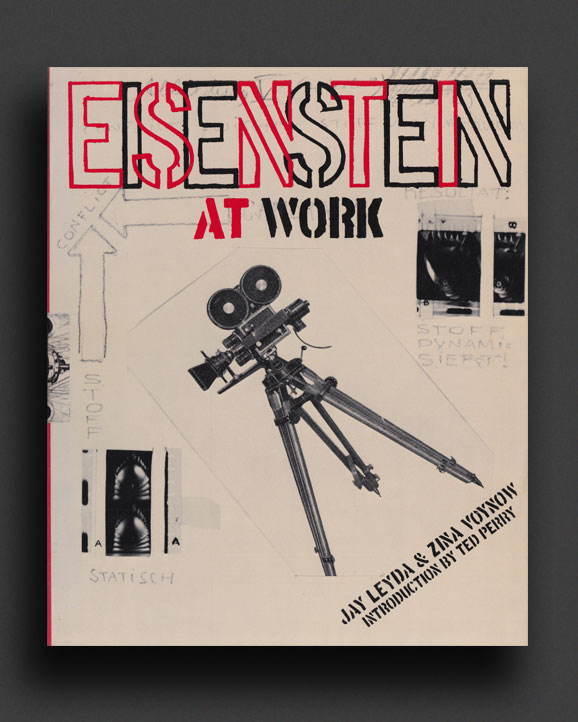
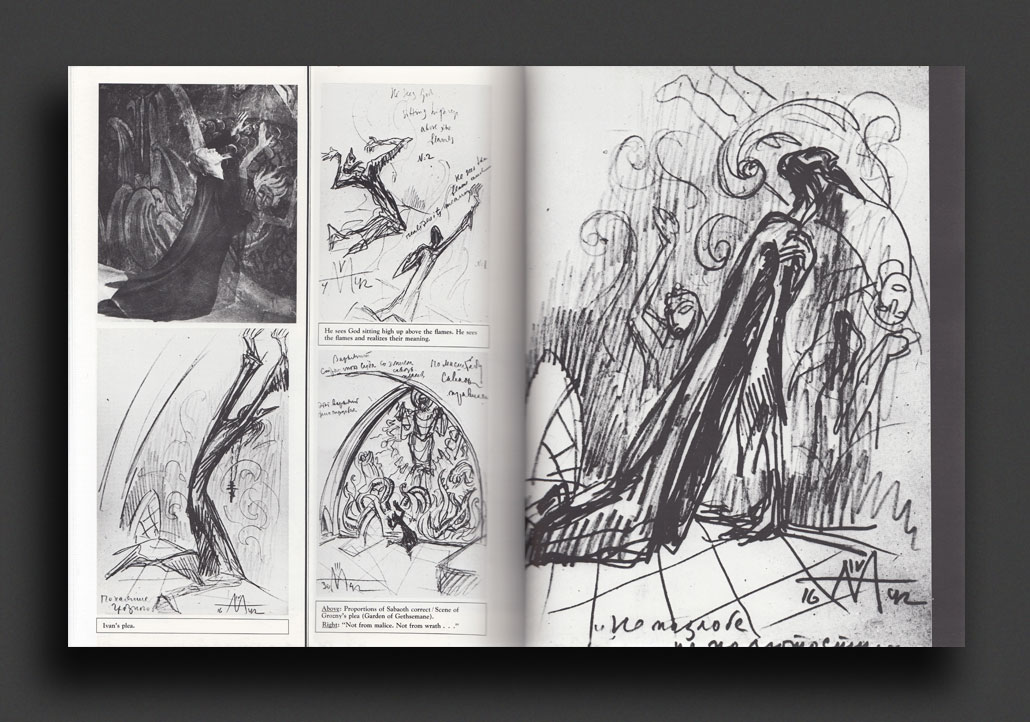
First 1982 edition of this unique collection of Eisenstein's own sketches, notes and letters, together with photographs and eye-witness accounts comprising an intimate record spanning his entire oeuvre, capturing of the day-to-day genesis of each project of Sergei Eisenstein, the most influential film-maker of the 20th century.
Sergei Mikhailovich Eisenstein (1898 – 1948) was a Soviet film director and film theorist, a pioneer in the theory and practice of montage. He is noted in particular for his silent films Strike (1925), Battleship Potemkin (1925) and October (1928), as well as the historical epics Alexander Nevsky (1938) and Ivan the Terrible (1944, 1958).
Very Good-Fine copy of the first 1982 edition.
2015, English
Softcover, 208 pages, 17 x 24 cm
Published by
Occasional Papers / London
$50.00 - Out of stock
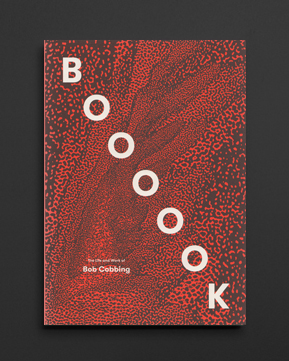
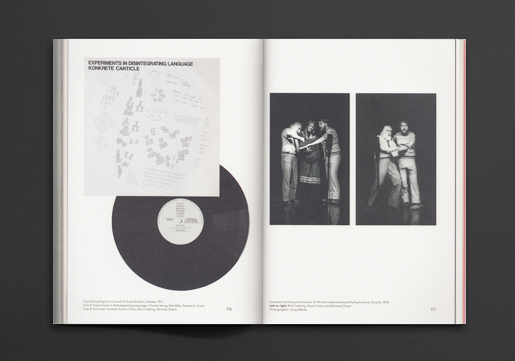
This is the first comprehensive overview of the life and work of the pioneering British concrete and sound poet Bob Cobbing (1920-2002). 'Boooook' addresses all aspects of Cobbing's career, with essays detailing his key roles in Better Books, London Film-makers' Co-op and the abAna trio, as well as his involvement in the Destruction in Art Symposium, Fylkingen and Writers Forum. Edited by William Cobbing and Rosie Cooper – and illustrated with reproductions of artworks, documents, posters, poems and film stills from the Bob Cobbing family collection – Boooook features contributions by Adrian Clarke, Arnaud Desjardin, Sanne Krogh Groth, Will Holder, Gustav Metzger, Andrew Wilson, and others.
2013, English
Softcover, 272 pages, 11.5 x 18.5 cm
Published by
Archive Books / Berlin
$35.00 - Out of stock
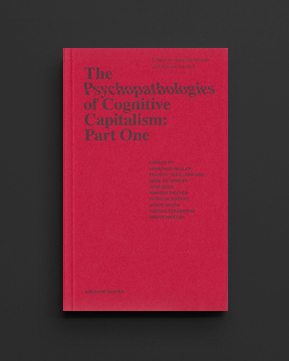
Published on the occasion of Part Two at ICI Berlin, The Psychopathologies of Cognitive Capitalism: Part One collects the papers that were presented during the first part of the conference in Los Angeles in November 2012. This volume is the first of a series of books that attempts to broaden the definition of cognitive capitalism in terms of the scope of its material relations especially as it relates to the conditions of mind and brain in our new world of advanced telecommunication, data mining and social relations. It is our hope to first improve awareness of its most repressive characteristics and secondly to produce an arsenal of discursive practices with which to combat it.
About the series
A series that attempts to broaden the definition of cognitive capitalism in terms of the scope of its material relations especially as it relates to the conditions of mind and brain in our new world of advanced telecommunication, data mining and social relations. It is our hope to first improve awareness of its most repressive characteristics and secondly to produce an arsenal of discursive practices with which to combat it. Published in connection with the cycle of conferences “The Psychopathologies of Cognitive Capitalism”.
Edited by Arne De Boever and Warren Neidich
Texts by Jonathan Beller, Franco “Bifo” Berardi, Arne de Boever, Jodi Dean, Warren Neidich, Patricia Pisters, Jason Smith, Tiziana Terranova, Bruce Wexler
2013, English
Softcover, 376 pages, 11.5 x 18.5 cm
Published by
Archive Books / Berlin
$35.00 - Out of stock
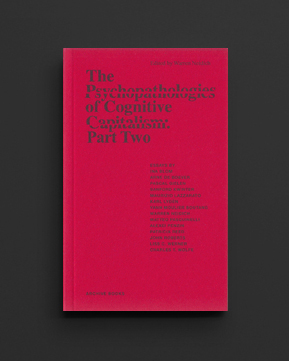
The Psychopathologies of Cognitive Capitalism: Part Two is the second volume in a series which maps out the complex terrain of cognitive capitalism as an ontogeny in which its earlier phase has transitioned into a later phase that we are now beginning to experience. This volume collects together papers from a conference of the same name held at the Institute of Cultural Inquiry, Berlin, in the spring of 2013. The first part of the book delineates the recent emergence of characteristic psychopathologies of cognitive capitalism, which have resulted from the unique concatenation of social-political-psychological-economic relations that have produced distinct stresses and forms of derangement upon the factory of the brain. This leads to the second stream, referred to as “the cognitive turn”in cognitive capitalism. For example, as a result of the necessity for an efficient brain-mind to labor in the advanced and constantly accelerating conditions of the knowledge economy highly sophisticated and nuanced forms of attention have become compulsory well beyond what was considered essential in the older regimes of the modern. As such new dispositifs of normalization and governmentalization have arisen to, on the one hand, diffuse the attention necessary for multi-tasking, and on the other, to enhance the production of a hyper-attention. It is upon these and other similar conditions that this book concentrates. It calls for the identification of the causative factors of these psychopathologies as well as attempting to invent the counter conditions with which to thwart their emergence.
About the series
A series that attempts to broaden the definition of cognitive capitalism in terms of the scope of its material relations especially as it relates to the conditions of mind and brain in our new world of advanced telecommunication, data mining and social relations. It is our hope to first improve awareness of its most repressive characteristics and secondly to produce an arsenal of discursive practices with which to combat it. Published in connection with the cycle of conferences “The Psychopathologies of Cognitive Capitalism”.
Edited by Warren Neidich
Texts by Ina Blom, Arne De Boever, Pascal Gielen, Sanford Kwinter, Maurizio Lazzarato, Karl Lydén, Yann Moulier Boutang, Warren Neidich, Matteo Pasquinelli, Alexei Penzin, Patricia Reed, John Roberts, Liss C. Werner, Charles T. Wolfe
2017, English
Softcover, 512 pages, 11.5 x 18.5 cm
Published by
Archive Books / Berlin
$46.00 $20.00 - Out of stock
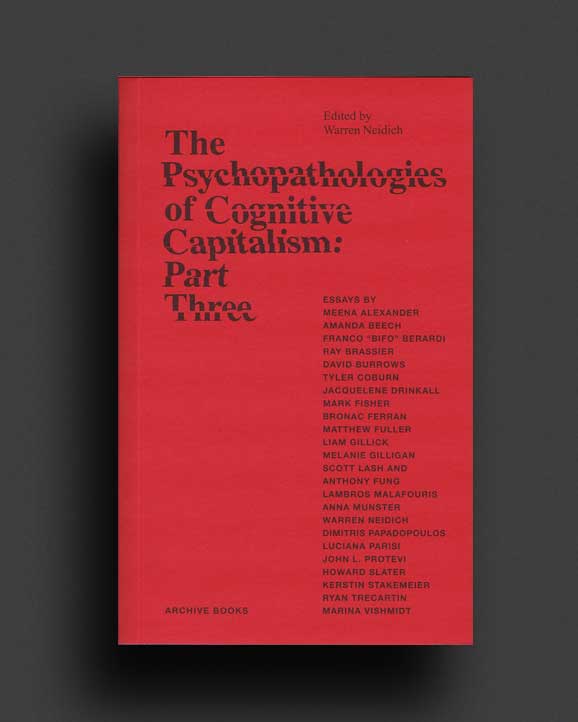
Contributions by Meena Alexander, Amanda Beech, Franco “Bifo” Berardi, Ray Brassier, David Burrows, Tyler Coburn, Jacquelene Drinkall, Mark Fisher, Bronac Ferran, Matthew Fuller, Liam Gillick, Melanie Gilligan, Scott Lash and Anthony Fung, Lambros Malafouris, Anna Munster, Warren Neidich, Dimitris Papadopoulos, Luciana Parisi, John L. Protevi, Howard Slater, Kerstin Stakemeier, Ryan Trecartin, Marina Vishmidt.
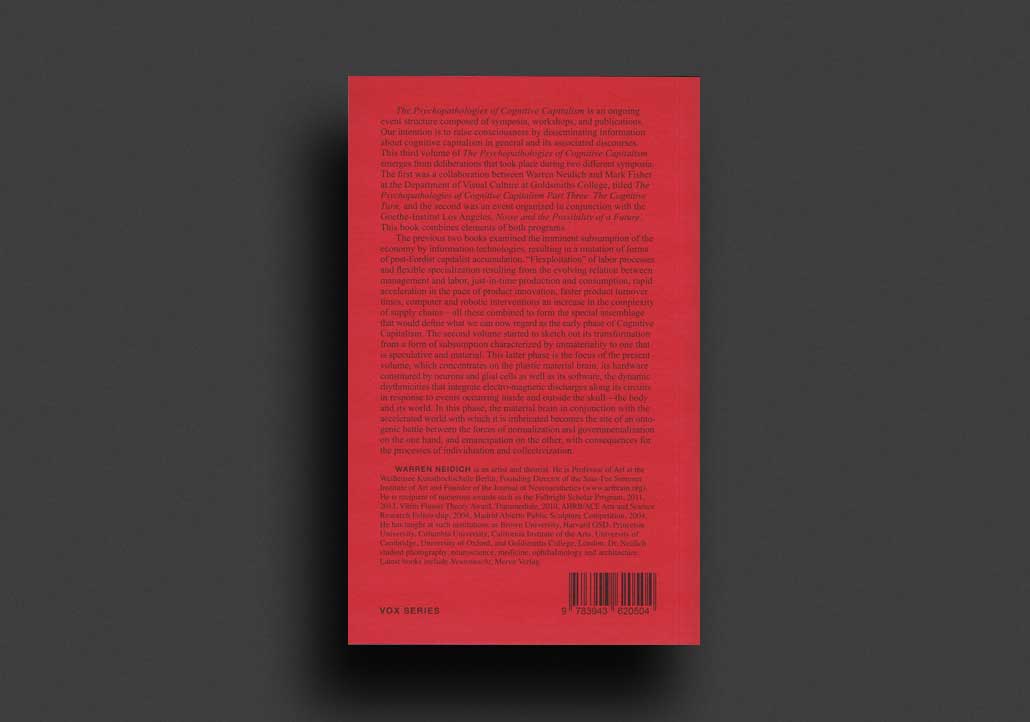
The Psychopathologies of Cognitive Capitalism is an ongoing event structure composed of symposia, workshops, and publications. Our intention is to raise consciousness by disseminating information about cognitive capitalism in general and its associated discourses.
This third volume of The Psychopathologies of Cognitive Capitalism emerges from deliberations that took place during two different symposia. The first was a collaboration between Warren Neidich and Mark Fisher at the Department of Visual Culture at Goldsmiths College, titled The Psychopathologies of Cognitive Capitalism Part Three: The Cognitive Turn, and the second was an event organized in conjunction with the Goethe-Institut Los Angeles, Noise and the Possibility of a Future. This book combines elements of both programs.
The previous two books examined the imminent subsumption of the economy by information technologies, resulting in a mutation of forms of post-Fordist capitalist accumulation. “Flexploitation” of labor processes and flexible specialization resulting from the evolving relation between management and labor, just-in-time production and consumption, rapid acceleration in the pace of product innovation, faster product turnover times, computer and robotic interventions an increase in the complexity of supply chains – all these combined to form the special assemblage that would define what we can now regard as the early phase of Cognitive Capitalism. The second volume started to sketch out its transformation from a form of subsumption characterized by immateriality to one that is speculative and material. This latter phase is the focus of the present volume, which concentrates on the plastic material brain, its hardware constituted by neurons and glial cells as well as its software, the dynamic rhythmicities that integrate electro-magnetic discharges along its circuits in response to events occurring inside and outside the skull – the body and its world. In this phase, the material brain in conjunction with the accelerated world with which it is imbricated becomes the site of an ontogenic battle between the forces of normalization and governmentalization on the one hand, and emancipation on the other, with consequences for the processes of individuation and collectivization.
Edited by Warren Neidich
Design by Archive Appendix
1979, English
Hardcover (w. dust jacket), 188 pages, 28 x 22 cm
1st Edition, Out of print title / used / good
Published by
St. Martin's Press / New York
$180.00 - Out of stock
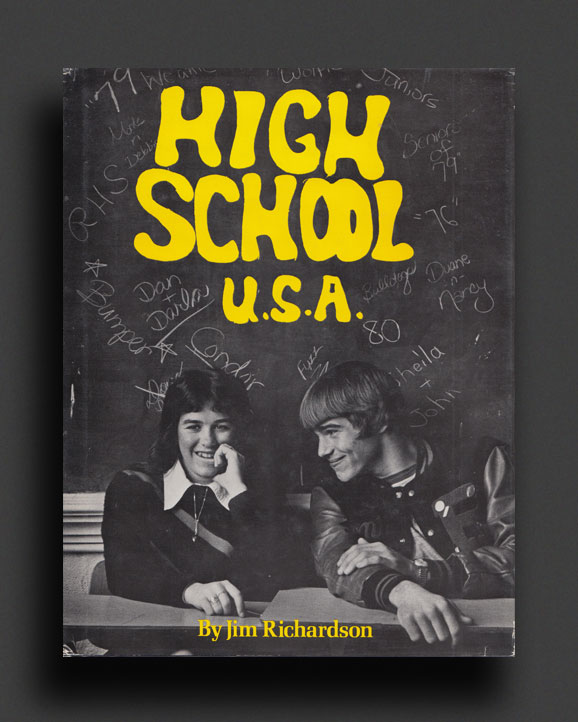
Incredibly rare hardcover edition of the first (only) printing of cult photobook "High School U.S.A.", Jim Richardson's intimate 1979 portrait of American adolescence at Rossville High in Rossville, Kansas.
For three years in the late 1970's, Richardson photographed and documented the life of these high school teenagers, coming back every year to vicariously live through all of the life-altering events that high school presents to these young adults. Richardson's photographs of students, teachers, and coaches at Rossville High School in Rossville, Kansas, combined with the students' own words, capture the high school experience from football season to graduation and through identity struggles and romantic involvements that files perfectly alongside Joseph Szabo's great "Almost Grown".
Very Good copy with Very Good dust jacket. Light edge/corner wear, now protected under plastic wrap.
2013, English
Hardback, 256 pages, 29 x 25.5cm
1st Edition, Out of print title / as new
Published by
Hardie Grant Books
State Library of Victoria / Melbourne
$60.00 - Out of stock
Now out of print, Decade 1970-1980 highlights Ellis as one of Australia’s most important chroniclers of 1970s Australia. The photographs, predominantly black and white, are drawn from a core selection originally made by Rennie, from his own unpublished book, and supplemented by other significant and iconic images from the Rennie Ellis Photographic Archive and the State Library of Victoria’s collection. Many of the photographs are accompanied by extended captions written by Rennie Ellis and are published for the first time!
A social documenter and flâneur, Ellis used his camera as a passport to navigate new experiences, resulting in a culturally important and vast body of work. Decade explores the cultures and sub-cultures of the seventies: the political upheavals, alternative lifestyles and counter culture, the women’s movement, gay liberation, the new religions and cults, pop festivals, the Vietnam and other protests, massage parlours, the disco scene, the blossoming of Australia’s film industry, the new sexual freedom, Aboriginal rights, street festivals, the new theatre, fashion, drugs and the emergence of a decadent and hedonistic society that would later characterise the Eighties.
Edited by multi-award winning photographer, Stephen Dupont, with essays by Manuela Furci, Director of the Rennie Ellis Photographic Archive, Paul Cox, Film maker and Photographer and Susan Van Wyk, Senior Curator of Photography at the National Gallery of Victoria.
No other photographer has documented Australian society in such depth and with such insight into the human condition as Rennie Ellis. Active from the 1970s until his death in 2003, Rennie Ellis' non-judgmental approach was his 'access-to-all-areas' pass. Ellis used his camera as a key to open the doors to the social arenas of the rich and famous and to enter the underbelly of the nightclubs, bearing witness to the indulgences and excesses. In today's post-Henson era, these captured moments offer an intimate access to an Australia tantalisingly, but sadly, now almost out of reach.
As new copy.
2014, English
Hardcover, 252 pages, 29 x 25.5cm
1st Edition, Out of print title / as new
Published by
Hardie Grant Books
State Library of Victoria / Melbourne
State Library of Victoria
$60.00 - Out of stock
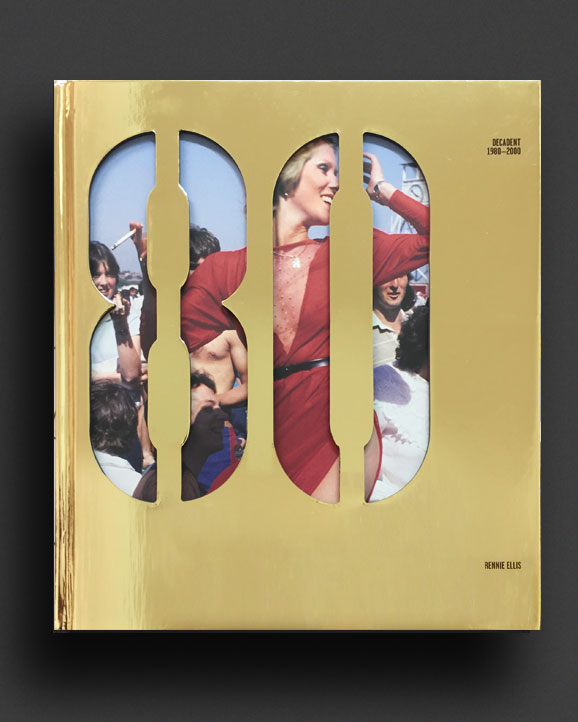
With an introduction by photographer and Rennie contemporary William Yang and an essay by photographer and art critic Robert McFarlane, Decadent highlights Ellis as one of Australia's most important chroniclers of the 1980s. A beautiful limited edition hard cover lavishly illustrated with near 150 photographs, both colour and black and white, that are drawn from the Rennie Ellis Photographic Archive and the State Library of Victoria Rennie Ellis collection. Decadent explores the rise of the hedonism that we now associate with the 1980s. Ellis' boundary-pushing, racy and sometimes voyeuristic works capture a society that seems to be revelling in its abandonment of the politically charged 1970s documented in Decade.
No other photographer has documented Australian society in such depth and with such insight into the human condition as Rennie Ellis. Active from the 1970s until his death in 2003, Rennie Ellis' non-judgmental approach was his 'access-to-all-areas' pass. Ellis used his camera as a key to open the doors to the social arenas of the rich and famous and to enter the underbelly of the nightclubs, bearing witness to the indulgences and excesses. In today's post-Henson era, these captured moments offer an intimate access to an Australia tantalisingly, but sadly, now almost out of reach.
As new copy.
1976, German
Softcover, 120 pages, 29.5 x 21 cm
Out of print title / used / very good
Published by
Verlag Dieter Fricke / Frankfurt
$55.00 - Out of stock
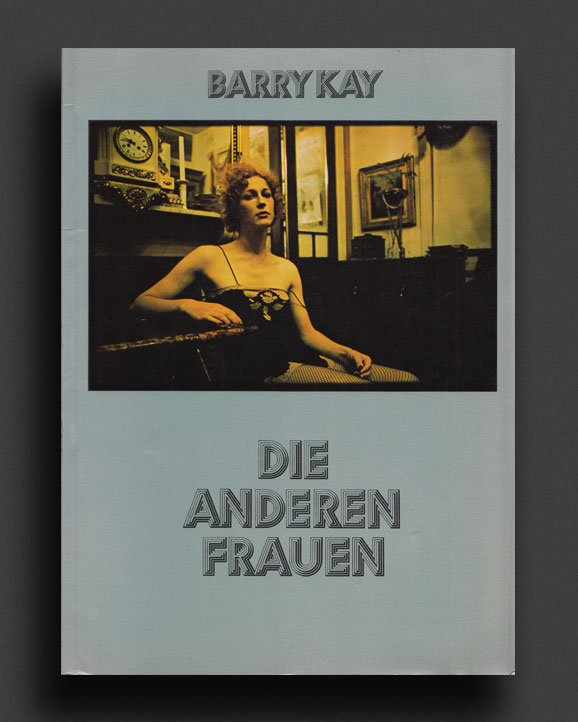
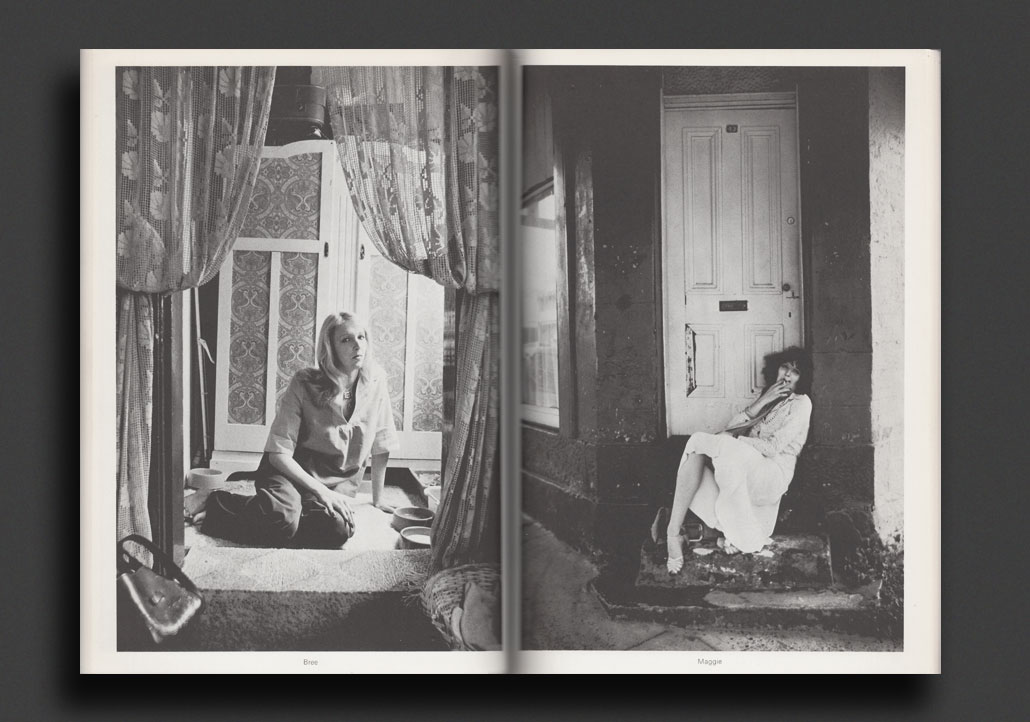
Barry Kay's wonderful "Die Anderen Frauen" (The Other Women) photo book from 1976. Intimate black and white documentary portrait collection of Australian transgender women in Sydney (and Melbourne) in the mid 1970's. Melbourne-born Barry Kay (1932-1985), was a highly acclaimed stage and costume designer of international renown, who later in his career also made a name for himself as a distinguished photographer.
From the cover : "In this book Barry Kay documents Australian transvestism, female impersonation and Sydney's unique transsexual community. His photographs were made during visits to Australia in 1974 and 1975"
Very Good copy. German edition, published by Verlag Dieter Fricke, Frankfurt.
2018, English / Polish
Softcover, 240 pages, 24.1 x 33 cm
Published by
Mousse / Milan
$55.00 $25.00 - Out of stock
Texts by Jakub Bąk, Martha Kirszenbaum, and Chris Sharp
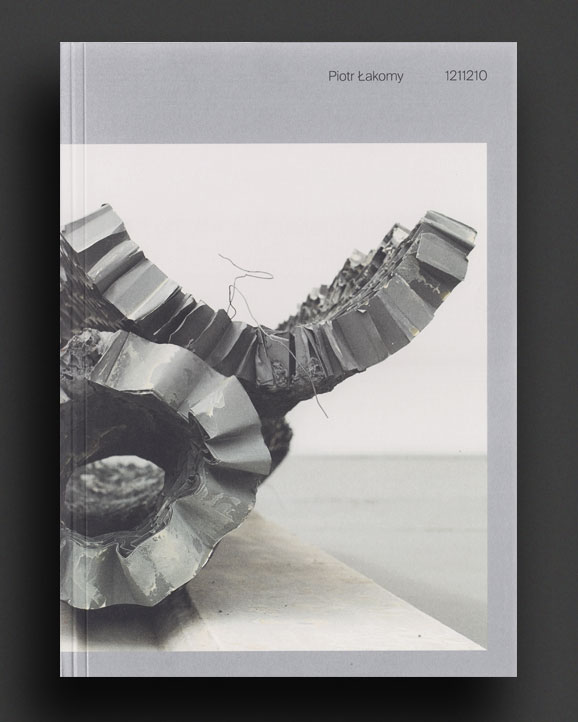
“Piotr Łakomy’s works enable the viewer, first of all a body wandering within the exhibition space, to measure its own physicality to the artwork. The reflective fabric or aluminum sheets he uses provoke, in fact, a sudden intimacy that springs from our relationship to the installation and feels appeasing and threatening at the same time. We recognize ourselves in this format; it inevitably attracts us, yet it frightens us just like our own shadow caught in the night.”––Martha Kirszenbaum
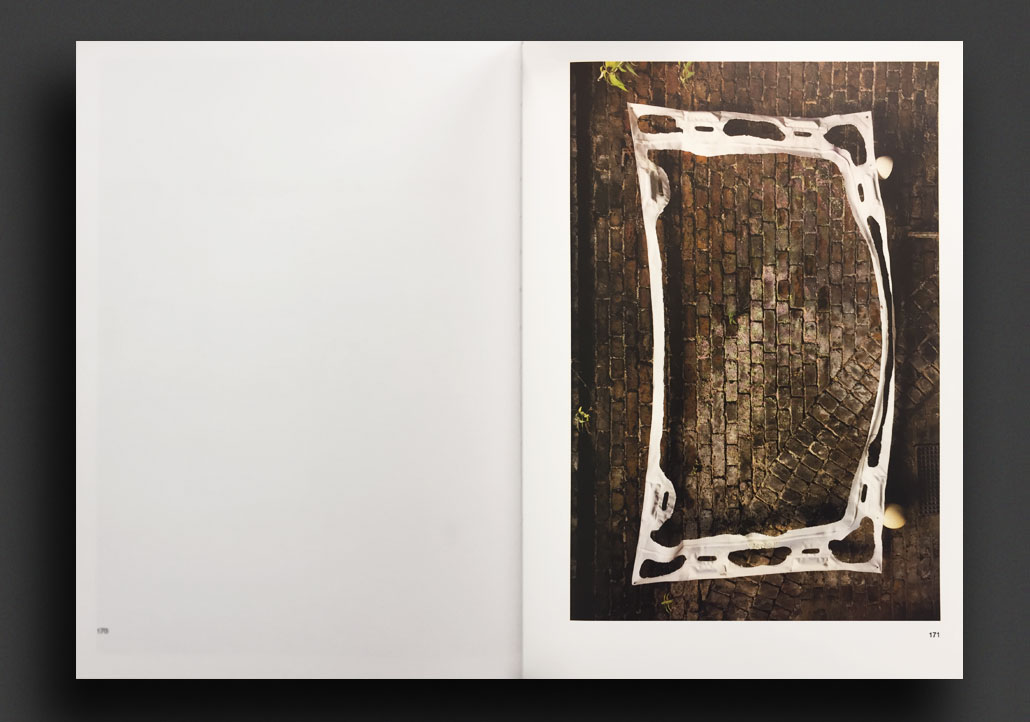
1211210 is the first publication devoted entirely to Piotr Łakomy’s oeuvre. In collaboration with the graphic designer Krzysztof Pyda, the artist has created a kind of a self-portrait book, the central part of which is reproductions of his works from 2012–2017, arranged according to a rigid rule. The photographs are reproduced on two scales—general views on a scale of 1:10, and details of works at 1:1. By that means, the essential aspect of Łakomy’s sculptural work—the relation of body size to the size of the object—has found its equivalent in the form of this printed album. This publication is produced and co-published by Griffin Art Space, Warsaw.
2018, English
Softcover, 80 pages, 21 x 15 cm
Edition of 150,
Published by
Ruin Press / Sydney
$15.00 - Out of stock
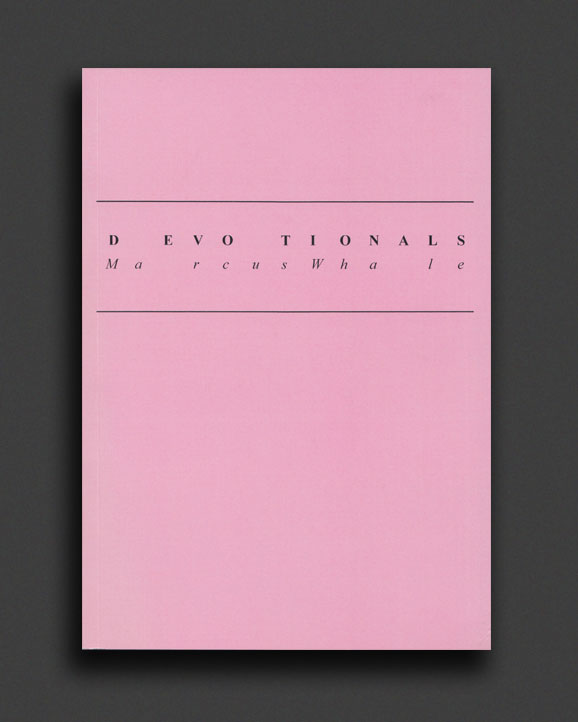
2nd edition re-print of Marcus Whale's book Devotionals, with an introductory essay by Jonno Revanche.
With thematic forbears in Genet, Cooper and Wojnarowicz, Devotionals looks at multiple forms of desire through both subjective and objective lenses. Lines are crossed, or unseen - and utterances, instant messages, and human senses interact to procure a new experience. Devotionals is all at once subversive, sexy, beautiful and strange.
Read it on your pillow, with the lights down low.
Marcus Whale is a musician, writer and artist living in Sydney. This is his first collection of poetry.
2018, English / German
Softcover, 502 pages, 29.6 x 22.2 cm
Published by
Koenig Books / London
$75.00 - Out of stock
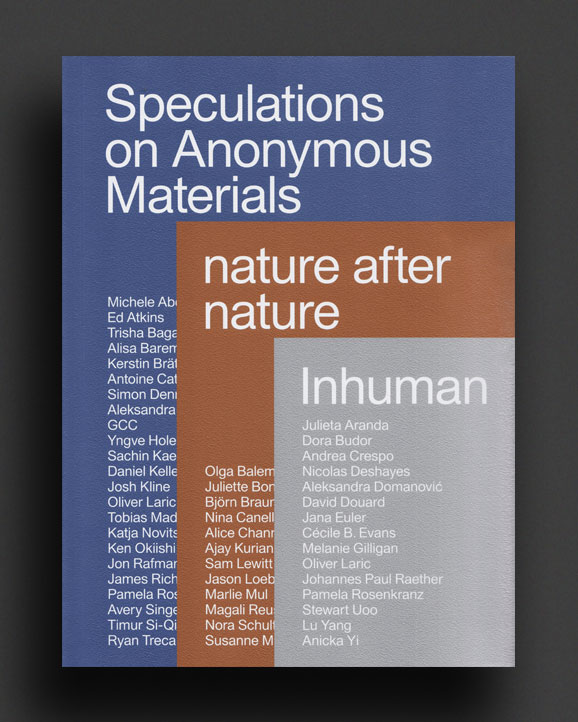
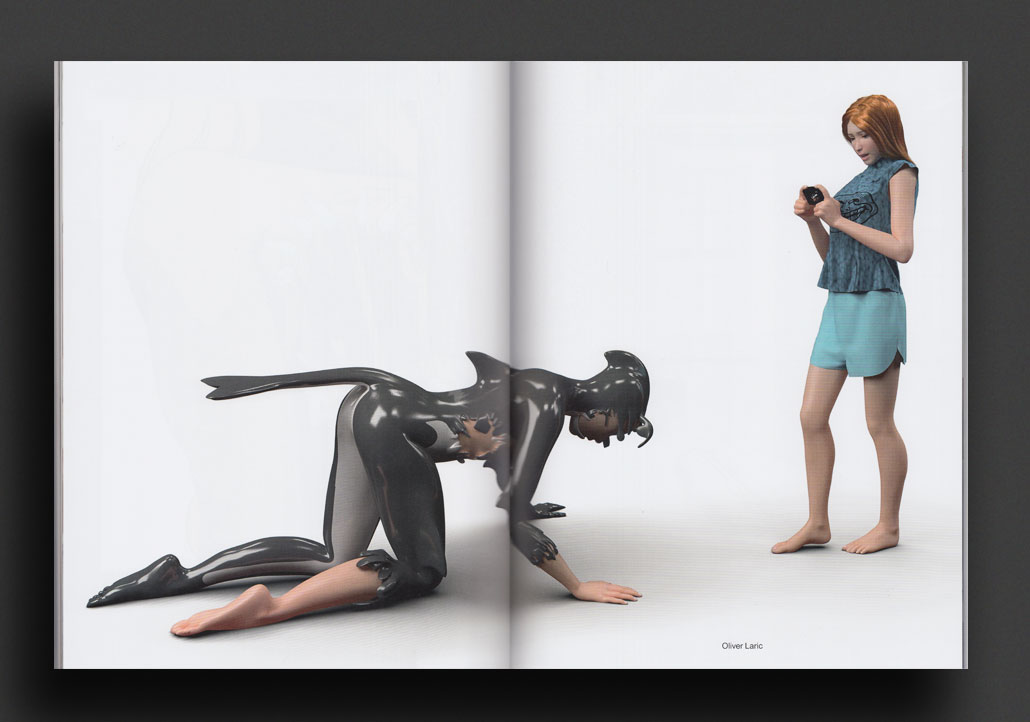
Speculations on Anonymous Materials for the first time worldwide brings together approaches in international art that reinterpret the anonymous materials created by rapid and incisive technological change.
Art’s brief is no longer to generate unique, original images, but to seek reflection in a desubjectivized approach to the existing stocks of objects, images and spaces nature after nature presents artistic works using materials that surround us and constitute nature.
Differentiations between synthetic and organic, manmade and natural are rejected. The exhibition demonstrates a nature after nature that, in its complex, global transformations, can only be grasped in fragments.
A nature that disassociates itself from an idealized and ideologized term and must be considered anew. Inhuman offers visions of the human being as a socially trained yet resistant body, transcending biologically or socially determined gender classifications, as a digitally immortal entity, or as a constantly evolving self. They visualize the constructs that define what is human and shift existing perspectives on them.
Published retrospectively after the exhibition, Speculations on Anonymous Material at Fridericianum, Kassel, 29 September 2013 – 26 January 2014.
English and German text.
Artists:
Michele Abeles, Ed Atkins, Alisa Baremboym, Juliette Bonneviot, Björn Braun, Dora Budor, Nina Canell, Alice Channer, Simon Denny, Nicolas Deshayes, Aleksandra Domanović, David Douard, Kerstin Brätsch & Debo Eilers, Jana Euler, Cécile B Evans, GCC, Melanie Gilligan, Sachin Kaeley, Josh Kline, Oliver Laric, Sam Lewitt, Jason Loebs, Tobias Madison, Marlie Mul, Katja Novitskova, Ken Okiishi, Johannes Paul Raether, Jon Rafman, Magali Reus, Pamela Rosenkranz, Nora Schultz, Timur Si-Qin, Avery Singer, Trisha Baga, & Jessie Stead Ryan Trecartin Anicka Yi
Authors:
Stacy Alaimo, Kirsty Bell, Franco “Bifo” Berardi, Antoine Catala, Andrew Durbin, Yuk Hui, David Joselit, Josh Kline, Jean-François Lyotard, Flora Lysen, Tobias Madison, Katja Novitskova, Jussi Parikka, Susanne Pfeffer, Gregor Quack, Pamela Rosenkranz, Susanne M. Winterling
2018, English / German
Softcover, 240 pages, 23 x 16.5 cm
Published by
Texte Zur Kunst / Berlin
$32.00 - Out of stock
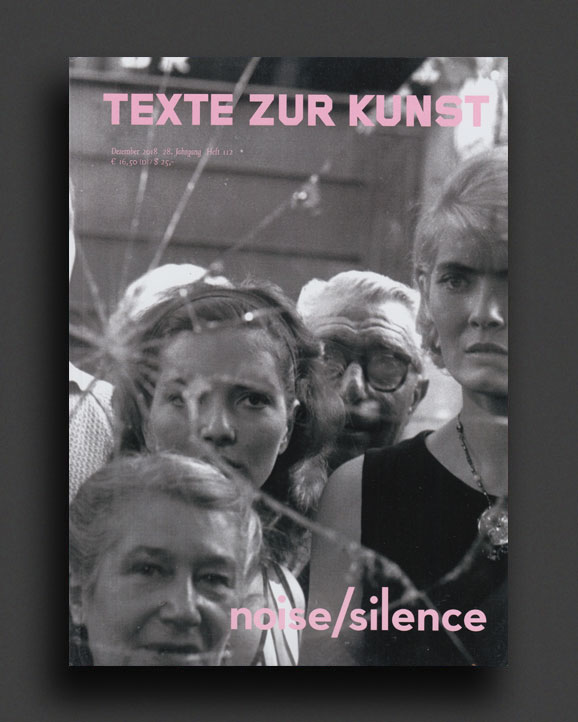
Issue # 112 of Texte zur Kunst, “Noise/Silence,” focuses on these two sonic extremes that define the boundaries of the audible, framing all possible sonic expressions therein. Given the emergence of sound as its own field of inquiry within the arts, and the development of newer media forms for sound production, can we still reliably argue that noise and silence are open to artists and musicians today in the ways that they were for Luigi Russolo in his 1913 manifesto, “The Art of Noises;” or, in John Cage’s writings on silence? In our analysis and judgment on the contemporary significance of noise and silence within sound and music, we are also questioning the potential for radical gestures with sound tout court—the all or nothing. What is left for music and sonic interventions today? What kinds of subversive noises can be marshaled against the deafening silence? And where, if anywhere, can silence provide a shelter from the relentless noise from the outside? We assembled a group of media historians and philosophers to give us a theoretical orientation in this shifting sonic landscape, and also asked four artists/musicians to weigh in on the possibility for radical gestures in their own practice. The results offer a much-needed revision of the terms for sound in the arts today.
Issue No. 112 / December 2018 "Noise/Silence"
Table Of Contents
Forward
Preface
Rolf Grossmann - Silence, Sound, Noise / Aesthetic And Media-Technological Observations
Ute Holl - Excavating Silence
Fiona Mcgovern - Curating Sound
Sound Rules / Colin Lang And Cevdet Erek In Conversation
Michaela Melián - Electric Ladyland
Andrea Neumann - Production By Subtraction
Arto Lindsay
Puce Moment
New Development
Political Myth – Prefiguration – Brexit / Angus Nicholls On The Mythic Structures Behind Brexit
Rotation
Metabolismen Der Moderne / André Rottmann Über „Entgrenzter Formalismus. Verfahren Einer Antimodernen Ästhetik“ Von Kerstin Stakemeier
Migration Und Film Denken / Nanna Heidenreich Über Brigitta Kusters „Grenze Filmen“
The Third Persona / Amanda Schmitt On Ben Lerner And Anna Ostoya’s “The Polish Rider”
Klang Körper
Figuring Space / Steven Warwick On Catherine Christer Hennix
Reviews
This Is The Rented Moment / Nicolás Guagnini On Jack Smith At Artists Space, New York
Konzeptueller Fehlschlag / Fabio Cypriano Über Die 33. Biennale In São Paulo
Enjoy Your Sinthome / Sven Lütticken On Dora García At The Reina Sofía, Madrid
Artists Must Begin Helping Themselves / Pedro De Llano On Stephan Dillemuth At A Certain Lack Of Coherence, Porto
Der Traumzauberbaum / Inka Meißner Über Amy Lien & Enzo Camacho Im Kunstverein Freiburg
Burnt By The Sun / Colin Lang On Katarina Sieverding At Manifesta 12, Palermo
Star Alliance / Alida Müschen Über Ei Arakawa Im Kunstverein Für Die Rheinlande Und Westfalen, Düsseldorf
Canon Fodder / Julia Pelta Feldman On Charline Von Heyl At Petzel Gallery, New York
Manspainting / Georg Imdahl Über Balthus In Der Fondation Beyeler, Basel
Case Of Urgency / Christina Catherine Martinez On Gerry Bibby At O-Town House, Los Angeles
Meshes Of The Platform Age / Jakob Schillinger On Loretta Fahrenholz At Mumok, Vienna
Re-Call, Re-Take, Represent / Rattanamol Singh Johal On Vivan Sundaram At The Kiran Nadar Museum Of Art, New Delhi And Haus Der Kunst, Munich
Grasping History / Frauke Zabel Über Karin Schneider Im Kunstverein Nürnberg
Stacked Cards / Ana Vogelfang On Pablo Accinelli At Malba, Buenos Aires
Computerkunst Jenseits Des Computers / Karel Císař Über „1968:Computer.Art“ In Brno
Abstraction Of The Body / Melissa Gordon On Amy Sillman At Camden Arts Centre, London
Feministischer Dekolonialismus Avant La Lettre / Michaela Wünsch Über Theresa Hak Kyung Cha Im Kulturzentrum Der Koreanischen Botschaft, Berlin
Where The Bodies Are Buried / Ana Teixeira Pinto On Roee Rosen At The Centre Pompidou, Paris
Chez Michel / Anke Dyes Über Henrik Olesen Im Schinkel Pavillon, Berlin
Obituary
Helena Almeida (1934–2018) / João Ribas
Klaus Herding (1939−2018) / Tom Holert
Edition
Dominique Gonzalez-Foerster
Jeanette Mundt
Wolfgang Tillmans
2018, English
Softcover (spiral-bound), 198 pages, 7.6 x 12.7 cm
Published by
Karma / New York
$48.00 - Out of stock
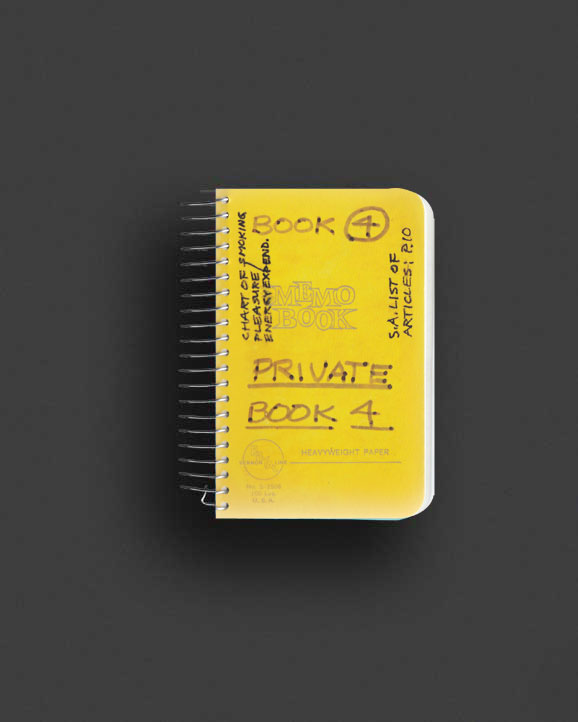
This is the fourth volume in Karma's 11-volume facsimile printing of Lee Lozano's Private Book project. It is primarily a calendar of Lozano's personal, artistic and chemical interactions in 1969-70. A prolific writer and documenter of both her art and her relationships, the public and private, the painter Lee Lozano kept a series of personal journals from 1968 to 1970 while living in New York's SoHo neighbourhood. In 1972 she rigourously edited these books, thus completing the project. Eleven of these private books survive, containing notes on Lozano's work, detailed interactions with artist friends and commentary on the alienations of gender politics, as well as philosophical queries into art's role in society and humorous asides from daily life.
Printed as facsimiles with spiral binding, the notebooks contain notes on her work, detailed interactions with artist friends and commentary on the alienations of gender politics, as well as philosophical queries into art's role in society and humourous asides from daily life. In the decade before her infamous "dropout piece" -- culminating in a move to Dallas where she would remain until her death -- Lozano returned to these notebooks, editing the entries, sometimes blacking out entire pages.
2018, English
Softcover (spiral-bound), 198 pages, 7.6 x 12.7 cm
Published by
Karma / New York
$48.00 - Out of stock
This is the fifth volume in Karma's 11-volume facsimile printing of Lee Lozano's Private Book project. A prolific writer and documenter of both her art and her relationships, the public and private, the painter Lee Lozano kept a series of personal journals from 1968 to 1970 while living in New York's SoHo neighbourhood. In 1972 she rigourously edited these books, thus completing the project. Eleven of these private books survive, containing notes on Lozano's work, detailed interactions with artist friends and commentary on the alienations of gender politics, as well as philosophical queries into art's role in society and humorous asides from daily life.
2018, English / French
Softcover, 220 pages, 240 x 175 mm
Published by
May Revue / Paris
$28.00 $10.00 - In stock -
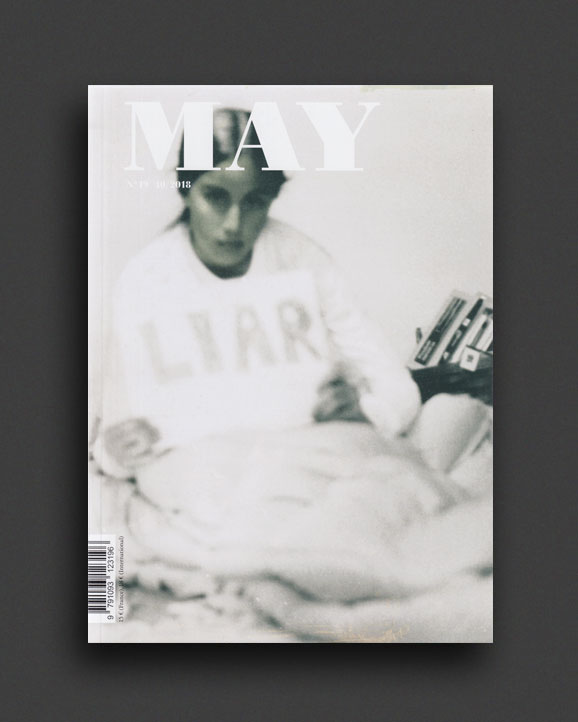
This issue of May was conceived around a series of texts by three women writers/artists who express, through a bio-fictional-essayist form, their current conditions of living, thinking, and working. We worked on the current issue over a period of six months in New York as the debates emerging from the #MeToo movement and regarding cultural appropriation became more intense in art communities. Instead of addressing directly the moralistic and essentialist dimensions of these binary representations, this issue of May was first imagined as an attempt to initiate a space for writing, to offer some perpectives that could propose another understanding of the new form of “cultural war” we are experiencing now in the Western art world.
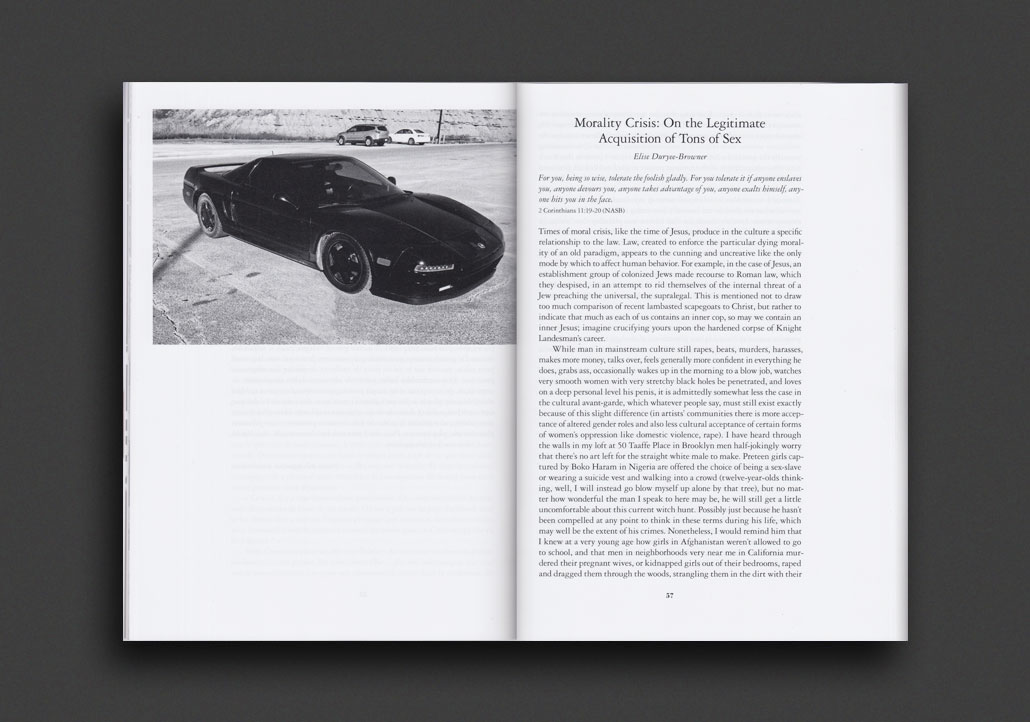
Thus, a text by Elise Duryee-Browner directly confronts the paradoxes and perversions of #MeToo and proposes alternate interpretations. The author has already published an essay in a previous issue of May on the effect of the election of Donald Trump on New York liberal society, where she deconstructed the dualist vision of the Left and Right political spheres by comparing this to the lateral activities of the human brain. In this issue, Duryee-Browner reflects upon her own situation as a young woman in an effort to understand women who, in acting like men in order to end male domination, ultimately ignore what they are destroying. Looking at the intense confrontations between men and women, she finds problematic the loss of the capacity to legislate—to make the laws, or in the Jewish religion, to interpret them—and pleads for “a cultural revolution that needs to happen, not simply women/non-Western cultures inhabiting the core of male/Western power” (to borrow her words).
Three short stories by Cecilia Pavón provide lucid insights into her life as a writer in Buenos Aires: the celebratory opening of a very well-known female British artist, Trish; the preparation of her own living room, where she teaches writing workshops; and a dystopic fiction piece featuring an H&M store being suddenly flooded, whereby she considers the relationship between conventions of clothing and gender that are imposed or assumed of women writers. Although the author’s writing style could seem lighthearted or even frivolous (“domestic poetry” as Chris Kraus puts it), she plays with a seemingly minor voice, using her everyday life as a way to circumvent the apparatus of institutionalized provincial literature.
Reflecting upon the replacement of human creativity by artificial intelligence, Georgie Nettell proposes further perspectives to preserve the conditions of creativity in a “hacked” neoliberal society. Within the context of Brexit, recalling that the referendum was manipulated by Cambridge Analytica with weaponized big-data programs, Nettell reflects on the progressive transformation of liberal democracy into a system that can be hacked, as with human creativity, like an electronic device.
CONTENTS:
Preface
— MAY
Trisha Erin
— CECILIA PAVÓN
Freestyle Rap
— CECILIA PAVÓN
A Perfect Day
— CECILIA PAVÓN
Morality Crisis: On the Legitimate Acquisition of Tons of Sex
— ELISE DURYEE-BROWNER
The Onset of Automation
— GEORGIE NETTELL
Out of the Box, on The Square (dir. Ruben Östlund)
— JASON SIMON
On “Seismography of Struggles, Toward a Global History of Critical and Cultural Journals” at INHA, Paris
— MORAD MONTAZAMI
Doors of Deflection, on Sam Pulitzer at Francesca Pia, Zürich
— DANIEL HORN
Paradiso, on Richard Maxwell at Greene Naftali, New York
— NICK IRVIN
Munch’s Flu, on Edvard Munch at MET Breuer, New York
— CLÉMENT RODZIELSKI
Why Do Jaguar, on Georgia Sagri at Kunstverein Braunschweig, Braunschweig
— ANKE DYES
On “Gianni Versace Retrospective” at Kronprinzenpalais, Berlin
— KARL HOLMQVIST
About MAY Revue:
Conceived as a collective space in which to develop thoughts and confront positions on artistic production, May magazine examines, quaterly, contemporary art practice and theory in direct engagement with the issues, contexts and strategies that construct these two fields. An approach that could be summed up as critique at work – or as critique actively performed in text and art forms alike.
Featuring essays, interviews, art works and reviews by artists, writers and diverse practitioners of the arts, the magazine also intends to address the economy of the production of knowledge – the starting point of this reflection being the space of indistinction between information and advertisement typical of our time. This implies a dialogue with forms of critique produced in other fields.