World Food Books' programme is largely produced on Kulin Nation land. We acknowledge the Wurundjeri people of the Kulin Nation as the first and continuing custodians of this land, and pay respect to their Elders past, present, and emerging.
World Food Books is an arts and special interests bookshop in Naarm / Melbourne. Founded in 2010, World Food Books is devoted to the presentation of a rotating, hand-selection of international art, design, literary and counterculture publications with an emphasis on the anti-traditional, the experimental, the avant-garde, the heretic, the marginal.
Presenting new titles alongside rare and out-of-print books, catalogues and journals spanning the fields of modern and contemporary art, design, photography, illustration, film, literature, poetry, cultural theory, philosophy, sexuality, popular and underground culture in its many radical forms, World Food Books wishes to encourage adventurous, thoughtful and open-minded reading, looking, writing, and exchange of publishing and ideas, both current and historical.
As well as our bookshop, located in Melbourne's historical Nicholas Building, all of our inventory is available internationally via our online mail-order service.
World Food Books semi-regularly co-ordinates "Occasions", a programme of exhibits and events at the bookshop and in partnership with other hosts (such as museums and art galleries) that develop out of the activities, relationships and content of the bookshop itself.
World Food Books
The Nicholas Building
37 Swanston Street
Room 5, Level 6
Melbourne 3000
Australia
SHOP HOURS:
Thu–Fri 12–6, Sat 12–5
WEB-SHOP OPEN 24/7
World Food Books
Postal Address:
PO Box 435
Flinders Lane
Victoria 8009
Australia
Art
Theory / Essay
Architecture / Interior
Graphic Design / Typography
Photography
Fashion
Eros
LGBTQ+
Fiction / Poetry
Weird / Speculative / Science Fiction / Horror
Transgressive / Visceral / Abject
Symbolism / Decadence / Fin de siècle
Film / Video
Painting
Sculpture / Installation
Performance / Dance / Theater
Drawing
Sound / Music
Curatorial
Group Shows / Collections
Periodicals
Out-of-print / Rare
Posters / Ephemera / Discs
Signed Books
World Food Books Gift Voucher
World Food Book Bag
Australian Art
Australian Fiction
Australian Science Fiction / Speculative Fiction
Australian Poetry
Australian Photography
Japanese Photography
Conceptual Art
Minimal Art
Dada
'Pataphysics / Oulipo
Fluxus
Concrete Poetry
Pop Art
Surrealism
Arte Povera
Arte Informale / Haute Pâte / Tachism
Nouveau Réalisme / Zero / Kinetic
Situationism / Lettrism
Collage / Mail Art / Xerox Art
Art Brut / Folk / Visionary / Fantastic
Illustration / Graphic Art / Bandes Dessinées
Furniture
Italian Radical Design / Postmodernism
Textiles
Ceramics / Glass
Counterculture
Protest / Revolt
Philosophy
Psychoanalysis
Anthropology
Anarchism
Socialism / Anarchism / Communism / Capitalism
Literary Theory / Semiotics / Language
Feminism / Women's Studies
Gender Studies / Sexuality
Anthropology
Fetishism / BDSM
Drugs / Psychedelia
Crime / Violence
Animal Rights / Veganism
Occult / Esoterica
Ecology / Earth / Alternative Living
Whole Earth / Crafts
All prices in AUD (Australian dollars)
Pick-Ups
Pick-up orders can be collected in our bookshop during opening hours after order date. Please collect any Pick-up orders within 2 weeks of ordering as we have limited storage space. Orders will be released back into stock if not collected within this time. No refunds can be made for pick-ups left un-collected. If you cannot make it in to the bookshop in this time-frame, please choose postage option.
Return Policy
All sales are final. We do accept returns (for refund or exchange) for items received in error. All our orders are packed with special care using heavy-duty padding and cardboard book-mailers or bubble mailers (for smaller books), using reinforcement where required. We cannot take responsibility for any lost, stolen or damaged parcels.
Insurance
Should you wish to insure your package, please email us directly after placing your order and we can organise this at a small extra expense. Although all standard/express tracked packages are very safe and dependable, we cannot take responsibility for any lost, stolen or damaged parcels. We recommend insurance on valuable orders.
Interested in selling your old books, catalogues, journals, magazines, comics, fanzines, ephemera? We are always looking for interesting, unusual and out-of-print books to buy. We only buy books in our fields of interest and specialty, and that we feel we can resell.
We base these prices on desirability, market value, in-print prices, condition and our current stock levels. We offer cash, store credit, and can take stock on consignment. All
about 25% of the price we expect to get when we sell them, or 30% in store credit. We base these prices on desirability, market value, in-print prices, condition and our current stock levels.
Sell your books any day of the week. You can drop them off and return later. If you have a lot of books, we can visit your Sydney home.
We buy books that we feel we can resell. We offer about 25 % of the price we expect to get when we sell them, or 30% in store credit. We base these prices on desirability, market value, in-print prices, condition and our current stock levels.
Philadelphia Wireman
03 August - 01 September, 2018
World Food Books is proud to announce our next Occasion, the first presentation of sculptures by Philadelphia Wireman in Australia.
The Philadelphia Wireman sculptures were found abandoned in an alley off Philadelphia’s South Street on trash night in 1982. Their discovery in a rapidly-changing neighbourhood undergoing extensive renovation, compounded with the failure of all attempts to locate the artist, suggests that the works may have been discarded after the maker’s death. Dubbed the "Philadelphia Wireman" during the first exhibition of this work, in 1985, the maker’s name, age, ethnicity, and even gender remain uncertain. The entire collection totals approximately 1200 pieces, all intricately bound together with tightly-wound heavy-gauge wire (along with a few small, abstract marker drawings, reminiscent both of Mark Tobey and J.B. Murry). The dense construction of the work, despite a modest range of scale and materials, is singularly obsessive and disciplined in design: a wire armature or exoskeleton firmly binds a bricolage of found objects including plastic, glass, food packaging, umbrella parts, tape, rubber, batteries, pens, leather, reflectors, nuts and bolts, nails, foil, coins, toys, watches, eyeglasses, tools, and jewellery.
Heavy with associations—anthropomorphic, zoomorphic, and socio-cultural responses to wrapped detritus—the totemic sculptures by Philadelphia Wireman have been discussed in the context of work created to fulfil the shamanistic needs of alternative religions in American culture. Curators, collectors, and critics have variously compared certain pieces to sculpture from Classical antiquity, Native American medicine bundles, African-American memory jugs, and African fetish objects. Reflecting the artist’s prolific and incredibly focused scavenging impulse, and despite—or perhaps enhanced by—their anonymity, these enigmatic objects function as urban artefacts and arbiters of power, though their origin and purpose is unknown. Philadelphia Wireman, whatever their identity, possessed an astonishing ability to isolate and communicate the concepts of power and energy through the selection and transformation of ordinary materials. Over the course of the past two decades, this collection has come to be regarded as an important discovery in the field of self-taught art and vernacular art.
Presented in collaboration with Fleisher-Ollman Gallery, Philadelphia, and Robert Heald, Wellington.
Susan Te Kahurangi King
02 February - 10 March, 2018
Susan Te Kahurangi King (24 February 1951 - ) has been a confident and prolific artist since she was a young child, drawing with readily available materials - pencils, ballpoint pens and felt-tip markers, on whatever paper is at hand. Between the ages of four and six Susan slowly ceased verbal communication. Her grandparents William and Myrtle Murphy had developed a special bond with Susan so they took on caring responsibilities for extended periods. Myrtle began informally archiving her work, carefully collecting and storing the drawings and compiling scrapbooks. No drawing was insignificant; every scrap of paper was kept. The King family are now the custodians of a vast collection containing over 7000 individual works, from tiny scraps of paper through to 5 meter long rolls.
The scrapbooks and diaries reveal Myrtle to be a woman of great patience and compassion, seeking to understand a child who was not always behaving as expected. She encouraged Susan to be observant, to explore her environment and absorb all the sights and sounds. Myrtle would show Susan’s drawings to friends and people in her community that she had dealings with, such as shopkeepers and postal workers, but this was not simply a case of a grandmother’s bias. She recognised that Susan had developed a sophisticated and unique visual language and sincerely believed that her art deserved serious attention.
This was an unorthodox attitude for the time. To provide some context, Jean Dubuffet coined the term Art Brut in 1945 to describe work created by self-taught artists – specifically residents of psychiatric institutions and those he considered to be visionaries or eccentrics. In 1972 Roger Cardinal extended this concept by adopting the term Outsider Art to describe work made by non-academically trained artists operating outside of mainstream art networks through choice or circumstance. Susan was born in Te Aroha, New Zealand in 1951, far from the artistic hubs of Paris and London that Dubuffet and Cardinal operated in. That Myrtle fêted Susan as a self-taught artist who deserved to be taken seriously shows how progressive her attitudes were.
Susan’s parents Doug and Dawn were also progressive. Over the years they had consulted numerous health practitioners about Susan’s condition, as the medical establishment could not provide an explanation as to why she had lapsed into silence. Dawn educated herself in the field of homeopathy and went on to treat all twelve of her children using these principles – basing prescriptions on her observations of their physical, mental and emotional state.
Doug was a linguist with an interest in philosophy who devoted what little spare time he had to studying Maori language and culture. To some extent their willingness to explore the fringes of the mainstream made them outsiders too but it was their commitment to living with integrity and their respect for individuality that ensured Susan’s creativity was always encouraged.
Even though Susan’s family supported her artistic pursuits, some staff in schools and hospitals saw it as an impediment to her assimilation into the community and discouraged it in a variety of ways. Her family was not always aware of this and therefore did not fully understand why Susan stopped drawing in the early 1990s. However, rather than dwell on the challenges that Susan faced in pursuit of her artistic practice, they prefer to highlight her achievements. In 2008 Susan began drawing again in earnest, after an almost 20 year interruption, and her work is now shown in galleries around the world.
Susan grew up without television and has been heavily influenced by the comics she read as a child. She is absolutely fearless in the appropriation of recognizable characters, such as Donald Duck and Mickey Mouse, in her work. She twists their limbs, contorts their faces, compresses them together, blends them into complex patterned backgrounds - always imbuing them with an incredible energy. Although Susan often used pop culture characters in her work they are not naive or childlike. These are drawings by a brilliant self-taught artist who has been creating exceptional work for decades without an audience in mind.
Mladen Stilinović
"Various Works 1986 - 1999"
02 February 16 - September 10, 2016
Various works 1986 - 1999, from two houses, from the collections of John Nixon, Sue Cramer, Kerrie Poliness, Peter Haffenden and Phoebe Haffenden.
Including: Geometry of Cakes (various shelves), 1993; Poor People’s Law (black and white plate), 1993; White Absence (glasses, ruler, set square, silver spoon, silver ladel with skin photograph and wooden cubes), 1990-1996; Exploitation of the Dead (grey and red star painting, wooden painting, black spoon with red table, red plate), 1984-1990; Money and Zeros (zero tie, paintings made for friends in Australia (Sue, John, Kerrie), numbers painting), 1991-1992; Words - Slogans (various t-shirts) - “they talk about the death of art...help! someone is trying to kill me”, “my sweet little lamb”, “work is a disease - Karl Marx”; Various artist books, catalogues, monographs, videos; Poster from exhibition Insulting Anarchy; "Circular" Croatian - Australian edition; Artist book by Vlado Martek (Dostoyevsky); more.
Thanks to Mladen Stilinović and Branka Stipančić.
Jonathan Walker
Always Will Need To Wear Winter Shirt Blue + Ochre Small Check Pattern
21 August - 21 September, 2015
Untitled
I am not a great reader of poetry but I always return to the work of Melbourne poet, Vincent Buckley (1925- 1988). Perhaps I find his most tantalising piece to be not a finished poem but a fragment left on a scrap of paper discovered on his desk after the poet’s death.
The poetry gathers like oil
In the word-core, and spreads
It has its music meet,
Its music is in movement.
This fragment is more the shell left behind from a volatile thought than a finished poem. I find the last two lines honest but awkward whereas the first two lines work like an arrow. Most likely he could not find a resolution so it was left. Still, in its present form, it remains an eloquent testimony to the ultimate failure of a medium to express mobile thought and sensation, in Buckley’s case, through verbal language. It’s an important matter because this is something all artists have to deal with regardless of the medium.
I have never written a poem, however, I am forever copying fragments from books on paper scraps in a vain effort to fix certain notions in my head. At first, they function as bookmarks that are sometimes returned to when I open the book. But before long, as they accumulate, they fall out littering the table interspersed with A4 photocopies, bills, books and medications.
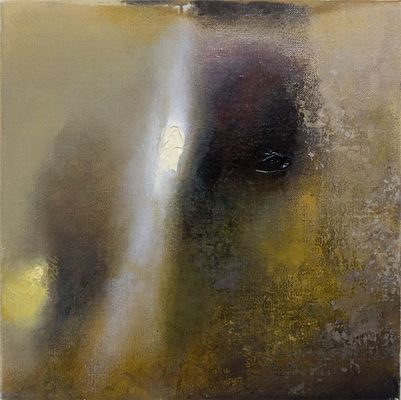
To return to Buckley’s fragment, the first two lines very much evoke how I paint nowadays. As you age, detail diminishes and patches of light become more luminous and float. I feel the most honest way of dealing with this is by smearing the oil paint on the canvas with the fingers and working close-up, blind. Only if the patches coalesce into an approaching image can the work gain a life.
-
Jonathan Walker was born in Melbourne, Australia and brought up on a dairy farm in Gippsland. In the 1970’s he studied painting at RMIT and won the Harold Wright Scholarship to the British Museum, London. During the 1980’s he exhibited at Pinacotheca Gallery, Richmond and had work shown at the NGV and Heidi City Art Gallery. Over the same period he designed the cover for the “Epigenesi” LP by Giancarlo Toniutti, Italy and conducted a mail exchange work with Achim Wollscheid, Germany. The work with artists through the post resulted in an article published in the bicentenary issue of Art and Australia 1988. He showed in artist run spaces such as WestSpace in the 90’s and 2000’s, and until 2012, taught painting at Victoria University, which is where we (Colleen Ahern and Lisa Radford) as organisers of the exhibition, among many others, had the privilege of being his student.
Walker’s knowledge was imparted to students through the careful selection of music, literature, and artists found in books that he himself had ordered for the library. Walker’s strategy was the generosity of sharing his vast knowledge with references specific to each student and their context.
Walker’s paintings share a similar focus and intimacy.
This exhibition presents a small selection of recent paintings alongside a publication that includes Walker’s writing. Observational and analytical, Walker’s work is a type of material notation — the time of day, colour and how it is blended, the both specific and fleeting location of a reflection on lino or the question of whether a chair leg should be included in a painting.
Please join us on Friday August 21 between 6-8pm to celebrate the opening of the exhibition.
Curated by Colleen Ahern and Lisa Radford.
B. Wurtz
Curated by Nic Tammens
March 26 - April 4, 2015
B.Wurtz works from a basement studio in his home on Manhattan’s Lower East Side.
This local fact is attested to by the plastic shopping bags and newsprint circulars that appear in his work. As formal objects, they don’t make loud claims about their origins but nonetheless transmit street addresses and places of business from the bottom of this long thin island. Like plenty of artists, Wurtz is affected by what is local and what is consumed. His work is underpinned by this ethic. It often speaks from a neighborhood or reads like the contents of a hamper:
“BLACK PLUMS $1.29 lb.”
“Food Bazaar”
“USDA Whole Pork Shoulder Picnic 99c lb.”
“RITE AID Pharmacy, with us it’s personal.”
“H. Brickman & Sons.”
“Sweet Yams 59c lb."
Most of the work in this exhibition was made while the artist was in residence at Dieu Donne, a workshop dedicated to paper craft in Midtown. Here Wurtz fabricated assemblages with paper and objects that are relatively lightweight, with the intention that they would be easily transportable to Australia. This consideration isn’t absolute in Wurtz’s work, but was prescriptive for making the current exhibition light and cheap. Packed in two boxes, these works were sent from a USPS post office on the Lower East Side and delivered to North Melbourne by Australia Post.
Wurtz appears courtesy of Metro Pictures, New York.
Thanks to Rob Halverson, Joshua Petherick, Sari de Mallory, Matt Hinkley, Helen Johnson, Fayen d'Evie, Ask Kilmartin, Lisa Radon, Ellena Savage, Yale Union, and "Elizabeth".
John Nixon
"Archive"
December 15 - January 20, 2014
The presentation of John Nixon's archive offered a rare showcase of this extensive collection of the artist's own publications, catalogues, posters, ephemera, editions and more, from the mid 1980s onwards, alongside a selection of his artworks.
Organized by John Nixon, Joshua Petherick and Matt Hinkley.
<a href=http://wfb.public-office.info/artist/john-nixon>All titles by John Nixon
"Habitat"
at Minerva, Sydney (organised by Joshua Petherick and Matt Hinkley)
November 15 - December 20, 2014
Lupo Borgonovo, Janet Burchill & Jennifer McCamley,
Lewis Fidock, HR Giger, Piero Gilardi, Veit Laurent Kurz,
Cinzia Ruggeri, Michael E. Smith, Lucie Stahl, Daniel Weil, Wols
Press Release:
“...It contained seven objects. The slender fluted bone, surely formed for flight, surely from the wing of some large bird. Three archaic circuitboards, faced with mazes of gold. A smooth white sphere of baked clay. An age-blackened fragment of lace. A fingerlength segment of what she assumed was bone from a human wrist, grayish white, inset smoothly with the silicon shaft of a small instrument that must once have ridden flush with the surface of the skin - but the thing’s face was seared and blackened.”
William Gibson, “Count Zero”, 1986
"Autumn Projects Archive"
Curated by Liza Vasiliou
March 6 - March 15, 2014
World Food Books, in conjunction with the Virgin Australia Melbourne Fashion Festival 2014, presented the Autumn Projects archive, consisting of a selection of early examples in Australian fashion with a particular interest in collecting designers and labels from the period beginning in the 1980’s, who significantly influenced the discourse of Australian Fashion.
Curated by Liza Vasiliou, the exhibition provided a unique opportunity to view pieces by designers Anthea Crawford, Barbara Vandenberg, Geoff Liddell and labels CR Australia, Covers, Jag along with early experimental collage pieces by Prue Acton and Sally Browne’s ‘Fragments’ collection, suspended throughout the functioning World Food Books shop in Melbourne.
H.B. Peace
presented by CENTRE FOR STYLE
November 14, 2013
"Hey Blinky, you say chic, I say same"
Anon 2013
H.B. Peace is a clothing collaboration between great friends Blake Barns and Hugh Egan Westland. Their pieces explore the divergences between 'character’ and ‘personality’ in garments....etc
Special Thanks to Joshua Petherick and Matt Hinkley of WFB and Gillian Mears
and a Very Special Thank you to Audrey Thomas Hayes for her shoe collaboration.
Janet Burchill & Jennifer McCamley
"Aesthetic Suicide"
May 10 - June 8, 2013
The first of our occasional exhibitions in the World Food Books office/shop space in Melbourne, "Aesthetic Suicide" presented a body of new and older works together by artists Janet Burchill & Jennifer McCamley, including videos, prints, a wall work, and publications.
During shop open hours videos played every hour, on the hour.
1985, English
Softcover (staple-bound), 60 pages, 21.5 x 18 cm
1st UK Edition, Out of print title / used / fine
Published by
Richard H. Fawcett / Connecticut
$45.00 - Out of stock
Issue 3 of this fantastic small-press dark fantasy fiction zine, published in 1985. Features stories by B. Richard Parks, Phillip C. Heath, Frank Belknap Long, Jessica Amanda Salmonson, Billy Wolfenbarger, Bobby G. Warner, Margaret Widdemer, Richard Le Gallienne, M. Jesse Hoare, Joseph Payne Brennan, Delia Shiflet, Theophile Gautier, and many more. Profusely illustrated throughout by guest illustrators.
Fantasy Macabre was published in seventeen issues between 1980-1996, the first four edited by UK fan Dave Reeder, the rest by American author Jessica Amanda Salmonson. The first two issues (1980-1981) were published by Dave Reeder himself, the following fifteen issues (no 3 and 4 with Reeder still as editor) by Richard Fawcett in the USA, with an agent (Graeme Flanagan) in Australia.
Very Good-Fine copy.
1984, English
Softcover (staple-bound), 32 pages, 21 x 15 cm
1st Edition, Out of print title / used / very good
Published by
The Haunted Library / Cheshire
$45.00 - Out of stock
"Hag's Tapestry" by American author Jessica Amanda Salmonson, was published in 1984 by editor Rosemary Pardoe's Haunted Library series, Cheshire, England, a highly influential specialty publisher that cultivated many authors who embraced the traditional ghost story, many of whom went on to wider fame, devoted to ghost stories in the manner of M. R. James. As well as collections of reprints of scarcely available and new authors of weird fiction, The Haunted Library also published fantasy fiction fanzines and newsletters that were very central to a resurgence in the genre in the 1970s-1980s. This scarce staple-bound publication is a wonderful collection of six short stories by Jessica Amanda Salmonson. Illustrated by Wendy Wees.
Jessica Amanda Salmonson (born 1950) is an American author and editor of fantasy and horror fiction and poetry, as well as scholar and book dealer. From 1973 to 1975, she was one of the editors of The Literary Magazine of Fantasy and Terror, a small-press magazine. She openly documented her coming out as a transgender woman in this journal. She went on to edit Fantasy Macabre from 1985 until the final issue, #17, in 1996. The magazine was subtitled "Beauty plus strangeness equals terror." Salmonson is the author of the famed Tomoe Gozen trilogy, which tells the heroic and tragic tale of Japan's legendary female samauri. Salmonson is the recipient of the World Fantasy Award, Lambda Award, and ReaderCon Award. She has edited many series of single-author collections of ghost stories and weird tales, as well as editing the anthologies Amazons! and Amazons II; Heroic Visions and Heroic Visions II; Tales by Moonlight and Tales by Moonlight II; and What Did Miss Darrington See: An Anthology of Feminist Supernatural Stories. She was also editor of Fantasy Macabre, a small-press dark fantasy magazine in the 1980s-1990s.
Very Good copy.
1985, English
Softcover (staple-bound), 40 pages, 21 x 15 cm
1st Edition, Out of print title / used / fine
Published by
The Haunted Library / Cheshire
$45.00 - Out of stock
A Graven Image (and Other Essex Ghost Stories) was published in 1985 by editor Rosemary Pardoe's Haunted Library series, Cheshire, England, a highly influential specialty publisher that cultivated many authors who embraced the traditional ghost story, many of whom went on to wider fame, devoted to ghost stories in the manner of M. R. James. As well as collections of reprints of scarcely available and new authors of weird fiction, The Haunted Library also published fantasy fiction fanzines and newsletters that were very central to a resurgence in the genre in the 1970s-1980s. This scarce staple-bound publication features six stories by David G. Rowlands, Roger Johnson, and Mary Ann Allen. Illustrated throughout, the collection revolves around ghost stories set in the county of Essex, England.
Very Good-Fine copy.
1974, English
Softcover, 208 pages, 18 x 11 cm
Out of print title / used / good
Published by
Penguin Books / London
$18.00 - Out of stock
By turns bizarre, unsettling, spooky, and sublime, Ancient Sorceries and Other Weird Stories showcases six incomparable short stories originally published between 1906 and 1908 incomparable by master conjuror Algernon Blackwood. Evoking the uncanny spiritual forces of Nature, Blackwood’s writings all tread the nebulous borderland between fantasy, awe, wonder, and horror. 1974 Penguin edition.
“Of the quality of Mr Blackwood’s genius there can be no dispute; for no one has ever approached the skill, seriousness, and minute fidelity whith which he records the overtones of strangeness in ordinary things and experiences.”
—H.P. Lovecraft
Algernon Henry Blackwood (14 March 1869 – 10 December 1951) was an English short story writer and novelist, one of the most prolific writers of ghost stories in the history of the genre. He was also a journalist and a broadcasting narrator. S. T. Joshi has stated that "his work is more consistently meritorious than any weird writer's except Dunsany's" and that his short story collection Incredible Adventures (1914) "may be the premier weird collection of this or any other century".
Good copy, light wear.
1974, English
Softcover, 304 pages, 18 x 11 cm
1st Edition, Out of print title / used / very good
Published by
Penguin Books / London
$18.00 - Out of stock
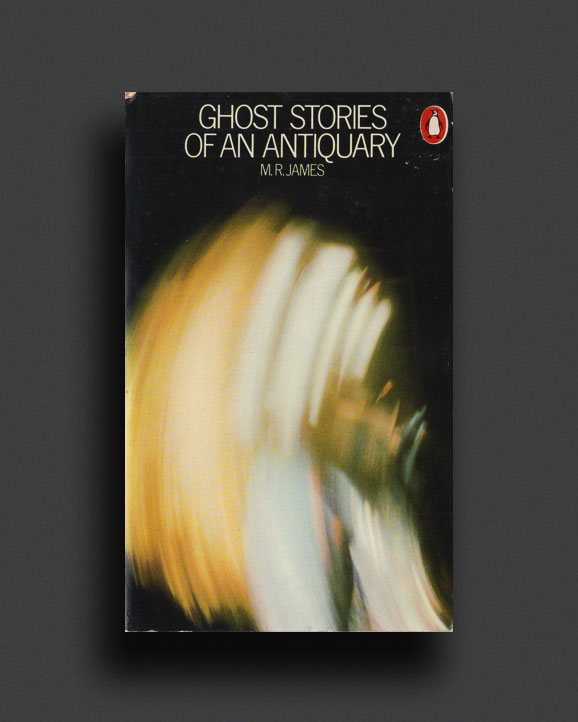
Ghost Stories of an Antiquary is a collection of horror short stories by British writer M. R. James, first published in 1904 (some had previously appeared in magazines). This Penguin edition from 1974 contains both the original collection and its successor, More Ghost Stories (1911), combined in one volume. Includes : Canon Alberic's Scrap-Book, Lost Hearts, The Mezzotint, The Ash-Tree, Number 13, Count Magnus, 'Oh, Whistle and I'll Come to You, My Lad,' and The Treasure of Abbot Thomas.
Montague Rhodes James (1 August 1862 – 12 June 1936), who published under the name M. R. James, was an English author, medievalist scholar and provost of King's College, Cambridge (1905–18), and of Eton College (1918–36). He was Vice-Chancellor of the University of Cambridge (1913–15). Though James's work as a medievalist is still highly regarded, he is best remembered for his ghost stories, which are regarded as among the best in the genre. James redefined the ghost story for the new century by abandoning many of the formal Gothic clichés of his predecessors and using more realistic contemporary settings. However, James's protagonists and plots tend to reflect his own antiquarian interests. Accordingly, he is known as the originator of the "antiquarian ghost story". His stories often use rural settings, with a quiet, scholarly protagonist getting caught up in the activities of supernatural forces. The details of horror are almost never explicit, the stories relying on a gentle, bucolic background to emphasise the awfulness of the otherworldly intrusions.
Very Good copy, light wear.
1975, English
Softcover, 200 pages, 18 x 11 cm
Published by
Panther / London
$28.00 - Out of stock
Volume 1 of this wonderful 2 volume collection of fiction by the great Arthur Machen, published by Panther, London, in 1975. Arthur Machen is perhaps best known for his shorter supernatural and horror fiction. He first achieved notoriety in the Decadent 1890s with his story 'The Great God Pan', and 'The Bowmen' was the origin of the 'Angels of Mons' myth during the First World War. Tales of Horror and the Supernatural collects together the best of Arthur Machen's short stories and novellas in two volumes. Vol. 1 contains: The Great God Pan, The White People, The Inmost Light, The Shining Pyramid, The Great Return.
A storyteller of impressive imaginative power, startling authenticity, and undeniable originality, Tales Of Horror And The Supernatural, a collection of the author's arguably best short macabre fiction is a celebration of primal mysteries and complex human conflicts between psyche and soul which serves as a fine, fitting tribute to a man whose life was as paradoxical and mystifying as much of his fictions.
Arthur Machen (1863 – 1947) was a Welsh author and mystic of the 1890s and early 20th century. He is best known for his influential supernatural, fantasy, and horror fiction. His novella The Great God Pan (1890; 1894) has garnered a reputation as a classic of horror, with Stephen King describing it as "Maybe the best [horror story] in the English language."
Good copy, general light wear.
1975, English
Softcover, 260 pages, 18 x 11 cm
Published by
Panther / London
$28.00 - Out of stock
Volume 2 of this wonderful 2 volume collection of fiction by the great Arthur Machen, published by Panther, London, in 1975. Arthur Machen is perhaps best known for his shorter supernatural and horror fiction. He first achieved notoriety in the Decadent 1890s with his story 'The Great God Pan', and 'The Bowmen' was the origin of the 'Angels of Mons' myth during the First World War. Tales of Horror and the Supernatural collects together the best of Arthur Machen's short stories and novellas in 2 volumes. Vol. 2 contains: The Novel of the Black Seal, The Novel of the White Powder, The Bowmen, The Happy Children, The Bright Boy, Out of the Earth, N, The Children of the Pool, The Terror.
A storyteller of impressive imaginative power, startling authenticity, and undeniable originality, Tales Of Horror And The Supernatural, a collection of the author's arguably best short macabre fiction is a celebration of primal mysteries and complex human conflicts between psyche and soul which serves as a fine, fitting tribute to a man whose life was as paradoxical and mystifying as much of his fictions.
Tales of Horror and the Supernatural is, quite simply, one of the most important collections of weird tales by any author. - Ramsey Campbell
Arthur Machen (1863 – 1947) was a Welsh author and mystic of the 1890s and early 20th century. He is best known for his influential supernatural, fantasy, and horror fiction. His novella The Great God Pan (1890; 1894) has garnered a reputation as a classic of horror, with Stephen King describing it as "Maybe the best [horror story] in the English language."
Good copy, general light wear.
2018, English
Softcover, 48 pages, 10.5 x 14.8 cm
Ed. of 100,
Published by
Other Versions / Rotterdam
$15.00 - In stock -
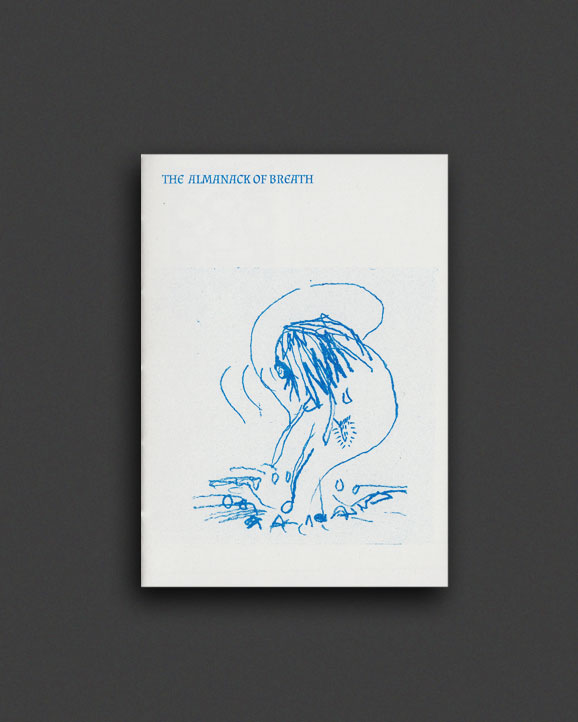
The Almanack of Breath tells of two demons: one of whom exists in Medieval texts, and one who Kilmartin invented as a contemporary rebuttal to the first, nasty one. Against the punitive, eavesdropping Tutivillus, also known as the Recording Demon, the author writes the tale of a nameless creature, an invisible and inaudible allegorical gure of Listening. This creature promotes an ethics of listening by collecting and donating different forms of breath to those who need it.
After introducing these characters, the text continues in the form of a month-by-month almanac, each of the twelve ‘Seasons of Breath’ holding advice on the type of breath - a gasp, or yawn or a sigh for example - that the reader should take care to listen for.
Drawings by Collette Rayner illustrate the introduction, and each of the Seasons. Many were drawn as the story was read aloud.
Published in an edition of 100 single-colour Risograph-printed, pamphlets, stitched in three signatures, by Other Versions (Ash Kilmartin), printed at PrintRoom, Rotterdam.
2018, English
Softcover, 200 pages, 20 x 13 cm
Published by
Zatezalo Press / Melbourne
$25.00 - In stock -
Zatezalo Press is a new publishing imprint focusing on paperback books from contemporary Australian artists. Each book will be an edition of 100.
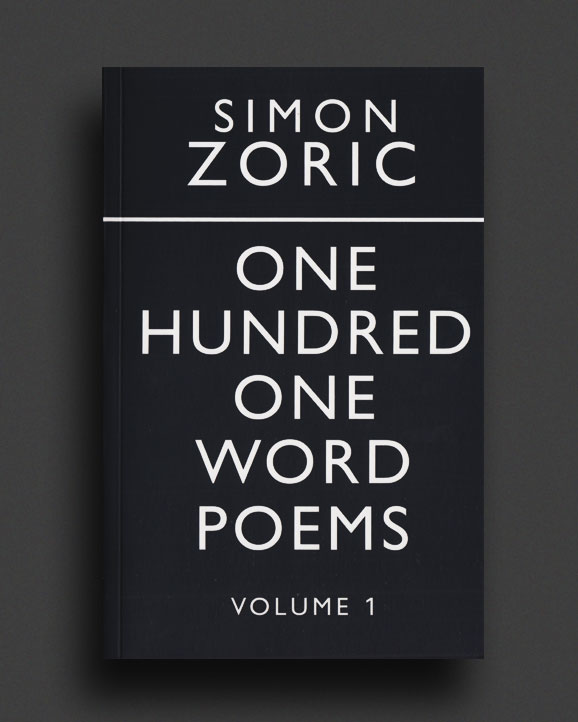
Zatezalo Press’ first release is One Hundred One Word Poems, written by Simon Zoric. Taking it’s cue from Duchamp’s idea of the readymade, it poses the question: If a pre-existing object selected by the artist can be promoted to the status of a work of art, can a single word through the same process be considered a poem?
2018, English
Softcover (staple-bound), 24 pages, 13 x 19 cm
Edition of 150,
Published by
Innen Books / Zürich
$14.00 - Out of stock
"Cunts" is a limited edition publication by New York artist Betty Tompkins. Published in 2018 by Innen Books in Zürich in an edition of 150 copies only on the occasion of Printed Matter’s NY Art Book Fair at MoMA PS1, September 21-23, 2018.
Betty Tompkins (born 1945) is an American artist. Tompkins is a painter whose works revolve, almost exclusively, around photorealistic, close-up imagery of both heterosexual and homosexual intimate acts. She creates large-scale, monochromatic canvases and works on paper of singular or multiple figures engaged in sexual acts, executed with successive layers of spray painting over pre-drawings formed by text. Alongside artists such as Carolee Schneemann, Yoko Ono, Valie Export, Joan Semmel, Lynda Benglis and Judy Chicago, Tompkins has been re-assessed as a pioneer of Feminist art.
2018, English
Softcover (staple-bound), 24 pages, 13 x 19 cm
Edition of 120,
Published by
Innen Books / Zürich
$14.00 - Out of stock
"Turtle Fur" is a limited edition publication by New York artist Quintessa Matranga. Published in 2018 by Innen Books in Zürich in an edition of 150 copies only on the occasion of Printed Matter’s LA Art Book Fair at The Geffen Contemporary at MOCA, February 24 — 26, 2017.
Quintessa Matranga is an American artist working in many mediums and was a curator at Mission Comics, a gallery operating in the back room of a comic book shop in San Francisco.
2015, English
Hardcover, 168 pages, 23 x 31 cm
Published by
Matthew Marks / New York
$95.00 - Out of stock
Edited with text by Dan Nadel.
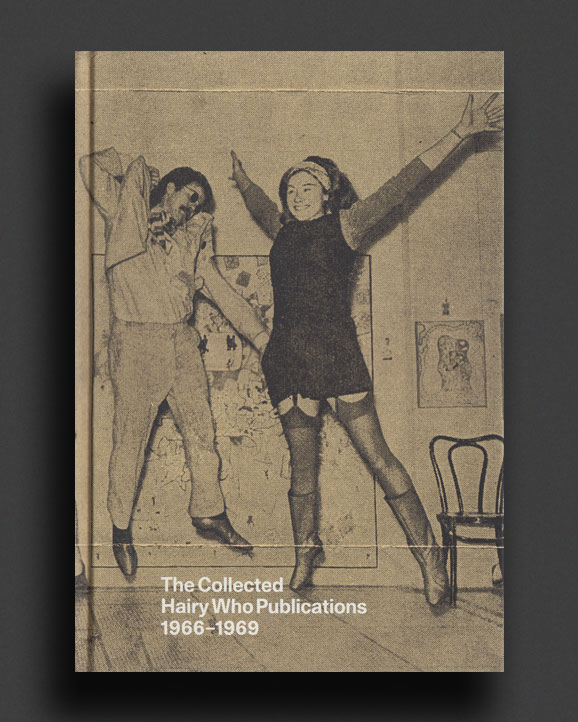
This is the first complete presentation of the artists' books, posters, prints and ephemera produced by The Hairy Who (Chicago, 1966-69), which was composed of Jim Falconer (born 1943), Art Green (born 1941), Gladys Nilsson (born 1940), Jim Nutt (born 1938), Suellen Rocca (born 1943) and Karl Wirsum (born 1939).
Over the course of five exhibitions in Chicago, San Francisco and Washington, DC, The Hairy Who represented a de facto rebuke to the chilly ironies of Pop and forged new ways of crafting figurative painting. As likely to use Plexiglas as canvas and employing a language based on verbal confusion, visual puns and an almost ecstatic use of line and color, the members of the Hairy Who produced publications, posters and even buttons, and their exhibitions were immersive environments unequalled at the time.
The Hairy Who has enjoyed a renewed popularity recently, thanks to a documentary film and multiple exhibitions by the contributing artists. This publication presents all of the printed works related to the Hairy Who exhibitions--important documents in the history of contemporary art and artists' books. Formatted like comic books, they are among the very first full-color self-published artists' books, containing work made especially for publication. Studying these works is important to an understanding of post-1960s art and artists' books.
2018, English
Hardcover, 188 pages, 28 x 21.5 cm
Published by
Sequence Press / New York
$89.00 - Out of stock
Edited by Frances Perkins and Katherine Pickard
With texts by Rochelle Goldberg, Frances Perkins, and Leah Pires
Designed by Geoff Kaplan and Rochelle Goldberg
Rochelle Goldberg’s Cannibal Actif devours the line between artist book and archive. Each page bracketing a visual thought that leaks off the page seeping through to the next, proposing a structural challenge to the visual, material, and narrative format through which it unfolds. The book's pale cover will wear the dust and dirt of its surroundings, collected over time, while extreme varnish on the pages within will capture the readers residual touch.
Thick pools of crude oil envelope bathers in Baku, spilling off their bodies onto a floodline, or further seeping out as a glossy stream of text. Oil poured over gears and out of portals does not stop at the page's edge. These spills are free of constraint—the drainage collects elsewhere onto another page, as a new image: a face, a hand, a snake. The arc of Goldberg’s story traces the cannibal’s consuming action and subsequent digestion, through corporeal flesh to mechanistic fixtures, while the material limit of ink on a page has been pushed to reflect this narrative track. Overlapping sequences of chroma centric blacks and rusty metallics bend and bleed to offer a psychedelic saliva that lubricates a hardened message, then tempered by soft gradients of reds, greens and pinks, reflecting the visceral membrane of a jellyfish, at once separating and joining two cavities—ingesting and secreting, in rhythm. Through consumption, the cannibal augments itself, but the reader must also cross the swamp, the mirror, and the pools of oil or crystalline water, to reach this enhanced state. A new life of texts and tones greets us on the other side of the mirror.
Contributions by art historian Leah Pires, publisher Frances Perkins, and the artist crack open previous helpings of thoughts served as varnished murmurs, bold words now permitted to ooze across double-page spreads, a regurgitated message we too can consumed.
2018, English
Softcover, 116 pages, 21 x 27 cm
Published by
Bergen Kunsthall / Norway
Sternberg Press / Berlin
South London Gallery / London
$45.00 - Out of stock
Texts by Quinn Latimer, Laura McLean-Ferris
This publication accompanies two exhibitions of recent sculptural work by the artist Magali Reus: “Hot Cottons” (2017–18) at Bergen Kunsthall and “As mist, description,” (2018) at the South London Gallery. Featuring an essay by writer and curator Laura Mclean-Ferris and a poetic response by writer and poet Quinn Latimer as well as a fully illustrated overview of Reus’s work, this catalogue provides an in-depth exploration of the artist’s recent sculptural practice.
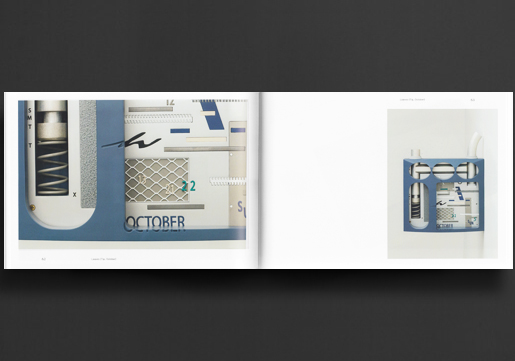
Producing a sculptural language that is both familiar yet unlocatable Reus draws heavily on the past and present landscape of industry and fabrication, creating forms using a plethora of materials that include: mesh, jesmonite, cotton, steel, rubber, leather. Interested in collaborative processes of making, from virtual design to handmade fabrication, Reus combines sculptural games with material explorations. Everyday materials are transformed with powder blues, pastel greens, and dirty beiges. Reus’s sculptures appear in a state of transition, in progress, mid-function, restored, or destroyed. Autographs of famous athletes, graphics from an iconic Norwegian matchbox, forms reminiscent of fire extinguishers, decorative ironwork, or modular frameworks, all feature in Reus's sculptures transforming defined materials into newly undefinable objects. Working with factories in Holland to develop specific fabrics, using complex molding and weaving techniques, all the while drawing on the language of digital design Reus navigates the contemporary post-industrial moment with playful unease, creating objects with familiar yet fluid identities.
Copublished with Bergen Kunsthall, South London Gallery
Design by A Practice for Everyday Life
2016, English
Softcover (in soft plastic jacket), 80 pages, 23 x 16 cm
Out of print title / as new
Published by
Mousse / Milan
$53.00 - Out of stock
Now out of print.
Texts by Andrew Bonacina and Ruba Katrib
In the spring of 2015, Magali Reus (b. 1981, the Hague, the Netherlands; based in London) opened the first in a series of four exhibitions of new work co-commissioned and presented by SculptureCenter, New York; Hepworth Wakefield, England; Westfälischer Kunstverein, Münster, Germany; and Fondazione Sandretto Re Rebaudengo, Turin, Italy. The culmination of these collaborative projects is documented in this publication, marking an important chapter in the evolution of Reus’s work. As Andrew Bonacina writes in his essay, “Magali Reus has evolved a practice that requires a constant examination of how we engage with, and understand, the everyday items that accompany us in the world—the ‘supporting-cast’ objects that we rely on but rarely acknowledge. Relieved of their functionality through Reus’s re-transcriptions—rendered as useless as a mug without a bottom or a book sealed in plastic—their newfound role as sculpture forces them to articulate their objecthood in alternative ways, through attitude or gesture. They become vessels waiting to be filled by the viewer’s own physical and emotional relationship to them. Operating somewhere between uniformity and personalization, Reus’s sculptures become spaces in which objects are finding their place, where things are working themselves out.”
2018, English
Hardcover, 240 pages, 195 x 240 cm
Published by
Prestel / Munich
$50.00 $20.00 - Out of stock
Foreword by Farkas Rozsa
Contributions by Hito Steyerl, Hannah Black and Natasha Stagg
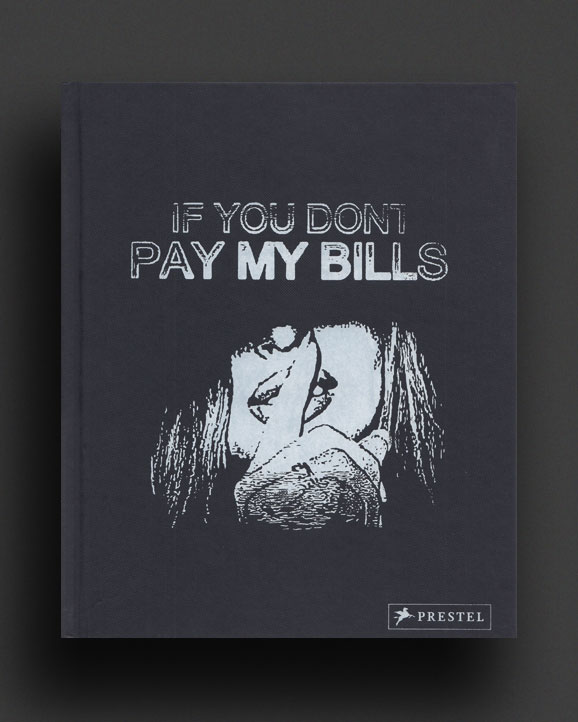
Amalia Ulman's performance "Excellences & Perfections", which unfolded on Instagram in 2014, follows an aspiring it-girl who undergoes a series of cosmetic surgeries and lifestyle changes to help jumpstart her career. For six months Ulman mesmerized her followers with nearly daily posts that documented a young woman trying on different personas in order to make her way in the world. Finally, the real Amalia Ulman revealed the fiction that she had created-a performance piece about identity, gender, class, sexuality, and lifestyle porn. The illustrations are presented in chronological order to give readers the experience of viewing the work as an uninterrupted stream, in the way her followers first saw them on social media. A forerunner of a new brand of performance art, Ulman has made a significant statement about the intersection of life and art-one that couldn't be more timely or compelling.
2017, English
Hardcover, 256 pages, 235 x 287 cm
Published by
Monacelli Press / New York
$80.00 - Out of stock
SuperDesign charts the Italian Radicals' bold experimentation in modern design from its birth through its continued influence on design today. Radical Design was launched by art, architecture, and design students in Italy in the mid-1960s. What started as a youthful rally against the establishment and a rejection of design norms became a movement that brought together some of the most dynamic and avant-garde thinkers and makers across the country. Through enigmatic, confrontational, and clever furniture and objects--such as the iconic lip-shaped Bocca sofa, or the Cactus coat-rack in green foam--as well as more public innovations including discotheque interiors and subversive performances, the Radicals projected design's new era as equal parts Pop Art, play, Surrealism, and futurism. Told through exclusive interviews, unreleased photographs, original drawings and artwork unearthed from personal archives, and newly commissioned photography of rarely seen works, SuperDesign explores this fervent period of design that played out against the era's social and political turmoil. Featured designers include Archizoom Associati, Lapo Binazzi (UFO), Pietro Derossi (Gruppo Strum), Piero Gilardi, Ugo La Pietra, Gaetano Pesce, Gianni Pettena, Studio65, and Superstudio. The culmination of a decade of collecting and researching original examples of some of the most important and iconic works of the period, SuperDesign offers a unique new introduction to the legacy of the Italian Radicals.
2018, English
Softcover, 48 pages, 12 x 19 cm
Published by
Sternberg Press / Berlin
$28.00 $15.00 - In stock -
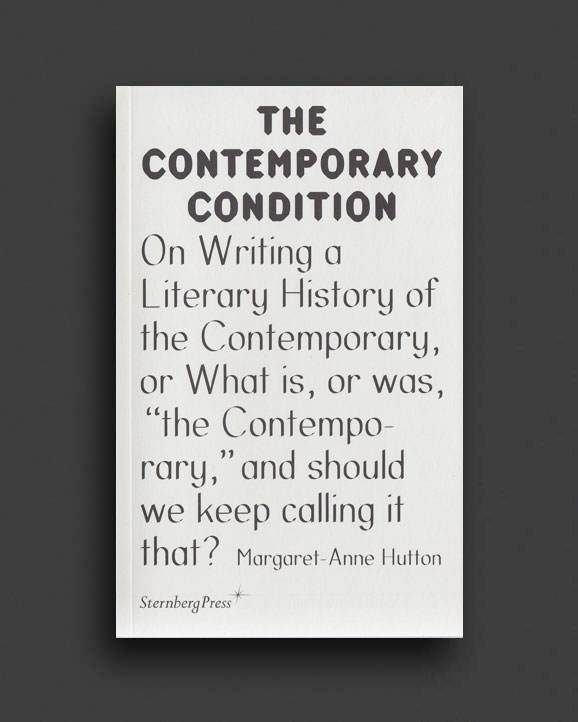
“The contemporary” is an established term in a range of scholarly and disciplinary discourses, but what does it mean? Interweaving sections drawn from an (apparently) hypothetical and oxymoronic project—the writing of a literary history of “the contemporary”—with a critical analysis of the term(s) “the contemporary” and “contemporary” in the work of a range of theorists, Margaret-Anne Hutton sets out to expose the inconsistencies and ambiguities in its terminological usage, and to unpick some of the knots which bind the substantive and adjective. How can “(the) contemporary” function as a critical term, and how might we map its history?
The Contemporary Condition series edited by Geoff Cox and Jacob Lund, Volume 08
Copublished with Aarhus University and ARoS Art Museum
Design by Dexter Sinister
2014, English
Softcover, 30 pages, 15.2 x 20.3 cm
Published by
Sequence Press / New York
$18.00 - Out of stock
Reza Negarestani’s essay is published in conjunction with Jean-Luc Moulène’s exhibition, Torture Concrete, September 7 – October 26, 2014 at Miguel Abreu Gallery, New York. The text emerged out of a number of conversations between the writer and artist around the theme of abstraction both as a multi-faceted project in the general domain of thought and as a specific process of artistic experimentation. Negarestani sharply asserts abstraction’s origins as the dialectic between form (mathematics) and sensible matter (physics) and its otherwise flat interpretation in art history, and presents us with the redemptive possibilities for its enrichment and diversification through the lens of artistic practice.
Negarestani calls into question the “self-reflexive history of art” as having embezzled this singular definition of abstraction, so that one can no longer link it to its constitutive gesture or procedural coherence, and locates Moulène’s work safely at the outer-edges of this “impoverished” history. He asserts that for Moulène, “the task of art is rediscovered not in its ostensible autonomy but in its singular power to rearrange and destabilize the configurational relations between parameters of thought, parameters of imagination and material constraints which parameterize the cognitive edifice.”
Moulène seeks to define new objectives for art and to further revise its task using his own working paradigm of topology and dynamic systems. Within the artist's work—the work of systematization of experimentation and producing tools for thinking—Negarestani finds a reassuring pursuit in practice, that of the unearthing of a buried dialectic, and a worthy response to his problematic: “We’ve all heard of abstraction, but no one has ever seen one.”
Both men work in search of a means of emancipation from a tortured position (as writer, artist, human). For Moulène, making a change to the body, a change from within, works alongside the notion of thought making a difference in the world. But in order for thought to do this, as Negarestani suggests, “first it must make a difference in itself—this is where abstraction finds its true vocation.”
Reza Negarestani is a philosopher. He has contributed extensively to journals and anthologies and lectured at numerous international universities and institutes. His current philosophical project is focused on rationalist universalism beginning with the evolution of the modern system of knowledge and advancing toward contemporary philosophies of rationalism, their procedures as well as their demands for special forms of human conduct.
2012, English
Softcover, 376 pages, 11.5 x 17.5 cm
Published by
Sequence Press / New York
Urbanomic / Cornwall
$42.00 - Out of stock
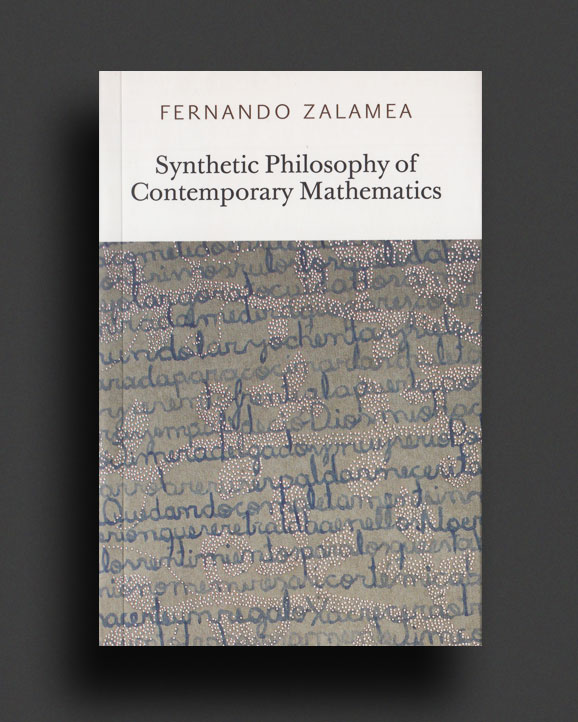
Synthetic Philosophy of Contemporary Mathematics is a unique and unprecedented book, and a much needed one. Fernando Zalamea (Professor of Mathematics at the Universidad Nacional de Colombia) offers a synthetic perspective on the vast spectrum of contemporary mathematics, together with an analysis of the new philosophical problems originating therein. The book makes available to the inquisitive non-specialist the conceptual transformations and intellectual orientations of modern and contemporary mathematics, and their significance for speculative philosophical thought.
The first part of the text discusses the specificity of modern (1830-1950) and contemporary (1950 to the present) mathematics, and offers an extensive review of how philosophy of mathematics addressed it (or failed to). In the second part, thirteen detailed case studies examine the greatest creators in the field, compiling a map of the central advances accomplished in mathematics over the last half-century. Drawing on these concrete examples, the third part proposes some generic outlines for synthesis.
Zalamea's book serves as a conceptual introduction to mathematical themes rarely discussed outside specialist circles, and as a critical lens by means of which today's mathematics may aid us in the configuration of new cultural perspectives.
If analytic philosophy was forged in the fires of set theory and classical logic at the beginning of the twentieth century, then today, at the dawn of the twenty-first, and around the scaffolding of category theory and the logic of sheaves, it is time for a complementary, synthetic philosophy to be built.
Translated by Zachary Luke Fraser
This is a weighty and daring book. It proposes a new philosophy of mathematics, based on a detailed knowledge of the most recent work in advanced mathematics, and constructed in explicit contrast with the traditional analytical approach…this new synthetic and open-minded approach is no doubt worthy of attention, and philosophers who dare to make an effort will surely reap the reward. - Paloma Pérez-Ilzarbe. American Mathematical Society’s MathSciNet
Zalamea is clearly on the cutting edge of theorizing potential intersections between networks, math, and philosophy. Few thinkers are able to bring together insights from as diverse fields in such as exciting manner as Zalamea. - Christopher Vitale. Assistant Professor, Media Studies, Pratt Institute, NY
With high professional competence in mathematics and philosophy and written in masterful prose, Zalamea opens up a breathtaking insight into advanced contemporary mathematics by enlightening its magical power with the powerful paradigm of gestural dynamics as developed by Valéry, Merleau-Ponty and Châtelet. - Guerino Mazzola, Professor of Mathematical Music Theory and Creativity, School of Music, University of Minnesota
Contents
Introduction: Traditional Options for the Philosophy of Mathematics and Prospectus for this Essay
Part One: The General Environment of Contemporary Mathematics
Specificity of Modern and Contemporary Mathematics
Advanced Mathematics in Treatises on Mathematical Philosophy: A Bibliographical Report
Towards a Synthetic Philosophy of Contemporary Mathematics
Part Two: Case Studies
Grothendieck: Forms of High Mathematical Creativity
Eidal Mathematics: Serres, Langlands, Lawvere, Shelah
Quiddital Mathematics: Atiyah, Lax, Connes, Kontsevich
Archeal Mathematics: Freyd, Simpson, Zilber, Gromov
Part Three: Sketches of Synthesis
Fragments of a Transitory Ontology
Comparative Epistemology and Sheaving
Phenomenology of Mathematical Creativity
Mathematics and Cultural Circulation
2017, English
Softcover, 384 pages, 12.5 x 20 cm
Published by
Sternberg Press / Berlin
$40.00 - Out of stock
Contributions by Bik Van der Pol, Bruce High Quality Foundation University, Tania Bruguera, Chto Delat?, Sean Dockray, Olafur Eliasson, Ryan Gander, Piero Golia, Fritz Haeg, Pablo Helguera, Jakob Jakobsen, Ahmet Öğüt, Yoshua Okón, Open School East, Rupert, Wael Shawky, Tina Sherwell, Bisi Silva, Christine Tohme, Anton Vidokle
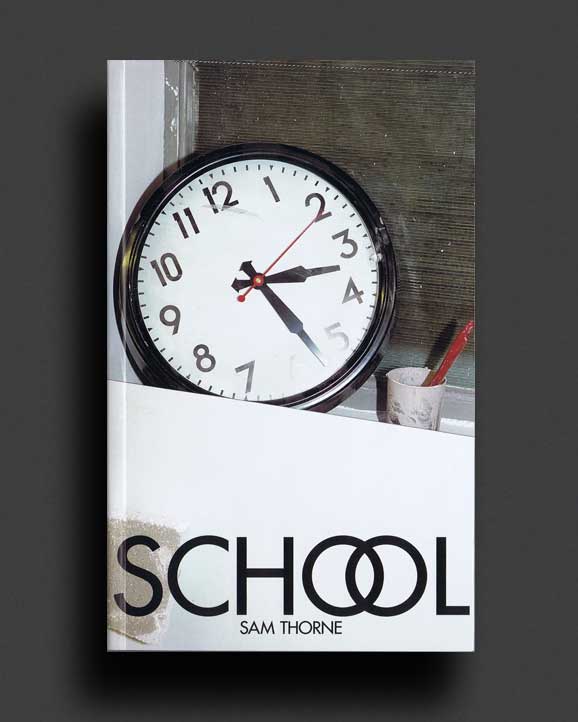
Sam Thorne’s School: A Recent History of Self-Organized Art Education is a chronicle of self-organized art schools and artist-run education platforms that have emerged since 2000. Comprising a series of twenty conversations conducted by Thorne with the artists, curators, and educators behind these schools, the book maps a territory at once fertile and contested. Spanning projects in London, Lagos, Los Angeles, Mexico City, Ramallah, Berlin, and Saint Petersburg, among other locations, these critical dialogues respond to spiraling student debt, the MFA system, and the “pedagogical turn,” while offering proposals for the future of art education.
Design by John Morgan studio
2018, English / German
Softcover, 112 pages, 11.5 x 18 cm
Published by
Kunsthalle Bern / Bern
Sternberg Press / Berlin
$18.00 - Out of stock
With an introduction by Hanna Magauer
In the artistic activities of Philippe Thomas (1951–1995), there was a determination to disappear: it was his procedure to transfer his title of author onto his collectors. This was the case when selling an artwork, or whenever the author’s credit was needed for a commissioned text, and in the institutional co-operations that Thomas was a participant of. With this strategy Thomas worked against his own historicization, erasing his name from the reigning European and North American art fields and with prescience Thomas “put up obstacles to block his future ‘googleability’” (Hanna Magauer). In recent years, the works and writings of the artist, who also acted on behalf of the semi-fictional agency readymades belong to everyone®, again gained greater visibility and as of current are being assigned a place in art history.
With this book, Elisabeth Lebovici elaborates on Thomas’s strategy to cede and fictionalize authorship and suggests a reading of his work that incorporates questions of gender and reproduction, the multiplicity of the subjects involved, and the unbearable disappearance of Thomas (who died of AIDS-related complications), into the process of enunciation. It is Lebovici’s suggestion that the performativity of Thomas’s work requires two versions at once: “the one where one enters into the fiction and the one where one observes the beauty of the arrangement and the plot at work. The one where one is inside and the one where one contemplates it.”
Schriftenreihe by Kunsthalle Bern, ed. by Valérie Knoll and Hannes Loichinger
Design by HIT
2018, English
Hardcover (w. dust jacket), 224 pages, 22.9 x 15.2 cm
Published by
Goldsmiths Press / London
$58.00 - Out of stock
A timely exploration of whether sound and listening can be the basis of political change.
In a world dominated by the visual, could contemporary resistances be auditory? This timely and important book from Goldsmiths Press highlights sound's invisible, disruptive, and affective qualities and asks whether the unseen nature of sound can support a political transformation. In Sonic Agency, Brandon LaBelle sets out to engage contemporary social and political crises by way of sonic thought and imagination. He divides sound's functions into four figures of resistance—the invisible, the overheard, the itinerant, and the weak—and argues for their role in creating alternative “unlikely publics” in which to foster mutuality and dissent. He highlights existing sonic cultures and social initiatives that utilize or deploy sound and listening to address conflict, and points to their work as models for a wider movement. He considers issues of disappearance and hidden culture, nonviolence and noise, creole poetics, and networked life, aiming to unsettle traditional notions of the “space of appearance” as the condition for political action and survival.
By examining the experience of listening and being heard, LaBelle illuminates a path from the fringes toward hope, citizenship, and vibrancy. In a current climate that has left many feeling they have lost their voices, it may be sound itself that restores it to them.
Brandon LaBelle is Professor in New Media in the Faculty of Fine Art, Music and Design at the University of Bergen. He is the author of Lexicon of the Mouth: Poetics and Politics of Voice and the Oral Imaginary, Diary of an Imaginary Egyptian, Acoustic Territories: Sound Culture and Everyday Life, and Background Noise: Perspectives on Sound Art.
2015, English
Softcover, 224 Pages, 15 x 25 cm
Published by
GSAPP Transcripts / New York
$54.00 - Out of stock
Has architectural theory become a historical phenomenon to be anthologized and studied as another passing phase in the history of the discipline? Do the current commonplace watchwords of "practice" and "research" mark the end of theory's place in architectural discourse? This edited volume posits the contrary--that theory remains urgent and even unavoidable, so ingrained in architectural practice and pedagogy that it remains a vital if sometimes latent influence.
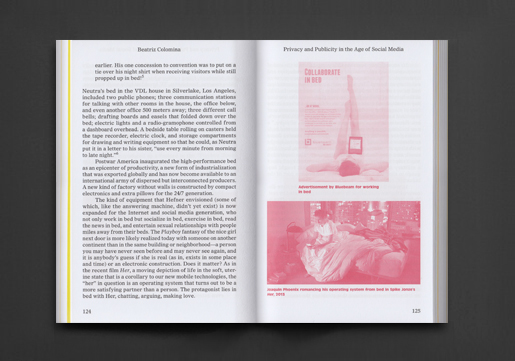
Architectural theory is not confined to its supposed heyday in the decades leading up to the year 2000; it has persisted and expanded as the stakes of theoretical discussions have transformed. 2000+: The Urgencies of Architectural Theory collects new essays from a range of the most compelling architectural historians and theorists of the moment, including Lucia Allais, Beatriz Colomina, Mark Cousins, Arindam Dutta, John Harwood, Catherine Ingraham, Mark Jarzombek, Mari Lending, Spyros Papapetros, Felicity Scott, Pelin Tan, Bernard Tschumi, Eyal Weizman, Mark Wigley, and Mabel Wilson. Brought together for a conference marking the end of Wigley's tenure as dean of Columbia University's Graduate School of Architecture, Planning and Preservation, these thinkers chart new directions and points of critical importance for theory in architecture.
ABOUT THE AUTHOR
James Graham is the director of Print Publications at the Columbia University Graduate School of Architecture, Planning and Preservation, where he also teaches and pursues his Ph.D.