World Food Books' programme is largely produced on Kulin Nation land. We acknowledge the Wurundjeri people of the Kulin Nation as the first and continuing custodians of this land, and pay respect to their Elders past, present, and emerging.
World Food Books is an arts and special interests bookshop in Naarm / Melbourne. Founded in 2010, World Food Books is devoted to the presentation of a rotating, hand-selection of international art, design, literary and counterculture publications with an emphasis on the anti-traditional, the experimental, the avant-garde, the heretic, the marginal.
Presenting new titles alongside rare and out-of-print books, catalogues and journals spanning the fields of modern and contemporary art, design, photography, illustration, film, literature, poetry, cultural theory, philosophy, sexuality, popular and underground culture in its many radical forms, World Food Books wishes to encourage adventurous, thoughtful and open-minded reading, looking, writing, and exchange of publishing and ideas, both current and historical.
As well as our bookshop, located in Melbourne's historical Nicholas Building, all of our inventory is available internationally via our online mail-order service.
World Food Books semi-regularly co-ordinates "Occasions", a programme of exhibits and events at the bookshop and in partnership with other hosts (such as museums and art galleries) that develop out of the activities, relationships and content of the bookshop itself.
World Food Books
The Nicholas Building
37 Swanston Street
Room 5, Level 6
Melbourne 3000
Australia
SHOP HOURS:
Thu–Fri 12–6, Sat 12–5
WEB-SHOP OPEN 24/7
World Food Books
Postal Address:
PO Box 435
Flinders Lane
Victoria 8009
Australia
Art
Theory / Essay
Architecture / Interior
Graphic Design / Typography
Photography
Fashion
Eros
LGBTQ+
Fiction / Poetry
Weird / Speculative / Science Fiction / Horror
Transgressive / Visceral / Abject
Symbolism / Decadence / Fin de siècle
Film / Video
Painting
Sculpture / Installation
Performance / Dance / Theater
Drawing
Sound / Music
Curatorial
Group Shows / Collections
Periodicals
Out-of-print / Rare
Posters / Ephemera / Discs
Signed Books
World Food Books Gift Voucher
World Food Book Bag
Australian Art
Australian Fiction
Australian Science Fiction / Speculative Fiction
Australian Poetry
Australian Photography
Japanese Photography
Conceptual Art
Minimal Art
Dada
'Pataphysics / Oulipo
Fluxus
Concrete Poetry
Pop Art
Surrealism
Arte Povera
Arte Informale / Haute Pâte / Tachism
Nouveau Réalisme / Zero / Kinetic
Situationism / Lettrism
Collage / Mail Art / Xerox Art
Art Brut / Folk / Visionary / Fantastic
Illustration / Graphic Art / Bandes Dessinées
Furniture
Italian Radical Design / Postmodernism
Textiles
Ceramics / Glass
Counterculture
Protest / Revolt
Philosophy
Psychoanalysis
Anthropology
Anarchism
Socialism / Anarchism / Communism / Capitalism
Literary Theory / Semiotics / Language
Feminism / Women's Studies
Gender Studies / Sexuality
Anthropology
Fetishism / BDSM
Drugs / Psychedelia
Crime / Violence
Animal Rights / Veganism
Occult / Esoterica
Ecology / Earth / Alternative Living
Whole Earth / Crafts
All prices in AUD (Australian dollars)
Pick-Ups
Pick-up orders can be collected in our bookshop during opening hours after order date. Please collect any Pick-up orders within 2 weeks of ordering as we have limited storage space. Orders will be released back into stock if not collected within this time. No refunds can be made for pick-ups left un-collected. If you cannot make it in to the bookshop in this time-frame, please choose postage option.
Return Policy
All sales are final. We do accept returns (for refund or exchange) for items received in error. All our orders are packed with special care using heavy-duty padding and cardboard book-mailers or bubble mailers (for smaller books), using reinforcement where required. We cannot take responsibility for any lost, stolen or damaged parcels.
Insurance
Should you wish to insure your package, please email us directly after placing your order and we can organise this at a small extra expense. Although all standard/express tracked packages are very safe and dependable, we cannot take responsibility for any lost, stolen or damaged parcels. We recommend insurance on valuable orders.
Interested in selling your old books, catalogues, journals, magazines, comics, fanzines, ephemera? We are always looking for interesting, unusual and out-of-print books to buy. We only buy books in our fields of interest and specialty, and that we feel we can resell.
We base these prices on desirability, market value, in-print prices, condition and our current stock levels. We offer cash, store credit, and can take stock on consignment. All
about 25% of the price we expect to get when we sell them, or 30% in store credit. We base these prices on desirability, market value, in-print prices, condition and our current stock levels.
Sell your books any day of the week. You can drop them off and return later. If you have a lot of books, we can visit your Sydney home.
We buy books that we feel we can resell. We offer about 25 % of the price we expect to get when we sell them, or 30% in store credit. We base these prices on desirability, market value, in-print prices, condition and our current stock levels.
Philadelphia Wireman
03 August - 01 September, 2018
World Food Books is proud to announce our next Occasion, the first presentation of sculptures by Philadelphia Wireman in Australia.
The Philadelphia Wireman sculptures were found abandoned in an alley off Philadelphia’s South Street on trash night in 1982. Their discovery in a rapidly-changing neighbourhood undergoing extensive renovation, compounded with the failure of all attempts to locate the artist, suggests that the works may have been discarded after the maker’s death. Dubbed the "Philadelphia Wireman" during the first exhibition of this work, in 1985, the maker’s name, age, ethnicity, and even gender remain uncertain. The entire collection totals approximately 1200 pieces, all intricately bound together with tightly-wound heavy-gauge wire (along with a few small, abstract marker drawings, reminiscent both of Mark Tobey and J.B. Murry). The dense construction of the work, despite a modest range of scale and materials, is singularly obsessive and disciplined in design: a wire armature or exoskeleton firmly binds a bricolage of found objects including plastic, glass, food packaging, umbrella parts, tape, rubber, batteries, pens, leather, reflectors, nuts and bolts, nails, foil, coins, toys, watches, eyeglasses, tools, and jewellery.
Heavy with associations—anthropomorphic, zoomorphic, and socio-cultural responses to wrapped detritus—the totemic sculptures by Philadelphia Wireman have been discussed in the context of work created to fulfil the shamanistic needs of alternative religions in American culture. Curators, collectors, and critics have variously compared certain pieces to sculpture from Classical antiquity, Native American medicine bundles, African-American memory jugs, and African fetish objects. Reflecting the artist’s prolific and incredibly focused scavenging impulse, and despite—or perhaps enhanced by—their anonymity, these enigmatic objects function as urban artefacts and arbiters of power, though their origin and purpose is unknown. Philadelphia Wireman, whatever their identity, possessed an astonishing ability to isolate and communicate the concepts of power and energy through the selection and transformation of ordinary materials. Over the course of the past two decades, this collection has come to be regarded as an important discovery in the field of self-taught art and vernacular art.
Presented in collaboration with Fleisher-Ollman Gallery, Philadelphia, and Robert Heald, Wellington.
Susan Te Kahurangi King
02 February - 10 March, 2018
Susan Te Kahurangi King (24 February 1951 - ) has been a confident and prolific artist since she was a young child, drawing with readily available materials - pencils, ballpoint pens and felt-tip markers, on whatever paper is at hand. Between the ages of four and six Susan slowly ceased verbal communication. Her grandparents William and Myrtle Murphy had developed a special bond with Susan so they took on caring responsibilities for extended periods. Myrtle began informally archiving her work, carefully collecting and storing the drawings and compiling scrapbooks. No drawing was insignificant; every scrap of paper was kept. The King family are now the custodians of a vast collection containing over 7000 individual works, from tiny scraps of paper through to 5 meter long rolls.
The scrapbooks and diaries reveal Myrtle to be a woman of great patience and compassion, seeking to understand a child who was not always behaving as expected. She encouraged Susan to be observant, to explore her environment and absorb all the sights and sounds. Myrtle would show Susan’s drawings to friends and people in her community that she had dealings with, such as shopkeepers and postal workers, but this was not simply a case of a grandmother’s bias. She recognised that Susan had developed a sophisticated and unique visual language and sincerely believed that her art deserved serious attention.
This was an unorthodox attitude for the time. To provide some context, Jean Dubuffet coined the term Art Brut in 1945 to describe work created by self-taught artists – specifically residents of psychiatric institutions and those he considered to be visionaries or eccentrics. In 1972 Roger Cardinal extended this concept by adopting the term Outsider Art to describe work made by non-academically trained artists operating outside of mainstream art networks through choice or circumstance. Susan was born in Te Aroha, New Zealand in 1951, far from the artistic hubs of Paris and London that Dubuffet and Cardinal operated in. That Myrtle fêted Susan as a self-taught artist who deserved to be taken seriously shows how progressive her attitudes were.
Susan’s parents Doug and Dawn were also progressive. Over the years they had consulted numerous health practitioners about Susan’s condition, as the medical establishment could not provide an explanation as to why she had lapsed into silence. Dawn educated herself in the field of homeopathy and went on to treat all twelve of her children using these principles – basing prescriptions on her observations of their physical, mental and emotional state.
Doug was a linguist with an interest in philosophy who devoted what little spare time he had to studying Maori language and culture. To some extent their willingness to explore the fringes of the mainstream made them outsiders too but it was their commitment to living with integrity and their respect for individuality that ensured Susan’s creativity was always encouraged.
Even though Susan’s family supported her artistic pursuits, some staff in schools and hospitals saw it as an impediment to her assimilation into the community and discouraged it in a variety of ways. Her family was not always aware of this and therefore did not fully understand why Susan stopped drawing in the early 1990s. However, rather than dwell on the challenges that Susan faced in pursuit of her artistic practice, they prefer to highlight her achievements. In 2008 Susan began drawing again in earnest, after an almost 20 year interruption, and her work is now shown in galleries around the world.
Susan grew up without television and has been heavily influenced by the comics she read as a child. She is absolutely fearless in the appropriation of recognizable characters, such as Donald Duck and Mickey Mouse, in her work. She twists their limbs, contorts their faces, compresses them together, blends them into complex patterned backgrounds - always imbuing them with an incredible energy. Although Susan often used pop culture characters in her work they are not naive or childlike. These are drawings by a brilliant self-taught artist who has been creating exceptional work for decades without an audience in mind.
Mladen Stilinović
"Various Works 1986 - 1999"
02 February 16 - September 10, 2016
Various works 1986 - 1999, from two houses, from the collections of John Nixon, Sue Cramer, Kerrie Poliness, Peter Haffenden and Phoebe Haffenden.
Including: Geometry of Cakes (various shelves), 1993; Poor People’s Law (black and white plate), 1993; White Absence (glasses, ruler, set square, silver spoon, silver ladel with skin photograph and wooden cubes), 1990-1996; Exploitation of the Dead (grey and red star painting, wooden painting, black spoon with red table, red plate), 1984-1990; Money and Zeros (zero tie, paintings made for friends in Australia (Sue, John, Kerrie), numbers painting), 1991-1992; Words - Slogans (various t-shirts) - “they talk about the death of art...help! someone is trying to kill me”, “my sweet little lamb”, “work is a disease - Karl Marx”; Various artist books, catalogues, monographs, videos; Poster from exhibition Insulting Anarchy; "Circular" Croatian - Australian edition; Artist book by Vlado Martek (Dostoyevsky); more.
Thanks to Mladen Stilinović and Branka Stipančić.
Jonathan Walker
Always Will Need To Wear Winter Shirt Blue + Ochre Small Check Pattern
21 August - 21 September, 2015
Untitled
I am not a great reader of poetry but I always return to the work of Melbourne poet, Vincent Buckley (1925- 1988). Perhaps I find his most tantalising piece to be not a finished poem but a fragment left on a scrap of paper discovered on his desk after the poet’s death.
The poetry gathers like oil
In the word-core, and spreads
It has its music meet,
Its music is in movement.
This fragment is more the shell left behind from a volatile thought than a finished poem. I find the last two lines honest but awkward whereas the first two lines work like an arrow. Most likely he could not find a resolution so it was left. Still, in its present form, it remains an eloquent testimony to the ultimate failure of a medium to express mobile thought and sensation, in Buckley’s case, through verbal language. It’s an important matter because this is something all artists have to deal with regardless of the medium.
I have never written a poem, however, I am forever copying fragments from books on paper scraps in a vain effort to fix certain notions in my head. At first, they function as bookmarks that are sometimes returned to when I open the book. But before long, as they accumulate, they fall out littering the table interspersed with A4 photocopies, bills, books and medications.
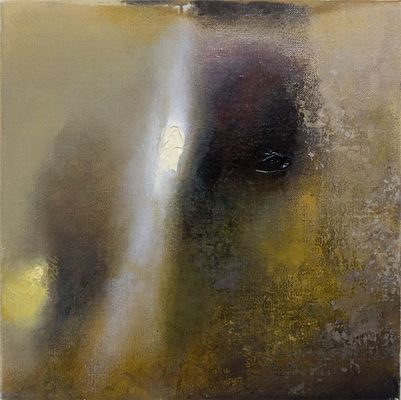
To return to Buckley’s fragment, the first two lines very much evoke how I paint nowadays. As you age, detail diminishes and patches of light become more luminous and float. I feel the most honest way of dealing with this is by smearing the oil paint on the canvas with the fingers and working close-up, blind. Only if the patches coalesce into an approaching image can the work gain a life.
-
Jonathan Walker was born in Melbourne, Australia and brought up on a dairy farm in Gippsland. In the 1970’s he studied painting at RMIT and won the Harold Wright Scholarship to the British Museum, London. During the 1980’s he exhibited at Pinacotheca Gallery, Richmond and had work shown at the NGV and Heidi City Art Gallery. Over the same period he designed the cover for the “Epigenesi” LP by Giancarlo Toniutti, Italy and conducted a mail exchange work with Achim Wollscheid, Germany. The work with artists through the post resulted in an article published in the bicentenary issue of Art and Australia 1988. He showed in artist run spaces such as WestSpace in the 90’s and 2000’s, and until 2012, taught painting at Victoria University, which is where we (Colleen Ahern and Lisa Radford) as organisers of the exhibition, among many others, had the privilege of being his student.
Walker’s knowledge was imparted to students through the careful selection of music, literature, and artists found in books that he himself had ordered for the library. Walker’s strategy was the generosity of sharing his vast knowledge with references specific to each student and their context.
Walker’s paintings share a similar focus and intimacy.
This exhibition presents a small selection of recent paintings alongside a publication that includes Walker’s writing. Observational and analytical, Walker’s work is a type of material notation — the time of day, colour and how it is blended, the both specific and fleeting location of a reflection on lino or the question of whether a chair leg should be included in a painting.
Please join us on Friday August 21 between 6-8pm to celebrate the opening of the exhibition.
Curated by Colleen Ahern and Lisa Radford.
B. Wurtz
Curated by Nic Tammens
March 26 - April 4, 2015
B.Wurtz works from a basement studio in his home on Manhattan’s Lower East Side.
This local fact is attested to by the plastic shopping bags and newsprint circulars that appear in his work. As formal objects, they don’t make loud claims about their origins but nonetheless transmit street addresses and places of business from the bottom of this long thin island. Like plenty of artists, Wurtz is affected by what is local and what is consumed. His work is underpinned by this ethic. It often speaks from a neighborhood or reads like the contents of a hamper:
“BLACK PLUMS $1.29 lb.”
“Food Bazaar”
“USDA Whole Pork Shoulder Picnic 99c lb.”
“RITE AID Pharmacy, with us it’s personal.”
“H. Brickman & Sons.”
“Sweet Yams 59c lb."
Most of the work in this exhibition was made while the artist was in residence at Dieu Donne, a workshop dedicated to paper craft in Midtown. Here Wurtz fabricated assemblages with paper and objects that are relatively lightweight, with the intention that they would be easily transportable to Australia. This consideration isn’t absolute in Wurtz’s work, but was prescriptive for making the current exhibition light and cheap. Packed in two boxes, these works were sent from a USPS post office on the Lower East Side and delivered to North Melbourne by Australia Post.
Wurtz appears courtesy of Metro Pictures, New York.
Thanks to Rob Halverson, Joshua Petherick, Sari de Mallory, Matt Hinkley, Helen Johnson, Fayen d'Evie, Ask Kilmartin, Lisa Radon, Ellena Savage, Yale Union, and "Elizabeth".
John Nixon
"Archive"
December 15 - January 20, 2014
The presentation of John Nixon's archive offered a rare showcase of this extensive collection of the artist's own publications, catalogues, posters, ephemera, editions and more, from the mid 1980s onwards, alongside a selection of his artworks.
Organized by John Nixon, Joshua Petherick and Matt Hinkley.
<a href=http://wfb.public-office.info/artist/john-nixon>All titles by John Nixon
"Habitat"
at Minerva, Sydney (organised by Joshua Petherick and Matt Hinkley)
November 15 - December 20, 2014
Lupo Borgonovo, Janet Burchill & Jennifer McCamley,
Lewis Fidock, HR Giger, Piero Gilardi, Veit Laurent Kurz,
Cinzia Ruggeri, Michael E. Smith, Lucie Stahl, Daniel Weil, Wols
Press Release:
“...It contained seven objects. The slender fluted bone, surely formed for flight, surely from the wing of some large bird. Three archaic circuitboards, faced with mazes of gold. A smooth white sphere of baked clay. An age-blackened fragment of lace. A fingerlength segment of what she assumed was bone from a human wrist, grayish white, inset smoothly with the silicon shaft of a small instrument that must once have ridden flush with the surface of the skin - but the thing’s face was seared and blackened.”
William Gibson, “Count Zero”, 1986
"Autumn Projects Archive"
Curated by Liza Vasiliou
March 6 - March 15, 2014
World Food Books, in conjunction with the Virgin Australia Melbourne Fashion Festival 2014, presented the Autumn Projects archive, consisting of a selection of early examples in Australian fashion with a particular interest in collecting designers and labels from the period beginning in the 1980’s, who significantly influenced the discourse of Australian Fashion.
Curated by Liza Vasiliou, the exhibition provided a unique opportunity to view pieces by designers Anthea Crawford, Barbara Vandenberg, Geoff Liddell and labels CR Australia, Covers, Jag along with early experimental collage pieces by Prue Acton and Sally Browne’s ‘Fragments’ collection, suspended throughout the functioning World Food Books shop in Melbourne.
H.B. Peace
presented by CENTRE FOR STYLE
November 14, 2013
"Hey Blinky, you say chic, I say same"
Anon 2013
H.B. Peace is a clothing collaboration between great friends Blake Barns and Hugh Egan Westland. Their pieces explore the divergences between 'character’ and ‘personality’ in garments....etc
Special Thanks to Joshua Petherick and Matt Hinkley of WFB and Gillian Mears
and a Very Special Thank you to Audrey Thomas Hayes for her shoe collaboration.
Janet Burchill & Jennifer McCamley
"Aesthetic Suicide"
May 10 - June 8, 2013
The first of our occasional exhibitions in the World Food Books office/shop space in Melbourne, "Aesthetic Suicide" presented a body of new and older works together by artists Janet Burchill & Jennifer McCamley, including videos, prints, a wall work, and publications.
During shop open hours videos played every hour, on the hour.
2014, English
Softcover, 88 pages, 13.7 x 20.3 cm
Published by
Semiotext(e) / Los Angeles
The MIT Press / Massachusetts
$28.00 - Out of stock
An incantatory catalog of cultural artifacts either lost to time or never realized.
• A boarder for two years following a national funeral, Mirabeau is removed from the Pantheon and transferred to the cemetery of Clamart when his pornographic novels are discovered • A photograph taken by Hessling on Christmas night, 1943, of a young woman nailed alive to the village gate of Novimgorod; Hessling asks his friend Wolfgang Borchert to develop the film, look at the photograph, and destroy it • The Beautiful Gardener, a picture by Max Ernst, burned by the Nazis—from The Missing Pieces
The Missing Pieces is an incantatory text, a catalog of what has been lost over time and what in some cases never existed. Through a lengthy chain of brief, laconic citations, Henri Lefebvre evokes the history of what is no more and what never was: the artworks, films, screenplays, negatives, poems, symphonies, buildings, letters, concepts, and lives that cannot be seen, heard, read, inhabited, or known about. It is a literary vanitas of sorts, but one that confers an almost mythical quality on the enigmatic creations it recounts—rather than reminding us of the death that inhabits everything humans create.
Lefebvre's list includes Marcel Duchamp's (accdidentally destroyed) film of Man Ray shaving off the Baroness Elsa von Freytag-Loringhoven's pubic hair; the page written by Balzac on his deathbed (lost); Spinoza's Treatise on the Rainbow (thrown into a fire); the final seven meters of Kerouac's original typescript for On the Road (eaten by a dog); the chalk drawings of Francis Picabia (erased before an audience); and the one moment in André Malraux's life in which he exclaimed “I believe, for a minute, I was thinking nothing.” The Missing Pieces offers a treasure trove of cultural and artistic detail and will entertain even those readers not enamored of the void.
Translated by David L. Sweet
2017, English
Softcover, 240 pages, 12.7 x 19.5 cm
Published by
Fitzcarraldo Editions / London
$30.00 - In stock -
A frank and fascinating exploration of race and racial identity, Notes from No Man’s Land: American Essays begins with a series of lynchings and ends with a series of apologies. Eula Biss explores race in America and her response to the topic is informed by the experiences chronicled in these essays – teaching in a Harlem school on the morning of 9/11, reporting from an African American newspaper in San Diego, watching the aftermath of hurricane Katrina from a college town in Iowa, and settling in Chicago’s most diverse neighbourhood.
As Biss moves across the country from New York to California to the Midwest, her essays move across from biblical Babylon to the freedmen’s schools of Reconstruction to post-war white flight. She brings an eclectic education to the page, drawing variously on the Eagles, Laura Ingalls Wilder, James Baldwin, Joan Didion, religious pamphlets, and reality television. These spare, sometimes lyric essays explore the legacy of race in America, artfully revealing in intimate detail how families, schools, and neighbourhood participate in preserving racial privilege.
‘Eula Biss’s elegantly structured essays in Notes from No Man’s Land are delivered with a deceptively quiet insistence that nevertheless leaves the reader shaken. … in a detached, poetic narrative voice that is as mesmerising as it is sure-footed, Biss deftly turns to a consideration of what happened next. … So it is with the rest of this wondrous book. … She begins in one place and confidently leads somewhere unexpected. She picks and worries at the idea of race in America – incarceration, education, social welfare. … Lyrical she may be, but she is also exhilaratingly bold. Notes From No Man’s Land offers an uncompromising interrogation of a troubled land by a writer who refuses what could be her birthright as a white woman … Biss is rare in that she does not treat her own race as the default (the norm from which ‘people of colour’ are somehow deviating). The fact that this in itself is remarkable proves the value of her endeavour.’
— Ellah Allfrey, The Spectator
‘I can’t think of an American writer at work today who matches Eula Biss’s combination of lyrical precision, exhaustive research, timely provocation, and fiercely examined conscience.’
— Maggie Nelson, author of The Argonauts
Eula Biss is the author of The Balloonists, Notes from No Man’s Land: American Essays, which received the Graywolf Press Nonfiction Prize and the National Book Critics Circle Award in Criticism, and On Immunity. Her essays have appeared in The Best American Nonrequired Reading and The Best Creative Nonfiction, as well as in the Believer and Harper’s. Her writing has been supported by fellowships from the Guggenheim Foundation, the Howard Foundation, and the National Endowment for the Arts. Biss holds a BA from Hampshire College and an MFA in Nonfiction Writing from the University of Iowa. She teaches at Northwestern University and lives in Chicago.
2013, English
Hardcover, 112 pages, 25 x 28 cm
Published by
Yale University Press / New Haven
$96.00 - Out of stock
Out of print.
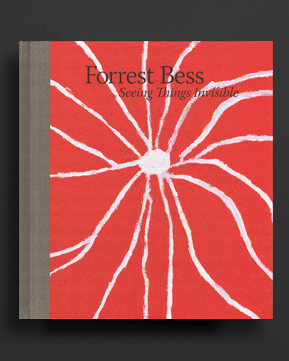
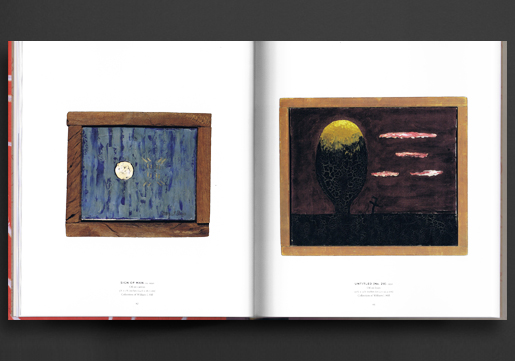
The eccentric visionary artist Forrest Bess (1911-1977) spent most of his life on the Texas coast working as a commercial fisherman. In his spare time, however, he painted prolifically, creating an extraordinary body of work rich with enigmatic symbolism. Bess experienced hallucinations that both frightened and intrigued him, and he incorporated images from these visions into small-scale abstract paintings starting in the mid-1940s. His canvases attracted an underground following, and between 1949 and 1967, Betty Parsons organized six solo exhibitions of Bess's work at her prominent New York City gallery. Since then, the art world has periodically rediscovered his work, most recently through a 2012 Whitney Biennial installation by American sculptor Robert Gober, which further exposed Bess's psychological, medical, and religious theories. Forrest Bess: Seeing Things Invisible is the artist's first museum retrospective with catalogue in the United States and offers a fresh look at Bess's work and a better understanding of this curious and complicated artist.
1969, English
Hardcover, 86 pages, 22 x 26 cm
1st Edition, Out of print title / used / good
Published by
New York Graphic Society / New York
National Collection of Fine Arts - Smithsonian Institution / New York
$45.00 - Out of stock
First edition hardcover catalogue on the work of Milton Avery, published in 1969 by the National Collection of Fine Arts, Smithsonian Institution, New York. Illustrated throughout with examples of Avery's paintings in colour and black and white, accompanied by an introduction by Adelyn D. Breeskin and commemorative essay by Mark Rothko. Includes biography and bibliography.
Milton Clark Avery (March 7, 1885 – January 3, 1965 ) was an American modern painter. Born in Altmar, New York, he moved to Connecticut in 1898 and later to New York City. Avery's work is seminal to American abstract painting—while his work is clearly representational, it focuses on color relations and is not concerned with creating the illusion of depth as most conventional Western painting since the Renaissance has. Avery was often thought of as an American Matisse, especially because of his colorful and innovative landscape paintings. His poetic, bold and creative use of drawing and color set him apart from more conventional painting of his era. Early in his career, his work was considered too radical for being too abstract; when Abstract Expressionism became dominant his work was overlooked, as being too representational.
2018, English / German
Softcover, 182 pages,
Published by
Sternberg Press / Berlin
Künstlerhaus Halle für Kunst & Medien / Graz
$69.00 $40.00 - Out of stock
Edited by Sandro Droschl, Künstlerhaus, Halle für Kunst & Medien
Texts by Christian Egger, Sabine Weier, Tanja Widmann
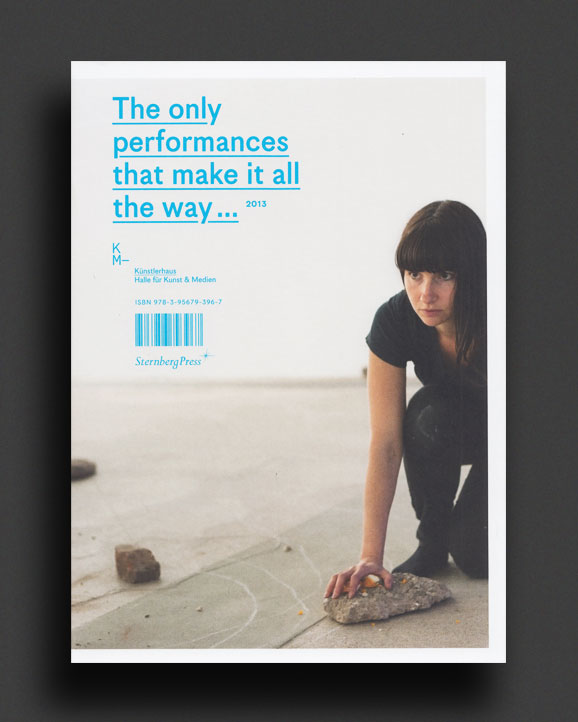
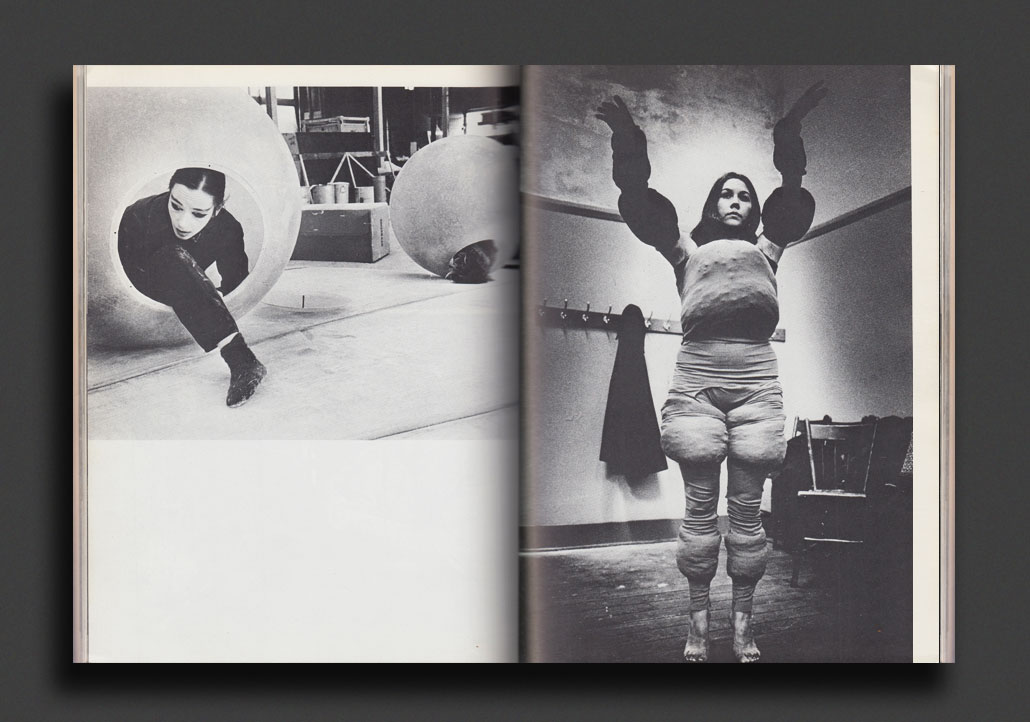
This catalogue is published on the occasion of the two group exhibitions “The only performances that make it all the way...“ and “Yes, but is it performable? Investigations on the Performative Paradox“ which were shown at Künstlerhaus, Halle für Kunst & Medien in 2013 and 2016.
Both exhibitions are united by an activating dialogical confrontation of recent, performative practices and performances dealing with the main works of historical forerunners. Throughout the respective exhibition, two to three works were added, while also parts and objects of the performances remained in the exhibition space, thus the exhibition set-up presented itself as transparent and could be experienced by the audience.
Artists included : Pauline Boudry / Renate Lorenz, Michael Clark + The Fall, Guy de Cointet, Carola Dertnig, Cosey Fanni Tutti, Liz Glynn, Jakob Lena Knebl + das_em, Thomas Kratz, Adam Linder, Michele di Menna, Gina Pane, Claus Richter, Barbara T. Smith
Design by Nik Thoenen and Maia Gusberti
2017, English
Softcover, 368 pages, 13 x 20 cm
Published by
Sternberg Press / Berlin
$42.00 - Out of stock
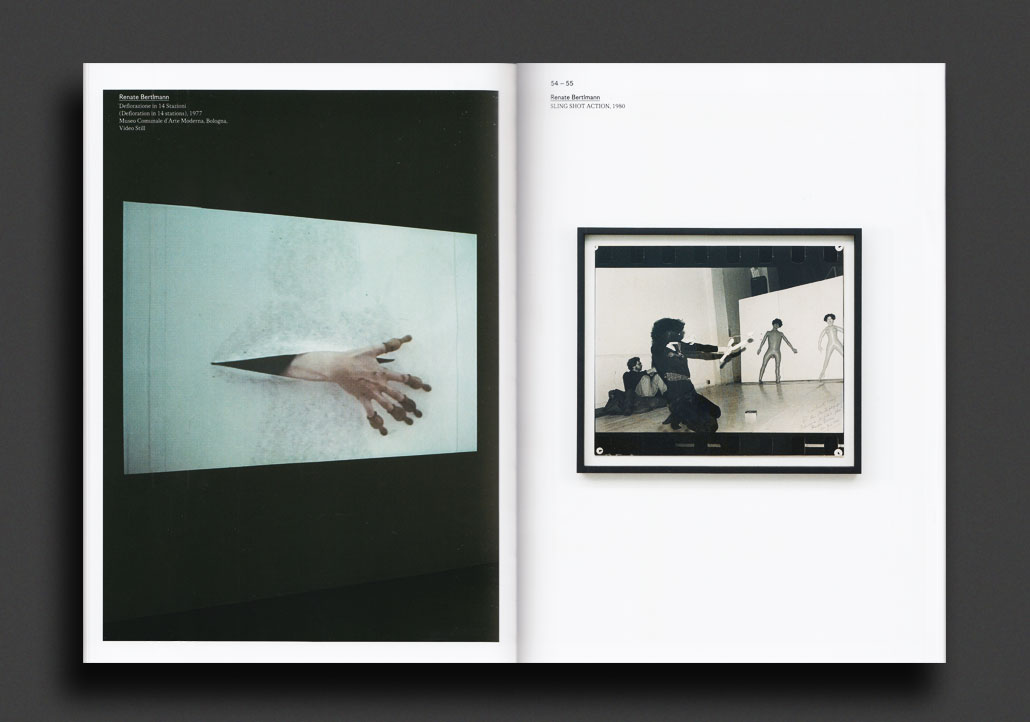
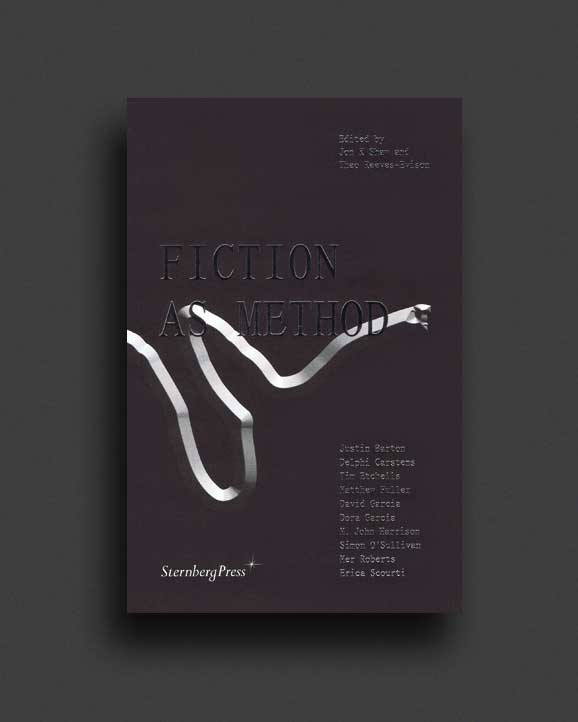
Texts by Justin Barton, Delphi Carstens & Mer Roberts, Tim Etchells, Matthew Fuller, David Garcia, Dora García, M. John Harrison, Simon O’Sullivan, Erica Scourti, Jon K Shaw and Theo Reeves-Evison
See the world through the eyes of a search engine, if only for a millisecond; throw the workings of power into sharper relief by any media necessary; reveal access points to other worlds within our own. In the anthology Fiction as Method, a mixture of new and established names in the fields of contemporary art, media theory, philosophy, and speculative fiction explore the diverse ways fiction manifests, and provide insights into subjects ranging from the hive mind of the art collective 0rphan Drift to the protocols of online self-presentation. With an extended introduction by the editors, the book invites reflection on how fictions proliferate, take on flesh, and are carried by a wide variety of mediums—including, but not limited to, the written word. In each case, fiction is bound up with the production and modulation of desire, the enfolding of matter and meaning, and the blending of practices that cast the existing world in a new light with those that participate in the creation of new openings of the possible.
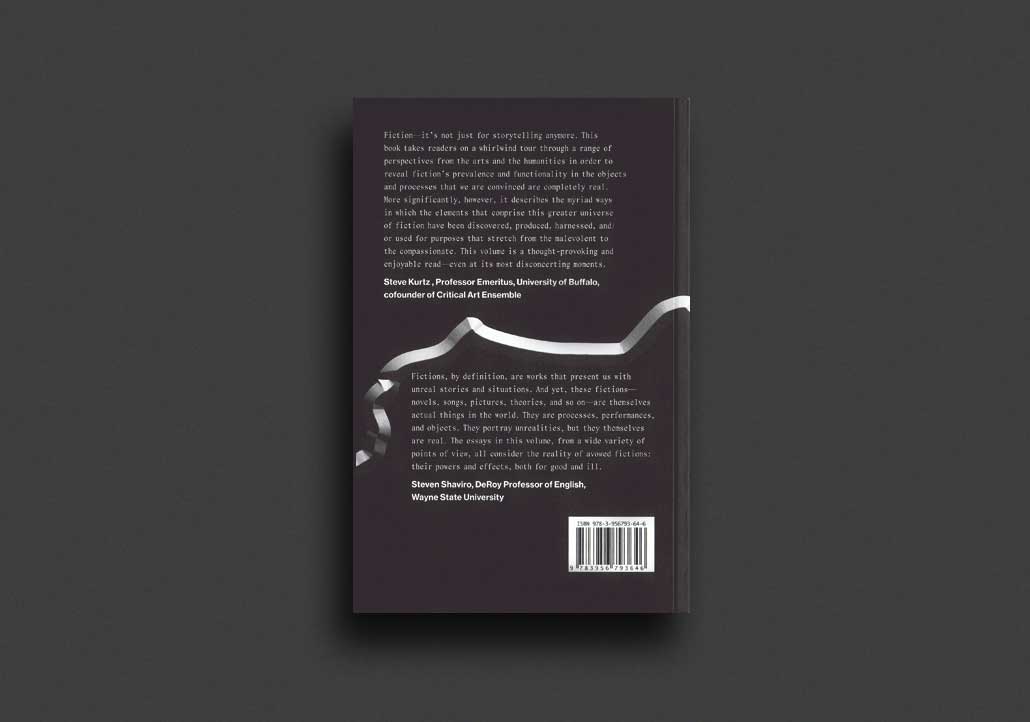
“Fiction—it’s not just for storytelling anymore. This book takes readers on a whirlwind tour through a range of perspectives from the arts and the humanities in order to reveal fiction’s prevalence and functionality in the objects and processes that we are convinced are completely real. More significantly, however, it describes the myriad ways in which the elements that comprise this greater universe of fiction have been discovered, produced, harnessed, and/or used for purposes that stretch from the malevolent to the compassionate. This volume is a thought-provoking and enjoyable read—even at its most disconcerting moments.”
—Steve Kurtz, Professor Emeritus, University of Buffalo, cofounder of Critical Art Ensemble
“Fictions, by definition, are works that present us with unreal stories and situations. And yet, these fictions—novels, songs, pictures, theories, and so on—are themselves actual things in the world. They are processes, performances, and objects. They portray unrealities, but they themselves are real. The essays in this volume, from a wide variety of points of view, all consider the reality of avowed fictions: their powers and effects, both for good and ill.”
—Steven Shaviro, DeRoy Professor of English, Wayne State University
Design by Keith Dodds
2009, English
Softcover, 438 pages, 14.8 x 21 cm
2nd Edition,
Published by
Sternberg Press / Berlin
$60.00 - Out of stock
2015 re-print of this fantastic and hugely popular book from 2009.
Essays by Bart De Baere, Céline Condorelli, Mark Cousins, Wouter Davidts, Jean-Claude Lebensztejn, Andrea Phillips, Jaime Stapleton, Jan Verwoert, Eyal Weizman & Rony Brauman
With works by Michael Asher, Artist Placement Group, Can Altay, Conrad Atkinson, Adam Broomberg & Oliver Chanarin, Lonnie van Brummelen & Siebren de Haan, Banu Cennetoglu, Christopher D’Arcangelo, Martin Beck, Cevdet Erek, Andrea Fraser, Buckminster Fuller, Ryan Gander, Ella Gibbs, Frederick Kiesler, Lucy Kimbell, James Langdon, El Lissitzky, Peter Nadin, The offices of Peter Fend, Coleen Fitzgibbon, Jenny Holzer, Peter Nadin, Richard Prince & Robin Winters,” Gordon Matta-Clark, Antoni Muntadas, Lilly Reich, Support Structure, Rirkrit Tiravanija, Lawrence Weiner, Christopher Williams, Carey Young, a.o.
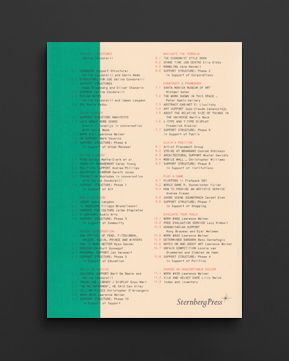
Support Structures is a manual for what bears, sustains, and props, for those things that encourage, care for, and assist; for that which advocates, articulates; for what stands behind, frames, and maintains: it is a manual for those things that give support. While the work of supporting might traditionally appear as subsequent, unessential, and lacking value in itself, this manual is an attempt to restore attention to one of the neglected, yet crucial modes through which we apprehend and shape the world.
Support Structures is a critical enquiry into what constitutes “support,” and documents the collaborative project “Support Structure” by Céline Condorelli and Gavin Wade. While registering and collecting reference projects in a new archive of support structures alongside its ten-phase project, different writers, thinkers, and practitioners were invited from various fields to elaborate on frameworks and work on texts , which form the theoretical backbone of the publication. The collection of contributions offers different possibilities for engaging in this unchartered territory, from propositions to projects, existing systems to ones invented for specific creative processes.
Support Structures offers support through potential methodologies, inspirations and activations for practice, and addresses important questions for art and architecture practices on forms of display, organization, articulation, appropriation, autonomy, and temporariness, and the manifestations of blindness towards them.
Produced in co-production with Support Structure:
Celine Condorelli and Gavin Wade with James Langdon
www.supportstructures.org
Design by James Langdon
2017, English
Softcover, 180 pages, 13.3 x 20 cm
Published by
Sternberg Press / Berlin
$36.00 - Out of stock
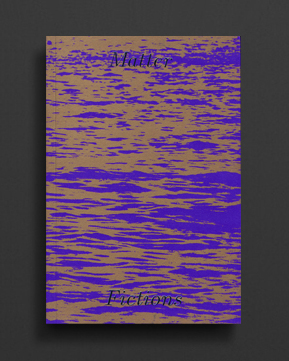
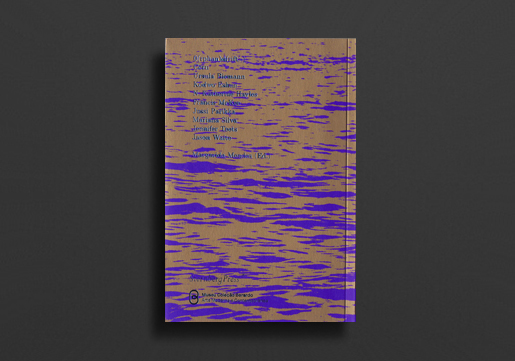
Contributions by 0(rphan)d(rift>), Ursula Biemann, Ccru, Kodwo Eshun, N. Katherine Hayles, Francis McKee, Margarida Mendes, Jussi Parikka, Mariana Silva, Jennifer Teets, Jason Waite
Matter Fictions addresses fiction as a mode of producing reality as well as the significance of matter—animal, vegetable, mineral, hybrid—beyond binaries. Recounting a partial history of our relation with matter, the eponymous exhibition at Museu Coleção Berardo (May 4–August 21, 2016) explored how the crossover between cosmological narratives, spatial revolutions of concrete poetry, and hypertextual and territorial fictions might impact our understanding of human agency in a time that calls for action on climate change and technocratic policies. This companion reader features contributions from participating artists and like-minded writers that address the scope of this project as it exceeds the frame of art and the exhibition into the realm of nonhuman ecologies, ontologies, and temporalities.
The texts are oriented around the four threads that structured the exhibition. The science-fiction approach to the ethics of code and digital space is addressed in the texts by Kodwo Eshun of the Otolith Group, Ccru (Cybernetic culture resource unit), and N. Katherine Hayles, and the excerpt from 0(rphan)d(rift>)’s 1995 novel Cyberpositive. Contemporary psychogeophysics and the material realities of the digital are explored by Jussi Parikka’s text and printed drawings throughout the book based on Joana Escoval’s sculptures on electromagnetic conduction. The hybridity of contemporary bodies and rituals is contextualized by Margarida Mendes’s essay on agribusiness and GMOs. And the critique of technocratic and extractionist environmental policies is represented by Jason Waite’s text on Fukushima and artist statements by Ursula Biemann and Mariana Silva. The contributions from Jennifer Teets and Francis McKee straddle all four threads—Teets’s through a reflection on the ongoing series at Museu Berardo, The World in Which We Occur, which she organizes with Mendes, and McKee’s through a newly commissioned work of fiction.
Copublished with Museu Coleção Berardo
Design by Sena/Luz
2018, English
Softcover, 240 pages, 17 x 24 cm
Published by
Pioneer Works Press / New York
$59.00 - Out of stock
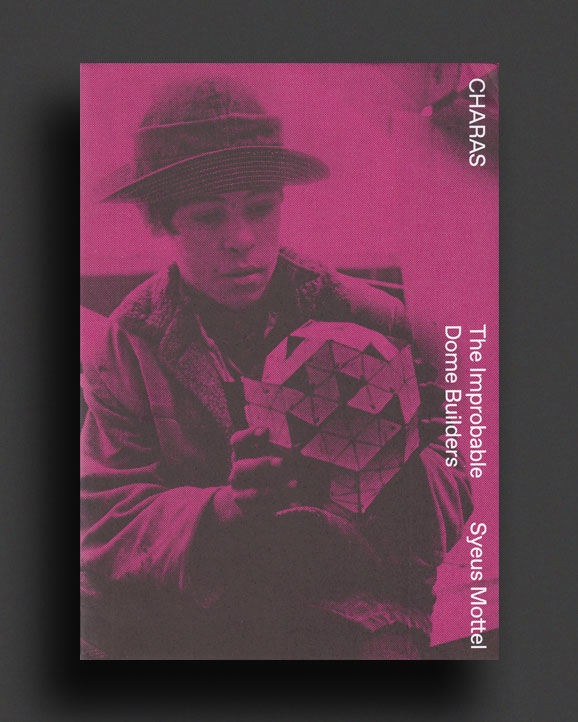
Introduction by Buckminster Fuller. Text by Syeus Mottel. Interview by Ben Estes.
In 1970 a meeting took place in an empty loft on the Lower East Side of Manhattan between R. Buckminster Fuller, the revolutionary architect and inventor of the geodesic dome, and six ex-gang members who called themselves “CHARAS.” After a few hours, they found themselves having an earnest and important conversation, and the young men of CHARAS decided to begin implementing Bucky’s ideas. They wanted to create a program that would develop a sense of community autonomy, reclaim public space and give their lives a newfound sense of purpose. Following a period of intensive study of solid geometry, spherical trigonometry and principles of dome building, all led by Michael Ben-Eli, CHARAS constructed a geodesic dome on a vacant lot in the shadow of the Manhattan Bridge.
Originally published in 1973 and now published in an expanded edition, Charas: The Improbable Dome Builders is an intimate portrait in pictures and words of these dynamic young men and their community. The first half chronicles the trials and tribulations of building the dome, their intensive training, search for funding, accidental fires, holiday potlucks and Bucky visiting to see their incredible work. The second half contains interviews with the members of CHARAS and their friends, sharing personal stories of their time on the streets, as gang leaders, drug addicts, serving time in prison and finding a new sense of self and community through the applied philosophies of Buckminster Fuller. This richly-illustrated edition also includes a new interview with Michael Ben-Eli looking back on the project four decades later.
1971, English
Hardcover (w. dust jacket), 72 pages, 24 x 23 cm
1st Edition, Out of print title / used / good
$45.00 - Out of stock
"Look like Peanut
set to mess with Crazy Joe.
Them two never lets up
hollerin an punchin.
They best friends."
Peanut and Crazy Joe - Manny and Ramon, LeRoi, Clovell and Demetrius Hornby Cole all live in the city. But they have never seen a zoo. Or a museum. Or the inside of a large department store. Their world is bounded by a few blocks.
The street is their playground, survival the name of the game they most often play. They make the rules and break the rules. Together and alone, they sing, dance, fly kites, build and tear down, hassle each other, hide and seek, lose a dog and find a friend. Some may even find themselves.
Ronni Solbert's pictures and prose poems record the universal joys and sorrows of childhood, and find beauty and humor in unexpected places. But the faces she sees and the voices she hears also compel recognition of the odds these children must face in their pursuit of happiness.
Ronni Solbert is a painter, sculptor, and illustrator of some forty children's books from New York City, where this collection of photographs was taken in 1970. An eloquent documentary of children at play in urban, blighted neighborhoods without amenities of playgrounds, and, testimony to the ingenuity of innocent joys of childhood.
"They put up this cement wall
and we wrote
our names on it.
All the kids on the block.
I wrote mine
in three different places.
J-O-H-N,
that's me."
First hardcover 1971 edition of this beautiful photo book. Good with Very Good dust jacket. Ex-libris markings to endpapers.
1972, German
Hardcover, 216 pages, 24.5 x 21.5 cm
1st Edition, Out of print title / used / very good
Published by
Georg Wenderoth Verlag / Kassel
$60.00 $40.00 - Out of stock
documenta - Dokumente 1955 - 1968 (Four International Exhibitions of Modern Art), was published by Georg Wenderoth Verlag, Kassel in 1972. This clothbound hardcover book of texts (by Dieter Westecker, Carl Eberth, Werner Lengemann, Erich Müller) and photographs of the first four documenta exhibitions, is quite a unique publication. Written at the suggestion of former students and collaborators of Documenta initiator Arnold Bode, it does not replace a documenta chronicle or a scientific study of individual facts. On the contrary, the textual and pictorial material is selected from a technical point of view, processed and presented in a comprehensible form to stimulate detailed investigations into the exhibition-presentations. The bulk of the photographic documentation is of visitor reception and interaction with the installations of artworks, including those of Hans Arp, Constantin Brancusi, Lee Bontecou, Victor Pasmore, Marino Marini, Jean Dubuffet, Konrad Klapheck, George Segal, Robert Indiana, Claes Oldenburg, Walter de Maria, Eduardo Paolozzi, Phillip King, Erich Hauser, Ernest Trova, Michelangelo Pistoletto, Carl Andre, William Tucker, Peter Brüning, David Smith, Edward Keinholz, Dan Flavin, Morris Louis, Sol Lewitt, Robert Morris, Frank Stella, Tom Wesselmann, James RosenquisThomas Lenck, Francis Bacon, Horst Antes, Shinkichi Tajiri, Christo, Jackson Pollock, Karel Appel, Bernard Schultze, Otto Herbert Hajek, Jacques Lipchitz, Lynn Chadwick, Paul Delvaux, Helen Frankenthaler, Wassily Kandinsky, Fernand Leger, Max Bill, Joan Miro, Henry Moore, Pablo Picasso, Robert Rauschenberg, Giogio de Chirico, Victor Vasarley, Zoran Music, Giuseppe Capogrossi, and many others.
Texts in German. First and only edition.
Vert Good copy with original dust jacket.
2018, English
Softcover, 208 pages, 21 x 30 cm
Published by
Roma / Amsterdam
The Serving Library / New York
$55.00 $25.00 - In stock -
The ‘Serving Library Annual’ comprises several “bulletins” organised around a theme for an international audience of designers, researchers, writers, and artists. This year’s collection explores how translation is fast becoming a significant site for the negotiation of identities and power dynamics in an increasingly Anglocentric cultural scene. Departing from literature and the visual arts, the issue veers off into mathematics, music, architecture, religion, and more. It is guest co-edited by Italian novelist and translator Vincenzo Latronico and features contributions by Meehan Crist, Philip Ording, Katrina Dodson, Claudia Durastanti, Joseph Grigely, Minae Mizumura, and more.
1984, English
Softcover, 342 pages, 270 x 280 cm
1st Edition, Out of print title / used / average
Published by
U.M.I. Research Press / Michigan
$50.00 - Out of stock
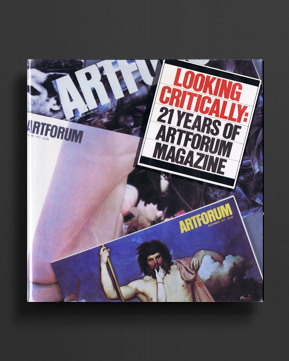
Softcover edition of "LOOKING CRITICALLY: 21 YEARS OF ARTFORUM MAGAZINE", the heavy 342 page volume anthology of the first 21 years of the world's most important modern and art journal. An incredibly valuable collection of art theory.
Edited by Amy Baker Sandback, designed by Roger Gorman and Mary Beath and published in 1984 by U.M.I. Research Press, this dense volume, bound in hardcover to the dimensions of a copy of ARTFORUM, begins with an Ed Kienholz review at the Ferus Gallery from ARTFORUM's June 1962 inaugural issue, and ends with Barbara Kruger reviewing the film "TRON" for the November 1982 issue. An amazing compendium of articles and reviews from the magazine's important first 21 years, featuring contributions by the likes of John Cage, Robert Morris, Kate Steinitz, Henry T. Hopkins, Don Factor, Robert Pincus-Witten, Dennis Adrian, John Coplans, Hilton Kramer, Harold Rosenberg, Henry Geldzahler, John Cage, Walter Hopps, Ed Ruscha, Allan Kaprow, Robert Rosenblum, Dan Flavin, Boris Groys, Sam Wagstaff, Billy Kluver, Lucy R. Lippard, Robert Rosenblum, Roger Shattuck, Ad Reinhardt, Mel Bochner, Andy Warhol, Roy Lichtenstein, Claes Oldenburg, Barbara Rose, Manny Farber, Michael Fried, Robert Morris, Philip Leider, Hollis Frampton, Carl Andre, Richard Serra, Lawrence Alloway, Barbara Kruger, Jane Livingston, Lizzie Borden, Kenneth Baker, Laurie Anderson, Agnes Martin, Cindy Nemser, Sidney Tillim, Annette Michelson, Rosalind Krauss, Jeremy Gilbert-Rolfe, Roberta Smith, Peter Plagens, Peter Schjeldahl, J. Hoberman, Hal Foster, Richard Flood, Carter Ratcliff, Stuart Morgan, Max Kozloff, Donald Kuspit, Dan Graham, Walter De Maria, Komar & Melamid, Edit De Ak, Lawrence Weiner, Kathy Acker, Robert Mapplethorpe, Anselm Kiefer, Thomas McEvilley, Louise Bourgeois, Ingrid Sischy, and too many more to list. Artists featured include: Josef Albers, Richard Tuttle, Jo Baer, Carl Andre, Ant Farm, Hans Arp, Max Bill, Mel Bochner, Alighiero Boetti, Lee Bontecou, Constantin Brancusi, Bertholt Brecht, Richard Avedon, Francis Bacon, Diane Arbus, Michaelangelo Antonioni, Lynda Beglis, Larry Bell, Terry Fox, James Byers, Rober Barry, Marcel Breuer, AA Bronson, Luis Buñel, Daniel Buren, Chris Burden, Joseph Beuys, Anthony Caro, Marcel Broodthaers, John Chamberlain, Paul Cézanne, Marc Chagall, Jean Cocteau, Merce Cunningham, Sonia Delauney, Walter de Maria, Bruce Connor, Jean Dubuffet, Max Ernst, Walker Evans, Dan Flavin, Marcel Duchamp, Albrecht Dürer, Lucio Fontana, Hollis Frampton, Alberto Giacometti, Eva Hesse, Gilbert & George, Philip Glass, John Cage, Nancy Graves, Dan Graham, Robert Grosvenor, Nancy Grossman, Walter Gropius, Hans Haacke, Hairy Who, David Hockney, Douglas Huebler, Jorg Immendorff, Donald Judd, Jasper Johns, Joan Jonas, Allan Kaprow, On Kawara, Ellsworth Kelly, Edward Keinholz, Paul Klee, Alison Knowles, Joseph Kosuth, Brice Marden, Agnes Martin, André Masson, Henri Matisse, Roberto Matta, Sol Lewitt, Roy Lichtenstein, Barbara Kruger, Jannis Kounellis, Markus Lüpertz, El Lissitzky, Rene Magritte, Robert Mapplethorpe, John McCracken, Mario Merz, Robert Morris, Robert Motherwell, Ree Morton, Louise Nevelson, Barnett Newman, Kenneth Noland, Claes Oldenburg, Eduardo Paolozzio, A. R. Penck, Irving Penn, Francis Picabia, Pablo Picasso, Larry Poons, Ken Price, Yvonne Rainer, Robert Rauschenberg, Martial Raysse, Roman Polanski, Jackson Pollock, Steve Reich, Gerrit Rietveld, Alain Robbe-Grillet, Dorothae Rockburne, James Rosenquist, Mark Rothko, Robert Ryman, Lucas Samaras, Kurt Schwitters, Oscar Schlemmer, Richard Serra, Cindy Sherman, David Smith, Robert Smithson, Michael Snow, Robert Venturi, Wolf Vostell, Andy Warhol, Frank Stella, Saul Steinberg, Karlheinz Stockhausen, Bruno Taut, Jean Tinguely, Anne Truitt, Paul Wunderlich, Lawrence Weiner, Louise Bourgeois, Alfred Hitchcock, and so many more.
A Good copy throughout, with cover rubbing and corner bumping. Tightly bound and clean copy internally.
2018, English
Softcover (ring-bound), 102 pages, 19 x 35.2 cm
Published by
Hatje Cantz / Berlin
Pretzel / New York
$90.00 - Out of stock
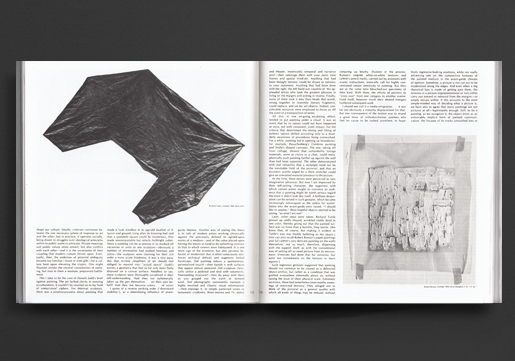
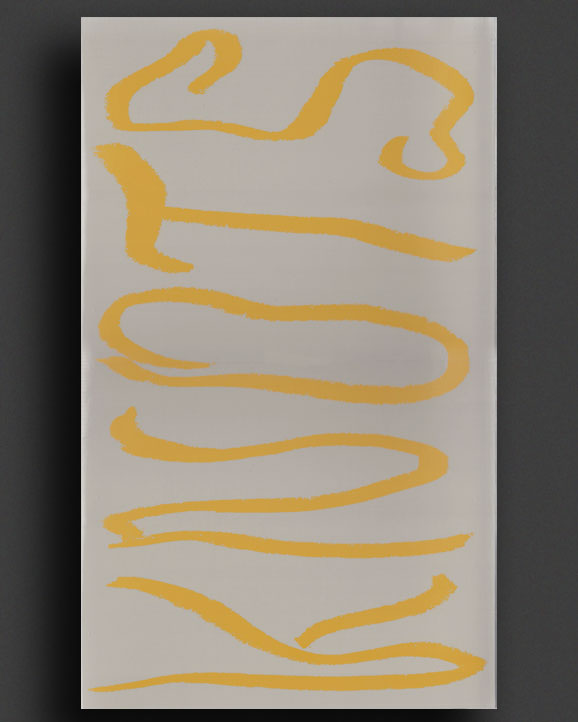
This lavish picture-book surveys Seth Price’s (*1973, Jerusalem) 2009-13 series of Knot Paintings, in which Price unites his signature vacuum-forming technique—an industrial plastic packaging process—with a refined group of painterly techniques that include acrylic and oil, spray-paint, screen-printing, poured resins, and patterned fabrics. Price developed the book’s concept and materials in close collaboration with designer Joseph Logan, yielding an artist's book in which the layout moves from extreme close-up to full views of these rich surfaces, while plastics and metal in the book's binding reflect the materiality of the works.
2010, English
Hardcover (w. dust jacket), 108 pages, 20.2 x 23.8 cm
1st Edition, Out of print title / as new
Published by
Kunsthalle Zürich / Zürich
Kölnischer Kunstverein / Köln
JRP Ringier / Zürich
$180.00 - Out of stock
The out-of-print first monograph dedicated to the artist Seth Price, includes an essay by Michael Newman as well as Price's own critical take on his practice, given in the form of a videotaped conference that structures the presentation of his works.
Through paintings, sculpture, video, and media work, Seth Price (*1973 East Jerusalem, lives and works in New York) underlines the production strategies, dissemination modes, and valuation patterns of art. His appropriationist work, which he rather calls a "redistribution" of (often) pirated materials, disrupts the operations of commodity culture. Among his formats and tactics one should mention the recycling of iconic illustrations, reduplication (from digital to vacuum-formed techniques), the reenactment of projects, and the collaborative actions with Continuous Project (formed in 2003 with Bettina Funcke, Wade Guyton, and Joseph Logan) or other artists.
Published by JRP-Ringier with Kunsthalle Zürich, Zurich and the Kölnischer Kunstverein, Cologne.
1987, German
Hardcover, 236 pages, 21.5 x 27.5 cm
1st Edition, Out of print title / used / very good
Published by
Wolf und Sohn / Münich
$80.00 - Out of stock
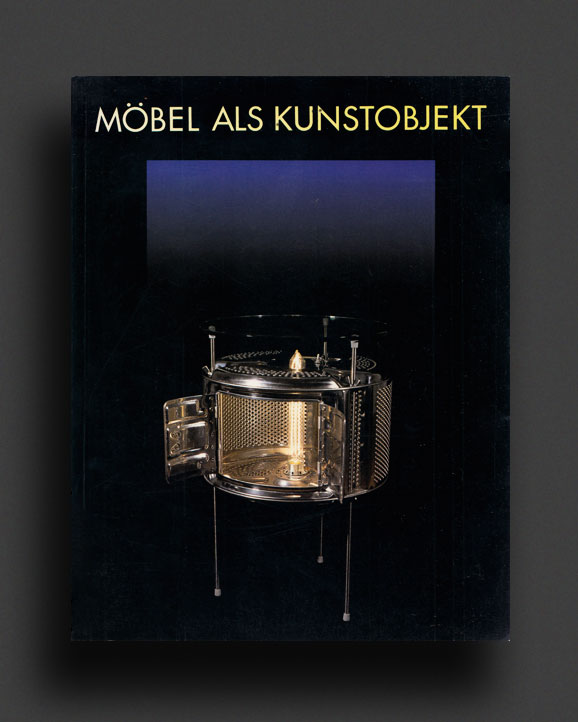
"Möbel als Kunstobjekt" ("Furniture as Art Object") was published in 1987 to accompany an exhibition of the same name held in Munich in 1987-1988.
First hardcover edition.
This heavily researched book profiles an amazing selection of fine artists, designers, and architects that have challenged the field of furniture design and experimented with furniture design forms in their practice. It traces a long history of furniture as a field of endless provocative artistic forms and publishes here alongside essays and timelines, profiles and illustrated examples of work from no less than: Peter Josef Abels, Volker Albus, Sandra Antal, Ron Arad, Richard Artschwager, Elvira Bach, Joachim Bandau, Joseph Beuys, Bernhard Johannes Blume, Rudolf Bott, Heinrich Brummack, Marcel Breuer, Carlo Bugatti, Scott Burton, Tony Cragg, Miles Davies, Otto Dressler, Andre Dubreuil, Charles Eames, Egon Eiermann, Hildegard Erhard, Suzan Etkin, Rainer Fettin, Uwe Fischer/Klaus Achim Heine, Peter Fischli/David Weiss, Wolfgang Flatz, Rupprecht Geiger, Frank Gehry, Jochen Gerz, Walter Gropius, Al Hansen, Christian Hasucha, Wolfgang Hausler, Anne Jud, Donald Judd, Bruno K., Margaret Kelley, Martin Kippenberger, Jurgen Klauke, Imi Knoebel, Lawrence Compton Kolawole, Huub Kortekaas, Shiro Kuramata, Heinz Landes, Wolfgang Laubersheimer, El Lissitzky, Adolf Loos, Inge Mahn, Wasa Marjanov, Peter Monnig, George Nelson, Meret Oppenheim, Aribert von Ostrowski, Bruno Paul, Sarah Pelikan, Gaetano Pesce, Pino Poggi, Gerrit Rietveld, Thomas Ruff, Reiner Ruthenbeck, Denis Santachiara, Berthold Schepers, Karl Friedrich Schinkel, Klaus Schmitt, Ettore Sottsass, Daniel Spoerri, Patricia Maria Staudenhochtl, Stiletto, Axel Stumpf, Gunther Uecker , Timm Ulrichs, Karl Valentin, Hermann Waldenburg, Rupert Walser, Helmut Weber, Herbert Jakob Weinand, Stefan Wewerka, Georg Wirsching, Carl Emanuel Wolff, Bernd Zimmer, Stefan Zwicky... and so many more.
1987, German
Softcover, 236 pages, 21.5 x 27.5 cm
1st Edition, Out of print title / used / very good
Published by
Wolf und Sohn / Münich
$60.00 - Out of stock
"Möbel als Kunstobjekt" ("Furniture as Art Object") was published in 1987 to accompany an exhibition of the same name held in Munich in 1987-1988.
This heavily researched book profiles an amazing selection of fine artists, designers, and architects that have challenged the field of furniture design and experimented with furniture design forms in their practice. It traces a long history of furniture as a field of endless provocative artistic forms and publishes here alongside essays and timelines, profiles and illustrated examples of work from no less than: Peter Josef Abels, Volker Albus, Sandra Antal, Ron Arad, Richard Artschwager, Elvira Bach, Joachim Bandau, Joseph Beuys, Bernhard Johannes Blume, Rudolf Bott, Heinrich Brummack, Marcel Breuer, Carlo Bugatti, Scott Burton, Tony Cragg, Miles Davies, Otto Dressler, Andre Dubreuil, Charles Eames, Egon Eiermann, Hildegard Erhard, Suzan Etkin, Rainer Fettin, Uwe Fischer/Klaus Achim Heine, Peter Fischli/David Weiss, Wolfgang Flatz, Rupprecht Geiger, Frank Gehry, Jochen Gerz, Walter Gropius, Al Hansen, Christian Hasucha, Wolfgang Hausler, Anne Jud, Donald Judd, Bruno K., Margaret Kelley, Martin Kippenberger, Jurgen Klauke, Imi Knoebel, Lawrence Compton Kolawole, Huub Kortekaas, Shiro Kuramata, Heinz Landes, Wolfgang Laubersheimer, El Lissitzky, Adolf Loos, Inge Mahn, Wasa Marjanov, Peter Monnig, George Nelson, Meret Oppenheim, Aribert von Ostrowski, Bruno Paul, Sarah Pelikan, Gaetano Pesce, Pino Poggi, Gerrit Rietveld, Thomas Ruff, Reiner Ruthenbeck, Denis Santachiara, Berthold Schepers, Karl Friedrich Schinkel, Klaus Schmitt, Ettore Sottsass, Daniel Spoerri, Patricia Maria Staudenhochtl, Stiletto, Axel Stumpf, Gunther Uecker , Timm Ulrichs, Karl Valentin, Hermann Waldenburg, Rupert Walser, Helmut Weber, Herbert Jakob Weinand, Stefan Wewerka, Georg Wirsching, Carl Emanuel Wolff, Bernd Zimmer, Stefan Zwicky... and so many more.
1970, Dutch
Softcover, 128 pages, 21 x 27 cm
1st Edition, Out of print title / used / good
Published by
Foton / Amsterdam
$50.00 - Out of stock
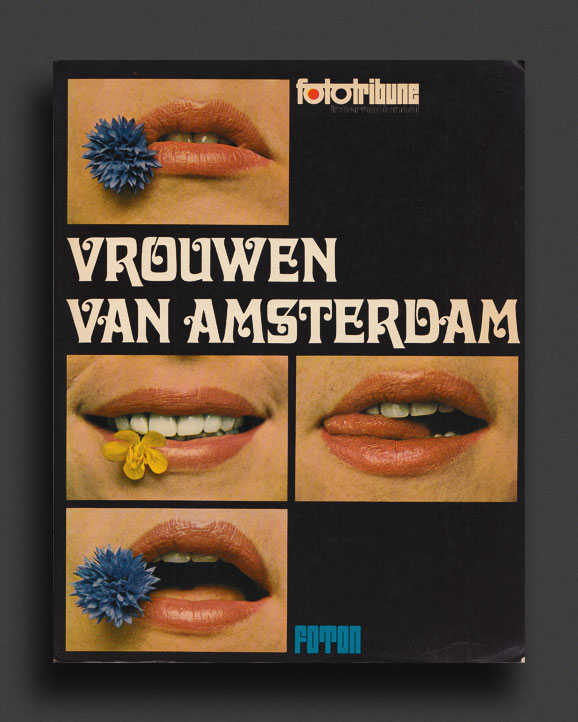
First edition of "Vrouwen Van Amsterdam" published by Foton Amsterdam in 1970 - a folio of photography by Dutch artists celebrating the women of Amsterdam. Features the work of Ed van der Elsken, Mattheus Engel, Claude van Heye, Cor Jaring, Suki Langereis, Henk van der Leeden, Philip Mechanicus, Marian Morris, Hans Pelgrom, Wim Renes, Jutka Rona, Matthijs Schofer, Nico van der Stam, Chris Paul Stapels, Koen Wessing, Marian Zijlstra. Lavishly illustrated throughout in colour and black and white, mostly full bleed images, with opening interviews with each photographer (in Dutch) with Hanneke Meerum Terwogt.
1975, English
Softcover (in hard slipcase), 250 pages, 30 x 22 cm
1st Edition, Out of print title / used / good
Published by
Pan / Sydney
$55.00 - Out of stock
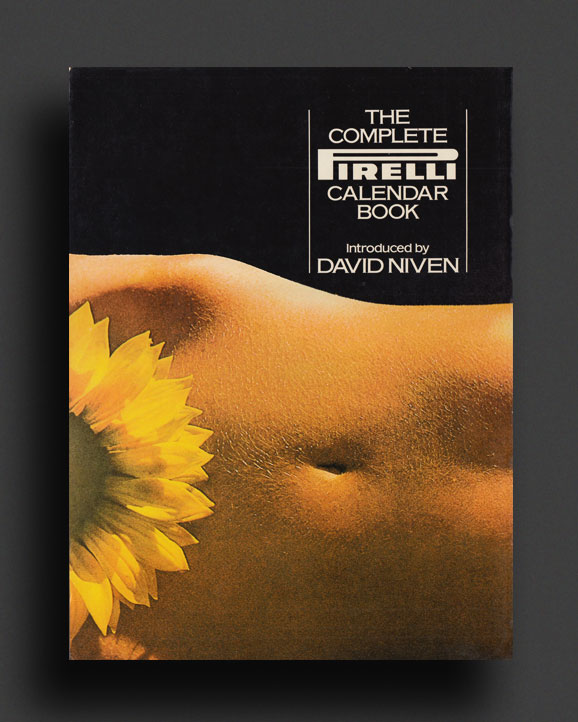
First printing of "The Complete Pirelli Calendar Book", published in 1975 by Pan Publishers of London and Sydney. A truely iconic collection of every month of the famous Pirelli pin-up calendar from 1964 to 1974, featuring the work of prominent commercial photographers and artists across many international locations. 1964 - Robert Freeman in Majorca, Spain; 1965 - Brian Duffy in South of France; 1966 - Peter Knapp in Al Hoceima, Morocco; 1967 (no calendar); 1968 - Harry Peccinotti in Tunisia; 1969 - Harry Peccinotti in Big Sur, California; 1970 - Francis Giacobetti in Paradise Island, The Bahamas; 1971 - Francis Giacobetti in Jamaica; 1972 - Sarah Moon in Villa Les Tilleuls, Paris; 1973 - Brian Duffy/Allen Jones in London; 1974 - Hans Feurer in Seychelles. Introduced by David Niven.
Good copy in Good original hard slipcase. Some age spotting to edges and last blank end papers, not affecting content. Well preserved and tightly bound.
1969, English
Hardcover (clothbound), 240 pages, 21 x 22 cm
1st US Edition, Out of print title / used / good
Published by
Praeger Publishers Inc. / New York
$140.00 - Out of stock
First hardcover US printing of "Art Povera", the now legendary critical/photographic book by Germano Celant (Italian art historian, critic and curator) documenting the so-called "Art Povera /Arte Povera" movement (meaning "poor art", coined by Celant in 1967) and published by Studio Vista, London in 1969 and Praeger, New York, the same year.
Includes profiles of major artists of the movement, including a short text followed by pages of full-page photographs for each artist.
Artists featured: Walter de Maria, Michelangelo Pisteletto, Stephen Kaltenbach, Richard Long, Mario Merz, Douglas Huebler, Joseph Beuys, Eva Hesse, Michael Heizer, Ger van Elk, Lawrence Weiner, Luciano Fabro, Bruce Nauman, Joseph Kosuth, Jan Dibbets, Giovanni Anselmo, Robert Barry, Pier Paolo Calzolari, Dennis Oppenheim, Barry Flanagan, Robert Smithson, Giulio Paolini, Reiner Ruthenbeck, Alighiero Boetti, Giuseppe Penone, Franz Erhard Walther, Hans Haacke, Gilberto Zorio, Robert Morris, Marinus Boezem, Carl Andre, Emilio Prini, Richard Serra.
"This book does not aim at being an objective and general analysis of the phenomenon of art or life, but is rather an attempt to flank (both art and life) as accomplices of the changes and attitudes in the development of their daily becoming. This book does not attempt to be objective since the awareness of objectivity is false consciousness. The book, made up of photographs and written documents, bases its critical and editorial assumptions on the knowledge that criticism and iconographic documents give limited vision and partial perception of artistic work. The book, when it reproduces the documents of artistic work, refutes the linguistic mediation of photography. The book, even though it wants to avoid the logic of consumption, is a consumer's item. ... This book produces a collection of already old material. ... In this book there is no need to reflect in order to seek a unitary and reassuring value, immediately refuted by the the authors themselves, rather there is the necessity to look into it for the changes, limits, precariousness and instability of artistic work." -- text from Celant's introduction "Stating That.
Good ex-library copy with light associated markings, without dust jacket. Otherwise clean, tightly bound Very Good copy throughout (never loaned).
1990, English / German / Italian
Softcover, 88 pages, 24 x 29 cm
Signed copy,
1st Edition, Out of print title / used / very good
Published by
Ikon Galerie / Frankfurt am Main
$600.00 - In stock -
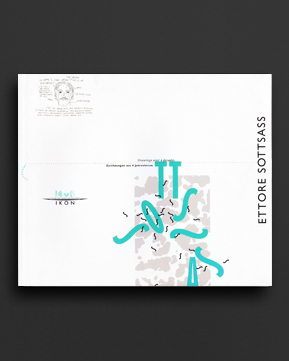
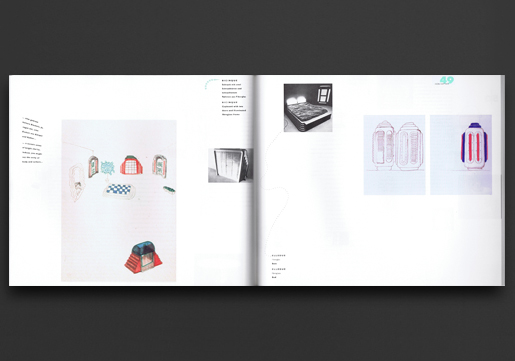
Ettore Sottsass signed copy of this scarce publication from 1990. "Ettore Sottsass : Drawings over 4 decades / Zeichnungen aus 4 Jahrzehnten" was published by Ikon Galerie fur Design-Zeichnungen (Frankfurt am Main), reproducing sketches for furniture, glass, ceramic, jewellery, lighting, interior and architectural projects by influential Italian architect and designer Ettore Sottsass (1917– 2007), which are interspersed throughout the text design of this catalogue, which includes a lively interview by Rainer Krause with the artist (a founder of the Memphis group and Sottsass Associati, as well as designer with Alchimia, Alessi, Olivetti, Arredoluce, Poltronova, Fiorucci, Esprit, Knoll, and many others), text by fellow collaborator and architect/designer/artist Andrea Branzi, and Sottsass's lengthy informal essay presenting his personal view of the sociological significance of the chair.
All texts are in both English and German, with interview also in Italian.
This special copy has been signed by the designer with a large "Sottsass" across the title page in black pen. Not a personalised dedication. A super collectable copy of this already scarce and special book on one of the world's most influential designers and visionaries, who rarely signed a book!
Very Good copy.
2018, English
Hardcover, 268 pages, 22 x 30 cm
Published by
Architectura & Natura / Amsterdam
$87.00 - Out of stock
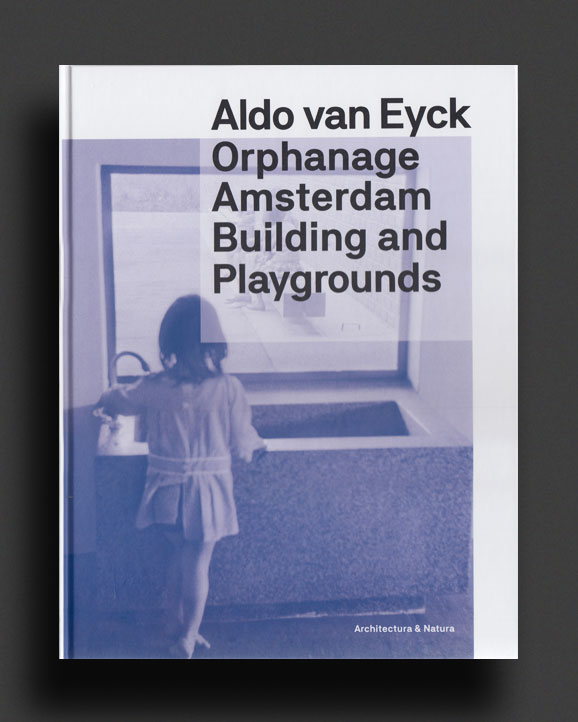
In 1954 there existed in Amsterdam around 200 playgrounds designed by Dutch architect Aldo van Eyck, which in turn gave him the opportunity to design what is considered one of the most significant buildings in modern architectural history: the Amsterdam Orphanage. Completed in 1960, the building has been visited by numerous architects, among them Buckminster Fuller and Louis Kahn. Every detail, material, and colour of Van Eyck’s masterpiece, with its multiple pavilions, picturesque domes, and ingeniously linked patios, can be found in this richly illustrated book edited by Christoph Grafe.
1982, English / German
Hardcover (w. dust jacket), 308 pages, 30.5 x 23 cm
1st Edition, Out of print title / used / good
Published by
The Design Council / London
$80.00 - Out of stock
First edition of "Contemporary Furniture : An International Review 1950 to the Present", edited by Klaus-Juergen Sembach and published in English in 1982. This hardcover volume highlights and reproduces the best in contemporary furniture from the eleven volumes of Gerd Hatje's absolutely invaluable and highly collectable Neue Mobel [New Furniture] series, published between 1951-1971.
Profusely illustrated throughout with 1033 photographs from the original editions, spanning 308 pages, featuring the work of manufacturers, architects, designers: Alvar Aalto, Eero Aarnio, Franco Albini, Gae Aulenti, Mario Bellini, Hans Bellmann, Harry Bertoia, Marcel Breuer, Achille and Pier Castiglione, Norman Cherner, Joe Colombo, Le Corbusier, Robin Day, Charles Eames, Eileen Gray, Walter Gropius, Josef Hoffmann, Arne Jacobsen, Grete Jalk, Pierre Jeanneret, Henning Jensen, Knud Joos, Finn Juhl, Arne Karlsen, Poul Kjaerholm, Kaare Klint, Florence Knoll, Estelle and Erwine Laverne, Oliver Lundquist, Charles Rennie Macintosh, Vico Magistretti, Bruno Mathsson, Paul McCobb, Ludwig Mies van der Rohe, George Nelson, Isamu Noguchi, Verner Panton, Pierre Paulin, Sigurd Persson, Warren Platner, Gio Ponti, Harvey Probber, Robert Probst, Gerrit Rietveld, Jens Risom, Eero Saarinen, Tobia Scarpa, Richard Schultz, Ettore Sottsass, Ilmari Tapiovaara, Hans Wegner, Edward Wormley, Marco Zanuso, Artek, Artemide, B&B Italia, Cassina, Domus, Dunbar Furniture Company, Dux Mobel, Fritz Hansen, Kartell, Knoll International, Van Keppel Green, Laverne, Herman Miller Furniture Company, Olivetti, Pierre Paulin, Harvey Probber, Jens Risom, Steelcase, Thonet, and many more (!)
Contents: introduction, illustrations, classical models reproduced, chairs and armchairs, seating arrangements, sofas, beds; tables, office furniture, cabinets and shelves, nursery and school furniture, index: manufacturers, designers, photographers.
An fantastic furniture resource. Text in English and German.
Good hardcover (ex-libris) with dust jacket.
2013, English
Hardcover (w. dust jacket), 128 pages, 12 x 19 cm
Published by
Metroverlag / Vienna
$33.00 - Out of stock
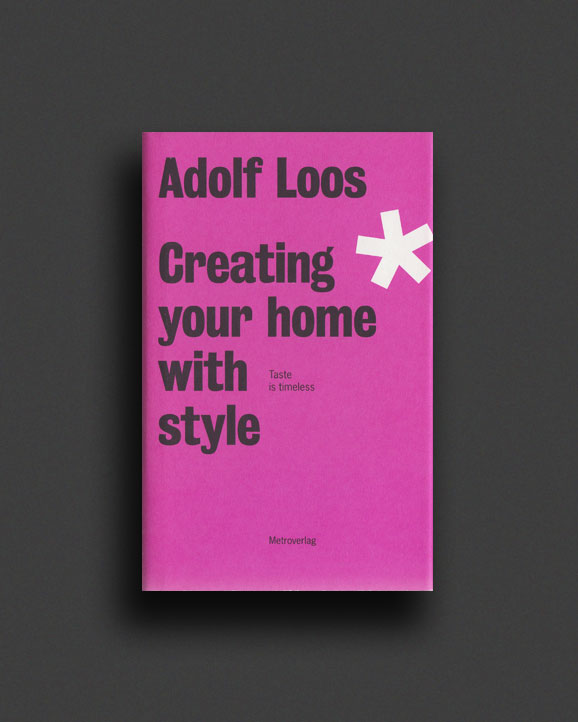
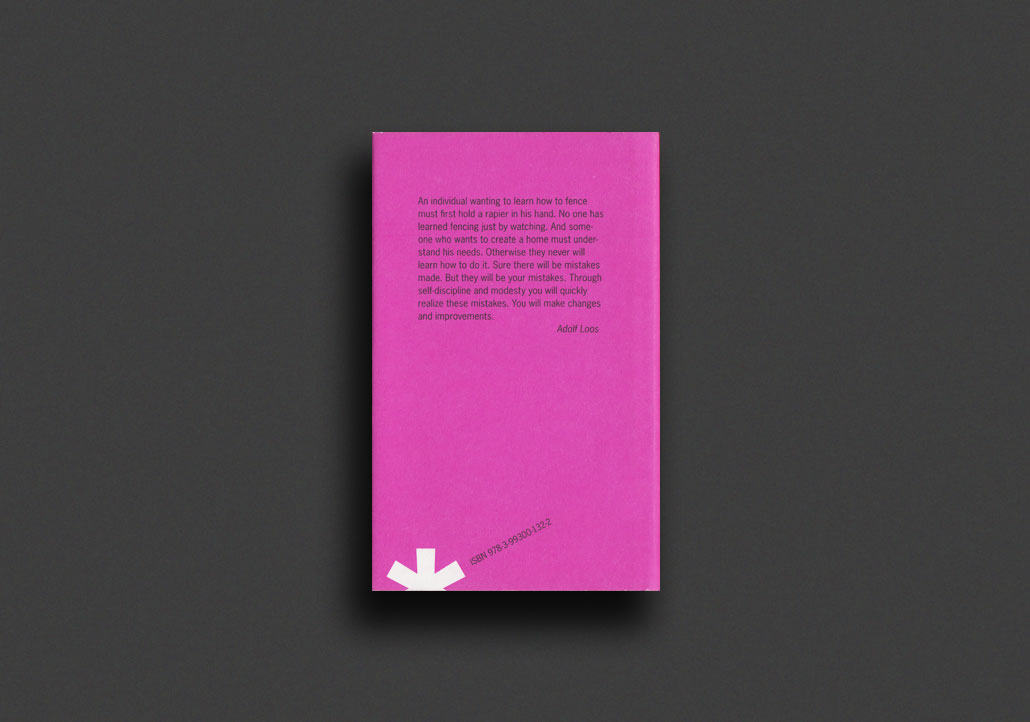
Adolf Loos was an eloquent voice against the squandering of fine materials, ornamentation and unnecessary embellishments. The rational underpinnings of his later assertion that “ornament is crime” first appear in these polemical thrusts at the stylized work of the Viennese secessionists. Few are acquainted with his amusing, incisive, critical and philosophical literary works on applied design and the essence of style in fin de siecle Vienna. Loos often had a radical, yet innovative outlook on life that made him such a nuisance for many of his contemporaries. His provocative musings on an assortment of subjects portray him as a man of many interests, and possessing a keen feel for elegant design still valued today. This publication is now available in English for the first time.