World Food Books' programme is largely produced on Kulin Nation land. We acknowledge the Wurundjeri people of the Kulin Nation as the first and continuing custodians of this land, and pay respect to their Elders past, present, and emerging.
World Food Books is an arts and special interests bookshop in Naarm / Melbourne. Founded in 2010, World Food Books is devoted to the presentation of a rotating, hand-selection of international art, design, literary and counterculture publications with an emphasis on the anti-traditional, the experimental, the avant-garde, the heretic, the marginal.
Presenting new titles alongside rare and out-of-print books, catalogues and journals spanning the fields of modern and contemporary art, design, photography, illustration, film, literature, poetry, cultural theory, philosophy, sexuality, popular and underground culture in its many radical forms, World Food Books wishes to encourage adventurous, thoughtful and open-minded reading, looking, writing, and exchange of publishing and ideas, both current and historical.
As well as our bookshop, located in Melbourne's historical Nicholas Building, all of our inventory is available internationally via our online mail-order service.
World Food Books semi-regularly co-ordinates "Occasions", a programme of exhibits and events at the bookshop and in partnership with other hosts (such as museums and art galleries) that develop out of the activities, relationships and content of the bookshop itself.
World Food Books
The Nicholas Building
37 Swanston Street
Room 5, Level 6
Melbourne 3000
Australia
SHOP HOURS:
Thu–Fri 12–6, Sat 12–5
WEB-SHOP OPEN 24/7
World Food Books
Postal Address:
PO Box 435
Flinders Lane
Victoria 8009
Australia
Art
Theory / Essay
Architecture / Interior
Graphic Design / Typography
Photography
Fashion
Eros
LGBTQ+
Fiction / Poetry
Weird / Speculative / Science Fiction / Horror
Transgressive / Visceral / Abject
Symbolism / Decadence / Fin de siècle
Film / Video
Painting
Sculpture / Installation
Performance / Dance / Theater
Drawing
Sound / Music
Curatorial
Group Shows / Collections
Periodicals
Out-of-print / Rare
Posters / Ephemera / Discs
Signed Books
World Food Books Gift Voucher
World Food Book Bag
Australian Art
Australian Fiction
Australian Science Fiction / Speculative Fiction
Australian Poetry
Australian Photography
Japanese Photography
Conceptual Art
Minimal Art
Dada
'Pataphysics / Oulipo
Fluxus
Concrete Poetry
Pop Art
Surrealism
Arte Povera
Arte Informale / Haute Pâte / Tachism
Nouveau Réalisme / Zero / Kinetic
Situationism / Lettrism
Collage / Mail Art / Xerox Art
Art Brut / Folk / Visionary / Fantastic
Illustration / Graphic Art / Bandes Dessinées
Furniture
Italian Radical Design / Postmodernism
Textiles
Ceramics / Glass
Counterculture
Protest / Revolt
Philosophy
Psychoanalysis
Anthropology
Anarchism
Socialism / Anarchism / Communism / Capitalism
Literary Theory / Semiotics / Language
Feminism / Women's Studies
Gender Studies / Sexuality
Anthropology
Fetishism / BDSM
Drugs / Psychedelia
Crime / Violence
Animal Rights / Veganism
Occult / Esoterica
Ecology / Earth / Alternative Living
Whole Earth / Crafts
All prices in AUD (Australian dollars)
Pick-Ups
Pick-up orders can be collected in our bookshop during opening hours after order date. Please collect any Pick-up orders within 2 weeks of ordering as we have limited storage space. Orders will be released back into stock if not collected within this time. No refunds can be made for pick-ups left un-collected. If you cannot make it in to the bookshop in this time-frame, please choose postage option.
Return Policy
All sales are final. We do accept returns (for refund or exchange) for items received in error. All our orders are packed with special care using heavy-duty padding and cardboard book-mailers or bubble mailers (for smaller books), using reinforcement where required. We cannot take responsibility for any lost, stolen or damaged parcels.
Insurance
Should you wish to insure your package, please email us directly after placing your order and we can organise this at a small extra expense. Although all standard/express tracked packages are very safe and dependable, we cannot take responsibility for any lost, stolen or damaged parcels. We recommend insurance on valuable orders.
Interested in selling your old books, catalogues, journals, magazines, comics, fanzines, ephemera? We are always looking for interesting, unusual and out-of-print books to buy. We only buy books in our fields of interest and specialty, and that we feel we can resell.
We base these prices on desirability, market value, in-print prices, condition and our current stock levels. We offer cash, store credit, and can take stock on consignment. All
about 25% of the price we expect to get when we sell them, or 30% in store credit. We base these prices on desirability, market value, in-print prices, condition and our current stock levels.
Sell your books any day of the week. You can drop them off and return later. If you have a lot of books, we can visit your Sydney home.
We buy books that we feel we can resell. We offer about 25 % of the price we expect to get when we sell them, or 30% in store credit. We base these prices on desirability, market value, in-print prices, condition and our current stock levels.
Philadelphia Wireman
03 August - 01 September, 2018
World Food Books is proud to announce our next Occasion, the first presentation of sculptures by Philadelphia Wireman in Australia.
The Philadelphia Wireman sculptures were found abandoned in an alley off Philadelphia’s South Street on trash night in 1982. Their discovery in a rapidly-changing neighbourhood undergoing extensive renovation, compounded with the failure of all attempts to locate the artist, suggests that the works may have been discarded after the maker’s death. Dubbed the "Philadelphia Wireman" during the first exhibition of this work, in 1985, the maker’s name, age, ethnicity, and even gender remain uncertain. The entire collection totals approximately 1200 pieces, all intricately bound together with tightly-wound heavy-gauge wire (along with a few small, abstract marker drawings, reminiscent both of Mark Tobey and J.B. Murry). The dense construction of the work, despite a modest range of scale and materials, is singularly obsessive and disciplined in design: a wire armature or exoskeleton firmly binds a bricolage of found objects including plastic, glass, food packaging, umbrella parts, tape, rubber, batteries, pens, leather, reflectors, nuts and bolts, nails, foil, coins, toys, watches, eyeglasses, tools, and jewellery.
Heavy with associations—anthropomorphic, zoomorphic, and socio-cultural responses to wrapped detritus—the totemic sculptures by Philadelphia Wireman have been discussed in the context of work created to fulfil the shamanistic needs of alternative religions in American culture. Curators, collectors, and critics have variously compared certain pieces to sculpture from Classical antiquity, Native American medicine bundles, African-American memory jugs, and African fetish objects. Reflecting the artist’s prolific and incredibly focused scavenging impulse, and despite—or perhaps enhanced by—their anonymity, these enigmatic objects function as urban artefacts and arbiters of power, though their origin and purpose is unknown. Philadelphia Wireman, whatever their identity, possessed an astonishing ability to isolate and communicate the concepts of power and energy through the selection and transformation of ordinary materials. Over the course of the past two decades, this collection has come to be regarded as an important discovery in the field of self-taught art and vernacular art.
Presented in collaboration with Fleisher-Ollman Gallery, Philadelphia, and Robert Heald, Wellington.
Susan Te Kahurangi King
02 February - 10 March, 2018
Susan Te Kahurangi King (24 February 1951 - ) has been a confident and prolific artist since she was a young child, drawing with readily available materials - pencils, ballpoint pens and felt-tip markers, on whatever paper is at hand. Between the ages of four and six Susan slowly ceased verbal communication. Her grandparents William and Myrtle Murphy had developed a special bond with Susan so they took on caring responsibilities for extended periods. Myrtle began informally archiving her work, carefully collecting and storing the drawings and compiling scrapbooks. No drawing was insignificant; every scrap of paper was kept. The King family are now the custodians of a vast collection containing over 7000 individual works, from tiny scraps of paper through to 5 meter long rolls.
The scrapbooks and diaries reveal Myrtle to be a woman of great patience and compassion, seeking to understand a child who was not always behaving as expected. She encouraged Susan to be observant, to explore her environment and absorb all the sights and sounds. Myrtle would show Susan’s drawings to friends and people in her community that she had dealings with, such as shopkeepers and postal workers, but this was not simply a case of a grandmother’s bias. She recognised that Susan had developed a sophisticated and unique visual language and sincerely believed that her art deserved serious attention.
This was an unorthodox attitude for the time. To provide some context, Jean Dubuffet coined the term Art Brut in 1945 to describe work created by self-taught artists – specifically residents of psychiatric institutions and those he considered to be visionaries or eccentrics. In 1972 Roger Cardinal extended this concept by adopting the term Outsider Art to describe work made by non-academically trained artists operating outside of mainstream art networks through choice or circumstance. Susan was born in Te Aroha, New Zealand in 1951, far from the artistic hubs of Paris and London that Dubuffet and Cardinal operated in. That Myrtle fêted Susan as a self-taught artist who deserved to be taken seriously shows how progressive her attitudes were.
Susan’s parents Doug and Dawn were also progressive. Over the years they had consulted numerous health practitioners about Susan’s condition, as the medical establishment could not provide an explanation as to why she had lapsed into silence. Dawn educated herself in the field of homeopathy and went on to treat all twelve of her children using these principles – basing prescriptions on her observations of their physical, mental and emotional state.
Doug was a linguist with an interest in philosophy who devoted what little spare time he had to studying Maori language and culture. To some extent their willingness to explore the fringes of the mainstream made them outsiders too but it was their commitment to living with integrity and their respect for individuality that ensured Susan’s creativity was always encouraged.
Even though Susan’s family supported her artistic pursuits, some staff in schools and hospitals saw it as an impediment to her assimilation into the community and discouraged it in a variety of ways. Her family was not always aware of this and therefore did not fully understand why Susan stopped drawing in the early 1990s. However, rather than dwell on the challenges that Susan faced in pursuit of her artistic practice, they prefer to highlight her achievements. In 2008 Susan began drawing again in earnest, after an almost 20 year interruption, and her work is now shown in galleries around the world.
Susan grew up without television and has been heavily influenced by the comics she read as a child. She is absolutely fearless in the appropriation of recognizable characters, such as Donald Duck and Mickey Mouse, in her work. She twists their limbs, contorts their faces, compresses them together, blends them into complex patterned backgrounds - always imbuing them with an incredible energy. Although Susan often used pop culture characters in her work they are not naive or childlike. These are drawings by a brilliant self-taught artist who has been creating exceptional work for decades without an audience in mind.
Mladen Stilinović
"Various Works 1986 - 1999"
02 February 16 - September 10, 2016
Various works 1986 - 1999, from two houses, from the collections of John Nixon, Sue Cramer, Kerrie Poliness, Peter Haffenden and Phoebe Haffenden.
Including: Geometry of Cakes (various shelves), 1993; Poor People’s Law (black and white plate), 1993; White Absence (glasses, ruler, set square, silver spoon, silver ladel with skin photograph and wooden cubes), 1990-1996; Exploitation of the Dead (grey and red star painting, wooden painting, black spoon with red table, red plate), 1984-1990; Money and Zeros (zero tie, paintings made for friends in Australia (Sue, John, Kerrie), numbers painting), 1991-1992; Words - Slogans (various t-shirts) - “they talk about the death of art...help! someone is trying to kill me”, “my sweet little lamb”, “work is a disease - Karl Marx”; Various artist books, catalogues, monographs, videos; Poster from exhibition Insulting Anarchy; "Circular" Croatian - Australian edition; Artist book by Vlado Martek (Dostoyevsky); more.
Thanks to Mladen Stilinović and Branka Stipančić.
Jonathan Walker
Always Will Need To Wear Winter Shirt Blue + Ochre Small Check Pattern
21 August - 21 September, 2015
Untitled
I am not a great reader of poetry but I always return to the work of Melbourne poet, Vincent Buckley (1925- 1988). Perhaps I find his most tantalising piece to be not a finished poem but a fragment left on a scrap of paper discovered on his desk after the poet’s death.
The poetry gathers like oil
In the word-core, and spreads
It has its music meet,
Its music is in movement.
This fragment is more the shell left behind from a volatile thought than a finished poem. I find the last two lines honest but awkward whereas the first two lines work like an arrow. Most likely he could not find a resolution so it was left. Still, in its present form, it remains an eloquent testimony to the ultimate failure of a medium to express mobile thought and sensation, in Buckley’s case, through verbal language. It’s an important matter because this is something all artists have to deal with regardless of the medium.
I have never written a poem, however, I am forever copying fragments from books on paper scraps in a vain effort to fix certain notions in my head. At first, they function as bookmarks that are sometimes returned to when I open the book. But before long, as they accumulate, they fall out littering the table interspersed with A4 photocopies, bills, books and medications.
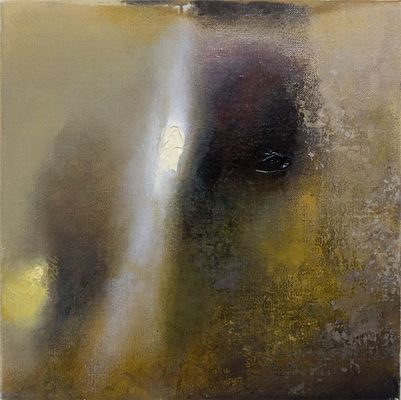
To return to Buckley’s fragment, the first two lines very much evoke how I paint nowadays. As you age, detail diminishes and patches of light become more luminous and float. I feel the most honest way of dealing with this is by smearing the oil paint on the canvas with the fingers and working close-up, blind. Only if the patches coalesce into an approaching image can the work gain a life.
-
Jonathan Walker was born in Melbourne, Australia and brought up on a dairy farm in Gippsland. In the 1970’s he studied painting at RMIT and won the Harold Wright Scholarship to the British Museum, London. During the 1980’s he exhibited at Pinacotheca Gallery, Richmond and had work shown at the NGV and Heidi City Art Gallery. Over the same period he designed the cover for the “Epigenesi” LP by Giancarlo Toniutti, Italy and conducted a mail exchange work with Achim Wollscheid, Germany. The work with artists through the post resulted in an article published in the bicentenary issue of Art and Australia 1988. He showed in artist run spaces such as WestSpace in the 90’s and 2000’s, and until 2012, taught painting at Victoria University, which is where we (Colleen Ahern and Lisa Radford) as organisers of the exhibition, among many others, had the privilege of being his student.
Walker’s knowledge was imparted to students through the careful selection of music, literature, and artists found in books that he himself had ordered for the library. Walker’s strategy was the generosity of sharing his vast knowledge with references specific to each student and their context.
Walker’s paintings share a similar focus and intimacy.
This exhibition presents a small selection of recent paintings alongside a publication that includes Walker’s writing. Observational and analytical, Walker’s work is a type of material notation — the time of day, colour and how it is blended, the both specific and fleeting location of a reflection on lino or the question of whether a chair leg should be included in a painting.
Please join us on Friday August 21 between 6-8pm to celebrate the opening of the exhibition.
Curated by Colleen Ahern and Lisa Radford.
B. Wurtz
Curated by Nic Tammens
March 26 - April 4, 2015
B.Wurtz works from a basement studio in his home on Manhattan’s Lower East Side.
This local fact is attested to by the plastic shopping bags and newsprint circulars that appear in his work. As formal objects, they don’t make loud claims about their origins but nonetheless transmit street addresses and places of business from the bottom of this long thin island. Like plenty of artists, Wurtz is affected by what is local and what is consumed. His work is underpinned by this ethic. It often speaks from a neighborhood or reads like the contents of a hamper:
“BLACK PLUMS $1.29 lb.”
“Food Bazaar”
“USDA Whole Pork Shoulder Picnic 99c lb.”
“RITE AID Pharmacy, with us it’s personal.”
“H. Brickman & Sons.”
“Sweet Yams 59c lb."
Most of the work in this exhibition was made while the artist was in residence at Dieu Donne, a workshop dedicated to paper craft in Midtown. Here Wurtz fabricated assemblages with paper and objects that are relatively lightweight, with the intention that they would be easily transportable to Australia. This consideration isn’t absolute in Wurtz’s work, but was prescriptive for making the current exhibition light and cheap. Packed in two boxes, these works were sent from a USPS post office on the Lower East Side and delivered to North Melbourne by Australia Post.
Wurtz appears courtesy of Metro Pictures, New York.
Thanks to Rob Halverson, Joshua Petherick, Sari de Mallory, Matt Hinkley, Helen Johnson, Fayen d'Evie, Ask Kilmartin, Lisa Radon, Ellena Savage, Yale Union, and "Elizabeth".
John Nixon
"Archive"
December 15 - January 20, 2014
The presentation of John Nixon's archive offered a rare showcase of this extensive collection of the artist's own publications, catalogues, posters, ephemera, editions and more, from the mid 1980s onwards, alongside a selection of his artworks.
Organized by John Nixon, Joshua Petherick and Matt Hinkley.
<a href=http://wfb.public-office.info/artist/john-nixon>All titles by John Nixon
"Habitat"
at Minerva, Sydney (organised by Joshua Petherick and Matt Hinkley)
November 15 - December 20, 2014
Lupo Borgonovo, Janet Burchill & Jennifer McCamley,
Lewis Fidock, HR Giger, Piero Gilardi, Veit Laurent Kurz,
Cinzia Ruggeri, Michael E. Smith, Lucie Stahl, Daniel Weil, Wols
Press Release:
“...It contained seven objects. The slender fluted bone, surely formed for flight, surely from the wing of some large bird. Three archaic circuitboards, faced with mazes of gold. A smooth white sphere of baked clay. An age-blackened fragment of lace. A fingerlength segment of what she assumed was bone from a human wrist, grayish white, inset smoothly with the silicon shaft of a small instrument that must once have ridden flush with the surface of the skin - but the thing’s face was seared and blackened.”
William Gibson, “Count Zero”, 1986
"Autumn Projects Archive"
Curated by Liza Vasiliou
March 6 - March 15, 2014
World Food Books, in conjunction with the Virgin Australia Melbourne Fashion Festival 2014, presented the Autumn Projects archive, consisting of a selection of early examples in Australian fashion with a particular interest in collecting designers and labels from the period beginning in the 1980’s, who significantly influenced the discourse of Australian Fashion.
Curated by Liza Vasiliou, the exhibition provided a unique opportunity to view pieces by designers Anthea Crawford, Barbara Vandenberg, Geoff Liddell and labels CR Australia, Covers, Jag along with early experimental collage pieces by Prue Acton and Sally Browne’s ‘Fragments’ collection, suspended throughout the functioning World Food Books shop in Melbourne.
H.B. Peace
presented by CENTRE FOR STYLE
November 14, 2013
"Hey Blinky, you say chic, I say same"
Anon 2013
H.B. Peace is a clothing collaboration between great friends Blake Barns and Hugh Egan Westland. Their pieces explore the divergences between 'character’ and ‘personality’ in garments....etc
Special Thanks to Joshua Petherick and Matt Hinkley of WFB and Gillian Mears
and a Very Special Thank you to Audrey Thomas Hayes for her shoe collaboration.
Janet Burchill & Jennifer McCamley
"Aesthetic Suicide"
May 10 - June 8, 2013
The first of our occasional exhibitions in the World Food Books office/shop space in Melbourne, "Aesthetic Suicide" presented a body of new and older works together by artists Janet Burchill & Jennifer McCamley, including videos, prints, a wall work, and publications.
During shop open hours videos played every hour, on the hour.
2017, English / German
Softcover, 96 pages, 11.5 x 18 cm
Published by
Sternberg Press / Berlin
Kunsthalle Bern / Bern
$18.00 - Out of stock
“The idea behind Donnerstag was to insist on the difference between good art and bad art. I am aware of how anachronistic that sounds and how quickly it evokes the image of an old critic-pontiff wagging his authoritarian pointer finger. But even that image is founded in a misunderstanding: the caricaturesque exaggeration of the critic’s voice as dictatorial. But it’s really nothing more than that very voice. And it pronounces a judgment that is not juridical, but ideally worth nothing more than the argument at its core. It’s far more authoritarian and antidemocratic to deny a public voice the act of judgment and concede to a postheroically styled art writer nothing more than the task of pointing at something. […] Whoever just leaves it at that has also parted ways with any hope of open rivalry between arguments.” —Annika Bender
This book is an adaptation of Annika Bender’s lecture “Jump! You Fuckers!” which was presented at Kunsthalle Bern in the context of a series on overproduction and ambivalence in contemporary art. Annika Bender was one of the pseudonyms of artists Dominic Osterried and Steffen Zillig, who wrote the blog Donnerstag (now discontinued) under her name. To make the criticism she proposed possible, and make public its conditions and inherent contradictions—as well as articulate the reasons for her disappearance—it proved necessary to confer Bender to the archive.
Afterword by Hannes Loichinger
Schriftenreihe by Kunsthalle Bern
Edited by Valérie Knoll and Hannes Loichinger
Design by HIT
2017, English / German
Softcover, 64 pages, 11.5 x 18 cm
Published by
Sternberg Press / Berlin
Kunsthalle Bern / Bern
$18.00 - Out of stock
The “economization of art” began to take shape in the wake of the crisis of capital in 2009. The shifts that occurred in the art field during this time were accompanied by explicit critique and academic analysis that aimed to make the genesis of these transformations comprehensible. In this book, first delivered as a lecture at Kunsthalle Bern in April 2016, Diedrich Diederichsen follows Marx’s labor theory of value and counters the symbolic economies dominating the art field, as well as economic exceptionalism or calculation, with systems of recording and reading out. Expanded to include the sphere of individual aesthetic experience, these systems are not formulated as solipsism, or in terms of purposefulness, but as a means to compare relations within the productivity of open and incalculable connectivity, relations that allow aesthetic experience to be read out as the liquefied labor and lifetime of concrete others.
(Over)production and Value takes up considerations that connect Diederichsen’s previous writings, from On (Surplus) Value in Art (Sternberg Press, 2008) to Körpertreffer: Zur Ästhetik der nachpopulären Künste (Suhrkamp, 2017).
Publication series by Kunsthalle Bern, edited by Valérie Knoll and Hannes Loichinger
Design by HIT
2016, English
Softcover, 128 pages, 12.8 x 19.7 cm
Published by
Sternberg Press / Berlin
$46.00 - Out of stock
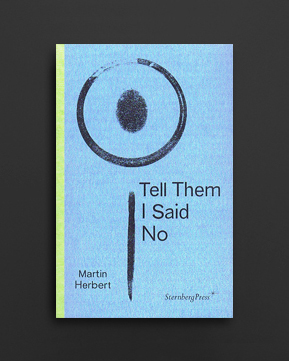
This collection of essays by Martin Herbert considers various artists who have withdrawn from the art world or adopted an antagonistic position toward its mechanisms. A large part of the artist’s role in today’s professionalized art system is being present. Providing a counterargument to this concept of self-marketing, Herbert examines the nature of retreat, whether in protest, as a deliberate conceptual act, or out of necessity. By illuminating these motives, Tell Them I Said No offers a unique perspective on where and how the needs of the artist and the needs of the art world diverge. Essays on Lutz Bacher, Stanley Brouwn, Christopher D’Arcangelo, Trisha Donnelly, David Hammons, Agnes Martin, Cady Noland, Laurie Parsons, Charlotte Posenenske, and Albert York.
Martin Herbert is a writer and critic living in Berlin. He is associate editor of ArtReview and writes for international art journals. Previous books include The Uncertainty Principle (2014) and Mark Wallinger (2011).
Design by Fraser Muggeridge studio
2017, English
Softcover, 204 pages, 14 x 20.5 cm
Published by
Sandberg Instituut / Amsterdam
Sternberg Press / Berlin
$29.00 - Out of stock
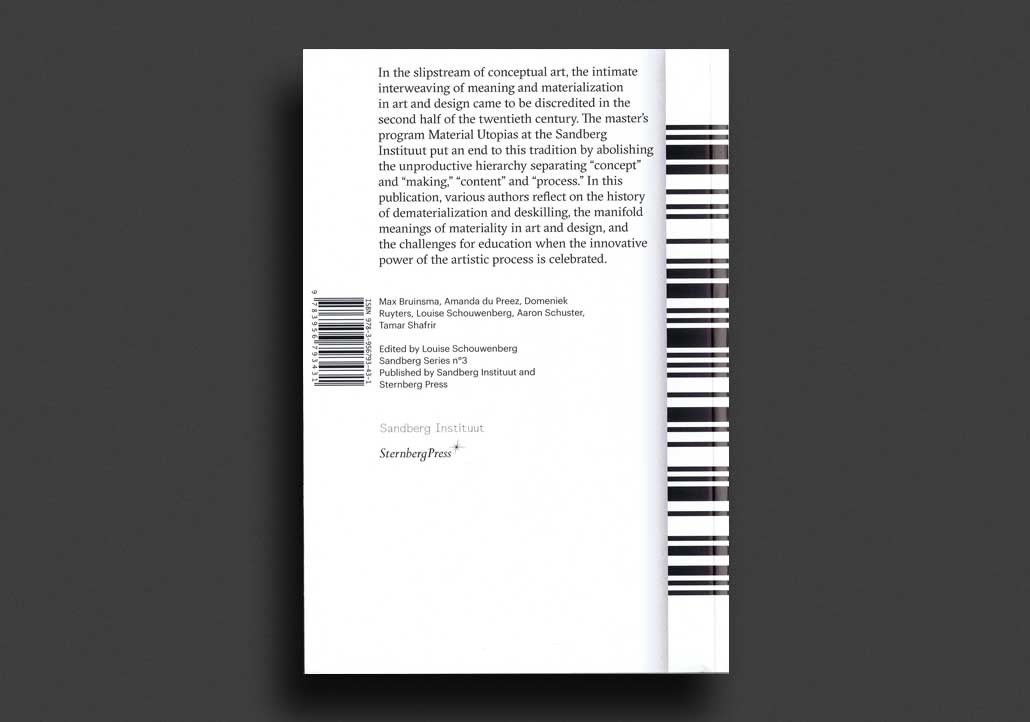
Texts by Max Bruinsma, Amanda du Preez, Domeniek Ruyters, Louise Schouwenberg, Aaron Schuster, Tamar Shafrir
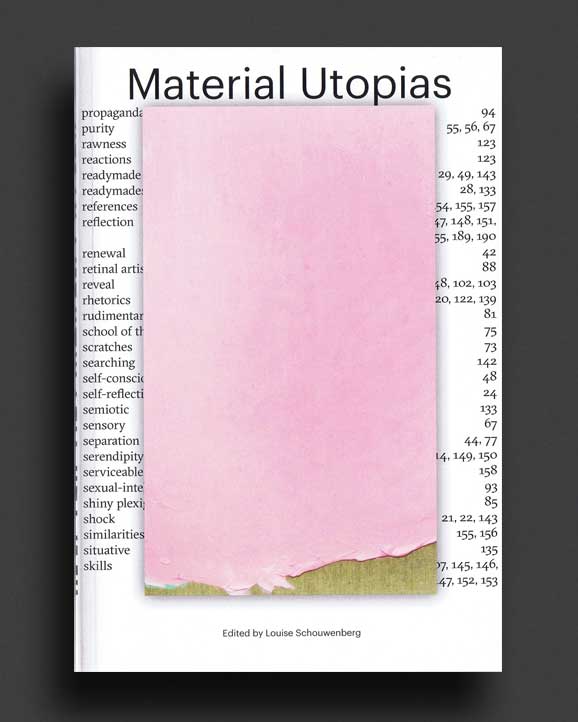
In the slipstream of conceptual art, the intimate interweaving of meaning and materialization in art and design came to be discredited in the second half of the twentieth century. The master’s program Material Utopias at the Sandberg Instituut put an end to this tradition by abolishing the unproductive hierarchy separating “concept” and “making,” “content” and “process.” In this publication, various authors reflect on the history of dematerialization and deskilling, the manifold meanings of materials in art and design, and the challenges for education when the innovative power of the artistic process is celebrated.
Sandberg Series n°3
Copublished with Sandberg Instituut
Design by Anja Groten
2017, English
Softcover, 292 pages, 14 x 20.5 cm
Published by
Sternberg Press / Berlin
Sandberg Instituut / Amsterdam
$29.00 - Out of stock
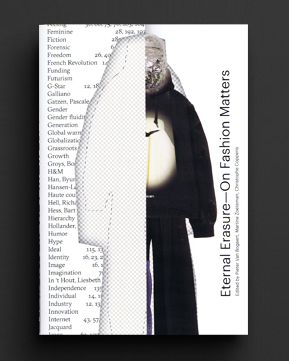
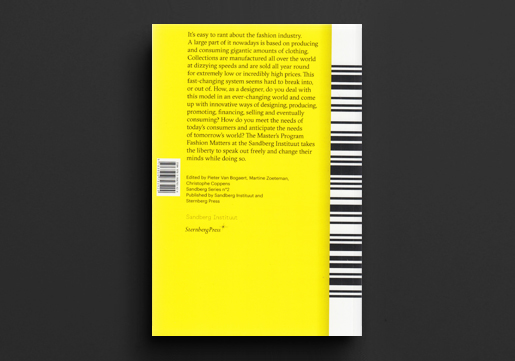
Contributions by Madeline Schwartzman, Javier Barcala, Christina Binkley, Raïsa Verhaegen, Timo Rissanen, Bradley Quinn, José Teunissen, Pauline van Dongen, Elisa Van Joolen, Liesbeth in ‘t Hout, Jurgen Bey, and the students of Fashion Matters at Sandberg Instituut
It’s easy to rant about the fashion industry. Nowadays, a large part of it is based on producing and consuming gigantic amounts of clothing. Collections are manufactured all over the world at dizzying speeds and are sold all year round for extremely low or incredibly high prices. This fast-changing system seems hard to break into, or out of. How, as a designer, do you deal with this model in an ever-changing world and come up with innovative ways of designing, producing, promoting, financing, selling, and eventually consuming? How do you meet the needs of today’s consumers and anticipate the needs of tomorrow’s world? The masters program Fashion Matters at the Sandberg Instituut takes the liberty of addressing these issues.
Sandberg Series n°2
Copublished between Sternberg Press and Sandberg Instituut, Amsterdam
Design by Anja Groten
2017, English
Softcover, 204 pages, 14 x 20.5 cm
Published by
Sandberg Instituut / Amsterdam
Sternberg Press / Berlin
$29.00 - Out of stock
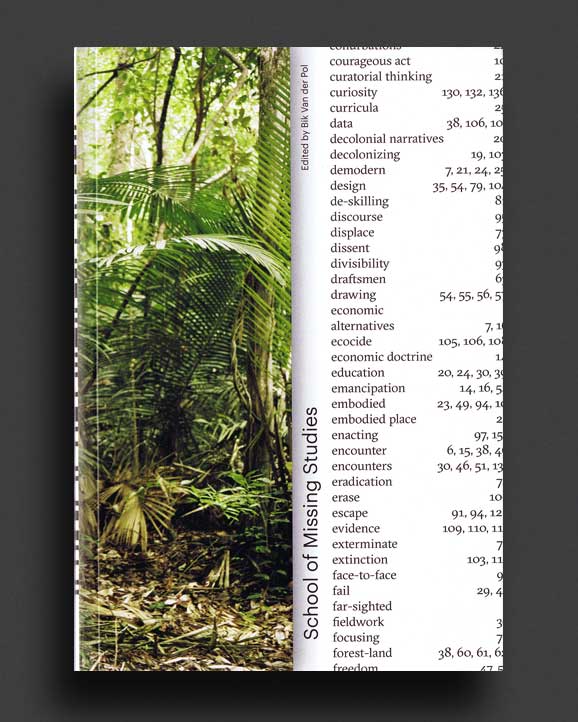
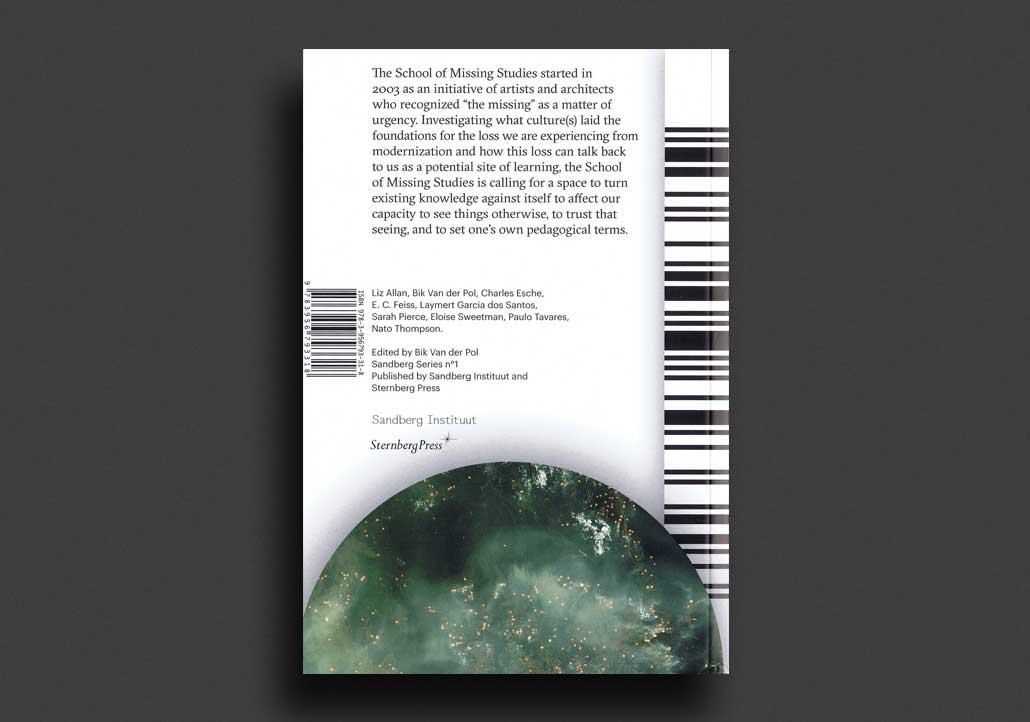
Contributions by Liz Allan, Bik Van der Pol, Charles Esche, E. C. Feiss, Laymert Garcia dos Santos, Sarah Pierce, Eloise Sweetman, Paulo Tavares, Nato Thompson
The School of Missing Studies started in 2003 as an initiative of artists and architects who recognized “the missing” as a matter of urgency. Investigating what culture(s) laid the foundations for the loss we are experiencing from modernization and how this loss can talk back to us as a potential site of learning, the School of Missing Studies is calling for a space to turn existing knowledge against itself to affect our capacity to see things otherwise, to trust that seeing, and to set one’s own pedagogical terms.
Sandberg Series n°1
Copublished with Sandberg Instituut, Amsterdam
Design by Anja Groten
2017, English
Hardcover, 398 pages, 30.5 x 23 cm
Published by
Stedelijk Museum / Amsterdam
Walther König / Köln
$98.00 - Out of stock
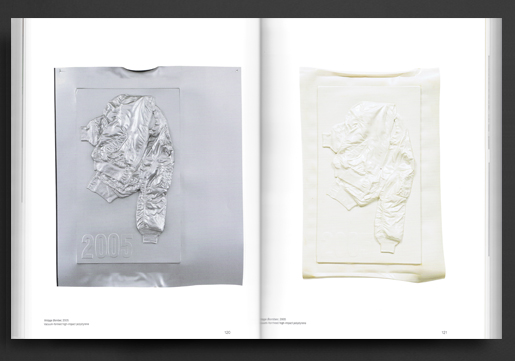
This catalogue is the first comprehensive publication on Price’s varied oeuvre. It offers an unflinching portrait of contemporary, mediated Western life. The exhibition at Stedelijk Museum is the first survey of the American artist’s work.
A key theme in Price’s work is the self under technological pressure. This is often expressed in terms of the ‘skins’ of surface, packaging, and wrapping: a photographic study of a person’s skin obtained through the technologies Google employs for mapping; a vacuum-formed plastic relief presenting a body part stranded in plastic; a large wall sculpture depicting the negative space between two people engaged in intimate action, greatly enlarged from a tiny internet jpeg.
‘Seth Price is a key figure in addressing technology and artistic authorship. His work traces an important art historical shift from the concept of collage, where chance played a major role and the image was constructed of multiple layers, to the concept of a unified image, which envelops us in an endless, undifferentiated, digital stream.’ – Beatrix Ruf, Director of Stedelijk Museum
Published on the occasion of the exhibition Seth Price: Social Synthetic, at Stedelijk Museum, Amsterdam (15 April – 3 September 2017), and at Museum Brandhorst, Munich (12 October 2017 – 18 March 2018).
Texts by: Cory Arcangel, Ed Halter, Achim Hochdörfer, Branden W Joseph, John Kelsey, Michelle Kuo, Rachel Kushner, Laura Owens, Ariana Reines, Beatrix Ruf.
2018, English
Softcover, 210 pages, 12 x 19 cm
Published by
Uh Books / Amsterdam
KW Institute for Contemporary Art / Berlin
$22.00 - Out of stock
According to editor Will Holder, ‘Flurry’ came about after being asked to propose ten books for acquisition by the Gerrit Rietveld Academie library in Amsterdam. He gave a talk about that selection, for which he preferred reproducing original material over commentary, and wanted to allow others to speak. The outcome was a reading back and forth between the ten books. It soon became clear that this reading would readily lend itself to an issue of ‘F.R. David’. Associated material came up in the process of transcription. Included are writings by Emmie McLuskey, Krist Gruijthuijsen, Bitsy Knox, Maurin Dietrich, Camille Pageard, Frances Stark, Eileen Myles, and more.
2018, English
Softcover, 200 pages, 21 x 15 cm
Published by
Self-Published / Melbourne
$40.00 - Out of stock
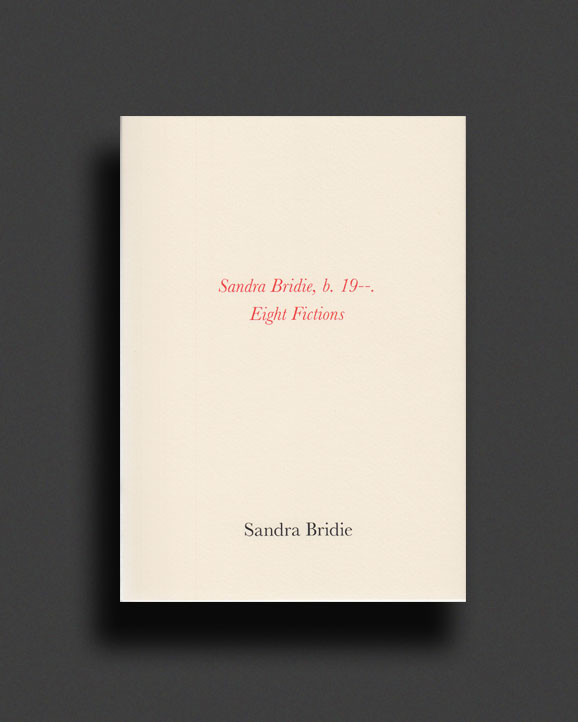
In Sandra Bridie b. 19--, Eight Fictions, artist Sandra Bridie presents eight fictional artists who bear her own name, but with different birthdates, imagined into the Melbourne art landscape of the 20th and 21st centuries. The artists are presented via interviews and documentation of their artwork. The oeuvres of the eight artists represented here include: photography, conceptual art, sculpture, performance, crafting, curatorship and text-based work. The artists range in age and ability from emerging artists to a grand dame of Melbourne abstract art. By presenting often tragi-comic characters who have to deal with good fortune, destiny, disaster, boredom, malaise, envy, distractions and lack of faith, Sandra hopes to present the artist as a recognisable creature in a familiar locale or milieu.
Self published and designed by Yanni Florence.
2018, English
Softcover (acetate cover, staple-bound), 18 pages, 21 x 29.7 cm
Published by
Diane Incorporated / Melbourne
$10.00 - Out of stock
New artist publication by Spencer Lai, "Actor (Snouts)" combines collected texts, reference images and documentation of Lai's artworks, and is published in an open edition by Diane Incorporated, Melbourne, 2018.
Spencer Lai is a Melbourne-based artist, who's work spans sculpture, video, installation, textiles, performance, and the collaborative project Monica’s Gallery with writer/curator Jake Swinson.
2017, English
Softcover (staple-bound), 36 pages, 21 x 15 cm
Edition of 20,
Published by
Self-Published
$10.00 $5.00 - In stock -
He’d been alive, but he’d only just woken. In his new state, he wrote letters to the local press, the subjects ranged but all shared dizzying fantasies of conspiracies he’d been pulping together. Though his accusations were never negative, he thought the corporations and governments were secretly striving for peace under the blood soaked veil of war and poverty.
Artist publication by Lewis Teague Wright (b. London, based in Mexico City). Published in an edition of 20 copies.
2017, English
Softcover (staple-bound), 36 pages, 21 x 15 cm
Second edition of 20,
Published by
Self-Published
$10.00 $5.00 - Out of stock
He sat down my aisle, bathing the air with a putrid odour. His eyes shone like polished glass, his iris’ so dark they merged with his pupils, two gigantic piss holes staring at me through the fat of his bulging cheeks.
Artist publication by Lewis Teague Wright (b. London, based in Mexico City). Published in an edition of 20 copies.
2018, English / German
Softcover, 88 pages, 14 x 24 cm
Ed. of 500,
Published by
Mode and Mode / Melbourne
$8.00 - Out of stock
Mode and Mode 5 ‘Helen Hessel’ features translations of writing by German fashion journalist Helen Hessel (1886-1982), letter correspondence between Hessel and Henri-Pierre Roché, and an interview with Professor Mila Ganeva.
Contributors: Helen Hessel, Mila Ganeva, Sean Ryan and Jeanne Hendrey.
Mode and Mode is a periodical that addresses printed matter in fashion practice. Each issue explores experimental publishing in fashion with an interview around a print-based project — one that has critical effects to fashion as a discourse. In doing so, we reflect on the role of print and its potency to disrupt, or propel, fashion narratives.
2007, English / Italian
Softcover, 285 pages, 24 x 17 cm
Published by
Corraini / Italy
$90.00 - Out of stock
The critical catalogue raisonné of artist's books from the Arte Povera movement 1966-1980, compiled by Giorgio Maffei.
Giovanni Anselmo, Alighiero Boetti, Pier Paolo Calzolari, Luciano Fabro, Jannis Kounellis, Mario Merz, Marisa Merz, Giulio Paolini, Pino Pascali, Giuseppe Penone, Michelangelo Pistoletto, Emilio Prini and Gilberto Zorio: the protagonists of the most important Italian artistic movement after World War II are presented not through "traditional" works, but from the point of privileged view of their editorial production. Artist books conceived, constructed and reinvented as works "in itself", some of them with a programmatic value that makes them extremely important for the comprehension of the whole movement. A rich and in-depth introduction transversely analyzes the current of Arte Povera for people, times, places and texts, while each artist is presented individually through the review of their books and personal exhibitions, richly illustrated with the documents described. This generous volume is completed by an accurate chronology of collective exhibitions (1966-2005) and a vast bibliography of essays and articles that appeared in books and art magazines (1966-2006).
"The task this book faces is to provide news, data, and stories through documents, if not certain, at least considered reliable, and to overcome the temptation to penetrate events and present them in the simplest way possible." - from Giorgio Maffei's introduction.
Text in English and Italian.
2002, English
Hardcover, 132 pages, 24 x 34 cm
Published by
Skira / Milan
$65.00 - Out of stock
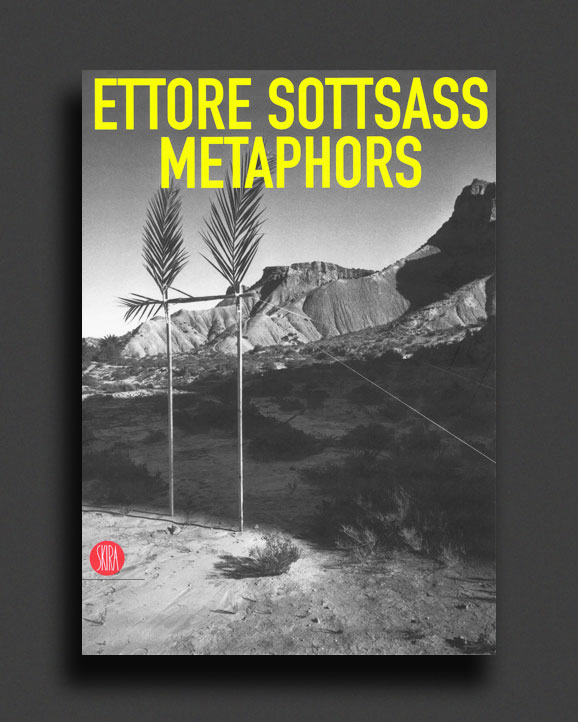
Ettore Sottsass' intimate diary of writings, drawings and evocative photographs, taken by the designer himself between 1968 - 1976, with accompanying texts by editor Barbara Radice.
During the years of a protest and important time of analysis and critical reflection (initiated in the late 1960's through much of the 1970's) that involved The Italian Radical Movement, which developed parallel to Arte Povera and Conceptual Art, Sottsass had almost stopped designing. He named it as "a period of emptiness and introvert meditation. Of purification and release from everything that constituted the laws, customs and vocabulary of rationalist culture.’’ Debates were calling to reconsider the mechanisms of design, the role and responsibility of architects towards society and culture. Ettore wrote: "I felt a deep necessity to visit deserted places, mountains; to re-establish a physical relationship with the cosmos, which is the only real environment, precisely because it can’t be measured, foreseen, controlled or known… it seemed to me that if anything was to be regained we would have to begin by regaining microscopic gestures and elementary actions, the sense of one’s own position…’’
This book, designed and conceived by the designer himself, captures this important period. Between years 1968 and 1976 Ettore was in a constant movement traveling between his office in Milan and long escapes to Barcelona, Madrid, Granada and above all to the deserts close to Ebro river and the wild valleys of the Pyrenees. It was there that he started, together with his partner in this nomadic life, artist Eulalia Grau, the "Metaphors" series of photographs. Broken into the groupings "Designs for the destinies of man’’, "Designs for the rights of man’’, "Designs for the necessities of animals’’ and "Fiancées", these photographs and graphic constructions have been arranged by their author, revealing the complex cultural and visual roots of Sottsass’s work as well as offering us a glimpse of the great designer’s mental and creative processes, and his analyses of architecture, environment and anthropology.
1983, Japanese / English
Softcover, 96 pages, 32.5 × 25.5 cm
1st Edition, Out of print title / used / very good
Published by
Interior Publishing Co. Ltd. / Tokyo
$80.00 - Out of stock
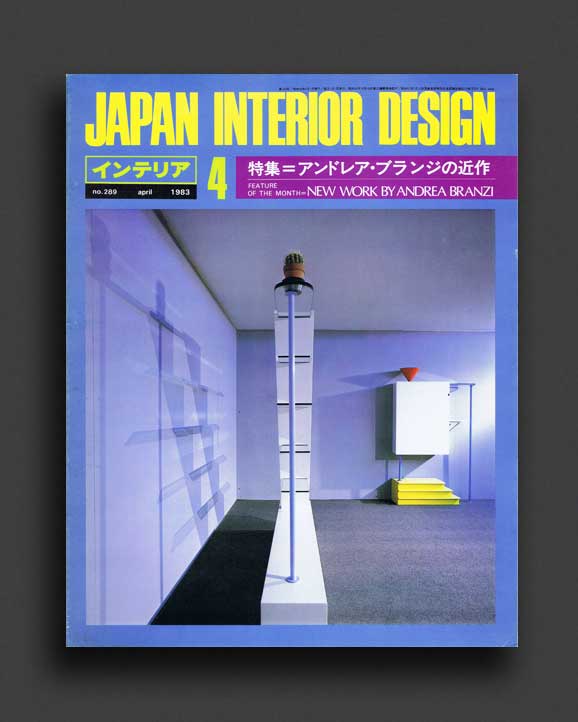
JAPAN INTERIOR DESIGN No.289, April 1983
One of Japan's finest magazines for interior design and home furnishings, edited by Moriyama Kazuhiko.
JAPAN INTERIOR DESIGN presents a monthly comprehensive view of traditional, contemporary, and contemplated environmental designs and pure art forms both Japanese and foreign, through pictures and critical reviews. English captions and summaries of major articles are provided.
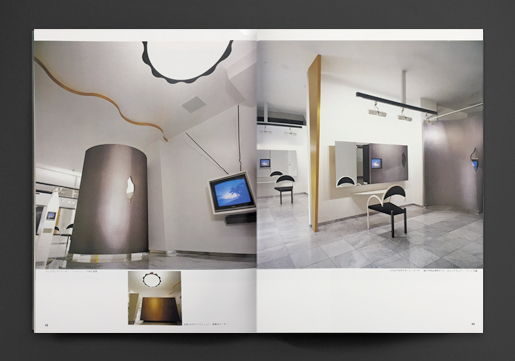
Very rare, this issue includes a huge feature on the recent works of Italian designer Andrea Branzi. Amazing full-colour spreads of his work are accompanied by a statement by Branzi himself and an interview with Kazuko Sato (editor of the Alchimia book).
Also includes Shinya Okayama : home design graphic designer; Recent work of Gaetano Pesce; new print textiles of Awatsuji Expo Design Studio; Display design for the Heart Art Collection; Yuki Odawara : fabric design statement of Joe Gandorini; new textile company Marimekko; new Stevens office seating of the company nor Furniture Denmark · 2B company of Niels Bengusen, and much more.
1984, Japanese / English
Softcover, 96 pages, 32.5 × 25.5 cm
1st Edition, Out of print title / Used*,
Published by
Interior Publishing Co. Ltd. / Tokyo
$70.00 - Out of stock
JAPAN INTERIOR DESIGN
No. 304, July 1984
One of Japan’s finest magazines for interior design and home furnishings, edited by Moriyama Kazuhiko.
JAPAN INTERIOR DESIGN presents a monthly comprehensive view of traditional, contemporary, and contemplated environmental designs and pure art forms both Japanese and foreign, through pictures and critical reviews. English captions and summaries of major articles are provided.
Very rare, this issue includes a huge feature THE TSUKUBA CENTER BUILDING by architect: Arata Isozaki & Associates with essays by Alessandro Mendini, Adolfo Natalini, Ugo La Pietra, Arata Isozaki.
Also includes " NEW Hair Creation" designs by Shinya Okayama; "A&E DESIGN STUDIO"; Tables Designed by Kenjiro Azuma; New Furniture from Pallucco, design: Pallucco Co., Ltd.; New Furniture from Rockstone design: Eiri Iwakura; Interior Objects Designed by Elizabeth Browning Jackson; Glass Works by James Carpenter essay: Toshiko Mori; "PHARAOH" architect: Shin Takamatsu; architect: Shu Design Kobo; Product Design of the Month = Hair Tools "SALTY-SERIES" design: Masayuki Kurokawa; Book Review essay: Osamu Ishiyama, and much more.
2018, English
Softcover, 224 pages, 240mm x 300mm
Published by
common-editions / London
$67.00 - Out of stock
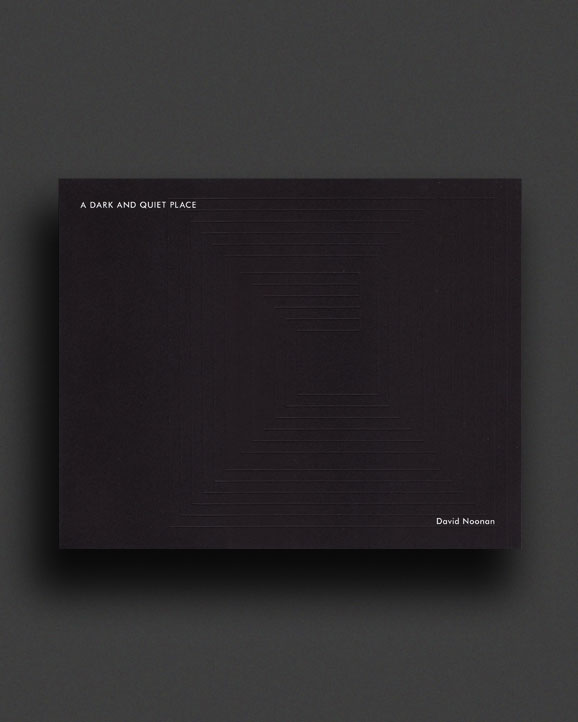
A Dark and Quiet Place accompanies a new moving image work of the same name by Australian artist, David Noonan. Both the film and this artist’s book present a meditation on performance, its associated apparatus, and the physical and imaginary domains they inhabit.
That this is Noonan’s first film work in over a decade is significant, as his practice since has frequently referenced both the material qualities of film and projection, and an ongoing interest in the slippages between figuration and pure abstraction.
For the book, the artist has worked closely with award-winning design studio A Practice for Everyday Life to disassemble the film work back into a rhythmic sequence of still images, employing both the language of design and Noonan’s characteristic strategies of layering and manipulation.
More than a series of film stills, the images that make up this book acquire their own intrinsic quality, proposing new spatial configurations and performative actions.
In response to the work, renowned author Brian Dillon presents a piece of fiction at once speculative and rigorously rational, in which geometric shapes become performers, diagrammatic grids become complex stage sets, and the supremacy of the body is thrown into doubt.
Noonan has had major solo shows at the Australian Centre for Contemporary Art, Melbourne (2009), Chisenhale Gallery, London (2008), and Palais de Tokyo, Paris (2007).
2012, English
Softcover, 82 pages, 16 x 22 cm
Published by
Aspen Art Museum / Aspen
$38.00 - Out of stock
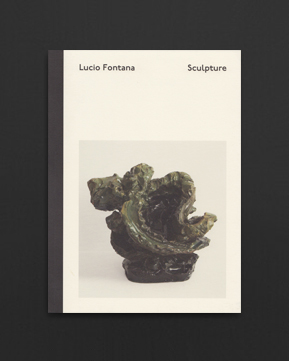
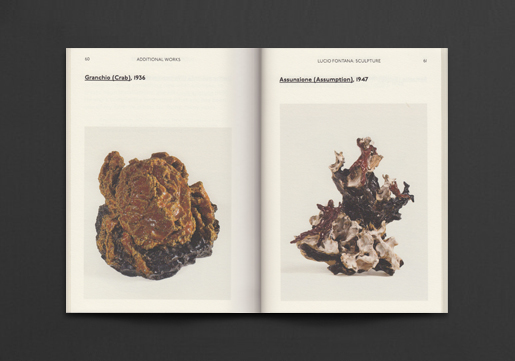
This catalogue was produced to accompany the exhibition Lucio Fontana "Ceramics" at the Aspen Art Museum, July 27 - October 7, 2012.
Best known for the slashed and cut canvases of the Concetti spaziali that he created primarily in the 1950s and 60s, Argentine–Italian artist Lucio Fontana (1899–1968) used ceramics and clay modeling to explore larger problems in sculpture and painting. 'Lucio Fontana: Sculpture' is published in conjunction with the first U.S. museum exhibition dedicated solely to the artist’s groundbreaking ceramic work, and explores the innovative and often contrarian ways in which Fontana made use of the medium.
1986, English / Japanese
Softcover, 140 pages, 24 x 25.5 cm
1st Edition, Out of print title / Used*,
Published by
Asahi Shimbun / Japan
Museum of Modern Art / Toyama
National Museum of Modern Art / Kyoto
Seibu / Tokyo
$90.00 - Out of stock
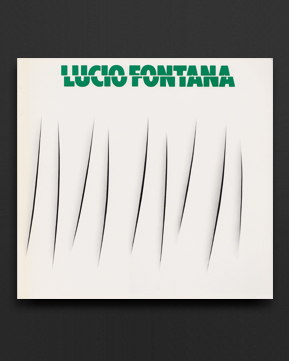
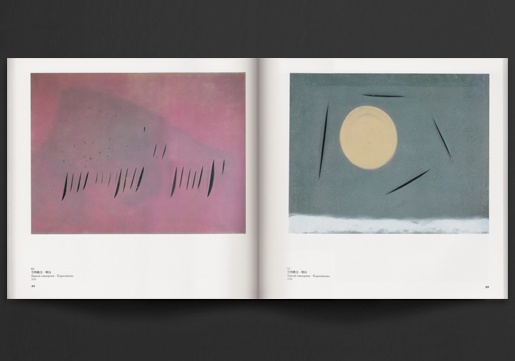
Fantastic Japanese catalogue published by The Museum of Modern Art, Toyama; The Seibu Musuem of Art, Tokyo; The Asahi Shimbun and others in 1986 to accompany the major travelling exhibition of the work of Lucio Fontana in 1986, spanning five institutions across Japan.
This handsomely design (by Ikko Tanaka) full-colour book, presents the work of Italian artist Lucio Fontana across canvas, ceramic, drawing, and relief, dating throughout the 1930 up until the late 1960s, concentrating on his famous Concetto Spaziale works. Includes text by Franco Russoli in English and Japanese, an artist biography, bibliography and catalogue of works exhibited, plus historical photographs of Fontana.
2018, English
Hardcover, 72 pages, 30 x 22.5 cm
Ed. of 300,
Published by
Coracle / Ireland
$90.00 - Out of stock
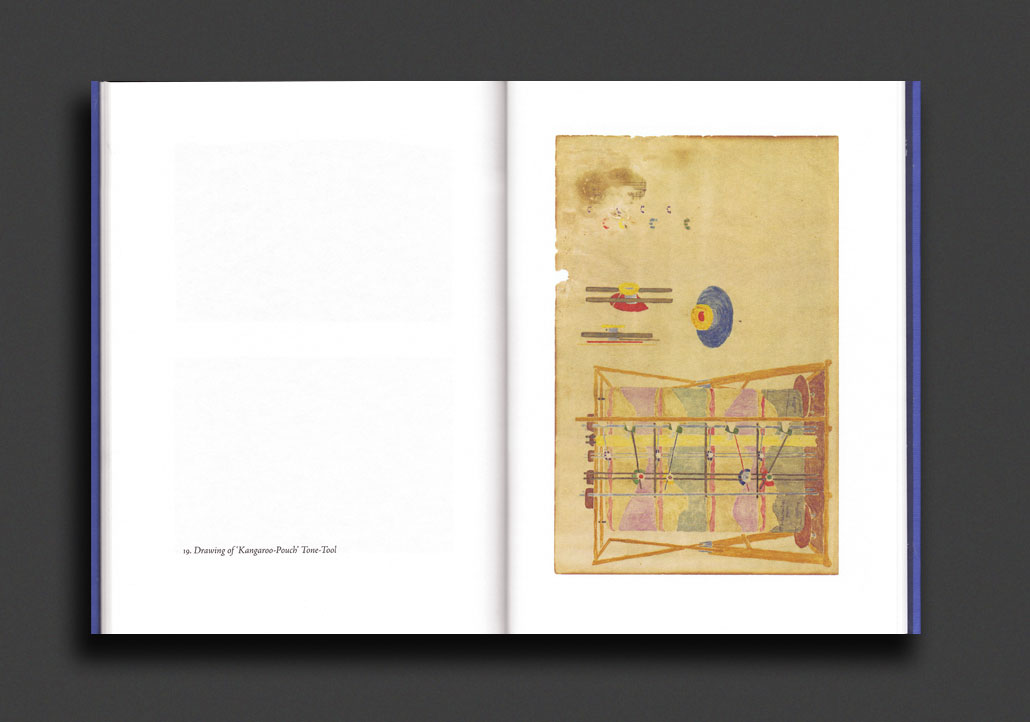
Published in an edition of only 300 copies, this hardcover book contains all the drawings by Percy Grainger for the Free Music Machines he developed with Burnett Cross towards the end of his musical life. They were mostly drawn between 1951 and 1953.
This is the first time many of these drawings have been seen, and their improvisational notation and sense of invention make them of recurrent interest to both composers, writers and artists working in wider fields.
At the same time the book attempts to be the album in which to present them, and in which they can be viewed at a suitably large and readable scale.
The book and drawings are introduced by an authoritative contextual essay by musicologist Wilfred Mellers written for this publication.
2000/2013, English
Softcover, 248 pages, 152 x 229 mm
New (2nd) edition,
Published by
Semiotext(e) / Los Angeles
$40.00 - Out of stock
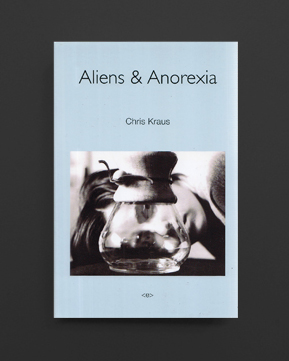
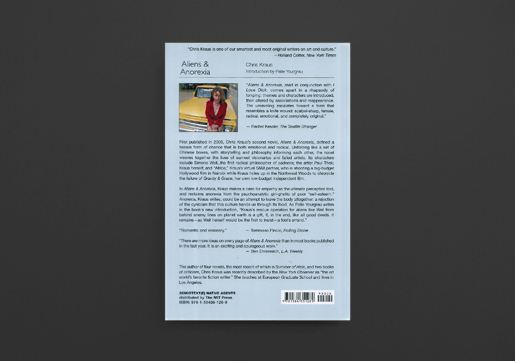
First published in 2000, Chris Kraus's second novel, Aliens & Anorexia, defined a female form of chance that is both emotional and radical. Unfolding like a set of Chinese boxes, with storytelling and philosophy informing each other, the novel weaves together the lives of earnest visionaries and failed artists. Its characters include Simone Weil, the first radical philosopher of sadness; the artist Paul Thek; Kraus herself; and "Africa," Kraus's virtual S&M partner, who is shooting a big-budget Hollywood film in Namibia while Kraus holes up in the Northwest woods to chronicle the failure of Gravity & Grace, her own low-budget independent film. In Aliens & Anorexia, Kraus makes a case for empathy as the ultimate perceptive tool, and reclaims anorexia from the psychoanalytic girl-ghetto of poor "self-esteem." Anorexia, Kraus writes, could be an attempt to leave the body altogether: a rejection of the cynicism that this culture hands us through its food. As Palle Yourgrau writes in the book's new foreword, "Kraus's rescue operation for aliens like Weil from behind enemy lines on planet Earth is a gift, if, in the end, like all good deeds, it remains -- as Weil herself would be the first to insist -- a fool's errand."
The author of four novels, the most recent of which is Summer of Hate, and two books of criticism, Chris Kraus was recently described by the New York Observer as "the art world's favorite fiction writer." She teaches at European Graduate School and lives in Los Angeles.
Foreword by Palle Yourgrau
1988 / 2012, English
Softcover, 88 pages, 15.2 x 22.9 cm
Published by
The MIT Press / Massachusetts
Semiotext(e) / Los Angeles
$30.00 - Out of stock
“The need to speak, even if one has nothing to say, becomes more pressing when one has nothing to say, just as the will to live becomes more urgent when life has lost its meaning.”
--from The Ecstasy of Communication
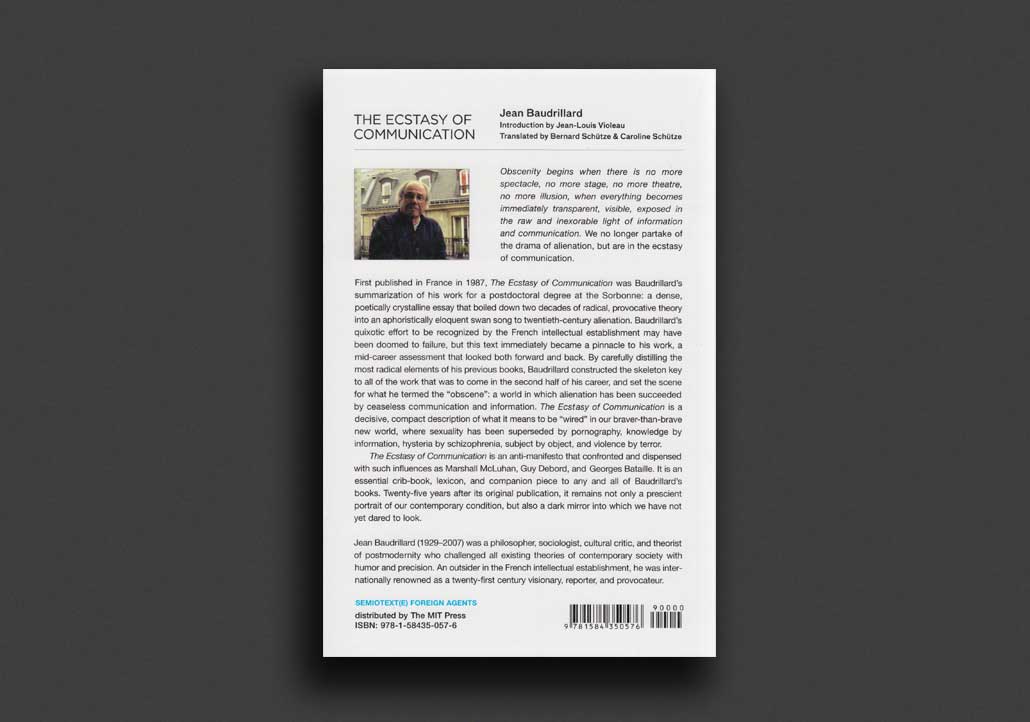
First published in France in 1987, The Ecstasy of Communication was Baudrillard’s summarization of his work for a postdoctoral degree at the Sorbonne: a dense, poetically crystalline essay that boiled down two decades of radical, provocative theory into an aphoristically eloquent swan song to twentieth-century alienation. Baudrillard’s quixotic effort to be recognized by the French intellectual establishment may have been doomed to failure, but this text immediately became a pinnacle to his work, a mid-career assessment that looked both forward and back. By carefully distilling the most radical elements of his previous books, Baudrillard constructed the skeleton key to all of the work that was to come in the second half of his career, and set the scene for what he termed the “obscene”: a world in which alienation has been succeeded by ceaseless communication and information. The Ecstasy of Communication is a decisive, compact description of what it means to be “wired” in our braver-than-brave new world, where sexuality has been superseded by pornography, knowledge by information, hysteria by schizophrenia, subject by object, and violence by terror.
The Ecstasy of Communication is an anti-manifesto that confronted and dispensed with such influences as Marshall McLuhan, Guy Debord, and Georges Bataille. It is an essential crib-book, lexicon, and companion piece to any and all of Baudrillard’s books. Twenty-five years after its original publication, it remains not only a prescient portrait of our contemporary condition, but also a dark mirror into which we have not yet dared to look.
Introduction by Jean-Louis Violeau
Translated by Bernard Schütze and Caroline Schütze
About the Author
Jean Baudrillard (1929–2007) was a philosopher, sociologist, cultural critic, and theorist of postmodernity who challenged all existing theories of contemporary society with humor and precision. An outsider in the French intellectual establishment, he was internationally renowned as a twenty-first century visionary, reporter, and provocateur.
2018, English
Softcover, 208 pages, 20 x 23.5 cm
Published by
Museum Abteiberg / Mönchengladbach
Kunstverein Hannover / Hannover
M HKA / Antwerp
Walther König / Köln
$47.00 $30.00 - Out of stock
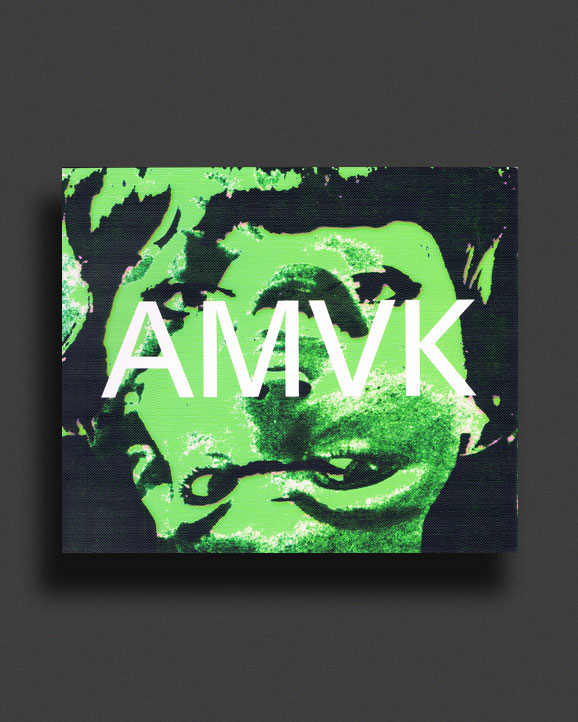
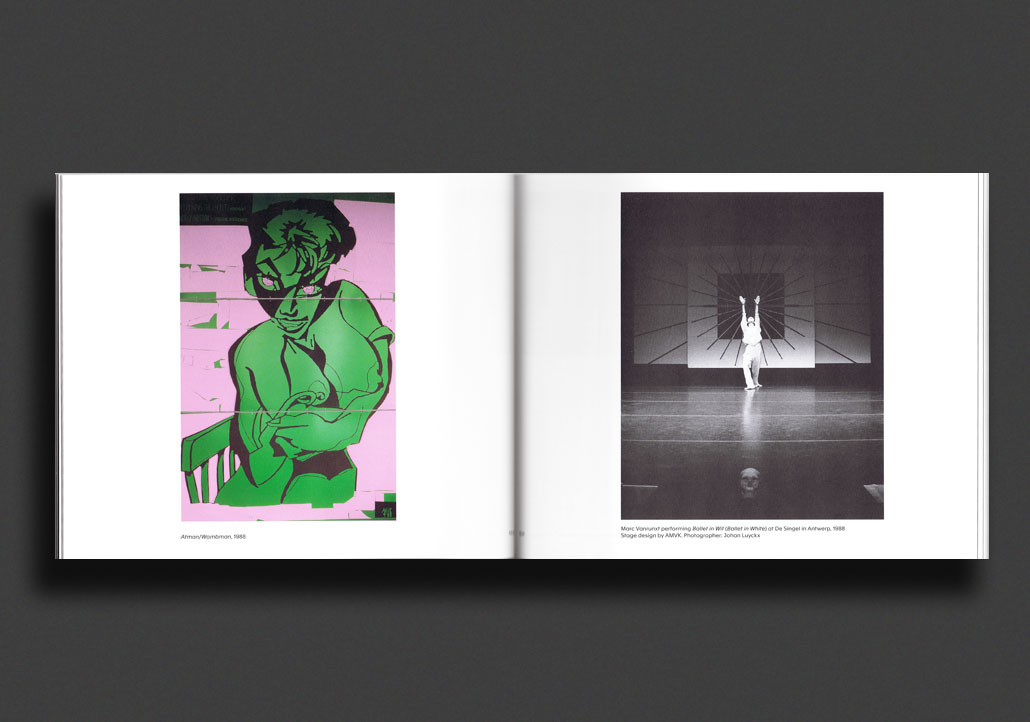
Monographic catalogue published by Koenig Books on the occasion of a series of exhibitions by Anne-Mie Van Kerckhoven at Museum Abteiberg Mönchengladbach, Kunstverein Hannover, and M HKA, Museum of Contemporary Art Antwerp. Heavily illustrated throughout with a broad cross-section of Anne-Mie's history of work in drawing, collage, sound, painting, video, performance, installation, and more. Texts by Menno Grootveld, Anders Kreuger, Ana Teixeira Pinto, Kathleen Rahn, Susanne Titz, Travis Jeppesen. Design by Sara de Bondt.
Anne-Mie van Kerckhoven (also known as AMVK) was born in Antwerp and lives in Antwerp and Berlin. She studied graphic design at the Fine Arts Academy in Antwerp and has been prolific in her output of drawings and other works on paper and synthetic material, as well as short videos, since the early eighties. Anne-Mie van Kerckhoven has been fascinated for a long time with the representation in the mass media of images of women, of interiors, of the kinetic powers of any kind of language. She investigates supra-moral connections in contemporary society s.a. between sex and technology. Her work connects different knowledge systems, explores the areas of the unconscious, and looks at moral aberrations or the obscene from a female point of view. In the nineties, hand-made paper works gave way to computer graphics, while text has always featured alongside images, underlining the message of Van Kerckhoven’s proud, sometimes exhibitionist female figures like song-lyrics. Music plays an important role in Van Kerchkoven’s creative production in parallel to her visual output, and she and Danny Devos have stood as a key pair of the Antwerp experimental music scene under the band name Club Moral (1981–now).
"In opposition to the arbitrary, which is the origin of every written and spoken language, I have placed the unspoken, the mystic. From despair to ecstasy, that is what the mystic is about now. This is the all-devouring lust for life and love. Unification, not feeling separated from the rest. No ego, no boundaries. Creation becomes one with its creator. I call it the analogue. The analogue versus the arbitrary. The analogue is ritual, evil, mystery, desire, yearning, lust, while the digital is control, technology, sublimation, dependence, cleanliness, transparency. The analogue plus the digital is what humans are about: perspective." - Anne-Mie Van Kerckhoven, Some Sort of Manifesto, 2016–17