World Food Books' programme is largely produced on Kulin Nation land. We acknowledge the Wurundjeri people of the Kulin Nation as the first and continuing custodians of this land, and pay respect to their Elders past, present, and emerging.
World Food Books is an arts and special interests bookshop in Naarm / Melbourne. Founded in 2010, World Food Books is devoted to the presentation of a rotating, hand-selection of international art, design, literary and counterculture publications with an emphasis on the anti-traditional, the experimental, the avant-garde, the heretic, the marginal.
Presenting new titles alongside rare and out-of-print books, catalogues and journals spanning the fields of modern and contemporary art, design, photography, illustration, film, literature, poetry, cultural theory, philosophy, sexuality, popular and underground culture in its many radical forms, World Food Books wishes to encourage adventurous, thoughtful and open-minded reading, looking, writing, and exchange of publishing and ideas, both current and historical.
As well as our bookshop, located in Melbourne's historical Nicholas Building, all of our inventory is available internationally via our online mail-order service.
World Food Books semi-regularly co-ordinates "Occasions", a programme of exhibits and events at the bookshop and in partnership with other hosts (such as museums and art galleries) that develop out of the activities, relationships and content of the bookshop itself.
World Food Books
The Nicholas Building
37 Swanston Street
Room 5, Level 6
Melbourne 3000
Australia
SHOP HOURS:
Thu–Fri 12–6, Sat 12–5
WEB-SHOP OPEN 24/7
World Food Books
Postal Address:
PO Box 435
Flinders Lane
Victoria 8009
Australia
Art
Theory / Essay
Architecture / Interior
Graphic Design / Typography
Photography
Fashion
Eros
LGBTQ+
Fiction / Poetry
Weird / Speculative / Science Fiction / Horror
Transgressive / Visceral / Abject
Symbolism / Decadence / Fin de siècle
Film / Video
Painting
Sculpture / Installation
Performance / Dance / Theater
Drawing
Sound / Music
Curatorial
Group Shows / Collections
Periodicals
Out-of-print / Rare
Posters / Ephemera / Discs
Signed Books
World Food Books Gift Voucher
World Food Book Bag
Australian Art
Australian Fiction
Australian Science Fiction / Speculative Fiction
Australian Poetry
Australian Photography
Japanese Photography
Conceptual Art
Minimal Art
Dada
'Pataphysics / Oulipo
Fluxus
Concrete Poetry
Pop Art
Surrealism
Arte Povera
Arte Informale / Haute Pâte / Tachism
Nouveau Réalisme / Zero / Kinetic
Situationism / Lettrism
Collage / Mail Art / Xerox Art
Art Brut / Folk / Visionary / Fantastic
Illustration / Graphic Art / Bandes Dessinées
Furniture
Italian Radical Design / Postmodernism
Textiles
Ceramics / Glass
Counterculture
Protest / Revolt
Philosophy
Psychoanalysis
Anthropology
Anarchism
Socialism / Anarchism / Communism / Capitalism
Literary Theory / Semiotics / Language
Feminism / Women's Studies
Gender Studies / Sexuality
Anthropology
Fetishism / BDSM
Drugs / Psychedelia
Crime / Violence
Animal Rights / Veganism
Occult / Esoterica
Ecology / Earth / Alternative Living
Whole Earth / Crafts
All prices in AUD (Australian dollars)
Pick-Ups
Pick-up orders can be collected in our bookshop during opening hours after order date. Please collect any Pick-up orders within 2 weeks of ordering as we have limited storage space. Orders will be released back into stock if not collected within this time. No refunds can be made for pick-ups left un-collected. If you cannot make it in to the bookshop in this time-frame, please choose postage option.
Return Policy
All sales are final. We do accept returns (for refund or exchange) for items received in error. All our orders are packed with special care using heavy-duty padding and cardboard book-mailers or bubble mailers (for smaller books), using reinforcement where required. We cannot take responsibility for any lost, stolen or damaged parcels.
Insurance
Should you wish to insure your package, please email us directly after placing your order and we can organise this at a small extra expense. Although all standard/express tracked packages are very safe and dependable, we cannot take responsibility for any lost, stolen or damaged parcels. We recommend insurance on valuable orders.
Interested in selling your old books, catalogues, journals, magazines, comics, fanzines, ephemera? We are always looking for interesting, unusual and out-of-print books to buy. We only buy books in our fields of interest and specialty, and that we feel we can resell.
We base these prices on desirability, market value, in-print prices, condition and our current stock levels. We offer cash, store credit, and can take stock on consignment. All
about 25% of the price we expect to get when we sell them, or 30% in store credit. We base these prices on desirability, market value, in-print prices, condition and our current stock levels.
Sell your books any day of the week. You can drop them off and return later. If you have a lot of books, we can visit your Sydney home.
We buy books that we feel we can resell. We offer about 25 % of the price we expect to get when we sell them, or 30% in store credit. We base these prices on desirability, market value, in-print prices, condition and our current stock levels.
Philadelphia Wireman
03 August - 01 September, 2018
World Food Books is proud to announce our next Occasion, the first presentation of sculptures by Philadelphia Wireman in Australia.
The Philadelphia Wireman sculptures were found abandoned in an alley off Philadelphia’s South Street on trash night in 1982. Their discovery in a rapidly-changing neighbourhood undergoing extensive renovation, compounded with the failure of all attempts to locate the artist, suggests that the works may have been discarded after the maker’s death. Dubbed the "Philadelphia Wireman" during the first exhibition of this work, in 1985, the maker’s name, age, ethnicity, and even gender remain uncertain. The entire collection totals approximately 1200 pieces, all intricately bound together with tightly-wound heavy-gauge wire (along with a few small, abstract marker drawings, reminiscent both of Mark Tobey and J.B. Murry). The dense construction of the work, despite a modest range of scale and materials, is singularly obsessive and disciplined in design: a wire armature or exoskeleton firmly binds a bricolage of found objects including plastic, glass, food packaging, umbrella parts, tape, rubber, batteries, pens, leather, reflectors, nuts and bolts, nails, foil, coins, toys, watches, eyeglasses, tools, and jewellery.
Heavy with associations—anthropomorphic, zoomorphic, and socio-cultural responses to wrapped detritus—the totemic sculptures by Philadelphia Wireman have been discussed in the context of work created to fulfil the shamanistic needs of alternative religions in American culture. Curators, collectors, and critics have variously compared certain pieces to sculpture from Classical antiquity, Native American medicine bundles, African-American memory jugs, and African fetish objects. Reflecting the artist’s prolific and incredibly focused scavenging impulse, and despite—or perhaps enhanced by—their anonymity, these enigmatic objects function as urban artefacts and arbiters of power, though their origin and purpose is unknown. Philadelphia Wireman, whatever their identity, possessed an astonishing ability to isolate and communicate the concepts of power and energy through the selection and transformation of ordinary materials. Over the course of the past two decades, this collection has come to be regarded as an important discovery in the field of self-taught art and vernacular art.
Presented in collaboration with Fleisher-Ollman Gallery, Philadelphia, and Robert Heald, Wellington.
Susan Te Kahurangi King
02 February - 10 March, 2018
Susan Te Kahurangi King (24 February 1951 - ) has been a confident and prolific artist since she was a young child, drawing with readily available materials - pencils, ballpoint pens and felt-tip markers, on whatever paper is at hand. Between the ages of four and six Susan slowly ceased verbal communication. Her grandparents William and Myrtle Murphy had developed a special bond with Susan so they took on caring responsibilities for extended periods. Myrtle began informally archiving her work, carefully collecting and storing the drawings and compiling scrapbooks. No drawing was insignificant; every scrap of paper was kept. The King family are now the custodians of a vast collection containing over 7000 individual works, from tiny scraps of paper through to 5 meter long rolls.
The scrapbooks and diaries reveal Myrtle to be a woman of great patience and compassion, seeking to understand a child who was not always behaving as expected. She encouraged Susan to be observant, to explore her environment and absorb all the sights and sounds. Myrtle would show Susan’s drawings to friends and people in her community that she had dealings with, such as shopkeepers and postal workers, but this was not simply a case of a grandmother’s bias. She recognised that Susan had developed a sophisticated and unique visual language and sincerely believed that her art deserved serious attention.
This was an unorthodox attitude for the time. To provide some context, Jean Dubuffet coined the term Art Brut in 1945 to describe work created by self-taught artists – specifically residents of psychiatric institutions and those he considered to be visionaries or eccentrics. In 1972 Roger Cardinal extended this concept by adopting the term Outsider Art to describe work made by non-academically trained artists operating outside of mainstream art networks through choice or circumstance. Susan was born in Te Aroha, New Zealand in 1951, far from the artistic hubs of Paris and London that Dubuffet and Cardinal operated in. That Myrtle fêted Susan as a self-taught artist who deserved to be taken seriously shows how progressive her attitudes were.
Susan’s parents Doug and Dawn were also progressive. Over the years they had consulted numerous health practitioners about Susan’s condition, as the medical establishment could not provide an explanation as to why she had lapsed into silence. Dawn educated herself in the field of homeopathy and went on to treat all twelve of her children using these principles – basing prescriptions on her observations of their physical, mental and emotional state.
Doug was a linguist with an interest in philosophy who devoted what little spare time he had to studying Maori language and culture. To some extent their willingness to explore the fringes of the mainstream made them outsiders too but it was their commitment to living with integrity and their respect for individuality that ensured Susan’s creativity was always encouraged.
Even though Susan’s family supported her artistic pursuits, some staff in schools and hospitals saw it as an impediment to her assimilation into the community and discouraged it in a variety of ways. Her family was not always aware of this and therefore did not fully understand why Susan stopped drawing in the early 1990s. However, rather than dwell on the challenges that Susan faced in pursuit of her artistic practice, they prefer to highlight her achievements. In 2008 Susan began drawing again in earnest, after an almost 20 year interruption, and her work is now shown in galleries around the world.
Susan grew up without television and has been heavily influenced by the comics she read as a child. She is absolutely fearless in the appropriation of recognizable characters, such as Donald Duck and Mickey Mouse, in her work. She twists their limbs, contorts their faces, compresses them together, blends them into complex patterned backgrounds - always imbuing them with an incredible energy. Although Susan often used pop culture characters in her work they are not naive or childlike. These are drawings by a brilliant self-taught artist who has been creating exceptional work for decades without an audience in mind.
Mladen Stilinović
"Various Works 1986 - 1999"
02 February 16 - September 10, 2016
Various works 1986 - 1999, from two houses, from the collections of John Nixon, Sue Cramer, Kerrie Poliness, Peter Haffenden and Phoebe Haffenden.
Including: Geometry of Cakes (various shelves), 1993; Poor People’s Law (black and white plate), 1993; White Absence (glasses, ruler, set square, silver spoon, silver ladel with skin photograph and wooden cubes), 1990-1996; Exploitation of the Dead (grey and red star painting, wooden painting, black spoon with red table, red plate), 1984-1990; Money and Zeros (zero tie, paintings made for friends in Australia (Sue, John, Kerrie), numbers painting), 1991-1992; Words - Slogans (various t-shirts) - “they talk about the death of art...help! someone is trying to kill me”, “my sweet little lamb”, “work is a disease - Karl Marx”; Various artist books, catalogues, monographs, videos; Poster from exhibition Insulting Anarchy; "Circular" Croatian - Australian edition; Artist book by Vlado Martek (Dostoyevsky); more.
Thanks to Mladen Stilinović and Branka Stipančić.
Jonathan Walker
Always Will Need To Wear Winter Shirt Blue + Ochre Small Check Pattern
21 August - 21 September, 2015
Untitled
I am not a great reader of poetry but I always return to the work of Melbourne poet, Vincent Buckley (1925- 1988). Perhaps I find his most tantalising piece to be not a finished poem but a fragment left on a scrap of paper discovered on his desk after the poet’s death.
The poetry gathers like oil
In the word-core, and spreads
It has its music meet,
Its music is in movement.
This fragment is more the shell left behind from a volatile thought than a finished poem. I find the last two lines honest but awkward whereas the first two lines work like an arrow. Most likely he could not find a resolution so it was left. Still, in its present form, it remains an eloquent testimony to the ultimate failure of a medium to express mobile thought and sensation, in Buckley’s case, through verbal language. It’s an important matter because this is something all artists have to deal with regardless of the medium.
I have never written a poem, however, I am forever copying fragments from books on paper scraps in a vain effort to fix certain notions in my head. At first, they function as bookmarks that are sometimes returned to when I open the book. But before long, as they accumulate, they fall out littering the table interspersed with A4 photocopies, bills, books and medications.
To return to Buckley’s fragment, the first two lines very much evoke how I paint nowadays. As you age, detail diminishes and patches of light become more luminous and float. I feel the most honest way of dealing with this is by smearing the oil paint on the canvas with the fingers and working close-up, blind. Only if the patches coalesce into an approaching image can the work gain a life.
-
Jonathan Walker was born in Melbourne, Australia and brought up on a dairy farm in Gippsland. In the 1970’s he studied painting at RMIT and won the Harold Wright Scholarship to the British Museum, London. During the 1980’s he exhibited at Pinacotheca Gallery, Richmond and had work shown at the NGV and Heidi City Art Gallery. Over the same period he designed the cover for the “Epigenesi” LP by Giancarlo Toniutti, Italy and conducted a mail exchange work with Achim Wollscheid, Germany. The work with artists through the post resulted in an article published in the bicentenary issue of Art and Australia 1988. He showed in artist run spaces such as WestSpace in the 90’s and 2000’s, and until 2012, taught painting at Victoria University, which is where we (Colleen Ahern and Lisa Radford) as organisers of the exhibition, among many others, had the privilege of being his student.
Walker’s knowledge was imparted to students through the careful selection of music, literature, and artists found in books that he himself had ordered for the library. Walker’s strategy was the generosity of sharing his vast knowledge with references specific to each student and their context.
Walker’s paintings share a similar focus and intimacy.
This exhibition presents a small selection of recent paintings alongside a publication that includes Walker’s writing. Observational and analytical, Walker’s work is a type of material notation — the time of day, colour and how it is blended, the both specific and fleeting location of a reflection on lino or the question of whether a chair leg should be included in a painting.
Please join us on Friday August 21 between 6-8pm to celebrate the opening of the exhibition.
Curated by Colleen Ahern and Lisa Radford.
B. Wurtz
Curated by Nic Tammens
March 26 - April 4, 2015
B.Wurtz works from a basement studio in his home on Manhattan’s Lower East Side.
This local fact is attested to by the plastic shopping bags and newsprint circulars that appear in his work. As formal objects, they don’t make loud claims about their origins but nonetheless transmit street addresses and places of business from the bottom of this long thin island. Like plenty of artists, Wurtz is affected by what is local and what is consumed. His work is underpinned by this ethic. It often speaks from a neighborhood or reads like the contents of a hamper:
“BLACK PLUMS $1.29 lb.”
“Food Bazaar”
“USDA Whole Pork Shoulder Picnic 99c lb.”
“RITE AID Pharmacy, with us it’s personal.”
“H. Brickman & Sons.”
“Sweet Yams 59c lb."
Most of the work in this exhibition was made while the artist was in residence at Dieu Donne, a workshop dedicated to paper craft in Midtown. Here Wurtz fabricated assemblages with paper and objects that are relatively lightweight, with the intention that they would be easily transportable to Australia. This consideration isn’t absolute in Wurtz’s work, but was prescriptive for making the current exhibition light and cheap. Packed in two boxes, these works were sent from a USPS post office on the Lower East Side and delivered to North Melbourne by Australia Post.
Wurtz appears courtesy of Metro Pictures, New York.
Thanks to Rob Halverson, Joshua Petherick, Sari de Mallory, Matt Hinkley, Helen Johnson, Fayen d'Evie, Ask Kilmartin, Lisa Radon, Ellena Savage, Yale Union, and "Elizabeth".
John Nixon
"Archive"
December 15 - January 20, 2014
The presentation of John Nixon's archive offered a rare showcase of this extensive collection of the artist's own publications, catalogues, posters, ephemera, editions and more, from the mid 1980s onwards, alongside a selection of his artworks.
Organized by John Nixon, Joshua Petherick and Matt Hinkley.
<a href=http://wfb.public-office.info/artist/john-nixon>All titles by John Nixon
"Habitat"
at Minerva, Sydney (organised by Joshua Petherick and Matt Hinkley)
November 15 - December 20, 2014
Lupo Borgonovo, Janet Burchill & Jennifer McCamley,
Lewis Fidock, HR Giger, Piero Gilardi, Veit Laurent Kurz,
Cinzia Ruggeri, Michael E. Smith, Lucie Stahl, Daniel Weil, Wols
Press Release:
“...It contained seven objects. The slender fluted bone, surely formed for flight, surely from the wing of some large bird. Three archaic circuitboards, faced with mazes of gold. A smooth white sphere of baked clay. An age-blackened fragment of lace. A fingerlength segment of what she assumed was bone from a human wrist, grayish white, inset smoothly with the silicon shaft of a small instrument that must once have ridden flush with the surface of the skin - but the thing’s face was seared and blackened.”
William Gibson, “Count Zero”, 1986
"Autumn Projects Archive"
Curated by Liza Vasiliou
March 6 - March 15, 2014
World Food Books, in conjunction with the Virgin Australia Melbourne Fashion Festival 2014, presented the Autumn Projects archive, consisting of a selection of early examples in Australian fashion with a particular interest in collecting designers and labels from the period beginning in the 1980’s, who significantly influenced the discourse of Australian Fashion.
Curated by Liza Vasiliou, the exhibition provided a unique opportunity to view pieces by designers Anthea Crawford, Barbara Vandenberg, Geoff Liddell and labels CR Australia, Covers, Jag along with early experimental collage pieces by Prue Acton and Sally Browne’s ‘Fragments’ collection, suspended throughout the functioning World Food Books shop in Melbourne.
H.B. Peace
presented by CENTRE FOR STYLE
November 14, 2013
"Hey Blinky, you say chic, I say same"
Anon 2013
H.B. Peace is a clothing collaboration between great friends Blake Barns and Hugh Egan Westland. Their pieces explore the divergences between 'character’ and ‘personality’ in garments....etc
Special Thanks to Joshua Petherick and Matt Hinkley of WFB and Gillian Mears
and a Very Special Thank you to Audrey Thomas Hayes for her shoe collaboration.
Janet Burchill & Jennifer McCamley
"Aesthetic Suicide"
May 10 - June 8, 2013
The first of our occasional exhibitions in the World Food Books office/shop space in Melbourne, "Aesthetic Suicide" presented a body of new and older works together by artists Janet Burchill & Jennifer McCamley, including videos, prints, a wall work, and publications.
During shop open hours videos played every hour, on the hour.
2017, English / German / Italian
Softcover, 104 pages, 12 x 18 cm
Published by
Archive Books / Berlin
$35.00 - Out of stock
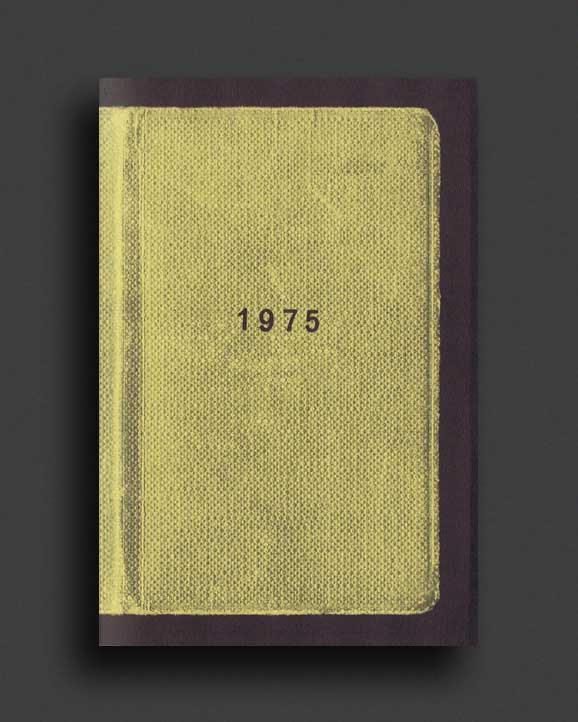
In 1975 cars were made from metal, glass, some chrome and a bit of plastic. The majority had front and rear bumpers. Base models were sold without radios. GPS, which seems so crucial today, hadn’t yet been invented.
As a child in the 70’s Daniela Comani travelled with her parents in their car. She sat in the backseat and her favorite pastime was to list the cars that drove by, jotting down the name of the manufacturer and brand, with some additional information to make note of particular models, like “Giulia”, “500” or “Dyane”.
40 years later she found one of her old notebooks: a planner from 1975 with her list of cars. She researched photographs of the cars that were on the road in the 70’s, finding neutral images selected by the manufacturers for brochures. Some of these are icons of the 70’s and they define the spirit of the age, like the films, fashion and music of the time.
This project becomes an interesting social and historical study on style in the pre-globalized world and, above all, a kind of self-portrait.
1980, English
Softcover (staple-bound), 32 pages, 21.5 x 14 cm
1st Edition, Out of print title / used / average
Published by
Self-Published
$20.00 - Out of stock
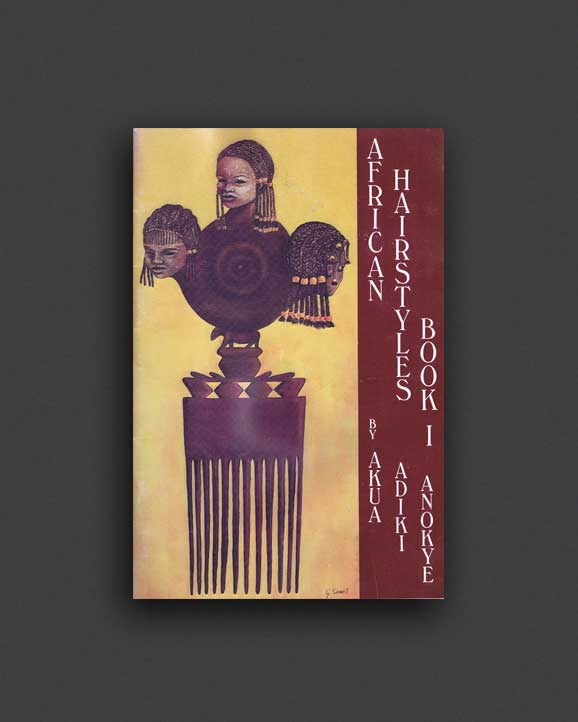
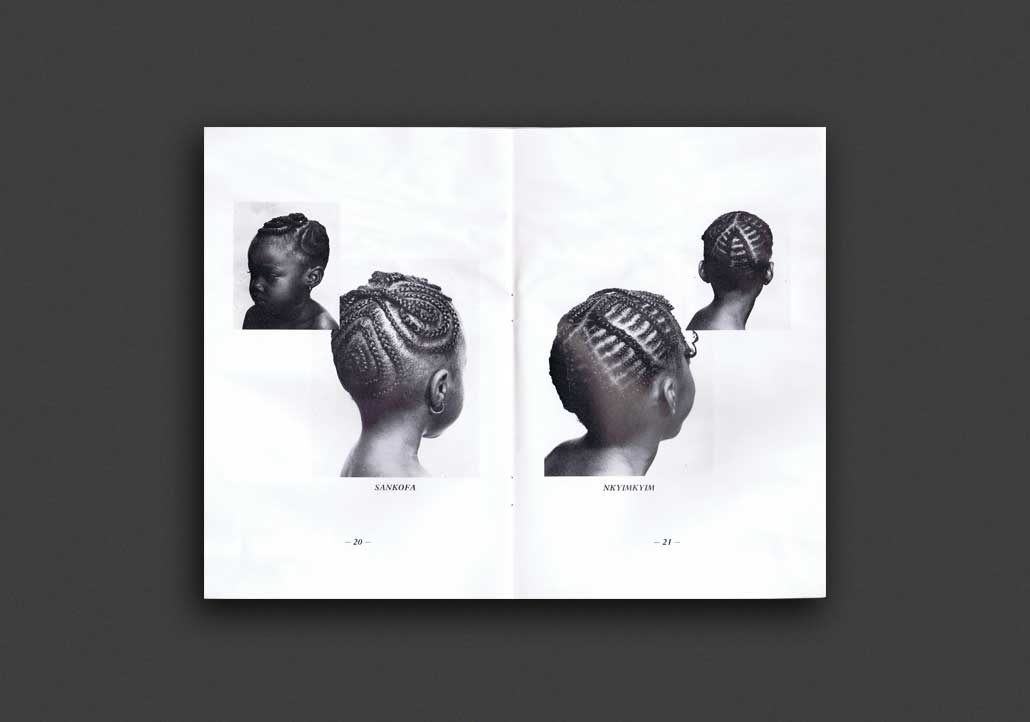
Wonderful first printing of the very scarce, self-published booklet "African Hairstyles, Book 1" by Akua-Adiki Anokye, published in New York in 1980. Through illustrations, photographs and poetry, this publication celebrates the rich artistry of African hairstyling, from Nigeria, Sudan, Kenya, South-West Africa, Congo, and Ghana.
"Thanks to the continued consciousness raising of our Sisters and Brothers in diaspora, you can walk just about anywhere, pick up a book, newspaper, or magazine and bear witness to our roots: cornrows, plaits and braids. AFRICAN HAIRSTYLES which we learned from our Mothers and Grandmothers, as they did from theirs.
In a time when our youth must be made aware of our past in order to prepare for our future. It is in desperation thatl appeal to all parents of youth of African descent, that we take on the task of instilling with our youth a sense ofpride, purpose and responsibility for our own self preservation. We must teach them OUR STORY." - Akua-Adiki Anokye
Wavy copy throughout due to moisture, otherwise good.
1993, English
Softcover, 84 pages, 20 x 23 cm
1st Edition, Out of print title / used / very good
Published by
Mills College Art Gallery / Oakland
$90.00 - Out of stock
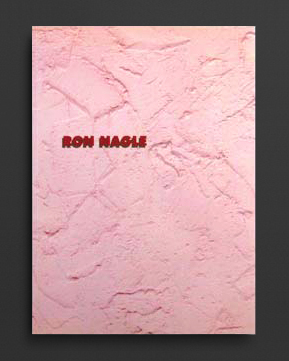
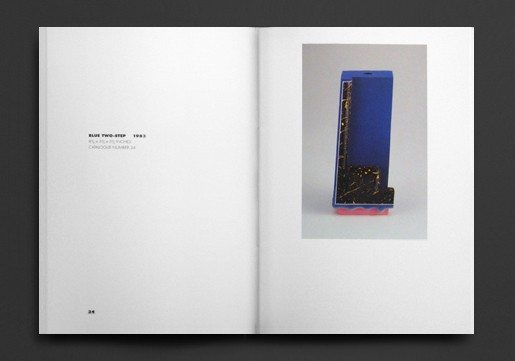
Lavishly illustrated with colour photography of Ron Nagle's ceramic work from 1958 to 1993, this now long out of print monographic catalogue was published on the occasion of the exhibition "Ron Nagle - A Survey Exhibition: 1958 - 1993" at Mills College Art Gallery, Oakland in 1993. Catalogue Essay by Michael McTwigan. Nagle has been described as "One of the most sophisticated sculptors to emerge on the West Coast." He has been recognized as a master colorist and pioneer in the development of low-fire ceramics and multiple glazing techniques.
1981, English / Japanese
Softcover, 54 pages, 27 x 23 cm
1st edition, Out of print title / used*,
Published by
Hara Museum of Contemporary Art / Tokyo
$50.00 - Out of stock
Japanese Jean-Pierre Raynaud catalogue, published in 1981 on the occasion of his major exhibition at the Hara Museum of Contemporary Art, Tokyo.
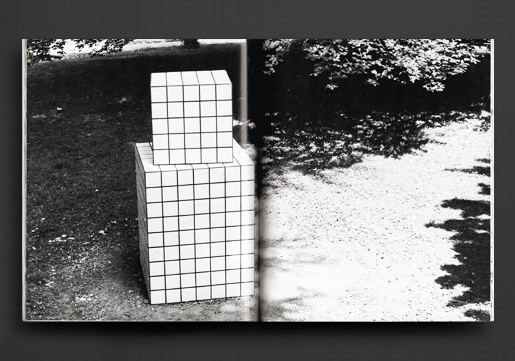
Illustrated throughout with examples of his sculptural and spatial works, especially his flower pot and ceramic tile works, including a staging of "Raynaud's Room" especially for the museum. Includes preface by Toshio Hara (Hara Museum director), essay by Pierre Restany, and artist biography. All texts in both English and Japanese.
"For fifteen years now Jean-Pierre Raynaud has been pursuing a solitary, original and severe work which has made him one of the major protagonists of European art. Using the language of objects and the environment, his cement flower pots and his white ceramic tiles set in fine lines of black mortar have made him famous from Sao Paulo to Tel Aviv no less than in Paris, Dusseldorf, Milan, Amsterdam or Brussels. The pots and tiles translate into forms of daily life the demanding quest for ultimate reality: a sense of life and a vision of emptiness. For fifteen years now the existential world of Jean-Pierre Raynaud has cast its projected shadow and the sharp profile of its symbols on the mirror of my conscience. To such an extent that I sometimes sense the course of his work as an integral part of my own mental landscape..." - Pierre Restany
Jean-Pierre Raynaud (b. 1939) is a French visual artist. After graduating from horticultural studies in 1958, he began producing works in the 1960s - his flower pot and white tile works quickly becoming the hallmark of the artist. In 1964, he exhibited at the Salon de la Sculpture in Paris. In 1965, he made his first solo exhibition at the Galerie Jean Larcade in Paris and in 1966 at Mathias Fels. He took part in the IX biennale of São Paulo in Brazil in 1967, in 1970 and 1973 at the Alexandre Iolas Gallery in New York. He is quickly called to exhibit to the four corners of the world. In 1975, he realized the stained - glass windows of the Abbey of Noirlac. In 1969, he began to build his own house at La Celle Saint-Cloud, which is his main work of art. The breath-taking house, with all surfaces lined with white tiles connected by black grids of mortar, represented twenty-four years of research on space. In 1993, he decided to destroy it and exhibited the pieces of the house in surgical containers at the CAPC museum of contemporary art of Bordeaux and at the Venice Biennale in the same year, winning the honorary prize for representing France with this moving work.
1969, German
Softcover, 80 pages, 19 x 26 cm
1st Edition, Out of print title / Used*,
Published by
Kunstverein für die Rheinlande und Westfalen / Dusseldorf
$50.00 - Out of stock
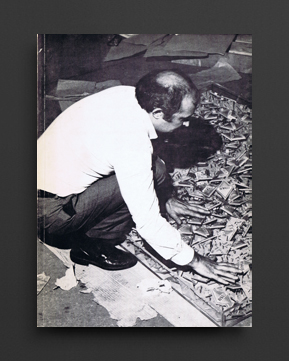
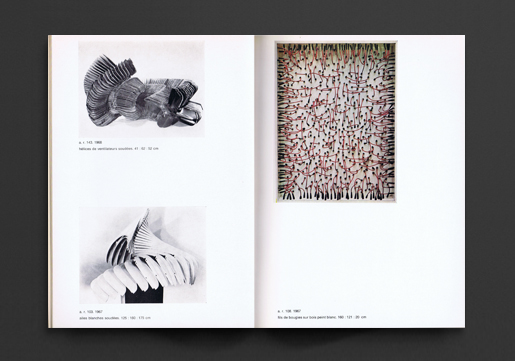
Catalogue published on the occasion of the solo exhibition of Arman, 16 December 1969 to 8 February 1970 at the Kunstverein for the Rhineland and Westphalia, Dusseldorf, Germany. Largely illustrated throughout with Arman's great body of accumulation works that made up this exhibition - assemblage sculpture and relief works using dizzying repeated elements from Renault automobiles. Photography in colour and black and white, drawings by the artist, texts in German (by Karl-Heinz Hering and Arman) and a biography and list of exhibited works.
Arman (November 17, 1928 – October 22, 2005) was a French-born American artist.[1] Born Armand Fernandez in Nice, France, Arman was a painter who moved from using objects for the ink or paint traces they leave ("cachet", "allures d'objet") to using them as the painting itself. He is best known for his "accumulations" and destruction/recomposition of objects.
In October 1960, Arman, Yves Klein, François Dufrêne, Raymond Hains, Martial Raysse, Daniel Spoerri, Jean Tinguely and Jacques Villeglé, and art critic and philosopher Pierre Restany founded the Nouveau réalisme group. Joined later by Cesar, Mimmo Rotella, Niki de Saint Phalle, and Christo, the group of young artists defined themselves as bearing in common their "new perspective approaches of reality." They were reassessing the concept of art and the artist for a 20th-century consumer society by reasserting the humanistic ideals in the face of industrial expansion.
In 1961, Arman made his debut in the United States, the country which was to become his second home. During this period, he explored creation via destruction. The "Coupes" and the "Colères" featured sliced, burned, or smashed objects arranged on canvas, often using objects with a strong "identity" such as musical instruments (mainly violins and saxophones) or bronze statues.
1982, Japanese
Softcover, 112 pages, 25 x 25 cm
1st Edition, Out of print title / Used*,
Published by
Seibu / Tokyo
$60.00 $30.00 - Out of stock
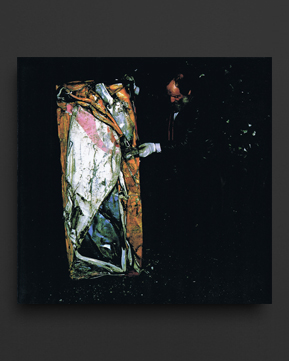
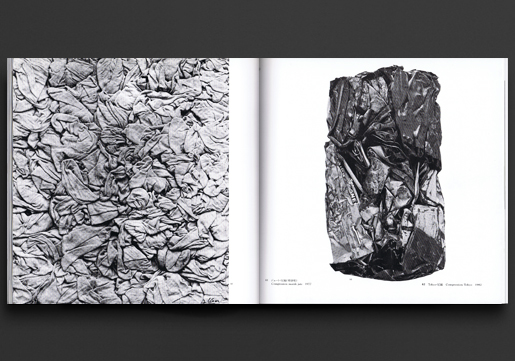
Japanese catalogue published in 1982 on the work of French sculptor, César, on the occasion of a major exhibition at the Seibu Museum of Art that same year. Heavily illustrated throughout with his sculptural works in colour and black and white, including his early welded metal works, and incredible Compressions and Expansions, along with a list of all works, biography, bibliography. First edition.
César Baldaccini (1 January 1921 in Marseille - 6 December 1998 in Paris), usually called César was a noted French sculptor. César was at the forefront of the Nouveau Réalisme movement with his radical compressions (compacted automobiles, discarded metal, or rubbish), expansions (polyurethane foam sculptures), and fantastic representations of animals and insects in bronze. His sculptural vision has heavy influenced the work of many for generations since.
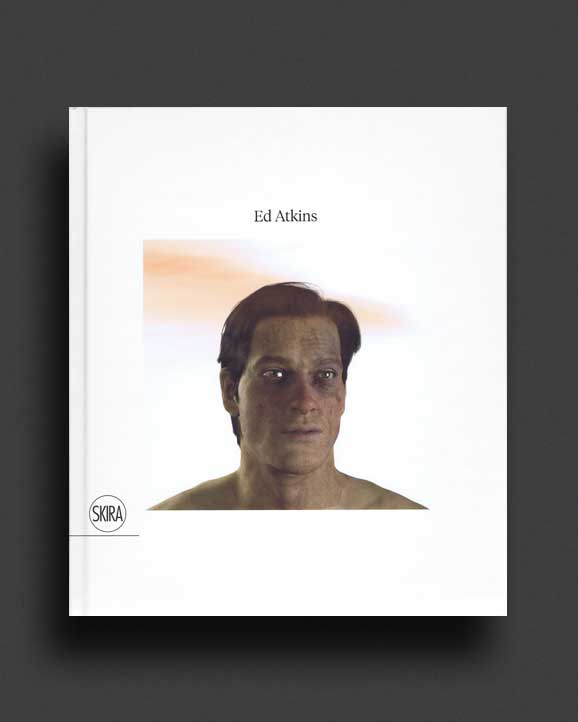
2017, English
Hardcover, 236 pages, 23.8 x 28 cm
Published by
Skira / Milan
$70.00 - Out of stock
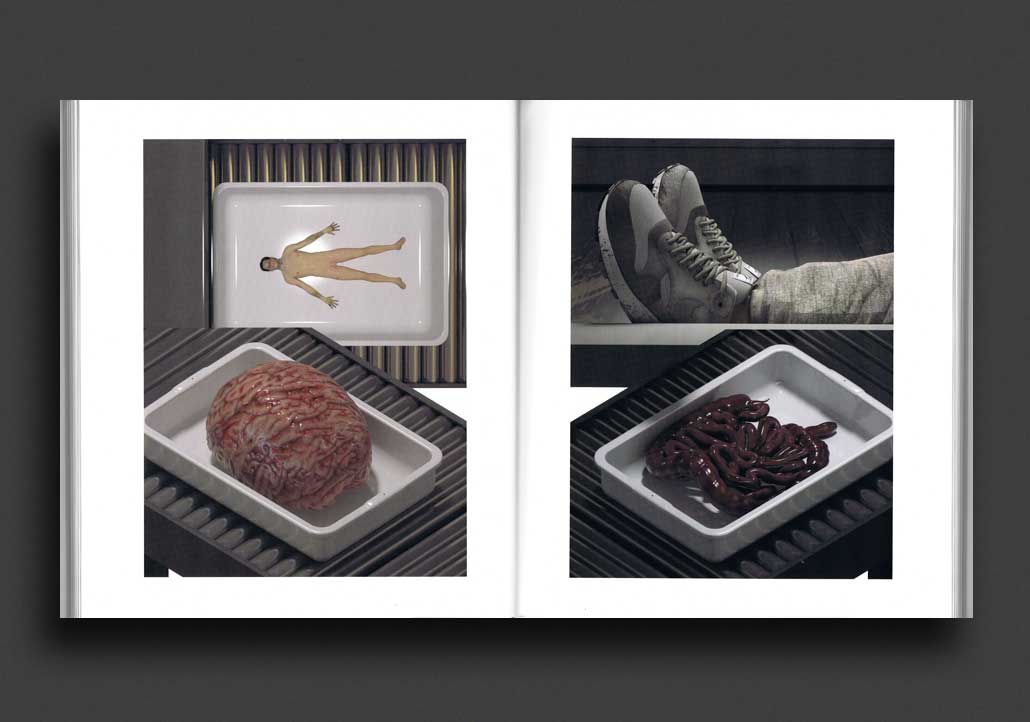
Conceived by Atkins as an artist's book, the main body is a collage of imagery, text, and graphical elements. Ed Atkins makes videos, draws, and writes, reflexively performing the ways in which contemporary modes of representation attempt to do justice to powerfully emotional experience. Atkins' work is at once a disturbing diagnosis of a digitally mediated present day and an absurd prophecy of things to come. It is skeptical of the promises of technology yet suggests that it is possible to salvage subjectivity, suspending a hysterical sentimentality within the desperate lives of the surrogates he creates.
This catalog accompanies the exhibition that is developed as a collaboration between Castello di Rivoli Museo d'Arte Contemporanea and Fondazione Sandretto Re Rebaudengo. With new essays by the editors and by Irene Calderoni and Chiara Vecchiarelli, the book is accompanied by a scholarly timeline and an anthology that includes a selection of the artist's unpublished writings, plus critical writings by Kirsty Bell, Melissa Gronlund, Martin Herbert, Leslie Jamison, Joe Luna, Jeff Nagy, Mike Sperlinger, and Patrick Ward, together with interviews by Katie Guggenheim, Hans Ulrich Obrist, Beatrix Ruf, and Richard Whitby.
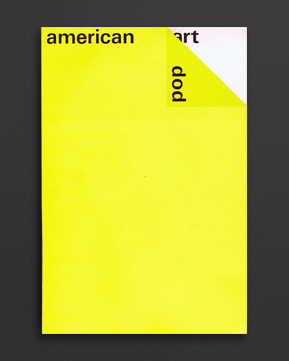
1964, Dutch
Softcover, 28 pages, 18 x 27.5 cm
1st Edition, Out of print title / used / very good
Published by
Stedelijk Museum / Amsterdam
$65.00 - Out of stock
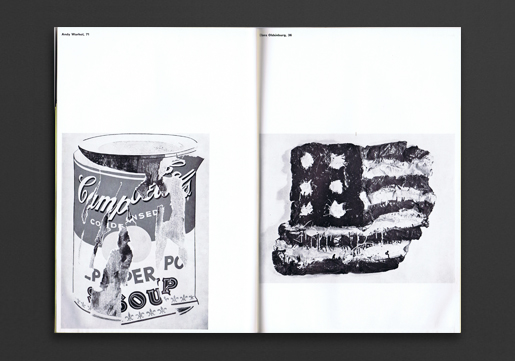
Scarce catalogue for one of the first Pop Art exhibitions in Europe, presented at the Stedelijk Museum in 1964. This collectable catalogue was published for the occasion, and is one of the finest early examples of Wim Crouwel's striking and iconic design work for SM.
Book lists 85 works with sizes from the exhibition, with reproductions of works by Claes Oldenburg, Andy Warhol, Jim Dine, Roy Lichtenstein, James Rosenquist, George Segal, and Tom Wesselmann. Text in Dutch by Alan Solomon.
design by Wim Crouwel (Total Design)
2016, English
Hardcover (w. dust jacket), 304 pages, 29 x 24.5 cm
Published by
Art Yard / London
$110.00 - Out of stock
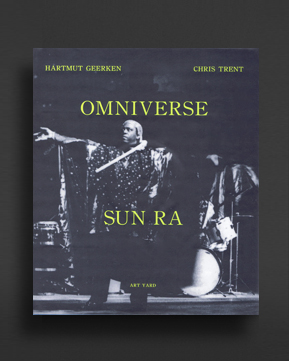
Revised and expanded second edition of Hartmut Geerken and Chris Trent’s comprehensive reference "Omniverse Sun Ra", originally published in 1994.
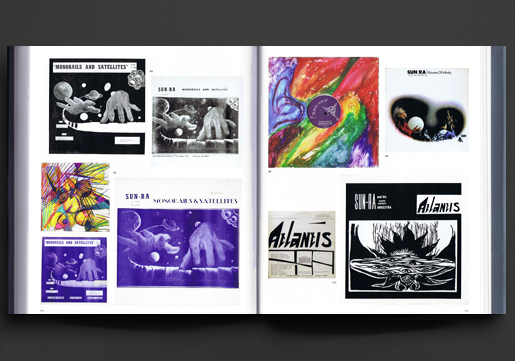
Omniverse Sun Ra features many previously unpublished photographs of Sun Ra and His Arkestra in New York in 1966 and Germany in 1979 by Val Wilmer, and Hartmut Geerken’s previously unpublished photographs from Heliopolis in Cairo, Egypt, in 1971, in addition to an updated comprehensive pictorial and annotated discography by Chris Trent, including chronological discography and alphabetical record title, composition, personnel, and record label indexes, as well as indexes of shellac 78RPM records, 45 RPM singles, jackets, and labels.
Also includes essays and photo documents by Hartmut Geerken, Chris Trent, Amiri Baraka, Robert L. Campbell, Chris Cutler, Gabi Geist, Sigrid Hauff, Karl Heinz Kessler, Robert Lax, and Salah Ragab.
2000, English
Plastic binder, 60 page catalogue/booklet, poster, brochure, press release, CD, 600 loose leaf A4 pages, 30.2 x 22 x 4 cm
Edition of 500,
1st Edition, Out of print title / as new
Published by
Museo Nacional Centro de Arte Reina Sofia - Palacio de Cristal - Parque del Retiro / Madrid
$2900.00 - Out of stock
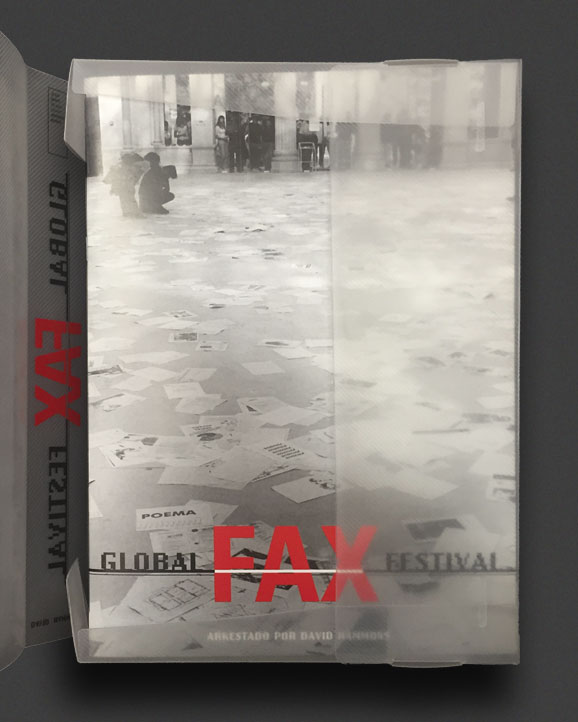
Incredible limited edition (500 copies) "Global Fax Festival" binder created by David Hammons on the occasion of the "Global Fax Festival - Arkestrated by David Hammons" exhibition at the Crystal Palace in Madrid (June 1 – November 6, 2000). This extraordinary edition contains a 60-page book of wonderful black-and-white photography documenting the exhibition and related events, the exhibition brochure, a large folded exhibition poster, press release, CD (Butch Morris "Conduction #113, Interflight), and a selection of six hundred faxes selected by David Hammons from the show. In this exhibition, in the Palacio de Cristal, Hammons provided the public with nine fax numbers corresponding to nine receivers installed in the ceiling of the Palacio. When messages sent from anywhere in the world are received they fall from the top of the space, progressively landing and filling up the floor. The project, Global Fax Festival, was used by Hammons to draw on the parallel between the surroundings, where the leaves of the trees in the Retiro park follow the same path. One of his intentions for the exhibition, created especially for the Palacio de Cristal, was to minimally involve the building's architecture, which he himself defines as being like “a sacred cathedral”. This sacrosanct dimension does not only belong to the spaces, but also the materials and objects and is a constant in his work.
Among the faxes received over the five months of the exhibition, there are also newspaper stories, adverts, drawings, artist dossiers, obituaries, letters, declarations of love, collages, social statements, messages for David Hammons, instructions on origami techniques, famous phrases and proclamations, graphic humour, poems, short stories and book excerpts, music scores, photos of people, puzzles, slogans, etc., all of which demonstrate the boundless diversity of possible expression through paper. The sounds in the inside of the Pabellón de Cristal, the trill of the birds in the park, the noise of the fax machine and the falling paper, are equally part of the installation and fulfil the artist's intentions.
Moreover, five days before its official closure the exhibition includes a concert by Butch Morris, a preeminent figure in contemporary classical music, improvisation and jazz. The American composer performs an improvisation combining sampled recordings and the live sounds from the surroundings. One hour before sunset, the sounds are displaced, with all the musicians participating in the concert by playing collectively from their designated places until one hour after sundown, when they change their positions once more.
A true document of the exhibition and it's events, Hammons' selection of six hundred messages received over the course of the exhibition make up the rare catalogue edition of this example of Fax-Art, falling somewhere between Mail Art and Net-Art.
The work of artist David Hammons (Springfield, USA, 1943), which begins in the Seventies, has been characterised by its commitment towards civil rights and its link to the Black Power movement in the United States - the defence of the rights of black people. Hammons commonly questions the separation between public and private spaces through an aesthetic with influences from Minimalism, Arte Povera and the school of Zen.
A Fine / As New copy of this very rare, highly collectable title.
2016, English
Hardcover, 76 pages, 41 cm x 31.5 cm
Published by
Walther König / Köln
$80.00 - Out of stock
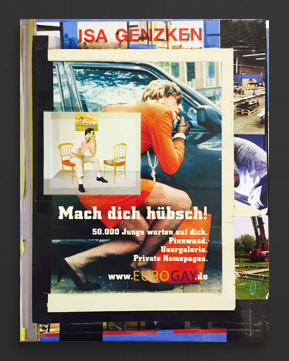
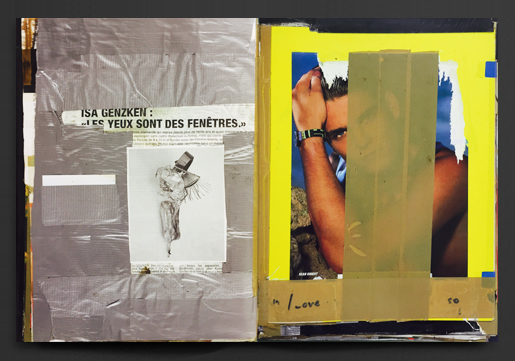
This large-format collage book was created in Berlin around 15 years ago. It is both a personal diary and an artistic manifesto. In it are portrait photos of Genzken and her friends, cuttings from advertisements and glamour magazines, male pin-ups, illustrations of fences and grates from animal enclosures, mostly bare trees, bushes and forests, columns, facades and strange details from her own work and installations, postcards of historical paintings as well as handwritten notes.
The overwhelming number of images obtains a surprisingly harmonious form. Genzken uses brown sticky tape and silver textured textile tape; black, blue, red and strongly vibrant green neon papers to give the book a dramatic structure. In this way she creates windows and doors with views in and views out.
The format of the pages gradually becomes larger through the course of the book, giving it an astounding physicality. It grants an insight into the thought and work of one of the most important contemporary artists of our time.
Published on the occasion of Isa Genzken’s major retrospective at Stedelijk Museum Amsterdam, 29 November 2015 – 6 March 2016.
1985, German
Hardcover (w. dust jacket), 127 pages, 21 x 27 cm
1st edition, Out of print title / As New,
Published by
Verlag Silke Schreiber / Münich
$70.00 - Out of stock
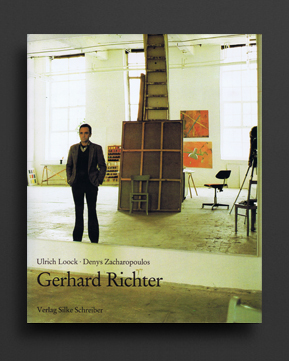
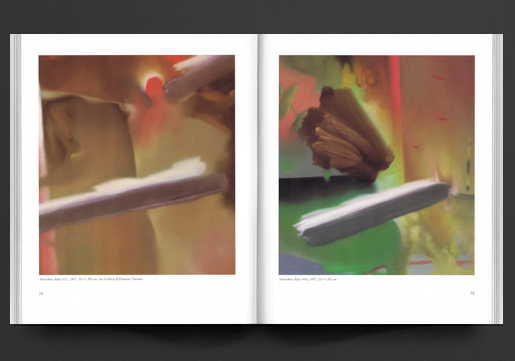
Major monograph published in Germany in 1985 on German painter Gerhard Richter. Published in an edition of 3000 copies, this hardcover volume (wrapped in illustrated dust jacket) is lavishly illustrated throughout with Richter's entire career of work up until 1985, across his many major works of abstraction and photorealism, as well as his glass pieces and photography, threaded together with extended examinations by Ulrich Loock and Denys Zacharopoulos, biography, exhibition list, et al.
All texts in German.
As New copy.
Ulrich Loock is an art critic and curator, lecturer at the University of the Arts, Bern, lives in Berlin. He has been the director if Kunsthalle Bern 1985 - 1997 and co-director of the Museum Serralves, Oporto.
Denys Zacharopoulos is an art historian and theorist. He works as Professor of Art History, author, and curator, amongst others at the 48th Biennale in Venice (Italy) and documenta IX in Kassel (Germany).
2007, English
Softcover, 120 pages, 15.2 x 21.6 cm
Published by
The MIT Press / Massachusetts
Afterall / London
$40.00 - Out of stock
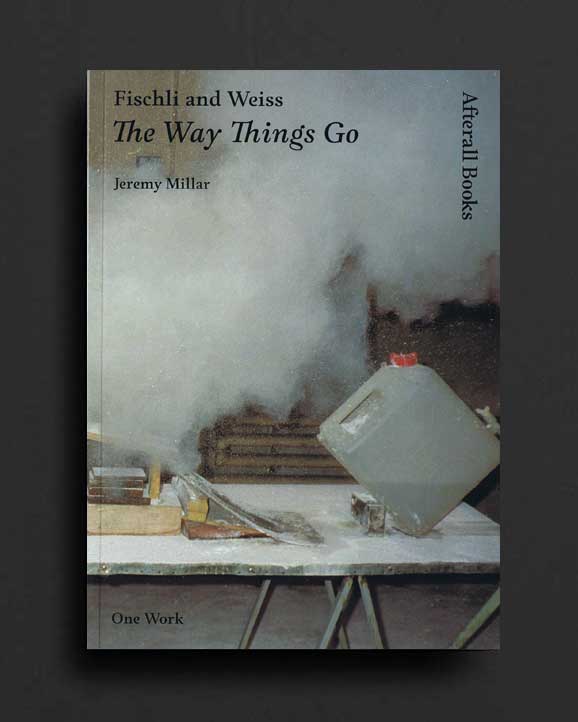
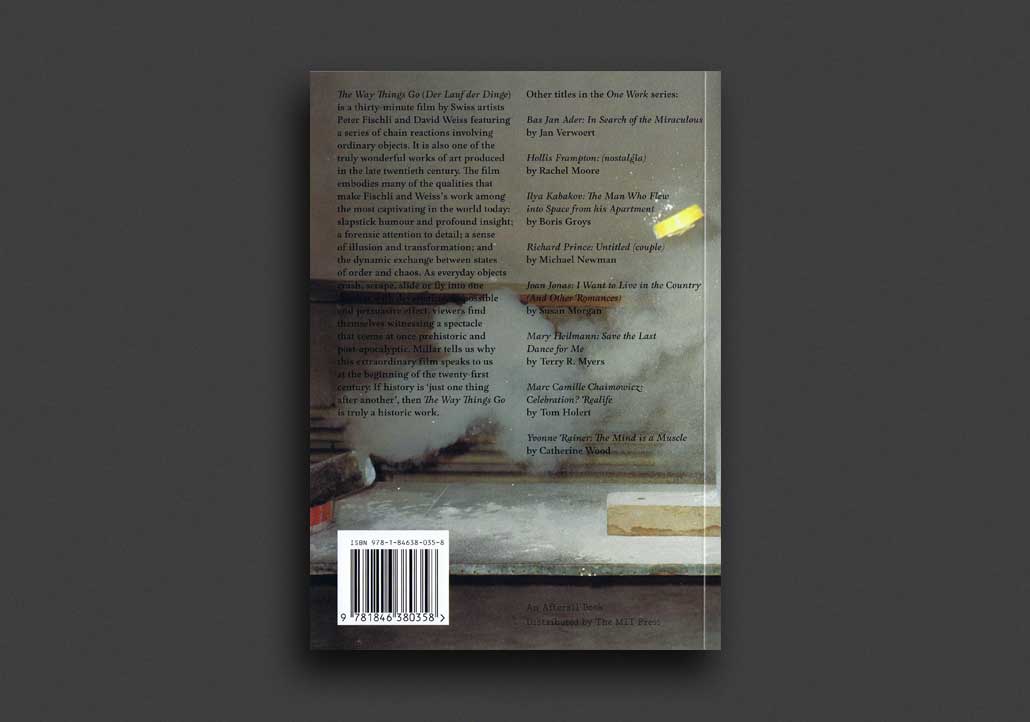
The Way Things Go (Der Lauf der Dinge, 1987) is a thirty-minute film by Swiss artists Peter Fischli and David Weiss featuring a series of chain reactions involving ordinary objects. It is also one of the truly wonderful works of art produced in the late twentieth century. The film embodies many of the qualities that make Fischli and Weiss's work among the most captivating in the world today: slapstick humour and profound insight; a forensic attention to detail; a sense of illusion and transformation; and the dynamic exchange between states of order and chaos. As everyday objects crash, scrape, slide or fly into one another with devastating, impossible and persuasive effect, viewers find themselves witnessing a spectacle that seems at once prehistoric and post-apocalyptic. Millar tells us why this extraordinary film speaks to us at the beginning of the twenty-first century. If history is 'just one thing after another', then The Way Things Go is truly a historic work.
2012, English
Softcover, 304 pages, black and white, 25 x 17.6 cm
Published by
Occasional Papers / London
$41.00 - Out of stock
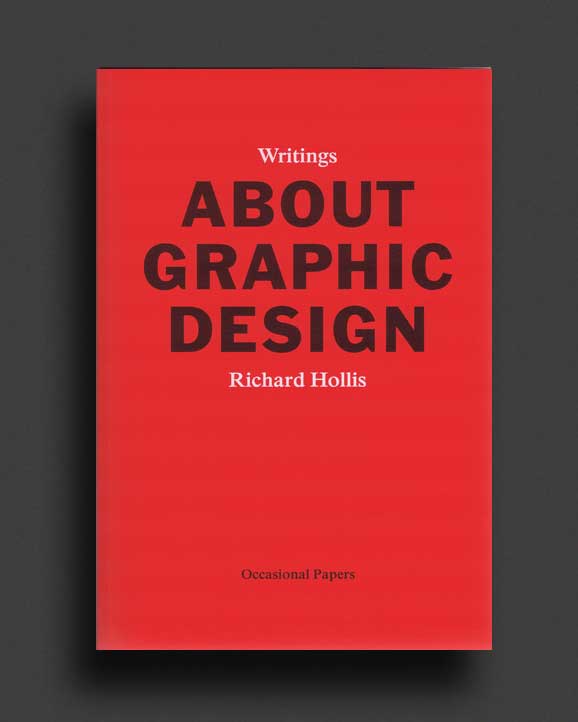
The book features a comprehensive selection of writings by renowned graphic designer, graphic design theorist and historian Richard Hollis, including interviews, essays, letters, articles, lectures and course outlines. About Graphic Design is densely illustrated with over 500 thumbnail images.Edited by Richard Hollis
Designed by Richard Hollis with Pedro Cid Proença
2014, English/German
Softcover (spiral bound), 230 pages (b&w ill.), 21 x 27 cm
Published by
Occasional Papers / London
$50.00 - In stock -
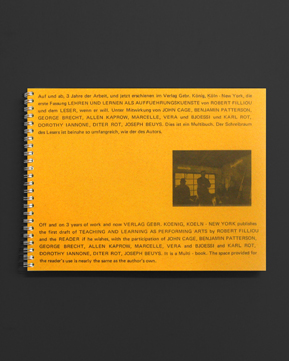
Long out-of-print since its first edition in 1970, Robert Filliou’s ‘work in continuous progress’ remains an essential primer to the artist’s still radical ideas on participatory art making and teaching. Along with extensive writing by Filliou, the book includes interviews with numerous artists close to him, such as Joseph Beuys, George Brecht, John Cage, Dorothy Iannone, Allan Kaprow and Diter Rot. This edition is an exact facsimile of the original, in order to preserve its highly inventive bilingual (English/German) layout and idiosyncratic composition.
1977, Japanese
Hardcover (w. dust-jacket and illustrated box), 168 pages, 23.5 x 29 cm
1st Japanese edition, Out of print title / used*,
$70.00 - Out of stock
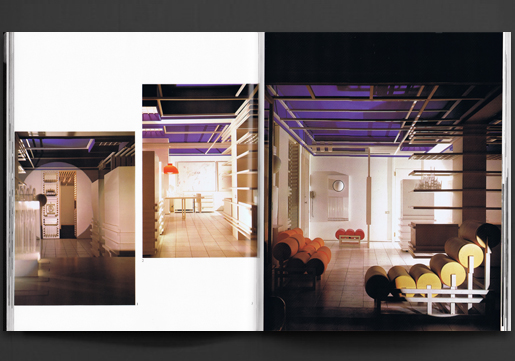
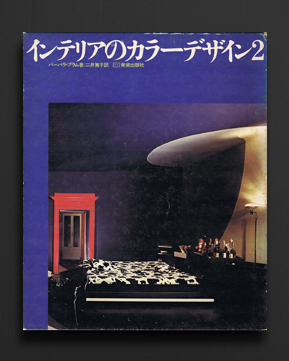
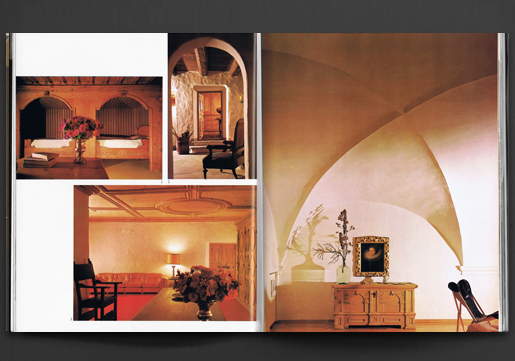
First Japanese box edition of Barbara Plumb’s classic “Houses Architects Live In” from 1977, a Studio Book published by New York’s Viking Press, printed and bound in Japan.
Profiles the homes of Paolo Leoni, Von Sengen, Gerolamo Gola, Carlo Santi, Giancarlo Bicocchi, Winthrop Faulkner, Antoine Predock, Allan and Barbara Anderson, Wendall Lovett, Arthur Erickson, Luis Barragan, Colin St. John Wilson and M.J. Long, Warren Cox, Georgie Wolton, Michel Sadirac, William J. Conklin, Alberto Seassaro, Nanda Vigo, Claudio Dini, Harry and Penelope Seidler, George D. Hopkins Jr., Tim Prentice, Charles W. Moore, Luigi Capriolo and Jacek Popek, Hanford Yang, Barton Choy, Romano Juvera, Gae Aulenti, Robert Sobel, William Morgan, Hugh Newell Jacobson, Ulrich Franzen, Ziona Lesham, Anne and Tony Woolner, Christopher H.L. Owen, Norman Jaffe, Peter Chermayeff, James Lambeth, Vittorio Gregotti, Franco Tartaglino Mazzucchelli.
Texts in Japanese.
“The author reviews the concerns that determine architects’ choices in designing their own environments, and notes how they individually deal with such matters as situation, space, scale, balance, color, light, and all the factors involved in creating a home that meets their needs and interests. The book is rich in suggestions and solutions for beautifying and improving one’s own surroundings.”
Barbara Plumb was editor of the “Living” section of Vogue magazine in the 1970s and Senior editor of Pantheon Books.
2017, English
Hardcover, 148 pages, 18.5 x 22.2 cm
Published by
Andrew Kreps Gallery / New York
$46.00 - Out of stock
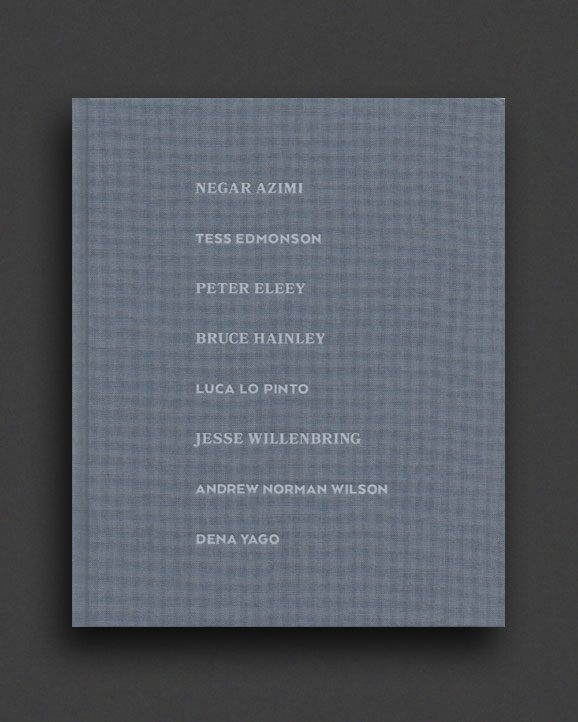
Darren Bader monograph published by Andrew Kreps Gallery, NY, with texts by Negar Azimi, Tess Edmonson, Peter Eleey, Bruce Hainley, Luca Lo Pinto, Andrew Norman Wilson, and Dena Yago.
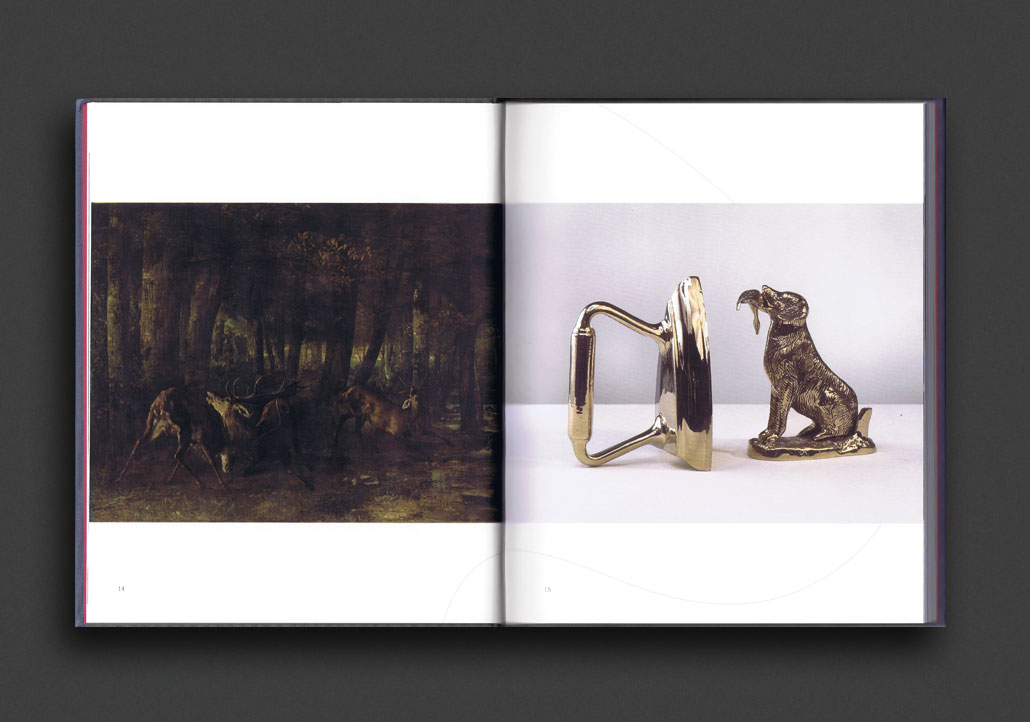
Bader’s practice is based on the inclusion of different elements — consuming objects, words, images, animals, persons — that generate concrete, imaginary, real and fictional relations. He removes meaning, yet adds new levels of understanding to works, objects and (possible, or often impossible) descriptions and manages to lend an original twist to a practice whose meaning can be sought in the carefully arranged inclusion of all the components of the art system: the work, the artist, the gallery owner, the collector, the exhibition visitor and readers of art texts. In this sense, Bader’s work can be analysed in terms of “information technology“: it separates and rejoins the inner system of the work (its aesthetic component) and the external structure, or “back end”, which runs and conditions it (the art system itself). Exploring a discourse which began with Marcel Duchamp’s seminal ready-mades and continued subsequently, during the 60s and 70s, with the criticisms of art system put forward by the Institutional Critique, Bader argues that the aspects of artistic production underlying those assumptions are now so obvious, thoroughly explored and artistically expressed, even in terms of deconstruction and direct repudiation, that the next step is no longer a question of criticising or keeping in check the art system, but instead acceptance, conscious incorporation and a shared narrative. Bader thus demonstrates that the joint participation of all the different players involved in the system cannot fail to generate, together with the additional inclusion of factors and ideas borrowed from the omnipresent media, an added value of art in the current era of the sharing economy.
2010, English
Softcover, 230 pages (colour ill. throughout), 27 x 20.5 cm
Edition of 1108,
Out of print title / as new
Published by
Alex Zachary / New York
KLTB / New York
$140.00 - Out of stock
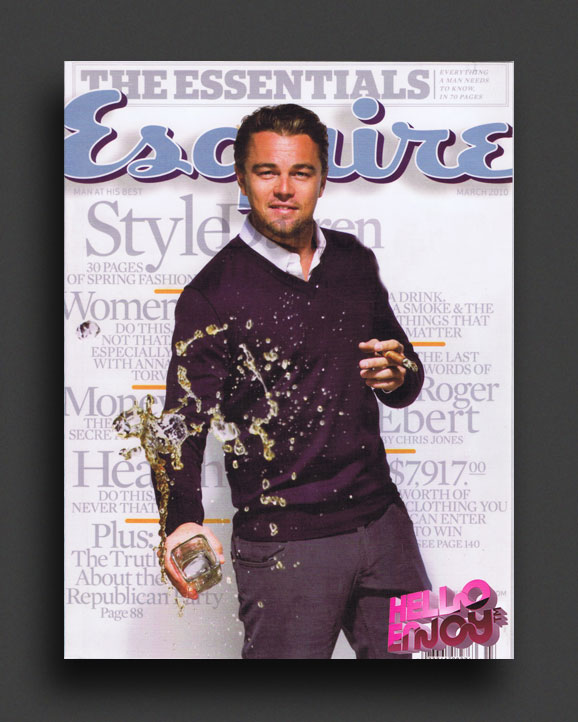
Very scarce, quickly out-of-print Darren Bader artist book from 2010.
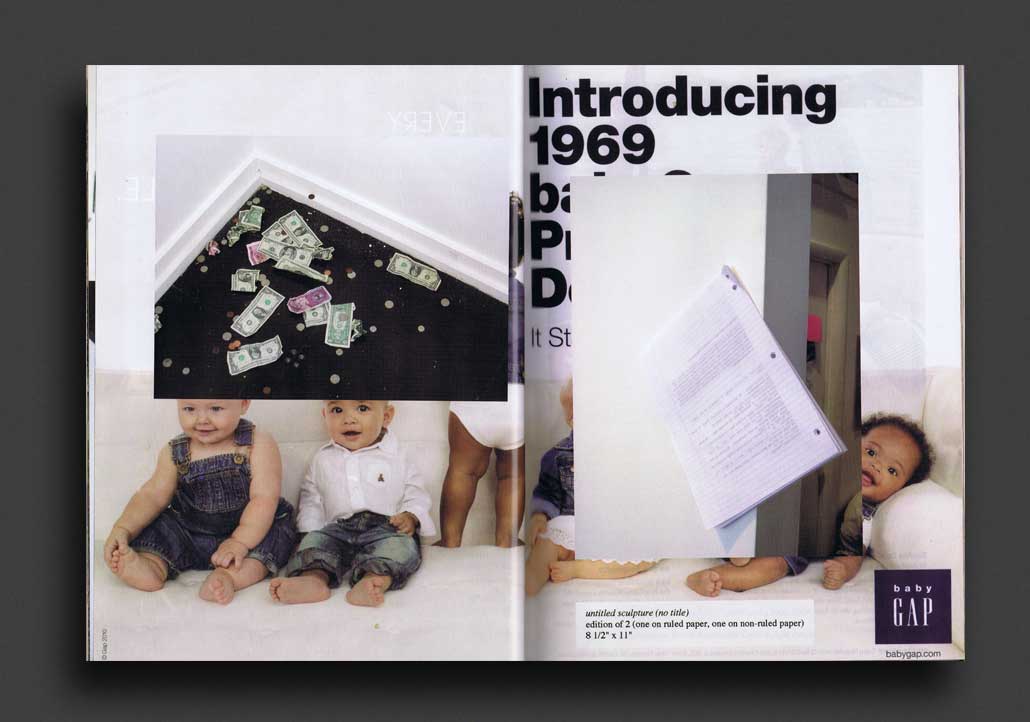
"Over the past 10 years I've actively tried to make art. Art started off meaning something different to me than cinema (which I studied and loved), but they ended up being the same thing. I used to write poetry as well, but don't really anymore - so maybe that means the same thing there too. Anyway, there wasn't a ton of clear documentation of what I'd been art-ing over the past 10 years, so Alex Zachary asked me to do a book. This is the book. Jesse Willenbring and I made it between February and August 2010. It contains a good chunk of what I've done since about 2000. Omitted are several word-based books; but those are in other books. This is the first book I've made that relies on images as-much-as or more-than text." - Darren Bader
2012, English
Hardback, 80 pages, 152 x 183 mm
1st Edition, Out of print title / used / fine
Published by
Kiito-San / New York
Walther König / Köln
$80.00 - Out of stock
Now out-of-print, Darren Bader’s Life As a Readymade is a four-part disquisition on contemporary art culture and his doubts about its terms of engagement.
"Art" is a word fraught with misconceptions, love, distrust, codifications, speciousness, allegiance, suppleness, precariousness, etc. It's a word impossible to define with any degree of precision, but the (self-)elected brokers of the word do their best to censor that manifest fact. The art world continues to abide by 19th-century models of what art can be for little reason other than fear and greed. Being a (self-)elected broker, I hate my own hypocrisy and the ridiculous routine of hating the hypocrisy of others. But without hatred of hypocrisy, hypocrisy reigns. So, in hopes that the word "art" can indeed outwit its contemporary usages, I wrote a tract that addresses inanities, profanities, and vanities in the contemporary world of "art."
2008, English
Softcover, 32 pages, 290mm x 205mm
Published by
The Drawing Room / London
$14.00 - Out of stock
This book has been published to co-incide with the artist's first solo exhibition in London (2008) which includes new, commissioned works consisting of film, works on paper and painted, wall-hung objects.
The book is intended as an extension to the exhibition and includes works especially made for the page which address the different form of viewing.
Tompkins is known for her minimal installations of works on paper and sculptural elements. Her work hovers between abstraction and representation and art historical references range from Kazimir Malevich to Richard Prince and include Jasper Johns and Sonia Delauney.
2011, English
Softcover, 132 pages, 270 x 290 mm
1st Edition, Out of print title / used / very good
Published by
The Modern Institute / Glasgow
$120.00 - In stock -
Wonderful, long out of print monograph on Tompkins’ work, lavishly illustrated throughout, designed by Marit Münzberg, and published by Inverleith House, Royal Botanic Garden Edinburgh on the occasion of a major solo exhibition in 2011. Accompanying essays by Daniel Baumann, Pati Hertling and a conversation with artist Karla Black.
Hayley Tompkins (born 1971, Leighton Buzzard) lives and works in Glasgow. Recent solo exhibitions include A Piece of Eight, The Modern Institute, Glasgow (2011); Autobuilding, Inverleith House, Royal Botanic Garden Edinburgh (2009); and Transfer (with Sue Tompkins) Spike Island, Bristol (2007). Her work is included in Watercolour, currently at Tate Britain, London.
Fine-Very Good copy.
2016, English
Hardcover (clothbound), 380 pages, 27 x 18 cm
Published by
Walther König / Köln
$85.00 - Out of stock
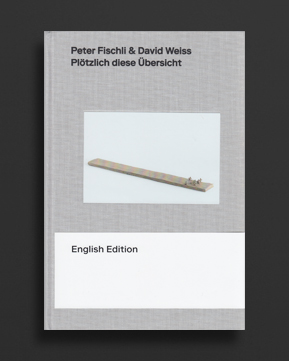
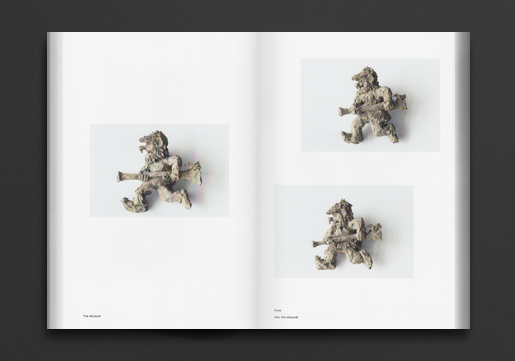
Plötzlich diese Übersicht is a loose collection of over 350 hand-sculpted, unfired clay figures, is one of those artworks that is very familiar even to those who are not all that interested in art.
Fischli and Weiss have created a masterpiece, using an entirely unspectacular material to form sculptural snapshots that sparkle with cheerful wit: sketched models of everyday situations and objects; clay reproductions that reveal the absurdity and artificial normality of the ordinary.
Alongside them are semi-freely imagined scenes and events from history, culture, entertainment, sport and assorted memories from their own biographies, immortalised in emblematic scenarios.
The titles, with their characteristic subtle mockery, fragmentary encyclopadic knowledge and serious irony, are an integral part of the work.
This expansive catalogue raisonné art book gives an overview of the ‘Overview’. Moreover, the superb illustrations reveal the sculptural aspect of this multipartite work, begun in 1981, the quality and continued relevance of which goes beyond the sly humour of language and creative skill.
English edition.
2016, English
Softcover (loose-leaf bound in ribbon), 160 pages, 20 x 26.5 cm
Published by
Walther König / Köln
$46.00 - Out of stock
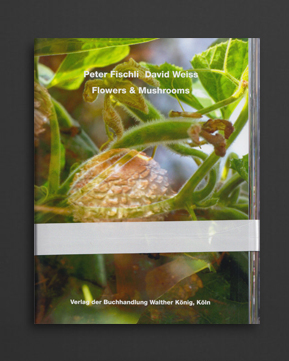
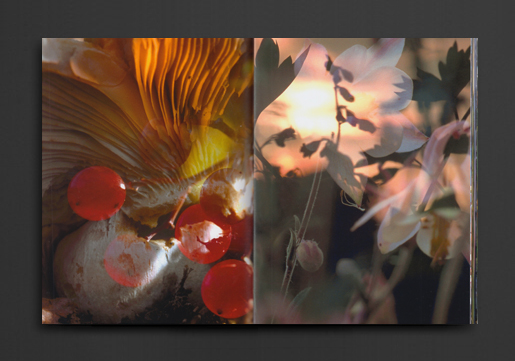
Flowers & Mushrooms is the new and improved release of the previously published artists’ book from 1999.
Bursting with luscious colour and consisting of multiple superimposed images these photographs by Peter Fischli and David Weiss navigate the fine line between beauty and kitsch.
From 1997—98, the artists spent countless hours documenting gardens and mushroom patches, thoughtfully crafting intoxicating compositions.
The book is released on the occasion of the exhibition Fischli/Weiss: How to Work Better at the Guggenheim Museum, New York and the Museu Jumex, Mexico City in 2016.
2016, German (originally 1981)
Softcover (staple-bound), 48 Pages, 10.3 x 14.6 cm
Published by
Nieves / Zurich
$15.00 - Out of stock
Peter Fischli (1952) and David Weiss (1946–2012) began their 33-year collaboration in 1979. Resisting any specific style, medium, or material, their work explores the poetics of banality – the sublimity of the objects and events constituting everyday life. Indebted to Dada, Surrealism, Pop Art, and Conceptual Art, their photographs, videos, slide projections, films, books, sculptures, and multimedia installations rely on keen observation and uncanny wit.
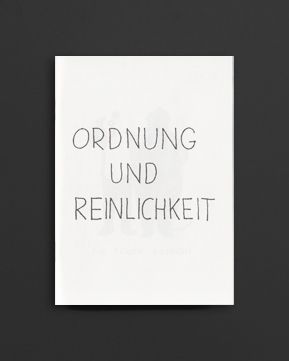
Throughout the course of their partnership, Fischli and Weiss probed the idea of dualistic thinking. Perhaps because they were a team of two involved in constant dialogue and debate, they consistently interrogated Western culture’s reliance on contraries. In one way or another, everything they produced together playfully unravels what the artists understood to be “popular opposites” – labor versus leisure, fiction versus reality, kitsch versus beauty, and the banal versus the sublime. The artists embodied this approach in their alter egos, Rat and Bear, who, for all their differences (rats being ugly and ubiquitous while pandas are lovable and endangered), appear as equal partners in their various misadventures. Rat and Bear surface throughout Fischli and Weiss’s work in a range of forms, including appearances in the early films The Least Resistance (1980–81) and The Right Way (1983); as “authors” of the artists’ book Order and Cleanliness (1981); and as a sculpture, Rat and Bear (Sleeping) (2008).
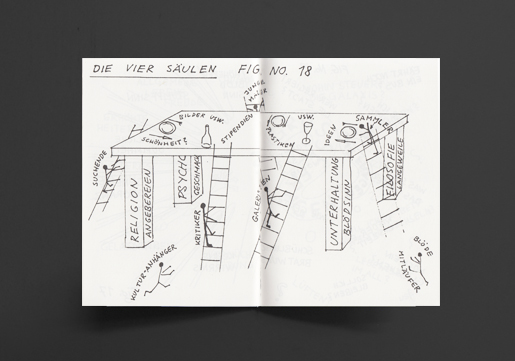
The booklet Ordnung und Reinlichkeit (Order and Cleanliness, 1981) accompanied the Rat and Bear films and is crammed with charts and diagrams, each attempting to impose a crazed order on the world. The original booklet was a self produced booklet, comprising a set of 15 photocopies on sale following the first showing of The Least Resistance at a late-night screening in Zurich.