World Food Books' programme is largely produced on Kulin Nation land. We acknowledge the Wurundjeri people of the Kulin Nation as the first and continuing custodians of this land, and pay respect to their Elders past, present, and emerging.
World Food Books is an arts and special interests bookshop in Naarm / Melbourne. Founded in 2010, World Food Books is devoted to the presentation of a rotating, hand-selection of international art, design, literary and counterculture publications with an emphasis on the anti-traditional, the experimental, the avant-garde, the heretic, the marginal.
Presenting new titles alongside rare and out-of-print books, catalogues and journals spanning the fields of modern and contemporary art, design, photography, illustration, film, literature, poetry, cultural theory, philosophy, sexuality, popular and underground culture in its many radical forms, World Food Books wishes to encourage adventurous, thoughtful and open-minded reading, looking, writing, and exchange of publishing and ideas, both current and historical.
As well as our bookshop, located in Melbourne's historical Nicholas Building, all of our inventory is available internationally via our online mail-order service.
World Food Books semi-regularly co-ordinates "Occasions", a programme of exhibits and events at the bookshop and in partnership with other hosts (such as museums and art galleries) that develop out of the activities, relationships and content of the bookshop itself.
World Food Books
The Nicholas Building
37 Swanston Street
Room 5, Level 6
Melbourne 3000
Australia
SHOP HOURS:
Thu–Fri 12–6, Sat 12–5
WEB-SHOP OPEN 24/7
World Food Books
Postal Address:
PO Box 435
Flinders Lane
Victoria 8009
Australia
Art
Theory / Essay
Architecture / Interior
Graphic Design / Typography
Photography
Fashion
Eros
LGBTQ+
Fiction / Poetry
Weird / Speculative / Science Fiction / Horror
Transgressive / Visceral / Abject
Symbolism / Decadence / Fin de siècle
Film / Video
Painting
Sculpture / Installation
Performance / Dance / Theater
Drawing
Sound / Music
Curatorial
Group Shows / Collections
Periodicals
Out-of-print / Rare
Posters / Ephemera / Discs
Signed Books
World Food Books Gift Voucher
World Food Book Bag
Australian Art
Australian Fiction
Australian Science Fiction / Speculative Fiction
Australian Poetry
Australian Photography
Japanese Photography
Conceptual Art
Minimal Art
Dada
'Pataphysics / Oulipo
Fluxus
Concrete Poetry
Pop Art
Surrealism
Arte Povera
Arte Informale / Haute Pâte / Tachism
Nouveau Réalisme / Zero / Kinetic
Situationism / Lettrism
Collage / Mail Art / Xerox Art
Art Brut / Folk / Visionary / Fantastic
Illustration / Graphic Art / Bandes Dessinées
Furniture
Italian Radical Design / Postmodernism
Textiles
Ceramics / Glass
Counterculture
Protest / Revolt
Philosophy
Psychoanalysis
Anthropology
Anarchism
Socialism / Anarchism / Communism / Capitalism
Literary Theory / Semiotics / Language
Feminism / Women's Studies
Gender Studies / Sexuality
Anthropology
Fetishism / BDSM
Drugs / Psychedelia
Crime / Violence
Animal Rights / Veganism
Occult / Esoterica
Ecology / Earth / Alternative Living
Whole Earth / Crafts
All prices in AUD (Australian dollars)
Pick-Ups
Pick-up orders can be collected in our bookshop during opening hours after order date. Please collect any Pick-up orders within 2 weeks of ordering as we have limited storage space. Orders will be released back into stock if not collected within this time. No refunds can be made for pick-ups left un-collected. If you cannot make it in to the bookshop in this time-frame, please choose postage option.
Return Policy
All sales are final. We do accept returns (for refund or exchange) for items received in error. All our orders are packed with special care using heavy-duty padding and cardboard book-mailers or bubble mailers (for smaller books), using reinforcement where required. We cannot take responsibility for any lost, stolen or damaged parcels.
Insurance
Should you wish to insure your package, please email us directly after placing your order and we can organise this at a small extra expense. Although all standard/express tracked packages are very safe and dependable, we cannot take responsibility for any lost, stolen or damaged parcels. We recommend insurance on valuable orders.
Interested in selling your old books, catalogues, journals, magazines, comics, fanzines, ephemera? We are always looking for interesting, unusual and out-of-print books to buy. We only buy books in our fields of interest and specialty, and that we feel we can resell.
We base these prices on desirability, market value, in-print prices, condition and our current stock levels. We offer cash, store credit, and can take stock on consignment. All
about 25% of the price we expect to get when we sell them, or 30% in store credit. We base these prices on desirability, market value, in-print prices, condition and our current stock levels.
Sell your books any day of the week. You can drop them off and return later. If you have a lot of books, we can visit your Sydney home.
We buy books that we feel we can resell. We offer about 25 % of the price we expect to get when we sell them, or 30% in store credit. We base these prices on desirability, market value, in-print prices, condition and our current stock levels.
Philadelphia Wireman
03 August - 01 September, 2018
World Food Books is proud to announce our next Occasion, the first presentation of sculptures by Philadelphia Wireman in Australia.
The Philadelphia Wireman sculptures were found abandoned in an alley off Philadelphia’s South Street on trash night in 1982. Their discovery in a rapidly-changing neighbourhood undergoing extensive renovation, compounded with the failure of all attempts to locate the artist, suggests that the works may have been discarded after the maker’s death. Dubbed the "Philadelphia Wireman" during the first exhibition of this work, in 1985, the maker’s name, age, ethnicity, and even gender remain uncertain. The entire collection totals approximately 1200 pieces, all intricately bound together with tightly-wound heavy-gauge wire (along with a few small, abstract marker drawings, reminiscent both of Mark Tobey and J.B. Murry). The dense construction of the work, despite a modest range of scale and materials, is singularly obsessive and disciplined in design: a wire armature or exoskeleton firmly binds a bricolage of found objects including plastic, glass, food packaging, umbrella parts, tape, rubber, batteries, pens, leather, reflectors, nuts and bolts, nails, foil, coins, toys, watches, eyeglasses, tools, and jewellery.
Heavy with associations—anthropomorphic, zoomorphic, and socio-cultural responses to wrapped detritus—the totemic sculptures by Philadelphia Wireman have been discussed in the context of work created to fulfil the shamanistic needs of alternative religions in American culture. Curators, collectors, and critics have variously compared certain pieces to sculpture from Classical antiquity, Native American medicine bundles, African-American memory jugs, and African fetish objects. Reflecting the artist’s prolific and incredibly focused scavenging impulse, and despite—or perhaps enhanced by—their anonymity, these enigmatic objects function as urban artefacts and arbiters of power, though their origin and purpose is unknown. Philadelphia Wireman, whatever their identity, possessed an astonishing ability to isolate and communicate the concepts of power and energy through the selection and transformation of ordinary materials. Over the course of the past two decades, this collection has come to be regarded as an important discovery in the field of self-taught art and vernacular art.
Presented in collaboration with Fleisher-Ollman Gallery, Philadelphia, and Robert Heald, Wellington.
Susan Te Kahurangi King
02 February - 10 March, 2018
Susan Te Kahurangi King (24 February 1951 - ) has been a confident and prolific artist since she was a young child, drawing with readily available materials - pencils, ballpoint pens and felt-tip markers, on whatever paper is at hand. Between the ages of four and six Susan slowly ceased verbal communication. Her grandparents William and Myrtle Murphy had developed a special bond with Susan so they took on caring responsibilities for extended periods. Myrtle began informally archiving her work, carefully collecting and storing the drawings and compiling scrapbooks. No drawing was insignificant; every scrap of paper was kept. The King family are now the custodians of a vast collection containing over 7000 individual works, from tiny scraps of paper through to 5 meter long rolls.
The scrapbooks and diaries reveal Myrtle to be a woman of great patience and compassion, seeking to understand a child who was not always behaving as expected. She encouraged Susan to be observant, to explore her environment and absorb all the sights and sounds. Myrtle would show Susan’s drawings to friends and people in her community that she had dealings with, such as shopkeepers and postal workers, but this was not simply a case of a grandmother’s bias. She recognised that Susan had developed a sophisticated and unique visual language and sincerely believed that her art deserved serious attention.
This was an unorthodox attitude for the time. To provide some context, Jean Dubuffet coined the term Art Brut in 1945 to describe work created by self-taught artists – specifically residents of psychiatric institutions and those he considered to be visionaries or eccentrics. In 1972 Roger Cardinal extended this concept by adopting the term Outsider Art to describe work made by non-academically trained artists operating outside of mainstream art networks through choice or circumstance. Susan was born in Te Aroha, New Zealand in 1951, far from the artistic hubs of Paris and London that Dubuffet and Cardinal operated in. That Myrtle fêted Susan as a self-taught artist who deserved to be taken seriously shows how progressive her attitudes were.
Susan’s parents Doug and Dawn were also progressive. Over the years they had consulted numerous health practitioners about Susan’s condition, as the medical establishment could not provide an explanation as to why she had lapsed into silence. Dawn educated herself in the field of homeopathy and went on to treat all twelve of her children using these principles – basing prescriptions on her observations of their physical, mental and emotional state.
Doug was a linguist with an interest in philosophy who devoted what little spare time he had to studying Maori language and culture. To some extent their willingness to explore the fringes of the mainstream made them outsiders too but it was their commitment to living with integrity and their respect for individuality that ensured Susan’s creativity was always encouraged.
Even though Susan’s family supported her artistic pursuits, some staff in schools and hospitals saw it as an impediment to her assimilation into the community and discouraged it in a variety of ways. Her family was not always aware of this and therefore did not fully understand why Susan stopped drawing in the early 1990s. However, rather than dwell on the challenges that Susan faced in pursuit of her artistic practice, they prefer to highlight her achievements. In 2008 Susan began drawing again in earnest, after an almost 20 year interruption, and her work is now shown in galleries around the world.
Susan grew up without television and has been heavily influenced by the comics she read as a child. She is absolutely fearless in the appropriation of recognizable characters, such as Donald Duck and Mickey Mouse, in her work. She twists their limbs, contorts their faces, compresses them together, blends them into complex patterned backgrounds - always imbuing them with an incredible energy. Although Susan often used pop culture characters in her work they are not naive or childlike. These are drawings by a brilliant self-taught artist who has been creating exceptional work for decades without an audience in mind.
Mladen Stilinović
"Various Works 1986 - 1999"
02 February 16 - September 10, 2016
Various works 1986 - 1999, from two houses, from the collections of John Nixon, Sue Cramer, Kerrie Poliness, Peter Haffenden and Phoebe Haffenden.
Including: Geometry of Cakes (various shelves), 1993; Poor People’s Law (black and white plate), 1993; White Absence (glasses, ruler, set square, silver spoon, silver ladel with skin photograph and wooden cubes), 1990-1996; Exploitation of the Dead (grey and red star painting, wooden painting, black spoon with red table, red plate), 1984-1990; Money and Zeros (zero tie, paintings made for friends in Australia (Sue, John, Kerrie), numbers painting), 1991-1992; Words - Slogans (various t-shirts) - “they talk about the death of art...help! someone is trying to kill me”, “my sweet little lamb”, “work is a disease - Karl Marx”; Various artist books, catalogues, monographs, videos; Poster from exhibition Insulting Anarchy; "Circular" Croatian - Australian edition; Artist book by Vlado Martek (Dostoyevsky); more.
Thanks to Mladen Stilinović and Branka Stipančić.
Jonathan Walker
Always Will Need To Wear Winter Shirt Blue + Ochre Small Check Pattern
21 August - 21 September, 2015
Untitled
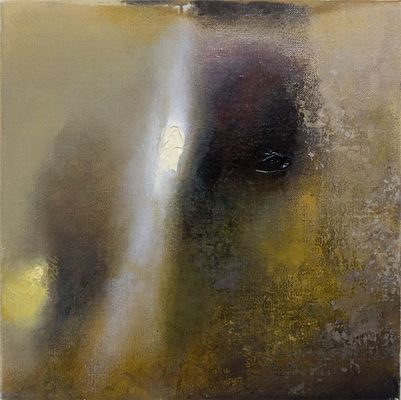
I am not a great reader of poetry but I always return to the work of Melbourne poet, Vincent Buckley (1925- 1988). Perhaps I find his most tantalising piece to be not a finished poem but a fragment left on a scrap of paper discovered on his desk after the poet’s death.
The poetry gathers like oil
In the word-core, and spreads
It has its music meet,
Its music is in movement.
This fragment is more the shell left behind from a volatile thought than a finished poem. I find the last two lines honest but awkward whereas the first two lines work like an arrow. Most likely he could not find a resolution so it was left. Still, in its present form, it remains an eloquent testimony to the ultimate failure of a medium to express mobile thought and sensation, in Buckley’s case, through verbal language. It’s an important matter because this is something all artists have to deal with regardless of the medium.
I have never written a poem, however, I am forever copying fragments from books on paper scraps in a vain effort to fix certain notions in my head. At first, they function as bookmarks that are sometimes returned to when I open the book. But before long, as they accumulate, they fall out littering the table interspersed with A4 photocopies, bills, books and medications.
To return to Buckley’s fragment, the first two lines very much evoke how I paint nowadays. As you age, detail diminishes and patches of light become more luminous and float. I feel the most honest way of dealing with this is by smearing the oil paint on the canvas with the fingers and working close-up, blind. Only if the patches coalesce into an approaching image can the work gain a life.
-
Jonathan Walker was born in Melbourne, Australia and brought up on a dairy farm in Gippsland. In the 1970’s he studied painting at RMIT and won the Harold Wright Scholarship to the British Museum, London. During the 1980’s he exhibited at Pinacotheca Gallery, Richmond and had work shown at the NGV and Heidi City Art Gallery. Over the same period he designed the cover for the “Epigenesi” LP by Giancarlo Toniutti, Italy and conducted a mail exchange work with Achim Wollscheid, Germany. The work with artists through the post resulted in an article published in the bicentenary issue of Art and Australia 1988. He showed in artist run spaces such as WestSpace in the 90’s and 2000’s, and until 2012, taught painting at Victoria University, which is where we (Colleen Ahern and Lisa Radford) as organisers of the exhibition, among many others, had the privilege of being his student.
Walker’s knowledge was imparted to students through the careful selection of music, literature, and artists found in books that he himself had ordered for the library. Walker’s strategy was the generosity of sharing his vast knowledge with references specific to each student and their context.
Walker’s paintings share a similar focus and intimacy.
This exhibition presents a small selection of recent paintings alongside a publication that includes Walker’s writing. Observational and analytical, Walker’s work is a type of material notation — the time of day, colour and how it is blended, the both specific and fleeting location of a reflection on lino or the question of whether a chair leg should be included in a painting.
Please join us on Friday August 21 between 6-8pm to celebrate the opening of the exhibition.
Curated by Colleen Ahern and Lisa Radford.
B. Wurtz
Curated by Nic Tammens
March 26 - April 4, 2015
B.Wurtz works from a basement studio in his home on Manhattan’s Lower East Side.
This local fact is attested to by the plastic shopping bags and newsprint circulars that appear in his work. As formal objects, they don’t make loud claims about their origins but nonetheless transmit street addresses and places of business from the bottom of this long thin island. Like plenty of artists, Wurtz is affected by what is local and what is consumed. His work is underpinned by this ethic. It often speaks from a neighborhood or reads like the contents of a hamper:
“BLACK PLUMS $1.29 lb.”
“Food Bazaar”
“USDA Whole Pork Shoulder Picnic 99c lb.”
“RITE AID Pharmacy, with us it’s personal.”
“H. Brickman & Sons.”
“Sweet Yams 59c lb."
Most of the work in this exhibition was made while the artist was in residence at Dieu Donne, a workshop dedicated to paper craft in Midtown. Here Wurtz fabricated assemblages with paper and objects that are relatively lightweight, with the intention that they would be easily transportable to Australia. This consideration isn’t absolute in Wurtz’s work, but was prescriptive for making the current exhibition light and cheap. Packed in two boxes, these works were sent from a USPS post office on the Lower East Side and delivered to North Melbourne by Australia Post.
Wurtz appears courtesy of Metro Pictures, New York.
Thanks to Rob Halverson, Joshua Petherick, Sari de Mallory, Matt Hinkley, Helen Johnson, Fayen d'Evie, Ask Kilmartin, Lisa Radon, Ellena Savage, Yale Union, and "Elizabeth".
John Nixon
"Archive"
December 15 - January 20, 2014
The presentation of John Nixon's archive offered a rare showcase of this extensive collection of the artist's own publications, catalogues, posters, ephemera, editions and more, from the mid 1980s onwards, alongside a selection of his artworks.
Organized by John Nixon, Joshua Petherick and Matt Hinkley.
<a href=http://wfb.public-office.info/artist/john-nixon>All titles by John Nixon
"Habitat"
at Minerva, Sydney (organised by Joshua Petherick and Matt Hinkley)
November 15 - December 20, 2014
Lupo Borgonovo, Janet Burchill & Jennifer McCamley,
Lewis Fidock, HR Giger, Piero Gilardi, Veit Laurent Kurz,
Cinzia Ruggeri, Michael E. Smith, Lucie Stahl, Daniel Weil, Wols
Press Release:
“...It contained seven objects. The slender fluted bone, surely formed for flight, surely from the wing of some large bird. Three archaic circuitboards, faced with mazes of gold. A smooth white sphere of baked clay. An age-blackened fragment of lace. A fingerlength segment of what she assumed was bone from a human wrist, grayish white, inset smoothly with the silicon shaft of a small instrument that must once have ridden flush with the surface of the skin - but the thing’s face was seared and blackened.”
William Gibson, “Count Zero”, 1986
"Autumn Projects Archive"
Curated by Liza Vasiliou
March 6 - March 15, 2014
World Food Books, in conjunction with the Virgin Australia Melbourne Fashion Festival 2014, presented the Autumn Projects archive, consisting of a selection of early examples in Australian fashion with a particular interest in collecting designers and labels from the period beginning in the 1980’s, who significantly influenced the discourse of Australian Fashion.
Curated by Liza Vasiliou, the exhibition provided a unique opportunity to view pieces by designers Anthea Crawford, Barbara Vandenberg, Geoff Liddell and labels CR Australia, Covers, Jag along with early experimental collage pieces by Prue Acton and Sally Browne’s ‘Fragments’ collection, suspended throughout the functioning World Food Books shop in Melbourne.
H.B. Peace
presented by CENTRE FOR STYLE
November 14, 2013
"Hey Blinky, you say chic, I say same"
Anon 2013
H.B. Peace is a clothing collaboration between great friends Blake Barns and Hugh Egan Westland. Their pieces explore the divergences between 'character’ and ‘personality’ in garments....etc
Special Thanks to Joshua Petherick and Matt Hinkley of WFB and Gillian Mears
and a Very Special Thank you to Audrey Thomas Hayes for her shoe collaboration.
Janet Burchill & Jennifer McCamley
"Aesthetic Suicide"
May 10 - June 8, 2013
The first of our occasional exhibitions in the World Food Books office/shop space in Melbourne, "Aesthetic Suicide" presented a body of new and older works together by artists Janet Burchill & Jennifer McCamley, including videos, prints, a wall work, and publications.
During shop open hours videos played every hour, on the hour.
1999, English
Softcover, 144 pages, 21.9 x 27.9 cm
Out of print title / used / very good
Published by
Princeton Architectural Press / New York
$65.00 - Out of stock
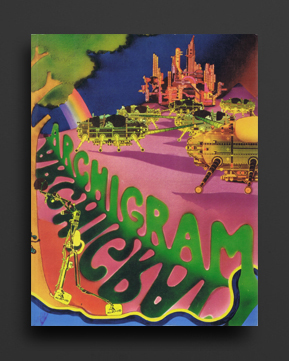
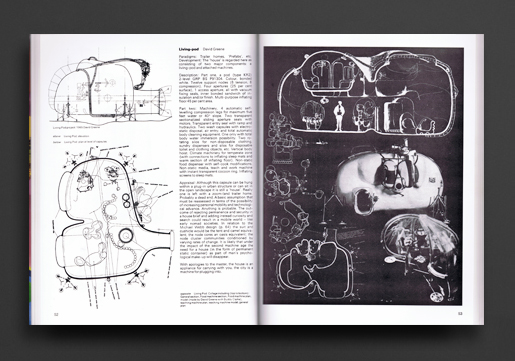
This is the first monograph on Archigram, a chronicle of the work of a group of young British architects that became the most influential architecture movement of the 1960s, as told by the members themselves. It includes material published in the early issues of their iconic and influential journal, as well as numerous texts, poems, comics, photocollages, drawings and fantastical architecture projects. Work presented includes Instant City, pod living, the Features Monte Carlo entertainment centre, Blowout Village, and the Cushicle personalized enclosure. Still considered THE Archigram book.
This is a 1999 re-print of the 1973 edition, issued here by Princeton Architectural Press in softcover.
The main members of Archigram were Peter Cook, Warren Chalk, Ron Herron, Dennis Crompton, Michael Webb and David Greene. Designer Theo Crosby was the “hidden hand” behind the group. Especially active between 1961 and 1974, when this book was published, the group anticipated the global inter-relatedness of culture and technology and thus had an immediate influence on architectural discussions worldwide – the significance of their work continues to be felt today. Their radical re-definitions of domestic architecture and urban planning, as well as an aesthetic that transcends practical function, had wide-felt repercussions on contemporary British art of the 1960s and the subsequent avant-garde in architecture at that time in Europe, Japan, and America. Their work inspired two like-minded Italian collectives, Archizoom and Superstudio and Renzo Piano and Richard Rogers’ Centre Pompidou (1972-76) in Paris, as well as buildings by Japanese “metabolist” architects such as Kenzo Tange’s Shizuoka Press and Broadcasting Center (1965-70) in Tokyo. Archigram responded to comic books and pop music, space travel and moon landing, science fiction and the exciting new technologies of the sixties and seventies, their inspirations came from architects and artists such as Buckminster Fuller, Bruno Taut, and Friedrich Kiesler. As a result, they created radical alternatives to cities, houses and other architectural archetypes, communicating their ideas through Archigram magazine as well as though traditional architectural renderings, gallery exhibitions, multi-media installations, and collage. Their unique style of rendering often emphasized concepts over architectural forms, and had an enormous influence on modern architectural drawing techniques as well as the conceptualization of architectural ideas.
1971, English / Japanese
Softcover (w. frenchfolds), 52 pages, 26 x 36.2 cm
1st Edition, Out of print title / used*,
Published by
A.D.A Edita / Tokyo
$120.00 - Out of stock
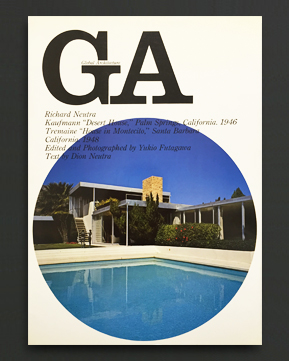
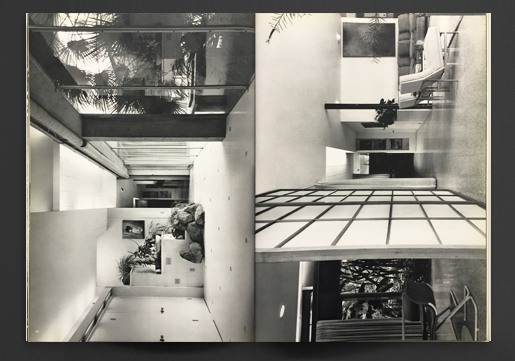
GA 8
1971
Richard Neutra
Kaufmann “Desert House,” Palm Springs, California, 1946
Tremaine “House in Montecito,” Santa Barbara, California, 1948
Edited and Photographed by Yukio Futagawa
Text by Dion Neutra
One of the finest architecture series ever published, the world renowned GA (Global Architecture) series, presented by the highly esteemed publishing house that also published the GA Document, GA Houses, and GI (Global Interior) architectural publications.
Each over-sized photographic folio issue of GA highlights a renowned international architect and a selection of their architectural projects.
Absolutely stunning and vivid large-format (usually full-bleed) architectural photography of the selected building's interiors, exteriors and architectural details, along with texts (in English and Japanese) and floor-plans/elevation drawings make up the profiles on each featured architectural project. The visual generosity of these handsomely designed and beautifully printed over-sized publications make them a treasure for any architecture or interior design enthusiast or collector.
Printed in Japan
1970, English / Japanese
Softcover (w. frenchfolds), 48 pages, 26 x 36.2 cm
1st Edition, Out of print title / used*,
Published by
A.D.A Edita / Tokyo
$120.00 - Out of stock
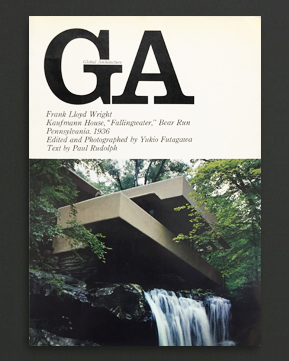
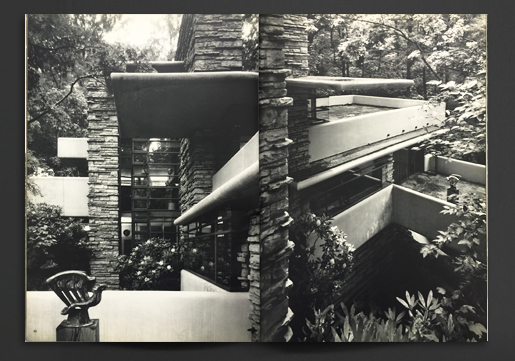
GA 2
1970
Frank Lloyd Wright
Kaufmann House, “Fallingwater,” Bear Run, Pennsylvania, 1936
Edited and Photographed by Yukio Futagawa
Text by Paul Rudolph
One of the finest architecture series ever published, the world renowned GA (Global Architecture) series, presented by the highly esteemed publishing house that also published the GA Document, GA Houses, and GI (Global Interior) architectural publications.
Each over-sized photographic folio issue of GA highlights a renowned international architect and a selection of their architectural projects.
Absolutely stunning and vivid large-format (usually full-bleed) architectural photography of the selected building's interiors, exteriors and architectural details, along with texts (in English and Japanese) and floor-plans/elevation drawings make up the profiles on each featured architectural project. The visual generosity of these handsomely designed and beautifully printed over-sized publications make them a treasure for any architecture or interior design enthusiast or collector.
Printed in Japan.
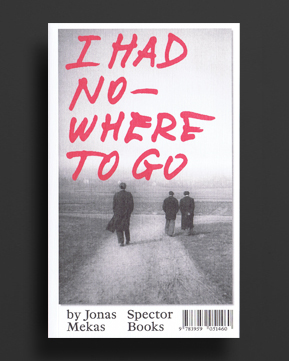
2017, English
Softcover, 480 pages, 12.5 x 20.6 cm
Published by
Spector Books / Leipzig
$50.00 - Out of stock
"Jonas Mekas' diaries have an aching honesty, puckish humor and quiet nobility of character. Many readers curious about the early years of this seminal avant-garde filmmaker will discover here a much more universal story: that of the emigrant who can never go back, and whose solitariness in the New World is emblematic of the human condition." - Phillip Lopate
"I was enormously moved by it." - Allen Ginsberg
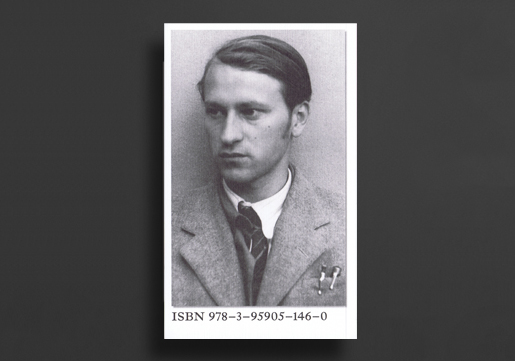
Legendary filmmaker Jonas Mekas actually came to filmmaking relatively late in life, and his path to New York was a difficult one. In 1944, Mekas and his younger brother Adolfas had to flee Lithuania. They were interned for eight months in a labor camp in Elmshorn. Even after the war ended, Mekas was prevented from returning to his native Lithuania by the Soviet occupation. Classed as a "displaced person," he lived in DP camps in Wiesbaden and Kassel for years. It was only at the end of 1949 that Jonas and Aldolfas Mekas finally found their way to New York City.
A new edition of Mekas' acclaimed memoir, first published by Black Thistle Press in 1991, I Had Nowhere to Go tells the story of the artist's survival in the camps and his first years as a young Lithuanian immigrant in New York City. Mekas' memoir--the inspiration for a 2016 biopic by Douglas Gordon--tells the story of how an individual life can move through the larger 20th-century narratives of war and exile and tentatively put down new roots. In the words of Phillip Lopate, "This is a lyrical, essential spiritual anthropology."
Jonas Mekas (born 1922) lives and works in New York. Filmmaker, writer and poet, he is a cofounder of Anthology Film Archives, one of the world's largest and most important repositories of avant-garde film. An influential figure in New American Cinema and New York underground culture, he worked with Andy Warhol, George Maciunas, John Lennon and many others. Mekas' work has been exhibited in museums and festivals worldwide.
2016, English
Softcover, 456 pages, 16 x 21.5 cm
Published by
Spector Books / Leipzig
$59.00 - Out of stock
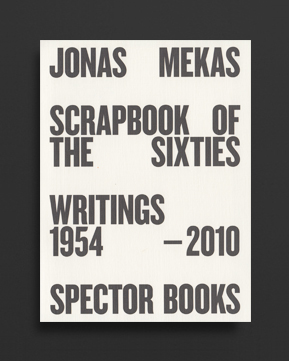
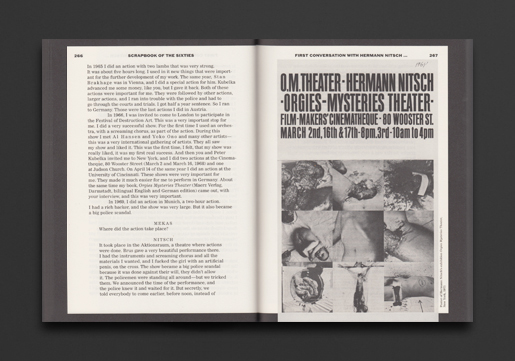
Scrapbook of the Sixties is a collection of published and unpublished texts by Jonas Mekas, filmmaker, writer, poet, and cofounder of the Anthology Film Archives in New York. Born in Lithuania, he came to Brooklyn via Germany in 1949 and began shooting his first films there. Mekas developed a form of film diary in which he recorded moments of his daily life. He became the barometer of the New York art scene and a pioneer of American avant-garde cinema. Every week, starting in 1958, he published his legendary “Movie Journal” column in The Village Voice, writing on a range of subjects that were by no means restricted to the world of film. He conducted numerous interviews with artists like Andy Warhol, Susan Sontag, John Lennon & Yoko Ono, Erick Hawkins, and Nam June Paik. Some of these will now appear for the first time in his Scrapbook of the Sixties. Mekas’s writings reveal him as a thoughtful diarist and an unparalleled chronicler of the times—a practice that he has continued now for over fifty years.
Jonas Mekas (*1922, Semeniškiai / Lithuania), lives and works in New York. Film-maker, writer, poet and co-founder of the Anthology Film Archives one of the world’s largest and most important repositories of avant-garde film. Mekas’s work has been exhibited in museums and festivals worldwide.
2017, English
Softcover, 160 pages, 10.5 x 15 cm
Published by
Spector Books / Leipzig
$28.00 - Out of stock
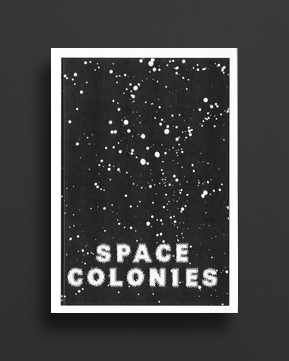
A visionary assemblage of historical, present-day and speculative material on space colonies, inspired by the culture of the Whole Earth Catalog.
At the beginning of the 1970s, American physicist Gerard K. O'Neill developed the first ideas for colonizing space. Shortly thereafter, Stewart Brand, cyber-communard and editor of the Whole Earth Catalog, took up these ideas and published the book Space Colonies in 1977. Space Colonies, an edition of Brand's CoEvolution Quarterly, funded by the proceeds of the Whole Earth Catalog, took up the question of whether space might be colonized by the year 2000. Artist Fabian Reimann takes up Brand and O'Neill's particular strain of techno-utopianism in Space Colonies: A Galactic Freeman's Journal. In his photo-essay Reimann assembles historical, present-day and speculative material, combining these with fictional and factual stories to create a composite of different images of the world. With global ecological disaster an even more pressing issue than it was in 1977, and the colonization of space still touted by some as a last-ditch resort, Reimann looks back at the dreams and nightmares of the 1970s with a sophisticated visual humor. Fabian Reimann (born 1975) is an artist working in Leipzig and, since 2004, the editor of the "ego-zine" Freeman's Journal. His Another Earth Catalog, which refers back to Stewart Brand's Whole Earth Catalog, was published by Spector Books in 2012. Reimann works with sculpture, photography, collage, painting and text in extended research projects that blend history and science, and fact and fiction
2017, English
Softcover, 248 pages, 21 x 24 cm
Published by
The MIT Press / Massachusetts
$59.00 - Out of stock
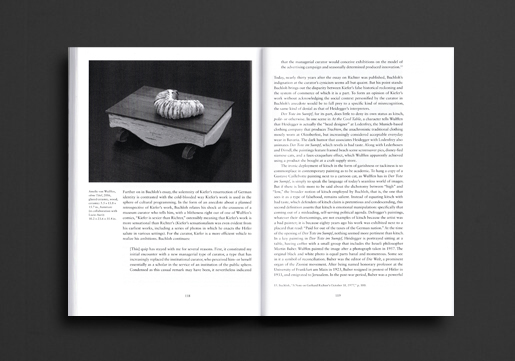
It may be time to forget the art world--or at least to recognize that a certain historical notion of the art world is in eclipse. Today, the art world spins on its axis so quickly that its maps can no longer be read; its borders blur. In Forgetting the Art World, Pamela Lee connects the current state of this world to globalization and its attendant controversies. Contemporary art has responded to globalization with images of movement and migration, borders and multitudes, but Lee looks beyond iconography to view globalization as a world process. Rather than think about the “global art world” as a socioeconomic phenomenon, or in terms of the imagery it stages and sponsors, Lee considers “the work of art’s world” as a medium through which globalization takes place. She argues that the work of art is itself both object and agent of globalization.
Lee explores the ways that art actualizes, iterates, or enables the processes of globalization, offering close readings of works by artists who have come to prominence in the last two decades. She examines the “just in time” managerial ethos of Takahashi Murakami; the production of ethereal spaces in Andreas Gursky’s images of contemporary markets and manufacture; the logic of immanent cause dramatized in Thomas Hirschhorn’s mixed-media displays; and the “pseudo-collectivism” in the contemporary practice of the Atlas Group, the Raqs Media Collective, and others.
To speak of “the work of art’s world,” Lee says, is to point to both the work of art’s mattering and its materialization, to understand the activity performed by the object as utterly continuous with the world it at once inhabits and creates.
About the Author
Pamela M. Lee is Professor of Art History at Stanford University and the author of Object to Be Destroyed: The Work of Gordon Matta-Clark and Chronophobia: On Time in the Art of the 1960s, both published by the MIT Press.
Endorsements
“Pamela Lee makes a major contribution to our understanding of art’s globalization through her brilliant exploration of ‘worlds’ as a medium and ‘worlding’ as a process by which unruly networks of financial, political, and spectacular forces are crystallized as works of art.”
—David Joselit, Carnegie Professor, History of Art, Yale University
“For those who want to chart the difference between the world and world markets, for those nostalgic for genuinely intellectual depth in art criticism, and for those wanting to understand the outer, digital limits of art, this book will be your guide. Forgetting the Art World sets a new stage—a picture theory for art practice.”
—Molly Nesbit, Professor of Art History, Vassar College
“Pamela Lee presents an exciting, highly original discussion of what constitutes an art world at the beginning of the twenty-first century. Forgetting the Art World examines not only the processes sustaining the reciprocal relationship between globalization and contemporary art, but also what the art world needs to forget in order to assume its current condition. The analysis is timely and provocative, and will be essential reading for anyone concerned with contemporary art.”
—Alexander Alberro, author of Conceptual Art and the Politics of Publicity
2017, English
Softcover (ring-bound), 368 pages, 24 x 33 cm
1st Ed.,
Published by
Spector Books / Leipzig
$86.00 - Out of stock
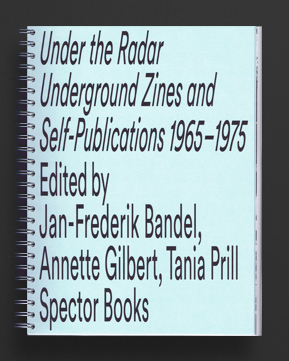
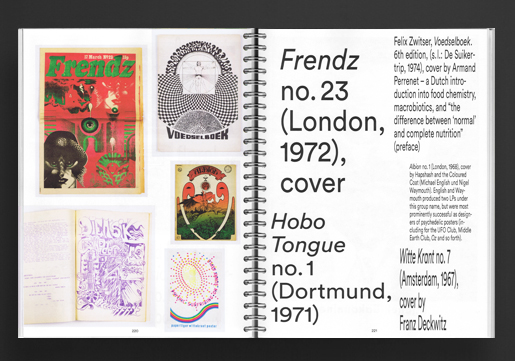
The mid-1960s witnessed a boom in underground and self-published works in West Germany. Hectographs, mimeographs and offset printing not only allowed for the production of small, low-cost print runs, but also promoted a unique aesthetic. Using wild mock-ups, these messianic amateurs combined typescript aesthetics, handwriting, scribbled drawings, assemblages of collaged visuals, porn photos, snapshots and comic strips, forging a new, wildly free, sensibility in the process. This book is the first to present the underground and self-published works that came out of West Germany in such depth, while also showing the international context in which they emerged – not as an anecdotal history but as an attempt to tap into the aesthetic cosmos of the Do-It-Yourself rebellion. Insomuch, Under the Radar also challenges us to take a new look at the current boom in independent publishing, the risograph aesthetic and more.
An incredible collection and valuable volume for anyone interested in underground publishing history!
2008, English
Hardcover (w. dust jacket), 96 pages, 12.7 x 18.6 cm
Published by
The Leopard Press / New York
$39.00 - Out of stock
Published as a catalogue for Seth Price's 2008 exhibition at Friedrich Petzel Gallery, "How to Disappear in America" alludes to 1960s countercultural handbooks providing instructions for dropping out of mainstream society. Price's book, which consists exclusively of information found on the internet, includes advice for using current technology and focuses on the practical concerns of evading capture by law enforcement.
Seth Price was born in 1973 in East Jerusalem, Palestine. He received a BA from Brown University in 1997, where he studied modern culture and media. In 2012 he began to work as an artist, and his first one-person exhibition was in 2004; major exhibitions of his work have since been presented around the world. His writings are widely anthologized and taught, and
2011, English
Hardcover (Clothbound), 80 pages, 22.5 x 15 cm
Out of print title / as new
Published by
Mousse / Milan
$50.00 $30.00 - Out of stock
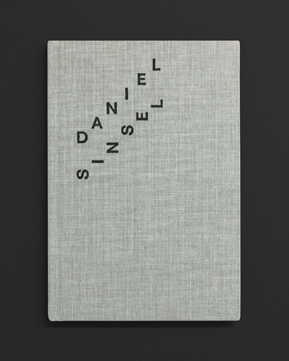
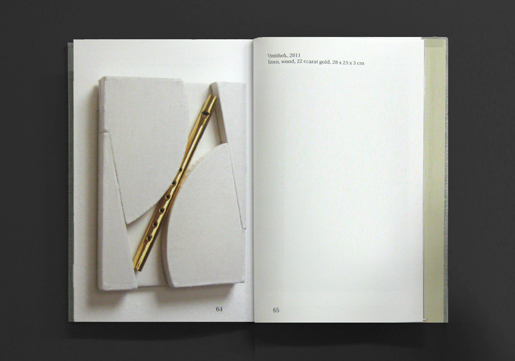
What does it mean to be both a painter and a sculptor in their most traditional guises, as well as an artist tied to transcribing reality at a moment in which the production and distribution of images has become so immediate and so intimately bound up with the way we live through our daily lives?
This now long out of print, first monographic book on Sinsel, designed in close collaboration with the artist, was published to coincide with Daniel Sinsel’s first solo exhibition at Chisenhale Gallery, London, the first in a public institution. Produced by Mousse in association with Sadie Coles HQ, London, and with support from The Breeder, Athens, Office Baroque, Antwerp, and Galerie Micky Schubert, Berlin.
Out of print.
2008, English / French / German
Softcover, 168 pages (ill colour and b&w), 27 x 21.5 cm
1st edition, Out of print title / As new,
Published by
Walther König / Köln
$200.00 - Out of stock
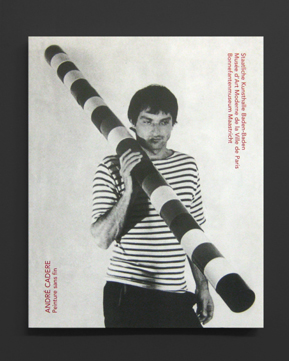
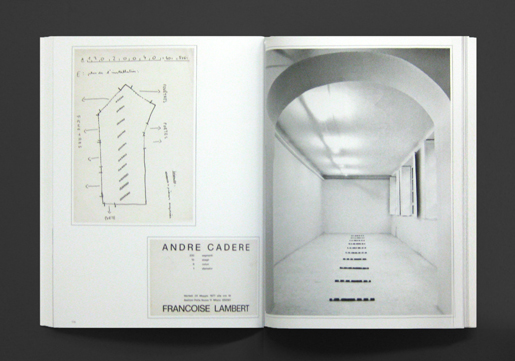
Now out of print, this wonderful catalogue was published to accompany a retrospective exhibition at the Staatliche Kunsthalle Baden-Baden (October 2007 –January 2008) of the work of André Cadere (1934 – 1978). It is one of the finest monographs on Cadere's career.
Cadere, who lived in Paris from 1971 belongs – alongside Daniel Buren, Niele Toroni and François Morellet – to the most important protagonists of French Minimal and Concept Art of the 1970s.
His work combines a reduced formal sculptural language with a conceptual approach that questions the workings of the art system – a combination which has become of major importance to a younger generation of artists in recent years. His premature death was preceded by an intense albeit short working period of about eight years. His consistent refusal to bow to the rules of the art market might explain why his work has been underestimated to this day.
2017, English
Softcover, 15 x 21 cm
Edition of 100
Published by
Ruin Press / Sydney
$12.00 - In stock -
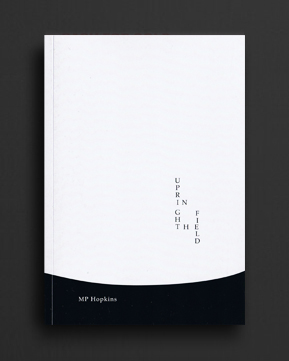
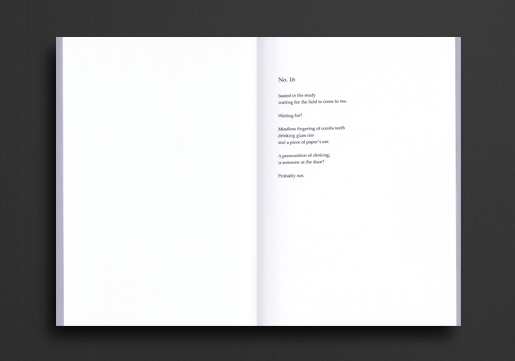
Upright in the Field recalls a series of recording events, read as absurdist memories of the artist's negotiations, triumphs and pitfalls of attempting to capture the aural qualities of various environments. Through this series of ascending vignettes, we encounter descriptions of the author’s investigations of a space and time indeterminate – although one that is very much in motion and engaged with the notion of creative ‘work’. The thirty-two pieces that make up the book intermesh all kinds of performance, sounds, measurements and absurd objects, bringing to mind playful elements of Fluxus, Georges Perec, Kenneth Goldsmith and Anne Garetta.
We are forced to consider through the act of reading, the laborious nature of artistic practice in which the moment of creation is often hidden in the ‘final’ work. The finished ‘object’ obscures and negates this experimental practice from the ‘field’, which is often the most fertile and problematic stage of the creative process. Each page comes across as a succinct micro fiction, akin to the narrative structure inherent through Georg Christoph Lichtenberg’s Waste Books or the novellas of Robert Walser.
Considering Hopkins' assorted explorations of word and sound relationships across drawing, video, sound recordings, objects and performance Upright in the Field situates itself as poetic log-book of the research undertaken in these 'laboratory' based disciplines. Reporting from the front line of the artist's memory during the act of production itself, Hopkins engages us with notions of toil, the often ‘placelessness’ of place, labour as creative exertion and the often overlooked banality of the art action.
Upright in the Field is limited to 100 copies.
Ruin Press is an antipodean independent publishing group specialising in weirder fiction, poetry, artist books and critical writing.
1993, English
Softcover, 156 pages, 291 x 291 cm
Out of print title / used / very good
Published by
Pomegranate Artbooks / California
$65.00 - Out of stock
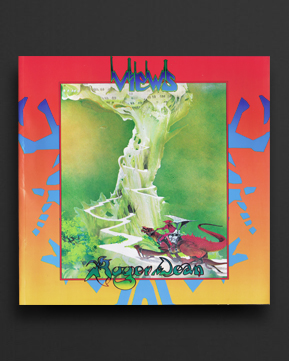
The first two volumes chronicling the unique art and design of Roger Dean met with huge critical and popular success. Views (1975) went straight to number one in the Sunday Times bestseller list and went on to sell over a million copies. Magnetic Storm (1984) sold over 650,000 copies. These new editions, reworked to accompany the publication of the third book in the trilogy, Dragon's Dream, showcase the instantly recognizable work of Roger Dean.
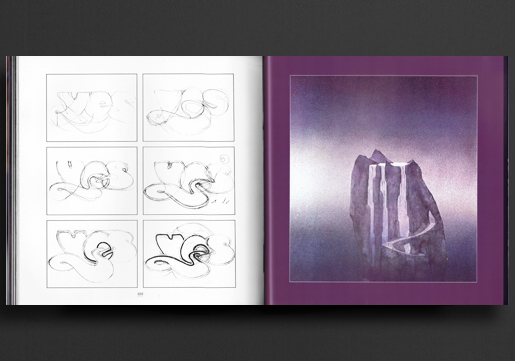
Views showcases the first seven years of Roger Dean's work after his graduation from the Royal College of Art in 1968. It includes paintings and graphics; branding such as the Yes typography and the first Virgin Records logo; groundbreaking stage sets; and album art including iconic early Yes covers such as the award-winning Tales From Topographic Oceans. The new edition streamlines the original square format and retains the combination of concept sketches and brilliantly displayed finished work. Featuring a new foreword, revised typography, and graphic openers and identifying icons, Views showcases and celebrates the art that defined an era.
Roger Dean is internationally acclaimed as an artist and designer whose evocative and visionary images created a new genre. Made popular through the medium of album covers and posters, his work has sold in excess of 100 million copies. Roger became widely known in the 1970s for his album cover designs for Yes—including the classic logo now in the Victoria & Albert Museum in London—and a poll of Rolling Stone readers selected five of his designs in the top twenty best album covers of all time.
1983, English
Softcover, 58 pages
Out of print title / used / good
Published by
Feminism and Nonviolence Study Group / UK
$15.00 - In stock -
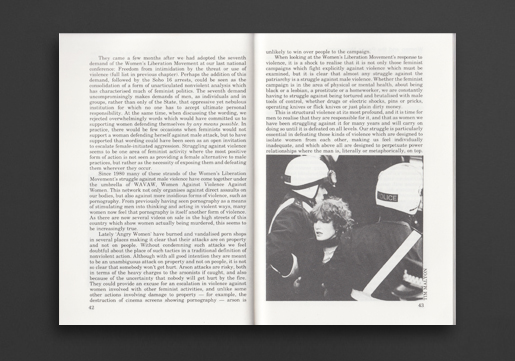
Written and published by the Feminism and Nonviolence Study Group in Devon, UK, in 1983, in cooperation with War Resisters' International.
(Excerpt)
"It has become clear to us that resistance to war and to the use of nuclear weapons is impossible without resistance to sexism, to racism, to imperialism and to violence as an everyday pervasive reality. There is a profound relationship between the fact that individual women are commonly attacked and beaten up and that a nuclear war threatens the entire world.
We've written this pamphlet in the belief that many basic ideas are held in common by feminists and by those advocating nonviolence. We also feel that the current peace movement does not take adequate account of the ideas and experiences of feminism. For example, women's actions are still perceived as divisive by many people. At the same time, certain women's actions for peace can tend to perpetuate our subordination by portraying women as natural peacemakers and not as powerful activists for change. This works against our liberation rather than for it.
Both feminism and nonviolence express the belief that the world we know is not as it should be and this can be changed. They are, to a large extent, responses to those immensely powerful forces which would destroy us. In order to appreciate the radical challenge and depths of feminism and nonviolence we have to look at exactly what they are in response to. [...]"
CONTENTS
Introduction
Chapter One: The World We Live In
Women and War
Going to the Roots
Structures of Oppression
Chapter Two: Breaking the Chains
Nonviolence
Feminism
Feminist Nonviolence
Chapter Three: Claiming Our Lives
Refusing to be Victims
Women Act Against Violence
Women and the Peace Movement
Chapter Four: A Time to Come
1976, French
Softcover, 202 pages, 30 x 23 cm
1st Edition, Out of print title / used / good
Published by
Galeries Nationales du Grand-Palais / Paris
$85.00 - Out of stock
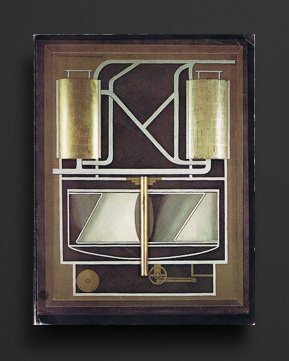
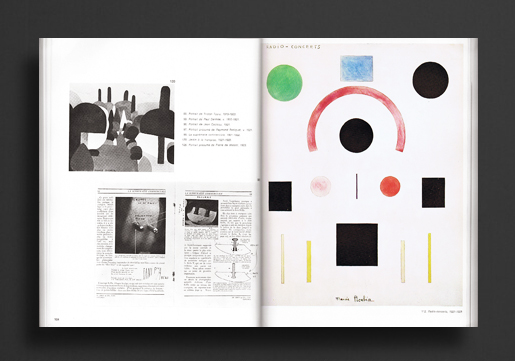
First edition of this great 200 pages French monographic catalogue on Francis Picabia, published on the occasion of the major exhibition at National Galleries of the Grand Palais, 23 January-29 March, 1976.
Lavishly illustrated throughout with reproductions of over 200 of Picabia's paintings, drawings, designs, typography, poems, alongside many photos, portraits, texts (in French), biography, bibliography, and much more.
Francis Picabia (22 January 1879 – 30 November 1953) was a French avant-garde painter, poet, typographist, self-described funny guy, idiot, failure, pickpocket, and anti-artist par excellence. After experimenting with Impressionism and pointillism, Picabia became associated with Cubism. His highly abstract planar compositions were colourful and rich in contrasts. He was one of the defining figures in the Dada movement in the United States and in France; indeed, Andre Breton called Picabia one of the only "true" Dadas. He was later briefly associated with Surrealism, but would soon turn his back on the art establishment.
*Good - some wear to cover edges, corners, spine, otherwise very good throughout.
2017, English / French
Softcover, 220 pages, 240 x 175 mm
Published by
May Revue / Paris
$29.00 $10.00 - In stock -
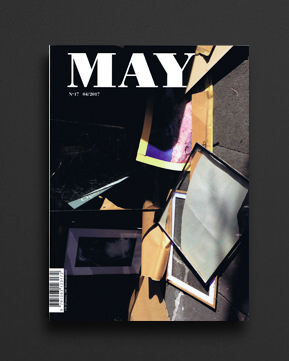
This issue seeks to reflect the post-Trump, post-Brexit and French pre-election climates at a time of reconfiguration of habitual political representations and polarizations. We decided to favour reports, a more reactive writing format on issues of concerns in art schools, universities, institutions: Angela Davis and Gina Dent’s talk in Paris, the exhibition Soulèvements at the Musée du Jeu de Paume, The Color Line at the Musée du Quai Branly on African-American artists and segregation…
American Goodness - Elise Duryee-Browner
If our Lives are Black. On Angela Davis and Gina Dent’s conference at La Maison de l’Amérique Latine, Paris - Claire Fontaine
αντιanti
Interview with Ilaria Bussoni. On the symposium “Sensible Commons” at GNAM, Rome - May
Dynamis, 2016–2017 Athens and Kassel simultaneously and in continuum - Georgia Sagri
On Soulèvements by Georges Didi-Huberman at Jeu de Paume, Paris - Giovanna Zapperi
On the film Two A.M. by Loretta Fahrenholz at Museum Fridericianum, Kassel - Tobias Madison
On Amelie von Wulffen at Barbara Weiss, Berlin - Jay Chung
On Yuki Kimura at CCA Wattis, San Francisco - J. Gordon Faylor
Behind Enemy Lines: Black Power & Taboo. On The Color Line: African-American Artists and Segregation at Musée du Quai Branly, Paris - Kari Rittenbach
On Morag Keil at Eden Eden, Berlin - Nicholas Tammens
On Greg Parma Smith at MAMCO, Geneva - Enzo Shalom
Francis Picabia seen from Switzerland and America. On Francis Picabia’s retrospectives at Kunsthaus Zurich and at MoMA, New York - Carole Boulbès
Villa Noailles - Jeanne Graff
Weather report
Limited Editions by Jean-Luc Moulène and Bernadette Corporation with Benjamin Alexander Huseby
Reprint booklet: LGG$B
About MAY Revue:
Conceived as a collective space in which to develop thoughts and confront positions on artistic production, May magazine examines, quaterly, contemporary art practice and theory in direct engagement with the issues, contexts and strategies that construct these two fields. An approach that could be summed up as critique at work – or as critique actively performed in text and art forms alike.
Featuring essays, interviews, art works and reviews by artists, writers and diverse practitioners of the arts, the magazine also intends to address the economy of the production of knowledge – the starting point of this reflection being the space of indistinction between information and advertisement typical of our time. This implies a dialogue with forms of critique produced in other fields.
1972, Japanese
Softcover (w. dust jacket), 207 pages, 27.7 x 21.6 cm
Published by
Soshisha / Japan
$35.00 - Out of stock
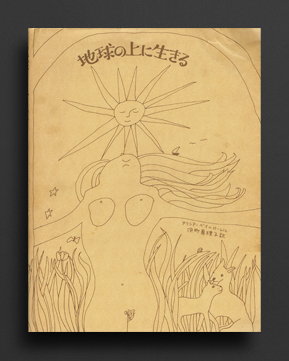
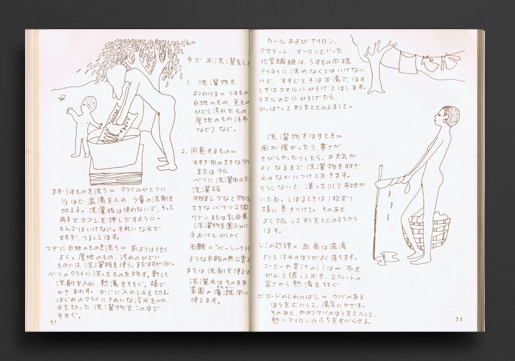
The first Japanese edition of "Living on The Earth", published in 1972. All texts in Japanese.
The title page reads "Celebrations, storm warnings, formulas, recipes, rumors, and country dances harvested by Alicia Bay Laurel."
Originally published in Berkeley, California in 1970, more than thirty years ago, the seminal "Living on the Earth" is for people who would rather chop wood for fire than work behind a desk to pay the electric company. It's for people who want the best recipe for lavender soap or huckleberry jam. It's for people who want to make their own clothing, play guitar, learn woodcarving, gardening, canning and drying food, and natural first aid methods. The book has no chapters; no rigid structures or rules. It grew naturally out of the lessons the author has learned, and which she shares. Living on the Earth is a beautiful book to see and read, as well as a spiritually uplifting work whose simplicity radiates warmth and promotes serenity and goodwill to all those who encounter it. The large format paperback is entirely written in Alicia's cursive script and beautifully illustrated on every page with her line drawings. Alicia's innovative illustration and book design styles have been enthusiastically emulated in dozens of books and greeting cards since it's original publishing, and in 2012 "Living on the Earth" was chosen as one of the 101 most influential American cookbooks of the 20th century. Alicia was just 20 years old when the book was first published, and it would go on to become a New York Times "best-seller" and one of the most influential manuals for natural, conscious living ever created.
2011, English / Japanese
Softcover, 176 pages, 23 x 25 cm
1st Edition, Out of print title / used / good
Published by
The National Museum of Modern Art / Tokyo
$38.00 - Out of stock
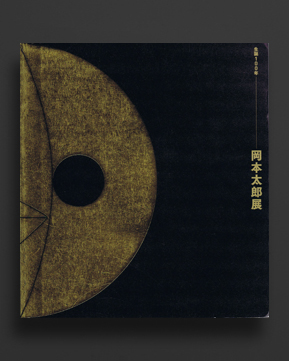
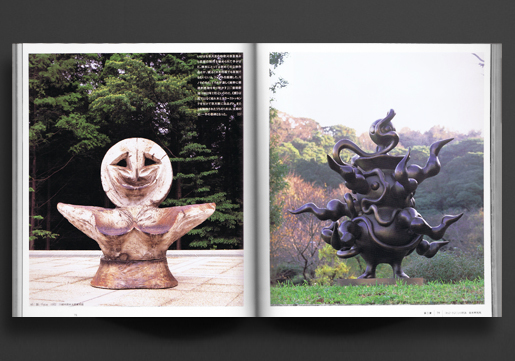
Great retrospective monographic catalogue on the work and life of Tarō Okamoto, published on the occasion of the major exhibition "Tarō Okamoto - The 100th Anniversary of His Birth", March 8 - May 8, 2011, The National Museum of Modern Art, Tokyo.
Tarō Okamoto (岡本 太郎 Okamoto Tarō, February 26, 1911 – January 7, 1996) was a Japanese artist noted for his abstract and avant-garde paintings and sculpture. He studied at Panthéon-Sorbonne in the 1930s, and created many works of art after World War II. He was a prolific artist and writer until his death. Among the artists Okamoto associated with during his stay in Paris were André Breton (1896–1966), the leader of Surrealism, and Kurt Seligmann (1900–62), a Swiss Surrealist artist, who was the Surrealists' authority on magic and who met Okamoto's parents, Ippei and Kanoko Okamoto, during a trip to Japan in 1936. Okamoto also associated with Pablo Picasso, Man Ray, Robert Capa and Capa's partner, Gerda Taro, who adopted Okamoto's first name as her last name.
Okamoto's prolific work throughout Japan (from large public commissions to exhibitions) were rooted in his deep interest and research on the mysteries of Japan, sparked by a visit he made to the Tokyo National Museum. After having become intrigued by the Jōmon wares he found there, he journeyed all over Japan in order to research what he perceived as the mystery which lies beneath Japanese culture, and then he published Nihon Sai-hakken-Geijutsu Fudoki (Rediscovery of the Japan-Topography of Art).
One of his most famous works, Tower of the Sun, became the symbol of Expo '70 in Suita, Osaka, 1970. It shows the past (lower part), present (middle part), and future (the face) of the human race. It still stands in the center of the Expo Memorial Park.
After being lost for 30 years in Mexico, on November 17, 2008, his mural "The Myth of Tomorrow" (明日の神話 asu no shinwa), depicting the effects of an atomic bomb, was unveiled in its new permanent location at Shibuya Station, Tokyo. In it, a human figure burns and others appear to run from flames. The work was made for the Hotel de Mexico in Mexico city by Manuel Suarez y Suarez.
Kawasaki, his hometown, has constructed the Taro Okamoto Museum of Art in Tama Ward, northwest of the city. His studio/home in Aoyama, Tokyo, is also open to visitors today.
1992, Japanese
Softcover, 148 pages, 22.5 x 28 cm
1st Edition, Out of print title / Used*,
Published by
Shibuya Kuritsu Shōtō Bijutsukan / Tokyo
$90.00 - Out of stock
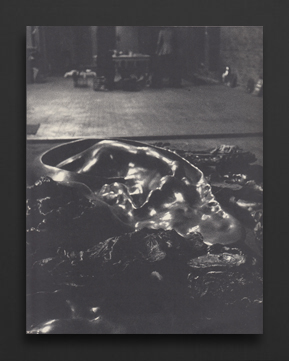
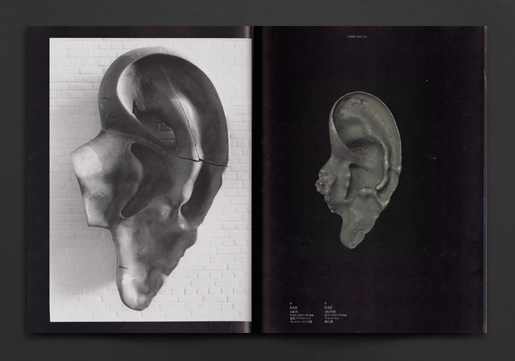
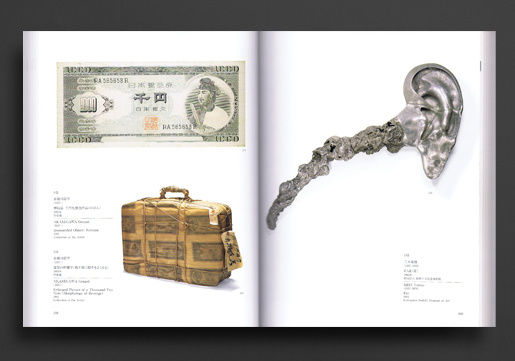
Rare monographic catalogue of the work of Tomio Miki, published on the occasion of a retrospective exhibition, "1938-1978", held at Shibuya Kuritsu Shōtō Bijutsukan, Dec. 2, 1992-Jan. 24, 1993. Profusely illustrated throughout with colour and black and white images of his many famous sculptural EAR works (all beautifully photo-documented), plus other sculptures, drawings, prints, editions, collages, historical installation and social images, plus a chronology of work/exhibitions, and accompanying texts (in Japanese). Although a Japanese language book, this is primarily visual, almost cover to cover an illustrated history of his work and the closest monograph we have found to a catalogue raisonne of this incredible Japanese avant-garde artist.
Tomio Miki (1938-1978), who exhibited among a group of avant-garde, politically active artists in Tokyo in the late 1950s and early 1960s, settled in 1963 on the human ear as his primary sculptural subject for the next several years. He often depicted them individually, on a giant scale. Sometimes he combined ears with other elements, such as spoons or colored lights, or made series of them set in rows or in boxes. Miki spoke quixotically about his choice of the ear, saying that it originated in an “experience in a train, when, for no reason, I suddenly felt myself surrounded by hundreds of ears trying to assault me. This personal episode, however, wouldn’t be any precise answer to why I make ears. I can hardly say I chose the ear. More precisely, isn’t it that the ear chose me?”
1996, Japanese / English
Softcover (w. inserted exhibition ephemera), 198 pages, 22 x 27 cm
1st Edition, Out of print title / used / very good
Published by
Museum of Contemporary Art / Tokyo
$45.00 - Out of stock
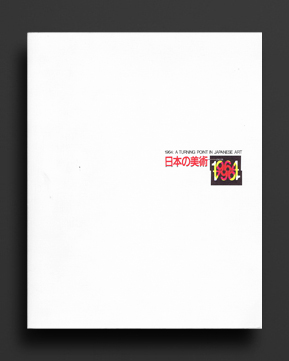
Book published for the exhibition "1964: A Turning Point in Japanese Art" in 1996 at Museum of Contemporary Art, Tokyo. The work was divided into seven categories: 'Japanese-style Paintings', 'Oil Paintings', 'Prints', 'Sculptures', 'Anti-art Trend', '#32 The Venice Biennale' and 'Reportage on the Time', all illustrated in full-colour. A chronology from 1963 to 1965, a detailed bibliography as well as checklist of the exhibition and a group of essays (in English and Japanese) are included in this publication. This copy also includes inserted ephemera from the exhibition - ticketstub, adverts, pamphlets, guides, etc.
Includes work by Natsuyuki Nakanishi, Tadanori Yokoo, Ay-o, Nobuaki Kojima, Genpei Akasegawa, Tomio Miki, Kikuko Morimoto, Koichi Tateishi, Toshinobu Onosato, Yoshishige Saito, Taro Okamoto, Sadamasa Motonaga, Yuki Katsyra, Jiro Yoshihara, Saburo Aso, Kumi Sagai, Kazuo Shiraga, Masaaki Yamada, Tadaaki Kuwayama, Atsuko Tanaka, Minami Tada, Yoshikuni Iida, Bukichi Inoue, Shu Eguchi, Katsuhiro Yamaguchi, Matsuzawa Yutaka, Shinjiro Okamoto, Shusaku Arakawa, Yukihisa Isobe, Akira Shimizu, Jiro Takamatsu, and many more.
'This exhibition spotlights the year of the Tokyo Olympics, 1964, bringing back the art scene of that year in the museum galleries. Many previous exhibitions have shown how important the decade of the sixties was for the development of postwar art. [...] We have chosen to focus on 1964 as a significant dividing line between the first and second half of this fruitful decade. While there are few precedents fro an exhibition concentrating on a single year, we felt that an objective examination of a limited period could give a more precise picture of the art of that time and the ways in which it was related to social changes. There were not many art events directly related to the Tokyo Olympics, especially when compared to the international exposition held in Osaka in 1970. However, the many art movements and ideas which emerged that year had an extremely important effect on things to come. In this exhibition, we show how the year of the Tokyo Olympics, that great landmark of postwar history, was also a turning point in the art history of this country and we present a comprehensive view of the art produced that year. [...]' (Foreword by Kamon Yasuo)
1983, Japanese
Softcover, 150 pages, 22 x 24 cm
1st Edition, out of print title / Used*,
Published by
Tokyo Metropolitan Art Museum / Tokyo
$90.00 - Out of stock
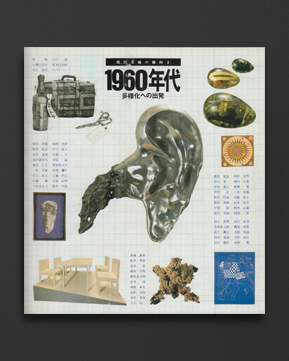
Great book published on the occasion of the exhibition at the Tokyo Metropolitan Art Museum in 1983.
Illustrated throughout in colour and black and white with examples of leading firgure in 1960s Japanese art scene, across themes and movements such as Gutai, Mono-ha, Pop, Fluxus, Dada, conceptual art and much more, including profiles on Tetsumi Kudo, Yukihisa Isobe, Ushio Shinohara, Shusaku Arakawa, Takami Sakurai, Yoshio Murakami, Hisashi Indo, Tomio Miki, Nobuaki Kojima, Jiro Takamatsu, Genpei Akasegawa, Natsuyuki Nakanishi, Koichi Tateishi, Hiroshi Nakamura, Koichi Tanikawa, Kei Hiraga, Ay-o, Tadanori Yokoo, Tasuo Ikeda, Tetsuro Komai, Hideo Hagiwara, Fumiaki Fukita, Yukio Fukazawa, Arinori Ichihara, Masuo Ikeda, Mitsuo Kano, Hideo Yoshihara, Tetsuya Noda, Bushiro Mouri, Saburo Muraoka, Shu Eguchi, Hisayuki Mogami, Ryokichi Mukai, Yoshikuni Iida, Bukichi Inoue, Isamu Wakabayashi, Masakazu Horiuchi, Kakuzo Tatehata, Haruhiko Yasuda, Moio Shinoda, Katsuhiro Yamaguchi, Masunobu Yoshimura, Tatsuo Kawaguchi, Minami Tada, Aiko Miyawaki, Nobuo Sekine, Takeo Yamaguchi, Masanari Murai, Toshinobu Onosato, Yoshishige Saito, Minoru Kawabata, Kumi Sugai, Yayoi Kusama, On Kawara, Keiji Usami, Takahiko Iimura.
Texts in Japanese.
1988, English
Hardcover (w. dust jacket), 216 pages, 235 x 260
1st Edition, Out of print title / used / very good
Published by
Hyland House / Victoria
$65.00 - In stock -
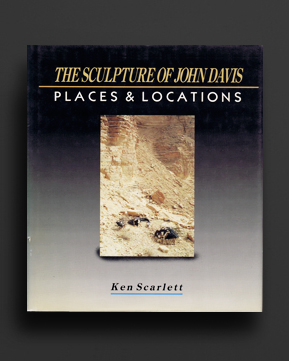
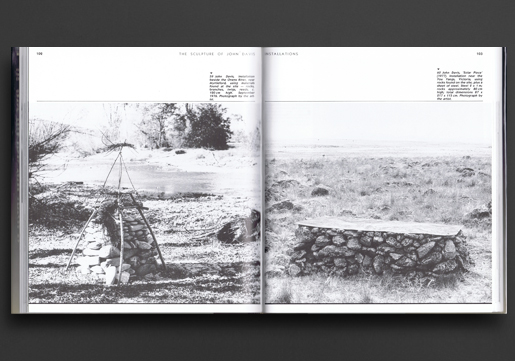
"The Sculpture of John Davis traces the development of his work from the early wood carvings produced while he was a young man living in Mildura in the early 1960's through many changes of style, until he became a major Australian sculptor exhibiting in Venice, Delhi, Tokyo and Los Angeles. John Davis moved through a variety of styles and media from 'Organic Wood Carvings' to an interest in 'Repetitions, Grids, Multiples and Processes' before becoming fascinated by 'Low Technology and Cheap Materials', using 'Twigs, Paper and String'."
John Davis (16 September 1936 – 17 October 1999) was an Australian sculptor and pioneer of Environmental art. An Australian exponent of Arte povera, he famously developed a new mode of Site-specific art at the Mildura Sculpture Triennial in the early 1970s. John Davis established a critically acclaimed reputation as an influential sculptor and installation artist whose practice synthesised material diversity with an idiosyncratic concept of landscape and ecology. Davis travelled widely and exhibited regularly in America, Japan and Australia. As well as participating in the inaugural Mildura Sculpture Triennial, and he represented Australia at the Venice Biennale in 1978. Davis initially worked in wood and later in fibreglass and aluminium, becoming known for his multiples and for his distinctive formalist style. By 1973, Davis had become increasingly interested in conceptual, process-based and land art practices, and his mature works reflect his sensitivity to elemental forces, the organic world, and his profound connection to the ecological fragility and beauty of landscape.
First edition of this major hard-cover monograph on Davis' work, deeply and personally researched with documentation of his works rarely seen anywhere else.
1975, Japanese
Softcover, 96 pages, 23 x 25 cm
1st edition, Out of print title / used*,
Published by
? / Japan
$75.00 - Out of stock
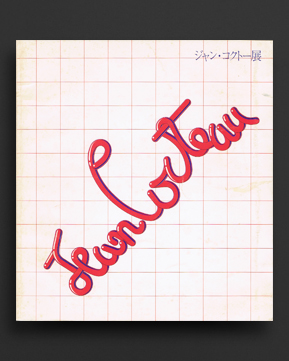
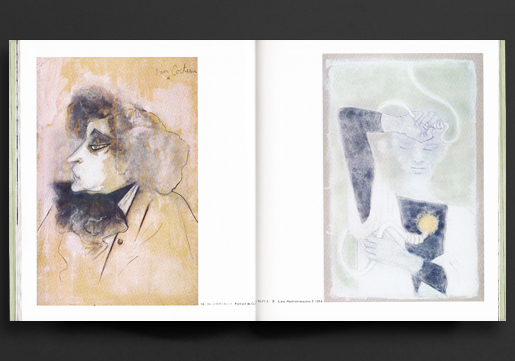
Great Jean Cocteau catalogue, published in Japan in 1975 on the occasion of a major exhibition of his work.
Rarely seen and very curious Cocteau catalogue, features a wonderful selection of large colour and black and white reproductions of his drawings, paintings, ceramics, and sculptures, along with photographic portraits, texts, biography and bibliography. Texts in Japanese.
First edition.
"Jean Maurice Eugène Clément Cocteau (French, 5 July 1889 – 11 October 1963) was a French writer, designer, playwright, artist and filmmaker. Cocteau is best known for his novel Les Enfants Terribles (1929), and the films The Blood of a Poet (1930), Les Parents Terribles (1948), Beauty and the Beast (1946) and Orpheus (1949). His circle of associates, friends and lovers included Kenneth Anger, Pablo Picasso, Gertrude Stein, Jean Hugo, Jean Marais, Henri Bernstein, Yul Brynner, Marlene Dietrich, Coco Chanel, Erik Satie, Albert Gleizes, Igor Stravinsky, Marie Laurencin, María Félix, Édith Piaf, Panama Al Brown, Colette, Jean Genet, and Raymond Radiguet."
1963, Swedish
Softcover, 76 pages, 16.5 x 24 cm
1st Edition, Out of print title / used / average
Published by
Moderna Museet / Stockholm
$55.00 - Out of stock
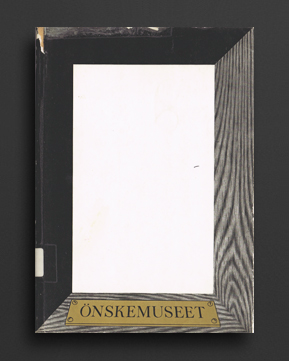
Önskemuseet: The Museum of Our Wishes (December 26, 1963 - February 16, 1964), was a unique and very ambitious exhibition initiated by director Pontus Hultén and Moderna Museet staff that gathered together a collection of modernist art from private owners, in order to present to the public and political administration their vision of what a museum collection could actually be. The exhibition featured works from private collections alongside a “wish list” of works that were still available on the market, calling for the government to allocate funds for purchasing new works for the museum. The request was acknowledged and the Museum received a one-off allocation of five million kronor, a substantial amount in today’s currency, which enabled the purchase of several works that now constitute the core of the collection, positioning Moderna Museet as one of the most dynamic and committed contemporary art institutions of the 1960s.
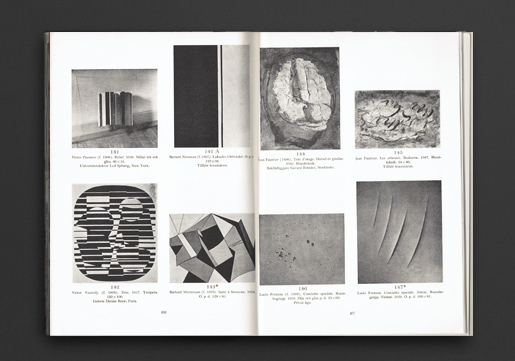
This is a copy of the first and only edition of the catalogue for the exhibition, which makes up a visual checklist of the artworks and artists featured in this enormous exhibit, taking it's form from art history guides that had started to be created after the war.
Includes introduction by Gerard Boniier as well as additional text by Olle Granath, K.G. Hulten, Ulf Linde and Karin Bergqvist Lindegren. Features works by Henri Matisse, Georges Rouault, Raoul Dufy, Emil Nolde, Edwin Ludwig Kirchner, Erich Heckel, Oscar Kokoschka, Max Beckmann, Chaim Soutine, Wassily Kandinsky, Kasimir Malevich, Pablo Picasso, Georges Braque, Jacques Villon, Raymond Duchamp-Villon, Henri Le Fauconnier, Fernand Léger, Robert Delaunay, Roger de la Fresnaye, Henri Laurens, Amédée Ozenfant, Juan Gris, Alexander Archipenko, Jacques Lipchitz, Giacomo Balla, Ardengo Soffici, Carlo Carrà, Umberto Boccioni, Gino Severini, Francis Picabia, Jean Arp, Marcel Duchamp, Man Ray, Kurt Schwitters, Piet Mondrian, El Lissitzky, Theo van Doesburg, Antoine Pevsner, Georges Vantongerloo, Sophie Tauber-Arp, Naum Gabo, Lazlo Moholy-Nagy, Alexander Calder, Charles Despiau, Andre Derain, Maurice Utrillo, Amedeo Modigliani, Otto Dix, Ben Shahn, Marie Laurencin, Constantin Brancusi, Julio Gonzales, Paul Klee, Giorgio de Chirico, Marc Chagall, Max Ernst, Juan Miró, Andre Masson, René Magritte, Yves Tanguy, Alberto Giacometti, Wilfredo Lam, Victor Brauner, Salvador Dali, Sebastian Matta, Henry Moore, Roger Bissière, Jean Bazaine, Maurice Esteve, Alfred Manessier, Nicolas De Staël, Auguste Herbin, Serge Poliafkoff, Victor Pasmore, Barnett Newman, Richard Mortensen, Jean Fautrier, Lucio Fontana, Henri Michaux, Jean Dubuffet, Germaine Richier, Francis Bacon, Wols, Asger Jorn, Alberto Burri, Antonio Tapies, Karel Appel, Mark Tobey, Fritz Hundertwasser, Mark Rothko, Archile Gorky, Willem de Kooning, Jackson Pollock, Jean-Paul Riopelle, Sam Francis, Robert Jacobsen, Robert Rauschenberg, Enrico Baj, César, Jasper Johns, Richard Stankiewicz, Jean Tinguely, Arman, and Yves Klein.
All texts in Swedish. The bulk of the reproductions are in black-and-white with several larger, tipped-in images in color.
Ex-library copy with stamps, stickers and covering. Otherwise a good copy.