World Food Books' programme is largely produced on Kulin Nation land. We acknowledge the Wurundjeri people of the Kulin Nation as the first and continuing custodians of this land, and pay respect to their Elders past, present, and emerging.
World Food Books is an arts and special interests bookshop in Naarm / Melbourne. Founded in 2010, World Food Books is devoted to the presentation of a rotating, hand-selection of international art, design, literary and counterculture publications with an emphasis on the anti-traditional, the experimental, the avant-garde, the heretic, the marginal.
Presenting new titles alongside rare and out-of-print books, catalogues and journals spanning the fields of modern and contemporary art, design, photography, illustration, film, literature, poetry, cultural theory, philosophy, sexuality, popular and underground culture in its many radical forms, World Food Books wishes to encourage adventurous, thoughtful and open-minded reading, looking, writing, and exchange of publishing and ideas, both current and historical.
As well as our bookshop, located in Melbourne's historical Nicholas Building, all of our inventory is available internationally via our online mail-order service.
World Food Books semi-regularly co-ordinates "Occasions", a programme of exhibits and events at the bookshop and in partnership with other hosts (such as museums and art galleries) that develop out of the activities, relationships and content of the bookshop itself.
World Food Books
The Nicholas Building
37 Swanston Street
Room 5, Level 6
Melbourne 3000
Australia
SHOP HOURS:
Thu–Fri 12–6, Sat 12–5
WEB-SHOP OPEN 24/7
World Food Books
Postal Address:
PO Box 435
Flinders Lane
Victoria 8009
Australia
Art
Theory / Essay
Architecture / Interior
Graphic Design / Typography
Photography
Fashion
Eros
LGBTQ+
Fiction / Poetry
Weird / Speculative / Science Fiction / Horror
Transgressive / Visceral / Abject
Symbolism / Decadence / Fin de siècle
Film / Video
Painting
Sculpture / Installation
Performance / Dance / Theater
Drawing
Sound / Music
Curatorial
Group Shows / Collections
Periodicals
Out-of-print / Rare
Posters / Ephemera / Discs
Signed Books
World Food Books Gift Voucher
World Food Book Bag
Australian Art
Australian Fiction
Australian Science Fiction / Speculative Fiction
Australian Poetry
Australian Photography
Japanese Photography
Conceptual Art
Minimal Art
Dada
'Pataphysics / Oulipo
Fluxus
Concrete Poetry
Pop Art
Surrealism
Arte Povera
Arte Informale / Haute Pâte / Tachism
Nouveau Réalisme / Zero / Kinetic
Situationism / Lettrism
Collage / Mail Art / Xerox Art
Art Brut / Folk / Visionary / Fantastic
Illustration / Graphic Art / Bandes Dessinées
Furniture
Italian Radical Design / Postmodernism
Textiles
Ceramics / Glass
Counterculture
Protest / Revolt
Philosophy
Psychoanalysis
Anthropology
Anarchism
Socialism / Anarchism / Communism / Capitalism
Literary Theory / Semiotics / Language
Feminism / Women's Studies
Gender Studies / Sexuality
Anthropology
Fetishism / BDSM
Drugs / Psychedelia
Crime / Violence
Animal Rights / Veganism
Occult / Esoterica
Ecology / Earth / Alternative Living
Whole Earth / Crafts
All prices in AUD (Australian dollars)
Pick-Ups
Pick-up orders can be collected in our bookshop during opening hours after order date. Please collect any Pick-up orders within 2 weeks of ordering as we have limited storage space. Orders will be released back into stock if not collected within this time. No refunds can be made for pick-ups left un-collected. If you cannot make it in to the bookshop in this time-frame, please choose postage option.
Return Policy
All sales are final. We do accept returns (for refund or exchange) for items received in error. All our orders are packed with special care using heavy-duty padding and cardboard book-mailers or bubble mailers (for smaller books), using reinforcement where required. We cannot take responsibility for any lost, stolen or damaged parcels.
Insurance
Should you wish to insure your package, please email us directly after placing your order and we can organise this at a small extra expense. Although all standard/express tracked packages are very safe and dependable, we cannot take responsibility for any lost, stolen or damaged parcels. We recommend insurance on valuable orders.
Interested in selling your old books, catalogues, journals, magazines, comics, fanzines, ephemera? We are always looking for interesting, unusual and out-of-print books to buy. We only buy books in our fields of interest and specialty, and that we feel we can resell.
We base these prices on desirability, market value, in-print prices, condition and our current stock levels. We offer cash, store credit, and can take stock on consignment. All
about 25% of the price we expect to get when we sell them, or 30% in store credit. We base these prices on desirability, market value, in-print prices, condition and our current stock levels.
Sell your books any day of the week. You can drop them off and return later. If you have a lot of books, we can visit your Sydney home.
We buy books that we feel we can resell. We offer about 25 % of the price we expect to get when we sell them, or 30% in store credit. We base these prices on desirability, market value, in-print prices, condition and our current stock levels.
Philadelphia Wireman
03 August - 01 September, 2018
World Food Books is proud to announce our next Occasion, the first presentation of sculptures by Philadelphia Wireman in Australia.
The Philadelphia Wireman sculptures were found abandoned in an alley off Philadelphia’s South Street on trash night in 1982. Their discovery in a rapidly-changing neighbourhood undergoing extensive renovation, compounded with the failure of all attempts to locate the artist, suggests that the works may have been discarded after the maker’s death. Dubbed the "Philadelphia Wireman" during the first exhibition of this work, in 1985, the maker’s name, age, ethnicity, and even gender remain uncertain. The entire collection totals approximately 1200 pieces, all intricately bound together with tightly-wound heavy-gauge wire (along with a few small, abstract marker drawings, reminiscent both of Mark Tobey and J.B. Murry). The dense construction of the work, despite a modest range of scale and materials, is singularly obsessive and disciplined in design: a wire armature or exoskeleton firmly binds a bricolage of found objects including plastic, glass, food packaging, umbrella parts, tape, rubber, batteries, pens, leather, reflectors, nuts and bolts, nails, foil, coins, toys, watches, eyeglasses, tools, and jewellery.
Heavy with associations—anthropomorphic, zoomorphic, and socio-cultural responses to wrapped detritus—the totemic sculptures by Philadelphia Wireman have been discussed in the context of work created to fulfil the shamanistic needs of alternative religions in American culture. Curators, collectors, and critics have variously compared certain pieces to sculpture from Classical antiquity, Native American medicine bundles, African-American memory jugs, and African fetish objects. Reflecting the artist’s prolific and incredibly focused scavenging impulse, and despite—or perhaps enhanced by—their anonymity, these enigmatic objects function as urban artefacts and arbiters of power, though their origin and purpose is unknown. Philadelphia Wireman, whatever their identity, possessed an astonishing ability to isolate and communicate the concepts of power and energy through the selection and transformation of ordinary materials. Over the course of the past two decades, this collection has come to be regarded as an important discovery in the field of self-taught art and vernacular art.
Presented in collaboration with Fleisher-Ollman Gallery, Philadelphia, and Robert Heald, Wellington.
Susan Te Kahurangi King
02 February - 10 March, 2018
Susan Te Kahurangi King (24 February 1951 - ) has been a confident and prolific artist since she was a young child, drawing with readily available materials - pencils, ballpoint pens and felt-tip markers, on whatever paper is at hand. Between the ages of four and six Susan slowly ceased verbal communication. Her grandparents William and Myrtle Murphy had developed a special bond with Susan so they took on caring responsibilities for extended periods. Myrtle began informally archiving her work, carefully collecting and storing the drawings and compiling scrapbooks. No drawing was insignificant; every scrap of paper was kept. The King family are now the custodians of a vast collection containing over 7000 individual works, from tiny scraps of paper through to 5 meter long rolls.
The scrapbooks and diaries reveal Myrtle to be a woman of great patience and compassion, seeking to understand a child who was not always behaving as expected. She encouraged Susan to be observant, to explore her environment and absorb all the sights and sounds. Myrtle would show Susan’s drawings to friends and people in her community that she had dealings with, such as shopkeepers and postal workers, but this was not simply a case of a grandmother’s bias. She recognised that Susan had developed a sophisticated and unique visual language and sincerely believed that her art deserved serious attention.
This was an unorthodox attitude for the time. To provide some context, Jean Dubuffet coined the term Art Brut in 1945 to describe work created by self-taught artists – specifically residents of psychiatric institutions and those he considered to be visionaries or eccentrics. In 1972 Roger Cardinal extended this concept by adopting the term Outsider Art to describe work made by non-academically trained artists operating outside of mainstream art networks through choice or circumstance. Susan was born in Te Aroha, New Zealand in 1951, far from the artistic hubs of Paris and London that Dubuffet and Cardinal operated in. That Myrtle fêted Susan as a self-taught artist who deserved to be taken seriously shows how progressive her attitudes were.
Susan’s parents Doug and Dawn were also progressive. Over the years they had consulted numerous health practitioners about Susan’s condition, as the medical establishment could not provide an explanation as to why she had lapsed into silence. Dawn educated herself in the field of homeopathy and went on to treat all twelve of her children using these principles – basing prescriptions on her observations of their physical, mental and emotional state.
Doug was a linguist with an interest in philosophy who devoted what little spare time he had to studying Maori language and culture. To some extent their willingness to explore the fringes of the mainstream made them outsiders too but it was their commitment to living with integrity and their respect for individuality that ensured Susan’s creativity was always encouraged.
Even though Susan’s family supported her artistic pursuits, some staff in schools and hospitals saw it as an impediment to her assimilation into the community and discouraged it in a variety of ways. Her family was not always aware of this and therefore did not fully understand why Susan stopped drawing in the early 1990s. However, rather than dwell on the challenges that Susan faced in pursuit of her artistic practice, they prefer to highlight her achievements. In 2008 Susan began drawing again in earnest, after an almost 20 year interruption, and her work is now shown in galleries around the world.
Susan grew up without television and has been heavily influenced by the comics she read as a child. She is absolutely fearless in the appropriation of recognizable characters, such as Donald Duck and Mickey Mouse, in her work. She twists their limbs, contorts their faces, compresses them together, blends them into complex patterned backgrounds - always imbuing them with an incredible energy. Although Susan often used pop culture characters in her work they are not naive or childlike. These are drawings by a brilliant self-taught artist who has been creating exceptional work for decades without an audience in mind.
Mladen Stilinović
"Various Works 1986 - 1999"
02 February 16 - September 10, 2016
Various works 1986 - 1999, from two houses, from the collections of John Nixon, Sue Cramer, Kerrie Poliness, Peter Haffenden and Phoebe Haffenden.
Including: Geometry of Cakes (various shelves), 1993; Poor People’s Law (black and white plate), 1993; White Absence (glasses, ruler, set square, silver spoon, silver ladel with skin photograph and wooden cubes), 1990-1996; Exploitation of the Dead (grey and red star painting, wooden painting, black spoon with red table, red plate), 1984-1990; Money and Zeros (zero tie, paintings made for friends in Australia (Sue, John, Kerrie), numbers painting), 1991-1992; Words - Slogans (various t-shirts) - “they talk about the death of art...help! someone is trying to kill me”, “my sweet little lamb”, “work is a disease - Karl Marx”; Various artist books, catalogues, monographs, videos; Poster from exhibition Insulting Anarchy; "Circular" Croatian - Australian edition; Artist book by Vlado Martek (Dostoyevsky); more.
Thanks to Mladen Stilinović and Branka Stipančić.
Jonathan Walker
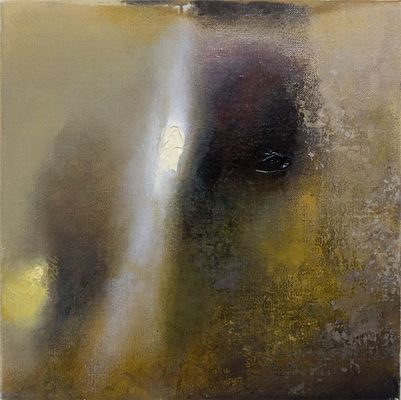
Always Will Need To Wear Winter Shirt Blue + Ochre Small Check Pattern
21 August - 21 September, 2015
Untitled
I am not a great reader of poetry but I always return to the work of Melbourne poet, Vincent Buckley (1925- 1988). Perhaps I find his most tantalising piece to be not a finished poem but a fragment left on a scrap of paper discovered on his desk after the poet’s death.
The poetry gathers like oil
In the word-core, and spreads
It has its music meet,
Its music is in movement.
This fragment is more the shell left behind from a volatile thought than a finished poem. I find the last two lines honest but awkward whereas the first two lines work like an arrow. Most likely he could not find a resolution so it was left. Still, in its present form, it remains an eloquent testimony to the ultimate failure of a medium to express mobile thought and sensation, in Buckley’s case, through verbal language. It’s an important matter because this is something all artists have to deal with regardless of the medium.
I have never written a poem, however, I am forever copying fragments from books on paper scraps in a vain effort to fix certain notions in my head. At first, they function as bookmarks that are sometimes returned to when I open the book. But before long, as they accumulate, they fall out littering the table interspersed with A4 photocopies, bills, books and medications.
To return to Buckley’s fragment, the first two lines very much evoke how I paint nowadays. As you age, detail diminishes and patches of light become more luminous and float. I feel the most honest way of dealing with this is by smearing the oil paint on the canvas with the fingers and working close-up, blind. Only if the patches coalesce into an approaching image can the work gain a life.
-
Jonathan Walker was born in Melbourne, Australia and brought up on a dairy farm in Gippsland. In the 1970’s he studied painting at RMIT and won the Harold Wright Scholarship to the British Museum, London. During the 1980’s he exhibited at Pinacotheca Gallery, Richmond and had work shown at the NGV and Heidi City Art Gallery. Over the same period he designed the cover for the “Epigenesi” LP by Giancarlo Toniutti, Italy and conducted a mail exchange work with Achim Wollscheid, Germany. The work with artists through the post resulted in an article published in the bicentenary issue of Art and Australia 1988. He showed in artist run spaces such as WestSpace in the 90’s and 2000’s, and until 2012, taught painting at Victoria University, which is where we (Colleen Ahern and Lisa Radford) as organisers of the exhibition, among many others, had the privilege of being his student.
Walker’s knowledge was imparted to students through the careful selection of music, literature, and artists found in books that he himself had ordered for the library. Walker’s strategy was the generosity of sharing his vast knowledge with references specific to each student and their context.
Walker’s paintings share a similar focus and intimacy.
This exhibition presents a small selection of recent paintings alongside a publication that includes Walker’s writing. Observational and analytical, Walker’s work is a type of material notation — the time of day, colour and how it is blended, the both specific and fleeting location of a reflection on lino or the question of whether a chair leg should be included in a painting.
Please join us on Friday August 21 between 6-8pm to celebrate the opening of the exhibition.
Curated by Colleen Ahern and Lisa Radford.
B. Wurtz
Curated by Nic Tammens
March 26 - April 4, 2015
B.Wurtz works from a basement studio in his home on Manhattan’s Lower East Side.
This local fact is attested to by the plastic shopping bags and newsprint circulars that appear in his work. As formal objects, they don’t make loud claims about their origins but nonetheless transmit street addresses and places of business from the bottom of this long thin island. Like plenty of artists, Wurtz is affected by what is local and what is consumed. His work is underpinned by this ethic. It often speaks from a neighborhood or reads like the contents of a hamper:
“BLACK PLUMS $1.29 lb.”
“Food Bazaar”
“USDA Whole Pork Shoulder Picnic 99c lb.”
“RITE AID Pharmacy, with us it’s personal.”
“H. Brickman & Sons.”
“Sweet Yams 59c lb."
Most of the work in this exhibition was made while the artist was in residence at Dieu Donne, a workshop dedicated to paper craft in Midtown. Here Wurtz fabricated assemblages with paper and objects that are relatively lightweight, with the intention that they would be easily transportable to Australia. This consideration isn’t absolute in Wurtz’s work, but was prescriptive for making the current exhibition light and cheap. Packed in two boxes, these works were sent from a USPS post office on the Lower East Side and delivered to North Melbourne by Australia Post.
Wurtz appears courtesy of Metro Pictures, New York.
Thanks to Rob Halverson, Joshua Petherick, Sari de Mallory, Matt Hinkley, Helen Johnson, Fayen d'Evie, Ask Kilmartin, Lisa Radon, Ellena Savage, Yale Union, and "Elizabeth".
John Nixon
"Archive"
December 15 - January 20, 2014
The presentation of John Nixon's archive offered a rare showcase of this extensive collection of the artist's own publications, catalogues, posters, ephemera, editions and more, from the mid 1980s onwards, alongside a selection of his artworks.
Organized by John Nixon, Joshua Petherick and Matt Hinkley.
<a href=http://wfb.public-office.info/artist/john-nixon>All titles by John Nixon
"Habitat"
at Minerva, Sydney (organised by Joshua Petherick and Matt Hinkley)
November 15 - December 20, 2014
Lupo Borgonovo, Janet Burchill & Jennifer McCamley,
Lewis Fidock, HR Giger, Piero Gilardi, Veit Laurent Kurz,
Cinzia Ruggeri, Michael E. Smith, Lucie Stahl, Daniel Weil, Wols
Press Release:
“...It contained seven objects. The slender fluted bone, surely formed for flight, surely from the wing of some large bird. Three archaic circuitboards, faced with mazes of gold. A smooth white sphere of baked clay. An age-blackened fragment of lace. A fingerlength segment of what she assumed was bone from a human wrist, grayish white, inset smoothly with the silicon shaft of a small instrument that must once have ridden flush with the surface of the skin - but the thing’s face was seared and blackened.”
William Gibson, “Count Zero”, 1986
"Autumn Projects Archive"
Curated by Liza Vasiliou
March 6 - March 15, 2014
World Food Books, in conjunction with the Virgin Australia Melbourne Fashion Festival 2014, presented the Autumn Projects archive, consisting of a selection of early examples in Australian fashion with a particular interest in collecting designers and labels from the period beginning in the 1980’s, who significantly influenced the discourse of Australian Fashion.
Curated by Liza Vasiliou, the exhibition provided a unique opportunity to view pieces by designers Anthea Crawford, Barbara Vandenberg, Geoff Liddell and labels CR Australia, Covers, Jag along with early experimental collage pieces by Prue Acton and Sally Browne’s ‘Fragments’ collection, suspended throughout the functioning World Food Books shop in Melbourne.
H.B. Peace
presented by CENTRE FOR STYLE
November 14, 2013
"Hey Blinky, you say chic, I say same"
Anon 2013
H.B. Peace is a clothing collaboration between great friends Blake Barns and Hugh Egan Westland. Their pieces explore the divergences between 'character’ and ‘personality’ in garments....etc
Special Thanks to Joshua Petherick and Matt Hinkley of WFB and Gillian Mears
and a Very Special Thank you to Audrey Thomas Hayes for her shoe collaboration.
Janet Burchill & Jennifer McCamley
"Aesthetic Suicide"
May 10 - June 8, 2013
The first of our occasional exhibitions in the World Food Books office/shop space in Melbourne, "Aesthetic Suicide" presented a body of new and older works together by artists Janet Burchill & Jennifer McCamley, including videos, prints, a wall work, and publications.
During shop open hours videos played every hour, on the hour.
2016, English
Softcover, 280 pages, 21.8 x 27.3 cm
2nd Ed.,
Published by
MACK / London
$79.00 - Out of stock
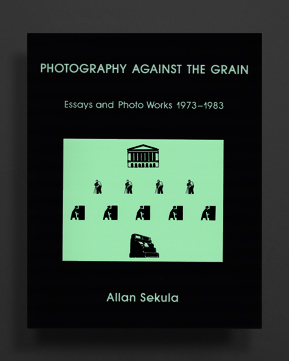
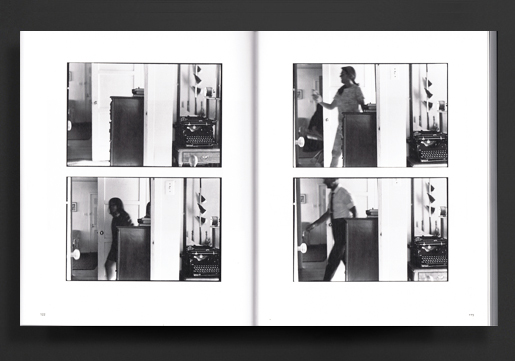
Long out of print, this seminal collection of essays and photographs are by artist, theorist and filmmaker, Allan Sekula. Originally published by the Nova Scotia College of Art and Design in 1984, in these essays and images Sekula sought to portray the inextricable bond between labour and material culture, drawing deeply on Marxist theory to argue passionately for a collective model of progress. Sekula taught at California Institute of Arts (CalArts) from 1985 until his death in 2013, and from that insider's position he critiqued photography and the circumstances of its production and consumption, exposing what the medium failed to represent – women, labourers, minorities and the institutional structures that reinforce cultural biases.
Allan Sekula (1951–2013) was an American artist, whose work spans multiple media: long form photographic series (Aerospace Folktales, 1973; School as a Factory,1980; War Without Bodies, 1991/96), critical texts (The Body and the Archive, 1986 and Debating Occupy, 2012) and film (The Forgotten Space, 2012).
2017, English / Polish
Softcover, 396 pages, 18 x 24.3 cm
Published by
Sternberg Press / Berlin
$44.00 - Out of stock
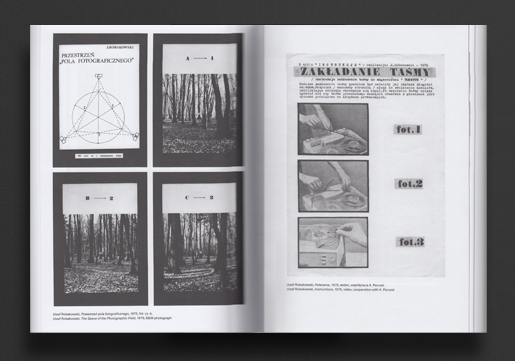
Workshop of the Film Form provides an in-depth overview of the achievements of Warsztat Formy Filmowej (WWF; Workshop of the Film Form), a group of avant-garde artists who were working at the Leon Schiller National Higher School of Film, Television and Theatre in Lodz, Poland, between 1970 and 1977. WWF was founded by the students and graduates of the school, now known as the National Film School, and included: Wojciech Bruszewski, Paweł Kwiek, Andrzej Różycki, Józef Robakowski, Zbigniew Rybczyński, Kazimierz Bendkowski, Antoni Mikołajczyk, Janusz Połom, and Ryszard Waśko. As pioneers of video art in Poland and structural cinema in Central and Eastern Europe, the artists refused classical narrative and traditional film media, working instead somewhere between cinematography and contemporary art.
This publication examines all aspects of WFF’s activity, from their films, photographic experiments, video art, and performative actions to their teaching work, which includes previously unexplored pedagogical contributions to the National Film School. Drawing on the private archives and oral testimonies of the WWF, Workshop of the Film Form attempts to provide a full account of the group’s history as well as a comprehensive survey of each member’s practice. The writers who were invited to respond to the WWF for this book provide insightful new readings of the group’s output and activities, contextualizing their work in the history of the prewar Polish avant-garde and the politics of experimental filmmaking in Poland under the rule of the Polish United Workers’ Party (PZPR).
Copublished with Fundacja Arton
Design by Fontarte Studio
2017, English
Softcover, 120 pages, 14 x 24 cm
Published by
Sternberg Press / Berlin
Exhibition Research Lab / Liverpool
$22.00 - Out of stock
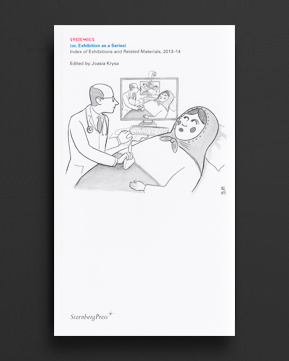
Texts by Franco “Bifo” Berardi, Boris Groys, Mathias Kokholm, Joasia Krysa, Fatima Hellberg, Lars Bang Larsen, Bárbara Rodriquez Muñoz, Jussi Parikka
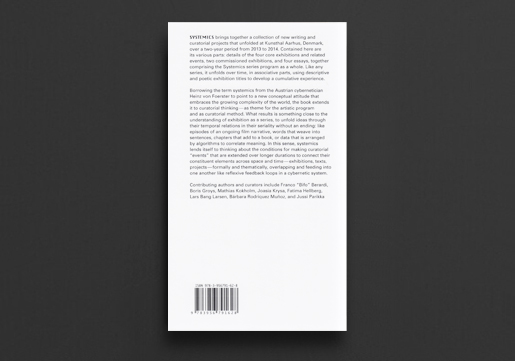
Systemics brings together a collection of new writing and curatorial projects that unfolded at Kunsthal Aarhus, Denmark, over a two-year period from 2013 to 2014. Contained here are its various parts: details of the four core exhibitions and related events, two commissioned exhibitions, and four essays, together comprising the Systemics series program as a whole. Like any series, it unfolds over time, in associative parts, using descriptive and poetic exhibition titles to develop a cumulative experience.
Borrowing the term systemics from the Austrian cybernetician Heinz von Foerster to point to a new conceptual attitude that embraces the growing complexity of the world, the book extends it to curatorial thinking—as theme for the artistic program and as curatorial method. What results is something close to the understanding of exhibition as a series, to unfold ideas through their temporal relations in their seriality without an ending: like episodes of an ongoing film narrative, words that weave into sentences, chapters that add to a book, or data that is arranged by algorithms to correlate meaning. In this sense, systemics lends itself to thinking about the conditions for making curatorial “events” that are extended over longer durations to connect their constituent elements across space and time—exhibitions, texts, projects—formally and thematically, overlapping and feeding into one another like reflexive feedback loops in a cybernetic system.
Design by Stuart Bertolotti-Bailey
2017, English
Softcover, 132 pages, 14 x 20 cm
Published by
Sternberg Press / Berlin
$34.00 - Out of stock
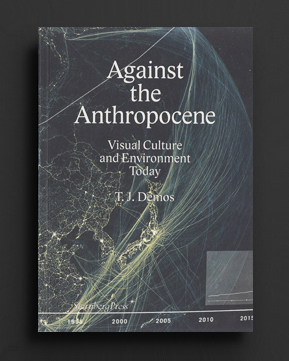
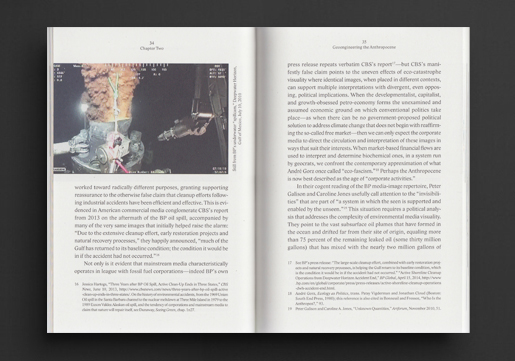
Addressing the current upswing of attention in the sciences, arts, and humanities to the new proposal that we are in a human-driven epoch called the Anthropocene, this book critically surveys that thesis and points to its limitations. It analyzes contemporary visual culture—popular science websites, remote sensing and SatNav imagery, eco-activist mobilizations, and experimental artistic projects—to consider how the term proposes more than merely a description of objective geological periodization. This book argues that the Anthropocene terminology works ideologically in support of a neoliberal financialization of nature, anthropocentric political economy, and endorsement of geoengineering as the preferred—but likely disastrous—method of approaching climate change. To democratize decisions about the world’s near future, we urgently need to subject the Anthropocene thesis to critical scrutiny and develop creative alternatives in the present.
“The idea of the Anthropocene needs to be eviscerated, and there is no one better suited to do it than T. J. Demos. In this sharp book Demos demonstrates that the Anthropocene thesis obscures a host of gross inequalities and the powerful interests behind them. Exploring examples (such as Google Earth) that support Anthropocene iconography, as well as a plethora of critical alternatives that decolonize and indigenize the Anthropocene, Demos offers a strong indictment of the violence of contemporary fossil capitalism. This manifesto should be on the bookshelves and in the back pockets of all climate justice activists.”
—Ashley Dawson, Professor of English, CUNY Graduate Center and College of Staten Island
“Against the Anthropocene is much more than simply ‘against.’ In this short, accessible, and fiercely written book, T. J. Demos shows how visual culture is implicated in the Anthropocene’s occlusions as well as a resource for conceptualizing—and mobilizing for—emancipatory alternatives. Deftly weaving together environmental accounts, scholarly arguments, and activist mobilizations, Demos makes an impassioned argument for new modes of thinking and representing the global environmental crisis that refuse the old fictions of the ‘social’ and the ‘natural.’ It is a book that shows how visual culture matters in our struggle for a just and livable future.”
—Jason W. Moore, Associate Professor of Sociology, Binghamton University
“T. J. Demos is one of the most important critics of visual culture and its politics today. In this must-read book he makes a compelling argument not only against the discourse of the Anthropocene but also for an activist, critical, and intersectional culture of climate justice.”
—Carrie Lambert-Beatty, Professor of Visual and Environmental Studies and of History of Art and Architecture, Harvard University
“In Against the Anthropocene, T. J. Demos adds to the growing chorus of voices critical of a term that, while intending to sound an alarm about climate change, in fact obscures responsibility for our eco-disaster. Through his unique assessment of the role of the image in the Anthropocene, Demos highlights the work of contemporary artistic-activist projects that contest imagery designed to shape our response to environmental crisis. For those who think that we can’t envision our crisis or do anything about it, this wonderful book shows us all the ways in which visuality is being reinvented in support of a new, vibrant politics of collectivity.”
—Imre Szeman, Canada Research Chair in Cultural Studies and Professor of English and Film Studies, University of Alberta
“In this indispensable survey of visual culture’s intersection with the ongoing catastrophe of climate change, T. J. Demos makes its political stakes visible in new and exciting ways.”
—Nicholas Mirzoeff, Professor of Media, Culture, and Communication, New York University
Design by Miriam Rech, Berlin
2017, English
Softcover, 975 pages, 19 x 26 cm
Published by
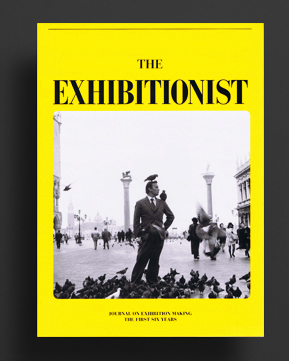
The Exhibitionist / New York
$65.00 - Out of stock
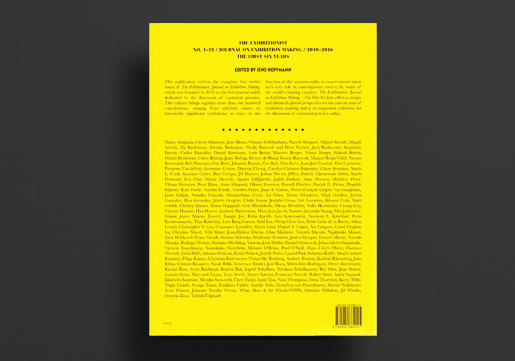
Edited with introduction by Jens Hoffmann.
A journal by curators for curators, The Exhibitionist has asked the most pertinent questions on contemporary exhibition-making since its founding in 2009.
The Exhibitionist: Journal on Exhibition Making is an anthology of the first 12 issues of the journal about contemporary curating that bears the same name. Established in 2009 as a forum for critical reflection on exhibition-making and curatorial practice, The Exhibitionist has always defined itself as “by curators, for curators.” Modelled after the iconic French film journal Cahiers du cinéma, The Exhibitionist has served a critical role in examining current curatorial practices by focusing specifically on the exhibition format as a site of experimentation and inquiry. The Exhibitionist has historicized, analyzed and critiqued a phenomenon it is itself symptomatic of—the rise of the curator since the 1960s, the ensuing explosion of curatorial creativity and the growing fascination with the discipline of curating.
Over the six years of its run, The Exhibitionist has published writings from many of the most prominent curatorial voices in the field, offering a who’s who of curatorial practice; contributors include Okwui Enwezor, Hans Ulrich Obrist, Mary Jane Jacob, Nato Thompson, Jessica Morgan, Maria Lind, Sofía Hernández Chong Cuy and Massimiliano Gioni, to name just a select few.
Collected together in a monumental omnibus edition (clocking in at 975 pages), the complete run of the journal is accompanied by a new introduction by founding editor Jens Hoffmann, and a critical approach to a theory of the exhibition by senior editor Julian Myers-Szupinska. With the publication of this volume, The Exhibitionist closes a chapter of its existence as a print magazine and shifts its activities to the-exhibitionist.com.
2005, English
Hardcover, 294 pages, 21 x 23.5 cm
1st Edition, Out of print title / used / good
Published by
The MIT Press / Massachusetts
$59.00 $25.00 - Out of stock
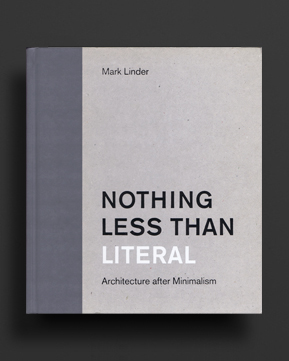
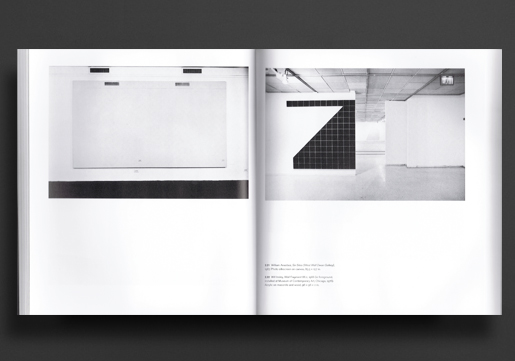
In Nothing Less than Literal, Mark Linder shows how minimalist art of the 1960s was infiltrated by architecture, resulting in a reconfiguration of the disciplines of both art and architecture. Linder traces the exchange of concepts and techniques between architecture and art through a reading of the work of critics Clement Greenberg, Colin Rowe, Michael Fried, and the artist-writer Robert Smithson, and then locates a recuperation of "the architecture of minimalism" in the contemporary work of John Hejduk and Frank Gehry.
"Literal" was not only a term used by Fried to attack minimalism; it was a key term for Greenberg as well, and in both cases their use of that term coincides with discussions of the architectural qualities of art. Linder gives us the first thorough examination of the role that architectural concepts, techniques of representation, and practices played in the emergence of minimalism. Beginning with a comparison of the "postcubist" writings of Clement Greenberg and Colin Rowe, he reveals surprising affinities in their critical formulations of pictorialism -- including the use by both of an analogy between cubist collage and architectural space. This is followed by an account of the sharp differences between Michael Fried and Robert Smithson; Linder contrasts the sublimation of space and refusal of architecture in Fried's concept of the "radically abstract" with Smithson's explicit embrace of architectural thinking and his complex concepts of space. Finally, Linder looks at particular instances in the work of two architects who, through collaboration with artists, engaged the legacy of literalism -- John Hejduk's Wall House and Frank Gehry's decade-long fascination with the figure of the fish. Linder shows how the "productive impropriety" of transdisciplinary borrowing in the discourses surrounding minimalism serves as a counterexample to the prevalent perception of "disciplines" as conservative and institutionalizing.
Out of print hardcover first edition. This copy was part of a run that had the page block glued into the covers backwards.
2016, English
Softcover, 136 pages, 26 x 21.3 cm
Published by
Koenig Books / London
$49.00 - Out of stock
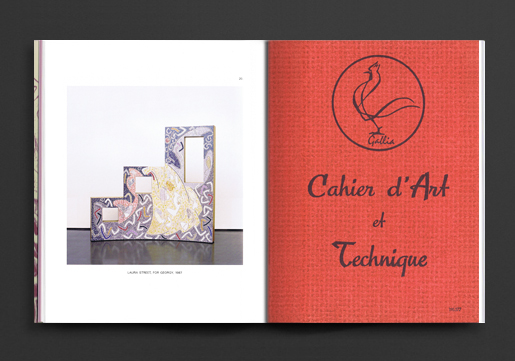
Chaimowicz is increasingly influential for younger generations of artists, his work explores the space between public and private, design and art, and includes painting, sculpture and photography with prototypes for everyday objects, furnishings and wallpapers.
A choreography of objects, images and colours, in his Serpentine Gallery installation the artist draws upon ideas of memory and place. This responds to the architecture, natural surroundings and history of the Serpentine which was converted from a 1930s park café to a gallery in 1970.
This unique hybrid between a catalogue and artist’s book is a personal exhibition journal that takes the form of a French cahier – a ‘book within a book’ which comprises a visual index of technical drawings and photographs relating to recent projects. Wrapped in a dust jacket featuring a new wallpaper design and including a number of installation and archival images.
Designed by Fraser Muggeridge studio and featuring texts by Michael Bracewell, Mason Leaver-Yap, and Stuart Morgan.
Published on the occasion of the exhibition Marc Camille Chaimowicz: An Autumn Lexicon at Serpentine Sackler Gallery, London, 29 September – 20 November 2016.
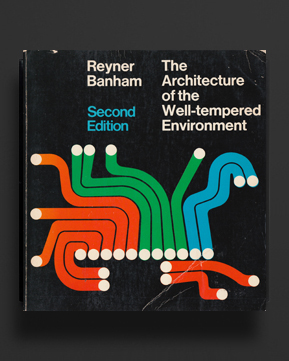
1984, English
Softcover, 320 pages, 18 x 18.2 cm
Out of print title / used / good
Published by
University of Chicago Press / Chicago
$40.00 - Out of stock
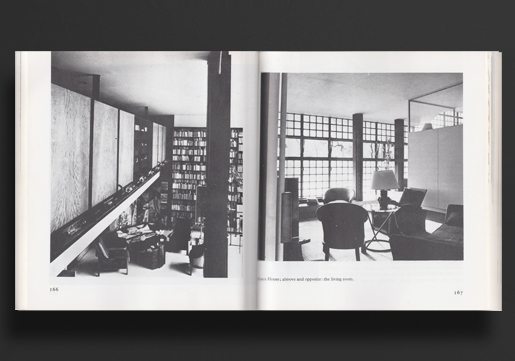
Reyner Banham was a pioneer in arguing that technology, human needs, and environmental concerns must be considered an integral part of architecture. No historian before him had so systematically explored the impact of environmental engineering on the design of buildings and on the minds of architects. In this revision of his classic work, Banham has added considerable new material on the use of energy, particularly solar energy, in human environments. Included in the new material are discussions of Indian pueblos and solar architecture, the Centre Pompidou and other high-tech buildings, and the environmental wisdom of many current architectural vernaculars.
2002, English
Softcover, 152 pages,
1st Edition, Out of print title / used / very good
Published by
Craftsman House / St Leonards
$38.00 - Out of stock
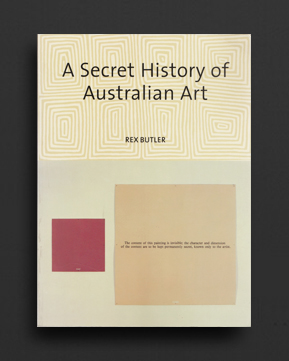
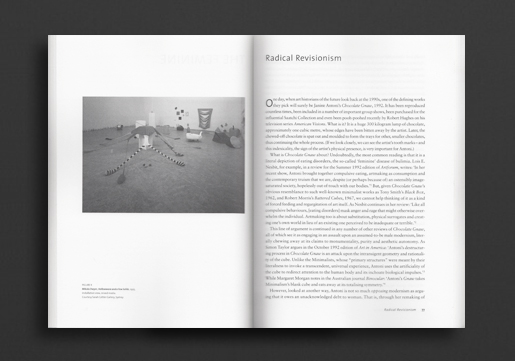
In April 2000, the Australian art critic Rex Butler was invited to present a series of lectures to students and members of the public at Metro Arts, Brisbane. Now out of print, Rex Butler's "The Secret of Australian Art" compiles these lectures, offering insight into what a critic does and introduces issues of interest in contemporary Australian art, such themes as the problem of irony in post-modern art, the relation of art to everyday life and recent post-colonial approaches in Australian art history and Aboriginal art, illustrated with case studies.
Full contents:
Lecture 1. Camp: The rise and fall of the smile; The case of Michael Stevenson
Lecture 2. The Real: 'Every Day', the task of mourning; The case of Dale Frank; The case of Richard Dunn
Lecture 3. Abstraction: The anamorphic monochrome; The case of John Nixon
Lecture 4. The Feminine: Radical revisionism; The case of Merilyn Fairskye
Lecture 5. Post-Colonialism: Australian art history and revisionism; The case of Augustus Earle
Lecture 6. Aboriginality: 'Bright Shadows': art, aboriginality and aura; The case of Kathleen Petyarre.
Includes bibliographical references and index.
Professor Rex Butler is an art historian, writer and Professor (Art History & Theory) at Monash University. His research interests include contemporary Australian art and art criticism; Post-war American art; and Postmodernism. Rex Butler is currently editing a collection entitled 'Radical Revisionism' on Australian post-colonial art and two volumes of Slavoj Zizek's selected writings. He is the author six books including, What is Appropriation? (1996); Jean Baudrillard: The Defence of the Real (1999); A Secret History of Australian Art (2002); and Borges' Short Stories: A Reader's Guide (2010).
1985, Japanese
Softcover, 126 pages, 24 x 25 cm
1st Edition, Out of print title / used / very good
$50.00 - Out of stock
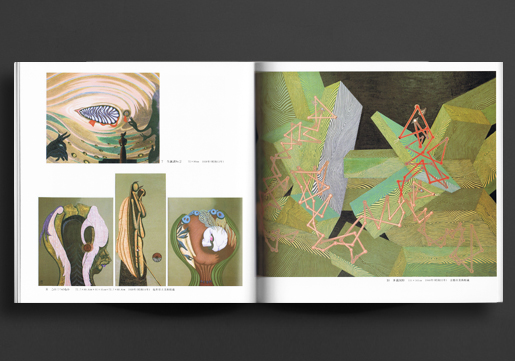
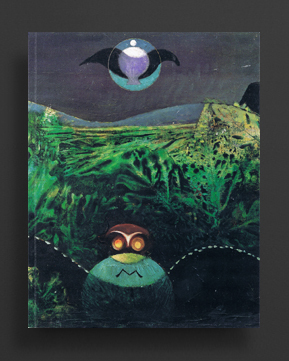
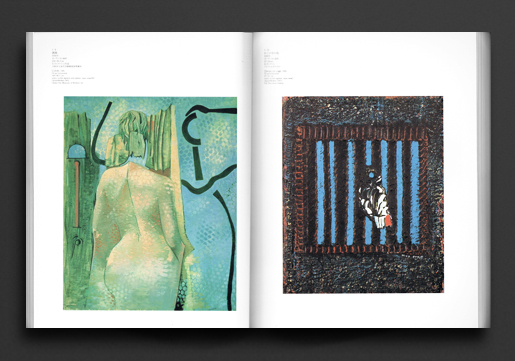
A seldom seen book (the only one we know of) on the work of Japanese surrealist painter Gentaro Komaki. Published on the occasion of a major retrospective exhibition held at the Iwaki Museum of Modern Art in 1985. Lavishly illustrated throughout the entire book with Komaki's vivid paintings, mostly in full-colour, this monographic catalogue also features his writing, biography, full exhibition history, full work list, bibliography and much more. All texts in Japanese. An incredible visual overview.
Gentaro Komaki (小牧源太郎 1906 – 1989), who is still largely unknown or exhibited outside Japan, was regarded by many as one of the highly influential Japanese avant-garde artists of surrealist style. He was very active from late 1930s until the end of his life in 1989. The many artworks of his entire artistic lifespan are in permanent collection of leading art institutions all over Japan. His work was primarily concerned with the surrealist approach of pursuing an unseen inner-world, rather than solely representing one that exists. After exploring ideas and iconography of Buddhism in his work, he continued pursuing folklore subjects rooted in Japanese folk beliefs such as "Inari" and "Daigojin", creating a unique cosmological world of what has been termed "unreasonable aesthetics".
2001, English / Japanese
Softcover, 250 pages, 23 x 29 cm
Out of print title / used / very good
Published by
Museum of Modern Art / Wakayama
$70.00 - Out of stock
Great, heavy monographic catalogue published in 2001 in Japan on the work of Max Ernst.
Introductory essays in English/German/Japanese accompany a lavishly colour illustrated book filled with reproductions of Ernst's many works on paper, paintings, a huge section dedicated to his many sculptures, and an illustrated history of his book works, postcards, ephemera. Also a section of photographs, exhibition history, biography, bibliography. Wrapped in protective, printed wax jacket (not pictured).
Max Ernst (2 April 1891 – 1 April 1976) was a German painter, sculptor, graphic artist, and poet. A prolific artist, Ernst was a primary pioneer of the Dada movement and Surrealism.
2016, French
Hardcover (w. wrap and dust-jacket), 192 pages, 24 x 31 cm
Published by
Mamco / Genève
$79.00 - Out of stock
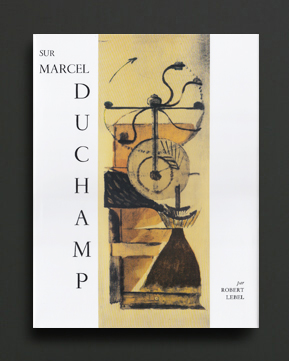
Robert Lebel (1901-1986) was a poet, novelist, essayist, art historian, and painting expert. He took part in the Surrealists' activities and wrote Marcel Duchamp's first monograph in 1959. This book is a facsimile of the original edition in French of Sur Marcel Duchamp Robert Lebel published in 1959 in Paris by Trianon Press. This historical book by Robert Lebel - the first to be published on Marcel Duchamp - is an introduction to the work and personality of a single artist but also a reconsideration of the situation of the painter in contemporary society and a thorough analysis of mobile creative activity. It is supplemented by texts by Marcel Duchamp, André Breton and HP Roché, a bibliography and a catalog raisonné of all the works of Duchamp and is profusely illustrated throughout with images in black and white and inserted, die-cut colour plates. The layout of this book was itself even created and designed by Marcel Duchamp himself and is beautifully reproduced and printed here on paper stocks and using production methods that reflect the qualities of the original book.
2017, English
Softcover, 464 pages, 17 x 24 cm
Published by
Canadian Centre for Architecture / Canada
Sternberg Press / Berlin
$50.00 - Out of stock
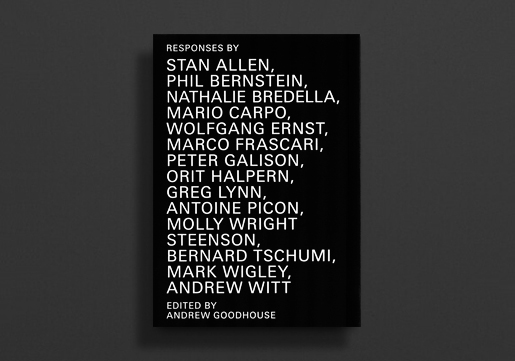
Contributions by Stan Allen, Phil Bernstein, Nathalie Bredella, Mario Carpo, Wolfgang Ernst, Marco Frascari, Peter Galison, Orit Halpern, Greg Lynn, Antoine Picon, Molly Wright Steenson, Bernard Tschumi, Mark Wigley, Andrew Witt
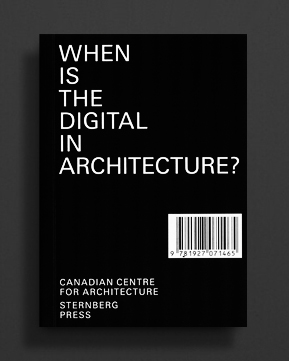
When is the digital in architecture? What are the conditions that led architects to integrate digital tools into their practices? Over the course of its research program Archaeology of the Digital, the CCA has collected the archival records of twenty-five projects realized between the late 1980s and the early 2000s in order to understand this period as a point of origin for the digital. But if we take care to identify the digital as a condition that is made possible by the conceptual foundations of digital media and not necessarily by digital media itself, the boundaries of the digital moment—when it began and under what circumstances—become less clear.
There are eight million stories of the origins of the digital in architecture, and this book brings together fourteen of them. The arguments address specific changes in ways of thinking about architecture, building, and cities, as well as the shifts in technology that resulted from these changes, marking both a capstone of Archaeology of the Digital and the start of an investigation into other beginnings of the digital in architecture.
But it’s not just about articulating a variety of responses. Asking a question like “When is the digital in architecture?” can produce millions of stories in response and millions of digressions and redirections that narrow in focus and change geographies, producing a Tristram Shandy of the digital as the CCA continues to build its digital archive and make it increasingly accessible to researchers. If this novel of digressions is distributed across future research projects and extended with studies of new archival material, so much the better for the reader, in our opinion.
Copublished with Canadian Centre for Architecture (CCA)
Design by Katja Gretzinger
2016, English
Softcover, 256 pages, 16.5 x 22 cm
Published by
Sternberg Press / Berlin
The Academy of Fine Arts / Vienna
$40.00 - Out of stock
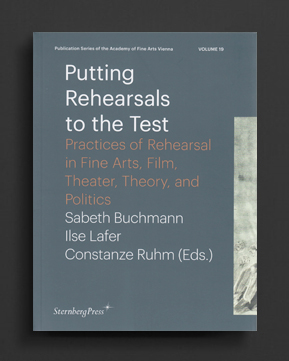
Sabeth Buchmann, Ilse Lafer, Constanze Ruhm (Eds.)
Putting Rehearsals to the Test
Practices of Rehearsal in Fine Arts, Film, Theater, Theory, and Politics
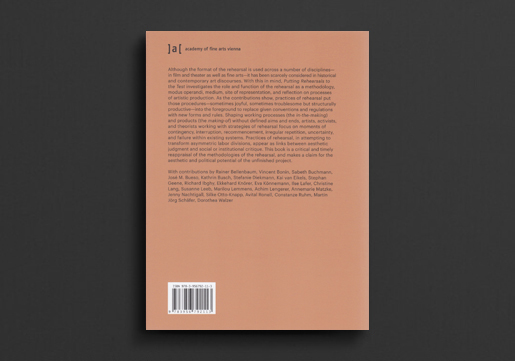
Contributions by Rainer Bellenbaum, Vincent Bonin, Sabeth Buchmann, José M. Bueso, Kathrin Busch, Stefanie Diekmann, Kai van Eikels, Stephan Geene, Richard Ibghy, Ekkehard Knörer, Eva Könnemann, Ilse Lafer, Christine Lang, Susanne Leeb, Marilou Lemmens, Achim Lengerer, Annemarie Matzke, Jenny Nachtigall, Silke Otto-Knapp, Avital Ronell, Constanze Ruhm, Martin Jörg Schäfer, Dorothea Walzer
Although the format of the rehearsal is used across a number of disciplines—film and theater as well as fine arts—it has been scarcely considered in historical and contemporary art discourses. With this in mind, Putting Rehearsals to the Test investigates the role and function of the rehearsal as a methodology, modus operandi, medium, site of representation, and reflection on processes of artistic production. As the contributions in this book show, practices of rehearsal put those procedures—sometimes joyful, sometimes troublesome but structurally productive—into the foreground to replace given conventions and regulations with new forms and rules. Shaping working processes (the in-the-making) and products (the making-of) without defined aims and ends, artists, activists, and theorists working with strategies of rehearsal focus on moments of contingency, interruption, recommencement, irregular repetition, uncertainty, and failure within existing systems. Practices of rehearsal, in attempting to transform asymmetric labor divisions, appear as links between aesthetic judgment and social or institutional critique. This book is a critical and timely reappraisal of the methodologies of the rehearsal, and makes a claim for the aesthetic and political potential in the unfinished project.
Publication Series of the Academy of Fine Arts Vienna, vol. 19
Design by Surface
2010, English / Japanese
Hardcover, 368 pages, 22.4 x 28 cm
1st Edition, Out of print title / Used*,
Published by
National Art Center / Tokyo
$90.00 - Out of stock
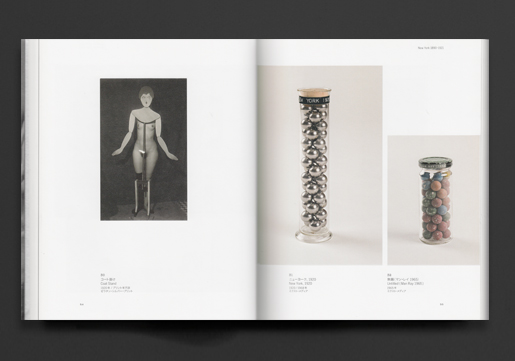
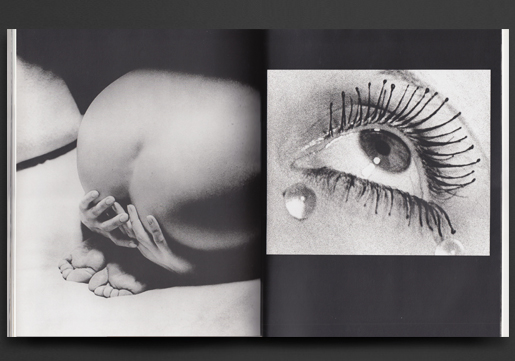
Fantastic, visually dense, heavy monograph on the life and work of Man Ray. "At first sight, another book surveying the life and work of this versatile and inventive artist would seem superfluous, yet surprisingly, this excellent catalogue contributes a wealth of new information, thus providing a valuable contribution to our understanding of Man Ray. The treasure trove of images and objects collected here is drawn from the large archives of the Man Ray Trust in Long Island, New York, and includes little known early works, documents and objects from his private life, working drawings and sketches for major works as well as innumerable familiar masterpieces. The publication is accompanied by essays and an extensive chronology." Introductory texts are "The Fate of Objects," by Noriko Fuku and "Unconcerned But Not Indifferent" by John P. Jacob.
2006, Japanese
Hardcover (w. dustjacket, printed slipcase, obi-strip, insert booklet), 88 pages, 25 x 30 cm
1st Edition, Out of print title / Used*,
Published by
Kawade Shobo Shinsha / Tokyo
$70.00 - Out of stock
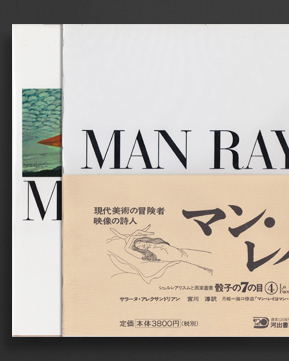
Oversized Japanese monograph on Man Ray, published in a deluxe series of books on modern surrealist artists, this being volume 4 - dedicated to the work of Man Ray. Each hardcover volume comes wrapped in cloth with glossy illustrated dust-jacket, housed in a printed cardboard slipcase, wrapped in the original printer's obi-strip. Primarily the books are made up of a selection of large full-colour and black and white large reproductions of the works of each artist. This book presents page after page of Man Ray's diverse work across painting, drawing, sculpture, photography, and his famed Rayographs, all printed beautifully in Japan. Largely an oversized visual book, what small amount of text here is in Japanese. Comes with a small inserted booklet of Japanese text as well. In wonderful, almost As New condition, protected in plastic.
1990, Japanese / German / English
Softcover, 124 pages, 21.5 x 30 cm
1st edition, Out of print title / used*,
Published by
Metropolitan Museum of Photography / Tokyo
$80.00 - Out of stock
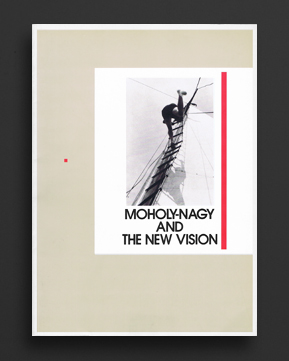
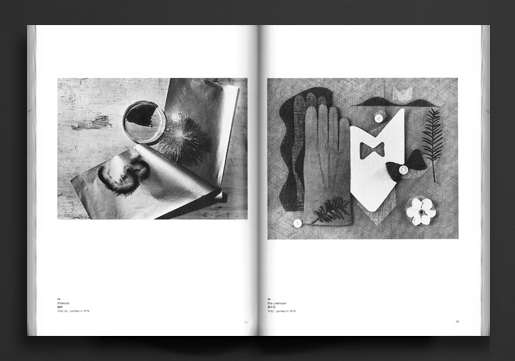
Published in 1990, this unique, and rather scarce, catalogue accompanied an exhibition of nearly 100 works by Lazlo Moholy-Nagy and other Bauhaus artists that was held at the Tokyo Metropolitan Museum of Photography, July 19-Aug. 28, 1990. Moholy-Nagy and his colleagues (such as Walter Gropius) were advocates of a movement called The New Vision (Neue Optik; Neues Sehen), who sought to move photography from its "landscape" models to an art that could offer new ways of seeing the objective world that was invisible to the human glance. New Vision advocates experimented with unconventional forms and techniques, using unusual angles, new uses of light and shadow, photomontage and collage, etc. This book collects and reproduces a wonderful selection of the works featured in the exhibition fromLaszlo Moholy-Nagy, Aenne Biermann, Paul Citoen, Franz Roh, T. Lux Feininger, Umbo, Walter Peterhans, Karl Straub, Franz Ehrlich, Heinz Loew, Walter Funkat, Herbert Bayer, Katt Both, Edmund Collein, Eugen Batz, Gertrud Arndt, Gyula Pap, Lotte Stam-Beese, Werner Mantz, Jaroslav Rossler.
Text in Japanese with captions in English and German.
Laszlo Moholy-Nagy, Aenne Biermann, Paul Citoen, Franz Roh, T. Lux Feininger, Umbo, Walter Peterhans, Karl Straub, Franz Ehrlich, Heinz Loew, Walter Funkat, Herbert Bayer, Katt Both, Edmund Collein, Eugen Batz, Gertrud Arndt, Gyula Pap, Lotte Stam-Beese, Werner Mantz, Jaroslav Rossler.
1972, English
Softcover, 122 pages, 31 x 26 cm
1st edition, Out of print title / used*,
Published by
Quadrangle Books / New York
$100.00 - Out of stock
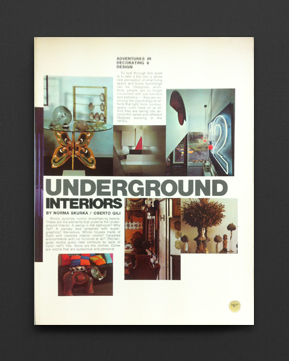
At the start of the 1970's, at the very beginning of renowned photographer Oberto Gili's professional career (Architectural Digest, Vogue, House & Garden, Town & Country), he moved to Milan to work for L’Esperto, a publishing company...
"... to shoot and produce a book that was to be called 'Crazy, Mad, Outrageous Interiors'. I traveled around the world for a year working on this book. L’Esperto dropped the project, but Norma Skurka, The New York Times interiors editor those days, took over and Quadrangle Books published the book in 1972. It was called 'Underground Interiors'."
First soft cover edition of this cult classic interior design book - the only one of its kind. This lavishly illustrated book features the deluxe photography of eclectic and inspired domestic settings from all over the world c. early 1970s: "Surrealist Interiors", "Environments", "Radical Chic", "Pop Culture", "Space Age Habitations"... An incredible piece of interior design history.
Includes the living spaces of Karl Lagerfeld, Derek Jarman, Zandra Rhodes, Marina Lante della Rovere, Nanda Vigo, Alan Buchsbaum, Julie Christie, to name only a handful.
"Not just another book on interior decoration with look-alike rooms, Underground Interiors is a fantastic mind-expanding experience into contemporary life styles."
1970, Italian
Softcover, 160 pages, 21 x 24 cm
Out of print title / used / very good
$70.00 - Out of stock
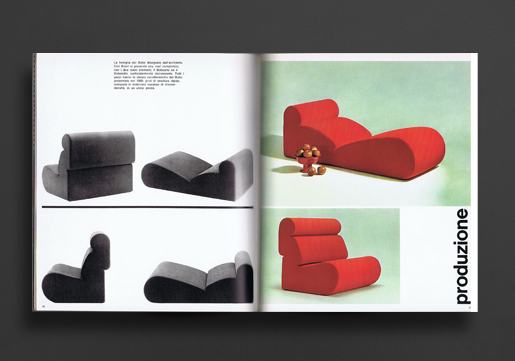
Issue 17 (1970) of Ottagono (Rivista Trimestrale Di Architettura Arredamento Industrial Design / Quarterly Magazine of Architecture, Furniture Design, Design Industrial Design)
This wonderfully designed Italian design journal featured heavily illustrated (in colour and b&w) articles on the latest developments, productions, exhibitions, publications, etc. in industrial design, furniture and architecture, including historical articles and theory from some of the leading figures in the field.
Ottagono 17 includes articles and profiles by/on/featuring: Achille Castiglioni, Pier Giacomo Castiglioni, Fabio Lenci, Tobia Scarpa, Charles Eames, Gianfranco Frattini, Osvaldo Borsani, Eugenio Gerli, Cini Boeri, Bruno Munari, Angelo Mangiarotti, Aldo Rossi, Carlo Santini, Dieter Rams, Lucio Fontana, Vico Magistretti, Joe Colombo, Richard Sapper, Marco Zanuso, Gio Ponti, Arflex, Artemide, Bernini, Braun, Cassina, Tecno, Flos, Olivetti, Kartell, and much more.
1982, English
Softcover, 86 pages, 22 x 25 cm
1st Edition, Out of print title / used / very good
Published by
Instituto Nazionale / Rome
$70.00 - Out of stock
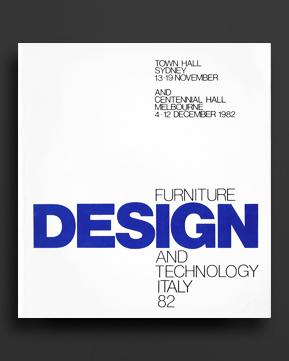
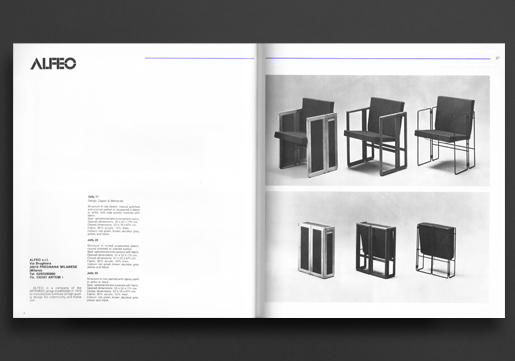
Very scarce and uncatalogued Italian furniture survey catalogue published in 1987 to accompany a major exhibition showcasing an extensive group of Italy's leading furniture and industrial designers and manufacturers of the 1970's-1980's, held at Sydney Town Hall and Centennial Hall in Melbourne in late 1982.
Entire catalogue is made up of photographic profile spreads of manufactures and the designers they represent, with logo, profile (in English), furniture specs. Black and white with blue spot printing throughout. Features the work of: : De Pas-D’Urbino-Lomazzi, Vico Magistretti, Angelo Mangiarotti, Pio Manzù, A. Mazzoni, Paolo Nava, Giovanni Offredi, Giancarlo Peretti, Gio Ponti, Gigi Sabadin, Carlo Santi, Richard Sapper, Afra Scarpa, Tobia Scarpa, Giotto Stoppino, Kazuhide Takahama, Werther Toffoloni, Carlo Urbinati, Marco Zanuso, Lodovico Acerbis, Franco Aibini, Tito Agnoli, Alessandro Becchi, Ammannati & Vitelli, Mario Bellini, Osvaldo Borsani, Giulio Cappellini, Anna Castelli Ferrieri, Achille Castiglioni, Pier Giacomo Castiglioni, Giorgio Cattelan, Pierluigi Cerri, Studio Tecnico, Antonio Citterio, Gianfranco Frattini, Bruno Gecchelin, Eugenio Geri, Ernesto Gismondi, Franca Helg, Artemide, B & B italia, BBB, Cassina, Tecno, Castelli, Flos, Kartell, Zanotta, and many more.
Published by Instituto Nazionale and designed/printed in Italy.
2008, English
Softcover, 92 pages, 15 x 23 cm
1st Edition, Out of print title / used / fine
Published by
Standard Books / Oslo
$70.00 - Out of stock
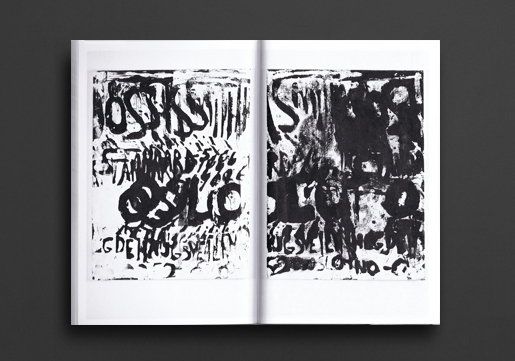
Very scarce catalogue published by Standard Oslo in 2008 to accompany the exhibition "Aleatoric Contracts", curated by Eivind Furnesvik, held by Standard (Oslo) during Art Basel Miami Beach. This publication was given away in a limited edition to visitors.
Along with texts by Mikkel Astrup and Oscar Tuazon, the publication features many pages dedicated to the works of each exhibiting artist : Gardar Eide Einarsson, Matias Faldbakken, Kim Hiorthoy, Josh Smith, and Oscar Tuazon.
1987, English
Softcover, 44 pages, 25.4 X 17.8 cm
1st Edition, Out of print title / used / good
Published by
Kent Fine Art Inc. / New York
$40.00 - Out of stock
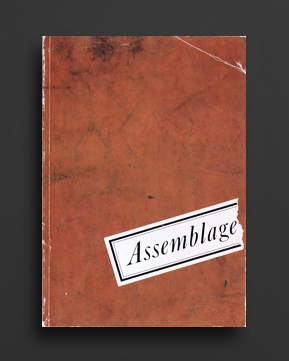
Long out of print catalogue published to accompany the exhibition "Assemblage", at Kent Fine Art, New York, May 12-July 2,1987.
Assemblage is an attempt to explore and address the development of assemblage from its beginnings in Dada, with an eye towards the future in a historical climate of developing interest in minimalism and conceptualism. Addressing the West Coast propensity to recycle emotionally-charged detritus, the works in this exhibition reveal an ongoing relevancy of the synthesized by-product, which continues to shape different artist’s personal languages. Including works by: Edward Kienholtz, Bruce Conner, Llyn Foulkes, Arman, Jean Arp, Wallace Berman, Louis Bourgeois, Joseph Cornell, Marcel Duchamp, Max Erst, Eva Hesse, Ed & Nancy Keinholz, Jannis Kounellis, Man Ray, Robert Rauschenberg, Kurt Schwitters, Dorothea Tanning, Tom Wesselmann, and others. Works selected and compiled by D.K. Walla. Includes full page bio, plus double-page plate spread in full-colour for each artist.
First, only edition.
1972, English
Softcover (die-cut), 48 pages, 21 x 19.5 cm
1st Edition, Out of print title / used / good
Published by
Alister Taylor / Wellington
$90.00 - Out of stock
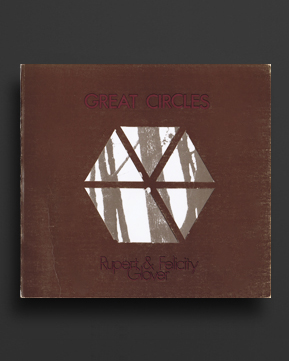
Published in 1972 by Alister Taylor, Wellington, New Zealand, "Great Circles, or How to Build Your Own Dome Home" is one of the finest, and scarcest, books published on building a geodesic dome house.
Written by Rupert and Felicity Glover, this heavily visual volume (wonderfully photographed and complete with templates) traces, step-by-step, their personal process in building a geodesic dome house to counter the burdens building and property regulations were imposing on New Zealand residents (and residents all over the world to this day).
"[...] This is a book which tells you how to beat them at their own game by building the most efficient structure, in terms of a space-materials ratio, yet discovered. In short, this is a housing plan for the alternative society. In it we describe for you a geodesic dome we built ourselves in the summer of 1971-72. It took us six weeks, it cost us about $1500, and it's beautiful. You could build it faster, for at no time did we have more than two people working on it, and you could build it cheaper, by using demolition materials and having your own workshop. But the main thing is that you can build it and they don't make a cent out of it. This is a chance to use the ingenuity which keeps the alternative society going. If they have rules, break them only as a last resort. It is much better to find ways of making them inappropriate or irrelevant. By building a dome you can do just this. This book gives you simple but full instructions for making a geodesic dome. The dome was invented by the visionary genius, R. Buckminster Fuller, who refers to this planet as "Spaceship Earth", and remarks that it didn't come with an instruction book. We have used some of Fuller's ideas, some from other people, and some of our own. We expect you to do the same, because this book makes no rules. It tells how to do something that we have done, but it certainly does not say you must do it the way we did. If someone doesn't improve at least some of our methods, we shall be disappointed. We have deliberately kept the book simple, thinking that bullshit would be a hindrance rather than a help, but we have included one chapter on the mathematics of the geodesic dome for those of you who want to upset our ideas completely but don't own a computer. [...]"
First and only edition.
1978, English
Softcover, 380 pages, 20.3 x 20.1cm
Out of print title / used / fine
Published by
Hanuman Foundation / New Mexico
$25.00 - Out of stock
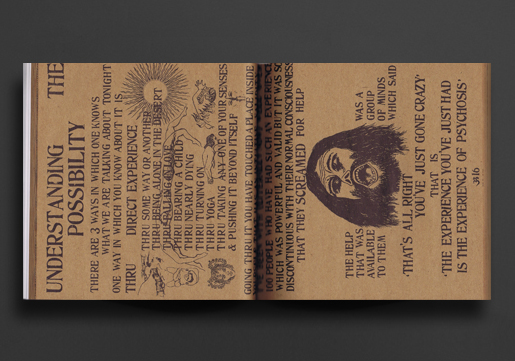
“We’re talking about metamorphosis
We’re talking about going from a caterpillar to a butterfly
We’re talking about how to become a butterfly.”
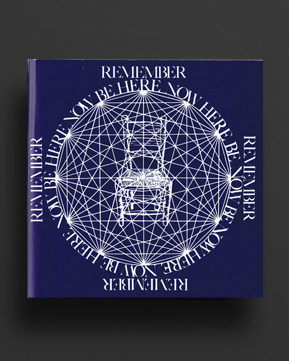
"In March 1961, Professor Richard Alpert – later renamed Ram Dass – held appointments in four departments at Harvard University. He published books, drove a Mercedes and regularly vacationed in the Caribbean. By most societal standards, he had achieved great success... And yet he couldn’t escape the feeling that something was missing.
Psilocybin and LSD changed that. During a period of experimentation, Alpert peeled away each layer of his identity, disassociating from himself as a professor, a social cosmopolite, and lastly, as a physical being. Fear turned into exaltation upon the realization that at his truest, he was just his inner-self: a luminous being that he could trust indefinitely and love infinitely.
And thus, a spiritual journey commenced. Alpert headed to India where his guru renamed him Baba Ram Dass – “servant of God.” He was introduced to mindful breathing exercises, hatha yoga, and Eastern philosophy. If he found himself reminiscing or planning, he was reminded to “Be Here Now.” He started upon the path of enlightenment, and has been journeying along it ever since.
Be Here Now is a vehicle for sharing the true message, and a guide to self-determination.
With over 150 pages of metaphysical illustrations, practical advice on how to implement a yogic regiment, and a chapter dedicated to quotes and book recommendations, Be Here Now is sure to enrich your emotional, physical, and spiritual life."
'Because we are all interrelated, what affects another person affects you.'
1978 edition.