World Food Books' programme is largely produced on Kulin Nation land. We acknowledge the Wurundjeri people of the Kulin Nation as the first and continuing custodians of this land, and pay respect to their Elders past, present, and emerging.
World Food Books is an arts and special interests bookshop in Naarm / Melbourne. Founded in 2010, World Food Books is devoted to the presentation of a rotating, hand-selection of international art, design, literary and counterculture publications with an emphasis on the anti-traditional, the experimental, the avant-garde, the heretic, the marginal.
Presenting new titles alongside rare and out-of-print books, catalogues and journals spanning the fields of modern and contemporary art, design, photography, illustration, film, literature, poetry, cultural theory, philosophy, sexuality, popular and underground culture in its many radical forms, World Food Books wishes to encourage adventurous, thoughtful and open-minded reading, looking, writing, and exchange of publishing and ideas, both current and historical.
As well as our bookshop, located in Melbourne's historical Nicholas Building, all of our inventory is available internationally via our online mail-order service.
World Food Books semi-regularly co-ordinates "Occasions", a programme of exhibits and events at the bookshop and in partnership with other hosts (such as museums and art galleries) that develop out of the activities, relationships and content of the bookshop itself.
World Food Books
The Nicholas Building
37 Swanston Street
Room 5, Level 6
Melbourne 3000
Australia
SHOP HOURS:
Thu–Fri 12–6, Sat 12–5
WEB-SHOP OPEN 24/7
World Food Books
Postal Address:
PO Box 435
Flinders Lane
Victoria 8009
Australia
Art
Theory / Essay
Architecture / Interior
Graphic Design / Typography
Photography
Fashion
Eros
LGBTQ+
Fiction / Poetry
Weird / Speculative / Science Fiction / Horror
Transgressive / Visceral / Abject
Symbolism / Decadence / Fin de siècle
Film / Video
Painting
Sculpture / Installation
Performance / Dance / Theater
Drawing
Sound / Music
Curatorial
Group Shows / Collections
Periodicals
Out-of-print / Rare
Posters / Ephemera / Discs
Signed Books
World Food Books Gift Voucher
World Food Book Bag
Australian Art
Australian Fiction
Australian Science Fiction / Speculative Fiction
Australian Poetry
Australian Photography
Japanese Photography
Conceptual Art
Minimal Art
Dada
'Pataphysics / Oulipo
Fluxus
Concrete Poetry
Pop Art
Surrealism
Arte Povera
Arte Informale / Haute Pâte / Tachism
Nouveau Réalisme / Zero / Kinetic
Situationism / Lettrism
Collage / Mail Art / Xerox Art
Art Brut / Folk / Visionary / Fantastic
Illustration / Graphic Art / Bandes Dessinées
Furniture
Italian Radical Design / Postmodernism
Textiles
Ceramics / Glass
Counterculture
Protest / Revolt
Philosophy
Psychoanalysis
Anthropology
Anarchism
Socialism / Anarchism / Communism / Capitalism
Literary Theory / Semiotics / Language
Feminism / Women's Studies
Gender Studies / Sexuality
Anthropology
Fetishism / BDSM
Drugs / Psychedelia
Crime / Violence
Animal Rights / Veganism
Occult / Esoterica
Ecology / Earth / Alternative Living
Whole Earth / Crafts
All prices in AUD (Australian dollars)
Pick-Ups
Pick-up orders can be collected in our bookshop during opening hours after order date. Please collect any Pick-up orders within 2 weeks of ordering as we have limited storage space. Orders will be released back into stock if not collected within this time. No refunds can be made for pick-ups left un-collected. If you cannot make it in to the bookshop in this time-frame, please choose postage option.
Return Policy
All sales are final. We do accept returns (for refund or exchange) for items received in error. All our orders are packed with special care using heavy-duty padding and cardboard book-mailers or bubble mailers (for smaller books), using reinforcement where required. We cannot take responsibility for any lost, stolen or damaged parcels.
Insurance
Should you wish to insure your package, please email us directly after placing your order and we can organise this at a small extra expense. Although all standard/express tracked packages are very safe and dependable, we cannot take responsibility for any lost, stolen or damaged parcels. We recommend insurance on valuable orders.
Interested in selling your old books, catalogues, journals, magazines, comics, fanzines, ephemera? We are always looking for interesting, unusual and out-of-print books to buy. We only buy books in our fields of interest and specialty, and that we feel we can resell.
We base these prices on desirability, market value, in-print prices, condition and our current stock levels. We offer cash, store credit, and can take stock on consignment. All
about 25% of the price we expect to get when we sell them, or 30% in store credit. We base these prices on desirability, market value, in-print prices, condition and our current stock levels.
Sell your books any day of the week. You can drop them off and return later. If you have a lot of books, we can visit your Sydney home.
We buy books that we feel we can resell. We offer about 25 % of the price we expect to get when we sell them, or 30% in store credit. We base these prices on desirability, market value, in-print prices, condition and our current stock levels.
Philadelphia Wireman
03 August - 01 September, 2018
World Food Books is proud to announce our next Occasion, the first presentation of sculptures by Philadelphia Wireman in Australia.
The Philadelphia Wireman sculptures were found abandoned in an alley off Philadelphia’s South Street on trash night in 1982. Their discovery in a rapidly-changing neighbourhood undergoing extensive renovation, compounded with the failure of all attempts to locate the artist, suggests that the works may have been discarded after the maker’s death. Dubbed the "Philadelphia Wireman" during the first exhibition of this work, in 1985, the maker’s name, age, ethnicity, and even gender remain uncertain. The entire collection totals approximately 1200 pieces, all intricately bound together with tightly-wound heavy-gauge wire (along with a few small, abstract marker drawings, reminiscent both of Mark Tobey and J.B. Murry). The dense construction of the work, despite a modest range of scale and materials, is singularly obsessive and disciplined in design: a wire armature or exoskeleton firmly binds a bricolage of found objects including plastic, glass, food packaging, umbrella parts, tape, rubber, batteries, pens, leather, reflectors, nuts and bolts, nails, foil, coins, toys, watches, eyeglasses, tools, and jewellery.
Heavy with associations—anthropomorphic, zoomorphic, and socio-cultural responses to wrapped detritus—the totemic sculptures by Philadelphia Wireman have been discussed in the context of work created to fulfil the shamanistic needs of alternative religions in American culture. Curators, collectors, and critics have variously compared certain pieces to sculpture from Classical antiquity, Native American medicine bundles, African-American memory jugs, and African fetish objects. Reflecting the artist’s prolific and incredibly focused scavenging impulse, and despite—or perhaps enhanced by—their anonymity, these enigmatic objects function as urban artefacts and arbiters of power, though their origin and purpose is unknown. Philadelphia Wireman, whatever their identity, possessed an astonishing ability to isolate and communicate the concepts of power and energy through the selection and transformation of ordinary materials. Over the course of the past two decades, this collection has come to be regarded as an important discovery in the field of self-taught art and vernacular art.
Presented in collaboration with Fleisher-Ollman Gallery, Philadelphia, and Robert Heald, Wellington.
Susan Te Kahurangi King
02 February - 10 March, 2018
Susan Te Kahurangi King (24 February 1951 - ) has been a confident and prolific artist since she was a young child, drawing with readily available materials - pencils, ballpoint pens and felt-tip markers, on whatever paper is at hand. Between the ages of four and six Susan slowly ceased verbal communication. Her grandparents William and Myrtle Murphy had developed a special bond with Susan so they took on caring responsibilities for extended periods. Myrtle began informally archiving her work, carefully collecting and storing the drawings and compiling scrapbooks. No drawing was insignificant; every scrap of paper was kept. The King family are now the custodians of a vast collection containing over 7000 individual works, from tiny scraps of paper through to 5 meter long rolls.
The scrapbooks and diaries reveal Myrtle to be a woman of great patience and compassion, seeking to understand a child who was not always behaving as expected. She encouraged Susan to be observant, to explore her environment and absorb all the sights and sounds. Myrtle would show Susan’s drawings to friends and people in her community that she had dealings with, such as shopkeepers and postal workers, but this was not simply a case of a grandmother’s bias. She recognised that Susan had developed a sophisticated and unique visual language and sincerely believed that her art deserved serious attention.
This was an unorthodox attitude for the time. To provide some context, Jean Dubuffet coined the term Art Brut in 1945 to describe work created by self-taught artists – specifically residents of psychiatric institutions and those he considered to be visionaries or eccentrics. In 1972 Roger Cardinal extended this concept by adopting the term Outsider Art to describe work made by non-academically trained artists operating outside of mainstream art networks through choice or circumstance. Susan was born in Te Aroha, New Zealand in 1951, far from the artistic hubs of Paris and London that Dubuffet and Cardinal operated in. That Myrtle fêted Susan as a self-taught artist who deserved to be taken seriously shows how progressive her attitudes were.
Susan’s parents Doug and Dawn were also progressive. Over the years they had consulted numerous health practitioners about Susan’s condition, as the medical establishment could not provide an explanation as to why she had lapsed into silence. Dawn educated herself in the field of homeopathy and went on to treat all twelve of her children using these principles – basing prescriptions on her observations of their physical, mental and emotional state.
Doug was a linguist with an interest in philosophy who devoted what little spare time he had to studying Maori language and culture. To some extent their willingness to explore the fringes of the mainstream made them outsiders too but it was their commitment to living with integrity and their respect for individuality that ensured Susan’s creativity was always encouraged.
Even though Susan’s family supported her artistic pursuits, some staff in schools and hospitals saw it as an impediment to her assimilation into the community and discouraged it in a variety of ways. Her family was not always aware of this and therefore did not fully understand why Susan stopped drawing in the early 1990s. However, rather than dwell on the challenges that Susan faced in pursuit of her artistic practice, they prefer to highlight her achievements. In 2008 Susan began drawing again in earnest, after an almost 20 year interruption, and her work is now shown in galleries around the world.
Susan grew up without television and has been heavily influenced by the comics she read as a child. She is absolutely fearless in the appropriation of recognizable characters, such as Donald Duck and Mickey Mouse, in her work. She twists their limbs, contorts their faces, compresses them together, blends them into complex patterned backgrounds - always imbuing them with an incredible energy. Although Susan often used pop culture characters in her work they are not naive or childlike. These are drawings by a brilliant self-taught artist who has been creating exceptional work for decades without an audience in mind.
Mladen Stilinović
"Various Works 1986 - 1999"
02 February 16 - September 10, 2016
Various works 1986 - 1999, from two houses, from the collections of John Nixon, Sue Cramer, Kerrie Poliness, Peter Haffenden and Phoebe Haffenden.
Including: Geometry of Cakes (various shelves), 1993; Poor People’s Law (black and white plate), 1993; White Absence (glasses, ruler, set square, silver spoon, silver ladel with skin photograph and wooden cubes), 1990-1996; Exploitation of the Dead (grey and red star painting, wooden painting, black spoon with red table, red plate), 1984-1990; Money and Zeros (zero tie, paintings made for friends in Australia (Sue, John, Kerrie), numbers painting), 1991-1992; Words - Slogans (various t-shirts) - “they talk about the death of art...help! someone is trying to kill me”, “my sweet little lamb”, “work is a disease - Karl Marx”; Various artist books, catalogues, monographs, videos; Poster from exhibition Insulting Anarchy; "Circular" Croatian - Australian edition; Artist book by Vlado Martek (Dostoyevsky); more.
Thanks to Mladen Stilinović and Branka Stipančić.
Jonathan Walker
Always Will Need To Wear Winter Shirt Blue + Ochre Small Check Pattern
21 August - 21 September, 2015
Untitled
I am not a great reader of poetry but I always return to the work of Melbourne poet, Vincent Buckley (1925- 1988). Perhaps I find his most tantalising piece to be not a finished poem but a fragment left on a scrap of paper discovered on his desk after the poet’s death.
The poetry gathers like oil
In the word-core, and spreads
It has its music meet,
Its music is in movement.
This fragment is more the shell left behind from a volatile thought than a finished poem. I find the last two lines honest but awkward whereas the first two lines work like an arrow. Most likely he could not find a resolution so it was left. Still, in its present form, it remains an eloquent testimony to the ultimate failure of a medium to express mobile thought and sensation, in Buckley’s case, through verbal language. It’s an important matter because this is something all artists have to deal with regardless of the medium.
I have never written a poem, however, I am forever copying fragments from books on paper scraps in a vain effort to fix certain notions in my head. At first, they function as bookmarks that are sometimes returned to when I open the book. But before long, as they accumulate, they fall out littering the table interspersed with A4 photocopies, bills, books and medications.
To return to Buckley’s fragment, the first two lines very much evoke how I paint nowadays. As you age, detail diminishes and patches of light become more luminous and float. I feel the most honest way of dealing with this is by smearing the oil paint on the canvas with the fingers and working close-up, blind. Only if the patches coalesce into an approaching image can the work gain a life.
-
Jonathan Walker was born in Melbourne, Australia and brought up on a dairy farm in Gippsland. In the 1970’s he studied painting at RMIT and won the Harold Wright Scholarship to the British Museum, London. During the 1980’s he exhibited at Pinacotheca Gallery, Richmond and had work shown at the NGV and Heidi City Art Gallery. Over the same period he designed the cover for the “Epigenesi” LP by Giancarlo Toniutti, Italy and conducted a mail exchange work with Achim Wollscheid, Germany. The work with artists through the post resulted in an article published in the bicentenary issue of Art and Australia 1988. He showed in artist run spaces such as WestSpace in the 90’s and 2000’s, and until 2012, taught painting at Victoria University, which is where we (Colleen Ahern and Lisa Radford) as organisers of the exhibition, among many others, had the privilege of being his student.
Walker’s knowledge was imparted to students through the careful selection of music, literature, and artists found in books that he himself had ordered for the library. Walker’s strategy was the generosity of sharing his vast knowledge with references specific to each student and their context.
Walker’s paintings share a similar focus and intimacy.
This exhibition presents a small selection of recent paintings alongside a publication that includes Walker’s writing. Observational and analytical, Walker’s work is a type of material notation — the time of day, colour and how it is blended, the both specific and fleeting location of a reflection on lino or the question of whether a chair leg should be included in a painting.
Please join us on Friday August 21 between 6-8pm to celebrate the opening of the exhibition.
Curated by Colleen Ahern and Lisa Radford.
B. Wurtz
Curated by Nic Tammens
March 26 - April 4, 2015
B.Wurtz works from a basement studio in his home on Manhattan’s Lower East Side.
This local fact is attested to by the plastic shopping bags and newsprint circulars that appear in his work. As formal objects, they don’t make loud claims about their origins but nonetheless transmit street addresses and places of business from the bottom of this long thin island. Like plenty of artists, Wurtz is affected by what is local and what is consumed. His work is underpinned by this ethic. It often speaks from a neighborhood or reads like the contents of a hamper:
“BLACK PLUMS $1.29 lb.”
“Food Bazaar”
“USDA Whole Pork Shoulder Picnic 99c lb.”
“RITE AID Pharmacy, with us it’s personal.”
“H. Brickman & Sons.”
“Sweet Yams 59c lb."
Most of the work in this exhibition was made while the artist was in residence at Dieu Donne, a workshop dedicated to paper craft in Midtown. Here Wurtz fabricated assemblages with paper and objects that are relatively lightweight, with the intention that they would be easily transportable to Australia. This consideration isn’t absolute in Wurtz’s work, but was prescriptive for making the current exhibition light and cheap. Packed in two boxes, these works were sent from a USPS post office on the Lower East Side and delivered to North Melbourne by Australia Post.
Wurtz appears courtesy of Metro Pictures, New York.
Thanks to Rob Halverson, Joshua Petherick, Sari de Mallory, Matt Hinkley, Helen Johnson, Fayen d'Evie, Ask Kilmartin, Lisa Radon, Ellena Savage, Yale Union, and "Elizabeth".
John Nixon
"Archive"
December 15 - January 20, 2014
The presentation of John Nixon's archive offered a rare showcase of this extensive collection of the artist's own publications, catalogues, posters, ephemera, editions and more, from the mid 1980s onwards, alongside a selection of his artworks.
Organized by John Nixon, Joshua Petherick and Matt Hinkley.
<a href=http://wfb.public-office.info/artist/john-nixon>All titles by John Nixon
"Habitat"
at Minerva, Sydney (organised by Joshua Petherick and Matt Hinkley)
November 15 - December 20, 2014
Lupo Borgonovo, Janet Burchill & Jennifer McCamley,
Lewis Fidock, HR Giger, Piero Gilardi, Veit Laurent Kurz,
Cinzia Ruggeri, Michael E. Smith, Lucie Stahl, Daniel Weil, Wols
Press Release:
“...It contained seven objects. The slender fluted bone, surely formed for flight, surely from the wing of some large bird. Three archaic circuitboards, faced with mazes of gold. A smooth white sphere of baked clay. An age-blackened fragment of lace. A fingerlength segment of what she assumed was bone from a human wrist, grayish white, inset smoothly with the silicon shaft of a small instrument that must once have ridden flush with the surface of the skin - but the thing’s face was seared and blackened.”
William Gibson, “Count Zero”, 1986
"Autumn Projects Archive"
Curated by Liza Vasiliou
March 6 - March 15, 2014
World Food Books, in conjunction with the Virgin Australia Melbourne Fashion Festival 2014, presented the Autumn Projects archive, consisting of a selection of early examples in Australian fashion with a particular interest in collecting designers and labels from the period beginning in the 1980’s, who significantly influenced the discourse of Australian Fashion.
Curated by Liza Vasiliou, the exhibition provided a unique opportunity to view pieces by designers Anthea Crawford, Barbara Vandenberg, Geoff Liddell and labels CR Australia, Covers, Jag along with early experimental collage pieces by Prue Acton and Sally Browne’s ‘Fragments’ collection, suspended throughout the functioning World Food Books shop in Melbourne.
H.B. Peace
presented by CENTRE FOR STYLE
November 14, 2013
"Hey Blinky, you say chic, I say same"
Anon 2013
H.B. Peace is a clothing collaboration between great friends Blake Barns and Hugh Egan Westland. Their pieces explore the divergences between 'character’ and ‘personality’ in garments....etc
Special Thanks to Joshua Petherick and Matt Hinkley of WFB and Gillian Mears
and a Very Special Thank you to Audrey Thomas Hayes for her shoe collaboration.
Janet Burchill & Jennifer McCamley
"Aesthetic Suicide"
May 10 - June 8, 2013
The first of our occasional exhibitions in the World Food Books office/shop space in Melbourne, "Aesthetic Suicide" presented a body of new and older works together by artists Janet Burchill & Jennifer McCamley, including videos, prints, a wall work, and publications.
During shop open hours videos played every hour, on the hour.
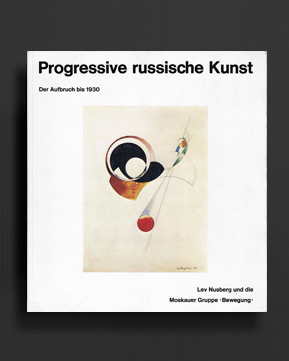
1973, German
Softcover, 162 pages, 23 x 25 cm
1st edition, Out of print title / used*,
Published by
Galerie Gmurzynska / Köln
$48.00 - Out of stock
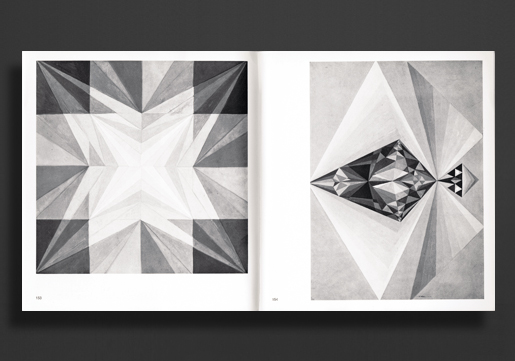
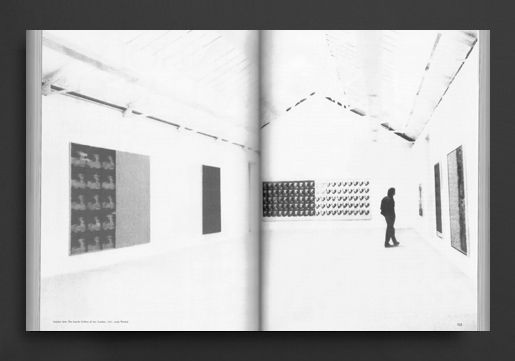
Published in 1973 by Galerie Gmurzynska in Cologne, this wonderful monographic catalogue is lavishly illustrated throughout with black and white and colour reproductions of many works (primarily painting and drawing) by Russian 20th Century artists with a portion of the book dedicated entirely to Lev Nusberg (b. 1937, Russian artist, architect and designer) and the Moscow art group "Bewegung" ("Movement"), a group of artists spearheading developments in kinetic art, founded in 1962. This group of artists permanently changed their forms of expression in an experimental manner and were known for provocative and non-systematic art works and actions.
Artists include Alexander Archipenko, Alexander Rodschenko, Alexander Rodtschenko, László Moholy-Nagy, Alexandra Exter, Alexej Jawlensky, Anatolij Krivcikov, Boris Diodorov, David Burlik, El Lissitzky, Francisco A. Infanté, Galerie Franz Schoen, Galina Georgievna Bitt, Georgij I. Lopakov, Gruppe Dvizenie, Issachar Ryback, Iwan Kljun, Iwan Kudriaschow, Iwan Puni, Juri Annenkow, Kasimir Malewitsch, Kugelbahnen, Lev Voldemarovich Nussberg, Ljubow Popowa, Marianna von Werefkin, Michail Larionow, Nadia Khodossievitch-Léger, Natalia Gontscharowa, Nathan Altmann, Naum Gabo, Nicolas Schöffers, Nikolay M. Suetin, Ossip Zadkin, Paul Mansouroff, Pavel Burdukov, Rimma Sapgir-Janevskaja, Serge Charchoune, Sonia Delaunay-Terk, Viktor V. Stephanov, Vladimir Akulinin, Vladimir P. Galkin, Vladimir Scerbakov, Wassily Kandinsky, Wladimir Tatlin...
2008, English
Softcover, 1st printing, 43 pages, 11 x 8.5"
Edition of 500,
Published by
2nd Cannons / Los Angeles
$30.00 $20.00 - Out of stock
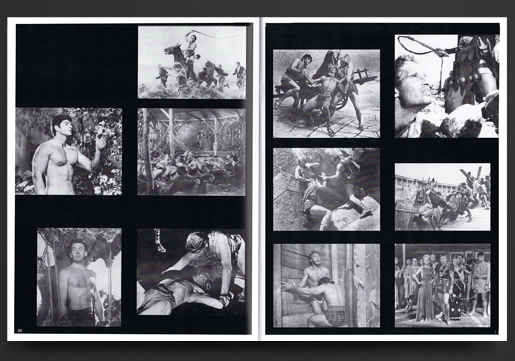
Selections from The Anatomy of Melancholy by Robert Burton telescopes 350 years, the period from the 1620s to the 1970s. It is what artist William E. Jones imagined Robert Burton’s The Anatomy of Melancholy would have looked like had it appeared in the pages of Drummer magazine. In preparing the book, Jones condensed Burton’s vast 450,000-word masterpiece of 17th Century English literature to a small fraction of its length, and paired the excerpts with vintage images of leather men at work and play. Robert Burton was fascinated by the variations of human sexuality, albeit more as an observer than as a participant. He wrote about sex in covert Latin passages that are newly translated in Jones’s book. Selections from The Anatomy of Melancholy by Robert Burton is a delightfully perverse condensation of Burton’s speculations on the sexual proclivities that subsequent generations of gay men put into exuberant practice.
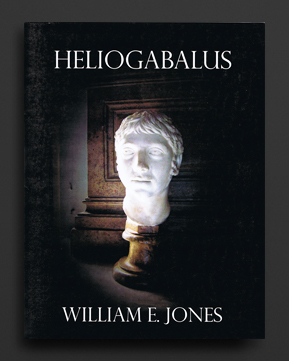
2009, English
Softcover, 43 pages, 21.5 x 28 cm
Edition of 500,
Published by
2nd Cannons / Los Angeles
$30.00 $20.00 - Out of stock
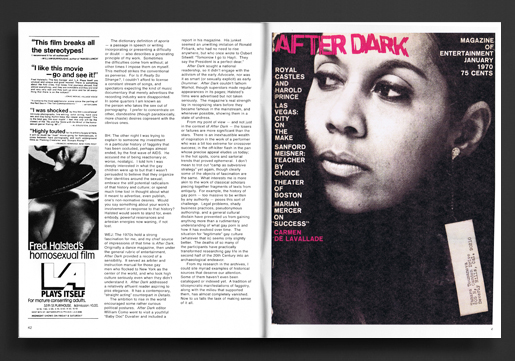
The third release in a series of books by William E. Jones, Heliogabalus pays tribute to the most decadent Roman Emperor. Who was this creature who called himself Elagabalus, after El Gabal, god of the sun? What to make of his addiction to luxury, his overbearing mother, his controversial genitals? Enlightening texts can be found in the latest 2nd Cannons publication. The book features accounts of Heliogabalus by Edward Gibbon, Herodian, Cassius Dio, and the spurious Aelius Lampridius. It also contains a contemporary text, “This Necrophilic Strategy Entails Some Risk,” a collaboration by Bruce Hainley and William E. Jones, previously published only in expurgated form, and now presented with all lurid details intact.
Varius Avitus Bassanius, later known in his infamy as Heliogabalus, ruled Rome from 218 to 222 of the Common Era. After he was murdered by the soldiers who had formerly supported him, his successor, Alexander Severus, ordered that all sculptures of Heliogabalus be desecrated. The iconoclasm directed against Heliogabalus was so nearly complete that very few portraits of him still exist. William E. Jones has somewhat opportunistically dealt with the paucity of images of this imperial person by inserting advertisements from a bygone era at intervals in Heliogabalus. These advertisements, and the book’s design in general, derive from the pages of that avatar of 1970s urban culture, After Dark.
2013, English / German
Hardcover, 192 pages
1st Edition, Out of print title / As New,
Published by
Ludwig Forum / Aachen
Walther König / Köln
$100.00 - Out of stock
The first major monographic catalogue surveying the art of Michael E. Smith (born Detroit 1977), published on occasion of the artist's solo exhibition at Ludwig Forum Aachen (April 21 - June 23 2013) and now out of print.
Besides essays by Brigitte Franzen, Alexander Koch, Simone Menegoi, Anna Sophia Schultz, and Chris Sharp, and an in-depth photographic survey of this major museum exhibition of Smith, the book also features a catalogue raisonné documenting Smith's work from 2007-2013.
Edited by Brigitte Franzen and Anna Sophia Schultz.
2017, English
Softcover, 72 pages, 17 x 24 cm
Published by
Art Against Art / Berlin
$18.00 - In stock -
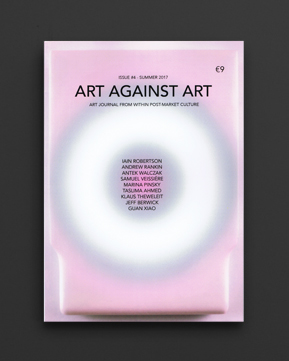
EDITORIAL
The art market is being kept alive with constant stimulus in the form of Venice-Basel-Kassel-Athens-Frieze-TEFAF. As the series of electric shocks continue, the art market is still in a period of reconfiguration trying to find longevity in the new. Whereas the art fair format inherently lacks culture – merely being a market place/forum for where exchange takes place – the biennial format has become too broad to create lasting cultural meaning; therefore the art market must look elsewhere for metrics of value. But if it only finds mirrors of its own logic (the free market itself), it will do nothing more than to accelerate the process upon which it has been organizing itself.
Definitions of culture have traditionally meant that the market can reflect on them too to prevent it from being flippant and volatile. The free market functions anchorless and incomprehensible without definitions – landmines of bubbles created without any meta signifier or even private collections and museums springing up that hang on the whim of the collector/personality/entrepreneur rather than frames of reference that create wider cultural value.
Contemporary art will only be able to reach the appreciation and longevity of modern art when...
CONTENTS
Editorial
Iain Robertson – What Drives the Value of Art?
Taslima Ahmed – Burning Man and the New Face of Art
Interview with Klaus Theweleit – No One Wins, It’s a War of Men - The Need for Cyborgs with Enhanced Human Potentials
Image Spread by Guan Xiao
Andrew Rankin – The Dangerous Art of Yukio Mishima
Antek Walczak – Boredom Year Point Oh
Image spread by Jeff Berwick
Samuel Veissière – Is the Self a Tulpa?
Artist edition by Marina Pinsky
1981, English
Softcover (staple-bound), 38 pages, 15 x 21 cm
1st Edition, Out of print title / Used*,
Published by
Brickburner Press / Queensland
$20.00 - Out of stock
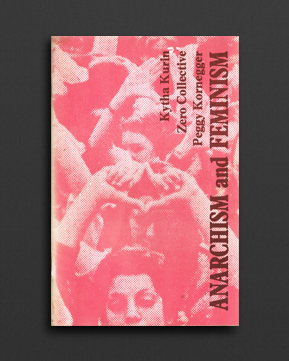
Three important essays from Anarchist-Feminists theorists/writers Peggy Kornegger, Zero Collective, and Kytha Kurin, dating 1975-1980, published in 1981 by Backburner Press in Australia.
Originally appearing in the Anarchist journals Second Wave, Zero and Open Road, this publication contains "Anarchism: The Feminist Connection" by Peggy Kornegger, "Anarchism/Feminism" by Zero Collective, and "Anarcha-Feminism: Why the Hyphen?" by Kytha Kurin.
1980, English
Softcover (staple-bound), 72 pages, 15 x 21 cm
1st Edition, Out of print title / Used*,
Published by
Dark Star / London
$35.00 - Out of stock
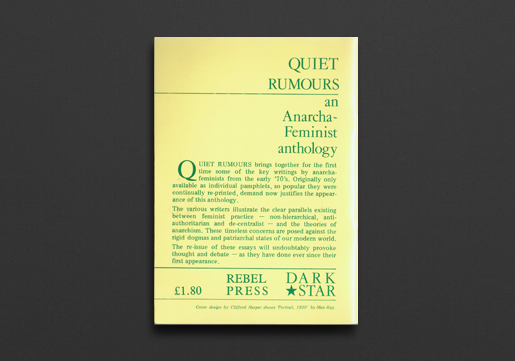
Feminist anthology 4 QUIET RUMOURS brings together for the first time some of the key writings by anarcha-feminists from the early ’70’s. Originally only available as individual pamphlets, so popular they were continually re-printed, demand now justifies the appearance of this anthology. The various writers illustrate the clear parallels existing between feminist practice ― non-hierarchical, anti- authoritarian and de-centralist ― and the theories of anarchism. These timeless concerns are posed against the rigid dogmas and patriarchal states of our modern world. The re-issue of these essays will undoubtably provoke thought and debate - as they have done ever since their first appearance.
Texts by Black Rose Anarcho-Feminists, Lynne Farrow, Peggy Kornegger, Marian Leighton, Voltairine de Cleyre, Carol Ehrlich.
1980, English
Softcover (staple-bound), 34 pages, 15 x 21 cm
1st Edition, Out of print title / Used*,
Published by
Brickburner Press / Queensland
$20.00 - Out of stock
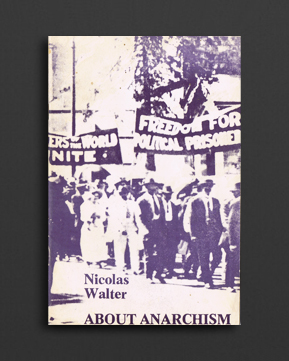
"This introduction to anarchism was first published in June 1969 as the hundredth issue of the monthly magazine Anarchy, and was immediately reprinted as a separate pamphlet. It was reprinted again in 1971, and it has also been translated into Danish, Dutch, French, German, Greek, Italian (twice), Japanese, Spanish (twice), and Yiddish (in Argentina). This new edition is unchanged except for the addition of this paragraph, of a new penultimate paragraph in the section on “The individual and society”, and of a new postscript at the end." - Brickburner Press, January 1977
1980 Australian reprint of Nicolas Walter's seminal essay "About Anarchism". Nicolas Hardy Walter was a British anarchist and atheist writer, speaker and activist. He was a member of the Committee of 100 and Spies for Peace, and wrote on topics of anarchism and humanism.
Contents: WHAT ANARCHISTS BELIEVE; HOW ANARCHISTS DIFFER; WHAT ANARCHISTS WANT; WHAT ANARCHISTS DO
1996, English
Softcover (staple-bound), 18 pages, 15 x 21 cm
1st Edition, Out of print title / Used*,
Published by
Free Labour / Brunswick
$15.00 - Out of stock
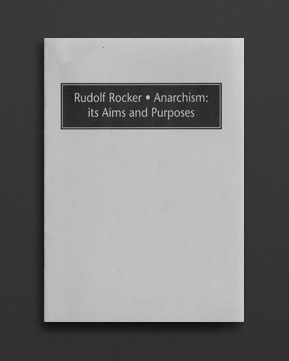
"I am an Anarchist not because I believe Anarchism is the final goal, but because there is no such thing as a final goal." - Rudolf Rocker
"Rudolf Rocker (1873 - 1958) was a German anarchist who was forced into exile in 1892. He settled in Britain in 1895 and, though himself not Jewish, was active in the Jewish movement until he was interned and later deported during World War 1. He was active back in Germany until the rise of Hitler forced him into exile again, and he spent the rest of his life in the USA. Anarchism: Its Aims and Purposes is the first chapter of Rudolf Rocker's libertarian classic Anarchosyndicalism, originally published in 1938 by Martin Secker and Warbug. Anarchosyndicalism has been reprinted several times since and appears in a revised and abridged version as Anarchism and Anarcho-Syndicalism. An attempt has been made within the text of this pamphlet to soften the gender-specific language, a product, apparently, of pre-feminist times. Where possible, the original text has been left unaltered. Where this has been impossible, substitute ”man," "his" or ”him" for the word appearing in the brackets to return to the original text."
Reprinted in 1996 by Brunswick's Free Labour Press, this
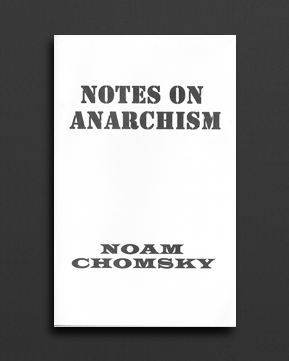
Softcover (staple-bound), 20 pages, 15 x 21 cm
1st Edition, Out of print title / Used*,
Published by
Jura Books / NSW
$15.00 - Out of stock
An undated Australian reprint of this seminal essay by American linguist, philosopher, cognitive scientist, historian, social critic, and political activist, Noam Chomsky, first published in the 1973 collection For Reasons Of State. Published by Sydney's Jura Books.
2013, English
Softcover, 304 pages, 24 × 17 cm
Published by
Hyphen Press / London
$55.00 $30.00 - Out of stock
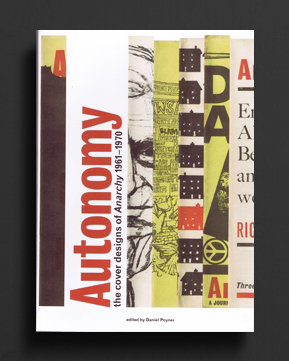
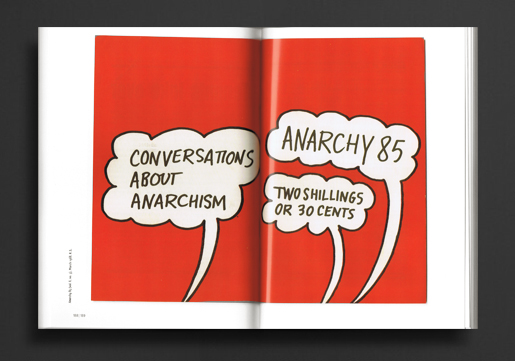
Anarchy was a journal of ideas published in London in the 1960s. Although its contributors were many and diverse, Anarchy was essentially the creation of one person, Colin Ward (1924–2010). With this journal, and throughout his work as a writer, editor, and activist, Ward proposed the idea that anarchist principles of mutual aid and autonomous organization outside a centralized state can be achieved here and now. This book gives attention for the first time to the covers of Anarchy, designed mostly by Rufus Segar. These little-known works provided the enticing entry to the plain text pages of the journal. The book reproduces all of the covers in a sequence that suggests, incidentally, something of the history of graphic design in Britain in those years. And it goes beyond the images, with an array of supporting texts that give a full picture of Anarchy and its context.
Contents
Daniel Poyner, Introduction
The covers of Anarchy
Raphael Samuel, ‘Utopian sociology’
Daniel Poyner, A conversation with Rufus Segar
Richard Hollis, ‘Anarchy and the 1960s’
Robin Kinross, An index to Anarchy
‘Autonomy’ doesn’t try to present Segar as some great innovator of graphic design. He wasn’t one and makes no claim to be. What the book sets out to do, and it succeeds magnificently without visual or verbal hyperbole, is to enrich and add nuance to our understanding of a 1960s graphic landscape we might think we know inside out by acquainting us with unfamiliar work that provided an important forward-thinking publication with its public face. Segar believed in the journal’s cause and 40 years later, he reports, he and his wife Sheila are still anarchists.
Rick Poynor, Creative Review, January 2013
2017, English / German
Softcover, 248 pages, 23 x 16.5 cm
Published by
Texte Zur Kunst / Berlin
$30.00 - Out of stock
The theme of this issue - The New New Left - is not entirely “new new,” as indeed it relates to the old anti-capitalist Left in its insistence on a theoretical analysis of capitalism and the price paid by many in such a system. But as the discourses and strategies long associated with the Left (workerism, identity politics, or the mode of the avant-gardist troll) have been adopted by anti-progressive outlets, it has become increasingly complex to locate a Left stance from which to effectively speak and act. This issue explores the affective mechanisms and media strategies – from the rise of viral content (memes) to the harvesting and right-wing politicization of emotions – that are producing our post-millennial, post-financial crisis, post-Brexit/Trump present.
Issue No. 106 / June 2017 "The New New Left“
Table Of Contents
Preface
Cultural Resources / Sabine Hark And Sighard Neckel In Conversation On Feelings Of Resentment And Revenge
Verena Dengler
Fake Left, Punch Right
Jaleh Mansoor
Unveiling And/Or Re-Masking / Notes On The Political Dialectics Of The Opacity Of The Sign
Seth Price
Wrong Seeing, Odd Thinking, Strange Action
Matt Goerzen
Notes Toward The Memes Of Production
Diedrich Diederichsen
The Tough Stuff / “Populism," "Political Correctness," And The Like
Simon Denny
Face The Market On Your Own
Klaus Walter
Liberté, Egalité, Beyoncé?
Dan Bodan
Europe, 2016-17 / Selected Status Updates Of Recent Months
Bildstrecke
Kayode Ojo
Become What You Fear
New Development
Ana Teixeira Pinto
Artwashing / Nrx And The Alt-Right
Rotation
Obsessive, Compulsive, Disorder / Johanna Burton On Douglas Crimp’s “Before Pictures”
Probing Attitudes / Philipp Ekardt On “Putting Rehearsals To The Test” (Buchmann, Lafer, Ruhm, Eds.)
In Experimenten Seine Vernunft Aufs Spiel Setzen / Stefan Römer Über Hans-Jörg Rheinberger, „Der Kupferstecher Und Der Philosoph. Albert Flocon Trifft Gaston Bachelard“
Reviews
Nachrichten Aus Der Ideologischen Antike / Georg Imdahl Über Wade Guyton Im Museum Brandhorst
Schwere Verspannungen Lösen / Eva Scharrer Über Nairy Baghramian Im S.M.A.K. In Gent
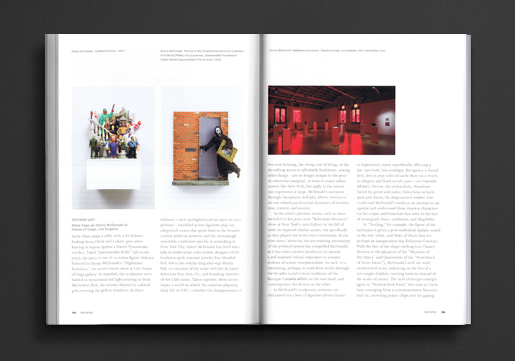
Deviant Art / Dena Yago On Danny Mcdonald At House Of Gaga, Los Angeles
Put Your Money Where Your Mouth Is / Tina Schulz Über Nora Schultz Bei Isabella Bortolozzi, Berlin
Reverse Cubism Als Betrachtungsirrtum / Gunter Reski Über Pieter Schoolwerth Bei Capitain Petzel, Berlin
Mad World / Steven Warwick On Liz Craft & Pentti Monkkonen At Liszt, Berlin
Public Viewing / Moritz Scheper Über Sadie Benning In Der Kunsthalle Basel
Eye In The Sky / Ilya Lipkin On Ned Vena At Societé, Berlin
Kritische Stoffe, Shoppinglust Und Andere Ambivalenzen / Ines Kleesattel Über Ines Doujak (Und John Barker) Im Württembergischen Kunstverein
In Einem Anderem Land / Christian Kravagna Über „The Color Line“ Im Musée Du Quai Branly, Paris
Mehr Epistemischer Ungehorsam! / Susanne Witzgall Über „Postwar: Kunst Zwischen Pazifik Und Atlantik 1945–1965“ Im Haus Der Kunst, München
With Or Without / Christian Philipp Müller On Yuji Agematsu At Miguel Abreu Gallery, Nyc
Kommunikation Ist Kein Objekt / Fiona Geuß Über Ian Wilson In Den Kw Institute For Contemporary Art, Berlin
Nachruf
Gustav Metzger (1926–2017): Ein Nachruf Von Sabine Breitwieser
Edition
Anne Imhof
Sean Landers
2016, English
Softcover, 302 pages, 13 x 19 cm
Published by
Dissect / Melbourne
$20.00 - Out of stock
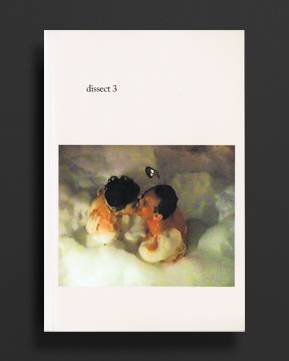
The cultural framework and biopolitics of capitalist globalisation has resulted in an increased concentration on the body as a site of production—in contemporary art as in life. Just as the historical avant-gardes sought to overcome art’s autonomous and isolated relationship to society by way of inviting in the ‘praxis of life’; so do contemporary artists whose focus is bodies and subjectivities. In an ever-emergent bio-economy, it is not just the body, but subjects and their lives that are crucial to value creation.
Contributors
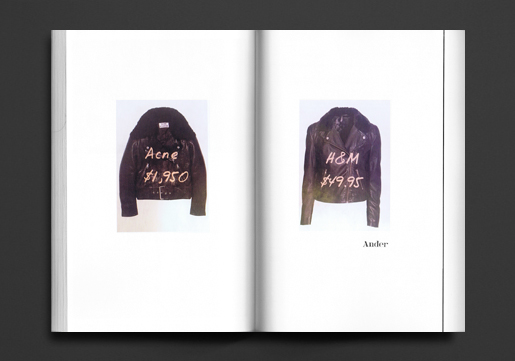
Philip Auslander, Dodie Bellamy, Eva Birch, Cristine Brache, Ramsay Burt, Travis Chamberlain, Amy Charlesworth, James Ferraro, Karen Finley, Andrea Fraser, Tim Gentles, Isabelle Graw, Amelia Groom, Aurelia Guo, K8 Hardy, Chris Kraus, Ruth O’Leary, Tanja Ostojic, Carol Que, Ander Rennick, Audrey Schmidt, Phebe Schmidt, Eleanor Ivory Weber, Katie West, Amelia Winata, Jarrod Zlatic
Designed by Clare Wohlnick
Edited by Audrey Schmidt, Chloe Sugden and Zoe Theodore
2013, English
Softcover (two-volumes in plastic jacket), 116 pages, 21.6 x 24.7 cm
Published by
Yale University Press / New Haven
$48.00 - Out of stock
The landmark Jewish Museum exhibition Primary Structures offered the first presentation of Minimalist sculptures in the United States, in 1966. The accompanying catalogue by Kynaston McShine became a key resource on artists such as Donald Judd, Carl Andre, Dan Flavin, and Sol LeWitt, who were virtually unknown at the time. Other Primary Structures is a long-overdue reintroduction of this classic, out-of-print text. This two-volume set includes a replica of the original catalogue, plus a new companion volume by Jens Hoffmann that offers a global survey of early Minimalist sculpture during the 1960s and 1970s, featuring important sculptors from Asia, Africa, Latin America, and Eastern Europe, and complementing the earlier catalogue's focus on American and British artists. Beautifully designed, this publication comes enclosed in a clear jacket that pays homage to the original catalogue's iconic cover. Other Primary Structures is invaluable for the study of modern art history and provides an authoritative survey of Minimalist sculpture in the 1960s.
Artists:
Carl Andre, Lyman Kipp, Tim Scott, Richard Van Buren, Isaac Witkin, Tony DeLap, Tom Doyle, Richard Artschwager, Michael Bolus, Paul Frazier, Douglas Huebler, John McCracken, Peter Phillips, Anne Truitt, Ronald Bladen, Robert Grosvenor, Donald Judd, Robert Morris, Larry Bell, Walter de Maria, Sol LeWitt, Daniel Gorski, David Gray, David Hall, Phillip King, John McCracken, Peter Pinchbeck, Michael Todd, Derrick Woodham, Rasheed Araeen, Sérgio Camargo, Willys de Castro, Saloua Raouda Choucair, Lygia Clark, Noemí Escandell, Gego, Stanislav Kolíbal, Edward Krasiński, David Lamelas, David Medalla, Hélio Oiticica, Lygia Pape, Alejandro Puente, Norberto Puzzolo, Branko Vlahović, Oscar Bony, Benni Efrat, Yoshida Katsurō, Stanislav Kolíbal, Susumu Koshimiz, Ivan Kožarić, David Lamelas, Amir Nour, Juan Pablo Renzi, Nobuo Sekine, Antonieta Sosa, Kishio Suga, Jirō Takamatsu, Lee Ufan
2016, English
Hardcover (w. dust jacket), 216 pages, 26 x 28 cm
Published by
Halsey Institute Contemporary Art / United States
$68.00 - Out of stock
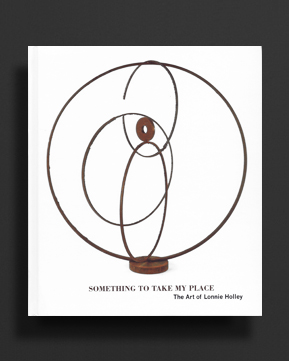
Lonnie Holley (born 1950), acclaimed by The New York Times as "the Insider's Outsider," is best known for his assemblage sculptures incorporating natural and man-made materials, often cast off or discarded; he has recently also begun to make music, through the Dust-to-Digital label. Legendary for his environmental assemblage that spread over two acres of his property in Birmingham, Alabama--now destroyed--Holley scavenges and repurposes found objects in the service of a personal philosophy of renewal and rejuvenation. This is the first monograph on Holley's work in more than a decade. Illustrated with reproductions of more than 70 of Holley's sculptures, it provides a comprehensive overview of Holley's art, life and philosophy, with essays by Mark Sloan, Leslie Umberger, Bernard L. Herman and an "as-told-to" autobiography recorded by noted oral historian Theodore Rosengarten.
2005, English
Softcover (w. French folds), 237 pages, 23 x 28 cm
1st Edition, Out of print title / used*,
Published by
University of California Press / Berkley
$50.00 - Out of stock
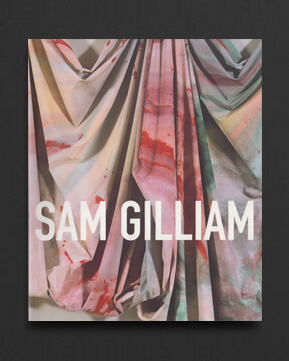
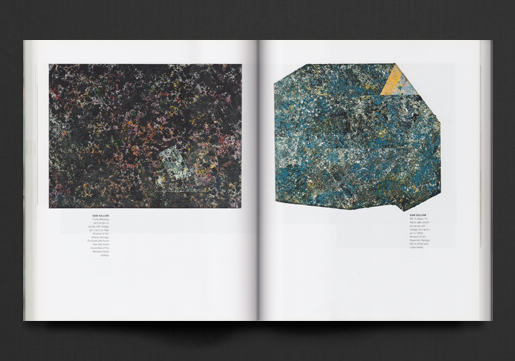
In 1968 Gilliam liberated his abstract expressionist canvases from their stretchers and suspended his "ecstatically" colorful paintings like banners or drapery, thus launching a remarkably vibrant career. Yet this is the first full-length book devoted to Gilliam, the best-known African American abstract painter, a much-needed volume produced in sync with a landmark traveling retrospective exhibition. Binstock, curator of contemporary art at the Corcoran Gallery in Washington, D.C., tracks the evolution of Gilliam's innovative techniques and unabashedly beautiful and often misunderstood work, from subtly layered and delicately atmospheric paintings resembling frost on glass and fossils in stone to more densely textured and earthier canvases; elaborately patterned, painted assemblages; and monochromatic paintings on wood. Binstock also sensitively chronicles the reception of Gilliam's work, including the criticism that Gilliam's abstractions don't overtly reflect African American life. Determined to follow his artistic vision and revel in his independence, Gilliam observes, and all art lovers will concur, that "art is at least as important as politics when it comes to creating new ways of thinking about society and moving it forward." Donna Seaman
Published in 2005, this monograph on the work of Sam Gilliam features texts by Jonathan P. Binstock, Walter Hopps, and Jacquelyn D. Serwer, alongside a chronology, exhibition list, bibliography and countless colour and black and white reproductions of Gilliam's work.
2005, Japanese
Softcover (w. dust jacket), 98 pages (w. fold-outs), 42 x 30 cm
1st Japanese edition, Out of print title / used*,
Published by
Pan-Exotica / Tokyo
$140.00 - Out of stock
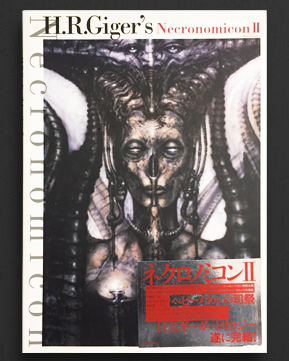
"The "Necronomicon" is a legendary magical book that is kept in inaccessible places only in a few, incompletely preserved specimens because it could have disastrous consequences if it fell into the wrong hands. It was written down around 730 AD in Yemen by the legendary Abdul Al Azred. It is said to tell of things and events that took place in the gray age, and illustrations of uncanny creatures lurking in the depths of the earth and the seas, one day destroying mankind and striking the world.
Al Azred's "Necronomicon" is a kind of museum of the most wonderful abominations and perversions. The well-known writer HP Lovecraft was the first to report in his "Cthulhu" mythology of this work. Many other science fiction and fantasy writers have quoted this fictional work time and again, but it has only become a visual reality in "HR Giger's Necronomicon"!"
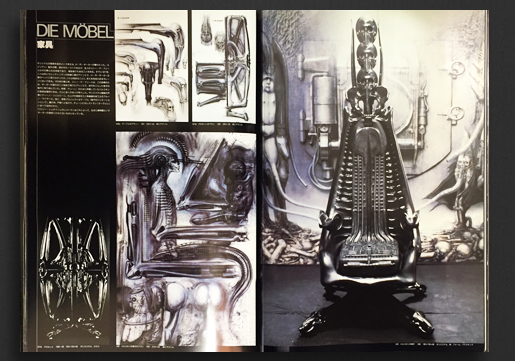
The second volume of this oversized and visually overwhelming collection takes us further through the incredible history of one of the most brilliant fantasy artists of the century. Reproducing Giger's award-winning work for the film ALIEN, his paintings, environments, sculptural works, his work for "The Tourist", collaborations with Blondie's Debbie Harry, his "New York City" series from the late 1970's and much more, all beautifully reproduced in full-colour and black and white, full-bleed spreads, including fold-out pages. Also includes interviews, texts, biography. These Giger folio books have become very desirable, collectable editions in their various printings around the world, the series encompassing the work of one of the world's most unique and influential visionaries.
Published first in 1985 in Europe, this is the first Japanese edition, published by Pan-Exotica.
1979, English
Softcover, 76 pages, 29.7 x 29.7 cm
2nd 1994 print, out of print title / used*,
Published by
Morpheus International / US
$65.00 - Out of stock
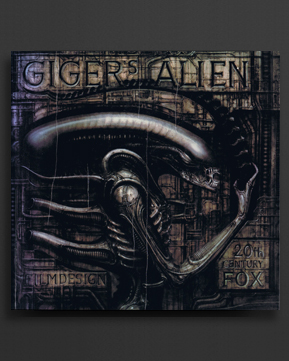
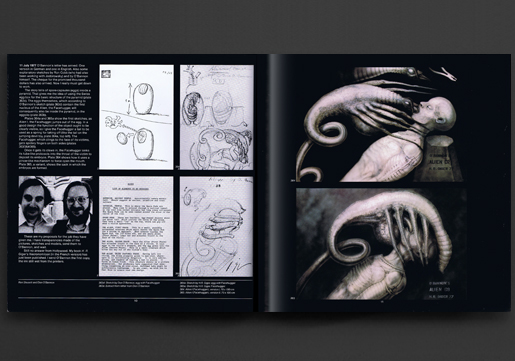
"Giger's Alien provides a complete record of the months and months of painstaking work that resulted in two hours of terrifying celluloid. Sketches, original paintings, photographs of scenery and the Alien under construction and scenes from the film are linked by Giger's detailed diary of his thoughts and actions at the time".
First published in 1979, here the Morpheus International second printing, "Giger's Alien" is a visually stunning and wonderfully insightful book for any fan of the art of H.R. Giger or in the production of science-fiction.
2002, English
Hardcover (w. dust jacket), 120 pages, 28.8 x 22.4 cm
1st edition, Out of print title / used*,
Published by
University of Washington Press / Washington
$20.00 - Out of stock
Stanislav Libensky and Jaroslava Brychtova have spent almost fifty years refining the art of casting large sculptures made of delicately colored glass. Their achievements have won them a place among the leading artists working in their medium. The Inner Light gives special prominence to the most recent work of this celebrated team. Libensky and Brychtova have mastered the complex technical and aesthetic demands of glass, using the material's unique properties to create works on a par with the best of modern sculpture. Their work uses changes in surface treatment, the dynamics of intersecting planes, and the presence of voids within the sculptures to control the way light is held, transmuted, and radiated in the presence of the observer. Robert Kehlmann places their aesthetic in the context of the Czech intellectual and artistic climate that played an important formative role in their development, with particular attention to the influence of Czech cubism. His essay takes a close look at their latest body of work, which utilizes monumental forms to probe issues relating to life, death, and the afterlife. Two interviews provide further insight into Libensky and Brychtova's creative process. Kehlmann's conversation with art historian Jiri Setlik, a close friend of the artists, gives a personal perspective on their work. Setlik is vice-director of the Academy of Arts, Architecture, and Design, Prague, and has written extensively about Libensky and Brychtova's work. A lively interview with the artists themselves provides yet a fuller sense of the collaborative process behind their luminous and mysterious sculptures. Robert Kehlmann is an artist and critic who lives and works in Berkeley, California. He has published widely on the subject of glass art and is the author of Twentieth Century Stained Glass: A New Definition. His own glass art has been featured in many exhibits and publications.
2007, English
Softcover, 21 x 28 cm, 320 pages
Published by
Primary Information / New York
$59.00 - In stock -
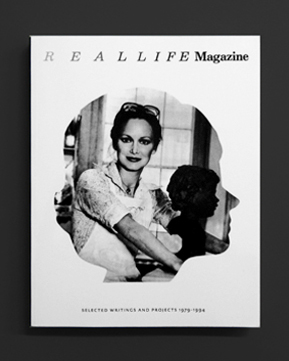
REAL LIFE Magazine: Selected Writings and Projects 1979-1994 highlights a selection of writings and artists' projects from REAL LIFE magazine, which was originally edited by artist, writer, and curator, Thomas Lawson and writer, Susan Morgan. Published in twenty-three issues from 1979-1994 as an intermittent black and white magazine, REAL LIFE featured artists and art historians writing on art, media and popular culture interspersed with pictorial contributions. The development of the magazine through its 15 year history, traces the influences, development and transitions of artists through the 80s.
The anthology features writings by and about Dara Birnbaum, Eric Bogosian, Rhys Chatham, Mark Dion, Jack Goldstein, Felix Gonzalez-Torres, Kim Gordon, Dan Graham, Thomas Lawson, Louise Lawler, Sherrie Levine, Allan McCollum, John Miller, Dave Muller, Matt Mullican, Adrian Piper, Richard Prince, David Robbins, Ed Ruscha, Cindy Sherman, Laurie Simmons, Michael Smith, John Stezaker, Bernard Tschumi, Jeff Wall, Lawrence Weiner, and James Welling among others.
Table of Contents:
Thomas Lawson and Susan Morgan: Various Histories of REAL LIFE Magazine
Matthew Higgs: REAL LIFE
Susan Morgan: an interview with Robert Moskowitz, 1979
Valentin Tatransky: Collage And The Problem Of Representation: Sherrie Levine's new work, 1979
Grahame Shane: Crime as Function, 1979
Susan Morgan: an interview with Steve Gianakos, 1979
Barbara Kruger: Game Show, 1979
James Welling: Untitled, 1979
Thomas Lawson: Every Picture Tells A Story Don't It? 1979
Thomas Lawson: Fashion Moda, 1980
Richard Prince: Primary Transfers, 1980
Dan Graham: The Destroyed Room of Jeff Wall, 1980
Kim Gordon: Trash Drugs And Male Bonding, 1980
Thomas Lawson: Going Places, 1980
Susan Morgan: Michael Hurson, 1980
Barbara Kruger: Devils With Red Dresses On, 1980
Thomas Lawson: Long Distance Information, 1980
Joseph Bishop: Desperate Character, 1980
Richard Prince: Menthol Pictures, 1980
Laurie Simmons: Sam and Dottie Dance, 1980
Jim Bradley: Radical Genitalia, 1980
Allan McCollum: Matt Mullican's World, 1980
Michael Smith: Mike In... What Should I Do About The Car? 1980
Sherrie Levine: Two Photographs After Walker Evans, 1980
Kim Gordon: Honeymoon Habit, 1980
Post-Modernism: a symposium, 1981
Dan Graham: BOWWOWWOW (the Age of Piracy), 1981
Howard Singerman: The Artist as Adolescent, 1981
Elsa Bulgari: Your Everyday Critic, 1981
Thomas Lawson: Too Good to be True, 1981
Jenny Bolande: Elk Grazed as if Nothing Had Happened, 1981
David Robbins: Notes toward film, 1981
Eric Bogosian: Fascination, 1981
Fulton Ryder: Pissing on Ice, 1981
Joan Wallace and Geralyn Donohue: Edit deAk, 1982
Rex Reason: Democratism, 1982
The Holy Ghost Writers: Condensation and Dish-Placement, 1982-3
Howard Singerman: Paragraphs toward an essay entitled 'Restoration Comedies', 1982-3
John Roberts: Ruins in the Realm of Thought, 1983
Paul McMahon: From The Permanent Collection, 1983
Jo Baer and Bruce Robbins: Beyond the Pale, 1983
Kathi Norklun: Courage, 1983
Tim Rollins: Particles, 1980-1983, 1983-4
Doug Ashford: Kiss of Death, 1983-4
Thomas Lawson: Komar & Melamid, 1983-4
Robin Winters: The Secret Agent: an interview with Jacki Ochs , 1983-4
Robert C. Morgan: a conversation with Lawrence Weiner , 1983-4
Judith Kirshner: A Blinding Light , 1983-4
Rex Reason: Brie Popcorn: an interview with the directors of Nature Morte Gallery, 1983-4
John Miller: Morality and the Poetic, 1984
Susan Morgan: Portraits of the Artists/Composite Drawings, 1984
B.P. Gutfreund: Four Photographs, 1984
Susan Morgan: Each and Every One of You, 1985
Mark Dion: Tales From The Dark Side, 1985
Jeff Wall: Dan Graham's Kammerspiel Parts I and II, 1985
Jana Sterbak: Premeditated: an interview with Ed Ruscha, 1985
Walter Robinson: The Quest For Failure, 1985-6
Derek Boshier: John Dugger, 1985-6
John A.Walker: Unholy Alliance: Chairman Mao, Andy Warhol, and the Saatchis, 1985-6
Kellie Jones: David Hammons, 1986
John Miller: Swiss Family Robbins, 1986
Adrian Piper: An Open Letter to Donald Kuspit, 1987-8
Susan Morgan: when X does not equal Y , 1987-8
Thomas Lawson: Critical Art Ensemble, 1988-9
Christine N. Lea: Beyond Belief, 1988-9
Felix Gonzalez-Torres: Untitled 1988: Detail of a Sculpture (Endless Copies), 1988-9
Thomas Lawson: No Bull, 1990
Allan McCollum: Photo from TV (with Paintings), 1990
Dara Birnbaum: The Wondering Of Context, 1990
James Welling: Corridors, 1989, 1990
Michael Smith and R. Sikoryak: Mike, 1990
Felix Gonzalez-Torres: Untitled, 1990
Judith Barry: Drive-In or Walk-In Museum, 1990
Group Material: AIDS Timeline, 1990
David Robbins: Three Cancelled TV Families, 1990
Louise Lawler: Untitled 1988, 1990
Susan Morgan: Carlos Gutierrez-Solana, 1994
Josef Strau and Stephan Dillemuth: Friesenwall 120, 1994
David A. Muller: Three Day Weekend, 1994
Spencer Finch: Amnesia And Saying Nothing, 1994
1995, English / German
Softcover, 48 pages, 21 x 26.5 cm
1st edition, Out of print title / Used*,
Published by
Salzburger Kunstverein / Salzburg
$190.00 - Out of stock
Very rare catalogue published on the occasion of David Hammons' solo European institutional exhibition "Been There and Back" at Salzburger Kunstverein, 4 August - 27 September 1995. Catalogue features colour documentation of the exhibition installation, plus individual works, alongside essays by Silvia Eiblmayr and Dawoud Bey.
2017, English
Softcover, 240 pages, 12 x 19 cm
Published by
KW Institute for Contemporary Art / Berlin
Uh Books / Amsterdam
$20.00 - Out of stock
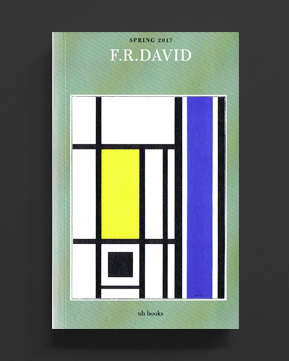
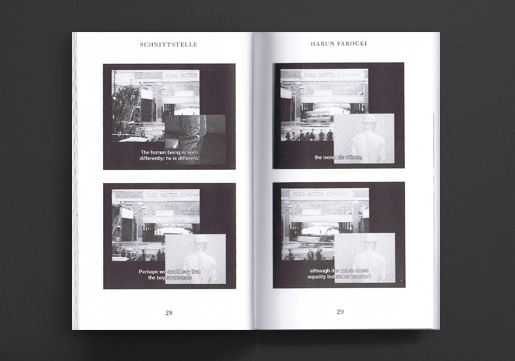
F.R.DAVID is a typographical journal, edited by Will Holder, dealing with the organisation of reading and writing in contemporary art practises. This 13th issue of F.R.DAVID is edited with Riet Wijnen, and has its origins in her Registry of Pseudonyms, an online database which accounts for who is who and why who is who. ‘Inverted Commas’ follows ‘pseudonym’ through names, naming, bodies, brains, self, author, other, reader, labour.
Includes: Michael Asher, Joan Didion, Harun Farocki, Sven Lütticken, Lucy Lippard, Barbara Guest, A.H. Nijhoff, Will Holder, Pauline Oliveros, and many more.
1st edition, Out of print title / used*
Hardcover, 34 pages, 15 x 15 cm
Published by
William Morrow and Co. / New York
$40.00 - Out of stock
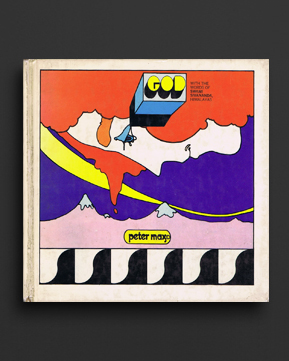
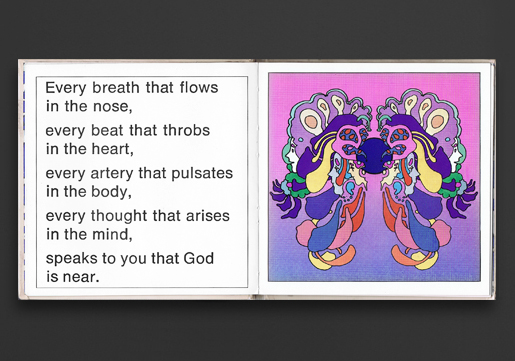
"God", published in 1970, from the iconic series of popular books illustrated by American graphic artist Peter Max with words of Swami Sivananda, Himalayas, who was a Hindu spiritual teacher and a proponent of Yoga and Vedanta. The 4 book series was made up of God/Thought/Peace/Love. Hardcover. First Edition.
"Peter Max (born Peter Max Finkelstein, October 19, 1937) is a German-born American illustrator and graphic artist, known for the use of psychedelic shapes and color palettes as well as spectra in his work. Max's art work was first identified as having been a popular part of the counter culture and psychedelic movements in graphic design during the late 1960s and early 1970s - works in this style appeared on posters and were seen on the walls of college dorms across America. In 1962, Max started a small Manhattan arts studio known as "The Daly & Max Studio," with friend Tom Daly. Daly and Max were joined by friend and mentor Don Rubbo, and the three worked as a group on books and advertising for which they received industry recognition. Much of their work incorporated antique photographic images as elements of collage. Max's interest in astronomy contributed to his self described "Cosmic '60s" period, which featured what became identified as psychedelic, counter culture imagery. Max's art was popularized nationally through TV commercials such as his 1968 "un cola" ad for the soft drink 7-UP. He is known for using bursts of color, often containing much or all of the visible spectrum. His work was both influenced by, as well as widely imitated by, others in the field of commercial illustration. Max then became fascinated with new printing techniques that allowed for four-color reproduction on product merchandise. In 1970, many of Max's products and posters were featured in the exhibition "The World of Peter Max," which opened at the M.H. de Young Memorial Museum in San Francisco. The United States Postal Service commissioned Max to create the 10-cent postage stamp to commemorate the Expo '74 World's Fair in Washington, and Max drew a colorful psychedelic scene with a "Cosmic Jumper" and a "Smiling Sage" against a backdrop of a cloud, sun rays and a ship at sea on the theme of "Preserve the Environment." Max's work has since been recognised through work with everyone from the 1994 World Cup, Yes, The World Series between the New York Yankees and Mets, and Taylor Swift."
1976, Japanese
Softcover (w. dust-jacket), 128 pages, 15 × 21cm
1st Edition, Out of print title / Used*,
Published by
PARCO / Tokyo
$140.00 - Out of stock
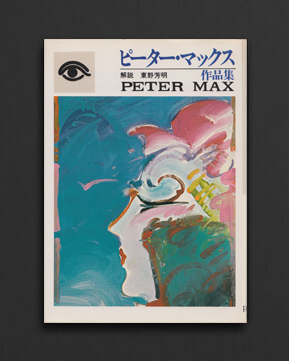
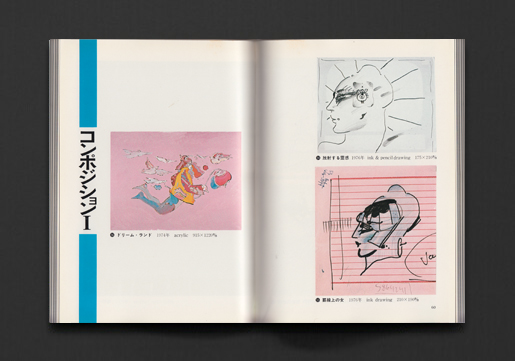
A strangely very scarce Peter Max book, published by PARCO in Tokyo, for a major exhibition held in Japan in 1976.
Spanning the 1960s-mid 1970s, this elegant publication is entirely made up of page after page of Max's vibrant paintings, sketches, prints and collages, so many of which have not been reproduced in any other book. The sketches in here are of particular interest. Many figurative studies, as well as flowers, fantastic landscapes and his famed "Cosmic Jumper", all in Max's distinct style. A modest, yet very generous and handsomely designed Japanese book on Max's iconic graphic and illustrative work.
"Peter Max (born Peter Max Finkelstein, October 19, 1937) is a German-born American illustrator and graphic artist, known for the use of psychedelic shapes and color palettes as well as spectra in his work. Max's art work was first identified as having been a popular part of the counter culture and psychedelic movements in graphic design during the late 1960s and early 1970s - works in this style appeared on posters and were seen on the walls of college dorms across America. In 1962, Max started a small Manhattan arts studio known as "The Daly & Max Studio," with friend Tom Daly. Daly and Max were joined by friend and mentor Don Rubbo, and the three worked as a group on books and advertising for which they received industry recognition. Much of their work incorporated antique photographic images as elements of collage. Max's interest in astronomy contributed to his self described "Cosmic '60s" period, which featured what became identified as psychedelic, counter culture imagery. Max's art was popularized nationally through TV commercials such as his 1968 "un cola" ad for the soft drink 7-UP. He is known for using bursts of color, often containing much or all of the visible spectrum. His work was both influenced by, as well as widely imitated by, others in the field of commercial illustration. Max then became fascinated with new printing techniques that allowed for four-color reproduction on product merchandise. In 1970, many of Max's products and posters were featured in the exhibition "The World of Peter Max," which opened at the M.H. de Young Memorial Museum in San Francisco. The United States Postal Service commissioned Max to create the 10-cent postage stamp to commemorate the Expo '74 World's Fair in Washington, and Max drew a colorful psychedelic scene with a "Cosmic Jumper" and a "Smiling Sage" against a backdrop of a cloud, sun rays and a ship at sea on the theme of "Preserve the Environment." Max's work has since been recognised through work with everyone from the 1994 World Cup, Yes, The World Series between the New York Yankees and Mets, and Taylor Swift."