World Food Books' programme is largely produced on Kulin Nation land. We acknowledge the Wurundjeri people of the Kulin Nation as the first and continuing custodians of this land, and pay respect to their Elders past, present, and emerging.
World Food Books is an arts and special interests bookshop in Naarm / Melbourne. Founded in 2010, World Food Books is devoted to the presentation of a rotating, hand-selection of international art, design, literary and counterculture publications with an emphasis on the anti-traditional, the experimental, the avant-garde, the heretic, the marginal.
Presenting new titles alongside rare and out-of-print books, catalogues and journals spanning the fields of modern and contemporary art, design, photography, illustration, film, literature, poetry, cultural theory, philosophy, sexuality, popular and underground culture in its many radical forms, World Food Books wishes to encourage adventurous, thoughtful and open-minded reading, looking, writing, and exchange of publishing and ideas, both current and historical.
As well as our bookshop, located in Melbourne's historical Nicholas Building, all of our inventory is available internationally via our online mail-order service.
World Food Books semi-regularly co-ordinates "Occasions", a programme of exhibits and events at the bookshop and in partnership with other hosts (such as museums and art galleries) that develop out of the activities, relationships and content of the bookshop itself.
World Food Books
The Nicholas Building
37 Swanston Street
Room 5, Level 6
Melbourne 3000
Australia
SHOP HOURS:
Thu–Fri 12–6, Sat 12–5
WEB-SHOP OPEN 24/7
World Food Books
Postal Address:
PO Box 435
Flinders Lane
Victoria 8009
Australia
Art
Theory / Essay
Architecture / Interior
Graphic Design / Typography
Photography
Fashion
Eros
LGBTQ+
Fiction / Poetry
Weird / Speculative / Science Fiction / Horror
Transgressive / Visceral / Abject
Symbolism / Decadence / Fin de siècle
Film / Video
Painting
Sculpture / Installation
Performance / Dance / Theater
Drawing
Sound / Music
Curatorial
Group Shows / Collections
Periodicals
Out-of-print / Rare
Posters / Ephemera / Discs
Signed Books
World Food Books Gift Voucher
World Food Book Bag
Australian Art
Australian Fiction
Australian Science Fiction / Speculative Fiction
Australian Poetry
Australian Photography
Japanese Photography
Conceptual Art
Minimal Art
Dada
'Pataphysics / Oulipo
Fluxus
Concrete Poetry
Pop Art
Surrealism
Arte Povera
Arte Informale / Haute Pâte / Tachism
Nouveau Réalisme / Zero / Kinetic
Situationism / Lettrism
Collage / Mail Art / Xerox Art
Art Brut / Folk / Visionary / Fantastic
Illustration / Graphic Art / Bandes Dessinées
Furniture
Italian Radical Design / Postmodernism
Textiles
Ceramics / Glass
Counterculture
Protest / Revolt
Philosophy
Psychoanalysis
Anthropology
Anarchism
Socialism / Anarchism / Communism / Capitalism
Literary Theory / Semiotics / Language
Feminism / Women's Studies
Gender Studies / Sexuality
Anthropology
Fetishism / BDSM
Drugs / Psychedelia
Crime / Violence
Animal Rights / Veganism
Occult / Esoterica
Ecology / Earth / Alternative Living
Whole Earth / Crafts
All prices in AUD (Australian dollars)
Pick-Ups
Pick-up orders can be collected in our bookshop during opening hours after order date. Please collect any Pick-up orders within 2 weeks of ordering as we have limited storage space. Orders will be released back into stock if not collected within this time. No refunds can be made for pick-ups left un-collected. If you cannot make it in to the bookshop in this time-frame, please choose postage option.
Return Policy
All sales are final. We do accept returns (for refund or exchange) for items received in error. All our orders are packed with special care using heavy-duty padding and cardboard book-mailers or bubble mailers (for smaller books), using reinforcement where required. We cannot take responsibility for any lost, stolen or damaged parcels.
Insurance
Should you wish to insure your package, please email us directly after placing your order and we can organise this at a small extra expense. Although all standard/express tracked packages are very safe and dependable, we cannot take responsibility for any lost, stolen or damaged parcels. We recommend insurance on valuable orders.
Interested in selling your old books, catalogues, journals, magazines, comics, fanzines, ephemera? We are always looking for interesting, unusual and out-of-print books to buy. We only buy books in our fields of interest and specialty, and that we feel we can resell.
We base these prices on desirability, market value, in-print prices, condition and our current stock levels. We offer cash, store credit, and can take stock on consignment. All
about 25% of the price we expect to get when we sell them, or 30% in store credit. We base these prices on desirability, market value, in-print prices, condition and our current stock levels.
Sell your books any day of the week. You can drop them off and return later. If you have a lot of books, we can visit your Sydney home.
We buy books that we feel we can resell. We offer about 25 % of the price we expect to get when we sell them, or 30% in store credit. We base these prices on desirability, market value, in-print prices, condition and our current stock levels.
Philadelphia Wireman
03 August - 01 September, 2018
World Food Books is proud to announce our next Occasion, the first presentation of sculptures by Philadelphia Wireman in Australia.
The Philadelphia Wireman sculptures were found abandoned in an alley off Philadelphia’s South Street on trash night in 1982. Their discovery in a rapidly-changing neighbourhood undergoing extensive renovation, compounded with the failure of all attempts to locate the artist, suggests that the works may have been discarded after the maker’s death. Dubbed the "Philadelphia Wireman" during the first exhibition of this work, in 1985, the maker’s name, age, ethnicity, and even gender remain uncertain. The entire collection totals approximately 1200 pieces, all intricately bound together with tightly-wound heavy-gauge wire (along with a few small, abstract marker drawings, reminiscent both of Mark Tobey and J.B. Murry). The dense construction of the work, despite a modest range of scale and materials, is singularly obsessive and disciplined in design: a wire armature or exoskeleton firmly binds a bricolage of found objects including plastic, glass, food packaging, umbrella parts, tape, rubber, batteries, pens, leather, reflectors, nuts and bolts, nails, foil, coins, toys, watches, eyeglasses, tools, and jewellery.
Heavy with associations—anthropomorphic, zoomorphic, and socio-cultural responses to wrapped detritus—the totemic sculptures by Philadelphia Wireman have been discussed in the context of work created to fulfil the shamanistic needs of alternative religions in American culture. Curators, collectors, and critics have variously compared certain pieces to sculpture from Classical antiquity, Native American medicine bundles, African-American memory jugs, and African fetish objects. Reflecting the artist’s prolific and incredibly focused scavenging impulse, and despite—or perhaps enhanced by—their anonymity, these enigmatic objects function as urban artefacts and arbiters of power, though their origin and purpose is unknown. Philadelphia Wireman, whatever their identity, possessed an astonishing ability to isolate and communicate the concepts of power and energy through the selection and transformation of ordinary materials. Over the course of the past two decades, this collection has come to be regarded as an important discovery in the field of self-taught art and vernacular art.
Presented in collaboration with Fleisher-Ollman Gallery, Philadelphia, and Robert Heald, Wellington.
Susan Te Kahurangi King
02 February - 10 March, 2018
Susan Te Kahurangi King (24 February 1951 - ) has been a confident and prolific artist since she was a young child, drawing with readily available materials - pencils, ballpoint pens and felt-tip markers, on whatever paper is at hand. Between the ages of four and six Susan slowly ceased verbal communication. Her grandparents William and Myrtle Murphy had developed a special bond with Susan so they took on caring responsibilities for extended periods. Myrtle began informally archiving her work, carefully collecting and storing the drawings and compiling scrapbooks. No drawing was insignificant; every scrap of paper was kept. The King family are now the custodians of a vast collection containing over 7000 individual works, from tiny scraps of paper through to 5 meter long rolls.
The scrapbooks and diaries reveal Myrtle to be a woman of great patience and compassion, seeking to understand a child who was not always behaving as expected. She encouraged Susan to be observant, to explore her environment and absorb all the sights and sounds. Myrtle would show Susan’s drawings to friends and people in her community that she had dealings with, such as shopkeepers and postal workers, but this was not simply a case of a grandmother’s bias. She recognised that Susan had developed a sophisticated and unique visual language and sincerely believed that her art deserved serious attention.
This was an unorthodox attitude for the time. To provide some context, Jean Dubuffet coined the term Art Brut in 1945 to describe work created by self-taught artists – specifically residents of psychiatric institutions and those he considered to be visionaries or eccentrics. In 1972 Roger Cardinal extended this concept by adopting the term Outsider Art to describe work made by non-academically trained artists operating outside of mainstream art networks through choice or circumstance. Susan was born in Te Aroha, New Zealand in 1951, far from the artistic hubs of Paris and London that Dubuffet and Cardinal operated in. That Myrtle fêted Susan as a self-taught artist who deserved to be taken seriously shows how progressive her attitudes were.
Susan’s parents Doug and Dawn were also progressive. Over the years they had consulted numerous health practitioners about Susan’s condition, as the medical establishment could not provide an explanation as to why she had lapsed into silence. Dawn educated herself in the field of homeopathy and went on to treat all twelve of her children using these principles – basing prescriptions on her observations of their physical, mental and emotional state.
Doug was a linguist with an interest in philosophy who devoted what little spare time he had to studying Maori language and culture. To some extent their willingness to explore the fringes of the mainstream made them outsiders too but it was their commitment to living with integrity and their respect for individuality that ensured Susan’s creativity was always encouraged.
Even though Susan’s family supported her artistic pursuits, some staff in schools and hospitals saw it as an impediment to her assimilation into the community and discouraged it in a variety of ways. Her family was not always aware of this and therefore did not fully understand why Susan stopped drawing in the early 1990s. However, rather than dwell on the challenges that Susan faced in pursuit of her artistic practice, they prefer to highlight her achievements. In 2008 Susan began drawing again in earnest, after an almost 20 year interruption, and her work is now shown in galleries around the world.
Susan grew up without television and has been heavily influenced by the comics she read as a child. She is absolutely fearless in the appropriation of recognizable characters, such as Donald Duck and Mickey Mouse, in her work. She twists their limbs, contorts their faces, compresses them together, blends them into complex patterned backgrounds - always imbuing them with an incredible energy. Although Susan often used pop culture characters in her work they are not naive or childlike. These are drawings by a brilliant self-taught artist who has been creating exceptional work for decades without an audience in mind.
Mladen Stilinović
"Various Works 1986 - 1999"
02 February 16 - September 10, 2016
Various works 1986 - 1999, from two houses, from the collections of John Nixon, Sue Cramer, Kerrie Poliness, Peter Haffenden and Phoebe Haffenden.
Including: Geometry of Cakes (various shelves), 1993; Poor People’s Law (black and white plate), 1993; White Absence (glasses, ruler, set square, silver spoon, silver ladel with skin photograph and wooden cubes), 1990-1996; Exploitation of the Dead (grey and red star painting, wooden painting, black spoon with red table, red plate), 1984-1990; Money and Zeros (zero tie, paintings made for friends in Australia (Sue, John, Kerrie), numbers painting), 1991-1992; Words - Slogans (various t-shirts) - “they talk about the death of art...help! someone is trying to kill me”, “my sweet little lamb”, “work is a disease - Karl Marx”; Various artist books, catalogues, monographs, videos; Poster from exhibition Insulting Anarchy; "Circular" Croatian - Australian edition; Artist book by Vlado Martek (Dostoyevsky); more.
Thanks to Mladen Stilinović and Branka Stipančić.
Jonathan Walker
Always Will Need To Wear Winter Shirt Blue + Ochre Small Check Pattern
21 August - 21 September, 2015
Untitled
I am not a great reader of poetry but I always return to the work of Melbourne poet, Vincent Buckley (1925- 1988). Perhaps I find his most tantalising piece to be not a finished poem but a fragment left on a scrap of paper discovered on his desk after the poet’s death.
The poetry gathers like oil
In the word-core, and spreads
It has its music meet,
Its music is in movement.
This fragment is more the shell left behind from a volatile thought than a finished poem. I find the last two lines honest but awkward whereas the first two lines work like an arrow. Most likely he could not find a resolution so it was left. Still, in its present form, it remains an eloquent testimony to the ultimate failure of a medium to express mobile thought and sensation, in Buckley’s case, through verbal language. It’s an important matter because this is something all artists have to deal with regardless of the medium.
I have never written a poem, however, I am forever copying fragments from books on paper scraps in a vain effort to fix certain notions in my head. At first, they function as bookmarks that are sometimes returned to when I open the book. But before long, as they accumulate, they fall out littering the table interspersed with A4 photocopies, bills, books and medications.
To return to Buckley’s fragment, the first two lines very much evoke how I paint nowadays. As you age, detail diminishes and patches of light become more luminous and float. I feel the most honest way of dealing with this is by smearing the oil paint on the canvas with the fingers and working close-up, blind. Only if the patches coalesce into an approaching image can the work gain a life.
-
Jonathan Walker was born in Melbourne, Australia and brought up on a dairy farm in Gippsland. In the 1970’s he studied painting at RMIT and won the Harold Wright Scholarship to the British Museum, London. During the 1980’s he exhibited at Pinacotheca Gallery, Richmond and had work shown at the NGV and Heidi City Art Gallery. Over the same period he designed the cover for the “Epigenesi” LP by Giancarlo Toniutti, Italy and conducted a mail exchange work with Achim Wollscheid, Germany. The work with artists through the post resulted in an article published in the bicentenary issue of Art and Australia 1988. He showed in artist run spaces such as WestSpace in the 90’s and 2000’s, and until 2012, taught painting at Victoria University, which is where we (Colleen Ahern and Lisa Radford) as organisers of the exhibition, among many others, had the privilege of being his student.
Walker’s knowledge was imparted to students through the careful selection of music, literature, and artists found in books that he himself had ordered for the library. Walker’s strategy was the generosity of sharing his vast knowledge with references specific to each student and their context.
Walker’s paintings share a similar focus and intimacy.
This exhibition presents a small selection of recent paintings alongside a publication that includes Walker’s writing. Observational and analytical, Walker’s work is a type of material notation — the time of day, colour and how it is blended, the both specific and fleeting location of a reflection on lino or the question of whether a chair leg should be included in a painting.
Please join us on Friday August 21 between 6-8pm to celebrate the opening of the exhibition.
Curated by Colleen Ahern and Lisa Radford.
B. Wurtz
Curated by Nic Tammens
March 26 - April 4, 2015
B.Wurtz works from a basement studio in his home on Manhattan’s Lower East Side.
This local fact is attested to by the plastic shopping bags and newsprint circulars that appear in his work. As formal objects, they don’t make loud claims about their origins but nonetheless transmit street addresses and places of business from the bottom of this long thin island. Like plenty of artists, Wurtz is affected by what is local and what is consumed. His work is underpinned by this ethic. It often speaks from a neighborhood or reads like the contents of a hamper:
“BLACK PLUMS $1.29 lb.”
“Food Bazaar”
“USDA Whole Pork Shoulder Picnic 99c lb.”
“RITE AID Pharmacy, with us it’s personal.”
“H. Brickman & Sons.”
“Sweet Yams 59c lb."
Most of the work in this exhibition was made while the artist was in residence at Dieu Donne, a workshop dedicated to paper craft in Midtown. Here Wurtz fabricated assemblages with paper and objects that are relatively lightweight, with the intention that they would be easily transportable to Australia. This consideration isn’t absolute in Wurtz’s work, but was prescriptive for making the current exhibition light and cheap. Packed in two boxes, these works were sent from a USPS post office on the Lower East Side and delivered to North Melbourne by Australia Post.
Wurtz appears courtesy of Metro Pictures, New York.
Thanks to Rob Halverson, Joshua Petherick, Sari de Mallory, Matt Hinkley, Helen Johnson, Fayen d'Evie, Ask Kilmartin, Lisa Radon, Ellena Savage, Yale Union, and "Elizabeth".
John Nixon
"Archive"
December 15 - January 20, 2014
The presentation of John Nixon's archive offered a rare showcase of this extensive collection of the artist's own publications, catalogues, posters, ephemera, editions and more, from the mid 1980s onwards, alongside a selection of his artworks.
Organized by John Nixon, Joshua Petherick and Matt Hinkley.
<a href=http://wfb.public-office.info/artist/john-nixon>All titles by John Nixon
"Habitat"
at Minerva, Sydney (organised by Joshua Petherick and Matt Hinkley)
November 15 - December 20, 2014
Lupo Borgonovo, Janet Burchill & Jennifer McCamley,
Lewis Fidock, HR Giger, Piero Gilardi, Veit Laurent Kurz,
Cinzia Ruggeri, Michael E. Smith, Lucie Stahl, Daniel Weil, Wols
Press Release:
“...It contained seven objects. The slender fluted bone, surely formed for flight, surely from the wing of some large bird. Three archaic circuitboards, faced with mazes of gold. A smooth white sphere of baked clay. An age-blackened fragment of lace. A fingerlength segment of what she assumed was bone from a human wrist, grayish white, inset smoothly with the silicon shaft of a small instrument that must once have ridden flush with the surface of the skin - but the thing’s face was seared and blackened.”
William Gibson, “Count Zero”, 1986
"Autumn Projects Archive"
Curated by Liza Vasiliou
March 6 - March 15, 2014
World Food Books, in conjunction with the Virgin Australia Melbourne Fashion Festival 2014, presented the Autumn Projects archive, consisting of a selection of early examples in Australian fashion with a particular interest in collecting designers and labels from the period beginning in the 1980’s, who significantly influenced the discourse of Australian Fashion.
Curated by Liza Vasiliou, the exhibition provided a unique opportunity to view pieces by designers Anthea Crawford, Barbara Vandenberg, Geoff Liddell and labels CR Australia, Covers, Jag along with early experimental collage pieces by Prue Acton and Sally Browne’s ‘Fragments’ collection, suspended throughout the functioning World Food Books shop in Melbourne.
H.B. Peace
presented by CENTRE FOR STYLE
November 14, 2013
"Hey Blinky, you say chic, I say same"
Anon 2013
H.B. Peace is a clothing collaboration between great friends Blake Barns and Hugh Egan Westland. Their pieces explore the divergences between 'character’ and ‘personality’ in garments....etc
Special Thanks to Joshua Petherick and Matt Hinkley of WFB and Gillian Mears
and a Very Special Thank you to Audrey Thomas Hayes for her shoe collaboration.
Janet Burchill & Jennifer McCamley
"Aesthetic Suicide"
May 10 - June 8, 2013
The first of our occasional exhibitions in the World Food Books office/shop space in Melbourne, "Aesthetic Suicide" presented a body of new and older works together by artists Janet Burchill & Jennifer McCamley, including videos, prints, a wall work, and publications.
During shop open hours videos played every hour, on the hour.
2017, English
Softcover, 248 pages, 15 x 22 cm
Published by
Sternberg Press / Berlin
$64.00 $15.00 - Out of stock
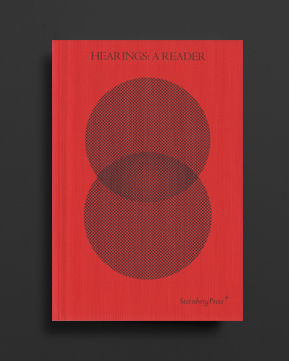
Edited by Natasha Ginwala
The Contour Biennale 8, “Polyphonic Worlds: Justice as Medium,” curated by Natasha Ginwala, brings together twenty-five international and local artists and art collectives working in lens-based media, sound, performance, drawing, and installation, to address questions related to the nation-state system and the realm of justice today. Taking place in Mechelen, Belgium, “Polyphonic Worlds” embraces the communal spirit of the biennale by including the many-sided voices that assemble in collective formations as well as discrete, individual creative positions.
This reader proposes a series of beginnings—it is a polyphonic approach that borrows from juridical and musical spheres. Launched as the online journal of the biennial, Hearings pairs texts or image-based contributions, allowing for a sense of tension and affinity to develop in the feedback loop of the two voices. Relationships around the artwork as site of evidence and testimony are thus reoriented. The multidimensional readings are not restricted to the active apparatus of law and discipline, but instead seek to unravel the synchronies of our times—the mesh of injustice in our midst.
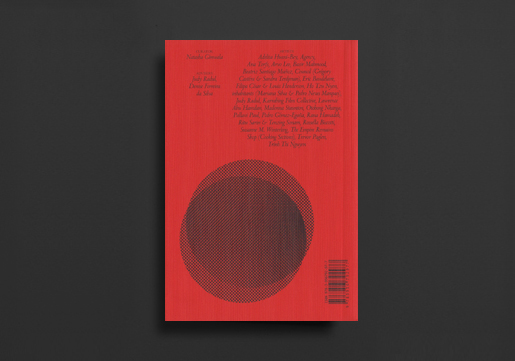
Featuring texts and illustrated contributions by Agency, Lawrence Abu Hamdan, Eric Baudelaire, Rossella Biscotti, Hunter Braithwaite and Trevor Paglen, Filipa César, Cooking Sections, Council, T. J. Demos, Denise Ferreira da Silva, Pedro Gómez-Egaña, Rana Hamadeh, Louis Henderson, Adelita Husni-Bey, Ho Tzu Nyen, inhabitants, Arvo Leo, Sven Lütticken, Basir Mahmood, Samuel Mareel, Dirk de Meyer, Otobong Nkanga, Pallavi Paul and Anish Ahluwalia, Elizabeth A. Povinelli, Judy Radul, Beatriz Santiago Muñoz, Ritu Sarin and Tenzing Sonam, Madonna Staunton, Ana Torfs, Trinh Thi Nguyen, Susanne M. Winterling and Gayatri Chakravorty Spivak, and Ghassan Zaqtan.
Copublished with Contour Biennale on the occasion of Contour Biennale 8: “Polyphonic Worlds: Justice as Medium” (March 11–May 21, 2017).
Design by Studio Remco van Bladel
2017, English
Softcover, 154 pages, 12 x 18.5 cm
Published by
Sternberg Press / Berlin
$35.00 - Out of stock
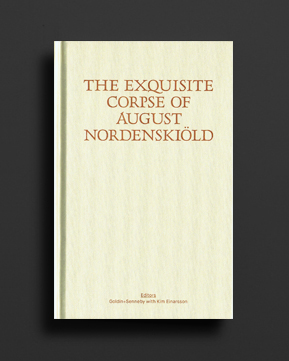
Edited by Goldin+Senneby with Kim Einarsson
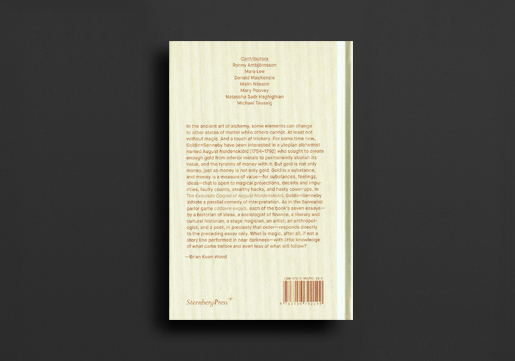
Contributions by Ronny Ambjörnsson, Mara Lee, Donald MacKenzie, Malin Nilsson, Mary Poovey, Natascha Sadr Haghighian, Michael Taussig
“Off now, little paper, around the world, and destroy the tyranny of money, so that gold, silver and precious stones may one day cease to be the idols and tyrants of the world!”
—August Nordenskiöld, 1787
In the ancient art of alchemy, some elements can change to other states of matter while others cannot. At least not without magic. And a touch of trickery. For some time now, Goldin+Senneby have been interested in a utopian alchemist named August Nordenskiöld (1754–1792) who sought to create enough gold from inferior metals to permanently abolish its value, and the tyranny of money with it. But gold is not only money, just as money is not only gold. Gold is a substance, and money is a measure of value—for substances, feelings, ideas—that is open to magical projections, deceits and impurities, faulty counts, stealthy hacks, and hasty cover-ups. In The Exquisite Corpse of August Nordenskiöld, Goldin+Senneby initiate a parallel comedy of interpretation. As in the surrealist parlor game cadavre exquis, each of the book’s seven essays—by a historian of ideas, a sociologist of finance, a literary and cultural historian, a stage magician, an artist, an anthropologist, and a poet, in precisely that order—responds directly to the preceding essay only. What is magic, after all, if not a story line performed in near darkness—with little knowledge of what came before and even less of what will follow?
—Brian Kuan Wood
Design by Johan Hjerpe
1984, English
Hardcover, 48 pages, 23 x 19 cm
1st UK edition, Out of print title / used*,
Published by
Souvenir Press / London
$40.00 - Out of stock
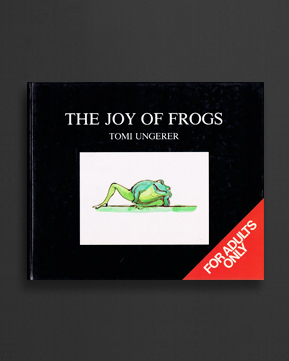
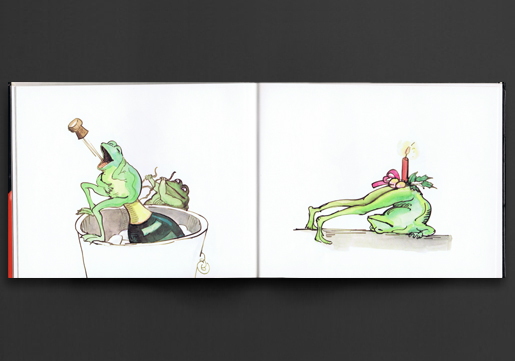
1st UK hardback edition of this wonderful collection of Tomi Ungerer's provocative frog watercolours from the early 1980's. The amphibious "Joy of Sex", this fabulous collection of frog erotica is one of Ungerer's incredible adult books, sitting alongside such classics as The Party (1966), Fornicon (1969) and Tomi Ungerer's Compromises (1970), Totempole (1976), amongst many others.
Tomi Ungerer (born 28 November 1931) is an award winning French illustrator and a writer in three languages. He has published over 140 books ranging from much loved children's books to controversial adult work and from the fantastic to the autobiographical. He is known for sharp social satire and witty aphorisms. He is renowned for his iconic Advertising campaigns and political posters against the Vietnam War and Racial Injustice which were representative of the burgeoning political consciousness in New York in the 1960’s. His political engagement has continued to this day in campaigns against Racism and Fascism, for Nuclear disarmament, Ecology and numerous Humanitarian causes.
2007, French
Hardcover (cloth), 296 pages (colour & b/w ill.), 250 x 310 mm
1st edition, Out of print title / As New,
Published by
HYX / France
$150.00 - Out of stock
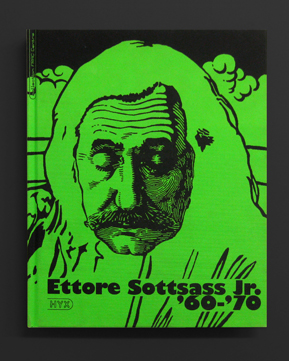
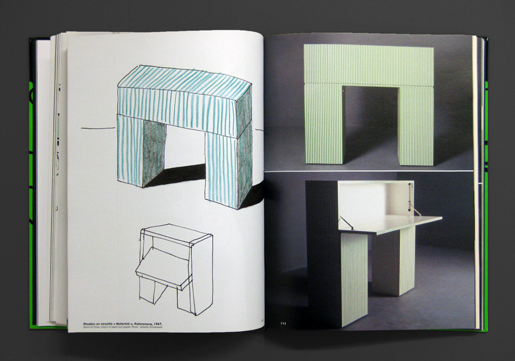
Gorgeous, out of print, huge book on the early work of Italian designer Ettore Sottsass. Drawing in part on the FRAC Centre collection, this book gathers together unique works and projects of Ettore Sottsass – drawings, furniture, objects, ceramics, jewellery, photographs, written works and architecture – wherein over a period of time Sottsass frees himself from the principles of functionalism and rationalism and moves towards the development of a new sensorial language. This heavy book lavishly illustrates the large body of experimental and commercial work Sottsass had produced that lead the way to his founding the Memphis Group in Italy, 1981.
Overflowing with beautifully reproduced full-page colour images and containing minimal French text, this deluxe cloth-bound publication allows for an fascinating insight into one of the most important designers of the 20th century.
2010, English
Softcover, 16 pages, 15.3 x 21 cm
Published by
Ludwig Museum / Cologne
Walther König / Köln
$19.00 - Out of stock
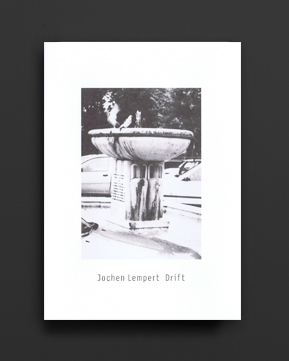
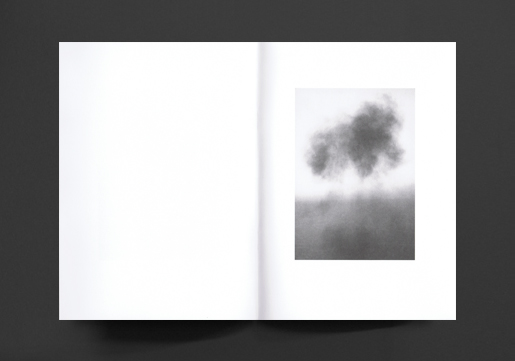
Jochen Lempert works with the expertise of a trained biologist, the eye of a photographer and the technique of a scientist.
His photography examines the friction between nature and culture, specifically the relationship between humans and animals: how mankind interprets animals anthropomorphically or uses them industrially, and how animals conquer new niches within urban spaces, unnoticed by their human neighbours.
In his earlier works he collected, archived and arranged the motifs in large groups, stimulating comparative viewing and throwing open multiple associative references.
Lempert’s latest groups of work focus more on formations, patterns, structures, conveying the aleatory potency of flocks of birds, water structures and cloud formations.
Published to accompany the exhibition at Museum Ludwig, Cologne in 2010.
2017, English / German
Softcover, 272 pages + DVD, 23 x 17 cm
Published by
Walther König / Köln
$45.00 - Out of stock
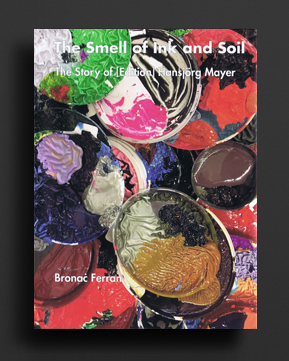
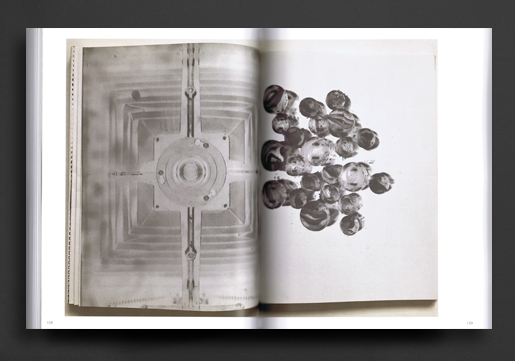
This is a long-awaited account of the work of the great publisher and designer Hansjörg Mayer in the fields of concrete poetry, typography, artist’s publications and ethnographic books over six decades. It includes the first bibliography of his works.
Identified as a print prodigy by Max Bense in the late 1950s, Mayers unique expertise and virtuosity with print technologies of the time allowed for the casting of works in various experimental formats which stretched, fragmented and expanded the concept of the poem.
He combined an interest in chance and randomness with a mathematically precise attention to use of graphic space, which makes his works now seem anticipatory of networked systems whilst holding a more modernist purity of form. His works made seminal explorations into the possibilities of concrete and computational convergence.
Mayer had a retrospective exhibition at Haags Gemeentemuseum in 1968 at the young age of 25. After this he concentrated on making experimental publications with artists.
Through his edition hansjörg mayer he issued publications of Dieter Roth, Richard Hamilton, Tom Phillips, André Thomkins and Emmett Williams.
From the late 1970s he also began to research, collect and publish an extraordinary series of books about vanishing cultures.
English and German text.
2017, English
Softcover, 32 pages, 20 x 27
Published by
Ludwig Museum / Cologne
Walther König / Köln
$18.00 - Out of stock
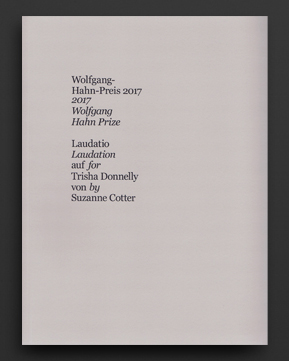
Catalogue published on the occasion of Trisha Donnelly's 2017 solo exhibition at Cologne's Ludwig Museum (organised by Suzanne Cotter) and her award of the Wolfgang-Hahn-Preis.
Trisha Donnelly was born in 1974 in San Francisco, California. She completed the Bachelor of Fine Arts at the University of California in 1995 and the Master of Fine Arts at the Yale University School of Art in 2000. Since 1999, she has participated in exhibitions, having held several institutional exhibitions at Villa Serralves in Porto (2016), the Serpentine Gallery in London (2014), the San Francisco Museum of Modern Art (2013), Portico, Frankfurt (2010), the Museo d'Arte Moderna di Bologna (2009), the Renaissance Society of the University of Chicago and the Institute of Contemporary Art in Philadelphia (both in 2008), the Modern Art Oxford (2007) 2005). In the last ten years, she has appeared in numerous group exhibitions, including at the 54th and 55th Venice Biennale (2011 and 2013), at dOCUMENTA (13) (2012), in The Quick and the Dead at the Walker Art Center (2009) and Il Tempo del Postino (2007 in Manchester, 2009 in Basel). In Germany, Donnelly had her first institutional solo exhibition in 2005 at the Kölnischer Kunstverein within the framework of the Central Art Prize awarded to her in 2004. In 2015 the Julia Stoschek Collection showed Trisha Donnelly's work as an exhibition number ten. Early exhibitions took place, among others, at her Galerie Air de Paris in Paris, Galerie Eva Presenhuber, Zurich, and Casey Kaplan in New York. There she caught the eye in 2002 with her performance, When she dressed as a messenger of Napoleon on a horse, she rode before Casey Kaplan's gallery and read a mysterious message. An action that was repeated in the Cologne Kunstverein in 2005, in that a black horse was supposed to have been guided through the exhibition hall - an event whose facticity the artist likes to leave open.
This play with the unknown and the production of situations in which the viewer is completely thrown back to his own individual perception without a reference frame may be one of the most important features of Trisha Donnelly's work. An approach to their partly also immaterial work can ultimately only happen if one encounters them. Donnelly's avoidance of the public, explanatory texts, or title-bearing titles points to a strategy that is not oriented towards events and spectacles. It is rather the inexplicable, rumorous experiences or experiences that Donnelly tries to make experience in her works. In an interview with Cathrin Lorch in 2005 (Kunstbulletin, September, 2005), Donnelly once mentioned that they are trying to condense things. Each piece of work was created in an attempt to search for patterns that created a "mental sculpture". In addition to the already mentioned Central Art Prize, Donnelly received the Rob Pruitt's Art Award, the Prix de la Fondation Luma in Arles in 2010, the 10th Prize of the Sharjah Biennial in 2011 and the International Faber-Castell Prize for Drawing in 2012. In 2011 she was among the finalists for the Hugo Boss Prize 2012, awarded by the Solomon R. Guggenheim Foundation. In addition to the already mentioned Central Art Prize, Donnelly received the Rob Pruitt's Art Award, the Prix de la Fondation Luma in Arles in 2010, the 10th Prize of the Sharjah Biennial in 2011 and the International Faber-Castell Prize for Drawing in 2012. In 2011 she was among the finalists for the Hugo Boss Prize 2012, awarded by the Solomon R. Guggenheim Foundation. In addition to the already mentioned Central Art Prize, Donnelly received the Rob Pruitt's Art Award, the Prix de la Fondation Luma in Arles in 2010, the 10th Prize of the Sharjah Biennial in 2011 and the International Faber-Castell Prize for Drawing in 2012. In 2011 she was among the finalists for the Hugo Boss Prize 2012, awarded by the Solomon R. Guggenheim Foundation.
2017, English
Softcover, 80 pages, 20.4 x 30.4 cm
Published by
Walther König / Köln
$38.00 - Out of stock
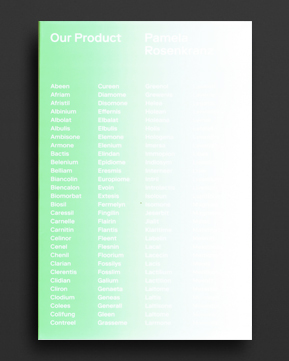
Neotene, Silicone, Evian, Viagra, Bionin, and Necrion, among others, are the materials from which Pamela Rosenkranz’s work is made of. We’re arguably more familiar with the esoteric promises with which some of these products are imbued than we are with the material substances which make them up. Yet the apparently pure and timeless aesthetic qualities they deliver have a biological basis. The immersive installation Pamela Rosenkranz has created for the Swiss Pavilion activates the knowledge mobilized in the technological, scientific, and conceptual development of products, subverting the culturally consolidated meanings of art. By guiding our perception of the Pavilion through a skilful interplay of supposedly immaterial elements such as light, colour, scent, sound and organic components such as hormones and even bacteria, Rosenkranz confronts the historically, religiously, and commercially transmitted image of what it means to be human with its biological genesis.
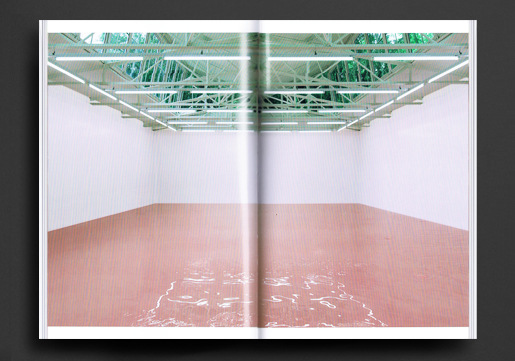
Rosenkranz isolates the large interior space with plastics, filling it with a monochrome liquid mass matching a standardised northern European skin-tone. This Eurocentric skin colour, reminiscent of the «carnate» used in Renaissance painting to render the visual qualities of human flesh, is employed in today’s advertising industry as a proven way to physically enhance attention. Rosenkranz contrasts this skin colour—the product of a natural history involving migration, exposure to the sun, and nutrition—with a verdant green coating the institutional mantle of the Swiss Pavilion. Whereas the artificial green light in the patio blurs the distinction between inside and outside, a special wall paint that is biologically attractive further dissolves the clean separation between culture and nature. Smells and sound penetrate the architecture. The synthetic sound of water, generated by an algorithm in real time, disseminates throughout the space, and a scent evoking the smell of fresh baby skin billows through the Pavilion. Invading all of our senses, this installation appropriates immemorial aesthetic reflexes that both art and commercial culture rely on, but renders them cognitively disturbing. As in a placebo effect, it’s hard to know here whether our physiological responses are triggered by imagination alone or if the effects we’re experiencing are the hallucinatory product of our bodies and their natural/cultural histories: “Our Product”.
Curated by Susanne Pfeffer
This publication is a thorough document to accompany this new work. Published in 2017 with text by Susanne Pfeffer.
2014, English / German
Softcover, 80 pages, 31 cm x 24 cm
Published by
Walther König / Köln
$27.00 - Out of stock
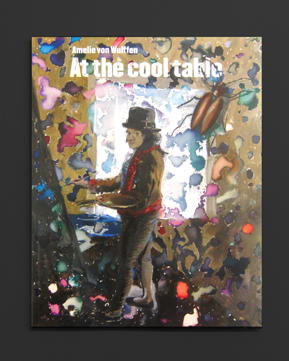
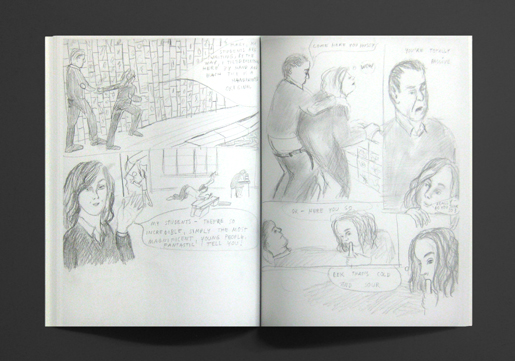
Her most recent comic seemingly depicts Amelie von Wulffen's own life. It stands in for a parody of the contemporary, female, mid-career artist. The different chapters of the comic show humorous as well as macabre glimpses of frustration, fear, insecurity, and jealousy, offering a psychological tour de force through the life of an artist working today.
Seemingly banal worries such as no one turning up to her exhibition opening, the young generation not appreciating her work, having a poor internet presence, or being seated at the wrong table during dinner, are realities that seem to have an entirely different weight in the art world than anywhere else.
Published on the occasion of the exhibition, Amelie von Wulffen – Am kühlen Tisch at Porticus (30 November 2013 – 2 February 2014) and La voix humaine at Kunstverein München e.V. (25 January – 16 March 2014).
1987, English
Hardcover (w. dust jacket), 168 pages, 24 x 25 cm
1st edition, Out of print title / used*,
Published by
Trefoil / London
$35.00 - Out of stock
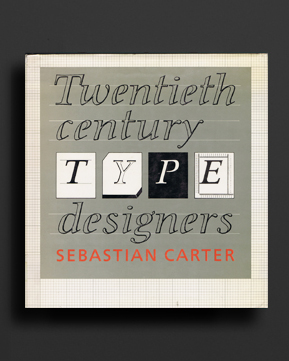
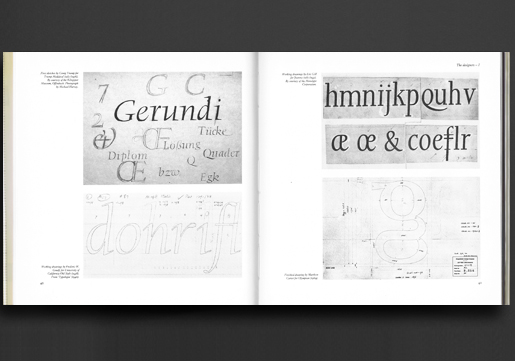
First edition of this reference compilation of biographies of the most famous type designers of the 20th century. A must for every type book collection.
Since its first publication in 1987, Twentieth Century Type Designers has become a standard reference work for typographers, designers and students alike.
This book serves as an introduction to the concept of typefaces and to some of the personalities who have created them--Goudy, Rogers, Koch, Gill, Morison, Van Krimpen, Trump, Tschichold, Frutiger, Zapf and others--and places them in the context of the enormous changes that have occurred in typography.
The introduction in the 1880s of the Linotype and Monotype hot-metal composing machines, and in particular the Benton pantographic punchcutter, revolutionized the manufacture of type, and caused a flood of new typefaces. More recently, filmsetting and digital typesetting have brought new opportunities--as well as new disciplines. This book examines the conflicts arising from these technological advances, which have pitted craftsmanship against commercial interests, and forced designers to come to terms with the new creative opportunities.
Whatever motivates type designers--whether it is the practical need to create new faces for machines, the ideal of producing the perfect letter-form for our age, or whether type is designed as an offshoot of other artistic activities--their work has had a far-reaching impact on our culture.
Designers featured:
Frederic Goudy, Bruce Rogers, Rudolf Koch, William Addison Dwiggins, Eric Gill, Victor Hammer, Stanley Morison, Hans (Giovanni) Mardersteig, Jan van Krimpen, Georg Trump, Joseph Blumenthal, Robert Hunter Middleton, Jan Tschichold, Berthold Wolpe, Roger Excoffon, Herman Zapf, Adrian Frutiger.
1985, Japanese
Hardcover (w. dust jacket), 316 pages, 23 x 30 cm
1st edition, Out of print title / used*,
Published by
Graphic-sha / Tokyo
$180.00 - Out of stock
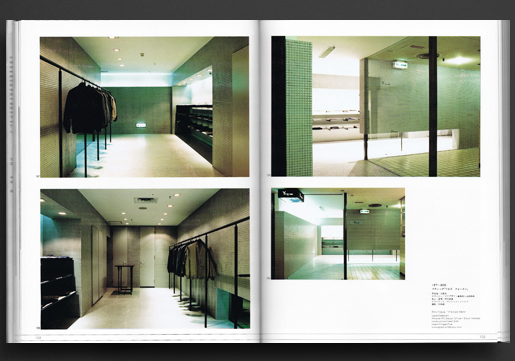
The first volume in the mighty "Interior Best Selection" book collection from the 1980's, published by Graphic-Sha in Japan. First edition from 1985, and a great copy!
These heavy volumes are cover-to-cover architectural interiors from the land of some of the finest environmental/commercial space design in the world. As put by the editorial committee: "..unique, controversial interior designs for shops, stores, hotels, offices, exhibition halls, museums, leisure facilities, public spaces and private houses." Features the work of Japan's leading architects, interior and furniture designers of the period. Too many to list here!
These books are an inspirational reference for any interior design collection. Especially collectable is this wonderful first volume.
1986, Japanese
Hardcover (w. dust jacket), 288 pages, 23 x 30 cm
1st edition, Out of print title / used*,
Published by
Graphic-sha / Tokyo
$65.00 - Out of stock
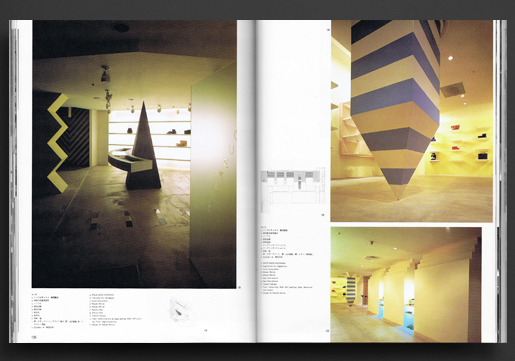
Second in the mighty "Interior Best Selection" book collection from the 1980's, published by Graphic-Sha in Japan. These heavy volumes are cover-to-cover architectural interiors from the land of some of the finest environmental/commercial space design in the world. As put by the editorial committee: "..unique, controversial interior designs for shops, stores, hotels, offices, exhibition halls, museums, leisure facilities, public spaces and private houses." Features the work of Japan's leading architects, interior designers and furniture designers of the period. Too many to list here!
First edition. These books are an inspirational reference for any interior design collection.
1979, English
Softcover, 32 pages, 22 x 28 cm
1st edition, Out of print title / used*,
Published by
The Metropolitan Museum of Art / New York
$20.00 - Out of stock
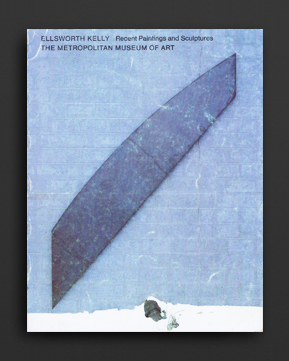
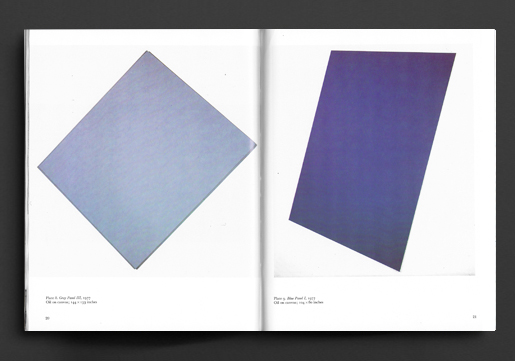
Exhibition catalogue of the works of Ellsworth Kelly held from 26 April to 24 June 1979 at the Metropolitan Museum of Art in New York. Illustrated throughout with colour and black and white reproductions of Kelly's works from the late 1970s, including many great examples of his large monochrome abstractions in steel, aluminium and oil on canvas. Also studies and catalogue text by Elizabeth C. Baker.
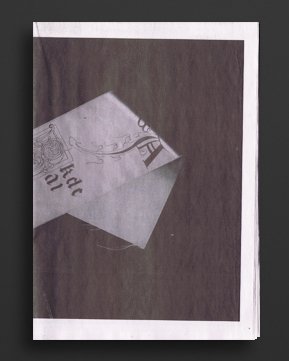
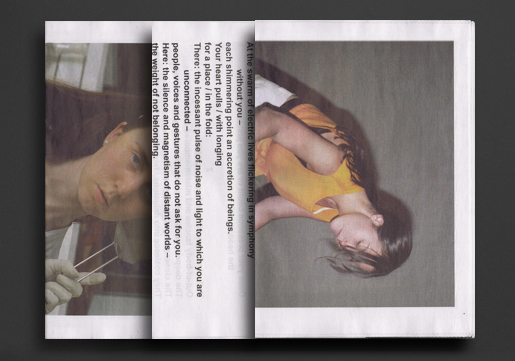
2017, English
Softcover (4 x newspapers), 16 pages each, 29 x 40 cm
Published by
Mode and Mode / Melbourne
$10.00 - In stock -
The HRD / CF Newsletter is a periodical publication produced within the exhibition ‘Hi$h Risk Dressing / Critical Fashion’ at RMIT Design Hub. The exhibition centres on the local fashion organisation active in Melbourne between the years 1983-1993, the Fashion Design Council. The FDC (as they are often shortened to), founded by Robert Buckingham, Kate Durham and Robert Pearce, were a self―organised group set up to foster independent designers and artists dealing with fashion. Influenced by the post―punk scene of Northern fashion capitals, the FDC put on shows in clubs and venues, as well as organising exhibitions, and eventually setting up a shop serving as a platform for alternative fashion in Melbourne. Throughout their active period, the FDC were prolific self―publishers. Print collateral was central to their success as an organisation. Postcards, invites, catalogues, business cards and other ephemera were shared with members and the broader public, promoting their officialdom. Particularly significant was the FDC newsletter, designed by co-founder Robert Pearce, disseminating a manifesto as well as news and events with its members. The newsletters were ad hoc; informal in language and design but expressed the energy and creative spirit of both the FDC community and available technology.
Using the model of the FDC newsletter, the HRD / CF Newsletter is a take―away publication released each week of the exhibition program. Each of the issues is framed around an emerging aspect of the FDC captured in the exhibition ― the archive, the bar, the shop and the office ― with texts, interviews and contributions from local and international practitioners. The ‘HRD / CF Newsletter also includes facsimiles of print ephemera from the FDC archive, which was donated to the RMIT Design Archives in 1998 by co-founder Robert Buckingham. This new newsletter functions as a platform for disseminating ideas about the FDC then, and critical fashion now, allowing for new dialogues to emerge from the legacy of FDC.
Edited by Laura Gardner
Designed by Ziga Testen
Edition of 500
Contributors include: Agniezska Chabros, Annie Wu, Blake Barns/HB Peace, Christopher LG Hill, Clare Wohlnick, Jessie Kiely/Monica's Gallery, Kate Meakin, Matthew Linde, Sasha Geyer, Winnie Ha Mitford, Bryan Collins, D&K (Ricarda Bigolin and Nella Themelios), James Deutsher, Lewis Fidock, Brighid Fitzgerald, Amanda Horowitz, Chantal Kirby, Jessie Kiely and Monica’s Gallery (Spencer Lai and Jake Swinson), Christopher LG Hill, Matthew Linde, Kate Meakin, Olivia O’Donnell, Yair Oelbaum, Virginia Overell, Sean Peoples, Joshua Petherick, Jen Shear, Flannery Silva, Adele Varcoe, Alex Vivian and more.
1992, English
Softcover (staple-bound), 48 pages, 22 x 28 cm
1st edition, Out of print title / used*,
Published by
Spartacus Publishers / California
$70.00 - Out of stock
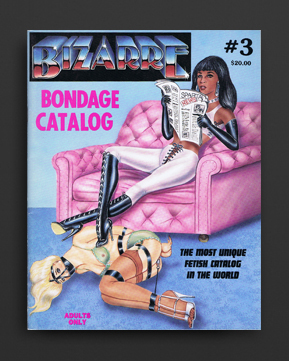
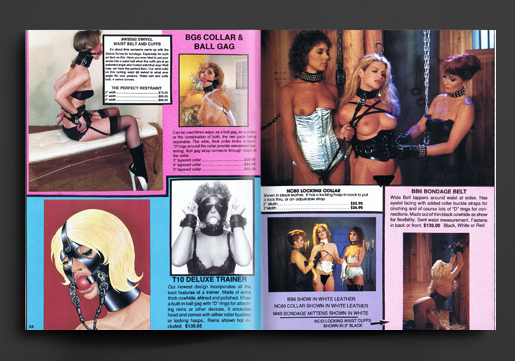
Wonderful, ultra scarce early 1990's fetish catalogue from California's Spartacus production house. "The Most Unique Fetish Catalog In The World", Bizarre #3 : Bondage catalog offers Spartacus' incredible visually-rich (Adults Only) magazine style pages of saturated colours, incredible airbrushed illustrations, and exclusive demonstrative bondage photography of their world-class bondage equipment and devices.
Note: this issue has a few photographs of male and female genitals hand censored (with black marker). Quite likely by the international distributor or Japanese vendor who originally sold this title.
Softcover (staple-bound), 48 pages, 22 x 28 cm
1st edition, Out of print title / used*,
Published by
Spartacus Publishers / California
$70.00 - Out of stock
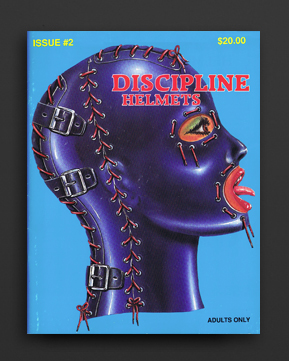
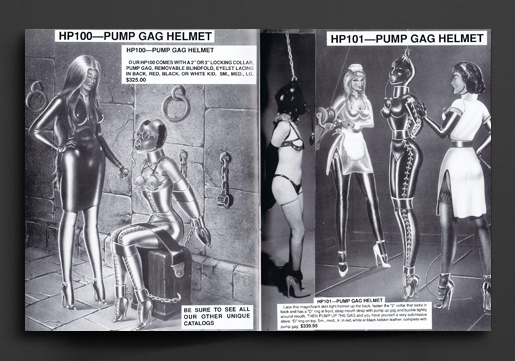
Wonderful, ultra scarce early 1990's fetish catalogue from California's Spartacus production house. Discipline Helmets #2 offers Spartacus' incredible visually-rich (Adults Only) magazine style pages of saturated colours, incredible airbrushed illustrations, and exclusive demonstrative bondage photography of their world-class bondage equipment and devices.
1988, English
Softcover, 192 pages, 22 x 28 cm
1st Edition, Out of print title / Used*,
Published by
The Gay Men's Press (GMP) / London
Tom of Finland Foundation / Los Angeles
$140.00 - Out of stock
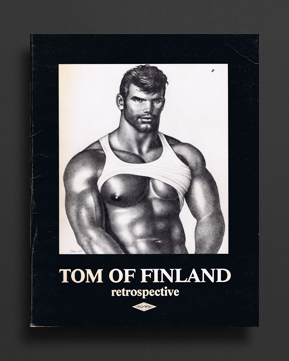
1st printing of one of the finest collections of the great Tom of Finland, published in 1988 by the Tom of Finland Foundation, Los Angeles, and The Gay Men's Press (GMP), London.
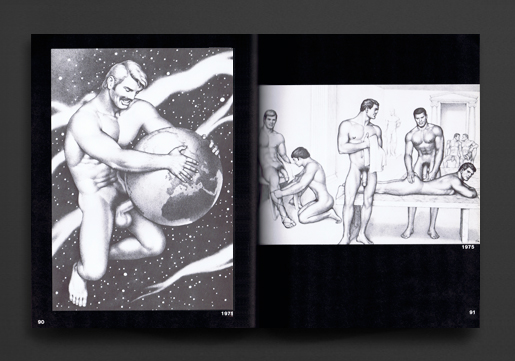
Preface by Tom of Finland with appreciation by Dennis Forbes and Fred Bisonnes. This book covers Tom of Finland's work from 1946 to 1987, depicting page by page throughout his iconic and impeccable erotic graphite drawings of macho leathermen, bikers, cowboys, cops, lumberjacks, hardhats, soldiers and sailors, all in all their glory.
Touko Valio Laaksonen (8 May 1920 – 7 November 1991), best known by his pseudonym Tom of Finland, was a Finnish artist known for his stylized highly masculine homoerotic fetish art, and his influence on late twentieth century gay culture. He has been called the "most influential creator of gay pornographic images" by cultural historian Joseph W. Slade. Over the course of four decades, he produced some 3500 illustrations.
1987, French
Softcover, 150 pages, 21 x 27 cm
1st Edition, Out of print title / Used*,
Published by
Sotheby's / Monaco
$70.00 - Out of stock
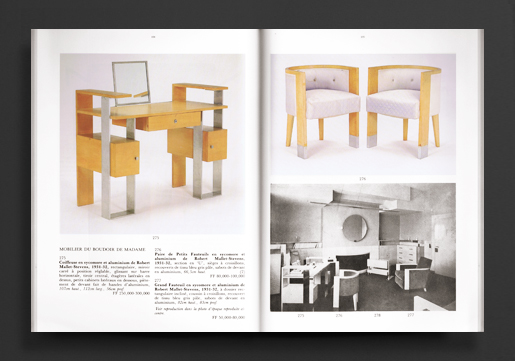
Special Monaco auction catalogue from 1987 focussing in on vast lots of lavish and rarely-seen modern furniture from Villa C. a Croix, a large modernist mansion created by Robert Mallet-Stevens in 1931-32. The influential French architect and designer was responsible for all the interior fittings and furnishings of this extraordinary example of modern residential architecture. It's luxury did not lie in carved detailing or gilding, but unfolded in the richness of the materials used, such as unadorned marble, metal and wood, the simplicity and functionality of the furniture prevailing in all parts to echo the architectural surrounds. This striking collection includes, alongside an impeccable group of furnishings by Mallet-Stevens, Marcel Breuer, Charlotte Perriand, Boris Lacroix, Thonet, Mies van der Rohe, Maxime Brunfaut, Pierre Chareau, Jean Michel Frank, Eileen Gray, Gio Ponti, Diego Giacometti, and many more. Catalogue also features lots that include fine examples of Josef Hoffmann, Robert Oerly, Walter Gropius, Jean Dunand, Émile Gallé, Daum crystal, François Décorchemont, Tiffany, Jean Goulden, Gio Ponti, and many more Art Deco and Bauhaus pieces.
Heavily illustrated throughout entire catalogue in colour and black and white, including all item details and inserted price list.
1984, English / German
Softcover, 160 pages, 19 x 27 cm
1st Edition, Out of print title / Used*,
Published by
Galerie Wolkfgang Ketterer / Munich
$70.00 - Out of stock
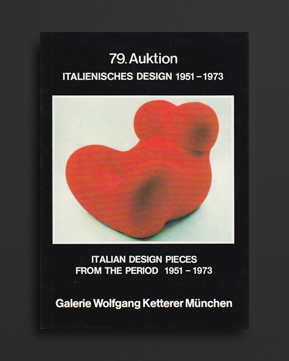
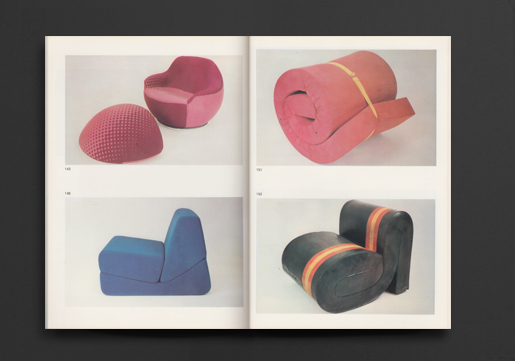
Fantastic and very informative, fully-illustrated auction catalogue from Galerie Wolkfgang Ketterer, 1984, for a major auction of "Italian Design Pieces from the Period 1951-1973". Design editions, one-off prototypes, lamps, furniture by Archizoom, Gae Aulenti, Sergio Asti, Osvaldo Borsani, Giorgio Ceretti, Studio 65, Joe Colombo, Guido Drocco, Piero Gilardi, Paolo Lomazzi, Raymond Hains, Ugo La Pietra, Enzo Mari, Mario Mare, Luigi Massoni, Sergio Mazza, Ettore Sottsass, Franco Mello, Gaetano Pesce, Gio Ponti, Giuseppe Raimondi, G. Reggiani, Rudy Righi, Superstudio, Vinicio Vianello, Marco Zanuso, and many more for Arflex, Gufram, Artemide, Fontana Arte, Artluce, B.B.B., C&B, Flos, Habitat, Galleria Il Sestante, Kartell, Poltronova, Tecno, Totem, and many more. Well-known and long lost, very obscure works in this valuable catalogue, all items photographed (in black and white and colour), with production details and a blurb on each piece in both English and German.
2016, English
Hardcover (w. dust jacket), 352 pages, 28.7 x 20 cm
Published by
Fundación Alumnos47Cosentino / Mexico City
$50.00 - Out of stock
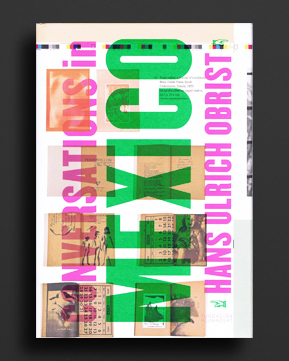
Edited by Karen Marta. Text by Patrick Charpenel, Hans Ulrich Obrist, Pedro Ramírez Vázquez, Teodoro González de León, Graciela Iturbide, Esquivel!, Santiago Genovés, Carlos Fuentes, Margo Glantz, Elena Poniatowska, Alejandro Jodorowsky, Leonora Carrington, Felipe Ehrenberg, Pedro Friedeberg, Juan Soriano and Eduardo Terrazas
In 2002 Hans Ulrich Obrist began his conversation with a diverse and influential group of Mexican pioneers during an exhibition at Luis Barragán's house in Mexico City. Over a decade in the making, Conversations in Mexico beautifully captures how the Mexican cultural scene has pivoted several times--perhaps most importantly around the student protests at the 1968 Olympic Games--to cultivate a wholly radical and innovative aesthetic, one that is illuminated in the iconic buildings of Pedro Ramírez Vázquez and Teodoro González de León; the people and landscapes photographed by Graciela Iturbide; the music of Esquivel!; the incredible voyages of Santiago Genovés; the utopian politics and literature of Carlos Fuentes, Margo Glantz and Elena Poniatowska; the singular vision of Alejandro Jodorowsky; and the uncompromising art of Leonora Carrington, Felipe Ehrenberg, Pedro Friedeberg, Juan Soriano and Eduardo Terrazas.
Published by Fundación Alumnos47Cosentino, Mexico City
2014, English
Softcover, 372 pages, 21 x 15 cm
Published by
M HKA / Antwerp
Mousse Publishing / Milan
Walther König / Köln
$45.00 - Out of stock
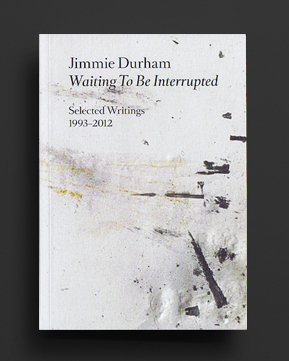
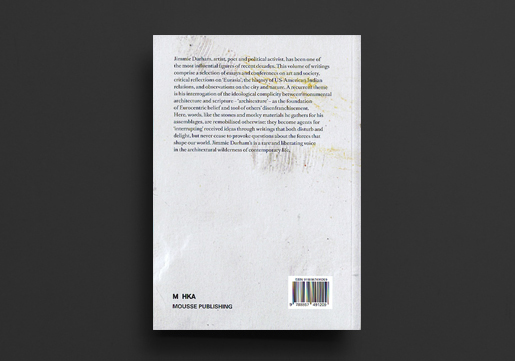
Jimmie Durham, artist, poet and political activist, has been one of the most influential figures of recent decades.
This volume of writings comprise a selection of essays and conferences on art and society, critical reflections on ‘Eurasia’, the history of US-American Indian relations, and observations on the city and nature.
A recurrent theme is his interrogation of the ideological complicity between monumental architecture and scripture – ‘architexture’ – as the foundation of Eurocentric belief and tool of others’ disenfranchisement.
Here, words, like the stones and motley materials he gathers for his assemblages, are remobilised otherwise; they become agents for ‘interrupting’ received ideas through writings that both disturb and delight, but never cease to provoke questions about the forces that shape our world.
Jimmie Durham is a rare and liberating voice in the architextural wilderness of contemporary life.
2017, English
Hardcover, 294 pages, 22.6 x 29 cm
Published by
Hammer / Los Angeles
Prestel / Munich
$90.00 - Out of stock
Published in conjunction with the first North American survey of the work of Jimmie Durham, this beautifully illustrated catalogue explores Durham's vital contributions to contemporary art since the 1970s, both in the US and internationally.
Born of Cherokee descent, in 1940s Arkansas, Jimmie Durham takes up such issues as the politics of representation, histories of genocide, and citizenship and exile. This volume collects an array of Durham s sculptures, drawings, photography, video, and performance. It includes essays about Durham s material choices and their metaphoric potential; his participation in the NYC art scene in the 1980s; his use of language; and his ties to Mexico after living in Cuernavaca. An interview with Durham traces his involvement with the American Indian Movement and his self-exile from the US, which along with his essays and poetry, illuminate his life and work. This book provides an opportunity to gain a deeper understanding of Durham, arguably one of the most important artists working today.
Jimmie Durham : At the Centre of the World
Contributions by Anne Ellegood, Jennifer A. Gonzalez, Fred Moten, Jessica L. Horton, Paul Chaat Smith, MacKenzie Stevens, Elisabeth Sussman, Jessica Berlanga Taylor.
2016, English
Softcover, 216 pages, 20 x 26 cm
Published by
Humboldt Books / Milan
$47.00 - Out of stock
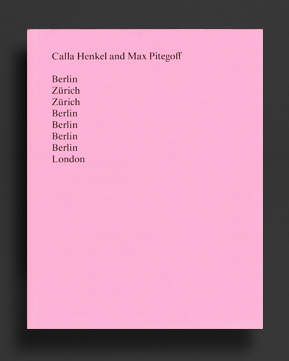
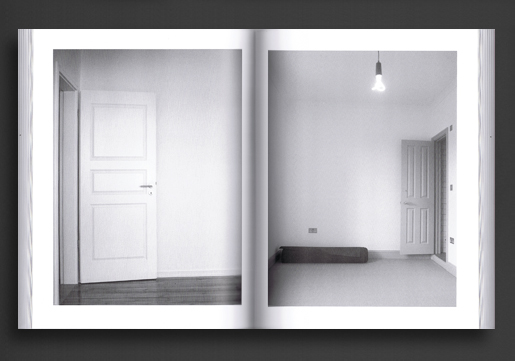
Calla Henkel and Max Pitegoff’s book collects black and white photographs taken at apartment viewings in Berlin, London and Zürich in 2015, and exhibited at Galerie Isabella Bortolozzi in Berlin the same year. The images render a landscape of apartments, mostly empty, punctuated by potential buyers or renters projecting their own possible futures onto the spaces. The photographs blend into each other as if one building, aggregating material treatments, fixtures, flooring, and faucets in their extraordinary specificity; or as if one city, seen from the inside as a picture of a private public sphere. The book includes a new text by writer Pablo Larios elaborating on the staging of personal environments and the relationship between figure and ground in Henkel and Pitegoff’s work.
Calla Henkel and Max Pitegoff (b. 1988/1987, US) are artists who work together in Berlin. From 2013 until 2015 they ran New Theater in Berlin, a theater and performance space where they produced amateur plays with writers, musicians and visual artists. Their work has been shown at the 9th Berlin Biennale, Schinkel Pavillon, Berlin; Witte de With, Rotterdam; the Galerie für Zeitgennössische Kunst, Leipzig; the Kunsthalle Wien, Vienna; the Kunsthalle Bern,; and the Whitney Museum, New York.
1987, English/Japanese
Softcover, 88 pages, 28 x 28 cm
1st Edition, Out of print title / Used*,
Published by
Gallery Min / Tokyo
$120.00 - Out of stock
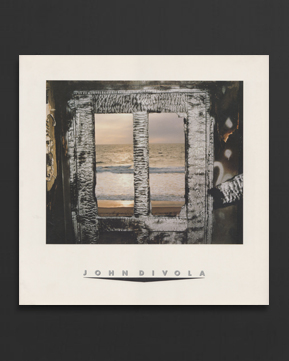
Published on the occasion of Los Angeles artist John Divola's solo show at Gallery Min, Tokyo, June 13 - July 7, 1987, this very uncommon Japanese book features reproductions of many of his famous photographic works, including a large portion dedicated to his "Zuma" series of works. Includes an introductory essay by Mark Johnstone (in Japanese and English), a brief biography, exhibition history and bibliography (in English).
Designed by Hideyuki Taguchi and printed in Japan.
John Divola (born 1949, Los Angeles) is a contemporary visual artist. He currently lives and works in Riverside, CA. Divola works in photography, describing himself as exploring the landscape by looking for the edge between the abstract and the specific.
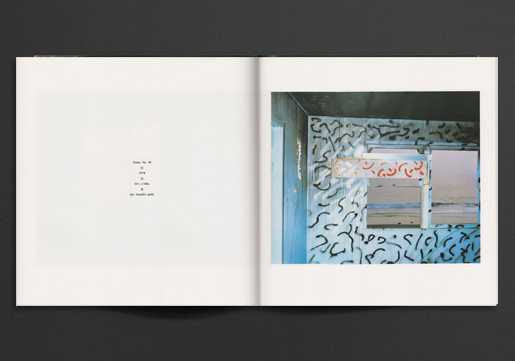
In “Zuma” project, he has described being interested in the relation between real artworks and representations of them, and the issues of the natural and the artificial. Divola said “I attempted ... to develop a practice in which there could be no distinction between the document and the original.” In his series of photographs from 1977, he used deserted houses on Zuma Beach and covered their walls in graffiti photograph the ocean from the house's interior through windows and cracks. Divola states: “On initially arriving I would move through the house looking for areas or situations to photograph. If nothing seemed to interest me I would move things around or do some spray painting. The painting was done in much the same way that one might doodle on a piece of paper. At that point I would return to the camera and explore what ever new potentials existed.” These cyclical images skillfully juxtapose romantic skies and sunsets with a seaside structure that, frame by frame, deteriorates into ruin as it is vandalized by the artist and others who eventually set it on fire". Divola works trace a schematic desire for escape, movement and transcendence.
"My acts, my painting, my photographing, my considering, are part of, not separate from, this process of evolution and change. These photographs are not so much about this process as they are remnants from it. My participation was not so much one of intellectual consideration as one of visceral involvement." John Divola, 1980.