World Food Books' programme is largely produced on Kulin Nation land. We acknowledge the Wurundjeri people of the Kulin Nation as the first and continuing custodians of this land, and pay respect to their Elders past, present, and emerging.
World Food Books is an arts and special interests bookshop in Naarm / Melbourne. Founded in 2010, World Food Books is devoted to the presentation of a rotating, hand-selection of international art, design, literary and counterculture publications with an emphasis on the anti-traditional, the experimental, the avant-garde, the heretic, the marginal.
Presenting new titles alongside rare and out-of-print books, catalogues and journals spanning the fields of modern and contemporary art, design, photography, illustration, film, literature, poetry, cultural theory, philosophy, sexuality, popular and underground culture in its many radical forms, World Food Books wishes to encourage adventurous, thoughtful and open-minded reading, looking, writing, and exchange of publishing and ideas, both current and historical.
As well as our bookshop, located in Melbourne's historical Nicholas Building, all of our inventory is available internationally via our online mail-order service.
World Food Books semi-regularly co-ordinates "Occasions", a programme of exhibits and events at the bookshop and in partnership with other hosts (such as museums and art galleries) that develop out of the activities, relationships and content of the bookshop itself.
World Food Books
The Nicholas Building
37 Swanston Street
Room 5, Level 6
Melbourne 3000
Australia
SHOP HOURS:
Thu–Fri 12–6, Sat 12–5
WEB-SHOP OPEN 24/7
World Food Books
Postal Address:
PO Box 435
Flinders Lane
Victoria 8009
Australia
Art
Theory / Essay
Architecture / Interior
Graphic Design / Typography
Photography
Fashion
Eros
LGBTQ+
Fiction / Poetry
Weird / Speculative / Science Fiction / Horror
Transgressive / Visceral / Abject
Symbolism / Decadence / Fin de siècle
Film / Video
Painting
Sculpture / Installation
Performance / Dance / Theater
Drawing
Sound / Music
Curatorial
Group Shows / Collections
Periodicals
Out-of-print / Rare
Posters / Ephemera / Discs
Signed Books
World Food Books Gift Voucher
World Food Book Bag
Australian Art
Australian Fiction
Australian Science Fiction / Speculative Fiction
Australian Poetry
Australian Photography
Japanese Photography
Conceptual Art
Minimal Art
Dada
'Pataphysics / Oulipo
Fluxus
Concrete Poetry
Pop Art
Surrealism
Arte Povera
Arte Informale / Haute Pâte / Tachism
Nouveau Réalisme / Zero / Kinetic
Situationism / Lettrism
Collage / Mail Art / Xerox Art
Art Brut / Folk / Visionary / Fantastic
Illustration / Graphic Art / Bandes Dessinées
Furniture
Italian Radical Design / Postmodernism
Textiles
Ceramics / Glass
Counterculture
Protest / Revolt
Philosophy
Psychoanalysis
Anthropology
Anarchism
Socialism / Anarchism / Communism / Capitalism
Literary Theory / Semiotics / Language
Feminism / Women's Studies
Gender Studies / Sexuality
Anthropology
Fetishism / BDSM
Drugs / Psychedelia
Crime / Violence
Animal Rights / Veganism
Occult / Esoterica
Ecology / Earth / Alternative Living
Whole Earth / Crafts
All prices in AUD (Australian dollars)
Pick-Ups
Pick-up orders can be collected in our bookshop during opening hours after order date. Please collect any Pick-up orders within 2 weeks of ordering as we have limited storage space. Orders will be released back into stock if not collected within this time. No refunds can be made for pick-ups left un-collected. If you cannot make it in to the bookshop in this time-frame, please choose postage option.
Return Policy
All sales are final. We do accept returns (for refund or exchange) for items received in error. All our orders are packed with special care using heavy-duty padding and cardboard book-mailers or bubble mailers (for smaller books), using reinforcement where required. We cannot take responsibility for any lost, stolen or damaged parcels.
Insurance
Should you wish to insure your package, please email us directly after placing your order and we can organise this at a small extra expense. Although all standard/express tracked packages are very safe and dependable, we cannot take responsibility for any lost, stolen or damaged parcels. We recommend insurance on valuable orders.
Interested in selling your old books, catalogues, journals, magazines, comics, fanzines, ephemera? We are always looking for interesting, unusual and out-of-print books to buy. We only buy books in our fields of interest and specialty, and that we feel we can resell.
We base these prices on desirability, market value, in-print prices, condition and our current stock levels. We offer cash, store credit, and can take stock on consignment. All
about 25% of the price we expect to get when we sell them, or 30% in store credit. We base these prices on desirability, market value, in-print prices, condition and our current stock levels.
Sell your books any day of the week. You can drop them off and return later. If you have a lot of books, we can visit your Sydney home.
We buy books that we feel we can resell. We offer about 25 % of the price we expect to get when we sell them, or 30% in store credit. We base these prices on desirability, market value, in-print prices, condition and our current stock levels.
Philadelphia Wireman
03 August - 01 September, 2018
World Food Books is proud to announce our next Occasion, the first presentation of sculptures by Philadelphia Wireman in Australia.
The Philadelphia Wireman sculptures were found abandoned in an alley off Philadelphia’s South Street on trash night in 1982. Their discovery in a rapidly-changing neighbourhood undergoing extensive renovation, compounded with the failure of all attempts to locate the artist, suggests that the works may have been discarded after the maker’s death. Dubbed the "Philadelphia Wireman" during the first exhibition of this work, in 1985, the maker’s name, age, ethnicity, and even gender remain uncertain. The entire collection totals approximately 1200 pieces, all intricately bound together with tightly-wound heavy-gauge wire (along with a few small, abstract marker drawings, reminiscent both of Mark Tobey and J.B. Murry). The dense construction of the work, despite a modest range of scale and materials, is singularly obsessive and disciplined in design: a wire armature or exoskeleton firmly binds a bricolage of found objects including plastic, glass, food packaging, umbrella parts, tape, rubber, batteries, pens, leather, reflectors, nuts and bolts, nails, foil, coins, toys, watches, eyeglasses, tools, and jewellery.
Heavy with associations—anthropomorphic, zoomorphic, and socio-cultural responses to wrapped detritus—the totemic sculptures by Philadelphia Wireman have been discussed in the context of work created to fulfil the shamanistic needs of alternative religions in American culture. Curators, collectors, and critics have variously compared certain pieces to sculpture from Classical antiquity, Native American medicine bundles, African-American memory jugs, and African fetish objects. Reflecting the artist’s prolific and incredibly focused scavenging impulse, and despite—or perhaps enhanced by—their anonymity, these enigmatic objects function as urban artefacts and arbiters of power, though their origin and purpose is unknown. Philadelphia Wireman, whatever their identity, possessed an astonishing ability to isolate and communicate the concepts of power and energy through the selection and transformation of ordinary materials. Over the course of the past two decades, this collection has come to be regarded as an important discovery in the field of self-taught art and vernacular art.
Presented in collaboration with Fleisher-Ollman Gallery, Philadelphia, and Robert Heald, Wellington.
Susan Te Kahurangi King
02 February - 10 March, 2018
Susan Te Kahurangi King (24 February 1951 - ) has been a confident and prolific artist since she was a young child, drawing with readily available materials - pencils, ballpoint pens and felt-tip markers, on whatever paper is at hand. Between the ages of four and six Susan slowly ceased verbal communication. Her grandparents William and Myrtle Murphy had developed a special bond with Susan so they took on caring responsibilities for extended periods. Myrtle began informally archiving her work, carefully collecting and storing the drawings and compiling scrapbooks. No drawing was insignificant; every scrap of paper was kept. The King family are now the custodians of a vast collection containing over 7000 individual works, from tiny scraps of paper through to 5 meter long rolls.
The scrapbooks and diaries reveal Myrtle to be a woman of great patience and compassion, seeking to understand a child who was not always behaving as expected. She encouraged Susan to be observant, to explore her environment and absorb all the sights and sounds. Myrtle would show Susan’s drawings to friends and people in her community that she had dealings with, such as shopkeepers and postal workers, but this was not simply a case of a grandmother’s bias. She recognised that Susan had developed a sophisticated and unique visual language and sincerely believed that her art deserved serious attention.
This was an unorthodox attitude for the time. To provide some context, Jean Dubuffet coined the term Art Brut in 1945 to describe work created by self-taught artists – specifically residents of psychiatric institutions and those he considered to be visionaries or eccentrics. In 1972 Roger Cardinal extended this concept by adopting the term Outsider Art to describe work made by non-academically trained artists operating outside of mainstream art networks through choice or circumstance. Susan was born in Te Aroha, New Zealand in 1951, far from the artistic hubs of Paris and London that Dubuffet and Cardinal operated in. That Myrtle fêted Susan as a self-taught artist who deserved to be taken seriously shows how progressive her attitudes were.
Susan’s parents Doug and Dawn were also progressive. Over the years they had consulted numerous health practitioners about Susan’s condition, as the medical establishment could not provide an explanation as to why she had lapsed into silence. Dawn educated herself in the field of homeopathy and went on to treat all twelve of her children using these principles – basing prescriptions on her observations of their physical, mental and emotional state.
Doug was a linguist with an interest in philosophy who devoted what little spare time he had to studying Maori language and culture. To some extent their willingness to explore the fringes of the mainstream made them outsiders too but it was their commitment to living with integrity and their respect for individuality that ensured Susan’s creativity was always encouraged.
Even though Susan’s family supported her artistic pursuits, some staff in schools and hospitals saw it as an impediment to her assimilation into the community and discouraged it in a variety of ways. Her family was not always aware of this and therefore did not fully understand why Susan stopped drawing in the early 1990s. However, rather than dwell on the challenges that Susan faced in pursuit of her artistic practice, they prefer to highlight her achievements. In 2008 Susan began drawing again in earnest, after an almost 20 year interruption, and her work is now shown in galleries around the world.
Susan grew up without television and has been heavily influenced by the comics she read as a child. She is absolutely fearless in the appropriation of recognizable characters, such as Donald Duck and Mickey Mouse, in her work. She twists their limbs, contorts their faces, compresses them together, blends them into complex patterned backgrounds - always imbuing them with an incredible energy. Although Susan often used pop culture characters in her work they are not naive or childlike. These are drawings by a brilliant self-taught artist who has been creating exceptional work for decades without an audience in mind.
Mladen Stilinović
"Various Works 1986 - 1999"
02 February 16 - September 10, 2016
Various works 1986 - 1999, from two houses, from the collections of John Nixon, Sue Cramer, Kerrie Poliness, Peter Haffenden and Phoebe Haffenden.
Including: Geometry of Cakes (various shelves), 1993; Poor People’s Law (black and white plate), 1993; White Absence (glasses, ruler, set square, silver spoon, silver ladel with skin photograph and wooden cubes), 1990-1996; Exploitation of the Dead (grey and red star painting, wooden painting, black spoon with red table, red plate), 1984-1990; Money and Zeros (zero tie, paintings made for friends in Australia (Sue, John, Kerrie), numbers painting), 1991-1992; Words - Slogans (various t-shirts) - “they talk about the death of art...help! someone is trying to kill me”, “my sweet little lamb”, “work is a disease - Karl Marx”; Various artist books, catalogues, monographs, videos; Poster from exhibition Insulting Anarchy; "Circular" Croatian - Australian edition; Artist book by Vlado Martek (Dostoyevsky); more.
Thanks to Mladen Stilinović and Branka Stipančić.
Jonathan Walker
Always Will Need To Wear Winter Shirt Blue + Ochre Small Check Pattern
21 August - 21 September, 2015
Untitled
I am not a great reader of poetry but I always return to the work of Melbourne poet, Vincent Buckley (1925- 1988). Perhaps I find his most tantalising piece to be not a finished poem but a fragment left on a scrap of paper discovered on his desk after the poet’s death.
The poetry gathers like oil
In the word-core, and spreads
It has its music meet,
Its music is in movement.
This fragment is more the shell left behind from a volatile thought than a finished poem. I find the last two lines honest but awkward whereas the first two lines work like an arrow. Most likely he could not find a resolution so it was left. Still, in its present form, it remains an eloquent testimony to the ultimate failure of a medium to express mobile thought and sensation, in Buckley’s case, through verbal language. It’s an important matter because this is something all artists have to deal with regardless of the medium.
I have never written a poem, however, I am forever copying fragments from books on paper scraps in a vain effort to fix certain notions in my head. At first, they function as bookmarks that are sometimes returned to when I open the book. But before long, as they accumulate, they fall out littering the table interspersed with A4 photocopies, bills, books and medications.
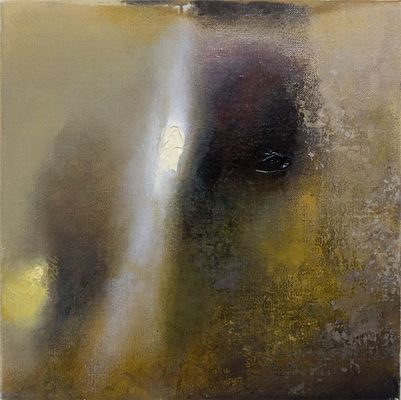
To return to Buckley’s fragment, the first two lines very much evoke how I paint nowadays. As you age, detail diminishes and patches of light become more luminous and float. I feel the most honest way of dealing with this is by smearing the oil paint on the canvas with the fingers and working close-up, blind. Only if the patches coalesce into an approaching image can the work gain a life.
-
Jonathan Walker was born in Melbourne, Australia and brought up on a dairy farm in Gippsland. In the 1970’s he studied painting at RMIT and won the Harold Wright Scholarship to the British Museum, London. During the 1980’s he exhibited at Pinacotheca Gallery, Richmond and had work shown at the NGV and Heidi City Art Gallery. Over the same period he designed the cover for the “Epigenesi” LP by Giancarlo Toniutti, Italy and conducted a mail exchange work with Achim Wollscheid, Germany. The work with artists through the post resulted in an article published in the bicentenary issue of Art and Australia 1988. He showed in artist run spaces such as WestSpace in the 90’s and 2000’s, and until 2012, taught painting at Victoria University, which is where we (Colleen Ahern and Lisa Radford) as organisers of the exhibition, among many others, had the privilege of being his student.
Walker’s knowledge was imparted to students through the careful selection of music, literature, and artists found in books that he himself had ordered for the library. Walker’s strategy was the generosity of sharing his vast knowledge with references specific to each student and their context.
Walker’s paintings share a similar focus and intimacy.
This exhibition presents a small selection of recent paintings alongside a publication that includes Walker’s writing. Observational and analytical, Walker’s work is a type of material notation — the time of day, colour and how it is blended, the both specific and fleeting location of a reflection on lino or the question of whether a chair leg should be included in a painting.
Please join us on Friday August 21 between 6-8pm to celebrate the opening of the exhibition.
Curated by Colleen Ahern and Lisa Radford.
B. Wurtz
Curated by Nic Tammens
March 26 - April 4, 2015
B.Wurtz works from a basement studio in his home on Manhattan’s Lower East Side.
This local fact is attested to by the plastic shopping bags and newsprint circulars that appear in his work. As formal objects, they don’t make loud claims about their origins but nonetheless transmit street addresses and places of business from the bottom of this long thin island. Like plenty of artists, Wurtz is affected by what is local and what is consumed. His work is underpinned by this ethic. It often speaks from a neighborhood or reads like the contents of a hamper:
“BLACK PLUMS $1.29 lb.”
“Food Bazaar”
“USDA Whole Pork Shoulder Picnic 99c lb.”
“RITE AID Pharmacy, with us it’s personal.”
“H. Brickman & Sons.”
“Sweet Yams 59c lb."
Most of the work in this exhibition was made while the artist was in residence at Dieu Donne, a workshop dedicated to paper craft in Midtown. Here Wurtz fabricated assemblages with paper and objects that are relatively lightweight, with the intention that they would be easily transportable to Australia. This consideration isn’t absolute in Wurtz’s work, but was prescriptive for making the current exhibition light and cheap. Packed in two boxes, these works were sent from a USPS post office on the Lower East Side and delivered to North Melbourne by Australia Post.
Wurtz appears courtesy of Metro Pictures, New York.
Thanks to Rob Halverson, Joshua Petherick, Sari de Mallory, Matt Hinkley, Helen Johnson, Fayen d'Evie, Ask Kilmartin, Lisa Radon, Ellena Savage, Yale Union, and "Elizabeth".
John Nixon
"Archive"
December 15 - January 20, 2014
The presentation of John Nixon's archive offered a rare showcase of this extensive collection of the artist's own publications, catalogues, posters, ephemera, editions and more, from the mid 1980s onwards, alongside a selection of his artworks.
Organized by John Nixon, Joshua Petherick and Matt Hinkley.
<a href=http://wfb.public-office.info/artist/john-nixon>All titles by John Nixon
"Habitat"
at Minerva, Sydney (organised by Joshua Petherick and Matt Hinkley)
November 15 - December 20, 2014
Lupo Borgonovo, Janet Burchill & Jennifer McCamley,
Lewis Fidock, HR Giger, Piero Gilardi, Veit Laurent Kurz,
Cinzia Ruggeri, Michael E. Smith, Lucie Stahl, Daniel Weil, Wols
Press Release:
“...It contained seven objects. The slender fluted bone, surely formed for flight, surely from the wing of some large bird. Three archaic circuitboards, faced with mazes of gold. A smooth white sphere of baked clay. An age-blackened fragment of lace. A fingerlength segment of what she assumed was bone from a human wrist, grayish white, inset smoothly with the silicon shaft of a small instrument that must once have ridden flush with the surface of the skin - but the thing’s face was seared and blackened.”
William Gibson, “Count Zero”, 1986
"Autumn Projects Archive"
Curated by Liza Vasiliou
March 6 - March 15, 2014
World Food Books, in conjunction with the Virgin Australia Melbourne Fashion Festival 2014, presented the Autumn Projects archive, consisting of a selection of early examples in Australian fashion with a particular interest in collecting designers and labels from the period beginning in the 1980’s, who significantly influenced the discourse of Australian Fashion.
Curated by Liza Vasiliou, the exhibition provided a unique opportunity to view pieces by designers Anthea Crawford, Barbara Vandenberg, Geoff Liddell and labels CR Australia, Covers, Jag along with early experimental collage pieces by Prue Acton and Sally Browne’s ‘Fragments’ collection, suspended throughout the functioning World Food Books shop in Melbourne.
H.B. Peace
presented by CENTRE FOR STYLE
November 14, 2013
"Hey Blinky, you say chic, I say same"
Anon 2013
H.B. Peace is a clothing collaboration between great friends Blake Barns and Hugh Egan Westland. Their pieces explore the divergences between 'character’ and ‘personality’ in garments....etc
Special Thanks to Joshua Petherick and Matt Hinkley of WFB and Gillian Mears
and a Very Special Thank you to Audrey Thomas Hayes for her shoe collaboration.
Janet Burchill & Jennifer McCamley
"Aesthetic Suicide"
May 10 - June 8, 2013
The first of our occasional exhibitions in the World Food Books office/shop space in Melbourne, "Aesthetic Suicide" presented a body of new and older works together by artists Janet Burchill & Jennifer McCamley, including videos, prints, a wall work, and publications.
During shop open hours videos played every hour, on the hour.
2014, English
Softcover, 264 pages, 16 x 22 cm
Published by
Open Editions / London
$48.00 - Out of stock
This anthology of newly commissioned texts presents a series of detailed examples of the different kinds of knowledge production that have recently emerged within the field of curatorial practice. The first volume of its kind to provide an overview of the theme of research within contemporary curating,Curating Research marks a new phase in developments of the profession globally. Consisting of case studies and contextual analyses by curators, artists, critics and academics, including Hyunjoo Byeon, Carson Chan and Joanna Warsza, Chris Fite-Wassilak, Olga Fernandez Lopez, Kate Fowle, Maja and Reuben Fowkes, Liam Gillick, Georgina Jackson, Sidsel Nelund, Simon Sheikh, Henk Slager, tranzit.hu, Jelena Vestic, Marion von Osten and Vivian Ziherl, and edited by curators Paul O’Neill and Mick Wilson, the book is an indispensible resource for all those interested in the current state of art and in the intersection between research and curating that underlies exhibition-making today.
2013, English
Softcover, 166 pages, 16 x 21 cm
Published by
Open Editions / London
$50.00 - Out of stock
The current economic situation and society’s low confidence in its institutions has suddenly demanded that artists become more imaginative in the way that they organise themselves. If labels such as ‘alternative’, ‘non-profit’ and ‘artist-run’ dominated the art scene that emerged in the late 1990s, the separatist position implied by the use of these terms has been moderated recently. This new anthology of accounts from the front line includes contributions by artists, as well as their institutional counterparts, that provide a fascinating observation of the art world as matrix of interconnected positions where the balance of power and productivity constantly shifts.
Features: Julie Ault, Maibritt Borgen, Céline Condorelli & Johan Frederik Hartle, Anthony Davies, Stephan Dillemuth & Jakob Jakobsen, Ekaterina Degot, Charles Esche & David Riff, Barnaby Drabble, Jonas Ekeberg, Linus Elmes, Juan A Gaitán, Abdellah Karroum, Livia Pancu, Jan Verwoert, What, How & For Whom/WHW
Stine Hebert & Anne Szefer Karlsen (Eds.)
1984, Japanese / English
Softcover, 96 pages, 32.5 × 25.5 cm
1st Edition, Out of print title / Used*,
Published by
Interior Publishing Co. Ltd. / Tokyo
$75.00 - Out of stock
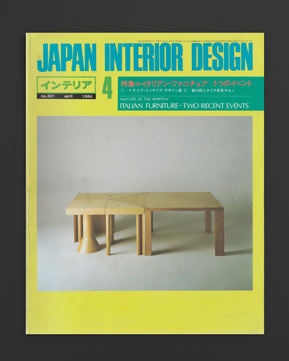
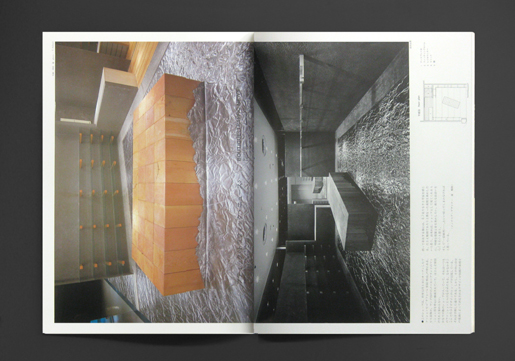
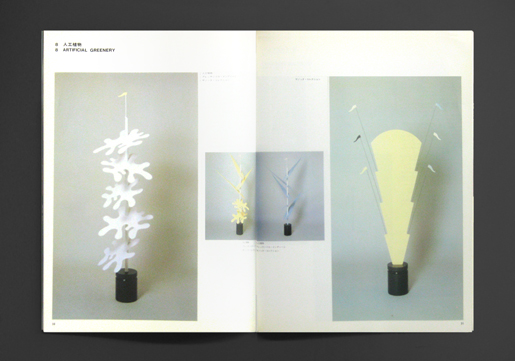
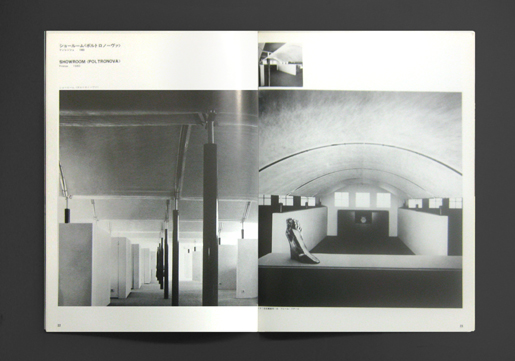
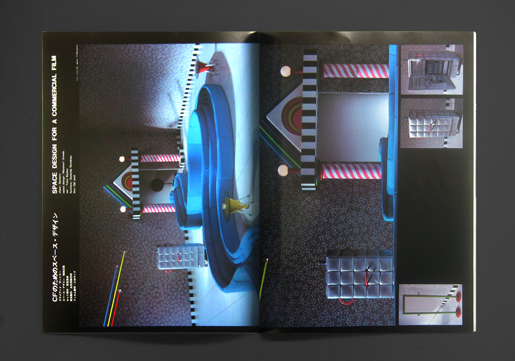
Japan Interior Design No. 301, April 1984
One of Japan’s finest magazines for interior design and home furnishings, edited by Moriyama Kazuhiko.
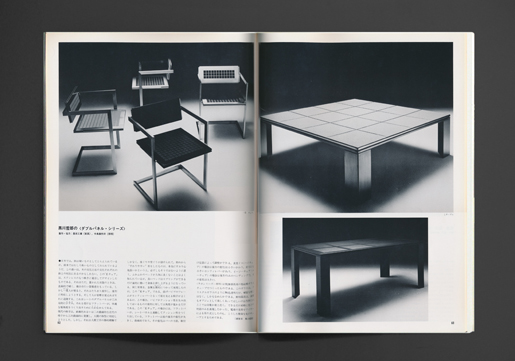
JAPAN INTERIOR DESIGN presents a monthly comprehensive view of traditional, contemporary, and contemplated environmental designs and pure art forms both Japanese and foreign, through pictures and critical reviews. English captions and summaries of major articles are provided.
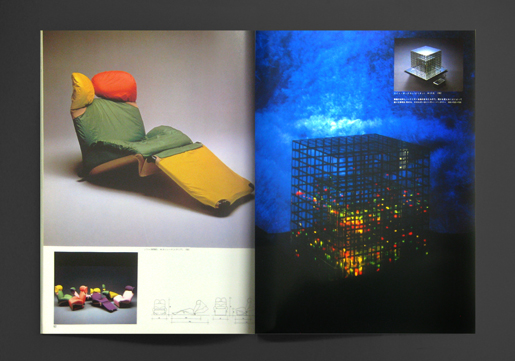
Very rare, this issue includes a feature on Italian Furniture - Two Recent Events
Includes the design work of Massimo Morozzi, Factory 900, Studio Tomo Ara, Susumu Kitahara, Osamu Aoto, Kozo Abe
1984, Japanese / English
Softcover, 96 pages, 32.5 × 25.5 cm
1st Edition, Out of print title / Used,
Published by
Interior Publishing Co. Ltd. / Tokyo
$85.00 - Out of stock
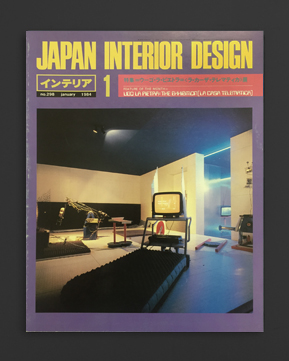
JAPAN INTERIOR DESIGN
No.298, January 1984
One of Japan’s finest magazines for interior design and home furnishings, edited by Moriyama Kazuhiko.
JAPAN INTERIOR DESIGN presents a monthly comprehensive view of traditional, contemporary, and contemplated environmental designs and pure art forms both Japanese and foreign, through pictures and critical reviews. English captions and summaries of major articles are provided.
Very rare, this issue includes a huge feature on UGO LA PIETRA = THE EXHIBITION "LA CASA TELEMATICA" with essay by Gianfranco Bettetini, Aldo Grasso, Ugo La Pietra collaboration & essay: Kazuko Sato.
Also includes "Fiber Art Exhibition by Ten Foreign Artists" essay: Shinichi Asai; Beauty House "ACHE" design: the air. Kenji Oki, Hisako Watanabe; Boutique "KENZO SAPPORO" design: Setsuo Kitaoka; ’83 THE 10TH TOKYO INTERNATIONAL LIGHTING DESIGN COMPETITION > & < LIGHTING DESIGN BY INVITED DESIGNERS EXHIBITION (including Shiro Kuramata, Issey Miyake and many more), essay: Katsuhiro Yamaguchi; Object Made of New Material "COLOR CORE"; Furniture "TAKAGU" Designed by Tsutomu Imazaki; New Furniture Designed by Gerd Lange; "A Atelier" architect: Ikuyo Mitsuhashi; Product Design of the Month = Ball-Pen & Razor design: Pentagram, and much more.
1983, Japanese / English
Softcover, 96 pages, 32.5 × 25.5 cm
1st Edition, Out of print title / Used*,
Published by
Interior Publishing Co. Ltd. / Tokyo
$75.00 - Out of stock
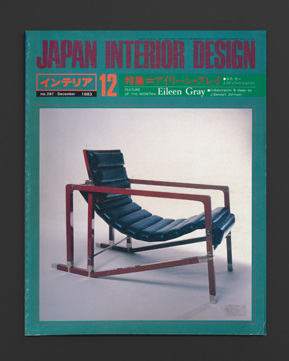
Japan Interior Design No. 297, December 1983
One of Japan’s finest magazines for interior design and home furnishings, edited by Moriyama Kazuhiko.
JAPAN INTERIOR DESIGN presents a monthly comprehensive view of traditional, contemporary, and contemplated environmental designs and pure art forms both Japanese and foreign, through pictures and critical reviews. English captions and summaries of major articles are provided.
Very rare, this issue includes a feature on Eileen Gray
Also includes the design work of Shigeru Uchida + Studio 80, Toshiyuki Kita
1982, Japanese / English
Softcover, 96 pages, 32.5 × 25.5 cm
1st Edition, Out of print title / Used*,
Published by
Interior Publishing Co. Ltd. / Tokyo
$75.00 - Out of stock
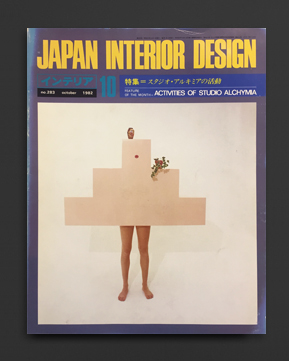
Japan Interior Design No. 283, October 1982
One of Japan’s finest magazines for interior design and home furnishings, edited by Moriyama Kazuhiko.
JAPAN INTERIOR DESIGN presents a monthly comprehensive view of traditional, contemporary, and contemplated environmental designs and pure art forms both Japanese and foreign, through pictures and critical reviews. English captions and summaries of major articles are provided.
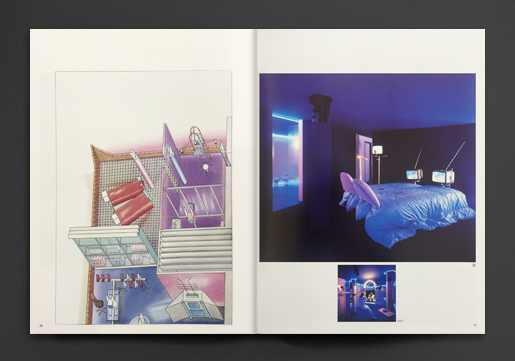
Very rare, this issue includes a feature on the work of Studio Alchimia.
Also includes the design work of Kazuo Shinohara, Nikken Sekkei, Alessandro Mendini and much more.
1982, Japanese / English
Softcover, 96 pages, 32.5 × 25.5 cm
1st Edition, Out of print title / Used*,
Published by
Interior Publishing Co. Ltd. / Tokyo
$75.00 - Out of stock
Japan Interior Design No. 276, March 1982
One of Japan’s finest magazines for interior design and home furnishings, edited by Moriyama Kazuhiko.
JAPAN INTERIOR DESIGN presents a monthly comprehensive view of traditional, contemporary, and contemplated environmental designs and pure art forms both Japanese and foreign, through pictures and critical reviews. English captions and summaries of major articles are provided.
Very rare, this issue includes a feature on Christiano Toraldo Di Francia, one of the principal members of SUPERSTUDIO
Also includes the design work of Masahiro Shinoda, Shigekatsu Nakada and Shinya Okayama
1982, Japanese / English
Softcover, 96 pages, 32.5 × 25.5 cm
1st Edition, Out of print title / Used*,
Published by
Interior Publishing Co. Ltd. / Tokyo
$75.00 - Out of stock
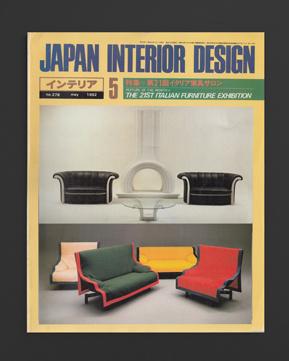
Japan Interior Design No. 278, May 1982
One of Japan’s finest magazines for interior design and home furnishings, edited by Moriyama Kazuhiko.
JAPAN INTERIOR DESIGN presents a monthly comprehensive view of traditional, contemporary, and contemplated environmental designs and pure art forms both Japanese and foreign, through pictures and critical reviews. English captions and summaries of major articles are provided.
Very rare, this issue includes a feature on the 21st Italian Furniture Exhibition
Includes the design work of Yoh Design Office, Masanori Umeda, Mario Bellini, Paolo Piva, Vico Magistretti, Ettore Sottsass, Cini Boeri, Achille Castiiglioni, Aldo Rossi, Paolo Deganello
1982, Japanese / English
Softcover, 96 pages, 32.5 × 25.5 cm
1st Edition, Out of print title / Used*,
Published by
Interior Publishing Co. Ltd. / Tokyo
$75.00 - Out of stock
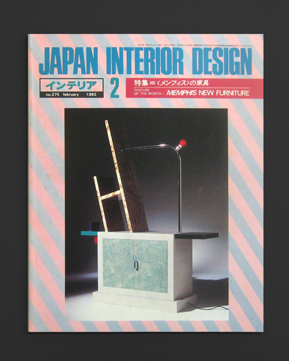
JAPAN INTERIOR DESIGN No.275, February, 1982
One of Japan's finest magazines for interior design and home furnishings, edited by Moriyama Kazuhiko.
JAPAN INTERIOR DESIGN presents a monthly comprehensive view of traditional, contemporary, and contemplated environmental designs and pure art forms both Japanese and foreign, through pictures and critical reviews. English captions and summaries of major articles are provided.
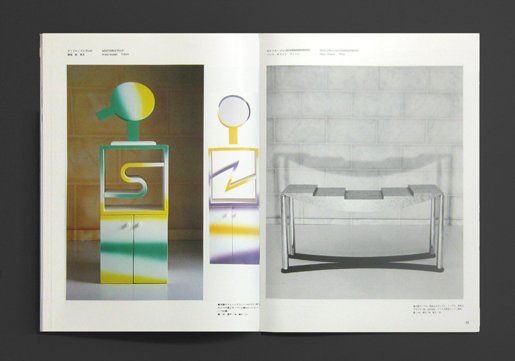
Very rare, this issue includes a special feature on the furniture of Italy's Memphis design group. Fantastic full-colour spreads of photo documentation highlighting some of Memphis' most exciting pieces by Ettore Sottsass, Matteo Thun, Michele de Lucchi, Andrea Branzi, Shiro Kuramata, etc. together with texts by Katsuhiro Yamaguchi and Barbara Radice.
Also includes the design work of Takashi Sakaizawa, Lacquer furniture of Kawakami Motomi, furniture of Abe Hiroshisan, New lighting fixtures by Asahara Shigeaki, Awatsuji Expo: Indigo textile statement by Hiroyuki Shindo, Residential Design of Helsinki: Timo Pentira, Ikedayama housing design: Edward Suzuki Architects, and much more.
1981, Japanese / English
Softcover, 96 pages (colour & b/w ill.), 32.5 x 25.5 cm
1st Edition, Out of print title / Used*,
Published by
Interior Publishing Co. Ltd. / Tokyo
$75.00 - Out of stock
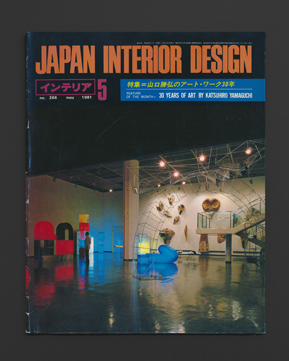
Japan Interior Design No. 266, May 1981
One of Japan’s finest magazines for interior design and home furnishings, edited by Moriyama Kazuhiko.
JAPAN INTERIOR DESIGN presents a monthly comprehensive view of traditional, contemporary, and contemplated environmental designs and pure art forms both Japanese and foreign, through pictures and critical reviews. English captions and summaries of major articles are provided.
Very rare, this issue includes a feature on 30 years of art by Katsuhiro Yamaguchi
Also includes the essay Post Avanguard by Alessandro Mendini and the architecture and design of Takashi Sakaizawa, K.I.D. Associates, Eiri Iwakura + Atelier Muni, Akira Komiyama + Atelier R
1980, Japanese / English
Softcover, 96 pages, 32.5 × 25.5 cm
1st Edition, Out of print title / Used*,
Published by
Interior Publishing Co. Ltd. / Tokyo
$75.00 - Out of stock
Japan Interior Design No. 261, December 1980
One of Japan’s finest magazines for interior design and home furnishings, edited by Moriyama Kazuhiko.
JAPAN INTERIOR DESIGN presents a monthly comprehensive view of traditional, contemporary, and contemplated environmental designs and pure art forms both Japanese and foreign, through pictures and critical reviews. English captions and summaries of major articles are provided.
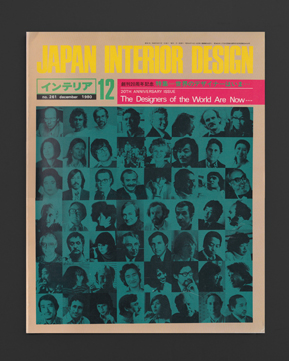
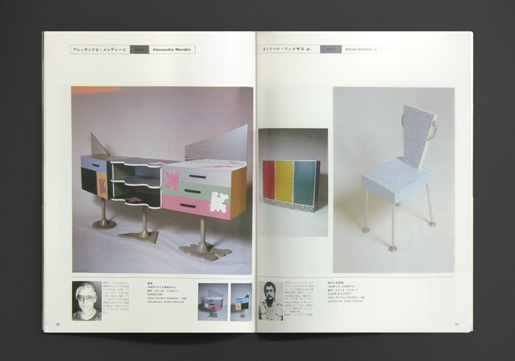
Very rare, this 20th anniversary issue includes the feature The Designers of the World Are Now...
Includes the design work of Mario Bellini, Pentagram Design, Sanae Ando, Vuokko Eskolin-Nurmesniemi, Sheila Hicks, Kazuo Motozawa, Ingo Maurer, Sergio Asti, Cini Boeri, Angelo Mangiarotti, Masanori Umeda, Gaetano Pesce, Alessandro Mendini, Ettore Sottsass, Shigeru Uchida, Shiro Kuramata, Tadao Ando, Shoei Yoh, Cambridge Seven Associates, Robert Herman
1980, Japanese / English
Softcover, 96 pages, 32.5 × 25.5 cm
1st Edition, Out of print title / Used,
Published by
Interior Publishing Co. Ltd. / Tokyo
$75.00 - Out of stock
JAPAN INTERIOR DESIGN
No.250, January 1980
One of Japan’s finest magazines for interior design and home furnishings, edited by Moriyama Kazuhiko.
JAPAN INTERIOR DESIGN presents a monthly comprehensive view of traditional, contemporary, and contemplated environmental designs and pure art forms both Japanese and foreign, through pictures and critical reviews. English captions and summaries of major articles are provided.
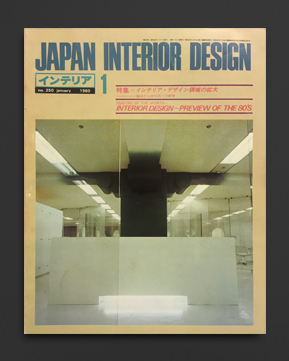
Very rare, this issue includes a huge feature "INTERIOR DESIGN — PREVIEW OF THE 80’s symposium" with Katsuhiro Yamaguchi, Takayasu Ito, Susumu Kitahara, Shiro Kuramata, Toshio Mitsufuji, Minoru Takeyama.
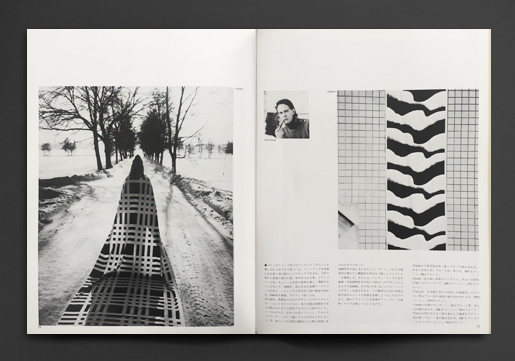
Also includes Beauty Parlor (White House) design: Shinya Okayama; Box Furniture design: Keijiro Odera; Furniture Designed by Eiri Iwakura + Atorie Muni Company; Print Textile Designed by Pentti Rinta; waterfall SCUIPUJIC design: Takamitsu Ito + Mov 81 Fiber Arts by Daniel Graffin essay: Kunihiko Nakagawa; Book Review essay: Shuji Funo; Series - Product Design of the Month MP3" design: Kenshun Ishii + NIDO Industrial Design Office; essay by Shoei Yoh; Equipment essay: U Keikaku, and much more.
1979, Japanese / English
Softcover, 96 pages, 32.5 × 25.5 cm
1st Edition, Out of print title / Used*,
Published by
Interior Publishing Co. Ltd. / Tokyo
$75.00 - Out of stock
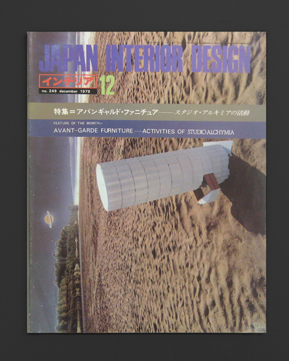
JAPAN INTERIOR DESIGN No.249, December 1979
One of Japan's finest magazines for interior design and home furnishings, edited by Moriyama Kazuhiko.
JAPAN INTERIOR DESIGN presents a monthly comprehensive view of traditional, contemporary, and contemplated environmental designs and pure art forms both Japanese and foreign, through pictures and critical reviews. English captions and summaries of major articles are provided.
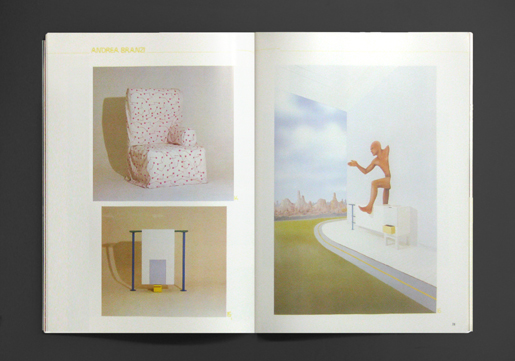
Very rare, this issue features the work of avant-garde Italian design group Studio Alchimia, edited by Kazuko Sato. Full-colour and b&w documentation of the work of designers such as Alessandro Mendini,
Robert & Trix Haussmann, Paola Navone, Lapo Binazzi (UFO), Alessandro Mendini, Andrea Branzi, Ettore Sottsass, and many others for the Alchimia group, along with reproductions of their graphic work and texts by Barbara Ludwig and Franco backlash.
Also includes a profile on Uchida Design Office; Canon Svenska Building Design: Tenbomu Architects; Naoto Yokoyama : 1979 public offering Tenbun Design Forum; New lighting fixtures Yamagiwa; Stool design and Den security strike Chua : Q Design , Riki Watanabe; Katsuo Matsumura : chair design of vertical bar; New furniture for Cassina; Masayuki Kurokawa Architects; Hironori Shirasawa, and much more.
1979, Japanese / English
Softcover, 96 pages, 32.5 × 25.5 cm
1st Edition, Out of print title / Used,
Published by
Interior Publishing Co. Ltd. / Tokyo
$75.00 - Out of stock
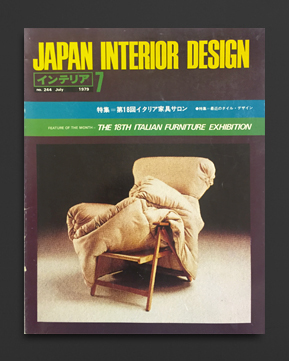
JAPAN INTERIOR DESIGN
No.244, July 1979
One of Japan’s finest magazines for interior design and home furnishings, edited by Moriyama Kazuhiko.
JAPAN INTERIOR DESIGN presents a monthly comprehensive view of traditional, contemporary, and contemplated environmental designs and pure art forms both Japanese and foreign, through pictures and critical reviews. English captions and summaries of major articles are provided.
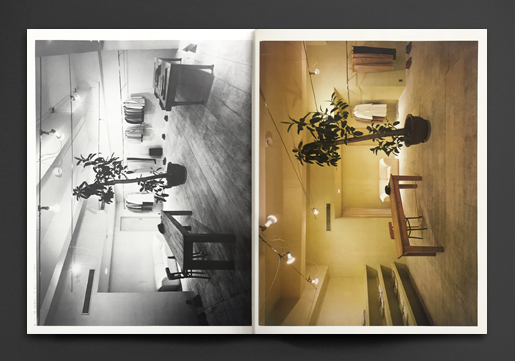
Very rare, this issue includes a huge feature on THE 18TH ITALIAN FURNITURE EXHIBITION (dialogue: Masanori Umeda (designer) + Motomi Kawakami (product designer) Kazuko Sato (product designer) and much more.
Also includes "Contemporary Tile Design" essay: Shunji Nunokawa (architect); Aiko Yamano Salon of Beauty design: the air, Kenji Oki, Irrlicht ― Hisako Watanabe (Rise Design Section); Boutique (COMME des GARCONS, HOMME) design: Strewberry Fields, Takao Kawasaki; Series ― Product Design of the Month - All Weather Camera (HD-1 Fujika) design: Kazuo Okunari, Sotaro Miyagi; The Middle School architect: Kazuhiro Ishii Architect & Associates. essay Chuji Yamamoto (architect); Book Review essay:Furamu Kitagawa (critic); Series ― Reconsideration of Modern Japanese Design ― 2 essay: Hiroaki Arima.Takahiko Kaneko; Series ― Performance essay: Katsuhiro Yamaguchi, and much more.
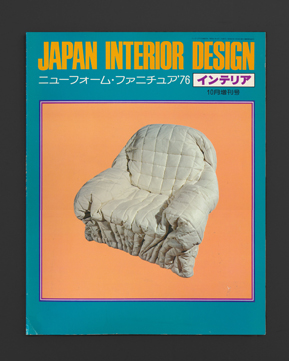
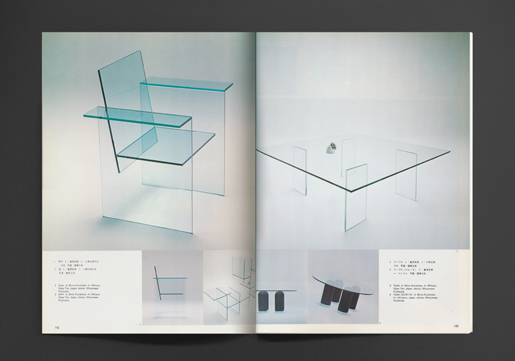
1976, Japanese / English
Softcover, 152 pages (colour & b/w ill.), 32.5 x 25.5 cm
1st Edition, Out of print title / Used*,
Published by
Interior Publishing Co. Ltd. / Tokyo
$95.00 - Out of stock
Japan Interior Design - Extra Issue - New Form Furniture '76
One of Japan’s finest magazines for interior design and home furnishings, edited by Moriyama Kazuhiko.
JAPAN INTERIOR DESIGN presents a monthly comprehensive view of traditional, contemporary, and contemplated environmental designs and pure art forms both Japanese and foreign, through pictures and critical reviews. English captions and summaries of major articles are provided.
Very rare, this issue includes the work of Shiro Kuramata, Ettore Sottsass Jr, Alessandro Mendini, Enzo Mari, Mario Bellini, Gaetano Pesce, Takashi Sakaizawa, Shigeru Uchida
1987, English / Japanese / French
Softcover (die-cut in printed plastic slipcase), 320 pages, 365 x 25.4 cm
1st edition, Out of print title / used*,
Published by
Esprit De Corp / San Francisco
$220.00 - Out of stock
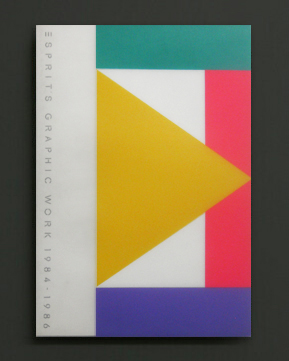
Incredibly rare and iconic, award-winning book published by Esprit De Corp in 1987, designed by Japanese designer and ESPRIT art director Tamotsu Yagi and Roberto Carra (Fiorucci), with photographer Oliviero Toscani (Benetton, Fiorucci, Colors).
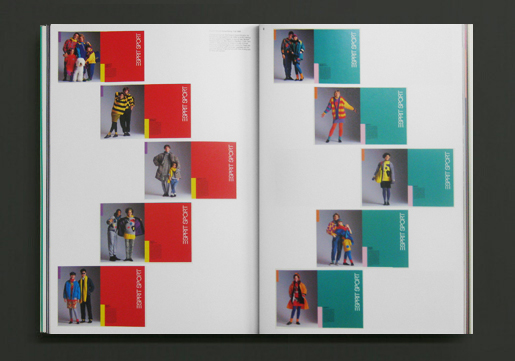
Housed in it's original printed plastic sleeve, this first and only die-cut cover edition showcases all aspects of the design work of the pioneering Californian fashion company, ESPRIT, from the years 1984-1986. Through it's wonderful, quintessentially Californian 1980's post-modern design, this book profiles ESPRIT's product packaging, clothing and home-ware design, pop accessories, catalogue campaigns, advertisements, various identity and event collateral (party announcements, posters, flyers, business cards), apparel print graphics, and retail interior design by Ettore Sottsass and Sottsass Associates.
A one-of-a-kind, visually dazzling book and a wonderful, rare piece of commercial design history that led ESPRIT and Tamotsu Yagi to win the AIGA design leadership award in 1986.
English, Japanese and French text.
First edition, 1987.
In 1968, American environmentalist, adventure film-maker, conservationist and founder of The North Face outdoor clothing company, Douglas Tompkins, his wife Susie, and her friend Jane Tise began selling girls' dresses out of the back of a VW bus; in 1971, they incorporated the booming business under the name "Plain Jane" which later became ESPRIT, one of the hottest and most successful clothing companies of the 1970's, 1980's and 1990's.
From the early days running out of the Tompkins’ apartment in San Francisco, Douglas Tompkins titled himself "image director", overseeing all aspects of the company's image, from store design to catalog layout, while his wife served as design director. In 1984 the role of art director was taken up by Japanese designer Tamotsu Yagi. All facets of design were of primary importance to ESPRIT. From the iconic logo design by John Casado (who aslo designed the first Apple Macintosh Computer logo and album covers for the Doobie Brothers) to the ESPRIT store and office interiors by Ettore Sottsass (of Memphis Design Group and Sottsass Associates) to the fashion campaign photography of Oliviero Toscani (also well-known for his controversial campaigns for Benetton, work with Fiorucci, and co-founder of Colors magazine), ESPRIT was a total design vision of the 1980's.
Due to the weight of this volume, your order will possibly incur additional postage costs. We will contact you with the best shipping advice upon your order, or alternatively, please email us in advance. Thank you for understanding.
1972, English / Japanese
Softcover (w. frenchfolds), 52 pages, 26 x 36.2 cm
1st Edition, Out of print title / used*,
Published by
A.D.A Edita / Tokyo
$120.00 - Out of stock
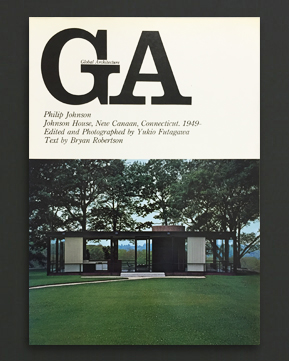
GA 12
1972
Philip Johnson
Johnson House, New Canaan, Connecticut, 1949-
Edited and Photographed by Yukio Futagawa
Text by Bryan Robertson
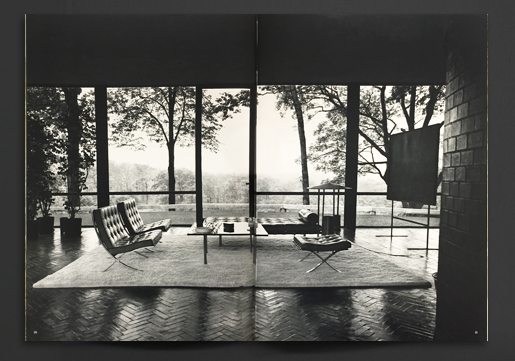
One of the finest architecture series ever published, the world renowned GA (Global Architecture) series, presented by the highly esteemed publishing house that also published the GA Document, GA Houses, and GI (Global Interior) architectural publications.
Each over-sized photographic folio issue of GA highlights a renowned international architect and a selection of their architectural projects.
Absolutely stunning and vivid large-format (usually full-bleed) architectural photography of the selected building's interiors, exteriors and architectural details, along with texts (in English and Japanese) and floor-plans/elevation drawings make up the profiles on each featured architectural project. The visual generosity of these handsomely designed and beautifully printed over-sized publications make them a treasure for any architecture or interior design enthusiast or collector.
Printed in Japan
1977, English / Japanese
Softcover (w. frenchfolds), 52 pages, 26 x 36.2 cm
1st Edition, Out of print title / used*,
Published by
A.D.A Edita / Tokyo
$120.00 - Out of stock
GA 43
1977
Marcel Breuer
Koerfer House (with Herbert Beckhard)
Moscia, Tessin, Switzerland 1963-67
Stillman House III (with Tician Papachristou)
Litchfield, Connecticut 1972-74
Gagarin House II (with Tician Papachristou)
Litchfield, Connecticut 1973-74
Edited and Photographed by Yukio Futagawa
Text by Stanley Abercrombie
One of the finest architecture series ever published, the world renowned GA (Global Architecture) series, presented by the highly esteemed publishing house that also published the GA Document, GA Houses, and GI (Global Interior) architectural publications.
Each over-sized photographic folio issue of GA highlights a renowned international architect and a selection of their architectural projects.
Absolutely stunning and vivid large-format (usually full-bleed) architectural photography of the selected building's interiors, exteriors and architectural details, along with texts (in English and Japanese) and floor-plans/elevation drawings make up the profiles on each featured architectural project. The visual generosity of these handsomely designed and beautifully printed over-sized publications make them a treasure for any architecture or interior design enthusiast or collector.
1979, English / Japanese
Softcover (w. frenchfolds), 50 pages, 26 x 36.2 cm
1st Edition, Out of print title / used*,
Published by
A.D.A Edita / Tokyo
$120.00 - Out of stock
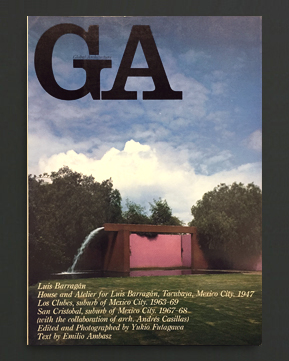
GA 48
1979
Luis Barragán
House and Atelier for Luis Barragán, Tacubaya, Mexico City, 1947
Los Clubes, suburb of Mexico City, 1963-69
San Cristobal, suburb of Mexico City, 1967-68 (with the collaboration of arch. Andres Casillas)
Edited and Photographed by Yukio Futagawa
Text by Emilio Ambasz
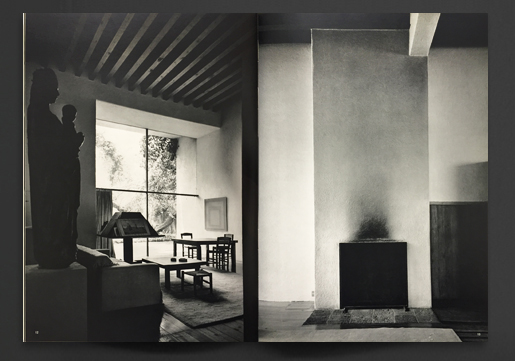
One of the finest architecture series ever published, the world renowned GA (Global Architecture) series, presented by the highly esteemed publishing house that also published the GA Document, GA Houses, and GI (Global Interior) architectural publications.
Each over-sized photographic folio issue of GA highlights a renowned international architect and a selection of their architectural projects.
Absolutely stunning and vivid large-format (usually full-bleed) architectural photography of the selected building's interiors, exteriors and architectural details, along with texts (in English and Japanese) and floor-plans/elevation drawings make up the profiles on each featured architectural project. The visual generosity of these handsomely designed and beautifully printed over-sized publications make them a treasure for any architecture or interior design enthusiast or collector.
Printed in Japan
1988, English / Japanese
Softcover (w. dustjacket), 85 pages, 30 x 23.5 cm
1st Edition, Out of print title / Used*,
Published by
Rikuyo-Sha / Tokyo
$68.00 - Out of stock
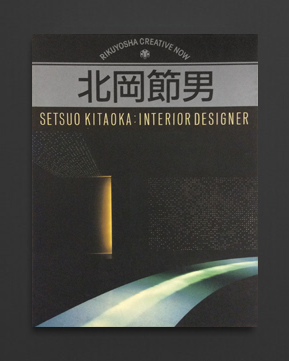
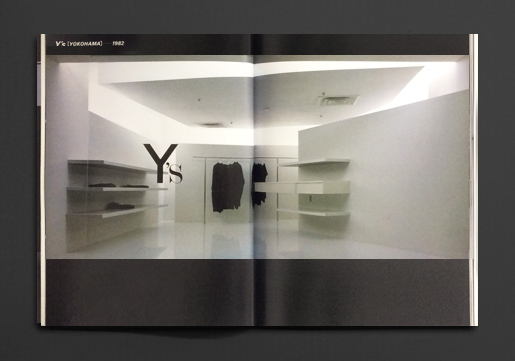
Published in 1988 by Rikuyo-Sha, Tokyo, this is the only major monograph profiling the work of famed Japanese interior and furniture designer, Setsuo Kitaoka.
Working closely with fashion designer Yohji Yamamoto to create the exquisite boutiques and stage designs for Y's and Yohji Yamamoto throughout the 1980's, Kitaoka also created incredible interiors of "lightness and wit" for Kenzo, Barney's New York, Basco, St. Honore, Men's Melrose, Solariste, TKX, and many more, most of which are profiled throughout this publication in lush photographic spreads, alongside his chair, table and lamp designs of the period.
2014, English
Softcover, 430 pages, 11.5 x 17.5 cm
Published by
Sequence Press / New York
Urbanomic / Cornwall
$45.00 - Out of stock
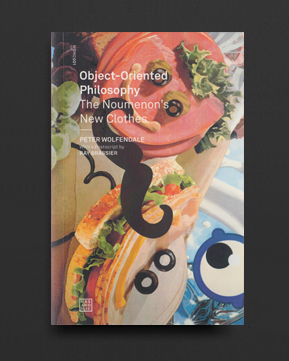
Object-Oriented Philosophy: The Noumenon's New Clothes
Peter Wolfendale
Published by Urbanomic
October 2014
Postscript by Ray Brassier
Paperback 115x175mm, 430pp.
ISBN 978-0-9575295-9-5
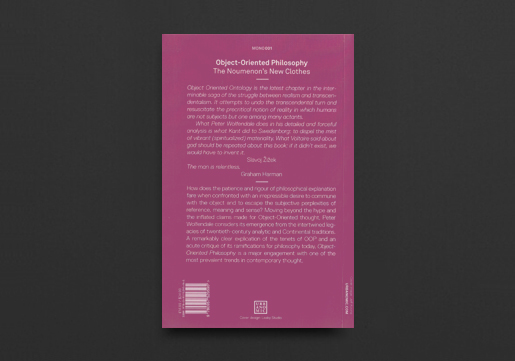
How does the patience and rigour of philosophical explanation fare when confronted with an irrepressible desire to commune with the object and to escape the subjective perplexities of reference, meaning and sense?Moving beyond the hype and the inflated claims made for 'Object-Oriented' thought, Peter Wolfendale considers its emergence in the light of the intertwined legacies of twentieth-century analytic and Continental traditions.
Both a remarkably clear explication of the tenets of OOP and an acute critique of the movement's ramifications for philosophy today, Object-Oriented Philosophy is a major engagement with one of the most prevalent trends in recent philosophy.
Object Oriented Ontology is the last chapter in the interminable saga of the struggle between realism and transcendentalism. It attempts to undo the transcendental turn and resuscitate the precritical notion of reality in which humans are not subjects but one among many actants. What Peter Wolfendale does in his detailed and forceful analysis is what Kant did to Swedenborg: to dispel the mist of vibrant (spiritualized) materiality. What Voltaire said about god should be repeated about this book: if it didn't exist, we would have to invent it.
Slavoj Žižek
Contents
Preface
Introduction
The Lava That Dare Not Speak Its Name
1.1. Withdrawal
1.2. The Fourfold
1.3. Vicarious Causation
The Withdrawal Of Arguments
2.1. Tools, Knowledge, And Distinctness
2.2. Heidegger, Husserl, And Kripke
2.3. Occasionalism, Independence, And Supplementation
Objection-Oriented Philosophy
3.1. Sense And Sensuality
3.2. Qualities And Qualia
3.3. What Are Relations Anyway?
3.4. What Are Objects Anyway?: On Ontological Liberalism
3.5. What is Metaphysics Anyway?
3.6. What Does It All Mean?
Speculative Dystopia
4.1. The Spectre Of The Past
4.2. The Sins Of The Present
4.3. The Horrors Of The Future
Specious Realism
Ray Brassier
Postscript: Speculative Autopsy
2014, English
Softcover, 1013 pages, 11.5 x 17.5 cm
Edition of 1500 numbered copies,
Published by
Urbanomic / Cornwall
$62.00 - Out of stock
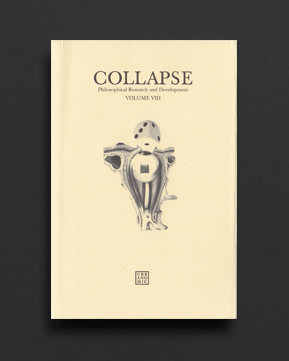
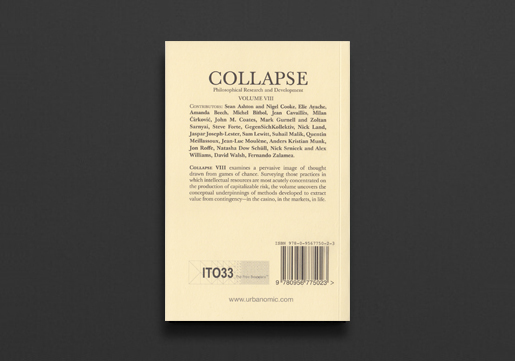
Collapse Volume VIII: Casino Real
Robin Mackay (Ed.)
Philosophical Research and Development.
The wager is situated on the dividing line between pure lived action and autonomous speculation: at once an impetus toward the future, recognition of a radical novelty, risk; and, on the other hand, an attempt at domination through the imposition of order, the establishment of symmetries. Its essence, the unification of these two constitutive themes, is far from being clear.
Contents
ROBIN MACKAY - EDITORIAL INTRODUCTION
JEAN-LUC MOULÈNE - UNTITLED
AMANDA BEECH - The Church The Bank The Art Gallery
JEAN CAVAILLÈS - From Collective to Wager
STEVE FORTE - The Ultimate Cooler (Interview)
UNKNOWN ARTIST - Angel Deck with Linework
NATASHA DOW SCHÜLL - Engineering Chance
JASPAR JOSEPH-LESTER - A Guide to the Casino Architecture of Wedding
DAVID WALSH - From BlackJack to Monanism (Interview)
ANDERS KRISTIAN MUNK - Dice-Like and Distributed: Time Machines, Space Engines and the Enactment of Risk Markets
NICK LAND - Transcendental Risk
MILAN ĆIRKOVIĆ - The Greatest Gamble in History
JOHN COATES, MARK GURNELL, ZOLTAN SARNYAI - From Molecule to Market
NICK SRNICEK AND ALEX WILLIAMS - On Cunning Automata: Financial Acceleration at the Limits of the Dromological
SAM LEWITT - Notes from New Jersey
ELIE AYACHE - The Writing of the Market (Interview)
JON ROFFE - From a Restricted to a General Pricing Surface
SUHAIL MALIK - The Ontology of Finance: Price, Power, and the Arkhé-Derivative
QUENTIN MEILLASSOUX - Mallarmé's Materialist Divinization of the Hypothesis
SEAN ASHTON / NIGEL COOKE - Mr Heggarty Goes Down
GEGENSICHKOLLEKTIV - CAUTION
FERNANDO ZALAMEA - Peirce's Tychism: Absolute Contingency for our Transmodern World
MICHEL BITBOL - Quantum Mechanics as Generalised Theory of Probabilities
ELIE AYACHE - A Formal Deduction of the Market
2012, English
Softcover, 631 pages, 10.8 x 17.5 cm
2nd Edition,
Published by
Urbanomic / Cornwall
$52.00 - Out of stock
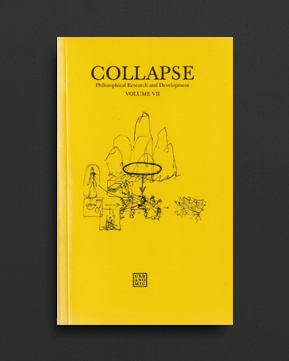
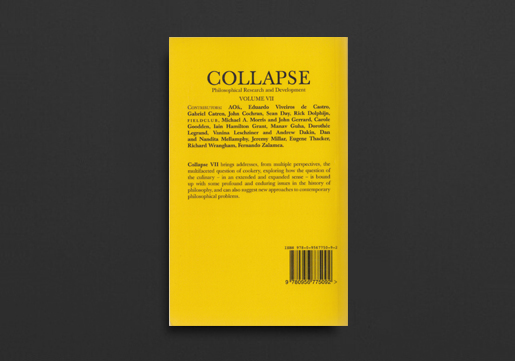
Collapse Volume VII: Culinary Materialism
(Reissued Edition)
Reza Negarestani & Robin Mackay (Eds.)
Philosophical Research and Development.
Is it possible to maintain that cookery has a philosophical pertinence without merely appending philosophy to our burgeoning gastroculture? How might the everyday sense of the culinary be expanded into a culinary materialism wherein synthesis, experimentation, and operations of mixing and blending take precedence over analysis, subtraction and axiomatisation?
Drawing on resources ranging from anthropology to chemistry, from hermetic alchemy to contemporary mathematics, Collapse VII: Culinary Materialism undertakes a trans-modal experiment in culinary thinking, excavating the cultural, industrial, physiological, chemical and even cosmic grounds of cookery, and proposing new models of culinary thought for the future.
Contents
ROBIN MACKAY & REZA NEGARESTANI - Editorial Introduction
IAIN HAMILTON GRANT - The Chemical Paradigm (Interview)
JOHN GERRARD & MICHAEL A. MORRIS - Corn Bomb: An Extended History of Nitrogen
FIELDCLUB - Whey To Go: On the Hominid Appropriation of the Pig-Function
RICK DOLPHIJN - The New Alimentary Continuum
MANABRATA GUHA - Vague Weaponizations, or The Chemistry of Para-Tactical Engagements
CAROL GOODDEN - FOOD and the City (Interview)
AO& - Where's the Edge of the Pot? (Interview)
JOHN COCHRAN - Object-Oriented Cookery
RICHARD WRANGHAM - Reason in the Roasting of Eggs
VANINA LESCHZINER AND ANDREW DAKIN - Theorizing Cuisine from Medieval to Modern Times: Cognitive Structures, the Biology of Taste, and Culinary Conventions
SEAN DAY - The Human Sensoria and a Synaesthetic Approach to Cooking
JEREMY MILLAR - Black Cake (A Recipe for Emily Dickinson, for Emily Dickinson)
DAN AND NANDITA MELLAMPHY - Ec[h]ologies of the Désêtre
EDUARDO VIVEIROS DE CASTRO - The Metaphysics of Predation
EUGENE THACKER - Spiritual Meat: Resurrection and Religious Horror in Bataille
DOROTHÉE LEGRAND - Ex-Nihilo: Forming a Body Out of Nothing
FERNANDO ZALAMEA - Analytical Jelly and Transmodern Tatin
GABRIEL CATREN - On Philosophical Alchimery, Or Why All Chimeric Compositions are Philosophical Stones
APPENDIX OF RECIPES - Compiled by the editors
2012, English
Softcover, 540 pages, 10.8 x 17.5 cm
2nd Edition,
Published by
Urbanomic / Cornwall
$52.00 - Out of stock
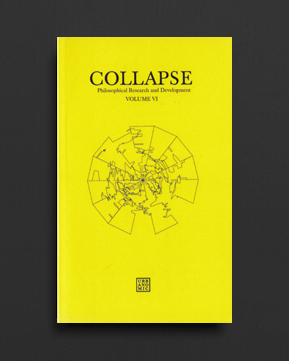
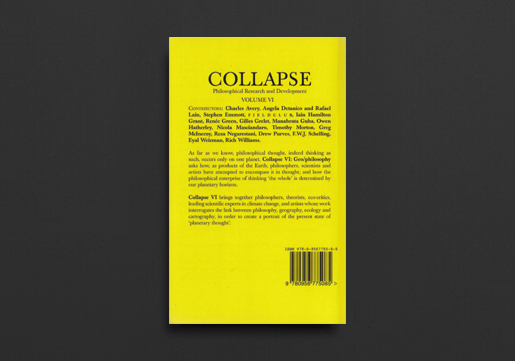
Collapse Volume VI: Geo/Philosophy (Reissued Edition)
Robin Mackay (Ed.)
Philosophical Research and Development.
Following Collapse V's inquiry into the legacy of Copernicus' deposing of Earth from its central position in the cosmos, Collapse VI: Geo/philosophy poses the question: Is there nevertheless an enduring bond between philosophical thought and its terrestrial support, or conversely, is philosophy's task to escape the planetary horizon?
Following early-modern geophilosophical experiments in utopia, geographies and cartographies real and imaginary have played a double role in philosophy, serving both as governing metaphor and as an ultimate grounding for philosophical thought.
Collapse VI: Geo/philosophy begins with the provisional premise that the Earth does not square elements of thought but rather rounds them up into a continuous spatial and geographical horizon. Geophilosophy is thus not necessarily the philosophy of the earth as a round object of thought but rather the philosophy of all that can be rounded as an (or the) earth. But in that case, what is the connection between the empirical earth, the contingent material support of human thinking, and the abstract 'world' that is the condition for a 'whole' of thought?
Urgent contemporary concerns introduce new dimensions to this problem: The complicity of Capitalism and Science concomitant with the nomadic remobilization of global Capital has caused mutations in the field of the territorial, shifting and scrambling the determinations that subtended modern conceptions of the nation-state and territorial formations. And scientific predictions presents us with the possibility of a planet contemplating itself without humans, or of an abyssal cosmos that abides without Earth - these are the vectors of relative and absolute deterritorialization which nourish the twenty-first century apocalyptic imagination. Obviously, no geophilosophy can remain oblivious to the unilateral nature of such un-earthing processes. Furthermore, the rise of so-called rogue states which sabotage their own territorial formation in order to militantly withstand the proliferation of global capitalism calls for an extensive renegotiation of geophilosophical concepts in regard to territorializing forces and the State. Can traditions of geophilosophical thought provide an analysis that escapes the often flawed, sentimental or cryptoreligious fashions in which popular discourse casts these catastrophic developments?
Collapse VI brings together philosophers, theorists, eco-critics, leading scientific experts in climate change, and artists whose work interrogates the link between philosophical thought, geography and cartography, in order to create a portrait of the present state of 'planetary thought'.
Contents
ROBIN MACKAY - Editorial Introduction
NICOLA MASCIANDARO - Becoming Spice: Commentary as Geophilosophy
IAIN HAMILTON GRANT - Introduction to Schelling's On the World Soul
F. W. J. SCHELLING - On the World Soul (Extract)
GREG MCINERNY, DREW PURVES, RICH WILLIAMS, STEPHEN EMMOTT - New Ecologies (Interview)
TIMOTHY MORTON - Thinking Ecology: The Mesh, the Strange Stranger and the Beautiful Soul
F I E L D C L U B - How Many Slugs Maketh the Man?
OWEN HATHERLEY - Fossils of Time Future: Bunkers and Buildings from the Atlantic Wall to the South Bank
EYAL WEIZMAN - Political Plastic (Interview)
ANGELA DETANICO AND RAFAEL LAIN - A Given Time / A Given Place
MANABRATA GUHA - Introduction to SIMADology: Polemos in the 21st Century
REZA NEGARESTANI - Undercover Softness: An Introduction to the Architecture and Politics of Decay
ROBIN MACKAY - Philosophers' Islands
CHARLES AVERY - The Islanders: Epilogue
GILLES GRELET - Theory is Waiting
RENEÉ GREEN - Endless Dreams and Water Between