World Food Books' programme is largely produced on Kulin Nation land. We acknowledge the Wurundjeri people of the Kulin Nation as the first and continuing custodians of this land, and pay respect to their Elders past, present, and emerging.
World Food Books is an arts and special interests bookshop in Naarm / Melbourne. Founded in 2010, World Food Books is devoted to the presentation of a rotating, hand-selection of international art, design, literary and counterculture publications with an emphasis on the anti-traditional, the experimental, the avant-garde, the heretic, the marginal.
Presenting new titles alongside rare and out-of-print books, catalogues and journals spanning the fields of modern and contemporary art, design, photography, illustration, film, literature, poetry, cultural theory, philosophy, sexuality, popular and underground culture in its many radical forms, World Food Books wishes to encourage adventurous, thoughtful and open-minded reading, looking, writing, and exchange of publishing and ideas, both current and historical.
As well as our bookshop, located in Melbourne's historical Nicholas Building, all of our inventory is available internationally via our online mail-order service.
World Food Books semi-regularly co-ordinates "Occasions", a programme of exhibits and events at the bookshop and in partnership with other hosts (such as museums and art galleries) that develop out of the activities, relationships and content of the bookshop itself.
World Food Books
The Nicholas Building
37 Swanston Street
Room 5, Level 6
Melbourne 3000
Australia
SHOP HOURS:
Thu–Fri 12–6, Sat 12–5
WEB-SHOP OPEN 24/7
World Food Books
Postal Address:
PO Box 435
Flinders Lane
Victoria 8009
Australia
Art
Theory / Essay
Architecture / Interior
Graphic Design / Typography
Photography
Fashion
Eros
LGBTQ+
Fiction / Poetry
Weird / Speculative / Science Fiction / Horror
Transgressive / Visceral / Abject
Symbolism / Decadence / Fin de siècle
Film / Video
Painting
Sculpture / Installation
Performance / Dance / Theater
Drawing
Sound / Music
Curatorial
Group Shows / Collections
Periodicals
Out-of-print / Rare
Posters / Ephemera / Discs
Signed Books
World Food Books Gift Voucher
World Food Book Bag
Australian Art
Australian Fiction
Australian Science Fiction / Speculative Fiction
Australian Poetry
Australian Photography
Japanese Photography
Conceptual Art
Minimal Art
Dada
'Pataphysics / Oulipo
Fluxus
Concrete Poetry
Pop Art
Surrealism
Arte Povera
Arte Informale / Haute Pâte / Tachism
Nouveau Réalisme / Zero / Kinetic
Situationism / Lettrism
Collage / Mail Art / Xerox Art
Art Brut / Folk / Visionary / Fantastic
Illustration / Graphic Art / Bandes Dessinées
Furniture
Italian Radical Design / Postmodernism
Textiles
Ceramics / Glass
Counterculture
Protest / Revolt
Philosophy
Psychoanalysis
Anthropology
Anarchism
Socialism / Anarchism / Communism / Capitalism
Literary Theory / Semiotics / Language
Feminism / Women's Studies
Gender Studies / Sexuality
Anthropology
Fetishism / BDSM
Drugs / Psychedelia
Crime / Violence
Animal Rights / Veganism
Occult / Esoterica
Ecology / Earth / Alternative Living
Whole Earth / Crafts
All prices in AUD (Australian dollars)
Pick-Ups
Pick-up orders can be collected in our bookshop during opening hours after order date. Please collect any Pick-up orders within 2 weeks of ordering as we have limited storage space. Orders will be released back into stock if not collected within this time. No refunds can be made for pick-ups left un-collected. If you cannot make it in to the bookshop in this time-frame, please choose postage option.
Return Policy
All sales are final. We do accept returns (for refund or exchange) for items received in error. All our orders are packed with special care using heavy-duty padding and cardboard book-mailers or bubble mailers (for smaller books), using reinforcement where required. We cannot take responsibility for any lost, stolen or damaged parcels.
Insurance
Should you wish to insure your package, please email us directly after placing your order and we can organise this at a small extra expense. Although all standard/express tracked packages are very safe and dependable, we cannot take responsibility for any lost, stolen or damaged parcels. We recommend insurance on valuable orders.
Interested in selling your old books, catalogues, journals, magazines, comics, fanzines, ephemera? We are always looking for interesting, unusual and out-of-print books to buy. We only buy books in our fields of interest and specialty, and that we feel we can resell.
We base these prices on desirability, market value, in-print prices, condition and our current stock levels. We offer cash, store credit, and can take stock on consignment. All
about 25% of the price we expect to get when we sell them, or 30% in store credit. We base these prices on desirability, market value, in-print prices, condition and our current stock levels.
Sell your books any day of the week. You can drop them off and return later. If you have a lot of books, we can visit your Sydney home.
We buy books that we feel we can resell. We offer about 25 % of the price we expect to get when we sell them, or 30% in store credit. We base these prices on desirability, market value, in-print prices, condition and our current stock levels.
Philadelphia Wireman
03 August - 01 September, 2018
World Food Books is proud to announce our next Occasion, the first presentation of sculptures by Philadelphia Wireman in Australia.
The Philadelphia Wireman sculptures were found abandoned in an alley off Philadelphia’s South Street on trash night in 1982. Their discovery in a rapidly-changing neighbourhood undergoing extensive renovation, compounded with the failure of all attempts to locate the artist, suggests that the works may have been discarded after the maker’s death. Dubbed the "Philadelphia Wireman" during the first exhibition of this work, in 1985, the maker’s name, age, ethnicity, and even gender remain uncertain. The entire collection totals approximately 1200 pieces, all intricately bound together with tightly-wound heavy-gauge wire (along with a few small, abstract marker drawings, reminiscent both of Mark Tobey and J.B. Murry). The dense construction of the work, despite a modest range of scale and materials, is singularly obsessive and disciplined in design: a wire armature or exoskeleton firmly binds a bricolage of found objects including plastic, glass, food packaging, umbrella parts, tape, rubber, batteries, pens, leather, reflectors, nuts and bolts, nails, foil, coins, toys, watches, eyeglasses, tools, and jewellery.
Heavy with associations—anthropomorphic, zoomorphic, and socio-cultural responses to wrapped detritus—the totemic sculptures by Philadelphia Wireman have been discussed in the context of work created to fulfil the shamanistic needs of alternative religions in American culture. Curators, collectors, and critics have variously compared certain pieces to sculpture from Classical antiquity, Native American medicine bundles, African-American memory jugs, and African fetish objects. Reflecting the artist’s prolific and incredibly focused scavenging impulse, and despite—or perhaps enhanced by—their anonymity, these enigmatic objects function as urban artefacts and arbiters of power, though their origin and purpose is unknown. Philadelphia Wireman, whatever their identity, possessed an astonishing ability to isolate and communicate the concepts of power and energy through the selection and transformation of ordinary materials. Over the course of the past two decades, this collection has come to be regarded as an important discovery in the field of self-taught art and vernacular art.
Presented in collaboration with Fleisher-Ollman Gallery, Philadelphia, and Robert Heald, Wellington.
Susan Te Kahurangi King
02 February - 10 March, 2018
Susan Te Kahurangi King (24 February 1951 - ) has been a confident and prolific artist since she was a young child, drawing with readily available materials - pencils, ballpoint pens and felt-tip markers, on whatever paper is at hand. Between the ages of four and six Susan slowly ceased verbal communication. Her grandparents William and Myrtle Murphy had developed a special bond with Susan so they took on caring responsibilities for extended periods. Myrtle began informally archiving her work, carefully collecting and storing the drawings and compiling scrapbooks. No drawing was insignificant; every scrap of paper was kept. The King family are now the custodians of a vast collection containing over 7000 individual works, from tiny scraps of paper through to 5 meter long rolls.
The scrapbooks and diaries reveal Myrtle to be a woman of great patience and compassion, seeking to understand a child who was not always behaving as expected. She encouraged Susan to be observant, to explore her environment and absorb all the sights and sounds. Myrtle would show Susan’s drawings to friends and people in her community that she had dealings with, such as shopkeepers and postal workers, but this was not simply a case of a grandmother’s bias. She recognised that Susan had developed a sophisticated and unique visual language and sincerely believed that her art deserved serious attention.
This was an unorthodox attitude for the time. To provide some context, Jean Dubuffet coined the term Art Brut in 1945 to describe work created by self-taught artists – specifically residents of psychiatric institutions and those he considered to be visionaries or eccentrics. In 1972 Roger Cardinal extended this concept by adopting the term Outsider Art to describe work made by non-academically trained artists operating outside of mainstream art networks through choice or circumstance. Susan was born in Te Aroha, New Zealand in 1951, far from the artistic hubs of Paris and London that Dubuffet and Cardinal operated in. That Myrtle fêted Susan as a self-taught artist who deserved to be taken seriously shows how progressive her attitudes were.
Susan’s parents Doug and Dawn were also progressive. Over the years they had consulted numerous health practitioners about Susan’s condition, as the medical establishment could not provide an explanation as to why she had lapsed into silence. Dawn educated herself in the field of homeopathy and went on to treat all twelve of her children using these principles – basing prescriptions on her observations of their physical, mental and emotional state.
Doug was a linguist with an interest in philosophy who devoted what little spare time he had to studying Maori language and culture. To some extent their willingness to explore the fringes of the mainstream made them outsiders too but it was their commitment to living with integrity and their respect for individuality that ensured Susan’s creativity was always encouraged.
Even though Susan’s family supported her artistic pursuits, some staff in schools and hospitals saw it as an impediment to her assimilation into the community and discouraged it in a variety of ways. Her family was not always aware of this and therefore did not fully understand why Susan stopped drawing in the early 1990s. However, rather than dwell on the challenges that Susan faced in pursuit of her artistic practice, they prefer to highlight her achievements. In 2008 Susan began drawing again in earnest, after an almost 20 year interruption, and her work is now shown in galleries around the world.
Susan grew up without television and has been heavily influenced by the comics she read as a child. She is absolutely fearless in the appropriation of recognizable characters, such as Donald Duck and Mickey Mouse, in her work. She twists their limbs, contorts their faces, compresses them together, blends them into complex patterned backgrounds - always imbuing them with an incredible energy. Although Susan often used pop culture characters in her work they are not naive or childlike. These are drawings by a brilliant self-taught artist who has been creating exceptional work for decades without an audience in mind.
Mladen Stilinović
"Various Works 1986 - 1999"
02 February 16 - September 10, 2016
Various works 1986 - 1999, from two houses, from the collections of John Nixon, Sue Cramer, Kerrie Poliness, Peter Haffenden and Phoebe Haffenden.
Including: Geometry of Cakes (various shelves), 1993; Poor People’s Law (black and white plate), 1993; White Absence (glasses, ruler, set square, silver spoon, silver ladel with skin photograph and wooden cubes), 1990-1996; Exploitation of the Dead (grey and red star painting, wooden painting, black spoon with red table, red plate), 1984-1990; Money and Zeros (zero tie, paintings made for friends in Australia (Sue, John, Kerrie), numbers painting), 1991-1992; Words - Slogans (various t-shirts) - “they talk about the death of art...help! someone is trying to kill me”, “my sweet little lamb”, “work is a disease - Karl Marx”; Various artist books, catalogues, monographs, videos; Poster from exhibition Insulting Anarchy; "Circular" Croatian - Australian edition; Artist book by Vlado Martek (Dostoyevsky); more.
Thanks to Mladen Stilinović and Branka Stipančić.
Jonathan Walker
Always Will Need To Wear Winter Shirt Blue + Ochre Small Check Pattern
21 August - 21 September, 2015
Untitled
I am not a great reader of poetry but I always return to the work of Melbourne poet, Vincent Buckley (1925- 1988). Perhaps I find his most tantalising piece to be not a finished poem but a fragment left on a scrap of paper discovered on his desk after the poet’s death.
The poetry gathers like oil
In the word-core, and spreads
It has its music meet,
Its music is in movement.
This fragment is more the shell left behind from a volatile thought than a finished poem. I find the last two lines honest but awkward whereas the first two lines work like an arrow. Most likely he could not find a resolution so it was left. Still, in its present form, it remains an eloquent testimony to the ultimate failure of a medium to express mobile thought and sensation, in Buckley’s case, through verbal language. It’s an important matter because this is something all artists have to deal with regardless of the medium.
I have never written a poem, however, I am forever copying fragments from books on paper scraps in a vain effort to fix certain notions in my head. At first, they function as bookmarks that are sometimes returned to when I open the book. But before long, as they accumulate, they fall out littering the table interspersed with A4 photocopies, bills, books and medications.
To return to Buckley’s fragment, the first two lines very much evoke how I paint nowadays. As you age, detail diminishes and patches of light become more luminous and float. I feel the most honest way of dealing with this is by smearing the oil paint on the canvas with the fingers and working close-up, blind. Only if the patches coalesce into an approaching image can the work gain a life.
-
Jonathan Walker was born in Melbourne, Australia and brought up on a dairy farm in Gippsland. In the 1970’s he studied painting at RMIT and won the Harold Wright Scholarship to the British Museum, London. During the 1980’s he exhibited at Pinacotheca Gallery, Richmond and had work shown at the NGV and Heidi City Art Gallery. Over the same period he designed the cover for the “Epigenesi” LP by Giancarlo Toniutti, Italy and conducted a mail exchange work with Achim Wollscheid, Germany. The work with artists through the post resulted in an article published in the bicentenary issue of Art and Australia 1988. He showed in artist run spaces such as WestSpace in the 90’s and 2000’s, and until 2012, taught painting at Victoria University, which is where we (Colleen Ahern and Lisa Radford) as organisers of the exhibition, among many others, had the privilege of being his student.
Walker’s knowledge was imparted to students through the careful selection of music, literature, and artists found in books that he himself had ordered for the library. Walker’s strategy was the generosity of sharing his vast knowledge with references specific to each student and their context.
Walker’s paintings share a similar focus and intimacy.
This exhibition presents a small selection of recent paintings alongside a publication that includes Walker’s writing. Observational and analytical, Walker’s work is a type of material notation — the time of day, colour and how it is blended, the both specific and fleeting location of a reflection on lino or the question of whether a chair leg should be included in a painting.
Please join us on Friday August 21 between 6-8pm to celebrate the opening of the exhibition.
Curated by Colleen Ahern and Lisa Radford.
B. Wurtz
Curated by Nic Tammens
March 26 - April 4, 2015
B.Wurtz works from a basement studio in his home on Manhattan’s Lower East Side.
This local fact is attested to by the plastic shopping bags and newsprint circulars that appear in his work. As formal objects, they don’t make loud claims about their origins but nonetheless transmit street addresses and places of business from the bottom of this long thin island. Like plenty of artists, Wurtz is affected by what is local and what is consumed. His work is underpinned by this ethic. It often speaks from a neighborhood or reads like the contents of a hamper:
“BLACK PLUMS $1.29 lb.”
“Food Bazaar”
“USDA Whole Pork Shoulder Picnic 99c lb.”
“RITE AID Pharmacy, with us it’s personal.”
“H. Brickman & Sons.”
“Sweet Yams 59c lb."
Most of the work in this exhibition was made while the artist was in residence at Dieu Donne, a workshop dedicated to paper craft in Midtown. Here Wurtz fabricated assemblages with paper and objects that are relatively lightweight, with the intention that they would be easily transportable to Australia. This consideration isn’t absolute in Wurtz’s work, but was prescriptive for making the current exhibition light and cheap. Packed in two boxes, these works were sent from a USPS post office on the Lower East Side and delivered to North Melbourne by Australia Post.
Wurtz appears courtesy of Metro Pictures, New York.
Thanks to Rob Halverson, Joshua Petherick, Sari de Mallory, Matt Hinkley, Helen Johnson, Fayen d'Evie, Ask Kilmartin, Lisa Radon, Ellena Savage, Yale Union, and "Elizabeth".
John Nixon
"Archive"
December 15 - January 20, 2014
The presentation of John Nixon's archive offered a rare showcase of this extensive collection of the artist's own publications, catalogues, posters, ephemera, editions and more, from the mid 1980s onwards, alongside a selection of his artworks.
Organized by John Nixon, Joshua Petherick and Matt Hinkley.
<a href=http://wfb.public-office.info/artist/john-nixon>All titles by John Nixon
"Habitat"
at Minerva, Sydney (organised by Joshua Petherick and Matt Hinkley)
November 15 - December 20, 2014
Lupo Borgonovo, Janet Burchill & Jennifer McCamley,
Lewis Fidock, HR Giger, Piero Gilardi, Veit Laurent Kurz,
Cinzia Ruggeri, Michael E. Smith, Lucie Stahl, Daniel Weil, Wols
Press Release:
“...It contained seven objects. The slender fluted bone, surely formed for flight, surely from the wing of some large bird. Three archaic circuitboards, faced with mazes of gold. A smooth white sphere of baked clay. An age-blackened fragment of lace. A fingerlength segment of what she assumed was bone from a human wrist, grayish white, inset smoothly with the silicon shaft of a small instrument that must once have ridden flush with the surface of the skin - but the thing’s face was seared and blackened.”
William Gibson, “Count Zero”, 1986
"Autumn Projects Archive"
Curated by Liza Vasiliou
March 6 - March 15, 2014
World Food Books, in conjunction with the Virgin Australia Melbourne Fashion Festival 2014, presented the Autumn Projects archive, consisting of a selection of early examples in Australian fashion with a particular interest in collecting designers and labels from the period beginning in the 1980’s, who significantly influenced the discourse of Australian Fashion.
Curated by Liza Vasiliou, the exhibition provided a unique opportunity to view pieces by designers Anthea Crawford, Barbara Vandenberg, Geoff Liddell and labels CR Australia, Covers, Jag along with early experimental collage pieces by Prue Acton and Sally Browne’s ‘Fragments’ collection, suspended throughout the functioning World Food Books shop in Melbourne.
H.B. Peace
presented by CENTRE FOR STYLE
November 14, 2013
"Hey Blinky, you say chic, I say same"
Anon 2013
H.B. Peace is a clothing collaboration between great friends Blake Barns and Hugh Egan Westland. Their pieces explore the divergences between 'character’ and ‘personality’ in garments....etc
Special Thanks to Joshua Petherick and Matt Hinkley of WFB and Gillian Mears
and a Very Special Thank you to Audrey Thomas Hayes for her shoe collaboration.
Janet Burchill & Jennifer McCamley
"Aesthetic Suicide"
May 10 - June 8, 2013
The first of our occasional exhibitions in the World Food Books office/shop space in Melbourne, "Aesthetic Suicide" presented a body of new and older works together by artists Janet Burchill & Jennifer McCamley, including videos, prints, a wall work, and publications.
During shop open hours videos played every hour, on the hour.
2014, English
Softcover, 134 pages, 8 x 11 cm
Ed. of 400,
Published by
Internationalistisk Ideale / København
$18.00 - Out of stock
Søren Andreasen & Lars Bang Larsen
The Critical Mass of Mediation
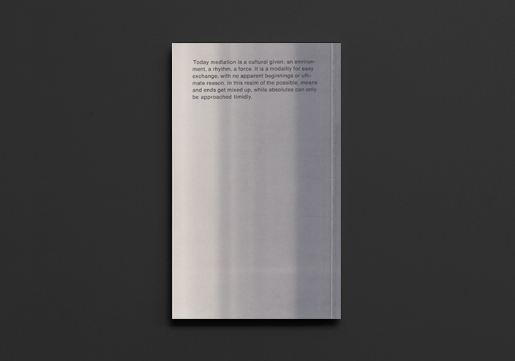
Today mediation is a cultural given: an environment, a rhythm, a force. It is a modality for easy exchange, with no apparent beginnings or ultimate reason. In this realm of the possible, means and ends get mixed up, while absolutes can only be approached timidly.
Expanded version of the sold-out original from 2012,
with a new introduction, additional text pieces and found imagery, in an edition of 400 copies.
1993, English
Hardcover (w. dustjacket), 240 pages, 25.5 x 30.3 cm
1st edition, Out of print title / used*,
Published by
Wasmuth Verlag / Tübingen
$120.00 - Out of stock
First edition of this heavy 1993 hard-cover monograph on the life and work of Italian designer Ettore Sottsass. Edited by Hans Höger, this expansive and thorough biographical book covers Sottsass' highly influential work across ceramics, furniture design, exhibition design, interiors, industrial design, architecture, and much more. 240 visually rich pages of photo documentation, plans and drawings of his work and the work of his contemporaries of radical Italian design and architecture, the book covers the projects, objects, and exhibits of Sottsass Associati, Alchimia, Memphis, Alessi, Ettore Sottsass' personal work, beautiful rarely seen early prototypes and realised designs for Raymor (telephones and carpets!), Arredoluce, Olivetti, Poltronova, and others, amongst much more. Very heavy with imagery and designs, and accompanied by all texts in English, including a biography and exhibition list, this book is a major and generous publication for anyone interested in the wide-reaching work of Ettore Sottsass.
1979, English / Japanese
Softcover, 138 pages, 22 x 29.5 cm
1st Edition, Out of print title / used*,
Published by
Kajima Institute Publishing / Tokyo
$100.00 - Out of stock
SD (Space Design): A monthly journal on Art and Architecture.
“SD” (Space Design) was founded in Japan in 1965; a comprehensive monthly magazine on architecture, urban problems and fine arts which was unique in the world and quickly became a leading, highly-esteemed journal of international modern design.
SD no. 183, December 1979
SPECIAL FEATURE: Ettore Sottsass Jr.
His Latest Projects; Works=The New Furniture, HAIKU, Olivetti Synthesis; etc.
This feature presents many of Sottsass' new works for the first time in the late 1970's, including a large portion of the magazine dedicated to photographs, drawings, and writings by Ettore Sottsass and Barbara Radice.
This issue also features a large feature on the work of Michele de Lucchi ("Imaginary Architect": Old and New Aspect on Environmental Reduction; Projects=Stetcher-based housing project, Stilted house project, Knotted habitation project "wall")
Also, articles by Makoto Ueda, Shinji Yamashita, Masahiro Chatani, Takenobu Watanabe, Shin'ichi Okada, Gruppo Specchio, Perry A. King, and much more.
SD is one of the finest journals dedicated to new design (architecture, furniture, interior, environmental, industrial...), becoming a collector's item and much sought-after archival resource.
Edited by Aiko Hasegawa.
1997, German
Hardcover, 143 pages, 24.2 x 17.5 cm
1st edition, Out of print title / used*,
Published by
Verlag Gerd Hatje / Stuttgart
$78.00 - Out of stock
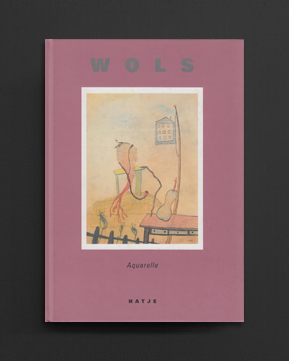
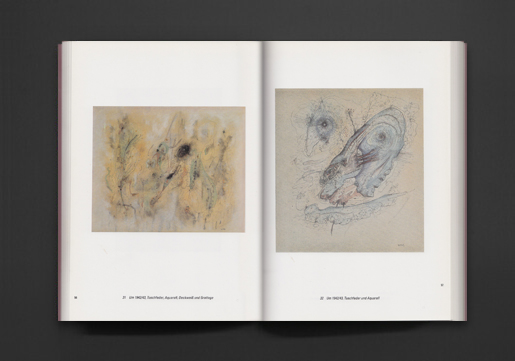
Out of print, first edition of this hardcover book on the work of Wols, "Aquarelle 1937-1951", focussing on a large number of his magnificent watercolour and ink paintings and drawings, amongst other works.
Wols was the pseudonym of Alfred Otto Wolfgang Schulze (27 May 1913, Berlin – 1 September 1951, Paris), a German painter and photographer predominantly active in France. Though broadly unrecognized in his lifetime, he is considered a pioneer of Lyrical Abstraction, one of the most influential artists of the Tachisme movement. He is the author of a book on art theory entitled Aphorismes de Wols.
2013, English
Softcover, 350 pages, 16 x 23 cm
Ed. of 3000,
Published by
Primary Information / New York
$59.00 - Out of stock
First published by the legendary Something Else Press in 1967, An Anthology of Concrete Poetry was the first American anthology on the international movement of Concrete poetry. The movement itself began in the early 1950s, in Germany–through Eugen Gomringer, who borrowed the term “concrete” from the art of his mentor, Max Bill–and in Brazil, through the Noigandres group, which included the de Campos brothers and Decio Pignatari. Over the course of the 1960s it exploded across Europe, America and Japan, as other protagonists of the movement emerged, such as Dieter Roth, Öyvind Fahlström, Ernst Jandl, bpNichol, Mary Ellen Solt, Jackson Mac Low, Ian Hamilton Finlay, Bob Cobbing, Dom Sylvester Houédard, Pierre Garnier, Henri Chopin, Brion Gysin and Kitasono Katue. By the late 1960s, poet Jonathan Williams could proclaim: “If there is such a thing as a worldwide movement in the art of poetry, Concrete is it.” The work of the 77 writers collected in this anthology varies greatly in its aims and forms, but all can be said to emphasize the visual dimension of language, manipulating individual letters and minimal semantic units to produce poems that are for contemplating as much as for reading. Emmett Williams, the book’s editor, added explanatory commentary for the poems and biographies of their authors, making this volume–long out of print–the definitive anthology of this movement, which has so influenced artists and writers of subsequent generations.
Writers and artists included: Friedrich Achleitner, Alain Arias-Misson, H. C. Artmann, Ronaldo Azeredo, Stephen Bann, Carlo Belloli, Max Bense, Edgard Braga, Claus Bremer, Augusto de Campos, Haroldo de Campos, Henri Chopin, Carl Friedrich Claus, Bob Cobbing, Paul de Vree, Reinhard Döhl, Torsten Ekbom, Öyvind Fahlström, Carl Fernbach-Flarsheim, Ian Hamilton Finlay, Larry Freifeld, John Furnival, Heinz Gappmayr, Ilse and Pierre Garnier, Matthias Goeritz, Eugen Gomringer, Ludwig Gosewitz, Bohumila Grögerova and Josef Hiršal, José Lino Grünewald, Brion Gysin, Al Hansen, Václav Havel, Helmut Heissenbüttel, Åke Hodell, Dom Sylvester Houédard, Ernst Jandl, Bengt Emil Johnson, Ronald Johnson, Hiro Kamimura, Kitasono Katue, Jiri Kolar, Ferdinand Kriwet, Arrigo Lora-Totino, Jackson Mac Low, Hansjörg Mayer, Cavan McCarthy, Franz Mon, Edwin Morgan, Maurizio Nannucci, bp Nichol, Hans-Jørgen Nielsen, Seiichi Niikuni, Ladislav Novák, Yuksel Pazarkaya, Décio Pignatari, Vlademir Dias Pino, Luiz Angelo Pinto, Carl Fredrik Reuterswärd, Diter Rot, Gerhard Rühm, Aram Saroyan, John J. Sharkey, Edward Lucie Smith, Mary Ellen Solt, Adriano Spatola, Daniel Spoerri, Vagn Steen, Andre Thomkins, Enrique Uribe Valdivielso, Franz Van Der Linde, Franco Verdi, Emmett Williams, Jonathan Williams, Pedro Xisto and Fujitomi Yasuo.
2014, English
Softcover, 336 pages, 22 x 28 cm
Ed. of 1500,
Published by
Primary Information / New York
$63.00 - Out of stock
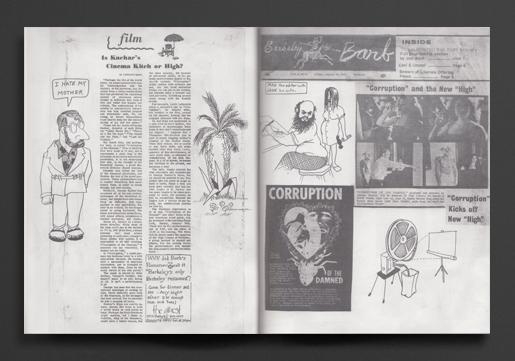
Edited by Andrew Lampert, this expansive anthology explores the writings that underscore George Kuchar’s work and life. The most comprehensive collection of writings on the artist to date, this volume features film scripts, comics, drawings, paintings, correspondence, autobiographical musings, tales of UFO encounters, student recommendation letters, emails, photos, film stills, and a wide range of ephemeral, often hysterical autobiographical and critical writings by the late auteur behind such underground film classics as Hold Me While I’m Naked, The Weather Diaries, and I, an Actress.
George Kuchar is best known for the films and videos he made beginning in the mid-1950s. The earliest works were 8mm movies created with his twin brother, Mike Kuchar. A seminal influence on John Waters amongst many others, these uniquely irreverent films were at the forefront of the New York underground film scene alongside avant-garde filmmakers like Andy Warhol, Jack Smith, Stan Brakhage, and Jonas Mekas, who championed the Kuchars in his influential Village Voice column. In 1971, George Kuchar began teaching at the San Francisco Art Institute and remained in San Francisco, collaborating with his students, until his death in 2011. The roughly 350 films and videos that he directed are consistently faithful to the low-fi intimacy of his early work. Kuchar’s film and video work has screened around the world in cinemas, festivals, and major museums. Recent exhibitions include George Kuchar: Pagan Rhapsodies at MoMA PS1 in New York; Living in Studio Kuchar at Walter and McBean Galleries, San Francisco; and the 2012 Whitney Biennial at the Whitney Museum of American Art.
1980, English
Softcover, 306 pages, 18 x 25 cm
Out of print title,
Published by
Delta / US
$40.00 - Out of stock
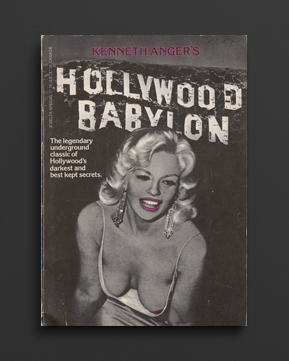
Hollywood Babylon is a book by avant-garde filmmaker Kenneth Anger, a former child movie actor, which details the sordid scandals of many famous and infamous Hollywood denizens from the 1900s to the 1950s. Originally published in Paris, Hollywood Babylon was first published in the US in 1965, it was banned ten days later and would not be republished until 1975. Upon its second release, The New York Times said of it, "If a book such as this can be said to have charm, it lies in the fact that here is a book without one single redeeming merit."
The book details the stories of Hollywood stars from the silent era to stars of the 1960s including Charles Chaplin, Lupe Vélez, Rudolph Valentino, Olive Thomas, Thelma Todd, Frances Farmer, Juanita Hansen, Mae Murray, Alma Rubens, Barbara La Marr, and Marilyn Monroe. Hollywood Babylon also featured chapters on the Fatty Arbuckle–Virginia Rappe scandal, the murder of William Desmond Taylor, the Hollywood Blacklist, the murder of Sharon Tate, and the Confidential magazine lawsuits.
2015, English
Softcover (w. DVD), 128 pages, 13 x 20 cm
Published by
International House / Philadelphia
$48.00 - Out of stock
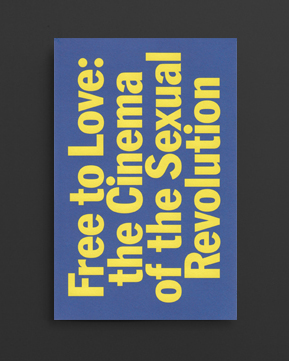
Free to Love looks at a selection of films from the 1960s and 70s, both commercial and experimental, to investigate how issues surrounding sexual liberation and the undoing of censorship laws manifested themselves in moving-image art from around the world. While the sexual revolution cannot simply be viewed as one unified movement, its conflicts and contradictions inspired some of the most important films from this period, asserting sexual power in an era when "power to the people" was the motto. The essays examine key works and individuals associated with the cinema of the sexual revolution (Radley Metzger, Pat Rocco, Phyllis and Eberhard Kronhausen), and the book includes a DVD of three short films: Desire Pie (Lisa Crafts, 1976), A Quickie (Dirk Kortz, 1970) and Norien Ten (John Knoop, 1972). Also included is a discussion with A.K. Burns, Barbara Hammer, M.M. Serra and A.L. Steiner.
2015, English
Softcover, 286 pages, 16.5 x 22 cm
Published by
Sternberg Press / Berlin
$38.00 - Out of stock
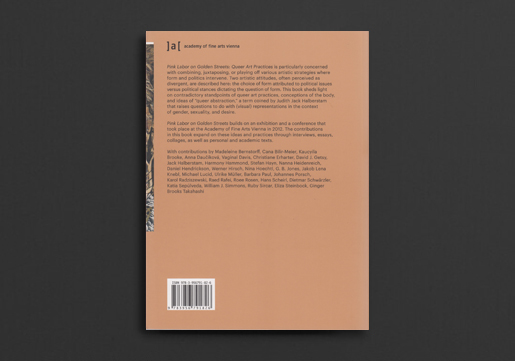
Christiane Erharter, Hans Scheirl, Dietmar Schwärzler, Ruby Sircar (Eds.)
Contributions by Madeleine Bernstorff, Cana Bilir-Meier, Kaucyila Brooke, Anna Daučikova, Vaginal Davis, Christiane Erharter, David J. Getsy, Jack Halberstam, Harmony Hammond, Stefan Hayn, Nanna Heidenreich, Daniel Hendrickson, Werner Hirsch, Nina Hoechtl, G. B. Jones, Jakob Lena Knebl, Michael Lucid, Ulrike Müller, Barbara Paul, Johannes Porsch, Karol Radziszewski, Raed Rafei, Roee Rosen, Hans Scheirl, Dietmar Schwärzler, Katia Sepúlveda, William J. Simmons, Ruby Sircar, Eliza Steinbock, Ginger Brooks Takahashi
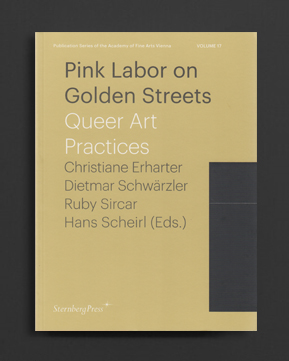
Pink Labor on Golden Streets: Queer Art Practices builds on an exhibition and conference at the Academy of Fine Arts Vienna that explored the contradictory standpoints of queer art practices, conceptions of the body, and ideas of “queer abstraction,” a term coined by Judith Jack Halberstam that raises questions to do with (visual) representations in the context of gender, sexuality, and desire. It is particularly concerned with where form and politics crossover, citing the various combinations, juxtapositions, and the play between artistic strategies.
This publication brings together papers from the 2012 conference and writing on artworks and art practices. In addition to testimonials from queer performers on the topic of “drag,” the book also includes interviews, essays, collage, and more personal writing. By placing these contemporary practices in a historical perspective and revising the perceived divergence between artistic attitudes and formal approach, this publication offers diverse and thought-provoking points of view.
Publication Series of the Academy of Fine Arts Vienna, vol. 17
Design by Surface
2014, English
Softcover, 342 pages, 14.8 x 21 cm
Published by
Sternberg Press / Berlin
$38.00 - Out of stock
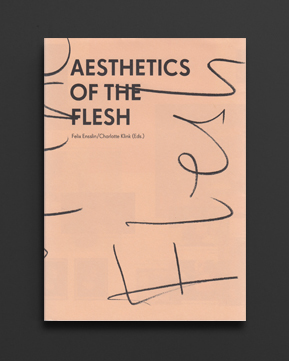
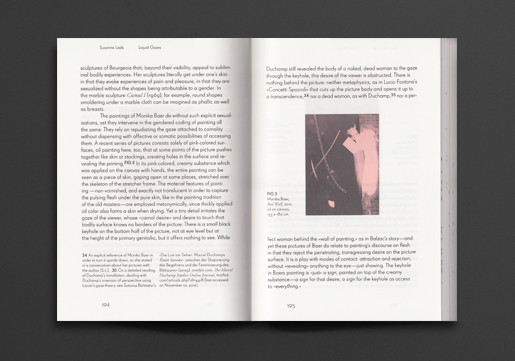
With contributions by Jennifer Allen, Sabeth Buchmann, Annett Busch, Nils Büttner, Marcus Coelen, Discoteca Flaming Star, Helmut Draxler, Felix Ensslin, Mechthild Fend, Susanne Leeb, Christoph Menke, Frank Ruda, Jan de Vos, Charles T. Wolfe
Word becomes flesh, God becomes pigment, beauty becomes empirical form, power negotiates itself in matter—and vice versa: these are some of the connotations carried by the aesthetics of the flesh.
Flesh has been negotiated with the incarnate, the skin-like surface of paint transcends its material condition toward the embodiment of spirit. But flesh is also, for example, behind the postcolonial metaphor of anthropophago (i.e., incorporating multiple cultural traditions that are at war with each other). It can be further associated with the material of surgery, itself an heir to contradictory impulses—namely, the discourse of modern aesthetics on the one hand, and of a positivist, even naïve scientism on the other. Flesh is the topos of a thought that is unthinkable and the amoral site where force is creative. Philosophically, these primal scenes of the flesh are grouped by Descartes, and also in the radical enlightenment of philosophical materialism. Following on from Cartesian dualism, philosophy is faced with the task of valorizing the flesh beyond the religious support of incarnation. Finally, the never-ending thought which sees the flesh as an unattainable other appears—always present in its absence in each and every aesthetic discourse.
This reader, based on a three-day symposium at the State Academy of Fine Arts, Stuttgart, traces the aesthetic concept of flesh in four sections: “Cut Power Matter,” “Form Cannibalism,” “Flesh Skin Surface,” and “Word Flesh Thought.” From perspectives as diverse as art history, religion, psychoanalysis, psychology, materialist philosophy, phenomenology, surgery, film studies, and literary studies, the articles present this concept, while at the same time showing how it surpasses the attempts to systematize or define it.
Design by Matthias Christ, Philipp Schmidt, Stuttgart
2016, English
Softcover, 208 pages, 26.7 cm x 20 cm
Published by
Serpentine Gallery / London
Walther König / Köln
$40.00 $20.00 - Out of stock
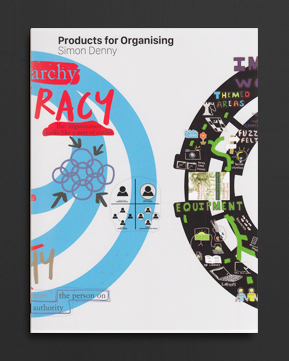
This is the first solo show in London for this artist, who works with sculptural installations that include print, graphics, moving images and texts. The exhibition will feature new installations that revolve around contemporary radical management practices and the historical hacker organisational forms that may have inspired them.
Simon Denny has risen to critical acclaim with his work, New Management (2014) and most recently with the installation Secret Power (2015), New Zealand’s pavilion for the 56th Venice Biennale.
Denny is one of the leading figures of a generation of artists who employ content from the tech industry, the language of advertising and the aesthetics and ideologies of corporations or governmental bodies to scrutinise technology’s role in shaping global culture.
With the precision of an investigative journalist, Denny’s complex and layered installations explore the commodification of information, branding and marketing strategies, as well as the relationship between private and public industries.
Published on the occasion of the exhibition at the Sackler Gallery, The Serpentine, London (25 November 2015 – 14 February 2016).
2015, English
Softcover, 160 pages, 11.5 x 17.7 cm
Published by
Badlands Unlimited / New York
$26.00 - Out of stock
“Genius” —Adult Magazine
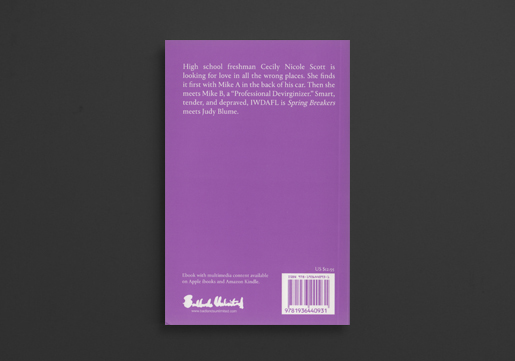
High school freshman Cecily Nicole Scott is looking for love in all the wrong places. She finds it first with Mike A in the back of his car. Then she meets Mike B, a “Professional Devirginizer.” Smart, tender, and depraved, IWDAFL is Spring Breakers meets Judy Blume.
I Would Do Anything For Love by Al Bedell is one of the New Lovers, a series of short erotic fiction published by Badlands Unlimited. Inspired by Maurice Girodias’ legendary Olympia Press, New Lovers features the raw and uncut writings of authors new to the erotic romance genre. Each story has its own unique take on relationships, intimacy, and sex, as well as the complexities that bedevil contemporary life and culture today.
Each novella in the New Lovers series is an independent story of about 12,000 – 18,000 words in length. I Would Do Anything For Love is an unfettered, fresh look at the rights of passage of adolescence (losing your virginity, drinking, kissing your friends) in all their amazing and terrifying glory.
The design of New Lovers pays homage to the classic covers of the books published by Olympia Press. The “soft-touch” lamination and embossed lettering on the front covers of the paperback editions make these novellas a precious edition to any library. Both paperback and ebook editions feature special color endpaper artworks.
2015, English
Softcover, 130 pages, 11.5 x 17.7 cm
Published by
Badlands Unlimited / New York
$26.00 - Out of stock
“A sci-fi romp with sex acts stacked on top of each other in a sort of dripping post-modern parody.” —Broadly
“A searing, sci-fi thriller with sex robots, pleasure machines and swingers…” —i-D magazine
“Literary raunchiness” —New York Journal of Books
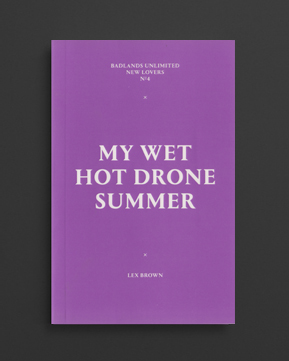
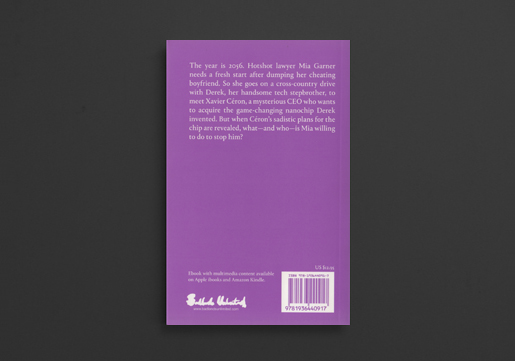
The year is 2056. Hotshot lawyer Mia Garner needs a fresh start after dumping her cheating boyfriend. So she goes on a cross-country drive with Derek, her handsome tech stepbrother, to meet Xavier Céron, a mysterious CEO who wants to acquire the game-changing nanochip Derek invented. But when Céron’s sadistic plans for the chip are revealed, what—and who—is Mia willing to do to stop him?
My Wet Hot Drone Summer by Lex Brown is one of the New Lovers, a series of short erotic fiction published by Badlands Unlimited. Inspired by Maurice Girodias’ legendary Olympia Press, New Lovers features the raw and uncut writings of authors new to the erotic romance genre. Each story has its own unique take on relationships, intimacy, and sex, as well as the complexities that bedevil contemporary life and culture today.
Each novella in the New Lovers series is an independent story of about 12,000 – 18,000 words in length. My Wet Hot Drone Summer is a high stakes action-adventure thriller about sibling loyalty, robot studs, and drones that takes the reader to the edge of sexual possibility, making them reconsider what turns them on.
The design of New Lovers pays homage to the classic covers of the books published by Olympia Press. The “soft-touch” lamination and embossed lettering on the front covers of the paperback editions make these novellas a precious edition to any library. Both paperback and ebook editions feature special color endpaper artworks by Ian Cheng.
2015, English
Softcover, 122 pages, 11.5 x 17.7 cm
Published by
Badlands Unlimited / New York
$26.00 - Out of stock
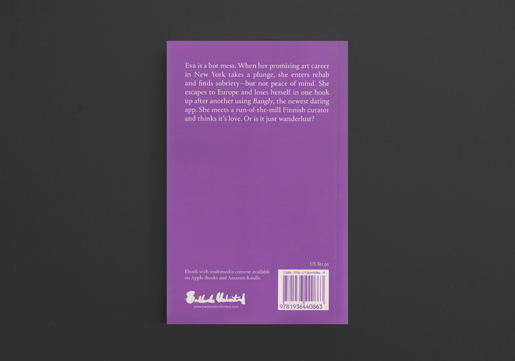
Eva is a hot mess. When her promising art career in New York takes a plunge, she enters rehab and finds sobriety—but not peace of mind. She escapes to Europe and loses herself in one hook up after another using Bangly, the newest dating app. She meets a run-of-the-mill Finnish curator and thinks it’s love. Or is it just wanderlust?
God, I Don’t Even Know Your Name by Andrea McGinty is the third installment of New Lovers, a series of short erotic fiction published by Badlands Unlimited. Inspired by Maurice Girodias’ legendary Olympia Press, New Loversfeatures the raw and uncut writings of authors new to the erotic romance genre. Each story has its own unique take on relationships, intimacy, and sex, as well as the complexities that bedevil contemporary life and culture today.
Each novella in the New Lovers series is an independent story of about 12,000 – 18,000 words in length. God I Don’t Even Know Your Name is a Eurotrip of epic sexual and artistic proportions with stunning locales, a myriad of men, and one undeniably resilient heroine.
The design of New Lovers pays homage to the classic covers of the books published by Olympia Press. The “soft-touch” lamination and embossed lettering on the front covers of the paperback editions make these novellas a precious edition to any library. Both paperback and ebook editions feature special color endpaper artworks by Paul Chan.
2015, English
Softcover, 152 pages, 11.5 x 17.7 cm
Published by
Badlands Unlimited / New York
$26.00 - Out of stock
The queen of a mythical realm realizes that her king now prefers the bodies of inexperienced human virgins to her own. His insatiable appetite threatens the kingdom and everything the queen holds dear. She plots to seduce and deflower the two humans the king favors, but her plans backfire in spectacular fashion. What will become of her marriage? Her kingdom? Her virgins?
How to Train Your Virgin by Wednesday Black is the first of New Lovers, a series of short erotic fiction published by Badlands Unlimited. Inspired by Maurice Girodias’ legendary Olympia Press, New Lovers features the raw and uncut writings of authors new to the erotic romance genre. Each story has its own unique take on relationships, intimacy, and sex, as well as the complexities that bedevil contemporary life and culture today.
Each novella in the New Lovers series is an independent story of about 12,000-18,000 words in length. How to Train Your Virgin is a high-spirited romp through a fantastic world populated by centaurs, ghosts and something called an inside-out man. Imagine Game of Thrones and Lady Chatterley’s Lover.
The design of New Lovers pays homage to the classic covers of the books published by Olympia Press. The “soft-touch” lamination and embossed lettering on the front covers of the paperback editions make these novellas a precious edition to any library. Both paperback and ebook editions feature special color endpaper artworks by Paul Chan.
2015, English
Softcover, 84 pages, 17 x 24 cm
Published by
Roma / Amsterdam
$52.00 - Out of stock
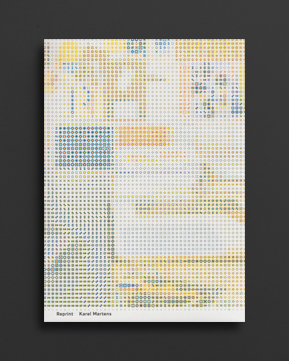
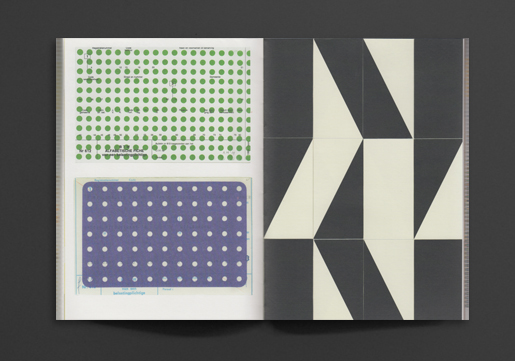
This book is published on the occasion of an exhibition of work by Dutch designer Karel Martens at the Royal Academy of Arts in The Hague. Besides offering a closer look at his free work, it also covers his approach to the teaching of graphic design. Comprising a selection of both past work and more recent applied work, it also includes new essays by David Bennewith, who examines Martens' approach to teaching through its history and accounts from students, and Robin Kinross, who offers a meditation on the artist’s free work, which demonstrates a consistent line of inquiry through his 54 years in graphic design. Martens was the recipient of the Gerrit Noordzij Prize in 2012.
2015, English / German
Softcover, 174 pages, 21 x 30 cm
Published by
Kunstverein München / Münich
Roma / Amsterdam
$38.00 $20.00 - Out of stock
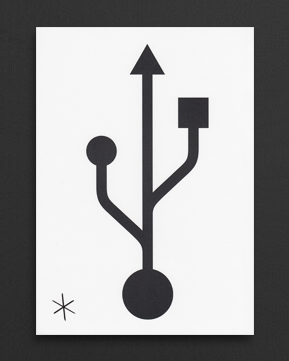
Since its establishment in 2006, the design and publishing collaborative Dexter Sinister (David Reinfurt, Stuart Bailey) has been busy working at the intersection of graphic design, publishing, and contemporary art. Through a workshop mentality, it combines the characteristically distinct identities of designer, producer, publisher, and distributor. This volume comprises a four-part collection of electronic works by Dexter Sinister, produced from 2008 to 2015, and mimics the memory stick released in parallel to an eponymous exhibition at Kunstverein München, complete with a speaking asterisk as guide. It is related to three previous engagements of the artists in 2015.
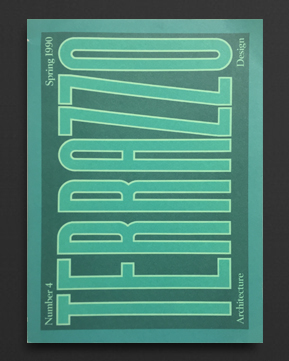
1990, English
Softcover (french-folds), 34 x 25 cm
1st edition, Out of print title / used*,
$110.00 - Out of stock
TERRAZZO 4
Spring 1990
COLORS
3 surveys of thoughts and ideas on the subject of color
ETTORE SOTTSASS
Large, medium and small size private houses
Letter by Aldo Rossi
photographs by Santi Caleca
TRAVEL NOTES
by Ettore Sottsass
on architectural drawings
HELMUT NEWTON
Cities and towns
TOMBSTONE: FOUR PIECES AND CODA ON THE IDEA OF BURIAL
by Francesco Pellizzi
photographs by Ettore Sottsass
CRAIG HODGETTS MING FUNG
You send me
by Herbert Muschamp
CARLOS HIMENEZ
interview by Viola Marquez
C.A.D.
by David Kelley
VERY RARE AND IMPORTANT
by J.B. Archer
PLANS (No. 4)
A baroque story
by Luigi Seraini
MASSIMO GIACON FRESCOS 1988-1989
by Ambrogio Borsani
photographs by Santi Caleca
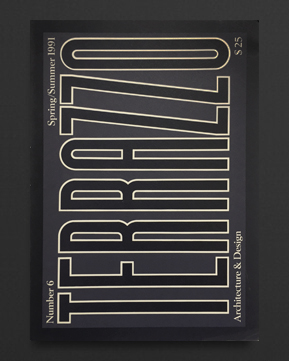
1991, English
Softcover (french-folds), 34 x 25 cm
1st edition, Out of print title / used*,
Published by
Terrazzo / Milan
$130.00 - Out of stock
TERRAZZO was a very special biannual publication on architecture and design, edited and published between 1988–1995 by Barbara Radice, a prominent Italian author, design critic and member of the Memphis Milano design group. In conjunction with Ettore Sottsass, Christoph Radl, Anna Wagner and Santi Caleca, Radice created a unique and thoughtful periodical that focused on contemporary works of design and architecture, within Italy and abroad, touching on a vast array of disciplines in each issue, including literature, poetry, history, science, philosophy, art and anthropology.
TERRAZZO 6
Spring/ Summer 1991
240 pages of photographic reportages on the world largest metropolises
LE CORBUSIER
TRAVEL NOTES
by Ettore Sottsass
on the nature of metropolises
HUMANISM VERSUS ENVIRONMENTALISM
by Andrea Branzi
MOSCOW
by Helmut Newton
PLANS (No. 5)
The Russian Suprematists
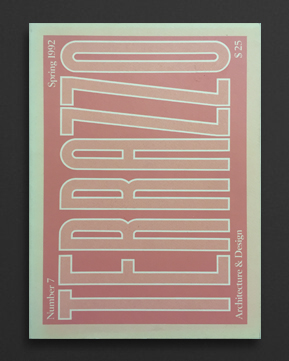
1992, English
Softcover (french-folds), 34 x 25 cm
1st edition, Out of print title / used*,
Published by
Terrazzo / Milan
$130.00 - Out of stock
TERRAZZO was a very special biannual publication on architecture and design, edited and published between 1988–1995 by Barbara Radice, a prominent Italian author, design critic and member of the Memphis Milano design group. In conjunction with Ettore Sottsass, Christoph Radl, Anna Wagner and Santi Caleca, Radice created a unique and thoughtful periodical that focused on contemporary works of design and architecture, within Italy and abroad, touching on a vast array of disciplines in each issue, including literature, poetry, history, science, philosophy, art and anthropology.
TERRAZZO 7
Spring 1992
ARATA ISOZAKI
Architecture with or without irony by Arata Isozaki
photographs by Yasuhiro Ishimoto
SITE
Green architecture by James Wines
TRAVEL NOTES
by Ettore Sottsass
on kitchens
photographs Ettore Sottsass
PLANS (no. 6)
African Compounds and Villages
1992, English
Softcover (french-folds), 34 x 25 cm
1st edition, Out of print title / used*,
Published by
Terrazzo / Milan
$130.00 - Out of stock
TERRAZZO was a very special biannual publication on architecture and design, edited and published between 1988–1995 by Barbara Radice, a prominent Italian author, design critic and member of the Memphis Milano design group. In conjunction with Ettore Sottsass, Christoph Radl, Anna Wagner and Santi Caleca, Radice created a unique and thoughtful periodical that focused on contemporary works of design and architecture, within Italy and abroad, touching on a vast array of disciplines in each issue, including literature, poetry, history, science, philosophy, art and anthropology.
TERRAZZO 8
Fall 1992
EMPTINESS
by Aldo Gargani
KISHIN SHINOYAMA
Tokyo
STONES
photographs by Christina Bischofberger
POMPEI, ERCOLANO, OPLONTIS
photographs by Santi Caleca
BEYOND WALLS
by Sergio Capelli and Patrizia Ranzo
TRAVEL NOTES
by Ettore Sottsass
on ruins
photographs by Ettore Sottsass
THE WAYSIDE ART OF INDIA
by Priya Moolcerjee
PLANS (No. 7)
XVIII Century - Visionary Architecture
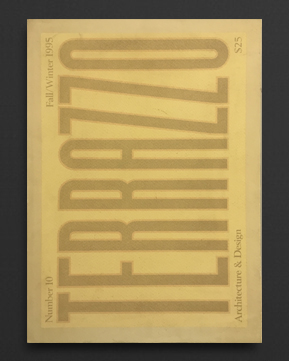
1995, English
Softcover (french-folds), 34 x 25 cm
1st edition, Out of print title / used*,
Published by
Terrazzo / Milan
$130.00 - Out of stock
TERRAZZO was a very special biannual publication on architecture and design, edited and published between 1988–1995 by Barbara Radice, a prominent Italian author, design critic and member of the Memphis Milano design group. In conjunction with Ettore Sottsass, Christoph Radl, Anna Wagner and Santi Caleca, Radice created a unique and thoughtful periodical that focused on contemporary works of design and architecture, within Italy and abroad, touching on a vast array of disciplines in each issue, including literature, poetry, history, science, philosophy, art and anthropology.
TERRAZZO 10
Fall/Winter 1995
ALDO G. GARGANI
Aesthetics
ARATA ISOZAKI
Phenomenology of floors
MEDITERRANEAN PASTA
Barbara Radice
Six Recipes
photographs by Santi Caleca
TRAVEL NOTES
by Ettore Sottsass
on Fujian's Round Houses
VERY ANCIENT CHINA
universe, geometry, numbers, architecture
ANDREA BRANZI
Development and Reduction
LUOGHI
research by Milco Carboni
Plans (no. 9)
research by Beppe Caturegli and Giovannella Formica
2015, English / German
Softcover, 264 pages, 23 x 16.5 cm
Published by
Texte Zur Kunst / Berlin
$32.00 $15.00 - In stock -
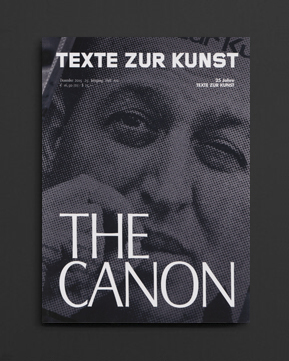
ISSUE NO. 100
DECEMBER 2015
„THE CANON“
“Our 100th issue is dedicated to the question of the “canon.” We take up this theme with an interest in reflecting on the journal’s own role in the field of contemporary art — one that, when first initiated in 1990, was markedly counter-canonical, vigorously contesting certain methods of critique while supporting others. And yet, we pause here to acknowledge that after 25 years, we have also doubtlessly played a crucial part in shaping a particular discourse, even normativizing it to some degree. Could it even be said that TzK has established a canon in its own right? With this issue, we now take stock of what TzK’s relationship to the canon might be, and moreover, what the notion of canonicity in 2015 might now represent.”
ISSUE NO. 100 / DECEMBER 2015 “THE CANON”
TABLE OF CONTENTS
PREFACE
TOM HOLERT IN PRAISE OF PRESUMPTUOUSNESS: “KANON-POLITIK ” (1992) REVISITED
DIEDRICH DIEDERICHSEN
MIKE KELLEY
SABETH BUCHMANN
MEDIAL (SELF-)MOVEMENT
ISABELLE GRAW
CANON AND CRITIQUE: AN INTERPLAY / Heimo Zobernig
JULIANE REBENTISCH
25 ARTISTS FROM 1990 TO 2015 / And 25 reasons why each belongs in the Texte zur Kunst canon
GERTRUD KOCH
POLYPHONY OR DISSONANCE / Are there artists lost in the canon?
KERSTIN STAKEMEIER
MORE MANNERISM / Ruth May and Jan Molzberger
GUNTER RESKI
EMBEDDED NUDES / Arno Rink
ALEXANDER GARCÍA DÜTTMANN
OLD WOMEN / Maria Lassnig’s “Du oder ich” (You or me), 2005
BEATE SÖNTGEN
ROSEMARIE TROCKEL
NICK MAUSS
IAN WHITE
TESS EDMONSON
DIS
HANNA MAGAUER
POST-INTERNET: THE NEW ORDER
JOSEPHINE PRYDE
THE INDIVIDUAL
CAROLINE BUSTA
BAD CANON
SIMON DENNY
DISRUPT
KEN OKIISHI
CITIZENSHIP
VALENTINA LIERNUR
SELF-REFLECTIVE SUBJECTS
JUTTA KOETHER
FIGURE OF PAINT: ON THE INCONTROVERTIBLE!
ALICE CREISCHER AND ANDREAS SIEKMANN
TUCUMÁN ARDE
PAMELA M. LEE
GROUP MATERIAL
FELIX VOGEL
MARTIN BECK
SVEN BECKSTETTE
STURTEVANT
CLAIRE FONTAINE
TOWARD A CANONIC FREEDOM
SVEN LÜTTICKEN
FALLING APART, TOGETHER
ROBERT KULISEK AND DAVID LIESKE
HUSBANDS HAVE GOT TO DIE! / A conversation about Taryn Simon
BRIGITTE WEINGART
GREAT & SMALL
HELMUT DRAXLER
CANON OF EXISTENCE, ETHICS OF THE BREAK
ROTATION
ELECTROCONVULSIVE LIT / John Kelsey on Sylvère Lotringer’s “Mad Like Artaud”
REVIEWS
VERWISCHTE GRENZEN / Robert Müller über „Radikal Modern. Planen und Bauen im Berlin der 1960er-Jahre“ in der Berlinischen Galerie
AGING INTO NEW WORLDS: DEUTSCH-AMERIKANISCHE FREUNDSCHAFT / Bettina Funcke surveys five fall 2015 shows in New York
ANGEWANDTER HISTOMAT / Ariane Müller über „to expose, to show, to demonstrate, to inform, to offer. Künstlerische Praktiken um 1990“ im Mumok, Wien
ENIGMA IN THE MIRROR / Luis Felipe Fabre on “In Girum Imus Nocte et Consumimur Igni” at Museo Jumex, Mexico City
WHERE ANGELS FEAR TO TREAD / Nuit Banai on R. H. Quaytman at the Tel Aviv Museum of Art
IST KUNST EIN SEXUALPROBLEM? / Eva Birkenstock über Lea Lublin im Lenbachhaus, München
HERE'S NOT HERE / Damon Sfetsios and Elise Duryee-Browner on Stephan Dillemuth at Reena Spaulings Fine Art, New York
WEAK LOCAL LINEAMENTS / Gareth James on Sam Lewitt at the CCA Wattis Institute for Contemporary Arts, San Francisco
OBITUARIES
PETER SCHEIFFELE (1971–2015)
by Ilka Becker
CHANTAL AKERMAN (1950–2015)
by Tim Griffin
EDITION
JOHN BALDESSARI
NHU DUONG
PETER FISCHLI/DAVID WEISS
WADE GUYTON
RACHEL HARRISON
SARAH MORRIS
ALBERT OEHLEN
RICHARD PHILLIPS
SETH PRICE
GERHARD RICHTER
ROSEMARIE TROCKEL
2015, English
Softcover, 323 pages, 20 x 28 cm
Published by
Grazer Kunstverein / Graz
Sternberg Press / Berlin
$48.00 - Out of stock
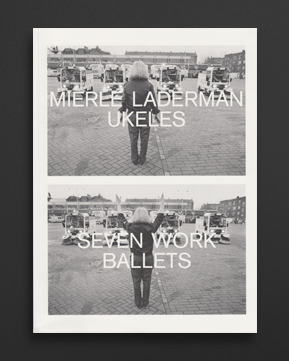
Edited by Kari Conte
Contributions by Kari Conte, Krist Gruijthuijsen, Mierle Laderman Ukeles; conversation with Tom Finkelpearl, Shannon Jackson, and Mierle Laderman Ukeles
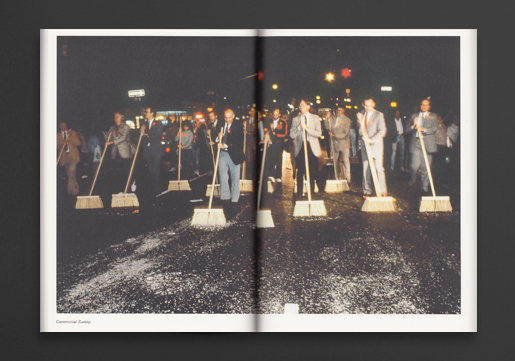
Mierle Laderman Ukeles’s Manifesto for Maintenance Art 1969! Proposal for an Exhibition “CARE” (1969) was a major intervention in feminist performance practices and public art. The proposal argued for an intimate relationship between creative production in the public sphere and domestic labor—a relationship whose intricacies Ukeles has been unraveling ever since. In 1977, she became the unsalaried Artist-in-Residence for the New York City Department of Sanitation, a position that enables her to introduce radical public art into an urban municipal infrastructure.
Through archival research, this monographic publication focuses on Ukeles’s work ballets—a series of seven grand-scale collaborative performances involving workers, trucks, barges, and hundreds of tons of recyclables and steel—which took place between 1983 and 2012 in New York, Pittsburgh, Givors, Rotterdam, and Tokamachi. Over the past four decades, Ukeles has pioneered how we perceive and ultimately engage in maintenance activities. The work ballets derive from her engagement in civic operations in order to reveal how they work though monumental coordination and cooperation. Mierle Laderman Ukeles: Seven Work Ballets is the first monograph on Ukeles’s seminal practice, and is as much an artist’s book as an art-historical publication.
Copublished with Kunstverein Publishing and Grazer Kunstverein in collaboration with Arnolfini, Bristol; Institute of Modern Art, Brisbane; and Marabouparken, Stockholm
Design by Marc Hollenstein