World Food Books' programme is largely produced on Kulin Nation land. We acknowledge the Wurundjeri people of the Kulin Nation as the first and continuing custodians of this land, and pay respect to their Elders past, present, and emerging.
World Food Books is an arts and special interests bookshop in Naarm / Melbourne. Founded in 2010, World Food Books is devoted to the presentation of a rotating, hand-selection of international art, design, literary and counterculture publications with an emphasis on the anti-traditional, the experimental, the avant-garde, the heretic, the marginal.
Presenting new titles alongside rare and out-of-print books, catalogues and journals spanning the fields of modern and contemporary art, design, photography, illustration, film, literature, poetry, cultural theory, philosophy, sexuality, popular and underground culture in its many radical forms, World Food Books wishes to encourage adventurous, thoughtful and open-minded reading, looking, writing, and exchange of publishing and ideas, both current and historical.
As well as our bookshop, located in Melbourne's historical Nicholas Building, all of our inventory is available internationally via our online mail-order service.
World Food Books semi-regularly co-ordinates "Occasions", a programme of exhibits and events at the bookshop and in partnership with other hosts (such as museums and art galleries) that develop out of the activities, relationships and content of the bookshop itself.
World Food Books
The Nicholas Building
37 Swanston Street
Room 5, Level 6
Melbourne 3000
Australia
SHOP HOURS:
Thu–Fri 12–6, Sat 12–5
WEB-SHOP OPEN 24/7
World Food Books
Postal Address:
PO Box 435
Flinders Lane
Victoria 8009
Australia
Art
Theory / Essay
Architecture / Interior
Graphic Design / Typography
Photography
Fashion
Eros
LGBTQ+
Fiction / Poetry
Weird / Speculative / Science Fiction / Horror
Transgressive / Visceral / Abject
Symbolism / Decadence / Fin de siècle
Film / Video
Painting
Sculpture / Installation
Performance / Dance / Theater
Drawing
Sound / Music
Curatorial
Group Shows / Collections
Periodicals
Out-of-print / Rare
Posters / Ephemera / Discs
Signed Books
World Food Books Gift Voucher
World Food Book Bag
Australian Art
Australian Fiction
Australian Science Fiction / Speculative Fiction
Australian Poetry
Australian Photography
Japanese Photography
Conceptual Art
Minimal Art
Dada
'Pataphysics / Oulipo
Fluxus
Concrete Poetry
Pop Art
Surrealism
Arte Povera
Arte Informale / Haute Pâte / Tachism
Nouveau Réalisme / Zero / Kinetic
Situationism / Lettrism
Collage / Mail Art / Xerox Art
Art Brut / Folk / Visionary / Fantastic
Illustration / Graphic Art / Bandes Dessinées
Furniture
Italian Radical Design / Postmodernism
Textiles
Ceramics / Glass
Counterculture
Protest / Revolt
Philosophy
Psychoanalysis
Anthropology
Anarchism
Socialism / Anarchism / Communism / Capitalism
Literary Theory / Semiotics / Language
Feminism / Women's Studies
Gender Studies / Sexuality
Anthropology
Fetishism / BDSM
Drugs / Psychedelia
Crime / Violence
Animal Rights / Veganism
Occult / Esoterica
Ecology / Earth / Alternative Living
Whole Earth / Crafts
All prices in AUD (Australian dollars)
Pick-Ups
Pick-up orders can be collected in our bookshop during opening hours after order date. Please collect any Pick-up orders within 2 weeks of ordering as we have limited storage space. Orders will be released back into stock if not collected within this time. No refunds can be made for pick-ups left un-collected. If you cannot make it in to the bookshop in this time-frame, please choose postage option.
Return Policy
All sales are final. We do accept returns (for refund or exchange) for items received in error. All our orders are packed with special care using heavy-duty padding and cardboard book-mailers or bubble mailers (for smaller books), using reinforcement where required. We cannot take responsibility for any lost, stolen or damaged parcels.
Insurance
Should you wish to insure your package, please email us directly after placing your order and we can organise this at a small extra expense. Although all standard/express tracked packages are very safe and dependable, we cannot take responsibility for any lost, stolen or damaged parcels. We recommend insurance on valuable orders.
Interested in selling your old books, catalogues, journals, magazines, comics, fanzines, ephemera? We are always looking for interesting, unusual and out-of-print books to buy. We only buy books in our fields of interest and specialty, and that we feel we can resell.
We base these prices on desirability, market value, in-print prices, condition and our current stock levels. We offer cash, store credit, and can take stock on consignment. All
about 25% of the price we expect to get when we sell them, or 30% in store credit. We base these prices on desirability, market value, in-print prices, condition and our current stock levels.
Sell your books any day of the week. You can drop them off and return later. If you have a lot of books, we can visit your Sydney home.
We buy books that we feel we can resell. We offer about 25 % of the price we expect to get when we sell them, or 30% in store credit. We base these prices on desirability, market value, in-print prices, condition and our current stock levels.
Philadelphia Wireman
03 August - 01 September, 2018
World Food Books is proud to announce our next Occasion, the first presentation of sculptures by Philadelphia Wireman in Australia.
The Philadelphia Wireman sculptures were found abandoned in an alley off Philadelphia’s South Street on trash night in 1982. Their discovery in a rapidly-changing neighbourhood undergoing extensive renovation, compounded with the failure of all attempts to locate the artist, suggests that the works may have been discarded after the maker’s death. Dubbed the "Philadelphia Wireman" during the first exhibition of this work, in 1985, the maker’s name, age, ethnicity, and even gender remain uncertain. The entire collection totals approximately 1200 pieces, all intricately bound together with tightly-wound heavy-gauge wire (along with a few small, abstract marker drawings, reminiscent both of Mark Tobey and J.B. Murry). The dense construction of the work, despite a modest range of scale and materials, is singularly obsessive and disciplined in design: a wire armature or exoskeleton firmly binds a bricolage of found objects including plastic, glass, food packaging, umbrella parts, tape, rubber, batteries, pens, leather, reflectors, nuts and bolts, nails, foil, coins, toys, watches, eyeglasses, tools, and jewellery.
Heavy with associations—anthropomorphic, zoomorphic, and socio-cultural responses to wrapped detritus—the totemic sculptures by Philadelphia Wireman have been discussed in the context of work created to fulfil the shamanistic needs of alternative religions in American culture. Curators, collectors, and critics have variously compared certain pieces to sculpture from Classical antiquity, Native American medicine bundles, African-American memory jugs, and African fetish objects. Reflecting the artist’s prolific and incredibly focused scavenging impulse, and despite—or perhaps enhanced by—their anonymity, these enigmatic objects function as urban artefacts and arbiters of power, though their origin and purpose is unknown. Philadelphia Wireman, whatever their identity, possessed an astonishing ability to isolate and communicate the concepts of power and energy through the selection and transformation of ordinary materials. Over the course of the past two decades, this collection has come to be regarded as an important discovery in the field of self-taught art and vernacular art.
Presented in collaboration with Fleisher-Ollman Gallery, Philadelphia, and Robert Heald, Wellington.
Susan Te Kahurangi King
02 February - 10 March, 2018
Susan Te Kahurangi King (24 February 1951 - ) has been a confident and prolific artist since she was a young child, drawing with readily available materials - pencils, ballpoint pens and felt-tip markers, on whatever paper is at hand. Between the ages of four and six Susan slowly ceased verbal communication. Her grandparents William and Myrtle Murphy had developed a special bond with Susan so they took on caring responsibilities for extended periods. Myrtle began informally archiving her work, carefully collecting and storing the drawings and compiling scrapbooks. No drawing was insignificant; every scrap of paper was kept. The King family are now the custodians of a vast collection containing over 7000 individual works, from tiny scraps of paper through to 5 meter long rolls.
The scrapbooks and diaries reveal Myrtle to be a woman of great patience and compassion, seeking to understand a child who was not always behaving as expected. She encouraged Susan to be observant, to explore her environment and absorb all the sights and sounds. Myrtle would show Susan’s drawings to friends and people in her community that she had dealings with, such as shopkeepers and postal workers, but this was not simply a case of a grandmother’s bias. She recognised that Susan had developed a sophisticated and unique visual language and sincerely believed that her art deserved serious attention.
This was an unorthodox attitude for the time. To provide some context, Jean Dubuffet coined the term Art Brut in 1945 to describe work created by self-taught artists – specifically residents of psychiatric institutions and those he considered to be visionaries or eccentrics. In 1972 Roger Cardinal extended this concept by adopting the term Outsider Art to describe work made by non-academically trained artists operating outside of mainstream art networks through choice or circumstance. Susan was born in Te Aroha, New Zealand in 1951, far from the artistic hubs of Paris and London that Dubuffet and Cardinal operated in. That Myrtle fêted Susan as a self-taught artist who deserved to be taken seriously shows how progressive her attitudes were.
Susan’s parents Doug and Dawn were also progressive. Over the years they had consulted numerous health practitioners about Susan’s condition, as the medical establishment could not provide an explanation as to why she had lapsed into silence. Dawn educated herself in the field of homeopathy and went on to treat all twelve of her children using these principles – basing prescriptions on her observations of their physical, mental and emotional state.
Doug was a linguist with an interest in philosophy who devoted what little spare time he had to studying Maori language and culture. To some extent their willingness to explore the fringes of the mainstream made them outsiders too but it was their commitment to living with integrity and their respect for individuality that ensured Susan’s creativity was always encouraged.
Even though Susan’s family supported her artistic pursuits, some staff in schools and hospitals saw it as an impediment to her assimilation into the community and discouraged it in a variety of ways. Her family was not always aware of this and therefore did not fully understand why Susan stopped drawing in the early 1990s. However, rather than dwell on the challenges that Susan faced in pursuit of her artistic practice, they prefer to highlight her achievements. In 2008 Susan began drawing again in earnest, after an almost 20 year interruption, and her work is now shown in galleries around the world.
Susan grew up without television and has been heavily influenced by the comics she read as a child. She is absolutely fearless in the appropriation of recognizable characters, such as Donald Duck and Mickey Mouse, in her work. She twists their limbs, contorts their faces, compresses them together, blends them into complex patterned backgrounds - always imbuing them with an incredible energy. Although Susan often used pop culture characters in her work they are not naive or childlike. These are drawings by a brilliant self-taught artist who has been creating exceptional work for decades without an audience in mind.
Mladen Stilinović
"Various Works 1986 - 1999"
02 February 16 - September 10, 2016
Various works 1986 - 1999, from two houses, from the collections of John Nixon, Sue Cramer, Kerrie Poliness, Peter Haffenden and Phoebe Haffenden.
Including: Geometry of Cakes (various shelves), 1993; Poor People’s Law (black and white plate), 1993; White Absence (glasses, ruler, set square, silver spoon, silver ladel with skin photograph and wooden cubes), 1990-1996; Exploitation of the Dead (grey and red star painting, wooden painting, black spoon with red table, red plate), 1984-1990; Money and Zeros (zero tie, paintings made for friends in Australia (Sue, John, Kerrie), numbers painting), 1991-1992; Words - Slogans (various t-shirts) - “they talk about the death of art...help! someone is trying to kill me”, “my sweet little lamb”, “work is a disease - Karl Marx”; Various artist books, catalogues, monographs, videos; Poster from exhibition Insulting Anarchy; "Circular" Croatian - Australian edition; Artist book by Vlado Martek (Dostoyevsky); more.
Thanks to Mladen Stilinović and Branka Stipančić.
Jonathan Walker
Always Will Need To Wear Winter Shirt Blue + Ochre Small Check Pattern
21 August - 21 September, 2015
Untitled
I am not a great reader of poetry but I always return to the work of Melbourne poet, Vincent Buckley (1925- 1988). Perhaps I find his most tantalising piece to be not a finished poem but a fragment left on a scrap of paper discovered on his desk after the poet’s death.
The poetry gathers like oil
In the word-core, and spreads
It has its music meet,
Its music is in movement.
This fragment is more the shell left behind from a volatile thought than a finished poem. I find the last two lines honest but awkward whereas the first two lines work like an arrow. Most likely he could not find a resolution so it was left. Still, in its present form, it remains an eloquent testimony to the ultimate failure of a medium to express mobile thought and sensation, in Buckley’s case, through verbal language. It’s an important matter because this is something all artists have to deal with regardless of the medium.
I have never written a poem, however, I am forever copying fragments from books on paper scraps in a vain effort to fix certain notions in my head. At first, they function as bookmarks that are sometimes returned to when I open the book. But before long, as they accumulate, they fall out littering the table interspersed with A4 photocopies, bills, books and medications.
To return to Buckley’s fragment, the first two lines very much evoke how I paint nowadays. As you age, detail diminishes and patches of light become more luminous and float. I feel the most honest way of dealing with this is by smearing the oil paint on the canvas with the fingers and working close-up, blind. Only if the patches coalesce into an approaching image can the work gain a life.
-
Jonathan Walker was born in Melbourne, Australia and brought up on a dairy farm in Gippsland. In the 1970’s he studied painting at RMIT and won the Harold Wright Scholarship to the British Museum, London. During the 1980’s he exhibited at Pinacotheca Gallery, Richmond and had work shown at the NGV and Heidi City Art Gallery. Over the same period he designed the cover for the “Epigenesi” LP by Giancarlo Toniutti, Italy and conducted a mail exchange work with Achim Wollscheid, Germany. The work with artists through the post resulted in an article published in the bicentenary issue of Art and Australia 1988. He showed in artist run spaces such as WestSpace in the 90’s and 2000’s, and until 2012, taught painting at Victoria University, which is where we (Colleen Ahern and Lisa Radford) as organisers of the exhibition, among many others, had the privilege of being his student.
Walker’s knowledge was imparted to students through the careful selection of music, literature, and artists found in books that he himself had ordered for the library. Walker’s strategy was the generosity of sharing his vast knowledge with references specific to each student and their context.
Walker’s paintings share a similar focus and intimacy.
This exhibition presents a small selection of recent paintings alongside a publication that includes Walker’s writing. Observational and analytical, Walker’s work is a type of material notation — the time of day, colour and how it is blended, the both specific and fleeting location of a reflection on lino or the question of whether a chair leg should be included in a painting.
Please join us on Friday August 21 between 6-8pm to celebrate the opening of the exhibition.
Curated by Colleen Ahern and Lisa Radford.
B. Wurtz
Curated by Nic Tammens
March 26 - April 4, 2015
B.Wurtz works from a basement studio in his home on Manhattan’s Lower East Side.
This local fact is attested to by the plastic shopping bags and newsprint circulars that appear in his work. As formal objects, they don’t make loud claims about their origins but nonetheless transmit street addresses and places of business from the bottom of this long thin island. Like plenty of artists, Wurtz is affected by what is local and what is consumed. His work is underpinned by this ethic. It often speaks from a neighborhood or reads like the contents of a hamper:
“BLACK PLUMS $1.29 lb.”
“Food Bazaar”
“USDA Whole Pork Shoulder Picnic 99c lb.”
“RITE AID Pharmacy, with us it’s personal.”
“H. Brickman & Sons.”
“Sweet Yams 59c lb."
Most of the work in this exhibition was made while the artist was in residence at Dieu Donne, a workshop dedicated to paper craft in Midtown. Here Wurtz fabricated assemblages with paper and objects that are relatively lightweight, with the intention that they would be easily transportable to Australia. This consideration isn’t absolute in Wurtz’s work, but was prescriptive for making the current exhibition light and cheap. Packed in two boxes, these works were sent from a USPS post office on the Lower East Side and delivered to North Melbourne by Australia Post.
Wurtz appears courtesy of Metro Pictures, New York.
Thanks to Rob Halverson, Joshua Petherick, Sari de Mallory, Matt Hinkley, Helen Johnson, Fayen d'Evie, Ask Kilmartin, Lisa Radon, Ellena Savage, Yale Union, and "Elizabeth".
John Nixon
"Archive"
December 15 - January 20, 2014
The presentation of John Nixon's archive offered a rare showcase of this extensive collection of the artist's own publications, catalogues, posters, ephemera, editions and more, from the mid 1980s onwards, alongside a selection of his artworks.
Organized by John Nixon, Joshua Petherick and Matt Hinkley.
<a href=http://wfb.public-office.info/artist/john-nixon>All titles by John Nixon
"Habitat"
at Minerva, Sydney (organised by Joshua Petherick and Matt Hinkley)
November 15 - December 20, 2014
Lupo Borgonovo, Janet Burchill & Jennifer McCamley,
Lewis Fidock, HR Giger, Piero Gilardi, Veit Laurent Kurz,
Cinzia Ruggeri, Michael E. Smith, Lucie Stahl, Daniel Weil, Wols
Press Release:
“...It contained seven objects. The slender fluted bone, surely formed for flight, surely from the wing of some large bird. Three archaic circuitboards, faced with mazes of gold. A smooth white sphere of baked clay. An age-blackened fragment of lace. A fingerlength segment of what she assumed was bone from a human wrist, grayish white, inset smoothly with the silicon shaft of a small instrument that must once have ridden flush with the surface of the skin - but the thing’s face was seared and blackened.”
William Gibson, “Count Zero”, 1986
"Autumn Projects Archive"
Curated by Liza Vasiliou
March 6 - March 15, 2014
World Food Books, in conjunction with the Virgin Australia Melbourne Fashion Festival 2014, presented the Autumn Projects archive, consisting of a selection of early examples in Australian fashion with a particular interest in collecting designers and labels from the period beginning in the 1980’s, who significantly influenced the discourse of Australian Fashion.
Curated by Liza Vasiliou, the exhibition provided a unique opportunity to view pieces by designers Anthea Crawford, Barbara Vandenberg, Geoff Liddell and labels CR Australia, Covers, Jag along with early experimental collage pieces by Prue Acton and Sally Browne’s ‘Fragments’ collection, suspended throughout the functioning World Food Books shop in Melbourne.
H.B. Peace
presented by CENTRE FOR STYLE
November 14, 2013
"Hey Blinky, you say chic, I say same"
Anon 2013
H.B. Peace is a clothing collaboration between great friends Blake Barns and Hugh Egan Westland. Their pieces explore the divergences between 'character’ and ‘personality’ in garments....etc
Special Thanks to Joshua Petherick and Matt Hinkley of WFB and Gillian Mears
and a Very Special Thank you to Audrey Thomas Hayes for her shoe collaboration.
Janet Burchill & Jennifer McCamley
"Aesthetic Suicide"
May 10 - June 8, 2013
The first of our occasional exhibitions in the World Food Books office/shop space in Melbourne, "Aesthetic Suicide" presented a body of new and older works together by artists Janet Burchill & Jennifer McCamley, including videos, prints, a wall work, and publications.
During shop open hours videos played every hour, on the hour.
1989, Japanese
Softcover, 128 pages, 15 x 21 cm
1st Edition, Out of print title / used / very good
Published by
Fuji Kikaku / Tokyo
$55.00 - Out of stock
Rare first issue of Kinbiken Communications, the very special bulletin of "Kinbiken", a bondage enthusiast circle founded in tokyo in 1985 by bondage master Chimuo Nureki (who also produced the magazines Kitan Club and Uramado), and photographer Akio Fuji. The bulletin began in 1989, running for 10 years to produce 23 issues, with contributions by Chimuo Nureki, Akio Fuji, Katsuya Kasui, Masami Akita (Merzbow), Yuri Sunohara, Asoji Muroi, Akira Minomura, and other members of the club. The object of the club is to study the beauty of bondage, observing the techniques of master Nureki through a membership with one of the most distinctive facets of the club being that the bondage women participate as members themselves. Says Nureki, “One of the main reasons I started this circle was to provide a facility for masochistic women, who are often misunderstood and therefore despised.” The bulletin is illustrated throughout with examples of bondage and various acts of SM that second as a catalogue of the legendary videos the circle produced throughout the period. Merzbow himself often producing the soundtracks to these performances. The articles (in Japanese) trace the history these activities, and also contextualise and theorise BDSM into broader literary and arts culture, including Masami Akita (Merzbow) writing articles about film and experimental music in relation. Nureki's role as a writer and historian (as well as practitioner) of this culture has been very influential, and is no better documented than in his own journal here. The magazine also features the circle's other project named “Right Brain”, under the leadership of Yuri Sunohara. While Kinbiken is based upon bondage, this project explores a far more extreme realm, including hara-kiri, rubber, gas masks, etc. The imagery throughout is some of the most striking and aesthetic. A very unique magazine.
Please see first five issues posted on our website, but more later issues are available.
All issues in Very Good condition, well preserved.
1989, Japanese
Softcover, 112 pages, 15 x 21 cm
1st Edition, Out of print title / used / very good
Published by
Fuji Kikaku / Tokyo
$55.00 - Out of stock
Rare second issue of Kinbiken Communications, the very special bulletin of "Kinbiken", a bondage enthusiast circle founded in tokyo in 1985 by bondage master Chimuo Nureki (who also produced the magazines Kitan Club and Uramado), and photographer Akio Fuji. The bulletin began in 1989, running for 10 years to produce 23 issues, with contributions by Chimuo Nureki, Akio Fuji, Katsuya Kasui, Masami Akita (Merzbow), Yuri Sunohara, Asoji Muroi, Akira Minomura, and other members of the club. The object of the club is to study the beauty of bondage, observing the techniques of master Nureki through a membership with one of the most distinctive facets of the club being that the bondage women participate as members themselves. Says Nureki, “One of the main reasons I started this circle was to provide a facility for masochistic women, who are often misunderstood and therefore despised.” The bulletin is illustrated throughout with examples of bondage and various acts of SM that second as a catalogue of the legendary videos the circle produced throughout the period. Merzbow himself often producing the soundtracks to these performances. The articles (in Japanese) trace the history these activities, and also contextualise and theorise BDSM into broader literary and arts culture, including Masami Akita (Merzbow) writing articles about film and experimental music in relation. Nureki's role as a writer and historian (as well as practitioner) of this culture has been very influential, and is no better documented than in his own journal here. The magazine also features the circle's other project named “Right Brain”, under the leadership of Yuri Sunohara. While Kinbiken is based upon bondage, this project explores a far more extreme realm, including hara-kiri, rubber, gas masks, etc. The imagery throughout is some of the most striking and aesthetic. A very unique magazine.
Please see first five issues posted on our website, but more later issues are available.
All issues in Very Good condition, well preserved.
1989, Japanese
Softcover, 128 pages, 15 x 21 cm
1st Edition, Out of print title / used / very good
Published by
Fuji Kikaku / Tokyo
$55.00 - Out of stock
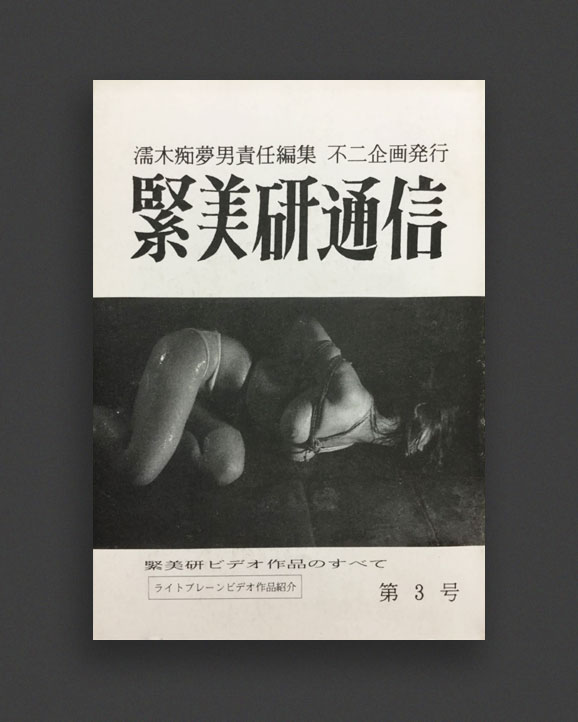
Rare third issue of Kinbiken Communications, the very special bulletin of "Kinbiken", a bondage enthusiast circle founded in tokyo in 1985 by bondage master Chimuo Nureki (who also produced the magazines Kitan Club and Uramado), and photographer Akio Fuji. The bulletin began in 1989, running for 10 years to produce 23 issues, with contributions by Chimuo Nureki, Akio Fuji, Katsuya Kasui, Masami Akita (Merzbow), Yuri Sunohara, Asoji Muroi, Akira Minomura, and other members of the club. The object of the club is to study the beauty of bondage, observing the techniques of master Nureki through a membership with one of the most distinctive facets of the club being that the bondage women participate as members themselves. Says Nureki, “One of the main reasons I started this circle was to provide a facility for masochistic women, who are often misunderstood and therefore despised.” The bulletin is illustrated throughout with examples of bondage and various acts of SM that second as a catalogue of the legendary videos the circle produced throughout the period. Merzbow himself often producing the soundtracks to these performances. The articles (in Japanese) trace the history these activities, and also contextualise and theorise BDSM into broader literary and arts culture, including Masami Akita (Merzbow) writing articles about film and experimental music in relation. Nureki's role as a writer and historian (as well as practitioner) of this culture has been very influential, and is no better documented than in his own journal here. The magazine also features the circle's other project named “Right Brain”, under the leadership of Yuri Sunohara. While Kinbiken is based upon bondage, this project explores a far more extreme realm, including hara-kiri, rubber, gas masks, etc. The imagery throughout is some of the most striking and aesthetic. A very unique magazine.
Please see first five issues posted on our website, but more later issues are available.
All issues in Very Good condition, well preserved.
1990, Japanese
Softcover, 128 pages, 15 x 21 cm
1st Edition, Out of print title / used / very good
Published by
Fuji Kikaku / Tokyo
$55.00 - Out of stock
Rare fourth issue of Kinbiken Communications, the very special bulletin of "Kinbiken", a bondage enthusiast circle founded in tokyo in 1985 by bondage master Chimuo Nureki (who also produced the magazines Kitan Club and Uramado), and photographer Akio Fuji. The bulletin began in 1989, running for 10 years to produce 23 issues, with contributions by Chimuo Nureki, Akio Fuji, Katsuya Kasui, Masami Akita (Merzbow), Yuri Sunohara, Asoji Muroi, Akira Minomura, and other members of the club. The object of the club is to study the beauty of bondage, observing the techniques of master Nureki through a membership with one of the most distinctive facets of the club being that the bondage women participate as members themselves. Says Nureki, “One of the main reasons I started this circle was to provide a facility for masochistic women, who are often misunderstood and therefore despised.” The bulletin is illustrated throughout with examples of bondage and various acts of SM that second as a catalogue of the legendary videos the circle produced throughout the period. Merzbow himself often producing the soundtracks to these performances. The articles (in Japanese) trace the history these activities, and also contextualise and theorise BDSM into broader literary and arts culture, including Masami Akita (Merzbow) writing articles about film and experimental music in relation. Nureki's role as a writer and historian (as well as practitioner) of this culture has been very influential, and is no better documented than in his own journal here. The magazine also features the circle's other project named “Right Brain”, under the leadership of Yuri Sunohara. While Kinbiken is based upon bondage, this project explores a far more extreme realm, including hara-kiri, rubber, gas masks, etc. The imagery throughout is some of the most striking and aesthetic. A very unique magazine.
Please see first five issues posted on our website, but more later issues are available.
All issues in Very Good condition, well preserved.
1990, Japanese
Softcover, 144 pages, 15 x 21 cm
1st Edition, Out of print title / used / very good
Published by
Fuji Kikaku / Tokyo
$55.00 - Out of stock
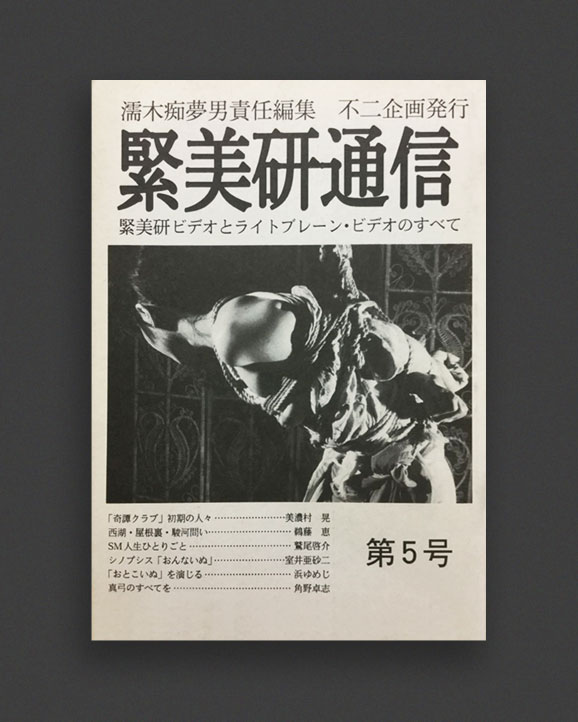
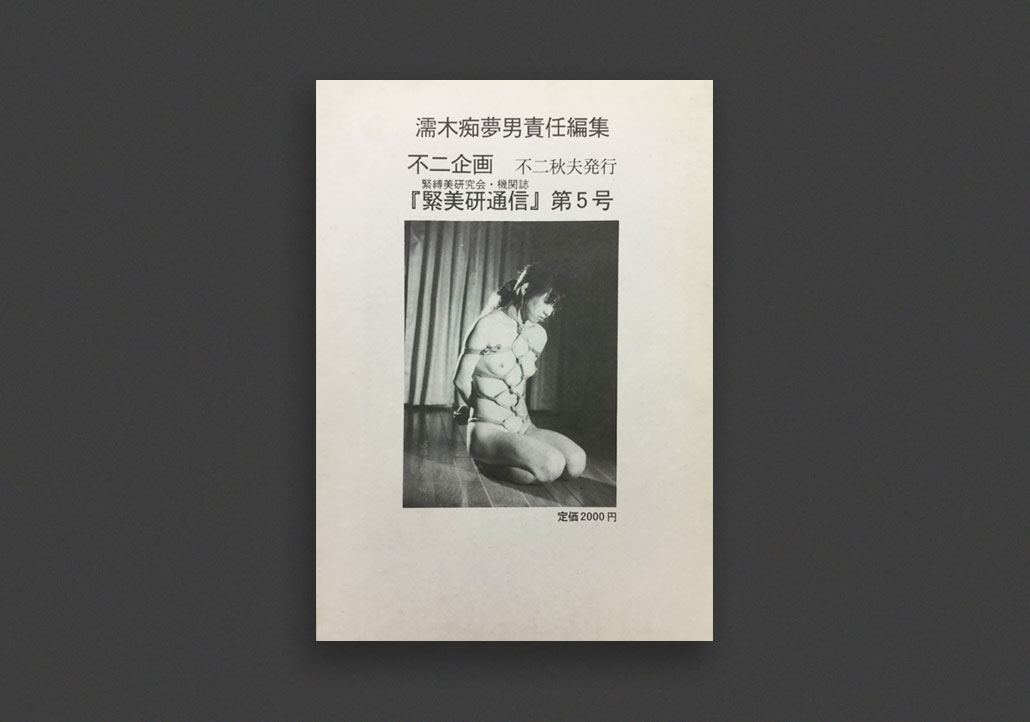
Rare fifth issue of Kinbiken Communications, the very special bulletin of "Kinbiken", a bondage enthusiast circle founded in tokyo in 1985 by bondage master Chimuo Nureki (who also produced the magazines Kitan Club and Uramado), and photographer Akio Fuji. The bulletin began in 1989, running for 10 years to produce 23 issues, with contributions by Chimuo Nureki, Akio Fuji, Katsuya Kasui, Masami Akita (Merzbow), Yuri Sunohara, Asoji Muroi, Akira Minomura, and other members of the club. The object of the club is to study the beauty of bondage, observing the techniques of master Nureki through a membership with one of the most distinctive facets of the club being that the bondage women participate as members themselves. Says Nureki, “One of the main reasons I started this circle was to provide a facility for masochistic women, who are often misunderstood and therefore despised.” The bulletin is illustrated throughout with examples of bondage and various acts of SM that second as a catalogue of the legendary videos the circle produced throughout the period. Merzbow himself often producing the soundtracks to these performances. The articles (in Japanese) trace the history these activities, and also contextualise and theorise BDSM into broader literary and arts culture, including Masami Akita (Merzbow) writing articles about film and experimental music in relation. Nureki's role as a writer and historian (as well as practitioner) of this culture has been very influential, and is no better documented than in his own journal here. The magazine also features the circle's other project named “Right Brain”, under the leadership of Yuri Sunohara. While Kinbiken is based upon bondage, this project explores a far more extreme realm, including hara-kiri, rubber, gas masks, etc. The imagery throughout is some of the most striking and aesthetic. A very unique magazine.
Please see first five issues posted on our website, but more later issues are available.
All issues in Very Good condition, well preserved.
2022, English
Softcover, 432 pages, 13.7 x 20.8 cm
Published by
Primary Information / New York
$40.00 - Out of stock
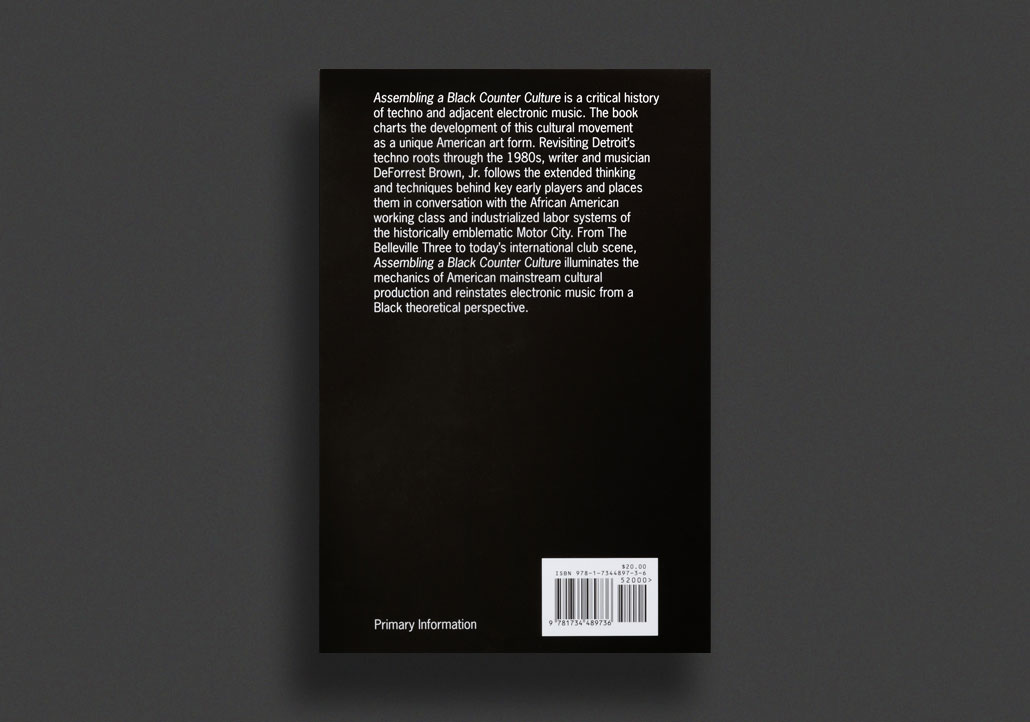
DeForrest Brown, Jr.’s Assembling a Black Counter Culture presents a comprehensive account of techno with a focus on the history of Black experiences in industrialized labor systems—repositioning the genre as a unique form of Black musical and cultural production.
Brown traces the genealogy and current developments in techno, locating its origins in the 1980s in the historically emblematic city of Detroit and the broader landscape of Black musical forms. Reaching back from the transatlantic slave trade to Emancipation, the Industrial Revolution, and the Great Migration from the rural South to the industrialized North, Brown details an extended history of techno rooted in the transformation of urban centers and the new forms of industrial capitalism that gave rise to the African American working class. Following the groundbreaking work of key early players like The Belleville Three, the multimedia output of Underground Resistance and the mythscience of Drexciya, Brown illuminates the networks of collaboration, production, and circulation of techno from Detroit to other cities around the world.
Assembling a Black Counter Culture reframes techno from a Black theoretical perspective distinct from its cultural assimilation within predominantly white, European electronic music contexts and discourse. With references to Theodore Roszak’s Making of a Counter Culture, writings by African American autoworker and political activist James Boggs, and the “techno rebels” of Alvin Toffler’s Third Wave, among others, Brown draws parallels between movements in Black electronic music and Afrofuturist, speculative, and Afrodiasporic practices to imagine a world-building sonic fiction and futurity embodied in techno.
DeForrest Brown, Jr. is an Alabama-raised rhythmanalyst, writer, and representative of the Make Techno Black Again campaign. As Speaker Music, he channels the African American modernist tradition of rhythm and soul music as an intellectual site and sound of generational trauma. On Juneteenth of 2020, he released the album Black Nationalist Sonic Weaponry on Planet Mu. His written work explores the links between the Black experience in industrialized labor systems and Black innovation in electronic music, and has appeared in Artforum, Triple Canopy, NPR, CTM Festival, Mixmag, among many others. He has performed or presented work at Haus der Kulturen der Welt, Berlin; Camden Arts Centre, UK; Unsound Festival, Krakow; Sónar, Barcelona; Issue Project Room, New York; and elsewhere. Assembling a Black Counter Culture is Brown’s debut book.
Editor: Rachel Valinsky
Editorial Consultant: Ting Ding and Camille Crain Drummond
Designer: Scott Ponik
Copy Editor: Madeleine Compagnon
1994, English
Softcover, 320 pages, 15.2 x 23.5 cm
Published by
Princeton University Press / New York
$45.00 - Out of stock
This anthology of the work of Baruch de Spinoza (1632-1677) presents the text of Spinoza's masterwork, the Ethics, in what is now the standard translation by Edwin Curley. Also included are selections from other works by Spinoza, chosen by Curley to make the Ethics easier to understand, and a substantial introduction that gives an overview of Spinoza's life and the main themes of his philosophy. Perfect for course use, the Spinoza Reader is a practical tool with which to approach one of the world's greatest but most difficult thinkers, a passionate seeker of the truth who has been viewed by some as an atheist and by others as a religious mystic.
The anthology begins with the opening section of the Treatise on the Emendation of the Intellect, which has always moved readers by its description of the young Spinoza's spiritual quest, his dissatisfaction with the things people ordinarily strive for—wealth, honor, and sensual pleasure--and his hope that the pursuit of knowledge would lead him to discover the true good. The emphasis throughout these selections is on metaphysical, epistemological, and religious issues: the existence and nature of God, his relation to the world, the nature of the human mind and its relation to the body, and the theory of demonstration, axioms, and definitions. For each of these topics, the editor supplements the rigorous discussions in the Ethics with informal treatments from Spinoza's other works.
Baruch (de) Spinoza (1632—1677) was a Dutch philosopher of Portuguese Sephardic Jewish origin. One of the foremost exponents of 17th-century Rationalism and one of the early and seminal thinkers of the Enlightenment and modern biblical criticism including modern conceptions of the self and the universe, he came to be considered "one of the most important philosophers—and certainly the most radical—of the early modern period." Inspired by the groundbreaking ideas of René Descartes, Spinoza became a leading philosophical figure of the Dutch Golden Age. Spinoza's magnum opus, the Ethics which contains the entirety of his philosophical system in its most rigorous form, was published posthumously in the year of his death. The work opposed Descartes's philosophy of mind–body dualism and earned Spinoza recognition as one of Western philosophy's most important thinkers. In it, "Spinoza wrote the last indisputable Latin masterpiece, and one in which the refined conceptions of medieval philosophy are finally turned against themselves and destroyed entirely". Hegel said, "The fact is that Spinoza is made a testing-point in modern philosophy, so that it may really be said: You are either a Spinozist or not a philosopher at all." His philosophical accomplishments and moral character prompted Gilles Deleuze to name him "the 'prince' of philosophers".
1992, English
Softcover, 446 pages, 15.8 x 22.9 cm
1st Edition, Out of print title / used / very good
Published by
Zone Books / New York
$59.00 - Out of stock
In this remarkable work, Gilles Deleuze, the renowned French philosopher, reflects on one of the thinkers of the past who most influenced his own sweeping reconfiguration of the tasks of philosophy. For Deleuze, Spinoza, along with Nietzsche and Lucretius, conceived of philosophy as an enterprise of liberation and radical demystification. He locates in Spinoza "a set of affects, a kinetic determination, an impulse" and makes Spinoza into "an encounter, a passion."
Expressionism in Philosophy was the culmination of a series of monographic studies by Deleuze (on Hume, Bergson, Nietzsche, Proust, Kant, and Sacher-Masoch) and prepared the transition from these abstract treatments of historical schemes of experience to the nomadology of Capitalism and Schizophrenia (Anti-Oedipus and A Thousand Plateaus, co-authored with Félix Guattari). Thus, Expressionism in Philosophy is both a pivotal reading of Spinoza's work and a crucial text within the development of Deleuze's thought.
First 1992 softcover edition. Very Good copy.
1994, English
Softocver, 196 pages, 15.5 x 23.5 cm
1st Edition, Out of print title / used / fine
Published by
University of Chicago Press / Chicago
$45.00 - Out of stock
The work of the French cultural critic Louis Marin (1931-1992) is of importance to scholars concerned with issues of representation. This text, first published in France in 1977, presents Marin's theories about the aims of painting in Europe in the 16th and 17th centuries. A meditation on the work of Poussin and Caravaggio and on their milieux, the book explores a number of notions implied by theories of painting and offers insight into the aims and effects of visual representaion.
First edition Very Good—Fine copy.
2002, English
Softcover, 214 pages, 13.7 x 19.1 cm
1st Edition, Out of print title / used / fine
Published by
Verso / London
$25.00 - Out of stock
Alain Badiou, one of the most powerful voices in contemporary French philosophy, shows how our prevailing ethical principles serve ultimately to reinforce an ideology of the status quo and fail to provide a framework for an effective understanding of the concept of evil.
Translated by Peter Hallward
Very Good—Fine copy.
2006, English
Softcover, 450 pages, 15.2 x 22.9 cm
Published by
re.press / Prahran
$35.00 - Out of stock
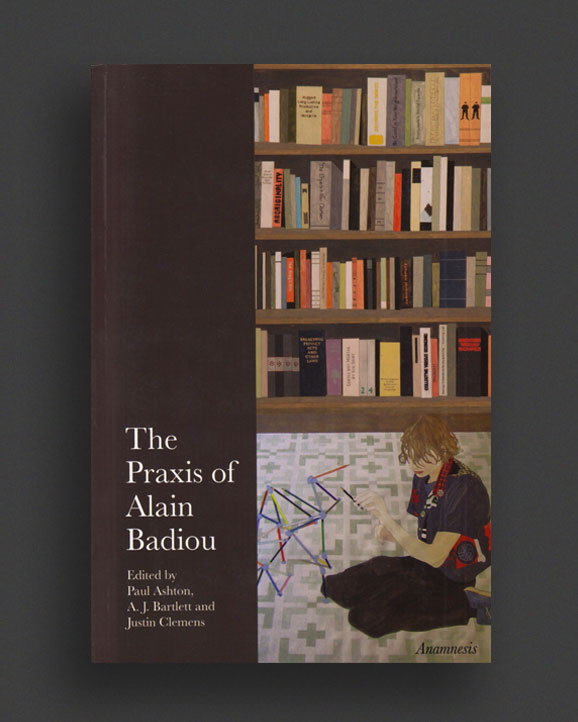
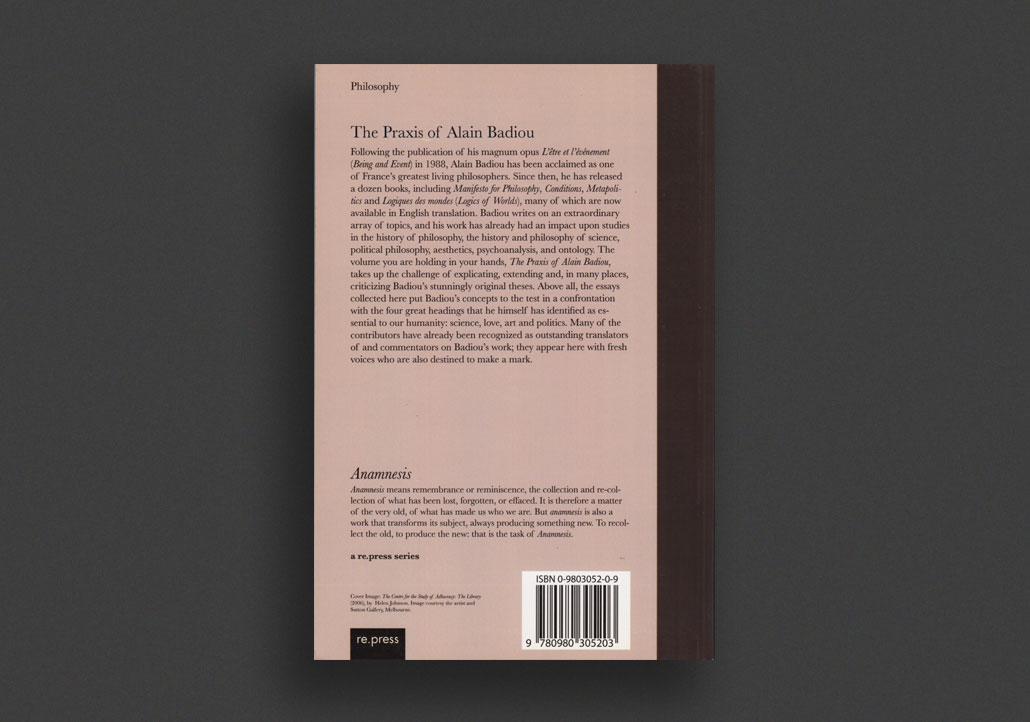
Following the publication of his magnum opus L'etre et l'evenement (Being and Event) in 1988, Alain Badiou has been acclaimed as one of France's greatest living philosophers. Since then, he has released a dozen books, including Manifesto for Philosophy, Conditions, Metapolitics and Logiques des mondes (Logics of Worlds), many of which are now available in English translation. Badiou writes on an extraordinary array of topics, and his work has already had an impact upon studies in the history of philosophy, the history and philosophy of science, political philosophy, aesthetics, psychoanalysis, and ontology. This volume takes up the challenge of explicating, extending and, in many places, criticizing Badiou's stunningly original theses. Above all, the essays collected here put Badiou's concepts to the test in a confrontation with the four great headings that he himself has identified as essential to our humanity: science, love, art and politics. Many of the contributors have already been recognized as outstanding translators of and commentators on Badiou's work; they appear here with fresh voices also destined to make a mark.
Contributors: Paul Ashton, Justin Clemens, A. J. Bartlett, Alain Badiou, Brian Anthony Smith, Zachary Fraser, Lorenzo Chiesa, Sigi Jöttkandt, Sam Gillespie, Oliver Feltham, Lindsey Hair, Alex Ling, Alberto Toscano, Toula Nicolacopoulos, George Vassilacopoulos, Dominique Hecq,
1991, English
Hardcover (w. dust jacket), 296 pages, 15 x 22.6 cm
1st Edition, Out of print title / used / very good
Published by
Zone Books / New York
$90.00 - Out of stock
First 1991 hardcover edition of Masochism : Coldness and Cruelty & Venus in Furs by Gilles Deleuze, published by Zone. Long out-of-print in hardcover.
In his stunning essay Coldness and Cruelty Gilles Deleuze provides a rigorous and informed philosophical examination of the work of late nineteenth-century German novelist Leopold von Sacher-Masoch. Deleuze's essay, certainly the most profound study yet produced on the relations between sadism and masochism, seeks to develop and explain Masoch's "peculiar way of 'desexualizing' love while at the same time sexualizing the entire history of humanity." He shows that masochism is something far more subtle and complex than the enjoyment of pain, that masochism has nothing to do with sadism: their worlds do not communicate, just as the genius of those who created them -- Masoch and Sade -- lie stylistically, philosophically, and politically poles apart.
Venus in Furs, the most famous of Masoch's novels, belongs to an unfinished cycle of works that Masoch entitled The Heritage of Cain. The cycle was to treat a series of themes, including love, war, and death. The present work is about love. Although the entire constellation of symbols that has come to characterize the masochistic syndrome can be found here -- fetishes, whips, disguises, fur-clad women, contracts, humiliations, punishment, and always the volatile presence of a terrible coldness -- these received associations do not eclipse the truly singular and surprising power of Masoch's eroticism.
Very Good copy in VG dust jacket.
1993, English
Hardcover (w. dust jacket), 366 pages, 17.8 x 22.9 cm
1st Edition, Out of print title / used / very good
Published by
The MIT Press / Massachusetts
October Books / New York
$90.00 - Out of stock
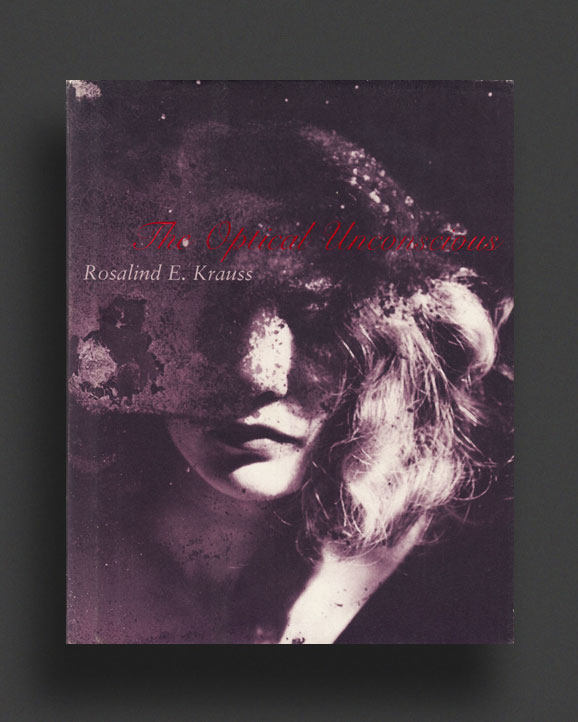
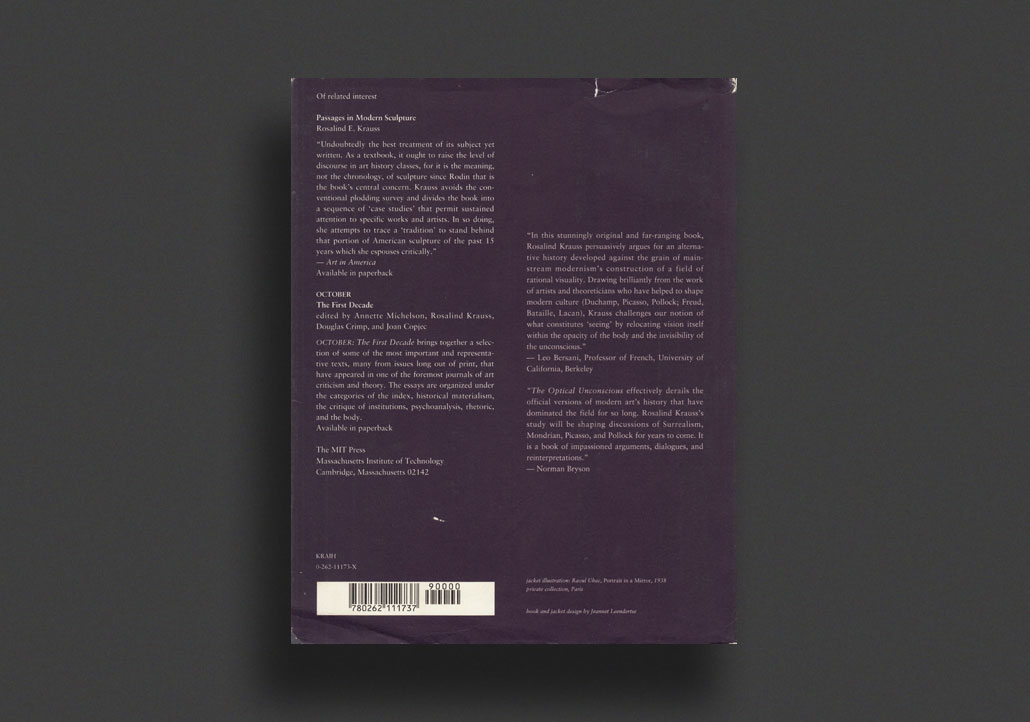
Long out of print first 1993 Hardcover edition of Rosalind E. Krauss' The Optical Unconscious, published by October / MIT Press.
The Optical Unconscious is a pointed protest against the official story of modernism and against the critical tradition that attempted to define modern art according to certain sacred commandments and self-fulfilling truths. The account of modernism presented here challenges the vaunted principle of vision itself. And it is a very different story than we have ever read, not only because its insurgent plot and characters rise from below the calm surface of the known and law-like field of modernist painting, but because the voice is unlike anything we have heard before. Just as the artists of the optical unconscious assaulted the idea of autonomy and visual mastery, Rosalind Krauss abandons the historian's voice of objective detachment and forges a new style of writing in this book: art history that insinuates diary and art theory, and that has the gait and tone of fiction.
The Optical Unconscious will be deeply vexing to modernism's standard-bearers, and to readers who have accepted the foundational principles on which their aesthetic is based. Krauss also gives us the story that Alfred Barr, Meyer Shapiro, and Clement Greenberg repressed, the story of a small, disparate group of artists who defied modernism's most cherished self-descriptions, giving rise to an unruly, disruptive force that persistently haunted the field of modernism from the 1920s to the 1950s and continues to disrupt it today.
In order to understand why modernism had to repress the optical unconscious, Krauss eavesdrops on Roger Fry in the salons of Bloomsbury, and spies on the toddler John Ruskin as he amuses himself with the patterns of a rug; we find her in the living room of Clement Greenberg as he complains about smart Jewish girls with their typewriters in the 1960s, and in colloquy with Michael Fried about Frank Stella's love of baseball. Along the way, there are also narrative encounters with Freud, Jacques Lacan, Georges Bataille, Roger Caillois, Gilles Deleuze, and Jean-François Lyotard.
To embody this optical unconscious, Krauss turns to the pages of Max Ernst's collage novels, to Marcel Duchamp's hypnotic Rotoreliefs, to Eva Hesse's luminous sculptures, and to Cy Twombly's, Andy Warhol's, and Robert Morris's scandalous decoding of Jackson Pollock's drip pictures as Anti-Form. These artists introduced a new set of values into the field of twentieth-century art, offering ready-made images of obsessional fantasy in place of modernism's intentionality and unexamined compulsions.
Very Good copy in Good dust jacket with some wear to edges.
1972, English
Softcover, 160 pages, 18.5 x 12.5 cm
1st Edition, Out of print title / used / good
Published by
Studio Vista / London
E P Dutton / New York
$30.00 - Out of stock
First edition of the Futurism volume of Studio Vista / Dutton's great paperback series. Published in 1971 and written by Jane Rye, this heavily illustrated overview spans Futurism's beginnings as an aggressively modern style in art and literature in the 1920 and 1930s, its activities and developments via central protagonists such as Italian poet Filippo Tommaso Marinetti, who coined the term, Giacomo Balla, Carlo Carrà, Umberto Boccioni, Gino Severini, etc.
Includes chapters on all major Futurist disciplines : Painting and Sculpture, Architecture, Literature, Theatre, plus chapters on Futurism and politics, Futurism within Italy and Futurism outside Italy, a book list, index, and more.
Good copy.
1970, English
Softcover, 168 pages, 18.5 x 12.5 cm
1st Edition, Out of print title / used / good
Published by
Studio Vista / London
E P Dutton / New York
$30.00 - Out of stock
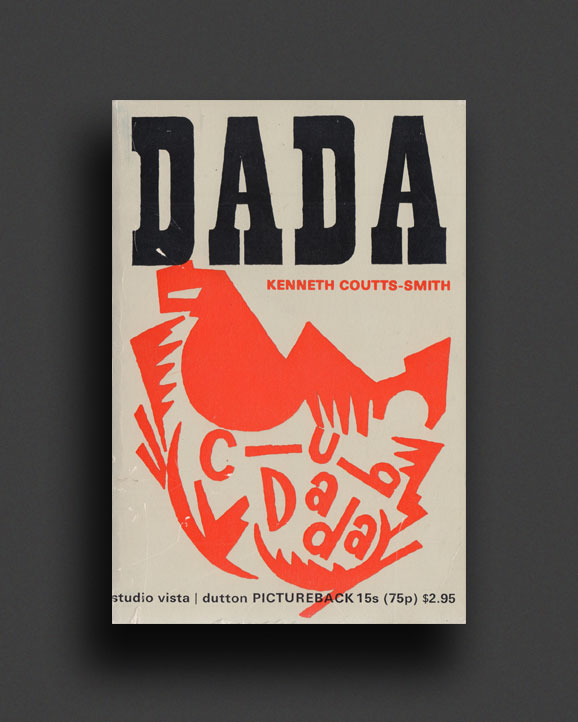
First edition of the Dada volume of Studio Vista / Dutton's great paperback series. Published in 1970 and written by Kenneth Coutts-Smith, this heavily illustrated overview spans Dada's activities via central locations and protagonists such as Picabia, Janco, Duchamp, Schwitters, Ernst, Grosz, Man Ray, Arp, etc.
Chapters : "Zürich - the beginning", "Anti-art and the irrational", "The roots of Dada", "New York - Duchamp and philosophical irony", "Berlin - political commitment", "Cologne - Ernst and the hallucinatory vision", "Hanover - Schwitters, freedom through lyricism", "Paris - last fling and obsequies", "Dada is dead-long live Dada", "Book list", "Index".
1994, Softcover
Softcover, 644 pages, 15.2 x 22.8 cm
1st Edition, Out of print title / used / very good
Published by
Harvest Books / New York
$45.00 - In stock -
To some the Marquis de Sade was a monster, to others an apostle of sexual freedom and a literary genius. Lever reconstructs the life of the "divine marquis" in all its splendor and perversity. Named a Publishers Weekly Best Book of the Year and a New York Times Notable Book of the Year. Includes a full index of Sade's works. Translated by Arthur Goldhammer.
Very good copy of the first 1994 edition of this acclaimed Sade biography.
1976, English
Softcover, 288 pages, 13 x 18 cm
Out of print title / used / very good
Published by
Corgi / London
$35.00 - Out of stock
1976 UK edition of William S. Burroughs' The Naked Lunch, published by Corgi books.
'I can feel the heat closing in, feel them out there making their moves'
Nightmarish and fiercely funny, William Burroughs' virtuoso, taboo-breaking masterpiece Naked Lunch follows Bill Lee through Interzone: a surreal, orgiastic wasteland of drugs, depravity, political plots, paranoia, sadistic medical experiments and endless, gnawing addiction. One of the most shocking novels ever written, Naked Lunch is a cultural landmark, now in a restored edition incorporating Burroughs' notes on the text, alternate drafts and outtakes from the original.
William S. Burroughs was born in 1914 in St Louis. In work and in life Burroughs expressed a lifelong subversion of the morality, politics and economics of modern America. To escape those conditions, and in particular his treatment as a homosexual and a drug-user, Burroughs left his homeland in 1950, eventually living in Mexico City, Tangier, Paris and London. By the time of his death he was widely recognised as one of the most politically trenchant, culturally influential, and innovative artists of the twentieth century. His numerous books include Naked Lunch, Junky, Queer, Nova Express, Interzone, The Wild Boys, The Ticket That Exploded and The Soft Machine.
Very Good copy.
1974, English
Softcover, 192 pages, 13 x 18 cm
Out of print title / used / very good
Published by
Corgi / London
$35.00 - Out of stock
1974 UK edition of William S. Burroughs' The Soft Machine, published by Corgi books.
With a dangerous blend of chemistry and magic, secret agent Lee has the ability to change bodies - his own, or with anyone he chooses. Also able to time travel, he finds himself forced to use his skills to defeat a team of priests, who are using mind control to produce their own private slave race. Dead soldiers, African street urchins, evil doctors, corrupt judges and monsters from the mythology of history and science all feature in Lee's terrifying adventure.
A surreal space odyssey, The Soft Machine is the first book in Burrough's innovative 'cut-up' trilogy - followed by Nova Express and The Ticket That Exploded - and a ferocious assault on hype, poverty, war and addiction in all its forms.
William S. Burroughs (1914—1997) was an American writer and visual artist, immensely influential among the Beat writers of the 1950s — notably Jack Kerouac and Allen Ginsberg — and a major postmodern author who influenced popular culture and literature. Burroughs wrote eighteen novels and novellas, six collections of short stories and four collections of essays, and five books have been published of his interviews and correspondences. His first published novel was the largely autobiographical Junky, which remains a classic depiction of the constant cycle of drug dependency, cures and relapses he was victim to for most of his life. He also collaborated on projects and recordings with numerous performers and musicians, made many appearances in films, and created and exhibited thousands of visual artworks, including his celebrated "Shotgun Art". In 1951, in a drunken William Tell stunt, he accidentally shot and killed his common-law wife. He is most famous for his use of the 'cut-up' technique of writing and the novel Naked Lunch. His other major works included Queer, Exterminator! The 'Nova Trilogy' (The Soft Machine, Nova Express and The Ticket That Exploded) and the 'Red Night Trilogy' (Cities of the Red Night, The Place of Dead Roads and The Western Lands).
Very Good copy.
1980, English
Softcover, 54 pages, 17.5 x 12.5 cm
Out of print title / used / good
Published by
City Lights Books / San Francisco
$45.00 - Out of stock
Second 1980 printing of this lovely 1979 City Lights edition of William S. Burroughs' Roosevelt After Inauguration and Other Atrocities. Written by Burroughs in the early 1960's, Roosevelt After Inauguration and Other Atrocities was originally intended for inclusion in The Yage Letters but was censored by the English printers. Ted Morgan describes the text as a parody or routine in which Cabinet offices are given to pimps, thieves, hookers, and hustlers, which was not that wide off the mark, in a metaphorical sense, given the peculiarities of some members of the first Roosevelt Cabinet.
Good copy.
1970, English
Softcover, 13 x 18 cm
1st UK Edition, Out of print title / used / good
Published by
Corgi / London
$35.00 - Out of stock
First 1970 UK edition of William S. Burroughs' The Soft Machine, published by Corgi books.
With a dangerous blend of chemistry and magic, secret agent Lee has the ability to change bodies - his own, or with anyone he chooses. Also able to time travel, he finds himself forced to use his skills to defeat a team of priests, who are using mind control to produce their own private slave race. Dead soldiers, African street urchins, evil doctors, corrupt judges and monsters from the mythology of history and science all feature in Lee's terrifying adventure.
A surreal space odyssey, The Soft Machine is the first book in Burrough's innovative 'cut-up' trilogy - followed by Nova Express and The Ticket That Exploded - and a ferocious assault on hype, poverty, war and addiction in all its forms.
William S. Burroughs (1914—1997) was an American writer and visual artist, immensely influential among the Beat writers of the 1950s — notably Jack Kerouac and Allen Ginsberg — and a major postmodern author who influenced popular culture and literature. Burroughs wrote eighteen novels and novellas, six collections of short stories and four collections of essays, and five books have been published of his interviews and correspondences. His first published novel was the largely autobiographical Junky, which remains a classic depiction of the constant cycle of drug dependency, cures and relapses he was victim to for most of his life. He also collaborated on projects and recordings with numerous performers and musicians, made many appearances in films, and created and exhibited thousands of visual artworks, including his celebrated "Shotgun Art". In 1951, in a drunken William Tell stunt, he accidentally shot and killed his common-law wife. He is most famous for his use of the 'cut-up' technique of writing and the novel Naked Lunch. His other major works included Queer, Exterminator! The 'Nova Trilogy' (The Soft Machine, Nova Express and The Ticket That Exploded) and the 'Red Night Trilogy' (Cities of the Red Night, The Place of Dead Roads and The Western Lands).
Good copy.
1971, English
Softcover, 192 pages, 13 x 18 cm
1st UK Edition, Out of print title / used / good
Published by
Corgi / London
$25.00 - Out of stock
First 1971 UK edition of William S. Burroughs' The Ticket That Exploded, published by Corgi books.
Inspector Lee and the Nova Police have been forced to engage the Nova Mob in one final battle for the planet. This is Burroughs's nightmare vision of scientists and combat troops, of Johnny Yen's chicken-hypnotizing and green Venusian-boy-girls, of ad men and conmen whose destructive language has spread like an incurable disease; a virus and parasite that takes over every human body.
One of Burroughs's most approachable works, The Ticket That Exploded is the climax of his innovative 'cut-up' Nova trilogy - following The Soft Machine and Nova Express - and is an enthralling and frightening image of the future.
William S. Burroughs (1914—1997) was an American writer and visual artist, immensely influential among the Beat writers of the 1950s — notably Jack Kerouac and Allen Ginsberg — and a major postmodern author who influenced popular culture and literature. Burroughs wrote eighteen novels and novellas, six collections of short stories and four collections of essays, and five books have been published of his interviews and correspondences. His first published novel was the largely autobiographical Junky, which remains a classic depiction of the constant cycle of drug dependency, cures and relapses he was victim to for most of his life. He also collaborated on projects and recordings with numerous performers and musicians, made many appearances in films, and created and exhibited thousands of visual artworks, including his celebrated "Shotgun Art". In 1951, in a drunken William Tell stunt, he accidentally shot and killed his common-law wife. He is most famous for his use of the 'cut-up' technique of writing and the novel Naked Lunch. His other major works included Queer, Exterminator! The 'Nova Trilogy' (The Soft Machine, Nova Express and The Ticket That Exploded) and the 'Red Night Trilogy' (Cities of the Red Night, The Place of Dead Roads and The Western Lands).
Good copy.
1967, English
Softcover, 160 pages, 18 x 11 cm
Out of print title / used / good
Published by
Penguin Books / Australia
$20.00 - Out of stock
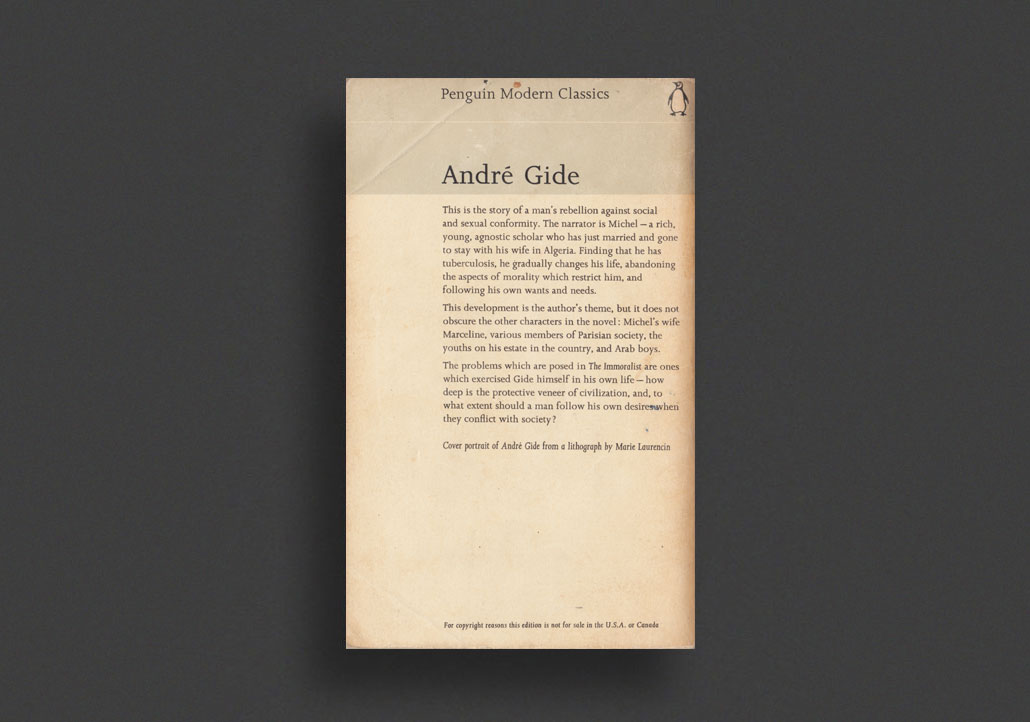
In The Immoralist, André Gide presents the confessional account of a man seeking the truth of his own nature. The story's protagonist, Michel, knows nothing about love when he marries the gentle Marceline out of duty to his father. On the couple's honeymoon to Tunisia, Michel becomes very ill, and during his recovery he meets a young Arab boy whose radiant health and beauty captivate him. An awakening for him both sexually and morally, Michel discovers a new freedom in seeking to live according to his own desires. But, as he also discovers, freedom can be a burden. A frank defense of homosexuality and a challenge to prevailing ethical concepts, The Immoralist is a literary landmark, marked by Gide's masterful, pure, simple style.
Good copy.
1964, English
Softcover, 160 pages, 18 x 11 cm
Out of print title / used / good
Published by
Penguin Books / London
$18.00 - Out of stock
'It's only after our death that we shall really be able to hear.'
Originally published in 1925, this book became known for the frank sexuality of its contents and its account of middle class French morality. The measured tone of hopeless nihilism that pervades The Counterfeiters quickly shatters any image of André Gide as the querulous and impious Buddha to a quarter-century of intellectuals. In sharp and brilliant prose a seedy, cynical and gratuitously alarming narrative is developed, involving a wide range of otherwise harmless and mainly middle-to-upper-class Parisians. But the setting could be anywhere. From puberty through adolescence to death, The Counterfeiters is a rare encyclopedia of human disorder, weakness and despair.
André Paul Guillaume Gide (1869 – 1951) was a French author. Born in Paris in 1869, Gide's career ranged from its beginnings in the symbolist movement, to the advent of anticolonialism between the two World Wars. He had an irregular and lonely upbringing. He became devoted to literature and music, and began his literary career as an essayist, moving on to poetry, biography, fiction, drama, criticism, reminiscence and translation. By 1917 he had emerged as a prophet to French youth, and his unorthodox views were a source of endless debate and attack. Known for his fiction as well as his autobiographical works, Gide exposed to public view the conflict and eventual reconciliation of the two sides of his personality (characterized by a Protestant austerity and a transgressive sexual adventurousness, respectively), which a strict and moralistic education had helped set at odds. Gide's work can be seen as an investigation of freedom and empowerment in the face of moralistic and puritanical constraints, and centers on his continuous effort to achieve intellectual honesty. His self-exploratory texts reflect his search of how to be fully oneself, including owning one's sexual nature, without at the same time betraying one's values. He was awarded the Nobel Prize for Literature in 1948. Gide died in Paris in 1951.
Good copy.
1994, English
Softcover, 704 pages, 13.3 x 19.6 cm
Published by
Penguin Books / London
$35.00 - In stock -
The works of Friedrich Nietzsche have fascinated readers around the world ever since the publication of his first book more than a hundred years ago. As Walter Kaufmann, one of the world's leading authorities on Nietzsche, notes in his introduction, "Few writers in any age were so full of ideas," and few writers have been so consistently misinterpreted.
The Portable Nietzsche includes Kaufmann's definitive translations of the complete and unabridged texts of Nietzsche's four major works: Twilight of the Idols, The Antichrist, Nietzsche Contra Wagner and Thus Spoke Zarathustra. In addition, Kaufmann brings together selections from his other books, notes, and letters, to give a full picture of Nietzsche's development, versatility, and inexhaustibility.
"In this volume, one may very conveniently have a rich review of one of the most sensitive, passionate, and misunderstood writers in Western, or any, literature." — Newsweek