World Food Books' programme is largely produced on Kulin Nation land. We acknowledge the Wurundjeri people of the Kulin Nation as the first and continuing custodians of this land, and pay respect to their Elders past, present, and emerging.
World Food Books is an arts and special interests bookshop in Naarm / Melbourne. Founded in 2010, World Food Books is devoted to the presentation of a rotating, hand-selection of international art, design, literary and counterculture publications with an emphasis on the anti-traditional, the experimental, the avant-garde, the heretic, the marginal.
Presenting new titles alongside rare and out-of-print books, catalogues and journals spanning the fields of modern and contemporary art, design, photography, illustration, film, literature, poetry, cultural theory, philosophy, sexuality, popular and underground culture in its many radical forms, World Food Books wishes to encourage adventurous, thoughtful and open-minded reading, looking, writing, and exchange of publishing and ideas, both current and historical.
As well as our bookshop, located in Melbourne's historical Nicholas Building, all of our inventory is available internationally via our online mail-order service.
World Food Books semi-regularly co-ordinates "Occasions", a programme of exhibits and events at the bookshop and in partnership with other hosts (such as museums and art galleries) that develop out of the activities, relationships and content of the bookshop itself.
World Food Books
The Nicholas Building
37 Swanston Street
Room 5, Level 6
Melbourne 3000
Australia
SHOP HOURS:
Thu–Fri 12–6, Sat 12–5
WEB-SHOP OPEN 24/7
World Food Books
Postal Address:
PO Box 435
Flinders Lane
Victoria 8009
Australia
Art
Theory / Essay
Architecture / Interior
Graphic Design / Typography
Photography
Fashion
Eros
LGBTQ+
Fiction / Poetry
Weird / Speculative / Science Fiction / Horror
Transgressive / Visceral / Abject
Symbolism / Decadence / Fin de siècle
Film / Video
Painting
Sculpture / Installation
Performance / Dance / Theater
Drawing
Sound / Music
Curatorial
Group Shows / Collections
Periodicals
Out-of-print / Rare
Posters / Ephemera / Discs
Signed Books
World Food Books Gift Voucher
World Food Book Bag
Australian Art
Australian Fiction
Australian Science Fiction / Speculative Fiction
Australian Poetry
Australian Photography
Japanese Photography
Conceptual Art
Minimal Art
Dada
'Pataphysics / Oulipo
Fluxus
Concrete Poetry
Pop Art
Surrealism
Arte Povera
Arte Informale / Haute Pâte / Tachism
Nouveau Réalisme / Zero / Kinetic
Situationism / Lettrism
Collage / Mail Art / Xerox Art
Art Brut / Folk / Visionary / Fantastic
Illustration / Graphic Art / Bandes Dessinées
Furniture
Italian Radical Design / Postmodernism
Textiles
Ceramics / Glass
Counterculture
Protest / Revolt
Philosophy
Psychoanalysis
Anthropology
Anarchism
Socialism / Anarchism / Communism / Capitalism
Literary Theory / Semiotics / Language
Feminism / Women's Studies
Gender Studies / Sexuality
Anthropology
Fetishism / BDSM
Drugs / Psychedelia
Crime / Violence
Animal Rights / Veganism
Occult / Esoterica
Ecology / Earth / Alternative Living
Whole Earth / Crafts
All prices in AUD (Australian dollars)
Pick-Ups
Pick-up orders can be collected in our bookshop during opening hours after order date. Please collect any Pick-up orders within 2 weeks of ordering as we have limited storage space. Orders will be released back into stock if not collected within this time. No refunds can be made for pick-ups left un-collected. If you cannot make it in to the bookshop in this time-frame, please choose postage option.
Return Policy
All sales are final. We do accept returns (for refund or exchange) for items received in error. All our orders are packed with special care using heavy-duty padding and cardboard book-mailers or bubble mailers (for smaller books), using reinforcement where required. We cannot take responsibility for any lost, stolen or damaged parcels.
Insurance
Should you wish to insure your package, please email us directly after placing your order and we can organise this at a small extra expense. Although all standard/express tracked packages are very safe and dependable, we cannot take responsibility for any lost, stolen or damaged parcels. We recommend insurance on valuable orders.
Interested in selling your old books, catalogues, journals, magazines, comics, fanzines, ephemera? We are always looking for interesting, unusual and out-of-print books to buy. We only buy books in our fields of interest and specialty, and that we feel we can resell.
We base these prices on desirability, market value, in-print prices, condition and our current stock levels. We offer cash, store credit, and can take stock on consignment. All
about 25% of the price we expect to get when we sell them, or 30% in store credit. We base these prices on desirability, market value, in-print prices, condition and our current stock levels.
Sell your books any day of the week. You can drop them off and return later. If you have a lot of books, we can visit your Sydney home.
We buy books that we feel we can resell. We offer about 25 % of the price we expect to get when we sell them, or 30% in store credit. We base these prices on desirability, market value, in-print prices, condition and our current stock levels.
Philadelphia Wireman
03 August - 01 September, 2018
World Food Books is proud to announce our next Occasion, the first presentation of sculptures by Philadelphia Wireman in Australia.
The Philadelphia Wireman sculptures were found abandoned in an alley off Philadelphia’s South Street on trash night in 1982. Their discovery in a rapidly-changing neighbourhood undergoing extensive renovation, compounded with the failure of all attempts to locate the artist, suggests that the works may have been discarded after the maker’s death. Dubbed the "Philadelphia Wireman" during the first exhibition of this work, in 1985, the maker’s name, age, ethnicity, and even gender remain uncertain. The entire collection totals approximately 1200 pieces, all intricately bound together with tightly-wound heavy-gauge wire (along with a few small, abstract marker drawings, reminiscent both of Mark Tobey and J.B. Murry). The dense construction of the work, despite a modest range of scale and materials, is singularly obsessive and disciplined in design: a wire armature or exoskeleton firmly binds a bricolage of found objects including plastic, glass, food packaging, umbrella parts, tape, rubber, batteries, pens, leather, reflectors, nuts and bolts, nails, foil, coins, toys, watches, eyeglasses, tools, and jewellery.
Heavy with associations—anthropomorphic, zoomorphic, and socio-cultural responses to wrapped detritus—the totemic sculptures by Philadelphia Wireman have been discussed in the context of work created to fulfil the shamanistic needs of alternative religions in American culture. Curators, collectors, and critics have variously compared certain pieces to sculpture from Classical antiquity, Native American medicine bundles, African-American memory jugs, and African fetish objects. Reflecting the artist’s prolific and incredibly focused scavenging impulse, and despite—or perhaps enhanced by—their anonymity, these enigmatic objects function as urban artefacts and arbiters of power, though their origin and purpose is unknown. Philadelphia Wireman, whatever their identity, possessed an astonishing ability to isolate and communicate the concepts of power and energy through the selection and transformation of ordinary materials. Over the course of the past two decades, this collection has come to be regarded as an important discovery in the field of self-taught art and vernacular art.
Presented in collaboration with Fleisher-Ollman Gallery, Philadelphia, and Robert Heald, Wellington.
Susan Te Kahurangi King
02 February - 10 March, 2018
Susan Te Kahurangi King (24 February 1951 - ) has been a confident and prolific artist since she was a young child, drawing with readily available materials - pencils, ballpoint pens and felt-tip markers, on whatever paper is at hand. Between the ages of four and six Susan slowly ceased verbal communication. Her grandparents William and Myrtle Murphy had developed a special bond with Susan so they took on caring responsibilities for extended periods. Myrtle began informally archiving her work, carefully collecting and storing the drawings and compiling scrapbooks. No drawing was insignificant; every scrap of paper was kept. The King family are now the custodians of a vast collection containing over 7000 individual works, from tiny scraps of paper through to 5 meter long rolls.
The scrapbooks and diaries reveal Myrtle to be a woman of great patience and compassion, seeking to understand a child who was not always behaving as expected. She encouraged Susan to be observant, to explore her environment and absorb all the sights and sounds. Myrtle would show Susan’s drawings to friends and people in her community that she had dealings with, such as shopkeepers and postal workers, but this was not simply a case of a grandmother’s bias. She recognised that Susan had developed a sophisticated and unique visual language and sincerely believed that her art deserved serious attention.
This was an unorthodox attitude for the time. To provide some context, Jean Dubuffet coined the term Art Brut in 1945 to describe work created by self-taught artists – specifically residents of psychiatric institutions and those he considered to be visionaries or eccentrics. In 1972 Roger Cardinal extended this concept by adopting the term Outsider Art to describe work made by non-academically trained artists operating outside of mainstream art networks through choice or circumstance. Susan was born in Te Aroha, New Zealand in 1951, far from the artistic hubs of Paris and London that Dubuffet and Cardinal operated in. That Myrtle fêted Susan as a self-taught artist who deserved to be taken seriously shows how progressive her attitudes were.
Susan’s parents Doug and Dawn were also progressive. Over the years they had consulted numerous health practitioners about Susan’s condition, as the medical establishment could not provide an explanation as to why she had lapsed into silence. Dawn educated herself in the field of homeopathy and went on to treat all twelve of her children using these principles – basing prescriptions on her observations of their physical, mental and emotional state.
Doug was a linguist with an interest in philosophy who devoted what little spare time he had to studying Maori language and culture. To some extent their willingness to explore the fringes of the mainstream made them outsiders too but it was their commitment to living with integrity and their respect for individuality that ensured Susan’s creativity was always encouraged.
Even though Susan’s family supported her artistic pursuits, some staff in schools and hospitals saw it as an impediment to her assimilation into the community and discouraged it in a variety of ways. Her family was not always aware of this and therefore did not fully understand why Susan stopped drawing in the early 1990s. However, rather than dwell on the challenges that Susan faced in pursuit of her artistic practice, they prefer to highlight her achievements. In 2008 Susan began drawing again in earnest, after an almost 20 year interruption, and her work is now shown in galleries around the world.
Susan grew up without television and has been heavily influenced by the comics she read as a child. She is absolutely fearless in the appropriation of recognizable characters, such as Donald Duck and Mickey Mouse, in her work. She twists their limbs, contorts their faces, compresses them together, blends them into complex patterned backgrounds - always imbuing them with an incredible energy. Although Susan often used pop culture characters in her work they are not naive or childlike. These are drawings by a brilliant self-taught artist who has been creating exceptional work for decades without an audience in mind.
Mladen Stilinović
"Various Works 1986 - 1999"
02 February 16 - September 10, 2016
Various works 1986 - 1999, from two houses, from the collections of John Nixon, Sue Cramer, Kerrie Poliness, Peter Haffenden and Phoebe Haffenden.
Including: Geometry of Cakes (various shelves), 1993; Poor People’s Law (black and white plate), 1993; White Absence (glasses, ruler, set square, silver spoon, silver ladel with skin photograph and wooden cubes), 1990-1996; Exploitation of the Dead (grey and red star painting, wooden painting, black spoon with red table, red plate), 1984-1990; Money and Zeros (zero tie, paintings made for friends in Australia (Sue, John, Kerrie), numbers painting), 1991-1992; Words - Slogans (various t-shirts) - “they talk about the death of art...help! someone is trying to kill me”, “my sweet little lamb”, “work is a disease - Karl Marx”; Various artist books, catalogues, monographs, videos; Poster from exhibition Insulting Anarchy; "Circular" Croatian - Australian edition; Artist book by Vlado Martek (Dostoyevsky); more.
Thanks to Mladen Stilinović and Branka Stipančić.
Jonathan Walker
Always Will Need To Wear Winter Shirt Blue + Ochre Small Check Pattern
21 August - 21 September, 2015
Untitled
I am not a great reader of poetry but I always return to the work of Melbourne poet, Vincent Buckley (1925- 1988). Perhaps I find his most tantalising piece to be not a finished poem but a fragment left on a scrap of paper discovered on his desk after the poet’s death.
The poetry gathers like oil
In the word-core, and spreads
It has its music meet,
Its music is in movement.
This fragment is more the shell left behind from a volatile thought than a finished poem. I find the last two lines honest but awkward whereas the first two lines work like an arrow. Most likely he could not find a resolution so it was left. Still, in its present form, it remains an eloquent testimony to the ultimate failure of a medium to express mobile thought and sensation, in Buckley’s case, through verbal language. It’s an important matter because this is something all artists have to deal with regardless of the medium.
I have never written a poem, however, I am forever copying fragments from books on paper scraps in a vain effort to fix certain notions in my head. At first, they function as bookmarks that are sometimes returned to when I open the book. But before long, as they accumulate, they fall out littering the table interspersed with A4 photocopies, bills, books and medications.
To return to Buckley’s fragment, the first two lines very much evoke how I paint nowadays. As you age, detail diminishes and patches of light become more luminous and float. I feel the most honest way of dealing with this is by smearing the oil paint on the canvas with the fingers and working close-up, blind. Only if the patches coalesce into an approaching image can the work gain a life.
-
Jonathan Walker was born in Melbourne, Australia and brought up on a dairy farm in Gippsland. In the 1970’s he studied painting at RMIT and won the Harold Wright Scholarship to the British Museum, London. During the 1980’s he exhibited at Pinacotheca Gallery, Richmond and had work shown at the NGV and Heidi City Art Gallery. Over the same period he designed the cover for the “Epigenesi” LP by Giancarlo Toniutti, Italy and conducted a mail exchange work with Achim Wollscheid, Germany. The work with artists through the post resulted in an article published in the bicentenary issue of Art and Australia 1988. He showed in artist run spaces such as WestSpace in the 90’s and 2000’s, and until 2012, taught painting at Victoria University, which is where we (Colleen Ahern and Lisa Radford) as organisers of the exhibition, among many others, had the privilege of being his student.
Walker’s knowledge was imparted to students through the careful selection of music, literature, and artists found in books that he himself had ordered for the library. Walker’s strategy was the generosity of sharing his vast knowledge with references specific to each student and their context.
Walker’s paintings share a similar focus and intimacy.
This exhibition presents a small selection of recent paintings alongside a publication that includes Walker’s writing. Observational and analytical, Walker’s work is a type of material notation — the time of day, colour and how it is blended, the both specific and fleeting location of a reflection on lino or the question of whether a chair leg should be included in a painting.
Please join us on Friday August 21 between 6-8pm to celebrate the opening of the exhibition.
Curated by Colleen Ahern and Lisa Radford.
B. Wurtz
Curated by Nic Tammens
March 26 - April 4, 2015
B.Wurtz works from a basement studio in his home on Manhattan’s Lower East Side.
This local fact is attested to by the plastic shopping bags and newsprint circulars that appear in his work. As formal objects, they don’t make loud claims about their origins but nonetheless transmit street addresses and places of business from the bottom of this long thin island. Like plenty of artists, Wurtz is affected by what is local and what is consumed. His work is underpinned by this ethic. It often speaks from a neighborhood or reads like the contents of a hamper:
“BLACK PLUMS $1.29 lb.”
“Food Bazaar”
“USDA Whole Pork Shoulder Picnic 99c lb.”
“RITE AID Pharmacy, with us it’s personal.”
“H. Brickman & Sons.”
“Sweet Yams 59c lb."
Most of the work in this exhibition was made while the artist was in residence at Dieu Donne, a workshop dedicated to paper craft in Midtown. Here Wurtz fabricated assemblages with paper and objects that are relatively lightweight, with the intention that they would be easily transportable to Australia. This consideration isn’t absolute in Wurtz’s work, but was prescriptive for making the current exhibition light and cheap. Packed in two boxes, these works were sent from a USPS post office on the Lower East Side and delivered to North Melbourne by Australia Post.
Wurtz appears courtesy of Metro Pictures, New York.
Thanks to Rob Halverson, Joshua Petherick, Sari de Mallory, Matt Hinkley, Helen Johnson, Fayen d'Evie, Ask Kilmartin, Lisa Radon, Ellena Savage, Yale Union, and "Elizabeth".
John Nixon
"Archive"
December 15 - January 20, 2014
The presentation of John Nixon's archive offered a rare showcase of this extensive collection of the artist's own publications, catalogues, posters, ephemera, editions and more, from the mid 1980s onwards, alongside a selection of his artworks.
Organized by John Nixon, Joshua Petherick and Matt Hinkley.
<a href=http://wfb.public-office.info/artist/john-nixon>All titles by John Nixon
"Habitat"
at Minerva, Sydney (organised by Joshua Petherick and Matt Hinkley)
November 15 - December 20, 2014
Lupo Borgonovo, Janet Burchill & Jennifer McCamley,
Lewis Fidock, HR Giger, Piero Gilardi, Veit Laurent Kurz,
Cinzia Ruggeri, Michael E. Smith, Lucie Stahl, Daniel Weil, Wols
Press Release:
“...It contained seven objects. The slender fluted bone, surely formed for flight, surely from the wing of some large bird. Three archaic circuitboards, faced with mazes of gold. A smooth white sphere of baked clay. An age-blackened fragment of lace. A fingerlength segment of what she assumed was bone from a human wrist, grayish white, inset smoothly with the silicon shaft of a small instrument that must once have ridden flush with the surface of the skin - but the thing’s face was seared and blackened.”
William Gibson, “Count Zero”, 1986
"Autumn Projects Archive"
Curated by Liza Vasiliou
March 6 - March 15, 2014
World Food Books, in conjunction with the Virgin Australia Melbourne Fashion Festival 2014, presented the Autumn Projects archive, consisting of a selection of early examples in Australian fashion with a particular interest in collecting designers and labels from the period beginning in the 1980’s, who significantly influenced the discourse of Australian Fashion.
Curated by Liza Vasiliou, the exhibition provided a unique opportunity to view pieces by designers Anthea Crawford, Barbara Vandenberg, Geoff Liddell and labels CR Australia, Covers, Jag along with early experimental collage pieces by Prue Acton and Sally Browne’s ‘Fragments’ collection, suspended throughout the functioning World Food Books shop in Melbourne.
H.B. Peace
presented by CENTRE FOR STYLE
November 14, 2013
"Hey Blinky, you say chic, I say same"
Anon 2013
H.B. Peace is a clothing collaboration between great friends Blake Barns and Hugh Egan Westland. Their pieces explore the divergences between 'character’ and ‘personality’ in garments....etc
Special Thanks to Joshua Petherick and Matt Hinkley of WFB and Gillian Mears
and a Very Special Thank you to Audrey Thomas Hayes for her shoe collaboration.
Janet Burchill & Jennifer McCamley
"Aesthetic Suicide"
May 10 - June 8, 2013
The first of our occasional exhibitions in the World Food Books office/shop space in Melbourne, "Aesthetic Suicide" presented a body of new and older works together by artists Janet Burchill & Jennifer McCamley, including videos, prints, a wall work, and publications.
During shop open hours videos played every hour, on the hour.
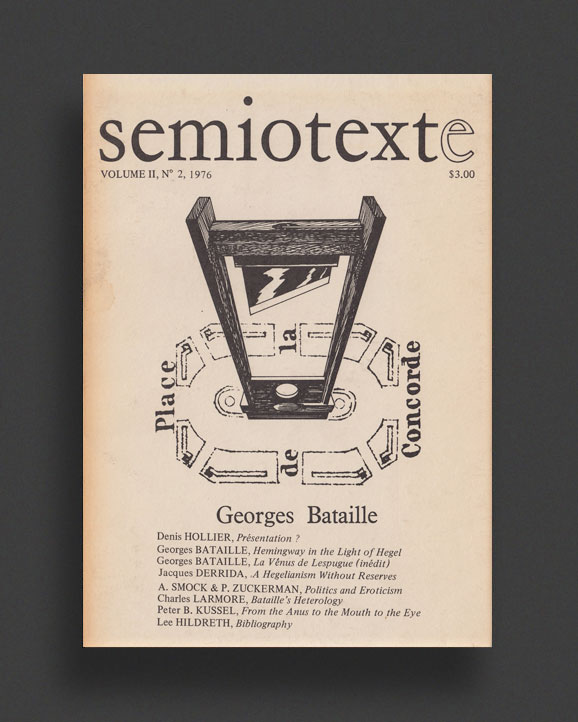
1976, English
Softcover, 134 pages, 21.5 x 15 cm
1st Edition, Out of print title / used / very good
Published by
Semiotext(e) / Los Angeles
$190.00 - Out of stock
Rare copy of the Georges Bataille issue of the original Semiotext(e) journal, published and edited by Sylvère Lotringer between 1974—1985, with later book-length issues appearing in the 1990s. Devoted entirely to the work of French philosopher and author Georges Bataille (1897—1962) whose influential works spanning philosophy, literature, sociology, anthropology, and history of art, which included essays, novels, and poetry, exploring such subjects as eroticism, mysticism, surrealism, and transgression. Edited by Lotringer and John Rajchman, featuring texts by Bataille, Jacques Derrida, Denis Hollier, Ann Smock and Phyllis Zuckerman, Charles Larmore, Peter B. Kussel, Lee Hildreth...
Founded in 1974, Semiotext(e) began as a journal that emerged from a semiotics reading group led by Sylvère Lotringer at the Columbia University philosophy department. Initially, the magazine was devoted to readings of thinkers like Nietzsche and Saussure. In 1978, Lotringer and his collaborators published a special issue, Schizo-Culture, in the wake of a conference of the same name he had organized two years before at Columbia University. The magazine brought together artists and thinkers such as Gilles Deleuze, Kathy Acker, John Cage, Michel Foucault, Jack Smith, Martine Barrat and Lee Breuer. Schizo-Culture brought out connections between high theory and underground culture that had not yet been made, and forged the "high/low" aesthetic that remains central to the Semiotext(e) project.
Very Good copy with light tanning/wear to raw stocks.
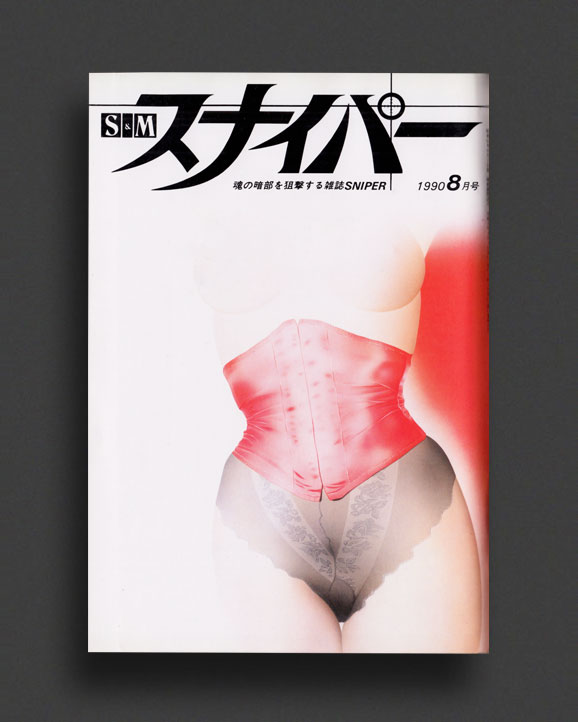
1990, Japanese
Softcover, 300 pages, 21 x 15 cm
1st Edition, Out of print title / used / very good
Published by
Million Publishing / Tokyo
$60.00 - In stock -
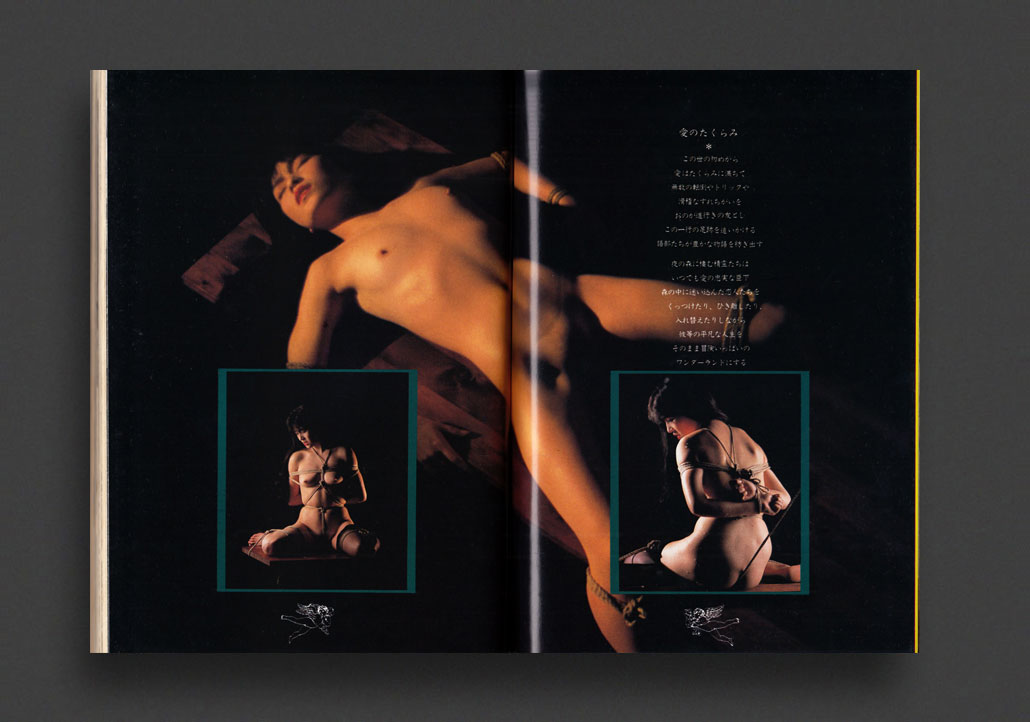
August 1990 issue of S&M Sniper, the cutting-edge cult glossy fetish magazine published in Japan between 1979—2009 that, unlike previous SM magazines, didn't centre so much around professional kinbakushi, favouring instead the exploration of new innovations of fetish and underground sex culture and emphasising the work of the models, stylists, make-up artists, and fashions designers, as much as the writers or photographers. The "new wave" of SM counterculture, embedded in 1980s underground music, fashion and visual art culture in Japan. Explicitly and profusely illustrated, each issue came wrapped in the iconic hyper-stylized airbrushed front covers of artist Yosuke Onishi, veiling the core content of non-fiction realist degradation and an eclectic, expressive editorial of kinbaku and all manner of SM, and extreme fetish photoshoots, illustrations, comics, essays, diaries, reports, exhibitions, reviews, interviews, and included regular contributors such as SM archivist and noise musician Masami Akita (Merzbow), legendary SM writer and editor Dan Oniroku ("the most celebrated writer of popular SM novels in Japan"), features by legendary SM and seppuku performer, actress, and author Hiromi Saotome, features by contributing photographers Nobuyoshi Araki, Masaaki Toyoura, Kenichi Murata, Nobuhiko Ansai, Kinichi Tanaka, Domu Kitahara, sadistic BDSM trainer Shima Shikou, and regular writings by convicted murderer and cannibal Issei Sagawa!! Including his translations of Guido Crepax comics from Italian to Japanese. This was not a magazine like the others. Each issue is also brimming with amazing Japanese advertisements and classifieds for the latest bondage clubs, boutiques, dungeons, fashion, toys, video and publication catalogues, hook-ups, phone sex, and much more. This issue includes Nobuyoshi Araki, Yosuke Onishi, Katsu Yoshida, Ansai Nobuhiko, Kinichi Tanaka, Masao Takahashi, Tadao Chigusa, Masatoshi Aki, Shima Shikou, Tokuro Takahashi, Yukimasa Okumura, Naito Hisashi, all the usual and more... Not for the faint of heart.
Very Good copy.
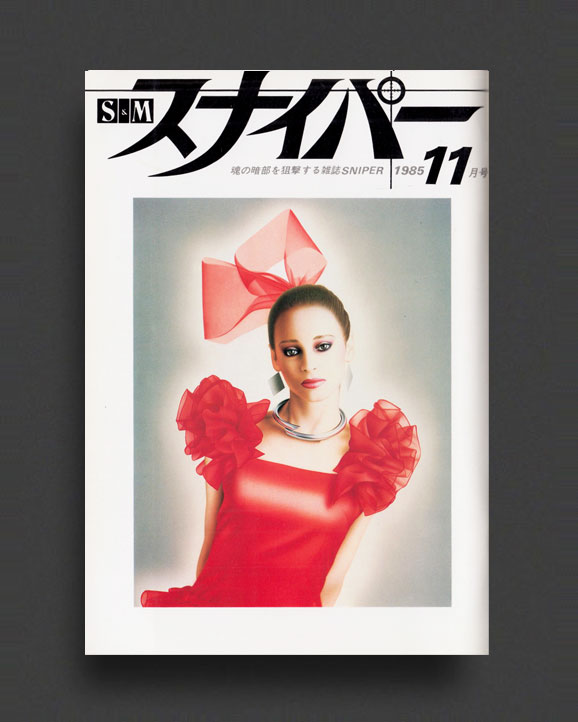
1985, Japanese
Softcover, 300 pages, 21 x 15 cm
1st Edition, Out of print title / used / very good
Published by
Million Publishing / Tokyo
$65.00 - In stock -
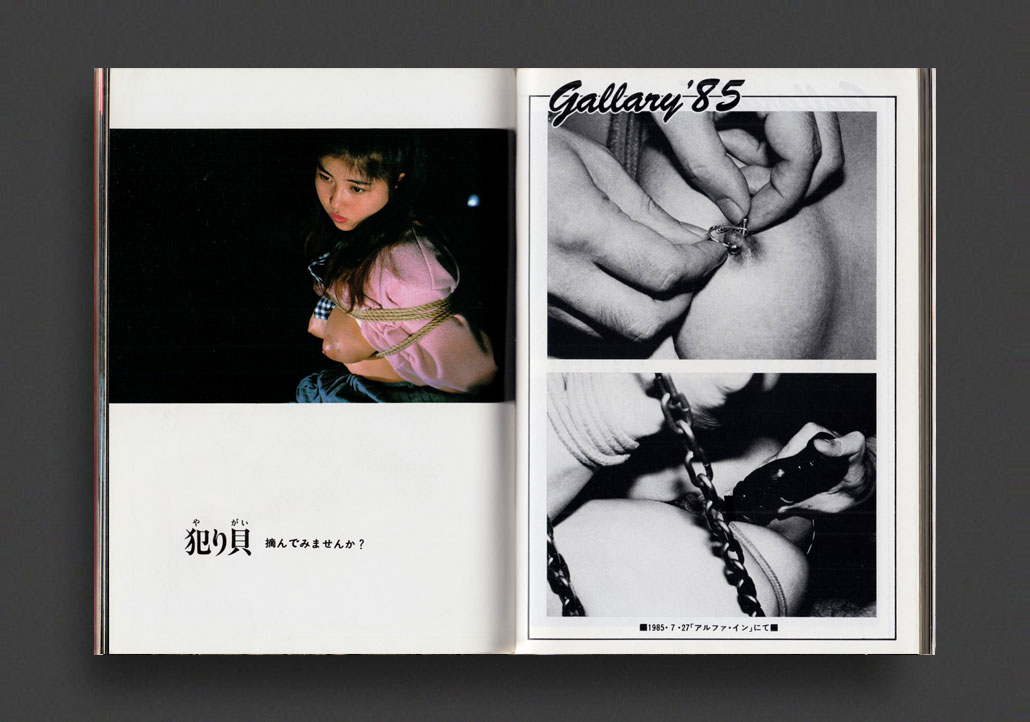
November 1985 issue of S&M Sniper, the cutting-edge cult glossy fetish magazine published in Japan between 1979—2009 that, unlike previous SM magazines, didn't centre so much around professional kinbakushi, favouring instead the exploration of new innovations of fetish and underground sex culture and emphasising the work of the models, stylists, make-up artists, and fashions designers, as much as the writers or photographers. The "new wave" of SM counterculture, embedded in 1980s underground music, fashion and visual art culture in Japan. Explicitly and profusely illustrated, each issue came wrapped in the iconic hyper-stylized airbrushed front covers of artist Yosuke Onishi, veiling the core content of non-fiction realist degradation and an eclectic, expressive editorial of kinbaku and all manner of SM, and extreme fetish photoshoots, illustrations, comics, essays, diaries, reports, exhibitions, reviews, interviews, and included regular contributors such as SM archivist and noise musician Masami Akita (Merzbow), legendary SM writer and editor Dan Oniroku ("the most celebrated writer of popular SM novels in Japan"), features by legendary SM and seppuku performer, actress, and author Hiromi Saotome, features by contributing photographers Nobuyoshi Araki, Masaaki Toyoura, Kenichi Murata, Nobuhiko Ansai, Kinichi Tanaka, Domu Kitahara, sadistic BDSM trainer Shima Shikou, and regular writings by convicted murderer and cannibal Issei Sagawa!! Including his translations of Guido Crepax comics from Italian to Japanese. This was not a magazine like the others. Each issue is also brimming with amazing Japanese advertisements and classifieds for the latest bondage clubs, boutiques, dungeons, fashion, toys, video and publication catalogues, hook-ups, phone sex, and much more.
This issue includes Nobuyoshi Araki, Yosuke Onishi, Fumika Kitahara, actress Mami Fujimura, Hiromi Hiraguchi, Junji Yoshizaki, Satoshi Tokuno, Yayoi Honda, Mitsuhiko Yoshida, Tadao Chigusa, Kinichi Tanaka, Nobuhiko Ansai, Nakai Sugimura, all the usual and more... Not for the faint of heart.
Very Good copy.
1985, Japanese
Softcover, 300 pages, 21 x 15 cm
1st Edition, Out of print title / used / very good
Published by
Million Publishing / Tokyo
$65.00 - In stock -
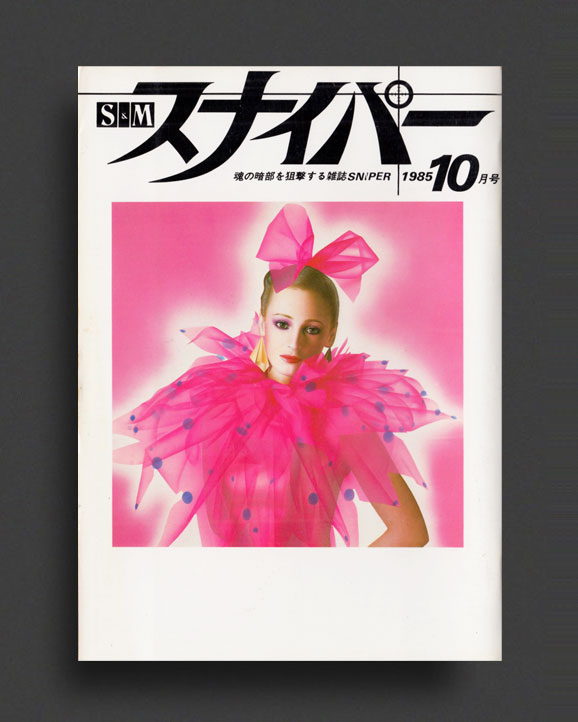
October 1985 issue of S&M Sniper, the cutting-edge cult glossy fetish magazine published in Japan between 1979—2009 that, unlike previous SM magazines, didn't centre so much around professional kinbakushi, favouring instead the exploration of new innovations of fetish and underground sex culture and emphasising the work of the models, stylists, make-up artists, and fashions designers, as much as the writers or photographers. The "new wave" of SM counterculture, embedded in 1980s underground music, fashion and visual art culture in Japan. Explicitly and profusely illustrated, each issue came wrapped in the iconic hyper-stylized airbrushed front covers of artist Yosuke Onishi, veiling the core content of non-fiction realist degradation and an eclectic, expressive editorial of kinbaku and all manner of SM, and extreme fetish photoshoots, illustrations, comics, essays, diaries, reports, exhibitions, reviews, interviews, and included regular contributors such as SM archivist and noise musician Masami Akita (Merzbow), legendary SM writer and editor Dan Oniroku ("the most celebrated writer of popular SM novels in Japan"), features by legendary SM and seppuku performer, actress, and author Hiromi Saotome, features by contributing photographers Nobuyoshi Araki, Masaaki Toyoura, Kenichi Murata, Nobuhiko Ansai, Kinichi Tanaka, Domu Kitahara, sadistic BDSM trainer Shima Shikou, and regular writings by convicted murderer and cannibal Issei Sagawa!! Including his translations of Guido Crepax comics from Italian to Japanese. This was not a magazine like the others. Each issue is also brimming with amazing Japanese advertisements and classifieds for the latest bondage clubs, boutiques, dungeons, fashion, toys, video and publication catalogues, hook-ups, phone sex, and much more.
This issue includes Nobuyoshi Araki, Yosuke Onishi, Kitahara Fumika, Aki Ryo, Todoroki Sukeroku, Kinichi Tanaka, Tokuno Masahito, Naomi Hagio, Hiromi Haraguchi, Yukiko Hayashi, actress Mai Momonoki, all the usual and more... Not for the faint of heart.
Very Good copy.
1988, Japanese
Softcover, 300 pages, 21 x 15 cm
1st Edition, Out of print title / used / very good
Published by
Million Publishing / Tokyo
$55.00 - In stock -
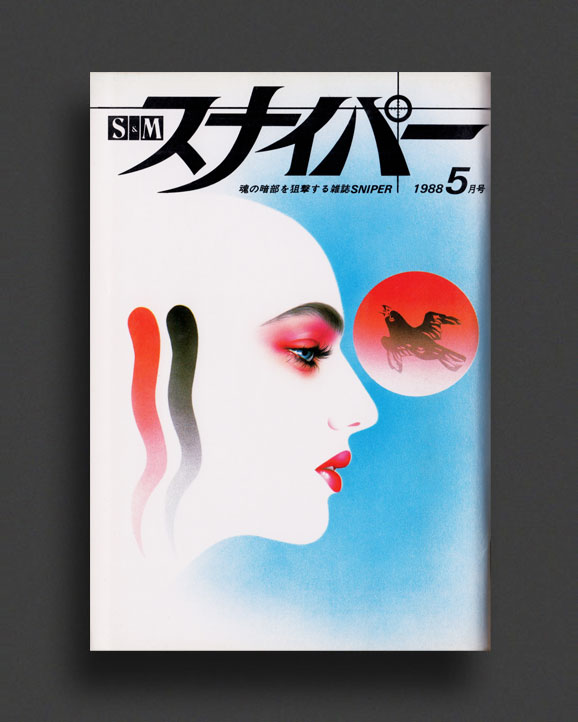
May 1988 issue of S&M Sniper, the cutting-edge cult glossy fetish magazine published in Japan between 1979—2009 that, unlike previous SM magazines, didn't centre so much around professional kinbakushi, favouring instead the exploration of new innovations of fetish and underground sex culture and emphasising the work of the models, stylists, make-up artists, and fashions designers, as much as the writers or photographers. The "new wave" of SM counterculture, embedded in 1980s underground music, fashion and visual art culture in Japan. Explicitly and profusely illustrated, each issue came wrapped in the iconic hyper-stylized airbrushed front covers of artist Yosuke Onishi, veiling the core content of non-fiction realist degradation and an eclectic, expressive editorial of kinbaku and all manner of SM, and extreme fetish photoshoots, illustrations, comics, essays, diaries, reports, exhibitions, reviews, interviews, and included regular contributors such as SM archivist and noise musician Masami Akita (Merzbow), legendary SM writer and editor Dan Oniroku ("the most celebrated writer of popular SM novels in Japan"), features by legendary SM and seppuku performer, actress, and author Hiromi Saotome, features by contributing photographers Nobuyoshi Araki, Masaaki Toyoura, Kenichi Murata, Nobuhiko Ansai, Kinichi Tanaka, Domu Kitahara, sadistic BDSM trainer Shima Shikou, and regular writings by convicted murderer and cannibal Issei Sagawa!! Including his translations of Guido Crepax comics from Italian to Japanese. This was not a magazine like the others. Each issue is also brimming with amazing Japanese advertisements and classifieds for the latest bondage clubs, boutiques, dungeons, fashion, toys, video and publication catalogues, hook-ups, phone sex, and much more. This issue includes Nobuyoshi Araki, Yosuke Onishi, Nobuhiko Ansai, Katsu Yoshida, Shima Shikou, Tadao Chigusa, Shōzō Numa, Aki Masatoshi, Kinichi Tanaka, Domu Kitahara, Akira Minomura, Jiro Takahashi, all the usual and more... Not for the faint of heart.
Very Good copy.
1992, Japanese
Softcover, 320 pages, 21 x 15 cm
1st Edition, Out of print title / used / very good
Published by
Million Publishing / Tokyo
$55.00 - Out of stock
February 1992 issue of S&M Sniper, the cutting-edge cult glossy fetish magazine published in Japan between 1979—2009 that, unlike previous SM magazines, didn't centre so much around professional kinbakushi, favouring instead the exploration of new innovations of fetish and underground sex culture and emphasising the work of the models, stylists, make-up artists, and fashions designers, as much as the writers or photographers. The "new wave" of SM counterculture, embedded in 1980s underground music, fashion and visual art culture in Japan. Explicitly and profusely illustrated, each issue came wrapped in the iconic hyper-stylized airbrushed front covers of artist Yosuke Onishi, veiling the core content of non-fiction realist degradation and an eclectic, expressive editorial of kinbaku and all manner of SM, and extreme fetish photoshoots, illustrations, comics, essays, diaries, reports, exhibitions, reviews, interviews, and included regular contributors such as SM archivist and noise musician Masami Akita (Merzbow), legendary SM writer and editor Dan Oniroku ("the most celebrated writer of popular SM novels in Japan"), features by legendary SM and seppuku performer, actress, and author Hiromi Saotome, features by contributing photographers Nobuyoshi Araki, Masaaki Toyoura, Kenichi Murata, Nobuhiko Ansai, Kinichi Tanaka, Domu Kitahara, sadistic BDSM trainer Shima Shikou, and regular writings by convicted murderer and cannibal Issei Sagawa!! Including his translations of Guido Crepax comics from Italian to Japanese. This was not a magazine like the others. Each issue is also brimming with amazing Japanese advertisements and classifieds for the latest bondage clubs, boutiques, dungeons, fashion, toys, video and publication catalogues, hook-ups, phone sex, and much more.
This issue includes Nobuyoshi Araki, Nobuhiko Ansai, Yosuke Onishi, Shima Shikou, Claude Alexandre, Sachiko Nakamura, Kinichi Tanaka, Naomi Masuda, Guido Crepax, Issei Sagawa, Tadao Chigusa, Nao Saejima, all the usual and more... Not for the faint of heart.
Very Good copy.
1988, Japanese
Softcover, 300 pages, 21 x 15 cm
1st Edition, Out of print title / used / very good
Published by
Million Publishing / Tokyo
$55.00 - In stock -
November 1988 issue of S&M Sniper, the cutting-edge cult glossy fetish magazine published in Japan between 1979—2009 that, unlike previous SM magazines, didn't centre so much around professional kinbakushi, favouring instead the exploration of new innovations of fetish and underground sex culture and emphasising the work of the models, stylists, make-up artists, and fashions designers, as much as the writers or photographers. The "new wave" of SM counterculture, embedded in 1980s underground music, fashion and visual art culture in Japan. Explicitly and profusely illustrated, each issue came wrapped in the iconic hyper-stylized airbrushed front covers of artist Yosuke Onishi, veiling the core content of non-fiction realist degradation and an eclectic, expressive editorial of kinbaku and all manner of SM, and extreme fetish photoshoots, illustrations, comics, essays, diaries, reports, exhibitions, reviews, interviews, and included regular contributors such as SM archivist and noise musician Masami Akita (Merzbow), legendary SM writer and editor Dan Oniroku ("the most celebrated writer of popular SM novels in Japan"), features by legendary SM and seppuku performer, actress, and author Hiromi Saotome, features by contributing photographers Nobuyoshi Araki, Masaaki Toyoura, Kenichi Murata, Nobuhiko Ansai, Kinichi Tanaka, Domu Kitahara, sadistic BDSM trainer Shima Shikou, and regular writings by convicted murderer and cannibal Issei Sagawa!! Including his translations of Guido Crepax comics from Italian to Japanese. This was not a magazine like the others. Each issue is also brimming with amazing Japanese advertisements and classifieds for the latest bondage clubs, boutiques, dungeons, fashion, toys, video and publication catalogues, hook-ups, phone sex, and much more.
This issue includes Nobuyoshi Araki, Yosuke Onishi, Nobuhiko Ansai, Katsu Yoshida, Robert Mapplethorpe, Kinichi Tanaka, Masahito Tokuno, Aki Masatoshi, Hajime Tomokyo, controversial Japanese author Shōzō Numa (Yapoo, the Human Cattle), bondage master and legendary Kitan editor Akira Minomura, Erika Sakurazawa, Yukimasa Okumura, Yayoi Honda, all the usual and more... Not for the faint of heart.
Very Good copy.
2020, Japanese / English
Softcover (w. dust jacket and obi-strip), 366 pages, 15 x 21 cm
Published by
Treville / Tokyo
$90.00 - In stock -
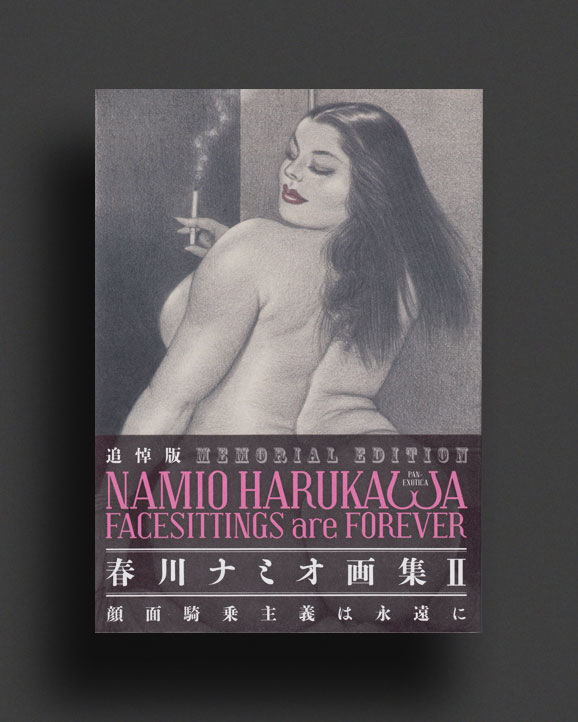
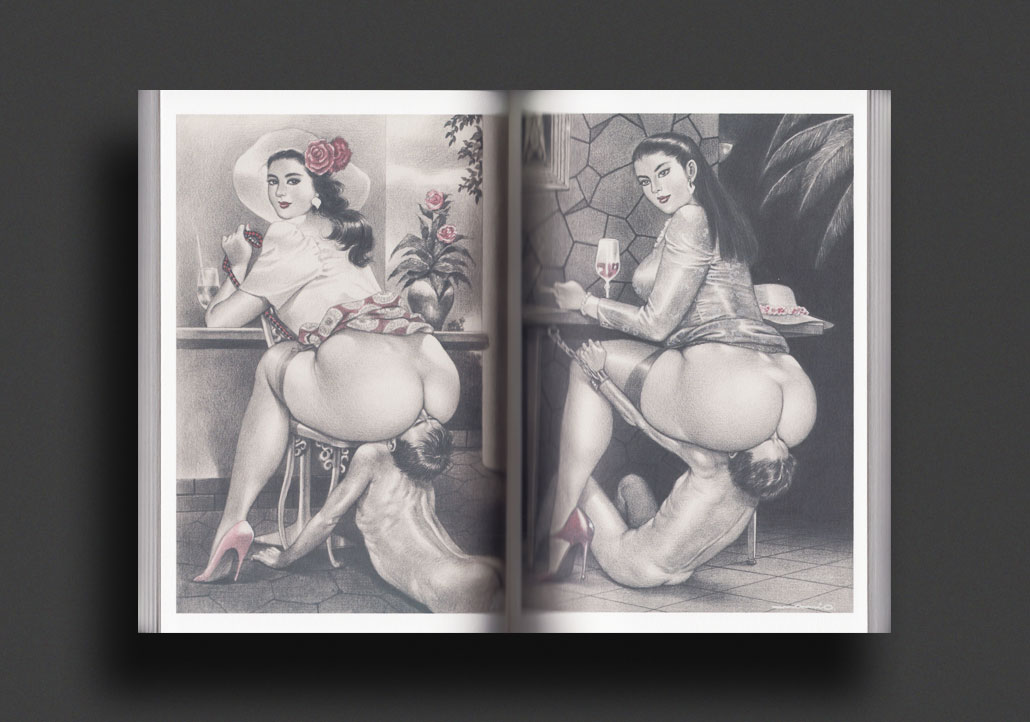
Wonderful new memorial monograph dedicated to the exceptional work of Namio Harukawa (1947 – 2020), a pseudonymous Japanese fetish artist best known for his masterful pencil works depicting female domination ("femdom"), with erotic asphyxiation through facesitting appearing as a frequent subject of his art. Born 1947 in Osaka, Japan, Harukawa’s distinctive penname combines the name of film actress Harukawa Masumi with an anagram of Naomi, the sadistic heroine in Tanizaki Jun’ichiro’s novel "Chijin no ai / A Fool’s Love". While in high school, Harukawa began contributing work to the readers’ column of leading postwar Japanese SM pulp magazine "Kitan Club". Since then, Harukawa’s drawings of male masochism have lovingly portrayed noble, voluptuously beautiful women and the men who serve them as human furniture. Namio Harukawa passed away on April 2020, he was 72 years old. This book is a requiem dedicated to the memory of an extraordinary artist who remained committed to the regime of “absolute Ganmen Kijo Shugi (facesitting principle)” throughout his artistic life.
The profusely illustrated "Facesittings Are Forever" consists of a fine selection over 300 of Namio Harukawa’s works spanning his entire career, including many unpublished works, rough sketches, late works, and coloured works of his mid-career. It features an illustrated archive of his publications, including a rare Gekiga (hard-boiled style) work “Shokeijima no Oujo” and never before seen photographs of his workshop. There are also written contributions in Japanese from Shigeru Kashima, Jun Miura, Rockin Jelly Bean, and Hitomi Onuma.
1993, Japanese
Softcover (w. dust jacket), 210 pages, 21 x 14.8 cm
1st Edition, Out of print title / used / fine
Published by
World Comics / Japan
Kubo Shoten / Japan
$180.00 - Out of stock
Very rare original first Japanese book collection of the infamous cult classic eromanga "Bondage Fairies" by Kondom, published by Kubo Shoten way back in 1993. This is the first ever book collecting over 200 pages of the first of the original series from the early 1990s, in the original Japanese language, as they appeared in the pages of Kubo Shoten's Young Lemon magazine for the first time as "Bondage Fairies". Includes colour artwork galleries.
Created by manga artist Teruo Kakuta under the pen name "Kondom", a multilingual pun, meaning "little insect" in Japanese and "condom" in English, Bondage Fairies is an erotic series about highly sexual female forest fairies, who work as police officers protecting the forest, whilst engaging in a wild array of anthropomorphized, inter-species sexual acts. The series began in Japan in 1990 as Insect Hunter, but it was quickly banned from sale by the Tokyo Metropolitan Ordinance. Under a new title, the manga was serialized in manga magazine Lemon Kids. The series is among the earliest sexually explicit manga (eromanga) commercially translated and published uncensored in the United States where the earliest editions date from 1994 (Venus Press). Eros Comix subsequently published a multi-volume series of the collected Bondage Fairies, and subsequent stories, now all very collectible. Translated to Swedish, German, French, and Italian, Bondage Fairies is one of the most popular underground adult Japanese comics outside Japan.
Near Fine copy in original NF dust jacket.
1994, Japanese
Softcover (w. dust jacket), 162 pages, 21 x 14.8 cm
1st Edition, Out of print title / used / fine
Published by
World Comics / Japan
Kubo Shoten / Japan
$160.00 - Out of stock
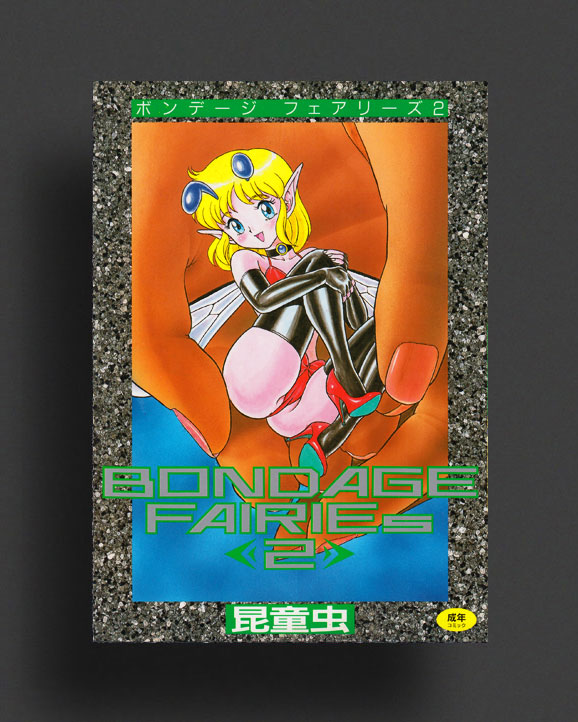
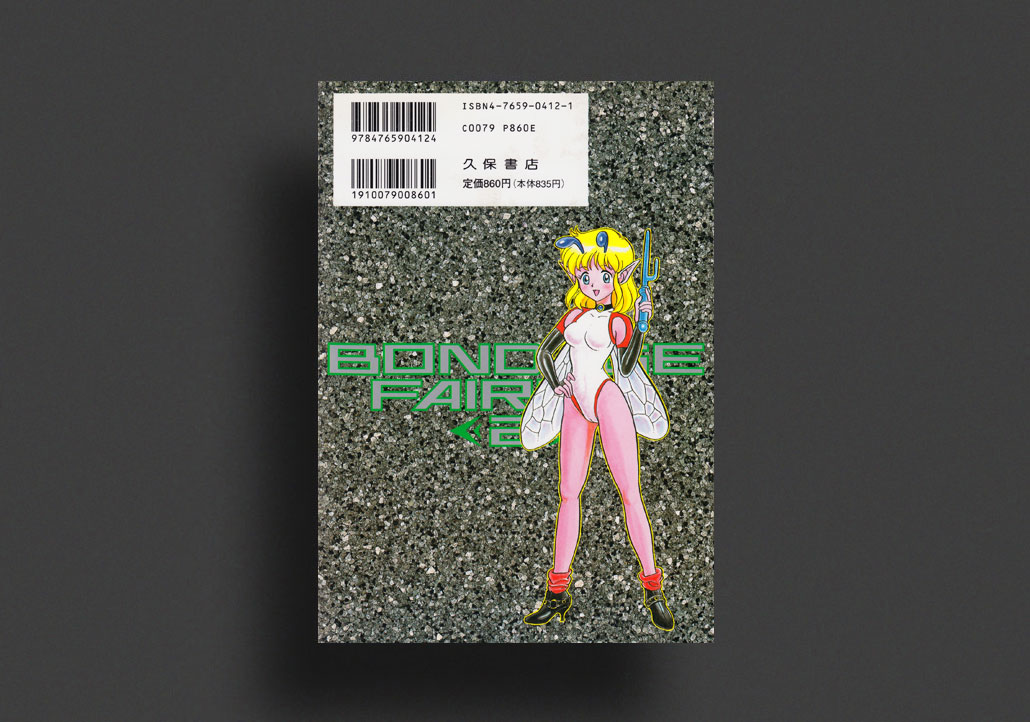
Very rare original first printing Volume 2 Japanese book collection of the infamous cult classic eromanga "Bondage Fairies" by Kondom, published by Kubo Shoten way back in 1994. Volume 2 of the first ever book collection bringing together over 160 pages of the the original series from the early 1990s, in the original Japanese language, as they appeared in the pages of Kubo Shoten's Young Lemon magazine for the first time as "Bondage Fairies". Includes colour artwork galleries.
Created by manga artist Teruo Kakuta under the pen name "Kondom", a multilingual pun, meaning "little insect" in Japanese and "condom" in English, Bondage Fairies is an erotic series about highly sexual female forest fairies, who work as police officers protecting the forest, whilst engaging in a wild array of anthropomorphized, inter-species sexual acts. The series began in Japan in 1990 as Insect Hunter, but it was quickly banned from sale by the Tokyo Metropolitan Ordinance. Under a new title, the manga was serialized in manga magazine Lemon Kids. The series is among the earliest sexually explicit manga (eromanga) commercially translated and published uncensored in the United States where the earliest editions date from 1994 (Venus Press). Eros Comix subsequently published a multi-volume series of the collected Bondage Fairies, and subsequent stories, now all very collectible. Translated to Swedish, German, French, and Italian, Bondage Fairies is one of the most popular underground adult Japanese comics outside Japan.
Near Fine copy in original NF dust jacket.
1990, English
Softcover, 220 pages, 20 x 14 cm
1st Edition, Out of print title / used / very good
Published by
City Lights Books / San Francisco
$40.00 - In stock -
First 1990 edition.
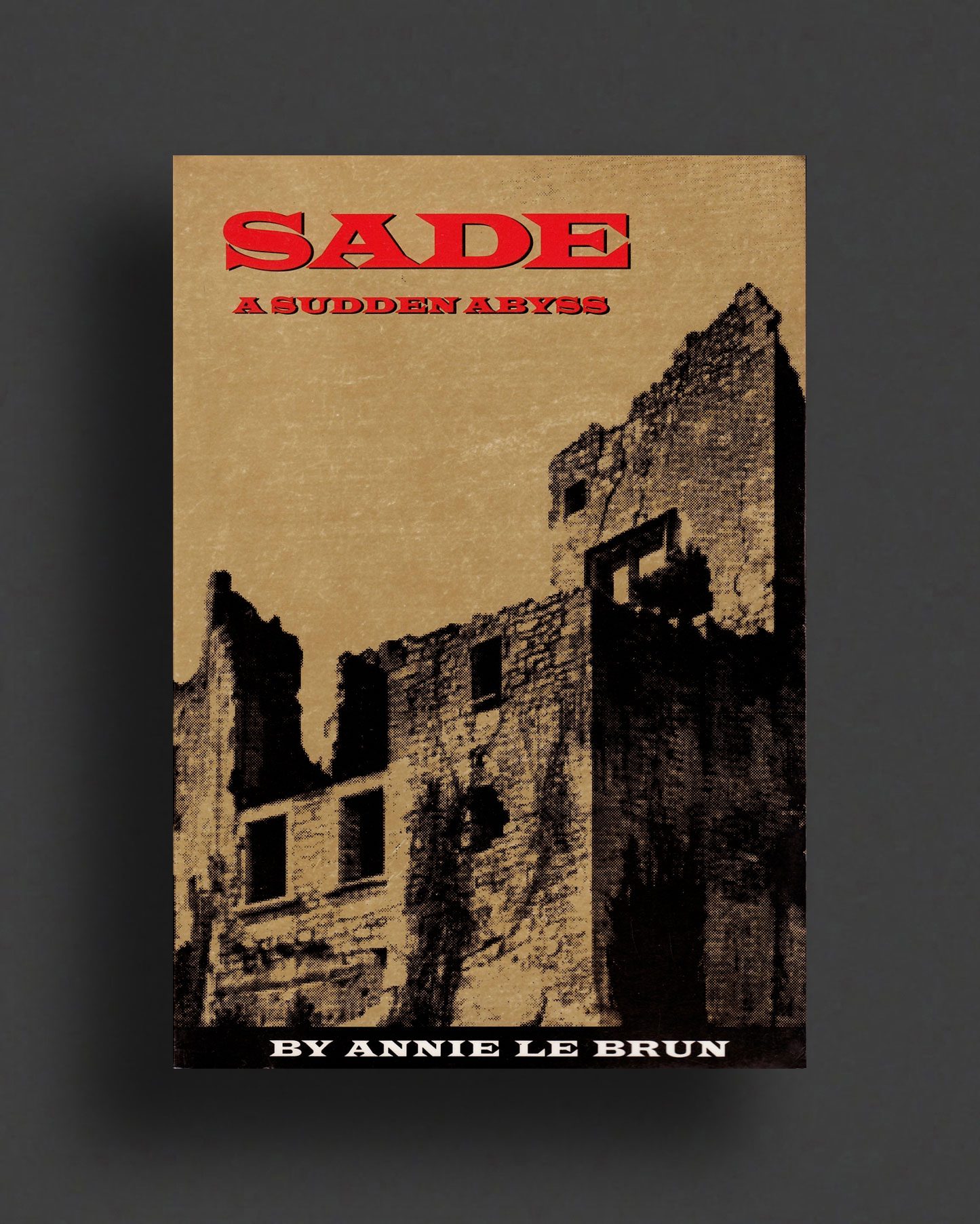
The literary adventure of D.A.F. (1740-1814) is unique and paradoxical. He was widely read in the nineteenth century, but his books disappeared almost completely from circulation in the century. Meanwhile the exegesis of Sade poured from the presses of the Western world in a flood of words in which the writer, the novelist, and the exceptional poet disappeared.
In France today, J. J. Pauvert, who considers Sade "the greatest French writer," is publishing a new edition of the complete works with a new introduction by Annie Le Brun. Sade: A Sudden Abyss is the translation of this introduction, which shows Sade as the inventor of an entirely new language through which he fathoms human nature, desire, and relationships of power.
In this fresh and authoritative survey of Sade's work as a whole, Le Brun frees it from such critics as Bataille, Blanchot, Klossowski, and Barthes (who see Sade's language as a metaphor for history, society, or writing itself). She asks, Where is Sade himself in these texts? What exactly does Sade tell us? What is obscured when Sade's writing is placed in a "universe of discourse" rather than understood as a manifestation of a life spent in eleven prisons over twenty-seven years? Like a powerful laser beam, her reflections cut through two centuries of intellectual hide-and-seek and let Sade for the first time be seen and read in his own light.
Annie Le Brun is a French poet and literary theorist who participated in the final years of the Surrealist movement. Her books include Lachez tout, a critique of the French neofeminist movement; A distance; and Les chateaux de la subversion, a study of the Gothic tradition.
VG copy.
2024, Japanese
Softcover (w. dust jacket + obi), 176 pages, 19 x 15 cm
Published by
Atelier Third / Tokyo
$70.00 - Out of stock
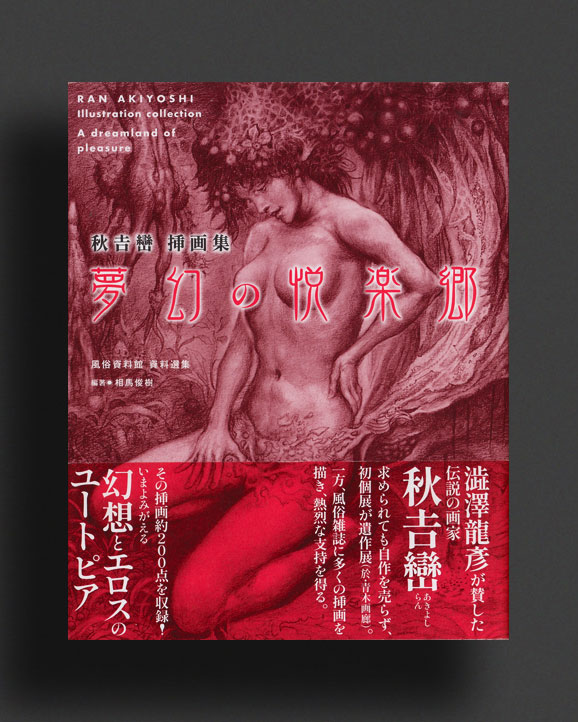
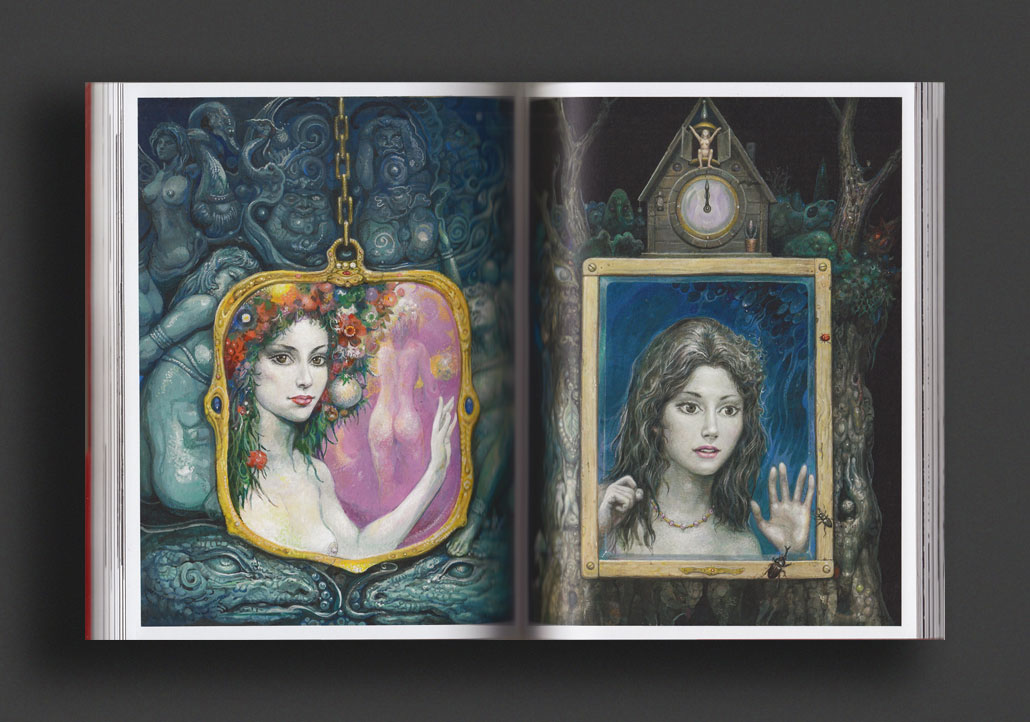
Brand new book collecting 200 rare and phenomenal illustrations of the legendary underground Japanese artist Ran Akiyoshi (1922—1982), many never seen before in print. Virtually unknown and undocumented outside of Japan, Akiyoshi never held an exhibition nor sold any of his drawings in his lifetime. Much like the work of Toshio Saeki or Namio Harukawa, Akiyoshi's creations proliferated throughout the bountiful pages of Tokyo's underground SM / fetish publishing scene in the 1960s—1970s. Yet Akiyoshi's phantasmagoric world of erotic fantasy is like no other, building sado-masochistic themes within unique, somewhat Lovecraftian and Bosch-esque dreamscapes populated by mythological goddesses and grotesque creatures. His peculiar fantasy drawings were highly praised by Japanese novelist and art critic, Tatsuhiko Shibusawa, an instrumental figure in the Japanese avant-garde who translated de Sade and Bataille to Japanese, and specialised in the study of medieval demonology.
Born in Kyongsong (present Seoul), Korea in 1922, Akiyoshi was publicly schooled and self-taught in drawing. After WWII, he moved to Japan, traveled around Kyushu area and finally settled in Tokyo in 1946. Akiyoshi started working for adult entertainment magazines such as "Decameron","Fuzoku Soushi", and "Uramado" in 1950. Around 1958, he began focusing on original drawings while continuing to draw illustrations for various magazines. In the 1970s, Akiyoshi provided iconic cover and insert illustrations to a number of prominent SM magazines, including "SM King", "SM Kitan", and "SM Club". A prolific and private artists, he never held an exhibition nor sold any of his drawings in his lifetime. Akiyoshi died from heart failure in 1982 at the age of 58.
2009, Japanese
Softcover, 190 pages, 21 x 15 cm
1st Edition, Out of print title / used / very good
Published by
Atelier Third / Tokyo
$60.00 - Out of stock
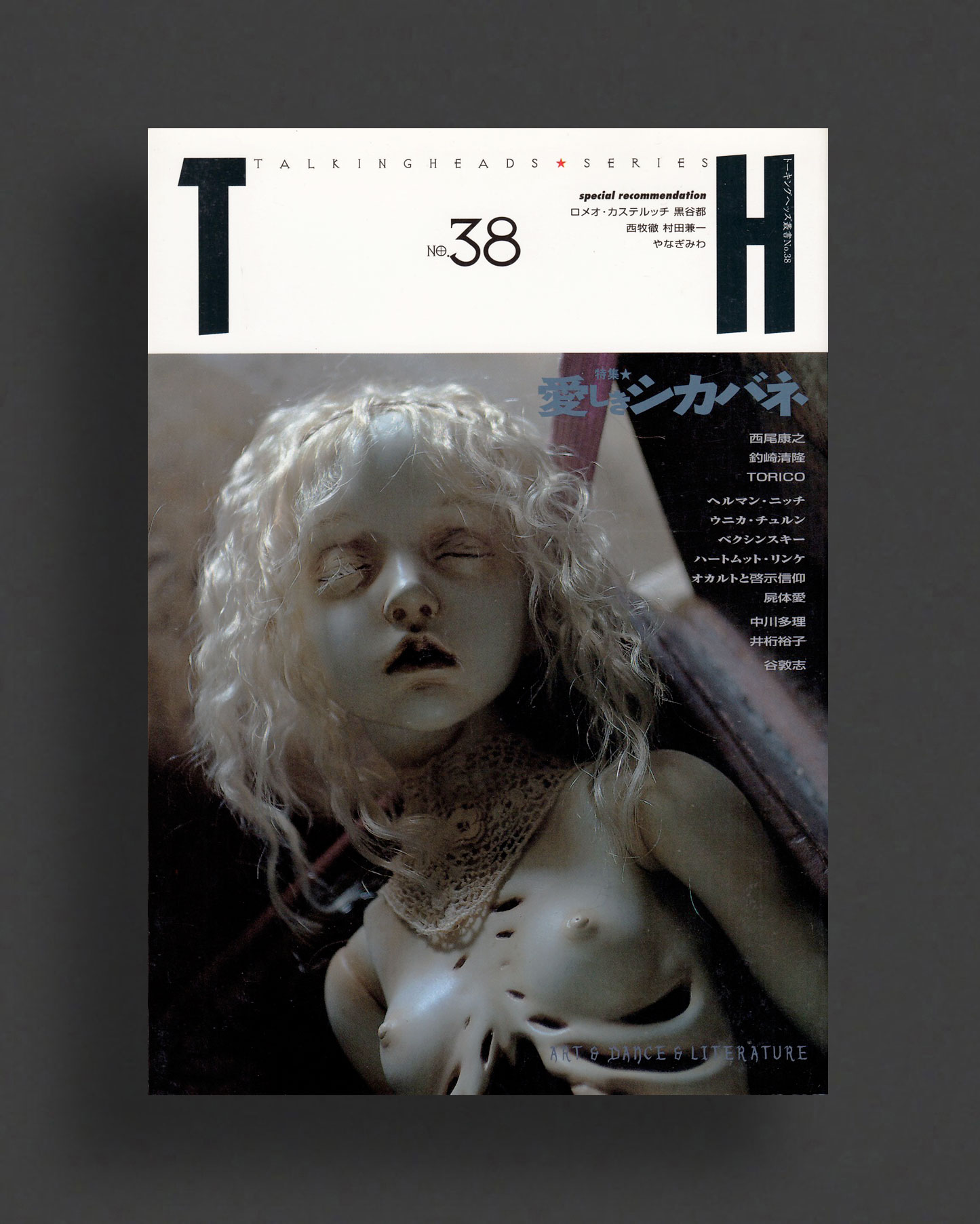
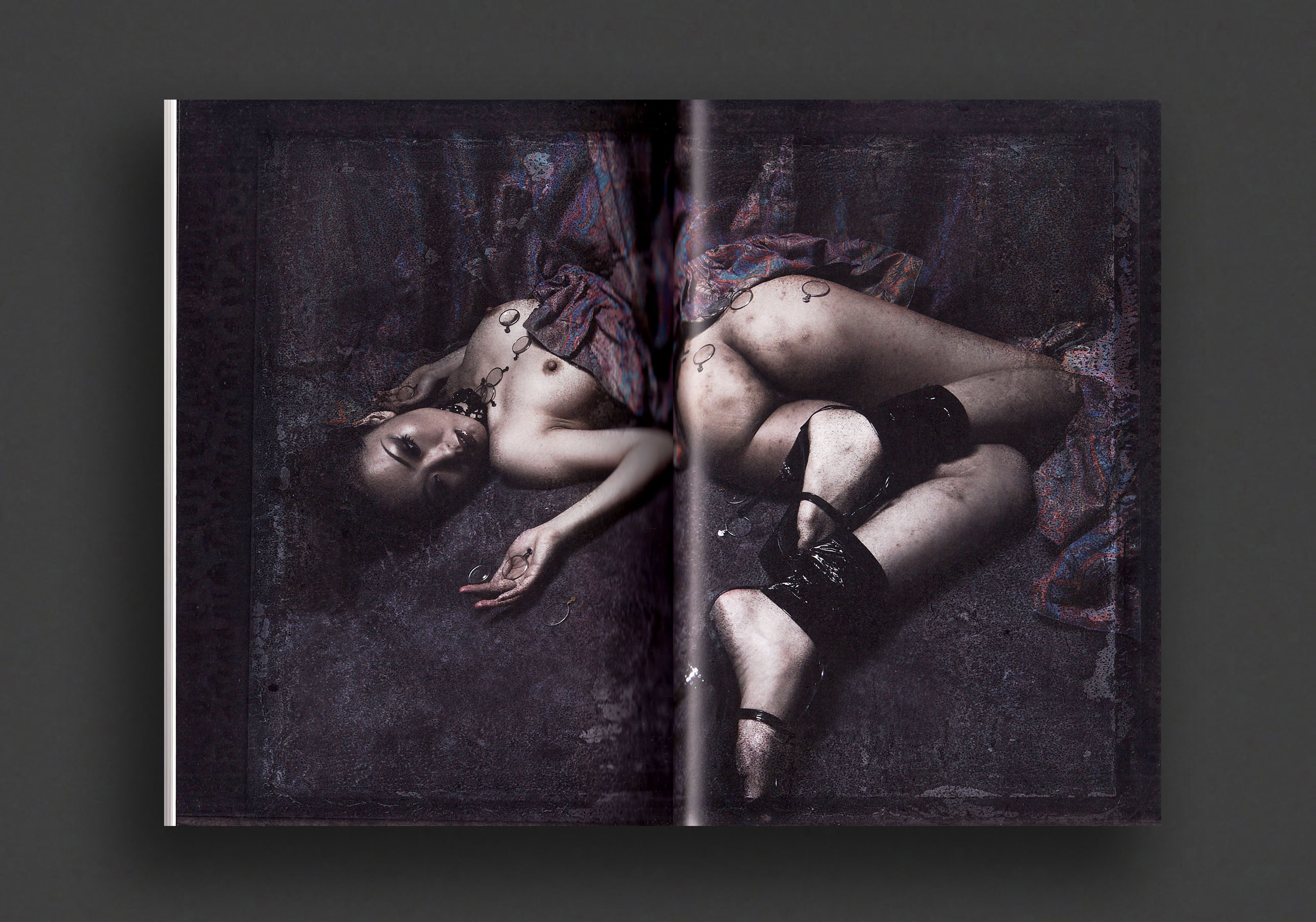
Special 2009 issue of Talking Heads magazine with the feature "My Love is Corpse", entirely devoted to death in the arts and culture. Profusely illustrated throughout in colour and b/w featuring Japanese corpse photographer Kiyotaka Tsurisaki, doll portraits by Tari Nakagawa (with model Yuko Igeta), polish painter Zdzisław Beksiński, Hermann Nitsch, the erotic macabre photography of Atsushi Tani, Eros and Thanatos and the work of artist Yasuyuki Nishio, Unica Zürn and Hans Bellmer, puppeteer Kurotani Miyako, illustrator Toru Nishimaki, painter Hartmut Lincke, illustrator Rie Yamashina, Occult and Revelation, medical museums, corpse love in film and publishing, and much more.
Talking Heads is the glossy arts magazine of Japanese publisher Atelier Third, specialists in the cutting-edge of subcultural Japanese artists working across doll art, ero guro, gothic-lolita and the historical erotic SM works of the abnormal museum, publishing the work of Seiu Ito, Yoshifumi Hayashi, Shintaro Kago, Ran Akiyoshi, Kanaki Tama, Saori Furukawa, Toru Nishimaki, and many more.
VG copy.
1996, Japanese
Softcover (w. dust jacket and obi-strip), 256 pages, 21 x 14.8 cm
1st Edition, Out of print title / used / very good
Published by
Core Magazine / Tokyo
$120.00 - In stock -
Don't judge a book by it's cover — you've been warned! Straight out of the young nihilist 90s, the second volume of the very short-lived and absolutely demented Seikimatsu Club (End of the Century Club), published in Tokyo between 1996—2000 for a total of only five volumes. This second volume, "Deathtpia in Suburbia", has the feature theme of Horror! Bizarre! Bizarre! Cruelty! and is packed to the absolute brim with "corpses, freaks, spectacles, murders, suicides, autopsies, rapes, sickness, pain, accident, war, religious rituals, violence, forensics, foetuses. A shocking document that eliminates all fiction (all genuine)!"
With contributors to this issue including Masami Akita (Merzbow), Masaaki Aoyama (author), Kiyotaka Tsurisaki (corpse photographer), Suehiro Maruo (ero guro manga artist), Teruo Ishii (ero guro film director), Kotaro Kobayashi (Too Negative editor-in-chief), Trevor Brown (artist), you should know what you are getting yourself into.
Following the trajection of fellow Japanese abnormal subculture magazines such as Kotaro Kobayashi's notorious Too Negative, Ultra Negative, ORG, etc., and in the spirit of a new wave of 90's nihilist publishing around the world (Answer Me!, Killing Times, Fuck!, AMOK, Feral House, etc.) End of the Century Club stares directly into the dark recesses of humanity and presents its viewers with the uncompromising extremes of our global culture. The real stuff. Where Too Negative presents itself as a glossy colour photo/art magazine, End of the Century Club is almost like a Whole Earth Catalog to the authentic macabre. With articles, interviews, reports, catalogues and hundreds of images spanning all manner of medical/autopsy/corpse photography, death journalism, serial killers, formalihide babies, war/shock accident/crime scenes, hara-kiri, murder, rape, slaughterhouse, forensic books, international underground magazines, Photobook of World Diseases, City of Sodom, corpses on the internet, Underground Baby Contest, Atlas of Dermatology, complete guide to Freaks movies, the Garbage Pail Kids, religious ceremonies, animal deformities, Interview with "The King of Cult" ero guro film director Teruo Ishii, bizarro sex, acrotomophila, artist Joel Peter Witkin's world, interview with Masaaki Aoyama, interview with corpse photographer Kotaro Kobayashi (Death, Hardcore Works, Too Negative, Billy, etc.), photography of George Dureau, interview with fetish film director and producer Kaoru Adachi, interview with experimental film director Shozin Fukui (Metal Days, Gerorisuto, Caterpillar, 964 Pinocchio, Rubber's Lover...), article on "Serial Killers & Record Junkies" by Toshihiko Hironaka (of Boris, Balzac, Hellbent fame), and all sorts of other curios from the mondo, bizarro realm.
Includes "gorgeous" 24-page high-quality corpse photo booklet feature and cover art by Trevor Brown.
Not for the fain-hearted. You'll feel like a shower after.
Very Good copy with dust jacket and obi.
1997, Japanese
Softcover (w. dust jacket and obi-strip), 256 pages, 21 x 14.8 cm
1st Edition, Out of print title / used / very good
Published by
Core Magazine / Tokyo
$120.00 - In stock -
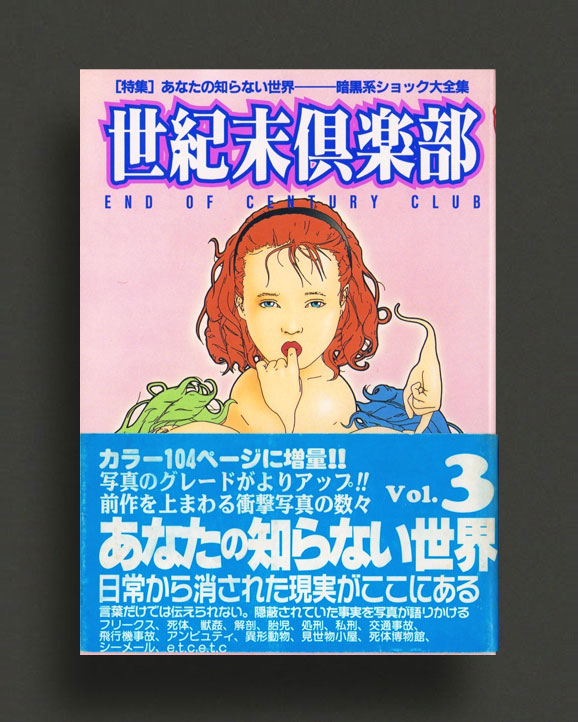
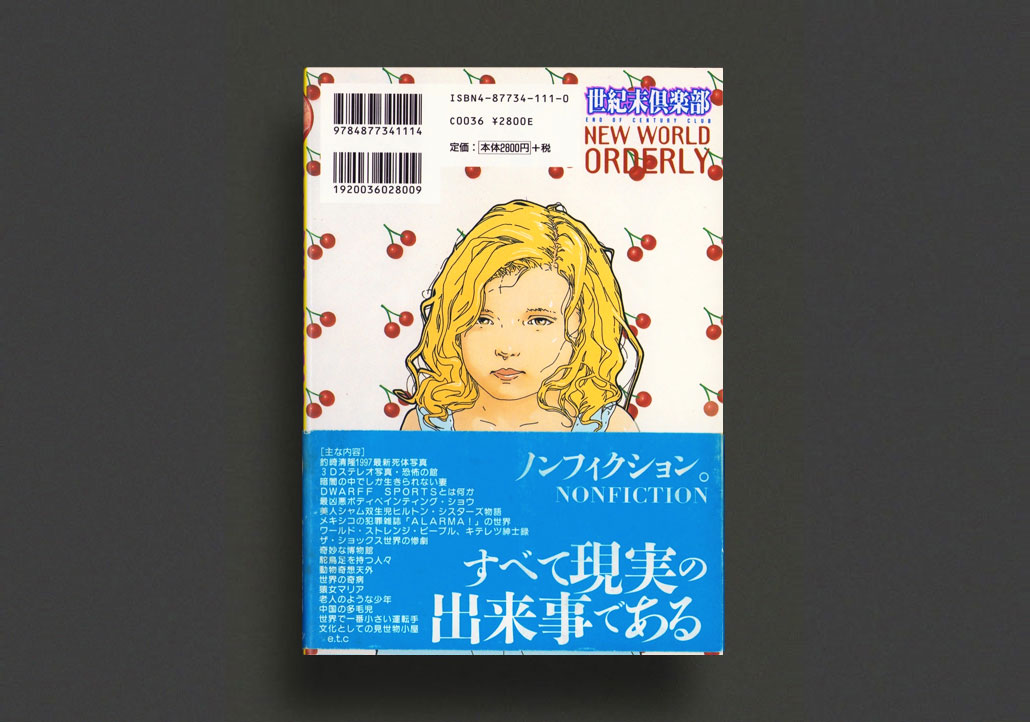
Don't judge a book by it's cover — you've been warned! Straight out of the young nihilist 90s, the third volume of the very short-lived and absolutely demented Seikimatsu Club (End of the Century Club), published in Tokyo between 1996—2000 for a total of only five volumes. This third volume, "The World You Don't Know", has the feature theme of exposing "a reality erased from everyday life", which sums it up... packed to the absolute brim with "freaks, corpses, bestiality, autopsies, fetal executions, lynchings, traffic accidents, plane crashes, amputee, heteromorphic animals, freak shows, corpse museums, shemales, etc. A shocking document that eliminates all fiction (all genuine)!"
With contributors to this issue including Masami Akita (Merzbow), Masaaki Aoyama (author), Kiyotaka Tsurisaki (corpse photographer), Hideshi Hino (horror manga artist / Guinea Pig director), Kotaro Kobayashi (Too Negative editor-in-chief), Trevor Brown (artist), you should know what you are getting yourself into.
Following the trajection of fellow Japanese abnormal subculture magazines such as Kotaro Kobayashi's notorious Too Negative, Ultra Negative, ORG, etc., and in the spirit of a new wave of 90's nihilist publishing around the world (Answer Me!, Killing Times, Fuck!, AMOK, Feral House, etc.) End of the Century Club stares directly into the dark recesses of humanity and presents its viewers with the uncompromising extremes of our global culture. The real stuff. Where Too Negative presents itself as a glossy colour photo/art magazine, End of the Century Club is almost like a Whole Earth Catalog to the authentic macabre. With articles, interviews, reports, catalogues and hundreds of images spanning all manner of medical/autopsy/corpse photography, death journalism, serial killers, formalihide babies, war/shock accident/crime scenes, human intersection, murder art show, lobster boy, 3D stereo photography hall of horrors, donkey fucker (please no!), strange diseases of the world, amputee lovers, siamese twins, deformed children, amazing Photo Press historical stories, animal deformities, huge Hideshi Hino art gallery, book guide and interview, ALARMA! photo gallery, Trevor Brown art gallery, corpse photography, columns and features on and by Kiyotaka Tsurisaki (Death, Hardcore Works, Too Negative, Ultra Negative, Billy, etc.), Father Yod (YaHoWha 13) record guide, Medical Atlas by Naruhiko Tanaka, lots of noise record reviews by Masami Akita (Merzbow) inc. Smell & Quim, M.B., Lustmord, Ramleh, Genocide Organ, Richard Ramirez, Agoraphobic Nosebleed, Whitehouse, Extreme Hair Stench, Genital Masticator, Traci Lords Loves Noise, Morder, etc., interview with artist Wes Benscoter (heavy metal illustrator for Slayer, Mortician, Kreator, Deceased, Cattle Decapitation, etc) on the occasion of his NG Gallery body painting show, complete Freak book library, and all sorts of other curios from the mondo, bizarro realm. Lots of full colour gore.
Not for the fain-hearted. You'll feel like a shower after.
Very Good copy with dust jacket and obi.
19745, English
Softcover, 192 pages, 18 x 11 cm
1st Edition, Out of print title / used / very good
Published by
Panther / London
$80.00 - Out of stock
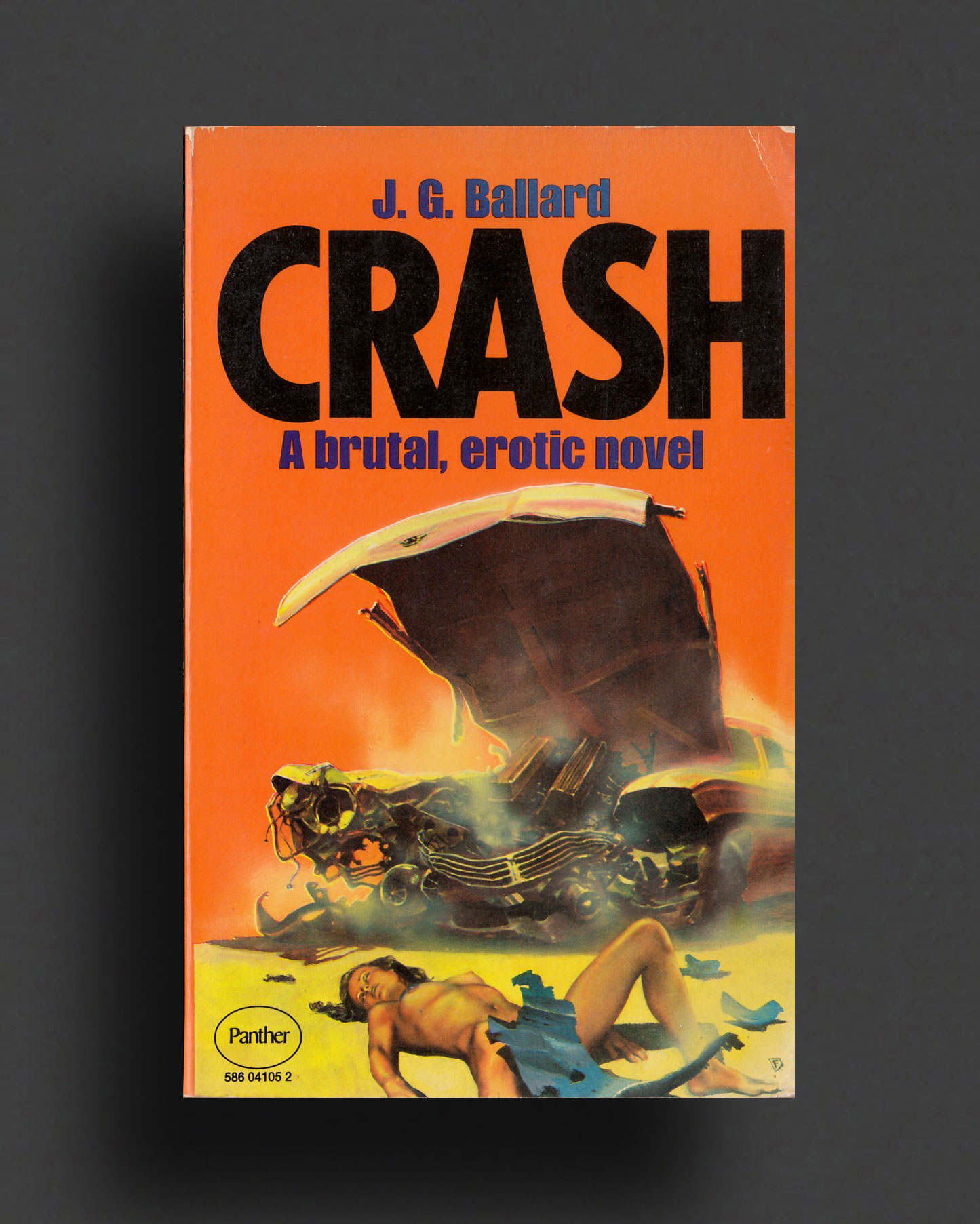
Rare first 1975 Panther edition with the seldom seen iconic cover illustrated by the legendary Chris Foss!
Ballard's 1973 book Crash is a story about symphorophilia; specifically car-crash sexual fetishism: its protagonists become sexually aroused by staging and participating in real car-crashes. It was a highly controversial novel: one publisher's reader returned the verdict "This author is beyond psychiatric help. Do Not Publish!". In 1996, the novel was made into a film of the same name by David Cronenberg.
Original jacket blurb :
"This brilliant, startlingly original novel opens with the narrator recovering in the hospital after a car crash in which he has killed the husband of a young woman doctor. In his pain-filled dreams he finds himself dominated by strange sexual fantasies, and he determines to find the real meaning of this horrific experience. When he leaves the hospital, he revisits the scene of the crash, and meets the woman doctor. During their affair they begin an exploration of the motorcar in all its forms, conducting a variety of sexual experiments on the motorways spreading around London. They meet a violent and aggressive figure called Vaughan, a "hoodlum scientist" who seems determined to die in a car crash with a famous film actress.
Terrified of Vaughan, and yet under his spell, the narrator joins his entourage of racing drivers, drug addicts, and airport prostitutes. They take part in stock-car races, watch test vehicles being crashed at the Road Research Laboratory, and all the time are being carried closer to the sinister climax of the novel, a disquieting vision of the future in which sex and technology form a nightmare marriage.
Violent and frightening, but always true to its subject, Crash is a visionary portrait of the brutal, erotic, and overlit future that beckons ever more powerfully from the margins of the technological landscape. Mr. Ballard has written a compulsively readable tour de force, as hypnotic and baleful in its own way as was A Clockwork Orange is."
James Graham Ballard (15 November 1930 – 19 April 2009) was an English novelist, short story writer, and essayist who first became associated with the New Wave of science fiction for his post-apocalyptic novels such as The Wind from Nowhere (1961) and The Drowned World (1962). In the late 1960s, he produced a variety of experimental short stories (or "condensed novels"), such as those collected in the controversial The Atrocity Exhibition (1970). In the mid 1970s, Ballard published several novels, among them the highly controversial Crash (1973), a story about symphorophilia and car crash fetishism, and High-Rise (1975), a depiction of a luxury apartment building's descent into violent chaos.
Very Good copy, light wear, tanning, some Japanese marginalia to first to chapters.
2008, English
Hardcover (w. dust jacket), 192 pages, 25.5 x 25.5 cm
1st Edition, Out of print title / used / very good
Published by
Edition Skylight / Switzerland
$120.00 - In stock -
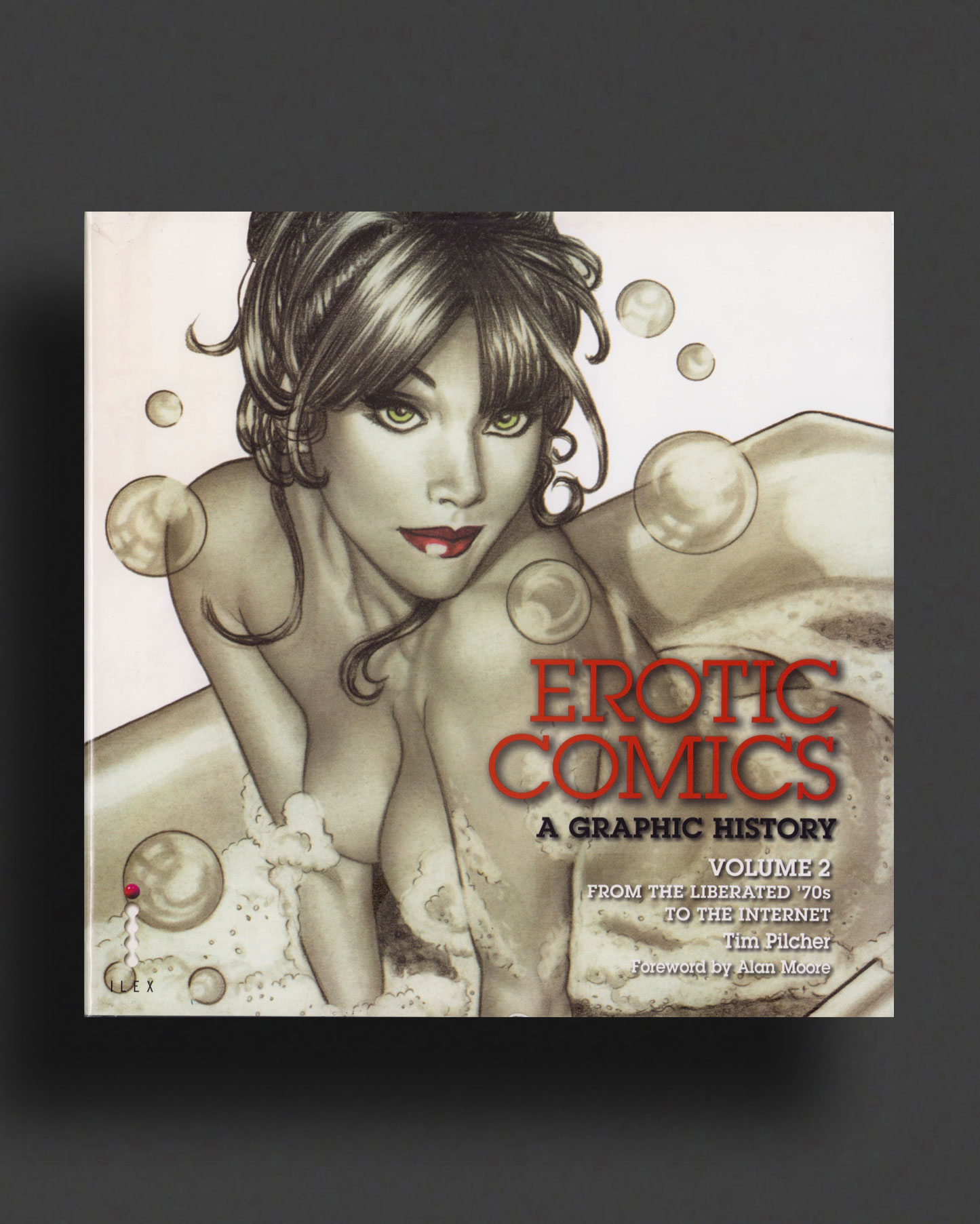
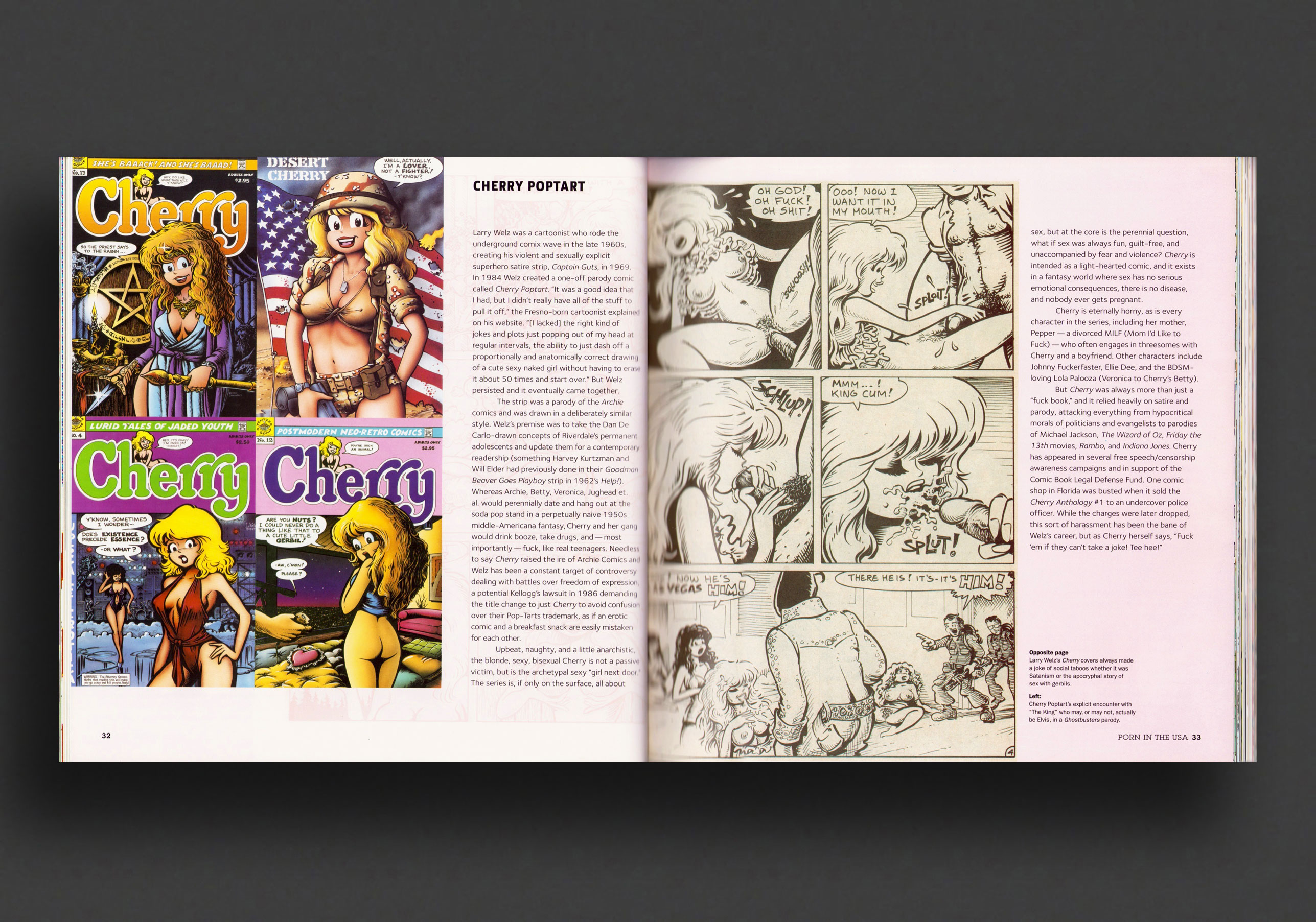
First hardcover edition of the second volume of this invaluable reference on erotic comics, compiled by Tim Pilcher with an introduction by Alan Moore. An incredible breadth of famous, infamous and impossibly obscure publishing exploring the illustrated depths of human desire. Tom of Finland, Erich von Götha, Lynn Paula Russell, Simon Bisley, Paolo E. Serpieri, Gay Comix, Bondage Fairies, Glamour International, Frank Cho, Heavy Metal, Cherry Poptart, Vaughn Bodē, Milo Manara, Howard Cruse, National Lampoon, Roberta Gregory, "Omaha" the Cat Dancer, and so many more…
“The liberating underground comix of the '60s heralded an explosion in the genres of erotic comic art, and this volume picks up the story to show how European, American and Asian artists have explored the possibility of the form in the years since. It covers everything: the erotic comics explosion in America in the mid-'80s; the gay, lesbian, bisexual and transgender comics scene; UK and European erotic comic creators since the '70s; the Japanese hentai phenomenon: to the techno future, where erotic comic creators are sidestepping legal issues by producing work solely for the Internet. Filled with rarely seen art from international forerunners such as Dave Stevens, Jordi Bennet, Frank Thorne, Tom of Finland, Ralf König, and Milo Manara, Erotic Comics 2 is perfect for fans of adult comics, art history, and erotic illustration. As Alan Moore urges in his foreword: "Absorb the contents of this book, and do so shamelessly."”
Tim Pilcher is the co-author of The Essential Guide to World Comics, and has contributed to numerous other books. He was an assistant editor at Vertigo Comics and an associate editor on Comics International. He lives in Brighton, England.
Gene Kannenberg, Jr., is a respected historian of comics and the director of ComicsResearch.org. He serves on the board of the International Journal of Comic Art, and lives in Hudson Valley, New York.
Alan Moore is the author of the acclaimed graphic novels Watchmen, V for Vendetta, and From Hell. His long-awaited erotic graphic novel, Lost Girls, was published in 2006. He lives in Northampton, England.
Very Good copy in VG dust jacket, light wear, preserved in mylar wrap.
2024, English
Softcover, 240 pages, 13.5 x 14 cm
Published by
Masala Noir / Paris
$44.00 - Out of stock
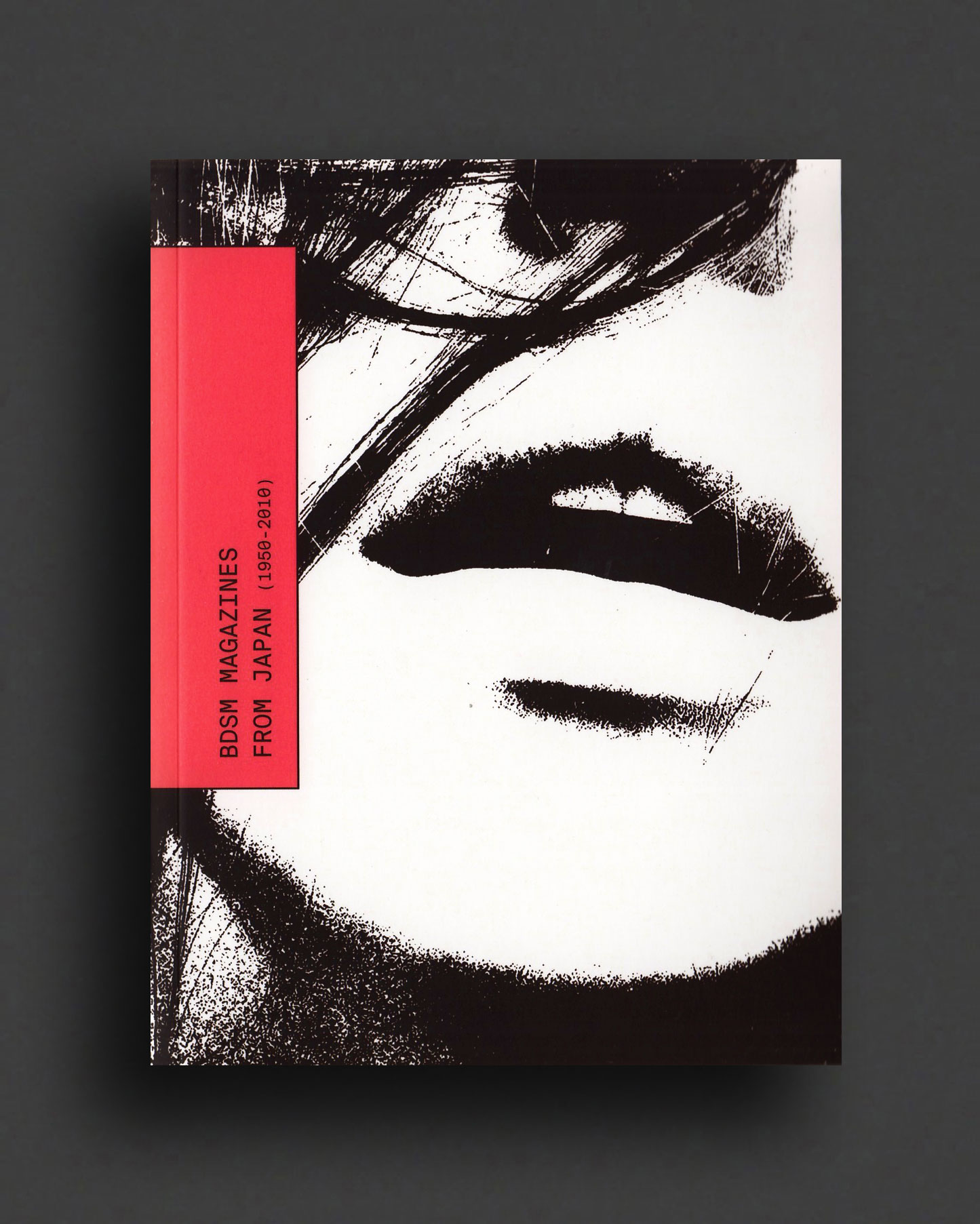
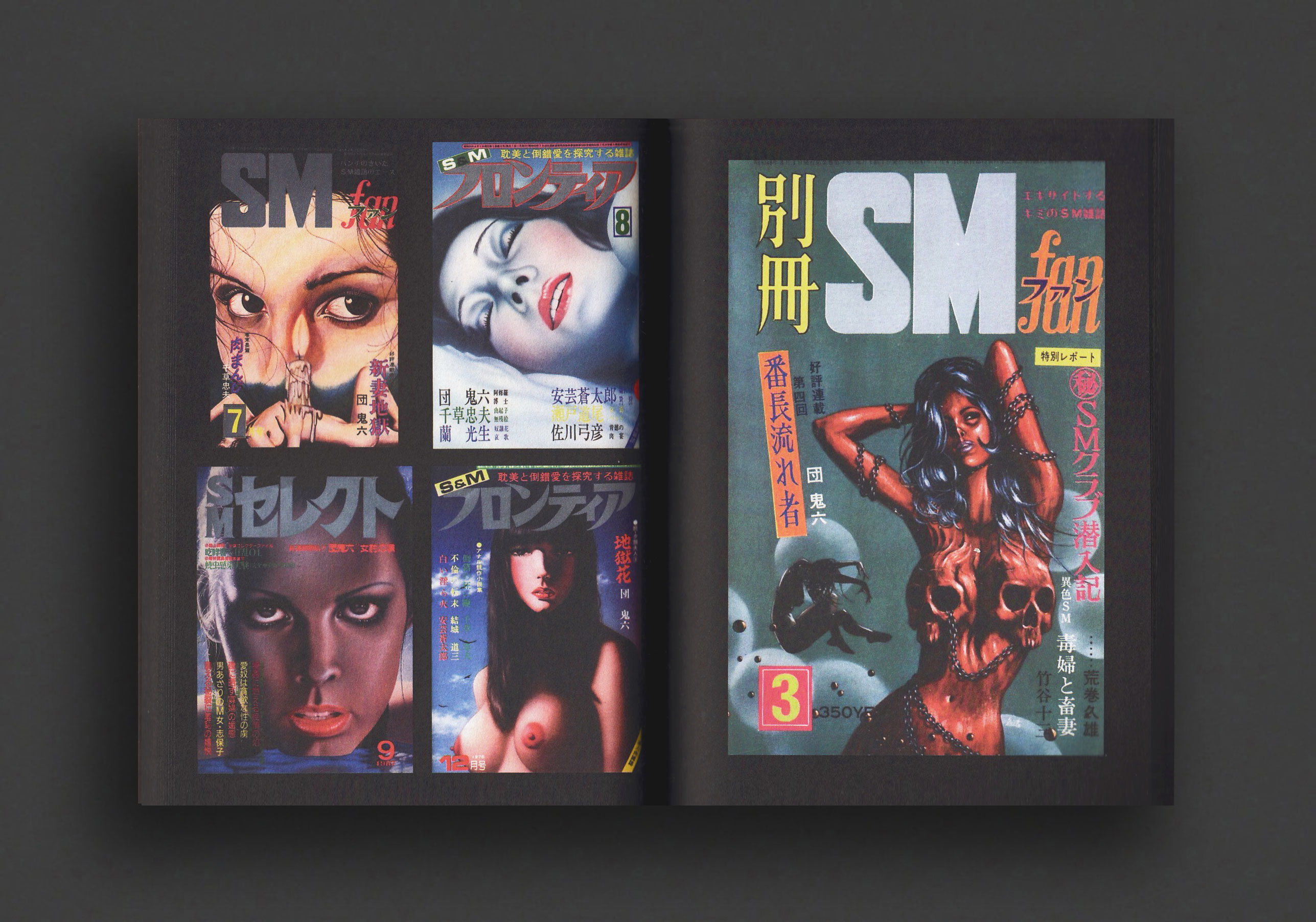
A collection of 300+ BDSM magazine covers from Japan compiled by Masala Noir (1960-2010).
2024, English
Softcover, 13 x 17.5 cm
Published by
Masala Noir / Paris
$44.00 - Out of stock
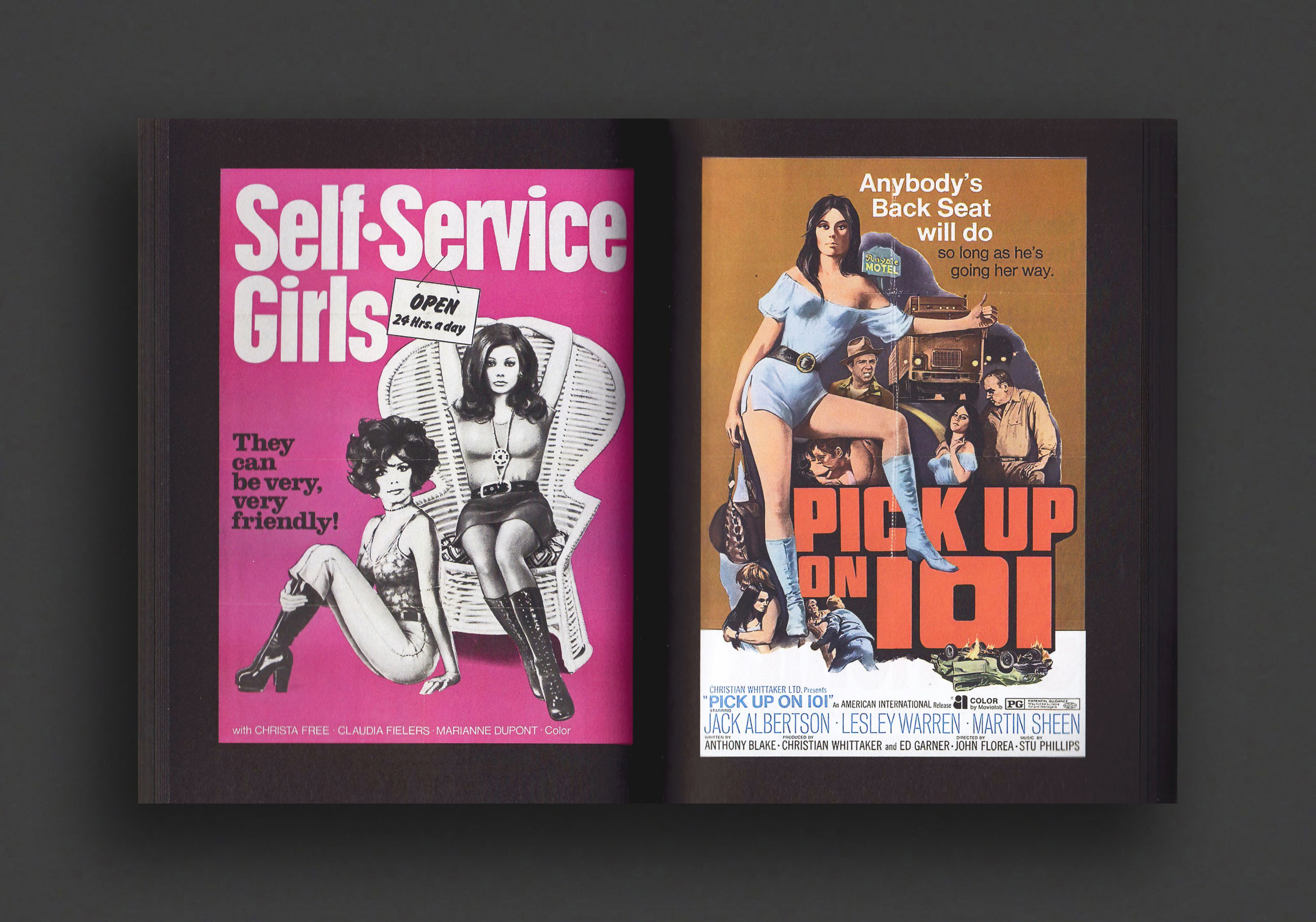
A collection of sexploitation movie posters compiled by Masala Noir.
1994, English
Hardcover (w. dust jacket), 114 pages, 30.5 x 22 cm
1st Edition, Out of print title / used / very good
Published by
Treville / Tokyo
$180.00 - In stock -
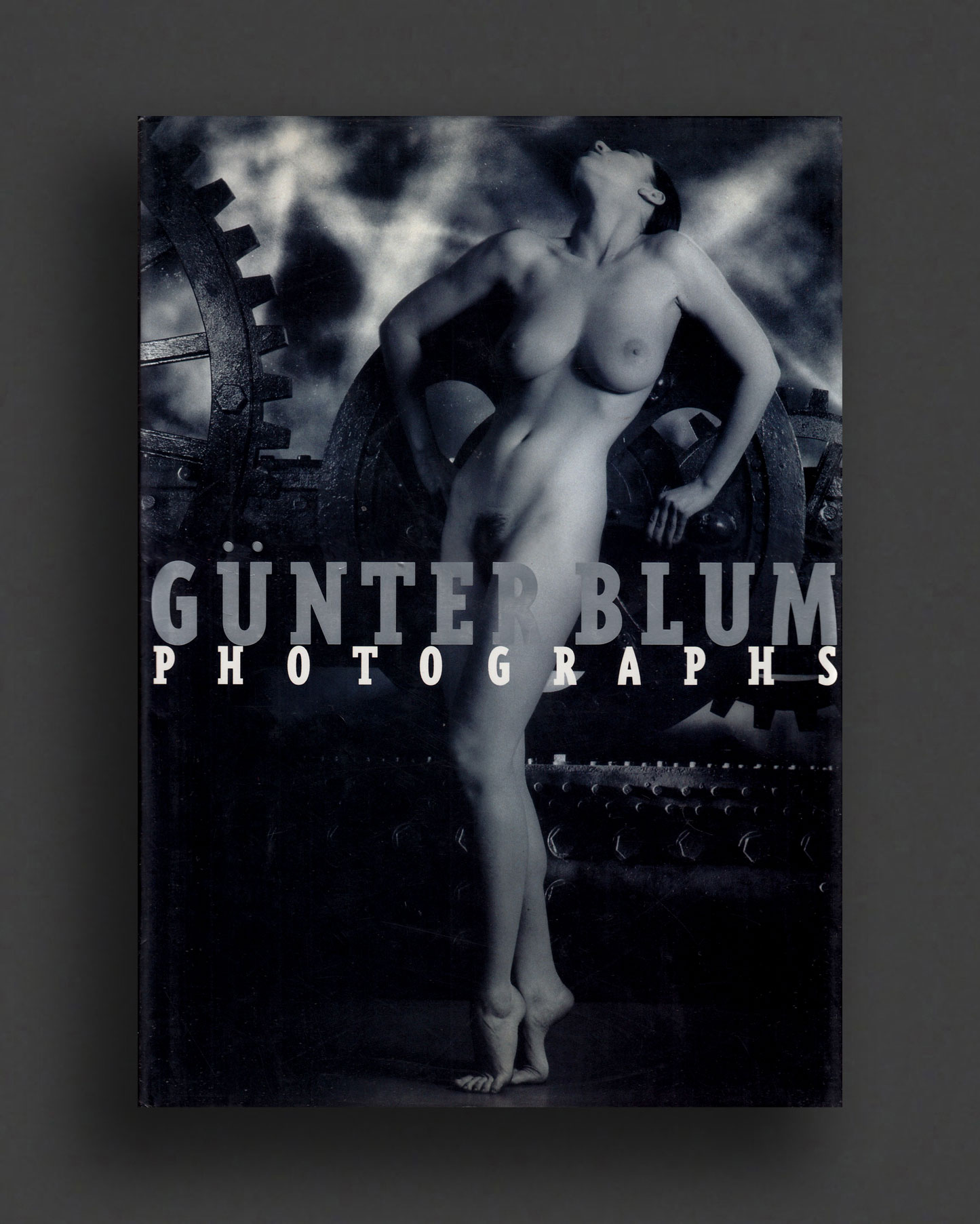
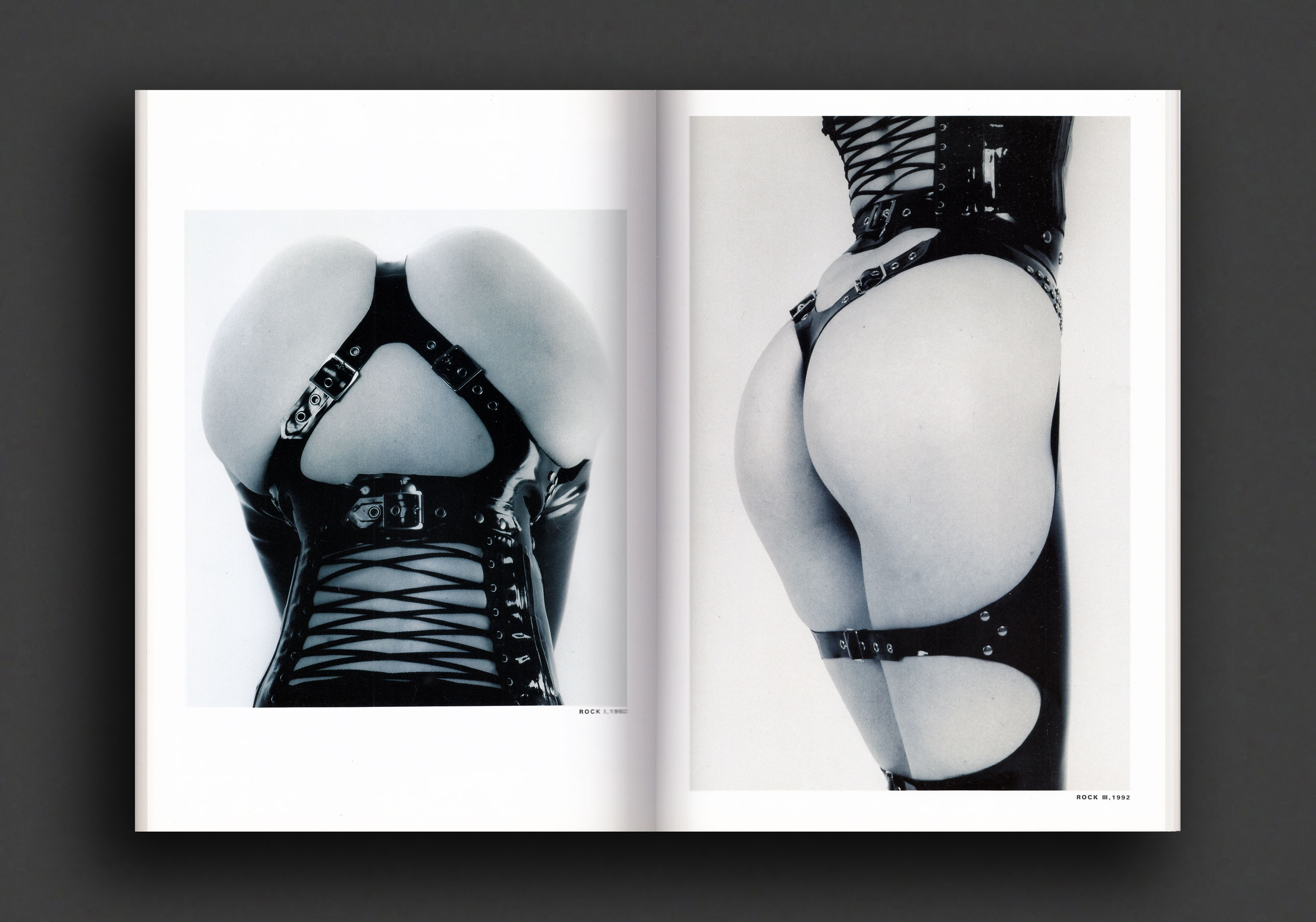
Rare first 1994 hardcover edition of this iconic photo book by Günter Blum (1949-1997), a German fine art photographer best known for his erotic depictions of confident nude women. Published only in Japan by the mighty Treville, this book is long out-of-print. Almost textless, this handsome volume reproduces much of Blum's most iconic, meticulous and highly influential work — some of the most striking and powerful images of female (and male) bodies during the boom of fetish photography in the 1980s-90s.
Born on January 19, 1949 in Mannheim, Germany, he studied graphic design and spent the early part of his career creating magazine, book, and album covers. For many years Günter lived and worked in Hamburg and Paris as a painter and illustrator. In 1978 he moved back to Heidelberg where he also worked as a Professor at the College of Design. He took up photography in the late 1980s, embarking on a series of erotic photographs inspired by Fritz Lang’s seminal film Metropolis (1927), posing a female model alongside elaborate, large-scale sets resembling machinery. The sets, wardrobe and leather work seen in his images were designed and built by Günter. He loved details, and was meticulous when it came to even the small elements in his scenes. Everything in the picture was planned and handmade for one purpose – to show the beauty of a powerful woman. Blum’s work was initially inspired by the likes of Helmut Newton and Jan Saudek but his photography became more focused on edgy, provocative imagery inspired by the exaggerated foundation garments of leather and lace that came into fashion in the 1980’s. The influence of punk and the sexual revolution of the 80’s is evidenced by one of his most famous photos, Spiegel Spezial (Special Edition), a cover for Der Spiegel magazine which depicts buttocks wrapped in barbed wire and fishnets. His famous illustrations and photographs were published by Spiegel, Stern, Focus, Playboy, and Vogue. Günter published 5 books and had numerous successful exhibitions throughout his celebrated career. His work can be found in museums and famed collections worldwide.
Günter’s largest collection of images has been preserved for decades by his greatest model and muse, Sylvie Blum. Sylvie became his wife in the 1990’s, and has looked after his prestigious private collection since Günter’s untimely death in July 1997,. This book was dedicated to Sylvie.
Very Good copy with Good dust jacket with some wear, now preserved under mylar wrap.
1994, Japanese
Softcover, unpaginated, 28.5 x 21 cm
1st Edition, Out of print title / used / very good
Published by
Eichi Shuppan / Tokyo
$100.00 - Out of stock
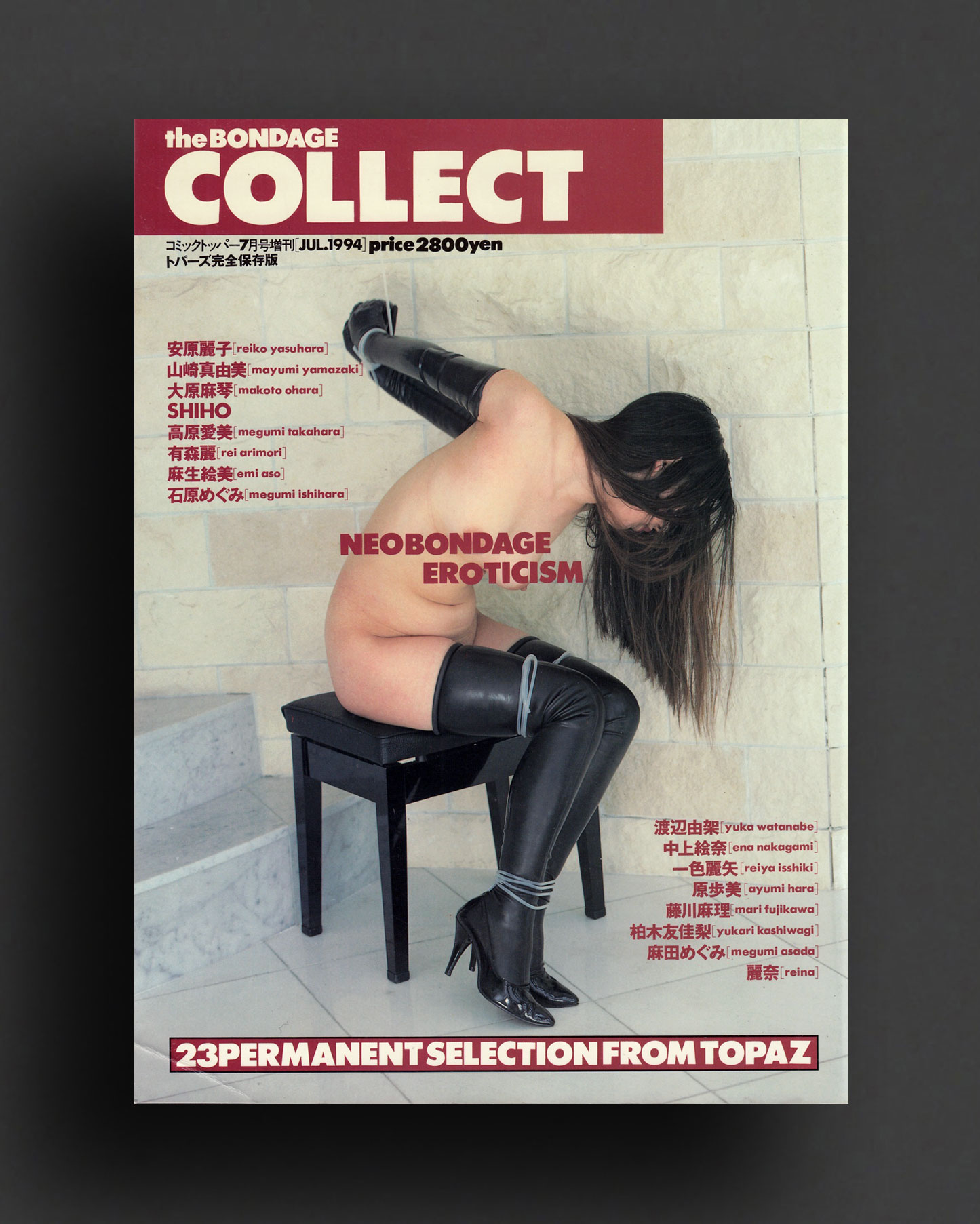
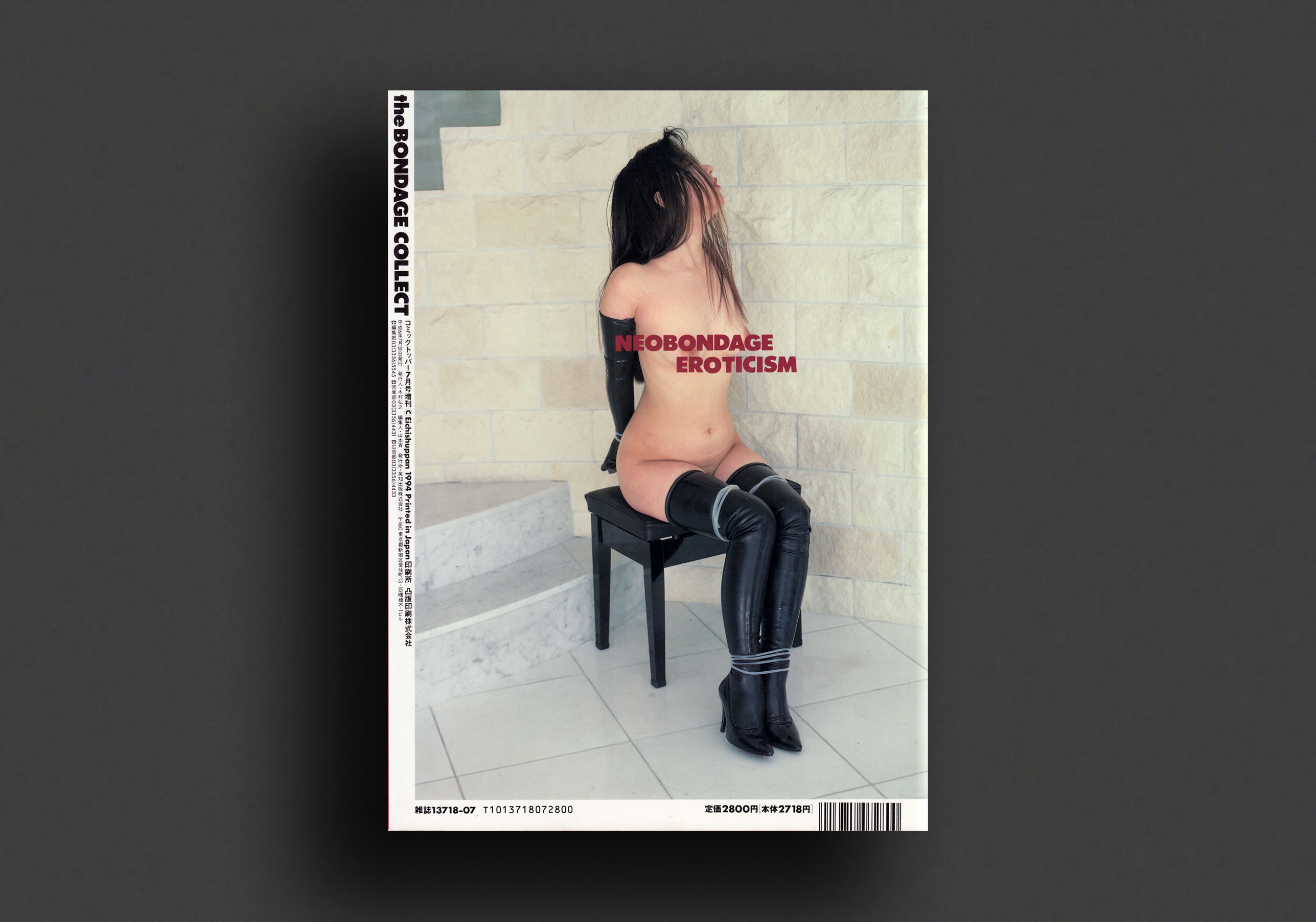
Published by Topaz magazine in 1994, this photo book collects 23 of the feature photoshoots in their entirety from the pages of the short-lived but excellent early 90's Japanese bondage magazine. Edited by Hitoshi Yamamoto, Kazuyoshi Kimoto, Hiroyuki Yano, Naoki Katayama. Features the models: Reiko Yasuhara, Mayumi Yamazaki, Makoto Ohara, Megumi Takahara, Rei Arimori, Emi Aso, Megumi Ishihara, Yuka watanabe, Ena Nakagami, Reiya Isshiki, Ayumi Hara, Mari Fujikawa, Yukari Kashiwagi, Megumi Asada, Reina. Photography by Norio Sugiura, Teruo Maeba, Tsunehiro Takakuwa, Shinji Yamazaki, Wakao Takahashi, Ryosuke Aikawa, Chikashi Yokouchi. Stylists: Jun Yoshida, Takuya Mimi Sayuri Kojima, Hiro Seino, Yumi Nakamori. Hair & Makeup: Rina Matsuhaga, Hiromi Katoh. Special thanks to A.Z.Z.L.O. Discipline!
Edited by Kimura Hiroyuki, Topaz burst onto the flourishing SM scene as the influence of Kinbaku/Shibari culture, fetish fashion, "abnormal" sexual practices, modern primitive, and underground SM culture was becoming hugely influential on high-end fashion, glamour photography, and art/film/music at large. A similar approach to SM Sniper, sharing many of the same contributors such as SM archivist and noise musician Masami Akita (Merzbow), Topaz emphasised the new wave of artistic output from the real protagonists of the experimental SM counterculture in Japan (and abroad), centering around the work of the models, stylists, make-up artists, and fashions designers, as much as the kinbakushi, writers or photographers. Topaz benefited from the large format of a glossy, full-colour magazine, rather than the usual mook format of SM magazines, each issue packed with hundreds of images, a double-sided full-colour fold-out poster, original full-colour glossy photo-shoots, art galleries, reports and reviews on developments in the underground (noise music, pink film, sex clubs, erotic art, etc.), instructional and historical articles, rare interviews and profiles with the featured models and artists, and photo features on all manner of sexual customs and practices (transsexualism, lesbianism, virtual sex, rubberism, medical fetish, prostitution, techno sex...). One of the most under-rated SM mags from Tokyo, brimming with information on underground publishing, boutiques, and erotic art largely lost to time.
Mature audiences only.
Near Fine copy, single corner crease to cover.
1982, Japanese
Softcover (staple-bound), 96 pages, 26 x 18.5 cm
1st Edition, Out of print title / used / very good
Published by
Wakasei / Tokyo
$65.00 - Out of stock
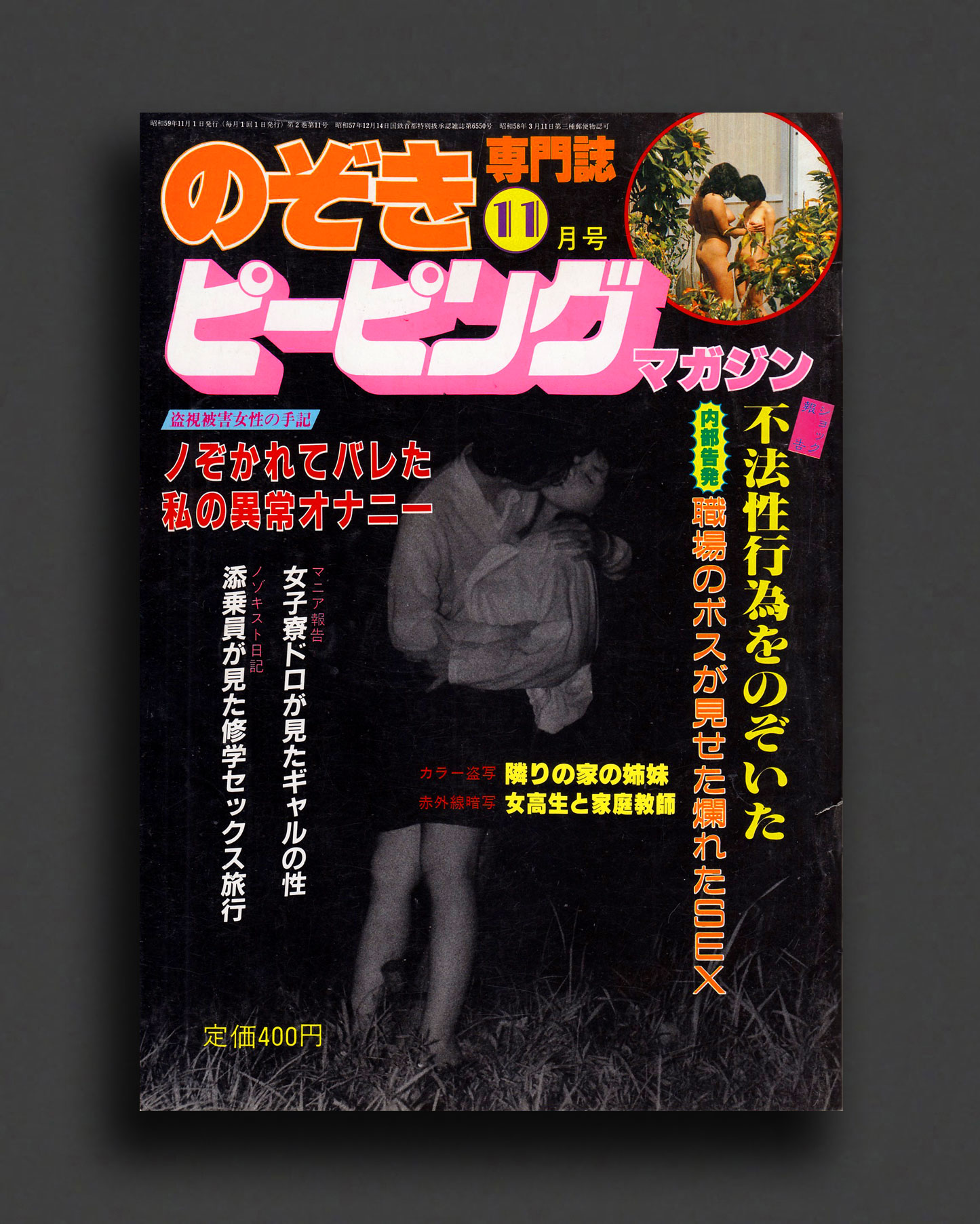
1984 issue of Peeping Magazine, a specialty deviant photography magazine published in Tokyo in the 1980's that covers all manner of voyeuristic close-up/peeper/FLASH/Infrared/Monroe-effect photography (ala Kohei Yoshiyuki and Ikko Kagari) with full-colour and b/w photo features of innovative, controversial, spy photography. Clandestine trysts in the park at night, girls next door, sports action, nature calls (urination)... Staged? simulated? real? professional? amateur? art as criminal impulse? Who knows. Questionable, sure. Certainly a fascinating reflection of the loneliness and desperation that so often accompanies sexual or human desire in a big, cold metropolis like Tokyo.
Mature audiences only.
Very Good copy, light wear.
1990, Japanese
Softcover (w. dust jacket), unpaginated, 21.5 x 27.5 cm
1st Edition, Out of print title / used / very good
Published by
Million Publishing / Tokyo
$180.00 - Out of stock
First, only edition of this great bondage photo book by Masatoshi Osanai, published by S&M Sniper's Million publishing house. "Binding Force" is a collection of works by the Japanese photographer who worked as a portrait photographer of idols and celebrities throughout the 1980s to the 1990s. This is his only book of bondage photography, announced in 1990 as "the first face restraint photo book in Japan!!". Like Helmut Newton and Robert Mapplethorpe, Osanai seamlessly works between portraiture and fetish photography, creating a conceptual photo book made up entirely of headshots of models gagged and bound in various face restraints, gas masks and the like. "It's a non-comedy. It's a comedy. It's the beauty of a mask, the wilderness of pleasure, or the grave marker of ecstasy that appears at the end of a transformation." (rough translation from the publisher's blurb). Includes texts (in Japanese) by Shuhei Takahashi and Akira Nagae.
Very Good—Near Fine copy in VG dust jacket.
1980?, Japanese
Softcover (w. dust jacket), unpaginated, 26 x 18.5 cm
1st Edition, Out of print title / used / very good
Published by
Outo Shobo / Tokyo
$65.00 - In stock -
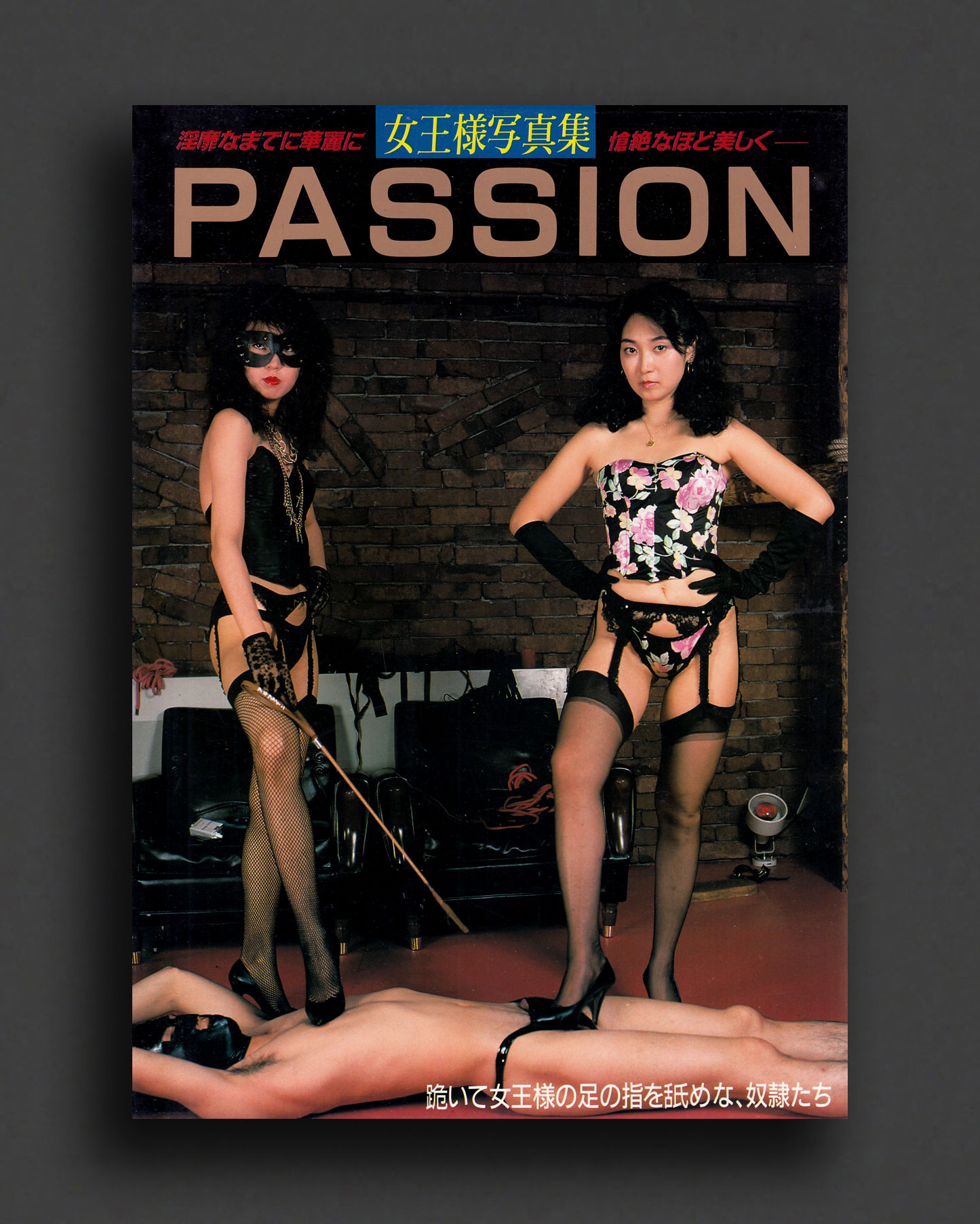
"Kneel down and lick the queen's toes, slaves"
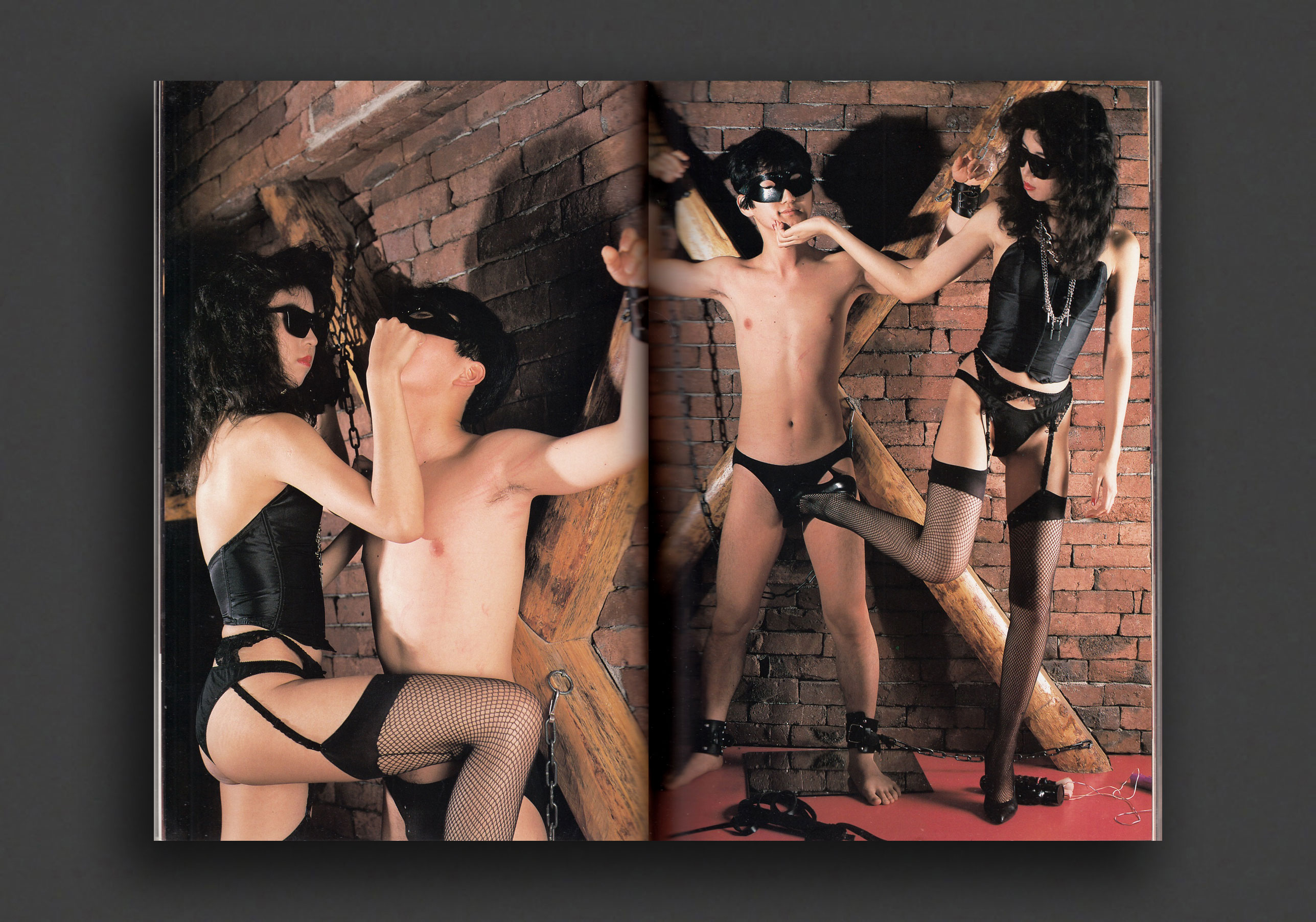
Typically rather anonymous, dateless Japanese vending-machine fetish photo magazine from the 1980s. These are great. Passion is cover-to-cover, full-colour, gloss femdom photography of two young Japanese women in fetish wear enjoying the torture of their young male slave in a dungeon.
Mature-audiences only.
Very Good copy.