World Food Books' programme is largely produced on Kulin Nation land. We acknowledge the Wurundjeri people of the Kulin Nation as the first and continuing custodians of this land, and pay respect to their Elders past, present, and emerging.
World Food Books is an arts and special interests bookshop in Naarm / Melbourne. Founded in 2010, World Food Books is devoted to the presentation of a rotating, hand-selection of international art, design, literary and counterculture publications with an emphasis on the anti-traditional, the experimental, the avant-garde, the heretic, the marginal.
Presenting new titles alongside rare and out-of-print books, catalogues and journals spanning the fields of modern and contemporary art, design, photography, illustration, film, literature, poetry, cultural theory, philosophy, sexuality, popular and underground culture in its many radical forms, World Food Books wishes to encourage adventurous, thoughtful and open-minded reading, looking, writing, and exchange of publishing and ideas, both current and historical.
As well as our bookshop, located in Melbourne's historical Nicholas Building, all of our inventory is available internationally via our online mail-order service.
World Food Books semi-regularly co-ordinates "Occasions", a programme of exhibits and events at the bookshop and in partnership with other hosts (such as museums and art galleries) that develop out of the activities, relationships and content of the bookshop itself.
World Food Books
The Nicholas Building
37 Swanston Street
Room 5, Level 6
Melbourne 3000
Australia
SHOP HOURS:
Thu–Fri 12–6, Sat 12–5
WEB-SHOP OPEN 24/7
World Food Books
Postal Address:
PO Box 435
Flinders Lane
Victoria 8009
Australia
Art
Theory / Essay
Architecture / Interior
Graphic Design / Typography
Photography
Fashion
Eros
LGBTQ+
Fiction / Poetry
Weird / Speculative / Science Fiction / Horror
Transgressive / Visceral / Abject
Symbolism / Decadence / Fin de siècle
Film / Video
Painting
Sculpture / Installation
Performance / Dance / Theater
Drawing
Sound / Music
Curatorial
Group Shows / Collections
Periodicals
Out-of-print / Rare
Posters / Ephemera / Discs
Signed Books
World Food Books Gift Voucher
World Food Book Bag
Australian Art
Australian Fiction
Australian Science Fiction / Speculative Fiction
Australian Poetry
Australian Photography
Japanese Photography
Conceptual Art
Minimal Art
Dada
'Pataphysics / Oulipo
Fluxus
Concrete Poetry
Pop Art
Surrealism
Arte Povera
Arte Informale / Haute Pâte / Tachism
Nouveau Réalisme / Zero / Kinetic
Situationism / Lettrism
Collage / Mail Art / Xerox Art
Art Brut / Folk / Visionary / Fantastic
Illustration / Graphic Art / Bandes Dessinées
Furniture
Italian Radical Design / Postmodernism
Textiles
Ceramics / Glass
Counterculture
Protest / Revolt
Philosophy
Psychoanalysis
Anthropology
Anarchism
Socialism / Anarchism / Communism / Capitalism
Literary Theory / Semiotics / Language
Feminism / Women's Studies
Gender Studies / Sexuality
Anthropology
Fetishism / BDSM
Drugs / Psychedelia
Crime / Violence
Animal Rights / Veganism
Occult / Esoterica
Ecology / Earth / Alternative Living
Whole Earth / Crafts
All prices in AUD (Australian dollars)
Pick-Ups
Pick-up orders can be collected in our bookshop during opening hours after order date. Please collect any Pick-up orders within 2 weeks of ordering as we have limited storage space. Orders will be released back into stock if not collected within this time. No refunds can be made for pick-ups left un-collected. If you cannot make it in to the bookshop in this time-frame, please choose postage option.
Return Policy
All sales are final. We do accept returns (for refund or exchange) for items received in error. All our orders are packed with special care using heavy-duty padding and cardboard book-mailers or bubble mailers (for smaller books), using reinforcement where required. We cannot take responsibility for any lost, stolen or damaged parcels.
Insurance
Should you wish to insure your package, please email us directly after placing your order and we can organise this at a small extra expense. Although all standard/express tracked packages are very safe and dependable, we cannot take responsibility for any lost, stolen or damaged parcels. We recommend insurance on valuable orders.
Interested in selling your old books, catalogues, journals, magazines, comics, fanzines, ephemera? We are always looking for interesting, unusual and out-of-print books to buy. We only buy books in our fields of interest and specialty, and that we feel we can resell.
We base these prices on desirability, market value, in-print prices, condition and our current stock levels. We offer cash, store credit, and can take stock on consignment. All
about 25% of the price we expect to get when we sell them, or 30% in store credit. We base these prices on desirability, market value, in-print prices, condition and our current stock levels.
Sell your books any day of the week. You can drop them off and return later. If you have a lot of books, we can visit your Sydney home.
We buy books that we feel we can resell. We offer about 25 % of the price we expect to get when we sell them, or 30% in store credit. We base these prices on desirability, market value, in-print prices, condition and our current stock levels.
Philadelphia Wireman
03 August - 01 September, 2018
World Food Books is proud to announce our next Occasion, the first presentation of sculptures by Philadelphia Wireman in Australia.
The Philadelphia Wireman sculptures were found abandoned in an alley off Philadelphia’s South Street on trash night in 1982. Their discovery in a rapidly-changing neighbourhood undergoing extensive renovation, compounded with the failure of all attempts to locate the artist, suggests that the works may have been discarded after the maker’s death. Dubbed the "Philadelphia Wireman" during the first exhibition of this work, in 1985, the maker’s name, age, ethnicity, and even gender remain uncertain. The entire collection totals approximately 1200 pieces, all intricately bound together with tightly-wound heavy-gauge wire (along with a few small, abstract marker drawings, reminiscent both of Mark Tobey and J.B. Murry). The dense construction of the work, despite a modest range of scale and materials, is singularly obsessive and disciplined in design: a wire armature or exoskeleton firmly binds a bricolage of found objects including plastic, glass, food packaging, umbrella parts, tape, rubber, batteries, pens, leather, reflectors, nuts and bolts, nails, foil, coins, toys, watches, eyeglasses, tools, and jewellery.
Heavy with associations—anthropomorphic, zoomorphic, and socio-cultural responses to wrapped detritus—the totemic sculptures by Philadelphia Wireman have been discussed in the context of work created to fulfil the shamanistic needs of alternative religions in American culture. Curators, collectors, and critics have variously compared certain pieces to sculpture from Classical antiquity, Native American medicine bundles, African-American memory jugs, and African fetish objects. Reflecting the artist’s prolific and incredibly focused scavenging impulse, and despite—or perhaps enhanced by—their anonymity, these enigmatic objects function as urban artefacts and arbiters of power, though their origin and purpose is unknown. Philadelphia Wireman, whatever their identity, possessed an astonishing ability to isolate and communicate the concepts of power and energy through the selection and transformation of ordinary materials. Over the course of the past two decades, this collection has come to be regarded as an important discovery in the field of self-taught art and vernacular art.
Presented in collaboration with Fleisher-Ollman Gallery, Philadelphia, and Robert Heald, Wellington.
Susan Te Kahurangi King
02 February - 10 March, 2018
Susan Te Kahurangi King (24 February 1951 - ) has been a confident and prolific artist since she was a young child, drawing with readily available materials - pencils, ballpoint pens and felt-tip markers, on whatever paper is at hand. Between the ages of four and six Susan slowly ceased verbal communication. Her grandparents William and Myrtle Murphy had developed a special bond with Susan so they took on caring responsibilities for extended periods. Myrtle began informally archiving her work, carefully collecting and storing the drawings and compiling scrapbooks. No drawing was insignificant; every scrap of paper was kept. The King family are now the custodians of a vast collection containing over 7000 individual works, from tiny scraps of paper through to 5 meter long rolls.
The scrapbooks and diaries reveal Myrtle to be a woman of great patience and compassion, seeking to understand a child who was not always behaving as expected. She encouraged Susan to be observant, to explore her environment and absorb all the sights and sounds. Myrtle would show Susan’s drawings to friends and people in her community that she had dealings with, such as shopkeepers and postal workers, but this was not simply a case of a grandmother’s bias. She recognised that Susan had developed a sophisticated and unique visual language and sincerely believed that her art deserved serious attention.
This was an unorthodox attitude for the time. To provide some context, Jean Dubuffet coined the term Art Brut in 1945 to describe work created by self-taught artists – specifically residents of psychiatric institutions and those he considered to be visionaries or eccentrics. In 1972 Roger Cardinal extended this concept by adopting the term Outsider Art to describe work made by non-academically trained artists operating outside of mainstream art networks through choice or circumstance. Susan was born in Te Aroha, New Zealand in 1951, far from the artistic hubs of Paris and London that Dubuffet and Cardinal operated in. That Myrtle fêted Susan as a self-taught artist who deserved to be taken seriously shows how progressive her attitudes were.
Susan’s parents Doug and Dawn were also progressive. Over the years they had consulted numerous health practitioners about Susan’s condition, as the medical establishment could not provide an explanation as to why she had lapsed into silence. Dawn educated herself in the field of homeopathy and went on to treat all twelve of her children using these principles – basing prescriptions on her observations of their physical, mental and emotional state.
Doug was a linguist with an interest in philosophy who devoted what little spare time he had to studying Maori language and culture. To some extent their willingness to explore the fringes of the mainstream made them outsiders too but it was their commitment to living with integrity and their respect for individuality that ensured Susan’s creativity was always encouraged.
Even though Susan’s family supported her artistic pursuits, some staff in schools and hospitals saw it as an impediment to her assimilation into the community and discouraged it in a variety of ways. Her family was not always aware of this and therefore did not fully understand why Susan stopped drawing in the early 1990s. However, rather than dwell on the challenges that Susan faced in pursuit of her artistic practice, they prefer to highlight her achievements. In 2008 Susan began drawing again in earnest, after an almost 20 year interruption, and her work is now shown in galleries around the world.
Susan grew up without television and has been heavily influenced by the comics she read as a child. She is absolutely fearless in the appropriation of recognizable characters, such as Donald Duck and Mickey Mouse, in her work. She twists their limbs, contorts their faces, compresses them together, blends them into complex patterned backgrounds - always imbuing them with an incredible energy. Although Susan often used pop culture characters in her work they are not naive or childlike. These are drawings by a brilliant self-taught artist who has been creating exceptional work for decades without an audience in mind.
Mladen Stilinović
"Various Works 1986 - 1999"
02 February 16 - September 10, 2016
Various works 1986 - 1999, from two houses, from the collections of John Nixon, Sue Cramer, Kerrie Poliness, Peter Haffenden and Phoebe Haffenden.
Including: Geometry of Cakes (various shelves), 1993; Poor People’s Law (black and white plate), 1993; White Absence (glasses, ruler, set square, silver spoon, silver ladel with skin photograph and wooden cubes), 1990-1996; Exploitation of the Dead (grey and red star painting, wooden painting, black spoon with red table, red plate), 1984-1990; Money and Zeros (zero tie, paintings made for friends in Australia (Sue, John, Kerrie), numbers painting), 1991-1992; Words - Slogans (various t-shirts) - “they talk about the death of art...help! someone is trying to kill me”, “my sweet little lamb”, “work is a disease - Karl Marx”; Various artist books, catalogues, monographs, videos; Poster from exhibition Insulting Anarchy; "Circular" Croatian - Australian edition; Artist book by Vlado Martek (Dostoyevsky); more.
Thanks to Mladen Stilinović and Branka Stipančić.
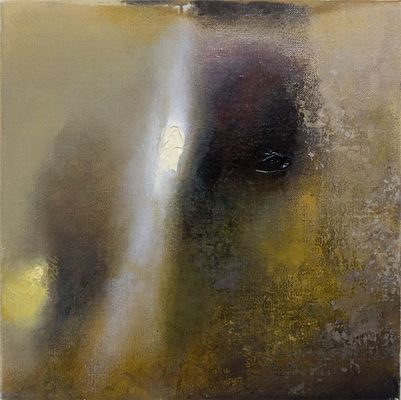
Jonathan Walker
Always Will Need To Wear Winter Shirt Blue + Ochre Small Check Pattern
21 August - 21 September, 2015
Untitled
I am not a great reader of poetry but I always return to the work of Melbourne poet, Vincent Buckley (1925- 1988). Perhaps I find his most tantalising piece to be not a finished poem but a fragment left on a scrap of paper discovered on his desk after the poet’s death.
The poetry gathers like oil
In the word-core, and spreads
It has its music meet,
Its music is in movement.
This fragment is more the shell left behind from a volatile thought than a finished poem. I find the last two lines honest but awkward whereas the first two lines work like an arrow. Most likely he could not find a resolution so it was left. Still, in its present form, it remains an eloquent testimony to the ultimate failure of a medium to express mobile thought and sensation, in Buckley’s case, through verbal language. It’s an important matter because this is something all artists have to deal with regardless of the medium.
I have never written a poem, however, I am forever copying fragments from books on paper scraps in a vain effort to fix certain notions in my head. At first, they function as bookmarks that are sometimes returned to when I open the book. But before long, as they accumulate, they fall out littering the table interspersed with A4 photocopies, bills, books and medications.
To return to Buckley’s fragment, the first two lines very much evoke how I paint nowadays. As you age, detail diminishes and patches of light become more luminous and float. I feel the most honest way of dealing with this is by smearing the oil paint on the canvas with the fingers and working close-up, blind. Only if the patches coalesce into an approaching image can the work gain a life.
-
Jonathan Walker was born in Melbourne, Australia and brought up on a dairy farm in Gippsland. In the 1970’s he studied painting at RMIT and won the Harold Wright Scholarship to the British Museum, London. During the 1980’s he exhibited at Pinacotheca Gallery, Richmond and had work shown at the NGV and Heidi City Art Gallery. Over the same period he designed the cover for the “Epigenesi” LP by Giancarlo Toniutti, Italy and conducted a mail exchange work with Achim Wollscheid, Germany. The work with artists through the post resulted in an article published in the bicentenary issue of Art and Australia 1988. He showed in artist run spaces such as WestSpace in the 90’s and 2000’s, and until 2012, taught painting at Victoria University, which is where we (Colleen Ahern and Lisa Radford) as organisers of the exhibition, among many others, had the privilege of being his student.
Walker’s knowledge was imparted to students through the careful selection of music, literature, and artists found in books that he himself had ordered for the library. Walker’s strategy was the generosity of sharing his vast knowledge with references specific to each student and their context.
Walker’s paintings share a similar focus and intimacy.
This exhibition presents a small selection of recent paintings alongside a publication that includes Walker’s writing. Observational and analytical, Walker’s work is a type of material notation — the time of day, colour and how it is blended, the both specific and fleeting location of a reflection on lino or the question of whether a chair leg should be included in a painting.
Please join us on Friday August 21 between 6-8pm to celebrate the opening of the exhibition.
Curated by Colleen Ahern and Lisa Radford.
B. Wurtz
Curated by Nic Tammens
March 26 - April 4, 2015
B.Wurtz works from a basement studio in his home on Manhattan’s Lower East Side.
This local fact is attested to by the plastic shopping bags and newsprint circulars that appear in his work. As formal objects, they don’t make loud claims about their origins but nonetheless transmit street addresses and places of business from the bottom of this long thin island. Like plenty of artists, Wurtz is affected by what is local and what is consumed. His work is underpinned by this ethic. It often speaks from a neighborhood or reads like the contents of a hamper:
“BLACK PLUMS $1.29 lb.”
“Food Bazaar”
“USDA Whole Pork Shoulder Picnic 99c lb.”
“RITE AID Pharmacy, with us it’s personal.”
“H. Brickman & Sons.”
“Sweet Yams 59c lb."
Most of the work in this exhibition was made while the artist was in residence at Dieu Donne, a workshop dedicated to paper craft in Midtown. Here Wurtz fabricated assemblages with paper and objects that are relatively lightweight, with the intention that they would be easily transportable to Australia. This consideration isn’t absolute in Wurtz’s work, but was prescriptive for making the current exhibition light and cheap. Packed in two boxes, these works were sent from a USPS post office on the Lower East Side and delivered to North Melbourne by Australia Post.
Wurtz appears courtesy of Metro Pictures, New York.
Thanks to Rob Halverson, Joshua Petherick, Sari de Mallory, Matt Hinkley, Helen Johnson, Fayen d'Evie, Ask Kilmartin, Lisa Radon, Ellena Savage, Yale Union, and "Elizabeth".
John Nixon
"Archive"
December 15 - January 20, 2014
The presentation of John Nixon's archive offered a rare showcase of this extensive collection of the artist's own publications, catalogues, posters, ephemera, editions and more, from the mid 1980s onwards, alongside a selection of his artworks.
Organized by John Nixon, Joshua Petherick and Matt Hinkley.
<a href=http://wfb.public-office.info/artist/john-nixon>All titles by John Nixon
"Habitat"
at Minerva, Sydney (organised by Joshua Petherick and Matt Hinkley)
November 15 - December 20, 2014
Lupo Borgonovo, Janet Burchill & Jennifer McCamley,
Lewis Fidock, HR Giger, Piero Gilardi, Veit Laurent Kurz,
Cinzia Ruggeri, Michael E. Smith, Lucie Stahl, Daniel Weil, Wols
Press Release:
“...It contained seven objects. The slender fluted bone, surely formed for flight, surely from the wing of some large bird. Three archaic circuitboards, faced with mazes of gold. A smooth white sphere of baked clay. An age-blackened fragment of lace. A fingerlength segment of what she assumed was bone from a human wrist, grayish white, inset smoothly with the silicon shaft of a small instrument that must once have ridden flush with the surface of the skin - but the thing’s face was seared and blackened.”
William Gibson, “Count Zero”, 1986
"Autumn Projects Archive"
Curated by Liza Vasiliou
March 6 - March 15, 2014
World Food Books, in conjunction with the Virgin Australia Melbourne Fashion Festival 2014, presented the Autumn Projects archive, consisting of a selection of early examples in Australian fashion with a particular interest in collecting designers and labels from the period beginning in the 1980’s, who significantly influenced the discourse of Australian Fashion.
Curated by Liza Vasiliou, the exhibition provided a unique opportunity to view pieces by designers Anthea Crawford, Barbara Vandenberg, Geoff Liddell and labels CR Australia, Covers, Jag along with early experimental collage pieces by Prue Acton and Sally Browne’s ‘Fragments’ collection, suspended throughout the functioning World Food Books shop in Melbourne.
H.B. Peace
presented by CENTRE FOR STYLE
November 14, 2013
"Hey Blinky, you say chic, I say same"
Anon 2013
H.B. Peace is a clothing collaboration between great friends Blake Barns and Hugh Egan Westland. Their pieces explore the divergences between 'character’ and ‘personality’ in garments....etc
Special Thanks to Joshua Petherick and Matt Hinkley of WFB and Gillian Mears
and a Very Special Thank you to Audrey Thomas Hayes for her shoe collaboration.
Janet Burchill & Jennifer McCamley
"Aesthetic Suicide"
May 10 - June 8, 2013
The first of our occasional exhibitions in the World Food Books office/shop space in Melbourne, "Aesthetic Suicide" presented a body of new and older works together by artists Janet Burchill & Jennifer McCamley, including videos, prints, a wall work, and publications.
During shop open hours videos played every hour, on the hour.
1980, English
Hardcover (clothbound), 380 pages, 24 x 16 cm
1st Edition, Out of print title / used / very good
Published by
Northwestern University Press / Evanston
$30.00 - In stock -
1980 hardcover edition.
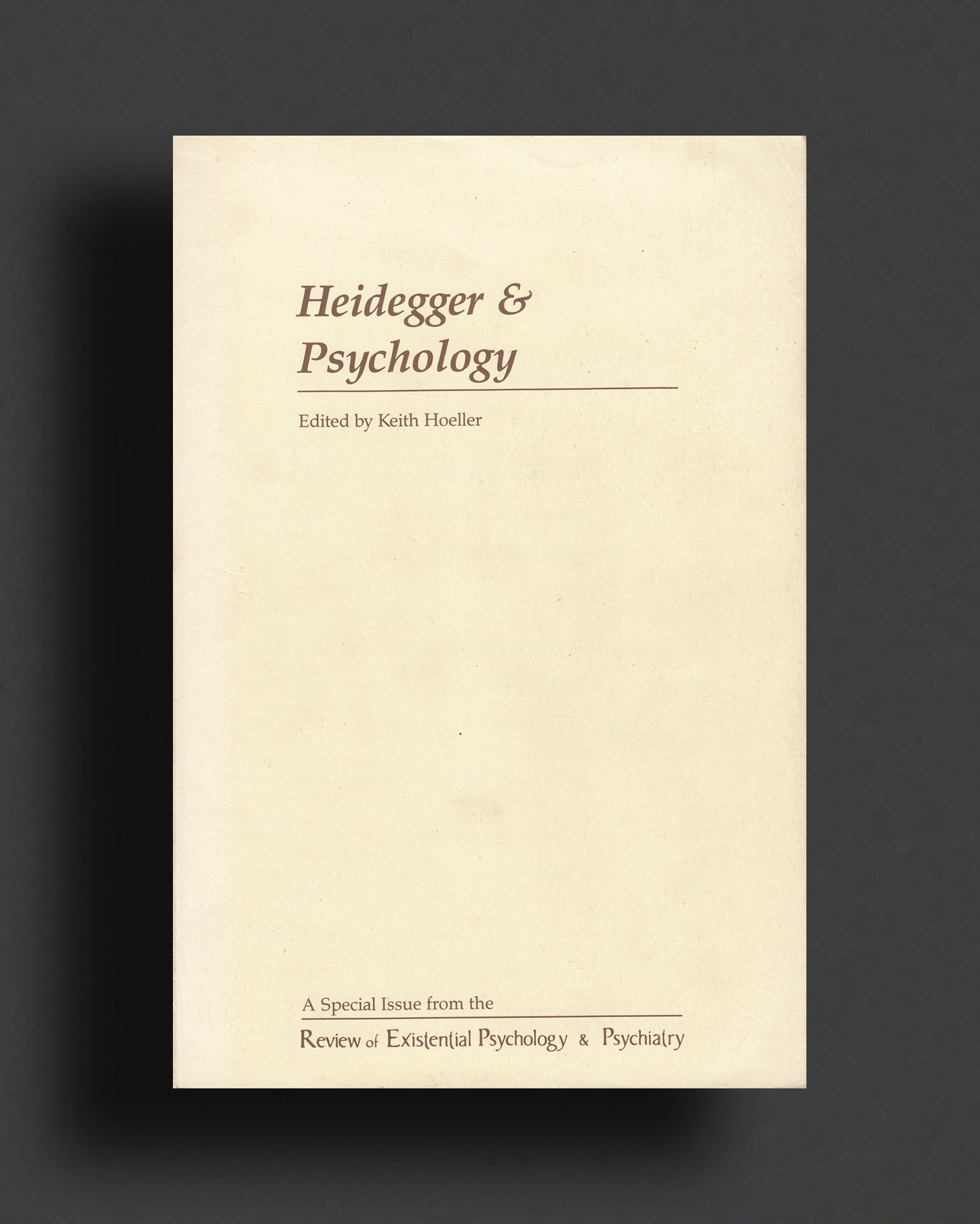
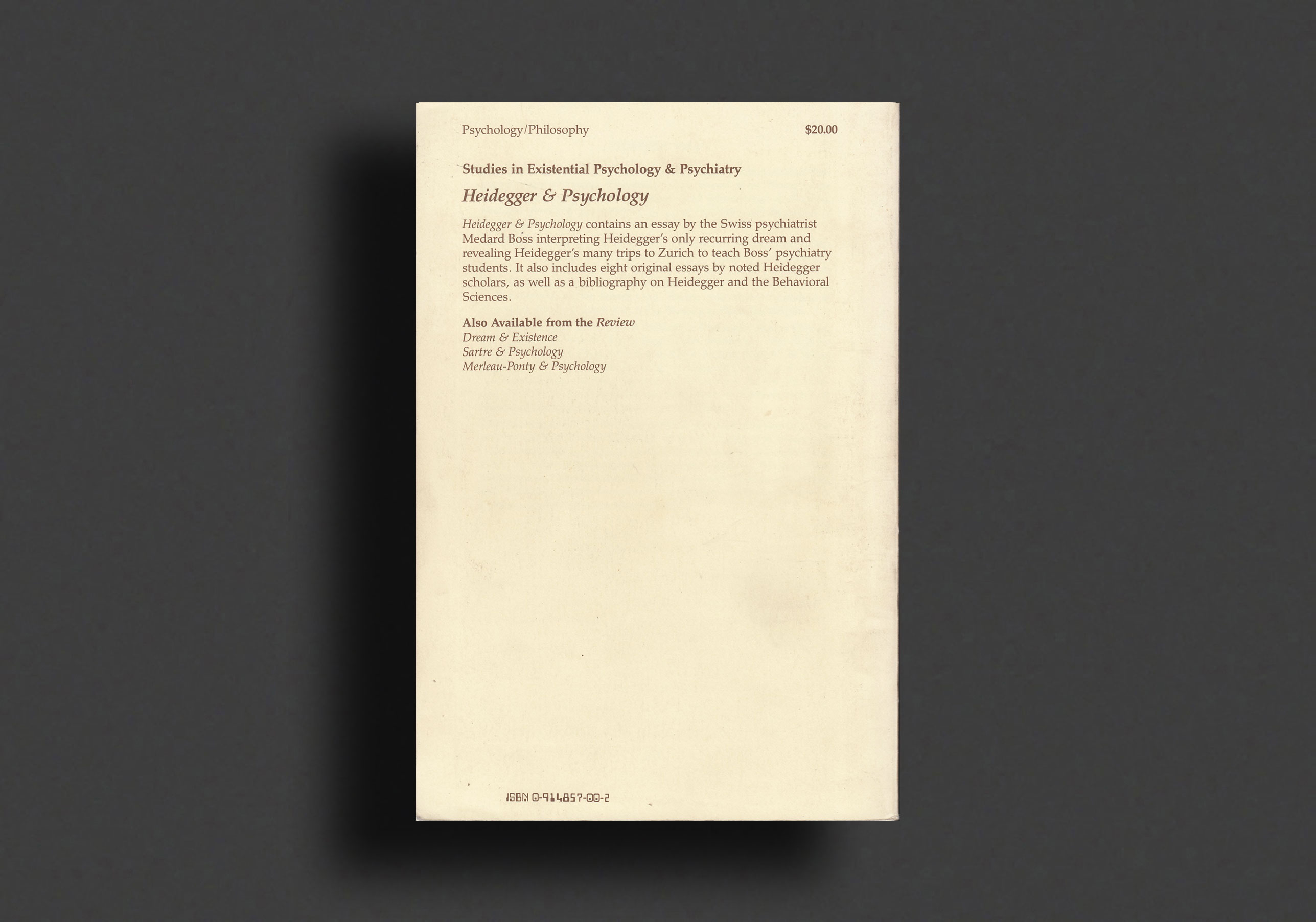
This collection contains original translations of essays, discussions, and papers including six previously unpublished works from the International Colloquium on Heidegger’s Conception of Language, held at The Pennsylvania State University in 1969. This volume endeavors to place Martin Heidegger’s ideas within a wide range of philosophical thought. It contains critical reflections on his conception of speech in Being and Time, linguistic meditations on Heidegger’s use of language, and analysis of his view on the relationship between thought and the language in which it is expressed. In this book, Heidegger scholars will find additional insights into his conception of language and his philosophy as a whole.
VG w/o dust jacket, small chip to bottom cover corner (back).
1993 / 1994, English
Hardcover (w. dust jacket), 584 pages, 25 x 17 cm
1st Edition, Out of print title / used / very good
Published by
Harvard University Press / Cambridge
The Belknap Press / Cambridge
$45.00 - In stock -
Scarce first 1993 hardcover edition. Second 1994 printing.
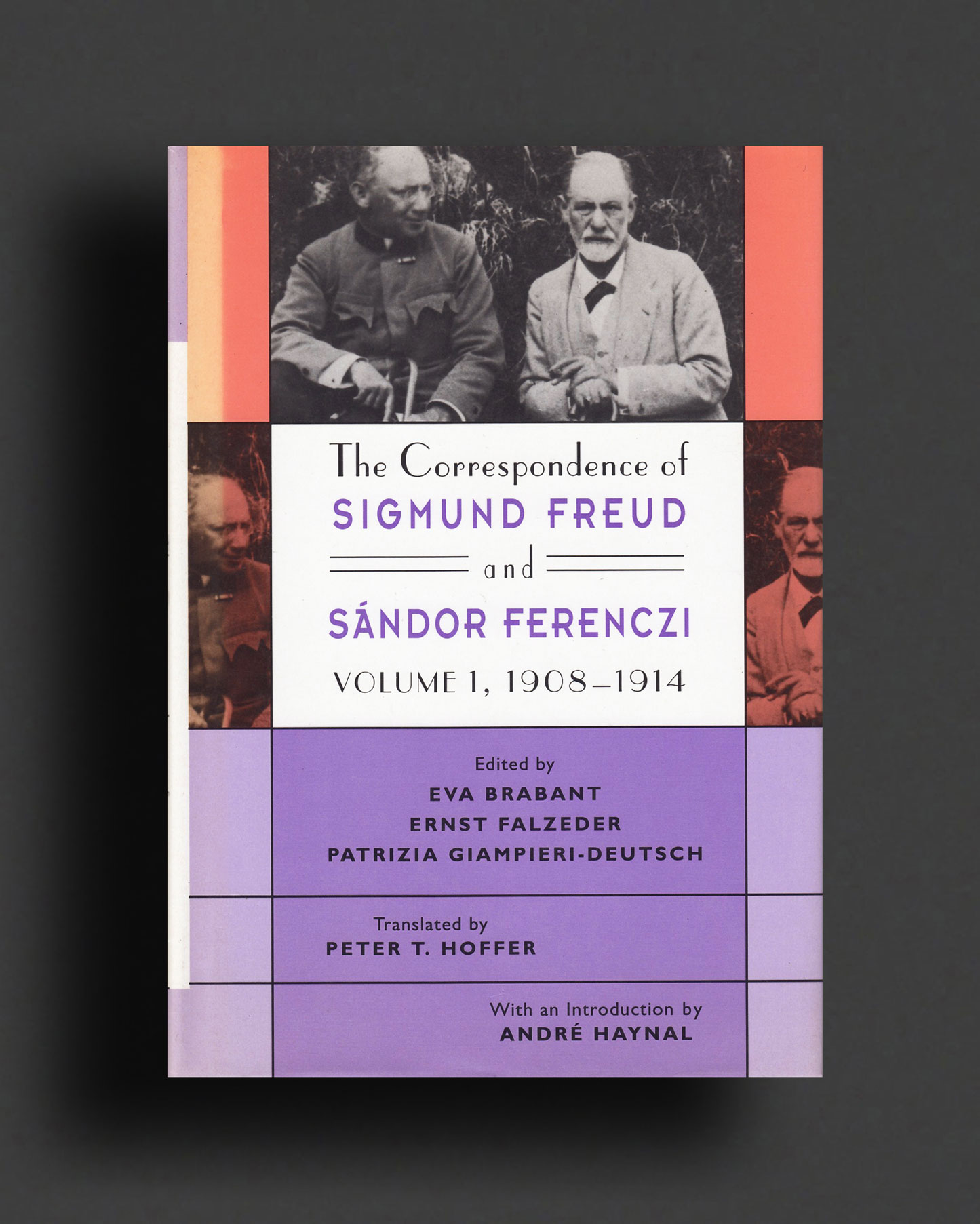
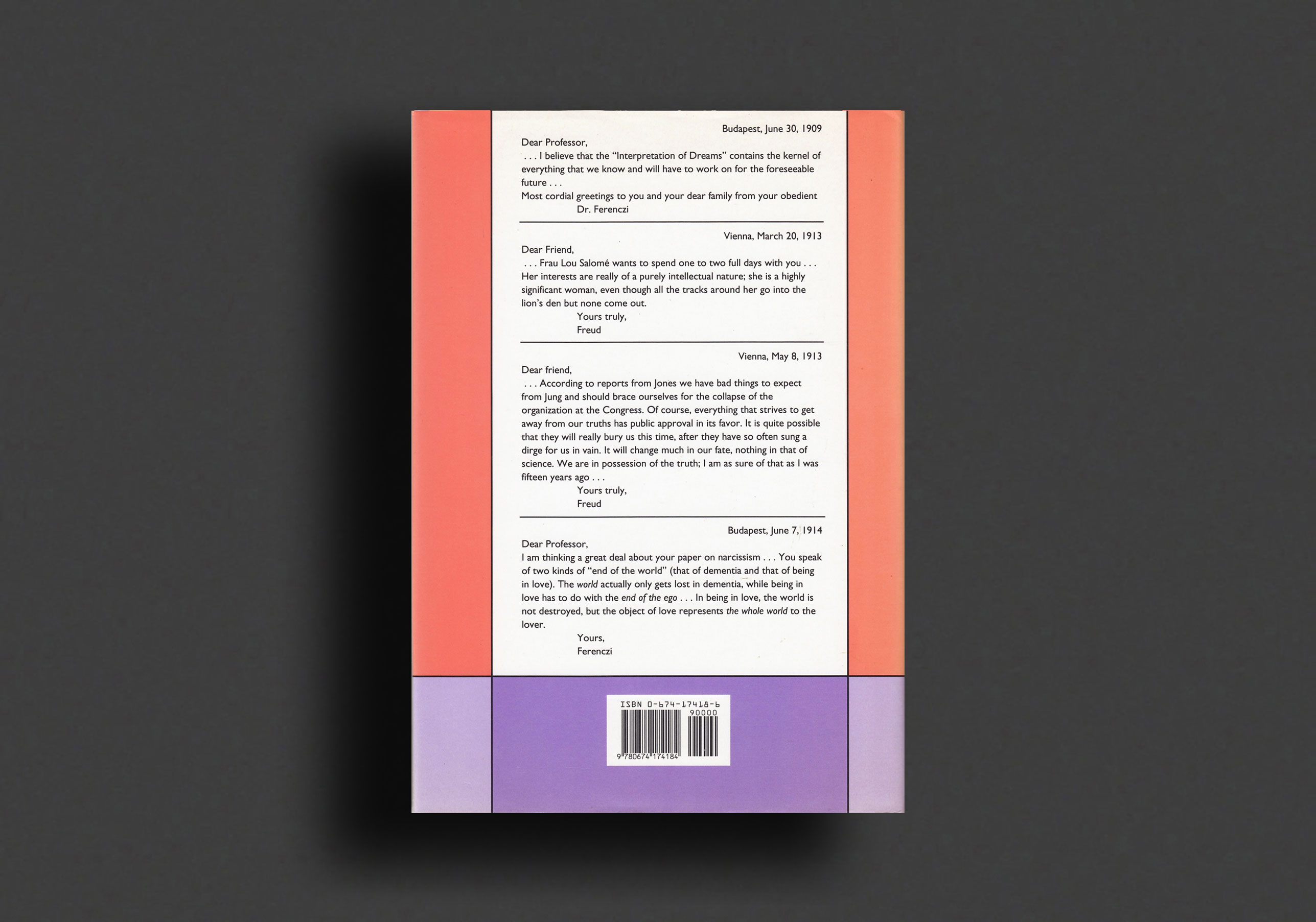
The young psychiatrist from Budapest had studied medicine in Vienna, he had read The Interpretation of Dreams, and now he was about to meet its author. Seventeen years Sigmund Freud's junior, Sándor Ferenczi (1873-1933) sent off a note anticipating the pleasure of the older man's acquaintance--thus beginning a correspondence that would flourish over the next twenty-five years, and that today provides a living record of some of the most important insights and developments of psychoanalysis, worked out through the course of a deep and profoundly complicated friendship.
This volume opens in January of 1908 and closes on the eve of World War I. Letter by letter, a "fellowship of life, thoughts, and interests" as Freud came to describe it, unfolds here as a passionate exchange of ideas and theories. Ferenczi's contribution to psychoanalysis was, Freud said, "pure gold," and many of the younger man's notions and concepts, proposed in these letters, later made their way into Freud's works on homosexuality, paranoia, trauma, transference, and other topics. To the two men's mutual scientific interests others were soon added, and their correspondence expanded in richness and complexity as Ferenczi attempted to work out his personal and professional conflicts under the direction of his devoted and sometimes critical elder colleague.
Here is Ferenczi's love for Elma, his analysand and the daughter of his mistress, his anguish over his matrimonial intentions, his soliciting of Freud's help in sorting out this emotional tangle--a situation that would eventually lead to Ferenczi's own analysis with Freud. Here is Freud's unraveling relationship with Jung, documented through a heated discussion of the events leading up to the final break. Amid these weighty matters of heart and mind, among the psychoanalytic theorizing and playful speculation, we also find the lighter stuff of life, the talk of travel plans and antiquities, gossip about friends and family. Unparalleled in their wealth of personal and scientific detail, these letters give us an intimate picture of psychoanalytic theory being made in the midst of an extraordinary friendship.
NF copy in VG dust jacket with some fading to spine edge.
1990, English
Softcover, 144 pages, 23 x 15 cm
1st Edition, Out of print title / used / very good
Published by
University of Minnesota Press / Minnesota
$20.00 - In stock -
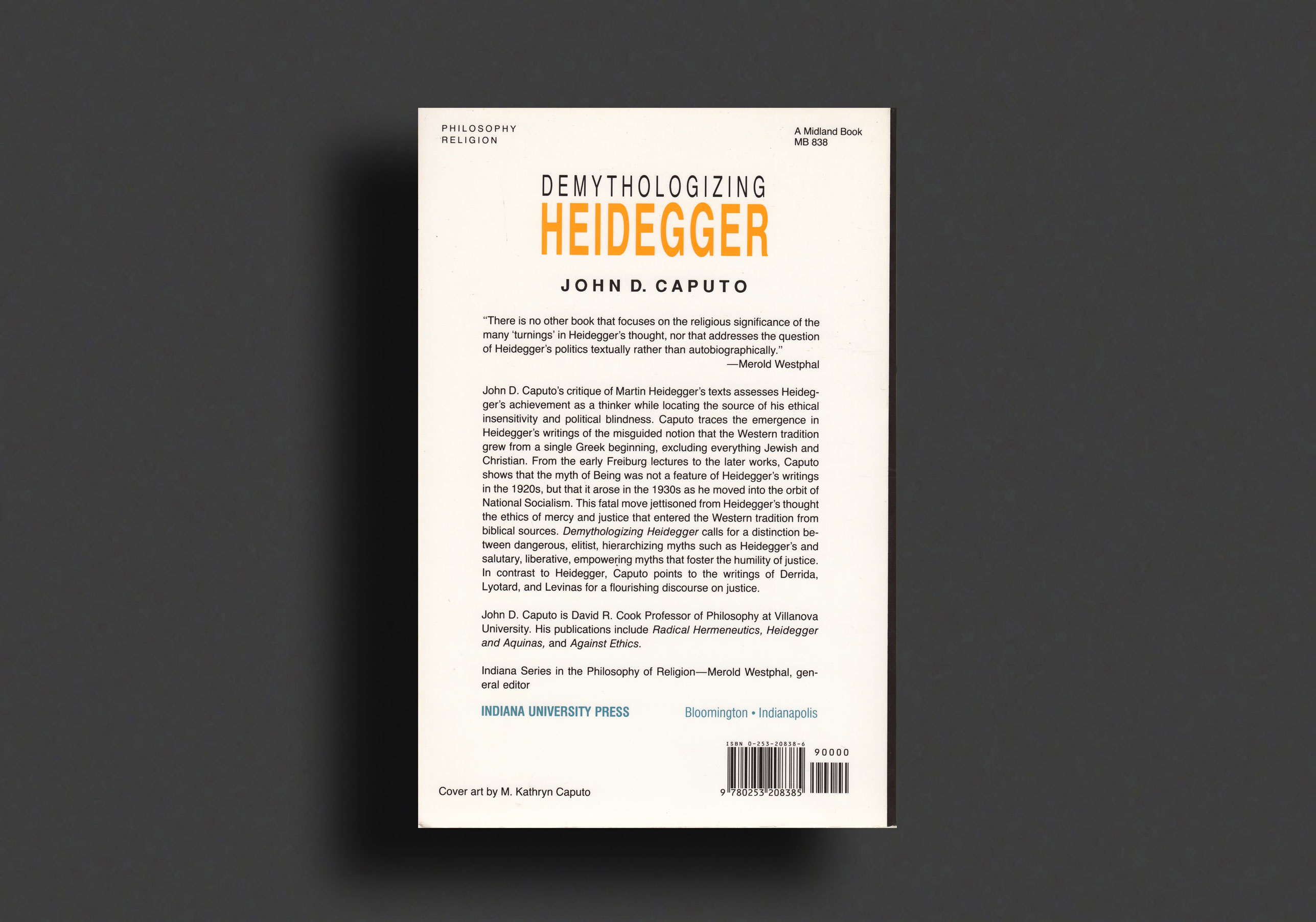
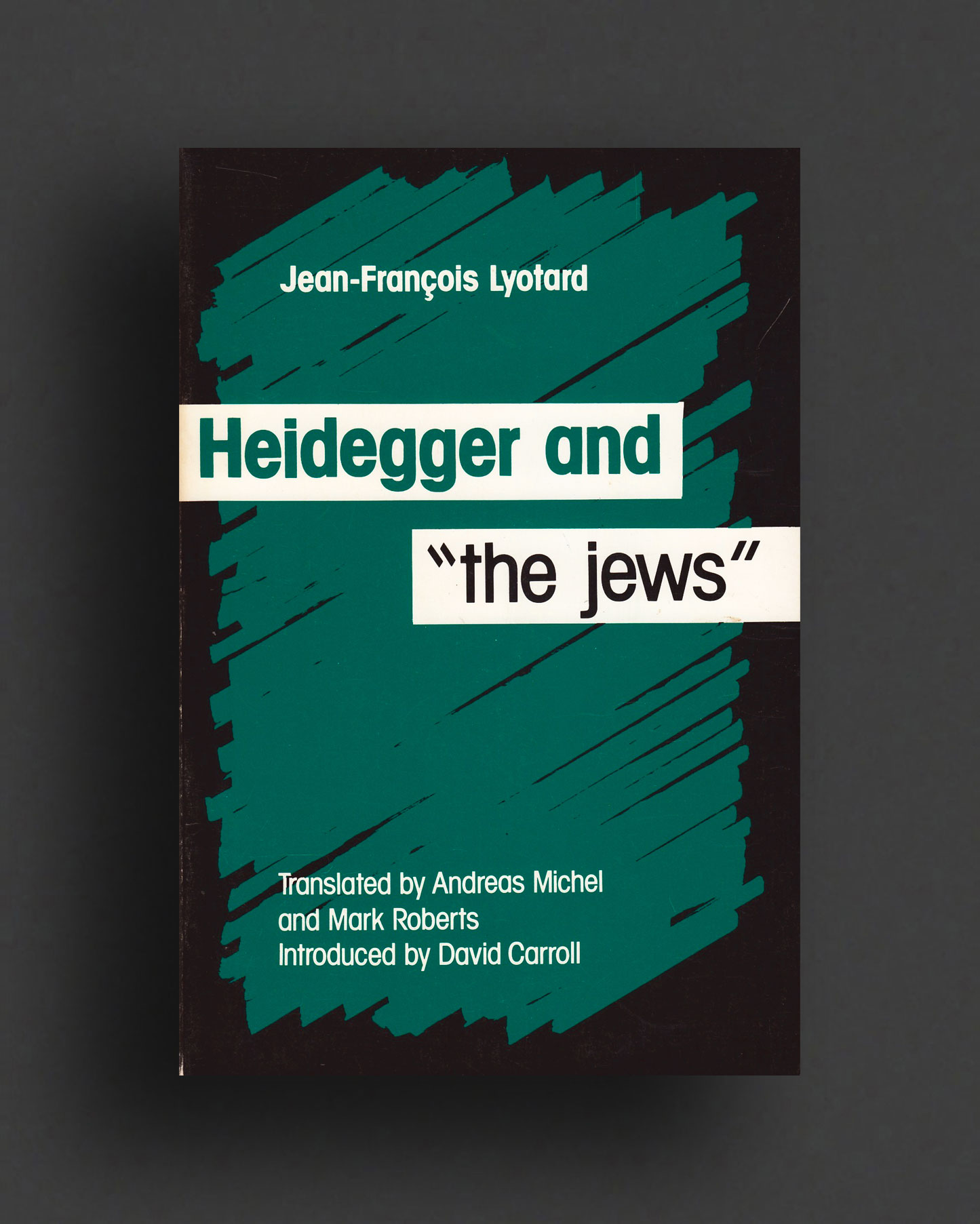
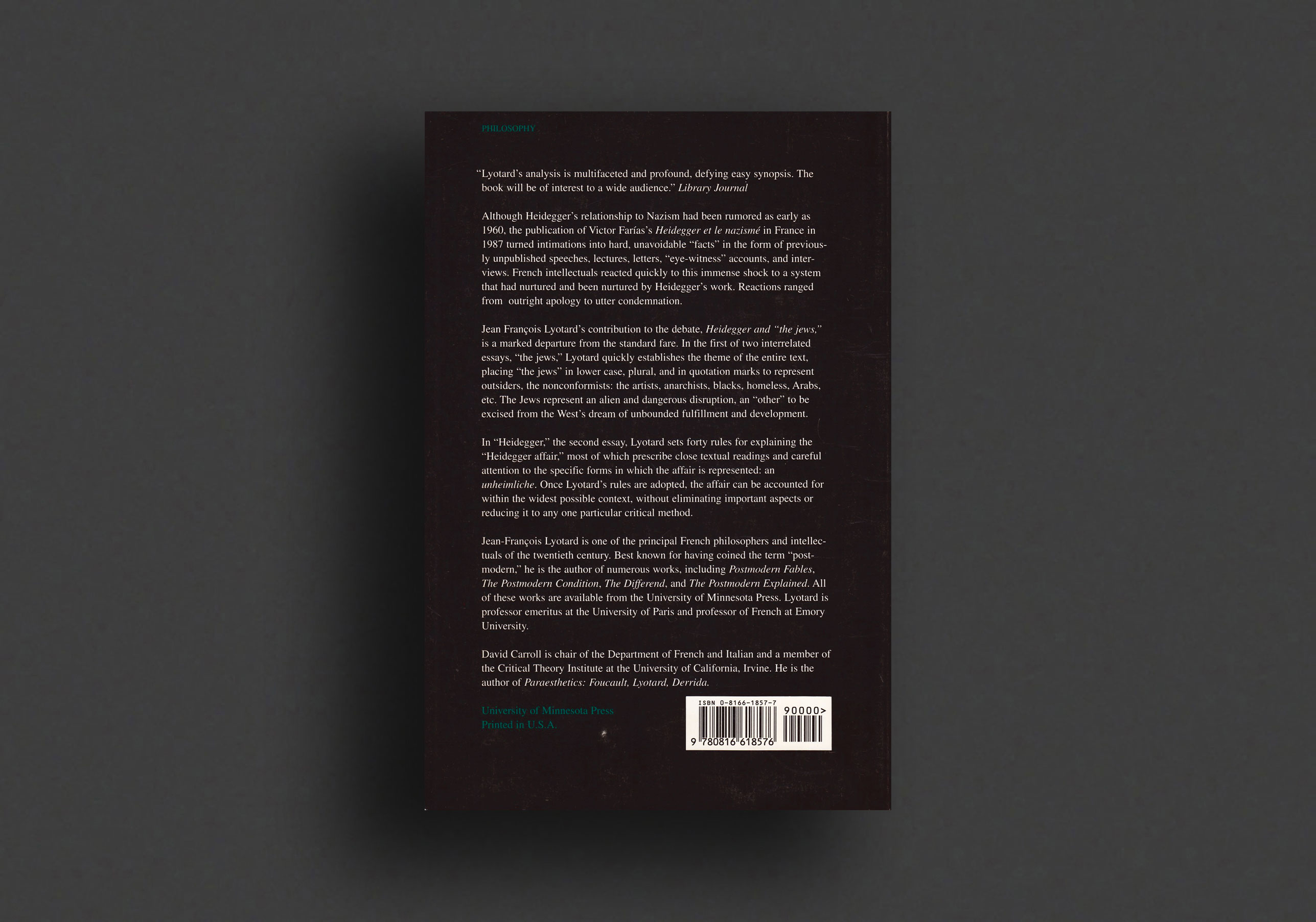
Two interrelated essays which address the debate concerning Heidegger's relationship to Nazism. In the first, Lyotard establishes the theme of the "outsider" by placing "the jews" in lower case - a representation of the threatening alien force. In the second, he discusses the "Heidegger affair".
"Lyotard's analysis is multifaceted and profound, defying easy synopsis. The book will be of interest to a wide audience."—Library Journal
Although Heidegger's relationship to Nazism had been rumored as early as 1960, the publication of Victor Farías's Heidegger et le nazismé in France in 1987 turned intimations into hard, unavoidable "facts" in the form of previously unpublished speeches, lectures, letters, "eye-witness" accounts, and inter-views. French intellectuals reacted quickly to this immense shock to a system that had nurtured and been nurtured by Heidegger's work. Reactions ranged from outright apology to utter condemnation.
Jean François Lyotard's contribution to the debate, Heidegger and "the jews," is a marked departure from the standard fare. In the first of two interrelated essays, "the jews," Lyotard quickly establishes the theme of the entire text, placing "the jews" in lower case, plural, and in quotation marks to represent outsiders, the nonconformists: the artists, anarchists, blacks, homeless, Arabs, etc. The Jews represent an alien and dangerous disruption, an "other" to be excised from the West's dream of unbounded fulfillment and development.
In "Heidegger," the second essay, Lyotard sets forty rules for explaining the "Heidegger affair," most of which prescribe close textual readings and careful attention to the specific forms in which the affair is represented: an unheimliche. Once Lyotard's rules are adopted, the affair can be accounted for within the widest possible context, without eliminating important aspects or reducing it to any one particular critical method.
Jean-François Lyotard is one of the principal French philosophers and intellectuals of the twentieth century. Best known for having coined the term "post-modern," he is the author of numerous works, including Postmodern Fables, The Postmodern Condition, The Differend, and The Postmodern Explained. All of these works are available from the University of Minnesota Press. Lyotard is professor emeritus at the University of Paris and professor of French at Emory University,
Jean-François Lyotard was a French philosopher and literary theorist best known for his work on postmodernism. In his influential book The Postmodern Condition: A Report on Knowledge (1979), Lyotard argued that contemporary societies have become skeptical of “grand narratives”—large, universal stories such as progress, enlightenment, or emancipation that once claimed to explain history and knowledge. Instead, he proposed that knowledge in the postmodern era is fragmented into many smaller, local narratives shaped by different cultures, institutions, and language games. Lyotard’s ideas helped shape debates in philosophy, cultural theory, and the humanities by emphasizing plurality, uncertainty, and the limits of universal truths.
VG copy with some light cover wear.
1987, English
Softcover, 276 pages, 25 x 17.5 cm
1st Edition, Out of print title / used / very good
Published by
Humanities Press International / London
$120.00 - In stock -
Rare first 1987 English-language edition of this sought after study on Heidegger, published by Humanities Press, London.
Basically, the theory of intentionality can be viewed as an attempt to reach an "adequate" theory of the structure "I relate myself to reality". Husserl, Heidegger's teacher, believed that, using the method of phenomenology, such a theory could be made rigorously scientific and foundationalist. In this way, Husserl thought, the theory of intentionality would be capable of solving all genuine philosophical problems and hence of fulfilling the promise of enlightenment philosophy of securing a rational basis for the future happiness of mankind. Heidegger's Being and Time is an attempt to overcome the gap between Husserl's promises and his actual achievements, this gap being due to the limited scope of the basic experiences analyzed by Husserl and to Husserl's conception of phenomenological method.
Later, Heidegger came to realize the radical historical naivety of the conceptions of phenomenology and intentionality he none the less shared with Husserl and to recommend an entirely different kind of thinking. Though they both contain germs of truth which should be preserved, the later Husserl's "transcendental phenomenology" and the later Heidegger's "thinking of being" remain largely unfulfilled promises. Husserl's actual achievements in the theory of intentionality, on the other hand, today attract renewed interest for a number of reasons and are now the legacy of contemporary cognitive science. This interest, the author believes, should be extended to Heidegger's actual results in Being and Time when rationally reconstructed in contemporary philosophical terms as taking some further steps towards a general theory of intentionality.
VG copy with light wear and tanning.
1995, English
Softcover, 608 pages, 23 x 15 cm
1st Edition, Out of print title / used / very good
Published by
University of California Press / Berkley
$40.00 - In stock -
This is the first factual and conceptual history of Martin Heidegger's Being and Time (1927), a key twentieth-century text. Through painstaking investigation of European archives and private correspondence, Theodore Kisiel provides an unbroken account of the philosopher's early development and progress toward his masterwork.
"The most complete and the most enlightening reconstruction of the genesis of Being and Time that we can hope for at this time.... [We] come to see far more clearly not only where this book came from, but also what its genesis has made possible for us."—Jean Grondin, Archives de Philosophie
"[Kisiel] places his book at the service of presentation and surveys the conceptual laboratory in which Heidegger in those years mixed his 'blasting powder. The English reader can thus for the first time get acquainted in depth with the philosophical inside story? The German reader is likewise indebted to Kisiel for many a surprise....
An impressive and important book."—Dieter Thomä, Frankfurter Allgemeine Zeitung
"The Genesis of Heidegger's Being and Time is a magisterial accomplishment that will be the standard in this field for years to come."—John D. Caputo, Villanova University
"Groundbreaking and entirely original, this is an outstanding work"—Thomas Sheehan, Loyola University Chicago
Theodore Kisiel is Professor of Philosophy at Northern Illinois University and translator of Martin Heidegger's History of the Concept of Time.
VG copy of first edition.
1990, English
Softcover, 220 pages, 20 x 14 cm
1st Edition, Out of print title / used / very good
Published by
City Lights Books / San Francisco
$40.00 - In stock -
First 1990 edition.
The literary adventure of D.A.F. (1740-1814) is unique and paradoxical. He was widely read in the nineteenth century, but his books disappeared almost completely from circulation in the century. Meanwhile the exegesis of Sade poured from the presses of the Western world in a flood of words in which the writer, the novelist, and the exceptional poet disappeared.
In France today, J. J. Pauvert, who considers Sade "the greatest French writer," is publishing a new edition of the complete works with a new introduction by Annie Le Brun. Sade: A Sudden Abyss is the translation of this introduction, which shows Sade as the inventor of an entirely new language through which he fathoms human nature, desire, and relationships of power.
In this fresh and authoritative survey of Sade's work as a whole, Le Brun frees it from such critics as Bataille, Blanchot, Klossowski, and Barthes (who see Sade's language as a metaphor for history, society, or writing itself). She asks, Where is Sade himself in these texts? What exactly does Sade tell us? What is obscured when Sade's writing is placed in a "universe of discourse" rather than understood as a manifestation of a life spent in eleven prisons over twenty-seven years? Like a powerful laser beam, her reflections cut through two centuries of intellectual hide-and-seek and let Sade for the first time be seen and read in his own light.
Annie Le Brun is a French poet and literary theorist who participated in the final years of the Surrealist movement. Her books include Lachez tout, a critique of the French neofeminist movement; A distance; and Les chateaux de la subversion, a study of the Gothic tradition.
VG copy.
1995, English
Softcover, 302 pages, 23 x 15 cm
1st Edition, Out of print title / used / very good
Published by
Cornell University Press / New York
$15.00 - Out of stock
Focusing on theories of verbal symbolism, Tzvetan Todorov here presents the first history of semiotics. From an account of the semiotic doctrines embodied in the works of classical rhetoric to an exploration of representative modern concepts of the symbol found in ethnology, psychoanalysis, linguistics, and poetics, Todorov examines the rich tradition of sign theory. In the course of his discussion Todorov treats the works of such writers as Aristotle, Cicero, Quintilian, Augustine, Condillac, Lessing, Diderot, Goethe, Novalis, the Schlegel brothers, Lévy-Bruhl, Freud, Saussure, and Jakobson.
"Theories of the Symbol initiates a major methodological (return: the move away from structuralist-semiotic tendencies to other forms of literary philosophy and history. It is this change of critical terrain which no doubt will direct us toward redefining and determining the future modes of literary theory. On this point, Todorov is, as usual, ahead of the game."—Modern Language Notes
"Todorov has always had a talent for providing useful books, and here, as always, he is extremely clear... This is one of his better books, presenting a variety of information with clarity and intelli-gence."—Times Literary Supplement (London)
"This very good translation is the most important study of symbolism to appear in English since Angus Fletcher's Allegory: The Theory of a Symbolic Mode. A learned and far-reaching book."—Choice
TZVETAN TODOROV is with the Centre National de la Recherche Scientifique, Paris.
VG first ed.
2006 / 2008, English
Softcover, 386 pages, 20 x 13 cm
1st Edition, Out of print title / used / fine
Published by
Continuum / London
The Athlone Press / UK
$40.00 - In stock -
First Athlone/Continuum UK 2006 edition, second 2008 print.
"This is a central text for coming to terms with Heidegger's thinking ...
The translation itself mirrors and maintains the haunting character of the German text. The Translators' Foreword is a masterpiece in setting the stage and opening up the possibilities for the English to stay true to the Heideggerian project of thinking the truth of being!—KENNETH MALY, UNIVERSITY OF WISCONSIN, LA CROSSE
This brand new translation of Martin Heidegger's Mindfulness (Besinnung) makes available in English for the first time Heidegger's second major being-historical treatise.
Composed in 1938-9, right after the completion of Contributions to Philosophy, this work has a significant thematic proximity to that earlier work. Here Heidegger returns to and elaborates in detail many of the individual dimensions of the historically self-showing and transforming allotments of be-ing. In this work Heidegger explores further that decisive hermeneutic-phenomenological perspective that experiences, thinks and projects-open the truth of be-ing as enowning. This perspective anticipates and illuminates much of Heidegger's thinking in the 1950s and 60s.
In addition to the main text, this volume also includes two further important texts, A Retrospective Look at the Pathway (1937-8) and 'The Wish and the Will (On Preserving What is Attempted)' (1937-8). This is a major new translation of a key text from one of the most important thinkers of the twentieth century.
Martin Heidegger (1889-1976) is now regarded as one of the twentieth century's most important philosophers, whose work, particularly Being and Time, has influenced not only philosophy but also theology, political science and aesthetics. The Athlone Contemporary European Thinkers series includes several published and forthcoming works by Heidegger.
VG—NF edition.
1971, English
Softcover, 362 pages, 20.5 x 13 cm
1st Edition, Out of print title / used / good
Published by
Princeton University Press / New York
$25.00 - In stock -
1971 Princeton edition.
A landmark, now classic, study of the rich cinematic history of the Weimar Republic, From Caligari to Hitler was first published by Princeton University Press in 1947. Siegfried Kracauer—a prominent German film critic and member of Walter Benjamin's and Theodor Adorno's intellectual circle—broke new ground in exploring the connections between film aesthetics, the prevailing psychological state of Germans in the Weimar era, and the evolving social and political reality of the time. Kracauer's pioneering book, which examines German history from 1921 to 1933 in light of such movies as The Cabinet of Dr. Caligari, M, Metropolis, and The Blue Angel, has never gone out of print.
"The thesis of this unusually interesting book is that the German films of the twenties were filled with premonitions of the German totalitarianism of the thirties: that Hitler arose as the resolution of psychological dilemmas which had been reflected in the German movies and which accounted for both their greatness and their decline. ... Dr. Kracauer illustrates his theme by a readable account of the evolution of the German film industry and of the creation of the masterpieces.... The book's premise, of course, is that the films of a nation irresistibly disclose its dominant psychological dispositions. ... This is an extraordinarily fruitful and stimulating approach."—Arthur M. Schlesinger, Jr., The Nation
"This is an important book. It is important to the film student and researcher, important to the student of foreign affairs, but over and beyond that, it is important to anyone interested in the relationship of a society to its art."—Theatre Arts
"Kracauer's work is not only the best history of the German film written so far but beyond it a critical study of the period which nobody can afford to ignore."—Ulrich Gregor, Neue Deutsche Hefte
"This remarkable book, though described by its author as a psychological history of the German film, is in fact much more than that. Written by a man who is at once an authority on the social and economic structures of the German middle classes and on the German cinema, it analyzes those tendencies, which, from 1920 to 1933, ended in the rule of Hitler ... this is the first time that a sober and protracted study of human behavior has been carried out by the light of the screen."—New Republic
SIEGFRIED KRACAUER was a consultant to the Bollingen and Old Dominion Foundations and an Associate Member of the Columbia University Seminars until his death on November 26, 1966.
Good copy with Average covers due to rubbing wear/spine creasing. VG interior, with previous owner's name to first blank (artist/teacher Bernhard Sachs), light tanning.
1968 / 1976, English
Softcover, 272 pages, 20.5 x 13.8 cm
Out of print title / used / very good
Published by
Harper Perennial / New York
$25.00 - In stock -
"For an acquaintance with the thought of Heidegger, What Is Called Thinking? is as important as Being and Time. It is the only systematic presentation of the thinker's late philosophy, and... it is perhaps the most exciting of his books. The translation is admirable. Without ever neglecting the severe terminological demands of the German text, Glenn Gray and Fred Wieck have transposed it into clear, un-tortured English prose."—HANNAH ARENDT
"Heidegger has tried to reinterpret the purport of his first major work, Being and Time, as meaning an opening of the horizon of Being through man's horizon of thinking. What is Called Thinking? no doubt provides his most far-reaching and persistent attempt to define the direction of such a reinterpretation."—CYRIL WELCH, Journal of the American Academy of Religions
"As near a definitive statement of Heidegger's new period as can be found."—JEAN M. PERREAULT
VG copy, light wear/tanning.
2002, English
Softcover, 216 pages, 23.5 x 15.5 cm
1st Edition, Out of print title / used / fine
Published by
The Athlone Press / UK
Continuum / London
$35.00 - In stock -
First Athlone/Continuum UK 2002 edition.
The Essence of Human Freedom is a groundbreaking work that provides a compelling philosophical account of humanity's potential for liberty. It is fundamental for understanding Heidegger's view of Greek philosophy and its relationship to modern philosophy. In no other work by Heidegger do we find as detailed a consideration of Kant's practical philosophy or of Aristotle's Metaphysics as is given here. Translated by Ted Sadler. Dr Ted Sadler, studied at the University of Sydney and has taught philosophy widely at Australian universities.
"It is only a small exaggeration to say that each of Martin Heidegger's works seems to be the key to his thought every book is bracing and magnetic The effect is similar to what we see in the best political philosophy. Being stirred to think is as important as the question being thought about. Heidegger not only encourages thought, he also instructs us in how to begin thinking Heidegger at his best calls forth what once was called courage of the intellect. Heidegger sees his characteristic path in The Essence of Human Freedom and The Essence of Truth as grounded in and circling back to history...The main things to be learned from these books concern what it means to confront essential questions at the level of Heidegger, Kant, Plato, and Aristotle. For the student, to be serious involves just such a confrontation." Claremont Review of Books, Summer 2005--Sanford Lakoff
The Essence of Human Freedom is a fundamental text for understanding Heidegger's view of Greek philosophy and its relationship to modern philosophy. After a preliminary discussion of the problem of freedom and its relationship to philosophy, Heidegger devotes Part One primarily to the meaning of 'being' in Greek metaphysics, thus providing the framework for his interpretation of Kant's treatment of freedom and causality in Part Two.
In no other work by Heidegger do we find as detailed a consideration of Kant's practical philosophy as given in the present text. Further, in no other work is Heidegger's interpretation of Aristotle's Metaphysics presented with comparable thoroughness. These previously untranslated lectures were delivered by Heidegger at the University of Freiburg in the summer of 1930.
Martin Heidegger (1889-1976) is now regarded as one of the twentieth century's most important philosophers, whose work, particularly Being and Time, has influenced not only philosophy but also theology, political science and aesthetics. The Athlone Contemporary European Thinkers series includes several published and forthcoming works by Heidegger.
Ted Sadler, the translator of the work, studied at the University of Sydney and has taught philosophy widely at Australian universities. He is the author of Nietzsche: Truth and Redemption and Heidegger and Aristotle, and the translator of Towards a Definition of Philosophy and The Essence of Truth, in this series.
VG—NF edition.
1990 / 1997, English
Softcover, 234 pages, 23.5 x 15.5 cm
1st Edition, Out of print title / used / very good
Published by
Indiana University Press / Indiana
$30.00 - In stock -
‘…one of Heidegger’s most important and extraordinary works…indispensable for anyone interested in Heidegger’s thought as well as in current trends in hermeneutics, ethics, and political philosophy’ - Interpretation . ‘ Kant and the Problem of Metaphysics is among the most important readings in this century of Kant’s Critique of Pure Reason . This authoritative English translation will play an important role in determining Heidegger’s reputation in the coming years’ - Choice . ‘Heidegger’s interpretation of Kant remains a challenging way to address the issues that both Kant and Heidegger saw as crucial…In reading [Kant and the Problem of Metaphysics] we can struggle with some basic issues of human existence in the company of two great minds’ - International Philosophical Quarterly .Since its original publication in 1929, Martin Heidegger’s provocative book on Kant’s Critique of Pure Reason has attracted much attention both as an important contribution to twentieth-century Kant scholarship and as a pivotal work in Heidegger’s own development after Being and Time. The work is significant not only for its illuminating assessment of Kant’s thought but also for its elaboration of themes first broached in Being and Time, especially the problem of how Heidegger proposed to enact his destruction of the metaphysical tradition and the role that his reading of Kant would play therein.
VG—NF bottom spine bump, light wear.
1996, English
Softcover, 148 pages, 23.5 x 15.5 cm
1st Edition, Out of print title / used / good
Published by
Indiana University Press / Indiana
$25.00 - In stock -
The Principle of Reason, the text of an important and influential lecture course that Martin Heidegger gave in 1955-56, takes as its focal point Leibniz's principle: nothing is without reason. Heidegger shows here that the principle of reason is in fact a principle of being. Much of his discussion is aimed at bringing his readers to the "leap of thinking," which enables them to grasp the principle of reason as a principle of being. This text presents Heidegger's most extensive reflection on the notion of history and its essence, the Geschick of being, which is considered on of the most important developments in Heidegger's later thought. One of Heidegger's most artfully composed texts, it also contains important discussions of language, translation, reason, objectivity, and technology as well as remarkable readings of Leibniz, Kant, Aristotle, and Goethe, among others.
First 1996 Indiana edition with bump/crush to bottom spine front corner, otherwise Near Fine.
1995, English
Softcover, 234 pages, 23 x 15 cm
1st Edition, Out of print title / used / very good
Published by
State University of New York Press / New York
$35.00 - In stock -
Translated by Michael Gendre
Janicaud clarifies the project of "overcoming" metaphysics, a project that Heidegger himself recognized as open to innumerable misunderstandings, and Mattei inquires into the major Heideggerian texts produced between 1935 and 1969 to detect the cosmic figure of the Geviert, the initial Fourfold where "earth and sky, the divine ones and the mortals" gather.
"Philosophy has come to an end" claimed Heidegger in the final posthumously published interview he granted to Der Spiegel. The goal of Janicaud's chapters ("Overcoming Metaphysics?," "Heideggeriana," "Metamorphosis of the Undecidable," and the dialogue "Heidegger in New York") first of all is to clarify the project of "overcoming" metaphysics, a project that Heidegger himself recognized as open to innumerable misunderstandings. Is it really possible to surmount metaphysics, not by transgressing it, but by means of a patient elucidation of its key concepts? In the effort to underscore the originality of his own enterprise, doesn't Heidegger tend to project too harsh a dichotomy between the forgetfulness of Being and its authentic recollection? By raising these questions, Janicaud suggests that Heidegger himself does not elude the objections that he directs toward the great metaphysical thinkers.
The final recourse to dialogue in the midst of twentieth-century New York—a landscape intentionally "different" from one expectedly Heideggerian—intends to hint at another possibility than the indefinite deconstruction of metaphysical texts. It suggests new ways for thoughtful meditation and a new cast for action.
At the center of the book, Mattei evokes the "Heideggerian Chiasmus or the Setting-apart of Philosophy." Through an inquiry into the major Heideggerian texts produced between 1935 and 1969 and inspired by Holderlin's poetry, Mattei gradually detects the cosmic figure of the Geviert, the initial Fourfold where "earth and sky, the divine ones and the mortals" gather. Such a community, whose meaning Heidegger is the only one to decipher in our times, silently conforms to an archaic philosophy. The cosmic game of the Geviert also evokes, for Heidegger, the path of the Tao in the Chinese tradition. In this epoch characterized by the destruction of ontology, the two paths in which East and West meet may grant us moderns the hope one day of "dwelling" in the world.
Dominique Janicaud is Professor of Philosophy and directs the Doctoral Studies Program at the Universite de Nice. He is also the Director for the Centre de Recherche d'Histoire des Idees. Jean-Francois Mattei is Professor of Philosophy at the Universite de Nice and the Institut d'Etudes Politiques. He was the General Editor and Director of Volume III of the Encyclopedie Philosophique Universelle (1992) and is currently the Advisor with Ambassadorial Representation to the Minister of Education of France. Professors Janicaud and Mattei each have published a number of other books.
VG copy of 1995 print, light wear, single mark to block edge.
1991, English
Softcover, 234 pages, 23 x 15 cm
1st Edition, Out of print title / used / very good
Published by
State University of New York Press / New York
$45.00 - In stock -
"It is by all means a dubious thing to depend and rest on what an author himself has brought to the forefront. The important thing is rather to give attention to those things he left shrouded in silence."
Such was the methodological advice, given in 1924 by Heidegger himself, that is rigorously followed in this book, Heidegger and the Project of Fundamental Ontology. The project involves the vast complex of problems that emerged around Being and Time (1927) and then continued from the time of the Marburg lecture courses (1923-1928) up to the Freiburg lectures (1928-1935), today available in the Gesamtausgabe.
Heidegger's silence concerning some of his foundational sources is a fact fully recognized by those who have carefully read him. This book systematically explores and critically assesses the silences concerning Husserl, the Aristotle of Book VI of the Nicomachean Ethics, the Hegel of Phenomenology, Nietzsche, and even Descartes.
What emerges is a systematic and original reinterpretation of 'fundamental ontology' focused on the self-understanding of the human Dasein as the key for understanding the various meanings of Being and the entire deconstructed history of ontology. The project culminated in the pretensions to absoluteness rampant in modern metaphysics, with its peak and paroxysm to be found in The Introduction to Metaphysics (1935).
In regard to the 'Heidegger affair', this book, which was begun well before the present turmoil, shows both the ambiguity and coherence of Heidegger's involvement with the Nazis, and, for the first time, exposes the work of the young Heidegger to a rigorous and wholesome internal criticism. By delineating the origins, the shifts, and the final outcome from within his own field, phenomenology, it allows us to reflect on this difficult question at its depth and origin.
Very Good copy.
1992 / 1999, English
Softcover, 330 pages, 23.5 x 15.5 cm
1st Edition, Out of print title / used / fine
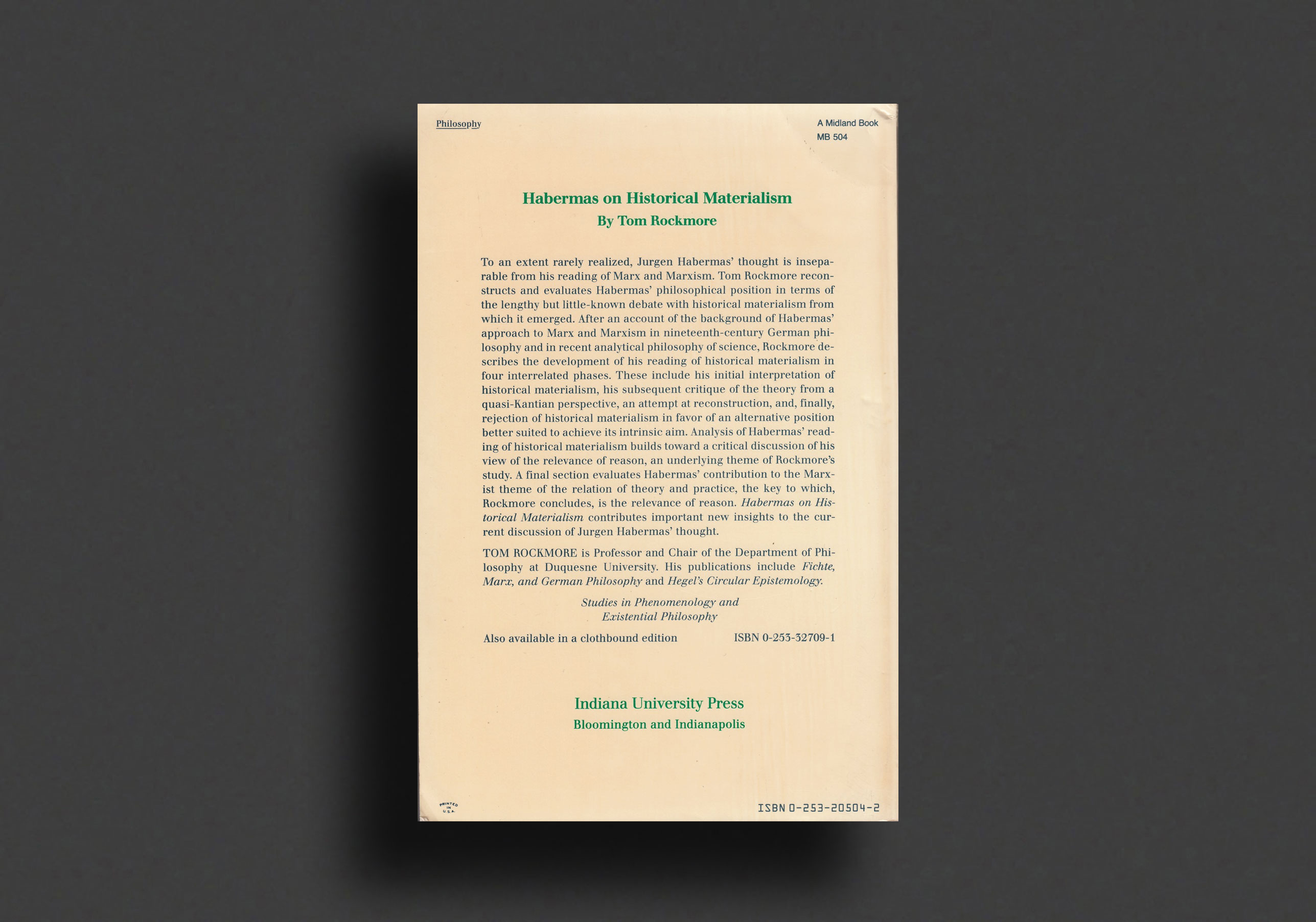
Published by
Indiana University Press / Indiana
$35.00 - In stock -
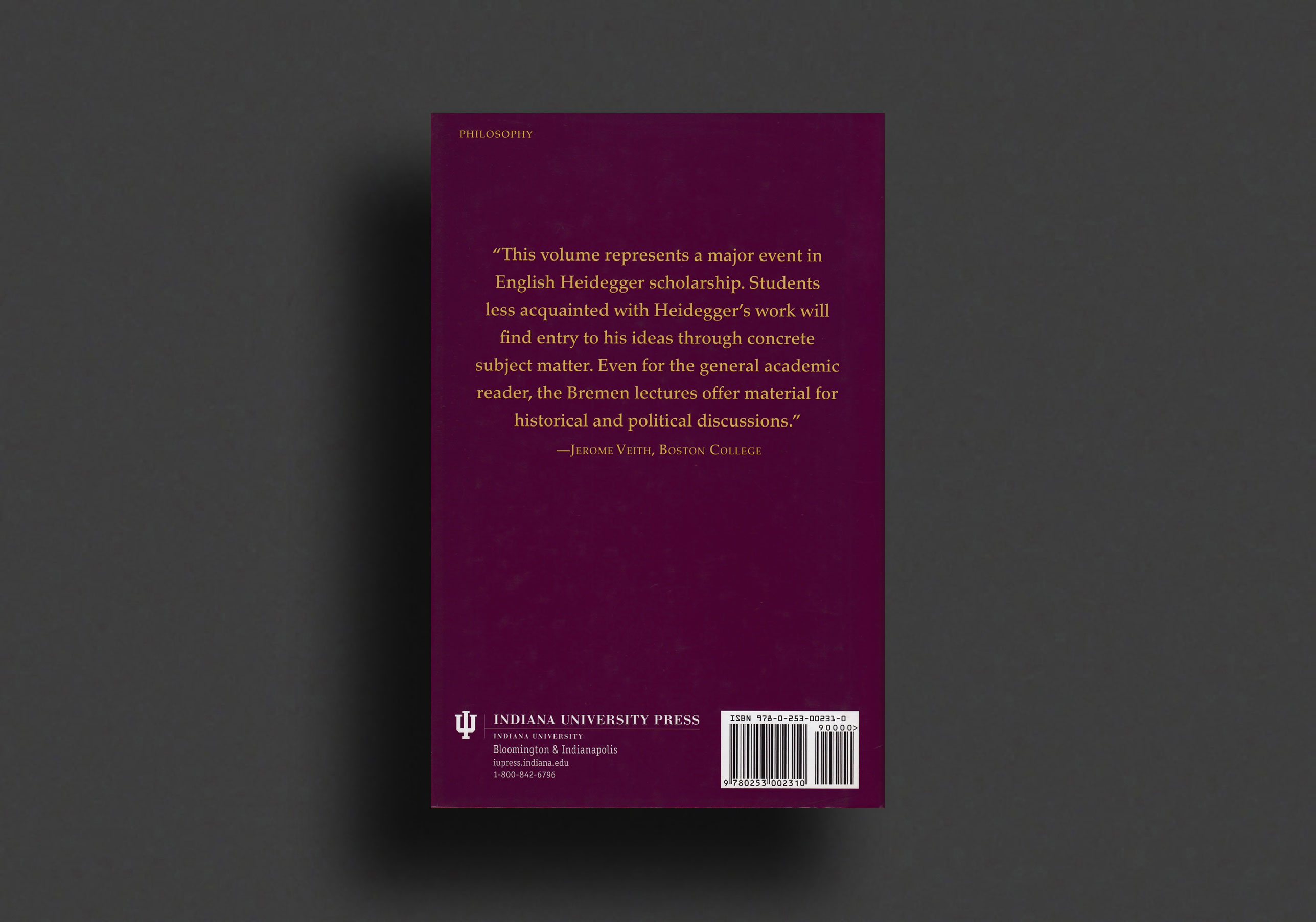
Parmenides, a lecture course delivered by Martin Heidegger at the University of Freiburg in 1942-1943, presents a highly original interpretation of ancient Greek philosophy. A major contribution to Heidegger's provocative dialogue with the pre-Socratics, the book attacks some of the most firmly established conceptions of Greek thinking and of the Greek world. The central theme is the question of truth and the primordial understanding of truth to be found in Parmenides' "didactic poem." Heidegger highlights the contrast between Greek and Roman thought and the reflection of that contrast in language. He analyzes the decline in the primordial understanding of truth--and, just as importantly, of untruth--that began in later Greek philosophy and that continues, by virtue of the Latinization of the West, down to the present day. Beyond an interpretation of Greek philosophy, Parmenides (volume 54 of Heidegger's Collected Works) offers a strident critique of the contemporary world, delivered during a time that Heidegger described as "out of joint."
NF copy.
1988 / 1999, English
Softcover, 330 pages, 23.5 x 15.5 cm
1st Edition, Out of print title / used / fine
Published by
Indiana University Press / Indiana
$35.00 - In stock -
The text of Martin Heidegger's 1930-1931 lecture course on Hegel's Phenomenology of Spirit contains some of Heidegger's most crucial statements about temporality, ontological difference and dialectic, and being and time in Hegel. Within the context of Heidegger's project of reinterpreting Western thought through its central figures, Heidegger takes up a fundamental concern of Being and Time, "a dismantling of the history of ontology with the problematic of temporality as a clue." He shows that temporality is centrally involved in the movement of thinking called phenomenology of spirit.
NF copy.
1985 / 1999, English
Softcover, 330 pages, 23.5 x 15.5 cm
1st Edition, Out of print title / used / fine
Published by
Indiana University Press / Indiana
$50.00 - In stock -
Heidegger's lecture course at the University of Marburg in the summer of 1925, an early version of Being and Time (1927), offers a unique glimpse into the motivations that prompted the writing of this great philosopher's master work and the presuppositions that gave shape to it. The book embarks upon a provisional description of what Heidegger calls "Dasein," the field in which both being and time become manifest. Heidegger analyzes Dasein in its everydayness in a deepening sequence of terms: being-in-the-world, worldhood, and care as the being of Dasein. The course ends by sketching the themes of death and conscience and their relevance to an ontology that makes the phenomenon of time central. Theodore Kisiel's outstanding translation premits English-speaking readers to appreciate the central importance of this text in the development of Heidegger's thought.
NF copy.
1966 / 1969, English
Softcover (2 volumes), 534 + 688 pages, 21.5 x 13.8 cm
Out of print title / used / good
Published by
Dover / New York
$60.00 - Out of stock
Arthur Schopenhauer's Die Welt als Wille und Vorstellung is one of the most important philosophical works of the 19th century, the basic statement of one important stream of post-Kantian thought.
It is without question Schopenhauer's greatest work, and, conceived and published before the philosopher was 30 and expanded 25 years later, it is the summation of a lifetime of thought.
For 70 years, the only unabridged English translation of this work was the Haldane-Kemp collaboration. In 1958, a new translation by E. F. J. Payne appeared which decisively supplanted the older one.
Payne's translation is superior because it corrects nearly 1,000 errors and omissions in the Haldane-Kemp translation, and it is based on the definitive 1937 German edition of Schopenhauer's work prepared by Dr. Arthur Hübscher. Payne's edition is the first to translate into English the text's many quotations in half a dozen languages, and Mr. Payne has provided a comprehensive index of 2,500 items.
It is thus the most useful edition for the student or teacher.
Unabridged, slightly corrected republication of Ist (1958) English edition, translated by E. F. J. Payne. Translator's introduction. Author's prefaces to 1st, 2nd, and 3rd editions.
G—VG copies both, with light general wear and age.
1990, English
Hardcover (w. dust jacket), 232 pages, 24 x 16.5 cm
1st Edition, Out of print title / used / good
Published by
Harvard University Press / Cambridge
$65.00 - In stock -
First 1990 hardcover edition.
"In a world where literary criticism is subject to the grossest forms of overproduction and where critical books that matter, and have something of general importance to say to our culture, are extremely rare, Bersani's will stand out as one of the half dozen or so by which its decade will be remembered."—MALCOLM BOWIE, University of London
In this frankly polemical book, Leo Bersani does battle with a pervasive view in modern culture: the idea that art can save us from the catastrophes of history and sexuality. Bersani questions this assumption. The art that thinks it can redeem life-make it whole, correct its errors, sublimate its passions - trivializes both life and, paradoxically, art. It is deceptive and dangerous.
Bersani ranges widely through modern literature (and its theorists), with fascinating comparisons:
Melanie Klein and Marcel Proust; the enigmatic and more unresolved works of Freud; Walter Benjamin, Baudelaire, and Nietzsche; André Malraux and Georges Bataille; Flaubert, Melville, Joyce, and Thomas Pynchon. If he has much to say against the intellectual gymnastics of Ulysses and much to say in favor of the metaphysical extravagances of Moby Dick, he writes about both major works with the same kind of brio: Bersani's criticism is never reduc-tionist, even with its clearly stated preference for the kind of literature that does not pretend to be superior to life, and does not mind being troubled.
Bersani is not telling us to put down Freud or Eliot or Proust or Joyce. But he is urging us to make new evaluations and to be aware of the enervating concealed morality of high modern culture. This is literary criticism of the first order - a defense of "the absolute singularity of human experience" - and deserves the widest readership among those who are devoted to literature but are suspicious of the redemptive role that has been assigned to it.
"With an interpretive mastery unexcelled in contemporary criticism, Leo Bersani's brilliant new book loosens the grip of a redemptive aesthetic which literature often accepts as its own, and puts us in touch with the more vital and mysterious powers of writing. This is a major innovative work by one of the most astute critics of our time."—RICHARD POIRIER, Editor, Raritan Quarterly
"There is wit, imagination, and a subtle and complex sensibility at work in this new study. I like the personal style, the many happy formula-tions, the elegant struggles with difficult concepts, and the great self-awareness that is the awareness of his own critical thrust."—VICTOR BROMBERT, Princeton University
"The Culture of Redemption is Leo Bersani's best book. With a Baudelairian mix of analytical sharpness and ethical commitment, Bersani expresses a pungent impatience with the modern consensus about art's edifying value and the collective bad faith on which this ceremonious self-congratulation relies."—DENIS HOLLIER, Yale University
VG copy in Average—Good dust jacket with closed tears and wear to edges.
1964, English
Softcover, 128 pages, 18 x 11 cm
1st Edition, Out of print title / used / very good
Published by
Pelican / London
$15.00 - Out of stock
1964 Penguin (Pelican) edition of An Introduction to Jung's Psychology by Frieda Fordham, with foreword by Jung.
This classic introduction to the psychology of Carl Gustav Jung is important because it is the only English original text he sanctioned in his lifetime. In his personal foreword, he wrote: 'Mrs Frieda Fordham has undertaken the by no means easy task of producing a readable resumé of all my various attempts at a better and more comprehensive understanding of the human psyche. She has delivered a fair and simple account of the main aspects of my psychological work. I am indebted to her for this admirable piece of work.'
Originally issued in 1953, this Introduction immediately became the standard first step for those eager to understand the varied work and thought of this remarkable man. Mrs Fordham explains her reason for attempting the work. She wrote: 'Most people have heard of the late C. G. Jung, often linking him vaguely with Sigmund Freud; and although the terms 'complex', 'introvert', and 'extravert' are often used in everyday speech, few realise they were coined by him. Jung’s influence has been far-reaching, touching many of the human sciences, and his ideas have proved of value in such widely differing fields as biology and theology. Many of his writings are technical, and even those of a general nature often appear somewhat obscure, but they contain a core of significance for everyone. This book aims at revealing this core to the reading public in language which is easily comprehensive and yet does not do violence to the subtlety and creative genius of one of the greatest modern psychologists.'
Good copy with tight binding, some wear to spine edges, tanning to book block.
1993, English
Softcover, 172 pages, 20.7 x 13.7 cm
Out of print title / used / good
Published by
Prentice Hall / New Jersey
$18.00 - In stock -
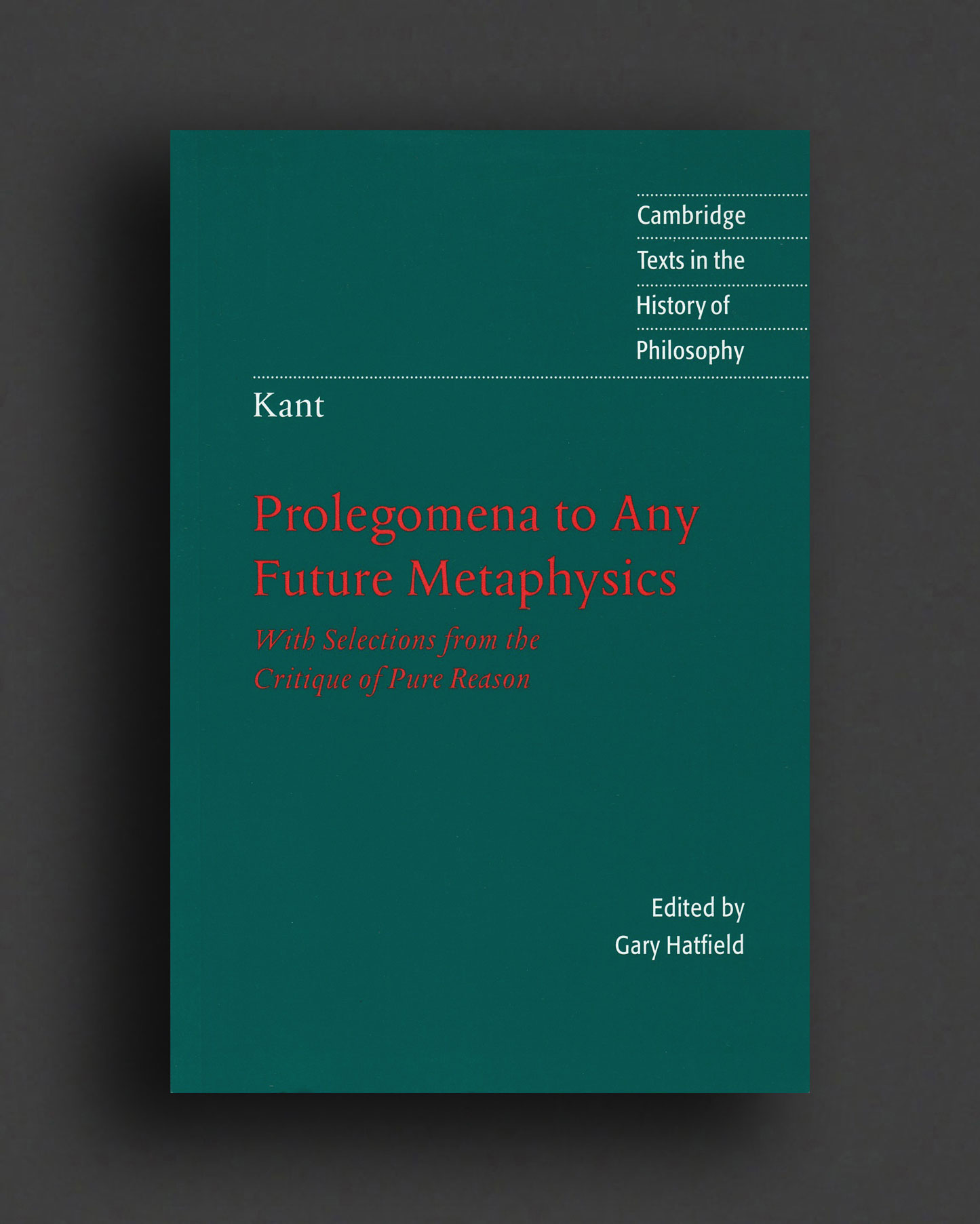
Third edition. Edited and translated, with notes and introductions by Lewis White Beck.
Critique of Practical Reason by Immanuel Kant stands as a seminal text in moral philosophy. First published in 1788, it serves as the second of Kant’s three critiques and continues the examination of reason introduced in the first. This work primarily discusses the capacity of pure reason to determine the will independently of sensory input or desire, introducing the categorical imperative as the fundamental principle governing moral actions. Kant explores how reason alone can and should be the basis of moral legislation, emphasizing the autonomy of the will as the essence of ethical behavior.
Good copy. Some moisture rippling to top of block, otherwise VG.
1974 / 2000, English
Softcover, 606 pages, 23 x 15 cm
Out of print title / used / very good
Published by
Northwestern University Press / Evanston
$45.00 - Out of stock
2000 edition published as part of Studies in Phenomenology and Existential Philosophy series. Originally published in 1974.
Jean Hyppolite produced the first French translation of Hegel's Phenomenology of Spirit. His major works-the translation, his commentary, and Logique et existence (1953)-coincided with an upsurge of interest in Hegel following World War II. Yet Hyppolite's influence was as much due to his role as a teacher as it was to his translation or commentary: Foucault and Deleuze were introduced to Hegel in Hyppolite's classes, and Derrida studied under him. More than fifty years after its original publication, Hyppolite's analysis of Hegel continues to offer fresh insights to the reader. As John Heckman writes in the introduction, "Hyppolite's Genesis and Structure, which represents an effort at a commentary on the entire Phenomenology, should not only help make Hegel more available, but should, in the continuing process of rereading Hegel, serve as a guide against which to measure and evaluate the adequacy of successive 'rediscoveries' of the Phenomenology."
"Still the best commentary on the Phenomenology by the dean of French Hegelians."—Social Theory and Practice
Jean Hyppolite (1907-1968) taught at the University of Strasbourg and the Sorbonne. He was the director of the Ecole Normale Supérieure for ten years and was appointed to the Collège de France in 1963.
VG—NF copy, faint marks to block edge.
1998, English
Softcover, 418 pages, 23 x 15 cm
1st Edition, Out of print title / used / very good
Published by
Northwestern University Press / Evanston
$45.00 - In stock -
Part of Studies in Phenomenology and Existential Philosophy series.
The word most commonly used in Plato's dialogues to name philosophical inquiry and distinguish it from other types of activity is "dialectic." Dialectic and Dialogue seeks to define the method and the aims of Plato's dialectic in both the "inconclusive" dialogues and the dialogues that describe and practice a method of hypothesis.
Gonzalez not only discusses Plato's few explicit descriptions of the dialectical method but also relates these descriptions to how the method is actually practiced, examining the contrast between dialectic and the opposite poles of ordinary discourse and sophistic discourse.
In a radical departure from most other treatments of Plato, Gonzalez argues that the philosophical knowledge at which dialectic aims is nonpropositional, practical, and reflexive. The result is a radical reassessment of how Plato understood the nature of phi-Losophy, one that is highly relevant to our contemporary struggles with the nature, pur-pose, and value of the philosophical enter-prise.
Francisco J. Gonzalez is associate professor of philosophy at Skidmore College. He
is the editor of The Third Way: New Directions in Platonic Studies (Rowman & Littlefield, 1995).
VG—NF copy, light wear.