World Food Books' programme is largely produced on Kulin Nation land. We acknowledge the Wurundjeri people of the Kulin Nation as the first and continuing custodians of this land, and pay respect to their Elders past, present, and emerging.
World Food Books is an arts and special interests bookshop in Naarm / Melbourne. Founded in 2010, World Food Books is devoted to the presentation of a rotating, hand-selection of international art, design, literary and counterculture publications with an emphasis on the anti-traditional, the experimental, the avant-garde, the heretic, the marginal.
Presenting new titles alongside rare and out-of-print books, catalogues and journals spanning the fields of modern and contemporary art, design, photography, illustration, film, literature, poetry, cultural theory, philosophy, sexuality, popular and underground culture in its many radical forms, World Food Books wishes to encourage adventurous, thoughtful and open-minded reading, looking, writing, and exchange of publishing and ideas, both current and historical.
As well as our bookshop, located in Melbourne's historical Nicholas Building, all of our inventory is available internationally via our online mail-order service.
World Food Books semi-regularly co-ordinates "Occasions", a programme of exhibits and events at the bookshop and in partnership with other hosts (such as museums and art galleries) that develop out of the activities, relationships and content of the bookshop itself.
World Food Books
The Nicholas Building
37 Swanston Street
Room 5, Level 6
Melbourne 3000
Australia
SHOP HOURS:
Thu–Fri 12–6, Sat 12–5
WEB-SHOP OPEN 24/7
World Food Books
Postal Address:
PO Box 435
Flinders Lane
Victoria 8009
Australia
Art
Theory / Essay
Architecture / Interior
Graphic Design / Typography
Photography
Fashion
Eros
LGBTQ+
Fiction / Poetry
Weird / Speculative / Science Fiction / Horror
Transgressive / Visceral / Abject
Symbolism / Decadence / Fin de siècle
Film / Video
Painting
Sculpture / Installation
Performance / Dance / Theater
Drawing
Sound / Music
Curatorial
Group Shows / Collections
Periodicals
Out-of-print / Rare
Posters / Ephemera / Discs
Signed Books
World Food Books Gift Voucher
World Food Book Bag
Australian Art
Australian Fiction
Australian Science Fiction / Speculative Fiction
Australian Poetry
Australian Photography
Japanese Photography
Conceptual Art
Minimal Art
Dada
'Pataphysics / Oulipo
Fluxus
Concrete Poetry
Pop Art
Surrealism
Arte Povera
Arte Informale / Haute Pâte / Tachism
Nouveau Réalisme / Zero / Kinetic
Situationism / Lettrism
Collage / Mail Art / Xerox Art
Art Brut / Folk / Visionary / Fantastic
Illustration / Graphic Art / Bandes Dessinées
Furniture
Italian Radical Design / Postmodernism
Textiles
Ceramics / Glass
Counterculture
Protest / Revolt
Philosophy
Psychoanalysis
Anthropology
Anarchism
Socialism / Anarchism / Communism / Capitalism
Literary Theory / Semiotics / Language
Feminism / Women's Studies
Gender Studies / Sexuality
Anthropology
Fetishism / BDSM
Drugs / Psychedelia
Crime / Violence
Animal Rights / Veganism
Occult / Esoterica
Ecology / Earth / Alternative Living
Whole Earth / Crafts
All prices in AUD (Australian dollars)
Pick-Ups
Pick-up orders can be collected in our bookshop during opening hours after order date. Please collect any Pick-up orders within 2 weeks of ordering as we have limited storage space. Orders will be released back into stock if not collected within this time. No refunds can be made for pick-ups left un-collected. If you cannot make it in to the bookshop in this time-frame, please choose postage option.
Return Policy
All sales are final. We do accept returns (for refund or exchange) for items received in error. All our orders are packed with special care using heavy-duty padding and cardboard book-mailers or bubble mailers (for smaller books), using reinforcement where required. We cannot take responsibility for any lost, stolen or damaged parcels.
Insurance
Should you wish to insure your package, please email us directly after placing your order and we can organise this at a small extra expense. Although all standard/express tracked packages are very safe and dependable, we cannot take responsibility for any lost, stolen or damaged parcels. We recommend insurance on valuable orders.
Interested in selling your old books, catalogues, journals, magazines, comics, fanzines, ephemera? We are always looking for interesting, unusual and out-of-print books to buy. We only buy books in our fields of interest and specialty, and that we feel we can resell.
We base these prices on desirability, market value, in-print prices, condition and our current stock levels. We offer cash, store credit, and can take stock on consignment. All
about 25% of the price we expect to get when we sell them, or 30% in store credit. We base these prices on desirability, market value, in-print prices, condition and our current stock levels.
Sell your books any day of the week. You can drop them off and return later. If you have a lot of books, we can visit your Sydney home.
We buy books that we feel we can resell. We offer about 25 % of the price we expect to get when we sell them, or 30% in store credit. We base these prices on desirability, market value, in-print prices, condition and our current stock levels.
Philadelphia Wireman
03 August - 01 September, 2018
World Food Books is proud to announce our next Occasion, the first presentation of sculptures by Philadelphia Wireman in Australia.
The Philadelphia Wireman sculptures were found abandoned in an alley off Philadelphia’s South Street on trash night in 1982. Their discovery in a rapidly-changing neighbourhood undergoing extensive renovation, compounded with the failure of all attempts to locate the artist, suggests that the works may have been discarded after the maker’s death. Dubbed the "Philadelphia Wireman" during the first exhibition of this work, in 1985, the maker’s name, age, ethnicity, and even gender remain uncertain. The entire collection totals approximately 1200 pieces, all intricately bound together with tightly-wound heavy-gauge wire (along with a few small, abstract marker drawings, reminiscent both of Mark Tobey and J.B. Murry). The dense construction of the work, despite a modest range of scale and materials, is singularly obsessive and disciplined in design: a wire armature or exoskeleton firmly binds a bricolage of found objects including plastic, glass, food packaging, umbrella parts, tape, rubber, batteries, pens, leather, reflectors, nuts and bolts, nails, foil, coins, toys, watches, eyeglasses, tools, and jewellery.
Heavy with associations—anthropomorphic, zoomorphic, and socio-cultural responses to wrapped detritus—the totemic sculptures by Philadelphia Wireman have been discussed in the context of work created to fulfil the shamanistic needs of alternative religions in American culture. Curators, collectors, and critics have variously compared certain pieces to sculpture from Classical antiquity, Native American medicine bundles, African-American memory jugs, and African fetish objects. Reflecting the artist’s prolific and incredibly focused scavenging impulse, and despite—or perhaps enhanced by—their anonymity, these enigmatic objects function as urban artefacts and arbiters of power, though their origin and purpose is unknown. Philadelphia Wireman, whatever their identity, possessed an astonishing ability to isolate and communicate the concepts of power and energy through the selection and transformation of ordinary materials. Over the course of the past two decades, this collection has come to be regarded as an important discovery in the field of self-taught art and vernacular art.
Presented in collaboration with Fleisher-Ollman Gallery, Philadelphia, and Robert Heald, Wellington.
Susan Te Kahurangi King
02 February - 10 March, 2018
Susan Te Kahurangi King (24 February 1951 - ) has been a confident and prolific artist since she was a young child, drawing with readily available materials - pencils, ballpoint pens and felt-tip markers, on whatever paper is at hand. Between the ages of four and six Susan slowly ceased verbal communication. Her grandparents William and Myrtle Murphy had developed a special bond with Susan so they took on caring responsibilities for extended periods. Myrtle began informally archiving her work, carefully collecting and storing the drawings and compiling scrapbooks. No drawing was insignificant; every scrap of paper was kept. The King family are now the custodians of a vast collection containing over 7000 individual works, from tiny scraps of paper through to 5 meter long rolls.
The scrapbooks and diaries reveal Myrtle to be a woman of great patience and compassion, seeking to understand a child who was not always behaving as expected. She encouraged Susan to be observant, to explore her environment and absorb all the sights and sounds. Myrtle would show Susan’s drawings to friends and people in her community that she had dealings with, such as shopkeepers and postal workers, but this was not simply a case of a grandmother’s bias. She recognised that Susan had developed a sophisticated and unique visual language and sincerely believed that her art deserved serious attention.
This was an unorthodox attitude for the time. To provide some context, Jean Dubuffet coined the term Art Brut in 1945 to describe work created by self-taught artists – specifically residents of psychiatric institutions and those he considered to be visionaries or eccentrics. In 1972 Roger Cardinal extended this concept by adopting the term Outsider Art to describe work made by non-academically trained artists operating outside of mainstream art networks through choice or circumstance. Susan was born in Te Aroha, New Zealand in 1951, far from the artistic hubs of Paris and London that Dubuffet and Cardinal operated in. That Myrtle fêted Susan as a self-taught artist who deserved to be taken seriously shows how progressive her attitudes were.
Susan’s parents Doug and Dawn were also progressive. Over the years they had consulted numerous health practitioners about Susan’s condition, as the medical establishment could not provide an explanation as to why she had lapsed into silence. Dawn educated herself in the field of homeopathy and went on to treat all twelve of her children using these principles – basing prescriptions on her observations of their physical, mental and emotional state.
Doug was a linguist with an interest in philosophy who devoted what little spare time he had to studying Maori language and culture. To some extent their willingness to explore the fringes of the mainstream made them outsiders too but it was their commitment to living with integrity and their respect for individuality that ensured Susan’s creativity was always encouraged.
Even though Susan’s family supported her artistic pursuits, some staff in schools and hospitals saw it as an impediment to her assimilation into the community and discouraged it in a variety of ways. Her family was not always aware of this and therefore did not fully understand why Susan stopped drawing in the early 1990s. However, rather than dwell on the challenges that Susan faced in pursuit of her artistic practice, they prefer to highlight her achievements. In 2008 Susan began drawing again in earnest, after an almost 20 year interruption, and her work is now shown in galleries around the world.
Susan grew up without television and has been heavily influenced by the comics she read as a child. She is absolutely fearless in the appropriation of recognizable characters, such as Donald Duck and Mickey Mouse, in her work. She twists their limbs, contorts their faces, compresses them together, blends them into complex patterned backgrounds - always imbuing them with an incredible energy. Although Susan often used pop culture characters in her work they are not naive or childlike. These are drawings by a brilliant self-taught artist who has been creating exceptional work for decades without an audience in mind.
Mladen Stilinović
"Various Works 1986 - 1999"
02 February 16 - September 10, 2016
Various works 1986 - 1999, from two houses, from the collections of John Nixon, Sue Cramer, Kerrie Poliness, Peter Haffenden and Phoebe Haffenden.
Including: Geometry of Cakes (various shelves), 1993; Poor People’s Law (black and white plate), 1993; White Absence (glasses, ruler, set square, silver spoon, silver ladel with skin photograph and wooden cubes), 1990-1996; Exploitation of the Dead (grey and red star painting, wooden painting, black spoon with red table, red plate), 1984-1990; Money and Zeros (zero tie, paintings made for friends in Australia (Sue, John, Kerrie), numbers painting), 1991-1992; Words - Slogans (various t-shirts) - “they talk about the death of art...help! someone is trying to kill me”, “my sweet little lamb”, “work is a disease - Karl Marx”; Various artist books, catalogues, monographs, videos; Poster from exhibition Insulting Anarchy; "Circular" Croatian - Australian edition; Artist book by Vlado Martek (Dostoyevsky); more.
Thanks to Mladen Stilinović and Branka Stipančić.
Jonathan Walker
Always Will Need To Wear Winter Shirt Blue + Ochre Small Check Pattern
21 August - 21 September, 2015
Untitled
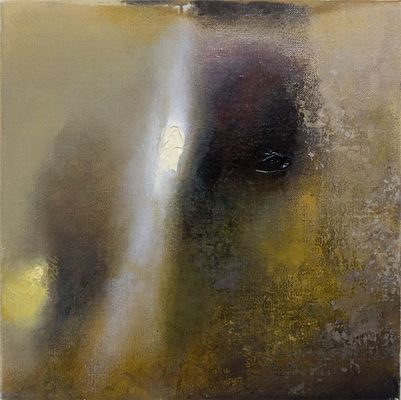
I am not a great reader of poetry but I always return to the work of Melbourne poet, Vincent Buckley (1925- 1988). Perhaps I find his most tantalising piece to be not a finished poem but a fragment left on a scrap of paper discovered on his desk after the poet’s death.
The poetry gathers like oil
In the word-core, and spreads
It has its music meet,
Its music is in movement.
This fragment is more the shell left behind from a volatile thought than a finished poem. I find the last two lines honest but awkward whereas the first two lines work like an arrow. Most likely he could not find a resolution so it was left. Still, in its present form, it remains an eloquent testimony to the ultimate failure of a medium to express mobile thought and sensation, in Buckley’s case, through verbal language. It’s an important matter because this is something all artists have to deal with regardless of the medium.
I have never written a poem, however, I am forever copying fragments from books on paper scraps in a vain effort to fix certain notions in my head. At first, they function as bookmarks that are sometimes returned to when I open the book. But before long, as they accumulate, they fall out littering the table interspersed with A4 photocopies, bills, books and medications.
To return to Buckley’s fragment, the first two lines very much evoke how I paint nowadays. As you age, detail diminishes and patches of light become more luminous and float. I feel the most honest way of dealing with this is by smearing the oil paint on the canvas with the fingers and working close-up, blind. Only if the patches coalesce into an approaching image can the work gain a life.
-
Jonathan Walker was born in Melbourne, Australia and brought up on a dairy farm in Gippsland. In the 1970’s he studied painting at RMIT and won the Harold Wright Scholarship to the British Museum, London. During the 1980’s he exhibited at Pinacotheca Gallery, Richmond and had work shown at the NGV and Heidi City Art Gallery. Over the same period he designed the cover for the “Epigenesi” LP by Giancarlo Toniutti, Italy and conducted a mail exchange work with Achim Wollscheid, Germany. The work with artists through the post resulted in an article published in the bicentenary issue of Art and Australia 1988. He showed in artist run spaces such as WestSpace in the 90’s and 2000’s, and until 2012, taught painting at Victoria University, which is where we (Colleen Ahern and Lisa Radford) as organisers of the exhibition, among many others, had the privilege of being his student.
Walker’s knowledge was imparted to students through the careful selection of music, literature, and artists found in books that he himself had ordered for the library. Walker’s strategy was the generosity of sharing his vast knowledge with references specific to each student and their context.
Walker’s paintings share a similar focus and intimacy.
This exhibition presents a small selection of recent paintings alongside a publication that includes Walker’s writing. Observational and analytical, Walker’s work is a type of material notation — the time of day, colour and how it is blended, the both specific and fleeting location of a reflection on lino or the question of whether a chair leg should be included in a painting.
Please join us on Friday August 21 between 6-8pm to celebrate the opening of the exhibition.
Curated by Colleen Ahern and Lisa Radford.
B. Wurtz
Curated by Nic Tammens
March 26 - April 4, 2015
B.Wurtz works from a basement studio in his home on Manhattan’s Lower East Side.
This local fact is attested to by the plastic shopping bags and newsprint circulars that appear in his work. As formal objects, they don’t make loud claims about their origins but nonetheless transmit street addresses and places of business from the bottom of this long thin island. Like plenty of artists, Wurtz is affected by what is local and what is consumed. His work is underpinned by this ethic. It often speaks from a neighborhood or reads like the contents of a hamper:
“BLACK PLUMS $1.29 lb.”
“Food Bazaar”
“USDA Whole Pork Shoulder Picnic 99c lb.”
“RITE AID Pharmacy, with us it’s personal.”
“H. Brickman & Sons.”
“Sweet Yams 59c lb."
Most of the work in this exhibition was made while the artist was in residence at Dieu Donne, a workshop dedicated to paper craft in Midtown. Here Wurtz fabricated assemblages with paper and objects that are relatively lightweight, with the intention that they would be easily transportable to Australia. This consideration isn’t absolute in Wurtz’s work, but was prescriptive for making the current exhibition light and cheap. Packed in two boxes, these works were sent from a USPS post office on the Lower East Side and delivered to North Melbourne by Australia Post.
Wurtz appears courtesy of Metro Pictures, New York.
Thanks to Rob Halverson, Joshua Petherick, Sari de Mallory, Matt Hinkley, Helen Johnson, Fayen d'Evie, Ask Kilmartin, Lisa Radon, Ellena Savage, Yale Union, and "Elizabeth".
John Nixon
"Archive"
December 15 - January 20, 2014
The presentation of John Nixon's archive offered a rare showcase of this extensive collection of the artist's own publications, catalogues, posters, ephemera, editions and more, from the mid 1980s onwards, alongside a selection of his artworks.
Organized by John Nixon, Joshua Petherick and Matt Hinkley.
<a href=http://wfb.public-office.info/artist/john-nixon>All titles by John Nixon
"Habitat"
at Minerva, Sydney (organised by Joshua Petherick and Matt Hinkley)
November 15 - December 20, 2014
Lupo Borgonovo, Janet Burchill & Jennifer McCamley,
Lewis Fidock, HR Giger, Piero Gilardi, Veit Laurent Kurz,
Cinzia Ruggeri, Michael E. Smith, Lucie Stahl, Daniel Weil, Wols
Press Release:
“...It contained seven objects. The slender fluted bone, surely formed for flight, surely from the wing of some large bird. Three archaic circuitboards, faced with mazes of gold. A smooth white sphere of baked clay. An age-blackened fragment of lace. A fingerlength segment of what she assumed was bone from a human wrist, grayish white, inset smoothly with the silicon shaft of a small instrument that must once have ridden flush with the surface of the skin - but the thing’s face was seared and blackened.”
William Gibson, “Count Zero”, 1986
"Autumn Projects Archive"
Curated by Liza Vasiliou
March 6 - March 15, 2014
World Food Books, in conjunction with the Virgin Australia Melbourne Fashion Festival 2014, presented the Autumn Projects archive, consisting of a selection of early examples in Australian fashion with a particular interest in collecting designers and labels from the period beginning in the 1980’s, who significantly influenced the discourse of Australian Fashion.
Curated by Liza Vasiliou, the exhibition provided a unique opportunity to view pieces by designers Anthea Crawford, Barbara Vandenberg, Geoff Liddell and labels CR Australia, Covers, Jag along with early experimental collage pieces by Prue Acton and Sally Browne’s ‘Fragments’ collection, suspended throughout the functioning World Food Books shop in Melbourne.
H.B. Peace
presented by CENTRE FOR STYLE
November 14, 2013
"Hey Blinky, you say chic, I say same"
Anon 2013
H.B. Peace is a clothing collaboration between great friends Blake Barns and Hugh Egan Westland. Their pieces explore the divergences between 'character’ and ‘personality’ in garments....etc
Special Thanks to Joshua Petherick and Matt Hinkley of WFB and Gillian Mears
and a Very Special Thank you to Audrey Thomas Hayes for her shoe collaboration.
Janet Burchill & Jennifer McCamley
"Aesthetic Suicide"
May 10 - June 8, 2013
The first of our occasional exhibitions in the World Food Books office/shop space in Melbourne, "Aesthetic Suicide" presented a body of new and older works together by artists Janet Burchill & Jennifer McCamley, including videos, prints, a wall work, and publications.
During shop open hours videos played every hour, on the hour.
1986, English
Softcover, 288 pages, 14 x 20.4 cm
Published by
City Lights Books / San Francisco
$42.00 - Out of stock
Taboo and sacrifice, transgression and language, death and sensuality. Georges Bataille pursues these themes with an original, often startling perspective. He challenges any single discourse on the erotic. The scope of his inquiry ranges from Emily Bronte to Sade, from St. Therese to Claude Levi-Strauss and Dr. Kinsey; and the subjects he covers include prostitution, mythical ecstasy, cruelty, and organized war. Investigating desire prior to and extending beyond the realm of sexuality, he argues that eroticism is "a psychological quest not alien to death."
"... one of the most original and unsettling of those thinkers who, in the wake of Sade and Nietzsche, have confronted the possibility of thought in a world that has lost its myth of transcendence." - Peter Brooks, New York Times Book Review
"Bataille is one of the most important writers of the century." - Michel Foucault
Georges Bataille (1897-1962) was a French intellectual and literary icon who wrote essays, novels, and poems exploring philosophical and sociological subjects such as eroticism and surrealism. City Lights published more of Bataille's works including The Impossible, The Tears of Eros, and Story of the Eye.
2017, English
Softcover (die-cut), 244 pages, 19 x 26 cm
Published by
Walker Art Centre / Minneapolis
$88.00 $50.00 - In stock -
Edited with text by Fionn Meade. Foreword by Olga Viso. Texts by Jordan Carter, Adrienne Edwards, Isla Leaver-Yap, Robert Wiesenberger.
Question the Wall Itself examines ways that interior spaces and décor can be fundamental to the understanding of cultural identity. It showcases 23 international artists who explore the political and social dimensions of interior architecture as well as its complicated relationship to history and their own backgrounds. The featured artists are Jonathas de Andrade, Uri Aran, Nina Beier, Marcel Broodthaers, Tom Burr, Alejandro Cesarco, Marc Camille Chaimowicz, Theaster Gates, Ull Hohn, Janette Laverrière, Louise Lawler, Nick Mauss, Park McArthur, Lucy McKenzie, Shahryar Nashat, Walid Raad, Seth Siegelaub, Paul Sietsema, Florine Stettheimer, Rosemarie Trockel, Cerith Wyn Evans, Danh Vo and Akram Zaatari.
The book and the exhibition it accompanies take as its guiding principle what Marcel Broodthaers termed “esprit décor”: a critique of ideas of nationality, globalization and the space of the institution through constructed interior scenes. Recasting our conception of interior space and design, the featured works exist between art, prop, and set or stage. Espousing this mise-en-scène approach, Question the Wall Itself plugs readers into material that expands the show in the form of book-as-exhibition. It includes an extensive photographic walk-through of the installations, and essays by Jordan Carter, Adrienne Edwards, Isla Leaver-Yap, Fionn Meade, and Robert Wiesenberger, as well as contributions from participating artists.
2016, English
Softcover, 128 pages, 17 x 24 cm
Published by
Center for Book Arts / New York
Sternberg Press / Berlin
$36.00 - Out of stock
Contributions by Regine Ehleiter, Michalis Pichler, Seth Siegelaub
Books and Ideas after Seth Siegelaub spans an arc of tension between the works of Seth Siegelaub and contemporary cultural production. It features an interview with Seth Siegelaub, two essays by Regine Ehleiter and Michalis Pichler, and an extensively illustrated catalogue with bibliographic details.
In preparation for the project, Siegelaub and Pichler met twice in Amsterdam, where they had a long recorded conversation about books, living with books, being intimately connected with books, and producing books, and about the recent emergence of contemporary publications that show clear reference to books Siegelaub had produced, both piracies and homages, and not always to his delight.
Books by Siegelaub that are often paraphrased include the Xerox Book (1968), which was printed in offset and has since been xeroxed by various artists and publishers in many different ways, the catalogue exhibitions from 1969, as well as Lawrence Weiner’s Statements (1968). These publications are often taken as starting points for new projects, which are derivative and yet substantial artworks in their own right. Also, Siegelaub’s engagement with the Art Workers’ Coalition and subsequent draft of The Artist’s Reserved Rights Transfer and Sale Agreement has had wide reception and reaction in contemporary art and activism.
“The works presented in Michalis Pichler’s catalogue Books and Ideas after Seth Siegelaub reinvent Siegelaub’s renowned distinction between primary and secondary information.”
—Annette Gilbert, editor of Reprint: Appropriation (&) Literature and Publishing as Artistic Practice
“This anthology provides a welcome overview of the highly innovative exhibition and distribution practices developed by Seth Siegelaub in the late 1960s and the 1970s.”
—Alexander Alberro, author of Conceptual Art and the Politics of Publicity
“Seth Siegelaub was largely responsible for publicizing and promoting Conceptual art in the 1960s, but as Books and Ideas documents, he has continued to be a provocation and inspiration almost half a century after his abrupt exit from the art world he helped to create. Moreover, this book provides a context for Pichler’s own brand of conceptual practices. If part of Siegelaub’s genius was to reconceive exhibition as publication, Pichler gives us a catalogue of catalogues exhibiting the proliferation of mirrors which line the hall of Conceptual art’s legacy. In the pages of Books and Ideas, secondary information, accordingly, becomes primary.”
—Craig Dworkin, author of No Medium and Reading the Illegible
Copublished with the Center for Book Arts, New York
Design by Burak Yilmaz Kececiler
2021, English / German
Softcover, 208 pages, 23 x 16.5 cm
Published by
Texte Zur Kunst / Berlin
$32.00 - Out of stock
The March issue of Texte zur Kunst, titled “Comedy,” investigates the comedic in art while also examining mass-media formats such as TV series and films. Comedy not only offers consolation and comfort by making the tragic seem comic; for the repressed, it also serves as a catalyst, addressing and thematizing repression through jokes, slapstick, or the grotesque. However, at a time when audiences increasingly demand political commitment and authenticity from art, comedic speech, which is inherently disingenuous, has fallen into disrepute: ironically distanced rhetoric is accused of turning a blind eye to social inequality. Together with Bert Rebhandl, author and co-publisher of the film magazine cargo, the editors conceptualized an issue that examines the role of the joke in art, the psychoanalytic dimension of the comedic, and the limits of satire in the age of Donald Trump.
With contributions by/features on Jennifer A. Greenhill, Kevin B. Lee, Matthias Dell, Glenn Ligon, Jan Böhmermann, Lauren Berlant, Sianne Ngai, Alenka Zupančič, Lynne Tillman, Rosalind Fox Solomon, Bert Rebhandl, Gregory Williams, Andrea Fraser, Lukas Foerster, Seinfeld, Larry David, Christiane Kues, Pujan Karambeigi, Amalia Ulman, Michaela Ott, Iris Därmann, Max Heinrich, Helvetia Leal, Sofia Bempeza, Talia Kwartler, Kai Althoff, Bernard Leach, Saim Demircan, Kim Jones, Samantha Ozer, Wu Tsang, Susanne Von Falkenhausen, Aby Warburg, Daniel Sturgis, Maxwell Alexandre, Genevieve Lipinsky De Orlov, Rosemary Mayer, Akili Tommasino, Howardena Pindell, Awol Erizku, Anna Voswinckel, Marianne Wex, Sarat Maharaj, Marion Von Osten, Françoise Vergès, Madeleine Bernstorff, Ross Bleckner, Douglas Gordon, Amy Sillman …
2020, English / German
Softcover, 272 pages, 23 x 16.5 cm
Published by
Texte Zur Kunst / Berlin
$32.00 - In stock -
"Exactly three decades after the inaugural issue of TZK was published, we return to the question of where the hard-won and still-embattled rights of women* stand. With this issue, entitled ‘The Feminist’, we celebrate 30 years of controversial discussions about contemporary art and culture. We have invited 30 artists, critics, curators, and theorists of art and culture to talk about a cultural object that they believe is currently of particular interest from a feminist perspective. In highlighting feminist discourses that are especially relevant to the present moment, this issue should illustrate the plurality of thinkers who contribute to feminist projects today. A gesture to the unity and the alliances that critique grounded in solidarity can build!” —from the editorial by Isabelle Graw, Katharina Hausladen, and Genevieve Lipinsky de Orlov.
With contributions by Isabelle Graw, Jeanetta Rich, Mirjam Thomann, Amanda Schmitt, Christian Liclair, Juliane Rebentisch, Jessica Aimufua, Katharina Hausladen, Nikita Gale, Beate Söntgen, Stacey Gillian Abe, Genevieve Lipinsky de Orlov, Taylor Le Melle, Victoria Sin, Julia Heldt, Nadja Abt, Alina Astrova, Astrid Mania, Hanna Magauer, Brigitte Weingart, Paul Niedermayer, Keren Cytter, Steven Warwick, Bini Adamczak, Raphaela Vogel, Miriam Zeh, Lili Reynaud-Dewar, Violaine Huisman, Trakal …
2019, English
Softcover, 272 pages, 23 x 16.5 cm
Published by
Texte Zur Kunst / Berlin
$32.00 - Out of stock
"EVIL," the theme of this latest issue of TEXTE ZUR KUNST is often understood as simply the opposite of “good,” and as pure immorality, evil is everywhere today, and somehow also nowhere. It is the “other” par excellence; something we ourselves never are, but by which one always measures one’s own distance. “Evil is over there, not here, not with me.” Given its ubiquity today, we offer texts that investigate what this thing we call “evil” is, as it so often functions as the polar opposite of that which people hold to be just and right. Indeed, who could argue that point, and yet. In this issue, we look specifically at evil’s manifestations in the art world, and in film, politics, and theory, always with an eye toward evil as something potentially playful and ironic.
TABLE OF CONTENTS
PREFACE
OLIVER PRECHT
TALKING ABOUT EVIL / Reflections on Moral Judgment
SUPERNATURE / Amanda Schmitt in Conversation with Loretta Fahrenholz, Madeline Hollander, and Monica Mirabile
MAX CZOLLEK
EVIL / Some Thoughts on the Contemporaneity of a Category
REMAIN IN DARK / Interview between Colin Lang and Stephen O’Malley
A BRIEF GLOSSARY OF SOCIAL SADISM / by Ana Teixeira Pinto and Kerstin Stakemeier
NEW DEVELOPMENT
BESEELTE GABEN IM TAUSCHSYSTEM / Überlegungen zur Malerei von Jack Whitten anlässlich der Ausstellung “Jack Whitten. Jack’s Jacks“ im Hamburger Bahnhof, Berlin
ROTATION
BEING POROUS / Alice Blackhurst on Chantal Akerman’s My Mother Laughs
IMPURITY AND ENTANGLEMENT / Adam Butler in Conversation with Ben Lerner
REVIEWS
A CHIROGRAPHIC IMAGINARY / Colin Lang on Edmund de Waal at Galerie Max Hetzler, Berlin
ANDERE ORTE / Elisa R. Linn über Ariane Müller bei Schiefe Zähne, Berlin
ARCHIVING INSPIRATION / Dave Beech on Albert Oehlen at the Serpentine Gallery, London
MYALGIE / Jessica Aimufua über Diamond Stingily im Kunstverein München
GO TELL IT ON THE ISLAND / Nadja Abt über die 16. Istanbul Biennale
INTIMATE INVESTIGATIONS / Jesi Khadivi on Sharon Hayes at Tanya Leighton Gallery, Berlin
ICH BIN ELEKTRISCH / Hans-Christian Dany über Puppies Puppies (Jade Kuriki Olivo) in der Halle für Kunst Lüneburg
HUNGRY MINDS / Rachel Haidu on Leidy Churchman at the Hessel Museum of Art, Bard College, Annandale-on-Hudson
VERFREMDEND NAH / Stephanie Holl-Trieu über „The Making of Husbands: Christina Ramberg in Dialogue“ in den KW Institute for Contemporary Art, Berlin
POETS AND ARTFANS / Pujan Karambeigi on Sarah Rapson at Essex Street, New York
EROSION UND WACHSTUM / Markues über „Soil Is an Inscribed Body. Über Souveränität und Agrarpoesien“ bei SAVVY Contemporary, Berlin
MATERIAL FUTURES / Adrienne Ange Rooney on Lubaina Himid at the New Museum, New York
DIES IST KEIN PHALLUS / Francesca Raimondi über „Maskulinitäten. Eine Kooperation von Bonner Kunstverein, Kölnischem Kunstverein und Kunstverein für die Rheinlande und Westfalen, Düsseldorf“
WHICH SIDE ARE YOU ON? / Chris Reitz on Latoya Ruby Frazier at the Renaissance Society, Chicago
MAGISCHE POLITIK / Fiona Geuß über Andrea Bowers in der Weserburg, Museum für moderne Kunst, Bremen
MOTHER OF PEARL / Enzo Shalom on Nicolás Guagnini at Bortolami, New York
(BE-)ZEUG DICH! / Alida Müschen über Julia Phillips im Kunstverein Braunschweig
GHOSTS NOT WELCOME / Nina Prader on Omer Fast at the Salzburger Kunstverein
CRITICAL AFFECTIONS / Sophie Goltz über „Awakenings: Art in Society in Asia 1960s–1990s“ in der National Gallery in Singapur
ZWISCHEN ALLEN STÜHLEN / Dorothea Zwirner über Senga Nengudi im Lenbachhaus, München
NACHRUFE / OBITUARIES
SARAH SCHUMANN (1933−2019) by Vojin Saša Vukadinović
DOUGLAS CRIMP (1944–2019) by Marc Siegel
DOUGLAS CRIMP (1944-2019) by Louise Lawler
DOUGLAS CRIMP (1944-2019) by Juliane Rebentisch
EDITION
JESSICA STOCKHOLDER
RAPHAELA VOGEL
JORINDE VOIGT
2021, English
Softcover, 120 pages, 11.4 x 17.8 cm
Published by
Semiotext(e) / Los Angeles
$29.00 - Out of stock
Immunodemocracy offers a stimulating and profound portrayal of the epochal event that has already left its mark on the twenty-first century. Moving from the ecological question to the rule of experts, from the state of exception to immunitarian democracy, from rule by fear to the contagion of conspiracy theory, from forced distancing to digital control, Donatella Di Cesare examines how existence is already changing—and what its future political effects may be. In her own personal style, the author reconstructs the dramatic phases of what she calls "the breathing catastrophe." Coronavirus is a sovereign virus that skirts its way around the walls of patriotism and the sovereignists' imperious frontiers. And it reveals in all its terrible crudeness the immunitarian logic that excludes the weakest and hits the poorest.
The cordon sanitaire of disengagement risks expanding beyond all proportion. The disparity between the protected and the helpless—a challenge to any idea of justice—has never been so blatant. The virus has not introduced, but merely brought out into the open the ruthlessness of the capitalism that is now wrapping us in its devastating spiral, in its compulsive, asphyxial vortex. Is it our final warning? The violent global pandemic shows that it is impossible for us to survive if we don't help each other. We will need to protect ourselves from protection and the specter of absolute immunization. When breathing can no longer be taken for granted, we need to rethink our way of living together.
Translated by David Broder
Donatella Di Cesare teaches theoretical philosophy at the Sapienza University in Rome. One of the most significant voices on the Italian intellectual scene, she is an authoritative contributor to numerous newspapers, websites and journals in Italy and elsewhere. Her books have been translated into eight languages.
2021, English
Hardcover, 264 pages, 20.3 x 13.4 cm
Published by
Repeater Books / London
$33.00 - Out of stock
A collection of transcripts from Mark Fisher's final series of lectures at Goldsmiths, University of London, in late 2016.
Edited and with an introduction by Matt Colquhoun, this collection of lecture notes and transcriptions reveals acclaimed writer and blogger Mark Fisher in his element — the classroom — outlining a project that Fisher's death left so bittersweetly unfinished.
Beginning with that most fundamental of questions -- "Do we really want what we say we want?" — Fisher explores the relationship between desire and capitalism, and wonders what new forms of desire we might still excavate from the past, present, and future. From the emergence and failure of the counterculture in the 1970s to the continued development of his left-accelerationist line of thinking, this volume charts a tragically interrupted course for thinking about the raising of a new kind of consciousness, and the cultural and political implications of doing so.
For Fisher, this process of consciousness raising was always, fundamentally, psychedelic — just not in the way that we might think...
2014, English
Softcover, 245 pages, 14.2 x 21.4 cm
Published by
Zero Books / UK
$39.00 - Out of stock
This collection of writings by Mark Fisher, author of the acclaimed Capitalist Realism, argues that we are haunted by futures that failed to happen. Fisher searches for the traces of these lost futures in the work of David Peace, John Le Carre, Christopher Nolan, Joy Division, Burial and many others.
2019, English
Softcover, 160 pages, 12.7 x 19.8 cm
Published by
Verso / London
$29.00 - In stock -
Lauded by major contemporary artists and philosophers, Jacques Rancière’s work returns politics to its central place in understanding art.
In The Future of the Image, Jacques Rancière develops a fascinating new concept of the image in contemporary art, showing how art and politics have always been intrinsically intertwined. Covering a range of art movements, filmmakers such as Godard and Bresson, and thinkers such as Foucault, Deleuze, Adorno, Barthes, Lyotard and Greenberg, Rancière shows that contemporary theorists of the image are suffering from religious tendencies.
He argues that there is a stark political choice in art: it can either reinforce a radical democracy, or create a new reactionary mysticism. For Rancière there is never a pure art: the aesthetic revolution must always embrace egalitarian ideals.
“Much of the value of Rancière’s writings on art and aesthetics arises from his initial refusal of terms that are self-evident to the point of invisibility. ”— Frieze
2020, English
Softcover, 192 pages, 13.2 x 20.3 cm
Published by
New Directions / New York
$34.00 - Out of stock
In these essays, the acclaimed artist, photographer, writer, and filmmaker Moyra Davey often begins with a daily encounter--with a photograph, a memory, or a passage from a book--and links that subject to others, drawing fascinating and unlikely connections, until you can almost feel the texture of her thinking. While thinking and writing, she weaves together disparate writers and artists--Mary Wollstonecraft, Jean Genet, Virginia Woolf, Janet Malcolm, Chantal Akerman, and Roland Barthes, among many others--in a way that is both elliptical and direct, clearheaded and personal, prismatic and self-examining, layering narratives to reveal the thorny but nourishing relationship between art and life.
2001, English
Softcover, 345 pages, 15.2 x 22.8 cm
Published by
Seven Stories Press / New York
$46.00 - Out of stock
The intersection of motherhood and creative life is explored in these writings on mothering that turn the spotlight from the child to the mother herself. Here, in memoirs, testimonials, diaries, essays, and fiction, mothers describe first-hand the changes brought to their lives by pregnancy, childbirth, and mothering.
Many of the writers articulate difficult and socially unsanctioned maternal anger and ambivalence. In Mother Reader, motherhood is scrutinized for all its painful and illuminating subtleties, and addressed with unconventional wisdom and candor. What emerges is a sense of a community of writers speaking to and about each other out of a common experience, and a compilation of extraordinary literature never before assembled in a single volume.
Contributors include Margaret Atwood, Lydia Davis, Annie Ernaux, Mary Gaitskill, Susan Griffin, Nancy Huston, Jane Lazarre, Ursula K. LeGuin, Margaret Mead, Toni Morrison, Tillie Olsen, Alicia Ostriker, Grace Paley, Sylvia Plath, Adrienne Rich, Sara Ruddick, Mona Simpson, Susan Rubin Suleiman, Alice Walker, Joy William and many more.
2014, English
Hardcover (w. dust jacket), 240 pages, 13.8 x 20.5 cm
Published by
Verso / London
$44.00 - Out of stock
Presented here for the first time in English is a remarkable screenplay about the apostle Paul by Pier Paolo Pasolini, legendary filmmaker, novelist, poet, and radical intellectual activist. Written between the appearance of his renowned film Teorema and the shocking, controversial Salò, or the 120 Days of Sodom, St Paul was deemed too risky for investors. At once a political intervention and cinematic breakthrough, the script forces a revolutionary transformation on the contemporary legacy of Paul. In Pasolini's kaleidoscope, we encounter fascistic movements, resistance fighters, and faltering revolutions, each of which reflects on aspects of the Pauline teachings. From Jerusalem to Wall Street and Greenwich Village, from the rise of SS troops to the death of Martin Luther King, Jr, here— as Alain Badiou writes in the foreword—"Paul's text crosses all these circumstances intact, as if it had foreseen them all."
This is a key addition to the growing debate around St Paul and to the proliferation of literature centred on the current turn to religion in philosophy and critical theory, which embraces contemporary figures such as Alain Badiou, Slavoj Žižek and Giorgio Agamben.
Translated by Elizabeth A. Castelli
Preface by Alain Badiou
Introduction by Ward Blanton
2020, English
Softcover, 240 pages, 15.1 x 21.1 cm
Published by
The MIT Press / Massachusetts
Whitechapel / London
$38.00 - Out of stock
Part of the acclaimed Documents of Contemporary Art series of anthologies which collect writing on major themes and ideas in contemporary art.
The ethical, aesthetic and political significance of practices, positions and theories connected to health in contemporary art.
In an era of fitness programs, increasing antidepressant usage, nutrition counseling and health-management apps, wellness is one of the defining issues of contemporary life, dictating every intimate aspect of our lives. Historically, art has been entwined with the values of medicine, beauty, and the productive body that have defined western scientific paradigms; contemporary artists are increasingly confronting and reshaping these ideologies, critically tackling illness and impairment in their practice while challenging ableist institutional dynamics. In this volume, artists, curators, writers, and thinkers engage with the ways the vulnerability of our bodies reveals structural aspects of our societies.
At a moment at which epidemics and global warming menace all forms of life, we see clearly how health intersects with sexuality, ethnicity, gender, class, and coloniality. By reclaiming other realities, beyond a state of health as a norm, this book questions the myths, stigmas, and cultural attitudes that shape normative perceptions, revealing the interdependence of our entangled existences. The book includes four newly commissioned texts: by artists Mahmoud Khaled and Patrick Staff, by curator Clare Barlow on disability in the museum, and by curator Portia Malatjie on the work of Dineo Seshee Bopape. It also features two texts on the current COVID-19 pandemic, by Anne Boyer and Filipa Ramos.
Artists surveyed include :
Oreet Ashery, Lucy Beech, Dineo Seshee Bopape, Lorenza Böttner, Canaries & Taraneh Fazeli, Grupo Chaclacayo, Anne Charlotte Robertson, Patricia Domínguez, Dora García, Felix González-Torres, Luke Fowler, Alice Hattrick, Tamar Guimarães, Joseph Grigely, Gran Fury, Johanna Hedva, Mahmoud Khaled, Mujeres Creando, Carolyn Lazard, Simone Leigh, Park McArthur, Pedro Neves Marques, Tabita Rezaire, Jo Spence, Patrick Staff, Christine Sun Kim, Pedro Reyes, David Wojnarowicz
Writers include :
Aimar Arriola & Nanci Garín, Clare Barlow, Khairani Barokka, Dodie Bellamy, Anne Boyer, Rizvana Bradley, Eli Clare, Taraneh Fazeli, Theodore (ted) Kerr & Alexandra Juhasz, Eve Kosofsky Sedgwick, R.D. Laing, Miguel A. López, Catalina Lozano, Audre Lorde, Portia Malatjie, Margarida Mendes, Peter Pál Pelbart, Naomi Pearce, Maria Puig de la Bellacasa, Filipa Ramos, Susan Sontag, Paul B. Preciado, Mary Walling Blackburn, Simon Watney & Sunil Gupta
Copublish by MIT Press with Whitechapel Gallery, London
2020, English
Softcover, 240 pages, 14.9 x 21 cm
Published by
The MIT Press / Massachusetts
Whitechapel / London
$38.00 - In stock -
Part of the acclaimed Documents of Contemporary Art series of anthologies which collect writing on major themes and ideas in contemporary art.
The first major anthology to focus on relationships between science fiction and contemporary art, with topics ranging from accelerating technological change to global urbanization.
Over the past two decades, artists and writers have increasingly used science fiction as a lens through which to search for fragments of truth emerging from the past or the future. The proliferation of science fiction in contemporary art practice and discourse reflects an increased understanding of how this narrative field continues to grow in relevance. This book is the first major anthology to focus on relationships between science fiction and contemporary art, and offers an essential read for all those exploring this vital genre.
Organizing its contributions according to four distinct approaches—"estrangement,” “futures,” “posthumanism,” and “ecologies”—this unique collection gathers key examples of the influence of science fiction in recent cultural development. It considers topics that include the integration and acceleration of technological change, global urbanization and concepts of futurity, the boundaries of social structures and nonhuman life, and the threatening evidence of climate change.
Artists surveyed include :
Laylah Ali, Pawel Althamer, Ama Josephine Budge, Lee Bul, Ellen Gallagher, Dominique Gonzalez-Foerster, Eduardo Kac, Patrick Keiller, Josh Kline, Lawrence Lek, Anne Lislegaard, Mariko Mori, Wangechi Mutu, The Otolith Group, Suzanne Treister
Writers include :
Peio Aguirre, Margaret Atwood, J.G. Ballard, Jean Baudrillard, Franco 'Bifo' Berardi, Rosi Braidotti, Rachel Carson, Dawn Chan, T.J. Demos, Donna J. Haraway, N. Katherine Hayles, Wanuri Kahiu, Tom McCarthy, David Musgrave, Alondra Nelson, Kim Stanley Robinson, Darko Suvin
2014, English
Softcover (2 volume set), 784 pages, 17.8 x 22.9 cm
Published by
Nightboat Books / New York
$75.00 - Out of stock
The first retrospective collection of 50 years of writing by our leading Arab-American innovative writer.
This landmark two-volume edition follows Adnan’s work from the infernal elegies of the 1960s to the ethereal meditations of her later poems, to form a portrait of an extraordinarily impassioned and prescient life. Ranging between essay, fiction, poetry, memoir, feminist manifesto, and philosophical treatise, while often challenging the conventions of genre, Adnan’s works give voice to the violence and revelation of the last six decades as it has centered, in part, within the geopolitics of the Arab world, and in particular the author’s native Beirut. Among the key works reproduced in their entirety are Sitt Marie Rose (1978); The Arab Apocalypse (1980); Journey to Mount Tamalpais (1986); and Of Cities & Women (1993).
Love, for Adnan, is our only way to endure upheaval. It is not sentimental love. It is an ethics that seeks to preserve what we have rather than see it destroyed. It is a particular bravery, too. “Love in all its forms is the most important matter that we will ever face, but also the most dangerous, the most unpredictable, the most maddening,” Adnan writes.“But it is also the only salvation I know of.” - Andrew Durbin, novelist and Editor in Chief of Frieze Magazine
2020, English
Softcover, 120 pages, 12.7 x 20.4 cm
Published by
AK Press / Edinburgh
$28.00 - Out of stock
Undrowned is a book-length meditation for the entire human species, based on the subversive and transformative lessons of marine mammals. Alexis Pauline Gumbs has spent hundreds of hours watching our aquatic cousins. She has found them to be queer, fierce, protective of each other, complex, shaped by conflict, and struggling to survive the extractive and militarized conditions humans have imposed on the ocean. Employing a brilliant mix of poetic sensibility, naturalist observation, and Black feminist insights, she translates their submerged wisdom to reveal what they might teach us. The result is a powerful work of creative nonfiction that produces not a specific agenda but an unfolding space for wonder and questioning.
Part of the "Emergent Strategy" series, the book is divided into eighty short meditations, each grouped into “movements” with names like “Listen,” “Breath,” “Stay Black,” and “Go Deep.” A graceful use of metaphor and natural models in the service of social justice, it explores themes that range from the ways that echolocation might inform our understandings of visionary action to the similar ways that humans and marine mammals do—or might—adapt within our increasingly dire circumstances. Gumbs’s narrative moves seamlessly between dolphins born in captivity and Black political prisoners giving birth behind bars, between the migratory patterns of dolphins and the Atlantic slave trade. [publisher's note]
2020, English
Softcover, 296 pages, 15.2 x 22.9 cm
Published by
Nightboat Books / New York
$42.00 - Out of stock
Editors Andrea Abi-Karam and Kay Gabriel offer We Want it All: An Anthology of Radical Trans Poetics as an experiment into how far literature, written from an identitarian standpoint, can go as a fellow traveler with social movements and revolutionary demands. Writing in dialogue with emancipatory political movements, the intergenerational writers assembled here imagine an altogether overturned world in poems that pursue the particular and multiple trans relationships to desire, embodiment, housing, sex, ecology, history, pop culture, and the working day.
features the work of : Aaron El Sabrout, Julian Talamantez Brolaski, Aeon Ginsberg, Akasha-Mitra, Kamden Hilliard, Amy Marvin, Kashif Sharma-Patel, Andrea Abi-Karam, Kay Gabriel, Ari Banias, Laurel Uziell, Bahaar Ahsan, Leslie Feinberg, Bianca Rae Messinger, Levi Bentley, Bryn Kelly, Liam O'brien, Caconrad, Listen Chen, Caelan Ernest Logan February Callie Gardner Lou Sullivan Cameron Awkward-Rich Mai Schwartz, Caspar Heinemann, Maxe Crandall, Charles Theonia, Miles Collins-Sibley, Ching-In Chen, Nat Raha, Clara Zornado & Jo Barchi, Natalie Mesnard, Nm Esc, Cody-Rose Clevidence, Noah Lebien, Cyree Jarelle Johnson, Nora Fulton, Evan Kleekamp, Nora Treatbaby, Faye Chevalier, Peach Kander, Harry Josephine Giles, Rachel Franklin Wood, Hazel Avery, Raquel Salas Rivera, Holly Raymond, Ray Filar, Ian Khara Ellasante, Rocket Caleshu, Jackie Ess Rowan Powell Jamie Townsend Samuel Ace Jayson Keery Stephen Ira Jesi Gaston, Sylvia Rivera, Jessica Bet, T Fleischmann, Jimmy Cooper, Trish Salah, José Díaz, Ty Little, Joshua Jennifer, Valentine Conaty, Espinoza, Xandria Phillips, Joss Barton, Xtian W & Anais Duplan, Zavé Martohardjono
2020, English
Softcover, 248 pages, 31 x 24 cm
Published by
Koenig Books / London
CCA / Montreal
$85.00 - Out of stock
Gordon Matta-Clark was born in 1943 in New York, son of American artist Anne Clark, and Chilean Surrealist painter Roberto Matta. He entered the architecture program at Cornell University in 1962 but left in 1963 and spent the following year in Paris living with his father and studying French Literature. He returned to Cornell 1964-1968, he did not, however, practice as a conventional architect; he worked on what he referred to as "Anarchitecture." In mid-1969, Matta-Clark moved to New York City and his architectural "Cuttings", as well as his large corpus of drawings made him a prominent figure among his colleagues, including close friends and collaborators such as Jan Dibbetts and Robert Smithson. His influence as "artist's artist" on future generations cannot be overstated. Matta-Clark died at the age of 35. Many of his works are destroyed.
In 2011, the Estate of Gordon Matta-Clark handed over the entire archive – his library, manuscripts, films, correspondence, drawings, notes and works of art - to the Canadian Centre for Architecture in Montreal, where it now has been published annotated and edited in an exemplary way in this incredible volume. Only with this publication will his work become fully visible.
This book unpacks the comprehensive Gordon Matta-Clark collection at the CCA (CP138), opening it up to provisional readings from different points of view. Yann Chateigné reorganizes Matta-Clark’s library into areas of inquiry, from alchemy to psychoanalysis, as a framework for gathering traces—written and drawn—of his thinking. Hila Peleg reassembles hours of discarded film footage, challenging the notion of documentation and returning to view the physical and social contexts—the relational space—of Matta-Clark’s interventions. And from hundreds of travel photographs, Kitty Scott constructs a panorama of Matta-Clark’s visual notes on the world around him—a foil to his artworks. In foregrounding seemingly incidental parts of the collection, these studies manifest an exploratory way of working with archives, by which selecting, presenting, and writing are processes of ongoing research. Rather than synthesize, CP138 Gordon Matta-Clark: Readings of the archive by Yann Chateigné, Hila Peleg, and Kitty Scott extends the scope of what constitutes Matta-Clark’s body of work and thus the physical and intellectual terrain within which to situate it.
2021, English
Hardcover (w. dust jacket), 176 pages, 14 x 21 cm
Published by
Verso / London
$34.00 - Out of stock
Everyone is a designer. But while many practitioners may be looking for solutions or ideological certainties, Easterling argues that solutions are mistakes and ideologies are unreliable markers. Instead, Medium Design speaks to anyone looking for alternative approaches to the world's unresponsive or intractable dilemmas-from climate cataclysm to inequality to concentrations of authoritarian power. Such an approach joins many disciplines in considering not only separate objects, ideas and events but also the space between them.
In case studies dealing with everything from automation and migration to explosive urban growth and atmospheric changes, Medium Design looks not to new innovations but rather to sophisticated relationships between emergent and incumbent technologies. It does not try to eliminate problems but put them together into productive combinations. And it offers forms of activism for modulating power and temperament in organization of all kinds.
Reviews
“Easterling is one of our most provocative theorists of infrastructures and the critical actions that might make them better. Here she gives us ways to remix, radically, their ingredients. Who else could parse the ‘canine mind’ of the canny designer and city-dweller to show that we already know how to break the deadlock formed by binaries and manipulative media loops? Read this immensely engaging book to find a new toolkit for infiltrating, occupying, and recasting the mediated and material world.” – Caroline A. Jones, Professor in the Department of Architecture, MIT
2020, English
Softcover, 172 pages, 14 x 19 cm
Published by
Light Cone Editions / Paris
$40.00 - Out of stock
This new publication, Robert Breer A to Z, published by Light Cone Editions, is a self-portrait of Robert Breer. His life and work are presented as an imaginary lexicon, a form which he always admired as being emblematic of the joyous, unexpected, and chaotic nature of life itself.
Drawn from interviews, personal letters and public statements from 1957 to 2009, Robert Breer A to Z brings into a single volume the artist’s reflections on his films and his multiple forays into painting, drawing and kinetic sculpture.
Robert Breer has spent fifty years building up a totally atypical body of work which plays with different genres and abolishes the notions of space and time. Starting off as a painter, he then deconstructed his neoplastic works and ended up with kinetic objects. He dealt next with the thresholds of awareness and perception, both as a sculptor and a filmmaker. His films are composed of a jumble of images that pass at great speed, while his Floats move almost imperceptibly, in accordance with an unpredictable logic. Robert Breer developed his light yet rigorous style while associating with the New York underground in the Pop years. Continuing his subtle exploration of movement, his work still today causes the space of reality -irrevocably unstable- to waver.
Published under the direction of Scott Hammen with an introduction by Simon Rees, Robert Breer A to Z is co-published by Light Cone Editions and the Govett-Brewster Art Gallery.
2019, English
Softcover, 128 pages, 11 x 18 cm
Published by
Sternberg Press / Berlin
$44.00 $15.00 - Out of stock
This publication collects writings on the art scene of Kosovo over the past twenty years. In the 1990s Kosovars felt—as many other countries in the Balkan region did—the urgency to shape their own scene: in a search for identity, for nation building, in continuing or ending political conflicts, by trying to find a language to grasp recent social and political developments, or simply by continuing their practice in new, unstable times. This collection of writings and interviews offers insight into these processes through various perspectives (from curators, artists, and philosophers) on the latest artistic developments, and fosters reflection on how a local, prospering scene continuously raises new questions and addresses undiscovered topics hand in hand with the region’s historical struggles and current challenges in being the youngest state in Europe.
Notes on Contemporary Art in Kosovo is published in the context of the tranzit.at Glossary Series, which aims to encourage reflection on new approaches to creating common knowledge that are more in sync with our time than the prevalent epistemological models. The series focuses on changing global conditions—and on the fact that we require more equality in creating knowledge under these conditions—and the need to redefine artistic geographies so that they can attune themselves to this new situation.
Contributions by Sezgin Boynik, Charles Esche, Alush Gashi, HAVEIT, Astrit Ismaili, Shkëlzen Maliqi, Cathrin Mayer, Miran Mohar, Edi Muka, Vanessa Joan Müller, Kathrin Rhomberg, Vesa Sahatçiu, Dardan Zhegrova
A tranzit.at book
Design by Bardhi Haliti
2018, English / French
Softcover, 128 pages, 21 x 29.7 cm
Published by
WIELS / Brussels
Sternberg Press / Berlin
$69.00 $10.00 - Out of stock
This book is the fourth volume in Vincent Meessen’s publication series Prospectus and published following the artist’s solo exhibitions “Sire, je suis de l’ôtre pays” at WIELS, Brussels, in 2016, and “Omar en mai” at Centre Pompidou, Paris, 2018. The book is structured around the four major installations that made up these shows, and are placed in parallel with newly commissioned essays by scholars Pedro Monaville, Stefano Collicelli Cagol, and Ruth Baumeister, and a conversation between Tom McDonough and Vincent Meessen.
At the heart of these contributions are the untold histories and unexpected topicality of the Situationist International, modernity’s last international avant-garde, which reconsidered so radically the relationships between art, politics, and everyday life. Previously unpublished texts and reprints by Guy Debord, Lungela Diangani, and Omar Blondin Diop explore the Situationist International’s influence in sub-Saharan African countries such as the Democratic Republic of Congo and Senegal.
Installation views of the exhibitions show furthermore how Meessen uses original documents in order to re-evaluate their political potential in the present. As such, the book generously reflects on the artist’s discursive, collaborative, and para-curatorial activity of the past four years.
Edited by Vincent Meessen
Texts by Ruth Baumeister, Stefano Collicelli Cagol, Pedro Monaville; conversation by Tom McDonough
2019, English
Softcover, 448 pages, 15 x 21cm
Published by
Koenig Books / London
Serpentine Gallery / London
$85.00 $50.00 - Out of stock
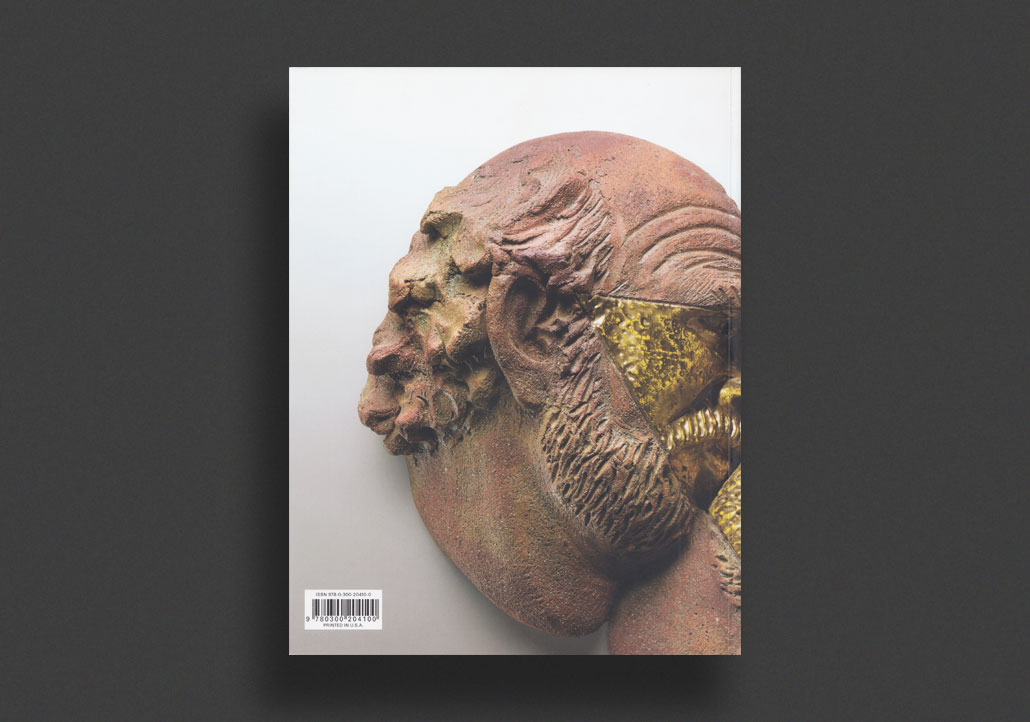
This already out-of-print major survey on renowned French artist Pierre Huyghe (born 1962) chronicles seminal works from the last decade, including his iconic Documenta 13 project "Untilled." An interview between Huyghe and Hans Ulrich Obrist and an essay by Dorothea von Hantelmann accompany drawings, diagrams, photographs, film stills and more.
As New with light cover wear (hence reduced price)