World Food Books' programme is largely produced on Kulin Nation land. We acknowledge the Wurundjeri people of the Kulin Nation as the first and continuing custodians of this land, and pay respect to their Elders past, present, and emerging.
World Food Books is an arts and special interests bookshop in Naarm / Melbourne. Founded in 2010, World Food Books is devoted to the presentation of a rotating, hand-selection of international art, design, literary and counterculture publications with an emphasis on the anti-traditional, the experimental, the avant-garde, the heretic, the marginal.
Presenting new titles alongside rare and out-of-print books, catalogues and journals spanning the fields of modern and contemporary art, design, photography, illustration, film, literature, poetry, cultural theory, philosophy, sexuality, popular and underground culture in its many radical forms, World Food Books wishes to encourage adventurous, thoughtful and open-minded reading, looking, writing, and exchange of publishing and ideas, both current and historical.
As well as our bookshop, located in Melbourne's historical Nicholas Building, all of our inventory is available internationally via our online mail-order service.
World Food Books semi-regularly co-ordinates "Occasions", a programme of exhibits and events at the bookshop and in partnership with other hosts (such as museums and art galleries) that develop out of the activities, relationships and content of the bookshop itself.
World Food Books
The Nicholas Building
37 Swanston Street
Room 5, Level 6
Melbourne 3000
Australia
SHOP HOURS:
Thu–Fri 12–6, Sat 12–5
WEB-SHOP OPEN 24/7
World Food Books
Postal Address:
PO Box 435
Flinders Lane
Victoria 8009
Australia
Art
Theory / Essay
Architecture / Interior
Graphic Design / Typography
Photography
Fashion
Eros
LGBTQ+
Fiction / Poetry
Weird / Speculative / Science Fiction / Horror
Transgressive / Visceral / Abject
Symbolism / Decadence / Fin de siècle
Film / Video
Painting
Sculpture / Installation
Performance / Dance / Theater
Drawing
Sound / Music
Curatorial
Group Shows / Collections
Periodicals
Out-of-print / Rare
Posters / Ephemera / Discs
Signed Books
World Food Books Gift Voucher
World Food Book Bag
Australian Art
Australian Fiction
Australian Science Fiction / Speculative Fiction
Australian Poetry
Australian Photography
Japanese Photography
Conceptual Art
Minimal Art
Dada
'Pataphysics / Oulipo
Fluxus
Concrete Poetry
Pop Art
Surrealism
Arte Povera
Arte Informale / Haute Pâte / Tachism
Nouveau Réalisme / Zero / Kinetic
Situationism / Lettrism
Collage / Mail Art / Xerox Art
Art Brut / Folk / Visionary / Fantastic
Illustration / Graphic Art / Bandes Dessinées
Furniture
Italian Radical Design / Postmodernism
Textiles
Ceramics / Glass
Counterculture
Protest / Revolt
Philosophy
Psychoanalysis
Anthropology
Anarchism
Socialism / Anarchism / Communism / Capitalism
Literary Theory / Semiotics / Language
Feminism / Women's Studies
Gender Studies / Sexuality
Anthropology
Fetishism / BDSM
Drugs / Psychedelia
Crime / Violence
Animal Rights / Veganism
Occult / Esoterica
Ecology / Earth / Alternative Living
Whole Earth / Crafts
All prices in AUD (Australian dollars)
Pick-Ups
Pick-up orders can be collected in our bookshop during opening hours after order date. Please collect any Pick-up orders within 2 weeks of ordering as we have limited storage space. Orders will be released back into stock if not collected within this time. No refunds can be made for pick-ups left un-collected. If you cannot make it in to the bookshop in this time-frame, please choose postage option.
Return Policy
All sales are final. We do accept returns (for refund or exchange) for items received in error. All our orders are packed with special care using heavy-duty padding and cardboard book-mailers or bubble mailers (for smaller books), using reinforcement where required. We cannot take responsibility for any lost, stolen or damaged parcels.
Insurance
Should you wish to insure your package, please email us directly after placing your order and we can organise this at a small extra expense. Although all standard/express tracked packages are very safe and dependable, we cannot take responsibility for any lost, stolen or damaged parcels. We recommend insurance on valuable orders.
Interested in selling your old books, catalogues, journals, magazines, comics, fanzines, ephemera? We are always looking for interesting, unusual and out-of-print books to buy. We only buy books in our fields of interest and specialty, and that we feel we can resell.
We base these prices on desirability, market value, in-print prices, condition and our current stock levels. We offer cash, store credit, and can take stock on consignment. All
about 25% of the price we expect to get when we sell them, or 30% in store credit. We base these prices on desirability, market value, in-print prices, condition and our current stock levels.
Sell your books any day of the week. You can drop them off and return later. If you have a lot of books, we can visit your Sydney home.
We buy books that we feel we can resell. We offer about 25 % of the price we expect to get when we sell them, or 30% in store credit. We base these prices on desirability, market value, in-print prices, condition and our current stock levels.
Philadelphia Wireman
03 August - 01 September, 2018
World Food Books is proud to announce our next Occasion, the first presentation of sculptures by Philadelphia Wireman in Australia.
The Philadelphia Wireman sculptures were found abandoned in an alley off Philadelphia’s South Street on trash night in 1982. Their discovery in a rapidly-changing neighbourhood undergoing extensive renovation, compounded with the failure of all attempts to locate the artist, suggests that the works may have been discarded after the maker’s death. Dubbed the "Philadelphia Wireman" during the first exhibition of this work, in 1985, the maker’s name, age, ethnicity, and even gender remain uncertain. The entire collection totals approximately 1200 pieces, all intricately bound together with tightly-wound heavy-gauge wire (along with a few small, abstract marker drawings, reminiscent both of Mark Tobey and J.B. Murry). The dense construction of the work, despite a modest range of scale and materials, is singularly obsessive and disciplined in design: a wire armature or exoskeleton firmly binds a bricolage of found objects including plastic, glass, food packaging, umbrella parts, tape, rubber, batteries, pens, leather, reflectors, nuts and bolts, nails, foil, coins, toys, watches, eyeglasses, tools, and jewellery.
Heavy with associations—anthropomorphic, zoomorphic, and socio-cultural responses to wrapped detritus—the totemic sculptures by Philadelphia Wireman have been discussed in the context of work created to fulfil the shamanistic needs of alternative religions in American culture. Curators, collectors, and critics have variously compared certain pieces to sculpture from Classical antiquity, Native American medicine bundles, African-American memory jugs, and African fetish objects. Reflecting the artist’s prolific and incredibly focused scavenging impulse, and despite—or perhaps enhanced by—their anonymity, these enigmatic objects function as urban artefacts and arbiters of power, though their origin and purpose is unknown. Philadelphia Wireman, whatever their identity, possessed an astonishing ability to isolate and communicate the concepts of power and energy through the selection and transformation of ordinary materials. Over the course of the past two decades, this collection has come to be regarded as an important discovery in the field of self-taught art and vernacular art.
Presented in collaboration with Fleisher-Ollman Gallery, Philadelphia, and Robert Heald, Wellington.
Susan Te Kahurangi King
02 February - 10 March, 2018
Susan Te Kahurangi King (24 February 1951 - ) has been a confident and prolific artist since she was a young child, drawing with readily available materials - pencils, ballpoint pens and felt-tip markers, on whatever paper is at hand. Between the ages of four and six Susan slowly ceased verbal communication. Her grandparents William and Myrtle Murphy had developed a special bond with Susan so they took on caring responsibilities for extended periods. Myrtle began informally archiving her work, carefully collecting and storing the drawings and compiling scrapbooks. No drawing was insignificant; every scrap of paper was kept. The King family are now the custodians of a vast collection containing over 7000 individual works, from tiny scraps of paper through to 5 meter long rolls.
The scrapbooks and diaries reveal Myrtle to be a woman of great patience and compassion, seeking to understand a child who was not always behaving as expected. She encouraged Susan to be observant, to explore her environment and absorb all the sights and sounds. Myrtle would show Susan’s drawings to friends and people in her community that she had dealings with, such as shopkeepers and postal workers, but this was not simply a case of a grandmother’s bias. She recognised that Susan had developed a sophisticated and unique visual language and sincerely believed that her art deserved serious attention.
This was an unorthodox attitude for the time. To provide some context, Jean Dubuffet coined the term Art Brut in 1945 to describe work created by self-taught artists – specifically residents of psychiatric institutions and those he considered to be visionaries or eccentrics. In 1972 Roger Cardinal extended this concept by adopting the term Outsider Art to describe work made by non-academically trained artists operating outside of mainstream art networks through choice or circumstance. Susan was born in Te Aroha, New Zealand in 1951, far from the artistic hubs of Paris and London that Dubuffet and Cardinal operated in. That Myrtle fêted Susan as a self-taught artist who deserved to be taken seriously shows how progressive her attitudes were.
Susan’s parents Doug and Dawn were also progressive. Over the years they had consulted numerous health practitioners about Susan’s condition, as the medical establishment could not provide an explanation as to why she had lapsed into silence. Dawn educated herself in the field of homeopathy and went on to treat all twelve of her children using these principles – basing prescriptions on her observations of their physical, mental and emotional state.
Doug was a linguist with an interest in philosophy who devoted what little spare time he had to studying Maori language and culture. To some extent their willingness to explore the fringes of the mainstream made them outsiders too but it was their commitment to living with integrity and their respect for individuality that ensured Susan’s creativity was always encouraged.
Even though Susan’s family supported her artistic pursuits, some staff in schools and hospitals saw it as an impediment to her assimilation into the community and discouraged it in a variety of ways. Her family was not always aware of this and therefore did not fully understand why Susan stopped drawing in the early 1990s. However, rather than dwell on the challenges that Susan faced in pursuit of her artistic practice, they prefer to highlight her achievements. In 2008 Susan began drawing again in earnest, after an almost 20 year interruption, and her work is now shown in galleries around the world.
Susan grew up without television and has been heavily influenced by the comics she read as a child. She is absolutely fearless in the appropriation of recognizable characters, such as Donald Duck and Mickey Mouse, in her work. She twists their limbs, contorts their faces, compresses them together, blends them into complex patterned backgrounds - always imbuing them with an incredible energy. Although Susan often used pop culture characters in her work they are not naive or childlike. These are drawings by a brilliant self-taught artist who has been creating exceptional work for decades without an audience in mind.
Mladen Stilinović
"Various Works 1986 - 1999"
02 February 16 - September 10, 2016
Various works 1986 - 1999, from two houses, from the collections of John Nixon, Sue Cramer, Kerrie Poliness, Peter Haffenden and Phoebe Haffenden.
Including: Geometry of Cakes (various shelves), 1993; Poor People’s Law (black and white plate), 1993; White Absence (glasses, ruler, set square, silver spoon, silver ladel with skin photograph and wooden cubes), 1990-1996; Exploitation of the Dead (grey and red star painting, wooden painting, black spoon with red table, red plate), 1984-1990; Money and Zeros (zero tie, paintings made for friends in Australia (Sue, John, Kerrie), numbers painting), 1991-1992; Words - Slogans (various t-shirts) - “they talk about the death of art...help! someone is trying to kill me”, “my sweet little lamb”, “work is a disease - Karl Marx”; Various artist books, catalogues, monographs, videos; Poster from exhibition Insulting Anarchy; "Circular" Croatian - Australian edition; Artist book by Vlado Martek (Dostoyevsky); more.
Thanks to Mladen Stilinović and Branka Stipančić.
Jonathan Walker
Always Will Need To Wear Winter Shirt Blue + Ochre Small Check Pattern
21 August - 21 September, 2015
Untitled
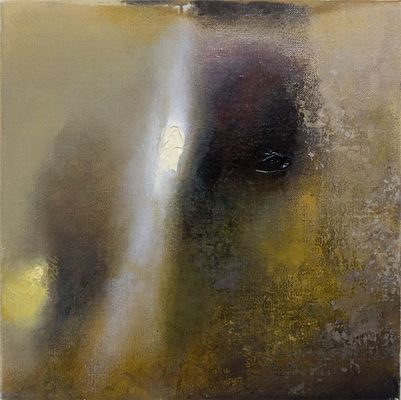
I am not a great reader of poetry but I always return to the work of Melbourne poet, Vincent Buckley (1925- 1988). Perhaps I find his most tantalising piece to be not a finished poem but a fragment left on a scrap of paper discovered on his desk after the poet’s death.
The poetry gathers like oil
In the word-core, and spreads
It has its music meet,
Its music is in movement.
This fragment is more the shell left behind from a volatile thought than a finished poem. I find the last two lines honest but awkward whereas the first two lines work like an arrow. Most likely he could not find a resolution so it was left. Still, in its present form, it remains an eloquent testimony to the ultimate failure of a medium to express mobile thought and sensation, in Buckley’s case, through verbal language. It’s an important matter because this is something all artists have to deal with regardless of the medium.
I have never written a poem, however, I am forever copying fragments from books on paper scraps in a vain effort to fix certain notions in my head. At first, they function as bookmarks that are sometimes returned to when I open the book. But before long, as they accumulate, they fall out littering the table interspersed with A4 photocopies, bills, books and medications.
To return to Buckley’s fragment, the first two lines very much evoke how I paint nowadays. As you age, detail diminishes and patches of light become more luminous and float. I feel the most honest way of dealing with this is by smearing the oil paint on the canvas with the fingers and working close-up, blind. Only if the patches coalesce into an approaching image can the work gain a life.
-
Jonathan Walker was born in Melbourne, Australia and brought up on a dairy farm in Gippsland. In the 1970’s he studied painting at RMIT and won the Harold Wright Scholarship to the British Museum, London. During the 1980’s he exhibited at Pinacotheca Gallery, Richmond and had work shown at the NGV and Heidi City Art Gallery. Over the same period he designed the cover for the “Epigenesi” LP by Giancarlo Toniutti, Italy and conducted a mail exchange work with Achim Wollscheid, Germany. The work with artists through the post resulted in an article published in the bicentenary issue of Art and Australia 1988. He showed in artist run spaces such as WestSpace in the 90’s and 2000’s, and until 2012, taught painting at Victoria University, which is where we (Colleen Ahern and Lisa Radford) as organisers of the exhibition, among many others, had the privilege of being his student.
Walker’s knowledge was imparted to students through the careful selection of music, literature, and artists found in books that he himself had ordered for the library. Walker’s strategy was the generosity of sharing his vast knowledge with references specific to each student and their context.
Walker’s paintings share a similar focus and intimacy.
This exhibition presents a small selection of recent paintings alongside a publication that includes Walker’s writing. Observational and analytical, Walker’s work is a type of material notation — the time of day, colour and how it is blended, the both specific and fleeting location of a reflection on lino or the question of whether a chair leg should be included in a painting.
Please join us on Friday August 21 between 6-8pm to celebrate the opening of the exhibition.
Curated by Colleen Ahern and Lisa Radford.
B. Wurtz
Curated by Nic Tammens
March 26 - April 4, 2015
B.Wurtz works from a basement studio in his home on Manhattan’s Lower East Side.
This local fact is attested to by the plastic shopping bags and newsprint circulars that appear in his work. As formal objects, they don’t make loud claims about their origins but nonetheless transmit street addresses and places of business from the bottom of this long thin island. Like plenty of artists, Wurtz is affected by what is local and what is consumed. His work is underpinned by this ethic. It often speaks from a neighborhood or reads like the contents of a hamper:
“BLACK PLUMS $1.29 lb.”
“Food Bazaar”
“USDA Whole Pork Shoulder Picnic 99c lb.”
“RITE AID Pharmacy, with us it’s personal.”
“H. Brickman & Sons.”
“Sweet Yams 59c lb."
Most of the work in this exhibition was made while the artist was in residence at Dieu Donne, a workshop dedicated to paper craft in Midtown. Here Wurtz fabricated assemblages with paper and objects that are relatively lightweight, with the intention that they would be easily transportable to Australia. This consideration isn’t absolute in Wurtz’s work, but was prescriptive for making the current exhibition light and cheap. Packed in two boxes, these works were sent from a USPS post office on the Lower East Side and delivered to North Melbourne by Australia Post.
Wurtz appears courtesy of Metro Pictures, New York.
Thanks to Rob Halverson, Joshua Petherick, Sari de Mallory, Matt Hinkley, Helen Johnson, Fayen d'Evie, Ask Kilmartin, Lisa Radon, Ellena Savage, Yale Union, and "Elizabeth".
John Nixon
"Archive"
December 15 - January 20, 2014
The presentation of John Nixon's archive offered a rare showcase of this extensive collection of the artist's own publications, catalogues, posters, ephemera, editions and more, from the mid 1980s onwards, alongside a selection of his artworks.
Organized by John Nixon, Joshua Petherick and Matt Hinkley.
<a href=http://wfb.public-office.info/artist/john-nixon>All titles by John Nixon
"Habitat"
at Minerva, Sydney (organised by Joshua Petherick and Matt Hinkley)
November 15 - December 20, 2014
Lupo Borgonovo, Janet Burchill & Jennifer McCamley,
Lewis Fidock, HR Giger, Piero Gilardi, Veit Laurent Kurz,
Cinzia Ruggeri, Michael E. Smith, Lucie Stahl, Daniel Weil, Wols
Press Release:
“...It contained seven objects. The slender fluted bone, surely formed for flight, surely from the wing of some large bird. Three archaic circuitboards, faced with mazes of gold. A smooth white sphere of baked clay. An age-blackened fragment of lace. A fingerlength segment of what she assumed was bone from a human wrist, grayish white, inset smoothly with the silicon shaft of a small instrument that must once have ridden flush with the surface of the skin - but the thing’s face was seared and blackened.”
William Gibson, “Count Zero”, 1986
"Autumn Projects Archive"
Curated by Liza Vasiliou
March 6 - March 15, 2014
World Food Books, in conjunction with the Virgin Australia Melbourne Fashion Festival 2014, presented the Autumn Projects archive, consisting of a selection of early examples in Australian fashion with a particular interest in collecting designers and labels from the period beginning in the 1980’s, who significantly influenced the discourse of Australian Fashion.
Curated by Liza Vasiliou, the exhibition provided a unique opportunity to view pieces by designers Anthea Crawford, Barbara Vandenberg, Geoff Liddell and labels CR Australia, Covers, Jag along with early experimental collage pieces by Prue Acton and Sally Browne’s ‘Fragments’ collection, suspended throughout the functioning World Food Books shop in Melbourne.
H.B. Peace
presented by CENTRE FOR STYLE
November 14, 2013
"Hey Blinky, you say chic, I say same"
Anon 2013
H.B. Peace is a clothing collaboration between great friends Blake Barns and Hugh Egan Westland. Their pieces explore the divergences between 'character’ and ‘personality’ in garments....etc
Special Thanks to Joshua Petherick and Matt Hinkley of WFB and Gillian Mears
and a Very Special Thank you to Audrey Thomas Hayes for her shoe collaboration.
Janet Burchill & Jennifer McCamley
"Aesthetic Suicide"
May 10 - June 8, 2013
The first of our occasional exhibitions in the World Food Books office/shop space in Melbourne, "Aesthetic Suicide" presented a body of new and older works together by artists Janet Burchill & Jennifer McCamley, including videos, prints, a wall work, and publications.
During shop open hours videos played every hour, on the hour.
2018, English
Softcover, 286 pages, 17 x 23 cm
Published by
Valiz / Amsterdam
$56.00 - Out of stock
Edited by Ernst van Alphen, ‘Failed Images’ attempts to understand the divergence between photography and the reality it portrays, analysing the various ways the photograph transforms that which exists before the camera. Because the photographic medium enables very different practices, which in turn results in many kinds of images, it must also be examined from a perspective outside of the dominant approach to the medium, generally called the “snapshot”. This book therefore explores the photographic image by focusing on practices which refuse this conventional approach, namely staged, blurred, under- and overexposed, and archival photography.
2020, English
Softcover, 204 pages, 10.5 x 17 cm
Published by
Lenz Press / Milan
$36.00 - Out of stock
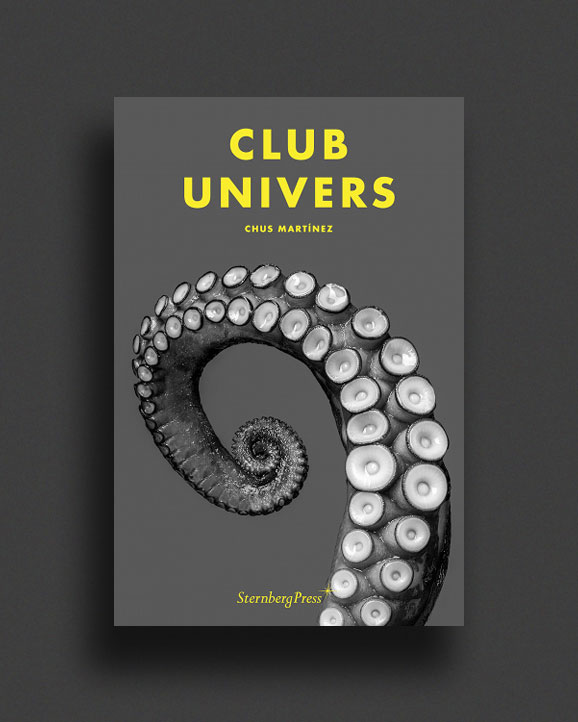
When she started writing the Corona Tales, Chus Martínez had been weighing how people and the media were addressing the outbreak of the virus as an unprecedented disaster. One possible contribution, as curator and writer, would be to write a short story a day and post it on an Instagram account that many could access…
Martínez grew up with her grandparents till she was four, and so did her cousin, while both their parents migrated to a big city—hers to Barcelona, his to Basel—to work. The grandparents' childhood was marked by extreme poverty: the Spanish flu left the grandfather orphan of both parents; the grandmother's family, from the same small village in the north west coast of Spain, was also forced to encourage their children to help and work for money. These circumstances were reflected by them—with no trace of sorrow or bitterness. The recovery was so slow that the author's mother could not afford to attend school and it was only when she married that she and her father enrolled a night course. The stories about these two generations, posted daily, from Basel, around 7pm, offered a chance for gathering, if just virtually, demanding to identify vulnerabilities, how the COVID-19 crisis was being generalized, and how to research ways of doing. Accompanied for the first time in this book by new imagery, they provide tools for reflecting in the past and present tense.
“The effort to smile in the face of devastating circumstances is a sign of generosity that is embedded in our cultural codes. So, what could I do to entertain? Would they smile with the sweet embarrassment of reading stories on an open instagram account?” (Chus Martínez)
Chus Martínez (born 1972 in Ponteceso, Spain) has a background in philosophy and art history. Currently she is the Head of the Institute of Art of the FHNW Academy of Arts and Design in Basel, Switzerland. Before she was the Chief Curator at El Museo Del Barrio (2012-2014), New York. She was dOCUMENTA (13) Head of Department, and Member of Core Agent Group. Previously she was Chief Curator at MACBA, Barcelona (2008-2011), Director of the Frankfurter Kunstverein (2005-2008) and Artistic Director of Sala Rekalde, Bilbao (2002-2005).
For the 56th Biennale di Venezia (2015), Martínez curated the National Pavilion of Catalonia with the filmmaker Albert Serra; for the 51st Biennale di Venezia (2005) she also curated the Cyprus National Pavilion; in 2014/2015 served as alliance of the 14th edition of the Istambul Biennial; in 2008 served as a Curatorial Advisor for the Carnegie International and in 2010 for the 29th Bienal de São Paulo. During her tenure as Director of the Frankfurter Kunstverein she curated solo exhibitions of Wilhelm Sasnal among others; and a series of group exhibitions including “Pensée Sauvage” and “The Great Game To Come”. She was also the founder of the Deutsche Börse Residency Program for international artists, art writers and curators. While at MACBA Martínez curated the Thomas Bayrle retrospective, an Otolith Group monographic show, and an exhibition devoted to television, “Are you ready for TV?” In 2008 Martínez was the curator of the Deimantas Narkevičius retrospective exhibition, “The Unanimous Life” at the Museo de Arte Reina Sofia, Madrid, which traveled to major European museums.
Martínez lectures and writes regularly including numerous catalogue texts and critical essays, and is a regular contributor to Artforum, Mousse and Spike, among other international journals.
2021, English
Softcover, 424 pages, 11 x 18 cm
Published by
Roma / Amsterdam
$54.00 - Out of stock
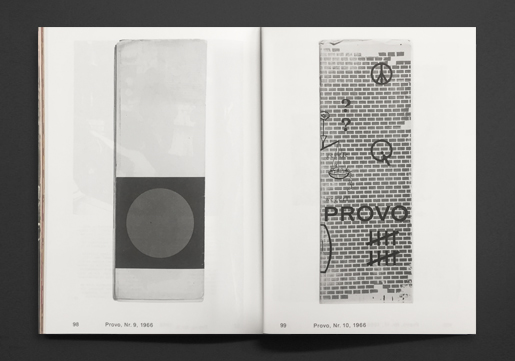
Experimental Jetset’s second volume in its self-reflective series is an inquiry into the role of the city as an infrastructure for language and vice versa, seen through the lens of four significant movements: Constructivism, Situationist International, Provo, and Post-Punk. Emerging from a research project and exhibition by the design studio, the book features extensive footnotes by 20 guest authors, including Linda van Deursen, Owen Hatherley, Adam Pendleton, Simon Reynolds, Lori Waxman, Mimi Zeiger, and others. An added bonus: it comes with a 26-page zine, zooming in on the design typology of the original exhibition.
2020, English
Softcover (w. supplement), 280 pages, 11 x 18 cm
Published by
Roma / Amsterdam
$49.00 - Out of stock
Four years after 'Statement and Counter-Statement' (2015), Experimental Jetset returns with their second paperback for Roma Publications. Whereas the previous publication had a more overall monographic scope, 'Full Scale False Scale' focuses on a single project: the large, site-specific installation that the studio recently created for the Museum of Modern Art in New York, commissioned to coincide with the museum’s reopening in October 2019. Part reader, part collage, the book forms a subjective archive of research material, just as constructed as the installation itself – an investigation that took them from esoteric colour theories to dark political alliances, and from modernist diagonals to postmodern arches.
2008, English
Softcover, 240 pages, 17 x 24 cm
1st Edition, Out of print title / used / good
Published by
Clouds / Auckland
$55.00 $15.00 - Out of stock
A comprehensive anthology, The Aotearoa Digital Arts Reader provides a snapshot of digital art practice in Aotearoa New Zealand. Editors Stella Brennan and Su Ballard present essays, artists' pageworks and personal accounts that explore the production and reception of digital art. Ranging from research into the preservation of digital artworks to the environmental impact of electronic culture, from discussions of lo-tech aesthetics to home gaming, and from sophisticated data mapping to pre-histories of new media, this book presents a screen grab of digital art in Aotearoa New Zealand.
All contributors are members of Aotearoa Digital Arts (ADA), New Zealand's only digital artists' network. With its mix of work by artists, theorists and educators, this reader represents some of the best new thinking about digital art practices in Aotearoa New Zealand, reflecting the politics of location, yet highly relevant to the wider contexts of digital media art and culture.
Edited by Stella Brennan and Su Ballard
Texts by Adam Hyde, Andrew Clifford, Caroline McCaw, Danny Butt, Douglas Bagnall, Eu Jin Chua, Helen Varley Jameison, Jacquie Clarke, Janine Randerson, Julian Oliver, Julian Priest, Karl D.D. Willis, Kurt Adams, Lissa Mitchell, Maree Mills, Melanie Swalwell, Morgan Oliver, Sally Jane Norman, Sean Cubitt & Bevin Yeatman, Stella Brennan, Stephen Cleland, Su Ballard, Trudy Lane & Ian Clothier, Vicki Smith & Adam Hyde, Zita Joyce
Published by Aotearoa Digital Arts and Clouds
2013, English
Softcover, 344 pages (249 color ills.), 18 x 24 cm
Published by
Sternberg Press / Berlin
$105.00 $30.00 - Out of stock
Contributions by Jan Verwoert, Our Literal Speed, Boris Groys, Pavel Pepperstein, Renata Salecl, Benedict Seymour, Konstanze Schmitt, Pelin Tan and Anton Vidokle, Ritwik Ghatak, Aleksandr Rodchenko, Clemens von Wedemeyer, Stephan Dillemuth, Roee Rosen, Christian von Borries, Keti Chukhrov, Josef Dabernig, Olga Chernysheva, Władysław Strzemiński, Carlfriedrich Claus et al.
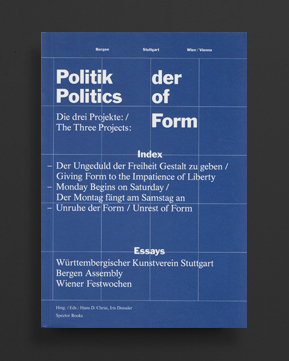
Monday Begins on Saturday is the title of a fantasy novel from the 1960s about a magical research institute in the Soviet Union, written by Arkady and Boris Strugatsky. It is also the title of the first edition of Bergen Assembly, a new triennial of contemporary art. The project—which takes the form of an exhibition and this book—imagines a contemporary rewriting of the novel as an archipelago of fictitious research institutes. Through an aggregate narrative of essays, works of fiction, artworks, heterogeneous research materials, and curatorial notes, it delves into the idea that contemporary “artistic research” may be the place where the dialectical materialist magic of Monday Begins on Saturday has its afterlife.
Design by textandpictures
2020, English
Softcover, 172 pages, 17 x 24 cm
Published by
Cosa Mentale / Marseille
$53.00 - Out of stock
Jorge Luis Borges, Ludwig Mies van der Rohe, Yasushiro Ozu, Mark Rothko, Jorge Oteiza - a writer, an architect, a filmmaker, a painter, a sculptor. Five personalities of the 20th century separated by their mediums, their subjects of investigation and their disciplines. They are brought together in this book by the need to save art from its current alteration, and to bring it back to a more contemplative and introspective dimension.
It is a form of spiritual revolt that architect Carlos Martí Arís (Barcelona, 1948 - 2020) highlights through this transversal analysis of different artistic expressions that mix and meet to enrich his reflection. The key words of this consideration, which has the appearance of a manifesto, are: silence, contemplation, renunciation, transparency, anonymity and atemporality. Twenty years later, the lesson of Carlos Martí Arí is contemporary and of fundamental importance for our discipline today
Edited by Claudia Mion and Fabio Licitra
Cosa Mentale is a collective and independent publishing project which promotes new reflections within the field of architecture.
2021, English
Hardcover, 320 pages, 23 x 29 cm
Published by
Stolpe Publishing / Stockholm
$70.00 - Out of stock
In this thorough critical appraisal, 20 specialists on modern art, art history, philosophy and religious studies examine the unique art, the cultural circumstances and art-historical positioning of Swedish abstractionist Hilma af Klint. Topics explored range from early abstract art and the impact of Darwinism to Goethe’s colour theory, as well as the importance of occult religious movements such as theosophy and anthroposophy that influenced the early modernists, and discussions of af Klint’s own personal diary notes and research.
The book is based on the seminars that were held in conjunction with the exhibition Hilma af Klint: A Pioneer of Abstraction in 2013. This extremely successful exhibition attracted a record number of visitors to the Moderna Museet in Stockholm, after which it continued to the Hamburger Bahnhof Museum in Berlin and the Louisiana Museum of Modern Art in Denmark.
1974, English
Hardcover (w. dust jacket), 452 pages, 23.5 x 16 cm
1st Edition, Out of print title / used / very good
Published by
Oxford University Press / New York
$90.00 - Out of stock
First hardcover edition of the legendary Visionary Film: The American Avant-Garde by P. Adams Sitney, published by Oxford University Press in 1974.
Critics hailed Visionary Film as the most complete work written on the exciting, often puzzling, and always controversial genre of American avant-garde film. This book has remained the standard text on American avant-garde film since the publication of its first edition in 1974. "Without question it is the first such book on the avant-garde film - the first one that probes this field in such depth, with such perspective and vision, with such insight and intelligence." - Jonas Mekas, The Village Voice
From the book jacket:
The first book to provide a coherent view of the avant-garde film tradition in America, this is also the first book to assess in depth the work of the major film-makers in this tradition. Twenty-four film-makers are fully discussed and many films of each are analyzed, including Maya Deren's Meshes of the Afternoon, Kenneth Anger's Scorpio Rising, Jonas Mekas's Diaries, Notes, and Sketches, Stan Brakhage's Dog Star Man, Jack Smith's Flaming Creatures, and Michael Snow's Wavelength. Liberal use of original and previously unpublished documents and statements by the film-makers themselves shows the theoretical contributions of these film-makers to the general theory of film and adds richness and weight to the study. Sixty-six still photographs from films further enhance the value of the text.
P. Adams Sitney's approach is historical as well as analytical. He relates the avant~garde film tradition to a larger native American tradition encompassing all the arts: that of visionary romanticism. He also connects it to the European avant-garde film of the 1920s, seeing the origin and development of a subjective cinema (and the forms it generates) in the kind of responses that the independent film-makers of the late 1940s made to their Dadaist and Surrealist sources. Sitney shows that far from being a chaos of different styles, the American avant-garde film tradition consists of an ordered progression of types: the 'trance' film, the 'mythopoeic' film, the 'graphic' film, the 'lyrical' film, the 'diary' film, and the 'structural' film. With hundreds of independent films being made each year, with the increased acceptance of avant-garde films by the nation's film archives and the academic community, the need for this kind of study has long been felt. It is sure to be widely read and discussed.
About the author:
P. Adams Sitney is Co-Director of the Anthology Film Archives in New York City and teaches cinema at New York University. He has also lectured extensively on film at museums of modern art, universities, and cinematheques in Europe and in South America. An editor of Film Culture magazine, he is the editor of the Film Culture Reader.
Chapters: 1. Meshes of the Afternoon 2. Ritual and Nature 3. The Potted Psalm 4. The Magus 5. From Trance to Myth 6. The Lyrical Film 7. Major Mythopoeia 8. Absolute Animation 9. The Graphic Cinema: European Perspectives 10. Apocalypses and Picaresques 11. Recovered Innocence 12. Structural Film 13. Notes 14. Index
2021, English
Hardcover, 512 pages, 17 x 24.5 cm
Published by
Lars Müller / Zürich
$100.00 - Out of stock
In the 1890s, the Berlin artist, sculptor and teacher Karl Blossfeldt (1865-1932) started to photograph plants, seeds and other illustrative material from nature for the purpose of teaching his students about the patterns and designs found in natural forms. His close-ups of the smallest plant parts, magnified up to 30 times their natural size, startle us as they dramatically highlight the geometrical and sculptural properties of plants. Published in 1928, his first collection of photographs, Urformen der Kunst (later translated into English as Art Forms in Nature) became an international bestseller and remains one of the most significant photobooks of the 20th century.
Karl Blossfeldt: Variations is the first monograph to examine the reception of Blossfeldt’s work. Drawing on unpublished materials, it analyzes the photographs’ replication in teaching materials, pattern books, art books and in the pages of the illustrated press. The six sections of the book trace the paths that Blossfeldt’s legendary plant motifs took in their incarnations as specimens, illustrations, patterns, analogues, models and abstractions from 1890 to 1945. Thematic contemporary appraisals illustrating the rediscovery of Blossfeldt's motifs in design and architecture over the past 20 years complement this new perspective on the beloved German photographer.
Ulrike Meyer Stump is a lecturer in the Knowledge Visualisation program in the Department of Design at the Zurich University of the Arts, Switzerland. She holds an MA in Museology from the Ecole du Louvre in Paris and a PhD in Art History from Princeton University. Her work as a writer, editor, and curator focuses on the photographs of Karl Blossfeldt, contemporary photography, and the history of the photo book.
2020, English
Softcover with flaps, 120 pages, 12.5 x 19. 5cm
Published by
MACK / London
$22.00 - Out of stock
"The tension implicit in any photograph is the tension between an inert, black-and-white, two-dimensional object, and an event that actually existed in the phenomenal world. A successful photograph mediates, though never completely resolves that tension.”
In 1972, as his career was beginning to take off, Lewis Baltz conducted a revealing interview, his first considered statement about photography. Never published, the interview has recently resurfaced, and is printed here for the first time. In an increasingly sardonic exchange Baltz describes the character of his practice, articulates his position within and against the world of photography, and comments on his intellectual heritage and professional ambition. A penetrating exploration of the character of his medium, Baltz’s artistry and mercurial presence are strikingly laid bare.
Baltz’s interview is fully annotated with an introductory essay by Duncan Forbes.
DISCOURSE is a series of small books in which a cultural theorist, curator or artist explores a theme, an artwork or an idea in an extended illustrated text.
2018, English
Softcover, 216 pages, 20 x 13 cm
Published by
Kunstverein / Amsterdam
$34.00 - Out of stock
'The Joke Book' is the first printed edition of the complete jokes & messages file that was found on the computer of famed American art dealer, curator, author, researcher and champion of conceptual art Seth Siegelaub (1941-2013) by his partner Marja Bloem. It contains jokes, quotes, and pieces of advice, that he collected since 1999 and regularly redistributed via email amongst his friends.
With contributions by Alex Alberto, John Baldessari, Marja Bloem, Myrna Bloom, Martin Browne, Alan Kennedy, David Kunzle, Joel Miller, Loren Miller, Kay Robertson, Laurent Sauerwein, Seth Siegelaub, Joan Simon, Kira Simon-Kennedy, Peter Sinclair, Steven Wright, and an introduction by Huan Hsu (written after a long conversation with Marja Bloem).
2017, English
Hardcover, 192 pages, 17.7 x 22.8 cm
Published by
University of Chicago Press / Chicago
$65.00 - Out of stock
The work of German sculptor Isa Genzken is brilliantly receptive to the ever-shifting conditions of modern life. In this first book devoted to the artist, Lisa Lee reflects on Genzken's tendency to think across media, attending to sculptures, photographs, drawings, and films from the entire span of her four-decade career, from student projects in the mid-1970s to recent works seen in Genzken's studio.
Through penetrating analyses of individual works as well as archival and interview material from the artist herself, Lee establishes four major themes in Genzken's oeuvre: embodied perception, architecture and built space, the commodity, and the body. Contextualizing the sculptor's engagement with fellow artists, such as Joseph Beuys and Bruce Nauman, Lee situates Genzken within a critical and historical framework that begins in politically fraught 1960s West Germany and extends to the globalized present. Here we see how Genzken tests the relevance of the utopian aspirations and formal innovations of the early twentieth century by submitting them to homage and travesty.
Sure to set the standard for future studies of Genzken's work, Isa Genzken is essential for anyone interested in contemporary art.
2021, English
Softcover, 88 pages, 21 x 27.5 cm
Published by
Primary Information / New York
$40.00 - Out of stock
First published in 1971, A Documentary HerStory of Women Artists in Revolution documents the efforts of a group of women artists, filmmakers, writers, critics, and cultural workers organized around advancing women in the art world.
Women Artists in Revolution (W.A.R.) was founded as the women’s caucus of the Art Workers’ Coalition and was active from 1969 to 1971. This publication gathers manifestos, statements, and declarations by W.A.R. members; articles and reports about gendered and racialized discrimination in the arts; pro-abortion fliers and protest ephemera; and grant applications and reports detailing the founding of the Women’s Interart Center in spring 1970. Also included are documentation of key actions, including the 1970 Artists’ Strike against Racism, Sexism, Repression, and War; and correspondence with officials at the Whitney Museum of American Art, the Guggenheim Foundation, and the Museum of Modern Art calling for 50 percent gender equity in exhibition programming, increased grant and fellowship support for women, and structural representation at the management and curatorial level, among other demands.
A Documentary HerStory of Women Artists in Revolution was originally printed at the Women’s Media Center in 1971 by Women Artists in Revolution. A second edition, published in 1973 by Women’s Interart Center, features a preface and addendum with retrospective reflections on the history and activities of W.A.R. and the publication itself, two years after the group’s dissolution. It is this second edition that is reproduced here in facsimile form.
Members of W.A.R. included Juliette Gordon, Sara Saporta, Therese Schwartz, Muriel Castanis, Cindy Nemser, Dolores Holmes, Betsy Jones, Silvia Goldsmith, Jan McDevitt, Lucy Lippard, Grace Glueck, Poppy Johnson, Brenda Miller, Faith Ringgold, Emily Genauer, Agnes C. Denes, Doloris O’Kane, and Jacqueline Skiles.
2021, English
Hardcover, 384 pages, 25.4 x 29.2 cm
Published by
Yale University Press / New Haven
$120.00 - Out of stock
A sweeping retrospective exploring the oeuvre of an incandescent artist, revealing the ways that Mitchell expanded painting beyond Abstract Expressionism as well as the transatlantic contexts that shaped her.
Joan Mitchell (1925-1992) was fearless in her experimentation, creating works of unparalleled beauty, strength, and emotional intensity. This gorgeous book unfolds the story of an artistic master of the highest order, revealing the ways she expanded abstract painting and illuminating the transatlantic contexts that shaped her. Lavish illustrations cover the full arc of her artistic practice, from her exceptional New York paintings of the early 1950s to the majestic multipanel compositions she made in France later in her career. Signature works are represented here along with rarely seen paintings, works on paper, artist's sketchbooks, and photographs of Mitchell's life, social circle, and surroundings.
Featuring scholarly texts, in-depth essays, and artistic and literary responses, this book is organized in ten chronological chapters. Each chapter centers on a closely related suite of paintings, illuminating a shifting inner landscape colored by experience, sensation, memory, and a deep sense of place. Presenting groundbreaking research and a variety of perspectives on her art, life, and connections to poetry and music, this unprecedented volume is an essential reference for Mitchell's admirers and those just discovering her work.
Edited by Sarah Roberts and Katy Siegel; With contributions by Paul Auster, Gisele Barreau, Eric de Chassey, Jennifer Hickey and David Reed, Eileen Myles, Richard Shiff, Joyce Pensato, Jenni Quilter, et al.
Sarah Roberts is Andrew W. Mellon Foundation Curator of Painting and Sculpture at the San Francisco Museum of Modern Art. Katy Siegel is Senior Programming and Research Curator at the Baltimore Museum of Art and Eugene V. and Clare E. Thaw Endowed Chair in Modern American Art at Stony Brook University, New York.
2015, English
Softcover, 108 pages, 12 x 21 cm
Published by
The Physics Room Trust / Auckland
$25.00 $10.00 - Out of stock
Reading Walking Writing is a collection of writing commissioned after a workshop of the same name, convened by Abby Cunnane and Melanie Oliver and held at Cass, Canterbury, in early 2015.
Featuring contributions from J. Alexander, Rebecca Boswell, Eleanor Cooper, Abby Cunnane, Sophie Davis, Joan Fleming, Matilda Fraser, Chloe Geoghegan, Ioana Gordon-Smith, Jamie Hanton, Anneke Jaspers, Gregory Kan, Melanie Kung, Keir Leslie, Melanie Oliver, Ander Rennick, Evangeline Riddiford Graham, Richard Shepherd and Georgina Watson.
Published by The Physics Room
Edited by Abby Cunnane and Melanie Oliver
Designed by Ella Sutherland
1977/2011, English
Softcover, 222 pages, 11.4 x 16.5 cm
Published by
Avon Books / New York
$22.00 - Out of stock
In the past 31 years, there has been a lot of ink--actual and virtual--spilled on the subject of the Necronomicon. Some have derided it as a clumsy hoax; others have praised it as a powerful grimoire. As the decades have passed, more information has come to light both on the book's origins and discovery, and on the information contained within its pages. The Necronomicon has been found to contain formula for spiritual trans-formation, consistent with some of the most ancient mystical processes in the world, processes that were not public knowledge when the book was first published, processes that involve communion with the stars.
In spite of all the controversy, the first edition sold out before it was published. And it has never been out of print since then. This year, the original designer of the 1977 edition and the original editor have joined forces to present a new, deluxe edition of the most feared, most reviled, and most desired occult book on the planet.
2013, English
Softcover, 120 pages, 15 x 21cm
Published by
Fogo Islands Arts / Newfoundland
Sternberg Press / Berlin
$64.00 $10.00 - Out of stock
Writing is central to Zin Taylor’s practice. Parallel to a number of artist books, Taylor has made a series of sculptural works the artist proposes as a form of storytelling. How else to understand his project The Story of Stripes and Dots but to “read” the eponymous objects he makes to propel it forward? Taylor conceives of his sculptural components—stripes and dots in many variations—as words in a sentence, the articulation of which can be ongoing. By substituting objects for words, Taylor seeks not to assert equivalence between the two so much as establish the essentially spatialized perception he has of the way language functions. A striking clarity defines the artist’s vision. Taylor sees in language—in art—the highly defined dimensions of a world he can work within.
This catalogue accompanies Taylor’s exhibition “The Story of Stripes and Dots (Chapter 5)” at Fogo Island Gallery (September 27, 2013–March 23, 2014), which follows his two-part residency with Fogo Island Arts in 2010 and 2012. Featuring essays by Zoë Gray and Saelan Twerdy, and Taylor in conversation with Patrick Staff and Robin Simpson, the book also presents the artist’s portfolio An Index Describing the Individual 19 Thoughts about Stripes and Dots Arranged on a Vitrine Made of Brass and Glass.
Edited by ROSEMARY HEATHER, NICOLAUS SCHAFHAUSEN
Contributions by ZOË GRAY, ROBIN SIMPSON, PATRICK STAFF, SAELAN TWERDY
2017, English / French
Softcover, 268 pages, 25 x 18.9 cm
Published by
Sternberg Press / Berlin
CAC / Brétigny
$59.00 $10.00 - Out of stock
Contributions by Atelier Van Lieshout (AVL), Robert Breer, Daniel Buren, Maurizio Cattelan, Nicolas Chardon, Marie Cool Fabio Balducci, Lionel Estève, Esther Ferrer, Cyprien Gaillard, Jens Haaning, David Lamelas, François Laroche-Valière (Cie Studio Laroche-Valière), Mathieu Lehanneur, Teresa Margolles, Dominique Mathieu, Hans Walter Müller, Rainer Oldendorf, Roman Ondák, Christodoulos Panayiotou, Gianni Pettena, Pratchaya Phinthong, R&Sie(n) (François Roche, Stéphanie Lavaux, Jean Navarro), Matthieu Saladin, Gabriel Sierra, Santiago Sierra, Xavier Veilhan, VIER5, Annie Vigier & Franck Apertet (les gens d’Uterpan), Lois Weinberger
Organized by curator Pierre Bal-Blanc, the experimental architectural program “Project Phalanstère” consisted of a series of site-specific artworks in the Parisian suburbs. Taking place from 2003 to 2014, these projects developed a creative space extended in time. Here, in contrast with the duration of the work schedule, in which one task follows another, the simultaneity of life’s forces asserted its rhythm. Some works exceeded the conventional time and space of an exhibition: Lionel Estève’s myope et amnésique (2005), for example, was conceived to be larger than any one viewer can see; through the displacement of existing objects, both Cyprien Gaillard and Lois Weinberger reflected upon permanence and the monument; Christodolous Panayiotou and Jens Hanning made subtle alterations to existing architecture, playing with the material presence and experience of light; and so on.
This book proposes to adopt a new syntax. It does not simply call for a renewal of the terminology used in the field of contemporary art programming. Its syntax has taken shape by progressively building on the complex materiality of artworks in a specific context—an art center located in the Parisian suburbs—and not by contriving itself with the help of words and discourses uttered from an abstract perspective. The political aims of “Project Phalanstère” appear in the ungrammatical formulas that the works articulate and in the active resistance that they manifest against a normative authority that, although it accepts the play of words, continues to enforce the disciplinary activity of arts administration. Over one hundred pages of images of the installed works opens the volume, followed by the individual artworks according to a score that denotes use, nature, and location, annotated to place each work within a larger cultural context. A comprehensive timeline of the exhibitions concludes the volume.
Copublished with CAC Brétigny and Work Method, Paris
Design by VIER5
2013, English
Softcover, 156 pages, 190 x 295 mm
Published by
Afterall / London
$20.00 $5.00 - Out of stock
Afterall 34 – Autumn/Winter 2013
Features:
Contextual Essays:
Taking Part in the Museum; Social Realism: The Turns of a Term in the Philippines
Artists:
Lucy McKenzie (Lucy McKenzie: Manners; From the Highlands to Clydebank: ‘The Inventors of Tradition’; Rodchenko’s Worker’s Suit Had No Fly)
Mary Ellen Carroll (This Is Not About a Building: Mary Ellen Carroll’s prototype 180; From Busan with Humour)
Haegue Yang (Haegue Yang: Untimely Histories)
Lili Dujourie (The Actions of Bodies: Approaching Lili Dujourie; Lili Dujourie: Desire and Withdrawal)
Events, Works, Exhibitions:
Something I’ve Wanted to Do But Nobody Would Let Me: Mike Kelley’s ‘The Uncanny’ and Bodyimage: Lene Berg’s Kopfkino
and much more.
2020, English
Softcover, 280 pages, 16.2 x 21.8 cm
Published by
Sternberg Press / Berlin
$54.00 $30.00 - Out of stock
Not long ago, a melancholic left and a manic neoliberalism seemed to arrive at an awkward consensus: the foreclosure of futurity. Whereas the former mourned the failure of its utopian project, the latter celebrated the triumph of a global marketplace. The radical hope of realizing a singularly different, more equitable future displaced by a belief that the future had already come to pass, limiting post-historical society to an uneventful life of endless accumulation. Today, amidst an abundance of neofuturisms, posthumanisms, futurologies, speculative philosophies and accelerationist scenarios, there is as well an expanding awareness of a looming planetary catastrophe driven by the extractionist logic of capitalism. Despite this return to the future, the temporal horizon of our present moment is perhaps more aptly characterized by the “shrinking future” of just-in-time production, risk management, high-frequency trading, and the futures market. In Futurity Report, theorists, historians, and artists address the precarious futurity of the notion of the future itself.
Texts by Eric C. H. De Bruyn, T. J. Demos, Haytham El-Wardany, Kodwo Eshun, Natascha Sadr Haghighian, Sven Lütticken, Silvia Maglioni, Pedro Neves Marques, Achille Mbembe, Doreen Mende, China Miéville, Ana Teixeira Pinto, Johannes Paul Raether, Felicity D. Scott, Kerstin Stakemeier, Graeme Thomson, Marina Vishmidt, Mckenzie Wark
2020, English
Softcover, 192 pages, 11 x 18 cm
Published by
Verso / London
$26.00 - Out of stock
Simone de Beauvoir said, “One is not born, but rather becomes, a woman.” The glitch announces: One is not born, but rather becomes, a body.
The divide between the digital and the real world no longer exists: we are connected all the time. What must we do to work out who we are, and where we belong? How do we find the space to grow, unite and confront the systems of oppression? This conflict can be found in the fissures between the body, gender and identity. Too often, the glitch is considered a mistake, a faulty overlaying, a bug in the system; in contrast, Russell compels us to find liberation here. In a radical call to arms, Legacy Russell argues that we need to embrace the glitch in order to break down the binaries and limitations that define gender, race, sexuality.
Glitch Feminism is a vital new chapter in cyberfeminism, one that explores the relationship between gender, technology and identity. In an urgent manifesto, Russell reveals the many ways that the glitch performs and transforms: how it refuses, throws shade, ghosts, encrypt, mobilises and survives. Developing the argument through memoir, art and critical theory, Russell also looks at the work of contemporary artists who travel through the glitch in their work. Timely and provocative, Glitch Feminism shows how an error can be a revolution.
2017, English
Softcover, 200 pages, 11.8 x 16.5 cm
Published by
Sternberg Press / Berlin
The Serving Library / New York
$25.00 $10.00 - Out of stock
Edited by Francesca Bertolotti-Bailey, Stuart Bertolotti-Bailey, Angie Keefer, David Reinfurt
With contributions by Vincenzo Latronico, Mathew Kneebone & James Langdon, Sarah Demeuse, Johan Hjerpe, 9mother9horse9eyes9, Jumana Manna & Robert Wyatt, Lucy McKenzie, Mark de Silva, Jocelyn Penny Small, Abigail Reynolds
This issue comprises various outlooks on “perspective.” This might be taken to mean something as specific as a particular opinion or as general as an axonometric projection; in short, different ways and means of looking at the world. And so we find Vincenzo Latronico attempting to get in touch with E.T., a collection of Lucy McKenzie’s illusory quodlibets, a conversation between Jumana Manna and Robert Wyatt on art and ethics, a timely analysis of “Lifestyles of the Rich and Famous” by Sarah Demeuse, along with other points of view from Mark de Silva, Jocelyn Penny Small, Abigail Reynolds, James Langdon & Mathew Kneebone, Johan Hjerpe, and the inimitable 9mother9horse9eyes9.
Published by The Serving Library
2011, English/German
Softcover, 240 pages, 24 x 30 cm
Published by
Sternberg Press / Berlin
$79.00 $30.00 - Out of stock
With texts by Sabeth Buchmann, Anselm Franke, Ariane Müller, Branden Joseph, Stefanie Schulte Strathaus, Ian White, Axel John Wieder
Poor Man's Expression examines the relationship between film, video, technology, and art, with a particular focus on the reciprocal influences between conceptual art and experimental film. The publication is based on the eponymous exhibition in Berlin in 2006, but represents an independent compendium of texts and images beyond the show. Works, lectures and performances by international artists, created for the exhibition and expanded for the publication, are set alongside historical experimental films from the archive of the Freunde der Deutschen Kinemathek in Berlin. The authors and artists respond to the questions that arise as to the semantics of critical and experimental conceptual art, medial representation, and the expansion of a concept of technology towards social functions and psychology; they explore problems of medial control, intellectual property, and a changing concept of the public.
as a point of departure we have assumed that there was once a close relationship between forms that now exist rather separately, namely the realms of visual art, experimental film, literature, poetry, music – and very much the development of technology, too. what is it supposed to mean that 16mm projectors now occupy their luxurious final performance sites at art societies and galleries, while iphone youtube (without open source codecs, to be sure) is the current way to watch a hollis frampton interview.
the other way around, isn’t the gentle entry of the genre of "experimental film" into the realm of "media art" of the 1980s and 1990s itself a transformation analog to general social and medial development brought about by the development of individualization and consumer society? in poor man's expression we have sought, through an advanced setting ("affirmative" neon light surfaces, and the exhibition's "paradoxical" bipartite spatial principle) to address the surrounding "corporate public" architecture of the sony center as well as the film archive deep underground and the dark cinema space of the "avant-garde cinema."
Artists: Stephanie Taylor, Sebestyén Kodolányi, Sebastian Lütgert, Henrik Olesen, Mathias Poledna, Sean Snyder, Daria Martin, Kirsten Pieroth, Martin Ebner, Florian Zeyfang
Images: Anthony Balch, Len Lye, Carolee Schneeman, Bruce Conner, Harry Smith, Joyce Wieland, George Landow, Marie Menken, Ken Jacobs, Rober Breer, Emile Cohl, a.o.
In collaboration with Arsenal Institute for Film and Video art