World Food Books' programme is largely produced on Kulin Nation land. We acknowledge the Wurundjeri people of the Kulin Nation as the first and continuing custodians of this land, and pay respect to their Elders past, present, and emerging.
World Food Books is an arts and special interests bookshop in Naarm / Melbourne. Founded in 2010, World Food Books is devoted to the presentation of a rotating, hand-selection of international art, design, literary and counterculture publications with an emphasis on the anti-traditional, the experimental, the avant-garde, the heretic, the marginal.
Presenting new titles alongside rare and out-of-print books, catalogues and journals spanning the fields of modern and contemporary art, design, photography, illustration, film, literature, poetry, cultural theory, philosophy, sexuality, popular and underground culture in its many radical forms, World Food Books wishes to encourage adventurous, thoughtful and open-minded reading, looking, writing, and exchange of publishing and ideas, both current and historical.
As well as our bookshop, located in Melbourne's historical Nicholas Building, all of our inventory is available internationally via our online mail-order service.
World Food Books semi-regularly co-ordinates "Occasions", a programme of exhibits and events at the bookshop and in partnership with other hosts (such as museums and art galleries) that develop out of the activities, relationships and content of the bookshop itself.
World Food Books
The Nicholas Building
37 Swanston Street
Room 5, Level 6
Melbourne 3000
Australia
SHOP HOURS:
Thu–Fri 12–6, Sat 12–5
WEB-SHOP OPEN 24/7
World Food Books
Postal Address:
PO Box 435
Flinders Lane
Victoria 8009
Australia
Art
Theory / Essay
Architecture / Interior
Graphic Design / Typography
Photography
Fashion
Eros
LGBTQ+
Fiction / Poetry
Weird / Speculative / Science Fiction / Horror
Transgressive / Visceral / Abject
Symbolism / Decadence / Fin de siècle
Film / Video
Painting
Sculpture / Installation
Performance / Dance / Theater
Drawing
Sound / Music
Curatorial
Group Shows / Collections
Periodicals
Out-of-print / Rare
Posters / Ephemera / Discs
Signed Books
World Food Books Gift Voucher
World Food Book Bag
Australian Art
Australian Fiction
Australian Science Fiction / Speculative Fiction
Australian Poetry
Australian Photography
Japanese Photography
Conceptual Art
Minimal Art
Dada
'Pataphysics / Oulipo
Fluxus
Concrete Poetry
Pop Art
Surrealism
Arte Povera
Arte Informale / Haute Pâte / Tachism
Nouveau Réalisme / Zero / Kinetic
Situationism / Lettrism
Collage / Mail Art / Xerox Art
Art Brut / Folk / Visionary / Fantastic
Illustration / Graphic Art / Bandes Dessinées
Furniture
Italian Radical Design / Postmodernism
Textiles
Ceramics / Glass
Counterculture
Protest / Revolt
Philosophy
Psychoanalysis
Anthropology
Anarchism
Socialism / Anarchism / Communism / Capitalism
Literary Theory / Semiotics / Language
Feminism / Women's Studies
Gender Studies / Sexuality
Anthropology
Fetishism / BDSM
Drugs / Psychedelia
Crime / Violence
Animal Rights / Veganism
Occult / Esoterica
Ecology / Earth / Alternative Living
Whole Earth / Crafts
All prices in AUD (Australian dollars)
Pick-Ups
Pick-up orders can be collected in our bookshop during opening hours after order date. Please collect any Pick-up orders within 2 weeks of ordering as we have limited storage space. Orders will be released back into stock if not collected within this time. No refunds can be made for pick-ups left un-collected. If you cannot make it in to the bookshop in this time-frame, please choose postage option.
Return Policy
All sales are final. We do accept returns (for refund or exchange) for items received in error. All our orders are packed with special care using heavy-duty padding and cardboard book-mailers or bubble mailers (for smaller books), using reinforcement where required. We cannot take responsibility for any lost, stolen or damaged parcels.
Insurance
Should you wish to insure your package, please email us directly after placing your order and we can organise this at a small extra expense. Although all standard/express tracked packages are very safe and dependable, we cannot take responsibility for any lost, stolen or damaged parcels. We recommend insurance on valuable orders.
Interested in selling your old books, catalogues, journals, magazines, comics, fanzines, ephemera? We are always looking for interesting, unusual and out-of-print books to buy. We only buy books in our fields of interest and specialty, and that we feel we can resell.
We base these prices on desirability, market value, in-print prices, condition and our current stock levels. We offer cash, store credit, and can take stock on consignment. All
about 25% of the price we expect to get when we sell them, or 30% in store credit. We base these prices on desirability, market value, in-print prices, condition and our current stock levels.
Sell your books any day of the week. You can drop them off and return later. If you have a lot of books, we can visit your Sydney home.
We buy books that we feel we can resell. We offer about 25 % of the price we expect to get when we sell them, or 30% in store credit. We base these prices on desirability, market value, in-print prices, condition and our current stock levels.
Philadelphia Wireman
03 August - 01 September, 2018
World Food Books is proud to announce our next Occasion, the first presentation of sculptures by Philadelphia Wireman in Australia.
The Philadelphia Wireman sculptures were found abandoned in an alley off Philadelphia’s South Street on trash night in 1982. Their discovery in a rapidly-changing neighbourhood undergoing extensive renovation, compounded with the failure of all attempts to locate the artist, suggests that the works may have been discarded after the maker’s death. Dubbed the "Philadelphia Wireman" during the first exhibition of this work, in 1985, the maker’s name, age, ethnicity, and even gender remain uncertain. The entire collection totals approximately 1200 pieces, all intricately bound together with tightly-wound heavy-gauge wire (along with a few small, abstract marker drawings, reminiscent both of Mark Tobey and J.B. Murry). The dense construction of the work, despite a modest range of scale and materials, is singularly obsessive and disciplined in design: a wire armature or exoskeleton firmly binds a bricolage of found objects including plastic, glass, food packaging, umbrella parts, tape, rubber, batteries, pens, leather, reflectors, nuts and bolts, nails, foil, coins, toys, watches, eyeglasses, tools, and jewellery.
Heavy with associations—anthropomorphic, zoomorphic, and socio-cultural responses to wrapped detritus—the totemic sculptures by Philadelphia Wireman have been discussed in the context of work created to fulfil the shamanistic needs of alternative religions in American culture. Curators, collectors, and critics have variously compared certain pieces to sculpture from Classical antiquity, Native American medicine bundles, African-American memory jugs, and African fetish objects. Reflecting the artist’s prolific and incredibly focused scavenging impulse, and despite—or perhaps enhanced by—their anonymity, these enigmatic objects function as urban artefacts and arbiters of power, though their origin and purpose is unknown. Philadelphia Wireman, whatever their identity, possessed an astonishing ability to isolate and communicate the concepts of power and energy through the selection and transformation of ordinary materials. Over the course of the past two decades, this collection has come to be regarded as an important discovery in the field of self-taught art and vernacular art.
Presented in collaboration with Fleisher-Ollman Gallery, Philadelphia, and Robert Heald, Wellington.
Susan Te Kahurangi King
02 February - 10 March, 2018
Susan Te Kahurangi King (24 February 1951 - ) has been a confident and prolific artist since she was a young child, drawing with readily available materials - pencils, ballpoint pens and felt-tip markers, on whatever paper is at hand. Between the ages of four and six Susan slowly ceased verbal communication. Her grandparents William and Myrtle Murphy had developed a special bond with Susan so they took on caring responsibilities for extended periods. Myrtle began informally archiving her work, carefully collecting and storing the drawings and compiling scrapbooks. No drawing was insignificant; every scrap of paper was kept. The King family are now the custodians of a vast collection containing over 7000 individual works, from tiny scraps of paper through to 5 meter long rolls.
The scrapbooks and diaries reveal Myrtle to be a woman of great patience and compassion, seeking to understand a child who was not always behaving as expected. She encouraged Susan to be observant, to explore her environment and absorb all the sights and sounds. Myrtle would show Susan’s drawings to friends and people in her community that she had dealings with, such as shopkeepers and postal workers, but this was not simply a case of a grandmother’s bias. She recognised that Susan had developed a sophisticated and unique visual language and sincerely believed that her art deserved serious attention.
This was an unorthodox attitude for the time. To provide some context, Jean Dubuffet coined the term Art Brut in 1945 to describe work created by self-taught artists – specifically residents of psychiatric institutions and those he considered to be visionaries or eccentrics. In 1972 Roger Cardinal extended this concept by adopting the term Outsider Art to describe work made by non-academically trained artists operating outside of mainstream art networks through choice or circumstance. Susan was born in Te Aroha, New Zealand in 1951, far from the artistic hubs of Paris and London that Dubuffet and Cardinal operated in. That Myrtle fêted Susan as a self-taught artist who deserved to be taken seriously shows how progressive her attitudes were.
Susan’s parents Doug and Dawn were also progressive. Over the years they had consulted numerous health practitioners about Susan’s condition, as the medical establishment could not provide an explanation as to why she had lapsed into silence. Dawn educated herself in the field of homeopathy and went on to treat all twelve of her children using these principles – basing prescriptions on her observations of their physical, mental and emotional state.
Doug was a linguist with an interest in philosophy who devoted what little spare time he had to studying Maori language and culture. To some extent their willingness to explore the fringes of the mainstream made them outsiders too but it was their commitment to living with integrity and their respect for individuality that ensured Susan’s creativity was always encouraged.
Even though Susan’s family supported her artistic pursuits, some staff in schools and hospitals saw it as an impediment to her assimilation into the community and discouraged it in a variety of ways. Her family was not always aware of this and therefore did not fully understand why Susan stopped drawing in the early 1990s. However, rather than dwell on the challenges that Susan faced in pursuit of her artistic practice, they prefer to highlight her achievements. In 2008 Susan began drawing again in earnest, after an almost 20 year interruption, and her work is now shown in galleries around the world.
Susan grew up without television and has been heavily influenced by the comics she read as a child. She is absolutely fearless in the appropriation of recognizable characters, such as Donald Duck and Mickey Mouse, in her work. She twists their limbs, contorts their faces, compresses them together, blends them into complex patterned backgrounds - always imbuing them with an incredible energy. Although Susan often used pop culture characters in her work they are not naive or childlike. These are drawings by a brilliant self-taught artist who has been creating exceptional work for decades without an audience in mind.
Mladen Stilinović
"Various Works 1986 - 1999"
02 February 16 - September 10, 2016
Various works 1986 - 1999, from two houses, from the collections of John Nixon, Sue Cramer, Kerrie Poliness, Peter Haffenden and Phoebe Haffenden.
Including: Geometry of Cakes (various shelves), 1993; Poor People’s Law (black and white plate), 1993; White Absence (glasses, ruler, set square, silver spoon, silver ladel with skin photograph and wooden cubes), 1990-1996; Exploitation of the Dead (grey and red star painting, wooden painting, black spoon with red table, red plate), 1984-1990; Money and Zeros (zero tie, paintings made for friends in Australia (Sue, John, Kerrie), numbers painting), 1991-1992; Words - Slogans (various t-shirts) - “they talk about the death of art...help! someone is trying to kill me”, “my sweet little lamb”, “work is a disease - Karl Marx”; Various artist books, catalogues, monographs, videos; Poster from exhibition Insulting Anarchy; "Circular" Croatian - Australian edition; Artist book by Vlado Martek (Dostoyevsky); more.
Thanks to Mladen Stilinović and Branka Stipančić.
Jonathan Walker
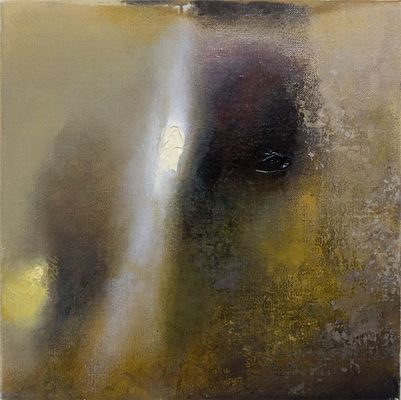
Always Will Need To Wear Winter Shirt Blue + Ochre Small Check Pattern
21 August - 21 September, 2015
Untitled
I am not a great reader of poetry but I always return to the work of Melbourne poet, Vincent Buckley (1925- 1988). Perhaps I find his most tantalising piece to be not a finished poem but a fragment left on a scrap of paper discovered on his desk after the poet’s death.
The poetry gathers like oil
In the word-core, and spreads
It has its music meet,
Its music is in movement.
This fragment is more the shell left behind from a volatile thought than a finished poem. I find the last two lines honest but awkward whereas the first two lines work like an arrow. Most likely he could not find a resolution so it was left. Still, in its present form, it remains an eloquent testimony to the ultimate failure of a medium to express mobile thought and sensation, in Buckley’s case, through verbal language. It’s an important matter because this is something all artists have to deal with regardless of the medium.
I have never written a poem, however, I am forever copying fragments from books on paper scraps in a vain effort to fix certain notions in my head. At first, they function as bookmarks that are sometimes returned to when I open the book. But before long, as they accumulate, they fall out littering the table interspersed with A4 photocopies, bills, books and medications.
To return to Buckley’s fragment, the first two lines very much evoke how I paint nowadays. As you age, detail diminishes and patches of light become more luminous and float. I feel the most honest way of dealing with this is by smearing the oil paint on the canvas with the fingers and working close-up, blind. Only if the patches coalesce into an approaching image can the work gain a life.
-
Jonathan Walker was born in Melbourne, Australia and brought up on a dairy farm in Gippsland. In the 1970’s he studied painting at RMIT and won the Harold Wright Scholarship to the British Museum, London. During the 1980’s he exhibited at Pinacotheca Gallery, Richmond and had work shown at the NGV and Heidi City Art Gallery. Over the same period he designed the cover for the “Epigenesi” LP by Giancarlo Toniutti, Italy and conducted a mail exchange work with Achim Wollscheid, Germany. The work with artists through the post resulted in an article published in the bicentenary issue of Art and Australia 1988. He showed in artist run spaces such as WestSpace in the 90’s and 2000’s, and until 2012, taught painting at Victoria University, which is where we (Colleen Ahern and Lisa Radford) as organisers of the exhibition, among many others, had the privilege of being his student.
Walker’s knowledge was imparted to students through the careful selection of music, literature, and artists found in books that he himself had ordered for the library. Walker’s strategy was the generosity of sharing his vast knowledge with references specific to each student and their context.
Walker’s paintings share a similar focus and intimacy.
This exhibition presents a small selection of recent paintings alongside a publication that includes Walker’s writing. Observational and analytical, Walker’s work is a type of material notation — the time of day, colour and how it is blended, the both specific and fleeting location of a reflection on lino or the question of whether a chair leg should be included in a painting.
Please join us on Friday August 21 between 6-8pm to celebrate the opening of the exhibition.
Curated by Colleen Ahern and Lisa Radford.
B. Wurtz
Curated by Nic Tammens
March 26 - April 4, 2015
B.Wurtz works from a basement studio in his home on Manhattan’s Lower East Side.
This local fact is attested to by the plastic shopping bags and newsprint circulars that appear in his work. As formal objects, they don’t make loud claims about their origins but nonetheless transmit street addresses and places of business from the bottom of this long thin island. Like plenty of artists, Wurtz is affected by what is local and what is consumed. His work is underpinned by this ethic. It often speaks from a neighborhood or reads like the contents of a hamper:
“BLACK PLUMS $1.29 lb.”
“Food Bazaar”
“USDA Whole Pork Shoulder Picnic 99c lb.”
“RITE AID Pharmacy, with us it’s personal.”
“H. Brickman & Sons.”
“Sweet Yams 59c lb."
Most of the work in this exhibition was made while the artist was in residence at Dieu Donne, a workshop dedicated to paper craft in Midtown. Here Wurtz fabricated assemblages with paper and objects that are relatively lightweight, with the intention that they would be easily transportable to Australia. This consideration isn’t absolute in Wurtz’s work, but was prescriptive for making the current exhibition light and cheap. Packed in two boxes, these works were sent from a USPS post office on the Lower East Side and delivered to North Melbourne by Australia Post.
Wurtz appears courtesy of Metro Pictures, New York.
Thanks to Rob Halverson, Joshua Petherick, Sari de Mallory, Matt Hinkley, Helen Johnson, Fayen d'Evie, Ask Kilmartin, Lisa Radon, Ellena Savage, Yale Union, and "Elizabeth".
John Nixon
"Archive"
December 15 - January 20, 2014
The presentation of John Nixon's archive offered a rare showcase of this extensive collection of the artist's own publications, catalogues, posters, ephemera, editions and more, from the mid 1980s onwards, alongside a selection of his artworks.
Organized by John Nixon, Joshua Petherick and Matt Hinkley.
<a href=http://wfb.public-office.info/artist/john-nixon>All titles by John Nixon
"Habitat"
at Minerva, Sydney (organised by Joshua Petherick and Matt Hinkley)
November 15 - December 20, 2014
Lupo Borgonovo, Janet Burchill & Jennifer McCamley,
Lewis Fidock, HR Giger, Piero Gilardi, Veit Laurent Kurz,
Cinzia Ruggeri, Michael E. Smith, Lucie Stahl, Daniel Weil, Wols
Press Release:
“...It contained seven objects. The slender fluted bone, surely formed for flight, surely from the wing of some large bird. Three archaic circuitboards, faced with mazes of gold. A smooth white sphere of baked clay. An age-blackened fragment of lace. A fingerlength segment of what she assumed was bone from a human wrist, grayish white, inset smoothly with the silicon shaft of a small instrument that must once have ridden flush with the surface of the skin - but the thing’s face was seared and blackened.”
William Gibson, “Count Zero”, 1986
"Autumn Projects Archive"
Curated by Liza Vasiliou
March 6 - March 15, 2014
World Food Books, in conjunction with the Virgin Australia Melbourne Fashion Festival 2014, presented the Autumn Projects archive, consisting of a selection of early examples in Australian fashion with a particular interest in collecting designers and labels from the period beginning in the 1980’s, who significantly influenced the discourse of Australian Fashion.
Curated by Liza Vasiliou, the exhibition provided a unique opportunity to view pieces by designers Anthea Crawford, Barbara Vandenberg, Geoff Liddell and labels CR Australia, Covers, Jag along with early experimental collage pieces by Prue Acton and Sally Browne’s ‘Fragments’ collection, suspended throughout the functioning World Food Books shop in Melbourne.
H.B. Peace
presented by CENTRE FOR STYLE
November 14, 2013
"Hey Blinky, you say chic, I say same"
Anon 2013
H.B. Peace is a clothing collaboration between great friends Blake Barns and Hugh Egan Westland. Their pieces explore the divergences between 'character’ and ‘personality’ in garments....etc
Special Thanks to Joshua Petherick and Matt Hinkley of WFB and Gillian Mears
and a Very Special Thank you to Audrey Thomas Hayes for her shoe collaboration.
Janet Burchill & Jennifer McCamley
"Aesthetic Suicide"
May 10 - June 8, 2013
The first of our occasional exhibitions in the World Food Books office/shop space in Melbourne, "Aesthetic Suicide" presented a body of new and older works together by artists Janet Burchill & Jennifer McCamley, including videos, prints, a wall work, and publications.
During shop open hours videos played every hour, on the hour.
2020, English
Harcover, 304 pages, 23.7 x 32.4 cm
Published by
Spector Books / Leipzig
$77.00 - Out of stock
Bauhaus and documenta are two globally successful cultural brands, representing a modern Germany that is both cosmopolitan and innovative. They both came into being at a time when civilization was in a state of collapse, and they both exemplify the idea of the liberating power of art and culture. Looking at them in parallel brings out their similarities and differences and reveals that to some extent they serve to complement one another: for the one, the focus is on mass-produced articles and their everyday usage; the idea of universalism; and the design of consumer goods; for the other, encounters with unique artworks; the experience of diversity; and the critiquing of capitalist consumerism. In a series of critical essays, bolstered by a selection of original material, the publication examines fundamental, yet frequently overlooked aspects of the two cultural brands, whose profile is now once again a controversial subject of debate. The book is published in conjunction with the exhibition presented at the Neue Galerie Kassel from 24 May to 8 September 2019.
Text: Gerda Breuer, Bazon Brock, Kathryn M. Floyd, Andreas Gardt, Walter Grasskamp, Martin Groh, Birgit Jooss, Christiane Keim, Harald Kimpel, Gila Kolb, Julia Meer, Philipp Oswalt, Anna Rühl,
Nora Sternfeld, Daniela Stöppel, Annette Tietenberg, Fred Turner, Daniel Tyradellis, Wolfgang Ullrich, Frank Werner a.o.
2020, English / German /
Softcover, 448 pages, 20 x 28.5 cm
Published by
Spector Books / Leipzig
$84.00 - Out of stock
The positions adopted by Hito Steyerl in her works and texts are of key importance in any consideration of the contemporary role that art and the museum play in society. They are also crucial to experimental forays into different forms of media presentation and to the critical examination of artificial intelligence and its uses. Over the past thirty years, the artist has been tracking the way camera images have mutated, from the analogue image and its manifold possibilities for montage to the fluidity of the split digital image and the implications this then had for the representation of wars, genocides, and capital flows. “We are no longer dealing with the virtual but with a confusing and possibly alien concreteness that we are only beginning to understand,” writes Brian Kuan Wood of the digital visual worlds that the artist presents. The book is being published in conjunction with Hito Steyerl’s survey show, which will take place in autumn 2020 at the Centre Pompidou in Paris and the Kunstsammlung Nordrhein-Westfalen in Düsseldorf.
With texts by: Nora M. Alter, Karen Archey, Teresa Castro, Alexandra Delage, Florian Ebner, Thomas Elsaesser, Ayham Ghraowi, Tom Holert, Doris Krystof, Marcella Lista, Vanessa Joan Müller, Florentine Muhry, Mark Terkessidis, Brian Kuan Wood, and a lecture by Hito Steyerl and Trevor Paglen.
Hito Steyerl, born 1966 in Munich, lives and works in Berlin as an artist, filmmaker, and author. Her work has been shown in numerous international exhibitions and festivals, including the Armory (2019) and the Venice Biennale (in 2019 and 2013). In 2007 she was part of documenta 12.
2021, English
Softcover, 248 pages, 10.8 x 18 cm
Published by
Sternberg Press / Berlin
$36.00 - Out of stock
Edited and with an introduction by Axel Wieder
Texts by Robert Glück, Ursula K. Le Guin, Audre Lorde, Eileen Myles, Alice Notley, Pauline Oliveros, Adrienne Rich
Contributions by Basma Alsharif, Erika Balsom, Caconrad, Adam Christensen, Beatrice Gibson, Mason Leaver-Yap, Eileen Myles, Irene Revell
From Audre Lorde and Adrienne Rich to Basma Alsharif and Pauline Oliveros, Deux Soeurs brings together a chorus of voices that explore representations of parenthood, friendship, and disobedience. The book acts as a reader to artist Beatrice Gibson’s films, I Hope I’m Loud When I’m Dead (2018) and Two Sisters Who Are Not Sisters (2019), and includes material that informed Gibson’s working process, together with the artist’s texts and notes used in both films. Turning to the figure of the poet as a guide in times of chaos, Deux Soeurs presents a framework for an ethics of artistic and social collaboration.
2012, English
Softcover, 312 pages, 152 x 229 mm
Published by
Semiotext(e) / Los Angeles
$38.00 - Out of stock
A manifesto for “toxic girls” that reclaims the wives and mistresses of modernism for literature and feminism.
I am beginning to realize that taking the self out of our essays is a form of repression. Taking the self out feels like obeying a gag order--pretending an objectivity where there is nothing objective about the experience of confronting and engaging with and swooning over literature." – from Heroines
On the last day of December, 2009 Kate Zambreno began a blog called Frances Farmer Is My Sister, arising from her obsession with the female modernists and her recent transplantation to Akron, Ohio, where her husband held a university job. Widely reposted, Zambreno's blog became an outlet for her highly informed and passionate rants about the fates of the modernist "wives and mistresses." In her blog entries, Zambreno reclaimed the traditionally pathologized biographies of Vivienne Eliot, Jane Bowles, Jean Rhys, and Zelda Fitzgerald: writers and artists themselves who served as male writers' muses only to end their lives silenced, erased, and institutionalized. Over the course of two years, Frances Farmer Is My Sister helped create a community where today's "toxic girls" could devise a new feminist discourse, writing in the margins and developing an alternative canon. In Heroines, Zambreno extends the polemic begun on her blog into a dazzling, original work of literary scholarship. Combing theories that have dictated what literature should be and who is allowed to write it--from T. S. Eliot's New Criticism to the writings of such mid-century intellectuals as Elizabeth Hardwick and Mary McCarthy to the occasional "girl-on-girl crime" of the Second Wave of feminism--she traces the genesis of a cultural template that consistently exiles female experience to the realm of the "minor," and diagnoses women for transgressing social bounds. "ANXIETY: When she experiences it, it's pathological," writes Zambreno. "When he does, it's existential." By advancing the Girl-As-Philosopher, Zambreno reinvents feminism for her generation while providing a model for a newly subjectivized criticism.
2019, English
Softcover, 152 pages, 13.7 x 20 cm
Published by
Semiotext(e) / Los Angeles
$34.00 - Out of stock
On the ongoing project of writing about grief; Zambreno's addendum to Book of Mutter.
"I came up with the idea of writing these notes, or talks, out of a primary desire to not read from Book of Mutter, and instead to keep gesturing to its incompleteness and ongoingness, which connects, for me, to the fragmentary project of literature, and what I long for in writing."
-from Appendix Project
Inspired by the lectures of Roland Barthes, Anne Carson, and Jorge Luis Borges, Kate Zambreno's Appendix Project collects eleven talks and essays written in the course of the year following the publication of Book of Mutter, Zambreno's book on her mother that took her over a decade to write. These surprising and moving performances, underscored by the sleeplessness of the first year of her child's life, contain Zambreno's most original and dazzling thinking and writing to date. In Appendix Project Zambreno thinks through the work of On Kawara, Roland Barthes, W.G. Sebald, Bhanu Kapil, Walter Benjamin, Theresa Hak Kyung Cha, Marguerite Duras, Marlene Dumas, Louise Bourgeois, Doris Salcedo, Jenny Holzer, and more.
2018, English / Arabic, w. German insert
Hardcover, 246 pages, 13 x 19 cm
$59.00 $15.00 - Out of stock
Contributions by Erik Hagen, Mario Pfeifer, Jeffrey J. Smith
Profit over Peace in Western Sahara examines the role of natural resources in the occupation of Africa’s last colony. Not well known to the wider public, the territory of Western Sahara is considered by the United Nations to be awaiting decolonization. Its liberation from colonial rule has come to a standstill due to Morocco’s continued military occupation of a part of the territory. The protracted conflict has dramatic consequences for the Sahrawi people of Western Sahara. This book details, among other things, a remarkable vote in the European Parliament in 2011 when EU offshore fisheries were rejected by the territory. The battle over the fisheries elegantly illustrates how the EU—for political reasons and financial self-interest—has ignored basic principles of international law.
This publication is edited by Erik Hagen and the artist Mario Pfeifer, who has been researching the region since 2011 and provides visual material for the book. Erik Hagen has followed the issue of resources in Western Sahara since 2002, both as a journalist and as a campaigner for the organization Western Sahara Resource Watch. An essay by lawyer Jeffrey J. Smith examines the 2017 landmark judgment in South Africa concerning a bulk vessel carrying conflict minerals from the territory.
Design by Markus Weisbeck
English/Arabic, with a German insert
2018, English
Softcover, 136 pages, 13.5 x 20 cm
Published by
Sternberg Press / Berlin
$46.00 $15.00 - Out of stock
Contributions by Baatarzorig Batjargal & Nomin Bold, Lauren Bonilla, Bumochir Dulam, Rebecca Empson, Richard D.G. Irvine, Yuri Pattison, Rebekah Plueckhahn, Dolgor Ser Od & Marc Schmitz, Hermione Spriggs, Simon O’Sullivan, Deborah Tchoudjinoff, Tsendpurev Tsegmid, Uranchimeg Tsultem, Hedwig Waters, Tuguldur Yondonjamts
What does the future look like, or feel like, from the perspective of a yak in the coal-mining district of Khovd? From the perspective a Mongolian root extracted, illegally traded, and sold internationally as a pharmaceutical product? Or from that of the toolkit of an urban shaman securing economic futures for professional women in Ulaanbaatar?
Five Heads (Tavan Tolgoi): Art, Anthropology and Mongol Futurism brings together the work of five anthropologists and five artists/collectives researching and responding to the dramatic rise and fall of Mongolia’s mineral economy. Launched in tandem with the eponymous exhibition at greengrassi and Corvi-Mora in London, the publication features visual documentation of multiple art-anthropology exchange processes, ethnographic texts, and further written contributions that introduce contemporary Mongolia as a dynamic site for conceptual and creative experimentation.
In the essay section of this book, the Green Horse Society tells a history of art and culture newly untethered in post-Soviet Mongolia; an early style of ethnographic art known as “One Day in Mongolia” painting provides a canvas for urgent environmental protest; Mongolian hip-hop and nationalist poetry become ciphers for thinking through deep time; and space is opened up for what Simon O’Sullivan terms the art-anthropology probe head to do its important work.
Faced with questions that transcend geographies and act across various scales, Five Heads mounts an experiment in separation (research detached from author, material detached from method) and growth (through the contact space between disciplines) in order to call into being new subjectivities and imagine possible futures.
Five Heads is part of Emerging Subjects of the New Economy, a project funded by the European Research Council and led by Dr. Rebecca Empson in the Department of Anthropology, University College London.
Design by Laurie Robbins
2020, English
Hardcover (cloth), 264 pages, 22 x 14 cm
Published by
Surpllus / Melbourne
$40.00 $20.00 - Out of stock
The art world celebrates the diversity of artistic practice, but how does it address the question of cultural differences? Biennales are today held in many metropolitan cities, but how does the art world understand the phenomenon of globality? This book is about real and imaginary exchanges between artists and writers. In the absence of a personal connection with an artist, the meaning of art is often elusive. It takes as its starting point a shared horizon of interest between artists and writers.
Nikos Papastergiadis is the Director of the Research Unit in Public Cultures, based at The University of Melbourne. He is a Professor in the School of Culture and Communication at The University of Melbourne and founder - with Scott McQuire - of the Spatial Aesthetics research cluster. His publications include Modernity as Exile (1993), Dialogues in the Diaspora (1998), The Turbulence of Migration (2000), Metaphor and Tension (2004) Spatial Aesthetics: Art Place and the Everyday (2006), Cosmopolitanism and Culture (2012). He is also the author of numerous essays, which have been translated into over a dozen languages and appeared in major catalogues such as the Biennales of Sydney, Liverpool, Istanbul, Gwangju, Taipei, Lyon, Thessaloniki and Documenta 13.
English, 2020
Softcover, 336 pages, 23.5 x 16 cm
Published by
Duke University Press / North Carolina
$59.00 - In stock -
In the decades following World War II, France experienced both a period of affluence and a wave of political, artistic, and philosophical discontent that culminated in the countrywide protests of 1968. In Disordering the Establishment Lily Woodruff examines the development of artistic strategies of political resistance in France in this era. Drawing on interviews with artists, curators, and cultural figures of the time, Woodruff analyzes the formal and rhetorical methods that artists used to counter establishment ideology, appeal to direct political engagement, and grapple with French intellectuals' modeling of society. Artists and collectives such as Daniel Buren, André Cadere, the Groupe de Recherche d’Art Visuel, and the Collectif d’Art Sociologique shared an opposition to institutional hegemony by adapting their works to unconventional spaces and audiences, asserting artistic autonomy from art institutions, and embracing interdisciplinarity. In showing how these artists used art to question what art should be and where it should be seen, Woodruff demonstrates how artists challenged and redefined the art establishment and their historical moment.
“Lily Woodruff's examination of conceptual painting in France is at once timely and long overdue. She offers a satisfying total narrative of the artworks situated in relation to the changing dynamics of both the state and the market as they came to determine culture without losing focus of the specificity of the aesthetic dimension of these interventions. She situates artwork as a vehicle for an intellectual and sensual proposition charged with capacity. I learned a tremendous amount from this book.” — Jaleh Mansoor, author of Marshall Plan Modernism: Italian Postwar Abstraction and the Beginnings of Autonomia
“This extraordinarily lucid book is required reading for anyone wondering how the 1960s—and even ‘democracy’ itself—still matters. As Lily Woodruff demonstrates, the top-down instrumentalization of participation was countered in that decade by an artistic landscape ranging from kinetic painting and wearable objects to handheld props and logos. In beautifully readable prose, she replaces French artistic practice in a geopolitical terrain that negotiates both Soviet and Maoist histories, making those practices once again urgently contemporary.” — Rachel Haidu, author of The Absence of Work: Marcel Broodthaers, 1964–1976
1973, English
Hardcover, 312 pages, 26 x 21 x 3.4 cm
1st Edition, Out of print title / used / average
Published by
Architectural Press / London
$80.00 $40.00 - Out of stock
Hardcover first edition of this scarce book on military architecture in North West Europe between 1900 and 1945, written by Keith Mallory and Arvid Ottar in 1973 and published by London's Architectural Press.
Profusely illustrated throughout with photographs, diagrams and architectural plans, including projects such Maginot Line, Atlantic Wall, Autobahn and West Wall, Mulberry Harbour, plus air raid shelters, bunkers, forts, submarine pens and more spanning Germany, Britain, Belgium, France, etc. A very informative and collectible volume.
Excerpt from jacket blurb:
"Since 1914 astronomical sums have been spent on war and the preparation for war. A large part of this money has been devoted to military construction, ranging from huge concrete emplacements of almost indestructible dimensions to the flimsiest of prefabricated hutments. Yet although expenditure on various forms of military building in this century has almost certainly been greater than that on the civilian sector, the architecture associated with it has been largely ignored by historians. Its importance,
however, goes far beyond its sheer, brute use of resources, significant though that has been in itself. As this deeply researched and extraordinarily entertaining book shows, military architecture in its various manifestations reflected and influenced the course of warfare to a surprising degree...."
Ex-library copy with general wear to cover and pages throughout and glue damage to two pages. No dust jacket, with associated library markings.
2018, English
Softcover (staple-bound),
Ed. of 950,
Published by
Ground / UK
$18.00 $10.00 - Out of stock
Ground is a zine that looks beyond institutions in their current form as dominant frameworks for artistic production, and embraces grassroots political and aesthetic perspectives.
Edited by Harry Burke and Marlie Mul.
Features contributions from The Gate, Linda Stupart, Beatrice Glow, Jean-Michel Wicker, Khairani Barokka, Shellyne Rodriguez, and more.
Edition of 950 copies.
2020, English
Softcover, 288 pages, 23.4 x 16.5 cm
Published by
Valiz / Amsterdam
University of Queensland / Brisbane
Ghent University / Ghent
$56.00 - Out of stock
Architecture has always been found in a space between its economic and cultural values. As distinct from the intrinsic values attributed to the visual and performing arts, literature and music, architecture's values are often seen to be compromised by, or contingent upon, forces outside of the discipline—on property prices, real estate markets and the vicissitudes of local and global economies. Such intersections of cultural and economic values are especially conspicuous in architectural heritage where conflicts between values are most publicly and passionately contested.
Valuing Architecture is not concerned with arguments for or against the cultural value of architecture and heritage per se but, rather, with the different sites and occasions where such values are bestowed, exchanged and come into conflict. It brings together a collection of essays that tackle concrete cases, both historical and contemporary, to explore how the values of architecture intersect, and what is at stake for architecture in the economics of culture.
Case studies:
Stedelijk Museum Amsterdam; Kanal–Centre Pompidou, Brussels; Robin Hood Gardens, Peter & Alison Smithson, London; Frank Lloyd Wright buildings, US; MoMA and American Folk Art Museum, New York; Metabolist architecture; Brutalist architecture; and many others
Editors: Ashley Paine, Susan Holden, John Macarthur
Contributors: Daniel M. Abramson, Tom Brigden, Alex Brown, Amy Clarke, Wouter Davidts, Bart Decroos, Susan Holden, Jordan Kauffman, Hamish Lonergan, John Macarthur, Joanna Merwood-Salisbury, Ashley Paine, Anton Pereira, Andrea Phillips, Lara Schrijver, Ari Seligmann, Kirsty Volz, Rosemary Willink
Design: Sam de Groot
2019, English
Softcover, 240 pages, 24 x 17 cm
Published by
Valiz / Amsterdam
$55.00 - Out of stock
Since the 1960s, art and architecture have experienced a series of radical and reciprocal trades. While artists have simulated ‘architectural’ means like plans and models, built structures and pavilions outside art institutions, or intervened in urban and public spaces, architects have employed ‘artistic’ strategies inside art institutions, in exhibitions, biennales and art events. At the same time, art galleries and museums have combined both activities in an interdisciplinary, hybrid field, playing with the conditional differences between inside and outside the institution.
Trading between Architecture and Art zooms in on specific examples or ‘cases’ of these two-way transactions: artists adopting architectural means on the one hand, and architects adopting artistic strategies on the other. In particular, it presents in-depth studies of both historical and contemporary examples of the transposition of means and strategies from architecture to art, and vice versa, up to the point that established understandings of institutional categories, disciplinary concepts, and concrete practices become interestingly opaque, and meanings provocatively uncertain.
‘Studies in Architecture and Art’ explore the reciprocal trade between the disciplines of architecture and art.
Editors: Wouter Davidts, Susan Holden, Ashley Paine
Contributors: Angelique Campens, Guy Châtel, Wouter Davidts, Mark Dorrian, Susan Holden, John Körmeling, Maarten Liefooghe, Mark Linder, John Macarthur, Philip Metten, Sarah Oppenheimer, Ashley Paine, Léa-Catherine Szacka, Annalise Varghese, Stefaan Vervoort, Stephen Walker, Rosemary Willink
Design: Sam de Groot
Published by Valiz with The Australian Research Council, The University of Queensland, Ghent University, KASK School of Arts.
2019, English
Softcover, 272 pages, 17 x 24 cm
Published by
Valiz / Amsterdam
$58.00 - Out of stock
Conceptual Art in a Curatorial Perspective: Between Dematerialization and Documentation focuses on the curatorial practice of exhibiting conceptual art. The fact that conceptual works are not object-based, creates challenges in exhibiting or re-exhibiting them. This book offers various perspectives on how to handle conceptual art in the context of the museum, based on three detailed case studies and an extensive introduction in which the paradox of conceptual art is analyzed. It also elaborates on the history of exhibiting conceptual artworks, and on the influence of curators in their canonization.
The aim of the book is not to offer clear-cut practical solutions, but to raise awareness of the issue and the different ways of dealing with it within the traditional curatorial field. It is relevant for students of art and culture (particularly in museum and curatorial studies), art and museum professionals, and everyone interested in the art of the 1960s and 1970s.
Nathalie Zonnenberg is an art historian and curator. She holds a PhD in Art History from Vrije Universiteit, Amsterdam (NL). Zonnenberg regularly writes on contemporary art, and she lectures at the post-graduate Curatorial Studies programme at KASK/the Royal Academy of Fine Arts in Ghent (BE).
2002, English
Softcover, 430 pages, 15.2 x 23 cm
Published by
Semiotext(e) / Los Angeles
$45.00 - In stock -
Compiled in 2001 to commemorate the passing of an era, Hatred of Capitalism brings together highlights of Semiotext(e)’s most beloved and prescient works. Semiotext(e)’s three-decade history mirrors the history of American thought. Founded by French theorist and critic Sylvere Lotringer as a scholarly journal in 1974, Semiotext(e) quickly took on the mission of melding French theory with the American art world and punk underground. Its Foreign Agents, Native Agents, Active Agents and Double Agents imprints have brought together thinkers and writers as diverse as Gilles Deleuze, Assata Shakur, Bob Flanagan, Paul Virillio, Kate Millet, Jean Baudrillard, Michelle Tea, William S. Burroughs, Eileen Myles, Ulrike Meinhof, and Fanny Howe. In Hatred of Capitalism, editors Kraus and Lotringer bring these people together in the same volume for the first time.
Chris Kraus is a filmmaker and the author of I Love Dick and Aliens & Anorexia, and coeditor of Hatred of Capitalism: A Semiotext(e) Reader. Index called her “one of the most subversive voices in American fiction.” Her work has been praised for its damning intelligence, vulnerability and dazzling speed.
Sylvère Lotringer, general editor of Semiotext(e), lives in New York and Baja, California. He is the author of Overexposed: Perverting Perversions (Semiotext(e), 2007).
2013, English
Softcover, 184 pages, 19.6 x 17.5 cm
Published by
Atlas Press / London
$46.00 - Out of stock
In a novel of extremes, whose disgust with “things as they are” includes the whole idea of “novels”, Michel Leiris pursues his heroine, Aurora, through a visionary landscape shot through with catastrophes — and his lucid yet baroque language, with its incredible descriptions and ever more extravagant metaphors, is only just able to keep pace. Leiris himself, looking back on this novel from his youth, exactly described its tone:
… despite the “black” or “frenetic” style of its blustering prose, what I like about this work is the appetite it expresses for an unattainable purity, the faith it places in the untamed imagination, the horror it manifests with regard to any kind of fixity — in fact, the way almost every page of it refuses to accept that human condition against which some will never cease to rebel, however reasonably society may be ordered.
Aurora is one of the high-points of literary Surrealism, and Leiris was an early member of the group. Close to Georges Bataille, Picasso and Jean-Paul Sartre, he was a pivotal figure in post-war Paris. A director of the Musée de l’Homme, Leiris wrote important studies in the fields of ethnology and anthropology, as well as a sequence of autobiographical works regarded as classics of modern French literature.
Aurora translated and introduced by Anna Warby, Cardinal Point translated by Terry Hale.
2019, English
Hardcover (w. dust jacket), 288 pages, 15.2 x 22.9 cm
Published by
Semiotext(e) / Los Angeles
$48.00 - In stock -
That the nude painted by Manet (in a painting so conceptually new that it created a scandal in its day) achieves so much truth through such a minor detail, that ribbon that modernizes Olympia and, even more than a beauty mark or a patch of freckles would, renders her more precise and more immediately visible, making her a woman with ties to a particular milieu and era: that is what lends itself to reflection, if not divagation! - from The Ribbon at Olympia's Throat
In The Ribbon at Olympia's Throat, Michel Leiris investigates what Lydia Davis has called the "expressive power of fetishism": how a seemingly irrelevant aesthetic detail may cause the eruption of sublimity within the mundane.
Written in 1981, toward the end of Leiris's life, The Ribbon at Olympia's Throat serves as a coda to his autobiographical masterwork, The Rules of the Game, taking the form of both shorter fragments (poems, memory scraps, notes) that are as formally disarming as the fetishistic experiences they describe, and longer essays, more exhaustive critical meditations on writing, apprehension, and the nature of the modern. Rooted in remembrance, devoted to the kaleidoscopic intricacies of wordplay, Leiris draws from his own aesthetic experiences as writer and spectator to explore the fetish that "exposes and disarms the sinister passage of time, "conferring" an undeniable realness upon the whole by essentially causing it to crystallize in a reality it would never have possessed if that sturdy fragment hadn't acted as bait."
Foreword by Marc Augé
Translated by Christine Pichini
"A necessary and enlightening sequel to Leiris's earlier extended explorations of his mind and heart, of writing, life, and art, The Ribbon at Olympia's Throat allows us to continue in his stimulating company as he poses questions in all frankness and humility that are as fresh and personal, even politically timely, today as when he wrote them. This long overdue, fine translation by Christine Pichini recreates with grace and ease Leiris's often labyrinthine sentences--no less complex than the thoughts they express. A pleasure to read." - Lydia Davis, Author of Can't and Won't and translator of Michel Leiris's Rules of the Game, Volumes 1-3
Michel Leiris (1901–1990) was a French surrealist writer and ethnographer. Part of the Surrealist group in Paris, Leiris became a key member of the College of Sociology with Georges Bataille and head of research in ethnography at the CNRS.
2017, English
Hardcover (w. dust jacket), 352 pages, 18 x 23 cm
Published by
October Books / New York
The MIT Press / Massachusetts
$65.00 - Out of stock
The celebrated critic and film scholar Annette Michelson saw the avant-garde filmmakers of the 1950s and 1960s as radically redefining and extending the Modernist tradition of painting and sculpture, and in essays that were as engaging as they were influential and as lucid as they were learned, she set out to demonstrate the importance of the underappreciated medium of film. On the Eve of the Future collects more than thirty years’ worth of those essays, focusing on her most relevant engagements with avant-garde production in experimental cinema, particularly with the movement known as American Independent Cinema.
This volume includes the first critical essay on Marcel Duchamp’s film Anemic Cinema, the first investigation into Joseph Cornell’s filmic practices, and the first major explorations of Michael Snow. It offers an important essay on Maya Deren, whose work was central to that era of renewal and reinvention, seminal critiques of Stan Brakhage, Hollis Frampton, and Harry Smith, and overviews of Independent Cinema. Gathered here for the first time, these texts demonstrate Michelson’s pervasive influence as a writer and thinker and her role in the establishment of cinema studies as an academic field.
The postwar generation of Independents worked to develop radically new terms, techniques, and strategies of production and distribution. Michelson shows that the fresh new forms they created from the legacy of Modernism became the basis of new forms of spectatorship and cinematic pleasure.
About the Author
Annette Michelson is Professor Emeritus in the Department of Cinema Studies at New York University. A founding editor of the journal October, she has written on art and cinema for more than five decades.
“Annette Michelson is one of the most brilliant minds that has ever turned its focus on the art of cinema. It's a blessing to have her illuminating, inspiring, and informative pieces available in this volume.”
—Jonas Mekas, filmmaker and writer
“When many of these texts first appeared, they were undergroundbreaking. Now, as history, they continue to be impressive for their subtle insights and nuanced style. Annette Michelson’s writing is as avant-garde and of-the-moment as that of a critic/historian can be.”
—Michael Snow, filmmaker, musician, visual artist
“Written with enviable precision and grace, these essays remain the most compelling chronicle of the radical impact that film would have on the other arts in the twentieth century. Through her writings, Annette Michelson defined a field of critical inquiry where others saw only boundaries.”
—Bruce Jenkins, Chair, Department of Film, Video, New Media and Animation, School of the Art Institute of Chicago
2017, English
Softcover, 96 pages, 15.2 x 21.6 cm
Published by
Afterall / London
The MIT Press / Massachusetts
$39.00 - Out of stock
Agnes Martin’s Night Sea (1963) is a large canvas of hand-drawn rectangular grids painted in luminous blue and gold. In this illustrated study, Suzanne Hudson presents the painting as the work of an artist who was also a thinker, poet, and writer for whom self-presentation was a necessary part of making her works public. With Night Sea, Hudson argues, Martin (1912–2004) created a shimmering realization of control and loss that stands alone within her suite of classic grid paintings as an exemplary and exceptional achievement.
Hudson offers a close examination of Night Sea and its position within Martin’s long and prolific career, during which the artist destroyed many works as she sought forms of perfection within self-imposed restrictions of color and line. For Hudson, Night Sea stands as the last of Martin’s process-based works before she turned from oil to acrylic and sought to express emotions of lightness and purity unburdened by evidence of human struggle.
Drawing from a range of archival records, Hudson attempts to draw together the facts surrounding the work, which were at times obfuscated by the artist’s desire for privacy. Critical responses of the time give a sense of the impact of the work and that which followed it. Texts by peers including Lenore Tawney, Donald Judd, and Lucy Lippard are presented alongside interviews with a number of Martin’s friends and keepers of estates, such as the publisher Ronald Feldman and Kathleen Mangan of the Lenore Tawney archive, which holds correspondence between Martin and Tawney.
About the Author
Suzanne Hudson is Associate Professor of Art History and Fine Art at the University of Southern California. She is the author of Robert Ryman: Used Paint (MIT Press) and Painting Now.
Endorsements
“In her wonderful contribution to the Afterall Books One Work series, Suzanne Hudson persuasively argues that Agnes Martin’s 1963 painting Night Sea is the summa of the early grid paintings. Because, as Hudson shows, Night Sea makes Martin’s process—and indeed Martin’s struggle—so visible, we comprehend much more clearly what follows: the achieved perfection of the graphite grid paintings. That an analysis of a single work could so fully illuminate the entirety of an artist’s oeuvre is a true accomplishment. Plus, the prose is a pleasure to read.”
—Douglas Crimp, Fanny Knapp Allen Professor of Art History at the University of Rochester
Out of print title.
2017, English
Softcover, 176 pages, 11 x 18 cm
Published by
Lars Müller / Zürich
$39.00 $20.00 - Out of stock
The question Are We Human? is both urgent and ancient. Beatriz Colomina and Mark Wigley offer a multi-layered exploration of the intimate relationship between human and design and rethink the philosophy of design in a multi-dimensional exploration from the very first tools and ornaments to the constant buzz of social media. The average day involves the experience of thousands of layers of design that reach to outside space but also reach deep into our bodies and brains. Even the planet itself has been completely encrusted by design as a geological layer. There is no longer an outside to the world of design.
Colomina’s and Wigley’s field notes offer an archaeology of the way design has gone viral and is now bigger than the world. They range across the last few hundred thousand years and the last few seconds to scrutinize the uniquely plastic relation between brain and artifact. A vivid portrait emerges.
Design is what makes the human. It becomes the way humans ask questions and thereby continuously redesign themselves.
Beatriz Colomina is an architecture theorist, historian, curator, and professor at the Princeton University School of Architecture. One of her research focuses are sexual fantasies in association with architecture.
Mark Wigley is professor of architecture at Columbia University. The historian and theorist explores the intersection of architecture, art, philosophy, culture, and technology. His books include: Derrida’s Haunt: The Architecture of Deconstruction; White Walls, Designer Dresses: The Fashioning of Modern Architecture; Constant’s New Babylon: The Hyper-Architecture of Desire; and Buckminster Fuller Inc.: Architecture in the Age of Radio. He is the co-author of Are We Human: Notes on an Archaeology of Design with Beatriz Colomina in association with their curation of the 3rd Istanbul Design Biennial. He has also curated exhibitions at the Museum of Modern Art and The Drawing Center in New York; the Witte de With and Het Nieuwe Instituut in Rotterdam, and the Canadian Centre for Architecture in Montreal. His latest book is Cutting Matta-Clark: The Anarchitecture Investigation (Lars Müller, 2018). He was born in New Zealand, trained there as an architect then as an architect then as a scholar, and is based in New York.
As New, corner bumped (hence price reduction)
2020, English
Hardcover, 328 pages, 21.3 x 28.2 cm
Published by
MASP / São Paulo
$100.00 - Out of stock
One of the most radical and joyful artists of the 20th century, Hélio Oiticica (1937-80) helped lead the charge in Brazilian art’s unique transition from abstract concrete art to performative objects and collective performance.
As MoMA’s 2019 exhibition Sur Moderno demonstrated, one of Oiticica’s most revolutionary projects was the Parangolé, wearable sculptures made from fabric, plastic or paper. The Parangolé is meant to be worn, inhabited and danced by a participant, lending a physical spontaneity to the piece that entirely blurs the boundaries between the art object and those who experience it.
Dance in My Experience traces the genealogy of this theme within the artist’s oeuvre, identifying rhythmic, choreographic and dance elements throughout his trajectory, from his first Metaesquemas through the Spatial Reliefs, Nuclei and Bólides, culminating in the Parangolés. Texts by Oiticica and numerous scholars.
Edited with text by Adriano Pedrosa, Tomás Toledo. Text by Adrian Anagnost, Cristina Ricupero, Evan Moffitt, Fernanda Lopes, Fernando Cocchiarale, Sergio Delgado Moya, Tania Rivera, Vivian A. Crockett, Hélio Oiticica.
2020, English
Hardcover, 240 pages, 18.3 x 25.4 cm
Published by
MASP / São Paulo
$85.00 - Out of stock
A comprehensive tribute to one of the central figures of postmodern dance in America. Edited with text by André Mesquita. Texts by Adriana Banana, David M. Sperling, Susan Rosenberg, Babette Mangolte, Yvonne Rainer, Trisha Brown.
A founding member of the legendary Judson Dance Theater, American choreographer and dancer Trisha Brown (1936-2017) helped build the tenets of postmodern dance and is now considered one of the most influential figures in American choreography. Trisha Brown: Choreographing Life presents a sizable archive of Brown’s career, with photographs, drawings and video stills that illustrate her lifelong contributions to the world of contemporary dance.
Brown established her own dance company in 1970 and continued to dance until 2008, during which time she created over 100 dances and six operas. One of her most famous pieces was the product of a creative partnership with artists Laurie Anderson and Robert Rauschenberg; after the 1983 premiere of Set and Reset at the Brooklyn Academy of Music’s Next Wave Festival, Brown was launched into international acclaim. Brown’s choreography demonstrates an unparalleled cognizance of space and visuality, as indicated by the artistic process apparent in the drawings and diagrams included in this publication. Her work conveys the extent to which movement is an artistic language reflective of the complex relationship between body and mind.
2020, English
Softcover, 132 pages, 12.7 x 20.3 cm
Published by
Goldsmiths Press / London
The MIT Press / Massachusetts
$36.00 - In stock -
An analysis that traces the role of digital technology in multiplying precarity.
Precarity Lab brings together an intergenerational network of scholars and activists at the University of Michigan, Ann Arbor, to explore how digital cultures produce, reproduce, and intervene in precarity. Anna Watkins Fisher, Silvia Lindtner, Ivan Chaar-Lopez, Cengiz Salman, McKenzie Wark, Kalindi Vora, Jackie Wang, Cass Adair, Lisa Nakamura, Cindy Lin, with Meryem Kamil.
An analysis that traces the role of digital technology in multiplying precarity. Technoprecarious advances a new analytic for tracing how precarity unfolds across disparate geographical sites and cultural practices in the digital age. Digital technologies—whether apps like Uber, built on flexible labor, or platforms like Airbnb that shift accountability to users—have assisted in consolidating the wealth and influence of a small number of players. These platforms have also exacerbated increasingly insecure conditions of work and life for racial, ethnic, and sexual minorities; women; indigenous people; migrants; and peoples in the global south. At the same time, precarity has become increasingly generalized, expanding to include even the creative class and digital producers themselves.
This collaboratively authored multigraph analyzes the role of digital technology in multiplying precarity. The authors use the term precarity to characterize those populations disproportionately affected by the forms of inequality and insecurity that digital technologies have generated despite the new affordances and possibilities they offer. The book maps a broad range of digital precarity—from the placement of Palestinian Internet cables to the manufacture of electronics by Navajo women and from the production and deployment of drones on the U.S.–Mexico border to the technocultural productions of Chinese makers. This project contributes to, and helps bridge, ongoing debates on precarity and digital networks in the fields of critical computing, postcolonial studies, visual culture, and information sciences.
2013, English
Softcover, 144 pages, 12 x 16.5 cm
1st Edition, Out of print title / as new
Published by
Grazer Kunstverein / Graz
Mousse / Milan
$36.00 - Out of stock
This publication represents one of the many spaces Doug Ashford's work occupies. It is the fisrt collection of his writings and conversations and attempts to encompass the changing thoughts shared by the artist over the past twenty-five years. Doug Ashford is a teacher, artist, and writer. He has taught design, sculpture, and theory at The Cooper Union, New York, since 1989. His principal art practice from 1982 to 1996 was as a member of Group Material and since that time he has gone on to make paintings, write, and produce other cross-disciplinary projects.
Co-published with Grazer Kunstverein
edited by Krist Gruijthuijsen
Last copies, out-of-print.