World Food Books' programme is largely produced on Kulin Nation land. We acknowledge the Wurundjeri people of the Kulin Nation as the first and continuing custodians of this land, and pay respect to their Elders past, present, and emerging.
World Food Books is an arts and special interests bookshop in Naarm / Melbourne. Founded in 2010, World Food Books is devoted to the presentation of a rotating, hand-selection of international art, design, literary and counterculture publications with an emphasis on the anti-traditional, the experimental, the avant-garde, the heretic, the marginal.
Presenting new titles alongside rare and out-of-print books, catalogues and journals spanning the fields of modern and contemporary art, design, photography, illustration, film, literature, poetry, cultural theory, philosophy, sexuality, popular and underground culture in its many radical forms, World Food Books wishes to encourage adventurous, thoughtful and open-minded reading, looking, writing, and exchange of publishing and ideas, both current and historical.
As well as our bookshop, located in Melbourne's historical Nicholas Building, all of our inventory is available internationally via our online mail-order service.
World Food Books semi-regularly co-ordinates "Occasions", a programme of exhibits and events at the bookshop and in partnership with other hosts (such as museums and art galleries) that develop out of the activities, relationships and content of the bookshop itself.
World Food Books
The Nicholas Building
37 Swanston Street
Room 5, Level 6
Melbourne 3000
Australia
SHOP HOURS:
Thu–Fri 12–6, Sat 12–5
WEB-SHOP OPEN 24/7
World Food Books
Postal Address:
PO Box 435
Flinders Lane
Victoria 8009
Australia
Art
Theory / Essay
Architecture / Interior
Graphic Design / Typography
Photography
Fashion
Eros
LGBTQ+
Fiction / Poetry
Weird / Speculative / Science Fiction / Horror
Transgressive / Visceral / Abject
Symbolism / Decadence / Fin de siècle
Film / Video
Painting
Sculpture / Installation
Performance / Dance / Theater
Drawing
Sound / Music
Curatorial
Group Shows / Collections
Periodicals
Out-of-print / Rare
Posters / Ephemera / Discs
Signed Books
World Food Books Gift Voucher
World Food Book Bag
Australian Art
Australian Fiction
Australian Science Fiction / Speculative Fiction
Australian Poetry
Australian Photography
Japanese Photography
Conceptual Art
Minimal Art
Dada
'Pataphysics / Oulipo
Fluxus
Concrete Poetry
Pop Art
Surrealism
Arte Povera
Arte Informale / Haute Pâte / Tachism
Nouveau Réalisme / Zero / Kinetic
Situationism / Lettrism
Collage / Mail Art / Xerox Art
Art Brut / Folk / Visionary / Fantastic
Illustration / Graphic Art / Bandes Dessinées
Furniture
Italian Radical Design / Postmodernism
Textiles
Ceramics / Glass
Counterculture
Protest / Revolt
Philosophy
Psychoanalysis
Anthropology
Anarchism
Socialism / Anarchism / Communism / Capitalism
Literary Theory / Semiotics / Language
Feminism / Women's Studies
Gender Studies / Sexuality
Anthropology
Fetishism / BDSM
Drugs / Psychedelia
Crime / Violence
Animal Rights / Veganism
Occult / Esoterica
Ecology / Earth / Alternative Living
Whole Earth / Crafts
All prices in AUD (Australian dollars)
Pick-Ups
Pick-up orders can be collected in our bookshop during opening hours after order date. Please collect any Pick-up orders within 2 weeks of ordering as we have limited storage space. Orders will be released back into stock if not collected within this time. No refunds can be made for pick-ups left un-collected. If you cannot make it in to the bookshop in this time-frame, please choose postage option.
Return Policy
All sales are final. We do accept returns (for refund or exchange) for items received in error. All our orders are packed with special care using heavy-duty padding and cardboard book-mailers or bubble mailers (for smaller books), using reinforcement where required. We cannot take responsibility for any lost, stolen or damaged parcels.
Insurance
Should you wish to insure your package, please email us directly after placing your order and we can organise this at a small extra expense. Although all standard/express tracked packages are very safe and dependable, we cannot take responsibility for any lost, stolen or damaged parcels. We recommend insurance on valuable orders.
Interested in selling your old books, catalogues, journals, magazines, comics, fanzines, ephemera? We are always looking for interesting, unusual and out-of-print books to buy. We only buy books in our fields of interest and specialty, and that we feel we can resell.
We base these prices on desirability, market value, in-print prices, condition and our current stock levels. We offer cash, store credit, and can take stock on consignment. All
about 25% of the price we expect to get when we sell them, or 30% in store credit. We base these prices on desirability, market value, in-print prices, condition and our current stock levels.
Sell your books any day of the week. You can drop them off and return later. If you have a lot of books, we can visit your Sydney home.
We buy books that we feel we can resell. We offer about 25 % of the price we expect to get when we sell them, or 30% in store credit. We base these prices on desirability, market value, in-print prices, condition and our current stock levels.
Philadelphia Wireman
03 August - 01 September, 2018
World Food Books is proud to announce our next Occasion, the first presentation of sculptures by Philadelphia Wireman in Australia.
The Philadelphia Wireman sculptures were found abandoned in an alley off Philadelphia’s South Street on trash night in 1982. Their discovery in a rapidly-changing neighbourhood undergoing extensive renovation, compounded with the failure of all attempts to locate the artist, suggests that the works may have been discarded after the maker’s death. Dubbed the "Philadelphia Wireman" during the first exhibition of this work, in 1985, the maker’s name, age, ethnicity, and even gender remain uncertain. The entire collection totals approximately 1200 pieces, all intricately bound together with tightly-wound heavy-gauge wire (along with a few small, abstract marker drawings, reminiscent both of Mark Tobey and J.B. Murry). The dense construction of the work, despite a modest range of scale and materials, is singularly obsessive and disciplined in design: a wire armature or exoskeleton firmly binds a bricolage of found objects including plastic, glass, food packaging, umbrella parts, tape, rubber, batteries, pens, leather, reflectors, nuts and bolts, nails, foil, coins, toys, watches, eyeglasses, tools, and jewellery.
Heavy with associations—anthropomorphic, zoomorphic, and socio-cultural responses to wrapped detritus—the totemic sculptures by Philadelphia Wireman have been discussed in the context of work created to fulfil the shamanistic needs of alternative religions in American culture. Curators, collectors, and critics have variously compared certain pieces to sculpture from Classical antiquity, Native American medicine bundles, African-American memory jugs, and African fetish objects. Reflecting the artist’s prolific and incredibly focused scavenging impulse, and despite—or perhaps enhanced by—their anonymity, these enigmatic objects function as urban artefacts and arbiters of power, though their origin and purpose is unknown. Philadelphia Wireman, whatever their identity, possessed an astonishing ability to isolate and communicate the concepts of power and energy through the selection and transformation of ordinary materials. Over the course of the past two decades, this collection has come to be regarded as an important discovery in the field of self-taught art and vernacular art.
Presented in collaboration with Fleisher-Ollman Gallery, Philadelphia, and Robert Heald, Wellington.
Susan Te Kahurangi King
02 February - 10 March, 2018
Susan Te Kahurangi King (24 February 1951 - ) has been a confident and prolific artist since she was a young child, drawing with readily available materials - pencils, ballpoint pens and felt-tip markers, on whatever paper is at hand. Between the ages of four and six Susan slowly ceased verbal communication. Her grandparents William and Myrtle Murphy had developed a special bond with Susan so they took on caring responsibilities for extended periods. Myrtle began informally archiving her work, carefully collecting and storing the drawings and compiling scrapbooks. No drawing was insignificant; every scrap of paper was kept. The King family are now the custodians of a vast collection containing over 7000 individual works, from tiny scraps of paper through to 5 meter long rolls.
The scrapbooks and diaries reveal Myrtle to be a woman of great patience and compassion, seeking to understand a child who was not always behaving as expected. She encouraged Susan to be observant, to explore her environment and absorb all the sights and sounds. Myrtle would show Susan’s drawings to friends and people in her community that she had dealings with, such as shopkeepers and postal workers, but this was not simply a case of a grandmother’s bias. She recognised that Susan had developed a sophisticated and unique visual language and sincerely believed that her art deserved serious attention.
This was an unorthodox attitude for the time. To provide some context, Jean Dubuffet coined the term Art Brut in 1945 to describe work created by self-taught artists – specifically residents of psychiatric institutions and those he considered to be visionaries or eccentrics. In 1972 Roger Cardinal extended this concept by adopting the term Outsider Art to describe work made by non-academically trained artists operating outside of mainstream art networks through choice or circumstance. Susan was born in Te Aroha, New Zealand in 1951, far from the artistic hubs of Paris and London that Dubuffet and Cardinal operated in. That Myrtle fêted Susan as a self-taught artist who deserved to be taken seriously shows how progressive her attitudes were.
Susan’s parents Doug and Dawn were also progressive. Over the years they had consulted numerous health practitioners about Susan’s condition, as the medical establishment could not provide an explanation as to why she had lapsed into silence. Dawn educated herself in the field of homeopathy and went on to treat all twelve of her children using these principles – basing prescriptions on her observations of their physical, mental and emotional state.
Doug was a linguist with an interest in philosophy who devoted what little spare time he had to studying Maori language and culture. To some extent their willingness to explore the fringes of the mainstream made them outsiders too but it was their commitment to living with integrity and their respect for individuality that ensured Susan’s creativity was always encouraged.
Even though Susan’s family supported her artistic pursuits, some staff in schools and hospitals saw it as an impediment to her assimilation into the community and discouraged it in a variety of ways. Her family was not always aware of this and therefore did not fully understand why Susan stopped drawing in the early 1990s. However, rather than dwell on the challenges that Susan faced in pursuit of her artistic practice, they prefer to highlight her achievements. In 2008 Susan began drawing again in earnest, after an almost 20 year interruption, and her work is now shown in galleries around the world.
Susan grew up without television and has been heavily influenced by the comics she read as a child. She is absolutely fearless in the appropriation of recognizable characters, such as Donald Duck and Mickey Mouse, in her work. She twists their limbs, contorts their faces, compresses them together, blends them into complex patterned backgrounds - always imbuing them with an incredible energy. Although Susan often used pop culture characters in her work they are not naive or childlike. These are drawings by a brilliant self-taught artist who has been creating exceptional work for decades without an audience in mind.
Mladen Stilinović
"Various Works 1986 - 1999"
02 February 16 - September 10, 2016
Various works 1986 - 1999, from two houses, from the collections of John Nixon, Sue Cramer, Kerrie Poliness, Peter Haffenden and Phoebe Haffenden.
Including: Geometry of Cakes (various shelves), 1993; Poor People’s Law (black and white plate), 1993; White Absence (glasses, ruler, set square, silver spoon, silver ladel with skin photograph and wooden cubes), 1990-1996; Exploitation of the Dead (grey and red star painting, wooden painting, black spoon with red table, red plate), 1984-1990; Money and Zeros (zero tie, paintings made for friends in Australia (Sue, John, Kerrie), numbers painting), 1991-1992; Words - Slogans (various t-shirts) - “they talk about the death of art...help! someone is trying to kill me”, “my sweet little lamb”, “work is a disease - Karl Marx”; Various artist books, catalogues, monographs, videos; Poster from exhibition Insulting Anarchy; "Circular" Croatian - Australian edition; Artist book by Vlado Martek (Dostoyevsky); more.
Thanks to Mladen Stilinović and Branka Stipančić.
Jonathan Walker
Always Will Need To Wear Winter Shirt Blue + Ochre Small Check Pattern
21 August - 21 September, 2015
Untitled
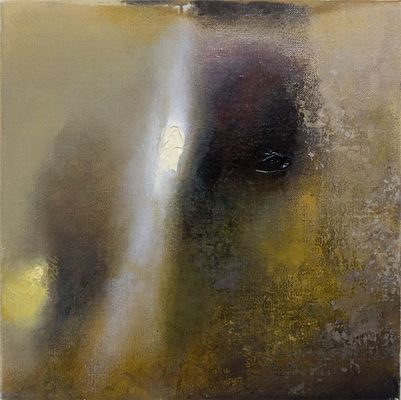
I am not a great reader of poetry but I always return to the work of Melbourne poet, Vincent Buckley (1925- 1988). Perhaps I find his most tantalising piece to be not a finished poem but a fragment left on a scrap of paper discovered on his desk after the poet’s death.
The poetry gathers like oil
In the word-core, and spreads
It has its music meet,
Its music is in movement.
This fragment is more the shell left behind from a volatile thought than a finished poem. I find the last two lines honest but awkward whereas the first two lines work like an arrow. Most likely he could not find a resolution so it was left. Still, in its present form, it remains an eloquent testimony to the ultimate failure of a medium to express mobile thought and sensation, in Buckley’s case, through verbal language. It’s an important matter because this is something all artists have to deal with regardless of the medium.
I have never written a poem, however, I am forever copying fragments from books on paper scraps in a vain effort to fix certain notions in my head. At first, they function as bookmarks that are sometimes returned to when I open the book. But before long, as they accumulate, they fall out littering the table interspersed with A4 photocopies, bills, books and medications.
To return to Buckley’s fragment, the first two lines very much evoke how I paint nowadays. As you age, detail diminishes and patches of light become more luminous and float. I feel the most honest way of dealing with this is by smearing the oil paint on the canvas with the fingers and working close-up, blind. Only if the patches coalesce into an approaching image can the work gain a life.
-
Jonathan Walker was born in Melbourne, Australia and brought up on a dairy farm in Gippsland. In the 1970’s he studied painting at RMIT and won the Harold Wright Scholarship to the British Museum, London. During the 1980’s he exhibited at Pinacotheca Gallery, Richmond and had work shown at the NGV and Heidi City Art Gallery. Over the same period he designed the cover for the “Epigenesi” LP by Giancarlo Toniutti, Italy and conducted a mail exchange work with Achim Wollscheid, Germany. The work with artists through the post resulted in an article published in the bicentenary issue of Art and Australia 1988. He showed in artist run spaces such as WestSpace in the 90’s and 2000’s, and until 2012, taught painting at Victoria University, which is where we (Colleen Ahern and Lisa Radford) as organisers of the exhibition, among many others, had the privilege of being his student.
Walker’s knowledge was imparted to students through the careful selection of music, literature, and artists found in books that he himself had ordered for the library. Walker’s strategy was the generosity of sharing his vast knowledge with references specific to each student and their context.
Walker’s paintings share a similar focus and intimacy.
This exhibition presents a small selection of recent paintings alongside a publication that includes Walker’s writing. Observational and analytical, Walker’s work is a type of material notation — the time of day, colour and how it is blended, the both specific and fleeting location of a reflection on lino or the question of whether a chair leg should be included in a painting.
Please join us on Friday August 21 between 6-8pm to celebrate the opening of the exhibition.
Curated by Colleen Ahern and Lisa Radford.
B. Wurtz
Curated by Nic Tammens
March 26 - April 4, 2015
B.Wurtz works from a basement studio in his home on Manhattan’s Lower East Side.
This local fact is attested to by the plastic shopping bags and newsprint circulars that appear in his work. As formal objects, they don’t make loud claims about their origins but nonetheless transmit street addresses and places of business from the bottom of this long thin island. Like plenty of artists, Wurtz is affected by what is local and what is consumed. His work is underpinned by this ethic. It often speaks from a neighborhood or reads like the contents of a hamper:
“BLACK PLUMS $1.29 lb.”
“Food Bazaar”
“USDA Whole Pork Shoulder Picnic 99c lb.”
“RITE AID Pharmacy, with us it’s personal.”
“H. Brickman & Sons.”
“Sweet Yams 59c lb."
Most of the work in this exhibition was made while the artist was in residence at Dieu Donne, a workshop dedicated to paper craft in Midtown. Here Wurtz fabricated assemblages with paper and objects that are relatively lightweight, with the intention that they would be easily transportable to Australia. This consideration isn’t absolute in Wurtz’s work, but was prescriptive for making the current exhibition light and cheap. Packed in two boxes, these works were sent from a USPS post office on the Lower East Side and delivered to North Melbourne by Australia Post.
Wurtz appears courtesy of Metro Pictures, New York.
Thanks to Rob Halverson, Joshua Petherick, Sari de Mallory, Matt Hinkley, Helen Johnson, Fayen d'Evie, Ask Kilmartin, Lisa Radon, Ellena Savage, Yale Union, and "Elizabeth".
John Nixon
"Archive"
December 15 - January 20, 2014
The presentation of John Nixon's archive offered a rare showcase of this extensive collection of the artist's own publications, catalogues, posters, ephemera, editions and more, from the mid 1980s onwards, alongside a selection of his artworks.
Organized by John Nixon, Joshua Petherick and Matt Hinkley.
<a href=http://wfb.public-office.info/artist/john-nixon>All titles by John Nixon
"Habitat"
at Minerva, Sydney (organised by Joshua Petherick and Matt Hinkley)
November 15 - December 20, 2014
Lupo Borgonovo, Janet Burchill & Jennifer McCamley,
Lewis Fidock, HR Giger, Piero Gilardi, Veit Laurent Kurz,
Cinzia Ruggeri, Michael E. Smith, Lucie Stahl, Daniel Weil, Wols
Press Release:
“...It contained seven objects. The slender fluted bone, surely formed for flight, surely from the wing of some large bird. Three archaic circuitboards, faced with mazes of gold. A smooth white sphere of baked clay. An age-blackened fragment of lace. A fingerlength segment of what she assumed was bone from a human wrist, grayish white, inset smoothly with the silicon shaft of a small instrument that must once have ridden flush with the surface of the skin - but the thing’s face was seared and blackened.”
William Gibson, “Count Zero”, 1986
"Autumn Projects Archive"
Curated by Liza Vasiliou
March 6 - March 15, 2014
World Food Books, in conjunction with the Virgin Australia Melbourne Fashion Festival 2014, presented the Autumn Projects archive, consisting of a selection of early examples in Australian fashion with a particular interest in collecting designers and labels from the period beginning in the 1980’s, who significantly influenced the discourse of Australian Fashion.
Curated by Liza Vasiliou, the exhibition provided a unique opportunity to view pieces by designers Anthea Crawford, Barbara Vandenberg, Geoff Liddell and labels CR Australia, Covers, Jag along with early experimental collage pieces by Prue Acton and Sally Browne’s ‘Fragments’ collection, suspended throughout the functioning World Food Books shop in Melbourne.
H.B. Peace
presented by CENTRE FOR STYLE
November 14, 2013
"Hey Blinky, you say chic, I say same"
Anon 2013
H.B. Peace is a clothing collaboration between great friends Blake Barns and Hugh Egan Westland. Their pieces explore the divergences between 'character’ and ‘personality’ in garments....etc
Special Thanks to Joshua Petherick and Matt Hinkley of WFB and Gillian Mears
and a Very Special Thank you to Audrey Thomas Hayes for her shoe collaboration.
Janet Burchill & Jennifer McCamley
"Aesthetic Suicide"
May 10 - June 8, 2013
The first of our occasional exhibitions in the World Food Books office/shop space in Melbourne, "Aesthetic Suicide" presented a body of new and older works together by artists Janet Burchill & Jennifer McCamley, including videos, prints, a wall work, and publications.
During shop open hours videos played every hour, on the hour.
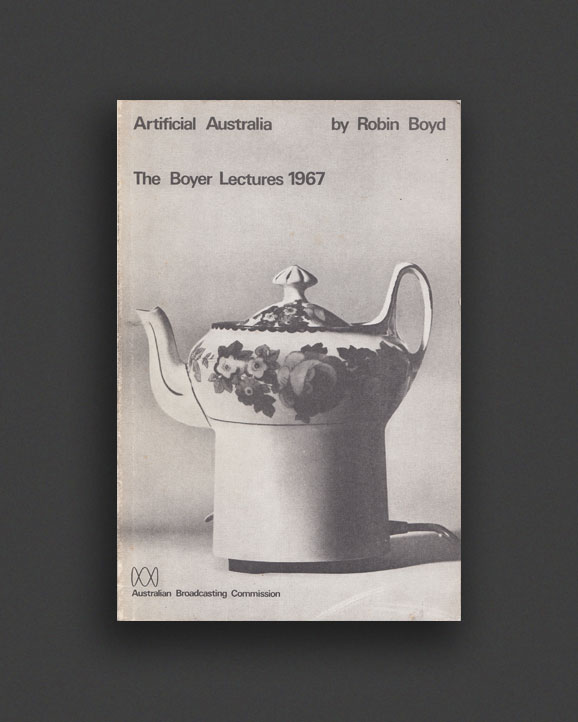
1967, English
Softcover, 56 pages, 12 x 18 cm
1st Edition, Out of print title / used / good
Published by
Australian Broadcasting Commission / Sydney
$55.00 - Out of stock
In 1967 Australian architect Robin Boyd presented the Boyer Lectures, which were broadcast nationally on ABC Radio. He delivered five lectures on a variety of topics and issues relating to Australia, architecture and design and prevailing cultural values of the time, under the series title Artificial Australia. The lectures were: Lecture 1 - Creative Man in a Frontier Society; Lecture 2 - The Architecture of Ideas; Lecture 3 - Integrity in the Artificial Object; Lecture 4 - The Environmental Arts in Australia; Lecture 5 - The Australian Myth in the Modern World.
All of the lectures are here transcribed in this now very scarce pocketbook volume published in 1967 by the Australian Broadcasting Commission.
Beginning in 1959, the Boyer Lectures is a series of talks by prominent Australians chosen by the ABC board to present ideas on major social, scientific or cultural issues. Broadcast on ABC Radio for 40 years, the Lecture series stimulated thought, discussion and debate in Australia on an astonishing range of subjects—great minds examining issues and values.
Robin Boyd (1919–71) is arguably Australia’s most influential architect. He was an idealist, a visionary, who believed that good design would improve the quality of people’s lives. A tireless public educator and outspoken social commentator, he designed more than two hundred buildings and wrote such classics as The Puzzle of Architecture and Australia’s Home.
Good-Very Good copy with some wear to covers.
1999, English
Softcover, 140 pages, 14 x 21.6 cm
Published by
Dufour Editions / US
$32.00 - Out of stock
Published in 1999, this is the first collected English translation of Bataille's poems. Bataille's poetry is definitely the poetry of a philosopher, but it is also a poetry with an obsessively erotic, often scatological edge, frequently pushing the boundary of what is or isn't obscene. Bataille believed that everything relates to the workings of desire and death in sexuality, but he also believed that poetry was the product of "hate" (and other extreme emotions), just as much as erotic pleasure accedes to self-annihilation. But Bataille was interested in actual action, not just disengaged hypothesis concerning the sexual act. Dufour Editions is pleased to bring Bataille's poetry to print in English.
"This is the audacious, frightful side of surrealism." - Library Journal
Translated by M. Dalwood
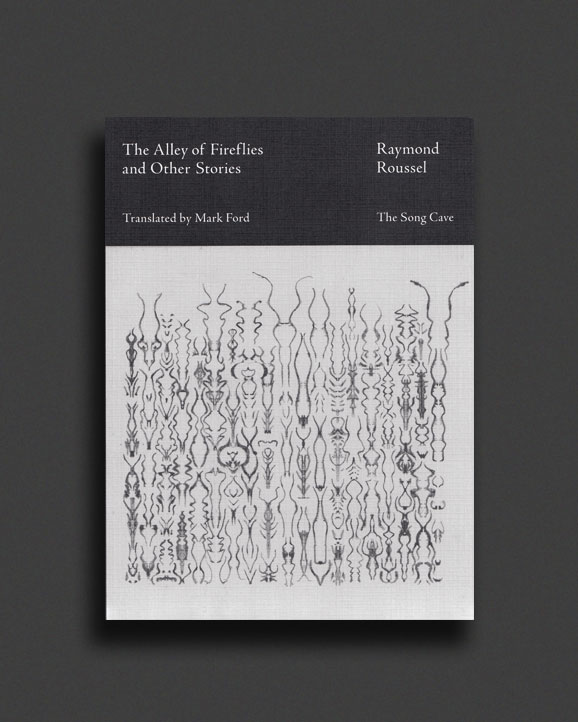
2019, English
Softcover, 112 pages, 14 x 19.1 cm
Published by
The Song Cave / New York
$38.00 - Out of stock
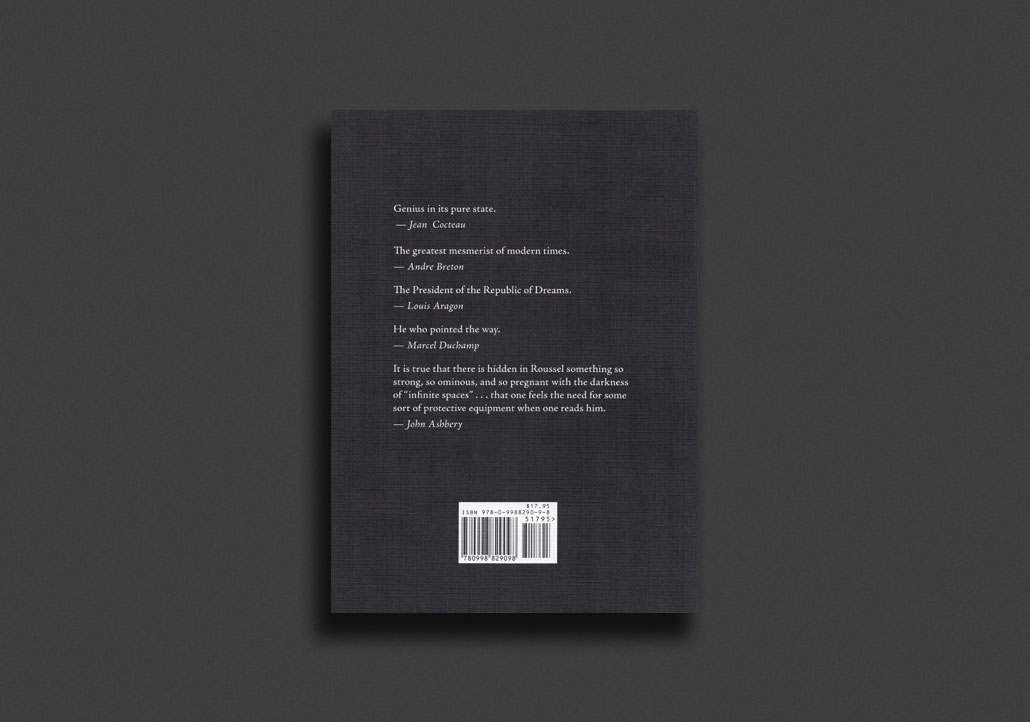
Raymond Roussel (1877-1933) is one of the most distinctive and compelling French writers of the twentieth century, yet many aspects of Roussel's life remain shrouded in mystery. An extremely wealthy and always exquisitely dressed homosexual dandy, Roussel was also a compulsive writer. Despite the strangeness of his work, he was convinced that it would make him as popular as Victor Hugo or Shakespeare. His suicide at the age of 56 was in part prompted by the continual disappointment of his hopes for fame.
The full extent of Roussel's writing only became clear in 1989 when a trunk was unearthed in a furniture warehouse containing a vast trove of his manuscripts. The most exciting discoveries were the full draft of Locus Solus (over twice as long as the published version) and the typescript of what would have been his third novel, The Alley of Fireflies, which is translated here for the first time into English by the leading Roussel scholar, Mark Ford. Ford has also translated two haunting extracts from the drafts of Locus Solus, and versions of two of the young Roussel's most intriguing short stories, Chiquenaude and Among the Blacks.
Roussel's work was vociferously championed by Surrealist writers and painters such as André Breton, Marcel Duchamp and Salvador Dalì, and later proved a significant influence on Oulipians (particularly Georges Perec), on nouveaux romanciers like Alain Robbe-Grillet, as well as on John Ashbery and Harry Mathews, who named their pioneering magazine of the 1960s Locus Solus, after Roussel's second novel.
Translated from French by Mark Ford.
2016, English
Softcover, 168 pages, 18 x 12 cm
Published by
Wakefield Press / Cambridge
$32.00 - Out of stock
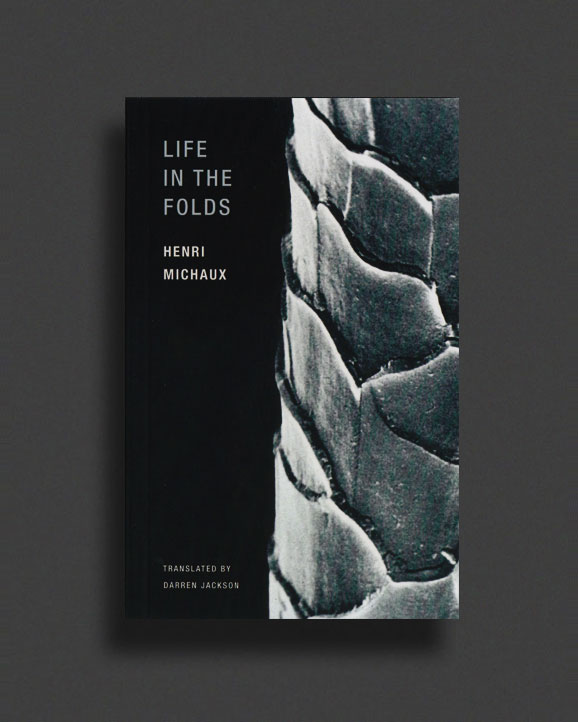
Life in the Folds, originally published in French in 1949, is the Belgian-born author and artist Henri Michaux’s (1899-1984) most direct exploration of the many forms of suffering, a laboratory of fantastical, destructive energies in which the poet presents his methods for dealing with the world around him. The first two sections offer such items as the Slapping Gun and the Man Sling and present scenarios that call for defensive measures such as the "Constellation of Jabs" or “The Trepanned Patient.” Also included is one of Michaux's more complex fantastical-anthropological travelogues, “Portrait of the Meidosems,” an account of the ways and manners of a population of vague ectoplasmic figures, anguished filaments of sorts that struggle to exist but are never allowed to sit still. This volume charts a turning point in Michaux's life and in the world, where his earlier depictions of visualized psychology and suffering found representation in a traumatized Europe. Imbued by the war years, the Occupation and the horror of the concentration camps, Life in the Folds also bears the scars of Michaux’s own personal catastrophe—the loss of his wife, who had died of “atrocious burns” the previous year—and concludes with the autobiographical text, “Old Age of Pollagoras,” a wearied testament uttered before a haunted “plain of death.”
Through travel journals, prose poems, and incantatory exorcisms, Henri Michaux (1899–1984) built an unsettling world of aggression, fear, hostility, and paranoia, whose fantastical landscapes and fabulist beings delineate a space of psychological and cognitive discomfort all too contemporary. In 1956 he continued his controlled explorations of the self with a series of mescaline experiments, which he documented in a series of books over the next decade. Michaux’s writing was paralleled by his lifelong commitment to painting and drawing.
Translated, with an introduction, by Darren Jackson
“[A] masterpiece of concision and pain. It is a literary achievement that can stand with the best works of Samuel Beckett, Jean Genet, and Louis-Ferdinand Céline.” — Karl Wolff, New York Journal of Books
2002, English
Softcover, 200 pages, 12.7 x 20.3 cm
Published by
The New York Review of Books / New York
$42.00 - Out of stock
In Miserable Miracle, the great French poet and artist Henri Michaux, a confirmed teetotaler, tells of his life-transforming first encounters with a powerful hallucinogenic drug. At once lacerating and weirdly funny, challenging and Chaplinesque, his book is a breathtaking vision of interior space and a piece of stunning writing wrested from the grip of the unspeakable. Includes forty pages of black-and-white drawings by Michaux.
"This book is an exploration. By means of words, signs, drawings. Mescaline, the subject explored."
Translated by Louise Varese
Introduction by Octavio Paz
Through travel journals, prose poems, and incantatory exorcisms, Henri Michaux (1899–1984) built an unsettling world of aggression, fear, hostility, and paranoia, whose fantastical landscapes and fabulist beings delineate a space of psychological and cognitive discomfort all too contemporary. In 1956 he continued his controlled explorations of the self with a series of mescaline experiments, which he documented in a series of books over the next decade. Michaux’s writing was paralleled by his lifelong commitment to painting and drawing.
1962, French
Sofcover, 40 pages, 30 x 13 cm
1st Edition, Out of print title / used / very good
Published by
Galerie Daniel Cordier / Paris
$90.00 - Out of stock
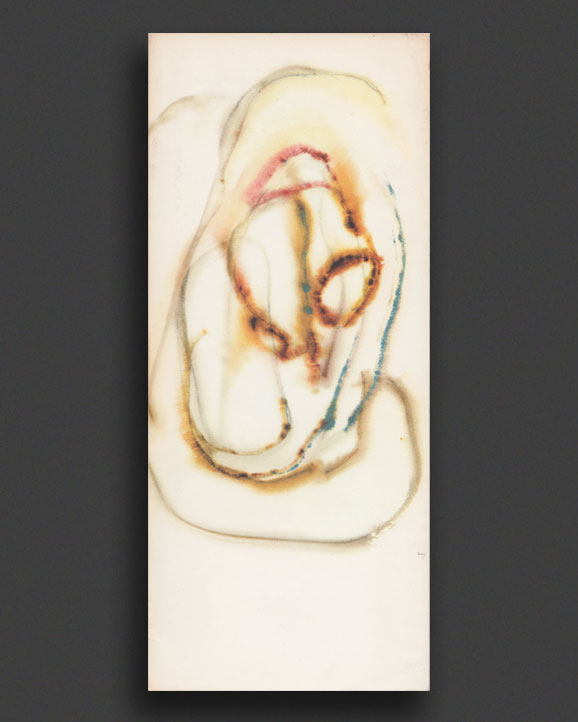
Beautiful and scarce catalogue published on the occasion of the 1962 exhibition of Henri Michaux at Galerie Daniel Cordier, Paris. Illustrated throughout, including fold-outs with text by Henri Michaux and Geneviève Bonnefoi.
"Michaux excels in making us feel… the strangeness of natural things and the naturalness of strange things."—André Gide
Henri Michaux (1899–1984) was a highly idiosyncratic Belgian-born poet, writer, and painter who wrote in French. Through travel journals, prose poems, and incantatory exorcisms, Michaux built an unsettling world of aggression, fear, hostility, and paranoia, whose fantastical landscapes and fabulist beings delineate a space of psychological and cognitive discomfort all too contemporary. In 1956 he continued his controlled explorations of the self with a series of mescaline experiments, which he documented in a series of books over the next decade. Michaux’s writing was paralleled by his lifelong commitment to painting and drawing.
Very Good copy, well preserved, tight and clean.
1982, English / French
Softcover, 145 pages, 13.2 x 20.5 cm
Published by
New Directions / New York
$35.00 - Out of stock
Selected Poetry and Prose of Stéphane Mallarmé presents what can be considered the essential work of the renowned "father of the Symbolists." Mallarmé's major elegies, sonnets, and other verse, including excerpts from the dialogue "Hériodiade," are all assembled here with the French and English texts en face. Also included (not bilingually) are the visual poem "Dice Thrown Never Will Annul Chance" and the drama "Igitur," as well as letters, essays, and reviews.
Although his primary concern was with poetry, the aesthetics of Stéphane Mallarmé (1842-98) has touched all the arts. During the last twenty years of his life, his Paris apartment was a major literary gathering place. Every Tuesday evening, standing beneath the portrait of himself by his friend Edouard Manet, the poet addressed reverent gatherings which included at various times Paul Valery and André Gide, among many others. The American painter James Whistler was influenced by these "Mardis," and one of the best-known poems in the present collection, "The Afternoon of a Faun," inspired Claude Debussy's famous musical composition. In translation, the subtle and varied shades of Mallarmé's oeuvre may best be rendered by diverse hands. Editor Mary Ann Caws, the author of books on René Char, Robert Desnos, and various aspects of modern French writing, has brought together the work of fourteen translators, spanning a century, from the Symbolists and the Bloomsbury group (George Moore and Roger Fry) to Cid Corman, Brian Coffey, and other contemporary poets and writers.
2016, English / French
Softcover, 6 pages, 25 x 32.5 cm
Ed. of 900,
Published by
Mousse / Milan
$45.00 - Out of stock
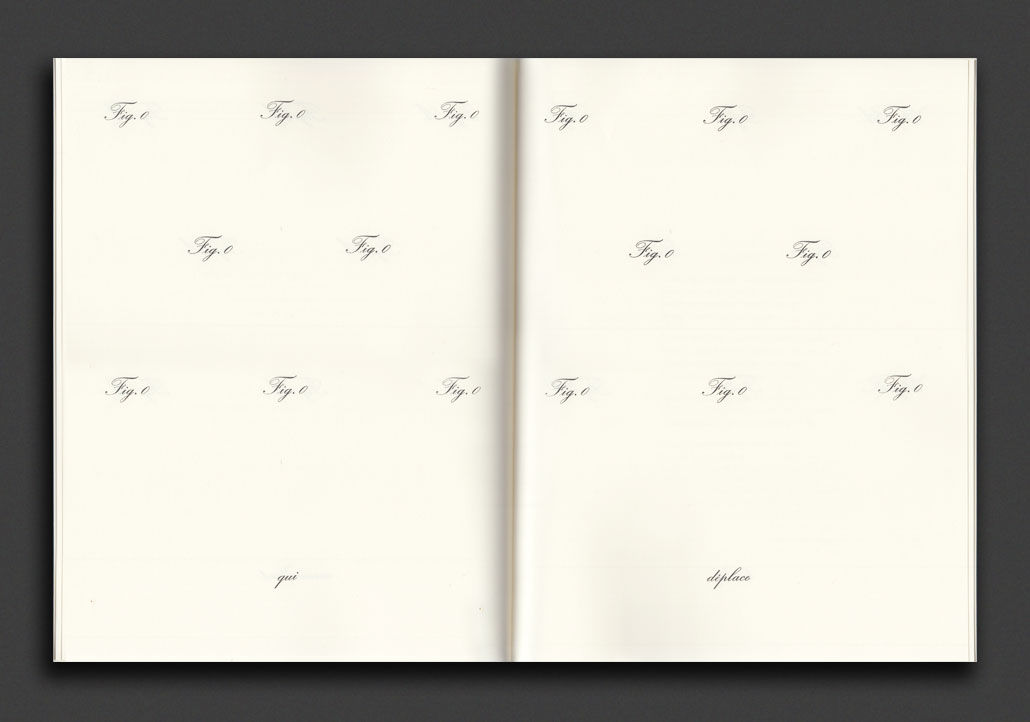
Facsimile edition of an artist book by Marcel Broodthaers based on a verse from Baudelaire's poem La Beauté. Edition of 900 copies.
Marcel Broodthaers “I hate movement that displaces lines” is the seventh verse from Baudelaire's sonnet La Beauté. Broodthaers “plays with the conventions of editing, which are part of the definition of the book: that is, each time he plays with the common denominations like the name of the author, the title, the place and date of publication, always with the same strategy of an occultation that affirms, validate and make present what is absent.” - Birgit Belzer, “Marcel Broodthaers: The Place of the Subject” in Jon Bird, Michael Newman, eds., Rewriting Conceptual Art.
First edition published by Edition Hossmann, Hamburg, 1973.
2012, English / Italian / French / German
Softcover, 102 pages (90 colour ill.) w. 16 page booklet insert, 20.2 x 27 cm
Reprint,
$69.00 - Out of stock
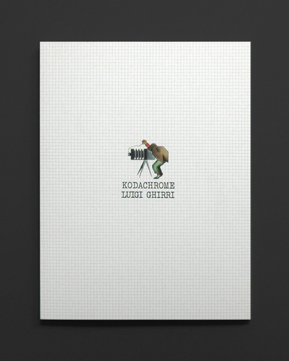
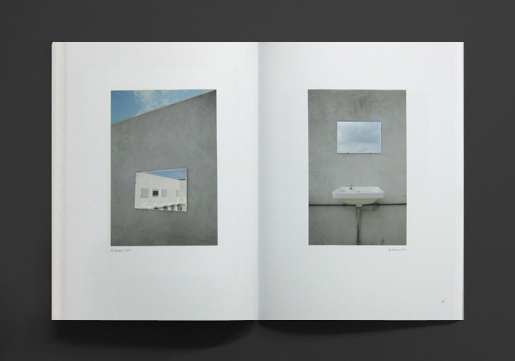
In 1978 Luigi Ghirri self-published his first book, an avant-garde manifesto for the medium of photography and a landmark in his own remarkable oeuvre. Kodachrome has long been out of print and on the 20th anniversary of Ghirri’s death, MACK is proud to publish the second edition.
‘Ghirri fights to maintain our ability to see. His works are powerful devices for the re-education of the gaze. They alter the perception we have of the world without proposing a single path to follow, rather they provide us with the tools we need to find the one we’re looking for.’ - Francesco Zanot
Part amateur photo-album, Ghirri presents his surroundings in tightly cropped images, making photographs of photographs and recording the Italian landscape through it’s adverts, postcards, potted plants, walls, windows, and people. His work is deadpan, reflecting a dry wit, and is a continuous engagement with the subject of reality and of landscape as a snapshot of our interaction with the world.
This new edition of Kodachrome is published as a facsimile of the original, adopting the original design, text layout and image sequence, but using new image files scanned from Ghirri’s original film to take advantage of modern technology and printing methods. A small booklet is included with an essay by Francesco Zanot, which offers a contemporary perspective on the historical impact of Kodachrome, alongside French and German translations of the original texts from the book (which were published in English and Italian).
‘The daily encounter with reality, the fictions, the surrogates, the ambiguous, poetic or alienating aspects, all seem to preclude any way out of the labyrinth, the walls of which are ever more illusory… to the point at which we might merge with them… The meaning that I am trying to render through my work is a verification of how it is still possible to desire and face a path of knowledge, to be able finally to distinguish the precise identity of man, things, life, from the image of man, things, and life.’ - Luigi Ghirri
Born in Scandiano in 1942, Luigi Ghirri spent his working life in the Emilia Romagna region, where he produced one of the most open and layered bodies of work in the history of photography. He was published and exhibited extensively both in Italy and internationally and was at the height of his career at the time of his death in 1992.
Photography critic and curator Francesco Zanot has been working with some of the most renowned European and international photographers, including Alec Soth and Olivo Barbieri, for over 10 years. He has participated in multiple conferences and seminars on photography in different institutions such as Columbia University in New York and the American Academy in Rome. He is associate editor of Fantom, photographic quarterly magazine based in Milan and New York.
1998, Japanese
Softcover, 112 pages, 30 x 21 cm
1st Edition, Out of print title / used / very good
Published by
Ashiya City Museum of Art and History / Ashiya
$180.00 - Out of stock
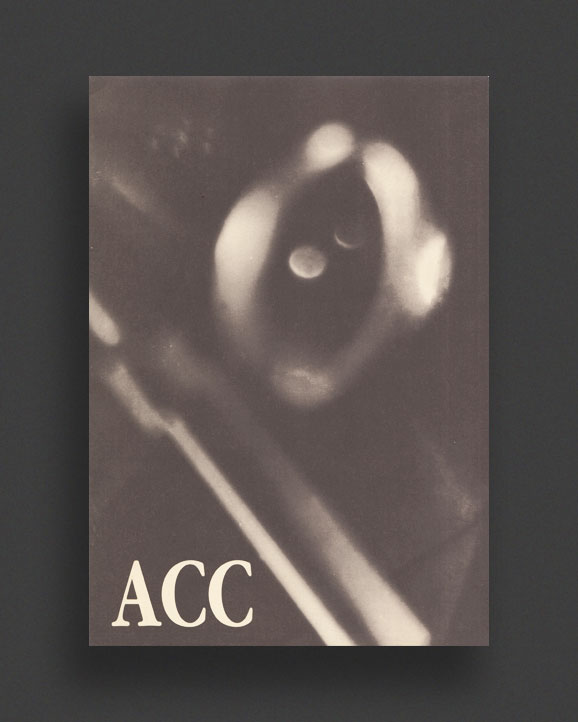
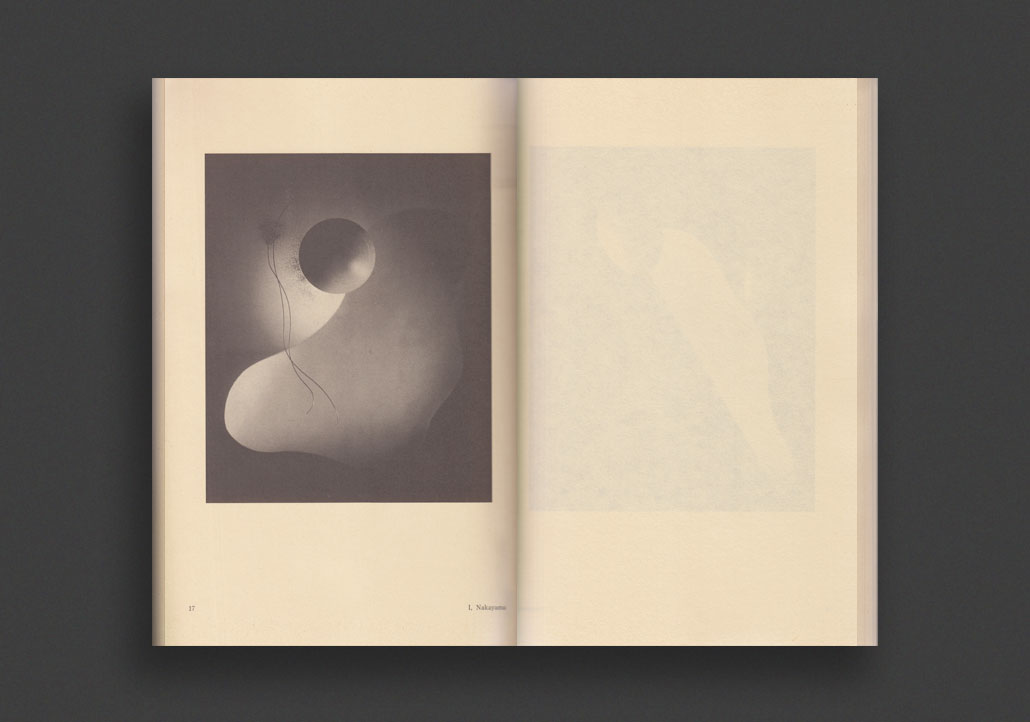
Gorgeous rare Japanese book on the The Ashiya Camera Club (ACC), produced in conjunction with a major exhibition held at the Ashiya City Museum of Art in 1998, now long out-of-print. Profusely illustrated throughout with fine examples from all members of the ACC, plus detailed biographies, history and chronology (in Japanese), including rarely seen exhibition installation documentation. A stunning book.
The Ashiya Camera Club (ACC) was founded in 1930 by Iwata Nakayama, Kanbei Hanaya and other local amateur photographers from the Ashiya area near Kobe, Japan. Other members included Seiji Korai, Yoshinosuke Kotani, Kiyoji Goryeo, Kichinosuke Benitani, Kenichiro Yamakawa, Juzo Matsubara, and Shigezo Matsubara. The members of the ACC practised various design concepts that were perceived as being too radical at the time within the Japanese photo community. They experimented with various photographic techniques already occurring in the West such as Dadaist photomontage, photograms and abstract compositions, but did so with a uniquely Japanese form of expression. From 1930 to 1942 the members of the ACC were some of the most influential modernist photographers in Japan practicing radical design concepts they labeled “Shinko Shashin” or new photography movement.
Very Good, perfectly preserved copy.
1981, Japanese
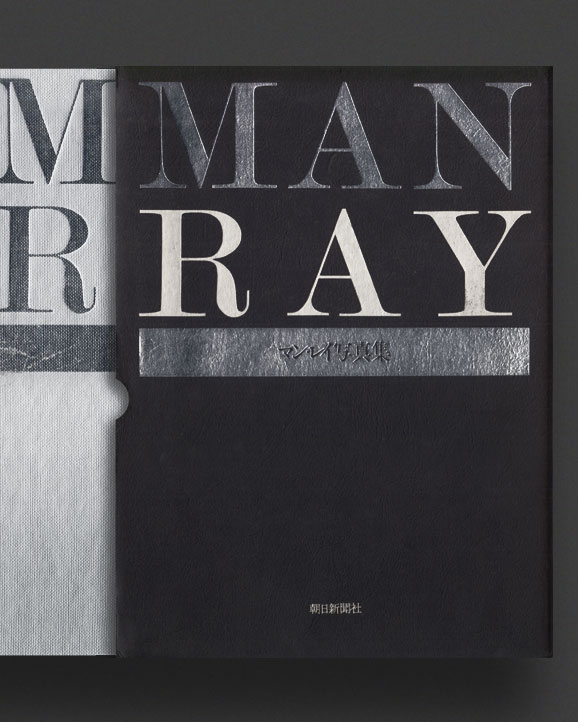
Hardcover (in foil-printed cardboard slipcase) 31 x 22.5 cm
1st Edition, Out of print title / used / very good
Published by
Asahi Shimbun / Japan
$160.00 - Out of stock
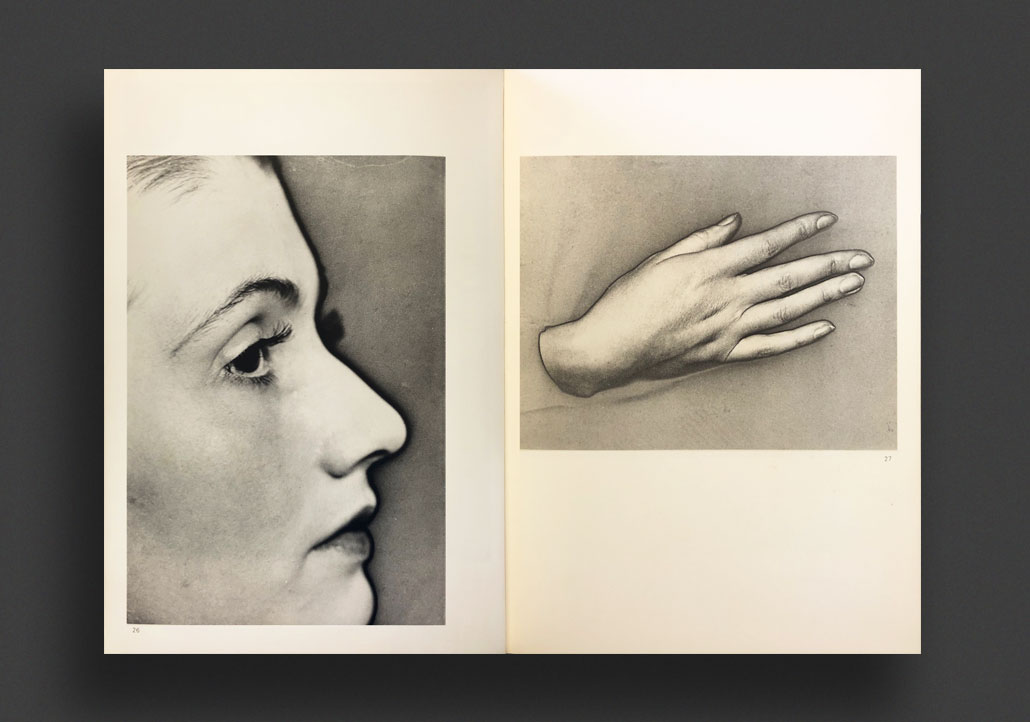
Exquisite and scarce Japanese volume on the (mostly) photographic work of Man Ray, published in 1981 by Asahi Shimbun. Issued only in Japan in hardcover form, wrapped in a foil-stamped/printed black cardboard sleeve, this beautifully designed book features 165 stunningly gravure reproduced images honest to the original photographic works of Man Ray, including his abstract work, portraits, photographs of fellow artists, artworks, studios and living spaces (including many collaborations with Marcel Duchamp). Many of these photographs are rarely documented in other Man Ray publications. Text is entirely in Japanese, although there is very little of it as this is primarily a photo book, and one of the most beautiful on the work of Man Ray.
Very Good in Good slipcase with some wear.
2021, English
Softcover (cloth), 300 pages, 16.5 x 10.4 cm
Published by
Office / Melbourne
$27.00 - Out of stock
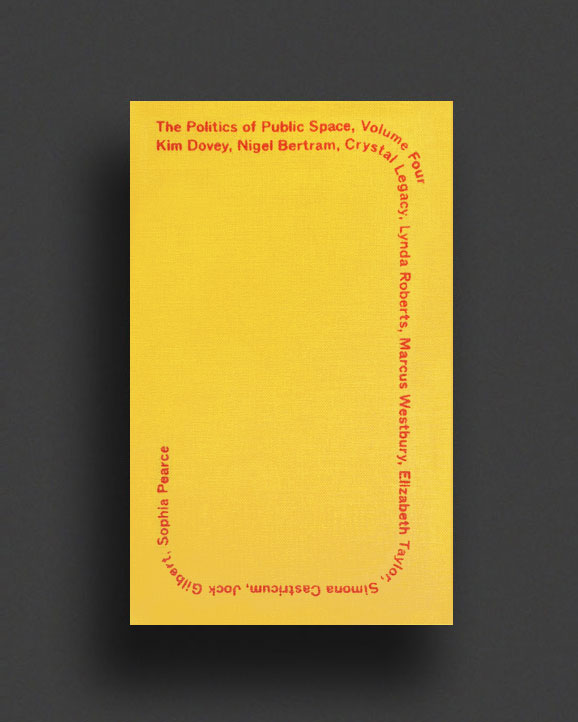
Many of the texts in this volume are interviews with the speakers from the lecture series. We felt it was necessary to provide each speaker with the opportunity to reflect on how their research has been altered by the events of the past year. While past volumes asked many questions, this collection of interviews and talks puts forward strategies for addressing some of the perceived inequities in the public domain. Nigel Bertram and Kim Dovey’s texts explore forms of protest, preservation and civil disobedience within urban spaces. Protest continues to be intrinsic to public discourse and by consequence, how the city is preserved and developed. In contrast, these modes of resistance have their counterpart in discussions about policy-making and planning. For Lynda Roberts this is through revealing the political motivations behind the procurement of cultural artifacts and their deployment throughout the arts precinct. Crystal Legacy outlines ideas of agonism and consensus planning in large scale infrastructure projects. Marcus Westbury reflects on new forms of tenure in creating and running a public cultural institute and Elizabeth Taylor unpacks the political, social and commercial motivations behind car parking.
What is clear is that each of these texts draws the attention of the series back to questions of how we experience cities. As we have found in past volumes, the city privileges certain demographics and bodies over others. Simona Castricum reflects on the diverse experiences of gender non-conforming, trans and gender diverse people in public space. And the final text, an interview with Sophia Pearce and Jock Gilbert, puts forward their understanding of Country, and strategies for Indigenous and non-indigenous people to work in collaboration. Unpacking concepts of Story and deep listening and how they shape their projects.
2012, English / Swedish
Softcover, 224 pages, 28 x 21.7cm
Published by
Walther König / Köln
$68.00 - Out of stock
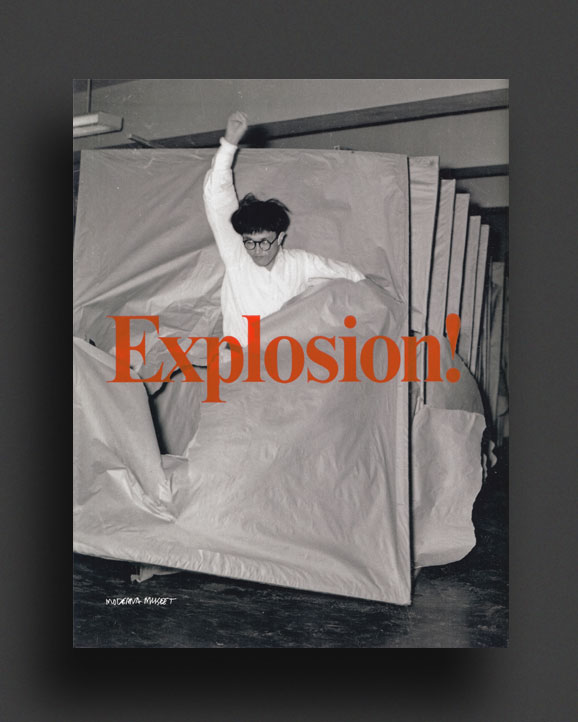
In the years following the Second World War, artists across the world began to attack the most basic premises of painting, in ways that were both aggressive and playful. The creative act itself was deemed as important as the painting that resulted from it, creating an energetic interzone between painting and performance in which chance procedures, the movement of bodies and the participation of spectators were all recruited as tools.
Explosion! Painting as Action explores the connections and cross fertilizations between painting, performance and conceptual art from the late 1940s to the present. Examining painting, photography, video, performance, dance and sound art, this volume includes works by Lynda Benglis, Niki de Saint Phalle, Cai Guo-Qiang, the Gutai Group, Allan Kaprow, Yves Klein, Alison Knowles, Ana Mendieta, Rivane Neuenschwander, Yoko Ono, Jackson Pollock, Robert Rauschenberg, Carolee Schneemann, Shozo Shimamoto, Lawrence Weiner and many others.
1999, Japanese
Hardcover (w. dust jacket), 108 pages,
1st Edition, Out of print title / used / very good
Published by
Korinsha Press & Co / Kyoto
$180.00 - Out of stock
Very scarce first edition, first printing of this wonderful photo book by Daido Moriyama, published in Kyoto in 1999. Contrary to the title's implication, Visions of Japan actually features Moriyama's photographs of Paris, its streets, shop windows and advertising, all presented through the artist's singular lens. Unquestionably Moriyama, unquestionably Paris. Text (in Japanese) by Toshiharu Ito. Includes a biography, exhibition history and illustrated bibliography (in Japanese). A lovely book from a series of monographs dedicated to Japanese masters of photography.
Daidō Moriyama (b. 1938) is an award winning, internationally acclaimed Japanese photographer. Born in Ikeda, Osaka, Moriyama studied photography under Takeji Iwamiya, before moving to Tokyo in 1961 to work as an assistant to the photographer Eikoh Hosoe. He produced a collection of photographs, Nippon gekijō shashinchō, which showed the darker sides of urban life and the less-seen parts of cities. In them, he attempted to show how life in certain areas was being left behind in the wake of industrialised Japan. Moriyama's style is synonymous with that of Provoke magazine, which he was involved with in 1969, namely 'are, bure, bokeh', translated as 'grainy / rough, blurry, and out-of-focus'. Known mostly for his work in black and white, his images often use high contrast and tilted horizons to convey the fragmentary nature of modern life. Since 1968, he has published more than 150 photo books. He received the Infinity Award for Lifetime Achievement from the International Center of Photography in New York in 2004 and the Hasselblad Award in 2019.
Long out of print. Very Good copy with original dust jacket and obi strip.
1973, English
Softcover, 96 pages, 18 x 24 cm
1st Edition, Out of print title / used / very good
Published by
Sun Books / Melbourne
$80.00 - Out of stock
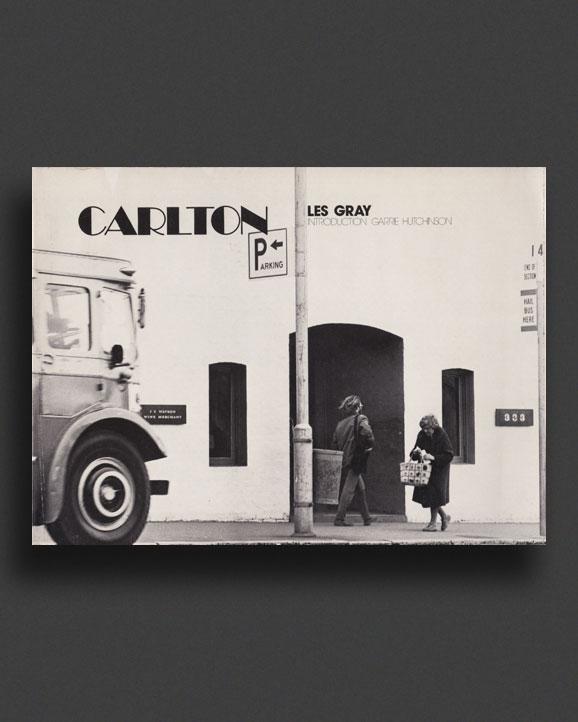
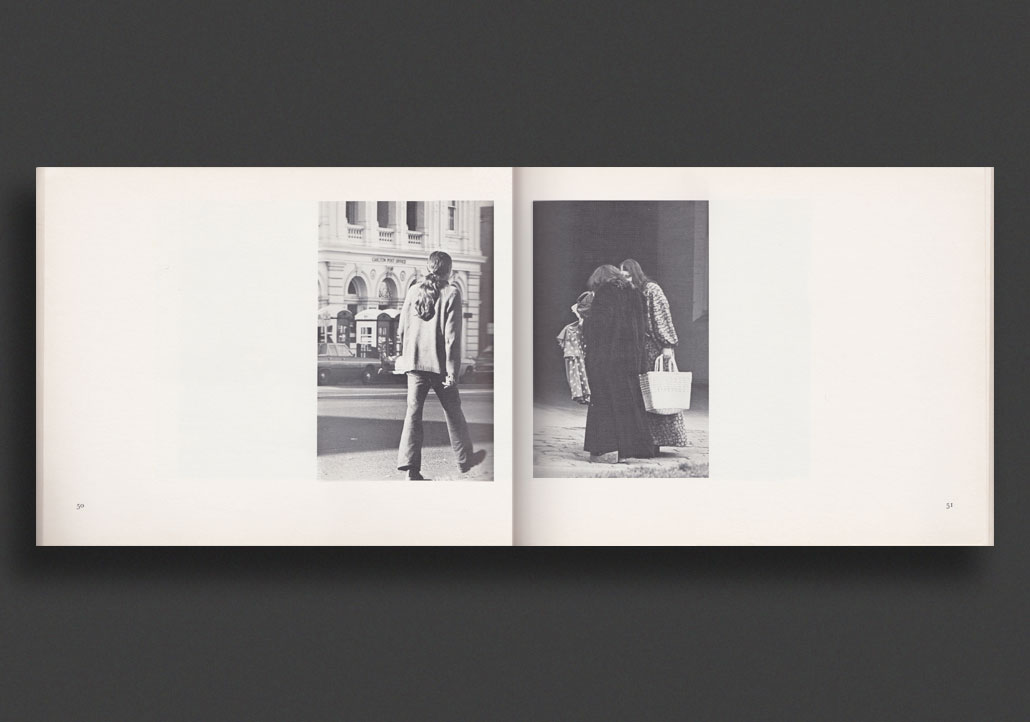
First printing from 1973 of this photo-book dedicated entirely to the streets of the suburb of Carlton, Melbourne, by Australian photographer Les Gray (1920 - 2013). With an introduction by poet Garrie Hutchison (b. 1949) titled "Canning Street, Carlton, August 1973", this handsome little landscape album of snapshots captures the people, terraces, and shopfronts of early 1970s Drummond, Rathdowne, Cardigan, Faraday, Lygon, Gratton, Station, Canning, and Elgin streets. Published by Sun Books.
Very Good copy.
2012, English
Hardcover, 304 pages, 216 x 254 mm
Published by
The MIT Press / Massachusetts
$79.00 - Out of stock
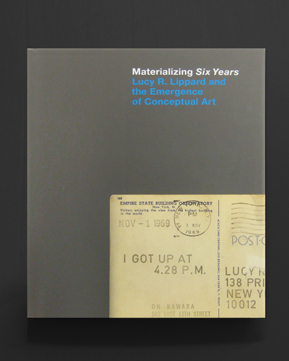
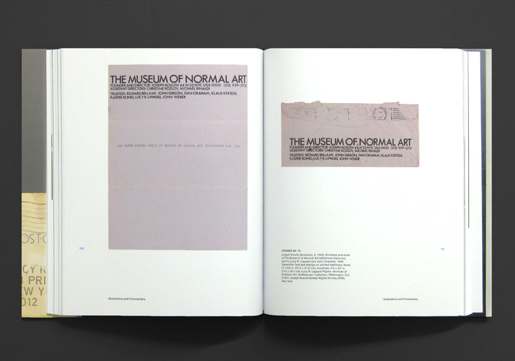
Lucy R. Lippard's famous book, itself resembling an exhibition, is now brought full circle in an exhibition (and catalog) resembling her book.
“Conceptual art, for me, means work in which the idea is paramount and the material form is secondary, lightweight, ephemeral, cheap, unpretentious and/or ‘dematerialized.’” — Lucy R. Lippard, Six Years
In 1973 the critic and curator Lucy R. Lippard published Six Years, a book with possibly the longest subtitle in the bibliography of art: The dematerialization of the art object from 1966 to 1972: a cross-reference book of information on some esthetic boundaries: consisting of a bibliography into which are inserted a fragmented text, art works, documents, interviews, and symposia, arranged chronologically and focused on so-called conceptual or information or idea art with mentions of such vaguely designated areas as minimal, anti-form, systems, earth, or process art, occurring now in the Americas, Europe, England, Australia, and Asia (with occasional political overtones) edited and annotated by Lucy R. Lippard. Six Years, sometimes referred to as a conceptual art object itself, not only described and embodied the new type of art-making that Lippard was intent on identifying and cataloging, it also exemplified a new way of criticizing and curating art. Nearly forty years later, the Brooklyn Museum takes Lippard’s celebrated experiment in curated concatenation as a template, turning a book that resembled an exhibition into an exhibition materializing the ideas in her book.
The artworks and essays featured in this publication recall the thrill that was tangible in Lippard's original documentation, reminding us that during the late sixties and early seventies all possible social and material parameters of art (making) were played with, worked over, inverted, reduced, expanded, and rejected. By tracing Lippard’s own activities in those years, the book also documents the early blurring of boundaries among critical, curatorial, and artistic practices.
With more than 200 images of work by dozens of artists (printed in color throughout), this book brings Lippard’s curatorial experiment full circle.
Edited by Catherine Morris and Vincent Bonin
Published on the occasion of the exhibition The Six Years' Project: Lucy R. Lippard and the Emergence of Conceptual Art, September 14, 2012-February 3, 2013, organized by Catherine Morris, Curator of the Elizabeth A. Sackler Center at the Brooklyn Museum, and the independent scholar Vincent Bonin.
1980, English
Hardcover (w. dust jacket), 340 pages, 22.5 x 15 cm
Out of print title / used / good
Published by
Angus & Roberston / NSW
$45.00 - Out of stock
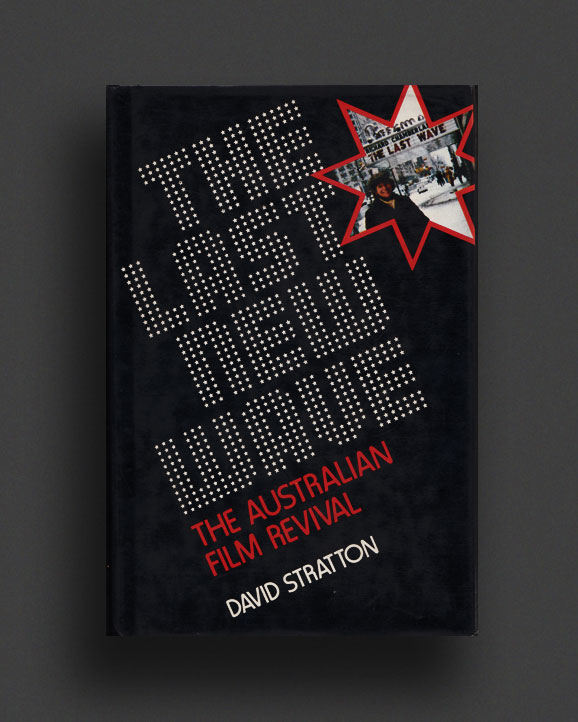
First hardcover edition of Australian film critic David Stratton's "The Last New Wave : The Australian Film Revival", published in 1980, exploring the explosion of new Australian film in the 1970's. Between 1970 and 1980 the Australian film industry produced 120 feature films (the previous decade saw only 13) and established a degree of excellence acknowledged the world over. In 1979, David Stratton, who was Director of the Sydney Film Festival since 1966, interviewed the directors and producers responsible for the films, leading to this wonderful volume. Stratton unpacks a period in Australian film-making like no other, contextualising this rise with the social and political climate in Australia, and featuring the film-makers Peter Weir, Tim Burstall, Bruce Beresford, Michael Thornhill, Ken Hannam, Tom Jeffrey, Fred Schepisi, Jim Sharman, John Duigan, Esben Storm, Phil Noyce, Gill Armstrong, Philippe Mora, Donald Crombie, George Miller, Michael Pate, and so many others. The artists themselves discuss freely their approach to filmmaking: the problems, frustrations, failures and successes they and their films have met on the way to making Australia one of the worlds most exciting and innovative film centres into the dawn of the 1980s. Including illustrated sections, full chronology, and film credits, The Last New Wave makes fascinating reading and a timely celebration of an important decade in Australian filmmaking.
David Stratton (b. 1939 in Trowbridge, Wiltshire, UK). At the age of nineteen he founded the Melksham and District Film Society. He emigrated to Australia in 1963, where he quickly became involved in the local film scene He was the Director of the Sydney Film Festival for seventeen years.During his career at SBS David was the feature film consultant, presenter of movies, and of course co-host of the highly successful The Movie Show with Margaret Pomeranz for a record eighteen years. Since 1983, David has been a film critic for Variety (published in Los Angeles), a commissioner of the Australian Film Commission, a film critic for The Australian and a lecturer in film history at the University of Sydney. David has served on several internation film festival juries, including the Berlin International Jury (1982); the Montreal International Jury (1982); and the Venice International Jury (1994). He was also President of FIPRESCI (International Film Critics) Juries in Cannes (twice) and Venice. He is a past president of the Film Critics Circle of Australia.David's long list of awards and achievements include:- 60th Anniversary Medal by the Festival du Film de Cannes (2007)- The Chauvel Award by the Brisbane International Film Festival (2007)- Raymond Longford Award of Australian Film Institute (2001)- Commander of Order of Arts and Letters by French Government (2000) David is currently the co-host of At The Movies on ABC TV.
Very Good copy with general light wear and rubbing and small split to reverse of dust jacket.
2003, English / German
Softcover, 94 pages, 21 x 16 cm
1st Edition, Out of print title / as new
Published by
FOE 156 / Munich
$18.00 - Out of stock
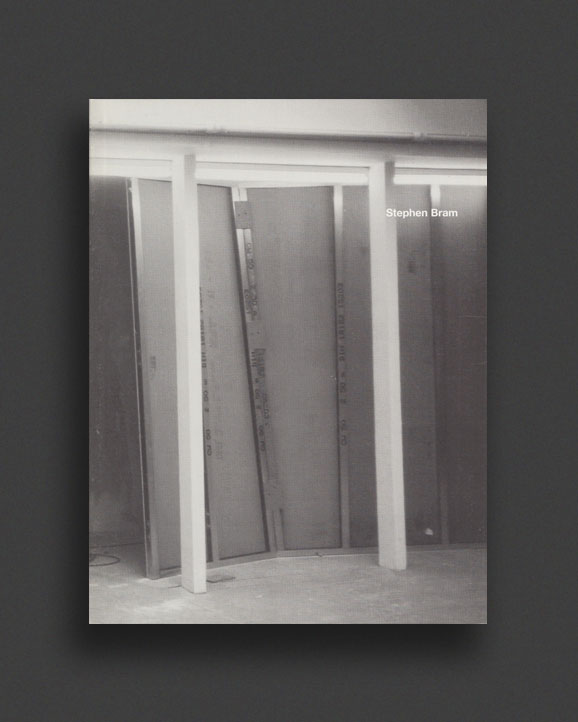
Artist publication and catalogue documenting Australian artist Stephen Bram's work, Oberföhringer Straβe 156, 2001, published in 2003. Edited with texts by Christopher Kramatschek, as well as Thomas Janzen, and an interview between curator Sue Cramer and Stephen Bram. Profusely illustrated throughout with extensive photo documentation of Oberföhringer Straβe 156, 2001, alongside elevations, and many reference images of Bram's paintings and other works, references. All texts in English and German.
2014, English
Softcover, 240 pages, 17.5 x 22.8 cm
Published by
The MIT Press / Massachusetts
$39.00 - Out of stock
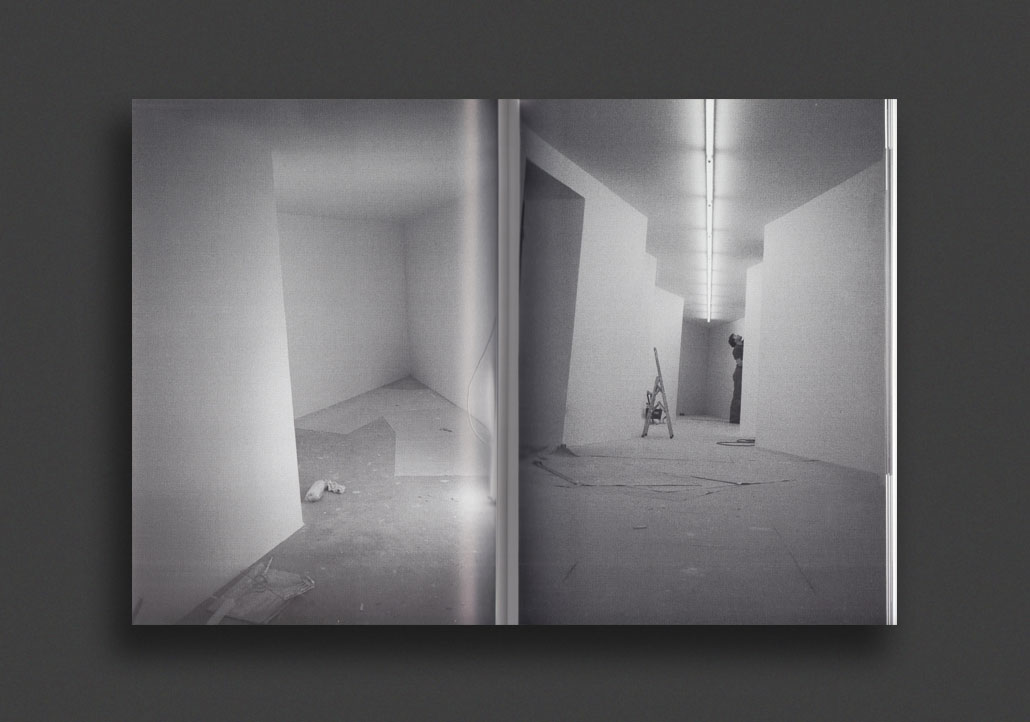
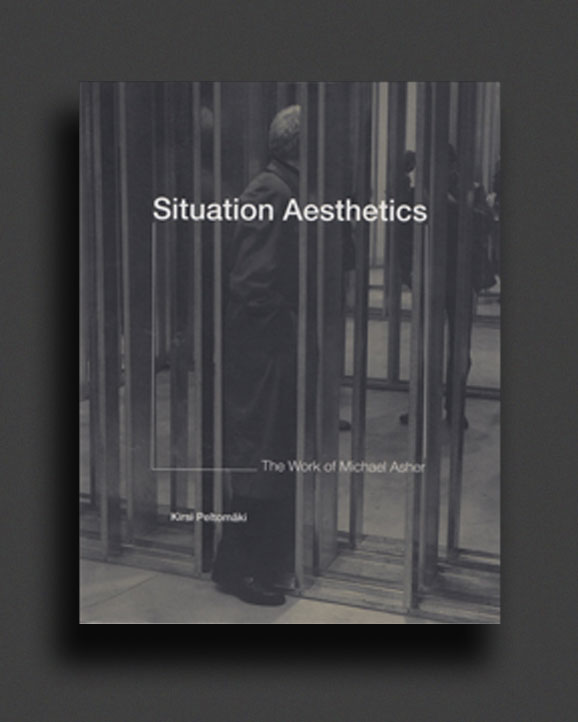
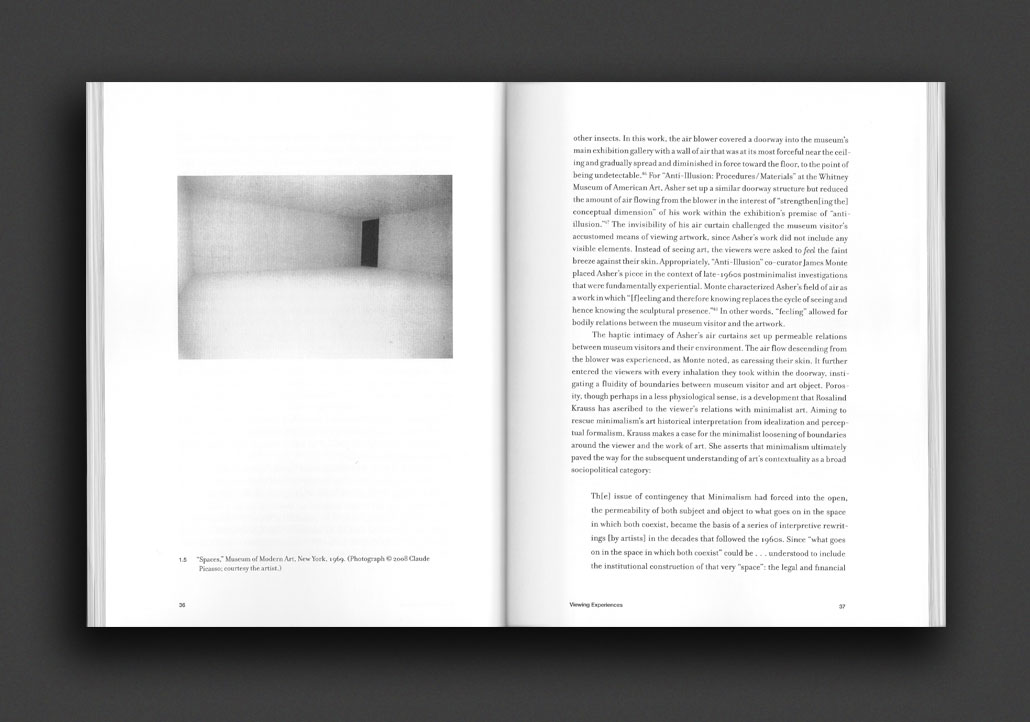
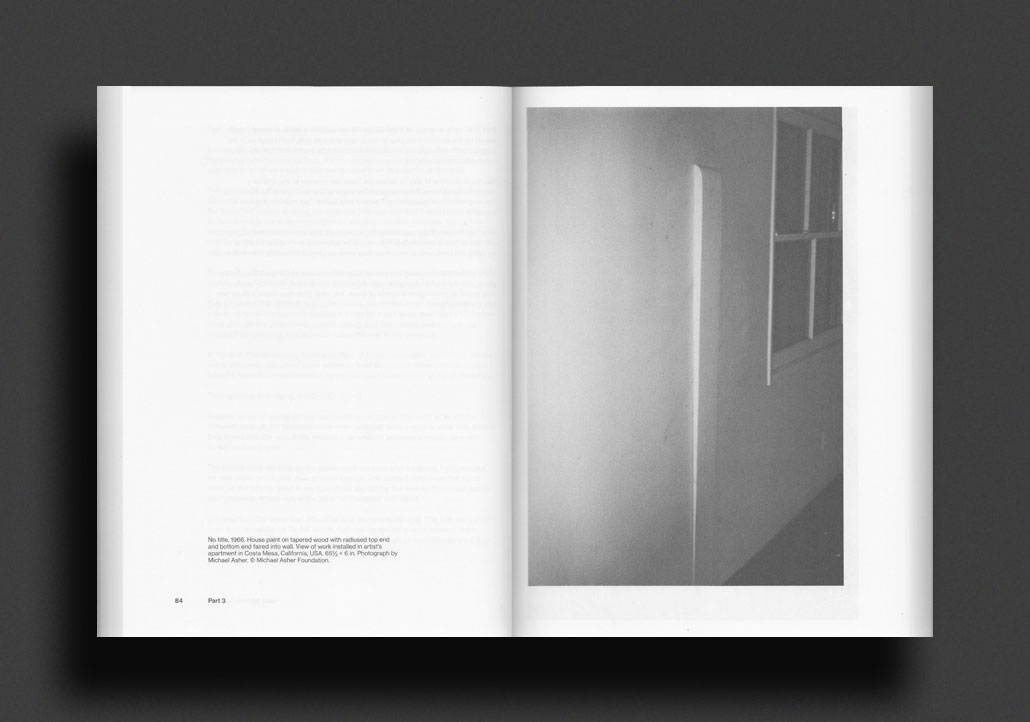
Michael Asher doesn't make typical installations. Instead, he extracts his art from the institutions in which it is shown, culling it from collections, histories, or museums' own walls. Since the late 1960s, Asher has been creating situations that have not only taught us about the conditions and contexts of contemporary art, but have worked to define it. In Situation Aesthetics, Kirsi Peltomaki examines Asher's practice by analyzing the social situations that the artist constructs in his work for viewers, participants, and institutional representatives (including gallery directors, curators, and other museum staff members). Drawing on art criticism, the reports of viewers and participants in Asher's projects, and the artist's own archives, Peltomaki offers a comprehensive account of Asher's work over the past four decades. Because of the intensely site-specific nature of this work, as well as the artist's refusal to reconstruct past works or mount retrospectives, many of the projects Peltomaki discusses are described here for the first time. By emphasizing the social and psychological sites of art rather than the production of autonomous art objects, Peltomaki argues, Asher constructs experientially complex situations that profoundly affect those who encounter them, bringing about both personal and institutional transformation.
2019, English
Hardcover (w. dust jacket), 264 pages, 17.8 x 22.9 cm
Published by
The MIT Press / Massachusetts
$50.00 - Out of stock
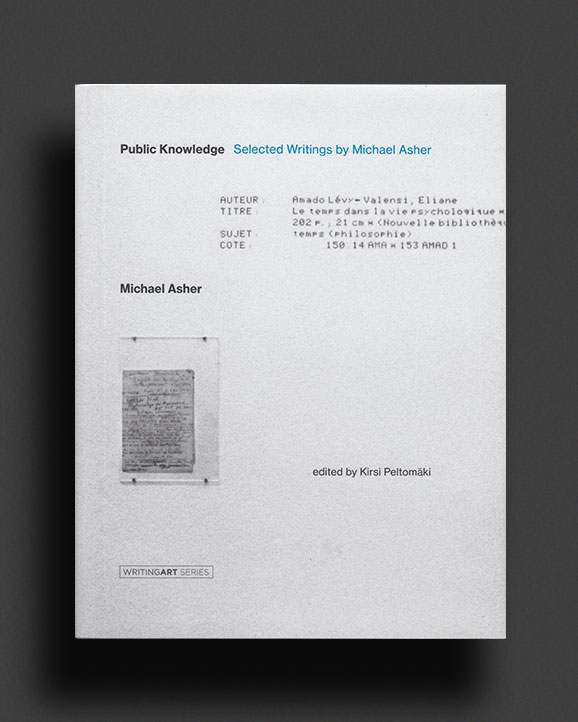
Writings by the conceptual artist Michael Asher—including notes, proposals, exhibition statements, and letters to curators and critics—most published here for the first time.
The California conceptual artist Michael Asher (1943–2012) was known for rigorous site specificity and pioneering institutional critique. His decades of teaching at CalArts influenced generations of artists. Much of Asher's artistic practice was devoted to creating works that had no lasting material presence and often responded to the material, social, or ideological context of a situation. Because most of Asher's artworks have ceased to exist, his writings about them have special significance. Public Knowledge collects writings by Asher about his work—including preliminary notes and ideas, project proposals, exhibition statements, and letters to curators and critics—most of which have never been previously published.
Asher gave few interviews, didn't write art criticism, and rarely published extensive accounts of his own work. Yet writing was central to his artistic practice, serving as a tool for working out ideas, negotiating institutional parameters, and describing thought processes. In these texts, he considers writing and documentation, discusses artistic practice, offers notes for gallery and museum talks, presents artist statements for exhibition-goers, describes individual works and their situational context, and reflects on teaching and art education. Among other things, Asher provides his definition of site specificity, addresses the function of art in public space, and analyzes the intersection of teaching art and institutional models of education. Readers will see an artist at work, formulating ethical and political strategies for making art in a situational world.
2013, English
Softcover, 82 pages, 12.7 x 19.4 cm
Published by
Univocal Publishing / Minneapolis
$36.00 - Out of stock
Exploring the concept of time in the work of one of Europe’s greatest filmmakers
From Almanac of Fall (1984) to The Turin Horse (2011), renowned Hungarian filmmaker Béla Tarr has followed the collapse of the communist promise. The “time after” is the time when we are less interested in histories and their successes or failures than we are in the delicate fabric of time from which they are carved.
Translated by Erik Beranek.
1953, English
Hardcover (die-cut cover + pages), 24 pages, 28 x 21 cm
1st Edition, Out of print title / used / good
Published by
Ernest Benn / London
$400.00 - In stock -
Stunning first English edition of the first ever Moomin picture book, Tove Jansson's "The Book About Moomin, Mymble and Little My", published in 1953 by Ernest Benn, London, and printed in Finland. Bound in the lovely heavy, die-cut board covers, these first editions have the most gorgeous printing throughout, with warm block colours and die-cut pages that allow the reader to glance through to the next scene of the story, all beautifully preserved throughout. The book won the Nils Holgersson plaque in 1953. Given by the Swedish Library Association to the author of the best children's book in the Swedish language, this was the first of Jansson's many literary prizes.
Very rare, especially so in such condition.
Tove Marika Jansson (1914 – 2001) was a Swedish-speaking Finnish author, novelist, painter, illustrator and comic strip author. Brought up by artistic parents, Jansson studied art from 1930 to 1938 in Stockholm, Helsinki and Paris. Her first solo art exhibition was in 1943. She continued to work as an artist and a writer for the rest of her life, and it was with the creation of her much-loved Moomin characters that she become known around the world. Jansson wrote the Moomin books for children, starting in 1945 with The Moomins and the Great Flood. Her books became international classics translated to 35 languages. For her work as a children's writer she received the Hans Christian Andersen Medal in 1966.
Good copy, with light wear/tanning and soft bumping to corners. Christmas note of previous owner's neatly marked on interior first page, also an ex-library stamp.
2021, English
Softcover (staple-bound), 22 x 29 cm
Published by
Endless Lonely Planet / Melbourne
$10.00 - Out of stock
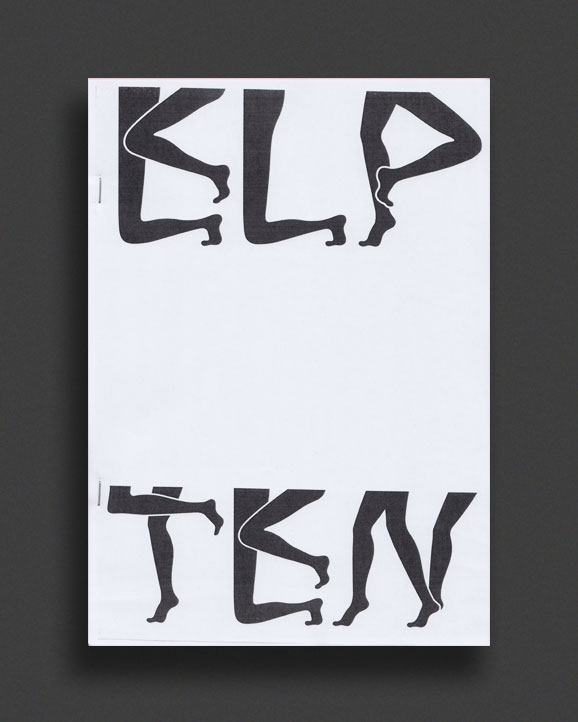
Tenth issue of Endless Lonely Planet, published on the occasion of "Encapsulated", Christopher L G Hill's exhibition of paintings, an archive of bags and a group show at caves, Melbourne, 25 Jun - 24 Jul 2021.
Published in a limited edition of 100 copies, featuring the contributions of :
Cameron Allen McKean, Dan Arps, Hugo Blomley, Nicola Blumenthal, Stephen Bram, Jack Colee, counterfeitnessfirst, Stella Corkery, Renee Cosgrave, Abella D’Adamo, Gabriella D’Costa, Alethea Everard, Lewis Fidock (Campbell the swaggie, wandering poet Maldon), Yani Florence, Matt Hinkley, Caesar Florence Howard, Kenji Ide, Carmen - Sibha Keiso, Michael Kennedy, Joel Kirkham, Lei Lei Kung, Piotr Łakomy, Gian Manik, Kate Meakin, Adelle Mills, Josh Minkus, Lloyd MST, Caeylen Fenelon Norris, Nao Osada, Conor O’Shea, Virginia Overell, Joshua Petherick, Jasmine Pickup, Andre Piguet, Owen Piper, Adriana Ramić, Luke Sands, Masato Takasaka, Matthew Ware Alexander Whitehouse, Fiona Williams, Hee Joon Youn…
2009, English
Softcover, 95 pages, 21.5 x 14 cm
1st Edition, Out of print title / used / very good
Published by
Bortolami Gallery / New York
$140.00 - Out of stock
Wonderful long out-of-print first monograph on the work of New York painter Richard Aldrich, published by Bortolami Gallery in 2009. Illustrated in colour throughout, with accompanying text by Jay Sanders.
Richard Aldrich's abstract painting juggles delicacy of line and palette with warmth of touch, a combination that fills his works with a cheerful humanity, or what Art in Review memorably described as a "slackerish cosmopolitanism." Collage elements introduce a playful take on Whistler's famous portrait of his mother.
Highly recommended.
Very Good copy of this scarce title.