World Food Books' programme is largely produced on Kulin Nation land. We acknowledge the Wurundjeri people of the Kulin Nation as the first and continuing custodians of this land, and pay respect to their Elders past, present, and emerging.
World Food Books is an arts and special interests bookshop in Naarm / Melbourne. Founded in 2010, World Food Books is devoted to the presentation of a rotating, hand-selection of international art, design, literary and counterculture publications with an emphasis on the anti-traditional, the experimental, the avant-garde, the heretic, the marginal.
Presenting new titles alongside rare and out-of-print books, catalogues and journals spanning the fields of modern and contemporary art, design, photography, illustration, film, literature, poetry, cultural theory, philosophy, sexuality, popular and underground culture in its many radical forms, World Food Books wishes to encourage adventurous, thoughtful and open-minded reading, looking, writing, and exchange of publishing and ideas, both current and historical.
As well as our bookshop, located in Melbourne's historical Nicholas Building, all of our inventory is available internationally via our online mail-order service.
World Food Books semi-regularly co-ordinates "Occasions", a programme of exhibits and events at the bookshop and in partnership with other hosts (such as museums and art galleries) that develop out of the activities, relationships and content of the bookshop itself.
World Food Books
The Nicholas Building
37 Swanston Street
Room 5, Level 6
Melbourne 3000
Australia
SHOP HOURS:
Thu–Fri 12–6, Sat 12–5
WEB-SHOP OPEN 24/7
World Food Books
Postal Address:
PO Box 435
Flinders Lane
Victoria 8009
Australia
Art
Theory / Essay
Architecture / Interior
Graphic Design / Typography
Photography
Fashion
Eros
LGBTQ+
Fiction / Poetry
Weird / Speculative / Science Fiction / Horror
Transgressive / Visceral / Abject
Symbolism / Decadence / Fin de siècle
Film / Video
Painting
Sculpture / Installation
Performance / Dance / Theater
Drawing
Sound / Music
Curatorial
Group Shows / Collections
Periodicals
Out-of-print / Rare
Posters / Ephemera / Discs
Signed Books
World Food Books Gift Voucher
World Food Book Bag
Australian Art
Australian Fiction
Australian Science Fiction / Speculative Fiction
Australian Poetry
Australian Photography
Japanese Photography
Conceptual Art
Minimal Art
Dada
'Pataphysics / Oulipo
Fluxus
Concrete Poetry
Pop Art
Surrealism
Arte Povera
Arte Informale / Haute Pâte / Tachism
Nouveau Réalisme / Zero / Kinetic
Situationism / Lettrism
Collage / Mail Art / Xerox Art
Art Brut / Folk / Visionary / Fantastic
Illustration / Graphic Art / Bandes Dessinées
Furniture
Italian Radical Design / Postmodernism
Textiles
Ceramics / Glass
Counterculture
Protest / Revolt
Philosophy
Psychoanalysis
Anthropology
Anarchism
Socialism / Anarchism / Communism / Capitalism
Literary Theory / Semiotics / Language
Feminism / Women's Studies
Gender Studies / Sexuality
Anthropology
Fetishism / BDSM
Drugs / Psychedelia
Crime / Violence
Animal Rights / Veganism
Occult / Esoterica
Ecology / Earth / Alternative Living
Whole Earth / Crafts
All prices in AUD (Australian dollars)
Pick-Ups
Pick-up orders can be collected in our bookshop during opening hours after order date. Please collect any Pick-up orders within 2 weeks of ordering as we have limited storage space. Orders will be released back into stock if not collected within this time. No refunds can be made for pick-ups left un-collected. If you cannot make it in to the bookshop in this time-frame, please choose postage option.
Return Policy
All sales are final. We do accept returns (for refund or exchange) for items received in error. All our orders are packed with special care using heavy-duty padding and cardboard book-mailers or bubble mailers (for smaller books), using reinforcement where required. We cannot take responsibility for any lost, stolen or damaged parcels.
Insurance
Should you wish to insure your package, please email us directly after placing your order and we can organise this at a small extra expense. Although all standard/express tracked packages are very safe and dependable, we cannot take responsibility for any lost, stolen or damaged parcels. We recommend insurance on valuable orders.
Interested in selling your old books, catalogues, journals, magazines, comics, fanzines, ephemera? We are always looking for interesting, unusual and out-of-print books to buy. We only buy books in our fields of interest and specialty, and that we feel we can resell.
We base these prices on desirability, market value, in-print prices, condition and our current stock levels. We offer cash, store credit, and can take stock on consignment. All
about 25% of the price we expect to get when we sell them, or 30% in store credit. We base these prices on desirability, market value, in-print prices, condition and our current stock levels.
Sell your books any day of the week. You can drop them off and return later. If you have a lot of books, we can visit your Sydney home.
We buy books that we feel we can resell. We offer about 25 % of the price we expect to get when we sell them, or 30% in store credit. We base these prices on desirability, market value, in-print prices, condition and our current stock levels.
Philadelphia Wireman
03 August - 01 September, 2018
World Food Books is proud to announce our next Occasion, the first presentation of sculptures by Philadelphia Wireman in Australia.
The Philadelphia Wireman sculptures were found abandoned in an alley off Philadelphia’s South Street on trash night in 1982. Their discovery in a rapidly-changing neighbourhood undergoing extensive renovation, compounded with the failure of all attempts to locate the artist, suggests that the works may have been discarded after the maker’s death. Dubbed the "Philadelphia Wireman" during the first exhibition of this work, in 1985, the maker’s name, age, ethnicity, and even gender remain uncertain. The entire collection totals approximately 1200 pieces, all intricately bound together with tightly-wound heavy-gauge wire (along with a few small, abstract marker drawings, reminiscent both of Mark Tobey and J.B. Murry). The dense construction of the work, despite a modest range of scale and materials, is singularly obsessive and disciplined in design: a wire armature or exoskeleton firmly binds a bricolage of found objects including plastic, glass, food packaging, umbrella parts, tape, rubber, batteries, pens, leather, reflectors, nuts and bolts, nails, foil, coins, toys, watches, eyeglasses, tools, and jewellery.
Heavy with associations—anthropomorphic, zoomorphic, and socio-cultural responses to wrapped detritus—the totemic sculptures by Philadelphia Wireman have been discussed in the context of work created to fulfil the shamanistic needs of alternative religions in American culture. Curators, collectors, and critics have variously compared certain pieces to sculpture from Classical antiquity, Native American medicine bundles, African-American memory jugs, and African fetish objects. Reflecting the artist’s prolific and incredibly focused scavenging impulse, and despite—or perhaps enhanced by—their anonymity, these enigmatic objects function as urban artefacts and arbiters of power, though their origin and purpose is unknown. Philadelphia Wireman, whatever their identity, possessed an astonishing ability to isolate and communicate the concepts of power and energy through the selection and transformation of ordinary materials. Over the course of the past two decades, this collection has come to be regarded as an important discovery in the field of self-taught art and vernacular art.
Presented in collaboration with Fleisher-Ollman Gallery, Philadelphia, and Robert Heald, Wellington.
Susan Te Kahurangi King
02 February - 10 March, 2018
Susan Te Kahurangi King (24 February 1951 - ) has been a confident and prolific artist since she was a young child, drawing with readily available materials - pencils, ballpoint pens and felt-tip markers, on whatever paper is at hand. Between the ages of four and six Susan slowly ceased verbal communication. Her grandparents William and Myrtle Murphy had developed a special bond with Susan so they took on caring responsibilities for extended periods. Myrtle began informally archiving her work, carefully collecting and storing the drawings and compiling scrapbooks. No drawing was insignificant; every scrap of paper was kept. The King family are now the custodians of a vast collection containing over 7000 individual works, from tiny scraps of paper through to 5 meter long rolls.
The scrapbooks and diaries reveal Myrtle to be a woman of great patience and compassion, seeking to understand a child who was not always behaving as expected. She encouraged Susan to be observant, to explore her environment and absorb all the sights and sounds. Myrtle would show Susan’s drawings to friends and people in her community that she had dealings with, such as shopkeepers and postal workers, but this was not simply a case of a grandmother’s bias. She recognised that Susan had developed a sophisticated and unique visual language and sincerely believed that her art deserved serious attention.
This was an unorthodox attitude for the time. To provide some context, Jean Dubuffet coined the term Art Brut in 1945 to describe work created by self-taught artists – specifically residents of psychiatric institutions and those he considered to be visionaries or eccentrics. In 1972 Roger Cardinal extended this concept by adopting the term Outsider Art to describe work made by non-academically trained artists operating outside of mainstream art networks through choice or circumstance. Susan was born in Te Aroha, New Zealand in 1951, far from the artistic hubs of Paris and London that Dubuffet and Cardinal operated in. That Myrtle fêted Susan as a self-taught artist who deserved to be taken seriously shows how progressive her attitudes were.
Susan’s parents Doug and Dawn were also progressive. Over the years they had consulted numerous health practitioners about Susan’s condition, as the medical establishment could not provide an explanation as to why she had lapsed into silence. Dawn educated herself in the field of homeopathy and went on to treat all twelve of her children using these principles – basing prescriptions on her observations of their physical, mental and emotional state.
Doug was a linguist with an interest in philosophy who devoted what little spare time he had to studying Maori language and culture. To some extent their willingness to explore the fringes of the mainstream made them outsiders too but it was their commitment to living with integrity and their respect for individuality that ensured Susan’s creativity was always encouraged.
Even though Susan’s family supported her artistic pursuits, some staff in schools and hospitals saw it as an impediment to her assimilation into the community and discouraged it in a variety of ways. Her family was not always aware of this and therefore did not fully understand why Susan stopped drawing in the early 1990s. However, rather than dwell on the challenges that Susan faced in pursuit of her artistic practice, they prefer to highlight her achievements. In 2008 Susan began drawing again in earnest, after an almost 20 year interruption, and her work is now shown in galleries around the world.
Susan grew up without television and has been heavily influenced by the comics she read as a child. She is absolutely fearless in the appropriation of recognizable characters, such as Donald Duck and Mickey Mouse, in her work. She twists their limbs, contorts their faces, compresses them together, blends them into complex patterned backgrounds - always imbuing them with an incredible energy. Although Susan often used pop culture characters in her work they are not naive or childlike. These are drawings by a brilliant self-taught artist who has been creating exceptional work for decades without an audience in mind.
Mladen Stilinović
"Various Works 1986 - 1999"
02 February 16 - September 10, 2016
Various works 1986 - 1999, from two houses, from the collections of John Nixon, Sue Cramer, Kerrie Poliness, Peter Haffenden and Phoebe Haffenden.
Including: Geometry of Cakes (various shelves), 1993; Poor People’s Law (black and white plate), 1993; White Absence (glasses, ruler, set square, silver spoon, silver ladel with skin photograph and wooden cubes), 1990-1996; Exploitation of the Dead (grey and red star painting, wooden painting, black spoon with red table, red plate), 1984-1990; Money and Zeros (zero tie, paintings made for friends in Australia (Sue, John, Kerrie), numbers painting), 1991-1992; Words - Slogans (various t-shirts) - “they talk about the death of art...help! someone is trying to kill me”, “my sweet little lamb”, “work is a disease - Karl Marx”; Various artist books, catalogues, monographs, videos; Poster from exhibition Insulting Anarchy; "Circular" Croatian - Australian edition; Artist book by Vlado Martek (Dostoyevsky); more.
Thanks to Mladen Stilinović and Branka Stipančić.
Jonathan Walker
Always Will Need To Wear Winter Shirt Blue + Ochre Small Check Pattern
21 August - 21 September, 2015
Untitled
I am not a great reader of poetry but I always return to the work of Melbourne poet, Vincent Buckley (1925- 1988). Perhaps I find his most tantalising piece to be not a finished poem but a fragment left on a scrap of paper discovered on his desk after the poet’s death.
The poetry gathers like oil
In the word-core, and spreads
It has its music meet,
Its music is in movement.
This fragment is more the shell left behind from a volatile thought than a finished poem. I find the last two lines honest but awkward whereas the first two lines work like an arrow. Most likely he could not find a resolution so it was left. Still, in its present form, it remains an eloquent testimony to the ultimate failure of a medium to express mobile thought and sensation, in Buckley’s case, through verbal language. It’s an important matter because this is something all artists have to deal with regardless of the medium.
I have never written a poem, however, I am forever copying fragments from books on paper scraps in a vain effort to fix certain notions in my head. At first, they function as bookmarks that are sometimes returned to when I open the book. But before long, as they accumulate, they fall out littering the table interspersed with A4 photocopies, bills, books and medications.
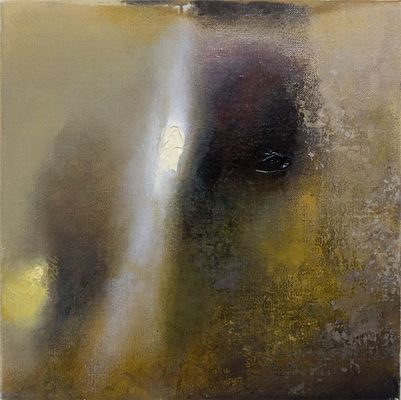
To return to Buckley’s fragment, the first two lines very much evoke how I paint nowadays. As you age, detail diminishes and patches of light become more luminous and float. I feel the most honest way of dealing with this is by smearing the oil paint on the canvas with the fingers and working close-up, blind. Only if the patches coalesce into an approaching image can the work gain a life.
-
Jonathan Walker was born in Melbourne, Australia and brought up on a dairy farm in Gippsland. In the 1970’s he studied painting at RMIT and won the Harold Wright Scholarship to the British Museum, London. During the 1980’s he exhibited at Pinacotheca Gallery, Richmond and had work shown at the NGV and Heidi City Art Gallery. Over the same period he designed the cover for the “Epigenesi” LP by Giancarlo Toniutti, Italy and conducted a mail exchange work with Achim Wollscheid, Germany. The work with artists through the post resulted in an article published in the bicentenary issue of Art and Australia 1988. He showed in artist run spaces such as WestSpace in the 90’s and 2000’s, and until 2012, taught painting at Victoria University, which is where we (Colleen Ahern and Lisa Radford) as organisers of the exhibition, among many others, had the privilege of being his student.
Walker’s knowledge was imparted to students through the careful selection of music, literature, and artists found in books that he himself had ordered for the library. Walker’s strategy was the generosity of sharing his vast knowledge with references specific to each student and their context.
Walker’s paintings share a similar focus and intimacy.
This exhibition presents a small selection of recent paintings alongside a publication that includes Walker’s writing. Observational and analytical, Walker’s work is a type of material notation — the time of day, colour and how it is blended, the both specific and fleeting location of a reflection on lino or the question of whether a chair leg should be included in a painting.
Please join us on Friday August 21 between 6-8pm to celebrate the opening of the exhibition.
Curated by Colleen Ahern and Lisa Radford.
B. Wurtz
Curated by Nic Tammens
March 26 - April 4, 2015
B.Wurtz works from a basement studio in his home on Manhattan’s Lower East Side.
This local fact is attested to by the plastic shopping bags and newsprint circulars that appear in his work. As formal objects, they don’t make loud claims about their origins but nonetheless transmit street addresses and places of business from the bottom of this long thin island. Like plenty of artists, Wurtz is affected by what is local and what is consumed. His work is underpinned by this ethic. It often speaks from a neighborhood or reads like the contents of a hamper:
“BLACK PLUMS $1.29 lb.”
“Food Bazaar”
“USDA Whole Pork Shoulder Picnic 99c lb.”
“RITE AID Pharmacy, with us it’s personal.”
“H. Brickman & Sons.”
“Sweet Yams 59c lb."
Most of the work in this exhibition was made while the artist was in residence at Dieu Donne, a workshop dedicated to paper craft in Midtown. Here Wurtz fabricated assemblages with paper and objects that are relatively lightweight, with the intention that they would be easily transportable to Australia. This consideration isn’t absolute in Wurtz’s work, but was prescriptive for making the current exhibition light and cheap. Packed in two boxes, these works were sent from a USPS post office on the Lower East Side and delivered to North Melbourne by Australia Post.
Wurtz appears courtesy of Metro Pictures, New York.
Thanks to Rob Halverson, Joshua Petherick, Sari de Mallory, Matt Hinkley, Helen Johnson, Fayen d'Evie, Ask Kilmartin, Lisa Radon, Ellena Savage, Yale Union, and "Elizabeth".
John Nixon
"Archive"
December 15 - January 20, 2014
The presentation of John Nixon's archive offered a rare showcase of this extensive collection of the artist's own publications, catalogues, posters, ephemera, editions and more, from the mid 1980s onwards, alongside a selection of his artworks.
Organized by John Nixon, Joshua Petherick and Matt Hinkley.
<a href=http://wfb.public-office.info/artist/john-nixon>All titles by John Nixon
"Habitat"
at Minerva, Sydney (organised by Joshua Petherick and Matt Hinkley)
November 15 - December 20, 2014
Lupo Borgonovo, Janet Burchill & Jennifer McCamley,
Lewis Fidock, HR Giger, Piero Gilardi, Veit Laurent Kurz,
Cinzia Ruggeri, Michael E. Smith, Lucie Stahl, Daniel Weil, Wols
Press Release:
“...It contained seven objects. The slender fluted bone, surely formed for flight, surely from the wing of some large bird. Three archaic circuitboards, faced with mazes of gold. A smooth white sphere of baked clay. An age-blackened fragment of lace. A fingerlength segment of what she assumed was bone from a human wrist, grayish white, inset smoothly with the silicon shaft of a small instrument that must once have ridden flush with the surface of the skin - but the thing’s face was seared and blackened.”
William Gibson, “Count Zero”, 1986
"Autumn Projects Archive"
Curated by Liza Vasiliou
March 6 - March 15, 2014
World Food Books, in conjunction with the Virgin Australia Melbourne Fashion Festival 2014, presented the Autumn Projects archive, consisting of a selection of early examples in Australian fashion with a particular interest in collecting designers and labels from the period beginning in the 1980’s, who significantly influenced the discourse of Australian Fashion.
Curated by Liza Vasiliou, the exhibition provided a unique opportunity to view pieces by designers Anthea Crawford, Barbara Vandenberg, Geoff Liddell and labels CR Australia, Covers, Jag along with early experimental collage pieces by Prue Acton and Sally Browne’s ‘Fragments’ collection, suspended throughout the functioning World Food Books shop in Melbourne.
H.B. Peace
presented by CENTRE FOR STYLE
November 14, 2013
"Hey Blinky, you say chic, I say same"
Anon 2013
H.B. Peace is a clothing collaboration between great friends Blake Barns and Hugh Egan Westland. Their pieces explore the divergences between 'character’ and ‘personality’ in garments....etc
Special Thanks to Joshua Petherick and Matt Hinkley of WFB and Gillian Mears
and a Very Special Thank you to Audrey Thomas Hayes for her shoe collaboration.
Janet Burchill & Jennifer McCamley
"Aesthetic Suicide"
May 10 - June 8, 2013
The first of our occasional exhibitions in the World Food Books office/shop space in Melbourne, "Aesthetic Suicide" presented a body of new and older works together by artists Janet Burchill & Jennifer McCamley, including videos, prints, a wall work, and publications.
During shop open hours videos played every hour, on the hour.
1988 / 2000, English
Softcover, 112 pages, 8.2 x 12 cm
1st Edition, Out of print title / used / very good
Published by
Arc Publications / UK
$60.00 - Out of stock
2000 edition of this now very scarce Ivor Cutler book, published by Arc first in 1988. This small tartan-covered pocket-book contains a wonderful collection of many of Cutler's poems, along with his illustrations.
Scottish poet, songwriter and humorist Ivor Cutler (1923–2006) was a singular force in popular culture. His oeuvre encompassed absurd songs and poems, surreal performances, and illustrated publications. These abstract the banal and everyday with warmth, occasional darkness, and quiet radicalism. Self-styled as an "Oblique Musical Philosopher", Cutler saw himself as having "….the effect of a very mild earthquake, one that nudges people into having a look around themselves, through all the rubbish that passes for convention". His whimsical performances gained him a cult following across generations, not least as part of 60s and 70s counterculture. Broadcasts on the Home Service in the 1950s lead to albums, later with Virgin Records and Rough Trade. TV appearances on the BBC caught Paul McCartney’s attention. Cutler appeared in the Beatles’ film Magical Mystery Tour (1967) and George Martin produced his album ‘Ludo’ (1967). He collaborated with pianist Neil Ardley, singer and musician Robert Wyatt (formerly of Soft Machine), and Phyllis King, his companion who appears on several of his records, and for a number of years was a part of his concerts and King Cutler BBC radio series. New generations were introduced to his work in the 1980s on TV for the Old Grey Whistle Test, and on radio for John Peel and later Andy Kershaw. Cutler was an anti-intellectual and noted eccentric, dressing in a distinctive style, travelling mainly by bicycle and often communicating by means of sticky labels printed with "Cutlerisms". Many of Cutler's poems and songs involve conversations delivered as a monologue and, in these, one party is often Cutler as a child, a part of his intended "bypassing the intellect". Cutler recited his poems in a gentle Scottish burr, and this, combined with the absurdity of the subject matter, is a mix that earned him a faithful cult following. Cutler also wrote books for children and adults and was a teacher at A. S. Neill's Summerhill School and for 30 years in inner-city schools in London. Cutler was a member of the Noise Abatement Society and the Voluntary Euthanasia Society. He retired from performing in 2004, and died on 3 March 2006. The reception room of his home contained a number of pieces of ivory cutlery, deliberately intended as a pun on his name.
Very Good-Fine copy.
1989-1991, English
Softcover (staple-bound), 24-44 pages ea., 21 x 15 cm
1st Edition, Out of print title / as new
Published by
Facelift / Manchester
$65.00 - In stock -
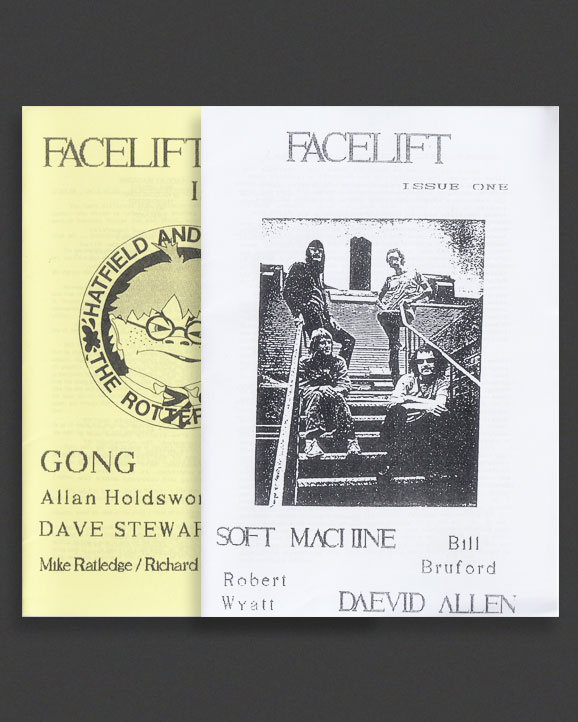
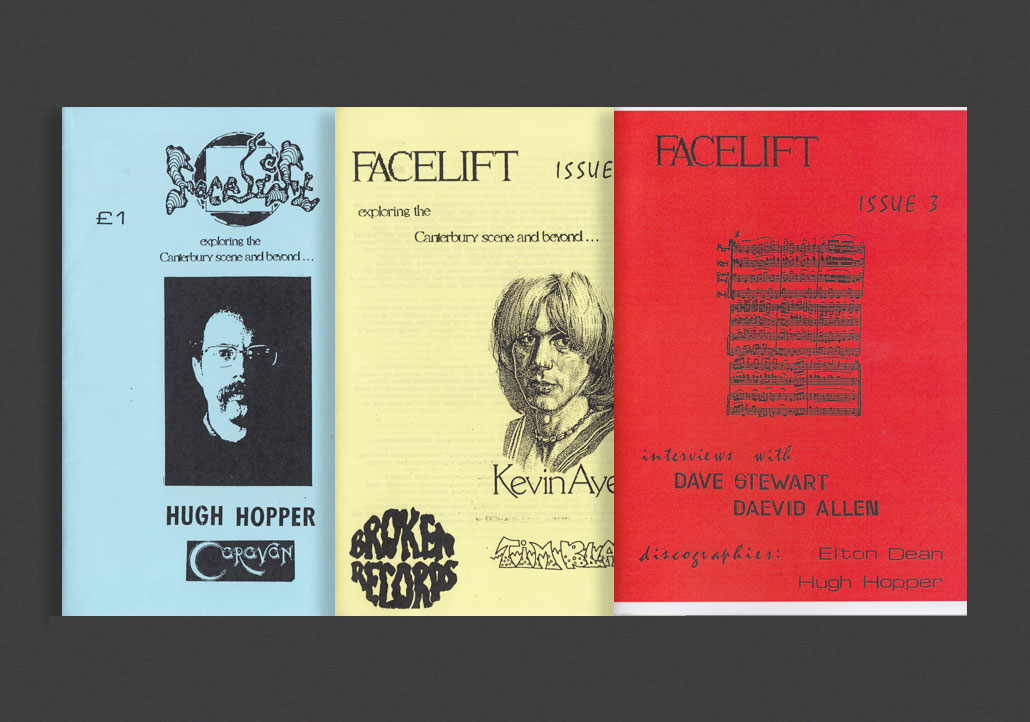
First five issues of the first and only music fanzine entirely dedicated to covering 'The Canterbury scene and beyond...', independently published out of Manchester between 1989 and 1999. Original, As New copies.
The Canterbury scene (or Canterbury sound) was a musical scene centred around the city of Canterbury, Kent, England during the late 1960s and early 1970s. Associated with progressive rock, the term describes a loosely-defined, improvisational style that blended elements of jazz, rock, and psychedelia. These musicians played together in numerous bands, with ever-changing and overlapping personnel. The "beyond" byline meant that the scope of the fanzine was in fact much wider than the editor, its contributors or its readers first envisaged. Heavily centred around the bands Caravan, Soft Machine, Gong, Hatfield and the North, Matching Mole, National Health, and Henry Cow, Facelift was a committed to all the spin-off musical projects by the many prominent British avant-garde and fusion musicians that began their career in Canterbury bands, including Robert Wyatt, Kevin Ayers, Daevid Allen, Hugh Hopper, Steve Hillage, Dave Stewart, Elton Dean, Tim Blake, Lol Coxhill, Dave Stewart, Hugh Hopper, Pip Pyle, Keith Tippett, Allen Holdsworth, Richard Sinclair, Mike Ratledge, and many more. Includes many obscure Canterbury groups and others in the world of UK/EU avant-garde/jazz rock/prog. Interviews, articles, discographies, record reviews, live reports past and present, and much more. A delight for any Canterbury aficionado. The life's-blood of World Food Books!
Fine dead stock copies.
2019, English
Softcover, 512 pages, 15.2 x 22.6 cm
Published by
Duke University Press / North Carolina
$52.00 - In stock -
“What was it all about, to me? Thinking. Henry Cow really thought about the why, the what, the appropriate methods of making music. Their riveting music was the sound of thinking out loud: Henry Cow seemed to be asking, ‘So, what is the significance of these sounds in our heads?’ And they were always witty: just look at the name of the band and the unwearable sock representing ‘the Henry Cow legend.’ I am very glad this book exists. Henry Cow’s history —in all its inevitable turbulence— tells an inspiring story.” - Robert Wyatt
In its open improvisations, lapidary lyrics, errant melodies, and relentless pursuit of spontaneity, the British experimental band Henry Cow pushed rock music to its limits. Its rotating personnel, sprung from rock, free jazz, and orchestral worlds, synthesized a distinct sound that troubled genre lines, and with this musical diversity came a mixed politics, including Maoism, communism, feminism, and Italian Marxism. In Henry Cow: The World Is a Problem Benjamin Piekut tells the band’s story—from its founding in Cambridge in 1968 and later affiliation with Virgin Records to its demise ten years later—and analyzes its varied efforts to link aesthetics with politics. Drawing on ninety interviews with Henry Cow musicians and crew, letters, notebooks, scores, journals, and meeting notes, Piekut traces the group’s pursuit of a political and musical collectivism, offering up its history as but one example of the vernacular avant-garde that emerged in the decades after World War II. Henry Cow’s story resonates far beyond its inimitable music; it speaks to the avant-garde’s unpredictable potential to transform the world.
2020, English
Softcover, 128 pages, 20.3 x 13.2 cm
Published by
New Directions / New York
$30.00 - Out of stock
“Magnificent poetry; dark, severe, even harsh—yet pulsating with life.” —John Ashbery
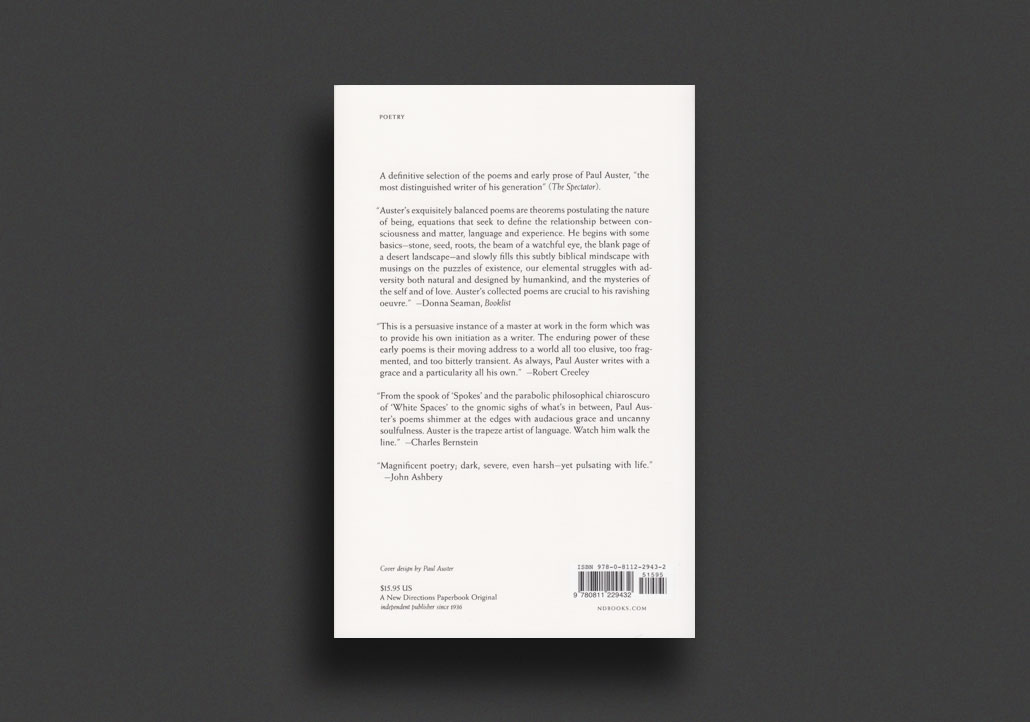
White Spaces gathers the poetry and prose of Paul Auster from various small-press books issued throughout the seventies. These early poetic works are crucial for understanding the evolution of Auster’s writing. Taut, lyrical, and always informed by a powerful and subtle music, his poems begin with basics—a swallow’s egg, stones, roots, thistle, “the glacial rose”—and push language to the breaking point. As Robert Creeley wrote, “The enduring power of these early poems is their moving address to a world all too elusive, too fragmented, and too bitterly transient.” Auster’s poems are grounded in a physical utterance that is at once an exploration of the mind and of the world. This collection begins with compact verse fragments from Spokes (originally published in Poetry, 1971) and goes through Auster’s marvelous later collections including Wall Writing (The Figures, 1976), Facing the Music (Parenthese, 1979), and White Spaces (Station Hill, 1980).
"From the spook of 'Spokes' and the parabolic philosophical chiaroscuro of 'White Spaces' to the gnomic sighs of what's in between, Paul Auster's poems shimmer at the edges with audacious grace and uncanny soulfulness." -- Charles Bernstein
2020, English
Hardcover, 104 pages, 25 x 25 cm
Published by
Hunters Point Press / New York
$89.00 - Out of stock
For nearly five decades New York-based artist B. Wurtz (born 1948) has transformed humble materials and discarded objects into humorous and wryly beautiful works of art. This full-color, Swiss-bound monograph focuses on the artist’s iconic series of “pan paintings” made on disposable aluminum roasting pans and to-go containers. In 1990, Wurtz discovered patterns stamped in the bottom of these mass-produced products and grasped their potential as “readymade abstract paintings.” In the three decades since, he has worked across a wide variety of pan shapes and sizes, applying dazzling combinations of color using the patterns as predetermined compositions. Pan Paintings provides the first overview of the various permutations in color and shape that comprise this long-term series. The book includes an essay by art historian and curator Erica Cooke which considers this critically acclaimed body of work and its deep entanglement with the craft-oriented ethos and amateur culture of postwar America.
1985, Japanese
Softcover, 146 pages, 29.5 x 21 cm
1st Edition, Out of print title / used / very good
Published by
Screen Extra / Tokyo
$90.00 - Out of stock
First edition of this scarce Japanese horror movie guide from the mid 1980s, The Horror Movies Part 2 (Screen Extra Edition). Beautifully printed in glossy covers with various paper stocks and lavishly illustrated with countless colour and b/w film stills and posters/VHS cover graphics. The mighty Horror Movies series aimed to compile a comprehensive catalogue of horror film from the height of video revolution across a series of publications, whilst also chronicling horror/sci-fi/fantasy from the past (1950s-1970s). This edition includes features/profiles/entries on Day of The Dead, Return of The Living Dead, Mutant, Alien, The Thing, The Fury, Rosemary's Baby, Manhattan Baby, Parasite, They Came From Within, Galaxy of Terror, Time Walker, Piranha 2, Happy Birthday to Me, Creepshow, Friday the 13th, Fright Night, Cat People, Cujo, Microwave Massacre, Saturday the 14th, Hell Night, The Crucible of Terror, Thirst, Lemora, Godsend, Savage Weekend, Halloween 3, The Innocents, Torture Dungeon, Bloodthirsty Butchers, The Rats Are Coming, The Beyond, The House by the Cemetary, Tales From The Darkside, The Shining, Christine, Jaws 1-3, The Legacy, The Amityville Horror 1-2, The Omen films, The Entity, The Exorcist films, The Wizard of Gore, Gore-Gore Girls, Psycho 1-2, The Man with 2 Heads, Time Walker, The Thing, Torso, The Blob, Tourist Trap, Demon Seed, Lifeforce, The Company of Wolves, CHUD, Re-Animator, The Mutilator, Silent Madness, directors Andy Milligan, Lucio Fulci, David Cronenberg, George A Romero, New York, and much more!
An invaluable guide for any fan of the genre.
1987, Japanese
Softcover, 106 pages, 27 x 21 cm
1st Edition, Out of print title / used / very good
Published by
Dunwich / Tokyo
$70.00 - Out of stock
Volume 1 of Dunwich, a leading, and extremely short-lived 1980s horror movie magazine from Tokyo that also covers art house/action/fantasy/sci fi film from the period. Profiles/reviews/articles on Blue Velvet, Critters, From Beyond, Guzoo, Legend, Poltergeist 2, The Golden Child, Stand By Me, American Ninja, Sky Pirates, The Vindicator, Street Trash, Hand of Steel, Giger/Alien, Friday the 13th pt. VI, Robot Holocaust, Scared to Death, Sword of Heaven, Highlander, El Topo, The Toxic Avenger, Festival d'Avoriaz '87 - the international fantasy film festival held in France, "Horror Music" (Goblin, Magma, King Crimson, Faust, Oldfield, Ozzy, Fripp-Eno, early Genesis), and much more.
Dunwich could be easily filed alongside the great V-Zone in promoting the home video revolution of the 1980s in Japan, and the explosion in popularity of horror, fantasy, and science fiction film that came with it. Like V-Zone, Dunwich covered the latest in American and European horror whilst publicising the new wave of Japanese gore and V-Cinema (direct-to-video splatter films). Heavy with film features, interviews, guides, stills, behind-the-scenes reports, ads, catalogues, and reviews. Another scarcely seen Japanese must for any 1980s video collector or lover of gore/sci fi.
2017, English
Softcover, 198 pages, 33 x 25.5 cm
Published by
Arcadia University Art Gallery / Glenside
$90.00 - Out of stock
Photocopier is the most comprehensive publication on the work of Pati Hill (1921-2014), published on the occasion of the major survey exhibition, Pati Hill: Photocopier, A Survey of Prints and Books (1974-83), 2017-2018, Arcadia University Art Gallery, Glenside. This profusely illustrated publication considers the first phase of the cross-disciplinary art of Pati Hill. Although her exploration of the copier, which she called “a found instrument—a saxophone without directions,” did not begin until the early 1970s, Hill is regarded as a pioneer due to her singular approach and commitment to the medium. Employing the copier to record items as common as a gum wrapper or as unexpected as a dead swan, she also applied the process to transform appropriated photographs for her experiments with narrative. This catalogue features twelve different projects, including Hill’s attempt to photocopy the palace and grounds of Versailles.
2003, English
Softcover, 128 pages (colour & b/w ill.), 33 x 24 cm
Edition of 500,
Published by
UQ Art Museum / Brisbane
$50.00 - Out of stock
Wonderful and scarce over-sized monograph surveying the early work of Scott Redford, published on the occasion of the exhibition "1962: Scott Redford Selected Works 1983 - 1992" at the University Art Museum, The University of Queensland, St Lucia, Brisbane, Australia. 3 October - 22 November 2003. Beautifully designed and brilliantly illustrated, this monograph brings to life Redford’s diverse work across assemblage, sculpture, painting, installation, and much more. Includes essay by Andrew McNamara and interview with Scott Redford. Limited edition of 500 copies.
Scott Redford (b. 1962 Gold Coast, Queensland) is a highly significant and influential Australian contemporary artist who has been exhibiting since the early 1980s. Redford's work is unique in its references to international art movements including colour-field painting, conceptual art and pop art, while engaging with local themes, such as Australian art history, beach culture and vernacular architecture, regularly commenting on issues of gender and identity.
2007, English
Hardcover, 528 pages, 25 x 28.9 cm
Published by
FAB Press / UK
$110.00 - Out of stock
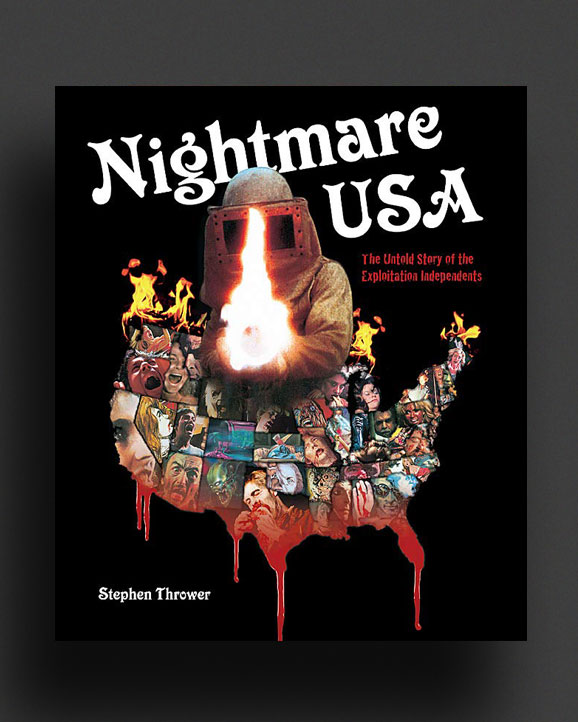
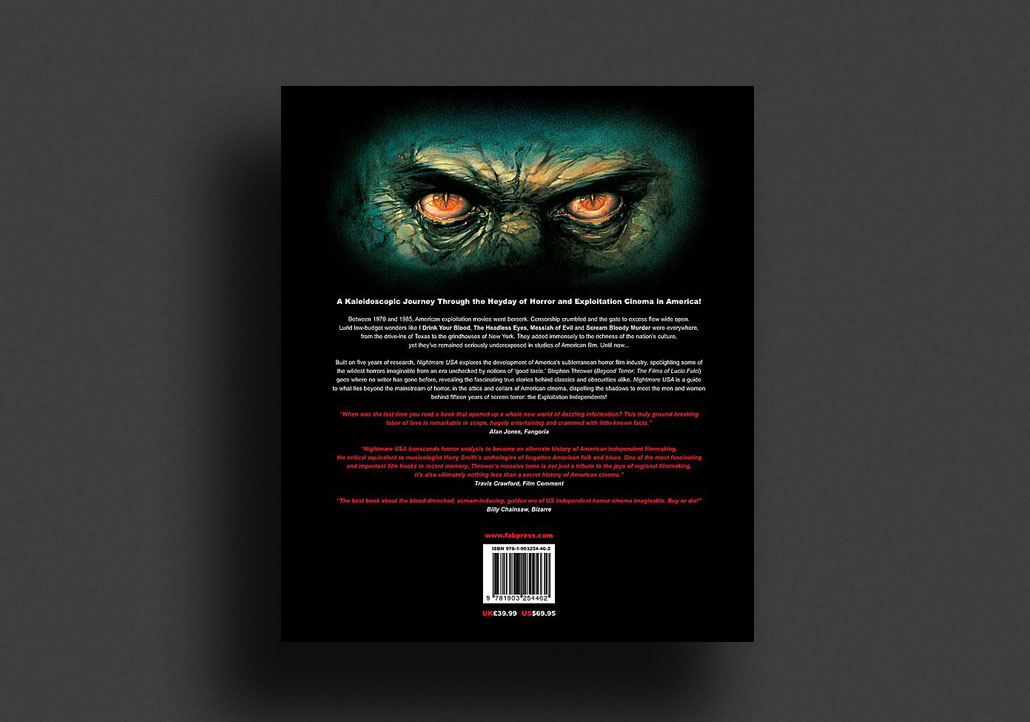
Running to 528 large-format pages, Nightmare USA is a veritable encyclopedia of grindhouse cinema - it's one of the most acclaimed genre film books ever published, and after having Sold Out three times over already, it's finally back in print!
From Quentin Tarantino (Kill Bill) to Eli Roth (Hostel), the young guns of modern Hollywood just can't get enough of that exploitation film high. That's because, between 1970 and 1985, American Exploitation movies went berserk. With censorship relaxed, and the gate to excess wide open, horror offered a vibrant alternative to the mainstream of American cinema. Luridly titled wonders like The Headless Eyes, Scream Bloody Murder and Hitch Hike to Hell were everywhere, from the drive-ins of Texas to the grindhouses of New York. Massively popular around the world, American exploitation movies added immensely to the richness of the nation's cinema.
Built on five years of research, Nightmare USA explores the development of America's subterranean horror film industry, spotlighting some of the wildest films imaginable from an era unchecked by censorship or 'good taste.' Ranging from cult favourites like I Drink Your Blood to stylish mind-benders like Messiah of Evil and shockers like Don't Go in the House, Nightmare USA goes where no other in-depth study has gone before, revealing the fascinating true stories behind classics and obscurities alike. Author Stephen Thrower has explored the attics and cellars of American cinema, delved beneath the floorboards, peered between the walls, searching for the strangest, most exotic cine-lifeforms... Nightmare USA is the reader's guide to what lies beyond the mainstream of American horror, dispelling the shadows to meet the men and women behind fifteen years of screen terror: the Exploitation Independents!
This massive overview of the Horror genre's development through the 1970s and 1980s features: In-depth EXCLUSIVE interviews with twenty-five grindhouse movie makers, many of whom are discussing their work for the first time ever in print, including David Durston (I Drink Your Blood), Robert Endelson (Fight for Your Life), Frederick Friedel (Axe), Don Jones (Schoolgirls in Chains); and Joseph Ellison (Don't Go in the House). Over 175 individual films reviewed, with full cast and crew credits. Vast quantities of previously unpublished stills, posters, press-books, plus behind-the-scenes photographs from the filmmakers' own collections.
2004, English
Softcover, 344 pages, 15.2 x 20.4 cm
Published by
Exact Change / Boston
$35.00 - In stock -
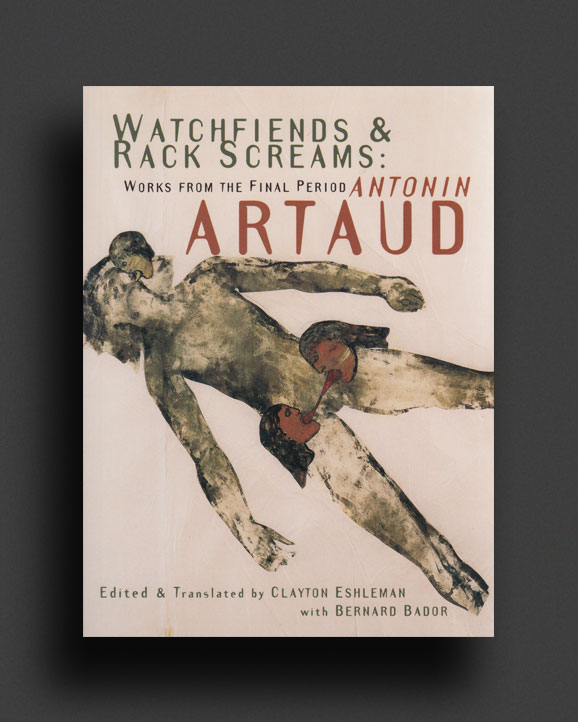
Translated by Clayton Eshleman and Bernard Bador
Among Antonin Artaud’s most brilliant works are the scatological glossolalia composed in the final three years of his life (1945-1948), during and after his incarceration in an asylum at Rodez.
These represent some of the most powerful outpourings ever recorded, a torrent of speech from the other side of sanity and the occult. In this collection, the most complete representation of this period of Artaud’s work ever presented in English, and the first new anthology of Artaud published in the U.S. since Helen Weaver’s 1976 Selected Writings, cogent statements of theory are paired with the raving poetry of such pieces as “Artaud the Momo,” “Here Lies,” and “To Have Done with the Judgement of God.” These are translated with drama and accuracy by Clayton Eshleman, whose renditions of Vallejo and Césaire have won widespread acclaim including a National Book Award.
“Clayton Eshleman’s translations are the finest and most authentic which have yet been made from Artaud’s writing. Artaud’s final work is his strongest and most enduring, and this collection has been wisely selected and magnificently realized. Artaud is being taken into the twenty-first century.” — Stephen Barber, author of Antonin Artaud: Blows and Bombs
2006, English
Hardcover, 220 pages, 17.8 x 25.4 cm
Published by
Semiotext(e) / Los Angeles
$60.00 - Out of stock
In February 1991, the artist David Wojnarowicz (1954-1992) and the philosopher Sylvère Lotringer met in a borrowed East Village apartment to conduct a long-awaited dialogue on Wojnarowicz's work. Wojnarowicz was then at the peak of his notoriety as the fiercest antagonist of morals crusader Senator Jesse Helms—a notoriety that Wojnarowicz alternately embraced and rejected. Already suffering the last stages of AIDS, David saw his dialogue with Lotringer as a chance to set the record straight on his aspirations, his personal history, and his political views. The two arranged to have this three-hour dialogue video-recorded by a mutual friend, the artist Marion Scemama. Lotringer held on to the tape for a long time. After Wojnarowicz's death the following year, he found the transcript enormously moving, yet somehow incomplete. David was trying, often with heartbreaking eloquence, to define not just his career but its position in time. The subject was huge, and transcended the actual dialogue. Lotringer then spent the next several years gathering additional commentary on Wojnarowicz's life and work from those who knew him best—the friends with whom he collaborated. Lotringer solicited personal testimony from Wojnarowicz's friends and other artists, including Mike Bildo, Steve Brown, Julia Scher, Richard Kern, Carlo McCormick, Ben Neill, Kiki Smith, Nan Goldin, Marguerite van Cook, and others. What emerges from these masterfully-conducted interviews is a surprising insight into something art history knows, but systematically hides: the collaborative nature of the work of any "great artist." All these respondents had, at one time, made performances, movies, sculptures, photographs, and other collaborative works with Wojnarowicz. In this sense, Wojnarowicz appears not only as a great originator, but as a great synthesizer.
2019, English
Softcover, 144 pages, 13.7 x 20.3 cm
Published by
Semiotext(e) / Los Angeles
$34.00 - Out of stock
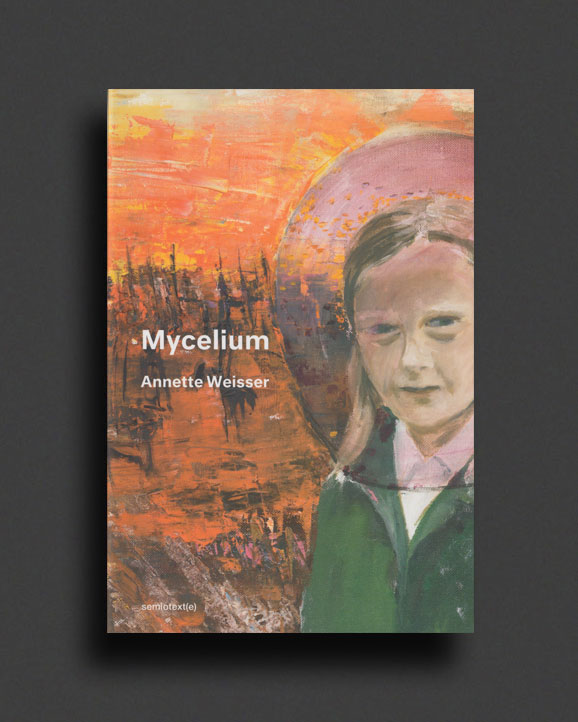
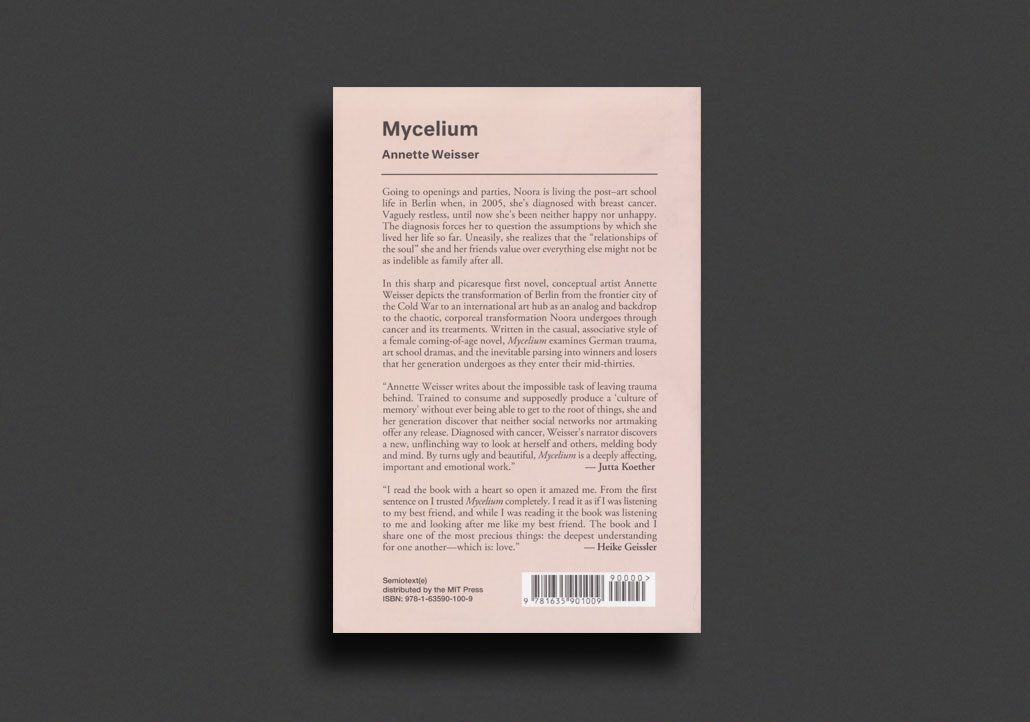
Going to openings and parties, setting up a studio and breaking up with her longtime boyfriend, Noora is living the post-art school life in Berlin when, in 2005, she's diagnosed with breast cancer. Vaguely restless, until now she's been neither happy nor unhappy, but her entry into what she calls "Cancerland" forces her to question the assumptions by which she lived her life so far. Uneasily, she realizes that the "relationships of the soul" she and her friends value over everything else might not be as indelible as family, after all.
In this sharp and picaresque first novel, conceptual artist Annette Weisser depicts the transformation of Berlin from the frontier city of the cold war to an international art hub as an analog and backdrop to the chaotic, corporeal transformation Noora undergoes through cancer and its treatments. Written in the casual, associative style of a female coming-of-age novel, Mycelium examines German trauma, art school dramas, and the inevitable parsing into winners and losers that her generation undergoes as they enter their mid-thirties.
"Annette Weisser writes about the impossible task of leaving trauma behind. Trained to consume, and supposedly produce a "culture of memory" without ever being able to get to the root of things, she and her generation discover that neither social networks nor artmaking offer any release. Diagnosed with cancer, Weisser's narrator discovers a new, unflinching way to look at herself and others, melding body and mind. By turns ugly and beautiful, Mycelium is a deeply affecting, important and emotional work." - Jutta Koether
2019, English
Softcover (staple-bound), 44 pages,
Out of print title / used / very good
Published by
Michael Rosenfeld Gallery / New York
$50.00 - In stock -
Catalogue published on the occasion of the exhibition Calix, Cup, Chalice, Grail, Urn, Goblet: Presenting the Sexual Essence of Morris Graves, at Michael Rosenfeld Gallery, New York, June 15 – August 2, 2019. This exhibition was a seven-decade survey exploring the artist’s symbolic use of vessels in luminous, spiritual works that exemplify the essence of his mystical relationship with nature. From early oil paintings to surrealist works on paper and later quiet still-lifes, the imagery of the chalice is reflective of Graves’s expansive world view. Presenting the Sexual Essence of Morris Graves charts the evolution of this recurring form as a reflection on an artist who sought spiritual life and growth in a world that he felt was defined by disruption and disintegration.
Morris Graves (1910–2001) was a self-taught Modern American painter and member of the Northwest School of Visionary Art. A lifetime traveler, he spent much of his time in Asia, studying in Japan and absorbing ideas and iconography related to Zen Buddhism. In America he spent long periods in semi-isolation, absorbed in nature and his art. He created coded, colourful paintings exploring the spiritual bond he shared with the land and culture of the Pacific Northwest, his birthplace and home. Lauded by critics as a type of modern-day mysticism or “visionary art,” Graves' canvases and works on paper often featured bold depictions of local flora and fauna, contrasted by natural, recognizable forms inspired by the artist’s personal relationship to spirituality. “I paint to rest from the phenomena of the external world—to pronounce it—and to make notations of its essences with which to verify the inner eye,” he once wrote.
Very Good copy.
1984, English
Softcover, 90 pages, 29 x 21 cm
1st Edition, Out of print title / used / very good
Published by
LAICA / Los Angeles
$70.00 - Out of stock
Scarce catalogue published on the occasion of the exhibition "Australia: Nine Contemporary Artists" at Los Angeles Institute of Contemporary Art, June 30 - August 14, 1984. To coincide with the 1984 Summer Olympics in Los Angeles, LAICA director Robert Smith invited nine Australian artists (John Davis, John Dunkley-Smith, Marr Grounds, Lyndal Jones, John Nixon, Mike Parr, Redback Graphix, Stelarc) to create site-specific installations at the gallery. This generous catalogue profiles the work of each artist with reproductions of past works, artist writings, and document of their various outcomes in Los Angeles. Includes biographies.
Very Good copy with some tanning to covers and sticker residue to bottom of spine/front. Sticker on verso reading "Exhibitions Australia".
1988, English / Japanese
Softcover (w. dust jacket), 136 pages, 29 x 22 cm
1st Edition, Out of print title / used / very good
Published by
Graphic-sha / Tokyo
$45.00 - Out of stock
Lavishly illustrated 1988 analysis of display edited by Haruhisa Hattori, master of 1980s Ginza retail design. Showcasing display windows and Japanese retail presentations by the highly accomplished Hattori and his colleagues to illustrate innovative, poetic and dynamic scenarios of communication design. Bright post-modern windows for the likes of Wako, Mikimoto and Shiseido, incorporating dolls, textiles and technology, with detailed accounts and information on executing successful displays from start to finish.
Published and printed in Japan.
Very Good copy with dust jacket.
1990, English
Hardcover, 48 pages, 26.5 x 31 cm
1st edition of 3000 copies.,
Published by
Miyake Design Studio / Tokyo
$160.00 - Out of stock
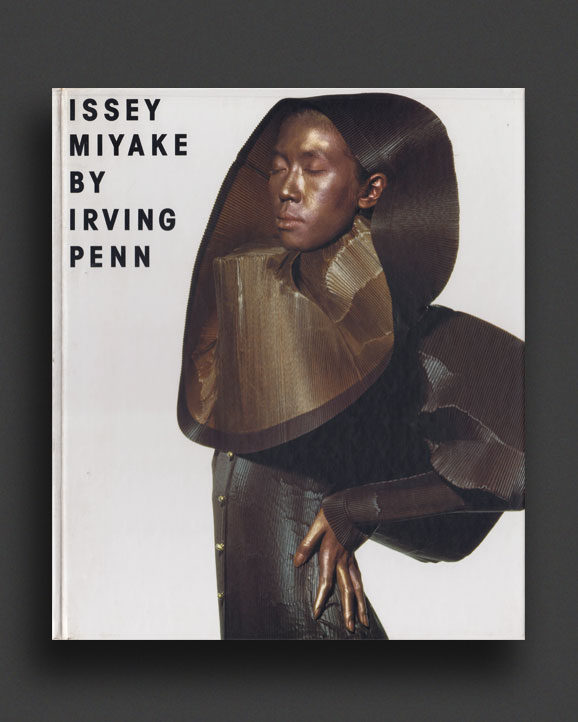
First edition of the scarce "Issey Miyake by Irving Penn" (1990), printed only once in a limited edition of 3,000 copies and published by the Miyake Design Studio in Tokyo, 1990. Said to have not been available for sale, but rather distributed to trade only.
This beautiful oversized hardcover volume is made up entirely of legendary photographer Irving Penn's elegant images of the great Japanese fashion designer Issey Miyake's 1990 collection, in full-colour on gloss stock. One of the greatest collaborative partnerships in fashion image history.
‘through his eyes penn-san reinterprets the clothes, gives them new breath, and presents them to me from a new vantage point — one that I may not have been aware of, but had been subconsciously trying to capture. Without penn-san’s guidance, I probably could not have continued to find new themes with which to challenge myself, nor could I have arrived at new solutions.’ – Issey Miyake (from Irving Penn: A Career in Photography, the Art Institute of Chicago, 1997)
credits:
Clothing Design by lssey Miyake
Photographs by Irving Penn
Book Design by lkko Tanaka
Face by Tyen
Hair by John Sahag
Modeled by Yuki Fujii
Printed and bound by Nissha Printing Company, Kyoto, Japan
Published by Miyake Design Studio, Tokyo, Japan
Published in a limited edition of 3,000 copies
Fine copy.
1985, Japanese / English
Softcover (w. dust jacket), 242 pages, 28 x 36 cm
1st Edition, Out of print title / used / very good
Published by
Obunsha Co. Ltd. / Tokyo
$180.00 - Out of stock
First edition of the beautiful and incredibly rare "Issey Miyake & Miyake Design Studio 1970-1985 (Works Words Years)". This heavy, over-sized monograph on Japanese fashion designer Issey Miyake was published in 1985 by Obunsha in Tokyo. Lavishly illustrated with full-colour photographic documentation of Miyake's designs between 1970-1985, with texts largely in Japanese (and a small amount of English), all designed by Miyake Design Studio and printed immaculately in Japan. Includes a chronology of these years with various clippings, plus a wonderful group portrait of the Miyake Design Studio staff. A stunning volume from the 1980's on one of the greatest fashion designers of our time.
Includes the original industry press-release from Miyake Design Studio president Midori Kitamura inserted and printed on great 80s MDS letterhead.
Very good copy in VG original dust jacket, with only light wear and light occasional age spotting.
1989, English / Japanese
Softcover, 152 pages, 23 x 30 cm
1st Edition, Out of print title / used / good
Published by
Rikuyo-Sha / Tokyo
$90.00 - Out of stock
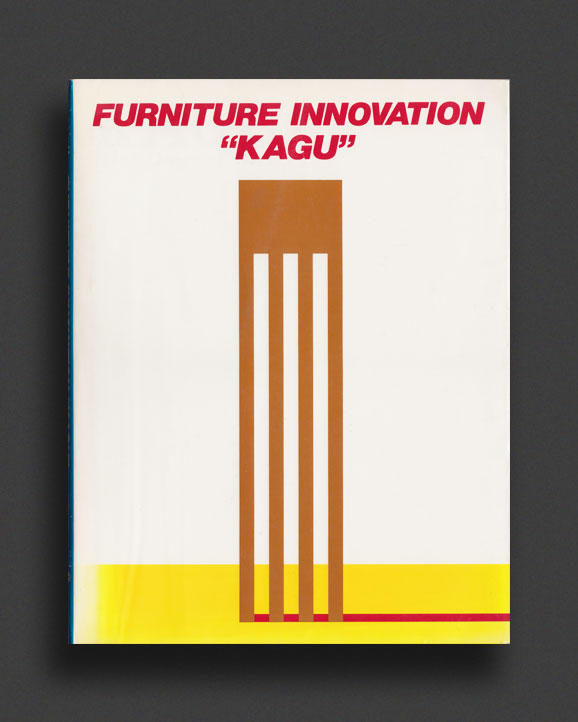
First edition of this great Japanese catalogue, published to accompany this very unique and crucial furniture exhibit in Tokyo in 1988, highlighting the new wave of Japanese furniture design. With the furniture pieces all documented in full-colour and black and white, alongside profiles on the designers and exhibition views, and commissioned texts (in English and Japanese) by Shigeru Uchida, Hiroshi Kashiwagi, Andrea Branzi and Vincenzo Iavicoli, this book is a must for anybody interested in Japanese furniture and post-modern design in general.
Features the furniture work of Shiro Kuramata, Masanori Umeda, Hiroshi Awatsuji, Takashi Sugimoto, Kozo Abe, Teruaki Ohashi , Toshiyuki Kita, Takenobu Igarashi, Hidenori Seguchi, Aijiro Wakita, Kunihiro Matsuyama, Setsuo Kitaoka, Toyo Ito, Katsuhiko Togashi, amongst many many more designers.
"KAGU-Tokyo Designer's Week '88", November 1988, presented various phases of design, reflecting environmental changes. The exhibition featured the works of leading designers. A rare exhibition of furniture design. It was like a "Tokyo Collection"of furniture design. The drastic change in furniture and interior design these past year could clearly be observed through the exhibits. - Hiroshi Kashiwagi, Design Critic, 1989
Good copy with water wrinkling to front cover corner/dj, but rest of the book immaculate, Very Good copy.
2002, Japanese
Softcover, 307 pages, 259 x 180 cm
1st Edition, Out of print title / used / very good
Published by
Tokyo Shimbun / Tokyo
$100.00 - Out of stock
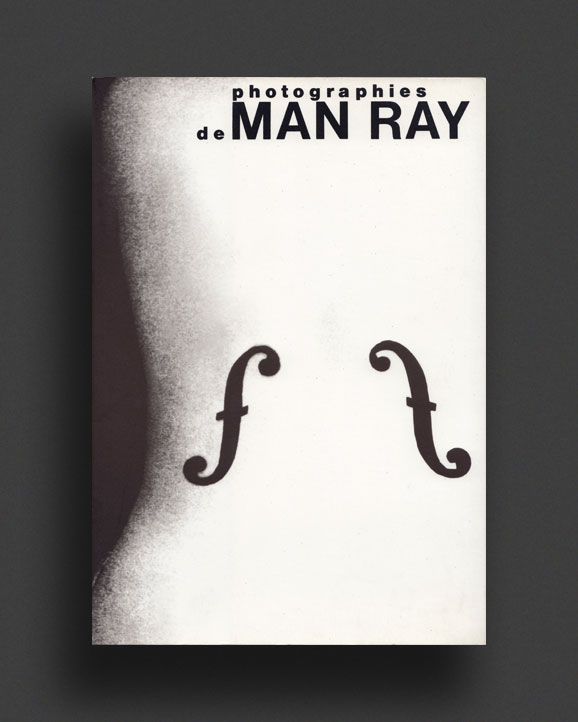
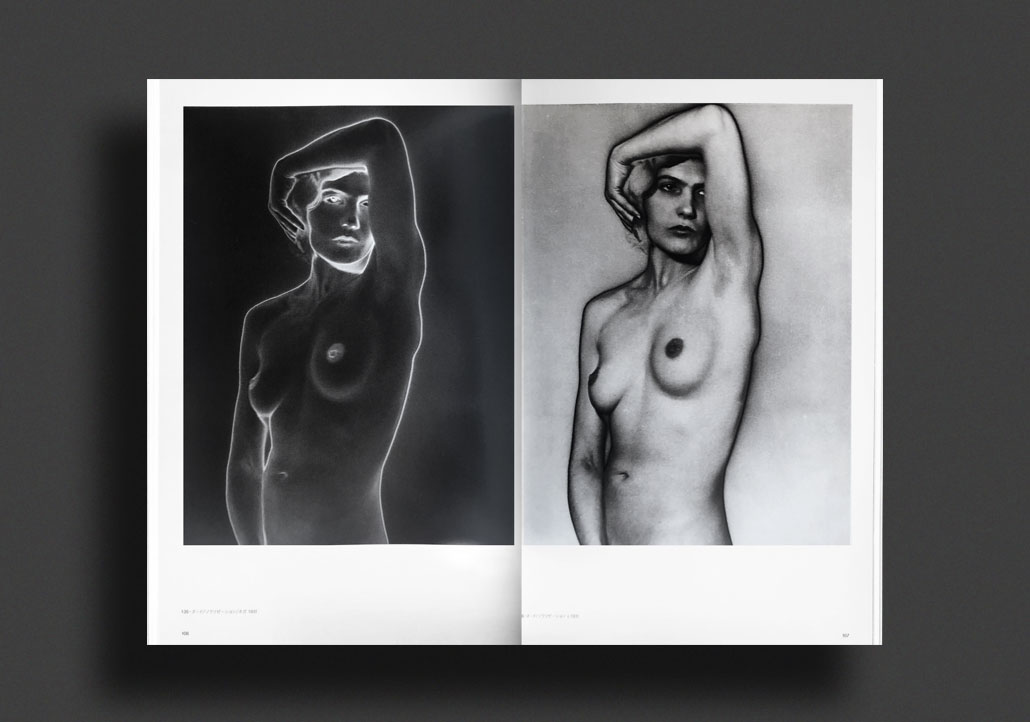
First edition of this scarce, visually generous Japanese catalogue that takes a deep look into the photographic work of Man Ray. Published on the occasion the exhbition 'Photographies de Man Ray' that opened at the Bunkamura Museum and then traveled to three other museums in Japan in 2002-03. Densely packed with 559 beautifully reproduced photographs, the well known and the seldom seen, catalogued into major subjects, often thematically sequenced. From his prolific, experimental portraiture, nudes, fashion, still-life, landscapes, and work within the Surrealist and Dada movements, this heavy volume provides an exhaustive study of this great photographer. Man Ray is also noted for his work with photograms, which he called "rayographs," and many other experimental processes he brought into the photographic studio, all featured herein. Includes an illustrated biography, bibliography, catalogue listing and texts in Japanese and French.
Born Emmanuel Radnitzky in 1890 in Philadelphia, Pennsylvania, Man Ray was a renowned representative of avant-garde photography in the 20th century and is considered as the pioneer of Surrealist photography. A major contributor to the Dada and Surrealist movements, although his ties to each were informal, Man Ray produced major works in a variety of media including drawings, objects and films, but considered himself a painter above all. one of the most significant contributors to the Dada and Surrealist movements, and to modern art in general.
Very Good-Fine copy.
2019, English
Hardcover, 464 pages, 24.1 x 31.5 cm
Published by
Petzel Gallery / New York
$70.00 $30.00 - Out of stock
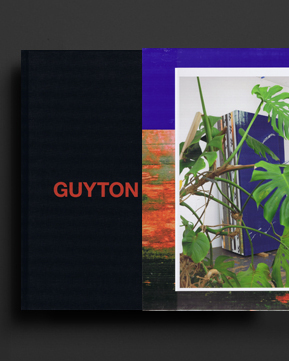
Wade Guyton, Petzel, New York, 1.16.14 - 2.22.14 is the long-awaited volume that documents a one night only performance hosted at Petzel Gallery as part of Guyton's seminal 2014 exhibition, in which the artist made long horizontal black paintings stretched to precisely fit the gallery walls. In 2007, Guyton showed a series of black paintings made with his Epson 9600 printer and covered the gallery's concrete floor with a facsimile of his studio's plywood floor. For the 2014 exhibition, he made five new works on linen using the same digital file from 2007, this time enlarged to accommodate the increased width of an Epson 11880. The works were turned on their sides, hung horizontally and stretched to fit the gallery walls. Two of them were jammed in a corner. In addition to the five paintings, he presented a new wood and concrete sculpture that took its form from the coat check counter at the Carnegie Museum in Pittsburgh, where concurrently he had installed four paintings for the International.
On February 17, 2014 the gallery hosted performances by James Campbell, I.U.D., and Blondes. Wade Guyton, Petzel, New York, 1.16.14 - 2.22.14 features over 400 illustrated pages of documentary footage from that performance and includes an essay by art historian Bettina Funcke entitled "Guyton's Rooms." The book was designed by Wade Guyton, Joseph Logan, and Zach Steinman.
2017, English / German
Hardcover (w. dust jacket and slipcase), 356 pages, 31.8 x 29 cm
Published by
Walther König / Köln
$160.00 $60.00 - Out of stock
In the last two years, Wade Guyton has created a compelling new series of artworks, which this publication presents in all its breadth and complexity.
In the series, he opens his art to new modes of visual depiction as well as the world around him by adopting the practices of taking snapshots and screen captures common to our increasingly digital experience.
In so doing, he follows the rapid extension and ramification of the digital code into all areas of life, through recording the daily reading of the newspaper, the view from his window, the act of reflecting on his paintings and sculptures, as well as a view into their magnified digital matrix.
English and German text.
Shop display copy, some wear, missing slipcase, otherwise new.
2017, English
Softcover, 96 pages, 13.7 x 20.3 cm
Published by
Semiotext(e) / Los Angeles
$34.00 - Out of stock
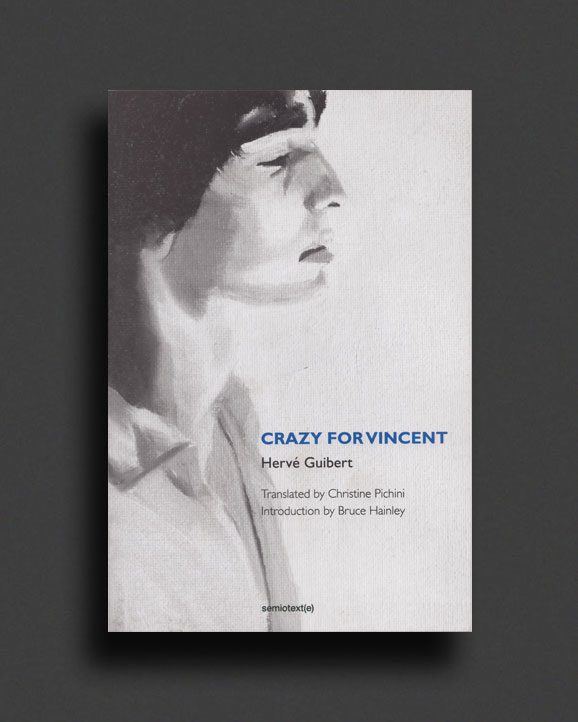
Diary, memoir, poem, fiction? Autopsy, crime scene, hagiography, hymn? The chronicle of an obsessive love.
In the middle of the night between the 25th and 26th of November, Vincent fell from the third floor playing parachute with a bathrobe. He drank a liter of tequila, smoked Congolese grass, snorted cocaine...—from Crazy for Vincent
Crazy for Vincent begins with the death of the figure it fixates upon: Vincent, a skateboarding, drug-addled, delicate “monster” of a boy in whom the narrator finds a most sublime beauty. By turns tender and violent, Vincent drops in and out of French writer and photographer Hervé Guibert's life over the span of six years (from 1982, when he first met Vincent as a fifteen-year-old teenager, to 1988). After Vincent's senseless death, the narrator embarks on a reconnaissance writing mission to retrieve the Vincent that had entered, elevated, and emotionally eviscerated his life, working chronologically backward from the death that opens the text. Assembling Vincent's fragmentary appearances in his journal, the author seeks to understand what Vincent's presence in his life had been: a passion? a love? an erotic obsession? or an authorial invention? A parallel inquiry could be made into the book that results: Is it diary, memoir, poem, fiction? Autopsy, crime scene, hagiography, hymn? Crazy for Vincent is a text the very nature of which is as untethered as desire itself.
Introduction by Bruce Hainley
Translated by Christine Pichini
Hervé Guibert (1955–1991) was a writer, a photography critic for Le Monde, a photographer, and a filmmaker. In 1984 he and Patrice Chereau were awarded a César for best screenplay for L'Homme Blessé. Shortly before his death from AIDS, he completed La Pudeur ou L'impudeur, a video work that chronicles the last days of his life.
2012, English
Hardcover, 268 pages, 196 x 260 cm
Published by
Yale University Press / New Haven
Dia Foundation / New York
$86.00 - Out of stock
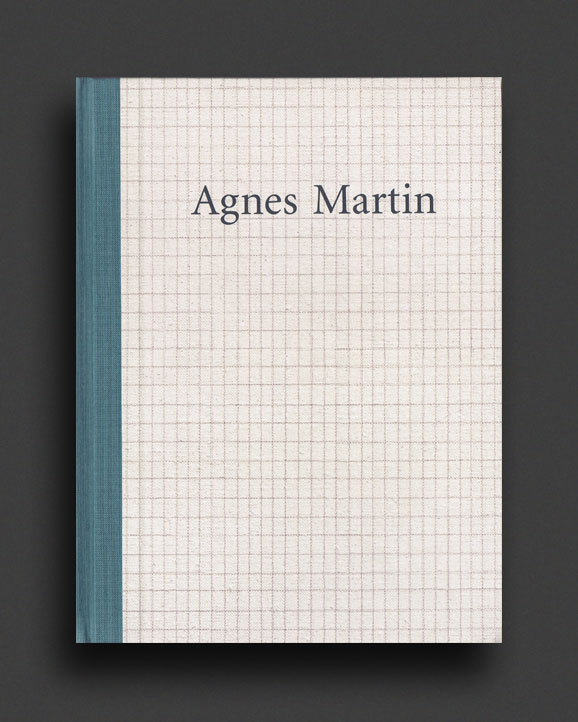
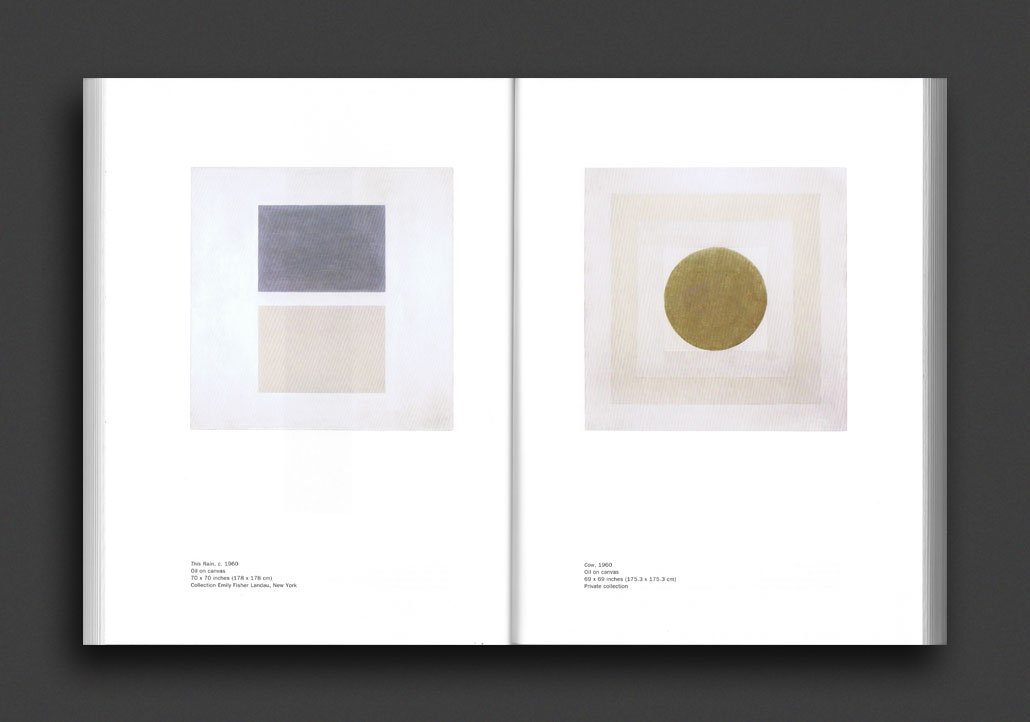
Gorgeously quiet in color and composition, Agnes Martin's paintings have a distinctive grace that sets them apart from those of the Abstract Expressionists of her day and the Minimalist artists she inspired. Martin attributed her grid-based works to metaphysical motivations, lending a serene complexity to her oeuvre that has defied any easy categorization. Perhaps for this reason, critical and scholarly analysis of her paintings has been scarce-until now. This important new anthology brings together the most current scholarship on Martin's paintings by twelve multidisciplinary essayists who consider various aspects of the artist's four-decade career. Organized by Dia Art Foundation, whose extensive holdings of Martin's paintings and ambitions to support in-depth research on the works are unparalleled, the publication brings renewed focus and energy to Martin's career and her contributions to the art historical narrative.
Edited by Lynne Cooke and Karen Kelly
Texts by Lynne Cooke, Karen Kelly, Rhea Anastas, Douglas Crimp, Jonathan D. Katz, Michael Newman