World Food Books' programme is largely produced on Kulin Nation land. We acknowledge the Wurundjeri people of the Kulin Nation as the first and continuing custodians of this land, and pay respect to their Elders past, present, and emerging.
World Food Books is an arts and special interests bookshop in Naarm / Melbourne. Founded in 2010, World Food Books is devoted to the presentation of a rotating, hand-selection of international art, design, literary and counterculture publications with an emphasis on the anti-traditional, the experimental, the avant-garde, the heretic, the marginal.
Presenting new titles alongside rare and out-of-print books, catalogues and journals spanning the fields of modern and contemporary art, design, photography, illustration, film, literature, poetry, cultural theory, philosophy, sexuality, popular and underground culture in its many radical forms, World Food Books wishes to encourage adventurous, thoughtful and open-minded reading, looking, writing, and exchange of publishing and ideas, both current and historical.
As well as our bookshop, located in Melbourne's historical Nicholas Building, all of our inventory is available internationally via our online mail-order service.
World Food Books semi-regularly co-ordinates "Occasions", a programme of exhibits and events at the bookshop and in partnership with other hosts (such as museums and art galleries) that develop out of the activities, relationships and content of the bookshop itself.
World Food Books
The Nicholas Building
37 Swanston Street
Room 5, Level 6
Melbourne 3000
Australia
SHOP HOURS:
Thu–Fri 12–6, Sat 12–5
WEB-SHOP OPEN 24/7
World Food Books
Postal Address:
PO Box 435
Flinders Lane
Victoria 8009
Australia
Art
Theory / Essay
Architecture / Interior
Graphic Design / Typography
Photography
Fashion
Eros
LGBTQ+
Fiction / Poetry
Weird / Speculative / Science Fiction / Horror
Transgressive / Visceral / Abject
Symbolism / Decadence / Fin de siècle
Film / Video
Painting
Sculpture / Installation
Performance / Dance / Theater
Drawing
Sound / Music
Curatorial
Group Shows / Collections
Periodicals
Out-of-print / Rare
Posters / Ephemera / Discs
Signed Books
World Food Books Gift Voucher
World Food Book Bag
Australian Art
Australian Fiction
Australian Science Fiction / Speculative Fiction
Australian Poetry
Australian Photography
Japanese Photography
Conceptual Art
Minimal Art
Dada
'Pataphysics / Oulipo
Fluxus
Concrete Poetry
Pop Art
Surrealism
Arte Povera
Arte Informale / Haute Pâte / Tachism
Nouveau Réalisme / Zero / Kinetic
Situationism / Lettrism
Collage / Mail Art / Xerox Art
Art Brut / Folk / Visionary / Fantastic
Illustration / Graphic Art / Bandes Dessinées
Furniture
Italian Radical Design / Postmodernism
Textiles
Ceramics / Glass
Counterculture
Protest / Revolt
Philosophy
Psychoanalysis
Anthropology
Anarchism
Socialism / Anarchism / Communism / Capitalism
Literary Theory / Semiotics / Language
Feminism / Women's Studies
Gender Studies / Sexuality
Anthropology
Fetishism / BDSM
Drugs / Psychedelia
Crime / Violence
Animal Rights / Veganism
Occult / Esoterica
Ecology / Earth / Alternative Living
Whole Earth / Crafts
All prices in AUD (Australian dollars)
Pick-Ups
Pick-up orders can be collected in our bookshop during opening hours after order date. Please collect any Pick-up orders within 2 weeks of ordering as we have limited storage space. Orders will be released back into stock if not collected within this time. No refunds can be made for pick-ups left un-collected. If you cannot make it in to the bookshop in this time-frame, please choose postage option.
Return Policy
All sales are final. We do accept returns (for refund or exchange) for items received in error. All our orders are packed with special care using heavy-duty padding and cardboard book-mailers or bubble mailers (for smaller books), using reinforcement where required. We cannot take responsibility for any lost, stolen or damaged parcels.
Insurance
Should you wish to insure your package, please email us directly after placing your order and we can organise this at a small extra expense. Although all standard/express tracked packages are very safe and dependable, we cannot take responsibility for any lost, stolen or damaged parcels. We recommend insurance on valuable orders.
Interested in selling your old books, catalogues, journals, magazines, comics, fanzines, ephemera? We are always looking for interesting, unusual and out-of-print books to buy. We only buy books in our fields of interest and specialty, and that we feel we can resell.
We base these prices on desirability, market value, in-print prices, condition and our current stock levels. We offer cash, store credit, and can take stock on consignment. All
about 25% of the price we expect to get when we sell them, or 30% in store credit. We base these prices on desirability, market value, in-print prices, condition and our current stock levels.
Sell your books any day of the week. You can drop them off and return later. If you have a lot of books, we can visit your Sydney home.
We buy books that we feel we can resell. We offer about 25 % of the price we expect to get when we sell them, or 30% in store credit. We base these prices on desirability, market value, in-print prices, condition and our current stock levels.
Philadelphia Wireman
03 August - 01 September, 2018
World Food Books is proud to announce our next Occasion, the first presentation of sculptures by Philadelphia Wireman in Australia.
The Philadelphia Wireman sculptures were found abandoned in an alley off Philadelphia’s South Street on trash night in 1982. Their discovery in a rapidly-changing neighbourhood undergoing extensive renovation, compounded with the failure of all attempts to locate the artist, suggests that the works may have been discarded after the maker’s death. Dubbed the "Philadelphia Wireman" during the first exhibition of this work, in 1985, the maker’s name, age, ethnicity, and even gender remain uncertain. The entire collection totals approximately 1200 pieces, all intricately bound together with tightly-wound heavy-gauge wire (along with a few small, abstract marker drawings, reminiscent both of Mark Tobey and J.B. Murry). The dense construction of the work, despite a modest range of scale and materials, is singularly obsessive and disciplined in design: a wire armature or exoskeleton firmly binds a bricolage of found objects including plastic, glass, food packaging, umbrella parts, tape, rubber, batteries, pens, leather, reflectors, nuts and bolts, nails, foil, coins, toys, watches, eyeglasses, tools, and jewellery.
Heavy with associations—anthropomorphic, zoomorphic, and socio-cultural responses to wrapped detritus—the totemic sculptures by Philadelphia Wireman have been discussed in the context of work created to fulfil the shamanistic needs of alternative religions in American culture. Curators, collectors, and critics have variously compared certain pieces to sculpture from Classical antiquity, Native American medicine bundles, African-American memory jugs, and African fetish objects. Reflecting the artist’s prolific and incredibly focused scavenging impulse, and despite—or perhaps enhanced by—their anonymity, these enigmatic objects function as urban artefacts and arbiters of power, though their origin and purpose is unknown. Philadelphia Wireman, whatever their identity, possessed an astonishing ability to isolate and communicate the concepts of power and energy through the selection and transformation of ordinary materials. Over the course of the past two decades, this collection has come to be regarded as an important discovery in the field of self-taught art and vernacular art.
Presented in collaboration with Fleisher-Ollman Gallery, Philadelphia, and Robert Heald, Wellington.
Susan Te Kahurangi King
02 February - 10 March, 2018
Susan Te Kahurangi King (24 February 1951 - ) has been a confident and prolific artist since she was a young child, drawing with readily available materials - pencils, ballpoint pens and felt-tip markers, on whatever paper is at hand. Between the ages of four and six Susan slowly ceased verbal communication. Her grandparents William and Myrtle Murphy had developed a special bond with Susan so they took on caring responsibilities for extended periods. Myrtle began informally archiving her work, carefully collecting and storing the drawings and compiling scrapbooks. No drawing was insignificant; every scrap of paper was kept. The King family are now the custodians of a vast collection containing over 7000 individual works, from tiny scraps of paper through to 5 meter long rolls.
The scrapbooks and diaries reveal Myrtle to be a woman of great patience and compassion, seeking to understand a child who was not always behaving as expected. She encouraged Susan to be observant, to explore her environment and absorb all the sights and sounds. Myrtle would show Susan’s drawings to friends and people in her community that she had dealings with, such as shopkeepers and postal workers, but this was not simply a case of a grandmother’s bias. She recognised that Susan had developed a sophisticated and unique visual language and sincerely believed that her art deserved serious attention.
This was an unorthodox attitude for the time. To provide some context, Jean Dubuffet coined the term Art Brut in 1945 to describe work created by self-taught artists – specifically residents of psychiatric institutions and those he considered to be visionaries or eccentrics. In 1972 Roger Cardinal extended this concept by adopting the term Outsider Art to describe work made by non-academically trained artists operating outside of mainstream art networks through choice or circumstance. Susan was born in Te Aroha, New Zealand in 1951, far from the artistic hubs of Paris and London that Dubuffet and Cardinal operated in. That Myrtle fêted Susan as a self-taught artist who deserved to be taken seriously shows how progressive her attitudes were.
Susan’s parents Doug and Dawn were also progressive. Over the years they had consulted numerous health practitioners about Susan’s condition, as the medical establishment could not provide an explanation as to why she had lapsed into silence. Dawn educated herself in the field of homeopathy and went on to treat all twelve of her children using these principles – basing prescriptions on her observations of their physical, mental and emotional state.
Doug was a linguist with an interest in philosophy who devoted what little spare time he had to studying Maori language and culture. To some extent their willingness to explore the fringes of the mainstream made them outsiders too but it was their commitment to living with integrity and their respect for individuality that ensured Susan’s creativity was always encouraged.
Even though Susan’s family supported her artistic pursuits, some staff in schools and hospitals saw it as an impediment to her assimilation into the community and discouraged it in a variety of ways. Her family was not always aware of this and therefore did not fully understand why Susan stopped drawing in the early 1990s. However, rather than dwell on the challenges that Susan faced in pursuit of her artistic practice, they prefer to highlight her achievements. In 2008 Susan began drawing again in earnest, after an almost 20 year interruption, and her work is now shown in galleries around the world.
Susan grew up without television and has been heavily influenced by the comics she read as a child. She is absolutely fearless in the appropriation of recognizable characters, such as Donald Duck and Mickey Mouse, in her work. She twists their limbs, contorts their faces, compresses them together, blends them into complex patterned backgrounds - always imbuing them with an incredible energy. Although Susan often used pop culture characters in her work they are not naive or childlike. These are drawings by a brilliant self-taught artist who has been creating exceptional work for decades without an audience in mind.
Mladen Stilinović
"Various Works 1986 - 1999"
02 February 16 - September 10, 2016
Various works 1986 - 1999, from two houses, from the collections of John Nixon, Sue Cramer, Kerrie Poliness, Peter Haffenden and Phoebe Haffenden.
Including: Geometry of Cakes (various shelves), 1993; Poor People’s Law (black and white plate), 1993; White Absence (glasses, ruler, set square, silver spoon, silver ladel with skin photograph and wooden cubes), 1990-1996; Exploitation of the Dead (grey and red star painting, wooden painting, black spoon with red table, red plate), 1984-1990; Money and Zeros (zero tie, paintings made for friends in Australia (Sue, John, Kerrie), numbers painting), 1991-1992; Words - Slogans (various t-shirts) - “they talk about the death of art...help! someone is trying to kill me”, “my sweet little lamb”, “work is a disease - Karl Marx”; Various artist books, catalogues, monographs, videos; Poster from exhibition Insulting Anarchy; "Circular" Croatian - Australian edition; Artist book by Vlado Martek (Dostoyevsky); more.
Thanks to Mladen Stilinović and Branka Stipančić.
Jonathan Walker
Always Will Need To Wear Winter Shirt Blue + Ochre Small Check Pattern
21 August - 21 September, 2015
Untitled
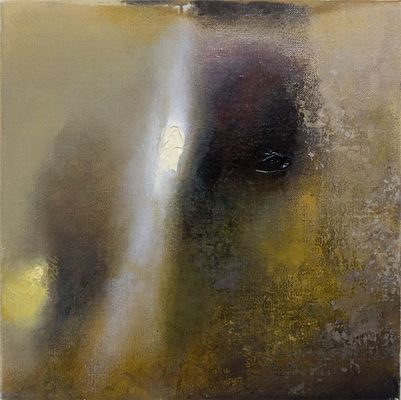
I am not a great reader of poetry but I always return to the work of Melbourne poet, Vincent Buckley (1925- 1988). Perhaps I find his most tantalising piece to be not a finished poem but a fragment left on a scrap of paper discovered on his desk after the poet’s death.
The poetry gathers like oil
In the word-core, and spreads
It has its music meet,
Its music is in movement.
This fragment is more the shell left behind from a volatile thought than a finished poem. I find the last two lines honest but awkward whereas the first two lines work like an arrow. Most likely he could not find a resolution so it was left. Still, in its present form, it remains an eloquent testimony to the ultimate failure of a medium to express mobile thought and sensation, in Buckley’s case, through verbal language. It’s an important matter because this is something all artists have to deal with regardless of the medium.
I have never written a poem, however, I am forever copying fragments from books on paper scraps in a vain effort to fix certain notions in my head. At first, they function as bookmarks that are sometimes returned to when I open the book. But before long, as they accumulate, they fall out littering the table interspersed with A4 photocopies, bills, books and medications.
To return to Buckley’s fragment, the first two lines very much evoke how I paint nowadays. As you age, detail diminishes and patches of light become more luminous and float. I feel the most honest way of dealing with this is by smearing the oil paint on the canvas with the fingers and working close-up, blind. Only if the patches coalesce into an approaching image can the work gain a life.
-
Jonathan Walker was born in Melbourne, Australia and brought up on a dairy farm in Gippsland. In the 1970’s he studied painting at RMIT and won the Harold Wright Scholarship to the British Museum, London. During the 1980’s he exhibited at Pinacotheca Gallery, Richmond and had work shown at the NGV and Heidi City Art Gallery. Over the same period he designed the cover for the “Epigenesi” LP by Giancarlo Toniutti, Italy and conducted a mail exchange work with Achim Wollscheid, Germany. The work with artists through the post resulted in an article published in the bicentenary issue of Art and Australia 1988. He showed in artist run spaces such as WestSpace in the 90’s and 2000’s, and until 2012, taught painting at Victoria University, which is where we (Colleen Ahern and Lisa Radford) as organisers of the exhibition, among many others, had the privilege of being his student.
Walker’s knowledge was imparted to students through the careful selection of music, literature, and artists found in books that he himself had ordered for the library. Walker’s strategy was the generosity of sharing his vast knowledge with references specific to each student and their context.
Walker’s paintings share a similar focus and intimacy.
This exhibition presents a small selection of recent paintings alongside a publication that includes Walker’s writing. Observational and analytical, Walker’s work is a type of material notation — the time of day, colour and how it is blended, the both specific and fleeting location of a reflection on lino or the question of whether a chair leg should be included in a painting.
Please join us on Friday August 21 between 6-8pm to celebrate the opening of the exhibition.
Curated by Colleen Ahern and Lisa Radford.
B. Wurtz
Curated by Nic Tammens
March 26 - April 4, 2015
B.Wurtz works from a basement studio in his home on Manhattan’s Lower East Side.
This local fact is attested to by the plastic shopping bags and newsprint circulars that appear in his work. As formal objects, they don’t make loud claims about their origins but nonetheless transmit street addresses and places of business from the bottom of this long thin island. Like plenty of artists, Wurtz is affected by what is local and what is consumed. His work is underpinned by this ethic. It often speaks from a neighborhood or reads like the contents of a hamper:
“BLACK PLUMS $1.29 lb.”
“Food Bazaar”
“USDA Whole Pork Shoulder Picnic 99c lb.”
“RITE AID Pharmacy, with us it’s personal.”
“H. Brickman & Sons.”
“Sweet Yams 59c lb."
Most of the work in this exhibition was made while the artist was in residence at Dieu Donne, a workshop dedicated to paper craft in Midtown. Here Wurtz fabricated assemblages with paper and objects that are relatively lightweight, with the intention that they would be easily transportable to Australia. This consideration isn’t absolute in Wurtz’s work, but was prescriptive for making the current exhibition light and cheap. Packed in two boxes, these works were sent from a USPS post office on the Lower East Side and delivered to North Melbourne by Australia Post.
Wurtz appears courtesy of Metro Pictures, New York.
Thanks to Rob Halverson, Joshua Petherick, Sari de Mallory, Matt Hinkley, Helen Johnson, Fayen d'Evie, Ask Kilmartin, Lisa Radon, Ellena Savage, Yale Union, and "Elizabeth".
John Nixon
"Archive"
December 15 - January 20, 2014
The presentation of John Nixon's archive offered a rare showcase of this extensive collection of the artist's own publications, catalogues, posters, ephemera, editions and more, from the mid 1980s onwards, alongside a selection of his artworks.
Organized by John Nixon, Joshua Petherick and Matt Hinkley.
<a href=http://wfb.public-office.info/artist/john-nixon>All titles by John Nixon
"Habitat"
at Minerva, Sydney (organised by Joshua Petherick and Matt Hinkley)
November 15 - December 20, 2014
Lupo Borgonovo, Janet Burchill & Jennifer McCamley,
Lewis Fidock, HR Giger, Piero Gilardi, Veit Laurent Kurz,
Cinzia Ruggeri, Michael E. Smith, Lucie Stahl, Daniel Weil, Wols
Press Release:
“...It contained seven objects. The slender fluted bone, surely formed for flight, surely from the wing of some large bird. Three archaic circuitboards, faced with mazes of gold. A smooth white sphere of baked clay. An age-blackened fragment of lace. A fingerlength segment of what she assumed was bone from a human wrist, grayish white, inset smoothly with the silicon shaft of a small instrument that must once have ridden flush with the surface of the skin - but the thing’s face was seared and blackened.”
William Gibson, “Count Zero”, 1986
"Autumn Projects Archive"
Curated by Liza Vasiliou
March 6 - March 15, 2014
World Food Books, in conjunction with the Virgin Australia Melbourne Fashion Festival 2014, presented the Autumn Projects archive, consisting of a selection of early examples in Australian fashion with a particular interest in collecting designers and labels from the period beginning in the 1980’s, who significantly influenced the discourse of Australian Fashion.
Curated by Liza Vasiliou, the exhibition provided a unique opportunity to view pieces by designers Anthea Crawford, Barbara Vandenberg, Geoff Liddell and labels CR Australia, Covers, Jag along with early experimental collage pieces by Prue Acton and Sally Browne’s ‘Fragments’ collection, suspended throughout the functioning World Food Books shop in Melbourne.
H.B. Peace
presented by CENTRE FOR STYLE
November 14, 2013
"Hey Blinky, you say chic, I say same"
Anon 2013
H.B. Peace is a clothing collaboration between great friends Blake Barns and Hugh Egan Westland. Their pieces explore the divergences between 'character’ and ‘personality’ in garments....etc
Special Thanks to Joshua Petherick and Matt Hinkley of WFB and Gillian Mears
and a Very Special Thank you to Audrey Thomas Hayes for her shoe collaboration.
Janet Burchill & Jennifer McCamley
"Aesthetic Suicide"
May 10 - June 8, 2013
The first of our occasional exhibitions in the World Food Books office/shop space in Melbourne, "Aesthetic Suicide" presented a body of new and older works together by artists Janet Burchill & Jennifer McCamley, including videos, prints, a wall work, and publications.
During shop open hours videos played every hour, on the hour.
2020, English
Softcover (ring-binding), 368 pages, 24.5 x 33.5 cm
Published by
Spector Books / Leipzig
$99.00 - Out of stock
The mid-1960s witnessed a boom in underground and self-published works. Hectographs, mimeographs, and offset printing not only allowed for the production of small, low-cost print runs but also promoted a unique aesthetic: using wild mock-ups, 'messianic amateurs' combined typescript aesthetics, handwriting, scribbled drawings, assemblages of collaged visuals, porn photos, snapshots, and comic strips. The typography consciously frees itself, in parallel to a liberalization of linguistic and visual forms of expression in the name of a new 'sensibility'. This book is the first to present the underground and self-published works that came out of West Germany in such depth, while also showing the international context in which they emerged: not as an anecdotal history but as an attempt to tap into the aesthetic cosmos of a Do-It-Yourself rebellion, one that also challenges us to take a new look at the current boom in 'independent publishing', the risograph aesthetic, and so on.
An incredible collection and valuable volume for anyone interested in underground publishing history!
Finally reprinted.
2012, English
Softcover, 240 pages, 22.5 x 33.8 cm
Published by
Harry N. Abrams / New York
$76.00 - Out of stock
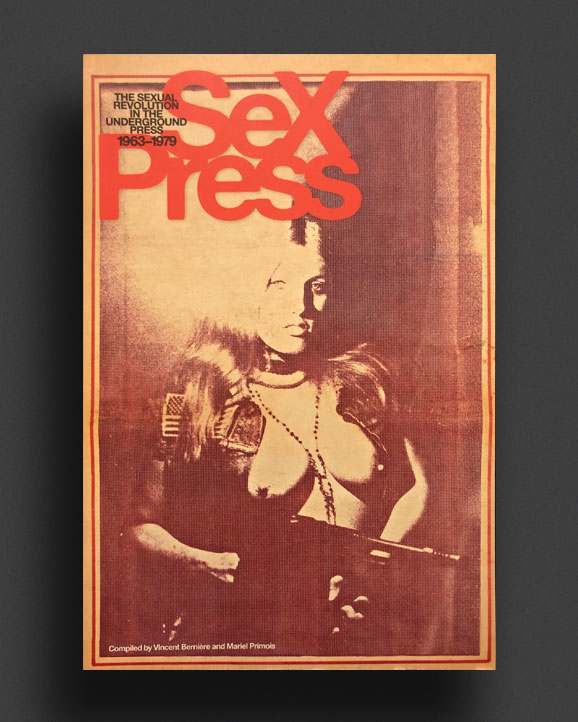
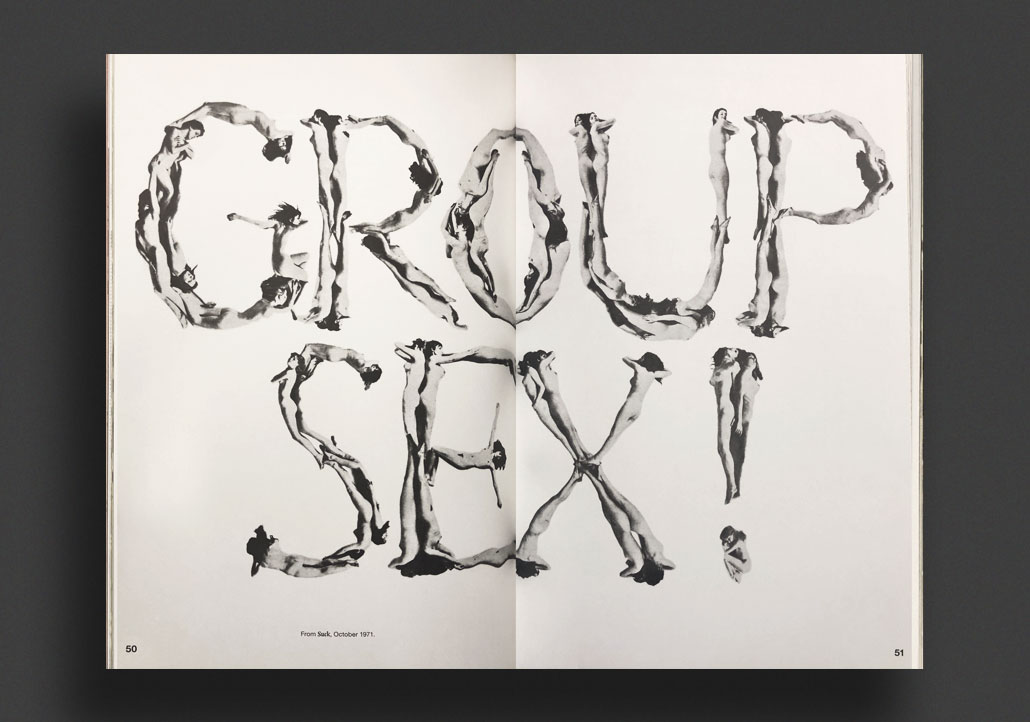
From 1965 to 1975, an array of journals, magazines, fanzines, and underground presses were the voice of a dramatic sexual revolution. In Europe and the United States, this "sex press" consisted of publications such as Other Scenes, Yellow Dog, Actuel, Suck, The Body, and Screw-some of which were fully dedicated to sex, while others also engaged with the time's most riveting topical issues, including politics, human rights, war, women's rights, and gay and lesbian rights. Showcasing art from the most revolutionary publications of the era, the book traces the exuberant sexual liberation of the 1960s and then moves into the mid-1970s, with its more codified form of pornography. Illustrated by a vivid collection of full-page facsimiles, Sex Press offers a compelling visual tour through an extraordinary period of experimentation, creativity, and sexual freedom.
2020, English
Softcover, 336 pages, 15.2 x 20.3 cm
Published by
Siglio Press / Los Angeles
$50.00 - Out of stock
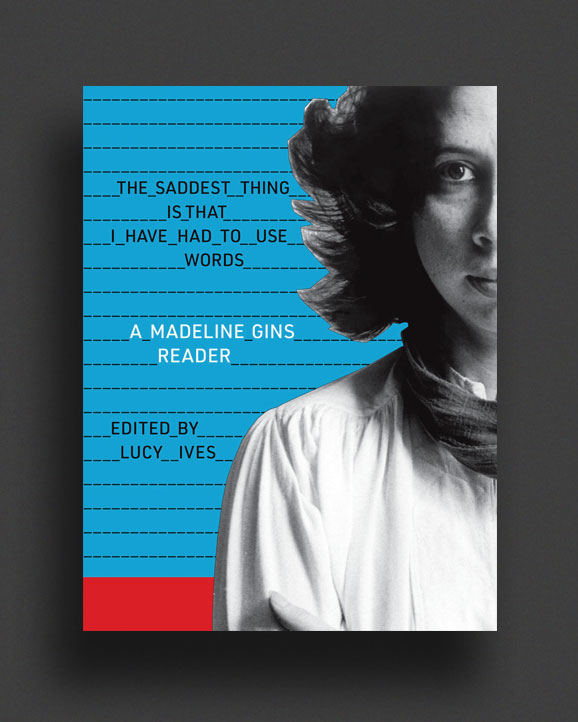
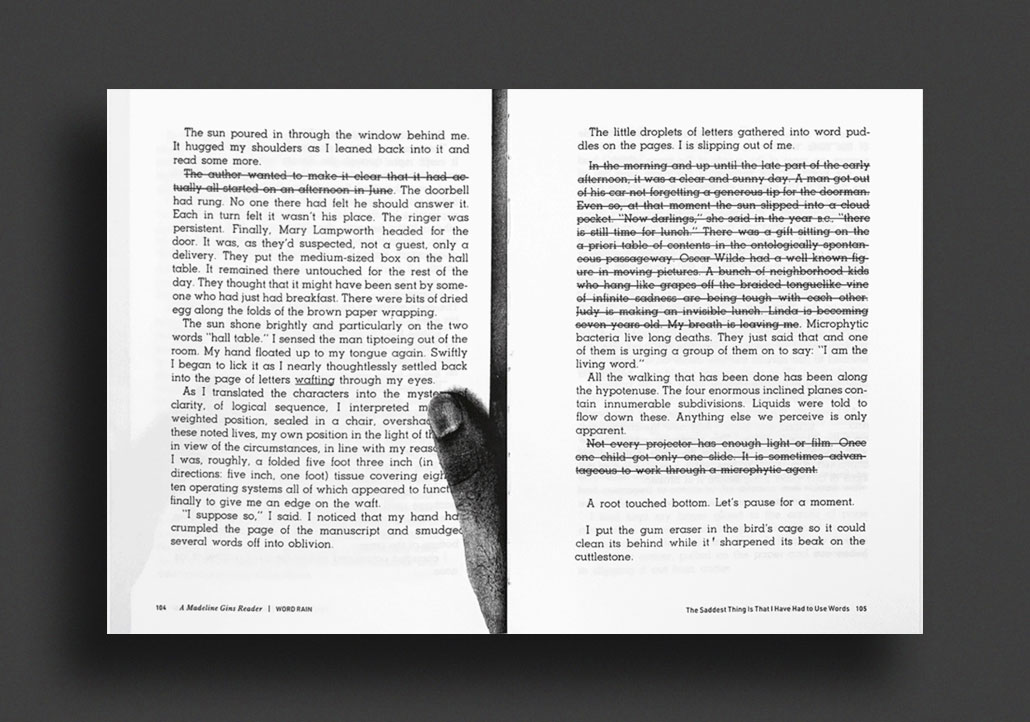
“For anyone who wants to experience directly the uncharted regions of inner and outer space in which language, perception, thought, and image play freely with our cramped expectations of them, the Madeline Gins Reader is an indispensable guide and a startling discovery. Her explorations of the interstices between words as symbols, as images, as sounds, as drawings are sure, steady, and entirely original. It seems incredible that her work received so little attention during her lifetime. This volume performs an invaluable service in recalling her to our attention.” —Adrian Piper
“Madeline Gins was marooned here, on Earth, and made the best of it, using what was available to her, like words. This book is a splendid testament to how far she pushed them, and us, to realize what she already knew. That this, all this, is not it. Not. Even. Close.” —Paul Chan
Poet, philosopher, speculative architect and transdisciplinary artist, Madeline Gins (1941–2014) is well-known for her collaborations with her husband, the artist Arakawa, on the experimental architectural project Reversible Destiny, in which they sought to arrest mortality by transforming the built environment. Yet, her own writings—in the form of poetry, essays, experimental prose, and philosophical inquiries—represent her most visionary and transformative work. Expansive and playful, Gins’s vigorous and often ecstatic exploration of the physicality of language challenges us to sense more acutely the ways in which we can—and could—write and read. Like Gertrude Stein before her, Gins transfigures grammar and liberates words. Like her contemporaries in conceptual art, her writing is attuned to the energized, collaborative space between reader and page. She invites the reader into a field of infinite, ever-multiplying possibility.
The Saddest Thing Is That I Have Had to Use Words: A Madeline Gins Reader is a revelatory anthology, edited and with an introduction by the writer and critic Lucy Ives. It brings never-before-published poems and essays together with a complete facsimile reproduction of Gins’s 1969 masterpiece, WORD RAIN (or A Discursive Introduction to the Intimate Philosophical Investigations of G,R,E,T,A, G,A,R,B,O, It Says), along with substantial excerpts from her two later books What the President Will Say and Do!! (1984) and Helen Keller or Arakawa (1994). Long out of print or unpublished, Gins’s poems and prose form a powerful corpus of experimental literature, one which is sure to upend existing narratives of American poetics at the close of the 20th century.
Madeline Gins is the author of three full-length collections of writing. Long a resident of NYC, Gins participated in experimental artistic and literary movements of the 1960s and ’70s before developing a collaborative practice as a philosopher and architect. She leaves a rich and complex legacy of interdisciplinary thought, action, and writing: although much of her work was unpublished or went out of print in her own lifetime, her prescient efforts in poetics, aesthetics, and environmental studies are central to contemporary debates about how to form communities and create collaboratively and sustainably.
Lucy Ives (editor) is the author of two novels, Impossible Views of the World (Penguin Press, 2017) and Loudermilk: Or, The Real Poet; Or, The Origin of the World (Soft Skull Press, 2019). Her writing has appeared in Art in America, Artforum, frieze, Granta, and Vogue, among other publications. She holds a Ph.D. in comparative literature from New York University. A collection of her short stories is forthcoming from Soft Skull Press in early 2021.
2019, English
Softcover, 304 pages, 12.7 x 18 cm
Published by
Harper Perennial / New York
$35.00 - Out of stock
A new work equal parts observational micro-fiction and cultural criticism reflecting on the dailiness of life as a woman and writer, on fame and failure, aging and art, from the acclaimed author of Heroines, Green Girl, and O Fallen Angel.
In the first half of Kate Zambreno's astoundingly original collection Screen Tests, the narrator regales us with incisive and witty swatches from a life lived inside a brilliant mind, meditating on aging and vanity, fame and failure, writing and writers, along with portraits of everyone from Susan Sontag to Amal Clooney, Maurice Blanchot to Louise Brooks. The series of essays that follow, on figures central to Zambreno's thinking, including Kathy Acker, David Wojnarowicz, and Barbara Loden, are manifestoes about art, that ingeniously intersect and chime with the stories that came before them.
If Thomas Bernhard's and Fleur Jaeggy's work had a charming, slightly misanthropic baby--with Diane Arbus as nanny--it would be Screen Tests. Kate Zambreno turns her precise and meditative pen toward a series of short fictions that are anything but small. The result is a very funny, utterly original look at cultural figures and tropes and what it means to be a human looking at humans."--Amber Sparks
"In Screen Tests, a voice who both is and is not the author picks up a thread and follows it wherever it leads, leaping from one thread to another without quite letting go, creating a delicate and ephemeral and wonderful portrait of how a particular mind functions. Call them stories (after Lydia Davis), reports (after Gerald Murnane), or screen tests (inventing a new genre altogether like Antoine Volodine). These are marvelously fugitive pieces, carefully composed while giving the impression of being effortless, with a quite lovely Calvino-esque lightness, that are a joy to try to keep up with."--Brian Evenson
2020, English
Softcover, 320 pages, 15.2 x 23 cm
Published by
University of Iowa Press / Iowa
$59.00 - Out of stock
“The time has certainly come for a large-scale study of Dennis Cooper, and Wrong is a major achievement that satisfies in every respect. Cooper is a truly tireless figure who has somehow managed to thrive outside the university and nonprofit industrial complex. He’s published poetry, fiction, and hybrid genres that cross four decades of literary innovation and numerous subcultures: liberation-era militancy, anarcho-punk, AIDS writing, and digital poetics. Hester’s book makes the definitive case for Cooper as both modern day Rimbaud and Sade. Unlike Rimbaud, however, Cooper never abandoned the literary enterprise and instead, like his peer Eileen Myles, kept reinventing his project, rarely repeating the same formal decisions in any two works. Further, he has been a figurehead in Los Angeles, New York, and Amsterdam, not to mention his presence as a juggernaut of blogging. Readers will not soon forget the scenes that come hurtling at us sideways in these pages: the young Cooper bludgeoned in the head with an axe, the suburban youth baptized by punk music, the friendship with George Miles (the ‘flickering presence’ of Cooper’s cycle of novels), the literary disputes of later years, and many more. Hester’s ferocious sleuthing conveys us to whole new areas of understanding about Cooper.”—Kaplan Harris, coeditor, The Selected Letters of Robert Creeley
“Diarmuid Hester unfurls a riveting chronicle of Dennis Cooper’s intertwined life and work, without circumscribing the possibilities that remain for readers to construct a Dennis of their own. Hester interprets Cooper’s creations within their historical, relational, and political contexts, and keeps alive the interpersonal spark that makes Cooper such an inspiration for rebels and artists everywhere.”—Wayne Koestenbaum, author, Camp Marmalade
Dennis Cooper is one of the most inventive and prolific artists of our time. Working in a variety of forms and media since he first exploded onto the scene in the early 1970s, he has been a punk poet, a queercore novelist, a transgressive blogger, an indie filmmaker—each successive incarnation more ingenious and surprising than the last. Cooper’s unflinching determination to probe the obscure, often violent recesses of the human psyche have seen him compared with literary outlaws like Rimbaud, Genet, and the Marquis de Sade.
In this, the first book-length study of Cooper’s life and work, Diarmuid Hester shows that such comparisons hardly scratch the surface. A lively retrospective appraisal of Cooper’s fifty-year career, Wrong tracks the emergence of Cooper’s singular style alongside his participation in a number of American subcultural movements like New York School poetry, punk rock, and radical queercore music and zines. Using extensive archival research, close readings of texts, and new interviews with Cooper and his contemporaries, Hester weaves a complex and often thrilling biographical narrative that attests to Cooper’s status as a leading figure of the American postwar avant-garde.
1996, English
Softcover, 144 pages, 14 x 21 cm
Published by
Grove Press / New York
$26.00 - Out of stock
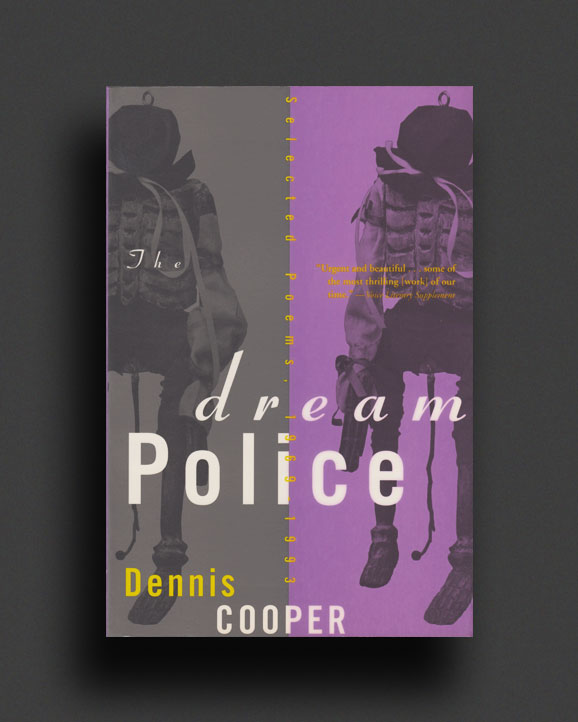
“The Dream Police fights the context of poetry in a way I can only call urgent and beautiful. He is interested in evacuating all notions of poem to begin again.” – Bruce Hainley, The Village Voice Literary Supplement
With each new novel, Dennis Cooper’s reputation as the most daring and distinctive writer in America today is cemented. To anyone familiar with his writing–which the New York Times calls “taut, chillingly ironic,” the Washington Post Book World terms “brilliant,” and the Village Voice deems capable of ‘religious intensity” –it will come as no surprise that before he achieved success as a novelist, Dennis Cooper was best known as a poet.
Cooper’s first collection, Idols, is considered a classic of gay literature, and his second, The Tenderness of the Wolves, was nominated for the Los Angeles Times Book Prize. His poems have been sampled by rock bands and appear in several important anthologies, including Postmodern American Poetry: A Norton Anthology, Gay and Lesbian Poetry in Our Time, and American Poetry Since 1970: Up Late. He has also been featured in the PBS series The United States of Poetry.
The Dream Police collects the best poems from five of his previous books and also includes a selection of new works. From his darkly erotic early verse to the more refined, post-punk poems that led critics to dub him “the spokesperson for the Blank Generation,” to his later experimental pieces, Cooper’s evolving study of the distances and dangers in romantic relationships has made him a singular voice in American poetry.
The Dream Police is a vital addition to Dennis Cooper’s riveting and disarming vision of life, love, obsession, and the depths of human need.
Dennis Cooper (born 1953) is an American novelist, poet, critic, editor and performance artist who grew up in the Southern California. In 1976, he founded Little Caesar Magazine and Press, which he ran until 1982. In 1985, he moved to Amsterdam for two and a half years, where he began his ten year long project, The George Miles Cycle, an interconnected sequence of five novels that includes Closer, Frisk, Try, Guide, and Period. His post-George Miles Cycle novels include My Loose Thread, The Sluts and God, Jr. Other works include the short-story collections Wrong and Ugly Man, poetry collections The Dream Police and The Weaklings, as well as the recent Smothered in Hugs: Essays, Interviews, Feedback, and Obituaries.
Dennis Cooper currently spends his time between Los Angeles and Paris.
"Dennis Cooper, God help him, is a born writer" - William Burroughs
"Cooper’s language is at first intense, nearly minimal, then suddenly, it ascends into vision" - Kathy Acker
2020, English
Softcover, 276 pages, 16.5 x 23.5 cm
Published by
Occasional Papers / London
$52.00 $45.00 - Out of stock
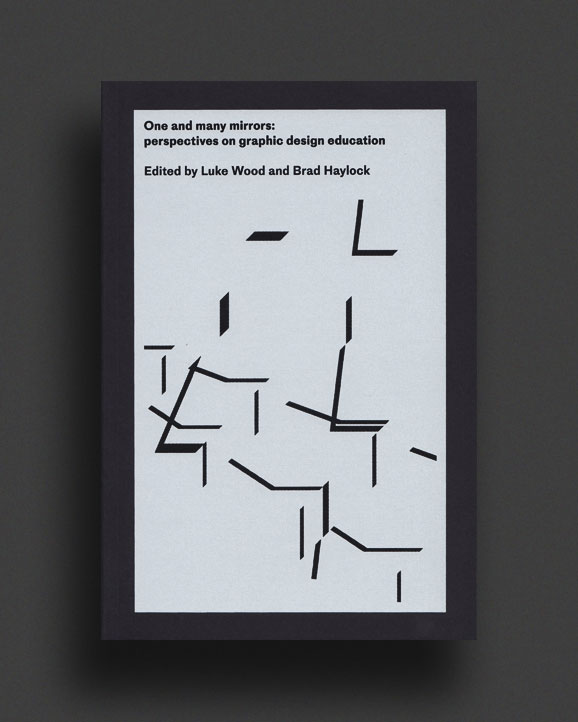
This ambitious book brings together a wide international selection of new and recent writing by educators and practitioners who question the rules and hierarchies of graphic design education today. It holds a vivid mirror up to the ways in which graphic design is imagined, taught, received and reproduced.
Edited by two designer-educators, One and many mirrors provides an urgent overview of the field of contemporary graphic design education for all those concerned with its past, present and possible futures.
Featuring contributions by Paul Bailey, Stuart Bertolotti-Bailey, Sheila Levrant de Bretteville, Richard Buchanan, Vincent Chan, Tony Credland, Europa, Katie Evans, Matthew Galloway, Rob Giampietro, Corin Gisel, Ricardo Gonçalves, Lisa Grocott, Brad Haylock, Constanze Hein, Richard Hollis, Na Kim, James Langdon, Lu Liang, Ellen Lupton, Gabriela Matuszyk, Fraser Muggeridge, Paul Mylecharane, Nina Paim, Megan Patty, Radim Peško, Joe Potts, Bryony Quinn, Carlos Romo‑Melgar, Naomi Strinati, Jon Sueda, Lucille Tenazas, Teal Triggs, Michael Twyman, Jonty Valentine, Laurene Vaughan, Noel Waite, Luke Wood, Jia Xiao, Bonne Zabolotney and Roxy Zeiher.
Supported by The Physics Room, University of Canterbury College of Arts Contestable Research Fund and RMIT University School of Design
Edited by Luke Wood and Brad Haylock
2012, English
Softcover, 304 pages, 29.7 x 21 cm
Published by
Occasional Papers / London
$65.00 - Out of stock
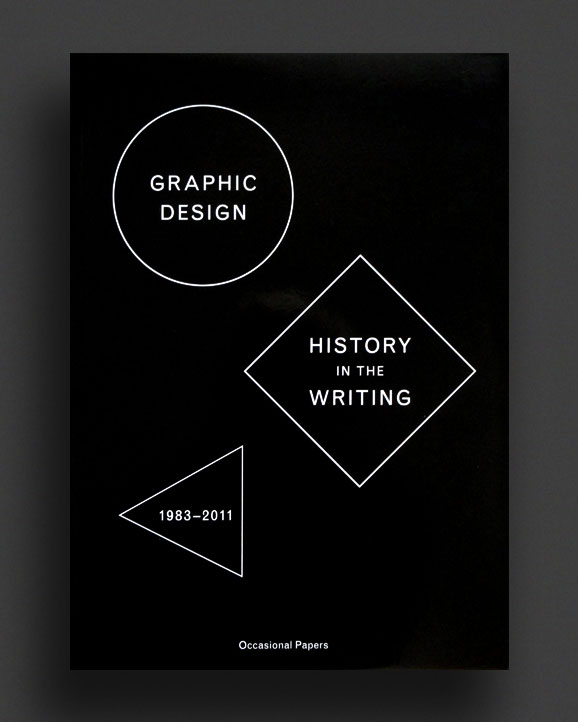
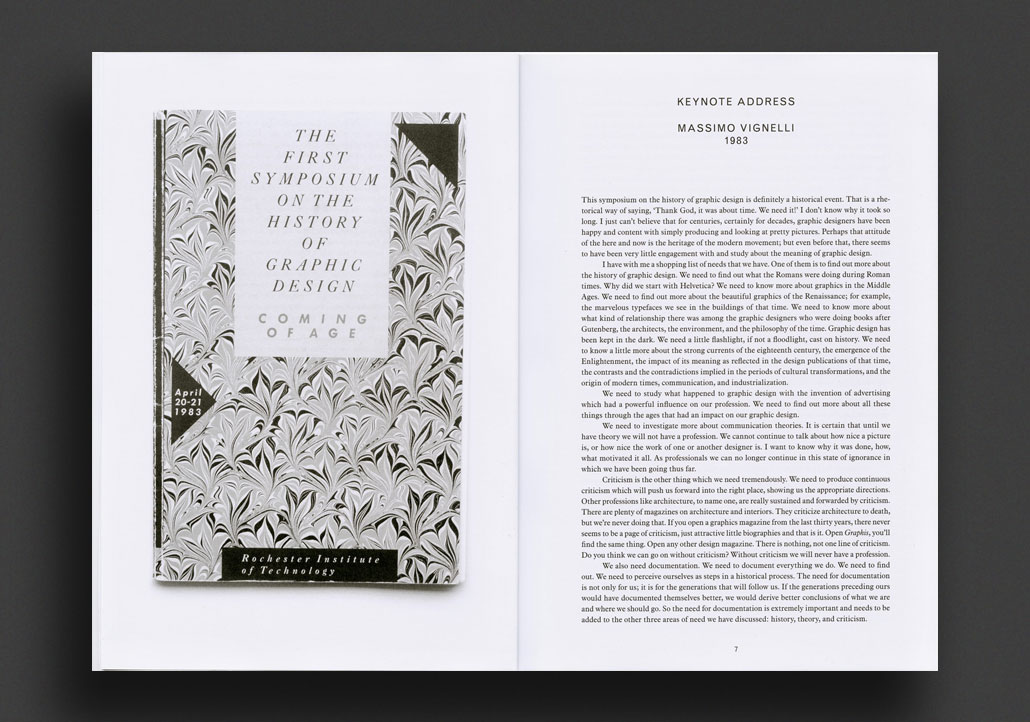
The first anthology of its kind, Graphic Design: History in the Writing (1984–2011) comprises some of the most influential published texts about graphic design history. The book documents the development of the relatively young field of graphic design history from 1983 to today, underscoring the aesthetic, theoretical, political and social tensions that have underpinned it from the beginning. Included in the anthology are texts by:
Jeremy Aynsley, Steve Baker, Andrew Blauvelt, Piers Carey, François Chastanet, Wen Huei Chou, Denise Gonzales Crisp, Brian Donnelly, Johanna Drucker, Steven Heller, Richard Hollis, Robin Kinross, Ellen Lupton, Victor Margolin, Ellen Mazur Thomson, Philip B. Meggs, Gérard Mermoz, Abbott Miller, Rick Poynor, Martha Scotford, Catherine de Smet, Teal Triggs, Massimo Vignelli, Bridget Wilkins
Edited by Catherine de Smet and Sara De Bondt
2019, English
Hardcover, 144 pages, 11.5 x 18 cm
Published by
Park Books / Zürich
$49.00 - Out of stock
The new revised edition of Valerio Olgiati's and Markus Breitschmid's widely acclaimed manifesto for a new approach in architecture in a world free of ideologies and, therefore, references: a must-read for anyone interested in architecture today.
More than ever, architecture is in need of provocation, a new path beyond the traditional notion that buildings must serve as vessels, or symbols of something outside themselves.
Non-Referential Architecture is nothing less than a manifesto for a new architecture. It brings together two leading thinkers, architect Valerio Olgiati and theorist Markus Breitschmid, who have grappled with this problem since meeting in 2005. In a world that itself increasingly rejects ideologies of any kind, Olgiati and Breitschmid offer non-referential architecture as a radical, new approach free from rigid ideologies. Non-referential buildings, they argue, are entities that are themselves meaningful outside a vocabulary of fixed symbols and images and their historical connotations.
For more than a decade, Olgiati and Breitschmid’s thinking has placed them at the forefront of architectural theory. Indispensable for understanding what the future might hold for architecture, Non-Referential Architecture will become a new classic.
2018, English
Softcover, 272 pages, 14 x 19 cm
Published by
Quodlibet / Italy
$53.00 - Out of stock
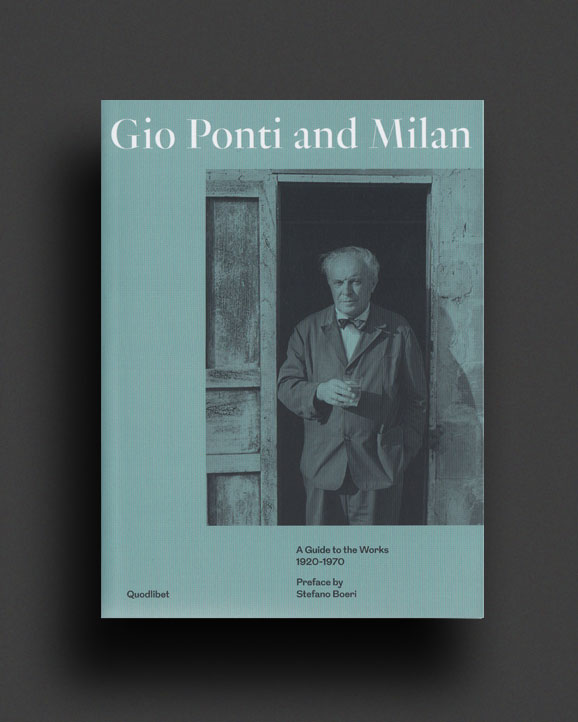
This book presents a collection of the works of architecture designed by Gio Ponti in Milan between 1925 and 1971. There are around forty buildings. Apart from a few works that have undergone radical alterations, these houses, churches, and offices have been left as they were, a delightful heritage for the Milanese who have been living and working in them or just looking at them for almost a century. The book contains a map of Milan with all Ponti’s buildings.
2017, English
Softcover, 512 pages, 15.3 x 23.4 cm
Published by
Faber & Faber / London
$35.00 - Out of stock
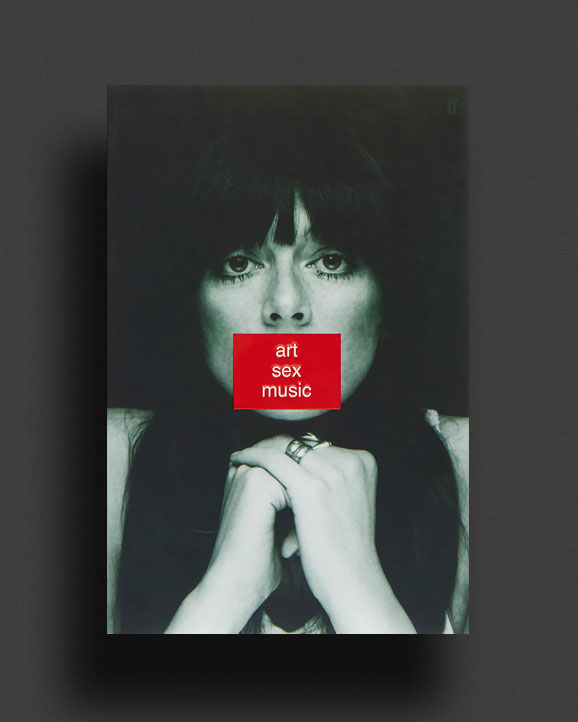
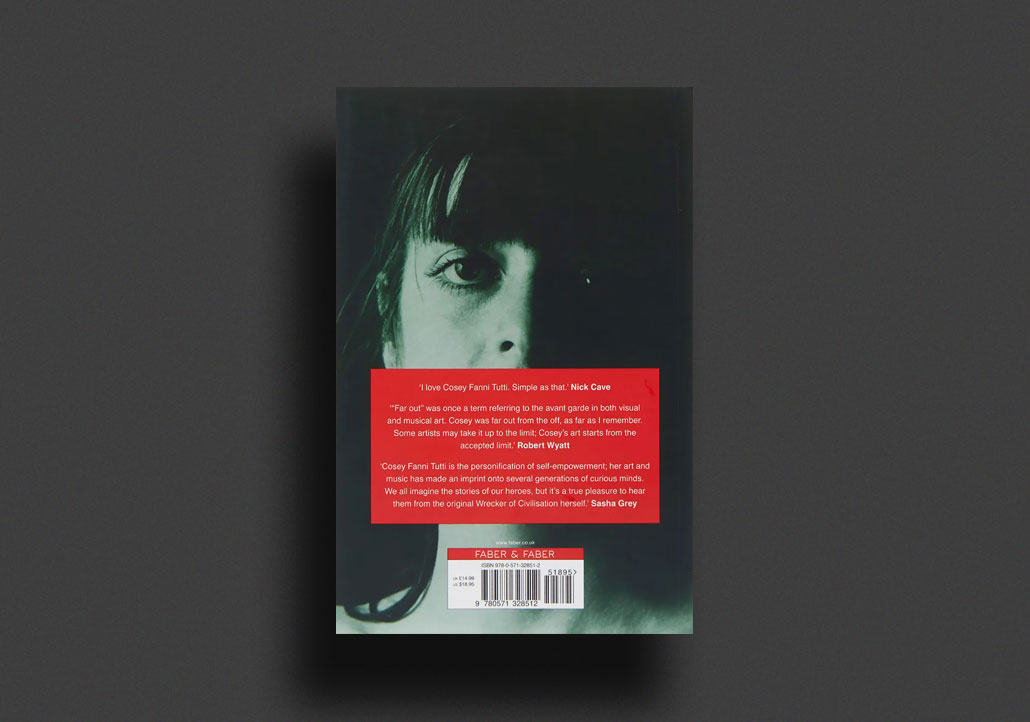
Art Sex Music is the wise, shocking and elegant autobiography of Cosey Fanni Tutti.
Art Sex Music is the autobiography of a musician who, as a founding member of the avant-garde group Throbbing Gristle and electronic pioneers Chris & Cosey, has consistently challenged the boundaries of music over the past four decades.
It is the account of an artist who, as part of COUM Transmissions, represented Britain at the IXth Biennale de Paris, whose Prostitution show at the ICA in 1976 caused the Conservative MP Nicholas Fairbairn to declare her, COUM and Throbbing Gristle 'Wreckers of Civilisation'...shortly before he was arrested for indecent exposure, and whose work continues to be held at the vanguard of contemporary art.
And it is the story of her work as a pornographic model and striptease artiste which challenged assumptions about morality, erotica and art.
1994, English
Softcover (staple-bound), 68 pages, 28 x 21.5 cm
1st Edition, Out of print title / used / very good
Published by
Feature Inc. / New York
$300.00 - Out of stock
The rarely seen, first edition of G.B. Jones' artist book, published in the US in 1994 and seized at the border and officially banned in Jones’ native Canada.
G.B. Jones (b. 1965) is a Canadian artist, filmmaker, and founding member of Canadian queer punk band Fifth Column (K Records/Outpunk/Kill Rock Stars/et al). She published legendary queercore fanzine J.D.s (Juvenile Delinquents) with fellow queer filmmaker Bruce LaBruce, which regularly featured her iconic Tom Girl drawings. According to novelist Dodie Bellamy, G.B. Jones' drawing "co-opts the male-on-male objectifying gaze of gay erotica and converts it to a female-on-female gaze." Depicting autonomous women through fantasies of bikers, punks and degenerates in the style of and situations similar to those drawn by Tom of Finland, her Tom Girls are "unapologetic, thrillingly anti-assimilationist." Compiling a scrapbook curriculum vitae of her work to date, this wonderful book presents the Tom Girl series of drawings alongside stills from videos, excerpts from J.D.s zines, gig flyers, photos and essays and commentaries by Dennis Cooper, Vaginal Davis, Dodie Bellamy, Kevin Killian, Caroline Azar, Johnny Noxzema, and others. The essential book on the artist.
Very Good, beautiful copy of the very first banned edition. Possibly in 1996 more were printed (also barely exist), but this is definitely the original 1994 print, exceptionally rare.
2020, English
Softcover, 272 pages, 17 x 24 cm
Published by
Mousse / Milan
Ujazdowski Castle Centre for Contemporary Art / Warsaw
$65.00 - Out of stock
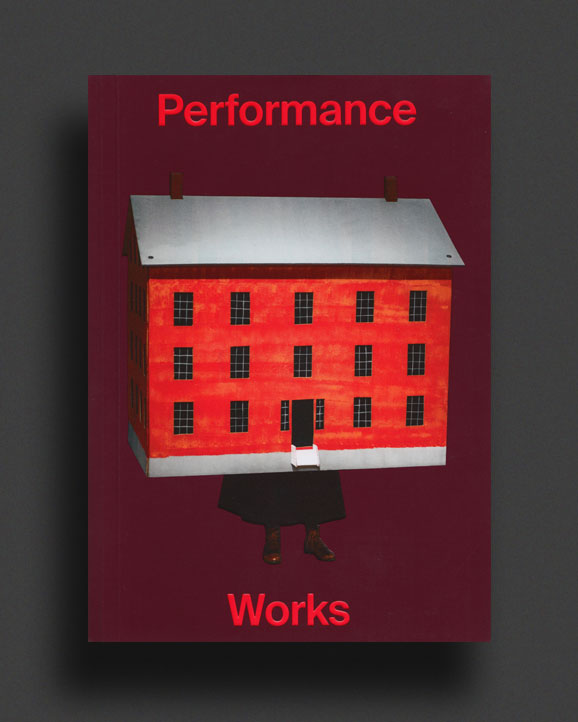
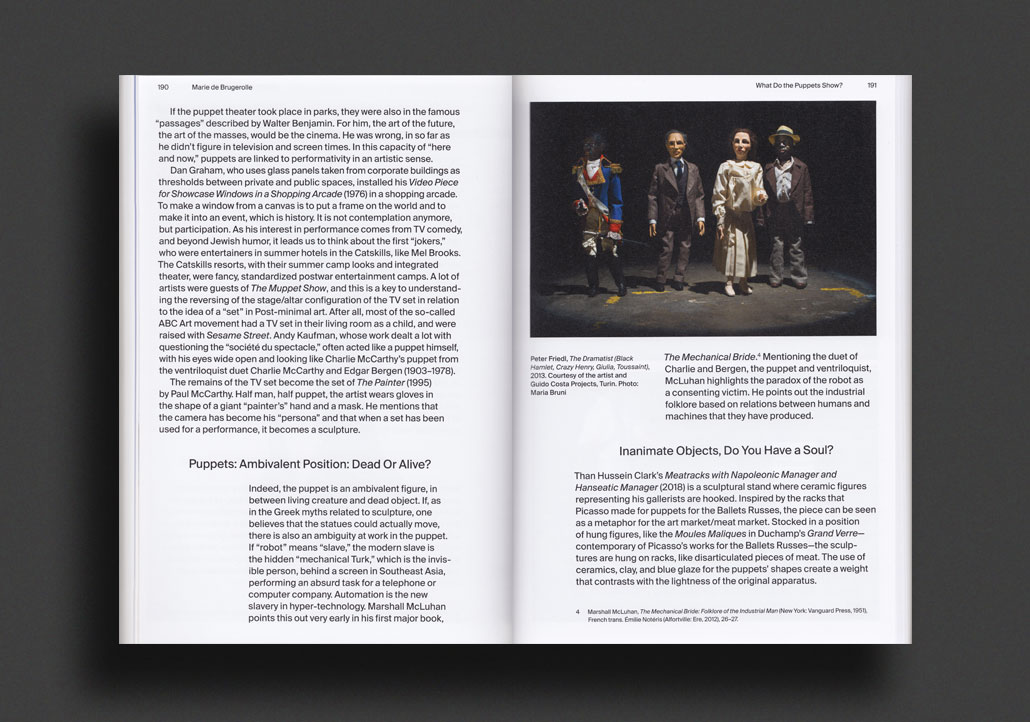
The publication is an anthology of both newly commissioned and reprinted essays, as well as interviews and fiction that reflect on performance today. It is structured around four major sections that investigate the new performance phenomenologies by looking at artistic institutions, curatorial practices, and exhibition formats, as well as the technological turn and performative fiction. Over recent decades, the definition of performance has changed. Performance Works examines changes taking place in the traditional exhibition format, which has recently taken a back seat to hybrid forms that link the visual arts with the performing arts, literature, and music. The book reflects on the changing role of the viewer, who increasingly has become a performer and active participant. Authors also analyze the role of the performer’s body and the work that is involved in extended performative exhibitions. Additionally, Performance Works presents the research outcomes linked to the performance program launched in 2016 at Ujazdowski Castle Centre for Contemporary Art in Warsaw, which examined the performative turn in visual arts and its consequences for art institutions, as well as artistic and curatorial practices.
Edited by Joanna Zielińska
Texts by Oreet Ashery, Pierre Bal-Blanc, Claire Bishop, Marie de Brugerolle, Yann Chateigné, Korina Giaxoglou, Michał Grzegorzek, Shannon Jackson, Eliel Jones, Chris Kraus, Laura Lima, David Maroto, Ingo Niermann, Kathy Noble, Johannes Paul Raether, Mark von Schlegell, Agnieszka Sosnowska, Ana Teixeira Pinto, Transformella, and Joanna Zielińska
1979, Japanese
Softcover (w. dust jacket), 27.6 x 21 cm
Out of print title / used / good
Published by
Shogakukan / Tokyo
$100.00 - Out of stock
Huge photographic compendium of famed Japanese photographer Kishin Shinoyama's commercial "Gekisha" works for 1970s Japanese men's magazine GORO and other sun-kissed commercial nude portrait work, featuring mostly full-bleed vivid colour photoshoots of 135 young models, mostly famous Japanese actresses and pop idols of the period... including Momoe Yamaguchi, Aki Mizusawa, Saori Minami, Aiko Morishita, Yūko Asano, Hiromi Iwasaki, Kumiko Oba, Nana Okada, Ikue Sakakibara, Junko Sakurada, Keiko Takeshita, Satomi Tezuka, Masako Natsume, Akiko Nishina, Mieko Harada, Aiko Morishita... even The Runaways. As friends and models, Shinoyama continued to photograph and collaborate with many of these women throughout their careers. Includes summary of the shoots with magazines covers, spreads, outtakes, behind the scenes and commentary in Japanese.
Kishin Shinoyama was born in 1940, in Tokyo, Japan. He embarked on his career while studying in the Department of Photography at Nippon University, and was awarded the Advertising Photographer’s Association prize, among others. After being employed at the Light Publicity advertising company, he started to work as a freelance photographer in 1968. His work is acclaimed for the portraits of the most famous celebrities of our day and age, such as John Lennon and Yoko Ono, Rie Miyazawa, and other major personalities. In his “Gekisha” and “Shinorama” series, he carries on capturing the times using new forms of expression and new technologies. He is also an exponent of solarization and has used it to challenge preconceived ideas of beauty and the nude.
Very Good copy but glue binding has seperated, yet all content (book block) remains well-bound together to covers, so actually makes for better use! Otherwise nicely preserved with light wear and tanning to edges. In Good dust jacket.
2009, English / Japanese
Softcover, 214 pages, 21 x 25.5 cm
1st Edition, Out of print title / used / very good
Published by
Tokyo Metropolitan Museum of Photography / Tokyo
$180.00 - Out of stock
First edition of this great out of print monograph on the work of Japanese photographer Keizo Kitajima, published by the Tokyo Metropolitan Museum of Photography. Contains 189 works from 1975 to 1991, beautifully reproduced, introducing and surveying all of Keizo's incredible major bodies of work : KOZA, TOKYO, NEW YORK, EASTERN EUROPE, USSR, alongside biography, and great texts in English and Japanese. A terrific overview of a great artist.
Keizo Kitajima (b .1954, Suzaka, Nagano) is a leading figure in the rise of Japanese photography in the 1970s and 1980s, first coming to be known for his grainy black-and-white shots of people on the streets of Tokyo, at an American military base in Okinawa after the end of the Vietnam War, and in New York. Daido Moriyama, with whom Kitajima first studied photography, praised his talent as a gifted snapshooter by calling him ‘a street killer in broad daylight.’ Kitajima’s image Shop CAMP, set up in the bustling Shinjuku area in 1976 in collaboration with Moriyama, was a pioneering experimental space for photographers before the gallery system was established. In his legendary experimental series Photo Express (1979), Kitajima photographed people at bars and on the streets in Shinjuku at night right outside the CAMP, converted the gallery into a darkroom to make wallsized prints as a public performance event, and even published the images as an instant booklet. Through these processes of delivering images immediately, the artist explored the ways that time affects photography in terms of documentation, record and memory. Kitajima spent six months in New York roaming its gritty streets and hanging out in its clubs, resulting in the book New York (1982) . He presents a vision of the 1980s New York, full of energy, decadence and moments of quiet desperation. Like the city the publication is full of stark juxtapositions, flamboyant displays of outrageous behaviour are shown next to pictures of desolation and dejection. For this photo book Kitajima received the important Kimura Ihei Award in 1983. Kitajima’s work has been shown in many Japanese and international exhibitions and his publications are popular among collectors of photo books and the importance of his work has been recognised by numerous Japanese photographic awards.
Very Good copy.
2014, English / German
Hardcover, 104 pages, 24 x 18 cm
Published by
MACK / London
$86.00 - Out of stock
With his series of black and white images of German landscapes, created between 1987 and 1997, Michael Schmidt has designed a new imagery that deconstructs the world that presents itself to him. As works of light and form, Schmidt's paintings are characterized by a wealth of silver tones and a spectrum of shades of gray, whose play of light and dark evolves imperceptibly and in an almost mystical way. Through the use of filters Schmidt is also able to neutralize the world, making it difficult for the subjective perception of the viewer. Through this process, a process of montage, Michael Schmidt creates his own idiom and with the linear sequence of images in the book a self-contained world.
Michael Schmidt was born in 1945 in Berlin. He died there on May 24, 2014, a few days after NATURE was printed. With his photographic works Michael Schmidt has created some of the most important works of his medium. He became known through his books, in particular "truce" (1987), "U-NI-TY" (1996), "Berlin after 45" (2005) and "food" (2012).
2020, English
Softcover, 240 pages, 13 x 22 cm
Published by
Valiz / Amsterdam
$50.00 - Out of stock
In The Aesthetics of Ambiguity: Understanding and Addressing Monoculture Pascal Gielen and Nav Haq argue that multiculturalism is paradoxically based on monocultural thinking. The publication explores this paradox by exploring monoculture in a variety of contemporary contexts. The book sets out to analyse monoculture using a multifaceted approach, by bringing together historical, social, cultural and ideological perspectives, using the dual role of art as tool for reconciliation and division in societies. The Aesthetics of Ambiguity gives stage to artists, thinkers and institutional practices who dare to play with the rules of a broader society and thus generate ambiguity ‘at large’. The book represents a quest for (more) ambiguity in order to avoid rigid borders or black-and-white polarities between cultures, as well as between practices of art and scientific thinking. By doing so, the artists, activists and researchers featured in this book plea for a politics and aesthetics of ambiguity to deal with the complexity of our living together on Earth.
Contributors: Paolo S.H. Favero, Pascal Gielen, Christine Greiner, Max Haiven, Nav Haq, Hedwig Houben, Iman Issa, Bojana Piškur, Public Movement, Jonas Staal, Mi You and Tirdad Zolghadr
Design: Metahaven
Pascal Gielen is professor of sociology of culture and politics. He is based at the Antwerp Research Institute for the Arts (ARIA) of Antwerp University. There he leads the research group Culture Commons Quest Office (CCQO). He is editor of the international book series Antennae-Arts in Society, published by Valiz.
Nav Haq is Associate Director at M HKA, responsible for the development of its artistic programme. At M HKA he co-curated Don’t You Know Who I Am? Art After Identity Politics (2014). He was previously Exhibitions Curator at Arnolfini, Bristol and Curator at Gasworks, London. Haq has organized numerous monographic exhibitions and in 2012 he was the recipient of the Independent Vision Award for Curatorial Achievement, awarded by Independent Curators International, New York.
1952, French
Softcover, 26 x 22 cm
1st Edition, Out of print title / used / very good
Published by
Gariel-Giraud / Paris
$350.00 - Out of stock
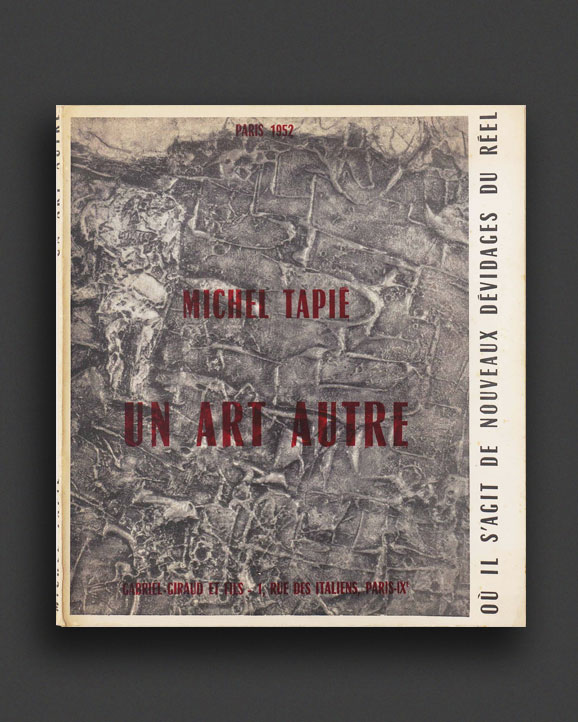
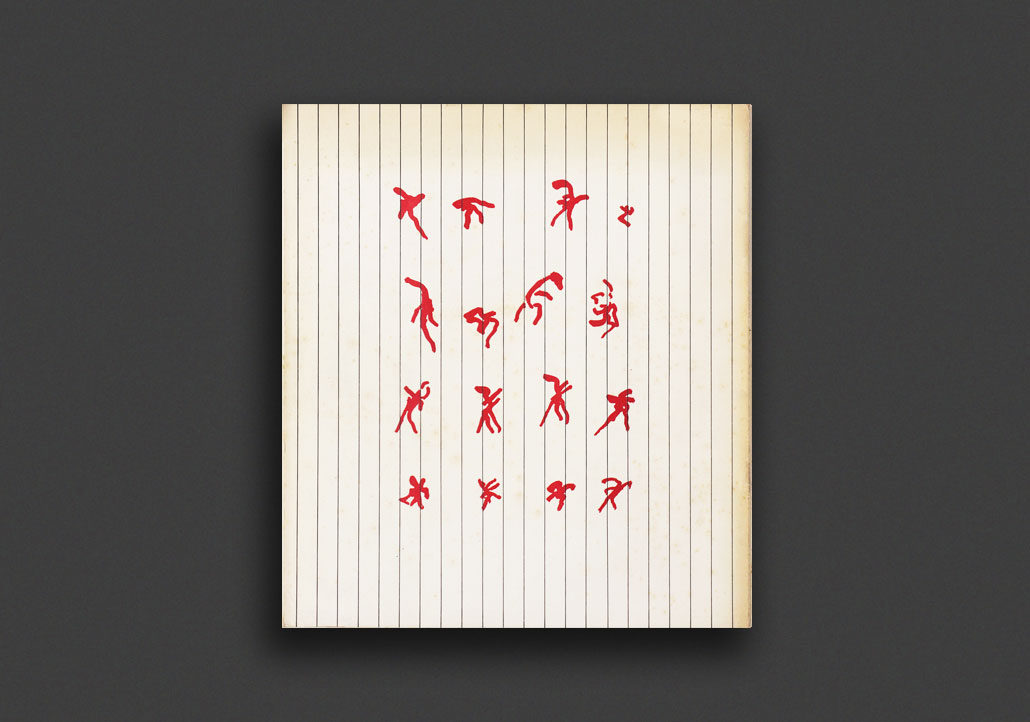
First, very rare 1952 edition of this important piece of art history, considered the manifesto of "L'art Informel". Published in an edition of only 1000 copies, Michel Tapié's book Un Art Autre (Art of Another Kind) defined a tendency in postwar European painting that he saw as a radical break with all traditional notions of order and composition—an art that worked through ‘paroxysm, magic, total ecstasy’. This dominant trend of abstract art in the 1940s and 1950s was characterised by an improvisatory approach and highly gestural technique, much aligned with America's Abstract Expressionism. In describing such work he used the term art informel (from the French ‘informe’, meaning unformed or formless), and presented the exemplary works of Wols, Herni Michaux, Jean Dubuffet, Mark Tobey, Jackson Pollock, Pierre Soulages, Georges Mathieu, Ruth Francken, René Guiette, Victor Brauner, Alfonso A. Ossorio, Jean-Paul Riopelle, Jean Fautrier, Giuseppe Capogrossi, Karel Appel, Mario Sironi, Camille Bryen, Alberto Burri, Hans Hofmann, Claire Falkenstein, Slavko Kopač, Germaine Richier, Graham Sutherland, Sam Francis, Mark Rothko, Gianni Dova, Jaroslav Serpan, André-Pierre Arnal, Roger-Edgar Gillet, Lucio Fontana, Roberto Matta, Eduardo Paolozzi, Willem de Kooning, and more.
Very Good copy with tanning from age and light spotting. Beautifully preserved copy.
2020, English
Softcover, 242 pages, 15 x 20.2 cm
Published by
Blank Forms / New York
$44.00 - Out of stock
Edited by Lawrence Kumpf with Joe Bucciero.
Contributors and featured artists include Masayuki Takayanagi, Louise Landes Levi, Joseph Jarman, Catherine Christer Hennix, Charles Stein, Henry Orlov, Maryanne Amacher, Alan Cummings, Bill Dietz, Peter Kastakis, Art Lange, Leo Svirsky, Satoru Obara, and Tomoyuki Chida.
Aspirations of Madness, Blank Forms’ fifth collection of archival, unpublished, or newly translated texts, takes its title from a series of interviews with Japanese free jazz pioneer Masayuki Takayangi that were published in Japanese in 1975–76 and are published here in English for the first time. The interviews provide a rare look at Takayanagi’s eccentric practice and personality, both long under-recognized by audiences outside (and often, inside) of Japan. In this respect, the interviews speak to the goals of Blank Forms’ publication enterprise, that is, to expand upon our work in performance programming, record production, and archival preservation, and to foster new dialogues on vanguard art and music from the past 50-plus years.
Aspirations of Madness considers the work of Masayuki Takayanagi, the poet Louise Landes Levi, musician and writer Joseph Jarman, polymath Catherine Christer Hennix and her one-time student the poet Charles Stein, Russian musicologist Henry Orlov, and Maryanne Amacher—brilliant and overlooked artists whose work Blank Forms will continue to champion in a variety of contexts. Aspirations of Madness features additional contributions by Alan Cummings, Bill Dietz, Peter Kastakis, Art Lange, Leo Svirsky, Satoru Obara, and Tomoyuki Chida, and is edited by Lawrence Kumpf with Joe Bucciero.
2002, Japanese
Hardcover (w. obi strip), 64 pages, 25.5 x 19 cm
1st Edition, Out of print title / as new
Published by
Petit Grand / Tokyo
$45.00 - Out of stock
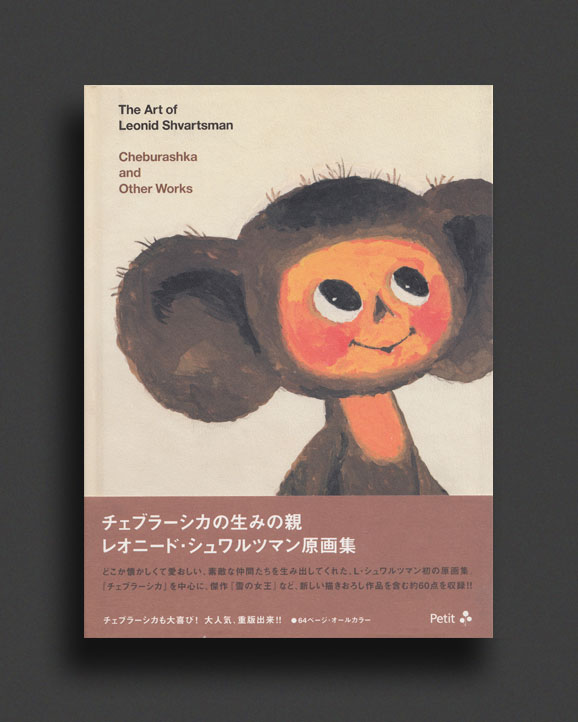
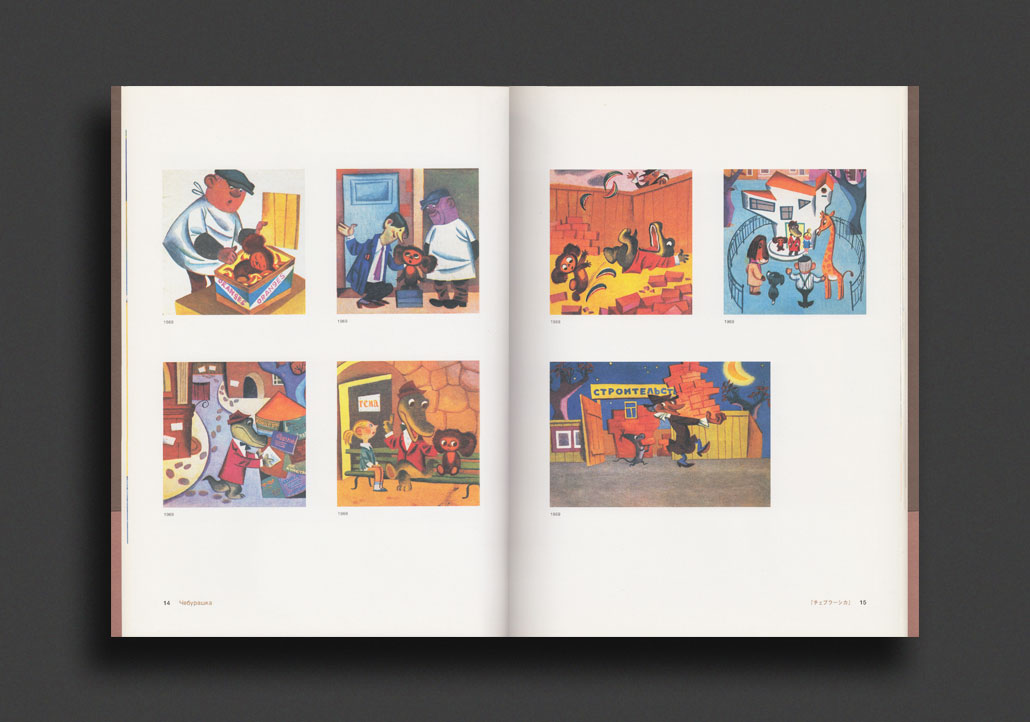
First edition Japanese monograph on the work of legendary Soviet and Russian animator Leonid Shvartsman (b. 1920), who celebrated his 100th birthday this year. Internationally famed for his popular work animating the iconic Russian character Cheburashka, this lovely hardcover book presents a selection of Shvartsman's paintings and illustrations, revisiting his most celebrated animated works throughout his career, as well as reproductions of earlier works from the late 1960s onward. Includes a biography and filmography. Texts in Japanese. Now out of print.
Leonid Aronovich Shvartsman (b. 1920, Minsk, BSSR) is a Soviet and Russian animator and artist. He spent most of his creative career at the Soyuzmultfilm Studio, in Moscow, where he served as art director. Generations of Soviet and Russian children grew up on his films about the adventures of Cheburashka, the crocodile Gena and their friends, the series of puppet films "38 parrots", films "A Kitten named Woof", "Mitten", "The Snow Queen" and many others. Shvartsman grew up in a Yiddish-speaking religious family in the city of Old Minsk. His father died prematurely when Shvartsman was just 13 years of age, and his mother and nephew starved to death in the Siege of Leningrad. Homeless, without parents or siblings, and being denied an art career, he sought out more marginal corners in the creative world. In 1945, he applied to the film institute, VGIK, and in 1951 when he graduated, secured the entry to Soyuzmultfilm, where he stayed his entire career. Shvartsman is credited on 70 films at the studio. He is known as the creator of the visual image of Cheburashka, an iconic character of children's literature from a 1966 story by Soviet writer Eduard Uspensky. Shvartsman sculpted and animated the character and his friends himself, first starring in stop-motion form in 1969. Shvartsman is beloved in America and Europe, and even has a cult following in Japan for creating the character. Hayao Miyazaki said he began to animate again once he saw his work on The Snow Queen (1957).
As New copy w. original illustrated obi strip.
2020, English
Softcover, 160 pages, 13.7 x 20.3 cm
Published by
Semiotext(e) / Los Angeles
$32.00 - Out of stock
An erotic and darkly comic novel about female friendship, set at the intersection between counterculture and the multimillion dollar art industry.
Over the course of a few days in the fall of 2015, the sophisticated and awkward, wry, and beautiful Mathilde upends her tidy world. She takes a short leave from her job at one of New York's leading auction houses and follows her best friend Gretchen on an impromptu trip to Paris. While there, she confronts her late mother's hidden life, attempts to rein in Gretchen's encounters with an aloof and withholding sometime-boyfriend, and faces the traumatic loss of both her parents when she was a teenager.
Reeling between New York, Paris, Munich, London, and Berlin, The Superrationals is an erotic and darkly comic story about female friendship, set at the intersection between counterculture and the multimillion dollar art industry. Mathilde takes short, perceptive notes on artworks as a way to organize her own chaotic thoughts and life. Featuring a bitchy gossip chorus within a larger carousel of voices, The Superrationals coolly surveys the international art and media worlds while exploring game theory, the uncanny, and psychoanalysis. Written in the “Young Girl” tradition of Michelle Bernstein's All The King's Horses, Bernadette Corporation's Reena Spaulings and Natasha Stagg's Surveys, The Superrationals confronts the complexity of building narrative in life and on the page and the instability that lies at the heart of everything.
It's incredible how much wisdom Stephanie LaCava has packed into story of all the ways people connect, and all the ways they don't. - Benjamin Moser, Sontag: Her Life and Work
Stephanie LaCava is a writer based in New York City. Her work has appeared in Harper's Magazine, Artforum, Texte zur Kunst, the New York Times, the New York Review of Books, Vogue, and Interview.
2020, English
Hardcover, 288 pages, 24.1 x 29.2 cm
Published by
National Gallery of Art / Washington
$120.00 - Out of stock
Text by Harry Cooper, Mark Godfrey, Alison de Lima Greene, Kate Nesin. Contributions by Jennifer Roberts, Tacita Dean, Peter Fischli, Trenton Doyle Hancock, William Kentridge, Glenn Ligon, David Reed, Dana Schutz, Amy Sillman, Art Spiegelman, Rirkrit Tiravanija.
A sweeping retrospective of Philip Guston’s influential work, from Depression-era muralist to abstract expressionist to tragicomic contemporary master
Philip Guston—perhaps more than any other figure in recent memory—has given contemporary artists permission to break the rules and paint what, and how, they want. His winding career, embrace of “high” and “low” sources, and constant aesthetic reinvention defy easy categorization, and his 1968 figurative turn is by now one of modern art’s most legendary conversion narratives. “I was feeling split, schizophrenic. The war, what was happening in America, the brutality of the world. What kind of man am I, sitting at home, reading magazines, going into a frustrated fury about everything—and then going into my studio to adjust a red to a blue?”
And so Guston’s sensitive abstractions gave way to large, cartoonlike canvases populated by lumpy, sometimes tortured figures and mysterious personal symbols in a palette of juicy pinks, acid greens, and cool blues. That Guston continued mining this vein for the rest of his life—despite initial bewilderment from his peers—reinforced his reputation as an artist’s artist and a model of integrity; since his death 50 years ago, he has become hugely influential as contemporary art has followed Guston into its own antic twists and turns.
Published to accompany the first retrospective museum exhibition of Guston’s career in over 15 years, Philip Guston Now includes a lead essay by Harry Cooper surveying Guston's life and work, and a definitive chronology reflecting many new discoveries. It also highlights the voices of artists of our day who have been inspired by the full range of his work: Tacita Dean, Peter Fischli, Trenton Doyle Hancock, William Kentridge, Glenn Ligon, David Reed, Dana Schutz, Amy Sillman, Art Spiegelman and Rirkrit Tiravanija. Thematic essays by co-curators Mark Godfrey, Alison de Lima Greene and Kate Nesin trace the influences, interests and evolution of this singular force in modern and contemporary art—including several perspectives on the 1960s and ’70s, when Guston gradually abandoned abstraction, returning to the figure and to current history but with a personal voice, by turns comic and apocalyptic, that resonates today more than ever.
2006, English / Japanese
Softcover, 110 pages, 28 x 22 cm
1st Edition, Out of print title / used / fine
Published by
Tokyo Metropolitan Museum of Photography / Tokyo
$100.00 - Out of stock
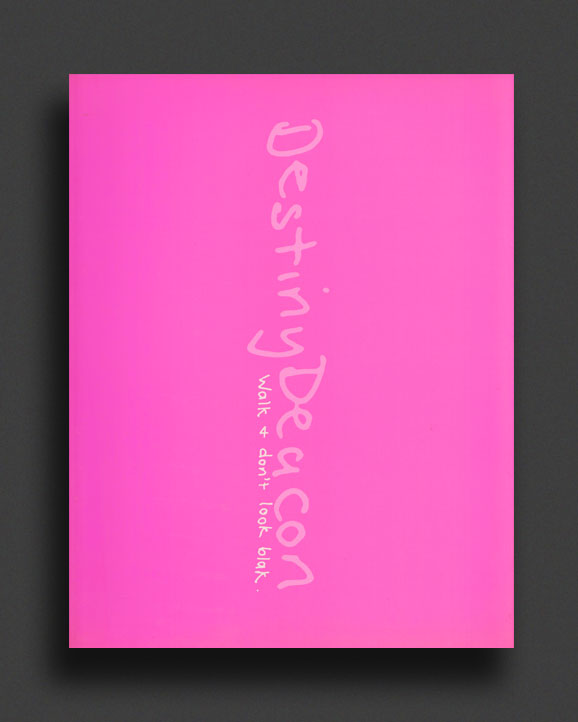
Scarce Japanese catalogue on contemporary Australian artist Destiny Deacon, published on the occasion of the 2006 Japanese presentation at the Tokyo Metropolitan Museum of Photography of a major touring survey exhibition, "Destiny Deacon: Walk & Don't Look Blak", curated by Natalie King and assistant curator Virginia Fraser. Profusely illustrated throughout with Destiny's incredible photographic works, alongside a collection of her writings, a conversation with Virginia Fraser, contributions by Marcia Langton, Richard Bell, Harumi Niwa and Natalie King, biography, catalogue of exhibited works and more. Edited by Museum curators Harumi Niwa and Keishi Mitsui, with exhibition curators Natalie King and Virginia Fraser.
Texts in English and Japanese.
Destiny Deacon (b. 1957, Maryborough, Queensland. Lives and works Melbourne, Victoria). Destiny Deacon is a descendant of the KuKu (Far North Queensland) and Erub/Mer (Torres Strait) people. An artist, broadcaster and political activist, her performative photographs, videos and installations feature members of her family and friends as well as items from her collection of ‘Aboriginalia’ – assorted black dolls and kitsch. Partly autobiographical and partly fictitious, her acerbic and melancholic work deals with both historical issues and contemporary Aboriginal life and is informed by personal experience and the mass media. Deacon’s humorous works examine the wide discrepancies between representations of Aboriginal people by the white Australian population and the reality of Aboriginal life. In her ‘lo-tech’ productions, Deacon creates an insightful comedy that is effective in establishing a discourse about political, Indigenous and feminist concerns.
Fine copy, almost As New.
2020, English
Hardcover, 208 pages, 25 x 21 cm
Published by
Walther König / Köln
Kunstmuseum Liechtenstein / Vaduz
$80.00 - Out of stock
The first ever monograph on Steven Parrino.
Steven Parrino (1958–2005) was one of the most influential artists of the New York art scene since the late 1980s. Parrino began producing art at the end of the 1970s, driven, as he said himself, by his ‘necrophiliac interest’ in painting, which at that time had been pronounced dead. Parrino’s work is defined by an unconditional will to be free that stems from American biker culture and is also influenced by punk rock existentialism. Borrowings from underground comics and the “Kustom Kulture” of the motorcycle world with its specific symbolic language are the main themes of his drawings in the early years. His monochrome painting in the tradition of “Radical Painting” evolved in parallel. As early as 1981 he began creating the large monochrome paintings that he violently slashed, tore or twisted off their stretchers, thus achieving a literal deconstruction of painting. Predominantly a painter, music played a role that was at least as important for his artistic practice. Drawing on various "high" and subcultural sources, Parrino created an oeuvre of painting and music that contradicted increasing social and cultural conformism and also provided a fresh and intelligent contribution to the debate on modernism's demise. Parrino died in a motorcycle accident in Greenpoint, Brooklyn at the age of 46.
Parrino “came to painting at the time of its death, not to breathe its last breath, but to caress its lifelessness.”
Heavily illustrated throughout with mostly full-page colour reproductions of his work, Steven Parrino: Nihilism Is Love includes texts by Konrad Bitterli, Catherine Dossin, Reinhard Ermen, Fabian Flückiger, Amy Granat, Pierre Huber, Friedemann Malsch, Matthew McCaslin, Olivier Mosset, Bob Nickas, Steven Parrino, Mai-Thu Perret, Amy O'Neill, Rolf Ricke, Marc- Olivier Wahler. Published on the occasion of the first comprehensive retrospective of his work in Europe.