World Food Books' programme is largely produced on Kulin Nation land. We acknowledge the Wurundjeri people of the Kulin Nation as the first and continuing custodians of this land, and pay respect to their Elders past, present, and emerging.
World Food Books is an arts and special interests bookshop in Naarm / Melbourne. Founded in 2010, World Food Books is devoted to the presentation of a rotating, hand-selection of international art, design, literary and counterculture publications with an emphasis on the anti-traditional, the experimental, the avant-garde, the heretic, the marginal.
Presenting new titles alongside rare and out-of-print books, catalogues and journals spanning the fields of modern and contemporary art, design, photography, illustration, film, literature, poetry, cultural theory, philosophy, sexuality, popular and underground culture in its many radical forms, World Food Books wishes to encourage adventurous, thoughtful and open-minded reading, looking, writing, and exchange of publishing and ideas, both current and historical.
As well as our bookshop, located in Melbourne's historical Nicholas Building, all of our inventory is available internationally via our online mail-order service.
World Food Books semi-regularly co-ordinates "Occasions", a programme of exhibits and events at the bookshop and in partnership with other hosts (such as museums and art galleries) that develop out of the activities, relationships and content of the bookshop itself.
World Food Books
The Nicholas Building
37 Swanston Street
Room 5, Level 6
Melbourne 3000
Australia
SHOP HOURS:
Thu–Fri 12–6, Sat 12–5
WEB-SHOP OPEN 24/7
World Food Books
Postal Address:
PO Box 435
Flinders Lane
Victoria 8009
Australia
Art
Theory / Essay
Architecture / Interior
Graphic Design / Typography
Photography
Fashion
Eros
LGBTQ+
Fiction / Poetry
Weird / Speculative / Science Fiction / Horror
Transgressive / Visceral / Abject
Symbolism / Decadence / Fin de siècle
Film / Video
Painting
Sculpture / Installation
Performance / Dance / Theater
Drawing
Sound / Music
Curatorial
Group Shows / Collections
Periodicals
Out-of-print / Rare
Posters / Ephemera / Discs
Signed Books
World Food Books Gift Voucher
World Food Book Bag
Australian Art
Australian Fiction
Australian Science Fiction / Speculative Fiction
Australian Poetry
Australian Photography
Japanese Photography
Conceptual Art
Minimal Art
Dada
'Pataphysics / Oulipo
Fluxus
Concrete Poetry
Pop Art
Surrealism
Arte Povera
Arte Informale / Haute Pâte / Tachism
Nouveau Réalisme / Zero / Kinetic
Situationism / Lettrism
Collage / Mail Art / Xerox Art
Art Brut / Folk / Visionary / Fantastic
Illustration / Graphic Art / Bandes Dessinées
Furniture
Italian Radical Design / Postmodernism
Textiles
Ceramics / Glass
Counterculture
Protest / Revolt
Philosophy
Psychoanalysis
Anthropology
Anarchism
Socialism / Anarchism / Communism / Capitalism
Literary Theory / Semiotics / Language
Feminism / Women's Studies
Gender Studies / Sexuality
Anthropology
Fetishism / BDSM
Drugs / Psychedelia
Crime / Violence
Animal Rights / Veganism
Occult / Esoterica
Ecology / Earth / Alternative Living
Whole Earth / Crafts
All prices in AUD (Australian dollars)
Pick-Ups
Pick-up orders can be collected in our bookshop during opening hours after order date. Please collect any Pick-up orders within 2 weeks of ordering as we have limited storage space. Orders will be released back into stock if not collected within this time. No refunds can be made for pick-ups left un-collected. If you cannot make it in to the bookshop in this time-frame, please choose postage option.
Return Policy
All sales are final. We do accept returns (for refund or exchange) for items received in error. All our orders are packed with special care using heavy-duty padding and cardboard book-mailers or bubble mailers (for smaller books), using reinforcement where required. We cannot take responsibility for any lost, stolen or damaged parcels.
Insurance
Should you wish to insure your package, please email us directly after placing your order and we can organise this at a small extra expense. Although all standard/express tracked packages are very safe and dependable, we cannot take responsibility for any lost, stolen or damaged parcels. We recommend insurance on valuable orders.
Interested in selling your old books, catalogues, journals, magazines, comics, fanzines, ephemera? We are always looking for interesting, unusual and out-of-print books to buy. We only buy books in our fields of interest and specialty, and that we feel we can resell.
We base these prices on desirability, market value, in-print prices, condition and our current stock levels. We offer cash, store credit, and can take stock on consignment. All
about 25% of the price we expect to get when we sell them, or 30% in store credit. We base these prices on desirability, market value, in-print prices, condition and our current stock levels.
Sell your books any day of the week. You can drop them off and return later. If you have a lot of books, we can visit your Sydney home.
We buy books that we feel we can resell. We offer about 25 % of the price we expect to get when we sell them, or 30% in store credit. We base these prices on desirability, market value, in-print prices, condition and our current stock levels.
Philadelphia Wireman
03 August - 01 September, 2018
World Food Books is proud to announce our next Occasion, the first presentation of sculptures by Philadelphia Wireman in Australia.
The Philadelphia Wireman sculptures were found abandoned in an alley off Philadelphia’s South Street on trash night in 1982. Their discovery in a rapidly-changing neighbourhood undergoing extensive renovation, compounded with the failure of all attempts to locate the artist, suggests that the works may have been discarded after the maker’s death. Dubbed the "Philadelphia Wireman" during the first exhibition of this work, in 1985, the maker’s name, age, ethnicity, and even gender remain uncertain. The entire collection totals approximately 1200 pieces, all intricately bound together with tightly-wound heavy-gauge wire (along with a few small, abstract marker drawings, reminiscent both of Mark Tobey and J.B. Murry). The dense construction of the work, despite a modest range of scale and materials, is singularly obsessive and disciplined in design: a wire armature or exoskeleton firmly binds a bricolage of found objects including plastic, glass, food packaging, umbrella parts, tape, rubber, batteries, pens, leather, reflectors, nuts and bolts, nails, foil, coins, toys, watches, eyeglasses, tools, and jewellery.
Heavy with associations—anthropomorphic, zoomorphic, and socio-cultural responses to wrapped detritus—the totemic sculptures by Philadelphia Wireman have been discussed in the context of work created to fulfil the shamanistic needs of alternative religions in American culture. Curators, collectors, and critics have variously compared certain pieces to sculpture from Classical antiquity, Native American medicine bundles, African-American memory jugs, and African fetish objects. Reflecting the artist’s prolific and incredibly focused scavenging impulse, and despite—or perhaps enhanced by—their anonymity, these enigmatic objects function as urban artefacts and arbiters of power, though their origin and purpose is unknown. Philadelphia Wireman, whatever their identity, possessed an astonishing ability to isolate and communicate the concepts of power and energy through the selection and transformation of ordinary materials. Over the course of the past two decades, this collection has come to be regarded as an important discovery in the field of self-taught art and vernacular art.
Presented in collaboration with Fleisher-Ollman Gallery, Philadelphia, and Robert Heald, Wellington.
Susan Te Kahurangi King
02 February - 10 March, 2018
Susan Te Kahurangi King (24 February 1951 - ) has been a confident and prolific artist since she was a young child, drawing with readily available materials - pencils, ballpoint pens and felt-tip markers, on whatever paper is at hand. Between the ages of four and six Susan slowly ceased verbal communication. Her grandparents William and Myrtle Murphy had developed a special bond with Susan so they took on caring responsibilities for extended periods. Myrtle began informally archiving her work, carefully collecting and storing the drawings and compiling scrapbooks. No drawing was insignificant; every scrap of paper was kept. The King family are now the custodians of a vast collection containing over 7000 individual works, from tiny scraps of paper through to 5 meter long rolls.
The scrapbooks and diaries reveal Myrtle to be a woman of great patience and compassion, seeking to understand a child who was not always behaving as expected. She encouraged Susan to be observant, to explore her environment and absorb all the sights and sounds. Myrtle would show Susan’s drawings to friends and people in her community that she had dealings with, such as shopkeepers and postal workers, but this was not simply a case of a grandmother’s bias. She recognised that Susan had developed a sophisticated and unique visual language and sincerely believed that her art deserved serious attention.
This was an unorthodox attitude for the time. To provide some context, Jean Dubuffet coined the term Art Brut in 1945 to describe work created by self-taught artists – specifically residents of psychiatric institutions and those he considered to be visionaries or eccentrics. In 1972 Roger Cardinal extended this concept by adopting the term Outsider Art to describe work made by non-academically trained artists operating outside of mainstream art networks through choice or circumstance. Susan was born in Te Aroha, New Zealand in 1951, far from the artistic hubs of Paris and London that Dubuffet and Cardinal operated in. That Myrtle fêted Susan as a self-taught artist who deserved to be taken seriously shows how progressive her attitudes were.
Susan’s parents Doug and Dawn were also progressive. Over the years they had consulted numerous health practitioners about Susan’s condition, as the medical establishment could not provide an explanation as to why she had lapsed into silence. Dawn educated herself in the field of homeopathy and went on to treat all twelve of her children using these principles – basing prescriptions on her observations of their physical, mental and emotional state.
Doug was a linguist with an interest in philosophy who devoted what little spare time he had to studying Maori language and culture. To some extent their willingness to explore the fringes of the mainstream made them outsiders too but it was their commitment to living with integrity and their respect for individuality that ensured Susan’s creativity was always encouraged.
Even though Susan’s family supported her artistic pursuits, some staff in schools and hospitals saw it as an impediment to her assimilation into the community and discouraged it in a variety of ways. Her family was not always aware of this and therefore did not fully understand why Susan stopped drawing in the early 1990s. However, rather than dwell on the challenges that Susan faced in pursuit of her artistic practice, they prefer to highlight her achievements. In 2008 Susan began drawing again in earnest, after an almost 20 year interruption, and her work is now shown in galleries around the world.
Susan grew up without television and has been heavily influenced by the comics she read as a child. She is absolutely fearless in the appropriation of recognizable characters, such as Donald Duck and Mickey Mouse, in her work. She twists their limbs, contorts their faces, compresses them together, blends them into complex patterned backgrounds - always imbuing them with an incredible energy. Although Susan often used pop culture characters in her work they are not naive or childlike. These are drawings by a brilliant self-taught artist who has been creating exceptional work for decades without an audience in mind.
Mladen Stilinović
"Various Works 1986 - 1999"
02 February 16 - September 10, 2016
Various works 1986 - 1999, from two houses, from the collections of John Nixon, Sue Cramer, Kerrie Poliness, Peter Haffenden and Phoebe Haffenden.
Including: Geometry of Cakes (various shelves), 1993; Poor People’s Law (black and white plate), 1993; White Absence (glasses, ruler, set square, silver spoon, silver ladel with skin photograph and wooden cubes), 1990-1996; Exploitation of the Dead (grey and red star painting, wooden painting, black spoon with red table, red plate), 1984-1990; Money and Zeros (zero tie, paintings made for friends in Australia (Sue, John, Kerrie), numbers painting), 1991-1992; Words - Slogans (various t-shirts) - “they talk about the death of art...help! someone is trying to kill me”, “my sweet little lamb”, “work is a disease - Karl Marx”; Various artist books, catalogues, monographs, videos; Poster from exhibition Insulting Anarchy; "Circular" Croatian - Australian edition; Artist book by Vlado Martek (Dostoyevsky); more.
Thanks to Mladen Stilinović and Branka Stipančić.
Jonathan Walker
Always Will Need To Wear Winter Shirt Blue + Ochre Small Check Pattern
21 August - 21 September, 2015
Untitled
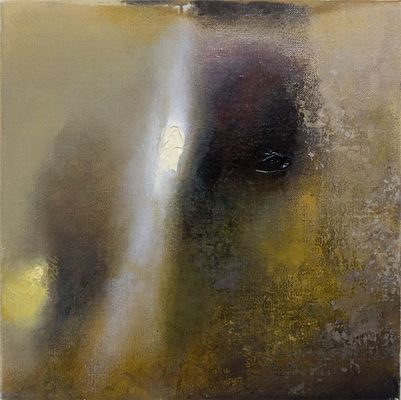
I am not a great reader of poetry but I always return to the work of Melbourne poet, Vincent Buckley (1925- 1988). Perhaps I find his most tantalising piece to be not a finished poem but a fragment left on a scrap of paper discovered on his desk after the poet’s death.
The poetry gathers like oil
In the word-core, and spreads
It has its music meet,
Its music is in movement.
This fragment is more the shell left behind from a volatile thought than a finished poem. I find the last two lines honest but awkward whereas the first two lines work like an arrow. Most likely he could not find a resolution so it was left. Still, in its present form, it remains an eloquent testimony to the ultimate failure of a medium to express mobile thought and sensation, in Buckley’s case, through verbal language. It’s an important matter because this is something all artists have to deal with regardless of the medium.
I have never written a poem, however, I am forever copying fragments from books on paper scraps in a vain effort to fix certain notions in my head. At first, they function as bookmarks that are sometimes returned to when I open the book. But before long, as they accumulate, they fall out littering the table interspersed with A4 photocopies, bills, books and medications.
To return to Buckley’s fragment, the first two lines very much evoke how I paint nowadays. As you age, detail diminishes and patches of light become more luminous and float. I feel the most honest way of dealing with this is by smearing the oil paint on the canvas with the fingers and working close-up, blind. Only if the patches coalesce into an approaching image can the work gain a life.
-
Jonathan Walker was born in Melbourne, Australia and brought up on a dairy farm in Gippsland. In the 1970’s he studied painting at RMIT and won the Harold Wright Scholarship to the British Museum, London. During the 1980’s he exhibited at Pinacotheca Gallery, Richmond and had work shown at the NGV and Heidi City Art Gallery. Over the same period he designed the cover for the “Epigenesi” LP by Giancarlo Toniutti, Italy and conducted a mail exchange work with Achim Wollscheid, Germany. The work with artists through the post resulted in an article published in the bicentenary issue of Art and Australia 1988. He showed in artist run spaces such as WestSpace in the 90’s and 2000’s, and until 2012, taught painting at Victoria University, which is where we (Colleen Ahern and Lisa Radford) as organisers of the exhibition, among many others, had the privilege of being his student.
Walker’s knowledge was imparted to students through the careful selection of music, literature, and artists found in books that he himself had ordered for the library. Walker’s strategy was the generosity of sharing his vast knowledge with references specific to each student and their context.
Walker’s paintings share a similar focus and intimacy.
This exhibition presents a small selection of recent paintings alongside a publication that includes Walker’s writing. Observational and analytical, Walker’s work is a type of material notation — the time of day, colour and how it is blended, the both specific and fleeting location of a reflection on lino or the question of whether a chair leg should be included in a painting.
Please join us on Friday August 21 between 6-8pm to celebrate the opening of the exhibition.
Curated by Colleen Ahern and Lisa Radford.
B. Wurtz
Curated by Nic Tammens
March 26 - April 4, 2015
B.Wurtz works from a basement studio in his home on Manhattan’s Lower East Side.
This local fact is attested to by the plastic shopping bags and newsprint circulars that appear in his work. As formal objects, they don’t make loud claims about their origins but nonetheless transmit street addresses and places of business from the bottom of this long thin island. Like plenty of artists, Wurtz is affected by what is local and what is consumed. His work is underpinned by this ethic. It often speaks from a neighborhood or reads like the contents of a hamper:
“BLACK PLUMS $1.29 lb.”
“Food Bazaar”
“USDA Whole Pork Shoulder Picnic 99c lb.”
“RITE AID Pharmacy, with us it’s personal.”
“H. Brickman & Sons.”
“Sweet Yams 59c lb."
Most of the work in this exhibition was made while the artist was in residence at Dieu Donne, a workshop dedicated to paper craft in Midtown. Here Wurtz fabricated assemblages with paper and objects that are relatively lightweight, with the intention that they would be easily transportable to Australia. This consideration isn’t absolute in Wurtz’s work, but was prescriptive for making the current exhibition light and cheap. Packed in two boxes, these works were sent from a USPS post office on the Lower East Side and delivered to North Melbourne by Australia Post.
Wurtz appears courtesy of Metro Pictures, New York.
Thanks to Rob Halverson, Joshua Petherick, Sari de Mallory, Matt Hinkley, Helen Johnson, Fayen d'Evie, Ask Kilmartin, Lisa Radon, Ellena Savage, Yale Union, and "Elizabeth".
John Nixon
"Archive"
December 15 - January 20, 2014
The presentation of John Nixon's archive offered a rare showcase of this extensive collection of the artist's own publications, catalogues, posters, ephemera, editions and more, from the mid 1980s onwards, alongside a selection of his artworks.
Organized by John Nixon, Joshua Petherick and Matt Hinkley.
<a href=http://wfb.public-office.info/artist/john-nixon>All titles by John Nixon
"Habitat"
at Minerva, Sydney (organised by Joshua Petherick and Matt Hinkley)
November 15 - December 20, 2014
Lupo Borgonovo, Janet Burchill & Jennifer McCamley,
Lewis Fidock, HR Giger, Piero Gilardi, Veit Laurent Kurz,
Cinzia Ruggeri, Michael E. Smith, Lucie Stahl, Daniel Weil, Wols
Press Release:
“...It contained seven objects. The slender fluted bone, surely formed for flight, surely from the wing of some large bird. Three archaic circuitboards, faced with mazes of gold. A smooth white sphere of baked clay. An age-blackened fragment of lace. A fingerlength segment of what she assumed was bone from a human wrist, grayish white, inset smoothly with the silicon shaft of a small instrument that must once have ridden flush with the surface of the skin - but the thing’s face was seared and blackened.”
William Gibson, “Count Zero”, 1986
"Autumn Projects Archive"
Curated by Liza Vasiliou
March 6 - March 15, 2014
World Food Books, in conjunction with the Virgin Australia Melbourne Fashion Festival 2014, presented the Autumn Projects archive, consisting of a selection of early examples in Australian fashion with a particular interest in collecting designers and labels from the period beginning in the 1980’s, who significantly influenced the discourse of Australian Fashion.
Curated by Liza Vasiliou, the exhibition provided a unique opportunity to view pieces by designers Anthea Crawford, Barbara Vandenberg, Geoff Liddell and labels CR Australia, Covers, Jag along with early experimental collage pieces by Prue Acton and Sally Browne’s ‘Fragments’ collection, suspended throughout the functioning World Food Books shop in Melbourne.
H.B. Peace
presented by CENTRE FOR STYLE
November 14, 2013
"Hey Blinky, you say chic, I say same"
Anon 2013
H.B. Peace is a clothing collaboration between great friends Blake Barns and Hugh Egan Westland. Their pieces explore the divergences between 'character’ and ‘personality’ in garments....etc
Special Thanks to Joshua Petherick and Matt Hinkley of WFB and Gillian Mears
and a Very Special Thank you to Audrey Thomas Hayes for her shoe collaboration.
Janet Burchill & Jennifer McCamley
"Aesthetic Suicide"
May 10 - June 8, 2013
The first of our occasional exhibitions in the World Food Books office/shop space in Melbourne, "Aesthetic Suicide" presented a body of new and older works together by artists Janet Burchill & Jennifer McCamley, including videos, prints, a wall work, and publications.
During shop open hours videos played every hour, on the hour.
2008, English
Softcover, 110 pages, 21 x 27.5 cm
1st Edition, Out of print title / used / very good
Published by
Purple Institute / Paris
Association Belle Haleine / Paris
$50.00 - Out of stock
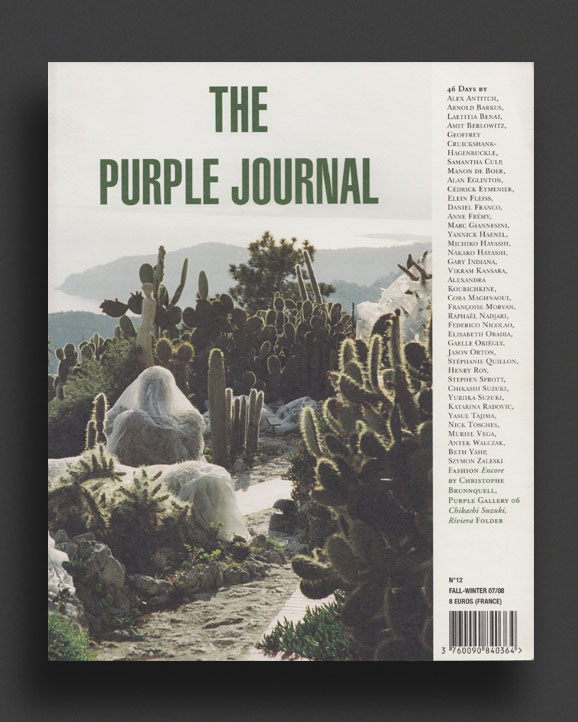
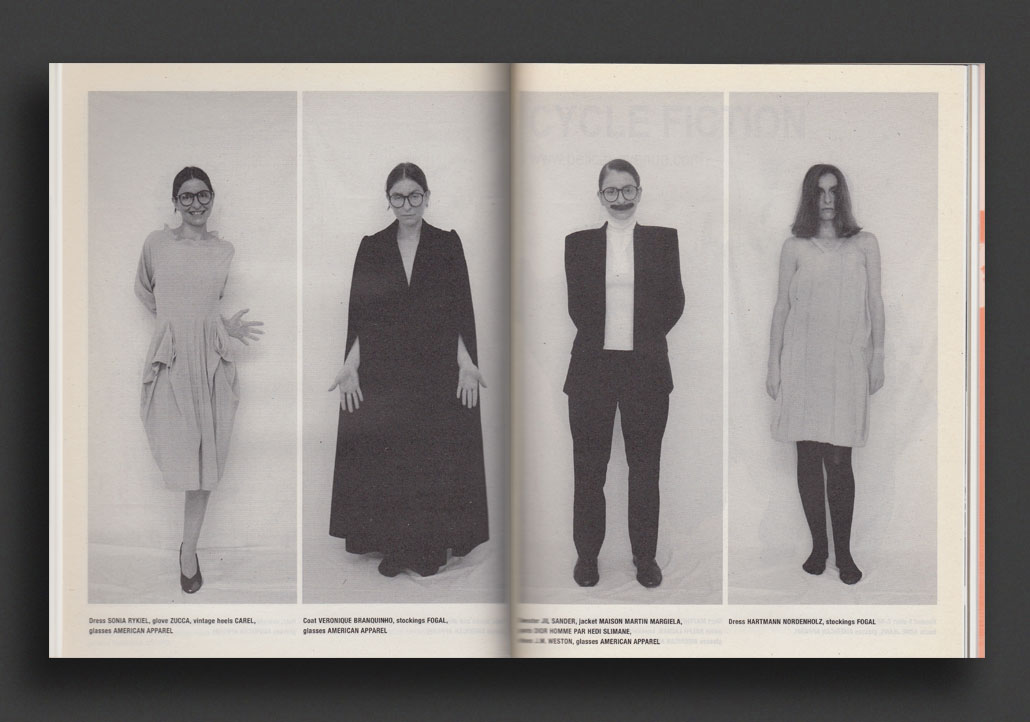
THE PURPLE JOURNAL ("Stories, Essays, Reports, Portraits, Chronicles, Photographs") Number 12, Fall-Winter 2007-2008.
A scarce copy of this early edition of The Purple Journal, featuring Daidō Moriyama, Bless, Henry Roy, Antek Walczak, Jean-Michel Wicker, Nakako Hayashi, Elein Fleiss, Manon de Boer, Laetitia Benat, Jason Orton, Cosmic Wonder, Yannick Haenel, Sonia Rykiel, Nick Tosches, Frederico Nicolao, Amit Berlowitz, Muriel Vega, Maison Martin Margiela, Jil Sander, Marc Giannesini, Daniel Franco, Raphael Nadjari, Yuriika Suzuki, Stephen Sprott, Raf Simons, Chikashi Suzuki, Arnold Barkus, Alex Antitch, Katarina Radovic, Beth Yahp, and much more.
In 1992 Olivier Zahm and his partner Elein Fleiss printed the first issue of Purple Prose, a Parisian literary art zine that over the years has evolved into Purple Fashion Magazine. Soon after the birth of Purple Prose, Zahm and Fleiss created spin-off publications like les cahiers purple, Purple Sexe, Purple Fiction, and of course, Purple Fashion. Zahm aimed at fusing together his two worlds, fashion and art, in creating Purple Fashion.
Condition: Very Good (light wear, otherwise clean and tightly
2007, English
Softcover, 128 pages, 17 x 24 cm
1st Edition, Out of print title / used / very good
Published by
Textfield / Los Angeles
$25.00 $15.00 - Out of stock
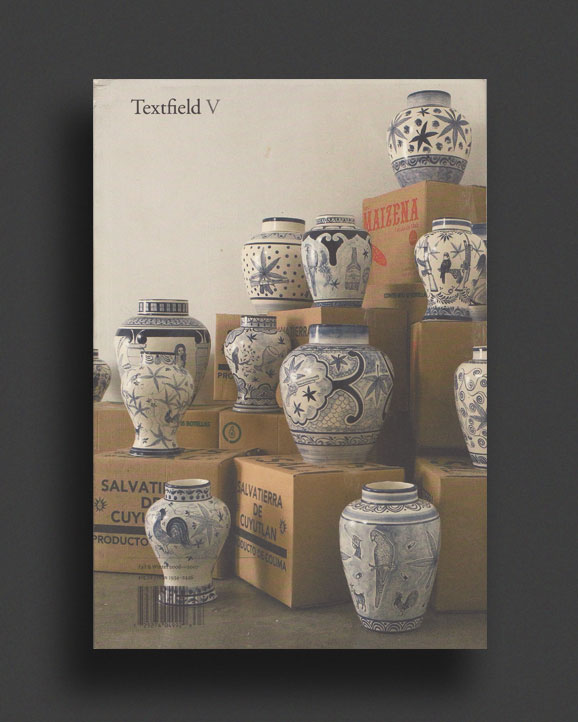
Fifth issue of Los Angeles-based conceptual design and arts magazine Textfield, edited and published in Los Angeles by designer Jonathan Maghen. This issue features an interview with Hyphen Press’s Robin Kinross by Stuart Bailey, an interview with Cosmic Wonder’s Yukinori Maeda by Nakako Hayashi, "As-Found" by Thomas Eberwein and Marc Kremers, Portraiture by Angelo Plessas, Wallscapes by BLESS, Binna Choi on the work of designer Manuel Raeder, interview with Rafaël Rozendaal with Jim Jarmusch, Swift Typography, AA Compendium by Andreas Angelidakis, poems supposedly written by the former Yugoslavian president Slobodan Milosevic, fashion shoots, and much more.
Very Good copy, some light cover/edge wear/bumps.
1964, Italian
Softcover (staple-bound), 10 pages, 17 x 12 cm
1st Edition, Out of print title / used / very good
Published by
Galleria Il Punto / Turin
$45.00 - In stock -
Lovely scarce Fillìa catalogue published on the occasion of a 1964 retrospective exhibition at Galleria Il Punto, Turin. B/w illustrations with text by Italian painter, art historian and philosopher Albino Galvano, plus list of works and biography. Text in Italian.
Fillìa (1904 – 1936) was the name adopted by Luigi Colombo, an Italian artist who established the Futurist movement in Turin in 1923 at the age of 19 with a group which included Nikolay Diulgheroff, Pippo Oriani, Enrico Alimandi, Franco Costa and the sculptor Mino Rosso. Fillìa quickly became the leader of the group and its principal theorist. He published the art reviews: Futurismo (Futurism) (1924), Ventrina Futurista (1927), La Città Futurista (The Futurist City) (1929), La Città Nuova (The New City) (1930-1934), and Stile Futurista (Futurist Style) (1934-1935) with Enrico Prampolini. In 1929, he was a co-signatory of the Futurist manifesto L'Aeropittura, with Benedetta Cappa, Depero, Gerardo Dottori, Marinetti, Somenzi, Tato and Prampolini. Fillìa was the co-author with Marinetti of the Manifesto of Futurist Cooking, published in the Turin newspaper, Gazzetta del Popolo, on 28 December 1930. Enrico Crispolti says that Fillìa and his colleagues in Turin explored an interior, psychological and subjective world, unlike other Futurists of the period such as Prampolini and Depero. Fillìa had recourse to an "airy body", a “synthesis of movement, of the organic aspect, of the emotions of flight".” The ectoplasmic forms which appear in Fillìa's paintings of the late twenties and early thirties contrast with the rigidity of his earlier work and were taken up to explore the subconscious. In 1932 co-authored the Manifesto of Sacred Futurist Art with Marinetti. He designed the Futurist Pavilion at the 1928 International Exhibition in Turin. Fillìa's activities as an organizer and polemicist, which he continued through his contact with the avant-garde in his numerous trips to Paris, ended with his death at Turin in 1936 at the age of thirty-two.
Very Good copy, nicely preserved.
1974, Italian
Softcover, 24 pages, 15 x 21 cm
1st Edition, Out of print title / used / very good
Published by
Galleria D'Arte / Turin
$30.00 - Out of stock
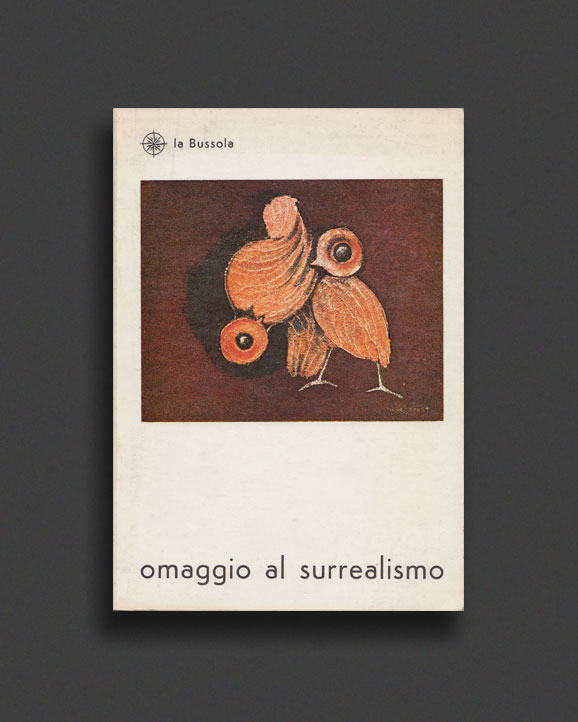
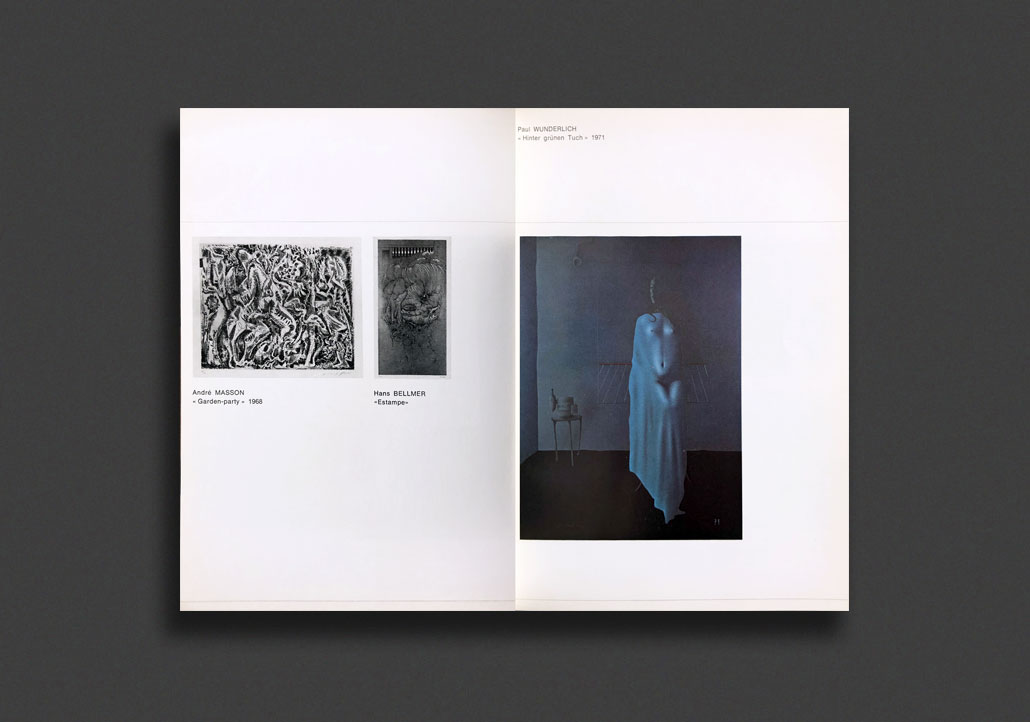
Surrealism catalogue published on the occasion of "Omaggio al Surrealismo", a group exhibition at Galleria D'Arte "La Bussola", Turin, 1974. Illustrated in colour and b/w throughout with works by Gianni Dova, Victor Brauner, Giorgio De Chirico, René Magritte, Joan Miró, Wilfredo Lam, Graham Sutherland, Salvador Dalí, Roberto Matta, Max Ernst, Paul Wunderlich, André Masson, and Hans Bellmer.
Very Good, light cover wear.
1961, Italian
Softcover (staple-bound), 8 pages, 15 x 21.5 cm
1st Edition, Out of print title / used / good
Published by
Galleria D'Arte / Turin
$20.00 - In stock -
Lovely catalogue published on the occasion of a solo exhibition by little-known Italian abstract painter Dante Villa at Galleria D'Arte "La Bussola", Turin, 1961. Colour and b/w illustrations with introductory text, portrait and list of works.
Good, with rusted-out staples and associated markings.
1978, German
Softcover, 224 pages, 21 x 21 cm
1st Edition, Out of print title / Used*,
Published by
Galerie Levy / Hamburg
$95.00 - Out of stock
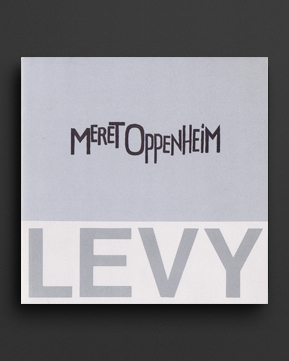
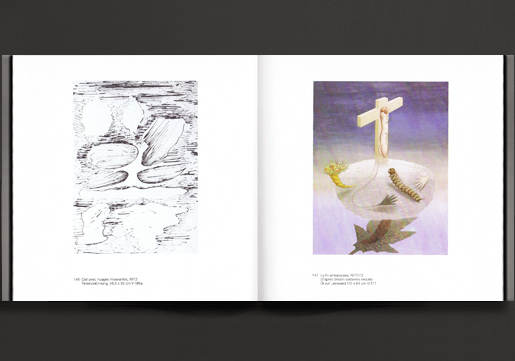
Incredible monographic catalogue produced on the occasion of the exhibition "Meret Oppenheim - Arbeiten von 1930 - 1978" at Galerie Levy in Hamburg, September 11 - November 11, 1978.
Forming an amazing, visually-rich and valuable partial catalogue raisonné document, this volume collects, page by page, 205 of the exceptional works by one of the world's most independent artists of the twentieth century, German-born Swiss Surrealist artist Meret Oppenheim. Includes her sculptural objects, paintings, drawings, prints, collages, furniture, and more, all reproduced in colour and black and white. Includes a short introduction in German alongside a number of portraits of Oppenheim by Man Ray.
A highly recommended collection.
Méret Elisabeth Oppenheim (6 October 1913 – 15 November 1985) was a German-born Swiss Surrealist artist. Oppenheim was a member of the Surrealist movement of the 1920s along with André Breton, Luis Buñuel, Max Ernst, and other writers and visual artists. Besides creating art objects, Oppenheim also famously appeared as a model for photographs by her friend Man Ray.
A a young age Oppenheim discovered the writings of Carl Jung, a friend of her father's, and was inspired to record her dreams in 1928. Her dreams would serve as important sources for much of her art throughout her life. The work of Paul Klee, the focus of a retrospective at the Kunshalle Basel in 1929, provided another strong influence on Oppenheim, arousing her to the possibilities of abstraction.
In 1932, at the age of 18, Oppenheim moved to Paris and met Hans Arp and Alberto Giacometti, who after visiting her studio and seeing her work, invited her to participate in the Surrealist exhibition in the “Salon des Surindépendants,” Paris. Oppenheim later met André Breton and began to participate in meetings at the Café de la Place Blanche with the Surrealist circle. The conceptual approach favored by Marchel Duchamp, Max Ernst, and Francis Picabia became important to her work. She continued to contribute to Surrealist exhibitions until 1960. Many of her pieces consisted of everyday objects arranged to allude to female sexuality and feminine exploitation by the opposite sex. Oppenheim’s paintings focused on the same themes. Her originality and audacity established her as a leading figure in the Surrealist movement.
Méret Oppenheim's first one-woman exhibition in the Galerie Sohulthess, Basel featured surrealist objects. In 1937, Oppenheim returned to Basel and this marked the start of her artistic block. She struggled after she met success and worried about her development as an artist. Méret Oppenheim usually worked in spontaneous bursts and at times destroyed her work. Oppenheim took a hiatus from her artistic career in 1939 after an exhibition at the Galerie René Drouin started by Rene Drouin in Paris. In the exhibition she was featured alongside many artists, including Leonor Fini and Max Ernst. She did not share any art with the public again until the 1950s. Oppenheim then reverted to her "original style" and based her new artworks on old sketches and earlier works and creations.
Méret Oppenheim's best known piece is Object (Le Déjeuner en fourrure) - Object (Breakfast in Fur)(1936). The sculpture consists of a teacup, saucer and spoon that the artist covered with fur from a Chinese gazelle. It was purchased by Alfred Barr for the collection of the Museum of Modern Art in New York and included the museum's first surrealist exhibition Fantastic Art: Dada and Surrealism in 1936. Oppenheim was willing to sell the piece for one thousand francs, but Barr only offered her $50 and she accepted. This was the first piece of art that the museum acquired, and Oppenheim became known as the First Lady of MoMA. The enormous success of this early work would later create problems for Oppenheim as an artist. Soon after its creation she drifted away from the Surrealists.
In 1937, Oppenheim returned to Basel, training as an art conservator in order to ensure her financial stability. This marked the beginning of a creative crisis that lasted until 1954. Although she maintained some contact with her friends in Paris, she created very little and destroyed or failed to finish much of what she created.
In 1956, Oppenheim designed the costumes and masks for Daniel Spoerri’s production of Picasso’s play Le Désir attrapé par la queue in Berne. She and artist Lilly Keller were cast as the curtains. Three years later, in 1959, she organized a Spring Banquet (Le Festin) in Bern for a few friends at which food was served on the body of a naked woman. With Oppenheim's permission, Andre Breton restaged the performance later that year at the opening of the Exposition inteRnatiOnale du Surrealisme (EROS), at the Galerie Cordier in Paris. Outside its original intimate setting, the performance was overly provocative and Oppenheim felt her original intention for the work was lost.
In the 1960s, Oppenheim's home base of Bern became much more important as an art center. She continued to live and work there, as well as at a second home in Carona, Italy (1968), and maintained a studio in Paris starting in 1972. She was an important figure in feminist debates in the early 1970s, although she refused to identify as a feminist.
In 1983 Oppenheim designed The Spiral Column (Spiralsaule), unofficially known as "Meret Oppenheim Fountain," on the Waisenhausplatz in Bern. A tall concrete column wrapped with a garland of grass over a small watercourse, the fountain provoked a petition for its removal. In 1985 City of Paris commissioned Spiral (Nature's Way) [Spirale (Gang de Natur) from Oppenheim for the Jardins de l'ancienne Ecole polytechnique on the Montagne Ste. Genevieve near the Pantheon. The work was based on a 1971 model and finished posthumously a few months after Oppenheim's death in 1986.
Levy Galerie, founded in 1970 by Hamburg resident Thomas Levy, represents the estate of Meret Oppenheim, in close collaboration with the artist's family.
1984, German
Softcover, 38 pages, 27 x 21 cm
1st Edition, Out of print title / used / very good
Published by
Kunsthalle Bern / Bern
$48.00 - In stock -
Catalogue published on the occasion of a major travelling exhibition of German-born Swiss Surrealist artist Meret Oppenheim at Kunsthalle Bern 8th September - 14th October 1984; Frankfurter Kunstverein December 19, 1984 - January 27, 1985; Haus am Waldsee Berlin February 23 - April 14, 1985. Includes illustrations of Oppenheim's sculptures, paintings and drawings throughout, alongside a complete work list, biography and various texts in German by Jean-Hubert Martin and Jim Palette as well as excerpts from a conversation. Back cover features a photograph of Oppenheim's 1983 Spiral Column (Spiralsaule), unofficially known as "Meret Oppenheim Fountain," on the Waisenhausplatz in Bern. A tall concrete column wrapped with a garland of grass over a small watercourse, the fountain provoked a petition for its removal.
very good copy.
Méret Elisabeth Oppenheim (6 October 1913 – 15 November 1985) was a German-born Swiss Surrealist artist. Oppenheim was a member of the Surrealist movement of the 1920s along with André Breton, Luis Buñuel, Max Ernst, and other writers and visual artists. Besides creating art objects, Oppenheim also famously appeared as a model for photographs by her friend Man Ray.
A a young age Oppenheim discovered the writings of Carl Jung, a friend of her father's, and was inspired to record her dreams in 1928. Her dreams would serve as important sources for much of her art throughout her life. The work of Paul Klee, the focus of a retrospective at the Kunshalle Basel in 1929, provided another strong influence on Oppenheim, arousing her to the possibilities of abstraction.
In 1932, at the age of 18, Oppenheim moved to Paris and met Hans Arp and Alberto Giacometti, who after visiting her studio and seeing her work, invited her to participate in the Surrealist exhibition in the “Salon des Surindépendants,” Paris. Oppenheim later met André Breton and began to participate in meetings at the Café de la Place Blanche with the Surrealist circle. The conceptual approach favored by Marchel Duchamp, Max Ernst, and Francis Picabia became important to her work. She continued to contribute to Surrealist exhibitions until 1960. Many of her pieces consisted of everyday objects arranged to allude to female sexuality and feminine exploitation by the opposite sex. Oppenheim’s paintings focused on the same themes. Her originality and audacity established her as a leading figure in the Surrealist movement.
Méret Oppenheim's first one-woman exhibition in the Galerie Sohulthess, Basel featured surrealist objects. In 1937, Oppenheim returned to Basel and this marked the start of her artistic block. She struggled after she met success and worried about her development as an artist. Méret Oppenheim usually worked in spontaneous bursts and at times destroyed her work. Oppenheim took a hiatus from her artistic career in 1939 after an exhibition at the Galerie René Drouin started by Rene Drouin in Paris. In the exhibition she was featured alongside many artists, including Leonor Fini and Max Ernst. She did not share any art with the public again until the 1950s. Oppenheim then reverted to her "original style" and based her new artworks on old sketches and earlier works and creations.
Méret Oppenheim's best known piece is Object (Le Déjeuner en fourrure) - Object (Breakfast in Fur)(1936). The sculpture consists of a teacup, saucer and spoon that the artist covered with fur from a Chinese gazelle. It was purchased by Alfred Barr for the collection of the Museum of Modern Art in New York and included the museum's first surrealist exhibition Fantastic Art: Dada and Surrealism in 1936. Oppenheim was willing to sell the piece for one thousand francs, but Barr only offered her $50 and she accepted. This was the first piece of art that the museum acquired, and Oppenheim became known as the First Lady of MoMA. The enormous success of this early work would later create problems for Oppenheim as an artist. Soon after its creation she drifted away from the Surrealists.
In 1937, Oppenheim returned to Basel, training as an art conservator in order to ensure her financial stability. This marked the beginning of a creative crisis that lasted until 1954. Although she maintained some contact with her friends in Paris, she created very little and destroyed or failed to finish much of what she created.
In 1956, Oppenheim designed the costumes and masks for Daniel Spoerri’s production of Picasso’s play Le Désir attrapé par la queue in Berne. She and artist Lilly Keller were cast as the curtains. Three years later, in 1959, she organized a Spring Banquet (Le Festin) in Bern for a few friends at which food was served on the body of a naked woman. With Oppenheim's permission, Andre Breton restaged the performance later that year at the opening of the Exposition inteRnatiOnale du Surrealisme (EROS), at the Galerie Cordier in Paris. Outside its original intimate setting, the performance was overly provocative and Oppenheim felt her original intention for the work was lost.
In the 1960s, Oppenheim's home base of Bern became much more important as an art center. She continued to live and work there, as well as at a second home in Carona, Italy (1968), and maintained a studio in Paris starting in 1972. She was an important figure in feminist debates in the early 1970s, although she refused to identify as a feminist.
In 1983 Oppenheim designed The Spiral Column (Spiralsaule), unofficially known as "Meret Oppenheim Fountain," on the Waisenhausplatz in Bern. A tall concrete column wrapped with a garland of grass over a small watercourse, the fountain provoked a petition for its removal. In 1985 City of Paris commissioned Spiral (Nature's Way) [Spirale (Gang de Natur) from Oppenheim for the Jardins de l'ancienne Ecole polytechnique on the Montagne Ste. Genevieve near the Pantheon. The work was based on a 1971 model and finished posthumously a few months after Oppenheim's death in 1986.
1971, German
Softcover, 64 pages, 18.8 x 20 cm
1st Edition, Out of print title / used / very good
Published by
House Am Waldsee / Berlin
$45.00 - Out of stock
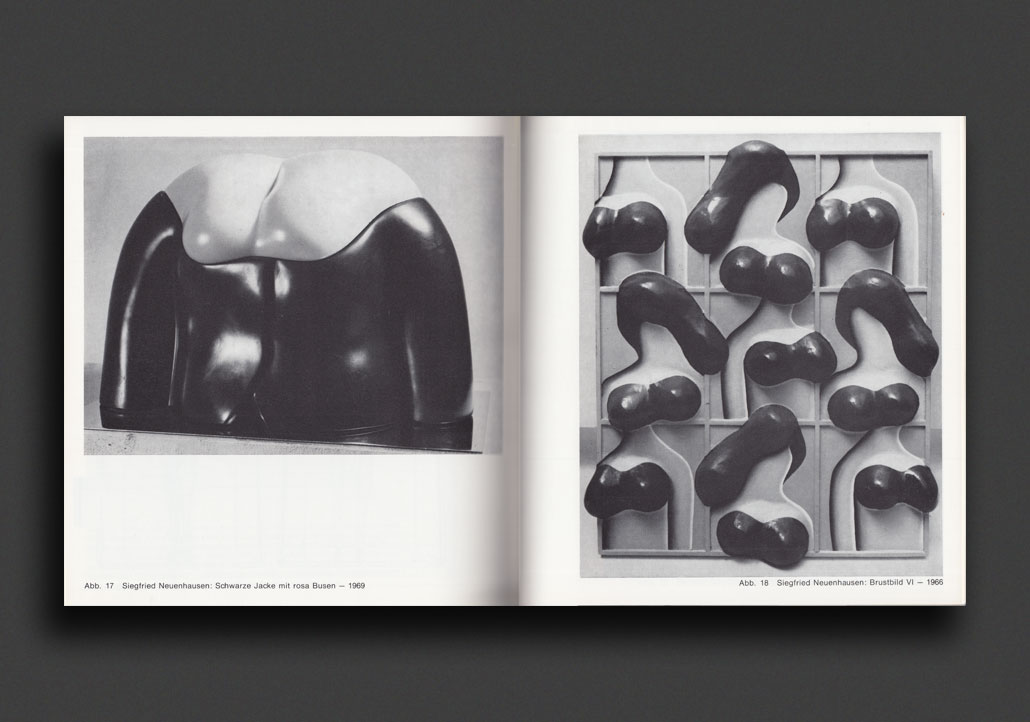
German Pop catalogue from 1971 published on the occasion of a travelling exhibition in Berlin, Morsbroich and Frankfurt that year. Illustrated throughout in black and white with exhibited works that all centre around the female image as subject in contemporary art, as well as images of contemporary advertising. Includes the work of Saskia De Boer, K. P. Brehmer, Andy Warhol, Richard Hamilton, Robert Graham, Mel Ramos, Siegfried Neuenhausen, Allen Jones, Harro Jacob, Dieter Lotsch, Ursula, Bernard Schulze, Günter Weseler, Tom Wesselmann. With text contributions by Thomas Kempas, Eberhard Roters, Rolf Wedewer, Solveig Loewel and Annegret Juergens-Kirchhoff.
Very Good copy.
2017, English
Softcover, 295 pages, 18.6 x 25 cm
Published by
New Museum / New York
$58.00 - Out of stock
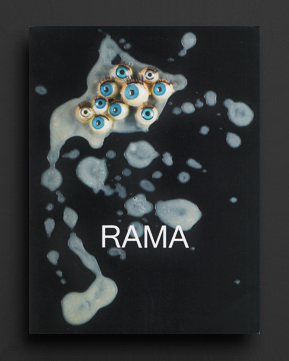
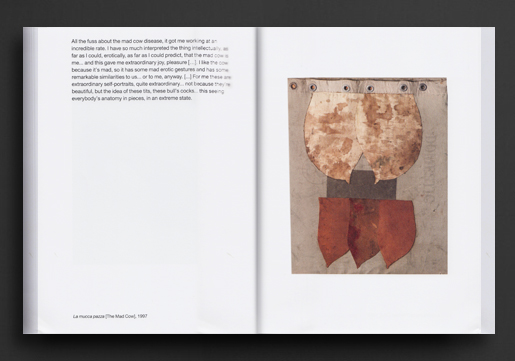
While Carol Rama (1918-2015) has been largely overlooked in contemporary art discourses, her work has proven prescient and influential for many artists working today, attaining cult status and attracting renewed interest. Rama's exhibition at the New Museum brings together over 150 of her paintings, objects and works on paper, highlighting her consistent fascination with the representation of the body. This book celebrates the independence and eccentricity of this legendary artist whose work spanned half a century of contemporary art history and anticipated debates on sexuality, gender and representation. Encompassing her entire career, it traces the development from her early erotic, harrowing depictions of "bodies without organs" through later works that invoke innards, fluids and limbs.
This catalog accompanying her New Museum exhibition features an interview with the artist by Lea Vergine, a new text by writer Sarah Lehrer-Graiwer, and a contribution by artist Danh Vo.
1988, English
Softcover, 32 pages, 23 x 30 cm
1st Edition, Out of print title / as new
Published by
The Renaissance Society / Chicago
$70.00 - Out of stock
"For me the word Flesh means above all apprehension, hair standing on end, flesh laid bare with all the intellectual profundity of this spectacle of pure flesh and all its consequences for the senses, that is, for the sentiments." – Antonin Artaud
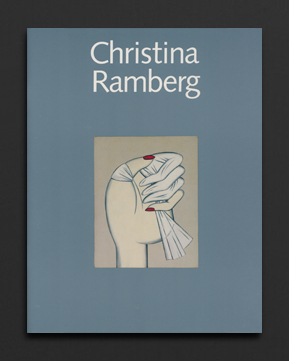
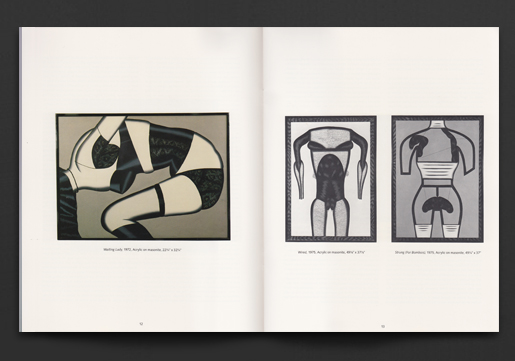
For twenty years, Christina Ramberg sustained an investigation of the human condition via the body, as it is made opaque and inscrutable by the apparel and adornment in which it is dressed. Shrunk, frayed, patched, torn, wrinkled-Ramberg pushes the problem of the garment well beyond metaphor. Her paintings are among the most personal work to emerge out of Chicago's Imagist group. In her late abstractions, attire falls away completely, revealing a raw spiritual mechanism that is decidedly impure.
Rare, long out-of-print 1988 catalogue published on the occasion of a major retrospective exhibition at The Renaissence Society, Chicago. In their catalogue essays, Dennis Adrian and Carol Becker each trace the course of Ramberg's continuous meditations on the body through her art - Adrian on the paintings formal and symbolic significance, and Becker on their psychological explorations of female embodiment and subjectivity.
As New copies.
2019, English
Softcover, 360 pages, 15.2 x 21 cm
Published by
Strange Attractor / London
$46.00 - Out of stock
Edited by David Tibet
Described by W. B. Yeats as a “scholar, connoisseur, drunkard, poet, pervert, most charming of men,” Count Stanislaus Eric Stenbock (1860–1895) is surely the greatest exemplar of the Decadent movement of the late nineteenth century.
A friend of Aubrey Beardsley, patron of the extraordinary pre-Raphaelite artist Simeon Solomon, and contemporary of Oscar Wilde, Stenbock died at the age of thirty-six as a result of his addiction to opium and his alcoholism, having published just three slim volumes of suicidal poetry and one collection of morbid short stories.
Stenbock was a homosexual convert to Roman Catholicism and owner of a serpent, a toad, and a dachshund called Trixie. It was said that toward the end of his life he was accompanied everywhere by a life-size wooden doll that he believed to be his son. His poems and stories are replete with queer, supernatural, mystical, and Satanic themes; original editions of his books are highly sought by collectors of recherché literature.
Of Kings and Things is the first introduction to Stenbock's writing for the general reader, offering fifteen stories, eight poems and one autobiographical essay by this complex figure.
1983, English
Softcover, 96 pages, 20.5 x 22 cm
1st Edition, Out of print title / used / good
Published by
Currey O'Neil / Melbourne
$140.00 - Out of stock
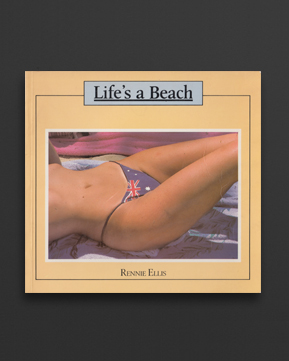
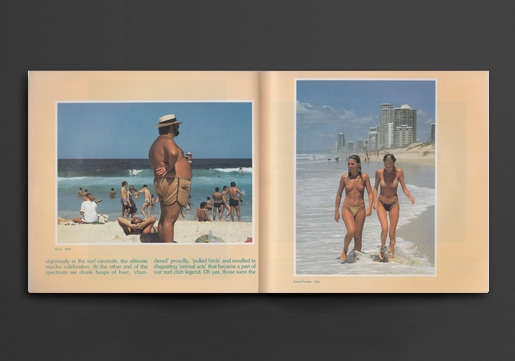
First 1983 edition of award winning Australian photographer Rennie Ellis' cult classic photo-book, "Life's A Beach", published in Melbourne in 1983. Steeped in beach lore since his early days as a lifesaver and surfer, Ellis put together this vivid collection of quintessential images of Australian beach life with great affection and insight. These early 1980's photographs shimmer with summer light and a graceful, infectious sensuality - the greatest photographic collection of Australian beach culture put to paper.
"On the beach we chuck away our clothes, our status and our inhibitions and engage in rituals of sun-worship and baptism. It's a retreat to our primal needs." Rennie Ellis
No other photographer has documented Australian society in such depth and with such insight into the human condition as Rennie Ellis. Active from the 1970s until his death in 2003, Rennie Ellis' non-judgmental approach was his 'access-to-all-areas' pass. Ellis used his camera as a key to open the doors to the social arenas of the rich and famous and to enter the underbelly of the nightclubs, bearing witness to the indulgences and excesses. In today's post-Henson era, these captured moments offer an intimate access to an Australia tantalisingly, but sadly, now almost out of reach.
Good-Very Good copy.
Some spotting and light crease to back cover and pages.
1968, English
Offset printed poster (56 x 72 cm)
1st Edition, Out of print title / used / very good
Published by
Leo Castelli / New York
$980.00 - Out of stock
Stunning, extremely rare early Donald Judd exhibition invitation poster, published on the occasion of an early solo exhibition at Leo Castelli Gallery, New York, NY, January 4 – 25, 1968. One of the scarcest, largest and most collectible of Judd's important vintage Castelli posters. Offset print, black on white stock featuring one of Judd's drawings. A real collector's item.
Dimensions : 56 x 72 cm
Good-Very Good copy. unmarked, light post-handling wear, stamped and addressed to reverse of poster, as all copies of poster were mailed as an invitation to the reception. Folded in eights for posting, as issued.
1968, English
Colour offset lithographic poster (46 x 46 cm)
1st Edition, Out of print title / used / good
Published by
Ace / Los Angeles
$650.00 - Out of stock
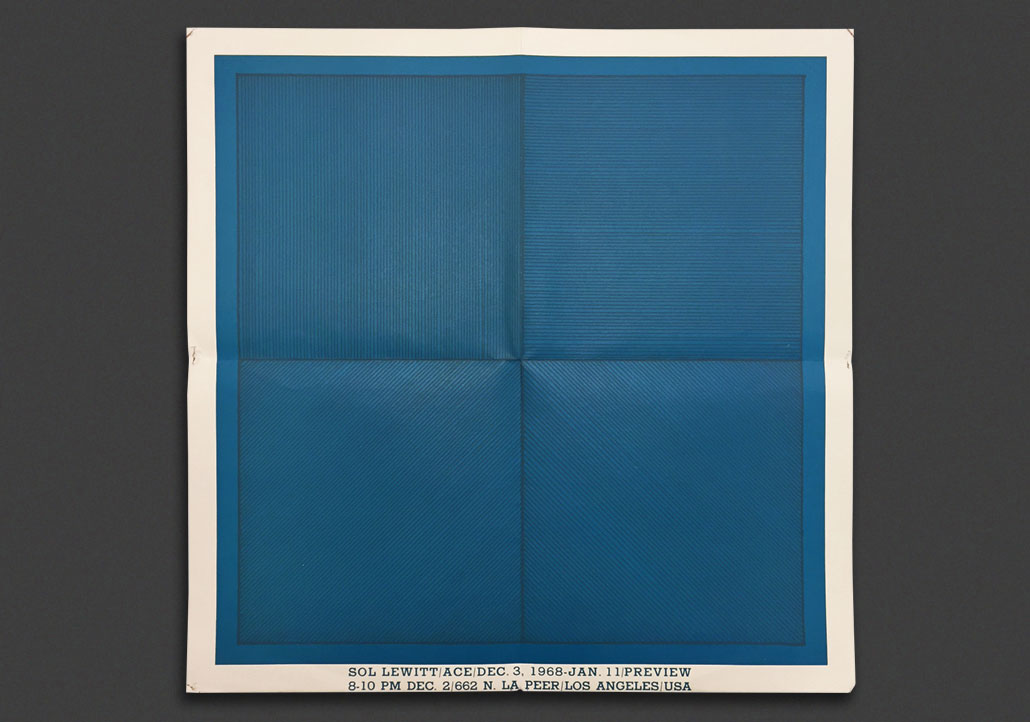
Very rare vintage Sol LeWitt poster published in conjunction with the preview of his solo exhibition at Ace, Los Angeles, December 3, 1968 - January 11, 1969. Beautiful colour offset lithographic poster featuring blue and black ink on white paper with image of LeWitt's Lines in Four Directions: vertical lines, horizontal lines, diagonal left to right, and diagonal right to left. A real collector's item.
Dimensions : 46 x 46 cm
Good-Very Good copy. Very small puncture marks to corners/edges, otherwise perfect and unmarked. Folded in four, as issued.
2019, English
Softcover, 52 pages, 11 x 22 cm
Ed. of 600,
Published by
After 8 Books / Paris
$34.00 - Out of stock
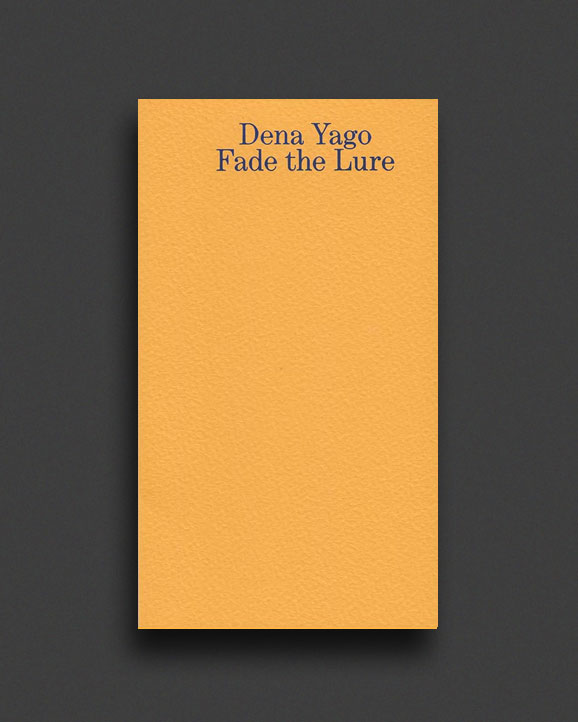
Fade the Lure is a collection of poems and photographs created between 2014 and 2017, during Dena Yago’s experience working and living alongside emotional support dogs in Los Angeles. In Yago’s words, poetry is sometimes “a form of communication created out of the desire to avoid, and an inability to engage in other forms of direct communication” with animals or humans. Fade the Lure explores the possibility for the poem to account for relationships that materialize and live beyond words, while being embedded in a consumerist society’s confined structures.
Dena Yago (born 1988, lives & works in NYC) is an artist, a writer and a poet. She was one of the founding members of K-HOLE, a trend forecasting group active from 2010 to 2016. Recent publications include Ambergris (Bodega) and Esprit Reprise (Pork Salad Press). Her work has been exhibited worldwide, including at the Museum of Modern Art in Warsaw and at Bodega in New York.
Published in collaboration with / Publié avec l'aide de High Art, Paris.
2009, English
Softcover, 216 pages, 16.5 x 26.7 cm
Published by
Princeton Architectural Press / New York
$75.00 - Out of stock
Out of print for almost a decade, Princeton Architectural Press have brought back one of their most requested hard-to-find titles, philosopher and cultural theorist Paul Virilio's Bunker Archeology.
In 1994 we the first English-language translation was published of the classic French edition of 1975, which accompanied an exhibition of Virilio's photographs at the Centre Pompidou. In Bunker Archeology, urbanist Paul Virilio turns his attention and camera to the ominous yet strangely compelling German bunkers that lie abandoned along the coast of France. These ghostly reminders of destruction and oppression prompted Virilio to consider the nature of war and existence, in relation to both World War II and contemporary times. Virilio discusses fortresses and military space in general as well as the bunkers themselves, including an examination of the role of Albert Speer, Hitler's architect, in the rise of the Third Reich.
2018, English
Softcover, 208 pages, 21.2 x 15.2 cm
Published by
Valiz / Amsterdam
Istanbul Design Biennial / Istanbul
$44.00 - Out of stock
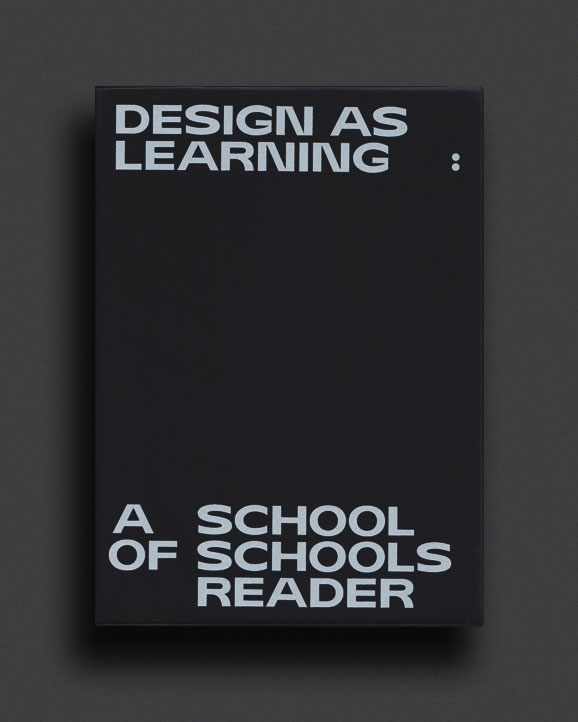
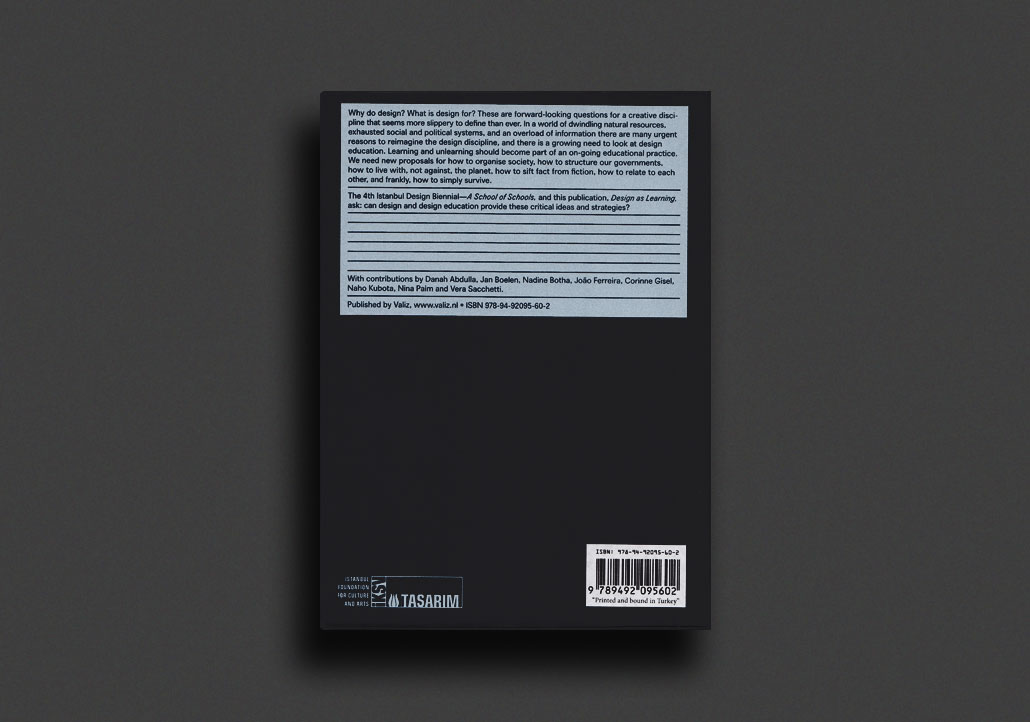
Why do design? What is design for? These are forward-looking questions for a creative discipline that seems more slippery to define than ever. In a world of dwindling natural resources, exhausted social and political systems, and an overload of information there are many urgent reasons to reimagine the design discipline, and there is a growing need to look at design education. Learning and unlearning should become part of an on-going educational practice. We need new proposals for how to organise society, how to structure our governments, how to live with, not against, the planet, how to sift fact from fiction, how to relate to each other, and frankly, how to simply survive.
The 4th Istanbul Design Biennial—A School of Schools, and this publication, Design as Learning ask: can design and design education provide these critical ideas and strategies?
Editors: Jan Boelen, Nadine Botha, Vera Sacchetti
Contributors: Danah Abdulla, Zeynep Çelik Alexander, Nelly Ben Hayoun, Jan Boelen, Nadine Botha, João Ferreira, Corinne Gisel, Gabrielle Kennedy, Naho Kubota, Peter Lang, Claudia Mareis, Deniz Ova, Nina Paim, Vera Sacchetti
Interviews: Åbäke (Maki Suzuki), Fabb (Burcu Biçer Saner, Efe Gözen), Navine G. Kahn-Dossos, Ebru Kurbak, Prototype Series (Mae-ling Lokko), Studio Folder (Marco Ferrari & Elisa Pasqual), SulSolSal (Hannes Bernard & Guido Gigli), Pinar Yoldaş
Design: Offshore Studio
2018, English
Softcover, 162 pages, 17 x 23 cm
Published by
Valiz / Amsterdam
$39.00 - Out of stock
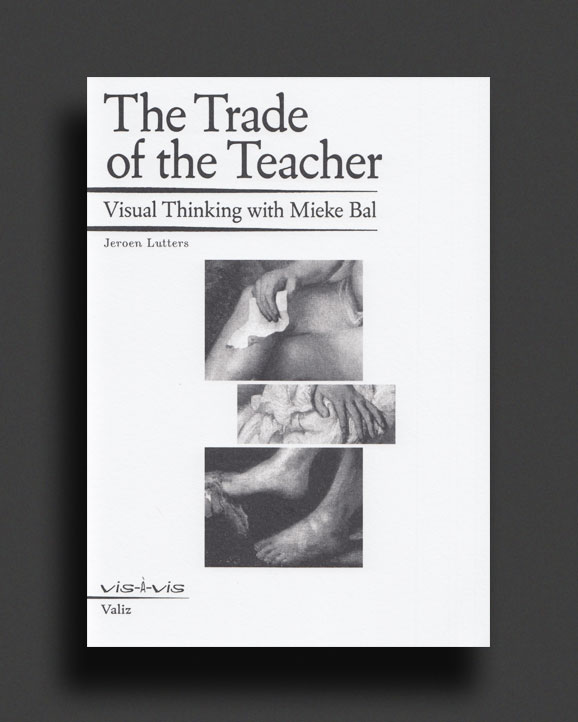
This book documents a series of conversations on the art of teaching between cultural theorist Mieke Bal and Jeroen Lutters. In a dialogue that also touches on the role of visual art, Lutters introduced paintings by Banksy, Rembrandt, Marlene Dumas, and George Deem as “teaching objects” and asked Bal to elucidate upon each. The result is a personal, meandering, and precise account of her way of thinking through visual art and literature, as well as how she exchanges ideas with students and colleagues. The text makes clear how objects can speak, how they are thought-images, and serves as a source of inspiration for both students and teachers of the arts and humanities.
Mieke Bal is a cultural theorist, critic, video artist and occasional curator, with a long history of teaching in the arts and the humanities. She works on gender, migratory culture, psychoanalysis, and the critique of capitalism. She has published 38 books, including A Mieke Bal Reader (2006), Quoting Caravaggio (1999) and Narratology (1985), that has been reprinted, revised and translated numerous times. www.miekebal.org
Jeroen Lutters is an art and cultural analyst and educational designer. He concentrates on the central role of the arts and humanities in the contemporary curriculum, the need for artist educators as wandering teachers and the theory and practice of art-based learning. He is a professor at ArtEZ, University of the Arts.
2008, Japanese / English
Softcover, 84 pages, 26 x 37 cm
Published by
A.D.A Edita / Tokyo
$75.00 - Out of stock
One of the finest architecture series ever published, the world renowned GA (Global Architecture) series, presented by the highly esteemed publishing house that also published the GA Document, GA Houses, and GI (Global Interior) architectural publications.
Each over-sized photographic folio issue of the special GA Residential Masterpieces series highlights a renowned international architect and takes a detailed look into their creations for residence.
Absolutely stunning and vivid large-format architectural photography of the selected building’s interiors, exteriors and architectural details, along with texts (in English and Japanese) and floor-plans/elevation drawings make up the profiles on each featured architectural project. The visual generosity of these handsomely designed and beautifully printed over-sized publications make them a treasure for any architecture or interior design enthusiast or collector.
Le Corbusier’s masterpiece, the Villa Savoye, is one of the iconic architectural buildings of the twentieth-century. According to Kengo Kuma, in his introduction to this edition, it is a house that ‘stands aloof, beautiful as ever, at a turning point – a turning point for a genius.’ Here the building is revisited in this elegant and large scale tribute to the architect. Both full-page, black and white and colour photographs document the interior and exterior of the residence, with particular attention afforded to finer details. Plans and sections are also included alongside Kuma’s introduction.
Printed in Japan
2016, English / Japanese
Softcover, 72 pages, 26 x 36 cm
Published by
A.D.A Edita / Tokyo
$68.00 - Out of stock
One of the finest architecture series ever published, the world renowned GA (Global Architecture) series, presented by the highly esteemed publishing house that also published the GA Document, GA Houses, and GI (Global Interior) architectural publications.
Each over-sized photographic folio issue of the special GA Residential Masterpieces series highlights a renowned international architect and takes a detailed look into their creations for residence.
Absolutely stunning and vivid large-format architectural photography of the selected building’s interiors, exteriors and architectural details, along with texts (in English and Japanese) and floor-plans/elevation drawings make up the profiles on each featured architectural project. The visual generosity of these handsomely designed and beautifully printed over-sized publications make them a treasure for any architecture or interior design enthusiast or collector.
Built on an expansive, sloping site situated in the northern part of Brno, Mies van der Rohe’s Villa Tungendhat is a masterful example of 20th-century residential architecture. Since its seizure in World War II, the house has endured a long period of decline and relative obscurity, a former shade of itself. Painstakingly renovated over a number of years, its three levels and full-height glass walls have now regained their former lustre, gorgeously framed by the camera of esteemed Japanese photographer Yoshio Futagawa. As he writes in his accompanying text, “… clad in luxury that is almost impossible to duplicate, the house is… a crystallization of modern architectural principles.”
Printed in Japan
1992, English
Softcover (french folds), 134 pages, 25 x 17 cm
1st Edition, Out of print title / used / very good
Published by
Christian Eilers Publishers / Copenhagen
$65.00 - Out of stock
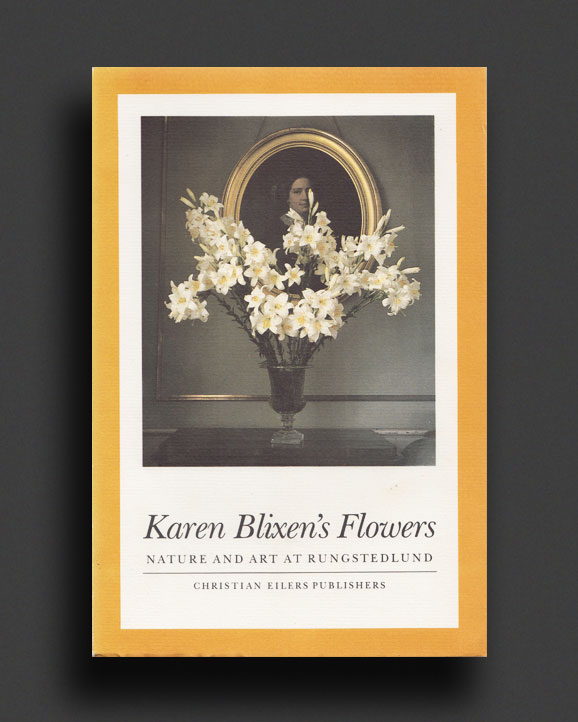
First English softcover edition of "Karen Blixen's Flowers", published in Copenhagen in 1992.
The aristocratic Karen Blixen was more than a great writer: as these colour photographs of her paintings and flower arrangements reveal, she was also an accomplished artist.
"I think that flowers in themselves are one of the miracles of life, and that it is wonderful in every way to occupy oneself with them, but you will know that I have a special passion for arranging them. Every time it is as you were painting a flower picture ..." This is how Karen Blixen wrote to a friend in October 1953. Even in her lifetime she was famed for the flower arrangements she created when she was expecting guests at Rungstedlund. Some of her friends, among them Birthe Andrup and Steen Eiler Rasmussen, took color photographs of these unique works of art, often at the request of Karen Blixen herself. A substantial selection of these photographs is published in this book. Danish architect Steen Eiler Rasmussen introduces Karen Blixen's Flowers with an essay that views the great writer from unexpected angles. Frans Lasson describes her youthful efforts to become an artist and publishes all the paintings known to be by her hand. In the main chapter of the book, Lisbeth Hertel, a horticulturist, offers a penetrating and extremely untraditional study of the various flower arrangements shown in the photographs. The book concludes with an essay 'The Lost Paradise' by Sven-Ingvar Andersson, professor of garden and landscape art at the Royal Academy of Art in Copenhagen. In his essay he analyses Karen Blixen's ideas on the natural surroundings, the garden and the woodland of her home in Rungsted.
Baroness Karen Christenze von Blixen-Finecke (1885 – 1962) was a Danish author who wrote works in Danish and English. She is best known under her pen names Isak Dinesen, used in English-speaking countries, and Tania Blixen, used in German-speaking countries. She also published works using the aliases Osceola and Pierre Andrézel. Blixen is best known for Out of Africa, an account of her life while living in Kenya, and for one of her stories, Babette's Feast, both of which have been adapted into Academy Award-winning motion pictures. She is also noted, particularly in Denmark, for her Seven Gothic Tales.
Very Good copy.
2019, English
Hardcover (silkscreened), 64 pages, 24 x 30 cm
Published by
MACK / London
$79.00 - Out of stock
Guido Guidi’s new book, In Veneto 1984-89, opens with a big eye framed in the blind of a shop window in Mestre, an eye which, by opening like a sort of warning, announces the origin of photography itself. This book contains a selection of hitherto unpublished photographs that Guidi took between 1984 and 1989, using a Deardorff 8X10. This was the first time he had used a large format camera for a whole project, which concentrated on an area in the central Veneto, an area known for having rapidly turned into a deeply uncertain, marginal landscape, one intimately hierarchy-free. The places he visited, in the provinces of Treviso, Vicenza, Padua and Venice, seem to be almost part of the same drawing, of the same place, bearing stark testimony to the process of change that has led to the transformation of a huge rural area, driving it into a form of fragmentation known as urban spread. The photographs in these much-loved places seem to re-evoke the three truths described by Robert Adams in “Beauty in Photography”: geography, biography, and metaphor.
"Guidi’s eye is rigorous and subtle" – The New York Times
"[In Veneto] mostra un paesaggio in mutamento verso l’urbanizzazione, quello del Veneto centrale, con fotografie quasi immobili" / "[In Veneto] reveals a landscape undergoing a transformation toward urbanisation – that of central Veneto – with photographs almost devoid of motion" – Il Post
"Guidi esplora il Veneto centrale, lontano dalle bellezze veneziane o palladiane ... come crepe disordinate, o muschi o funghi, allargandosi fuori dai corpi di Padova, Vicenza, Treviso" / "Guidi explores central Veneto, far from the Palladian glamour of Venice: […] the irregular cracks, mosses and fungi that sprout from the built environments of Padova, Vicenza and Treviso." / –Rivista Studio
2019, English
Softcover, 273 pages, 20.5 x 27 cm
Published by
Spector Books / Leipzig
$68.00 - Out of stock
Tacit Knowledge provides an insight into the complex artistic and educational practices that characterized the first decade of the California Institute of the Arts (CalArts). There is a special focus on the conceptual and feminist strategies developed in and from John Baldessari’s Post Studio class as well as Judy Chicago and Miriam Schapiro’s Feminist Art Program, which was initiated in 1970 and brought to the newly founded art school in 1971.
As Post Studio and feminist practices at CalArts are often characterized by the specific entanglement of cognitive and (habitual) bodily forms of knowledge, the idea of tacit knowledge, and thus learning through social and performative contexts of action, functions as an overarching principle linking all the contributions in the book.
Including short introductions on artists such as Baldessari, Alison Knowles, Barbara Bloom, Matt Mullican, James Welling, Jack Goldstein and others, texts by Paulo Friere, Peter Plagens, Michael Polanyi and Daniel Buren, in-depth case studies on individual works and a broad range of documental and photographic material, Tacit Knowledge is designed in the style of a magazine, allowing a diverse and lively approach to the ideas shaping the early years of CalArts.
Authors: Kim Albrecht, Lea Becker, Katharina Brandt, Léïla Douliba, Carla Gabriel, Jennifer Gaschler, Pauline Gründing, Verena Kittel, Friederike Krause, Vivien Lambert, Annette Jael Lehmann, Alice Rugai, Jeffrey Schnapp, Anna Sønderup
1973-74, English
Softcover, 500 plus pages, 28 x 21 cm
1st Edition, Out of print title / used / very good
Published by
Earth Garden / Balmain
$200.00 - Out of stock
A tool-box and a time-capsule; complete set of issues 1-10 of the amazing Earth Garden magazine, edited by Keith Vincent Smith and Irene Smith and published in Balmain NSW between 1972-1974. The Australian Whole Earth!
"EARTH GARDEN presents a range of natural life-styles. It is intended as a key to sources, practical ideas and alternatives to the nine-to-five drag. EARTH GARDEN is concerned with the back-to-the-earth movement, surviving in the city, living in the country, organic gardening, community, outdoors, food and diet, living more with less, and the inner changes which follow when you are in tune with Nature. Let us lead you up EARTH GARDEN'S path to the good life. There are no advertisements in EARTH GARDEN, books, places and products recommended are those we think relevant."
The combined 500-plus pages of these 10 issues cover everything, including dome building, bush foraging, sun cults, edible flowers, Montsalvat, hydroponics, mud building, food co-ops, natural dyes, bee-lore and bee-keeping, raku firing, Australian communes, Robert Rodale, suburban farms, planting charts, wholefoods, the Feedwell Family, macrobiotics, fruit wines, Neil Douglas, veganism, fallout shelters, goats, Nimbin, Clifton Pugh, bamboo flutes, animal care, mushrooms, A-frames, school farms, bio-dynamics/Rudolf Steiner, Shalom, banana-gas, weaving, solar and wind power, pottery, clothing, cooking... you get the idea - just the surface. Articles, guides, stories and interviews with so many Australian practitioner's of harmonious living, all heavily illustrated with photographs and drawings. A real treasure and more important than ever!
All very good with only light wear/ageing.