World Food Books' programme is largely produced on Kulin Nation land. We acknowledge the Wurundjeri people of the Kulin Nation as the first and continuing custodians of this land, and pay respect to their Elders past, present, and emerging.
World Food Books is an arts and special interests bookshop in Naarm / Melbourne. Founded in 2010, World Food Books is devoted to the presentation of a rotating, hand-selection of international art, design, literary and counterculture publications with an emphasis on the anti-traditional, the experimental, the avant-garde, the heretic, the marginal.
Presenting new titles alongside rare and out-of-print books, catalogues and journals spanning the fields of modern and contemporary art, design, photography, illustration, film, literature, poetry, cultural theory, philosophy, sexuality, popular and underground culture in its many radical forms, World Food Books wishes to encourage adventurous, thoughtful and open-minded reading, looking, writing, and exchange of publishing and ideas, both current and historical.
As well as our bookshop, located in Melbourne's historical Nicholas Building, all of our inventory is available internationally via our online mail-order service.
World Food Books semi-regularly co-ordinates "Occasions", a programme of exhibits and events at the bookshop and in partnership with other hosts (such as museums and art galleries) that develop out of the activities, relationships and content of the bookshop itself.
World Food Books
The Nicholas Building
37 Swanston Street
Room 5, Level 6
Melbourne 3000
Australia
SHOP HOURS:
Thu–Fri 12–6, Sat 12–5
WEB-SHOP OPEN 24/7
World Food Books
Postal Address:
PO Box 435
Flinders Lane
Victoria 8009
Australia
Art
Theory / Essay
Architecture / Interior
Graphic Design / Typography
Photography
Fashion
Eros
LGBTQ+
Fiction / Poetry
Weird / Speculative / Science Fiction / Horror
Transgressive / Visceral / Abject
Symbolism / Decadence / Fin de siècle
Film / Video
Painting
Sculpture / Installation
Performance / Dance / Theater
Drawing
Sound / Music
Curatorial
Group Shows / Collections
Periodicals
Out-of-print / Rare
Posters / Ephemera / Discs
Signed Books
World Food Books Gift Voucher
World Food Book Bag
Australian Art
Australian Fiction
Australian Science Fiction / Speculative Fiction
Australian Poetry
Australian Photography
Japanese Photography
Conceptual Art
Minimal Art
Dada
'Pataphysics / Oulipo
Fluxus
Concrete Poetry
Pop Art
Surrealism
Arte Povera
Arte Informale / Haute Pâte / Tachism
Nouveau Réalisme / Zero / Kinetic
Situationism / Lettrism
Collage / Mail Art / Xerox Art
Art Brut / Folk / Visionary / Fantastic
Illustration / Graphic Art / Bandes Dessinées
Furniture
Italian Radical Design / Postmodernism
Textiles
Ceramics / Glass
Counterculture
Protest / Revolt
Philosophy
Psychoanalysis
Anthropology
Anarchism
Socialism / Anarchism / Communism / Capitalism
Literary Theory / Semiotics / Language
Feminism / Women's Studies
Gender Studies / Sexuality
Anthropology
Fetishism / BDSM
Drugs / Psychedelia
Crime / Violence
Animal Rights / Veganism
Occult / Esoterica
Ecology / Earth / Alternative Living
Whole Earth / Crafts
All prices in AUD (Australian dollars)
Pick-Ups
Pick-up orders can be collected in our bookshop during opening hours after order date. Please collect any Pick-up orders within 2 weeks of ordering as we have limited storage space. Orders will be released back into stock if not collected within this time. No refunds can be made for pick-ups left un-collected. If you cannot make it in to the bookshop in this time-frame, please choose postage option.
Return Policy
All sales are final. We do accept returns (for refund or exchange) for items received in error. All our orders are packed with special care using heavy-duty padding and cardboard book-mailers or bubble mailers (for smaller books), using reinforcement where required. We cannot take responsibility for any lost, stolen or damaged parcels.
Insurance
Should you wish to insure your package, please email us directly after placing your order and we can organise this at a small extra expense. Although all standard/express tracked packages are very safe and dependable, we cannot take responsibility for any lost, stolen or damaged parcels. We recommend insurance on valuable orders.
Interested in selling your old books, catalogues, journals, magazines, comics, fanzines, ephemera? We are always looking for interesting, unusual and out-of-print books to buy. We only buy books in our fields of interest and specialty, and that we feel we can resell.
We base these prices on desirability, market value, in-print prices, condition and our current stock levels. We offer cash, store credit, and can take stock on consignment. All
about 25% of the price we expect to get when we sell them, or 30% in store credit. We base these prices on desirability, market value, in-print prices, condition and our current stock levels.
Sell your books any day of the week. You can drop them off and return later. If you have a lot of books, we can visit your Sydney home.
We buy books that we feel we can resell. We offer about 25 % of the price we expect to get when we sell them, or 30% in store credit. We base these prices on desirability, market value, in-print prices, condition and our current stock levels.
Philadelphia Wireman
03 August - 01 September, 2018
World Food Books is proud to announce our next Occasion, the first presentation of sculptures by Philadelphia Wireman in Australia.
The Philadelphia Wireman sculptures were found abandoned in an alley off Philadelphia’s South Street on trash night in 1982. Their discovery in a rapidly-changing neighbourhood undergoing extensive renovation, compounded with the failure of all attempts to locate the artist, suggests that the works may have been discarded after the maker’s death. Dubbed the "Philadelphia Wireman" during the first exhibition of this work, in 1985, the maker’s name, age, ethnicity, and even gender remain uncertain. The entire collection totals approximately 1200 pieces, all intricately bound together with tightly-wound heavy-gauge wire (along with a few small, abstract marker drawings, reminiscent both of Mark Tobey and J.B. Murry). The dense construction of the work, despite a modest range of scale and materials, is singularly obsessive and disciplined in design: a wire armature or exoskeleton firmly binds a bricolage of found objects including plastic, glass, food packaging, umbrella parts, tape, rubber, batteries, pens, leather, reflectors, nuts and bolts, nails, foil, coins, toys, watches, eyeglasses, tools, and jewellery.
Heavy with associations—anthropomorphic, zoomorphic, and socio-cultural responses to wrapped detritus—the totemic sculptures by Philadelphia Wireman have been discussed in the context of work created to fulfil the shamanistic needs of alternative religions in American culture. Curators, collectors, and critics have variously compared certain pieces to sculpture from Classical antiquity, Native American medicine bundles, African-American memory jugs, and African fetish objects. Reflecting the artist’s prolific and incredibly focused scavenging impulse, and despite—or perhaps enhanced by—their anonymity, these enigmatic objects function as urban artefacts and arbiters of power, though their origin and purpose is unknown. Philadelphia Wireman, whatever their identity, possessed an astonishing ability to isolate and communicate the concepts of power and energy through the selection and transformation of ordinary materials. Over the course of the past two decades, this collection has come to be regarded as an important discovery in the field of self-taught art and vernacular art.
Presented in collaboration with Fleisher-Ollman Gallery, Philadelphia, and Robert Heald, Wellington.
Susan Te Kahurangi King
02 February - 10 March, 2018
Susan Te Kahurangi King (24 February 1951 - ) has been a confident and prolific artist since she was a young child, drawing with readily available materials - pencils, ballpoint pens and felt-tip markers, on whatever paper is at hand. Between the ages of four and six Susan slowly ceased verbal communication. Her grandparents William and Myrtle Murphy had developed a special bond with Susan so they took on caring responsibilities for extended periods. Myrtle began informally archiving her work, carefully collecting and storing the drawings and compiling scrapbooks. No drawing was insignificant; every scrap of paper was kept. The King family are now the custodians of a vast collection containing over 7000 individual works, from tiny scraps of paper through to 5 meter long rolls.
The scrapbooks and diaries reveal Myrtle to be a woman of great patience and compassion, seeking to understand a child who was not always behaving as expected. She encouraged Susan to be observant, to explore her environment and absorb all the sights and sounds. Myrtle would show Susan’s drawings to friends and people in her community that she had dealings with, such as shopkeepers and postal workers, but this was not simply a case of a grandmother’s bias. She recognised that Susan had developed a sophisticated and unique visual language and sincerely believed that her art deserved serious attention.
This was an unorthodox attitude for the time. To provide some context, Jean Dubuffet coined the term Art Brut in 1945 to describe work created by self-taught artists – specifically residents of psychiatric institutions and those he considered to be visionaries or eccentrics. In 1972 Roger Cardinal extended this concept by adopting the term Outsider Art to describe work made by non-academically trained artists operating outside of mainstream art networks through choice or circumstance. Susan was born in Te Aroha, New Zealand in 1951, far from the artistic hubs of Paris and London that Dubuffet and Cardinal operated in. That Myrtle fêted Susan as a self-taught artist who deserved to be taken seriously shows how progressive her attitudes were.
Susan’s parents Doug and Dawn were also progressive. Over the years they had consulted numerous health practitioners about Susan’s condition, as the medical establishment could not provide an explanation as to why she had lapsed into silence. Dawn educated herself in the field of homeopathy and went on to treat all twelve of her children using these principles – basing prescriptions on her observations of their physical, mental and emotional state.
Doug was a linguist with an interest in philosophy who devoted what little spare time he had to studying Maori language and culture. To some extent their willingness to explore the fringes of the mainstream made them outsiders too but it was their commitment to living with integrity and their respect for individuality that ensured Susan’s creativity was always encouraged.
Even though Susan’s family supported her artistic pursuits, some staff in schools and hospitals saw it as an impediment to her assimilation into the community and discouraged it in a variety of ways. Her family was not always aware of this and therefore did not fully understand why Susan stopped drawing in the early 1990s. However, rather than dwell on the challenges that Susan faced in pursuit of her artistic practice, they prefer to highlight her achievements. In 2008 Susan began drawing again in earnest, after an almost 20 year interruption, and her work is now shown in galleries around the world.
Susan grew up without television and has been heavily influenced by the comics she read as a child. She is absolutely fearless in the appropriation of recognizable characters, such as Donald Duck and Mickey Mouse, in her work. She twists their limbs, contorts their faces, compresses them together, blends them into complex patterned backgrounds - always imbuing them with an incredible energy. Although Susan often used pop culture characters in her work they are not naive or childlike. These are drawings by a brilliant self-taught artist who has been creating exceptional work for decades without an audience in mind.
Mladen Stilinović
"Various Works 1986 - 1999"
02 February 16 - September 10, 2016
Various works 1986 - 1999, from two houses, from the collections of John Nixon, Sue Cramer, Kerrie Poliness, Peter Haffenden and Phoebe Haffenden.
Including: Geometry of Cakes (various shelves), 1993; Poor People’s Law (black and white plate), 1993; White Absence (glasses, ruler, set square, silver spoon, silver ladel with skin photograph and wooden cubes), 1990-1996; Exploitation of the Dead (grey and red star painting, wooden painting, black spoon with red table, red plate), 1984-1990; Money and Zeros (zero tie, paintings made for friends in Australia (Sue, John, Kerrie), numbers painting), 1991-1992; Words - Slogans (various t-shirts) - “they talk about the death of art...help! someone is trying to kill me”, “my sweet little lamb”, “work is a disease - Karl Marx”; Various artist books, catalogues, monographs, videos; Poster from exhibition Insulting Anarchy; "Circular" Croatian - Australian edition; Artist book by Vlado Martek (Dostoyevsky); more.
Thanks to Mladen Stilinović and Branka Stipančić.
Jonathan Walker
Always Will Need To Wear Winter Shirt Blue + Ochre Small Check Pattern
21 August - 21 September, 2015
Untitled
I am not a great reader of poetry but I always return to the work of Melbourne poet, Vincent Buckley (1925- 1988). Perhaps I find his most tantalising piece to be not a finished poem but a fragment left on a scrap of paper discovered on his desk after the poet’s death.
The poetry gathers like oil
In the word-core, and spreads
It has its music meet,
Its music is in movement.
This fragment is more the shell left behind from a volatile thought than a finished poem. I find the last two lines honest but awkward whereas the first two lines work like an arrow. Most likely he could not find a resolution so it was left. Still, in its present form, it remains an eloquent testimony to the ultimate failure of a medium to express mobile thought and sensation, in Buckley’s case, through verbal language. It’s an important matter because this is something all artists have to deal with regardless of the medium.
I have never written a poem, however, I am forever copying fragments from books on paper scraps in a vain effort to fix certain notions in my head. At first, they function as bookmarks that are sometimes returned to when I open the book. But before long, as they accumulate, they fall out littering the table interspersed with A4 photocopies, bills, books and medications.
To return to Buckley’s fragment, the first two lines very much evoke how I paint nowadays. As you age, detail diminishes and patches of light become more luminous and float. I feel the most honest way of dealing with this is by smearing the oil paint on the canvas with the fingers and working close-up, blind. Only if the patches coalesce into an approaching image can the work gain a life.
-
Jonathan Walker was born in Melbourne, Australia and brought up on a dairy farm in Gippsland. In the 1970’s he studied painting at RMIT and won the Harold Wright Scholarship to the British Museum, London. During the 1980’s he exhibited at Pinacotheca Gallery, Richmond and had work shown at the NGV and Heidi City Art Gallery. Over the same period he designed the cover for the “Epigenesi” LP by Giancarlo Toniutti, Italy and conducted a mail exchange work with Achim Wollscheid, Germany. The work with artists through the post resulted in an article published in the bicentenary issue of Art and Australia 1988. He showed in artist run spaces such as WestSpace in the 90’s and 2000’s, and until 2012, taught painting at Victoria University, which is where we (Colleen Ahern and Lisa Radford) as organisers of the exhibition, among many others, had the privilege of being his student.
Walker’s knowledge was imparted to students through the careful selection of music, literature, and artists found in books that he himself had ordered for the library. Walker’s strategy was the generosity of sharing his vast knowledge with references specific to each student and their context.
Walker’s paintings share a similar focus and intimacy.
This exhibition presents a small selection of recent paintings alongside a publication that includes Walker’s writing. Observational and analytical, Walker’s work is a type of material notation — the time of day, colour and how it is blended, the both specific and fleeting location of a reflection on lino or the question of whether a chair leg should be included in a painting.
Please join us on Friday August 21 between 6-8pm to celebrate the opening of the exhibition.
Curated by Colleen Ahern and Lisa Radford.
B. Wurtz
Curated by Nic Tammens
March 26 - April 4, 2015
B.Wurtz works from a basement studio in his home on Manhattan’s Lower East Side.
This local fact is attested to by the plastic shopping bags and newsprint circulars that appear in his work. As formal objects, they don’t make loud claims about their origins but nonetheless transmit street addresses and places of business from the bottom of this long thin island. Like plenty of artists, Wurtz is affected by what is local and what is consumed. His work is underpinned by this ethic. It often speaks from a neighborhood or reads like the contents of a hamper:
“BLACK PLUMS $1.29 lb.”
“Food Bazaar”
“USDA Whole Pork Shoulder Picnic 99c lb.”
“RITE AID Pharmacy, with us it’s personal.”
“H. Brickman & Sons.”
“Sweet Yams 59c lb."
Most of the work in this exhibition was made while the artist was in residence at Dieu Donne, a workshop dedicated to paper craft in Midtown. Here Wurtz fabricated assemblages with paper and objects that are relatively lightweight, with the intention that they would be easily transportable to Australia. This consideration isn’t absolute in Wurtz’s work, but was prescriptive for making the current exhibition light and cheap. Packed in two boxes, these works were sent from a USPS post office on the Lower East Side and delivered to North Melbourne by Australia Post.
Wurtz appears courtesy of Metro Pictures, New York.
Thanks to Rob Halverson, Joshua Petherick, Sari de Mallory, Matt Hinkley, Helen Johnson, Fayen d'Evie, Ask Kilmartin, Lisa Radon, Ellena Savage, Yale Union, and "Elizabeth".
John Nixon
"Archive"
December 15 - January 20, 2014
The presentation of John Nixon's archive offered a rare showcase of this extensive collection of the artist's own publications, catalogues, posters, ephemera, editions and more, from the mid 1980s onwards, alongside a selection of his artworks.
Organized by John Nixon, Joshua Petherick and Matt Hinkley.
<a href=http://wfb.public-office.info/artist/john-nixon>All titles by John Nixon
"Habitat"
at Minerva, Sydney (organised by Joshua Petherick and Matt Hinkley)
November 15 - December 20, 2014
Lupo Borgonovo, Janet Burchill & Jennifer McCamley,
Lewis Fidock, HR Giger, Piero Gilardi, Veit Laurent Kurz,
Cinzia Ruggeri, Michael E. Smith, Lucie Stahl, Daniel Weil, Wols
Press Release:
“...It contained seven objects. The slender fluted bone, surely formed for flight, surely from the wing of some large bird. Three archaic circuitboards, faced with mazes of gold. A smooth white sphere of baked clay. An age-blackened fragment of lace. A fingerlength segment of what she assumed was bone from a human wrist, grayish white, inset smoothly with the silicon shaft of a small instrument that must once have ridden flush with the surface of the skin - but the thing’s face was seared and blackened.”
William Gibson, “Count Zero”, 1986
"Autumn Projects Archive"
Curated by Liza Vasiliou
March 6 - March 15, 2014
World Food Books, in conjunction with the Virgin Australia Melbourne Fashion Festival 2014, presented the Autumn Projects archive, consisting of a selection of early examples in Australian fashion with a particular interest in collecting designers and labels from the period beginning in the 1980’s, who significantly influenced the discourse of Australian Fashion.
Curated by Liza Vasiliou, the exhibition provided a unique opportunity to view pieces by designers Anthea Crawford, Barbara Vandenberg, Geoff Liddell and labels CR Australia, Covers, Jag along with early experimental collage pieces by Prue Acton and Sally Browne’s ‘Fragments’ collection, suspended throughout the functioning World Food Books shop in Melbourne.
H.B. Peace
presented by CENTRE FOR STYLE
November 14, 2013
"Hey Blinky, you say chic, I say same"
Anon 2013
H.B. Peace is a clothing collaboration between great friends Blake Barns and Hugh Egan Westland. Their pieces explore the divergences between 'character’ and ‘personality’ in garments....etc
Special Thanks to Joshua Petherick and Matt Hinkley of WFB and Gillian Mears
and a Very Special Thank you to Audrey Thomas Hayes for her shoe collaboration.
Janet Burchill & Jennifer McCamley
"Aesthetic Suicide"
May 10 - June 8, 2013
The first of our occasional exhibitions in the World Food Books office/shop space in Melbourne, "Aesthetic Suicide" presented a body of new and older works together by artists Janet Burchill & Jennifer McCamley, including videos, prints, a wall work, and publications.
During shop open hours videos played every hour, on the hour.
2017, English
Softcover, 56 pages, 28 x 21 cm
Published by
Griffith University / Brisbane
$25.00 - Out of stock
Dale Harding’s wall murals, sculptures, and installations explore the social and political histories and contemporary realities of his family and people. A descendant of the Bidjara, Garingbal, and Ghungalu peoples, Harding employs diverse techniques and traditions, including domestic handicrafts, ochre stencilling, woodcarving, and silicone casting. Dale Harding: Body of Objects has been developed by Griffith University and documenta 14 to introduce Harding’s work to international audiences in conjunction with his inclusion in documenta 14. Featuring an interview with documenta 14 curator Hendrik Folkerts, an essay by Angela Goddard and a wide selection of images from the studio and exhibitions, Dale Harding: Body of Objects presents Harding’s works and processes, giving context and background to the specific histories he draws on to develop his works.
1974, English
Hardcover (linen bound), 88 pages, 19 x 24 cm
1st Edition, Out of print title / used / good
Published by
New York University Press / New York
The Press of the Nova Scotia College of Art and Design / Halifax
$100.00 - Out of stock
Rare first hardcopy edition copy of the highly influential Steve Reich book of texts,"Writings About Music", first published in 1974 by The Press of the Nova Scotia College of Art and Design.
In the mid-1960s, American composer Steve Reich radically renewed the musical landscape, along with La Monte Young, Terry Riley, and Philip Glass, to pioneer what became minimal music. These early Reich works, characterised by a relentless pulse and static harmony, focused single-mindedly on the process of gradual rhythmic change. Throughout his career, Reich has continued to reinvigorate the music world, drawing from a wide array of classical, popular, sacred, and non-western idioms. His works reflect the steady evolution of an original musical mind.
In 1974 Reich published the book Writings About Music, containing essays on his philosophy, aesthetics, and musical projects written between 1963 and 1974. The book features, amongst many other texts and studies, Reich's 1968 essay "Music as a Gradual Process," widely considered one of the most influential pieces of music theory in the second half of the 20th century.
Good copy lacking dust jacket, with ex-library stamps/markings to cloth cover. Light wear, otherwise Very Good interior well-preserved.
2012, English
Softcover, 320 pages, 136 x 203 mm
Published by
The MIT Press / Massachusetts
$42.00 - Out of stock
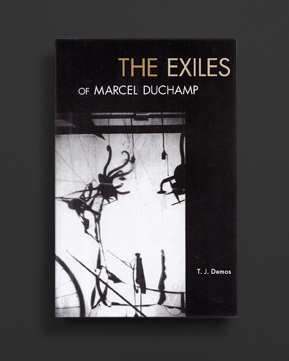
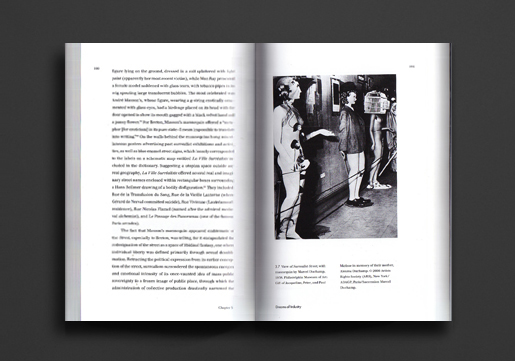
Marcel Duchamp was a famous expatriate, a wanderer, living and working in Paris, New York, and Buenos Aires and escaping from each in turn. But exile, argues T. J. Demos in this innovative reading, is more than a fact in Duchamp's biography. Exile--in the artist's own words, a "spirit of expatriation"--infuses Duchamp's entire artistic practice. Duchamp's readymade constructions, his installations for surrealist exhibitions in Paris and New York, and his "portable museum" (the suggestively named La boite-en-valise), Demos writes, all manifest, define, and exploit the terms of exile in multiple ways. Created while the artist was living variously in New York, Buenos Aires, and occupied France during the global catastrophes of war and fascism, these works express the anguish of displacement and celebrate the freedom of geopolitical homelessness. The "portable museum," a suitcase containing miniature reproductions of Duchamp's works, for example, represented a complex meditation--both critical and joyful--on modern art's tendency toward itinerancy, whereas Duchamp's 1942 installation design entangling a New York gallery in a mile of string announced the dislocated status that many exiled surrealists wished to forget. Duchamp's exile, writes Demos, defines a new ethics of independent life in the modern age of nationalism and advanced capitalism, offering a precursor to our own globalized world of nomadic subjects and dispersed experience.
T. J. Demos is a Lecturer in the Department of History of Art, University College London and the author of The Exiles of Marcel Duchamp (MIT Press, 2007). His essays have appeared in such journals as Artforum, Grey Room, October, and Texte zur Kunst.
2018, English
Softcover, 232 pages, 17 x 22 cm
Published by
Casco / Utrecht
Valiz / Amsterdam
$44.00 - Out of stock
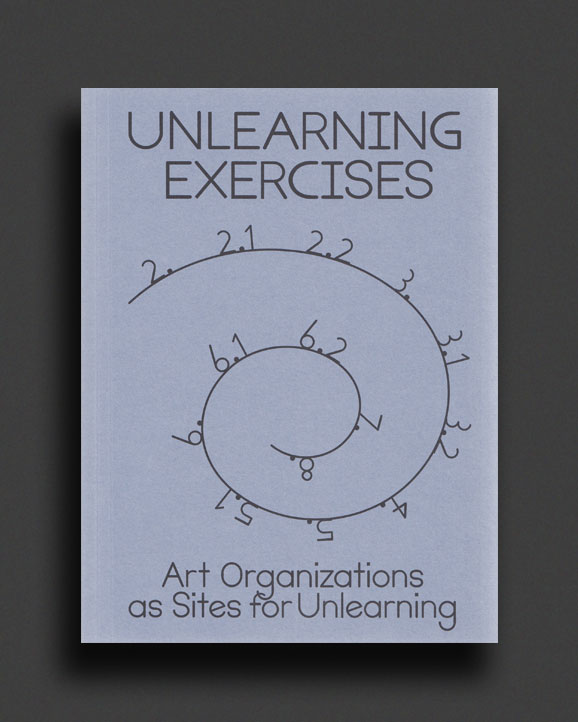
Learning is the accumulation of knowledge, skills, and behaviour and is often progress-oriented and institutionally driven. In contrast, unlearning is directed towards embodied forms of knowledge and the (un)conscious operation of ways of thinking and doing. 'Unlearning Excercises' shares a set of exercises as propositions to be useful for and adapted within other specific (institutional) contexts in and beyond the arts. These exercises range from daily practices like ‘Cleaning Together,’ to unresolvable issues of collective authorship and fair wage. They also offer insights into the lively and long-term collective unlearning process.
1973, English
Softcover (staple-bound), 14 pages, 21 x 15 cm
1st Edition, Out of print title / used / very good
Published by
Editions Graphiques Gallery / London
$35.00 - Out of stock
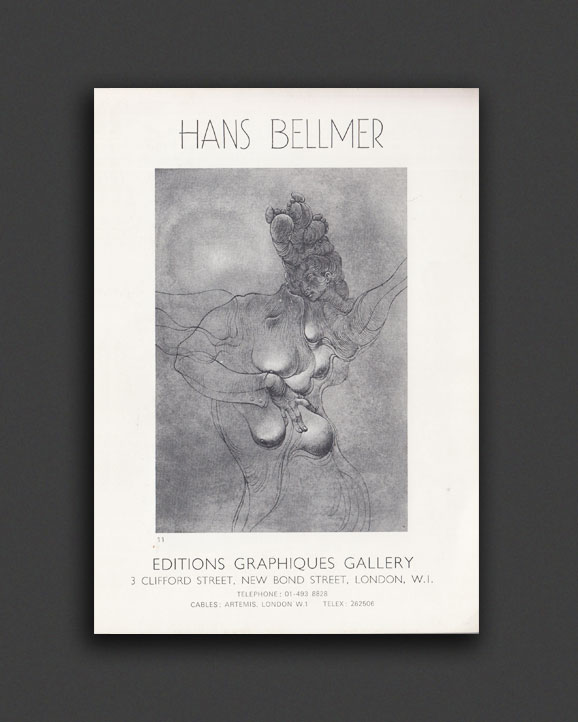
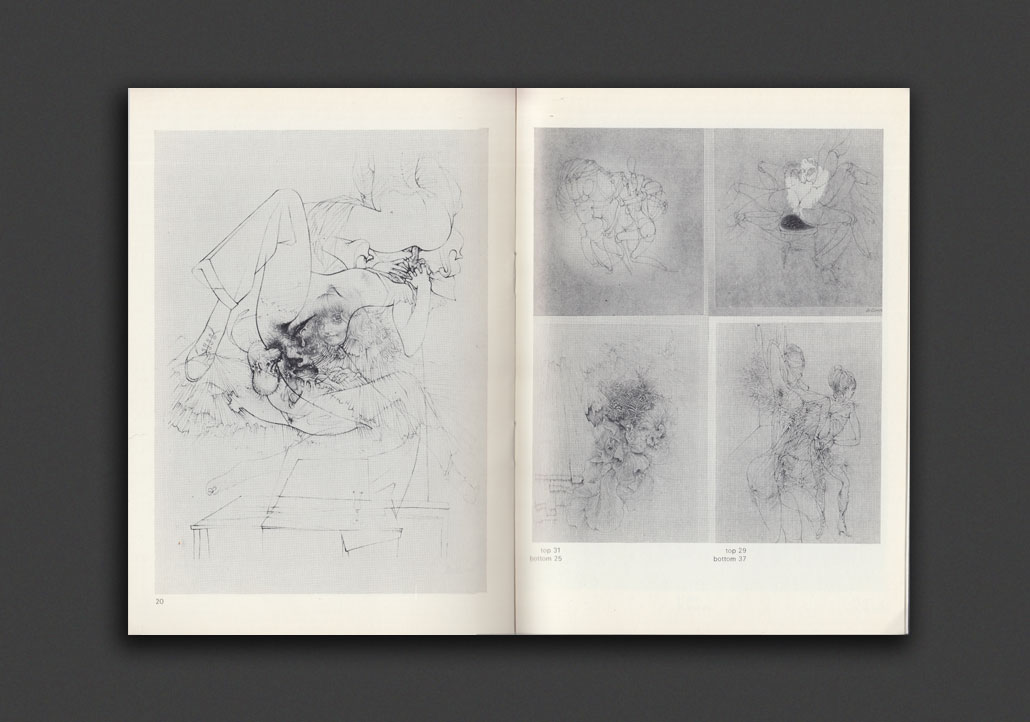
Lovely catalogue issued on the occasion of the exhibition of Hans Bellmer's etchings and drawings, published by Editions Graphiques Gallery, London, in the late 1960s-early 1970s. Illustrated throughout with many of the 43 exhibited items, including his important series "à Sade", "Madame Edwarda" (Georges Bataille), and "Les Marionettes", amongst others, alongside detailed work list, and introductory text by Victor Arwas.
Very Good copy.
2019, English / German
Softcover, 240 pages, 23 x 16.5 cm
Published by
Texte Zur Kunst / Berlin
$32.00 - Out of stock
The sea has inspired artists, writers, and thinkers for centuries; but what has changed in our view of the sea since the canonical seafaring novels and paintings of the 19th century? In the June issue of Texte zur Kunst, dedicated to the mysteries and violence of the deep, we examine the sea from a media-theoretical perspective as well as from the perspective of current political and ecological catastrophes. For this issue, the theoretical texts are punctuated by photo essays by four artists who have dealt with the sea as a biosphere as well as a transit system for container vessels. In short, we realize just how important it is to look at the sea again, and again.
ISSUE NO. 114 / JUNE 2019 "THE SEA"
TABLE OF CONTENTS
PREFACE
BERNHARD SIEGERT
THE SINKING OF A STEAMBOAT / Robert Carrick’s, William Suhr’s, David Bull’s, and J. M. W. Turner’s “Rockets and Blue Lights” (1840–2003)
NADJA ABT -
SEAWOMEN
ASHNA ALI
- MEDITERRANEAN BORDERLAND
SUSANNE M. WINTERLING -
CODE AND POETRY OF THE SEA
IN THE THICKNESS OF THE CROSSING / Challenging the Liquid Violence of Borders in the Mediterranean – An interview with Charles Heller
MANDLA REUTER
- MOUNTAIN WATER
D. GRAHAM BURNETT
JETSAM
HIRA NABI
- HOW TO DISMANTLE A SHIP IN NINE STEPS
FRANZISKA BRONS
- THE SEA: MEDIUM AND MILIEU
LIEBE ARBEIT KINO
FOR A PANAFRICAN PAST AND FUTURE! / Michaela Ott über das Jubiläum des subsaharischen Filmfestivals FESPACO in Ouagadougou
ROTATION
DIE UNANGENEHME VERWANDTE / Vojin Saša Vukadinović über „Last Days at Hot Slit. The Radical Feminism of Andrea Dworkin“ von Johanna Fateman und Amy Scholder (Hg.)
REVIEWS
A LEGIBLE FUTURE / Jeffrey West Kirkwood on “The New Alphabet” at Haus der Kulturen der Welt, Berlin
LEERSTELLEN IN DER VERGANGENHEIT, RISSE IN DER GEGENWART / Sven Beckstette über Dierk Schmidt im Museo Nacional Centro de Arte Reina Sofía, Madrid
SUBJECTS OF MADNESS: NANOTYRANNUS, RAW CHAMPAGNE, AND BREASTS LIKE CAMELLIAS / Nina Prader on “Flying High: Women Artists of Art Brut” at the Kunstforum Vienna
AFROATLANTISCHE GESCHICHTEN / Frauke Zabel über Rubem Valentim im Museu de Arte de São Paulo
SYSTEMIC AESTHETICIZATION / Sven Lütticken on Pierre Huyghe at the Serpentine Gallery, London
CIVILIZATIONAL ENTANGLEMENTS / Rike Frank on Rossella Biscotti at the daadgalerie, Berlin
PIPELINE DREAMS / Benjamin Thorel on Lucie Stahl at Freedman Fitzpatrick, Paris
REALITÄTSEFFEKTE / Hannes Loichinger über Jay Chung und Q Takeki Maeda im Kölnischen Kunstverein
FAIL BETTER / Colin Lang on Stefanie Heinze at Capitain Petzel, Berlin
ALLE KÜNSTLER*INNEN LÜGEN / Michael Franz über KP Brehmer im Neuen Museum in Nürnberg
THE DISCREET CHARM OF VANISHING / Estelle Nabeyrat on Lourdes Castro at Musée régional d’art contemporain Occitanie / Pyrénées-Méditerranée, Sérignan
BIZARRE LOVE TRIANGLE / David Bussel on Ghislaine Leung at Chisenhale Gallery, London
STABILE UNGLEICHGEWICHTE / Gürsoy Doğtaş über Nil Yalter im Museum Ludwig, Köln
BEST SINGER-SONGPAINTING / Gunter Reski über Norbert Schwontkowski bei Contemporary Fine Arts, Berlin
HERE’S AL / Eli Diner on Allen Ruppersberg at the Hammer Museum, Los Angeles
BATHETIC FALLACY / Alexandra Symons Sutcliffe on “A Fatal Attraction” at Galerie Barbara Weiss, Berlin
OBITUARIES
OKWUI ENWEZOR (1963–2019) / by Ulrich Wilmes, Ute Meta Bauer and Markus Müller, with an introduction by Isabelle Graw
CAROLEE SCHNEEMANN (1939–2019) / by Pamela M. Lee
KARL LAGERFELD (1933−2019) / von Barbara Vinken
EDITION
JANA EULER
HELEN MARTEN
2018, English
Hardcover, 376 pages, 18.5 x 24.5 cm
Published by
Park Books / Zürich
$89.00 - Out of stock
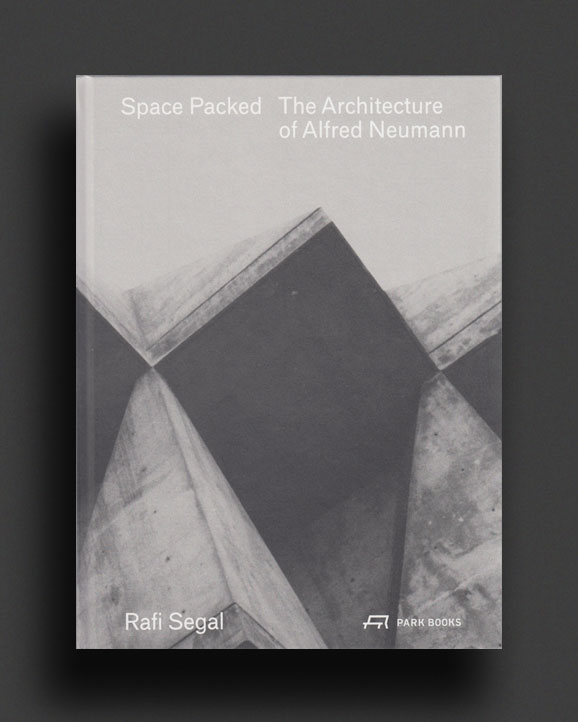
The first book to provide a detailed account of Neumann's work, Space Packed celebrates the career of this highly skilled and innovative architect, and it will be welcomed by architects and architectural historians.
Space Packed renews attention to this pioneering architect who made a vast contribution to modern architecture and had a lasting impact on Israel's broader architectural culture. Drawing on Neumann's writings and close study of both built and unbuilt projects, Rafi Segal discusses the development of Neumann's architectural theory and methodology and documents his built works from the 1950s and '60s against the backdrop of contemporary architectural discourse and the demands of the newly created State of Israel. The book also features a complete, chronological catalog of Neumann's buildings and designs, fully illustrated, including many previously unpublished photographs, drawings, and sketches.
Alfred Neumann (1900–1968) was a Czech architect whose work was wrought in the context of postwar modernism and the establishment of the State of Israel in 1948. Today, his influence and impact have been largely forgotten, but, in their time, Neumann's original designs received praise and elicited controversy in almost equal measure, offering exciting new possibilities to the modernist mainstream.
2018, English
228 pages, 228 pages, 24 x 30.5 cm
Published by
MoMA / New York
$90.00 - Out of stock
Situated between the two rival Cold War blocs, Yugoslavia produced a “parallel universe” of modern architecture, built to meet the needs of the country’s unique brand of self-managing socialism, often described as the “Third Way.” Responding to the social and political climate, Yugoslav architects freely reinterpreted international currents in design, merging them with a variety of local building traditions. At the same time, Yugoslavia also became a major exporter of modernist architecture to postcolonial Africa and the Middle East. While the remarkable body of work that emerged in the postwar socialist era has sparked recurrent international interest, no rigorous examination of this understudied but significant chapter in the history of architectural modernism has been available in the United States until now.
Published in conjunction with a major exhibition at The Museum of Modern Art on the architectural production of Yugoslavia between 1948 and 1980, this groundbreaking, richly illustrated volume, features new scholarship, unpublished archival materials, and a portfolio of contemporary photographs by Valentin Jeck. This richly illustrated publication sheds light on key ideological concepts of Yugoslav architecture, urbanism and society by delving into the exceptional projects and key figures of the era, among them Bogdan Bogdanovic, Zoran Bojovic, Drago Galic, Janko Konstantinov, Georgi Konstantinovski, Niko Kralj, Boris Magas, Juraj Neidhardt, Joze Plecnik, Svetlana Kana Radevic, Edvard Ravnikar, Vjenceslav Richter, Milica Steric, Ivan Straus and Zlatko Ugljen.
Edited by Martino Stierli and Vladimir Kulić, with essays by Tamara Bjažić Klarin, Vladimir Deskov, Andrew Herscher, Sanja Horvatinčić, Theodossis Issaias, Ana Ivanovska Deskova, Jovan Ivanovski, Jelica Jovanović, Anna Kats, Juliet Kinchin, Martina Malešič, Maroje Mrduljaš, Arber Sadiki, Luka Skansi, Łukasz Stanek, Matthew Worsnick, Mejrema Zatrić. Photographic portfolio by Valentin Jeck.
2019, English
Softcover, 176 pages, 21.5 x 27 cm
Published by
Prestel / Munich
$65.00 - Out of stock
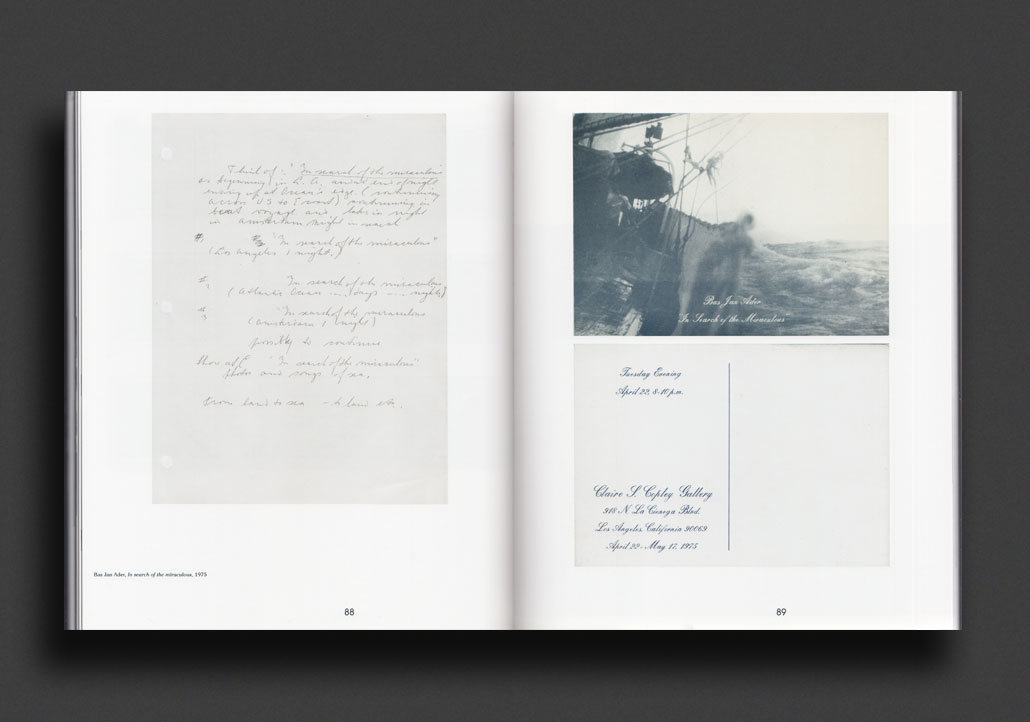
In 1971, Chris Burden disappeared for three days without a trace. This book, also entitled Disappearing, examines the theme of disappearance in the works of Burden and his contemporaries, Bas Jan Ader and Jack Goldstein, in 1970s Southern California. Loosely affiliated, these three artists shared an interest in themes of disappearance and self-effacement. In 1972, Goldstein buried himself alive during a performance, while during Ader's tragic last work, In search of the miraculous (1975), the artist vanished crossing the Atlantic. Responding to cultural pressures like the Vietnam War and the nascent field of feminist art, the artists used "disappearing" as a response to the masculine anxiety of the 1970s. This book reveals a fascinating intersection between major figures at a critical turning point for Californian art.
2018, English
Softcover, 80 pages, 9.6 x 14.8 cm
$20.00 $10.00 - Out of stock
James R. Murphy, a math teacher in La Guardia, New York, regarded mathematics as the most powerful and manipulable abstract language available to humans. To acquaint students who don’t “like” math with abstract and systematical thinking, he put a piece of string in their hands and taught them to make string figures.
How to spell the fight follows a thread that has been running through our fingers from centuries past till the present day, morphing from the tangible string figures that join our hands in childhood to the more elusive computational algorithms that engage our fingers today. Following this line of inquiry through various twists and turns, a conversation about collective agency emerges with the aim of rethinking current paradigms of cognition, education, and power.
Natascha Sadr Haghighian is an artist living in Berlin. Her research-based practice encompasses a variety of forms and formats, among them video, performance, installations, text, and sound. She tries to learn how to make string figures.
This is the fifth book in the Kayfa ta series, a publishing initiative of Maha Maamoun and Ala Younis. Each book in the series is a monographic essay commissioned in the style of how-to manuals that situation themselves in the space between the technical and the reflective, the everyday and the speculative, the instructional and the intuitive, and the factual and the fictional.
Copublished with Kayfa ta
Design by Julie Peeters
2017, English
Softcover, 72 pages, 9.6 x 14.8 cm
Published by
Sternberg Press / Berlin
$20.00 $10.00 - Out of stock
SSS: How to imitate the sound of the shore using two hands and a carpet is, at first glance, exactly what it claims to be: an in-depth manual for staging a private (or public) performance, in which one uses both hands and a carpet to imitate the sounds of water making contact with land. Istanbul-based artist Cevdet Erek’s book includes diagrams and photographs, which illustrate possible methods for producing this effect, while also addressing theoretical and methodological issues related to the representation of nature.
SSS is the second book in the Kayfa ta series, a publishing initiative of Maha Maamoun and Ala Younis. Each book in the series is a monographic essay commissioned in the style of how-to manuals that situation themselves in the space between the technical and the reflective, the everyday and the speculative, the instructional and the intuitive, and the factual and the fictional.
Copublished with Kayfa ta
Design by Julie Peeters
1977, English
Hardcover (w. dust jacket), 352 pages, 24 x 33.5 cm
Out of print title / used / very good
Published by
New Burlington Books / London
$40.00 - Out of stock
Published in 1977 in heavy, oversized hardcover, "RUGS AND CARPETS OF THE WORLD is a complete guide to the major rug making areas of the world. Lavishly illustrated in colour and black and white, it discusses the history of the craft in all the major centres of production, gives an area by area account of all the main types, and also describes the carpet market, with hints on how to judge and buy.
The chapters on Oriental and African rugs cover the history of these finest of floor and wall decorations, including accounts of the finest classic carpets of the Safavid period in Persia and a history of the many different types over the past 100 years. In the European chapters Isabelle Anscombe examines the development of the European carpet industry from its beginnings in Moorish Spain to the highly sophisticated French Aubusson and Savonnerie carpets and modern carpet production in England and Scandinavia. In addition to describing the beautiful traditional rugs and blankets of the great weavers of the Navajo tribe in the United States, the American chapters also examine in detail the early rugs of the 19th century in the United States."
1975, English
Softcover (staple-bound), 112 pages, 26 x 18 cm
1st Edition, Out of print title / used / very good
Published by
International General / New York
$120.00 - Out of stock
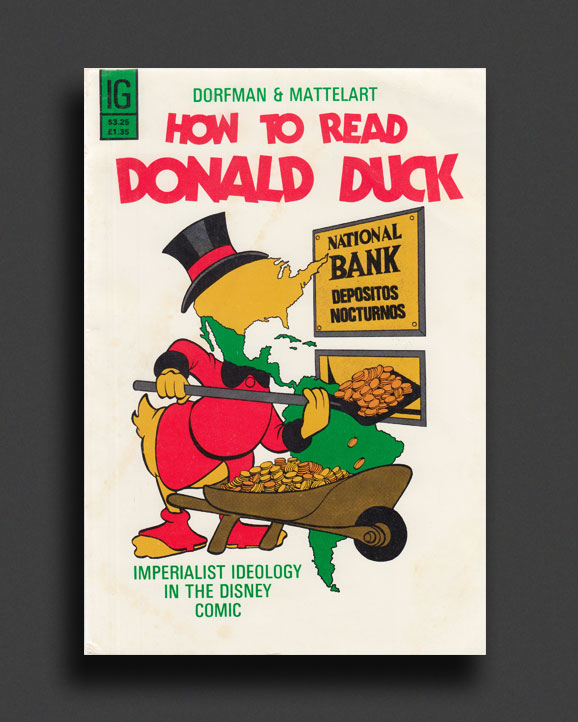
Scarce copy of the first English-language edition of "How to Read Donald Duck", published in 1975. Disney managed to have all 4,000 copies impounded upon arrival to the United States, but ultimately, 1,500 copies made it into the country, the rest of the shipment was blocked.
“A literary grandmaster.” ―Time
First published in 1971, How to Read Donald Duck shocked readers by revealing how capitalist ideology operates in our most beloved cartoons. Having survived bonfires, impounding and being dumped into the ocean by the Chilean army, this controversial book is once again back on our shelves.
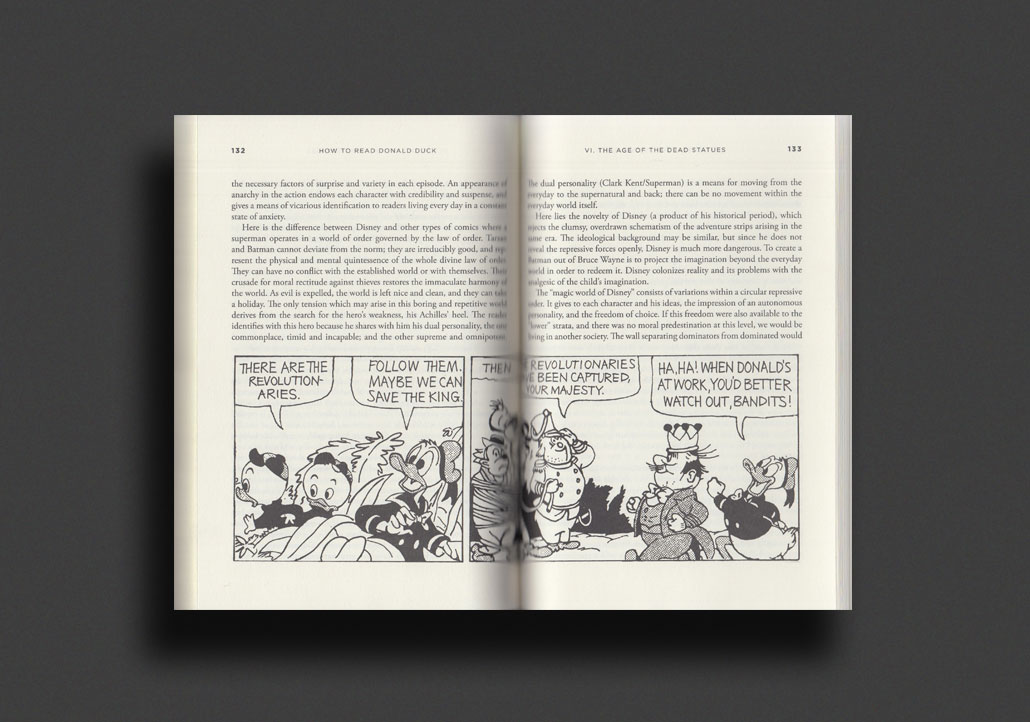
Written and published during the blossoming of Salvador Allende's revolutionary socialism, the book examines how Disney comics not only reflect capitalist ideology, but are active agents working in this ideology's favour. Focusing on the hapless mice and ducks of Disney, curiously parentless, marginalised and always short of cash, Ariel Dorfman and Armand Mattelart expose how these characters established hegemonic ideas about capital, race, gender and the relationship between developed countries and the Third World. Disney recognized the challenge and, when the book was translated and imported into the United States in 1975, managed to have all 4,000 copies impounded. Ultimately, 1,500 copies of the book were allowed into the country, the rest of the shipment was blocked, and until now no American publisher has re-released the book, which has sold over 1 million copies worldwide. (The original English language edition is now a collector’s item, selling for up to $500 on Amazon.)
A devastating indictment of a media giant, a document of twentieth-century political upheaval, and a reminder of the dark undercurrent of pop culture, How to Read Donald Duck is once again available, together with a new introduction by Ariel Dorfman.
Translated by art historian David Kunzle.
Very Good copy.
2018, English
Hardcover (w. dust jacket), 208 pages, 14.7 x 20.6 cm
1st Edition, Out of print title / as new
Published by
OR / New York
$45.00 - Out of stock
“A literary grandmaster.” ―Time
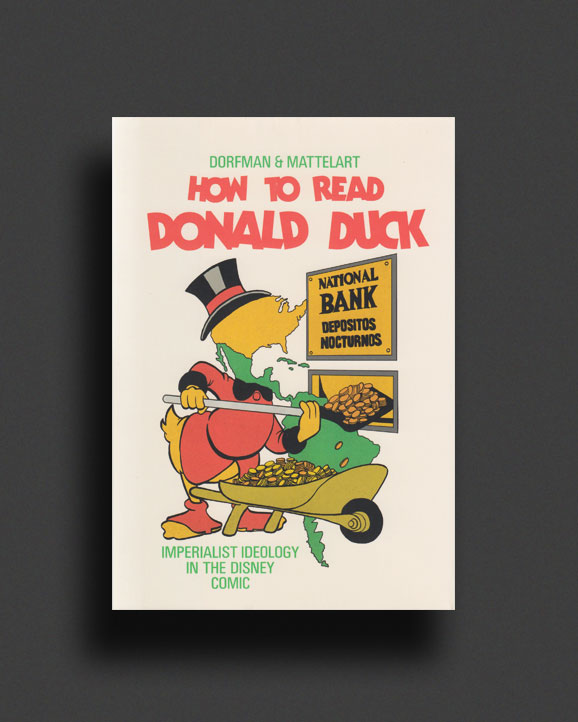
First published in 1971, How to Read Donald Duck shocked readers by revealing how capitalist ideology operates in our most beloved cartoons. Having survived bonfires, impounding and being dumped into the ocean by the Chilean army, this controversial book is once again back on our shelves.
Written and published during the blossoming of Salvador Allende's revolutionary socialism, the book examines how Disney comics not only reflect capitalist ideology, but are active agents working in this ideology's favour. Focusing on the hapless mice and ducks of Disney, curiously parentless, marginalised and always short of cash, Ariel Dorfman and Armand Mattelart expose how these characters established hegemonic ideas about capital, race, gender and the relationship between developed countries and the Third World. Disney recognized the challenge and, when the book was translated and imported into the United States in 1975, managed to have all 4,000 copies impounded. Ultimately, 1,500 copies of the book were allowed into the country, the rest of the shipment was blocked, and until now no American publisher has re-released the book, which has sold over 1 million copies worldwide. (The original English language edition is now a collector’s item, selling for up to $500 on Amazon.)
A devastating indictment of a media giant, a document of twentieth-century political upheaval, and a reminder of the dark undercurrent of pop culture, How to Read Donald Duck was re-printed in this expanded 2018 hardcover edition, together with a new introduction by Ariel Dorfman. Sadly also now out-of-print and destined to become another collector's edition.
2019, English / German
Hardcover (w. dust jacket), 198 pages, 24.8 x 31.2 cm
Published by
Walther König / Köln
Kunsthalle Basel / Basel
$65.00 - In stock -
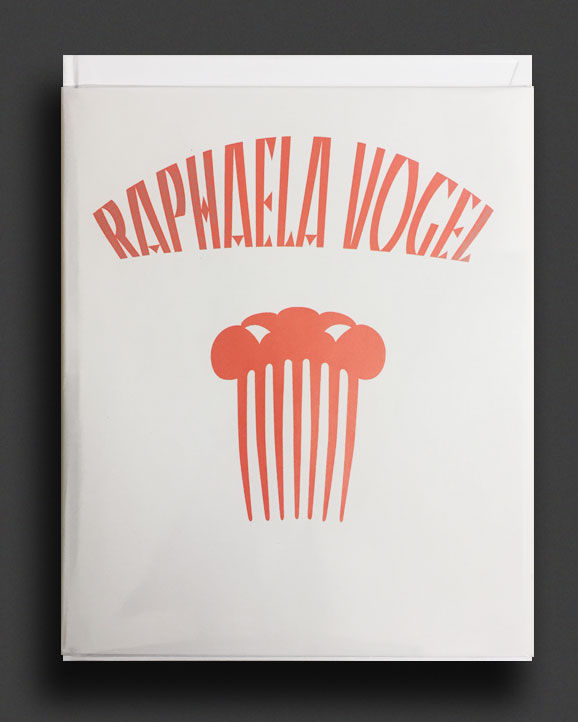
First expansive hardcover monograph dedicated to the work of German artist Raphaela Vogel, and published on the occasion of her solo exhibitions at Kunstpalais Erlangen, 2018; Leopold-Hoesch-Museum, Du¨ren, 2018; Kunsthalle Basel, 2018. Raphaela Vogel’s exhibitions host impressive sculptural installations, mostly poised in precarious balance, often in combination with pulsating sound or videos that feature the artist herself (b. 1988). Her series of new works unfurls a world at once thrilling and dystopian.
Edited by Milena Mercer, with contributions from Tenzing Barshee, Patrizia Dander, Hans-Christian Dany, Elena Filipovic, Michael Hakimi, Michael Vogel. Designed by Yvonne Quirmbach, Berlin.
2019, English
Hardcover, 364 pages, 22.2 x 28.6 cm
Published by
Rubell Family Collection / Miami
$95.00 - Out of stock
This publication, the first comprehensive monograph on the paintings of Purvis Young (1943–2010), collects 254 works by the Miami-born African American artist known for his lyrical depictions of current and historical events.
A self-educated artist who began drawing while incarcerated as a teenager, Young became widely known in Florida in the early 1970s with his large-scale murals consisting of paintings on scrap wood, metal and book pages, which he nailed to the walls of abandoned buildings in the Overtown neighborhood of Miami’s downtown.
Surveying paintings from throughout his career, the book is thematically arranged in 14 chapters illustrating various stages of life and concerns present in Young’s work. The book also includes an interview with Young conducted by Hans Ulrich Obrist in 2005, along with essays by Rashid Johnson, Gean Moreno, Franklin Sirmans, César Trasobares and Barbara N. Young.
2015, English
Softcover, 40 pages, 20 x 28.5 cm
Ed. of 1000,
Published by
The Power Station / Dallas
$38.00 - Out of stock
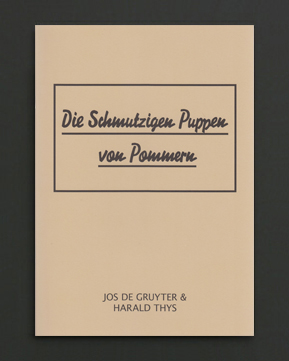
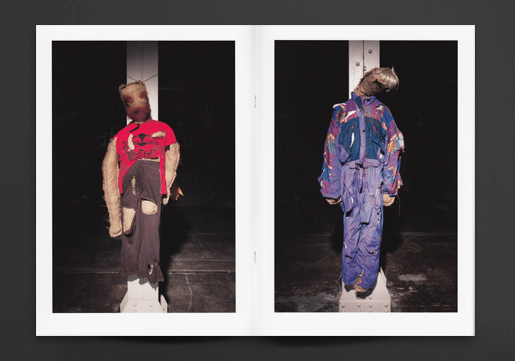
Part document, part photographic album, this book by artist duo Jos de Gruyter & Harald Thys captures the sculptural revisionings of the descendants of an executioner family from Greifswald in Pomerania, a historical region on the southern coast of the Baltic Sea. The “dirty puppets” are weary, the clothing worn in by history, their story line deadpan and fable-like. In the twelfth century, the family amassed a fortune through the management and maintenance of the gallow fields; their influence also extended to the judiciary and its decision making. After three generations in power, the empire suddenly and inexplicably collapsed. It was said that the frenzy of executions was the reason for the downfall. The family descendents left to roam Pomerania, relegated to a fate of taunt and mockery.
Jos de Gruyter & Harald Thys’s images form an allegory for human behavior under social and psychological pressure, and expose, not without humor, the bankruptcy of humanity.
Copublished with The Power Station, Dallas, on occasion of the eponymous exhibition, April 8−June 12, 2015.
Edition of 1000 copies.
Design by Boy Vereecken and Harald Thys
The Power Station is a not-for-profit contemporary art space in Exposition Park, Dallas, Texas, founded by Janelle and Alden Pinnell in 2011. It is housed in a former Dallas Power & Light building which was constructed in 1920, and hosts large scale exhibitions which compliment the building's raw architecture. For each of its international exhibitions, The Power Station works with the artists to produce a publication in conjunction with their project, limited to 1000 copies. Its programming also includes a summer exhibition and additional events each year. The building includes an apartment where artists can live as they create and build their installations. The first exhibitor was American artist Oscar Tuazon.
1990, English / Dutch
Softcover, 46 pages (24 ill., 17 col.), 31 x 28 cm
1st edition of 750, out of print,
Published by
Le Nouveau Musée / Villeurbanne
Witte de With / Rotterdam
$120.00 - Out of stock
Exhibition catalogue published in conjunction with show held at Le Nouveau Musée, Villeurbanne, France, November 25, 1989 - February 18, 1990. Traveled to Witte de With, Centre for Contemporary Art, Rotterdam, Netherlands, April 7 - May 20, 1990.
According to Anne Rorimer, Knight critically addresses art practices by contextualizing objects within the cultural system and by abstracting existing signs from functional modes of representation. Buchloh focuses on how Knight re-materializes the art object through his use of design, display, and framing, in order to avoid the elitism of conceptual art.
Introduction by Chris Dercon. Essays by Anne Rorimer, Benjamin H.D. Buchloh.
Includes selected bibliography.
Texts in English and Dutch.
Since 1969, American artist John Knight (1945) has concentrated on the relationship between architecture, design and art. He bases his work on the interplay between the material object and its contextual conditions, and comments on the meaning of cultural object and cultural space by employing strategies that invert the conventions of production and reception.
2019, English
Softcover, 60 pages, 24.1 x 29.8 cm
Published by
JRP Ringier / Zürich
Air de Paris / Paris
$75.00 - Out of stock
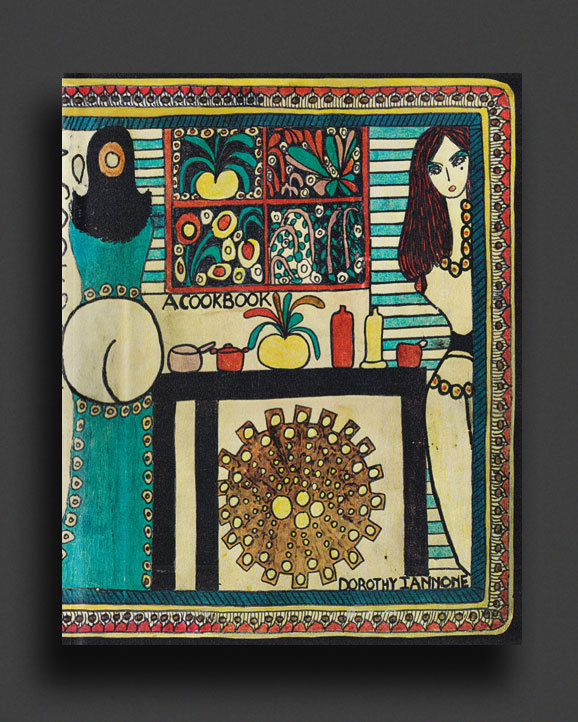
The artist as cook and lover
Since the 1960s, Dorothy Iannone has attempted to represent ecstatic love, "the union of gender, feeling, and pleasure." Today her oeuvre, encompassing painting, drawing, collage, video, sculpture, objects, and artist's books, is widely recognized as one of the most provocative and fruitful bodies of work in recent decades in terms of the liberalization of female sexuality, and political and feminist issues. As Robert Filliou stated as early as in 1972, "She is a freedom fighter, and a forceful and dedicated artist, skillfully blending imagery and text, beauty and truth. Her aim is no less than human liberation." A narrative element fed with personal mythologies, experiences, feelings, and relationships runs through all of her work, unified by her distinctive colorful, explicit, and comic book style.
Created in 1969, when she was living with Swiss artist Dieter Roth, "A Cookbook" is a perfect example of how she mixes daily life and an existential approach, culminating in her vision of cooking as an outlet for both eroticism and introspection. A book of real recipes full of visual delights, "A Cookbook" contains densely decorated pages with patterned designs, packed text, and vibrant colors. Personal sentences are interspersed among the lists of ingredients, revealing the exultations and tribulations of her life between the lines of recipes. Filled with wit and wordplay, associations between aliments and idiosyncratic thoughts—"At least one can turn pain to color" accompanies the recipe for gazpacho; "Dorothy’s spirit is like this: green and yellow," is written next to the ingredients for lentil soup—" A Cookbook" constitutes a mundane but essential self-portrait of the artist as a cook and a lover.
Born in 1933 in Boston, Dorothy Iannone lives and works in Berlin.
This publication is a facsimile of the original 1969 "Cookbook." Introduced by Dorothy Iannone, it is wrapped in a dust jacket specially designed by the artist in 2018.
This facsimile of "A Cookbook" is published in collaboration with Air de Paris, Paris.
Edited by Clément Dirié
2019, English
Softcover, 80 pages, 21 x 25 cm
Published by
Heni / London
$30.00 - In stock -
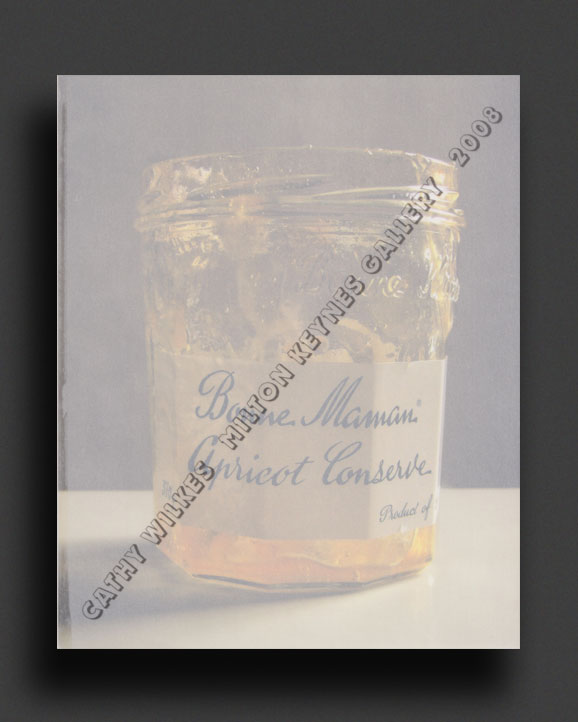
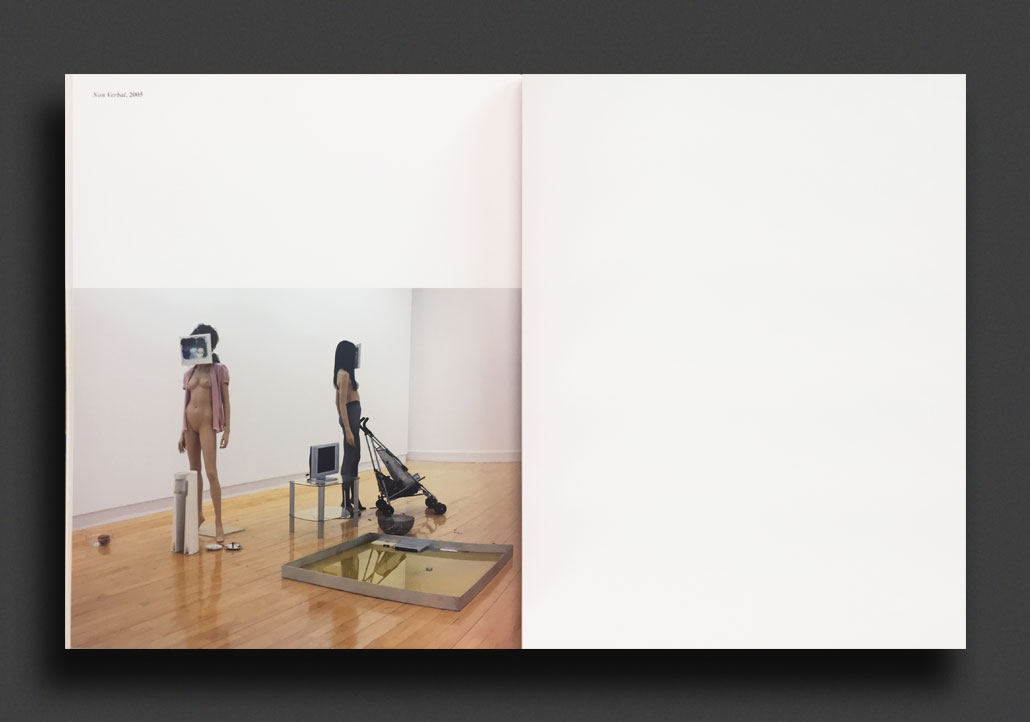
Catalogue published on the occasion of Belfast-born British artist Cathy Wilkes' representation of Great Britain at the 58th International Art Exhibition at the Venice Biennale in 2019.
Renowned for her distinctive and highly personal sculptural installations featuring humanoid figures that highlight the tender intimacy of everyday life, Wilkes' exhibition features new paintings and sculptures that provoke a strong emotional response in viewers, set against the backdrop of the grand architecture of the British Pavilion. Narratives and histories which often evoke interiors and places of loss or solitude are suggested through her evocative objects but never explicitly expressed, and indeed Wilkes resists written descriptions and explanations of her work, intentionally not naming her installations, assemblages and exhibitions in a bid to keep open the viewer's perceptions.
This publication, one of the only existing books on the artist, features a new set of prints related to the highly anticipated work for the Biennale, and providing rare insights into Wilkes’ creative process. An essay by curator Zoé Whitley explores Wilkes’ art in the context of the artist’s acceptance of ambiguity as a key element in her intense and mysterious work. Designed by Berlin-based book designer Yvonne Quirmbach in close collaboration with the artist herself, this unique publication is as much an artist’s book as a record of this major international exhibition.
Cathy Wilkes (b. 1966, Belfast) is widely recognised as one of the most influential artists working in the UK today. Nominated for the Turner Prize in 2008, she was awarded the inaugural Maria Lassnig Prize in 2016, a biennial award to honour the achievements of mid-career artists. Previous solo exhibitions include: MoMA PS1, New York (2017- 2018); The Modern Institute, Glasgow (2016); Tate Liverpool (2015); Kunstverein, Munich (2011) and Studio Voltaire, London (2009). Wilkes lives and works in Glasgow.
Zoé Whitley is Senior Curator at the Hayward Gallery, London. She worked previously at Tate Modern and the V&A and has curated exhibitions in the USA and South Africa.
2009, English
Softcover, 112 pages, 22 x 27 cm
Published by
Milton Keynes Gallery / UK
$45.00 - Out of stock
Produced to accompany the Turner Prize nominated exhibition at Milton Keynes Gallery in April - June 2008, this publication brings together a selection of Cathy Wilkes' most recent work and the most substantial monograph on her work to date.
Cathy’s work is characterised by the creation of a slowly emerging personal vocabulary of sculptures and paintings that the artist makes and re-makes in evolving assemblages and environments.
Her processes are measured and refined, and draw on the most intimate of personal experiences to create a compelling autobiographical thread coupled with a precise and liberated formal language.
2003, English
Softcover, 288 pages, 18 x 23 cm
1st Edition, Out of print title / as new
Published by
The MIT Press / Massachusetts
$74.00 $60.00 - Out of stock
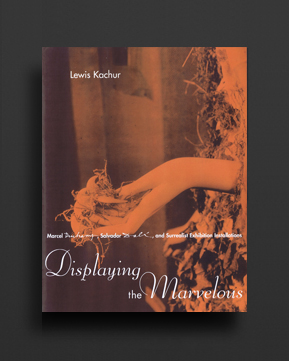
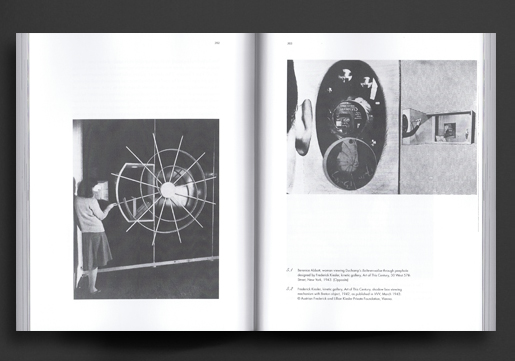
Surrealism in its late phase often abandoned neutral exhibition spaces in favor of environments that embodied subjective ideologies. These exhibitions offered startled viewers an early version of installation art before the form existed as such. In Displaying the Marvelous, Lewis Kachur explores this development by analyzing three elaborate Surrealist installations created between 1938 and 1942. The first two, the "Exposition Internationale du Surrealisme" (1938) and the "Dream of Venus" at the New York World's Fair (1939), dealt with the fetishization of the female body. The third, "First Papers of Surrealism" (1942), focused not on the figure but on the entire expanse of the exhibition space, thus contributing to the development of nonfigurative art in New York. Kachur presents a full visual and verbal reconstruction of each of the exhibitions, evoking the sequence that the contemporary viewer would have encountered.
The book considers Marcel Duchamp and Salvador Dali, two artists who are not usually compared, within a common framework. Duchamp specialized in frustrating the spectator, using his ironic wit to call into question the definition of the work of art. Dali was a master at disorienting the senses by establishing and then undermining everyday spatial and object properties. The Surrealist challenge, as voiced by Andre Breton, was to evoke the marvelous. Duchamp and Dali extended that challenge to the physical and commercial realm of the exhibition installation.
About the Author
Lewis Kachur is Associate Professor of Art History at Kean University, New Jersey.
“Lewis Kachur hands us a free time-travel ticket, with himself as marvelous pilot. Transporting us into the thick inventions of late Surrealist exhibitions, he gives us the ravishing gift of being there, present at the birthing and, as well, the seeding of so much installation and site-specific art to come decades later. For artists now who feel tied to Grandfather Marcel without having known him, Kachur's work vividly opens up the real moves of Duchamp's reinvention of what it is to be an artist. Revealing secret interior paths of communication among artists that flow synaptically across generations, this sumptuous work points to a new holistic way to understand art.”
—Mierle Laderman Ukeles, artist
“A splendid analysis of the late Surrealist exhibitions. Anyone interested in Surrealist art would want this book; anyone interested in the consideration of display in twentieth-century art must have this book.”
—Richard Martin (1945-1999), former curator, Metropolitan Museum of Art
“Perceptive, fascinating, and written with pleasure and delight. The reciprocal exchange between art work and its context is presented with a steady, at times inspired, sense of inquiry.”
—Brian O’Doherty, writer
Out-of-print
2018, English
Softcover, 560 pages, 14.6 x 21 cm
Published by
Sequence Press / New York
Urbanomic / Cornwall
$79.00 - Out of stock
A critique of both classical humanism and dominant trends in posthumanism that formulates the ultimate form of intelligence as a theoretical and practical thought unfettered by the temporal order of things.
In Intelligence and Spirit Reza Negarestani formulates the ultimate form of intelligence as a theoretical and practical thought unfettered by the temporal order of things, a real movement capable of overcoming any state of affairs that, from the perspective of the present, may appear to be the complete totality of history. Intelligence pierces through what seems to be the totality or the inevitable outcome of its history, be it the manifest portrait of the human or technocapitalism as the alleged pilot of history.
Building on Hegel's account of Geist as a multiagent conception of mind and on Kant's transcendental psychology as a functional analysis of the conditions of possibility of mind, Negarestani provides a critique of both classical humanism and dominant trends in posthumanism. The assumptions of the former are exposed by way of a critique of the transcendental structure of experience as a tissue of subjective or psychological dogmas; the claims of the latter regarding the ubiquity of mind or the inevitable advent of an unconstrained superintelligence are challenged as no more than ideological fixations which do not stand the test of systematic scrutiny.
This remarkable fusion of continental philosophy in the form of a renewal of the speculative ambitions of German Idealism and analytic philosophy in the form of extended thought-experiments and a philosophy of artificial languages opens up new perspectives on the meaning of human intelligence and explores the real potential of posthuman intelligence and what it means for us to live in its prehistory.
2019, English
Softcover, 104 pages, 26 x 21 cm
Published by
Heide Museum of Modern Art / Victoria
$30.00 - Out of stock
Catalogue published on the occasion of the exhibition "Janet Burchill & Jennifer McCamley - Temptation to Co-Exist", curated by Sue Cramer at Heide Museum of Modern Art, Victoria, 6 April - 14 July 2019 and the most comprehensive monograph of the artists to date. Essays contributions by Sue Cramer, Justin Clemens, Helen Hughes, Juan Davila, Kyla McFarlane and Rex Butler.
Working together since the early 1980s, Janet Burchill and Jennifer McCamley have developed an expansive framework of formal and thematic concerns drawing broadly on the histories of art and design, film, literature and cultural theory. Influenced by feminism, and applying an appreciation and critique of modernism, they make visually stunning artworks across an ever-expanding repertoire of mediums—from painting and sculpture, photography and printmaking, to neon light and textile works.
This exhibition delves into the startling diversity of their artistic production, and their philosophy of ‘material conceptualism’, which highlights the spaces between objects, images and ideas. It will reveal the free spirit of enquiry and invention that has underpinned their practice from the 1980s up until today. Borrowing and adapting its title from an earlier group of photographs and installations, Temptation to Co-Exist celebrates the achievement of these innovative artists, and the collaborative partnership they have sustained over several decades.
Profusely illustrated with full documentation of the exhibition, past exhibitions, individual works, plus biographies, bibliographies, list of works and more.