World Food Books' programme is largely produced on Kulin Nation land. We acknowledge the Wurundjeri people of the Kulin Nation as the first and continuing custodians of this land, and pay respect to their Elders past, present, and emerging.
World Food Books is an arts and special interests bookshop in Naarm / Melbourne. Founded in 2010, World Food Books is devoted to the presentation of a rotating, hand-selection of international art, design, literary and counterculture publications with an emphasis on the anti-traditional, the experimental, the avant-garde, the heretic, the marginal.
Presenting new titles alongside rare and out-of-print books, catalogues and journals spanning the fields of modern and contemporary art, design, photography, illustration, film, literature, poetry, cultural theory, philosophy, sexuality, popular and underground culture in its many radical forms, World Food Books wishes to encourage adventurous, thoughtful and open-minded reading, looking, writing, and exchange of publishing and ideas, both current and historical.
As well as our bookshop, located in Melbourne's historical Nicholas Building, all of our inventory is available internationally via our online mail-order service.
World Food Books semi-regularly co-ordinates "Occasions", a programme of exhibits and events at the bookshop and in partnership with other hosts (such as museums and art galleries) that develop out of the activities, relationships and content of the bookshop itself.
World Food Books
The Nicholas Building
37 Swanston Street
Room 5, Level 6
Melbourne 3000
Australia
SHOP HOURS:
Thu–Fri 12–6, Sat 12–5
WEB-SHOP OPEN 24/7
World Food Books
Postal Address:
PO Box 435
Flinders Lane
Victoria 8009
Australia
Art
Theory / Essay
Architecture / Interior
Graphic Design / Typography
Photography
Fashion
Eros
LGBTQ+
Fiction / Poetry
Weird / Speculative / Science Fiction / Horror
Transgressive / Visceral / Abject
Symbolism / Decadence / Fin de siècle
Film / Video
Painting
Sculpture / Installation
Performance / Dance / Theater
Drawing
Sound / Music
Curatorial
Group Shows / Collections
Periodicals
Out-of-print / Rare
Posters / Ephemera / Discs
Signed Books
World Food Books Gift Voucher
World Food Book Bag
Australian Art
Australian Fiction
Australian Science Fiction / Speculative Fiction
Australian Poetry
Australian Photography
Japanese Photography
Conceptual Art
Minimal Art
Dada
'Pataphysics / Oulipo
Fluxus
Concrete Poetry
Pop Art
Surrealism
Arte Povera
Arte Informale / Haute Pâte / Tachism
Nouveau Réalisme / Zero / Kinetic
Situationism / Lettrism
Collage / Mail Art / Xerox Art
Art Brut / Folk / Visionary / Fantastic
Illustration / Graphic Art / Bandes Dessinées
Furniture
Italian Radical Design / Postmodernism
Textiles
Ceramics / Glass
Counterculture
Protest / Revolt
Philosophy
Psychoanalysis
Anthropology
Anarchism
Socialism / Anarchism / Communism / Capitalism
Literary Theory / Semiotics / Language
Feminism / Women's Studies
Gender Studies / Sexuality
Anthropology
Fetishism / BDSM
Drugs / Psychedelia
Crime / Violence
Animal Rights / Veganism
Occult / Esoterica
Ecology / Earth / Alternative Living
Whole Earth / Crafts
All prices in AUD (Australian dollars)
Pick-Ups
Pick-up orders can be collected in our bookshop during opening hours after order date. Please collect any Pick-up orders within 2 weeks of ordering as we have limited storage space. Orders will be released back into stock if not collected within this time. No refunds can be made for pick-ups left un-collected. If you cannot make it in to the bookshop in this time-frame, please choose postage option.
Return Policy
All sales are final. We do accept returns (for refund or exchange) for items received in error. All our orders are packed with special care using heavy-duty padding and cardboard book-mailers or bubble mailers (for smaller books), using reinforcement where required. We cannot take responsibility for any lost, stolen or damaged parcels.
Insurance
Should you wish to insure your package, please email us directly after placing your order and we can organise this at a small extra expense. Although all standard/express tracked packages are very safe and dependable, we cannot take responsibility for any lost, stolen or damaged parcels. We recommend insurance on valuable orders.
Interested in selling your old books, catalogues, journals, magazines, comics, fanzines, ephemera? We are always looking for interesting, unusual and out-of-print books to buy. We only buy books in our fields of interest and specialty, and that we feel we can resell.
We base these prices on desirability, market value, in-print prices, condition and our current stock levels. We offer cash, store credit, and can take stock on consignment. All
about 25% of the price we expect to get when we sell them, or 30% in store credit. We base these prices on desirability, market value, in-print prices, condition and our current stock levels.
Sell your books any day of the week. You can drop them off and return later. If you have a lot of books, we can visit your Sydney home.
We buy books that we feel we can resell. We offer about 25 % of the price we expect to get when we sell them, or 30% in store credit. We base these prices on desirability, market value, in-print prices, condition and our current stock levels.
Philadelphia Wireman
03 August - 01 September, 2018
World Food Books is proud to announce our next Occasion, the first presentation of sculptures by Philadelphia Wireman in Australia.
The Philadelphia Wireman sculptures were found abandoned in an alley off Philadelphia’s South Street on trash night in 1982. Their discovery in a rapidly-changing neighbourhood undergoing extensive renovation, compounded with the failure of all attempts to locate the artist, suggests that the works may have been discarded after the maker’s death. Dubbed the "Philadelphia Wireman" during the first exhibition of this work, in 1985, the maker’s name, age, ethnicity, and even gender remain uncertain. The entire collection totals approximately 1200 pieces, all intricately bound together with tightly-wound heavy-gauge wire (along with a few small, abstract marker drawings, reminiscent both of Mark Tobey and J.B. Murry). The dense construction of the work, despite a modest range of scale and materials, is singularly obsessive and disciplined in design: a wire armature or exoskeleton firmly binds a bricolage of found objects including plastic, glass, food packaging, umbrella parts, tape, rubber, batteries, pens, leather, reflectors, nuts and bolts, nails, foil, coins, toys, watches, eyeglasses, tools, and jewellery.
Heavy with associations—anthropomorphic, zoomorphic, and socio-cultural responses to wrapped detritus—the totemic sculptures by Philadelphia Wireman have been discussed in the context of work created to fulfil the shamanistic needs of alternative religions in American culture. Curators, collectors, and critics have variously compared certain pieces to sculpture from Classical antiquity, Native American medicine bundles, African-American memory jugs, and African fetish objects. Reflecting the artist’s prolific and incredibly focused scavenging impulse, and despite—or perhaps enhanced by—their anonymity, these enigmatic objects function as urban artefacts and arbiters of power, though their origin and purpose is unknown. Philadelphia Wireman, whatever their identity, possessed an astonishing ability to isolate and communicate the concepts of power and energy through the selection and transformation of ordinary materials. Over the course of the past two decades, this collection has come to be regarded as an important discovery in the field of self-taught art and vernacular art.
Presented in collaboration with Fleisher-Ollman Gallery, Philadelphia, and Robert Heald, Wellington.
Susan Te Kahurangi King
02 February - 10 March, 2018
Susan Te Kahurangi King (24 February 1951 - ) has been a confident and prolific artist since she was a young child, drawing with readily available materials - pencils, ballpoint pens and felt-tip markers, on whatever paper is at hand. Between the ages of four and six Susan slowly ceased verbal communication. Her grandparents William and Myrtle Murphy had developed a special bond with Susan so they took on caring responsibilities for extended periods. Myrtle began informally archiving her work, carefully collecting and storing the drawings and compiling scrapbooks. No drawing was insignificant; every scrap of paper was kept. The King family are now the custodians of a vast collection containing over 7000 individual works, from tiny scraps of paper through to 5 meter long rolls.
The scrapbooks and diaries reveal Myrtle to be a woman of great patience and compassion, seeking to understand a child who was not always behaving as expected. She encouraged Susan to be observant, to explore her environment and absorb all the sights and sounds. Myrtle would show Susan’s drawings to friends and people in her community that she had dealings with, such as shopkeepers and postal workers, but this was not simply a case of a grandmother’s bias. She recognised that Susan had developed a sophisticated and unique visual language and sincerely believed that her art deserved serious attention.
This was an unorthodox attitude for the time. To provide some context, Jean Dubuffet coined the term Art Brut in 1945 to describe work created by self-taught artists – specifically residents of psychiatric institutions and those he considered to be visionaries or eccentrics. In 1972 Roger Cardinal extended this concept by adopting the term Outsider Art to describe work made by non-academically trained artists operating outside of mainstream art networks through choice or circumstance. Susan was born in Te Aroha, New Zealand in 1951, far from the artistic hubs of Paris and London that Dubuffet and Cardinal operated in. That Myrtle fêted Susan as a self-taught artist who deserved to be taken seriously shows how progressive her attitudes were.
Susan’s parents Doug and Dawn were also progressive. Over the years they had consulted numerous health practitioners about Susan’s condition, as the medical establishment could not provide an explanation as to why she had lapsed into silence. Dawn educated herself in the field of homeopathy and went on to treat all twelve of her children using these principles – basing prescriptions on her observations of their physical, mental and emotional state.
Doug was a linguist with an interest in philosophy who devoted what little spare time he had to studying Maori language and culture. To some extent their willingness to explore the fringes of the mainstream made them outsiders too but it was their commitment to living with integrity and their respect for individuality that ensured Susan’s creativity was always encouraged.
Even though Susan’s family supported her artistic pursuits, some staff in schools and hospitals saw it as an impediment to her assimilation into the community and discouraged it in a variety of ways. Her family was not always aware of this and therefore did not fully understand why Susan stopped drawing in the early 1990s. However, rather than dwell on the challenges that Susan faced in pursuit of her artistic practice, they prefer to highlight her achievements. In 2008 Susan began drawing again in earnest, after an almost 20 year interruption, and her work is now shown in galleries around the world.
Susan grew up without television and has been heavily influenced by the comics she read as a child. She is absolutely fearless in the appropriation of recognizable characters, such as Donald Duck and Mickey Mouse, in her work. She twists their limbs, contorts their faces, compresses them together, blends them into complex patterned backgrounds - always imbuing them with an incredible energy. Although Susan often used pop culture characters in her work they are not naive or childlike. These are drawings by a brilliant self-taught artist who has been creating exceptional work for decades without an audience in mind.
Mladen Stilinović
"Various Works 1986 - 1999"
02 February 16 - September 10, 2016
Various works 1986 - 1999, from two houses, from the collections of John Nixon, Sue Cramer, Kerrie Poliness, Peter Haffenden and Phoebe Haffenden.
Including: Geometry of Cakes (various shelves), 1993; Poor People’s Law (black and white plate), 1993; White Absence (glasses, ruler, set square, silver spoon, silver ladel with skin photograph and wooden cubes), 1990-1996; Exploitation of the Dead (grey and red star painting, wooden painting, black spoon with red table, red plate), 1984-1990; Money and Zeros (zero tie, paintings made for friends in Australia (Sue, John, Kerrie), numbers painting), 1991-1992; Words - Slogans (various t-shirts) - “they talk about the death of art...help! someone is trying to kill me”, “my sweet little lamb”, “work is a disease - Karl Marx”; Various artist books, catalogues, monographs, videos; Poster from exhibition Insulting Anarchy; "Circular" Croatian - Australian edition; Artist book by Vlado Martek (Dostoyevsky); more.
Thanks to Mladen Stilinović and Branka Stipančić.
Jonathan Walker
Always Will Need To Wear Winter Shirt Blue + Ochre Small Check Pattern
21 August - 21 September, 2015
Untitled
I am not a great reader of poetry but I always return to the work of Melbourne poet, Vincent Buckley (1925- 1988). Perhaps I find his most tantalising piece to be not a finished poem but a fragment left on a scrap of paper discovered on his desk after the poet’s death.
The poetry gathers like oil
In the word-core, and spreads
It has its music meet,
Its music is in movement.
This fragment is more the shell left behind from a volatile thought than a finished poem. I find the last two lines honest but awkward whereas the first two lines work like an arrow. Most likely he could not find a resolution so it was left. Still, in its present form, it remains an eloquent testimony to the ultimate failure of a medium to express mobile thought and sensation, in Buckley’s case, through verbal language. It’s an important matter because this is something all artists have to deal with regardless of the medium.
I have never written a poem, however, I am forever copying fragments from books on paper scraps in a vain effort to fix certain notions in my head. At first, they function as bookmarks that are sometimes returned to when I open the book. But before long, as they accumulate, they fall out littering the table interspersed with A4 photocopies, bills, books and medications.
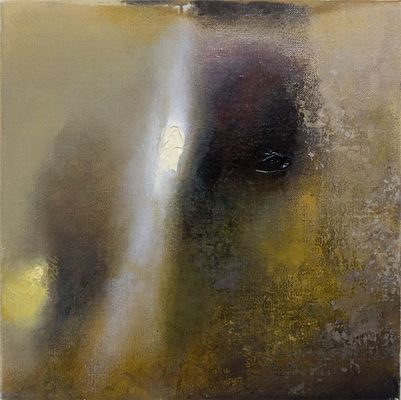
To return to Buckley’s fragment, the first two lines very much evoke how I paint nowadays. As you age, detail diminishes and patches of light become more luminous and float. I feel the most honest way of dealing with this is by smearing the oil paint on the canvas with the fingers and working close-up, blind. Only if the patches coalesce into an approaching image can the work gain a life.
-
Jonathan Walker was born in Melbourne, Australia and brought up on a dairy farm in Gippsland. In the 1970’s he studied painting at RMIT and won the Harold Wright Scholarship to the British Museum, London. During the 1980’s he exhibited at Pinacotheca Gallery, Richmond and had work shown at the NGV and Heidi City Art Gallery. Over the same period he designed the cover for the “Epigenesi” LP by Giancarlo Toniutti, Italy and conducted a mail exchange work with Achim Wollscheid, Germany. The work with artists through the post resulted in an article published in the bicentenary issue of Art and Australia 1988. He showed in artist run spaces such as WestSpace in the 90’s and 2000’s, and until 2012, taught painting at Victoria University, which is where we (Colleen Ahern and Lisa Radford) as organisers of the exhibition, among many others, had the privilege of being his student.
Walker’s knowledge was imparted to students through the careful selection of music, literature, and artists found in books that he himself had ordered for the library. Walker’s strategy was the generosity of sharing his vast knowledge with references specific to each student and their context.
Walker’s paintings share a similar focus and intimacy.
This exhibition presents a small selection of recent paintings alongside a publication that includes Walker’s writing. Observational and analytical, Walker’s work is a type of material notation — the time of day, colour and how it is blended, the both specific and fleeting location of a reflection on lino or the question of whether a chair leg should be included in a painting.
Please join us on Friday August 21 between 6-8pm to celebrate the opening of the exhibition.
Curated by Colleen Ahern and Lisa Radford.
B. Wurtz
Curated by Nic Tammens
March 26 - April 4, 2015
B.Wurtz works from a basement studio in his home on Manhattan’s Lower East Side.
This local fact is attested to by the plastic shopping bags and newsprint circulars that appear in his work. As formal objects, they don’t make loud claims about their origins but nonetheless transmit street addresses and places of business from the bottom of this long thin island. Like plenty of artists, Wurtz is affected by what is local and what is consumed. His work is underpinned by this ethic. It often speaks from a neighborhood or reads like the contents of a hamper:
“BLACK PLUMS $1.29 lb.”
“Food Bazaar”
“USDA Whole Pork Shoulder Picnic 99c lb.”
“RITE AID Pharmacy, with us it’s personal.”
“H. Brickman & Sons.”
“Sweet Yams 59c lb."
Most of the work in this exhibition was made while the artist was in residence at Dieu Donne, a workshop dedicated to paper craft in Midtown. Here Wurtz fabricated assemblages with paper and objects that are relatively lightweight, with the intention that they would be easily transportable to Australia. This consideration isn’t absolute in Wurtz’s work, but was prescriptive for making the current exhibition light and cheap. Packed in two boxes, these works were sent from a USPS post office on the Lower East Side and delivered to North Melbourne by Australia Post.
Wurtz appears courtesy of Metro Pictures, New York.
Thanks to Rob Halverson, Joshua Petherick, Sari de Mallory, Matt Hinkley, Helen Johnson, Fayen d'Evie, Ask Kilmartin, Lisa Radon, Ellena Savage, Yale Union, and "Elizabeth".
John Nixon
"Archive"
December 15 - January 20, 2014
The presentation of John Nixon's archive offered a rare showcase of this extensive collection of the artist's own publications, catalogues, posters, ephemera, editions and more, from the mid 1980s onwards, alongside a selection of his artworks.
Organized by John Nixon, Joshua Petherick and Matt Hinkley.
<a href=http://wfb.public-office.info/artist/john-nixon>All titles by John Nixon
"Habitat"
at Minerva, Sydney (organised by Joshua Petherick and Matt Hinkley)
November 15 - December 20, 2014
Lupo Borgonovo, Janet Burchill & Jennifer McCamley,
Lewis Fidock, HR Giger, Piero Gilardi, Veit Laurent Kurz,
Cinzia Ruggeri, Michael E. Smith, Lucie Stahl, Daniel Weil, Wols
Press Release:
“...It contained seven objects. The slender fluted bone, surely formed for flight, surely from the wing of some large bird. Three archaic circuitboards, faced with mazes of gold. A smooth white sphere of baked clay. An age-blackened fragment of lace. A fingerlength segment of what she assumed was bone from a human wrist, grayish white, inset smoothly with the silicon shaft of a small instrument that must once have ridden flush with the surface of the skin - but the thing’s face was seared and blackened.”
William Gibson, “Count Zero”, 1986
"Autumn Projects Archive"
Curated by Liza Vasiliou
March 6 - March 15, 2014
World Food Books, in conjunction with the Virgin Australia Melbourne Fashion Festival 2014, presented the Autumn Projects archive, consisting of a selection of early examples in Australian fashion with a particular interest in collecting designers and labels from the period beginning in the 1980’s, who significantly influenced the discourse of Australian Fashion.
Curated by Liza Vasiliou, the exhibition provided a unique opportunity to view pieces by designers Anthea Crawford, Barbara Vandenberg, Geoff Liddell and labels CR Australia, Covers, Jag along with early experimental collage pieces by Prue Acton and Sally Browne’s ‘Fragments’ collection, suspended throughout the functioning World Food Books shop in Melbourne.
H.B. Peace
presented by CENTRE FOR STYLE
November 14, 2013
"Hey Blinky, you say chic, I say same"
Anon 2013
H.B. Peace is a clothing collaboration between great friends Blake Barns and Hugh Egan Westland. Their pieces explore the divergences between 'character’ and ‘personality’ in garments....etc
Special Thanks to Joshua Petherick and Matt Hinkley of WFB and Gillian Mears
and a Very Special Thank you to Audrey Thomas Hayes for her shoe collaboration.
Janet Burchill & Jennifer McCamley
"Aesthetic Suicide"
May 10 - June 8, 2013
The first of our occasional exhibitions in the World Food Books office/shop space in Melbourne, "Aesthetic Suicide" presented a body of new and older works together by artists Janet Burchill & Jennifer McCamley, including videos, prints, a wall work, and publications.
During shop open hours videos played every hour, on the hour.
1977, Dutch
Hardcover (w. printed cloth-binding), 160 pages, 31 x 25 cm
Signed 1st Edition, Out of print title / Used*,
Published by
Holkema & Warendorf / Bussum
$700.00 - In stock -
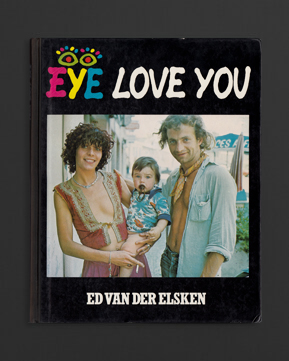
Rare first edition, signed by Ed Van Der Elsken!
"Eye Love You. Mensenboek, vrouwen-, mannenboek, libido-, sex-, liefdes-, vriendschapsboek. Boek van geluk, verdriet, lijden, dood, strijd, moed, vitaliteit. door: Ed van der Elsken"
"Eye Love You. People book, women's-, men's book, libido, sex- , of love-, friendship book. Book of happiness, sadness, suffering, death, struggle, courage, vitality. yours: Ed van der Elsken"
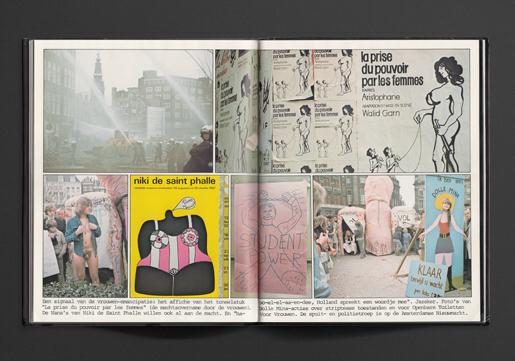
True first edition copy (with cloth-spine) of this, his first full-colour photo book, "Eye Love You" was published by Van Holkema & Warendorf, Bussum, in 1977 and features page after page of van der Elsken's colourful, intimate and often confrontational photography and texts from all over the world. Like a travelogue of his encounters across Africa, India, Paris, Amsterdam, etc. in protest, famine, ritual, commune, celebration, mourning, and all in-between, it encompasses exactly what van der Elsken's inscription inside states, "Book of happiness, sadness, suffering, death, struggle, courage, vitality".
A truly special photo book from the 1970's.
This copy is signed by Ed Van Der Elsken himself, with a press-clipping pasted into the front endpapers.
Design by Wim Crouwel, Total Design.
Eduard "Ed" van der Elsken (10 March 1925 – 28 December 1990) was a renowned Dutch photographer and filmmaker. His imagery provides quotidian, intimate and autobiographic perspectives on the European zeitgeist, spanning the period of the Second World War into the 1970's in the realms of love, sex, art, music (particularly jazz), and alternative culture.
The life of photographer, filmmaker, artist and world traveler Ed van der Elsken was connected intimately with his work. He did not hide behind the camera, but used it to get in touch with the people he preferred to photograph: eccentric characters in the large metropolises, often belonging to the lower strata of society.
Good-Very Good copy (signed by Ed Van Der Elsken on title page in red marker on white sticker, small amount of cover wear and spotting to first pages and fading to cloth on spine, otherwise tight/clean copy throughout) – All care is taken to provide accurate condition details of used books, photos available on request.
1978, English
Softcover, 24 x 21.5 cm
1st Edition, Out of print title / used / very good
Published by
Harmony Books / New York
$300.00 - Out of stock
Very scarce copy of the only printing of American photographer Joseph Szabo's 1978 cult photo-book "Almost Grown". A masterpiece of intimate photographs capturing a time of innocence and blossoming sexuality, of tenderness and raucousness. Almost Grown celebrates in photographs and poetry the joys and uncertainties of that paradoxical time when we are no longer children and yet are not quite adults. "... an unusual collaboration between teacher and teenager, a funny and romantic look at teenagers looking at themselves. Theirs is a world rarely witnessed by parents. Here is what kids do together - at the beach or the drive-in, during and after school - what they themselves describe as "doing nothing" because it is neither work nor play. In ninety photographs and twenty-five poems written by teenagers in Alan Ziegler's writing workshops, Almost Grown dramatizes and clarifies adolescence, making it familiar, sensual, and charged with the shock of recognition." - Joseph Szabo
Foreword by Cornell Capa. Poetry collected by Alan Ziegler. Designed by Bea Feitler
Joseph Szabo is a teacher, photographer and author. He taught photography and art at Malverne High School on Long Island for 27 years and for over 20 years at the International Center of Photography in Manhattan. His 1978 book, “Almost Grown,” featured many of his students and was acclaimed as one of the “Best Books of the Year” by the American Library Association. In the book’s forward, legendary photojournalist and Founder of the International Center of Photography Cornell Capa, wrote that “…in Szabo’s hands, the camera is magically there, the light is always available, the moment is perceived, seen, and caught.”
Throughout the 80s and 90s, “Almost Grown” attained cult classic status in the fashion world, prompting Vogue editor Grace Coddington to notice that “all the young fashion photographers were looking at Joe’s photographs as their bible.”
First edition. Very Good copy, with light edge wear and previous owner's name to first blank.
1987, English
Softcover, 315 pages, 24 x 28 cm
Out of print title / used / good
Published by
The MIT Press / Massachusetts
$65.00 - Out of stock
Long out of print English edition of this phenomenal book, published in 1987 by The MIT Press.
These five hundred photographs are a unique and exuberant record of Bauhaus activities and experiments during the 1920s and early 1930s. Significantly, most of the photographs were taken by artists-painters like Fritz Kuhr and Werner Siedhoff, designers Heinz Loew and Herbert Bayer, Bauhaus masters Hannes Meyer and Joosst Schmidt - who were not self-conscious photographers but who wanted to work with a new technological product. The results constitute the largest and most comprehensive photographic archive currently available on the Bauhaus, supplementing visual material already published in Hans Wingler's monumental Bauhaus and presenting the school's more human side. Some of these photographs have never been published, while others have not been published since the period in which they were made.
Part I consists of over 100 "artistic" images, a listing of Bauhaus photography exhibits, an example of a Dessau Bauhaus lesson plan, including photography, and essays on various aspects of photography by Peterhans, Moholy, Vordemberge-Gildewart, Ernst Kallai, Fritz Kuhr, Willi Baumeister, Adolf Behne, Max Burchartz, Will Grohmann, and Ludwig Kassack. There is also a section on the use of photography with typography. Part II is a Bauhaus album - nearly 400 illustrations of applied photography documenting the Bauhaus buildings, classroom projects, or day-today activities of students and faculty.
Egidio Marzona has assembled the world's foremost collection of works on paper documenting the revolutionary efforts of the Bauhaus. Marzona is also a well-known publisher of books on Russian Constructivism, Futurism, De Stijl, Dadaism, and a host of other movements and figures of the 20th-century avant-garde.
1966, English
Softcover, 148 pages, 21.5 x 22.5 cm
1st Edition, Out of print title / used / good
Published by
LACMA / Los Angeles
$55.00 - Out of stock
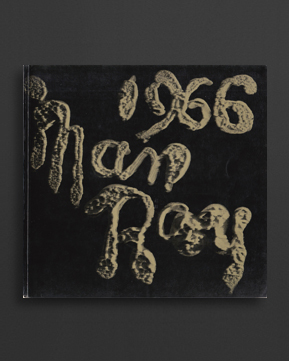
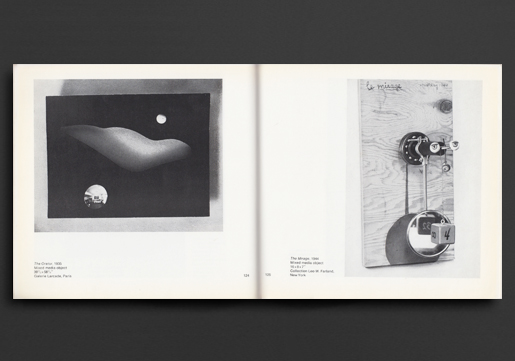
The great catalogue for a major exhibition held in Los Angeles in 1966 on the work of Man Ray. Published by LACMA for the occasion, this 148 page English catalogue is very generous in its content, with reproductions of much of Man Ray's work across painting, sculpture and photography, amongst much more, it also features an introduction byJules Langsner, Man Ray's writings on his own work and observations, texts about Man Ray by his friends (Paul Éluard, Marcel Duchamp, André Breton, Rrose Sélavy, Tristan Tzara, Hans Richter), plus other texts, catalogue of the exhibition, Chronology, Major Exhibitions, and Selected Bibliography.
Good-Very Good copy.
1988, English
Softcover (french-folds), 34 x 25 cm
1st Edition, Out of print title / used / good
Published by
Terrazzo / Milan
$100.00 - Out of stock
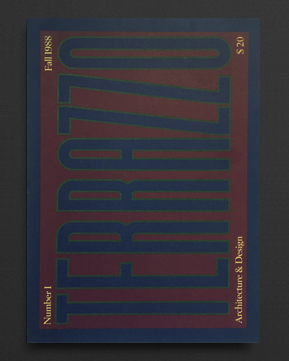
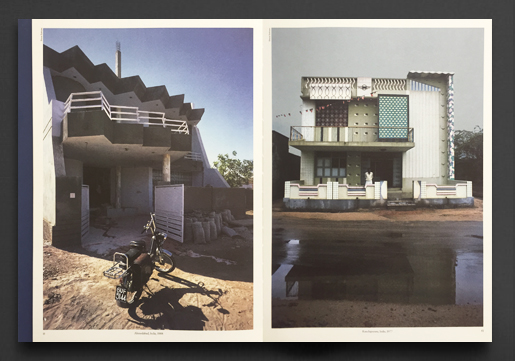
TERRAZZO was a very special biannual publication on architecture and design, edited and published between 1988–1995 by Barbara Radice, a prominent Italian author, design critic and member of the Memphis Milano design group. In conjunction with Ettore Sottsass, Christoph Radl, Anna Wagner and Santi Caleca, Radice created a unique and thoughtful periodical that focused on contemporary works of design and architecture, within Italy and abroad, touching on a vast array of disciplines in each issue, including photography, literature, poetry, history, science, philosophy, art and anthropology.
TERRAZZO 1
Fall 1988
MICHELE DE LUCCHI
new drawings
MASSIMO IOSA GHINI
things must pass
JOHNNY PIGOZZI
architecture from the sky
THE SECOND MODERNITY
by Andrea Branzi
TRAVEL NOTES
by Ettore Sottsass
on architecture
photographs by Ettore Sottsass
OUTSIDE THE AVANT-GARDE
by Herbert Muschamp
MARMORA ROMANA
by Romiero Gnoli
PLANS (No. 1)
Sumer, Egyptian, Greek, Roman, Indian
2017, English
Hardcover (w. dust jacket), 184 pages, 20.3 x 26.7 cm
Published by
Yale University Press / New Haven
$80.00 - Out of stock
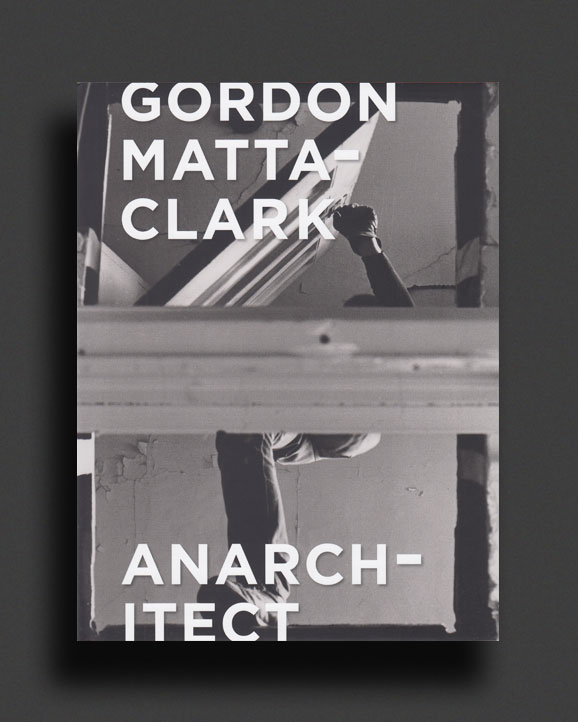
"Undoing is just as much a democratic right as doing."---Gordon Matta-Clark
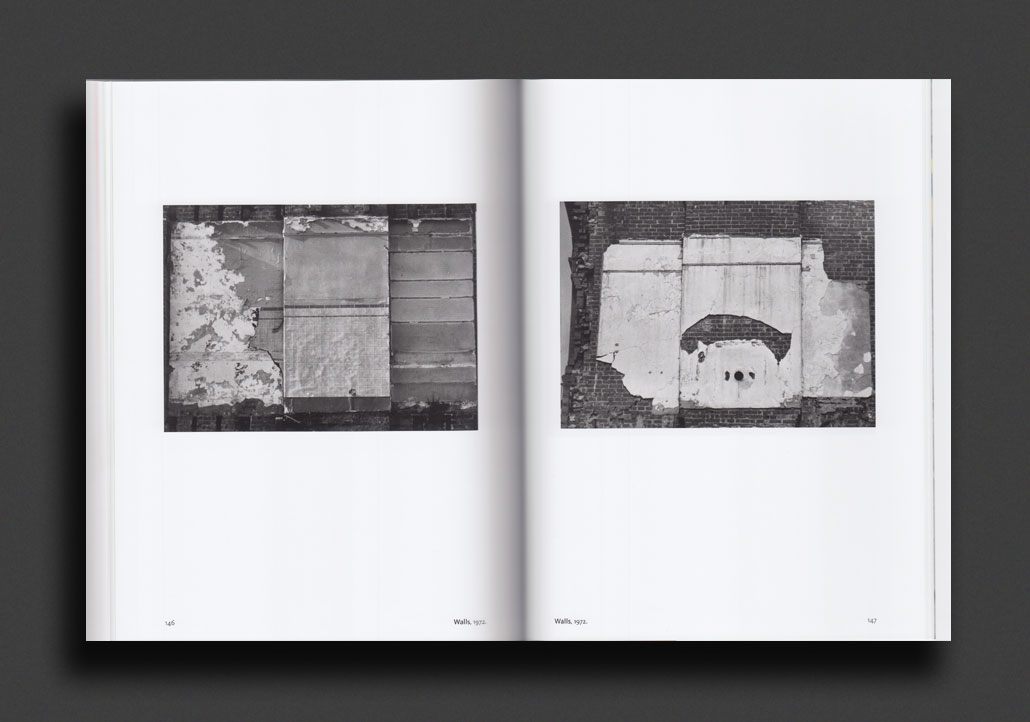
This revealing book looks at the groundbreaking work of Gordon Matta-Clark (1943–1978), whose socially conscious practice blurred the boundaries between contemporary art and architecture. After completing a degree in architecture at Cornell University, Matta-Clark returned to his home city of New York. There he employed the term “anarchitecture,” combining “anarchy” and “architecture,” to describe the site-specific works he initially realized in the South Bronx.
The borough’s many abandoned buildings, the result of economic decline and middle-class flight, served as Matta-Clark’s raw material. His series Cuts dissected these structures, performing an anatomical study of the ravaged urban landscape. Moving from New York to Paris with Conical Intersect, a piece that became emblematic of artistic protest, Matta-Clark applied this same method to a pair of 17th-century row houses slated for demolition as a result of the Centre Pompidou’s construction. This compelling volume grounds Matta-Clark’s practice against the framework of architectural and urban history, stressing his pioneering activist-inspired approach, as well as his contribution to the nascent fields of social practice and relational aesthetics.
1972, Japanese
Softcover (staple-bound), 8 pages,
1st Edition, Out of print title / used / very good
Published by
Jiyugaoka Gallery / Tokyo
$55.00 - In stock -
Incredibly scarce Japanese Mario Ceroli catalogue, published on the occasion of an exhibition at Jiyugaoka Gallery, Tokyo in 1972. Opens with texts (in Japanese) "Hommage a Ceroli" by architect Tadashi Yokoyama, and "Art Manufacture of Ceroli" by Nobuji Abuku, director of Jiyugaoka Gallery. Focussing primarily on Ceroli's editioned works, all fourteen exhibited works are illustrated and listed, along with an exhibition history and portrait.
Very Good copy with light ageing.
Mario Ceroli is an Italian sculptor, educated at the Academy of Fine Arts in Rome. He began his career realising ceramic sculptures, but his interest soon migrated towards Pop Art and the creation of his first wooden silhouettes. In the 1960s, he was already considered one of the great masters of Italian Pop Art and Arte Povera, becoming a very prominent contributor to the reformulation of the artistic language of that time and to the development of installation art in Italy. Ceroli’s production features natural and humble materials, particularly untreated wood, but also fabric, plastic or aluminium, sometimes polychrome and serialised. In 1966 he achieved international recognition with a prize at the Venice Biennale for the Cassa Sistina, an architectonic work conceived as an open relationship with the public and marking a transition into an art that engaged with the environment. In 1967-1968 he exhibited heavily alongside other artists associated with the Arte Povera and Italian Pop Art movements. Ceroli’s interest in various disciplines led him to transcend the boundaries of the mere work of art, and to explore how it interacts with other fields, such as architecture or theatre. He undertook the decoration of many public spaces and to this day works as a theatre set designer, cooperating with the likes of Teatro Stabile in Turin (1968) and La Scala in Milan (1971).
2018, English
Hardcover (w. dust jacket), 304 pages, 24.1 x 29.8 cm
Published by
Yale University Press / New Haven
$85.00 - Out of stock
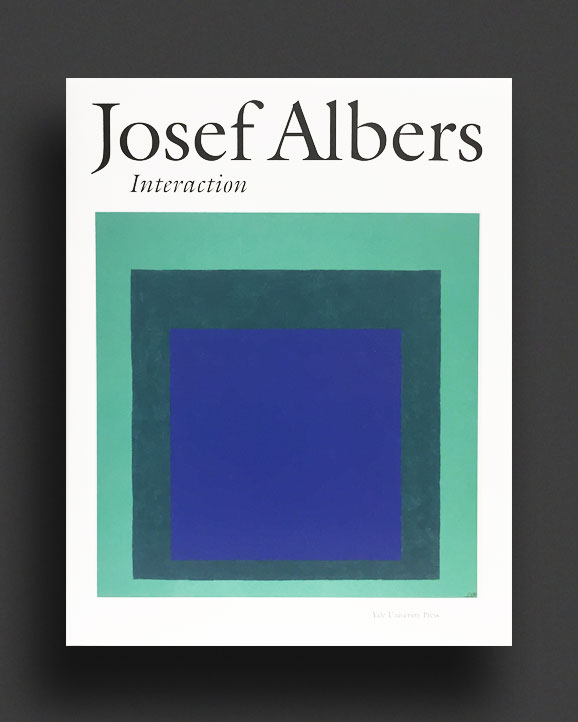
"Only appearances are not deceiving." - Josef Albers
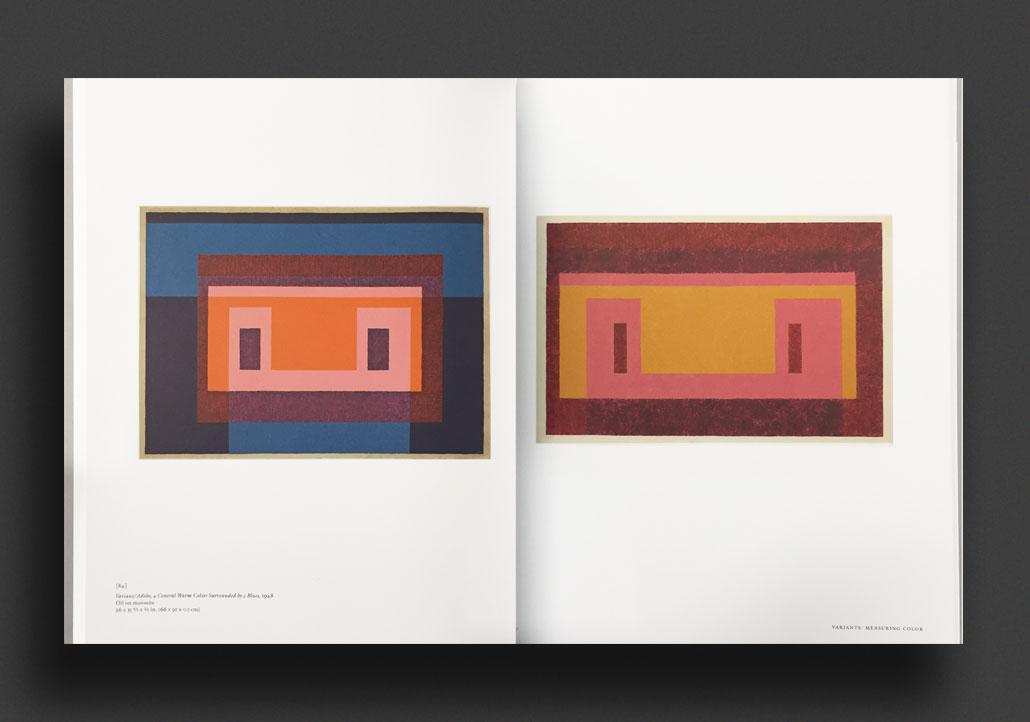
Josef Albers (1888-1976) was one of the leading pioneers of 20th-century modernism: he was an extraordinary teacher, writer, painter, and color theorist, who is best known for the Homages to the Square (painted 1950-76) and The Interaction of Color, published by Yale University Press in 1963.
This generously illustrated overview of Albers's work, accompanying the first major exhibition on the artist in more than thirty years, features all aspects of his long, creative career. Beginning with Albers's time at the Bauhaus in Weimar and Dessau, the publication follows the artist to America and describes major themes of his work there as well as the importance of his frequent travels to Mexico. Paintings, prints, furniture, household objects, works in glass, photographs, and pre-Columbian sculptures are beautifully reproduced and discussed by a team of experts. The juxtaposition of Renaissance sculptures and icons with paintings by Albers underlines the intellectual and spiritual dimensions of his art, and Albers's influence on 1960s Minimalist art is also explored.
Including a comprehensive biography, the book convincingly demonstrates how this great artist transformed modern design by using line, color, surface, and space to challenge the perception of the viewer.
2019, English
English, 208 pages, 20.4 x 26.9 cm
Ed. of 600,
Published by
Westphalie Verlag / Vienna
$42.00 - Out of stock
Contributions by Kerstin Stakemeier, Stephan Dillemuth, Amy Lien and Enzo Camacho, Georgie Nettell, Mark von Schlegell, Tonio Kröner, Jenny Nachtigall, et al. Reprints of Rachel Carson and Nora K. Jemisin.
Published after the occasion of the workshop "Postapokalyptische Seibst-reflexion/Postapocalyptic Self-Reflection," May 20-21, 2016, University of Applied Arts Vienna and the Department of Art History, University of Vienna
Concept: Barbara Reisinger and Tanja Widmann (www.postapokalypse.com)
Editors: Laura Preston and Tanja Widmann
Graphic design: David Jourdan
2 cover versions.
2017, English
Softcover, 68 pages, 12 x 17 cm
Ed. of 580,
Published by
Westphalie Verlag / Vienna
$16.00 $5.00 - Out of stock
A dying tooth is constantly palpated by one's tongue and examined with exaggerated movements while looking at it in the mirror. lt feels allegorical, uncanny, and cartoonish. While daily life is perceived increasingly congruent with horror and caricature, gorily severed limbs and turning into cartoons are far from being new effects in bodies under abstraction. They are just more and more commonly experienced. How then express the waking dream of being simultaneously a constellation of estranged body parts and
an extremely malleable, closed shape? This volume outlines these palpations and wry mirror angles in an assembly of paper and ink.
Texts by Tonio Kröner, Vanessa Place, Simon Thompson, and Keaton Ventura.
Design by David Jourdan.
Published by Westphalie Verlag, Vienna, in an edition of 580 copies.
2018, English / German
Hardcover, 198 pages, 28 x 21.5 cm
Published by
Walther König / Köln
$68.00 - Out of stock
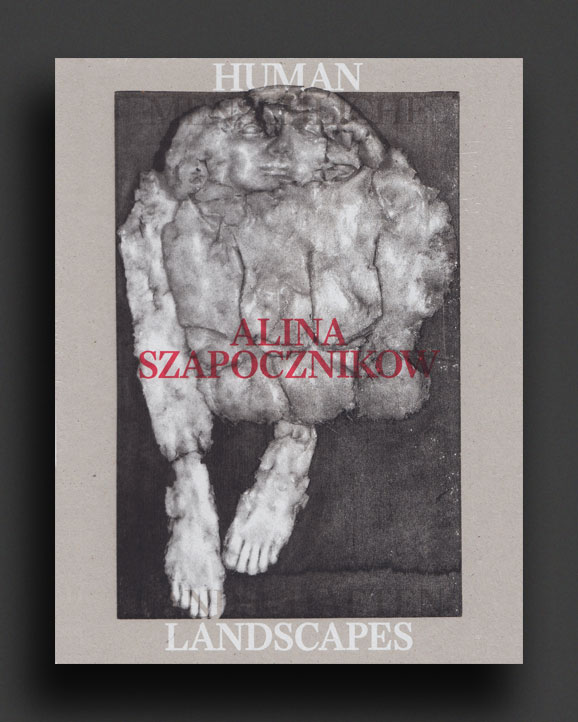
Alina Szapocznikow (1926–1973) created an extensive and expressive oeuvre, in which she was intensively concerned with the human body, right up to her untimely death.
In her sculptures, photographs and drawings she divided female bodies in particular into fragments such as lips, breasts, stomachs and limbs, to put them back together again in new ways and to integrate them as traces in her work. Her own body often found its way into the work in the form of casts.
Having previously worked with classical materials such as bronze, she began to experiment with new materials such as polyester after arriving in Paris and mixing with the circle of Nouveaux Réalistes artists.
With this she revolutionised the expressive possibilities of sculpture. This catalogue traces this artistic development by means of work from between 1954 and 1973, from early figurative sculptures to the ‘awkward objects’ which are strongly influenced by surrealism and pop art.
Published on the occasion of the exhibition, Alina Szapocznikow: Human Landscapes at The Hepworth, Wakefield (21 October 2017 – 28 January 18), and at Staatliche Kunsthalle, Baden-Baden (20 July – 7 October 2018).
English and German text.
2019, English / Swedish
Softcover, 172 pages, 23.5 x 17 cm
Published by
Moderna Museet / Stockholm
Koenig Books / London
$68.00 - Out of stock
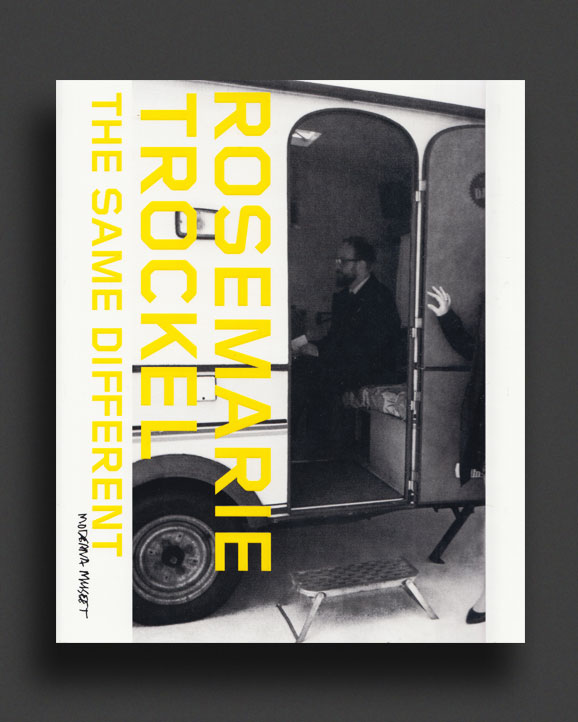
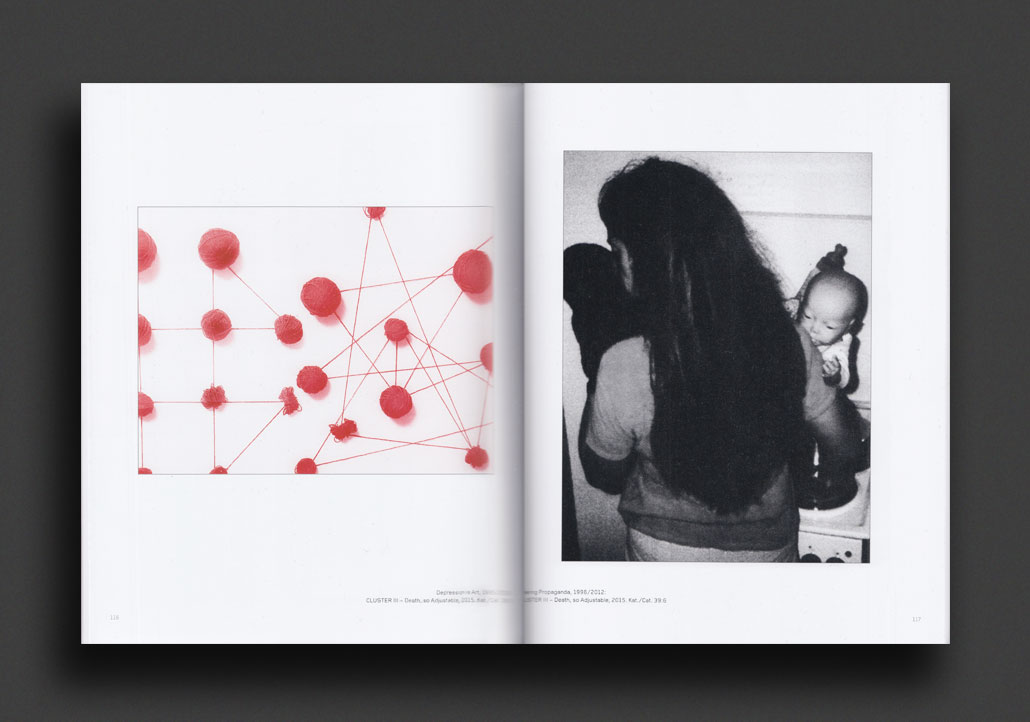
New lavishly illustrated monographic catalogue published on the occasion of the exhibition Rosemarie Trockel: The Same Different at Moderna Museet, Stockholm (29 September 2018 – 10 March 2019).
Rosemarie Trockel’s breakthrough came in the 1980s, and ever since she has been critically examining art, the structures of society, and gender roles with analytical acuity and humour and with a sensuality that is all her own. Anyone who looks for a recognisable style in her work is looking in vain. She evades anything that might lock her down and confine her. The catalogue allows the reader to follow the artist’s career from her feminist examinations of the 1990s to later works in which she addresses issues of animal ethics, artistic processes, and what art can be. Published on the occasion of the exhibition Rosemarie Trockel: The Same Different at Moderna Museet, Stockholm (29 September 2018 – 10 March 2019).
English and Swedish text.
Co-published by Koenig Books and Moderna Museet.
2013, English / Spanish
Softcover (w. dust jacket and booklet insert), 164 pages, 300 x 235 mm
Published by
Walther König / Köln
$74.00 - Out of stock
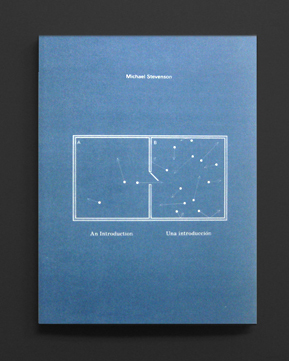
A plane is lodged in the Portikus attic to be seen across the river.
In keeping with Stevenson’s commitment to producing objects that animate historical narratives, often as replicas, facsimiles or architectural re-constructions, the object will be transformed into an image through the very fragile and the most minute effects of optical lenses and mirrors, so that it appears in the main exhibition space.
Published on the occasion of Stevenson's exhibitions at Portikus, Frankfurt, and Museo Tamayo Arte Contemporáneo, Mexico City in 2012
English and Spanish text by authors: Nikolaus Hirsch, Carmen Cuenca, Sophie von Olfers, Magnolia de la Garza, Roberto Bolaño, Giovanni Intra, José de Jesús Martínez, Marilyn Strathern, Michael Taussig, Laura Preston, Mark von Schlegell, and Jan Verwoert.
With supplement publication, Teoria del Vuelo; José de Jesús Martínez Publication, a 42 page reprint of the original Spanish document compiled with a new English translation
2018, English and Italian
Softback, 338 pages, 24 x 17 cm
Published by
Walther König / Köln
$60.00 - Out of stock
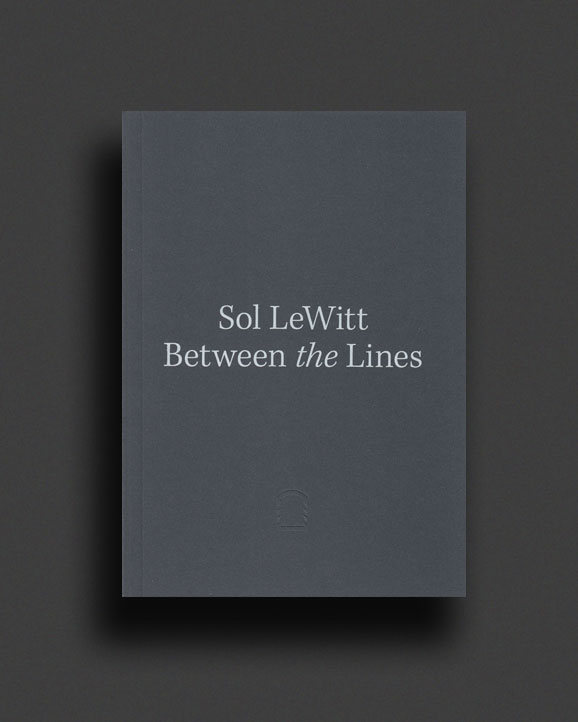
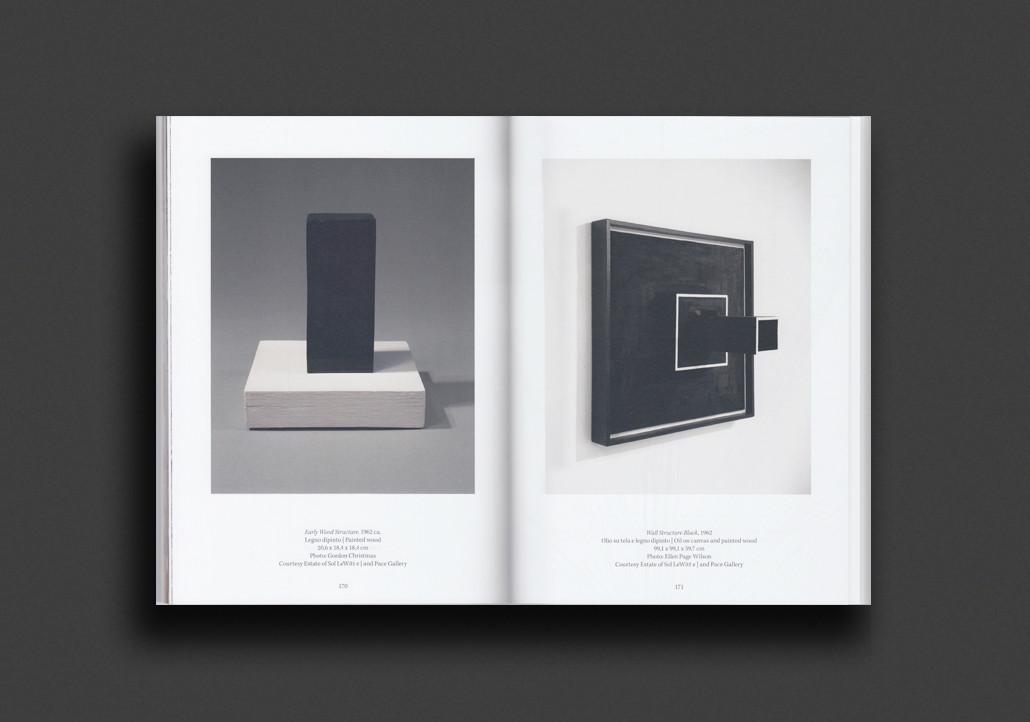
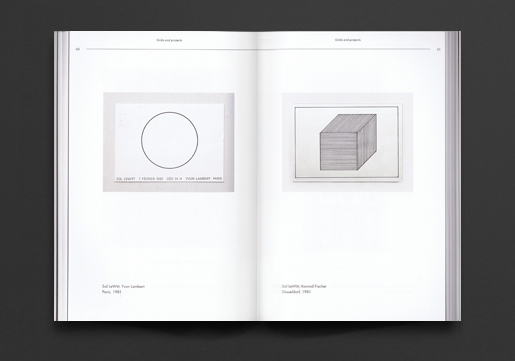
This catalogue gathers images of the works installed at the Foundation Carriero (Milan) and a previously unpublished biography on LeWitt, illustrated with personal and archive images, many of which have never been seen before and compiled for the publication by Sofia LeWitt, the artist’s daughter.
One decade after the death of Sol LeWitt the exhibition, Between the Lines aims to offer a new perspective on the American artist’s practice, exploring its confines — though always adhering to the underlying norms and principles of his ideas — and singling-out the most interesting moments of the method of investigation and the processes that may arise.
Curated by Francesco Stocchi and renowned architect Rem Koolhaas (his first time as curator) in close partnership with the Estate of Sol LeWitt, the exhibition is based on a powerful and innovative key to interpretation, aimed above all at reformulating the idea that a work must adapt to the architecture, thereby challenging the very notion of site-specificity.
Between the Lines aims to move beyond the division that traditionally separates architecture and art history and which characterizes the artist’s entire body of work, aimed more at the process than at the final result, free from any aesthetic or idealist opinion.
Published on the occasion of the exhibition, Sol LeWitt: Between the lines at Fondazione Carriero, Milan (17 November 2017 – 24 June 2018).
English and Italian text.
2016, English / Italian
Softcover, 128 pages, 17 x 24 cm
Published by
Danilo Montanari Editore / Ravenna
$56.00 - Out of stock
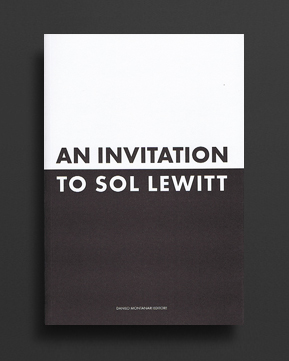
This book presents notices and announcements of exhibitions and editions by one of conceptual art’s foremost practitioners, Sol LeWitt. Covering a period from the 1970s through the early 2000s, it explores a long history of the artist’s shows through numerous reproductions of notices, invitations, posters, and more, reflecting the intense and multifaceted investigation carried out by LeWitt across every realm of visual art. Several of the informational objects presented here were designed by the artist himself, while other selections testify to the universal scope of his work in terms of presentation and appreciation alike. A fascinating look at themes and relevance in his oeuvre.
2018, English
Softcover, 304 pages, 19.4 x 27.9 cm
Published by
Koenig Books / London
$75.00 - Out of stock
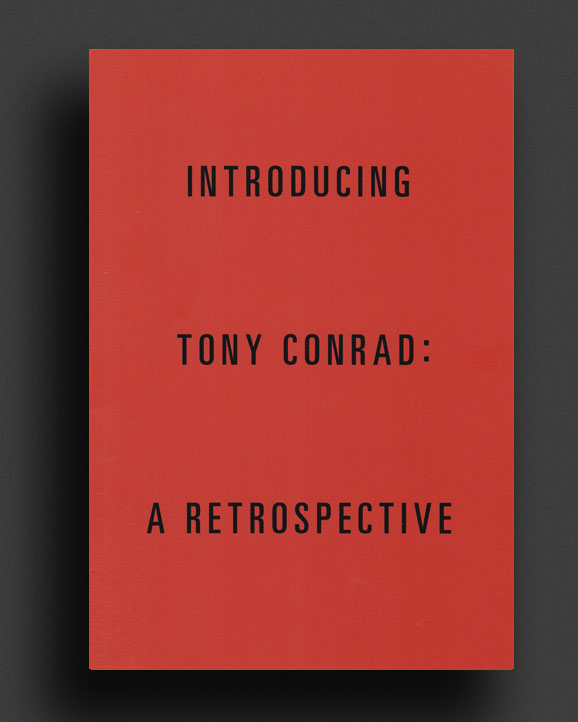
Edited with text by Cathleen Chaffee. Text by Rachel Adams, Vera Alemani, Constance DeJong, Diedrich Diederichsen, Anthony Elms, David Grubbs, Henriette Huldisch, Branden W. Joseph, Andrew Lampert, Christopher Müller, Annie Ochmanek, Tony Oursler, Tina Rivers Ryan, Jay Sanders, Paige Sarlin, Christopher Williams.
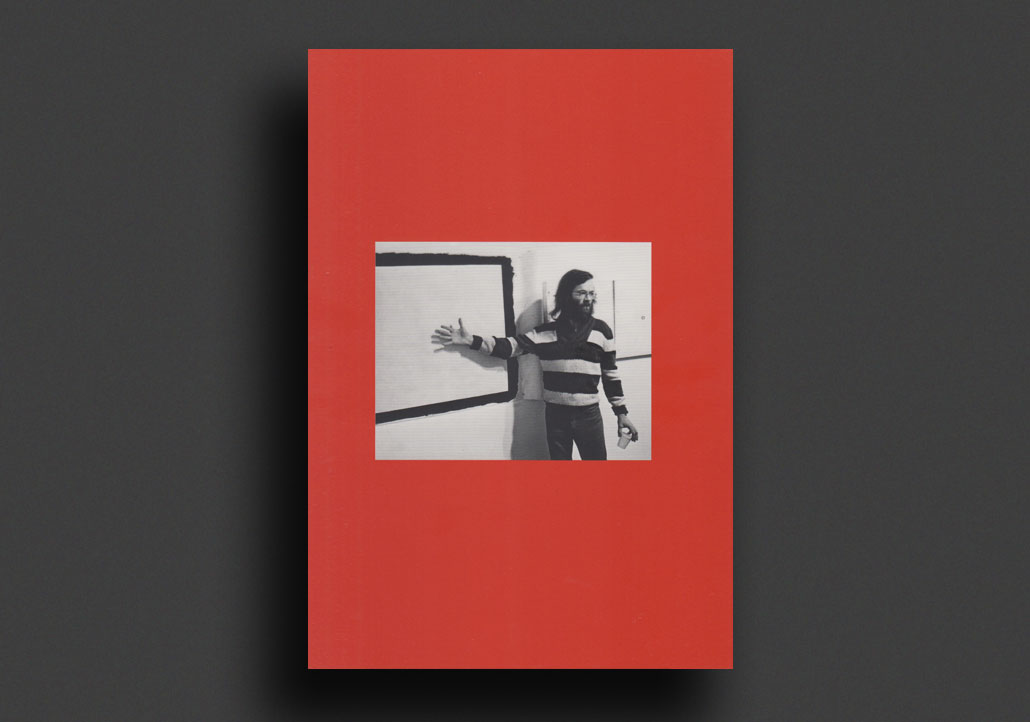
Tony Conrad (1940-2016) was a pioneering American avant-garde video artist, experimental filmmaker, musician, composer, sound artist, teacher, and writer.
Throughout his six-decade career he forged a unique path through numerous artistic movements and defined a vast range of culture, including rock music and public access television.
In music, Conrad was an early member of the Theatre of Eternal Music (The Dream Syndicate), which included John Cale and La Monte Young. In the early 1960s he was also influential in the origins of the iconic band, The Velvet Underground. In film, Conrad was associated with the Structuralist movement which included filmmakers such as Paul Sharits and Hollis Frampton.
This richly illustrated catalogue offers an in-depth introduction to Conrad’s life and career: presenting his early Structuralist films projects in which he treated film as a sculptural and performative material; his Invented Acoustical Tools which presented as sculptures themselves; the ambitious films about power relations, set in the military and in prison; and his final sculptures and installations, which evoke and critique what he perceived as an emerging culture of surveillance, control, and containment.
This book also includes Conrad’s own writings writings from 1966 to 2016, as well as texts by curators, theorists and notable artists such as Tony Oursler, Christopher Müller, and Christopher Williams.
Accompanying the exhibition, Introducing Tony Conrad: A Retrospective at Albright-Knox Art Gallery, Buffalo, New York (2018), MIT List Visual Arts Center and Carpenter Center for Visual Arts, Harvard University (2018/2019), and ICA, University of Pennsylvania (2019).
2004, English / German
Hardcover (w. dust-jacket), 200 pages, 24 x 32 cm
1st Edition, Out of print title / used / very good
Published by
Sternberg Press / Berlin
$120.00 - Out of stock
The fantastic long out-of-print first major monograph on influential German fashion designer, Bernhard Willhelm! First and only printing by Sternberg Press, from 2004.
Edited by Vanessa Joan Müller and Nicolaus Schafhausen for Ursula Blickle Stiftung
Text by Ingeborg Harms, foreword by Nicolaus Schafhausen
This book provides an exemplary look at the work of Bernhard Willhelm (*1972), the German fashion designer whose sartorial skills have been hailed by both the fashion industry and the art world. Willhelm, who studied in Antwerp and is now working in Paris, draws inspiration from contemporary fashion culture as well as from his country’s traditional clothing style, the German folklore costumes which he reiterates and deconstructs in his work. This deliberate and unconventional approach to an otherwise conservative Heimat reservoir distinguishes him from other stars in the international fashion industry. The texts discuss Willhelm’s innovative take on his native turf, as well as the impact of contemporary photography and pop culture on designers and artists alike. Fully conceived by the designer, this book documents Willhelm’s most important projects and collections.
“Many designs are characterized by childlike motifs and are regressive in a pronouncedly friendly way. They take a stand against an adult world shaped by obligatory dress codes that put the selection of what is to be worn under social control and separate ‘correct’ clothing from false. ... [His] designs therefore cause consternation also because they create a gently ironic parallel world to those low-life products which presumably are too familiar and banal even for fashion victims to be appropriated and recoded as fashion.” Nicolaus Schafhausen
Co-produced by the Ursula Blickle Stiftung.
Good copy with Very Good dust jacket, light library markings to front endpapers.
1991, English / Japanese
Hardcover (w. dusjacket), 200 pages, 26 x 26 cm
1st Edition, Out of print title / used / very good
Published by
G.C. Press / Tokyo
$90.00 - Out of stock
The wonderful "Playoffice" Japanese book published in 1991 that expands on famed Japanese designer Isao Hosoe's "Design and the Trickster" concept. Through a postmodern lens, this profusely illustrated hardcover book spans international ancient and contemporary examples of radical, innovative, and humane design for working, discussing office culture, domesticity, and the sensorial qualities of living design through chapters such as "Nomadic Domesticity", "Erotism" and Office Tabu, "The House as the Antagonist of the Office?", "The Concept of "MA" : Space/Time Quality", "Theatricality in the Office", "The Designer as Trickster" and much more. As well as incredible examples of the environmental work of Isao Hosoe, Ann Mannelli, and Renata Sias, included are many diverse examples from Japanese and African traditional dwellings, Ancient Roma and Egypt, the Maenge people, to the furniture of Andrea Branzi, Gaetano Pesce, Yashiru Asano, Angelo Mangiarotti, Mario Bellini, Ettore Sottsass, Toshiyuki Kita, Shigeru Uchida, Shiro Kuramata, Bruno Munari, Paolo Deganello, Memphis Group, and much more.
"Perhaps the first question that comes to mind is why the name "PLAYOFFICE"? How can these two words possibly have anything in common? Most people would agree that the office environment is one for "work", and that "work" is the contrary to "play" ...Or they might say that "play" connotes a
waste of time, and office efficiency is calculated on the correct use of time... Some might say too, that only children play, or at least those adults who are not serious!...We have another point of view on the subject."
Texts in English and Japanese by Isao Hosoe, Ann Mannelli, Renata Sias; introduction by Masao Yamaguchi. Cover design by Masayoshi Yamamoto
Very Good copy with VG dust jacket and obi strip. Protected in mylar wrap.
Born in Tokyo, Hosoe studied there at Nihon University where he graduated in 1965 with a major in aerospace engineering with a thesis on a human-powered aircraft, followed by a Master in Sciences in 1967. From the same year he moved to Milan where he still lived until his death, mainly collaborating with Alberto Rosselli and Gio Ponti of the Studio Ponti-Fornaroli-Rosselli from 1967 to 1974. In 1985 he founded his own studio Isao Hosoe Design.
1970, English
Hardcover (w. dust jacket), 88 pages, 28 x 22 cm
1st Edition, Out of print title / used / very good
Published by
Rigby / Sydney
$30.00 - Out of stock
First hardcover edition of Kym Bonython's "Modern Australian Painting, 1960/1970", published in 1970. With introductory text by R.K. Luck, this book aims to "display the whole vast panorama of contemporary Australian painting" across 109 colour and b/w illustrations and biographies of artists including Ian Fairweather, John Olsen, Brett Whiteley, John Firth-Smith, Sidney Nolan, Robert Grieve, Fred Williams, Alun Leach-Jones, Michael Johnson, Roger Kemp, Edwin Tanner, Asher Bilu, John Passmore, Vernon Treweeke, Dale Hickey, Emanuel Raft, Albert Tucker, Alan Oldfield, Donald Friend, James Gleeson, Stanislaus Rapotec, Sir William Dobell, Lloyd Rees, Ignacio Marmol, Russell Drysdale, Jacqueline Hick, John Perceval, David Boyd, Leonard French, Jeffrey Smart, Robert Jacks, David Aspen, Anthony McGillick, Ken Reinhard, Sydney Ball, Robert Dickerson, Clifton Pugh, John Brack, John Coburn, Yvonne Audette, Elwyn Lynn, Jon Molvig, Paul Partos, Eva Kubbos, Gareth Sansom, Richard Crichton, and many more.
Very Good in Good dust jacket.
1977, English
Softcover, 56 pages, 23 x 18 cm
1st Edition, Out of print title / used / good
Published by
NFS Press / San Francisco
$600.00 - Out of stock
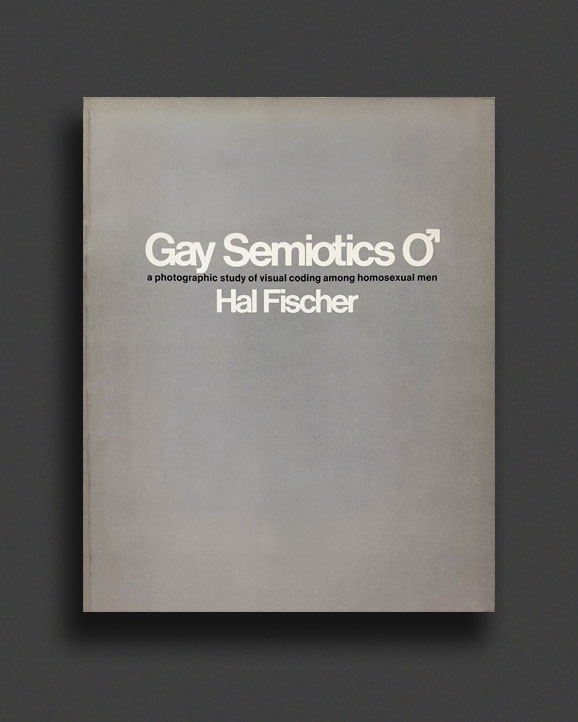
Very scarce first 1977 edition of Hal Fischer's Gay Semiotics: A Photographic Study of Visual Coding Among Homosexual Men (1977), one of the most important publications associated with California conceptual photography in the 1970s. The photographs in Gay Semiotics present the codes of sexual orientation and identification Fischer saw in San Francisco's Castro and Haight Ashbury districts, ranging from such sexual signifiers as handkerchiefs and keys to depictions of the gay fashion "types" of that era--from "basic gay" to "hippie" and "jock." Gay Semiotics also features Fischer's critical essay, which is marked by the same wry, anthropological tone found in the image/text configurations. Fischer's book circulated widely, finding a worldwide audience in both the gay and conceptual art communities. Fischer's insistence on the visual equivalence of word and image is a hallmark of the loose photography and language group that included Fischer, Lutz Bacher, Lew Thomas and others working in the San Francisco Bay Area. First published as an artist's book in 1978 by NFS Press, at a time when gay people had been forced to both evaluate and defend their lifestyles, Gay Semiotics earned substantial critical and public recognition. Thirty-seven years later, the book remains a proactive statement from a voice within the gay community from a moment in history just before the devastation wrought by AIDS.
Hal Fischer (born 1950) grew up in Highland Park, Illinois. He arrived in San Francisco in 1975 to pursue an MA in photography at San Francisco State. He was soon featured in the important group exhibition Photography and Language. Through his work as an art reviewer and photographer, he soon became embedded in the Bay Area's artistic and intellectual scene. He continues to live and work in San Francisco.
First edition, Good copy with general light wear and tanning to page/cover edges.
1969, English
Softcover, 167 pages,
Out of print title / used / very good
Published by
L&S Publishing / Melbourne
$25.00 - Out of stock
Australian edition of the great if.... script book, published by L&S Publishing, Melbourne, in 1969. Profusely illustrated throughout with stills from Lindsay Anderson's landmark of British countercultural cinema, accompanied by the complete script, a preface by Anderson himself, cast and credits, and more.
if.... is a 1968 British drama film produced and directed by Lindsay Anderson satirising English public school life. Famous for its depiction of a savage insurrection at a fictitious boys' boarding school, the X certificate film was made at the time of the May 1968 protests in France by a director who was strongly associated with the 1960s counterculture. The film stars Malcolm McDowell in his first screen role and his first appearance as Anderson's "everyman" character Mick Travis. Richard Warwick, Christine Noonan, David Wood, and Robert Swann also star. if.... won the Palme d'Or at the 1969 Cannes Film Festival. In 1999, the British Film Institute named it the 12th greatest British film of the 20th Century.
Very Good copy.
1983, English
Softcover, 96 pages, 20.6 x 14.5 cm
1st Edition, Out of print title / used / good
Published by
Methuen Publishing / London
$50.00 - Out of stock
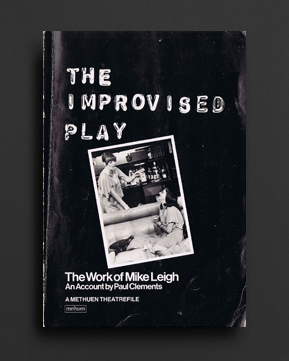
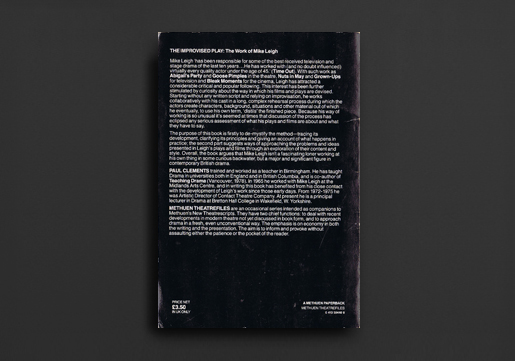
The scarce 1983 paperback "The Improvised Play : The Work of Mike Leigh", written by Paul Clements and dedicated entirely to the work of the great English writer and director of film and theatre, Mike Leigh. Leigh began as a theatre director and playwright in the mid-1960s and in the 1970s and 1980s his career moved between theatre work and making films for BBC Television, many of which were characterised by a gritty "kitchen sink realism" style. Mike Leigh's many works include "Nuts in May"(1975), "Abigail's Party"(1977), "Life Is Sweet"(1990), "Naked"(1993), "Secrets & Lies"(1993), "Vera Drake"(2004),"Mr. Turner"(2014), to name a few. Being the first extensive study of Leigh's early work, this textbook, drawn principally from innumerable conversations and taped interviews with Leigh between 1980-1982, gives the reader an introduction and background to Leigh's beginnings, an in-depth study of his methods and approaches to plays and films, and a valuable appendix (complete checklist of all the plays and films devised and directed by Mike Leigh up until 1983).
First edition. Good copy with cover wear, creasing.
1972, English / Japanese
Softcover (w. original cardboard slipcase), 182 pages, 22.5 cm x 28 cm
1st Edition, Out of print title / Used*,
Published by
A.D.A Edita / Tokyo
$120.00 - Out of stock
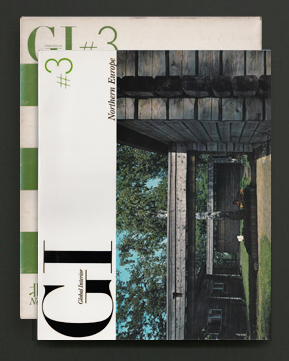
Rare third issue from 1972 (complete with original issue printed slip-case) of this now classic 1970’s architectural series, the great GI (Global Interior) from Tokyo, Japan.
One of the finest interior architecture journal series ever published, GI “The Series of Global Interior” came from the producers of the highly esteemed GA (Global Architecture), GA Document, GA Houses, etc. architectural publications.
GI was produced throughout the 1970’s in a total of ten volumes. Each large volume highlighted a selection of architectural projects by renowned international architects, some volumes focusing on a specific architect entirely, and highlighted their work for houses and domestic spaces.
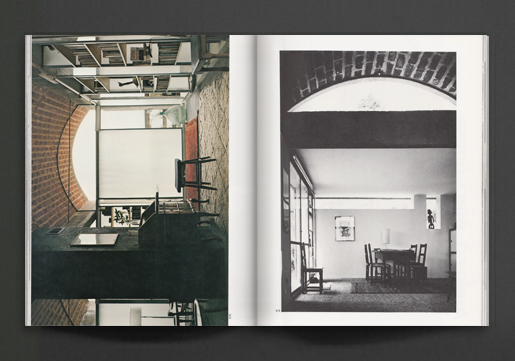
Beautiful architectural photography of house interiors, exteriors and room details of living spaces, along with texts (mostly in Japanese) and floor-plans/elevation drawings make up the profiles on each featured building or environment. The visual generosity of these handsomely designed and printed journals (each more a book than a magazine) make them a treasure for any architecture or interior design enthusiast or collector.
Edited and Presented by Yukio Futagawa
GI Global Interior #3
Northern Europe
1972
Contents include:
Alver Aalto (Villa Mairea), Alver Aalto (Louis Carre House), Toivo Korhonen (Korhonen House), Kaija and Heikki Siren (House on Island Lingonso), Yrjo Kukkapuro (Kukkapuro House), Poul and Hanne (Kjaerholm House), Arne Jacobsen (Siesby House), Arne Jacobsen (Jurgensen House), Jorn Utzon (House along Lake Malaren), Halldor Gunnlogsson (Gunnlogson House), Ralph Erskine (House along Lake Malaren), Sverre Fehn (Schreiner House), Sverre Fehn (Norkoping House), Le Corbusier (Jaoul House), Jean Prouve & J.C.Drouin (Mrs. Jaoul House), Atelier 5 (Citron House), Atelier 5 (Merz House), Egon Eiermann (Eiermann House), Reinhard Gieselmann (Gieselmann House), Gunther Eckert (Eckert House), Colin St. John Wilson (Artist's House in Cambridge), Colin St. John Wilson (Wilson House), James Gowan (Schreiber House), Gerrit Rietveld (Van Slobbe House), Andre Jacqmain (House for an Art Collector)…
Very Good copy preserved in worn slipcase (spine tanning and general wear).
2011, English
Softcover, 72 pages, 180 x 250 mm
Published by
Inverleith House / Edinburgh
$30.00 $15.00 - Out of stock
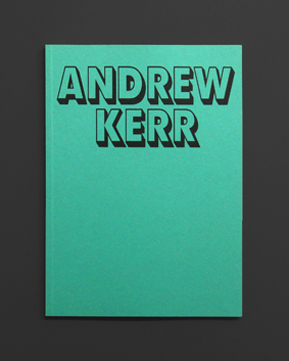
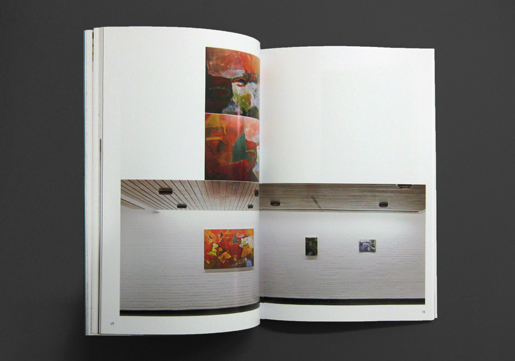
Andrew Kerr at Inverleith House, Royal Botanic Garden Edinburgh.
In 1999, Inverleith House presented an exhibition open to all artists living and working in Scotland, called ‘Absolut Open’. The 29 artists chosen to exhibit were selected from submissions by over 350 artists, spanning several generations and encompassing every artistic medium and style. A few of the artists represented were already well-known at the time, but most were not. One of the strangest and most successful works in the exhibition was a cardboard sculpture made by Andrew Kerr, a young artist who had only just graduated from Glasgow School of Art. It took the form of a ‘cast’ taken from another sculpture – the Garden’s ‘Slate Cone’ (Andy Goldsworthy, 1990; resting on the gallery floor like an upturned carapace it was positioned so that both could be viewed simultaneously by looking out of a window towards the hawthorn tree near which Goldsworthy’s sculpture was sited.
whilst Kerr’s sculpture appeared temporary, inmprovised and possibly even slightly irreverent, both forms demonstated an affinity with nature and culture respectively. Born in 1977, Kerr is one of the younger members of an internationally recognised generation of artists who have made exhibitions for Inverleith House in recent years, including Karla Black, Douglas Gordon, Jim Lambie, Victoria Morton, Tony Swain, Hayley and Sue Tompkins and Cathy Wilkes.
The exhibition will feature new and recent work and is Kerr’s first major museum exhibition in Scotland, following a major solo exhibition in 2009 at the Kunstverein in Bremerhaven, Germany and other recent solo exhibitions in Cologne and Glasgow.