World Food Books' programme is largely produced on Kulin Nation land. We acknowledge the Wurundjeri people of the Kulin Nation as the first and continuing custodians of this land, and pay respect to their Elders past, present, and emerging.
World Food Books is an arts and special interests bookshop in Naarm / Melbourne. Founded in 2010, World Food Books is devoted to the presentation of a rotating, hand-selection of international art, design, literary and counterculture publications with an emphasis on the anti-traditional, the experimental, the avant-garde, the heretic, the marginal.
Presenting new titles alongside rare and out-of-print books, catalogues and journals spanning the fields of modern and contemporary art, design, photography, illustration, film, literature, poetry, cultural theory, philosophy, sexuality, popular and underground culture in its many radical forms, World Food Books wishes to encourage adventurous, thoughtful and open-minded reading, looking, writing, and exchange of publishing and ideas, both current and historical.
As well as our bookshop, located in Melbourne's historical Nicholas Building, all of our inventory is available internationally via our online mail-order service.
World Food Books semi-regularly co-ordinates "Occasions", a programme of exhibits and events at the bookshop and in partnership with other hosts (such as museums and art galleries) that develop out of the activities, relationships and content of the bookshop itself.
World Food Books
The Nicholas Building
37 Swanston Street
Room 5, Level 6
Melbourne 3000
Australia
SHOP HOURS:
Thu–Fri 12–6, Sat 12–5
WEB-SHOP OPEN 24/7
World Food Books
Postal Address:
PO Box 435
Flinders Lane
Victoria 8009
Australia
Art
Theory / Essay
Architecture / Interior
Graphic Design / Typography
Photography
Fashion
Eros
LGBTQ+
Fiction / Poetry
Weird / Speculative / Science Fiction / Horror
Transgressive / Visceral / Abject
Symbolism / Decadence / Fin de siècle
Film / Video
Painting
Sculpture / Installation
Performance / Dance / Theater
Drawing
Sound / Music
Curatorial
Group Shows / Collections
Periodicals
Out-of-print / Rare
Posters / Ephemera / Discs
Signed Books
World Food Books Gift Voucher
World Food Book Bag
Australian Art
Australian Fiction
Australian Science Fiction / Speculative Fiction
Australian Poetry
Australian Photography
Japanese Photography
Conceptual Art
Minimal Art
Dada
'Pataphysics / Oulipo
Fluxus
Concrete Poetry
Pop Art
Surrealism
Arte Povera
Arte Informale / Haute Pâte / Tachism
Nouveau Réalisme / Zero / Kinetic
Situationism / Lettrism
Collage / Mail Art / Xerox Art
Art Brut / Folk / Visionary / Fantastic
Illustration / Graphic Art / Bandes Dessinées
Furniture
Italian Radical Design / Postmodernism
Textiles
Ceramics / Glass
Counterculture
Protest / Revolt
Philosophy
Psychoanalysis
Anthropology
Anarchism
Socialism / Anarchism / Communism / Capitalism
Literary Theory / Semiotics / Language
Feminism / Women's Studies
Gender Studies / Sexuality
Anthropology
Fetishism / BDSM
Drugs / Psychedelia
Crime / Violence
Animal Rights / Veganism
Occult / Esoterica
Ecology / Earth / Alternative Living
Whole Earth / Crafts
All prices in AUD (Australian dollars)
Pick-Ups
Pick-up orders can be collected in our bookshop during opening hours after order date. Please collect any Pick-up orders within 2 weeks of ordering as we have limited storage space. Orders will be released back into stock if not collected within this time. No refunds can be made for pick-ups left un-collected. If you cannot make it in to the bookshop in this time-frame, please choose postage option.
Return Policy
All sales are final. We do accept returns (for refund or exchange) for items received in error. All our orders are packed with special care using heavy-duty padding and cardboard book-mailers or bubble mailers (for smaller books), using reinforcement where required. We cannot take responsibility for any lost, stolen or damaged parcels.
Insurance
Should you wish to insure your package, please email us directly after placing your order and we can organise this at a small extra expense. Although all standard/express tracked packages are very safe and dependable, we cannot take responsibility for any lost, stolen or damaged parcels. We recommend insurance on valuable orders.
Interested in selling your old books, catalogues, journals, magazines, comics, fanzines, ephemera? We are always looking for interesting, unusual and out-of-print books to buy. We only buy books in our fields of interest and specialty, and that we feel we can resell.
We base these prices on desirability, market value, in-print prices, condition and our current stock levels. We offer cash, store credit, and can take stock on consignment. All
about 25% of the price we expect to get when we sell them, or 30% in store credit. We base these prices on desirability, market value, in-print prices, condition and our current stock levels.
Sell your books any day of the week. You can drop them off and return later. If you have a lot of books, we can visit your Sydney home.
We buy books that we feel we can resell. We offer about 25 % of the price we expect to get when we sell them, or 30% in store credit. We base these prices on desirability, market value, in-print prices, condition and our current stock levels.
Philadelphia Wireman
03 August - 01 September, 2018
World Food Books is proud to announce our next Occasion, the first presentation of sculptures by Philadelphia Wireman in Australia.
The Philadelphia Wireman sculptures were found abandoned in an alley off Philadelphia’s South Street on trash night in 1982. Their discovery in a rapidly-changing neighbourhood undergoing extensive renovation, compounded with the failure of all attempts to locate the artist, suggests that the works may have been discarded after the maker’s death. Dubbed the "Philadelphia Wireman" during the first exhibition of this work, in 1985, the maker’s name, age, ethnicity, and even gender remain uncertain. The entire collection totals approximately 1200 pieces, all intricately bound together with tightly-wound heavy-gauge wire (along with a few small, abstract marker drawings, reminiscent both of Mark Tobey and J.B. Murry). The dense construction of the work, despite a modest range of scale and materials, is singularly obsessive and disciplined in design: a wire armature or exoskeleton firmly binds a bricolage of found objects including plastic, glass, food packaging, umbrella parts, tape, rubber, batteries, pens, leather, reflectors, nuts and bolts, nails, foil, coins, toys, watches, eyeglasses, tools, and jewellery.
Heavy with associations—anthropomorphic, zoomorphic, and socio-cultural responses to wrapped detritus—the totemic sculptures by Philadelphia Wireman have been discussed in the context of work created to fulfil the shamanistic needs of alternative religions in American culture. Curators, collectors, and critics have variously compared certain pieces to sculpture from Classical antiquity, Native American medicine bundles, African-American memory jugs, and African fetish objects. Reflecting the artist’s prolific and incredibly focused scavenging impulse, and despite—or perhaps enhanced by—their anonymity, these enigmatic objects function as urban artefacts and arbiters of power, though their origin and purpose is unknown. Philadelphia Wireman, whatever their identity, possessed an astonishing ability to isolate and communicate the concepts of power and energy through the selection and transformation of ordinary materials. Over the course of the past two decades, this collection has come to be regarded as an important discovery in the field of self-taught art and vernacular art.
Presented in collaboration with Fleisher-Ollman Gallery, Philadelphia, and Robert Heald, Wellington.
Susan Te Kahurangi King
02 February - 10 March, 2018
Susan Te Kahurangi King (24 February 1951 - ) has been a confident and prolific artist since she was a young child, drawing with readily available materials - pencils, ballpoint pens and felt-tip markers, on whatever paper is at hand. Between the ages of four and six Susan slowly ceased verbal communication. Her grandparents William and Myrtle Murphy had developed a special bond with Susan so they took on caring responsibilities for extended periods. Myrtle began informally archiving her work, carefully collecting and storing the drawings and compiling scrapbooks. No drawing was insignificant; every scrap of paper was kept. The King family are now the custodians of a vast collection containing over 7000 individual works, from tiny scraps of paper through to 5 meter long rolls.
The scrapbooks and diaries reveal Myrtle to be a woman of great patience and compassion, seeking to understand a child who was not always behaving as expected. She encouraged Susan to be observant, to explore her environment and absorb all the sights and sounds. Myrtle would show Susan’s drawings to friends and people in her community that she had dealings with, such as shopkeepers and postal workers, but this was not simply a case of a grandmother’s bias. She recognised that Susan had developed a sophisticated and unique visual language and sincerely believed that her art deserved serious attention.
This was an unorthodox attitude for the time. To provide some context, Jean Dubuffet coined the term Art Brut in 1945 to describe work created by self-taught artists – specifically residents of psychiatric institutions and those he considered to be visionaries or eccentrics. In 1972 Roger Cardinal extended this concept by adopting the term Outsider Art to describe work made by non-academically trained artists operating outside of mainstream art networks through choice or circumstance. Susan was born in Te Aroha, New Zealand in 1951, far from the artistic hubs of Paris and London that Dubuffet and Cardinal operated in. That Myrtle fêted Susan as a self-taught artist who deserved to be taken seriously shows how progressive her attitudes were.
Susan’s parents Doug and Dawn were also progressive. Over the years they had consulted numerous health practitioners about Susan’s condition, as the medical establishment could not provide an explanation as to why she had lapsed into silence. Dawn educated herself in the field of homeopathy and went on to treat all twelve of her children using these principles – basing prescriptions on her observations of their physical, mental and emotional state.
Doug was a linguist with an interest in philosophy who devoted what little spare time he had to studying Maori language and culture. To some extent their willingness to explore the fringes of the mainstream made them outsiders too but it was their commitment to living with integrity and their respect for individuality that ensured Susan’s creativity was always encouraged.
Even though Susan’s family supported her artistic pursuits, some staff in schools and hospitals saw it as an impediment to her assimilation into the community and discouraged it in a variety of ways. Her family was not always aware of this and therefore did not fully understand why Susan stopped drawing in the early 1990s. However, rather than dwell on the challenges that Susan faced in pursuit of her artistic practice, they prefer to highlight her achievements. In 2008 Susan began drawing again in earnest, after an almost 20 year interruption, and her work is now shown in galleries around the world.
Susan grew up without television and has been heavily influenced by the comics she read as a child. She is absolutely fearless in the appropriation of recognizable characters, such as Donald Duck and Mickey Mouse, in her work. She twists their limbs, contorts their faces, compresses them together, blends them into complex patterned backgrounds - always imbuing them with an incredible energy. Although Susan often used pop culture characters in her work they are not naive or childlike. These are drawings by a brilliant self-taught artist who has been creating exceptional work for decades without an audience in mind.
Mladen Stilinović
"Various Works 1986 - 1999"
02 February 16 - September 10, 2016
Various works 1986 - 1999, from two houses, from the collections of John Nixon, Sue Cramer, Kerrie Poliness, Peter Haffenden and Phoebe Haffenden.
Including: Geometry of Cakes (various shelves), 1993; Poor People’s Law (black and white plate), 1993; White Absence (glasses, ruler, set square, silver spoon, silver ladel with skin photograph and wooden cubes), 1990-1996; Exploitation of the Dead (grey and red star painting, wooden painting, black spoon with red table, red plate), 1984-1990; Money and Zeros (zero tie, paintings made for friends in Australia (Sue, John, Kerrie), numbers painting), 1991-1992; Words - Slogans (various t-shirts) - “they talk about the death of art...help! someone is trying to kill me”, “my sweet little lamb”, “work is a disease - Karl Marx”; Various artist books, catalogues, monographs, videos; Poster from exhibition Insulting Anarchy; "Circular" Croatian - Australian edition; Artist book by Vlado Martek (Dostoyevsky); more.
Thanks to Mladen Stilinović and Branka Stipančić.
Jonathan Walker
Always Will Need To Wear Winter Shirt Blue + Ochre Small Check Pattern
21 August - 21 September, 2015
Untitled
I am not a great reader of poetry but I always return to the work of Melbourne poet, Vincent Buckley (1925- 1988). Perhaps I find his most tantalising piece to be not a finished poem but a fragment left on a scrap of paper discovered on his desk after the poet’s death.
The poetry gathers like oil
In the word-core, and spreads
It has its music meet,
Its music is in movement.
This fragment is more the shell left behind from a volatile thought than a finished poem. I find the last two lines honest but awkward whereas the first two lines work like an arrow. Most likely he could not find a resolution so it was left. Still, in its present form, it remains an eloquent testimony to the ultimate failure of a medium to express mobile thought and sensation, in Buckley’s case, through verbal language. It’s an important matter because this is something all artists have to deal with regardless of the medium.
I have never written a poem, however, I am forever copying fragments from books on paper scraps in a vain effort to fix certain notions in my head. At first, they function as bookmarks that are sometimes returned to when I open the book. But before long, as they accumulate, they fall out littering the table interspersed with A4 photocopies, bills, books and medications.
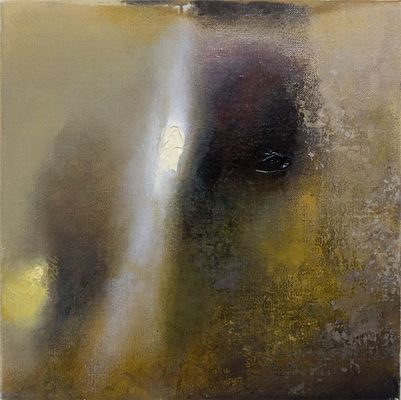
To return to Buckley’s fragment, the first two lines very much evoke how I paint nowadays. As you age, detail diminishes and patches of light become more luminous and float. I feel the most honest way of dealing with this is by smearing the oil paint on the canvas with the fingers and working close-up, blind. Only if the patches coalesce into an approaching image can the work gain a life.
-
Jonathan Walker was born in Melbourne, Australia and brought up on a dairy farm in Gippsland. In the 1970’s he studied painting at RMIT and won the Harold Wright Scholarship to the British Museum, London. During the 1980’s he exhibited at Pinacotheca Gallery, Richmond and had work shown at the NGV and Heidi City Art Gallery. Over the same period he designed the cover for the “Epigenesi” LP by Giancarlo Toniutti, Italy and conducted a mail exchange work with Achim Wollscheid, Germany. The work with artists through the post resulted in an article published in the bicentenary issue of Art and Australia 1988. He showed in artist run spaces such as WestSpace in the 90’s and 2000’s, and until 2012, taught painting at Victoria University, which is where we (Colleen Ahern and Lisa Radford) as organisers of the exhibition, among many others, had the privilege of being his student.
Walker’s knowledge was imparted to students through the careful selection of music, literature, and artists found in books that he himself had ordered for the library. Walker’s strategy was the generosity of sharing his vast knowledge with references specific to each student and their context.
Walker’s paintings share a similar focus and intimacy.
This exhibition presents a small selection of recent paintings alongside a publication that includes Walker’s writing. Observational and analytical, Walker’s work is a type of material notation — the time of day, colour and how it is blended, the both specific and fleeting location of a reflection on lino or the question of whether a chair leg should be included in a painting.
Please join us on Friday August 21 between 6-8pm to celebrate the opening of the exhibition.
Curated by Colleen Ahern and Lisa Radford.
B. Wurtz
Curated by Nic Tammens
March 26 - April 4, 2015
B.Wurtz works from a basement studio in his home on Manhattan’s Lower East Side.
This local fact is attested to by the plastic shopping bags and newsprint circulars that appear in his work. As formal objects, they don’t make loud claims about their origins but nonetheless transmit street addresses and places of business from the bottom of this long thin island. Like plenty of artists, Wurtz is affected by what is local and what is consumed. His work is underpinned by this ethic. It often speaks from a neighborhood or reads like the contents of a hamper:
“BLACK PLUMS $1.29 lb.”
“Food Bazaar”
“USDA Whole Pork Shoulder Picnic 99c lb.”
“RITE AID Pharmacy, with us it’s personal.”
“H. Brickman & Sons.”
“Sweet Yams 59c lb."
Most of the work in this exhibition was made while the artist was in residence at Dieu Donne, a workshop dedicated to paper craft in Midtown. Here Wurtz fabricated assemblages with paper and objects that are relatively lightweight, with the intention that they would be easily transportable to Australia. This consideration isn’t absolute in Wurtz’s work, but was prescriptive for making the current exhibition light and cheap. Packed in two boxes, these works were sent from a USPS post office on the Lower East Side and delivered to North Melbourne by Australia Post.
Wurtz appears courtesy of Metro Pictures, New York.
Thanks to Rob Halverson, Joshua Petherick, Sari de Mallory, Matt Hinkley, Helen Johnson, Fayen d'Evie, Ask Kilmartin, Lisa Radon, Ellena Savage, Yale Union, and "Elizabeth".
John Nixon
"Archive"
December 15 - January 20, 2014
The presentation of John Nixon's archive offered a rare showcase of this extensive collection of the artist's own publications, catalogues, posters, ephemera, editions and more, from the mid 1980s onwards, alongside a selection of his artworks.
Organized by John Nixon, Joshua Petherick and Matt Hinkley.
<a href=http://wfb.public-office.info/artist/john-nixon>All titles by John Nixon
"Habitat"
at Minerva, Sydney (organised by Joshua Petherick and Matt Hinkley)
November 15 - December 20, 2014
Lupo Borgonovo, Janet Burchill & Jennifer McCamley,
Lewis Fidock, HR Giger, Piero Gilardi, Veit Laurent Kurz,
Cinzia Ruggeri, Michael E. Smith, Lucie Stahl, Daniel Weil, Wols
Press Release:
“...It contained seven objects. The slender fluted bone, surely formed for flight, surely from the wing of some large bird. Three archaic circuitboards, faced with mazes of gold. A smooth white sphere of baked clay. An age-blackened fragment of lace. A fingerlength segment of what she assumed was bone from a human wrist, grayish white, inset smoothly with the silicon shaft of a small instrument that must once have ridden flush with the surface of the skin - but the thing’s face was seared and blackened.”
William Gibson, “Count Zero”, 1986
"Autumn Projects Archive"
Curated by Liza Vasiliou
March 6 - March 15, 2014
World Food Books, in conjunction with the Virgin Australia Melbourne Fashion Festival 2014, presented the Autumn Projects archive, consisting of a selection of early examples in Australian fashion with a particular interest in collecting designers and labels from the period beginning in the 1980’s, who significantly influenced the discourse of Australian Fashion.
Curated by Liza Vasiliou, the exhibition provided a unique opportunity to view pieces by designers Anthea Crawford, Barbara Vandenberg, Geoff Liddell and labels CR Australia, Covers, Jag along with early experimental collage pieces by Prue Acton and Sally Browne’s ‘Fragments’ collection, suspended throughout the functioning World Food Books shop in Melbourne.
H.B. Peace
presented by CENTRE FOR STYLE
November 14, 2013
"Hey Blinky, you say chic, I say same"
Anon 2013
H.B. Peace is a clothing collaboration between great friends Blake Barns and Hugh Egan Westland. Their pieces explore the divergences between 'character’ and ‘personality’ in garments....etc
Special Thanks to Joshua Petherick and Matt Hinkley of WFB and Gillian Mears
and a Very Special Thank you to Audrey Thomas Hayes for her shoe collaboration.
Janet Burchill & Jennifer McCamley
"Aesthetic Suicide"
May 10 - June 8, 2013
The first of our occasional exhibitions in the World Food Books office/shop space in Melbourne, "Aesthetic Suicide" presented a body of new and older works together by artists Janet Burchill & Jennifer McCamley, including videos, prints, a wall work, and publications.
During shop open hours videos played every hour, on the hour.
2011, English
Hardcover (w. dust jacket), 128 pages, 12 x 19 cm
Published by
Metroverlag / Vienna
$33.00 - Out of stock
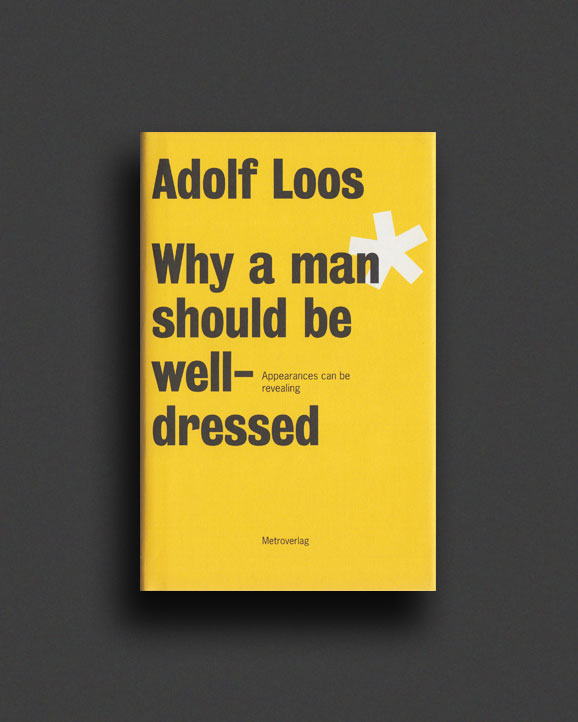
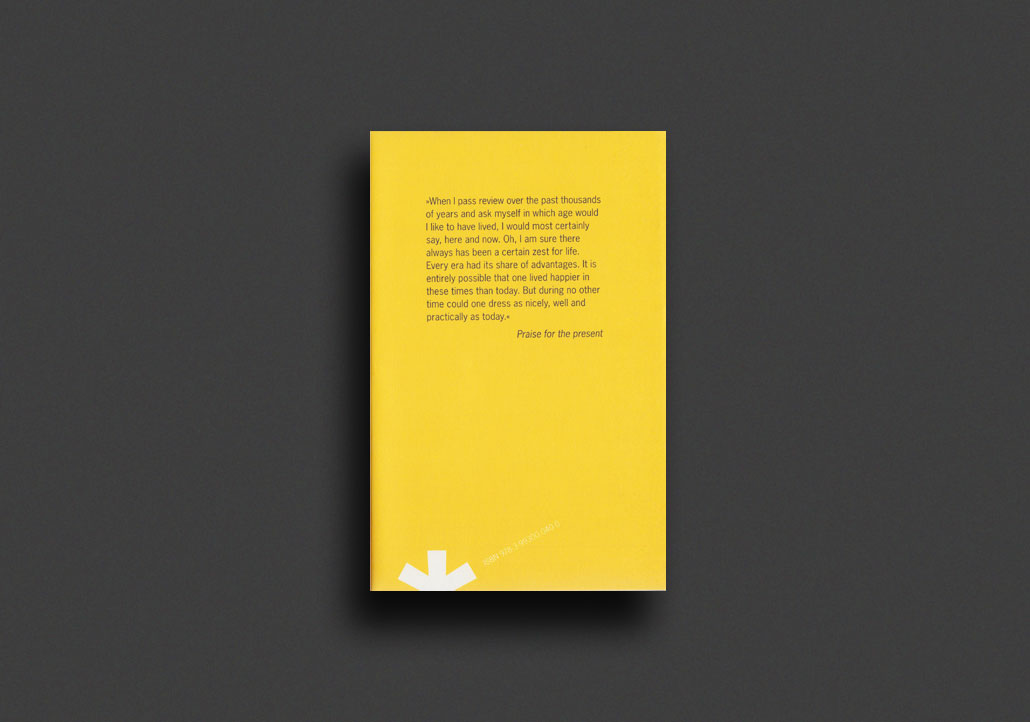
Throughout his life Adolf Loos raised his eloquent voice against the squandering of fine materials, frivolous ornamentation and unnecessary embellishments. His admirers consider him to be the inspiration for all modern architecture. Yet, few are acquainted with his amusing, incisive, critical and philosophical literary work reflecting on applied design and the essence of clothing in fin de siècle Vienna. Adolf Loos often had a radical, yet innovative outlook on life that made him such a nuisance for many of his contemporaries. His provocative musings on many subjects portray him as a man of varied interests and intellectual refinement as well as possessing a keen sense of style, which still has value today. For the first time the ‘Loos Dress Code’ is available in English. Included is a short social/historical look as the birth of Modernism in Adolf Loos’ Vienna.
1972, English
Hardcover, 256 pages, 31 x 23 cm
Published by
New York Graphic Society / New York
Darien House / New York
$50.00 - Out of stock
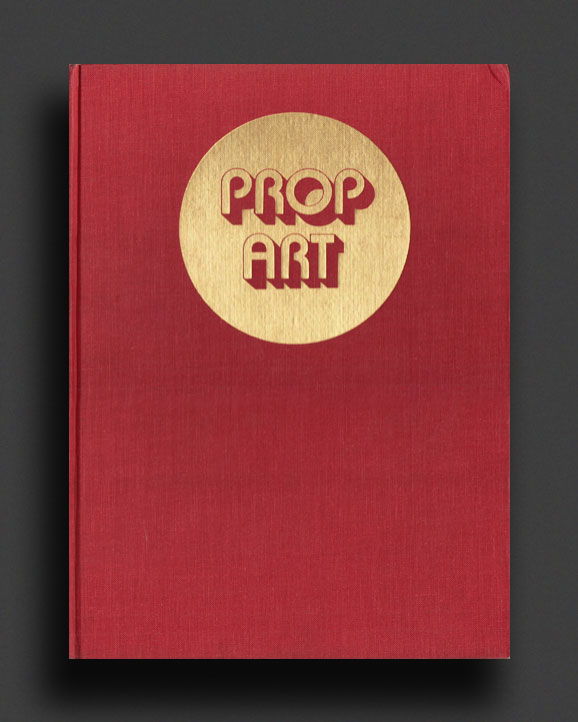
Published in 1972 and now long out of print, this heavy over-sized book details a complete and colourful history of the propaganda poster. Propaganda art - persuasion through visual means - is as old as man. In PROP ART, Gary Yanker examines the recent political poster as a vehicle for conveying the propaganda message. Posters, which can be duplicated on a vast scale or quickly and crudely made by hand, are the cheapest medium for the dissemination of ideas. National governments, political parties, pressure groups of all persuasions, rely on posters for much of their propaganda. Today, thanks largely to the highly visible efforts of students around the world - notably in France, Czechoslovakia, Mexico and the United States - posters have become more widespread than ever. As "cult" objects and as purely decorative designs they appear as frequently in living rooms as on billboards, fostering a new "poster consciousness."
Contents include: Part 1: The propaganda poster: The international propaganda phenomen. Poster literature. Poster types and function. Basic elements of political graphic design. (labelling symbols, right-wing symbols, left-wing symbols) The PLANT approach. Production and distribution (the French student experience,) Poster substitutes (buttons and bumperstickers, the sticker as a sabotage device,) The law and Prop Art. Part 2: The Poster Gallery: Election campaigns 1967-1971. Election campaign issues. Major political events (cultural revolution in China '66 - '69, Greek Junta '67, Arab-Israeli conflict '67 - '71, Assassination of Che Guevara '67, Assassination of Martin Luther King, '68, Paris May revolt, '68, Resurrection City '68, Invasion of Czechoslovakia '68, Cambodian invasion '70, Rockefeller's visit to South America '68, Nationalization of the copper mines in Chile '71) major political themes (Vietnam, Liberation : blacks, Puerto Ricans, women, Indians; ecology, communist celebrations,) Minor themes (peace, Cuba, anti-establishment, the army Nixon, solidarity, free all political prisoners), Poster substitutes: buttons, patches, bumperstickers, stickers. Includes the SO WHAT newspaper cover with moon landing, Hippie pissing on stockbroker, Alfred E. Neuman as Uncle Sam: Who Needs YOU?, lots of tricky D. & Spiro, white power bumper stickers, "win with Dick" bubble gum cigar box. An amazing collection in one book!
Very Good copy w/o dust jacket.
2018, English
Hardcover, 400 pages, 23 x 31 cm
Published by
Self Service / Paris
$57.00 - Out of stock
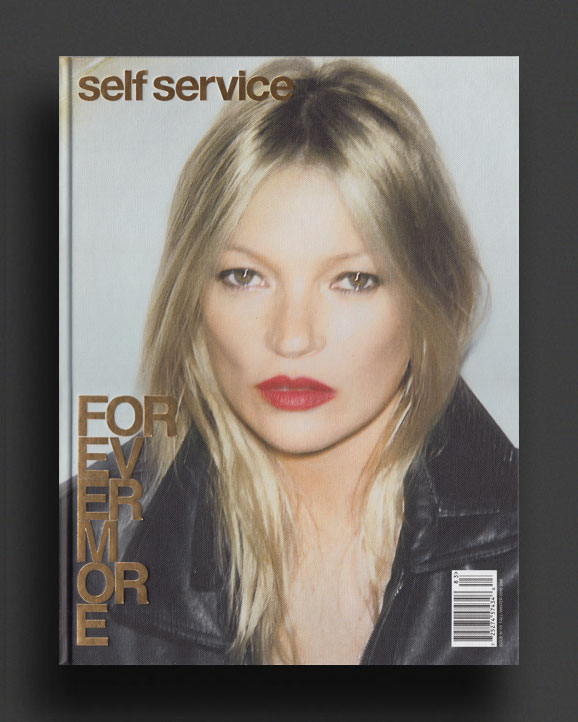
Self Service 49 "Forever More" with contributions by Julien Dossena, Kate Moss, Mike Eckhaus & Zoe Latta, Waddington, Tomohiro Ohashi, Joe McKenna, Hanna Moon, Kanako Takase, Tobias Madison, Yasmin Wijnaldum, and many more.
Self Service magazine is a fashion and cultural biannual magazine. The magazine features the preeminent players in the fashion world, with innovative editorials photographed by the world’s best photographers and stylists.
1995, English
Hardcover (clothbound w. dust-jacket), 144 pages, 28 × 20.8 cm
1st Edition, Out of print title / used*,
Published by
Pavilion Books / London
$160.00 - Out of stock
First edition of the iconic "Kate" book, very rare in this edition, published by Kate moss herself and issued in the UK.
In 1995, the year that this book was published, Kate Moss celebrated her 21st birthday and seventh year working as a model. The photographs were personally selected by Moss, her favourite photographs from her portfolio, tracing Kate's career from its early days through to her iconic status in the nineties, and feature the work of many of the most notable fashion photographers of the period, including amongst others: Corinne Day, Patrick Demarchelier, Sante D’Orazio, Arthur Elgort, Steven Klein, Nick Knight, Mark Le Bon, Petr Lindbergh, Steven Meisel, Helmut Newton, Paolo Roversi, David Sims, Mario Sorrenti, Juergen Teller, Ellen Von Unwerth, and Albert Watson.
Foreword by Liz Tilberis, Editor-in-Chief of Harper's Bazaar. Introduction by Kate Moss. Design by Phil Bicker. Cover by Corinne Day.
Very Good - Fine copy in Very Good dust jacket.
2015, English
Softcover, 456 pages, 13 x 21 cm
Published by
Mousse Publishing / Milan
$62.00 - Out of stock
With contributions by Haseeb Ahmed, Ignacio Chapela, Justin Clemens, Georges Didi-Huberman, Jonathan Dronsfield, Christopher Fynsk, Vincent W.J. van Gerven Oei, Natasha Ginwala & Vivian Ziherl, Adam Staley Groves, Sean Gurd, Adam Jasper, Susanne Kriemann, Brenda Machosky, Mihnea Mircan, Alexander Nagel, Rosalind Nashashibi, Tom Nicholson, Jack Pettigrew, Raphaël Pirenne, Susan Schuppli, Lucy Steeds, Jonas Leonard Tinius, Marina Vishmidt, Christopher Witmore, and Khadija von Zinnenburg Carroll
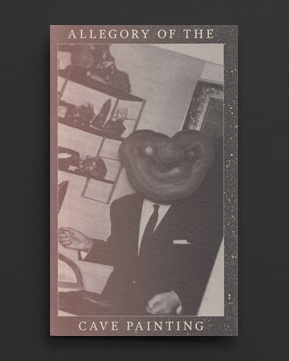
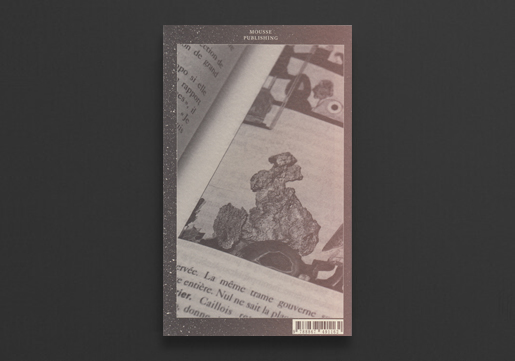
A 2010 archeological study found that the prehistoric Gwion Gwion paintings in Australia, whose chromatic vividness contrasts with their age and their exposure to sun and rain, are inhabited by “living pigments.” A symbiotic biofilm of red cyanobacteria and black fungi sustains a process of permanent self-painting, while also etching the pictures deeper into the quartz wall. The texts commissioned for the reader respond, from a variety of disciplinary perspectives, to an idiosyncratic temporality and economy—or ecology—of signification. Descending from an inscrutable past to the same extent that they are made now, in a radical contemporaneity, the Gwion Gwion are examined as an allegorical metabolism that generates new articulations of “art” and “life,” contamination and purity, prehistory and modernity, bacterial and human colonies, lost knowledge and scientific advancement—collaborative relations between antonyms, altered schemas of “origin” and “identity.”
Now out-of-print - last copies.
1996, French
Softcover, 200 pages, 26 x 21 cm
1st Edition, Out of print title / Used*,
Published by
Dreamland Éditeur / Paris
$40.00 - Out of stock
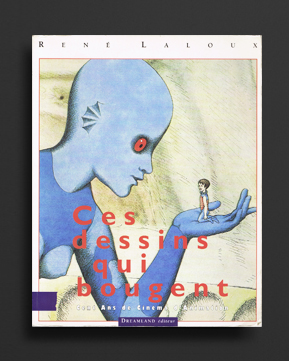
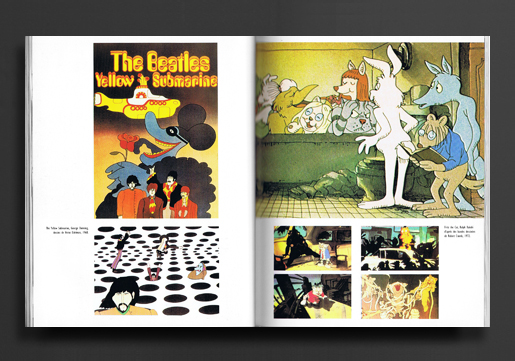
Written by one of the finest in the field, René Laloux, this scarce French book published in 1996 traces the history of animated cinema. "Ces Dessins qui Bougent : 1892-1992 - Cent Ans de Cinema d'Animation" (These drawings that move : 1892-1992 - One hundred years of Animated Film) is richly illustrated throughout with some of the best historical examples in animated film, dissecting the form through the work of Bruno Bozzetto, Jan Svankmajer, Paul Grimault, Walt Disney, Hayao Miyazaki, Yuri Norstein, Norman Mclaren, Walérian Borowczyk, Jiri Trnka, Ralph Bakshi, Jean Giraud (Mœbius), Philippe Caza, Osvaldo Cavandoli, Peter Foldes, and so many more. Includes a great illustrated chronology of important works. Texts in French.
René Laloux (July 13, 1929 – March 14, 2004) was a French animator and film director, well known for his animated films including The Snails (Les Escargots, 1965), Time Masters (1982), Gandahar (1988), and his most famous, Fantastic Planet (La Planète Sauvage, 1973), collaborating with artists Roland Topor, Jean Giraud (Mœbius) and Philippe Caza.
2015, English
Softcover, 60 pages, 33 x 23 cm
Published by
Walther König / Köln
$50.00 - Out of stock
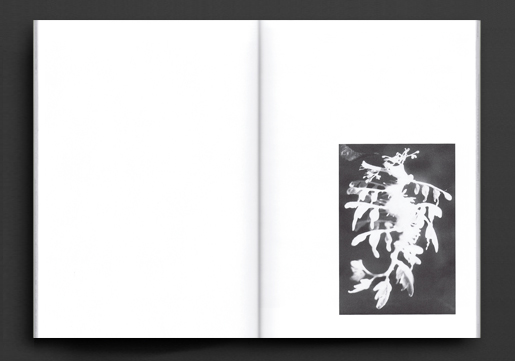
Over the past two decades, Jochen Lempert has drawn from his personal archive of hundreds of images to create photographic installations that immerse the viewer in a field of poetic visual associations.
Lempert's images of the natural world – ocean waves, plants, birds, insects, reptiles, seashells, and taxidermied specimens from natural history museums – are made through a variety of experimental and traditional processes that, to a certain extent, mimic the inherent order and randomness of the natural world itself.
While some of his photographs are taken with a 35mm camera from scientific research vessels in the North Sea or in the urban environment of his hometown of Hamburg, Germany, many are made through camera-less processes. He creates photograms by lying natural specimens directly on photographic paper.
Foliograms, such as his Transmission series (2009), are made by placing leaves directly into the darkroom enlarger and allowing light to pass through them onto the photo paper. Lempert also prints his photographs using non-traditional techniques. Hand-printed on heavy photographic paper, they are not pressed and presented unframed – this enhances the viewer's sense of the paper as an object with the tactile quality of a charcoal drawing.
Published retrospectively after Lempert's major survey exhibition at Midway Contemporary Art, Minneapolis, 3 February – 31 March 2012.
2013, English
Softcover, 192 pages, 21 x 15 cm
Published by
Kunstverein / Amsterdam
Macmillan / Melbourne
$45.00 - Out of stock
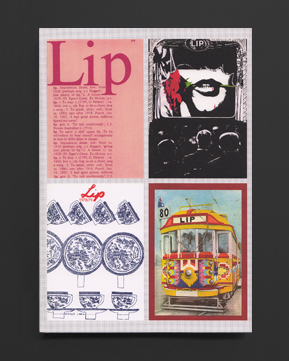
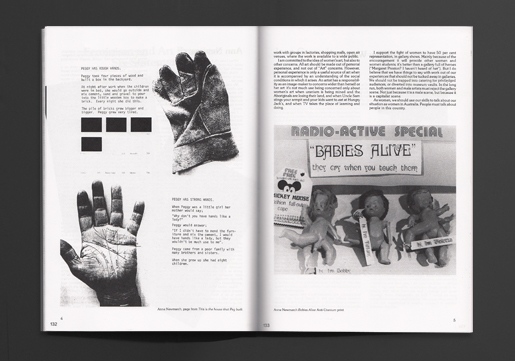
By reviewing the adventurous projects and artworks of a significant group of women involved with the LIP Collective based in Melbourne in the 1970s and 80s, this exciting anthology co-published by Kunstverein Publishing Amsterdam and Macmillan Art Publishing: Melbourne discloses for the first time the scope of the movement. It published Lip: A Feminist Arts Journal; the Earthworks Poster Collective; The Women’s Theatre Group; The Women’s Film Group and a host of exhibitions and critical writings connecting Australian women artists with the activities of their counterparts overseas.
Among the many contributors are Janine Burke, Annette Blonski, Suzanne Davies, Helen Grace, Ponch Hawkes, Sue Johnston, Laleen Jayamanne, Suzanne Spunner and Ann Stephen.
As editor Vivian Ziherl writes:
“Lip magazine was self-published by women in Melbourne from 1976 to 1984 and stood as a lightning rod for Australian feminist artistic practice over the ‘Women Liberation’ era. The art and ideas expressed over Lip’s lifetime track, with ground-breaking moves into performance, ecology, social-engagement and labor politics, stood at an intersection with local realities. The Lip Anthology seeks a figuration of Lip as a composite feminist entity produced with relation to the situational conditions of its production.
The anthology selection is not proposed as a ‘best of’, but rather as cumulative array of materials indicating the range and dynamism of the Lip project. The diversity of the periodical is privileged across multiple disciplinary vantages, as well as among the varied feminist positions brought together through the discursive space afforded by Lip. Collecting and presenting the materials of Lip for the first time since their original appearance, the anthology seeks (re/de)construction and routes of (re)circulation towards points of (re)commencement.
Vivian Ziherl is a curator at If I Can’t Dance, I Don’t Want to Be Part Of Your Revolution, Amsterdam, as well as undertaking independent projects, research and writing. Recent projects include Landings (2013-14) – a research project co-curated with Natasha Ginwala that seeks cross-over readings of land history, geomorphology, rurality and corporeality; and StageIt! (2012-13), a performance series co-curated with Hendrik Folkerts at the Stedelijk Museum Amsterdam. Ziherl will be the seventh guest curator invited to the David Roberts Art Foundation ‘Curator Series’ for 2014.
‘The Lip Anthology’ is published by Kunstverein Publishing and Macmillan Art Publishing, co-produced with Grazer Kunstverein and with the support of the Australia Council for the Arts and the TEWRR.
2018, English / German
Softcover, 176 pages, 21.5 x 27 cm
Published by
Mumok / Vienna
Walther König / Köln
$49.00 - Out of stock
Gaby and Wilhelm Schürmann do not see their collection as just private property or a prestige object, but rather as an item of cultural value that needs exchange with the public. Their collection has been constantly growing since the late 1970s, and it provides an incomparable view of the development of contemporary art from the 1980s onward. This is a progressive statement on behalf of contemporary art that is anchored in social issues and sees itself as a form of communication. The rationale behind the collection, which is held in Herzogenrath near Aachen and in Berlin, is both creative and productive, and the two collectors’ practice can be described as a particularly free-spirited form of cultural production. The act of collecting is realized less in the processes of keeping and completing artworks and is instead understood mainly as an invitation to participate in the public production of connections. This very pragmatic and hands-on approach is manifested in sensual and unconventional gestures of presenting, including the principle of “comparative seeing.” In this sense, the Class Reunion exhibition, the title of which refers to a 2008 installation of the same name by Berlin artist Nairy Baghramian, will unravel an exciting, humorous, and surprising dialogue between the diverse artistic positions in the collection, establishing unexpected points of contact. One focus in this is on Viennese influences on this international collection and its networks.
This book has been published to document the collection on the occasion of an exhibition curated by Wilhelm Schürmann at Mumok, Vienna, June 23, 2018 - November 11, 2018.
Edited by Karola Kraus and illustrated throughout in colour, with accompanying texts and full collection catalogue.
Participating artists:
Nairy Baghramian, Silvia Bächli, Monika Baer, John Baldessari/Meg Cranston, Francesco Barocco, Jennifer Bornstein, Nicola Brunnhuber, Ernst Caramelle, Kate Davis, Heinrich Dunst, Marina Faust, Morgan Fisher, Jef Geys, Ralph Gibson, Julian Göthe, Trixi Groiss, Gerhard Gronefeld, Julia Haller, Rachel Harrison, Lone Haugaard Madsen, Georg Herold, Nicolas Jasmin, Raimer Jochims, Mike Kelley, , Martin Kippenberger, Silke Otto Knapp, Alwin Lay, Brandon Lattu, Michael Light, Sonia Leimer, Anita Leisz, Jochen Lempert, Zoe Leonard, Chris Martin, Park McArthur, Paul McCarthy, Meuser, Lisette Model, Oswald Oberhuber, Albert Oehlen, Anna Oppermann, Anna Ostoya, Jens Preusse, Rebecca Quaytman, Susanne Paesler, Laurie Parsons, Stephen Prina, Deborah Remington, Lin May Saeed, Pentti Sammallahti, Stefan Sandner, Arlene Shechet, Sigune Siévi, Michael Simpson, Michael E. Smith, Lewis Stein, Jana Sterbark, Esther Stocker, Walter Swennen, Alice Tippit, Joëlle Tuerlinckx, Nora Turato, Anne-Mie Van Kerckhoven, Miriam Visaczki, Franz West, Tristan Wilczek, Christopher Williams, Heimo Zobernig
1971, English
Softcover, 60 pages, 23 x 23 cm
1st UK Edition, Out of print title / used / good
Published by
The Australian Ballet Company / Melbourne
$25.00 - Out of stock
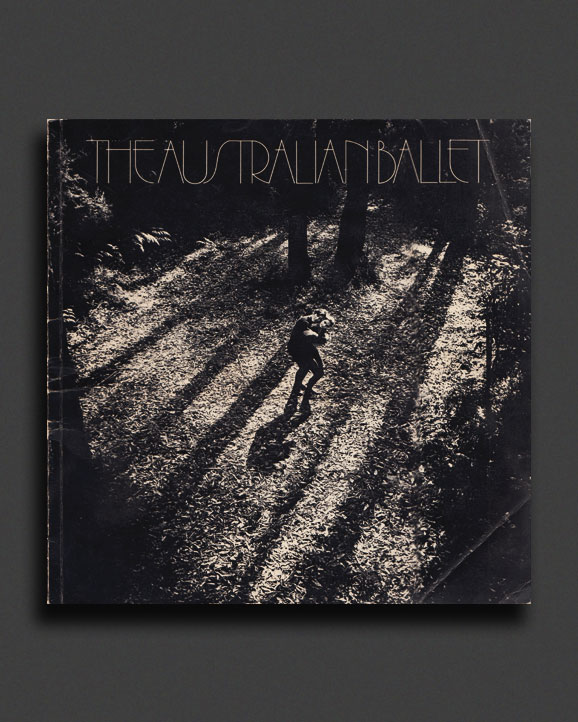
This handsome publication commemorates the 1970-71 season of The Australian Ballet company. Richly illustrated throughout with colour and b/w photography by Australian photographer Paul Cox and others, capturing the rehearsals, performances (with Marilyn Jones, Garth Welch, etc.), souvenir photos of the North American Tour (with Rudolf Nureyev), The Company, Repertoire, The School, and more.
Edited by Noel Petty, texts by John Wallace.
Design by Graham Blacker.
Good copy with heavy cover creasing and general wear.
2018, English
Hardcover, 432 pages, 25x 31 cm
Published by
Getty Publications / Los Angeles
$126.00 - Out of stock
Texts by Glenn Phillips, Doris Chon, Pietro Rigolo, Philipp Kaiser
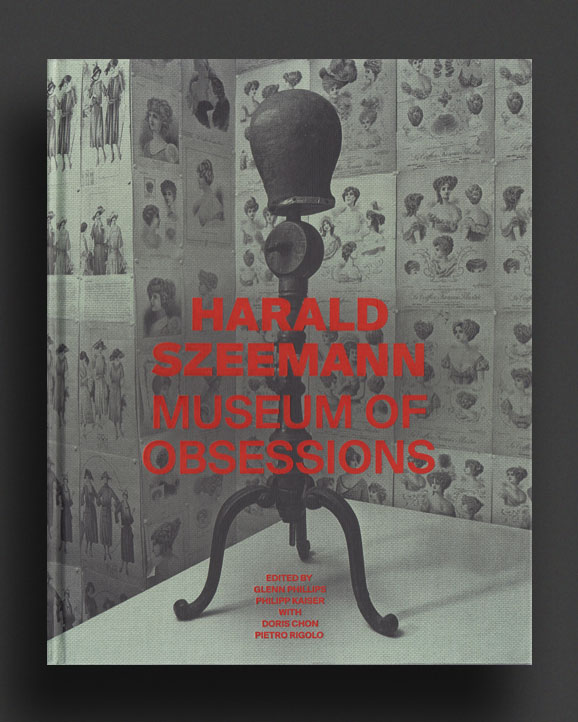
Harald Szeemann is associated with some of the most important artistic developments of the postwar era. A passionate advocate of avant-garde movements like conceptualism and post minimalism, he collaborated with artists such as Joseph Beuys, Bruce Nauman, Richard Serra, and Cy Twombly, developing new ways of presenting art that reflected his sweeping vision of contemporary culture.
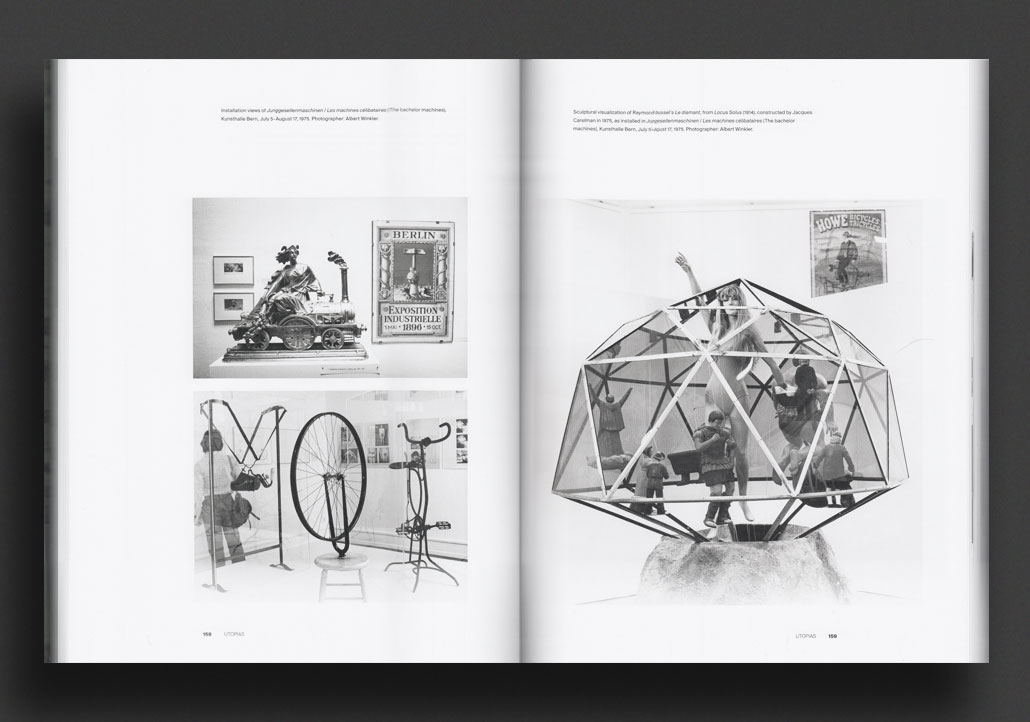
Szeemann once stated that his goal as an exhibition maker was to create a "Museum of Obsessions." This richly illustrated volume is a virtual collection catalogue for that imaginary institution, tracing the evolution of his curatorial method through the materials he collected and produced while researching and organising his exhibitions, including letters, drawings, personal datebooks, installation plans, artists' books, posters, photographs, and handwritten notes.
This book documents all phases of Szeemann's career, from his early stint as director of the Kunsthalle Bern, where he organized the seminal Live in Your Head: When Attitudes Become Form (1969); to documenta 5 (1972) and the intensely personal exhibition he staged in his own apartment using the belongings of his hairdresser grandfather (1974); to his reinvention as a freelance curator who realised projects on wide-ranging themes until his death in 2005.
The book contains essays exploring Szeemann's curatorial approach as well as interviews with collaborators. Its more than 350 illustrations include previously unpublished installation photographs and exhibition documents as well as many other materials from the curator's archive.
1970, English / German
Softcover, 300 pages, 23 x 15 cm
1st edition, Out of print title / used*,
Published by
Kölnischer Kunstverein / Köln
$85.00 - Out of stock
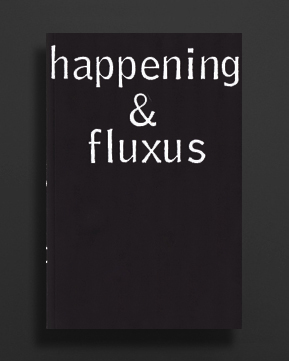
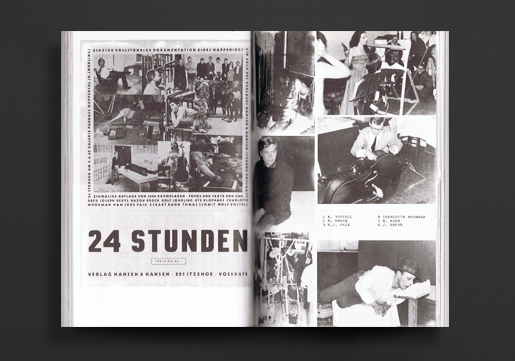
The great "Happening & Fluxus" book, published on the occasion of the exhibition of the same name at the Kölnischer Kunstverein in 1970, curated by Harald Szeemann.
This exhaustive Fluxus document is illustrated heavily throughout and broken into two important sections : 1. Chronology 1959-1970 (a detailed cataloguing of this incredible period of happenings, actions, concerts, meals, exhibitions and any related events, illustrated with photography along with dates, locations, those involved, and reproductions of the related ephemera), 2. Bibliography 1959-1970 (again heavily illustrated with detailed cataloguing of printed material about Fluxus and related actions, artists, exhibitions, performances, as well as a detailed listing for each featured artist of their publications, writings, art editions, etc). Book includes works by Wolf Vostell, Daniel Spoerri, Nam June Paik, Tetsumi Kudo, Tadeusz Kantor, Dick Higgins, George Brecht, Allan Kaprow, Yoko Ono, Claes Oldenburg, Alison Knowles, Robert Filliou, Stanley Brouwn, Bazon Brock, Joseph Beuys, Eric Anderson, Viennese Actionists, Charlotte Moorman, Günter Brus, Emmett Williams, Ben Vautier, Carolee Schneemann, Otto Muehl, Robert Watts, Al Hansen, Henry Flynt, Philip Corner, Henning Christiansen, Robert Rauschenberg, John Cage, and many more.
First major compilation of this material compiled by Harald Szeemann to accompany a now legendary exhibition.
"There is neither here nor in the exhibition, a fix-ready answer to the question: What is happening, what is Fluxus."
2018, English
Softcover, 240 pages, 210 x 145 mm
Published by
Whitechapel / London
The MIT Press / Massachusetts
$50.00 - Out of stock
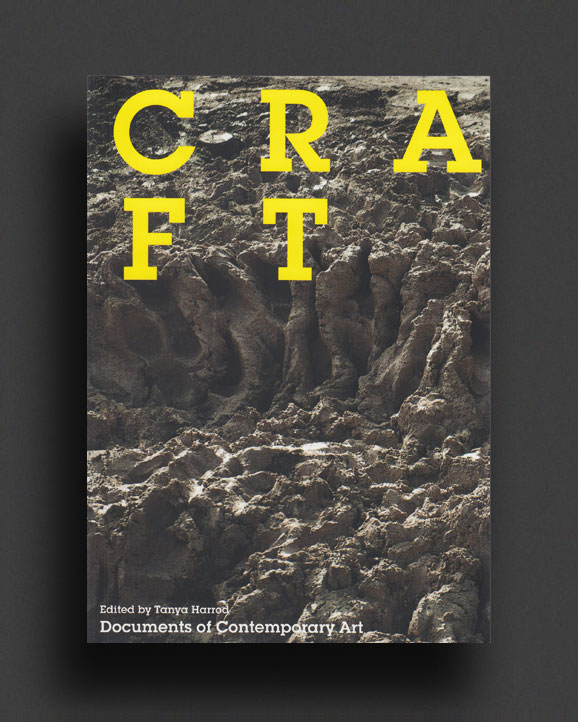
Part of the acclaimed Documents of Contemporary Art series of anthologies which collect writing on major themes and ideas in contemporary art.
"Tanya Harrod is our leading scholarly voice on craft. [This] invaluable anthology...is an ideal introduction to the intellectual landscape of craft, and an essential tool for those already invested in the topic." - Glenn Adamson, Senior Scholar at the Yale Center for British Art
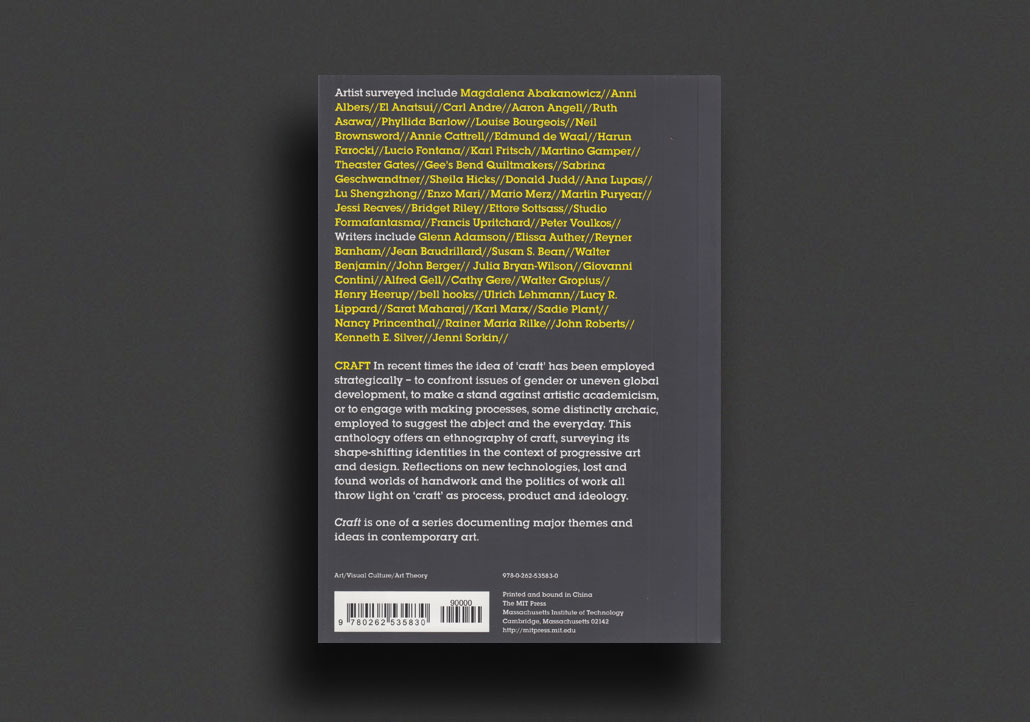
Craft is a contested concept in art history and a vital category through which to understand contemporary art. Through ‘craft’, materials, techniques and tools are investigated and their histories explored in order to reflect on the politics of labour and on the extraordinary complexity of the made world around us. This anthology offers an ethnography of craft, surveying its shape-shifting identities in the context of progressive art and design through writings by artists and makers, and drawing on poetry, fiction, anthropology and sociology. Reflections on new technologies and materials, lost and found worlds of handwork and the politics of work all throw light on ‘craft’ as process, product and ideology.
Artists surveyed include Anni Albers, El Anatsui, Aaron Angell, Ruth Asawa, Phyllida Barlow, Louise Bourgeois, Annie Cattrell, Edmund de Waal, Harun Farocki, Lucio Fontana, Theaster Gates, Gee’s Bend Quiltmakers, Sabrina Gschwandtner, Sheila Hicks, Ana Lupas, Lu Shengzhong, Enzo Mari, Martin Puryear, Jessi Reaves, Bridget Riley, Ettore Sottsass, Studio Formafantasma, Peter Voulkos.
Writers include Glenn Adamson, Elissa Auther, Reyner Banham, Jean Baudrillard, John Berger, Walter Benjamin, Julia Bryan-Wilson, Joan Key, Ulrich Lehmann, Sarat Maharaj, Karl Marx, Sadie Plant, Rainer Maria Rilke, John Roberts, Jenni Sorkin.
Tanya Harrod is an independent design historian who lives in London and who writes widely on craft, art and design. She is co-editor of The Journal of Modern Craft and is author of The Crafts in Britain in the Twentieth Century (1999), The Last Sane Man: Michael Cardew (2012) which won the 2013 James Tait Black Memorial Prize for biography, and The Real Thing: Essays on Making in the Modern World (2015).
2018, English
Softcover, 296 pages, 22.9 x 15.2 cm
Published by
Semiotext(e) / Los Angeles
The MIT Press / Massachusetts
$40.00 - Out of stock
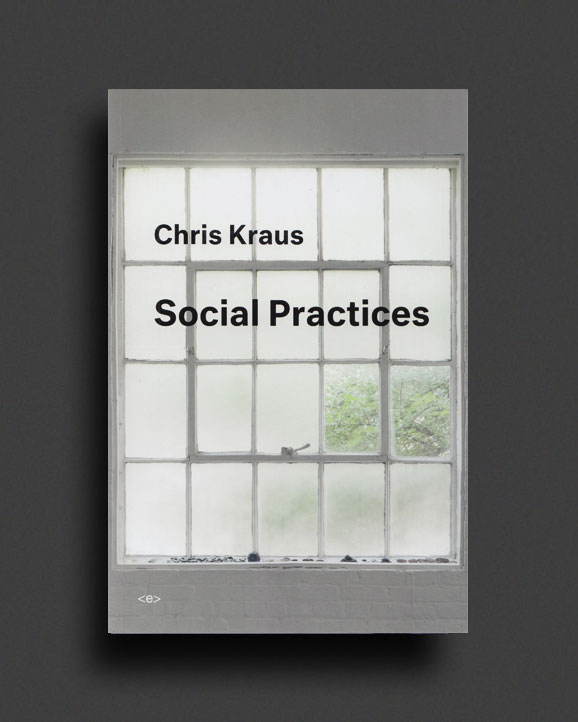
Essays on and around art and art practices by the author of I Love Dick.
A border isn't a metaphor. Knowing each other for over a decade makes us witnesses to each other's lives. My escape is his prison. We meet in a bar and smoke Marlboros.—from Social Practices
Mixing biography, autobiography, fiction, criticism, and conversations among friends, with Social Practices Chris Kraus continues the anthropological exploration of artistic lives and the art world begun in 2004 with Video Green: Los Angeles Art and the Triumph of Nothingness. Social Practices includes writings from and around the legendary “Chance Event—Three Days in the Desert with Jean Baudrillard” (1996), and “Radical Localism,” an exhibition of art and media from Puerto Nuevo's Mexicali Rose that Kraus co-organized with Marco Vera and Richard Birkett in 2012. Attuned to the odd and the anomalous, Kraus profiles Elias Fontes, an Imperial Valley hay merchant who has become an important collector of contemporary Mexican art, and chronicles the demise of a rural convenience store in northern Minnesota. She considers the work of such major contemporary artists as Jason Rhoades, Channa Horowitz, Simon Denny, Yayoi Kusama, Henry Taylor, Julie Becker, Ryan McGinley, and Leigh Ledare. Although Kraus casts a skeptical eye at the genre that's come to be known as “social practice,” her book is less a critique than a proposition as to how art might be read through desire and circumstance, delirium, gossip, coincidence, and revenge. All art, she implies, is a social practice.
2018, English
Softcover, 88 pages, 20.5 x 14 cm
Published by
Semiotext(e) / Los Angeles
$32.00 - Out of stock
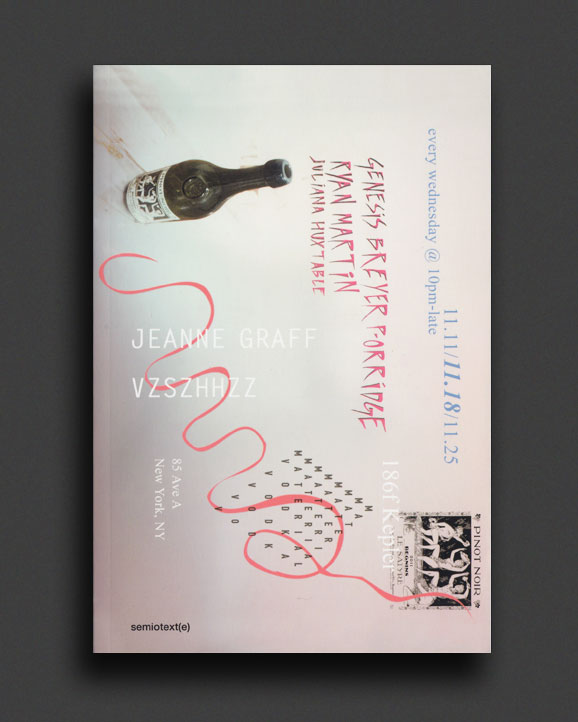
A novel that captures the glancing intersections of a loose group of artists and lawyers, restaurateurs, philosophers, wine-makers, and boxers.
Having dinner at the Triennale, Massimiliano is cooking Pho. He bought the ingredients a few days ago on his way back from Vietnam. The building was built in 1933, Malou went there as a child with Jacqueline, the fascist architecture and the name Triennale remained. A building named “every three years.” Massimiliano was born on December 6th, the same day as Malou…—from Vzszhhzz
Composed between destinations, in airplanes, trains, museums, and bars over three years, Jeanne Graff's Vzszhhzz captures the slight intersections of a loose group of artists and lawyers, restauranteurs, philosophers, wine-makers and boxers whose lives are conducted almost entirely in a second language. A loose chronicle masquerading as a novel, Vszhhzz—like Michèle Bernstein's All The King's Horses, the Bernadette Corporation's Reena Spaulings, and Natasha Stagg's Surveys—couches Graff's sharp observations in a laconic and ambient style. By not saying too much, Vzszhhzz says everything about the relation to time, cities, weather and smog that has become the lingua franca of a creative and transient life.
"There's an art of writing amidst the energies and languages of others, and Graff's ear for existential specificity finds momentum in even the most glancing encounters. Always on the move, Graff's phototropic texts incline toward human heat, hallucinating characters upon contact."—John Kelsey
2018, English
Softcover, 56 pages, 19.8 x 13 cm
Published by
Koenig Books / London
$28.00 - Out of stock
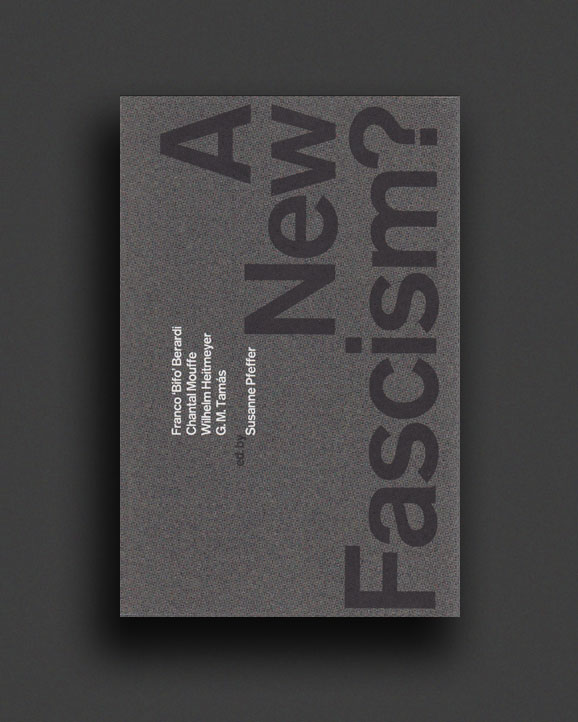
Contributions: Franco “Bifo” Berardi, Wilhelm Heitmeyer, Chantal Mouffe, G. M. Tamás
Edited by Susanne Pfeffer
The contributions in this book are based on, A New Fascism – a symposium held at Fridericianum, Kassel (2016), in conjunction with the exhibition, Two A.M. by Loretta Fahrenholz. The texts follow the questions: Is there a new fascism emerging? And how can we form a counter-acting power?
In her novel entitled Nach Mitternacht (After Midnight, 1937), Irmgard Keun describes everyday life in Nazi Germany in the late 1930s under the dominant influences of fear, government control and despotism. In her exhibition at the Fridericianum, artist Loretta Fahrenholz called attention to similar contemporary phenomena. Based loosely on Keun’s exile novel, her Two A.M. was a socio-fiction film in which she presents frightening analogies to present-day surveillance, capitalism and re-emerging fascism.
One of the essential characteristics of representatives of the new Right, from the Hungarian Prime Minister to Marine Le Pen, is that they all regard themselves as democrats. And when we listen to them, they seem to become more democratic every day. Without blushing, the AfD compares itself to the Third Reich resistance group known as the Weiße Rose. And the French Front National proudly points out that it was the only party in France whose members voted in a democratic referendum on the European constitution.
Thus the obscurity of European institutions can surely be cited as one of the reasons for the emergence of new right-wing movements in all European countries. And the increasing popularity of the new right-wing and nationalist parties can also be attributed at least in part to the movements of migrants and refugees, which are certain to continue unabated in the foreseeable future.
Fascism has reinvented itself, as Alain Badiou pointed out 10 years ago. It has assumed new forms which must be analyzed. And the old theories regarding fascism are no longer adequate for that purpose.
2016, German
Softcover, 297 pages, 17.5 x 24.6 cm
Published by
Walther König / Köln
$49.00 - Out of stock
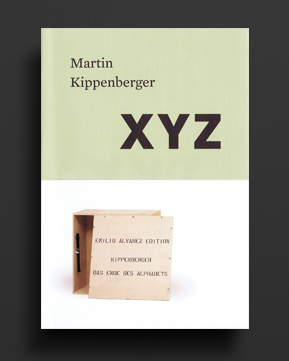
Controversial during his lifetime, his untimely death set a unique track record. The great museums of the world, such as The Tate Modern, the MoMA and the Nationalgalerie Berlin, for example, organized retrospectives in which Kippenberger was honored primarily as a painter and draftsman. XYZ is dedicated for the first time to the language of the exceptional artist, who did almost everything: art, performances, scandals, celebrations, travel, punk rock, columns, jokes, invitations, posters and books. Martin Kippenberger and XYZ: the book analyzes the role of the medium »language« in the work of Martin Kippenberger from different perspectives. During his lifetime, Kippenberger published a total of 149 artist books and maintained a highly respectful, but also ambivalent relationship to the medium of the book. In addition to classical texts on art and cultural history, the book also offers a range of other text categories - interview records, a literary text, an artist statement and texts by Martin Kippenberger himself.
Texts in German.
1985, German
Softcover, 157 pages, 27 x 21 cm
1st Edition, Out of print title / used / good
Published by
Schirmer & Mosel / Munich
$95.00 - Out of stock
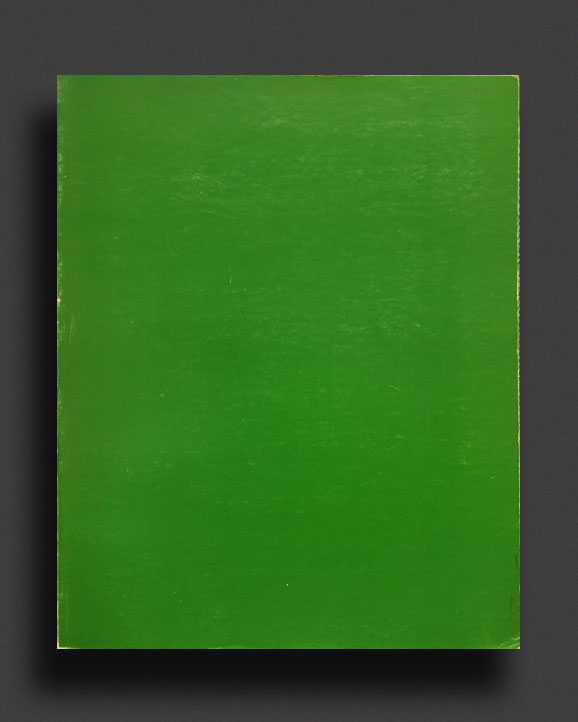
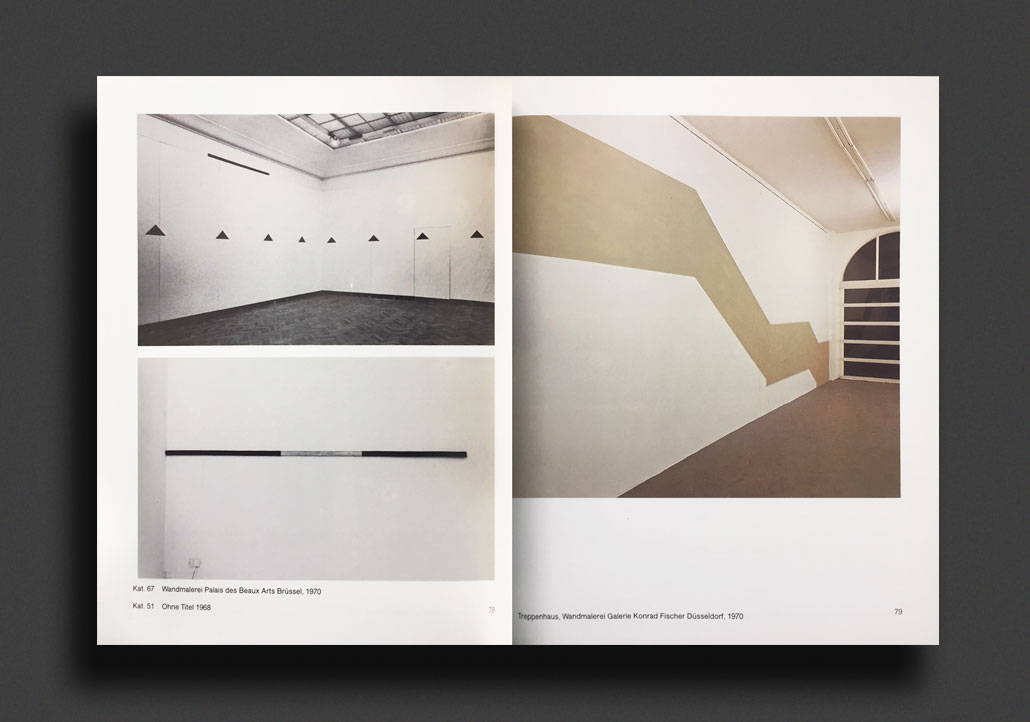
First edition of the great 1985 Blinky Palermo monograph, "Palermo : Werke 1963-1977", wrapped in grass-green covers and published to accompany the exhibition at Kunstmuseum Winterthur 18 September - 11 November, 1984; Kunsthalle Bielefeld 27 January - 17 March, 1985; Stedelijk Museum 30 March - 12 May, 1985. Heavy illustrated throughout with examples of Palermo's work inc. his famed monochromatic, abstract canvases and "fabric paintings", installations, studio, etc, alongside texts by his friend and teacher Joseph Beuys, Laslo Glozer, Bernhard Burgi, and Erich Franz, in German.
Blinky Palermo (2 June 1943 – 18 February 1977) was a German abstract painter.
He adopted his outlandish name in 1964, during his studies with Bruno Goller and Joseph Beuys at the Kunstakademie Düsseldorf between 1962 and 1967. The name refers to Frank "Blinky" Palermo, an American Mafioso and boxing promoter who managed Sonny Liston. In 1969, Palermo moved to Mönchengladbach and set up a studio he would share with Imi Knoebel and Ulrich Rückriem. After a stay in New York in the early 1970s, he moved into Gerhard Richter's former Düsseldorf studio.
Over the course of his 14-year artistic career Palermo tirelessly probed the limits of abstract painting. Having begun his brushwork on more traditional surfaces, he shifted his activity to less conventional supports, experimenting with diverse materials and forms, exploring the relationships that can exist between the wall and the space delimited by the painting. Palermo was best known for his spare monochromatic canvases and "fabric paintings" made from simple lengths of colored material cut, stitched and stretched over a frame. He painted on aluminum, steel, wood, paper and Formica, often making lines out of tape instead of paint. Under Beuys, he became increasingly interested in the organized spatial relationship between form and colour, a polarity which is manifest throughout the rest of his oeuvre. In the mid 1960s, Palermo moved away from conventional rectangular canvases and increasingly opted for surfaces such as the circle, triangle, cruciform, totem pole and even the interior walls of buildings. Between 1964 and 1966, Palermo produced a small series of paintings on canvas in which he experimented with constructivist principles of order. Blinky Palermo died in 1977, aged 33, during a trip to the Maldives.
Good-Very Good - light rubbing edge wear to covers.
2017, English
Softcover (in slip-case), 132 pages, 31 x 23.5 cm
Published by
Galerie Buchholz / Köln
The Renaissance Society / Chicago
$66.00 - Out of stock
This catalogue documents Mathias Poledna’s exhibition at the Renaissance Society in Chicago in 2014/2015. Conceived and designed by the artist, it features new essays by Amy Knight Powell, Bennett Simpson and Andrew Weiner.
2018, English / German
Softcover, 240 pages, 23 x 16.5 cm
Published by
Texte Zur Kunst / Berlin
$32.00 - Out of stock
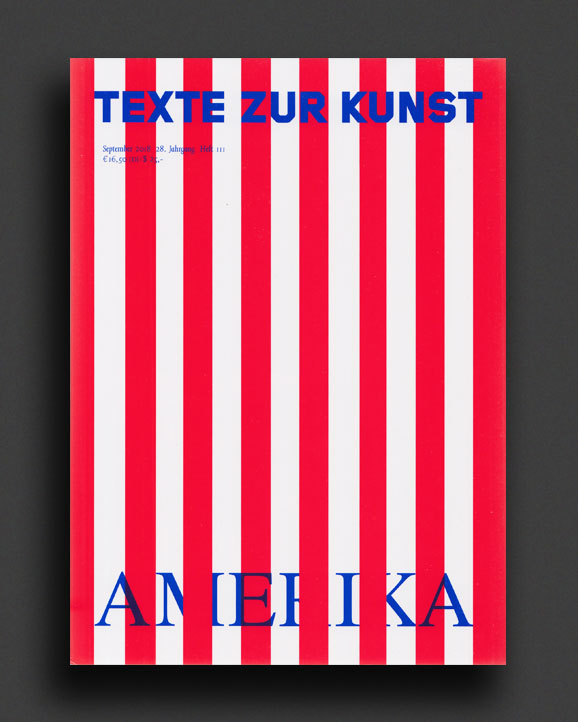
The September issue of Texte zur Kunst focuses on Amerika (U.S. America principally): the land, the idea, and all that seems to come with it. What is Amerika today other than a contradiction between brute political reality and a largely fictional self-image, where fiction says as much about fact as “alternative facts” say about the truth? Within this contradiction, this issue tries to imagine modes of engaging with the current political machinery without opting for the one-dimensional dive into micropolitics that has plagued much recent activist discourse. The Trump regime has introduced a new form of politics whose tactics are closer to artistic practice—inventing parallel truths and questioning facts—than anything like traditional governance. As such, those familiar with art are in a unique position to offer an analysis of the specific forms that define contemporary politics in Amerika. We have thus commissioned artists and critics to come up with new strategies for analyzing the rampant barbarism, resisting the urge to sink into paralysis and defeat in the face of the endless onslaught.
Issue No. 111 / September 2018 "America"
Table Of Contents :
Foreword
Prefaces
Colin Lang
- The Horror, Vacui
Ken Okiishi -
Liberty and Justice For All, Not Us
Aria Dean -
Trauma And Virtuality
Letter To A Friend In New York / By Isabelle Graw
The Golden Hoard / Conversation With Andrea Fraser
Sina Najaf - i
The American Dream State
Robert F. Reid-Pharr -
What We Dare Not Remember
New Development
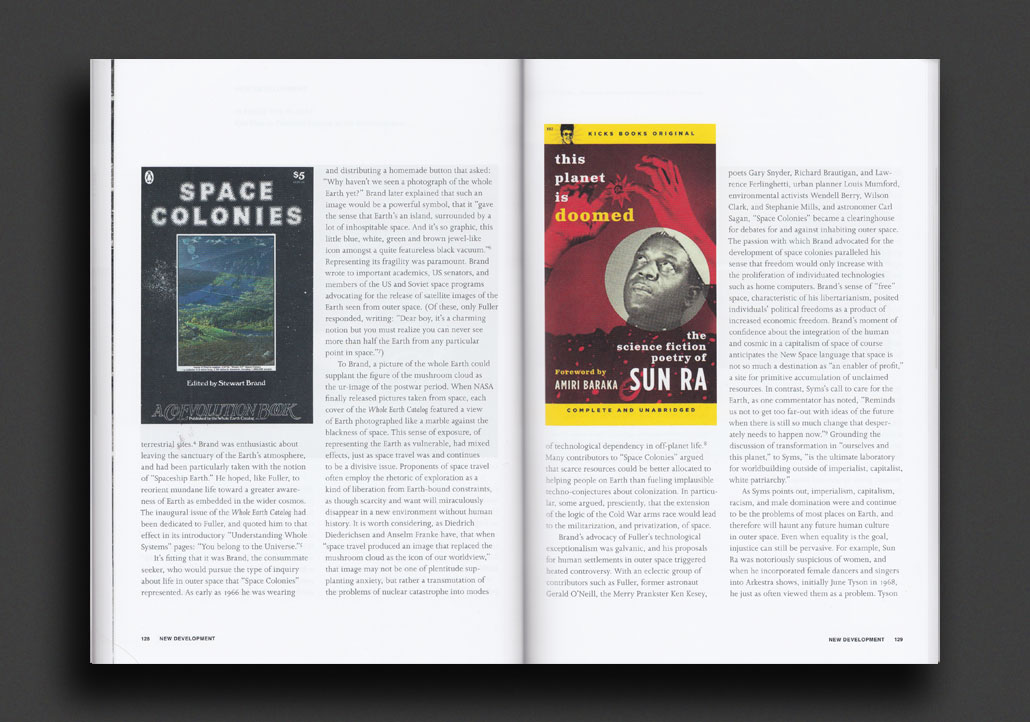
Is Space The Place? / Eva Díaz On Feminist Futures In The Anthropocene
Love Work Cinema
Between Bildersturm And Artistic Research / Rainer Bellenbaum About Films From The Years Around 1968 In The Historical Program Of The Kurzfilmtage Oberhausen
Reviews
Decolonialized Narrative In The National Art Temple / Susanne Von Falkenhausen On "Hello World" At Hamburger Bahnhof, Berlin
That Fluctuating Moment / Jesi Khadivi At The 10Th Berlin Biennale
The Silent Ship / Övül Ö. Durmusoglu On Manifesta 12 In Palermo
Love And Salt / Adrienne Rooney On Adrian Piper At The Museum Of Modern Art, New York
Tracks Of Disappearance / Tobi Maier About Bruce Nauman In The Schaulager, Basel
Man In The Mirror / Dan Kidner On "Picasso 1932 - Love, Fame, Tragedy" At Tate Modern, London
In The Bure Of The Circle / Marietta Kesting About Raster-Noton In The Kunstbau Lenbachhaus, Munich
Looking But Not Seeing? / Darla Migan On Faith Ring Gold At Weiss Berlin
Mad / Ame / Jenny Nachtigall About Jutta Koether At The Museum Brandhorst, Munich
If You Are Once Big / Nadja Abt About Philip Wiegard At Between Bridges, Berlin
Marked By Trade / Sven Lütticken On "Trade Markings" At The Van Abbemuseum, Eindhoven
Amazone Retired / Tina Schulz On Astrid Klein In The Falckenberg Collection, Hamburg
Born To Die / Colin Lang On Jeanette Mundt At Société, Berlin
Limitations Of Utopia / Christina Irrgang On Cyril Lachauer In The Berlinische Galerie, Berlin
Hereditary Peers / Saim Demircan On Luke Willis Thompson At Kunsthalle Basel
Zoology Of The Falls / Niklas Lichti On Peter Wächtler With Lars Friedrich, Berlin
Below The Surf / Steven Warwick On Georgie Nettell At The Kunstbunker Forum For Contemporary Art, Nuremberg
The Hour Of The Historics / Ariane Müller About Valie Export At The Neuer Berliner Kunstverein
Foreign Powers / Johanna Burton On Zoe Leonard At The Whitney Museum Of American Art
Committee Criteria / Kerstin Stakemeier On Henrike Naumann At The Museum Abteiberg, Mönchengladbach
Related Practices / Sandra Neugärtner On Anni Albers In The Kunstsammlung Nordrhein-Westfalen, Düsseldorf
Term (s) Of Endearment / Kathi Hofer On "Milieu" At After The Butcher, Berlin
Obituary
Claude Lanzmann (1925-2018)
Edition
Cecily Brown
Mark Leckey
2018, English
Softcover, 288 pages, 22.5 x 15 cm
Published by
Walther König / Köln
$59.00 - Out of stock
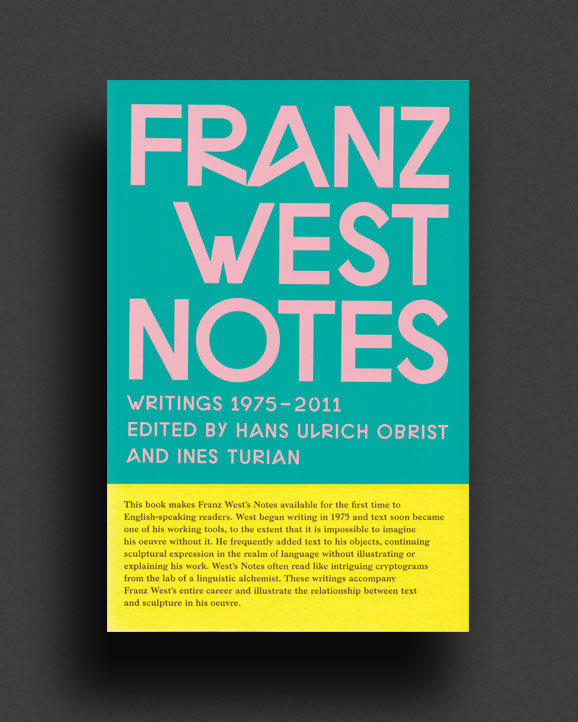
Influential Austrian artist, Franz West (1947-2012) had been writing texts, notes, remarks and aphorisms non-stop since 1977.
He attached these texts to his sculptures, continuing the sculptural expression linguistically without illustrating or explaining.
In places the titles, epithets and texts can raise awareness of the sculpture’s form, in others they can drive the viewer mad or fascinate like the cryptograms of a lingual alchemist.
Texts accompany Franz West’s complete oeuvre. Thus far, more than 200 have been created and they are published here in their entirety for the first time in a newly edited form, as facsimiles and in transcriptions.
1991, English
Hardcover (w. dust jacket), 96 pages, 23.7 x 29 cm
1st UK Edition, Out of print title / used / very good
Published by
The MIT Press / Massachusetts
$280.00 - Out of stock
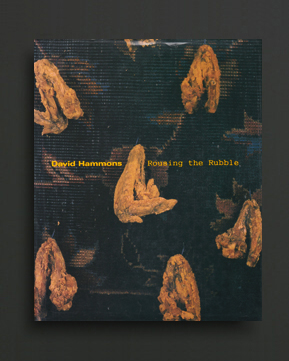
The now very scarce and collectable MIT Press monograph on David Hammons, published in 1991. First and only edition in original dust jacket.
Essays by Steve Cannon, Tom Finkelpearl, and Kellie Jones
Photographs by Dawoud Bey and Bruce Talamon
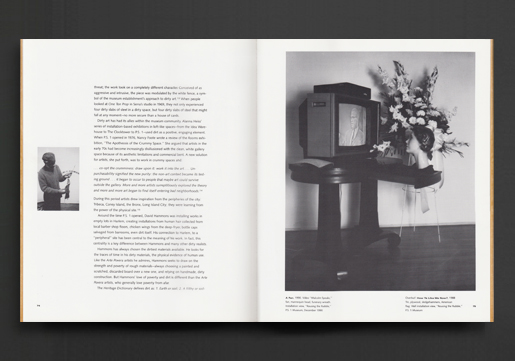
Rousing the Rubble celebrates two decades of work by artist David Hammons, who has risen to prominence while at the same time consciously ducking the attention of critics, galleries, and museums, preferring to "do things in the street." A recipient of both a MacArthur Foundation "genius" award and a Prix de Rome, Hammons places himself as an artist between Arte Povera and Marcel Duchamp. He makes his art from refuse and the detritus of African-American life: chicken wings, Thunderbird and Night Train bottles, clippings from dreadlocks, basketball hoops. Hammons's deeply felt political views on race and cultural stereotypes give his witty and elegant sculptures, installations, and body prints an integrity that promises to keep the focus on his art rather than on his career.
Illustrated with nearly 100 photographs (both black and white and color), Rousing the Rubble covers the full range of Hammons's art and his methods of creating it. Steve Cannon's rap poem takes the reader on a freewheeling bicycle ride from Harlem to the Lower East Side in New York and is joyously infused with the same energies and inspirations as Hammons' work. Tom Finkelpearl discusses the power of the dirty, used objects Hammons prefers and how they relate to the clean" art exhibited in conventional gallery settings. And Kellie Jones examines how Hammons's art evolved from Los Angeles in the 1960s to New York and Rome in the present day.
Very Good copy with Good dust jacket (some small repaired tears, now preserved under plastic sleeve)
2018, English
Softcover, 94 pages, 23 x 26.4 cm
Published by
Matthew Marks / New York
$50.00 - Out of stock
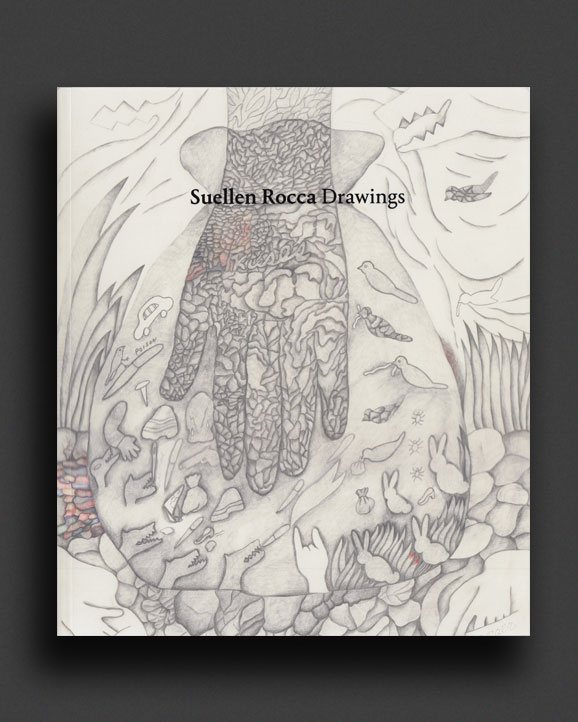
Suellen Rocca (born 1943) is perhaps best known for the work she made as a member of the Hairy Who, a group of six Chicago artists who exhibited together from 1966 to 1969. This book presents, for the first time, 30 works on paper made between 1981 and 2017. Building on the unique graphic vocabulary and innovative compositions of her 1960s work, these drawings represent a turn toward imagery she describes as "more internal." Animals, trees and unclassifiable creatures are placed in densely patterned settings that carry a genuine emotional charge.
In the book’s essay, Cat Kron notes Rocca’s "increased attention to the unconcious," tracing parallels between the artist’s "anxious imaginings" and the automatic drawing of the Surrealists. As Rocca puts it, "I just begin, and the drawing is a journey between me and the marks on the paper."
2018, English
Hardcover (w. dust jacket), 356 pages, 22.8 x 26.8 cm
Published by
Walther König / Köln
MoMA / New York
$140.00 - Out of stock
With a magician’s sleight of hand, Nauman’s art makes disappearance visible.
At 76 years old, Bruce Nauman is widely acknowledged as a central figure in contemporary art whose stringent questioning of values such as good and bad remains urgent today. Throughout his 50-year career, he has explored how mutable experiences of time, space, sound, movement and language provide an insecure foundation for our understanding of our place in the world.
This richly illustrated catalog offers a comprehensive view of Nauman’s work in all mediums, spanning drawings across the decades; early fiberglass sculptures; sound environments; architecturally scaled, participatory constructions; rhythmically blinking neons; and the most recent 3D video that harks back to one of his earliest performances. A wide range of authors—curators, artists and historians of art, architecture and film—focus on topics that have been largely neglected, such as the architectural models that posit real or imaginary sites as models for ethical inquiry and mechanisms of control. An introductory essay explores Nauman’s many acts of disappearance, withdrawal and deflection as central formal and intellectual concerns. The 18 other contributions discuss individual objects or themes that persist throughout the artist’s career, including the first extensive essay on Nauman as a photographer and the first detailed treatment on the role of color in his work. A narrative exhibition history traces his reception, and features a number of rare or previously unpublished images.
Edited by Kathy Halbreich, Isabel Friedli, Heidi Naef, Magnus Schaefer, Taylor Walsh.
Text by Thomas Beard, Briony Fer, Nicolás Guagnini, Kathy Halbreich, Rachel Harrison, Ute Holl, Suzanne Hudson, Julia Keller, Liz Kotz, Ralph Lemon, Glenn Ligon, Catherine Lord, Roxana Marcoci, Magnus Schaefer, Felicity Scott, Martina Venanzoni, Taylor Walsh, Jeffrey Weiss.
Bruce Nauman was born in Indiana in 1941 and raised near Milwaukee, Wisconsin. He studied math, music and physics at the University of Wisconsin–Madison before switching his major to visual art, and received an MA in sculpture from the University of California, Davis, in 1966. In 1979 he moved to New Mexico, where he continues to reside. Nauman’s work has been the subject of two previous retrospectives, in 1972 and 1994. In 2009 he represented the United States at the Venice Biennale, where he won the Golden Lion.