World Food Books' programme is largely produced on Kulin Nation land. We acknowledge the Wurundjeri people of the Kulin Nation as the first and continuing custodians of this land, and pay respect to their Elders past, present, and emerging.
World Food Books is an arts and special interests bookshop in Naarm / Melbourne. Founded in 2010, World Food Books is devoted to the presentation of a rotating, hand-selection of international art, design, literary and counterculture publications with an emphasis on the anti-traditional, the experimental, the avant-garde, the heretic, the marginal.
Presenting new titles alongside rare and out-of-print books, catalogues and journals spanning the fields of modern and contemporary art, design, photography, illustration, film, literature, poetry, cultural theory, philosophy, sexuality, popular and underground culture in its many radical forms, World Food Books wishes to encourage adventurous, thoughtful and open-minded reading, looking, writing, and exchange of publishing and ideas, both current and historical.
As well as our bookshop, located in Melbourne's historical Nicholas Building, all of our inventory is available internationally via our online mail-order service.
World Food Books semi-regularly co-ordinates "Occasions", a programme of exhibits and events at the bookshop and in partnership with other hosts (such as museums and art galleries) that develop out of the activities, relationships and content of the bookshop itself.
World Food Books
The Nicholas Building
37 Swanston Street
Room 5, Level 6
Melbourne 3000
Australia
SHOP HOURS:
Thu–Fri 12–6, Sat 12–5
WEB-SHOP OPEN 24/7
World Food Books
Postal Address:
PO Box 435
Flinders Lane
Victoria 8009
Australia
Art
Theory / Essay
Architecture / Interior
Graphic Design / Typography
Photography
Fashion
Eros
LGBTQ+
Fiction / Poetry
Weird / Speculative / Science Fiction / Horror
Transgressive / Visceral / Abject
Symbolism / Decadence / Fin de siècle
Film / Video
Painting
Sculpture / Installation
Performance / Dance / Theater
Drawing
Sound / Music
Curatorial
Group Shows / Collections
Periodicals
Out-of-print / Rare
Posters / Ephemera / Discs
Signed Books
World Food Books Gift Voucher
World Food Book Bag
Australian Art
Australian Fiction
Australian Science Fiction / Speculative Fiction
Australian Poetry
Australian Photography
Japanese Photography
Conceptual Art
Minimal Art
Dada
'Pataphysics / Oulipo
Fluxus
Concrete Poetry
Pop Art
Surrealism
Arte Povera
Arte Informale / Haute Pâte / Tachism
Nouveau Réalisme / Zero / Kinetic
Situationism / Lettrism
Collage / Mail Art / Xerox Art
Art Brut / Folk / Visionary / Fantastic
Illustration / Graphic Art / Bandes Dessinées
Furniture
Italian Radical Design / Postmodernism
Textiles
Ceramics / Glass
Counterculture
Protest / Revolt
Philosophy
Psychoanalysis
Anthropology
Anarchism
Socialism / Anarchism / Communism / Capitalism
Literary Theory / Semiotics / Language
Feminism / Women's Studies
Gender Studies / Sexuality
Anthropology
Fetishism / BDSM
Drugs / Psychedelia
Crime / Violence
Animal Rights / Veganism
Occult / Esoterica
Ecology / Earth / Alternative Living
Whole Earth / Crafts
All prices in AUD (Australian dollars)
Pick-Ups
Pick-up orders can be collected in our bookshop during opening hours after order date. Please collect any Pick-up orders within 2 weeks of ordering as we have limited storage space. Orders will be released back into stock if not collected within this time. No refunds can be made for pick-ups left un-collected. If you cannot make it in to the bookshop in this time-frame, please choose postage option.
Return Policy
All sales are final. We do accept returns (for refund or exchange) for items received in error. All our orders are packed with special care using heavy-duty padding and cardboard book-mailers or bubble mailers (for smaller books), using reinforcement where required. We cannot take responsibility for any lost, stolen or damaged parcels.
Insurance
Should you wish to insure your package, please email us directly after placing your order and we can organise this at a small extra expense. Although all standard/express tracked packages are very safe and dependable, we cannot take responsibility for any lost, stolen or damaged parcels. We recommend insurance on valuable orders.
Interested in selling your old books, catalogues, journals, magazines, comics, fanzines, ephemera? We are always looking for interesting, unusual and out-of-print books to buy. We only buy books in our fields of interest and specialty, and that we feel we can resell.
We base these prices on desirability, market value, in-print prices, condition and our current stock levels. We offer cash, store credit, and can take stock on consignment. All
about 25% of the price we expect to get when we sell them, or 30% in store credit. We base these prices on desirability, market value, in-print prices, condition and our current stock levels.
Sell your books any day of the week. You can drop them off and return later. If you have a lot of books, we can visit your Sydney home.
We buy books that we feel we can resell. We offer about 25 % of the price we expect to get when we sell them, or 30% in store credit. We base these prices on desirability, market value, in-print prices, condition and our current stock levels.
Philadelphia Wireman
03 August - 01 September, 2018
World Food Books is proud to announce our next Occasion, the first presentation of sculptures by Philadelphia Wireman in Australia.
The Philadelphia Wireman sculptures were found abandoned in an alley off Philadelphia’s South Street on trash night in 1982. Their discovery in a rapidly-changing neighbourhood undergoing extensive renovation, compounded with the failure of all attempts to locate the artist, suggests that the works may have been discarded after the maker’s death. Dubbed the "Philadelphia Wireman" during the first exhibition of this work, in 1985, the maker’s name, age, ethnicity, and even gender remain uncertain. The entire collection totals approximately 1200 pieces, all intricately bound together with tightly-wound heavy-gauge wire (along with a few small, abstract marker drawings, reminiscent both of Mark Tobey and J.B. Murry). The dense construction of the work, despite a modest range of scale and materials, is singularly obsessive and disciplined in design: a wire armature or exoskeleton firmly binds a bricolage of found objects including plastic, glass, food packaging, umbrella parts, tape, rubber, batteries, pens, leather, reflectors, nuts and bolts, nails, foil, coins, toys, watches, eyeglasses, tools, and jewellery.
Heavy with associations—anthropomorphic, zoomorphic, and socio-cultural responses to wrapped detritus—the totemic sculptures by Philadelphia Wireman have been discussed in the context of work created to fulfil the shamanistic needs of alternative religions in American culture. Curators, collectors, and critics have variously compared certain pieces to sculpture from Classical antiquity, Native American medicine bundles, African-American memory jugs, and African fetish objects. Reflecting the artist’s prolific and incredibly focused scavenging impulse, and despite—or perhaps enhanced by—their anonymity, these enigmatic objects function as urban artefacts and arbiters of power, though their origin and purpose is unknown. Philadelphia Wireman, whatever their identity, possessed an astonishing ability to isolate and communicate the concepts of power and energy through the selection and transformation of ordinary materials. Over the course of the past two decades, this collection has come to be regarded as an important discovery in the field of self-taught art and vernacular art.
Presented in collaboration with Fleisher-Ollman Gallery, Philadelphia, and Robert Heald, Wellington.
Susan Te Kahurangi King
02 February - 10 March, 2018
Susan Te Kahurangi King (24 February 1951 - ) has been a confident and prolific artist since she was a young child, drawing with readily available materials - pencils, ballpoint pens and felt-tip markers, on whatever paper is at hand. Between the ages of four and six Susan slowly ceased verbal communication. Her grandparents William and Myrtle Murphy had developed a special bond with Susan so they took on caring responsibilities for extended periods. Myrtle began informally archiving her work, carefully collecting and storing the drawings and compiling scrapbooks. No drawing was insignificant; every scrap of paper was kept. The King family are now the custodians of a vast collection containing over 7000 individual works, from tiny scraps of paper through to 5 meter long rolls.
The scrapbooks and diaries reveal Myrtle to be a woman of great patience and compassion, seeking to understand a child who was not always behaving as expected. She encouraged Susan to be observant, to explore her environment and absorb all the sights and sounds. Myrtle would show Susan’s drawings to friends and people in her community that she had dealings with, such as shopkeepers and postal workers, but this was not simply a case of a grandmother’s bias. She recognised that Susan had developed a sophisticated and unique visual language and sincerely believed that her art deserved serious attention.
This was an unorthodox attitude for the time. To provide some context, Jean Dubuffet coined the term Art Brut in 1945 to describe work created by self-taught artists – specifically residents of psychiatric institutions and those he considered to be visionaries or eccentrics. In 1972 Roger Cardinal extended this concept by adopting the term Outsider Art to describe work made by non-academically trained artists operating outside of mainstream art networks through choice or circumstance. Susan was born in Te Aroha, New Zealand in 1951, far from the artistic hubs of Paris and London that Dubuffet and Cardinal operated in. That Myrtle fêted Susan as a self-taught artist who deserved to be taken seriously shows how progressive her attitudes were.
Susan’s parents Doug and Dawn were also progressive. Over the years they had consulted numerous health practitioners about Susan’s condition, as the medical establishment could not provide an explanation as to why she had lapsed into silence. Dawn educated herself in the field of homeopathy and went on to treat all twelve of her children using these principles – basing prescriptions on her observations of their physical, mental and emotional state.
Doug was a linguist with an interest in philosophy who devoted what little spare time he had to studying Maori language and culture. To some extent their willingness to explore the fringes of the mainstream made them outsiders too but it was their commitment to living with integrity and their respect for individuality that ensured Susan’s creativity was always encouraged.
Even though Susan’s family supported her artistic pursuits, some staff in schools and hospitals saw it as an impediment to her assimilation into the community and discouraged it in a variety of ways. Her family was not always aware of this and therefore did not fully understand why Susan stopped drawing in the early 1990s. However, rather than dwell on the challenges that Susan faced in pursuit of her artistic practice, they prefer to highlight her achievements. In 2008 Susan began drawing again in earnest, after an almost 20 year interruption, and her work is now shown in galleries around the world.
Susan grew up without television and has been heavily influenced by the comics she read as a child. She is absolutely fearless in the appropriation of recognizable characters, such as Donald Duck and Mickey Mouse, in her work. She twists their limbs, contorts their faces, compresses them together, blends them into complex patterned backgrounds - always imbuing them with an incredible energy. Although Susan often used pop culture characters in her work they are not naive or childlike. These are drawings by a brilliant self-taught artist who has been creating exceptional work for decades without an audience in mind.
Mladen Stilinović
"Various Works 1986 - 1999"
02 February 16 - September 10, 2016
Various works 1986 - 1999, from two houses, from the collections of John Nixon, Sue Cramer, Kerrie Poliness, Peter Haffenden and Phoebe Haffenden.
Including: Geometry of Cakes (various shelves), 1993; Poor People’s Law (black and white plate), 1993; White Absence (glasses, ruler, set square, silver spoon, silver ladel with skin photograph and wooden cubes), 1990-1996; Exploitation of the Dead (grey and red star painting, wooden painting, black spoon with red table, red plate), 1984-1990; Money and Zeros (zero tie, paintings made for friends in Australia (Sue, John, Kerrie), numbers painting), 1991-1992; Words - Slogans (various t-shirts) - “they talk about the death of art...help! someone is trying to kill me”, “my sweet little lamb”, “work is a disease - Karl Marx”; Various artist books, catalogues, monographs, videos; Poster from exhibition Insulting Anarchy; "Circular" Croatian - Australian edition; Artist book by Vlado Martek (Dostoyevsky); more.
Thanks to Mladen Stilinović and Branka Stipančić.
Jonathan Walker
Always Will Need To Wear Winter Shirt Blue + Ochre Small Check Pattern
21 August - 21 September, 2015
Untitled
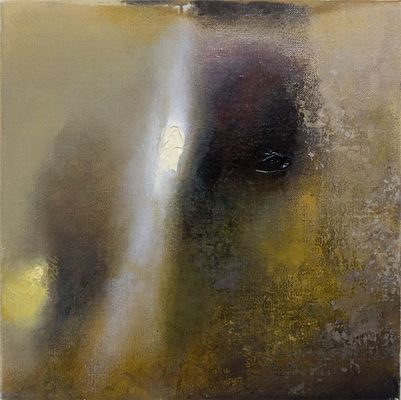
I am not a great reader of poetry but I always return to the work of Melbourne poet, Vincent Buckley (1925- 1988). Perhaps I find his most tantalising piece to be not a finished poem but a fragment left on a scrap of paper discovered on his desk after the poet’s death.
The poetry gathers like oil
In the word-core, and spreads
It has its music meet,
Its music is in movement.
This fragment is more the shell left behind from a volatile thought than a finished poem. I find the last two lines honest but awkward whereas the first two lines work like an arrow. Most likely he could not find a resolution so it was left. Still, in its present form, it remains an eloquent testimony to the ultimate failure of a medium to express mobile thought and sensation, in Buckley’s case, through verbal language. It’s an important matter because this is something all artists have to deal with regardless of the medium.
I have never written a poem, however, I am forever copying fragments from books on paper scraps in a vain effort to fix certain notions in my head. At first, they function as bookmarks that are sometimes returned to when I open the book. But before long, as they accumulate, they fall out littering the table interspersed with A4 photocopies, bills, books and medications.
To return to Buckley’s fragment, the first two lines very much evoke how I paint nowadays. As you age, detail diminishes and patches of light become more luminous and float. I feel the most honest way of dealing with this is by smearing the oil paint on the canvas with the fingers and working close-up, blind. Only if the patches coalesce into an approaching image can the work gain a life.
-
Jonathan Walker was born in Melbourne, Australia and brought up on a dairy farm in Gippsland. In the 1970’s he studied painting at RMIT and won the Harold Wright Scholarship to the British Museum, London. During the 1980’s he exhibited at Pinacotheca Gallery, Richmond and had work shown at the NGV and Heidi City Art Gallery. Over the same period he designed the cover for the “Epigenesi” LP by Giancarlo Toniutti, Italy and conducted a mail exchange work with Achim Wollscheid, Germany. The work with artists through the post resulted in an article published in the bicentenary issue of Art and Australia 1988. He showed in artist run spaces such as WestSpace in the 90’s and 2000’s, and until 2012, taught painting at Victoria University, which is where we (Colleen Ahern and Lisa Radford) as organisers of the exhibition, among many others, had the privilege of being his student.
Walker’s knowledge was imparted to students through the careful selection of music, literature, and artists found in books that he himself had ordered for the library. Walker’s strategy was the generosity of sharing his vast knowledge with references specific to each student and their context.
Walker’s paintings share a similar focus and intimacy.
This exhibition presents a small selection of recent paintings alongside a publication that includes Walker’s writing. Observational and analytical, Walker’s work is a type of material notation — the time of day, colour and how it is blended, the both specific and fleeting location of a reflection on lino or the question of whether a chair leg should be included in a painting.
Please join us on Friday August 21 between 6-8pm to celebrate the opening of the exhibition.
Curated by Colleen Ahern and Lisa Radford.
B. Wurtz
Curated by Nic Tammens
March 26 - April 4, 2015
B.Wurtz works from a basement studio in his home on Manhattan’s Lower East Side.
This local fact is attested to by the plastic shopping bags and newsprint circulars that appear in his work. As formal objects, they don’t make loud claims about their origins but nonetheless transmit street addresses and places of business from the bottom of this long thin island. Like plenty of artists, Wurtz is affected by what is local and what is consumed. His work is underpinned by this ethic. It often speaks from a neighborhood or reads like the contents of a hamper:
“BLACK PLUMS $1.29 lb.”
“Food Bazaar”
“USDA Whole Pork Shoulder Picnic 99c lb.”
“RITE AID Pharmacy, with us it’s personal.”
“H. Brickman & Sons.”
“Sweet Yams 59c lb."
Most of the work in this exhibition was made while the artist was in residence at Dieu Donne, a workshop dedicated to paper craft in Midtown. Here Wurtz fabricated assemblages with paper and objects that are relatively lightweight, with the intention that they would be easily transportable to Australia. This consideration isn’t absolute in Wurtz’s work, but was prescriptive for making the current exhibition light and cheap. Packed in two boxes, these works were sent from a USPS post office on the Lower East Side and delivered to North Melbourne by Australia Post.
Wurtz appears courtesy of Metro Pictures, New York.
Thanks to Rob Halverson, Joshua Petherick, Sari de Mallory, Matt Hinkley, Helen Johnson, Fayen d'Evie, Ask Kilmartin, Lisa Radon, Ellena Savage, Yale Union, and "Elizabeth".
John Nixon
"Archive"
December 15 - January 20, 2014
The presentation of John Nixon's archive offered a rare showcase of this extensive collection of the artist's own publications, catalogues, posters, ephemera, editions and more, from the mid 1980s onwards, alongside a selection of his artworks.
Organized by John Nixon, Joshua Petherick and Matt Hinkley.
<a href=http://wfb.public-office.info/artist/john-nixon>All titles by John Nixon
"Habitat"
at Minerva, Sydney (organised by Joshua Petherick and Matt Hinkley)
November 15 - December 20, 2014
Lupo Borgonovo, Janet Burchill & Jennifer McCamley,
Lewis Fidock, HR Giger, Piero Gilardi, Veit Laurent Kurz,
Cinzia Ruggeri, Michael E. Smith, Lucie Stahl, Daniel Weil, Wols
Press Release:
“...It contained seven objects. The slender fluted bone, surely formed for flight, surely from the wing of some large bird. Three archaic circuitboards, faced with mazes of gold. A smooth white sphere of baked clay. An age-blackened fragment of lace. A fingerlength segment of what she assumed was bone from a human wrist, grayish white, inset smoothly with the silicon shaft of a small instrument that must once have ridden flush with the surface of the skin - but the thing’s face was seared and blackened.”
William Gibson, “Count Zero”, 1986
"Autumn Projects Archive"
Curated by Liza Vasiliou
March 6 - March 15, 2014
World Food Books, in conjunction with the Virgin Australia Melbourne Fashion Festival 2014, presented the Autumn Projects archive, consisting of a selection of early examples in Australian fashion with a particular interest in collecting designers and labels from the period beginning in the 1980’s, who significantly influenced the discourse of Australian Fashion.
Curated by Liza Vasiliou, the exhibition provided a unique opportunity to view pieces by designers Anthea Crawford, Barbara Vandenberg, Geoff Liddell and labels CR Australia, Covers, Jag along with early experimental collage pieces by Prue Acton and Sally Browne’s ‘Fragments’ collection, suspended throughout the functioning World Food Books shop in Melbourne.
H.B. Peace
presented by CENTRE FOR STYLE
November 14, 2013
"Hey Blinky, you say chic, I say same"
Anon 2013
H.B. Peace is a clothing collaboration between great friends Blake Barns and Hugh Egan Westland. Their pieces explore the divergences between 'character’ and ‘personality’ in garments....etc
Special Thanks to Joshua Petherick and Matt Hinkley of WFB and Gillian Mears
and a Very Special Thank you to Audrey Thomas Hayes for her shoe collaboration.
Janet Burchill & Jennifer McCamley
"Aesthetic Suicide"
May 10 - June 8, 2013
The first of our occasional exhibitions in the World Food Books office/shop space in Melbourne, "Aesthetic Suicide" presented a body of new and older works together by artists Janet Burchill & Jennifer McCamley, including videos, prints, a wall work, and publications.
During shop open hours videos played every hour, on the hour.
2018, English
Softcover, 224 pages, 12.7 x 19.7 cm
Published by
Laurenz Foundation / Schaulager
$54.00 - Out of stock
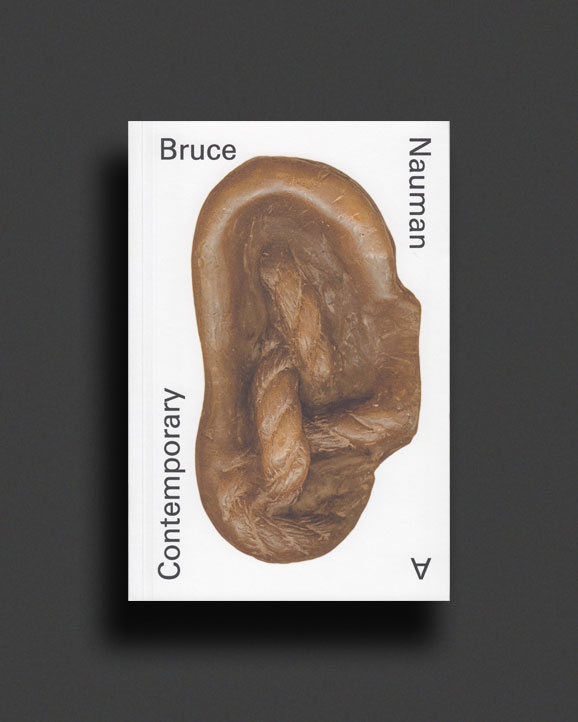
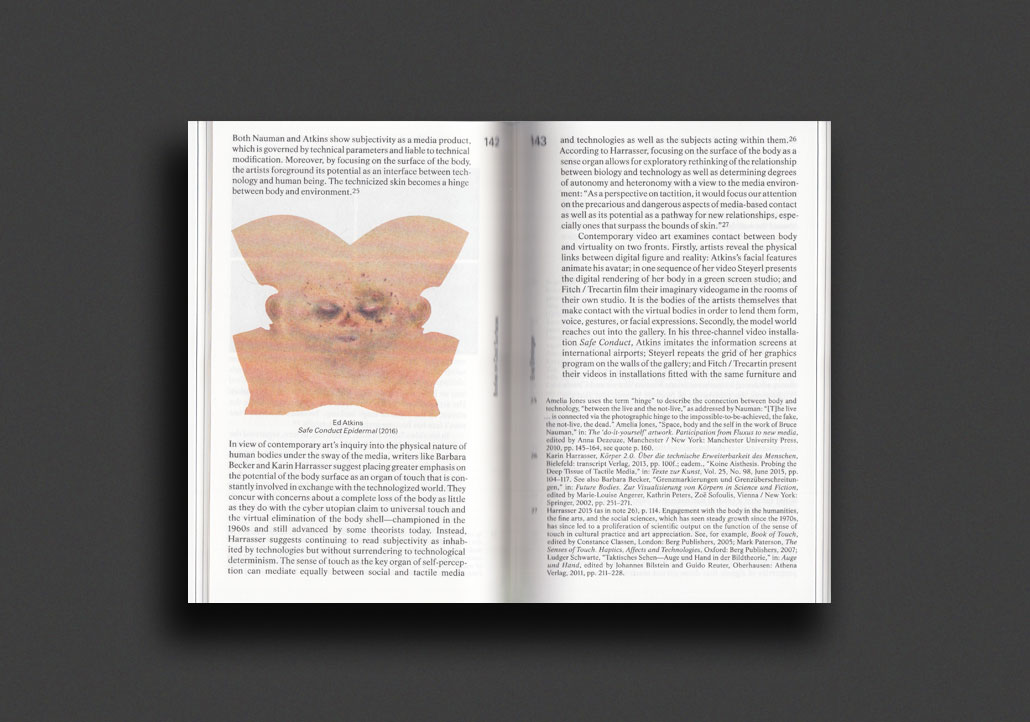
Bruce Nauman: A Contemporary presents the artist as contemporary in a double sense. First, the works of Nauman's 50-plus-year career are placed in the context of contemporary positions and discourses. Second, the publication analyses the extent to which Nauman's themes, media and forms have forged connections to the present, remaining of enduring importance for artists of subsequent generations. This publication seeks to counter the tendency to cast Bruce Nauman as an outstanding, solitary figure of postmodernism by putting the artist's work back in context. Nauman's early works were originally discussed in the context of contemporary practices and discourses, such as minimal music, postmodern dance, conceptual art, Gestalt therapy or the philosophy of language. But soon Nauman's reputation came to precede him, and his more recent work has largely been appraised independently of any artistic, social, historical or theoretical context. Critical consideration of Nauman's work has narrowed to a relatively small selection of the artist's works and ideas. Bruce Nauman: A Contemporary redresses this imbalance by focusing on thematic concerns shared by Nauman and his contemporaries. Scholarly essays explore how Nauman and his works enter contemporary conversations on the relationship of art and work, art and globalisation, and corporeality in the digital age.
1988, English
Softcover (staple bound), 16 pages, 26 x 20.5 cm
1st Edition, Out of print title / used / very good
Published by
Realities Gallery / Melbourne
$30.00 - In stock -
Catalogue published in 1988 to accompany the solo exhibition of Melbourne painter Dale Frank at Realities Gallery, Melbourne. "New Paintings" is illustrated throughout in colour with a text by Frank, as well as exhibition history and bibliography.
Very Good clean copy.
1983, English
Softcover, 56 pages, 23 x 30 cm
1st edition, Out of print title / used*,
Published by
NGV (National Gallery of Victoria) / Victoria
$40.00 - Out of stock
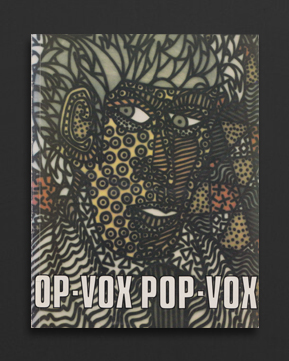
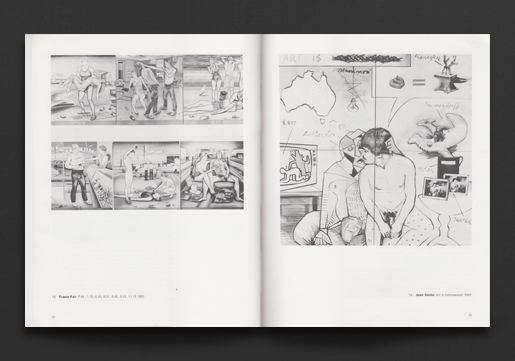
Published on the occasion of "VOX POP: Into the Eighties" an exhibition of contemporary Australian (figurative) art in the early 1980's at the National Gallery of Victoria, featuring the work of Howard Arkley, Juan Davila, Imants Tillers, Frank, Maria Kozic, Peter Tyndall, David Larwill, Mandy Martin, Linda Marrinon, Maris Kozic, Victor Rubin, Lutz Presser, Jan Murray, Jenny Watson, Peter Taylor, Fraser Fair, Dale Frank, Davida Allen, Peter Booth, John Bursill, Gunter Christmann, Paul Boston and Gareth Sansom. Text by Robert Lindsay and reproductions of works by all artists, plus biographies.
Good copy.
2018, English
Softcover, 236 pages. 22.8 x 31.7 cm
Published by
Surpllus / Melbourne
$60.00 - In stock -
Mutual Assured Destruction is the first major book on Australian artist Tony Garifalakis’s work. This volume gives a comprehensive insight into the artist’s practice, including his well-known ‘Cover Ups’ and ‘Mob Rule’ series, as well as important early photocopied works and wall paintings, and rarely seen works from the archives. The book features essays by Melbourne-based cultural studies scholar Nikos Papastergiadis and Mexico City–based curator Daniel Garza Usabiaga, and an extensive interview with the artist by Melbourne-based curator Mark Feary.
2016, English
Softcover, 108 pages, 17.7 x 23.8 cm
Published by
Surpllus / Melbourne
$20.00 - In stock -
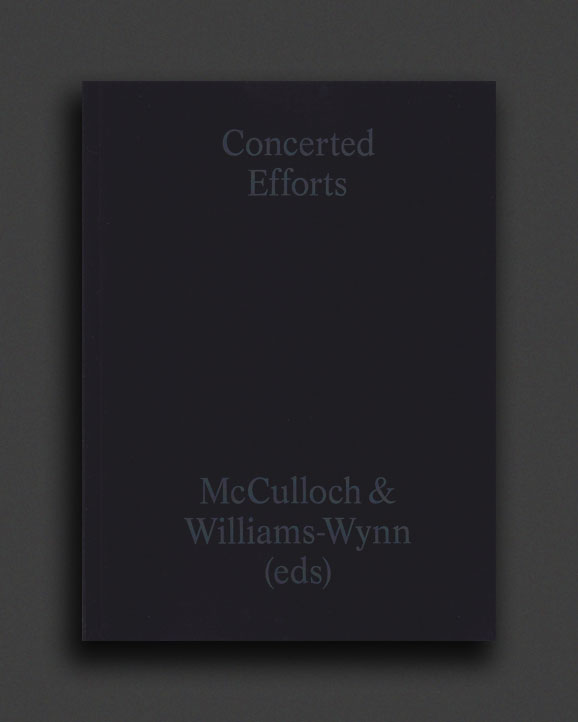
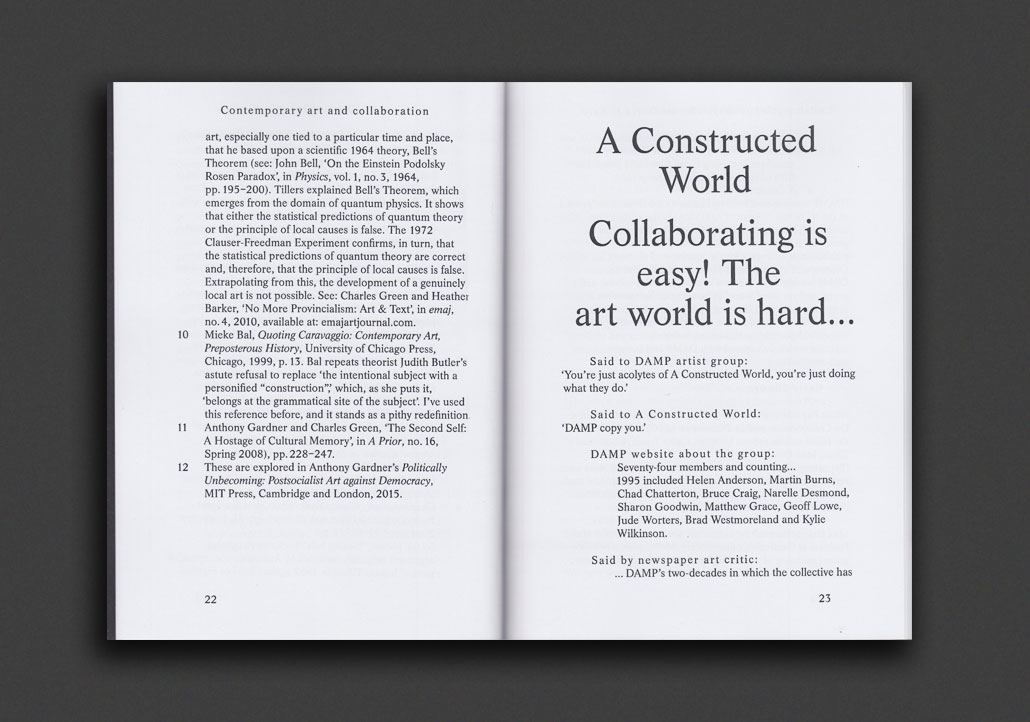
Concerted Efforts explores the nature and purpose of collaborative relationships in contemporary art. Edited by Samantha McCulloch and Christopher Williams-Wynn. Featuring contributions from A Constructed World, Basel Abbas and Ruanne Abou-Rahme, bomb collective, Catherine or Kate, Charles Green, Courtney Coombs, Critical Art Ensemble, Institute for New Feeling, neverhitsend, and Rachael Haynes.
Published by Melbourne publisher Surpllus.
1973, Italian
Hardcover (w. dustjacket), 86 pages,
1st Edition, Out of print title / Used*,
Published by
Gorlich Editore / Milan
$100.00 - Out of stock
"Decorare le Pareti" (Decorating The Walls) is a fantastic interior design book published by Gorlich Editore in Milan in 1973. Hitting the shelves around the same time as the cult classic "Underground Interiors", this feels almost like it's Italian cousin, walking the reader through it's lavishly illustrated pages of eclectic and inspired domestic settings, leaning heavily towards to pop and psychedelic end of the spectrum, with a focus on the expressive joys of adorning walls.
A wonderful first edition of this rare Italian title, for anyone interested in 1970's interior design.
1987, English
Softcover, 160 pages, 28.7 x 23.8 cm
1st UK Edition, Out of print title / used / good
Published by
Thames and Hudson / London
$60.00 - Out of stock
The Mollino book - a wonderful, comprehensive monograph (160 pages with 360 photographs, drawings, diagrams, etc.) covers all facets of Carlo Mollino's incredible career as a leading exponent of Italian postwar design: his furniture, buildings, interiors, women's clothing, theatre design, film sets, racing cars, etc., alongside the presentation of Mollino's many interests as an avid erotic photographer, student of the occult, writer, skier, racecar driver and stunt pilot.
Edited by Giovanni Brino.
"Everything is permissible as long as it is fantastic." - Carlo Mollino (1905-1973)
Carlo Mollino (1905-1973) was one of the most original and enigmatic exponents of architecture in Italy in the 20th century. Disapproved of by the critics and nonconformist in the extreme, he expressed himself through his architectural designs, his furniture and interiors, in a language assimilated from surrealism and futurism. The influence of architects ranging from Gaudi to Mendelsohn, from Aalto to Le Corbusier, can be seen in his highly individual designs. Projects such as the sledge-lift station at Lago Nero, the Teatro Regio in Turin and the Lutrario ballroom demonstrated his exceptional powers of imagination. The interaction between Mollino's professional activities and his many interests, which included aeronautics, downhill racing, set design and eroticism, resulted in a unique phenomenon in the history of contemporary architecture. With the demolition of his massive masterpiece, the Ippica in Turin, and the destruction of his most prestigious interiors, all that remains today of Mollino's work is his furniture. Drawing on largely unpublished photographs and documents, this important monograph is the first to reconstruct Mollino's work through more than eighty interiors and pieces of furniture spanning his career, pieces built with such bravura that they Often resemble sculpture more than works of industrial design. The impact of Carlo Mollino on the recent history of architecture and taste in general is now being increasingly recognized, and this study gives us a detailed picture of his achievements.
Editor Giovanni Brino has taught environmental design in the United States, Switzerland, France and Italy. He has carried out projects of urban planning in Turin and has directed professional training courses in urban colour and town planning in Italy, Switzerland and France. In 1984 he was awarded the Fabre International design prize for his achievements in the field of environmental colour.
First UK edition. Average-Good ex-libris copy w. cover coating and stamping, otherwise a tightly bound Good copy throughout.
1975, English
Hardcover (w. dust jacket), 598 pages, 26 x 22 cm
Out of print title / used / very good
Published by
Holt
Rinehart and Winston / New York
$40.00 - Out of stock
Edited by Ray And Sarah Faulkner and published in 1975, Inside Today's Home is a comprehensive overview of modern / mid century interior design, periodically updated, revised, and expanded since the early 1950s. This huge volume, illustrated with over 900 images spanning 598 pages, features the designs of some of the world's most renowned architects and designers, as well as nonprofessional people, including designs by Charles Eames, Richard Neutra, Eero Saarinen, Alvar Aalto, Marcel Breuer, Wendell Castle, Verner Panton, Ludwig Mies Van Der Rohe, Le Corbusier, Charles Moore, Allan Liddle, Paul Rudolph, Warren Platner, Philip Johnson, Elliot Noyes, and many more. Includes photos by Julius Shulman, Ezra Stoller, etc. alongside richly informative and practical texts and plans.
Contents Include: Space, Design And Color, Materials, Wood, Masonry, Glass, Ceramics, Fabrics, Flatware, Interior Design, Exterior Design, Prefab Homes, Geodesic Domes, Landscaping, International Style, De Stijl, Art Deco, Art Nouveau, Scandinavian Design, and much more.
Very good, unmarked copy with Very Good dust jacket, tanning to spine.
1980, German
Softcover, 130 pages, 19 x 15.5 cm
Out of print title / used / fine
Published by
Diogenes / Zürich
$65.00 - Out of stock
1980 paperback edition of Tomi Ungerer's controversial cult classic from 1969, Fornicon, originally published as an over-sized folio of Ungerer's stunning line drawings of machine sex. Over one hundred pages of Ungerer's wild contraptions and participants in diagrammatic instructional bondage bliss. One of the finest illustration erotic works of our time, from one of the great European illustrators.
"Black Power/White Power, with its Kama Sutra suggestion of simultaneous fellatio, has an undeniable sexual undercurrent, but Ungerer also addressed the sexual revolution head-on, assimilating the fluid line and stark patterning of Aubrey Beardsley in wildly phallocratic drawings of baroque pleasure devices and mechanical means of penetration. Published as an expensive folio, The Fornicon, these sprightly images—a literal, if perverse, expression of the desire to make love rather than war—provoked a strong negative reaction, effectively suspending Ungerer’s career as a children’s book artist (his works, he says, were banned from libraries) and precipitating his departure from New York..." - NY Books
Published in 1980 in Zürich. Very little text, in German.
Tomi Ungerer (born 28 November 1931) is an award winning French illustrator and a writer in three languages. He has published over 140 books ranging from much loved children's books to controversial adult work and from the fantastic to the autobiographical. He is known for sharp social satire and witty aphorisms. He is renowned for his iconic Advertising campaigns and political posters against the Vietnam War and Racial Injustice which were representative of the burgeoning political consciousness in New York in the 1960’s. His political engagement has continued to this day in campaigns against Racism and Fascism, for Nuclear disarmament, Ecology and numerous Humanitarian causes.
Very Good - Fine copy.
1985, English
Softcover, 224 pages, 24.5 x 19 cm
1st Edition, Out of print title / used / good
Published by
Jonathan Cape / London
$50.00 - Out of stock
First edition of the great "Testament" book by Tomi Ungerer, published in 1985 to coincide with a major retrospective exhibition in London of one of the world's most famous graphic artists. This volume presents an exceptional collection of Ungerer's satirical drawings spanning 1960 to 1980. From his Underground Sketchbook, The Party, Compromises, politrics, Babylon, Symptomatics, and Rigor Mortis.
"From Tomi Ungerer we can expect the unexpected. Testament - which spans twenty years of his enormously successful career - is filled with surprises. Familiar images are re-assessed from new angles: the improbable, the sinister, the macabre. This is Tomi Ungerer's vision - it is also his
genius. With a fearless eye this master of satire and the absurd pinpoints those areas of our society which we may wish to ignore, and translates his observations into images of immediacy and startling boldness. Ungerer is relentless in exposing human behaviour, as each powerful image cuts through surface appearances to reveal black humour in the underlying realities. From the needless horrors of war and the glorification of violence, through sophisticated pretensions and pomposity, to the little man, often isolated, whose ridiculous actions - tinged with heavy satire - may evoke pathos, nothing
and no one is exempt from Ungerer's dark and biting humour. Newsweek has aptly said of Ungerer's startling graphic commentaries, 'they thud into the solar plexus and stab the intellect'. They are also very funny. This collection is as thought-provoking as it is entertaining. Above all, it is a testament
to the inexhaustible wit and imaginative skill of Tomi Ungerer."
Tomi Ungerer (born 28 November 1931) is an award winning French illustrator and a writer in three languages. He has published over 140 books ranging from much loved children's books to controversial adult work and from the fantastic to the autobiographical. He is known for sharp social satire and witty aphorisms. He is renowned for his iconic Advertising campaigns and political posters against the Vietnam War and Racial Injustice which were representative of the burgeoning political consciousness in New York in the 1960’s. His political engagement has continued to this day in campaigns against Racism and Fascism, for Nuclear disarmament, Ecology and numerous Humanitarian causes.
Good copy, light wear to cover, spotting to title page. Clean, tight copy throughout.
1982, German
Softcover, 154 pages, 8.4 x 12.6 cm
Out of print title / used / very good
Published by
Diogenes / Zürich
$48.00 - Out of stock
“The mind, body, and society of men seem fragile containers for violent, centrifugal forces.” - Jonathan Miller
"The Underground Sketchbook of Tomi Ungerer" was first published in 1964 across many editions world-wide and remains one of the most prized illustrated books of subversive, black humour that Ungerer produced so well. At once a satire on the mechanised violence of human kind and a cutting parody of our body image, "The Underground Sketchbook of Tomi Ungerer" is a brutal and joyous romp of subversive, masochistic, absurdist scenarios spanning over 150 pages.
This is the 1982 printing published by Diogenes in Zürich, with original preface by Jonathan Miller (here in German).
Tomi Ungerer (born 28 November 1931) is an award winning French illustrator and a writer in three languages. He has published over 140 books ranging from much loved children's books to controversial adult work and from the fantastic to the autobiographical. He is known for sharp social satire and witty aphorisms. He is renowned for his iconic Advertising campaigns and political posters against the Vietnam War and Racial Injustice which were representative of the burgeoning political consciousness in New York in the 1960’s. His political engagement has continued to this day in campaigns against Racism and Fascism, for Nuclear disarmament, Ecology and numerous Humanitarian causes.
2017, English
Softcover (staple-bound), 32 pages, 13 x 19 cm
Ed. of 100,
Published by
Innen Books / Zürich
$14.00 - In stock -
Limited edition publication of dedicated to the work of an anonymous photographer, published in 2017 by Innen Books in Zürich in an edition of 100 copies only.
The publication presents a selection of a body of work that is comprised of approximately 950 polaroids in total, found in New York in the spring of 2012. The archive had been kept intact despite its multiple changing hands over the years prior to its discovery. The attempt to trace back the origin of the photographs remains without success. All but a handful are inscribed: in most cases the name of the actress is written across the bottom of the photograph; in some cases the title of the film or TV series she appears in is written across the top of the photograph; and in a few cases both sets of information are written on top and bottom accordingly. There are also 31 photographs were the artist has written the women's measurements across the top along with her name across the bottom.
The photographs primarily present distorted, slightly blurry, occasionally pixelated and floating headshots of actresses as they appeared on TV against dark backgrounds. Additionally there are photographs where whole bodies are presented in ambiguous scenes. There is a strong emphasis on the science fiction movie or b-movie genre for those photographs with movie titles. In some of the photographs the constructs of the actual TV can be seen as a framing device, but for the most part the TV's borders are absent from the picture - one of the many remarkable aesthetics of this collection.
These photographs were taken approximately between 1969 and 1972. Further research would be necessary to pinpoint the exact time period. As far as can be evaluated, these photographs were taken without the aid of any recording equipment as this time period pre-dates the general publics access to the earliest technologies in video recording.The survey of the archive shows that the photographer went to great lengths to capture specific poses and moments within these televised shows and movies. The viewer can only guess the number of "takes" that must have cycled through to get each final shot.
The name "Type 42" refers to the film stock used in this anonymous body of work. It is a Polaroid film that came on the market in 1955 and was discontinued in the 1992.
2018, English
Softcover (staple-bound), 24 pages, 13 x 19 cm
Ed. of 150,
Published by
Innen Books / Zürich
$14.00 - In stock -
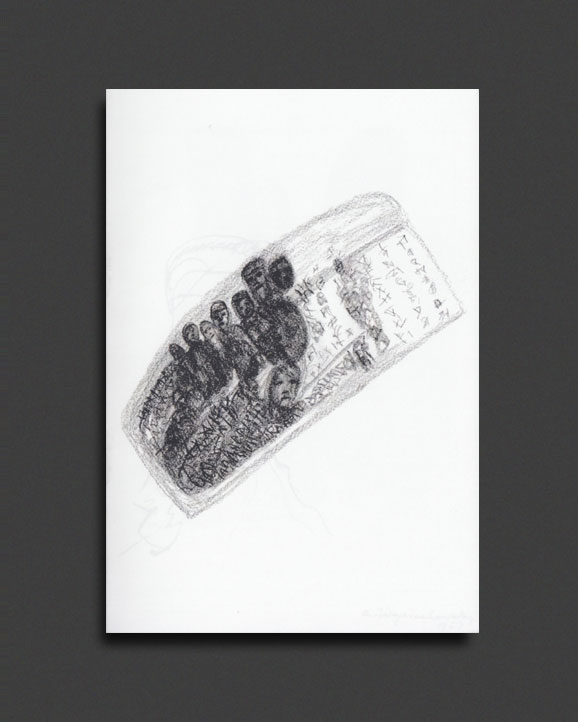
Limited edition publication dedicated to the unfinished drawings of Los Angeles artist Jason Brinkerhof, published in 2018 by Innen Books in Zürich in an edition of 150 copies only.
2017, English
Softcover (staple-bound), 24 pages, 13 x 19 cm
Edition of 100
Published by
Innen Books / Zürich
$14.00 - Out of stock
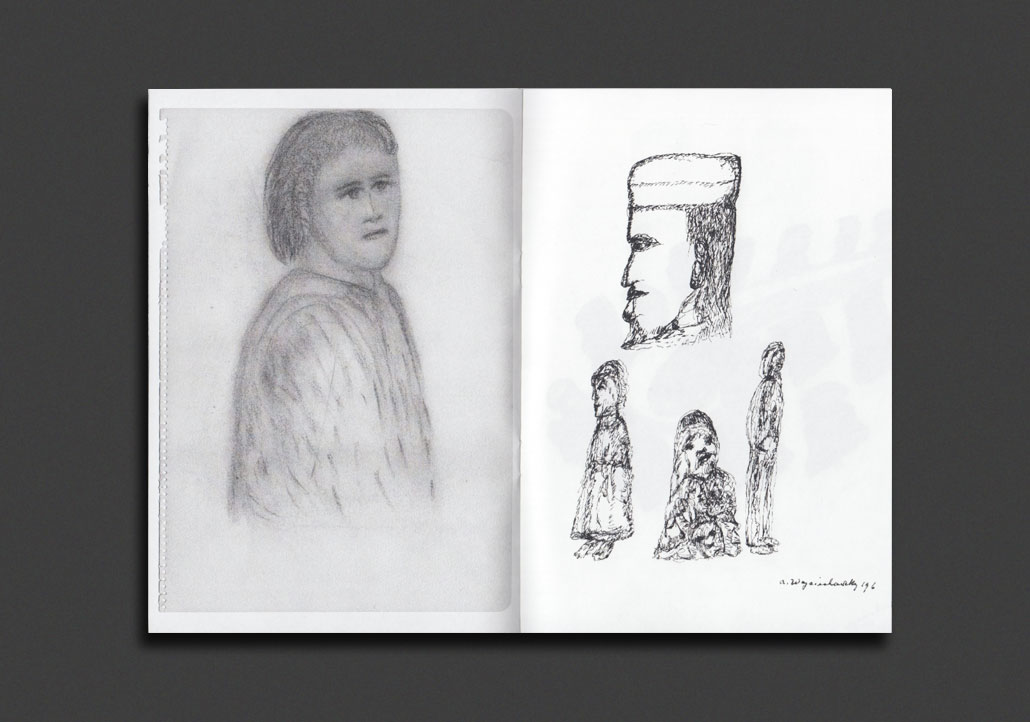
"Selected Works from 1950 - 1970" is a limited edition publication dedicated to the work of German spiritualist/artist Agatha Wojciechowsky, published in 2017 by Innen Books in Zürich in an edition of 100 copies only.
Agatha Wojciechowsky was recognized during her lifetime as a Surrealist. Although not following an art movement, her work reflected the sentiment of Art Informel of the 1950's. She lived her earlier years in Steinach de Saale, and then sailed to the United States in 1923 to be a German-speaking governess in a German baron's household. She married, became a US citizen and moved to New York City. A well-known Spiritualist medium, Agatha traveled internationally as a healer. In the early 1950's, without any background or training in the arts, Agatha began drawing. First, letters and automatic writing appeared, and then abstract drawings and faces.
"This is the work of different entities who take over and step into my body, directing my hand. I really have nothing to do with it."
Agatha Wociechowsky, along with many other artists of the post war era, was reaching for something timeless, in the spiritual realm. Her work is the expression of that quest.
She had solo exhibitions from the 1960's to the present in New York, Cologne, Berlin, and Hamburg. Group exhibitions included shows with Man Ray, Marcel Duchamp, Jean Dubuffet, Isamu Noguchi, Francis Picabia, Romare Bearden. Her artwork can be found in numerous public collections including Museum of Modern Art, the Prado, the Menil Collection, the Art Institute of Chicago, and the Whitney Museum.
2017, English
Softcover (staple-bound), 20 pages, 13 x 19 cm
Edition of 100
Published by
Innen Books / Zürich
$14.00 - Out of stock
Limited edition publication dedicated to the drawings of Sanya Kantarovsky, published in 2017 by Innen Books in Zürich in an edition of 100 copies only, on the occasion of Printed Matter’s New York Art Book Fair at MoMA PS1 September 22 - 24, 2017.
Sanya Kantarovsky (born in Moscow, Russia in 1982 and currently lives and works in New York) is known for his work across a variety of mediums, as well as his texts and curatorial projects. His multifaceted approach often results in artworks that seem forced to reckon with their own embarrassment. The dark humor consistent in Kantarovsky’s work pits the sumptuous against the abject and thrusts private space – be it physical or psychological – into public view. Kantarovsky’s most well known body of work, his figurative paintings, contains drastic shifts in scale, paint application and stylization. Evoking the feeling of an uneasy inner monologue, figures are gawked at, exposed, poked, or spooned medicine. They interact with one another, as well as the edges of the canvas itself, testing the confines of their given bodies and their given frame. Similarly, Kantarovsky probes his art historical predecessors: both canonical and relatively unknown painters, writers and illustrators. The presence of these muses, which dot Kantarovsky’s compositions simultaneously questions and indulges in a lineage of painterly impulses.
2018, English
Softcover (staple-bound), 24 pages, 13 x 19 cm
Edition of 500
Published by
Innen Books / Zürich
$14.00 - Out of stock
Filmmaker Zach Sebastian and art provocateur Richard Prince have teamed up in a collision of motorcycles, American spirit and anxiety, for new zine "They started it… and we’ll finish it."
Second Extended Edition
Edition of 500
2017, English
Softcover, 188 pages, 15.2 x 21.3 cm
Published by
Capricious / New York
$39.00 - Out of stock
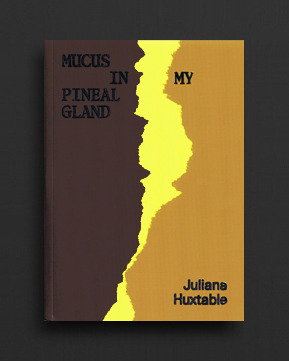
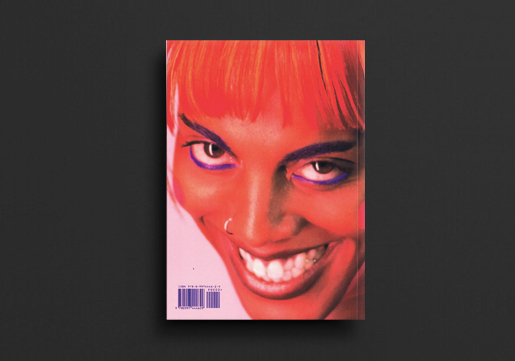
A 180+ page collection of poems and writings by artist and performer Juliana Huxtable.
Juliana Huxtable is a New York City-based writer, performer, and artist. Her work has been featured in numerous publications, including Artforum, Candy, Tropical Cream, and Mousse. She was included in the 2015 New Museum Triennial, curated by Ryan Trecartin and Lauren Cornell.
1947, French
Softcover, 142 pages, 24 x 20.5 cm
1st Edition, Out of print title / used / good
Published by
Maeght Editeur / Paris
$480.00 - Out of stock
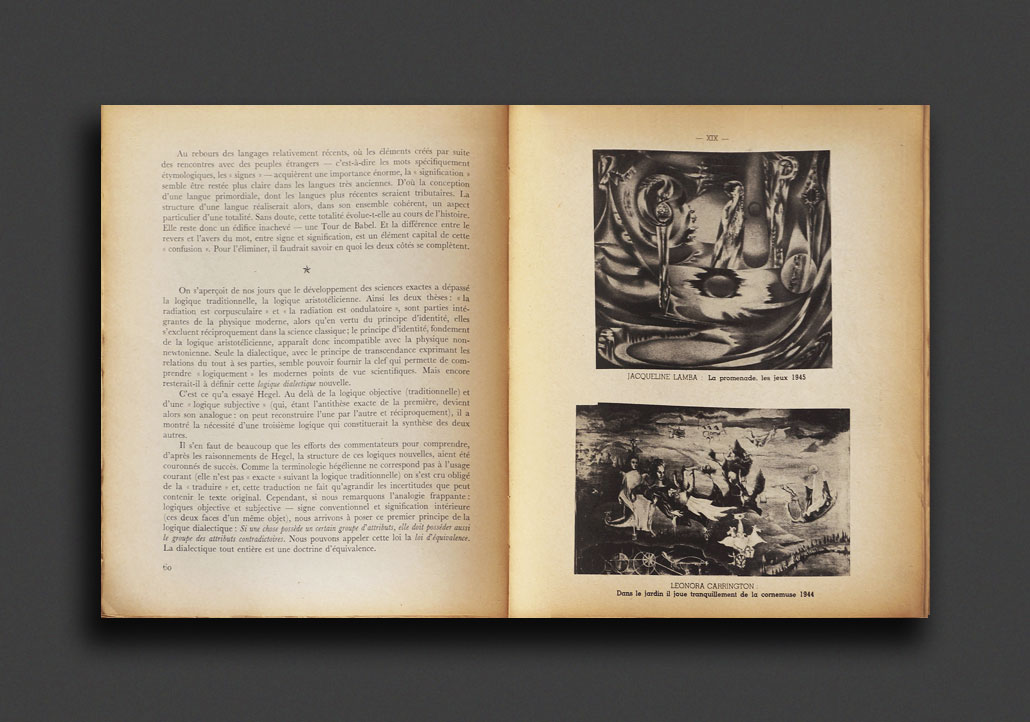
Very scarce copy of the legendary "Le Surréalisme en 1947 : Exposition Internationale de Surréalisme présentée par André Breton et Marcel Duchamp", published by Maeght Editeur, Paris, in conjunction with an important exhibition of Surrealist artists in 1947. Features the cover design by Marcel Duchamp - a photographic reproduction by Rémy Duval of "Prière de toucher (Please touch)", the famous Duchamp rubber breast edition, created with Italian-born painter Enrico Donati, that adorned the first 999 copies of the catalogue. This gorgeous catalogue features the work of artists from 24 countries including Victor Brauner, Max Ernst, Leonora Carrington, Jacqueline Lamba, Jacques Hérold, Wilfredo Lam, Joan Miró, Hans Bellmer, Marcel Jean, Maria Martins, Yves Tanguy, Dorothea Tanning, Hans Arp, Hector Hyppolite, Serge Brignoni, Alexander Calder, Bruno Capacci, Elizabeth van Damme, Jacques Halpern, Julio de Diego, Enrico Donati, Francis Bouvet , David Hare, Iaroslav Serpan, Jacqueline Lamba, Taro Okamoto, Roberto Matta, Kay Sage, Toyen, Vilhelm Bjerke-Petersen, Leonard Baskin, Jindrich Heisler, Jeanne Reynal, Roger Brielle, Jindrich Styrsky, Bruno Capacci, Jean Guerin, Isamu Noguchi, Gerome Kamrowski, Eugenio Granell, Francis Picabia, Remedios Varo, Hans Richter, Arshile Gorky, and many more,, along with the folding sheet catalogue loosely inserted.
Good copy considering age. Very tanned edges and wear to corners, edges and spine.
2013, English
Softcover, 128 pages, 12 x 28 cm
Published by
Les Presses Du Reel / Paris
$25.00 - Out of stock
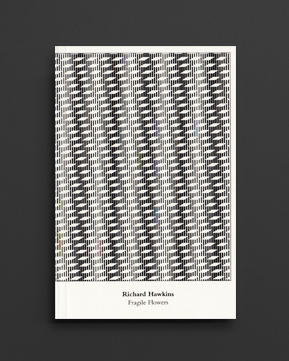
Richard Hawkins' first book of fiction: eight jubilatory and decadent short stories.
“I made my way back up the ladders and rickety parapets to the second floor for a piss and coming through the ground floor found that my friend Truck had cast and curated the upstairs as ingeniously as he had the dungeon below. Everywhere dark-eyed incredibly handsome college-age youths with fresh haircuts and unshaved chins approached with ebullient grins to offer, with corny charming salutations and flirting flattering winks, any and every service: “Ya'll'd like a beer on the house mister?” “Who's a handsome guy like you doin' in a place like this?” “Gotta light mister? My butt's done gone out”. The rolled up sleeves of their cowboy shirts revealed Truck had also steered them away from the terrible faux-tribal tattoos that young fools these days always gravitate toward. Some pseudo-specialist in inkpen and sharpened paperclip tattoos had etched in each of them exquisite little screaming skull or potleaf designs or else inscribed them with sweet little phrases of desperation and disenfranchised heroics engineered to make mawkish old customers like me weep and salivate at the tragic thought of such handsome youth in such dreadful peril: “born to lose” “death before dishonor” “only god can judge me” … Every single one of them apparently well trained by some magician so that even at the slightest tip of a dollar and bag of chips they became not only willing and pliant but famished, starved for the quenching effects of a foreign tongue plunged deep down their parched and aching throats or, even in the harsh floodlight along the row of barstools and beer pegs, welcomed the warm intrusions of an old man's wettened fingers down the backs of their pants and into the bushy cracks of their twitching and plump young cock-hungry asses …”
Since the beginning of the 90's, Richard Hawkins (born 1961 in Mexia, Texas, lives and works in Los Angeles) has developed a collage practice inherited from the cut-up legacy of Brion Gysin which aggressively mined the collapsed myths of American counter-culture. For Hawkins, collage is a space for doublings and expansions, for the unrealizable, the transient, the ephemeral and the unstable. Collage, in fact, could be seen as the basis for the artist's entire oeuvre whether they be paintings, sculptures, assemblages, books of fiction, poems, tumblr accounts saturated with vintage porn or curated shows of other artists' works. All of Hawkins's works are haunted by a horny voyeur, a hungry cruiser, a desiring hunter whose point of view focuses on the fantastical space of classic and contemporary mythologies, perusing fleshy magazines and galleries of old paintings as lustily as he stalks real boys on streetcorners.
Rather than direct links between the different narratives, practices and media in Hawkins's work, there are only the melding continuities of similar levels of indulgence, the little joys of being fascinated and getting carried away. So the beauty of teenbeat star Matt Dillon, the shadow of Lautréamont and the dislocated gesture of Butoh founder, Tatsumi Hijikata, are all approached with the same delight, grace and vulgar pleasure as are any of Hawkins' other obsessions: Greek and Roman statuary, 19 C. French Decadent literature, Gustave Moreau's paintings, American Indian cultural narratives, zombies, haunted houses, poststructuralist theory or the sextrade in Thailand.
2015, English
Softcover, 192 pages (full colour), 20 x 26 cm
Ed. of 1250,
Published by
Sternberg Press / Berlin
$38.00 - Out of stock
Out-of-print
Edited by Krist Gruijthuijsen
“In 2005 I was invited to participate in a project in Los Angeles called ‘The Backroom’ initiated by Magali Arriola, Kate Fowle, and Renaud Proch, in which artists were asked to contribute materials related to their research, sources, and interests. Although at that time I was not using collage materials in my sculptures, I had amassed a large collection of magazine pages (mainly from architecture and interior design magazines) that I often flipped through for inspiration. I decided to edit the pages, spending several months arranging and rearranging them as relationships both formal and narrative were revealed. This book is a reproduction of the resulting selection, originally presented in ‘The Backroom’ in a simple black binder.”
—Vincent Fecteau, San Francisco, 2015
American artist Vincent Fecteau has, over the last two decades, forged a singular aesthetic that mixes homespun materials (Popsicle sticks, champagne corks, string, and the like), meticulous craftwork, and a curious formal grammar. By turns wonky, erotic, extraterrestrial, or baroque—and sometimes all of these at once—his sculptures are built from small, slow accumulations in which layering, texture, and the work of the hand are all visible. His exhibition “You Have Did the Right Thing When You Put That Skylight In” is on display at the Kunsthalle Basel from June 18–August 23, 2015.
Copublished with Grazer Kunstverein
Coproduced with Galerie Buchholz, greengrassi, and Matthew Marks Gallery
Design by Marc Hollenstein
2009, English
15 postcard set (in plastic pocket), 10.8 x 16 cm
1st Edition, Out of print title / as new
Published by
SFMOMA / San Francisco
$40.00 - In stock -
In conjunction with Not New Work: Vincent Fecteau Selects from the Collection, 2009, SFMOMA commissioned Vincent Fecteau to create an artist's book, in which he chose to focus on a particular work in the exhibition—Christopher Wilmarth's plywood-and-glass sculpture New (1968). The publication consists of approximately a dozen loose postcards depicting Wilmarth's sculpture, enclosed in a plastic sleeve. Works from the exhibition photographed by way of Wilmarth's foregrounding sculpture are by Lynda Benglis, Judy Chicago, Friedel Dzubas, Max Ernst, Richard Faralia, Ralph Goings, Joe Goode, Charles Howard, Ralph Humphrey, Jess, Ron Nagle, Robert Overby, Dorothy Reid, Diego Rivera, Erio Rudd, George Segal, Wayne Thiebaud, Tom of Finland, H.C. Westermann, and Peter Young.
As New copies, long unavailable.
2014, English
2 stapled booklets in an envelope, 40 pages, 22.5 x 32 cm
Published by
Grazer Kunstverein / Graz
Motto / Berlin
$25.00 - Out of stock
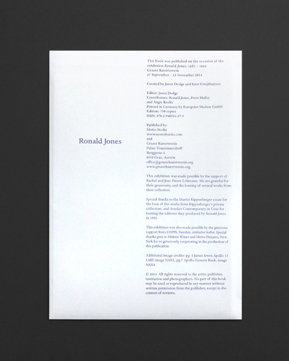
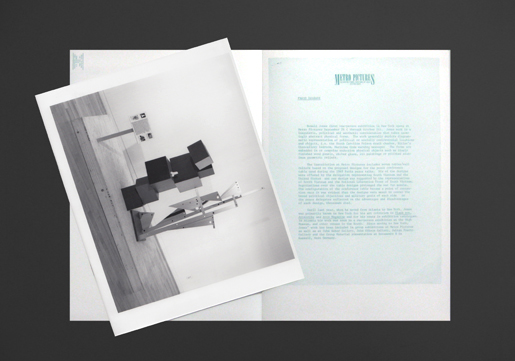
Published on the occasion of the exhibition Ronald Jones: 1987-1992, at the Grazer Kunstverein, 27 September-23 November 2014, curated by Jason Dodge and Krist Gruijthuijsen.
Ronald Jones (born July 8, 1952 in the United States) is an artist, critic and educator who gained prominence in New York City during the mid-1980s. In the magazine Contemporary, Brandon Labelle wrote: "Working as an artist, writer, curator, professor, lecturer and critic over the last 20 years, Jones is a self-styled Conceptualist, spanning the worlds of academia and art, opera and garden design, and acting as paternal spearhead of contemporary critical practice. Explorative and provocative, Jones creates work that demands attention that is both perceptual and political." Labelle positions Jones along the leading edge of a "contemporary critical practice" that is perhaps best described as interdisciplinary or transdisciplinary.
1971, English / French / German
Hardcover, 176 pages, 29 x 22 cm
1st Edition, Out of print title / used / good
Published by
Studio Vista / London
$40.00 - Out of stock
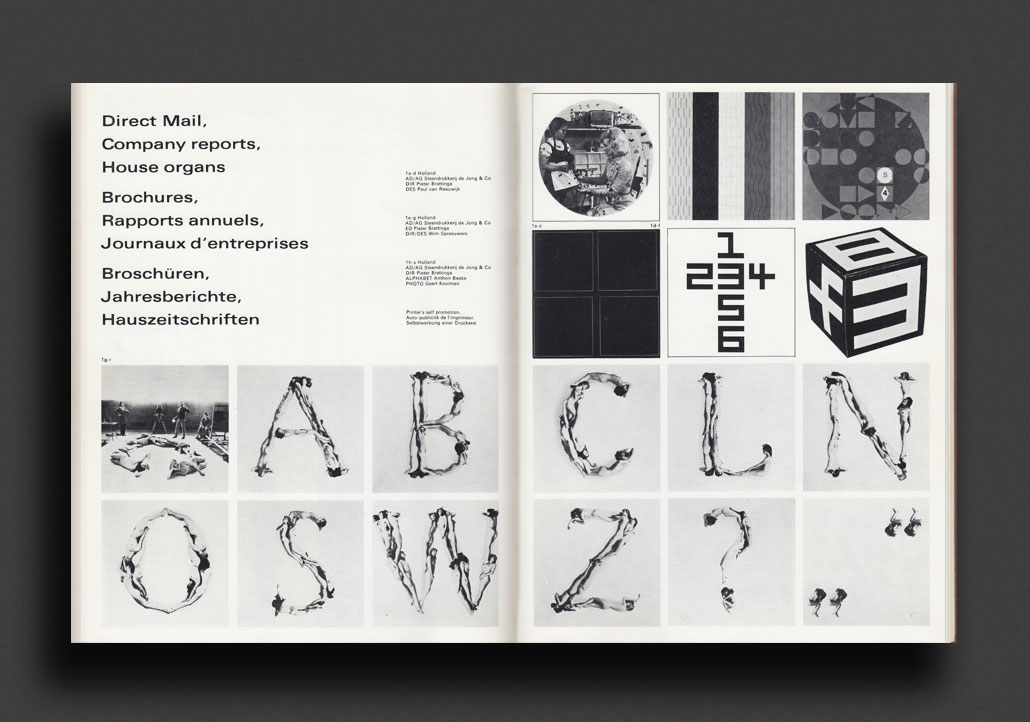
Published by the great Studio Vista publishing house between 1924-1985, Modern Publicity was, and remains, an in-depth and crucial reference of international graphic design, alongside the likes of Graphis and Pubblicitá In Italia. Each lavishly illustrated hardcover volume presents new work by designers and artists across various media, inc. posters, press advertisements, type faces, books, trademarks, logos, packaging, record sleeves, coordinated campaigns, direct-mail advertising, calendars, company reports, TV graphics, animation, postage-stamp design, and much more, all informatively captioned in English, French and German with details on the designers, art directors, clients, printing processes and size of the original products.
Modern Publicity 1971-72, edited by Felix Gluck, features the work of Richard Hollis, Olaf Leu, Paul Rand, Pieter Brattinga, Milton Glaser, Tom Wesselman, Nicole Claveloux, Les Mason, Roman Cieślewicz, Holger Matties, Max Velthuijs, Ogilvy and Mather, Jan van Toorn, Crosby/Fletcher/Forbes, Massimo Vignelli, Adriana Botti, Dick Bruna, Masuda Tadashi, Jan Młodożeniec, Edward Wright, André Francois, Veniero Bertolotti, Sarah Moon, Tomi Ungerer, and so many more.
Good Copy but without dust jacket, now preserved under plastic wrap. Ex-libris markings and general library wear.
1972, English / French / German
Hardcover (w. dust jacket), 176 pages, 29 x 22 cm
1st Edition, Out of print title / used / good
Published by
Studio Vista / London
$45.00 - Out of stock
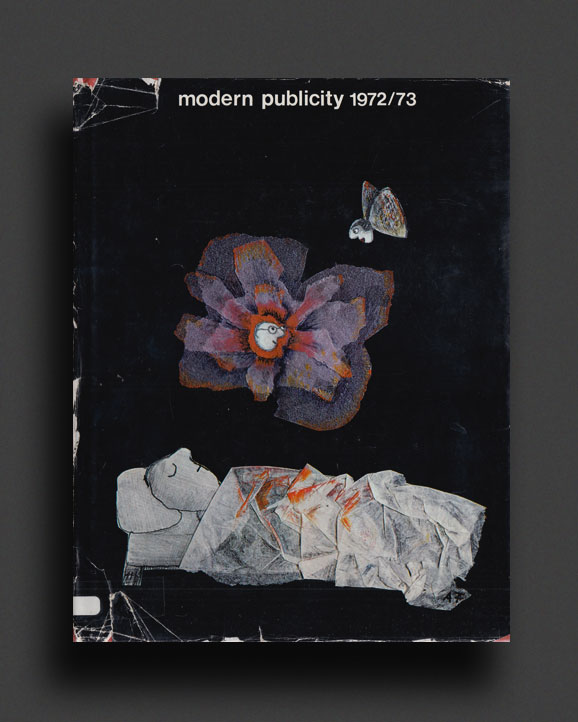
Published by the great Studio Vista publishing house between 1924-1985, Modern Publicity was, and remains, an in-depth and crucial reference of international graphic design, alongside the likes of Graphis and Pubblicitá In Italia. Each lavishly illustrated hardcover volume presents new work by designers and artists across various media, inc. posters, press advertisements, type faces, books, trademarks, logos, packaging, record sleeves, coordinated campaigns, direct-mail advertising, calendars, company reports, TV graphics, animation, postage-stamp design, and much more, all informatively captioned in English, French and German with details on the designers, art directors, clients, printing processes and size of the original products.
Modern Publicity 1972-73, edited by Felix Gluck, features the work of Raymond Savignac, Guy Bourdin, Otl Aicher, Roman Cieślewicz, Helmut Newton, Sarah Moon, Holger Matthies, Olaf Leu, Hiroshi Ohchi, Crosby/Fletcher/Forbes, John Gorham, Kenichi Matsinaga, Walter Breker, David Hockney, Les Mason, Walter Tafelmaier, and so many more.
Good ex-libris copy in dust jacket with some wear/whipping, now preserved under plastic wrap. Light ex-libris marking, otherwise clean, tight copy throughout.