World Food Books' programme is largely produced on Kulin Nation land. We acknowledge the Wurundjeri people of the Kulin Nation as the first and continuing custodians of this land, and pay respect to their Elders past, present, and emerging.
World Food Books is an arts and special interests bookshop in Naarm / Melbourne. Founded in 2010, World Food Books is devoted to the presentation of a rotating, hand-selection of international art, design, literary and counterculture publications with an emphasis on the anti-traditional, the experimental, the avant-garde, the heretic, the marginal.
Presenting new titles alongside rare and out-of-print books, catalogues and journals spanning the fields of modern and contemporary art, design, photography, illustration, film, literature, poetry, cultural theory, philosophy, sexuality, popular and underground culture in its many radical forms, World Food Books wishes to encourage adventurous, thoughtful and open-minded reading, looking, writing, and exchange of publishing and ideas, both current and historical.
As well as our bookshop, located in Melbourne's historical Nicholas Building, all of our inventory is available internationally via our online mail-order service.
World Food Books semi-regularly co-ordinates "Occasions", a programme of exhibits and events at the bookshop and in partnership with other hosts (such as museums and art galleries) that develop out of the activities, relationships and content of the bookshop itself.
World Food Books
The Nicholas Building
37 Swanston Street
Room 5, Level 6
Melbourne 3000
Australia
SHOP HOURS:
Thu–Fri 12–6, Sat 12–5
WEB-SHOP OPEN 24/7
World Food Books
Postal Address:
PO Box 435
Flinders Lane
Victoria 8009
Australia
Art
Theory / Essay
Architecture / Interior
Graphic Design / Typography
Photography
Fashion
Eros
LGBTQ+
Fiction / Poetry
Weird / Speculative / Science Fiction / Horror
Transgressive / Visceral / Abject
Symbolism / Decadence / Fin de siècle
Film / Video
Painting
Sculpture / Installation
Performance / Dance / Theater
Drawing
Sound / Music
Curatorial
Group Shows / Collections
Periodicals
Out-of-print / Rare
Posters / Ephemera / Discs
Signed Books
World Food Books Gift Voucher
World Food Book Bag
Australian Art
Australian Fiction
Australian Science Fiction / Speculative Fiction
Australian Poetry
Australian Photography
Japanese Photography
Conceptual Art
Minimal Art
Dada
'Pataphysics / Oulipo
Fluxus
Concrete Poetry
Pop Art
Surrealism
Arte Povera
Arte Informale / Haute Pâte / Tachism
Nouveau Réalisme / Zero / Kinetic
Situationism / Lettrism
Collage / Mail Art / Xerox Art
Art Brut / Folk / Visionary / Fantastic
Illustration / Graphic Art / Bandes Dessinées
Furniture
Italian Radical Design / Postmodernism
Textiles
Ceramics / Glass
Counterculture
Protest / Revolt
Philosophy
Psychoanalysis
Anthropology
Anarchism
Socialism / Anarchism / Communism / Capitalism
Literary Theory / Semiotics / Language
Feminism / Women's Studies
Gender Studies / Sexuality
Anthropology
Fetishism / BDSM
Drugs / Psychedelia
Crime / Violence
Animal Rights / Veganism
Occult / Esoterica
Ecology / Earth / Alternative Living
Whole Earth / Crafts
All prices in AUD (Australian dollars)
Pick-Ups
Pick-up orders can be collected in our bookshop during opening hours after order date. Please collect any Pick-up orders within 2 weeks of ordering as we have limited storage space. Orders will be released back into stock if not collected within this time. No refunds can be made for pick-ups left un-collected. If you cannot make it in to the bookshop in this time-frame, please choose postage option.
Return Policy
All sales are final. We do accept returns (for refund or exchange) for items received in error. All our orders are packed with special care using heavy-duty padding and cardboard book-mailers or bubble mailers (for smaller books), using reinforcement where required. We cannot take responsibility for any lost, stolen or damaged parcels.
Insurance
Should you wish to insure your package, please email us directly after placing your order and we can organise this at a small extra expense. Although all standard/express tracked packages are very safe and dependable, we cannot take responsibility for any lost, stolen or damaged parcels. We recommend insurance on valuable orders.
Interested in selling your old books, catalogues, journals, magazines, comics, fanzines, ephemera? We are always looking for interesting, unusual and out-of-print books to buy. We only buy books in our fields of interest and specialty, and that we feel we can resell.
We base these prices on desirability, market value, in-print prices, condition and our current stock levels. We offer cash, store credit, and can take stock on consignment. All
about 25% of the price we expect to get when we sell them, or 30% in store credit. We base these prices on desirability, market value, in-print prices, condition and our current stock levels.
Sell your books any day of the week. You can drop them off and return later. If you have a lot of books, we can visit your Sydney home.
We buy books that we feel we can resell. We offer about 25 % of the price we expect to get when we sell them, or 30% in store credit. We base these prices on desirability, market value, in-print prices, condition and our current stock levels.
Philadelphia Wireman
03 August - 01 September, 2018
World Food Books is proud to announce our next Occasion, the first presentation of sculptures by Philadelphia Wireman in Australia.
The Philadelphia Wireman sculptures were found abandoned in an alley off Philadelphia’s South Street on trash night in 1982. Their discovery in a rapidly-changing neighbourhood undergoing extensive renovation, compounded with the failure of all attempts to locate the artist, suggests that the works may have been discarded after the maker’s death. Dubbed the "Philadelphia Wireman" during the first exhibition of this work, in 1985, the maker’s name, age, ethnicity, and even gender remain uncertain. The entire collection totals approximately 1200 pieces, all intricately bound together with tightly-wound heavy-gauge wire (along with a few small, abstract marker drawings, reminiscent both of Mark Tobey and J.B. Murry). The dense construction of the work, despite a modest range of scale and materials, is singularly obsessive and disciplined in design: a wire armature or exoskeleton firmly binds a bricolage of found objects including plastic, glass, food packaging, umbrella parts, tape, rubber, batteries, pens, leather, reflectors, nuts and bolts, nails, foil, coins, toys, watches, eyeglasses, tools, and jewellery.
Heavy with associations—anthropomorphic, zoomorphic, and socio-cultural responses to wrapped detritus—the totemic sculptures by Philadelphia Wireman have been discussed in the context of work created to fulfil the shamanistic needs of alternative religions in American culture. Curators, collectors, and critics have variously compared certain pieces to sculpture from Classical antiquity, Native American medicine bundles, African-American memory jugs, and African fetish objects. Reflecting the artist’s prolific and incredibly focused scavenging impulse, and despite—or perhaps enhanced by—their anonymity, these enigmatic objects function as urban artefacts and arbiters of power, though their origin and purpose is unknown. Philadelphia Wireman, whatever their identity, possessed an astonishing ability to isolate and communicate the concepts of power and energy through the selection and transformation of ordinary materials. Over the course of the past two decades, this collection has come to be regarded as an important discovery in the field of self-taught art and vernacular art.
Presented in collaboration with Fleisher-Ollman Gallery, Philadelphia, and Robert Heald, Wellington.
Susan Te Kahurangi King
02 February - 10 March, 2018
Susan Te Kahurangi King (24 February 1951 - ) has been a confident and prolific artist since she was a young child, drawing with readily available materials - pencils, ballpoint pens and felt-tip markers, on whatever paper is at hand. Between the ages of four and six Susan slowly ceased verbal communication. Her grandparents William and Myrtle Murphy had developed a special bond with Susan so they took on caring responsibilities for extended periods. Myrtle began informally archiving her work, carefully collecting and storing the drawings and compiling scrapbooks. No drawing was insignificant; every scrap of paper was kept. The King family are now the custodians of a vast collection containing over 7000 individual works, from tiny scraps of paper through to 5 meter long rolls.
The scrapbooks and diaries reveal Myrtle to be a woman of great patience and compassion, seeking to understand a child who was not always behaving as expected. She encouraged Susan to be observant, to explore her environment and absorb all the sights and sounds. Myrtle would show Susan’s drawings to friends and people in her community that she had dealings with, such as shopkeepers and postal workers, but this was not simply a case of a grandmother’s bias. She recognised that Susan had developed a sophisticated and unique visual language and sincerely believed that her art deserved serious attention.
This was an unorthodox attitude for the time. To provide some context, Jean Dubuffet coined the term Art Brut in 1945 to describe work created by self-taught artists – specifically residents of psychiatric institutions and those he considered to be visionaries or eccentrics. In 1972 Roger Cardinal extended this concept by adopting the term Outsider Art to describe work made by non-academically trained artists operating outside of mainstream art networks through choice or circumstance. Susan was born in Te Aroha, New Zealand in 1951, far from the artistic hubs of Paris and London that Dubuffet and Cardinal operated in. That Myrtle fêted Susan as a self-taught artist who deserved to be taken seriously shows how progressive her attitudes were.
Susan’s parents Doug and Dawn were also progressive. Over the years they had consulted numerous health practitioners about Susan’s condition, as the medical establishment could not provide an explanation as to why she had lapsed into silence. Dawn educated herself in the field of homeopathy and went on to treat all twelve of her children using these principles – basing prescriptions on her observations of their physical, mental and emotional state.
Doug was a linguist with an interest in philosophy who devoted what little spare time he had to studying Maori language and culture. To some extent their willingness to explore the fringes of the mainstream made them outsiders too but it was their commitment to living with integrity and their respect for individuality that ensured Susan’s creativity was always encouraged.
Even though Susan’s family supported her artistic pursuits, some staff in schools and hospitals saw it as an impediment to her assimilation into the community and discouraged it in a variety of ways. Her family was not always aware of this and therefore did not fully understand why Susan stopped drawing in the early 1990s. However, rather than dwell on the challenges that Susan faced in pursuit of her artistic practice, they prefer to highlight her achievements. In 2008 Susan began drawing again in earnest, after an almost 20 year interruption, and her work is now shown in galleries around the world.
Susan grew up without television and has been heavily influenced by the comics she read as a child. She is absolutely fearless in the appropriation of recognizable characters, such as Donald Duck and Mickey Mouse, in her work. She twists their limbs, contorts their faces, compresses them together, blends them into complex patterned backgrounds - always imbuing them with an incredible energy. Although Susan often used pop culture characters in her work they are not naive or childlike. These are drawings by a brilliant self-taught artist who has been creating exceptional work for decades without an audience in mind.
Mladen Stilinović
"Various Works 1986 - 1999"
02 February 16 - September 10, 2016
Various works 1986 - 1999, from two houses, from the collections of John Nixon, Sue Cramer, Kerrie Poliness, Peter Haffenden and Phoebe Haffenden.
Including: Geometry of Cakes (various shelves), 1993; Poor People’s Law (black and white plate), 1993; White Absence (glasses, ruler, set square, silver spoon, silver ladel with skin photograph and wooden cubes), 1990-1996; Exploitation of the Dead (grey and red star painting, wooden painting, black spoon with red table, red plate), 1984-1990; Money and Zeros (zero tie, paintings made for friends in Australia (Sue, John, Kerrie), numbers painting), 1991-1992; Words - Slogans (various t-shirts) - “they talk about the death of art...help! someone is trying to kill me”, “my sweet little lamb”, “work is a disease - Karl Marx”; Various artist books, catalogues, monographs, videos; Poster from exhibition Insulting Anarchy; "Circular" Croatian - Australian edition; Artist book by Vlado Martek (Dostoyevsky); more.
Thanks to Mladen Stilinović and Branka Stipančić.
Jonathan Walker
Always Will Need To Wear Winter Shirt Blue + Ochre Small Check Pattern
21 August - 21 September, 2015
Untitled
I am not a great reader of poetry but I always return to the work of Melbourne poet, Vincent Buckley (1925- 1988). Perhaps I find his most tantalising piece to be not a finished poem but a fragment left on a scrap of paper discovered on his desk after the poet’s death.
The poetry gathers like oil
In the word-core, and spreads
It has its music meet,
Its music is in movement.
This fragment is more the shell left behind from a volatile thought than a finished poem. I find the last two lines honest but awkward whereas the first two lines work like an arrow. Most likely he could not find a resolution so it was left. Still, in its present form, it remains an eloquent testimony to the ultimate failure of a medium to express mobile thought and sensation, in Buckley’s case, through verbal language. It’s an important matter because this is something all artists have to deal with regardless of the medium.
I have never written a poem, however, I am forever copying fragments from books on paper scraps in a vain effort to fix certain notions in my head. At first, they function as bookmarks that are sometimes returned to when I open the book. But before long, as they accumulate, they fall out littering the table interspersed with A4 photocopies, bills, books and medications.
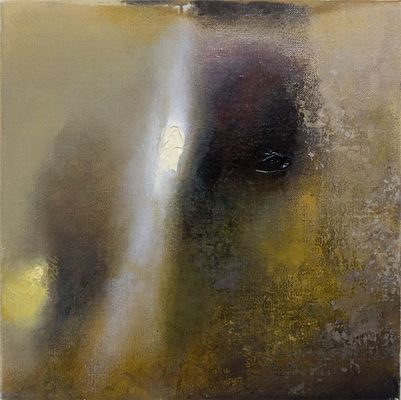
To return to Buckley’s fragment, the first two lines very much evoke how I paint nowadays. As you age, detail diminishes and patches of light become more luminous and float. I feel the most honest way of dealing with this is by smearing the oil paint on the canvas with the fingers and working close-up, blind. Only if the patches coalesce into an approaching image can the work gain a life.
-
Jonathan Walker was born in Melbourne, Australia and brought up on a dairy farm in Gippsland. In the 1970’s he studied painting at RMIT and won the Harold Wright Scholarship to the British Museum, London. During the 1980’s he exhibited at Pinacotheca Gallery, Richmond and had work shown at the NGV and Heidi City Art Gallery. Over the same period he designed the cover for the “Epigenesi” LP by Giancarlo Toniutti, Italy and conducted a mail exchange work with Achim Wollscheid, Germany. The work with artists through the post resulted in an article published in the bicentenary issue of Art and Australia 1988. He showed in artist run spaces such as WestSpace in the 90’s and 2000’s, and until 2012, taught painting at Victoria University, which is where we (Colleen Ahern and Lisa Radford) as organisers of the exhibition, among many others, had the privilege of being his student.
Walker’s knowledge was imparted to students through the careful selection of music, literature, and artists found in books that he himself had ordered for the library. Walker’s strategy was the generosity of sharing his vast knowledge with references specific to each student and their context.
Walker’s paintings share a similar focus and intimacy.
This exhibition presents a small selection of recent paintings alongside a publication that includes Walker’s writing. Observational and analytical, Walker’s work is a type of material notation — the time of day, colour and how it is blended, the both specific and fleeting location of a reflection on lino or the question of whether a chair leg should be included in a painting.
Please join us on Friday August 21 between 6-8pm to celebrate the opening of the exhibition.
Curated by Colleen Ahern and Lisa Radford.
B. Wurtz
Curated by Nic Tammens
March 26 - April 4, 2015
B.Wurtz works from a basement studio in his home on Manhattan’s Lower East Side.
This local fact is attested to by the plastic shopping bags and newsprint circulars that appear in his work. As formal objects, they don’t make loud claims about their origins but nonetheless transmit street addresses and places of business from the bottom of this long thin island. Like plenty of artists, Wurtz is affected by what is local and what is consumed. His work is underpinned by this ethic. It often speaks from a neighborhood or reads like the contents of a hamper:
“BLACK PLUMS $1.29 lb.”
“Food Bazaar”
“USDA Whole Pork Shoulder Picnic 99c lb.”
“RITE AID Pharmacy, with us it’s personal.”
“H. Brickman & Sons.”
“Sweet Yams 59c lb."
Most of the work in this exhibition was made while the artist was in residence at Dieu Donne, a workshop dedicated to paper craft in Midtown. Here Wurtz fabricated assemblages with paper and objects that are relatively lightweight, with the intention that they would be easily transportable to Australia. This consideration isn’t absolute in Wurtz’s work, but was prescriptive for making the current exhibition light and cheap. Packed in two boxes, these works were sent from a USPS post office on the Lower East Side and delivered to North Melbourne by Australia Post.
Wurtz appears courtesy of Metro Pictures, New York.
Thanks to Rob Halverson, Joshua Petherick, Sari de Mallory, Matt Hinkley, Helen Johnson, Fayen d'Evie, Ask Kilmartin, Lisa Radon, Ellena Savage, Yale Union, and "Elizabeth".
John Nixon
"Archive"
December 15 - January 20, 2014
The presentation of John Nixon's archive offered a rare showcase of this extensive collection of the artist's own publications, catalogues, posters, ephemera, editions and more, from the mid 1980s onwards, alongside a selection of his artworks.
Organized by John Nixon, Joshua Petherick and Matt Hinkley.
<a href=http://wfb.public-office.info/artist/john-nixon>All titles by John Nixon
"Habitat"
at Minerva, Sydney (organised by Joshua Petherick and Matt Hinkley)
November 15 - December 20, 2014
Lupo Borgonovo, Janet Burchill & Jennifer McCamley,
Lewis Fidock, HR Giger, Piero Gilardi, Veit Laurent Kurz,
Cinzia Ruggeri, Michael E. Smith, Lucie Stahl, Daniel Weil, Wols
Press Release:
“...It contained seven objects. The slender fluted bone, surely formed for flight, surely from the wing of some large bird. Three archaic circuitboards, faced with mazes of gold. A smooth white sphere of baked clay. An age-blackened fragment of lace. A fingerlength segment of what she assumed was bone from a human wrist, grayish white, inset smoothly with the silicon shaft of a small instrument that must once have ridden flush with the surface of the skin - but the thing’s face was seared and blackened.”
William Gibson, “Count Zero”, 1986
"Autumn Projects Archive"
Curated by Liza Vasiliou
March 6 - March 15, 2014
World Food Books, in conjunction with the Virgin Australia Melbourne Fashion Festival 2014, presented the Autumn Projects archive, consisting of a selection of early examples in Australian fashion with a particular interest in collecting designers and labels from the period beginning in the 1980’s, who significantly influenced the discourse of Australian Fashion.
Curated by Liza Vasiliou, the exhibition provided a unique opportunity to view pieces by designers Anthea Crawford, Barbara Vandenberg, Geoff Liddell and labels CR Australia, Covers, Jag along with early experimental collage pieces by Prue Acton and Sally Browne’s ‘Fragments’ collection, suspended throughout the functioning World Food Books shop in Melbourne.
H.B. Peace
presented by CENTRE FOR STYLE
November 14, 2013
"Hey Blinky, you say chic, I say same"
Anon 2013
H.B. Peace is a clothing collaboration between great friends Blake Barns and Hugh Egan Westland. Their pieces explore the divergences between 'character’ and ‘personality’ in garments....etc
Special Thanks to Joshua Petherick and Matt Hinkley of WFB and Gillian Mears
and a Very Special Thank you to Audrey Thomas Hayes for her shoe collaboration.
Janet Burchill & Jennifer McCamley
"Aesthetic Suicide"
May 10 - June 8, 2013
The first of our occasional exhibitions in the World Food Books office/shop space in Melbourne, "Aesthetic Suicide" presented a body of new and older works together by artists Janet Burchill & Jennifer McCamley, including videos, prints, a wall work, and publications.
During shop open hours videos played every hour, on the hour.
1975, English / French / German
Hardcover (w. dust jacket), 192 pages, 29 x 22 cm
1st Edition, Out of print title / used / good
Published by
Studio Vista / London
$50.00 - Out of stock
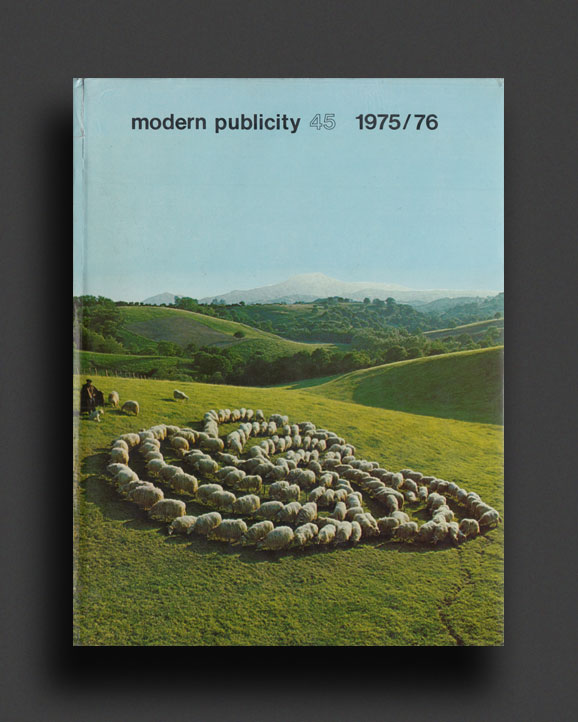
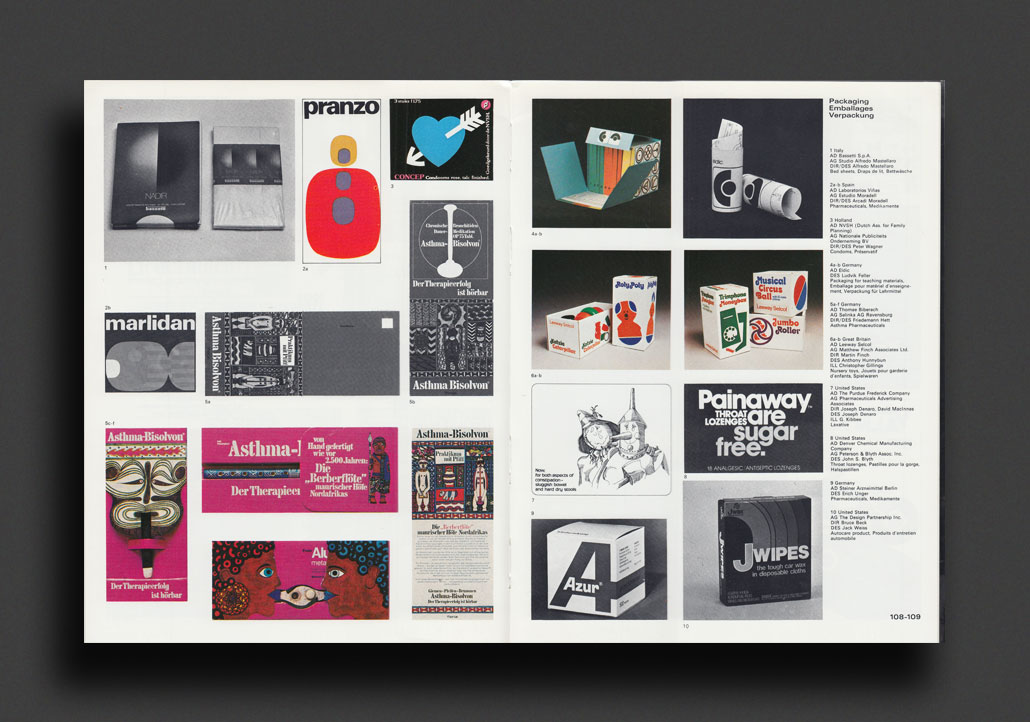
Published by the great Studio Vista publishing house between 1924-1985, Modern Publicity was, and remains, an in-depth and crucial reference of international graphic design, alongside the likes of Graphis and Pubblicitá In Italia. Each lavishly illustrated hardcover volume presents new work by designers and artists across various media, inc. posters, press advertisements, type faces, books, trademarks, logos, packaging, record sleeves, coordinated campaigns, direct-mail advertising, calendars, company reports, TV graphics, animation, postage-stamp design, and much more, all informatively captioned in English, French and German with details on the designers, art directors, clients, printing processes and size of the original products.
Modern Publicity 1975/76, edited by Felix Gluck, features the work of Dick Bruna, Milton Glaser, Sarah Moon, Pentagram, Léo Kouper, Shigeo Okamoto, Peter Beard, Seymour Chwast, Pierre Delessert, Alan Fletcher, Les Mason, Olaf Leu, Herb Lubalin, Guillermo Morillo, Max Bill, Ivan Chermayeff, Roman Cieślewicz, Olivetti, Letraset, Ikko Tanaka, Sam Haskins, and so many more.
Good ex-library Copy with good dust jacket, now preserved under plastic wrap.
General library associated markings and wear.
1972, English
Softcover, 172 pages, 21 x 23.5 cm
1st Edition, Out of print title / used / good
Published by
E P Dutton / New York
$40.00 - Out of stock
First edition, published in 1972 by E.P. Dutton, New York.
Alexander Calder, creator of the mobile and the stabile, occupies a unique position as the sculptor who is generally considered America's greatest, and the American artist with the widest international reputation today. His fame, and his career as a sculptor, began almost fifty years ago with his miniature Circus. The Circus, now on extended loan to the Whitney Museum of American Art in New York and on permanent display there, was begun in the mid-twenties with just a few figures. Calder enlarged the Circus over half a dozen years into a full performance with a troupe of dozens of people and animals. The fame of Calder’s circus spread quickly between the years 1927 and 1930. All the Paris art world came to know it )Mondrian, Miro, Cocteau, Kiesler, Man Ray, Pascin, Léger, Foujita, Pevsner, Arp...). It brought him his first great personal success., but what was more important, the circus also provided a laboratory in which all the most original features of his later work developed. The circus aesthetic - a combination of suspense, surprise, spontaneity, humour, gaiety, playfulness - has always been the basis of Calder's work.
This book presents the Circus and examples of the many circus sculptures in wire, wood, and bronze, as well as the circus paintings, drawings, and gouaches, and various other sculptures that relate to Calder's longtime interest in the circus. lt is divided into three parts: the Circus years, colour
stills from the Pathé film of a Circus performance, and the Circus figures themselves, photographed by Marvin Schwartz and shown with related pieces in all the media that Calder has used. The occasional quotations that accompany the illustrations - Calder's remarks about circus things - are the only "text" in the book. An appendix includes a chronology of events in Calder's career that relate to the Circus, detailed captions for each illustration, and an annotated bibliography.
Good copy with only light creasing to covers only. Clean and tight throughout.
1972, English
Softcover, 50 pages, 26.5 x 21 cm
1st Edition, Out of print title / used / good
Published by
Baroque Press / London
$35.00 - Out of stock
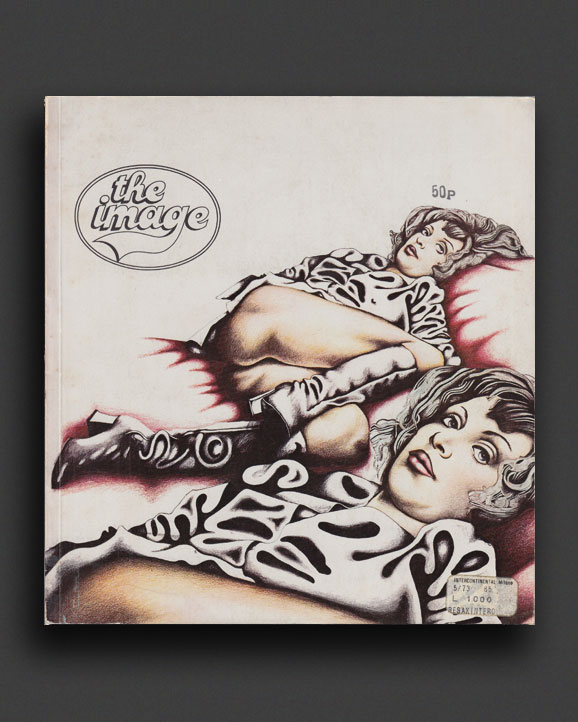
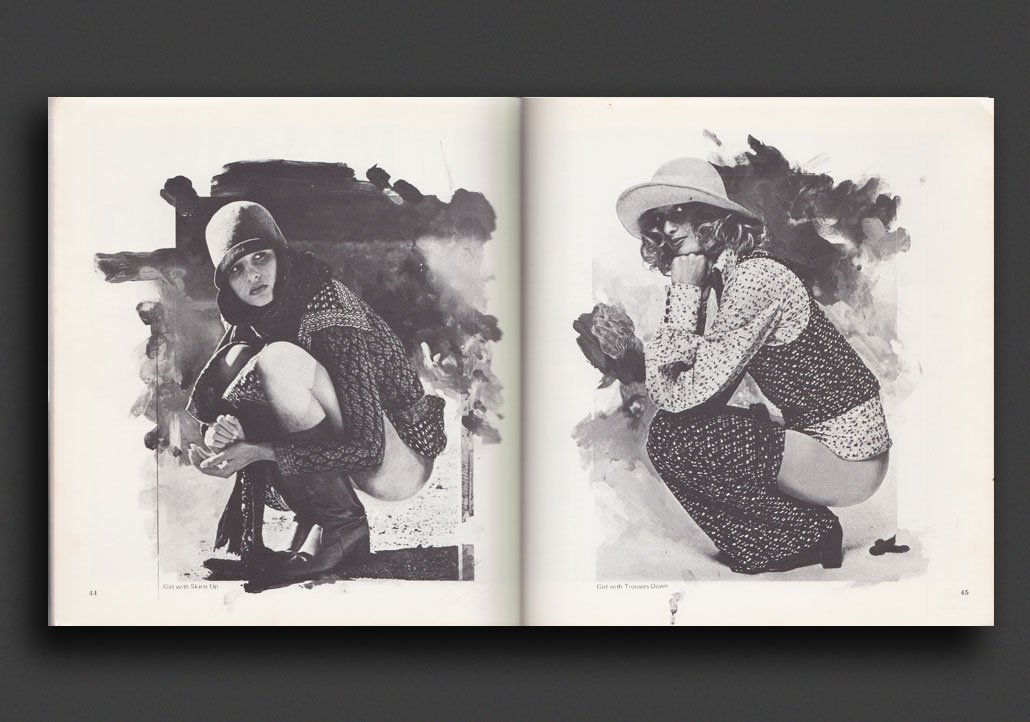
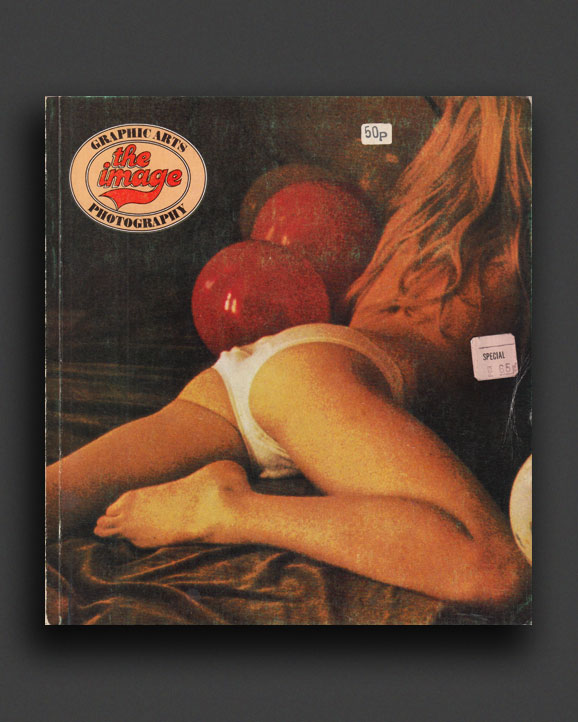
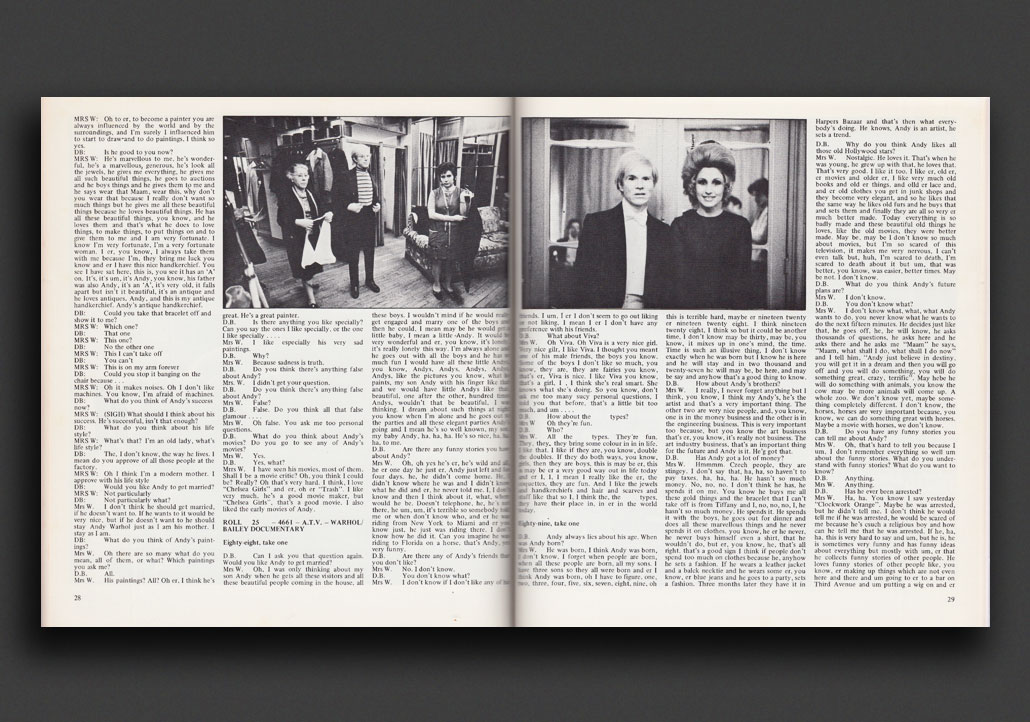
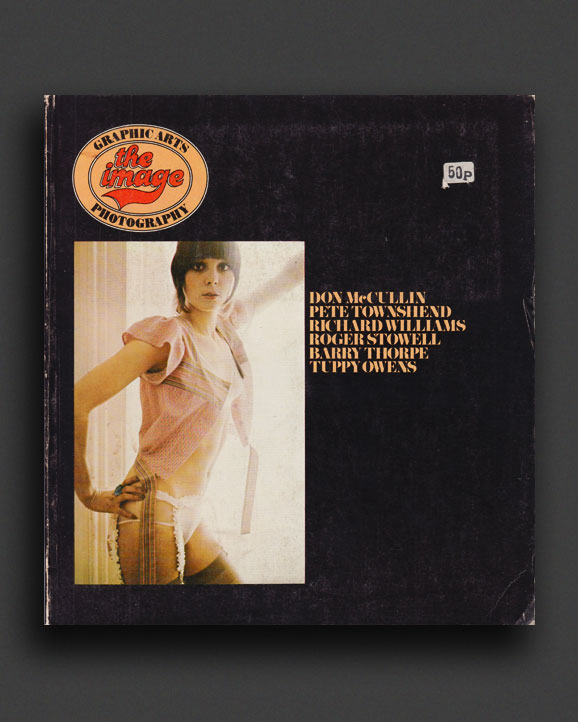
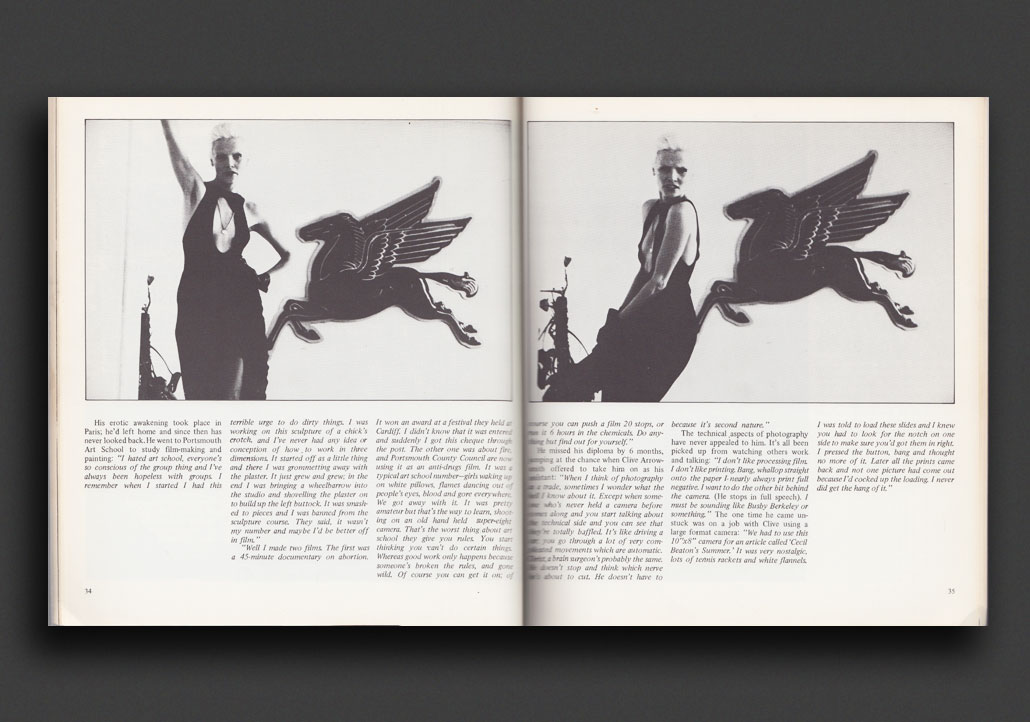
The Image was a great periodical dedicated to the Graphic Arts and Photography, published monthly in the early 1970s by the Baroque Press of London. Each issue profiles artists with heavily illustrated spreads of their work alongside commentary and interviews.
This issue (No. 8, 1972) includes features on: Bob Hook, Ralph Steadman, Richard Hamilton, Elliot Erwitt, Robert Montgomery, Dave Atkinson, Harry Holland, J.P. Smut, James Wedge, and more.
1973, English
Softcover, 50 pages, 26.5 x 21 cm
Published by
Baroque Press / London
$35.00 - Out of stock
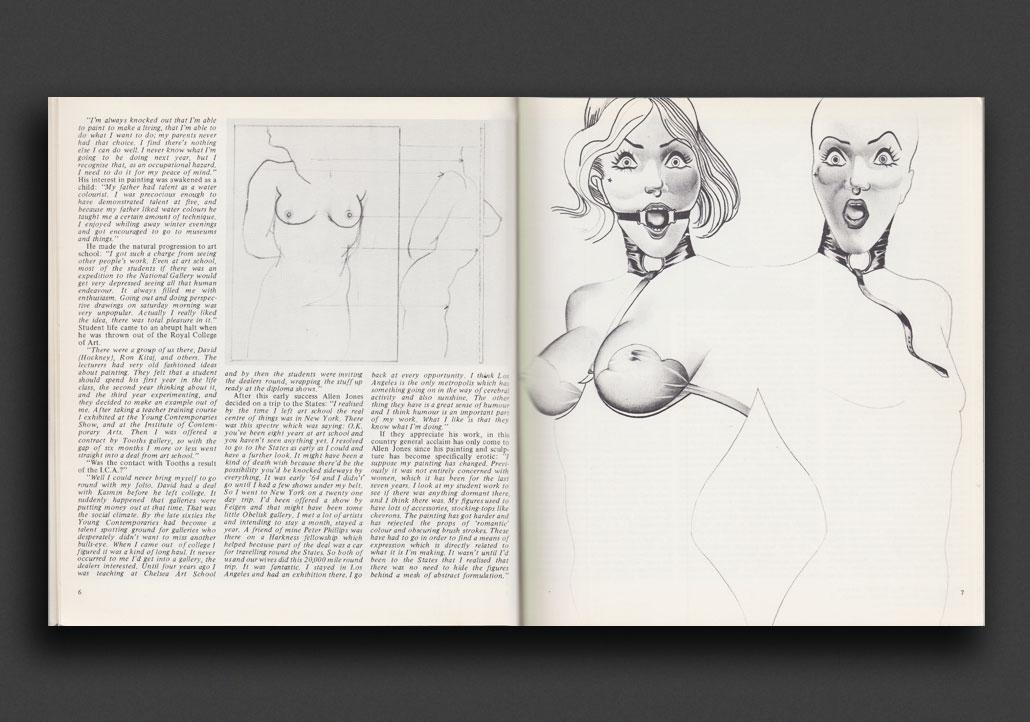
The Image was a great periodical dedicated to the Graphic Arts and Photography, published monthly in the early 1970s by the Baroque Press of London. Each issue profiles artists with heavily illustrated spreads of their work alongside commentary and interviews.
This issue (No. 9, 1973) includes features on: Allen Jones, Barry Pringle, Vince Farrell, Norman Earles, Raymond Thompson, Richard Hurley, Ray Bellisario, Dave Anthony, Bill Brandt, and more.
1973, English
Softcover, 50 pages, 26.5 x 21 cm
Published by
Baroque Press / London
$35.00 - Out of stock
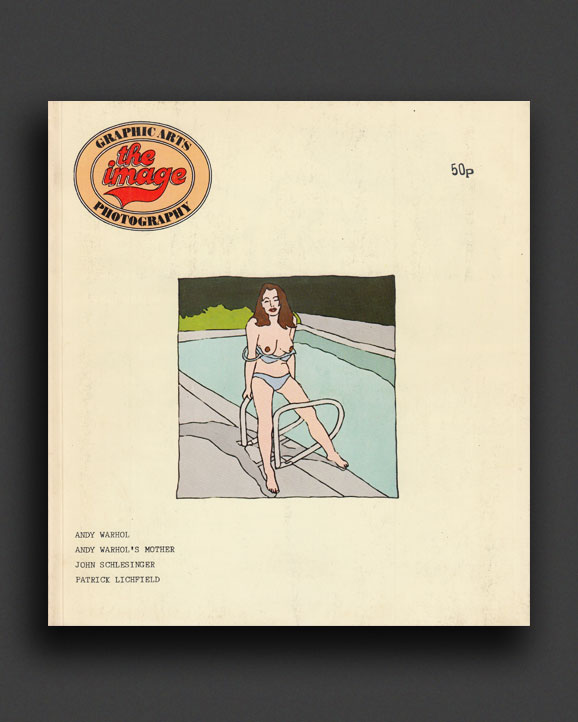
The Image was a great periodical dedicated to the Graphic Arts and Photography, published monthly in the early 1970s by the Baroque Press of London. Each issue profiles artists with heavily illustrated spreads of their work alongside commentary and interviews.
This issue (No. 10, 1973) includes features on: Andy Warhol, Andy Warhol's mother, Christine Roche, Bruce Rae, Donald Haunam, John Schlesinger, Patrick Lichfield, Hans Wallner, Doris, Bob Gale, and more.
1973, English
Softcover, 50 pages, 26.5 x 21 cm
1st Edition, Out of print title / used / good
Published by
Baroque Press / London
$35.00 - Out of stock
The Image was a great periodical dedicated to the Graphic Arts and Photography, published monthly in the early 1970s by the Baroque Press of London. Each issue profiles artists with heavily illustrated spreads of their work alongside commentary and interviews.
This issue (No. 11, 1973) includes features on: Cecil Beaton, Sam Haskins, Mike McInnerney, Tony Destefano, Arnold Schwartzmann, and Howard Pemperton.
1973, English
Softcover, 50 pages, 26.5 x 21 cm
1st Edition, Out of print title / used / good
Published by
Baroque Press / London
$20.00 - Out of stock
The Image was a great periodical dedicated to the Graphic Arts and Photography, published monthly in the early 1970s by the Baroque Press of London. Each issue profiles artists with heavily illustrated spreads of their work alongside commentary and interviews.
This issue (No. 12, 1973) includes features on: Don McCullin, Pete Townshend, Richard Williams, Roger Stowell, Barry Thorpe, Tuppy Owens, and more.
1973, English
Softcover, 56 pages, 26.5 x 21 cm
1st Edition, Out of print title / used / good
Published by
Baroque Press / London
$30.00 - In stock -
The Image was a great periodical dedicated to the Graphic Arts and Photography, published monthly in the early 1970s by the Baroque Press of London. Each issue profiles artists with heavily illustrated spreads of their work alongside commentary and interviews.
This issue (Vol. 2 No. 1, 1973) includes features on: Youssuf Karsh, Australian photographer John Thornton (Bucci), Sue Coe, Grace Coddington, Alberto Vazquez, and more.
1973, English
Softcover, 56 pages, 26.5 x 21 cm
1st Edition, Out of print title / used / good
Published by
Baroque Press / London
$30.00 - In stock -
The Image was a great periodical dedicated to the Graphic Arts and Photography, published monthly in the early 1970s by the Baroque Press of London. Each issue profiles artists with heavily illustrated spreads of their work alongside commentary and interviews.
This issue (Vol. 2 No. 2, 1973) includes features on: Australian photographer Bob Davis, Terry O'Neill, Len Hickman, Brian Grimwood, Rod Turner, Laurie Lewis, and more.
1973, English
Softcover, 60 pages, 26.5 x 21 cm
1st Edition, Out of print title / used / good
Published by
Baroque Press / London
$20.00 - In stock -
The Image was a great periodical dedicated to the Graphic Arts and Photography, published monthly in the early 1970s by the Baroque Press of London. Each issue profiles artists with heavily illustrated spreads of their work alongside commentary and interviews.
This issue (Vol. 2 No. 3, 1973) includes features on: Dick Frank, David Montgomery, Celestino Valenti, George Hurrell, Arnaldo Putzu, and more.
1973, English
Softcover, 60 pages, 26.5 x 21 cm
1st Edition, Out of print title / used / good
Published by
Baroque Press / London
$25.00 - Out of stock
The Image was a great periodical dedicated to the Graphic Arts and Photography, published monthly in the early 1970s by the Baroque Press of London. Each issue profiles artists with heavily illustrated spreads of their work alongside commentary and interviews.
This issue (Vol. 2 No. 4, 1973) includes features on: David Hamilton, James McMullen, Michael Drobny, John Minihan, Mad Magazine, Rib Field, and more.
2018, English
Hardcover (w. dust jacket), 456 pages, 152 x 229 cm
Published by
Semiotext(e) / Los Angeles
The MIT Press / Massachusetts
$65.00 - In stock -
A critique of capital through the lens of war, and a critique of war through the lens of the revolution of 1968.
“We are at war,” declared the President of the French Republic on the evening of November 13, 2015. But what is this war, exactly?
In Wars and Capital, Éric Alliez and Maurizio Lazzarato propose a counter-history of capitalism to recover the reality of the wars that are inflicted on us and denied to us. We experience not the ideal war of philosophers, but wars of class, race, sex, and gender; wars of civilization and the environment; wars of subjectivity that are raging within populations and that constitute the secret motor of liberal governmentality. By naming the enemy (refugees, migrants, Muslims), the new fascisms establish their hegemony on the processes of political subjectivation by reducing them to racist, sexist, and xenophobic slogans, fanning the flames of war among the poor and maintaining the total war philosophy of neoliberalism.
Because war and fascism are the repressed elements of post-'68 thought, Alliez and Lazzarato not only read the history of capital through war but also read war itself through the strange revolution of '68, which made possible the passage from war in the singular to a plurality of wars—and from wars to the construction of new war machines against contemporary financialization. It is a question of pushing “'68 thought” beyond its own limits and redirecting it towards a new pragmatics of struggle linked to the continuous war of capital. It is especially important for us to prepare ourselves for the battles we will have to fight if we do not want to be always defeated.
Translated by Ames Hodges
2017, English
Softcover, 104 pages, 13.5 x 21 cm
Published by
Sternberg Press / Berlin
Harvard University Graduate School of Design / Cambridge
$22.00 - Out of stock
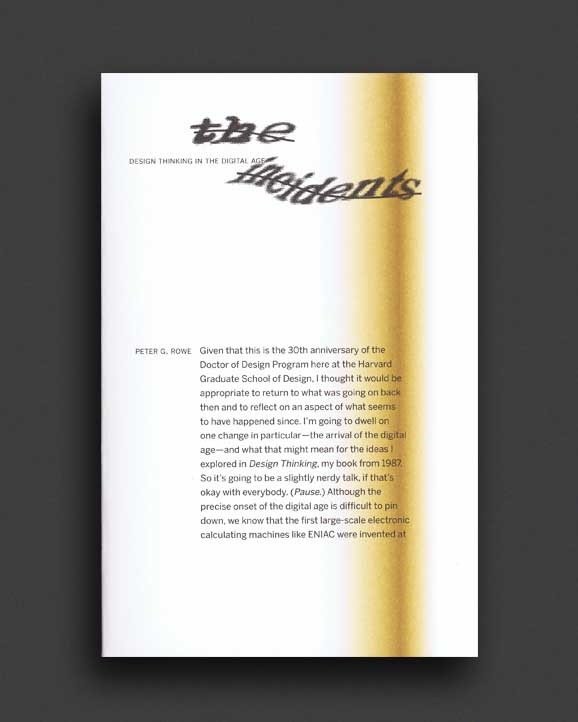
In 1987, Peter G. Rowe published his pioneering book Design Thinking. In it, he interrogated conceptual approaches to design in terms of both process and form. Thirty years later, in a lecture at the Harvard University Graduate School of Design, Rowe offered a reappraisal of his earlier work, describing ways in which the capacities of the digital age have changed the way we perceive and understand creative problem-solving in architectural design. In this new account of “design thinking” based on that memorable talk, Rowe charges that ideas about the “precision” and “incompleteness” of information have become exaggerated and made more manifest. He dives into the crucial role of schema theory and the heuristics that flow from it, but concedes that the “ineffable characteristics of design problems and of design thinking also appear to have remained.”
The Incidents is a book series based on uncommon events at the Harvard University Graduate School of Design from 1936 to tomorrow.
Copublished with the Harvard University Graduate School of Design
Book series designed by Åbäke
2012, English
Softcover, 70 pages (7 b/w ill.), 12 x 19 cm
Published by
Sternberg Press / Berlin
$24.00 - Out of stock
Painting has demonstrated remarkable perseverance in the expanding field of contemporary art and the surrounding ecology of media images. It appears, however, to have dispelled its own once-uncontested material basis: no longer confined to being synonymous with a flat picture plane hung on the wall, today, painting instead tends to emphasize the apparatus of its appearance and the conduits of its circulation. With contributions by Peter Geimer, Isabelle Graw, and André Rottmann, Thinking through Painting investigates painting’s traits and reception in cultural and socioeconomic discourse.
1981, English
Softcover, 144 pages, 18 x 24 cm
1st Edition, Out of print title / used / good
Published by
The Tate Gallery / London
$45.00 - Out of stock
Long out of print catalogue published to accompany the exhibition of David Jones’ paintings, drawings, inscriptions, and a selection of engravings and boxwood carvings at the Tate in 1981. Walter David Jones (known as David Jones, 1895 – 1974) was both a painter and one of the first-generation British modernist poets. As a painter he worked chiefly in watercolour, painting portraits and animal, landscape, legendary and religious subjects. He was also a wood-engraver and designer of inscriptions. As a writer, Jones' In Parenthesis, published in 1937, was hailed by T.S. Eliot as 'a work of genius.' He received similar approbation throughout his career from W.B. Yeats, W.H. Auden, Stephen Spender, Hugh McDiarmid, Kathleen Raine, R.S. Thomas, Evelyn Waugh, Seamus Heaney, Igor Stravinsky and many others. Throughout the 1920s, he trained with the artisans of the Guild of St. Joseph and St. Dominic, an experimental Roman Catholic artist community founded on the principles of Distributism, at Ditchling, Sussex and headed by Eric Gill and others. He himself converted to Catholicism in 1921, and the Catholic 'mythos,' as he termed it, (particularly the Catholic Mass) also became a profound source of inspiration for his art and thinking. Although impeded by several nervous breakdowns in the 30s and 40s, Jones pursued a life totally dedicated to painting and writing. Although engaged once and deeply in love several times, Jones never married. For most of his adult life, he lived alone in various locations in London and Sussex, usually in a single room in a boarding house, but surrounded by a joyful chaos of artworks, artist tools, books, papers and few other possessions.
Illustrated throughout with full catalogue, chronology, essays and bibliography.
Good clean copy, light wear/creasing.
1985, German
Softcover, 213 pages, 22.5 x 30 cm
1st edition, Out of print title / used*,
Published by
Prestel / Munich
$58.00 - Out of stock
Major monograph on the work of Konrad Klapheck published in 1985 by Prestel in Munich. Profusely illustrated throughout in colour and black and white with Klapheck's paintings, drawings and graphic work, accompanied by essays by Werner Hofmann and Peter-Klaus Schuster (in German), and full biography and bibliography.
From the contents: Werner Hofmann: eloquent stupidity or the melancholy of the clichés / Peter-Klaus Schuster: about big and small with Klapheck / Konrad Klapheck: Why I paint; About my drawings / catalog: 1955-1959 The creation of a vocabulary - the main themes in their first versions / 1959-1963 Simplification and stylization / 1963-1973 Return to the banal subject - enhancement and monumentalization / 1973-1985 Development of a composting principle - discovery of the drawing.
Konrad Klapheck (born February 10, 1935) is a German painter and graphic artist whose style of painting combines features of Surrealism and Pop art. Klapheck's works of the mid-1950s are in a magic realist style that became more idiosyncratic when he painted the first of his famous typewriters. His subsequent paintings, often large in scale, are precise and seemingly realistic depictions of technical equipment, machinery and everyday objects, but strangely alienated; they are "monumental, amusingly absurd and sexually suggestive". Klapheck's subjects through the years have included (in order of introduction) typewriters, sewing machines, water taps and showers, telephones, irons, shoes, keys, saws, car tires, bicycle bells and clocks. Influenced by Duchamp, Man Ray, and Max Ernst, Klapheck's "ironic treatment of everyday mechanics" prefigures Pop art in its magnification of the trivial. He became a professor at the Kunstakademie Düsseldorf in 1979.
2018, English
Hardcover (w. dust jacket), 344 pages, 23 x 30 cm
Published by
Guggenheim Museum / New York
$95.00 - Out of stock
Danh Vo brilliantly dismantles the structures and privileges of belonging. Danh Vo's conceptual, installation-based practice dissects the cultural forces and private desires that shape our experience of the world. He often employs found objects, images and texts to animate personal narratives that refract global political histories. Published to accompany the most comprehensive museum survey to date of the Danish artist's work, this catalog presents for the first time an illuminating overview of Vo's work from the past 15 years.
Organized around nearly 30 major projects and installations, the volume ranges from Vo's early performative works such as Vo Rosasco Rasmussen (2003), in which he married and divorced acquaintances in order to add their surnames to his own, to his recent sculptural hybrids of classical and Christian statuary. A lead essay by Katherine Brinson probes the artist's roving, research-based process in which historical study, fortuitous encounters and personal relationships are woven into psychologically potent tableaux. Significant recurring subjects include the legacy of colonialism and the fraught status of the refugee, as well as the image of the United States in its own collective imagination and in that of the world.
Danh Vo lives and works in Mexico City and Berlin. He represented Denmark at the 2015 Venice Biennale and received the 2012 Hugo Boss Prize, for which he developed the project I M U U R 2 at the Guggenheim Museum (2013). Vo's major solo exhibitions include presentations at Museo Nacional Centro de Arte Reina Sofía, Madrid (2015-16); Museo Jumex, Mexico City (2014-15); Musée d'art Moderne de la Ville de Paris (2013); Kunsthaus Bregenz, Austria (2012); Artists Space, New York (2010); Kunsthalle Basel (2009); and Stedelijk Museum, Amsterdam (2008).
2015, English / German
Softcover, 216 pages (colour ill.), 31 x 24.5 cm
Published by
Walther König / Köln
$80.00 - Out of stock
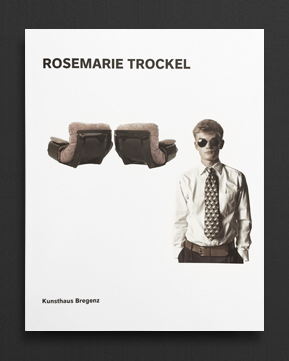
In a career spanning more than 30 years, encompassing such internationally renowned exhibition events as documenta (1997 and 2012) as well as the German Pavilion at the Venice Biennale (1999), and which has led the way to the world’s major museums, the artist has succeeded in creating new work complexes, objects and images that are continually surprising.
There had already been a great furor in the 1980s surrounding the reception of her wool works, machine knitted woolen fabrics attached to stretchers and then displayed as pictures. In a second group of works she assembled ordinary hotplates on shiny, white, enameled metal panels.
Objects with gender specific connotations were again re-contextualized, as had already occurred in the knitted pictures. These abstract works mainly originate from the 1990s and were the ones that secured Trockel’s place in the history of 20th century art.
This catalogue contains contributions by Johanna Burton, Yilmaz Dziewior, and Beate Söntgen that shed light on Trockel's art historical significance as well as her position in contemporary art. In his contribution, the American artist and author Sam Pulitzer takes an unconventional look at the work of Rosemarie Trockel.
Published for the exhibition at Kunsthaus Bregenz, 24 January – 6 April 2015.
Due to the weight of this volume, your order will likely incur additional postage costs. We will contact you with the best shipping advice upon your order, or alternatively, please email us in advance. Thank you for understanding.
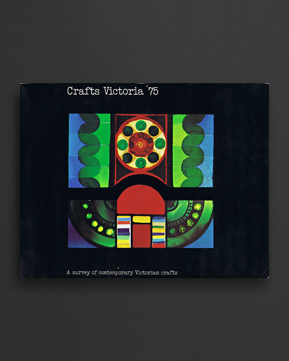
1975, English
Softcover, 100 pages, 24 x 30.5 cm
1st Edition, Out of print title / Used*,
Published by
The Craft Association of Victoria / Victoria
$35.00 - Out of stock
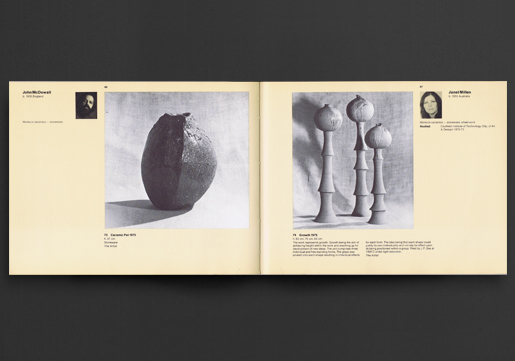
A survey of contemporary Victorian crafts, published on the occasion of a large travelling group exhibition held in 1975-1976 (including the National Gallery of Victoria), organised by The Craft Association of Australia.
Landscape in format, each page of this book profiles a Victorian Craftsperson (almost 100 artists included) working across ceramic, jewellery, tapestry, textile, flatware, furniture, glass, leather, paper and much more. Each featuring an example of their work along with bio information and a profile photo.
Designed by David Sampietro.
2017, English
Softcover, 88 pages, 15.2 x 21.6 cm
Published by
The MIT Press / Massachusetts
Afterall / London
$39.00 - Out of stock
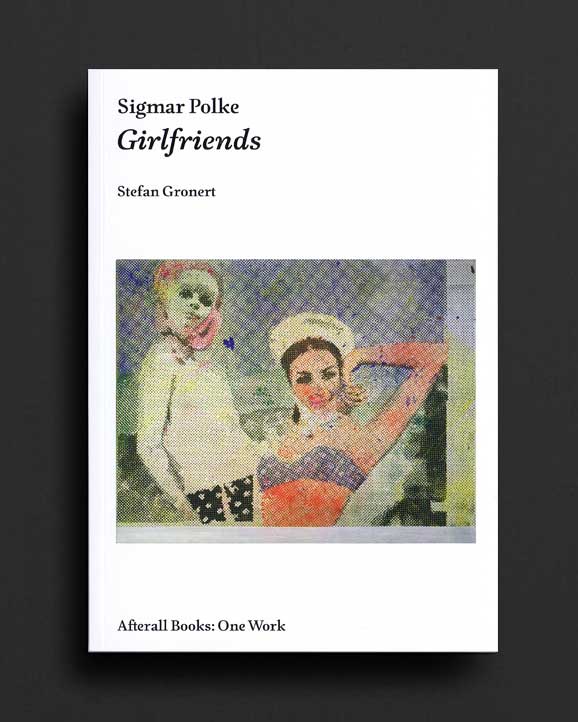
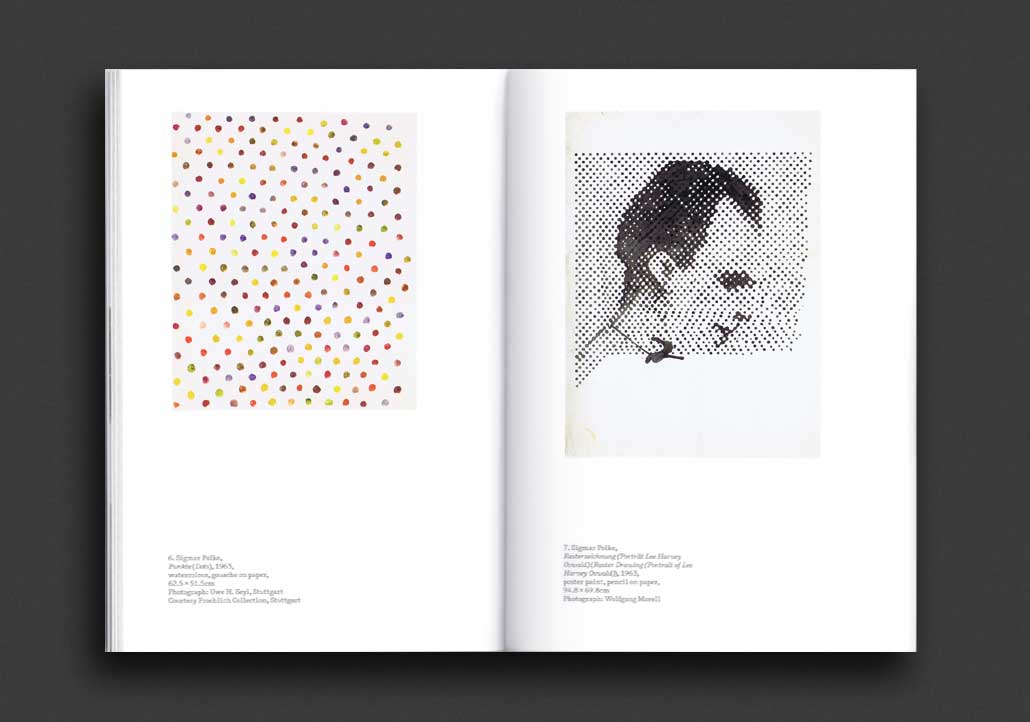
The artist Sigmar Polke (1941–2010) worked across a broad range of media—including photography, painting, printmaking, sculpture, and film—and in styles that varied from abstract expressionism to Pop. This volume in Afterall’s One Work series offers an illustrated exploration of Freundinnen (Girlfriends 1965/66), one of Polke’s important early paintings. Taken from a found image of two young women, and using the raster dots also found in mass media reproductions, Girlfriends offers a statement about the use and social function of images.
Stefan Gronert approaches Girlfriends through its deliberate and elusive ambiguity, providing technical detail and historical background that allow some of the work’s motivation and depth to become clearer. Gronert analyzes Polke’s relationship to his tutors and peers, especially Gerhard Richter; describes the art historical context in which Polke worked; and discusses some of the social and political issues to which Girlfriends refers. Considering such topics as the distinction between Polke and Alain Jacquet in their use of photographed material, between Polke’s use of the raster technique and that of Roy Lichtenstein, and the feminist discourse of the time, Gronert draws on a variety of critical interpretations of Polke’s work, including some material that has not yet been translated into English.
About the Author
Stefan Gronert is Curator of Photography and New Media at Sprengel Museum Hannover. A lecturer in art history at the Braunschweig University of Art, he is the author of Jeff Wall: Specific Pictures and coeditor of Gerhard Richter: Editions 1965-2013.
1989 / 1992, English / German
Hardcover (w. dust jacket), 216 pages, 21.5 x 14.7 cm
Out of print title / used / good
Published by
Cantz Verlag / Berlin
$190.00 - Out of stock
Very scarce 1992 hard cover edition (the one issued with a dust jacket) of the original book on Donald Judd's architectural projects, written by Judd himself. Published on the occasion of the exhibition "Donald Judd - Architektur" at Westfälische Kunstverein, Münster, 1989, this now very collectable hardcover book (in any of it's editions) is a comprehensive illustrated guide (colour and black and white photography as well as plans and drawings) through all of Judd's architectural (and furniture) works with texts throughout that develop beyond mere commentary to gain deeper insight into Judd's own architectural theory. All texts are in both English and German, with an introductory text by Marianne Stockebrand.
Good copy with light ex-libris stamping. Good original dust jacket with only light chipping, now preserved under plastic wrap.
1993, English / German
Softcover (french flaps), 160 pages (plus inserted ephemera), 26.5 x 21 cm
Out of print title / used / fine
Published by
Cantz Verlag / Berlin
$160.00 - Out of stock
Fine first edition copy of this now very scarce Judd title, published on the occasion of his selection for the Stankowski Foundation Prize in 1993. The catalogue highlights his architectural work, including his buildings at 101 Spring Street, New York and Marfa Texas, with new photographs by Todd Eberle documenting their interior spaces, Judd's furniture, and the artwork displayed there. Judd collected important works by mentors and contemporaries such as Josef Albers, John Chamberlain, Dan Flavin, Claes Oldenburg, Ad Reinhardt, Lucas Samaras, Frank Stella, John Wesley, many of which are shown. The exhibition was shown at the Wiesbaden Museum, the Staedtische Kunstsammlungen in Chemnitz, the Badisches Landesmuseum Karlsruhe and the Museum of Modern in Oxford.
Profusely illustrated throughout with texts in English and German by Judd himself, Volker Rattemeyer, Rudi Fuchs, Franz Meyer, and Renate Petzinger, plus exhibition history, bibliography and much more.
2016, English
Paperback, 240 pages, 21.6 x 27.9 cm
Published by
David Zwirner Books / New York
Judd Foundation / New York
$85.00 - Out of stock
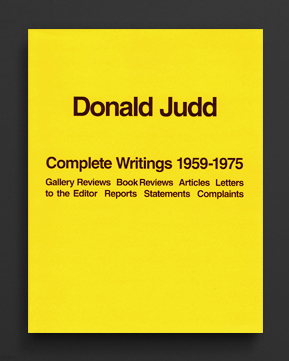
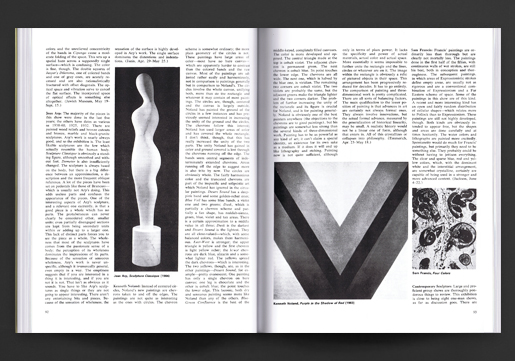
This is the complete, authorized collection of Donald Judd's early art criticism and polemical writings; it includes his landmark essay "Specific Objects" plus more than 500 contemporary art reviews he wrote on key artists and exhibitions of the 1960s.
Complete Writings 1959–1975 was first published in 1975 by The Press of the Nova Scotia College of Art and Design, and since then it has been the primary source for Donald Judd’s early writing. Working as an art critic for the magazines Arts, Arts Magazine and, later, Art International, Judd regularly contributed reviews of contemporary art exhibitions between 1959 and 1965, but continued to write throughout his life on a broad range of subjects. In his reviews and essays, Judd discussed in detail the work of more than 500 artists showing in New York in the early and mid-1960s, and provided a critical account of this significant era of art in America. While addressing the social and political ramifications of art production, the writings frequently addressed the work of such artists as Jackson Pollock, Kazimir Malevich, Barnett Newman, Ad Reinhardt, Lee Bontecou, Yayoi Kusama, John Chamberlain, Dan Flavin, Kenneth Noland and Claes Oldenburg. Judd’s essay "Specific Objects," first published in 1965, remains central to the analysis of the new art developed in the early 1960s. Other essays included in this publication are "Complaints I" (1969), "Complaints II" (1973) and his previously unpublished essay "Imperialism, Nationalism and Regionalism" (1975), all of which establish the polemical importance of Judd’s writing.
Donald Judd (1928–94) was born in Excelsior Springs, Missouri, and after having served in the United States Army, attended the College of William and Mary, Williamsburg, Virginia, and Columbia University, New York, where he received a BS in Philosophy, cum laude, in 1953. Studying at the Art Students League, Judd began his artistic career as a painter and transitioned to three-dimensional work in the early 1960s. Throughout his lifetime, in his writings and his work, he advocated for the importance of art and the artist’s role in society.
"Perhaps more than any other artist of his generation, Judd shaped the cultural discourse of his time- not only through his radical sculptures, but with his prolific writing on his peers." - Zoë Lescaze, Artnews
2018, English
Softcover, 64 pages, 24.5 x 17 cm
Published by
Warehouse / Amsterdam
$24.00 - Out of stock
Monument Magazine is a fanzine about Dutch fashion design around the turn of the century.
Rozema/Teunissen’s designs are part of a defining time in Dutch Fashion. With their work, they have paved the way for generations but unfortunately until today, their heritage is not tangible, nor visible. The majority of their archive is analogue, put together way before the rise of social media and the internet.
Monument aims to bring these items back to the surface. This is the first publication fully dedicated to their work, and brings together a selection of images from the designer’s original archive, illustrated with quotes and excerpts from conversations. The fanzine features photography by Barrie Hullegie and an essay by fashion writer Renée van der Hoek.
Monument is founded by Mary-Lou Berkulin and designed by Karen van de Kraats.