World Food Books' programme is largely produced on Kulin Nation land. We acknowledge the Wurundjeri people of the Kulin Nation as the first and continuing custodians of this land, and pay respect to their Elders past, present, and emerging.
World Food Books is an arts and special interests bookshop in Naarm / Melbourne. Founded in 2010, World Food Books is devoted to the presentation of a rotating, hand-selection of international art, design, literary and counterculture publications with an emphasis on the anti-traditional, the experimental, the avant-garde, the heretic, the marginal.
Presenting new titles alongside rare and out-of-print books, catalogues and journals spanning the fields of modern and contemporary art, design, photography, illustration, film, literature, poetry, cultural theory, philosophy, sexuality, popular and underground culture in its many radical forms, World Food Books wishes to encourage adventurous, thoughtful and open-minded reading, looking, writing, and exchange of publishing and ideas, both current and historical.
As well as our bookshop, located in Melbourne's historical Nicholas Building, all of our inventory is available internationally via our online mail-order service.
World Food Books semi-regularly co-ordinates "Occasions", a programme of exhibits and events at the bookshop and in partnership with other hosts (such as museums and art galleries) that develop out of the activities, relationships and content of the bookshop itself.
World Food Books
The Nicholas Building
37 Swanston Street
Room 5, Level 6
Melbourne 3000
Australia
SHOP HOURS:
Thu–Fri 12–6, Sat 12–5
WEB-SHOP OPEN 24/7
World Food Books
Postal Address:
PO Box 435
Flinders Lane
Victoria 8009
Australia
Art
Theory / Essay
Architecture / Interior
Graphic Design / Typography
Photography
Fashion
Eros
LGBTQ+
Fiction / Poetry
Weird / Speculative / Science Fiction / Horror
Transgressive / Visceral / Abject
Symbolism / Decadence / Fin de siècle
Film / Video
Painting
Sculpture / Installation
Performance / Dance / Theater
Drawing
Sound / Music
Curatorial
Group Shows / Collections
Periodicals
Out-of-print / Rare
Posters / Ephemera / Discs
Signed Books
World Food Books Gift Voucher
World Food Book Bag
Australian Art
Australian Fiction
Australian Science Fiction / Speculative Fiction
Australian Poetry
Australian Photography
Japanese Photography
Conceptual Art
Minimal Art
Dada
'Pataphysics / Oulipo
Fluxus
Concrete Poetry
Pop Art
Surrealism
Arte Povera
Arte Informale / Haute Pâte / Tachism
Nouveau Réalisme / Zero / Kinetic
Situationism / Lettrism
Collage / Mail Art / Xerox Art
Art Brut / Folk / Visionary / Fantastic
Illustration / Graphic Art / Bandes Dessinées
Furniture
Italian Radical Design / Postmodernism
Textiles
Ceramics / Glass
Counterculture
Protest / Revolt
Philosophy
Psychoanalysis
Anthropology
Anarchism
Socialism / Anarchism / Communism / Capitalism
Literary Theory / Semiotics / Language
Feminism / Women's Studies
Gender Studies / Sexuality
Anthropology
Fetishism / BDSM
Drugs / Psychedelia
Crime / Violence
Animal Rights / Veganism
Occult / Esoterica
Ecology / Earth / Alternative Living
Whole Earth / Crafts
All prices in AUD (Australian dollars)
Pick-Ups
Pick-up orders can be collected in our bookshop during opening hours after order date. Please collect any Pick-up orders within 2 weeks of ordering as we have limited storage space. Orders will be released back into stock if not collected within this time. No refunds can be made for pick-ups left un-collected. If you cannot make it in to the bookshop in this time-frame, please choose postage option.
Return Policy
All sales are final. We do accept returns (for refund or exchange) for items received in error. All our orders are packed with special care using heavy-duty padding and cardboard book-mailers or bubble mailers (for smaller books), using reinforcement where required. We cannot take responsibility for any lost, stolen or damaged parcels.
Insurance
Should you wish to insure your package, please email us directly after placing your order and we can organise this at a small extra expense. Although all standard/express tracked packages are very safe and dependable, we cannot take responsibility for any lost, stolen or damaged parcels. We recommend insurance on valuable orders.
Interested in selling your old books, catalogues, journals, magazines, comics, fanzines, ephemera? We are always looking for interesting, unusual and out-of-print books to buy. We only buy books in our fields of interest and specialty, and that we feel we can resell.
We base these prices on desirability, market value, in-print prices, condition and our current stock levels. We offer cash, store credit, and can take stock on consignment. All
about 25% of the price we expect to get when we sell them, or 30% in store credit. We base these prices on desirability, market value, in-print prices, condition and our current stock levels.
Sell your books any day of the week. You can drop them off and return later. If you have a lot of books, we can visit your Sydney home.
We buy books that we feel we can resell. We offer about 25 % of the price we expect to get when we sell them, or 30% in store credit. We base these prices on desirability, market value, in-print prices, condition and our current stock levels.
Philadelphia Wireman
03 August - 01 September, 2018
World Food Books is proud to announce our next Occasion, the first presentation of sculptures by Philadelphia Wireman in Australia.
The Philadelphia Wireman sculptures were found abandoned in an alley off Philadelphia’s South Street on trash night in 1982. Their discovery in a rapidly-changing neighbourhood undergoing extensive renovation, compounded with the failure of all attempts to locate the artist, suggests that the works may have been discarded after the maker’s death. Dubbed the "Philadelphia Wireman" during the first exhibition of this work, in 1985, the maker’s name, age, ethnicity, and even gender remain uncertain. The entire collection totals approximately 1200 pieces, all intricately bound together with tightly-wound heavy-gauge wire (along with a few small, abstract marker drawings, reminiscent both of Mark Tobey and J.B. Murry). The dense construction of the work, despite a modest range of scale and materials, is singularly obsessive and disciplined in design: a wire armature or exoskeleton firmly binds a bricolage of found objects including plastic, glass, food packaging, umbrella parts, tape, rubber, batteries, pens, leather, reflectors, nuts and bolts, nails, foil, coins, toys, watches, eyeglasses, tools, and jewellery.
Heavy with associations—anthropomorphic, zoomorphic, and socio-cultural responses to wrapped detritus—the totemic sculptures by Philadelphia Wireman have been discussed in the context of work created to fulfil the shamanistic needs of alternative religions in American culture. Curators, collectors, and critics have variously compared certain pieces to sculpture from Classical antiquity, Native American medicine bundles, African-American memory jugs, and African fetish objects. Reflecting the artist’s prolific and incredibly focused scavenging impulse, and despite—or perhaps enhanced by—their anonymity, these enigmatic objects function as urban artefacts and arbiters of power, though their origin and purpose is unknown. Philadelphia Wireman, whatever their identity, possessed an astonishing ability to isolate and communicate the concepts of power and energy through the selection and transformation of ordinary materials. Over the course of the past two decades, this collection has come to be regarded as an important discovery in the field of self-taught art and vernacular art.
Presented in collaboration with Fleisher-Ollman Gallery, Philadelphia, and Robert Heald, Wellington.
Susan Te Kahurangi King
02 February - 10 March, 2018
Susan Te Kahurangi King (24 February 1951 - ) has been a confident and prolific artist since she was a young child, drawing with readily available materials - pencils, ballpoint pens and felt-tip markers, on whatever paper is at hand. Between the ages of four and six Susan slowly ceased verbal communication. Her grandparents William and Myrtle Murphy had developed a special bond with Susan so they took on caring responsibilities for extended periods. Myrtle began informally archiving her work, carefully collecting and storing the drawings and compiling scrapbooks. No drawing was insignificant; every scrap of paper was kept. The King family are now the custodians of a vast collection containing over 7000 individual works, from tiny scraps of paper through to 5 meter long rolls.
The scrapbooks and diaries reveal Myrtle to be a woman of great patience and compassion, seeking to understand a child who was not always behaving as expected. She encouraged Susan to be observant, to explore her environment and absorb all the sights and sounds. Myrtle would show Susan’s drawings to friends and people in her community that she had dealings with, such as shopkeepers and postal workers, but this was not simply a case of a grandmother’s bias. She recognised that Susan had developed a sophisticated and unique visual language and sincerely believed that her art deserved serious attention.
This was an unorthodox attitude for the time. To provide some context, Jean Dubuffet coined the term Art Brut in 1945 to describe work created by self-taught artists – specifically residents of psychiatric institutions and those he considered to be visionaries or eccentrics. In 1972 Roger Cardinal extended this concept by adopting the term Outsider Art to describe work made by non-academically trained artists operating outside of mainstream art networks through choice or circumstance. Susan was born in Te Aroha, New Zealand in 1951, far from the artistic hubs of Paris and London that Dubuffet and Cardinal operated in. That Myrtle fêted Susan as a self-taught artist who deserved to be taken seriously shows how progressive her attitudes were.
Susan’s parents Doug and Dawn were also progressive. Over the years they had consulted numerous health practitioners about Susan’s condition, as the medical establishment could not provide an explanation as to why she had lapsed into silence. Dawn educated herself in the field of homeopathy and went on to treat all twelve of her children using these principles – basing prescriptions on her observations of their physical, mental and emotional state.
Doug was a linguist with an interest in philosophy who devoted what little spare time he had to studying Maori language and culture. To some extent their willingness to explore the fringes of the mainstream made them outsiders too but it was their commitment to living with integrity and their respect for individuality that ensured Susan’s creativity was always encouraged.
Even though Susan’s family supported her artistic pursuits, some staff in schools and hospitals saw it as an impediment to her assimilation into the community and discouraged it in a variety of ways. Her family was not always aware of this and therefore did not fully understand why Susan stopped drawing in the early 1990s. However, rather than dwell on the challenges that Susan faced in pursuit of her artistic practice, they prefer to highlight her achievements. In 2008 Susan began drawing again in earnest, after an almost 20 year interruption, and her work is now shown in galleries around the world.
Susan grew up without television and has been heavily influenced by the comics she read as a child. She is absolutely fearless in the appropriation of recognizable characters, such as Donald Duck and Mickey Mouse, in her work. She twists their limbs, contorts their faces, compresses them together, blends them into complex patterned backgrounds - always imbuing them with an incredible energy. Although Susan often used pop culture characters in her work they are not naive or childlike. These are drawings by a brilliant self-taught artist who has been creating exceptional work for decades without an audience in mind.
Mladen Stilinović
"Various Works 1986 - 1999"
02 February 16 - September 10, 2016
Various works 1986 - 1999, from two houses, from the collections of John Nixon, Sue Cramer, Kerrie Poliness, Peter Haffenden and Phoebe Haffenden.
Including: Geometry of Cakes (various shelves), 1993; Poor People’s Law (black and white plate), 1993; White Absence (glasses, ruler, set square, silver spoon, silver ladel with skin photograph and wooden cubes), 1990-1996; Exploitation of the Dead (grey and red star painting, wooden painting, black spoon with red table, red plate), 1984-1990; Money and Zeros (zero tie, paintings made for friends in Australia (Sue, John, Kerrie), numbers painting), 1991-1992; Words - Slogans (various t-shirts) - “they talk about the death of art...help! someone is trying to kill me”, “my sweet little lamb”, “work is a disease - Karl Marx”; Various artist books, catalogues, monographs, videos; Poster from exhibition Insulting Anarchy; "Circular" Croatian - Australian edition; Artist book by Vlado Martek (Dostoyevsky); more.
Thanks to Mladen Stilinović and Branka Stipančić.
Jonathan Walker
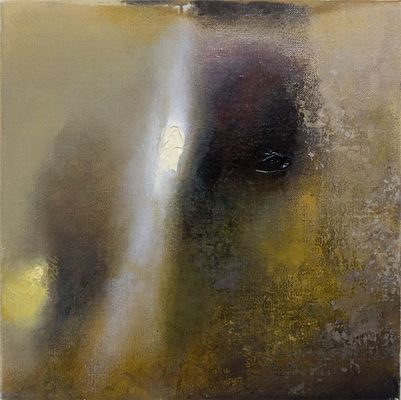
Always Will Need To Wear Winter Shirt Blue + Ochre Small Check Pattern
21 August - 21 September, 2015
Untitled
I am not a great reader of poetry but I always return to the work of Melbourne poet, Vincent Buckley (1925- 1988). Perhaps I find his most tantalising piece to be not a finished poem but a fragment left on a scrap of paper discovered on his desk after the poet’s death.
The poetry gathers like oil
In the word-core, and spreads
It has its music meet,
Its music is in movement.
This fragment is more the shell left behind from a volatile thought than a finished poem. I find the last two lines honest but awkward whereas the first two lines work like an arrow. Most likely he could not find a resolution so it was left. Still, in its present form, it remains an eloquent testimony to the ultimate failure of a medium to express mobile thought and sensation, in Buckley’s case, through verbal language. It’s an important matter because this is something all artists have to deal with regardless of the medium.
I have never written a poem, however, I am forever copying fragments from books on paper scraps in a vain effort to fix certain notions in my head. At first, they function as bookmarks that are sometimes returned to when I open the book. But before long, as they accumulate, they fall out littering the table interspersed with A4 photocopies, bills, books and medications.
To return to Buckley’s fragment, the first two lines very much evoke how I paint nowadays. As you age, detail diminishes and patches of light become more luminous and float. I feel the most honest way of dealing with this is by smearing the oil paint on the canvas with the fingers and working close-up, blind. Only if the patches coalesce into an approaching image can the work gain a life.
-
Jonathan Walker was born in Melbourne, Australia and brought up on a dairy farm in Gippsland. In the 1970’s he studied painting at RMIT and won the Harold Wright Scholarship to the British Museum, London. During the 1980’s he exhibited at Pinacotheca Gallery, Richmond and had work shown at the NGV and Heidi City Art Gallery. Over the same period he designed the cover for the “Epigenesi” LP by Giancarlo Toniutti, Italy and conducted a mail exchange work with Achim Wollscheid, Germany. The work with artists through the post resulted in an article published in the bicentenary issue of Art and Australia 1988. He showed in artist run spaces such as WestSpace in the 90’s and 2000’s, and until 2012, taught painting at Victoria University, which is where we (Colleen Ahern and Lisa Radford) as organisers of the exhibition, among many others, had the privilege of being his student.
Walker’s knowledge was imparted to students through the careful selection of music, literature, and artists found in books that he himself had ordered for the library. Walker’s strategy was the generosity of sharing his vast knowledge with references specific to each student and their context.
Walker’s paintings share a similar focus and intimacy.
This exhibition presents a small selection of recent paintings alongside a publication that includes Walker’s writing. Observational and analytical, Walker’s work is a type of material notation — the time of day, colour and how it is blended, the both specific and fleeting location of a reflection on lino or the question of whether a chair leg should be included in a painting.
Please join us on Friday August 21 between 6-8pm to celebrate the opening of the exhibition.
Curated by Colleen Ahern and Lisa Radford.
B. Wurtz
Curated by Nic Tammens
March 26 - April 4, 2015
B.Wurtz works from a basement studio in his home on Manhattan’s Lower East Side.
This local fact is attested to by the plastic shopping bags and newsprint circulars that appear in his work. As formal objects, they don’t make loud claims about their origins but nonetheless transmit street addresses and places of business from the bottom of this long thin island. Like plenty of artists, Wurtz is affected by what is local and what is consumed. His work is underpinned by this ethic. It often speaks from a neighborhood or reads like the contents of a hamper:
“BLACK PLUMS $1.29 lb.”
“Food Bazaar”
“USDA Whole Pork Shoulder Picnic 99c lb.”
“RITE AID Pharmacy, with us it’s personal.”
“H. Brickman & Sons.”
“Sweet Yams 59c lb."
Most of the work in this exhibition was made while the artist was in residence at Dieu Donne, a workshop dedicated to paper craft in Midtown. Here Wurtz fabricated assemblages with paper and objects that are relatively lightweight, with the intention that they would be easily transportable to Australia. This consideration isn’t absolute in Wurtz’s work, but was prescriptive for making the current exhibition light and cheap. Packed in two boxes, these works were sent from a USPS post office on the Lower East Side and delivered to North Melbourne by Australia Post.
Wurtz appears courtesy of Metro Pictures, New York.
Thanks to Rob Halverson, Joshua Petherick, Sari de Mallory, Matt Hinkley, Helen Johnson, Fayen d'Evie, Ask Kilmartin, Lisa Radon, Ellena Savage, Yale Union, and "Elizabeth".
John Nixon
"Archive"
December 15 - January 20, 2014
The presentation of John Nixon's archive offered a rare showcase of this extensive collection of the artist's own publications, catalogues, posters, ephemera, editions and more, from the mid 1980s onwards, alongside a selection of his artworks.
Organized by John Nixon, Joshua Petherick and Matt Hinkley.
<a href=http://wfb.public-office.info/artist/john-nixon>All titles by John Nixon
"Habitat"
at Minerva, Sydney (organised by Joshua Petherick and Matt Hinkley)
November 15 - December 20, 2014
Lupo Borgonovo, Janet Burchill & Jennifer McCamley,
Lewis Fidock, HR Giger, Piero Gilardi, Veit Laurent Kurz,
Cinzia Ruggeri, Michael E. Smith, Lucie Stahl, Daniel Weil, Wols
Press Release:
“...It contained seven objects. The slender fluted bone, surely formed for flight, surely from the wing of some large bird. Three archaic circuitboards, faced with mazes of gold. A smooth white sphere of baked clay. An age-blackened fragment of lace. A fingerlength segment of what she assumed was bone from a human wrist, grayish white, inset smoothly with the silicon shaft of a small instrument that must once have ridden flush with the surface of the skin - but the thing’s face was seared and blackened.”
William Gibson, “Count Zero”, 1986
"Autumn Projects Archive"
Curated by Liza Vasiliou
March 6 - March 15, 2014
World Food Books, in conjunction with the Virgin Australia Melbourne Fashion Festival 2014, presented the Autumn Projects archive, consisting of a selection of early examples in Australian fashion with a particular interest in collecting designers and labels from the period beginning in the 1980’s, who significantly influenced the discourse of Australian Fashion.
Curated by Liza Vasiliou, the exhibition provided a unique opportunity to view pieces by designers Anthea Crawford, Barbara Vandenberg, Geoff Liddell and labels CR Australia, Covers, Jag along with early experimental collage pieces by Prue Acton and Sally Browne’s ‘Fragments’ collection, suspended throughout the functioning World Food Books shop in Melbourne.
H.B. Peace
presented by CENTRE FOR STYLE
November 14, 2013
"Hey Blinky, you say chic, I say same"
Anon 2013
H.B. Peace is a clothing collaboration between great friends Blake Barns and Hugh Egan Westland. Their pieces explore the divergences between 'character’ and ‘personality’ in garments....etc
Special Thanks to Joshua Petherick and Matt Hinkley of WFB and Gillian Mears
and a Very Special Thank you to Audrey Thomas Hayes for her shoe collaboration.
Janet Burchill & Jennifer McCamley
"Aesthetic Suicide"
May 10 - June 8, 2013
The first of our occasional exhibitions in the World Food Books office/shop space in Melbourne, "Aesthetic Suicide" presented a body of new and older works together by artists Janet Burchill & Jennifer McCamley, including videos, prints, a wall work, and publications.
During shop open hours videos played every hour, on the hour.
2020, English
Softcover, 272 pages, 16 x 24 cm
Published by
écal / Renens
$60.00 - Out of stock
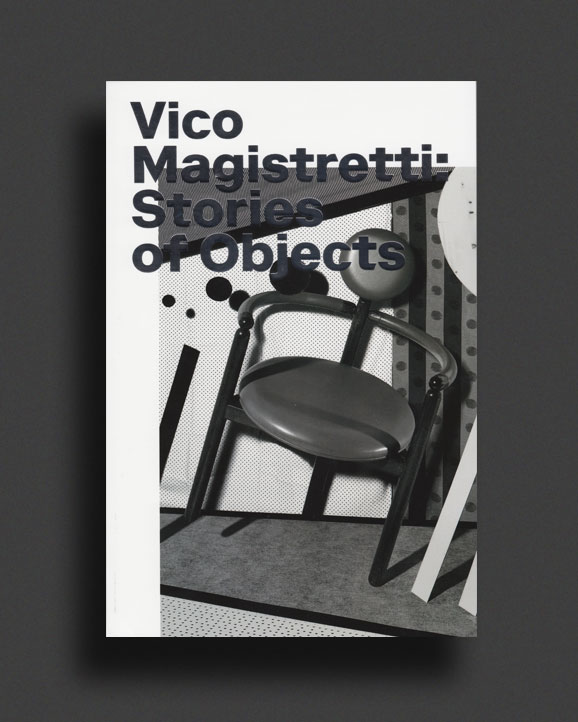
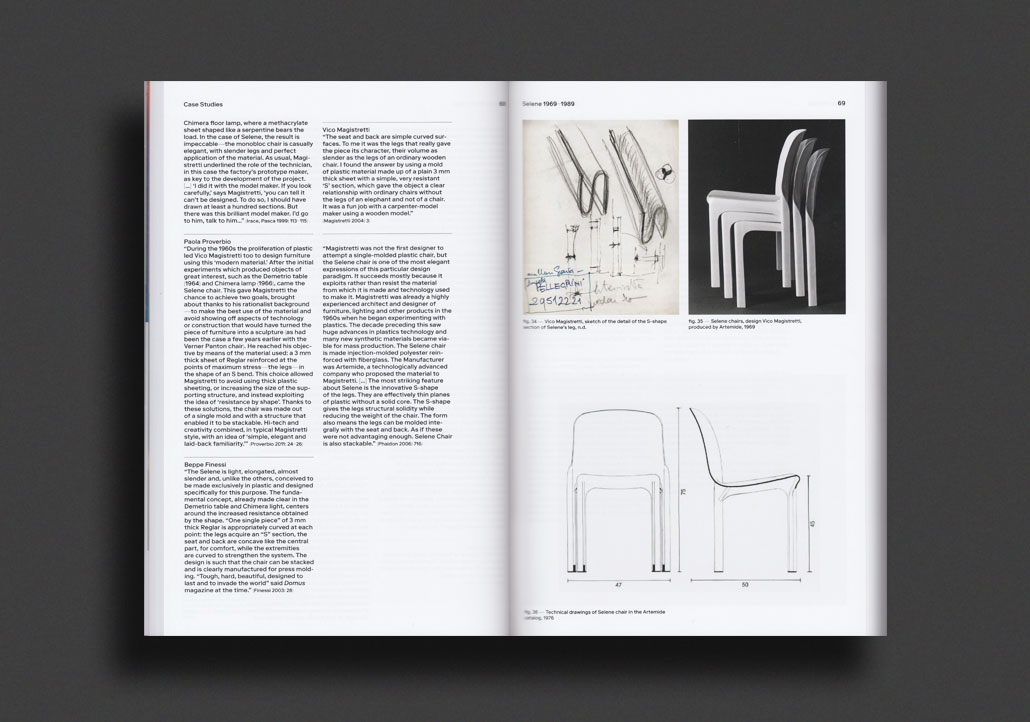
This book analyzes the work of Vico Magistretti in the field of industrial design. Starting in the 1960s, the Milanese architect successfully moved into mass-produced furniture and lamps. Some became museum pieces. Among others, he designed for companies such as Artemide, Cassina, De Padova, Flou, Fritz hansen, Kartell, Schiffini. Magistretti designed over 300 products and furniture pieces, about a fifth of these are still in production. Research in the archives of the Fondazione Vico Magistretti, analysis of specialist magazines and interviews with furniture companies have offered some surprising answers to the question: why does a brand stop manufacturing design classics?
Essays on the use of photography in the marketing of design products and on media coverage of furniture from the 1960s to the 2000s accompany a thorough analysis of twelve iconic Magistretti pieces, portrayed in the opening visual essay. Includes a biography, bibliography and illustrated chronological list of Magistretti designs, making this book a valuable reference for any fan of modern Italian design.
Edited by Anniina Koivu, with contributions and interviews by Maddalena Dalla Mura, Davide Fornari, Anniina Koivu, Carolien Niebling, Rosanna Pavoni, Francesco Zanot.
The "Visual Archives" series presents the results of research projects conducted at ECAL/University of Art and Design Lausanne. It focuses on unpublished material on designers, authors and companies. Together with visual material from the archives, the documents are contextualized and accompanied by critical essays.
2021, English
Softcover, 432 pages, 11 x 18 cm
Published by
Valiz / Amsterdam
$58.00 - Out of stock
In this book, Dutch graphic designer Ruben Pater uses clear language and visual examples to show how graphic design and capitalism are inextricably linked. Capitalism could not exist without the myriad banknotes, documents, infographics, interfaces, branding, and advertisements created by graphic designers. Even anti-consumerist strategies such as social and speculative design are appropriated to serve economic growth. Design, it seems, is locked in a cycle of exploitation and extraction, furthering global inequality and environmental collapse. Featured are six radical design cooperatives that resist capitalist thinking, hoping to inspire a more socially aware practice.
1998, English / German
Hardcover, 222 pages, 24.5 x 21.5 cm
1st Edition, Out of print title / used / good
Published by
Kunsthaus Zürich / Zürich
Walther König / Köln
$580.00 - Out of stock
"Between 1977 and 1997 Martin Kippenberger created 178 posters, mostly for his exhibitions but also announcing concerts, parties, lectures, readings and birthdays." Very rare first 1998 hardcover edition catalogue raisonné of posters designed by, and for, German artist Martin Kippenberger (1953-1997). Published in conjunction with the exhibition "Martin Kippenberger - Frühe, Bilder, Collagen, Objekte, die gesamten Plakate und späte Skulpturen" held at Kunsthaus Zürich, Switzerland, September 12 - November 15, 1998, this profusely illustrated catalogue of his prolific poster work has become an invaluable resource addressing this important aspect of the German artist's practice. All posters reproduced in colour and b/w with texts by Bice Curiger and Martin Kippenberger and a full checklist of the posters. Also includes a lovely fold-out exhibition check-list/poster inserted illustrating many further works including many paintings and sculptures. Text in English and German.
Good copy with some edge wear to the cover and rubbing/tanning to spine. Interior Very Good.
1980, English
Hardcover (w. dust jacket), 120 pages, 33 x 28 cm
1st Edition, Out of print title / used / very good
Published by
Love Me Tender / Paris
$160.00 - Out of stock
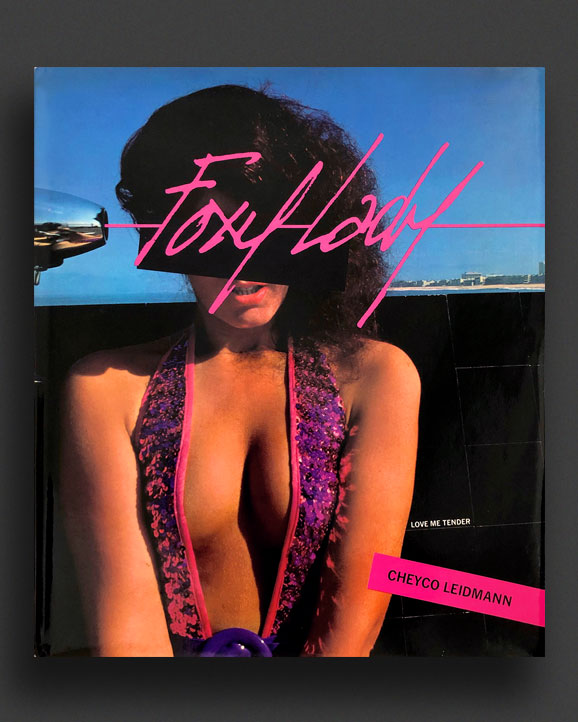
First 1980 edition, in the scarcer hardcover issue, of Cheyco Leidmann's photo-book classic, Foxy Lady, published by Love Me Tander in Paris. Cheyco's best, this collection of his surreal photographs that parody glamour photography of the late 1970s through the use of garish electric colours, bizarre imagery, humorous photo-editing and incongruous settings. During the 80's Cheyco Leidmann, who worked mainly on fashion and beauty editorials and advertising campaigns, established a new visual style that sparked the imagination of many in the world of art, music and photography. Beautifully over-sized reproductions of saturated colours in the twilight glow of sun-drenched American landscapes, neon signs, swimming pools, secluded beaches and powerful women, this cult classic is pure 1980s airbrushed erotic-thriller dreamscape fantasy, the way only Leidmann and Love Me Tender could capture so well in book form. It was also the inspiration for Duran Duran’s "Rio" video!
Very Good copy in Good dust jacket with foxing to reverse only, otherwaise also VG with only minor edge damage. A great copy of the more desirable hardcover edition.
1989, French
Softcover, 168 pages, 40 x 30 cm
1st Edition, Out of print title / used / very good
Published by
Les Editions Cassini / Paris
$160.00 - Out of stock
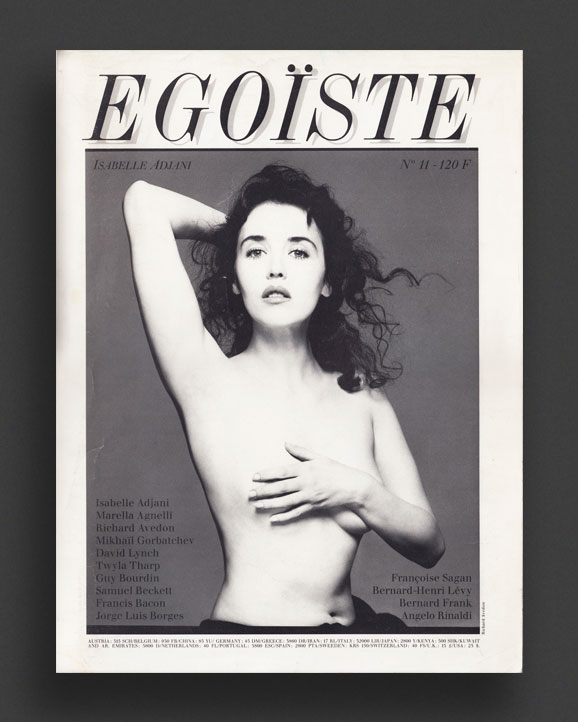
Issue No. 11 (1989) of the legendary and very collectible Egoïste magazine, “the most beautiful magazine in the world”. Issue No. 11 is one of the rarer to come by, featuring actress Isabelle Adjani on the cover, shot by Richard Avedon, which continues as an incredible photographic feature and interview inside, plus features on the photography of Man Ray and a photographic portfolio by Guy Bourdin, Richard Avedon portraits of Samuel Beckett, Francis Bacon, Jorge Luis Borges, poetry, photographic interview features with Mikhail Grobatchev by Francoise Sagan, dancer Twyla Tharp by Claude Arnaud (shot by Avedon), film director David Lynch by Kristine McKenna (shot by Larry Fink), Karl Lagerfeld, Bettina Rheims, photographic articles on the history of the Villa Igiea, the luxury Sicilian hotel, and La Tombe de Franco by Spanish architect Ricardo Bofill, and many others. One of the great features of the magazine is sumptuous tailor-made advertisements specially designed and produced by Egoïste editor and artistic director Nicole Wisniak with leading fashion houses and perfumers collaborating with photographers and artists outside the usual restrictions and guidelines of fashion magazines. Exquisite spreads by Comme des Garçons, Céline, Hermès, Yves Saint Laurent, Christian Dior, Calvin Klein, Yohji Yamamoto, Christian Lacroix, Luis Vuitton, Lancôme, Karl Lagerfeld, Revlon, with Isabella Rossellini, Audrey Hepburn, and many more.
Often referred to as “The most beautiful magazine in the world”, the cult luxury photography magazine Egoïste was founded in 1977 in Paris by art historian Gérard-Julien Salvy and edited/art directed by Nicole Wisniak. Immediately setting a new standard for photo publishing, Egoïste was printed in a beautiful over-sized, unbound format that benefitted the photography within and the specifically created photographic advertisements of the major fashion houses who sponsored its publication. Each issue was printed in a small run, all now exceptionally collectible, and featured the most outstanding photographers and writers of their time (including the photography of Helmut Newton, Richard Avedon, Guy Bourdin, Paolo Roversi, Ellen von Unwerth), and is forever linked with the personal work of Richard Avedon. The last of the Parisian chic, Egoïste is the subjective dictionary of an era. Each issue is collected with passion by many enthusiasts.
Very Good copy. Light wear to the cover, minor closed tear to top of "spine", all else clean and well preserved, interior pages all VG. Protected in plastic sleeve.
2017, English
Hardcover, 144 pages, 20.5 x 25 cm
Published by
JRP Ringier / Zürich
$75.00 - Out of stock
Texts by Kirsty Bell, Andrew Bonacina, Leontine Coelewij, Andrew Durbin, Liam Gillick, Beatrix Ruf
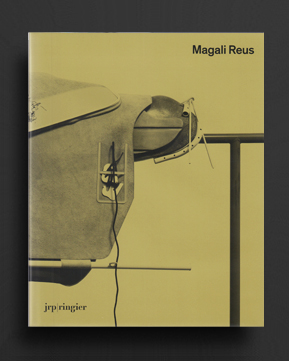
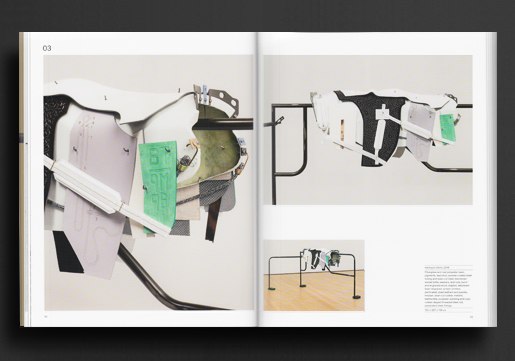
Dutch-born, London-based artist Magali Reus (born 1981) is one of the most acclaimed new voices in contemporary sculpture. Published for her exhibition at the Stedelijk Museum, this is the first monograph on her work. It features her recent series (Parking, Lukes, Dregs, In Place Of and Leaves) and new sculptures created for the Stedelijk, plus an interview with Reus by curators Leontine Coelewij and Andrew Bonacina, and contributions by Stedelijk director Beatrix Ruf, artist Liam Gillick, art critic Kirsty Bell and writer Andrew Durbin. Renowned for her interest in the relationship between mass-produced objects such as fridges, padlocks and seating, and the human body in the context of today's digital society, Reus draws on a vast range of influences and references, from the domestic to the industrial.
2016, English
Softcover, 680 pages, 190 x 250 cm
1st Edition, Out of print title / used / fine
Published by
Steidl / Göttingen
$300.00 - In stock -
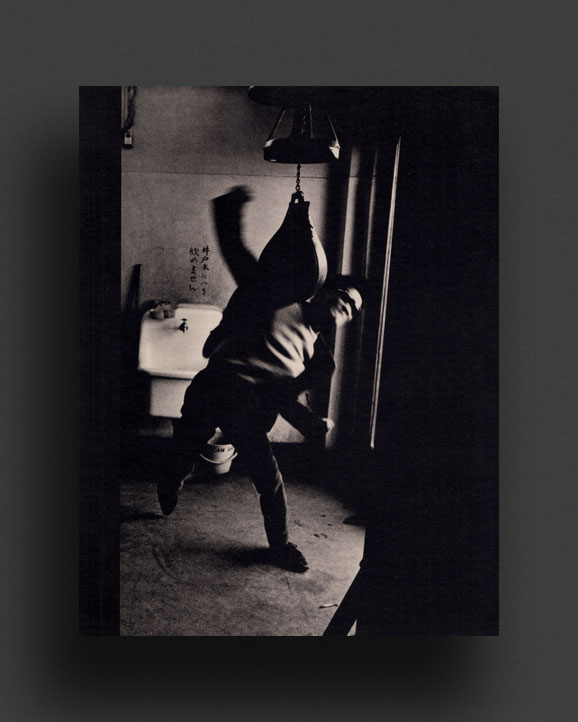
The short-lived Japanese magazine "Provoke," founded in 1968, is nowadays recognized as a major contribution to postwar photography in Japan, featuring the country's finest representatives of protest photography, vanguard fine art and critical theory in only three issues overall. The magazine's goal was to mirror the complexities of Japanese society and its art world of the 1960s, a decade shaped by the country's first large-scale student protests. The movement yielded a wave of new books featuring innovative graphic design combined with photography: serialized imagery, gripping text-image combinations, dynamic cropping and the use of provocatively "poor" materials. The writings and images by "Provoke"'s members-critic Koji Taki, poet Takahiko Okada, photographers Takuma Nakahira, Yakata Takanashi and Daido Moriyama-were suffused with the tactics developed by Japanese protest photographers such as Nobuyoshi Araki, Eikoh Hosoe and Shomei Tomatsu, who pointed at and criticized the mythologies of modern life.
This enormous, and long out-of-print "Provoke" book accompanies the first exhibition ever to be held on the magazine and its creators. Illuminating the various uses of photography in Japan at the time, the catalogue focuses on selected projects undertaken between 1960 and 1975 that offer a strongly interpretative account of currents in Japanese art and society at a moment of historical collapse and renewal.
Out of Print. As New.
1977, Japanese
Softcover (staple-bound w. map insert), 25.5 x 36.5 cm
1st Edition, Out of print title / used / very good
Published by
Shogakukan / Tokyo
$65.00 - In stock -
Incredible over-sized 1977 photo book by Kishin Shinoyama, one of Japan's leading photographers. "Sounding Carib" is a photographic special "seperate" edition of 1970s Japanese men's magazine GORO, and one of his lesser-known masterpieces that crosses over into his 1970's "Gekisha" works, a phrase Shinoyama coined for his “risqué photography” of the period. For this wonderful collection Kishin Shinoyama travelled to Trinidad and Tobago, Puerto Rico, and Jamaica, with camera and Olympus micro tape recorder in hand, to record the sights and sounds of the Caribbean. As the title suggests, the explosive photographic imagery follows the rhythm of the local music and festivities, with chapters titles "Trinidad : Carnival", "Puerto Rico : Salsa", and "Jamaica : Reggae", each exquisitely capturing the heat, the colour and the atmosphere of the islands. From the extravagant costumes and dizzying colour of the parades to the street markets, the beaches to the bedrooms, Shinoyama's saturated, deep contrast photographs, candid and uncensored, are a love-letter to the Caribbean of the 1970s. This special publication comes complete with a map insert to follow the journey, also musical listings to accompany the pictures. Kishin also recorded all the sounds of the trip and separately issued an LP of the same name, also through GORO magazine.
Very Good with some light general wear.
2018, English / Japanese
Softcover, 68 pages, 26 x 36 cm
Published by
Japan Architect / Tokyo
$70.00 $50.00 - Out of stock
One of the finest architecture series ever published, the world renowned GA (Global Architecture) series, presented by the highly esteemed publishing house that also published the GA Document, GA Houses, and GI (Global Interior) architectural publications.
Each over-sized photographic folio issue of the special GA Residential Masterpieces series highlights a renowned international architect and takes a detailed look into their creations for residence.
Absolutely stunning and vivid large-format architectural photography of the selected building’s interiors, exteriors and architectural details, along with texts (in English and Japanese) and floor-plans/elevation drawings make up the profiles on each featured architectural project. The visual generosity of these handsomely designed and beautifully printed over-sized publications make them a treasure for any architecture or interior design enthusiast or collector.
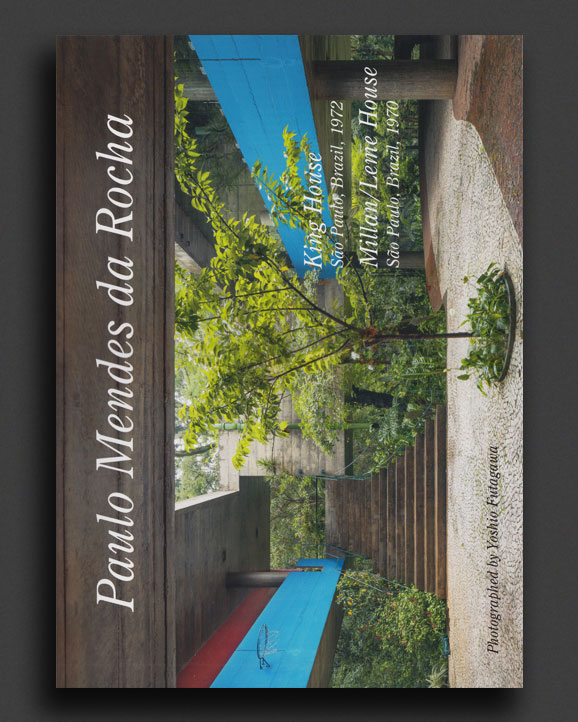
Yoshio Futagawa’s photographic homage to two single-family residences in São Paulo designed by architect Paulo Mendes da Rocha brings allows an intimate look at domestic life shaped by the contrast between exposed concrete surfaces and lush natural surroundings. Designed and built in the early 1970s, both houses are archetypal examples of the so-called “Brazilian Brutalism” style for which the architect is famous. At the time, they became a laboratory for the architect’s political beliefs as he developed a language and spatiality of his own. Besides their remarkable aesthetic expression, the houses feature unique solutions related to the organisation of the programme.
Printed in Japan
1976, Japanese / English
Softcover, 25.5 x 36.5 cm
1st Edition, Out of print title / used / good
Published by
Shogakukan / Tokyo
$65.00 - In stock -
Lovely over-sized 1976 photo book by Kishin Shinoyama, one of Japan's leading photographers. This is a special photographic 1976 calendar edition of the Japanese "All-Colour Visual Magazine" or "Sounding Visual" men's magazine GORO, and a perfect example of Shinoyama's 1970's "Gekisha" works, a phrase Shinoyama coined for his “risqué photography” of the period. Cover to cover young female (mostly) nudes entirely shot by Shinoyama, mostly full-bleed and in vivid saturated colour, including many double-page spreads and perfectly designed photographic diary pages featuring mostly famous young Japanese actresses, musicians and pop idols of the period... including Hiromi Iwasaki, Momoe Yamaguchi, Junko Sakurada, Ann Lewis, Hiroko Hayashi, Hiromi Murachi, Nagisa Katahira, Midori Kinouchi, Agnes Chan, Yūko Asano, plus large photographic features with Kaori Takeda, Hitomi Fukuhara, Aki Mizusawa and many more. As friends and models, Shinoyama continued to photograph and collaborate with many of these women throughout their careers, with some becoming the stars of his most celebrated photo-books. These collectible early special editions introduce the start of many of these collaborations, with wonderful 1970s design.
Good complete copy with some light general wear, spine pinching.
1989, English
Softcover, 126 pages, 23 x 29.5 cm
1st Edition, Out of print title / used / very good
Published by
Rizzoli / New York
$120.00 - Out of stock
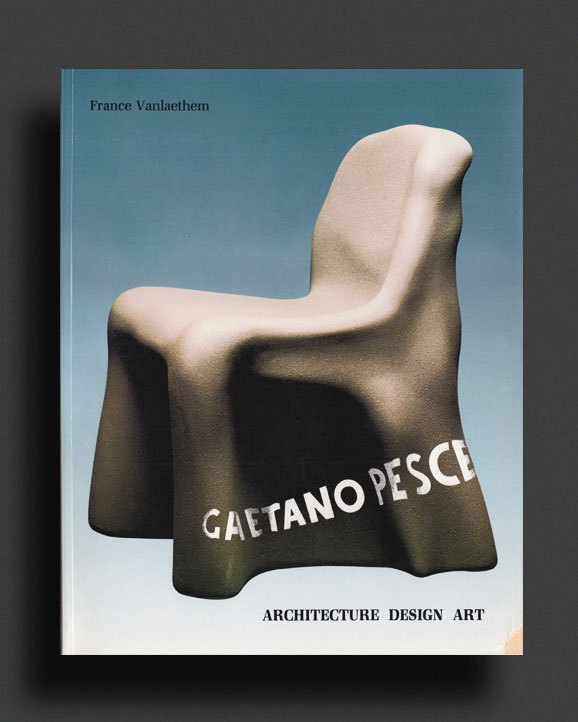
First 1989 English-language edition of the Rizzoli monograph on the outstanding work of Italian artist, architect and designer, Gaetano Pesce. The first major, and still the best, published study on Pesce, this profusely illustrated and in-depth volume covering the subject matter explored in Pesce's experimental (foam and resin) furniture, building and environment designs, film, theatre design, eyewear, lamps, and much between. In all his work, he expresses his guiding principle: that modernism is less a style than a method for interpreting the present and hinting at the future in which individuality is preserved and celebrated. His iconic, unparalleled work has been exhibited the world over since the height of 1960s Italian radical design to the current day and is work is held in major museum collections.
Gaetano Pesce was born in Italy in 1939 and studied architecture at the University of Venice. After graduating in 1965, he moved between London, Padova, Helsinki, and Paris, before settling in New York in 1980. From the beginning, Pesce’s practice has straddled the boundaries between art, design, urban planning, and architecture, always using his work as a vehicle to communicate his perspective on the world today. With resin, foam, and plastics as his signature materials, Pesce has designed for companies such as Cassina, B&B Italia, and Vitra. His architectural work includes the Organic Building of Osaka, the Children’s House for Parc de la Villette, the Gallery Mourmons in Belgium, and the TBWA\Chiat\Day office in New York. Pesce has served as a visiting lecturer and professor at many prestigious institutions in America and abroad, principally the Cooper Union in New York. He is currently a faculty member at the Institut d'Architecture et d'Etude Urbaines in Strasbourg.
Good copy. Crisp Very Good copy throughout only damage is a tear to bottom-right cover corner (not through board, just the print layer), otherwise only light age wear.
2019, English
Softcover, 72 pages, 21 x 26 cm
Ed. of 500,
Published by
Brand-New-Life / Zürich
$60.00 - Out of stock
For the first time, this publication brings together the Mosaic works by the British artist Stephen Willats, which were created in Great Britain and Finland in the 1990s. In these works, Willats uses the medium of the book to enter into an exchange with people and to create a space in neighborhoods, museums, and bookstores where social bonds can be established. It is a collaborative process through which Willats redefines the web of relationships between artist, artwork, audience and society; a process of instituting in which the artwork becomes its own institution.
With contributions by Jamie Allen, Bernhard Garnicnig, Elsa Himmer, Lucie Kolb and Stephen Willats.
Edition of 500 copies.
1985, English
Softcover, 168 pages, 21 x 18.5 cm
Out of print title / used / good
Published by
Pluto Press / London-Sydney
$150.00 - Out of stock
The Rap Attack : African Jive to New York Hip Hop, first published in Britain in 1984, is David Toop's seminal, super early and important account on the evolution of rap music and hip hop culture, exploring its roots and various manifestations, from the music's African heritage to the electro-funk revolution. Toop's ever intelligent and in depth overview of the culture goes a lot further than introducing the seminal artists, it studies the socio-political and diverse musical landscape that shaped one of the most innovative movements in sound. The clubs (Roxy, Danceteria, Funhouse, etc.), the radio stations, the record stores, the video arcades, Beat Bop, Jive, Doo Wop, it's all here. Full of references, quotes, bibliography, discography, lots of background information on countless pioneering artists, the mcs, djs, breakdancers, producers, Afrika Bambaata, Cold Crush Brothers, Jazzy Jay, Kool Herc, The Sequence, Sylvia Robinson, Grandmaster Flash, Melle Mel, Double Trouble..., complimented with superb black and white photographs throughout by Patricia Bates. There's even a vocabulary section compiled by Monica Lynch from Tommy Boy Records. A pioneering book on the rise of hip-hop culture, and very scarce in the original British edition with vivid Dennis Morris cover. This is the second print of this edition (1985).
Good copy with only light cover wear/ageing. Very Good interior throughout.
1983 / 1988, English
Hardcover, 108 pages, 18.4 x 21.6 cm
Out of print title / used / average
Published by
Heinemann / Nairobi
$70.00 - Out of stock
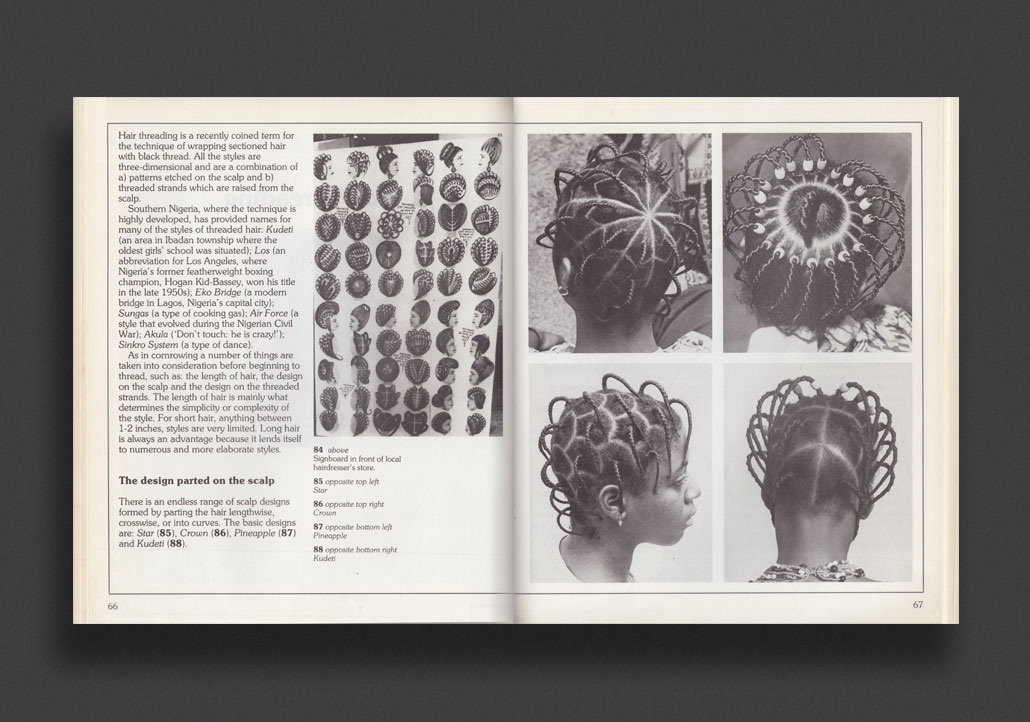
First published in 1983, "African Hairstyles: Styles of Yesterday and Today" is still a one-of-a-kind book.
"Dramatically illustrated with a wide range of elegant, exotic and straightforward hairstyles", this book took Lagos based graphic designer Esi Sagay (who studied at Ahmadu Bello University, Zaria and the University of Science and Technology, Kumasi and obtained a degree in Fine Arts) over seven years to put together.
"African hair sculpture is an art." This beautifully illustrated, researched and compiled book includes photographs of some 150+ different historical and contemporary hairstyles, organised by region, along with instructions for some of the most popular techniques, including in-depth sections on cornrowing and threading. Including step by step instructions on how to recreate all of the cornrow styles, Sagay's book explains how to achieve different scalp designs including the Star, Crown, Pineapple and the Kudeti. She also explains hair threading and the design on threaded strands including the Onigi, Okoto or Puff, Dada, Sungas, Bubbled Sungas, Ejo, Twist, Sulpher and the Koso.
1988 edition. Rare and sought after in any edition. Ex-libris copy, with associated markings and laminate binding. Content pages not affected.
2012, English
Softcover, 312 pages, 15.5 x 23 cm
Published by
Sun Vision Press / New York
$36.00 - Out of stock
"The book that dominates all books" - Georges Bataille.
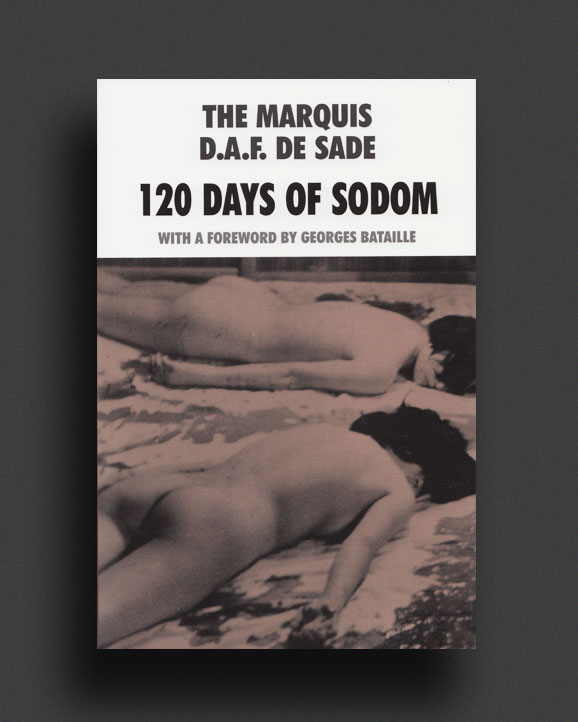
The 120 Days of Sodom is the most extreme book in the history of literature. The Marquis de Sade narrates the escalating sex-crimes of four libertines who barricade themselves in a remote castle with both male and female victims and accomplices for a four-month, precipitous orgy of sodomy, coprophagia and rape leading inexorably towards torture and human decimation. A masterpiece of black humour, pornographic to a point of excess and aberration never reached by any other writer, and required reading for anyone looking for the seminal origins of contemporary culture's fascination with cruelty and violence, The 120 Days of Sodom is the first and ultimate literary outrage. It also stands as the first attempt by an author to collate a systematic psychopathology of human sexual disorder, pre-dating Krafft-Ebing's Psychopathia Sexualis by a century.
Until now, Sade's masterwork was only available in tame, outdated translations. This new, uncensored and more complete version of The 120 Days of Sodom brings the work back to incendiary life, returning it to the streamlined status of the revolutionary, raw work Sade had intended. Unbearable, unforgettable, violent, cruel, blasphemous, obscene: The 120 Days of Sodom is a unique and addictive detonation of the senses for the discerning 21st century reader.
With a foreword by Georges Bataille.
2018, English
Softcover, 293 pages, 13.4 x 20.9 cm
Published by
Nightboat Books / New York
$34.00 $15.00 - Out of stock
Andrew Durbin’s debut novel asks what it means to belong to a place, an idea, and a time, even as those things begin to slip away.
After Hurricane Sandy, Nick Fowler, a writer, stranded alone in a Manhattan apartment without power, begins to contemplate disaster. Months later, at an artist residency in upstate New York, Nick finds his subject in disaster itself and the communities shaped by it, where crisis animates both hope and denial, unacknowledged pasts and potential futures. As he travels to Los Angeles and London on assignment, Nick discovers that outsiders―their lives and histories disturbed by sex, loss, and bad weather―are often better understood by what they have hidden from the world than what they have revealed.
"One of the few younger writers brazen enough to take up Gary Indiana’s velvet-lined gauntlet, Andrew Durbin steals from the master’s toolbox only to construct something entirely his own, personal or, rather, “personal.” Shedding poetry at just the right moment, he understands that the Weather Channel now delivers the news that stays news. The most fraught meteorology occurs when those fronts called the intellect and the heart collide." - Bruce Hainley
"Andrew Durbin’s MacArthur Park flows and revels in the contemporary current. It’s wry, dramatic, cool, knowing, funny, sobering, a novel of unsparing consciousness that spars with the news and effects of uncontrollable weather. Durbin registers the temperature of our nights and days, with perfect pitch conversations and commentaries on pop culture, utopian collectives, the art world, politics, sex, emotions. He tracks the wanderings of Nick, his protagonist, who flees Hurricane Sandy; a stormy love affair; a troubled art community, and runs from Tom of Finland phallic fetishism in LA. Everywhere, Nick acutely observes the natural world of startling sunsets and lush landscapes, and always smells the coffee. Andrew Durbin’s first novel is as surprising as it is tender. It’s a beautiful work." - Lynne Tillman
Andrew Durbin is a writer and editor who lives in New York. He is the author of Mature Themes (2014) and MacArthur Park (2017), both from Nightboat Books. In 2018, MacArthur Park was a finalist for the Believer Book Award. He is the editor of Kevin Killian’s Fascination: Memoirs (Semiotexte, 2018) and the chapbook series, Say bye to reason and hi to everything (Capricious, 2015). His fiction, criticism, and poetry have appeared in BOMB, Boston Review, frieze, Mousse, The Paris Review, Triple Canopy, and elsewhere.
2020, English
Softcover, 112 pages, 12.7 x 17.8 cm
Published by
Nightboat Books / New York
$29.00 - Out of stock
On the Greek island of Patmos, where St. John received the Book of Revelation, two writers find themselves mired in an uneasy sense of timelessness, where history and the present jumble together. As they hunt for a lost portrait of the iconic gay novelist Hervé Guibert, they discover that the island’s insistent isolation from the global catastrophe surrounding it, from the refugees interned on nearby Samos to the fascist rise in Europe and the United States, is more pose than reality.
Haunting and beautiful and full of phantoms past and present, Skyland rewrites the mythic. - Chloe Aridjis
In Skyland, Andrew Durbin searches for the final image, an icon: the portrait of a writer who wrote his death. Durbin’s inner necessity exceeds the bounds of his story—swimming, dining, finding sex, getting in trouble. He’s on a Grecian holiday with his buddy Shiv, they’re tourists, right? But Durbin’s anticipation conveys a sense of faith—faith in what?—in his life-in-death or death-in-life, in a fiction that gives him access to the present. History falls away till it comes crashing through, as is its wont. Reality and unreality trade places, then trade back again. A boat finally arrives—to ferry them across Styx to the underworld, across Lethe to oblivion, or across the East Aegean to the next party beach. - Robert Glück
Gusty, luminous, elegiac, and unexpectedly moving, Skyland is a languidly-paced meditation on the fecundity of objects (be they imagined or finally discovered) and a quietly hedonic seaside travelogue. While the quest for the lost portrait of Hervé Guibert keeps things taut, the scantness of events otherwise is a joy—the book’s amplitude is manifest in an economy of details, mostly visual descriptions, rendered in decisive, elegantly understated prose. - Harry Dodge
Andrew Durbin is a writer who lives in London, where is the editor of frieze magazine. He is the author of Mature Themes (2014) and MacArthur Park (2017), both from Nightboat Books. In 2018, MacArthur Park was a finalist for the Believer Book Award. He is the editor of Kevin Killian’s Fascination: Memoirs (Semiotexte, 2018) and the chapbook series, Say bye to reason and hi to everything (Capricious, 2015). His fiction, criticism, and poetry have appeared in BOMB, Boston Review, frieze, Mousse, The Paris Review, Triple Canopy, and elsewhere.
2001, English
Hardcover (w. obi-strip), 80 pages, 21.3 x 16 cm
1st Edition, Out of print title / used / very good
Published by
Little More / Tokyo
$180.00 $100.00 - Out of stock
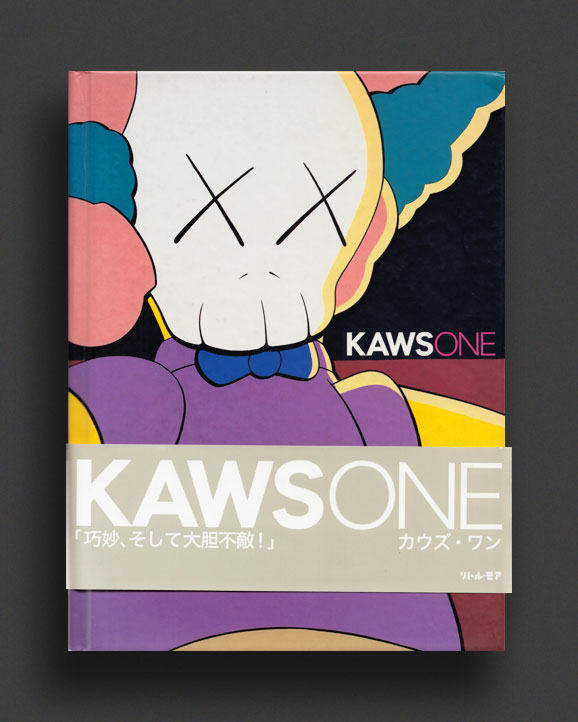
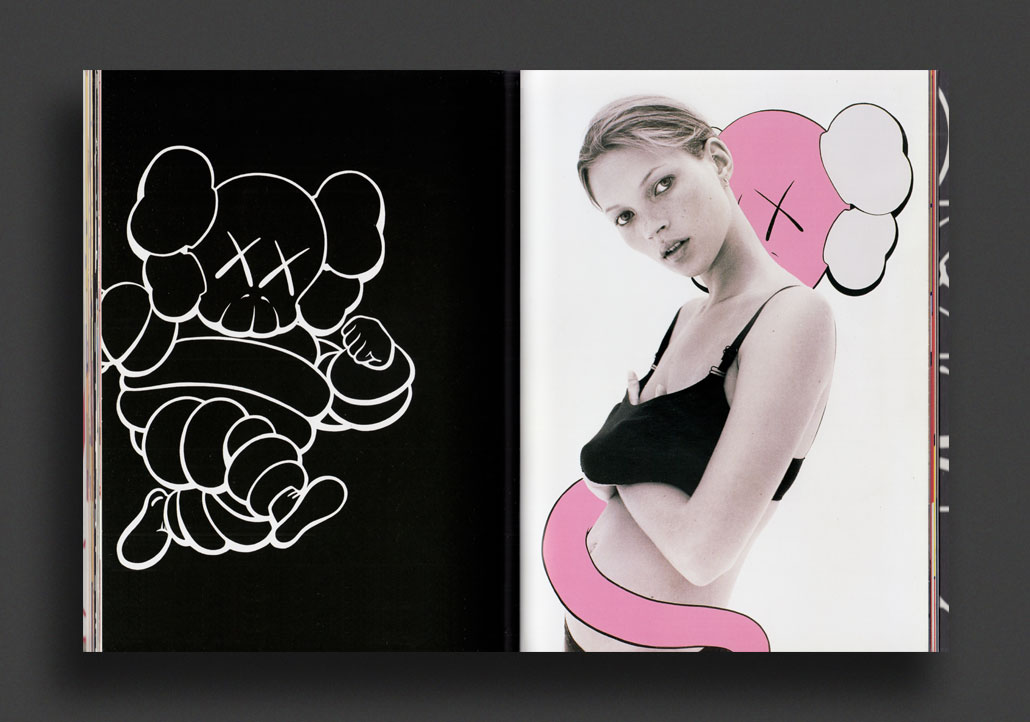
Rare first edition copy of KAWS One, the first artist monograph/artist's book of New York artist and designer Kaws, published in a limited edition in Japan in 2001 by Little More and long out of print. Illustrated from cover-to-cover in full-colour, KAWS One is the definitive look back at the development of the artist's style and early beginnings, paying particular attention to his late 1990s bus shelter, phone booth and billboard fashion advertising appropriations in New York City. Working as an animator by day, and graffiti artist by night, Kaws would use a skeleton key gifted to him by friend and fellow graffiti artist Barry McGee to remove posters adorned with the likes of Iggy Pop and Kate Moss, to re-work with his characters using animation call paints before returning them to the streets. This book introduces some of his earliest characters including Companion, Chum, Bendy, and The Kimpsons.
Very Good copy complete with Very Good, seldom present, obi-strip.
1963, French
Hardcover, 1083 pages, 20 x 27 cm
1st Edition, Out of print title / used / very good
Published by
Flammarion / Paris
$160.00 - Out of stock
The French bible of mid-century modern home-making, l'art Ménager (Household Art), was published in 1963 to advise and vividly illustrate across 1083 pages(!) the design of the modern habitat, from the latest furniture, decorative arts, the lighting, the textiles, the materials, the room arrangement, the kitchen, the bathroom, the storage, the cookware... it's comprehensive and heavy! Stunning photography and graphic design throughout in gorgeous colour and b/w reproduction, this tome is a treasure of a reference for anyone interested in mid-century European interior design. Directed by Paul Breton for Flammarion.
Scarce first edition, incredible condition. Only very light wear and dust ageing to board edges, interior clean and bright with strong binding.
2015, English
Softcover, 208 pages, 15.6 x 23.4 cm
Published by
Bloomsbury Academic / London
$59.00 - Out of stock
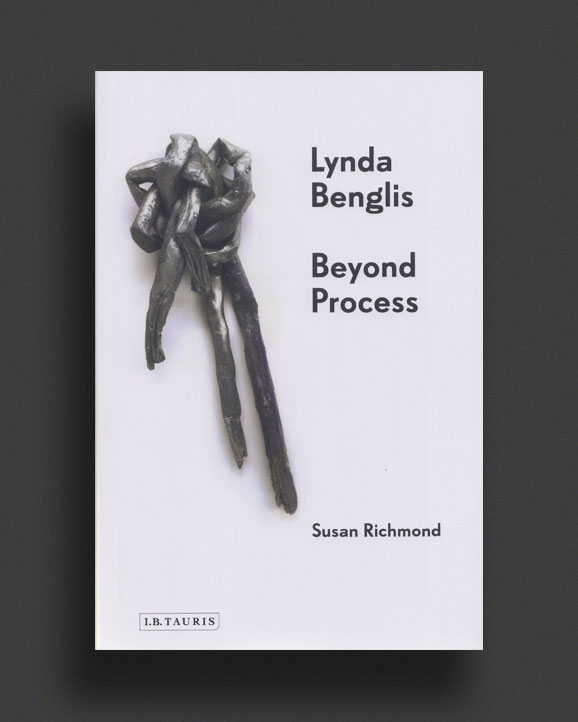
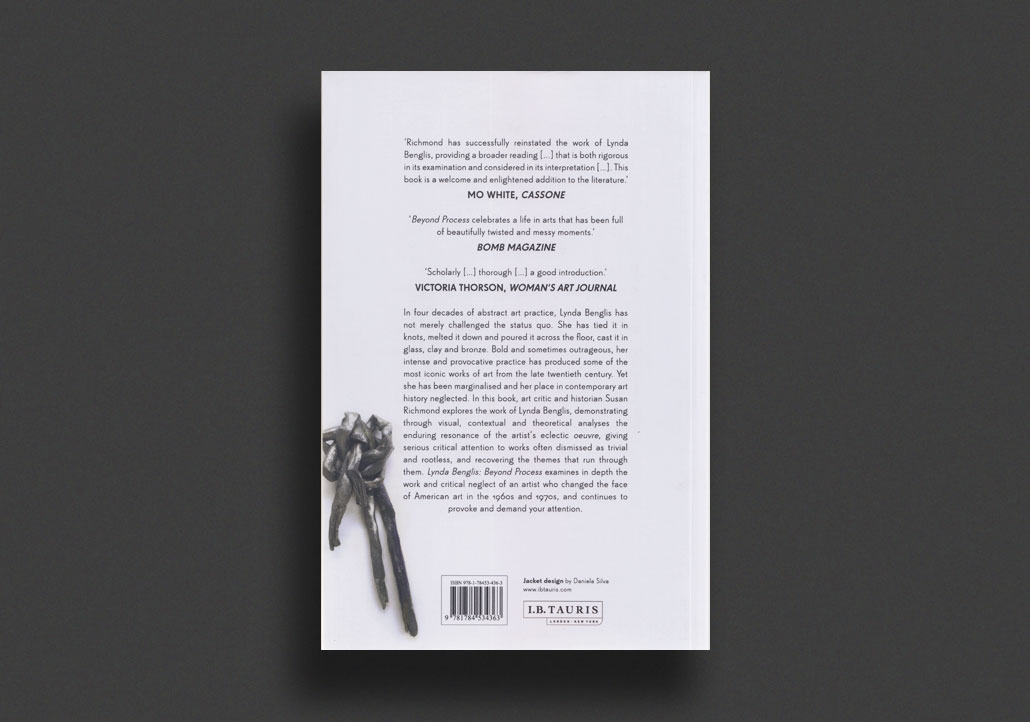
In four decades of abstract art practice, Lynda Benglis has not merely challenged the status quo. She has tied it in knots, melted it down and poured it across the floor, cast it in glass, clay and bronze. Daring and sometimes outrageous, her intense and provocative practice has produced some of the most iconic pieces of art from the late twentieth century. Richmond gives serious critical attention to work often dismissed as trivial and rootless, recovering the themes that link the different phases of the artist's quest to capture the 'frozen gesture'. Whether challenging popular tastes and definitions of art with her 1970s abstract knotwork or mocking puritanical aesthetics of gender with her colourful latex pourings and their allusions to corporeal topographies, Benglis never failed to provoke. Her sculptures commemorate and celebrate the processes of creation themselves, combining architectonic abstraction and feminized sensuality in a haunting, visceral theme of the strangeness of the body that runs through all her experiments in glass, video, metals, ceramics, gold leaf, paper and plastics.
Lynda Benglis: Beyond Process examines in depth the work and critical neglect of an artist who, perhaps more than any of her contemporaries, changed the face of American art in the 1960s and 1970s, and continues to fetishise, provoke and demand your attention.
1987, English
Softcover (staple-bound), 68 pages, 21 x 23 cm
1st Edition, Out of print title / used / good
Published by
Cinefex / California
$40.00 - Out of stock
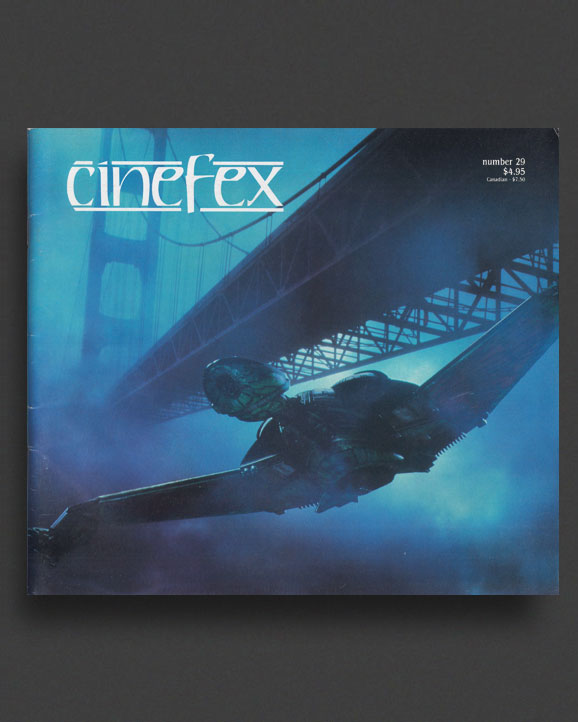
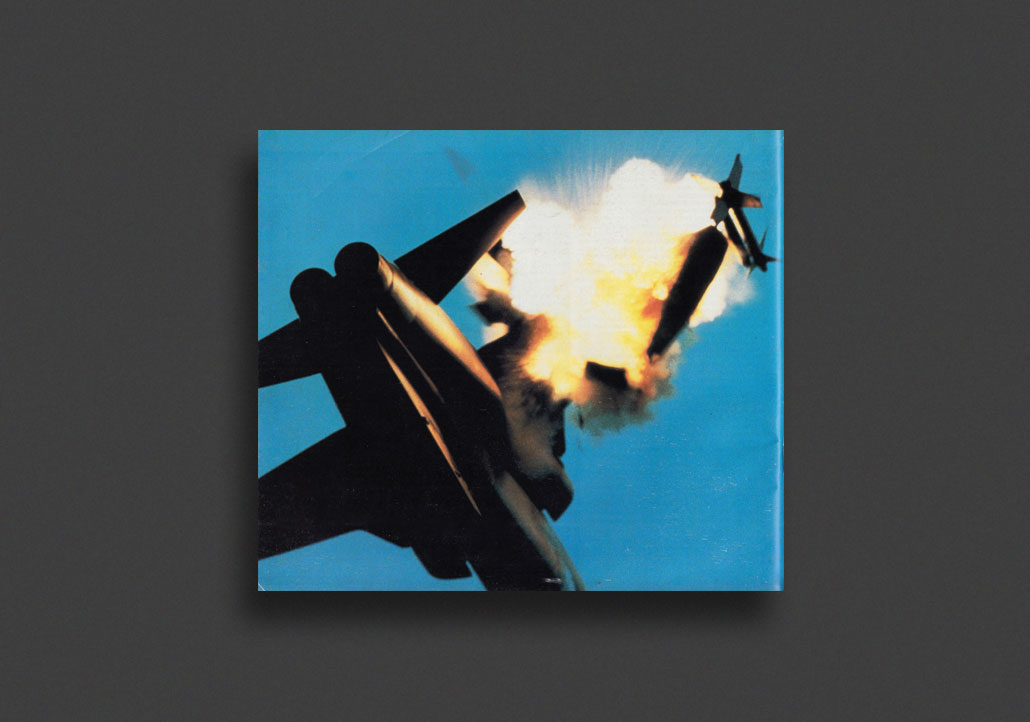
1987 issue number 29 of the mighty Cinefex journal, with features on Star Trek IV: The Voyage Home with text by Jody Duncan Shay; King Kong Lives by Janinie Pourroy; Top Gun by Ed Martinez, all profusely illustrated throughout.
Cinefex, founded by Don Shay in 1980, was a bimonthly journal covering visual effects in films. Each issue featured lengthy, detailed articles that described the creative and technical processes behind current films, the information drawn from interviews with the effects artists and technicians involved. Each issue also featured many behind-the-scenes photographs illustrating the progression of visual effects shots – from previsualization to final – as well as the execution of miniatures, pyrotechnics, makeup and other related effects.
Good copy, light wear to spine.
1986, English
Softcover (staple-bound), 68 pages, 21 x 23 cm
1st Edition, Out of print title / used / good
Published by
Cinefex / California
$80.00 - Out of stock
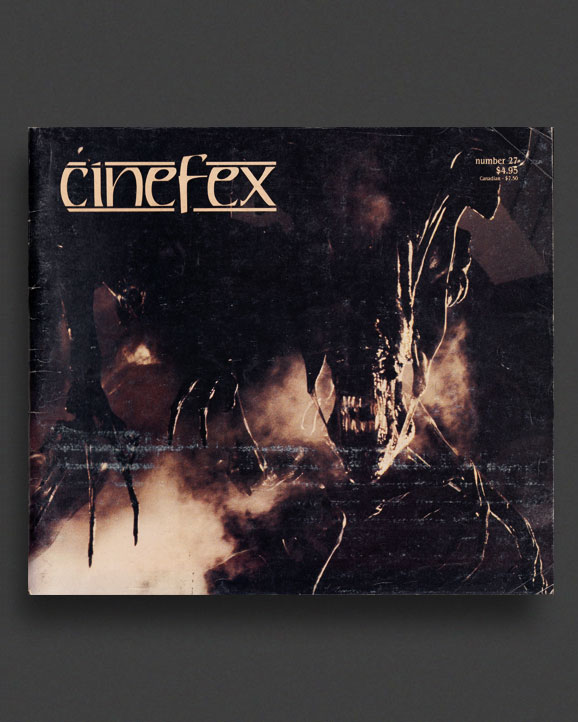
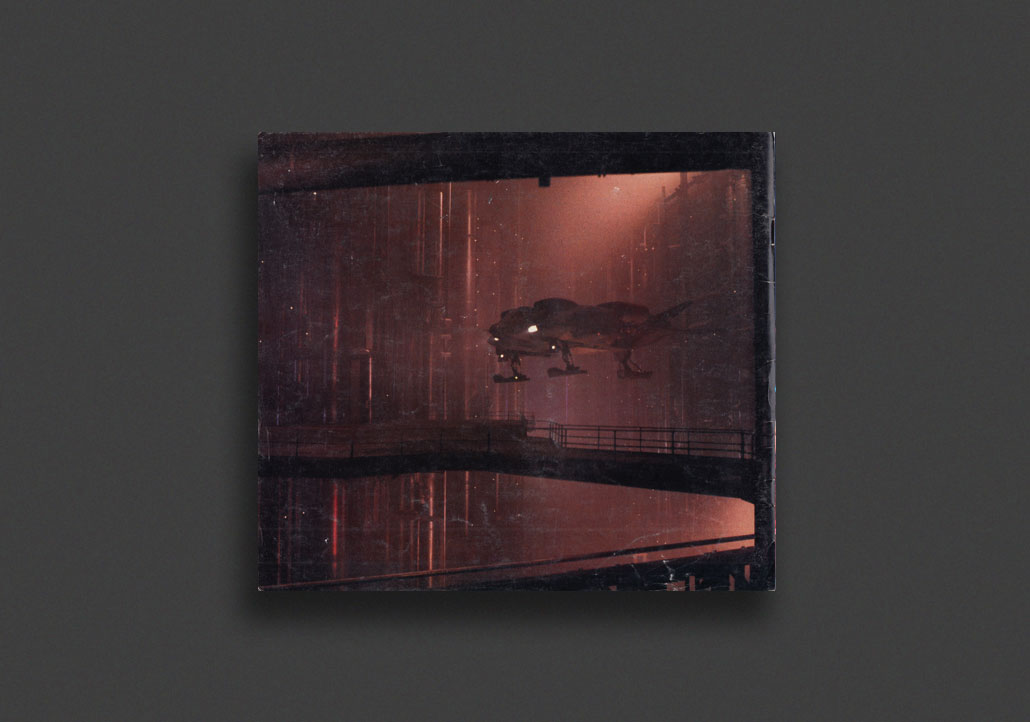
1986 issue number 27 of the mighty Cinefex journal, dedicated entirely to the making of Aliens, profusely illustrated throughout with text by Don Shay. An amazing issue with insight into the incredible work of masters Syd Mead, Ron Cobb, Alec Gillis, Stan Winston, John Richardson, Tom Woodruff, and many others... One of the most collectible early issues, for obvious reasons.
Cinefex, founded by Don Shay in 1980, was a bimonthly journal covering visual effects in films. Each issue featured lengthy, detailed articles that described the creative and technical processes behind current films, the information drawn from interviews with the effects artists and technicians involved. Each issue also featured many behind-the-scenes photographs illustrating the progression of visual effects shots – from previsualization to final – as well as the execution of miniatures, pyrotechnics, makeup and other related effects.
Good copy but with wear to front and back cover. Internally VG.
1991, English
Softcover, 168 pages
1st Edition, Out of print title / used / average
Published by
Art Gallery of New South Wales / Sydney
$25.00 $10.00 - Out of stock
Catalogue published on the occasion of the AUSTRALIAN PERSPECTA 1991, curated by Victoria Lynn, held at the Art Gallery of New South Wales, 7 August — 15 September, 1991. The biennial 'Australian Perspecta' presents the unprecented opportunity to experience and evaluate the intriguing breadth of contemporary Australian art. This exhibition was the sixth in a series which began in 1981. Profusely illustrated throughout with texts by Victoria Lynn, Nicholas Zurbrugg, Linda Wallac, and artist profiles for all participating artists : Brad Allen-Waters, Craige Andrae, Hany Armanious, Robyn Backen, Adam Boyd, Irene Briant, Peter Callas, Kevin Draper, John Gilles and The Sydney Front, Richard Goodwin, Fiona Gunn, Fiona Hall, Gail Hastings, Virginia Hilyard, Joyce Hinterding, Stephen Holland, David Jensz, Mathew Jones, Queenie Kemarre, Lucky Kngwarreye, Maria Kozic, Juliet Lea, Jon McCormack, Bette Mifsud, Wendy Mills, Simeon Nelson, Bronwyn Oliver, Lin Onus, Bill Petyarre, Ani Purhonen, Carole Roberts, Luke Roberts, Ashley Scott, Michael Snape, Laurens Tan, Jennifer Turpin, Deborah Vaughan, Paddy Fordham Wainburranga, David Watt, Barbara Wulff.
Ex-library copy, with plastic covering and associated markings.
2021, English / German
Softcover, 224 pages, 23 x 16.5 cm
Published by
Texte Zur Kunst / Berlin
$38.00 - Out of stock
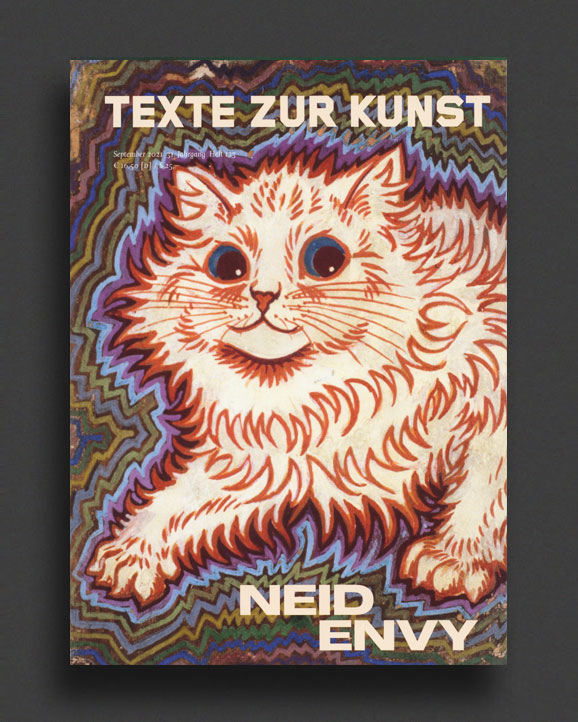
This September issue of Texte zur Kunst examines envy as the operating system of an art world based largely on networking, competition, and interdependencies. Envy, as understood here, develops when individuals orient and compare themselves to others. One could characterize the art world as a prototype for a competition-driven, envy-generating society; achievement in art is difficult to measure and counts less than success. Issue #123 takes a closer look at the productive as well as destructive potentials of envy in the field of art and examines the extent to which the diagnosis of envy plays into the competitive nature of work and life today. The specific social effects of contemporary forms of online communication are discussed here, as well as the political economy of envy with particular regard to art.