World Food Books' programme is largely produced on Kulin Nation land. We acknowledge the Wurundjeri people of the Kulin Nation as the first and continuing custodians of this land, and pay respect to their Elders past, present, and emerging.
World Food Books is an arts and special interests bookshop in Naarm / Melbourne. Founded in 2010, World Food Books is devoted to the presentation of a rotating, hand-selection of international art, design, literary and counterculture publications with an emphasis on the anti-traditional, the experimental, the avant-garde, the heretic, the marginal.
Presenting new titles alongside rare and out-of-print books, catalogues and journals spanning the fields of modern and contemporary art, design, photography, illustration, film, literature, poetry, cultural theory, philosophy, sexuality, popular and underground culture in its many radical forms, World Food Books wishes to encourage adventurous, thoughtful and open-minded reading, looking, writing, and exchange of publishing and ideas, both current and historical.
As well as our bookshop, located in Melbourne's historical Nicholas Building, all of our inventory is available internationally via our online mail-order service.
World Food Books semi-regularly co-ordinates "Occasions", a programme of exhibits and events at the bookshop and in partnership with other hosts (such as museums and art galleries) that develop out of the activities, relationships and content of the bookshop itself.
World Food Books
The Nicholas Building
37 Swanston Street
Room 5, Level 6
Melbourne 3000
Australia
SHOP HOURS:
Thu–Fri 12–6, Sat 12–5
WEB-SHOP OPEN 24/7
World Food Books
Postal Address:
PO Box 435
Flinders Lane
Victoria 8009
Australia
Art
Theory / Essay
Architecture / Interior
Graphic Design / Typography
Photography
Fashion
Eros
LGBTQ+
Fiction / Poetry
Weird / Speculative / Science Fiction / Horror
Transgressive / Visceral / Abject
Symbolism / Decadence / Fin de siècle
Film / Video
Painting
Sculpture / Installation
Performance / Dance / Theater
Drawing
Sound / Music
Curatorial
Group Shows / Collections
Periodicals
Out-of-print / Rare
Posters / Ephemera / Discs
Signed Books
World Food Books Gift Voucher
World Food Book Bag
Australian Art
Australian Fiction
Australian Science Fiction / Speculative Fiction
Australian Poetry
Australian Photography
Japanese Photography
Conceptual Art
Minimal Art
Dada
'Pataphysics / Oulipo
Fluxus
Concrete Poetry
Pop Art
Surrealism
Arte Povera
Arte Informale / Haute Pâte / Tachism
Nouveau Réalisme / Zero / Kinetic
Situationism / Lettrism
Collage / Mail Art / Xerox Art
Art Brut / Folk / Visionary / Fantastic
Illustration / Graphic Art / Bandes Dessinées
Furniture
Italian Radical Design / Postmodernism
Textiles
Ceramics / Glass
Counterculture
Protest / Revolt
Philosophy
Psychoanalysis
Anthropology
Anarchism
Socialism / Anarchism / Communism / Capitalism
Literary Theory / Semiotics / Language
Feminism / Women's Studies
Gender Studies / Sexuality
Anthropology
Fetishism / BDSM
Drugs / Psychedelia
Crime / Violence
Animal Rights / Veganism
Occult / Esoterica
Ecology / Earth / Alternative Living
Whole Earth / Crafts
All prices in AUD (Australian dollars)
Pick-Ups
Pick-up orders can be collected in our bookshop during opening hours after order date. Please collect any Pick-up orders within 2 weeks of ordering as we have limited storage space. Orders will be released back into stock if not collected within this time. No refunds can be made for pick-ups left un-collected. If you cannot make it in to the bookshop in this time-frame, please choose postage option.
Return Policy
All sales are final. We do accept returns (for refund or exchange) for items received in error. All our orders are packed with special care using heavy-duty padding and cardboard book-mailers or bubble mailers (for smaller books), using reinforcement where required. We cannot take responsibility for any lost, stolen or damaged parcels.
Insurance
Should you wish to insure your package, please email us directly after placing your order and we can organise this at a small extra expense. Although all standard/express tracked packages are very safe and dependable, we cannot take responsibility for any lost, stolen or damaged parcels. We recommend insurance on valuable orders.
Interested in selling your old books, catalogues, journals, magazines, comics, fanzines, ephemera? We are always looking for interesting, unusual and out-of-print books to buy. We only buy books in our fields of interest and specialty, and that we feel we can resell.
We base these prices on desirability, market value, in-print prices, condition and our current stock levels. We offer cash, store credit, and can take stock on consignment. All
about 25% of the price we expect to get when we sell them, or 30% in store credit. We base these prices on desirability, market value, in-print prices, condition and our current stock levels.
Sell your books any day of the week. You can drop them off and return later. If you have a lot of books, we can visit your Sydney home.
We buy books that we feel we can resell. We offer about 25 % of the price we expect to get when we sell them, or 30% in store credit. We base these prices on desirability, market value, in-print prices, condition and our current stock levels.
Philadelphia Wireman
03 August - 01 September, 2018
World Food Books is proud to announce our next Occasion, the first presentation of sculptures by Philadelphia Wireman in Australia.
The Philadelphia Wireman sculptures were found abandoned in an alley off Philadelphia’s South Street on trash night in 1982. Their discovery in a rapidly-changing neighbourhood undergoing extensive renovation, compounded with the failure of all attempts to locate the artist, suggests that the works may have been discarded after the maker’s death. Dubbed the "Philadelphia Wireman" during the first exhibition of this work, in 1985, the maker’s name, age, ethnicity, and even gender remain uncertain. The entire collection totals approximately 1200 pieces, all intricately bound together with tightly-wound heavy-gauge wire (along with a few small, abstract marker drawings, reminiscent both of Mark Tobey and J.B. Murry). The dense construction of the work, despite a modest range of scale and materials, is singularly obsessive and disciplined in design: a wire armature or exoskeleton firmly binds a bricolage of found objects including plastic, glass, food packaging, umbrella parts, tape, rubber, batteries, pens, leather, reflectors, nuts and bolts, nails, foil, coins, toys, watches, eyeglasses, tools, and jewellery.
Heavy with associations—anthropomorphic, zoomorphic, and socio-cultural responses to wrapped detritus—the totemic sculptures by Philadelphia Wireman have been discussed in the context of work created to fulfil the shamanistic needs of alternative religions in American culture. Curators, collectors, and critics have variously compared certain pieces to sculpture from Classical antiquity, Native American medicine bundles, African-American memory jugs, and African fetish objects. Reflecting the artist’s prolific and incredibly focused scavenging impulse, and despite—or perhaps enhanced by—their anonymity, these enigmatic objects function as urban artefacts and arbiters of power, though their origin and purpose is unknown. Philadelphia Wireman, whatever their identity, possessed an astonishing ability to isolate and communicate the concepts of power and energy through the selection and transformation of ordinary materials. Over the course of the past two decades, this collection has come to be regarded as an important discovery in the field of self-taught art and vernacular art.
Presented in collaboration with Fleisher-Ollman Gallery, Philadelphia, and Robert Heald, Wellington.
Susan Te Kahurangi King
02 February - 10 March, 2018
Susan Te Kahurangi King (24 February 1951 - ) has been a confident and prolific artist since she was a young child, drawing with readily available materials - pencils, ballpoint pens and felt-tip markers, on whatever paper is at hand. Between the ages of four and six Susan slowly ceased verbal communication. Her grandparents William and Myrtle Murphy had developed a special bond with Susan so they took on caring responsibilities for extended periods. Myrtle began informally archiving her work, carefully collecting and storing the drawings and compiling scrapbooks. No drawing was insignificant; every scrap of paper was kept. The King family are now the custodians of a vast collection containing over 7000 individual works, from tiny scraps of paper through to 5 meter long rolls.
The scrapbooks and diaries reveal Myrtle to be a woman of great patience and compassion, seeking to understand a child who was not always behaving as expected. She encouraged Susan to be observant, to explore her environment and absorb all the sights and sounds. Myrtle would show Susan’s drawings to friends and people in her community that she had dealings with, such as shopkeepers and postal workers, but this was not simply a case of a grandmother’s bias. She recognised that Susan had developed a sophisticated and unique visual language and sincerely believed that her art deserved serious attention.
This was an unorthodox attitude for the time. To provide some context, Jean Dubuffet coined the term Art Brut in 1945 to describe work created by self-taught artists – specifically residents of psychiatric institutions and those he considered to be visionaries or eccentrics. In 1972 Roger Cardinal extended this concept by adopting the term Outsider Art to describe work made by non-academically trained artists operating outside of mainstream art networks through choice or circumstance. Susan was born in Te Aroha, New Zealand in 1951, far from the artistic hubs of Paris and London that Dubuffet and Cardinal operated in. That Myrtle fêted Susan as a self-taught artist who deserved to be taken seriously shows how progressive her attitudes were.
Susan’s parents Doug and Dawn were also progressive. Over the years they had consulted numerous health practitioners about Susan’s condition, as the medical establishment could not provide an explanation as to why she had lapsed into silence. Dawn educated herself in the field of homeopathy and went on to treat all twelve of her children using these principles – basing prescriptions on her observations of their physical, mental and emotional state.
Doug was a linguist with an interest in philosophy who devoted what little spare time he had to studying Maori language and culture. To some extent their willingness to explore the fringes of the mainstream made them outsiders too but it was their commitment to living with integrity and their respect for individuality that ensured Susan’s creativity was always encouraged.
Even though Susan’s family supported her artistic pursuits, some staff in schools and hospitals saw it as an impediment to her assimilation into the community and discouraged it in a variety of ways. Her family was not always aware of this and therefore did not fully understand why Susan stopped drawing in the early 1990s. However, rather than dwell on the challenges that Susan faced in pursuit of her artistic practice, they prefer to highlight her achievements. In 2008 Susan began drawing again in earnest, after an almost 20 year interruption, and her work is now shown in galleries around the world.
Susan grew up without television and has been heavily influenced by the comics she read as a child. She is absolutely fearless in the appropriation of recognizable characters, such as Donald Duck and Mickey Mouse, in her work. She twists their limbs, contorts their faces, compresses them together, blends them into complex patterned backgrounds - always imbuing them with an incredible energy. Although Susan often used pop culture characters in her work they are not naive or childlike. These are drawings by a brilliant self-taught artist who has been creating exceptional work for decades without an audience in mind.
Mladen Stilinović
"Various Works 1986 - 1999"
02 February 16 - September 10, 2016
Various works 1986 - 1999, from two houses, from the collections of John Nixon, Sue Cramer, Kerrie Poliness, Peter Haffenden and Phoebe Haffenden.
Including: Geometry of Cakes (various shelves), 1993; Poor People’s Law (black and white plate), 1993; White Absence (glasses, ruler, set square, silver spoon, silver ladel with skin photograph and wooden cubes), 1990-1996; Exploitation of the Dead (grey and red star painting, wooden painting, black spoon with red table, red plate), 1984-1990; Money and Zeros (zero tie, paintings made for friends in Australia (Sue, John, Kerrie), numbers painting), 1991-1992; Words - Slogans (various t-shirts) - “they talk about the death of art...help! someone is trying to kill me”, “my sweet little lamb”, “work is a disease - Karl Marx”; Various artist books, catalogues, monographs, videos; Poster from exhibition Insulting Anarchy; "Circular" Croatian - Australian edition; Artist book by Vlado Martek (Dostoyevsky); more.
Thanks to Mladen Stilinović and Branka Stipančić.
Jonathan Walker
Always Will Need To Wear Winter Shirt Blue + Ochre Small Check Pattern
21 August - 21 September, 2015
Untitled
I am not a great reader of poetry but I always return to the work of Melbourne poet, Vincent Buckley (1925- 1988). Perhaps I find his most tantalising piece to be not a finished poem but a fragment left on a scrap of paper discovered on his desk after the poet’s death.
The poetry gathers like oil
In the word-core, and spreads
It has its music meet,
Its music is in movement.
This fragment is more the shell left behind from a volatile thought than a finished poem. I find the last two lines honest but awkward whereas the first two lines work like an arrow. Most likely he could not find a resolution so it was left. Still, in its present form, it remains an eloquent testimony to the ultimate failure of a medium to express mobile thought and sensation, in Buckley’s case, through verbal language. It’s an important matter because this is something all artists have to deal with regardless of the medium.
I have never written a poem, however, I am forever copying fragments from books on paper scraps in a vain effort to fix certain notions in my head. At first, they function as bookmarks that are sometimes returned to when I open the book. But before long, as they accumulate, they fall out littering the table interspersed with A4 photocopies, bills, books and medications.
To return to Buckley’s fragment, the first two lines very much evoke how I paint nowadays. As you age, detail diminishes and patches of light become more luminous and float. I feel the most honest way of dealing with this is by smearing the oil paint on the canvas with the fingers and working close-up, blind. Only if the patches coalesce into an approaching image can the work gain a life.
-
Jonathan Walker was born in Melbourne, Australia and brought up on a dairy farm in Gippsland. In the 1970’s he studied painting at RMIT and won the Harold Wright Scholarship to the British Museum, London. During the 1980’s he exhibited at Pinacotheca Gallery, Richmond and had work shown at the NGV and Heidi City Art Gallery. Over the same period he designed the cover for the “Epigenesi” LP by Giancarlo Toniutti, Italy and conducted a mail exchange work with Achim Wollscheid, Germany. The work with artists through the post resulted in an article published in the bicentenary issue of Art and Australia 1988. He showed in artist run spaces such as WestSpace in the 90’s and 2000’s, and until 2012, taught painting at Victoria University, which is where we (Colleen Ahern and Lisa Radford) as organisers of the exhibition, among many others, had the privilege of being his student.
Walker’s knowledge was imparted to students through the careful selection of music, literature, and artists found in books that he himself had ordered for the library. Walker’s strategy was the generosity of sharing his vast knowledge with references specific to each student and their context.
Walker’s paintings share a similar focus and intimacy.
This exhibition presents a small selection of recent paintings alongside a publication that includes Walker’s writing. Observational and analytical, Walker’s work is a type of material notation — the time of day, colour and how it is blended, the both specific and fleeting location of a reflection on lino or the question of whether a chair leg should be included in a painting.
Please join us on Friday August 21 between 6-8pm to celebrate the opening of the exhibition.
Curated by Colleen Ahern and Lisa Radford.
B. Wurtz
Curated by Nic Tammens
March 26 - April 4, 2015
B.Wurtz works from a basement studio in his home on Manhattan’s Lower East Side.
This local fact is attested to by the plastic shopping bags and newsprint circulars that appear in his work. As formal objects, they don’t make loud claims about their origins but nonetheless transmit street addresses and places of business from the bottom of this long thin island. Like plenty of artists, Wurtz is affected by what is local and what is consumed. His work is underpinned by this ethic. It often speaks from a neighborhood or reads like the contents of a hamper:
“BLACK PLUMS $1.29 lb.”
“Food Bazaar”
“USDA Whole Pork Shoulder Picnic 99c lb.”
“RITE AID Pharmacy, with us it’s personal.”
“H. Brickman & Sons.”
“Sweet Yams 59c lb."
Most of the work in this exhibition was made while the artist was in residence at Dieu Donne, a workshop dedicated to paper craft in Midtown. Here Wurtz fabricated assemblages with paper and objects that are relatively lightweight, with the intention that they would be easily transportable to Australia. This consideration isn’t absolute in Wurtz’s work, but was prescriptive for making the current exhibition light and cheap. Packed in two boxes, these works were sent from a USPS post office on the Lower East Side and delivered to North Melbourne by Australia Post.
Wurtz appears courtesy of Metro Pictures, New York.
Thanks to Rob Halverson, Joshua Petherick, Sari de Mallory, Matt Hinkley, Helen Johnson, Fayen d'Evie, Ask Kilmartin, Lisa Radon, Ellena Savage, Yale Union, and "Elizabeth".
John Nixon
"Archive"
December 15 - January 20, 2014
The presentation of John Nixon's archive offered a rare showcase of this extensive collection of the artist's own publications, catalogues, posters, ephemera, editions and more, from the mid 1980s onwards, alongside a selection of his artworks.
Organized by John Nixon, Joshua Petherick and Matt Hinkley.
<a href=http://wfb.public-office.info/artist/john-nixon>All titles by John Nixon
"Habitat"
at Minerva, Sydney (organised by Joshua Petherick and Matt Hinkley)
November 15 - December 20, 2014
Lupo Borgonovo, Janet Burchill & Jennifer McCamley,
Lewis Fidock, HR Giger, Piero Gilardi, Veit Laurent Kurz,
Cinzia Ruggeri, Michael E. Smith, Lucie Stahl, Daniel Weil, Wols
Press Release:
“...It contained seven objects. The slender fluted bone, surely formed for flight, surely from the wing of some large bird. Three archaic circuitboards, faced with mazes of gold. A smooth white sphere of baked clay. An age-blackened fragment of lace. A fingerlength segment of what she assumed was bone from a human wrist, grayish white, inset smoothly with the silicon shaft of a small instrument that must once have ridden flush with the surface of the skin - but the thing’s face was seared and blackened.”
William Gibson, “Count Zero”, 1986
"Autumn Projects Archive"
Curated by Liza Vasiliou
March 6 - March 15, 2014
World Food Books, in conjunction with the Virgin Australia Melbourne Fashion Festival 2014, presented the Autumn Projects archive, consisting of a selection of early examples in Australian fashion with a particular interest in collecting designers and labels from the period beginning in the 1980’s, who significantly influenced the discourse of Australian Fashion.
Curated by Liza Vasiliou, the exhibition provided a unique opportunity to view pieces by designers Anthea Crawford, Barbara Vandenberg, Geoff Liddell and labels CR Australia, Covers, Jag along with early experimental collage pieces by Prue Acton and Sally Browne’s ‘Fragments’ collection, suspended throughout the functioning World Food Books shop in Melbourne.
H.B. Peace
presented by CENTRE FOR STYLE
November 14, 2013
"Hey Blinky, you say chic, I say same"
Anon 2013
H.B. Peace is a clothing collaboration between great friends Blake Barns and Hugh Egan Westland. Their pieces explore the divergences between 'character’ and ‘personality’ in garments....etc
Special Thanks to Joshua Petherick and Matt Hinkley of WFB and Gillian Mears
and a Very Special Thank you to Audrey Thomas Hayes for her shoe collaboration.
Janet Burchill & Jennifer McCamley
"Aesthetic Suicide"
May 10 - June 8, 2013
The first of our occasional exhibitions in the World Food Books office/shop space in Melbourne, "Aesthetic Suicide" presented a body of new and older works together by artists Janet Burchill & Jennifer McCamley, including videos, prints, a wall work, and publications.
During shop open hours videos played every hour, on the hour.
2010, English
Softcover, 96 pages, 14 x 23 cm
Published by
Occasional Papers / London
$39.00 - Out of stock
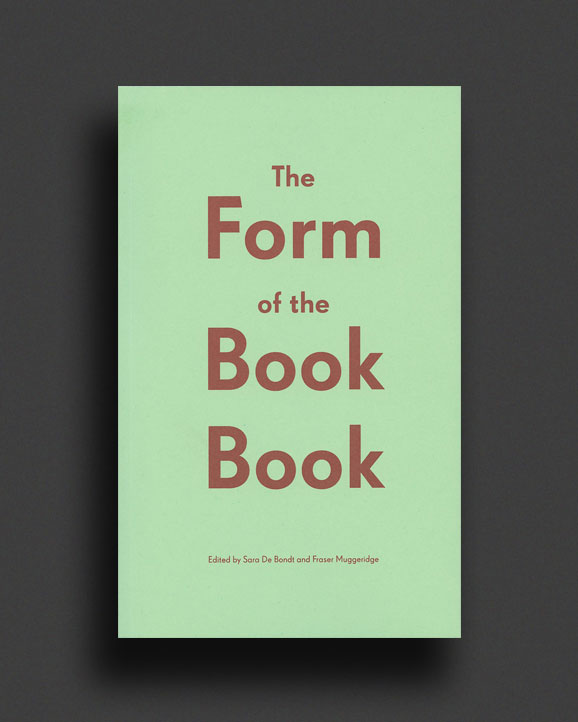
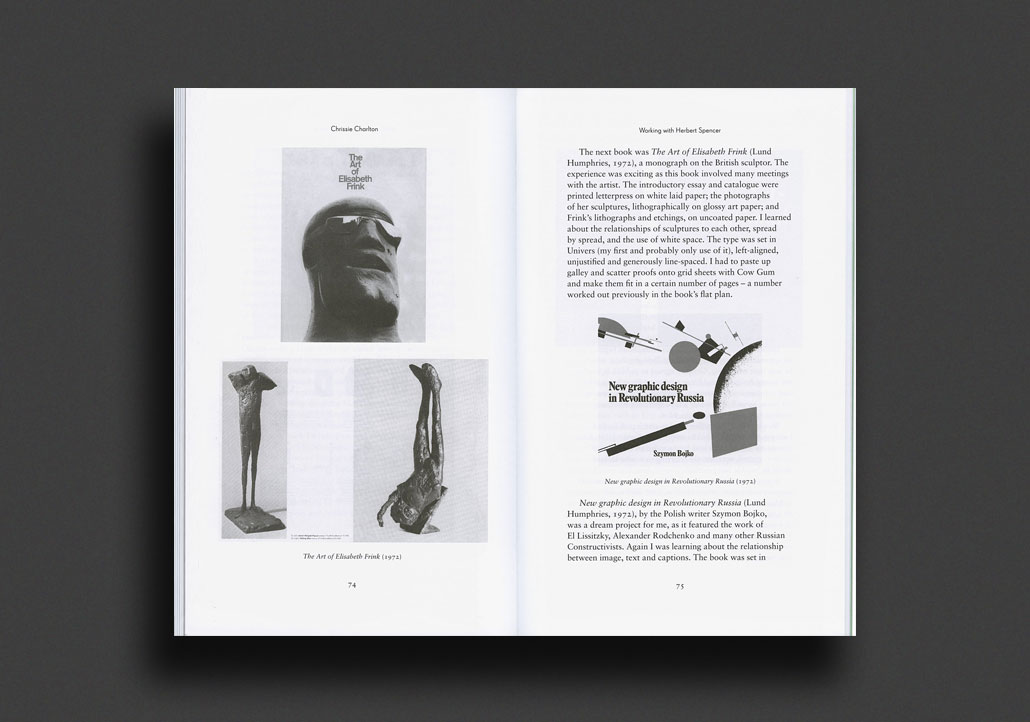
Now it in its third printing (green cover), The Form of the Book Book brings together essential essays on the book – its history, present, and possible futures – by preeminent graphic designers and graphic design theorists/historians including Chrissie Charlton, Catherine de Smet, James Goggin, Jennie Eneqvist, Roland Früh & Corina Neuenschwander, Sarah Gottlieb, Richard Hollis and Armand Mevis. In a nod to Jan Tschichold’s famous collection of essays The Form of the Book, first published in 1975, this book offers in-depth analyses of key moments in the history of book design in order to better imagine the many forms the book will take, and is already taking, in our digital age.
1964, English
Softcover (staple-bound), 16 pages, 18.5 x 24.5 cm
1st Edition, Out of print title / Used*,
Published by
Melbourne University Film Society / Melbourne
$15.00 - Out of stock
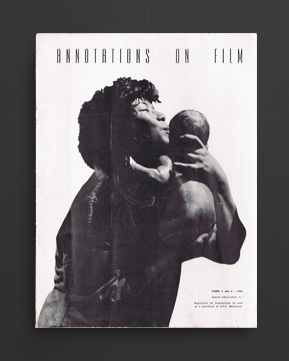
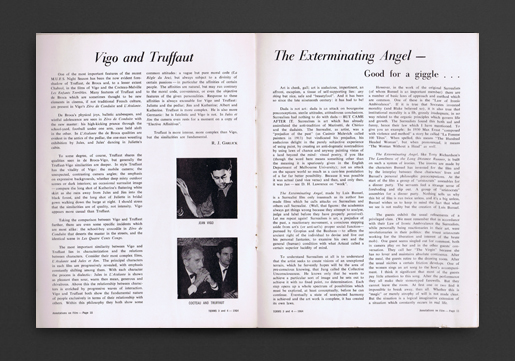
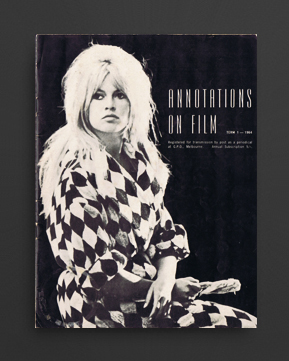
Annotations on Film was a journal published by the Melbourne University Film Society to accompany their film programme, aimed at presenting films in Melbourne in the medium they were created and providing a critical reading of them for an independent, membership-based film society. Starting in 1948, the Melbourne University Film Society (MUFS) changed its name to Cinémathèque in 1984 and continues to this day in Melbourne. A written accompaniment to their programme can be seen in the form of the current-day online journal Senses of Cinema.
This scarce early journal from the Melbourne University Film Society features writings on Roberto Rossellini's Vanina Vanini, Kon Ichikawa's Kagi, Georges Fraju's Spotlight on Murder, Blake Edwards' Breakfast at Tiffany's, Nicholas Ray's The Savage Innocents, Alfred Hitchcock's The Lady Vanishes, E. A. Dupont's Variety, Robert Flaherty's Moana, Jean Vigo, François Truffaut, Luis Buñuel's The Exterminating Angel, and more, and was published in Melbourne in 1964.
1964, English
Softcover (staple-bound), 20 pages, 18.5 x 24.5 cm
1st Edition, Out of print title / Used*,
Published by
Melbourne University Film Society / Melbourne
$15.00 - Out of stock
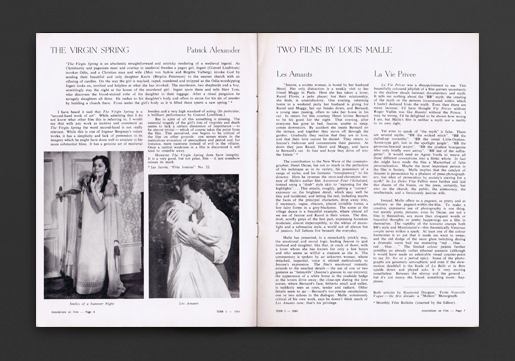
Annotations on Film was a journal published by the Melbourne University Film Society to accompany their film programme, aimed at presenting films in Melbourne in the medium they were created and providing a critical reading of them for an independent, membership-based film society. Starting in 1948, the Melbourne University Film Society (MUFS) changed its name to Cinémathèque in 1984 and continues to this day in Melbourne. A written accompaniment to their programme can be seen in the form of the current-day online journal Senses of Cinema.
This scarce early journal from the Melbourne University Film Society features writings on Ingmar Bergman, Louis Malle, Marcel Camus' Black Orpheus, Jules Dassin's Rififi, Jack Clayton's The Innocents, Frank Tashlin, Alain Resnais' Hiroshima, Mon Amour, Sergei Eisenstein's Battleship Potemkin, Orson Welles' Citizan Kane, and more, and was published in Melbourne in 1964.
1994, English
Softcover (staple-bound), 24 pages, 21 x 15 cm
1st UK Edition, Out of print title / used / very good
Published by
Temple Press Limited / Brighton
$75.00 - Out of stock
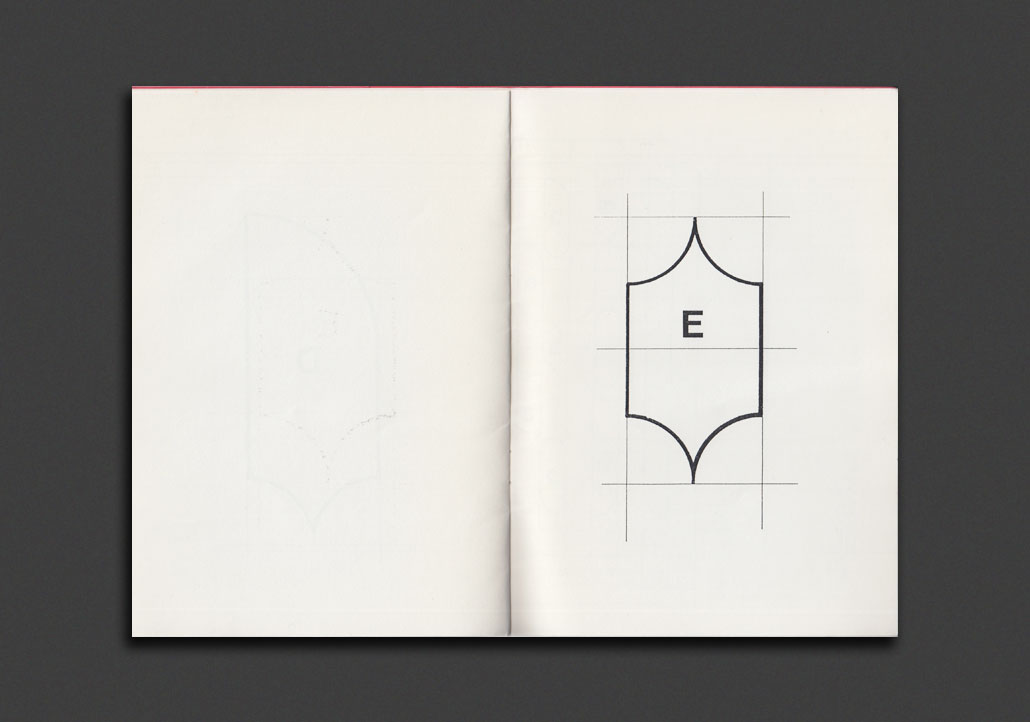
First UK expanded edition of Brion Gysin's instructional manual to create what is "probably the first visual device to be viewed with your eyes closed", his famed Dreamachine. Published by Temple Press Limited in Brighton, Sussex.
From the Introduction : "The Dreamachine was devised by Brion Gysin, artist, traveller, writer and alchemist; one of the unsung English painters of the 20th Century, expelled by Breton from the Surrealists, and the seminal influence who introduced William Burroughs to the use of permutations and cut-ups in writing... The Dreamachine arose from his observations of the effects of passing rapidly through a vale of trees, the flickering of sunlight causing him to enter into an altered state of consciousness." [...]
The Dreamachine (or Dream Machine) is a stroboscopic flicker device that produces visual stimuli. In its original form, a Dreamachine is made from a cylinder with slits cut in the sides. The cylinder is placed on a record turntable and rotated at 78 or 45 revolutions per minute. A light bulb is suspended in the center of the cylinder and the rotation speed allows the light to come out from the holes at a constant frequency of between 8 and 13 pulses per second. This frequency range corresponds to alpha waves, electrical oscillations normally present in the human brain while relaxing.
Brion Gysin (1916–86) has been an incredibly influential artist and iconoclast: his development of the “cut-up” technique with William S. Burroughs has inspired generations of writers, artists and musicians. Gysin was also a skilled networker and revered expat: together with his friend Paul Bowles, he more or less constructed the post-beatnik romanticism for life and magic in Morocco, and was also a protagonist in an international gay culture with inspirational reaches in both America and Europe. Not surprisingly, Gysin has become something of a cult figure.
Good condition, light spine creasing to stapled red and black printed wraps, otherwise very good throughout.
2019, English
Hardcover, 208 pages, 23.5 x 28 cm
Published by
Prestel / Munich
Stedelijk Museum / Amsterdam
Walker Art Centre / Minneapolis
$90.00 - Out of stock
Born in Iran and based in Berlin, German artist Nairy Baghramian explores and reflects on formal languages of both modernism and post-minimalism. Over the past two decades, Baghramian has become known for her reflections on minimalism and her contextual approaches to exhibition via sculpture and site-responsive installations. Her work marks boundaries, transitions, and gaps in the museum space and the urban space, referencing interior and exterior, fashion and design, theatre and dance, form and meaning, and context and discourse. This lavishly illustrated overview of the work of Nairy Baghramian includes illuminating texts that explore the sculptor's creative process.
2018, English
Softcover, 102 pages, 22 x 17 cm
Edition of 500
Published by
Auckland Art Gallery Toi o Tāmaki / Auckland
Chartwell Collection / Auckland
$50.00 - Out of stock
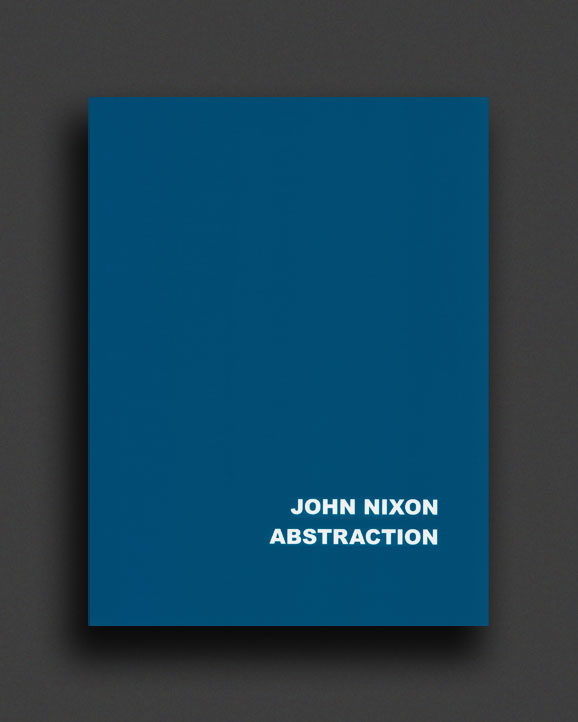
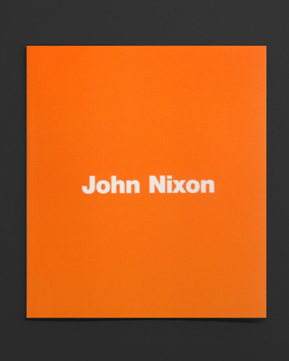
Published on the occasion of the exhibition JOHN NIXON: ABSTRACTION at Auckland Art Gallery Toi o Tāmaki, 22 April-19 August 2018. A major survey of Melbourne artist John Nixon through the installation of 94 works by Nixon held in the Auckland-based Chartwell Collection. Profusely illustrated throughout with exhibited works and installation photography, accompanied by texts by Rhana Davenport and Robert Gardiner, and exhibition history.
Designed by Yanni Florence and John Nixon.
Photography by Jennifer French.
Published in an edition of 500 copies.
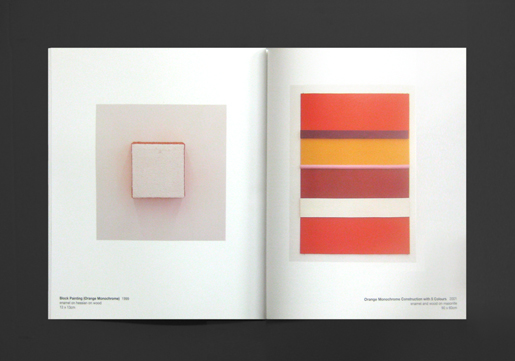
John Nixon (b. 1949, Sydney) is a seminal figure in contemporary Australian abstraction. Since 1968, his work has been dedicated to the on-going experimentation, analysis and development of radical modernism, Minimalism, the monochrome, Constructivism, Non-Objective art and the Readymade are key reference points in his work. Experimental Painting Workshop (EPW) which began in 1978, forms the basis of Nixon’s, rigorous and long standing intellectual investigation into the making of art; which over time has expanded to encompass painting, collage, photography, video and experimental music performance.
2017, English
Softcover, 106 pages, 17 x 22 cm
Ed. of 500,
Published by
Castlemaine Art Museum / Castlemaine
$35.00 - Out of stock
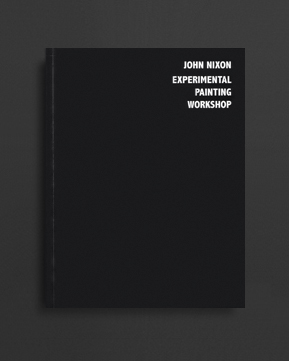
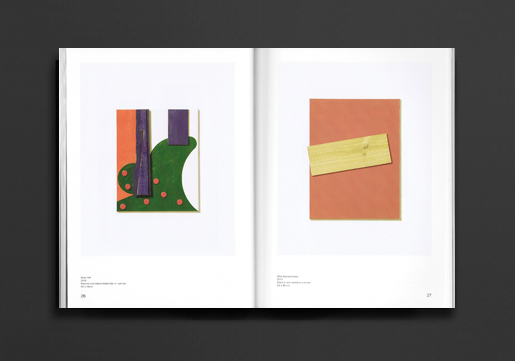
Published on the occasion of the exhibition JOHN NIXON: EPW at Castlemaine Art Museum 19 March-25 June, 2017. "This exhibition presents a recent selection from Nixon’s Experimental Painting Workshop (EPW), a project that began in London in 1978 and continues to this day. Rejecting narrative, realism and pictorialism which he sees as limitations on painting, Nixon’s EPW proposes an expanded, and expanding, definition via the principles of modernist non-objectivity, specifically, the monochrome, Minimalism and Constructivism, and dynamic approaches to their exhibition. In his employment of the ready-made object, made famous by Marcel Duchamp in the early 20th century, Nixon demonstrates an intuitive method of collecting, rationalizing and repurposing the everyday into otherwise abstract works. The en masse presentation of this exhibition is a hallmark of the EPW, offering both a spectacular experience of the whole, while also giving emphasis to individual works as evidence of the progression of Nixon’s thesis on the open-ended possibilities for painting."
Designed by Yanni Florence and John Nixon.
Photography by Christo Crocker.
Text by Emma Busowsky Cox.
Published in an edition of 500 copies.
John Nixon (b. 1949, Sydney) is one of Australia’s foremost artists. Since his first solo exhibition in Melbourne in 1973, Nixon has mounted hundreds of exhibitions in Australia, New Zealand, Europe, and the United States, and his work is included in public and private collections worldwide.
2018, English
Softcover (staple-bound), 12 pages, 14.8 x 21 cm
Ed. of 50,
Published by
Pataphysics Books / Melbourne
$40.00 - Out of stock
NEW YORK DRAWINGS
SUNDAY 12 FEB 2017
543 8th Av NYC
JOHN NIXON
Published by Pataphysics Books (Melbourne) in 2018, this artist's book by John Nixon presents a series of drawings on newspaper.
Edition of 50 copies.
2017, German, English
Hardcover, 64 pages, 17.5 x 24.5cm
Published by
Museum Gegenstandsfreier Kunst / Otterndorf
$50.00 - Out of stock
Catalogue published on the occasion of the 2017 exhibition at Museum Gegenstandsfreier Kunst in Otterndorf, Germany.
John Nixon is an Australian artist born in 1949. His exhibition at Museum Gegenstandsfreier Kunst presents various photographic, drawing, collage and painting based works from 2013-2017 with an essay written by Ulrike Schick.
Published in English and German.
2018, English
Softcover, 36 pages, 21 x 28 cm
Ed. of 400,
Published by
Laure Genillard Gallery / London
$30.00 - Out of stock
Made on the occasion of the exhibition Various Paintings on Various Colours at Laure Genillard Gallery, London, 2018. The exhibition is organised around a group of twelve recent works. Together, they survey the artist's use of primary and secondary colours, art and non-art materials, and his relationship with the surrounding architecture.
Including a conversation between John Nixon and Barry Barker.
Edition of 400 copies.
1991, English
Softcover (w. dustjacket), unpaginated (b&w ill.), 24 x 18.5 cm
1st edition, Out of print title / As New,
Published by
Deakin University / Geelong
$75.00 - Out of stock
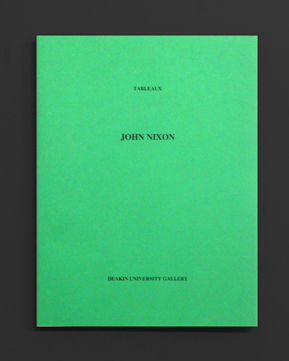
Catalogue for the 1991 exhibition Tableaux at Deakin University Gallery, Geelong.
John Nixon is an Australian artist born in 1949, his Experimental Painting Workshop EPW – founded in 1990 – is not a physical workshop but an intellectual as well as a practical visual investigation into non-representational painting.
2001, English
Softcover, 32 pages (colour ill.), 26 x 22.5 cm
1st edition, Out of print title / As New,
Published by
Sarah Cottier / Sydney
$45.00 - Out of stock
Published on the occasion of the exhibition Gerber/Nixon at the Australian Embassy, Tokyo , 2001
John Nixon is an Australian artist born in 1949, his Experimental Painting Workshop EPW – founded in 1990 – is not a physical workshop but an intellectual as well as a practical visual investigation into non-representational painting.
2009, English
Hardcover, 71 pages (colour & b/w ill.), 24.5 x 16 cm
Published by
Midway Contemporary Art / Minneapolis
$25.00 $10.00 - Out of stock
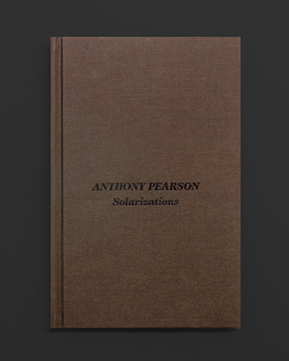
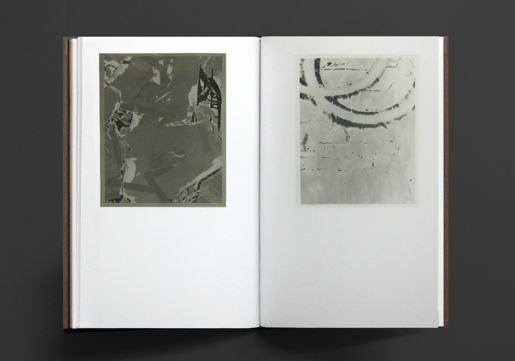
Pearson’s work over the past few years has been an exploration of perceptual and historical aspects of photography and abstraction. Working in both chemical and electronic processes, Pearson has melded these photographic methods in a highly personal manner to suggest that the concerns of the analog and digital are not as disparate as supposed. His ongoing series of solarized, silver gelatin prints exploit elements of chance and variability through a highly controlled three-part process. Pearson begins by constructing tableaus of foil, spray-paint, and ripped paper through both additive and subtractive methods, alluding to precedents such as the décollage of the Nouveau Realistes. After photographing details of these drawings and constructions, the prints are then solarized in the darkroom during a process by which tonality of the image is inverted to varying degrees through a brief exposure to white light. While the small scale of these photographs could be read as referencing reproductive plates of gestural mid-century paintings, the unique nature of each photograph elaborates a highly personalized language that builds upon historical strains of abstraction.
Designed by Abi Chase
2015, English
Softcover, 316 pages,10.8 x 17.8 cm
Published by
Sternberg Press / Berlin
$45.00 - Out of stock
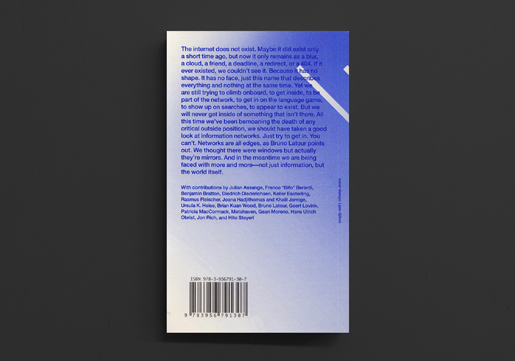
Edited by Julieta Aranda, Brian Kuan Wood, Anton Vidokle
Contributions by Julian Assange, Franco “Bifo” Berardi, Benjamin Bratton, Diedrich Diederichsen, Keller Easterling, Rasmus Fleischer, Joana Hadjithomas and Khalil Joreige, Ursula K. Heise, Brian Kuan Wood, Bruno Latour, Geert Lovink, Patricia MacCormack, Metahaven, Gean Moreno, Hans Ulrich Obrist, Jon Rich, Hito Steyerl
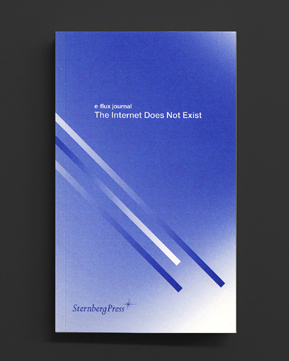
The internet does not exist. Maybe it did exist only a short time ago, but now it only remains as a blur, a cloud, a friend, a deadline, a redirect, or a 404. If it ever existed, we couldn't see it. Because it has no shape. It has no face, just this name that describes everything and nothing at the same time. Yet we are still trying to climb onboard, to get inside, to be part of the network, to get in on the language game, to show up on searches, to appear to exist. But we will never get inside of something that isn’t there. All this time we’ve been bemoaning the death of any critical outside position, we should have taken a good look at information networks. Just try to get in. You can’t. Networks are all edges, as Bruno Latour points out. We thought there were windows but actually they’re mirrors. And in the meantime we are being faced with more and more—not just information, but the world itself.
Series edited by Julieta Aranda, Brian Kuan Wood, Anton Vidokle
Design by Jeff Ramsey, front cover design by Liam Gillick
2017, English
Softcover, 360 pages, 10.8 x 17.8 cm
Published by
Sternberg Press / Berlin
$57.00 - Out of stock
Edited by Julieta Aranda, Brian Kuan Wood, Stephen Squibb, Anton Vidokle
With contributions by Paul Chan, Keti Chukhrov, Cluster, Antke Engel, Hu Fang, Brian Kuan Wood, Lee Mackinnon, Chus Martínez, Tavi Meraud, Fred Moten and Stefano Harney, Elizabeth A. Povinelli and Kim Turcot DiFruscia, Paul B. Preciado, Martha Rosler, Virginia Solomon, Jalal Toufic, Jan Verwoert, Slavoj Žižek
It is often said that we no longer have an addressee for our political demands. But that’s not true. We have each other. What we can no longer get from the state, the party, the union, the boss, we ask for from one another. And we provide. Lacan famously defined love as giving something you don’t have to someone who doesn’t want it. But love is more than a YouTube link or a URL. Love’s joy is not to be found in fulfillment, it is to be found in recognition: even though I can never return what was taken away from you, I may be the only person alive who knows what it is.
In our present times—post-human, post-reality, or maybe pre-internet, post-it, pre-collapse, pre-fabricated by algorithms—what does love have to do with it? Since 2009, need and care and desire and admiration have been cross-examined, called as witness, put on parole, and made the subject of caring inquiry by e-flux journal authors. These writings have now been collected to form this comprehensive volume.
Series edited by Julieta Aranda, Brian Kuan Wood, Stephen Squibb, Anton Vidokle
Design by Jeff Ramsey, front cover design by Liam Gillick
2020, English
Paperback, 504 pages, 17.8cm x 17.8cm
Published by
Walther König / Köln
$88.00 - Out of stock
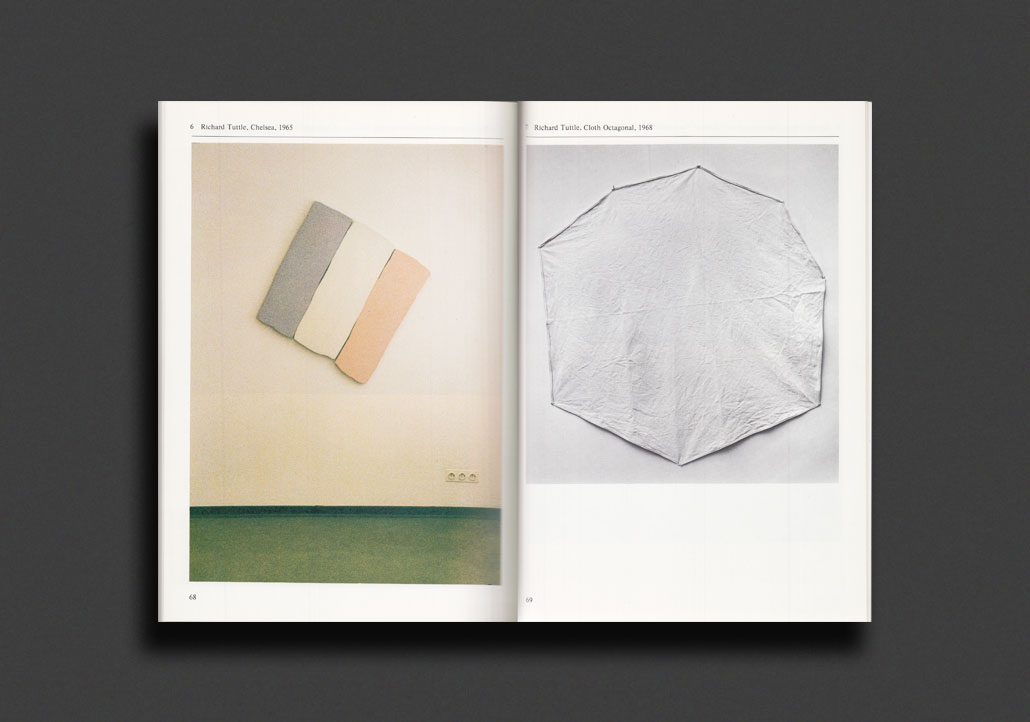
From poems to statements and lectures, the writings of post-minimalist virtuoso Richard Tuttle possess the same instinct for materiality and delicacy as his art.
Over the course of more than 50 years, American artist Richard Tuttle (born 1941) has invented new possibilities of scale and humour, sometimes adding almost nothing to an object, at other times recklessly heaping up his materials or pressing them to the brink of compositional incoherence. With just the same sensitivity, humour and nuance, Tuttle has also composed numerous texts, mostly in response to specific commissions and publications. Tuttle does not approach writing as a transparent communicative medium, but rather as simply another material.
Beautifully designed, as Tuttle books always are, A Fair Sampling brings together a selection of the artist's writings published in exhibition catalogs, books and newspapers, as well as hitherto unpublished texts. These include not only reflections and commentaries on art and drawing, but also tributes to artist friends, including various texts on Agnes Martin, travel notes, poems and lectures that Tuttle delivered in various institutions.
1980, German / English
Softcover, 74 pages, 24 x 17 cm
Ed. of 500 hand-numbered,
1st Edition, Out of print title / used / very good
Published by
Jörg Johnen / Köln
$45.00 - Out of stock
Hand-numbered, self-published edition of 500 copies of Poetische Punkte : Der Zufall als Erkenntnisprinzip im Werk von Richard Tuttle (Poetic points. Chance as a cognitive principle in the work of Richard Tuttle), self-published by Jörg Johnen in 1980. An in-depth German-language study on the work of American artist Richard Tuttle, including correspondence from Tuttle (in English and German), plus a bibliography and wonderful illustrated section of references, works, exhibits.
Jörg Johnen opened his first gallery in Cologne in 1984, with an exhibition of works by Thomas Schütte and Aldo Rossi. In the 30 years of its existence, the gallery organized nearly 250 exhibitions, first as Johnen+Schöttle in Cologne, and since 2004 as Johnen Galerie in Berlin.
Richard Tuttle is an American postminimalist artist known for his small, subtle, intimate works. His art makes use of scale and line. His works span a range of media, from sculpture, painting, drawing, printmaking, and artist’s books to installation and furniture.
Very Good copy.
2020, English
Box containing 4 fold-out patterns and label set.
Ed. of 500,
Published by
Warehouse / Amsterdam
JOIN Collective Clothes / Amsterdam
$18.00 - Out of stock
The fashion industry focuses mostly on designer status and brand identity. It portrays garments as the magical results of invisible processes. It worships values such as originality and ‘the new’.
In general, fashion might be experienced as something that others do, something that is not for everyone. Although it is perceived in this way, fashion is actually already a collective practice. In daily life, we can find the simple example of everyone wearing clothes. Fashion is something we all participate in. JOIN Collective Clothes actively accelerates this idea by inviting everyone to JOIN. By opening up the production of clothes and inviting everyone to join, JOIN Collective Clothes enables a playful and fluid exploration of what clothes and fashion can be. JOIN Collective Clothes shows the importance of collaboration and therefore opens up new perspectives on today’s fashion system.
You are invited to JOIN Collective Clothes. This boxed and hand-numbered edition "manual" contains all JOIN patterns and a label set. Create your own modular clothing and add to the project.
JOIN Collective Clothes is a project by designer and researcher Anouk Beckers.
This manual is designed by Beau Bertens
Text by Femke de Vries
Edition of 500 copies.
2020, English / German
Hardcover, 216 pages, 24.6 x 17.4 cm
Published by
Ludwig Museum / Cologne
Walther König / Köln
$70.00 - Out of stock
The German artist Peter Heisterkamp (1943–1977), who named himself after the mafioso Frank “Blinky” Palermo, is known for his objects, installations, and above all for the bright colour fields of his fabric and metal pictures, which supposedly directly illustrate what they conceptually question: the sensual qualities of contemporary painting. Less well known yet no less clever and stimulating are works he created in editions: screen prints and offset prints, lithographs, objects, and a template for painting. Palermo made these editions throughout almost his entire career. They not only reflect his development from the 1960s to his early death in 1977, but also represent a deliberate expansion of his work.
Thanks to a donation from the Cologne collector Ulrich Reininghaus, since 2018 the Museum Ludwig has been the only public institution to have a complete collection of Palermo’s editions. The exhibition catalogue documents the results: it includes an updated version of the out-of-print catalogue raisonné Die gesamte Grafik und alle Auflagenobjekte 1966 bis 1975, published in 1983 by the Munich gallerist and publisher Fred Jahn.
Includes texts by Yilmaz Dziewior, Susanne Küper, Julia Frirdrich, Fred Jahn.
2019, English
Softcover (cloth-covered), 20 x 17 cm
Published by
MACK / London
$52.00 - Out of stock
Throughout her prolific career, Ursula Schulz-Dornburg has led the way in documenting man-made environments on the cusp of change and transition. The sites she visited were often remote and difficult to access. In 1996 and 1997 she traveled to Armenia and with a small portable camera made visual notes of remnants of Soviet architecture during her walks through the capital city of Yerevan. She developed the films on her return to Germany and in 2001 she edited and compiled the prints into a traditional notebook used in Armenian schools which she had bought back from one of her trips. This hand-made sketchbook was then dedicated to her daughter, Julia, who was studying architecture at the time. This publication is a facsimile of the original sketchbook, an artist’s book work embedded with the history of the cultural artefacts long-since disassembled and the actions of the artist in walking through time and space, documenting and compiling the material.
1975, English
Hardcover (w. dust jacket), 144 pages, 25.5 x 19.5 cm
1st Edition, Out of print title / used / very good
Published by
Faber & Faber / London
$100.00 - Out of stock
First hardcover edition of The Music Of Stockhausen by Jonathan Harvey (1939–2012). This crucial and comprehensive book from 1975 looks at and decrypts the early work of German composer Karlheinz Stockhausen (1928–2007). "This important and innovatory study of Stockhausen's music makes available for the first time systematic analyses of his works. Dr Jonathan Harvey comprehensively surveys the periods into which Stockhausen's music falls, from the early post-Webern works and group-form works, of which 'Gruppen' is a famous and brilliant example, to the subsequent moment-form works and the later period, which includes text-works (like 'Aus den sieben Tagen') and works like 'Hymnen', in which the composer would seem to be communicating on a quasi-mystical level. This is an indispensable book for the serious student of twentieth-century music and for anyone else with a lively interest in the new forms and sonorities of the preset day, their technology and the creative doctrines which gave birth to them." - from the dust jacket.
Includes a full list of compositions up to 1974, an appendix on Mantra (1970), a bibliography and full discography. The most comprehensive of published works on Stockhausen.
Very Good copy with good dj, some edge-wear and tanning.
2020, English
Softcover, 206 pages, 12 x 19 cm
Published by
Uh Books / Amsterdam
KW Institute for Contemporary Art / Berlin
$24.00 - Out of stock
The nineteenth issue of ‘F.R.DAVID’ is edited by Will Holder and Paula Abbott, and will serve as a reader for “We can still see the horizon (and it’s curved)”, a summer residency in Scotland led by the editors. It includes a surprising array of contributions from writer Jorge Luis Borges, journalist and writer Italo Calvino, composer Hugo Cole, literary critic and theorist Barbara Herrnstein Smith, percussionist Milford Graves, philosopher Michel Serres, novelist and essayist Wilson Harris, poet Bernadette Mayer, composer and music theorist Harry Partch, pianist and poet Cecil Taylor, and several others.
1979, English
Softcover, 78 pages, 28 x 22 cm
1st Edition, Out of print title / used / good
Published by
Glad Hag Books / Washington
$120.00 - Out of stock
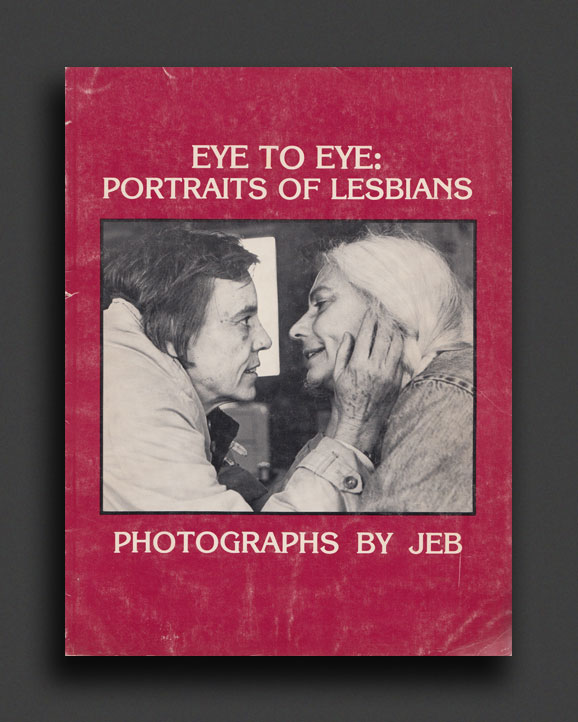
Audre Lorde states: "As we need to share our words for power, so also do we need to share the contours of our faces, and the visual shapes of our loving and of our lives. The splendid vitality captured within Eye to Eye makes this possible."
First edition of this remarkable and very scarce photobook from 1979. Photographs by JEB (Joan E. Biren) with a foreword by Joan Nestle, and an introduction by Judith Schwarz. A beautiful collection of intimate photographs collected alongside quotes from some of the subjects, poetry and prose. The book is prefaced with a fantastic and valuable overview of the herstory of women, particularly lesbian women, as photographers.
"JEB's photographs form a mosaic of Lesbian strength, of our strivings to remake our outer and inner worlds. Lesbian strength is not a simple subject, it is a mix of gentleness and power, play and combat, self-cherishing and communal commitment. It is a strength based not on the conquering of a weaker adversary, but on the refusal to be less than who we are. lt is a strength nourished by our rejection of one world and the joyous, glorious and difficult dedication to the creation of another. [...] These photographs celebrate both our physical transformations and our emotional wisdom. They give us a visual record of our passages. JEB sees to the heart of us. in her portraits, we can recognize our power, our endurance and our energy. Years ago when we were a more hidden people, we used eye searching to find each other, we dared to look longer than we should and, through this brave journeying of our eyes, we found one another. lt was a secret language that gave permission for a secret act. But always glowing beneath the secrecy was the force of our spirit. Now we are a visually emerging people and we must be so, for we cannot survive visual silence just as we cannot survive the silencing of our voices. Our spirit is secret no longer. Gone are the half-glance and the lowered lid, here we see each other eye to eye." - from foreword by Joan Nestle (Lesbian Herstory Archives)
Joan E. Biren or JEB (b. 1944), is an internationally recognized documentary artist. Her photographic and film work has chronicled the lives of lesbian, gay, bisexual, and transgender people for more than 30 years, bringing them a new visibility.
Good copy of the rare first (red cover) edition, with cover wear and some bumping/cracking to spine, very good internally. Small stamp and dedication on title page.
1965, English
Softcover (staple-bound and cloth-taped), 44 pages, 18.5 x 17 cm
1st Edition, Out of print title / used / very good
Published by
ICA / Pennsylvania
$390.00 - Out of stock
Exceptionally rare catalogue published in conjunction with the exhibition "7 Sculptors" held at the Institute of Contemporary Art, University of Pennsylvania, Dec 1, 1965 – Jan 17, 1966. An impossible to find catalogue for this seminal precursor exhibition prior to the legendary “Primary Structures” held in New York later in 1966.
Includes essays on each artist within exhibition: Michael Benedikt on Anthony Caro; Donald Judd on John Chamberlain; Robert Smithson on Donald Judd; Lawrence Alloway on Alexander Liberman; Stephanie Rose on Tina Matkovic; William Berkson on David Smith; Gerald Nordland on Anne Truitt. Illustrated with photographic portrait, biography and checklist for each artist. Foreword by Samuel Adams Green.
Very Good copy.